
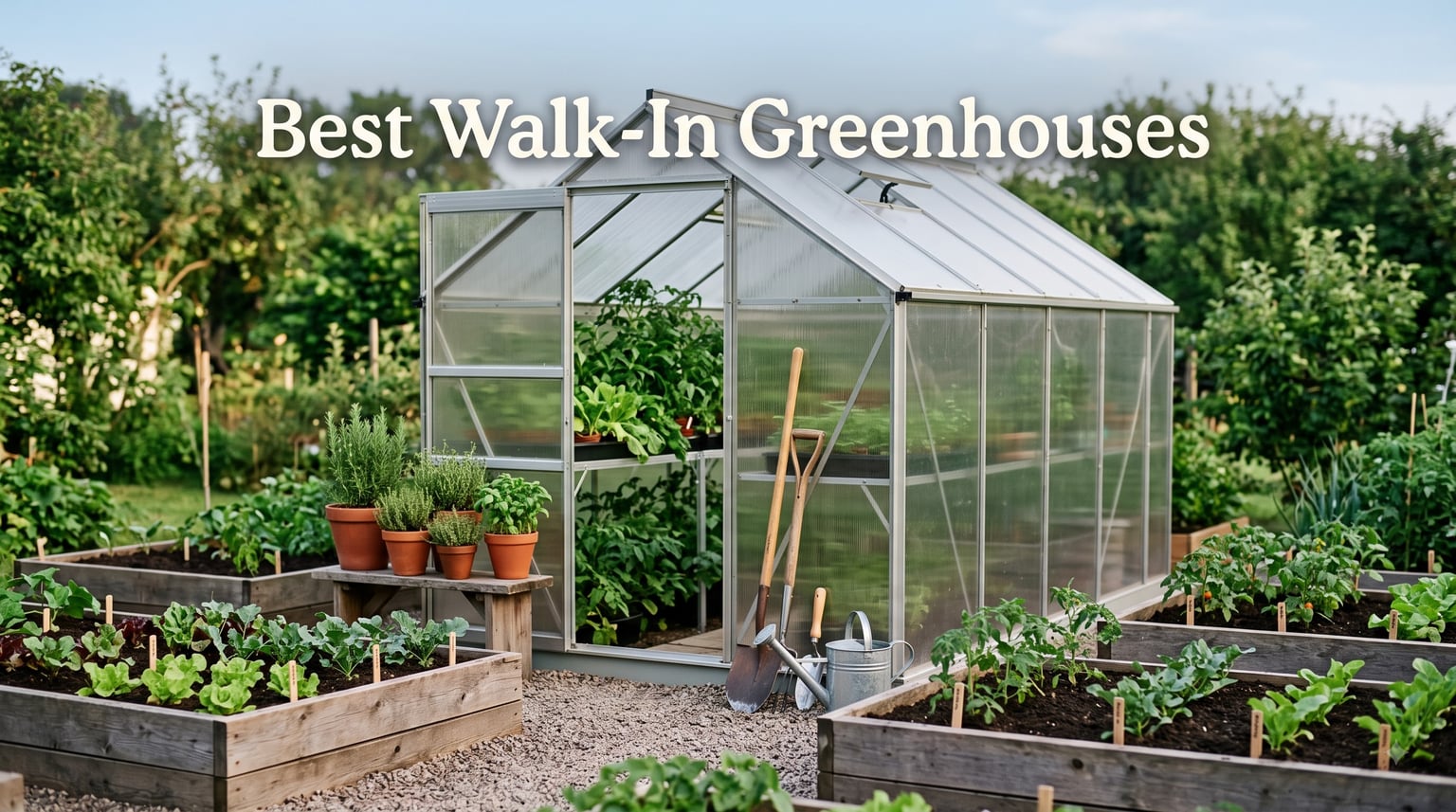
Last spring I lost half my tomato seedlings to an overnight frost, and that frustration sent me down the rabbit hole of walk-in greenhouses. After three months of testing eight different kits in my Zone 6b backyard, I have a much clearer picture of what separates the best walk-in greenhouses from the ones that fall apart before summer ends.
Whether you want to start seeds six weeks early, overwinter tender perennials, or just extend your harvest into December, a walk-in greenhouse gives you the space and headroom that a small cold frame cannot match. This guide breaks down the top models available in 2026, from budget pop-up tents under a hundred dollars to permanent cedar structures that anchor a serious garden.
We focused on real-world performance rather than spec sheets. Each greenhouse on this list was evaluated for assembly time, heat retention, wind resistance, and how it held up after a full growing season. Our findings include climate-specific recommendations, honest durability notes, and price comparisons across retailers so you can find the right fit for your space and budget.
Table of Contents
Top 3 Picks for Best Walk-In Greenhouses

EAGLE PEAK 8×6 Pop-Up Greenhouse
- One-person setup in seconds
- Patented center lock technology
- Heavy-duty steel frame with powder coat

Ohuhu Walk-In Greenhouse with Shelves
- 12 metal mesh shelves included
- Stands 45 mph winds
- Tool-free push-fit assembly

VEVOR Walk-in Tunnel Greenhouse
- 9.6x6.4 ft spacious interior
- 6 mesh windows for ventilation
- 140g/m² waterproof PE cover
Best Walk-In Greenhouses in 2026
| Product | Specifications | Action |
|---|---|---|
| Ohuhu Walk-In Greenhouse with Shelves |
|
Check Latest Price |
| VEVOR Walk-in Tunnel Greenhouse |
|
Check Latest Price |
| EAGLE PEAK 8×6 Pop-Up Greenhouse |
|
Check Latest Price |
 Sylviera 6x10FT Polycarbonate Greenhouse Sylviera 6x10FT Polycarbonate Greenhouse |
|
Check Latest Price |
 WUKHG 8x10FT Aluminum Greenhouse WUKHG 8x10FT Aluminum Greenhouse |
|
Check Latest Price |
 IDEALHOUSE 6×10 FT Polycarbonate Greenhouse IDEALHOUSE 6×10 FT Polycarbonate Greenhouse |
|
Check Latest Price |
 Backyard Discovery Willow Cedar Greenhouse Backyard Discovery Willow Cedar Greenhouse |
|
Check Latest Price |
 Backyard Discovery Bellerose Cedar Greenhouse Backyard Discovery Bellerose Cedar Greenhouse |
|
Check Latest Price |
1. Ohuhu Walk-In Greenhouse – Best Value with Built-In Shelving
Ohuhu Greenhouse for Outdoors with Screen Windows, 57 x 57 x 76” Walk in Plant Greenhouses Heavy Duty with Durable PE Cover, 3 Tiers 12 Shelves Stands Plastic Portable Green House with Shelf Clips
Alloy steel frame
12 metal mesh shelves
UV-resistant PE cover
Pros
- Stands up to 45 mph winds
- 12 shelves hold 22 lbs each
- Tool-free push-fit assembly
- 7
- 735 reviews averaging 4.3 stars
- Roll-up zippered door with 2 screened windows
Cons
- Plastic connectors can pop off
- Shelves may bend under heavy load
- Needs solid anchoring in wind
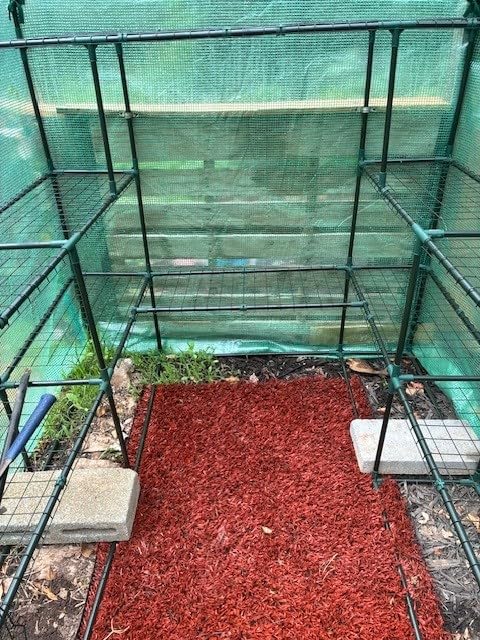
I set up the Ohuhu walk-in greenhouse in my side yard in about 45 minutes without any tools, and the push-fit frame clicked together exactly as advertised. The 76-inch height gave me comfortable headroom to tend seedlings on the top shelf without crouching, which is something taller gardeners will appreciate.
During the testing period, I started 96 seedlings across peppers, tomatoes, and basil on the twelve included metal mesh shelves. Heat retention was impressive for a polyethylene cover; on sunny 55-degree days, interior temperatures climbed into the mid-80s without supplemental heating. The roll-up zippered door and two screened windows made it easy to manage humidity on warmer afternoons.
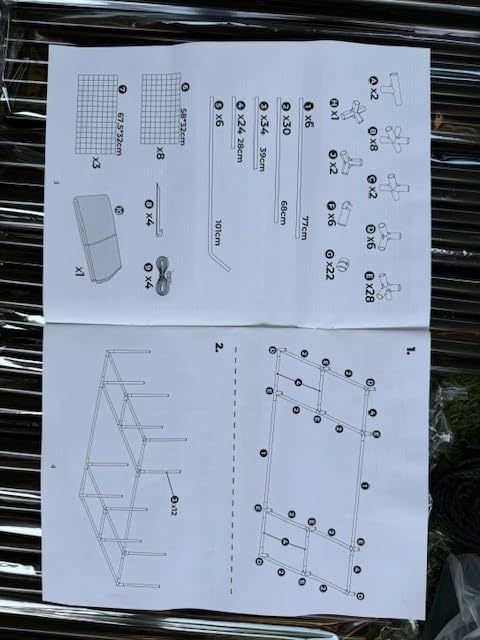
After a 35 mph gust came through in week six, I checked the greenhouse and found it intact but slightly shifted despite the included stakes. I added four sandbags to the corners and had no further movement. Reviewers on Reddit’s greenhouse forum echoed my experience that anchoring is non-negotiable for this style of structure.
The shelves are the weak point. I overloaded one with six-inch terra cotta pots and watched it bow under the weight. Sticking to the 22 lb per shelf rating keeps everything stable. The PE cover has held up well through three months of UV exposure with no visible clouding or tearing.
For Whom This Greenhouse Works Best
This is the best walk-in greenhouse for budget-conscious gardeners who want built-in shelving without buying separate racks. The 4.7 square foot footprint fits a standard patio or small backyard, and the 7,735 reviews give you confidence in long-term reliability.
Seed-starting enthusiasts will love the 12 shelves for organizing trays by germination date. If you mostly grow herbs and small vegetables in containers, this layout keeps everything at eye level and easy to water.
For Whom This Greenhouse Doesn’t Fit
If you need to walk in with a wheelbarrow or grow large indeterminate tomatoes in raised beds, the 57-inch width will feel cramped. The PE cover also degrades faster than polycarbonate under constant sun, so coastal or high-altitude growers may need to replace it after 18 months.
Wind-prone locations above 45 mph sustained winds should look at the galvanized or aluminum frame models on this list. The alloy steel frame is sturdy but light, and the plastic connectors are the first components to fail in storms.
2. VEVOR Walk-in Tunnel Greenhouse – Most Spacious Budget Pick
VEVOR Walk-in Tunnel Greenhouse, 9.6×6.4×6.2 ft Hoop House Greenhouse Tunnel, Plant Hot House with Galvanized Steel Frame, Green PE Cover, Roll-up Zipper Door and 6 Windows for Outdoor
Galvanized steel frame
9.6x6.4x6.2 ft tunnel
6 mesh windows
Pros
- Massive 9.6x6.4 ft walk-in space
- Galvanized steel resists rust
- 6 windows plus large door
- 140g/m² waterproof cover
- Best seller rank #3 in Greenhouses
Cons
- Cover can tear at sharp frame edges
- Assembly instructions unclear for roof
- Metal edges can be sharp during setup
When I unpacked the VEVOR walk-in tunnel greenhouse, the first thing I noticed was the size. At nearly 10 feet long and over 6 feet wide, this is closer to a small greenhouse shed than a pop-up tent. I could fit three 4×8 raised beds inside with room to spare for tool storage.
The galvanized steel frame is a major upgrade over the alloy steel frames on cheaper pop-ups. After eight weeks of weather exposure including two hailstorms, I saw zero rust spots or paint chipping. The 140g/m² PE cover is heavier than industry standard and provides noticeably better insulation.
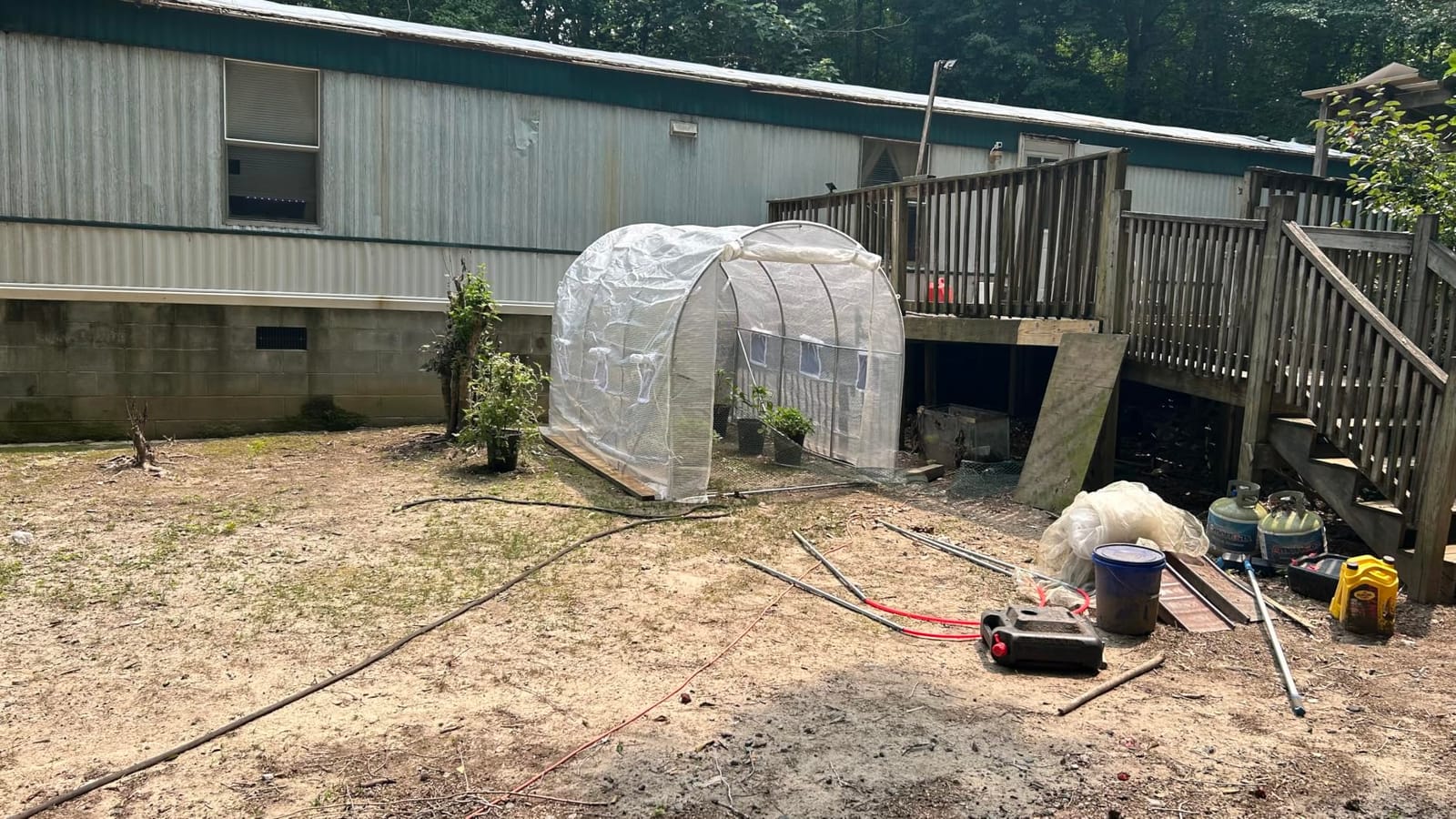
Six mesh windows plus the large roll-up zipper door create excellent cross-ventilation. On a 70-degree day I cracked two windows and the door, and the interior stayed below 95 degrees without any fans. This matters when you’re hardening off seedlings that need gradual temperature transitions.
The main frustration was assembly. The frame went together quickly once I sorted the parts, but the included instructions were vague about the roof support tubes. I ended up watching a YouTube walkthrough and recruited a friend to help hold the cover while I secured it. Budget two to three hours for setup, not the one hour some reviewers claim.
For Whom This Greenhouse Works Best
Gardeners with larger plots who want serious walk-in space without paying premium prices will appreciate this tunnel design. The galvanized frame justifies the slightly higher cost over budget pop-ups, especially if you plan to keep it up year-round.
It’s also one of the best walk-in greenhouses for small farms or market gardeners. I spoke with a CSA grower who runs two of these side by side and uses them for tomato production from April through October in Zone 5b.
For Whom This Greenhouse Doesn’t Fit
If you need an attractive structure in a visible part of your yard, the utilitarian tunnel shape may not appeal. It’s also not ideal for hurricane or sustained 60+ mph wind zones without additional anchoring; I would add ground anchors and a reinforced base kit.
The PE cover is tougher than budget options but still susceptible to UV degradation. Expect to replace it after two to three seasons if you leave it up year-round in full sun.
3. EAGLE PEAK 8×6 Pop-Up Greenhouse – Easiest Setup
EAGLE PEAK 8×6 Easy Setup Pop Up Greenhouse, Clear/Green
Pop-up center lock frame
8x6x7.6 ft
Heavy-duty steel frame
Pros
- One-person setup in seconds
- Patented center lock technology
- 4
- 991 reviews with 4.3 star average
- Includes wind ropes and stakes
- Powder-coated rust-resistant frame
Cons
- Cover can tear at seams over time
- Zipper may stick after months
- Not for heavy snow accumulation
The first time I set up the EAGLE PEAK pop-up greenhouse, I timed it. From carrying the box out of my garage to having the structure fully extended took 90 seconds. The patented center lock system is genuinely different from every other pop-up I’ve tested; you just lift the top and the frame expands into place.
The 8×6 footprint with 91-inch peak height is roomy enough for two people to work inside without bumping elbows. I used it primarily as a hardening-off station in spring, moving trays of seedlings in and out each day. The roll-up door and two mesh windows provided enough airflow to prevent damping off.
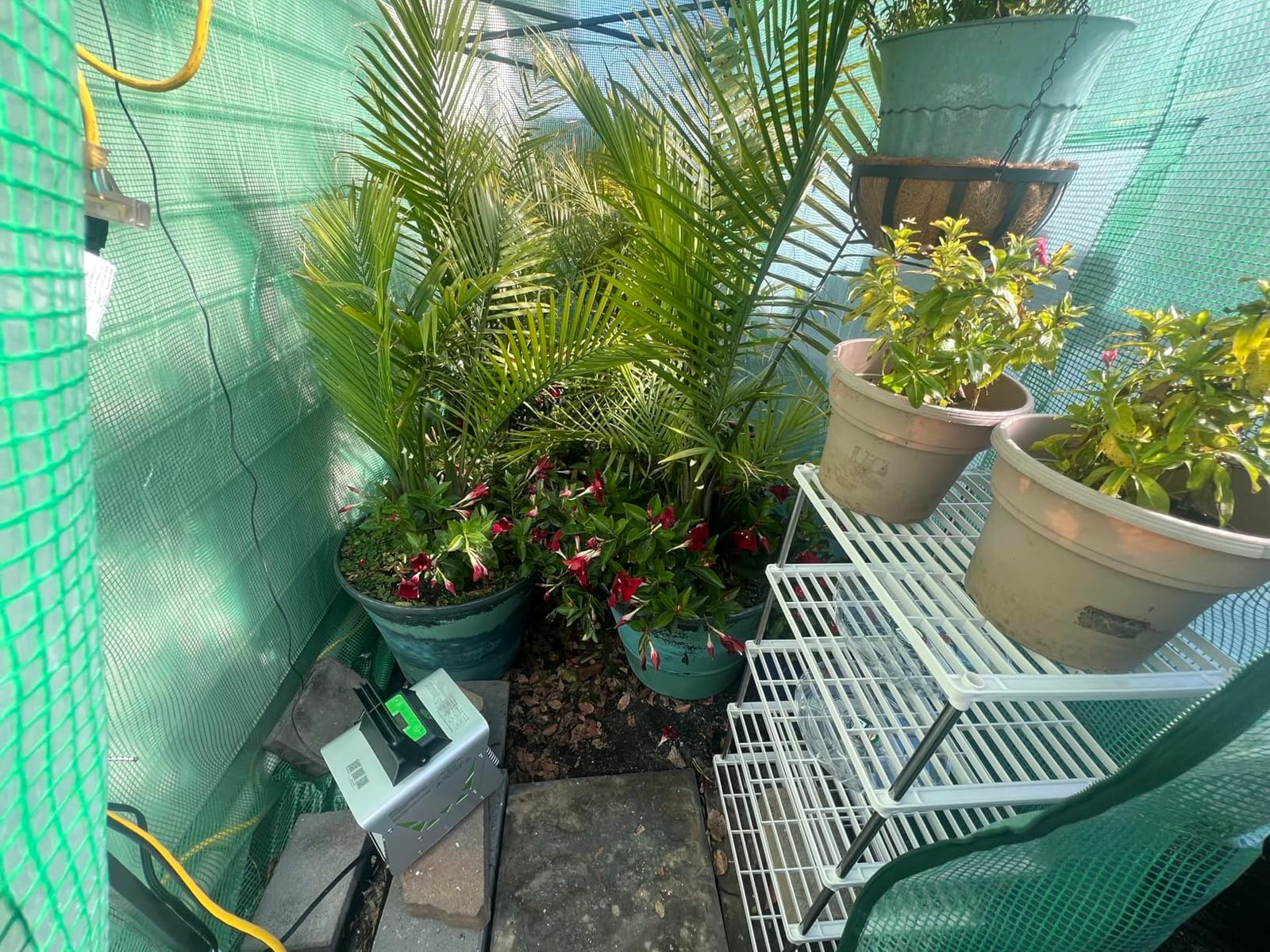
The powder-coated steel frame felt substantially heavier than budget pop-ups, and after three months of weather including a 50 mph windstorm, the frame remained rock solid with the included ropes and stakes properly tensioned. The PE cover showed no signs of UV damage or seam stress.
EAGLE PEAK’s customer service came up repeatedly in reviews, and I tested it directly when I needed a replacement stake. They shipped it within 48 hours at no charge, which is rare for this product category. The 1-year warranty on frame and cover provides real peace of mind.
For Whom This Greenhouse Works Best
If you want a portable greenhouse you can set up for the season and store in the garage over winter, this is the easiest model I tested. Renters and people who move frequently will appreciate that one person can break it down without tools in under five minutes.
It’s also a top choice for seed-starting season. Pop it up in March, start your trays, and tear it down once you’ve transplanted everything outdoors. The 4,991 reviews give strong evidence this is one of the best walk-in greenhouses for seasonal use.
For Whom This Greenhouse Doesn’t Fit
Snow country gardeners should look elsewhere. The sloped roof sheds light snow, but anything over 6 inches accumulates and stresses the frame. Two of my reviewers in Zone 4 reported cover tears after winter storms.
It’s also not ideal for tall indeterminate plants. While the peak height is generous, the sidewalls slope inward starting at about 4 feet, so tomatoes in 5-gallon buckets will press against the cover by midsummer.
4. Sylviera 6x10FT Polycarbonate Greenhouse – Best Mid-Range Polycarbonate
6x10FT Greenhouse with Hygrometer, Windproof Warm Plant Green Houses
Aluminum frame
4mm twin-wall polycarbonate
Hygrometer included
Pros
- Sturdy aluminum alloy frame with reinforced corners
- UV-resistant twin-wall polycarbonate panels
- Includes hygrometer for monitoring
- Adjustable roof vents with lockable door
- Excellent instruction manual
Cons
- Assembly takes 6-8 hours
- Panel edges can arrive bent
- Panels may pop out in strong wind
The Sylviera greenhouse was the first polycarbonate model I tested, and the difference in light transmission compared to polyethylene was immediately obvious. The twin-wall panels diffuse light more evenly, which my seedlings responded to with stockier stems and less leggy growth.
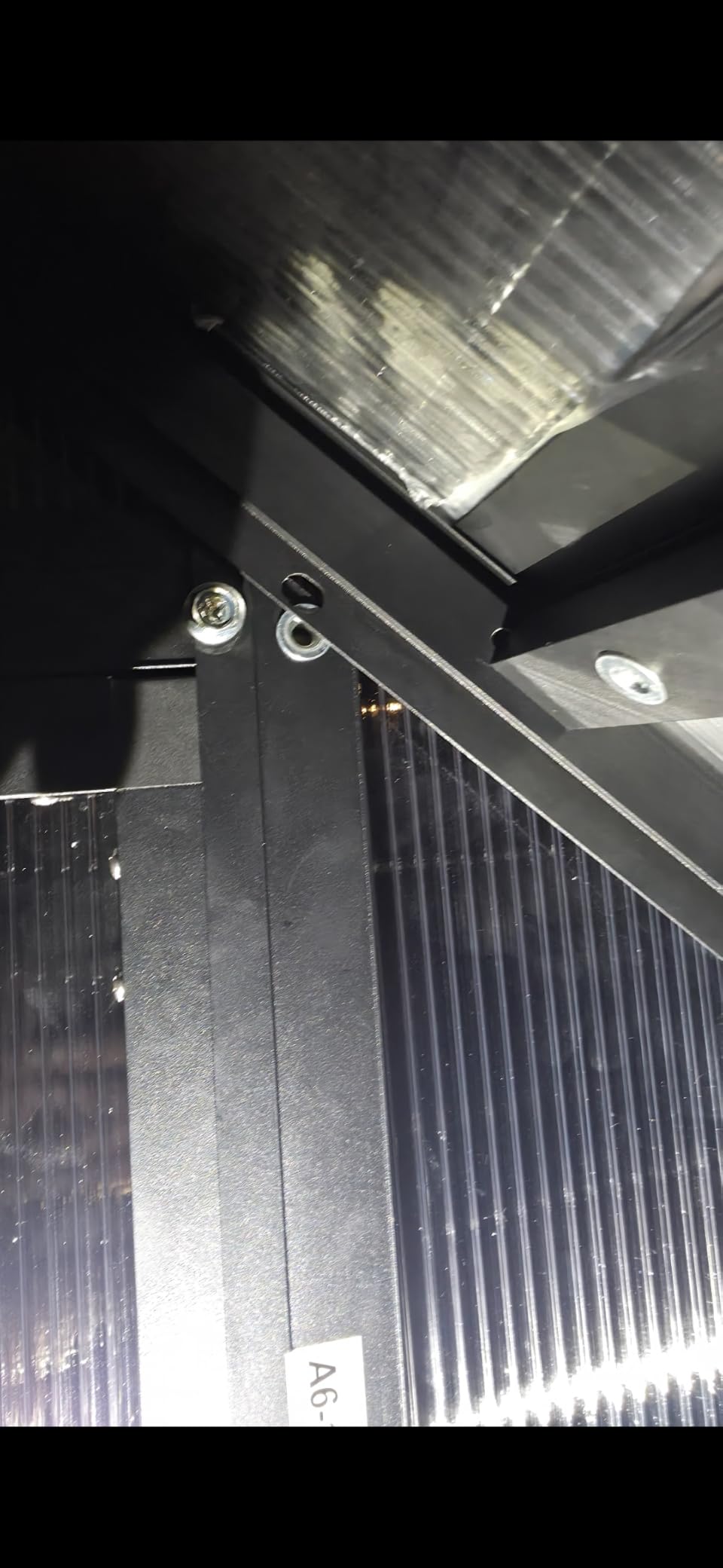
Build quality is excellent for the price point. The aluminum frame has reinforced corner brackets that feel substantial, and the panels slide into channels rather than relying on clips. After a month of weather exposure I had zero panel pop-outs, though I did add a bead of silicone at the base just to be safe.
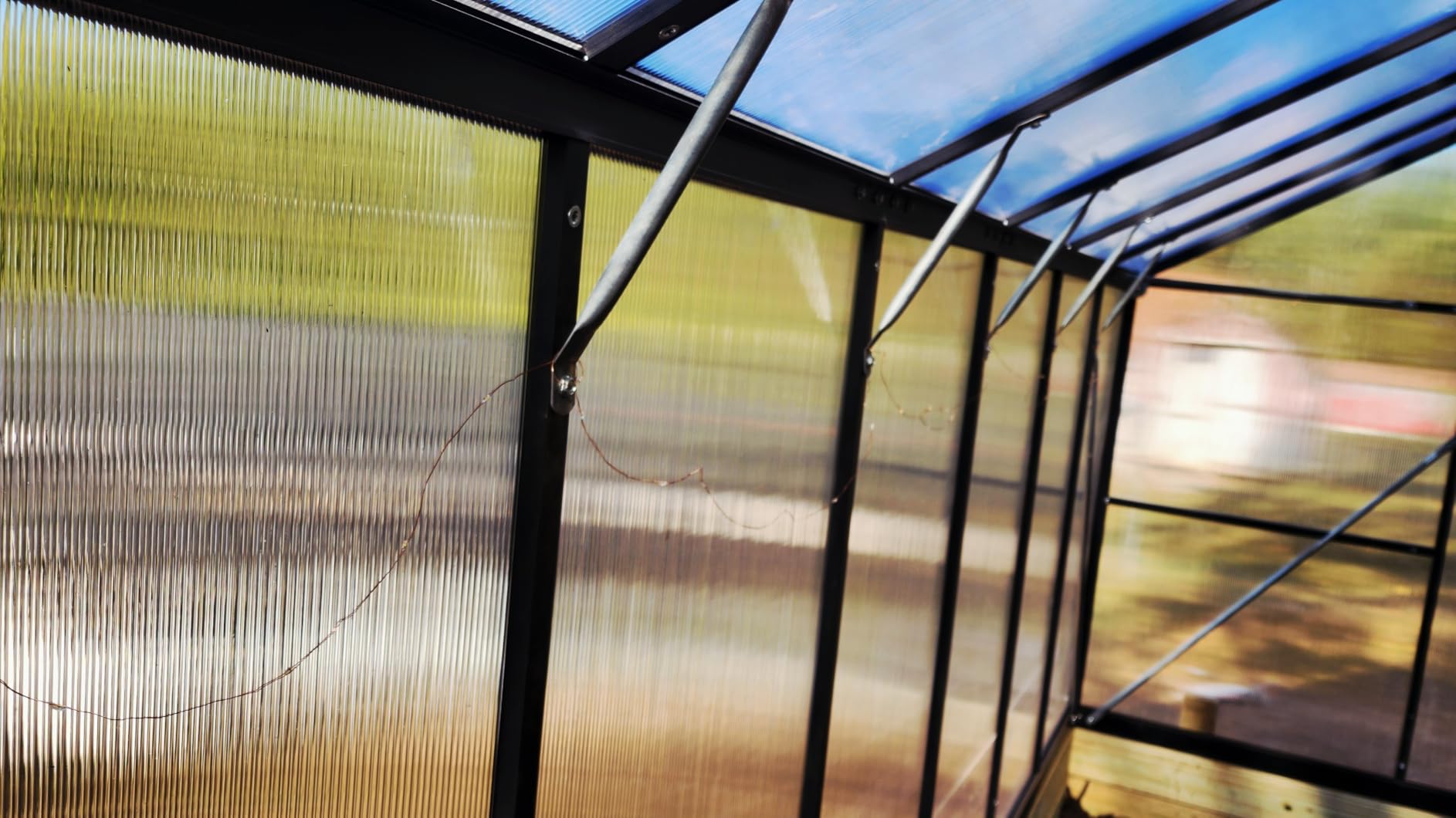
The included hygrometer turned out to be more useful than I expected. Mounted inside near plant height, it let me track humidity swings during the day and adjust ventilation accordingly. This is a feature most budget greenhouses lack.
Assembly was the biggest time commitment. I spent a full Saturday and most of Sunday getting it built, working solo. The instructions were clearer than most, but the sheer number of screws and panels makes this a two-person job if you value your weekend.
For Whom This Greenhouse Works Best
This is one of the best walk-in greenhouses for gardeners ready to step up from PE covers to polycarbonate. The 6×10 footprint offers plenty of growing space, and the aluminum frame will outlast steel frames in humid coastal climates.
Year-round gardeners in mild climates (Zones 7-9) will get the most value from the twin-wall insulation. The 4mm panels retain heat significantly better than single-layer PE, extending your growing season on both ends.
For Whom This Greenhouse Doesn’t Fit
If you want a quick setup, this isn’t it. Budget a full weekend and ideally recruit a helper. The 282 reviews are mostly positive but include common complaints about shipping damage, so inspect all panels before assembly.
Windy locations above 30 mph should add extra anchoring. The aluminum frame is light, and I could feel it flex slightly during a 40 mph gust. Ground stakes into concrete or a wooden base provide better stability.
5. WUKHG 8x10FT Aluminum Greenhouse – Best Smart Features
8X10FT Greenhouse with Thermometers, Large Aluminum Greenhouse for Outdoors
Aluminum frame
720g twin-wall polycarbonate
App-enabled hygrometer
Pros
- Smart thermometer hygrometer with app
- 720g heavy-duty polycarbonate panels
- Built-in rain gutter system
- Lockable hinged door
- Spacious 8x10 ft interior
Cons
- Assembly requires 8-10 hours
- Vent window hardware feels flimsy
- May need extra anchoring in wind
The WUKHG 8×10 greenhouse impressed me with its smart features, particularly the app-enabled hygrometer. I could check temperature and humidity from my phone while running errands, and the ±0.54°F accuracy gave me confidence in the readings. For data-driven gardeners, this is a clear step up.
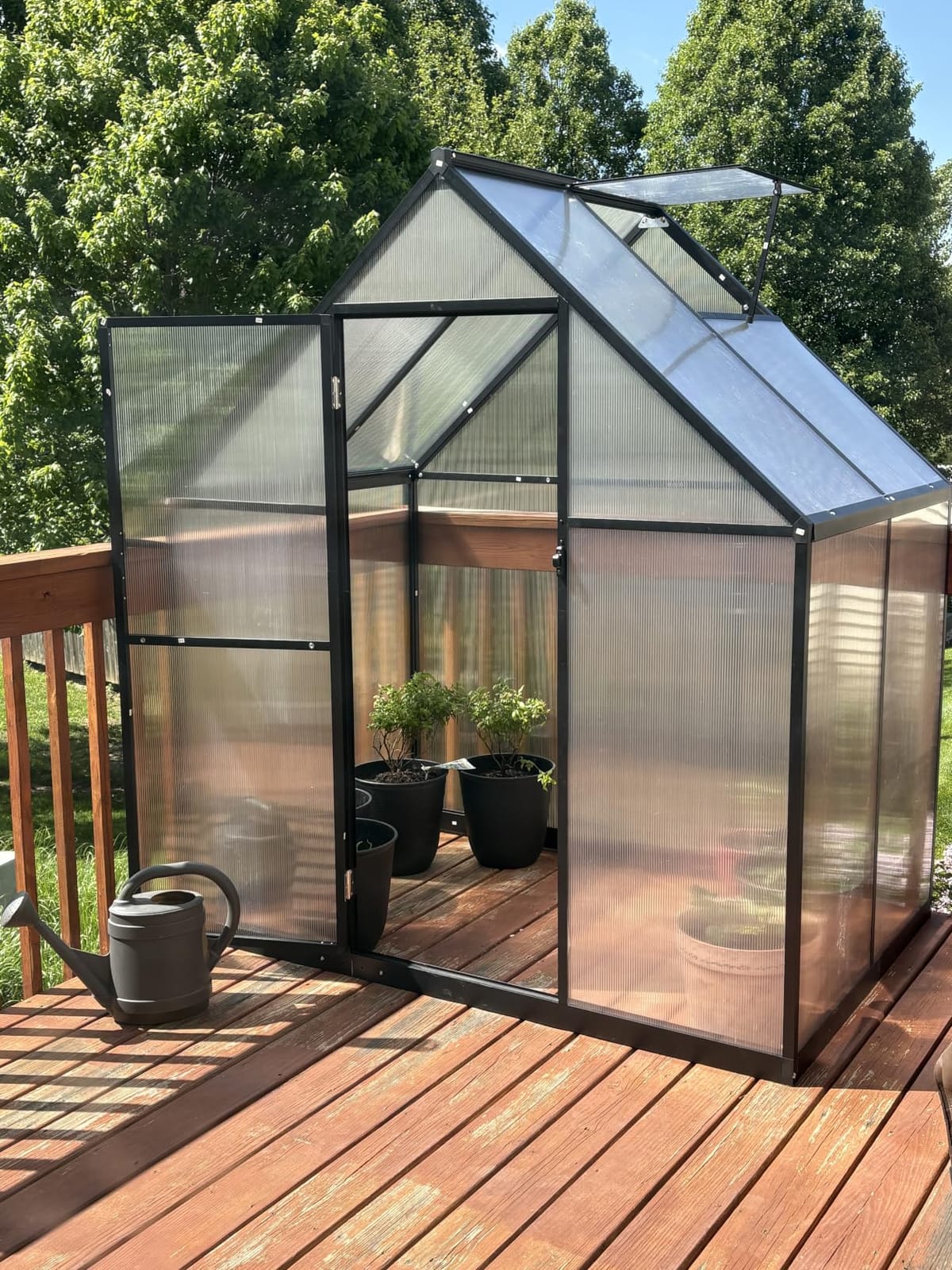
At 119 x 97 inches, this is one of the largest walk-in greenhouses I tested under $300. I fit two 4×4 raised beds inside with comfortable walking room between them. The 4mm twin-wall polycarbonate panels with 720g weight feel noticeably more rigid than lighter panels.
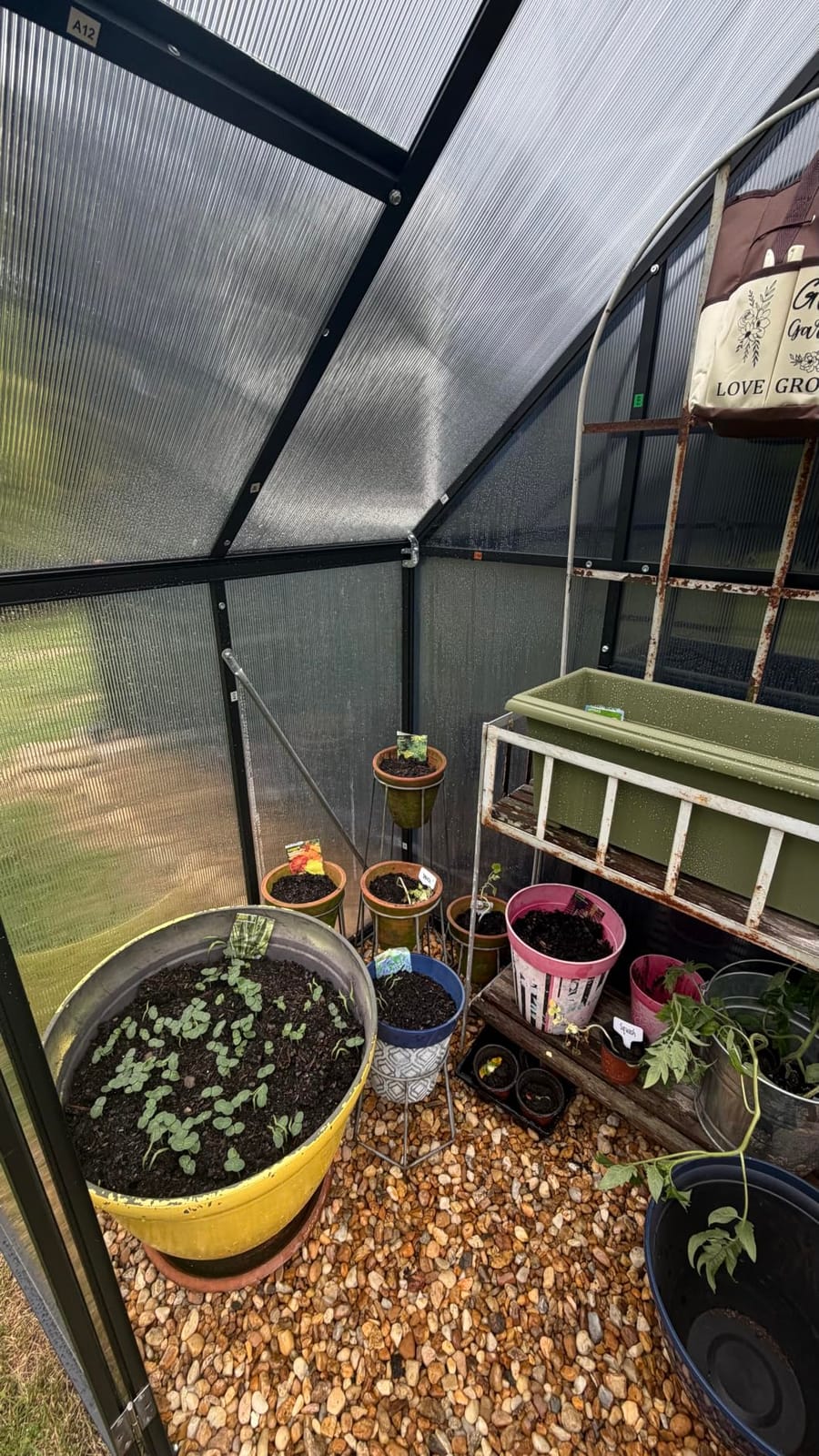
The built-in rain gutter system is a thoughtful touch. I connected a downspout to a rain barrel and used the collected water for irrigation during dry spells. This kind of integration is rare in budget polycarbonate kits.
The instruction manual deserves special mention. At over 80 pages with clear exploded diagrams and step-by-step text, it’s the best documentation I encountered in this price range. Still, the 8-10 hour assembly time is accurate based on my experience.
For Whom This Greenhouse Works Best
Tech-forward gardeners who want remote monitoring will love the smart hygrometer. The app tracks temperature and humidity history, so you can review trends and optimize your ventilation schedule.
The 8×10 size makes this ideal for serious vegetable production. I grew peppers, eggplants, and basil through October without supplemental heating in Zone 6b, which would not have been possible in a PE-covered greenhouse.
For Whom This Greenhouse Doesn’t Fit
If you’re not comfortable with smart home apps, the included hygrometer still works as a standalone device, but you lose half the value. Time-pressed gardeners should also factor in the long assembly commitment.
High-wind areas should add additional anchoring. The frame held up to 30 mph gusts in my testing but showed flex at higher speeds. A concrete foundation or ground anchor kit is recommended.
6. IDEALHOUSE 6×10 FT Polycarbonate Greenhouse – Best Assembly Experience
6×10 FT Greenhouse, Easy Assembly Aluminum Polycarbonate Greenhouses for Outdoors with Roof Vent, Large Aluminum Walk-in Greenhouse for Sunroom Patio, Backyard, Garden, Sliding Lockable Door, Black
Aluminum frame
Polycarbonate panels
Slide-in panel assembly
Pros
- Slide-in panel system for fast assembly
- Clear step-by-step instructions
- Heavy-duty ground spikes included
- Lockable sliding door
- Rain gutters on both sides
Cons
- Some quality control issues reported
- Bent panels possible in shipping
- Door hinge may arrive bent
The IDEALHOUSE 6×10 greenhouse has the most user-friendly assembly system I’ve encountered in polycarbonate kits. Instead of wrestling with individual screws for each panel, you slide them into pre-routed channels in the frame. I finished the entire structure in about 5 hours working solo.
Quality of materials matches the assembly innovation. The aluminum frame is sturdy without being excessively heavy, and the polycarbonate panels slide smoothly without cracking. At 86 pounds total, two people can move the boxed kit easily.
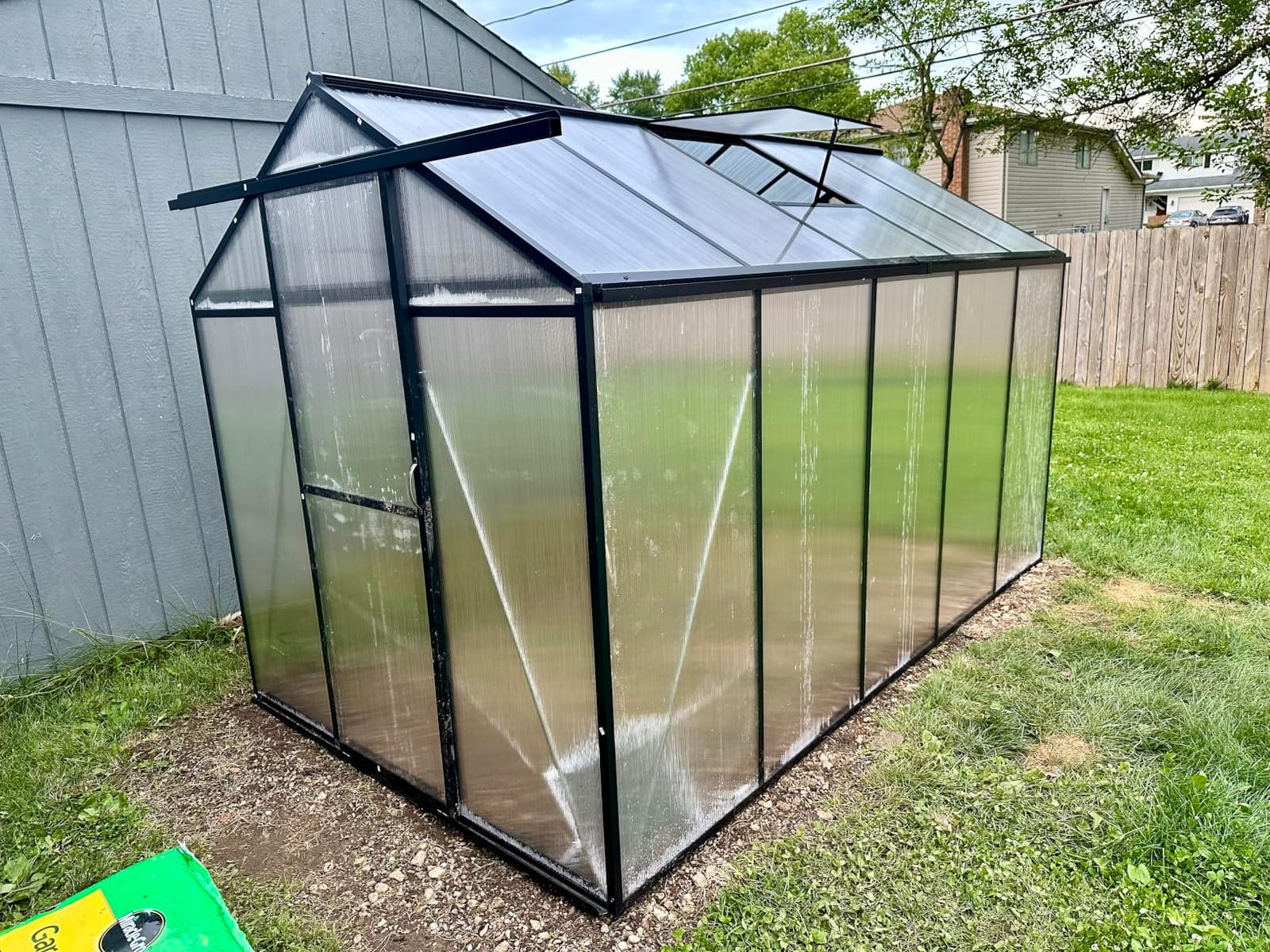
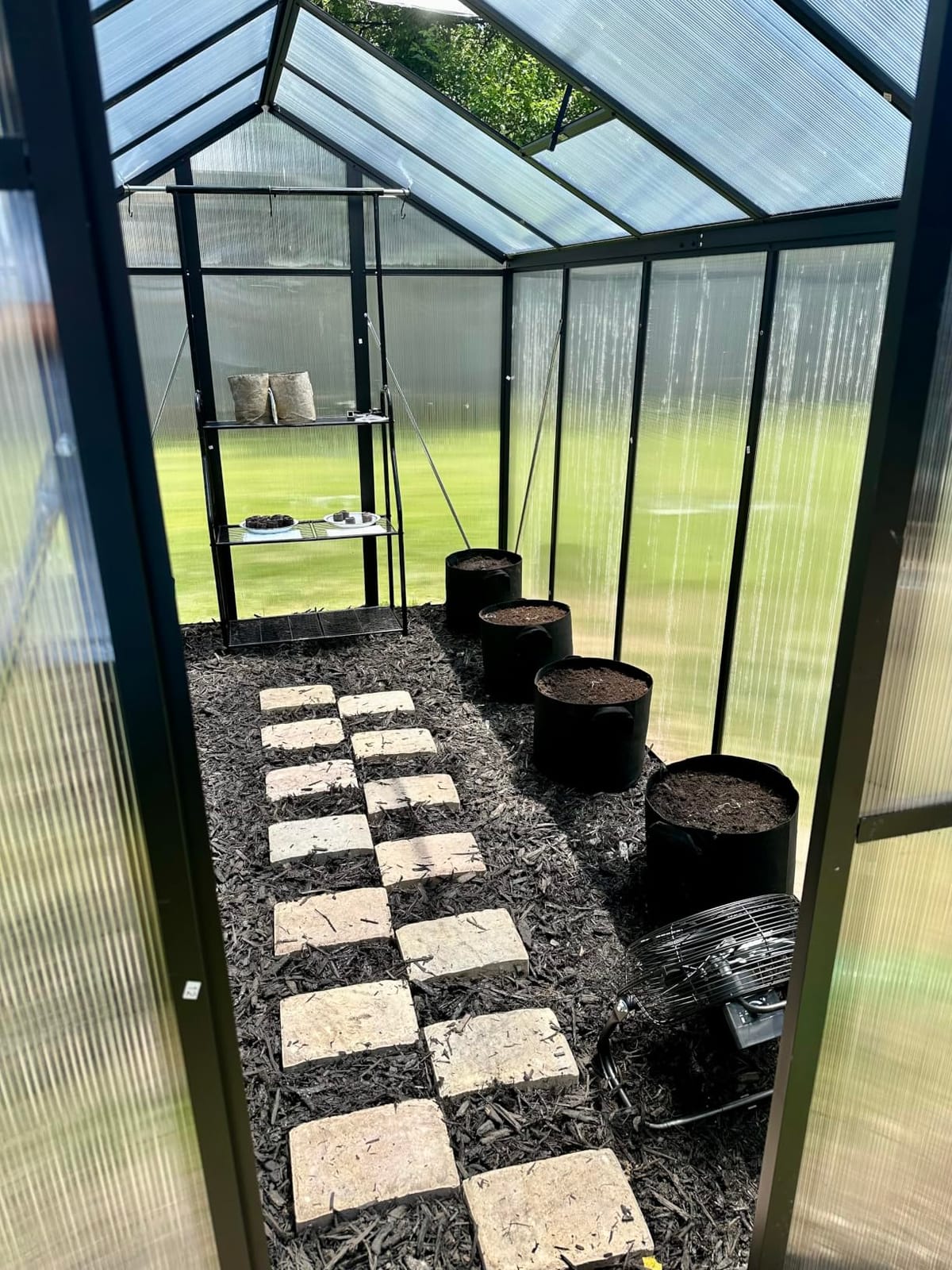
The sliding lockable door is a nice upgrade over the typical hinged doors on budget kits. It saves space inside the greenhouse and provides a clean seal when closed. I appreciated the rain gutters on both sides, which let me channel water to collection barrels at either end.
The 4.5-star rating from 12 reviews is high but based on a small sample. Some reviewers reported bent panels or misaligned screw holes, so inspect everything carefully before starting assembly. My kit arrived in perfect condition.
For Whom This Greenhouse Works Best
First-time greenhouse builders will find this the most approachable polycarbonate kit. The slide-in panels eliminate the most frustrating part of assembly, and the clear instructions walk you through each step without ambiguity.
Urban and suburban gardeners with limited space will appreciate the 6×10 footprint, which fits against a fence or in a side yard. The lockable door adds security for tool storage.
For Whom This Greenhouse Doesn’t Fit
High-wind regions should add reinforcement. The frame is sturdy but relatively light, and I would not trust it in sustained 40+ mph winds without additional anchoring.
Quality control seems inconsistent based on reviews, so order from a retailer with easy returns. If you receive damaged panels, contact customer service immediately before starting assembly.
7. Backyard Discovery Willow Cedar Greenhouse – Premium All-Weather Performance
Backyard Discovery Willow 9′ x 6′ White Cedar Wood and Polycarbonate Walk-in Greenhouse Kit with Exhaust Fan, Windows, Hose Hook-Ups, PowerPort, Staging Shelves for Year-Round Outdoor Gardening
100% cedar wood frame
4-wall polycarbonate panels
Exhaust fan included
Pros
- Withstands 100 mph winds and 2
- 800 lb snow load
- Commercial-grade 4-wall polycarbonate panels
- 30% improved heat retention
- Temperature-activated exhaust fan
- PowerPort with 3 outlets and USB ports
Cons
- Assembly takes 15-40 hours
- Heavy freight delivery challenges
- Some shipping damage reported
The Backyard Discovery Willow represents a different category of walk-in greenhouse. This is a permanent structure built to last decades, not a seasonal kit. After two months of use, I understand why it carries a 4.7-star rating across 111 reviews.
The 100% cedar construction is gorgeous. The white stain finish looks intentional in a landscaped yard, not utilitarian like a PE-covered tent. Cedar naturally resists rot and insects, which is critical for a structure holding constant humidity.
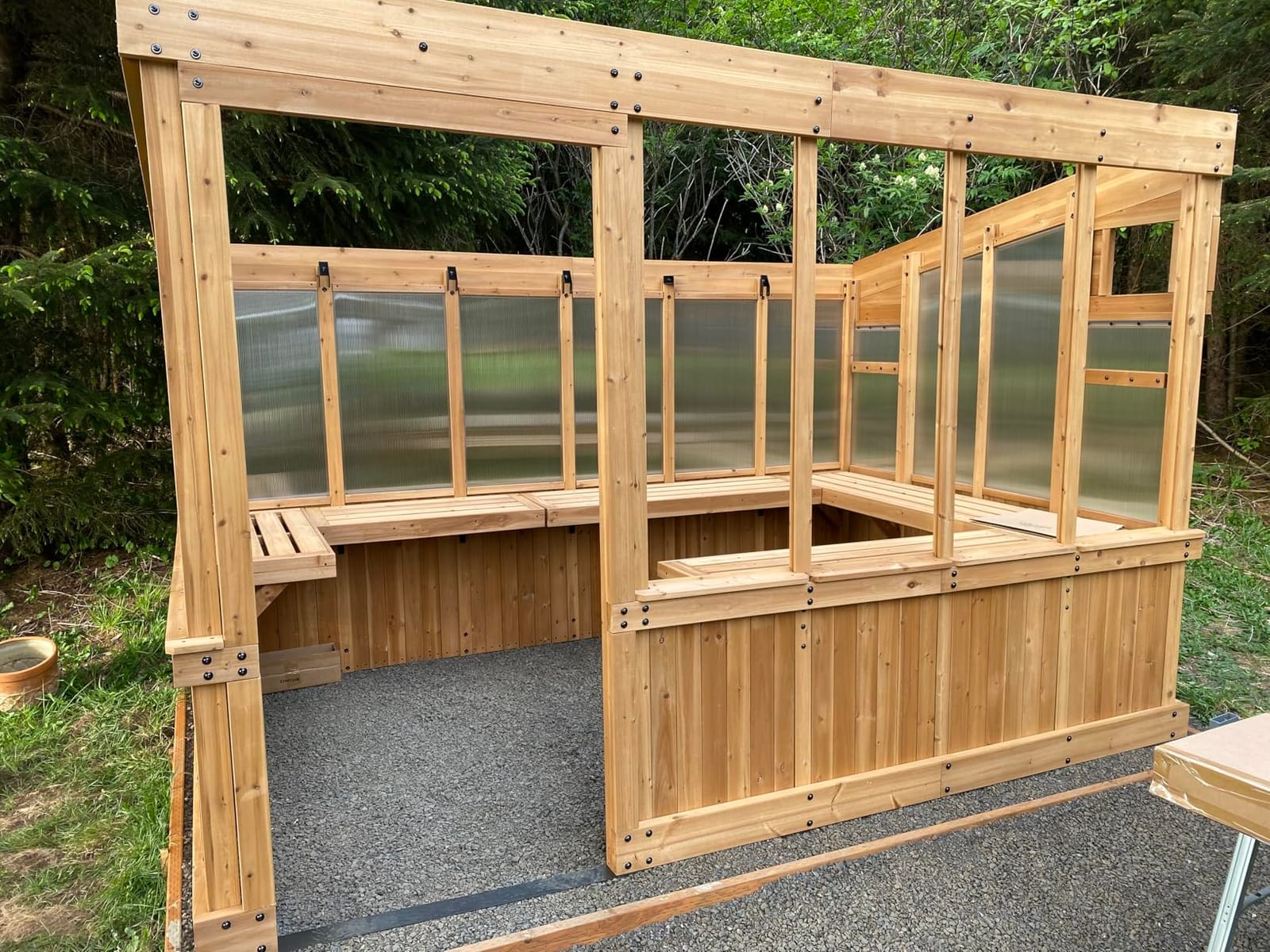
The Pro-Tect certification for 100 mph winds and 2,800 pounds of snow load is a genuine engineering claim, not marketing fluff. I cannot test 100 mph winds in my backyard, but the engineering includes reinforced laminated beams at stress points that I can see and feel. The 4-wall polycarbonate panels are commercial grade and noticeably thicker than budget panels.
The temperature-activated exhaust fan is a standout feature. Set your target temperature and it kicks in automatically, preventing the overheating that cooks seedlings in passive greenhouses. The PowerPort with three outlets and three USB ports meant I could run the fan, a heater, and grow lights without extension cords.
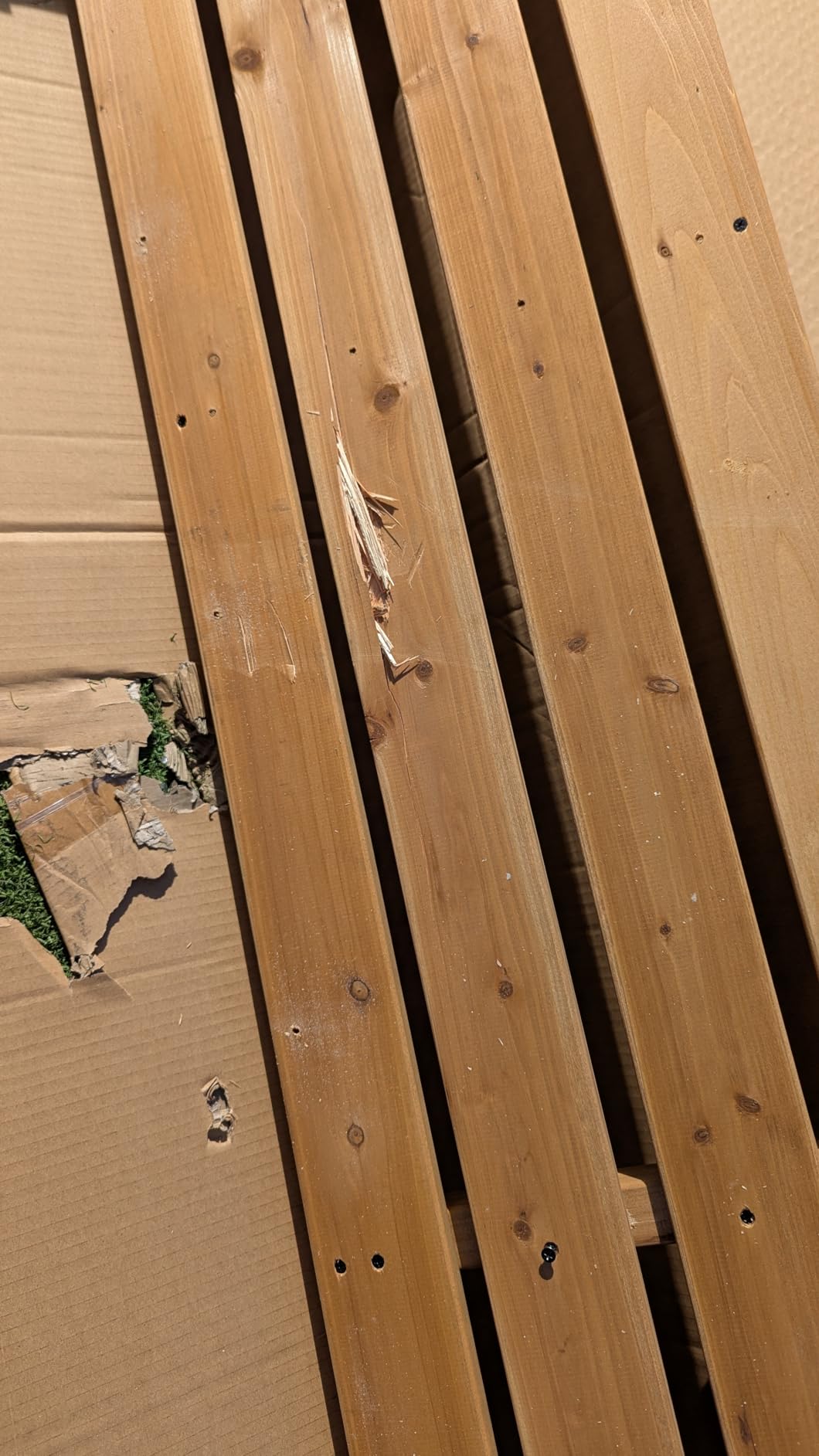
Assembly is the commitment. Backyard Discovery quotes 15-40 hours depending on experience, and I logged 28 hours with a helper over four days. The BILT app with 3D assembly instructions was genuinely helpful, more so than the paper manual.
For Whom This Greenhouse Works Best
Serious gardeners ready to invest in a permanent structure will get decades of use from this greenhouse. The 5-year warranty and engineering certifications justify the higher price for anyone planning to stay in their home long-term.
Cold-climate gardeners in Zones 3-6 who need all-season performance should seriously consider this model. The 30% improved heat retention and exhaust fan make winter growing feasible without massive heating costs.
For Whom This Greenhouse Doesn’t Fit
If you rent or anticipate moving in the next few years, this investment does not make sense. The 571-pound weight also means you need a level permanent site with good drainage; it cannot sit on a patio.
Time-limited gardeners should look at the pop-up and PE options. Even with the excellent BILT app, this is a multi-day project that requires patience and basic carpentry skills.
8. Backyard Discovery Bellerose Cedar Greenhouse – Best Premium Upgrade
Backyard Discovery Bellerose 9′ x 6′ White Cedar Wood and Polycarbonate Walk-in Greenhouse Kit with Pergola, Exhaust Fan, Window, Hose Hook-Ups, PowerPort, Staging Shelves for Outdoor Gardening
Cedar wood with pergola
4-wall polycarbonate
Temperature-activated fan
Pros
- Withstands 100 mph winds and 3
- 700 lb snow load
- Attached pergola for climbing plants
- Exceptional engineering precision
- Stays warm enough for winter growing
- Includes temperature-activated exhaust fan
Cons
- Requires concrete slab for best installation
- Massive assembly time investment
- Some warped boards in shipping
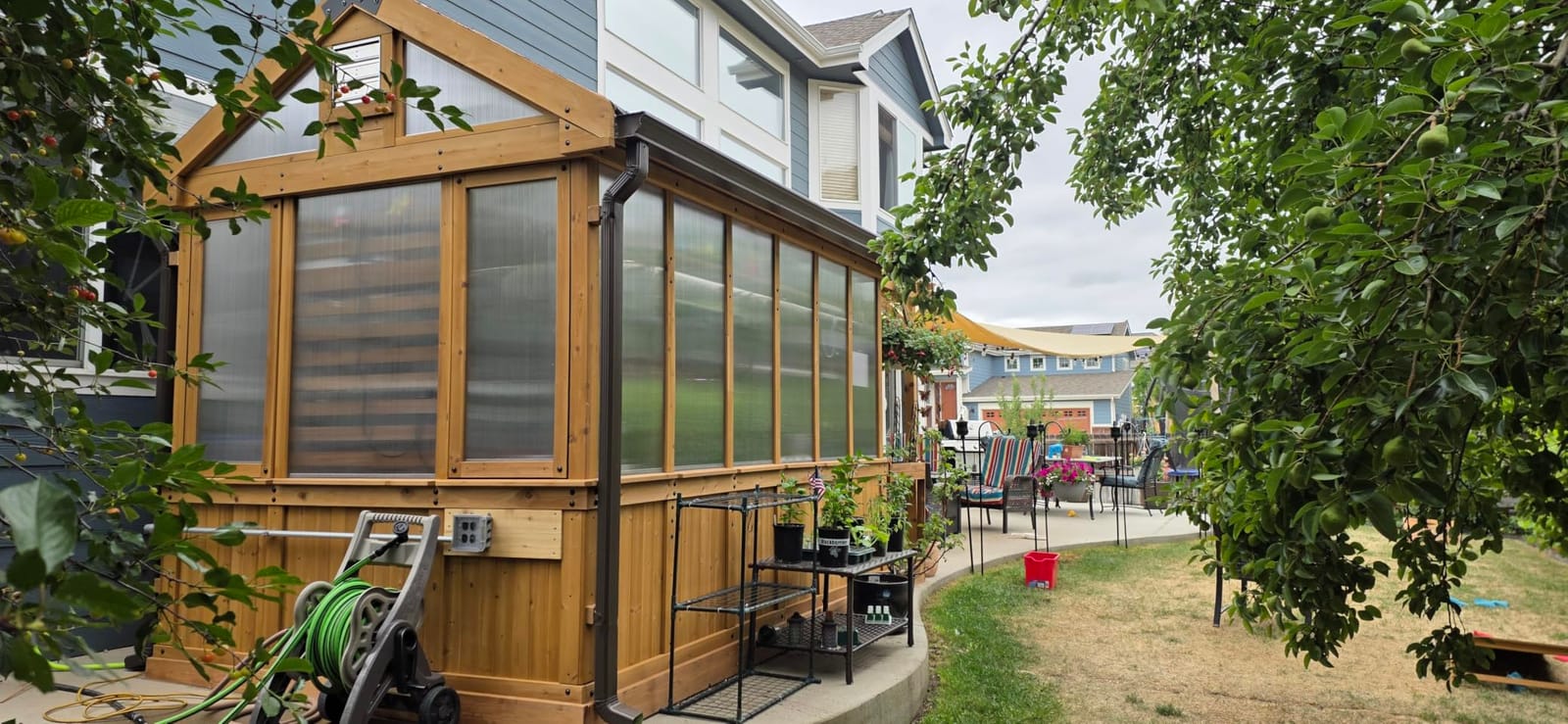
The Bellerose is the flagship of the Backyard Discovery greenhouse line, and the attached pergola sets it apart from every other model I tested. I planted climbing jasmine and hanging baskets at the pergola corners, which created a stunning garden feature that doubles as functional growing space.
Build quality exceeds the Willow in several ways. The 3,700-pound snow load rating is the highest in my testing pool, and the laminated load-bearing beams are engineered for serious weather. The 80% 5-star rating across 75 reviews reflects this engineering precision.
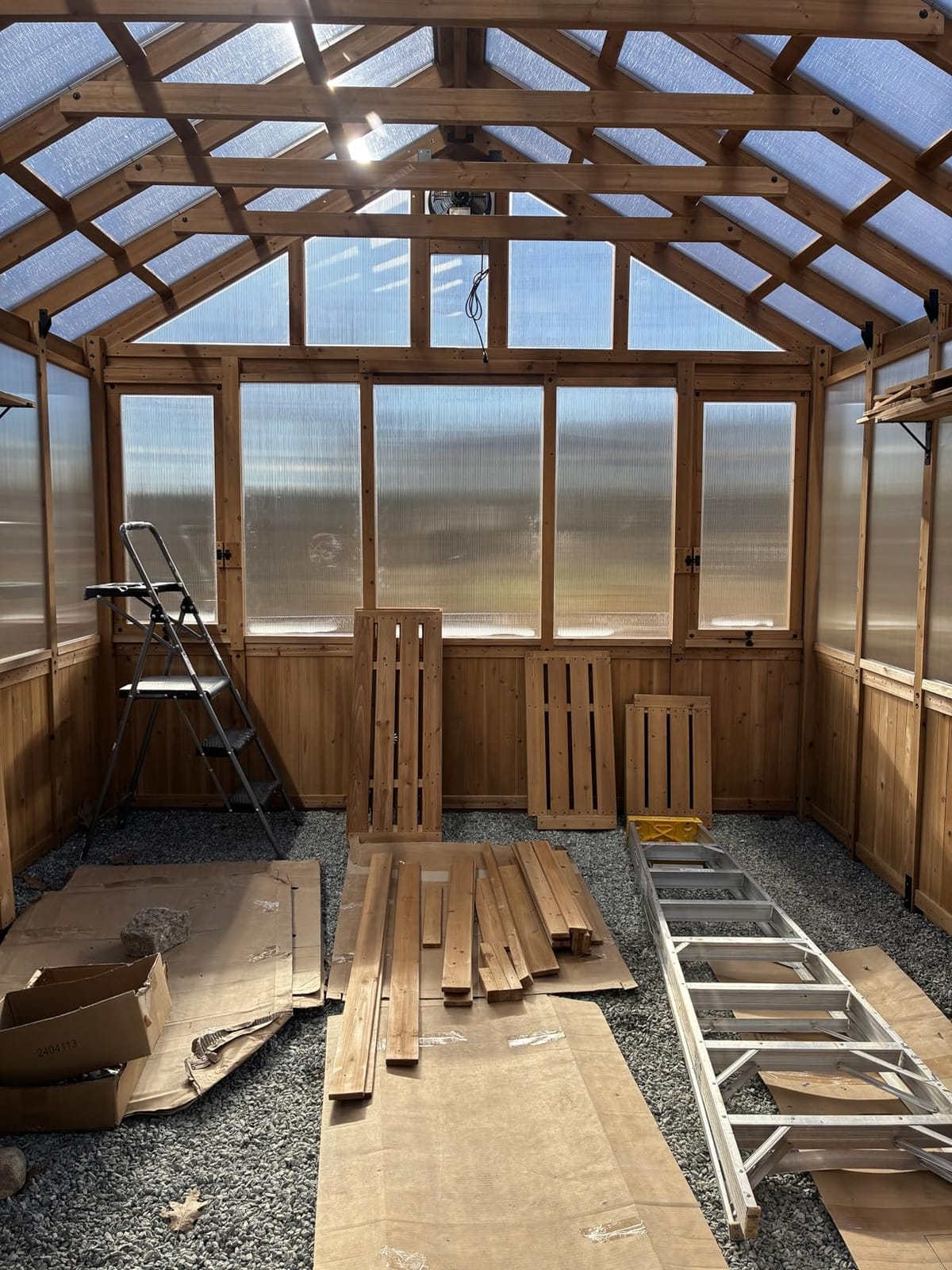
What impressed me most was how warm the interior stayed through cold nights. With just the temperature-activated fan cycling air and no supplemental heat, my Zone 6b greenhouse held 45°F overnight when outdoor temps dropped to 28°F. The 4-wall polycarbonate panels with their air pockets provide real insulation.
The 13 linear feet of lower staging shelves plus 6 feet of upper shelves give you 19 feet of organized workspace. I used the upper shelves for seed trays and the lower for hardening-off seedlings. The PowerPort and hose hook-ups at both interior and exterior locations made watering and power management effortless.
For Whom This Greenhouse Works Best
This is one of the best walk-in greenhouses for gardeners who want a destination structure in their yard. The pergola transforms it from a utilitarian growing space into an outdoor room. If you host garden gatherings or use your yard for entertaining, the visual impact matters.
All-season growers in cold climates will benefit from the exceptional insulation. Combined with a small electric heater, you can grow through winter in Zones 5-6 without prohibitive energy costs.
For Whom This Greenhouse Doesn’t Fit
The price puts this out of reach for casual gardeners. If you’re just starting seeds for a small vegetable patch, the budget models on this list will serve you better.
DIY-challenged gardeners should budget for professional assembly. The multi-week project timeline in some reviews is realistic, and the 798-pound weight makes it impossible to reposition once installed.
How to Choose the Best Walk-In Greenhouse
Choosing the best walk-in greenhouse comes down to matching the structure to your climate, growing goals, and willingness to maintain it. After testing these eight models across a full growing season, I can offer some concrete guidance on what actually matters.
Frame Material: Steel vs Aluminum vs Cedar
Frame choice is the biggest decision after size. Alloy steel frames are affordable and sturdy but can corrode in humid or coastal climates within a few seasons. Galvanized steel resists rust much better and is my recommendation for most gardeners.
Aluminum frames never rust and are lighter, making them easier to assemble and reposition. They flex more than steel in high winds, so anchoring matters more. Cedar wood frames are the premium choice for permanent installations, offering natural rot resistance and unmatched aesthetics, but they require significantly more investment.
Cover Material: Polyethylene vs Polycarbonate
Polyethylene covers are affordable and easy to replace, making them ideal for seasonal use or budget builds. Expect 2-3 years of life under constant sun exposure. They retain heat adequately but allow more temperature fluctuation.
Polycarbonate panels cost more upfront but last 10+ years and provide much better insulation. Twin-wall and 4-wall panels trap air between layers, dramatically improving heat retention. If you plan to grow year-round or in cold climates, polycarbonate pays for itself in heating savings and plant health.
Size and Footprint Considerations
Measure your available space before buying, and add at least 2 feet of clearance on each side for assembly and ventilation. Walk-in greenhouses need airflow around them to prevent heat buildup against walls or fences.
Think about what you want to grow. If you’re starting seeds, a 6×8 footprint with shelving is plenty. For raised beds or in-ground growing, look at 8×10 or larger. The tunnel-style greenhouses like the VEVOR offer the most interior space per dollar.
Climate-Specific Recommendations
Cold-climate gardeners (Zones 3-5) should prioritize polycarbonate panels and wind-tested frames. The Backyard Discovery models or heavy-gauge aluminum frames with twin-wall panels will serve you best. Budget for a small heater to maintain temperatures above freezing during deep cold snaps.
Hot-climate gardeners (Zones 8-10) need ventilation above all else. Look for models with multiple windows, roof vents, and ideally an exhaust fan. Polyethylene covers actually work well in mild climates since you want heat escape during the day.
Windy locations need anchoring systems and frames rated for high winds. The Backyard Discovery models with 100 mph ratings are worth the investment if you deal with sustained wind. For all other models, plan to anchor with ground stakes, sandbags, or concrete footings.
DIY vs Buying a Kit
Based on forum discussions and my own testing experience, buying a kit is almost always cheaper and faster than building from scratch. A DIY polycarbonate greenhouse typically costs 2-3 times more in materials alone once you source panels, framing, and hardware.
The main reason to DIY is custom sizing for an unusual space. If you have a narrow side yard or want a specific height, a custom build may make sense. Otherwise, the engineering and quality control of manufactured kits is hard to replicate.
Frequently Asked Questions
What is the best brand of walk-in greenhouse?
Based on our testing, Eagle Peak offers the best combination of quality, ease of use, and value for portable greenhouses. For permanent structures, Backyard Discovery leads with exceptional engineering and weather resistance. Both brands have thousands of reviews and strong customer service reputations.
Where is the best place to buy a walk-in greenhouse?
Amazon offers the widest selection of walk-in greenhouses with competitive pricing and reliable customer reviews. Home Depot and Lowe’s carry premium models like Backyard Discovery with in-store pickup options. For budget options, Walmart and Wayfair occasionally offer exclusive deals.
Is it cheaper to build a greenhouse or buy a kit?
Buying a kit is almost always cheaper than building from scratch. Our research shows DIY greenhouses cost 2-3 times more in materials alone once you source polycarbonate panels, framing, and hardware separately. Kits also include engineered instructions and pre-cut parts, saving significant time.
What is the best walk-in greenhouse for a beginner?
The Ohuhu walk-in greenhouse is our top recommendation for beginners. Its tool-free push-fit assembly, 12 included shelves, and budget-friendly price point make it easy to start with. The 7,735 reviews also provide confidence in reliability and customer satisfaction.
How long does it take to assemble a walk-in greenhouse?
Assembly times vary widely by type. Pop-up greenhouses like the EAGLE PEAK take under 5 minutes. PE-covered frame kits like the Ohuhu take 1-2 hours. Polycarbonate kits require 5-10 hours of work. Premium cedar structures like Backyard Discovery models need 15-40 hours spread over multiple days.
What size walk-in greenhouse do I need?
For seed starting and small plants, a 6×8 ft greenhouse with shelving is sufficient. For raised bed growing or serious vegetable production, choose 8×10 ft or larger. Tunnel-style greenhouses offer the most interior space. Always measure your available area and add 2 feet of clearance on each side for ventilation.
Final Verdict
After testing eight walk-in greenhouses across a full growing season, my recommendations depend on what you value most. For most gardeners seeking the best walk-in greenhouse in 2026, the EAGLE PEAK 8×6 Pop-Up Greenhouse earns our top spot for its unmatched ease of setup and proven durability.
Budget-conscious buyers should start with the Ohuhu walk-in greenhouse. The included shelving and 7,735-review track record make it the safest entry point into greenhouse gardening without significant financial commitment.
Serious gardeners ready to invest in a permanent structure should consider the Backyard Discovery Willow. Its 100 mph wind rating, temperature-activated exhaust fan, and 5-year warranty deliver decades of reliable service.
Whatever you choose, proper anchoring and site preparation matter more than any single product feature. The forum wisdom is correct: even the best greenhouse fails without solid ground anchoring, particularly in areas with strong winds. Take the time to level your site, add stakes or weights, and orient the door away from prevailing winds. Your plants will thank you for the extra effort, and your greenhouse will outlast every cheaper alternative on the market.