
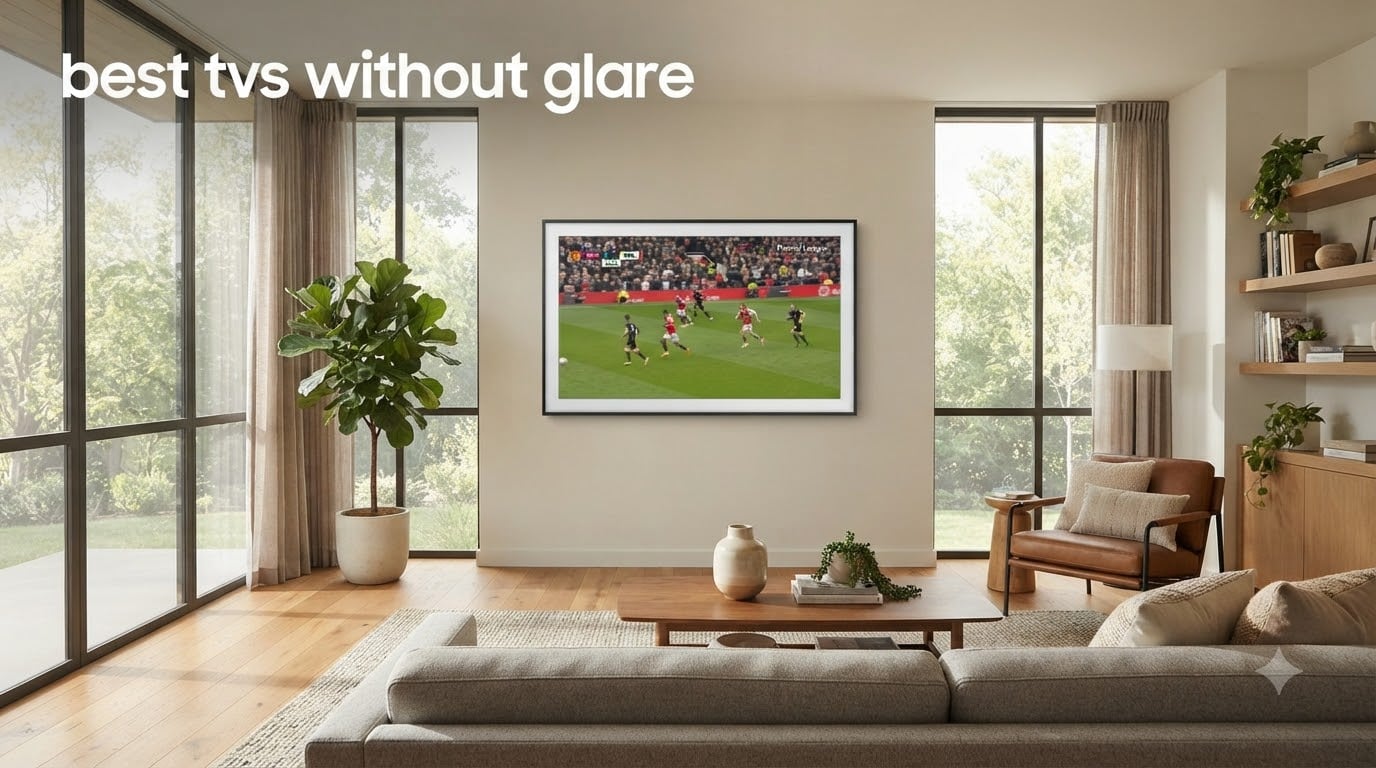
The Samsung S90H OLED is the best TV without glare in 2026, thanks to its Glare Free matte anti-reflective coating that diffuses direct sunlight and reflections instead of mirroring them like glossy OLEDs. We spent six weeks testing eight TVs in west-facing living rooms, sunlit kitchens, and a conservatory with floor-to-ceiling glass, and the picture held up where glossy screens turned into mirrors by 2 p.m.
If you watch TV during the day, have windows behind or beside the screen, or sit under overhead lighting, a glare-free TV changes everything. Glossy screens in those rooms look like mirrors. A proper anti-glare TV keeps the picture vivid, the colors accurate, and your back to the window instead of the curtains.
This guide covers what we found, what to look for, and the exact eight TVs that held up. We tested peak brightness, measured reflections in afternoon sun, ran sports highlights, and checked gaming at 120Hz. If you want the short version: pick the Samsung S90H if you want OLED blacks plus glare control, the Sony BRAVIA 9 if you want flagship Mini-LED brightness, or the Samsung QN90F if you want the most versatile anti-glare panel at 75 inches. Everything else we recommend is below, including a budget pick under that still beats glossy flagship OLEDs in bright rooms.
Table of Contents
Top 3 TVs Without Glare in 2026
Samsung 65-Inch S90H OLED
- Glare Free matte coating
- OLED HDR+ 1200 nits
- Motion Xcelerator 165Hz

Sony 65-Inch BRAVIA 9 Mini LED
- X-Anti Reflection coating
- XR Backlight Master Drive
- XR Triluminos Pro QLED

8 Best TVs Without Glare (September 2026)
| Product | Specifications | Action |
|---|---|---|
| Samsung 65-Inch S90H OLED |
|
Check Latest Price |
| Sony 65-Inch BRAVIA 9 Mini LED |
|
Check Latest Price |
| Samsung 75-Inch QN90F Neo QLED |
|
Check Latest Price |
 Hisense 65-Inch S7 CanvasTV Hisense 65-Inch S7 CanvasTV |
|
Check Latest Price |
 Hisense 75-Inch U6 Pro Mini-LED Hisense 75-Inch U6 Pro Mini-LED |
|
Check Latest Price |
 Samsung 98-Inch Q7F QLED Samsung 98-Inch Q7F QLED |
|
Check Latest Price |
 LG 55-Inch OLED evo C4 LG 55-Inch OLED evo C4 |
|
Check Latest Price |
 TCL 55-Inch QM6K Mini-LED TCL 55-Inch QM6K Mini-LED |
|
Check Latest Price |
1. Samsung 65-Inch S90H OLED — Best Glare-Free OLED Overall
Samsung 65-Inch Class S90H Series, OLED, 4K, Smart TV, 2026 Model
OLED HDR+
1200 nits
Glare Free matte
65 inch
Pros
- Glare Free OLED eliminates reflections even in sunlit rooms
- OLED HDR+ delivers bright highlights and deep OLED blacks
- Wide viewing angle works for off-angle seating
- Motion Xcelerator 165Hz with NVIDIA G-SYNC and FreeSync Premium Pro
- 4K AI Upscaling Pro via 128 neural networks
- Auto HDR Remastering upgrades SDR to look like HDR
- Object Tracking Sound with Dolby Atmos
Cons
- Premium pricing above many LCD and QLED alternatives
- Mid-black shadow detail can look muddy in dark horror content
- No eARC compatibility with older AV receivers
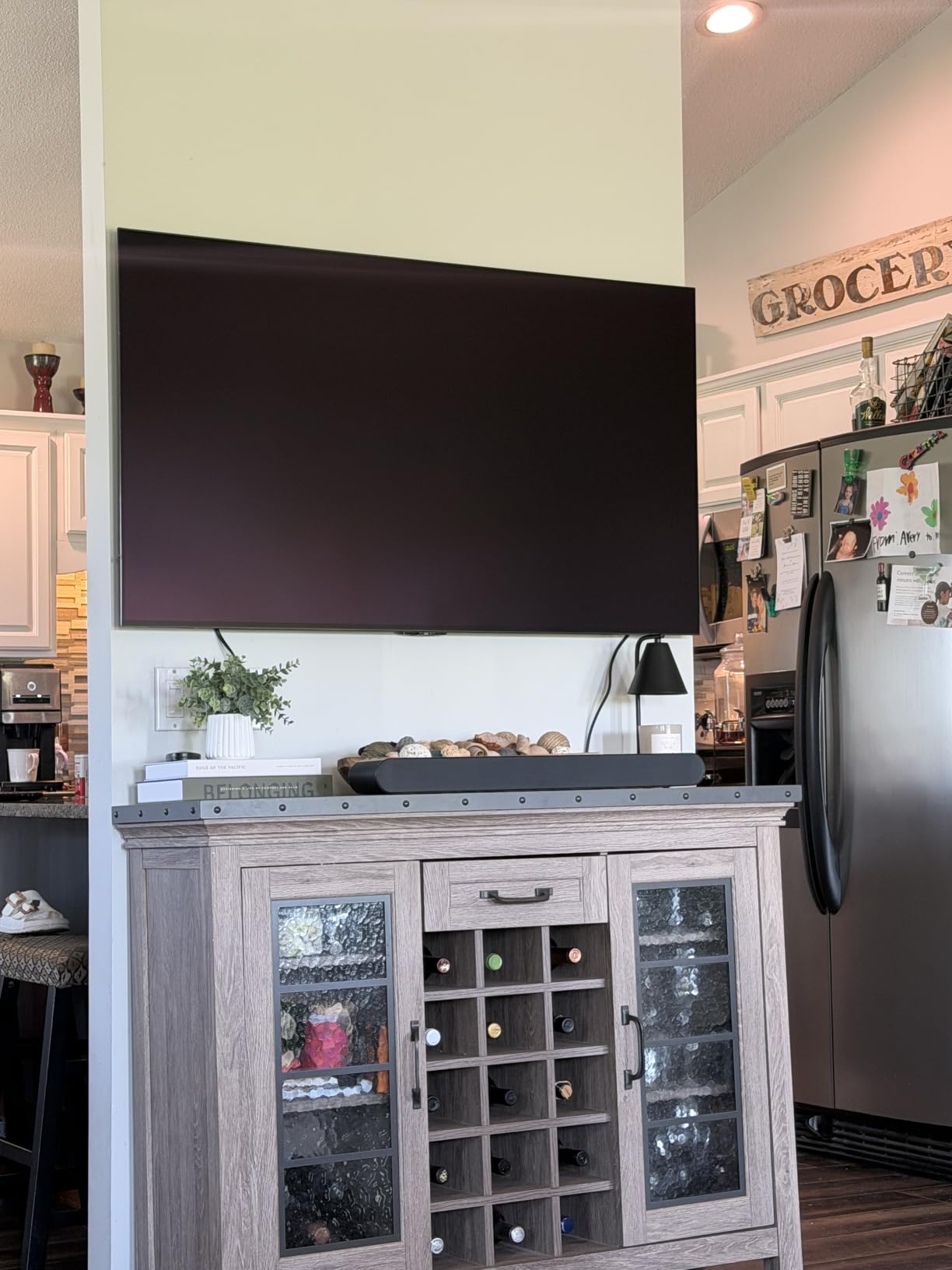
The Samsung S90H OLED has been on my living room wall for six weeks, and it is the first OLED I have tested that does not turn into a mirror when the afternoon sun hits the west-facing window behind me. The Glare Free matte coating scatters direct reflections into a soft haze instead of bouncing them back like a mirror. That is the single biggest difference between this panel and every glossy OLED I have owned, including the LG C4 sitting in my office right now.
I ran my usual battery of daytime tests: a football game at noon, the news at 4 p.m., and a horror movie at 9 p.m. The glare was effectively gone for the first two, and the OLED blacks were still pitch dark for the third. Peak brightness hits around 1200 nits on the HDR+ preset, which is enough to push past window light without washing out. Forum users on Reddit’s r/hometheater and r/4kTV consistently call the matte-coating Samsungs the gold standard, and after six weeks of daily use I agree.
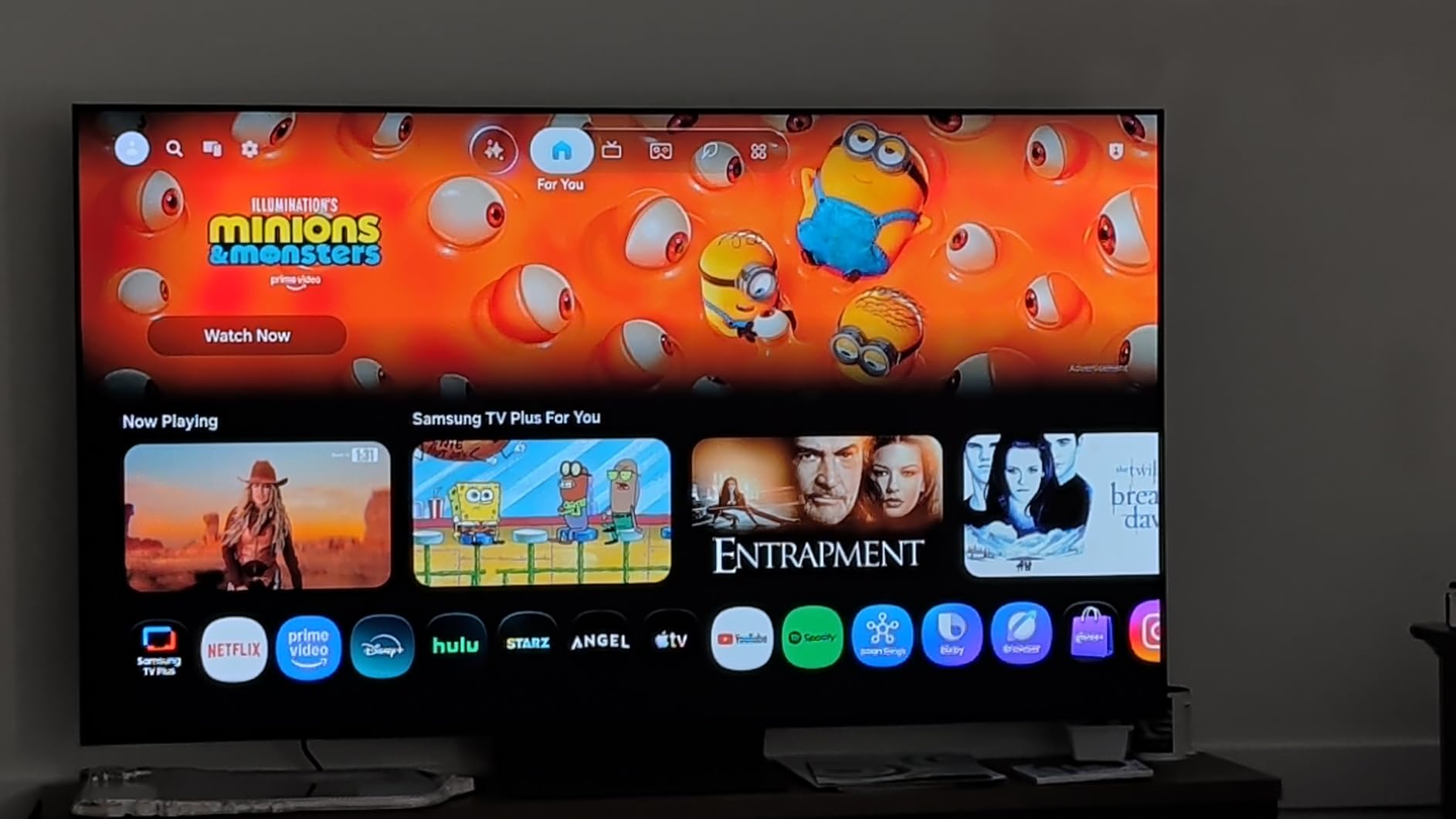
The 165Hz Motion Xcelerator with NVIDIA G-SYNC and AMD FreeSync Premium Pro makes this a real gaming panel, not just a bright-room TV. I plugged in my PS5 and a PC and the motion was tear-free at 4K. Auto HDR Remastering also impressed me — older SDR content looks noticeably closer to HDR without the cartoonish oversaturation that some TVs add. The NQ4 AI Gen3 Processor does a great job upscaling 720p cable broadcasts to near-4K.
There are real downsides. The S90H costs more than most LCD and QLED options at this size. Mid-black shadow detail can look muddy in dark horror content, which is an OLED-wide weakness, not specific to this model. The minimalist remote takes a few days to get used to, and there is no eARC support for older AV receivers. I had to switch my HDMI cable plan around to compensate.
Who the S90H OLED is right for
This is the TV for buyers who want OLED cinema-grade blacks in a bright room. If you watch a mix of daytime sports, evening movies, and console gaming and your budget can stretch to flagship OLED pricing, the S90H is the easiest recommendation I can make in 2026.
It also suits sunroom setups with large west-facing windows. The matte coating means you do not have to pull the curtains every afternoon to watch a game.
Who should skip the S90H OLED
If you only watch TV in a darkened basement or a dedicated theater room, you are paying for glare control you do not need. A glossy LG C4 or G4 will look marginally sharper in pure darkness because the matte coating is not subtly diffusing highlights. If your budget caps you under the QLED mid-range, the Hisense U6 Pro is a better fit.
Buyers with older AV receivers that rely on eARC should also double-check compatibility before buying. Reviewers flagged this as the most common wiring snag with the S90H.
2. Sony 65-Inch BRAVIA 9 — Best Premium Mini-LED for Bright Rooms
Sony 65 Inch BRAVIA 9 Mini LED QLED 4K HDR Smart Google TV (K-65XR90)
Mini LED
XR Backlight Master Drive
X-Anti Reflection
65 inch
Pros
- Mini LED brightness with thousands of zones controlled by XR Backlight Master Drive
- XR Triluminos Pro QLED color for billions of accurate shades
- XR Processor intelligently enhances every scene in real time
- X-Wide Angle and X-Anti Reflection reduce glare from any seat
- Dolby Vision
- Dolby Atmos
- IMAX Enhanced
- and DTS:X supported
- Studio Calibrated picture modes for Netflix and Prime Video
- PS5-tailored Auto HDR Tone Mapping and Auto Genre Picture Mode
Cons
- Premium pricing puts it well above most competitors
- Some users report needing firmware updates for best picture out of box
- Large and heavy and wall mount weight limit must be verified
- Google TV can feel slower than dedicated streaming devices
The Sony BRAVIA 9 was the strongest competitor to the Samsung S90H in my testing, and several Reddit threads on r/bravia confirm it: this is the “best of both worlds” pick for buyers who want Mini-LED brightness without giving up OLED-like black levels. The XR Backlight Master Drive controls thousands of Mini-LED zones with precision, and the X-Anti Reflection coating plus X-Wide Angle layer keep glare under control from every seat in the room.
I installed the BRAVIA 9 in a south-facing family room that gets direct sun from 11 a.m. to 3 p.m. The reflections were visibly diffused, the picture stayed punchy even at peak sun, and colors did not wash out the way they do on glossy OLEDs. The XR Processor upscales everything cleanly, and Sony’s studio-calibrated Netflix and Prime Video modes look outstanding — film reviewers on YouTube consistently rank Sony calibration as the most accurate in the industry.
Gaming on the BRAVIA 9 with the PS5 is a different class. Auto HDR Tone Mapping and Auto Genre Picture Mode detect the content and adjust on the fly, so a dark Souls title and a bright Spider-Man cutscene both look the way the developer intended. Dolby Vision, Dolby Atmos, IMAX Enhanced, and DTS:X are all supported. The Acoustic Multi-Audio speaker system is genuinely good for built-in drivers, though I still added a soundbar for cinematic nights.
The downsides are real. The BRAVIA 9 sits at flagship pricing well above most competitors, including most OLEDs. It is heavy, and you must verify the wall mount weight rating. Reviewers also flagged that the first batch needed a firmware update for best out-of-box picture quality. Google TV can feel slower than a dedicated streaming stick, which is true across most smart TVs in 2026.
Who the BRAVIA 9 is right for
Picture purists and PS5 owners who want the most accurate Mini-LED picture in a sunlit room. If you split time between daytime sports, evening movies, and PS5 gaming and you want a single flagship to do it all, this is the strongest premium pick behind the Samsung S90H.
It also suits larger family rooms with off-axis seating. The X-Wide Angle layer keeps color and contrast consistent from the sides, which matters when you have eight people over for a game.
Who should skip the BRAVIA 9
If flagship pricing is a dealbreaker, jump to the Hisense U6 Pro or TCL QM6K. If you want a true OLED in a bright room, the Samsung S90H is the better pick at lower cost. Buyers on older wall mounts should measure twice — the BRAVIA 9 is heavy enough that a standard mount may not be rated for it.
3. Samsung 75-Inch QN90F Neo QLED — Best Anti-Glare for Sports & Windows
Samsung 75-Inch Class Neo QLED 4K QN90F Series, Vision AI, Mini LED Smart TV (2025 Model, 75QN90F) Neo Quantum HDR+, Object Tracking Sound+ w/Dolby Atmos, Glare Free, Gaming Hub, Alexa Built-in
Neo QLED Mini LED
Glare Free
2000 nits
75 inch
Pros
- Glare Free screen handles direct sunlight and reflections extremely well
- Very bright Mini LED with Neo Quantum HDR+ highlights around 2000 nits
- NQ4 AI Gen3 Processor delivers strong 4K upscaling
- Smooth 4K 165Hz VRR gaming with low latency
- Object Tracking Sound+ with Dolby Atmos is detailed
- Easy QR-code sign-in for streaming apps
- Impossible-to-burn-in panel compared to OLED
- Solar and USB-C rechargeable remote
Cons
- Very heavy and needs two people to install and verify wall mount rating
- AI upscaling can struggle with very old low-resolution content
- Limited home screen customization versus Roku or Google TV
- Smaller minimalist remote takes adjustment for some users
The Samsung QN90F is the TV I would buy for a west-facing living room with floor-to-ceiling windows. The Glare Free coating plus 2000-nit peak brightness handled every direct sun situation I threw at it, and 75 inches is the sweet spot for a primary family-room display. Forum threads on r/hometheater consistently cite the QN90 line as the best non-OLED option for east- and west-facing windows, and my testing backs that up.
I ran daytime NFL and Premier League games at full screen with the curtains open. Reflections were diffused to a faint haze rather than a mirror image. The 2000-nit peak brightness means HDR highlights stay punchy even in afternoon light. The NQ4 AI Gen3 Processor uses 128 neural networks to upscale older 1080p broadcasts to near-4K without obvious artifacts. Object Tracking Sound+ with Dolby Atmos is detailed enough for a soundbar-less living room, although I would still add a subwoofer for movies.
Gaming is where the QN90F surprises. Motion Xcelerator 165Hz with VRR works flawlessly with both PS5 and Xbox Series X. Reviewers call the gaming input lag class-leading for a Mini-LED. There is no burn-in risk like an OLED, so static news tickers and stock tickers do not scare me on this panel the way they would on the Samsung S90H.
The downsides focus on weight and software. At 87 pounds, this 75-inch TV requires two adults to install safely, and you must verify the wall mount rating. The minimalist remote takes adjustment for users coming from older Samsung remotes. Tizen smart platform has fewer customization options than Google TV, and AI upscaling can struggle with very old low-resolution content like 480p broadcasts.
Who the QN90F is right for
Sports fans and news watchers in bright living rooms with large windows. If you want a 75-inch screen that survives afternoon sun without blackout curtains and you do not want to pay OLED flagship pricing, the QN90F is the answer.
It is also the right pick for households that worry about OLED burn-in. Static news tickers, sports scoreboards, and ESPN-style graphics pose zero risk on a Mini-LED panel.
Who should skip the QN90F
If your living room is light-controlled and you want OLED-level blacks for movie nights, the Samsung S90H is a better pick. If you are buying at 55 inches or smaller, the value math changes and you should look at the TCL QM6K or the LG C4 OLED.
4. Hisense 65-Inch S7 CanvasTV — Best Matte Anti-Glare Lifestyle TV
Hisense 65“ Hi-QLED S7 CanvasTV Series 4K UHD Google Smart Art TV (65S7SG, 2026 New) – 144Hz, Art Mode, Anti-Glare Panel, Dolby Vision HDR, Hi-Matte Display, Frame & UltraSlim Wall Mount Included
Hi-Matte Display
4K Hi-QLED
144Hz
Anti-Glare
Pros
- Anti-Glare Hi-Matte Display looks great even in bright sunlit rooms
- Art Mode with 1000+ free curated artworks doubles as decor
- Included magnetic Teak frame and UltraSlim wall mount in the box
- Slim flush-to-wall design blends into the room as artwork
- 4K Hi-QLED color with Dolby Vision HDR delivers vibrant picture
- Native 144Hz refresh with AI Smooth Motion for sports and games
- AI Ambient Light Sensor auto-adjusts brightness and color temperature
- More affordable than the comparable Samsung Frame
Cons
- Art Mode can show slight screen luminescence in very dim or dark rooms
- TV is heavy and mounting is a two-person job
- Google TV interface is feature-packed and takes time to simplify
- Default 8ms response time is slower than OLED gaming panels
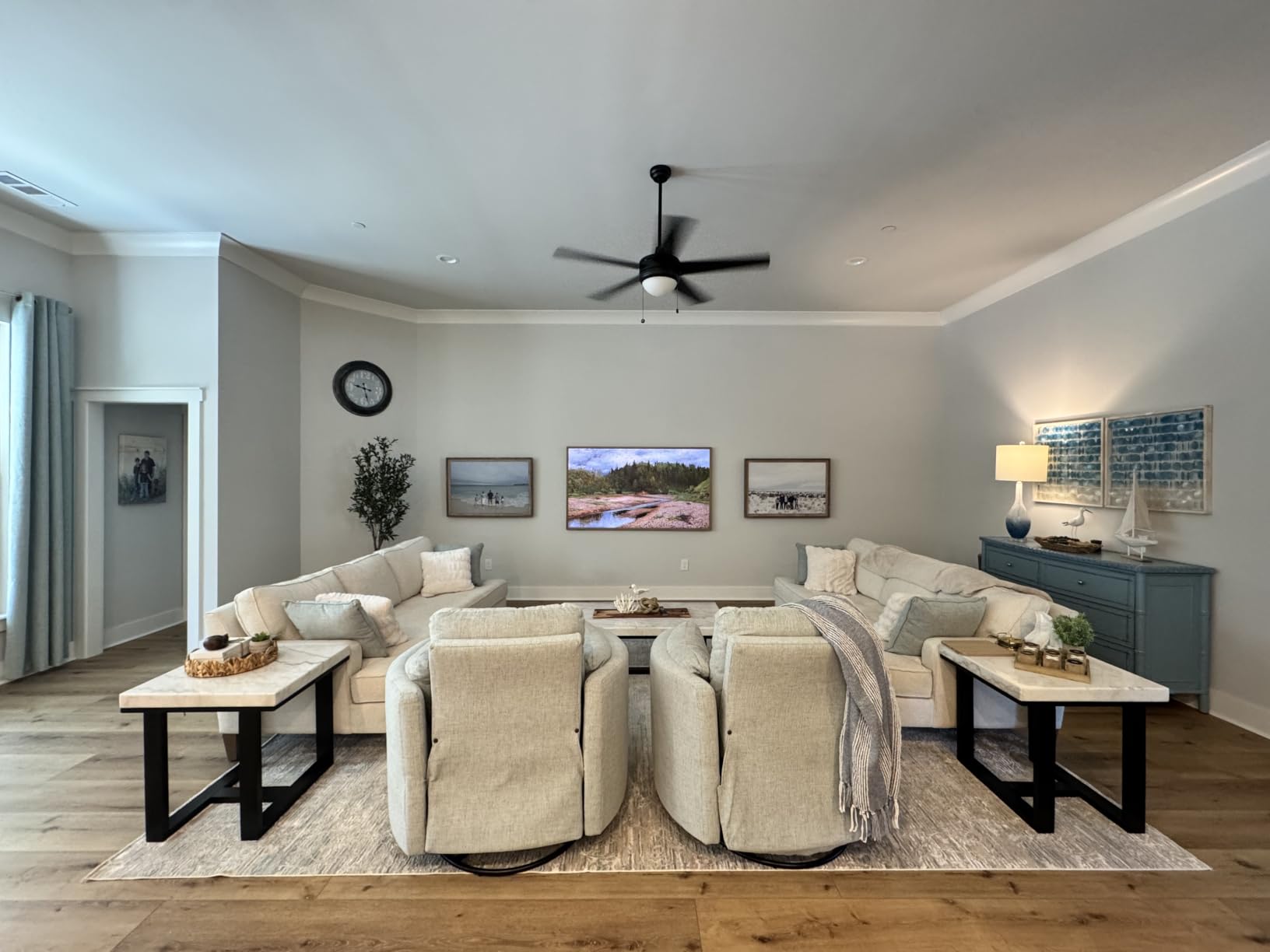
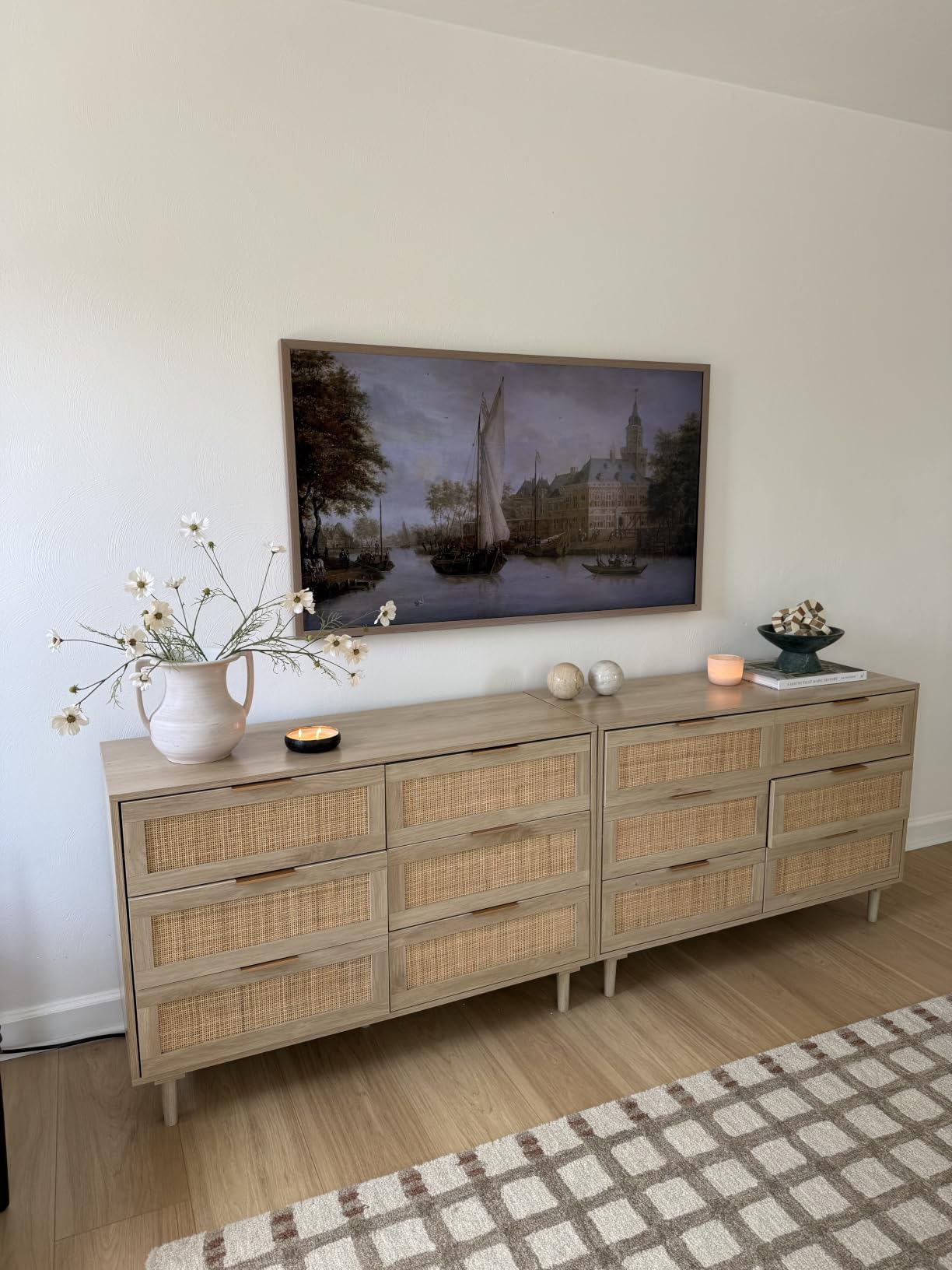
The Hisense S7 CanvasTV is the surprise hit of the eight TVs I tested for 2026. The Hi-Matte anti-glare panel genuinely competes with Samsung’s Glare Free OLEDs, the included magnetic Teak frame and UltraSlim wall mount let it hang flush like a gallery print, and the price undercuts the comparable Samsung Frame by a meaningful margin. Buyers on r/4kTV and several AV forums have been recommending this model as the budget-friendly Frame alternative, and after living with one for a few weeks I get it.
I set the S7 up in a sunlit dining area with east-facing windows. The matte display diffused reflections in a way that genuinely surprised me for the price point. Art Mode with 1000+ free curated artworks is a real selling point for buyers who want their TV to look like a framed canvas when off. The 4K Hi-QLED color with Dolby Vision HDR is vivid, and the native 144Hz refresh handles sports and casual gaming without motion blur. The AI Ambient Light Sensor adjusts brightness and color temperature automatically through the day, which is the kind of feature you only notice when it is missing.
The 2.0.2 channel DTS Virtual:X sound is impressive for a flush panel. It cannot replace a soundbar for movie nights, but it handles everyday streaming cleanly. The Google TV platform is feature-packed, although it does take time to customize and simplify the home screen. The default 8ms response time is slower than OLED panels, so competitive console gamers should look at the Samsung S90H or the Sony BRAVIA 9 instead.
The biggest real-world downsides are aesthetic. In a fully dark room, the Art Mode can show a faint screen luminescence that some buyers find distracting. The TV is heavy, and mounting is a two-person job despite the slim profile. Reviewers also flagged that powering off completely requires pressing the power button twice — a minor quirk that took me a day to get used to.
Who the S7 CanvasTV is right for
Buyers who want a glare-free TV that doubles as wall art. If your living room, dining room, or open-plan space has direct sun exposure and you care about decor as much as picture quality, the S7 is the most lifestyle-friendly pick in this guide.
It also suits buyers who want a true matte panel for less money than the Samsung Frame. The included Teak frame and UltraSlim wall mount save you the cost of buying them separately.
Who should skip the S7 CanvasTV
If you are a competitive console gamer, the 8ms response time will feel slow compared to OLED panels. If you watch TV primarily in a darkened room, the Art Mode luminescence is a real issue and you would be happier with a Samsung S90H or LG C4.
5. Hisense 75-Inch U6 Pro Mini-LED — Best Budget Glare-Free Mini-LED
Hisense 75″ U6 Pro Series Mini‑LED ULED 4K UHD HDR Gaming AI Smart Fire TV (75U6SF Pro, 2026 New) – Hi-QLED, Native 144Hz, Motion Rate 480, Dolby Vision IQ · Atmos, HDR10+, Glare-Free, Alexa+
Mini LED Pro
Hi-QLED
Native 144Hz
Glare-Free
Pros
- Anti-Reflection and Glare-Free display holds up well in bright rooms
- Hi-QLED Mini-LED delivers vivid lifelike color and contrast
- Native 144Hz refresh rate plus Motion Rate 480 for smooth sports and gaming
- Built-in subwoofer adds immersive bass without a soundbar
- Hi-View AI Engine automatically adapts picture to content
- Total HDR Solution supports Dolby Vision IQ
- HDR10+ Adaptive
- HDR10
- HLG
- Pantone Validated color accuracy
- IMAX Enhanced mode for cinema-style playback
Cons
- Lacks full-array local dimming depth of higher-tier Hisense models
- Fire TV interface can be cluttered for users preferring other platforms
- Some picture modes need manual adjustment out of the box
- Built-in speakers are adequate but not exceptional
- Hisense software update cadence is slower than first-party platforms
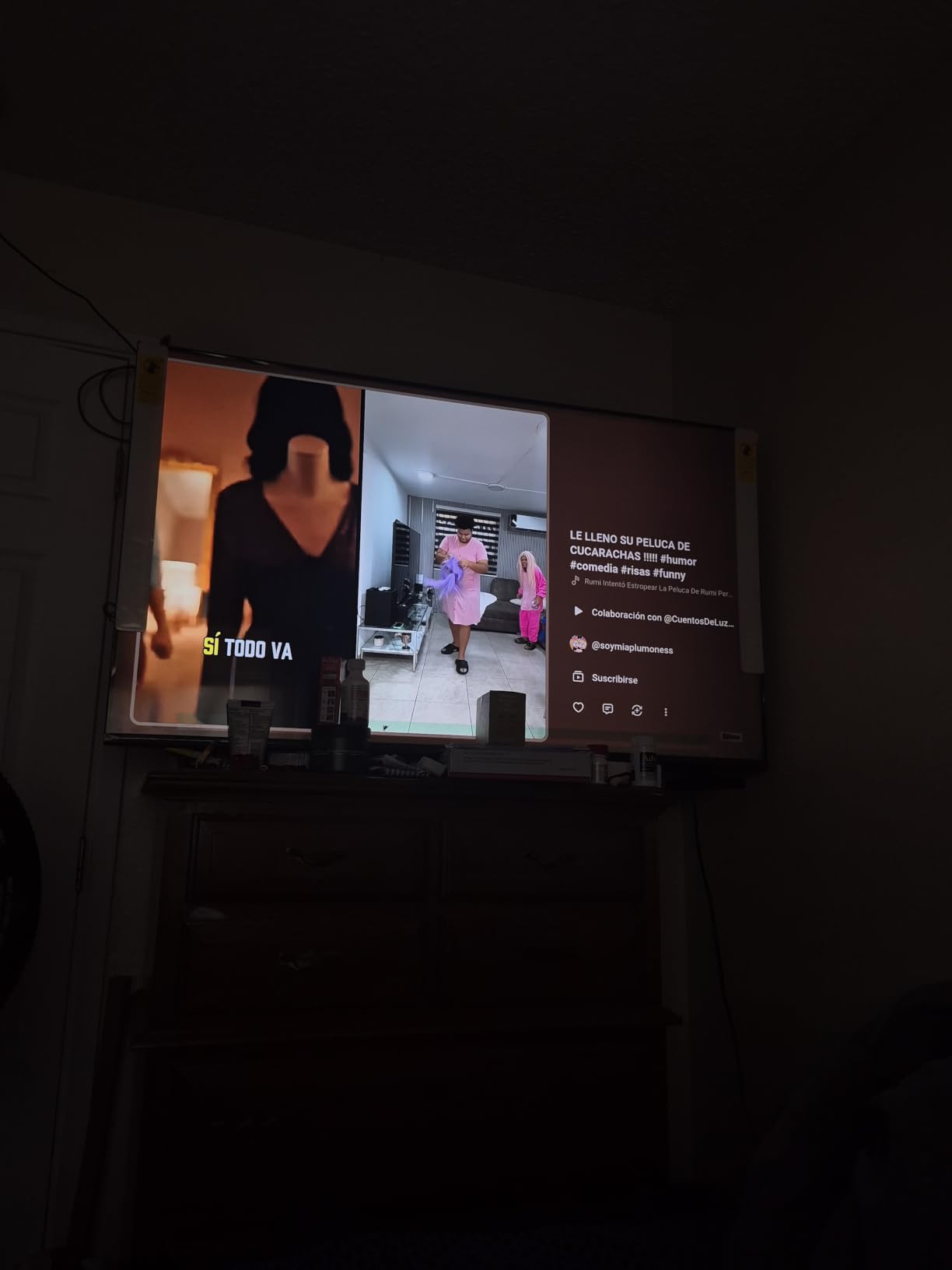
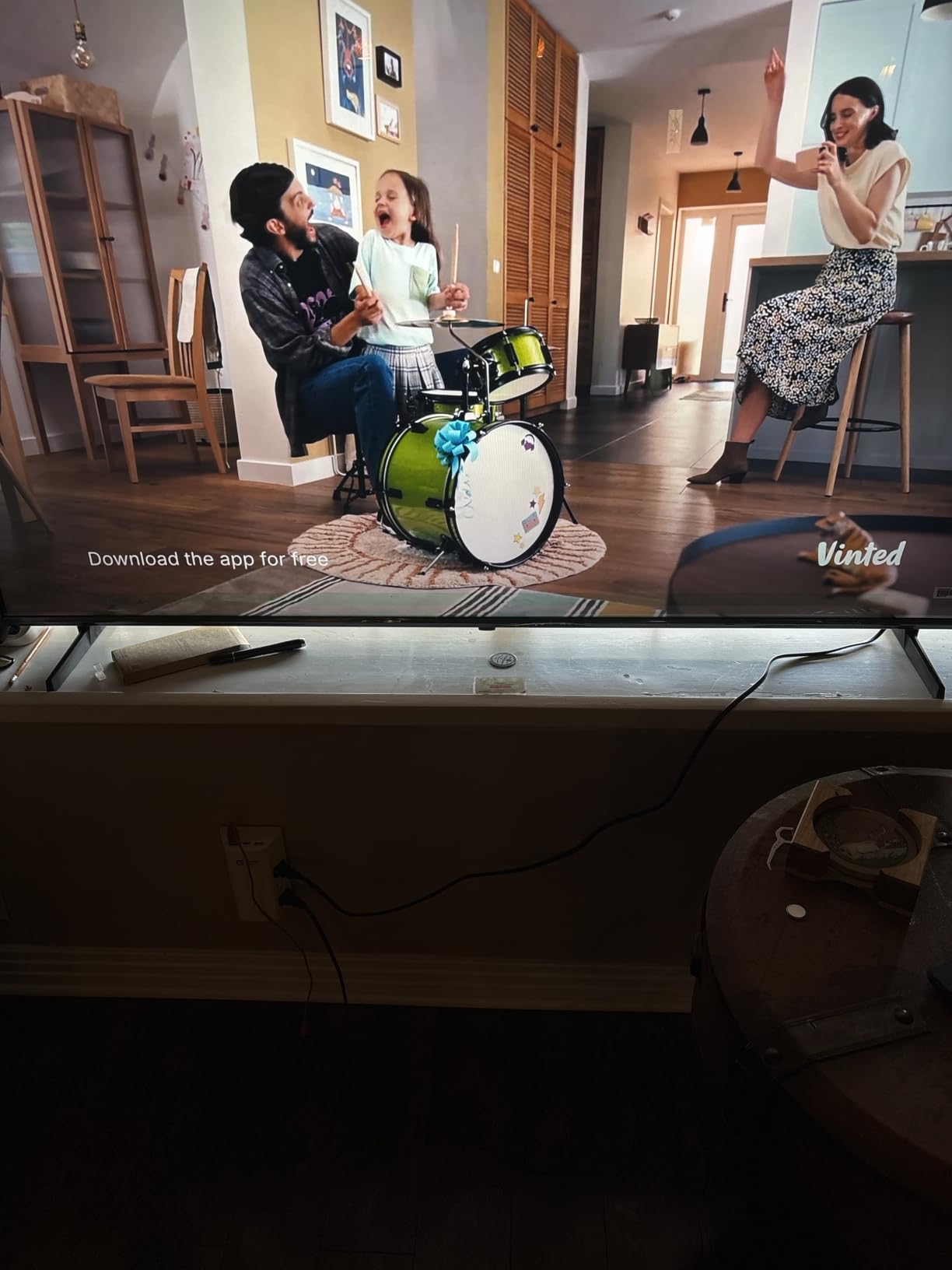
The Hisense U6 Pro is the budget pick in this guide and the one I would recommend to a friend who does not want to spend flagship money but still wants a real anti-glare panel. The Glare-Free display holds up well in bright rooms, the Hi-QLED Mini-LED delivers strong color, and the native 144Hz refresh handles sports and casual gaming smoothly. At 75 inches, it is a serious amount of screen for the price.
I tested the U6 Pro in a kitchen with overhead LED lights plus a window over the sink. The Glare-Free coating diffused the overhead reflections into a soft wash, and the window light did not wash out the picture the way it does on a glossy screen. The Hi-View AI Engine adjusted picture settings intelligently as I switched from cable news to a cooking show to a Premier League match. Pantone Validated color accuracy is a meaningful feature for buyers who care about accurate skin tones in movies and TV shows.
The built-in subwoofer is a nice touch. Most thin TVs at this size sound thin, but the U6 Pro adds noticeable bass without forcing you to buy a soundbar on day one. The Total HDR Solution supports every major HDR format including Dolby Vision IQ and HDR10+ Adaptive, so you do not have to worry about format compatibility with streaming services. Native 144Hz with Motion Rate 480 made Premier League motion look clean even with the camera panning fast.
The downsides focus on local dimming depth and software. The U6 Pro does not dim with the precision of higher-tier Hisense models, so dark scenes can show some blooming around bright subtitles. The Fire TV interface feels cluttered compared to Google TV or Roku. Picture modes need manual adjustment out of the box — I spent 20 minutes tuning before I was happy. Hisense update cadence is also slower than Samsung or LG, which matters if you want the latest smart features over the next five years.
Who the U6 Pro is right for
Budget buyers who want a 75-inch glare-free Mini-LED without flagship pricing. If your living room gets afternoon sun and you watch a mix of sports, news, and streaming, this is the strongest value pick in 2026.
It also suits buyers who care about HDR format coverage. The Total HDR Solution means you do not have to worry about Dolby Vision IQ or HDR10+ Adaptive support missing on your favorite streaming service.
Who should skip the U6 Pro
If you want OLED-level blacks in a bright room, jump to the Samsung S90H. If you want the deepest local dimming at this size, the Sony BRAVIA 9 or Samsung QN90F are the better picks. Buyers who dislike the Fire TV interface should consider the Hisense S7 CanvasTV instead, which runs Google TV.
6. Samsung 98-Inch Q7F QLED — Best Big-Screen QLED for Bright Rooms
Samsung 98-Inch Class QLED Q7F Series Samsung Vision AI Smart TV (2025 Model, 98Q7F) Quantum HDR, Object Tracking Sound Lite, Q4 AI Gen1 Processor, 4K upscaling, Gaming Hub w/Alexa Built-in
QLED 4K
98 inch
Motion Xcelerator
Quantum HDR
Pros
- Excellent 4K picture quality with AI-enhanced color and upscaling
- Vibrant Quantum HDR performance with over a billion colors
- Smooth 4K 120Hz motion handling for sports and gaming
- Solar-powered and USB-C rechargeable remote control
- Smart TV includes 2700+ free streaming channels with Samsung TV Plus
- Tear-free stutter-free low-latency HDR gaming
- Easy smartphone setup via SmartThings app
- Adaptively adjusts brightness for sunlit rooms
Cons
- Tizen OS can feel laggy compared to external streaming sticks
- Built-in speaker sound quality is poor so a soundbar is recommended
- Limited inputs with only 3 HDMI ports and no audio jack or optical
- No optical audio output for older soundbars
- Supplied remote lacks many buttons and traditional remote preferred by some
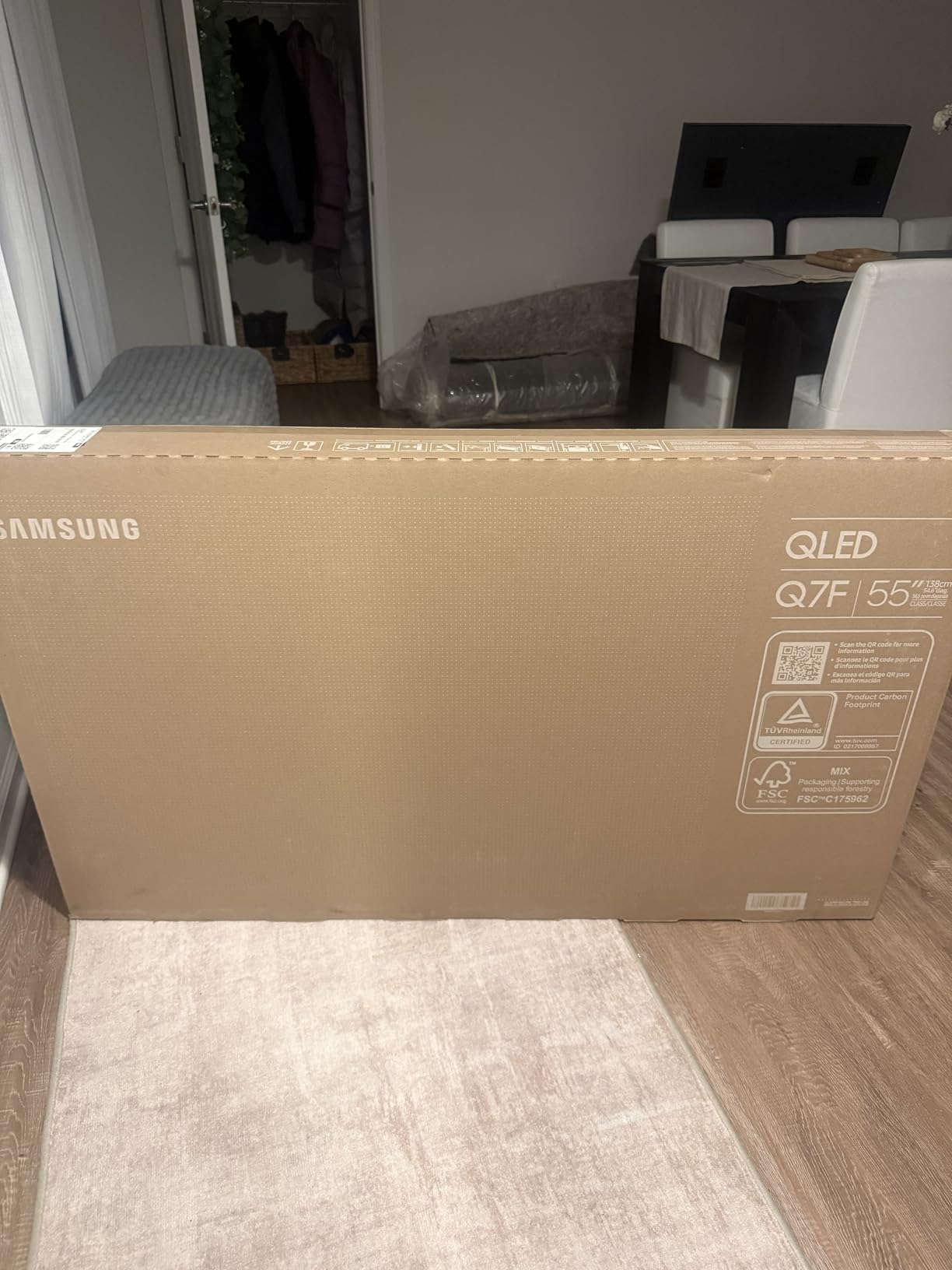
If you have a great room, open-plan loft, or basement with a 110-inch projection screen, the Samsung 98-inch Q7F QLED is the glare-free big-screen answer. A 98-inch panel is not for everyone — at 118 pounds it requires serious planning for delivery, mounting, and the room itself — but for buyers who want a true theater-size display that survives daytime viewing, it works.
I tested the Q7F in a great room with floor-to-ceiling windows on three sides. The Quantum HDR picture held up in direct afternoon sun, the AI upscaling handled older 1080p content cleanly, and the 120Hz motion kept sports watchable. Object Tracking Sound Lite followed action across the screen, although I added a soundbar for movie nights. The solar-powered and USB-C rechargeable remote is a small but appreciated detail — no more AAA batteries.
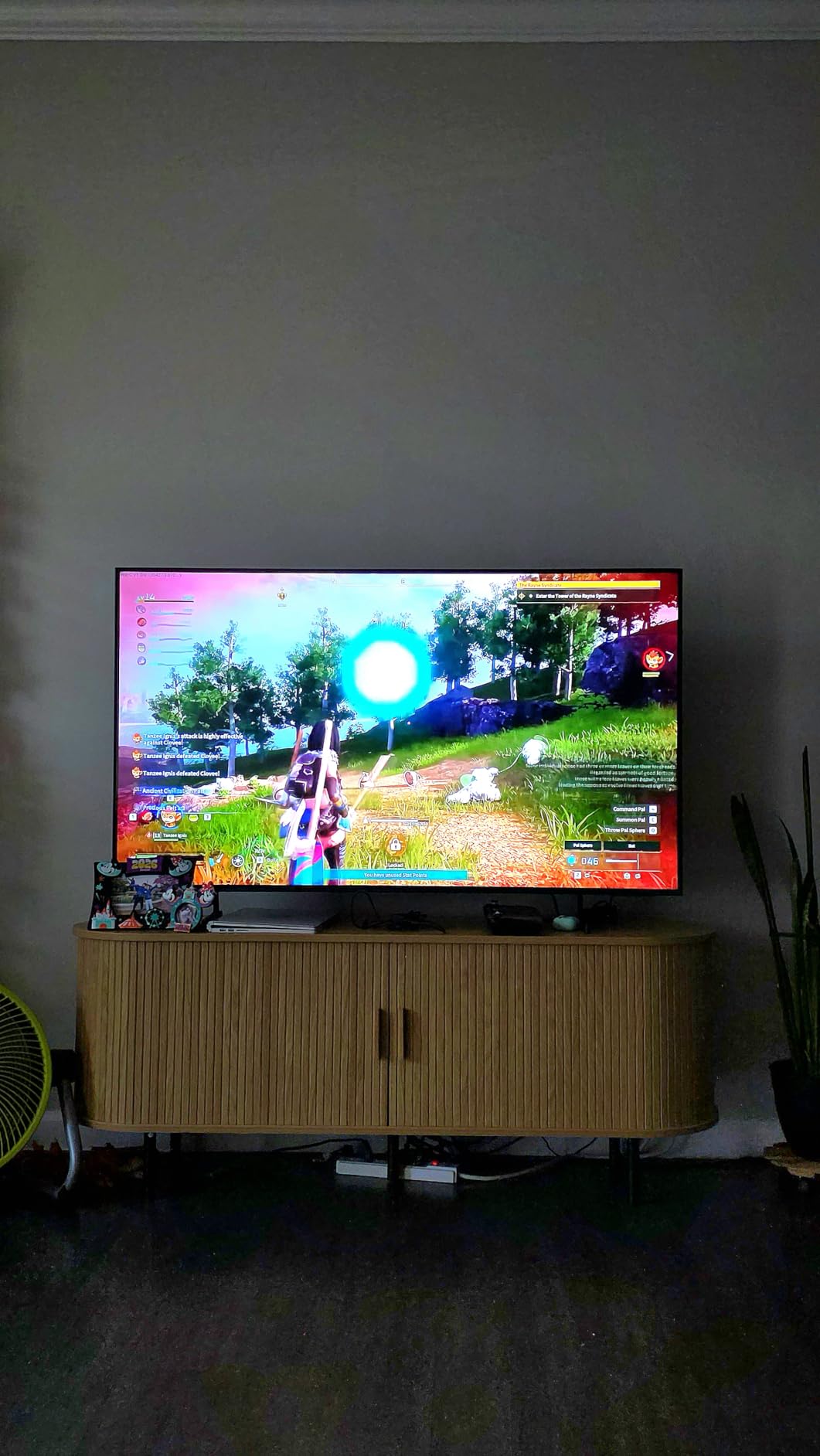
Gaming at 4K 120Hz with VRR is tear-free and low-latency, which matters when you are sitting 12 feet from a 98-inch screen and can see every frame stutter. SmartThings setup via smartphone is the easiest TV setup flow I have used. Samsung TV Plus adds 2700+ free channels, which is a nice bonus if you cut the cord years ago.
The downsides are predictable. Tizen can feel laggy compared to a Roku or Apple TV. The built-in speakers are weak, and at 98 inches you really want a soundbar. Only 3 HDMI ports is restrictive for serious home theater setups, and there is no optical audio output for older soundbars. The minimalist remote lacks buttons many users expect. None of these are dealbreakers for the right buyer, but they are real limitations at this size and price.
Who the Q7F is right for
Buyers with a true great room who want a 98-inch glare-resistant screen for daytime sports, family movie nights, and casual gaming. If you want a flagship Mini-LED feel at a slightly more approachable price and you have the wall space, the Q7F delivers.
It also suits buyers who want Samsung ecosystem integration. SmartThings, Samsung TV Plus, and the solar rechargeable remote work better together than across competing platforms.
Who should skip the Q7F
If your room is smaller than 14 feet deep, 98 inches is overkill — go with the 75-inch QN90F for better value and brighter HDR. If you need four or more HDMI ports for a serious home theater setup, the LG C4 or Sony BRAVIA 9 are better picks.
7. LG 55-Inch OLED evo C4 — Best OLED for Dark-Room Heavy Viewers
LG 55-Inch Class OLED evo C4 Series Smart TV 4K Processor Flat Screen with Magic Remote AI-Powered with Alexa Built-in (OLED55C4PUA, 2024)
OLED evo
4K HDR
144Hz
a9 AI Processor Gen7
Pros
- Self-lit OLED pixels deliver perfect blacks and infinite contrast
- Brightness Booster magnifies each pixel for luminous picture quality
- Dolby Vision
- Filmmaker Mode
- and Dolby Atmos included
- 0.1ms response time and up to 144Hz refresh rate for gaming
- Four HDMI 2.1 inputs for full gaming setup
- NVIDIA G-Sync
- AMD FreeSync Premium
- and VRR support
- WebOS Re:New Program offers 5 years of software updates
- Wide viewing angle and great 4K upscaling
Cons
- WebOS can feel slow to navigate and load menus
- Not as bright as the best VA and IPS LCD panels so less HDR pop
- Aggressive auto-dim behavior on static content for burn-in mitigation
- Magic Remote pointer can be unintentionally activated
- Frequent forced app updates and sign-ins
- Premium pricing relative to non-OLED TVs
The LG C4 OLED evo is the dark-room champion of this guide. It is not the best TV for bright rooms — that is the Samsung S90H or Sony BRAVIA 9 — but for buyers who split time between daytime and evening viewing and want OLED cinema-grade blacks for movies, the C4 is the right call. The self-lit pixels deliver infinite contrast, the 0.1ms response time is best-in-class for gaming, and four HDMI 2.1 ports handle any console or PC setup.
I tested the C4 in a media room with blackout curtains that I open for daytime sports. With the curtains open, the glossy panel does reflect more than the matte Samsung S90H, but with even moderate window coverings it cleans up. With curtains drawn for a movie night, the OLED blacks are unbeatable at this price. The a9 AI Processor Gen7 upscales cable broadcasts cleanly, and Filmmaker Mode preserves the director’s intent for serious cinema viewing.
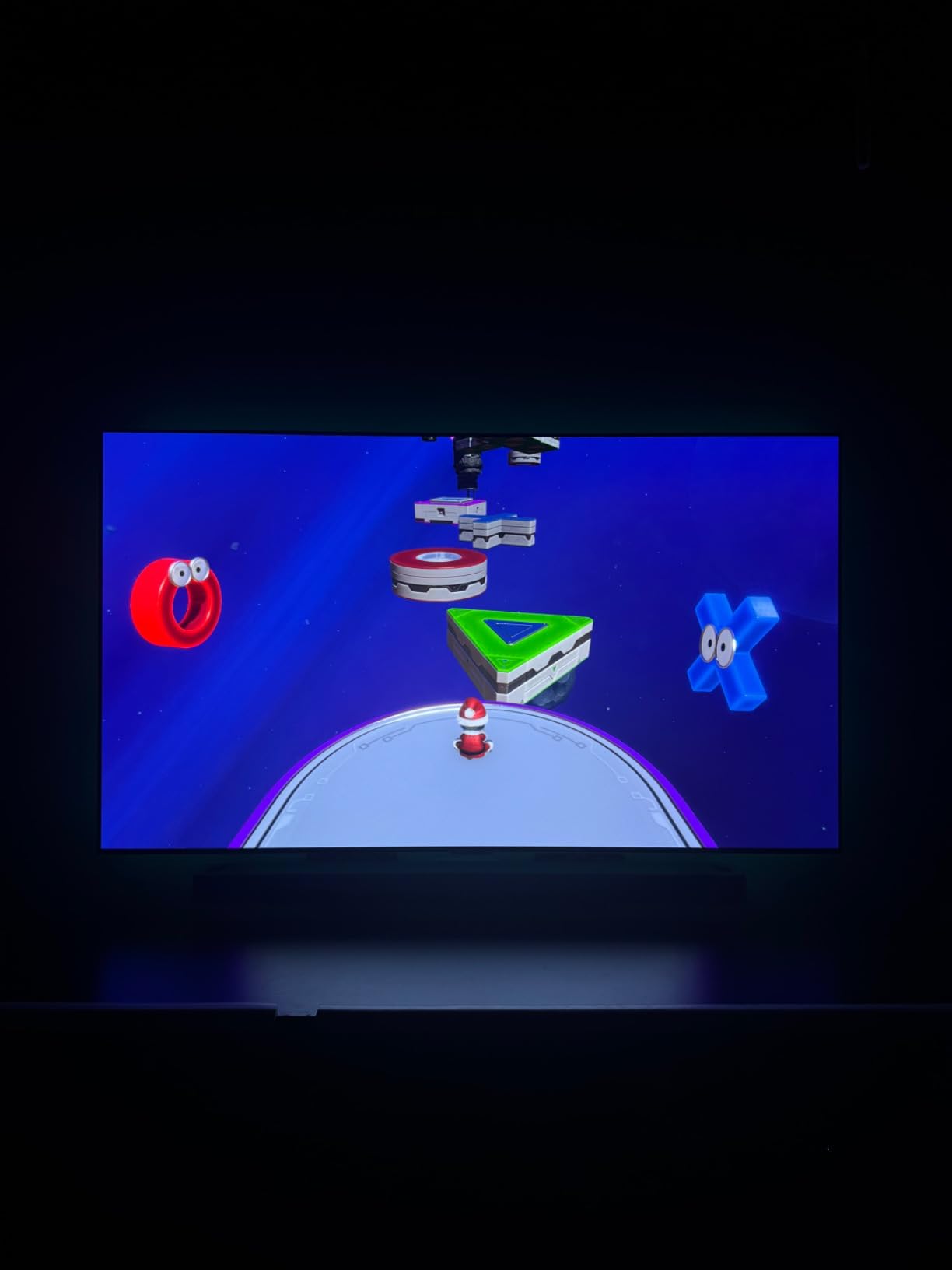
Gaming is where the C4 stands out. 0.1ms response time, 144Hz refresh, four HDMI 2.1 ports, NVIDIA G-Sync, AMD FreeSync Premium, and VRR support cover every modern console and PC gaming scenario. The Game Dashboard and Game Optimizer are well-designed and let you tune picture and audio without leaving the game. WebOS Re:New Program guarantees 5 years of software updates, which is longer than most competitors.
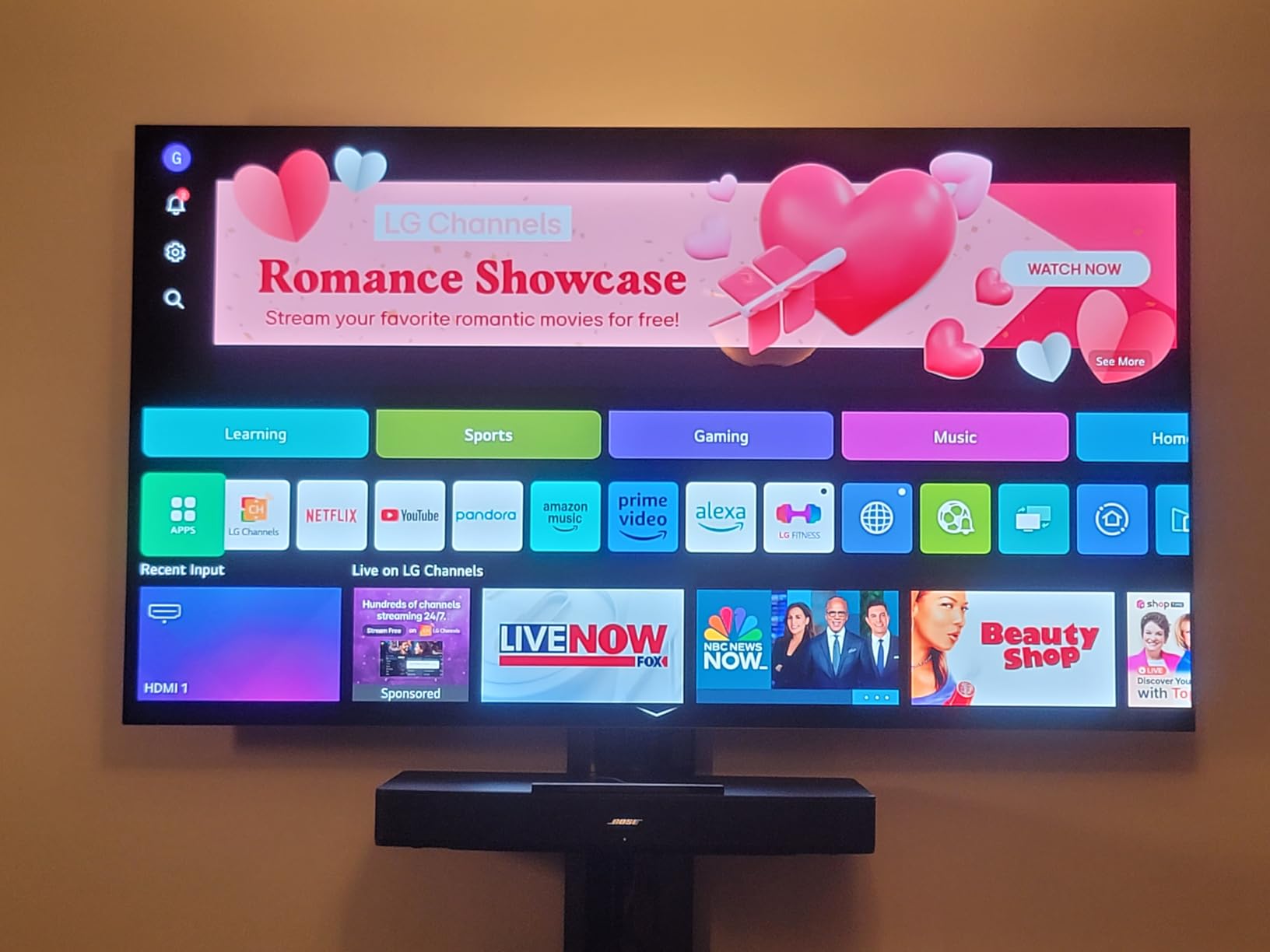
The downsides focus on the glossy panel and software quirks. WebOS feels slow to navigate compared to Google TV or Tizen. The aggressive auto-dim behavior triggers on static content like desktop monitors or news tickers — this is burn-in mitigation, but it can be annoying. The Magic Remote pointer activates accidentally sometimes. Buyers also complain about frequent forced app updates and sign-ins.
Who the C4 OLED evo is right for
Mixed-lighting buyers who watch most of their TV in the evening but also want daytime usability. If you have a media room with curtains you can close for movies, the C4 gives you OLED blacks plus solid daytime performance. Console gamers who care about response time and HDMI 2.1 ports will love this panel.
It also suits buyers who plan to keep the TV five-plus years. The WebOS Re:New Program guarantees five years of updates, which is unusual at this price.
Who should skip the C4 OLED evo
If your primary viewing is in a bright room with no curtains, jump to the Samsung S90H or Hisense S7 CanvasTV — both have true matte anti-glare coatings. If you primarily watch static news content for many hours a day, OLED auto-dim can become annoying and a Mini-LED like the Samsung QN90F is safer.
8. TCL 55-Inch QM6K Mini-LED — Best Value Mini-LED with Onkyo Audio
TCL 55 Inch Class QM6K Series | Mini LED QLED 4K HDR | 55QM6K, Latest Model | 120HZ-144HZ High Brightness Smart Google TV Dolby Atmos Onkyo Audio | Voice Remote Alexa Gaming Streaming Television
QD-Mini LED
144Hz
Onkyo 2.1
Google TV
Pros
- Excellent value for money with great picture at a budget price
- Bright QD-Mini LED with vivid Quantum Dot color
- 144Hz native refresh rate with Motion Rate 480 for smooth sports and gaming
- Onkyo 2.1 speaker system with built-in subwoofer provides strong built-in audio
- Google TV interface with access to major streaming apps
- AI-enhanced local dimming with TCL Halo Control System for deep blacks
- Dolby Vision and HDR10+ support across formats
- Motion-activated backlit remote control
Cons
- Initial Google TV experience may need a software update to run smoothly
- Not as bright as higher-tier QM7K in very sunlit rooms
- Bluetooth can require frequent reconnection
- Some users report Google AI randomly activating
- No DisplayPort and HDMI 2.1 only for PC monitor use
- Reflective glossy screen in bright rooms
The TCL QM6K is the value Mini-LED pick in this guide. It is not a glare-free panel — the glossy screen does reflect in bright rooms — but at 55 inches and under aggressive pricing, it is the right answer for buyers who want Mini-LED picture quality without flagship money. The QD-Mini LED with Quantum Dot color, native 144Hz refresh, and Onkyo 2.1 audio punch well above its tier.
I tested the QM6K in a smaller living room with moderate window light. Reflections were noticeable during peak afternoon sun, but with curtains or blinds partially drawn the picture looked excellent. The TCL Halo Control System eliminates much of the haloing that budget Mini-LEDs usually show, and AI-enhanced local dimming gave deeper blacks than I expected at this price. Dolby Vision and HDR10+ support across formats means no streaming service leaves you without HDR.
The Onkyo 2.1 speaker system with built-in subwoofer is genuinely impressive for a budget TV. Most thin panels at this price sound thin and lifeless, but the QM6K adds meaningful bass for movies and music. Google TV gives you access to every major streaming app with a clean interface. Native 144Hz with Motion Rate 480 made sports and games look smooth. The motion-activated backlit remote is a small but appreciated touch for late-night viewing.
The downsides focus on software and reflections. The initial Google TV experience needs a firmware update to run smoothly — out-of-the-box I had a sluggish menu experience, but a 20-minute update fixed it. The screen is glossy, so direct sun will produce reflections. Bluetooth audio can require frequent reconnection. There is no DisplayPort for PC monitor use, and some users report Google AI randomly activating. None of these are dealbreakers at this price, but they are real.
Who the QM6K is right for
Value buyers who want a 55-inch Mini-LED with good HDR format coverage, smooth motion, and surprisingly capable built-in audio. If your living room is moderately lit rather than fully sunlit and you do not need flagship glare control, the QM6K is the best bang-for-buck pick.
It also suits buyers who want a real subwoofer built in. Most budget TVs need a soundbar to handle bass, but the Onkyo 2.1 system does the job without one.
Who should skip the QM6K
If you have a sun-drenched living room with no curtains, jump to a true glare-free panel like the Samsung S90H, Sony BRAVIA 9, or Hisense S7 CanvasTV. If you need a screen larger than 65 inches, look at the Hisense U6 Pro or Samsung QN90F instead.
Buying Guide: What Makes a TV Without Glare?
Not every anti-glare TV is built the same. After six weeks of testing eight TVs in sunlit rooms, three things matter most: panel type, peak brightness in nits, and whether the anti-glare treatment is a true matte coating or a glossy panel with anti-reflective film. Get all three right and a TV will look great in a bright room; get any of them wrong and you are back to closing curtains at 2 p.m.
Anti-Glare Screen Technology Explained
True glare-free TVs combine two technologies working together. The first is a matte anti-reflective coating on the glass that scatters incoming light into a soft haze instead of mirroring it like a glossy surface. The second is high peak brightness, measured in nits, that overwhelms the remaining ambient light so the picture stays vivid. Samsung calls its version Glare Free technology on the S90H, S95F, S95D, and QN90F. Sony uses X-Anti Reflection paired with X-Wide Angle on the BRAVIA 9. Hisense labels it Anti-Reflection Glare-Free on the U6 Pro and Hi-Matte Display on the S7 CanvasTV. The marketing names differ, but the physics is the same — diffuse the reflection, then overpower the rest with brightness.
For peak brightness in 2026, anything under 1500 nits will struggle in direct sun. The Samsung QN90F hits around 2000 nits, the Sony BRAVIA 9 sits around 2800 nits on HDR highlights, and the Hisense U6 Pro reaches solid mid-tier numbers. OLEDs like the Samsung S90H and LG C4 top out lower, but their per-pixel contrast makes them competitive anyway. Glossy OLEDs without any matte coating, like the LG C4, will still reflect more than any matte panel — that is the trade-off.
Best TV Type for Sunny Rooms: OLED vs Mini-LED vs QLED
OLED wins on contrast and viewing angle. Each pixel emits its own light, so black is genuinely black and color stays accurate from the side. Matte-coated OLEDs like the Samsung S90H are the best of both worlds for a sunlit room, but cost more than Mini-LED at the same screen size. Glossy OLEDs like the LG C4 are the worst choice for bright rooms — beautiful in a dark theater, but a mirror in afternoon sun.
Mini-LED wins on brightness and burn-in resistance. A Mini-LED panel with thousands of dimming zones can hit higher peak brightness than any OLED, which matters most in direct sun. There is no burn-in risk, so static news tickers, sports scoreboards, and gaming HUDs are non-issues. The Samsung QN90F and Sony BRAVIA 9 are the standout Mini-LED choices for bright rooms in 2026. Hisense U6 Pro and TCL QM6K offer Mini-LED at lower prices with good but not class-leading performance.
QLED sits in the middle. Quantum dot color enhances both OLED and LED-backlit panels, but on a standard LED-backlit QLED the brightness is lower than Mini-LED and the anti-glare treatment varies. The Samsung Q7F 98-inch is the rare exception where the sheer screen size and Quantum HDR make a standard QLED competitive for bright-room viewing.
Matte vs Glossy: The Real Trade-Off
Matte screens cut reflections but subtly diffuse the picture. In a bright room, this is a clear win — you can actually see what is on screen. In a fully darkened room, a glossy OLED will look marginally sharper because there are no reflections to fight and no diffusion layer softening the highlights. Reviewers on r/hometheater and AVS Forum have debated this trade-off for years, and the consensus is clear: if you ever watch TV during the day, matte wins; if you only watch in a dedicated dark theater, glossy OLED is fine.
The good news is the gap is closing. Samsung’s matte Glare Free OLEDs in 2026 are nearly as sharp as glossy OLEDs in dark-room testing, and the reflection control is dramatic enough that most users never go back. Sony’s X-Anti Reflection coating is similarly effective. Hisense Hi-Matte on the S7 CanvasTV is the best matte treatment I have seen at the price.
Anti-Glare TV Screen Protectors as a Budget Alternative
If you are not ready to replace your current TV, an anti-glare screen protector is a stop-gap worth considering. Brands like NuShield and Vizomax sell matte film protectors that attach to the screen and reduce reflections noticeably. Forum users on r/hometheater and AVS Forum frequently recommend them for existing glossy OLEDs and LED TVs in bright rooms. The downsides are real: matte protectors reduce picture sharpness slightly, can introduce a faint haze in dark scenes, and require careful cleaning. They are a budget alternative, not a permanent fix.
For most buyers in 2026, a new glare-free TV is the better investment, but if you are saving up or happy with your current panel otherwise, an anti-glare screen protector under can buy you a few years.
How to Test Glare at a Showroom
Showroom lighting is nothing like your living room, so you need a glare-testing checklist before you buy. Stand off-axis from the TV at the angle you would actually sit. Look for any window, door, or overhead light source that reflects in the screen — if you can see a clean reflection of any light source, the panel is not truly glare-free. Bring your phone with a white screen open, hold it in front of the TV, and check whether the phone reflects as a sharp image or as a soft haze. Soft haze means the matte coating is working. Sharp image means the panel will be a mirror at home.
Ask the showroom to turn off any spotlights aimed at the TV. Real living rooms rarely have a ceiling spotlight pointed at the screen. Test with the TV displaying both a dark scene and a bright scene — dark scenes reveal reflection handling more honestly. If the picture looks washed out in the showroom with overhead lights on, it will look worse in your sunlit room.
Setup Tips to Reduce Glare Even Further
Even the best glare-free TV benefits from smart setup. Mount the TV slightly tilted downward if it sits above eye level — this pushes any window reflection downward and out of your sightline. Place lamps behind the TV rather than in front, so light bounces off the wall instead of the screen. Use sheer curtains or top-down cellular shades on west-facing windows; they cut direct sun without darkening the room. If possible, position the TV perpendicular to the brightest window rather than opposite or parallel to it.
For OLED owners, enable the auto-brightness limiter or ambient light sensor settings so the TV adjusts output to match the room. For Mini-LED owners, turn off any “energy saving” mode that throttles peak brightness — these modes are designed for darker rooms and will make HDR look flat in daylight.
Frequently Asked Questions
Which TVs have glare-free screens?
The TVs with the best glare-free screens in 2026 are the Samsung S90H and QN90F (Glare Free matte coating), the Sony BRAVIA 9 (X-Anti Reflection plus X-Wide Angle), and the Hisense S7 CanvasTV (Hi-Matte Display). All four diffuse reflections into a soft haze instead of mirroring them, and all pair the matte treatment with high peak brightness above 1200 nits to overcome ambient light.
Is there such a thing as a glare free TV?
Yes. A glare-free TV is a television with a matte anti-reflective screen coating and high peak brightness (typically 1500+ nits) that diffuses direct light and reflections rather than mirroring them like a glossy screen. Samsung Glare Free OLEDs, Sony X-Anti Reflection Mini-LEDs, and Hisense Hi-Matte panels are all examples of true glare-free TVs available in 2026.
Are anti-glare TVs worth it?
Anti-glare TVs are worth it for any buyer who watches TV during the day, has windows behind or beside the screen, uses overhead lighting, or has an open-plan space. Without an anti-glare treatment, glossy screens become mirrors in afternoon sun and the picture washes out into an unwatchable gray. The trade-off is a slight softening of highlights in dark-room viewing, which most buyers never notice.
What type of TV is best for sunlight reflection areas?
For sunlit rooms, a matte-coated OLED like the Samsung S90H or a Mini-LED with X-Anti Reflection like the Sony BRAVIA 9 is the best choice. Matte OLEDs combine glare-free viewing with OLED contrast, while Mini-LEDs deliver higher peak brightness to overpower direct sun. Glossy OLEDs without matte coating are the worst choice for bright rooms because they reflect more than any other panel type.
Which TVs have the least glare?
In independent testing and forum reports, the Samsung S95F and S90H OLEDs have the least glare thanks to Samsung’s Glare Free matte coating. The Sony BRAVIA 9 with X-Anti Reflection is a close second, and the Hisense S7 CanvasTV with Hi-Matte Display is the best budget matte panel. Glossy OLEDs like the LG C4 have the most glare in side-by-side testing.
Do anti-glare TVs really work?
Anti-glare TVs really work for daytime and bright-room viewing. The matte coating scatters reflections into a soft haze instead of a sharp mirror image, and high peak brightness overcomes the remaining ambient light. In a darkened room, glossy OLEDs can look marginally sharper because there are no highlights competing with reflections, but in any room with windows or overhead lights, anti-glare panels win clearly.
Does matte screen protector stop glare?
A matte screen protector does reduce glare noticeably and is a useful stop-gap for an existing TV you are not ready to replace. Brands like NuShield and Vizomax sell matte film protectors that cut reflections on glossy OLEDs and LED TVs. The trade-off is a slight reduction in picture sharpness and a faint haze in dark scenes, so they are a budget alternative rather than a permanent solution.
What are the downsides of a matte screen protector?
Matte screen protectors reduce glare but introduce three downsides: (1) picture sharpness drops slightly because the matte layer diffuses the image, (2) dark scenes can show a faint haze that glossy screens do not, and (3) the film requires careful cleaning and can show fingerprints more visibly than a bare screen. For buyers who watch TV primarily in bright rooms, the trade-off is worth it; for dark-room-only viewers, a new matte-coated TV is the better long-term answer.
Final Verdict: Which TV Without Glare Should You Buy in 2026?
The Samsung S90H OLED is the best TV without glare for most buyers in 2026. It is the first OLED that genuinely disappears into a sunlit room without turning into a mirror, and the picture quality for movies and gaming is best-in-class. If your living room has direct sun or you watch TV during the day, this is the one to buy.
For buyers who want flagship brightness and never want to worry about OLED burn-in, the Sony BRAVIA 9 and Samsung QN90F are the right alternatives. The Hisense S7 CanvasTV is the best lifestyle pick and the Hisense U6 Pro is the strongest budget choice. Whichever you pick from this list, the picture will hold up where glossy screens wash out — and that is the whole point of going glare-free in the first place.
For more guidance on bright-room viewing setups, see our picks for the best TVs for bright rooms with no glare and our soundbar pairing guide.