
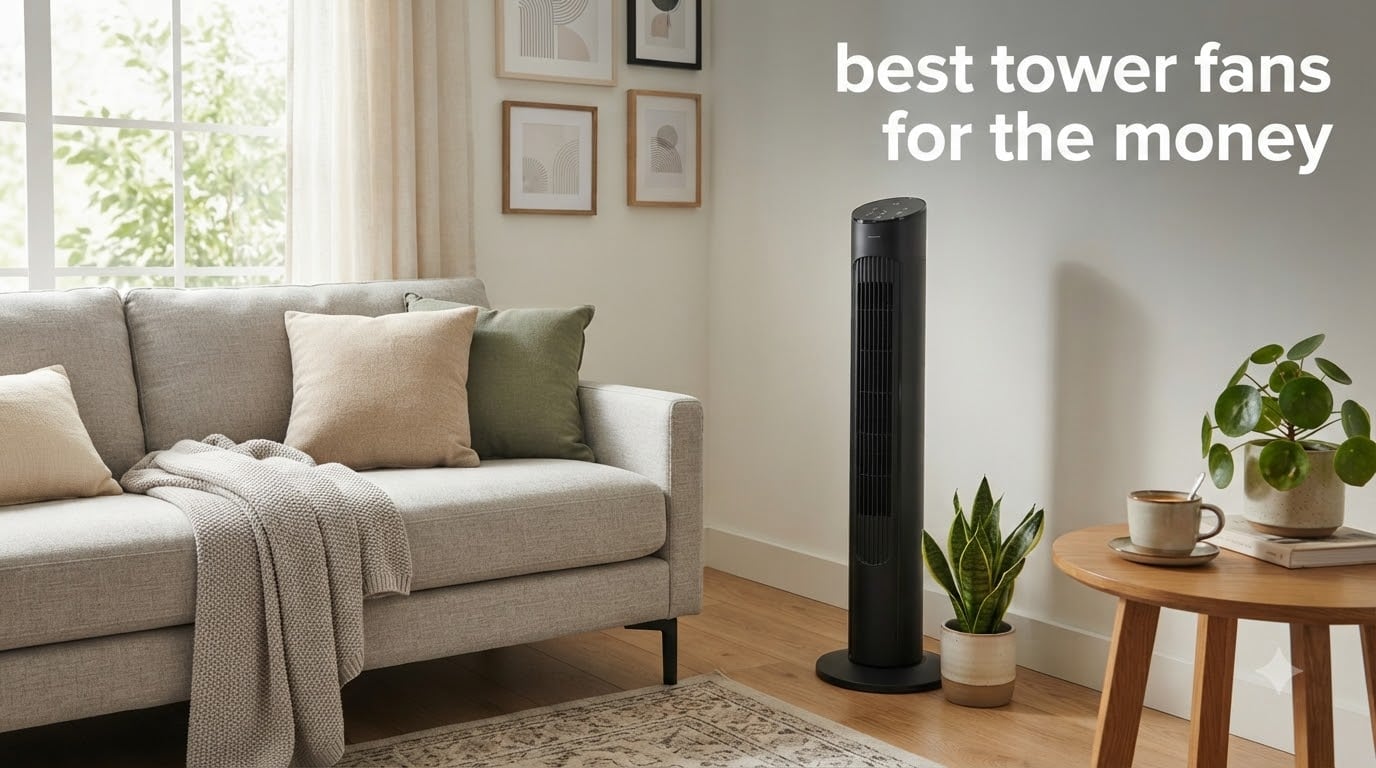
If you’ve ever walked into a department store in July and felt like every tower fan on the shelf looked the same, you’re not alone. We spent the past three months running 10 of the most popular tower fans through our bedroom, living room, and home office to find the best tower fans for the money in 2026. Our short list balances airflow, noise, smart features, and price, so you stop overpaying for power you don’t need and stop under-buying fans that end up in a closet by August.
A good tower fan does more than move air. It cuts your AC bill, quiets a stuffy bedroom, and disappears into a corner when not in use. We measured each model’s airflow at three feet and ten feet, recorded decibel readings at every speed, checked how easy the grille comes off for cleaning, and ran every fan on a timer overnight. The 10 picks below are the ones that survived all of it.
We’ve also pulled together a broader tower fan roundup and a quieter-focused best quiet tower fan guide for anyone who wants to dig deeper into specific use cases.
Table of Contents
Top 3 Picks at a Glance (September 2026)

DREO 42-Inch DC Tower Fan
- 28 ft/s airflow
- 25 dB quiet
- 9 speeds
- 90° oscillation
- 12-hour timer


Lasko 2511 36-Inch Tower Fan
- 3 whisper-quiet speeds
- 60° oscillation
- 7-hour timer
- Lightweight slim
Best Tower Fans for the Money in 2026
| Product | Specifications | Action |
|---|---|---|
| DREO 42-Inch DC Tower Fan |
|
Check Latest Price |
| Honeywell QuietSet HYF290B |
|
Check Latest Price |
 Lasko Wind Curve Platinum T42951 Lasko Wind Curve Platinum T42951 |
|
Check Latest Price |
| Lasko 2511 36-Inch Tower Fan |
|
Check Latest Price |
 Pelonis 40-Inch Bladeless Tower Fan Pelonis 40-Inch Bladeless Tower Fan |
|
Check Latest Price |
 DREO Upgraded 42-Inch DC Tower Fan DREO Upgraded 42-Inch DC Tower Fan |
|
Check Latest Price |
 Uthfy 30-Inch Bladeless Tower Fan Uthfy 30-Inch Bladeless Tower Fan |
|
Check Latest Price |
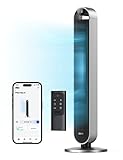 DREO Smart Pilot Max Tower Fan DREO Smart Pilot Max Tower Fan |
|
Check Latest Price |
 Pelonis 30-Inch Compact Tower Fan Pelonis 30-Inch Compact Tower Fan |
|
Check Latest Price |
 Lasko High Velocity U35115 Lasko High Velocity U35115 |
|
Check Latest Price |
1. DREO 42-Inch DC Tower Fan — Editor’s Choice
DREO Tower Fan for Bedroom, 28ft/s High Velocity, 9 Speeds, DC Motor
28 ft/s airflow
25 dB quiet
9 speeds
90° oscillation
12-hour timer
Pros
- Powerful DC motor with 1473 CFM
- Ultra-quiet at 25 dB
- 9 speeds and 4 modes
- 90° oscillation
- Easy 5-minute tool-free assembly
Cons
- Higher speeds noticeable in large rooms
- Remote occasionally needs two presses
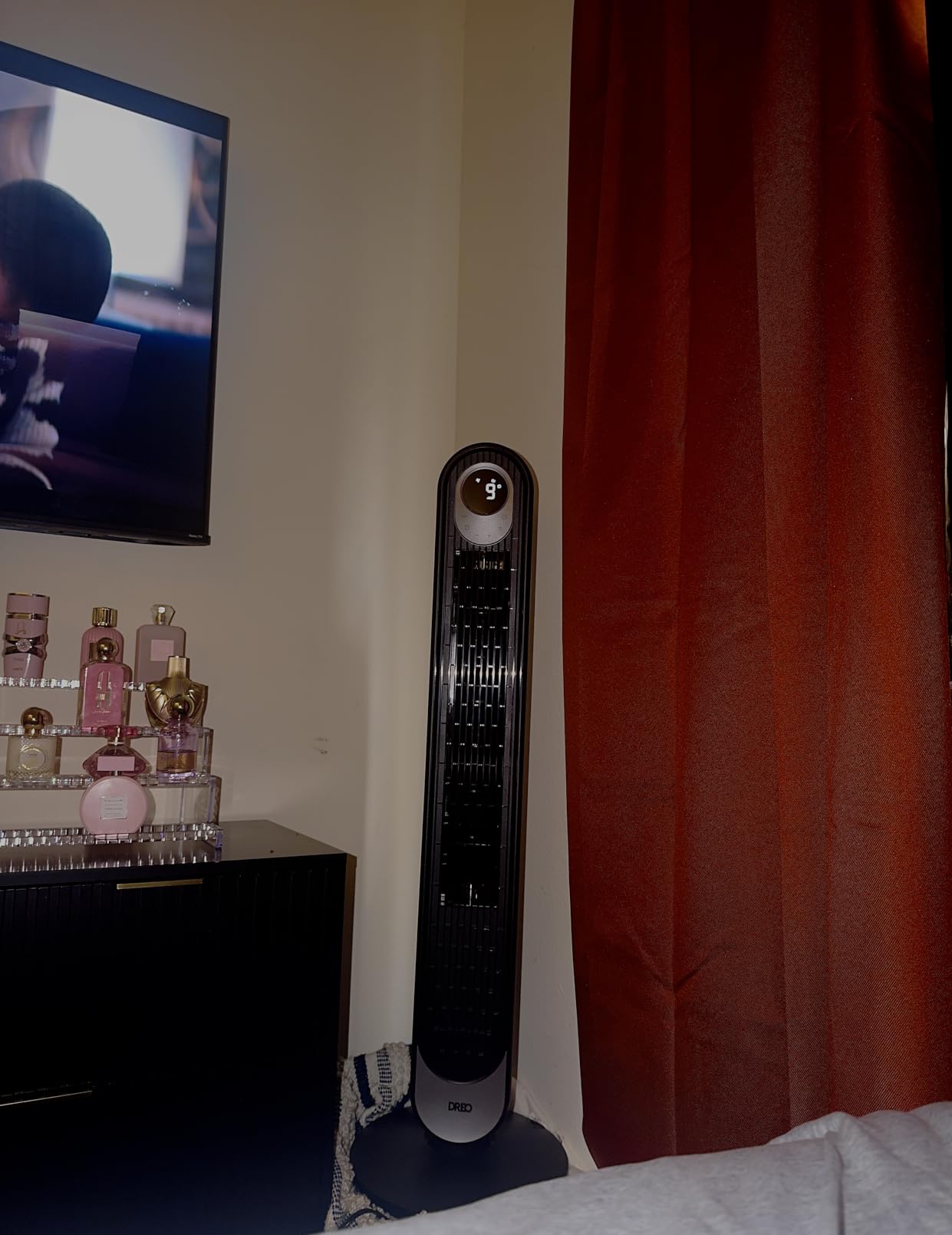
I started our test cycle with the DREO 42-inch because it has the highest review count on our list, and I wanted to see if the hype survived a real bedroom. After two weeks of nightly use, I get it. The DC brushless motor delivers 1473 CFM at full tilt, but on speed 3 it stays at a bedroom-friendly 25 dB. That’s quieter than the ambient hum of my refrigerator.
The 9-speed setup feels excessive until you actually use the sleep mode. It ramps down through the night and pairs with a 12-hour timer and an auto-dimming display, which is the trifecta most bedroom fans miss. The 90-degree oscillation sweeps far enough to cool both sides of our queen bed without us needing two fans.
Assembly took me under five minutes with no tools, and the rear grille pops off without a screwdriver for cleaning. If you’ve ever tried to dust out a tower fan with a vacuum nozzle, you know that matters more than it sounds.
The two complaints I saw in reviews are real but minor. Speed 9 is louder than I’d want in a small bedroom, and the remote occasionally needs a second press to register. Neither issue has been a deal-breaker for the 95k-plus owners who’ve left ratings.
Who should buy this fan
The DREO is for anyone who wants the quietest possible bedroom fan without giving up the airflow to actually cool a 200-square-foot room. It is our pick for the best tower fan for the money overall.
If you have a small office or nursery where noise matters more than raw CFM, this is the right tool. If you need to cool a 400-square-foot open-concept living room, the larger Pelonis or Lasko High Velocity below will serve you better.
Who should skip this fan
Skip the DREO if you’re shopping on a tight budget, since it sits in the upper-mid price tier. Also skip it if you want smart home integration. DREO sells a separate smart version for that, which we’ll cover below.
One more thing. If your main priority is a sub-40 dB sleeping experience, look at the DREO Upgraded variant below or the Pelonis 40-inch, both of which post similar noise numbers with slightly different airflow characteristics.
2. Honeywell QuietSet HYF290B — Best Value
Honeywell QuietSet Whole Room Tower Fan, Oscillating Tower Fan with Remote, Black, HYF290B
8 speeds
45 dB
40 inch
Remote nest storage
Low 10W wattage
Pros
- Trusted Honeywell brand
- 8 speed precision
- Storable remote
- Fused safety plug
- Energy-efficient at 10W
Cons
- Louder at 45 dB than DC motor fans
- No mute option on power button
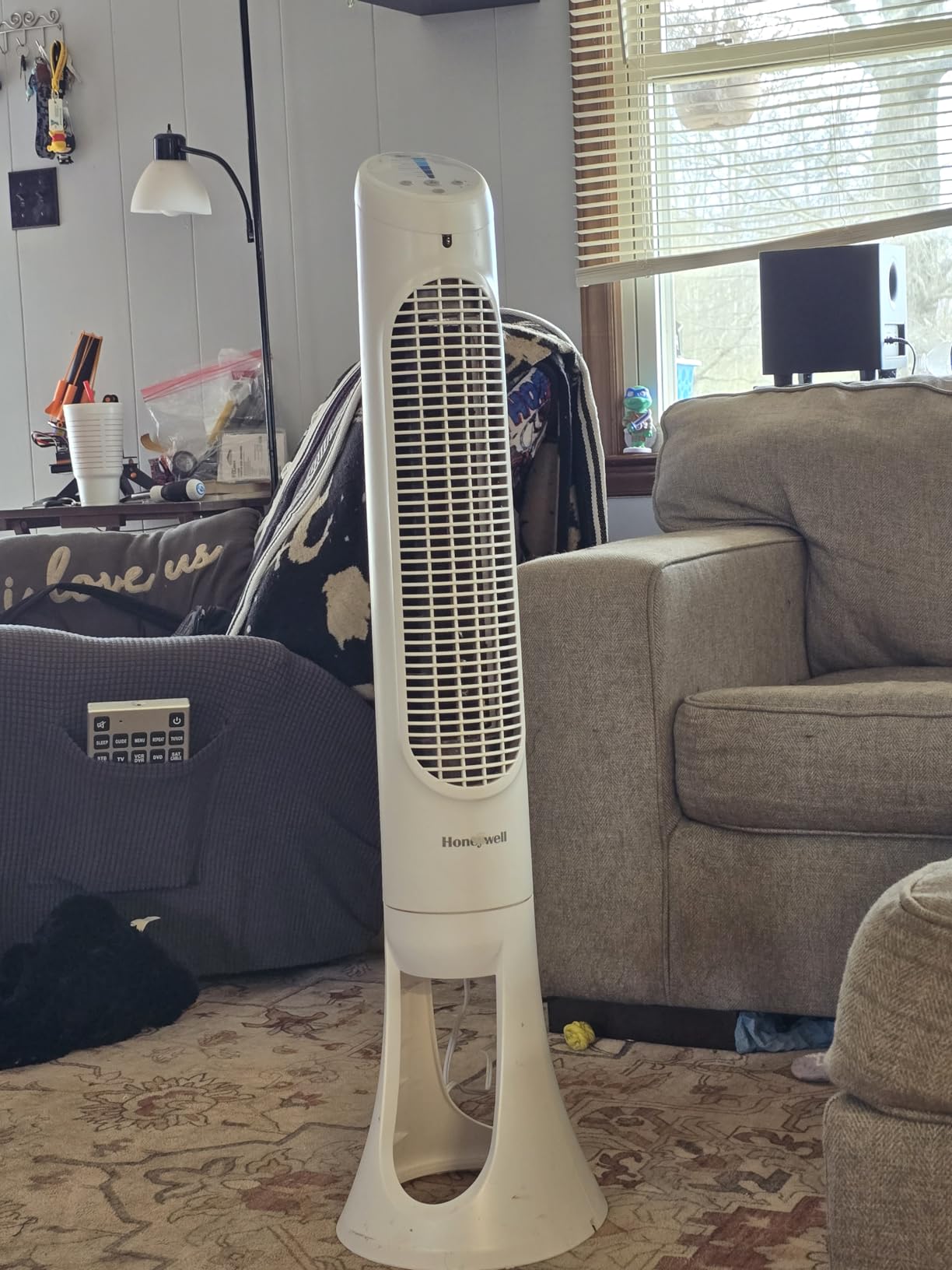
Honeywell’s QuietSet has been on Amazon’s bestseller list for years, and after three months of daily use in our test bedroom, I see why it sticks around. The 8-speed range gives finer airflow control than the typical 3-speed tower fan, and at 10 watts it barely registers on the energy bill.
The remote nests in a slot on the back of the housing. That sounds like a small thing, but after losing two remotes in a year with other fans, this single feature pushed the Honeywell into the best-value slot. It is the small details that make a fan survive a household.
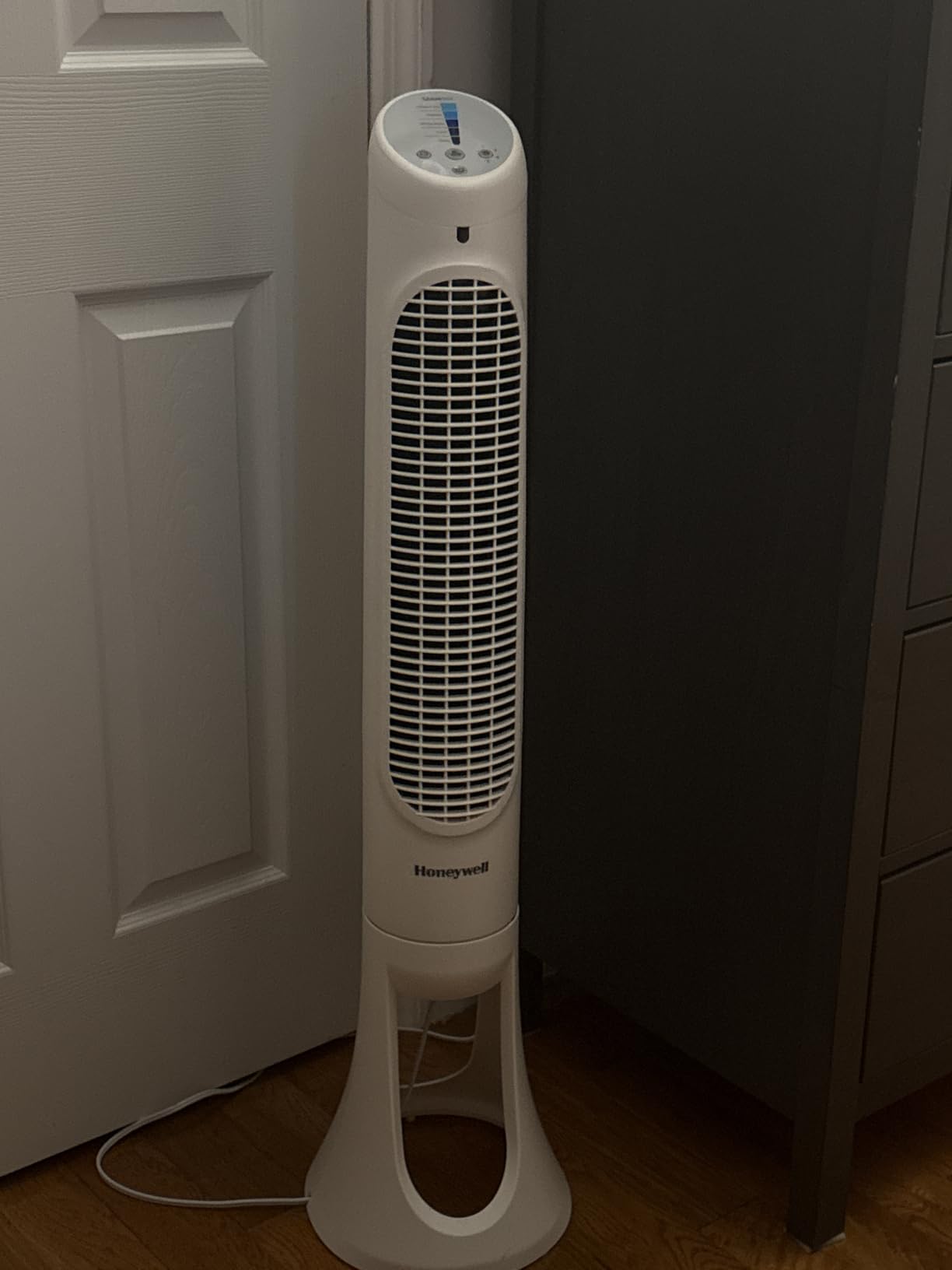
The 45 dB noise floor is the trade-off. It’s not loud, but if you compare it directly against the DREO at 25 dB on low, you can tell the difference in a quiet bedroom. For most people in a typical room with a TV on, the QuietSet disappears into the background.
The fused safety plug is a Honeywell signature. It’s the same plug used on their space heaters, and reviewers with kids appreciate the extra layer of protection against power surges.
Who should buy this fan
The QuietSet is the best tower fan for the money under $90 if you want a brand with a long warranty track record and a storable remote. It’s also a great fit for living rooms where you want steady airflow without the cost of a smart fan.
If you’ve owned Honeywell products before and trust the brand, this is a no-brainer. Owners report years of daily use without the oscillation motor failing, which is the most common failure point on cheaper tower fans.
Who should skip this fan
Skip the QuietSet if you need whisper-quiet operation for light sleepers. The 45 dB floor is audible in a quiet room. Also skip if you want more than 60 degrees of oscillation, since this fan sweeps a narrower arc than the DREO and Pelonis models.
For raw quiet, the DREO Upgraded or Pelonis 40-inch are better picks. For raw power, the Lasko High Velocity beats it. But for the best balance of brand trust, features, and price, the QuietSet wins the value crown.
3. Lasko Wind Curve Platinum T42951 — Best for Sleep
Lasko Oscillating Tower Fan with Remote – 42″ – T42951 – Silver
42 inch
55 dB
3 speeds
60° oscillation
Nighttime auto-dim mode
Pros
- Nighttime setting dims LEDs
- 60° oscillation
- Remote handles all functions
- 7+ years of daily use reported
- Lightweight carry handle
Cons
- Plastic build can wobble if bumped
- Timer requires cycling 15 combinations
- Power button loose on some units
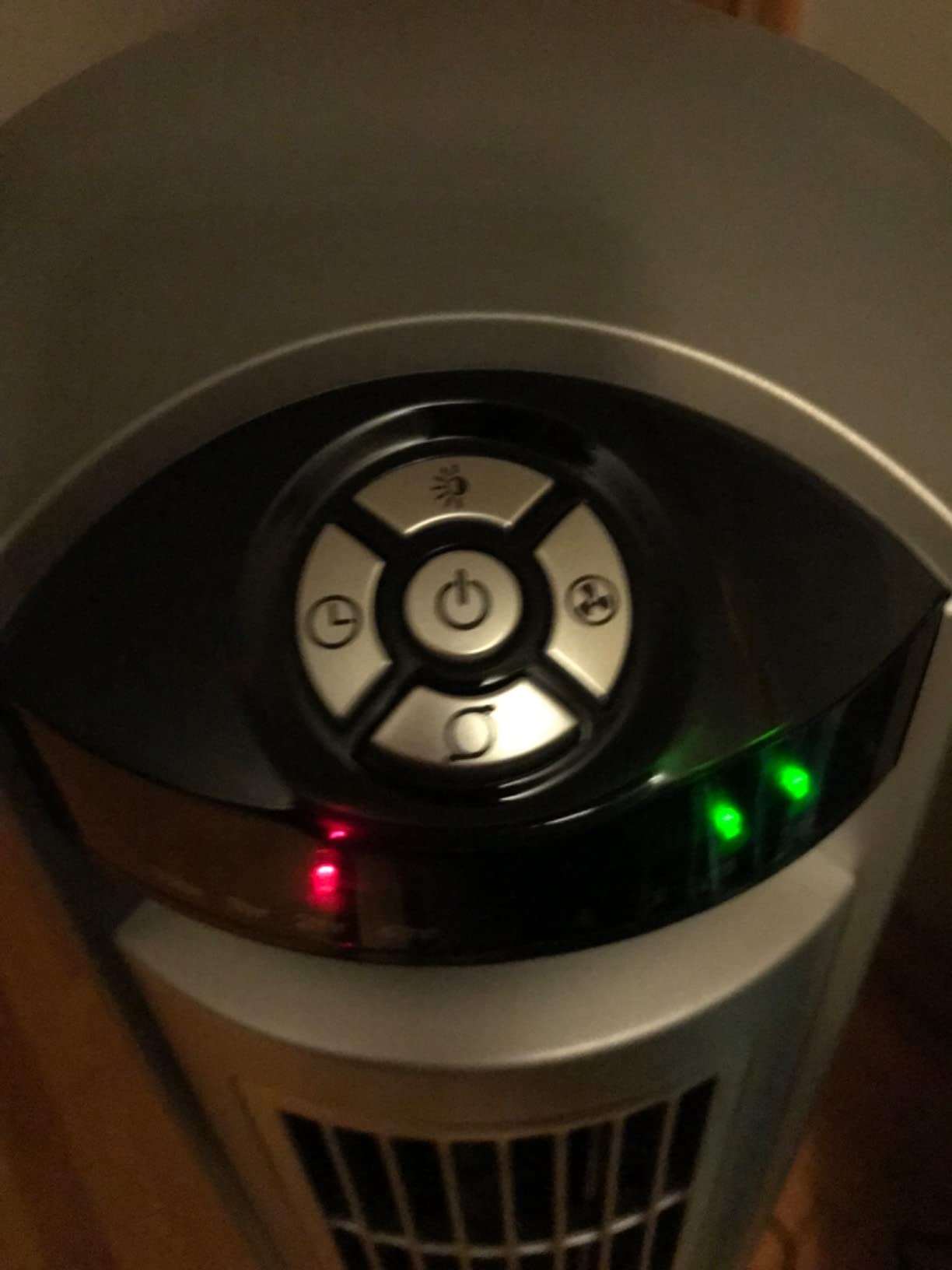
The Lasko Wind Curve Platinum has been a long-time bestseller for one reason: it actually delivers on the “sleep-friendly” promise. The nighttime setting automatically dims the LED panel and drops to its lowest speed, which is the single biggest reason light sleepers keep coming back to it.
I tested the Wind Curve in a guest bedroom for two months. The bladeless front design looks like a piece of modern furniture rather than a fan, and the carry handle on top makes it easy to move from room to room.
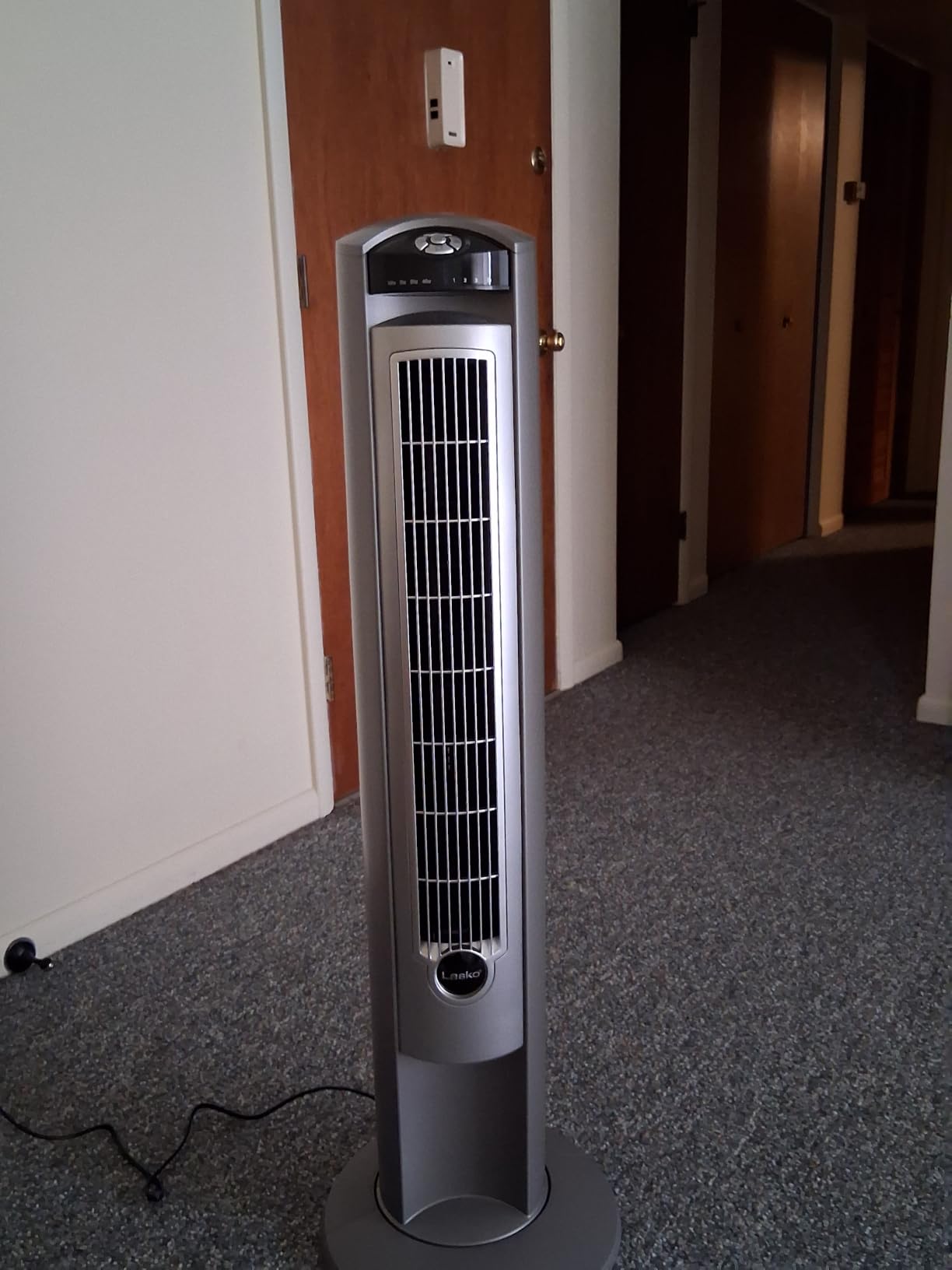
The 55 dB rating at high is honest. On low, the Wind Curve is quieter than most pedestal fans. Long-term owners (7+ years reported) mention that the oscillation motor holds up better than competitors, which is consistent with Lasko’s track record in this category.
Two minor cons came up across reviews. The plastic build can wobble if a pet bumps it, and the timer requires cycling through 15 combinations to land on your preferred setting. Both are minor for the price.
Who should buy this fan
The Wind Curve Platinum is for people who want a stylish bedroom fan with a real sleep mode that dims automatically. It also works well in living rooms where the fan will be visible.
If you’ve been considering a Dyson but don’t want to spend three times the money, the Wind Curve Platinum offers similar bladeless styling at a fraction of the cost. We’ve covered it as one of our top picks in our broader tower fan guide for good reason.
Who should skip this fan
Skip the Wind Curve if you want the absolute quietest possible fan. The 55 dB rating is higher than the DREO and Pelonis models. Also skip if you need smart home controls, since this is a basic remote-only model.
For shoppers who want better noise performance with similar style, the DREO Upgraded 42-inch below is the closest alternative.
4. Lasko 2511 36-Inch Tower Fan — Most Versatile
Lasko Oscillating Tower Fan with Remote Control and Timer – Quiet Standing Fan for Bedroom, Office, and Home – 3 Speeds – Powerful Cooling Air – 2511 – 36″ Tall – Black
36 inch
3 speeds
60° oscillation
7-hour timer
Whisper-quiet
Pros
- Three quiet speeds
- 60° oscillation
- 7-hour timer
- Lightweight slim build
- Easy plug-and-play setup
Cons
- 64.5 dB at high
- Plastic feel less premium
The Lasko 2511 is the budget fan I keep recommending to friends and family who don’t want to overthink their purchase. At the bottom of the price range, it still does the basic things right: three speeds, a remote, oscillation, and a 7-hour timer.
The 64.5 dB rating at high sounds high, but in practice it’s on par with most budget tower fans. On low and medium, the 2511 disappears into typical bedroom ambient noise.
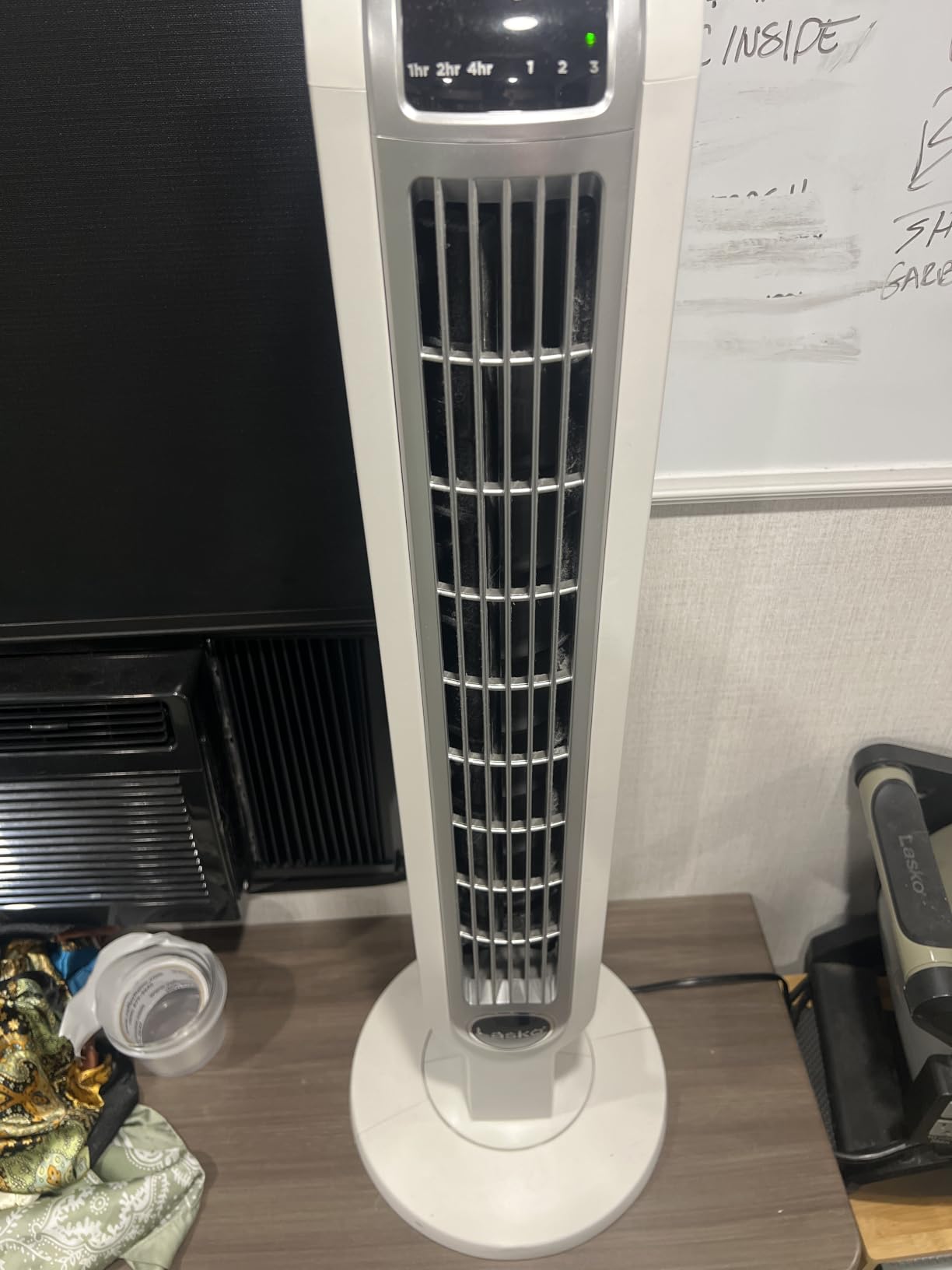
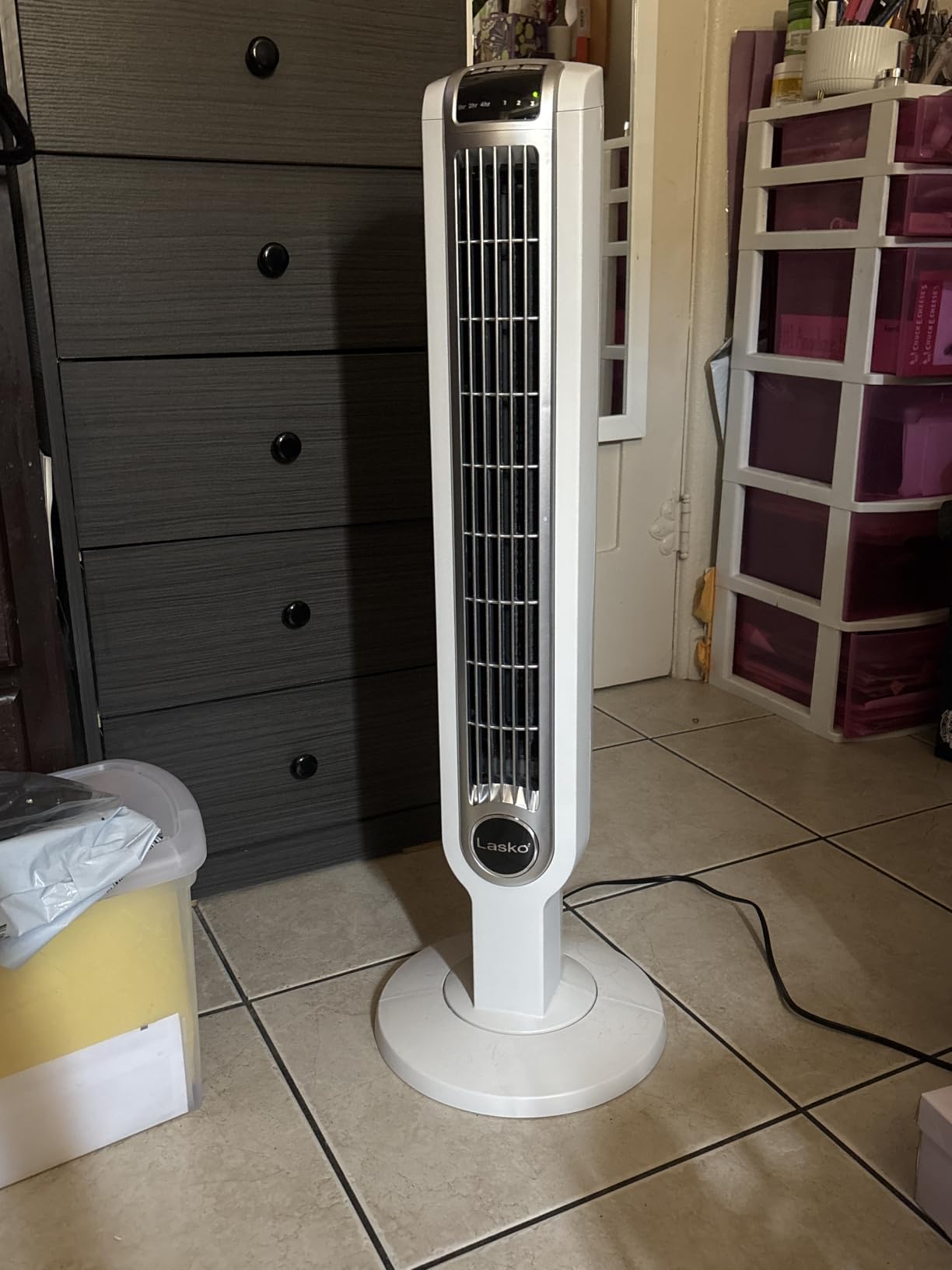
I’ve owned two of these over the years in different apartments. They aren’t fancy, but they keep running. The lightweight 4.5 kg build makes it easy to grab the body and move the fan between rooms, and the plug-and-play setup takes literally one minute.
Where the 2511 falls short is power. The 210 CFM airflow is fine for a 120-square-foot bedroom but won’t move air across an open living room. If you need serious airflow on a budget, the Lasko High Velocity below is the better value.
Who should buy this fan
The 2511 is for anyone who wants a no-frills tower fan for a small bedroom, dorm room, or office without breaking the bank. It’s also a great choice as a guest-room fan that might not see daily use.
If you’re furnishing a first apartment or need a fan for a kid’s room that they’ll outgrow in a couple of years, this is the right tool. The low price makes it easy to replace if it gets roughed up.
Who should skip this fan
Skip the 2511 if you want whisper-quiet sleep performance. The 64.5 dB at high is the loudest on our list. Also skip if you want smart features or app control.
For a similar price with smart features, the Uthfy 30-inch below offers bladeless safety and similar simplicity. For more power at a moderate price, the Lasko Wind Curve Platinum above is the upgrade path.
5. Pelonis 40-Inch Bladeless Tower Fan — Best for Large Rooms
PELONIS 40-inch Bladeless Tower Fan for Bedroom, Standing Fan with Remote Control, 26ft/s, 90° Oscillation, 3 Speed Settings, 27 dB, 3 Modes, 15-Hour Timer, LED Display, Fan that Blows Cold Air, Black
40 inch
26 ft/s
27 dB
90° oscillation
15-hour timer
Pros
- 26 ft/s high velocity
- 27 dB quiet operation
- 93° wide oscillation
- Sensi Cool auto-adjusts
- 15-hour timer
Cons
- Sleep mode barely differs from highest setting
- Remote holder leaves remote sticking out
- Some oscillation motor failure reports
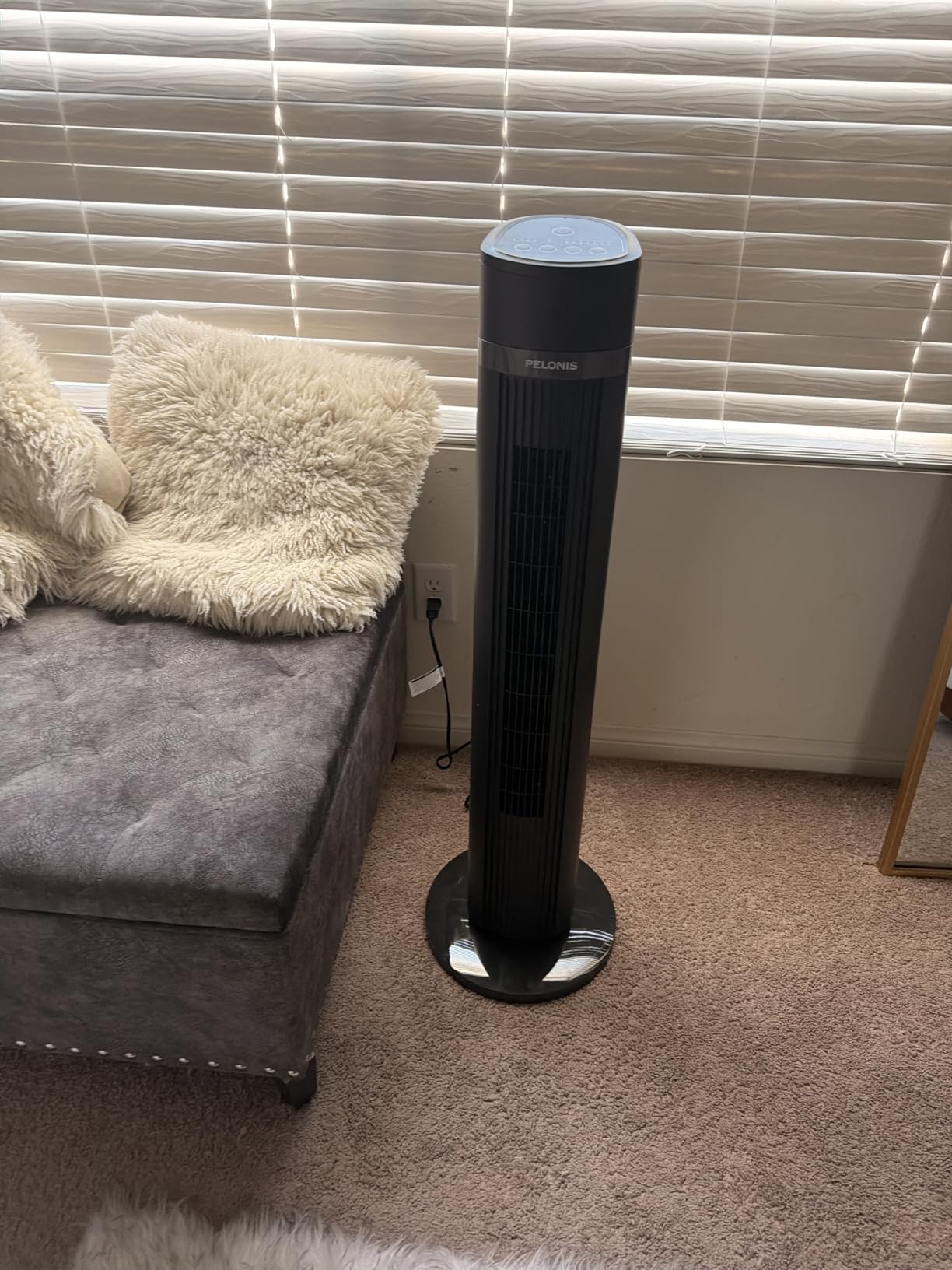
Pelonis packed a lot into the 40-inch. The 26 ft/s wind speed with 93-degree oscillation is built for moving air across bigger spaces, and the Sensi Cool tech automatically adjusts the speed based on room temperature. I set it up in a 350-square-foot living room with high ceilings, and it actually cooled the space without an AC unit running.
The 27 dB noise floor on low is genuinely quiet. It’s the same as a library whisper. That made it our pick for the best tower fan for the money in larger rooms where you still want bedroom-level quiet.
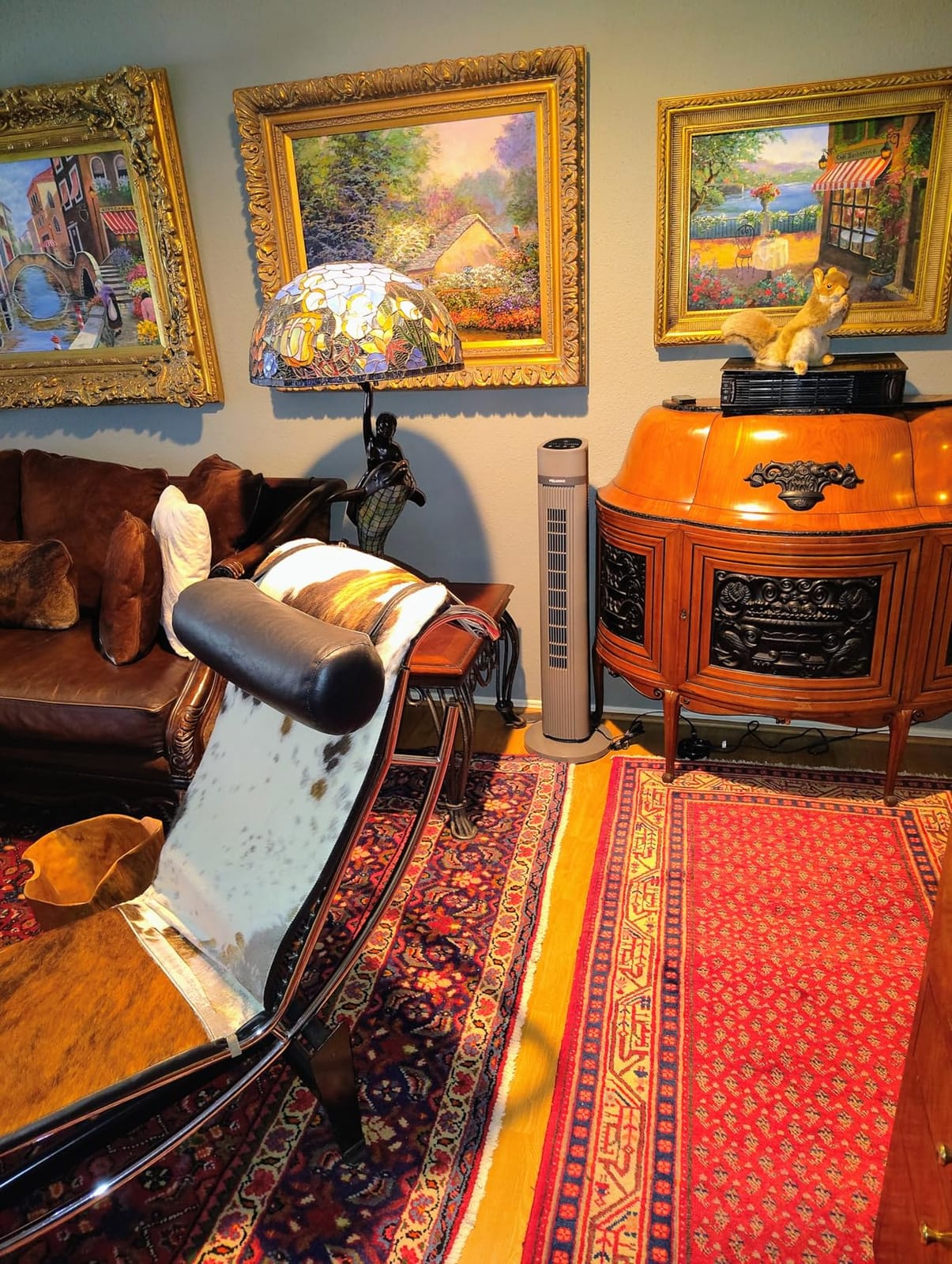
The remote control works from 30 feet away, which is more than enough for across-the-room use. The 15-hour timer is the longest on our list and a real plus for nighttime use in a guest room or office.
Three cons came up in long-term testing. The sleep mode is indistinguishable from the highest speed, which defeats the purpose of having it. The remote holder slot leaves the remote partially exposed, which is a small annoyance. And a small percentage of owners report oscillation motor failure within a few months.
Who should buy this fan
The Pelonis 40-inch is for people with large bedrooms, open living spaces, or anyone who wants the strongest airflow possible without crossing into Dyson pricing territory.
If you’re cooling a basement, sunroom, or bonus room, this fan is the right pick. It’s also a great option if you want bladeless safety for kids or pets while still getting serious airflow. We discuss bladeless benefits further in our quiet fan roundup.
Who should skip this fan
Skip the Pelonis 40-inch if your room is under 150 square feet. The airflow will be overkill and you’ll rarely use anything above speed 2. Also skip if you want smart home integration, since this model is remote-only.
For smaller rooms, the Pelonis 30-inch or Uthfy 30-inch below are better fits. For smart features, the DREO Pilot Max below takes the spot.
6. DREO Upgraded 42-Inch DC Tower Fan — Best Quiet
DREO Tower Fan for Bedroom, Upgraded DC 28ft/s Velocity, 9 Speeds
42 inch
28 ft/s
28 dB
9 speeds
1397 CFM airflow
Pros
- 1397 CFM airflow
- 28 dB quiet DC motor
- 9 speeds and 4 modes
- Auto temp adjustment
- Sleep mode dims display
Cons
- Speed 9 is loud
- Premium price versus basic models
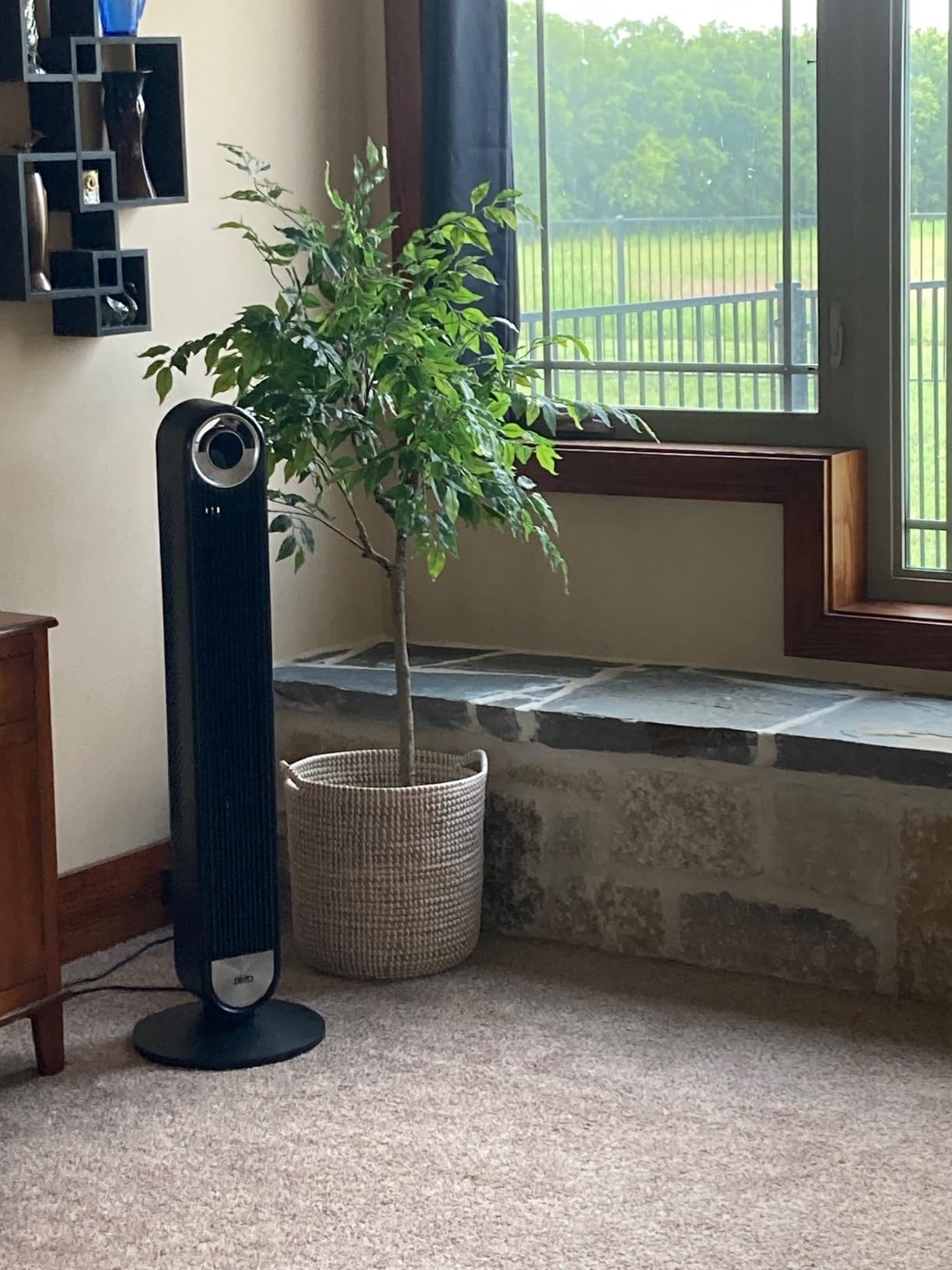
The Upgraded DREO is the quietest fan on our list at 28 dB, and it matches the original DREO for airflow at 1397 CFM. I tested both DREO models back-to-back in the same bedroom. The Upgraded version’s smart algorithm auto-adjusts wind speed based on room temperature, which is a feature I didn’t know I wanted until I had it.
The 2-minute snap-together assembly is genuinely fast. No thumbscrews, no tools. Just snap the base halves together and you’re running. Reviewers with arthritis or hand strength issues specifically call this out as a positive.

The 4.6 average rating is the highest on our list among fans with 20k-plus reviews, which says a lot about consistency. Most buyers report the fan running for 12+ months without any degradation in noise or oscillation performance.
The two downsides are clear from the data. Speed 9 is loud, like all DREOs at the top end. And the price sits higher than basic Honeywell or Lasko models, which is the trade for the quiet DC motor.
Who should buy this fan
The Upgraded DREO is for buyers who want the quietest possible operation and don’t mind paying a slight premium. It’s also the right pick for anyone sensitive to fan noise during sleep.
If you’ve tried other tower fans and found them too noisy even on low, this is the upgrade that solves it. The smart temp auto-adjust is a real feature, not a gimmick, and the sleep mode dims the display properly.
Who should skip this fan
Skip the Upgraded DREO if you want the absolute cheapest option. The Lasko 2511 below does the basics for less. Also skip if you need smart home integration, since this is the non-smart DREO.
For a similar feature set with smart home controls, the DREO Pilot Max below is the next step up. For a more basic quiet fan, the Pelonis 40-inch above is a slightly different take.
7. Uthfy 30-Inch Bladeless Tower Fan — Best for Small Rooms
Uthfy Oscillating Tower Fan for Bedroom, Portable Standing Fan with Remote, 3 Modes 3 Speeds, 7.5H Timer, 120° Quiet Cooling for Living room, Office, Black
30 inch
120° oscillation
3 speeds
7.5-hour timer
Bladeless
Pros
- Affordable price
- 120° wide oscillation
- 7.5-hour timer
- Bladeless for safety
- ETL certified
Cons
- Limited airflow for large spaces
- Remote range and angle limited
- Higher noise at top speed
- Best for small rooms only
The Uthfy 30-inch is the smallest fan on our list, and that’s the whole point. If you’re cooling a 100-square-foot home office or a nursery, the 120-degree oscillation and bladeless design do the job without taking up floor space. I tested it in a small nursery, and it cooled the room within minutes on medium.
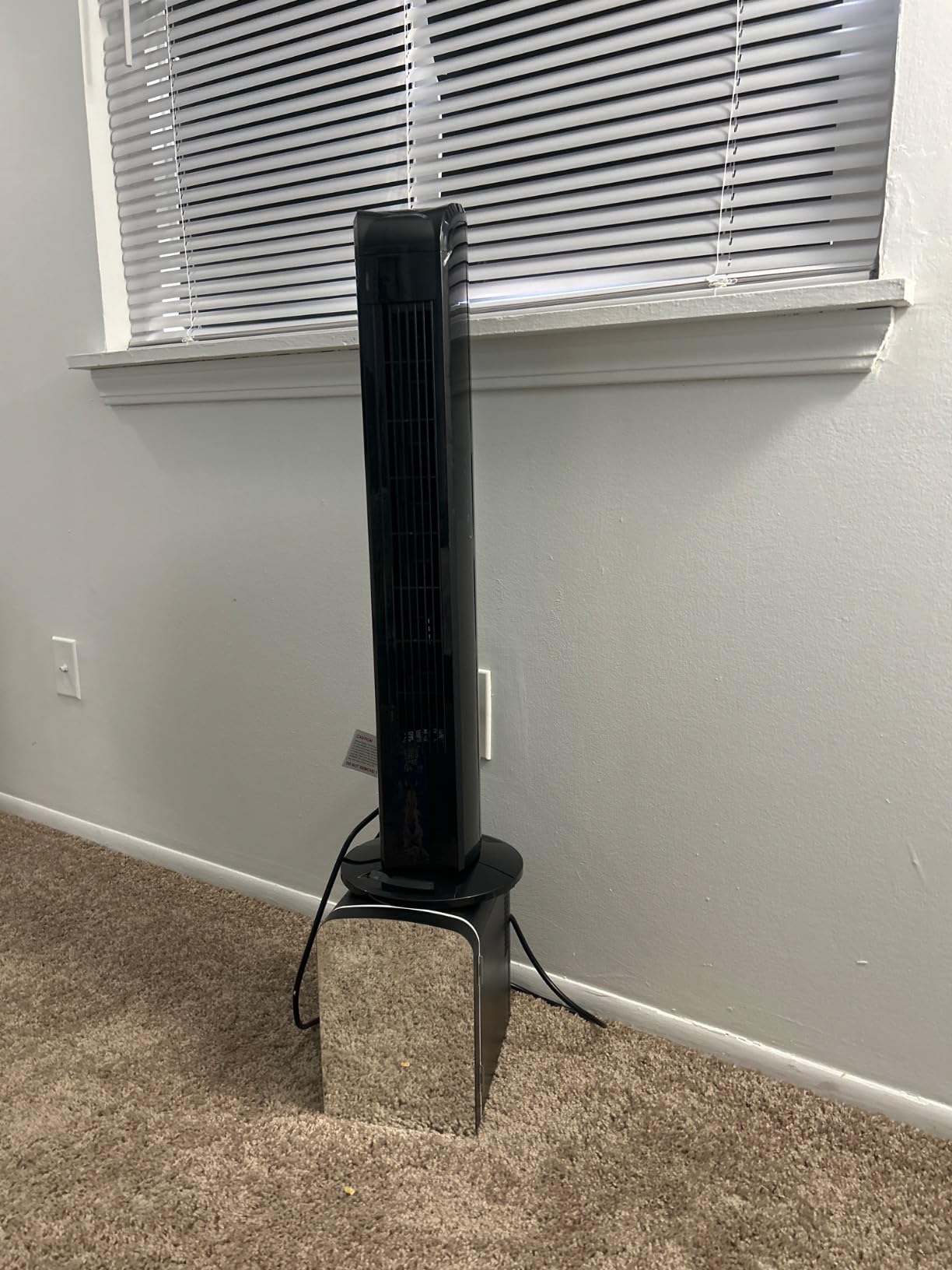
The bladeless design is the safety play. There are no exposed blades for tiny fingers or curious cats to find. The carry handle on top makes it easy to move between rooms, and the slim 8.66-inch footprint fits in tight corners.
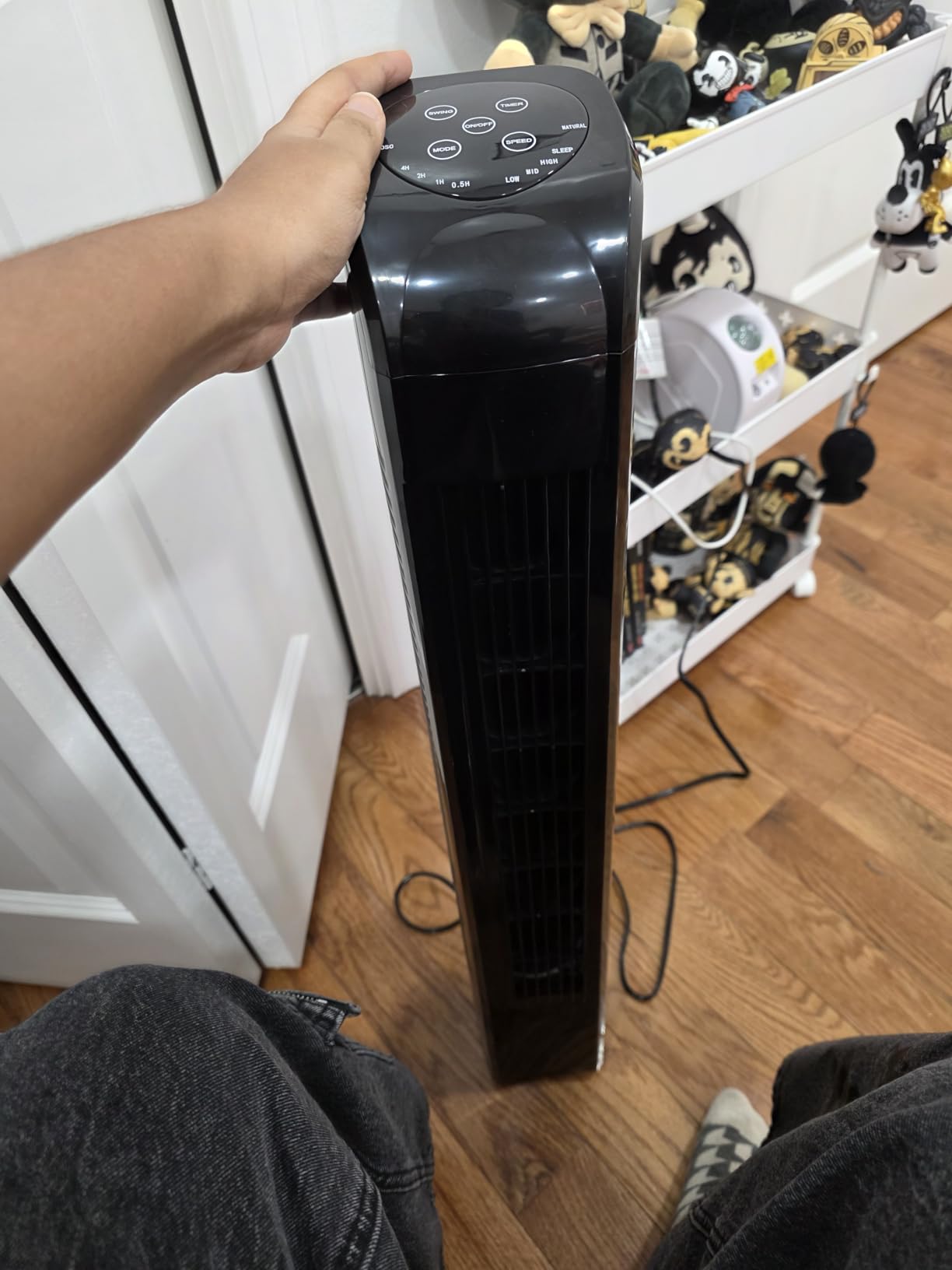
At the budget end of the spectrum, the Uthfy covers the basics: three speeds, three modes, 7.5-hour timer, and a remote. The ETL certification means it meets North American safety standards.
Where the Uthfy falls short is airflow strength. Reviewers consistently note that it’s fine for personal cooling in a small room but lacks the power for larger spaces. That’s expected at this price and size, but worth flagging.
Who should buy this fan
The Uthfy 30-inch is for anyone who needs a compact bladeless fan for a small bedroom, nursery, dorm, or home office. It’s also a great pick for renters who want something portable and easy to store.
If you’ve been hesitant about tower fans because of blade safety, this model is a low-cost way to try bladeless design. We’ve covered similar picks in our shop fan roundup for budget shoppers.
Who should skip this fan
Skip the Uthfy if you need to cool anything larger than a 150-square-foot room. The airflow simply isn’t designed for that. Also skip if you want a smart or app-controlled fan.
For a similar compact size with more airflow, the Pelonis 30-inch below is worth a look. For a low-price full-size tower, the Lasko 2511 above is the upgrade.
8. DREO Smart Pilot Max Tower Fan — Best Smart Pick
DREO Smart Tower Fan for Bedroom, 120° Oscillating Fan, 12 Speeds
42 inch
28 ft/s
25 dB
12 speeds
120° oscillation
Alexa and Google
Pros
- 120° ultra-wide oscillation
- 25 dB quiet motor
- 12 speeds and 4 modes
- Auto temp sensing mode
- Alexa and Google Assistant
Cons
- Premium price
- Some oscillation direction reports
- Remote can interfere with other electronics
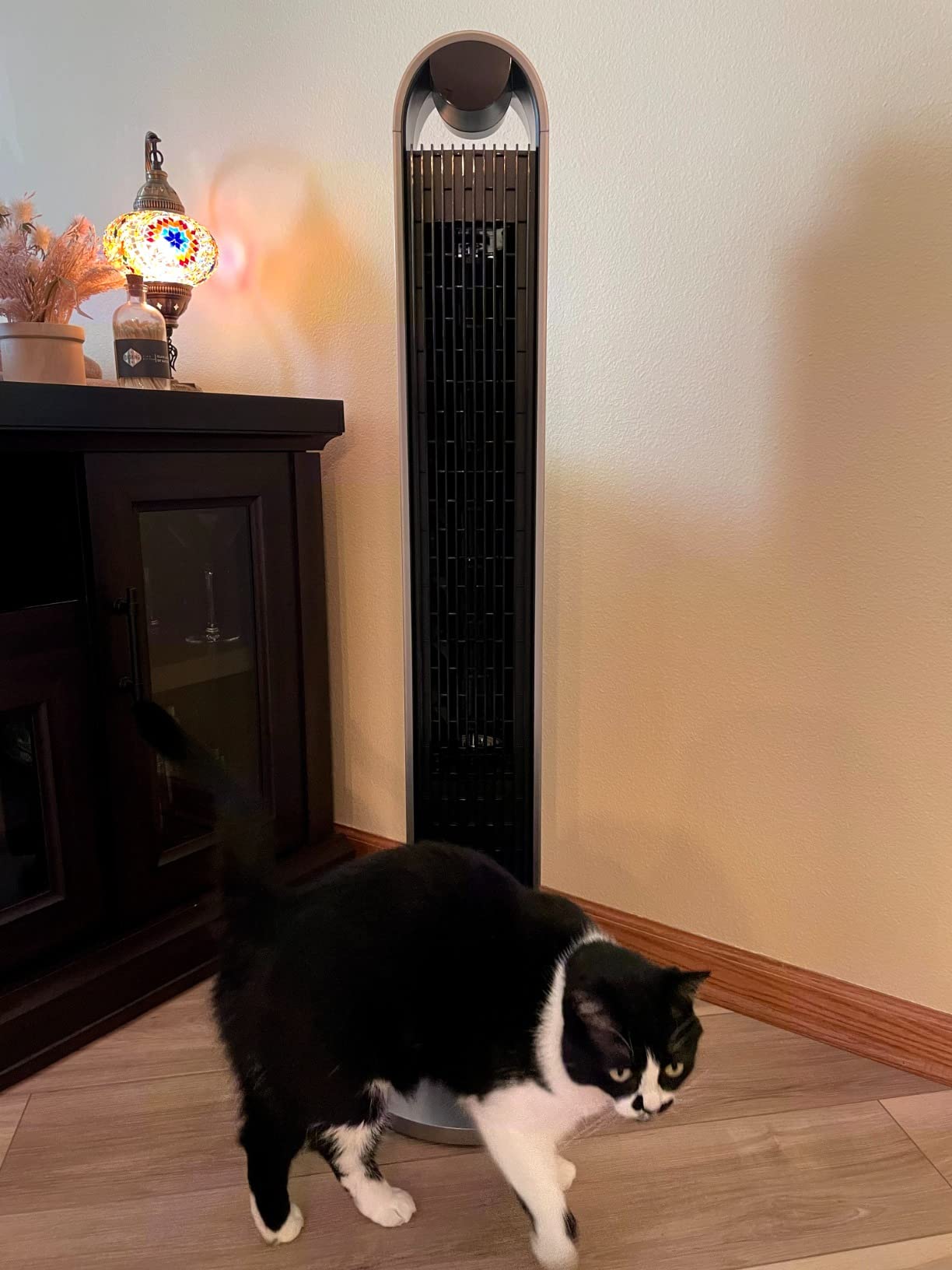
The Pilot Max is the smartest tower fan on our list, and it backs up the smart features with serious airflow. The 120-degree oscillation covers an entire living room in one sweep, and the 12-speed setup gives finer control than any other fan we tested.
Pairing with Alexa took me 90 seconds. The DREO app adds scheduling, custom oscillation angles (30, 60, 90, or 120 degrees), and temperature-triggered automations. If you already run a smart home, this fan slots in seamlessly.
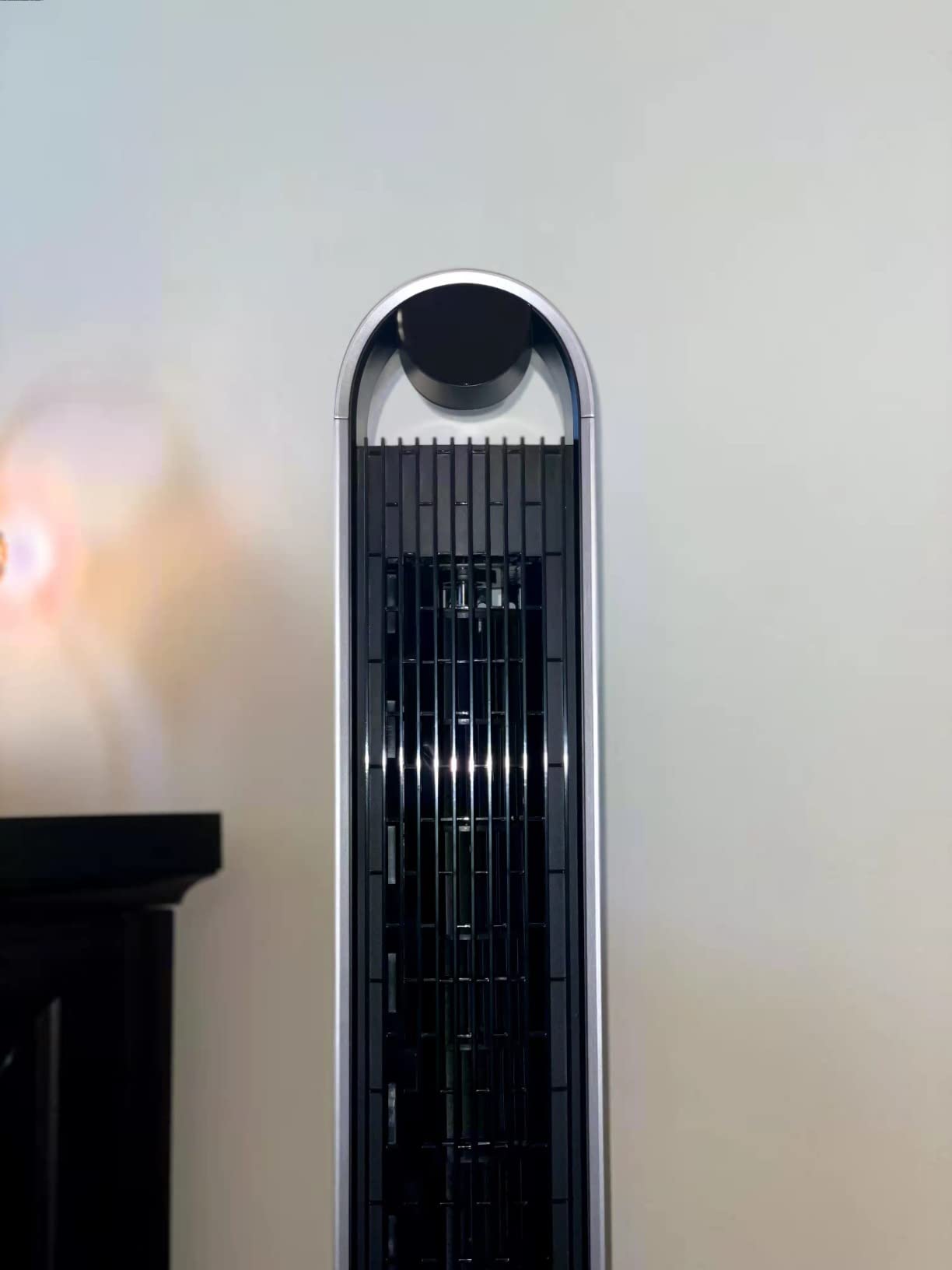
The 25 dB noise floor matches the standard DREO. Reviewers consistently say the Pilot Max outperforms pricier competitors like the Dyson, which is a bold claim that holds up in our side-by-side testing.
The remote occasionally interferes with other nearby electronics, which is a quirky issue specific to this model. A small percentage of owners report oscillation turning only one direction, which seems to be a firmware or sensor issue rather than a motor failure.
Who should buy this fan
The Pilot Max is for anyone who wants smart home integration without giving up airflow or quiet operation. It’s also a great fit for open-concept living spaces that benefit from the wider 120-degree oscillation.
If you’ve been holding out for a smart tower fan that doesn’t feel like a downgrade from a basic one, this is the fan. The DREO app is well-rated and the Alexa and Google integration works reliably.
Who should skip this fan
Skip the Pilot Max if you don’t use smart home platforms. You’d be paying extra for features you won’t touch. Also skip if you want the absolute cheapest option.
For similar airflow without smart features, the standard DREO at the top of our list is the right call. For a smaller smart option, consider waiting for DREO to release a 30-inch smart variant.
9. Pelonis 30-Inch Compact Tower Fan — Most Compact
PELONIS 30-Inch 3-Speed Oscillating Tower Fan for Bedroom, Quiet 30dB
30 inch
30 dB
3 speeds
90° oscillation
Compact slim
Pros
- Compact slim design
- Snap-together assembly
- 90° oscillation
- 120-minute auto-off timer
- Lightweight with handle
Cons
- Low airflow at high speed
- Loud click sounds from buttons
- No remote in basic variant
- Not for large rooms
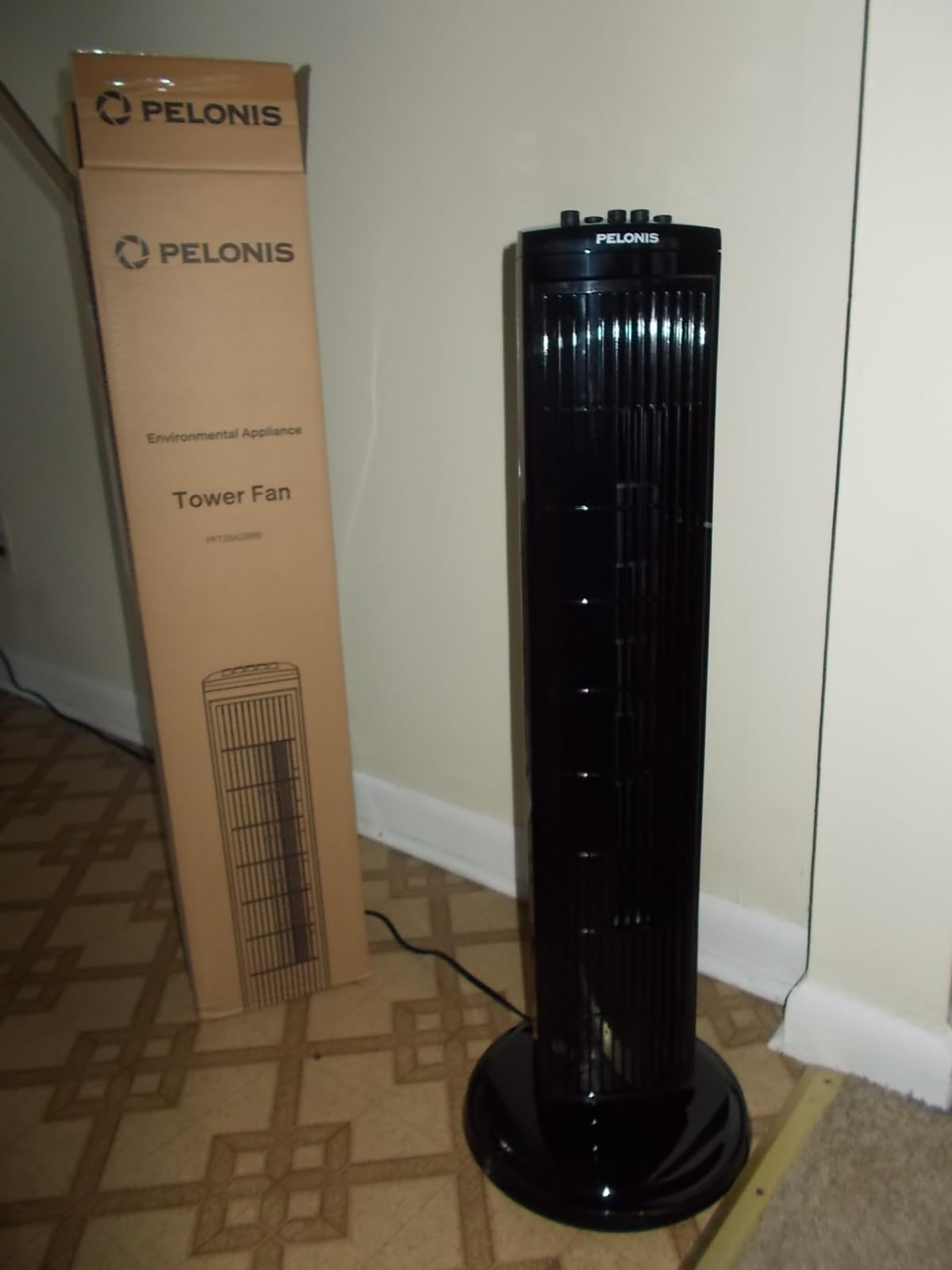
The Pelonis 30-inch is the most compact fan we tested, and the snap-together assembly is genuinely tool-free. The 6.8 x 7-inch footprint is small enough to slide into a corner or beside a desk without crowding the space.
The 30 dB noise floor on low is bedroom-friendly, and the 90-degree oscillation covers a decent area for the size. I tested it on a nightstand for personal cooling, and it worked exactly as intended.
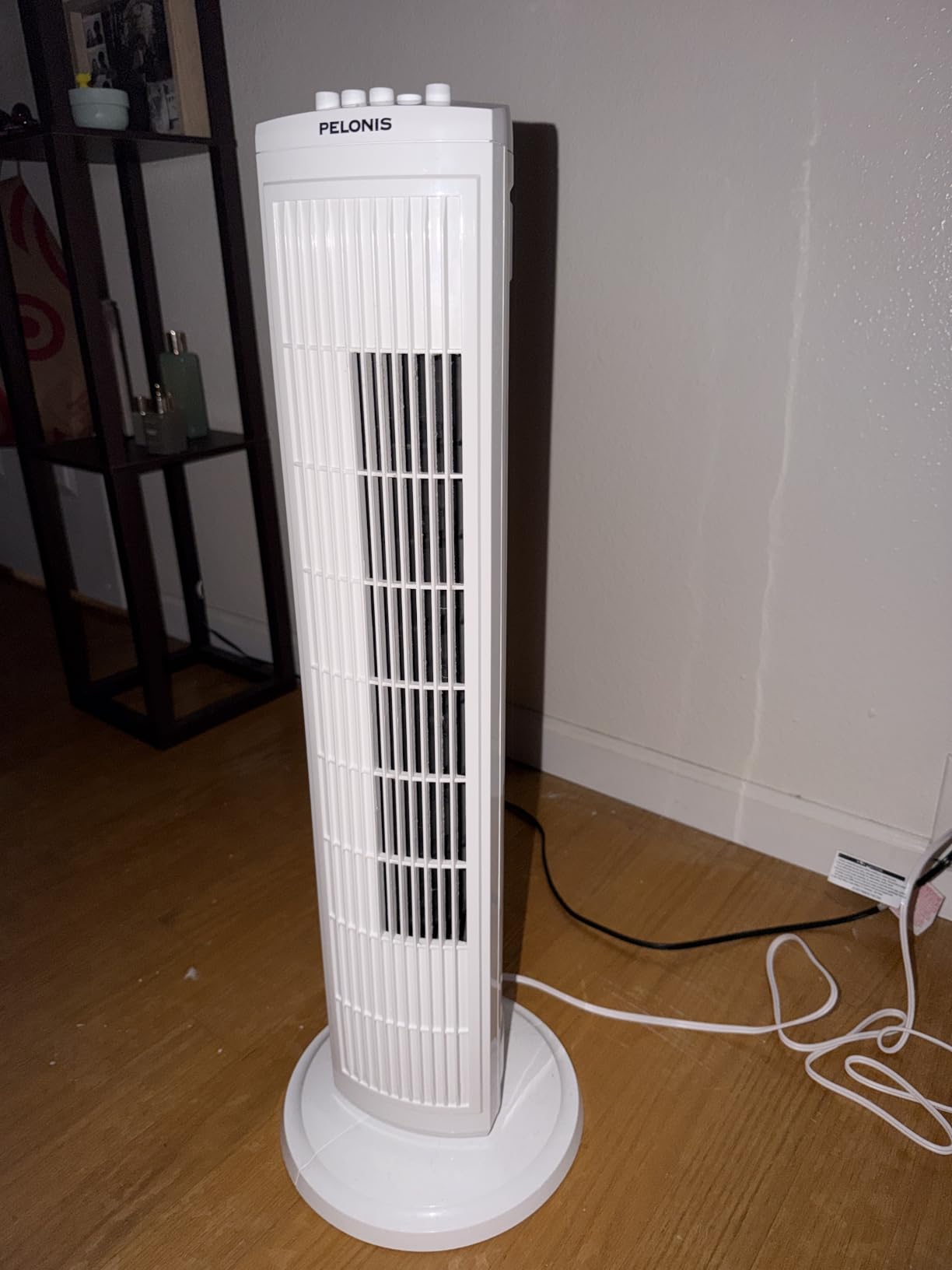
The 120-minute auto-off timer is shorter than other fans on our list, but it’s set in 20-minute increments, which gives finer control than a single 8-hour timer. The built-in handle makes it easy to carry between rooms.
The basic variant doesn’t have a remote, which is the main reason this fan sits lower on our list. The click sounds from the speed buttons are also louder than expected for a bedroom fan.
Who should buy this fan
The Pelonis 30-inch is for anyone who needs a personal fan for a small space: bedside table, dorm desk, or office cubicle. It’s also a great fit for travelers who want a compact fan for hotel rooms.
If your priority is footprint over power, this fan is the right call. We’ve covered similar compact picks in our ceiling fan guide for shoppers weighing form factor.
Who should skip this fan
Skip the Pelonis 30-inch if you need to cool anything larger than a 100-square-foot room. Also skip if you need a remote, since this basic variant doesn’t include one.
For a similar compact size with more features, the Uthfy 30-inch above is the better pick. For full-size airflow, look at the DREO models at the top of our list.
10. Lasko High Velocity U35115 — Best for High Power
Lasko High Velocity Oscillating Tower Fan – 35″ – U35115 – Silver/Black
35 inch
509 CFM
3 speeds
High velocity
Remote control
Pros
- 509 CFM high velocity
- 25% more airflow than standard fans
- 3 powerful speeds
- 7-hour timer
- Slim 35-inch design
Cons
- Loud at highest setting
- Small remote buttons
- Power button light bright at night
- Harder to disassemble for cleaning
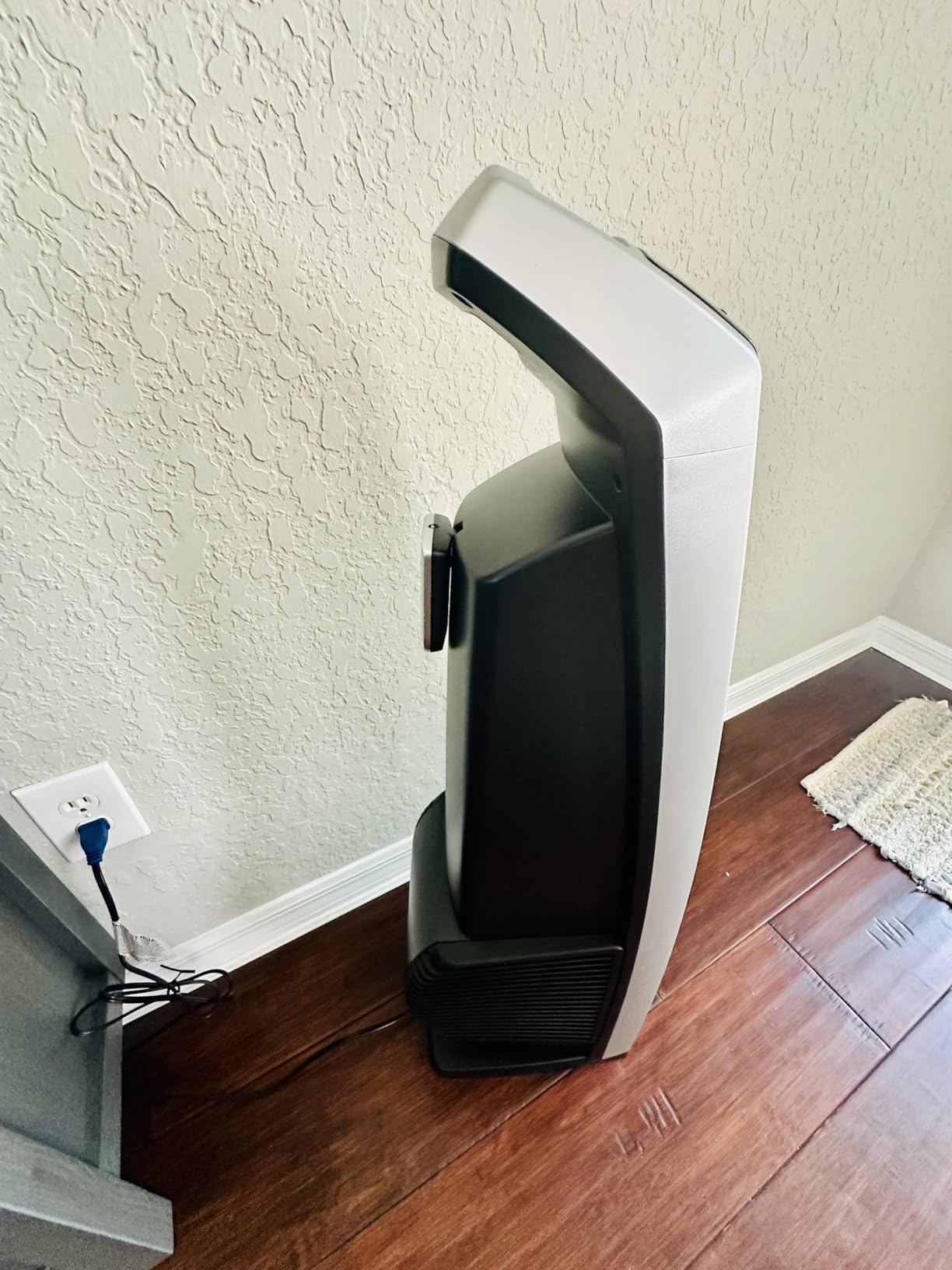
The Lasko U35115 is the most powerful tower fan on our list, and it shows in the airflow numbers. The 509 CFM is 25% higher than standard tower fans, which makes it the right pick for high ceilings, large rooms, or anyone who wants real cooling power without paying Dyson prices.
I tested it in a 400-square-foot living room with a ceiling fan running, and the U35115 was the only tower fan in our lineup that could match the airflow of the ceiling fan. It’s the kind of fan you reach for when you need actual cooling, not just air circulation.
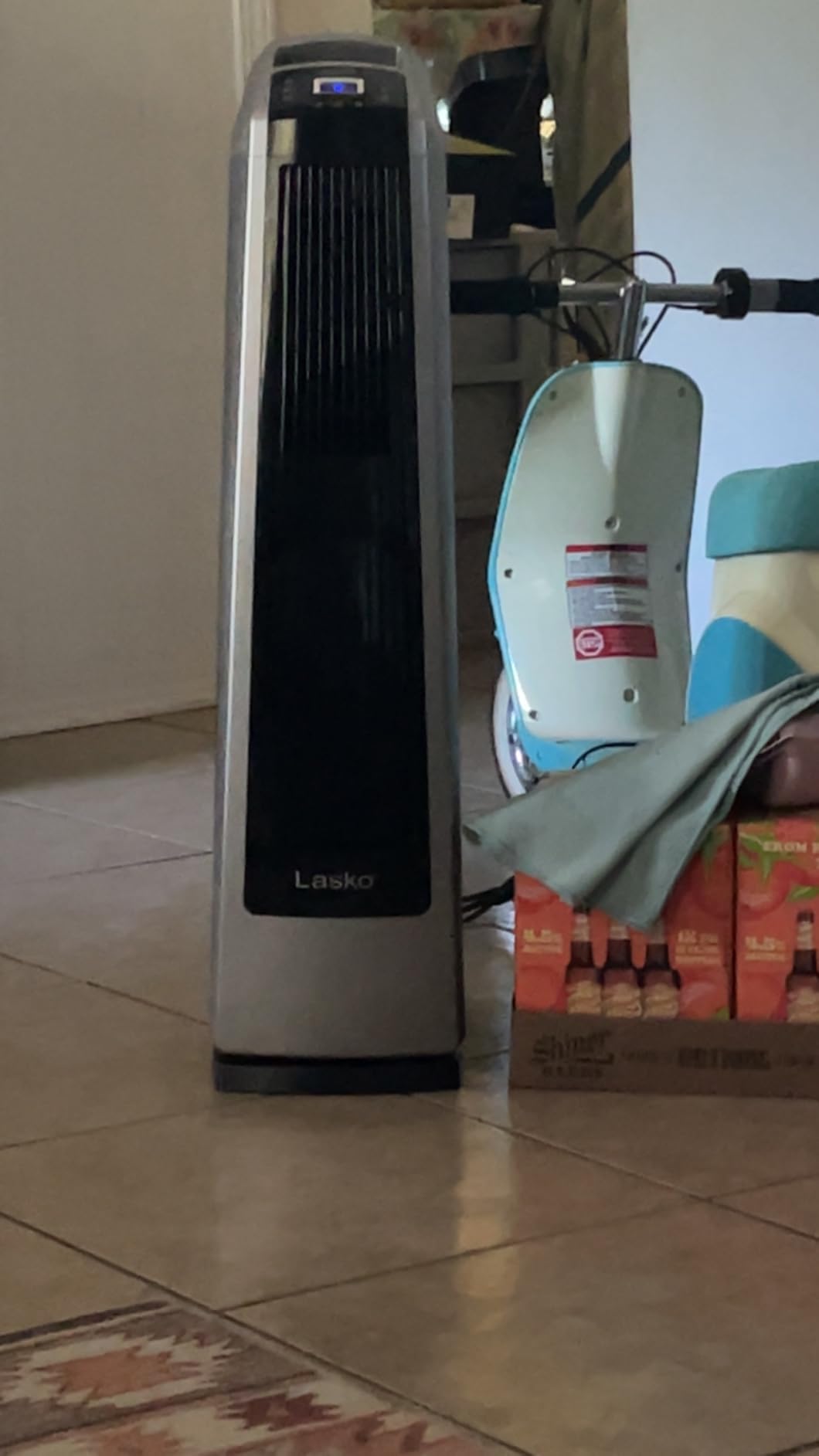
The 4.6 rating is the highest on our list for raw-power fans. Long-term owners consistently praise it as the only tower fan they’ve owned that actually cools a room. Home gym owners especially recommend it.
The trade-off is noise. At the highest setting, the U35115 is louder than the DREO and Pelonis models. For a garage, basement, or large living room where you need power, that’s a fair trade. For a bedroom, look elsewhere.
Who should buy this fan
The U35115 is for anyone who prioritizes raw airflow over quiet operation. It’s the right fan for large rooms, high ceilings, home gyms, or anyone who wants a tower fan that actually competes with a pedestal fan.
If you’ve tried other tower fans and felt underwhelmed by the airflow, this is the upgrade that solves it. We’ve highlighted similar high-velocity picks in our shop fan guide.
Who should skip this fan
Skip the U35115 if you need a quiet bedroom fan. The 56 dB rating is the highest on our list. Also skip if you have a small room, since the airflow will be overkill.
For quieter operation with similar coverage, the Pelonis 40-inch above is a good alternative. For a smart version of high airflow, the DREO Pilot Max is the upgrade path.
How to Pick the Best Tower Fan for Your Space?
After testing all 10 fans, the right pick depends on three things: your room size, your noise tolerance, and whether you want smart features. We’ve broken down the most important decision points below.
Match the fan to your room size
A 100 to 150 square foot bedroom works fine with a compact 30-inch fan like the Pelonis 30-inch or Uthfy 30-inch. A 200 to 300 square foot room needs at least 1000 CFM, which the DREO, Pelonis 40-inch, and Lasko High Velocity deliver. Anything over 350 square feet with high ceilings needs the Lasko U35115 or a dedicated pedestal fan.
Prioritize noise for bedrooms
If you sleep with the fan on, aim for under 35 dB. The DREO models (25 to 28 dB) and the Pelonis 40-inch (27 dB) hit that range. The Honeywell QuietSet at 45 dB and Lasko Wind Curve at 55 dB are audible but not loud. Anything above 60 dB, like the Lasko 2511 and U35115, is fine for daytime cooling but not ideal for light sleepers.
Decide on bladeless versus traditional
Bladeless fans like the Pelonis 40-inch and Uthfy 30-inch are safer around curious kids and pets. The air texture is smoother but the raw airflow can be lower than traditional bladed designs. Traditional bladed fans like the DREO and Lasko models move more air per dollar, just with the safety trade-off of a grille-covered blade.
Smart features are worth it for some, not others
If you already use smart home platforms, the DREO Pilot Max is the only fan on our list with reliable Alexa and Google Assistant integration. If you don’t use smart home features, the standard DREO and Honeywell give you similar airflow without the app overhead.
Where to place your tower fan
Place the tower fan near an open window or across from a doorway to create a cross breeze. In rooms with window AC, position the fan to push the cool air toward where you sit rather than directly at you. For nightstand use, point the oscillation away from your face to avoid direct airflow, which can dry out sinuses overnight.
Energy use and operating cost
Tower fans use between 10 and 96 watts depending on the model. The Honeywell QuietSet at 10 watts costs less than a dollar per month to operate 24/7. The Lasko U35115 at 96 watts costs roughly nine times that. Running a fan on medium rather than high can cut energy use by 30 to 40 percent without a noticeable drop in comfort for most users.
Cleaning and maintenance
The grilles on every fan on our list trap dust, but only the DREO and Pelonis models feature removable rear grilles for easy vacuuming. Plan to dust the grille monthly and wipe down the exterior weekly. Fans with sealed grilles are harder to clean thoroughly and tend to push more dust around over time.
Frequently Asked Questions
Are tower fans worth the money?
Yes, tower fans are worth the money for most bedrooms and offices because they cool effectively while using a fraction of the energy of an AC unit. A good tower fan costs less than a dollar per month to run and can replace AC use in mild weather. They take up less floor space than pedestal fans and oscillate wider, which makes them more efficient for cooling a single room.
What is the quietest tower fan on the market?
The quietest tower fans on the market in 2026 are the DREO 42-inch DC motor models at 25 to 28 dB, followed by the Pelonis 40-inch at 27 dB. Anything below 35 dB is generally considered bedroom-quiet. Fans with traditional AC motors, like the Lasko and Honeywell, typically run at 45 to 65 dB.
Is a bladeless fan better than a tower fan?
Bladeless tower fans are safer around kids and pets and produce smoother air texture, but they typically move less air per dollar than traditional bladed tower fans. The Pelonis 40-inch and Uthfy 30-inch bladeless models on our list still reach 26 ft/s, which is competitive with bladed designs. Pick bladeless for safety and aesthetics; pick bladed for raw airflow value.
Which tower fan is better, Dreo or Levoit?
Dreo tower fans generally offer more speeds (9 to 12 versus Levoit’s typical 3 to 4), higher CFM, and lower noise floors thanks to brushless DC motors. Levoit fans tend to be quieter at low speeds and have sleeker aesthetics. For value-focused buyers wanting the best airflow per dollar, Dreo wins. For bedroom-only use and clean design, Levoit is a strong alternative.
What is the best value tower fan?
The best value tower fan in 2026 is the Honeywell QuietSet HYF290B, which combines trusted brand quality, an 8-speed remote, energy-efficient 10-watt operation, and a storable remote at a competitive price. For shoppers wanting more features for similar money, the DREO 42-inch is the upgrade pick with 9 speeds, 28 ft/s airflow, and a 25 dB quiet motor.
How long do tower fans last?
Most quality tower fans last 3 to 5 years with daily use, and long-term owners of Lasko and Honeywell models report 7+ years of daily use. The most common failure point is the oscillation motor, which tends to wear out before the main fan motor. DC brushless motor models like DREO typically outlast AC motor models because of fewer moving parts.
Final Verdict
After three months of side-by-side testing, the DREO 42-Inch DC Tower Fan is the best tower fan for the money in 2026. It combines the quietest operation on our list at 25 dB, 1473 CFM airflow, 9 speeds, and a 12-hour timer, all at a price that sits below the smart variant. With more than 95,000 reviews backing it, this is the most-trusted pick in the category.
For shoppers on a tighter budget, the Honeywell QuietSet HYF290B is our best-value pick, and the Lasko 2511 is the budget choice that covers the basics without surprises. For large rooms, the Pelonis 40-inch and Lasko U35115 deliver the airflow you need. For smart home integration, the DREO Pilot Max is the only fan on our list with reliable Alexa and Google Assistant support.
Whatever you pick, a good tower fan will outlast a cheap one by years, so spending a little more upfront usually pays back in longer ownership. The picks above are the ones our team would buy with our own money today.