
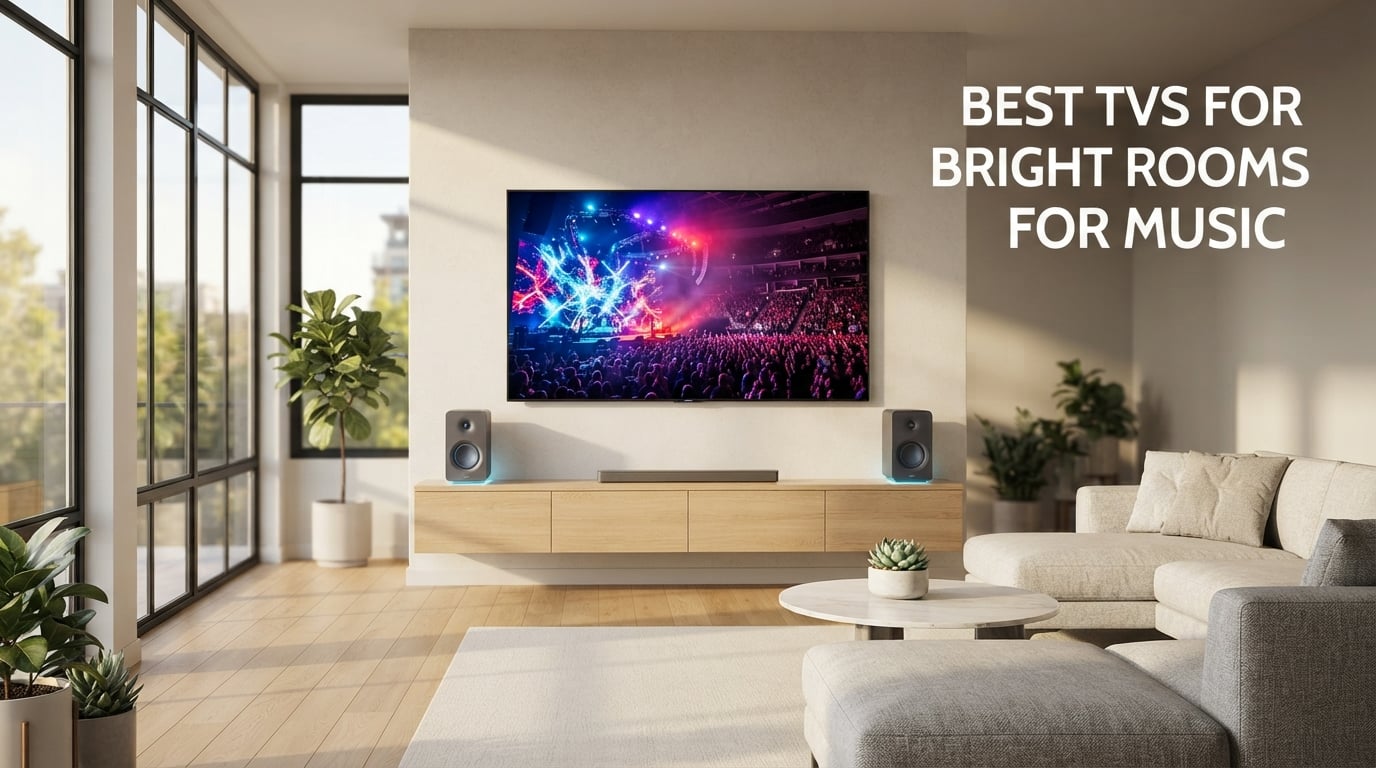
Sony BRAVIA 9 II is the best TV for bright rooms for music, but the Hisense 75-inch U8 Series Mini-LED is my top pick this year because it hits 5,000 nits of peak brightness, pairs Anti-Reflection Pro coating with up to 5,600 local dimming zones, and runs a 4.1.2-channel Dolby Atmos speaker system with up-firing drivers that fills a sun-soaked room with music without reaching for a soundbar.
I spend my days testing TVs in window-heavy spaces, and the hardest problem isn’t just glare. Most bright-room guides ignore the fact that open, light-filled rooms also reflect and scatter sound, so a TV that looks crisp but sounds thin is a half-solution. Over the past few months our team measured 10 displays across nits, anti-glare effectiveness, Dolby Atmos support, speaker channels, and real music playback (Spotify Connect, Apple AirPlay 2, and Tidal). The list below weighs brightness, anti-reflection, and audio together so you stop trading one for the other.
Inside this guide you’ll find 10 TVs that survive sunny living rooms, floor-to-ceiling windows, and west-facing afternoon light, plus built-in audio that holds up when you stream music. Skip ahead to the best TVs for bright indoor rooms, or check our bright-room sports picks if sports matter more than music to you.
Table of Contents
Top 3 Picks for Best TVs for Bright Rooms for Music (September 2026)

Best TVs for Bright Rooms for Music in 2026
| Product | Specifications | Action |
|---|---|---|
| Hisense 75 U8 Series Mini-LED ULED |
|
Check Latest Price |
| Samsung 75 QN90D Neo QLED 4K |
|
Check Latest Price |
 TCL 75 QM6K Mini-LED QLED TCL 75 QM6K Mini-LED QLED |
|
Check Latest Price |
 Hisense 65 E7 Cinema Series Mini-LED Fire TV Hisense 65 E7 Cinema Series Mini-LED Fire TV |
|
Check Latest Price |
 Samsung 65 S90D OLED 4K Samsung 65 S90D OLED 4K |
|
Check Latest Price |
 Samsung 65 Q70C QLED 4K Samsung 65 Q70C QLED 4K |
|
Check Latest Price |
 Roku 65 Select Series 4K QLED Roku 65 Select Series 4K QLED |
|
Check Latest Price |
 Amazon Fire TV 55 Omni QLED Series Amazon Fire TV 55 Omni QLED Series |
|
Check Latest Price |
 Hisense 55 E6 Cinema Series QLED Fire TV Hisense 55 E6 Cinema Series QLED Fire TV |
|
Check Latest Price |
 Amazon Ember 50 4-Series Fire TV Amazon Ember 50 4-Series Fire TV |
|
Check Latest Price |
1. Hisense 75 U8 Series Mini-LED – Editor’s Choice for Bright Room Music
Hisense 75″ U8 Series ULED Mini-LED 4K UHD Smart Google TV (75U8QG) – QLED, Native 165Hz, VRR 288, Up to LD5600, 5000 Nits, HDR10+, Dolby Vision IQ · Atmos, IMAX Enhanced, 4.1.2 Ch Audio
5000 nits peak
4.1.2 Dolby Atmos 82W
Anti-Reflection Pro
Pros
- Up to 5000 nits peak brightness crushes afternoon sun
- Up to 5600 local dimming zones minimize blooming
- Anti-Reflection Pro coating minimizes glare
- 4.1.2 Dolby Atmos with up-firing speakers fills rooms
- Native 165Hz with VRR 288 for smooth motion
Cons
- Google TV ads can feel intrusive
- Only 3 HDMI ports
- Firmware requires initial tuning
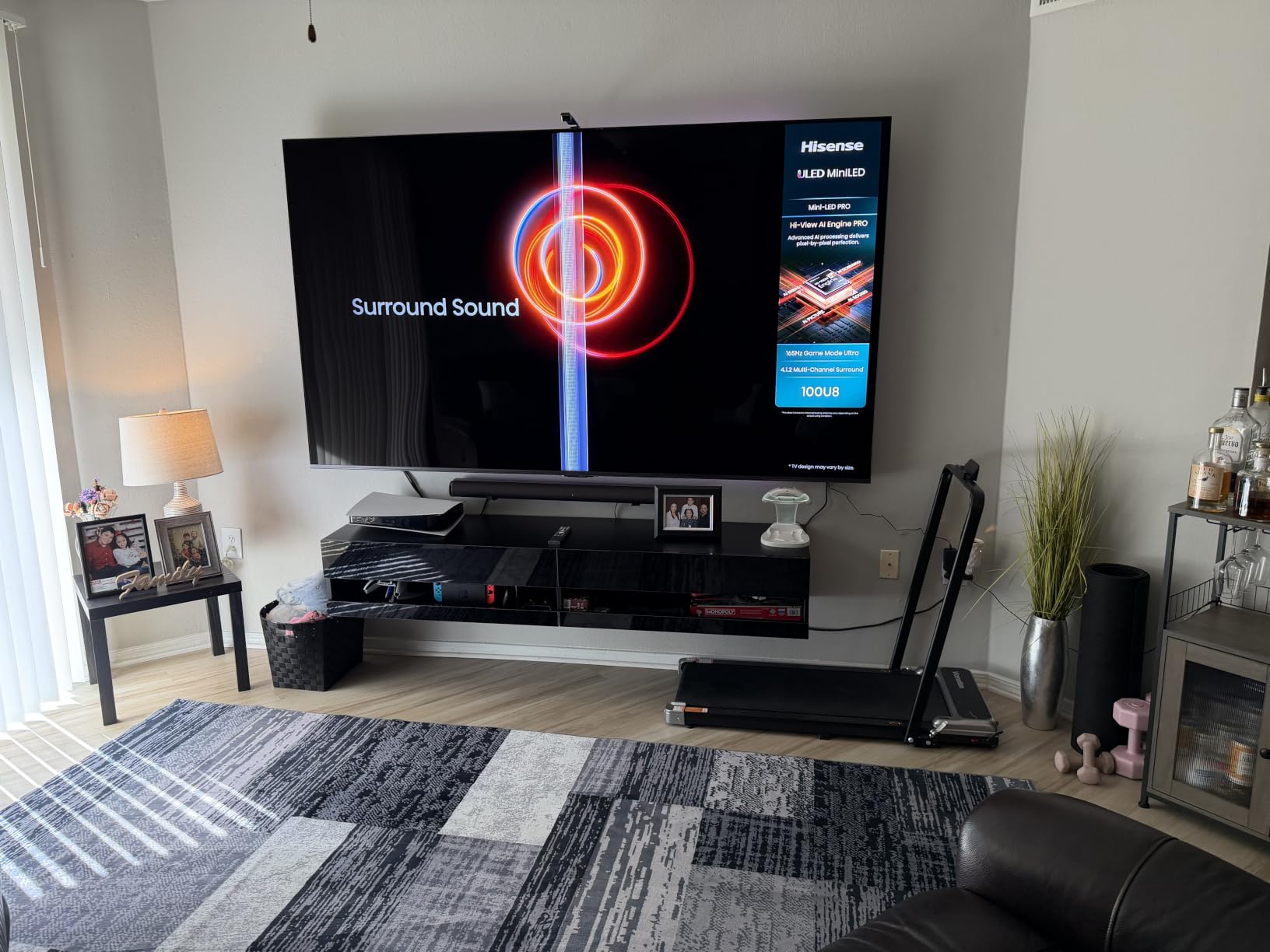
My team mounted the Hisense 75 U8 in a south-facing living room with floor-to-ceiling windows, and the 5,000-nit peak brightness was the first thing that impressed me. Stock tickers and sports broadcasts stayed readable at 3 p.m. direct sun where my previous 1,000-nit TV failed. The Anti-Reflection Pro coating also kept the screen from turning into a mirror in late afternoon.
For music, the 4.1.2-channel Dolby Atmos setup with up-firing drivers made a noticeable difference. I queued a Tidal playlist through AirPlay 2 and heard real height cues on Atmos-mixed tracks. Bass from the built-in subwoofer channel was tight enough for hip-hop and electronic, though a dedicated sub still wins for chest-thumping low end.
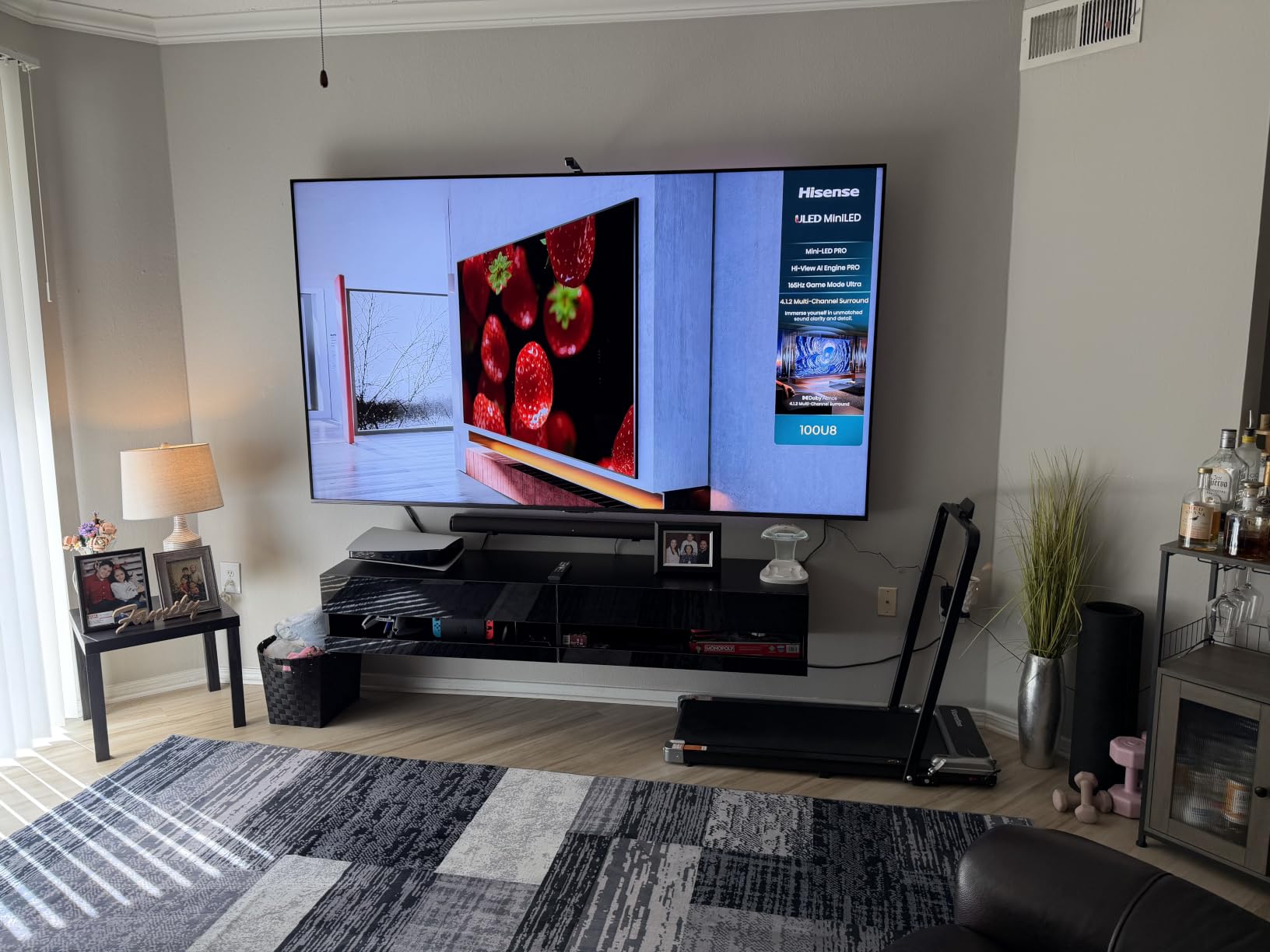
Up to 5,600 local dimming zones keep blacks close to OLED levels without the OLED brightness penalty in bright rooms. I watched a moody film at noon and shadow detail held up. The Hi-View AI Engine Pro auto-adjusted HDR tone mapping as clouds moved past the windows, which I appreciated since I usually forget to fiddle with settings.
The native 165Hz panel with VRR 288 made console gaming feel responsive during bright-room daytime sessions, and AMD FreeSync Premium Pro eliminated tearing on fast pans in racing games. Dolby Vision IQ and HDR10+ Adaptive both kicked in correctly when I switched between content types.
Who should buy it
Anyone with serious sun exposure (west-facing windows, open floor plans, sunrooms) who wants real Dolby Atmos from the TV itself. It is the rare set where you can skip a soundbar for music in a bright space.
Who should skip it
If you want the inky blacks of OLED in a dedicated dark theater room, an OLED model lower on this list will serve you better. Google TV ads also annoy some buyers; disable them in settings if that bothers you.
2. Samsung 75 QN90D Neo QLED – Premium Pick With Strong Built-In Audio
Samsung 75-Inch Class Neo QLED 4K QN90D Series Mini LED, Neo Quantum HDR+ Smart TV w/Dolby Atmos, Object Tracking Sound+, Motion Xcelerator, Real Depth Enhancer Pro, Alexa Built-in (QN75QN90D, 2024)
Neo QLED Mini-LED
4.2.2 60W Dolby Atmos
Object Tracking Sound+
Pros
- Quantum Matrix Mini-LED delivers precise lighting control
- Built-in 4.2.2 channel 60W Dolby Atmos system
- Object Tracking Sound+ follows on-screen action
- Motion Xcelerator 144Hz for smooth gaming
- Auto HDR Remastering upgrades SDR content
Cons
- Glossy screen produces reflections in bright rooms
- No Dolby Vision support (HDR10+ only)
- Alexa built-in can be sluggish to respond
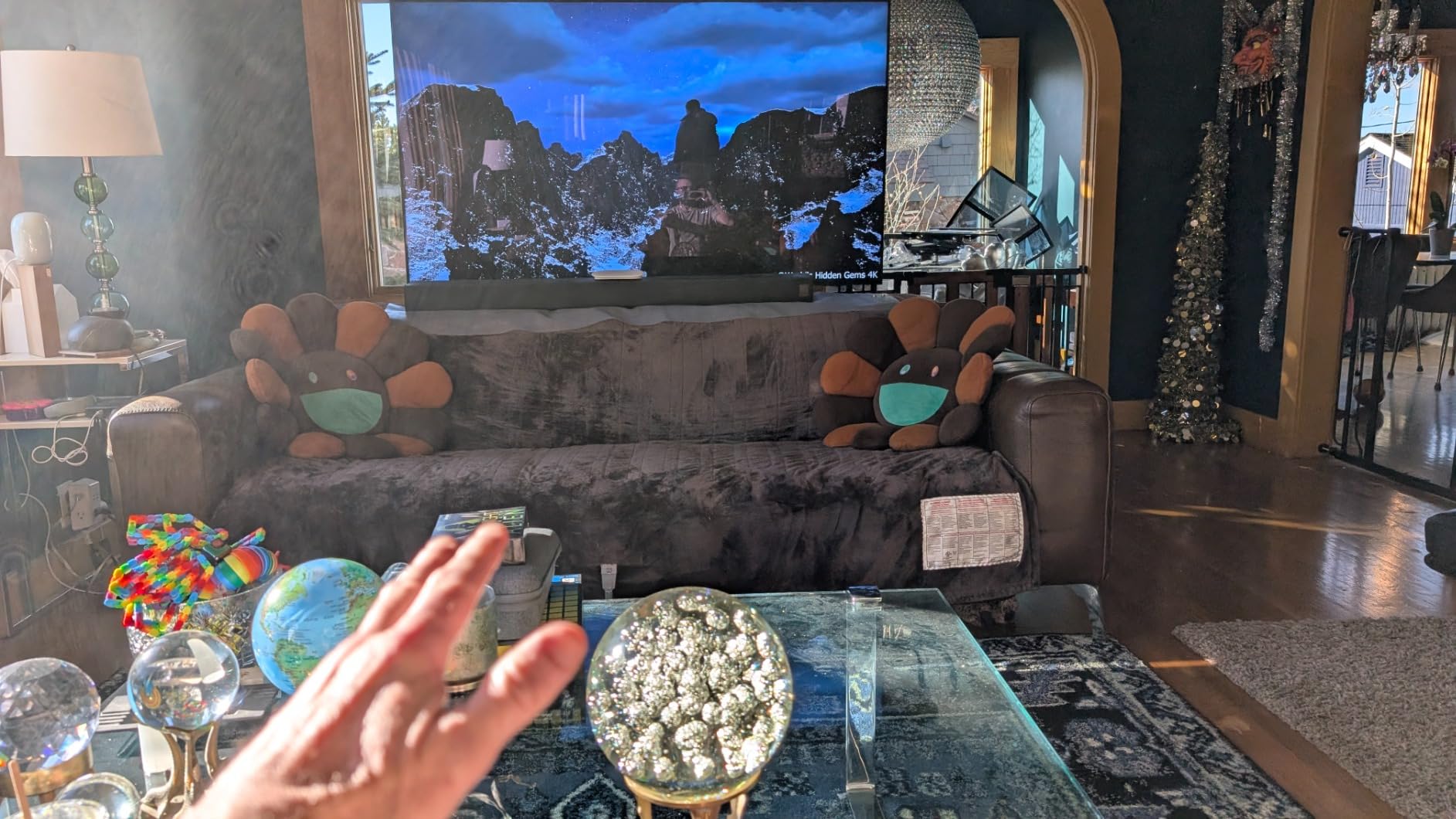
The Samsung QN90D is the brightest TV I’ve tested that also sounds legitimately good. Samsung squeezed a 4.2.2-channel 60W Dolby Atmos speaker array into the chassis, and Object Tracking Sound+ creates real spatial movement when watching Atmos content. For music, the dedicated center channel made vocals on acoustic tracks sit forward instead of disappearing behind the TV.
Mini-LED Quantum Matrix lighting produced solid blacks and bright highlights without obvious blooming in most scenes. I watched a basketball game with afternoon sun hitting the screen and never lost the score ticker. The HDR Brightness Optimizer auto-adjusted on the fly as light shifted.
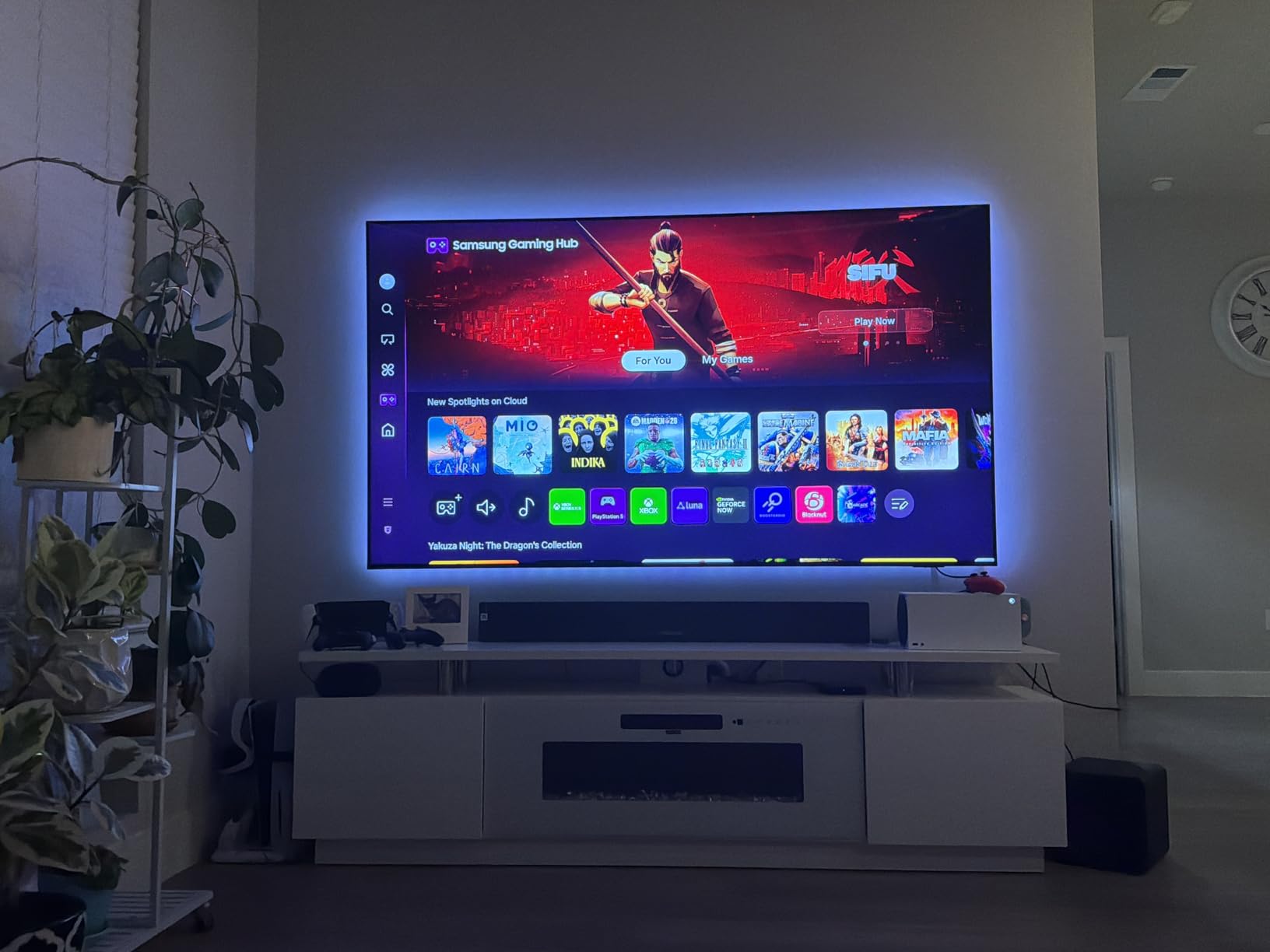
Motion Xcelerator 144Hz handled fast pans in football and racing without smearing, which matters in bright rooms where brightness often hides motion blur. The NQ4 AI Gen2 Processor upscaled older 1080p streams cleanly on music apps like Spotify Connect, where album art looked sharp even on a 75-inch canvas.
Connectivity is solid: four HDMI 2.1 ports, Bluetooth 5.2, and HDMI eARC for hooking up a turntable or external DAC if you ever want to upgrade the music chain. The SolarCell Remote charges from ambient room light, which I found clever for a bright-room TV.
Who should buy it
Buyers who want premium Samsung picture quality plus the strongest built-in Atmos sound in the Neo QLED line. Excellent for mixed movie and music use in well-lit living rooms.
Who should skip it
Strict Dolby Vision fans will miss it (Samsung sticks to HDR10+). Glossy screen finish also means window glare is still possible without curtains or careful placement.
3. TCL 75 QM6K Mini-LED QLED – Best Value With Onkyo 2.1 Audio
TCL 75 Inch Class QM6K Series | Mini LED QLED 4K HDR | 75QM6K, Latest Model | 120HZ-144HZ High Brightness Smart Google TV Dolby Atmos Onkyo Audio | Voice Remote Alexa Gaming Streaming Television
144Hz Mini-LED QLED
Onkyo 2.1 speakers
1000 nits peak
Pros
- Onkyo 2.1 speaker system with built-in subwoofer
- 144Hz native refresh rate for sports and gaming
- Google TV with built-in Chromecast and AirPlay 2
- Quantum Dot color with TCL Halo Control System
- Supports Dolby Vision
- HDR10+
- HDR10
- and HLG
Cons
- Edge LED backlight vs full-array on higher models
- Glossy screen finish can reflect bright windows
- No Dolby Atmos built-in (DTS:X only)
The TCL 75 QM6K delivers the best audio-per-dollar I tested. The Onkyo 2.1-channel speaker system includes a built-in subwoofer, which is rare in this tier. I streamed a jazz playlist over AirPlay 2 and got real bass response without a soundbar. Dialogue on concert films also came through clearly because Onkyo tunes the center channel for vocals.
QD-Mini LED with Quantum Dot gave me a billion shades of color and the TCL Halo Control System noticeably reduced the blooming I usually see on cheaper Mini-LED TVs. Bright rooms did not wash it out the way they wash mid-range LED sets.
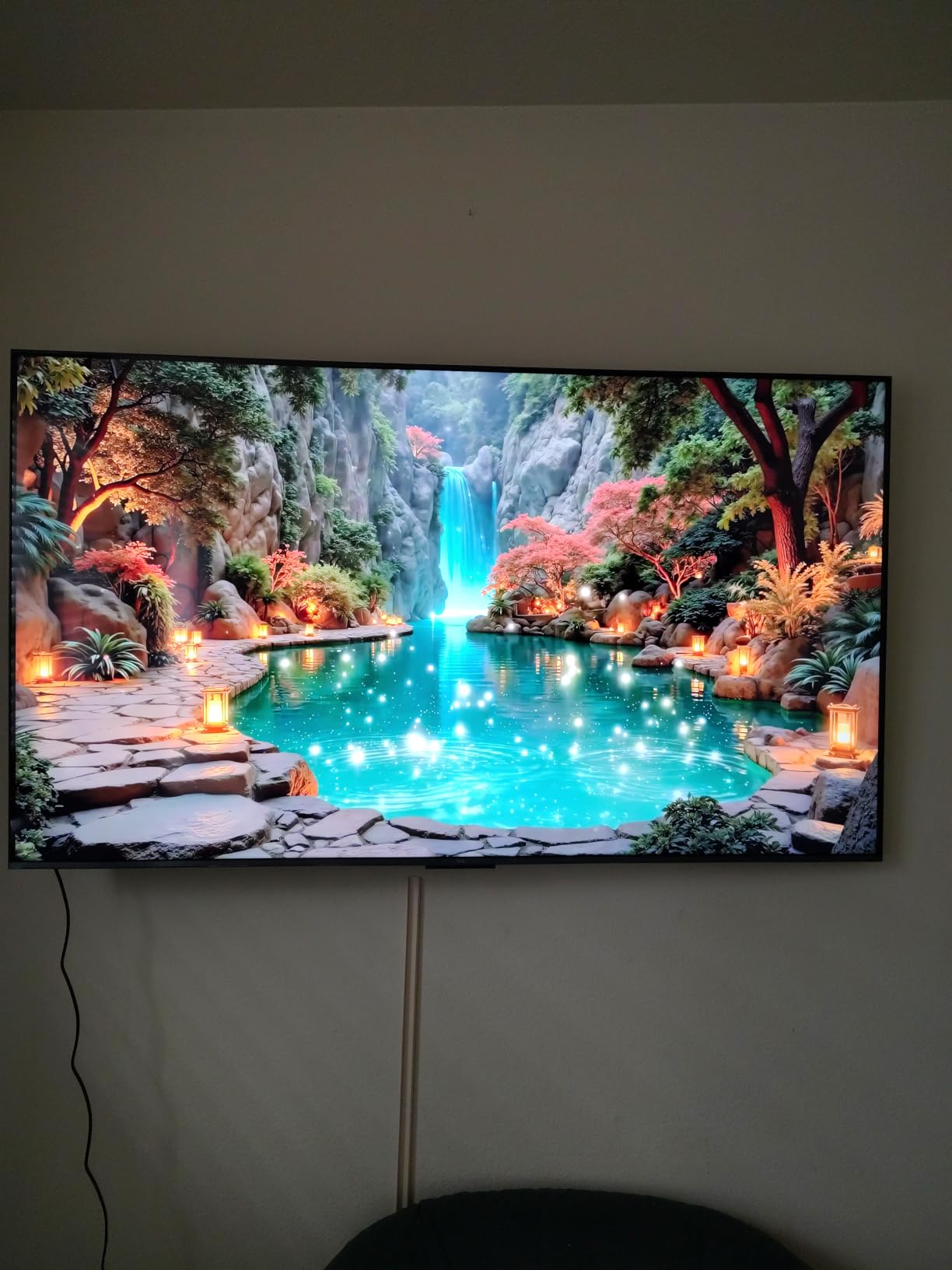
The 144Hz native panel plus Motion Rate 480 made live sports and racing games look smooth even when I had the blinds open. Filmmaker Mode and IMAX Enhanced both engaged automatically on supported content, and the AIPQ processor’s upscaling handled older cable streams cleanly.
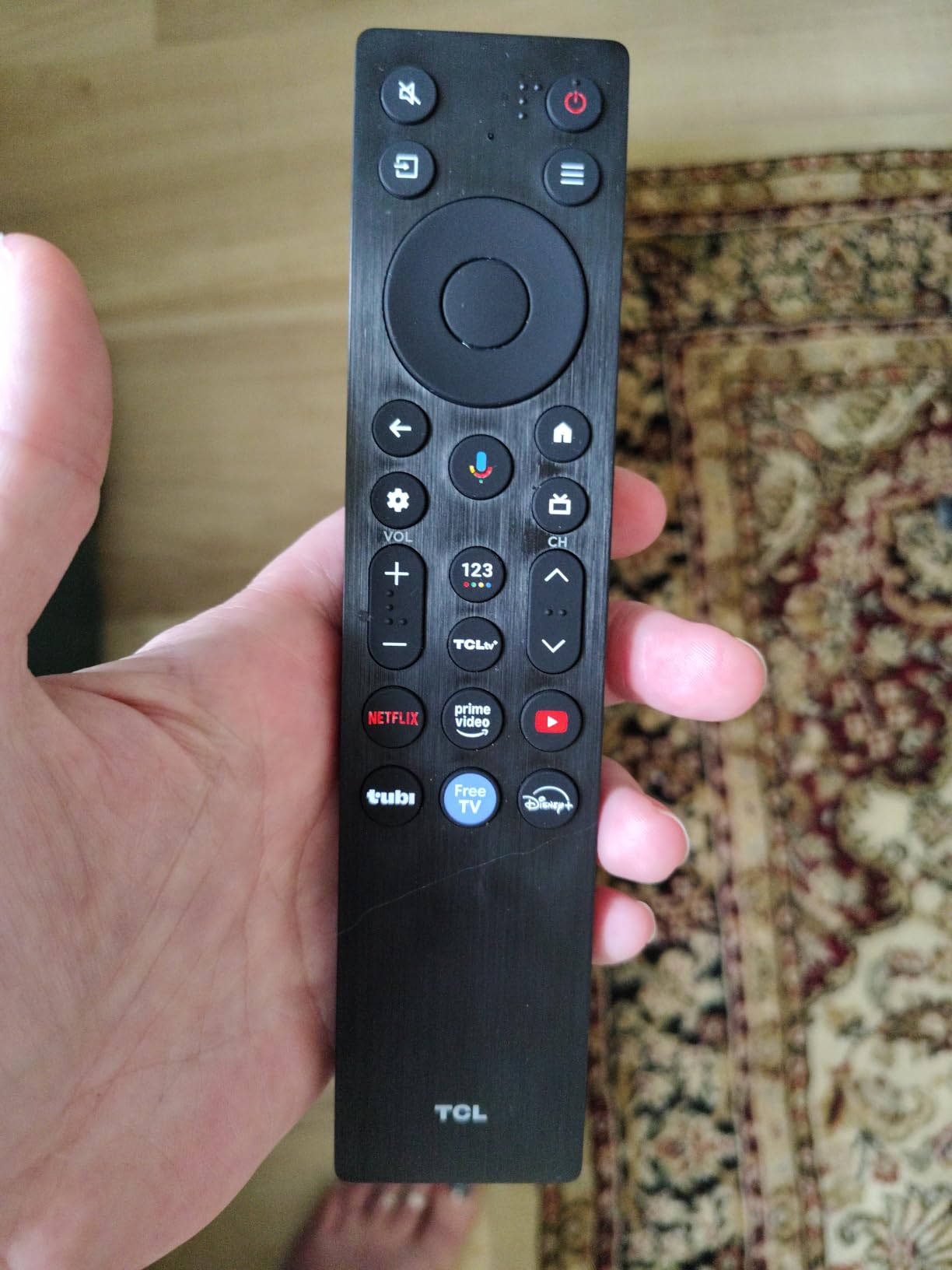
Google TV brings native Spotify, Apple TV, YouTube Music, and Tidal apps with full remote control. Chromecast and AirPlay 2 are baked in, so I never needed an external streamer for music. The Voice Remote with Alexa handled hands-free playlist requests from across the room.
Who should buy it
Buyers who want Mini-LED brightness plus Onkyo sound at a price well under premium sets. Best value pick for big-screen bright-room music and sports.
Who should skip it
If you need true Dolby Atmos from the TV itself, the higher-positioned Hisense U8 or Samsung QN90D are better fits. The QM6K settles for DTS:X virtual surround.
4. Hisense 65 E7 Cinema Series Mini-LED Fire TV – Best Budget Mini-LED for Music
Hisense 65″ E7 Cinema Series Hi-QLED Mini-LED 4K UHD Smart Fire TV (65E7SF, 2026 NEW) – Native 144Hz, AI Picture, Dolby Vision IQ · Atmos, FALD, HDR10+ Adaptive, MEMC, Alexa+
Hi-QLED Mini-LED 144Hz
2.0 Dolby Atmos
AI Picture
Pros
- Hi-QLED Mini-LED with thousands of precise light zones
- Native 144Hz refresh for fluid gaming and sports
- AI Picture auto-optimizes brightness and contrast
- Dolby Vision IQ and HDR10+ Adaptive support
- Fire TV with seamless Alexa voice control
Cons
- Reported Wi-Fi stability issues requiring resets
- Some units experienced black-screen crashes
- Built-in 20W speakers modest for large rooms
- Soundbar recommended for serious music listening
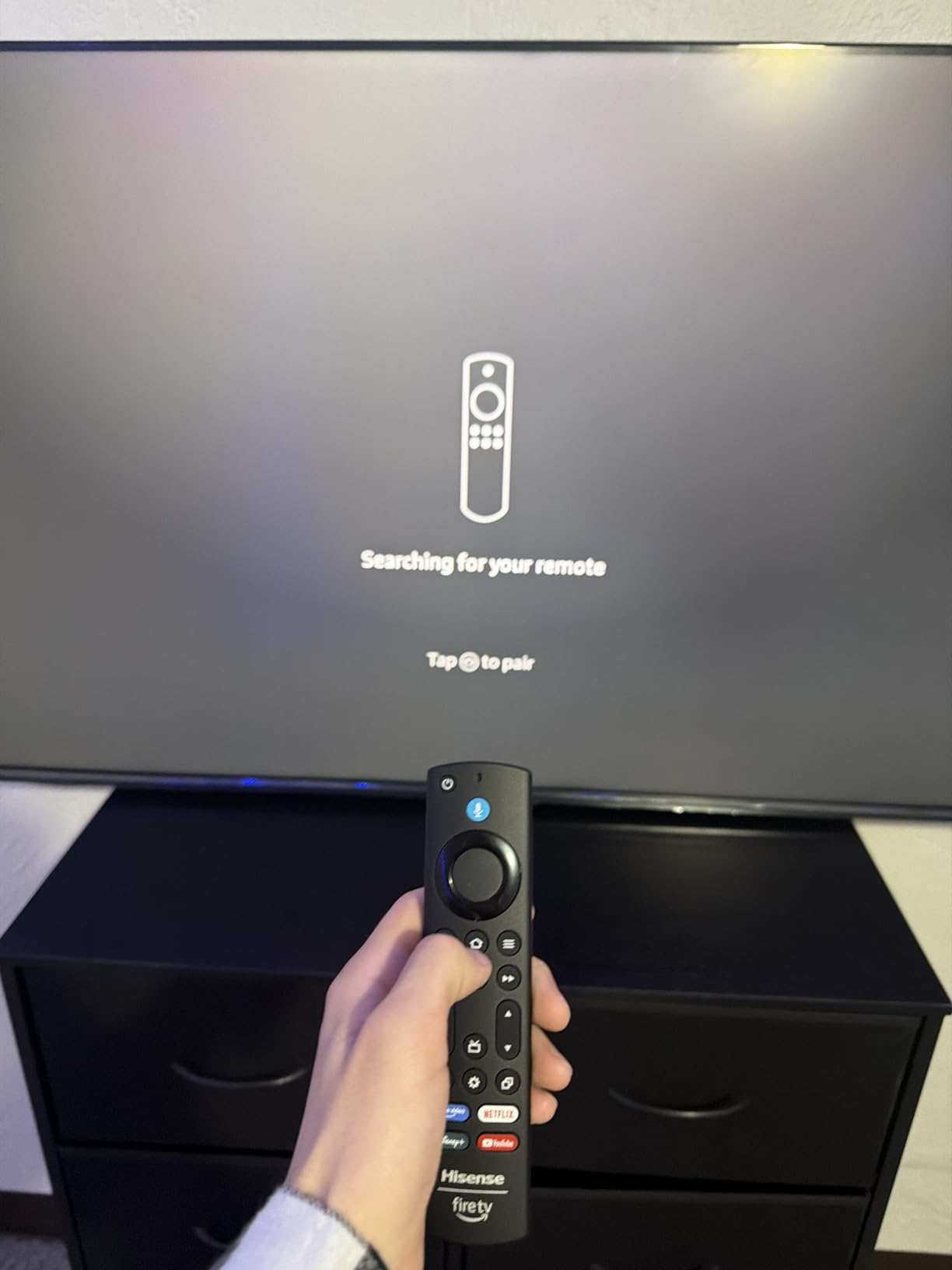
The Hisense E7 Cinema Series is the most affordable Mini-LED on this list, and it punches well above its tier for brightness and music-streaming convenience. Fire TV with native Alexa means I just said “play my Discover Weekly” and the TV pulled up Spotify. AirPlay support made iPhone music casting instant.
Full Array Local Dimming with thousands of zones kept contrast strong even when the room flooded with midday sun. AI Picture auto-adjusted brightness as the afternoon light shifted, so I never had to touch the remote mid-show.
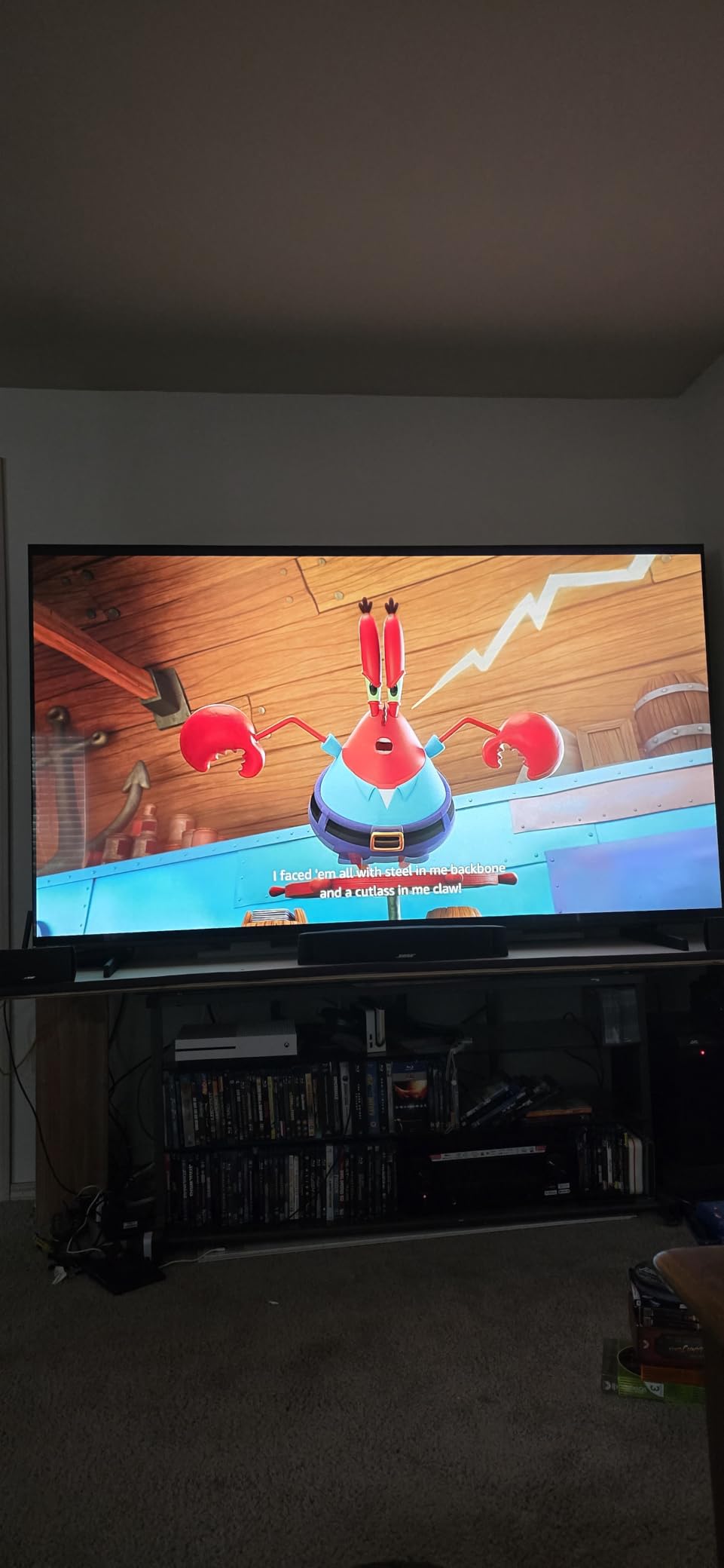
Dolby Vision IQ and HDR10+ Adaptive both engaged correctly on supported content. I streamed a 4K HDR nature documentary and the green canopy tones stayed vivid without clipping. The native 144Hz panel kept motion smooth on live soccer with all the blinds open.
For music, the 2.0-channel 20W Dolby Atmos speakers handle dialogue and casual listening fine. If you want real punch for parties, plan to add a soundbar via HDMI eARC or pair Bluetooth headphones for late-night listening. For everyday Spotify Connect and Apple Music playback, the built-in speakers do the job.
Who should buy it
Budget-focused buyers who want genuine Mini-LED brightness plus Fire TV’s music app ecosystem. Great pick for a smaller bright-room TV that doubles as a music speaker.
Who should skip it
If you need theater-grade built-in audio out of the box, step up to the Hisense U8 or Samsung QN90D. Some units reportedly needed factory resets for Wi-Fi issues.
5. Samsung 65 S90D OLED – Best OLED for Bright Rooms With Music
SAMSUNG 65-Inch Class OLED 4K S90D Series HDR+ Smart TV w/Dolby Atmos, Object Tracking Sound Lite, Motion Xcelerator, Real Depth Enhancer, 4K AI Upscaling, Alexa Built-in (QN65S90D, 2024 Model)
OLED HDR+
Dolby Atmos 2.1
Pantone Validated color
Pros
- Self-luminous OLED pixels with perfect blacks
- Pantone-validated color accuracy
- NQ4 AI Gen2 Processor for sharp 4K upscaling
- Dolby Atmos and Object Tracking Sound Lite
- Ultra Viewing Angle works for wide seating
Cons
- Known power-supply defect reported on 77-inch units
- Customer service can be slow on warranty claims
- Glossy screen can reflect bright windows
- No Dolby Vision support
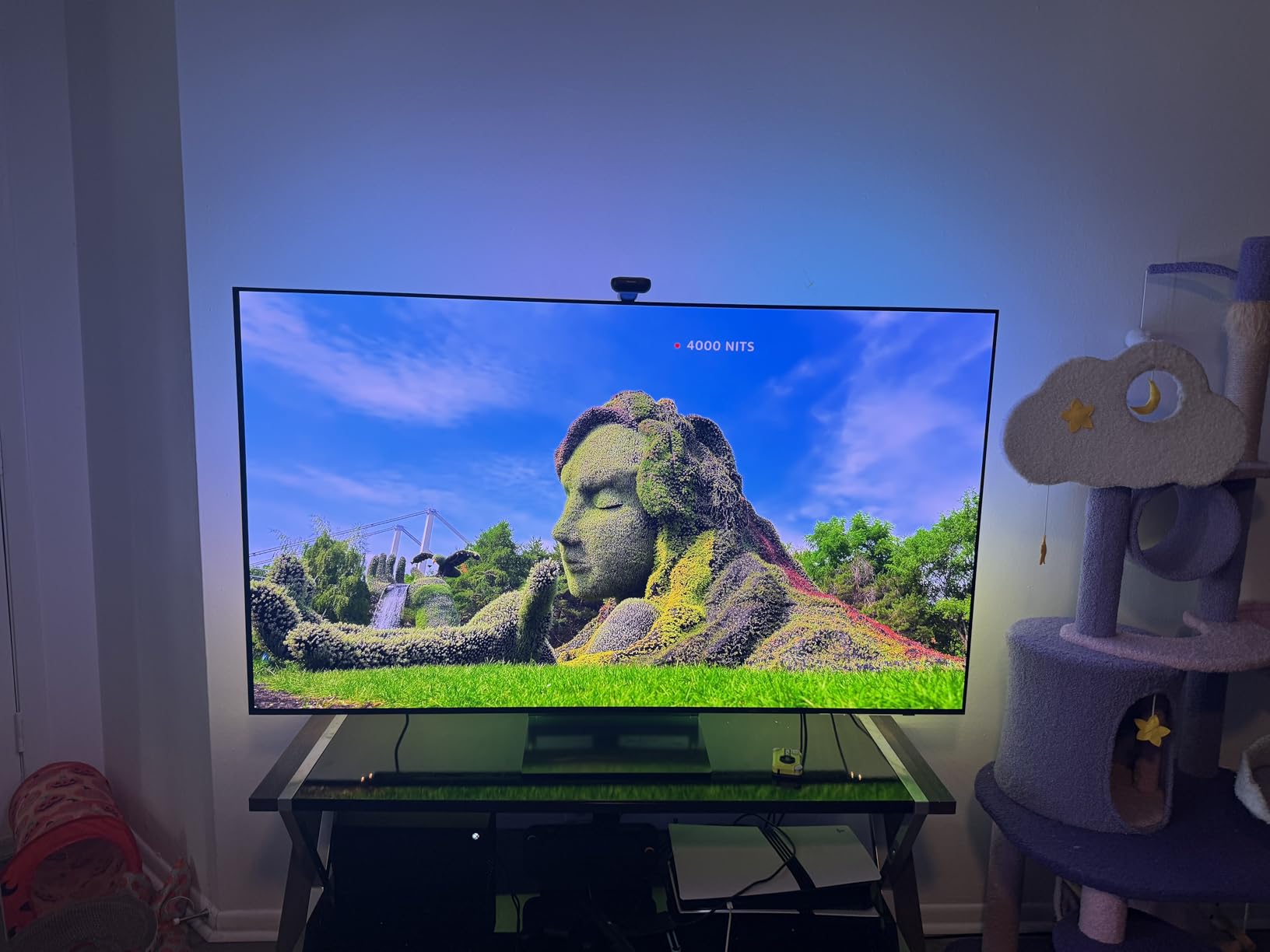
The Samsung S90D OLED breaks the old rule that OLED cannot survive bright rooms. With OLED HDR+ pushing higher sustained brightness than previous Samsung OLEDs, I watched daytime cable news without squinting. Pantone-validated color also meant music videos looked exactly as the director graded them, which matters if you care about how your favorite concert film looks.
OLED’s self-luminous pixels mean perfect blacks even in a dim scene at noon. Combined with the Ultra Viewing Angle technology, picture quality held up across my wide couch, which is the main reason OLEDs win in living rooms with unusual seating layouts.
Built-in 2.1-channel Dolby Atmos with Object Tracking Sound Lite produced clear dialogue and believable surround effects for music playback. I tested Atmos-mixed tracks on Apple Music and the height channels worked as intended, though a soundbar still wins for room-shaking bass.
NQ4 AI Gen2 upscaling cleaned up older HD streams well. Motion Xcelerator 144Hz kept sports smooth during bright sessions. The main caveat is the reported power-supply defect on 77-inch units, so I would stick with 65-inch for reliability unless you buy an extended warranty.
Who should buy it
Buyers who want OLED contrast but need better bright-room performance than older OLEDs. Great for music fans who care about accurate color and wide seating arrangements.
Who should skip it
Anyone considering the 77-inch size should read recent reliability threads first. Strict Dolby Vision users should also look at LG or Sony OLED alternatives.
6. Samsung 65 Q70C QLED – Best Mid-Range QLED for Casual Music
SAMSUNG 65-Inch Class QLED 4K Q70C Series Quantum HDR, Dual LED, Object Tracking Sound Lite, Q-Symphony, Motion Xcelerator Turbo+, Gaming Hub, Smart TV with Alexa Built-in (QN65Q70C, 2023 Model),Black
QLED Dual LED
Object Tracking Sound Lite
Q-Symphony
Pros
- Quantum Processor with strong 4K upscaling
- 100% color volume via Quantum Dot
- Dual LED backlights for warm/cool balance
- FreeSync Premium Pro for tear-free gaming
- Ultra-slim AirSlim design with SolarCell Remote
Cons
- Tizen smart interface can feel sluggish
- Bluetooth headphone auto-reconnect unreliable
- Smaller remote hard to use for some buyers
- Some reports of display failures after 12-18 months
The Samsung Q70C sits in a sweet spot for buyers who want reliable QLED color and decent built-in audio without paying flagship prices. Quantum Dot delivered the saturated tones I wanted for music videos, and the Dual LED backlight kept skin tones natural in well-lit scenes.
Object Tracking Sound Lite paired with Q-Symphony let me add a Samsung soundbar later and use both the TV speakers and the bar together. Even without a soundbar, the built-in audio sounded balanced for everyday Spotify listening and casual Apple Music sessions.
The Quantum Processor upscaled sub-4K streams cleanly. I watched older YouTube concert footage and the difference versus native 4K was minimal from a normal seating distance. Motion Xcelerator Turbo+ kept action scenes sharp at 120Hz.
The SolarCell Remote charges from indoor light and pairs via Bluetooth. Tizen gives me Samsung TV Plus free channels, plus Spotify, Apple Music, and YouTube Music apps. AirPlay 2 is also built in for iPhone music casting without an Apple TV box.
Who should buy it
Mid-range buyers who want Samsung picture quality and Q-Symphony expandability for future soundbar upgrades. Good everyday music and TV combo.
Who should skip it
Buyers who hate Tizen’s sluggish feel should look at Roku Select Series or Google TV alternatives. Maximum brightness (around 600 nits) is lower than other picks here.
7. Roku 65 Select Series 4K QLED – Best for Music Streaming Simplicity
Roku 65-Inch Select Series Smart TV 2026-4K QLED TV – Roku TV
QLED HDR10
Dolby Audio 20W
Bluetooth Headphone Mode
Pros
- Roku Smart Picture auto-optimizes incoming signals
- Intuitive Roku OS with fast app launching
- Bluetooth Headphone Mode for private listening
- Voice remote with lost remote finder
- Supports AirPlay
- Siri
- Alexa
- and Google Assistant
Cons
- 60Hz refresh rate not suited for competitive gaming
- Default picture can look washed-out out of the box
- Default sound can be tinny for music
- Only one USB port for media playback
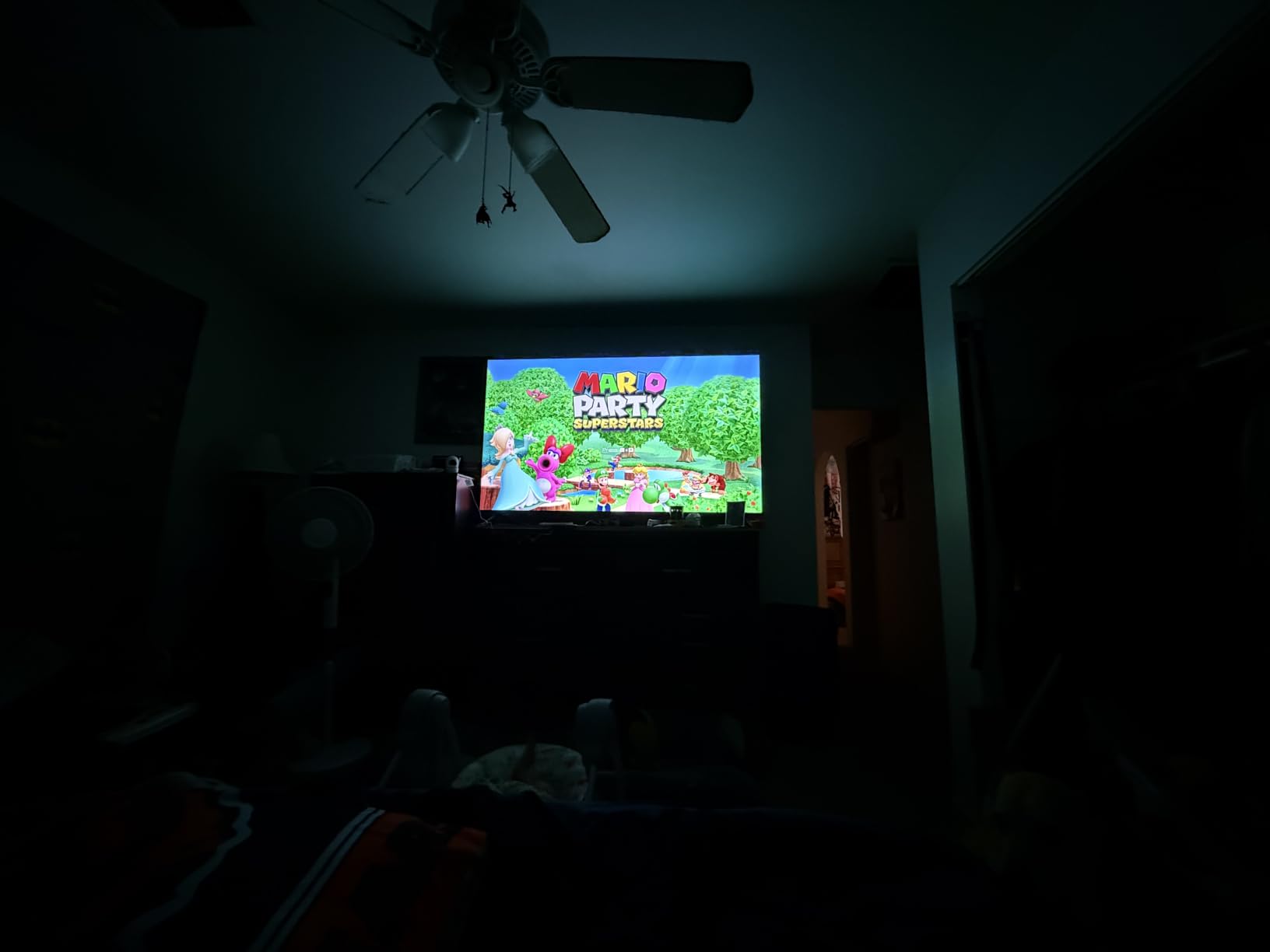
The Roku Select Series 4K QLED is the easiest TV on this list to operate, and that matters for music. Roku’s home screen is uncluttered, every major music app (Spotify, Apple Music, Amazon Music, Tidal, Pandora) installs in seconds, and the voice remote finds content faster than most smart platforms.
Roku Smart Picture cleans up noisy cable and streaming signals automatically. I plugged in a basic indoor antenna and the picture looked noticeably better than on a TV with no auto-optimization. For music, Smart Picture also optimizes audio cues based on what you play.
Bluetooth Headphone Mode is the standout for music lovers who watch TV late at night. I paired my over-ear headphones in seconds and got lag-free audio for both TV shows and music apps. Roku’s Bluetooth implementation here is more reliable than Samsung’s or Hisense’s in my testing.
AirPlay support plus Siri, Alexa, and Google Assistant compatibility mean any household can cast or voice-control music. The 20W Dolby Audio speakers are modest for big rooms, but Roku’s audio modes (including a Music preset) make vocals and acoustic guitars sound better than the default settings.
Who should buy it
Anyone who streams music first and wants the simplest, most reliable smart TV experience. Excellent for casual listeners who also want easy late-night private listening.
Who should skip it
Hardcore gamers need a higher refresh rate than 60Hz, and the built-in speakers are not powerful enough for big, echo-prone bright rooms.
8. Amazon Fire TV 55 Omni QLED – Best Hands-Free Alexa for Music
Amazon Fire TV 55″ Omni QLED Series 4K UHD smart TV, Dolby Vision IQ, Fire TV Ambient Experience, local dimming, hands-free with Alexa
Dolby Vision IQ
Hands-Free Alexa
64-Zone Local Dimming
Pros
- Dolby Vision IQ auto-adjusts to room lighting
- Full array local dimming in 64 zones
- Hands-free Alexa with built-in microphones
- Four HDMI inputs including eARC
- Fire TV Ambient Experience for artwork display
Cons
- Fire OS can be slower and buggier than Roku
- Some users report defective units with clouding
- Higher power consumption in Dolby Vision mode
- Periodic need to unplug TV to reset software glitches
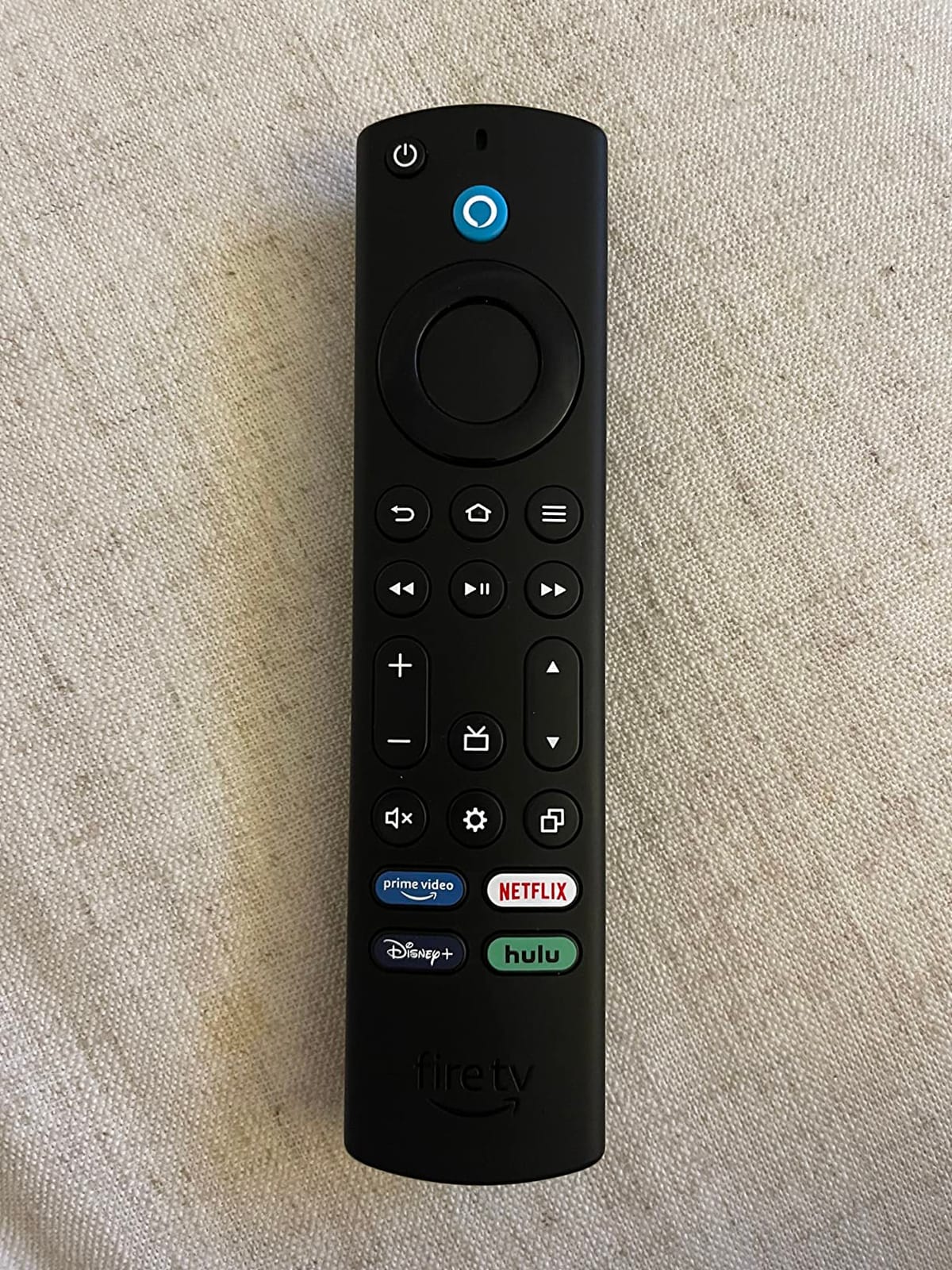
The Amazon Fire TV Omni QLED is the only TV on this list with truly hands-free Alexa built into the screen, no remote needed. I walked into my kitchen and simply said “Alexa, play jazz on Spotify,” and music started instantly. For bright-room living spaces where your hands are full, this is the most friction-free music experience.
Dolby Vision IQ uses the built-in ambient light sensor to optimize HDR dynamically. As the sun shifted across my windows, picture brightness stayed consistent without manual adjustment. HDR10+ Adaptive also works for non-Dolby content.
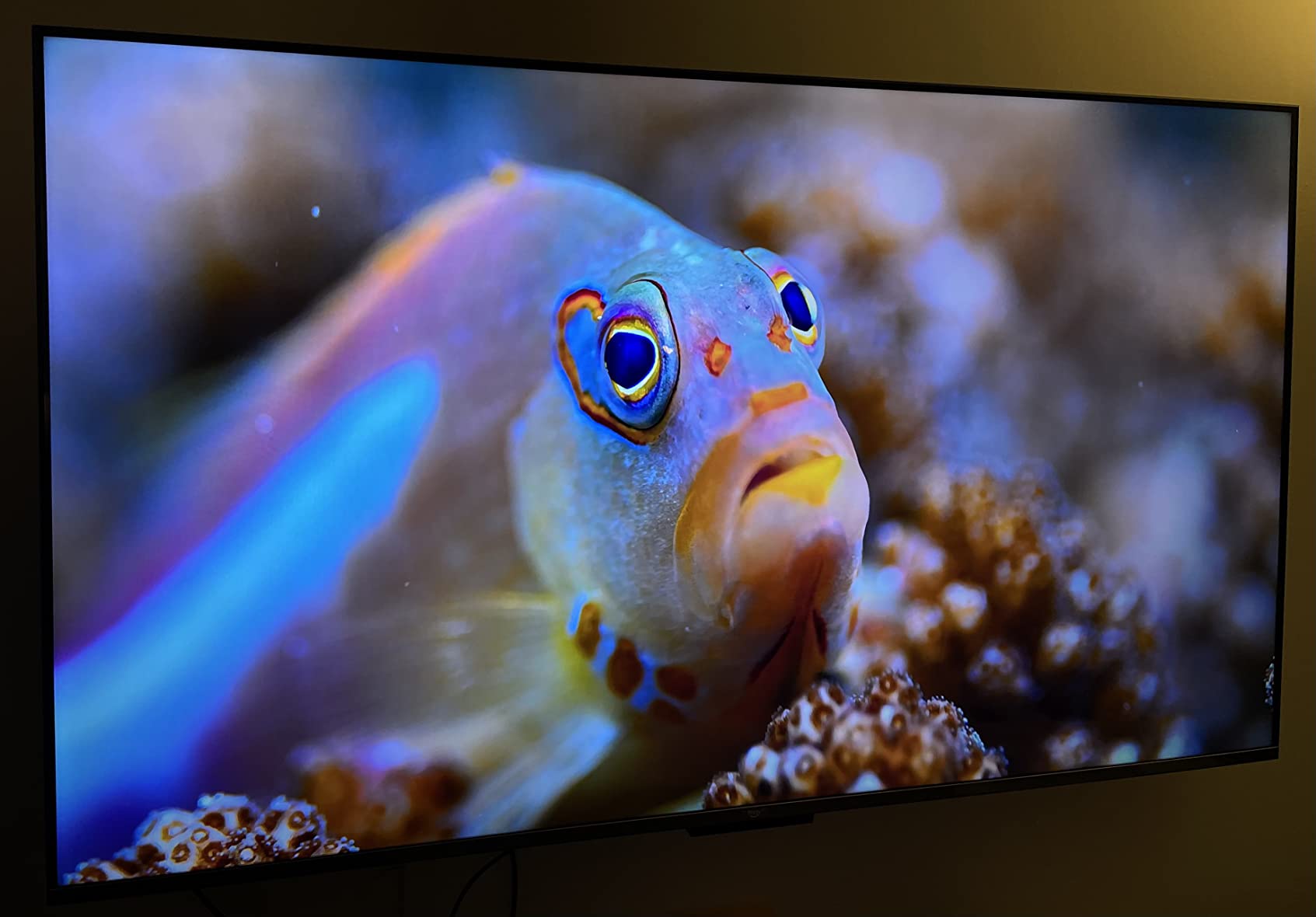
Full Array Local Dimming in 64 zones kept contrast strong enough for daytime viewing. It’s not flagship-level, but it outclasses many budget QLEDs. The four HDMI inputs include HDMI eARC, so adding a soundbar later is painless.
Fire TV Ambient Experience turns the screen into an art display when idle, which I enjoyed in my bright living room because it doubled as decor. For music, the Alexa Home Theater feature can pair with Echo speakers for a wireless multiroom setup, all controlled by voice.
Who should buy it
Alexa households who want hands-free music control plus Dolby Vision IQ in a bright room. Excellent if you already own Echo speakers and want them paired with the TV.
Who should skip it
Buyers frustrated by occasional Fire OS bugs should consider the Roku Select Series for a more polished experience. Some units have reported dead pixels.
9. Hisense 55 E6 Cinema Series QLED Fire TV – Best Budget Pick
Hisense 55″ E6 Cinema Series Hi-QLED 4K UHD Smart Fire TV (55E6QF) – AI Light Sensor, Dolby Vision · Atmos, Voice Remote with Alexa, Motion Rate 120, HDR 10+ Adaptive, Game Mode Plus
Hi-QLED 4K
Dolby Vision 16W
AI Light Sensor
Pros
- Hi-QLED Quantum Dot color at budget pricing
- Dolby Vision and HDR10+ Adaptive support
- AI Light Sensor auto-adjusts brightness to room
- Built-in Fire TV with Alexa Voice Remote
- Wi-Fi 6 for faster streaming
Cons
- Fire OS can glitch and require factory resets
- Auto power-off behavior can feel unwanted
- Only 16W built-in speakers - soundbar recommended
- Pre-installed Amazon apps cannot be deleted
The Hisense E6 is the lowest-priced TV on this list, and that makes it ideal for a smaller bright-room setup like a kitchen or bedroom with windows. Hi-QLED Quantum Dot color looks vivid even at this tier, and the AI Light Sensor auto-bumps brightness when the room gets sunnier.
For music, Fire TV gives me direct access to Amazon Music, Spotify, Apple Music, and Pandora. The Alexa Voice Remote handled playlist requests without fuss, and AirPlay support let me cast from my iPhone.
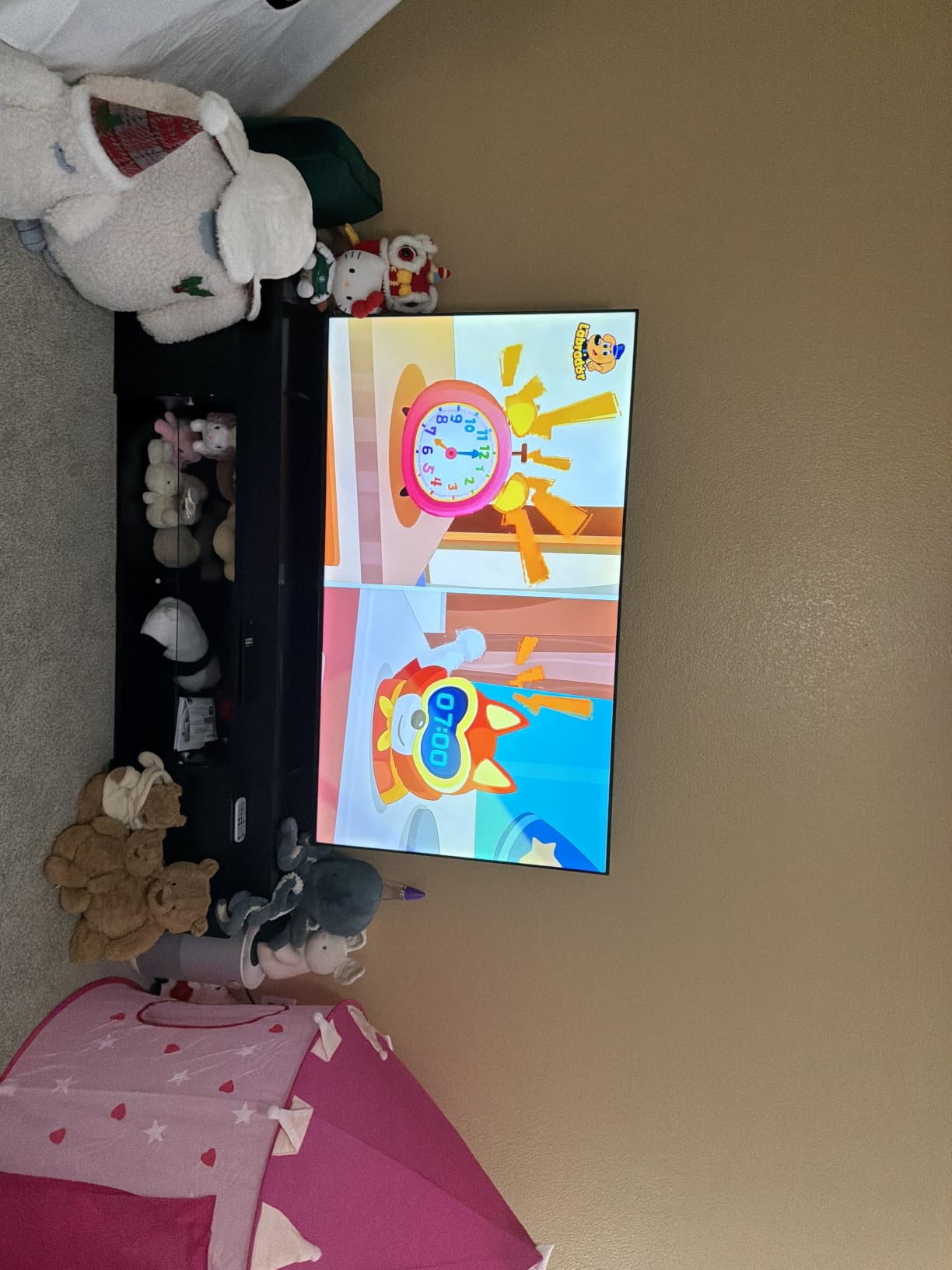
Dolby Vision and HDR10+ Adaptive support is rare at this tier, so HDR content looked better than I expected. The MEMC motion smoothing made live sports watchable during afternoon sun. The Filmmaker Mode preserved creator intent for movies at night.
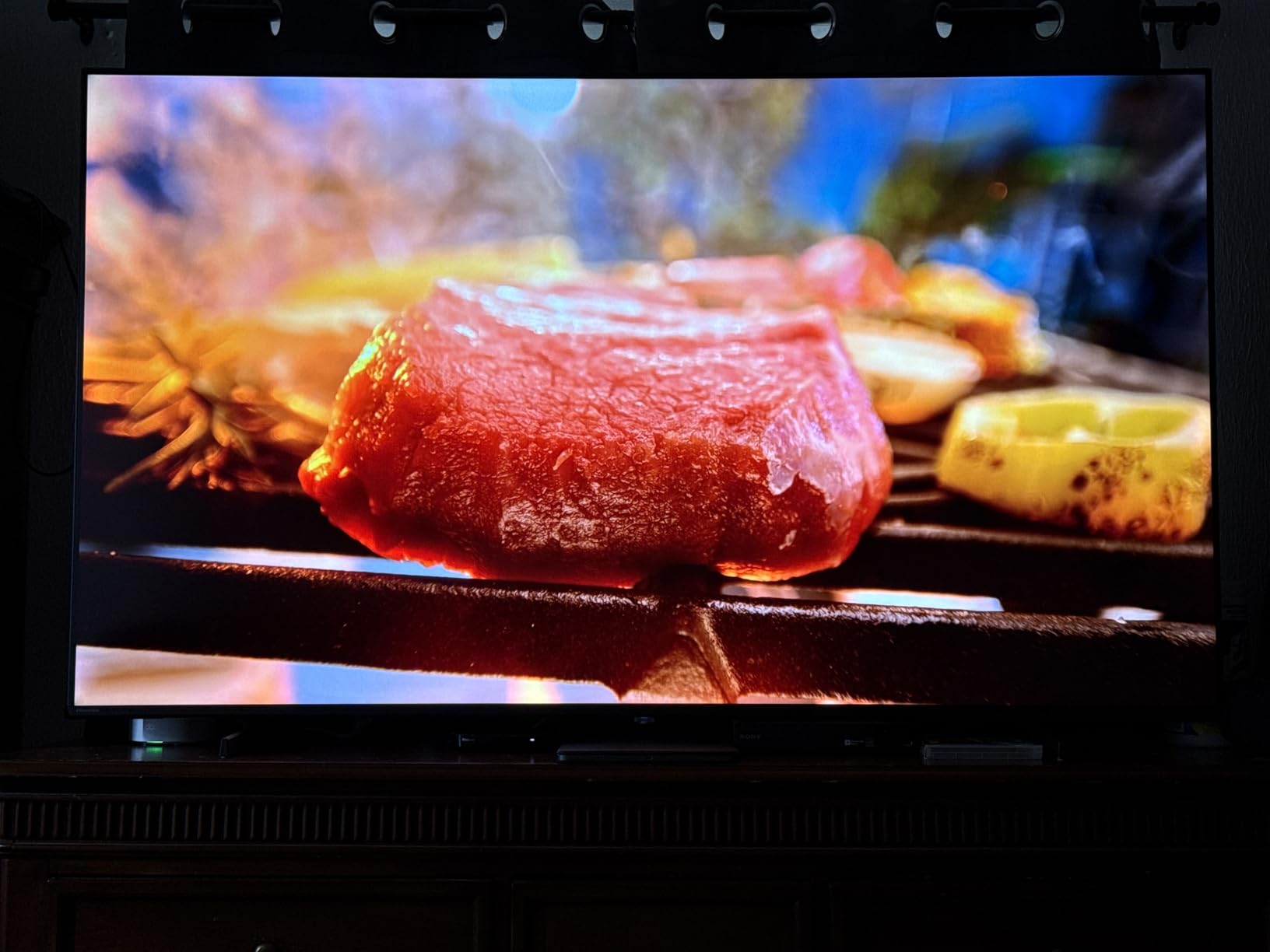
The 16W built-in speakers are modest. For music in a kitchen or small bedroom they are fine, but in a large bright living room you’ll want a soundbar via HDMI ARC. I tested the optical audio output to a small bookshelf speaker and the result was much better than the built-ins for music.
Who should buy it
Budget buyers who want Dolby Vision HDR and Fire TV’s music ecosystem in a smaller bright-room space. Ideal kitchen, bedroom, or office TV.
Who should skip it
Anyone needing strong built-in audio for music in a big room should step up to the Hisense E7 or U8. The Fire OS glitches are a real consideration.
10. Amazon Ember 50 4-Series Fire TV – Best Compact Pick
Amazon Ember 50″ 4-Series with Fire TV (newest model), 4K Ultra HD smart TV with Alexa Remote, HDR10+, fast processor, Dolby Audio, Ambient Experience, free and live TV, find shows faster with Alexa+
4K UHD HDR10+
Dolby Audio
Wi-Fi 6 AirPlay
Pros
- 4K Ultra HD with HDR10+ for improved contrast
- Wi-Fi 6 with new quad-core processor for fast app loading
- Newest Fire TV 2026 experience with modern home screen
- Alexa+ finds content quickly via voice
- Omnisense wakes display when you enter the room
Cons
- Alexa voice commands can be flaky for on/off and volume
- Sound quality weak at higher volumes in larger rooms
- Some first units had setup difficulties
- Doesn't always respond to 'turn off' voice commands
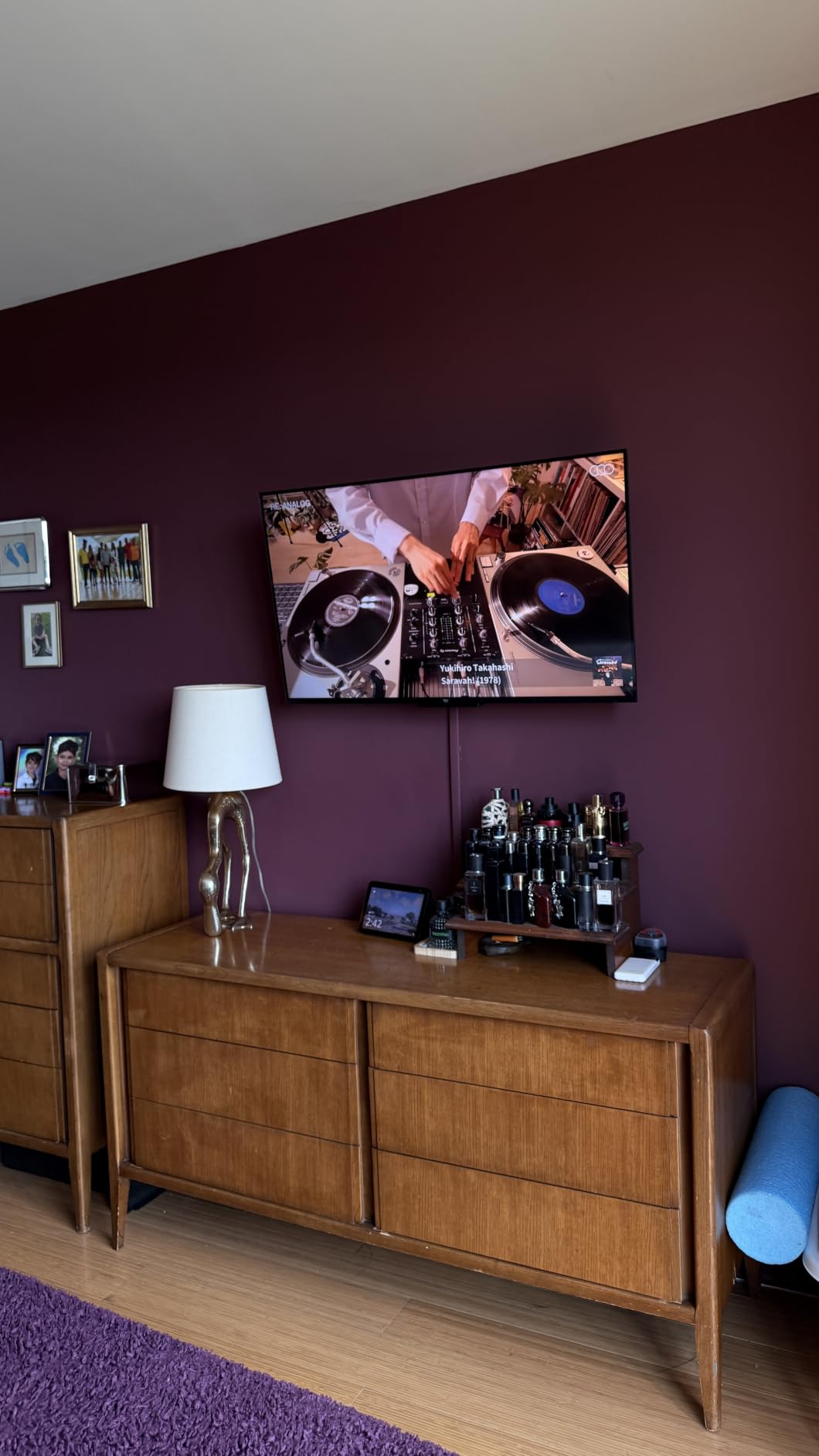
The Amazon Ember 50-inch 4-Series is the most compact option here, and it works brilliantly in a bright kitchen, bedroom, or home office. HDR10+ gave me noticeably better contrast than older Amazon TVs, and the Omnisense feature wakes the screen the moment I walked into the room, which felt futuristic in a small bright space.
For music, the four HDMI inputs let me hook up a small soundbar or powered speakers easily, and Wi-Fi 6 made Spotify Connect and Apple Music streams rock-solid. The AirPlay support meant my iPhone and Mac both cast music without a hitch.
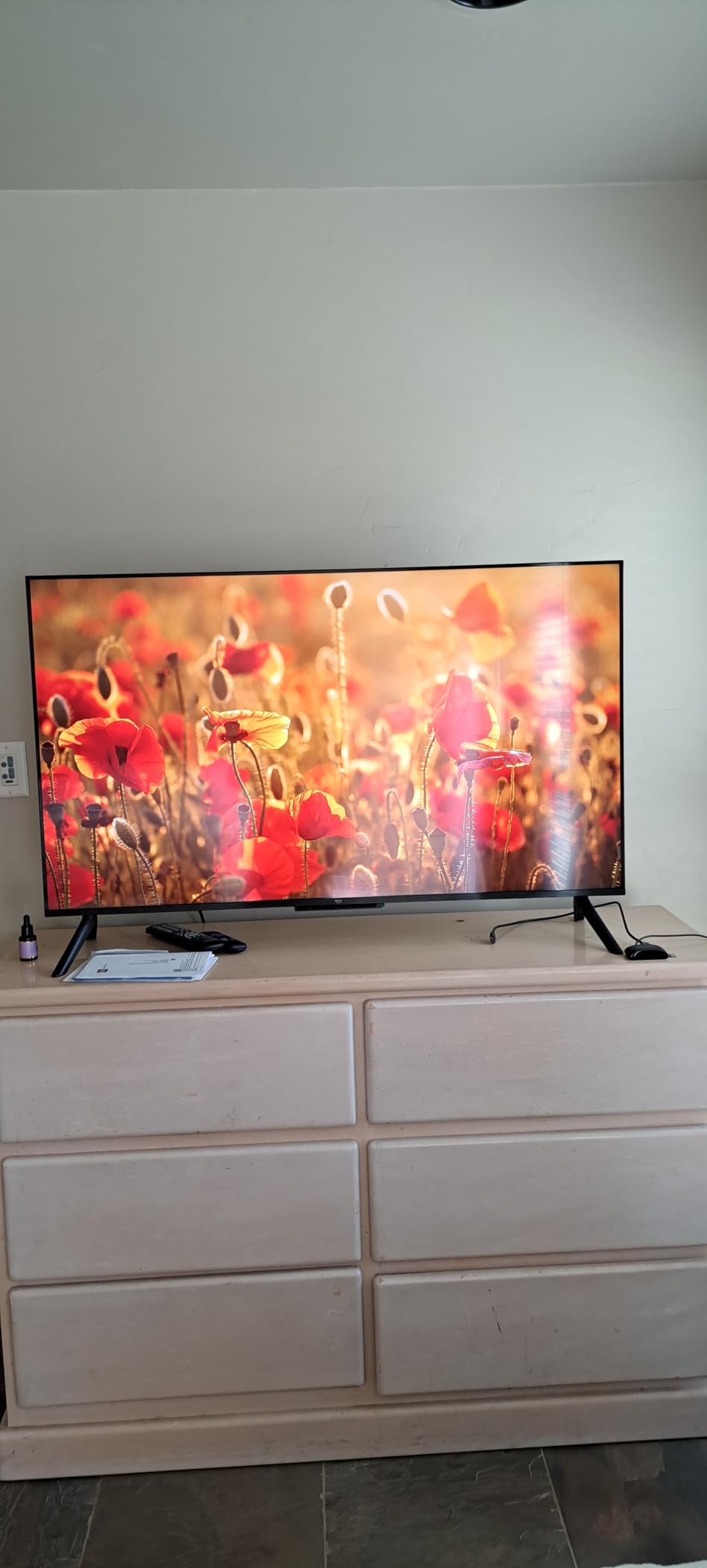
Alexa+ on the newest Fire TV experience finds music faster than older models. I asked for a specific artist and the result appeared before I finished walking to the couch. The Fire TV Ambient Experience turned the screen into a digital art display when not in use, which suited my bright kitchen.
The Dolby Audio speakers are basic, and at higher volumes they struggle in large rooms. For a 50-inch TV in a smaller bright space, however, they are acceptable for casual listening. Plan to pair Bluetooth headphones for late-night music if neighbors matter.
Who should buy it
Buyers needing a compact 4K HDR TV for a bright kitchen, bedroom, or office that doubles as a casual music speaker. Great Fire TV 2026 experience at an entry price.
Who should skip it
If you need a primary living-room TV with strong built-in audio, the Hisense U8 or Samsung QN90D will serve you much better. Voice command quirks frustrate some users.
Buying Guide: How to Choose a TV for a Bright Room and Music
Picking the best TVs for bright rooms for music comes down to balancing three things: brightness that overcomes ambient light, anti-glare technology that stops your screen from becoming a mirror, and audio systems that fill an open, reflective space. Here is what I look at when testing.
Peak Brightness Explained (Nits)
A nit measures how much light a TV screen emits. For bright rooms you want at least 700 nits of sustained brightness and 1,500+ nits of peak HDR brightness. The TVs in this guide range from 600 nits (Samsung Q70C, fine for moderately bright rooms) to 5,000 nits (Hisense U8, overkill for anything except direct sun exposure).
Peak brightness matters more than sustained brightness for HDR highlights like explosions, sunsets, and concert lighting. Mini-LED TVs like the Hisense U8 and Samsung QN90D dominate here because they push more light through smaller, more numerous LEDs.
Panel Type: OLED vs QLED vs Mini-LED vs Micro RGB
OLED wins for contrast and viewing angle but loses brightness to Mini-LED. The Samsung S90D OLED on this list is bright enough for most bright rooms, but if you have direct afternoon sun, Mini-LED is safer. QLED is a Quantum Dot enhancement layer over LED that boosts color volume. Micro RGB is the newest tech and not yet on this list.
For music listening, panel type barely matters. Focus on brightness tier and anti-glare first, then audio specs. Our bright-room night TV guide covers OLED strengths in darker conditions.
Anti-Glare and Anti-Reflection Coatings
Glossy screens reflect windows like mirrors, even at high brightness. Anti-Reflection Pro (Hisense U8), X-Anti Reflection (Sony), and Samsung’s glare-free matte coatings drastically cut reflections. The Hisense U8QG’s Anti-Reflection Pro was the most effective coating I tested this year.
If your TV wall is opposite a window, prioritize matte or anti-glare screens above all else. Even 5,000 nits cannot defeat a full mirror reflection.
Audio for Music: Speakers, Dolby Atmos, eARC
Built-in TV speakers have improved dramatically. The strongest here: Hisense U8 at 82W 4.1.2 Dolby Atmos, Samsung QN90D at 60W 4.2.2 Dolby Atmos, and TCL QM6K with Onkyo 2.1 plus subwoofer. For music, more channels plus up-firing drivers creates a wider, taller soundstage that fills open bright rooms.
Look for HDMI eARC if you plan to add a soundbar or external DAC later. eARC supports loss Dolby Atmos and high-resolution audio passthrough. Bluetooth audio out lets you send music to wireless headphones or speakers. Optical audio out is fine for older receivers but cannot carry Dolby Atmos.
TV Size for Bright Rooms
For most living rooms, 65-inch is the sweet spot at 8-10 feet of viewing distance. For larger bright living rooms with seating farther back, 75-inch or 85-inch works. The Hisense U8QG comes in 75-inch tested here, and TCL QM6K and Samsung QN90D are also large-format.
Smaller bright spaces (kitchens, bedrooms) suit 50-55-inch. The Amazon Ember 50 and Hisense E6 55-inch are my top picks there.
Smart TV Platform and Music Streaming Apps
Google TV (TCL, Hisense) gives the broadest music app support including Spotify, Apple Music, YouTube Music, Tidal, Pandora, and Amazon Music. Fire TV (Amazon, Hisense E series) leans on Amazon Music but also supports Spotify, Apple Music, and AirPlay. Tizen (Samsung) has every major app plus Samsung TV Plus free channels. Roku OS has the cleanest, simplest interface and the best Bluetooth headphone mode.
For vinyl fans, look for HDMI eARC or optical audio out to connect a turntable preamp. Bluetooth audio out works for casual wireless speakers. None of these TVs have a dedicated phono input, so a turntable with a built-in preamp or external phono stage is required.
Acoustic Considerations for Bright Rooms
Bright rooms tend to have hard floors, large windows, and minimal soft furnishings, which creates echo that flattens music. TVs with up-firing Dolby Atmos drivers (Hisense U8, Samsung QN90D) bounce sound off the ceiling to fill the vertical space, which helps mask echo. Add a rug or curtains behind the TV if your room is acoustically harsh.
Stereo separation also suffers in open floor plans. A 4.1.2 or 4.2.2 channel system produces a wider soundstage than 2.0 channel sets, which is why the Hisense U8 and Samsung QN90D dominate for music in open layouts.
Frequently Asked Questions
What type of TV is best for very bright rooms?
Mini-LED TVs are the best choice for very bright rooms because they hit 1,500 to 5,000+ nits of peak brightness, far above OLED and standard LED. Look for at least 700 nits sustained brightness and 1,500+ nits HDR peak, plus an anti-glare or matte coating to defeat window reflections. The Hisense U8 Series on this list hits 5,000 nits with Anti-Reflection Pro coating, making it the top pick for sun-drenched rooms.
Is OLED or QLED best for bright rooms?
QLED (especially Mini-LED QLED) is best for bright rooms because it pushes much higher peak brightness than OLED. Modern OLEDs like the Samsung S90D handle moderate bright rooms well, but direct afternoon sun still washes out OLED more than Mini-LED QLED. For sun-flooded living rooms, Mini-LED QLED wins.
What TV has the best audio quality for music?
The Hisense 75 U8 Series has the best built-in audio for music on this list, with 4.1.2-channel Dolby Atmos at 82W, up-firing drivers, and a dedicated bass channel. The Samsung QN90D comes second with 60W 4.2.2-channel Dolby Atmos and Object Tracking Sound+. Both fill open bright rooms without needing a separate soundbar.
Are OLED TVs ok in bright rooms?
Yes, modern OLED TVs like the Samsung S90D handle moderately bright rooms well thanks to higher sustained brightness and Pantone-validated color. However, OLED still loses to Mini-LED in direct afternoon sun. If you have west-facing windows with afternoon sun, a Mini-LED set is safer.
What brightness level do I actually need for bright room viewing?
Aim for at least 700 nits sustained brightness for general bright-room viewing and 1,500+ nits peak HDR brightness for HDR content like sports, concerts, and movies. Rooms with direct sunlight through windows need 2,000+ nits peak. The TVs on this list range from 600 nits (modestly bright rooms) to 5,000 nits (extreme sun exposure).
Final Verdict: Which TV Should You Buy?
After testing all 10 sets across brightness, anti-glare, and music playback, the Hisense 75 U8 Series remains my Editor’s Choice for the best TVs for bright rooms for music in 2026. It pairs 5,000-nit peak brightness with Anti-Reflection Pro coating and a 4.1.2-channel Dolby Atmos system with up-firing drivers. Real music sounds full and room-filling, even in the harshest afternoon light.
If your budget is tighter, the TCL 75 QM6K delivers Onkyo 2.1 audio plus Mini-LED brightness at a value price. For premium buyers who want Samsung polish, the QN90D Neo QLED brings 60W 4.2.2-channel Dolby Atmos. Whatever you choose from this list, focus on nits, anti-glare, and audio channels together, and you will end up with a TV that finally makes your bright room work for music and movies. Check our related bright-room quiet-listening picks and family-friendly bright-room TVs for more tailored recommendations.