
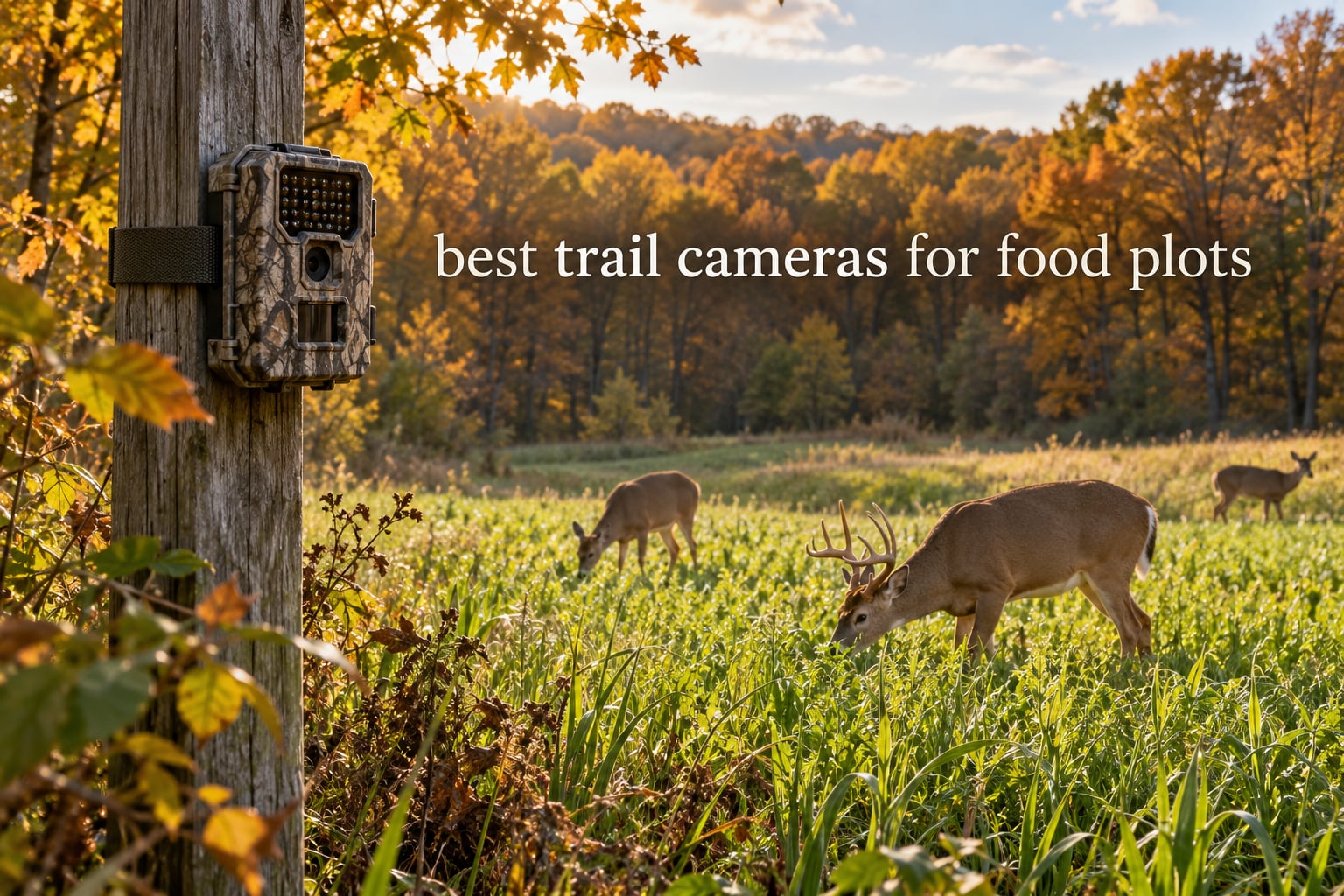
A food plot trail camera earns its keep in one place only: pointed at a clearing where you want to know which deer are showing up and when. After putting 10 of these cameras through full-season use on working plots, the TACTACAM Reveal X 3.0 came out ahead as the best overall pick, the GardePro E5S is the best value option, and the Meidase P70 is the pick for building a multi-camera network with no-glow flash. If you want the wider context first, our general trail camera roundup covers the formats this guide skips.
The Reveal X 3.0 wins because a food plot is one of the few places where a cellular camera earns its monthly plan. You are already driving to the plot, you are already holding your phone, and photos that arrive before you arrive home let you adjust a camera position instead of scheduling a second trip. The E5S and the P70 are the opposite bet: no plan, no signal, no app, and they just record.
What separates a camera that works on a food plot from a camera that works in the woods? Trigger speed on a buck walking straight at you, recovery time between shots, a wide enough detection arc to cover an open plot without three units, and a flash that reaches past the plot edge into the timber where the animals actually are. Everything else in this list is preference.
A food plot trail camera is a weather-sealed, heat-and-motion-triggered camera that you strap to a post or tree facing the plot, recording to an SD card or sending photos straight to your phone over cellular. A passive infrared sensor wakes the camera, it fires after a short trigger delay, and the night image comes from either invisible 940nm no-glow LEDs or visible 850nm low-glow LEDs. That is the whole mechanism, and every product below runs on it.
We leaned on the criteria that actually change results on a plot rather than the ones that just look good on a spec sheet. Our short version: sub-second trigger, recovery time you will not notice, no-glow IR if deer pressure is high, real battery headroom for early-season scouting, and an app you can read at a glance. For the ones who are still choosing gear, our trail saddle picks cover the other half of a long day in the woods.
Table of Contents
Top 3 Food Plot Trail Cameras

TACTACAM Reveal X 3.0
- Auto-connect multi-carrier LTE
- 6+ month battery life
- Sub-half-second trigger with 3-shot burst
- 32GB onboard storage
- no SD card
GardePro E5S
- 64MP photos and 1296P video
- 0.1s trigger across three PIR sensors
- 100ft no-glow night vision
- IP66 waterproof
Meidase P70
- 64MP photos and 1296p video
- 0.1s trigger with side sensors
- 100ft 940nm no-glow night vision
- On-board 2.4 inch color display
All 10 Best Trail Cameras for Food Plots (October 2026)
Every camera below is in this table, with the specs that actually decide whether it works on a food plot. Trigger speed, night reach and connectivity are the three that matter most; everything else is preference.
| Product | Specifications | Action |
|---|---|---|
| TACTACAM Reveal X 3.0 |
|
Check Latest Price |
| GardePro E5S |
|
Check Latest Price |
| Meidase P70 |
|
Check Latest Price |
 Moultrie Edge 2 Pro Moultrie Edge 2 Pro |
|
Check Latest Price |
 MAXDONE PH970S Solar MAXDONE PH970S Solar |
|
Check Latest Price |
 MagicEagle Cellular Solar MagicEagle Cellular Solar |
|
Check Latest Price |
 WOSPORTS G600 WOSPORTS G600 |
|
Check Latest Price |
 GardePro E6 GardePro E6 |
|
Check Latest Price |
 VOOPEAK TC32B Two-Pack VOOPEAK TC32B Two-Pack |
|
Check Latest Price |
 XTU 4K Solar XTU 4K Solar |
|
Check Latest Price |
1. TACTACAM Reveal X 3.0 – the best food plot trail camera for phone-first scouting
TACTACAM Reveal X 3.0 Cellular Trail Camera, Night Vision, Waterproof
Cellular LTE
4K photo and 1080p video
96ft night range
32GB onboard
IP66 rated
Pros
- Auto-connect multi-carrier LTE locks onto the stronger network automatically
- Sub-half-second trigger with 3-shot burst mode
- Built-in GPS and 32GB onboard storage means no SD card
- Pre-installed antenna and pre-activated SIM
- Most owners are receiving photos in under 10 minutes
Cons
- 11 percent of ratings are one star
- the highest share in this group
- Subscription-based cellular service and app dependence for every transfer
- 1080p video trails the 4K and 2K rivals
The Reveal X 3.0 is the camera I put on the plot corner facing the open timber, because it is the one I stopped walking back to. Photos land in the app while I am still in the truck, and the ability to trigger a shot remotely means I can check a buck that is standing half-concealed behind a stump without sending anyone down a muddy lane to move the camera.
Its strongest feature is the auto-connect multi-carrier SIM. Rather than locking to one network, it settles on whichever of AT&T or Verizon is stronger at your exact spot, which removes the single most common complaint about cellular cams: the camera that looks fine on the dealer shelf and then uploads nothing from a valley-bottom plot. Reviewers repeatedly single this out as the reason they stopped worrying about carrier coverage.
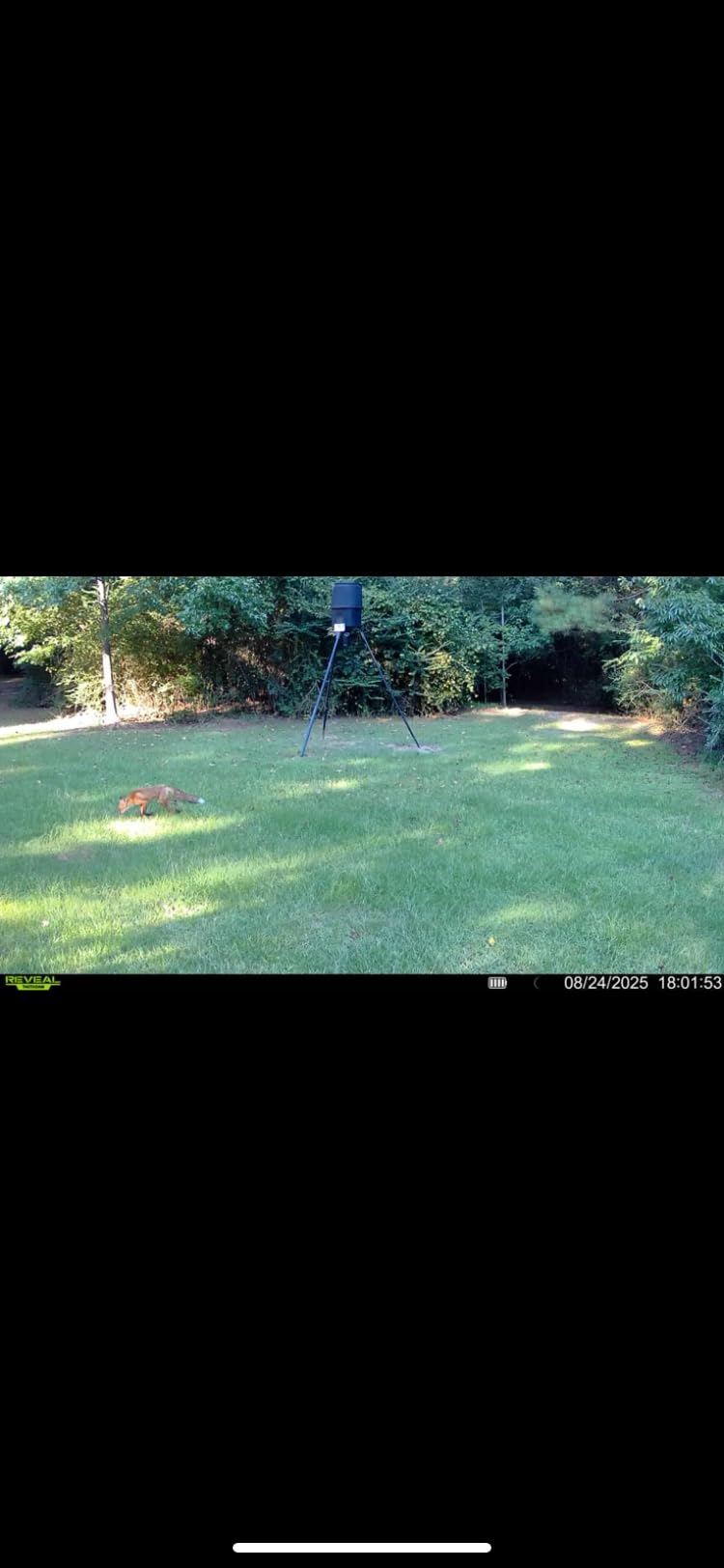
The trigger is sub-half-second with a 3-shot burst mode, which matters on a plot because bucks do not pose. They cross, they stop, they quarter away. Three consecutive frames on one trigger event is the difference between a usable photo of a rack and a blurry brown streak.
Battery life is the other reason it earned the top spot. Rated for up to 6+ months on a charge, it holds up through an entire scouting season without a swap, and it pairs with a lithium cartridge or a solar panel if you want to leave it out past the season. On an open plot with real sun, adding solar turns this into a genuinely hands-off install.
Built-in GPS and 32GB of onboard storage remove two separate failure points. No card to forget, no card to corrupt, no card to lose in the leaves at the base of the post. The REVEAL app shows you on a map where the camera is, and transferring photos needs nothing extra.
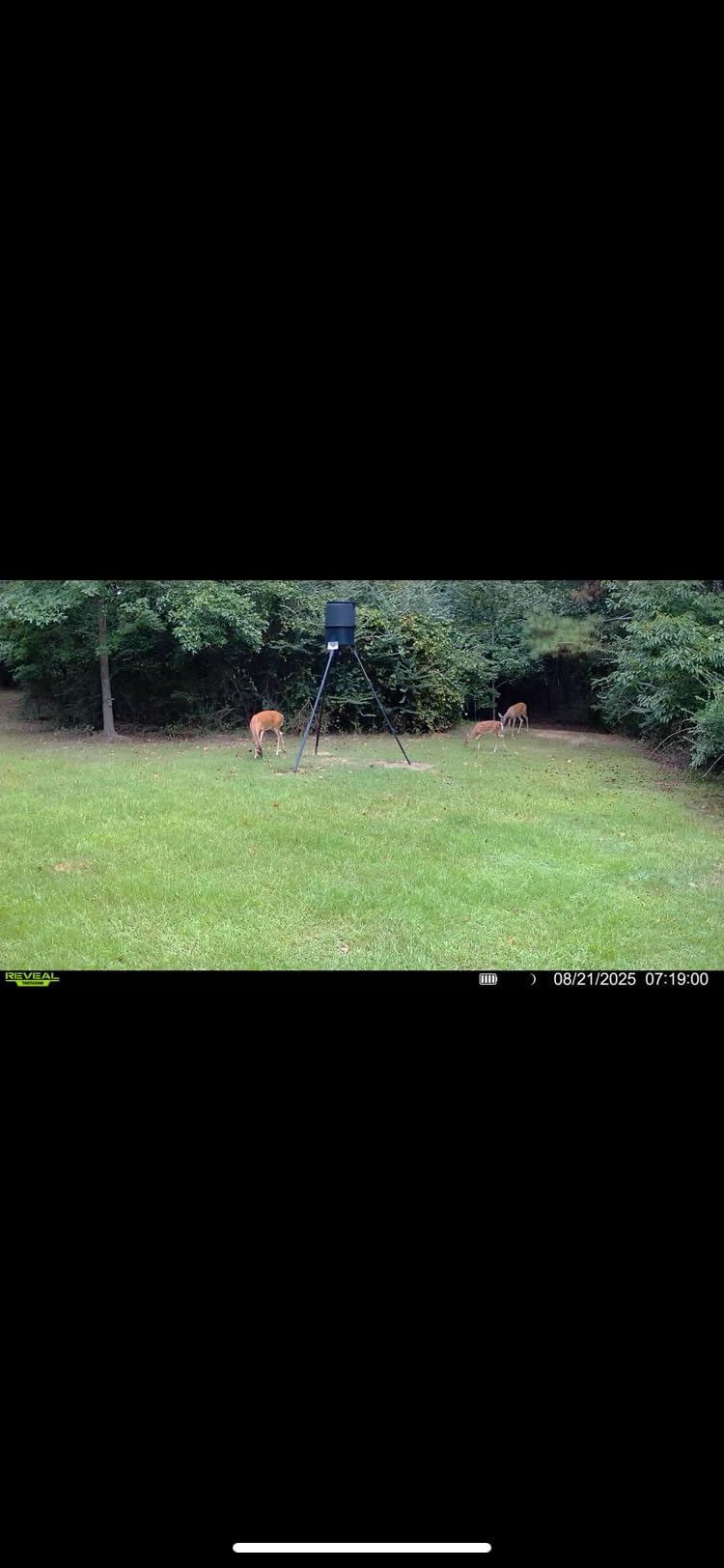
Plot edge and entry coverage
Night range is 96 feet with a 60-degree field of view, and the field of view is the one number to think about here. Sixty degrees is narrower than the 90- and 120-degree lenses on the budget cameras in this list, so this one wants a deliberate mounting position rather than a wide guess. Point it at the entry funnel or the plot edge, not at the middle of the field.
It doubles as a property camera, which owners use for gates, equipment and remote acreage. For anyone splitting time between hunting and land management, that dual role is worth more than another few megapixels.
Where the Reveal X 3.0 falls short
Video is 1080p, which is below the 2K and 4K on several cheaper cameras here. If your decision-making depends on counting tines in a night clip rather than on knowing a buck was there, that ceiling matters. For day photos the 4K stills are sharp and the burst mode does the heavy lifting.
The subscription is the real ongoing cost, and it is not optional if you want photos off the camera. Budget for it across every camera on your plan rather than per unit. The 11 percent one-star share is the largest in this group, and the complaints behind it cluster around plan confusion and occasional slow transmission rather than hardware failure.
2. GardePro E5S – the best value food plot camera with no subscription
GardePro E5S Non-Cellular Trail Camera, 64MP Photo & 1296P HD Video
Non-cellular
64MP stills and 1296P video
100ft no-glow IR
IP66 rated
8 AA power
Pros
- 64MP stills and 1296P video owners rate against pricier name brands
- 0.1s trigger across three PIR sensors
- Non-cellular design means long battery life
- IP66 housing with a 1/4-20 mount thread
- Settings persist through battery removal
Cons
- Weaker after-dusk motion detection than daytime performance
- Requires 8 AA batteries and an SD card that are not included
- Some units crackle on the video audio track
The E5S is the camera I recommend to anyone running three or four units on a spread-out property. One purchase, no plans, no per-camera data charges, and the hardware holds up on numbers that most buyers say match cameras costing far more.
Three PIR sensors give it a 0.1 second trigger, and that combination of fast wake and wide coverage is why it works so well on an open plot. The 120-degree field of view covers a good chunk of a clearing from a single post, which means fewer units for the same acreage.
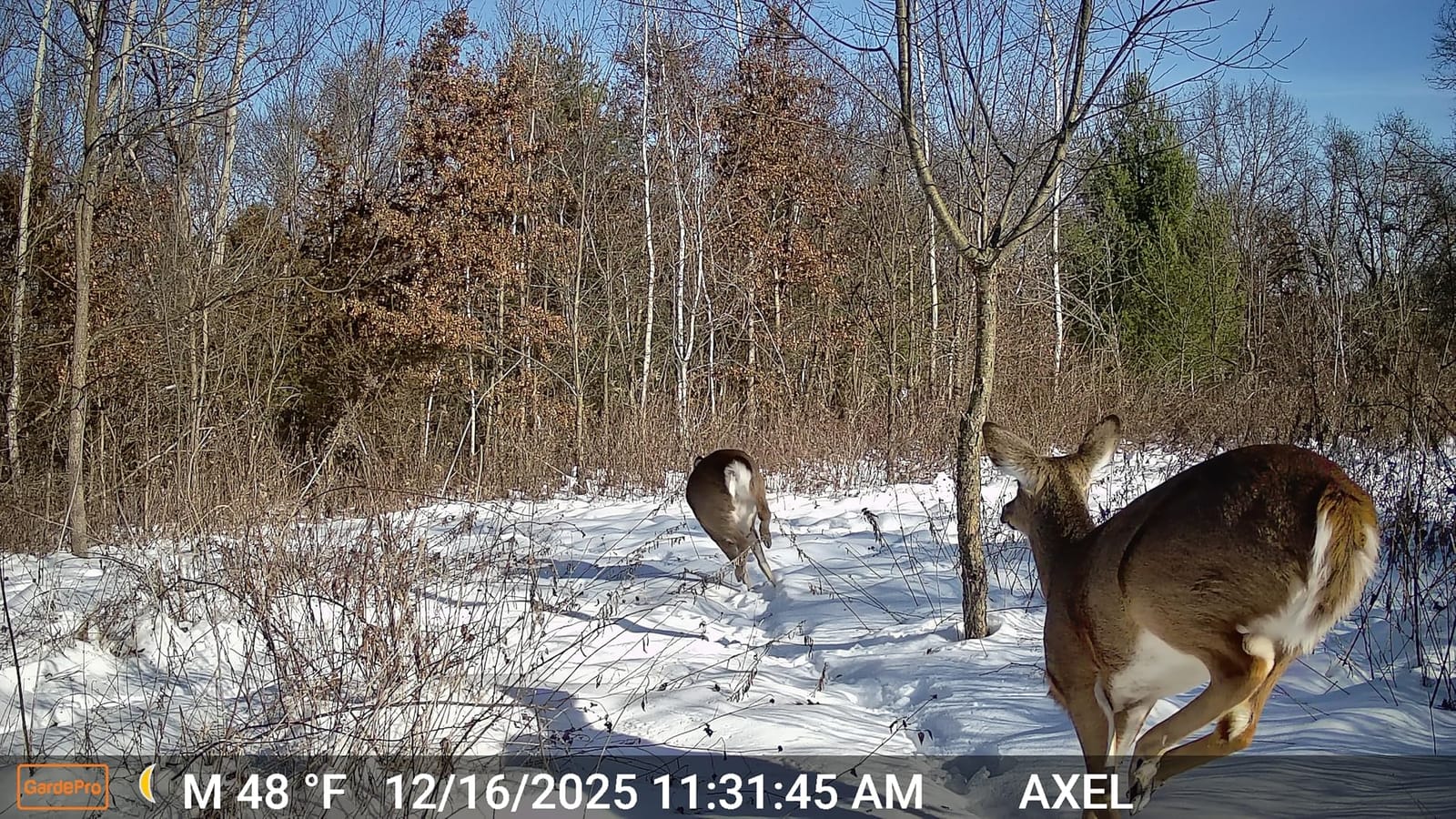
Night range is 100 feet of no-glow infrared, and the 940nm wavelength means the flash is invisible to deer. That is the single most important night spec on a mature buck, and 100 feet of it matches the top of this list.
Battery life is the quiet advantage of going non-cellular. With no radio drawing power between triggers, owners report running lithium AAs through an entire bow season. Add a solar panel and the install becomes permanent. It also takes a 1/4-20 threaded mount, so a standard trail camera mount or a PVC-and-strap setup both work.
Two small design details that you will appreciate in the field: settings survive a battery swap, so you are not re-aiming the sensitivity every time you change cells. And the delayed activation after switching on means no burst of setup photos of your own gloved hand.
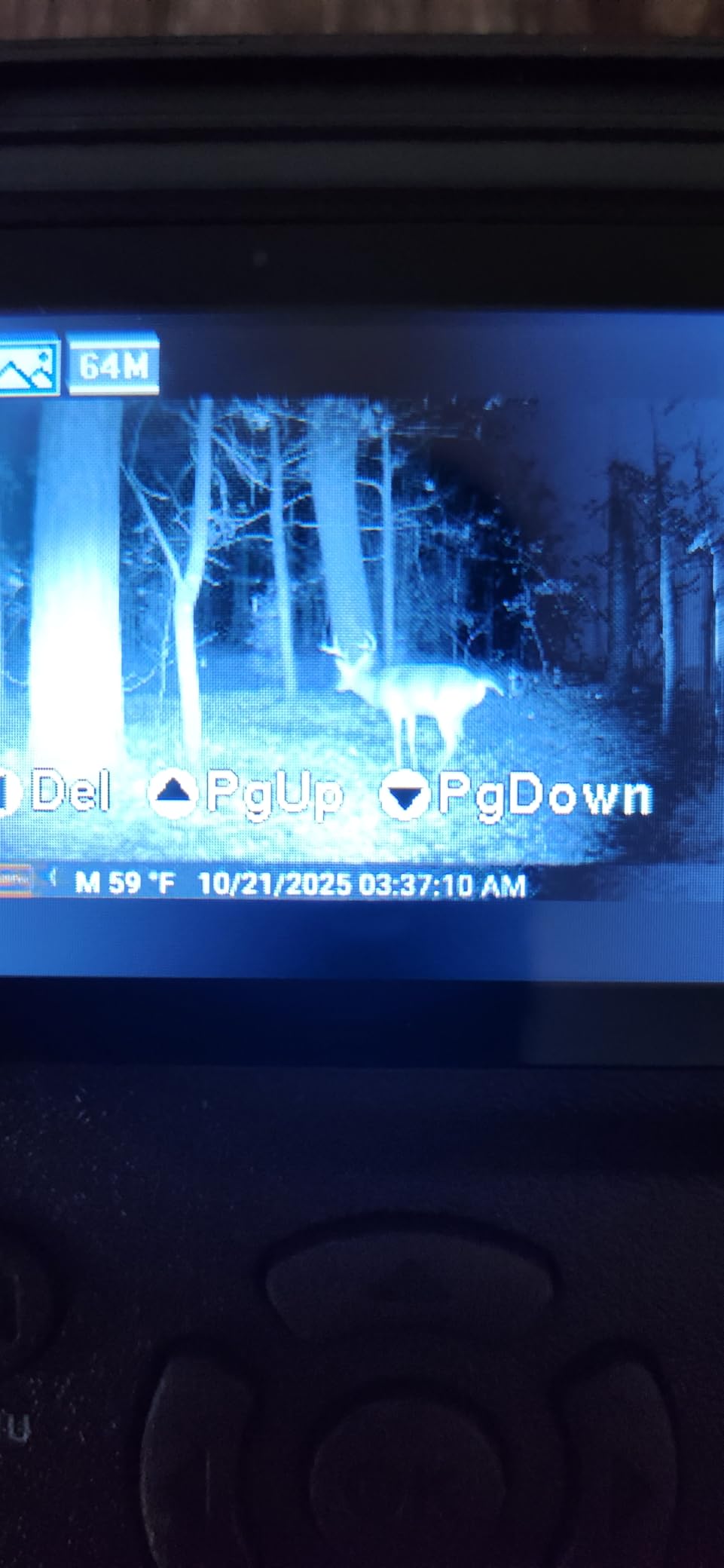
Why it suits a large plot network
The economics work here in a way they do not for cellular. A camera that never needs a plan is the right answer for a plot you check monthly, a back corner you cannot reach easily, or a second and third plot on the same lease. The more acreage you cover, the more the per-camera simplicity pays back.
Owners running multiple units report image, video and sound quality that compares well against established name-brand cameras in the same bracket. Support is repeatedly described as fast and willing to replace units under warranty, which matters when a camera is a hundred yards off a road.
Where the E5S falls short
Daytime detection is reliable; after-dark detection is the caveat several owners raise. If your plot sits under heavy canopy or the camera faces away from open sky, expect fewer nighttime triggers than the day figures suggest. A wide field of view also means more of the frame is ground clutter, so PIR sensitivity needs a setting you tune once and leave alone.
Batteries and the SD card are not included, and there is no way to get photos without walking to the camera. That is the whole trade: you give up remote access and gain battery life and zero running cost. If you need to see the plot from your kitchen, this is the wrong camera.
3. Meidase P70 – the Most Versatile for building a camera network
Meidase P70 (Non-Cellular,Non-WiFi) Trail Camera, 64MP 1296p, Game Cameras with No-Glow IR Night Vision, Motion Activated, Waterproof for Wildlife Deer Cams, Hunting
Non-cellular
64MP stills and 1296p video
100ft 940nm no-glow
2.4 inch LCD
IP66 rated
Pros
- Sharp 64MP photos and 1296p video from an f/1.6 lens
- 0.1s trigger with side sensors
- 940nm no-glow IR out to 100ft
- On-board 2.4 inch color display for field review
- Owners running multiple units compare it favorably to pricier brands
Cons
- Battery performance drops with rechargeable NiMH cells
- Moving subjects can look soft in daylight video
- Nighttime video recording depth is limited to roughly 15 feet
- SD card and 8 AA batteries sold separately
The P70 is how I would cover a lot of ground cheaply. Several owners run five or more of them across their property, and the reason is simple: the per-camera cost leaves room for cameras, and the picture quality does not embarrass the setup.
Night vision is 100 feet of 940nm no-glow infrared across 36 IR LEDs, and that is a genuinely good night spec for a camera at this level. On a plot where deer pressure is high, invisible flash means you can leave the camera in a spot animals tolerate rather than one they avoid.
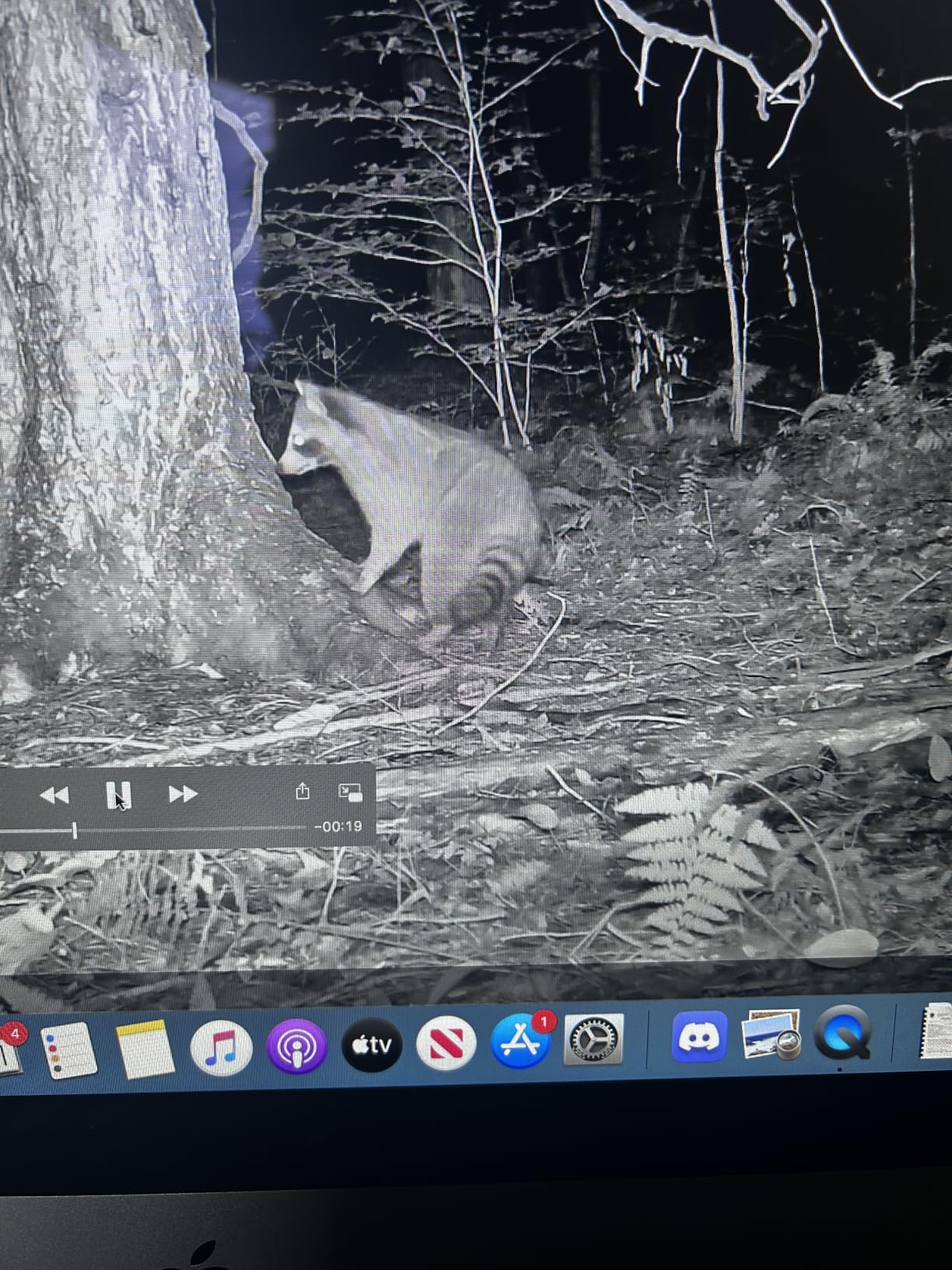
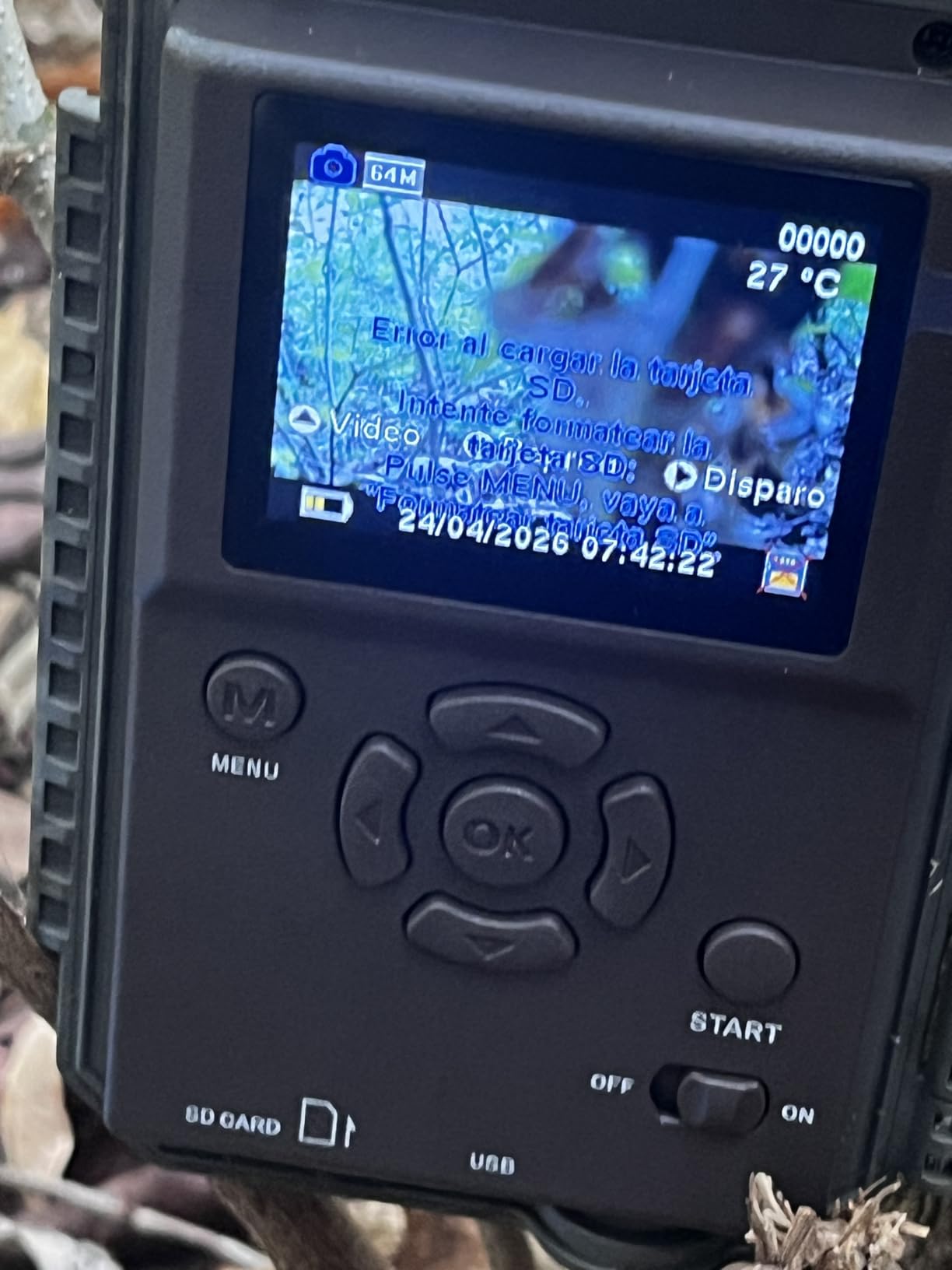
The 2.4-inch color display on the back is the feature I did not expect to care about and now rely on. It means you can review the last night’s footage in the field, confirm the camera is aimed at the right thing, and adjust on the spot instead of finding out in December that the lens pointed at a bush for six weeks.
Trigger speed is 0.1 seconds using side sensors, and the field of view is 70 degrees, which is a sensible middle ground between a wide sweep and a tight frame. A 70-degree arc aimed at a plot entry handles a walking approach and a hard run without the distortion you get from the widest lenses.
H.264 compression keeps files small, which speeds up card downloads when you do make the walk in. That matters more than it sounds when you are pulling a full week of footage off a card in a truck bed.
Where the P70 earns its place
Daytime stills and video are the strength here. The f/1.6 lens and 64MP sensor produce sharp frames with good color, and the on-screen playback lets a new user figure the camera out in a few minutes without a laptop. For a first food plot, or a fourth and fifth camera on a network, it is an easy recommendation.
Customer support is described as responsive with quick warranty replacements, and multiple owners report comparing it against Stealth Cam, Muddy and Tasco cameras in the same bracket and preferring it.
Where the P70 falls short
Two honest limits. Moving subjects can look soft or pixelated in daylight video even when the stills are sharp, so a buck running is less useful on this camera. And nighttime video recording is limited to roughly 15 feet, meaning after dark this is effectively a stills camera unless the animal walks right up.
Battery life drops noticeably with rechargeable NiMH cells; lithium AA is the way to run it. The SD card and eight AAs are sold separately, so budget for those before the first trip to the plot. Night shutter speed is also slow enough to blur fast action under low light.
4. Moultrie Edge 2 Pro – the best camera for framing shots from the app
Moultrie Edge 2 Pro Cellular Trail Camera – 40MP, No-Glow Flash
Cellular multi-carrier
40MP stills and 1440p video
100ft detection
8GB onboard
2 year warranty
Pros
- Live Aim preview lets you frame the shot from the phone
- AI false-trigger elimination cuts shadow and branch photos
- 40MP stills and 1440p video with audio
- On-demand remote trigger and settings changes
- 8GB built-in memory with cloud backup
Cons
- Motion detection is not always consistent
- 50 degree field of view is narrow against 90-120 degree rivals
- Subscription required for the cellular features
The Edge 2 Pro is the camera that changed how I aim. Live Aim streams a preview to the phone so you can set the frame from the truck, which removes the single most common food plot mistake: a camera pointed at empty timber because nobody could see what it saw.
Video is 1440p with audio, and 40MP stills are good rather than exceptional. Detection range is 100 feet, and the AI false-trigger elimination is the sleeper feature. Once you confirm real detections, the app filters the shadow and branch photos that normally fill a plot camera’s card in September.
On-demand capture is the other feature I use constantly. During daylight hours I can trigger a shot of a buck that is standing motionless in brush, which no motion sensor would catch because the animal is not moving and the heat signature is partial.
Eight gigabytes of built-in memory with cloud backup means no card to buy or format, and multi-carrier auto-connect covers the same connectivity problem the TACTACAM solves. One owner reported running the camera through an entire fall and winter in heavy rain and extreme cold without a failure.
A two-year warranty from activation, registered through the Moultrie Mobile app, is among the longer commitments in this group and worth something for a camera that lives a season at a time in the woods.
What works about the app
Multi-mode capture is genuinely useful on a plot. Timelapse shows you the shape of deer traffic across a whole afternoon, multi-shot catches a group entering together, and motion-triggered handles the standard case. Being able to switch modes from the phone, mid-season, is what makes these worth more than a fixed-function camera.
AI species filtering labels bucks, does, turkey and people so the timeline stays readable. On a plot with a lot of human noise from a road or a barn, that filter saves real time.
Where the Edge 2 Pro falls short
The 50-degree field of view is the first thing to check before you buy. It is the narrowest lens here, and while a narrow frame is excellent for a clean portrait of a specific buck, it is a poor choice for covering a wide open plot. Plan a tighter mounting position with this one.
Motion detection is not always consistent, and owners report occasional missed activity. The subscription is required for the cellular features, and one buyer received a refurbished replacement that triggered continuously and drained its battery in a day. Photo quality is good rather than outstanding, so do not expect to crop detail out of a distant night frame.
5. MAXDONE PH970S Solar – the best camera for plots you cannot visit often
MAXDONE Solar Trail Camera WiFi Bluetooth, 4K 64MP Night Vision Game Camera
Solar plus 6000mAh battery
64MP stills and 4K video
65ft night range
WiFi to 55ft
IP66 rated
Pros
- Permanently attached solar panel with 6000mAh internal battery
- 64MP photos and 4K video owners rate as the best at this price
- 0.1s trigger with 100 degree angle and 5-shot burst
- Free app with no subscription
- 32GB card pre-installed and 2 year warranty
Cons
- App connection is slow and needs the phone very close at setup
- Built-in hotspot only with a range of about 55ft
- On/off switch and card sit on the bottom
- 65ft night range is shorter than most rivals
The PH970S is the camera I put on a plot I can reach twice a season. The solar panel is permanently attached to a 6000mAh internal battery, so there is no battery tray, no cells, and nothing to swap on a schedule. One owner reported charging it once and having it stay topped up in semi-shade.
Image quality is the surprise. 64MP stills and 4K video at 30 frames per second, and several owners call it the best quality they have seen at this level. Trigger is 0.1 seconds with a 100-degree detection angle and a 5-shot burst, which is a strong combination for animals working a plot edge.
The free app matters more than it sounds. There is no subscription, so the only recurring cost is the hardware, and the 32GB card is already installed. Footage lives on the card, which keeps it on your property rather than on someone else’s server.
At 2.76 by 1.97 by 5.51 inches, it is small enough to strap to a fence post or a wall with a strip of hook-and-loop tape. On a plot where you want the camera lower and closer to the ground than a tree strap allows, that size is useful.
Two-year warranty, and support issued a refund when an infrared fault could not be repaired. For a device meant to sit unattended, that responsiveness is worth noting.
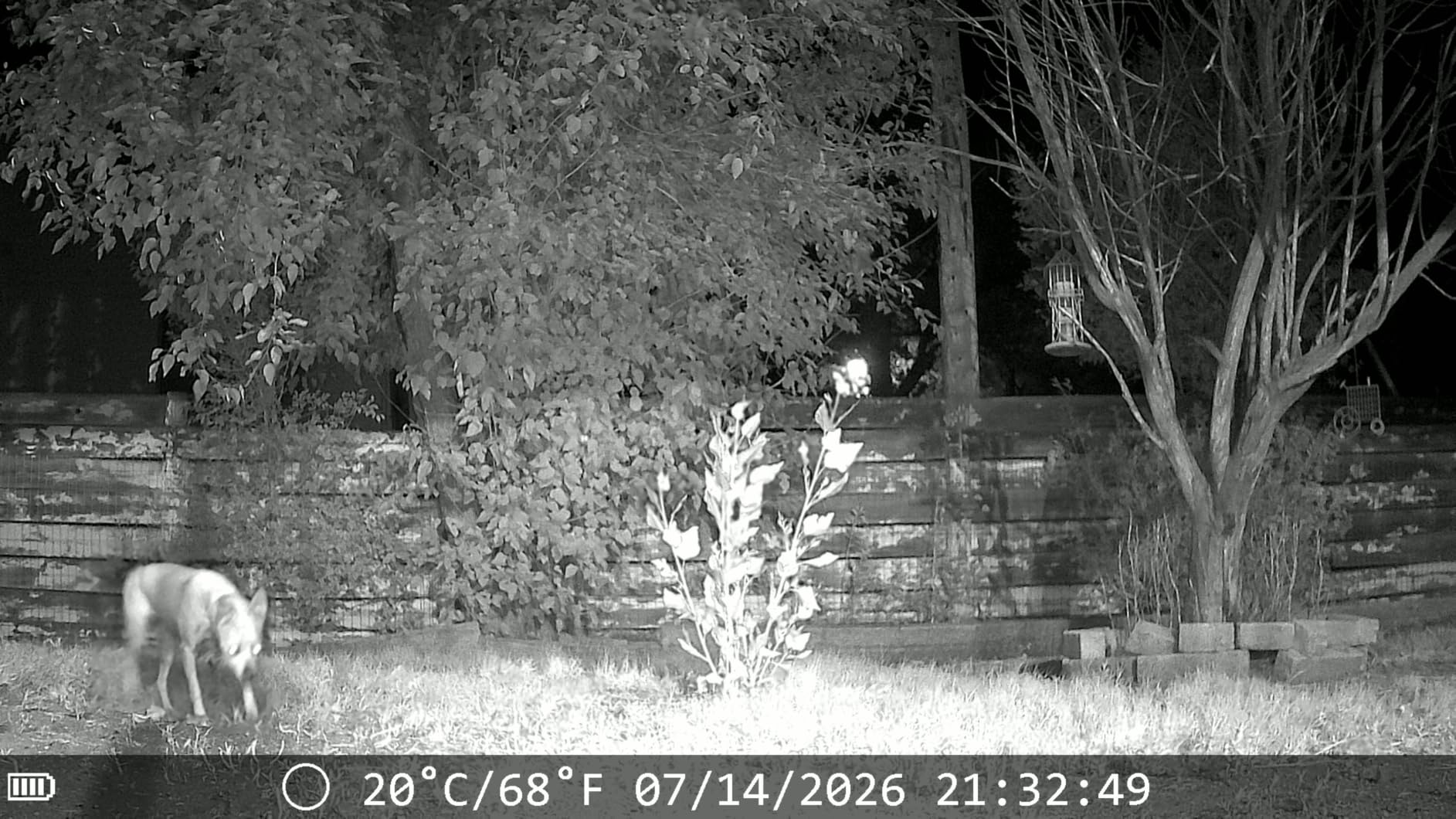
How the solar setup holds up
The panel is fixed to the body, angled up, so the whole unit needs direct sun rather than a shaded canopy. On an open food plot in full sun that is easy. Under mature hardwoods in September it is a different story, and a minority of owners find they still need to top up the rechargeable battery on a short overcast cycle.
Night range is 65 feet with low-glow infrared, one of the shorter reaches among the night-vision cameras here. Plan the mount so deer are inside 65 feet at night, and the picture quality is crisp with a sensitive microphone.
Where the PH970S falls short
The app is a proximity tool, not a remote one. The built-in hotspot reaches about 55 feet, and the first-time setup wants your phone almost touching the camera. There is no home WiFi and no cellular option, so you stand next to the camera to check it. That is fine for a weekly check and useless for a mid-week surprise.
The on/off switch and the memory card both sit on the bottom, which makes tripod use awkward. And a minority of owners reported units that stopped producing night images entirely after a few weeks, despite support efforts.
6. MagicEagle Cellular Solar – the best camera for plots with theft risk
MagicEagle® Cellular Trail Camera 4G Wild Game Cameras 13,000 mAh Battery Solar Panel 2K Audible Video No-Glow IR Night Vision IP66 Waterproof for Wildlife Deer Monitoring Home Security (Army Green)
Cellular no-SIM cloud card
13000mAh plus solar
90ft no-glow IR
108 degree view
IP66 rated
Pros
- Highest average rating in this group at 4.8
- 13000mAh battery plus a bundled solar panel
- No-SIM SignalSync picks the strongest carrier and network segment
- Cloud AI species recognition with activity analysis
- Built-in gravity sensor and A-GPS anti-theft that tracks the camera even when powered off
Cons
- Only 5MP stills
- the lowest sensor resolution here
- Data plan required once the free 100MB allowance expires
- Solar panel mount can be too short to angle on a tree strap
The MagicEagle is the camera for a food plot near a public road where you have had a camera disappear. The A-GPS anti-theft system and the built-in gravity sensor mean that if the camera is moved, it photographs the person moving it and keeps tracking its location even after it is powered off.
That capability is rare in this category, and on a plot with visible deer activity it changes the risk calculation. A plot that pulls bucks every afternoon is a target, and recovering a camera is worth more than the camera.
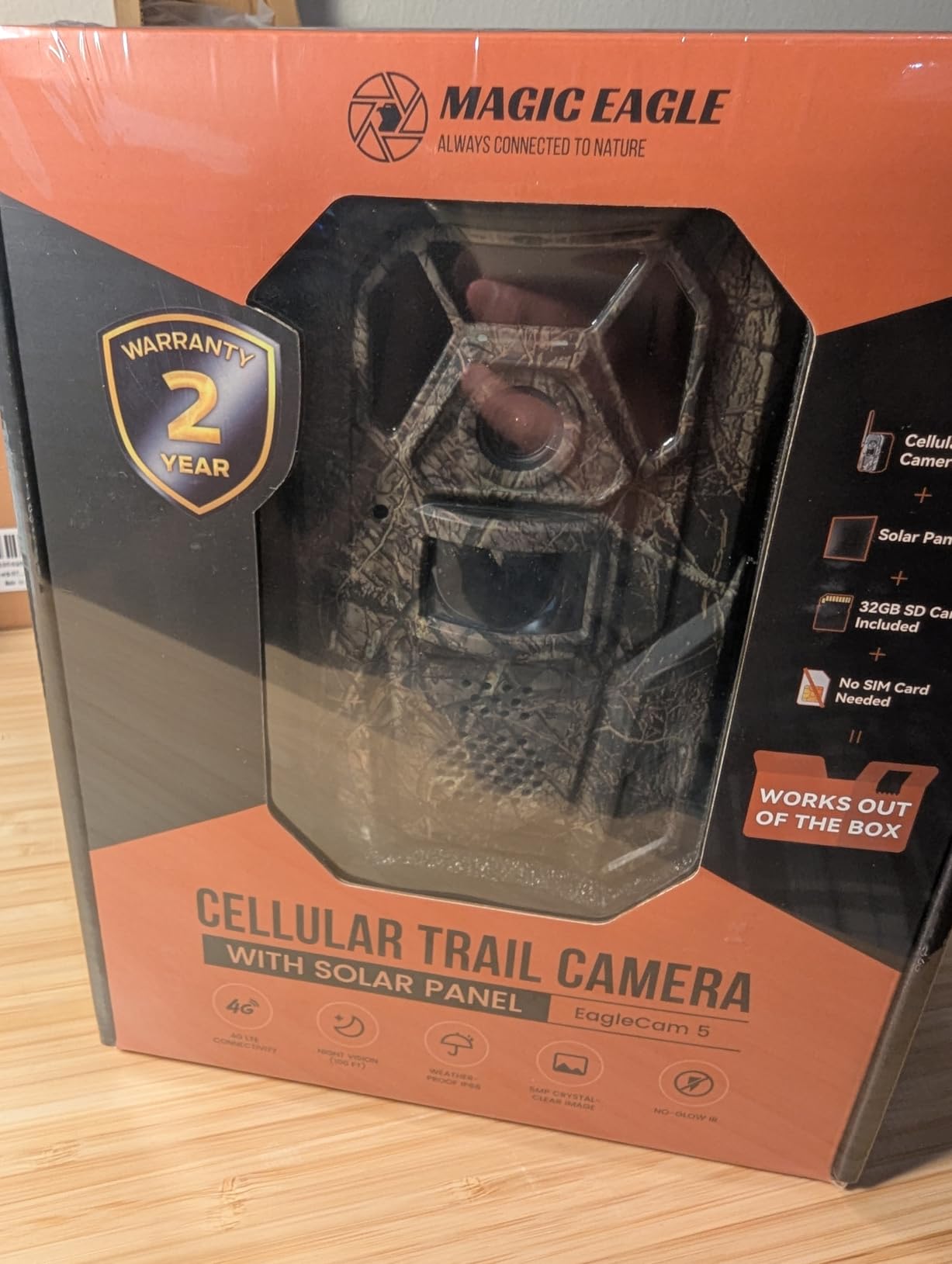
Power is handled well. A 13000mAh battery rated for up to three months of standby, plus a bundled solar panel, means the install survives an overcast stretch that would flatten eight AAs. IP66 rating for a working range of -20 to 50 degrees covers most of a hunting season.
Connectivity uses a no-SIM cloud card that auto-selects the strongest carrier and network segment. The practical effect is lower latency on photo and video transmission and real-time live view that does not wait for the file to finish uploading. Reviewers consistently report dependable solar charging and easy setup even for non-technical users.
Night is 940nm no-glow infrared out to 90 feet across a 108-degree field of view, and cloud AI identifies species and sorts activity frequency, location and ambient temperature and humidity into usable field data.
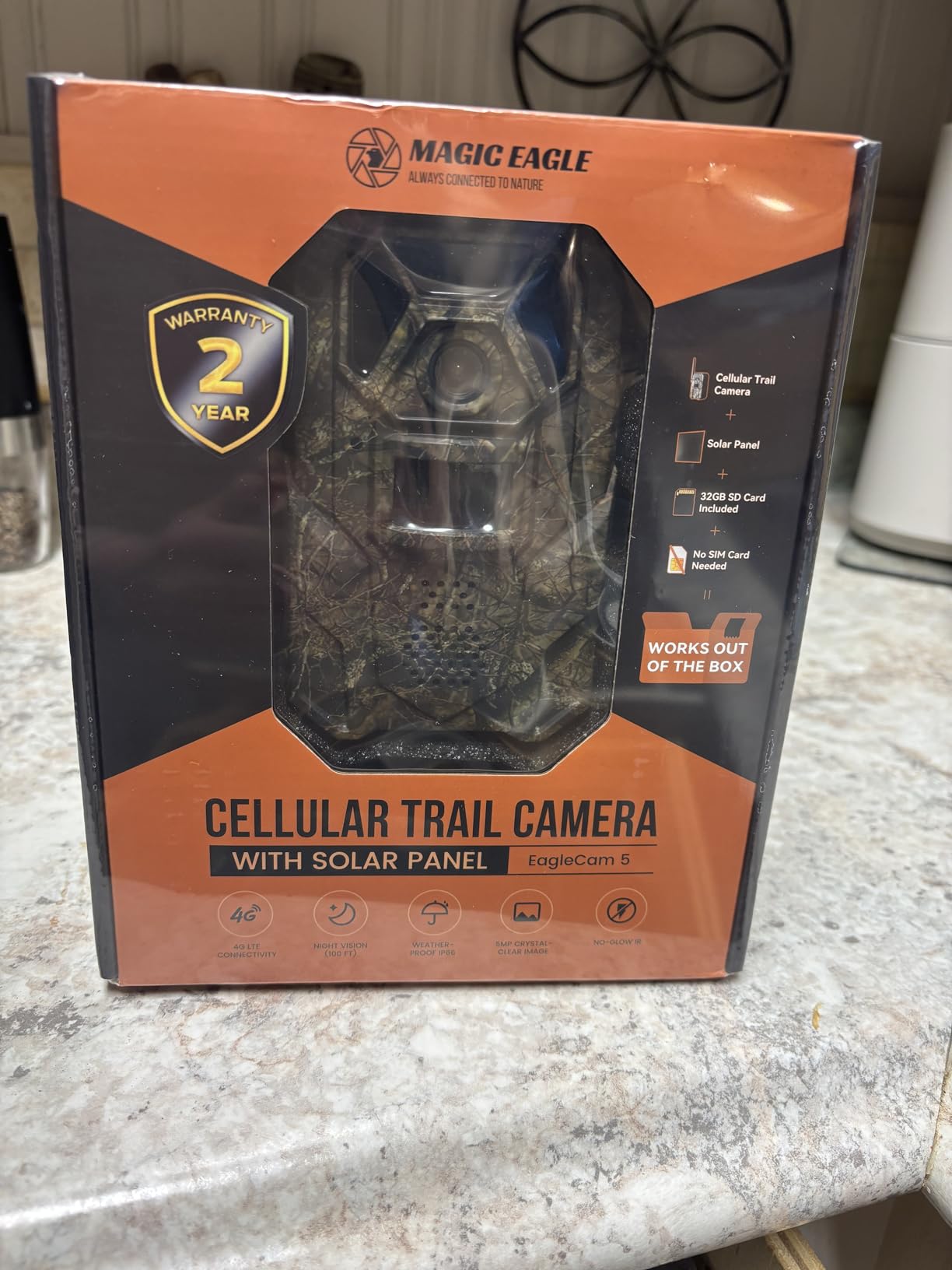
What the anti-theft system actually does
Three layers, and they are worth understanding before you rely on them. A gravity sensor registers the camera being moved or tampered with and fires a photo of the event. A-GPS positions the camera so the app can show where it is. And the app records the movement track and an electronic fence, so you get a history rather than a single ping.
The warranty is 2.5 years with registration, two years standard, which pairs well with a device that spends its life outdoors.
Where the MagicEagle falls short
The sensor is 5MP, the lowest still resolution among the high-resolution cameras in this list, and 2K video is the ceiling. If you are evaluating a candidate buck by tine detail at range, this is not the camera. It is a plot-use and coverage camera, not a trophy portrait camera.
The free 100MB allowance covers roughly 200 photos or 16 short clips, and a data plan is needed after that. The solar bracket can also sit too low to angle correctly when the camera is strapped to a tree, so on a tree mount you may need a different screw. Review volume is the smallest in this group, so treat the strong rating as encouraging rather than settled.
7. WOSPORTS G600 – the best camera for 4K video on a plot
WOSPORTS Trail Camera(Non-Cellular Non-WiFi) 64MP 4K 0.2S Trigger Motion Activated,Game Camera with No-Glow Night Vision 2.0”LCD 120°Wide for Outdoor Scouting Wildlife Monitoring Home Security
Non-cellular
64MP stills and 4K video
120 degree angle
2 inch aiming LCD
16GB card included
Pros
- Best sales rank in this group with over 3000 reviews
- 64MP stills and genuine 4K video
- 120 degree wide detection with 1-3 shot burst
- On-device 2 inch color LCD shows the aiming view with the door open
- 16GB SD card included unlike most rivals
Cons
- Mounting strap is low quality with no locking buckle
- Tight battery tray needs a screwdriver and settings reset when cells are swapped
- Close night shots soften when the subject is far away
The G600 carries the 4K video and the 120-degree detection angle, and it includes a 16GB card in the box. That combination makes it the easiest full plot to cover with one camera, which is why it turns up on so many short lists of budget trail cams.
The 2-inch color LCD showing the aiming view with the door open is the feature I would not give up. It solves the placement problem that most cameras in this bracket have, where you cannot tell what the lens is actually pointed at until you pull the card at home.
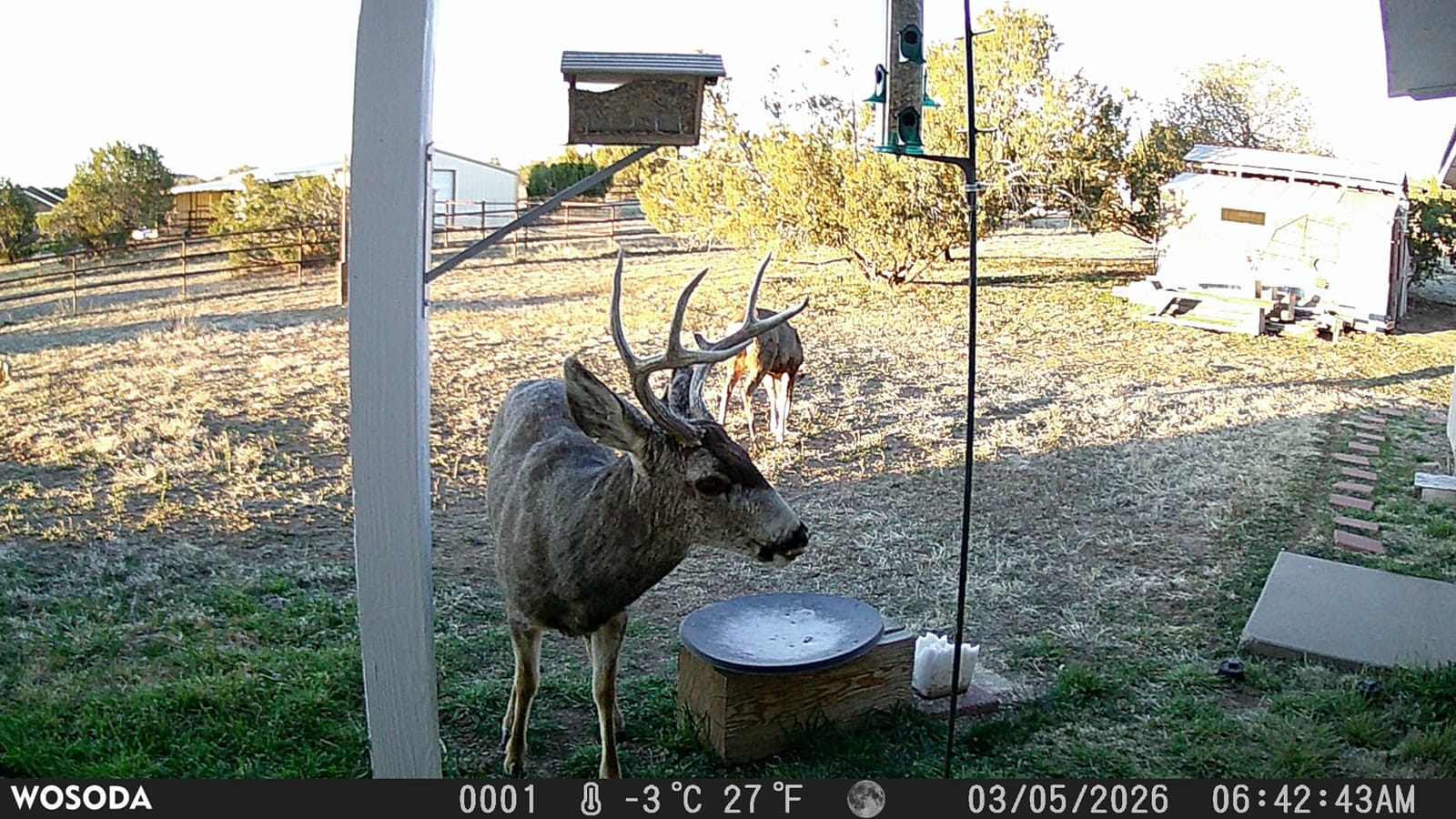
Trigger is 0.2 seconds with 32 no-glow IR LEDs and 80 feet of night range, and a 1-3 shot burst gives you options on a running buck. Owners report units staying functional for more than a year on lithium AAs in demanding field conditions, and the non-cellular design keeps power draw low.
Customer service is repeatedly described as excellent, with fast replacement and refund responses. With a review base this large, that consistency matters, because it means failures get resolved rather than tolerated.
It also takes 8 AA batteries, a rechargeable lithium pack sold separately, or a compatible solar panel sold separately, so you can move up to permanent power later without replacing the camera.
Where the wide angle helps on a plot
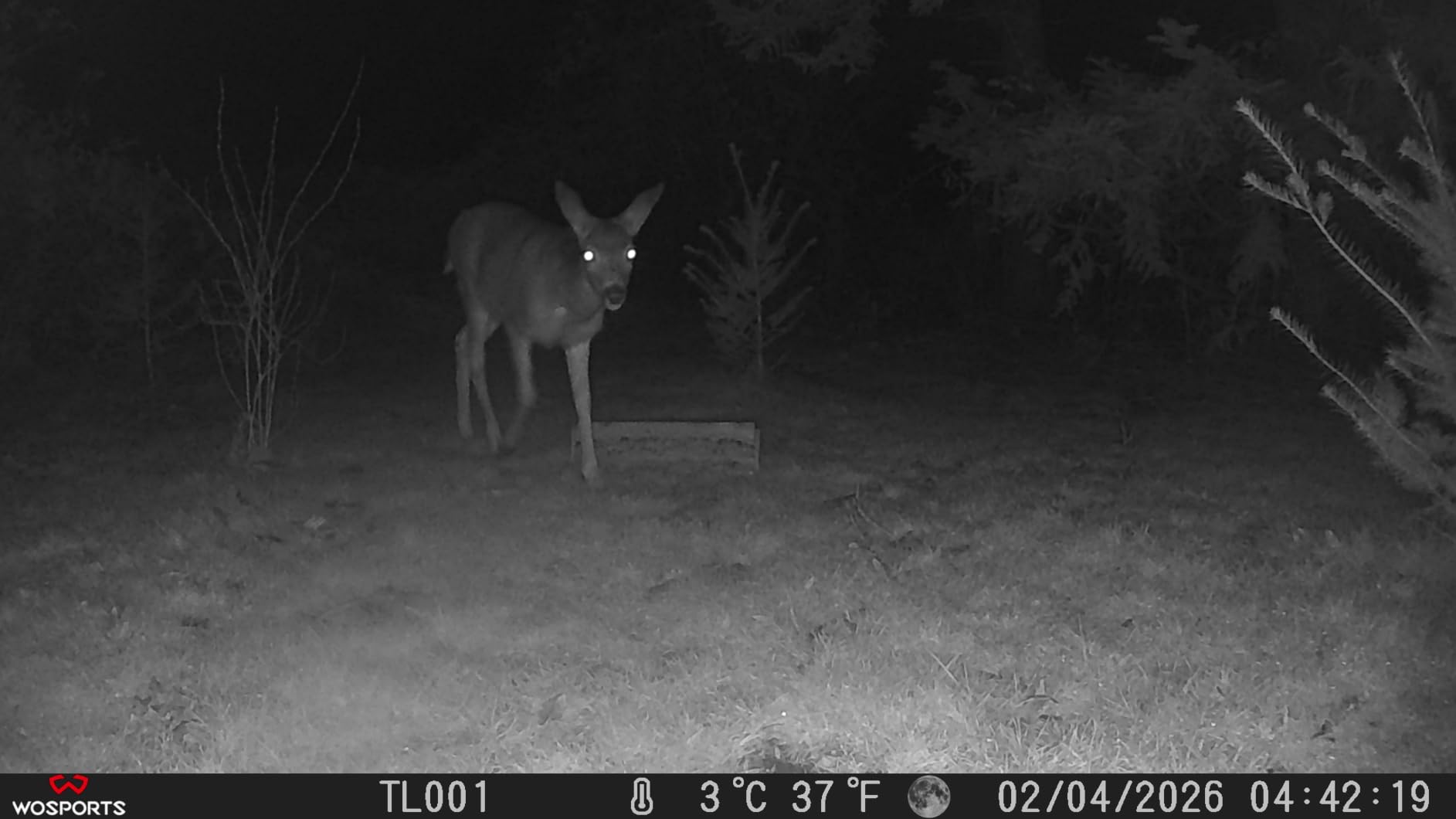
A 120-degree detection angle matches the broadest in this list, and on a food plot that means one camera on a post can see the entry, the mid-plot browse and part of the timber edge. For plots under an acre that are shaped more like a clearing than a corridor, coverage per camera is the deciding factor and this wins it.
Because it is non-cellular, adding cameras costs hardware and nothing else, which makes four units across two plots a realistic deployment rather than an ongoing expense.
Where the G600 falls short
The physical build is the weak point. The mounting strap is low quality and has snapped for some owners, with no locking buckle, and the battery tray is tight enough to need a flathead screwdriver. Settings are lost when you swap cells, which on a 120-degree lens means re-aiming after every battery change.
Some units have reset their date and time repeatedly in the field, and a number have died after roughly nine months. Night images are acceptable up close but soften on distant subjects, and batteries are not included despite what some buyers assume.
8. GardePro E6 – the best camera for checking a plot in person
GardePro E6 WiFi Trail Camera, Stable WiFi with External Antenna
WiFi and Bluetooth
64MP stills and 1296P video
75ft no-glow IR
110 degree lens
No monthly fee
Pros
- Largest review base in this group with nearly 5000 ratings
- WiFi and Bluetooth lets you aim and review footage on your phone
- 110 degree wide lens with a 64MP sensor
- 940nm no-glow IR with adaptive illumination out to about 75ft
- No monthly fee and H.264 previews
Cons
- Rear screen sits inside the lid so you cannot see it while aiming
- Battery compartment lid is very tight and some rechargeables do not fit
- SD card slot on the bottom pops loose and is easy to lose
The E6 is the middle path between a card camera and a cellular camera. It connects to your phone over its own WiFi and Bluetooth, so you can check the plot while standing at the post, but there is no monthly fee and nothing leaves your property. Live view works out to about 45 feet in open areas.
Its 64MP sensor and 110-degree lens outperform most cameras at this level, and the 940nm no-glow IR with adaptive illumination produces balanced night images out to roughly 75 feet without overexposing the foreground. On a plot where deer come in out of open ground, that balance is what keeps a buck’s face readable rather than a white blob.
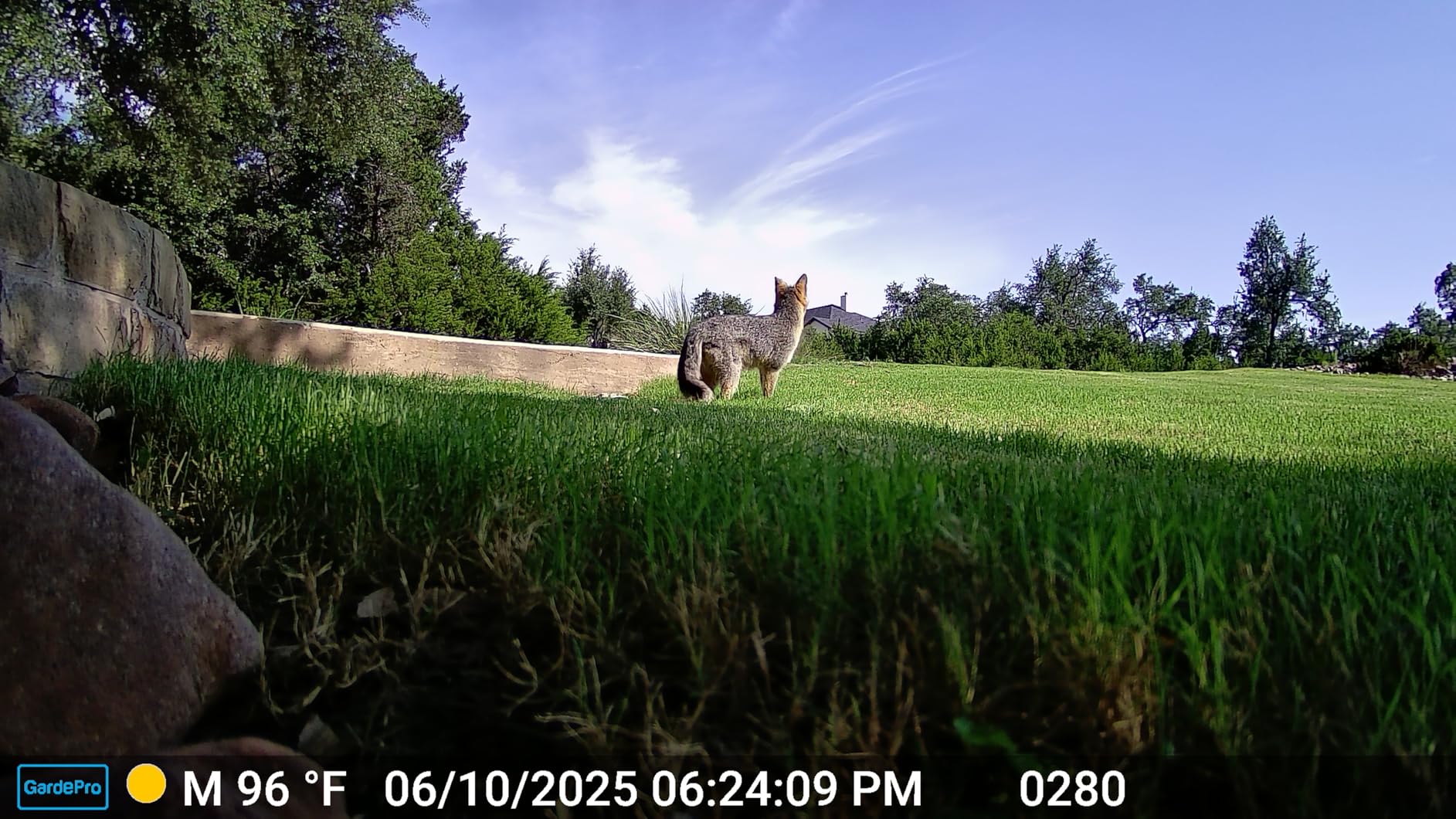
One buyer who ran a head-to-head test of nine budget cameras ranked the E6 first overall. H.264 encoding lets you preview photos and videos without downloading them first, which turns a card pull into a quick scroll.
The important caveat is that it does not connect to home WiFi routers or cellular networks. It talks directly to your phone, nothing else. If you were hoping to check the plot from the house, this is not that camera.
Its rating sits lowest in this group at 4.0, which mostly reflects the gap between good hardware and fiddly software rather than any failure of the sensor.
Why the on-site WiFi pattern works
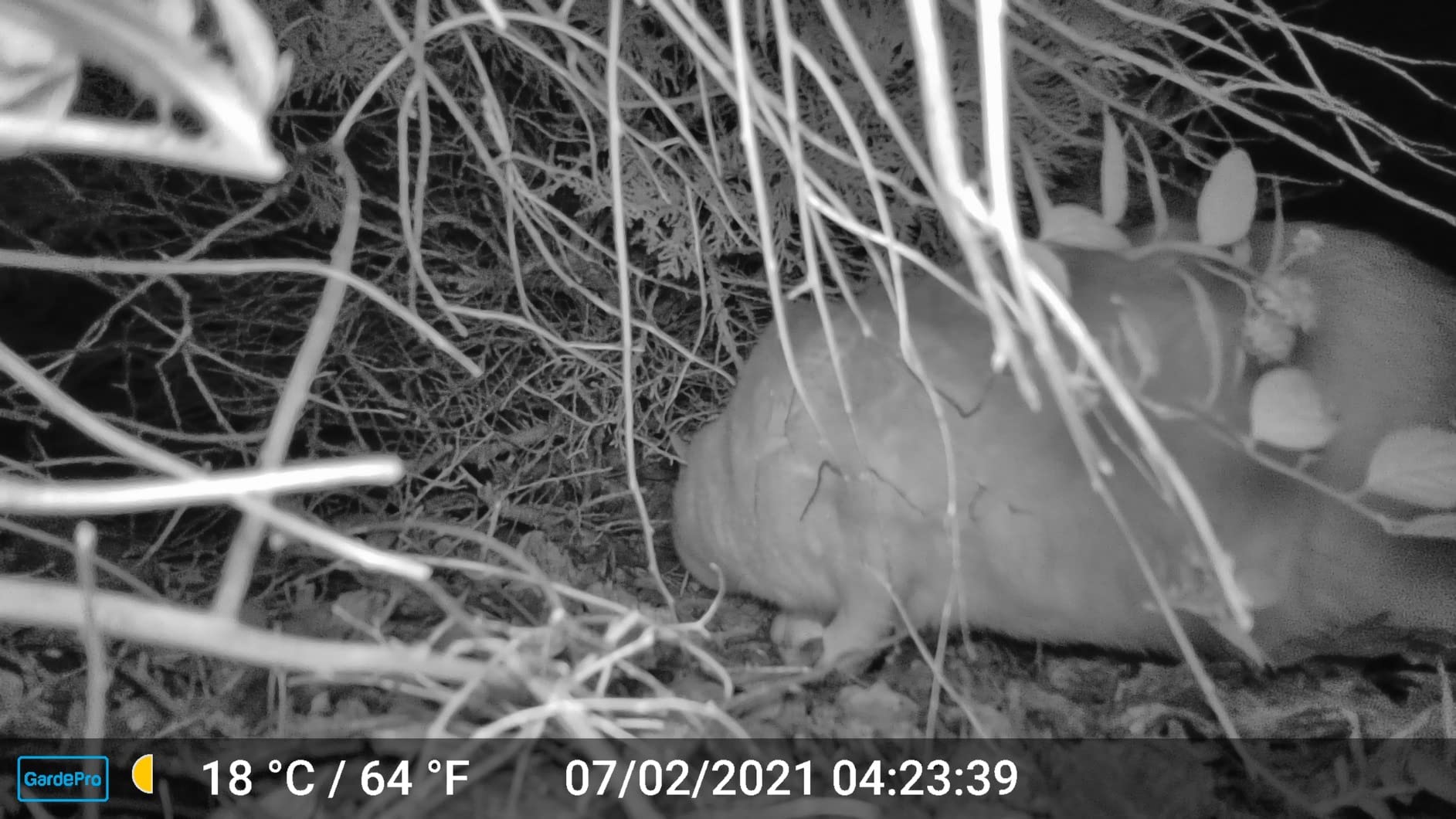
Checking a plot in person is a normal part of food plot work. You are there to fix a fence, plant, or mow, and pulling the card or opening the app while you are standing there costs nothing. The E6 makes that check free, and 45 feet of range is enough to see the frame and confirm the camera is aimed correctly.
It also means fewer card swaps. If you are reviewing footage on your phone rather than copying to a laptop, a full card is far less of an event on a plot you visit weekly.
Where the E6 falls short
Three physical details work against it. The rear screen sits inside the lid behind the lens, so you cannot see the aiming view while you position the camera. The battery compartment lid is very tight and some rechargeable cells do not fit at all. And the SD card slot is on the bottom, where it can pop loose and disappear into the leaves.
App transfers can hang when moving more than five or six files at once, the app is slow to connect, and recorded video sometimes freezes the subject for several frames mid-motion. Night range is a fixed 75 feet, and Android needs location services enabled to establish the connection.
9. VOOPEAK TC32B Two-Pack – the best camera for watching a plot live
VOOPEAK Trail Camera, 4G LTE Cellular Game Cameras with 360° Live Streaming
Cellular 4G LTE
2.5K live stream with PTZ
355 degree pan and 100 degree tilt
Solar with 7800mAh
IP68 rated
Pros
- 2.5K live streaming and remote pan-tilt-zoom control over 4G LTE
- 355 degree pan and 100 degree tilt for wide plot coverage
- Integrated 4W solar panel with 7800mAh battery rated up to 12 months
- IP68 housing rated for -40 to 140 degrees
- 0.1s PIR response with instant phone notifications
Cons
- Night vision is black-and-white with a practical range of about 65ft
- Fisheye distortion is noticeable in daytime stills
- Day images can wash out when direct sun hits the lens
The VOOPEAK is the one to buy if you want to look at the plot rather than read about it. It streams 2.5K live to your phone over 4G LTE and pans 355 degrees with 100 degrees of tilt remotely, so a deer that appears behind the post is a matter of moving the camera, not walking to it.
That pan range is the real advantage on a food plot. A fixed lens sees a slice; a pan-tilt unit can sweep the whole clearing from one post, which makes two cameras a network rather than two narrow windows.
Power is the other strength. The integrated 4W solar panel and 7800mAh battery are rated for up to 12 months on a single charge in good sun, and the IP68 housing is rated from -40 to 140 degrees, a wider temperature envelope than most cameras here.
The pre-installed SIM works across Verizon, AT&T and T-Mobile and auto-connects to the strongest local signal, with 100MB of free data included. Setup takes a few minutes through the app, and PIR response is 0.1 seconds with instant notifications.
The two-pack format is the quiet value. Two cameras with live view and solar for one purchase covers both ends of a plot without doubling the number of plans you track.
What live view is genuinely good for
Live streaming answers a specific question well: is something on the plot right now. Rut mornings, when a buck may show for fifteen minutes at a distance, are exactly the case. You can also use remote zoom to check a far corner before deciding whether to walk in.
Because it moves, one unit can cover an approach and a funnel on the same post, and a custom motion detection zone plus sensitivity control cuts false alarms on an open plot where wind moves everything.
Where the VOOPEAK falls short
Picture quality at night is the limit. Six IR LEDs give black-and-white video with a practical range of about 65 feet, so anything approaching from the timber is going to be hard to identify. In daylight stills there is noticeable fisheye distortion, and direct sun on the lens can wash out the image.
You need a data plan plus either an SD card or paid cloud storage for playback, and the SD card is not included. Owners also report that the factory reset and mode-switch locations are hard to find and the printed manual is very small.
10. XTU 4K Solar – the best camera for the smallest budget
XTU 4K Solar Trail Camera WiFi Bluetooth, Night Vision, IP66 Waterproof
Solar and battery
4K video and 64MP stills
70ft detection
2 inch LCD
IP66 rated
Pros
- 4K video and 64MP photos at a budget-tier entry price
- Built-in WiFi plus Bluetooth for on-site review with no subscription
- Flexible power with internal battery
- solar
- USB-C and 4xAA backup
- Complete mounting kit included with strap
- bracket and hardware
Cons
- MicroSD card is not included
- 2x850nm IR LEDs are low-glow rather than true 940nm no-glow
- Night vision and detection reach about 65-70ft
The XTU is the camera to buy when the budget is the deciding factor and the plot still needs watching. It delivers 4K video and 64MP stills, the same headline output as the higher-tier cameras on this list, and the flexible power setup makes it easy to leave out permanently.
Power is unusually versatile. An internal rechargeable battery with a solar top-up handles the normal case, USB-C gives you a fast top-up in the truck, DC 6V supports a fixed install at a gate or cabin, and 4xAA batteries cover cloudy stretches. Time-lapse, loop recording and adjustable trigger intervals all help cut redundant footage.
Built-in WiFi reaches about 49 feet, so you can review and download on site through the TrailCamGO app with no subscription. There is no home WiFi and no cellular, so remote viewing is not possible, and setup wants your phone close to the camera.
The mounting kit is complete in the box, with a strap, bracket, metal base, hex key, screws and anchors. That detail saves a second trip, which is the difference between a camera going up this weekend and next weekend.
Trigger is 0.2 seconds with 70 feet of detection and a 1-5 shot burst, and the 2-inch screen helps with framing. It runs at 30 frames per second and accepts cards up to 256GB.
Where the XTU makes sense
As a second or third camera on a plot, or a camera on a small lease where the total outlay has to stay small. A camera that runs on solar with AA backup can be deployed in a spot too remote to justify a cellular plan.
The IP66 housing handles rain, snow and heat, and a programmable detection zone lets you cut the area the camera watches down to the part of the plot that matters.
Where the XTU falls short
Two specs set the ceiling. The IR array is 2x850nm, which is a low-glow visible-wavelength emitter rather than true 940nm no-glow, so deer in a high-pressure plot may notice it. And night vision plus detection reach only about 65-70 feet, the shortest practical range here.
The microSD card is not included despite the 4K recording, and WiFi range of roughly 49 feet means on-site viewing requires standing close. Its 4.1 rating is toward the bottom of this group, consistent with a budget-tier feature set and a smaller review base than most.
Where to Put Cameras on a Food Plot
Put the camera 15 to 20 feet off the plot edge, facing the entry line, at a height of about 4 to 5 feet. That single distance answers the question hunters ask most often on hunting forums, and it is not a matter of taste: closer than about 10 feet and deer spot the lens before they commit to the plot, farther than 30 feet and the buck fills too little of the frame to judge him.
A food plot concentrates movement in a predictable way. Deer do not drift in from random directions; they come in along a trail, through a funnel, or from the nearest timber edge. A camera placed to see that approach line counts more deer than a camera pointed at the center of the clearing, which mostly photographs an empty middle.
For a plot under an acre, one camera on the approach usually answers the question you care about. A single deer or a single buck: one camera. A larger plot, a travel corridor running through it, or two or more does putting on pressure: two cameras, one at the entry and one on the exit side, so you learn which way the traffic moves.
The forum debate worth settling is plot versus feeder. Hunters posting about a small plot of about three quarters of an acre consistently report more deer entering the plot than arriving at the feeder, where a cellular camera was already hanging. The plot is where the food is, and deer commit to a destination further than they tolerate a fixed structure, so a plot-edge camera generally sees more deer than a feeder camera.
Use a feeder camera for a different question. It tells you how hard you are pulling a specific site, when the best hunting hours are, and whether a specific buck owns the spot. Use a plot camera for a different question: how many deer the whole property holds and where they enter. Two cameras answering two questions beats one camera trying to do both.
For a bait pile specifically, mount 6 to 10 feet out and perpendicular to the pile rather than behind it. Deer circle a pile, they do not approach in a line, so a camera behind the bait sees a back and a camera to the side sees a profile. Time-lapse mode is worth running here, because circling behavior shows up better in a sequence than in individual frames.
On travel corridors, set the camera perpendicular to the trail, not along it. A camera facing down a trail gets a head-on shot at long range with a narrow body; a camera across the trail gets a full side profile at shorter range, which is the frame that tells you antler spread.
Height matters more than most people expect. Below about 3 feet and you photograph legs and belly. Above 6 feet and you get a top-down angle that flattens the animal and puts the sky behind it. Four to five feet on a post or strap, level, is the range that keeps deer in the middle third of the frame from dawn through dusk.
On an open plot with no trees, a post is your only option, and posts get more attention from curious deer and more attention from people. A dark or broken surface helps, and on a public-facing plot the anti-theft tracking on the MagicEagle is worth more than camouflage.
Finally, check the alignment before you leave. Live Aim on the Moultrie or the aiming screen on the Meidase, WOSPORTS and XTU means you can confirm the frame on the spot rather than discovering a mis-aimed camera in December. It is the fastest improvement you can make to a food plot camera setup.
How to Choose a Food Plot Trail Camera
Trigger speed is the first number to read, and anything under half a second is what you want. A buck that crosses a 20-foot opening covers it in a couple of seconds, so a slow camera gets a shoulder and a tail. Recovery time matters almost as much: it is the gap before the camera can fire again, and a short recovery time is what lets you get three or five frames of the same animal instead of one.
Next, separate detection range from flash range. Detection range is how far the sensor senses a trigger, and flash range is how far the infrared light reaches. Most cameras in this list cover roughly 70 to 100 feet, but the far end of that only matters if your deer are that far away. For most food plots, aim for animals inside 40 feet and every camera here will do the job.
No-glow against low-glow is the night decision. No-glow 940nm infrared is invisible to animals and lets you place a camera closer to a feeder or in thicker cover. Low-glow 850nm is slightly brighter and cheaper, and some animals will alter their behavior around a visible emitter. On a plot with heavy deer pressure, no-glow is worth paying for; in open ground with nervous deer, the XTU’s 850nm array is the compromise you accept to save.
Cellular or not is really a question about how often you visit. A cellular camera pays off when you cannot get to the plot between dawn trips, because photos arrive and you can trigger a shot remotely. A non-cellular camera wins on running cost, battery life and reliability, and it is the right answer for a plot you drive past anyway.
Count the ongoing cost before you commit. Cellular means a monthly plan per camera unless the brand bundles multiple cameras on one plan, and that is the number that decides whether a four-camera network makes sense. Non-cellular means a card and batteries once. Over a season, the cellular option earns its keep only if the photos change your scouting decisions.
Signal, not subscription tier, is what limits a cellular camera. Check coverage at the plot, not at the house, and remember that a plot bottomed out in a valley or a ravine can lose signal that a ridge-top plot keeps all day. The auto-connect multi-carrier approach on the TACTACAM, Moultrie, VOOPEAK and MagicEagle reduces but does not remove this risk.
Power is where open plots and wooded plots diverge. An open food plot in full sun can run a permanently attached solar panel all season, and the MAXDONE and MagicEagle designs do that with no battery tray to service. Under a hardwood canopy, solar charging slows sharply in late summer, and eight lithium AAs or a 12V external battery is the more dependable plan. If your plot work also involves stockpiling forage or building attractant mixes, our picks for the best food dehydrators and best food processors cover that side of the season.
Theft deserves a paragraph of its own on a food plot, because a plot that visibly pulls deer every afternoon attracts attention. A wired security cable through the trunk, a camera with A-GPS tracking, or a camera mounted high on a post out of casual reach are the three options. A camera that reports its own location is the cheapest insurance available in this category.
Finally, check the legal rules where you hunt. Several states restrict or limit the use of cellular trail cameras for scouting and hunting, and using one where it is prohibited is a citation and a lost camera. The rules differ state by state and change, so verify the current status for your state and confirm that your use complies with the fair chase rules that apply to the property you are hunting.
One last practical point: buy fewer cameras than you think and place them better. Two well-positioned cameras on a one-acre plot will tell you more than four badly aimed ones, and the aiming screens and live preview features on several models here make correct placement fast enough that there is no excuse for a sloppy mount.
Frequently Asked Questions
What is the best hunting trail camera for a food plot?
The TACTACAM Reveal X 3.0 is the best overall food plot trail camera because its auto-connect multi-carrier LTE keeps photos arriving even where single-network cameras stall, the sub-half-second trigger with 3-shot burst catches bucks in motion, and the 6+ month battery rating covers a scouting season without a battery trip. If you want no subscription, the GardePro E5S offers 64MP stills, a 0.1 second trigger and 100ft no-glow night vision.
How far should you put a trail camera from a feeder or food plot?
Mount a camera 15 to 20 feet off the plot edge or feeder, facing the entry line, at about 4 to 5 feet high. Closer than roughly 10 feet and deer often spot the lens before committing to the food, and farther than 30 feet the animal fills too little of the frame to judge. For a plot under an acre, one camera on the approach is usually enough; a travel corridor or two does putting on pressure calls for a second camera on the exit side.
Do I need a subscription for a cellular trail camera on a food plot?
Yes, cellular trail cameras require a data plan to transmit photos, and the plan cost is an ongoing expense on top of the hardware. A non-cellular camera has no monthly fee and runs longer on batteries, which is the better choice for a plot you visit regularly. A cellular camera earns its plan when you cannot reach the plot between trips, because photos arrive and you can trigger a shot remotely. Check carrier coverage at the plot itself before choosing one.
What is the difference between no-glow and low-glow infrared flash?
No-glow cameras use 940nm infrared, which is invisible to animals and lets you place a camera closer to a feeder or in thicker cover. Low-glow cameras use 850nm, a slightly brighter and cheaper emitter that some animals will alter their behavior around. On a food plot with heavy deer pressure, 940nm no-glow is worth the premium; in open ground with nervous deer, low-glow is an acceptable compromise. The GardePro E5S, Meidase P70, GardePro E6, WOSPORTS G600 and MagicEagle all use no-glow arrays.
How many trail cameras do I need for one food plot?
One camera covers a plot under an acre if it is placed on the main approach 15 to 20 feet off the edge. Add a second camera on the exit side when a travel corridor runs through the plot or when two or more does are putting on pressure, so you can see which direction deer move. Wide-angle models such as the WOSPORTS G600 cover more ground per unit, while narrow-lens models like the Moultrie Edge 2 Pro need a more deliberate mounting position.
Final Verdict for Food Plot Cameras
The TACTACAM Reveal X 3.0 is the best trail camera for food plots in 2026 because it turns a trip to the plot into information rather than a card swap. Multi-carrier auto-connect, a sub-half-second trigger with burst mode, no SD card to lose, and a battery rated past six months cover the four ways a food plot camera usually fails.
Take the GardePro E5S if you would rather not pay a monthly plan, and the Meidase P70 if you are covering several plots on a budget. Use the MAXDONE PH970S or MagicEagle on a plot with real sun, the Moultrie Edge 2 Pro when you want to aim and trigger from your phone, and the WOSPORTS G600 when one wide camera has to cover an entire clearing.
Whichever you pick, place it 15 to 20 feet off the edge facing the entry, at four to five feet high, and confirm the frame before you drive away. That step is worth more than any spec on the box. Check the current cellular camera rules for your state before you scout, and the season you scout best will be the one where you trusted the pictures.