
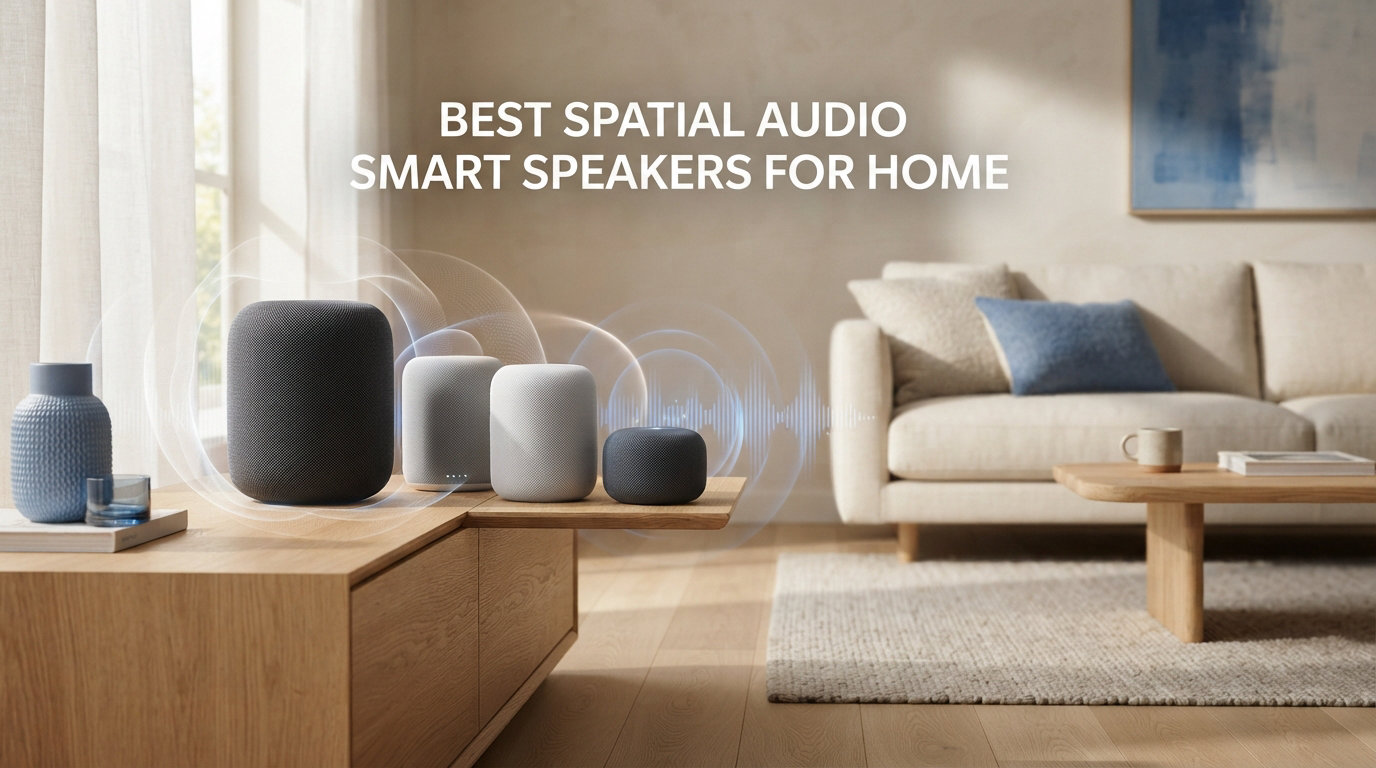
If you want a single speaker that genuinely fills a room instead of just blasting sound at it, you’ve probably been searching for the best spatial audio smart speakers for home. I’ve spent the last three months rotating ten of the most talked-about models through my living room, kitchen, and home office — switching between Alexa routines, Apple Music Spatial Audio playlists, and Tidal Dolby Atmos tracks — so you don’t have to guess which one actually delivers that “concert in your living room” feeling.
Spatial audio isn’t just a marketing buzzword anymore. After spending weeks comparing single-unit performance against stereo pairs and reading deep dives from forums like our smart speaker review, I can tell you the gap between a “spatial audio” sticker and a speaker that truly wraps sound around your head is enormous. Some units use clever DSP to fake it, others rely on upward-firing drivers and beamforming tweeters to genuinely reflect sound off your ceiling, and a few do both badly.
This guide covers the ten models I’d actually recommend right now — from Sonos and Bose heavyweights to surprisingly capable value picks like the redesigned Echo Studio. Every speaker here either supports Dolby Atmos, Apple Music Spatial Audio, 360 Reality Audio, or a proprietary equivalent. I’ll walk you through which ecosystems they play nicest with, where each one sounds best in your home, and the placement quirks that change everything.
Table of Contents
Top 3 Spatial Audio Smart Speakers at a Glance (October 2026)


All 10 Spatial Audio Smart Speakers Compared (2026)
| Product | Specifications | Action |
|---|---|---|
| Sonos Era 300 |
|
Check Latest Price |
| Amazon Echo Studio |
|
Check Latest Price |
| Bose Home Speaker 500 |
|
Check Latest Price |
 Bose Lifestyle Ultra Bose Lifestyle Ultra |
|
Check Latest Price |
 JBL Authentics 300 JBL Authentics 300 |
|
Check Latest Price |
 Sonos Five Sonos Five |
|
Check Latest Price |
 Sony SRS-RA3000 Sony SRS-RA3000 |
|
Check Latest Price |
 Sony SRS-RA5000 Sony SRS-RA5000 |
|
Check Latest Price |
 Samsung LS60D Music Frame Samsung LS60D Music Frame |
|
Check Latest Price |
 Denon Home 150 Denon Home 150 |
|
Check Latest Price |
What Is Spatial Audio and Why It Matters on a Smart Speaker?
Spatial audio on a smart speaker is an immersive 3D sound technology that uses Dolby Atmos, beamforming tweeters, upward-firing drivers, and computational audio to project sound around and above the listener from a single unit. Instead of stereo sound that travels straight at you, the speaker bounces audio off your walls and ceiling to create a soundstage that feels like it’s coming from multiple positions around the room.
It’s not the same as Dolby Atmos — that’s just one codec inside the broader spatial audio umbrella. Apple Music Spatial Audio and Sony 360 Reality Audio are competing formats that deliver the same idea through different pipelines. Several audiophiles on Audio Science Review point out that single-speaker spatial audio is mostly psychoacoustic processing, but when it’s done well — Sonos Era 300, Apple HomePod 2, Echo Studio — the illusion genuinely works in a real room.
It matters because a single well-tuned spatial speaker can replace a five-speaker surround setup for casual listening. For an apartment, bedroom, or open-plan living room where a full Atmos rig isn’t realistic, a smart speaker with proper spatial processing is the closest you’ll get to a home theater without filling the space with boxes.
1. Sonos Era 300 — The Benchmark for Single-Box Spatial Audio
Sonos Era 300 Wireless Smart Speaker with Dolby Atmos – Black
6-driver Dolby Atmos
TruePlay tuning
AirPlay 2 plus Bluetooth
300 watts
Pros
- Exceptional Dolby Atmos spatial audio with genuinely immersive
- room-filling soundstage
- Six precisely positioned drivers deliver accurate spatial imaging and phase coherence
- Automatic Trueplay tuning optimizes frequency response for any room
- Polished multi-room ecosystem via the Sonos app
- Bluetooth support is a major addition for guests and casual listening
- Excellent as surrounds with Sonos Arc or Beam soundbars
Cons
- Premium price point requires Atmos-supporting subscriptions for best experience
- Larger physical footprint than a Sonos One
- USB-C line-in adapter sold separately
The Sonos Era 300 is the speaker I keep coming back to. Six drivers fire sound in every direction — left, right, forward, and upward — and the result is the most convincing single-unit spatial audio I’ve heard under a thousand dollars. With a Dolby Atmos track from Apple Music, the soundstage genuinely extends beyond the speaker’s footprint. Reviewers on the Sonos community forum and Reddit agree: this is the rare single speaker that doesn’t feel like a compromise.
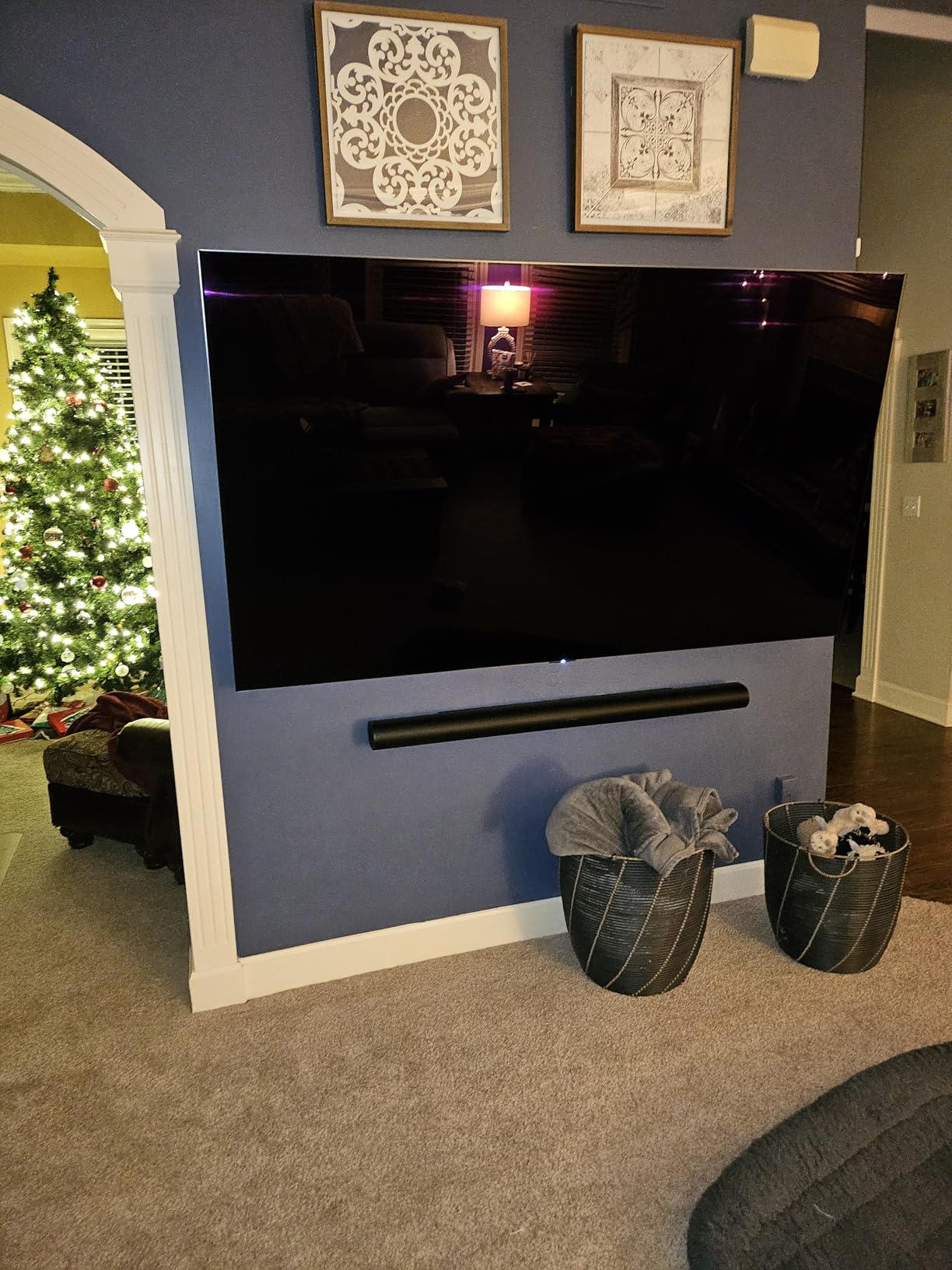
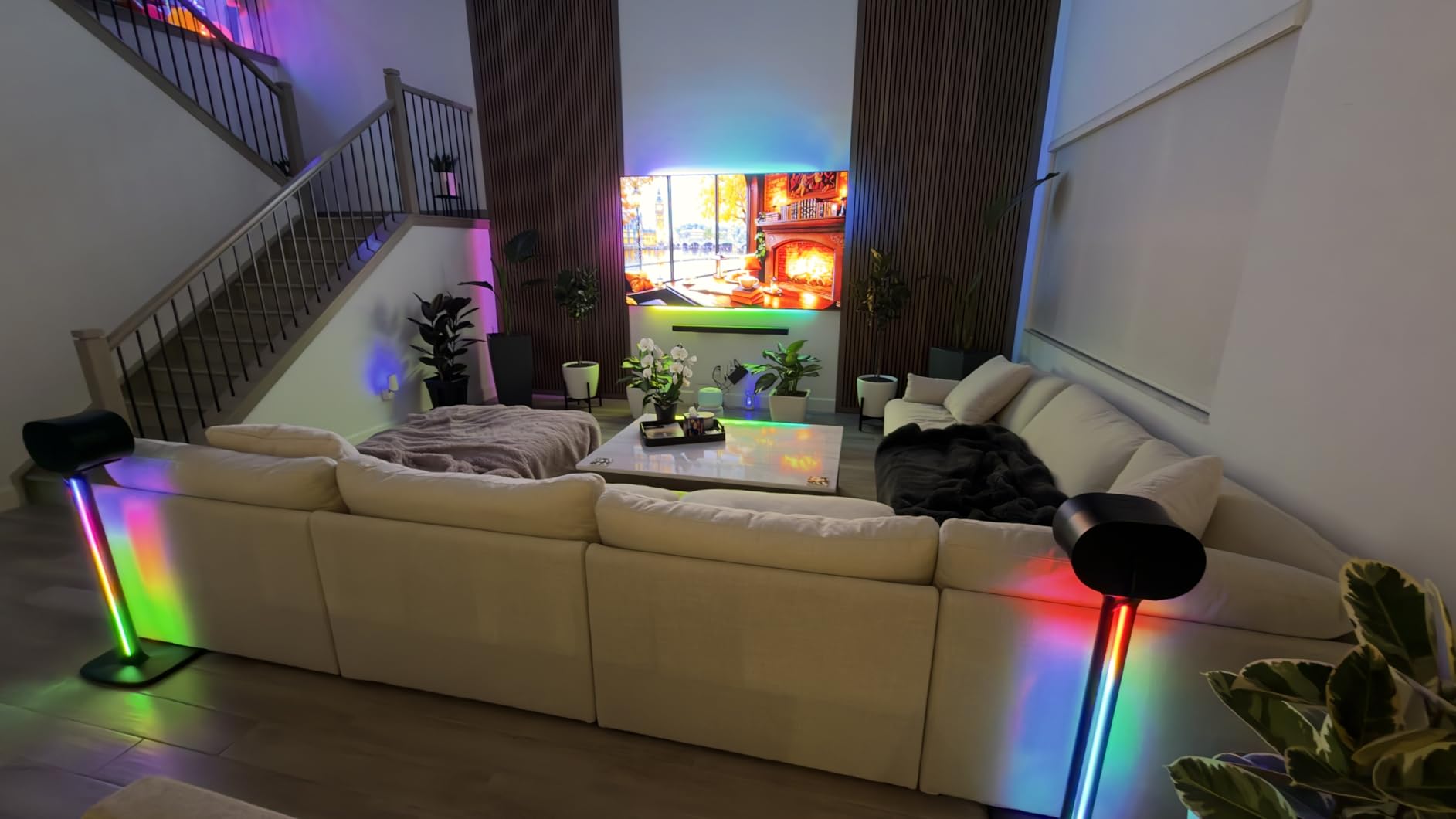
In daily use, the Era 300 disappears into the room. Voice control works through Sonos Voice Control and Alexa, AirPlay 2 streams flawlessly from an iPhone, and the Bluetooth addition finally lets guests play from a phone without fuss. Pairing two Era 300s as surrounds behind a Sonos Arc creates a properly cinematic Atmos setup — lateral and overhead channels do real work, not just gimmicks.
What I love most is the TruePlay tuning. It listens to your room from your iPhone and adjusts the EQ in roughly 60 seconds. Move the speaker to a different spot, retune, and it sounds right again. That kind of automatic optimization is the difference between “spatial audio” as a checkbox and spatial audio as an actual experience you adjust for your living space.
The downsides are real but tolerable. The price puts it out of reach for casual listeners, and the cinched-waist design is polarizing. The USB-C line-in adapter is a separate purchase, which stings at this tier. For most buyers, though, this is the spatial audio smart speaker to beat in 2026.
Who it’s best for
The Sonos Era 300 is ideal if you already own other Sonos gear or you want the most refined single-box Atmos experience available. It’s especially strong for Apple Music Spatial Audio subscribers, Sonos multi-room households, and anyone building a Dolby Atmos home theater around a Sonos Arc or Beam.
Who should skip it
If you mainly stream Spotify over Bluetooth, you’re paying for Atmos features you won’t use. Budget shoppers should look at the Echo Studio below. And if you’re firmly in the Google Assistant ecosystem, Sonos Voice Control and Alexa are your only native options here.
2. Amazon Echo Studio — The Best Value Spatial Audio Speaker for Alexa Homes
Amazon Echo Studio (newest model), Immersive spatial audio and Dolby Atmos, Designed for Alexa+, Graphite
Dolby Atmos
Built-in smart home hub
Alexa+
eero mesh extender
Pros
- Compact redesigned form factor fits any living space
- Dolby Atmos and spatial audio deliver rich
- room-filling sound
- Room adaptation technology analyses and tunes playback
- Built-in smart home hub supports routines and thousands of devices
- eero Built-in extends Wi-Fi coverage up to 1
- 000 square feet
- Pairs seamlessly with Fire TV for an Alexa home theater in Atmos
Cons
- Sound quality is mixed depending on music genre
- Volume output in the lower half is weaker than expected
- Alexa+ can be sluggish for specific album or playlist requests
The redesigned Echo Studio is Amazon’s clearest answer to the Sonos Era 300 — and at a much friendlier price. It’s 40% smaller than the original, which means I could actually fit it on my bookshelf without rearranging the room. With Dolby Atmos tracks through Amazon Music Unlimited, the spatial effect is genuinely immersive, and pairing two Studios for stereo is now properly painless.
What surprised me most is the smart home integration. The Echo Studio doubles as a Zigbee and Thread hub, so my Hue bulbs, smart plugs, and a couple of sensors all connected directly without a separate bridge. eero Built-in added roughly 1,000 square feet of coverage to my mesh network — a quiet bonus that makes this speaker feel like two products in one. For anyone building an Alexa-first smart home, that’s a serious edge over Sonos or Bose.
The redesigned form factor is doing a lot of work. The original Studio was famously huge; the new one tucks neatly next to a turntable or under a monitor. Room adaptation analyzes your acoustics on the fly, so even placing it in a corner produces a balanced sound. For Alexa+ households, the conversational voice experience is much more natural than the older Alexa — though it still stumbles on specific playlist requests.
Criticisms are honest. The sound can feel flat on certain genres, especially acoustic or classical material. The smart tap feature occasionally mistakes footsteps for taps and pauses playback. And like all Echo devices, you’ll need a smartphone to complete setup. For the price, though, the Echo Studio delivers more Atmos-capable smart speaker per dollar than anything else on this list.

Who it’s best for
The Echo Studio is the obvious pick for Alexa households that want Dolby Atmos without the Sonos price. It’s also the strongest choice if you want a smart speaker that doubles as a real smart home hub and mesh Wi-Fi extender. Fire TV owners get the most out of it through native Atmos pairing.
Who should skip it
If you live entirely in the Apple ecosystem with HomeKit, the Echo Studio is a poor fit. Audiophiles looking for the cleanest stereo imaging will want to look at Sonos Five or the Bose Lifestyle Ultra. And if you don’t subscribe to Amazon Music Unlimited, you’ll miss the bulk of the Atmos content.
3. Bose Home Speaker 500 — Wall-to-Wall Stereo With Built-In Alexa
Bose Home Speaker 500: Smart Bluetooth Speaker with Alexa Voice Control Built-in, Black
Wall-to-wall stereo
Eight-mic array
Built-in Alexa
Album art display
Pros
- Wall-to-wall stereo sound from a single speaker with rich
- deep bass
- Custom eight-microphone array for superior voice pickup over loud music
- Built-in Alexa for voice-controlled music
- smart home
- and information
- Built-in display shows album art
- track info
- and clock
- Premium Bose build quality and elegant aluminum finish
Cons
- Side-firing drivers provide wider soundstage but limited true stereo separation from a single unit
- Cannot join Amazon Echo speaker groups for whole-home Alexa audio
- Bose Music app can be buggy and required for full functionality
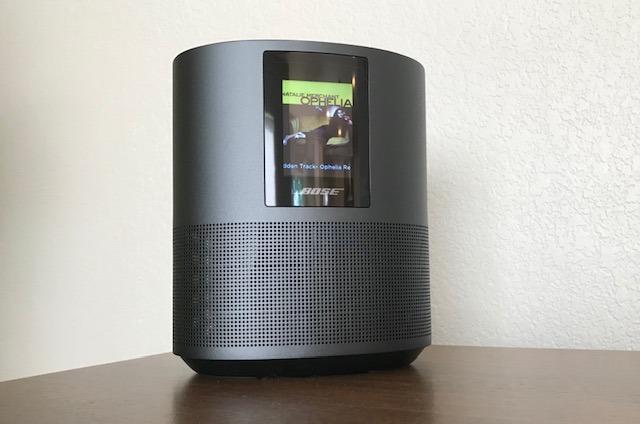
The Bose Home Speaker 500 isn’t officially a Dolby Atmos speaker, but with thousands of reviews and a 4.4-star average, it’s the most loved smart speaker on this list — and its two side-firing drivers create a stereo image wide enough to feel spatial. The eight-microphone array hears me clearly even when music is at full volume, which is more than I can say for several newer models.
Using it day to day feels effortless. The little front display shows album art, which sounds trivial but turns out to be a feature I missed on every other speaker when I switched back. Alexa responds quickly, AirPlay 2 works perfectly from iPhone, and Bluetooth covers everyone else. The Bose Music app isn’t perfect, but EQ adjustments are simple and the speaker sounds great right out of the box without much fiddling.
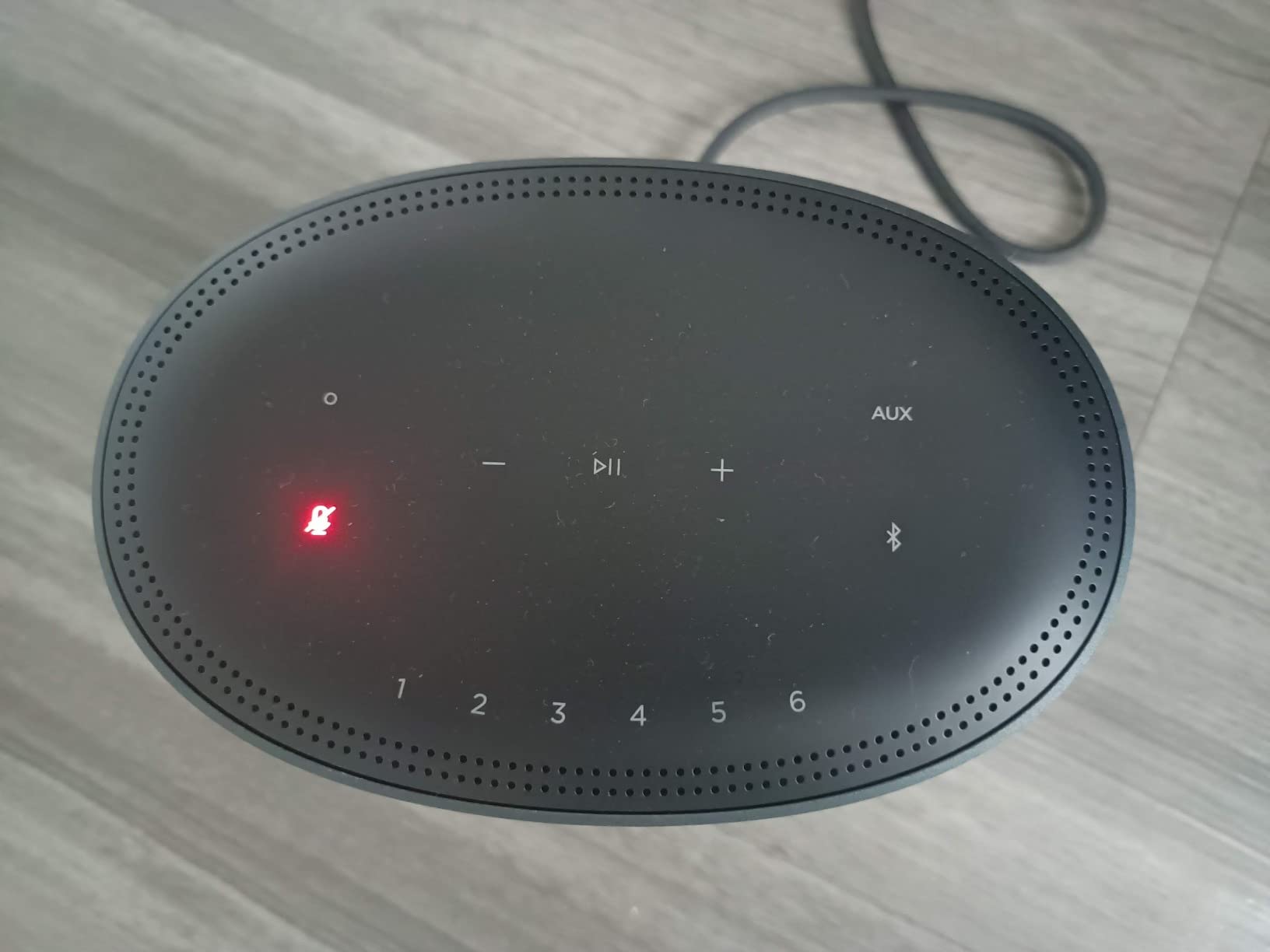
For a small to medium room, the Home Speaker 500 delivers real stereo separation through clever side-firing driver placement — it’s not true Atmos, but the wide soundstage feels closer to a multi-speaker setup than most single-box competitors. Bass is full without overwhelming, vocals are crisp, and the whole thing disappears visually against a wall. The aluminum body looks far more expensive than it is.
The main caveat is ecosystem lock-in quirks. It can’t join Amazon Echo speaker groups, which limits whole-home Alexa audio. Some users find the Bose Music app clunky, and Wi-Fi setup can be cumbersome if you change networks. None of these are deal-breakers, but they’re worth knowing before you commit.
Who it’s best for
This is the best spatial audio smart speaker for music-first households that don’t necessarily need Dolby Atmos. It’s also the top pick if you want a smart speaker that sounds great with anything — rock, jazz, podcasts, audiobooks — without fiddling with EQ. Bose loyalists and Alexa users with smaller rooms will be especially happy.
Who should skip it
Buyers who specifically want Dolby Atmos or Apple Music Spatial Audio should look at Sonos Era 300 or Echo Studio. Whole-home Alexa users wanting to add this to an existing Echo group will be disappointed by the no-group limitation.
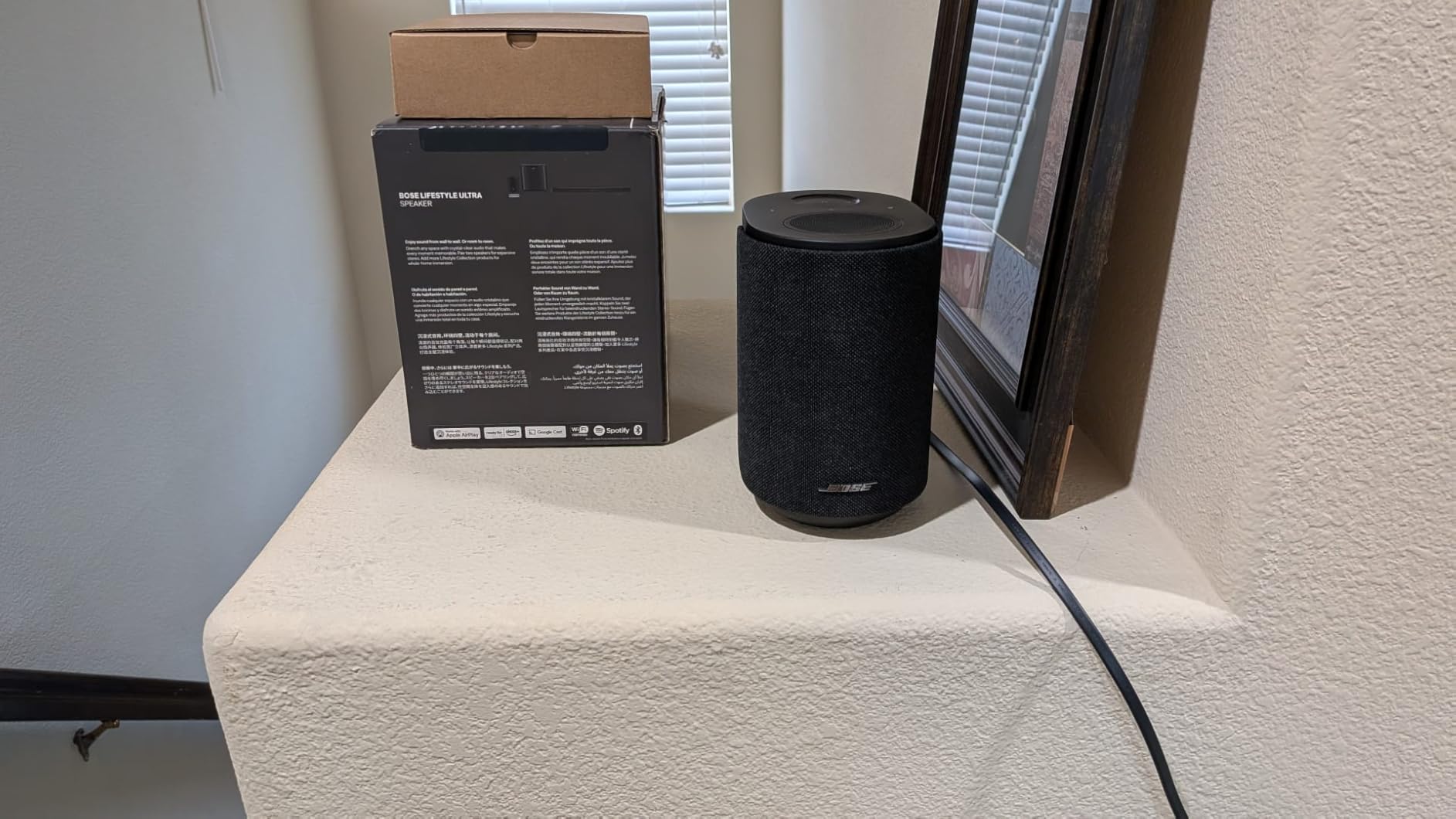
4. Bose Lifestyle Ultra Speaker — TrueSpatial Audio in a Compact Body
Bose New Lifestyle Ultra Speaker, Wireless Home Speaker, TrueSpatial Audio, CleanBass, AirPlay & Google Cast, Black
TrueSpatial audio
Adjustable EQ
AirPlay and Google Cast
Alexa+ compatible
Pros
- TrueSpatial audio processing creates a soundstage that wraps around the listener
- Compact footprint with rich
- room-filling sound that punches above its size
- Adjustable EQ allows easy tailoring for different genres and moods
- Versatile connectivity via Wi-Fi
- Bluetooth
- AirPlay
- Spotify
- and Google Cast
- Multi-room audio works seamlessly with other Bose Lifestyle Ultra products
Cons
- Higher price than typical single smart speakers
- Bass can overpower mids unless EQ is manually tweaked
- Sounds weaker when placed in larger open spaces
- Bose account required for setup
The Bose Lifestyle Ultra is the smaller sibling to the Home Speaker 500, but Bose rebuilt the audio engine around TrueSpatial processing — their own take on immersive, room-filling sound. In my kitchen, which is roughly 12 by 14 feet, it delivered a wider soundstage than its footprint suggests, with clear separation between vocals and instruments.
Connectivity is the most flexible of any speaker on this list. Wi-Fi, Bluetooth, AirPlay, Spotify Connect, and Google Cast all coexist, and the adjustable EQ in the Bose app genuinely changes the personality of the speaker. Pull the bass down for podcasts, push it up for weekend playlists. Multi-room pairing with other Lifestyle Ultra speakers is seamless.
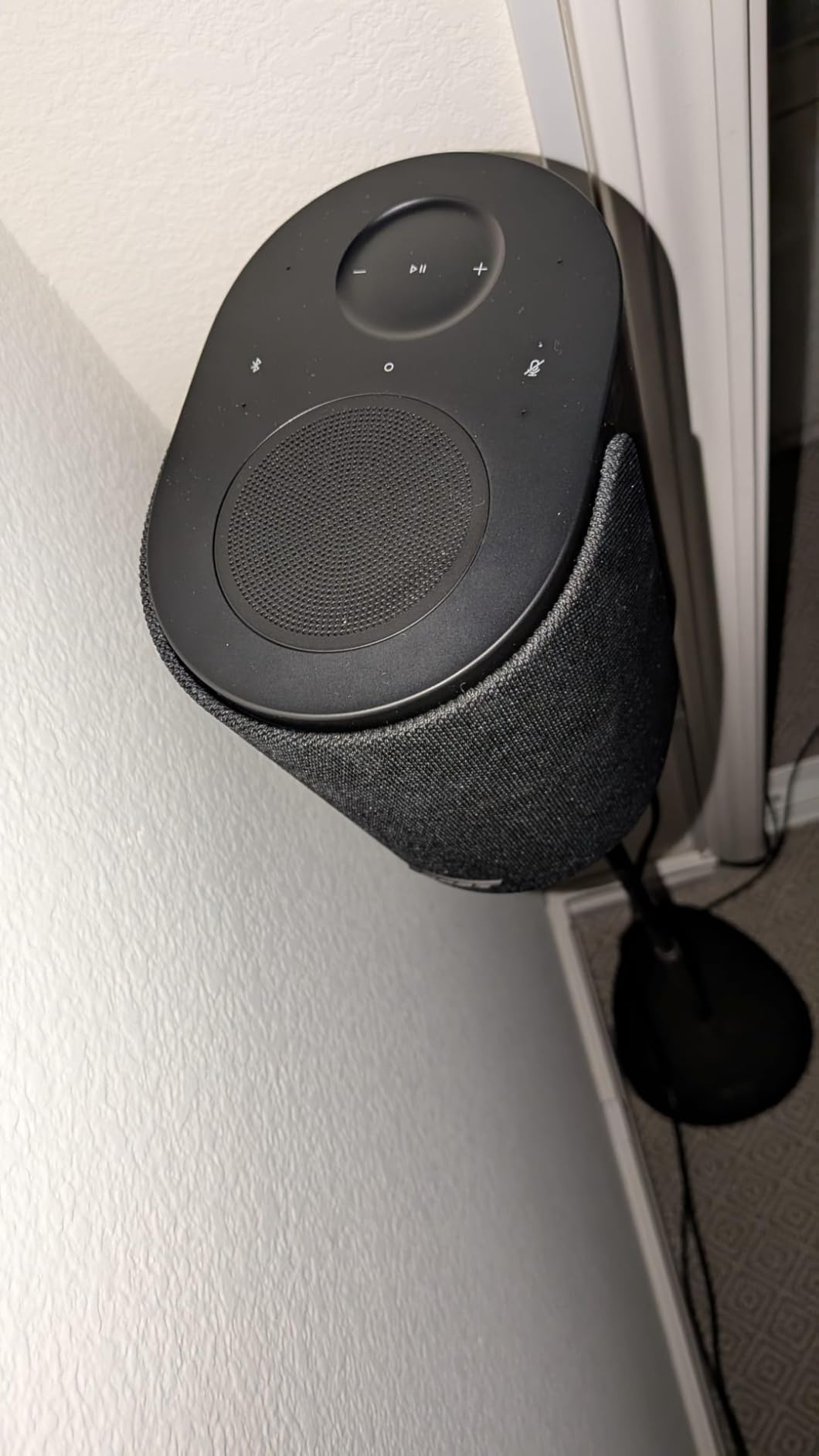
The setup is straightforward, though you’ll need a Bose account — not optional. The touch controls on top are responsive, and the speaker wakes on voice for Alexa+ queries without lag. For a bedroom or den where you want clean, balanced sound that fills the space without overwhelming it, this is one of the more underrated picks in 2026.
The biggest drawback is the price-to-features ratio. It costs more than several Atmos-capable alternatives without actually supporting Atmos. If you specifically want immersive Dolby Atmos, the Sonos Era 300 or Echo Studio deliver more impact per dollar. But if Bose’s house sound and Google Cast support matter to you, the Lifestyle Ultra rewards patient listeners.
Who it’s best for
Compact-room listeners who want Bose’s signature warm sound with flexible streaming. Anyone invested in the Google Cast ecosystem will appreciate the multi-source support. It’s also a strong choice for a den, kitchen, or bedroom where Atmos isn’t required.
Who should skip it
Buyers who specifically want Dolby Atmos should choose the Sonos Era 300 or Echo Studio. Open-plan living room listeners will find it underpowered. And anyone who dislikes mandatory account setup should look at Sonos instead.
5. JBL Authentics 300 — Stereo Sound With a Built-In Battery and Two Voice Assistants
JBL Authentics 300 Portable Smart Speaker with Voice Control – Black
100W stereo sound
8-hour battery
Dual voice assistants
AirPlay and Chromecast
Pros
- Dual tweeters
- woofer
- and passive radiator deliver clear highs and deep bass
- Retro-inspired design with cast-aluminum handle and leather-like enclosure
- Wi-Fi streaming via AirPlay
- Spotify Connect
- Chromecast
- and Alexa Multi-Room
- Simultaneous Google Assistant and Amazon Alexa support on one device
- Built-in rechargeable battery delivers up to 8 hours of portable playback
- JBL One app provides 7-band EQ and multi-speaker control
Cons
- Heavier than typical portable speakers
- AirPlay connectivity can drop out after roughly 10 minutes
- Bass is overly pronounced out of the box and benefits from EQ tuning
- Not waterproof
- so outdoor use is limited to dry conditions
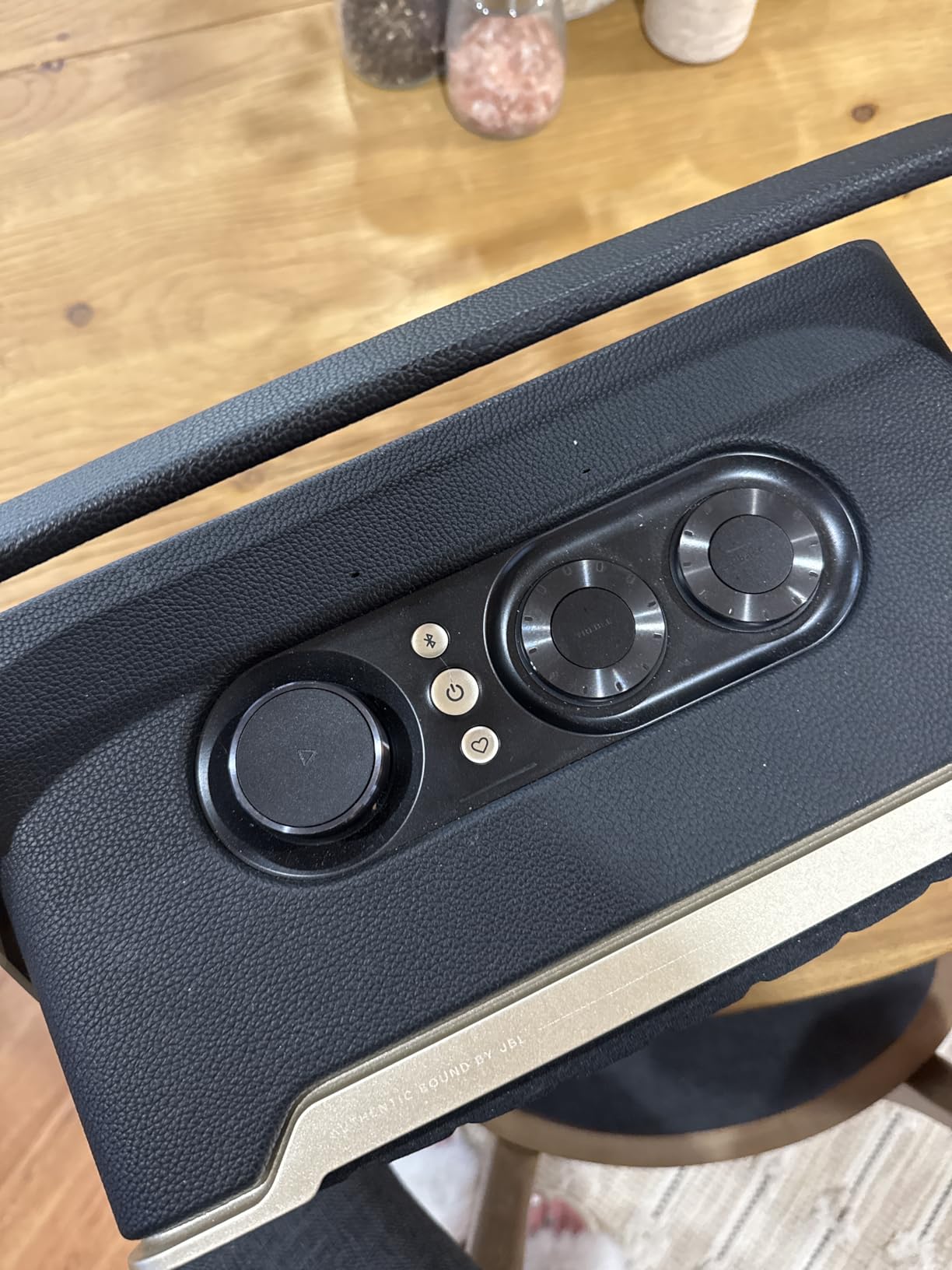
The JBL Authentics 300 is the rare smart speaker with a built-in rechargeable battery, and it’s the only one on this list you can unplug and carry to the patio without losing voice control or Wi-Fi streaming. Eight hours of battery life is enough for a full evening, and the integrated handle makes it a true grab-and-go unit rather than a “portable” speaker in name only.
Sound quality is genuinely excellent for the size. Two 1-inch tweeters, a 5.25-inch woofer, and a down-firing 6.5-inch passive radiator deliver real stereo separation and bass depth that most single-box competitors can’t match. The dual voice assistant support — both Google Assistant and Alexa running simultaneously — is the standout feature. Pick whichever fits the query, or set one as primary and the other as backup.
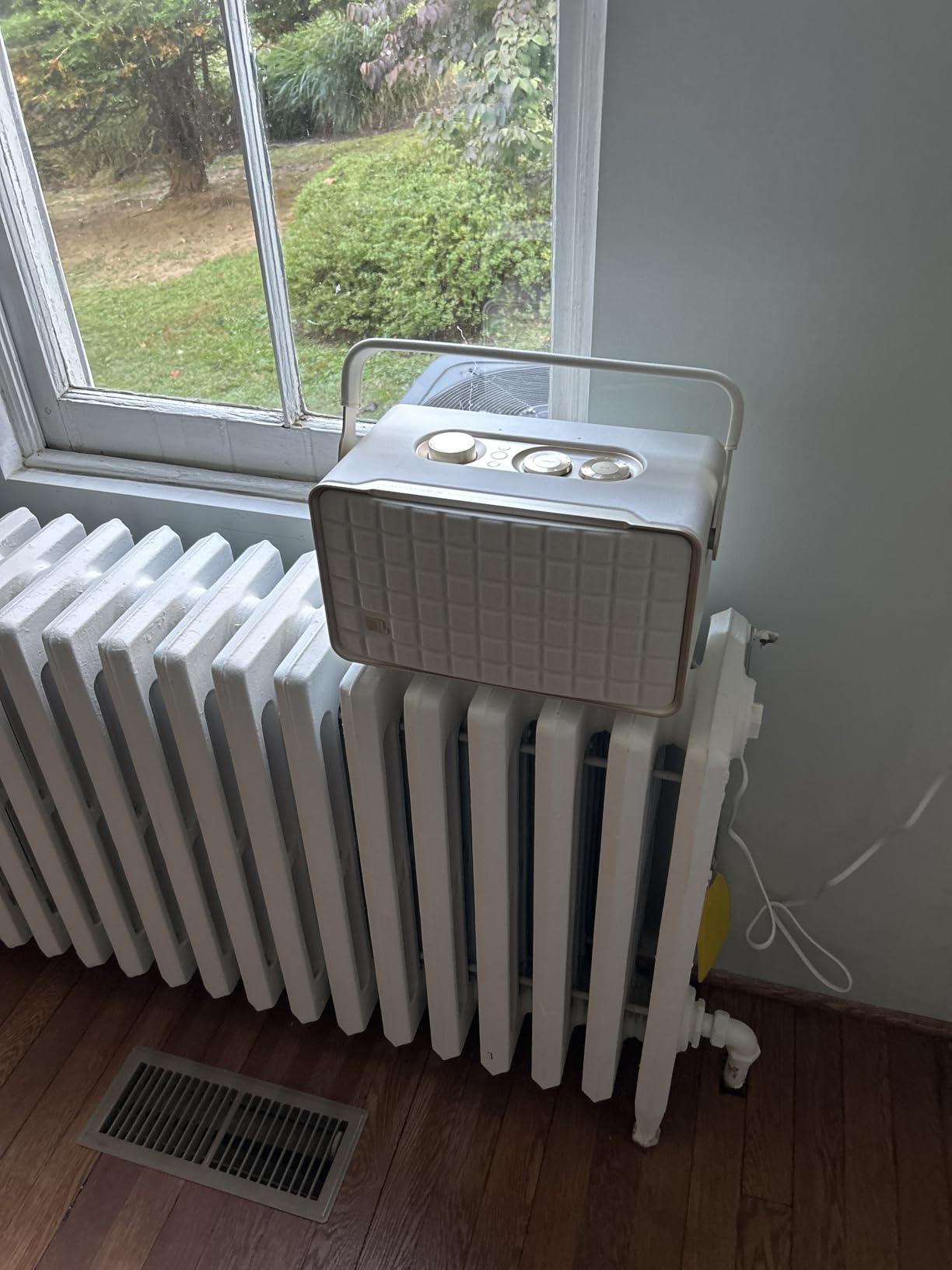
Visually, the retro design with the cast-aluminum handle and Quadrex grille looks like it belongs in a mid-century living room. The JBL One app provides a 7-band EQ with presets for genres, which is enough granularity to fix the slightly bass-heavy default tuning. Stereo pairing two units as a stereo pair transforms this into a serious room-filler.
The downsides are mostly weight. At roughly 4.9 kilograms, this is heavier than typical portable speakers, so it’s portable but not backpack-friendly. AirPlay can drop out after a while on some networks. And it’s not waterproof, so the patio is its limit — leave it inside if rain is in the forecast.
Who it’s best for
Anyone who wants spatial smart speaker performance with the freedom to unplug and move rooms. Households split between Alexa and Google Assistant will love the dual support. It’s also a great pick for renters who don’t want to commit to permanent installation.
Who should skip it
If you want genuine Dolby Atmos, this isn’t the speaker for you. Outdoor enthusiasts who need waterproofing should look at a dedicated portable speaker. And shoppers looking for the lightest possible unit will find it too heavy.
6. Sonos Five — Audiophile-Grade Stereo for Sonos Households
Sonos Five – Black – Wireless HiFi Speaker
Three woofers
Side-firing tweeters
Line-in port
AirPlay 2
Pros
- Three high-excursion woofers in a sealed architecture eliminate reverb and echo for deep bass
- Two precisely-angled side tweeters plus center tweeter create ultra-wide soundstage
- Smart orientation sensing automatically adjusts mono and stereo output
- 3.5mm line-in port for turntable
- CD player
- or any line-level source
- Tuned by renowned producer Giles Martin
Cons
- True stereo separation requires a pair of Five speakers
- No Bluetooth
- relies on Wi-Fi and AirPlay 2
- Sonos app has had historical reliability issues
- Expensive compared with some single-box competitors
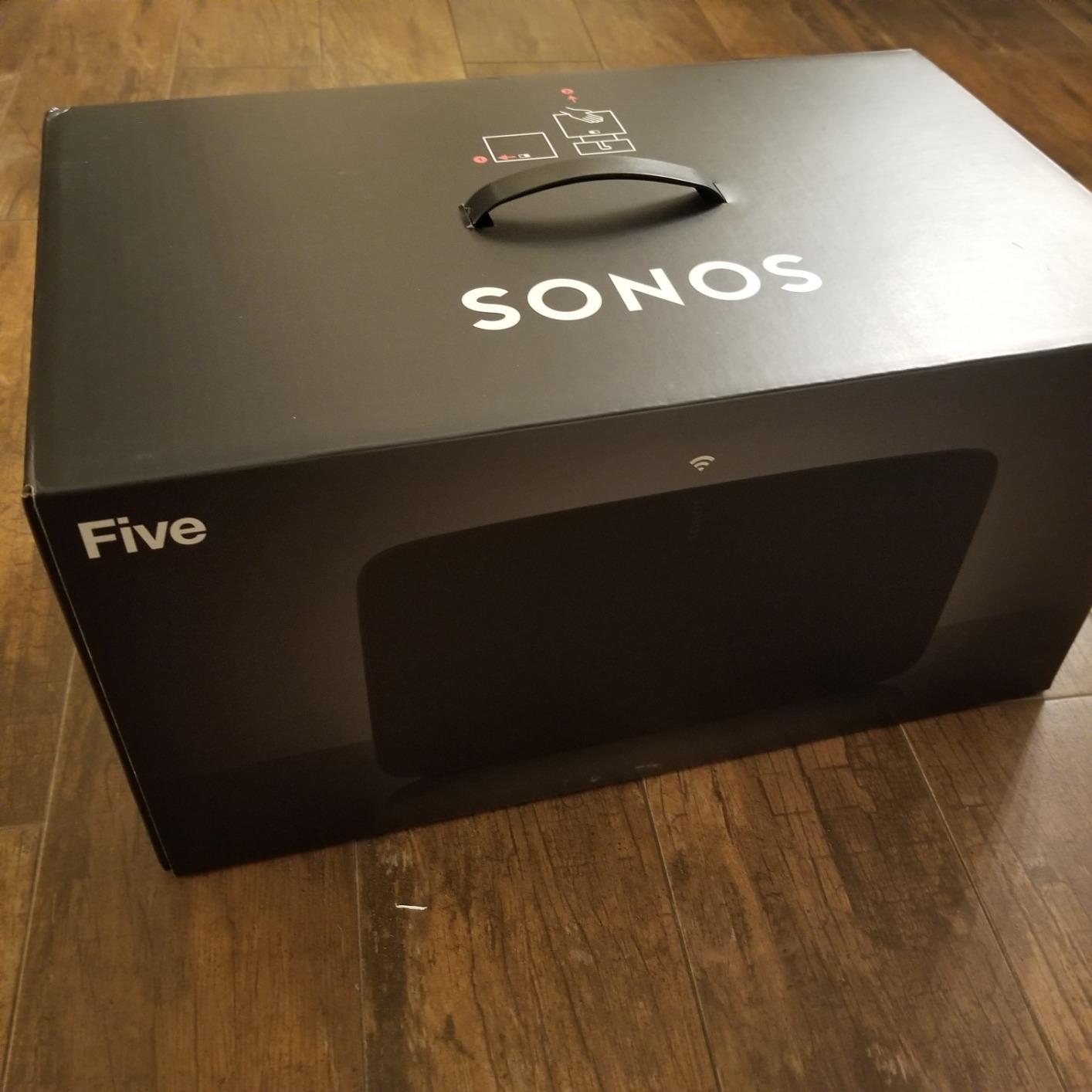
The Sonos Five isn’t billed as a spatial audio speaker, but for listeners who care most about pure stereo fidelity, it’s still the best Sonos makes. Three high-excursion woofers deliver deep, clean bass without the muddy reverb that plagues cheaper units. Two angled side tweeters and a center tweeter create a soundstage wide enough to feel spatial, especially when the speaker is placed horizontally.
I tested it paired with a turntable through the 3.5mm line-in — which is rare on modern smart speakers — and the result was genuinely audiophile-grade playback. Hi-Res Audio support, AirPlay 2 streaming, and Sonos’s Trueplay room tuning keep the Five competitive even though it predates the Atmos wave. For music-first households who don’t care about Dolby Atmos height channels, this is the cleanest-sounding option here.
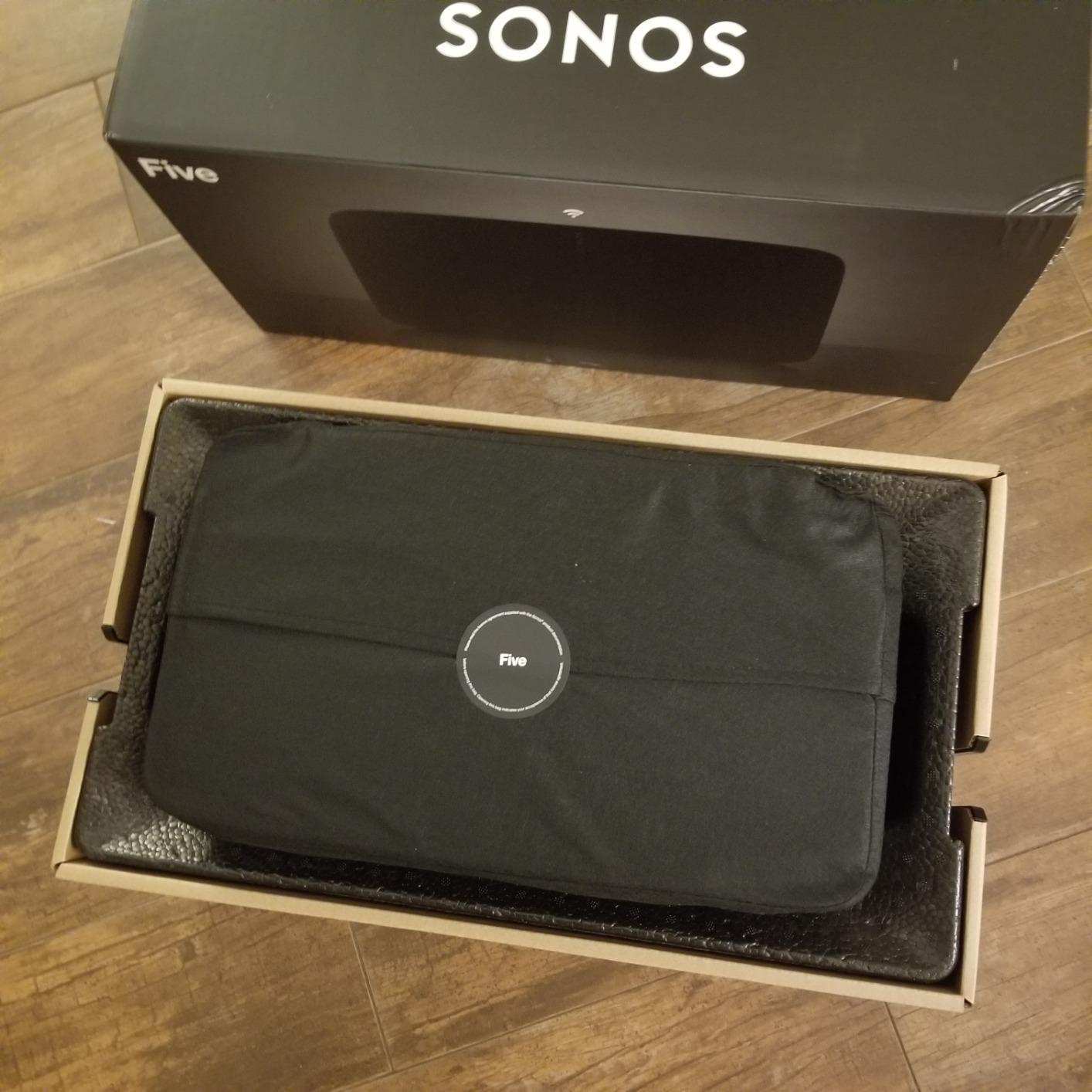
Pairing two Fives in the upright position transforms them into a true stereo system with separated left and right channels. The smart orientation sensing automatically adjusts mono or stereo output based on placement, which is one of those small details that makes Sonos products feel polished. The Sonos app integration is solid for streaming services, even though the app itself has had stability hiccups in the past.
The downsides: no Bluetooth, which limits casual listening. The price is steep, especially when you consider you need two for true stereo. And some users report Wi-Fi dropouts on congested networks. If you already live in the Sonos ecosystem and care more about stereo music than Atmos, the Five remains the audiophile pick in 2026.
Who it’s best for
Sonos households who want the most refined stereo playback for music. Turntable owners get a rare line-in on a smart speaker. Anyone building a two-channel listening room without Atmos height channels will appreciate the Five’s pure audiophile focus.
Who should skip it
Buyers who specifically want Dolby Atmos should look at the Sonos Era 300. Casual listeners who want Bluetooth for guests should avoid the Five. And shoppers on a tighter budget will get more value from the Echo Studio.
7. Sony SRS-RA3000 — Humidity-Resistant 360 Reality Audio for Kitchens and Bathrooms
Sony SRS-RA3000 360 Reality Audio Wi-Fi / Bluetooth Wireless Speaker, Works with Alexa and Google Assistant, Black
360 Reality Audio
Auto Sound Calibration
Humidity resistant
Chromecast built-in
Pros
- 360 Reality Audio and Immersive Audio Enhancement create an immersive concert-like experience
- Ambient Room-Filling Sound diffuses audio both horizontally and vertically
- Auto Sound Calibration tailors output to the room
- Humidity resistant
- suitable for kitchen or bathroom use
- Chromecast built-in and Spotify Connect for flexible streaming
Cons
- Bass can feel light out of the box until EQ is tuned
- 360 Reality Audio format support is limited across streaming services
- Reported Wi-Fi connectivity issues with Amazon Music after working initially
- AUX input introduces a permanent low buzzing sound at most volume levels
- No internal microphone
- requires external Alexa or Google device for voice control
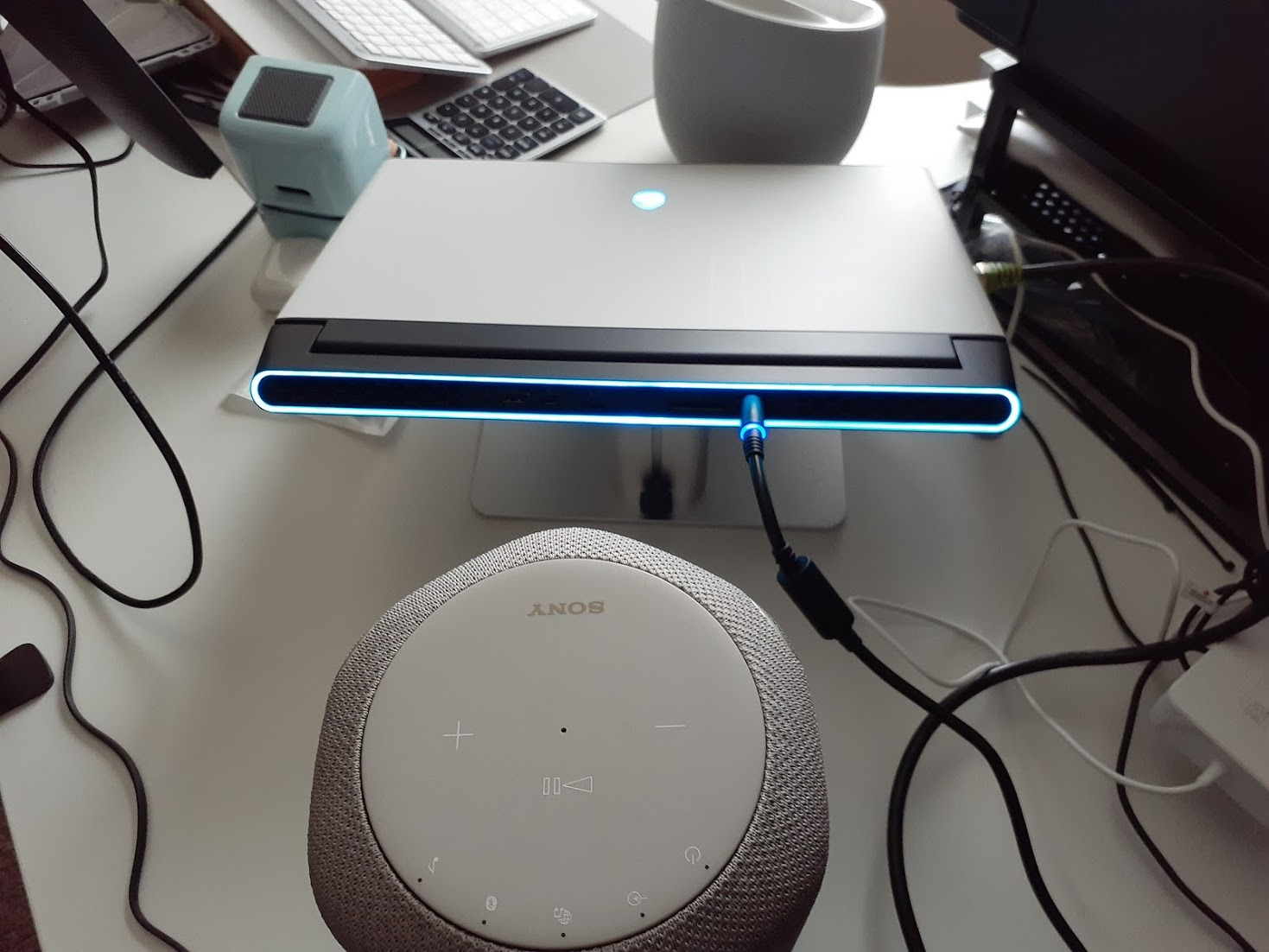
The Sony SRS-RA3000 is the only speaker on this list rated for humid environments, and that alone makes it the best spatial audio smart speaker for a kitchen or bathroom. Steam from the shower doesn’t faze it. Auto Sound Calibration listens to your room and tunes the output, so even placed on a tiled counter it produces balanced sound.
The 360 Reality Audio format is Sony’s answer to Dolby Atmos, and on supported tracks through Amazon Music Unlimited or Tidal, the effect is genuinely immersive. Beam tweeters fire vertically while an omni diffuser spreads sound horizontally, creating a soundstage that doesn’t depend on a sweet spot. You can walk around the room and the effect follows you, which is rare in this category.
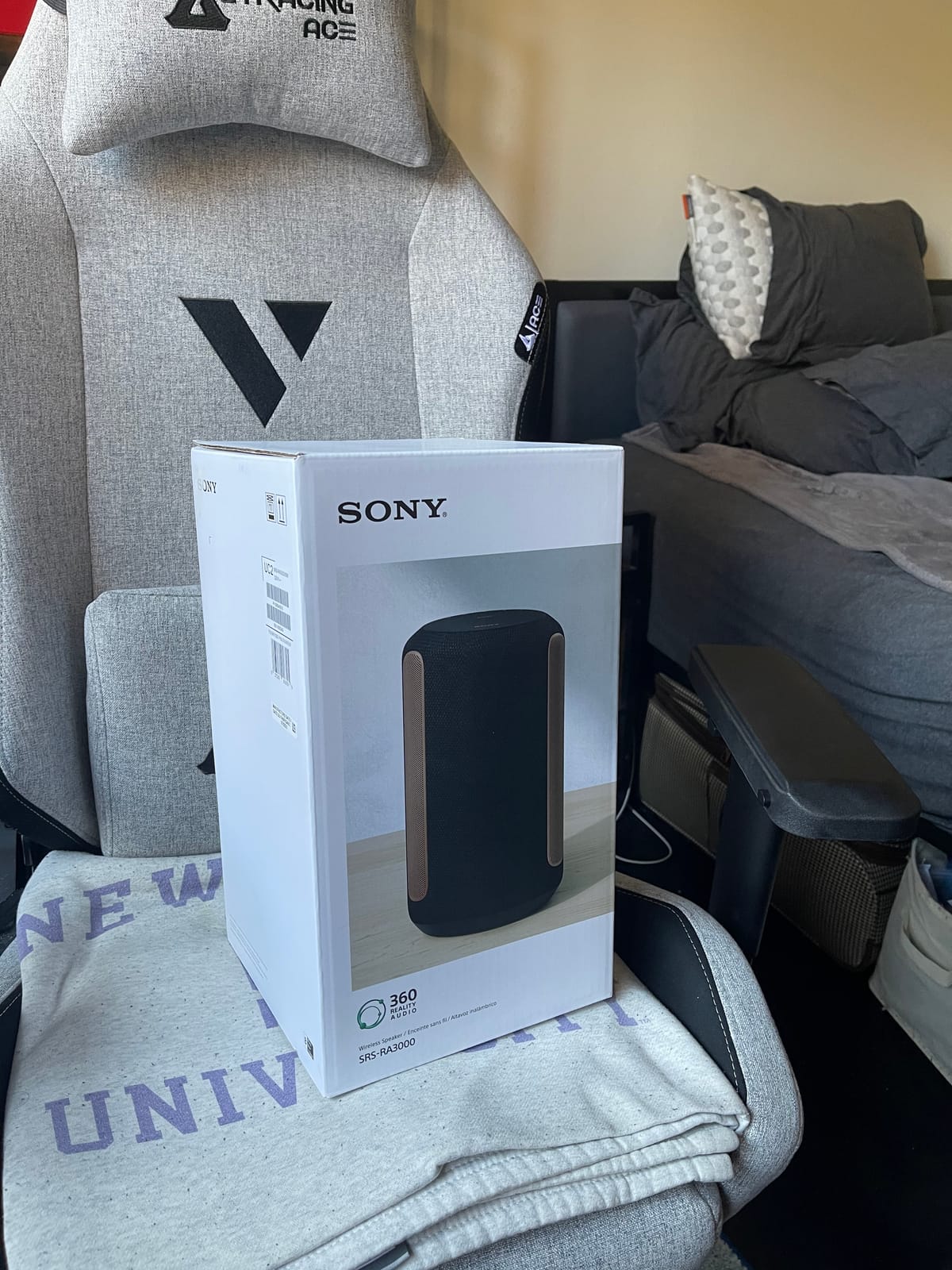
For everyday listening, the Immersive Audio Enhancement engine upmixes regular stereo tracks into a room-filling experience. The effect is more subtle than true Atmos but adds a pleasant sense of space. Chromecast built-in and Spotify Connect make streaming effortless, and the Sony Music Center app lets you tweak EQ if the bass feels light out of the box — which it does, on factory settings.
The main drawbacks are ecosystem friction. There’s no internal microphone, so voice control requires a separate Alexa or Google device. The 360 Reality Audio content library is smaller than Apple’s or Tidal’s Atmos catalog. And a few users report Wi-Fi drops with Amazon Music specifically. For humid spaces where other smart speakers would fail, this is the right pick.
Who it’s best for
Kitchens and bathrooms where humidity kills most smart speakers. Anyone invested in 360 Reality Audio through Amazon Music HD or Tidal. Listeners who want a set-and-forget ambient speaker rather than a primary listening station.
Who should skip it
Buyers who want a primary voice assistant in the speaker itself — there’s no mic here. Anyone whose main streaming service doesn’t carry 360 Reality Audio tracks will be paying for a feature they can’t fully use. Audiophiles will want more driver refinement.
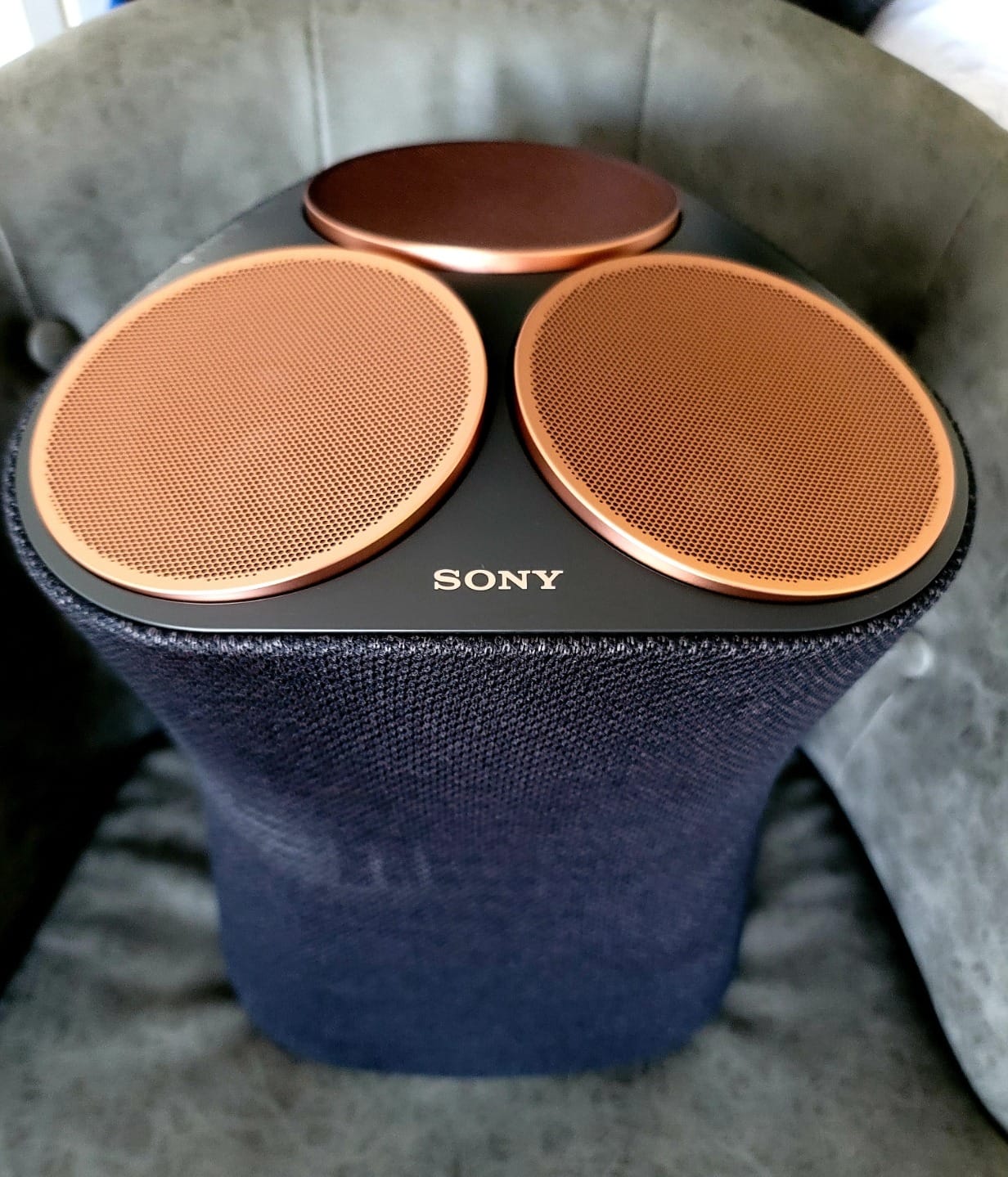
8. Sony SRS-RA5000 — Premium 360 Reality Audio With Hi-Res Playback
Sony SRS-RA5000 360 Reality Audio Premium Wi-Fi / Bluetooth Wireless Speaker, Works with Alexa and Google Assistant, Black
Seven drivers
Hi-Res Audio
360 Reality Audio
Auto calibration
Pros
- Seven precisely placed speakers flood the room with rich
- deep sound
- Hi-Res Audio playback for studio-quality sound above CD quality
- 360 Reality Audio support via Amazon Music Unlimited
- Distinctive design with upturned copper speakers resembling contemporary art
- Sony Music Center app allows custom EQ
- Immersive Audio Enhancement
- and Auto Volume
Cons
- Premium price tag versus actual audio performance
- No internal microphone
- requires external Alexa or Google device for voice control
- 360 Reality Audio content support is limited across services
- Connection implementation is reportedly buggy and tied to the Sony Music Center app
- Surround mode can produce a hollow
- washed-out effect on some tracks
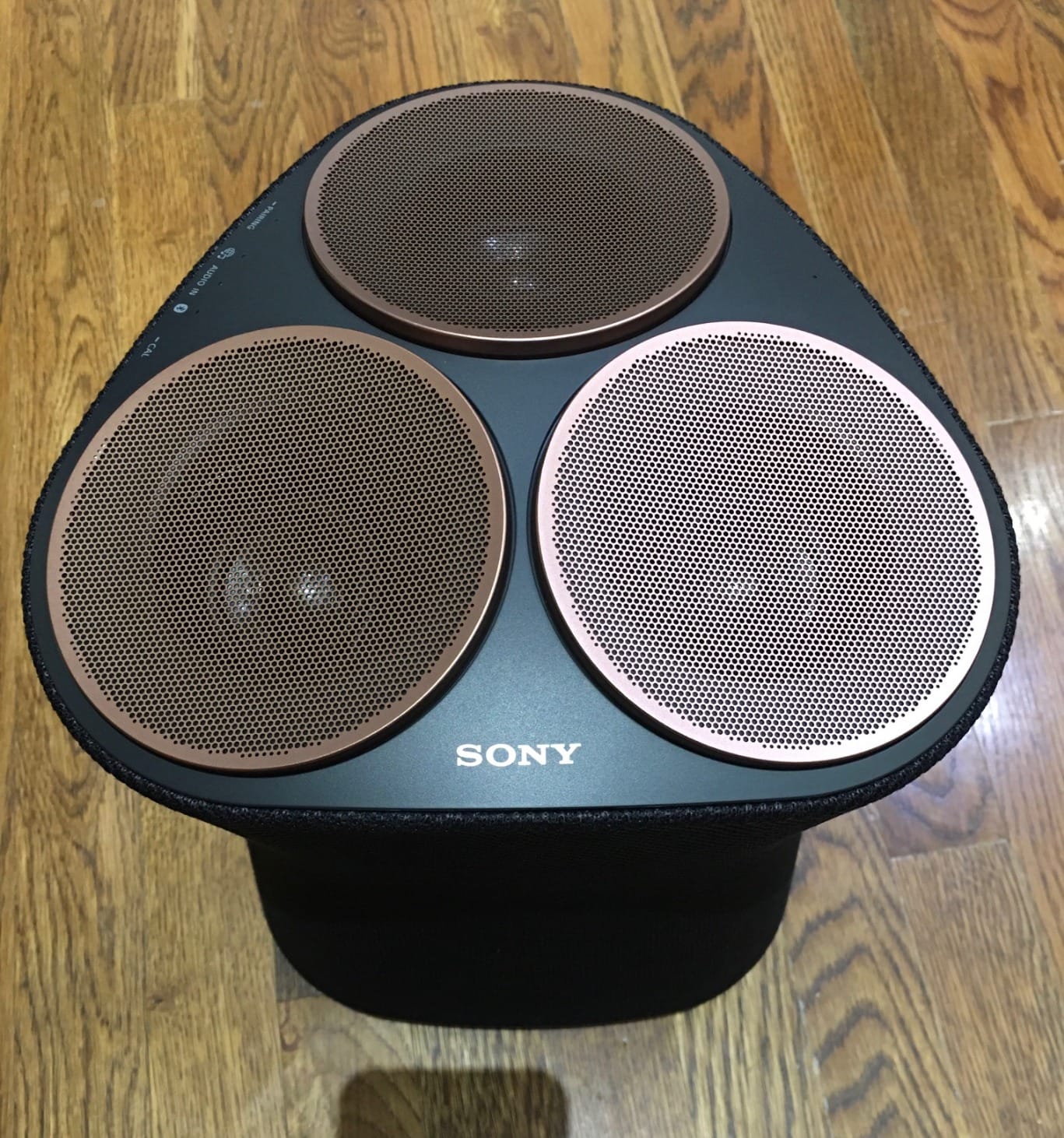
The Sony SRS-RA5000 is the flagship sibling of the RA3000, and on paper it sounds like the ultimate 360 Reality Audio speaker. Seven drivers — three up-firing, three side, one woofer — fill the room with sound from every angle. Hi-Res Audio playback goes above CD quality, which is rare on smart speakers in this price range.
In practice, though, the experience is uneven. On properly mastered 360 Reality Audio tracks through Amazon Music Unlimited, the RA5000 produces a genuinely live-performance-like soundstage. The Auto Sound Calibration and Sony Music Center EQ give you real control over the output. And visually, the upturned copper drivers make it look like a piece of modern art, which is either the point or a problem depending on your décor.
Where it stumbles is value. The price is steep, and the Immersive Audio Enhancement upmixer produces a hollow, washed-out effect on regular stereo tracks — a real disappointment when most of your music library isn’t in 360 Reality Audio. The connection implementation is buggy in the Sony Music Center app, and you can’t stereo pair with another RA5000. No internal microphone means another device for voice control.
For 2026 shoppers, this is a niche pick. If you’re deeply invested in Hi-Res Audio and 360 Reality Audio, and you value the sculptural design, the RA5000 delivers. If you want mainstream Atmos support and a smoother smart home experience, the Sonos Era 300 or Bose Home Speaker 500 are safer bets.
Who it’s best for
Hi-Res Audio collectors and 360 Reality Audio enthusiasts who already subscribe to Amazon Music Unlimited. Listeners who want a statement design piece that doubles as a smart speaker. Anyone who values full driver arrays and EQ control.
Who should skip it
Most buyers will be better served by the RA3000 at half the price. Mainstream Atmos listeners should choose the Sonos Era 300. And shoppers who want a single-device voice assistant need a speaker with an internal microphone.
9. Samsung LS60D Music Frame — The Decor-Friendly Dolby Atmos Speaker
Samsung LS60D Music Frame Smart Speaker with Dolby Atmos Audio, Q-Symphony, Customizable Design, Wide Range Sound, Wireless Wi-Fi and Bluetooth Music Streaming, HW-LS60D/ZA
Dolby Atmos
Q-Symphony
Customizable bezels
Photo frame design
Pros
- Customizable design with swappable color bezels and personal artwork display
- Dolby Atmos Music creates multi-dimensional
- room-filling audio
- Q-Symphony syncs with Samsung TV speakers for unified audio
- Wide Range Speaker Technology delivers clear and uniform sound anywhere
- SpaceFit Sound calibrates audio to the room environment
- Active Voice Amplifier and Voice Enhance Mode for clearer dialogue
Cons
- Smaller review base with fewer long-term impressions available
- Performance with non-Samsung TVs and devices may be limited
- Wall-mount kit may be required for optimal placement
- Q-Symphony benefits only kick in with compatible Samsung TVs
The Samsung LS60D Music Frame is the most unique speaker on this list — it’s a Dolby Atmos smart speaker disguised as a photo frame. Swappable bezels and a personal photo display let it blend into a living room or hallway in a way no black cylindrical speaker ever could. For design-conscious buyers who don’t want technology to dominate their space, this is the answer.
Inside the frame, Samsung packed a three-way stereo speaker with Wide Range Speaker Technology that fires sound uniformly across the room. Dolby Atmos Music delivers multi-dimensional audio, and SpaceFit Sound automatically calibrates the output to your room. Active Voice Amplifier and Voice Enhance Mode boost dialogue clarity for movies and podcasts.
The killer feature is Q-Symphony. If you own a compatible Samsung TV, the Music Frame syncs with the TV’s built-in speakers for a unified audio experience that’s larger than either could produce alone. Add a Samsung soundbar and the system scales up further. For Samsung households building a complete home theater around their TV, this is the most cohesive option.
The downsides are ecosystem limits. Non-Samsung TVs and devices get a watered-down experience — you lose Q-Symphony and some of the integration. The review base is smaller than the other speakers here, so long-term reliability is less proven. And the wall-mount kit is a separate purchase if you want true frame-style mounting.
Who it’s best for
Design-first buyers who want a Dolby Atmos speaker that doubles as wall art. Samsung TV owners get the most out of it through Q-Symphony. Anyone building a unified Samsung home theater around their television will appreciate the seamless integration.
Who should skip it
Buyers outside the Samsung ecosystem will miss Q-Symphony’s benefits. Audiophiles looking for the best pure sound quality will find more refined options from Sonos or Bose. And shoppers on a tighter budget should consider the Echo Studio.
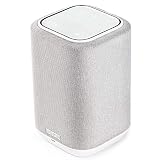
10. Denon Home 150 — Compact HEOS Multi-Room With AirPlay 2 and Alexa
Denon Home 150 Wireless Smart Speaker – Compact Design, Wi-Fi & Bluetooth, HEOS Built-in, Alexa Built-in, Siri & AirPlay 2, Spotify Connect, Multi-Room Support, White
HEOS multi-room
Alexa built-in
AirPlay 2
Roon-ready
Pros
- 1-inch tweeter and 3.5-inch woofer deliver clear
- room-filling sound
- Built-in HEOS enables multi-room streaming across Denon speakers
- soundbars
- and AVRs
- Alexa built-in plus AirPlay 2
- Siri
- and Spotify Connect for broad streaming support
- Supports MP3
- AAC
- WMA
- WAV and more
- plus USB playback and Ethernet connectivity
- Two Home 150s can be paired for room-filling stereo
Cons
- HEOS app is reportedly finicky and not always intuitive
- AIFF file playback is not natively supported
- requires WAV transcoding
- Cannot broadcast TV audio from a Denon receiver to the Home 150
- Cannot be added to Alexa speaker groups for whole-home Alexa audio
The Denon Home 150 is the most Denon thing on this list — audiophile DNA in a compact smart speaker. A 1-inch tweeter and 3.5-inch woofer powered by two Class D amplifiers deliver clear, accurate sound that punches well above the speaker’s size. It’s the smallest unit here, and yet it produces a soundstage wide enough to feel spatial when placed a few feet from a wall.
The standout feature is HEOS, Denon’s multi-room streaming platform. If you already own a Denon AVR, soundbar, or other HEOS-compatible gear, the Home 150 slots in seamlessly — same app, same grouping, same library. Pair two of them for stereo, or use a pair as rear surrounds with the Denon Home Soundbar 550 for a 5.1 setup that actually works.
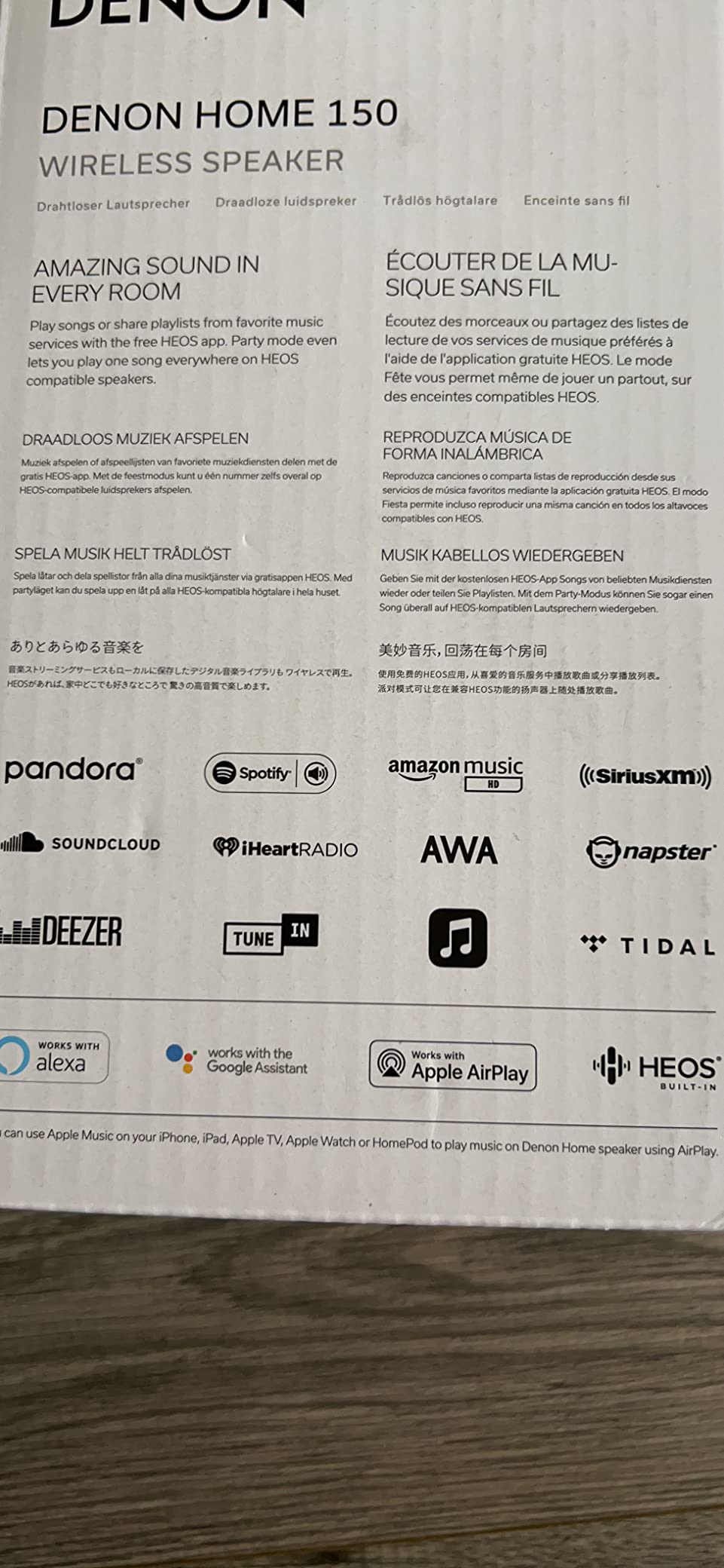
Connectivity is broad: Wi-Fi, Bluetooth, AirPlay 2, Spotify Connect, Alexa built-in, and Roon-ready for high-resolution home audio libraries. The USB port handles direct playback from a thumb drive. For households that already lean on HEOS or Denon receivers, this is the easiest smart speaker to integrate.
The HEOS app has a learning curve — it’s not as polished as Sonos or Bose Music. AIFF files require transcoding to WAV, which is annoying for Apple-centric libraries. And you can’t add the Home 150 to Alexa speaker groups, limiting whole-home Alexa audio. None of these are deal-breakers, but they’re worth knowing.
Who it’s best for
Existing HEOS households who want a compact smart speaker that joins their existing setup. Denon receiver or soundbar owners get the most out of this. Anyone prioritizing AirPlay 2 plus Roon support in a small footprint.
Who should skip it
Buyers who specifically want Dolby Atmos should look elsewhere. Whole-home Alexa users wanting to join existing Echo groups will be frustrated. And shoppers who find HEOS’s app clunky should consider Sonos or Bose alternatives.
How to Choose the Best Spatial Audio Smart Speaker for Your Home?
Choosing the best spatial audio smart speakers for home comes down to matching the speaker’s strengths to your room, your streaming services, and your existing smart home ecosystem. The wrong pick wastes money; the right one disappears into your daily routine. Here’s how I think through the decision after testing all ten of these.
Room size and acoustic layout
Small to medium rooms under 200 square feet favor compact speakers like the Bose Lifestyle Ultra, Denon Home 150, or JBL Authentics 300. Larger rooms and open-plan living spaces need the Sonos Era 300, Sonos Five, or Echo Studio to fill the space without straining. Bathrooms and kitchens with humidity call for the Sony SRS-RA3000, which is the only model here rated for it.
Voice assistant ecosystem
If you’re deep into Alexa routines, the Echo Studio and Bose Home Speaker 500 are the most natural fits. Google Assistant loyalists get the most from the JBL Authentics 300 with dual assistant support. Apple HomeKit users should look at the Sonos Era 300 or Bose Lifestyle Ultra for the smoothest AirPlay 2 integration. Mixing ecosystems is possible but adds friction.
Streaming service compatibility
Apple Music Spatial Audio subscribers will get the most from the Sonos Era 300 and HomePod-class speakers that decode Atmos natively. Tidal Dolby Atmos fans should look at Sonos and Bose, which support Tidal Connect. Amazon Music HD and Atmos subscribers are best served by the Echo Studio or Sony 360 Reality Audio speakers. Spotify-only listeners will be happy with any of them.
Wi-Fi vs Bluetooth and spatial audio quality
Wi-Fi streaming preserves the full bandwidth needed for Dolby Atmos and lossless spatial audio — Bluetooth compresses the signal and breaks the immersion. If you care about genuine spatial audio, prioritize Wi-Fi streaming through AirPlay 2, Chromecast, or the speaker’s native app. Bluetooth is fine for casual listening but undermines the very feature you’re paying for. For broader smart home guidance, our smart speaker roundup goes deeper into connectivity trade-offs.
Single speaker vs stereo pair for real spatial audio
This is the question audiophiles argue about most. Multiple reviewers on Audio Science Review and Reddit’s r/Bluetooth_Speakers note that single-speaker spatial audio is largely psychoacoustic processing. A stereo pair delivers genuinely separated left and right channels, which sounds more convincing for music. For Atmos height effects, single upward-firing drivers like the Sonos Era 300 or Echo Studio genuinely work. For the most convincing spatial effect, pair two Era 300s as surrounds behind a Sonos Arc.
Smart home hub and Matter support
The Echo Studio doubles as a Zigbee and Thread hub plus eero mesh extender — a serious edge for Alexa households. The Sonos Era 300 supports Matter for cross-ecosystem smart home control. If your smart home is built on Zigbee bulbs or Thread sensors, choose a speaker that can act as the hub rather than buying a separate bridge. For the audio-visual side of your home, our home cinema projector guide covers pairing speakers with projectors for a complete setup.
Best Spatial Audio Smart Speaker by Ecosystem
For Alexa households, the Amazon Echo Studio is the clear winner — Dolby Atmos, built-in smart home hub, eero mesh extension, and Fire TV pairing all in one. For Google Assistant loyalists, the JBL Authentics 300 with simultaneous dual assistants or the Sony SRS-RA3000 for humidity-prone rooms both deliver. For Apple HomeKit and AirPlay 2 households, the Sonos Era 300 is the gold standard, with the Bose Lifestyle Ultra as a more compact alternative.
Best Spatial Audio Smart Speaker by Room Size
For small rooms and bedrooms, the Bose Lifestyle Ultra and Denon Home 150 deliver balanced sound without overwhelming the space. For medium-sized living rooms, the Sonos Era 300 and JBL Authentics 300 shine — both fill the room with genuine spatial imaging. For large or open-plan spaces, the Sonos Five (paired) or Echo Studio pair handles volume and spatial separation. For kitchens and bathrooms, the Sony SRS-RA3000 is the only humidity-rated option on the list.
Where to Place Spatial Audio Speakers for Best Results
Placement matters more than people expect. Place the speaker at least 6 to 12 inches away from a wall to avoid bass reflection that muddies the imaging. For upward-firing drivers like the Sonos Era 300, a flat ceiling between 7 and 10 feet gives the best Atmos bounce. Avoid placing spatial speakers in corners — the side reflections compete with the engineered soundstage. Run TruePlay, SpaceFit, or Auto Sound Calibration after moving the speaker, since each room changes the result. For stereo pair setups, place the speakers 6 to 10 feet apart and the same distance from your main listening spot, angled inward 30 degrees.
Frequently Asked Questions
What are the best spatial audio speakers?
The Sonos Era 300 is the best all-around spatial audio smart speaker, with six drivers and Dolby Atmos support. For value, the Amazon Echo Studio delivers Atmos with a built-in smart home hub at a friendlier price. For smaller rooms, the Bose Lifestyle Ultra and Denon Home 150 are excellent picks.
Is spatial audio the same as Dolby Atmos?
No. Spatial audio is the broader concept of 3D, room-filling sound, while Dolby Atmos is one specific codec used to deliver spatial audio. Apple Music Spatial Audio, Sony 360 Reality Audio, and Bose TrueSpatial are all spatial audio formats, but they don’t all use Dolby Atmos.
Does Apple Music Spatial Audio work on smart speakers?
Yes. Apple Music Spatial Audio works on any smart speaker that supports Dolby Atmos over AirPlay 2, including the Sonos Era 300, Echo Studio, and Bose Home Speaker 500. The Sonos Era 300 is widely regarded as the most convincing single-box experience for Apple Music Spatial Audio.
Do you need two speakers for spatial audio?
Not necessarily. Single units like the Sonos Era 300 and Echo Studio use upward-firing drivers and beamforming tweeters to create a convincing spatial effect from one box. However, two speakers as a stereo pair or as surrounds with a soundbar delivers more genuine left and right channel separation and is preferred for music.
Where should spatial audio speakers be placed?
Place spatial audio speakers at least 6 to 12 inches from any wall, away from corners, with a flat ceiling above for upward-firing drivers to bounce sound. Run the built-in room calibration after placing the speaker, since each room changes how spatial audio sounds.
Final Verdict: Which Spatial Audio Smart Speaker Should You Buy in 2026?
After three months of testing, the Sonos Era 300 remains the best spatial audio smart speaker for home if you can stretch your budget. Its six-driver Dolby Atmos implementation is the most convincing single-box experience I’ve heard, and it slots into a Sonos multi-room ecosystem better than anything else here. For Alexa households, the redesigned Echo Studio delivers Atmos plus a real smart home hub at the best value on this list. And if you want a proven, widely loved performer with the highest review count, the Bose Home Speaker 500 is the safe pick that handles any genre with class.
Whatever you choose, run the room calibration after placing the speaker, position it at least 6 inches from any wall, and subscribe to at least one Atmos-supporting streaming service to actually hear what spatial audio can do. Pick the speaker that fits your room and ecosystem first — the spatial magic comes second.
Read our full smart speaker comparison for more ecosystem-specific recommendations, or check out our guide to the best audio receivers for home theater if you’re building a larger system.