
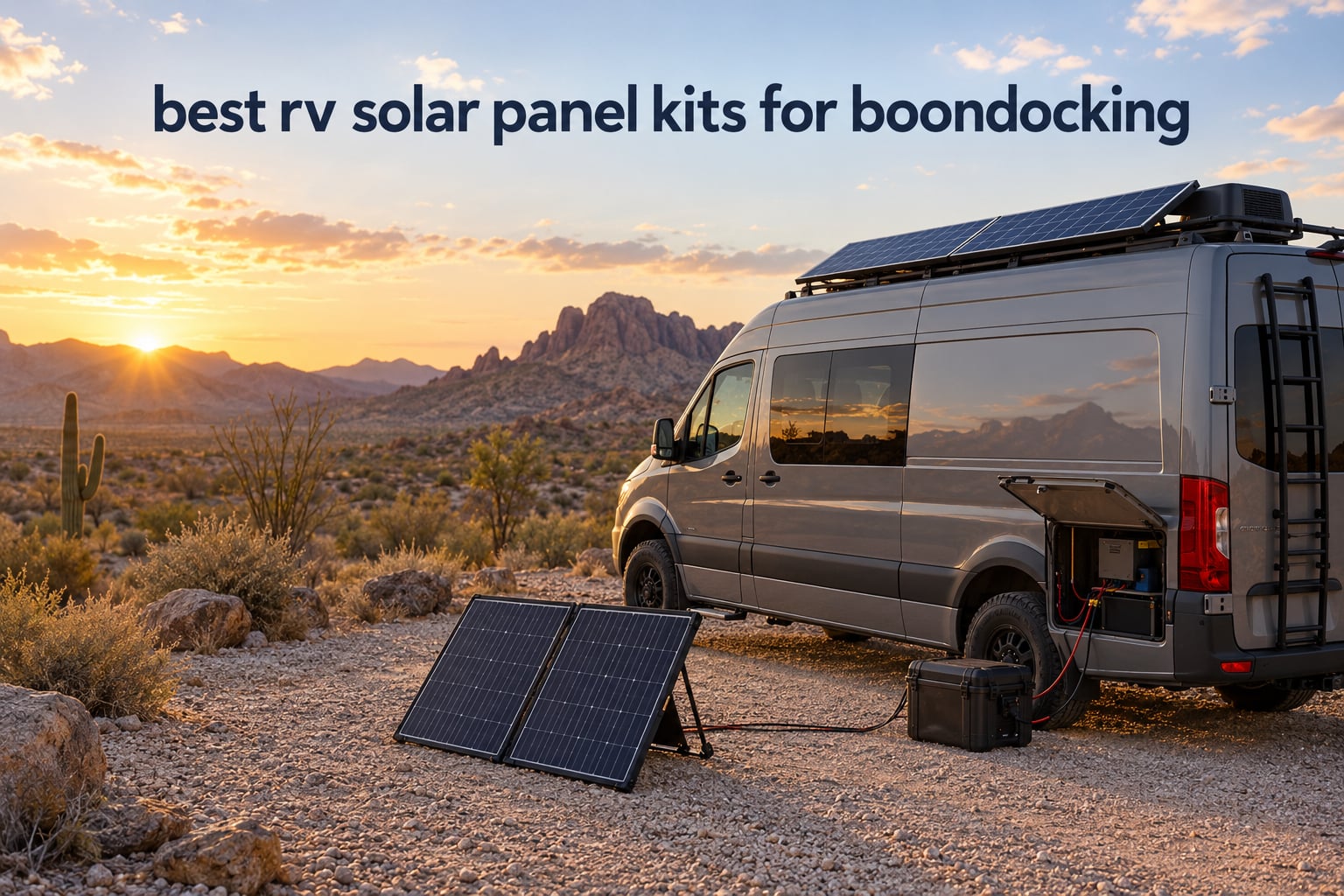
The best RV solar panel kits for boondocking are monocrystalline setups between 100W and 400W paired with a 30A or 40A charge controller, because that range covers a weekend 12V fridge draw on the low end and multi-day dry camping with fans and a water pump on the high end. For most RVers the sweet spot is a 200W rigid kit with an MPPT controller, a 200Ah or larger LiFePO4 bank, and a pure sine wave inverter you add separately.
Boondocking means camping without a hookup, which turns every campsite into a countdown on your battery bank. Solar removes the hookup dependency entirely, and the kits below are the ones that survived our comparison of ten RV solar panel kits for off-grid power rather than grid-tied use.
We spent weeks comparing output claims, charge controller types, wiring completeness, weight on a moving roof and what each box actually contains. Nine of the ten kits here ship panels plus a controller and wiring, and most do not include a battery or an inverter. That single fact changes the real cost of any kit you see, so we call it out in every section below.
If you are still working out how much power you need, start with our guide to the best RV solar panels. If you want a broader look at panel kits for non-mobile use, we covered those in the best solar panel kits roundup too.
Table of Contents
Top 3 Picks for Boondocking in 2026


Renogy 200W Monocrystalline Kit
- Two 100W panels at 22%
- About 1000Wh per day
- 4-stage charging

The Renogy 100W starter kit earns the top slot because it combines the highest rating in this group with the largest review base, a 25-year output warranty and a clean path to 400W later. The 200W Renogy is the better value per watt if you have roof space for two panels today, and the ECO-WORTHY 400W kit is the only one here built around a true MPPT controller with app monitoring.
All 10 Best RV Solar Panel Kits for Boondocking (October 2026)
| Product | Specifications | Action |
|---|---|---|
| Renogy 100W 12V Starter Kit with 30A PWM Controller |
|
Check Latest Price |
| Renogy 200W Monocrystalline Kit with 30A PWM Controller |
|
Check Latest Price |
| ECO-WORTHY 400W Premium Kit with 40A MPPT Controller |
|
Check Latest Price |
 Renogy 100W Portable Foldable Kit with 20A Controller Renogy 100W Portable Foldable Kit with 20A Controller |
|
Check Latest Price |
 Go Power Overlander 200W Kit with Bluetooth Controller Go Power Overlander 200W Kit with Bluetooth Controller |
|
Check Latest Price |
 ECO-WORTHY 200W Kit with Two 100W Panels ECO-WORTHY 200W Kit with Two 100W Panels |
|
Check Latest Price |
 Voltset 100W Kit with 20A Smart Controller Voltset 100W Kit with 20A Smart Controller |
|
Check Latest Price |
 DOKIO 300W Portable Foldable Kit with Controller DOKIO 300W Portable Foldable Kit with Controller |
|
Check Latest Price |
 ECO-WORTHY 200W Complete Kit with Battery and Inverter ECO-WORTHY 200W Complete Kit with Battery and Inverter |
|
Check Latest Price |
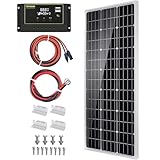 Topsolar 100W 12V Monocrystalline Off Grid Kit Topsolar 100W 12V Monocrystalline Off Grid Kit |
|
Check Latest Price |
Two details in that table matter more than the wattage numbers. First, eight of the ten kits use a PWM charge controller rather than an MPPT controller, which means they give up some harvest when light is low. Second, only one kit includes a battery and inverter, so plan on buying those separately.
1. Renogy 100W 12V Starter Kit – the Proven All-Rounder
Renogy 100W 12V Solar Panel Starter Kit with 30A PWM Controller
100W monocrystalline
Wanderer 30A PWM controller
Averages 500Wh per day
Expands to 400W
Pros
- 22.5% cell efficiency with roughly 500Wh of daily output
- 10-year materials and workmanship plan with 25-year output warranty
- UL
- CSA and IEC certified panels
- Includes panel
- controller
- cables and Z brackets
- Expands to 400W with matching panels
Cons
- PWM controller loses harvest in low light
- Bluetooth monitoring needs a separate BT-1 module
This is the kit I keep coming back to for a first boondocking build. A 100W monocrystalline panel rated at 22.5% cell efficiency produces roughly 500Wh on a good day, and every panel goes through 100% electroluminescence testing before it ships. In our comparison it had both the highest rating and the largest review base of any kit here, which matters when you are trusting hardware to run your fridge overnight.
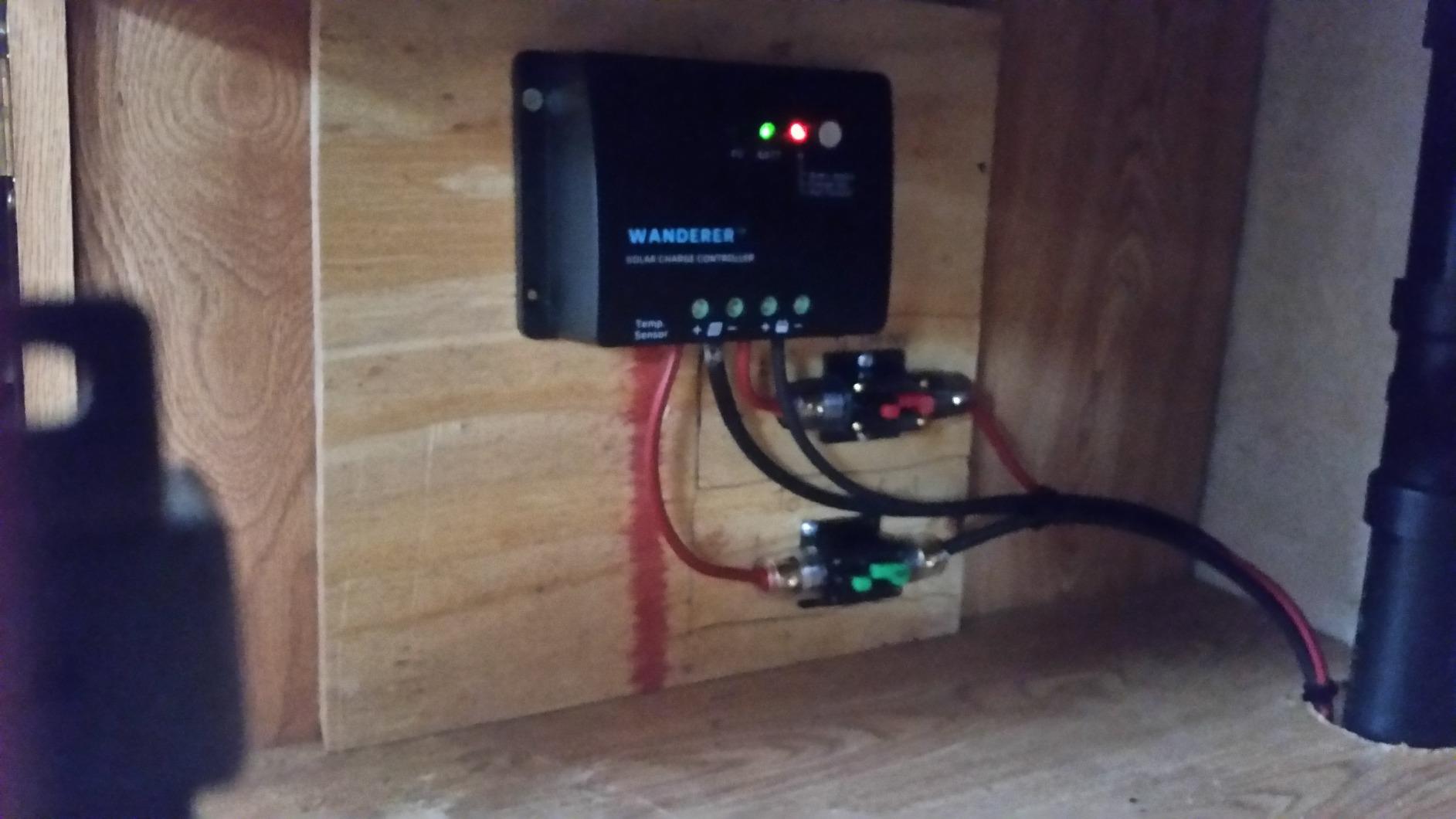
The Wanderer 30A PWM controller uses four charging stages including equalization, so it conditions lead batteries properly rather than just floating them. It also works with AGM, gel, flooded and lithium banks, so the battery you already own is probably compatible.
Owners on RV forums consistently describe Renogy as the default recommendation for reliability and expansion headroom, largely because the troubleshooting community is large and the controller is widely documented. That matters when you are three states from the nearest shop with a meter that reads zero.
What you give up is efficiency. A PWM controller does not track the maximum power point, so harvest drops in cloudy or low-angle conditions compared with an MPPT unit. If you plan to winter camp, that gap shows up in exactly the conditions where you can least afford it.
What you get on a weekend boondock
With around 500Wh of daily production, this kit comfortably covers a 12V fridge, LED lighting, phone charging and a water pump on a two to three night stay. It will not run a coffee maker for long stretches or keep a CPAP machine going through several overcast days without help from a drive day.
When to skip it
If you already have a 400W or 600W array planned, this kit becomes a stepping stone rather than a destination, and you will replace the controller within a year. Renters who will never touch a roof screw should look at a foldable panel instead, since drilling is the part most people regret.
2. Renogy 200W Monocrystalline Kit – Best Value for Rooftop Mounting
Renogy 200W 12V Monocrystalline Solar Panel Kit + 30A PWM Charge Controller
Two 100W panels at 22%
Wanderer 30A PWM controller
About 1000Wh per day
Expands to 400W
Pros
- Two 100W panels average about 1000Wh per day
- 4-stage charging including equalization
- Pre-drilled holes
- cables and Z brackets included
- 5-year materials and workmanship warranty
- Expandable to 400W
Cons
- Listed weight of 0.27 g is a listing error
- Barrel connector is less universal than MC4
- PWM is less efficient at low light
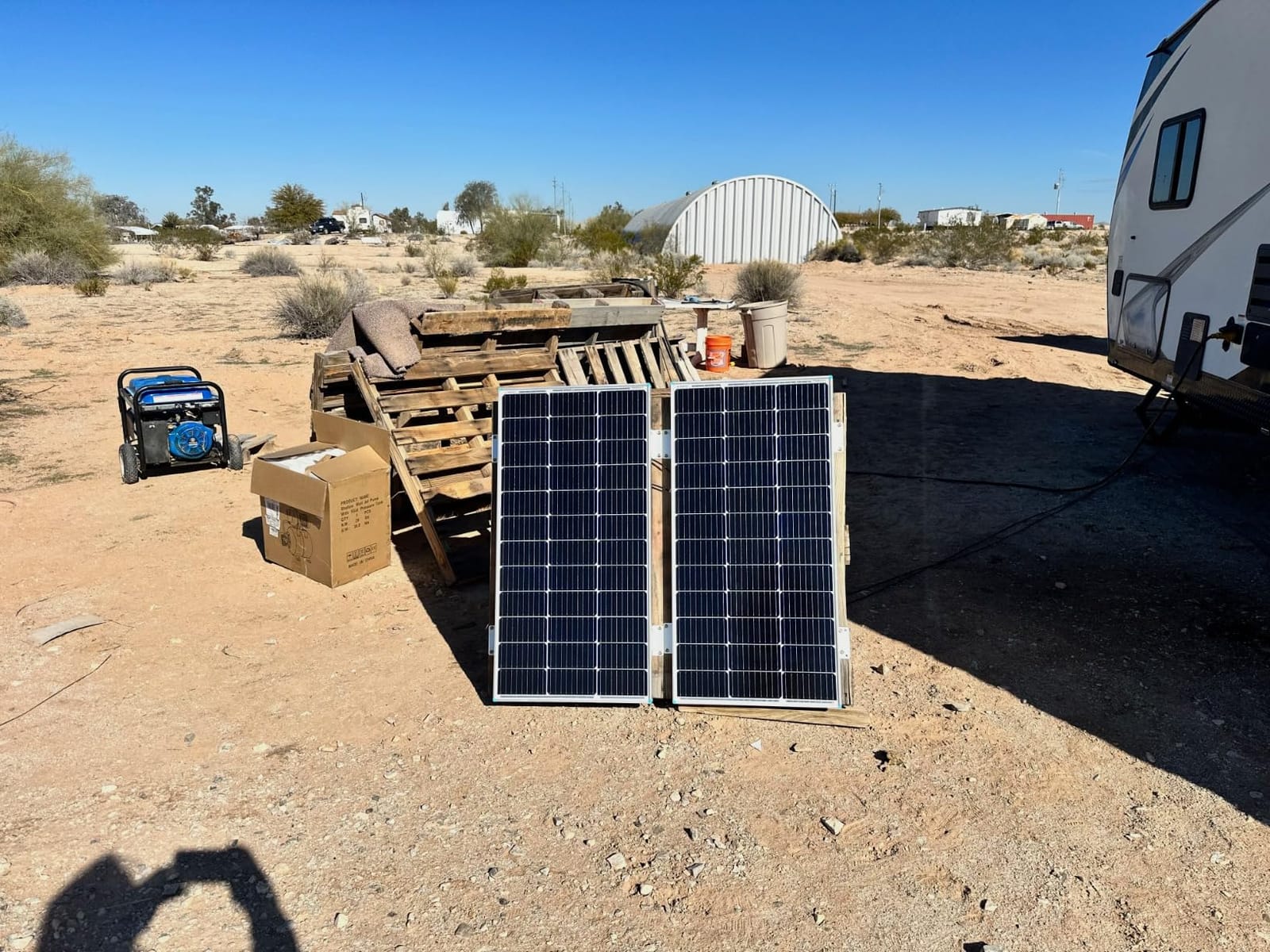
This is the setup we recommend for most boondockers who own their rig and have two clear rectangles of roof. Two 100W monocrystalline panels at 22% cell efficiency average about 1000Wh per day in five hours of direct sun, which is double the harvest of the single-panel starter kit for a modest step up in complexity.
Bypass diodes improve low-light behaviour and the TPT backsheet sheds heat, which matters on a white RV roof in July. The controller adds equalization to the usual bulk, boost and float stages, so flooded lead banks actually get maintained rather than just topped off.
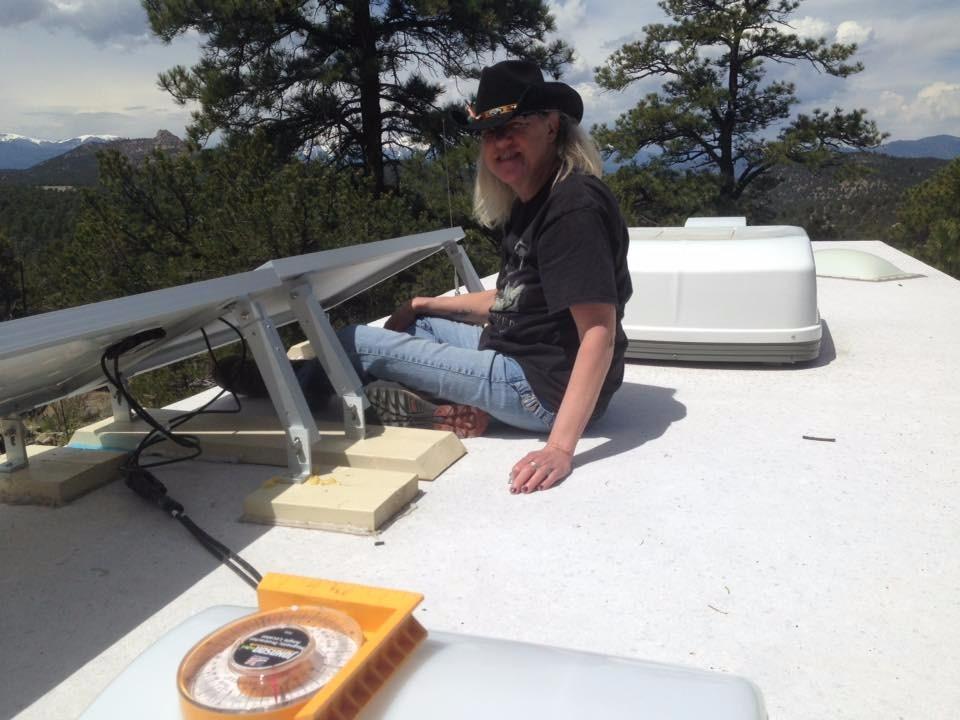
The kit includes everything needed for a rooftop install: pre-drilled mounting holes, cables and Z brackets. We would still add self-leveling lap sealant and a separate inline fuse near the battery, because those two items are the usual reason a DIY install gets flagged in owner threads.
One note on the listing itself. The stated weight of 0.27 g is a data error, not a real figure, and the barrel-style connector is less convenient than MC4 if you later add panels from another brand. Both are minor, but plan the mounting hardware for two full-size rigid panels rather than assuming a lightweight setup.
How long it stretches a battery bank
Paired with a 200Ah to 300Ah LiFePO4 bank, this kit comfortably handles a 12V fridge, a roof fan, interior lighting and a laptop for three to five days in good weather. Several owners report pairing similar wattage with a 400Ah lithium bank and a 3000W inverter for a week-long dry camp.
What to buy next
Plan on a battery, an inverter and heavier gauge wire with an inline fuse. If you think you will ever exceed 400W, skip this and step up to an MPPT controller now, since swapping controllers later means rewiring the whole roof run.
3. ECO-WORTHY 400W Premium Kit – the Only True MPPT Option Here
ECO-WORTHY 400 Watt 12 Volt Premium Solar Panel Kit :4pcs 100W Solar Panel+ 40A MPPT Charge Controller+ Bluetooth Module+ Mounting Z Brackets, 400W 12V Solar Power Off Grid System for Home, RV, Boat.
Four 100W panels at 21%
40A MPPT controller at 99% tracking
Bluetooth 5.0 monitoring
Averages 1.6KWh per day
Pros
- Only MPPT kit in the group with 99% tracking efficiency
- About 1.6KWh per day for larger battery banks
- BT-02 Bluetooth module streams live panel and battery data
- 35mm aluminum frames with wide Z brackets for permanent mounting
Cons
- Heaviest and largest kit here at 72 lb
- Smallest review base at 120 ratings
- Higher 1-star share than smaller kits
An MPPT charge controller tracks the maximum power point of the panel, so it keeps pulling current as voltage sags instead of throttling back to the battery voltage like a PWM unit. Across four panels that difference is the whole reason to spend more here, especially in spring and fall light and during winter boondocking at higher latitudes.
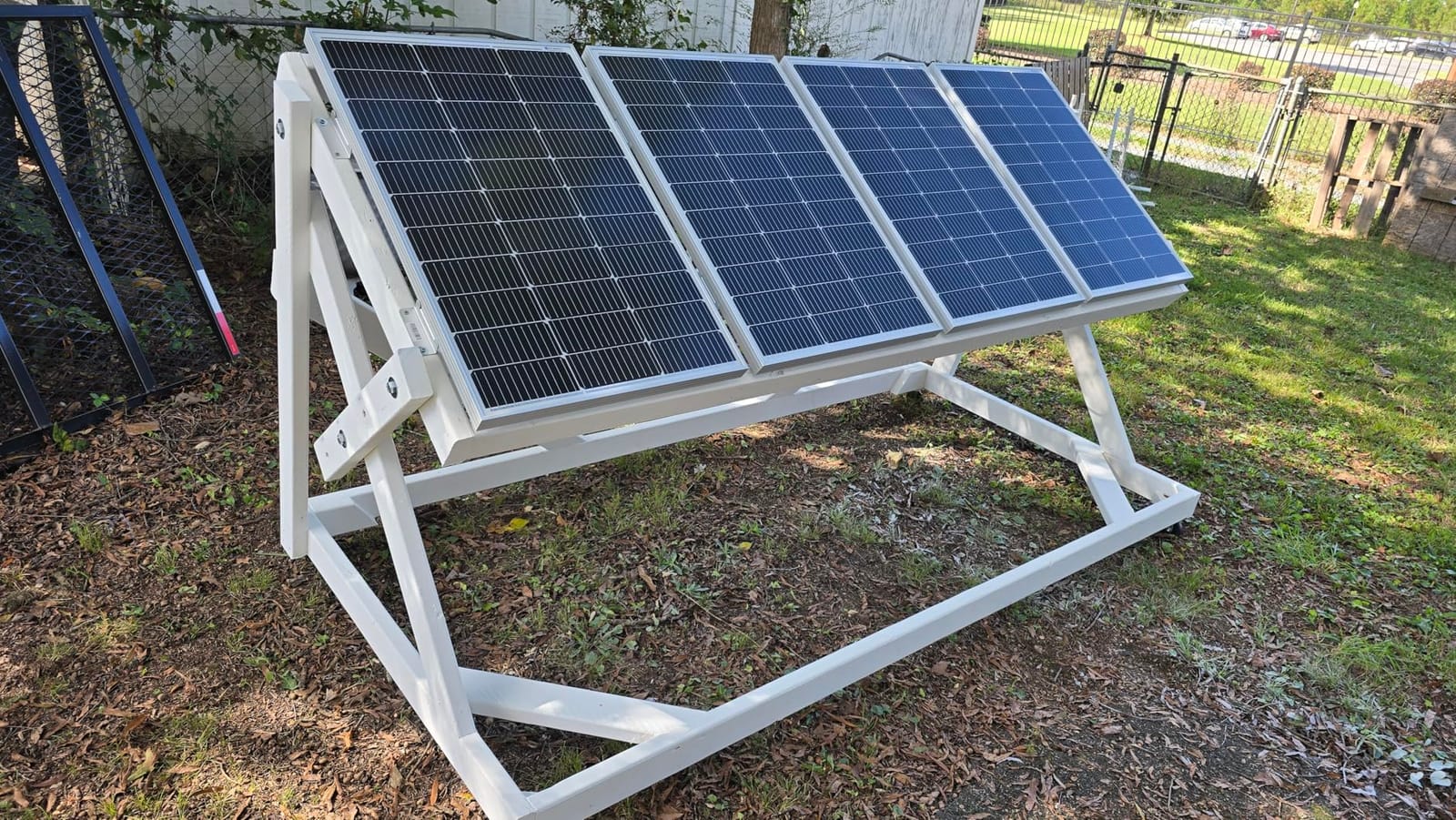
Four 100W monocrystalline panels at 21% efficiency produce an average of 1.6KWh per day depending on sunlight, and the 40A controller pairs well with a 400Ah lithium bank. The BT-02 Bluetooth module streams panel, battery and load data to a phone from up to 82 ft away, which makes diagnosing a cloudy-day shortfall far easier.
The frames are 35mm wide aluminum, a couple of millimetres wider than competing panels, and the panels carry 2400Pa wind and 5400Pa snow ratings with bypass diodes in IP65 junction boxes. That build is aimed at permanent rooftop mounting on a rig that moves in highway wind.
The trade-offs are physical. At 72 lb for the full kit, this is by far the heaviest set we tested, and four panels need real roof area plus a mounting structure that a light Class B van may not have. With only 120 ratings behind it, long-term field feedback is thinner than the numbers elsewhere in this roundup.
Who this kit actually suits
Full-time RVers, extended desert boondockers and anyone running a 3000W inverter with a CPAP machine and a 12V fridge. It is the choice when the goal is five to seven days away from a hookup rather than a long weekend.
Why the review count matters
A 4.4 rating with a 74% five-star share and 8% one-star is decent but not proven at scale. If you are nervous about a large panel array on a roof you also live under, a 200W kit with thousands of ratings behind it is the calmer first purchase.
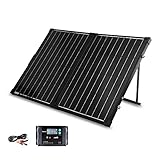
4. Renogy 100W Portable Foldable Kit – Best for No-Drill Travel
Renogy 100W Portable Solar Panel, 25% High Efficiency Solar Panel Kit with 20A Charger Controller for 12V Battery&Power Station, N-Type Foldable Solar Panels w/Tempered Glass for RV, Camping Off-Grid
25% N-Type cells
Folds to 24.8 inches
Pre-installed 20A PWM controller
Adjustable kickstand
Pros
- Folding suitcase format can be repositioned to follow the sun
- Pre-installed waterproof 20A controller makes it genuinely plug-and-play
- Low-iron tempered glass with anti-corrosion aluminum frame
- Owners report 5.8 to 7 amps of real charging output
Cons
- A 100W rating on a 12V battery yields about 60W
- Included cable is just under 10 ft
- Weighs 17.4 lb for a portable panel
This is the kit for renters, van dwellers and anyone who parks in the open with sun hitting the panel at an angle you do not control. The 25% N-Type cells produce up to 500Wh per day with five hours of sunlight, and the fold-down kickstand lets you set the angle rather than mounting flat and losing output.
Long-term RV owners confirm it keeps a trailer or fifth wheel battery bank topped up and pays for itself quickly. The pre-installed waterproof controller with four-stage charging means you clip two cables and go, with no roof penetration at all.
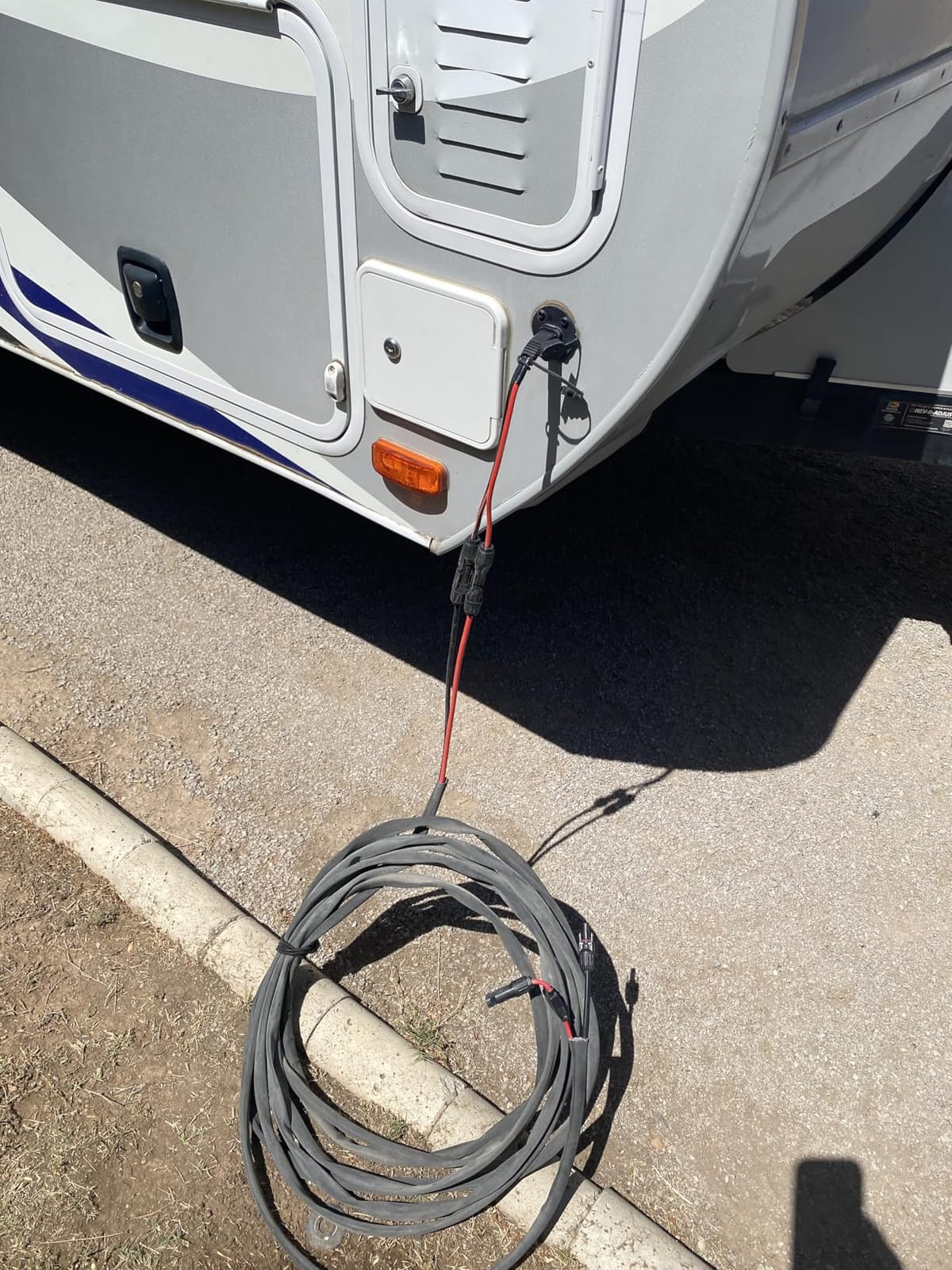
The critical expectation gap is electrical, not mechanical. A 100W panel charging a 12V battery typically delivers about 60W of real harvest, so budget your energy budget at roughly 60% of the nameplate. Owners report 5.8 to 7 amps of charging in good sun, which lines up with that maths.
At 17.4 lb it is heavier than most people expect to carry from the truck bed to a picnic table, and the included cable is just under 10 ft. Bring an extension lead. Bypass diodes in the junction box limit hotspot losses, which matters when one panel sits in partial shade.
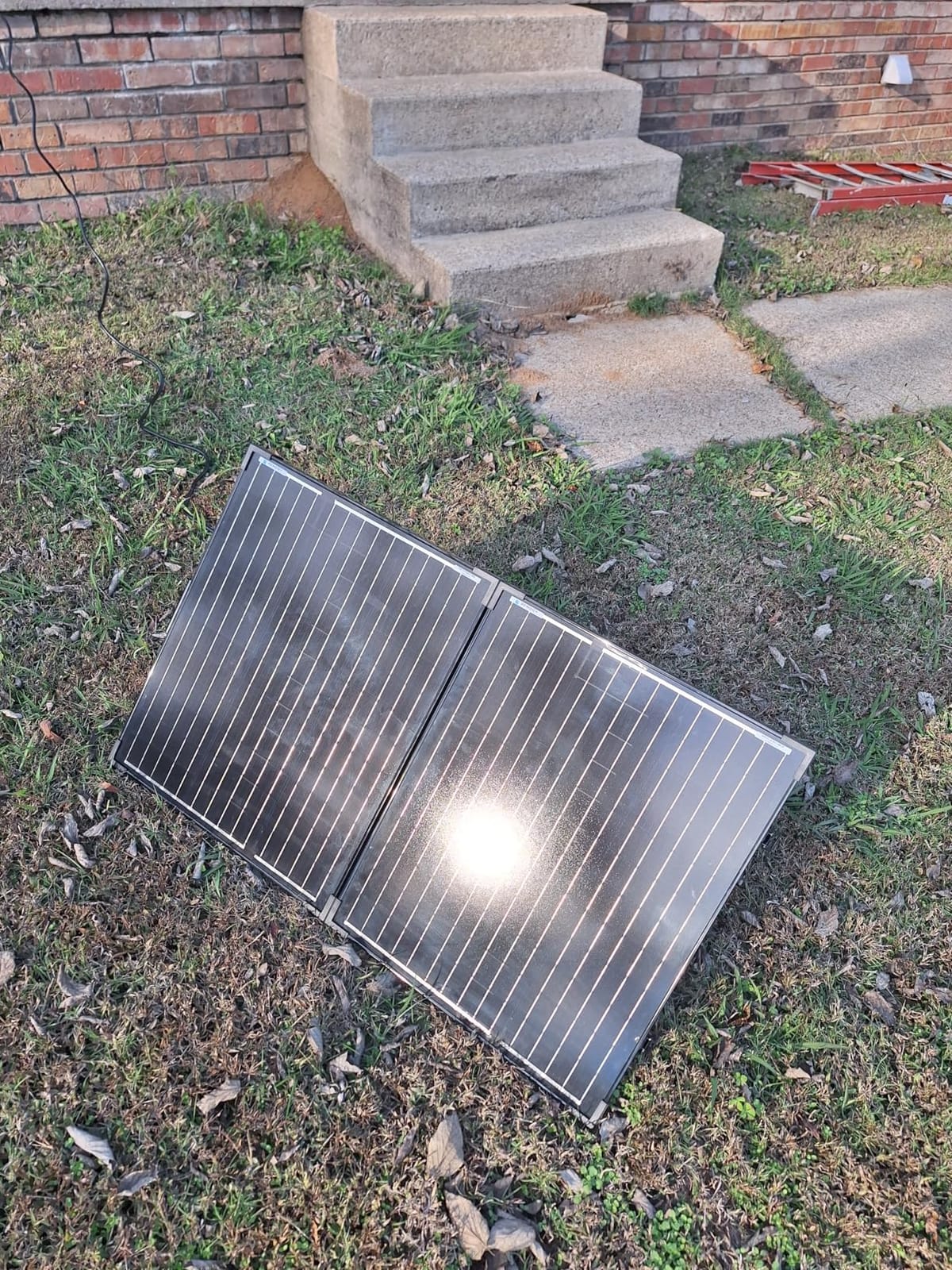
Best for shade-heavy camps
The single biggest killer of boondocking output is shade from your own air conditioner, roof vents and awning, a problem owner threads raise constantly. A foldable panel lets you move the collection point into full sun while the battery stays inside where the wiring already runs.
When portable stops making sense
If you camp more than two nights at a time, repositioning every few hours and packing the panel away each morning becomes a chore. A rigid roof mount produces the same wattage with none of the daily handling, and it stays put through high winds.
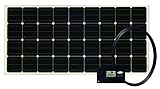
5. Go Power Overlander 200W Kit – Built for a Permanent Install
Go Power Overlander 200W 12V Solar Panel Charging Kit
200W panel at 9.6 amps
30A Bluetooth PWM controller
Two 25 ft #10 cables
25-year output warranty
Pros
- Longest warranty here with 25 years of panel output coverage
- Two 25 ft #10 cables give unusual routing reach on an RV roof
- Bluetooth app shows charge percent
- voltage and current
- Canadian brand with a long RV installation history
Cons
- Heaviest single panel at 35 lb and awkward to lift
- Bluetooth pairing is reported as buggy
- No inverter included
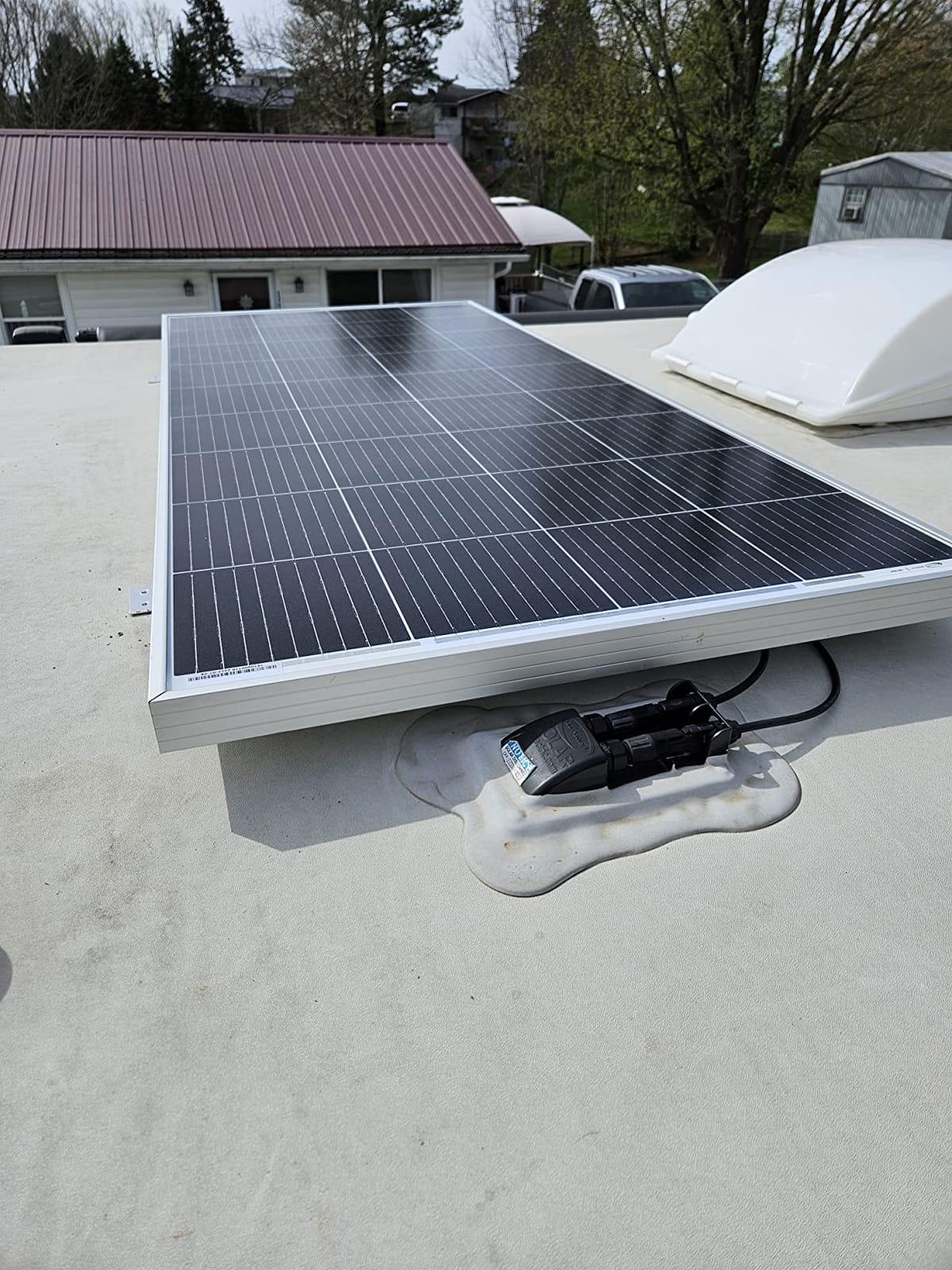
The Overlander is the most permanent-install kit in this group. At 59 by 26.3 inches it covers a lot of roof in one panel, delivers 200W and 9.6 amps of charging capability, and the controller expands all the way to 600W if your roof grows into it later.
Those two 25-foot #10 solar output cables are the detail owners appreciate most. Routing from a rear-mounted panel to a battery bay under the bed or behind a slide-out is awkward with short leads, and the reach here removes most of that frustration.
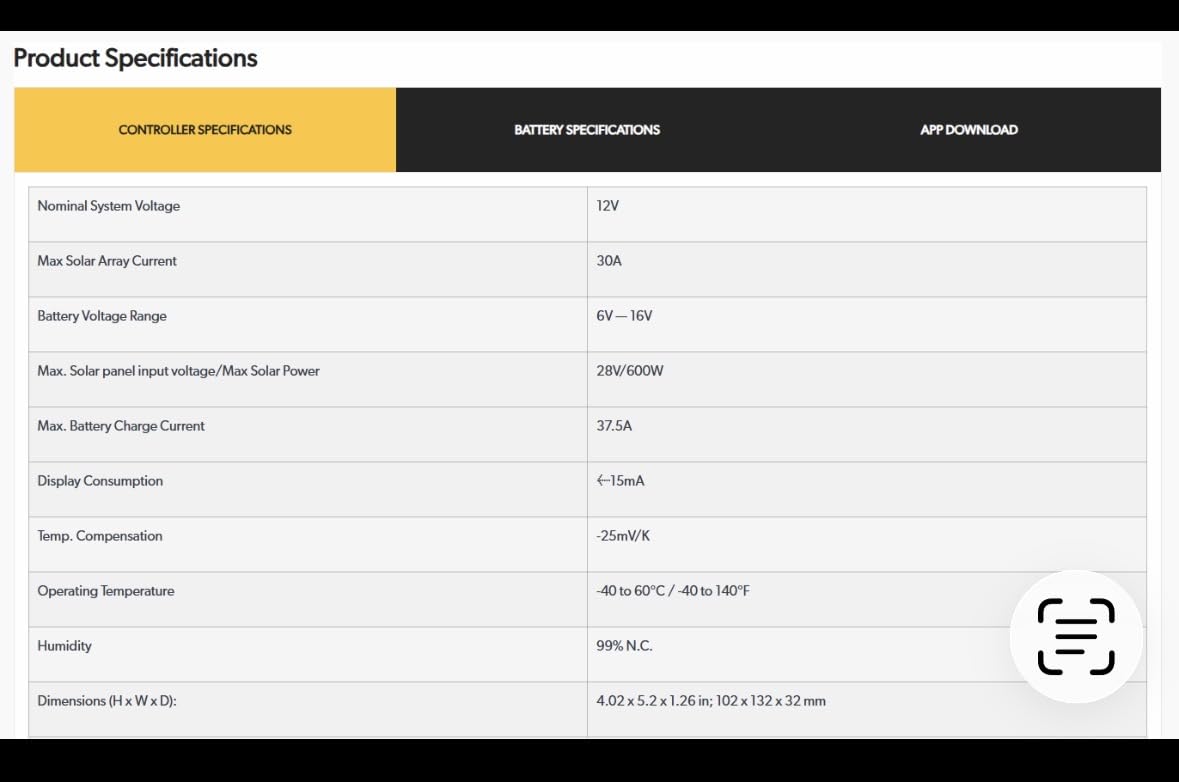
Users report roughly 8 amps of real charging and fewer generator runs across a season of dry camping. The Bluetooth app shows charge percent, voltage and current, which is useful, though pairing is reported as buggy and needs frequent re-pairing.
Two cautions. At 35 lb this is the heaviest single panel here and awkward to lift onto a roof alone, so budget a second person for the install. It also includes no inverter, and several buyers report wishing they had bought one with the kit.
Why the warranty matters on a moving rig
Boondocking gear lives a hard life: vibration, road debris, salt air and a panel that sees full sun at 55 degrees Celsius. A 25-year limited output warranty means the panel is expected to hold most of its rated output for the entire life of a typical build.
Where the ratings fall short
Only 101 ratings back this kit, so treat the strong 4.6 score as encouraging rather than proven. For a purchase you will rely on in winter storms far from services, one of the higher-volume kits carries a better track record.
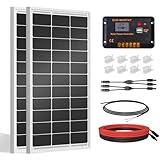
6. ECO-WORTHY 200W Kit – the Budget Two-Panel Option
ECO-WORTHY 200 Watts 12 Volt/24 Volt Solar Panel Kit with High Efficiency Monocrystalline Solar Panel and 30A PWM Charge Controller for RV, Camper, Vehicle, Caravan and Other Off Grid Applications
Two 100W monocrystalline panels
30A PWM controller
About 800Wh per day
Series or parallel wiring
Pros
- Roughly 800Wh daily output under four hours of full sunshine
- Ships with two 100W panels
- Z brackets
- controller and 10AWG cables
- Pre-drilled plug-and-play wiring speeds installation
- Frame rated for 2400Pa wind and 5400Pa snow load
Cons
- PWM controller is less efficient than MPPT alternatives
- No Bluetooth or app-based monitoring included
- One-year warranty is the shortest here
This kit does something the cheaper single-panel kits cannot: it ships with two 100W panels instead of one. That doubles the roof coverage for roughly the money most people spend on a mid-size portable panel, and output lands around 800Wh per day under four hours of full sunshine.
Buyers consistently praise the power-to-price ratio, the completeness of the box and the flexibility to configure in series for 24V or parallel for 12V. The IP65 junction box and corrosion-resistant aluminum frame are properly specified for permanent mounting.
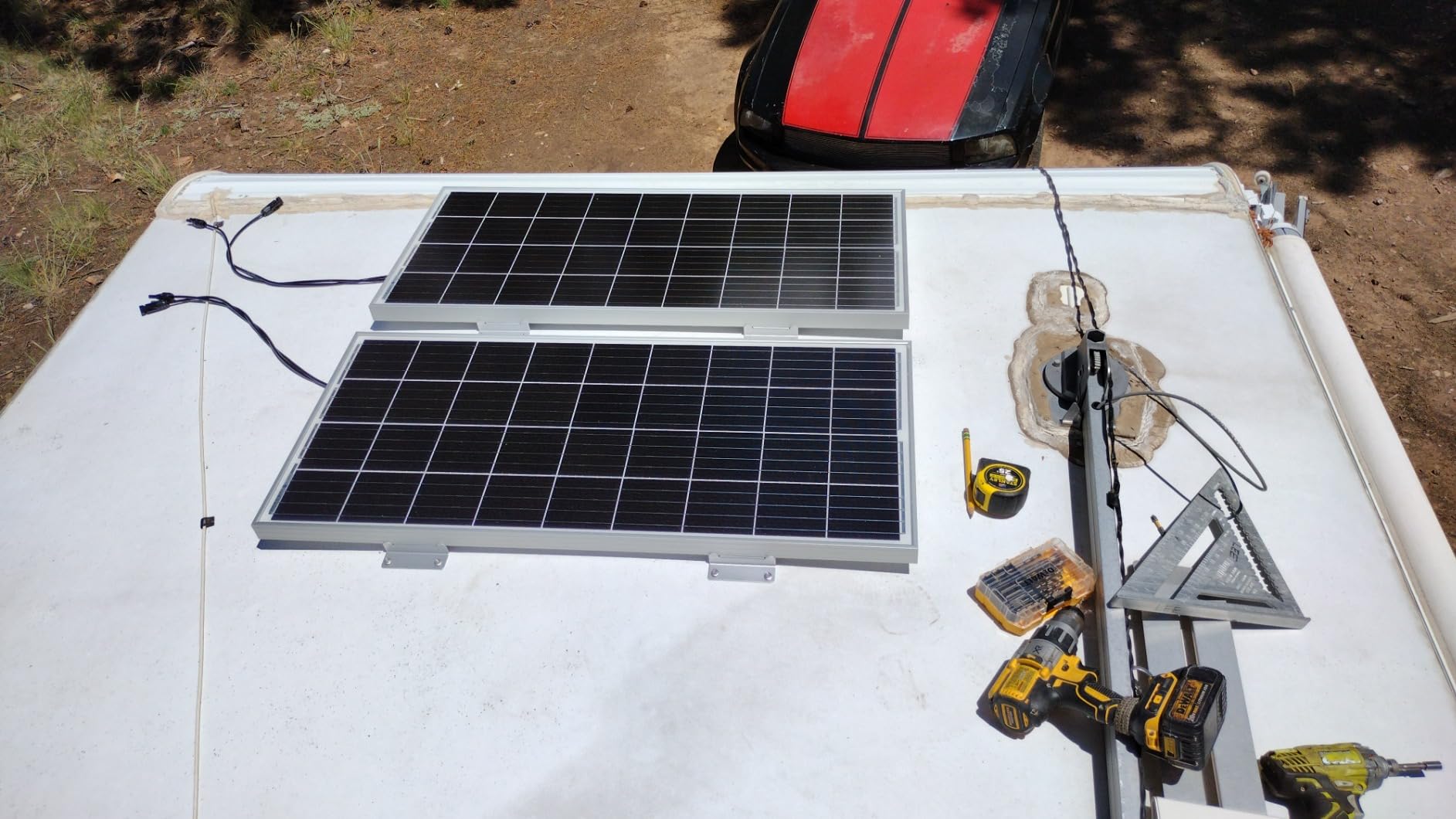
The 16.4 ft of 10AWG cable is long enough to run from a roof mount to a battery compartment without an extension, and Z brackets come in the box. You will still want self-leveling sealant over each penetration and an inline fuse within a foot of the battery positive terminal.
Two drawbacks to weigh. The PWM controller gives up harvest compared with MPPT, and there is no Bluetooth or app monitoring at all, so you are checking battery state with a multimeter. The one-year warranty is also the shortest in this roundup, which is worth factoring in on a roof-mounted permanent install.
A sensible middle step before MPPT
If your bank is 200Ah or larger and you camp in good sun, this panel pair will hold a 12V fridge, lighting and fans for three or four days without drama. If you camp in winter or at high latitude, plan on a generator or a drive day as backup.
Where the 85 degree rating matters
The listed upper temperature rating of 85 degrees Fahrenheit reflects the panel junction box, not its output ceiling. Roof temperatures far above that still produce usable current, but you should expect noticeably less than nameplate watts on a hot day, so size with a margin.
7. Voltset 100W Kit – Built Around a Smart LCD Controller
Voltset 100W 12V Solar Panel Kit with 20A Smart Charge Controller
20A smart controller with LCD
Built-in USB and Type-C ports
500+ Wh per day
IP67 waterproof housing
Pros
- LCD screen plus USB and Type-C ports for on-site device charging
- Plug-and-play installation with no complex wiring
- Works with LiFePO4
- AGM
- gel and flooded banks
- Highest sales rank in the Solar Panels category here
Cons
- 20A PWM controller limits charging current versus 30A or MPPT
- Listed dimensions are smaller than a typical 100W panel so verify roof fit
- No Bluetooth or app monitoring
The distinguishing feature here is the controller. A 20A smart unit with an LCD screen, LED indicators and built-in USB and Type-C ports means you can read charge state at a glance and top up a phone or a small device without carrying a separate adapter.
The panel itself is 100W monocrystalline producing 500+ watt-hours per day in sufficient sunlight, housed in an IP67 waterproof frame rated for outdoor RV, marine and trailer use. It is one of the better-selling kits in the category, with strong demand signals behind it.
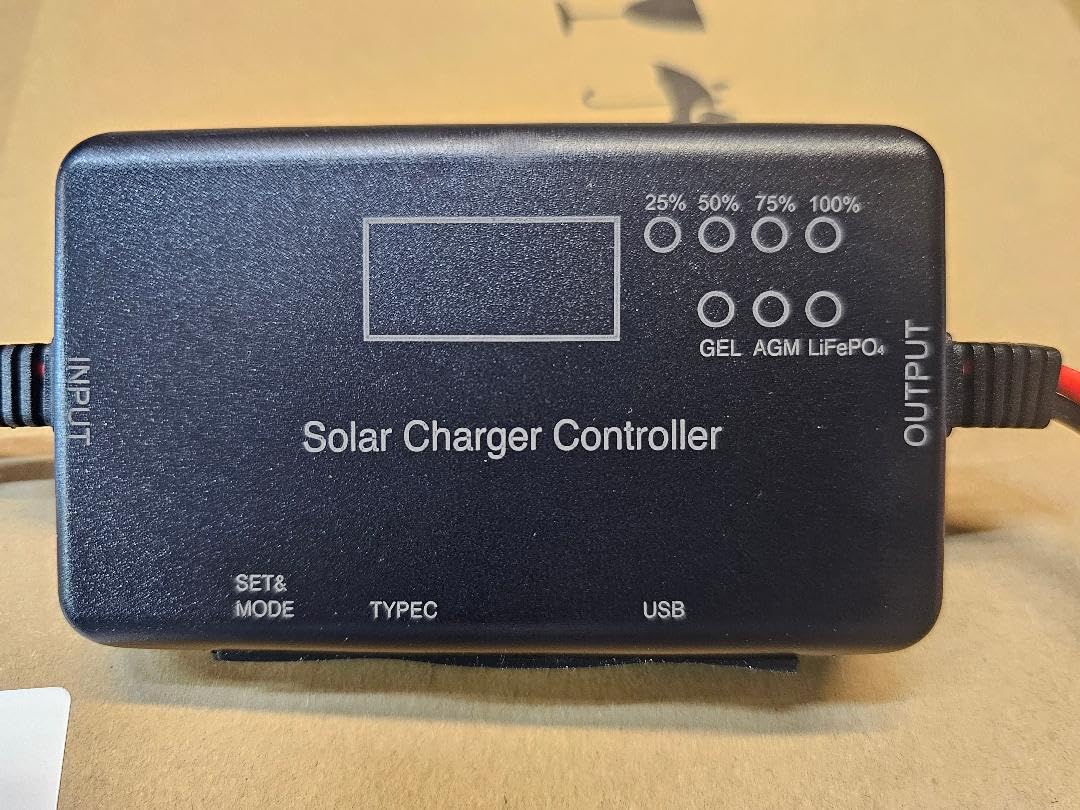
Protection is thorough: overcharge, overvoltage, overcurrent, short circuit, reverse polarity and overheating are all covered. Four Z mounting brackets and an alligator clip cable are included, and the pre-drilled holes mean most installs need one drill bit.
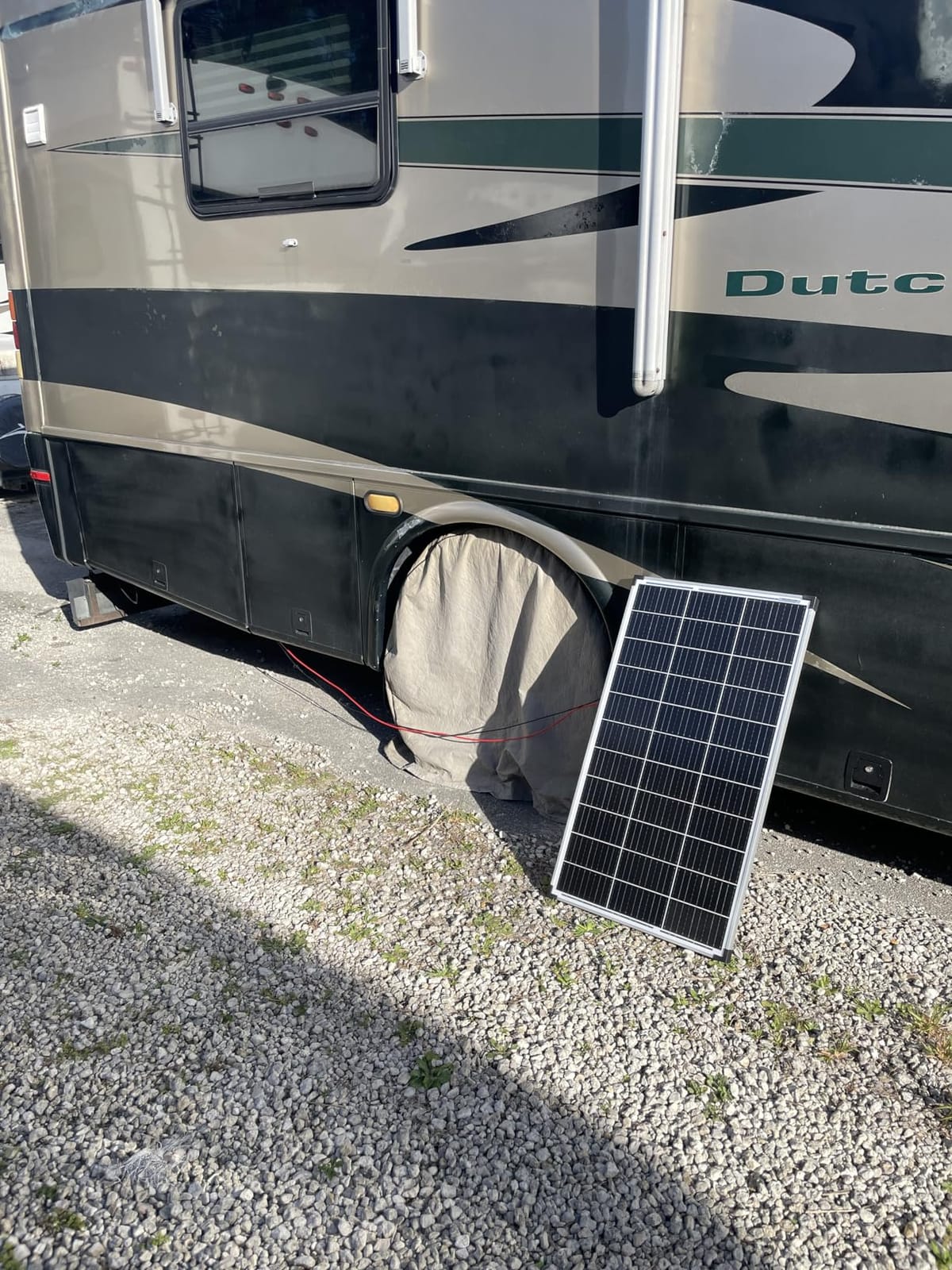
Two things to check before buying. The listed dimensions of 14.6 by 12.8 inches are smaller than a typical 100W panel, so measure your roof bracket spacing first. And a 20A PWM controller caps current lower than a 30A or MPPT unit would, which matters if you later add a second panel.
A good fit for small rigs and beginners
This suits a Class B van, a pop-top or a first build where the load list is a 12V fridge, a fan and lights. The LCD readout makes it approachable for owners who have never measured a battery bank before.
When to size up instead
If you are planning a 3000W inverter, a CPAP machine and multi-day stops, a single 100W panel with a 20A controller will not keep pace. Treat this as an entry point, not a finish line, and pick a controller rated for where the system will be in two years rather than today.
8. DOKIO 300W Foldable Kit – Most Wattage You Can Carry
DOKIO 300W Portable Foldable Solar Panel Kit with Charge Controller
300W foldable monocrystalline
15.2 lb packed
Standalone PWM controller
9.85 ft cable
Pros
- 300W nameplate in a slim 15.2 lb foldable package
- Separate standalone controller can be replaced or upgraded later
- 3m cable lets the panel sit in sun while the controller stays shaded
- Bundle includes SAE
- XT60 and alligator clip adapters
Cons
- Power stations that cap solar input at 100 to 200W will not see the full 300W
- Lowest rating in this group at 4.1 with a 9% one-star share
- One-year warranty against 5 to 25 years elsewhere
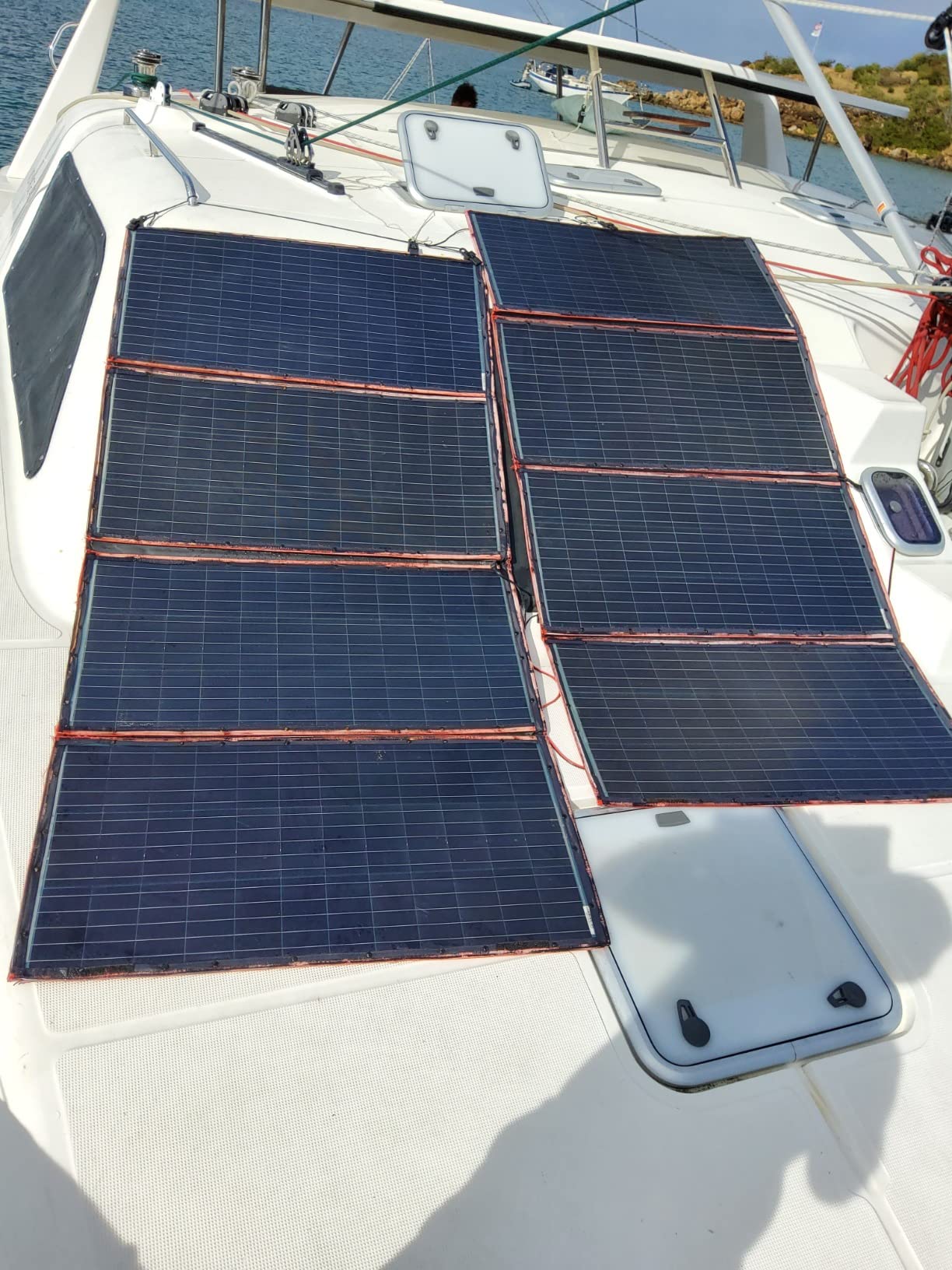
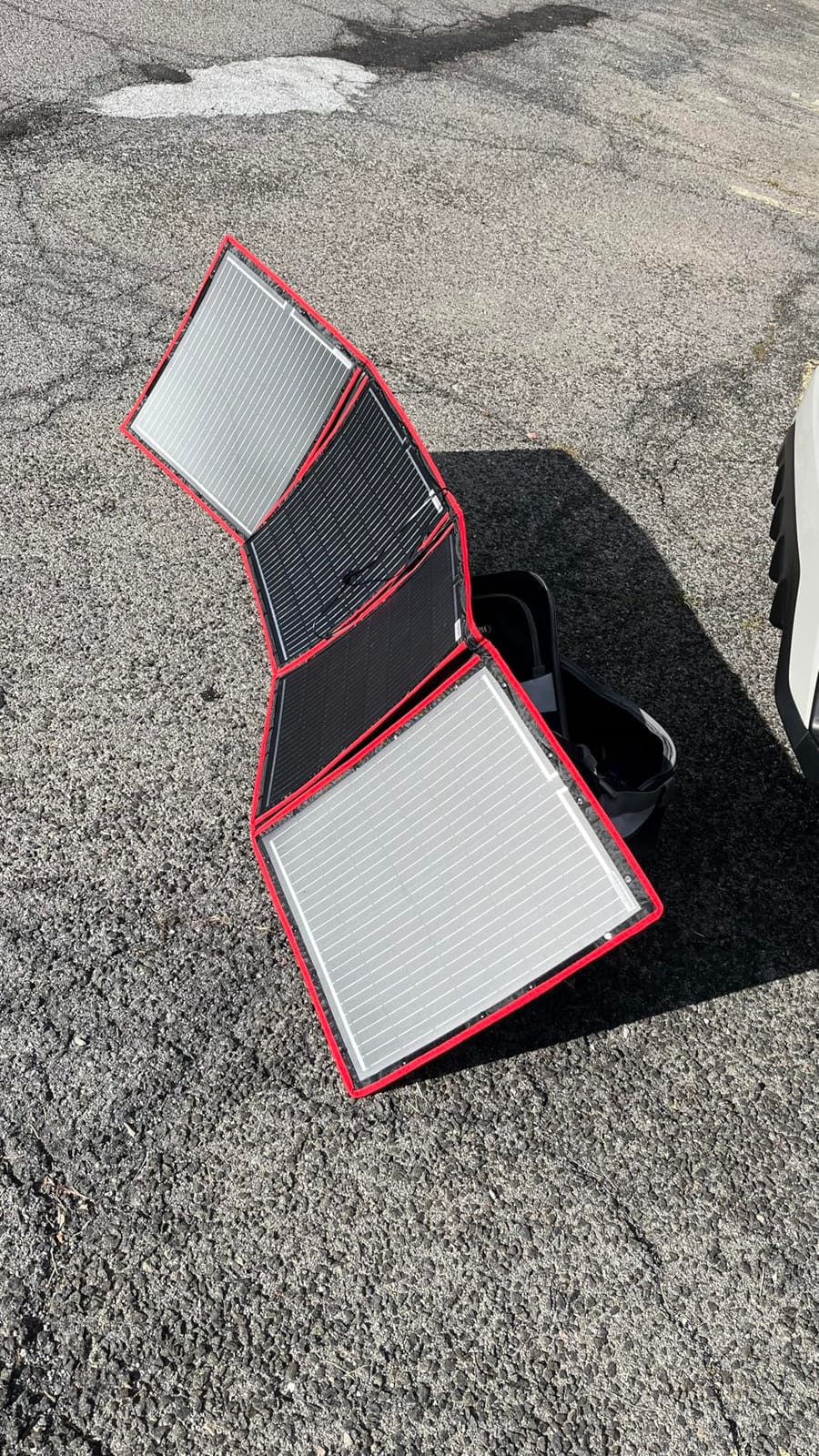
Getting 300W into a 15.2 lb foldable case is unusual, and it is why this kit sits high in the Solar Panels category with nearly 3,800 ratings behind it. It folds to 19.3 by 37.4 by 1.1 inches, so it fits behind a seat or in a garage compartment between trips.
The controller is a standalone unit rather than something bolted to the panel, which means you can replace or upgrade it later without buying new panels. The 3m cable lets you park the panel in full sun while the controller stays in shade, which protects charging efficiency.
Dual USB ports charge phones, lights and small devices when the kit is tied to a 12V battery. The accessory bundle is generous, covering SAE, XT60, alligator clips, DC adapters, a storage bag and a manual, so it works with most power stations without hunting for a cable.
The main limitation is downstream caps. Many power stations limit solar input to 100W or 200W, so this panel will never deliver its full 300W into those units no matter how good the conditions are. The 4.1 rating and one-year warranty are the weakest pairing here for a permanent install.
Matching the panel to your power station
Check the solar input rating on your power station before you commit. If it caps at 200W, a 200W portable kit delivers the same usable output with less wasted capability and a similar carry weight.
Where foldables lose to rigid panels
A roof-mounted rigid panel works while you sleep, through wind and rain, and with zero daily handling. If you are not moving every morning or you camp for several nights in one spot, rigid panels with a permanent bracket win on both effort and total energy gathered.
9. ECO-WORTHY 200W Complete Kit – Everything in One Box
ECO-WORTHY 200 Watt 12V Complete Solar Panel Starter Kit for RV Off Grid
200W N-Type panels at 25%
600W pure sine wave inverter
50Ah LiFePO4 battery
20ms UPS auto-switch
Pros
- Panels
- controller
- 50Ah LiFePO4 battery and inverter in one box
- 600W pure sine wave inverter with 20ms UPS auto-switch for seamless transfers
- LiFePO4 bank rated for 4000 to 15000 deep cycles
- N-Type 25% panels gain output from reflected light
Cons
- Lowest rating here at 4.1 with a 10% one-star share
- Bundled battery and inverter add bulk if you already own them
- XT60 interface is limited to 30A maximum
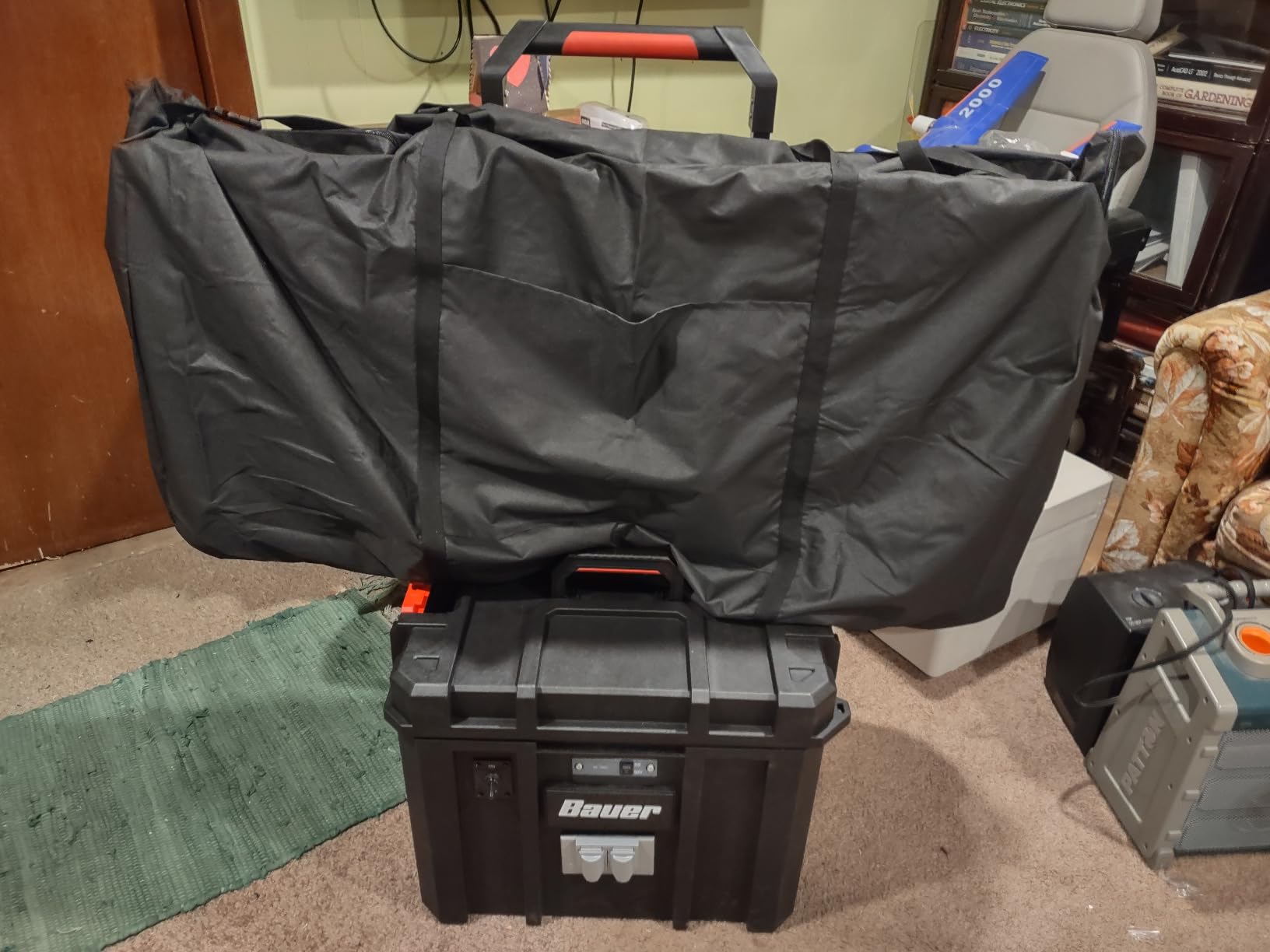
This is the only kit in the roundup that solves the biggest buyer surprise: the battery and inverter that nearly every other kit leaves out. You get 200W of N-Type monocrystalline panels, a 30A LiFePO4 charger, a 50Ah lithium iron phosphate battery and a 600W pure sine wave inverter with a 20ms UPS auto-switch.
The pure sine wave output is the part that matters for sensitive electronics. Fans, a CPAP machine, a laptop charger and a coffee maker all behave properly on a pure sine wave inverter, where modified sine wave units often produce buzzing or refuse to start.
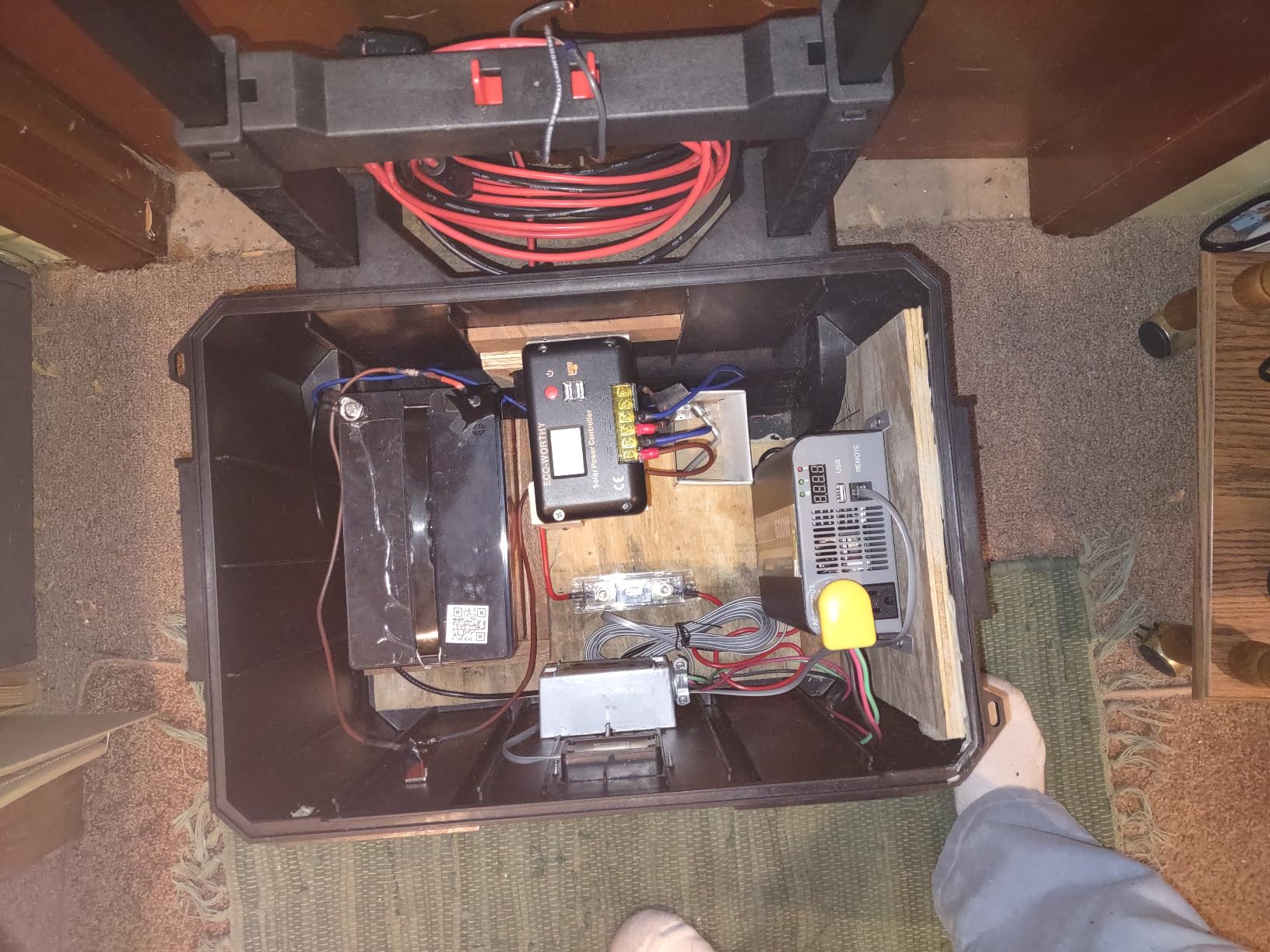
The dual-sided N-Type cells capture reflected light on both faces, which adds up to 15% more output than conventional single-sided panels. Charging current is adjustable from 5A to 40A with app and button control, and 0V activation means you can switch on a deeply discharged battery without a jumper cable.
The trade-offs are integration and capacity. Negative feedback most often concerns the number of bundled components working together, and the rating here is the lowest in the group with a 10% one-star share. A 50Ah battery also caps you at roughly 600W of inverter, so it serves a modest rig rather than a Class A motorhome with a rooftop air conditioner.
Who should buy the boxed system
First-time builders who want a working 12V system in one afternoon without sizing a battery bank. It covers a fridge, lights, fans, a laptop and a CPAP machine comfortably for a weekend or a short week of boondocking.
Why experienced owners skip it
If you already own a battery or inverter, the bundle is money and weight spent twice, and the XT60 interface caps at 30A so you cannot grow into a large inverter later. The LiFePO4 chemistry is the right long-term choice, but buy it separately at the size you actually need.
10. Topsolar 100W 12V Monocrystalline Kit – a Sensible First Build
Topsolar Solar Panel Kit 100 Watt 12 Volt Monocrystalline Off Grid System
38 monocrystalline cells at 19.5%
30A PWM controller
Expandable to 260W or 520W
Pre-drilled mounting holes
Pros
- Complete kit with panel
- 30A controller
- cables and four Z brackets
- Pre-drilled holes allow fast tool-light installation
- Expandable to 260W on 12V or 520W on 24V
- Rated for 2400Pa wind and 5400Pa snow load
Cons
- Lowest cell efficiency here at 19.5%
- Listed 5V output voltage is a spec sheet error
- No Bluetooth or app monitoring
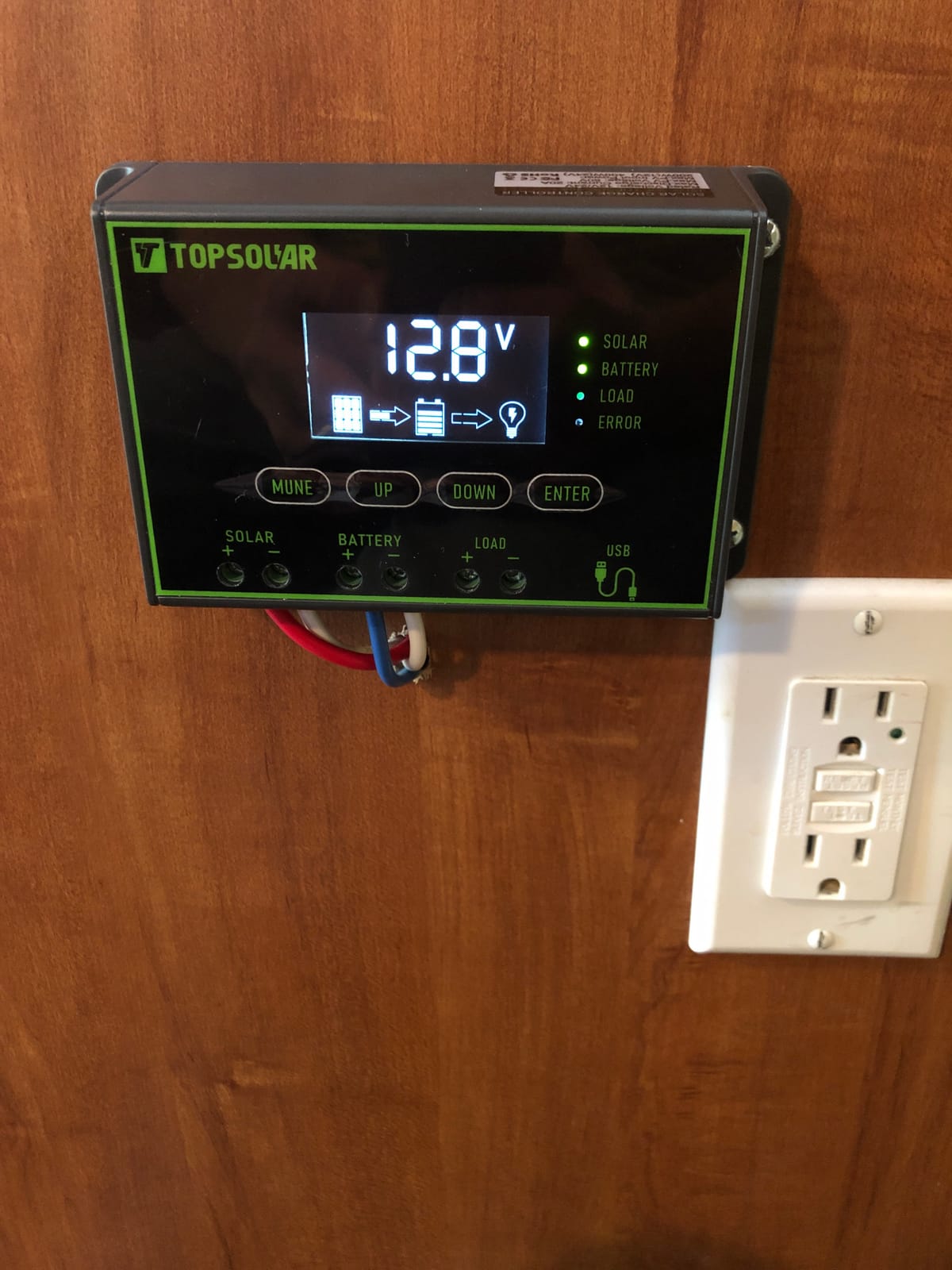
The Topsolar kit is a straightforward 100W monocrystalline panel with a 30A PWM controller, cables and four Z brackets, and it has close to 1,900 ratings behind it. Budget buyers consistently rate it as solid value for maintaining RV, cabin and boat batteries.
It expands to a 260W system on 12V or 520W on 24V, so it is a reasonable starting point that does not lock you into one small panel. The tempered glass and aluminum frame carry the same 2400Pa wind and 5400Pa snow ratings as pricier kits.
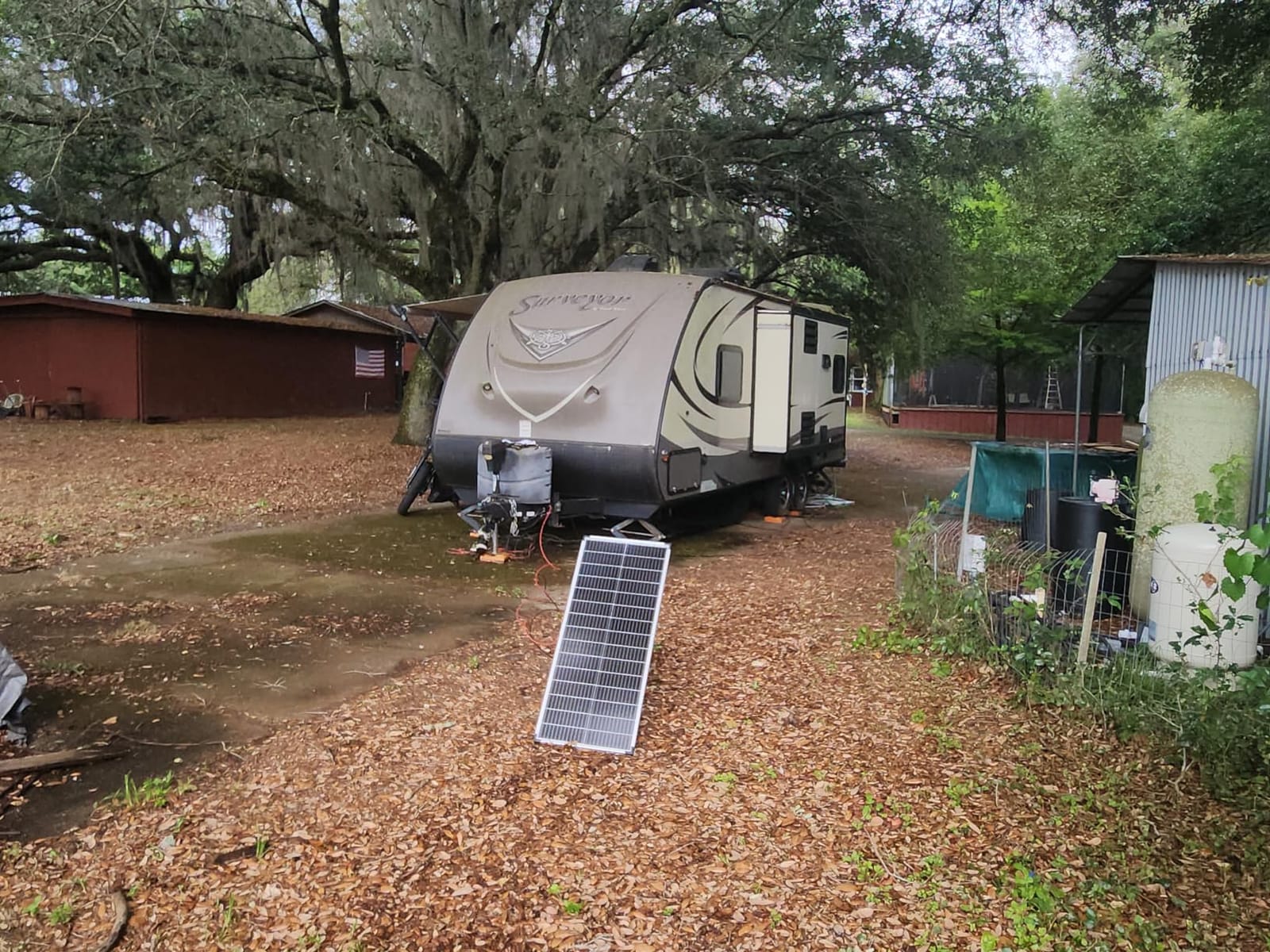
The controller carries overcharge, overvoltage, discharge, short circuit and reverse polarity protection, which is a full safety suite for a unit at this level. Pre-drilled holes on the panel back make the install fast even for a first-time roof mount.
Two limitations are worth stating plainly. At 19.5% efficiency this is the least efficient cell set in the roundup, so it yields less per square foot of roof. The listed 5V output voltage is a documentation error; the panel is a 12V system with a 23V maximum power point and 4.3A impulse current.
Realistic expectations for 100W
At roughly 500Wh per day in good sun, this covers a 12V fridge, interior lighting and phone charging for a couple of nights. A coffee maker or a CPAP machine alongside the fridge will push you past what a single 100W panel can refill in one day.
Where the efficiency gap bites
If your roof is tight, efficiency matters more than price. A 21% panel produces meaningfully more watts from the same square footage, and on a small rig that difference decides whether a 12V fridge and a fan coexist comfortably for a week.
How to Size an RV Solar Kit for Boondocking
Sizing starts with your daily energy draw, not with panel wattage. Amp-hour (Ah) is the unit that matters here: divide each appliance’s wattage by 12V to get running amps, multiply by hours of use per day, then add roughly a 30% margin for compressor cycles and inefficiency. Most boondocking energy budgets land between 150Ah and 400Ah per day depending on appliances and weather.
MPPT vs PWM charge controllers
An MPPT charge controller tracks the panel’s maximum power point and converts the excess voltage into extra charging current, typically gaining 20 to 30% over PWM. A PWM controller simply connects the panel to the battery and loses that difference as heat. Eight of the ten kits here use PWM, which is fine in bright sun and frustrating in winter.
Owner discussions consistently report PWM quietly costing 15 to 25% of daily harvest, and that gap widens as temperature rises or light turns low and diffuse. Buy MPPT if you will ever camp in cloud, in winter or at a high latitude. Choose a controller sized for where you will be in two years, not where you are today.
Sizing solar by days off-grid
Work backward from your Ah-per-day figure. Divide by peak sun hours for your latitude and season, which ranges from roughly four in a desert summer to two in a northern winter, then add a 30 to 50% reserve for shade, dust, panel heat and cloudy spells. A 100Ah daily draw at four peak sun hours means about 300W of panels, not 100W.
Rigid panels lose output when they sit at 45 to 55 degrees Celsius, which is normal on an RV roof in summer, and flexible panels run hotter still. Owners recommend buying the largest battery bank you can comfortably carry and covering the roof with as much solar as fits, with 600W a common target for full-timers.
Your boondocking energy budget
A 12V compressor fridge cycling in a hot climate runs about 45 to 60Ah per day. A 10-speed roof or 12V fan pulled for four hours uses roughly 40Ah. LED lighting across a 24-foot trailer is 5 to 8Ah. A water pump needs about 2Ah per use, a laptop charger around 12Ah for a working day, a CPAP machine roughly 30 to 40Ah overnight, and a coffee maker close to 40Ah per pot.
Add those together and most two-night camp setups fall between 150 and 250Ah per day, while a full week with a CPAP and a coffee maker pushes past 300Ah. That number, multiplied by your real peak sun hours, sets your minimum panel wattage before any reserve is added.
What an RV solar kit does not include
Almost every kit in this roundup stops at panels, a charge controller, brackets and cables. It does not include a battery, an inverter, an inline fuse, heavier gauge wire, or roof sealant. A LiFePO4 battery rated for 4000 to 15000 deep cycles outlasts lead-acid, but it is the single largest line item after the panels themselves.
Plan the install order carefully. Connect the battery to the controller before you connect the panels, so the controller always has a reference voltage and the panels never feed an unterminated wire. Seal every roof penetration with self-leveling lap sealant, not generic caulk, and add an inline fuse within about a foot of the battery positive terminal to protect against cable damage.
Alternator and DC-DC charging on drive days
Solar only works while you are parked, which leaves a gap on travel days and shaded stops. A DC-DC charger connected to the alternator tops the house bank up while you drive, and several boondockers pair that with solar so each drive becomes a recharge rather than a draw. This is the least covered topic in RV solar buying guides and the easiest upgrade to add later.
Shade, orientation and the seasons
Shade from your own air conditioner, roof vents and awning is the most common reason a boondocking system underperforms, and it is the problem spec sheets never mention. If your roof forces partial shade, either reposition a portable panel into open sun or split the array into two smaller panels you can place separately. In winter at higher latitudes, plan for half the summer output or plan to drive instead of sit.
Rigid, flexible or portable
Rigid panels last longest and run coolest. Flexible panels make sense when roof weight or space is the binding constraint, not when efficiency is. Portable foldables win when you rent, move daily or want to park the array in full sun, and they lose when wind, rain or a five-day stop means the panel sits unattended.
Frequently Asked Questions
Will a 200W solar panel run a 12V fridge?
Yes, for typical weekend boondocking. A 12V compressor fridge cycling in hot weather draws roughly 45 to 60Ah per day, and a 200W monocrystalline kit produces around 1000Wh per day in five hours of direct sun, which covers a fridge plus lighting and fans on a two to three night stay. For longer trips, add more panels or a larger battery bank.
What are the best portable solar panels for RV camping?
The Renogy 100W portable foldable kit leads for no-drill setups, with 25% N-Type cells, an integrated kickstand and a pre-installed controller that plugs straight into a battery. The DOKIO 300W foldable kit offers far more wattage in a 15.2 lb package, though many power stations cap solar input and limit what it can deliver. Both suit renters and rigs that move daily.
How many solar panels do I need to run my RV?
Start with your daily amp-hour draw, divide by your peak sun hours for your latitude and season, then add a 30 to 50% reserve. A 12V fridge, fans, lighting and a laptop is roughly 150Ah per day, so about 200W of panels covers a weekend. A CPAP machine and coffee maker alongside the fridge pushes a full week toward 300Ah per day and 400W of panels.
Is 400W solar enough for RV?
Yes for most boondocking scenarios, including multi-day desert trips with a fridge, fans, lighting and a CPAP machine. A 400W monocrystalline array with a 40A MPPT controller produces about 1.6KWh per day in good sunlight. For running small air conditioners or living full time off grid, most owners step up to 600W or pair solar with an alternator-driven DC-DC charger.
Do I need a battery for solar to work?
You need somewhere to store the energy. A solar panel alone powers nothing after sunset, so a house battery bank is what makes an off-grid system usable overnight. Kits in this roundup almost never include a battery, so budget for a 200Ah to 400Ah LiFePO4 bank separately, along with an inverter if you want to run AC appliances.
MPPT or PWM for RV solar?
MPPT if you can. An MPPT controller tracks the panel maximum power point and typically harvests 20 to 30% more energy than PWM, with the gap widening in heat, cloud and winter light. PWM is acceptable for a small 100W setup parked in strong sun, but it is the wrong choice for winter boondocking or a system you plan to expand.
The Bottom Line for Boondocking in 2026
For most RVers, the Renogy 100W 12V starter kit is the safest first purchase because it carries the highest rating and the largest review base in this group, a 25-year output warranty and a clean upgrade path to 400W. Add a 200Ah to 300Ah LiFePO4 bank, a pure sine wave inverter and an inline fuse, and you have a working weekend boondocking system.
If you camp for a week or more, step up to a 200W rigid kit, and if you camp through winter or at high latitude, buy the 400W ECO-WORTHY MPPT kit instead, since the controller recovers the harvest that PWM gives away. Renters and full-time travelers who never drill a roof should start with the Renogy portable foldable kit. Whichever route you take, size panels to your measured daily amp-hour draw rather than to the biggest number on a box.