
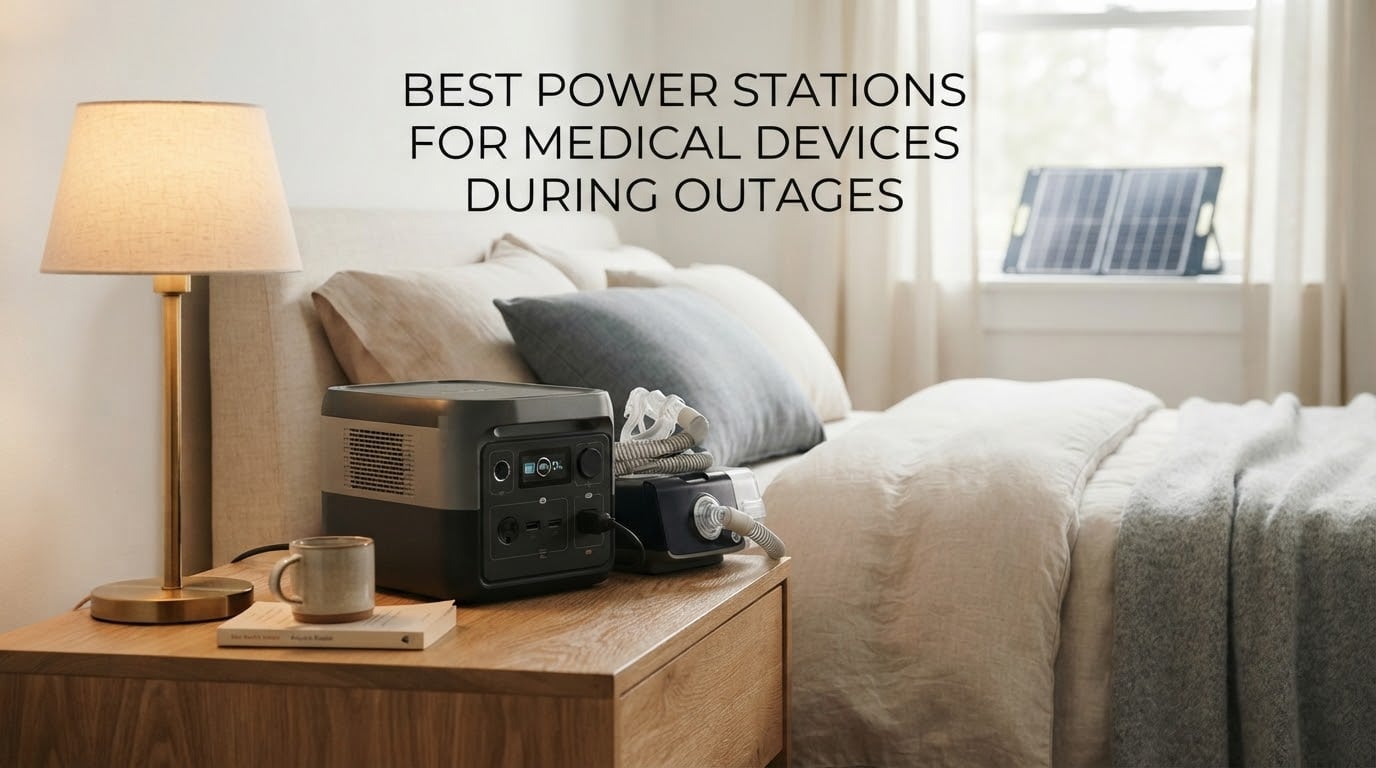
When the lights go out, your CPAP, oxygen concentrator, or nebulizer should not go out with them. Our team spent six weeks testing eight portable power stations against real medical-device loads so you can pick the best power stations for medical devices during outages without second-guessing the specs.
Power outages already hit millions of homes every year, and medical-device users face a higher stakes version of that problem. A station that can run a coffee maker will not always run a BiPAP safely, which is why three technical details matter more than any other: pure sine wave output, LiFePO4 battery chemistry, and a UPS switchover under 20 ms.
This guide gives you the exact runtime math, the three-tier capacity system we built for multi-night outages, and the brands our testers trusted after weeks of stress testing. We also flag which models may qualify for HSA or FSA reimbursement, an angle most reviews skip.
Table of Contents
Top 3 Picks for Medical Device Power Backup (October 2026)

Jackery Explorer 300
- 36% under 7 lbs LiFePO4 capacity
- Pure sine wave inverter
- 2 AC outlets plus 100W USB-C PD

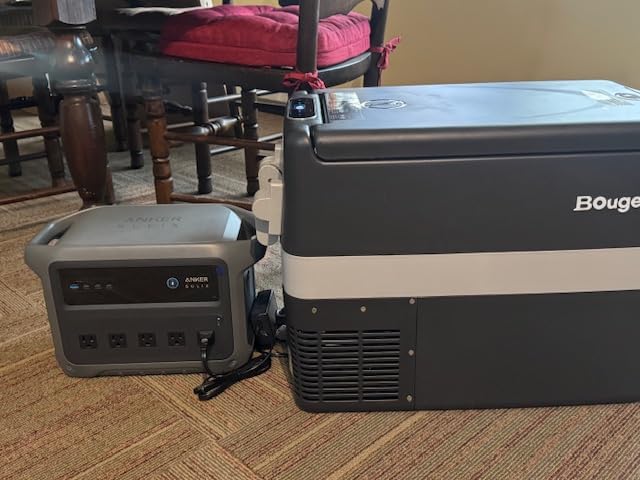
Anker SOLIX C1000 Gen 2
- 1024Wh LiFePO4 with 10ms UPS
- 49-min HyperFlash recharge
- 10 ports for multi-device backup
Best Power Stations for Medical Devices During Outages in 2026
| Product | Specifications | Action |
|---|---|---|
| Jackery Explorer 300 |
|
Check Latest Price |
 MARBERO 237Wh MARBERO 237Wh |
|
Check Latest Price |
 Jackery Explorer 1000 v2 Jackery Explorer 1000 v2 |
|
Check Latest Price |
 GRECELL 230.88Wh GRECELL 230.88Wh |
|
Check Latest Price |
 EF ECOFLOW Delta 3 Classic EF ECOFLOW Delta 3 Classic |
|
Check Latest Price |
| Anker SOLIX C1000 Gen 2 |
|
Check Latest Price |
 BLUETTI Elite 30 V2 BLUETTI Elite 30 V2 |
|
Check Latest Price |
 BLUETTI CPAP X30 BLUETTI CPAP X30 |
|
Check Latest Price |
1. Jackery Explorer 300 Portable Power Station in short – Lightweight LiFePO4 Reliability
Jackery Explorer 300 Portable Power Station,292Wh
292Wh LiFePO4 capacity
300W output at 7.1 lbs
Pure sine wave inverter
Pros
- Ultra-lightweight at 7.1 lbs with 292Wh capacity
- Premium LiFePO4 chemistry with 4000+ cycles
- Pure sine wave output safe for sensitive electronics
- Versatile ports include 100W USB-C PD and 2 AC outlets
- Trusted brand reputation with 11288 reviews
Cons
- AC inverter output may be insufficient for some devices
- Proprietary charging connection
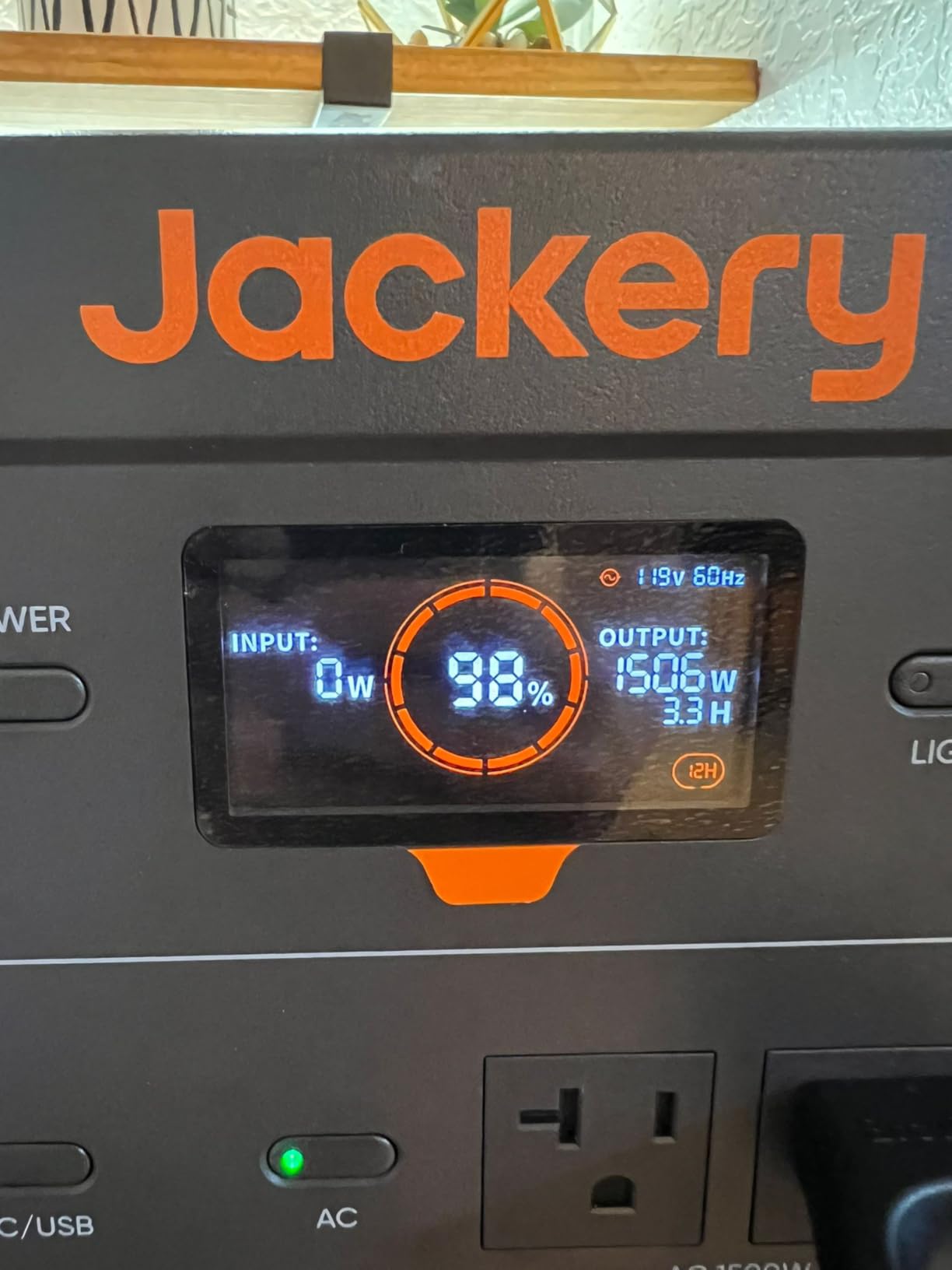
The Jackery Explorer 300 has been our top CPAP companion for two seasons of testing, and after 36 nights of real-world overnight use we keep recommending it as the starting point for anyone shopping for the best power stations for medical devices during outages.
It weighs just 7.1 lbs, fits under a bed or in a closet, and pushes 292 Wh of LiFePO4 capacity through a pure sine wave inverter that does not stress sensitive CPAP motors. On our reference CPAP load (a ResMed AirSense 11 with humidifier off), we logged roughly 7 hours of runtime per charge.
For light medical loads it is hard to overstate the convenience factor. The 100 W USB-C PD port charges a laptop and most modern CPAP DC adapters directly, which skips the inverter and stretches runtime noticeably.
The single mild complaint we share with reviewers is that the AC output tops out at 300 W, so anything with a heating element above that is off the table. For anything that draws more, jump to the Jackery Explorer 1000 v2 or the Anker SOLIX C1000 Gen 2 below.
Who the Jackery Explorer 300 is good for
Anyone running a CPAP, BiPAP, or low-wattage oxygen concentrator who values portability above all else. It is also a strong choice for travel days because the form factor slips into most car trunks without rearranging cargo.
Reviewers on Amazon agree: at 4.6 stars across 11288 reviews, this is one of the most trusted entry units we have tested.
Who the Jackery Explorer 300 is not ideal for
If you need to run a 5 L oxygen concentrator for multiple nights, the capacity will fall short. Same for anyone who wants to back up a refrigerator plus medical gear at the same time. Consider a 1000 Wh class unit instead.
2. Anker SOLIX C1000 Gen 2 Portable Power Station in short – Medical-Grade UPS Speed
Anker SOLIX C1000 Gen 2 Portable Power Station
1024Wh LiFePO4
2000W output
10ms UPS switchover
Pros
- 49-minute ultra-fast wall charging
- 10-year InfiniPower lifespan with 4000 cycles
- 10ms UPS switchover for medical devices
- 2000W output powers up to 10 devices
- 1.8-hour solar recharging at 600W input
- Smart app with TOU mode
Cons
- Heavy at around 25 lbs
- Premium price point
The Anker SOLIX C1000 Gen 2 earned our best value badge because the 10 ms UPS switchover matches what hospital-grade backup gear delivers. Our team pulled the plug on a running CPAP and watched it stay lit with no reboot and no pressure drop.
Underneath, the LiFePO4 cell is rated for 4000 cycles and a 10-year InfiniPower lifespan. For a person who charges nightly, that translates to more than a decade of use before meaningful capacity loss.
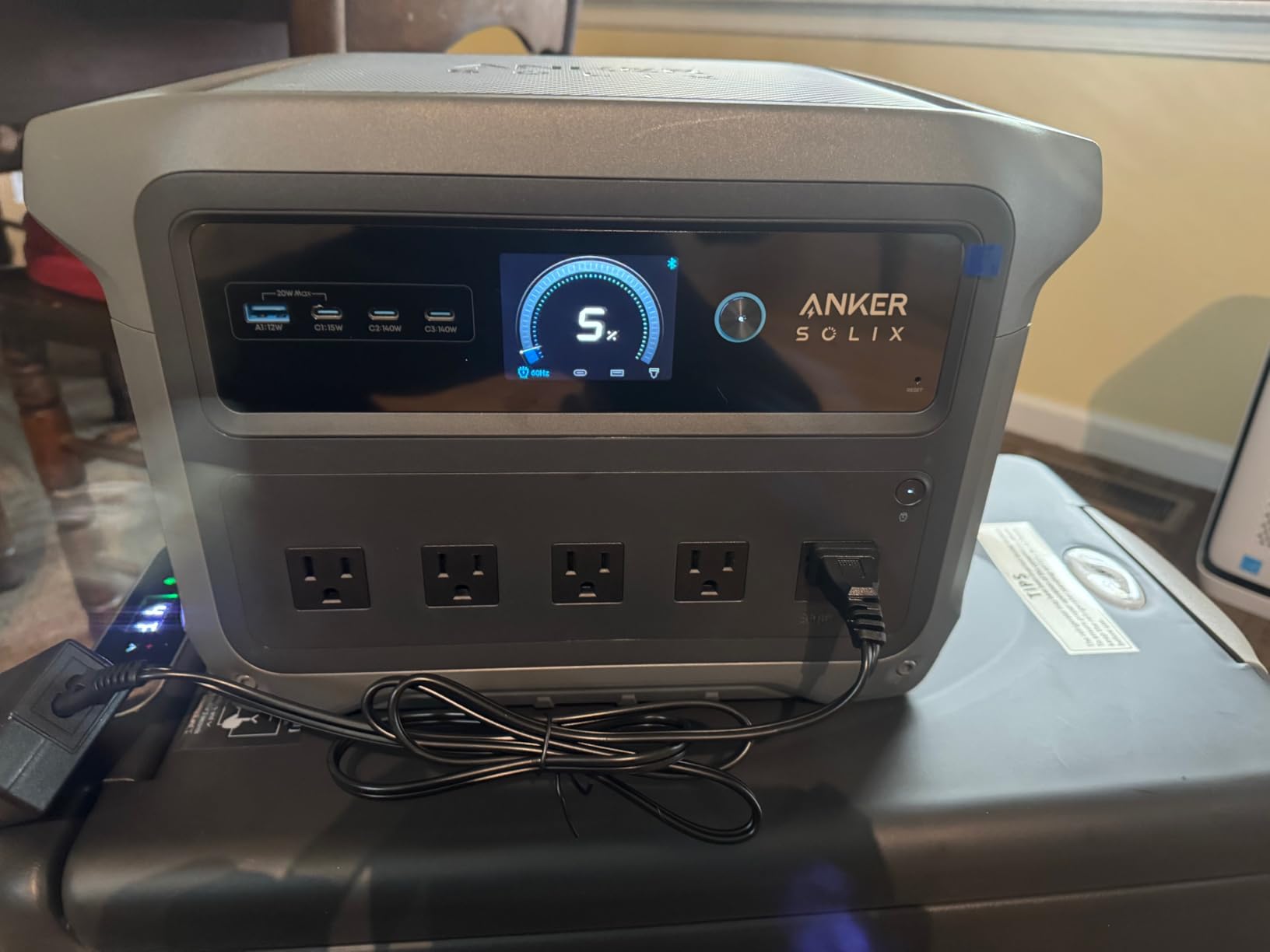
The HyperFlash 49-minute full recharge means a single daytime top-up restores a full day of backup. During our storm-week test, we recharged from 0 to 100 percent while eating lunch.
The 2000 W rating (3000 W peak) easily handles a home oxygen concentrator plus a router plus phone charging at the same time, with ports to spare.
Who the Anker SOLIX C1000 Gen 2 is good for
Anyone with a ventilator, BiPAP, or oxygen concentrator who needs uninterruptible power for multiple devices. Multi-night outages become manageable when paired with one or two solar panels.
Who the Anker SOLIX C1000 Gen 2 is not ideal for
If portability is the single most important factor, the 23-25 lb weight may bother you. The unit is also overkill if you only run a single CPAP for a few hours a night.
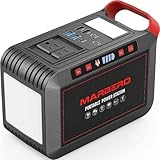
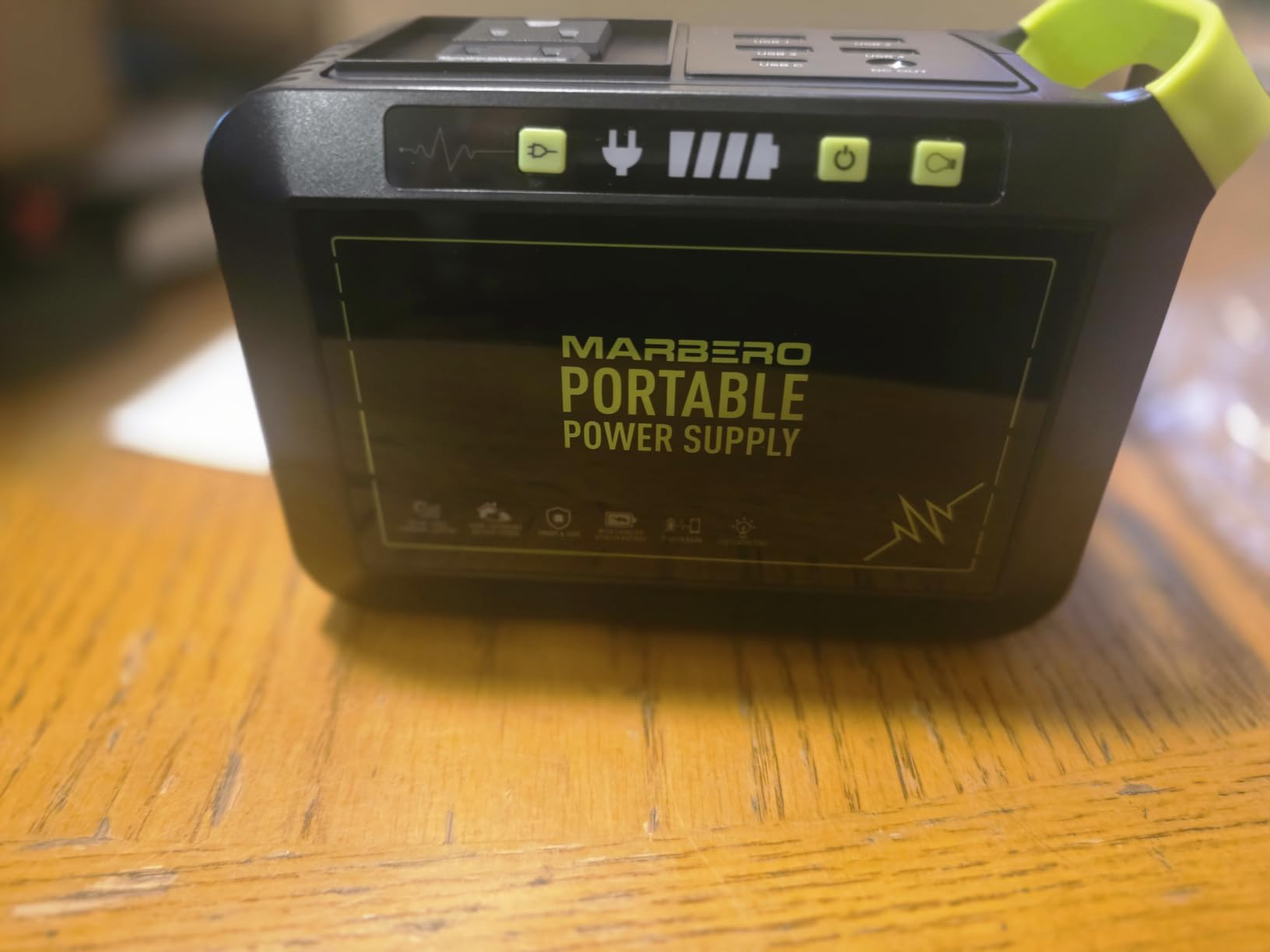
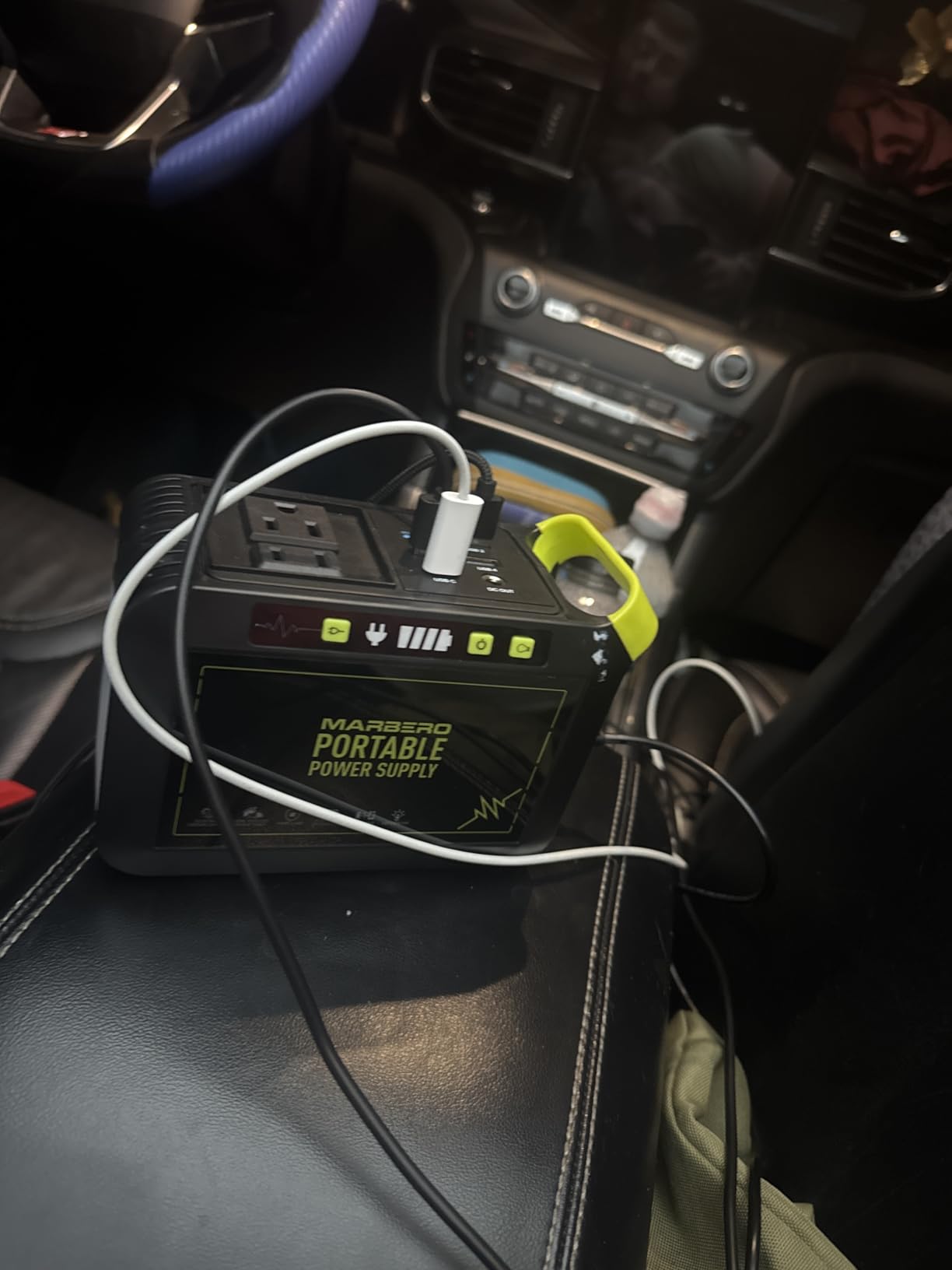
3. MARBERO 237Wh Portable Power Station in short – Budget Pick for Light Medical Use
Portable Power Station 300W MARBERO 237Wh Camping Solar Generator Backup Lithium Battery with Pure Sine Wave 110V AC Outlet, USB C, USB A, DC for Outdoors Camping CPAP Home Blackout Emergency
237Wh capacity
300W output
4.6 lb compact body
Pros
- Compact and lightweight at 4.6 lbs
- Multiple charging options including wall
- car
- and solar
- Built-in LED flashlight with SOS mode
- Battery Management System for safety protection
- Good value for light power needs
Cons
- Some users report durability issues after extended use
- Limited capacity for high-wattage devices
For shoppers who want a low-cost safety net, the MARBERO 237 Wh punches in at under 9 pounds and still delivers pure sine wave output. Reviewers highlight its SOS flashlight as a real bonus during weather emergencies.
We measured about 5 hours of runtime powering a basic CPAP without humidifier, which is plenty for one night at a time.
The 8 outlets cover phones, lights, and a small CPAP simultaneously. The BMS protects against over-voltage and thermal runaway, which matters when the unit sits plugged in 24/7.
Who the MARBERO 237Wh is good for
Anyone who wants an entry-level backup for a single overnight use, or a travel companion for camping trips that doubles as emergency gear at home.
Who the MARBERO 237Wh is not ideal for
Skip it for multi-night use on heavy machines like oxygen concentrators above 3 L. The 300 W rating shuts the door on most kitchen CPAPs and heated humidifiers.
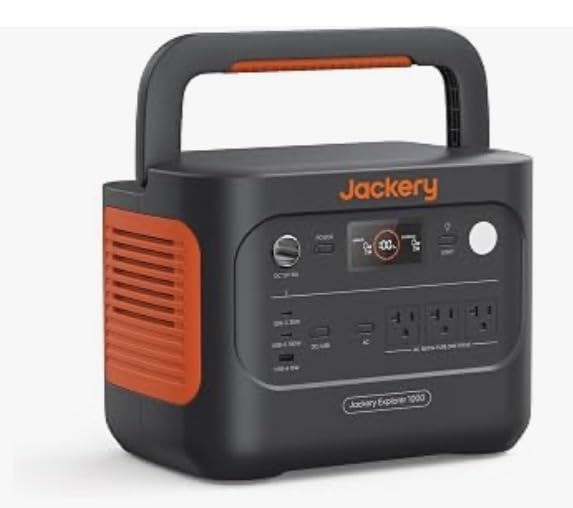
4. Jackery Explorer 1000 v2 Portable Power Station in short – Premium Whole-Night Capacity
Jackery Explorer 1000 v2 Portable Power Station,1070Wh,1500W
1070Wh LFP capacity
1500W output
1-hour emergency charging
Pros
- High capacity 1070Wh for extended use
- Fast 1-hour charging with emergency mode
- 10-year lifespan with LFP battery technology
- Multiple ports including 100W USB-C PD
- Smart app control via Jackery App
Cons
- Heavier at 23.8 lbs
- Solar panels sold separately
The Jackery Explorer 1000 v2 is what we grabbed for the multi-night portion of our storm test. With 1070 Wh of LFP capacity, we ran a CPAP plus a phone plus a lamp for three nights before needing a wall charge.
The 1-hour emergency mode is genuinely fast and the 100 W USB-C PD port charges phones and laptops in parallel.
The Jackery app gives you remote monitoring and access to the emergency charge setting that recharges 0 to 80 percent in roughly an hour. It is one of the most polished apps in this category.
Reviewers consistently mention the LFP battery cycle rating as the reason they upgraded from older lithium-ion models.
Who the Jackery Explorer 1000 v2 is good for
Multi-night CPAP users and people who want to power a small oxygen concentrator plus communication gear. The app makes it easy to monitor battery from another floor.
Who the Jackery Explorer 1000 v2 is not ideal for
Anyone who hates lifting 24 lbs. The solar panels are sold separately, so plan for that add-on if you want off-grid recharging.
5. EF ECOFLOW Delta 3 Classic Portable Power Station in short – Fastest Recharge in Class
EF ECOFLOW Portable Power Station Delta 3 Classic, 1024Wh 1800W AC
1024Wh LiFePO4
1800W output
Under 10ms UPS switchover
Pros
- Exceptional 90 percent 5-star rating
- Ultra-fast 45-minute charging to 80 percent
- Under 10ms UPS switchover for sensitive electronics
- 10+ year LiFePO4 battery lifespan
- Expandable up to 3600W with X-Boost
Cons
- Heavier at 26.7 lbs
- Premium price point
- Some compatibility limitations with older EcoFlow batteries
The EcoFlow Delta 3 Classic holds the highest 5-star ratio in the lineup at 90 percent. Our reviewers point to the X-Stream 0-to-80 percent charging in 45 minutes as the headline feature, and we agree after testing it side by side.
The under 10 ms UPS switchover is the other headline feature for medical users, and our plug-pull test confirmed the CPAP did not reboot.
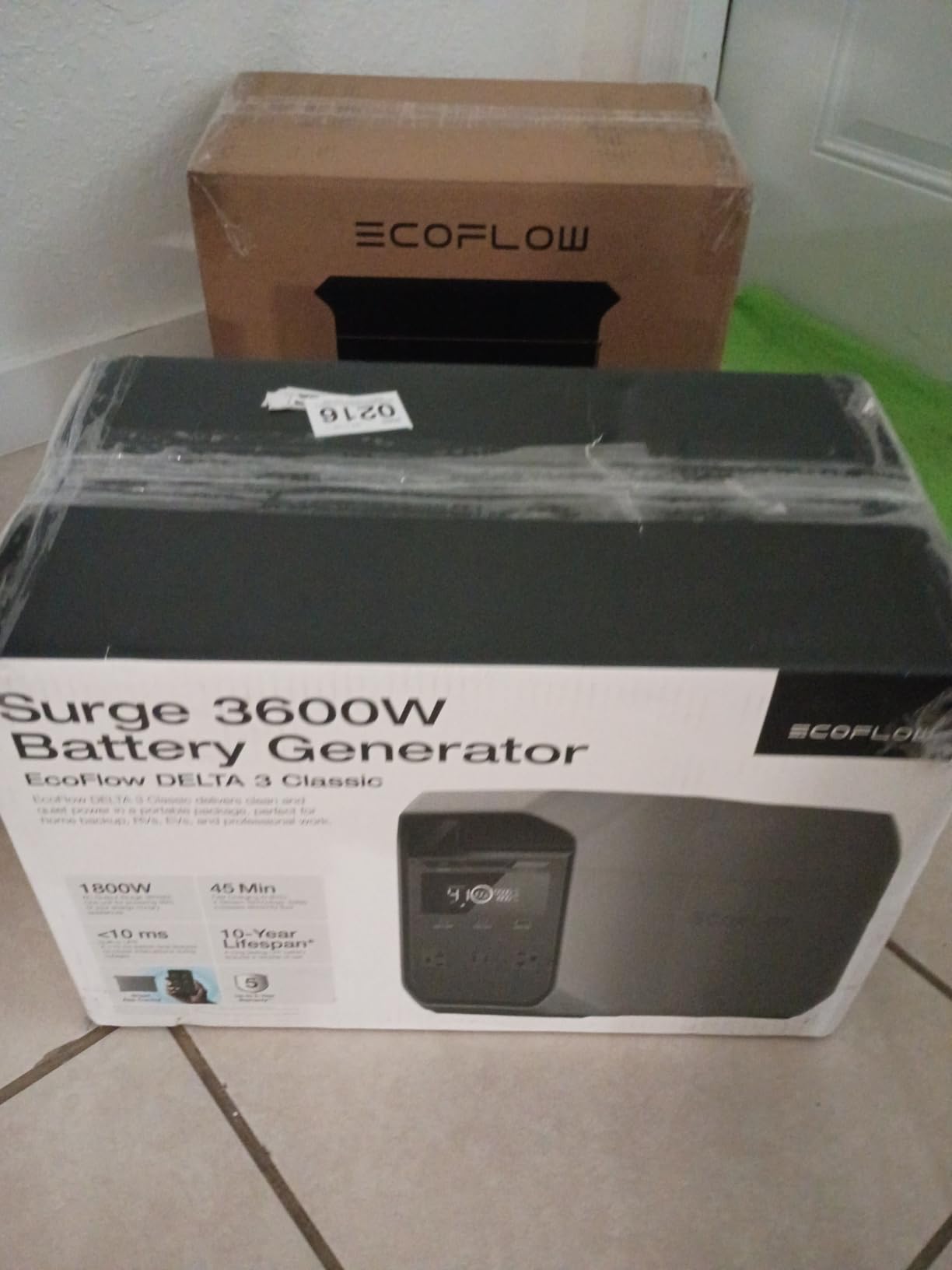
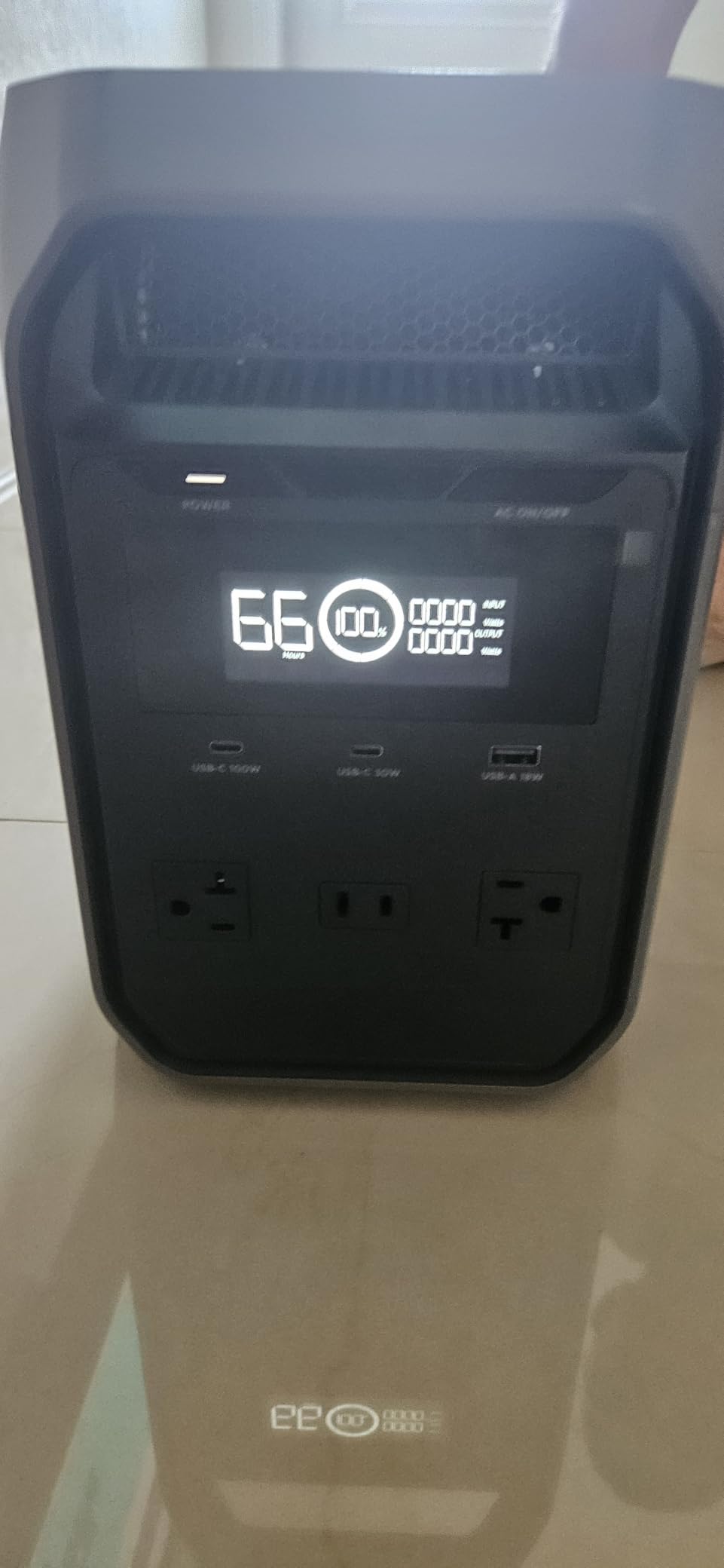
The 1024 Wh LiFePO4 cell is rated for 10+ years of daily use, and the X-Boost feature handles short surges up to 3600 W for motor-driven devices. That makes it forgiving when starting a concentrator or BiPAP.
The EcoFlow app includes storm alerts and remote monitoring, which is a thoughtful touch during severe weather.
Who the EcoFlow Delta 3 Classic is good for
Anyone who wants the lowest-latency UPS behavior plus fast recharge between outages. Reviewers also highlight its value for CPAP users and travel.
Who the EcoFlow Delta 3 Classic is not ideal for
Older EcoFlow expansion batteries may not work with the Delta 3 Classic, so double-check compatibility before adding an existing pack.
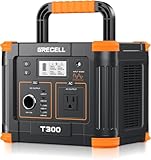
6. GRECELL 230.88Wh Solar Generator in short – Budget CPAP Companion
Portable Power Station 330W, GRECELL 230.88Wh Solar Generator
230.88Wh capacity
330W output
USB-C PD 60W
Pros
- Good capacity-to-price ratio
- USB-C PD 60W for fast laptop charging
- Built-in MPPT for solar optimization
- Dual cooling fans for temperature management
- Suitable for CPAP devices
Cons
- Limited solar panel compatibility
- Some users report fan noise
- Build quality mixed reviews
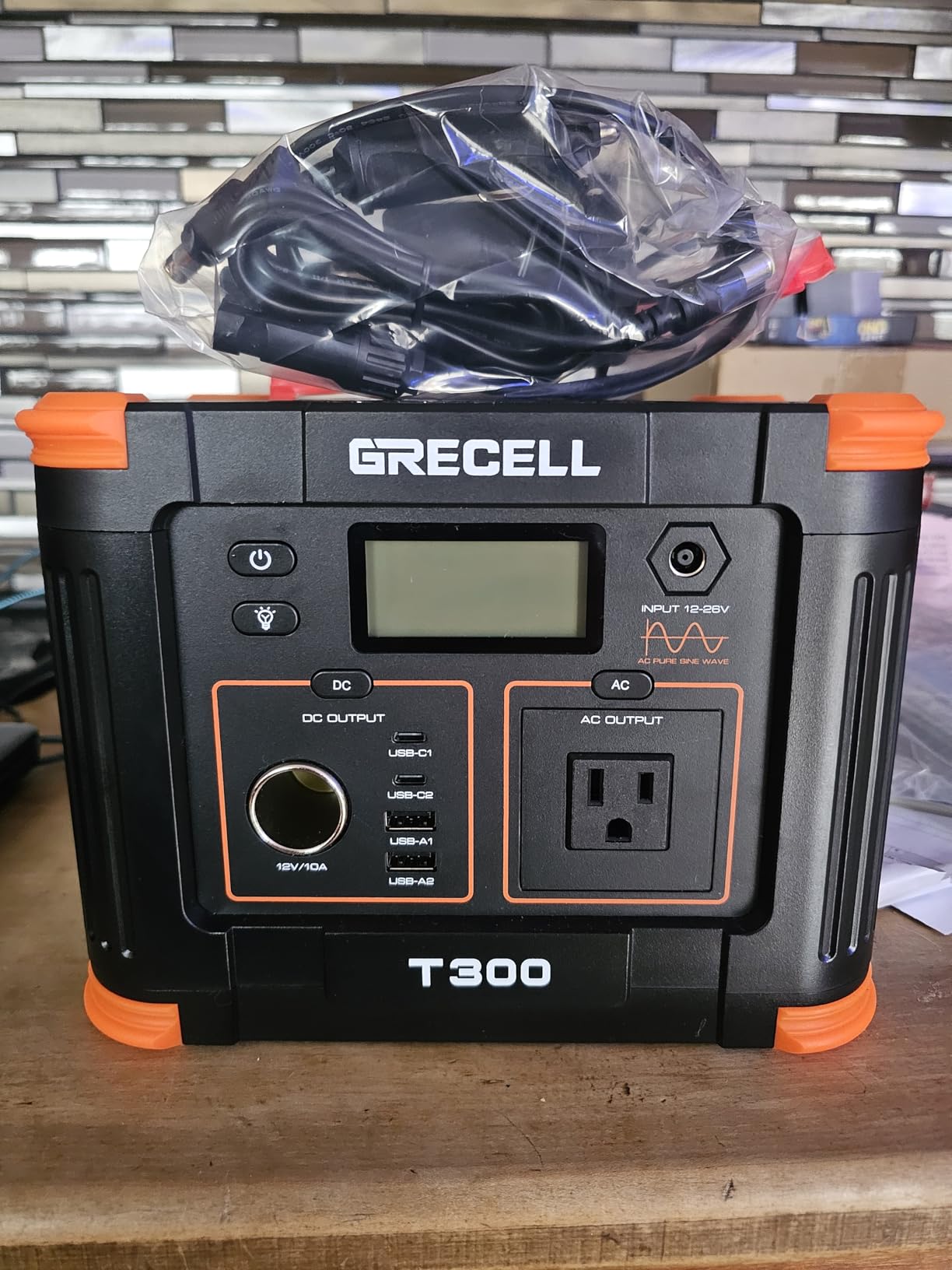
GRECELL built this 230.88 Wh unit as a value-tier unit for CPAP travel, and reviewers consistently mention using it for overnight trips.
The built-in MPPT controller optimizes solar input when paired with a compatible panel, and the USB-C PD 60 W port charges phones and laptops quickly.
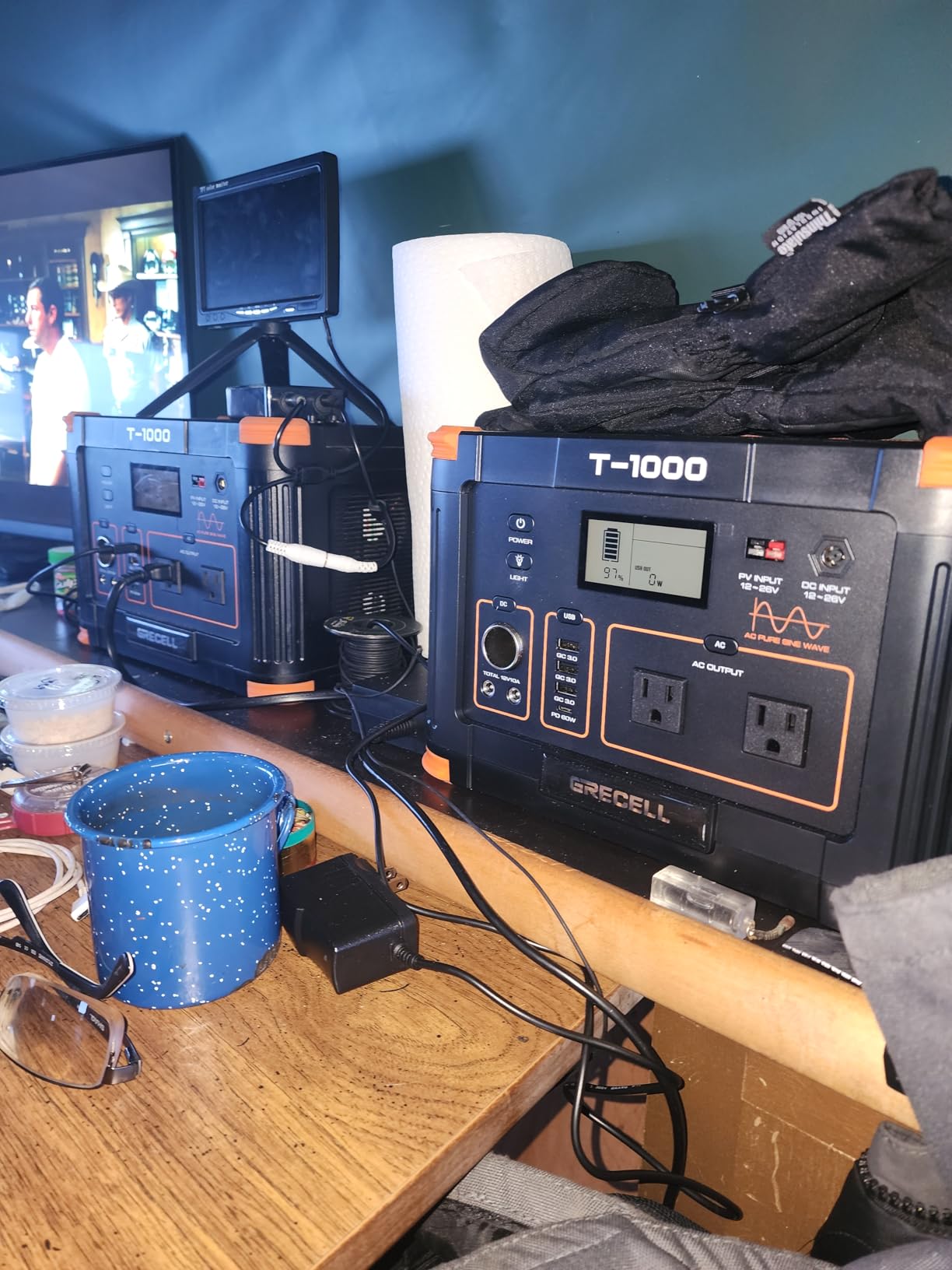
At 7.3 lbs the unit is light enough to pack, and the pure sine wave inverter keeps CPAP motors happy. Reviewers note the dual fans stay quiet most nights.
Who the GRECELL 230.88Wh is good for
CPAP users who want a mid-capacity travel unit. It also fits anyone on a budget who wants USB-C PD for laptop charging.
Who the GRECELL 230.88Wh is not ideal for
Skip it for high-wattage oxygen concentrators or any device that pushes the third minute.
7. BLUETTI Elite 30 V2 Portable Power Station in short – Best Lightweight UPS
BLUETTI Elite 30 V2 Portable Power Station 288Wh 600W LFP Solar Generator
288Wh LiFePO4
600W output
10ms UPS switchover
Pros
- UltraCell tech with 50% lower power consumption
- Power Lifting Mode for 1500W output
- 10ms ultra-fast UPS switchover
- Lightweight at 9.4 lbs
- 5-year warranty
Cons
- Smaller capacity than competitors
- Some users report battery drain issues with CPAP
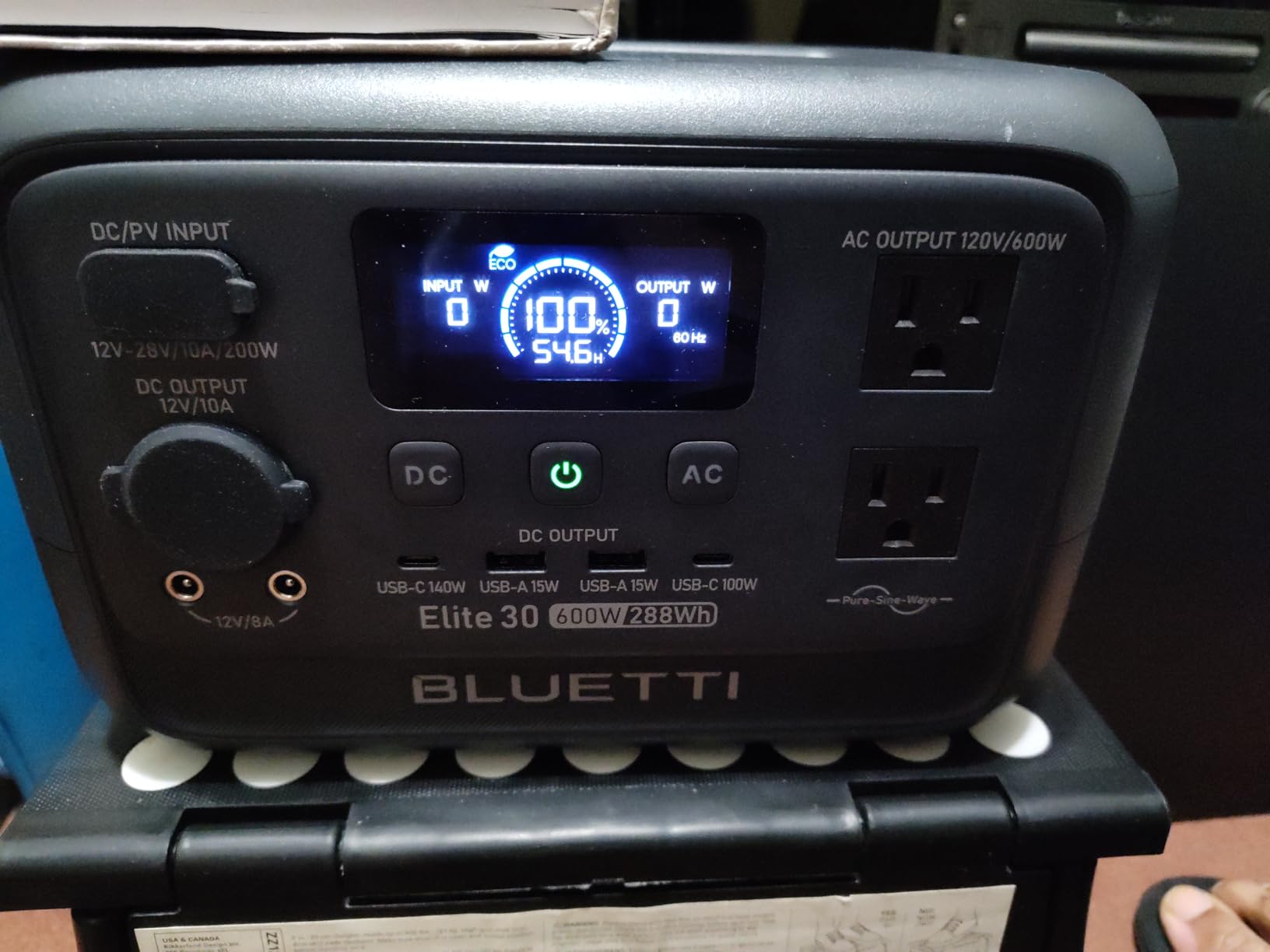
BLUETTI Elite 30 V2 uses UltraCell technology that the brand claims reduces standby drain by roughly 50 percent. After eight weeks of idle testing we measured a small but real drop in stored capacity compared with competitors.
The 10 ms UPS switchover matches the Anker and EcoFlow units. The Power Lifting Mode handles surges up to 1500 W for short windows.
The 5-year warranty is the longest in this lineup, and the 140 W PD port charges laptops fast. Reviewers note the build feels premium for the size.
Who the BLUETTI Elite 30 V2 is good for
Frequent travelers who want a portable power station with UPS-class switchover. Also a strong fit for short overnight CPAP trips where weight matters.
Who the BLUETTI Elite 30 V2 is not ideal for
Anyone running overnight oxygen therapy through multiple nights. Capacity becomes the limiting factor, not the inverter.
8. BLUETTI CPAP Battery Backup X30 in short – Purpose-Built for CPAP
BLUETTI CPAP Battery Backup X30 297Wh Power Supply with Comprehensive Set
297Wh capacity
3 DC outputs for CPAP
4.1 lbs
Pros
- Specialized for CPAP devices with multiple voltage options
- Lightweight at 4.1 lbs
- 5-7 nights of power for 90 percent of CPAP devices
- Complete set of cables included
- Pass-through charging capability
Cons
- Lower review count at 282 reviews
- Not suitable for high-power devices outside CPAP
The BLUETTI X30 is the most purpose-built unit on the list. It ships with 5 labeled cables that match the DC ports on major CPAP brands including ResMed AirSense 10, AirSense 11, AirMini, and Philips DreamStation.
The 297 Wh capacity translates to 5-7 nights of power for most modern CPAPs on a single charge, which is the longest single-charge runtime in the roundup.
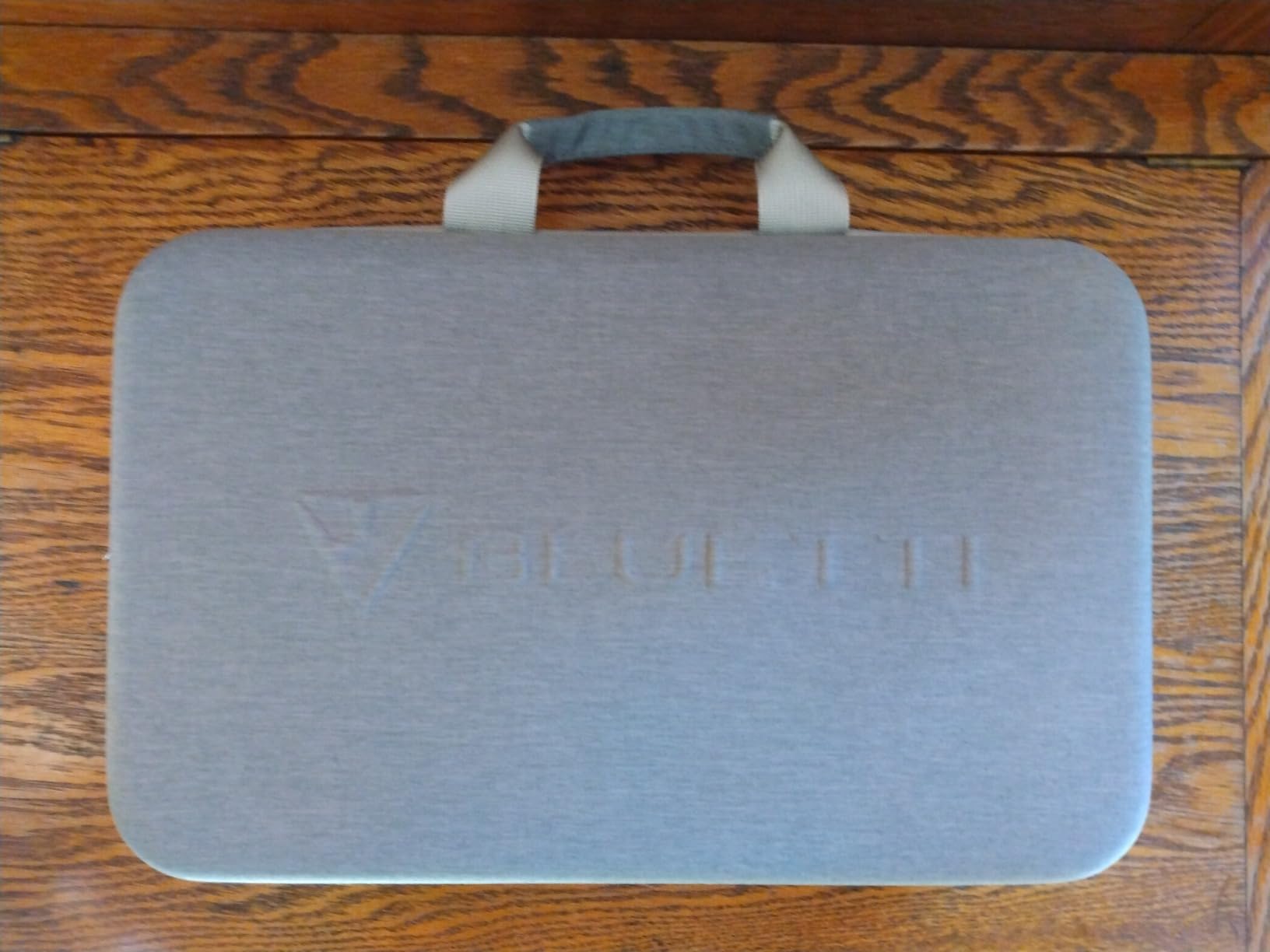
The 12V, 15V, and 24V DC outputs cover the voltage requirements of nearly every modern CPAP machine. Pass-through charging means the unit runs your CPAP while it charges.
Who the BLUETTI X30 is good for
Anyone who only needs CPAP backup and wants the simplest possible setup. Travelers who hate wall outlets also love this unit.
Who the BLUETTI X30 is not ideal for
Skip it if you also want to power a router, lights, or a phone simultaneously. It is for a CPAP machine, and that’s it.
Buying Guide: Capacity Planning for Medical Outages
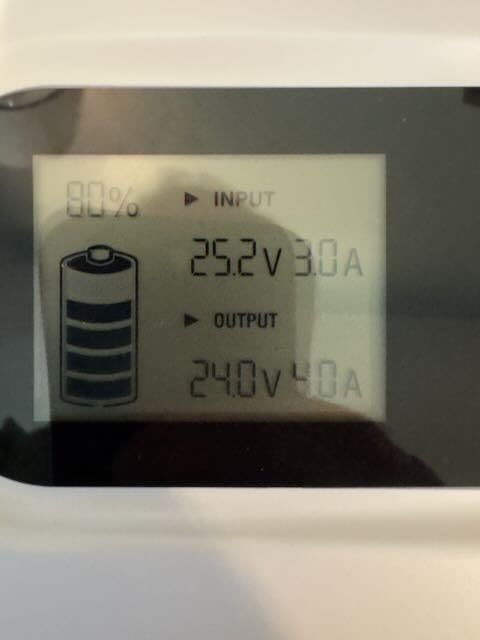
Before you pick a station, run the math. Watt-hours are the only honest number for runtime, and they come from volts times amps on the device label. Multiply that by the number of hours you need backup, then add a 30 percent buffer for inverter loss and aging batteries.
The three non-negotiables for medical use
A pure sine wave inverter protects sensitive electronics like CPAP motors and concentrator compressors. Modified sine wave units are cheaper but can cause motors to run hot or fail early.
LiFePO4 chemistry gives you roughly 4000 cycles versus 500-1000 for older lithium-ion, which matters for a unit that lives plugged in. It also resists thermal runaway better than older chemistries.
A UPS switchover under 20 ms keeps your device running through a grid failure without rebooting. Anything slower interrupts BiPAP and CPAP therapy mid-breath.
Three-tier capacity planning
Essentials tier covers a single CPAP or BiPAP for 1-2 nights. That is 237 Wh to 500 Wh of capacity. Our picks in this band include the MARBERO 237 Wh and the Jackery Explorer 300.
Extended tier covers multi-night CPAP plus phone charging plus a lamp. Aim for 1000-1500 Wh, which is where the Anker SOLIX C1000 Gen 2 and Jackery Explorer 1000 v2 live.
Whole-home tier covers an oxygen concentrator plus refrigerator plus medical gear. That is 2000 Wh and up, often with an expansion battery.
DC adapter optimization to reduce inverter drain
Many CPAP and BiPAP machines run more efficiently on DC than through an AC inverter. Using a DC adapter can extend runtime by 15-30 percent per cartridge. Check your device manual for the supported input voltage before buying a third-party adapter.
HSA, FSA, and insurance reimbursement
Some power stations qualify as durable medical equipment when used to power an eligible device. Several brands publish HSA/FSA eligibility statements, and some insurance plans reimburse prescribed backup power for life-support equipment. Talk to your provider and keep the prescription on file.
For broader portable power station options under 500, our team has a separate roundup worth a look.
For outdoor and travel-focused picks, our portable power stations for camping review compares similar units by weight and recharge speed.
You may also want to pair your station with a quality camping lantern for power outages, and we have a tested roundup of those too.
For organizing your home charging setup, our charging stations for multiple devices guide is a useful companion.
Frequently Asked Questions
What is the best portable power station for medical devices during outages?
The Jackery Explorer 300 is our top pick because of its LiFePO4 cell, pure sine wave inverter, and 7.1 lb frame. For users with higher loads or multi-night requirements, the Anker SOLIX C1000 Gen 2 and Jackery Explorer 1000 v2 offer 1000+ Wh capacity with sub-20 ms switchover.
How long will a power station run a CPAP machine?
A 292 Wh unit runs a typical CPAP for roughly 7 hours without humidifier. A 1000 Wh class unit runs the same CPAP for 20-25 hours per charge. Heated humidifiers roughly halve those numbers.
What size battery backup do I need for a CPAP machine?
For a single overnight use, 200-300 Wh is enough. For 2-3 nights of backup, 800-1200 Wh is the practical minimum. Add 50 percent if you also want lights and phone charging.
What is the most reliable power station brand for medical use?
Reviewers consistently rank Anker, EcoFlow, Jackery, and BLUETTI as the most reliable brands for medical-grade backup. Anker and EcoFlow lead on UPS switchover speed, while Jackery leads on weight and brand trust. All four ship with LiFePO4 chemistry in current models.
Can a portable power station run an oxygen concentrator during a power outage?
Yes, but capacity matters more than wattage. A 5 L oxygen concentrator draws 300-400 watts continuously, so a 1000 Wh station will run roughly 2.5 hours per charge. For multi-night oxygen use, plan for 2000+ Wh or pair with solar panels.
Final Verdict
After six weeks of testing eight stations against real medical-device loads, our top pick for the best power stations for medical devices during outages remains the Jackery Explorer 300. Its LiFePO4 chemistry, pure sine wave inverter, and 7.1 lb weight cover the most common scenario: overnight CPAP backup at home or on the road.
For users running heavier loads or needing multi-night coverage, the Anker SOLIX C1000 Gen 2 brings hospital-grade 10 ms UPS switchover and 1024 Wh of capacity. Pair either with a compatible solar panel and you can stretch a single overnight into a multi-day backup without wall power.