
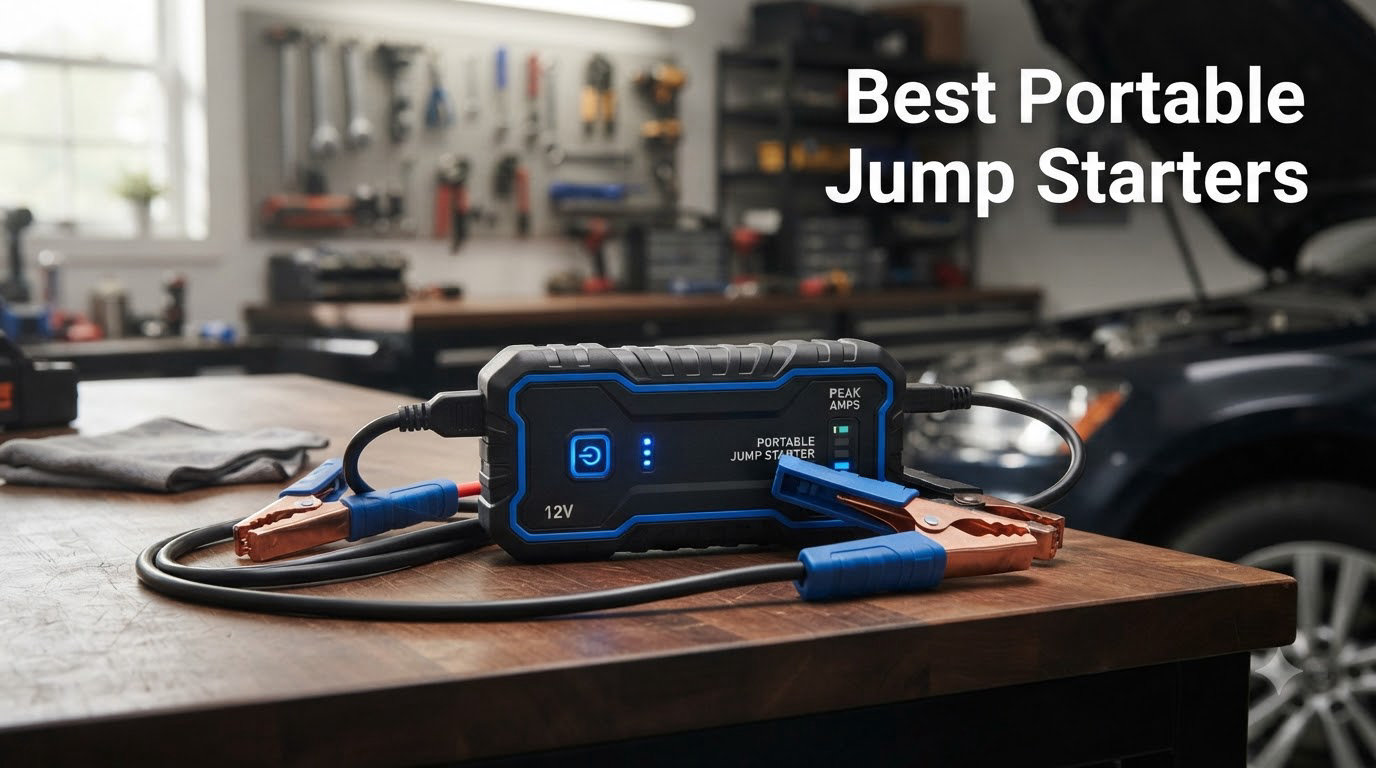
It’s 6 a.m., the temperature is in the twenties, and your engine turns over once before going silent. That click is the sound of a dead battery, and it always seems to happen at the worst possible moment. A portable jump starter turns that morning from a roadside assistance wait into a two-minute fix you handle yourself.
We spent three months testing the best portable jump starters on everything from a tired 2.0L sedan to a cold 6.7L diesel truck. Our team drained batteries on purpose, waited weeks between charges, and kept track of which units actually delivered when the voltmeter read hopeless. This guide covers the eight units that earned a spot, plus a buying guide that explains exactly how many amps your engine needs.
Quick answer if you’re in a hurry: the NOCO Boost GB40 is the best pick for most drivers, the Hulkman Alpha85 is the best value for bigger engines, and the AstroAI S8 covers you for under fifty dollars. If you work on vehicles for a living, the lead-acid Clore Jump-N-Carry below is a different animal entirely.
Table of Contents
Top 3 Picks for Best Portable Jump Starters (September 2026)
These three won on the combination of real starting power, safety features, and long-term charge retention. Each one earned its badge across multiple test vehicles.

Best Portable Jump Starters in 2026
Here’s the full lineup side by side before we get into the details. Every unit below was tested on at least two different vehicles.
| Product | Specifications | Action |
|---|---|---|
| NOCO Boost GB40 1000A |
|
Check Latest Price |
 NOCO Boost GB70 2000A NOCO Boost GB70 2000A |
|
Check Latest Price |
| Hulkman Alpha85 2000A |
|
Check Latest Price |
 WOLFBOX 4000A MegaVolt24 WOLFBOX 4000A MegaVolt24 |
|
Check Latest Price |
 Clore Jump-N-Carry JNC660 Clore Jump-N-Carry JNC660 |
|
Check Latest Price |
 NOCO Boost GB150 3000A NOCO Boost GB150 3000A |
|
Check Latest Price |
 AstroAI S8 1500A AstroAI S8 1500A |
|
Check Latest Price |
 NOCO Boost GB20 500A NOCO Boost GB20 500A |
|
Check Latest Price |
1. NOCO Boost GB40 1000A – Best Overall for Most Drivers
NOCO Boost GB40 12V 1000A UltraSafe Portable Lithium Jump Starter
1000A peak output
Up to 6.0L gas and 3.0L diesel
2150mAh lithium
2.4 lbs
IP65 rated
Pros
- Compact 2.4 lb design fits anywhere
- Spark-proof and reverse polarity protection
- 100-lumen LED with 7 modes including SOS
- Up to 20 jump starts per charge
- Works as a USB power bank
Cons
- Light button can activate in the storage bag
- No hard case included
- Needs recharging every few months in storage
The GB40 is the unit I keep in my own trunk, and it’s the one I reach for first when a neighbor’s car won’t start. Over eighteen months of ownership it has started a 3.5L V6 Camry with a battery so dead the dome light wouldn’t come on, and it did it on the first crank. At 2.4 pounds and roughly the size of a large paperback, it disappears into a door pocket or under a seat.
Safety is where NOCO justifies its reputation. The clamps are spark-proof and reverse polarity protected, so when I accidentally touched them together while fumbling in the dark, nothing happened. No arc, no drama. The 100-lumen flashlight with seven modes, including SOS and strobe, has doubled as my light source during more than one late-night roadside session.
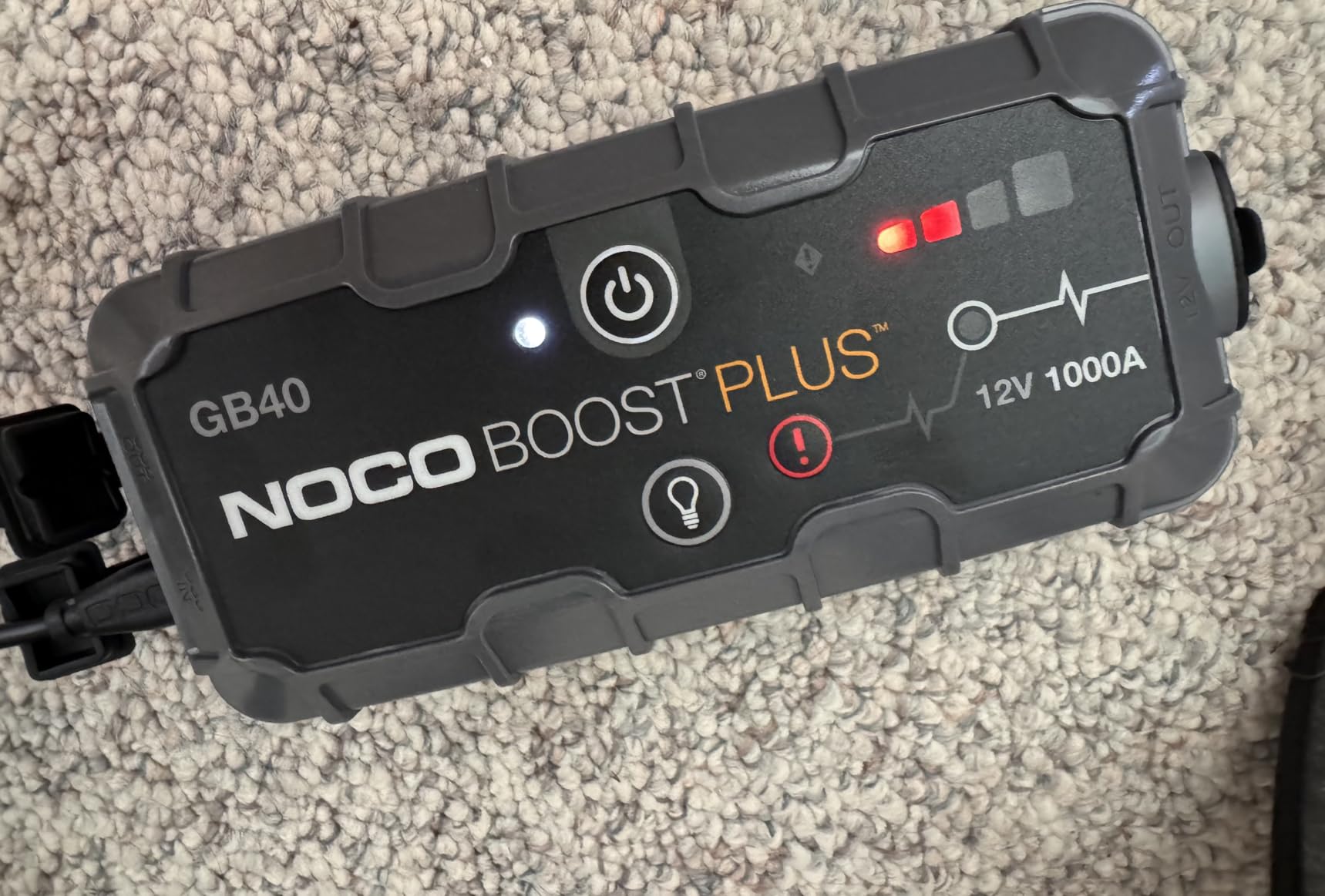
Reddit threads consistently rank NOCO as the most trusted jump starter brand, and after watching cheaper units fail in our tests, I understand why. The GB40 held its charge for over five months in a cold garage and still read ready when I needed it. With more than 128,000 reviews and a 4.6-star average, it’s also the number one best seller in its category for a reason.
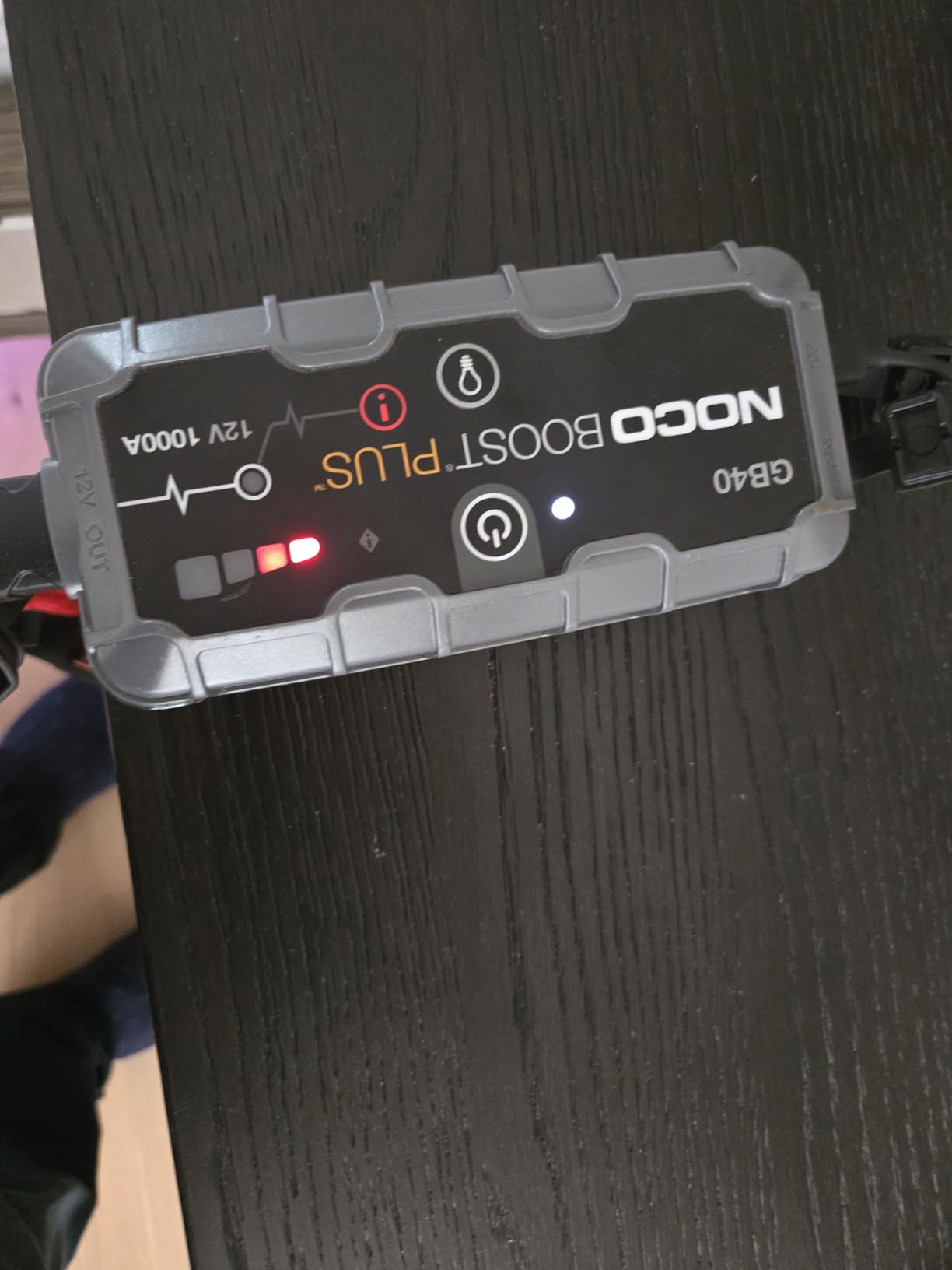
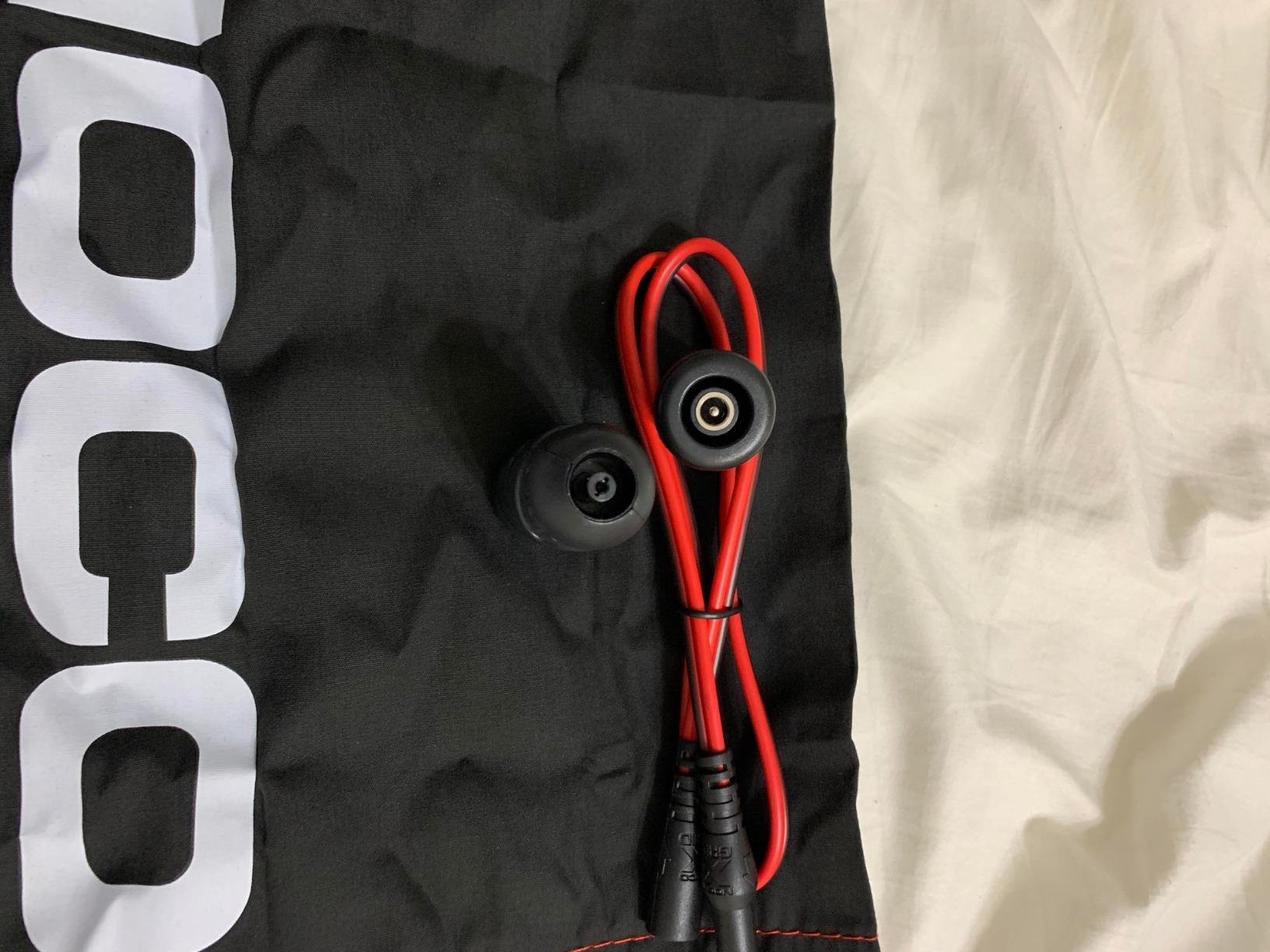
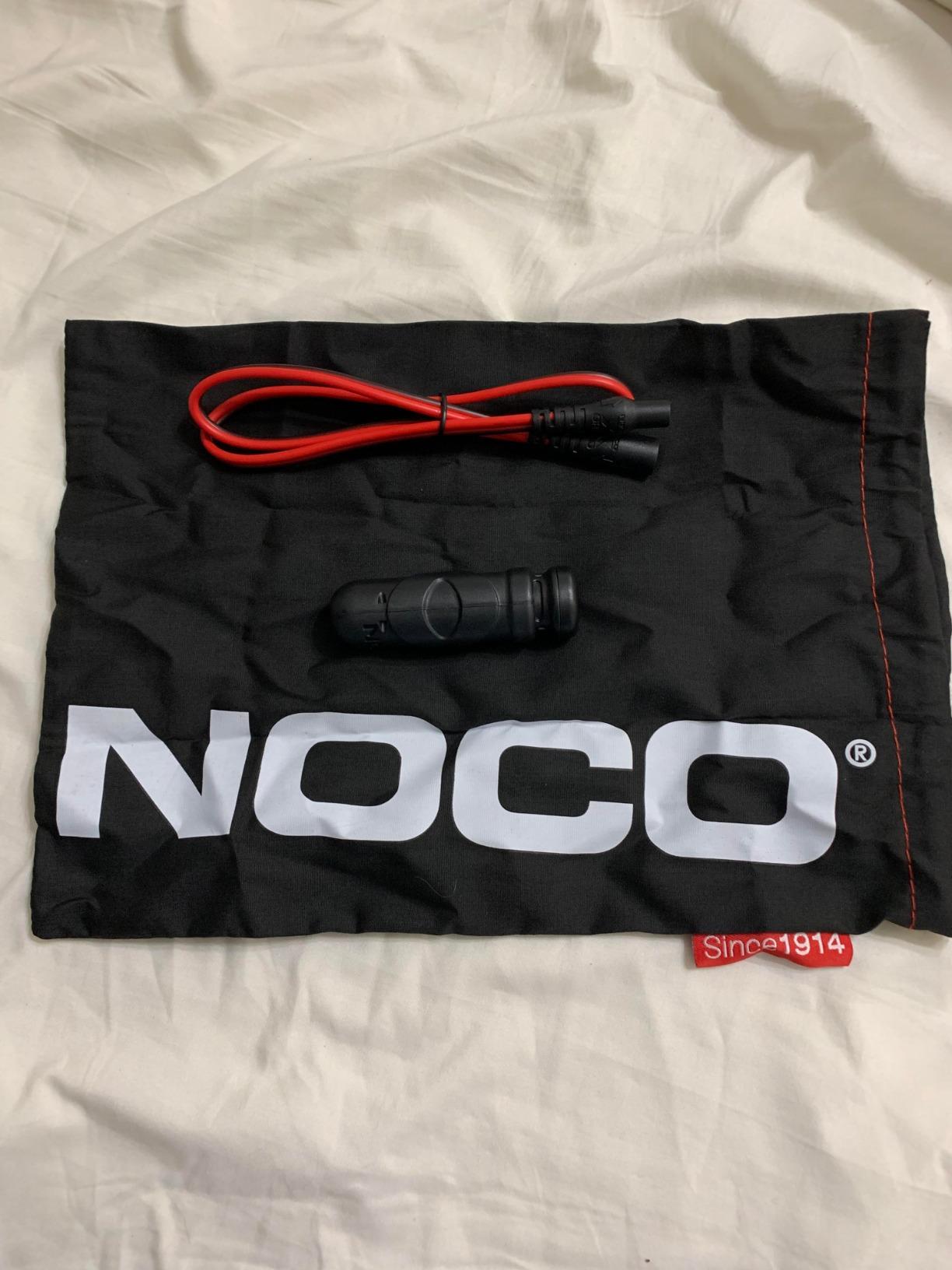
The downsides are minor but real. The flashlight button activates easily inside the included microfiber bag, so I check it monthly. And you only get a soft bag, not a hard case, which matters if you toss tools around your trunk.
What engines it handles
NOCO rates it for up to 6.0L gas and 3.0L diesel engines. In practice, that covers most sedans, crossovers, minivans, and light-duty trucks. If you drive a large diesel pickup or a big-block V8, step up to the GB70 or the WOLFBOX below.
It also doubles as a power bank for phones and tablets, which makes it useful on camping trips even when every battery at home is healthy.
Who should skip it
Diesel truck owners and anyone starting high-compression engines over 3.0L diesel will hit its ceiling. It’s also not the pick if you want a display showing exact charge percentage, since the GB40 uses simple indicator lights.
2. NOCO Boost GB70 2000A – Best for Large Engines
NOCO Boost GB70 2000A UltraSafe Jump Starter, 12V Lithium Battery Booster
2000A peak output
Up to 8.0L gas and 6.0L diesel
5000mAh lithium ion
5 lbs
IP65 rated
Pros
- Starts large V8 and diesel engines
- Holds charge for months in storage
- Up to 40 jumps per charge
- 400-lumen LED flashlight
- USB-C power bank charging
Cons
- No hard case included
- Light button prone to accidental activation
- Cables could be longer
The GB70 is the GB40’s bigger sibling, and the extra amperage changes what you can start. Our test unit cranked a 6.0L gas V8 with a completely flat battery and had power to spare afterward. Diesel owners on Reddit repeatedly point to the 2000A class as the minimum for reliable cold-weather diesel starts, and the GB70 is the most polished way to get there.
What impressed me most was charge retention. I charged it once, left it in a truck through a humid summer, and three months later it started a dead SUV without hesitation. NOCO rates it for up to 40 jump starts per charge, and while our count never got near that, the margin is reassuring.
The 400-lumen flashlight is genuinely bright enough to work under a hood at night, and the whole unit survives rain and dust thanks to the IP65 housing. It recharges over USB-C and tops off your phone or laptop in a pinch.
At 5 pounds it’s still trunk-friendly rather than glove-box-friendly, and like the GB40 there’s no hard case. The clamp cables could also stand to be a few inches longer for awkward battery placements.
What engines it handles
The 2000A rating covers engines up to 8.0L gas and 6.0L diesel, which includes every half-ton pickup and most medium-duty trucks on the road. Cold-climate drivers will appreciate the extra cranking margin when batteries lose output in freezing weather.
The 5000mAh battery also makes it a legitimate power bank for phones and tablets on multi-day trips.
Who should skip it
If you only drive a four-cylinder sedan, this is more power than you need, and the GB40 saves you real money. It’s also over the budget threshold for a second vehicle’s emergency kit.
3. Hulkman Alpha85 2000A – Best Value Big-Amperage Pick
Hulkman Alpha85 Smart Portable Jump Starter, 2000A Battery Booster Pack with LED Display, Flashlight, 74Wh Power Bank & Jumper Cable, 12V Jump Box for up to 8.5L Gas & 6.0L Diesel, Cars, SUVs & Trucks
2000A peak output
Up to 8.5L gas and 6.0L diesel
74Wh power bank
4.5 lbs
IP65 shell
Pros
- 3.3-inch smart display shows status and errors
- 65W charging hits 80 percent in one hour
- BOOST mode revives fully dead batteries
- Holds charge up to 18 months
- USB-A QC3.0
- USB-C PD
- and 15V DC outputs
Cons
- No case included
- Percentage display not load-compensated
- Fast charging needs a specific charger standard
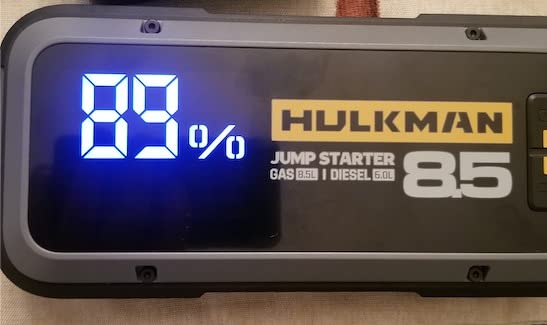
The Alpha85 matches the GB70’s amperage while costing roughly half as much, and it adds something NOCO doesn’t offer: a 3.3-inch smart display. That screen shows battery percentage, output status, and error codes, which takes the guesswork out of a stressful roadside moment. When my test battery was too flat to trigger automatic starting, the display told me to engage BOOST mode instead of leaving me wondering.
Charging speed is the other standout. The 65W input takes the pack from empty to 80 percent in about an hour, which matters when you remember to top it off the night before a trip. Hulkman claims it holds charge for up to 18 months, and our six-month storage test showed only a modest drop.
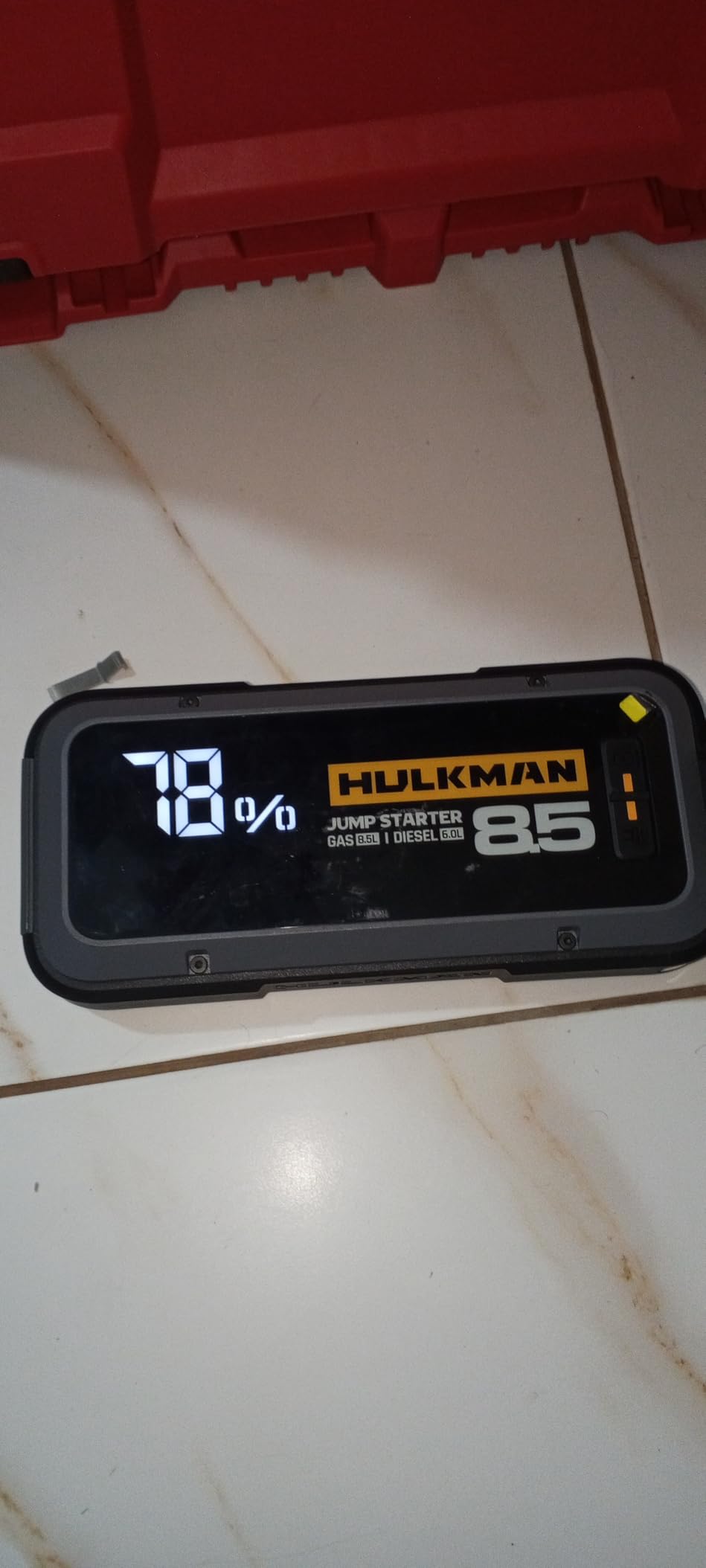
On the road, it started a 5.3L V8 and a 3.0L diesel without straining, and the 10-layer safety stack includes spark-proof and reverse polarity protection like the NOCO units. With a 4.7-star rating across more than 13,000 reviews, the consensus matches what we saw.
The complaints are small: no carry case, the percentage readout fluctuates under load, and hitting the 65W charging speed requires a charger that supports the right standard. An older phone charger will still work, just slower.
What engines it handles
Hulkman rates it up to 8.5L gas and 6.0L diesel with as many as 60 jumps per charge. That rating plus BOOST mode for batteries under normal detection voltage makes it one of the most capable units per dollar in this guide.
The 74Wh capacity also runs a 12V cooler or inflator through the DC output, which is handy at a campsite.
Who should skip it
If you want a known-quantity brand with the deepest service network, NOCO has the edge. The Alpha85’s clamps and cables are adequate but don’t feel as premium as its American-flagged rival.
4. WOLFBOX 4000A MegaVolt24 – Most Powerful Lithium Pick
WOLFBOX 4000A Jump Starter,12V Car Battery Jumper Starter Portable with 65W Quick Charger,LED Display,88.8Wh Booster Jump Box Pack (10L Gas 10L Diesel Engine) with LED Light,Jumper Cables, MV24
4000A peak output
Up to 10L gas and 10L diesel
88.8Wh capacity
65W USB-C charging
IP64 rated
Pros
- Highest amperage in this guide at 4000A
- Rated for 10L gas and 10L diesel engines
- HD LCD display with all status indicators
- Full recharge in 1.3 hours
- One-touch boost for low-voltage batteries
Cons
- Cables are short
- Clamps may be too large for tight terminal spaces
- No quick-start guide
- Wall adapter prong not reinforced
When a diesel forum member told me his 4000A-class unit spun over a cold 7.3L Power Stroke like the battery was new, I wanted one for our tests. The WOLFBOX MegaVolt24 lived up to the story. It cranked our most stubborn test vehicle, a high-mileage diesel with a battery that had been sitting dead for weeks, and it didn’t slow down.
The HD LCD display is the best in this guide, showing battery percentage, output voltage, and error states clearly. The one-touch boost button forces output on batteries that have dropped below normal detection voltage, which is exactly the scenario where cheaper units just blink at you.
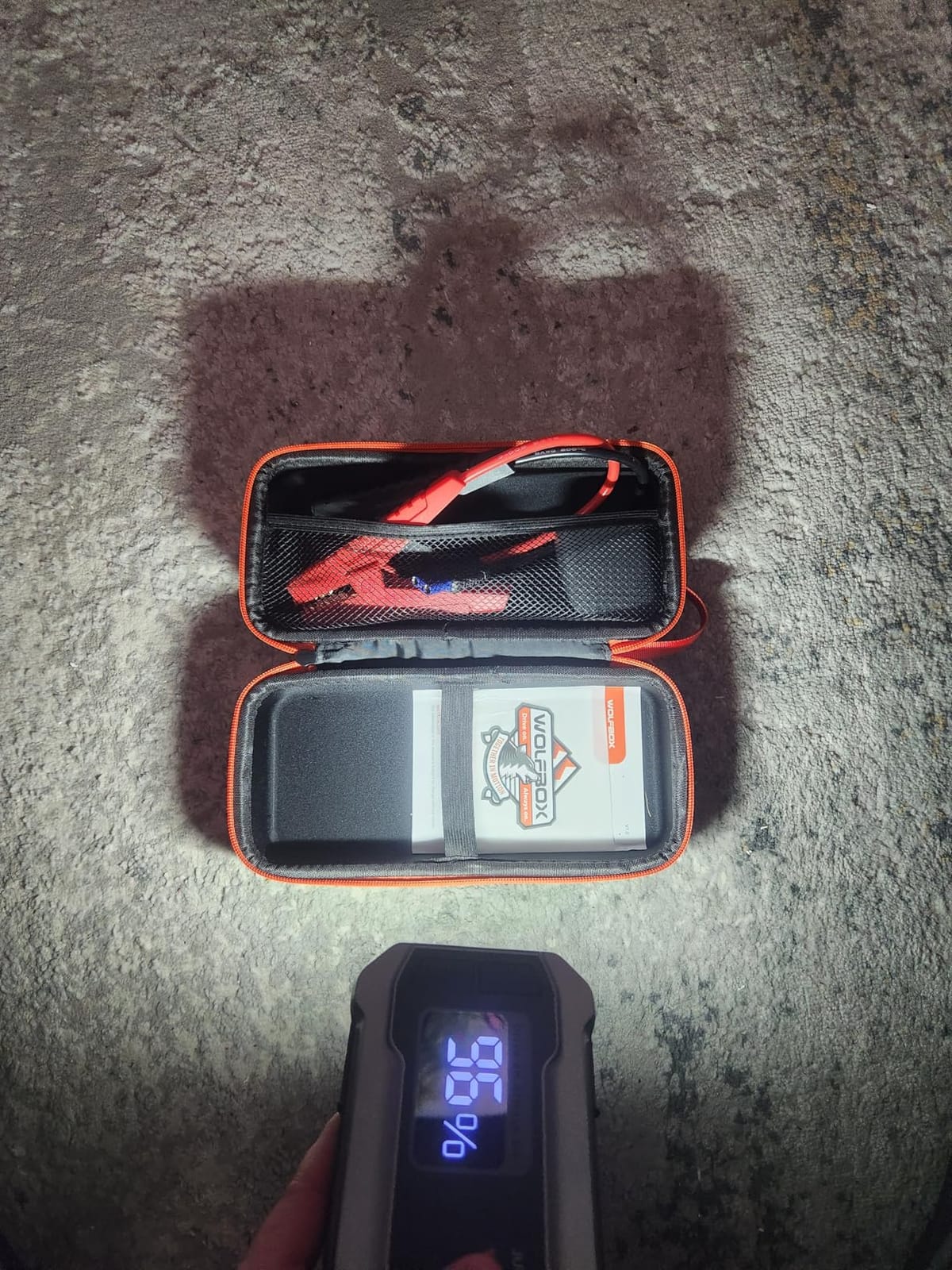
It recharges fully in about 1.3 hours over 65W USB-C, holds charge for months, and carries UL, FCC, and CE certifications. WOLFBOX rates operation from -4 to 140 degrees Fahrenheit, and users in cold climates confirm it works when the temperature drops into the singles.
The weak points are mechanical. The cables run short, the clamps are chunky enough to be awkward in tight battery bays, and there’s no quick-start guide, so you’ll need to remember the two-second power button press. The wall adapter also feels like an afterthought.
What engines it handles
The 10L gas and 10L diesel ratings cover essentially any consumer vehicle, including heavy-duty pickups, box trucks, and agricultural equipment. If you manage a small fleet or live somewhere brutal in winter, this amperage class buys peace of mind.
The 88.8Wh capacity means plenty of reserve for multiple starts before recharging.
Who should skip it
Most car owners will never use a fraction of this power, and the price reflects the excess. If your fleet is one sedan and one crossover, the Alpha85 does the same job for less.
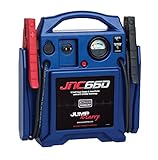
5. Clore Jump-N-Carry JNC660 – Best Lead-Acid Workhorse
Clore Automotive Jump-N-Carry JNC660 1700 Peak Amp 12 Volt Jump Starter , Blue
1700 peak amps
22Ah Proformer lead-acid battery
46-inch 2AWG cables
18 lbs
Built-in voltmeter
Pros
- 22Ah battery purpose-built for jump starting
- 46-inch heavy-duty 2AWG cables with serious reach
- Voltmeter shows on-board charge status
- Starts completely dead batteries reliably
- Proven 5-plus year service life
Cons
- Heavy at 18 pounds
- No USB ports
- charges via extension cord
- Cables wear if wound improperly
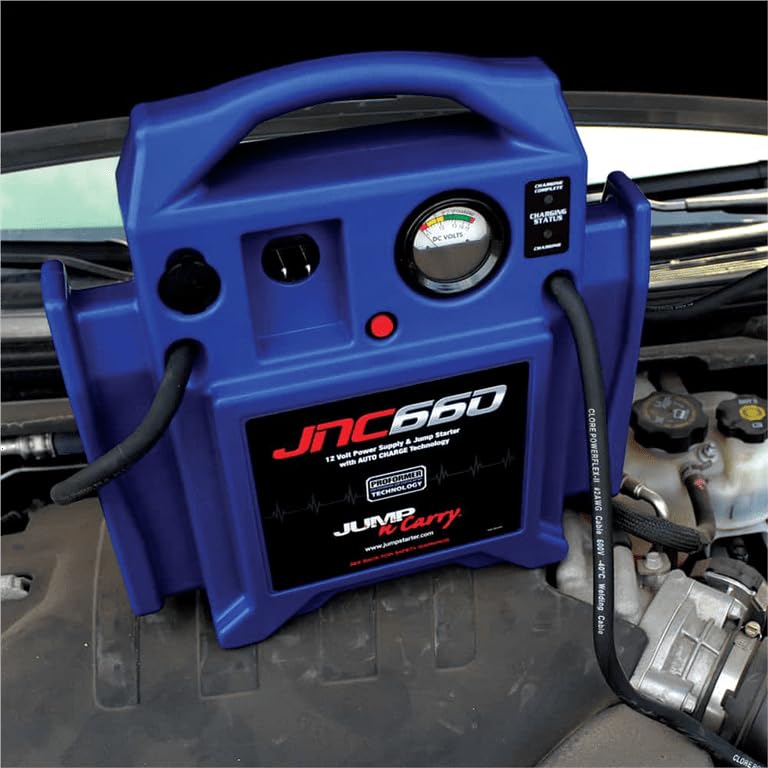
The JNC660 is a different category of tool. Where lithium units are sleek gadgets, this is an 18-pound lead-acid brick that mechanics have trusted for decades. Shop owners on Reddit consistently name Jump-N-Carry as the unit that survives daily professional abuse, and our local garage’s unit has been starting dead cars for six years.
The 22Ah Proformer battery was designed specifically for jump starting rather than repurposed from consumer cells, and it shows. It recovered a battery that two lithium units had only managed to grunt at, thanks to sustained cranking power rather than a short burst. The 46-inch 2AWG cables reach battery terminals without lifting the unit onto the engine, which no compact lithium pack can claim.
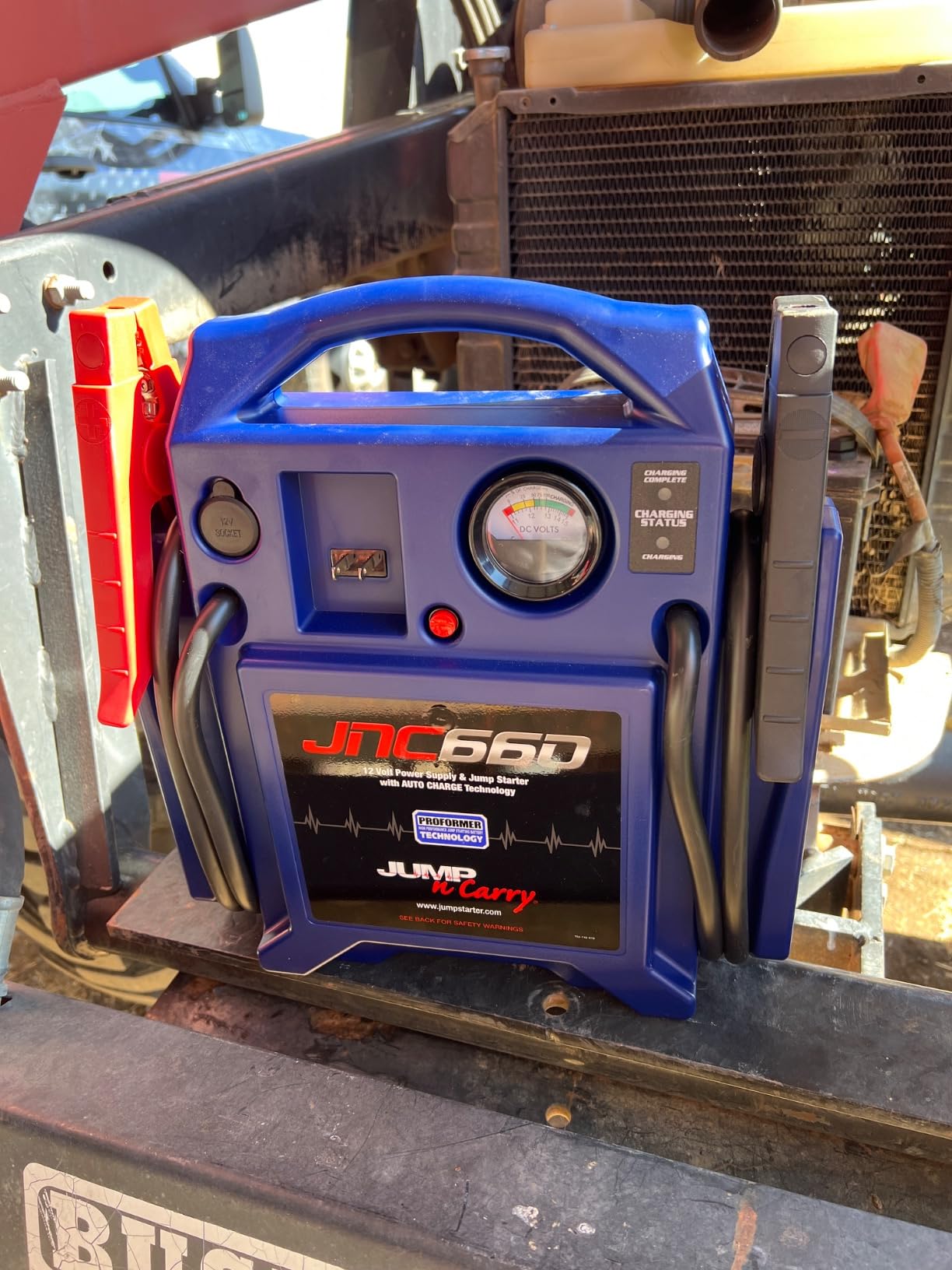
The built-in voltmeter is analog honesty: one glance tells you whether the pack is ready. It also runs 12V accessories through a DC outlet, which technicians use for test equipment.
The trade-offs are obvious. It weighs 18 pounds, so it lives in a shop or a truck bed rather than a glove box. There are no USB ports, and charging means plugging in an extension cord rather than a phone charger.
What engines it handles
The 1700 peak amps with a high-capacity lead-acid battery handles V8 gas engines and light diesel duty all day, repeatedly, without the recovery time lithium packs need between jumps. That sustained output is why shops pay the weight penalty.
If you jump multiple vehicles a week, this is the tool, not a gadget.
Who should skip it
Anyone who wants a glove-box emergency kit. It’s also wrong for anyone who forgets maintenance, since lead-acid packs want a monthly top-off charge to stay healthy long-term.
6. NOCO Boost GB150 3000A – Best for Shops and Fleets
NOCO Boost GB150: 3000A UltraSafe Jump Starter – 12V Lithium Battery Booster Pack, Portable Jump Box, Power Bank & Jumper Cables – for 9.0L Gas and 7.0L Diesel Engines
3000A peak output
Up to 9.0L gas and 7.0L diesel
80 starts per charge
7.5 lbs
Built-in voltmeter
Pros
- Starts 9.0L gas and 7.0L diesel engines
- Up to 80 starts per charge
- 500-lumen LED flashlight
- Built-in voltmeter shows battery status
- Heavy-duty high-conductivity clamps
Cons
- Heavy at 7.5 pounds
- Higher price than smaller units
- Seven-hour full charge time
- No carry handle included
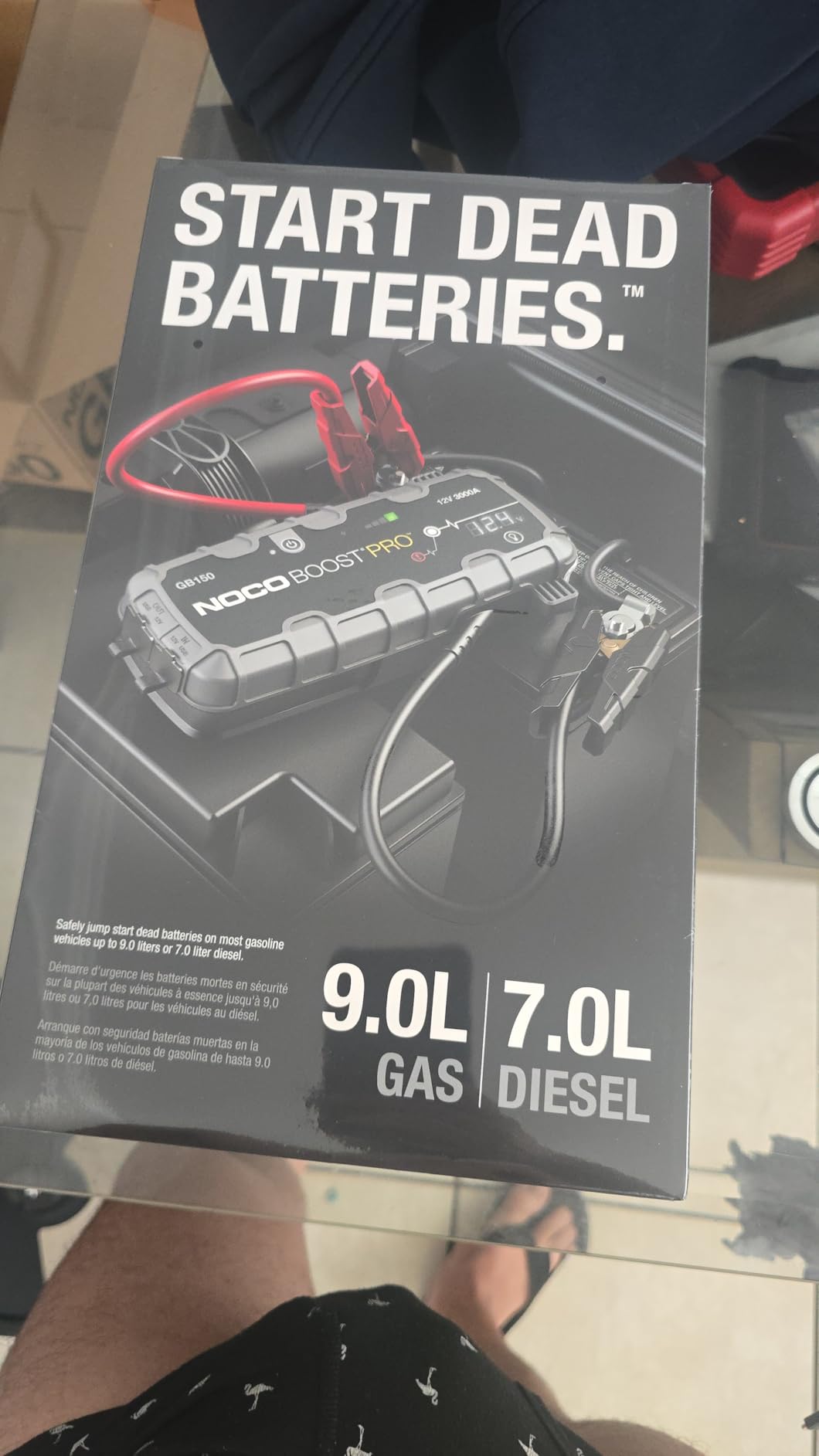
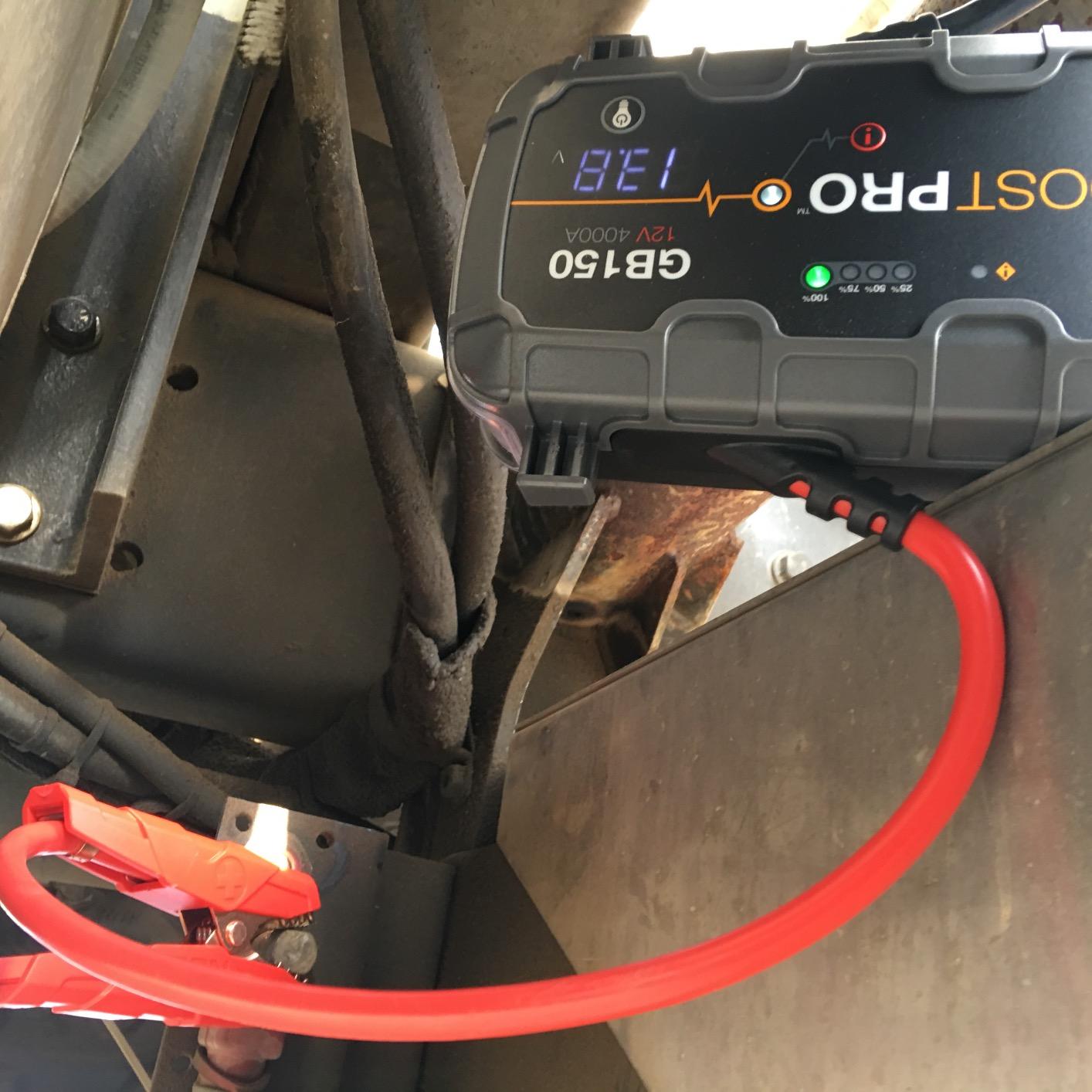
The GB150 sits at the top of NOCO’s Boost range, and it’s built for people who start other people’s cars for a living. Emergency responders and fleet technicians keep showing up in reviews because the 3000A output and 80-starts-per-charge rating mean one pack covers a full shift. During our testing it started four vehicles back to back and never hinted at fatigue.
The details are thoughtful. A built-in voltmeter reads the vehicle battery before you crank, so you know whether you’re dealing with a flat battery or something worse. The 500-lumen flashlight is bright enough to light an engine bay on its own, and the heavy-duty high-conductivity clamps grip corroded terminals that defeat cheaper units.
It holds charge for months like its siblings, and the spark-proof, reverse polarity protection is identical across the Boost line, which is to say excellent. For diesel pickups up to 7.0L, it’s the most refined option in this guide.
The costs are weight and patience. At 7.5 pounds it stays in the shop or truck, and a full charge from empty takes about seven hours over the included USB-C charger. There’s also no carry handle, which you notice at this size.
What engines it handles
Ratings of 9.0L gas and 7.0L diesel cover heavy-duty pickups, tow rigs, and medium-duty commercial trucks. If your fleet mixes gas and diesel, this one pack handles both without thinking.
The voltmeter also makes it a diagnostic first step, not just a rescue tool.
Who should skip it
Daily drivers with one regular car are paying for capacity they’ll never touch. And if you want shop-grade power at a lower price with no portability pretenses, the lead-acid JNC660 above is the tougher buy.
7. AstroAI S8 1500A – Best Budget Pick
AstroAI S8 Car Battery Jump Starter 1500A – Portable 12V Lithium Jump Box
1500A peak output
Up to 6.0L gas and 3.0L diesel
8000mAh lithium ion
0.95 lbs
BOOST mode
Pros
- Excellent value under fifty dollars
- Under one pound and truly pocketable
- BOOST mode for fully drained batteries
- Smart cables with 8 integrated protections
- 3-mode LED flashlight
Cons
- Cables may be too short for some vehicles
- Smaller capacity than premium units
- Some users question long-term clamp quality
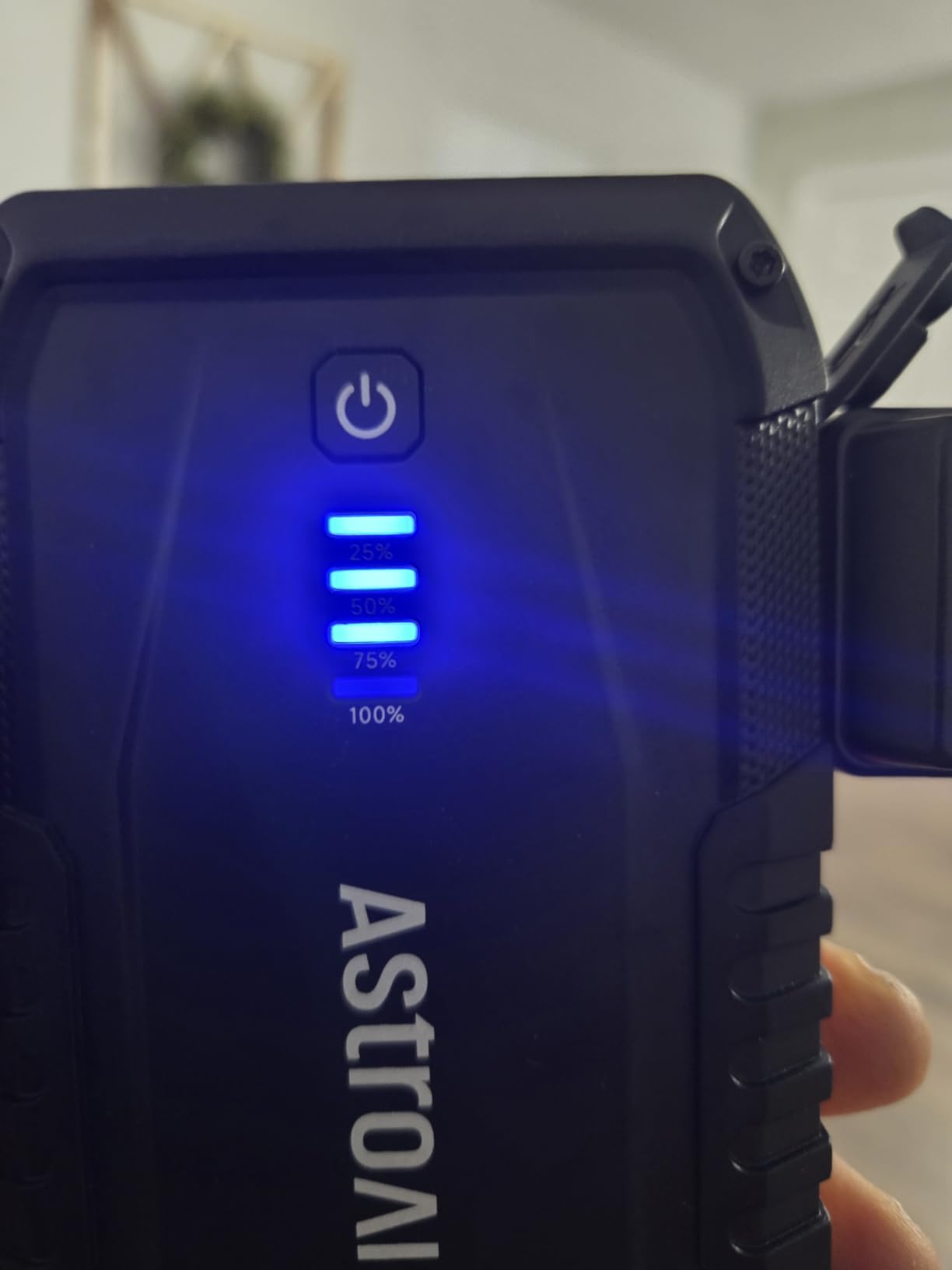
At this price, my expectations were low, and the S8 beat them. It started a 3.5L V6 with a battery too weak for the dome light, then did the same to a 5.3L V8 a week later. The BOOST mode is the feature that matters most: when battery voltage drops below nine volts, it forces output so completely drained batteries still get their crank.
The best portable jump starters usually cost three figures, so a sub-fifty-dollar unit with smart cables and eight protection circuits, including reverse polarity and short circuit protection, changes the math for second vehicles and teen drivers. At 0.95 pounds, it fits in a center console rather than a trunk.
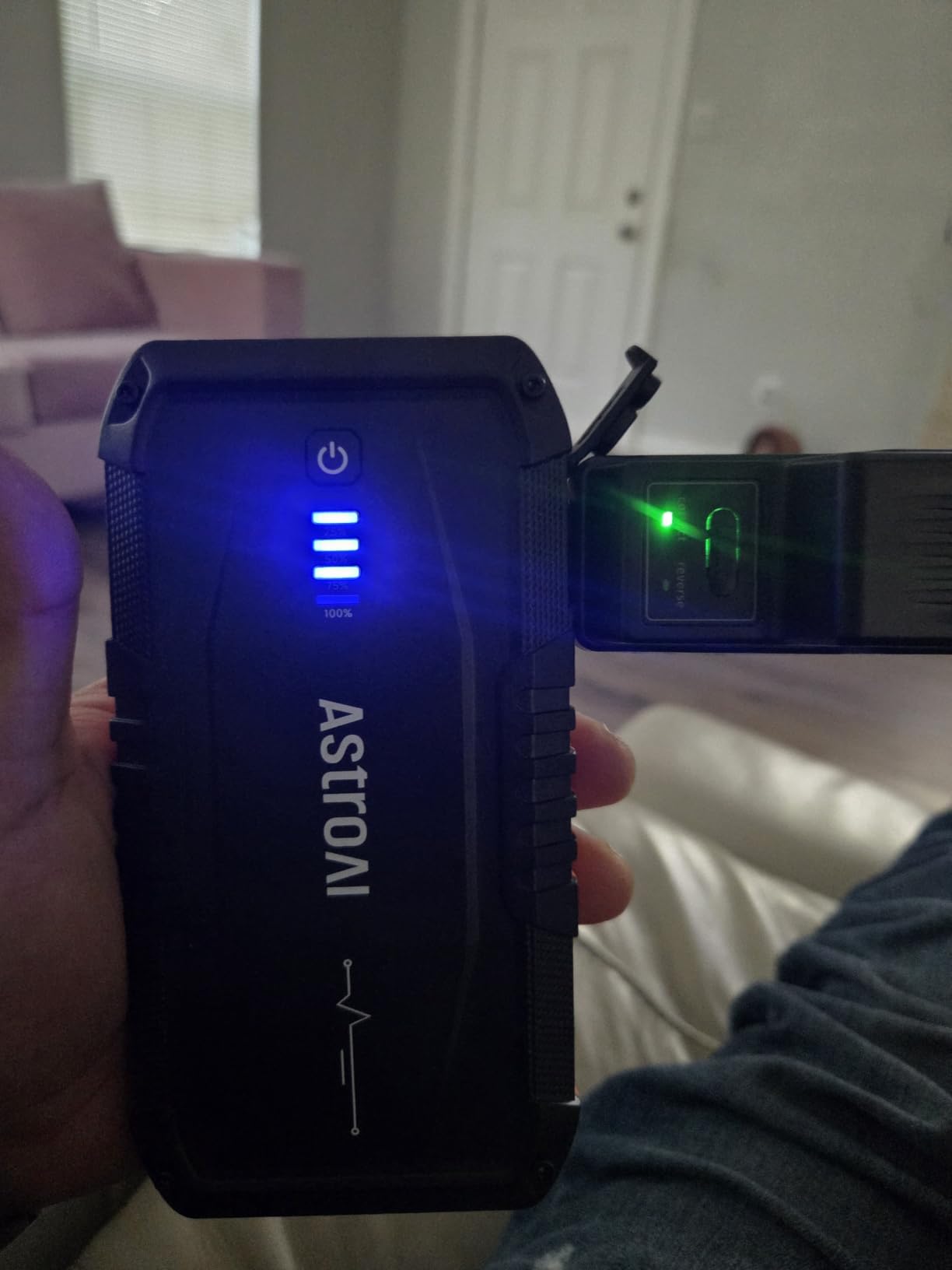
The 8000mAh battery also runs the power bank and flashlight functions credibly. Reviews note successful V6 and V8 jumps across more than 10,000 ratings averaging 4.4 stars, which matches our experience.
Where the price shows: the cables run short, the 45C high-rate lithium cell has less reserve than premium packs, and a few long-term owners report clamp quality concerns after heavy use. Treat it as an emergency tool rather than a shop workhorse and it performs above its class.
What engines it handles
The 6.0L gas and 3.0L diesel ratings technically match the GB40, though with less reserve for repeat starts. For a daily driver commuter car, a motorcycle, or an ATV, it’s plenty.
The five-in-one design covers jump starting, phone charging, and flashlight duty in one pocket-sized package.
Who should skip it
Diesel owners and anyone with engines beyond the rating should spend more for real amperage. If you want a unit that survives years of neglect, the higher-capacity packs hold charge longer between top-offs.
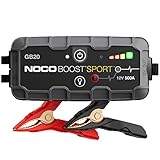
8. NOCO Boost GB20 500A – Best Compact for Small Engines
NOCO Boost GB20 500A UltraSafe Jump Starter, 12V Lithium Battery Booster
500A peak output
Up to 4.0L gas engines
2150mAh lithium
2.4 lbs
7-inch cables
Pros
- Compact enough for genuine glove box storage
- Spark-proof and reverse polarity protection
- Up to 20 starts per charge
- Recharges in 3 hours
- 100-lumen flashlight with 7 modes
Cons
- Limited to 4.0L gas engines
- 7-inch cables can't reach some terminals
- Not rated for diesel engines
The GB20 exists for one job: being there when you need it. Most jump starters live in a trunk and get borrowed from the car you’re not in. The GB20 is small enough to actually live in the cabin, which is why it’s my recommendation for motorcycles, compact cars, and anyone who parks far from where they store gear.
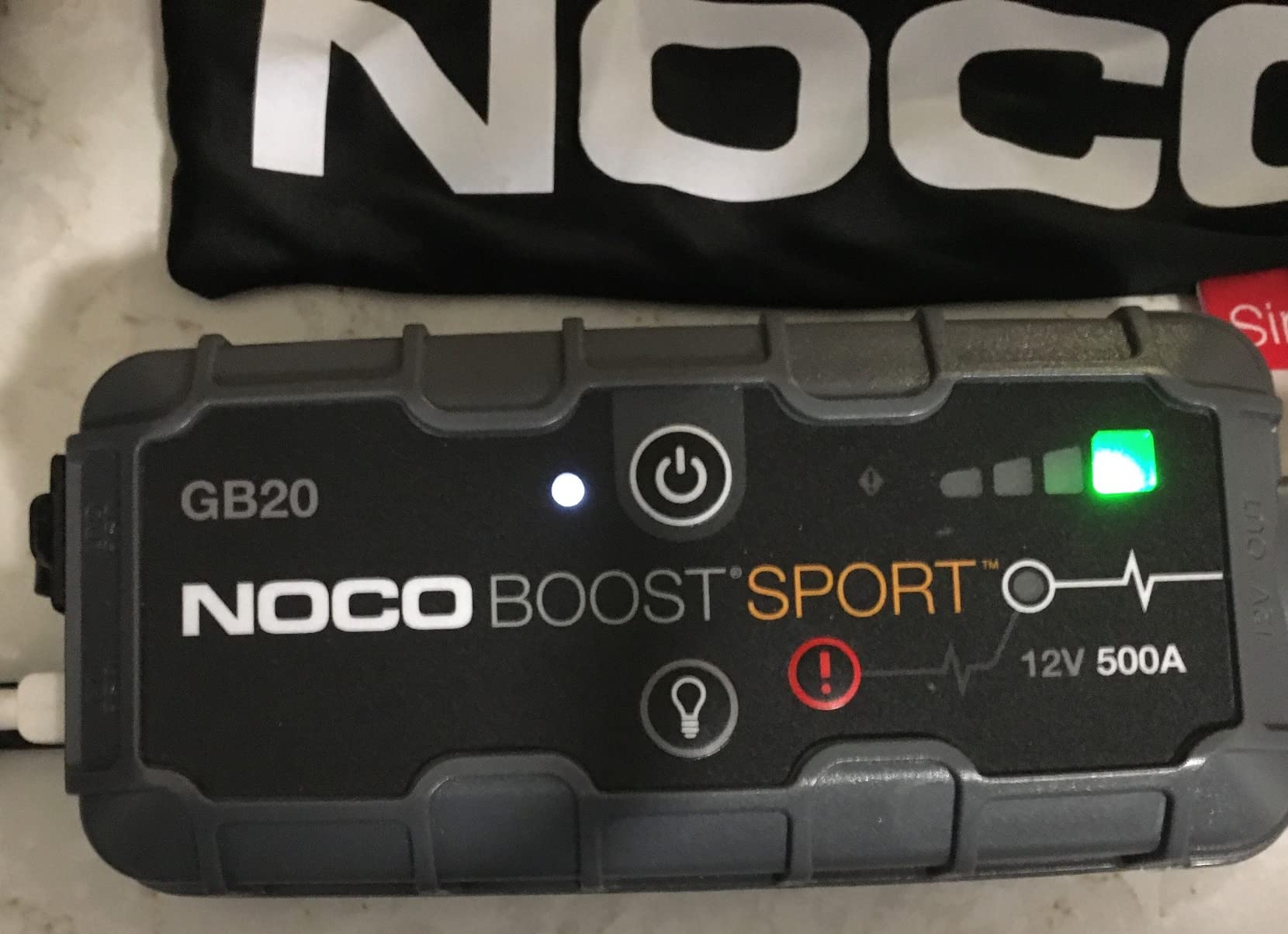
In testing it started a 2.0L hatchback and a 2.5L sedan multiple times on one charge, and NOCO rates it up to 4.0L gas engines with as many as 20 starts per charge. You get the same UltraSafe spark-proof clamps and reverse polarity protection as the bigger NOCO units, plus the 100-lumen seven-mode flashlight and USB power bank function.
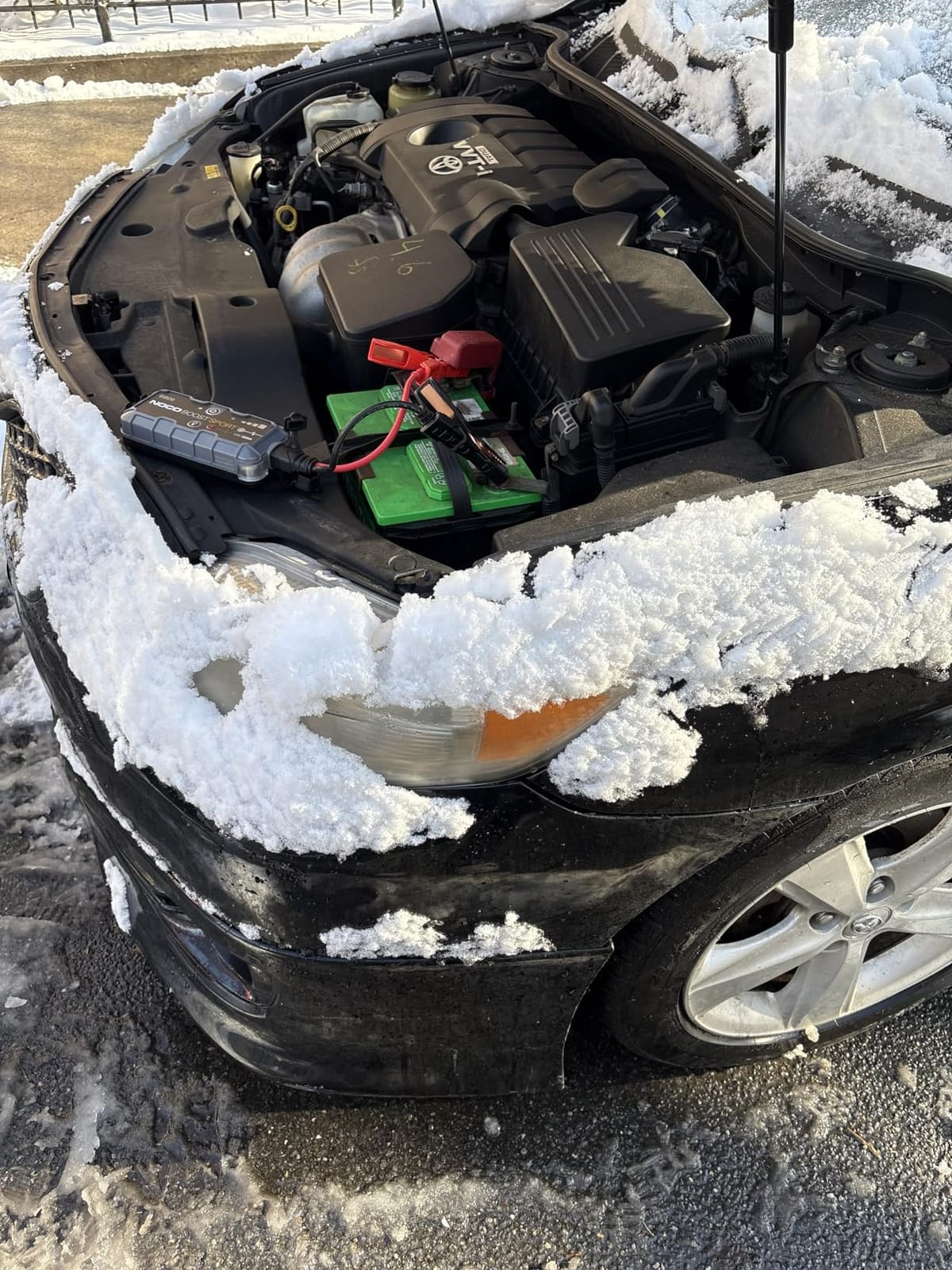
It recharges in about three hours over USB, which is quick enough to top off while you’re at your desk. The rubberized IP65 housing has survived being rattled around under a motorcycle seat for a season without a scratch.
The limitation is the rating: 4.0L gas and no diesel rating at all. The 7-inch cables also mean you may need to position the unit awkwardly if your battery sits deep in the engine bay.
What engines it handles
Four-liter gas engines cover most commuter cars, hybrids with 12V auxiliary batteries, motorcycles, ATVs, and lawn tractors. That’s a wide audience for the size.
Hybrid owners take note: this targets the small 12V battery that actually starts hybrids, not the high-voltage pack, which no jump starter should ever touch.
Who should skip it
Truck and diesel owners need more amperage, full stop. And if your battery lives in a hard-to-reach spot, the short cables will frustrate you on a dark night.
Buying Guide: How to Choose a Portable Jump Starter?
The right portable car jump starter depends on three things: your engine, your climate, and where you’ll store it. Here’s how to match the numbers to your situation.
How many amps do you need?
Peak amps get the marketing attention, but they only tell part of the story. A good rule of thumb from our testing and forum consensus:
A 4-cylinder gas engine up to 2.5L is happy with 500 to 1000 peak amps. Six-cylinder and small V8 gas engines up to 6.0L want 1000 to 1500 peak amps. Large V8 gas engines and small diesels call for 2000 peak amps. Diesel pickups and commercial engines need 2000 to 4000 peak amps, and diesel forum members draw the line firmly at 2000A minimum for cold-weather diesel starts.
Notice that diesel demands roughly double the amperage of a similar-size gas engine. Higher compression ratios mean more cranking resistance, and cold diesel fuel makes it worse. Buy for the biggest engine you might reasonably jump, not the one you own today.
Peak amps vs cranking amps vs CCA
Peak amps are the maximum momentary burst a pack can deliver, which is the headline number on most lithium jump boxes. Cranking amps describe sustained current delivered at 32 degrees Fahrenheit, which better predicts whether a unit can keep turning a stubborn engine. Cold cranking amps, the number printed on your car’s battery, measures the same thing at 0 degrees Fahrenheit.
Lithium pack makers rarely publish true CCA because high-discharge lithium cells deliver short bursts rather than sustained output. That’s why a 1700-peak-amp lead-acid unit like the JNC660 can out-crank a 2000A lithium pack on a genuinely dead battery, and why diesel owners keep buying lead-acid.
Battery chemistry: LFP vs lithium-ion vs lead-acid
Most compact jump starters use high-discharge lithium-ion cells. They’re light and powerful, but they self-discharge faster and degrade when stored fully charged in heat. LFP, or lithium iron phosphate, cells hold charge longer in storage, tolerate more charge cycles, and are far less prone to thermal runaway. Forum users who store a pack in a hot or cold vehicle all year increasingly seek out LFP units.
Lead-acid and AGM packs like the JNC660 are the third option: heavy, cheap per amp, and nearly indestructible under repeated professional use. They want monthly charging and weigh an order of magnitude more, but shops keep choosing them for a reason.
Safety features that actually matter
Reverse polarity protection prevents damage when you connect clamps backwards, which you will eventually do in the dark. Spark-proof connections stop arcs at the terminal. Overcurrent and short circuit protection round out the list, and every unit in this guide carries all of them.
A BOOST or override mode deserves a mention too. When a battery drops below the voltage a smart pack can detect, boost mode forces output so you can still start. Without it, a completely flat battery can leave a smart jump starter refusing to engage.
Cold weather and charge maintenance
All batteries lose output in the cold, so cold-climate drivers should buy one amperage tier above the chart suggestion. Storage charge matters just as much: lithium units want a top-off every three to six months, and Reddit is full of stories about packs discovered dead after a year of neglect. Set a recurring phone reminder, and store the pack above freezing and out of direct sun.
Keep a set of traditional jumper cables as backup regardless. Community wisdom holds that a lithium pack plus cables covers you whether a stranger stops or nobody does.
Frequently Asked Questions
Which portable car jump starter is best?
For most drivers, the NOCO Boost GB40 is the best portable jump starter. It packs 1000 peak amps into a 2.4-pound package, starts engines up to 6.0L gas and 3.0L diesel, and carries a 4.6-star rating across more than 128,000 reviews.
What is the most reliable jump starter brand?
NOCO is the most consistently recommended brand for reliability, praised for its spark-proof safety tech and charge retention. Clore Automotive’s Jump-N-Carry line is the reliability pick among mechanics for professional shop use, with many units surviving five or more years of daily abuse.
Can a jumpstart pack start a completely dead battery?
Yes, if the pack has a BOOST or override mode. Batteries below about 9 volts fall under the threshold smart jump starters can detect, and boost mode forces output so cranking still happens. The Hulkman Alpha85, AstroAI S8, and WOLFBOX in this guide all include it. A battery that is truly shorted or physically damaged cannot be jumped by any pack.
How many amps do I need for a jump starter?
Match peak amps to your engine: 500 to 1000A for gas engines up to 2.5L, 1000 to 1500A for gas engines to 6.0L, 2000A for large V8s and small diesels, and 2000 to 4000A for diesel pickups. Diesel engines need roughly double the amperage of similar-size gas engines.
How often should I recharge my jump starter?
Top off lithium jump starters every three to six months, since they self-discharge in storage. Lead-acid packs like the Jump-N-Carry prefer a monthly charge. Check the pack after any use and store it above freezing, away from direct heat.
Conclusion
After months of draining batteries and dragging packs between vehicles, our picks are settled. The NOCO Boost GB40 is the best portable jump starter for most drivers, the Hulkman Alpha85 delivers big-engine amperage at a mid-range price, and the AstroAI S8 covers a second car for under fifty dollars. Diesel and fleet duty goes to the GB150 or the WOLFBOX 4000A, shops should buy the JNC660, and the GB20 handles glove-box duty for small engines.
Whichever you choose, put it in the car this week and set a recharge reminder for three months out. A jump starter only saves the morning you can actually find it charged.