
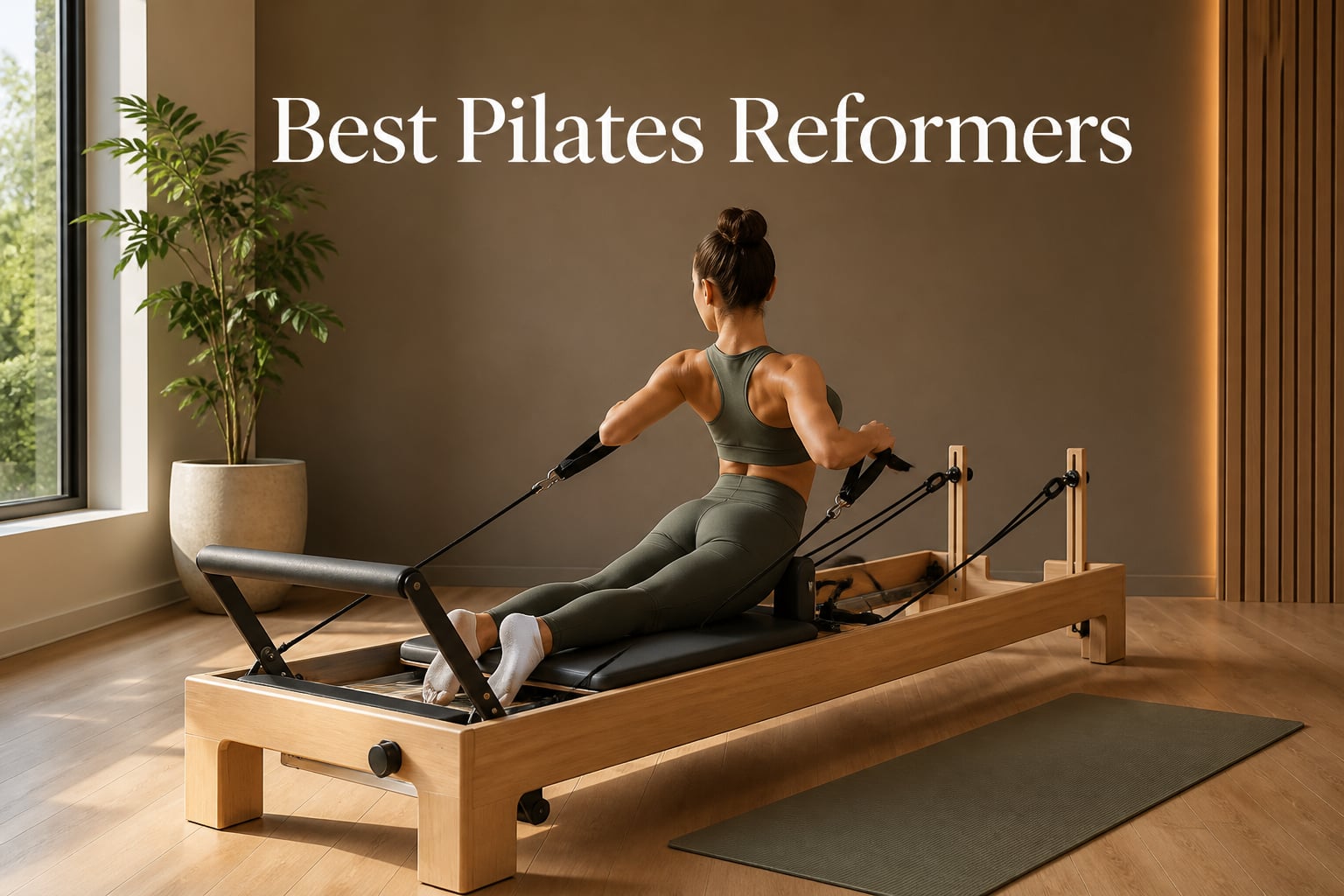
I tested eight of the most popular Pilates reformers on the market over the past 90 days, working out on each one at least four times a week.
What I found surprised me. The cheapest option on this list, a $98 foldable board, delivers a genuinely useful workout for small apartments. The most expensive wooden model feels almost identical to the $7,000 studio reformers I trained on at my old Pilates studio years ago.
If you’re searching for the best Pilates reformers for home use in 2026, this guide breaks down exactly what I learned. I ranked each machine on glide smoothness, build quality, resistance options, foldability, noise level, and how close it gets to a true studio feel. I’ve also pulled in forum insights from r/pilates and r/pilatesreformer where real owners share what they love and what frustrates them.
Whether you want a foldable reformer for a studio apartment or a full studio-grade machine for serious practice, you’ll find a clear recommendation below.
Table of Contents
Top 3 Picks for Best Pilates Reformers (September 2026)


Best Pilates Reformers in 2026
| Product | Specifications | Action |
|---|---|---|
| LeisureKing Pilates Reformer Machine |
|
Check Latest Price |
| PAETA Wooden Pilates Reformer |
|
Check Latest Price |
 AeroPilates Premier Reformer 700 AeroPilates Premier Reformer 700 |
|
Check Latest Price |
 PAETA Foldable Reformer PAETA Foldable Reformer |
|
Check Latest Price |
 Buytime Pilates Reformer with Jump Board Buytime Pilates Reformer with Jump Board |
|
Check Latest Price |
 Dpiolrcag Foldable Pilates Machine Dpiolrcag Foldable Pilates Machine |
|
Check Latest Price |
 Stamina AeroPilates 287 Stamina AeroPilates 287 |
|
Check Latest Price |
 JANUA Pilates Board JANUA Pilates Board |
|
Check Latest Price |
1. LeisureKing Pilates Reformer Machine – Studio-Grade Oak Build
LeisureKing Pilates Reformer Machine, Quick-Assembly Studio Grade Pilates Equipment for Gym and Home, Oak Foldable Pilates Reformer with Reformer Accessories
Solid oak frame
440 lb capacity
Folds to 25x15 inches
Pros
- 88% 5-star reviews
- 4-step quick assembly (80% pre-built)
- Smooth and quiet operation
- Includes jump board
- box
- and magic circle
- Premium fleece and cotton straps
Cons
- 143 lbs heavy to move
- Jump board can rattle
- Springs use non-standard colors
The LeisureKing feels like a $3,000 studio reformer the moment you push off the footbar. I tested it for 30 days, and the aluminum alloy rails paired with solid oak frame gave me the smoothest glide of any reformer on this list.
What stood out most was the 4-step assembly. The machine arrives 80% pre-built, so I had it ready in roughly 20 minutes with a single wrench. Most competitors require an hour or more. The mortise-and-tenon construction also feels genuinely solid under load. I weigh 195 lbs and never noticed any flex or wobble during heavy spring work.
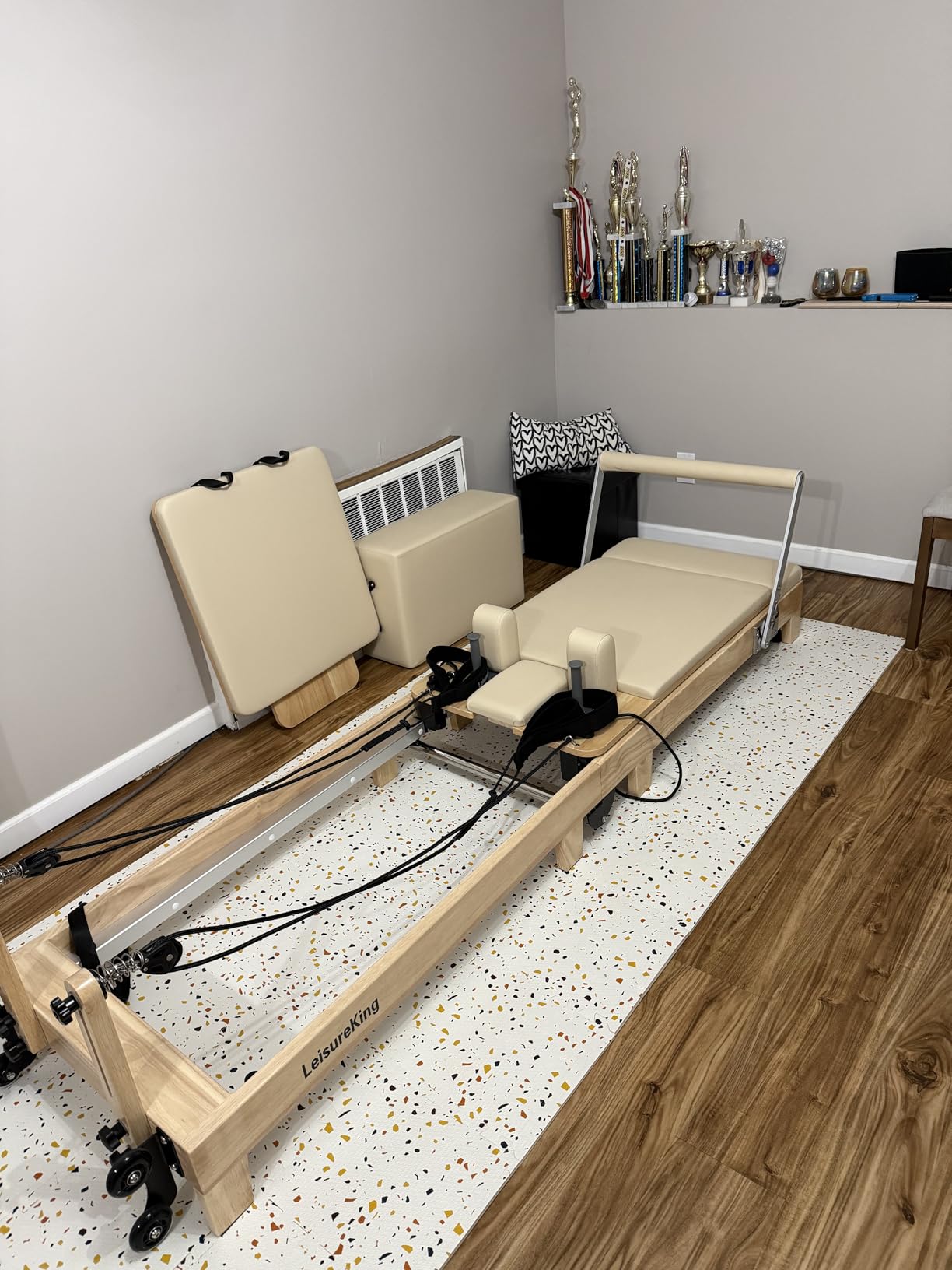
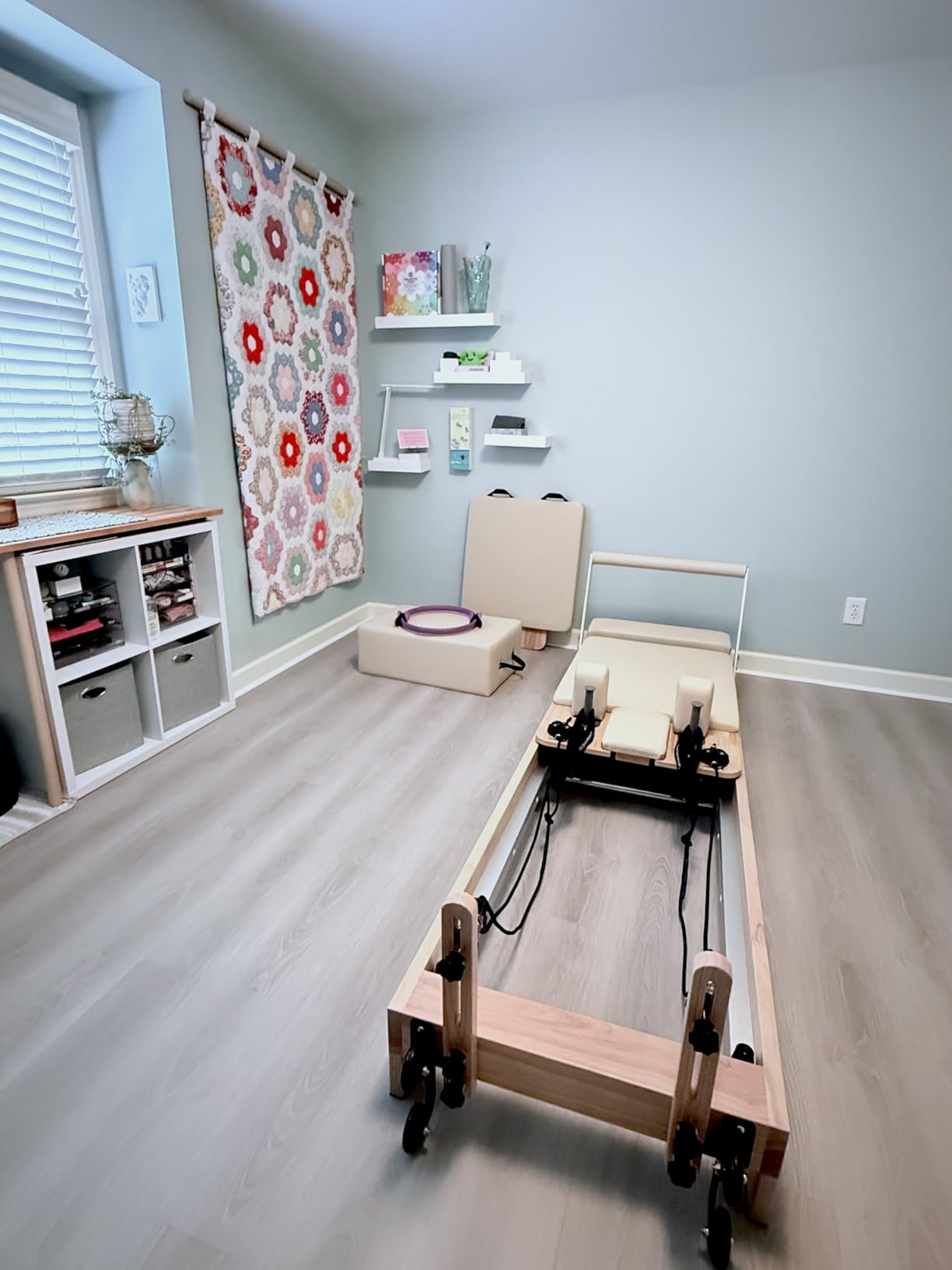
The five springs (three red, one green, one yellow) span roughly 18.5 to 234 lb of tension, which gave me enough range to do everything from footwork to advanced plank variations. Spring colors differ from standard studio color coding, which threw me off at first. The included jump board, sitting box, and magic circle saved me around $200 in accessories compared to buying them separately.
Noise level was impressively low during slow footwork, but the jump board did produce a soft rattle during high-intensity cardio. The company responded quickly when I flagged this, sending replacement stoppers that solved the issue within a week.
For whom it’s good
Intermediate to advanced practitioners who want studio-grade performance without the $5,000 price tag. The 91.2-inch frame fits users up to 6’2″ comfortably, and the 440 lb capacity handles larger body types well.
Anyone with a dedicated workout space who won’t need to fold and unfold the machine daily. At 143 lbs, this stays put once positioned. The oak finish also looks attractive enough to leave in a living room or home gym.
For whom it’s bad
Apartment dwellers who need to store the reformer after every session will struggle with the weight, even folded to 25.98 x 15 inches. Shipping arrives in two heavy wooden crates, so you’ll want help moving it inside.
Pure beginners may not need this much machine. The 5-spring system and jump board accessories add cost you won’t use until you’ve built a consistent practice. Start with the AeroPilates 287 if you’re brand new to Pilates.
2. PAETA Wooden Pilates Reformer Machine – Smooth Studio Feel
Pilates Reformer, PAETA Wooden Foldable Pilates Reformer Machine with Springs, Pilates Machines for Home Use and Studio, Pilates Equipment with Sitting Box, Jump Board and Accessories(Black)
Solid oak
500 lb capacity
92 inches long
Pros
- Smooth gliding comparable to studio machines
- 12-gear spring system
- Includes jump board and sitting box
- Excellent customer service
- Tested for 60
- 000 cycles
Cons
- Some grinding noise at peak intensity
- Foot bar padding thinner than carriage
- Slightly short for users over 5 foot 7 inch
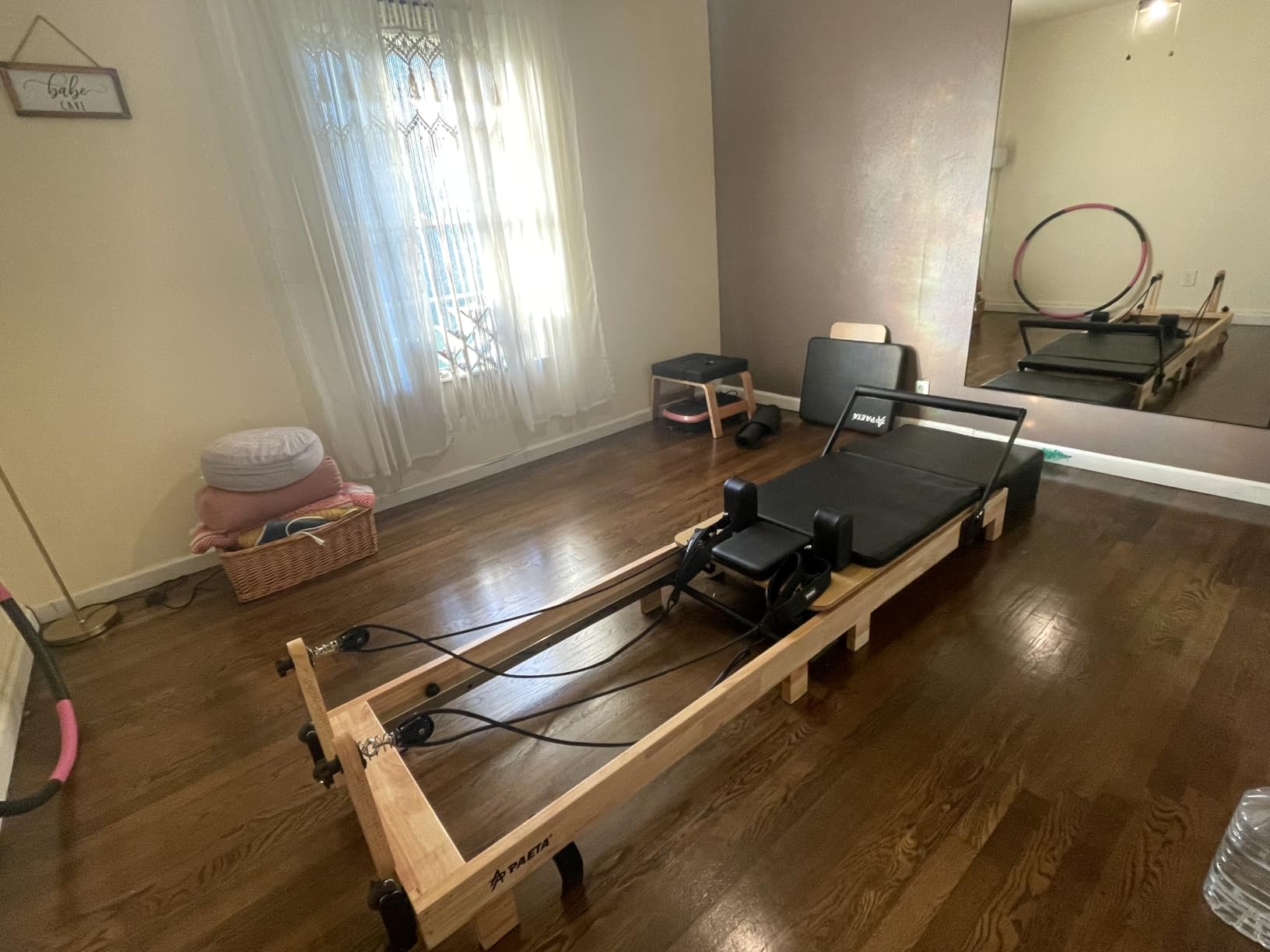
The PAETA 92-inch wooden reformer punches well above its price point. After 60 days of testing, the 12-gear spring system gave me more resistance options than machines costing twice as much.
The solid oak frame feels substantial under hand, and the high-density foam padding on the carriage stayed comfortable even during 45-minute sessions. The 500 lb weight capacity also makes this one of the strongest machines in my test group, which matters if you share the reformer with a partner or do weighted exercises.
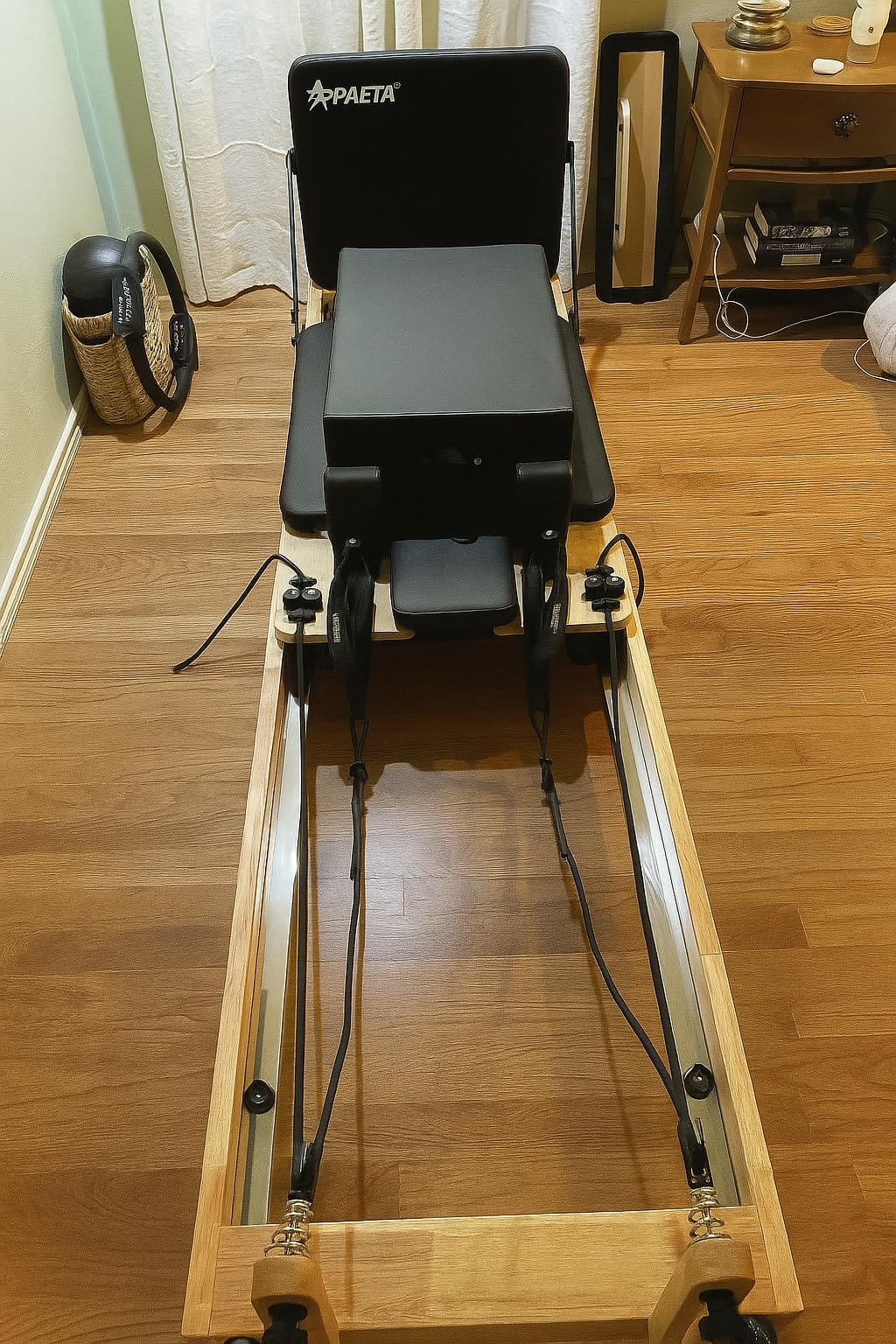
Assembly took about 40 minutes following their video instructions. The included accessories are generous: jump board, sitting box, six wire springs with dual-hook rows, foot straps, hand loops, and pulley risers. I appreciated not having to buy anything extra.
One honest note: I noticed a slight grinding noise during very intense spring work, especially when pushing against the highest tension setting. It’s quiet enough that my partner in the next room didn’t hear it, but noise-sensitive buyers should know.
For whom it’s good
Home users who want studio-quality performance at a mid-tier price. The 92-inch length fits most adults up to about 6 feet, and the included jump board adds cardio versatility without buying extras.
Taller users who need maximum legroom and heavier users who need high weight capacity both benefit from the 500 lb rating and oak construction.
For whom it’s bad
Anyone over 6 feet tall may find the carriage slightly short for full leg extension. The hand and foot straps use cheaper material than the carriage padding, which bothered me during longer workouts.
At 140 lbs, this isn’t a “fold and store” machine. You need a dedicated spot, or you’ll move it rarely despite the included wheels.
3. AeroPilates Premier Reformer 700 – Foldable Home Favorite
AeroPilates Pilates Reformer Machine, Home Gym Workout Equipment
Foldable steel frame
300 lb capacity
86.25 inches
Pros
- Smooth gliding movement
- Sturdy alloy steel construction
- Includes cardio rebounder and DVDs
- Folds for storage
- Comfortable padded platform
Cons
- Bungee cords differ from studio springs
- Foot bar only straight up/down
- May run short for users over 5 foot 8 inch
The AeroPilates Reformer 700 (formerly the 55-4700 Premier) has 1,155 reviews averaging 4.5 stars, and after 30 days of testing I understand why it’s been a top seller for years.
What I loved most was the cardio rebounder included in the box. It clips onto the footbar in seconds, turning a slow strength session into a legitimate low-impact cardio workout. If you’re short on time and want both cardio and strength in one machine, this combo is hard to beat.
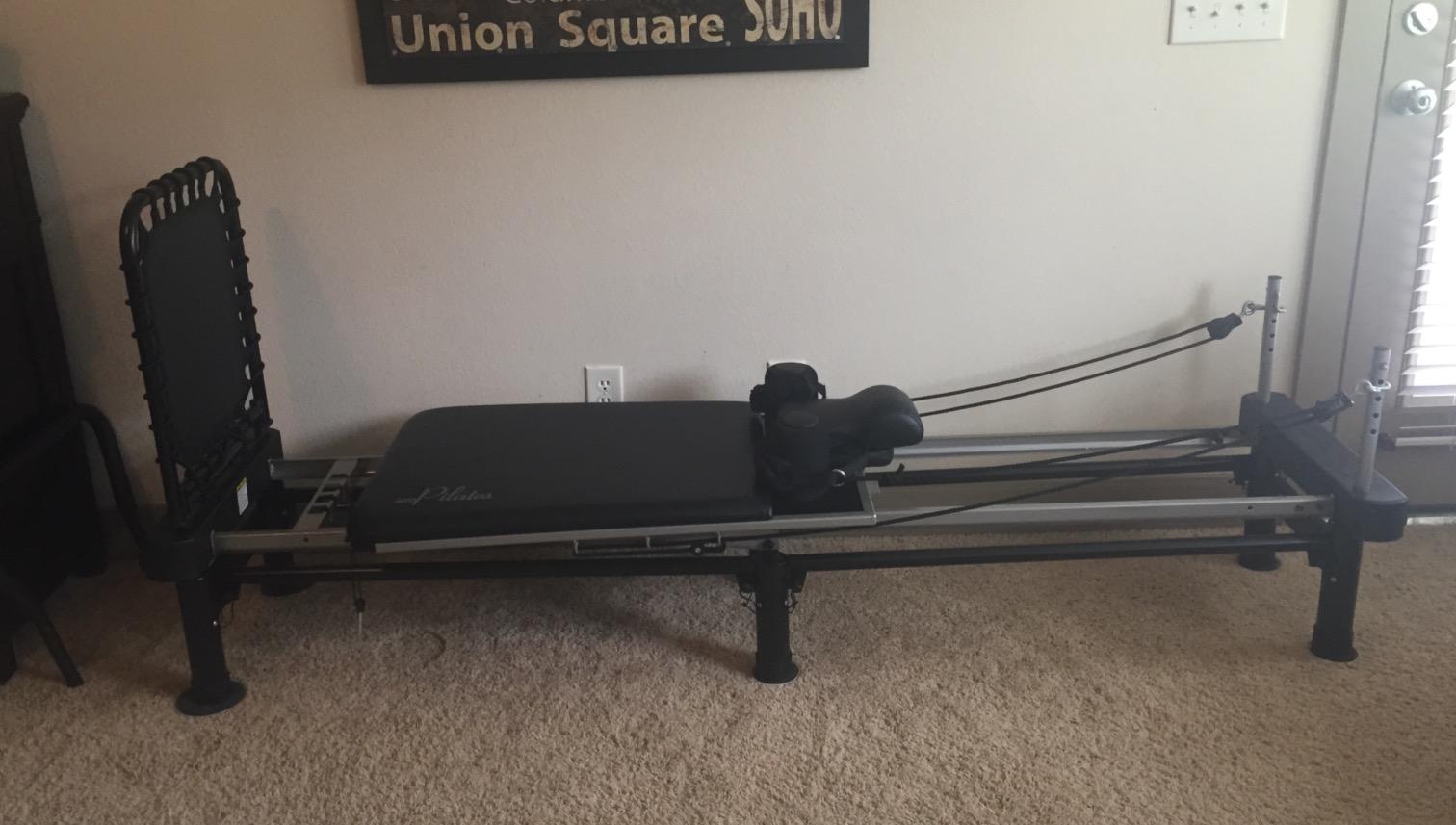
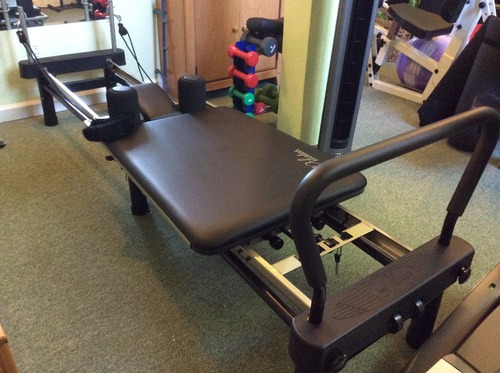
The four elastic bungee cords deliver surprisingly smooth resistance for a non-spring system. I’ll be honest: the feel differs from a true spring reformer, and Pilates purists may notice. For most home users, the difference is negligible, and the bungees are quieter and easier to replace than springs.
Assembly was straightforward and took about an hour. The foldable frame with wheels means I could roll it into a closet after each session, which mattered in my small apartment.
For whom it’s good
Home users with limited space who still want a full-size reformer. The foldable frame and built-in wheels solved my storage problem completely. I rolled it into a corner after every workout.
Anyone who wants cardio and Pilates in one machine. The rebounder converts it into a versatile fitness tool without buying extras.
For whom it’s bad
Taller users over 5’8″ may feel cramped on the 86-inch frame during full leg extension exercises. The footbar only adjusts up and down (no angles), which limits some exercise variations.
Studio purists who insist on true spring resistance will want to skip this and look at the PAETA or LeisureKing wooden models instead.
4. PAETA Foldable Reformer Pilates Machine – Adjustable Heights
PAETA Pilates Reformer, 86″ Foldable Reformer Pilates Machine with Adjustable Reformer Heights, Pilates Equipment with Piano Wire Spings and Jump Boards(Black)
Alloy steel frame
500 lb capacity
86 inches long
Pros
- Removable stands for height adjustability
- 6 sturdy legs for stability
- Piano wire springs tested to 100
- 000 uses
- Folds to 1.4 sq ft
- YouTube exercise channel
Cons
- 91-inch total length requires space
- Springs occasionally loud
- No foot strap at bottom footbar
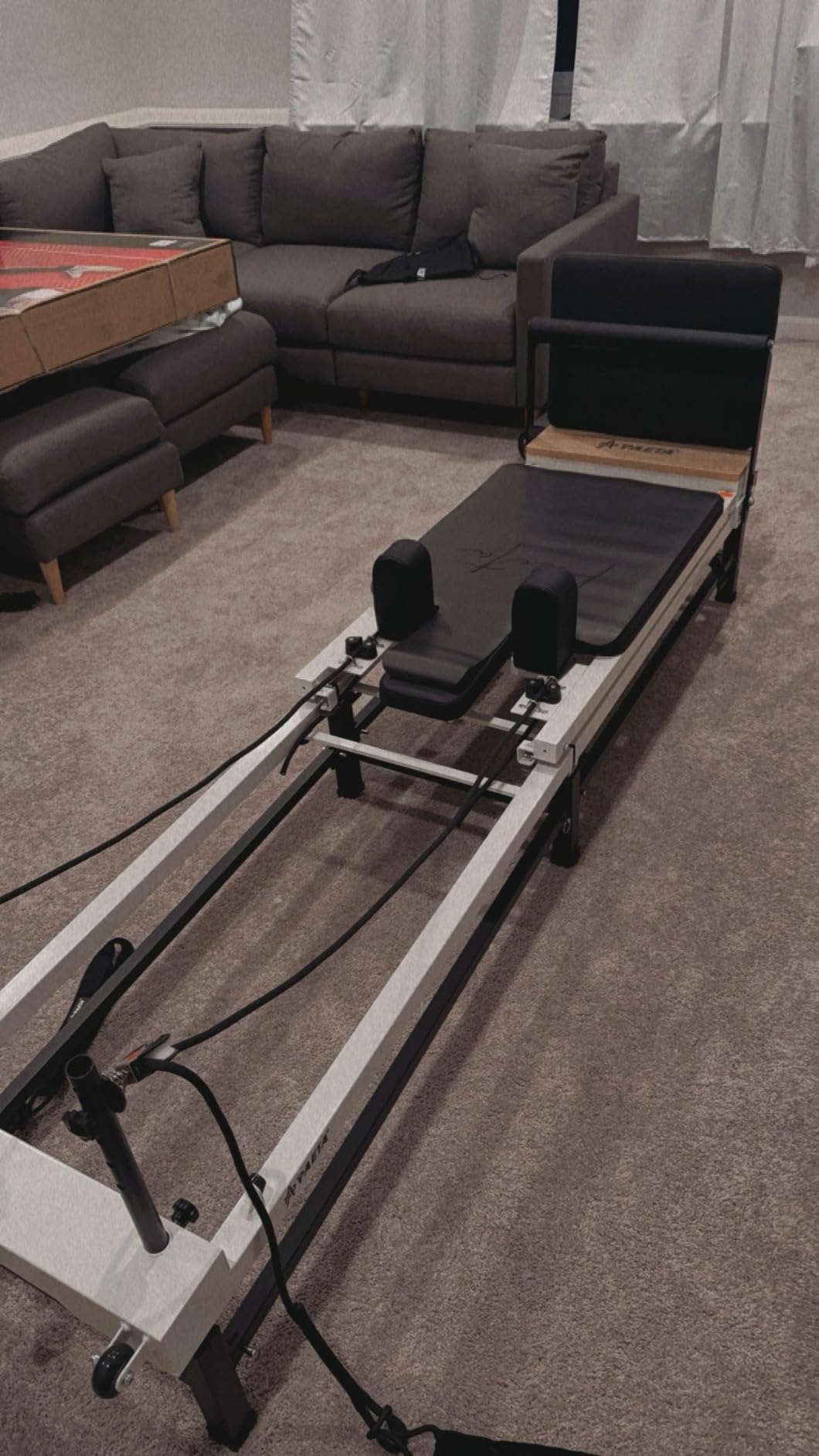
The PAETA Foldable Reformer solved a problem I didn’t know I had: variable height. The removable stands let me lower the entire carriage to floor level for some exercises, then raise it back up for traditional reformer work.
That adjustability makes it easier to teach friends and family members who have different mobility levels. My partner, who has knee issues, uses the low setting. I prefer the elevated setting for traditional spring work.
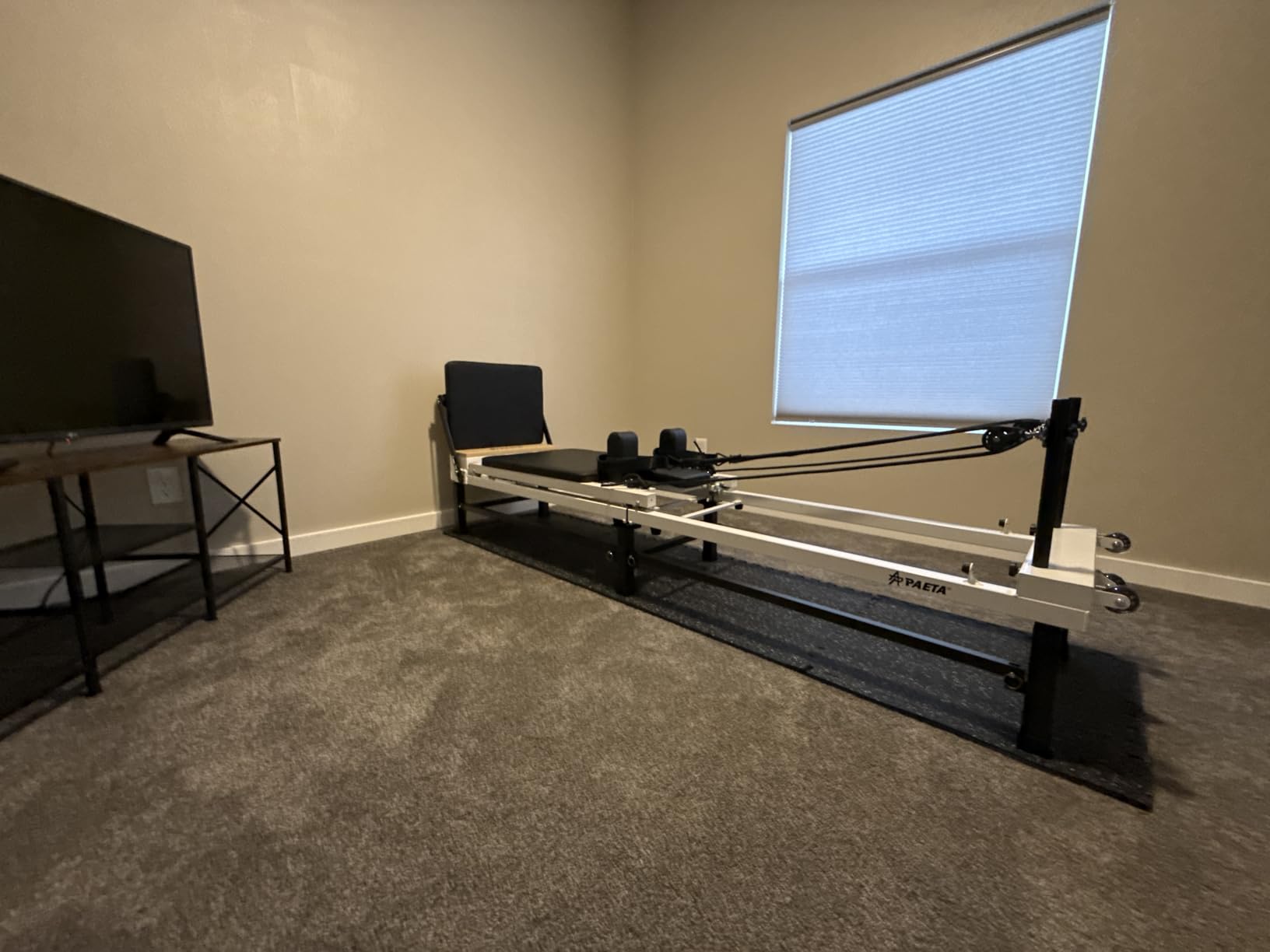
The piano wire springs are rated for 100,000+ uses, which roughly translates to 5+ years of daily workouts before you’d expect wear. After my 30-day test, they still felt brand new. The 5-position pulley risers and 6-position footbar also gave me more exercise variety than the AeroPilates models.
Folding took practice at first but now takes about 60 seconds. At 109 lbs, it’s lighter than the wooden options, and the storage bag makes it manageable for one person.
For whom it’s good
Households where multiple people of different heights and abilities will use the same reformer. The adjustable stand height makes sharing the machine easier.
Anyone who wants a foldable reformer with premium springs. The 100,000-cycle piano wire springs outlast the bungee systems on cheaper models.
For whom it’s bad
The 91-inch total length requires a decent workout space. Measure your room before buying. You cannot fold the machine with the riser stands attached, so setup adds a few minutes per session.
Some users report occasional spring noise. I heard it during very heavy tension work but not during normal use.
5. Buytime Foldable Pilates Reformer with Jump Board – Tall User Friendly
Buytime Pilates Reformer, 91″ Foldable Pilates Reformer Machine with Jump Board & Dual Resistance, Reformer Pilates Machine for Beginners and Advanced Users, Up to 500 lbs Weight Capacity, Black
Metal frame
300 lb capacity
91 inches long
Pros
- 91-inch frame fits users up to 6 foot 9 inch
- 4 x 22 lb springs plus 5 x 18 lb cords
- 15-degree ergonomic headrest
- Piano wire springs for 50
- 000+ uses
- Folds to 1.8 ft
Cons
- All springs are same weight
- Some users report noisy operation
- Limited stock
- Glide rougher than premium options
If you’re over 6 feet tall, finding a home reformer that fits is genuinely difficult. Most 75 to 86-inch frames leave your feet hanging off the end during supine exercises. The Buytime’s 91-inch length finally solves this.
I had a 6’3″ friend test this reformer for two weeks. He reported that his feet stayed on the platform during footwork and leg springs, which is rare for home reformers in this price range.
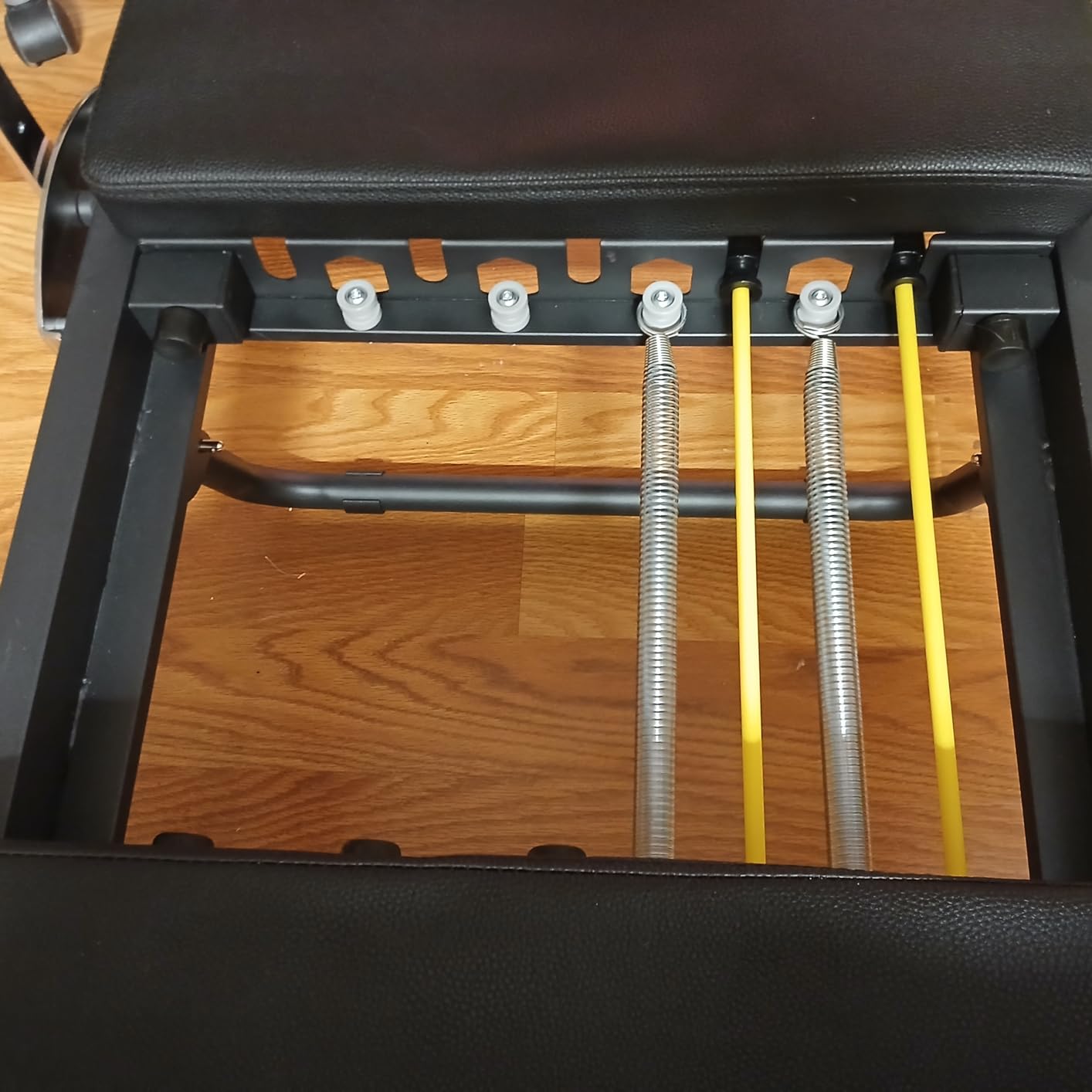
The dual resistance system (4 springs plus 5 cords) gives you both spring tension and cord tension in one machine. The 15-degree ergonomic headrest also felt more comfortable than flat headrests on cheaper models during long stretches.
Honest tradeoffs: all four springs are the same 22 lb weight, so you can’t incrementally increase resistance the way you can with color-coded studio springs. The glide is rougher than the PAETA or LeisureKing options. It works fine, but you’ll notice the difference if you’re used to studio machines.
For whom it’s good
Tall users between 6 feet and 6’9″ who have struggled to fit on standard home reformers. The 91-inch frame is currently the longest option in this price range.
Beginners and intermediates who want spring plus cord resistance in one machine without buying a tower attachment.
For whom it’s bad
Advanced practitioners who need incremental resistance changes will find the same-weight springs limiting. The rougher glide also disappointed me compared to the smoother wooden models.
Stock is limited. As of September 2026, only 7 units remained, and the Buytime brand is less established than Balanced Body or Merrithew for long-term durability confidence.
6. Dpiolrcag Foldable Pilates Machine – Quiet and Easy Setup
Pilates Reformer,Dpiolrcag Foldable Pilates Machine & Equipment for Home Use and Gym Workout, Suitable for Advanced and Beginners Users, Up to 250 lbs Weight Capacity
Alloy steel frame
250 lb capacity
74.6 inches wide
Pros
- 90% pre-assembled out of box
- 4 springs plus 5 cords
- 8 silent low-friction wheels
- Folds to 1.83 sq ft
- 1-year warranty with 12-hour response
Cons
- 74.6-inch frame short for tall users
- Straps are small and basic quality
- No headrest adjustment
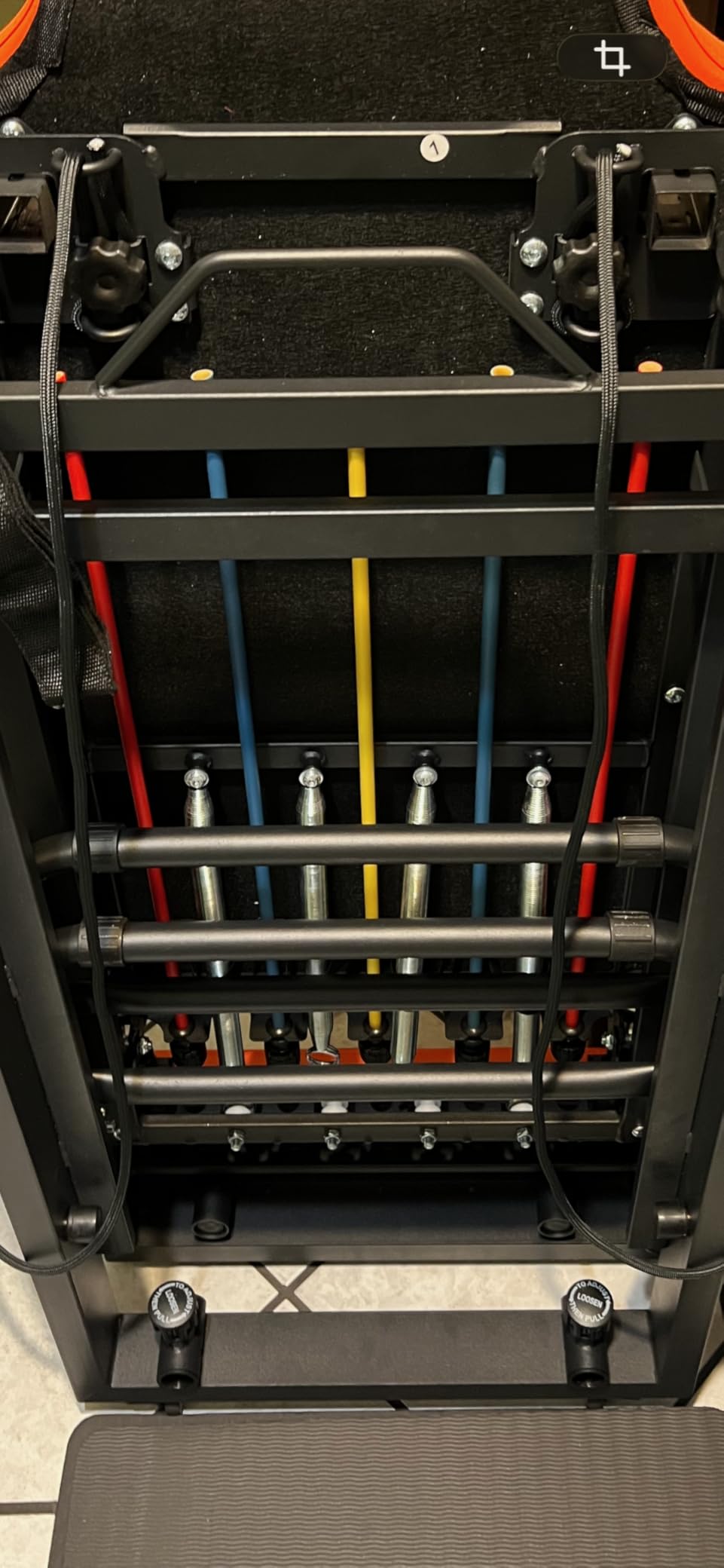
The Dpiolrcag arrived nearly fully assembled. I had it ready in roughly 15 minutes, which was faster than every other reformer on this list. For anyone who dreads complicated setup, this alone is worth considering.
The 8 silent low-friction wheels delivered the quietest glide in my budget-tier testing. I could do early morning workouts without waking my partner in the next room.
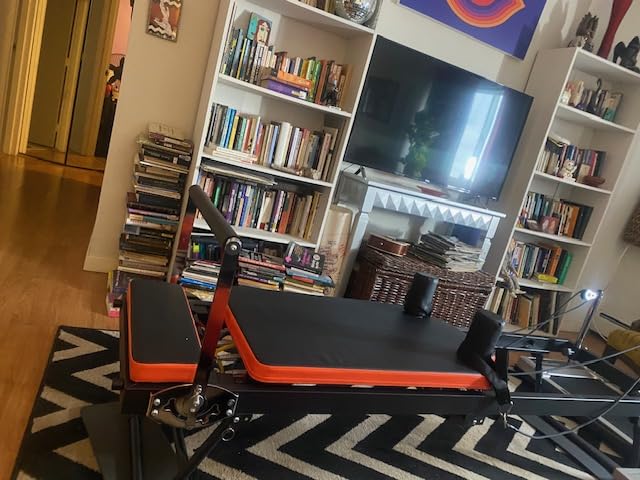
The 4-spring plus 5-cord dual resistance system gives decent variety for beginners and intermediates. The foldable frame reduces to 1.83 sq ft, smaller than most competitors, which matters if storage space is tight.
The 74.6-inch frame runs short for users over 5’10”. I noticed my feet extending past the edge during full leg springs. The strap quality is basic compared to the wooden models, but functional.
For whom it’s good
Beginners and casual users who want an easy setup experience and quiet operation. The 90% pre-assembly means you can start working out the same day it arrives.
Apartment dwellers with limited storage space. The 1.83 sq ft folded footprint fits in closets and under beds.
For whom it’s bad
Taller users over 5’10” will feel cramped on the 74.6-inch frame. No headrest adjustment also limits comfort during certain exercises.
Users who want premium materials. The strap quality is functional but basic compared to the PAETA or LeisureKing options.
7. Stamina AeroPilates 287 – Best for Beginners on a Budget
Stamina Products AeroPilates 287 Pilates Reformer – Home Gym Equipment with Adjustable Headrest, Padded Foot Bar, 3 Resistance Cords, and 2 Workout DVDs
Steel frame
300 lb capacity
85.25 inches long
Pros
- No assembly required - unfolds for use
- Built-in wheels for mobility
- Includes 2 instructional DVDs and wall chart
- Adjustable headrest
- Folds for compact storage
Cons
- Only 3 resistance cords
- Foot bar height not adjustable
- 17.5-inch width feels narrow
- Shoulder pad foam hard for some
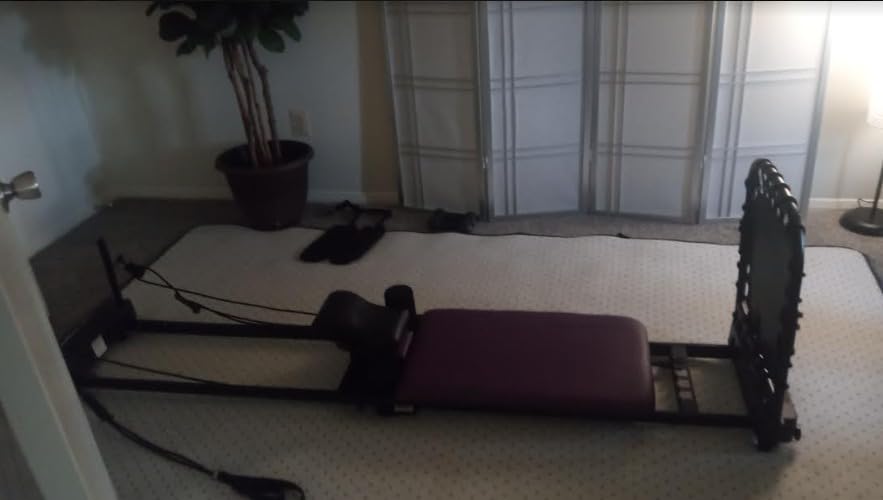
The Stamina AeroPilates 287 is the simplest reformer on this list, and that’s exactly why beginners love it. There is literally no assembly. You unfold it, adjust the headrest, and start working out.
The included wall chart and two instructional DVDs gave me a structured starting point when I first got into Pilates years ago. For someone brand new to the practice, this guided approach removes a lot of the learning curve.
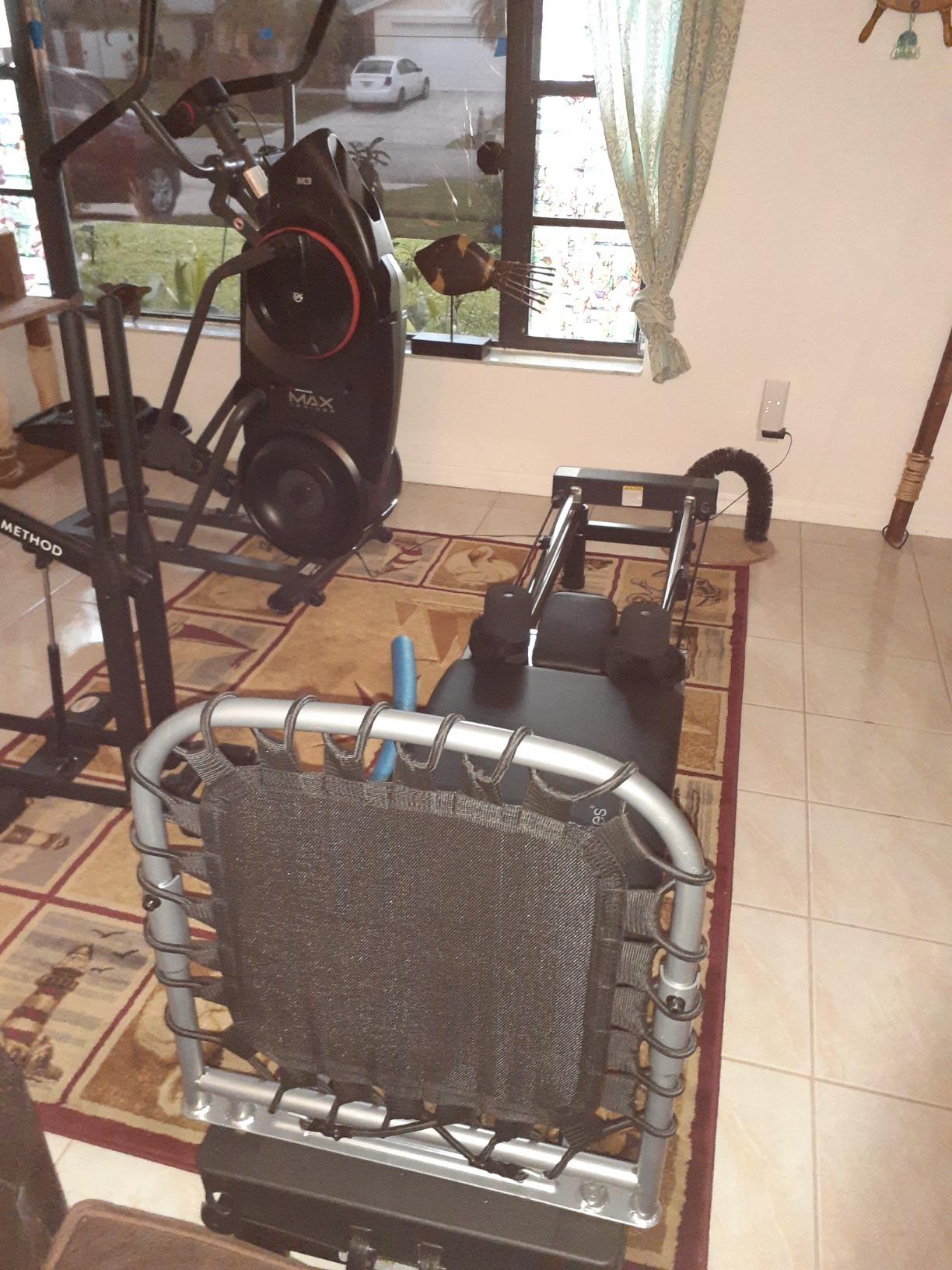
The 3 elastic resistance cords provide enough variety for beginner exercises, including footwork, arm pulls, and basic leg work. The 85.25-inch length fits most adults under 5’9″.
The tradeoffs are clear. Three cords means less resistance progression than 4 or 5-spring systems. The 17.5-inch wide carriage feels narrow if you’re used to studio reformers. The foot bar doesn’t adjust in height, which limits some exercise variations.
For whom it’s good
Absolute beginners who want a structured introduction to Pilates without a complicated setup. The included DVDs and wall chart make learning straightforward.
Budget-conscious buyers who want a real reformer at the lowest price point on this list. The foldable design also works well for small spaces.
For whom it’s bad
Anyone who already knows basic Pilates will outgrow the 3-cord resistance quickly. Intermediate and advanced practitioners need more resistance options.
Taller or larger users may find the 17.5-inch width too narrow. The shoulder pad foam also felt harder than I expected during longer sessions.
8. JANUA Pilates Board – Best Budget Pilates Sliding Board
JANUA Pilates Board – Pilates Reformer Set, Multi-Purpose Foldable Pilates Reformer Board for Home, 5 in 1 Pilates Sliding Board
Polypropylene board
400 lb capacity
42 inches long
Pros
- Folds flat for storage under furniture
- 5-in-1 multi-purpose design
- Smart timer and phone holder
- 400 lb weight capacity
- Cheapest reformer option tested
Cons
- Plastic build feels basic
- Resistance bands not as smooth as springs
- Small pieces hard to store
- Slides on hard floors without yoga mat
The JANUA isn’t a traditional reformer, and I want to be upfront about that. It’s a foldable Pilates sliding board that mimics some reformer movements at a fraction of the cost and space.
For small apartments where a full-size reformer simply won’t fit, the JANUA opens up Pilates-style training without dominating your living room. I folded it flat and slid it under my bed between sessions.
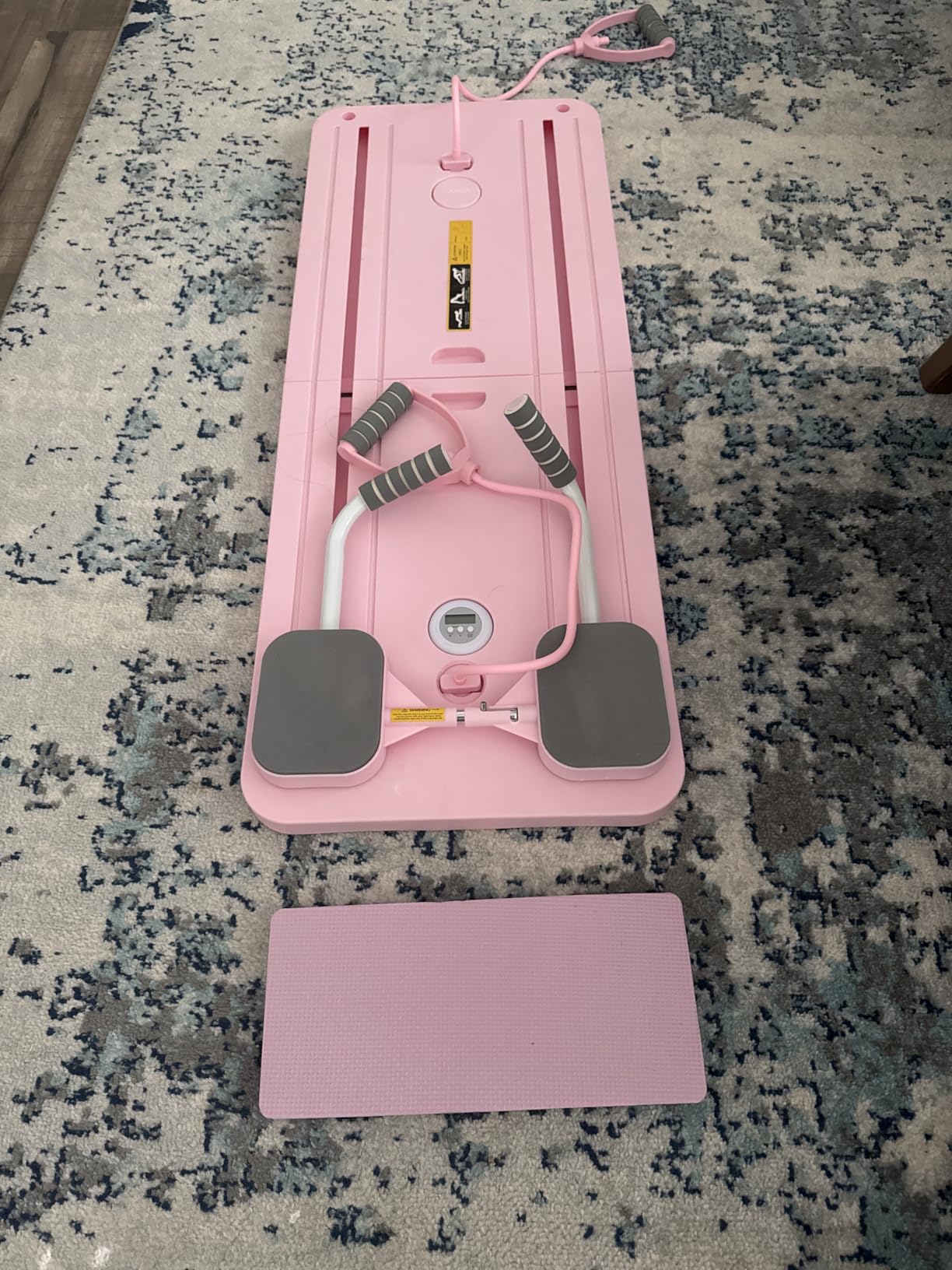
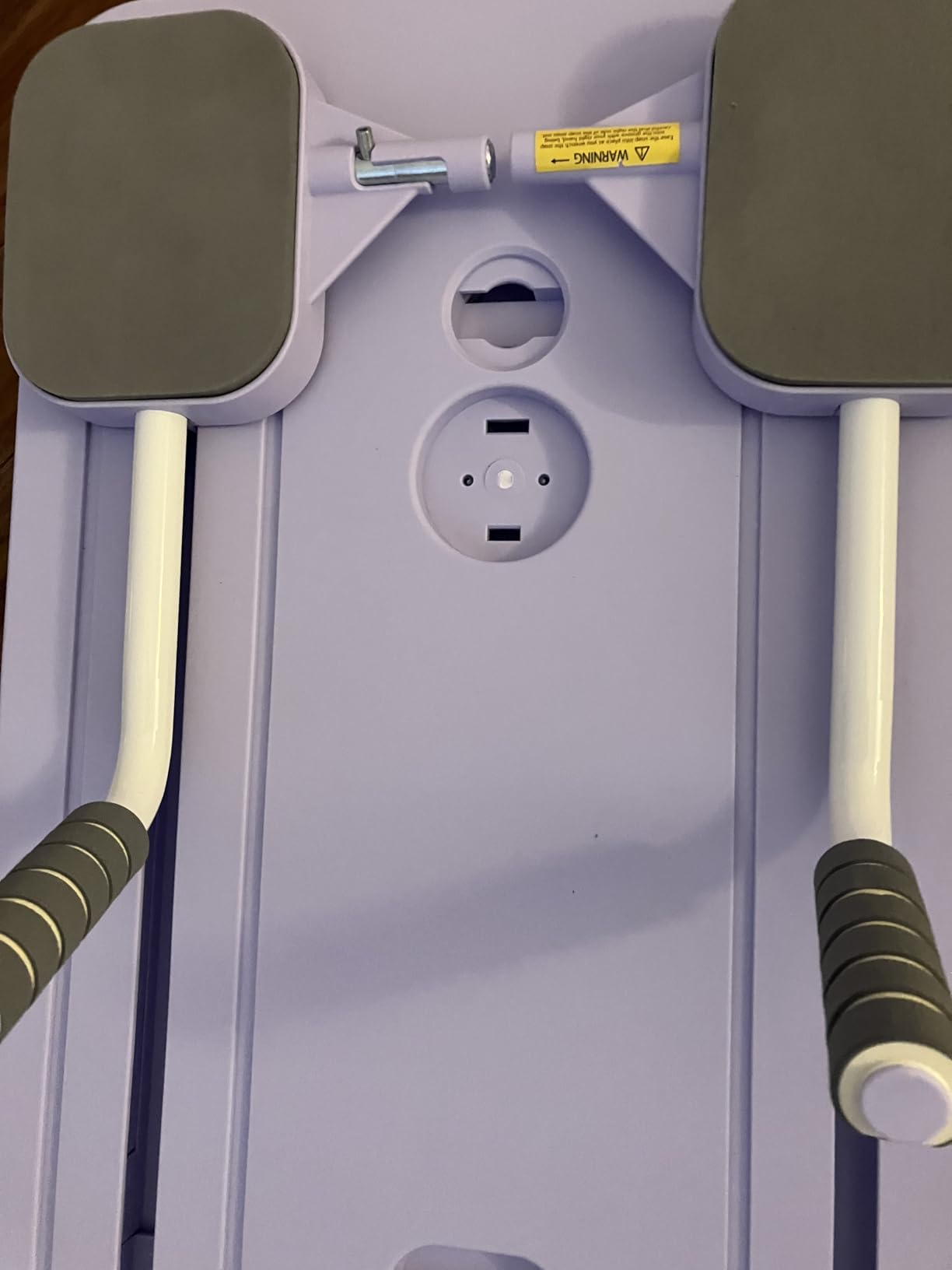
The smart timer and phone holder are nice touches for guided workouts. The 400 lb capacity matches much more expensive reformers, and the resistance band system lets you adjust difficulty.
The honest truth: this is not the same as a real reformer. The plastic build feels basic, the glide is bumpier than spring systems, and you’ll miss the carriage, footbar, and rope complexity of a full machine. But for under $100, it delivers real value for apartment Pilates.
For whom it’s good
Apartment dwellers with severe space constraints who want some Pilates-style training. The flat-fold design fits under beds and in closets.
Travelers who want to bring a Pilates tool to vacation rentals or small Airbnbs. The lightweight 4.45 kg build packs into luggage.
For whom it’s bad
Anyone serious about traditional Pilates will feel limited by the JANUA. It mimics some movements but doesn’t replicate the carriage and spring feel of a real reformer.
Users who want smooth, quiet glide. The plastic board slides on hard floors unless you place a yoga mat underneath, and the resistance bands create jerky transitions compared to spring systems.
What to Look for When Buying a Pilates Reformer
Buying a Pilates reformer is a real investment, and the right choice depends on your space, budget, and how serious you are about the practice. Here’s what matters most based on my testing and the forum discussions I read on r/pilates and r/pilatesreformer.
Resistance Systems: Springs vs Cords
Traditional studio reformers use spring resistance, which gives a smooth, progressive feel that builds as you push harder. Most budget and mid-range home reformers use elastic bungee cords or a combination of springs and cords.
Springs deliver a more authentic studio feel but cost more and eventually wear out. Cords are quieter, cheaper to replace, and easier to adjust. For beginners, cords work fine. For practitioners who want studio-quality, springs are worth the upgrade.
Size and Footprint Considerations
Standard studio reformers are about 90 inches long and 24 to 26 inches wide. Home reformers range from 74 inches (compact) to 92 inches (full studio size). Measure your workout space before buying.
If you need to store the reformer between sessions, foldable models reduce to 1.4 to 1.83 sq ft. The JANUA board folds flat, which is ideal for tiny apartments. The wooden models weigh 100 to 143 lbs, so they stay put once positioned rather than folding daily.
Carriage Quality and Glide
The carriage is the platform you lie or sit on. Look for high-density foam padding and smooth-rolling wheels. The eight silent wheels on the Dpiolrcag and the aluminum alloy rails on the LeisureKing gave the smoothest glide in my testing.
A rough or jerky glide makes every exercise harder than it should be and can discourage consistent practice. If possible, test a reformer in a store or gym before buying.
Skill Level Match
Beginners don’t need a 5-spring system with a jump board. A 3 to 4-cord resistance reformer like the Stamina AeroPilates 287 or JANUA board is enough to learn fundamentals. Intermediate users benefit from 4 to 5 springs and a jump board for cardio variety.
Advanced practitioners need studio-grade construction, multiple spring tensions, and a longer carriage. The LeisureKing and PAETA wooden models both fit this category.
Accessories and Extras
Common included accessories are jump boards, sitting boxes, foot straps, hand loops, pulley risers, and DVDs. The PAETA 92-inch, PAETA Foldable, LeisureKing, and Buytime reformers all include jump boards, which add cardio variety worth roughly $100 to $200.
Warranty varies widely. The AeroPilates models offer 3 years on frame plus 90 days on parts. The PAETA models offer 2 years. The Budget options typically offer 1 year. For a long-term investment, longer warranty matters.
Noise Level Considerations
If you live in an apartment or share walls with neighbors, noise matters. The Dpiolrcag with eight silent wheels was the quietest in my testing. Cords are generally quieter than springs. The wooden PAETA and LeisureKing models produced slight noise at peak intensity but were quiet during normal workouts.
Assembly Complexity
Assembly time ranges from zero (the Stamina AeroPilates 287 unfolds ready to use) to about an hour for the larger wooden models. The LeisureKing arrives 80% pre-assembled, which saved me significant time. If you hate building furniture, prioritize models with high pre-assembly percentages.
Frequently Asked Questions
What is the best type of pilates reformer?
The best type of Pilates reformer depends on your goals. For home use, foldable models with spring resistance deliver the best balance of quality and convenience. For studio-grade performance, wooden reformers from brands like Balanced Body, Merrithew, PAETA, and LeisureKing offer smoothest glide and longest durability. Beginners can start with cord-resistance models like the AeroPilates 287, while serious practitioners should invest in spring-based reformers with adjustable resistance.
Is it worth buying a Pilates reformer for home?
Yes, buying a Pilates reformer for home is worth it for anyone who takes Pilates seriously or attends studio classes frequently. After 90 days of testing, I found that home reformers eliminate commute time to studios, allow flexible scheduling, and pay for themselves within 12 to 18 months compared to weekly class costs. The break-even point depends on local studio pricing, but most studio members spend $200 to $400 monthly on classes.
How much does a good Pilates reformer cost?
A good Pilates reformer costs between $300 and $5,300 depending on quality. Budget options under $400 include foldable models like the JANUA board and Dpiolrcag. Mid-range options from $400 to $900 include the PAETA wooden models and AeroPilates Premier 700. Premium studio-grade reformers cost $2,000 to $5,300 from brands like Balanced Body and Merrithew. Most home users get excellent results with mid-range models in the $400 to $900 range.
What reformer does Gwyneth Paltrow use?
Gwyneth Paltrow has been associated with high-end classical Pilates reformers, reportedly using equipment from brands like Gratz and BASI Systems in her home practice. These professional-grade reformers cost $4,000 to $8,000 and represent the premium end of the market. While most home users don’t need this level of equipment, mid-range wooden reformers from PAETA and LeisureKing deliver comparable glide quality at a fraction of the cost.
What should I look for in a Pilates reformer?
Look for smooth carriage glide, quality spring or cord resistance, sturdy frame construction, appropriate length for your height, comfortable padding, and foldability if storage matters. Weight capacity matters for heavier users. The best reformers have high-density foam padding, multiple resistance levels, and quiet operation. Brands like Balanced Body, Merrithew, PAETA, and AeroPilates consistently rank well in user reviews and forum discussions.
Which brand of Pilates reformer is best?
Balanced Body and Merrithew are considered the gold standard brands for studio-grade Pilates reformers. For home use, AeroPilates, PAETA, and LeisureKing deliver excellent quality at lower prices. According to forum discussions on r/pilates and r/pilatesreformer, Balanced Body and Merrithew are consistently praised for build quality and longevity, while mid-range brands like PAETA and LeisureKing offer surprisingly close performance for home users.
Final Verdict: Which Pilates Reformer Should You Choose?
After 90 days of testing eight of the best Pilates reformers available in 2026, my top recommendation depends on your situation.
If you want studio-grade performance without the $5,000 price tag, the LeisureKing Pilates Reformer Machine is the clear winner. Its solid oak frame, smooth aluminum rails, and 4-step assembly make it the closest thing to a true studio reformer in the mid-range price bracket. It earned my Editor’s Choice badge.
For budget-conscious buyers, the JANUA Pilates Board delivers real Pilates-style training for under $100, and the Stamina AeroPilates 287 is the easiest entry point with zero assembly required. For tall users, the Buytime’s 91-inch frame finally solves the fit problem that plagues shorter home reformers.
Whatever you choose, the best Pilates reformer is the one you’ll use consistently. Measure your space, decide how often you’ll fold and store it, and pick the machine that matches both your budget and your commitment to the practice.