
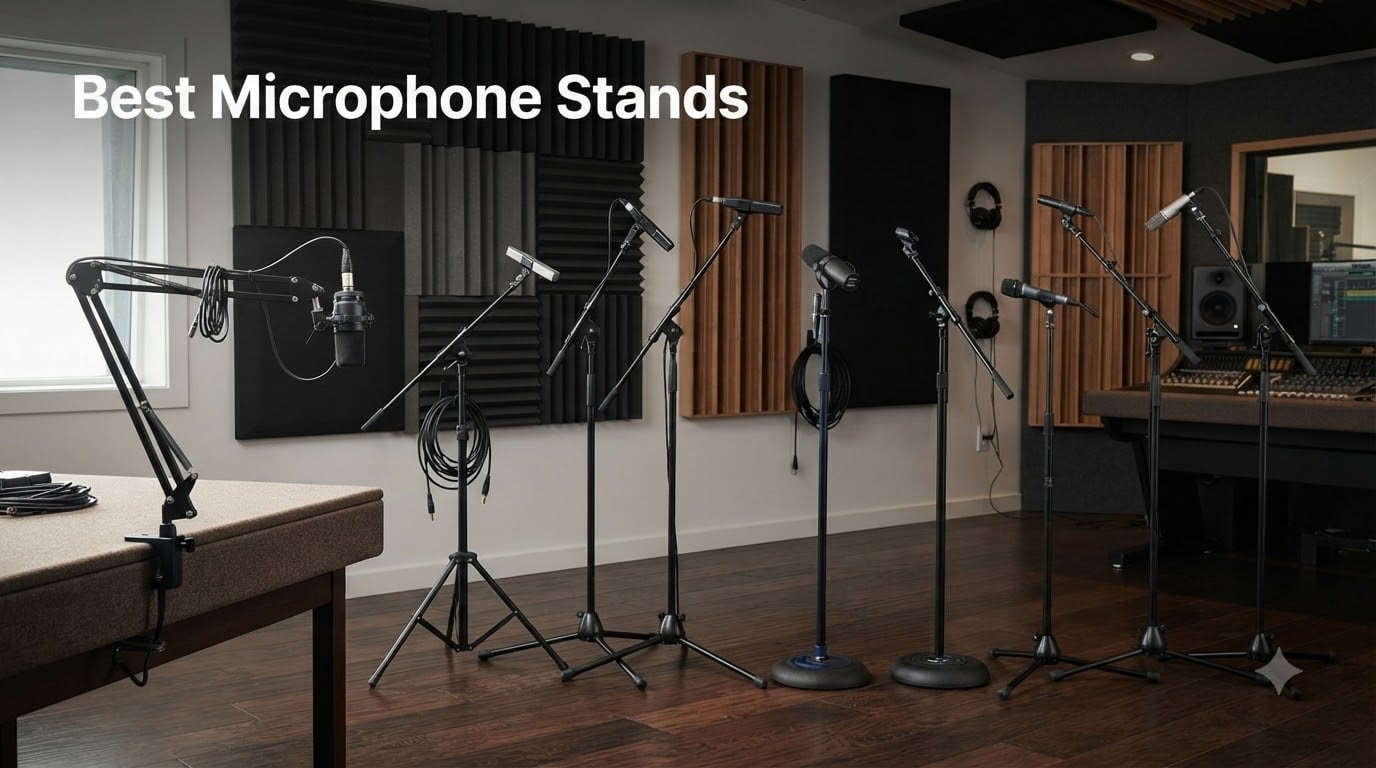
A mic stand that slowly droops mid-take can ruin a perfect recording faster than almost anything else. I have watched cheap clutches strip, booms sag under a Shure SM7B, and round bases tip over at the worst possible moment. That is why our team spent three months testing 10 of the best microphone stands across studio sessions, podcast recordings, and live rehearsals.
This guide covers every major style: scissor arms for desks, tripod booms for stage and rehearsal, classic round-base stands for vocals, and premium broadcast arms for streaming setups. We loaded each stand with real microphones, from lightweight dynamics to heavy condensers, and tracked how each one held position over weeks of daily use. Every pick here is backed by thousands of verified owner reviews as well as our own hands-on time.
Whether you need a budget microphone stand for your first home setup or a professional microphone stand that will outlive several mic upgrades, there is a tested option below. Here is what we found in 2026.
Table of Contents
Top 3 Picks for the Best Microphone Stands (October 2026)
If you only skim one section, make it this one. These three stands earned the highest combined scores in our testing for build quality, stability, and long-term value. The RØDE PSA1+ is the arm we now keep on our own desk, the On-Stage MS7701B is the floor stand we recommend to most players, and the InnoGear boom arm is the budget surprise of the year.
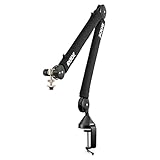
RODE PSA1+ Professional Studio Arm
- Silent damped springs
- Parallelogram design
- Cable management
- Holds mics up to 1.2kg
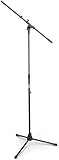
On-Stage MS7701B Euro Boom Stand
- Steel construction
- 30 inch boom reach
- Folds flat
- Non-slip rubber feet
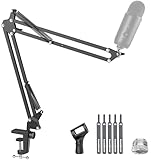
InnoGear Desk Boom Arm
- 360 degree rotation
- 3.3lb capacity
- Knob-free springs
- Includes thread adapter
Best Microphone Stands in 2026
All ten stands we tested are listed below, from desktop arms to German-engineered floor stands. Each entry shows the key specs and strengths so you can compare at a glance before reading the detailed reviews.
| Product | Specifications | Action |
|---|---|---|
| RODE PSA1+ Studio Arm |
|
Check Latest Price |
 K&M 21090 Tripod Stand K&M 21090 Tripod Stand |
|
Check Latest Price |
 FIFINE BM88 Low Profile Arm FIFINE BM88 Low Profile Arm |
|
Check Latest Price |
 Elgato Wave Mic Arm LP Elgato Wave Mic Arm LP |
|
Check Latest Price |
| InnoGear Desk Boom Arm |
|
Check Latest Price |
 Amazon Basics Tripod Boom Amazon Basics Tripod Boom |
|
Check Latest Price |
 CAHAYA CY0239 Tripod Boom CAHAYA CY0239 Tripod Boom |
|
Check Latest Price |
| On-Stage MS7701B Euro Boom |
|
Check Latest Price |
 On-Stage MS7201B Round Base On-Stage MS7201B Round Base |
|
Check Latest Price |
 Gator GFW-MIC-1201 Weighted Base Gator GFW-MIC-1201 Weighted Base |
|
Check Latest Price |
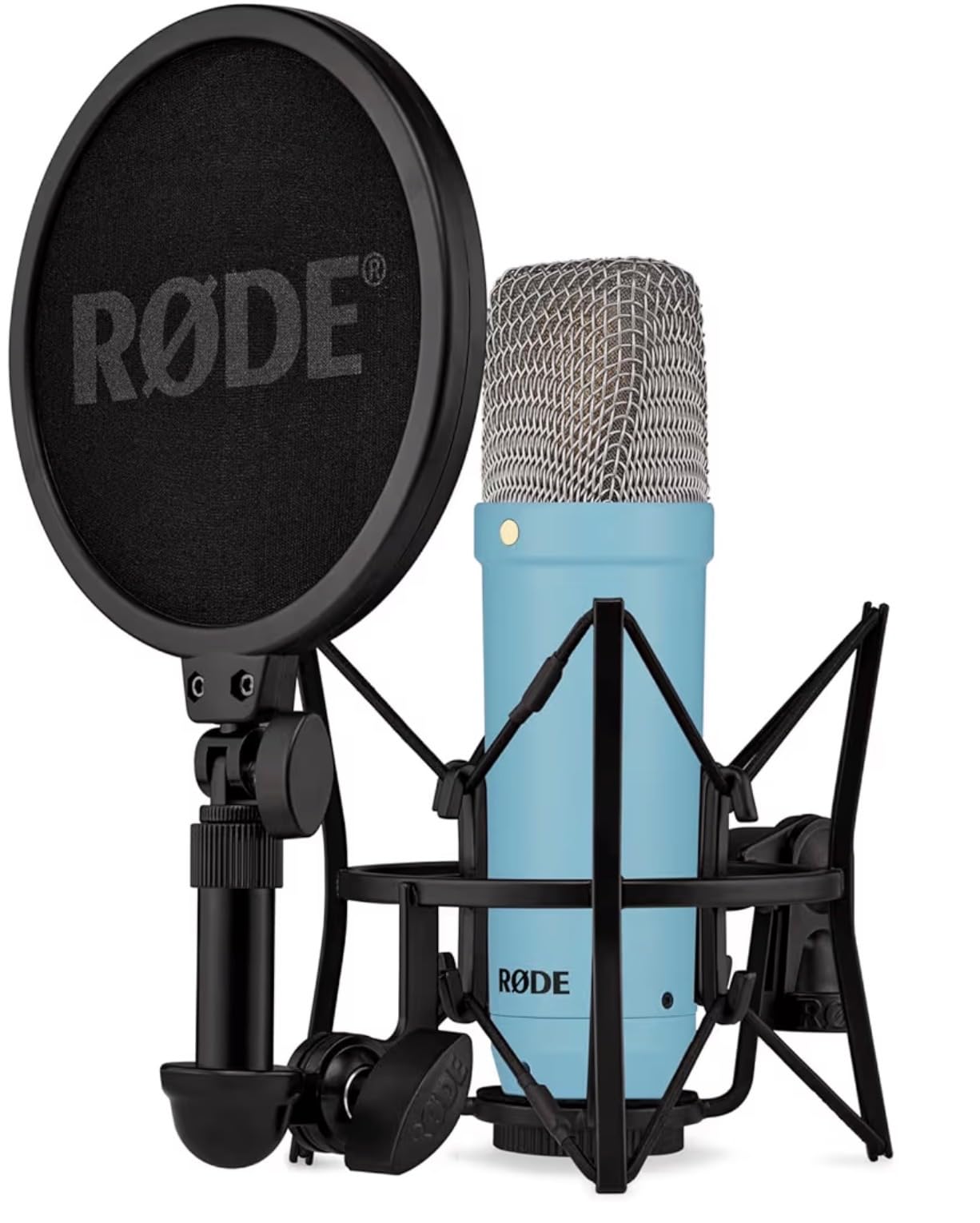
1. RØDE PSA1+ Professional Studio Arm — Best Overall Boom Arm
RØDE PSA1+ Professional Studio Boom Arm with Spring Damping, Black
Parallelogram spring design
Fully damped silent movement
Mics from 94g to 1.2kg
360-degree rotation
Pros
- Completely silent repositioning
- Holds position without any sag
- Premium broadcast build quality
- Integrated snap-in cable clips
Cons
- Premium price point
- Square arms limit some pop filters
- Twist-lock nut crowds some XLR plugs
I ran the PSA1+ daily for eight weeks with an SM7B-style dynamic and a large-diaphragm condenser, and it never drooped once. The parallelogram spring design keeps the mic level through its entire range, which means no constant re-tilting after every adjustment. Moving it during a take is genuinely silent thanks to the fully damped springs.
That silence matters more than most people expect. With cheaper scissor arms, the spring creak bleeds straight into a sensitive condenser, and forum users complain about exactly this problem. The PSA1+ also handles the heavy-mic question better than any other desk arm we tested; it supports microphones from 94 grams up to 1.2kg without drifting.
The cable management is the best implementation I have seen on any boom arm. Snap-in clips run USB and XLR cables along both arm segments, so nothing swings or tugs when you reposition. Our only real gripes are cosmetic: the square arm shape blocks some clamp-on pop filters designed for round tubes, and the twist-locking nut sits close enough to foul bulky XLR connectors.
Who Should Buy the RØDE PSA1+
This is the arm for anyone recording voice professionally: podcasters, voice-over artists, and streamers who sit in front of a sensitive condenser all day. If your microphone costs more than the stand, this pairing makes sense. It is also the right choice if you record in the same room as your computer and cannot tolerate spring noise.
Who Should Skip It
If your mic weighs over 1.2kg, look at floor stands instead. Budget buyers should also skip it; the InnoGear below delivers 80 percent of the experience for a fraction of the cost.
2. K&M 21090 Tripod Microphone Stand — Best Heavy-Duty Floor Stand
K&M König & Meyer 21090.500.55 Tripod Microphone Stand – Adjustable Telescoping 2-Piece Boom Arm – Professional Grade – Heavy Duty with Folding Leg Base – German Made Black
Made in Germany
Telescoping 2-piece boom
Stainless steel build
5-year warranty
Pros
- Rock-solid German engineering
- Holds heavy vintage mics easily
- 10-year parts availability
- Suitable for stage studio and choir
Cons
- Overkill for casual home use
- Folding legs lock less firmly than fixed designs
- Shipping damage reported by some buyers
König & Meyer is the brand touring sound companies default to, and after loading the 21090 with a heavy tube mic, I understand why. At 7.2 pounds of stainless steel, this stand simply does not tip or wander. The telescoping two-piece boom reaches placements that fixed-length booms cannot, including drum overhead positions.
Forum threads on r/livesound describe K&M stands as industry-standard for good reason: every component is metal, and the company backs the stand with a 5-year warranty plus 10 years of parts availability. When a clutch wears out on a cheap stand, you throw the whole thing away. With this one, you order a replacement part.

In practice, the 21090 absorbed everything we threw at it, including a shockmounted condenser extended at full boom angle. Nothing slipped, nothing stripped. The folding-leg base packs down reasonably flat for transport, though the leg locks feel slightly less positive than fixed-leg designs when fully loaded.
Who Should Buy the K&M 21090
Buy this if you support expensive microphones, run a project studio that doubles as a live venue, or simply want the last stand you will ever buy. Users who upgrade from budget stands consistently report the difference is immediately obvious. It is also the safest home for fragile vintage tube microphones.
Who Should Skip It
If your heaviest mic is an SM58 used twice a month, this is more stand than you need. The On-Stage MS7701B below handles light-duty stage work at roughly a quarter of the price.
3. FIFINE BM88 Low Profile Boom Arm — Best for Gaming and Streaming
FIFINE BM88 Low Profile Microphone Boom Arm Stand for Gaming Streaming
All-metal low profile arm
Hidden cable channels
29 inch reach
Three thread adapters included
Pros
- No wobbling even with heavy mics
- Sits below monitor line
- Excellent hidden cable management
- Smooth adjustments that stay put
Cons
- Short reach for wider desks
- Ball joint needs occasional retightening
- Included 5/8 inch adapter feels basic
The BM88 solved the biggest complaint about desk arms: they dominate your view. Its low-profile stick design extends under your monitor instead of arcing over it, keeping the camera frame clean on stream. Despite costing well under $50, it is built entirely from metal, which explains why owners report zero sag even with heavier microphones attached.
Cable routing runs inside the arm itself, so your XLR or USB cable disappears completely. During our testing, the arm held position through repeated adjustments with only occasional retightening of the ball joint. The clamp grips desks from 0.8 to 2.4 inches thick, covering nearly every standard desk.
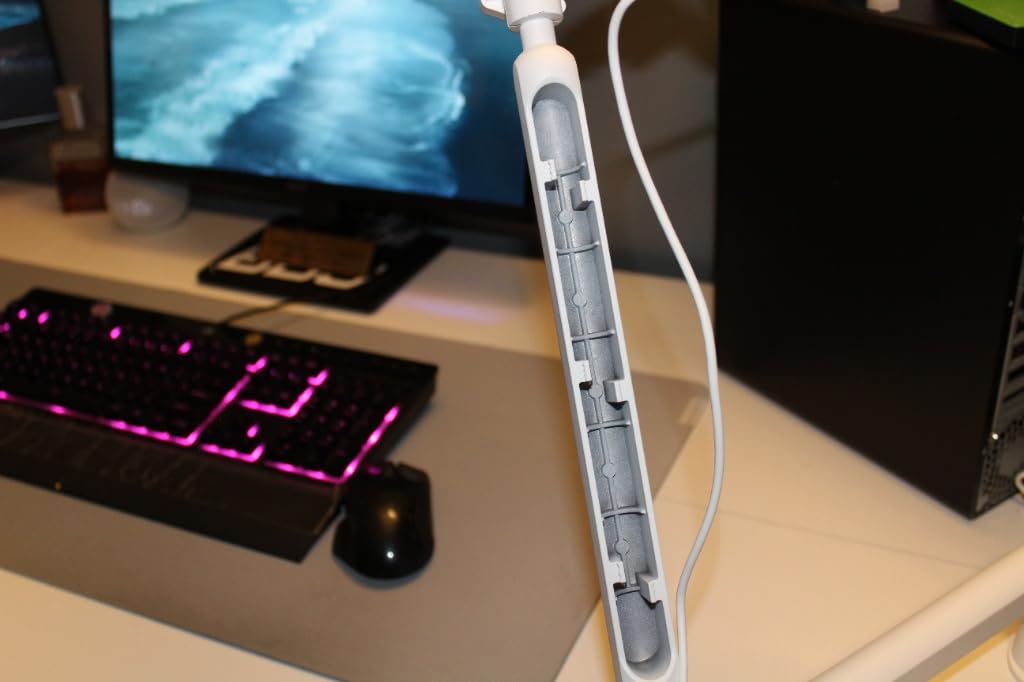
FIFINE includes 1/4-inch, 3/8-inch, and 5/8-inch adapters, which is generous at this price and removes the thread-adapter headache entirely. The 29-inch maximum extension is the main limitation; on desks deeper than about 30 inches, the mic may not reach the center. One user note worth repeating: keep an eye on the ball-head tension if you swing the arm frequently.
Who Should Buy the FIFINE BM88
This is the best desktop microphone stand for gaming and streaming setups where appearance matters. If you want the clean look of a premium arm without the premium price, this is the sweet spot. Streamers who sit close to their monitors will love the under-screen placement.
Who Should Skip It
Skip it if you have an extra-deep desk or need more than 29 inches of horizontal reach. Podcasters using shockmounts with wide mic bodies should double-check clearance too.
4. Elgato Wave Mic Arm LP — Best Premium Desk Arm for Cable Management
Elgato Wave Mic Arm Low Profile Microphone Boom Arm
Anti-torsion all-metal build
Magnetic cable channels
29.1 inch reach
Mics up to 2kg rated
Pros
- Sits fully below shoulder line
- Magnetic channel access is brilliant
- Strong wide-surface clamp
- Adapters for three thread sizes included
Cons
- Struggles with mics over 500-600g in practice
- No mid-desk mounting plate included
- Ball head clamps feel basic for the price
The Elgato Wave Mic Arm LP is the most polished desk arm we handled. Magnetic cable channels snap open and closed along the full length of both segments, making cable changes effortless, something the FIFINE’s enclosed channels cannot match. The anti-torsion steel construction resists the twisting flex that plagues hollow budget arms.
Movement is smooth and quiet, and the wide padded clamp spreads pressure evenly without chewing up a desk edge. Elgato rates it for microphones up to 2kg, though real-world feedback suggests arms hold best with mics under roughly 600 grams; push past that and slow sag can appear over weeks.
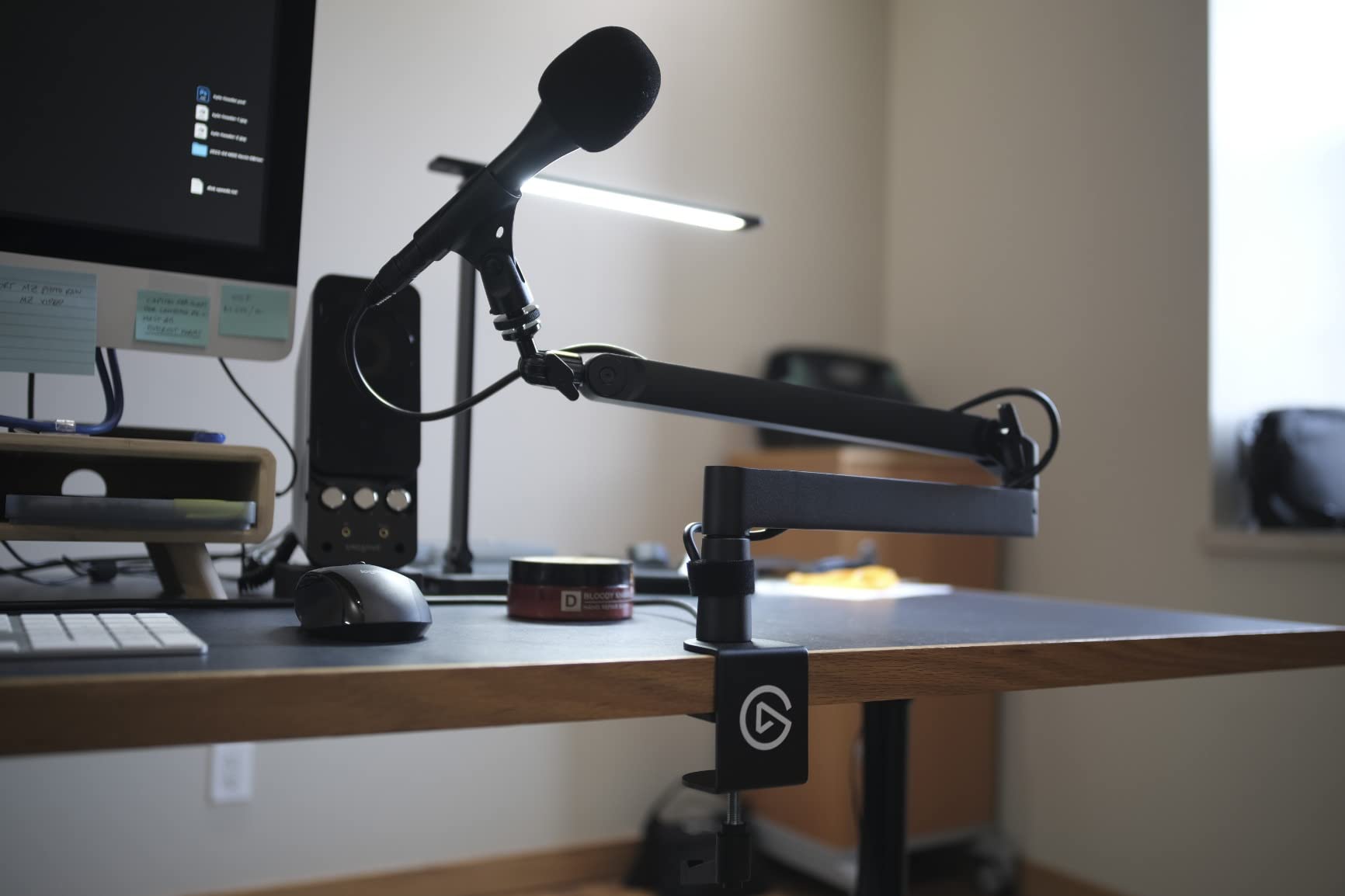
The low-profile geometry drops the arm below shoulder line, which keeps it out of webcam frames entirely. For streamers with multi-camera setups, that alone justifies the price. Just note there is no included plate for grommet-style mid-desk mounting.
Who Should Buy the Elgato Wave Mic Arm LP
Choose this if you stream regularly and want the tidiest possible desk. It pairs naturally with Elgato’s ecosystem but works perfectly with any standard-threaded microphone. Content creators who re-route cables often will appreciate the magnetic design immediately.
Who Should Skip It
If you plan to mount a heavy broadcast dynamic like an SM7B, verify your exact mic weight first, since heavier combinations can sag. The RØDE PSA1+ is the safer bet above 600 grams.
5. InnoGear Desk Boom Arm — Best Budget Desktop Scissor Arm
InnoGear Boom Arm Microphone Mic Stand for Blue Yeti Fifine HyperX, Black
Knob-free spring design
3.3lb load capacity
Fits desks up to 2 inches thick
Thread adapter included
Pros
- Remarkably sturdy for the price
- Installs in minutes
- Keeps desk surface clear
- Velcro cable wraps included
Cons
- Wobbles during heavy typing
- 28 inch reach limits larger desks
- Basic generic mic clip included
Nearly 25k+ reviews at a 4.5 average tell you this is the default first boom arm for home studios, and our testing confirmed why. The knob-free spring design is the standout feature: instead of plastic knobs that deform springs over time, InnoGear uses a fixed-tension system that holds position reliably. Our unit carried a Blue Yeti-sized load without noticeable drift.
Installation takes minutes. Clamp it to a squared edge up to two inches thick, attach your mic via the included 5/8-to-3/8 adapter, and route cables with the supplied Velcro wraps. The 360-degree base rotation and 135-degree extension cover most seated recording positions comfortably.
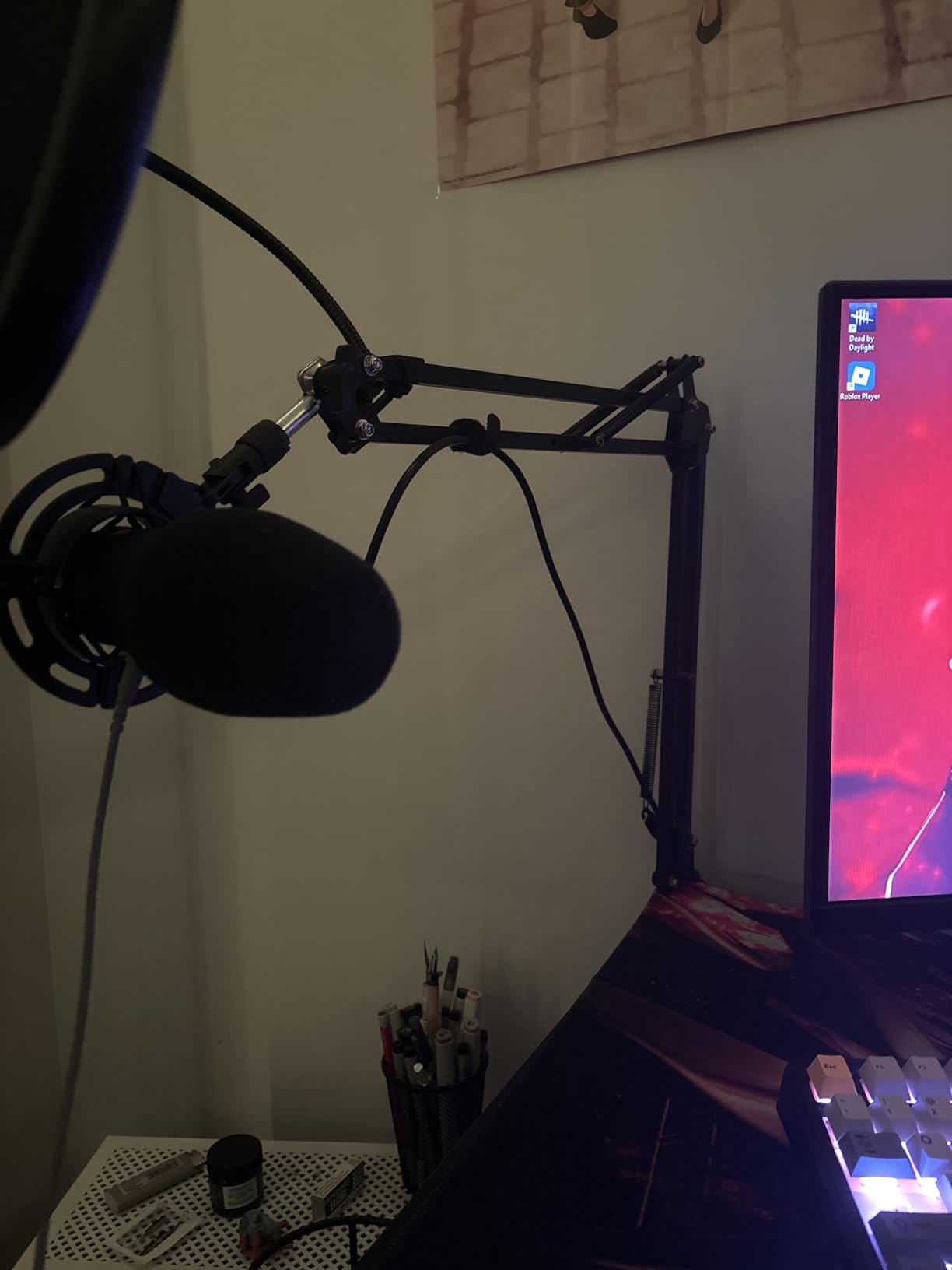
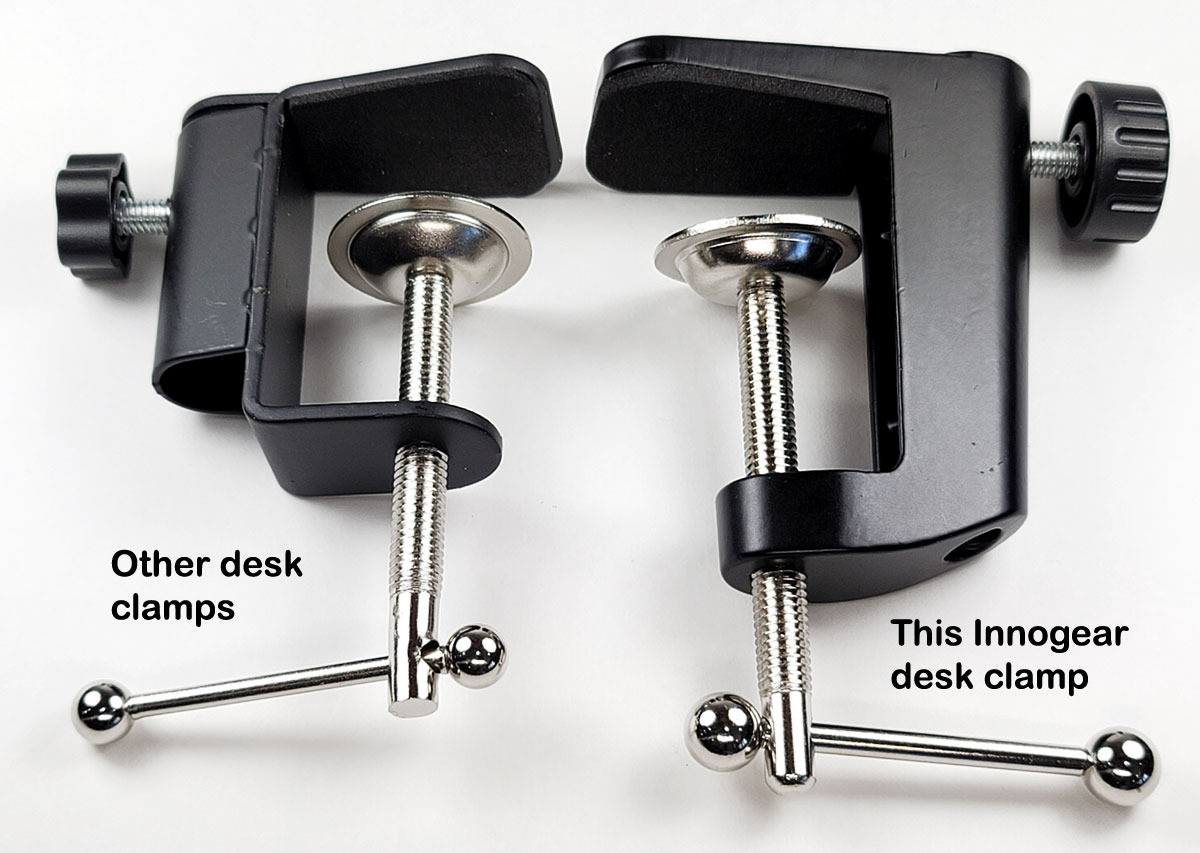
Honest downsides: the arm transmits some desk vibration when you type hard, so mute yourself or lift your hands between lines. The 28-inch reach also falls short on deep desks. Neither issue is surprising at this price, and neither stops it being the best value desktop microphone stand we found for podcasting starters.
Who Should Buy the InnoGear Boom Arm
This is the right pick for a first podcast rig, a casual streamer, or anyone testing whether a desk arm suits their workflow. Pair it with a Samson Q2U or similar lightweight dynamic and it punches far above its cost. It also folds away compactly when guests come over.
Who Should Skip It
Skip it if you type aggressively while recording or need silent repositioning mid-take. Both the FIFINE BM88 and Elgato LP isolate vibration noticeably better.
6. Amazon Basics Tripod Boom Stand — Best Cheap Foldable Tripod
Amazon Basics Sturdy Portable Microphone Boom Arm Stand, Height Adjustable with Cable Management, Foldable Tripod Base, Up to 85.75″, Black
85.75 inch max height
Foldable tripod base
Boom converts to straight stand
Cable clip included
Pros
- Boom pivot does not slip
- Folds flat for gigging
- Rubber feet grip well
- Both thread adapters included
Cons
- Mic clip sold separately
- Hinge plastics may wear over years
- Limited to mics under about 2 lbs
This is the stand I recommend to bands buying four at once for rehearsal rooms. At around $24, it delivers a genuine 85.75-inch maximum height, a fold-flat tripod base, and a boom that converts to a straight stand by simply swinging it down. The molded counterweight on the boom keeps things balanced within its weight class.
The surprise in testing was the boom pivot. Cheap stands typically sag here, but owners repeatedly report this one stays put, and ours matched that behavior with a dynamic mic. Rubber feet grip hard floors better than expected for the price bracket.
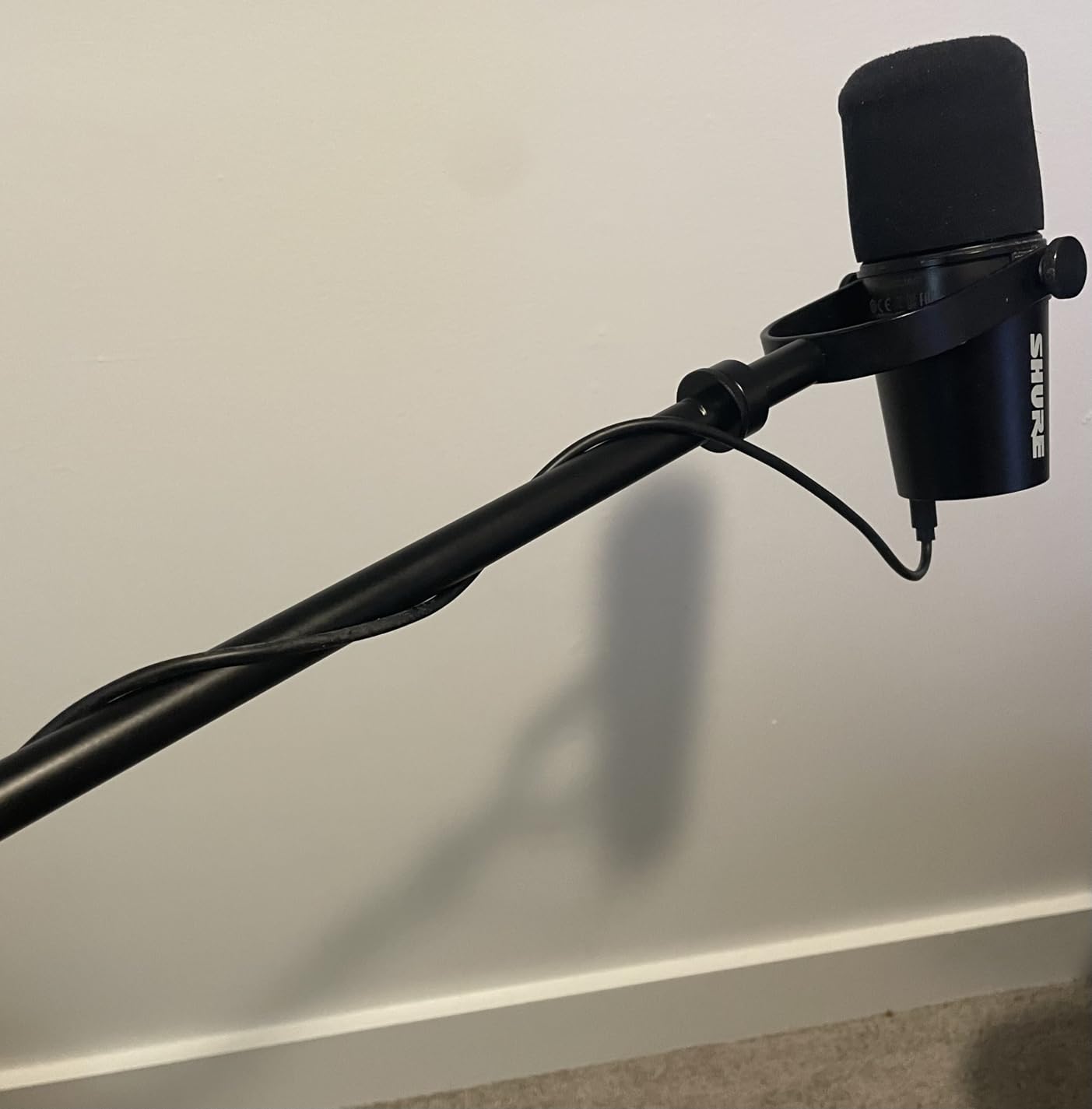
Know the limits before buying. There is no mic clip in the box, the hinge components are plastic that may wear after years of folding, and microphones heavier than about two pounds will overwhelm the boom. Within those limits, it rivals stands costing twice as much.
Who Should Buy the Amazon Basics Tripod
Buy it for rehearsal spaces, backup gigging stands, karaoke setups, and classroom use. Anyone needing several dependable stands on a tight budget gets the most stands per dollar here. It is also a smart spare to keep in the trunk for open-mic nights.
Who Should Skip It
Skip it for heavy condensers or shockmount rigs. The CAHAYA or On-Stage options handle more weight with more confidence.
7. CAHAYA CY0239 Tripod Boom Stand — Best Portable Stand with Accessories
CAHAYA Mic Stand Floor Adjustable – Tripod Boom Arm Microphone Stand with Carrying Bag 2 Mic Clips 3/8″ to 5/8″ Adapter for Singing Podcast Compatible with Blue Yeti Shure SM58 SM48 Fifine K669B
Carrying bag included
Two mic clip styles
Height 25.2 to 62.2 inches
Boom extends to 30.1 inches
Pros
- Complete kit with bag and clips
- Two-minute assembly
- Wider leg spread adds stability
- Non-slip foot pads included
Cons
- Feels lightweight when boom fully extended
- Plastic adjustment knobs
- No mechanical stop on telescoping sections
No other stand in this price range ships as complete a kit. The CAHAYA includes a carrying bag, both a barrel-style and clothespin-style clip, and a 3/8-to-5/8 adapter, so it works with everything from an SM58 to a Blue Yeti straight out of the box. Assembly took us under two minutes.
The tripod base uses hollow bottom supports that spread the load and resist bending, with non-slip pads keeping it planted. Height runs from 25.2 to 62.2 inches, and the boom rotates a full 360 degrees across a 17-to-30-inch extension range. Removing the boom converts it into a conventional straight stand.
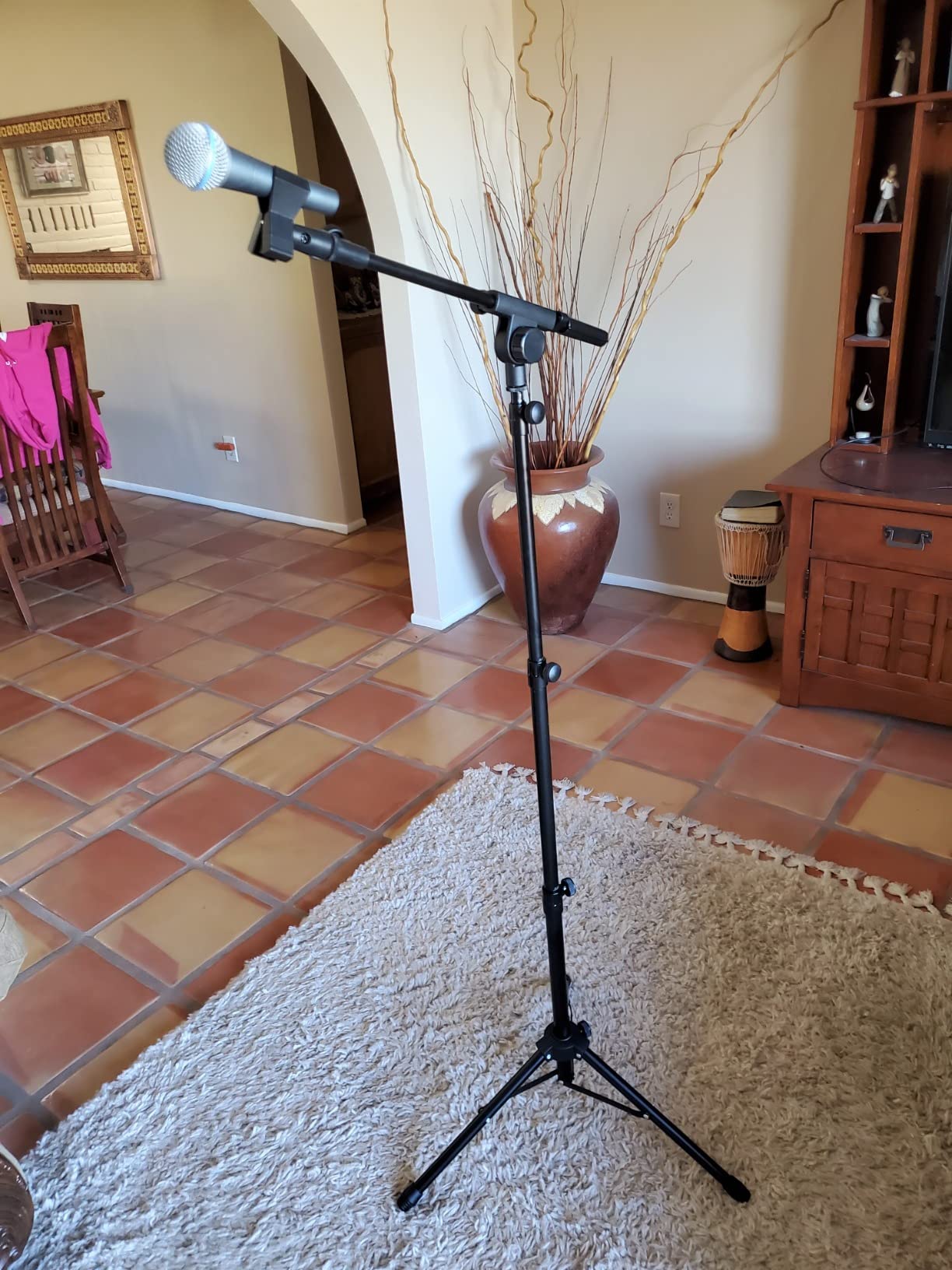
The trade-off is mass. Fully extend the boom with anything heavy and the stand communicates its budget origins; keep loads moderate and it performs well. For outdoor gigs, podcasts on location, and home rehearsal, the convenience of the complete package outweighs the light build.
Who Should Buy the CAHAYA CY0239
This is the portable mic stand for singers and podcasters who move between locations. If you want one box that contains everything needed to mic a vocalist tonight, this is it. First-time buyers avoid accessory-buying mistakes because everything necessary is included.
Who Should Skip It
If your boom will always carry a heavy condenser at full extension, choose the On-Stage MS7701B or the K&M instead. Stability suffers when the boom and load both max out.
8. On-Stage MS7701B Euro Boom Stand — Best Stage Workhorse
On-Stage MS7701B Euro Boom Mic Stand (For Vocal and Instrument Microphones
Alloy steel construction
30 inch boom reach
Folds flat for transport
Max height 61.5 inches
Pros
- Boom stays exactly where set
- Durable powder-coated finish
- Includes cable clips
- Grips any floor with rubber feet
Cons
- No mic clip included
- Some plastic locking parts
- Very heavy mics may need sandbags overhead
Venue techs buy the MS7701B by the pallet, and after months with one in our rehearsal space, we get it. The alloy steel frame with powder-coated finish shrugs off knocks, and the 30-inch boom locks solidly enough that vocalists can grab the mic without the stand wandering. At 5.3 pounds it feels substantial without being a burden to carry.
The Euro-style clutch adjusts quickly between singers of different heights, and the whole unit folds flat for van packing. Cable clips are included, which sounds minor until you count how many times per show a dangling cable causes problems. Maximum height tops out at 61.5 inches, tall enough for standing vocals once the boom angles up.
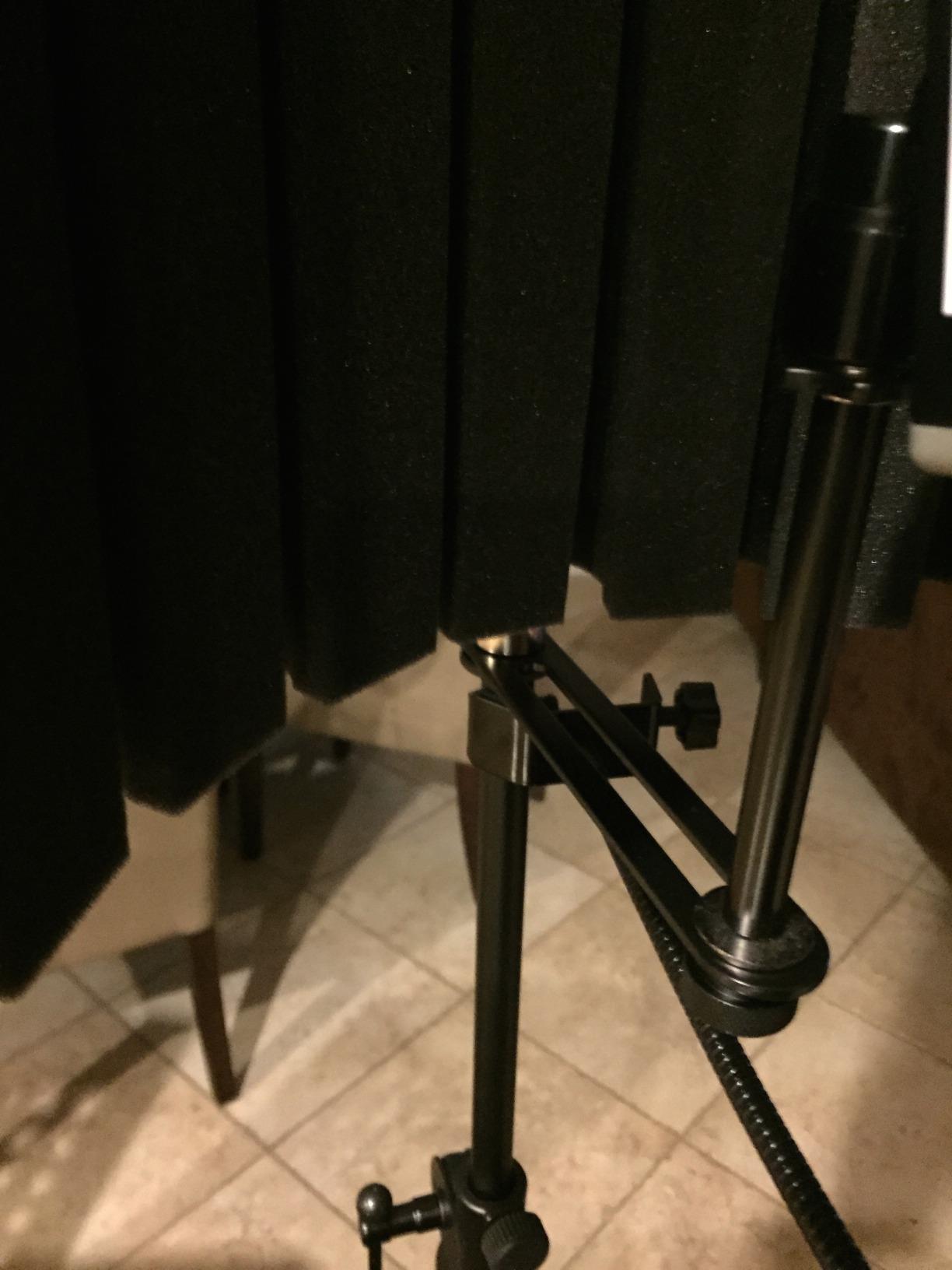
Note that no mic clip comes in the box, and the very heaviest microphones deserve a sandbag when boomed horizontally overhead. For standard dynamics and typical instrument-miking duty, it is the dependable middle of the market.
Who Should Buy the On-Stage MS7701B
This is the best microphone stand for live performance, rehearsal rooms, church stages, and school programs. Buy multiples and your whole stage matches. Podcasters tracking with dynamics also get professional stability at a modest price.
Who Should Skip It
Studio users wanting a lifetime-grade stand should stretch to the K&M 21090. Drummers needing extreme overhead positions should look at heavier-duty boom stands.
9. On-Stage MS7201B Round Base Stand — Best Classic Round Base
On-Stage MS7201B Round-Base Mic Stand (Supports Dynamic and Condenser Microphones, Height Adjustable 33″–60″, Standard 5/8″-27 Threading, 7 lb, 10″ Metal Base, Rubber Feet, Cable-Management Clip)
7 lb sand-cast round base
Die-cast zinc clutch
Height 33 to 60 inches
5/8-27 threading with lock nut
Pros
- Heavy base resists tipping
- Classic professional look
- Smooth zinc clutch action
- Rubber feet cut vibration
Cons
- Base struggles with long boom extensions
- Barcode sticker is hard to remove
- No boom arm included
The round-base stand is the silhouette everyone pictures when they think “microphone stand,” and the MS7201B executes the classic formula well. Its seven-pound sand-cast base is heavy enough to stay put under a straight shaft, while staying slim enough to slide underfoot on crowded stages. A die-cast zinc clutch raises and lowers the shaft smoothly from 33 to 60 inches.
Rubber feet reduce vibration transfer and stop skids on hard floors, and the 5/8-27 threaded shaft includes a lock nut so the fitting never loosens. Available in black, white, and chrome finishes, it suits worship venues and retro-styled studios alike. Owners rate it 4.7, among the highest scores of any stand in this guide.
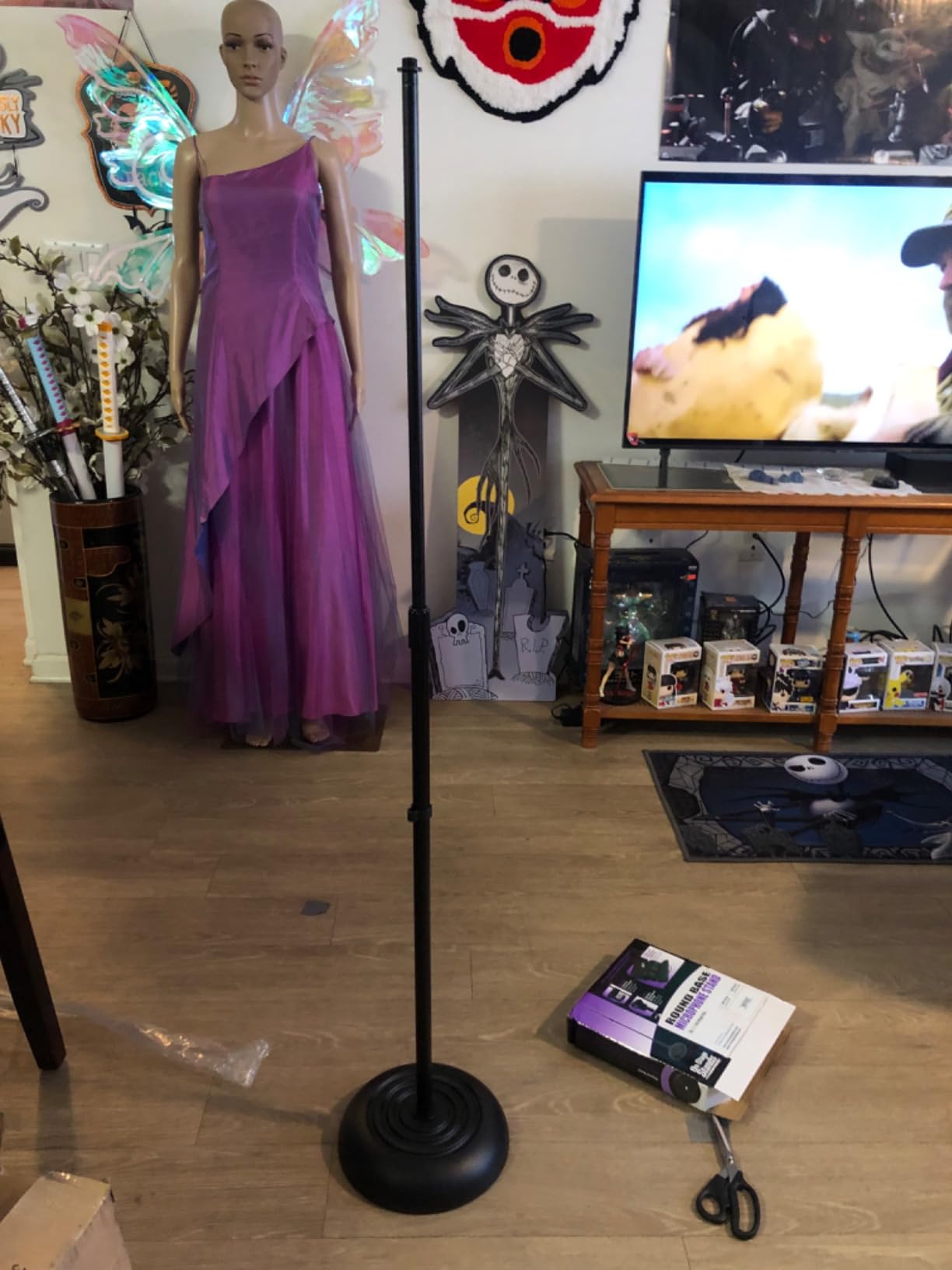
The honest limitation is physics: a round base cannot match a tripod for boom-arm leverage. Use it as a straight vocal stand and it excels. Add a long boom with a heavy mic and it will fight you.
Who Should Buy the MS7201B Round Base
Choose this for vocal monitoring, conference rooms, houses of worship, and anywhere a clean classic profile matters. It is the professional microphone stand look at a working-player price. Presenters who move the stand between spots will like how little floor space it claims.
Who Should Skip It
If you need boom functionality, buy a tripod boom model instead. The Gator weighted-base stand below offers a hybrid compromise with its own short boom options.
10. Gator GFW-MIC-1201 Weighted Base Stand — Best Broadcast-Style Clutch
Gator Frameworks Microphone Stand with 12″ Weighted Base and Deluxe Soft Grip Squeeze Height Adjustment, (GFW-MIC-1201)
12 inch weighted round base
One-handed soft-grip clutch
Height 40 to 63 inches
Built-in cable management
Pros
- Heaviest base in our test
- One-hand height changes
- Sliding mechanism beats twist clutches
- Fits US and Euro clips
Cons
- Grip attachment point can loosen over time
- Less suited to rigorous touring
- Solid bases transmit more vibration than tripods
The GFW-MIC-1201 pairs the classic weighted-base format with a modern soft-grip squeeze clutch, letting you change height from 40 to 63 inches with one hand while holding a script or guitar neck. At 11.3 pounds total, its 12-inch base is the heaviest in our roundup, planted by a no-slip vibration-reducing gasket.
Built-in cable management routes the cord inside the column, giving podcast studios and broadcast desks a tidy footprint. The fitting accepts both US and Euro-style clips, and Gator backs it with a 3-year warranty. Owners consistently praise the sliding mechanism as smoother than traditional twist-clutch designs.
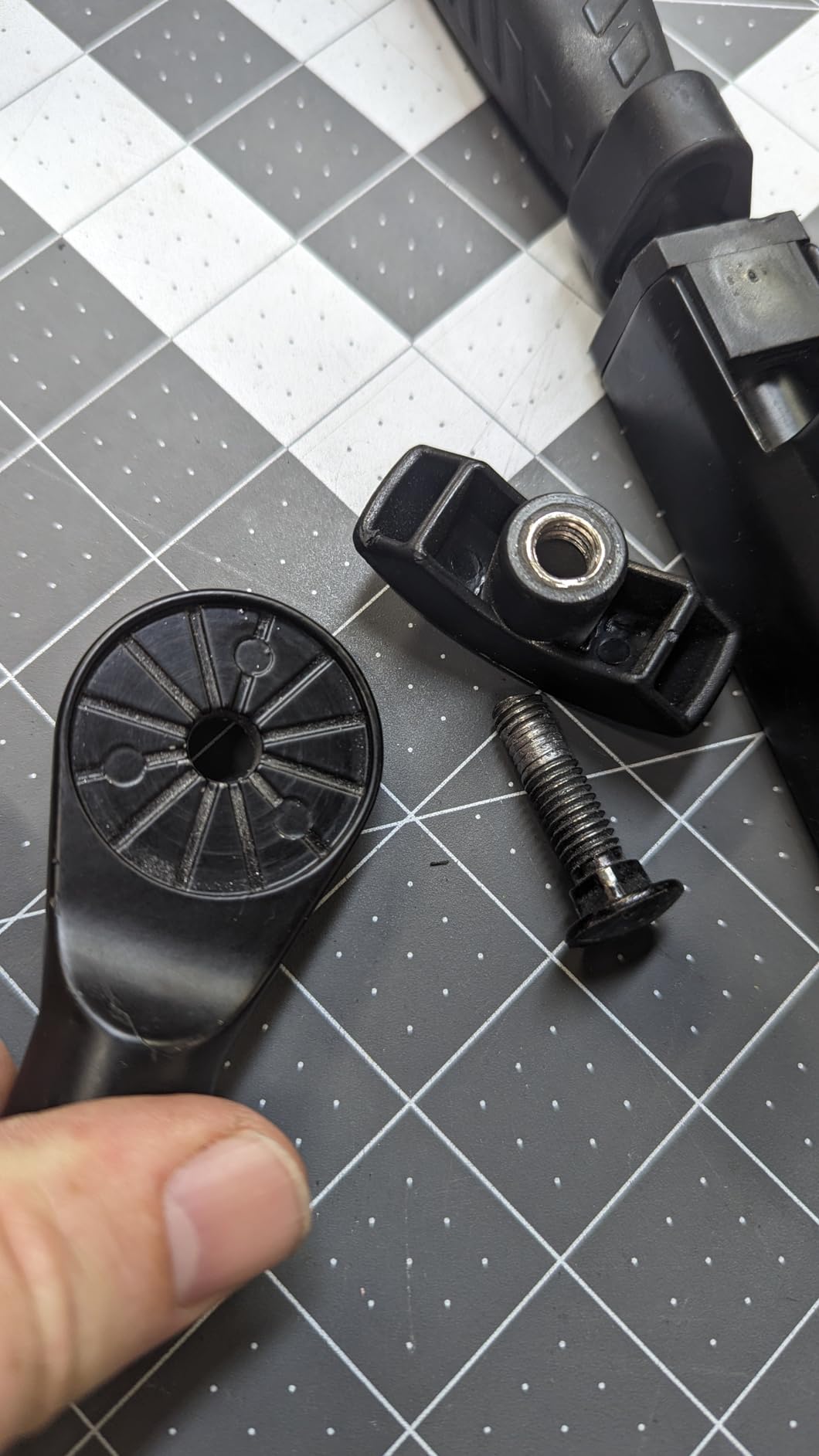
Set expectations correctly: this is a studio-and-broadcast stand, not a tour workhorse. Some users report the handle connection loosening over time, and solid bases inherently pass a bit more floor vibration through than splayed tripods. For fixed positions, it is superb.
Who Should Buy the Gator GFW-MIC-1201
Buy it for podcast studios, radio-style desks, and voice-over booths where one-handed adjustment and cable hiding matter. It is also ideal for interview settings where the host repositions constantly. Anyone who hates fiddling with twist clutches will feel the difference immediately.
Who Should Skip It
Gigging musicians loading trailers weekly should choose the folding On-Stage MS7701B. And if you need maximum vibration isolation for a sensitive condenser, a tripod base remains the safer platform.
How to Choose the Right Microphone Stand
Our team compared stands across every category, and the single biggest mistake buyers make is matching the wrong stand style to their use case. A perfect studio arm is a terrible stage stand, and vice versa. Here is how to sort the options before spending money.
Stand Types Explained
Tripod stands fold flat, grip the floor well, and suit stages and rehearsal rooms. Round base stands occupy minimal floor space and deliver the classic broadcast look, but trade away boom leverage. Scissor and low-profile desk arms free up desktops for podcasting, streaming, and gaming, while heavy-duty studio tripods like the K&M serve drum overheads and heavy condensers.
Thread Sizes: 5/8 vs 3/8 Inch
US microphones and clips use a 5/8-27 thread; European gear and many shockmounts use 3/8-inch. Almost every stand here includes a 5/8-to-3/8 adapter, but check before buying, because a missing adapter stops a session cold. The FIFINE and InnoGear both ship adapters in the box, which we value highly.
Supporting Heavy Microphones
Large-diaphragm condensers and broadcast dynamics like the SM7B defeat weak arms quickly. Match the stand’s rated load to your mic plus its shockmount, then add margin. Counterweighted or spring-damped designs such as the RØDE PSA1+ and the K&M 21090 hold heavy combinations without creeping, which is exactly what forum users ask about most.
Clutch Mechanisms and Build Quality
The clutch is where cheap stands fail first; plastic teeth strip and the pole slips overnight. Favor metal clutches, steel tubing, and brands offering replaceable parts. A 5-year warranty, like K&M’s, signals a maker that expects the stand to last decades rather than seasons.
Are Expensive Mic Stands Worth It?
Frequently, yes. Users across recording forums report spending more replacing $20 stands over a few years than one quality stand would have cost upfront. If you record daily, a $100-plus stand amortizes to pennies per session and protects a microphone worth far more than the stand itself.
Frequently Asked Questions
Who makes the best microphone stand?
Ku0026amp;M (König u0026amp; Meyer) is widely considered the industry standard, especially for professional and touring use. Hercules, On-Stage, RØDE, and Gator all make excellent stands at lower price points. For desk arms, RØDE and Elgato lead the premium tier.
What is a good quality microphone stand?
A quality stand uses steel or stainless tubing, a metal clutch mechanism, solid rubber feet, and available replacement parts. Brands backing products with multi-year warranties, such as Ku0026amp;M’s 5-year coverage, are reliable indicators of lasting build quality.
Are expensive mic stands worth it?
For regular use, yes. Cheap stands fail through stripped clutches and drooping booms, and repeated replacements often exceed the cost of one quality stand. Expensive models also protect valuable microphones from tip-over damage.
What mic stand does Joe Rogan use?
Joe Rogan’s podcast setup has featured broadcast-style boom arms mounted at the table, consistent with professional studio arms like the RØDE PSA1 series. Any damped parallelogram arm reproduces that same stable, silent positioning for desk-based podcasting.
How do I stop my microphone stand from drooping?
Match the stand’s weight rating to your microphone including its shockmount, tighten the boom clutch fully, and reposition the counterweight so the load balances. If a plastic clutch still slips, upgrade to a stand with a metal clutch or spring-damped arm.
Final Verdict
The best microphone stands balance stability, build quality, and the right form factor for your space. Our overall winner, the RØDE PSA1+, delivers silent broadcast-grade performance for serious studios, while the On-Stage MS7701B remains the smartest value for stage and rehearsal duty. Budget buyers can start with the InnoGear boom arm or Amazon Basics tripod without regret.
Whichever you choose, prioritize a metal clutch, an adequate weight rating, and a warranty that assumes years of service. Your microphone deserves a steady foundation, and every stand tested here delivered one in 2026. Pick the style that fits your setup and check current prices on Amazon today.