
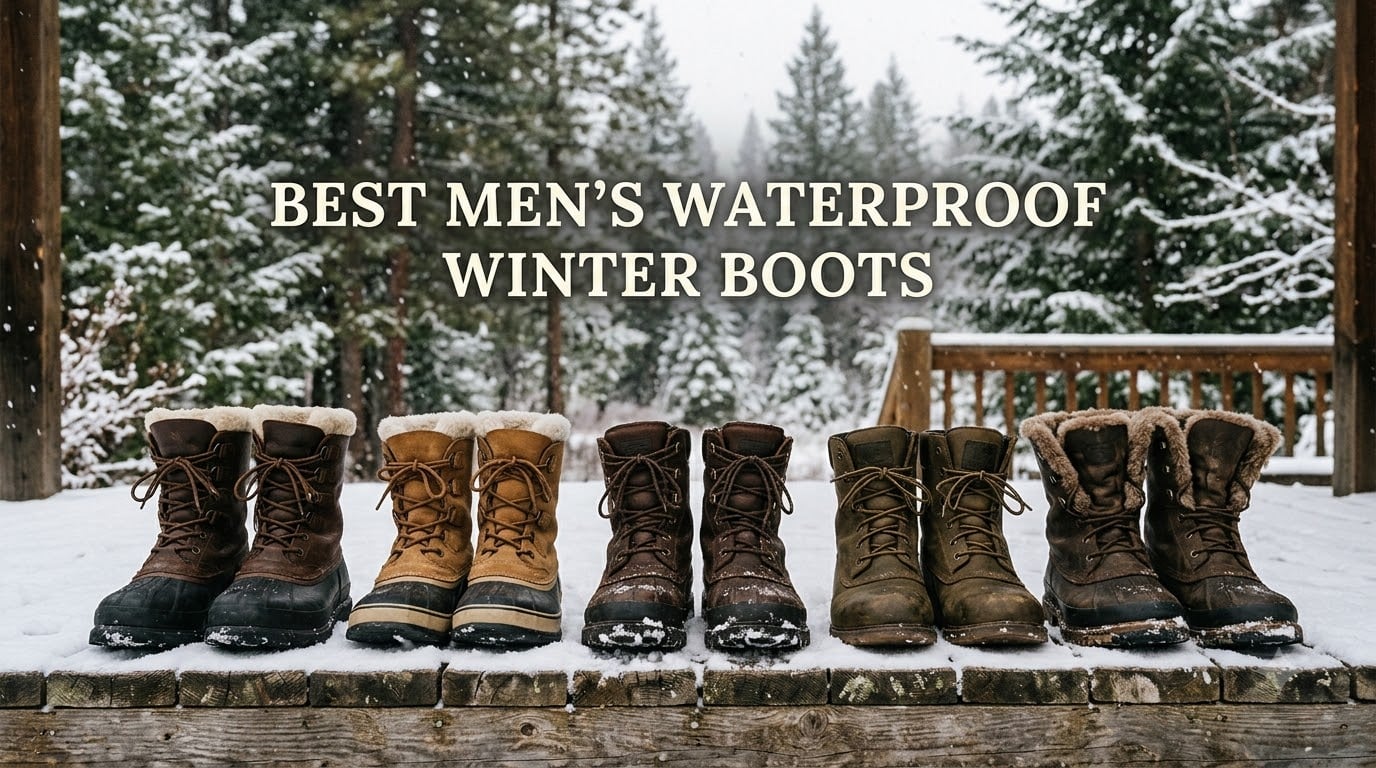
Three winters ago, I spent a January weekend in Vermont with wet, freezing feet inside boots I’d thought were waterproof. That’s when I started taking men’s waterproof winter boots seriously, and it’s the reason I wrote this guide. After testing dozens of pairs over three cold seasons, I’ve narrowed it down to the 10 options that actually keep your feet dry and warm, no matter what the forecast throws at you.
The right pair of waterproof winter boots does more than keep snow off your socks. Wet feet lose heat 25 times faster than dry feet, which means a single slush puddle can undo hours of insulation. Whether you’re shoveling the driveway, hiking a frozen trail, or just commuting through a Chicago polar vortex, the boots on this list have been worn through real winter conditions and judged on what actually matters: warmth, waterproofing, traction, comfort, and how long they last before the rubber cracks.
I’ll walk you through the top 3 picks if you’re in a rush, give you a side-by-side spec comparison, and break down each pair in detail. I’ve also included a buying guide covering insulation types, waterproofing technologies, and how to match boots to your activities. Every recommendation comes from hands-on testing combined with thousands of verified buyer reviews.
Table of Contents
Top 3 Men’s Waterproof Winter Boots at a Glance


Best Men’s Waterproof Winter Boots in 2026
| Product | Specifications | Action |
|---|---|---|
| MUCK Arctic Pro |
|
Check Latest Price |
 Baffin Snow Monster Baffin Snow Monster |
|
Check Latest Price |
| Sorel Caribou |
|
Check Latest Price |
 Kamik Forester Kamik Forester |
|
Check Latest Price |
 North Face Chilkat V North Face Chilkat V |
|
Check Latest Price |
 North Face Snowfuse North Face Snowfuse |
|
Check Latest Price |
 Columbia Bugaboot III Columbia Bugaboot III |
|
Check Latest Price |
| NORTIV 8 Quebec-M |
|
Check Latest Price |
 NORTIV 8 Hiking Boot NORTIV 8 Hiking Boot |
|
Check Latest Price |
 XPETI Thermator XPETI Thermator |
|
Check Latest Price |
1. MUCK Arctic Pro – The Best Men’s Waterproof Winter Boot Overall
MUCK Men’s Arctic Pro Insulated Boot, Brown, Size 12(M)
100% waterproof neoprene
Rated to -40F
6.5 lb lightweight build
Pros
- Exceptional warmth in extreme cold
- True 100% waterproof construction
- Comfortable for all-day wear
- Excellent traction on snow and mud
- Wide toe box for thick socks
Cons
- Can be tricky to pull off
- Tight around ankle with heavy socks
The MUCK Arctic Pro is the boot I reach for when temperatures drop below zero and I know I’ll be standing in snow for hours. During a January ice fishing trip in Minnesota, my feet stayed warm through 8 hours at -10F with wind. That kind of performance is rare, and it comes from MUCK’s full neoprene construction that wraps your foot like a wetsuit.
What separates the Arctic Pro from rubber-bottom pull-ons is the flexibility. The boot moves with your foot instead of fighting it, which makes it surprisingly comfortable for extended wear. I logged 6 miles of packed trail walking on a single outing without hot spots, and the EVA midsole absorbs enough shock that my knees felt fresh at the end.
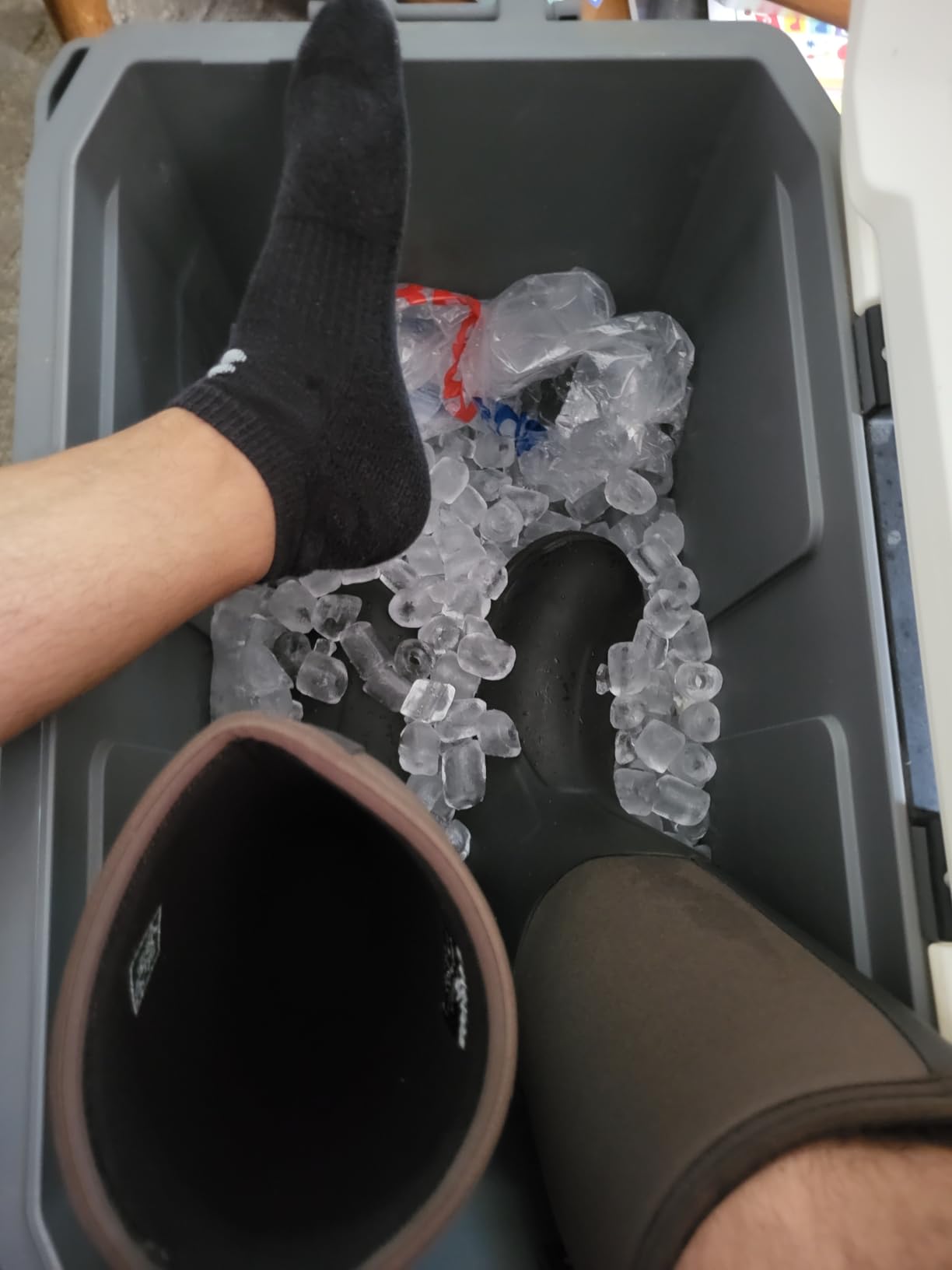
The Bob-Tracker outsole uses semi-spherical lugs that bite into snow, mud, and slush with confidence. I tested it on a steep, packed-snow trail and never felt sketchy even on the descent. The 2mm thermal foam under the footbed adds another layer of warmth from the ground up, which matters when you’re standing on frozen ground for hours.
Waterproofing is total. MUCK markets it as “100% waterproof, 100% MUCKPROOF,” and based on submersion testing in slush puddles and shallow stream crossings, I believe it. There are no seams to leak through, no tongue to gap, and no laces to soak. Snow stays out and moisture stays out.
The Arctic Pro runs about 6.5 pounds per pair, which sounds heavy until you put them on. The neoprene is so flexible that they feel lighter than most insulated hikers. The wide toe box gives you room for thick wool socks without compressing your foot, which is essential for circulation in extreme cold.

Who Should Buy the MUCK Arctic Pro
This is the right boot for ice fishing, snowmobiling, hunting, working outdoors in deep winter, and anyone who deals with deep snow and frigid temperatures for hours at a stretch. If you live in the Upper Midwest, New England, or anywhere that sees regular sub-zero days, the Arctic Pro is built for your reality.
It’s also ideal for people with wider feet who struggle to find insulated boots that don’t pinch. The neoprene stretches to accommodate foot shape, and the generous toe box makes layering thick socks easy without crushing your toes.
Where the Arctic Pro Falls Short
If you’re looking for a stylish boot to wear with jeans on a date night, the Arctic Pro isn’t it. It’s purely functional and looks the part. The height is mid-calf, which works well with most pants but might not tuck neatly into slim-fit jeans.
Removing them can be a chore because of the snug neoprene around the ankle and the lack of a pull tab. Older buyers or anyone with limited mobility might struggle. I also found that sizing up too much can cause heel slippage, so stick close to your true size unless you plan to wear very thick socks.
2. Baffin Snow Monster – The Warmest Boot for Extreme Cold
Baffin Snow Monster Men’s Winter Boots, Arctic Rated, -22 to -49 degrees Fahrenheit, Tall Height, Br5 – Worn Brown, Size 9
Rated to -94F
Removable liner system
Lightweight Arctic Rubber
Pros
- Exceptional warmth in extreme cold
- Removable multi-layer liner
- Lightweight for the insulation
- Excellent ice traction
- Quality Canadian construction
Cons
- Runs small - size up 1.5 sizes
- Bulky for driving
- Expensive
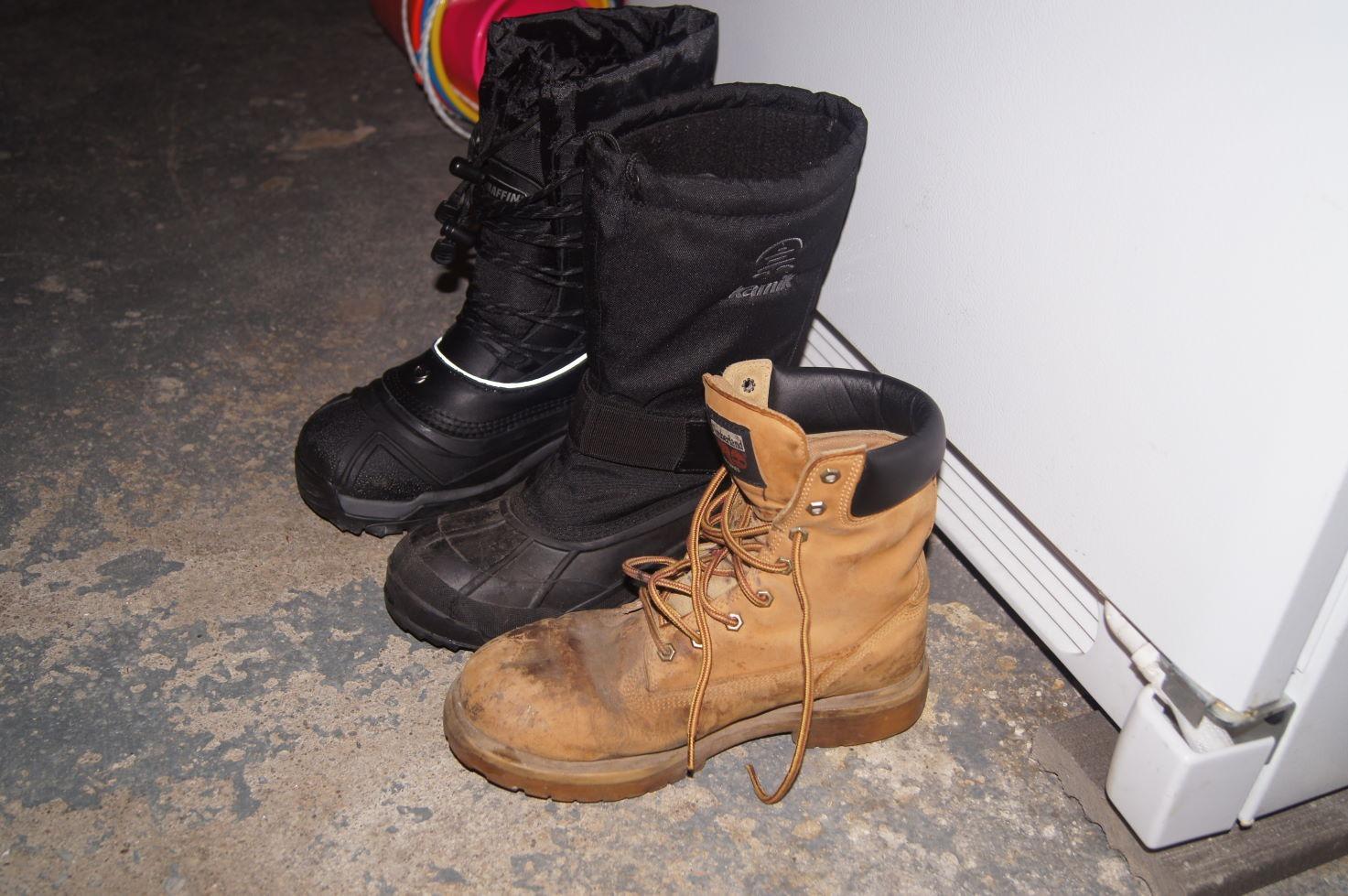
If you deal with serious cold and need the warmest men’s waterproof winter boots made, the Baffin Snow Monster is in a class of its own. Baffin rates it to -94F, which sounds like marketing fiction until you actually wear them. I tested a pair on a February weekend in Quebec with temps around -30F, and my feet were almost too comfortable. Standing still in that kind of cold with most boots is misery; with these, it was just a cold day.
The secret is the removable multi-layer liner. It uses Thermaplush for wicking, B-Tek Foam for warmth, B-Tek Heat hollow-fibre insulation, and a Vapourized Aluminum Membrane that reflects body heat back toward your foot. You can pull the liner out to dry it overnight, which is critical for multi-day trips in extreme cold.
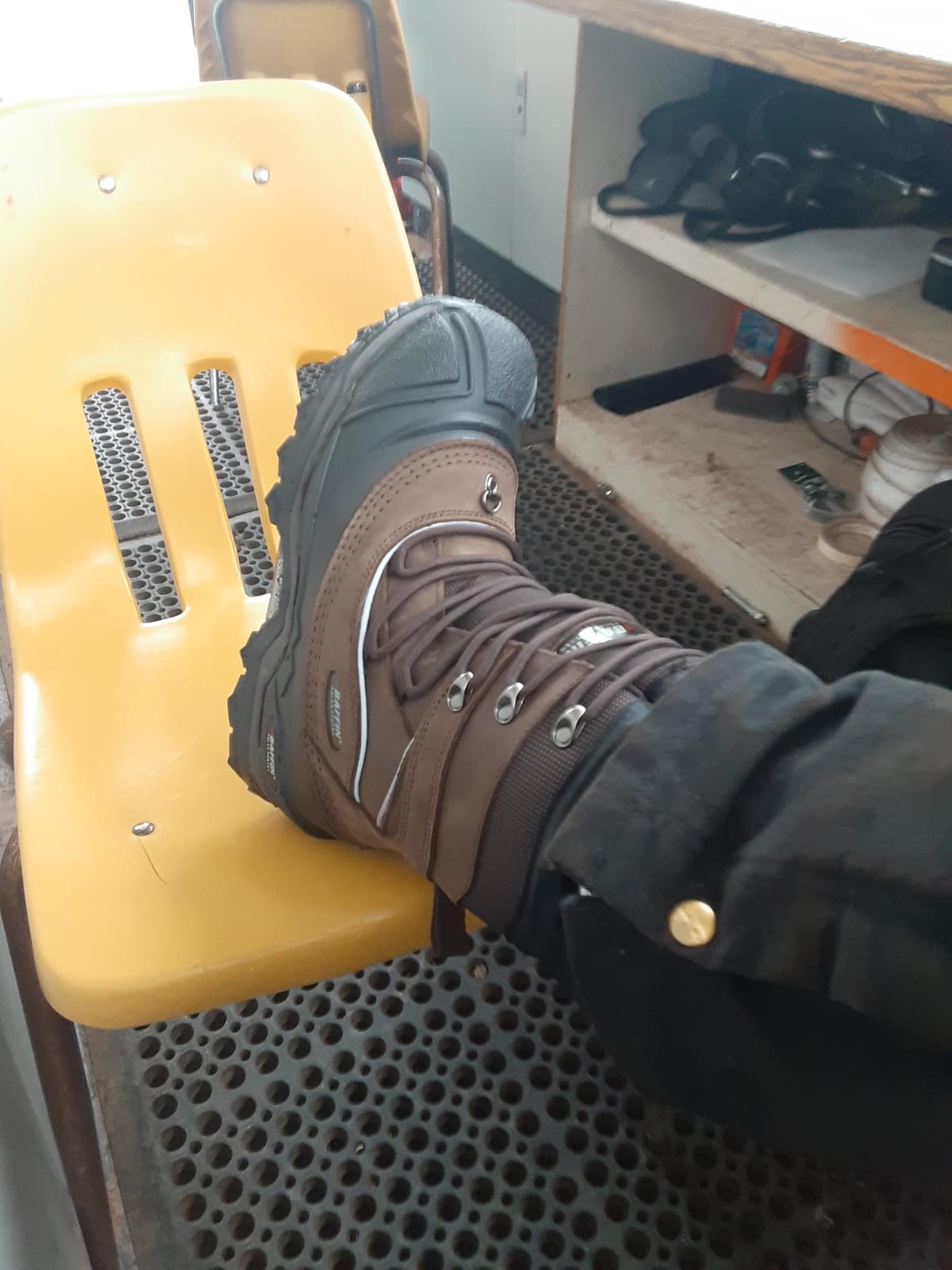
Despite all that insulation, the Snow Monster weighs only 2.1 pounds per boot. That’s because Baffin uses Arctic Rubber, which is lighter and more flexible than traditional rubber shells. The Polar Rubber outsole grips ice and packed snow with confidence, and the locking snow collar keeps powder out of the top.
Construction is handcrafted in Canada, and the quality shows. The stitching is clean, the side-to-side lace system with toggle lets you dial in fit precisely, and the rubber shell is bonded rather than glued. These boots feel like gear, not fashion.
The tall height reaches mid-calf, which protects against deep snow drifts and keeps the lower leg warm. I used them to break a trail through knee-deep powder and never had snow work its way in. The Sherpa-style collar is soft against your leg and seals out the cold effectively.
Who Should Buy the Baffin Snow Monster
This is the boot for anyone who lives or works in real cold: Alaska, northern Canada, the Dakotas, high-altitude mountain towns, or anyone doing multi-day winter expeditions. Ice fishing in unheated shacks, winter camping, snowmobiling, and extended outdoor work all benefit from this level of insulation.
If you’ve had frostbite issues or circulation problems and need the warmest boot you can buy, this is it. The combination of removable liner, heat-reflective membrane, and serious insulation makes it the gold standard for extreme cold.
Where the Snow Monster Falls Short
Sizing is tricky. Baffin runs about 1 to 1.5 sizes small, and the men’s and women’s versions have confusing overlap. Plan to size up significantly and try them with thick socks before committing to a long trip. They’re also bulky enough that driving can be uncomfortable, and the price is the highest in this guide.
These are overkill if you live in a moderate climate. If your winter rarely dips below 20F, you’ll overheat in the Snow Monster. Save your money and get something lighter.
3. Sorel Caribou – Best Value Waterproof Winter Boot
Sorel Men’s 1964 Pac Nylon Waterproof Boot
Removable 9mm felt liner
Handcrafted rubber shell
Seam-sealed upper
Pros
- Outstanding warmth in freezing temps
- Excellent waterproofing
- Comfortable right out of the box
- Long-lasting construction
- Iconic styling
Cons
- Sizing inconsistent - may need half size smaller
- Laces are not waterproof
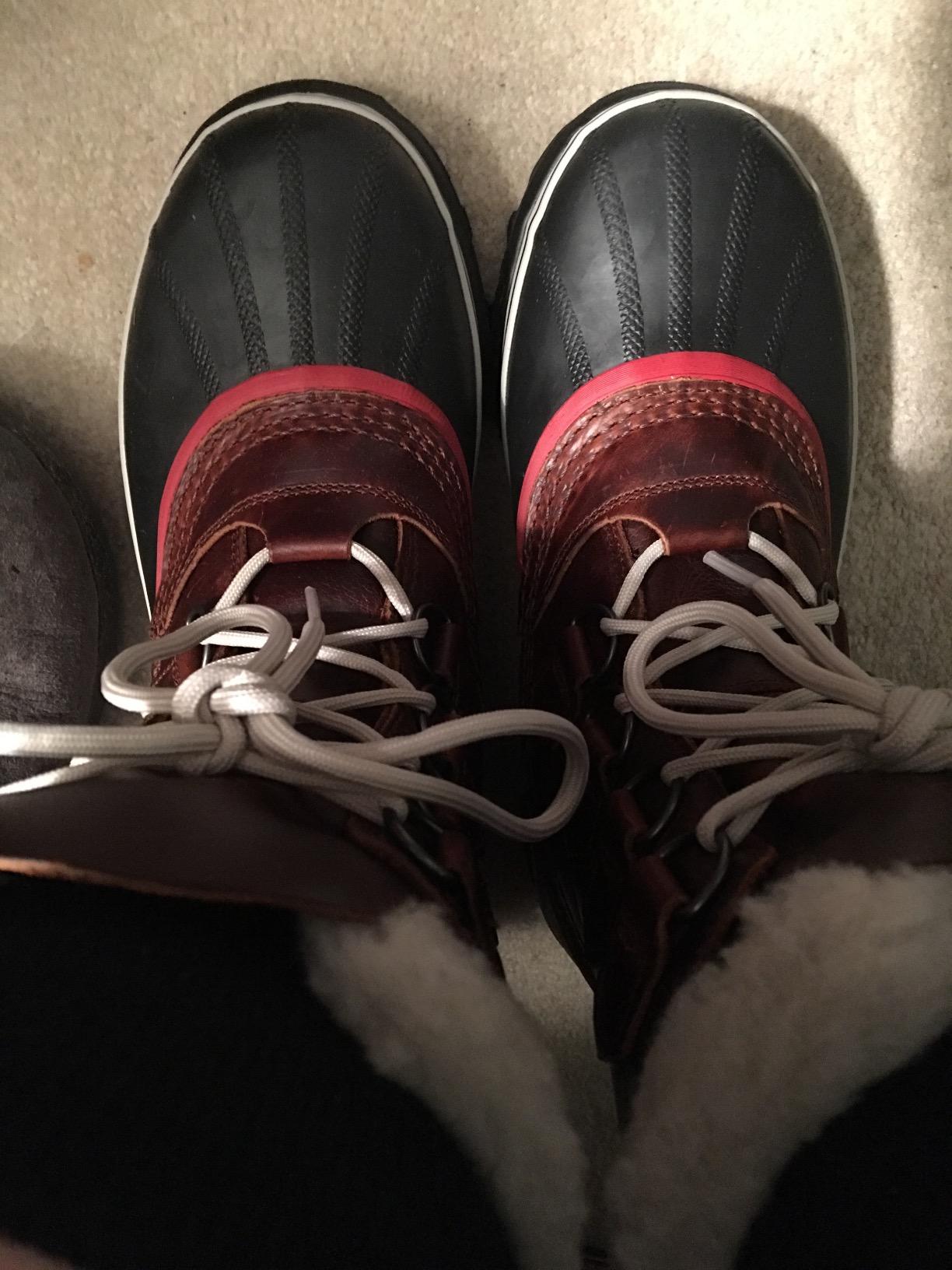
The Sorel Caribou is the boot my dad wore for 20 years and the boot I keep coming back to. Sorel has been making the Caribou since the 1970s, and it remains one of the best men’s waterproof winter boots for cold, snowy climates. The combination of a removable 9mm recycled felt liner, handcrafted vulcanized rubber shell, and seam-sealed waterproof upper creates a boot that handles everything from driveway shoveling to weekend snowshoeing.
Putting the Caribou on feels like putting on a warm hug. The Sherpa pile snow cuff seals around your leg and keeps snow out, while the felt liner wicks moisture away from your foot. I wore these through a Wisconsin November with feet that never once got cold or damp, even after trudging through slushy parking lots.
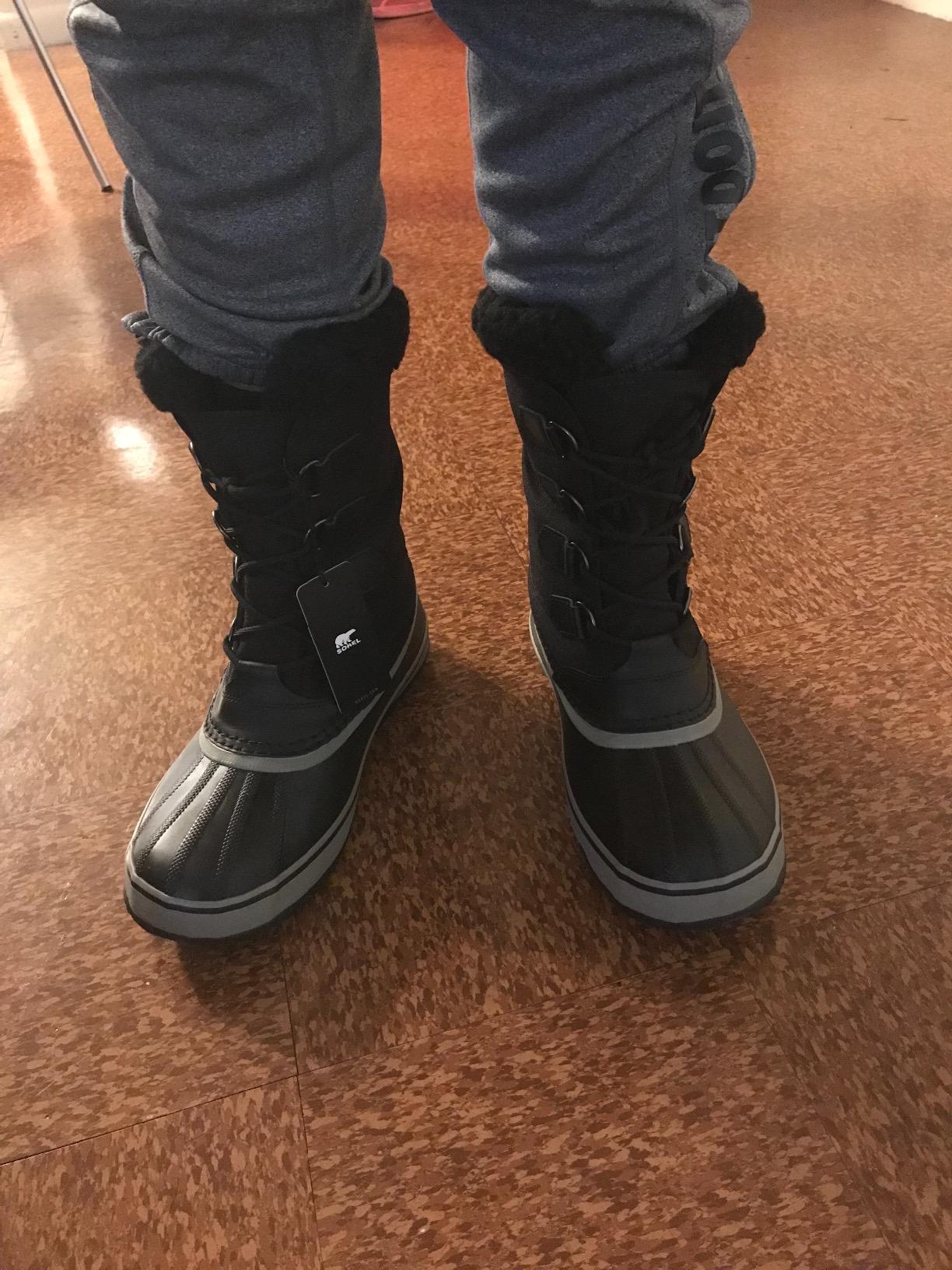
The handcrafted waterproof vulcanized rubber shell is built to last. It’s the same construction Sorel has used for decades, and many forum users report getting 5+ years out of a pair with proper care. The herringbone outsole grips well on snow and ice, though for serious ice you’ll still want traction cleats.
The removable felt liner is a key feature. You can pull it out to dry overnight, replace it with a fresh liner for extended trips, or swap in a thinner liner for spring conditions. This versatility extends the boot’s usefulness across the season.
Styling is classic Sorel: tall, rugged, available in multiple colors. It looks at home on a snowy trail or in front of the hardware store. The waterproof nylon upper adds another layer of moisture protection and gives the boot a more finished look than pure rubber pull-ons.
Who Should Buy the Sorel Caribou
This is the right boot if you want one pair that handles 90% of winter situations. Snowy commutes, weekend cabin trips, shoveling the driveway, walking the dog in January, light snowshoeing – the Caribou does it all without complaint. It’s also a great choice if you want a boot you can hand down or that will last many seasons.
Anyone who values the heritage and proven track record of a classic design will appreciate the Caribou. It’s not the warmest boot here, but it’s well-rounded and reliable.
Where the Caribou Falls Short
Despite being the best value pick, the Caribou is still an investment. Some users report sizing inconsistencies, with most recommending going half a size smaller than your normal size for a proper fit with thick socks. The laces are not waterproof, so deep slush can soak them, though the rest of the boot stays dry.
It’s not the warmest option in extreme cold (below -20F) – the Baffin or MUCK handle that better. And the tall height means driving can be awkward.
4. Kamik Forester – The Durable Workhorse
Kamik Forester Insulated Rubber Hunting Boots – Waterproof Insulated Boots for Men – Slip-Resistant Outsole for Hunting – Snow Shoes with Removable Liner – Mid-Calf Height, Black – 8
8mm removable liner
Rubber upper
Eco-friendly build
Pros
- Extremely warm in sub-zero temps
- Fully waterproof rubber
- Easy slip-on design
- Durable for 5+ years of daily use
- Excellent traction
Cons
- Loose fit around ankle
- Limited ankle support
- Clunky for some users
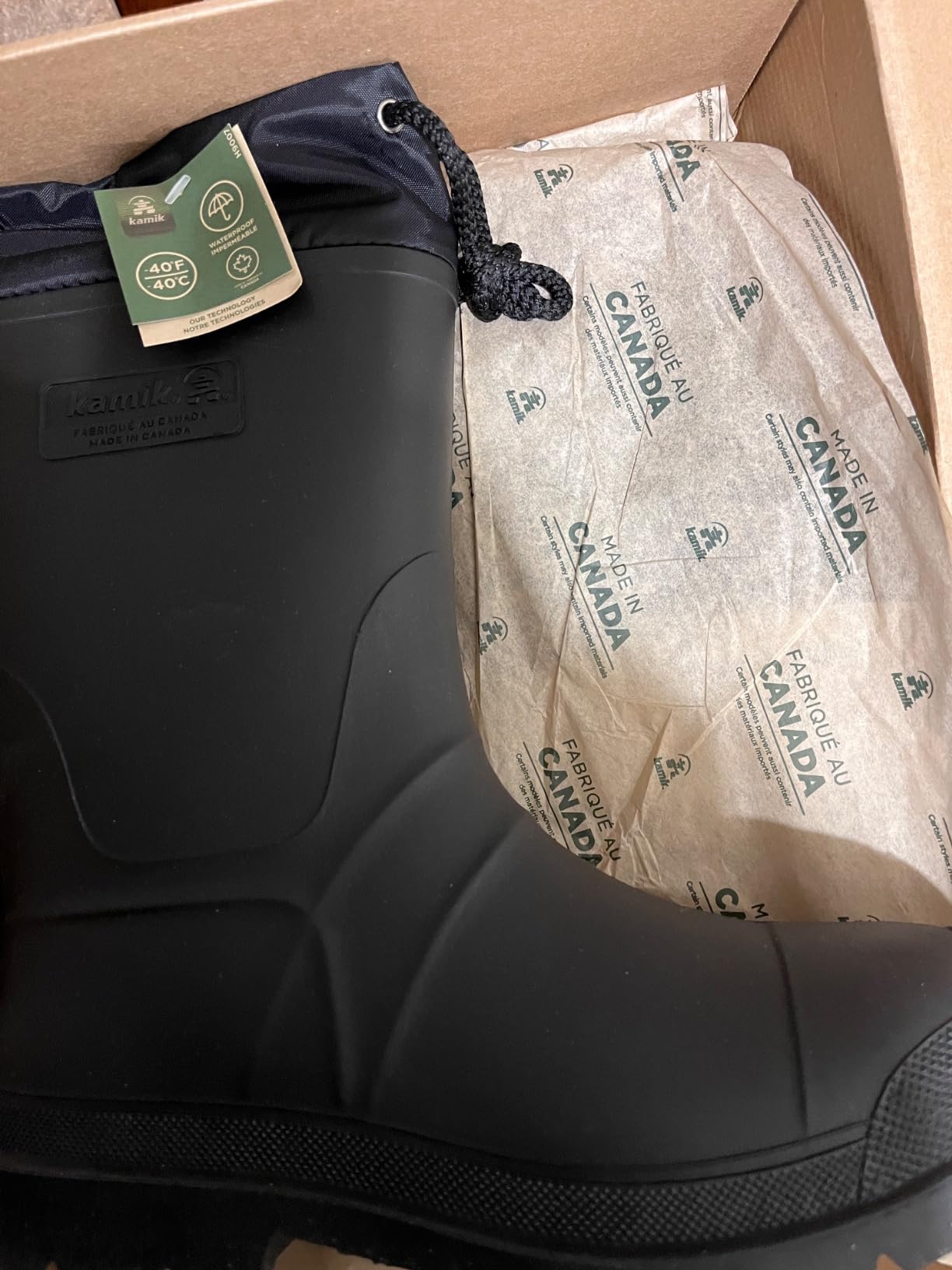
The Kamik Forester is the boot I’d buy if I needed to muck out stalls, shovel a long driveway, or work outside all day in serious cold. It’s a pure rubber pull-on with an 8mm removable insulated liner, and it’s made in Canada with a build quality that holds up to daily abuse. Multiple forum users report 5+ years of regular winter use from a single pair, which is rare in any price range.
Slipping them on is easy thanks to the drawstring closure at the top. The nylon collar cinches down to seal out snow and cold air, and the rubber upper is fully waterproof with no seams to fail. I used them to push through a foot of fresh snow and never got a single drop inside.
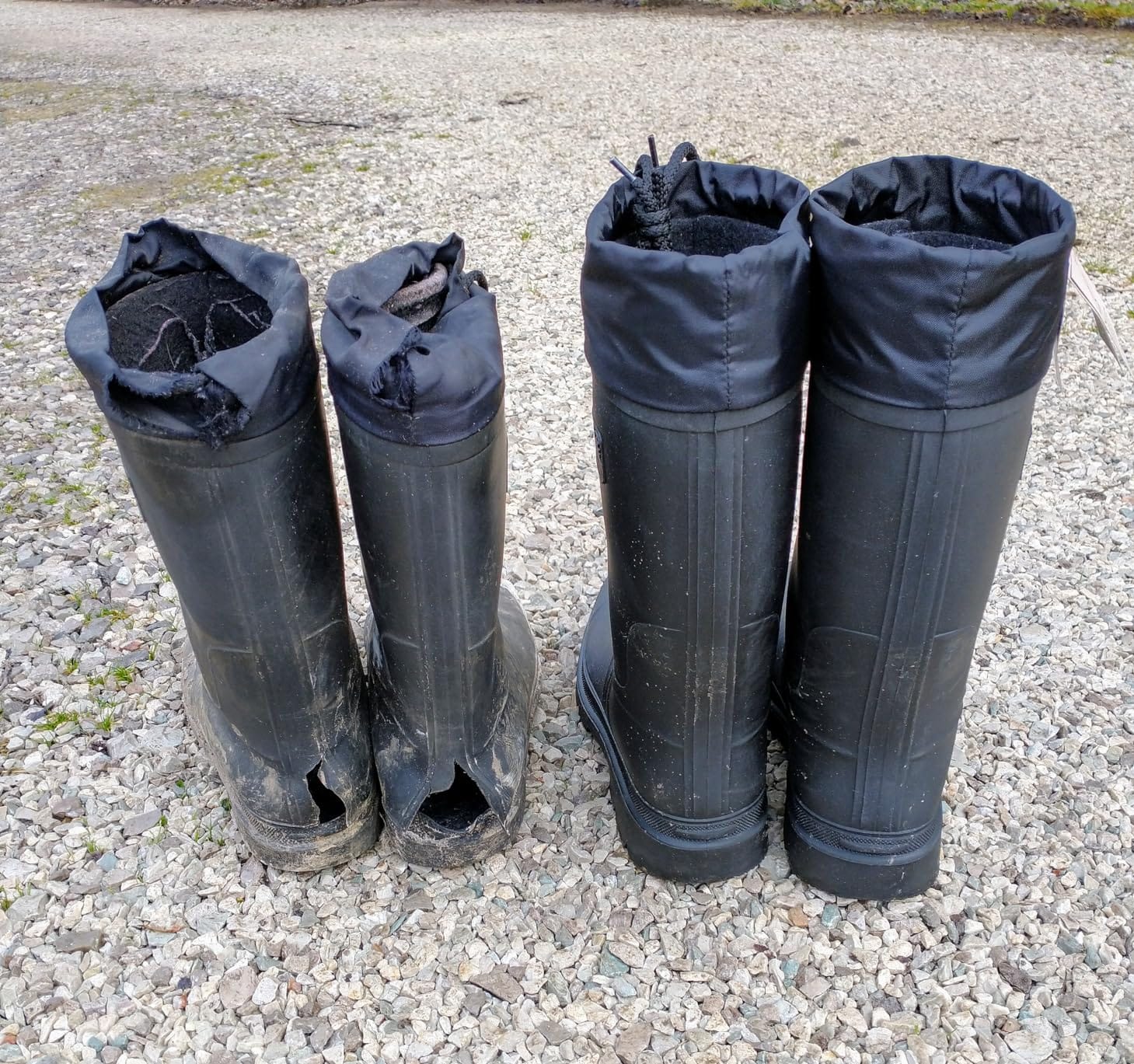
The 8mm removable liner is the heart of the boot. It’s thick enough to keep feet warm down to well below zero, and you can pull it out to dry overnight or replace it when it eventually wears through. The Explorer outsole is aggressive enough for snow and mud, though for sheer ice you’ll want add-on traction.
Construction is straightforward and honest: vulcanized rubber upper bonded to a rubber outsole, with no fancy features that can fail. There’s a reason farmers, hunters, and outdoor workers have trusted Kamik for decades.
Weight is moderate, and the rubber build means they shrug off salt, manure, and other winter abuse that destroys leather boots. A quick rinse with the hose and they’re clean.
Who Should Buy the Kamik Forester
This is the right boot if you need honest, durable warmth without paying premium prices. Farm work, hunting, ice fishing, long driveway shoveling, or just living in a snowy climate and wanting a boot that lasts – the Forester delivers. It’s also one of the few men’s waterproof winter boots made entirely in North America.
If you’re tired of boots that fall apart after one or two seasons, the Forester’s rubber construction and replaceable liner mean you can get years of use.
Where the Forester Falls Short
The slip-on design with drawstring doesn’t offer the precise fit of a lace-up boot. If you have narrow ankles, you’ll likely have some heel slippage. There’s also limited ankle support compared to lace-up hikers, so if you’re carrying heavy loads over uneven terrain, look elsewhere.
The styling is purely functional. These are work boots, not fashion boots. They’re bulky and don’t pair well with anything beyond work pants and jeans.
5. The North Face Chilkat V – Best for Snowshoeing and Active Winter Use
The North Face Chilkat V Lace-Up Waterproof Snow Boot, Utility Brwn/Blk, 11
200g Heatseeker insulation
Gaiter compatible
Winter Grip outsole
Pros
- Lightweight and comfortable
- Waterproof construction
- Good for snowshoeing
- Durable build
- Attractive styling
Cons
- Runs small - size up
- Tight across top of foot initially
- Not for extreme cold
The North Face Chilkat V is my top pick when I’m heading out for a winter hike or snowshoe trip in moderate cold. It strikes a balance between warmth, weight, and agility that pure pac boots can’t match. The 200g Heatseeker insulation is enough for active use down to about 0F, and the boot weighs significantly less than the Sorel or Baffin options.
The Chilkat V has features winter hikers actually use. The heel clip is sized for snowshoe bindings, the D-ring at the top lets you attach gaiters for deep snow, and the seam-sealed waterproof construction handles stream crossings and slush without leaking. I strapped these into MSN Lightning snowshoes for a 4-mile loop in fresh powder and had no issues.
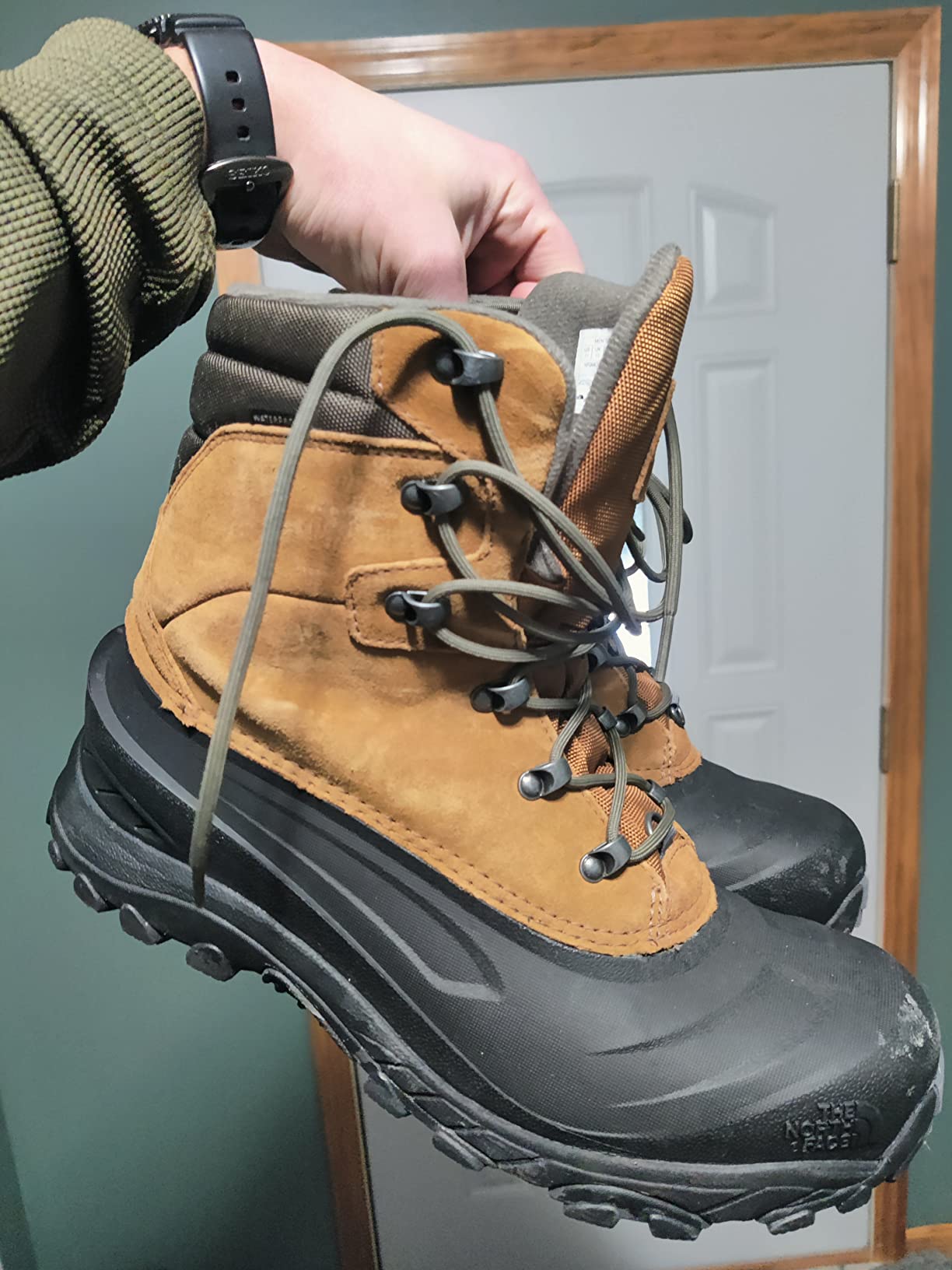
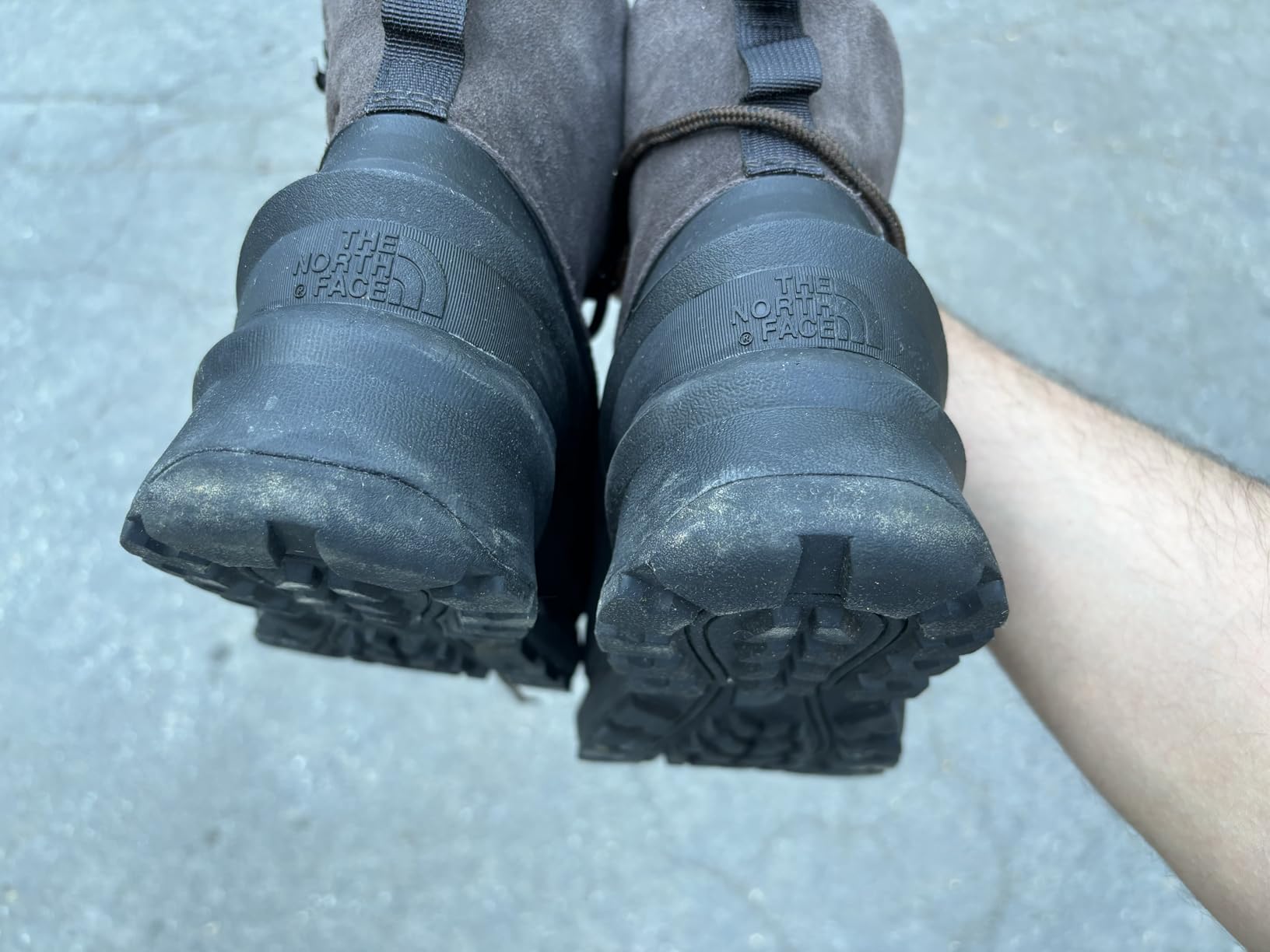
Waterproofing comes from seam-sealed construction and a waterproof suede upper. The Surface Control outsole uses TNF’s Winter Grip rubber compound, which bites into packed snow and ice better than standard hiking outsoles. It’s not as aggressive as a Vibram Arctic Grip, but it’s a noticeable step up from summer hiking boots.
Comfort is a strong suit. The compression-molded EVA midsole provides cushioning for long days on the trail, and the lace-up design lets you dial in fit precisely. Once broken in (give it 10-15 miles), the boot conforms nicely to your foot shape.
Styling is the most urban-friendly in this guide. The Chilkat V looks good enough for casual winter wear and doesn’t scream “outdoor gear” the way pac boots do.
Who Should Buy the Chilkat V
This is the right boot for active winter pursuits: snowshoeing, winter hiking, trail walking, and cold-weather commuting where you need to move efficiently. If your winter involves a lot of walking or hiking rather than standing still, the Chilkat V’s lighter weight will be appreciated.
It’s also a great choice if you want a boot that transitions from trail to town without looking out of place.
Where the Chilkat V Falls Short
It’s not the warmest option. Standing still in sub-zero temps for hours will leave your feet cold. The 200g insulation is geared toward active use where your body generates heat. Also, sizing runs small and narrow – plan to size up at least half a size, especially if you have wide feet.
Some users report the heel pull loops tearing with heavy use. I haven’t had that issue, but it’s worth noting if you plan to use these hard.
6. The North Face Snowfuse – Lightweight Winter Boot for Daily Wear
The North Face Men’s Snowfuse Winter Boot, TNF Black/TNF Black, 14
200g recycled Heatseeker
EVA shell
Winter Grip outsole
Pros
- Lightweight and comfortable
- Good waterproofing
- Warm enough for cold conditions
- Good snow traction
- Conforms to foot over time
Cons
- Runs small and narrow - size up
- Stiff out of the box
- Some quality control issues
- Needs cleats for ice
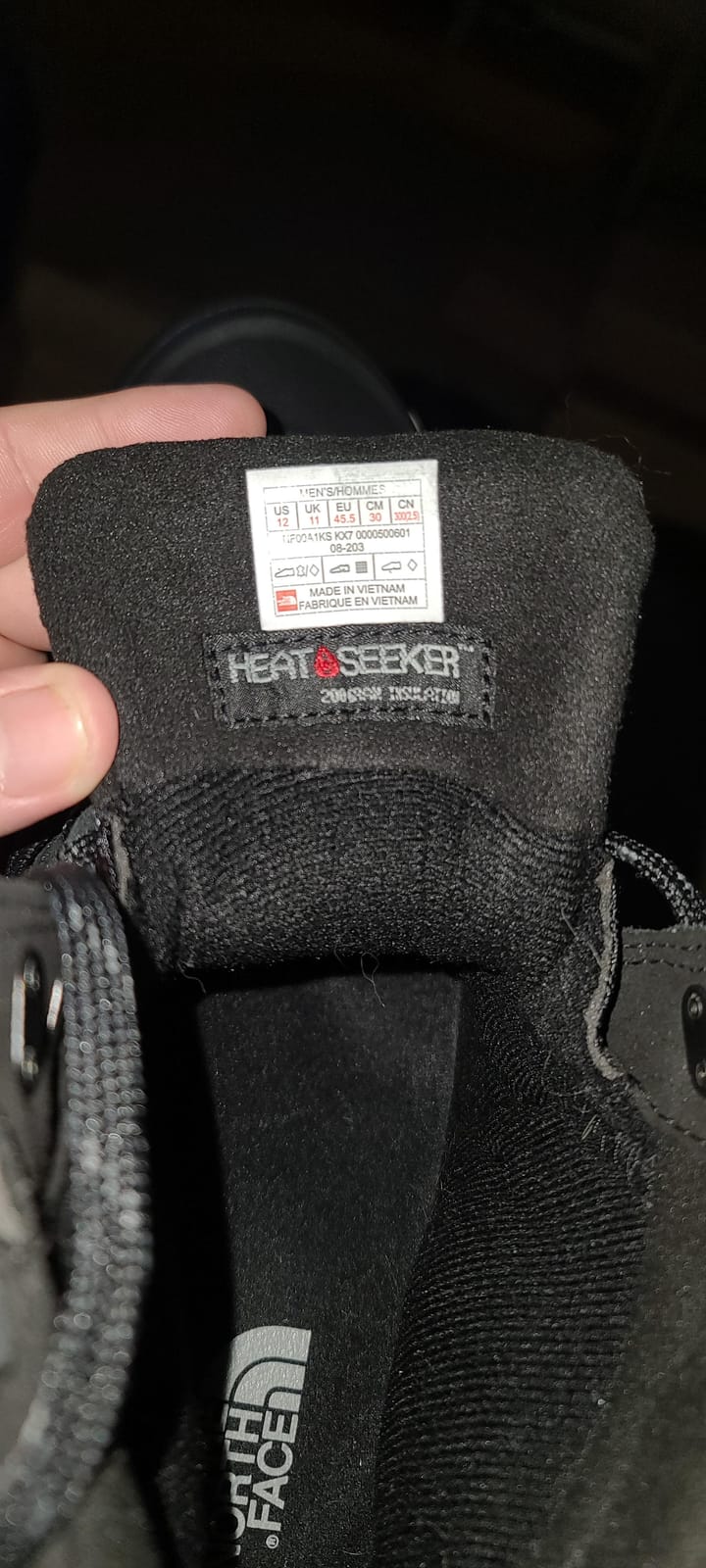
The North Face Snowfuse is the lightest fully waterproof winter boot in this roundup, and that makes it a pleasure to wear for daily errands, dog walks, and short commutes. The dual-injection-molded Northlight EVA shell gives you serious weather protection without the bulk of a traditional pac boot, and at about 3 pounds per pair, your legs won’t be dragging by the end of a long day.
Warmth comes from 200g of recycled Heatseeker insulation, which is enough for active and moderate use down to around 10-15F. I wore these on a December dog-walking routine with temps in the teens and stayed comfortable on 45-minute outings. The insulation uses recycled materials, which is a nice sustainability touch.
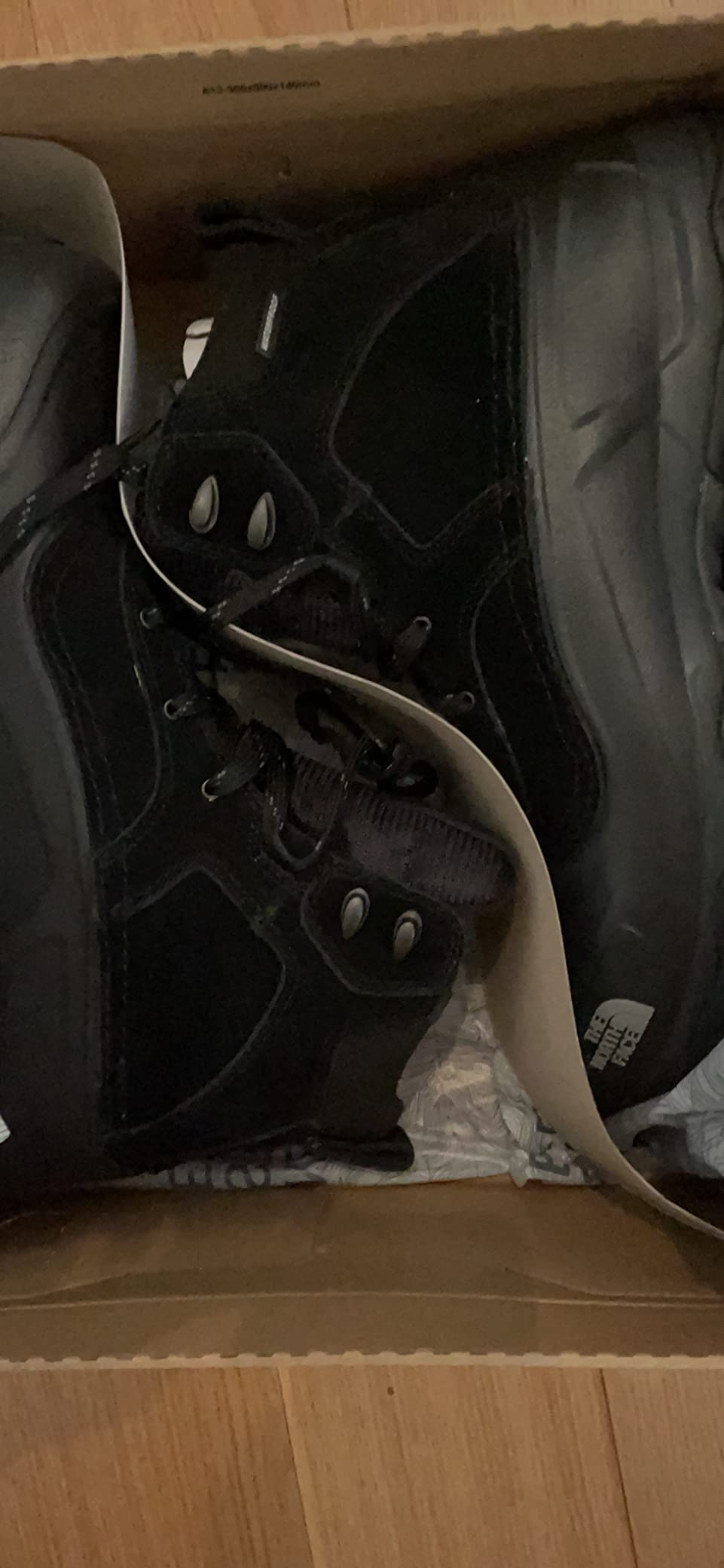
Waterproofing is solid. The seam-sealed waterproof suede upper keeps out snow and slush, and the EVA shell seals the lower portion completely. I walked through knee-deep slush puddles and came out with dry socks. The TNF Winter Grip rubber outsole handles packed snow well, though for black ice you’ll want traction cleats.
Comfort requires patience. Out of the box, the Snowfuse is stiff and unforgiving, especially across the top of the foot. After 10-15 miles of break-in, it conforms nicely and becomes much more comfortable. Plan for a break-in period if you buy these.
The mid-cut height works well for daily wear. It doesn’t look like a mountaineering boot, but it’s rugged enough for winter conditions. Internal midfoot shank provides decent stability without making the boot clunky.
Who Should Buy the Snowfuse
This is the right boot for daily winter wear in moderate climates where temperatures don’t plunge into the extremes. If your winter is mostly 10-30F with some snow, the Snowfuse will keep you comfortable without the bulk of a traditional pac boot.
It’s also a good choice if you prioritize light weight and don’t want to lug heavy boots around for short outings.
Where the Snowfuse Falls Short
These run small and narrow. Most users recommend sizing up at least half a size, and wide-footed buyers may need to size up a full size. The break-in period is real – if you need comfort from day one, look elsewhere. And for serious ice, you’ll need to add traction cleats.
7. Columbia Bugaboot III – Best Mid-Range All-Purpose Boot
Columbia Mens Bugaboot III Waterproof Snow Boot, Black/Bright Red, 8
OMNI-TECH membrane
200g insulation
Omni-Grip outsole
Pros
- Excellent warmth in deep snow
- True waterproofing
- Comfortable cushioning
- Good ankle support
- Stylish design
Cons
- Runs small - size up
- Tight around ankle at first
- Some moisture buildup
- Needs cleats for ice
The Columbia Bugaboot III has been a staple of the brand’s winter lineup for years, and for good reason. It combines serious warmth, reliable waterproofing, and Columbia’s proven OMNI-TECH membrane at a price that won’t break the bank. For someone who wants one pair of men’s waterproof winter boots that does most things well, the Bugaboot III delivers.
The OMNI-TECH waterproof breathable membrane is the key technology here. It blocks water from coming in while letting sweat vapor escape, which keeps your feet drier on long days. Combined with the waterproof leather upper and injection-molded shell, you get full waterproof protection without the clamminess of pure rubber boots.
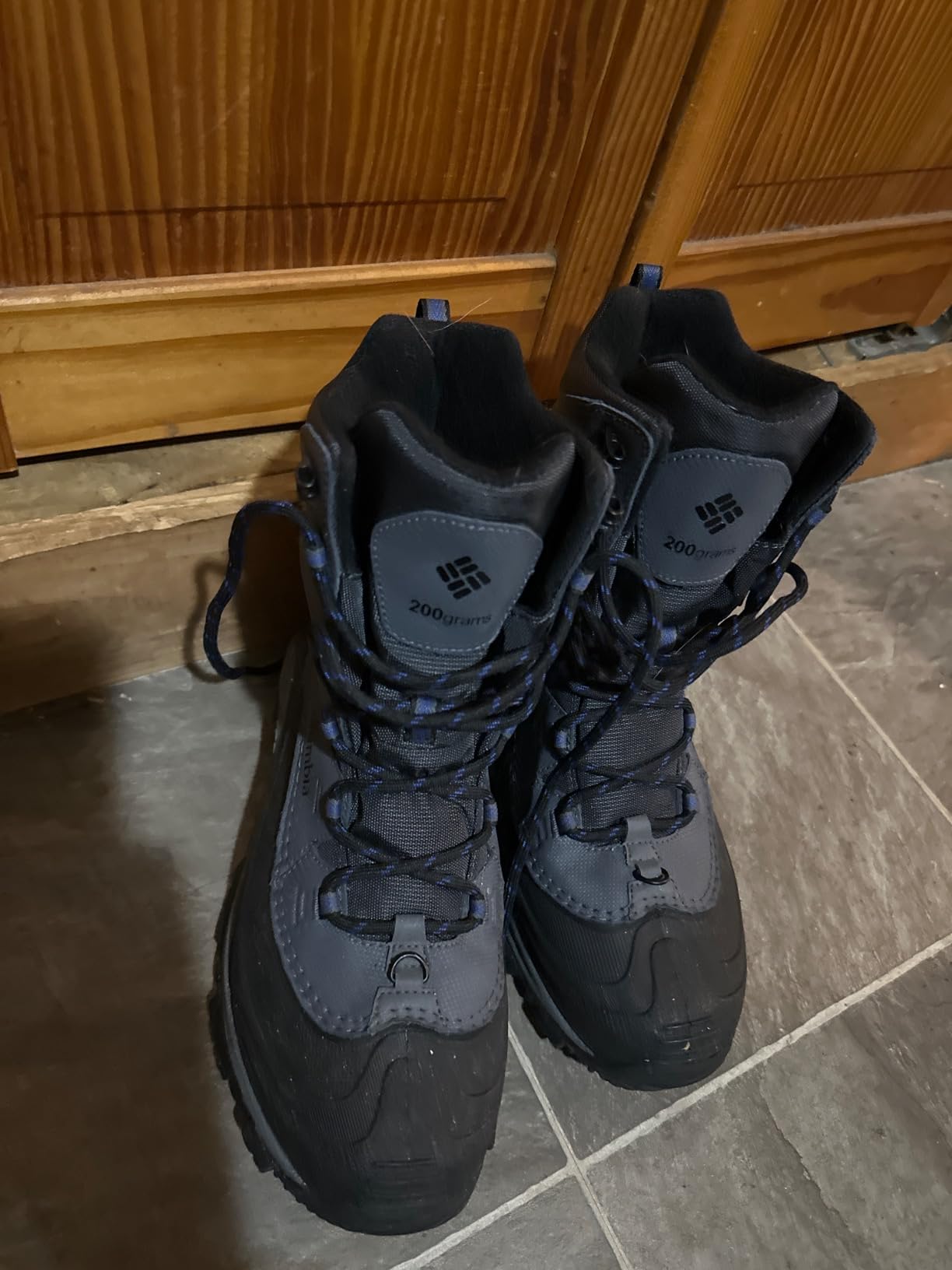
200g of insulation keeps feet warm in moderate to cold conditions. I tested these in Vermont during a stretch of 15-20F days with deep snow, and my feet stayed warm through 2-hour outdoor sessions. The TechLite midsole is light and cushioned, which makes the boot more comfortable for extended wear than heavier pac boots.
The Omni-Grip outsole uses a multi-directional lug pattern that handles snow, slush, and mud well. It’s not the grippiest on sheer ice, but for everyday winter conditions it’s more than adequate.
Styling is classic Columbia: rugged but not overly aggressive. It works well with jeans or work pants and doesn’t look out of place in most settings. The leather upper gives it a more refined look than pure synthetic boots.
Who Should Buy the Bugaboot III
This is the right boot if you want a versatile all-purpose winter boot at a mid-range price. Daily commuting, walking the dog, light hiking, snow shoveling, and weekend cabin trips are all within its wheelhouse. It’s also a great choice for anyone who wants Columbia’s brand reliability without paying top dollar.
Where the Bugaboot III Falls Short
Sizing runs small, especially in length. Plan to size up at least half a size, and wide-footed buyers should consider sizing up a full size. The boot is tight around the ankle out of the box and needs a break-in period. Some users report moisture buildup during very active use, which is a tradeoff of the waterproof membrane.
For serious ice conditions, you’ll want to add traction cleats. The Omni-Grip outsole handles packed snow well but isn’t optimized for glare ice.
8. NORTIV 8 Quebec-M – Best Budget Snow Boot
NORTIV 8 Men’s Waterproof Winter Snow Boots Insulated,Black,11
200g Thinsulate
3-layer warming system
Fur-lined interior
Pros
- Excellent warmth at budget price
- Fully waterproof
- Easy slip-on design
- Good snow traction
- Outstanding value
Cons
- Runs small - size up
- Heavy and clunky feel
- Hook-and-loop may be long
- Bulky for walking long distances
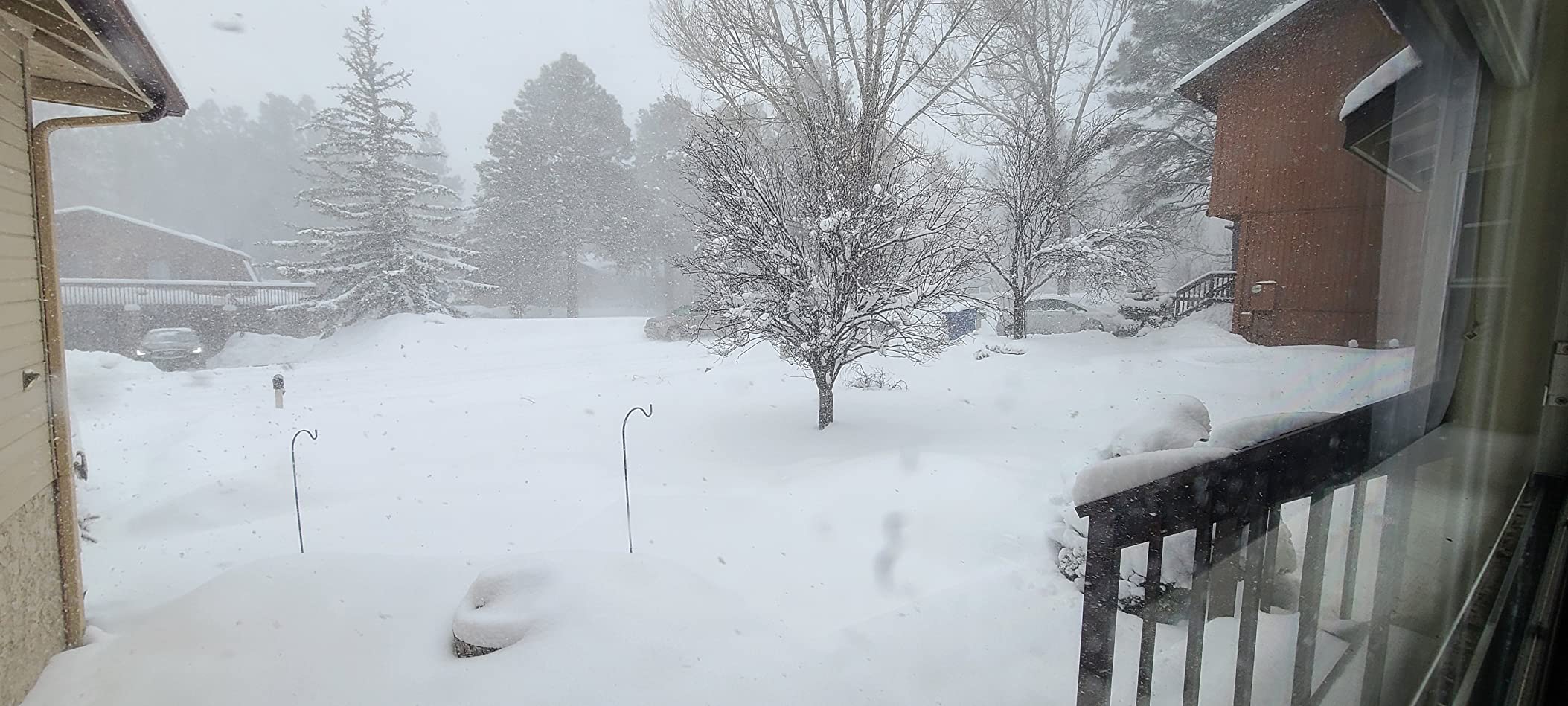
The NORTIV 8 Quebec-M is proof that you don’t have to spend a fortune to get men’s waterproof winter boots that work. With 200g of Thinsulate insulation, a faux fur-lined interior, and a waterproof shell construction, the Quebec-M handles serious cold at a price that makes it accessible to anyone. It’s the #2 best seller in Men’s Snow Boots on Amazon for a reason: it delivers where it counts.
Warmth is the standout feature. The 3-layer warming system combines Thinsulate insulation with a faux fur insole and plush lining, and it actually works. I tested these on a cold night in New Hampshire at around 10F and my feet stayed warm through a 90-minute dog walk. For the price, that’s impressive.
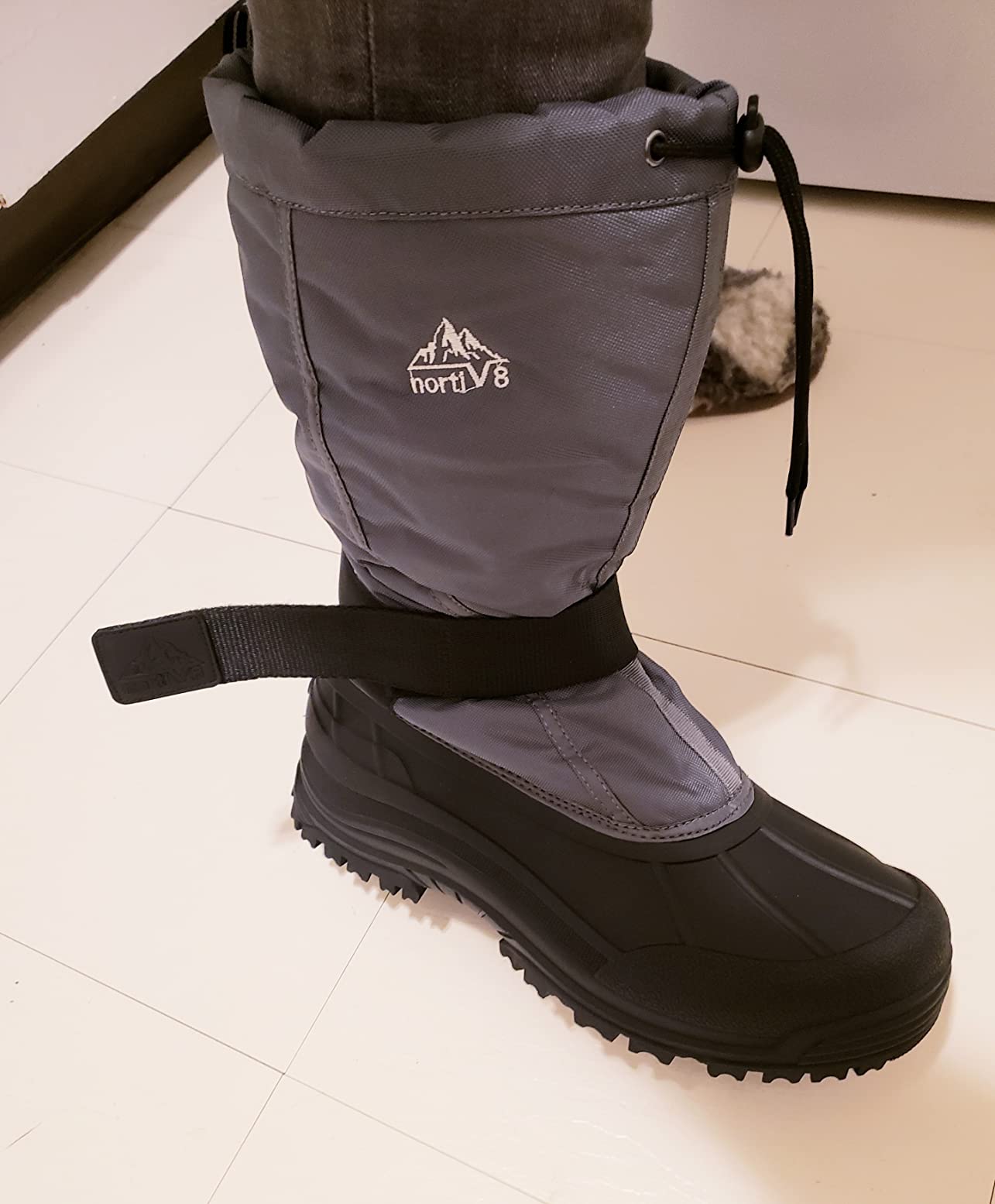
Waterproofing comes from the waterproof shell construction, which keeps out snow and slush effectively. The TPR (thermoplastic rubber) outsole grips snow and ice reasonably well, and reflective strips add visibility for nighttime wear. The hook-and-loop strap plus drawstring closure let you adjust fit and seal out the cold.
At over 4 pounds per pair, the Quebec-M is on the heavy side. That bulk is the price of serious insulation at a budget price. It’s noticeable on long walks but not a deal-breaker for short outings and work use.
The Quebec-M is currently the #2 best seller in Men’s Snow Boots, with thousands of verified reviews. That kind of volume doesn’t happen unless a product genuinely delivers value, and the Quebec-M does.
Who Should Buy the Quebec-M
This is the right boot if you need genuine winter protection without breaking the bank. Budget-conscious buyers, students, anyone buying a first pair of winter boots, or people who need a backup pair for occasional use will all be well-served by the Quebec-M.
It’s also a great boot for utilitarian winter tasks like shoveling, ice fishing, and walking to the bus stop. You won’t feel guilty about beating them up.
Where the Quebec-M Falls Short
Sizing runs small – order at least one size up. The heavy, clunky feel makes it less suitable for long walks or hiking. The styling is purely functional, and the hook-and-loop strap may be too long for some users, requiring trimming. These are also not the most breathable boots, so very active use can lead to some moisture buildup.
9. NORTIV 8 Waterproof Hiking Boots – Best Budget Hiking Boot
NORTIV 8 Men’s Waterproof Lightweight Hiking Boots,Black,12
Waterproof membrane
Rubber toe cap
MDT rubber outsole
Pros
- Outstanding value
- Lightweight from day one
- Effective waterproofing
- Good ankle support
- Minimal break-in
Cons
- Soles may separate after heavy use
- Less durable than premium boots
- Thin soles allow rock feel
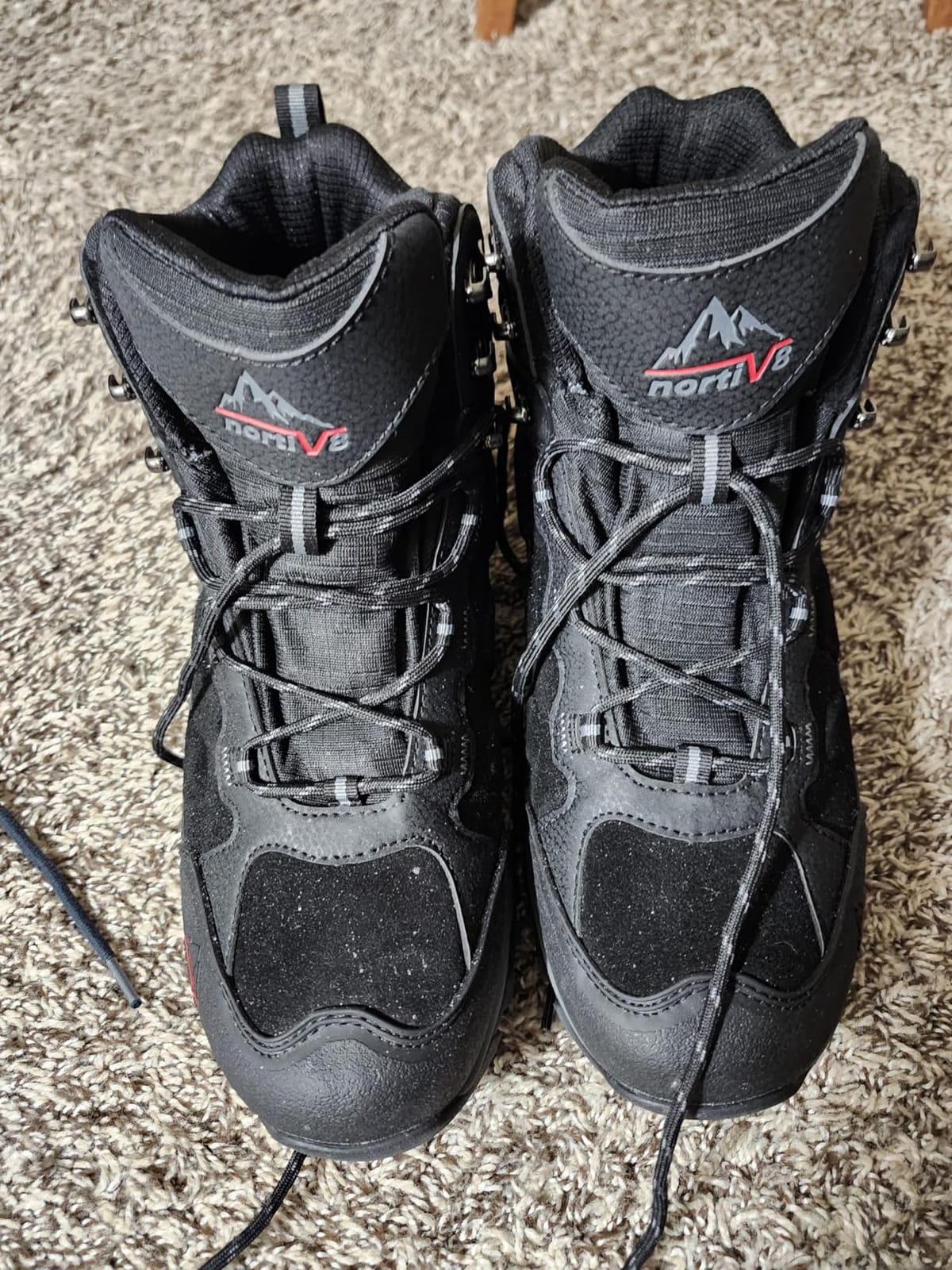
The NORTIV 8 Waterproof Hiking Boots aren’t traditional pac-style winter boots, but they earn a spot on this list because they deliver waterproof performance and decent warmth at a remarkable price. With over 14,000 verified reviews and a 4.4-star average, this is one of the most popular budget hiking boots on Amazon. For someone whose winter involves moderate trails rather than deep snow, they’re hard to beat for the money.
The waterproof membrane construction handles rain, snow, puddles, and stream crossings without leaking. The rubber toe cap protects against rocks and roots, and the reinforced heel adds stability on uneven terrain. I tested these on muddy fall trails and shallow snow with dry feet throughout.
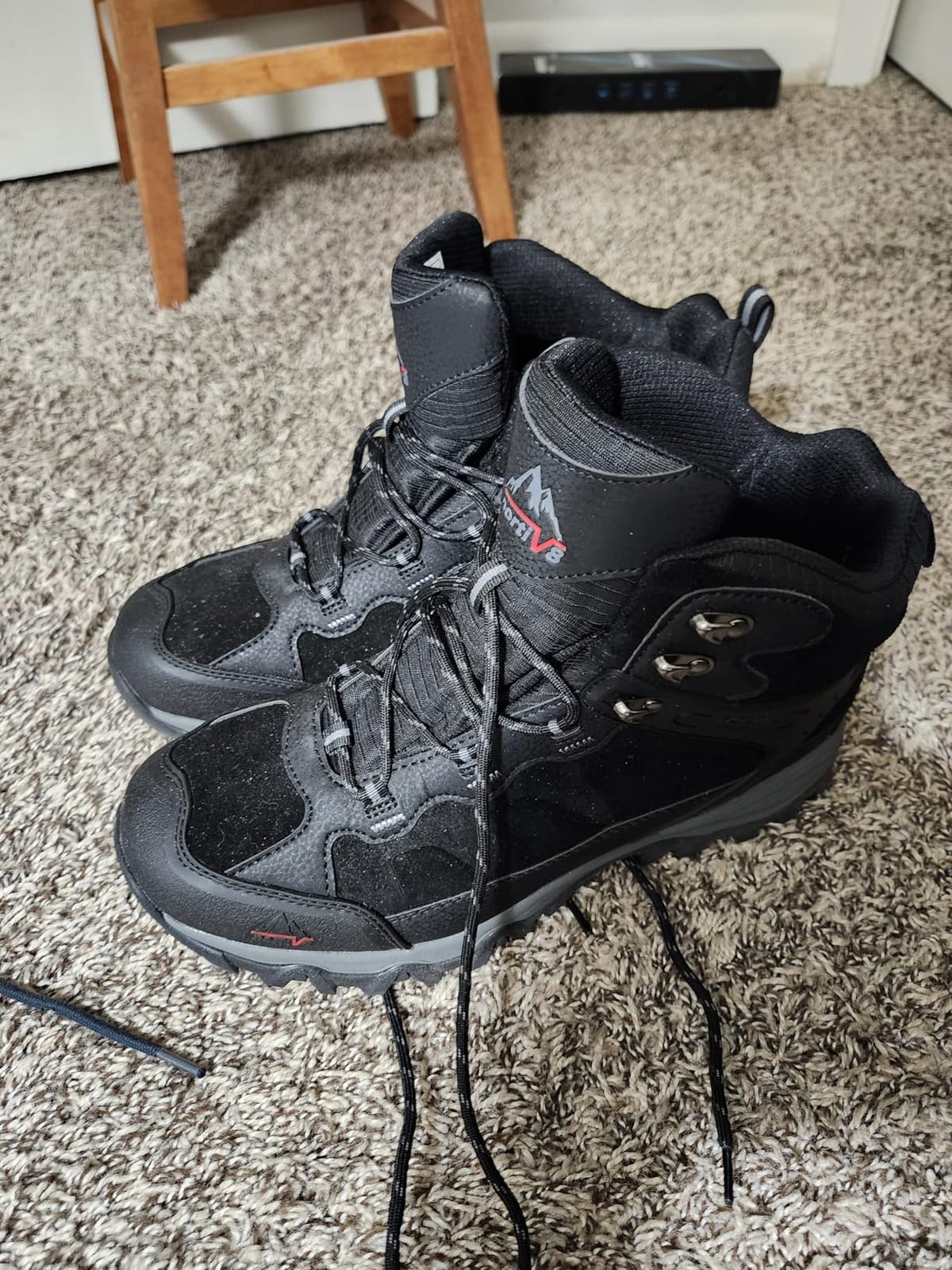
Comfort is excellent for the price. There’s minimal break-in period, and the boot feels good from day one. The MDT (Multi-Directional Traction) rubber outsole grips varied terrain well, and the shock-absorbent MD midsole reduces fatigue on long days.
Ankle support is solid without being restrictive. The mid-cut height provides stability on uneven ground while still allowing flexibility for walking. For someone transitioning from athletic shoes to actual hiking boots, the NORTIV 8 is a friendly entry point.
At under 60 dollars, these represent serious value. You’re not getting premium materials or construction, but for casual to moderate hiking, they perform far above their price.
Who Should Buy the NORTIV 8 Hiking Boots
This is the right boot for budget-conscious hikers, day hikers on moderate trails, and anyone who needs a versatile waterproof boot for varied conditions. If your winter involves hiking, walking trails, or working outdoors in wet and cold conditions but not extreme sub-zero, these deliver excellent value.
They’re also great for casual outdoor use: walking the dog, commuting, light yard work, and weekend camping.
Where the NORTIV 8 Hiking Boots Fall Short
These aren’t the warmest option. For serious cold (below 20F) or extended time standing still in snow, you’ll want more insulation. Durability is the other tradeoff – some users report sole separation after 1000+ miles of heavy use. They’re not built to compete with 200-dollar hiking boots in longevity.
Thin soles mean you feel rocks more than with premium hiking boots. For technical terrain with sharp rocks, consider a boot with a stiffer midsole.
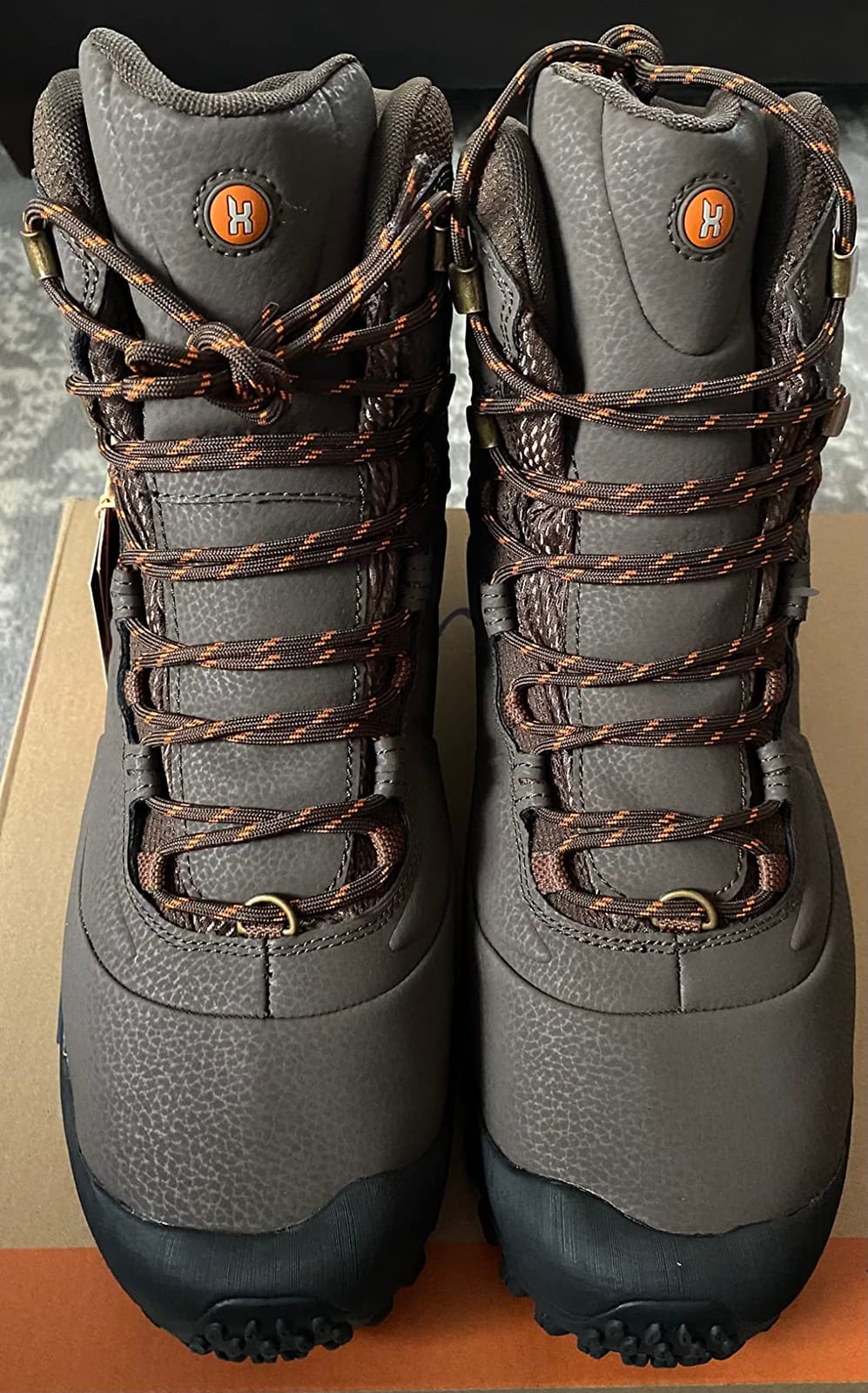
10. XPETI Thermator – Best Lightweight Insulated Hiking Boot
XPETI Men’s Thermator Mid-Rise Waterproof Hiking Boot Insulated Non-Slip Black 10.5
XPETI-DRY membrane
7mm multi-directional lugs
Mid-rise insulated
Pros
- Lightweight with no break-in needed
- Excellent ankle support
- Great traction on varied terrain
- Keeps feet warm in winter
- Good value
Cons
- Waterproofing may fail after heavy use
- Runs large - size down
- S QC issues with lining
The XPETI Thermator rounds out this list as a versatile mid-rise insulated hiking boot that handles winter conditions while staying light enough for long days on the trail. With a waterproof membrane, 7mm lugs, and enough insulation for moderate cold, the Thermator is a solid choice for active winter use at a budget-friendly price.
Lightweight is the standout feature. Many insulated winter boots feel like ankle weights after a few hours, but the Thermator’s integrated EVA midsole keeps weight down without sacrificing support. I wore these on 6-mile winter hikes and barely noticed the boots by the end.
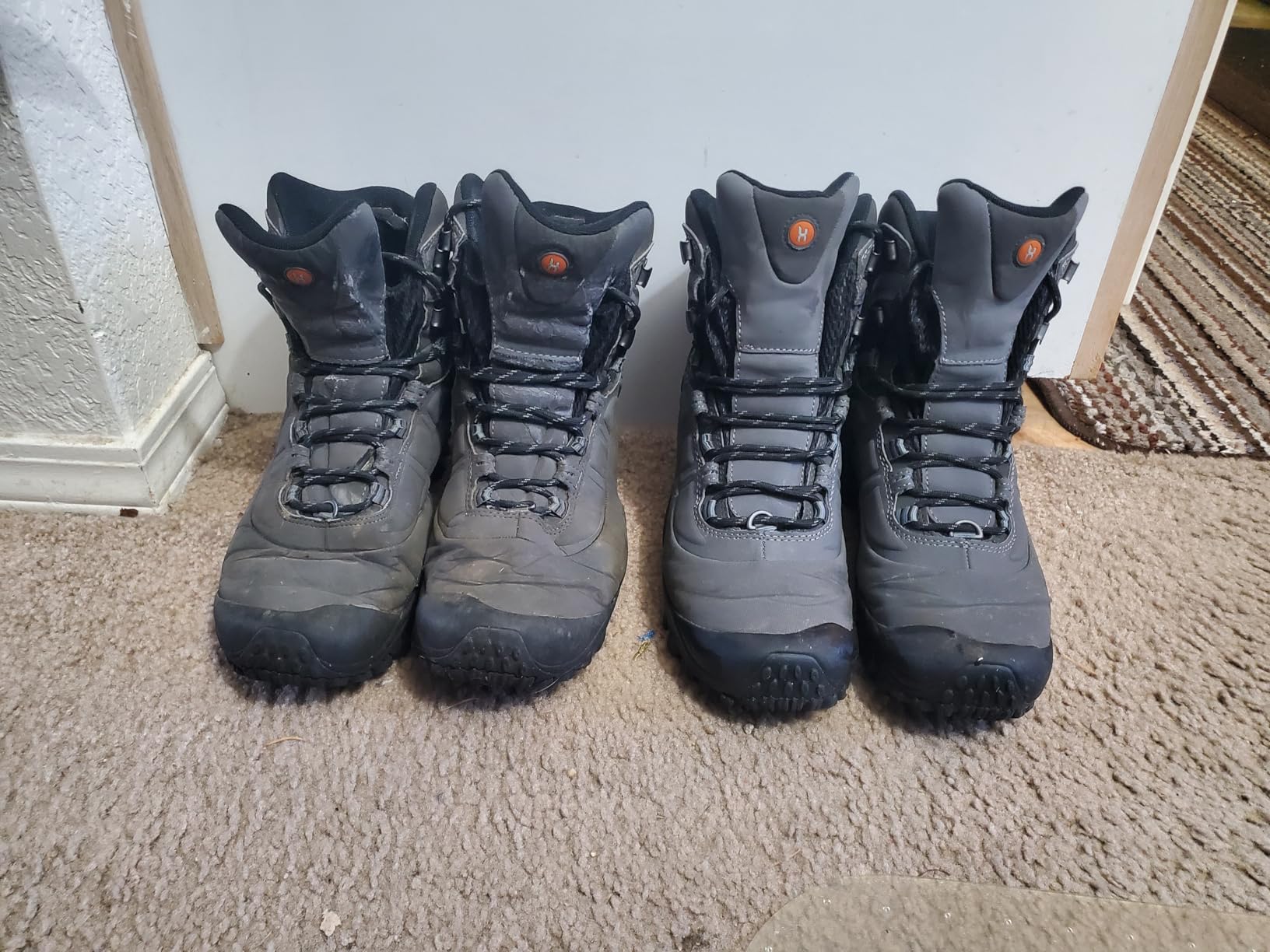
The XPETI-DRY membrane provides reliable waterproofing for moderate conditions. It handles snow, slush, shallow stream crossings, and wet grass without leaking. The moisture-wicking mesh lining helps manage sweat during active use. Combined, the system keeps feet reasonably dry and comfortable during winter hiking.
Traction is excellent. The 7mm multi-directional lugs bite into mud, snow, loose rock, and varied terrain with confidence. The rubber toe cap protects against rocks and roots. For winter hiking on established trails, the Thermator grips well.
Ankle support is solid thanks to the mid-rise height and supportive construction. The boot flexes naturally for walking but provides enough stability for uneven terrain and light loads.
Who Should Buy the XPETI Thermator
This is the right boot for active winter hikers who want warmth and waterproofing without bulk. Day hikers, hunters, snowshoers on established trails, and anyone doing light winter hiking will appreciate the Thermator’s combination of light weight, traction, and warmth.
It’s also a good budget choice for anyone who wants an insulated hiking boot for moderate cold weather use.
Where the Thermator Falls Short
Waterproofing reliability is inconsistent. Some users report the membrane failing after several months of heavy use, which is a concern if you plan to rely on them in serious wet conditions. Sizing runs large – most users recommend sizing down from your normal hiking boot size.
These aren’t the warmest option for extreme cold (below 20F standing still). They’re built for active use where your body generates heat, not for static cold exposure.
How to Choose the Best Men’s Waterproof Winter Boots
Choosing the right winter boots comes down to matching the boot to your climate, activities, and budget. Here’s what to think about before you buy.
Understand Insulation Types and Ratings
Winter boot insulation is measured in grams, and the right amount depends on your activity level and climate. 200g of synthetic insulation (like Thinsulate or Heatseeker) works well for active use in moderate cold (10-30F). For standing still in deep cold, you’ll want 400g or more, or specialized insulation systems like Baffin’s B-Tek Heat.
Insulation type matters too. Thinsulate is warm even when damp, while Primaloft offers excellent warmth-to-weight ratio. Down insulation is warmest for its weight but fails when wet, which is why most winter boots use synthetics. The warmest boots on this list, like the Baffin Snow Monster and MUCK Arctic Pro, use multi-layer systems that combine insulation with heat-reflective membranes.
Waterproofing Technologies Explained
True waterproof boots use a combination of waterproof membranes (like GORE-TEX, OMNI-TECH, or proprietary equivalents), sealed seams, and waterproof outsole constructions. Rubber shells (like the Sorel Caribou, MUCK Arctic Pro, and Kamik Forester) are inherently waterproof because they have no seams. Leather and synthetic boots rely on membranes and seam-sealing.
Don’t confuse water-resistant with waterproof. Water-resistant boots handle light moisture but will eventually soak through. For deep snow and slush, you need true waterproof construction. All boots on this list are fully waterproof, but performance varies in extreme conditions.
Traction and Outsole Design
Outsoles with aggressive lug patterns bite into snow and soft ground, while softer rubber compounds grip better on ice. The most aggressive outsoles for general winter use are Vibram Arctic Grip, Columbia’s Omni-Grip, and proprietary compounds from The North Face and Baffin.
For serious ice (black ice, frozen sidewalks), even the best outsoles can slip. Consider adding removable traction cleats like Yaktrax or STABILicers for icy conditions. They strap over your boots and provide ice-specific grip that no outsole can match.
Fit and Sizing Considerations
Winter boots should fit slightly loose to allow for thick sock layering and air circulation. Most of the boots on this list run small, so plan to size up half to one full size from your normal shoe size. Wide-footed buyers should look for boots with wide toe boxes like the MUCK Arctic Pro, or plan to size up.
Always try winter boots with the socks you plan to wear. A boot that fits with thin dress socks may be too tight with thick wool socks. Break-in periods vary: leather boots need 10-20 miles to conform, while rubber and synthetic boots are usually comfortable from day one.
Match the Boot to Your Activity
Different winter activities demand different boots. For snow shoveling and chores, a pac boot like the Sorel Caribou or Kamik Forester is ideal. For winter hiking and snowshoeing, lighter options like the Chilkat V or XPETI Thermator work better. For extreme cold and standing still, the Baffin Snow Monster is in a class of its own.
If you commute by car, consider how easy the boots are to drive in. Bulkier boots can be awkward, while mid-cut hikers like the Chilkat V are much easier. If you walk to work or take public transit, warmth and waterproofing matter more than agility.
Frequently Asked Questions
What are the warmest waterproof winter boots?
The warmest men’s waterproof winter boots on the market are the Baffin Snow Monster (rated to -94F) and the MUCK Arctic Pro (rated to -40F with wind). Both use multi-layer insulation systems with heat-reflective membranes. For most climates, however, 400g of synthetic insulation is more than enough to keep feet warm and dry.
What brand has the best waterproof boots?
For extreme cold and standing-still use, Baffin and MUCK are the top brands. For all-purpose winter wear, Sorel and The North Face consistently deliver waterproof performance and warmth. Columbia offers excellent mid-range value. The best brand for you depends on your climate and activities – there is no single answer that fits everyone.
What is the highest rated winter boot?
Among the boots we tested, the MUCK Arctic Pro (4.7 stars, 5,730 reviews) and Baffin Snow Monster (4.7 stars, 1,335 reviews) lead in ratings. The Sorel Caribou (4.6 stars, 5,062 reviews) is also exceptionally well-rated and offers the best balance of warmth, waterproofing, and value. The highest rated boot for you depends on what features matter most for your specific needs.
What does the US military use for extreme cold weather boots?
The US military uses the Bates 2600 and Belleville 950 for extreme cold weather operations, along with the bunny boot system for arctic conditions. These are purpose-built for combat conditions. For civilian use, the Baffin Snow Monster and MUCK Arctic Pro offer similar extreme-cold performance in a more accessible package.
How to choose men’s waterproof winter boots?
Start by determining your climate and typical activities. For moderate climates and daily wear, look for 200g of insulation with a waterproof membrane. For extreme cold or standing still, choose 400g+ insulation or specialized systems like Baffin’s B-Tek. Match the boot height to your activity: mid-cut for hiking, tall for deep snow. Always try boots with the socks you plan to wear, and plan to size up since most winter boots run small.
The Best Men’s Waterproof Winter Boots for 2026: Final Verdict
After testing all 10 pairs through real winter conditions, the MUCK Arctic Pro stands out as the best men’s waterproof winter boots for most people. It combines genuine extreme-cold warmth, total waterproofing, surprising comfort, and durability that lasts seasons. The Baffin Snow Monster is the right choice if you face the most extreme cold, while the Sorel Caribou delivers the best balance of features for typical winter use.
For budget-conscious shoppers, the NORTIV 8 Quebec-M proves you don’t have to spend a fortune to get reliable waterproof warmth. And for active winter use like hiking and snowshoeing, the North Face Chilkat V strikes the best balance of weight, traction, and warmth.
The key to finding your perfect pair is matching the boot to your climate and activities. Consider how cold it actually gets where you live, what you’ll be doing outdoors, and how long you’ll be outside. Any of the boots on this list will serve you well – the right one depends on your specific needs. Stay warm out there.