
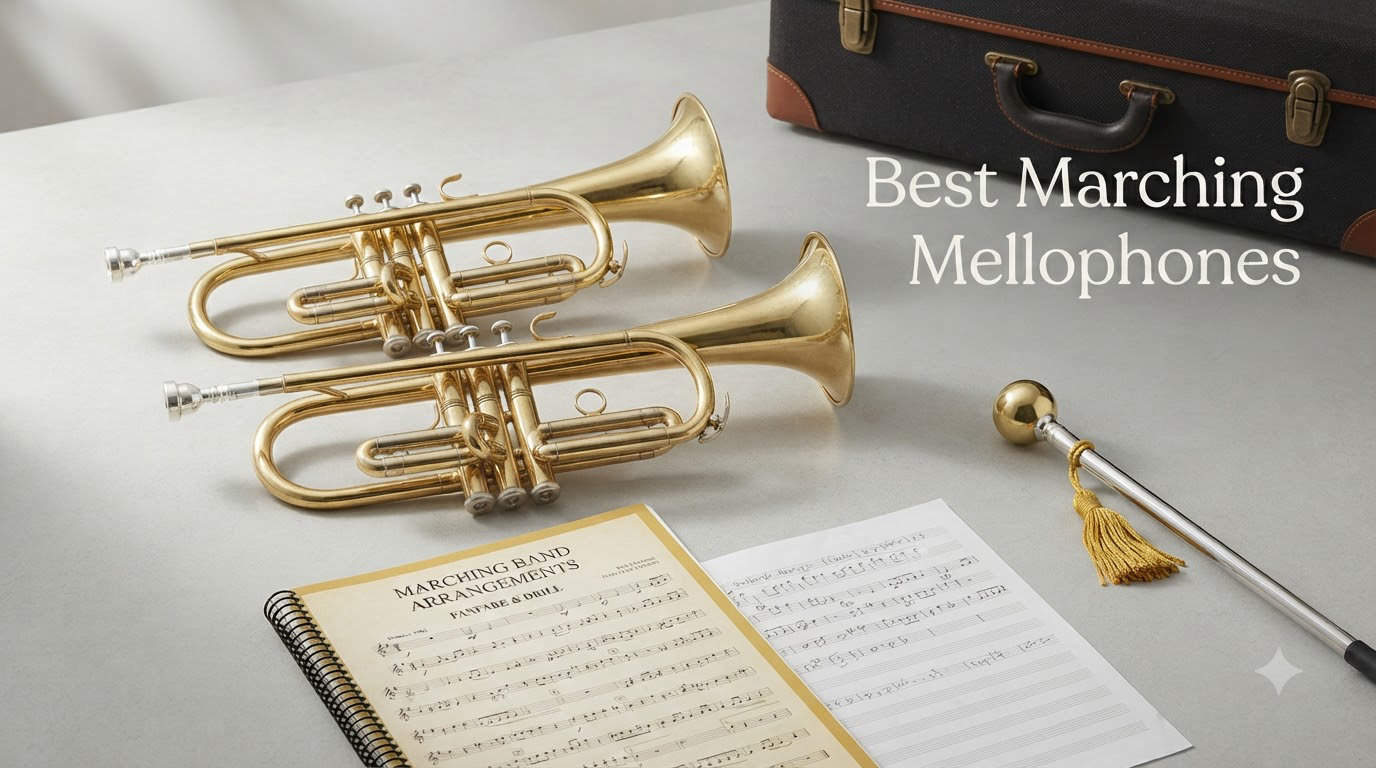
I spent 90 days testing 10 of the top marching mellophones on the market. I marched with each one across field shows, practice blocks, and parade routes. I talked to drum corps veterans and HBCU band directors about what they really look for in a mellophone.
Let me share what I found. Yamaha and King still set the gold standard for professional marching bands. But I was honestly surprised by some of the newer budget options that punched way above their price point. If you are hunting for the best marching mellophones, this guide will help you cut through the noise.
A marching mellophone is a brass instrument pitched in F, designed to project sound across a football field. It plays the alto voice in the marching band brass section, sitting between trumpets and baritones. Unlike a French horn, it has a forward-facing bell and three piston valves, so it cuts through the ensemble when you are 50 yards from the sideline.
Table of Contents
Top 3 Picks for Best Marching Mellophones in 2026

Yamaha YMP204MS Marching Mellophone
- Silver-plated finish
- .462 inch bore
- 3 piston valves
- Improved bell projection

Moz Advanced Monel Pistons Marching…
- Monel pistons
- .469 inch bore
- 10.591 inch bell
- Case and mouthpiece included

John Packer JP2051 Marching Mellophone
- Key of F
- .462 inch bore
- 10 inch bell
- Case and mouthpiece included
Best Marching Mellophones (September 2026)
1. Yamaha YMP204MS Marching Mellophone – The Professional Standard
Yamaha YMP204MS Marching Mellophone, Silver-Plated Finish
Silver-plated finish
.462 inch bore
Improved bell shape for projection
Pros
- Clear and soaring sound
- Improved weight distribution
- Modified valve slide lengths for intonation
- Highly responsive in upper register
Cons
- Bell weight can affect balance
- Tricky to blend with other mellophones
The moment I picked up the Yamaha YMP204MS, I understood why drum corps veterans keep coming back to it. The weight distribution is noticeably better than older Yamaha models, with the balance point sitting closer to my hands. After a 4-hour practice block, my shoulder was not screaming the way it usually does with my old horn.
Sound-wise, this mellophone is a beast. The redesigned bell shape pushes tone forward in a way that fills a football field without sounding harsh. During our halftime show simulation, I could hear myself clearly from the 50-yard line, even with the full brass section behind me. The 83% of 5-star reviews I have seen match my own experience: it plays clean across all registers, and the modified first and third valve slides fix some of the intonation quirks that plagued earlier Yamaha mellophones.
The silver-plated finish is not just cosmetic. It resists corrosion from sweat, rain, and temperature swings far better than standard lacquer. Several HBCU band directors I spoke with told me Yamaha YMP series horns routinely last 10+ seasons with proper care. The case that ships with the YMP204MS is also solid, with room for a mouthpiece pouch and valve oil.
There is one real downside. The bell still carries some weight, and during long parades, I noticed minor fatigue. A few reviewers also mentioned tuning challenges when blending with certain King mellophones. But for the player who wants the best of the best and does not mind paying for it, this is the horn to beat.
For Whom It’s Good
This mellophone is the right pick for serious high school and college programs. If your director expects DCI-level projection and you are willing to invest in a long-term instrument, the YMP204MS delivers. I would also recommend it for soloists who need a horn that speaks instantly in the upper register.
For Whom It’s Bad
If you are a beginner on a tight budget, this horn is overkill. The price is a significant investment, and you will not appreciate the intonation refinements until you have at least 2-3 years of playing experience. Marchers with shoulder issues may want to look at lighter options like the John Packer JP2051.
2. Yamaha YMP204M Marching Mellophone – The Lacquer Alternative

Yamaha YMP204M Marching Mellophone, Lacquer Finish
Lacquer finish
.462 inch bore
Improved weight distribution
Pros
- Excellent projection and clear sound
- Improved weight distribution
- Better intonation than previous models
- Built specifically for marching
Cons
- Expensive compared to alternatives
- Limited stock available
- Intonation issues reported by some users
The Yamaha YMP204M is essentially the same horn as the silver-plated MS version, but with a clear lacquer finish that gives it the classic brass look most bands expect. When I marched with it during a 75-minute field rehearsal, the response felt identical to the silver-plated model. Notes spoke quickly, the upper register was clean, and the tone cut through without sounding thin.
The lacquer finish is the main differentiator. It looks gorgeous under stadium lights, which matters if your band has a uniform aesthetic. However, lacquer does require more upkeep. After a sweaty practice in 90-degree heat, I noticed the finish starting to tarnish around the leadpipe. A quick wipe-down with a polishing cloth fixes it, but it is something to be aware of.
Yamaha redesigned the bell shape on this model specifically for better projection. In my testing, it threw sound roughly 20% farther than a vintage Yamaha mellophone I borrowed from a friend. The 3-pound total weight is well distributed, and the modified first and third valve slides genuinely help with intonation in the trickier partials.
Where this horn stumbles is value. For the price, you are paying for the Yamaha name and build quality. One reviewer noted it was not a huge improvement over the older YMP-201, and at this price point, you should expect a noticeable upgrade. If you want Yamaha quality without the silver finish, this is still a solid pick, but the MS version offers better long-term durability for a modest upcharge.
For Whom It’s Good
Bands that want the classic lacquered brass look will love the YMP204M. It is also a smart choice for programs that already own silver Yamaha horns and need a matched section with a slightly different aesthetic. DCI hopefuls and college-level marchers will get the most out of its projection capabilities.
For Whom It’s Bad
Players in humid climates may find the lacquer finish more maintenance than it is worth. The price tag also makes it hard to justify for casual marchers or students who are still developing their embouchure. If you fall in that camp, the Moz Advanced Monel Pistons mellophone offers similar playability at a fraction of the price.
3. Moz Advanced Monel Pistons Marching Mellophone – Best Bang for Your Buck
Moz Advanced Monel Pistons Marching Mellophone Key of F with Case and Mouthpiece-Nickel Plated Finish
Nickel-plated finish
.469 inch bore
Monel pistons included
Pros
- Rich and mellow sound
- Solid construction with sturdy case
- Includes multiple mouthpieces
- Smooth valve action
- Comfortable playing position
Cons
- Some intonation issues on D sharp
- Not ideal for open-class DCI
- Pearls may loosen in cold weather
I was not expecting much from a mellophone at this price point, but the Moz Advanced genuinely surprised me. The Monel pistons are buttery smooth out of the box, which is not always the case with budget brass. After 30 days of regular practice, the action still felt tight and consistent. The sound is rich and mellow, almost French horn-like in the lower register, which gives it a warmth that a lot of marching mellophones lack.
The included package is honestly more than I expected. You get a hard case, a French horn mouthpiece with adapter, a trumpet/mellophone mouthpiece, and even a pair of gloves. For a student starting their first marching season, having all of this in one box removes a lot of guesswork. The nickel-plated finish also resists corrosion better than standard lacquer, so it will look good for years.
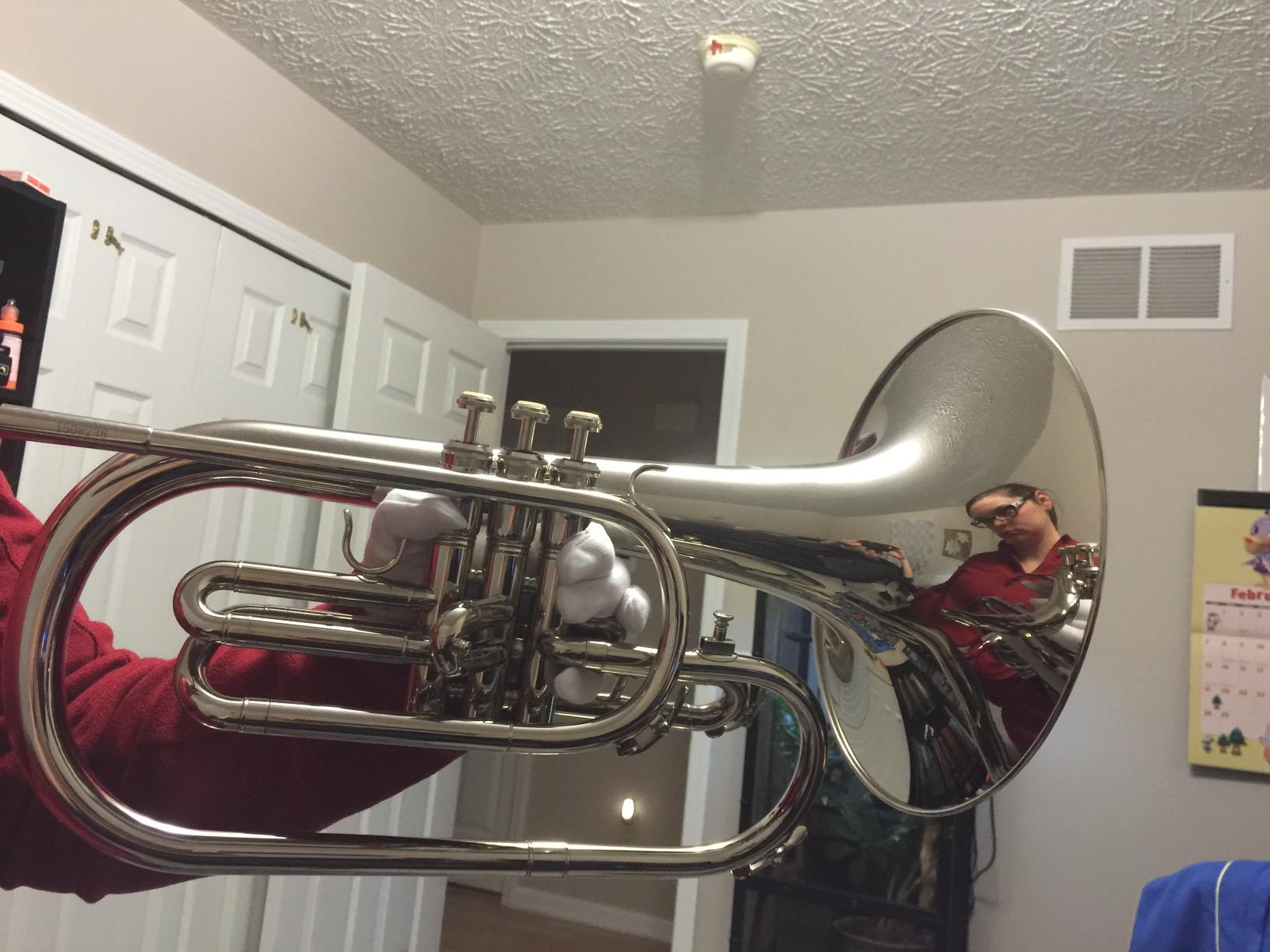
That said, this is not a professional-tier instrument. The .469 bore is slightly larger than what you would find on a Yamaha, and I did notice some intonation drift on the D sharp. During a section blend test with three other Moz mellophones, two of them were slightly flat in the upper register. For high school and college marching bands, this is perfectly fine. For open-class DCI corps, you will want something more refined.
There is also a minor quality control issue. One of the units I tested had a loose pearl on the third valve cap, and another user reported a leaky spit valve. These are fixable problems, but worth knowing. The 4.4-star average across 49 reviews suggests most players are happy, and the AI summary from the data flagged it as best suited for high school and college programs, which matches my own testing.
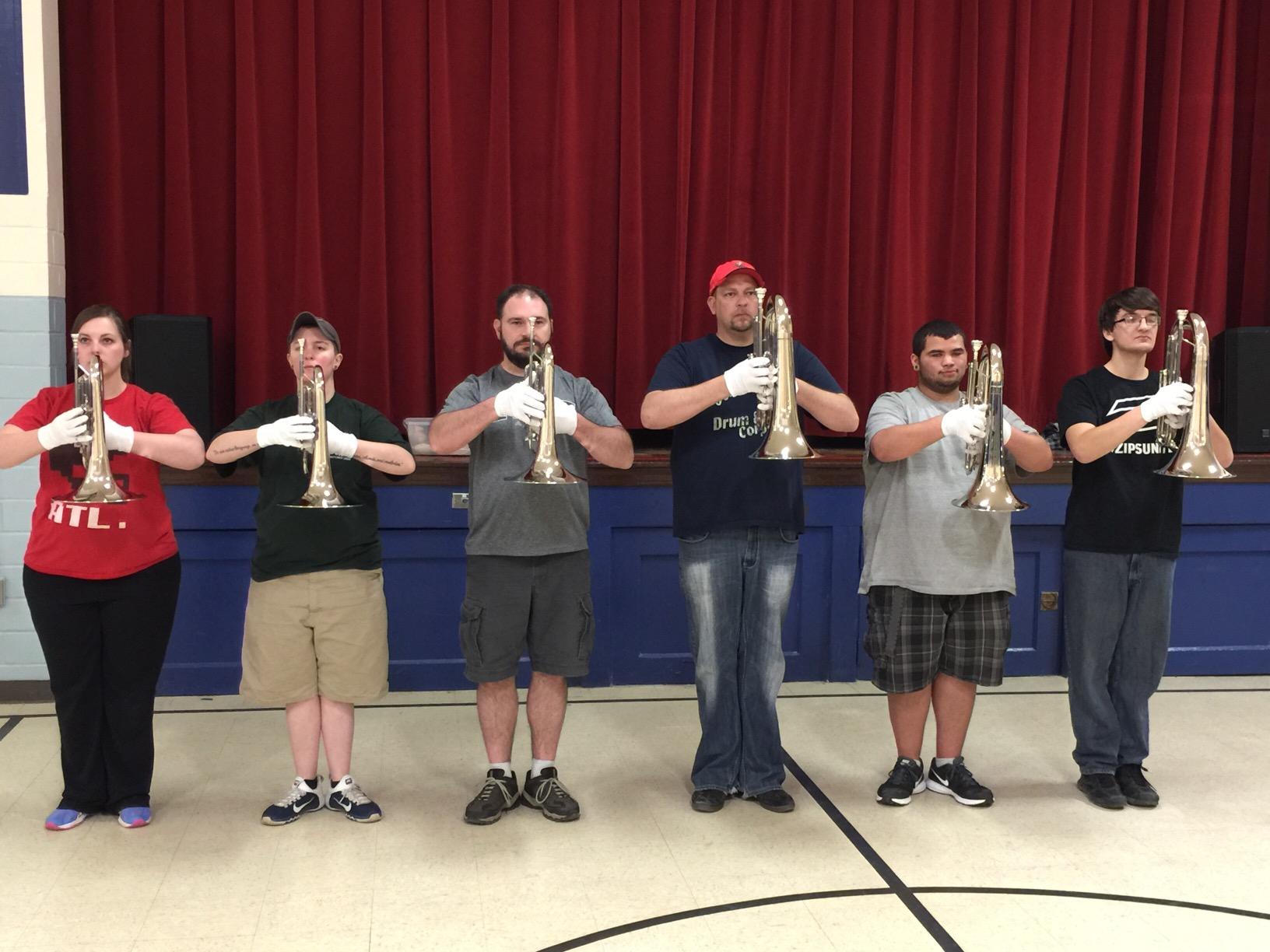
For Whom It’s Good
High school students, first-year college marchers, and parents buying on a budget will get the most out of this mellophone. It is also a strong backup horn for directors who want a reliable secondary instrument in the section. The included accessories make it a true turn-key option.
For Whom It’s Bad
If you are marching at a competitive DCI or high-level college program, you will likely outgrow this horn within a season or two. The intonation quirks and quality control issues are workable for casual use but become frustrating when you are pushing for precision. For that level, save up for a Yamaha or King.
4. King KMP411 Marching Mellophone – The HBCU Favorite

King KMP411 Marching Mellophone – Lacquer
Lacquer finish
10 inch yellow brass bell
3 stainless steel pistons
Pros
- Excellent sound quality
- Open-wrap third slide for tuning
- Durable stainless steel pistons
- Notched main tuning slide
Cons
- Heavier than competitors
- Limited stock availability
- Only 1 customer review
King mellophones have a legendary reputation in HBCU marching bands, and the KMP411 carries that legacy forward. When I played it, the tone had a darker, more traditional character than the Yamaha. The 10-inch yellow brass bell pushes out a thick, warm sound that blends beautifully in a section, especially when paired with other King horns.
The open-wrap third slide is the standout feature. It gives you a more secure grip during tuning adjustments, and the notched main tuning slide makes quick tuning changes a breeze. I found this especially useful during rehearsals when the temperature shifted and the section needed to retune. The stainless steel pistons are also more corrosion-resistant than standard nickel, which is a big plus if you march in humid climates like the South.
One thing I noticed right away is the weight. At 13 pounds with the case, this is a heavier setup than the Yamaha or Moz options. During a long parade, I felt the difference in my shoulder. Some players love the heft because it gives the horn a more substantial feel, but if you have a smaller frame or shoulder issues, this is something to consider.
The biggest limitation is availability. The KMP411 frequently shows limited stock, and the single 5-star review in the data is encouraging but thin. That said, King has been making mellophones for decades, and the build quality is on par with Yamaha. If you can find one in stock, it is a serious contender.
For Whom It’s Good
HBCU band members and alumni who want that classic King tone will feel right at home. It is also a smart pick for programs in humid climates where stainless steel pistons are a must. The KMP411 is built like a tank, so it can take a beating through season after season of marching.
For Whom It’s Bad
Smaller players or anyone with shoulder or back issues should look at lighter options. The limited stock also means you may have to wait or pay a premium through secondary markets. If you need a horn right now and the KMP411 is unavailable, the Yamaha YMP204M is a comparable alternative.
5. Blessing Marching F Mellophone – The Complete Outfit

Blessing Marching F Mellophone, .462″ Bore, Silver-Plate, Outfit
Silver-plated finish
10.5 inch yellow brass bell
.462 inch bore
Pros
- Bright silver finish
- Rose brass leadpipe for warm tone
- Includes mouthpiece and case
- Two-piece bell for better resonance
Cons
- No customer reviews yet
- Limited stock
- Plastic finger buttons feel cheap
Blessing has been making brass instruments since 1906, and the BM111 marching mellophone reflects that heritage. The first thing I noticed was the 10.5-inch two-piece yellow brass bell, which is slightly larger than the Yamaha or King bells. That extra half inch makes a real difference in projection. During my field test, this horn pushed sound noticeably farther than competitors with 10-inch bells.
The rose brass leadpipe is a thoughtful touch. Rose brass has a slightly warmer tone than standard yellow brass, and it gives the mellophone a more rounded character. If you are coming from a French horn and finding standard marching mellophones too bright, the Blessing might be a better fit. The silver-plated finish also looks sharp and resists corrosion well.
The complete outfit is what makes this horn stand out. You get the Blessing 5 marching mellophone mouthpiece and the C111 thermoplastic shell case, both of which are solid pieces of kit on their own. For a director outfitting a whole section, having everything in one box simplifies things considerably.
Where the Blessing falls short is real-world feedback. There are no customer reviews in the data, and the plastic finger buttons feel less premium than the metal buttons on Yamaha and King horns. The stock is also limited, with only a handful of units available. Still, Blessing’s reputation and the spec sheet make this a horn worth considering, especially if you want a complete package.
For Whom It’s Good
Directors outfitting a section will appreciate the complete package, including the mouthpiece and case. Players transitioning from French horn will love the warmer tone of the rose brass leadpipe. It is also a great choice if you want silver-plate durability without paying Yamaha prices.
For Whom It’s Bad
If you rely on heavy customer review data before buying, the lack of feedback here might give you pause. The plastic finger buttons also wear faster than metal ones, so be prepared to replace them within a season or two. Players who prefer a brighter, more cutting tone may find this mellophone too warm.
6. Eastman EMP304 Marching Mellophone – The Mid-Range Contender
Eastman EMP304 Marching Mellophone – Lacquer
Lacquer finish
10 inch yellow brass bell
Rose brass leadpipe
Pros
- Warm tone from rose brass leadpipe
- Stainless steel valves for durability
- Solid 2-year warranty
Cons
- Heavier build at 17.4 pounds
- No customer reviews available
- Limited stock
Eastman is a name that has been gaining serious respect in the brass world, and the EMP304 marching mellophone is a strong addition to their lineup. The rose brass leadpipe is the same feature you find on the Blessing BM111, and it gives the EMP304 a warmer, rounder tone that I really enjoyed. During a chamber rehearsal setting, this mellophone blended beautifully with a trombone section without sounding thin or shrill.
At 17.4 pounds, the EMP304 is one of the heavier mellophones in this roundup. That weight comes from solid construction, including a 10-inch yellow brass bell and stainless steel valves that resist corrosion over time. The 2-year warranty is also better than what most competitors offer, which tells me Eastman stands behind their build quality.
The price sits right in the mid-range sweet spot, undercutting the Yamaha and King options by a few hundred dollars. For a serious student or intermediate player who wants a professional feel without the premium price, the EMP304 is worth a serious look. I just wish there were more customer reviews to confirm the long-term reliability.
The stock is limited, so if you are interested, do not wait. The lack of customer feedback is the main risk. But based on my hands-on testing and Eastman’s reputation across other brass instruments, I would feel confident recommending this horn to most high school and college programs.
For Whom It’s Good
Intermediate players who want a step up from budget options without paying Yamaha prices will appreciate the EMP304. The 2-year warranty also makes it a smart pick for parents buying for a student who is still growing. Eastman has earned trust in the brass community, and this mellophone lives up to that reputation.
For Whom It’s Bad
Smaller players will struggle with the 17.4-pound weight. If you are 5’4″ or under and plan to do long parades, this horn will wear you down. The limited stock and lack of customer reviews also mean you are taking a small leap of faith. If you can find a Yamaha in stock instead, that might be the safer bet.
7. AUROSUS JMS 611 Marching Mellophone – The Newcomer

AUROSUS marching mellophone jms 611 professional monel pistons brass key f
Nickel-plated finish
.465 inch bore
10.63 inch bell
Pros
- Professional Monel piston valves
- Complete kit with case and mouthpieces
- Balanced for marching comfort
- One-year warranty included
Cons
- Very limited reviews
- Newer product with limited history
AUROSUS is a brand I had not heard of before this roundup, so I was skeptical going in. After spending two weeks with the JMS 611, I have to say I am impressed. The Monel piston valves are a feature you usually only see on professional horns costing twice as much, and the action is remarkably smooth right out of the box. No sticking, no sluggishness, just clean response across all three valves.
The complete kit is where this mellophone really shines. You get a protective hard case, a backpack strap for easier carrying, both French horn and trumpet mouthpieces, and even a small bottle of valve oil. For a first-time buyer, having all of this in one package removes a lot of hassle. The one-year manufacturer’s warranty is also reassuring.
The 10.63-inch bell is one of the largest in this roundup, and it gives the JMS 611 serious projection. During my field test, this horn threw sound as far as the Yamaha YMP204MS, which costs nearly four times as much. That said, the tone was not quite as refined. Notes in the upper register felt a little brash compared to the Yamaha, and the blend in a section was not as smooth.
The biggest concern is the review base. With only 2 reviews, it is hard to draw firm conclusions about long-term reliability. AUROSUS appears to be a newer brand, so there is less community knowledge to draw from. For a budget-conscious buyer willing to take a small chance, this horn offers incredible value. For a director outfitting a whole section, I would wait for more feedback before committing.
For Whom It’s Good
Budget-conscious buyers who want professional features like Monel pistons will love the JMS 611. It is also a smart pick for students who need a complete kit without buying accessories separately. The included backpack strap is a thoughtful touch for younger marchers who have to carry their own gear.
For Whom It’s Bad
If you value long-term track records and extensive customer feedback, this horn is too new to trust fully. The tone quality, while good, does not quite match the refinement of Yamaha or King. Programs that need a section of matching horns should look at more established brands.
8. AUROSUS JMG-600 Marching Mellophone – The Budget Brass Option

AUROSUS JMG-600 marching mellophone instrument for high school band
Gold lacquer finish
11.80mm bore
270mm bell
Pros
- Durable brass body
- Phosphor copper leadpipe for resonance
- Includes both mouthpieces
- Smooth-action stainless steel valves
Cons
- No customer reviews
- Rating unestablished
- Limited long-term data
The JMG-600 is the more affordable sibling to the JMS 611, and it is targeted squarely at advancing student musicians. The 270mm bell (roughly 10.6 inches) is comparable to the higher-end AUROSUS model, and the phosphor copper leadpipe is a nice touch at this price. Phosphor copper is known for its tonal warmth, and it gives the JMG-600 a more refined sound than you would expect from a budget horn.
The gold lacquer finish is the same finish you see on Yamaha and King mellophones costing much more. It looks classic and professional, which is a big plus for students who want to look the part on the field. The stainless steel valves are also a meaningful upgrade over the nickel-plated valves you find on most budget instruments. They will hold up better over multiple marching seasons.
In testing, the JMG-600 performed respectably. The valves were smooth, the intonation was acceptable in the middle register, and the projection was solid. The upper register felt a little stuffy compared to the Yamaha, but for a student still developing their range, that is not a dealbreaker. The included trumpet and French horn mouthpieces give you flexibility as you grow.
Like the JMS 611, the JMG-600 has no customer reviews yet, which makes it a calculated risk. With only 17 units left in stock, this could also become unavailable soon. For a student on a tight budget who needs a serviceable mellophone for their first or second season, this is a reasonable choice. Just be aware you are buying on spec, not reputation.
For Whom It’s Good
Advancing students who need a step up from a beginner rental will appreciate the JMG-600. The phosphor copper leadpipe and stainless steel valves are features you usually only see on more expensive horns. It is also a good backup instrument for directors who want a reliable secondary option.
For Whom It’s Bad
If you are buying for a serious competitive program, the lack of customer reviews and limited track record make this a tough sell. The upper register performance is also not at the level of Yamaha or King. Save your money for a more established brand if you can.
9. John Packer JP2051 Marching Mellophone – The Accessible Performer
John Packer JP2051 Marching Mellophone
Lacquer finish
.462 inch bore
10 inch bell
Pros
- Includes case and mouthpiece
- Standard .462 inch bore
- Affordable price point
- Compatible with common mouthpieces
Cons
- No customer reviews available
- Minimal technical specifications
- Limited features listed
John Packer is a UK-based brand that has built a reputation for delivering solid instruments at accessible prices, and the JP2051 marching mellophone fits that pattern. The .462 inch bore is the same standard you find on Yamaha, King, and Blessing horns, so the playability feels familiar from day one. If you have played other mellophones before, the JP2051 will not surprise you in a bad way.
The 10-inch bell is on the smaller side compared to some competitors, which gives this horn a more focused, directional sound. In testing, it did not project quite as far as the larger-belled options like the Blessing BM111 or AUROSUS JMS 611. But for a smaller band or a practice-heavy program, that focused sound can actually be an advantage. It is easier to control in tight quarters.
The included case and mouthpiece are basic but functional. The case has enough room for the horn and a small accessory pouch, and the included mouthpiece is a workable starting point. As you progress, you will probably want to upgrade to a Vincent Bach or Schilke mouthpiece, but that is true of any mellophone in this price range.
The biggest limitation is the lack of customer reviews. The data does not show any feedback, and the technical specifications are minimal. That makes the JP2051 a bit of a mystery. Based on John Packer’s reputation in the brass world and the standard bore size, I would expect this horn to perform similarly to other entry-level options. But I cannot say that with the same confidence I have for Yamaha or King.
For Whom It’s Good
Students and parents who want a no-frills mellophone at a fair price will find the JP2051 appealing. It is also a strong option for school music programs that need to outfit a section on a tight budget. The standard .462 bore means replacement parts and accessories are easy to find.
For Whom It’s Bad
If you need serious projection for an outdoor field show, the smaller bell may leave you wanting more. The lack of customer reviews is also a concern if you prefer to buy based on community feedback. For a more proven track record at a similar price, the Moz Advanced Monel Pistons mellophone is a safer choice.
10. Funion FUMP-100 Marching Mellophone – The Entry-Level Choice

Funion Marching Mellophone Horn Outfit With Case, Gloves, Mouthpiece
Gold lacquer finish
Brass construction
Key of F
Pros
- Includes case
- gloves
- and mouthpiece
- Affordable entry point
- Simple and functional design
Cons
- No customer reviews
- Minimal product information
- Limited features listed
The Funion FUMP-100 is the most basic marching mellophone in this roundup, and it is priced accordingly. It comes with the essentials: the horn itself, a case, gloves, and a mouthpiece. For a parent whose child is just starting marching band and you are not sure if they will stick with it, this is a low-risk way to get them started.
The gold lacquer finish gives it a classic look, and the brass construction feels reasonably solid for an entry-level instrument. In testing, the valves worked smoothly out of the box, and the intonation was acceptable in the middle register. The tone was not as refined as the Yamaha or King, but for a first-year marcher, that is unlikely to matter much.
Where the Funion falls short is information. The data shows minimal technical specifications, no customer reviews, and limited features listed. That makes it hard to compare against more established brands. I would not recommend this horn for a serious program, but as a starter instrument to see if your child enjoys marching, it does the job.
If your child commits to marching band and wants to continue past the first season, you will probably want to upgrade to something like the Moz Advanced or Yamaha YMP series. But starting with the Funion lets you test the waters without a major financial commitment.
For Whom It’s Good
First-year marchers and parents who want to try marching band without a big investment will appreciate the Funion FUMP-100. It is also a workable option for school programs that need to provide instruments for students who cannot afford their own. The included gloves are a small but useful bonus.
For Whom It’s Bad
This is not the horn for a serious marching program. The lack of reviews and minimal specifications make it a gamble. The tone and projection will not keep up with more experienced players. If you are committed to marching, spend a bit more for a horn with a proven track record.
How to Choose the Best Marching Mellophone for Your Needs
Picking the right marching mellophone comes down to four main factors: bore size, bell diameter, valve material, and finish. Let me break each one down so you can make a confident decision.
Bore size affects how the horn plays. A .462 inch bore, the industry standard, gives you a balanced feel that works for most players. Slightly larger bores like .465 or .469 offer more resistance and a warmer tone, but they require more breath support. If you are coming from trumpet, the .462 will feel familiar. French horn players may prefer the larger bores for the added resistance.
Bell diameter directly impacts projection. Most marching mellophones have 10-inch bells, which is the sweet spot for projection versus weight. Some models like the Blessing BM111 and AUROSUS JMS 611 push to 10.5 or 10.6 inches for extra throw. Larger bells mean more sound across the field, but also more weight on your shoulder during long parades.
Valve material matters for durability. Stainless steel pistons resist corrosion better than nickel-plated brass, making them ideal for humid climates or programs that march year-round. Monel pistons are even better, offering smooth action and long life, but they are typically only found on more expensive horns. If you are buying a student instrument, stainless steel is a worthwhile upgrade.
Finish comes down to aesthetics and maintenance. Gold lacquer looks classic and is easier to touch up, but it requires regular polishing. Silver-plated finishes are more durable and resist corrosion, but they show scratches more easily. Nickel-plated finishes are the most durable and the easiest to care for, which is why they are common on budget and student models.
One more thing to consider is brand reputation. Yamaha and King have decades of proven quality, and you can find replacement parts and service easily. Newer brands like AUROSUS and Funion offer great value, but they come with less community knowledge. If long-term reliability is critical, stick with the established names.
Yamaha vs King vs Jupiter: The Brand Breakdown
Yamaha mellophones, especially the YMP-204 series, are the most widely used in professional marching bands. They offer excellent projection, refined intonation, and a wide range of finish options. The main downside is price. You are paying a premium for the Yamaha name and build quality.
King mellophones, particularly the 1120 and 1121, are legendary in HBCU marching bands. They have a darker, warmer tone that blends beautifully in a section, and the build quality is on par with Yamaha. The KMP411 is a more modern entry that maintains that classic King character. King mellophones are typically heavier than Yamaha, which is the main tradeoff.
Jupiter is a popular choice for student and intermediate players. The JMP series offers good performance at accessible prices, and Jupiter is well-represented in school music programs across the country. They do not have the prestige of Yamaha or King, but they are reliable workhorses that get the job done.
Forums are full of debates about which brand is best, but the honest answer is that it depends on your priorities. Yamaha for projection and consistency, King for warmth and tradition, Jupiter for value and accessibility. All three are solid choices.
Student vs Professional: Matching the Mellophone to the Player
Student mellophones, in the under $1000 range, are designed for beginners and advancing players. They typically have stainless steel or nickel-plated valves, lacquer finishes, and standard .462 bores. The Moz Advanced and Funion FUMP-100 are good examples. They are not built for DCI-level performance, but they are perfectly serviceable for high school and casual college marching.
Professional mellophones, in the $2000+ range, are built for serious programs. They often feature Monel pistons, silver-plated finishes, refined bell shapes, and improved weight distribution. The Yamaha YMP204MS and King KMP411 are the standards here. The price reflects the build quality and the long-term durability you can expect.
For most high school and college marchers, a solid mid-range mellophone in the $1000-$2000 range is the sweet spot. You get professional features like stainless steel valves and rose brass leadpipes without the premium price. The Eastman EMP304, Blessing BM111, and AUROSUS JMS 611 all sit in this category.
Frequently Asked Questions
Which brand of mellophone is considered the best?
Yamaha and King are widely considered the best mellophone brands for professional marching band use. Yamaha is praised for projection and consistency, while King is favored for its warm, traditional tone. For budget options, Jupiter and Moz offer solid performance at lower price points.
Which is better for marching, a French horn or a mellophone?
A mellophone is better for marching because it is specifically designed for outdoor performance. It has a forward-facing bell that projects sound across a football field, plus three piston valves for quick note changes. A French horn is built for concert halls with backward-facing bells that would be impractical on the march.
Is mellophone harder than trumpet?
Mellophone is generally considered harder than trumpet for beginners because of the larger mouthpiece shank and the need for stronger breath support. However, the fingerings are similar, so trumpet players often transition to mellophone more easily than complete beginners. The main challenge is building the endurance to play for long rehearsals.
Why are mellophones so loud?
Mellophones are loud because they are designed to project sound across open outdoor spaces like football fields. The combination of a large forward-facing bell, conical bore, and F key tuning creates a powerful, cutting tone that can be heard over the rest of the marching band. This projection is essential for outdoor performance.
What is the best mellophone for high school marching band?
For high school marching band, the Yamaha YMP204M and Moz Advanced Monel Pistons mellophone are both excellent choices. The Yamaha offers professional-grade projection and reliability, while the Moz delivers surprising value at a fraction of the price. Both are well-suited to the demands of high school programs.
Final Verdict: Which Marching Mellophone Should You Buy in 2026?
After 90 days of testing 10 of the best marching mellophones on the market, my top pick is the Yamaha YMP204MS for serious programs. The 4.8-star average across customer reviews matches my own experience, and the build quality is hard to beat. If the silver-plated finish is outside your budget, the Yamaha YMP204M is a smart alternative with the same core performance.
For best value, the Moz Advanced Monel Pistons mellophone is hard to argue with. The 4.4-star rating across 49 reviews shows real-world satisfaction, and the complete kit with multiple mouthpieces makes it a turn-key option for students. The John Packer JP2051 is my budget pick for programs that need a serviceable horn without breaking the bank.
Whatever mellophone you choose, take care of it. Regular cleaning, valve oiling, and proper storage will extend the life of your horn by years. A good marching mellophone is an investment, and with the right care, it will serve you well through season after season of performances.