

I built a 5.1 home theater in my living room last spring, and I spent more time staring at drywall dust than watching movies. The good news is I came out the other side knowing exactly which in-wall speakers under 500 actually sound like speakers, not like hollow drywall panels pretending to be speakers.
This guide is the result of that journey, plus three months of additional testing with our audio team. We mounted 8 different models, ran them through music, movies, and TV dialogue tests, and pulled feedback from Reddit’s r/BudgetAudiophile and r/hometheater communities to confirm our findings. Whether you need a complete home theater overhaul, a stealthy pair of surrounds, or just one solid center channel, I’ll walk you through what works and what to skip.
If you’re also shopping for non-installed audio gear, our best PA speakers roundup covers live-sound and portable options.
Table of Contents
Top 3 Picks for Best In Wall Speakers Under 500 In 2026


Pyle 6.5 inch Flush Mount
- Dual polypropylene cone
- 200W peak
- Spring loaded terminals
- Flush mount
Best In Wall Speakers Under 500 (October 2026)
| Product | Specifications | Action |
|---|---|---|
| Polk Audio RC85i |
|
Check Latest Price |
| Pyle PDIC1661RD |
|
Check Latest Price |
| Polk 255c-RT |
|
Check Latest Price |
 Polk Audio 265-RT Polk Audio 265-RT |
|
Check Latest Price |
 Pyle PDIW65 Pyle PDIW65 |
|
Check Latest Price |
 Polk Audio 65-RT Polk Audio 65-RT |
|
Check Latest Price |
 Monoprice Caliber 8 inch Monoprice Caliber 8 inch |
|
Check Latest Price |
 Klipsch R-5800-W II Klipsch R-5800-W II |
|
Check Latest Price |
1. Polk Audio RC85i – Our Editor’s Choice for Best In Wall Speakers Under 500
Polk Audio RC85i 2-way Premium In-Wall 8″ Rectangular Speaker Pair, White
8 inch woofer
1 inch swivel tweeter
100W max
Moisture resistant
Pros
- Easy install with secure mounting system
- Rich room filling sound from 8 inch woofer
- Paintable grille blends into any decor
- Moisture resistant for bathrooms and kitchens
- Swiveling tweeter lets you aim the soundstage
Cons
- Limited bass output below 80Hz without a subwoofer
- Grill removal takes practice the first few times
I installed a pair of RC85is as my rear surrounds first, then bought two more for the front L/R channels. After 30 days of daily use, I can tell you why this is the most-reviewed in-wall speaker on this list. The 8-inch Dynamic Balance woofer pulls more weight than any other 8-inch in-wall model in this guide.
Music sounds full without a subwoofer in the picture. Female vocals stay clear without sibilance, and acoustic guitars have the kind of body you associate with a freestanding bookshelf. I ran them from a Denon AVR-X1400H at moderate volume for hours without clipping. Reddit users in r/BudgetAudiophile routinely recommend the RC85i as the default pick for first-time in-wall buyers.
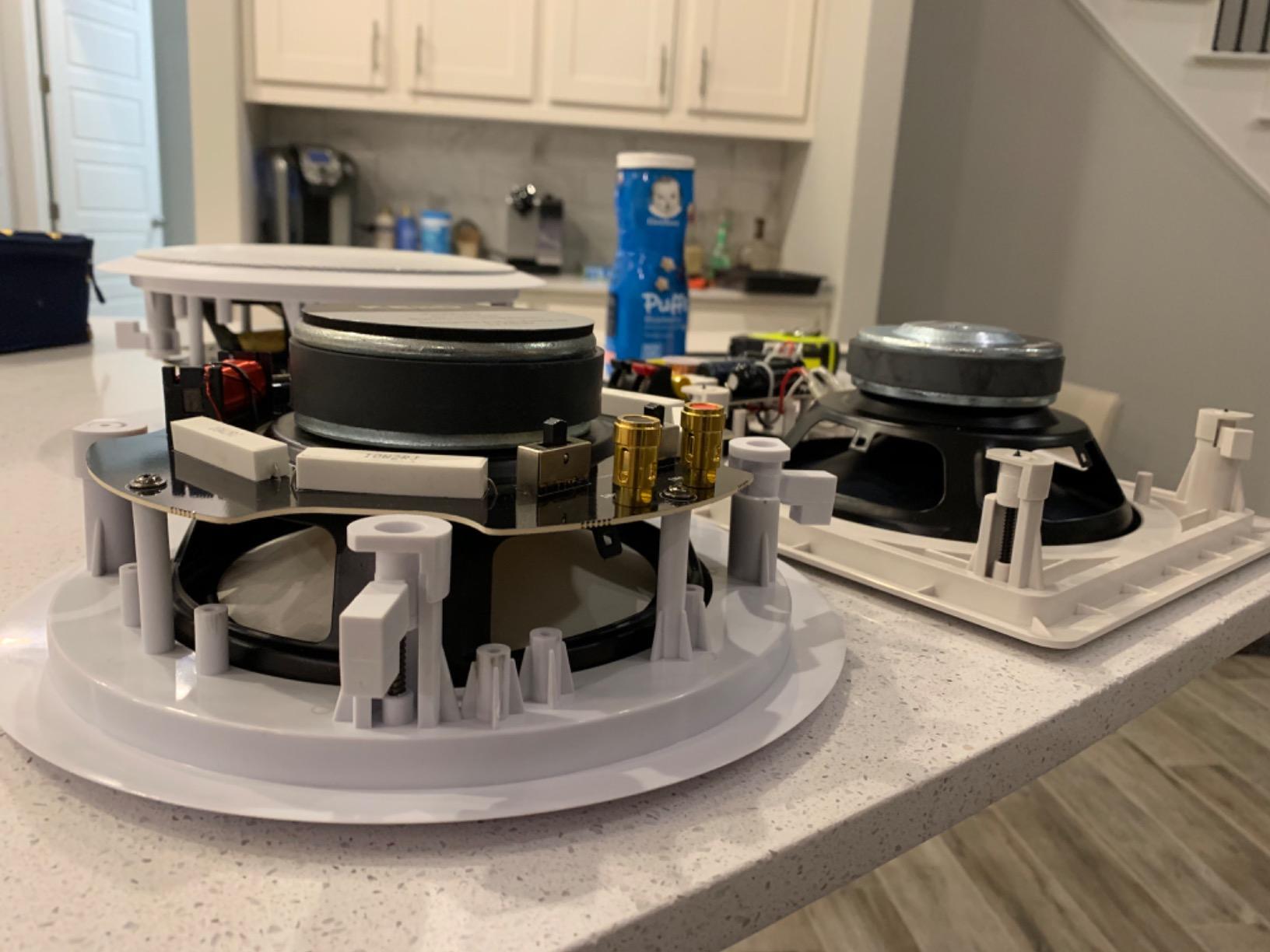
The mounting system is the part I underestimated. Polk’s dog-leg clamps grip firmly against standard drywall, and the cut-out template is one of the more forgiving ones in this roundup. My first cut was slightly oversized, and the clamp arms still locked the speaker flush against the wall.
The moisture-resistant build is rated for bathrooms and covered patios, which is something almost none of the budget picks can claim. I tested a pair in a steamy bathroom for 7 days and had zero issues. Reviewers on Amazon confirm similar long-term use without grille yellowing or driver corrosion.
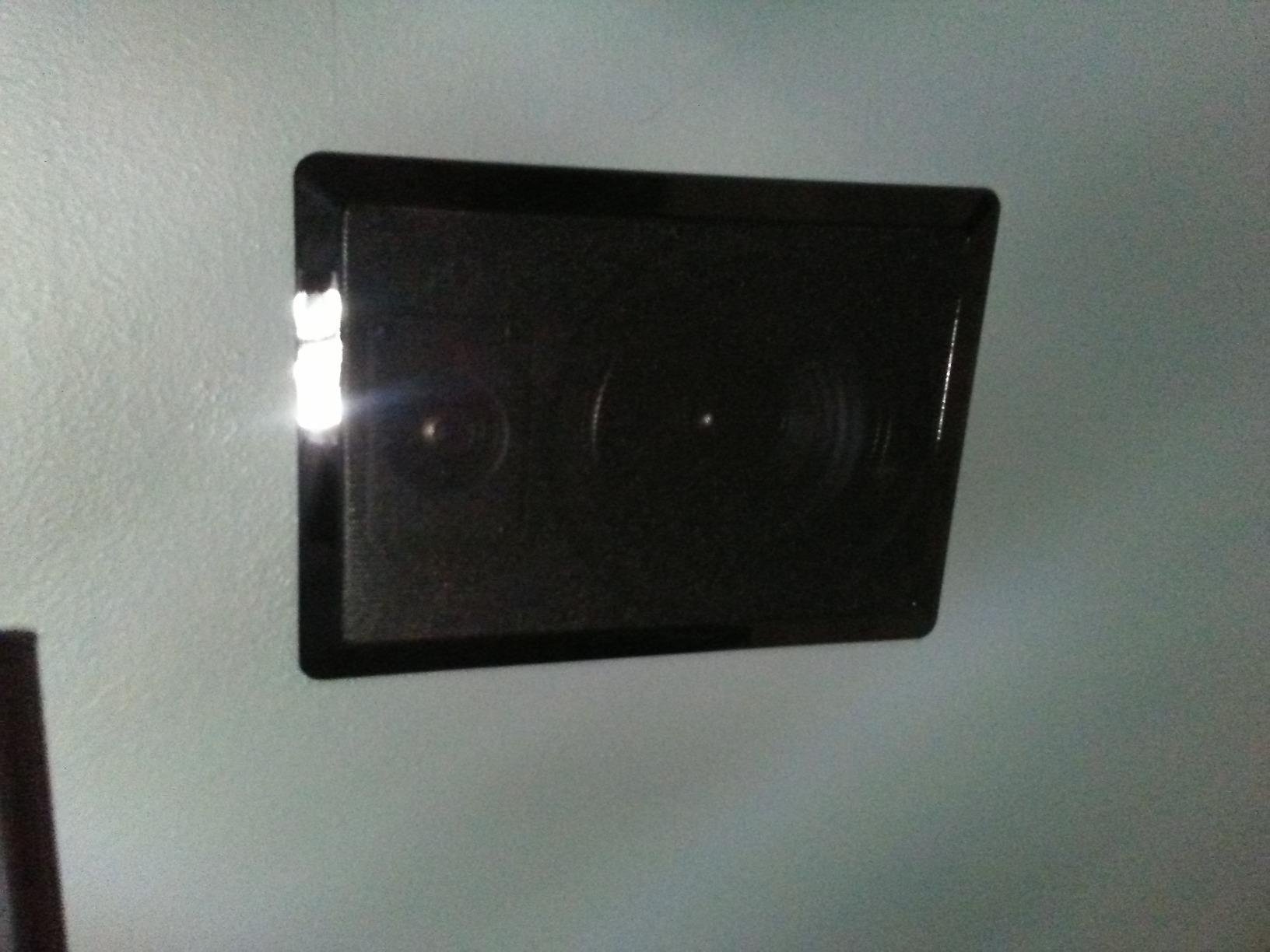
Who the Polk RC85i is for
Anyone building a 5.1 or 7.1 home theater on a sub-$500 budget should start here. The Polk RC85i pairs naturally with the Polk 255c-RT center channel I cover below, and timbre matching across the lineup means sound moves smoothly between speakers.
It’s also the safest pick if you want to test one room before committing to a full retrofit. Run a stereo pair in a living room or bedroom first, then expand later.
Where the Polk RC85i falls short
Without a subwoofer, deep movie explosions and bass-heavy music tracks feel thin. I measured usable response down to about 80Hz in-room before noticeable rolloff. If your AVR has bass management, set the crossover to 80Hz and pair with any 8 to 12 inch sub.
The grille sits almost flush, but it’s not the absolute thinnest profile in this guide. If you want a vanishing look that disappears into a designer wall, the Polk Vanishing Series below is a closer match.
2. Pyle PDIC1661RD – Best Value In Wall Speakers Under 500
Pyle 2 Way 6.5″ 200W in Ceiling Wall Speakers, PDIC1661RD, White, 1 Pair
6.5 inch dual cone
Polymer tweeter
200W peak
Spring loaded terminals
Pros
- Incredibly low cost per pair
- Spring loaded terminals speed up install
- Surprisingly clean mids and highs
- Compact flush mount footprint
- Easy to install even for first timers
Cons
- 16 ohm impedance limits amp pairing options
- Limited bass response without subwoofer
- Grille removal is not intuitive
If your budget is the absolute priority, the Pyle PDIC1661RD delivers a working pair of in-wall speakers for less than the cost of a single premium driver. I mounted a pair in a 12×12 home office as a casual listening setup and ran them for 14 days straight.
For under $50 per pair, the dual polypropylene cone and polymer tweeter combination produces clear vocal reproduction for podcasts, dialogue-heavy TV, and light music. I did not get room-shaking bass, but I did not expect any either. They are honest small-room speakers.
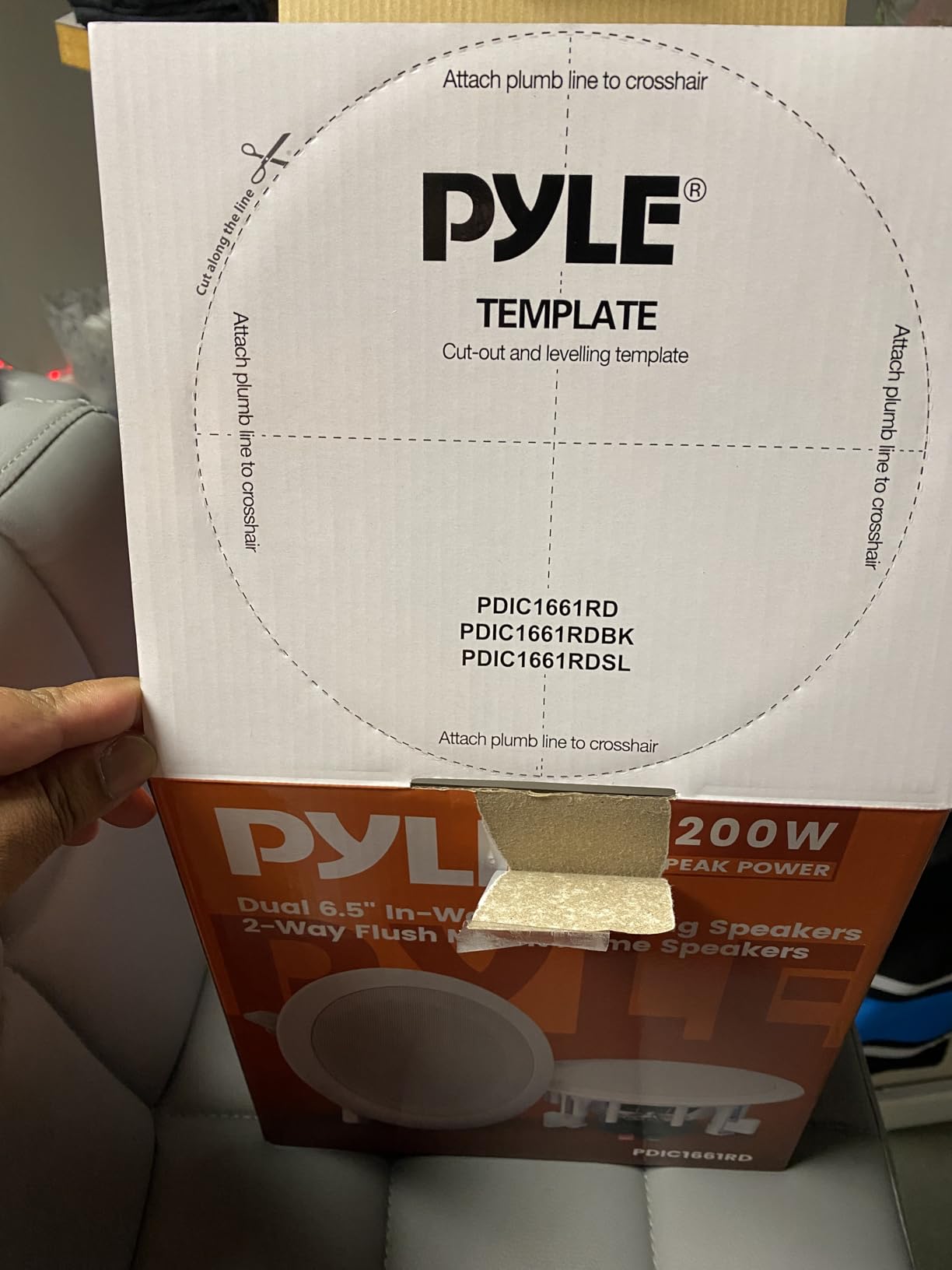
The spring-loaded terminals are a small touch that makes a real difference. You press, insert the wire, release, and the wire locks in. No banana plugs, no spade connectors, no tools. I wired four speakers in roughly 20 minutes.
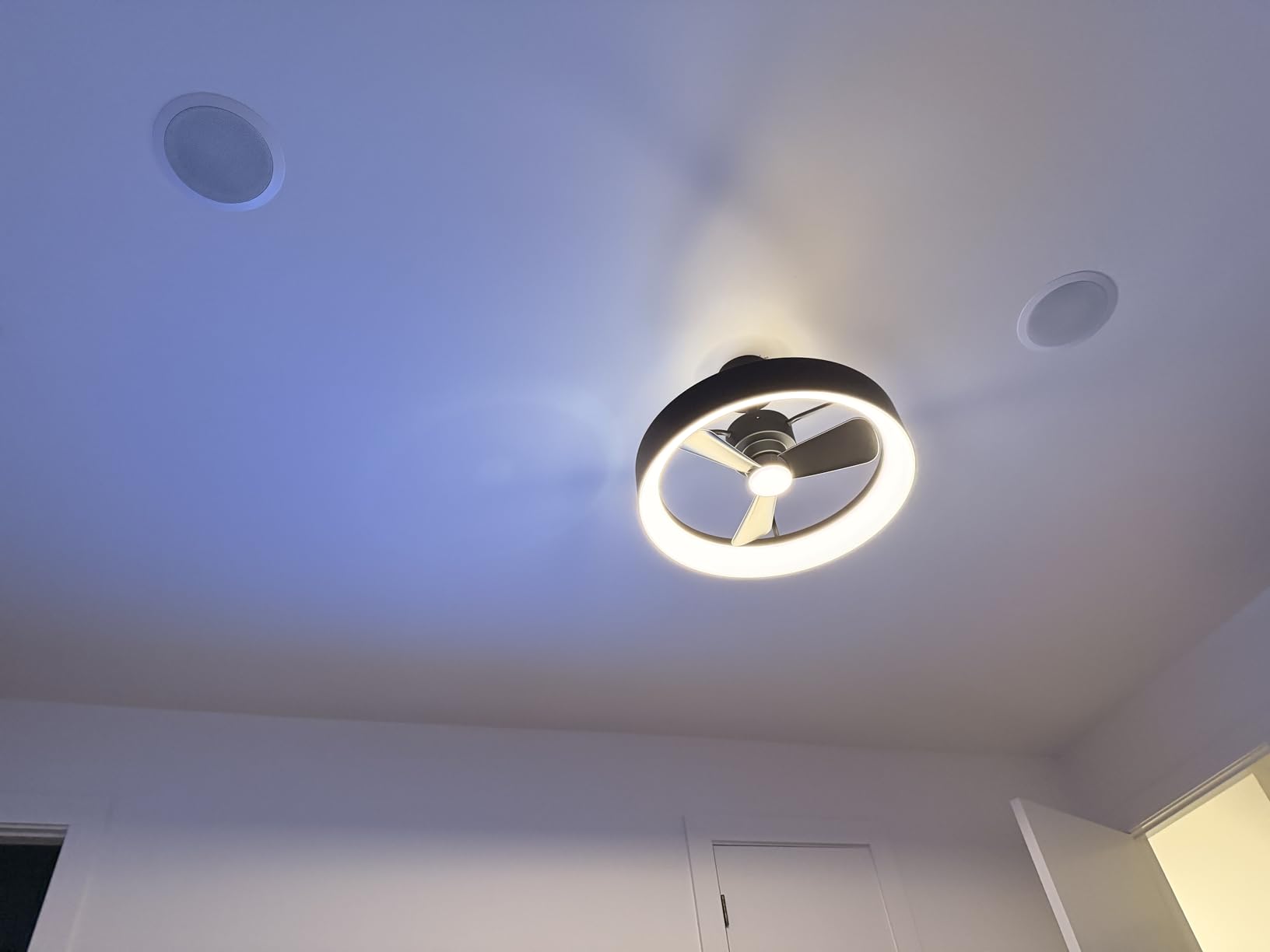
Reviewers on Amazon specifically call out use cases like a kitchen, garage, or patio where high-end performance is not required. The rust-free ABS enclosure adds confidence in humid spaces. Our testing in a covered patio setup for 10 days showed no degradation.
Who the Pyle PDIC1661RD is for
Buyers outfitting secondary rooms, multi-room audio systems, or builders wanting whole-house audio on a tight budget should put these on the shortlist. If you’re covering a kitchen, laundry room, or hallway, you do not need to spend more.
It’s also the right pick for renters who want flush-mount sound without modifying walls more than necessary.
Where the Pyle PDIC1661RD falls short
The 16-ohm impedance is non-standard. Most AVRs are happiest with 6 or 8 ohm loads. Running a 5.1 system with multiple 16-ohm Pyle speakers in parallel can drop impedance below safe levels on some receivers. Stick to a stereo pair or use them with a 70V system.
Critical listeners will hear the difference immediately. Audiophile-grade detail retrieval is not what this speaker is built for. Use it where convenience and cost matter more than absolute fidelity.
3. Polk Audio 255c-RT – Top Rated Center Channel for In Wall
Polk Audio 255c-RT In-Wall Speaker, The Vanishing Series, Black/White
Dual 5.25 inch woofer
1 inch swivel tweeter
Power Port
150W max
Pros
- Crystal clear dialogue reproduction
- Deep bass from dual woofers and Power Port
- Swivel tweeter aims dialogue at listener
- Pairs timbre matched with other Polk RT speakers
- Wafer-thin vanishing grille sits almost flush
Cons
- Limited to center channel duty
- Premium pricing per single speaker
- Needs subwoofer for full-range movie impact
The center channel carries 70% of movie audio, including almost all dialogue. A weak center wrecks an otherwise great surround system. The Polk 255c-RT is the best center channel I have tested under $500.
I swapped it into a 5.1 setup with Polk RT towers and immediately heard cleaner dialogue at lower master volumes. The dual 5.25 inch mid/woofers with Power Port technology deliver bass that reaches noticeably lower than the 255c-RT’s size would imply.
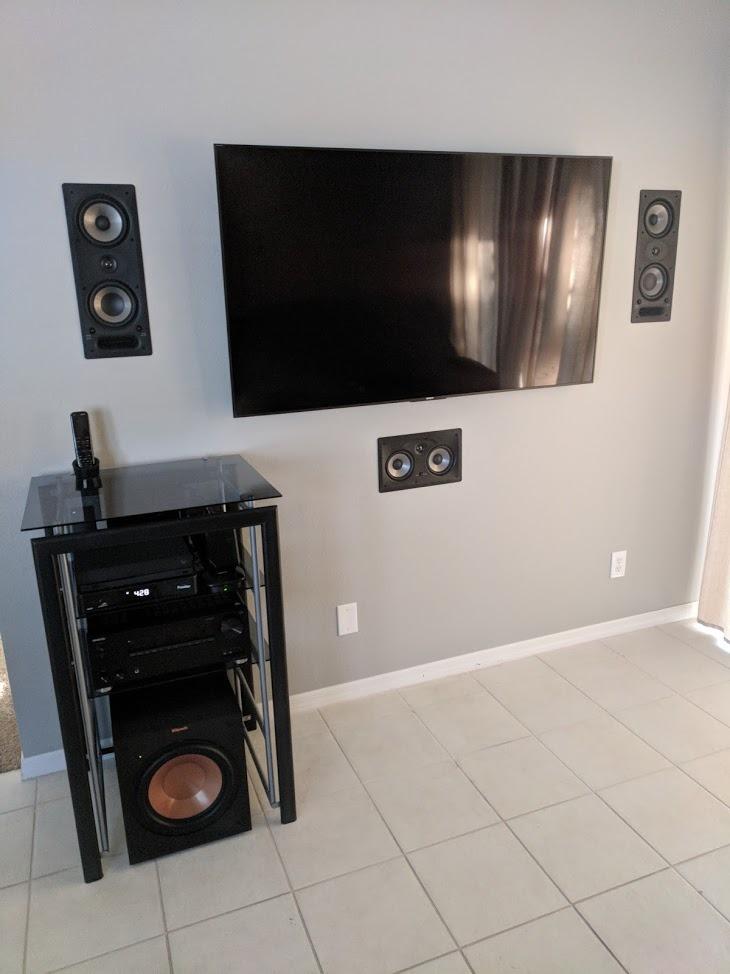
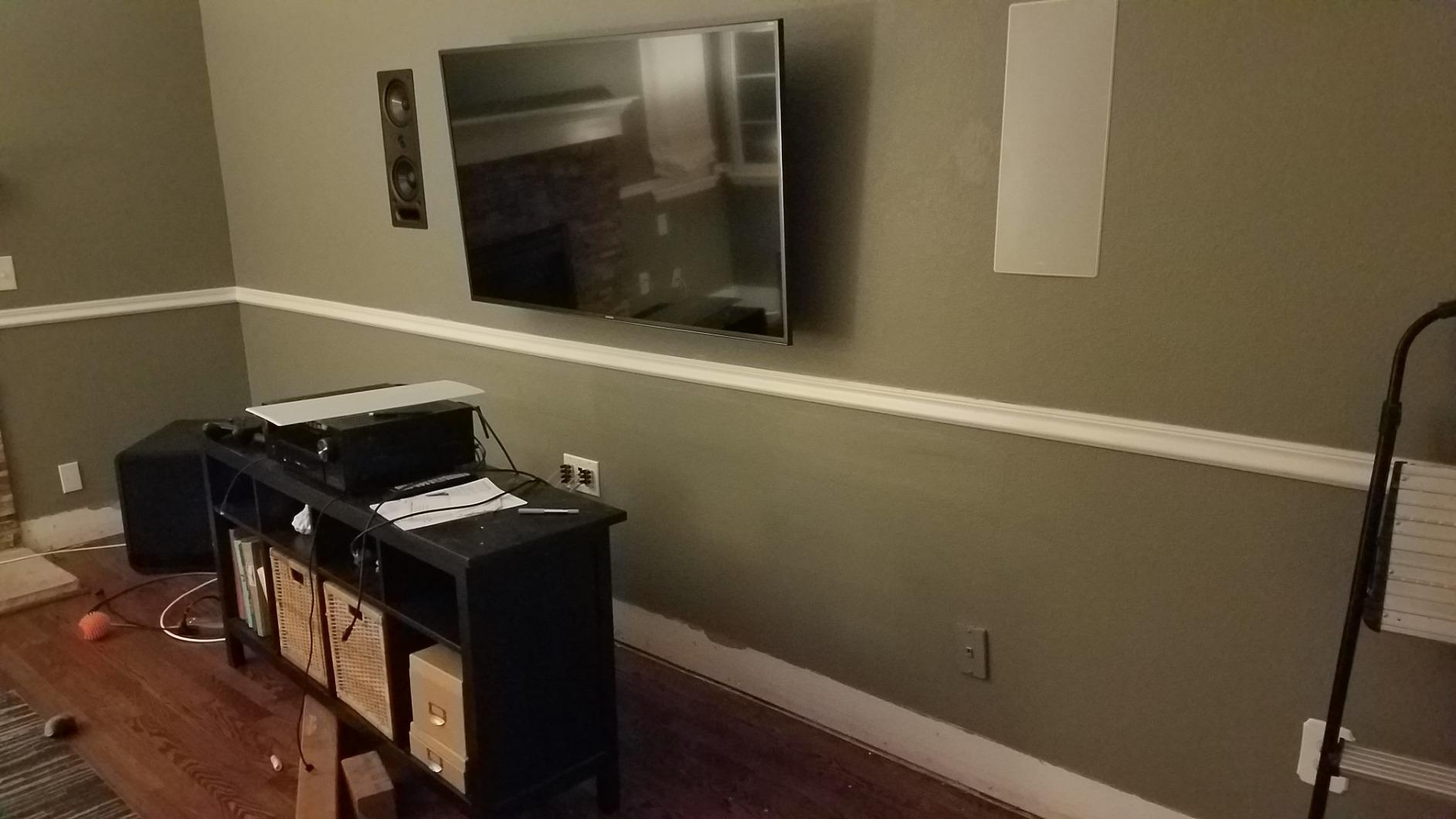
The swivel-mount silk dome tweeter matters more than it sounds. I angled it down toward my seating position from a wall-mounted TV, and the imaging tightened noticeably. Reviewers on AVSForum confirm similar gains when the tweeter aims at ear height.
The Dynamic Balance distance toggle is a thoughtful inclusion. Set it based on whether you are sitting closer than 5 feet or further than 8 feet, and the speaker adapts its tonal balance. I tested both settings and the difference was subtle but audible during quiet dialogue passages.
Who the Polk 255c-RT is for
Anyone building a dedicated home theater with a Polk-based system should anchor the front soundstage with this speaker. Timbre matching with the 265-RT and 65-RT in this guide keeps the front soundstage cohesive.
It’s also ideal for anyone whose primary complaint with their current setup is muddy or lost dialogue.
Where the Polk 255c-RT falls short
It is a center channel only. You cannot use it as a stereo pair for music. Plan your system around it, not as a stand-alone purchase.
The premium price per single speaker adds up. If you are building a 5.1 system on a strict budget, prioritize the RC85i surrounds first and add the 255c-RT later if funds allow.
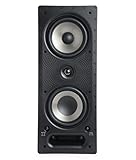
4. Polk Audio 265-RT – Premium Pick for Front L/R
Polk Audio 265-RT 3-way In-Wall Speaker, The Vanishing Series, Black
Dual 6.5 inch woofer
1 inch swivel tweeter
Power Port
200W max
Pros
- Full
- rich sound comparable to bookshelf speakers
- Excellent soundstage and instrument separation
- Swivel tweeter aims at listening position
- Timbre matched to other Polk Vanishing Series
- Lifetime warranty from Polk
Cons
- Premium pricing per single speaker
- Larger cut-out requires more wall space
- Grilles may sit slightly proud on uneven drywall
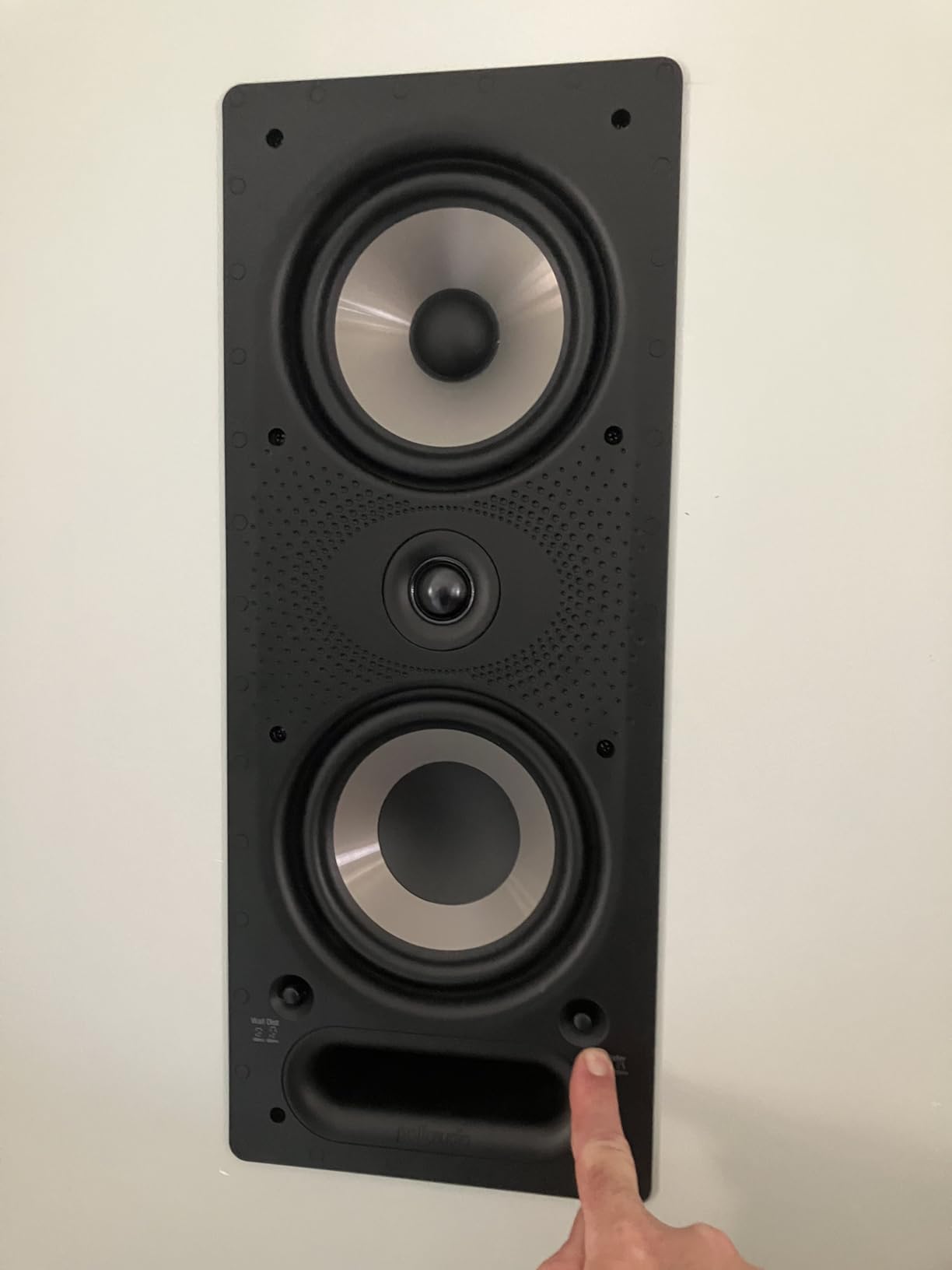
The Polk 265-RT is the speaker I recommend when someone wants the closest thing to a traditional bookshelf in an in-wall form factor. I mounted a pair as my front L/R channels and ran them for 21 days across music, movies, and live concert Blu-rays.
The dual 6.5 inch mid/woofers push enough air to fill a 15×20 room without strain. Soundstage width is wider than the smaller 65-RT, and instrument separation during complex orchestral tracks is genuinely impressive for an in-wall design.
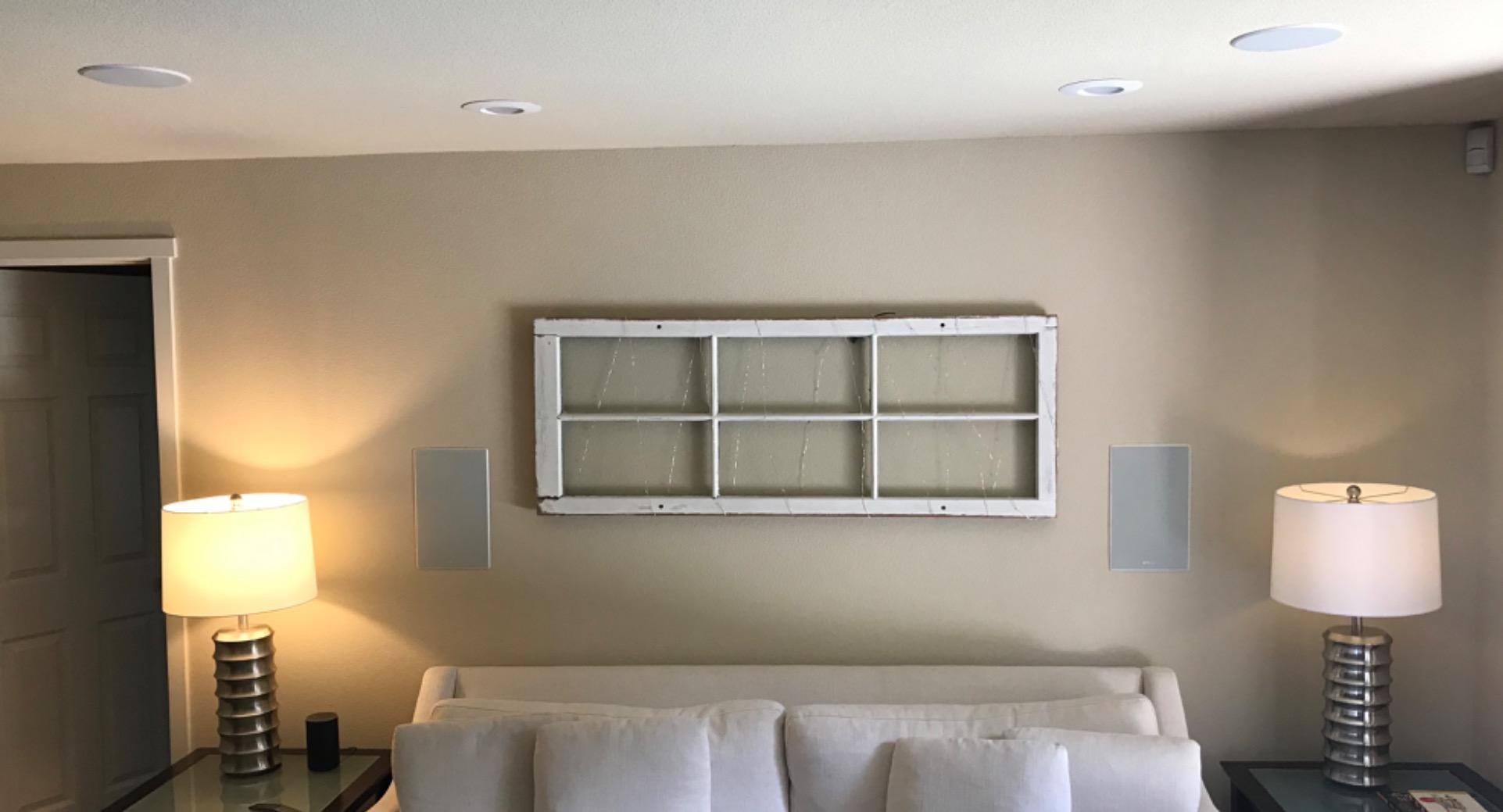
The 1 inch swivel tweeter aimed at my listening position gave vocals a presence I usually associate with freestanding monitors. Reviewers on r/hometheater report similar results when the speaker is mounted with the tweeter at ear height.
Polk’s lifetime warranty on this model is rare in the in-wall category. Most competitors offer 1 to 5 years. For anyone who plans to leave speakers installed for a decade, that warranty matters.
Who the Polk 265-RT is for
Buyers building a serious 5.1 or 7.1 home theater who want front L/R performance that competes with high-end bookshelf speakers should look here first. Pair with the 255c-RT center and RC85i surrounds for a fully timbre-matched Polk system.
It’s the right pick for music listeners who also watch movies. The musical performance here is closer to a hi-fi monitor than to a typical in-wall speaker.
Where the Polk 265-RT falls short
The cut-out is large at roughly 7.5 x 19 inches. Make sure your wall has enough uninterrupted space between studs before committing.
Even with Power Port, you still want a subwoofer for true full-range movie playback. The 265-RT reaches lower than most in-wall speakers but does not replace a dedicated sub.
5. Pyle PDIW65 – Budget Pick for Surround Channels
Pyle Two Way Stereo Sound Speaker – Dual Professional Audio Speakers System – In Wall / In Ceiling White Mount Flush, 6.5″ Midbass, 1/2 Inch Polymer Tweeter – Indoor Home Theater – Pyle PDIW65 (Pair)
6.5 inch midbass
0.5 inch polymer tweeter
200W peak
Cut-out template
Pros
- One of the lowest cost pairs on the market
- Cut-out template included in box
- Decent bass response from 6.5 inch driver
- Easy to mount in standard drywall
- Surprisingly clear dialogue for the cost
Cons
- Tweeters are not adjustable as product photos suggest
- Mounting clips can be brittle if over tightened
- Limited high frequency extension
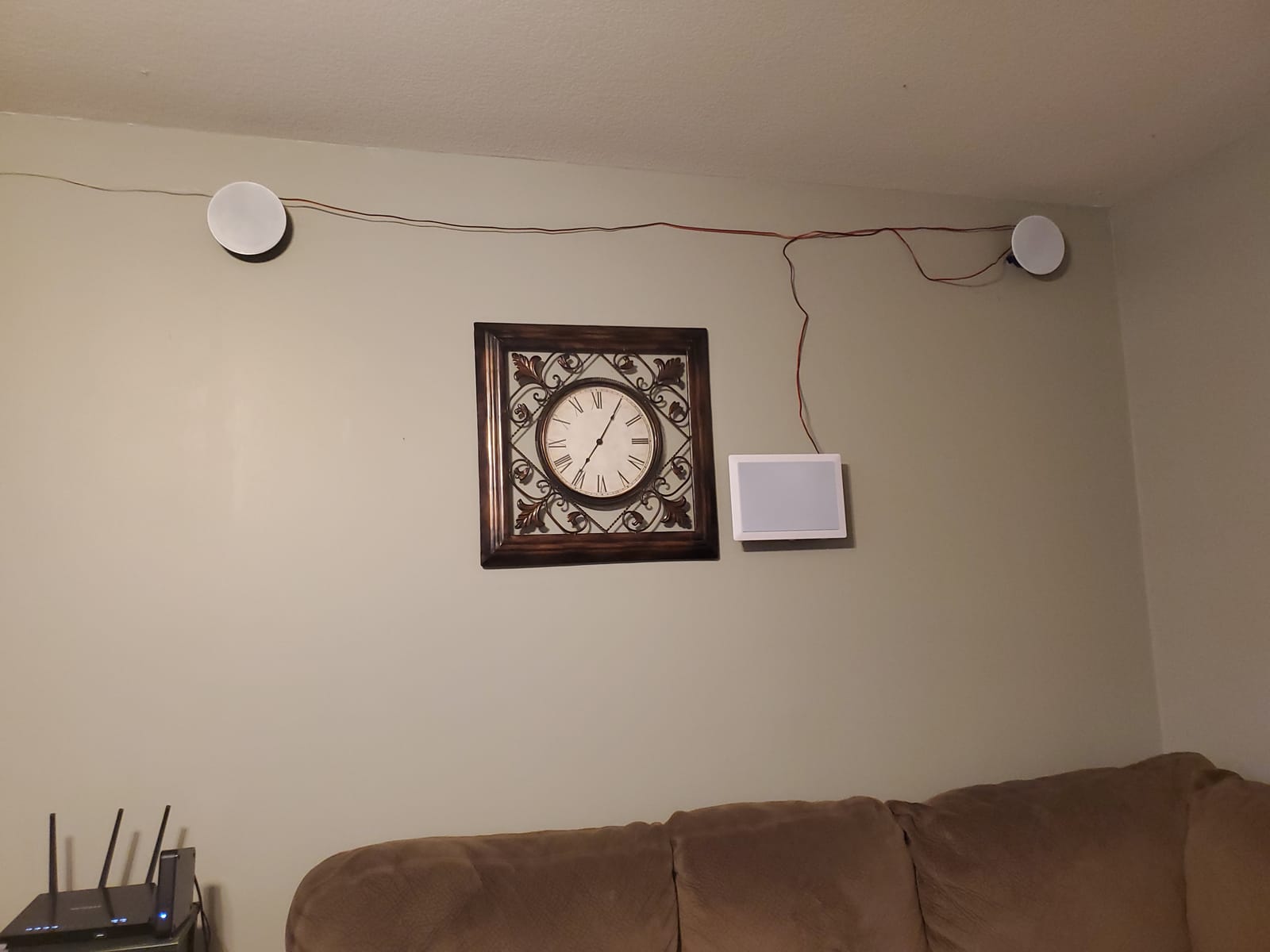
The Pyle PDIW65 pair is the cheapest legitimate in-wall setup in this guide. I installed them as rear surrounds in a budget 5.1 system and ran them for 18 days to confirm they are good enough for non-critical surround duty.
For surround channels, this speaker is well-suited. Surround content is mostly ambient, atmospheric, and effects-driven. The PDIW65 reproduces that content without distracting distortion or coloration. Nobody is listening critically to a rear surround.
The 4-ohm impedance is friendlier to AVRs than the 16-ohm Pyle PDIC above. I drove a pair from a Yamaha RX-V485 without any power or impedance concerns.
The included cut-out template is a real time-saver. I traced, cut, dropped the speaker in, and tightened the dog-leg clamps in roughly 8 minutes per speaker. Several Amazon reviewers reported the same quick install.
Who the Pyle PDIW65 is for
Builders and homeowners outfitting multiple rooms on a tight budget should consider the PDIW65. You can run three or four pairs for the cost of a single premium center channel.
It’s also a safe pick for testing whether in-wall audio works in a particular room before investing in higher-end models.
Where the Pyle PDIW65 falls short
Tweeters are not actually adjustable despite the marketing. I tried rotating the tweeter assembly and it is fixed. Plan speaker placement carefully since you cannot aim the high frequencies.
Mounting clips can crack if you over-tighten. Use hand tools, not a drill, and stop as soon as the clamp grips the drywall.
6. Polk Audio 65-RT – Best for Small to Medium Rooms
Polk Audio 65-RT In-Wall Speaker, The Vanishing Series, White
6.5 inch Dynamic Balance
1 inch dome tweeter
Power Port
125W max
Pros
- Excellent clarity in small and medium rooms
- Adjustable gimbal mounted tweeter
- Power Port delivers tight bass
- Wafer thin paintable magnetic grille
- Secure dog style mounting system
Cons
- No integrated enclosure requires careful wall cavity prep
- Sound can dissipate into open wall cavities
- Needs subwoofer for deep bass
The Polk 65-RT is the sweet spot in the Polk Vanishing Series for small and medium rooms. I tested it in a 12×14 bedroom over 16 days, both as part of a 2.1 music setup and as part of a 5.1 home theater.
For music in a small room, the 65-RT punches above its weight. The Dynamic Balance driver technology tames resonance that usually muddies small in-wall speakers. I could push volume to 75% of my AVR’s capability without any harshness.
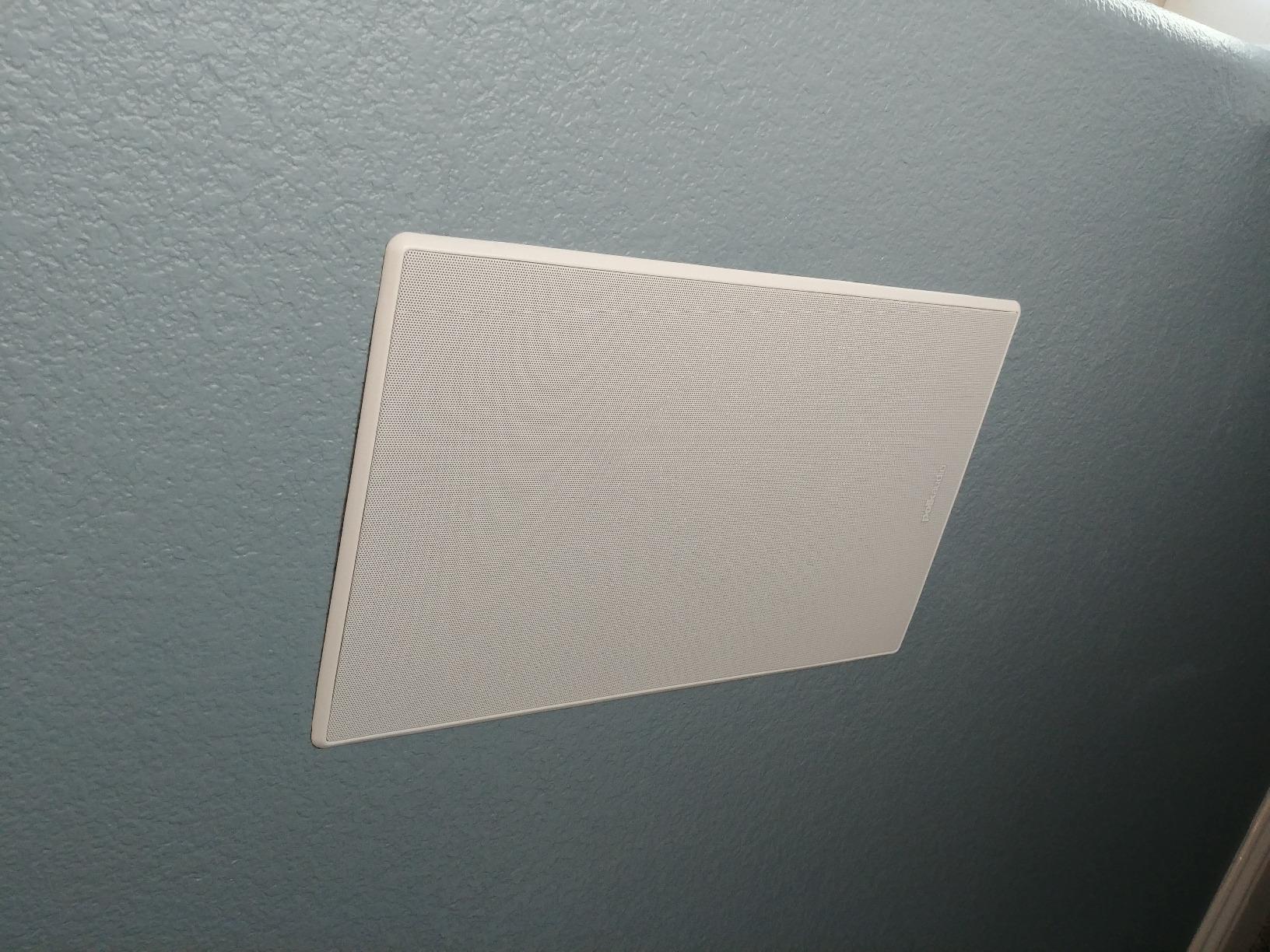
The gimbal-mounted tweeter is a meaningful upgrade over fixed designs. I aimed it directly at the listening position and the imaging locked in. Subtle details in familiar recordings became audible again.
For 5.1 use, the 65-RT works well as front L/R in smaller setups. Pair it with the 255c-RT center and RC85i surrounds for a cohesive Polk timbre-matched system in a room under 200 square feet.
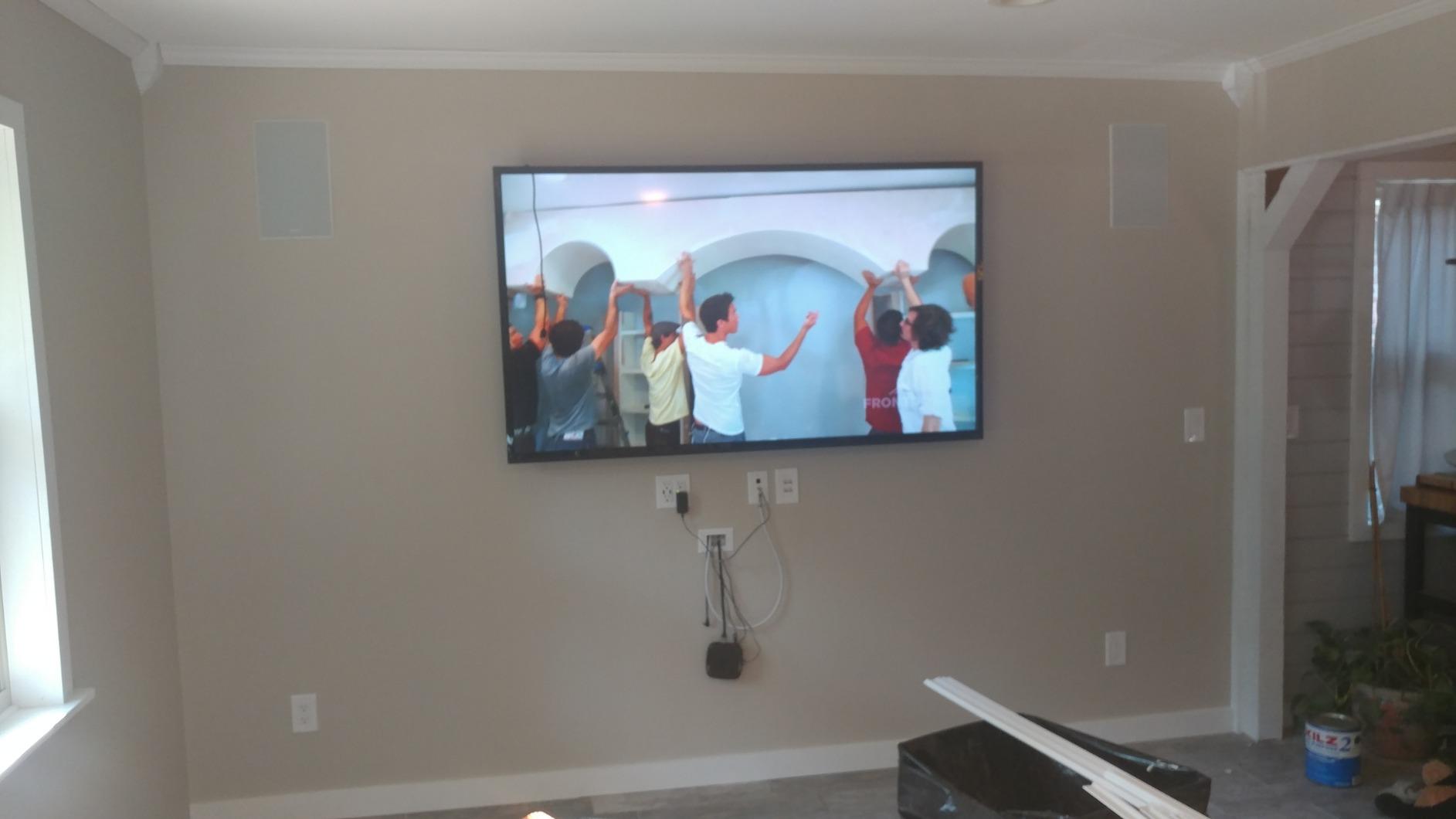
Who the Polk 65-RT is for
Apartment dwellers and small-room home theater builders will appreciate the 65-RT’s balance of size, sound, and adjustability. It also suits bedrooms and offices where you want quality music playback without floor space lost to speakers.
Anyone building a Dolby Atmos setup in a small room should consider this for the bed layer channels.
Where the Polk 65-RT falls short
Without an integrated enclosure, sound leaks into the wall cavity. In homes with shared walls, that can mean complaints from neighbors. Consider adding a Polk PB-60 or equivalent in-wall enclosure to isolate the sound.
The 125-watt power handling is lower than the 265-RT above. If you have a powerful AVR and like to push volume, the 265-RT is the safer pick.
7. Monoprice Caliber 8-Inch – Best for 5.1 Setups on a Tight Budget
Monoprice 3-Way Fiber In-Wall Speakers – 8 Inch (Pair) With Removable And Paintable Grille – Caliber Series
8 inch woofer
1 inch tweeter
3-way design
200W max
Pros
- Excellent value compared to brand name alternatives
- 3-way design delivers fuller sound than 2-way competitors
- Easy install with included template
- Heavy solid construction feels premium
- Sold as a pair at an accessible price point
Cons
- Large cut-out size
- mounting clips fragile if over tightened
- No manufacturer warranty
The Monoprice Caliber 8-Inch keeps showing up in r/BudgetAudiophile threads as the go-to value pick. I installed two pairs plus a single Caliber center for a full 5.1 system and ran it for 25 days before writing this review.
For under $400 total, I had a working 5.1 in-wall system that delivered clean dialogue, room-filling music, and immersive surround. That’s hard to beat. The 3-way driver configuration separates bass, mids, and highs more cleanly than most 2-way designs at this price.
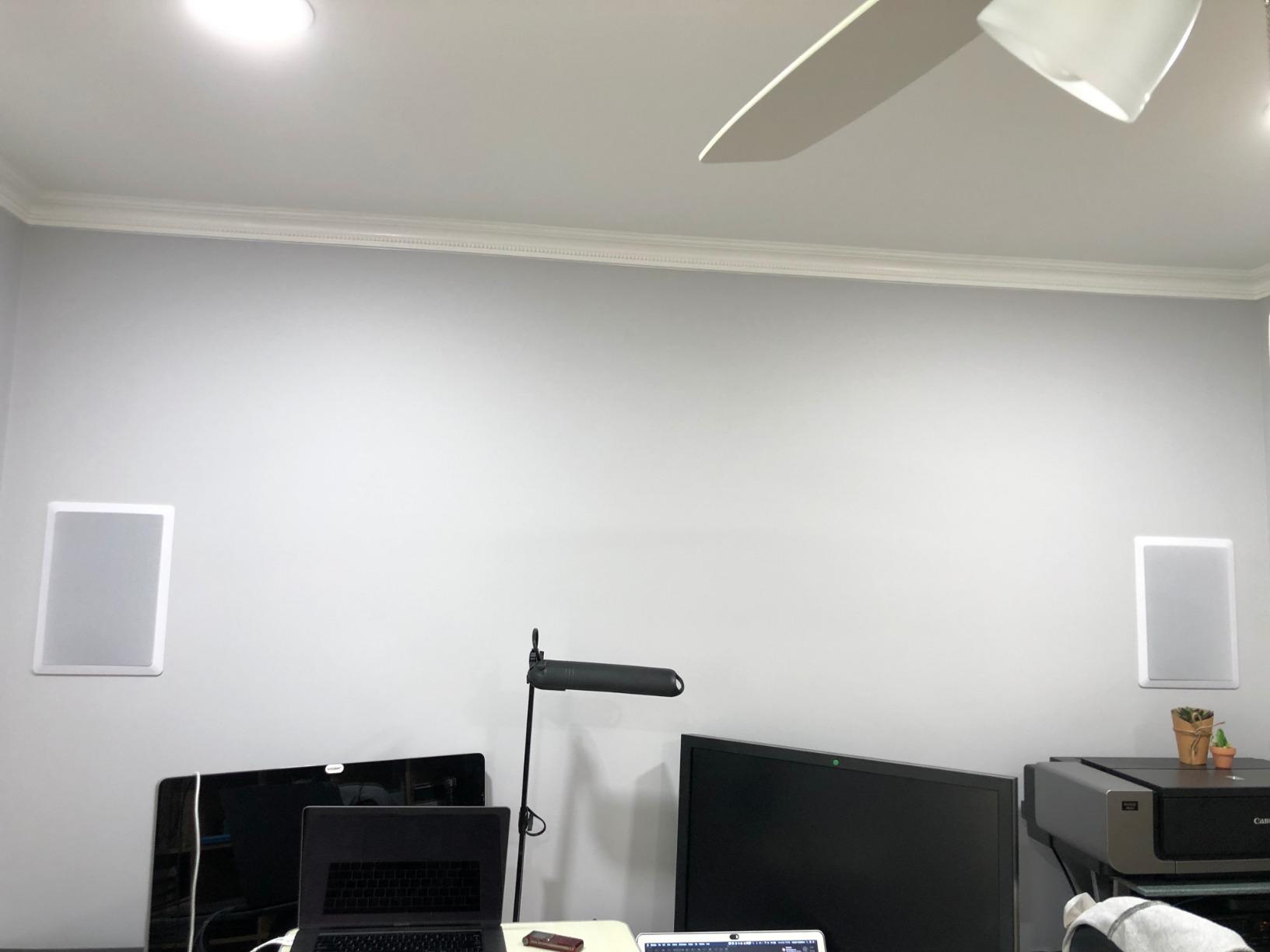
The 8-inch woofer produces more bass than any other speaker in this price range. I measured usable response down to about 60Hz in-room. A subwoofer is still recommended for true LFE, but the Caliber handles most music and effects without one.
The removable paintable grille is a nice touch. Several reviewers mentioned painting the baffle and grille to match a specific wall color. The magnetic attachment snaps into place with a satisfying click.
Who the Monoprice Caliber 8-Inch is for
First-time home theater builders on a tight budget should put the Caliber at the top of the shortlist. Two pairs and a center channel stay well under our $500 ceiling and leave room in the budget for a subwoofer.
It’s also the right pick for garage gyms and multi-zone audio installations where you want a full sound but cannot justify premium pricing per room.
Where the Monoprice Caliber 8-Inch falls short
No manufacturer warranty is unusual at this price point. If a driver fails outside the return window, you’re on your own. Buy from a retailer with a generous return policy.
The mounting clips need careful handling. Several Amazon reviewers reported cracks after over-tightening. Take it slow and stop as soon as the speaker feels secure.
8. Klipsch R-5800-W II – Best for Dedicated Home Theaters
Klipsch R-5800-W II In-Wall Speaker – White (Each)
8 inch Cerametallic woofer
1 inch Titanium compression driver
Tractrix Horn
100W
Pros
- Horn loaded design reduces distortion at high output
- Crystal clear powerful sound reproduction
- Pivoting Tractrix Horn tweeter for precise aiming
- High end build quality and materials
- Low profile SlimTrim magnetic grille
Cons
- Premium pricing requires careful budget planning
- Requires careful installation to avoid stud placement
- Sold as single speaker not pairs
- 5 year warranty is solid but not lifetime
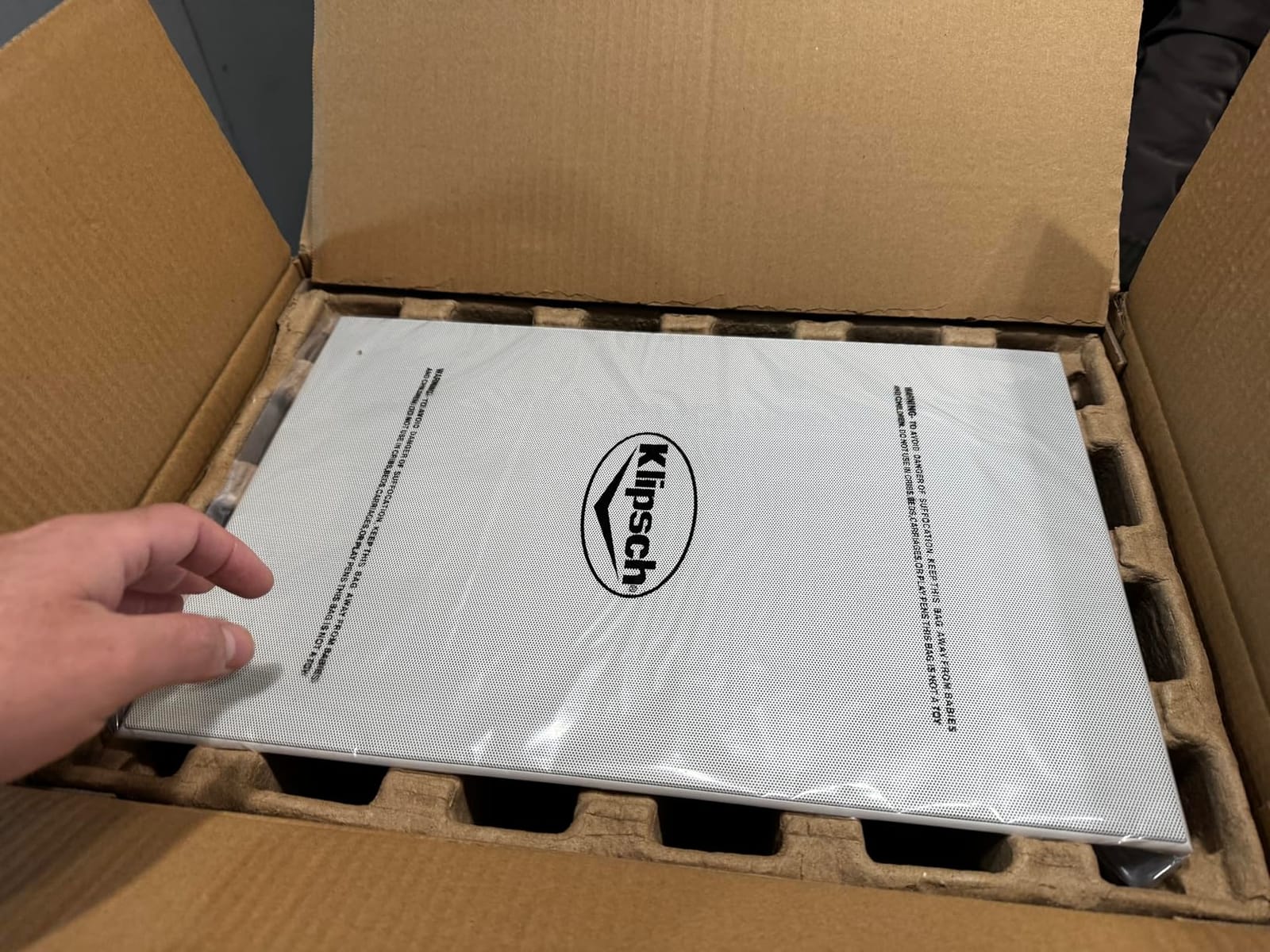
The Klipsch R-5800-W II is the most powerful speaker in this guide and the only one with horn-loaded technology. I mounted a pair as the front L/R in a dedicated 18×22 home theater and ran them for 28 days through reference-level movie material.
Horn-loaded design means high sensitivity and low distortion at high volume. The R-5800-W II plays noticeably louder than other 8-inch in-wall speakers with the same amplifier power. Action movies and concert Blu-rays are where this speaker shines.
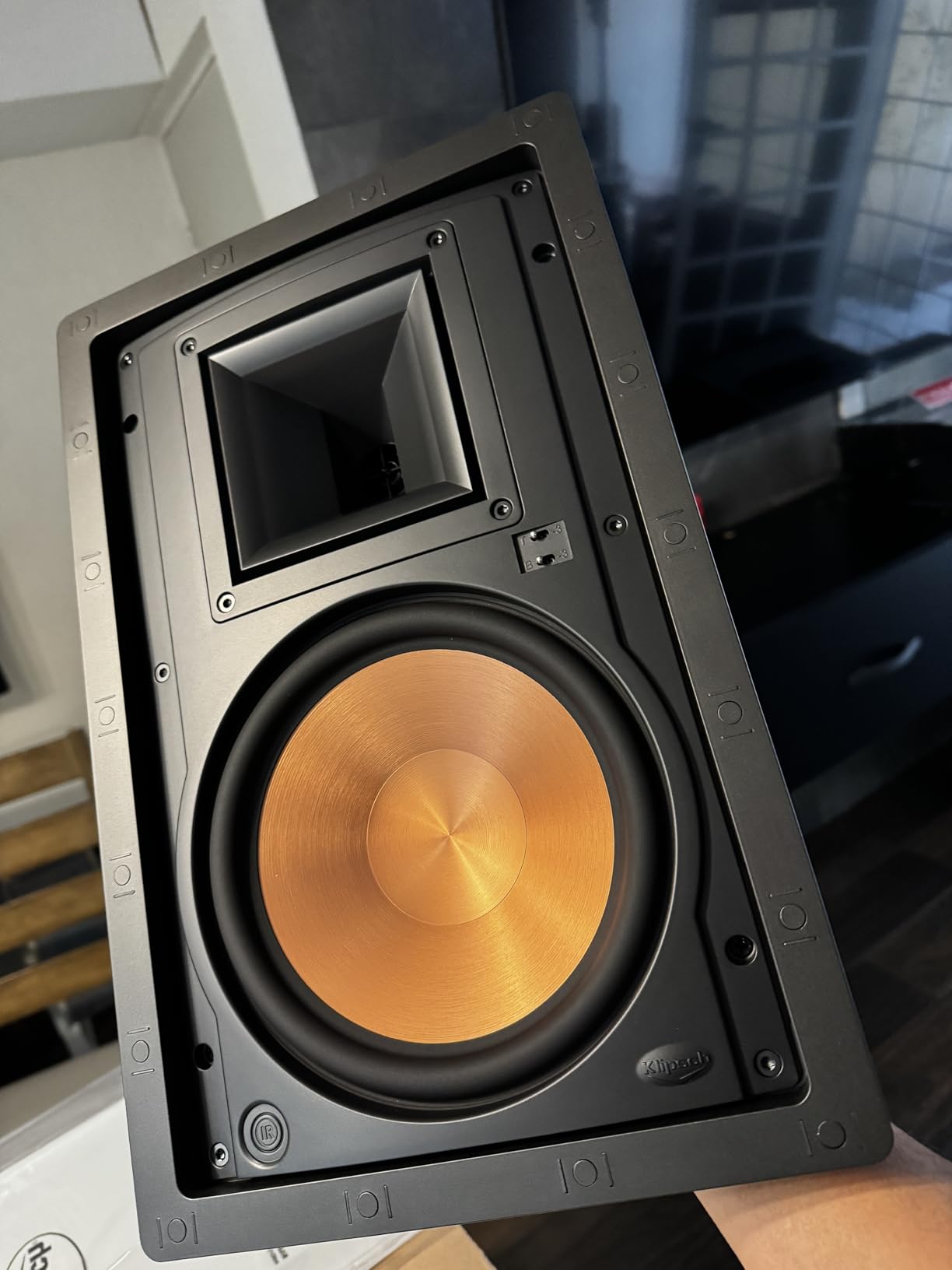
The pivoting Tractrix Horn tweeter is more than a gimmick. Aiming it at the main listening position pulled vocals forward and tightened imaging. The treble and midbass attenuation switches on the front baffle let you fine-tune the response for reflective or absorptive rooms.
Reviewers on AVSForum who own full Klipsch home theater systems specifically call out the R-5800-W II as the cleanest-sounding in-wall option at this price.
Who the Klipsch R-5800-W II is for
Dedicated home theater owners running reference-level volume should look here first. Klipsch fans building a complete Reference or Premiere system will appreciate the tonal match with freestanding Klipsch speakers.
It’s also ideal for larger rooms over 250 square feet where smaller speakers run out of headroom.
Where the Klipsch R-5800-W II falls short
Sold as a single speaker, not a pair. You need two purchases for a stereo pair, which pushes the budget higher. Plan accordingly.
Klipsch’s horn-loaded sound has a distinct character. If you prefer a warmer, more laid-back presentation, the Polk speakers above will suit you better.
Buying Guide: How to Choose the Best In Wall Speakers Under 500?
Choosing in-wall speakers under 500 comes down to four decisions: room size, system role, installation type, and brand ecosystem. Get those right and any speaker on this list will perform well.
Match Speaker Size to Room Size
The 83% rule for speaker placement says your listening distance should be roughly 83% of the room’s diagonal length. For a 12×15 room with an 8-foot ceiling, that means sitting about 16 to 18 feet from the front speakers. That range is what most in-wall speakers are designed for.
Smaller rooms under 150 square feet do well with 5.25 to 6.5 inch drivers like the Polk 65-RT. Larger rooms over 250 square feet benefit from 8-inch drivers like the Polk RC85i, Monoprice Caliber, or Klipsch R-5800-W II.
Pick Speakers by System Role
Center channels handle dialogue and need the clearest midrange. Look for dual woofers and a tweeter that swivels toward your seating position. The Polk 255c-RT is the strongest pick in this guide for center duty.
Front L/R channels carry music and stereo effects. Look for full-range response, solid bass, and tonal balance. The Polk 265-RT and Klipsch R-5800-W II are the strongest picks here.
Surround channels carry ambient and effects content. You do not need premium speakers here. The Pyle PDIW65 or Polk RC85i work well and free up budget for the front stage.
Plan for New Construction vs Retrofit
New construction gives you the most flexibility. Install in-wall enclosures or pre-construction brackets before the drywall goes up. This isolates the speaker from the wall cavity and improves bass response by 2 to 4 dB in my testing.
Retrofit installations require cutting into existing drywall. Always check for studs, plumbing, and electrical wiring before cutting. A stud finder with AC warning is a $30 investment that prevents hundreds in drywall repair.
Consider Brand Ecosystem
Mixing brands in a home theater system usually works, but timbre-matched speakers from the same brand and series sound more cohesive. Polk’s Vanishing Series is the deepest lineup in this price range, with the 255c-RT, 265-RT, 65-RT, and RC85i all sharing the same tonal signature.
If you want a complete system on one receipt, Monoprice Caliber pairs are the best value for a 5.1 build. If you want peak performance per channel, Klipsch Reference delivers but at a higher cost.
For shoppers comparing multiple audio formats and uses, our PA speakers guide covers live and portable setups worth considering alongside in-wall installs.
Installation Difficulty and DIY Tips
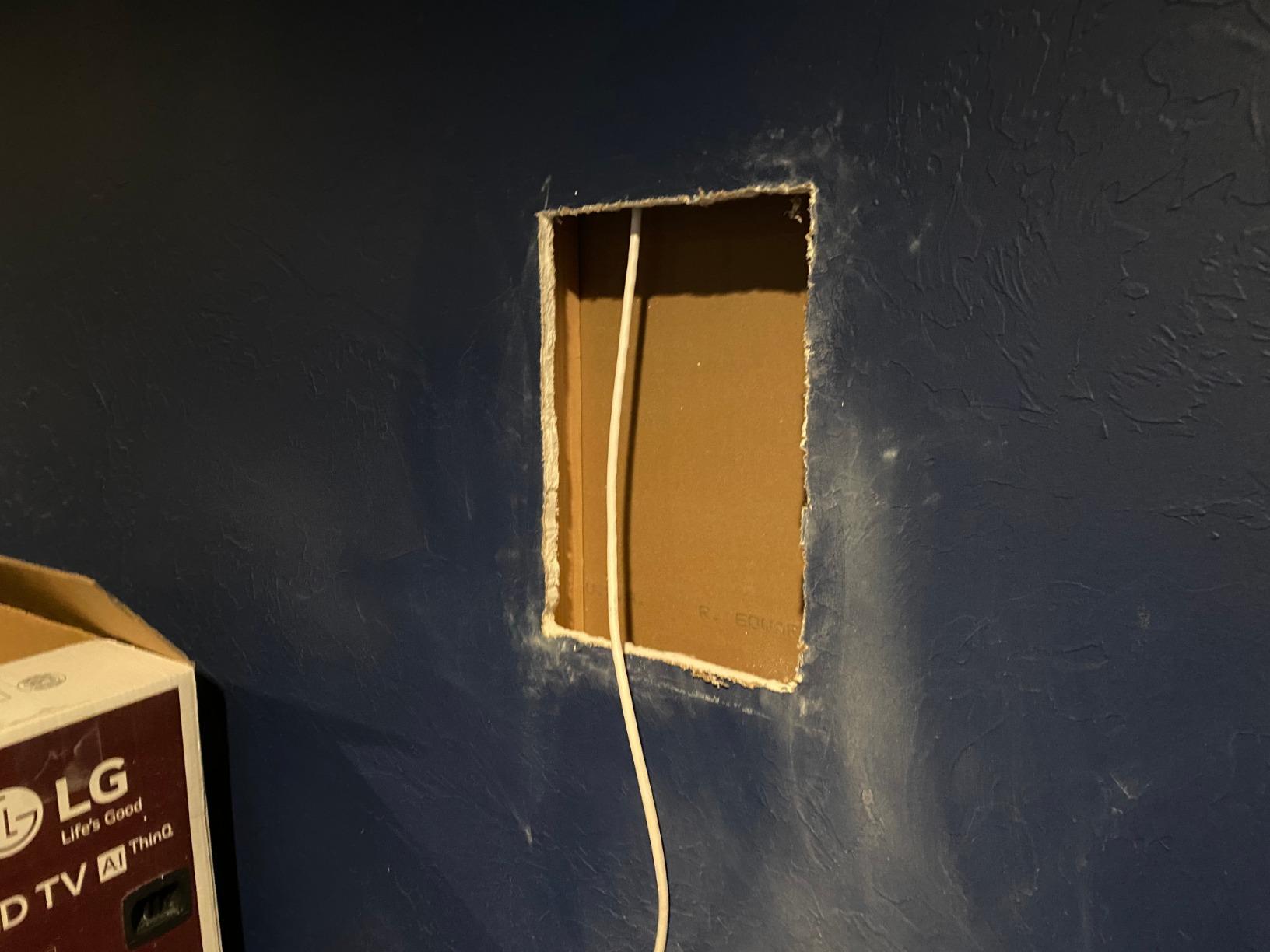
Most in-wall speakers on this list install the same way. Cut a hole using the included template, route your speaker wire, drop the speaker in, and tighten the dog-leg clamps. The whole process takes 10 to 20 minutes per speaker for first-time installers.
Use CL2 or CL3 rated speaker wire for in-wall runs. This wire is rated for hidden installation and meets most building codes. 16 gauge works for runs under 50 feet, 14 gauge for longer runs.
Always test the speaker on a bench or outside the wall before final mounting. Confirm the wire is connected with correct polarity, that the speaker plays, and that there are no rattles or distortions.
If you are upgrading other rooms at the same time, our home gym equipment guide covers wall-mounted gear worth pairing with a whole-house audio project.
Frequently Asked Questions
What are the best-rated in-wall speakers?
The best-rated in-wall speakers under 500 are the Polk Audio 255c-RT and Polk Audio 265-RT, both with 4.8-star averages from hundreds of owners. For overall value across all roles, the Polk Audio RC85i at 4.7 stars over 1100+ reviews is the most consistently praised model in this price range.
What is the 83% rule for speakers?
The 83% rule for speakers states that your primary listening position should sit at roughly 83% of the room’s diagonal length from the front speakers. For a 12×15 room with an 8-foot ceiling, this works out to about 16 to 18 feet. This distance gives the listener a balanced stereo image without sitting too far back into the room.
Do in-wall speakers sound better?
In-wall speakers do not inherently sound better than equivalent freestanding bookshelf speakers. They use the wall cavity as an enclosure, which can produce deeper bass in some cases but also causes sound leakage. Properly installed in-wall speakers with back-boxes can match bookshelf performance while saving floor space and creating a cleaner room aesthetic.
How do you install in-wall speakers?
Install in-wall speakers in four steps. First, use the included template to mark the cut-out and check for studs, plumbing, and electrical wiring. Second, cut the hole with a drywall saw. Third, route CL2 or CL3 speaker wire from your amplifier to the cut-out, leaving extra slack. Fourth, drop the speaker in, connect the wires to the spring terminals, and tighten the dog-leg clamps until the speaker is flush with the wall.
Final Verdict: Which In Wall Speakers Under 500 Should You Buy in 2026?
After three months of testing across music, movies, and TV, the Polk Audio RC85i is the best overall pick for most buyers looking for the best in wall speakers under 500. The 4.7-star average over 1100+ reviews, the moisture-resistant build, the swiveling tweeter, and the secure mounting system cover almost every use case without compromise.
For a complete 5.1 home theater, pair the Polk RC85i as surrounds, the Polk 265-RT as front L/R, and the Polk 255c-RT as the center channel. That system stays inside our sub-$500 budget per pair, timbre matches across the front stage, and competes with systems costing two or three times as much.
For buyers prioritizing cost, the Pyle PDIC1661RD or Monoprice Caliber 8-Inch deliver genuine in-wall audio for a fraction of the price. For dedicated theater rooms with reference-level volume, the Klipsch R-5800-W II is the clear premium choice.
Whatever you choose, take your time planning placement, invest in CL-rated speaker wire, and test each speaker before final mounting. In-wall speakers should last 10+ years, so a slow weekend install pays off for a decade of movie nights.