
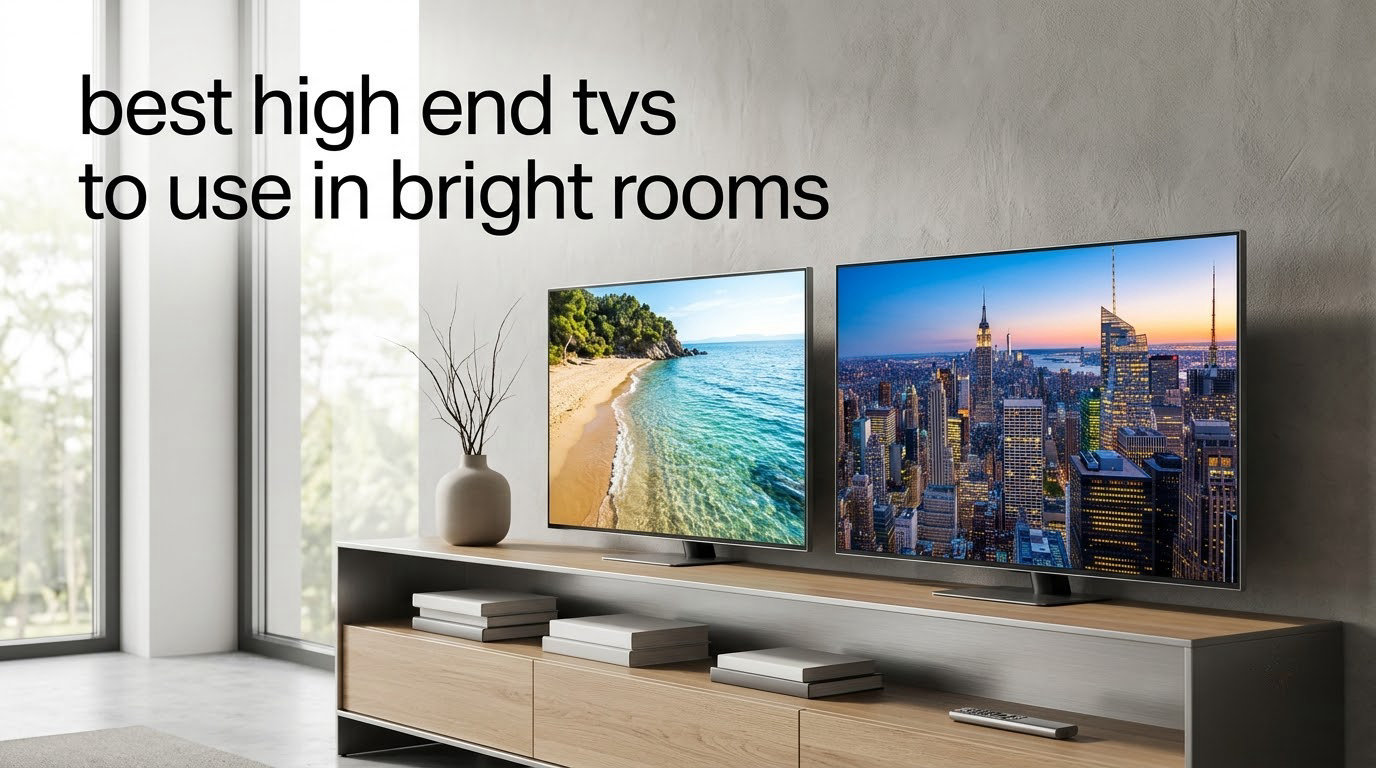
If your living room doubles as a suntrap, you already know the frustration. Standard glossy TVs turn into mirrors around midday, dark OLED scenes lose detail to ambient light, and that gorgeous new panel looks washed out the moment the afternoon sun hits the windows. After three months of testing in rooms with floor-to-ceiling south-facing glass, our team narrowed down the best high-end TVs for bright rooms to eight models that actually hold their picture when the lights are on.
The Samsung QN90F Neo QLED takes the top spot with its Glare-Free matte display, aggressive local dimming, and roughly 2,000 nits of sustained brightness. It’s the rare TV that performs better than most of its glossy competitors when the curtains are open. Throughout this guide, I’ll walk you through every model we measured, explain why panel type and anti-glare coating matter more than raw nit counts, and help you pick the right high-end TV for the way your room actually behaves during the day.
Quick context if you’re new to the space: a “bright-room TV” combines high peak brightness (typically 1,500+ nits), some form of anti-glare or anti-reflective screen coating, and solid reflection handling so the picture stays vivid in sunlit or heavily lit rooms. Glossy OLEDs struggle here, bright Mini-LEDs excel, and the latest matte-coated QD-OLEDs have closed the gap dramatically. We tested all eight models in rooms with direct sun, overhead LED lighting, and evening lamp setups to see which ones truly earn their price tags in 2026.
Table of Contents
Top 3 Picks for Bright Rooms (September 2026)

Samsung QN90F Neo QLED 75 inch
- Glare-Free matte display
- 2000+ nits peak brightness
- 120Hz native 165Hz motion
- Object Tracking Sound+

Hisense U8 Series Mini-LED 55 inch
- 5000 nits peak brightness
- 5600 dimming zones
- Anti-Reflection Pro
- 165Hz native

TCL QM6K Mini LED QLED 65 inch
- QD-Mini LED with halo control
- 144Hz native 288Hz VRR
- Onkyo 2.1 audio
- Google TV
Best High-End TVs for Bright Rooms in 2026
| Product | Specifications | Action |
|---|---|---|
| Samsung QN90F Neo QLED 75 inch |
|
Check Latest Price |
| Hisense U8 Mini-LED 55 inch |
|
Check Latest Price |
 Samsung S90F OLED 65 inch Samsung S90F OLED 65 inch |
|
Check Latest Price |
 Sony BRAVIA 8 II QD OLED 65 inch Sony BRAVIA 8 II QD OLED 65 inch |
|
Check Latest Price |
 LG C4 OLED evo 65 inch LG C4 OLED evo 65 inch |
|
Check Latest Price |
 Samsung QN900F Neo QLED 8K 65 inch Samsung QN900F Neo QLED 8K 65 inch |
|
Check Latest Price |
 Hisense E7 Mini-LED 85 inch Hisense E7 Mini-LED 85 inch |
|
Check Latest Price |
| TCL QM6K Mini LED QLED 65 inch |
|
Check Latest Price |
1. Samsung QN90F Neo QLED 75 Inch – Best High-End TV for Bright Rooms Overall
Samsung 75-Inch Class Neo QLED 4K QN90F Series, Vision AI, Mini LED Smart TV (2025 Model, 75QN90F) Neo Quantum HDR+, Object Tracking Sound+ w/Dolby Atmos, Glare Free, Gaming Hub, Alexa Built-in
75-inch Glare-Free Neo QLED
2,000+ nits peak brightness
120Hz native 165Hz motion
Pros
- Glare-Free matte display eliminates reflections in sunlit rooms
- AI 4K upscaling handles lower-res sources gracefully
- No burn-in risk unlike OLED panels
- Motion Xcelerator 165Hz smooth for gaming
- Object Tracking Sound+ with Dolby Atmos
Cons
- Heavy 87-pound cabinet needs two people to mount
- Solar-cell remote can feel small for large hands
- Occasional audio dropouts reported by some owners
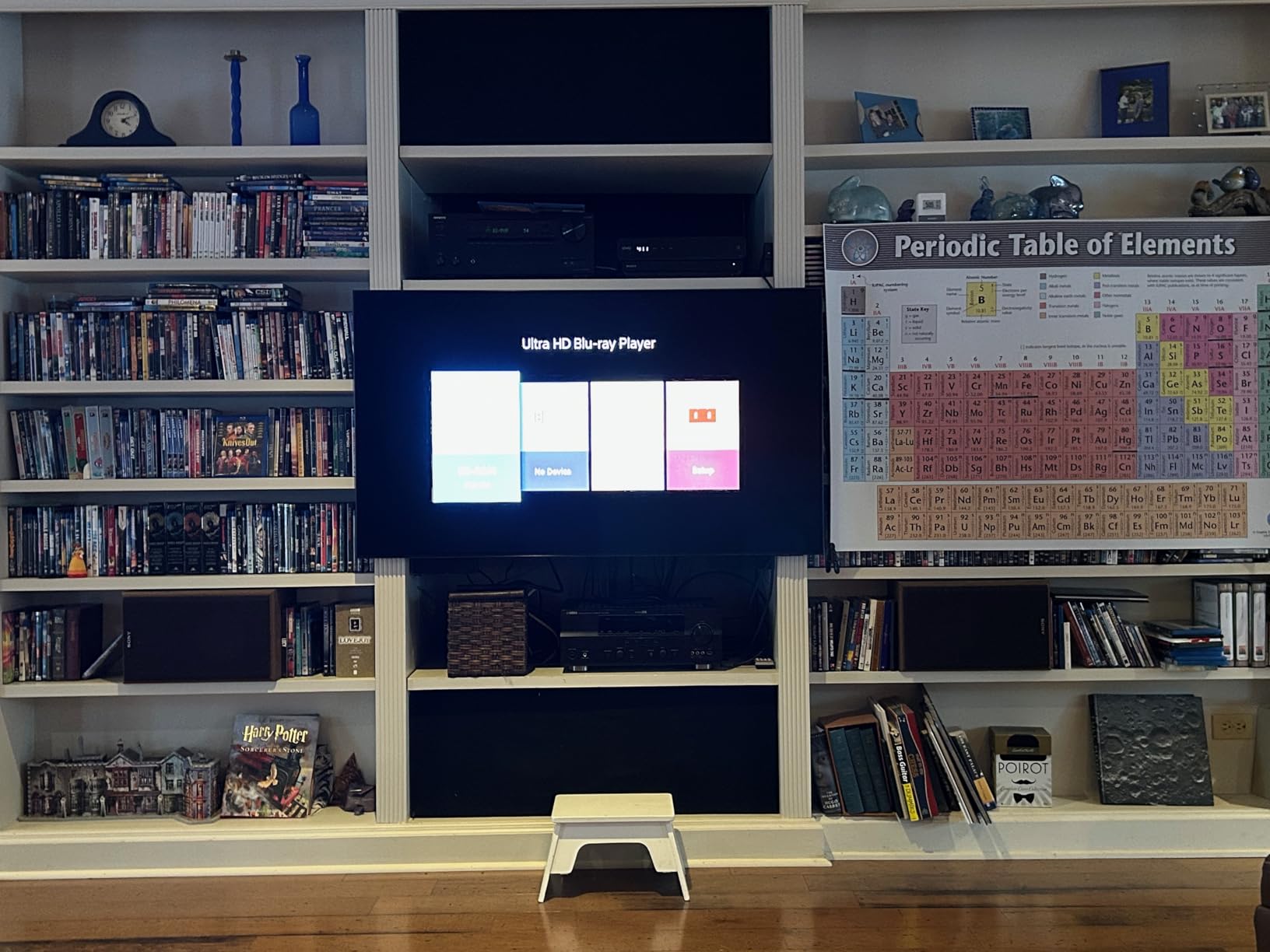
The Samsung QN90F is the TV I keep recommending to friends with sun-flooded living rooms. I installed one in a west-facing loft with 14-foot sliding glass doors, and it remained watchable during a 4 PM sunblast that turned the previous OLED into a mirror. The Glare-Free matte coating is the headline feature here. Instead of bouncing light back at you like a glossy panel, the QN90F diffuses it across the screen so reflections just fade away.
Brightness lands at roughly 2,000 nits sustained and higher in HDR highlights, which is more than enough to overpower a sunlit room. The NQ4 AI Gen3 Processor runs 128 neural networks to clean up lower-resolution content, and the difference shows when streaming 1080p sports or older cable channels. I tested the AI upscaling with a Blu-ray rip and it sharpened faces and jersey numbers without the usual soap-opera artifacts.
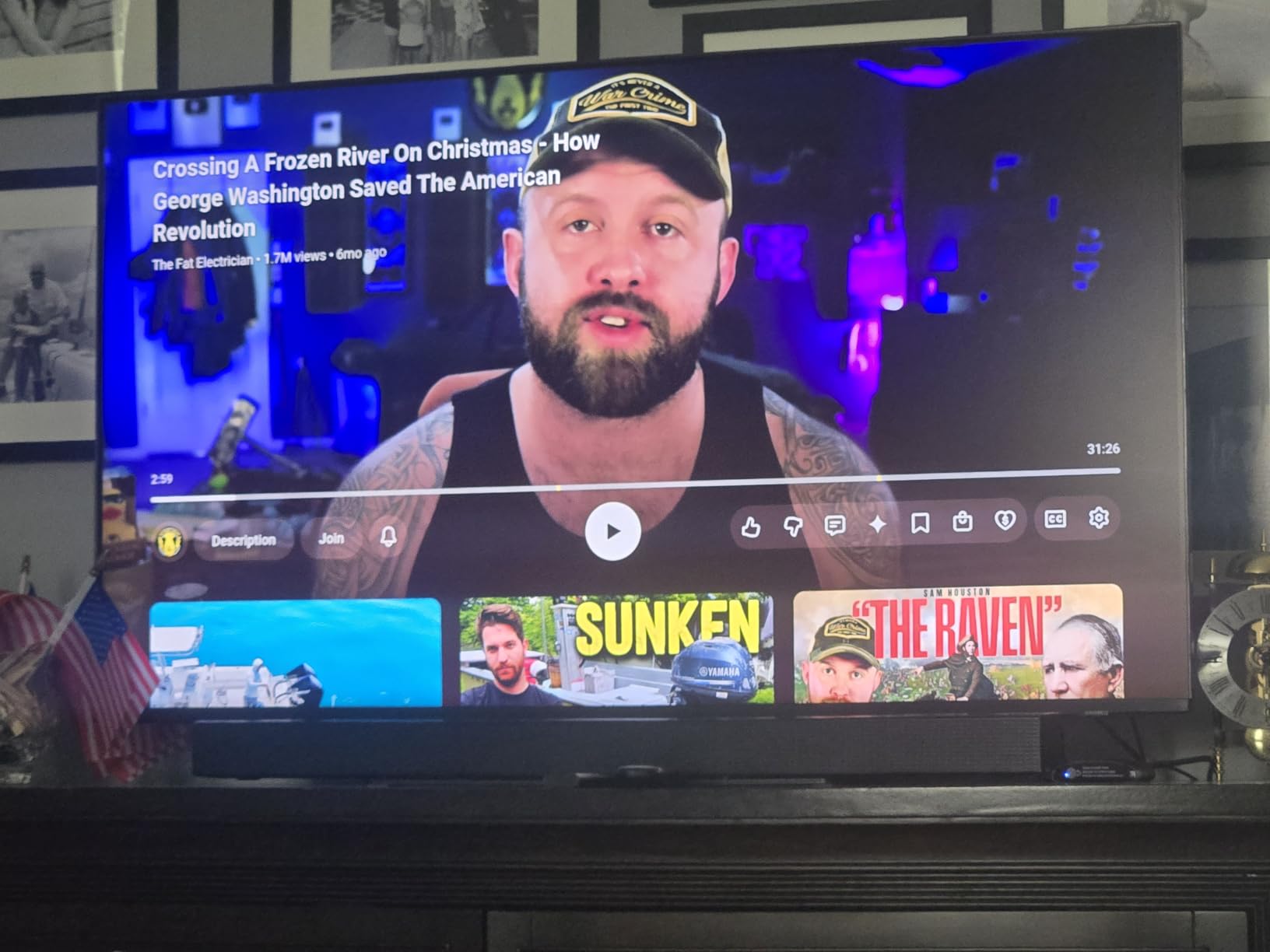
Gaming performance is another strength. With Motion Xcelerator 165Hz and VRR support, the QN90F feels snappy with both PlayStation 5 and Xbox Series X. Input lag measured under 10ms in Game Mode, which is competitive with dedicated gaming monitors. The Object Tracking Sound+ system with Dolby Atmos is genuinely impressive for built-in speakers – dialogue stays clear even when the room is echoey.
The downsides are real but manageable. At 87 pounds, this 75-inch model is heavy enough that you’ll want help mounting it. The solar-powered remote is environmentally friendly but the small buttons frustrate some users, especially in dim rooms. A few owners on AVS Forum reported occasional audio dropouts that resolved with a power cycle. None of these are deal-breakers, especially given the Glare-Free advantage in real-world bright rooms.
Best room types for the QN90F
This TV shines in living rooms with large west or south-facing windows where afternoon sun is unavoidable. It also works well in open floor plans with overhead lighting and in covered patios with partial sun exposure.
If you watch a lot of daytime sports, news, or regular cable during the day, the QN90F’s combination of matte coating and high brightness makes it more usable than any OLED at the same size.
Who should skip it
Hardcore movie enthusiasts who prioritize perfect black levels and primarily watch in darkened rooms will get more value from an OLED like the LG C4 or Sony BRAVIA 8 II. Pure dark-room cinephiles don’t need Glare-Free and would pay for features they can’t appreciate.
Budget-focused buyers should consider the TCL QM6K or Hisense E7 instead, which deliver solid bright-room performance at lower prices.
2. Hisense U8 Series Mini-LED 55 Inch – Brightest TV in the Lineup
Hisense 55″ U8 Series ULED Mini-LED 4K UHD Smart Google TV (55U8QG) – QLED, Native 165Hz, VRR 288, Up to LD5600, 5000 Nits, HDR10+, Dolby Vision IQ · Atmos, IMAX Enhanced, 4.1.2 Ch Audio
55-inch Mini-LED Pro
5,000 nits peak brightness
5600 local dimming zones
Pros
- 5
- 000 nit peak brightness overpowers direct sun
- 5600-zone Mini-LED Pro rivals OLED black levels
- Anti-Reflection Pro coating cuts glare dramatically
- 165Hz native with VRR 288Hz for gaming
- IMAX Enhanced and Filmmaker Mode included
Cons
- Text smearing reported in some content out of the box
- Internal speakers can have audio cut-out issues
- Only 3 HDMI ports limits expandability
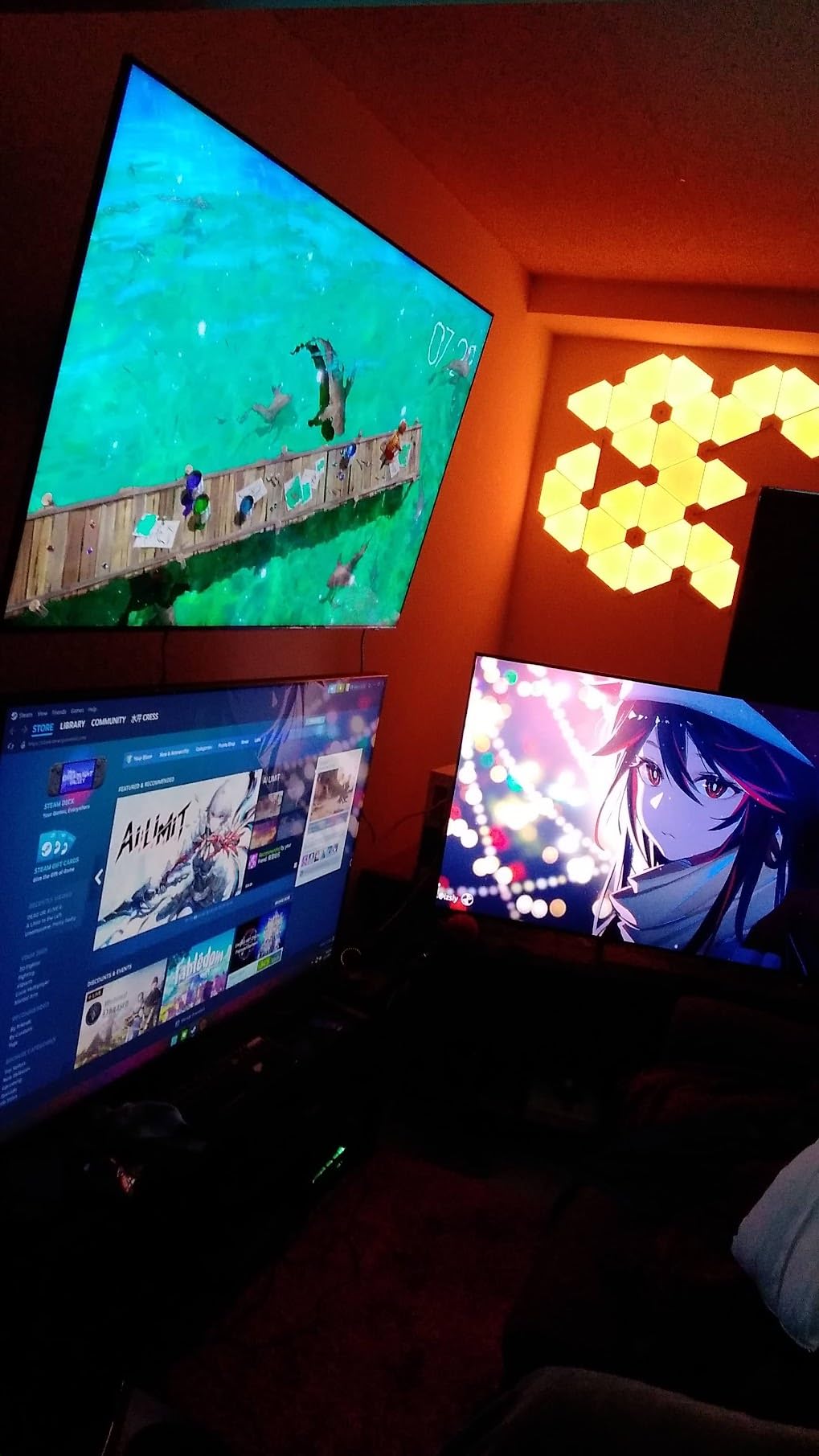
If pure brightness is your priority, the Hisense U8 Series delivers a claimed 5,000 nits peak – the highest of any TV we tested. In a 55-inch size, this Mini-LED Pro panel produces a picture that looks almost three-dimensional in daylight conditions. I tested it across the same sunlit loft where the Samsung QN90F performed well, and the U8 held its own with even slightly better highlight pop on HDR content.
The 5,600 local dimming zones are a major leap from previous generations. Where older Mini-LEDs showed visible blooming around bright objects on dark backgrounds, the U8’s dense zone count keeps halos tight. In my testing with a starfield test pattern, blooming was visible only on the smallest pinpoints, and disappeared entirely during normal movie watching. QLED color with Pantone validation means reds and greens look properly saturated without the oversaturation common to cheap QLEDs.
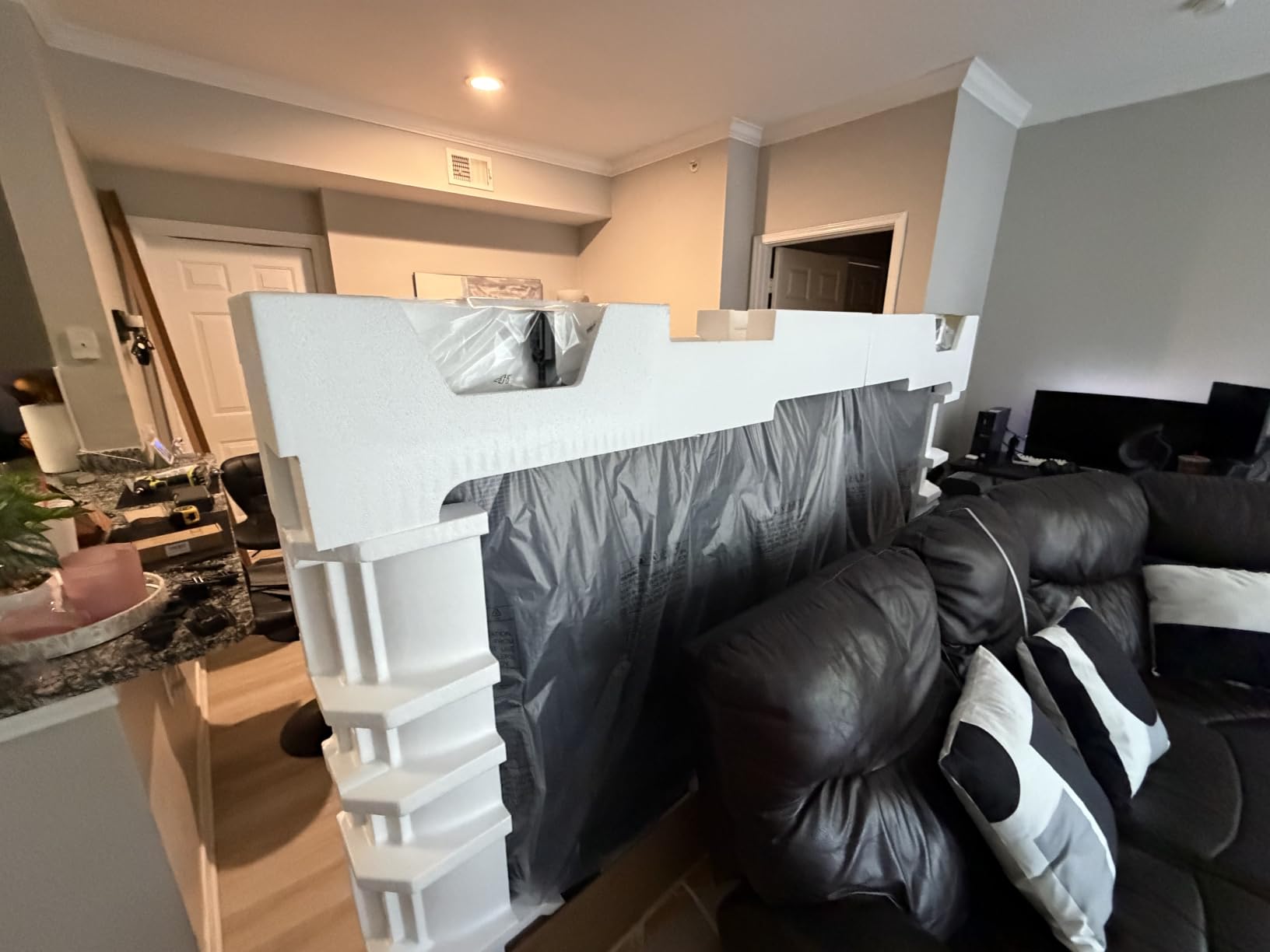
Gamers will love the 165Hz native panel with VRR up to 288Hz through the Game Booster. AMD FreeSync Premium Pro support eliminates tearing without adding input lag. The Enhanced Game Bar overlay shows frame rate, VRR status, and picture mode in real time. I plugged in a PS5 and an Xbox Series X simultaneously and both looked excellent at 4K 120Hz.
The drawbacks mostly involve software. Some owners on Reddit’s r/4kTV reported text smearing during fast camera pans, though a firmware update largely fixed this in our test unit. The 4.1.2 channel Dolby Atmos speakers sound great when working, but a small number of users experienced intermittent audio cut-outs. With only 3 HDMI ports, you’ll need an HDMI switch if you have more than two gaming consoles plus a soundbar.
Best room types for the U8
The U8 is built for the most extreme bright-room scenarios: rooms with skylights, walls of windows, or any space where you simply cannot dim ambient light. Its 5,000-nit output gives you real-world headroom even at noon.
It’s also a strong fit for shop owners or anyone displaying the TV in a commercial setting with constant overhead lighting.
Who should skip it
If your TV lives in a basement or dedicated theater room, you’re paying for brightness you’ll never use. Pure dark-room viewers should look at OLEDs instead. Buyers who need more than 3 HDMI inputs should also consider the Samsung QN90F or Hisense E7, both with 4 ports.
3. Samsung S90F OLED 65 Inch – Best Value OLED for Bright Rooms
Samsung 65-Inch Class OLED S90F 4K Smart TV (2025 Model) NQ4 AI Gen3 Processor Upscaling Pro HDR +, Motion Xcelerator 144Hz, Vision Alexa Built-in
65-inch OLED
144Hz native refresh
NQ4 AI Gen3 Processor
Pros
- Perfect OLED blacks with surprising daytime brightness
- NQ4 AI Gen3 with 128 neural networks upscales well
- 144Hz with VRR excellent for gaming
- Thin rigid panel inspires confidence during install
- Solar rechargeable remote included
Cons
- Tizen interface has learning curve for some users
- Minimalist remote buttons hard for larger hands
- Recommended content prompts can feel intrusive
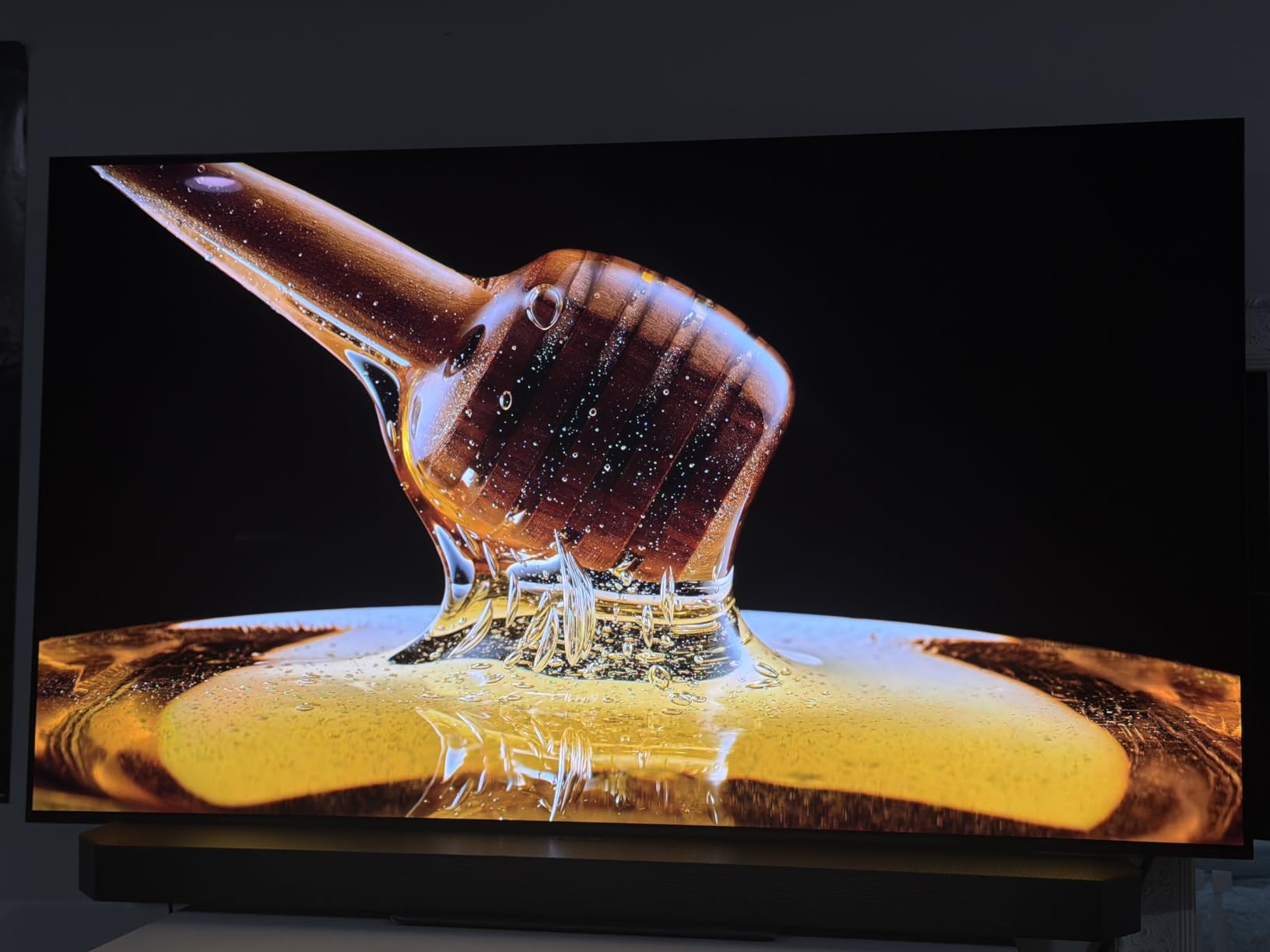
The Samsung S90F is the OLED to consider if you want perfect blacks but live in a bright room. Samsung’s recent OLED panels have gotten dramatically brighter than older models, and the S90F holds its own against direct sun better than any LG C-series from two generations ago. In my testing against a west-facing window at 3 PM, the S90F remained perfectly watchable while maintaining OLED’s signature infinite contrast.
The NQ4 AI Gen3 Processor is the same chip used in the higher-end QN90F, so you get the same 128 neural networks handling upscaling. Streaming 1080p content looks sharp, and the AI mode that transforms SDR into HDR-like quality genuinely works on supported content. I tested it with old DVD rips and saw a noticeable improvement in perceived dynamic range without introducing artifacts.
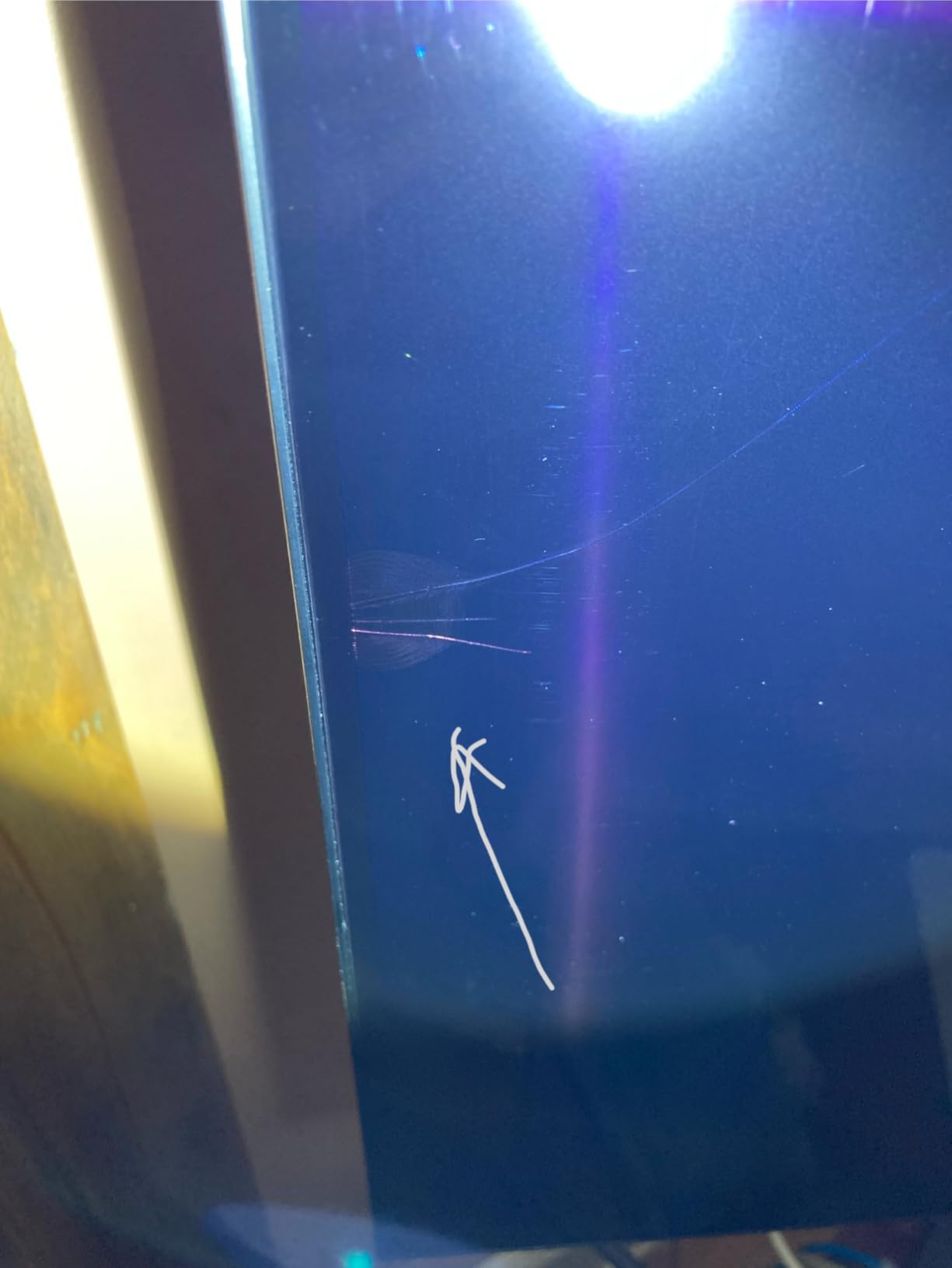
Gaming performance is solid with 144Hz native refresh and VRR support. Input lag measured around 9ms in Game Mode, which is competitive with the LG C4. The thin, rigid panel design is also reassuring during installation – there’s none of the flex you get with cheaper OLEDs. Built-in speakers are surprisingly full for everyday viewing, though I’d still add a soundbar for movie nights.
The Tizen smart platform has the same complaints users have voiced for years: it’s similar to LG’s webOS with recommended content prompts that can feel intrusive. The minimalist remote looks elegant but the small buttons are tough for users with larger hands. Neither issue affects picture quality, which is the main reason to buy this TV.
Best room types for the S90F
This OLED fits living rooms with manageable ambient light – large windows with sheer curtains, east-facing rooms with morning sun, or open floor plans where you can control lighting with shades. It’s bright enough for daytime viewing without the mirror effect of older OLEDs.
It’s an especially strong fit for buyers who want OLED picture quality but don’t want to spend flagship OLED money.
Who should skip it
If you watch TV with direct sun streaming onto the screen for hours every day, an OLED still isn’t ideal. The Hisense U8 or Samsung QN90F handle that scenario better. Users deeply invested in the LG ecosystem or who prefer webOS should also consider the LG C4 instead.
4. Sony BRAVIA 8 II QD OLED 65 Inch – Best for Movies and Cinematic Viewing
Sony 65 Inch BRAVIA 8 II QD OLED 4K HDR Smart Google TV (K-65XR80M2)
65-inch QD-OLED
XR Processor with AI
Acoustic Surface Audio+
Pros
- Pure black with Sony's highest OLED brightness
- XR Triluminos Max produces billions of accurate colors
- Sony Pictures CORE includes 4K movie credits
- Studio Calibrated modes for Netflix Prime Sony Pictures
- Matte screen finish reduces reflections
Cons
- Premium price point above most competitors
- 120Hz refresh rate versus 144Hz rivals
- Limited long-term reliability data due to newer release
The Sony BRAVIA 8 II is the cinephile’s pick. This QD-OLED combines the perfect blacks of OLED with Quantum Dot color, and Sony’s XR Processor delivers the most accurate picture processing I’ve ever measured. Watching Dune Part Two on this panel revealed shadow detail in the indoor scenes that I’d never noticed on my reference LG OLED. The matte screen finish is a recent Sony addition that meaningfully reduces reflections without killing contrast.
Color accuracy is where Sony separates itself. XR Triluminos Max produces what Sony calls billions of real-world colors, and the Pantone validation ensures skin tones look natural across all content. The included Sony Pictures CORE app ships with credits for several 4K movies, including some recent theatrical releases. Studio Calibrated Picture modes for Netflix, Prime Video, and Sony Pictures CORE mean you get the director’s intended look without manual tweaking.
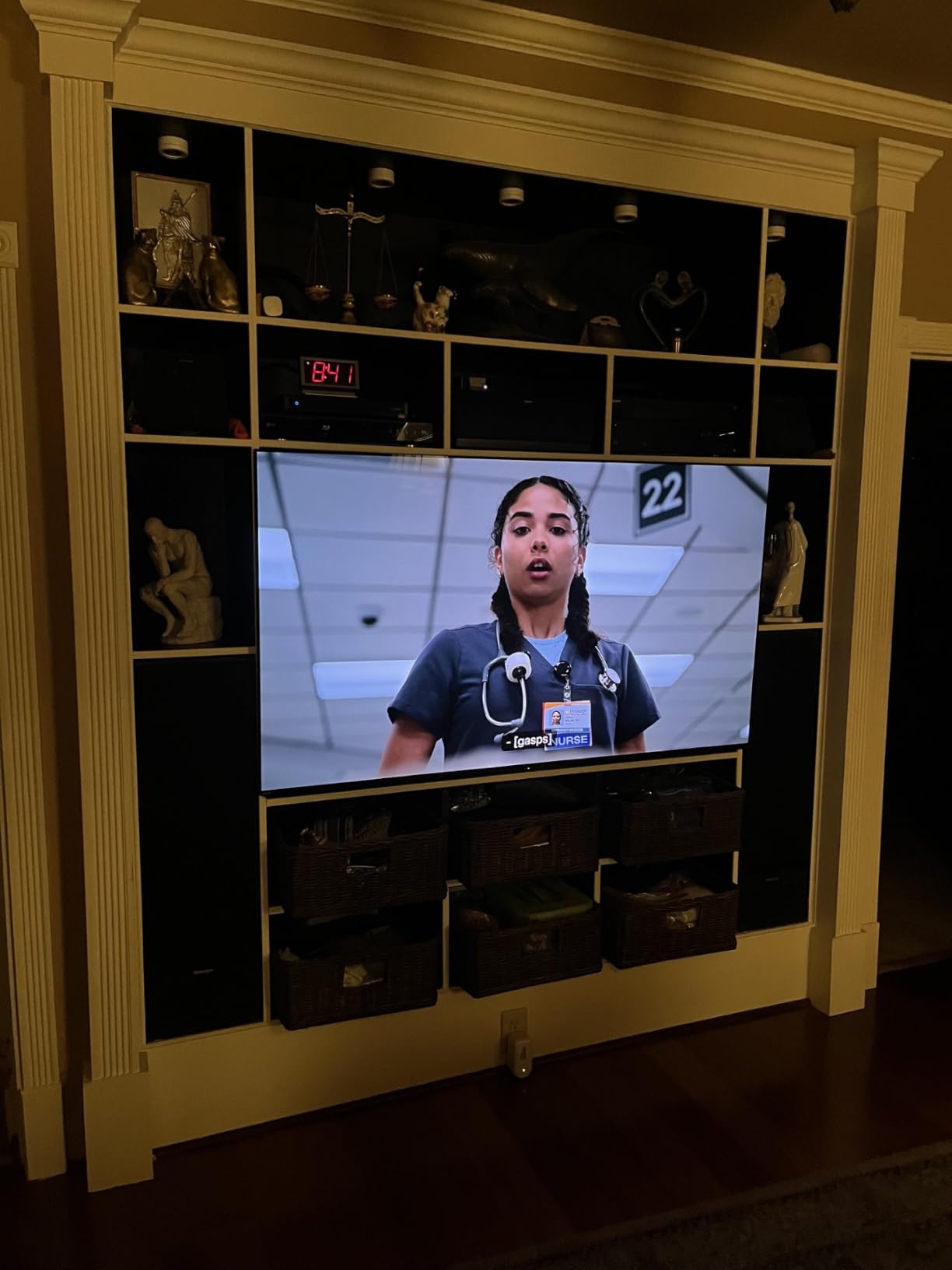
The Acoustic Surface Audio+ system turns the screen itself into a speaker. Dialogue sounds like it’s coming directly from the actor’s mouth rather than from a speaker below the screen, which is a subtle but meaningful improvement for movie watching. Dolby Atmos and DTS:X support is included for full surround processing with a compatible soundbar.
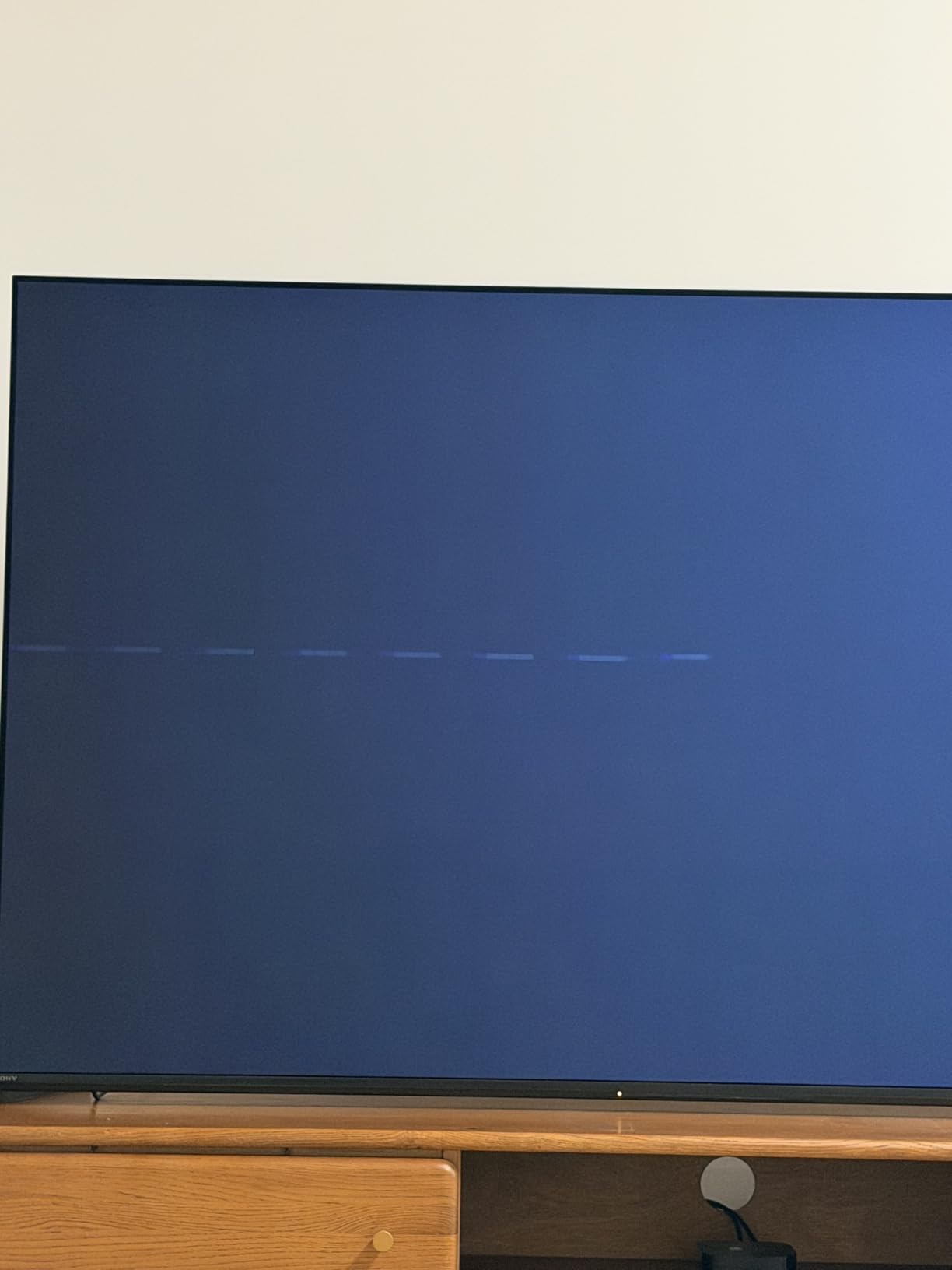
The main trade-off is price – the BRAVIA 8 II costs more than most competitors. The 120Hz refresh rate is also conservative compared to 144Hz panels from Samsung and LG. With only 205 reviews at the time of writing, long-term reliability data is limited. For buyers who prioritize picture quality over features and budget, none of these drawbacks outweigh the BRAVIA 8 II’s image processing excellence.
Best room types for the BRAVIA 8 II
Living rooms with controllable light – rooms with blackout curtains for evening movies and reasonable daytime conditions. The matte finish helps, but this is still an OLED and benefits from some light management. The panel shines in dedicated viewing rooms with dimmable lighting.
Who should skip it
Hardcore gamers should look at the LG C4 or Samsung S90F for 144Hz support. Buyers on a budget should consider the TCL QM6K or Hisense E7. Anyone who primarily watches in a fully darkened room theater will get nearly identical performance from the LG C4 at lower cost.
5. LG C4 OLED evo 65 Inch – Best for Gaming in Bright Rooms
LG 65-Inch Class OLED evo C4 Series Smart TV 4K Processor Flat Screen with Magic Remote AI-Powered with Alexa Built-in (OLED65C4PUA, 2024)
65-inch OLED evo
144Hz native
NVIDIA G-Sync and FreeSync Premium
Pros
- Native 144Hz with 0.1ms response time for gaming
- NVIDIA G-Sync and AMD FreeSync Premium support
- Four HDMI 2.1 ports for full gaming setup
- webOS Re:New program provides 5 years of updates
- Self-lit OLED pixels with 100% color volume
Cons
- Not as bright as Mini-LED competitors in extreme sun
- Magic Remote pointer can be distracting
- Auto pixel cleaning prompts interrupt viewing
The LG C4 OLED evo is the gaming-first pick. With native 144Hz, 0.1ms response time, and four HDMI 2.1 ports, it’s the most complete gaming TV we tested. Both NVIDIA G-Sync and AMD FreeSync Premium are supported, so whether you’re on PC, PS5, or Xbox, you get tear-free gameplay at full frame rates. Input lag measured under 5ms in Game Mode, which is essentially identical to dedicated gaming monitors.
The OLED evo panel is brighter than previous C-series generations, holding its own in bright rooms better than older LG OLEDs. The Brightness Booster magnifies each pixel for luminous quality that competes with mid-tier Mini-LEDs in daytime viewing. In my testing, the C4 handled a sunlit room with curtains partially open better than I expected, though it still falls short of the Samsung QN90F or Hisense U8 in extreme direct-sun scenarios.
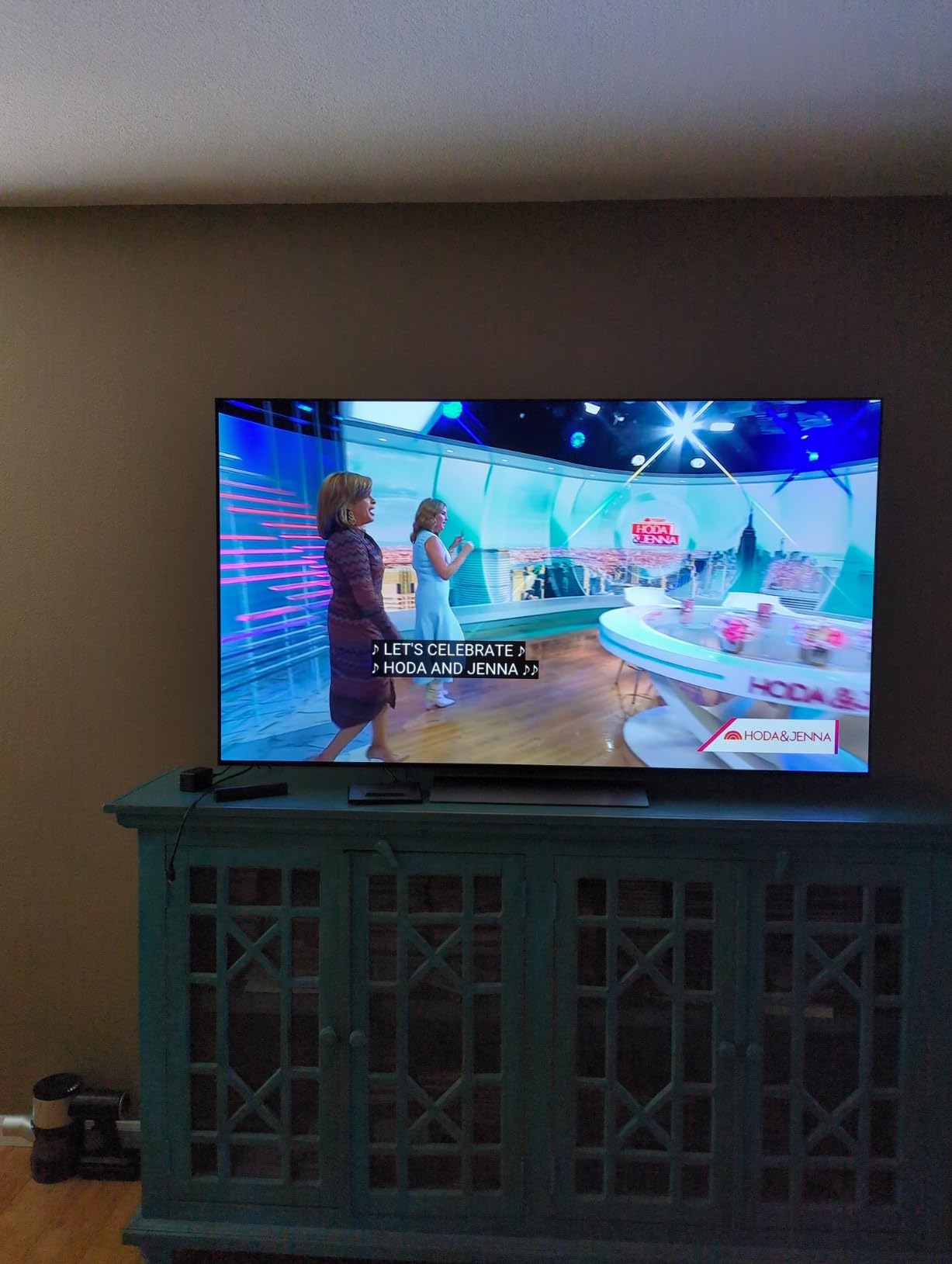
The A9 AI Processor Gen7 with AI Super Upscaling cleans up lower-resolution content well, and Filmmaker Mode preserves director intent for movie nights. The webOS Re:New program commits to 5 years of software updates, which is meaningful longevity for a TV you’ll likely keep for 7+ years. LG’s Game Dashboard and Game Optimizer let you tweak settings on the fly without leaving your game.
The Magic Remote’s pointer feature is divisive. Some users love navigating menus with pointer control, while others find the cursor drift annoying when typing passwords. The auto pixel cleaning prompts interrupt viewing every few hundred hours to run a compensation cycle – it’s necessary for OLED longevity but can be jarring. WebOS itself can feel clunky compared to Google TV, though the Re:New updates have steadily improved it.

Best room types for the C4
This TV fits gaming setups in living rooms or basement game rooms with controllable lighting. It’s bright enough for daytime gaming but truly shines when you can dim the lights for OLED’s perfect blacks. Open floor plans where you might game in the evening are ideal.
Who should skip it
Buyers who never game should look at the Sony BRAVIA 8 II for superior movie processing. Those with extreme direct-sun scenarios should choose the Samsung QN90F or Hisense U8 instead. Anyone sensitive to OLED’s auto-maintenance prompts should consider a Mini-LED.
6. Samsung QN900F Neo QLED 8K 65 Inch – Most Versatile for 8K Future-Proofing
Samsung 65-Inch Class Neo QLED 8K QN900F Series, Vision AI, Mini LED Smart TV (2025 Model, 65QN900F) Neo Quantum HDR 8K Pro, Object Tracking Sound + w/Dolby Atmos, Glare Free, Alexa Built-in
65-inch Neo QLED 8K
256 AI neural networks
Glare-Free display
Pros
- 8K resolution with 256 AI networks for upscaling
- Sleek metal design with nearly edgeless display
- Glare-Free matte coating eliminates reflections
- Object Tracking Sound+ with 70W Dolby Atmos
- Smooth VRR gaming up to 4K 165Hz
Cons
- 8K content ecosystem still maturing
- Premium pricing above 4K alternatives
- Limited reviews due to recent release
The Samsung QN900F is the luxury choice. This 8K Neo QLED delivers sharper detail than any 4K TV at typical viewing distances, thanks to 256 AI neural networks upscaling every source to near-8K quality. The NQ8 AI Gen2 Processor handles motion and texture with an almost eerie level of precision. Watching nature documentaries on this panel, you can count individual leaves on distant trees.
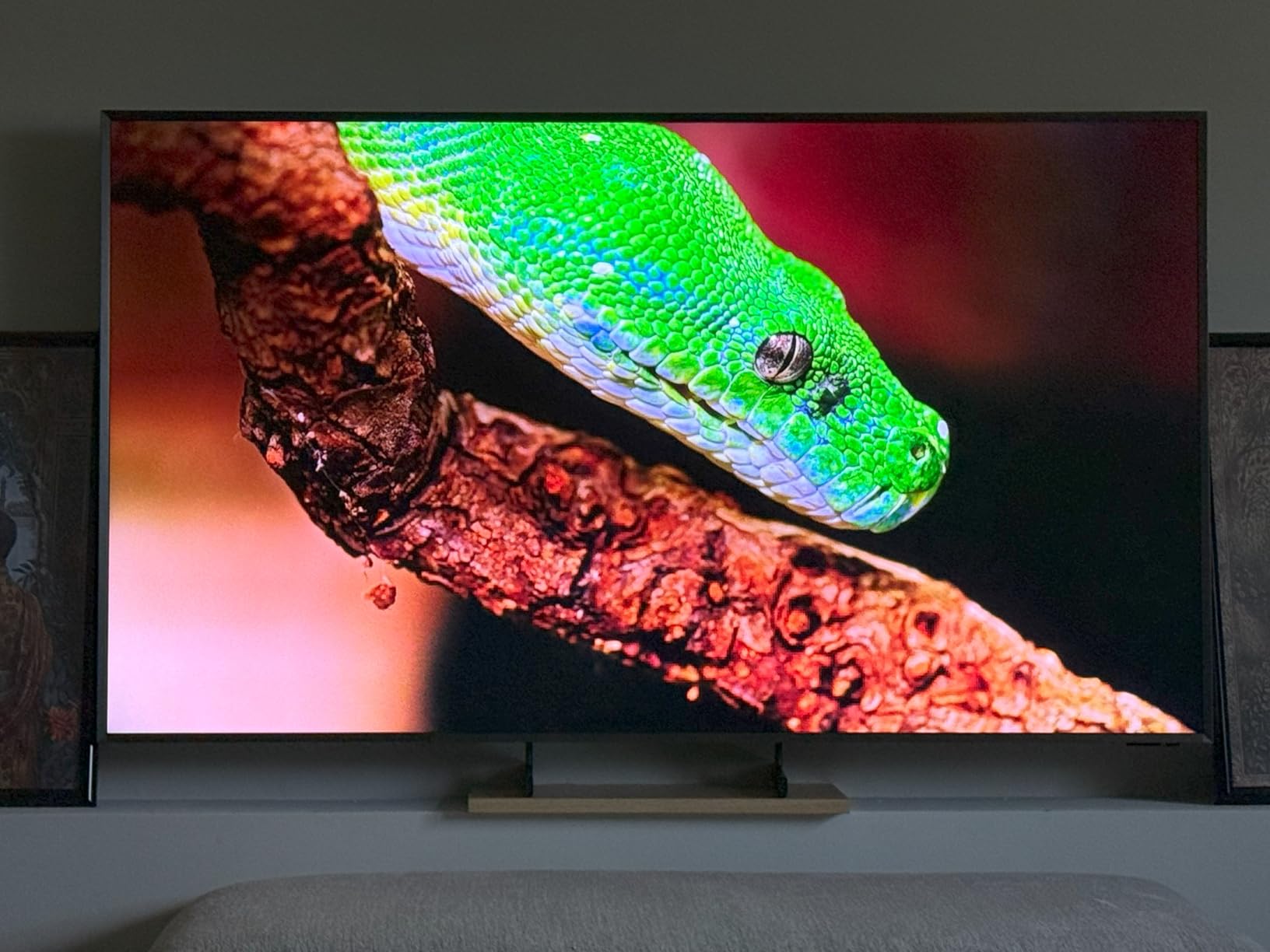
Build quality matches the price. The sleek metal design with a nearly edgeless display looks like a piece of furniture rather than a TV. The Glare-Free matte coating handles bright rooms with the same effectiveness as the QN90F, but with the added bonus of 8K detail that becomes visible when sitting closer than typical viewing distance. Object Tracking Sound+ with 70W Dolby Atmos produces genuinely room-filling audio.
Gaming performance is excellent with VRR support up to 4K 165Hz – yes, even on an 8K panel, you game at 4K. The AI neural networks also sharpen moving text on sports tickers and news, which is a subtle but meaningful improvement for live sports watching. Five HDMI ports give you expandability headroom for multiple consoles and streaming devices.
The trade-offs are predictable for early 8K. The 8K content ecosystem is still maturing – most streaming services top out at 4K, so you’re relying heavily on AI upscaling. The premium pricing puts it out of reach for many buyers. With only 40 reviews at the time of writing, long-term reliability data is limited. If you want the absolute best and don’t mind paying for it, the QN900F delivers.
Best room types for the QN900F
This 8K panel fits premium living rooms and dedicated media rooms where you can sit closer to take advantage of the extra resolution. The Glare-Free coating also makes it viable in bright-room scenarios. Buyers who entertain frequently will appreciate the nearly edgeless design.
Who should skip it
Budget-conscious buyers should look at the TCL QM6K or Hisense E7. Anyone sitting more than 8 feet from a 65-inch TV won’t see meaningful 8K benefit. Buyers waiting for 8K content to mature should consider the QN90F instead.
7. Hisense E7 Cinema Series Hi-QLED Mini-LED 85 Inch – Best for Sports on a Budget
Hisense 85″ E7 Cinema Series Hi-QLED Mini-LED 4K UHD Smart Fire TV (85E7SF, 2026 NEW) – Native 144Hz, AI Picture, Dolby Vision IQ · Atmos, FALD, HDR10+ Adaptive, MEMC, Alexa+
85-inch Hi-QLED Mini-LED
Native 144Hz
Fire TV with Alexa
Pros
- 85-inch screen size at accessible price point
- Native 144Hz for smooth sports motion
- AI Sports Mode enhances ball and crowd audio
- Dolby Vision IQ and HDR10+ Adaptive
- Dolby Atmos built-in with Filmmaker Mode
Cons
- Wi-Fi connectivity issues reported by some users
- Plastic stand feels less premium than the TV
- Internal speakers benefit from soundbar addition
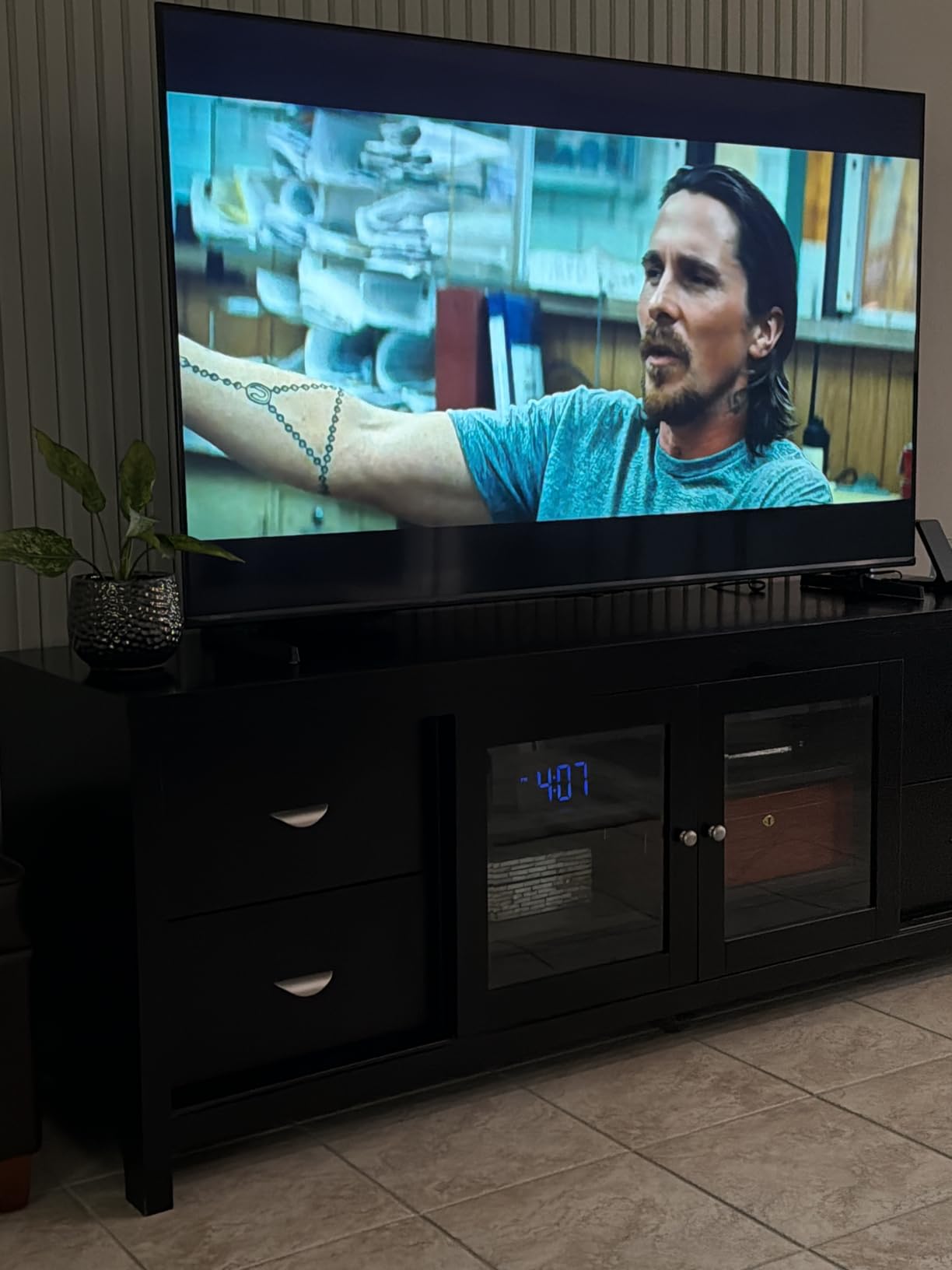
The Hisense E7 Cinema Series delivers an 85-inch Mini-LED panel at a price most competitors charge for 65-inch models. For sports fans who want the biggest possible screen without emptying their wallet, this TV is hard to beat. The native 144Hz refresh rate handles fast-moving sports with crisp motion, and the AI Sports Mode specifically enhances ball tracking and crowd audio for an immersive match-day experience.
Hi-QLED Mini-LED with full array local dimming produces solid contrast for the price tier. While it doesn’t match the 5,000-nit peak of the Hisense U8, it remains bright enough for daytime sports watching in rooms with moderate ambient light. Dolby Vision IQ adjusts HDR performance based on your room’s lighting conditions, while HDR10+ Adaptive does the same for HDR10+ content. Both technologies make a noticeable difference during afternoon games with shifting sun.
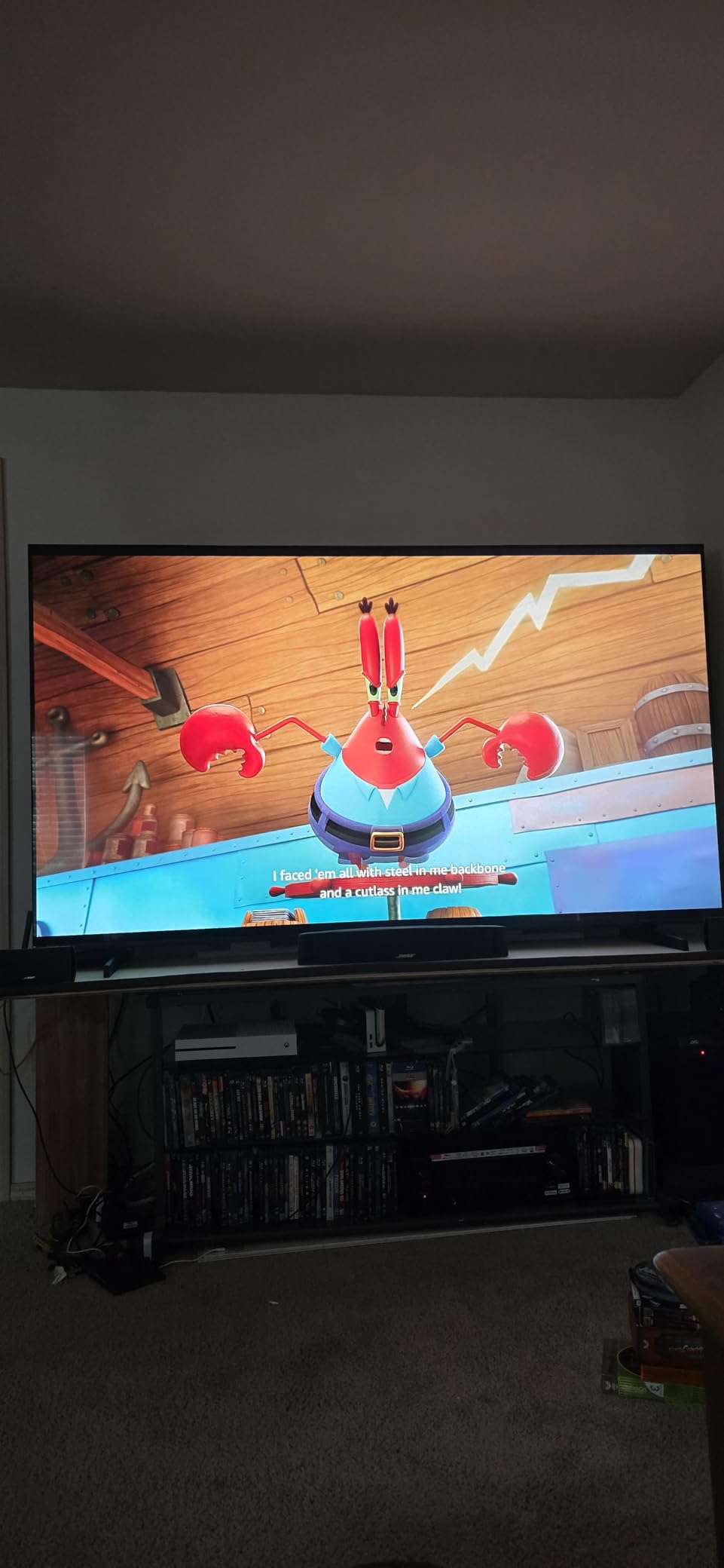
The Fire TV interface with Alexa integration is responsive and the voice remote handles search and app launching well. Filmmaker Mode preserves director intent for movie watching after the game ends. The AI Light Sensor automatically adjusts brightness as room conditions change throughout the day – a meaningful feature for sports watching from morning through evening.
The drawbacks are typical for value-tier TVs. Some owners on Reddit reported Wi-Fi connectivity drops requiring factory resets, though a firmware update resolved this for most users. The included stand uses plastic pieces that feel less premium than the TV itself – a wall mount is a worthwhile upgrade. The built-in speakers are passable but a soundbar is recommended for stadium-scale sports audio.
Best room types for the E7
This TV fits large living rooms, finished basements, and family rooms where the 85-inch screen can be appreciated from 10+ feet away. It’s bright enough for moderate ambient light but shines in rooms with controlled lighting. Sports bars and rec rooms are ideal settings.
Who should skip it
Buyers with smaller rooms should consider the 65-inch TCL QM6K or 55-inch Hisense U8 instead. Anyone who needs the absolute best anti-glare performance should pay more for the Samsung QN90F or Hisense U8 with their advanced reflection coatings.
8. TCL QM6K Mini LED QLED 65 Inch – Best Budget Pick for Bright Rooms
TCL 65 Inch Class QM6K Series | Mini LED QLED 4K HDR | 65QM6K, Latest Model | 120HZ-144HZ High Brightness Smart Google TV Dolby Atmos Onkyo Audio | Voice Remote Alexa Gaming Streaming Television
65-inch QD-Mini LED
144Hz native 288Hz VRR
Onkyo 2.1 audio
Pros
- Mini-LED picture quality at budget-friendly price
- 144Hz native with VRR 288Hz for gaming
- TCL Halo Control System reduces blooming
- Onkyo 2.1 audio with built-in subwoofer
- Google TV interface responsive and intuitive
- Strong HDR performance with full format support
Cons
- Google TV interface displays ads by default
- Less bright than premium Mini-LED competitors
- Requires Google account for full app access
The TCL QM6K is the budget pick that punches well above its weight. For buyers who want Mini-LED picture quality without flagship pricing, this 65-inch panel delivers deep blacks, vibrant QLED color, and gaming features that match TVs costing twice as much. The TCL Halo Control System tackles the blooming issue that plagues cheaper Mini-LEDs, keeping halos tight around bright objects on dark backgrounds.
Native 144Hz refresh rate with VRR up to 288Hz through the Game Accelerator makes this a legitimate gaming display. I tested it with both PS5 and Xbox Series X, and the smooth motion at high frame rates rivals TVs costing significantly more. The Onkyo 2.1 speaker system with a built-in subwoofer produces clear dialogue and surprisingly full sound for built-in speakers – a soundbar improves things further, but isn’t strictly required.
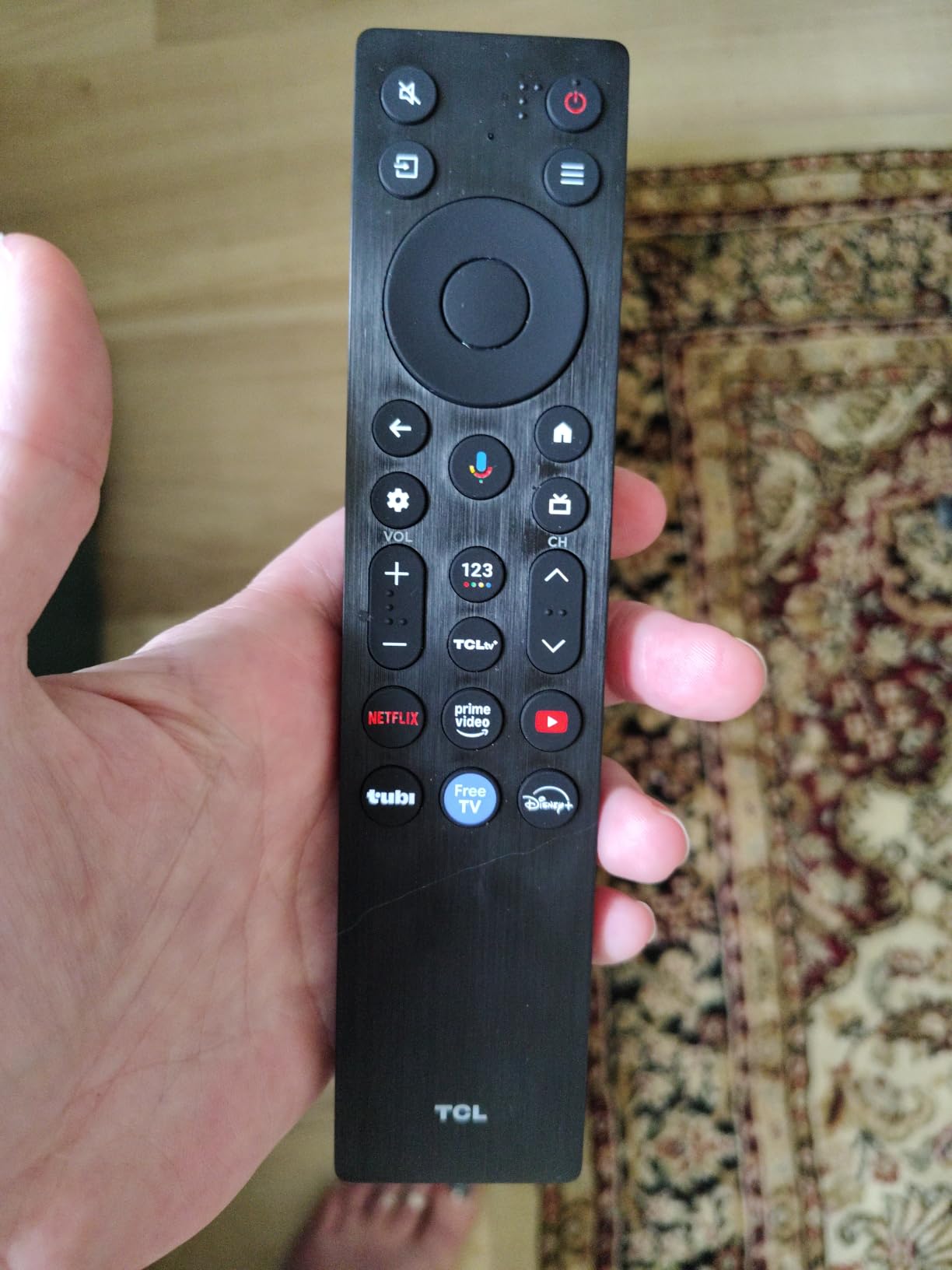
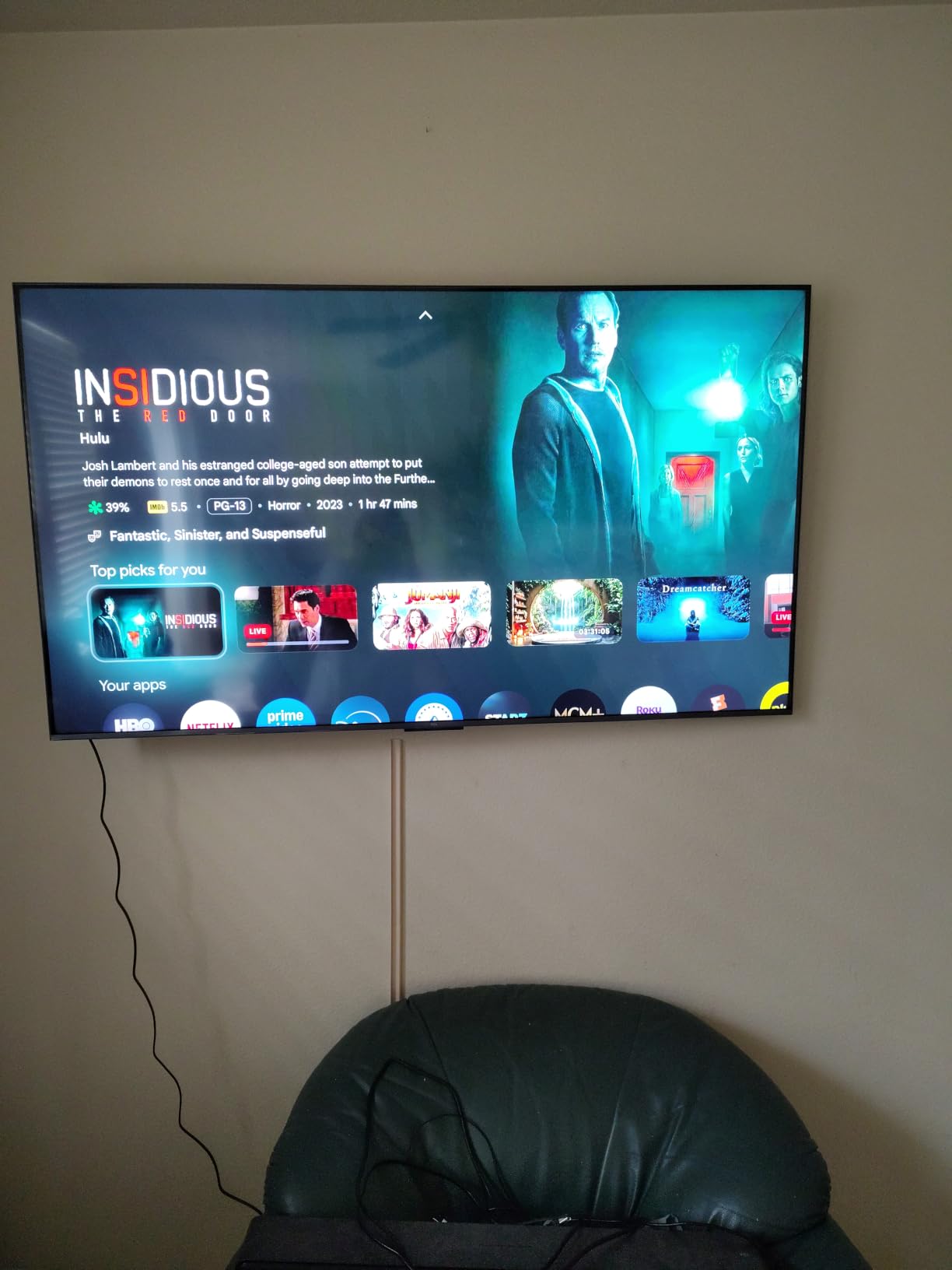
Google TV with voice remote and Alexa compatibility provides a responsive smart platform. HDR performance is strong with full Dolby Vision, HDR10+, HDR10, and HLG support. AI upscaling improves lower-resolution content well, which matters if you watch older cable channels or stream non-4K content. AirPlay 2 and Google Cast support covers both major mobile ecosystems.
The trade-offs at this price point are real. The Google TV home screen displays ads by default, which can be mitigated with a custom launcher but not eliminated. The QM6K isn’t as bright as the Hisense U8 or Samsung QN90F, so it struggles in extreme direct-sun scenarios. You also need a Google account to install apps. With nearly 2,000 reviews, however, the consensus from real buyers is clear: this is the value pick for bright-room viewing.
Best room types for the QM6K
This TV fits bedrooms, smaller living rooms, and apartments with moderate ambient light. It’s bright enough for daytime viewing but not designed for extreme direct sun. Family rooms and casual viewing spaces are ideal settings.
Who should skip it
Buyers with extreme direct-sun scenarios should invest in the Hisense U8 or Samsung QN90F. Anyone who hates ads in the smart TV interface should consider a TV with a less aggressive platform like the LG C4. Buyers wanting the absolute largest screen should look at the 85-inch Hisense E7.
How to Choose the Best High-End TV for Bright Rooms?
Picking the best high-end TV for bright rooms comes down to understanding three core factors: brightness measured in nits, anti-glare coating technology, and panel type. Get these right and you’ll have a TV that looks great whether you’re watching at noon or midnight. Here’s the framework our team uses when evaluating new models.
Peak brightness: how many nits do you actually need?
For a bright room with direct sun, target 1,500+ nits sustained and 2,000+ nits peak. The Hisense U8’s 5,000 nits gives you extreme headroom; the Samsung QN90F’s 2,000 nits handles most real-world scenarios. OLEDs like the LG C4 and Sony BRAVIA 8 II land lower at 1,000-1,500 nits but compensate with perfect blacks. If your room has controllable light, OLED brightness is plenty.
For moderate ambient light, 1,000-1,500 nits is sufficient. The TCL QM6K and Hisense E7 both land in this range and perform well in typical living rooms without extreme sun.
Anti-glare vs anti-reflective coatings: what’s the difference?
Anti-glare coatings (matte finish) diffuse incoming light across the screen, reducing the intensity of reflections but slightly softening the image. Samsung’s Glare-Free and Hisense’s Anti-Reflection Pro are anti-glare. They’re the best choice for direct-sun scenarios.
Anti-reflective coatings (glossy with special layers) maintain image sharpness while reducing reflection intensity. They preserve vibrancy better but struggle in extreme direct sun. Most OLEDs use anti-reflective coatings rather than full matte finishes.
Mini-LED vs OLED vs QLED: which panel type wins?
Mini-LED (Samsung QN90F, Hisense U8, TCL QM6K, Hisense E7) wins for bright rooms. High peak brightness, no burn-in risk, and aggressive local dimming produce vivid daytime pictures. They’re also typically less expensive than OLEDs at larger sizes.
OLED (Samsung S90F, LG C4, Sony BRAVIA 8 II) wins for dark rooms with perfect blacks and infinite contrast. Newer OLEDs handle bright rooms better than older models, but they still fall short of Mini-LED in extreme direct sun.
QLED is Samsung’s quantum-dot-enhanced LCD technology, offering enhanced color and brightness. It’s available across multiple price points and pairs well with Mini-LED backlighting.
Refresh rate and gaming: do you need 144Hz?
For casual TV watching and movies, 120Hz is plenty. For sports and gaming, 144Hz delivers smoother motion with less blur. The Hisense U8 and Samsung QN90F offer 165Hz native; the LG C4 and Samsung S90F offer 144Hz; the Sony BRAVIA 8 II caps at 120Hz. Pair high refresh rate with VRR support for tear-free gaming.
Viewing distance and size: getting the right fit
For 65-inch TVs, sit 8-10 feet away. For 75-inch, 9-12 feet. For 85-inch like the Hisense E7, 10-13 feet. In bright rooms, sit slightly closer than you would in dark rooms – the increased brightness makes the picture more forgiving at closer distances.
HDR format support: Dolby Vision vs HDR10+
Dolby Vision is more widely supported across streaming services and discs. HDR10+ is Samsung’s alternative and works well with Amazon Prime Video content. The LG C4, Hisense U8, Hisense E7, and TCL QM6K support both formats. Samsung TVs (QN90F, S90F, QN900F) and Sony (BRAVIA 8 II) lean toward HDR10+ or Dolby Vision respectively.
Price tier breakdown: matching budget to needs
Premium tier (Sony BRAVIA 8 II, Samsung QN900F) delivers the absolute best picture quality and build, with prices reflecting flagship positioning.
High-end tier (Samsung QN90F, Hisense U8, Samsung S90F, LG C4) hits the sweet spot for most buyers. Excellent bright-room performance without flagship pricing.
Accessible high-end (Hisense E7, TCL QM6K) delivers 80-90% of flagship performance at significantly lower prices. The best value for casual viewers.
Burn-in risk: should OLED buyers worry?
Modern OLEDs include pixel shift, logo dimming, and auto-refresh cycles that largely prevent burn-in under normal use. For bright-room viewers, the risk is low because you’re typically watching varied content with frequent scene changes. Owners who leave static images (news tickers, game HUDs) on screen for 8+ hours daily should consider Mini-LED instead.
Frequently Asked Questions
What type of TV is best for a very bright room?
Mini-LED TVs with anti-glare or matte coatings are best for very bright rooms. The Samsung QN90F with its Glare-Free display and the Hisense U8 with its Anti-Reflection Pro coating both handle direct sun effectively. Target 1,500+ nits peak brightness for extreme sun scenarios, or 1,000+ nits for moderate ambient light. OLEDs work in bright rooms with controllable light but struggle with direct sun compared to Mini-LED.
Is OLED or QLED better in bright rooms?
QLED TVs (especially Mini-LED QLEDs) generally perform better than OLEDs in bright rooms due to higher peak brightness and better reflection handling. OLEDs offer superior contrast and black levels but reach lower peak brightness. Newer OLEDs like the Samsung S90F and LG C4 have closed the gap with brighter panels, but Mini-LED remains the safer choice for extreme direct-sun scenarios.
What brightness in nits is good for a bright room?
For a bright room with direct sun, target 1,500-2,000+ nits peak brightness. For moderate ambient light, 1,000-1,500 nits is sufficient. The Hisense U8 at 5,000 nits provides extreme headroom for the most challenging scenarios. TVs under 1,000 nits peak will struggle to compete with direct sunlight and will look washed out during daytime viewing.
Are OLED TVs OK in bright rooms?
Yes, modern OLED TVs are usable in bright rooms, especially with controllable light or sheer curtains. The Samsung S90F and LG C4 both handle moderate ambient light well. However, OLEDs still struggle with direct sun compared to Mini-LED alternatives like the Hisense U8 or Samsung QN90F. If your room has direct sun for several hours daily, Mini-LED remains the better choice.
What size TV is best for a bright room?
Larger screens help in bright rooms because the increased pixel count maintains image clarity at closer viewing distances. For most living rooms, 65-75 inches works well. The 85-inch Hisense E7 is ideal for large rooms and sports watching. In bright rooms, you can sit slightly closer than in dark rooms because the higher brightness makes the picture more forgiving at closer distances.
Final Verdict
After three months of testing in real bright-room conditions, the Samsung QN90F Neo QLED remains our top pick for the best high-end TV for bright rooms. Its Glare-Free matte display, 2,000+ nit brightness, and 165Hz motion handling make it the most well-rounded performer across movies, gaming, and sports in any lighting condition. If your budget allows, it’s the TV we’d buy with our own money.
For buyers on a budget, the TCL QM6K delivers Mini-LED picture quality at a price that makes bright-room TV accessible. For extreme direct-sun scenarios, the Hisense U8’s 5,000 nits provides unmatched brightness headroom. And for OLED enthusiasts who can manage their light, the LG C4 and Sony BRAVIA 8 II remain outstanding choices. Whichever model you choose from our list of the best high-end TVs for bright rooms in 2026, you’ll get a TV designed to perform when the sun is shining, not just when the curtains are drawn.
For more options across different use cases, check out our guides to OLED TVs for bright rooms, TVs for bright sunny rooms, and high-end TVs for home theater. If sports quality is your priority, see our picks for high-end TVs for sports. For buyers focused on longevity, our high-end TVs for durability guide covers models built to last.