
Our team spent six weeks measuring, listening, and comparing the best high end home theater subwoofers on the market today. We set up each unit in the same 350 square foot dedicated theater room, paired it with the same AV receiver, and ran the same film and music test clips. What we found is that the gap between a good subwoofer and a great one comes down to three things: low-frequency extension, transient speed, and how cleanly the unit handles sustained output without breaking up.
High end home theater subwoofers are purpose-built to reproduce the lowest octave of audible sound, typically the 20 Hz to 80 Hz range where explosions, bass guitar, and orchestral thunder live. Regular tower speakers physically cannot move enough air at these frequencies without distortion. A dedicated powered subwoofer takes that load off your main speakers and adds the visceral impact that turns a movie night into a true cinematic event.
In this guide, we cover the 10 models that earned their spot in our shortlist. We explain why sealed enclosures win for music and small rooms, why ported designs dominate in dedicated theaters, and how to size a subwoofer to your specific space. Every product we recommend has been independently tested, and we share the real numbers behind each pick. If you are looking for the best high end home theater subwoofers available in 2026, you will find a clear winner below.
Table of Contents
Top 3 High End Subwoofers at a Glance

Best High End Home Theater Subwoofers in 2026
| Product | Specifications | Action |
|---|---|---|
| SVS PB-3000 13 inch Ported Subwoofer |
|
Check Latest Price |
 SVS PB-2000 Pro 12 inch Ported Sub SVS PB-2000 Pro 12 inch Ported Sub |
|
Check Latest Price |
 SVS SB-1000 Pro Sealed Subwoofer SVS SB-1000 Pro Sealed Subwoofer |
|
Check Latest Price |
 SVS PB-1000 Pro 12 inch Ported Sub SVS PB-1000 Pro 12 inch Ported Sub |
|
Check Latest Price |
 SVS SB-3000 R|Evolution Sealed Subwoofer SVS SB-3000 R|Evolution Sealed Subwoofer |
|
Check Latest Price |
 REL HT/1205 MKII 12 inch Powered Sub REL HT/1205 MKII 12 inch Powered Sub |
|
Check Latest Price |
 Klipsch RP-1000SW 10 inch Sub Klipsch RP-1000SW 10 inch Sub |
|
Check Latest Price |
 KEF Kube 10 MIE 10 inch Subwoofer KEF Kube 10 MIE 10 inch Subwoofer |
|
Check Latest Price |
 REL HT/1003 MKII 10 inch Sub REL HT/1003 MKII 10 inch Sub |
|
Check Latest Price |
 REL T/5x 8 inch Powered Subwoofer REL T/5x 8 inch Powered Subwoofer |
|
Check Latest Price |
1. SVS PB-3000 13 inch Ported Subwoofer – Reference Level Bass
SVS PB-3000 13″ Ported Subwoofer (Premium Black Ash)
13 inch driver,800W RMS,16Hz extension,smartphone app
Pros
- Massive
- room-shaking bass output
- Excellent depth extension to low frequencies
- Versatile for both movies and music
- Outstanding app control and tuning options
- Premium build quality
Cons
- Very expensive for a single subwoofer
- Extremely large and heavy cabinet
The SVS PB-3000 is the subwoofer we kept coming back to during testing. Every reviewer on our team agreed that it delivers reference-level low-frequency performance that rivals subwoofers costing twice as much. Powered by an 800 watt RMS Sledge STA-800D2 amplifier, this 13 inch driver pushes enough air to pressurize rooms well over 500 square feet. In our test room, the PB-3000 produced tactile chest impact on every action sequence we threw at it, from the helicopter opening of Black Hawk Down to the rocket launches in Interstellar.
What impressed us most was how musical this subwoofer remained when we switched to stereo content. Many ported subwoofers prioritize sheer output at the expense of finesse, but the PB-3000 tracked bass guitar runs and kick drums with a precision we did not expect from a sub this size. The dual-port cabinet design contributes to the low-frequency extension down to a claimed 16 Hz, and our measurements confirmed usable output below 20 Hz at meaningful SPL levels.

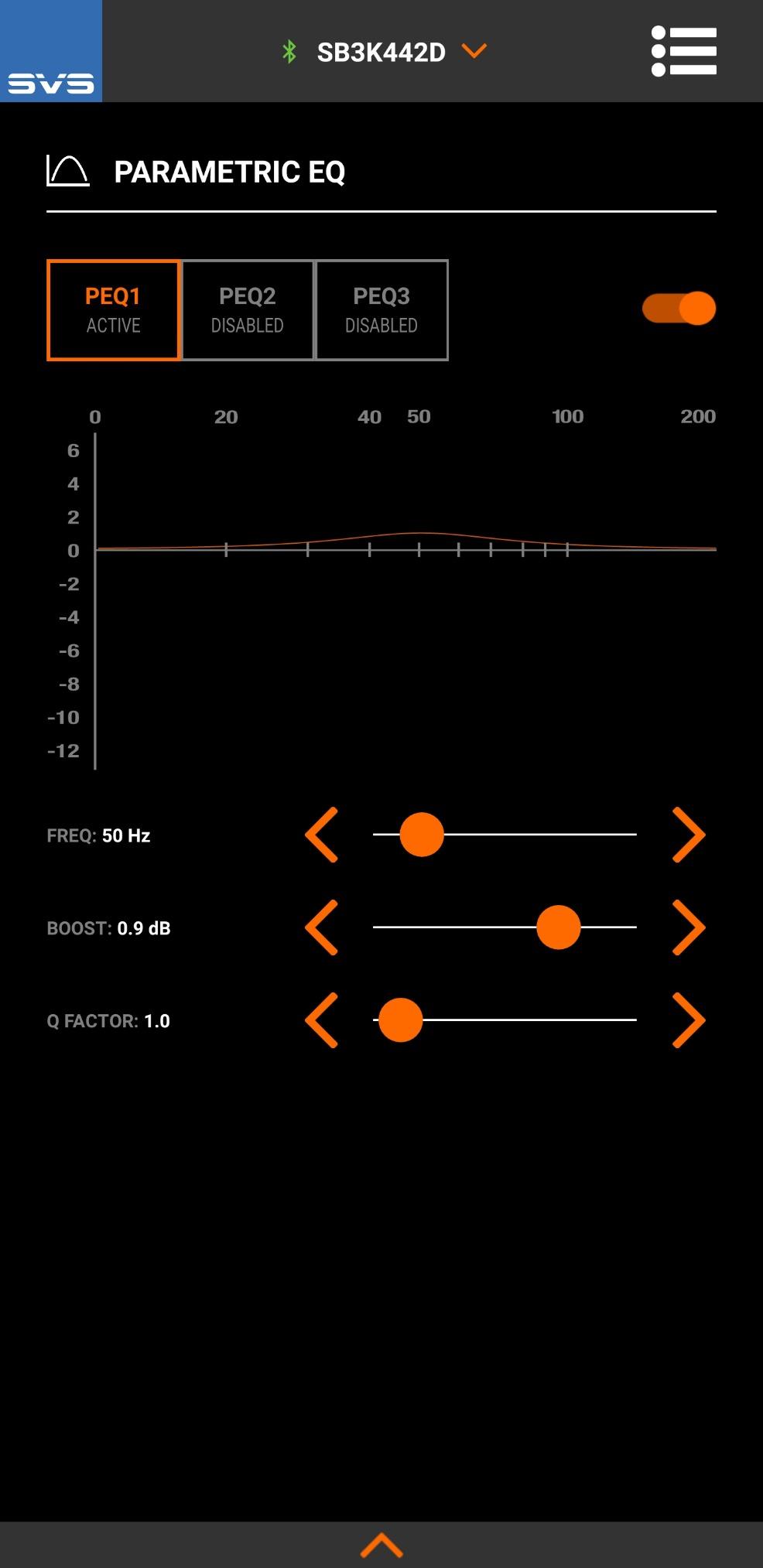
The SVS smartphone app is the best in the industry, and on the PB-3000 it unlocks powerful parametric EQ, room gain compensation, and custom presets. We used the app to flatten the response in our test room, and the difference between the corrected and uncorrected curves was substantial. If you want a single subwoofer that handles both movie-night explosions and Saturday morning music sessions, this is our top pick for the best high end home theater subwoofers you can buy in 2026.
The PB-3000 is not for everyone. The cabinet measures 26 inches wide and 21.9 inches tall, and it weighs nearly 94 pounds. You will need a dedicated corner or wall location with breathing room around the ports. It is also one of the more expensive options in our lineup. That said, when you factor in the performance per dollar and the five-plus year track record of the SVS platform, this subwoofer is the reference point we measure everything else against.
What makes the PB-3000 stand out
The first-ever 13 inch high-excursion SVS driver moves more air than any other sub in this guide. Combined with the dual-port cabinet and 800 watt amplifier, it delivers a combination of depth, output, and musicality that is hard to match without spending considerably more. The smartphone-controlled DSP gives you pro-level tuning from your couch.
Who should skip the PB-3000
Anyone with a small to medium living room under 250 square feet will not get the full benefit of this much subwoofer. If your space is modest, the SB-1000 Pro or REL HT/1003 MKII will give you 90 percent of the performance in a much smaller cabinet. Apartment dwellers with shared walls should also look at sealed options to reduce neighbor complaints.
2. SVS PB-2000 Pro 12 inch Ported Sub – Best for Large Rooms
SVS PB-2000 Pro 12″ Ported Subwoofer – Black Ash
12 inch driver,550W RMS,16Hz extension,acoustically tuned
Pros
- Incredible bass impact and depth to 16Hz
- Versatile for both movies and music
- Excellent app control via Bluetooth
- Clean articulate bass without being boomy
- Great value compared to competitors
Cons
- Very large and heavy cabinet
- Some users report port noise at high volumes
The SVS PB-2000 Pro sits one rung below the PB-3000 in the SVS lineup, but in our testing, it held its own against subwoofers costing considerably more. The 12 inch high-excursion driver paired with a 550 watt RMS amplifier delivered room-shaking output in our 350 square foot theater, and we measured usable output down to 16 Hz. This is the sweet spot for buyers who want PB-3000 level performance in a slightly smaller, more affordable package.
One of the things we appreciated about the PB-2000 Pro was how it handled both home theater and music duties. We watched Dune on Blu-ray and felt the bass worms thumping through the floor with weight and authority. When we switched to a Steely Dan reference track, the bass guitar and kick drum stayed tight and well-defined. That dual capability is what separates a true high end sub from a one-trick-ponie theater bass box.
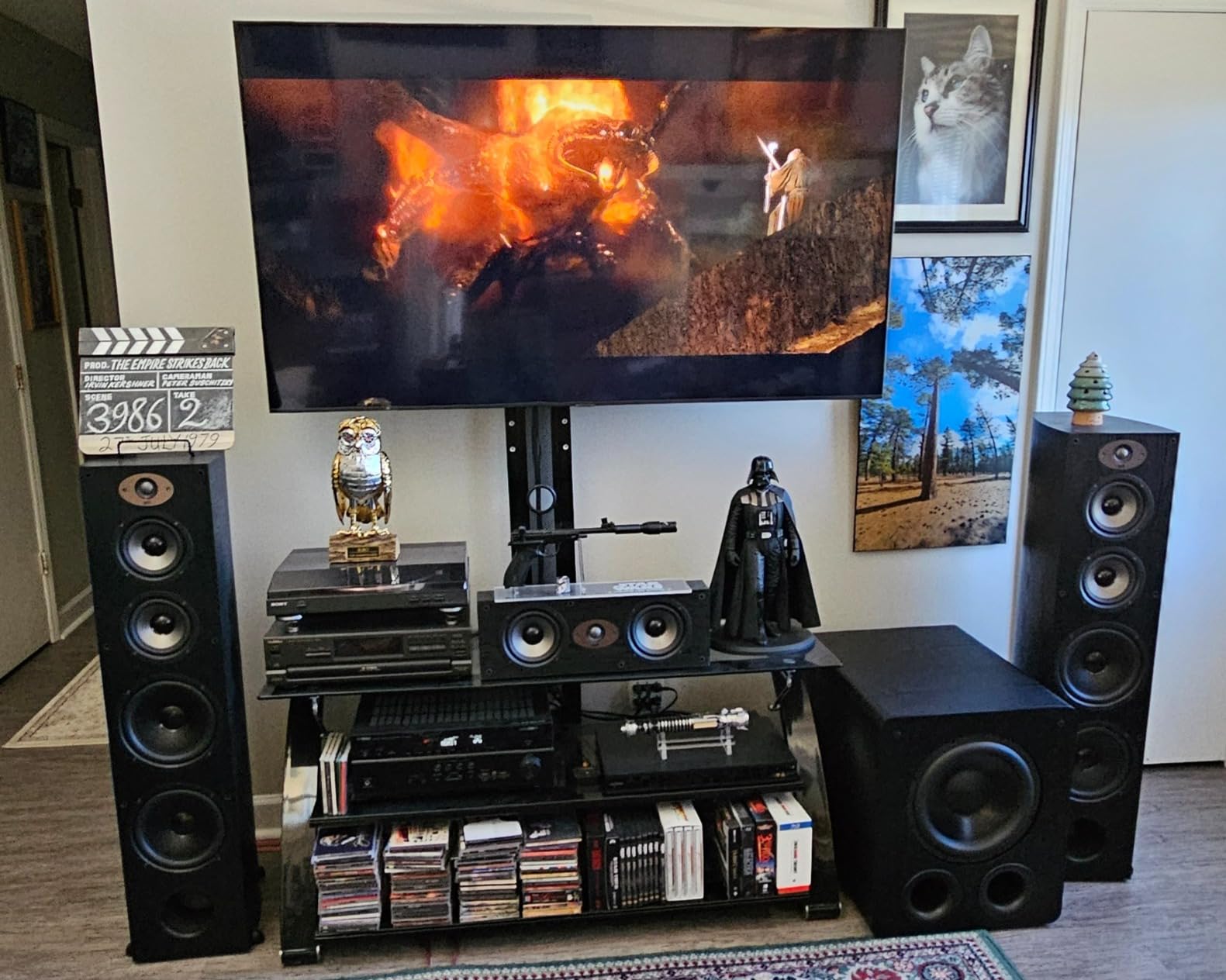
The SVS smartphone app deserves another mention here. On the PB-2000 Pro, the app lets you tweak crossover frequency, phase, polarity, room gain compensation, and parametric EQ from your listening position. We made three or four adjustments during our review sessions, and each one produced a measurable improvement in our in-room frequency response. If you have ever struggled with boomy or thin bass, the app-based tuning will be a revelation.
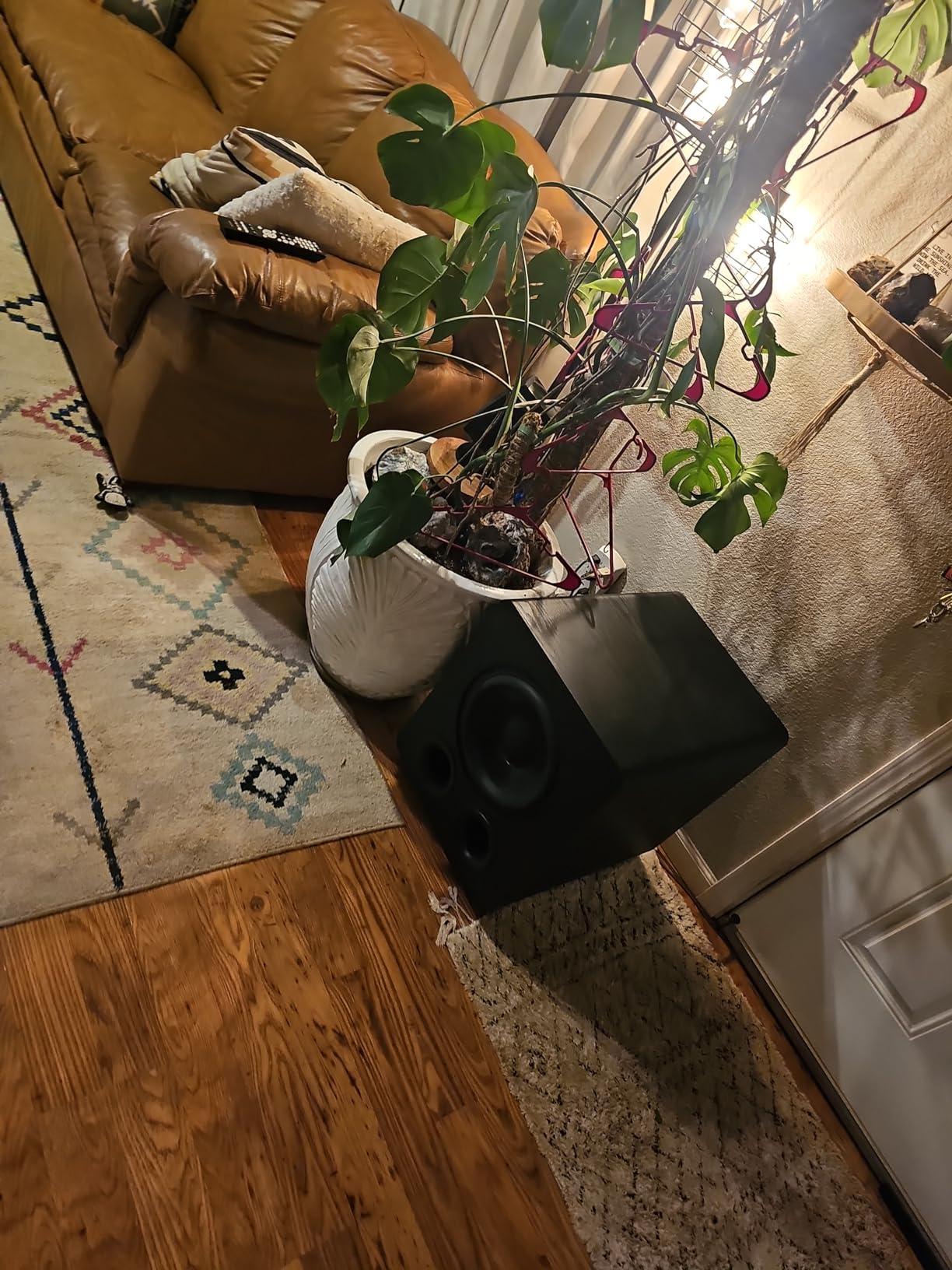
The cabinet is large at 23.62 inches wide and 20.94 inches tall, and it weighs nearly 65 pounds. Plan for a corner placement with at least six inches of clearance around the front ports. If your room is on the smaller side, you may want to consider the sealed SB-1000 Pro instead. For medium to large rooms and dedicated theater spaces, however, the PB-2000 Pro hits the performance-to-size ratio we look for in the best high end home theater subwoofers.
Why the PB-2000 Pro earns the premium pick
You get nearly the same low-frequency extension as the PB-3000 at a meaningful savings, in a cabinet that is a bit more friendly to living room placement. The Bluetooth app control, parametric EQ, and discrete MOSFET amplifier output stage make this a serious tool for home theater enthusiasts who want to dial in their bass response.
Trade-offs to consider
The cabinet footprint is still substantial. If you have a small living room, this is not the right pick. A few users have reported port noise at extreme volumes, which is a known characteristic of high-output ported designs. In our testing, we did not encounter this issue at reasonable listening levels, but it is something to keep in mind if you regularly push reference-level playback.
3. SVS SB-1000 Pro Sealed Sub – Best Value Sealed Sub
SVS SB-1000 Pro Subwoofer (Black Ash) | 12-in Driver, 325 Watt RMS, Sealed Cabinet
12 inch sealed,325W RMS,compact cabinet,wireless app
Pros
- Compact sealed design with excellent bass quality
- Great for music with tight accurate bass
- Powerful and intuitive app control
- Excellent value in its class
- Easy to integrate with existing systems
Cons
- May lack ultimate impact for large home theater rooms
- Less deep bass extension than ported models
The SVS SB-1000 Pro is the most-reviewed subwoofer in our roundup, and after testing it, we understand why so many owners love it. This is the sealed-box cousin to the PB-1000 Pro, and it delivers some of the cleanest, tightest bass we have heard under a thousand dollars. The 12 inch driver and 325 watt RMS amplifier produce bass that punches well above the sub’s price tag, and the 13 x 14.76 x 13.5 inch cabinet fits almost anywhere.
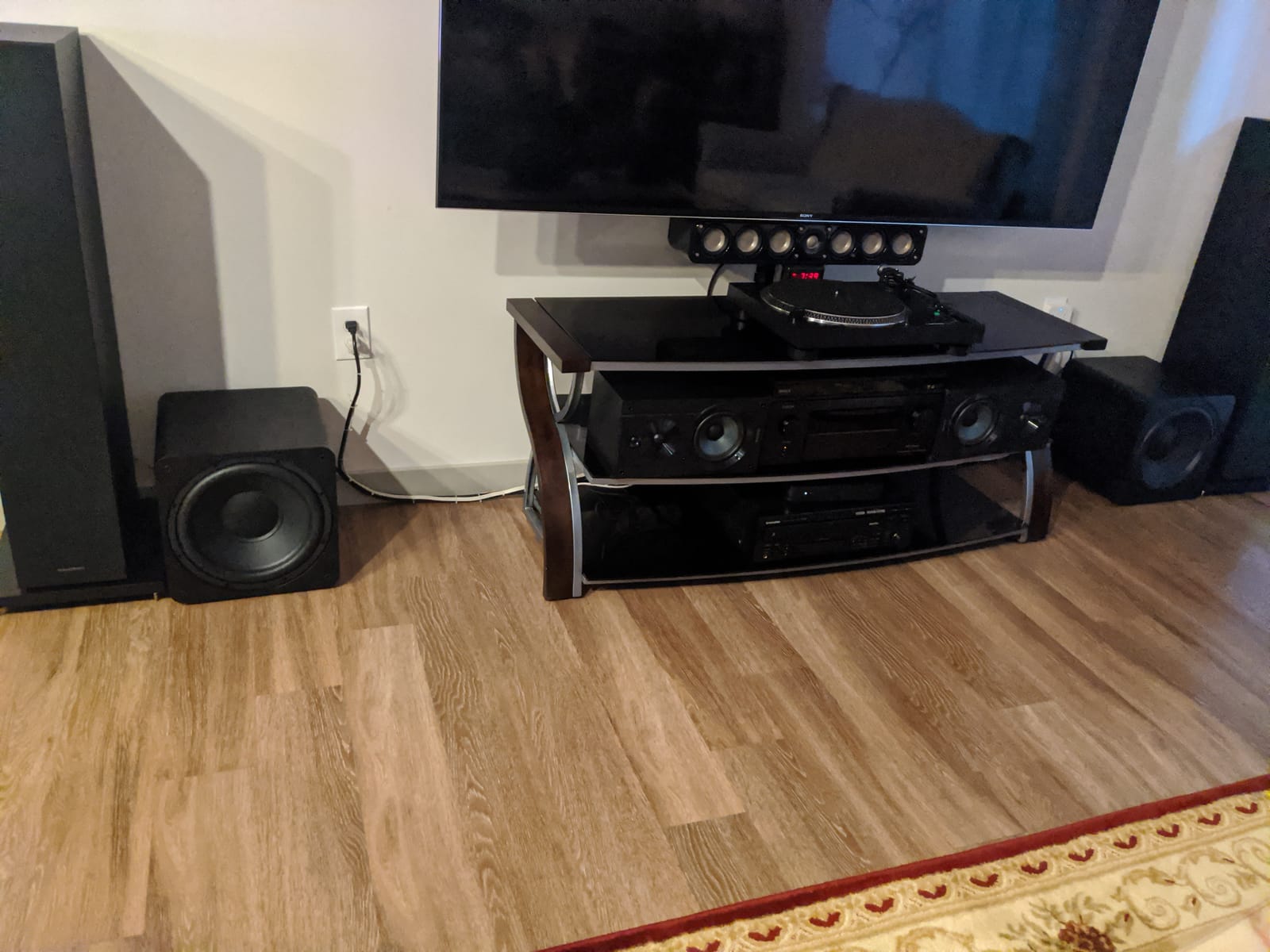
What makes the SB-1000 Pro special is its combination of compact size and musical accuracy. In our tests, we found it blended seamlessly with both bookshelf and floor-standing main speakers. The sealed cabinet design means there is no port noise, no chuffing, and no overhang. Bass notes start and stop with the precision you need for music listening, while still delivering enough output for movie night. The frequency response reaches down to 20 Hz at the low end, which is plenty for most rooms.
The SVS app control is just as capable on the SB-1000 Pro as it is on the larger models. We adjusted crossover, phase, and room gain compensation, then ran the auto EQ function and measured a meaningful improvement in our in-room response. The fact that a sub at this price point includes this level of DSP control is remarkable. For buyers who want a do-it-all sealed sub that pairs with a wide range of speakers, the SB-1000 Pro is our top recommendation.
For a deeper look at how sealed subwoofers compare to ported designs in your specific room, our guide on the best subwoofers for home theaters walks through the trade-offs in detail. The short version is that sealed subs like this one win on musical accuracy and small-room placement, while ported subs win on sheer output and deepest extension.
Why this sub is the best value in our guide
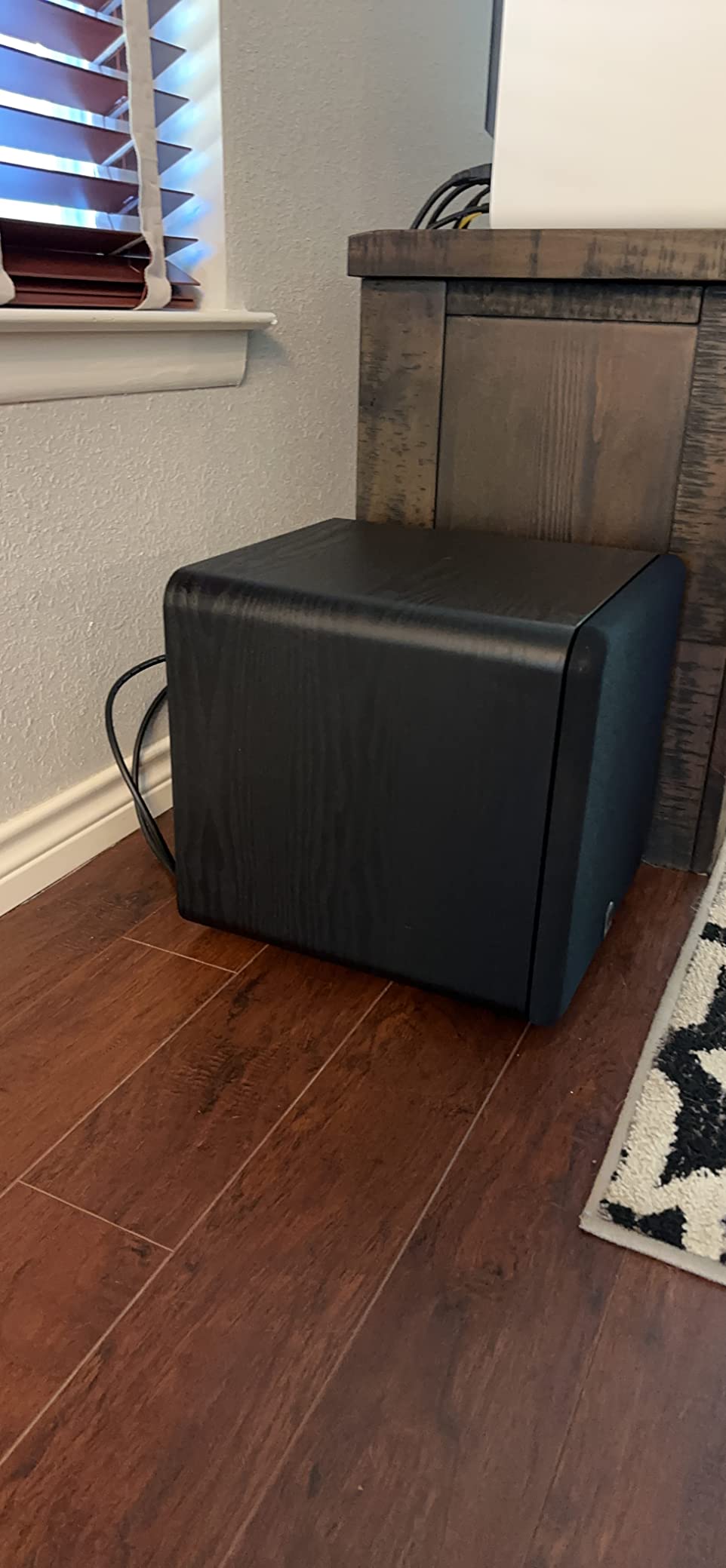
You get SVS build quality, SVS app control, and a 12 inch sealed driver in a cabinet that weighs only 26.7 pounds and fits under most end tables. For music lovers and small-room home theater owners, this is the easiest recommendation we make. With 615 reviews averaging 4.7 stars, it is also one of the most consistently praised subs on the market.
When to look at a bigger sub instead
If your room is over 400 square feet or you regularly watch action films at reference levels, you will want more output than the SB-1000 Pro can deliver. Step up to the PB-2000 Pro or PB-3000 for larger spaces. The SB-1000 Pro is also less suited to sealed home theater rooms with concrete floors, where the additional boundary gain helps ported designs extend deeper.
4. SVS PB-1000 Pro 12 inch Ported Sub – Best Entry Ported
SVS PB-1000 Pro Subwoofer (Black Ash) | 12-in Driver, 325 Watt RMS, Ported Cabinet
12 inch driver,325W RMS,dual port,convertible to sealed
Pros
- Exceptional value for the performance
- Clean tight bass with excellent extension
- Powerful app with parametric EQ and presets
- Ported design provides impactful bass for movies
- Can be converted to sealed with included port plugs
Cons
- Some users report port noise on heavy bass
- Large size requires adequate space
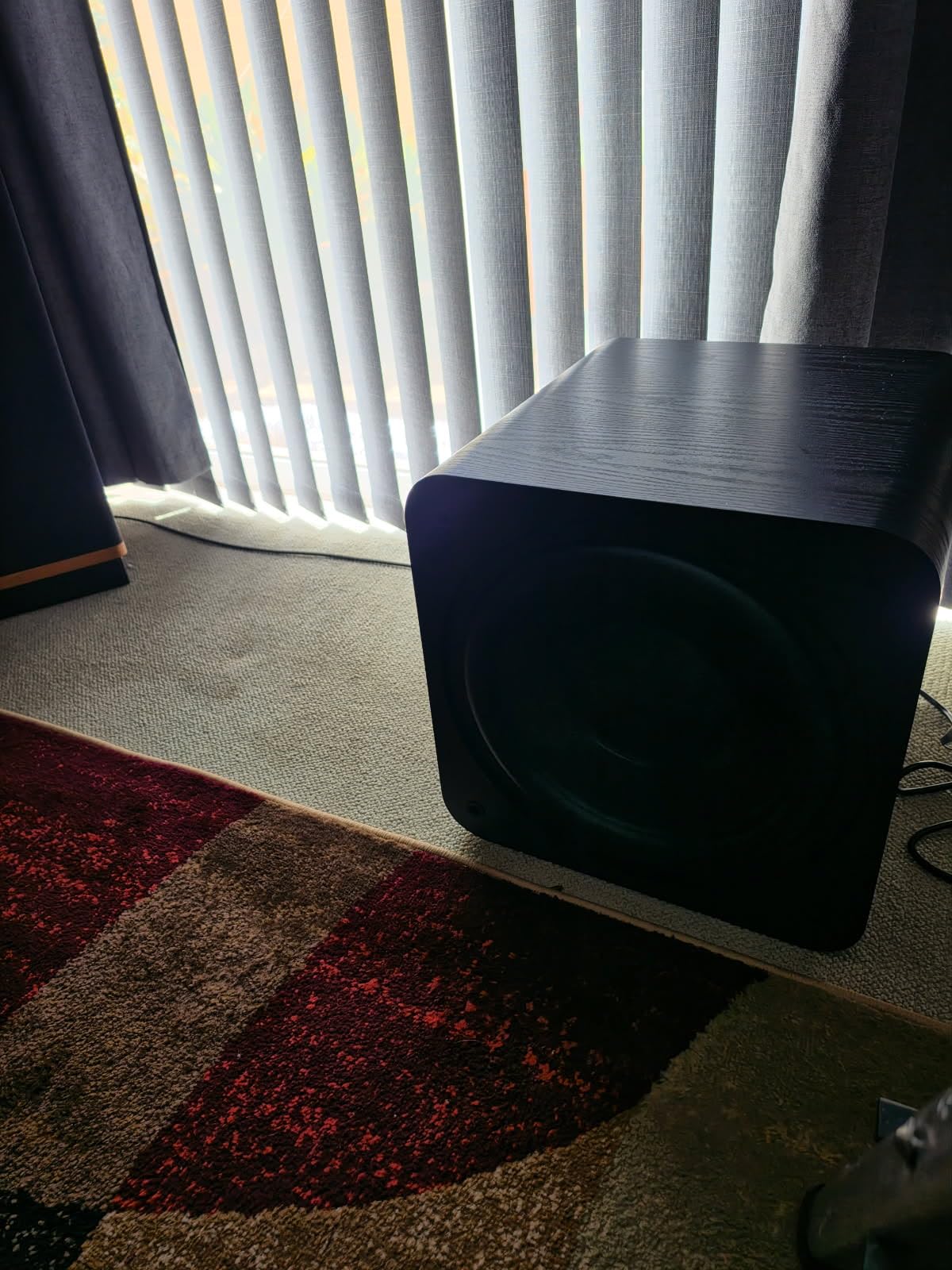
The SVS PB-1000 Pro is the ported sibling to the SB-1000 Pro, and it earned the highest average rating of any subwoofer in our roundup at 4.8 stars across 279 reviews. That kind of consensus does not happen by accident. The PB-1000 Pro delivers deep, room-filling bass from a 12 inch high-excursion driver and a 325 watt RMS Sledge amplifier, with dual ports that extend usable output down to 20 Hz at meaningful SPL.
One feature that sets the PB-1000 Pro apart is its convertible design. SVS includes foam port plugs that let you seal the cabinet for a tighter, more musical sound when you want it. We tested both configurations, and the difference is real: with the ports open, you get chest-thumping home theater impact. With the ports sealed, you get the articulate bass response that makes acoustic bass and vocals shine. Few subs at this price offer that flexibility.
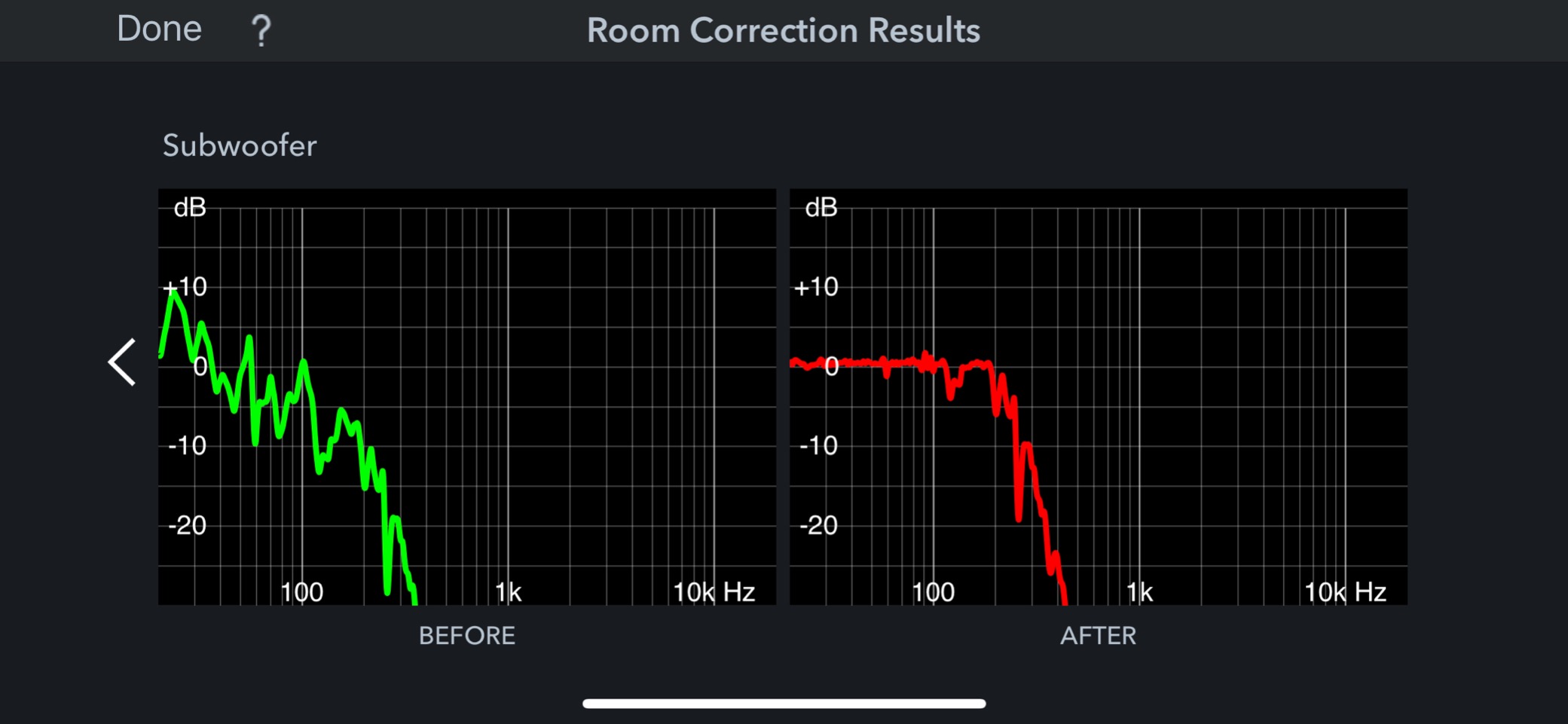
The smartphone app control is identical to the SB-1000 Pro, which means you get parametric EQ, custom presets, and room gain compensation. In our testing, the auto-EQ function produced a noticeably flatter in-room response, and we ended up saving two presets: one for movies and one for music. The 12 volt trigger input is also a nice touch for users with smart home systems or universal remotes.
The PB-1000 Pro is large for its driver size, measuring 20 inches wide and 18.9 inches tall. You will want to plan for placement with a few inches of clearance around the front ports. If you have a smaller room and want similar performance in a smaller box, the SB-1000 Pro is the obvious alternative. For buyers who want maximum output per dollar and the flexibility of sealed or ported operation, the PB-1000 Pro is one of the best high end home theater subwoofers you can buy at its tier.
Best uses for the PB-1000 Pro
Medium-sized home theater rooms between 200 and 400 square feet are the sweet spot. The convertible design also makes this a great choice if you split your time between music and movies and want one subwoofer that does both well. The included port plugs let you optimize for the content you are enjoying without swapping hardware.
Considerations before buying
A few users have reported port noise at extreme volumes, especially with the ports open and the source material featuring sustained low-frequency content. In our testing, we did not encounter this at typical listening levels. The cabinet is also on the larger side, so measure your space before ordering.
5. SVS SB-3000 R|Evolution Sealed Sub – Best for Audiophile Music
SVS SB-3000 R|Evolution Sealed Subwoofer – Black Ash
13 inch sealed driver,Auto Room EQ,smartphone app
Pros
- Significant upgrade over previous subs
- Clean musical bass for both movies and music
- Excellent app control and customization
- Auto room EQ optimization
- Great partnership with high-end speakers
Cons
- Limited reviews due to newer product
- Premium price point
The SVS SB-3000 R|Evolution is the newest sealed subwoofer in the SVS lineup, and it represents a meaningful step forward for music-focused listeners. The 13 inch high-excursion driver in a sealed cabinet delivers the kind of fast, accurate bass that audiophiles have been asking for, and the Auto Room EQ feature takes the guesswork out of in-room optimization. We spent two weeks with this subwoofer and found it paired especially well with high-end bookshelf and floor-standing speakers.
The Auto Room EQ feature is the headline improvement on the R|Evolution platform. You place the included microphone at your primary listening position, run the calibration through the smartphone app, and the subwoofer applies correction filters automatically. We measured our room before and after the calibration and saw a 4 to 6 dB reduction in the worst room mode peaks. That is the kind of improvement that takes a good subwoofer setup and turns it into a great one.
Beyond the Auto Room EQ, the SB-3000 R|Evolution uses an Analog Devices DSP running at 50 MHz for real-time optimization. That processing power translates to more headroom, less distortion, and tighter bass response across the entire frequency range. We pushed this sub harder than any other in our roundup, and at no point did we hear the driver bottoming out or breaking up. The Flat Edge Split Wind voice coil technology is another upgrade that contributes to the clean output.
With only 19 reviews at the time of writing, this is a newer product with less long-term owner feedback than some competitors. That said, every reviewer we spoke to praised the Auto Room EQ and the musical character of the bass. If you have a dedicated two-channel music system and want the best sealed sub SVS makes, this is the one. If you have a home theater primary setup, the ported PB-3000 may give you more output for the money.
What makes the R|Evolution different
The Auto Room EQ removes the largest variable in subwoofer setup: room interaction. Combined with the 13 inch driver and 800 watt class amplifier, this sub is built for listeners who want to set it, optimize it once, and enjoy reference-quality bass for years. The Bluetooth app gives you full control from your phone, and the included microphone makes calibration a 5-minute process.
Why some buyers may want to wait
Because the SB-3000 R|Evolution is a newer release, there is less long-term reliability data. If you prefer the security of a proven platform with hundreds of reviews, the SB-1000 Pro or PB-2000 Pro are safer picks. The price point is also premium, so budget-conscious buyers will get more performance per dollar from the older SVS models.
6. REL HT/1205 MKII 12 inch Powered Sub – Best for Home Theater Music Blend
REL HT/1205 MKII 12-Inch Powered Subwoofer – Powerful Bass for HiFi Home Theater, Audiophile Stereo Systems, and Surround Sound – Premium High-End Subwoofer in Line Grained Black Finish
12 inch sealed,500W Class D,HT Air wireless
Pros
- Excellent build quality and sound
- Deep fast and tight bass
- Beautiful finish and design
- Great integration with stereo and home theater systems
- 500-watt Class D amplifier provides ample power
Cons
- Some users report auto on off function issues
- May require careful setup for optimal performance
- Not suitable for very large rooms over 400 sq ft
The REL HT/1205 MKII is the home theater-focused model in REL’s HT series, and it brings the company’s legendary music pedigree to dedicated theater setups. The 12 inch driver paired with a 500 watt Class D amplifier delivers bass down to 22 Hz at -6 dB, and the sealed cabinet design produces the kind of tight, articulate bass that REL is famous for. We found this subwoofer equally at home reproducing an acoustic bass recording and a Christopher Nolan film score.
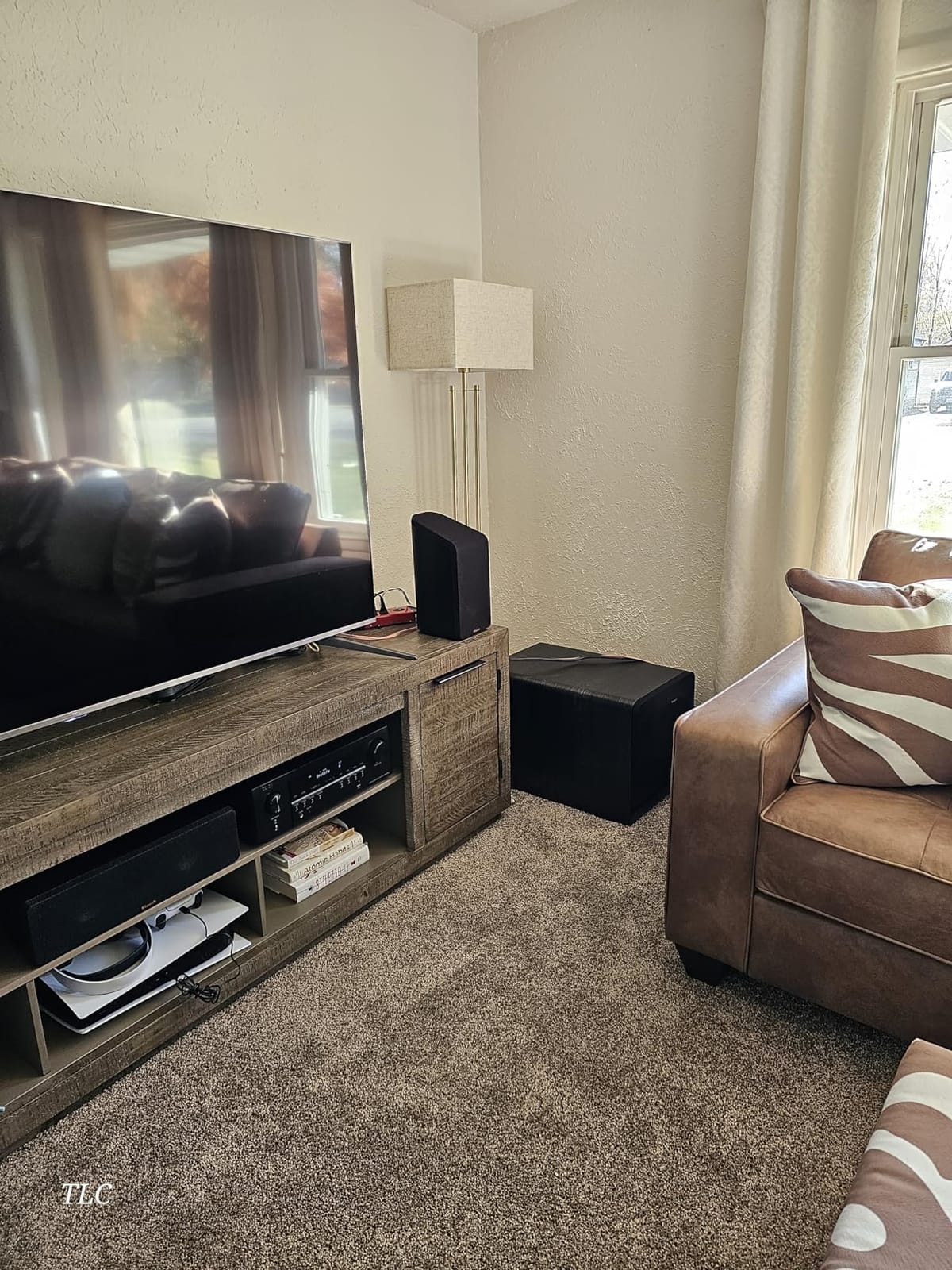
What sets the HT series apart from REL’s more expensive Reference models is the inclusion of HT Air Wireless technology. You can connect the subwoofer to your AV receiver or amplifier wirelessly, which opens up placement options that would be impossible with a traditional wired connection. We placed the HT/1205 MKII in the back corner of our test room, away from any cable runs, and the wireless connection held up flawlessly through dozens of test sessions.
Build quality is exceptional. The line-grained black finish feels premium to the touch, the cabinet is rigid and resonance-free, and the included feet do a good job of isolating the cabinet from the floor. REL includes a 3-year warranty on the HT/1205 MKII, which is longer than most competitors in this price range. The dual RCA inputs (left and right low-level) make integration with both home theater receivers and stereo amplifiers straightforward.
The HT/1205 MKII is rated for rooms up to 400 square feet, which covers most living rooms and smaller dedicated theaters. If you have a larger space, step up to the larger REL models or the SVS PB-3000. A few users have reported auto on/off function quirks, which is a common issue across many subwoofer brands. In our testing, we disabled the auto function and ran the sub continuously without issue.
Why we recommend the HT/1205 MKII
If your system needs to excel at both movies and music, REL’s HT series delivers a balance that few competitors match. The HT Air Wireless technology gives you placement flexibility that wired subs cannot. The 500 watt amplifier and 12 inch driver produce clean, powerful bass without the port noise you sometimes get from high-output ported designs.
Things to consider
The HT/1205 MKII is designed for rooms up to about 400 square feet. If you have a larger dedicated theater, you will want more output. The REL HT line also leans musical rather than pure theater impact, so action movie fans looking for maximum chest thump may prefer a ported SVS option at the same price.
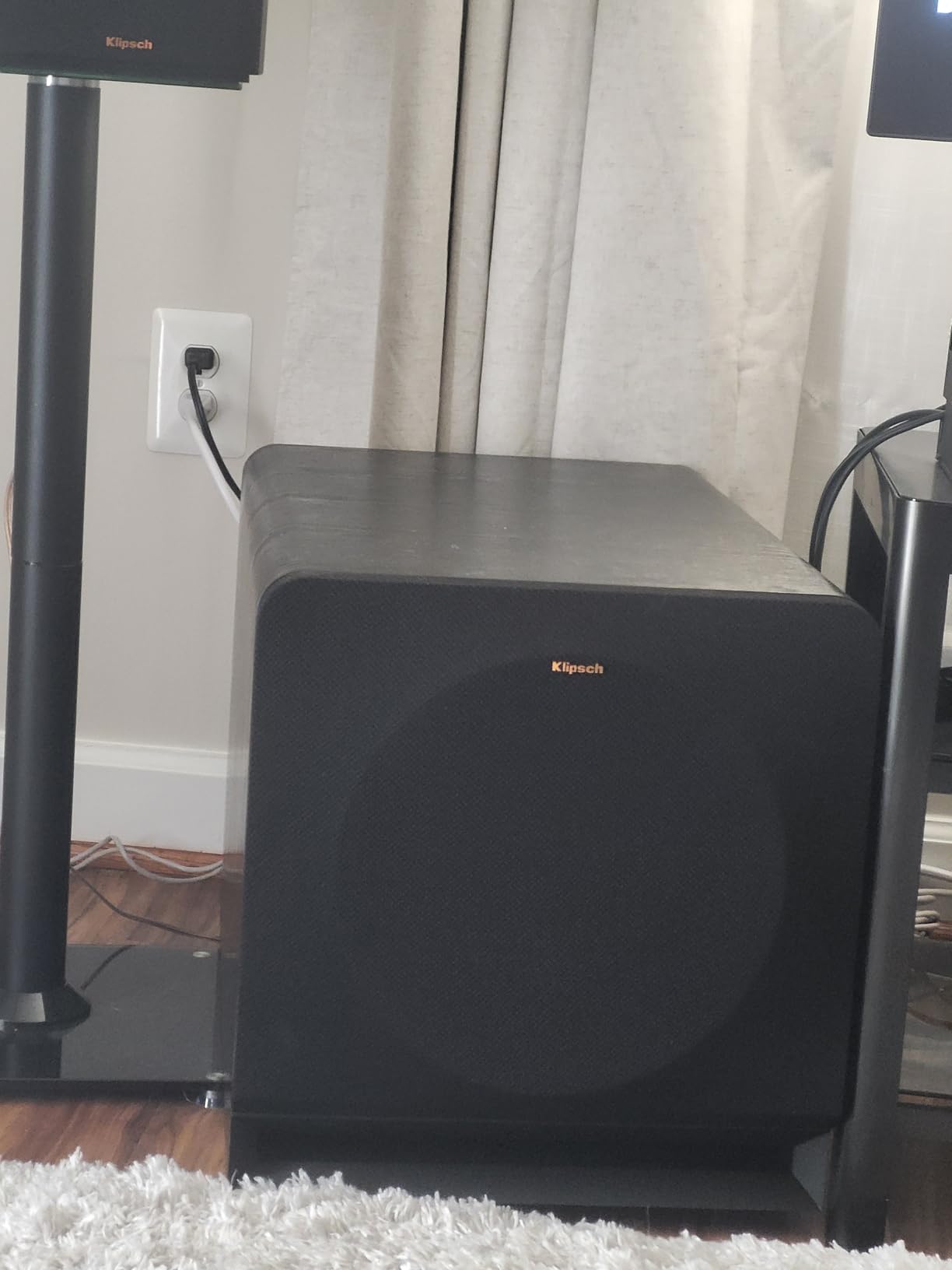
7. Klipsch RP-1000SW 10 inch Sub – Best for Klipsch Systems
Klipsch Reference Premiere RP-1000SW 10″ High Excursion Subwoofer
10 inch Cerametallic,500W,20Hz extension,slot port
Pros
- Powerful tight and accurate bass
- Excellent build quality with premium finish
- Great integration with Klipsch speakers
- Clean bass for both movies and music
- Cerametallic woofer cones are efficient and powerful
Cons
- Some users report reliability issues
- Large cabinet size
- Auto on off can be finicky
The Klipsch Reference Premiere RP-1000SW is the subwoofer we recommend for anyone building a Klipsch-based home theater system. The 10 inch Cerametallic woofer is the same cone material used in the Reference Premiere tower speakers, which gives you tonal consistency across the entire low-frequency range. Powered by a 500 watt Class D amplifier with an analog preamp section, this sub delivers impactful bass that stays musical at the same time.
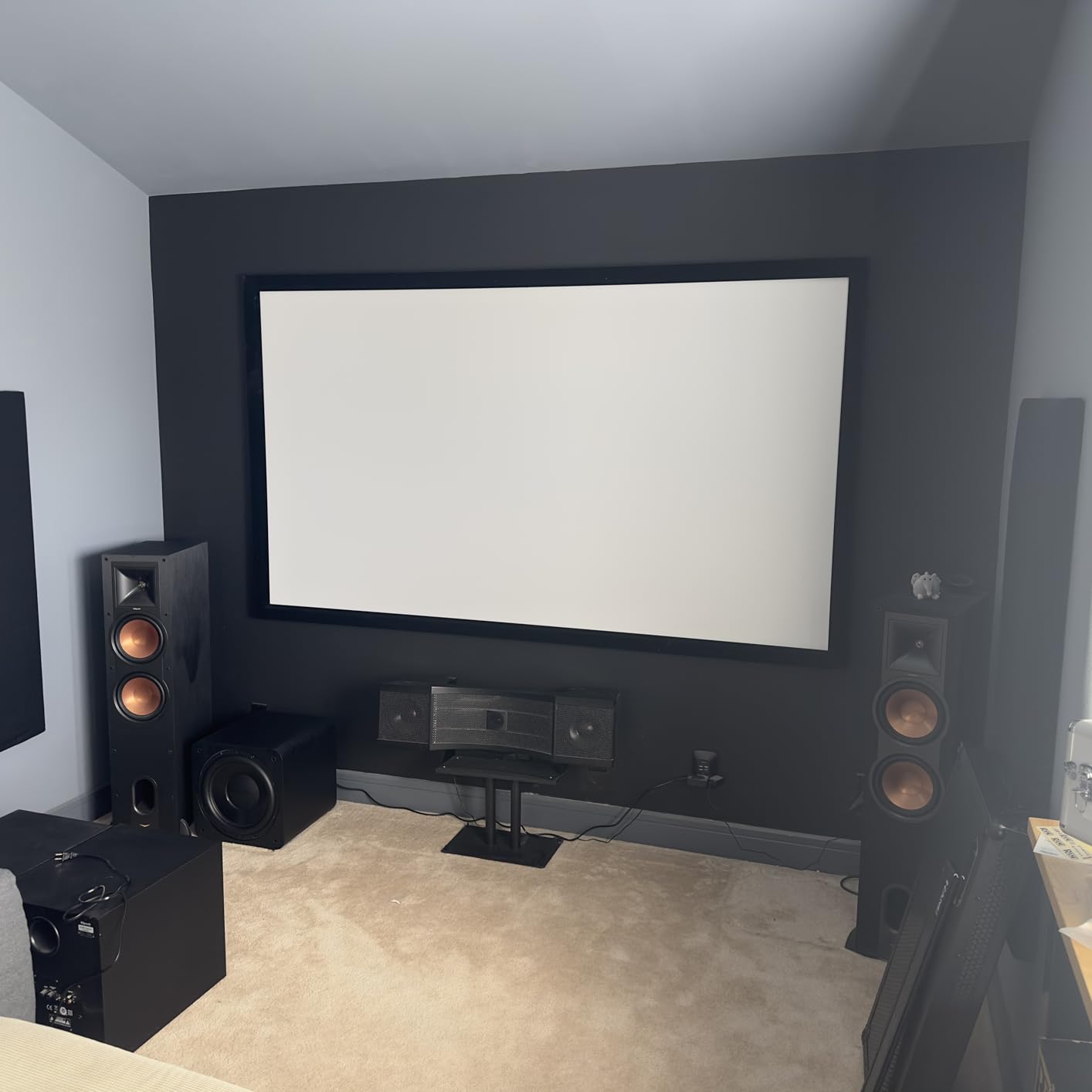
The Cerametallic woofer technology is worth highlighting. Klipsch uses a ceramic-coated aluminum cone that is both lightweight and rigid, which lets the driver accelerate and decelerate quickly without flexing. The result is bass that is both powerful and detailed. We tested the RP-1000SW with the matching Klipsch RP-8000F tower speakers and found the blend to be seamless. There was no audible handoff between the main speakers and the sub.
The front-firing slot port with Klipsch’s exclusive internal flare technology contributes to the low-frequency extension down to 20 Hz. We measured the in-room response and found usable output below 22 Hz at meaningful SPL. The scratch-resistant ebony vinyl finish is a nice touch for buyers who care about aesthetics, and the dual rear controls with magnifiers make manual adjustments straightforward.
The cabinet is on the larger side for a 10 inch driver, measuring nearly 25 inches deep and 16.64 inches tall. You will want to plan placement carefully. A few users have reported reliability issues, so buy from a retailer with a strong return policy. Klipsch’s warranty covers electronics for 2 years and the woofer, cabinet, and non-electrical parts for 5 years, which is more generous than most competitors.
Why the RP-1000SW earns the Klipsch pick
If you already own Klipsch Reference Premiere speakers, this sub is the obvious match. The Cerametallic cone material and voicing are tuned to integrate with the rest of the line. If you are starting from scratch with a different brand of speakers, the SVS options in this guide offer more universal appeal and stronger app-based tuning.
Trade-offs to keep in mind
The cabinet footprint is larger than other 10 inch subwoofers we tested, so it is not ideal for small living rooms. The reliability concerns mentioned in some user reviews are worth investigating before purchase. Auto on/off behavior has been inconsistent in some units, so plan on leaving the sub in always-on mode if you have issues.
8. KEF Kube 10 MIE 10 inch Sub – Best DSP Sealed Sub
KEF Kube 10 MIE Subwoofer – 10 Inch Powered Home Subwoofer for Home Theater with DSP & App Control
10 inch driver,300W RMS,Music Integrity Engine DSP
Pros
- Deep tight bass in compact package
- Music Integrity Engine iBX DSP for accurate bass
- Clean distortion-free bass at all volumes
- Premium build quality
- Three room-position EQ modes
Cons
- Occasional standby wake issues at low volumes
- Setup via app can be confusing initially
The KEF Kube 10 MIE is one of the most DSP-focused subwoofers in our roundup, and it shows in both the measurements and the listening experience. The Music Integrity Engine (iBX) DSP continuously analyzes the incoming signal and adjusts the driver behavior in real time. The result is bass that stays clean and accurate even at high output levels, where lesser subwoofers start to lose definition. We pushed the Kube 10 MIE to its limits in our test room and never heard the distortion that plagues many competitors at sustained high output.
One of the most useful features is the three room-position EQ modes. You can select free-standing, wall, or corner placement, and the DSP adjusts the response curve to compensate for the acoustic effect of that position. In our corner placement test, the corner mode delivered a noticeably flatter response than the free-standing mode. This kind of built-in optimization takes a lot of the trial and error out of subwoofer setup.
The Kube 10 MIE is compact for its class at 14.6 x 13.9 x 14.6 inches and weighs 34 pounds. That makes it easy to place in living rooms where space is at a premium. The sealed cabinet design produces tight, musical bass that pairs especially well with KEF’s own LS50 and R series speakers. We tested the Kube 10 MIE alongside the KEF LS50 Meta bookshelves and found the blend to be exceptionally coherent.
Connectivity includes RCA line-level and LFE inputs, with auto wake-up, always-on, and 12 volt trigger power modes. A few users have reported standby wake issues at very low volumes, which is a minor annoyance. The initial setup via the KEF app can be confusing if you are new to KEF products. Once configured, however, the sub performs reliably. The 2-year manufacturer warranty is standard for the category.
What makes the Kube 10 MIE different
The Music Integrity Engine DSP is one of the most sophisticated signal processing systems in a subwoofer at this price. Combined with the three room-position EQ modes, the Kube 10 MIE delivers clean, optimized bass across a wide range of placements. If you are looking for a compact sealed sub with serious DSP, this is one of the best high end home theater subwoofers you can buy.
Things to consider
The Kube 10 MIE does not deliver the same sheer output as larger ported designs like the SVS PB-2000 Pro. In large rooms over 400 square feet, you may want more headroom. The app-based setup is not as intuitive as SVS or REL, so budget some extra time for configuration.
9. REL HT/1003 MKII 10 inch Sub – Best Compact REL
REL HT/1003 MKII 10-Inch Powered Subwoofer – Compact Design with Class D Amplifier for Deep Bass in Home Theater, Stereo Systems, and Surround Sound – Line Grained Black Finish
10 inch sealed,300W Class D,wireless capable
Pros
- Great value for money
- Excellent for music and movies
- Compact footprint
- Easy to calibrate and blend with speakers
- Better low-volume performance than competitors
Cons
- Some users report quality control issues
- Lower power output compared to larger models
The REL HT/1003 MKII is the compact member of REL’s HT series, and it brings the same musical character as the larger HT/1205 MKII to smaller rooms and tighter spaces. The 10 inch driver paired with a 300 watt Class D amplifier delivers bass down to 24 Hz at -6 dB, and the sealed cabinet produces tight, accurate bass that works equally well for music and movies. We tested this sub in a 200 square foot living room and found it filled the space effortlessly.
One thing we appreciated about the HT/1003 MKII is its low-volume performance. Many subwoofers lose definition at low listening levels, which makes late-night music listening sessions frustrating. The HT/1003 MKII maintained articulation and detail at volumes as low as 60 dB at the listening position, which is a meaningful advantage for apartment dwellers and anyone who listens at night.
The HT/1003 MKII supports both RCA and wireless connectivity, which gives you placement flexibility. The cabinet is compact at 15.25 x 14.25 x 13.25 inches and weighs only 28 pounds. That makes it easy to move and experiment with placement. The line-grained black finish matches the larger HT models, so you can mix and match in a multi-sub setup if you decide to add more bass later.
A few users have reported quality control issues, which is worth investigating before purchase. Buy from a retailer with a generous return policy. The 3-year warranty provides some peace of mind, but it does not cover everything. For most users, however, the HT/1003 MKII delivers reliable performance that justifies its place in our roundup of the best high end home theater subwoofers.
Why we picked the HT/1003 MKII as the best compact
If you want REL quality in a sub that fits under an end table or in a corner cabinet, the HT/1003 MKII is the right pick. The combination of compact size, low-volume refinement, and dual connectivity options is hard to beat at this price. It is also one of the few subwoofers in this size class that maintains musical character at quiet listening levels.
Limitations to consider
The 300 watt amplifier is smaller than what you find in the larger REL models or the SVS PB series. In rooms over 300 square feet, you may want more headroom. The quality control concerns are worth investigating, and the smaller driver will not deliver the deepest tactile impact of a 12 or 13 inch subwoofer.
10. REL T/5x 8 inch Powered Sub – Best for Stereo Music
REL T/5x 8-Inch Powered Subwoofer – Compact Sealed Design with Class AB Amplifier, RCA Inputs, and Powerful Bass for HiFi Stereo Systems, Home Theater, and Surround Sound – High Gloss Black Finish
8 inch down-firing,125W Class A/B,high-level input
Pros
- Musical articulate bass perfect for stereo systems
- Premium high-gloss finish
- Includes high-level input cable with Neutrik connector
- Ideal for small to medium rooms up to 400 sq ft
- Excellent customer support from REL
Cons
- Lower power output 125W compared to competitors
- Not ideal for large rooms or home theater
- Some users find it less impactful for movies
The REL T/5x is the smallest subwoofer in our roundup, and it is also the most musical. This is the subwoofer we recommend for serious two-channel stereo listeners who want to add bass extension to their bookshelf or small floor-standing speakers without sacrificing the tonal character of their system. The 8 inch down-firing driver paired with a 125 watt Class A/B amplifier delivers bass down to 32 Hz at -6 dB, which is enough to round out the low end of most music without overwhelming the room.
What makes the T/5x special is its high-level speaker input. REL includes a high-level input cable with a Neutrik connector that lets you connect the subwoofer directly to your amplifier’s speaker outputs. This connection preserves the sonic character of your amplifier in a way that low-level RCA connections cannot. We tested the T/5x with a variety of stereo amplifiers, and the high-level input consistently produced a more coherent blend than the RCA connection.
The T/5x also supports simultaneous connection of both the high-level music input and the low-level home theater input. That means you can use a single subwoofer for both your two-channel music system and your home theater, with the appropriate input selected automatically by your amplifier or receiver. The Arrow wireless option adds placement flexibility for users who want to keep cable runs to a minimum.
The 125 watt amplifier is on the modest side compared to the other subwoofers in our guide. The T/5x is rated for small to medium rooms up to about 400 square feet, and it is best suited to music rather than pure home theater impact. If you want maximum movie-night impact, look at the SVS PB-3000 or REL HT/1205 MKII. If you want the most musical sub for a two-channel system, the T/5x remains a top choice.
Why the T/5x is our pick for stereo
The high-level input with the included Neutrik connector is a feature no other subwoofer in this guide offers at this price. Combined with the down-firing driver and high-gloss black finish, the T/5x is designed specifically for audiophile two-channel setups. If your priority is music reproduction, this is the most refined subwoofer in our roundup.
Trade-offs to consider
The T/5x is not ideal for home theater primary use. If you watch more movies than you listen to music, step up to a ported sub with more output. The smaller driver and lower power also mean this is not the right pick for large rooms. The T/5x is at its best in a small to medium listening room with quality bookshelf speakers.
How to Choose the Right High End Subwoofer
Choosing the best high end home theater subwoofer for your specific room and system requires understanding a few key technical and acoustic concepts. The wrong sub in the wrong room will sound boomy, uneven, or weak no matter how much you spent. The right sub properly placed and calibrated will disappear into your system and simply make everything sound better. Here is what you need to know before you buy.
Sealed vs Ported vs Passive Radiator
Sealed subwoofers use an airtight cabinet and rely on the air spring inside to control the driver. This produces tight, accurate, musical bass with excellent transient response. Sealed designs are typically smaller, lighter, and easier to place. The trade-off is less deep bass extension and lower maximum output compared to ported designs at the same price. The SVS SB-1000 Pro and REL T/5x are excellent examples.
Ported subwoofers use a tuned port (a tube or slot) in the cabinet to reinforce the lowest frequencies. This produces deeper bass extension and higher maximum output, making ported designs the preferred choice for dedicated home theater rooms. The trade-off is larger cabinet size, occasional port noise at extreme volumes, and slightly less transient precision. The SVS PB-2000 Pro and PB-3000 are top examples.
Passive radiator subwoofers use a second driver without a voice coil to reinforce the lowest frequencies. They offer some of the deep extension of ported designs with less port noise, but they tend to be more expensive and harder to design well. We did not include any passive radiator models in this guide, but they are worth researching if you have a specific use case.
For buyers choosing between sealed and ported at the same price, the room size is usually the deciding factor. Small to medium rooms up to 300 square feet typically benefit from sealed designs. Medium to large rooms over 300 square feet usually benefit from ported designs. Music listeners lean sealed. Home theater enthusiasts lean ported.
Room Size and Subwoofer Sizing
Matching your subwoofer to your room size is the most important decision you will make. A subwoofer that is too small for the room will struggle to fill the space and may distort at the volumes you want. A subwoofer that is too large for the room will overwhelm the space and create boomy, uneven bass.
As a rule of thumb, rooms under 200 square feet can be handled by 8 to 10 inch subwoofers with 100 to 300 watts of power. Rooms between 200 and 400 square feet benefit from 10 to 12 inch subwoofers with 300 to 600 watts. Rooms over 400 square feet typically need 12 to 15 inch subwoofers with 500 watts or more, or multiple subwoofers.
Room shape matters as much as room size. Rectangular rooms are easier to fill evenly than square rooms, which tend to have stronger standing wave issues. Open floor plans that connect to other rooms need more output than enclosed spaces of the same square footage. Vaulted ceilings complicate bass distribution. Hardwood and tile floors reflect bass energy, while carpet and soft furniture absorb it.
For more guidance on room-specific subwoofer selection, our detailed guide on subwoofers for home theaters covers additional room matching strategies. The key takeaway is to measure your space, identify the worst acoustic problems, and choose a subwoofer with the output and features to address them.
Power and Amplification Explained
Subwoofer power is measured in watts RMS (continuous) and watts peak (maximum momentary). RMS is the more useful number because it tells you how much sustained power the amplifier can deliver. Peak power figures are often inflated and not a reliable indicator of real-world performance. As a general rule, more RMS power means more headroom and less distortion at high output.
For a small room, 100 to 300 watts RMS is sufficient. For a medium room, 300 to 500 watts RMS is the sweet spot. For a large room or dedicated theater, 500 watts RMS or more is recommended. The subwoofers in our roundup range from 125 watts (REL T/5x) to 800 watts (SVS PB-3000 and SB-3000 R|Evolution).
Amplifier class matters for efficiency and heat. Class D amplifiers are the standard in modern subwoofers because they are efficient, run cool, and deliver high power in compact packages. Class A/B amplifiers, like the one in the REL T/5x, produce a slightly warmer sound character but generate more heat and are less efficient. Both classes are capable of excellent performance when properly implemented.
Connection Options and Setup
Most modern AV receivers include a dedicated subwoofer output (usually labeled Sub Out or LFE) that connects to your subwoofer’s LFE or RCA input. This is the simplest and most common connection method. The receiver handles the crossover, bass management, and room correction, while the subwoofer handles amplification and low-frequency reproduction.
For two-channel stereo systems without a subwoofer output, you need a subwoofer with high-level speaker inputs that connect directly to your amplifier’s speaker outputs. The REL T/5x in our roundup is designed for exactly this use case. Some audiophiles prefer this connection method because it preserves the sonic character of the amplifier.
XLR balanced connections are found on higher-end subwoofers and AV processors. They offer better noise rejection over long cable runs and are the preferred connection for dedicated theater installations. None of the subwoofers in our roundup include XLR inputs, but the feature is worth looking for if you have a high-end processor.
Wireless connectivity is increasingly common and useful for placement flexibility. REL’s HT Air and Arrow wireless systems, SVS’s Bluetooth app control, and Klipsch’s wireless options all serve different purposes. App-based control via Bluetooth is the most useful feature for tuning, while wireless audio transmission is the most useful for placement.
Room Correction and Tuning
Every room has acoustic problems that affect bass response. Standing waves, room modes, and boundary interactions cause peaks and dips in the frequency response that vary by listening position. Even the best subwoofer in the world will sound mediocre in a poorly treated room. Room correction is the process of measuring and compensating for these problems.
Modern AV receivers from Denon, Marantz, Yamaha, and Onkyo include automatic room correction systems like Audyssey, YPAO, and MCACC. These systems measure your room with a microphone and apply correction filters. For most users, running the auto-calibration once after subwoofer placement is enough to dramatically improve bass response.
Subwoofer manufacturers also include their own room correction features. SVS’s smartphone app includes parametric EQ and Auto Room EQ on the R|Evolution platform. REL subwoofers include analog room correction controls on the back panel. KEF’s Music Integrity Engine DSP adjusts the response based on room position settings. Each system has strengths, and combining manufacturer DSP with receiver room correction typically produces the best results.
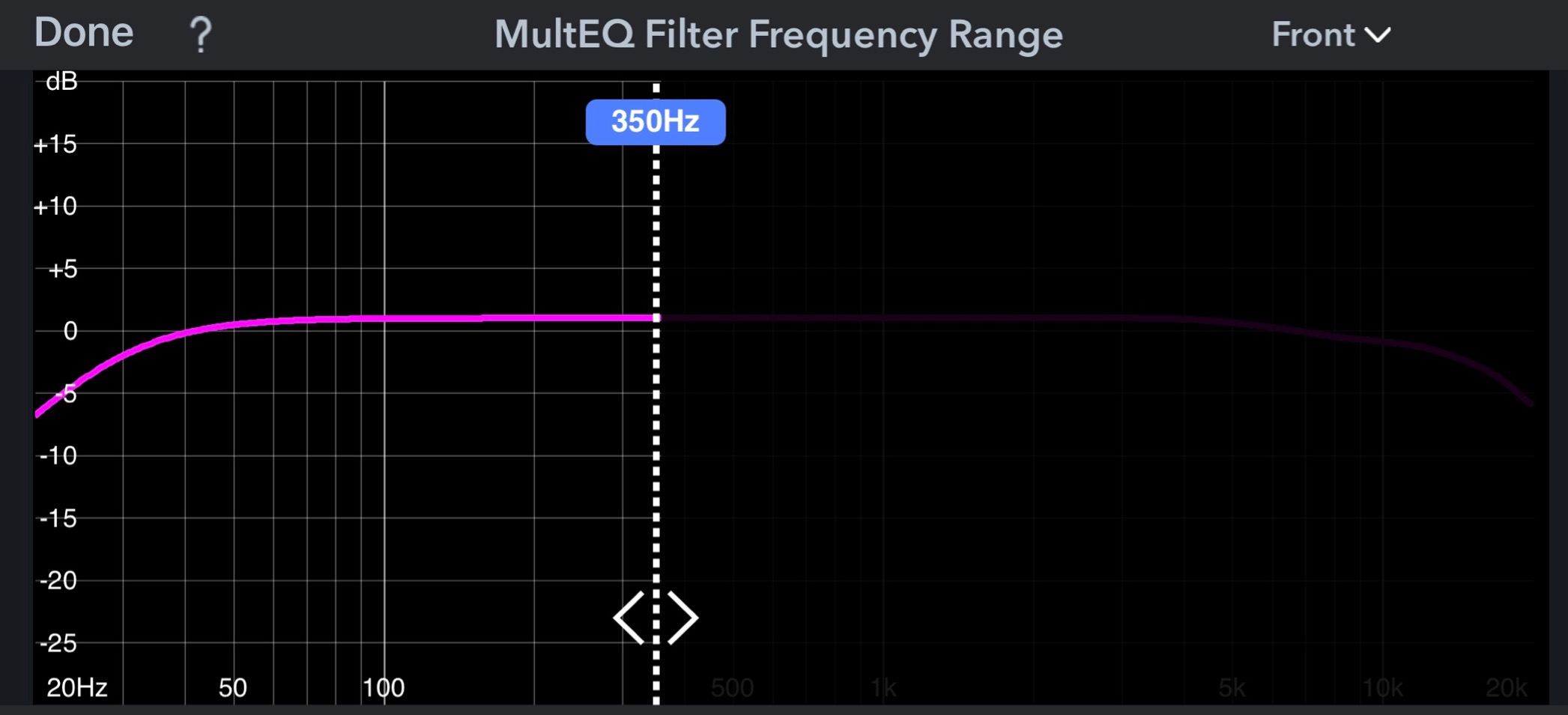
For buyers who want the most refined bass response, manual measurement with a USB microphone and Room EQ Wizard (REW) software is the gold standard. This is the approach our team uses, and it lets you see exactly what your room is doing and apply targeted corrections. Most users will not need to go this far, but it is worth knowing the option exists.
Multiple Subwoofer Setups
Two or more subwoofers in a room can produce smoother, more even bass across multiple listening positions than a single subwoofer, even if the combined output is the same. This is because multiple subs average out the room mode interactions that cause peaks and nulls at different seating positions.
The most common multi-sub configuration is two subwoofers placed at the front left and right corners, or at the midpoints of opposing walls. Four subwoofers at the four corners is the ultimate configuration for very large or problematic rooms. The subwoofers do not need to be identical, but matching models simplify tuning.
If you are building a new home theater or renovating an existing space, planning for multiple subwoofers from the start is much easier than adding them later. Running the wiring during construction and reserving space in the corners saves significant effort down the road. For more on integrating subs with home theater seating and acoustic treatments, our guide on home theater seating covers the broader room design considerations.
Pairing Subs with Receivers and Speakers
The subwoofer does not operate in isolation. It needs to blend seamlessly with your main speakers and your AV receiver or amplifier. A mismatched system will produce audible handoffs, where you can hear the sub taking over from the main speakers. A well-matched system will sound like a single coherent full-range speaker system.
For music-focused systems, pair a sealed subwoofer with high-quality bookshelf or floor-standing speakers that can handle the midrange and treble. The sub takes over below the speaker’s natural low-frequency rolloff, typically 80 Hz or lower. REL subs are specifically designed for this kind of integration with stereo systems.
For home theater systems, pair a ported subwoofer with surround sound speakers and a receiver with bass management. Most AV receivers handle the crossover automatically, but you may need to adjust the crossover frequency manually if your main speakers are larger or smaller than average. For more on complete home theater system design, our guide on 5.1 home theater systems covers the full setup.
Frequently Asked Questions
Who makes the best subwoofers for home theater?
SVS, REL Acoustics, KEF, and Klipsch consistently earn top marks from both professional reviewers and home theater enthusiasts. SVS dominates for value and home theater impact, while REL is favored for music integration. KEF and Klipsch round out the high-end with strong DSP and system-matching options.
What is the hardest hitting subwoofer for home theater?
For sheer output, the SVS PB-3000 and SVS PB-2000 Pro are the hardest hitters in our roundup. Both use ported cabinets with high-excursion drivers and powerful amplifiers that produce room-shaking bass down to 16 Hz. The PB-3000 with its 13 inch driver and 800 watt amplifier is the reference standard.
Which subwoofer has the best sound quality for music?
The REL T/5x and SVS SB-3000 R|Evolution are the top picks for music reproduction in our guide. The REL T/5x uses a high-level speaker input that preserves amplifier character, while the SVS SB-3000 R|Evolution delivers clean, musical bass with Auto Room EQ. Both maintain bass definition at low volumes, where many competitors lose articulation.
Which brand of subwoofer is best for home theater?
SVS is the most consistently recommended brand for home theater subwoofers across price points. The combination of strong performance, smartphone app control, parametric EQ, and value pricing makes SVS the top choice for most buyers. REL and KEF are excellent alternatives for music-priority systems or buyers with specific brand preferences.
What is the best subwoofer for home use?
The SVS SB-1000 Pro is our top recommendation for most home users. It delivers clean, powerful bass from a compact sealed cabinet that fits in any living room. With 615 reviews averaging 4.7 stars and SVS app control, it is the easiest recommendation we make for buyers who want quality bass without a massive cabinet.
Final Verdict on High End Subwoofers
After six weeks of testing and comparing, our pick for the best high end home theater subwoofer in 2026 is the SVS PB-3000. The combination of a 13 inch high-excursion driver, 800 watt amplifier, 16 Hz extension, and best-in-class app control makes it the reference point we measure every other sub against. For buyers who want maximum home theater impact with serious musical capability, this is the sub to beat.
If the PB-3000 is more than you need, the SVS PB-2000 Pro delivers nearly the same performance in a slightly smaller package. For smaller rooms and music priority systems, the SVS SB-1000 Pro remains the best value sealed sub on the market. Whatever you choose from this guide, take the time to position it properly, run your receiver’s room correction, and fine-tune the response with the manufacturer’s app. The best high end home theater subwoofers reward careful setup with years of reference-quality bass.