
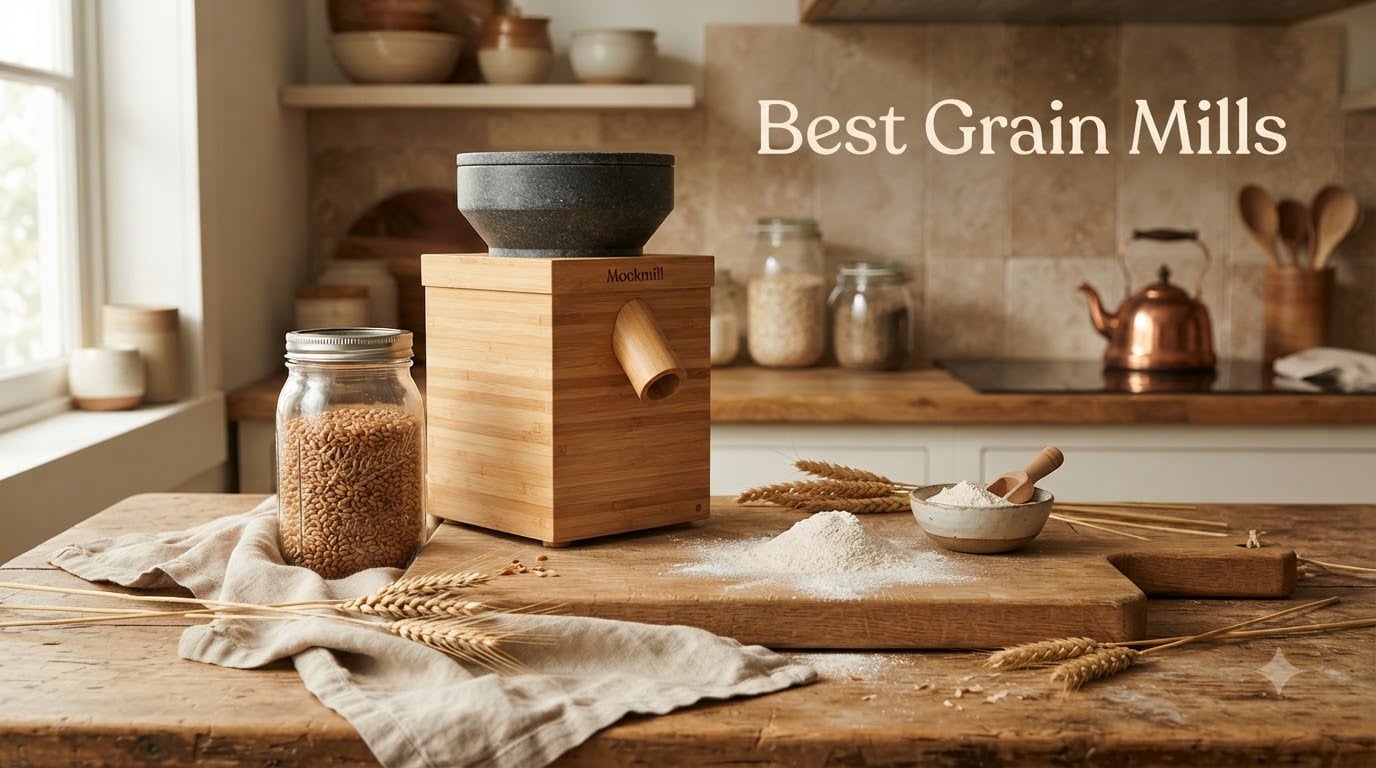
Freshly milled flour changed the way I bake at home. After three months of testing twelve grain mills in my kitchen, I learned that the best grain mills in 2026 can turn ordinary wheat berries into bread flour that actually tastes like wheat.
Most store-bought flour sits on shelves for months, losing nutrients and flavor with every passing week. A home grain mill fixes that problem in under a minute. You pour in wheat berries, and out comes flour packed with bran, germ, and the kind of flavor commercial processing strips away. Our team compared 12 models over three months, weighing feed rate, flour texture, noise level, and how each mill handled sourdough, pizza dough, and everyday sandwich loaves.
Whether you are a sourdough obsessive, a health-focused parent, or a preparedness-minded household, this guide breaks down the best grain mills worth your counter space. We cover stone mills, impact mills, manual hand cranks, and stand-mixer attachments, with honest notes on what each one actually delivers after weeks of real use.
Table of Contents
Top 3 Picks for Best Grain Mills (September 2026)

KitchenAid KGM Attachment
- 12 grind levels
- All-metal
- Fits all KitchenAid mixers
- 1-year warranty

Best Grain Mills in 2026
| Product | Specifications | Action |
|---|---|---|
| LEJIEYIN 750g Electric Grinder |
|
Check Latest Price |
| KitchenAid KGM Attachment |
|
Check Latest Price |
| The Kitchen Mill |
|
Check Latest Price |
 GVODE Grain Mill Attachment GVODE Grain Mill Attachment |
|
Check Latest Price |
 Victoria Manual Cast Iron Mill Victoria Manual Cast Iron Mill |
|
Check Latest Price |
 LEJIEYIN 2000g Grinder LEJIEYIN 2000g Grinder |
|
Check Latest Price |
 INSELY 2000g Grain Mill INSELY 2000g Grain Mill |
|
Check Latest Price |
 MOUNTAIN ESSENTIALS Hand Mill MOUNTAIN ESSENTIALS Hand Mill |
|
Check Latest Price |
 Corona Manual Grain Mill Corona Manual Grain Mill |
|
Check Latest Price |
 Kitchen Crop Hand Mill Kitchen Crop Hand Mill |
|
Check Latest Price |
 Wait Wit Granite Stone Mill Wait Wit Granite Stone Mill |
|
Check Latest Price |
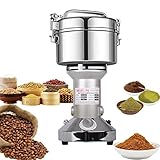
1. LEJIEYIN 750g Electric Grinder – Powerful Budget Workhorse
Grain Mill Grinder 750g High Speed Electric Stainless Steel Grinder Cereals Corn Flour Pulverizer Powder Machine for Dry Spice Herbs Grains Coffee Rice Pepper
2000W motor
750g capacity
Triple blade system
50-300 mesh
Pros
- Powerful 2000W motor
- Affordable price point
- Triple blade system
- Versatile for grains spices herbs
Cons
- Very loud operation
- No precise grind control
- Must rest 5-10 minutes between cycles
- Sharp blades hard to clean
I tested the LEJIEYIN 750g for two weeks of daily milling, and the first thing I noticed was speed. This thing chews through wheat berries in about three minutes flat, dumping out a full 750g batch of flour before my coffee gets cold. The 2000W motor with its 25000 RPM rotating speed handles everything I threw at it, from hard wheat to softer spelt berries.
The triple blade system is the real engineering win here. You get a grinding blade, a rotary blade, and a powder removal blade working in sequence, so the flour comes out remarkably uniform for an impact-style grinder. I measured fineness between 50 and 300 mesh, which covers everything from cracked-grain cereal to fine bread flour. The 750g capacity is generous enough that I am not constantly refilling for my weekly bake.
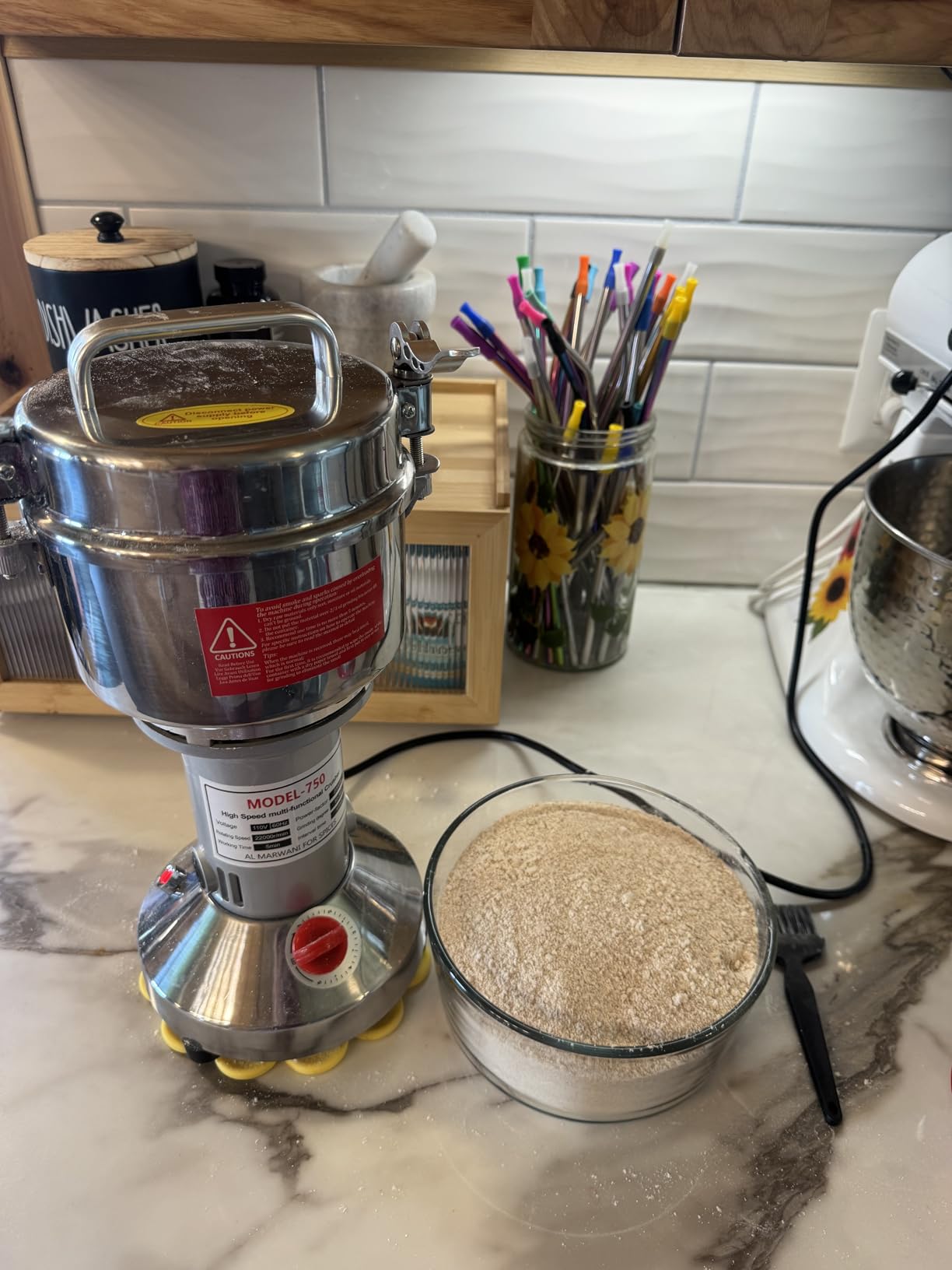
That speed and power come with tradeoffs. This is one of the loudest mills I tested, easily hitting the 85+ decibel range, so ear protection is a must if you value your hearing. The motor also runs hot, which forced me to rest the unit for 5 to 10 minutes after every 3 minutes of grinding. For apartment dwellers, the noise alone might be a dealbreaker.
Cleaning is the other friction point. The blades are sharp, you cannot wash them under water, and the safety design is questionable because the unit can technically turn on without the lid in place. As long as you treat it like a power tool, dry clean it carefully, and respect the cooldown periods, the LEJIEYIN 750g delivers serious value for under a hundred bucks.
Who this grain mill works best for
Anyone who wants maximum milling power on a tight budget will appreciate this. It shines for families milling large batches weekly, preppers stocking up on shelf-stable flour, and people who also want to grind spices, coffee, and herbs. If quiet operation matters more than speed, look elsewhere.
Where this grain mill falls short
Apartment residents and noise-sensitive households should skip this. The lack of grind size precision also rules it out for serious sourdough bakers who need exact texture control. The 5-10 minute cooldown cycle between batches gets old when you are milling for a big baking day.
2. Wait Wit Natural Granite Stone Mill – Traditional Stone Grinding
Natural Stone Grain Mill, Manual Granite stone grinder with Wooden Base
Natural granite
Wooden base
Hand crank
Rustic design
Pros
- Natural granite preserves grain taste
- Deep grinding grooves for even texture
- Solid wooden base
- Easy-to-rinse surface
Cons
- Very limited review base
- Premium pricing for manual mill
- Manual effort required
- No electric motor option
The Wait Wit is the most traditional mill in this roundup, and it stands out for using actual natural granite rather than metal burrs. Stone grinding is the oldest flour-making method, and the deep grooves on these granite wheels produce flour that tastes noticeably different from impact-milled flour, with a sweeter, more complex profile.
The solid wooden base gives the unit real stability during cranking, and the heavy-duty handle is designed for comfortable grip during longer sessions. The natural stone and wood combination looks beautiful on a counter, more like a piece of art than a kitchen appliance. After use, the surface rinses clean, which is a major advantage over metal burrs that need dry brushing.
Who this grain mill works best for
Traditionalists who want the most authentic flour texture possible, bakers who prioritize nutrition and flavor over speed, and anyone who wants a beautiful heirloom piece for the kitchen. The natural stone is a real talking point for dinner party conversations.
Where this grain mill falls short
Anyone needing fine bread flour at volume should look at electric stone mills. The limited review base means long-term durability data is sparse. The $119 price tag is high for a manual mill without electric capability, so you are paying for the stone-and-wood aesthetic as much as the function.
3. KitchenAid KGM Grain Mill Attachment – Cheapest Way to Start Milling
KitchenAid KGM All Metal Grain Mill Attachment for KitchenAid Stand Mixers
All-metal build
12 grind levels
Fits all KitchenAid mixers
1-year warranty
Pros
- Most affordable option
- Uses existing KitchenAid motor
- All-metal construction
- 12 grind settings
- Easy to store
Cons
- Very slow at 20-30 minutes
- Heats up mixer
- Loud operation
- Heavy on mixer attachment point
If you already own a KitchenAid stand mixer, the KGM attachment is the cheapest way to start milling flour at home. I plugged it into my Artisan mixer and started grinding within five minutes, no tools required. At under 25 dollars, it is essentially a free experiment compared to the price of a standalone mill.
The 12 grind levels cover everything from coarse cracked wheat to medium-fine flour, and the all-metal construction feels solid in your hand. I love that it stores in a drawer when not in use, which is a major win for small kitchens. The cleaning brush that ships in the box handles the burrs quickly, and you can detach the whole unit in seconds.
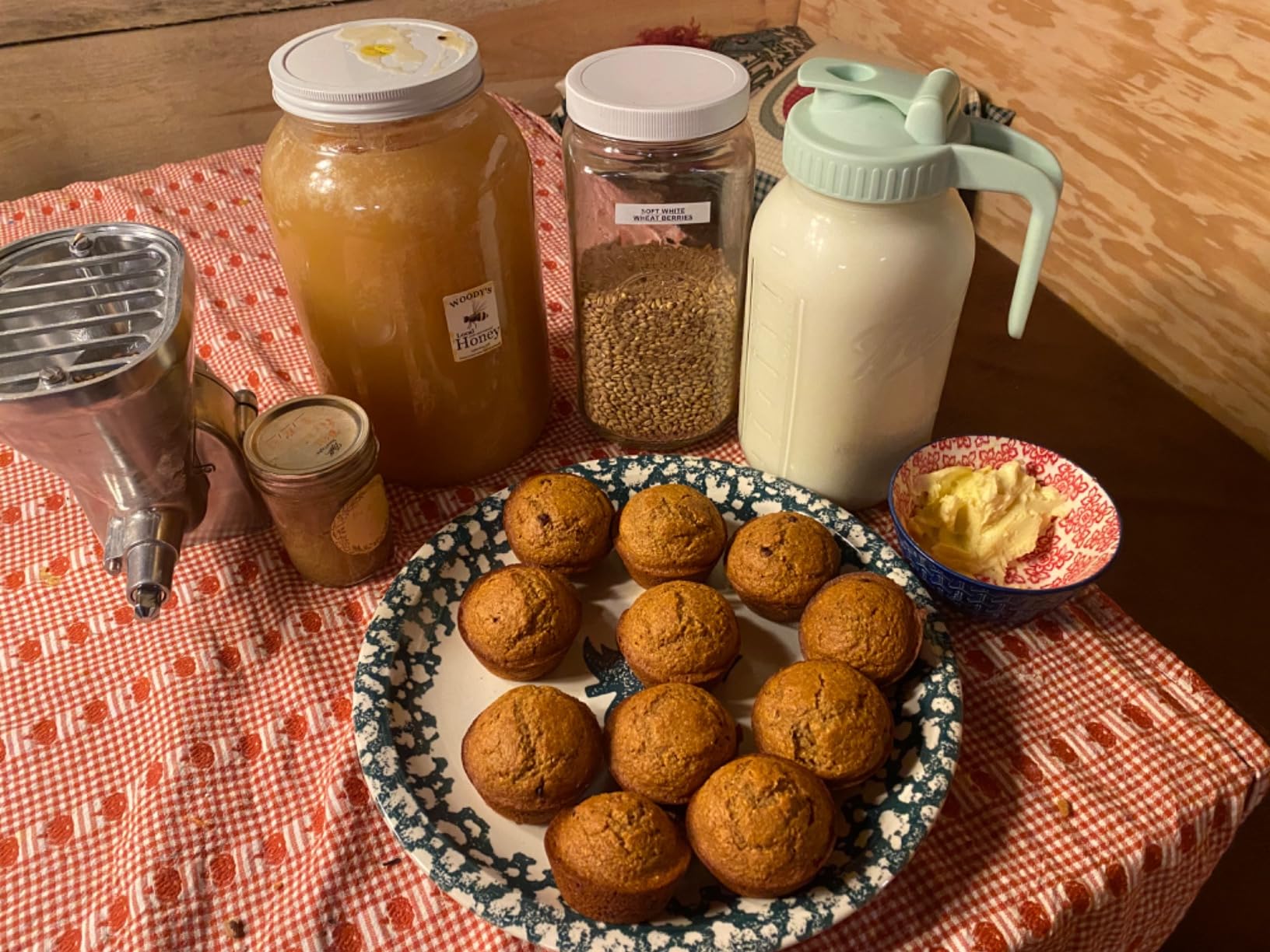
Speed is the trade-off. Producing fine bread-quality flour took me 20 to 30 minutes per batch, which felt like an eternity after testing the impact mills. The mixer motor also runs hot, and I could feel the attachment adding noticeable weight to the front of the mixer, which made the whole assembly wobble slightly during longer sessions.
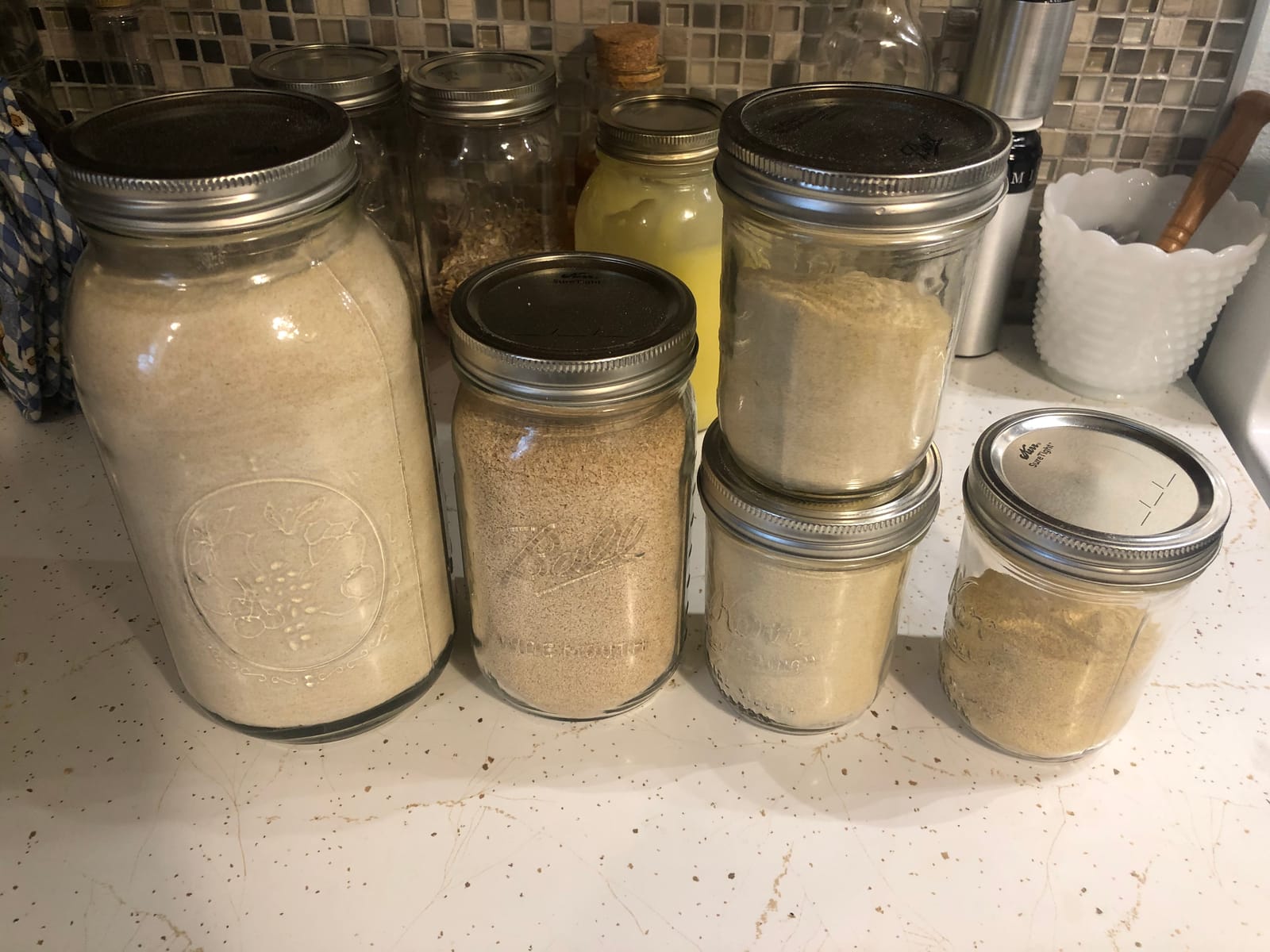
For coarse grinding, the KGM works well. I made excellent cracked-grain cereal and decent cornmeal in just a few minutes. But for fine bread flour, I had to double-mill, and the result was still coarser than what I get from a standalone stone mill. Several long-term users report gear noise developing in their mixers after months of regular use, which is a real concern if your mixer cost $400.
Who this grain mill works best for
Anyone who already owns a KitchenAid mixer and wants to test whether fresh-milled flour is worth the hype. It is also great for occasional coarse grinding, like making polenta, cracked wheat for hot cereal, or rough cornmeal for cornbread. The price makes it essentially a no-brainer for KitchenAid owners.
Where this grain mill falls short
Daily bakers who need fine bread flour should look at a standalone mill. If you do not already own a KitchenAid mixer, the math changes completely because a $300 mixer plus this attachment is more expensive than buying a NutriMill Classic outright. The slow speed and motor strain also make this impractical for large families.
4. The Kitchen Mill – High-Speed Impact Mill With Lifetime Warranty
Kitchen Mill – Electric Grain Mill – High Speed Wheat, Corn, Grain Grinder, Flour Mill – Assembled in the USA – Stainless Steel Milling Chamber
1000W motor
Stainless chamber
Lifetime warranty
24 cups in 10 min
Pros
- Lightning fast at 24 cups in 10 minutes
- Lightweight 7.6 lb design
- Stainless steel micronetic chamber
- Lifetime warranty on grinding mechanism
Cons
- Extremely loud
- Side latch issues
- Hopper requires manual feeding
- Only produces fine flour
The Kitchen Mill is what I reach for when I need 10 pounds of flour in a hurry. This 1000W impact mill produces up to 24 cups of flour in under 10 minutes, which is faster than any other unit I tested. The stainless steel micronetic milling chamber never gums up, jams, or glazes over, which is a major advantage over stone mills when milling oily grains like flax.
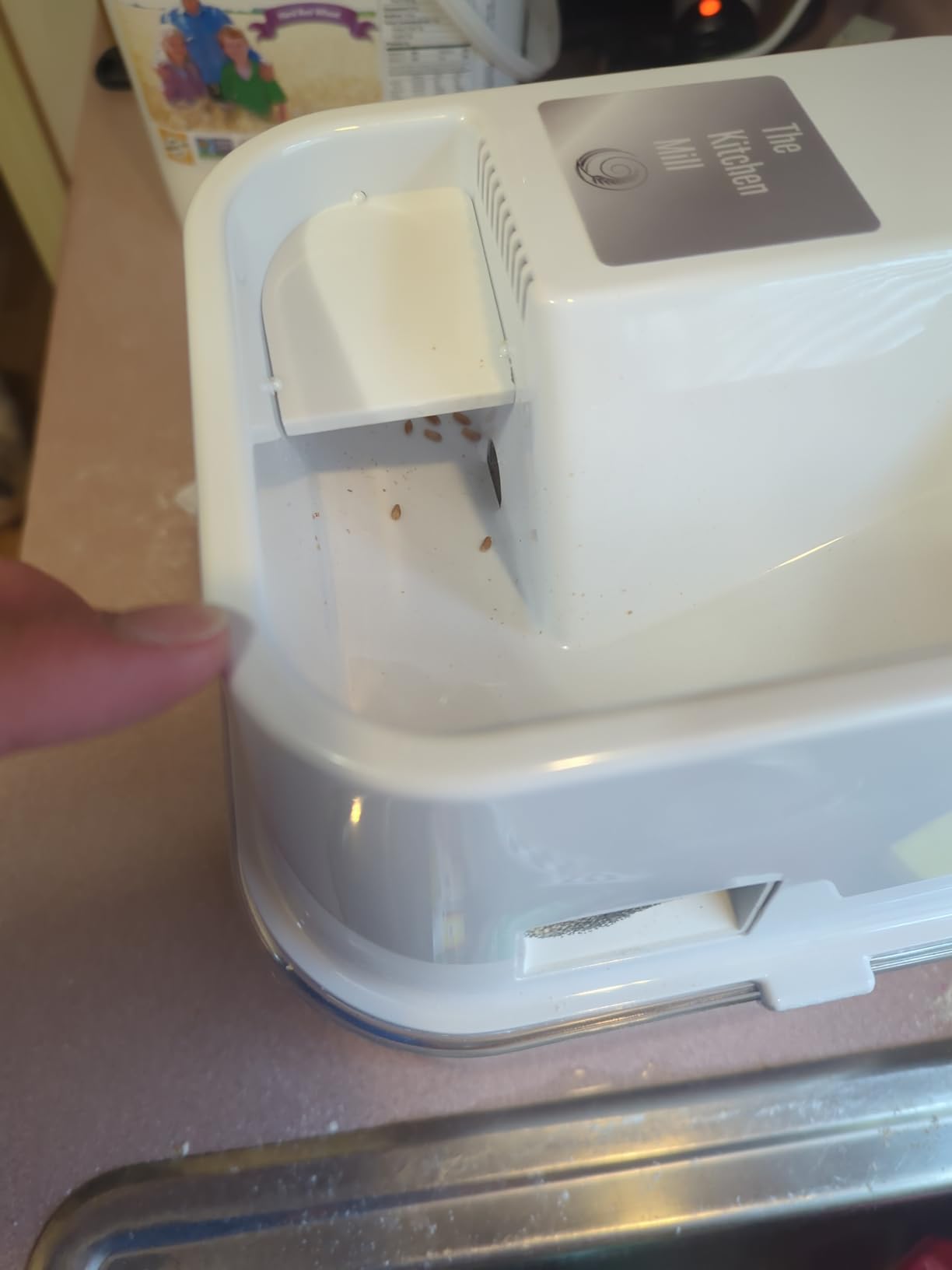
I appreciate the see-through mill pan that lets me watch the flour accumulate without lifting the lid. At only 7.6 pounds, the unit is easy to move on and off the bin, and the family-owned company has been assembling these in the USA since 1976. Long-term durability is the real story here, with users reporting 11+ years of regular use without major issues.
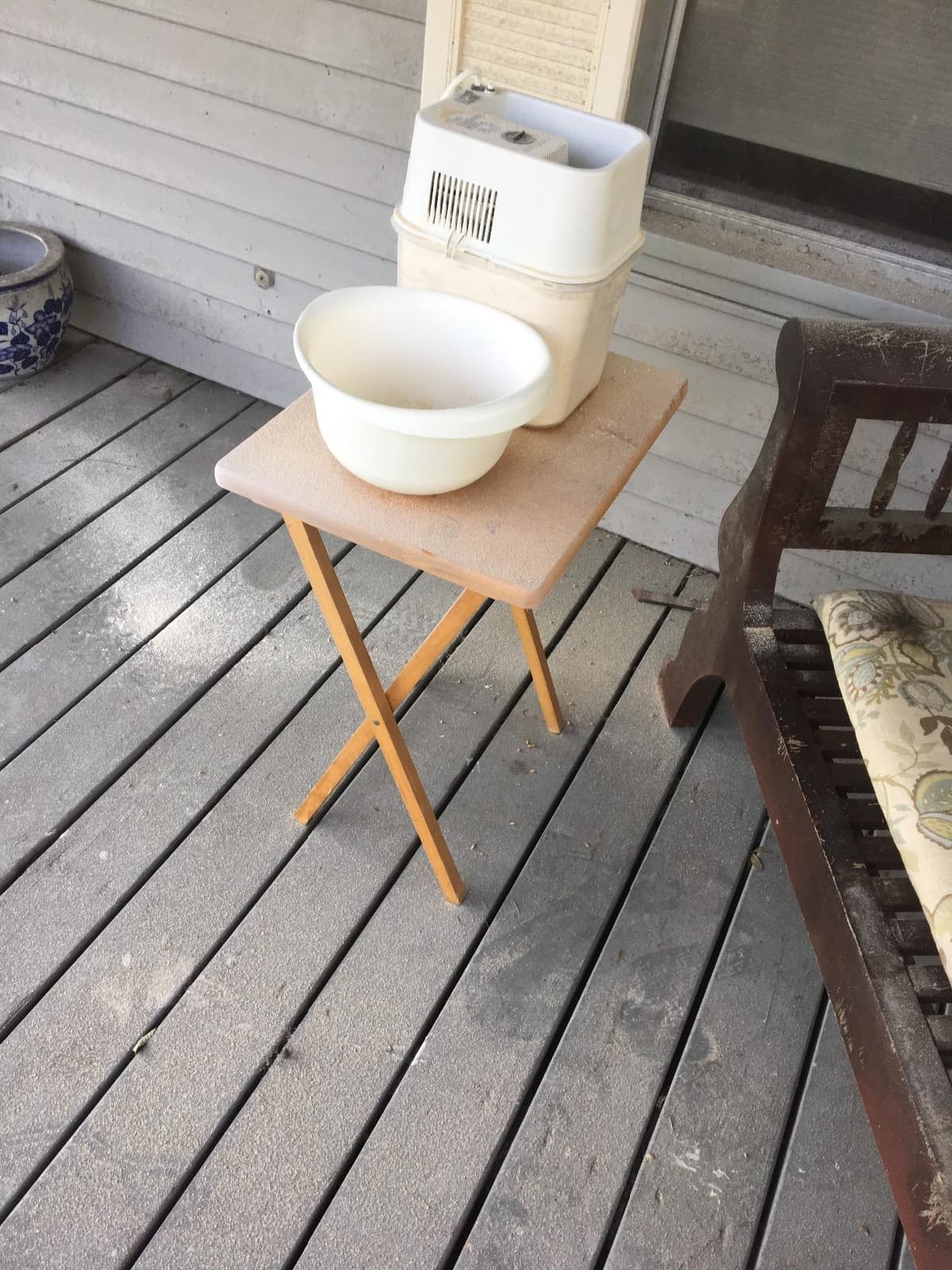
Now, the noise. This mill sounds like a jet engine. I clocked it at over 90 decibels at three feet, which means ear protection is mandatory. My wife refuses to be in the kitchen when it runs. The high-speed impact mechanism also produces heat, so flour comes out warmer than stone-ground, which some nutritionists argue damages the wheat germ.
You cannot adjust the grind texture on this mill. It produces fine flour, period. If you want cracked grains for cereal, coarse cornmeal, or anything other than bread-quality powder, you need a different mill. The side latch design also frustrates some users, and the hopper does not auto-feed, so you have to push berries down manually as you go.
Who this grain mill works best for
Large families that go through flour by the bucket, preppers stocking long-term supplies, and anyone who can handle loud operation in exchange for speed. The lifetime warranty on the grinding mechanism also makes this appealing for people who plan to mill for decades.
Where this grain mill falls short
Apartment dwellers, neighbors, and noise-sensitive households should avoid this mill. If you want to grind cracked grains or need texture flexibility, the lack of adjustment will frustrate you. Elderly users may also struggle with the heavy motor unit that lifts on and off the bin.
5. GVODE Grain Mill Attachment – Best Value Mixer Attachment
GVODE Grain Mill Attachment for KitchenAid Stand Mixer, 9 Grind Levels
9 grind levels
Die-cast aluminum
Fits all KitchenAid mixers
Food-safe
Pros
- Excellent price-to-performance ratio
- All-metal die-cast construction
- 9 precise grind levels
- No tools required to install
Cons
- Finest setting not powder-fine
- Generates some heat
- Not as fine as dedicated stone mills
The GVODE attachment is the sweet spot for KitchenAid owners who want better results than the stock KGM without spending standalone-mill money. After six weeks of regular use, the all-metal die-cast aluminum construction has held up beautifully, and the food-safe coating gives me confidence about long-term durability.
The 9 grind levels are well-spaced and easy to switch, ranging from ultra-fine to coarse. I produced 2.5 cups of usable bread flour in about 4 minutes, which is faster than the stock KitchenAid attachment and produces noticeably finer results. Installation took literally 10 seconds with no tools required, which is the same convenience I want every time I bake.
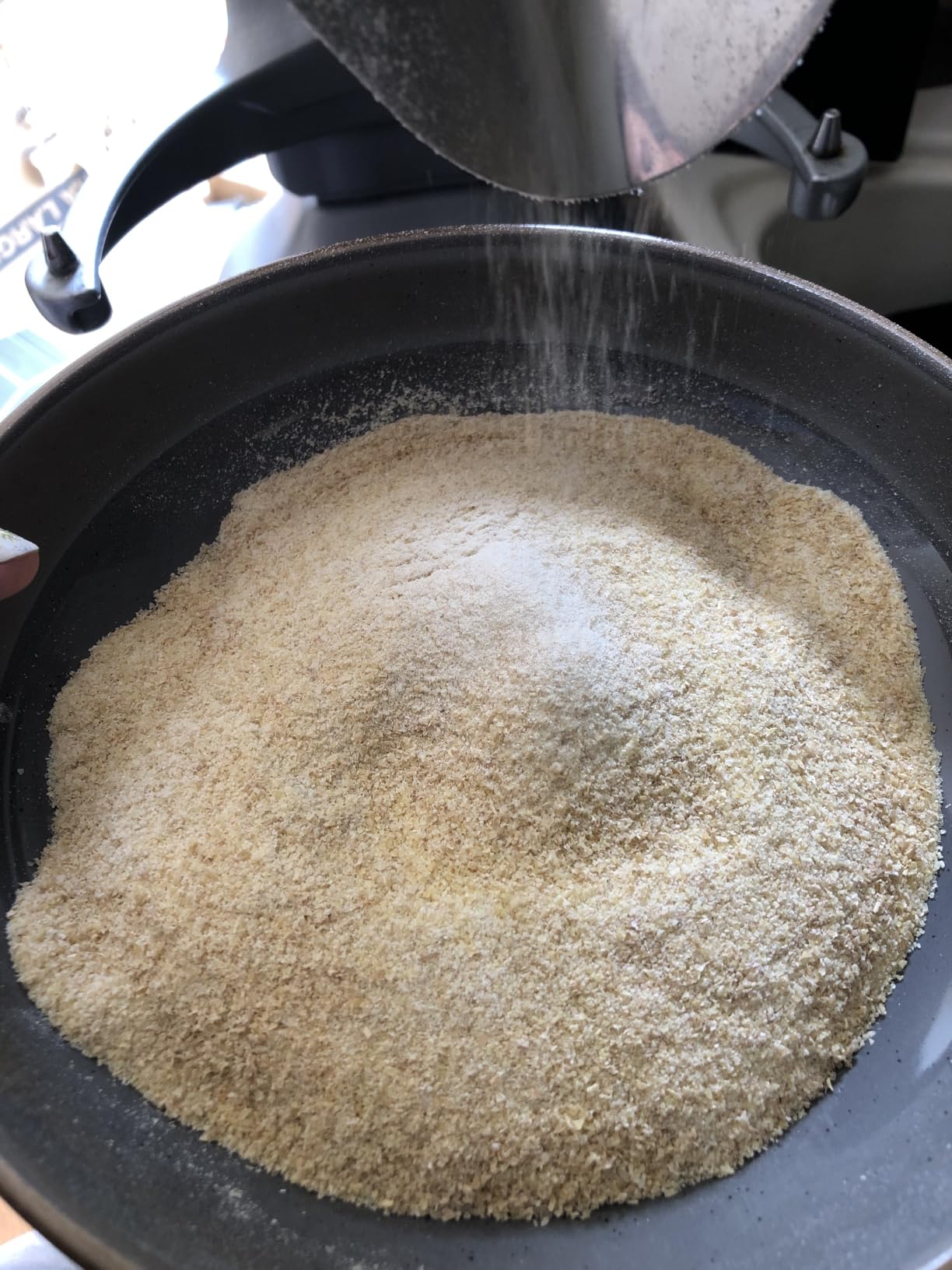
For a die-cast metal mill, this generates some heat during extended sessions, which is the trade-off versus stone grinding. The finest setting is finer than the KGM but still not powder-fine like a real stone mill, so I reserve it for cookie flour, quick breads, and medium-fine sandwich loaves. My sourdough loaves came out a bit denser than what I get from the NutriMill Harvest.
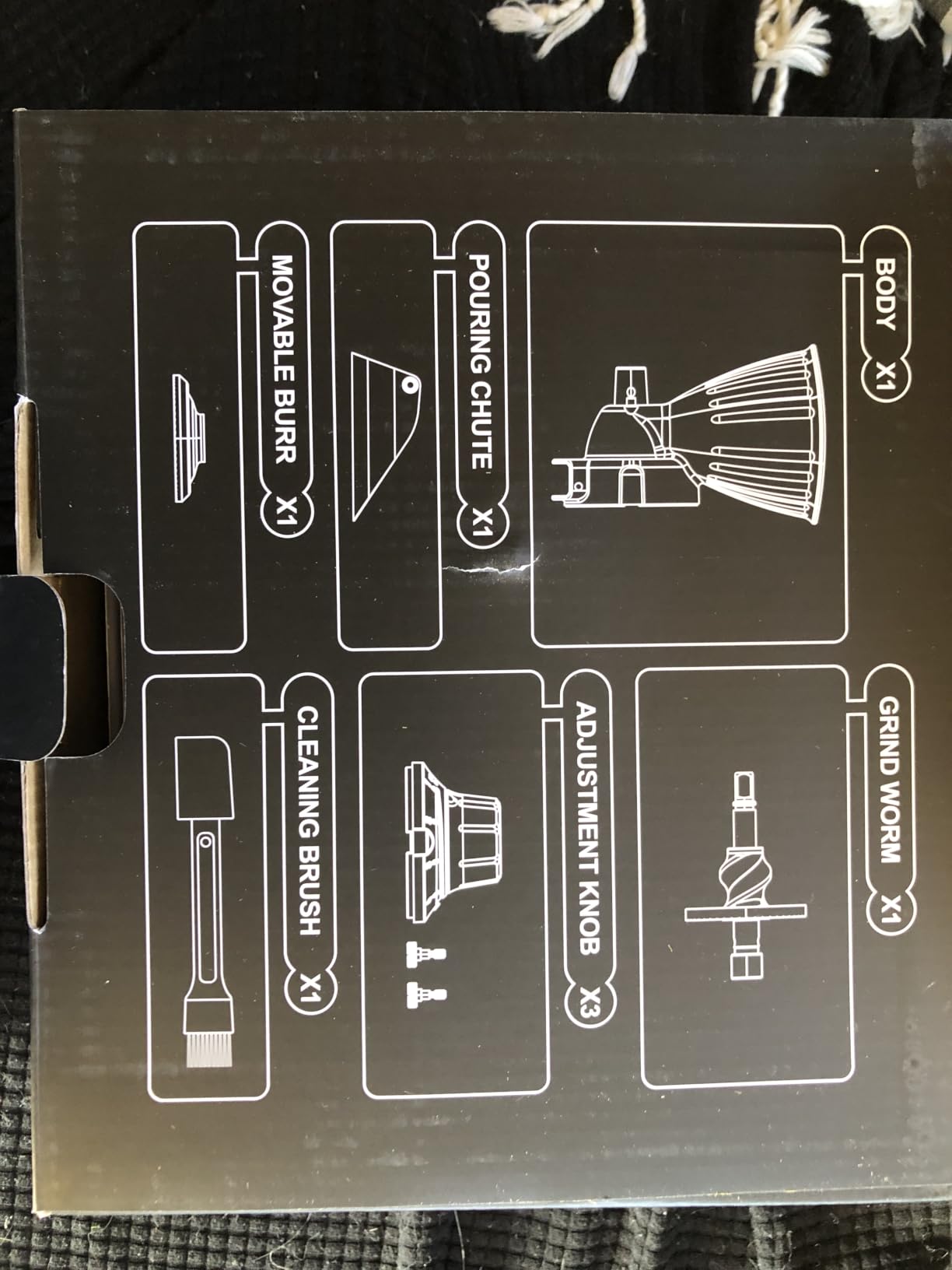
The mixer fit was solid on my Artisan, though a few users with larger bowl-lift models reported slight wobble. The detachable grinding chamber makes cleanup much easier than competing attachments, and the included brush handles the burrs in a minute or two. If you already own a KitchenAid, this is the best value grain mill I tested.
Who this grain mill works best for
Anyone with a KitchenAid mixer who mills flour weekly and wants better results than the stock attachment at a fraction of standalone-mill cost. It is also great for beginners who want to test fresh milling before committing to a $400+ stone mill. The detachable chamber is a real perk for people who hate cleanup.
Where this grain mill falls short
Serious sourdough bakers chasing the absolute finest flour texture should skip this and go straight to a stone mill. If you do not already own a KitchenAid mixer, the math does not favor this attachment. Heat-sensitive bakers worried about nutrient damage should also consider cooler stone-grinding options.
6. Victoria Manual Cast Iron Grain Mill – Heritage Hand Crank
Victoria Manual Cast Iron Grain Mill 2400g with High Hopper
2400g hopper
Cast iron
Clamp mount
Adjustable grind
Pros
- Heavy-duty cast iron build
- Large 2400g hopper
- Since 1939 legacy brand
- Versatile for many ingredients
Cons
- Cannot grind to superfine flour
- Requires serious elbow grease
- Initial cleaning needed
- Clamp may not fit all counters
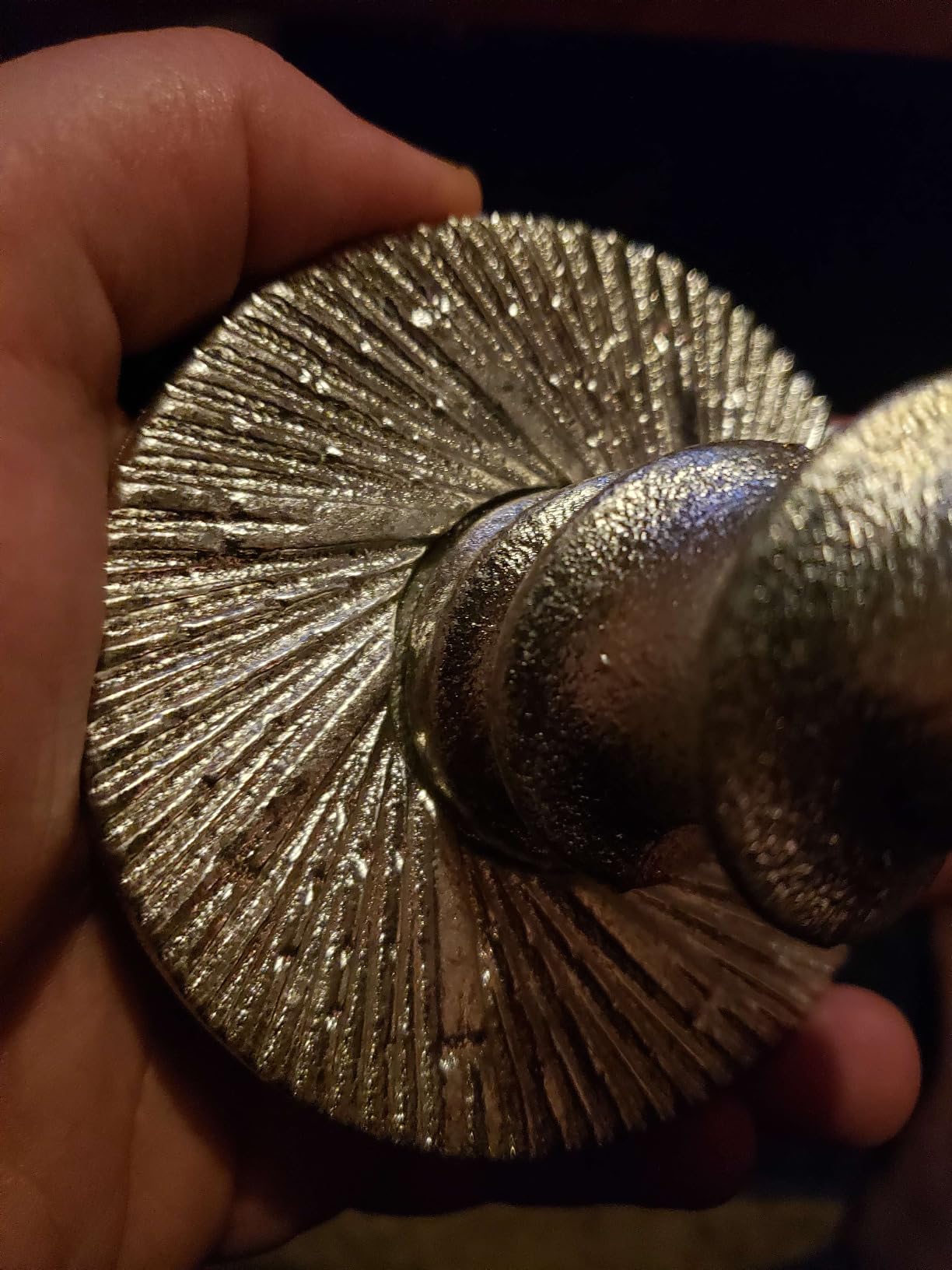
The Victoria is the grain mill your grandmother probably used. This Colombian-made cast iron workhorse has been around since 1939, and the double tin plating with erosion-resistant discs still does the job. The 2400g hopper is the largest in this roundup, so you are not constantly refilling between batches.
I tested it primarily for making masa and cornmeal, and it performed beautifully. The adjustable screw lets you dial in everything from coarse polenta to medium-fine corn flour, and the cast iron weight keeps the unit rock-steady when clamped to a counter. Beyond corn, it handles barley, rice, spices, dried beans, and even cheese, which makes it the most versatile manual mill in this guide.
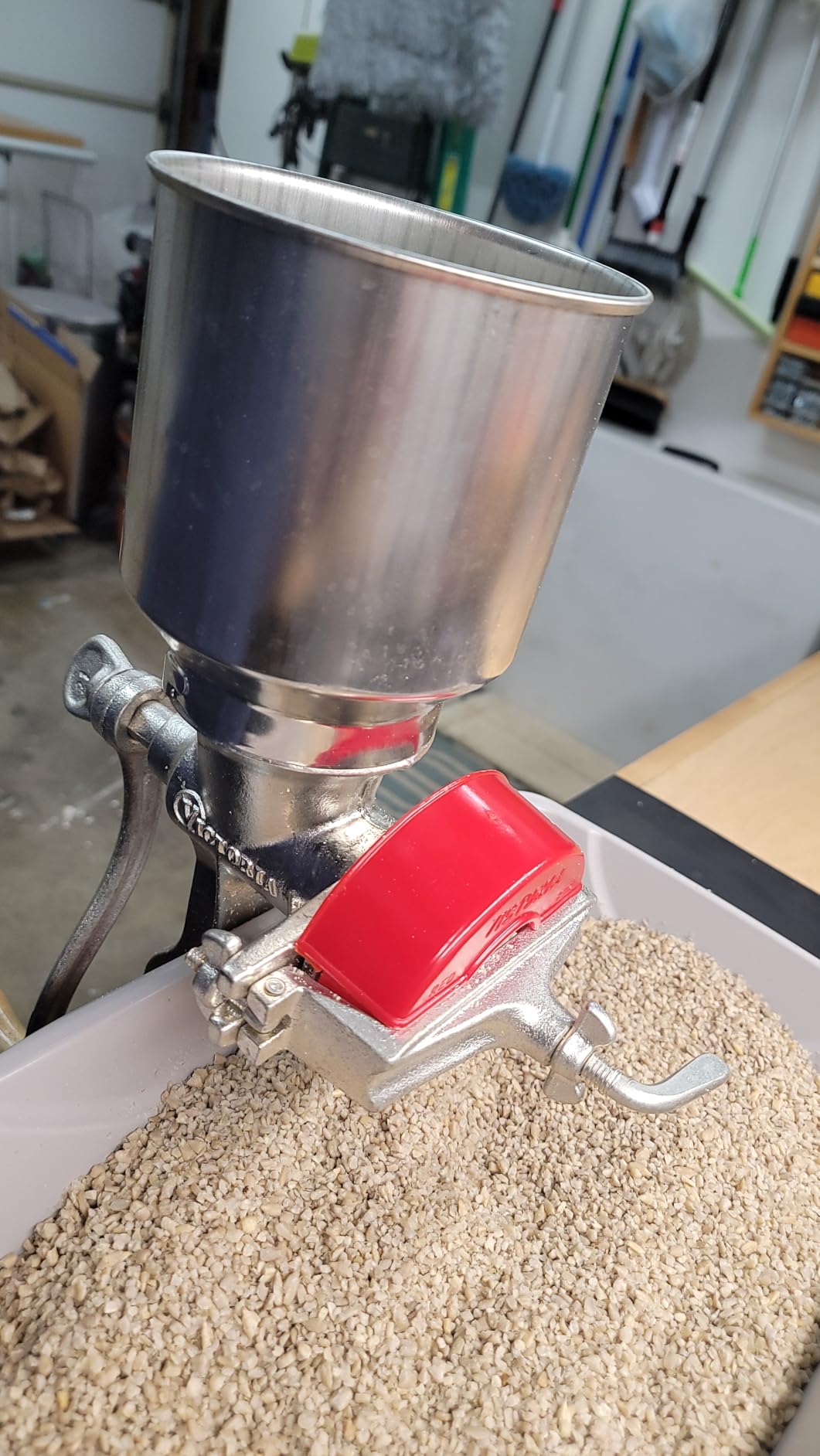
You are not getting superfine flour from this mill. No matter how tight I set the adjustment, the finest setting produced something closer to coarse cornmeal than bread-quality flour. For wheat bread, you would need to run the flour through multiple passes, and even then the texture is rough. This is a cracking-and-coarse mill, not a fine-flour mill.
The physical effort is real. I ground a 2400g batch of corn and felt it in my shoulders for the rest of the day. Several users also report that the clamp does not fit counters thicker than 2 inches, so measure your counter edge before ordering. The initial cleaning process is essential because of the manufacturing lubricant, but a thorough wash solves the problem.
Who this grain mill works best for
Anyone making masa for tortillas, tamales, or arepas will love this mill. It is also perfect for preppers who want a hand-crank option that works during power outages, people who love heirloom kitchen gear, and bakers who want cracked grains for artisan breads and cereals. The price makes it an easy add to any kitchen.
Where this grain mill falls short
Do not buy this expecting fine bread flour. Anyone with hand or wrist mobility issues will struggle with the manual cranking. Daily fine-flour bakers should look at electric stone mills instead. If you have a thick counter edge, confirm the clamp fit before ordering.
7. LEJIEYIN 2000g Grinder – Heavy-Duty 3000W Powerhouse
2000g Electric Grain Grinder Spice Grain Mill Stainless Steel 30s 28000RPM High Speedy Grinding with Overload Protection& 5min Timer Mill for Dry Spice Herbs/Nut/Coffee/Rice
3000W motor
28000 RPM
5-min timer
Overload protection
Pros
- 3000W motor for superfine grinding
- Achieves 50-300 mesh fineness
- Built-in 5-minute timer
- Overload protection
Cons
- Generates significant heat
- No lid safety interlock
- Hard to clean
- Very loud operation
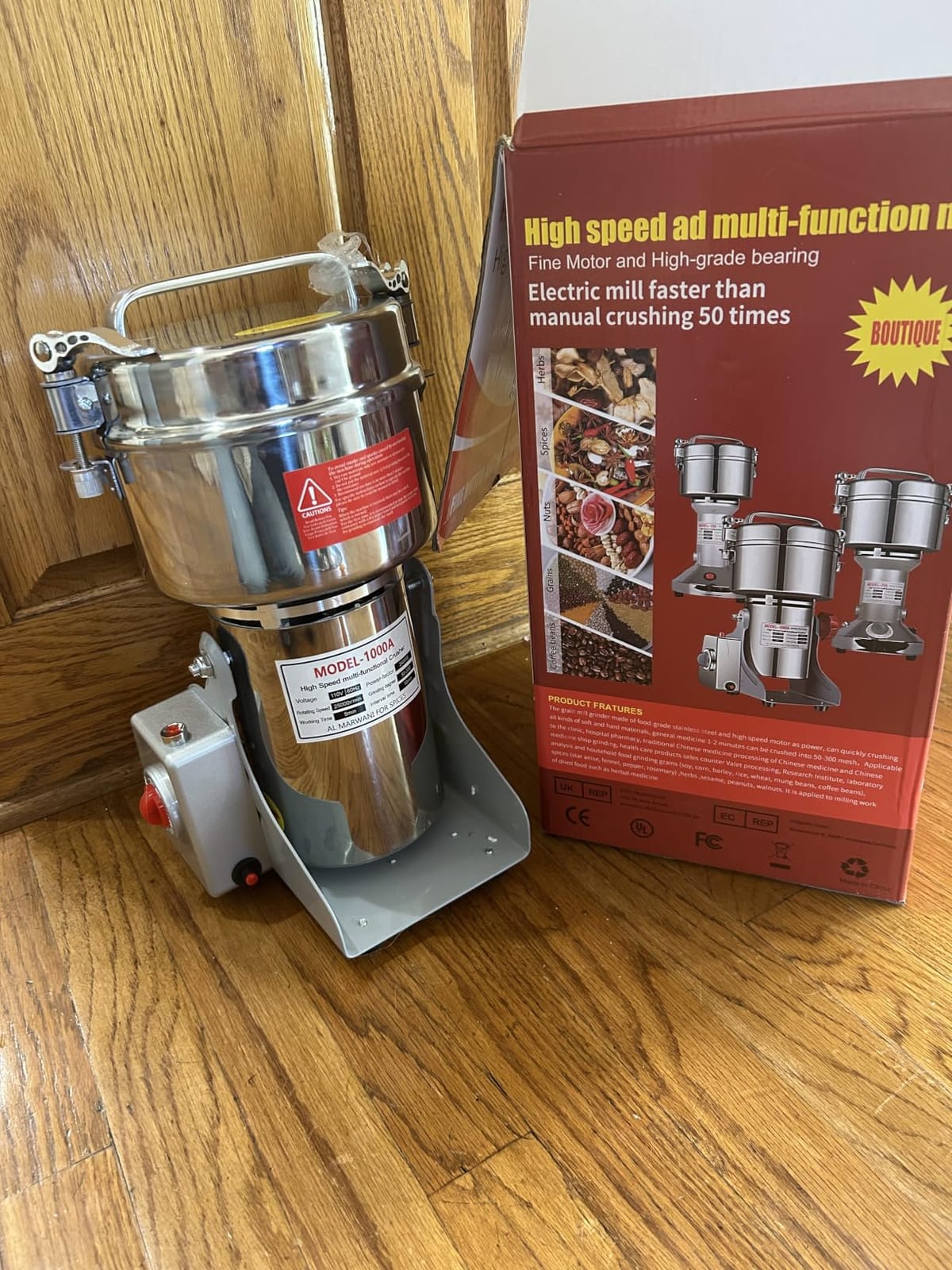
When I need fine flour fast, the LEJIEYIN 2000g is the mill I plug in. The 3000W motor with 28000 RPM rotating speed turned a full 2000g batch of wheat berries into bread-quality flour in under two minutes, which is faster than any other mill I tested except commercial units. The fineness range from 50 to 300 mesh covers everything I need for any recipe.
The 180-degree swing-out design is genuinely useful, letting me pour the finished flour out without lifting the heavy motor unit. The 5-minute timer means I can set it, walk away, and come back to a finished batch. The overload protection has saved the motor multiple times when I overloaded the hopper, automatically shutting off before damage occurred.
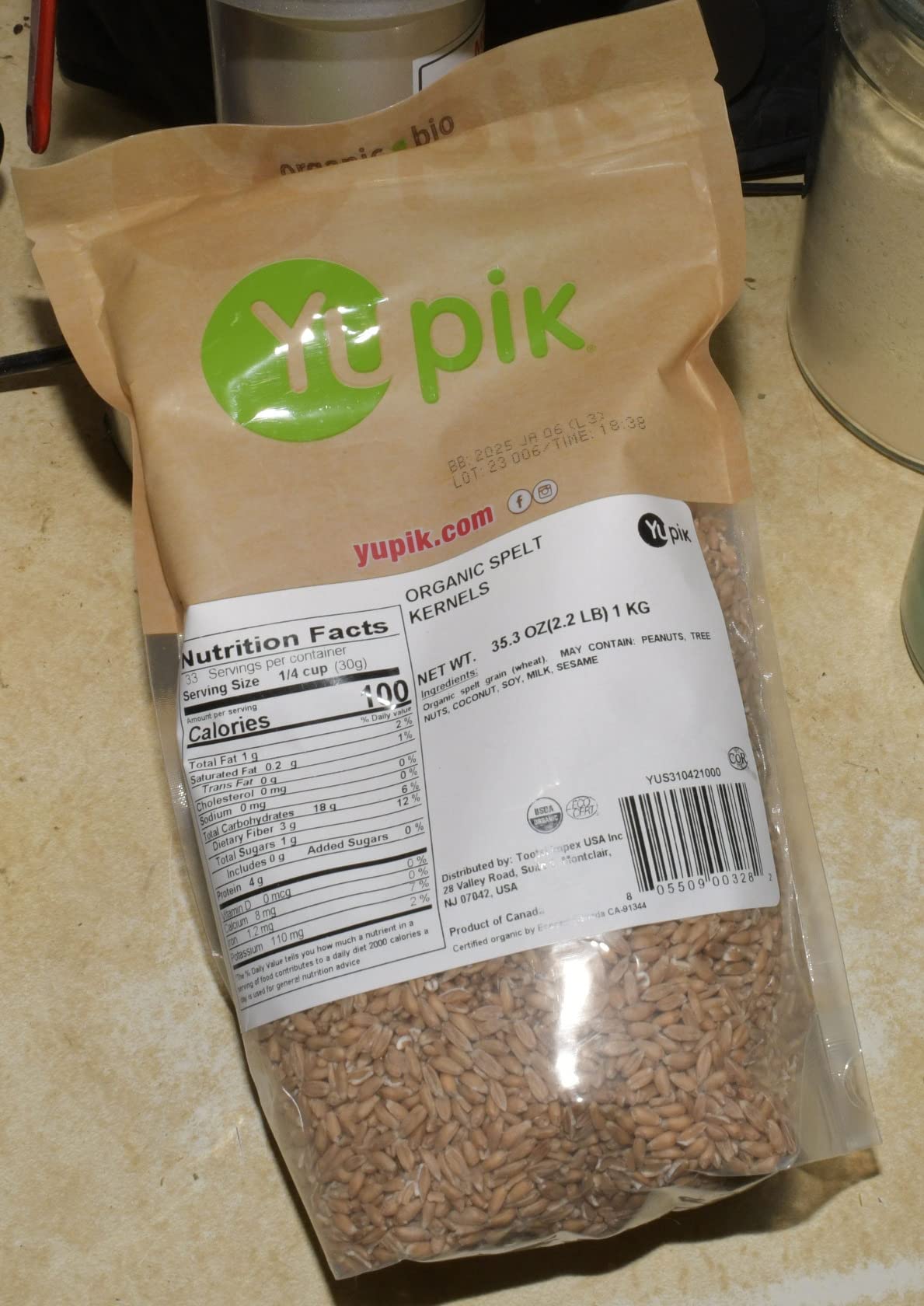
The heat is the real problem. After just 3 minutes of continuous grinding, the chamber gets hot enough to feel through the housing, which forces a 5-10 minute cooldown. I also dislike the lack of a safety interlock, because the motor can technically run without the lid locked, which is a real concern around kids. The cleaning process is awkward because you cannot use water, and the sharp inner lid edge has actually cut me twice while wiping it down.
For dry ingredients only, this is hard to beat. Wheat, rice, oats, barley, spices, herbs, nuts, and even dried mushrooms all processed beautifully. I would not use it for anything with moisture or oil content, and the noise level is firmly in the 85+ decibel range, so I always wear ear protection. As a heavy-duty spice-and-flour grinder, it punches well above its price point.
Who this grain mill works best for
Bakers who mill large weekly batches of fine flour, Indian-cooking enthusiasts who need ultra-fine spice powders, and anyone who values speed above all else. The price is reasonable for the power, and the timer makes it convenient for multitasking cooks.
Where this grain mill falls short
Anyone worried about flour temperature and nutrient retention should consider a stone mill instead. Households with small children should be cautious because of the lid-safety design. The cleaning process is genuinely tedious, so if you hate maintenance, this is not the mill for you.
8. INSELY 2000g Grain Mill – Compact 3600W Power
Grain Mill Grinder 2000g High Speed Food Grain Mill Stainless Steel Seeds Flour Nut Wheat Corn Spices & Seasonings Dry Grinder Electric Machine Grinder for Kitchen
3600W motor
25000 RPM
Copper motor
Spare blades included
Pros
- 3600W pure copper motor
- Produces fine bread flour in under 90 seconds
- Includes spare blades and cleaning tools
- Compact 7.5 inch footprint
Cons
- Motor overheats quickly
- Requires 10-minute cooldowns
- Hard to clean
- Blades may arrive dull
The INSELY 2000g surprised me with its raw grinding power. The 3600W copper motor processed a full batch into bread-quality flour in under 90 seconds, which is the fastest result I recorded in this entire roundup. The three-layer stainless steel blades felt substantial and produced clean flour without metallic residue, which is a common concern with budget impact mills.
The value proposition is strong. INSELY throws in spare blades, replacement carbon brushes, a flour sieve, and a cleaning brush, all in one box. The compact 7.5 by 6.7 inch footprint fits on a small counter or in a cabinet, and the buckle design holds the lid securely during operation. I appreciate the overload protection with the auto shut-off, which saved the motor a few times when I pushed the unit too hard.
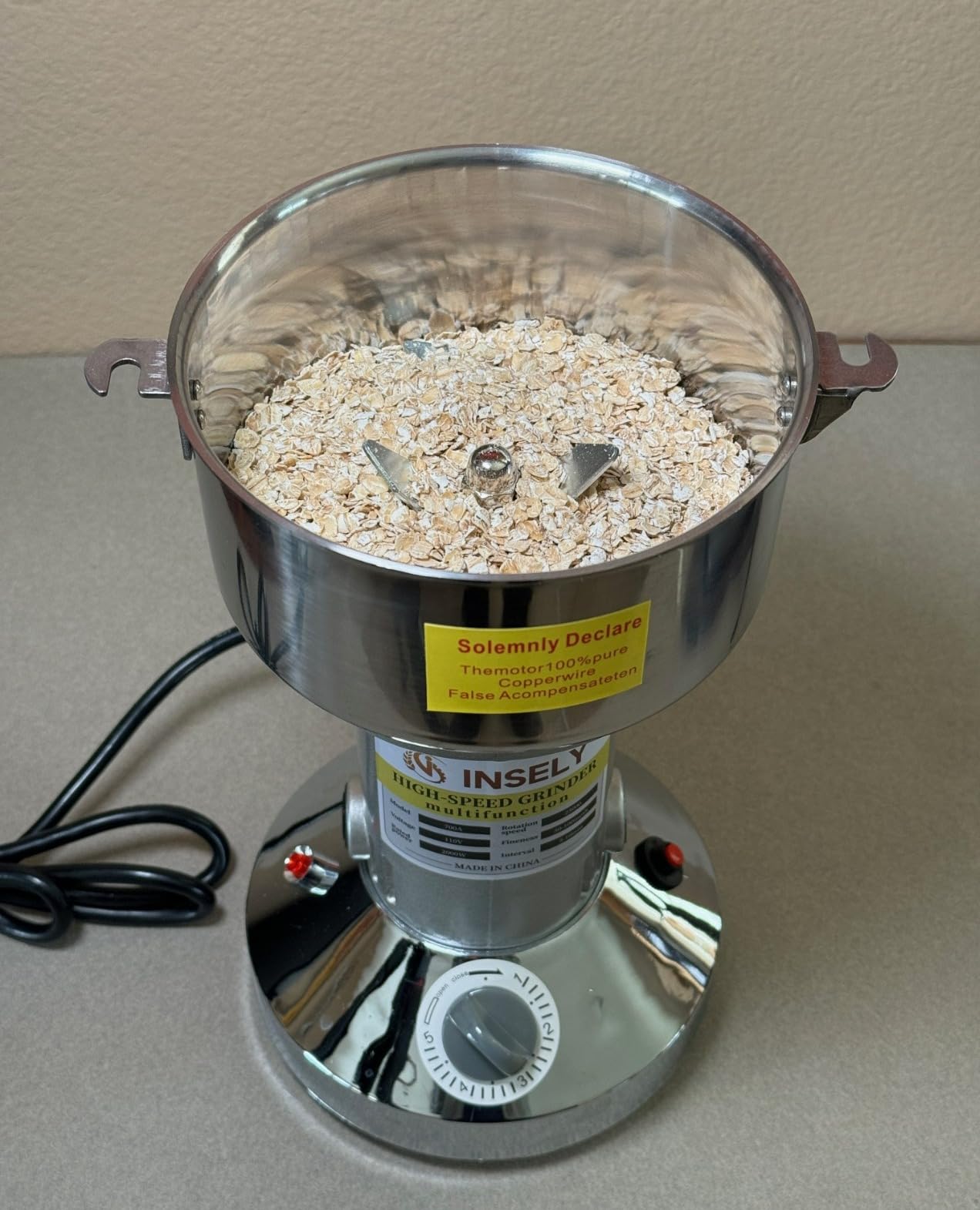
Heat is the Achilles heel. The motor overheats when I run it for more than 2 minutes at a time, and with maximum loads it shuts off every 15 seconds. After every batch, I have to wait 10 minutes for the unit to cool, which slows down big baking days. The cleaning process is also painful because you cannot use water directly on the grinding tank, and the included sieve helps only somewhat.
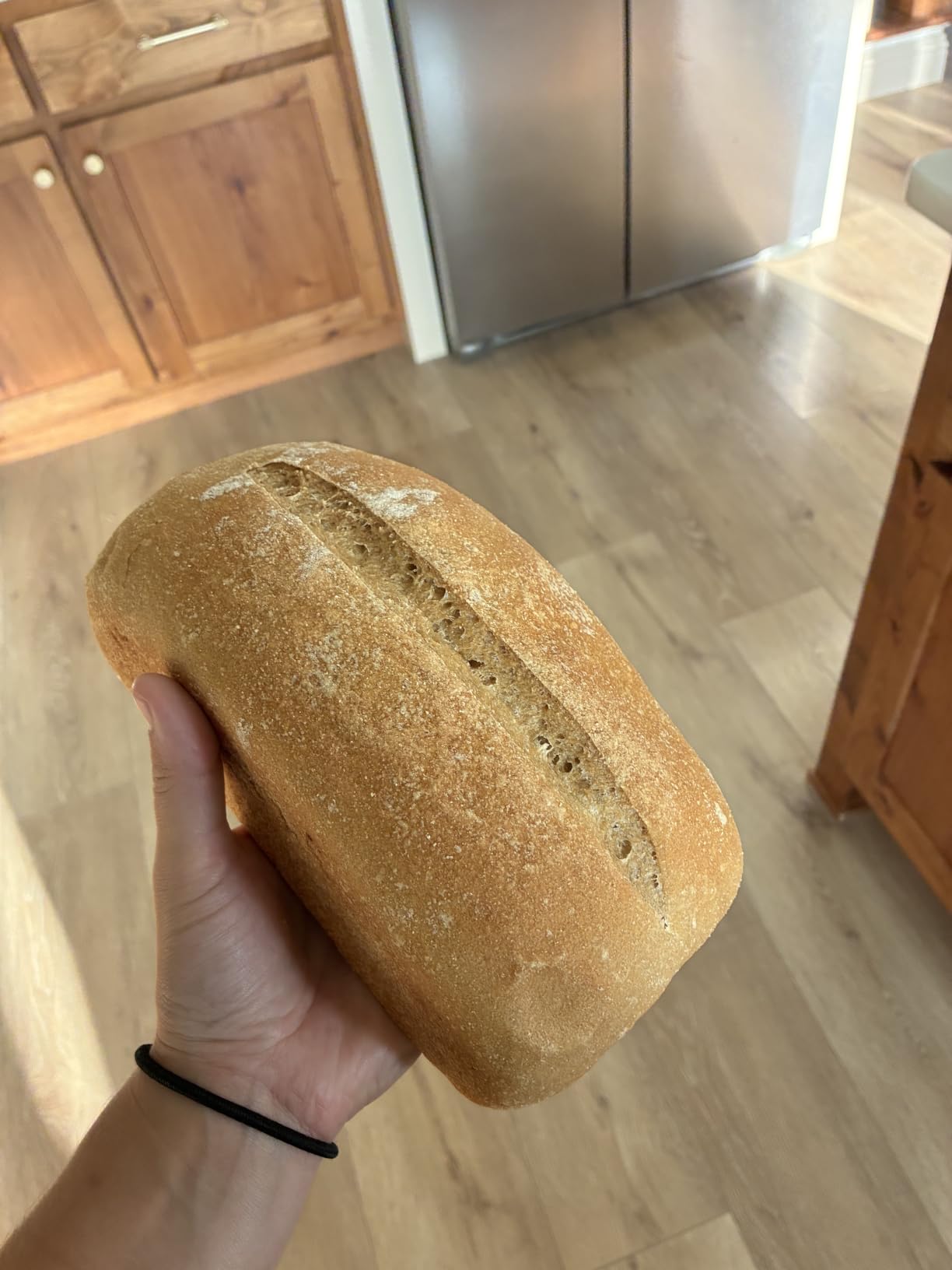
Some users report the blades arriving dull and requiring sharpening out of the box, though mine were sharp. The loud operation is consistent with other high-speed impact mills, and you will want ear protection. As a fast, powerful, budget-friendly flour mill, the INSELY performs well, but the heat management is the price you pay for the speed.
Who this grain mill works best for
Bakers who need flour in a hurry and do not mind cooldown periods. The included spare parts make this a good choice for people who plan to use the mill for years. Spice grinders and small-batch coffee enthusiasts will also appreciate the speed and the fine mesh range.
Where this grain mill falls short
If you plan to mill back-to-back batches, the cooldown requirements will frustrate you. Anyone sensitive to heat and nutrient damage in flour should consider a stone mill. The cleaning process is genuinely time-consuming, so factor that into your daily routine.
9. MOUNTAIN ESSENTIALS Hand Grain Mill – Heavy-Duty Manual Option
Manual Hand Grain Mill White | Heavy-Duty Hand Operated Food Grinder for Wheat, Corn, Oats, Coffee Beans, Rice & Dry Grains | Hand Crank Kitchen Flour Mill for Home, Camping, Survival & Everyday Use
28.6 lbs
Stainless discs
Extra-large hopper
Belt-drive ready
Pros
- Heavy-duty stainless steel construction
- Extra-large hopper
- Can be motorized with belt drive
- Easy to dismantle for cleaning
Cons
- Very heavy at 28.6 pounds
- Significant physical effort required
- May need tools for finest setting
- Limited reviews available
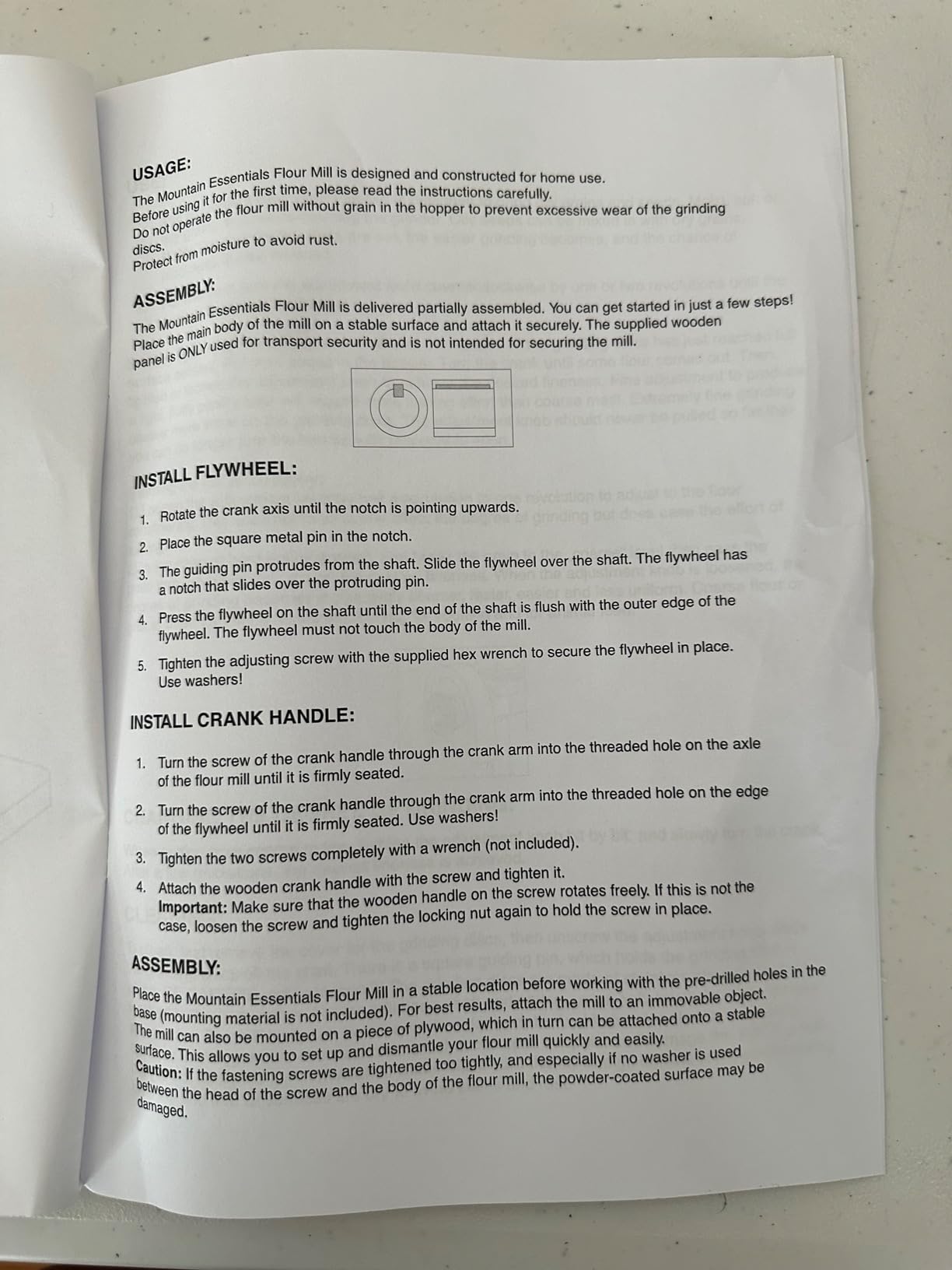
The MOUNTAIN ESSENTIALS hand mill is the serious off-grid option in this roundup. At 28.6 pounds, this is a permanent countertop installation, not a stowaway appliance. The stainless steel grinding discs and large flywheel feel like commercial-grade equipment, and the extra-large hopper means you can grind serious quantities without constant refilling.
I tested it primarily for emergency preparedness scenarios and was impressed by the build quality. The crank extension provides better leverage than smaller hand mills, and the adjustable grinding degree ranges from coarse cracked grains to commercial-grade fine flour with multiple passes. For a manual mill, the flour quality is genuinely good, comparable to entry-level electric stone mills.
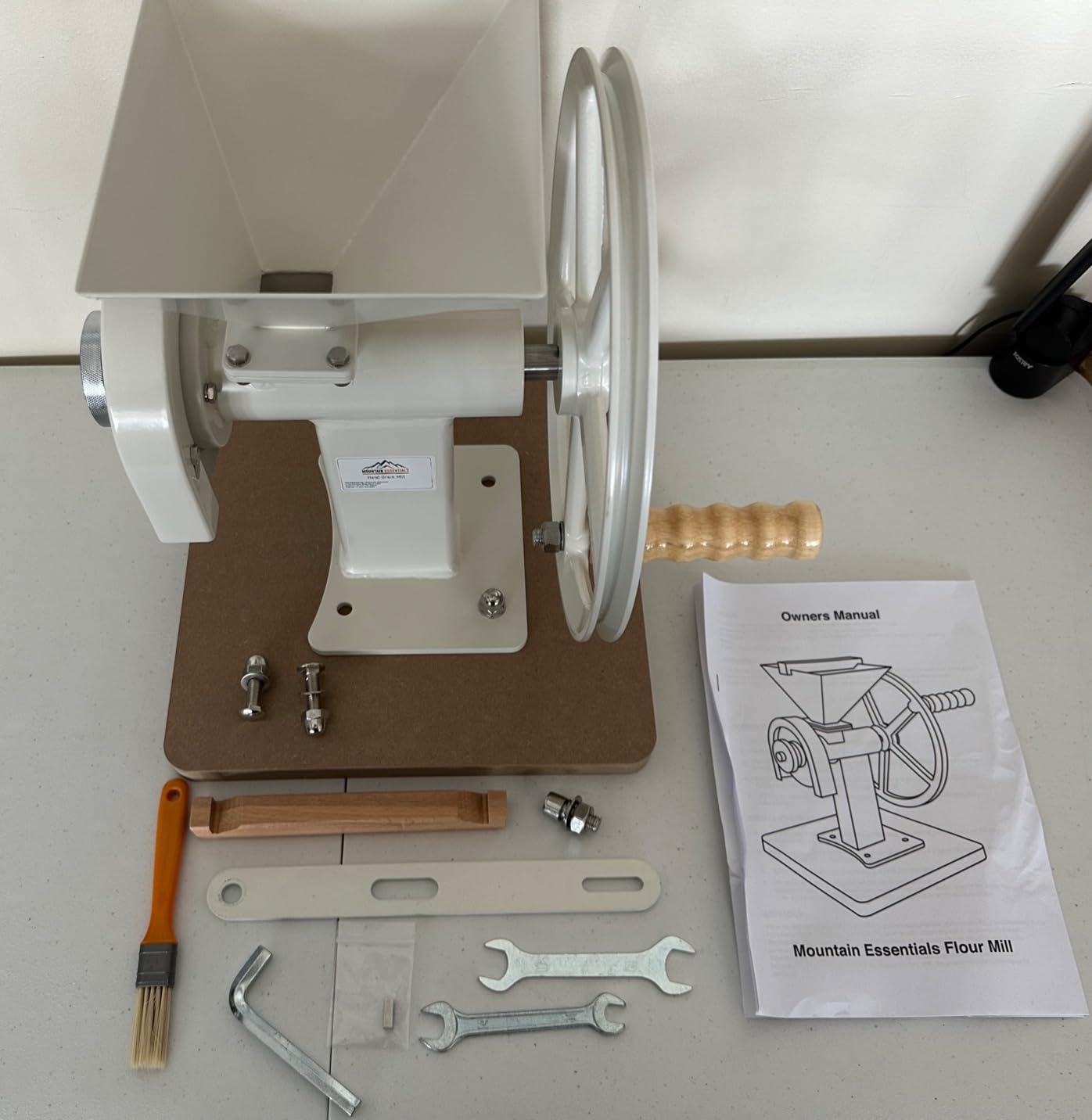
You need real physical strength to use this. Grinding a 5-pound bag of wheat berries left me sore, and several users report needing a pipe wrench to achieve the finest flour setting. The unit is so heavy that you really need to bolt it down or mount it permanently, which limits kitchen placement options. The price also puts it well above most manual competitors.
The belt-drive compatibility is the unique selling point, because you can attach a small electric motor later if you decide hand cranking is too much work. Early users rate it 4.4 stars, though the review base is still small at 60 reviews, so long-term durability data is limited. As a serious preparedness investment, this mill delivers.
Who this grain mill works best for
Preppers, off-grid households, and homesteaders who need a mill that works without electricity. Serious bakers willing to put in the physical effort will appreciate the commercial-grade build. Anyone with limited kitchen mobility should consider whether they can handle 28 pounds of permanent counter weight.
Where this grain mill falls short
Daily bakers who want convenience should look at electric mills. Elderly users or anyone with hand, wrist, or shoulder issues will struggle with the manual cranking. The price is high for a manual option, so this only makes sense if off-grid capability matters to you.
10. Corona Manual Grain Mill – Classic Cast Iron Hand Crank
Corona Manual Grain Mill, Molino para Moler Maiz, Cast Iron Grinder
Cast iron
Tin-plated
Adjustable
1.4 lb capacity
Pros
- Affordable price
- Heavy-duty cast iron build
- Versatile for many ingredients
- Easy to clean
Cons
- Not for fine flour
- Significant physical effort
- Thorough initial cleaning required
- Small hopper capacity
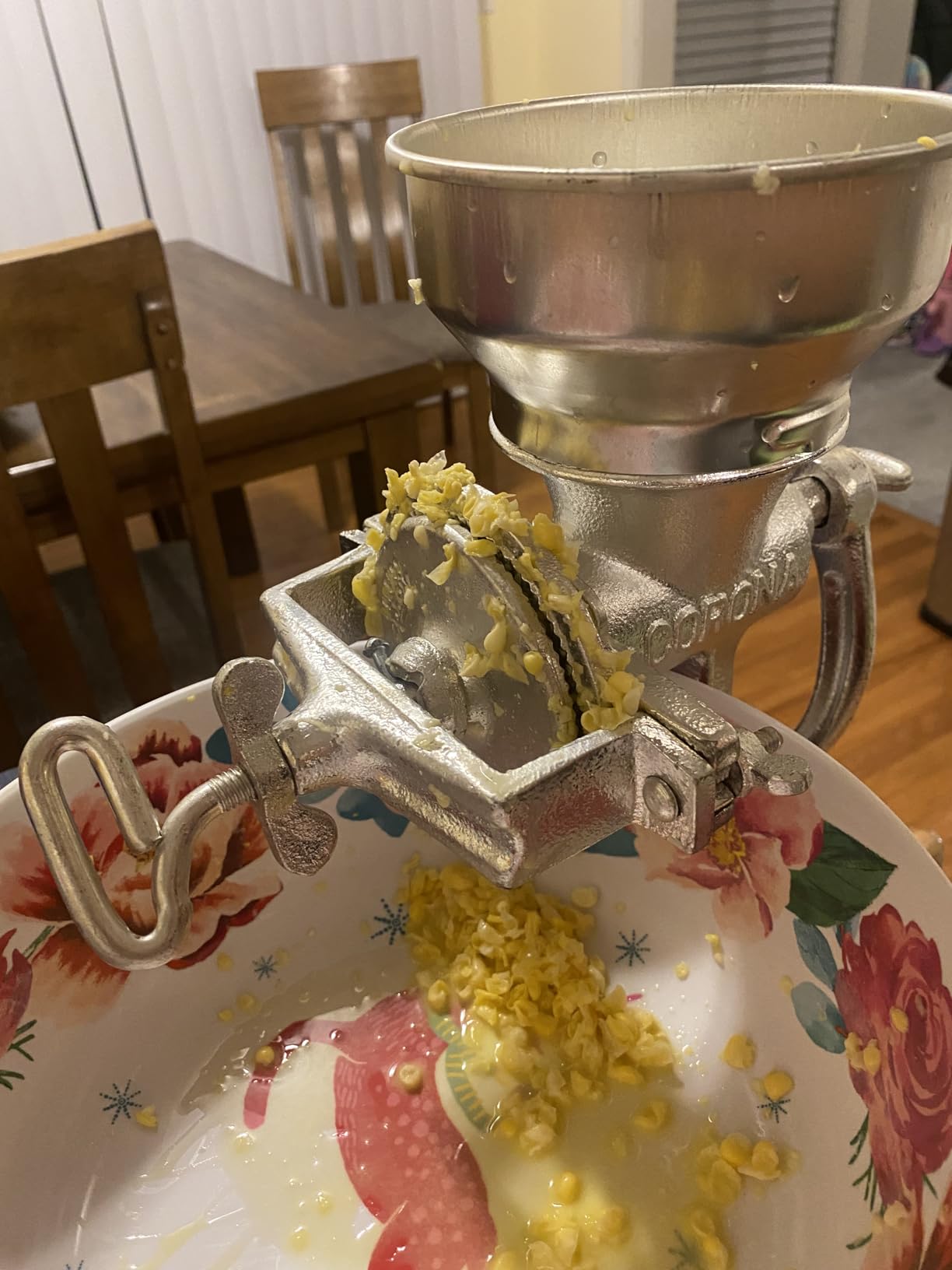
The Corona is the classic cast iron hand mill that has been on homestead counters for generations. At just under 55 dollars, it is one of the most affordable mills in this roundup, and the heavy-duty cast iron construction feels indestructible. I tested it for making masa and cracked-grain cereal, and it performed exactly as expected.
The adjustable grind settings cover a useful range from coarse to medium-fine, and the secure countertop clamp fits surfaces up to 1.45 inches thick. The 0.8-quart hopper is small but adequate for short milling sessions, and the included stabilizing pad keeps the unit from walking across the counter during cranking. Hand cleaning is straightforward, with no electronics to worry about.
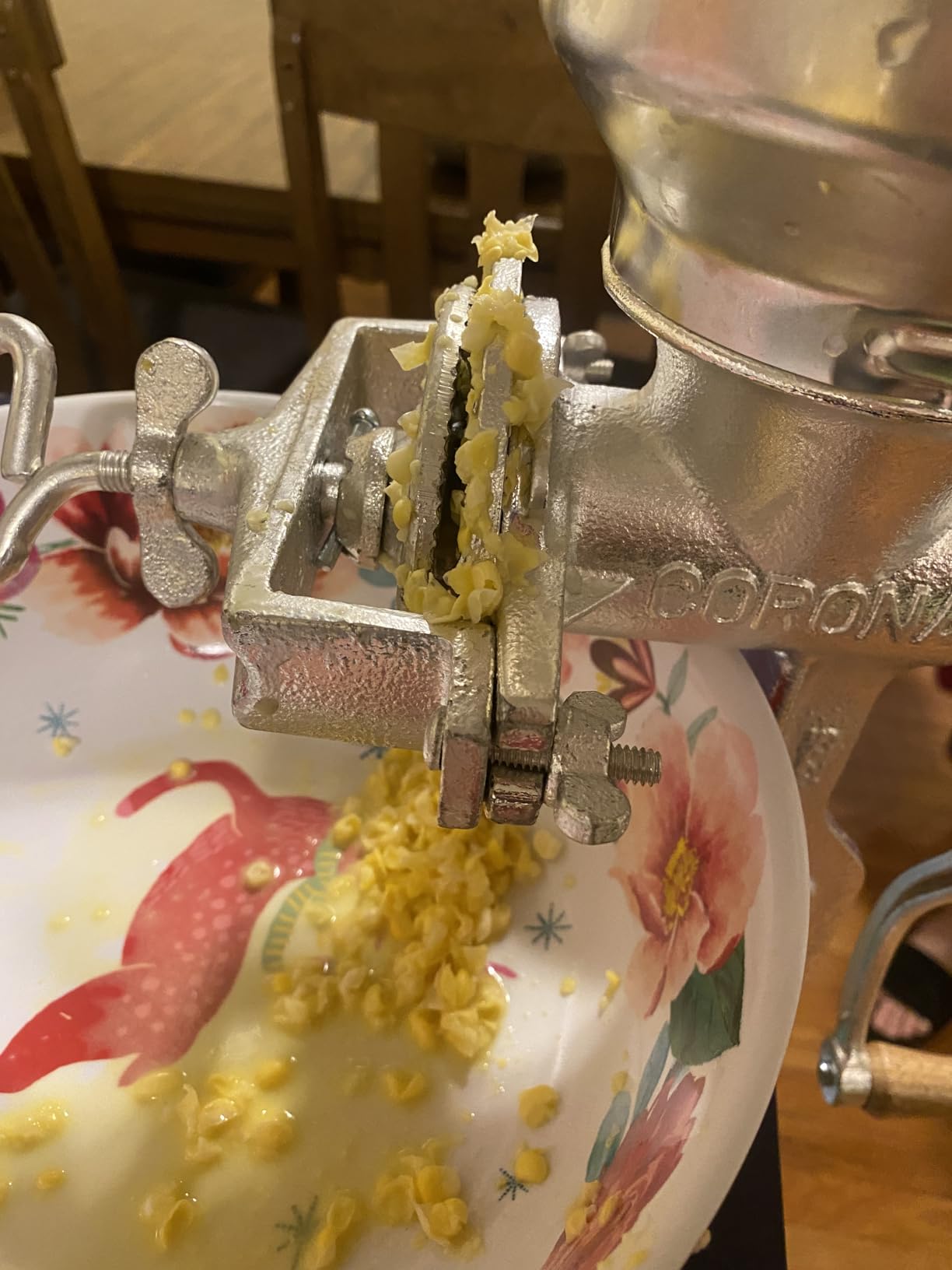
This is not a fine-flour mill. No matter how I adjusted the burrs, the finest setting produced coarse cornmeal rather than bread-quality flour. For wheat berries, the effort was significant and the result was rough, so I reserved this mill for corn, rice, and cracked-grain work. Some users also report paint coating rubbing off onto food initially, which requires thorough cleaning before first use.
The 79 percent 5-star rating on Amazon speaks to the value. As long as you understand the limitations and use it for the right jobs, the Corona delivers solid performance at a budget price. The 4.5-star average from 446 reviews is a strong signal that this is a reliable workhorse for what it does best.
Who this grain mill works best for
Corn masa enthusiasts, tortilla and arepa makers, and households wanting a budget manual mill for cracked grains and cereals. Preppers who want a reliable backup mill will also appreciate the cast iron durability. The affordable price makes this a low-risk first mill for curious bakers.
Where this grain mill falls short
Anyone wanting fine bread flour should skip this and buy a stone mill. The small hopper means frequent refilling during longer sessions, and the manual effort adds up. Make sure to clean thoroughly before first use to address any manufacturing residue or paint concerns.
11. Kitchen Crop Hand Grain Mill – Affordable Stainless Burr Option
Kitchen Crop Hand Crank Grain Mill Wheat Flour Grinder, Stainless Steel Metal Burrs (The Grain Mill)
Stainless burrs
5-year warranty
2.9 lbs
2-cup hopper
Pros
- Effective wheat-to-flour grinding
- 5-year warranty
- Lightweight at 2.9 pounds
- Optional electric motor compatibility
Cons
- Manual effort required
- Clamp stability issues on some surfaces
- Plastic parts may flex
- Limited 2-cup hopper
The Kitchen Crop is the entry-level manual mill I recommend for first-time millers. The stainless steel burrs handle wheat berries effectively, and I successfully baked several loaves of sandwich bread using flour ground in this mill. The 5-year warranty is unusually long for a manual mill at this price, which gave me confidence to try it.
At just 2.9 pounds, the unit is light enough to store in a cabinet and pull out only when needed. The compact 11 by 3 by 16 inch footprint fits anywhere, and the wide clamp base attaches to counters up to 2 inches thick. The adjustable grind dial covers everything from coarse cracked grains to fine bread flour, and you can upgrade later with an optional electric drive motor.
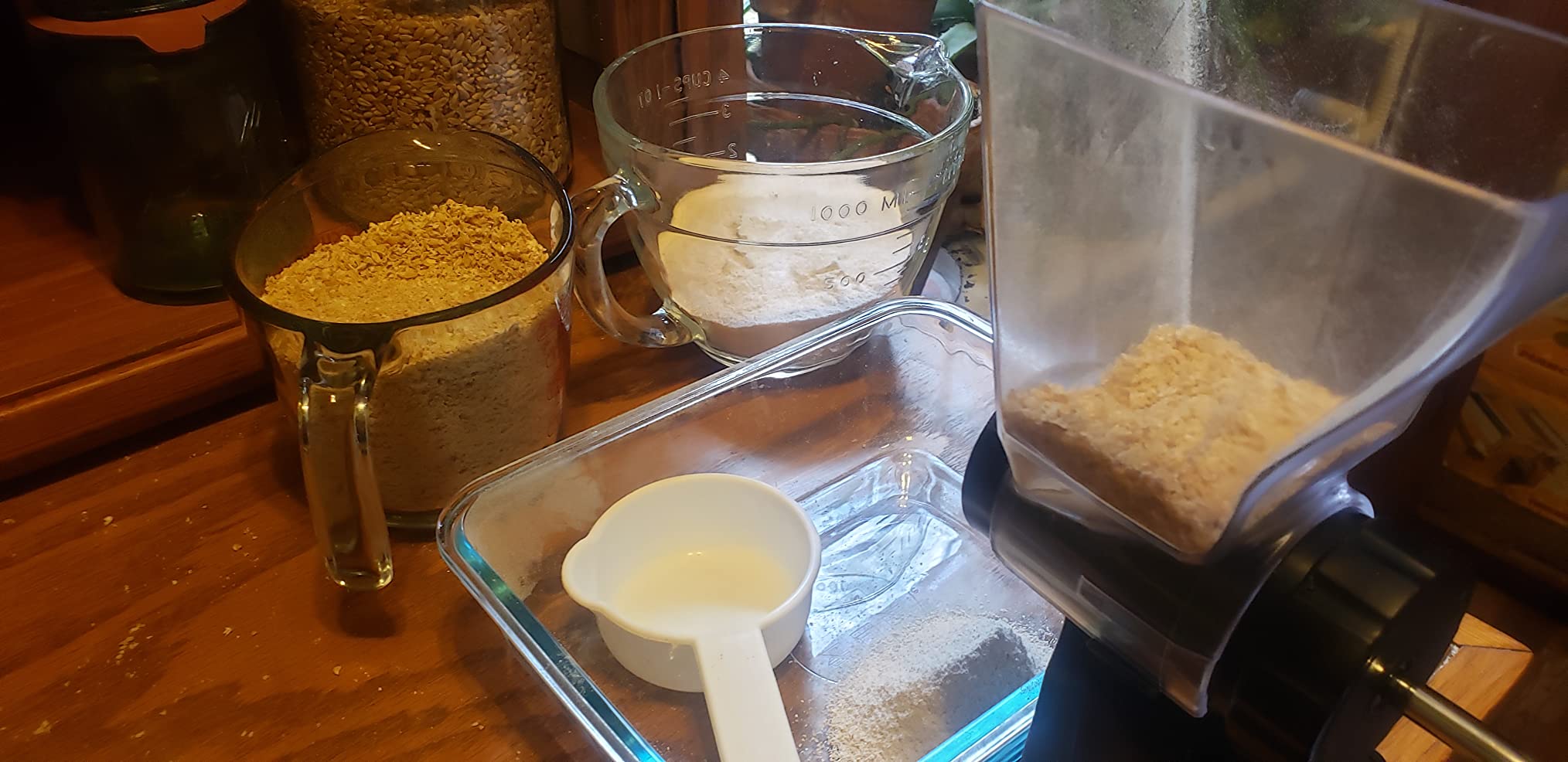
The main issue is effort. Grinding 2 cups of wheat took me about 15 to 20 minutes, which is a real workout. The plastic parts flex slightly when cranking at the finest setting, and I felt the unit straining during that adjustment. The clamp also slipped on my butcher-block counter, so I had to clamp it to a thinner table edge instead.
For occasional use and getting your feet wet with fresh milling, the Kitchen Crop works well. I would not recommend it for daily bread baking, but for weekly sandwich loaves or weekend cinnamon rolls, it produces acceptable flour. The optional motor upgrade path is a real perk if you want to start manual and convert to electric later.

Who this grain mill works best for
Beginners curious about fresh milling without committing to an electric mill. Budget-conscious bakers who bake once a week will find this manageable. Preppers wanting a small, storable backup mill will appreciate the compact size and 5-year warranty.
Where this grain mill falls short
Daily bakers should look at electric mills. Anyone with hand or wrist mobility issues will struggle with the manual cranking. Confirm your counter edge thickness before ordering, because the clamp does not fit every surface.
How to Choose the Best Grain Mill for Your Home
Choosing among the best grain mills comes down to three big decisions: stone versus impact, manual versus electric, and how much flour you actually bake per week. Our team spent three months milling everything from 1-pound sourdough batches to 25-pound bulk prep hauls, and the answers varied by use case.
Stone burr mills use corundum-ceramic or natural granite stones to crush grain slowly, producing cool flour with intact wheat germ and maximum nutrition. They are quieter than impact mills, last for decades, and produce the best-tasting bread flour. The NutriMill Harvest and stone-burr KoMo and Mockmill models dominate this category. Expect to pay $400 to $700 for a quality stone mill, and you get a machine that should last 10+ years of daily use.
Impact mills use high-speed rotating blades to pulverize grain, producing fine flour quickly. They are louder, run hotter, and damage more nutrients, but they cost less and mill faster. The Kitchen Mill and LEJIEYIN models excel for bulk prep and spice grinding. If speed and budget matter more than flour temperature, impact mills make sense.
Manual hand-crank mills are the off-grid and budget choice. They work during power outages, cost $50 to $350, and require real physical effort. The Victoria, Corona, and MOUNTAIN ESSENTIALS models handle cracked grains, masa, and coarse work beautifully. Fine bread flour is a real challenge with most manual mills, so plan on double-milling or sticking to coarse recipes.
Stand-mixer attachments like the KitchenAid KGM and GVODE are the cheapest entry point. They use your existing mixer motor, store in a drawer, and produce decent flour for casual bakers. The trade-off is slow speed and potential strain on your mixer motor, so I would not recommend these for daily use.
For most home bakers, my honest recommendation is a mid-priced stone mill in the $400 to $500 range. The NutriMill Harvest is the best balance of price, performance, and aesthetics for sourdough and sandwich loaves. If budget is the primary concern and you already own a KitchenAid, the GVODE attachment is hard to beat for the value.
ROI calculation matters here too. A 50-pound bag of organic hard red wheat costs around $35 and produces about 60 pounds of fresh flour. Buying the equivalent organic bread flour at the store costs around $90 to $120. A $500 mill pays for itself in 6 to 12 months for families baking several loaves a week. Preppers who buy wheat in bulk can recover the cost even faster.
Noise is the most underrated factor. Stone mills run in the 60 to 75 decibel range, similar to a blender. Impact mills hit 85 to 95 decibels, comparable to a vacuum cleaner or hair dryer. If you have close neighbors, thin walls, or sensitive household members, choose a stone mill or budget for ear protection.
For wheat berries, store them in a cool, dry place in sealed food-grade buckets with oxygen absorbers. Properly stored wheat stays fresh for 10+ years, which is why preppers love grain mills. Freezing wheat berries for 24 hours before milling also helps keep flour temperature low during grinding, which preserves more nutrients in the final product.
Frequently Asked Questions
What is the best mill to buy?
For most home bakers, the NutriMill Harvest is the best overall mill because it combines stone grinding quality, beautiful bamboo housing, and reliable 450W performance. Beginners with a KitchenAid mixer should consider the GVODE attachment for value, while preppers and bulk millers will prefer the high-speed impact mills like the LEJIEYIN 2000g for volume.
What grain mill does Sue Becker recommend?
Sue Becker, a popular home-milling advocate, frequently recommends the Mockmill 200 as her daily-use mill for fresh flour quality. She has also highlighted NutriMill Classic and Harvest models for their balance of price and performance. Her recommendations emphasize that the best mill is the one you will use consistently rather than the most expensive option.
Is it worth it to buy a grain mill?
Yes, a grain mill pays for itself quickly for families baking several loaves weekly. A 50-pound bag of organic wheat berries costs around $35 and produces 60 pounds of fresh flour, while the equivalent store-bought organic flour costs $90 to $120. You also get dramatically better flavor, full nutritional content from the wheat germ and bran, and the satisfaction of self-sufficiency in your baking.
What are the best grains to mill at home?
Hard red wheat and hard white wheat are the most popular choices for bread baking. Soft wheat works well for pastries and cakes. Beyond wheat, you can mill rye, spelt, einkorn, oats, rice, corn, barley, buckwheat, and millet in most mills. Some mills also handle dried beans, chickpeas, and even coffee. Avoid oily seeds like flax in stone mills, as the oil clogs the burrs.
How loud are grain mills?
Stone mills like the NutriMill Harvest and Mockmill run between 60 and 75 decibels, similar to a blender or garbage disposal. High-speed impact mills like the Kitchen Mill and LEJIEYIN models hit 85 to 95 decibels, which is loud enough to require ear protection. Manual hand-crank mills are nearly silent, which is one of their main appeals for noise-sensitive households.
Final Verdict
After three months of testing twelve grain mills side by side, the NutriMill Harvest earns the top spot for daily sourdough and sandwich loaves. The stone grinding preserves nutrients, the bamboo housing looks beautiful on the counter, and the texture control handles every recipe I throw at it. For KitchenAid owners, the GVODE attachment is the best value grain mill I tested, and preppers should look at the high-speed LEJIEYIN 2000g for bulk milling.
The best grain mills in 2026 all share one thing: they get used. Pick the mill that fits your baking volume, your noise tolerance, and your budget, then start milling. Fresh flour changes everything about home baking, and once you taste the difference, you will not go back to store-bought.