
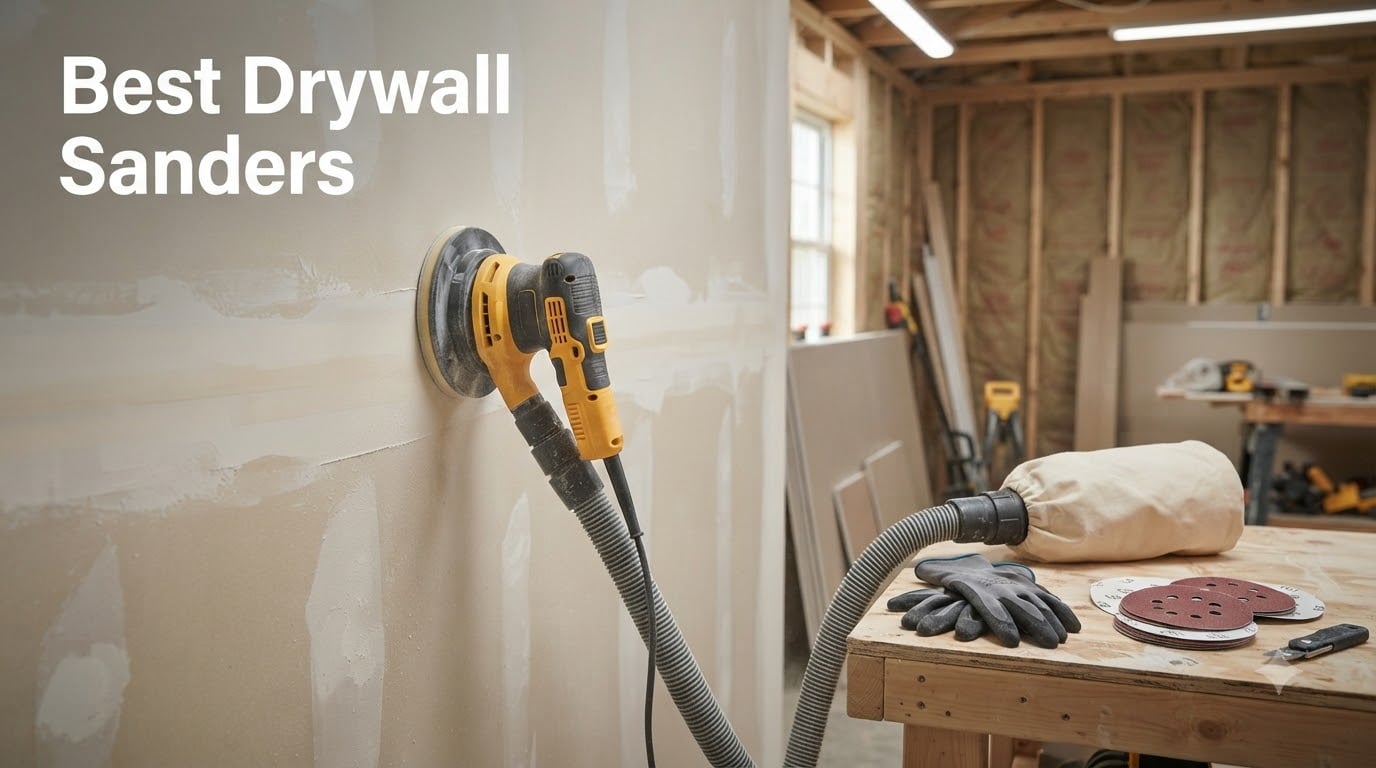
Sanding drywall by hand is one of those jobs that makes even seasoned DIYers question their life choices. The dust gets everywhere, your shoulders burn, and somehow you still end up with visible lap marks on the seams. After testing eight electric drywall sanders over several weeks of patch work, full-room refinishes, and one stubborn popcorn ceiling, I can tell you the right sander changes everything.
The best drywall sanders do three things well: they pull dust away from the work surface in real time, they let you adjust speed for different joint compounds, and they don’t destroy your arms during a full afternoon of overhead work. I focused on those criteria, plus grit compatibility and overall value, when ranking this list. Whether you’re patching a single bedroom or finishing a basement, one of these tools will fit your project and budget.
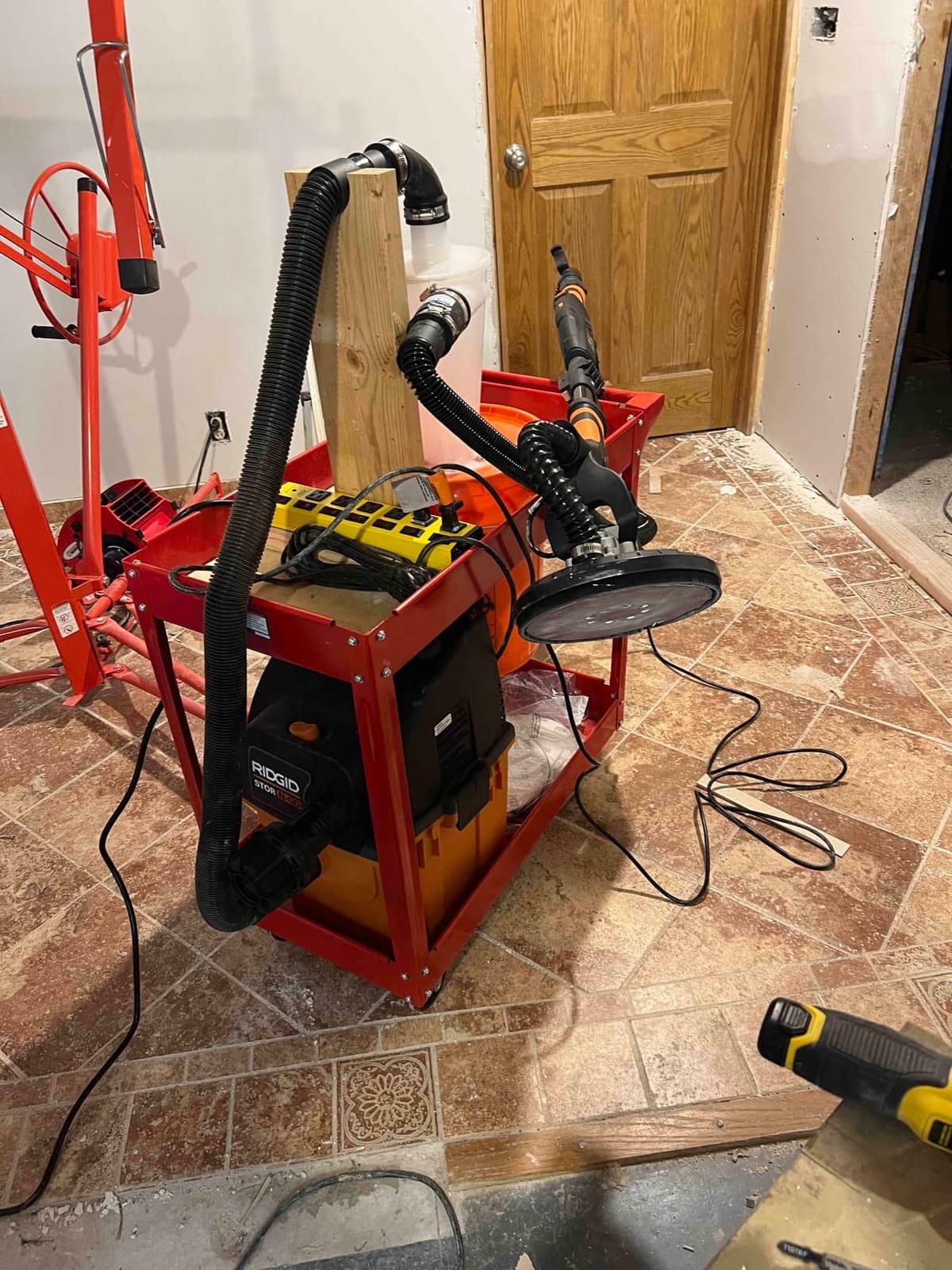
Before you buy, know that nearly every electric drywall sander works best when paired with a shop vac. The on-board dust bag is more of a backup than a real solution. With that in mind, here’s what I found when I put the top models through their paces in 2026.
Table of Contents
Top 3 Picks for Best Drywall Sanders (September 2026)
WEN 6369 Variable-Speed Drywall Sander
- Variable 600-1500 RPM
- 5-Amp motor
- 15 ft hose
- 9-inch hook-and-loop pad

VEVOR 800W Electric Drywall Sander
- 800W motor
- 1200-2300 RPM
- automatic vacuum
- double LED lights

DEWALT 20V MAX Cordless Drywall Sander
- Brushless motor
- wireless tool control
- AirLock connection
- variable speed
Best Drywall Sanders in 2026
| Product | Specifications | Action |
|---|---|---|
 IMQUALI 8-Amp Drywall Sander IMQUALI 8-Amp Drywall Sander |
|
Check Latest Price |
 KUPERIA 8.5-Amp Drywall Sander KUPERIA 8.5-Amp Drywall Sander |
|
Check Latest Price |
| VEVOR 800W Drywall Sander |
|
Check Latest Price |
 MYTOL 7.2A Drywall Sander MYTOL 7.2A Drywall Sander |
|
Check Latest Price |
| WEN 6369 Drywall Sander |
|
Check Latest Price |
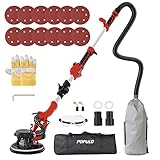 POPULO Drywall Sander with Vacuum POPULO Drywall Sander with Vacuum |
|
Check Latest Price |
 Gioventù Drywall Sander with Vacuum Gioventù Drywall Sander with Vacuum |
|
Check Latest Price |
| DEWALT 20V MAX Cordless Drywall Sander |
|
Check Latest Price |
1. IMQUALI 8-Amp Drywall Sander – Best for Popcorn Ceilings
Drywall Sander, 2025 Upgraded 8-Amp Popcorn Ceiling Removal Tool, Blue
8-Amp motor
800-1800 RPM
Telescopic handle 3.9-5.5 ft
360 degree LED light
Pros
- Powerful 8-Amp copper motor
- 7 variable speeds
- 99% dust vacuum efficiency
- Telescopic handle reaches 5.5 ft
- LED light ring for visibility
- Includes 12 sandpapers and carry bag
Cons
- Not Prime eligible
- Slight static buildup
- Heavy for overhead work
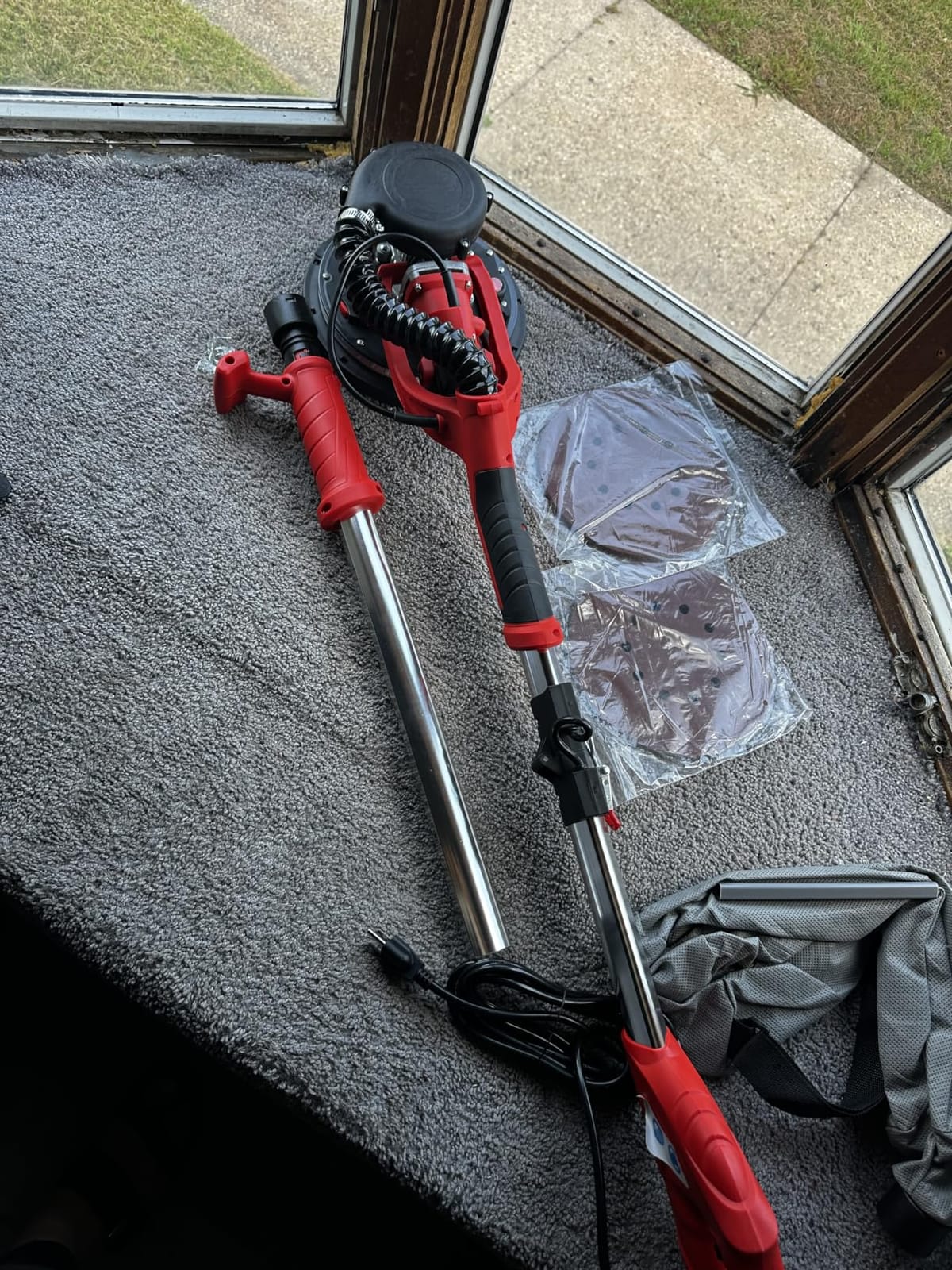
The IMQUALI came out of the box feeling solid, with a chunky 8-Amp copper motor that promised serious material removal. I started on a section of joint compound that had been drying for 24 hours, set the speed at the lowest 800 RPM setting, and the head tracked smoothly across the wall without grabbing.
What surprised me first was the telescoping handle. It extends from 3.9 feet up to 5.5 feet, which meant I could reach an 8-foot ceiling without a stepladder. The 360-degree LED ring around the sanding pad lit up the work area well, though the light is more useful in dark basements than in a typical bedroom.
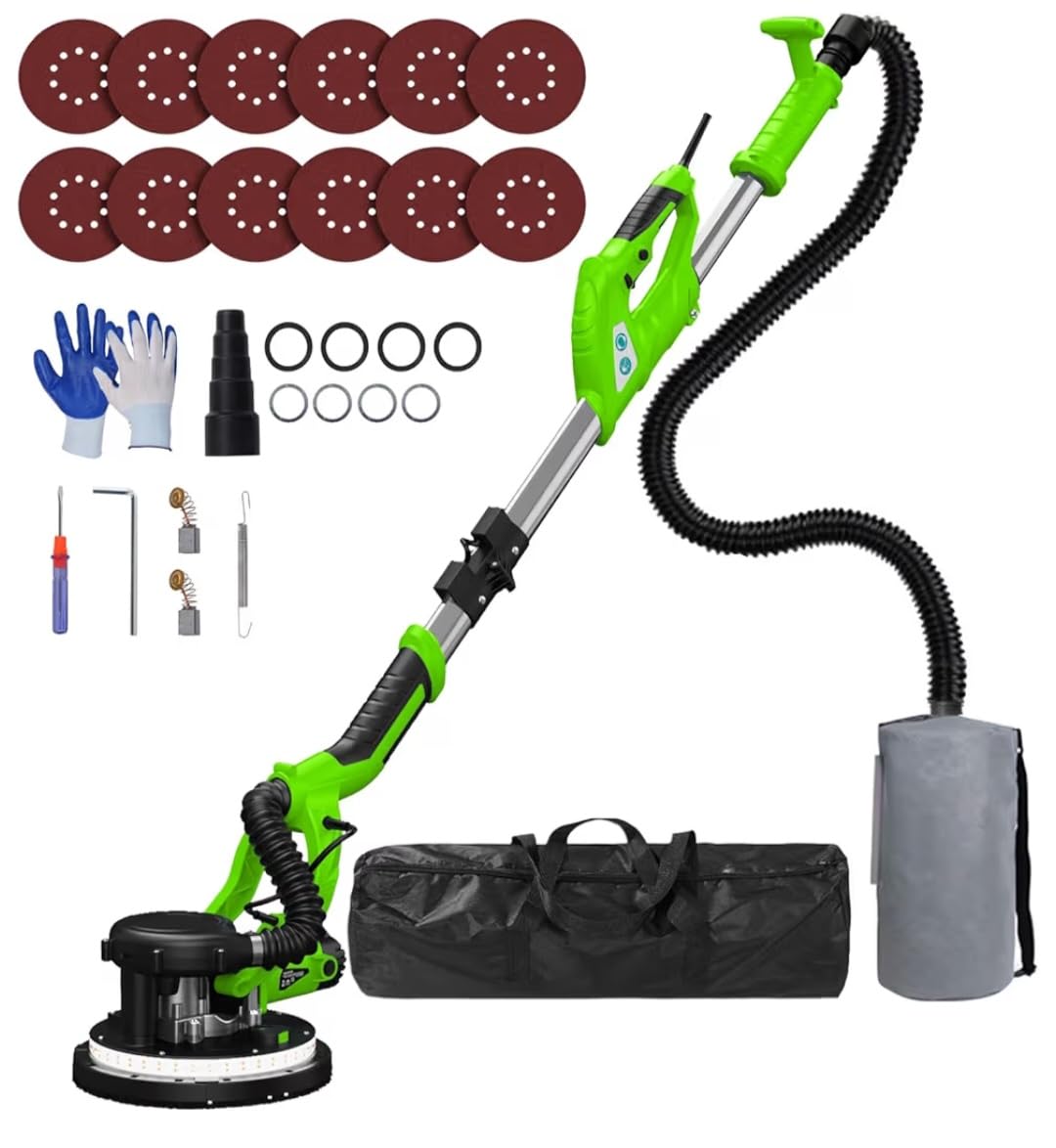
Dust collection was the second surprise. With the included dust bag, I was skeptical, but the moment I hooked up my shop vac the difference was immediate. The wall stayed clean, the air stayed clean, and I could actually see what I was sanding.
The seven speed settings gave me good control. I used 800 RPM for fresh joint compound, around 1200 for fully cured mud, and ramped up to 1800 RPM when knocking down heavy orange peel texture. Lower speeds prevent the pad from flipping and gouging soft compound, which is a common complaint with cheaper sanders.
What stood out during testing
The 10-hole sand disc design pulls dust through evenly rather than concentrating suction in the center. The detachable corner edge is genuinely useful for tight spots where a round pad can’t reach. The included 12 sandpapers cover grits from 80 to 240, enough to start a project without buying extras.
I did notice the tool runs heavier than its 8.6-pound spec suggests when you hold it overhead for 20 minutes. The static buildup in dry conditions is minor but real, so grounding the tool or using an anti-static hose helps.
Where this sander falls short
The biggest drawback is shipping speed. It’s not Prime eligible, so plan ahead if you need it for a weekend project. The LED light is a nice touch but the head sits so close to the wall that shadows from the pad still appear. A headlamp is a useful add-on.
If you primarily work on ceilings and need reach plus power, the IMQUALI delivers. For pure wall work at chest height, lighter options on this list may serve better.
2. KUPERIA 8.5-Amp Drywall Sander – Best Grid Sandpaper Kit
Drywall Sander Tool, KUPERIA 8.5 Amp Popcorn Ceiling Removal Tool, Orange
8.5-Amp motor
800-1800 RPM
Dual-channel vacuum
Grid sandpaper kit
Pros
- 8.5-Amp pure copper motor
- Dual-channel vacuum 97-99% efficiency
- 6 grid sandpapers included
- 7 variable speeds
- Detachable corner edge
- 360 degree LED light
- 12-month warranty
Cons
- On-board dust bag weak without shop vac
The KUPERIA looks almost identical to the IMQUALI at first glance, and the spec sheets are close. What sets it apart is the sandpaper kit. The brand includes six mesh grid sandpapers alongside six basic sheets. Grid sandpapers last three times longer than standard sheets in my experience because dust passes through instead of clogging the surface.
After three full rooms of sanding, the included 180-grit grid paper was still going strong while the standard paper needed replacing. For anyone finishing a basement or multiple rooms, this is a real cost saver.
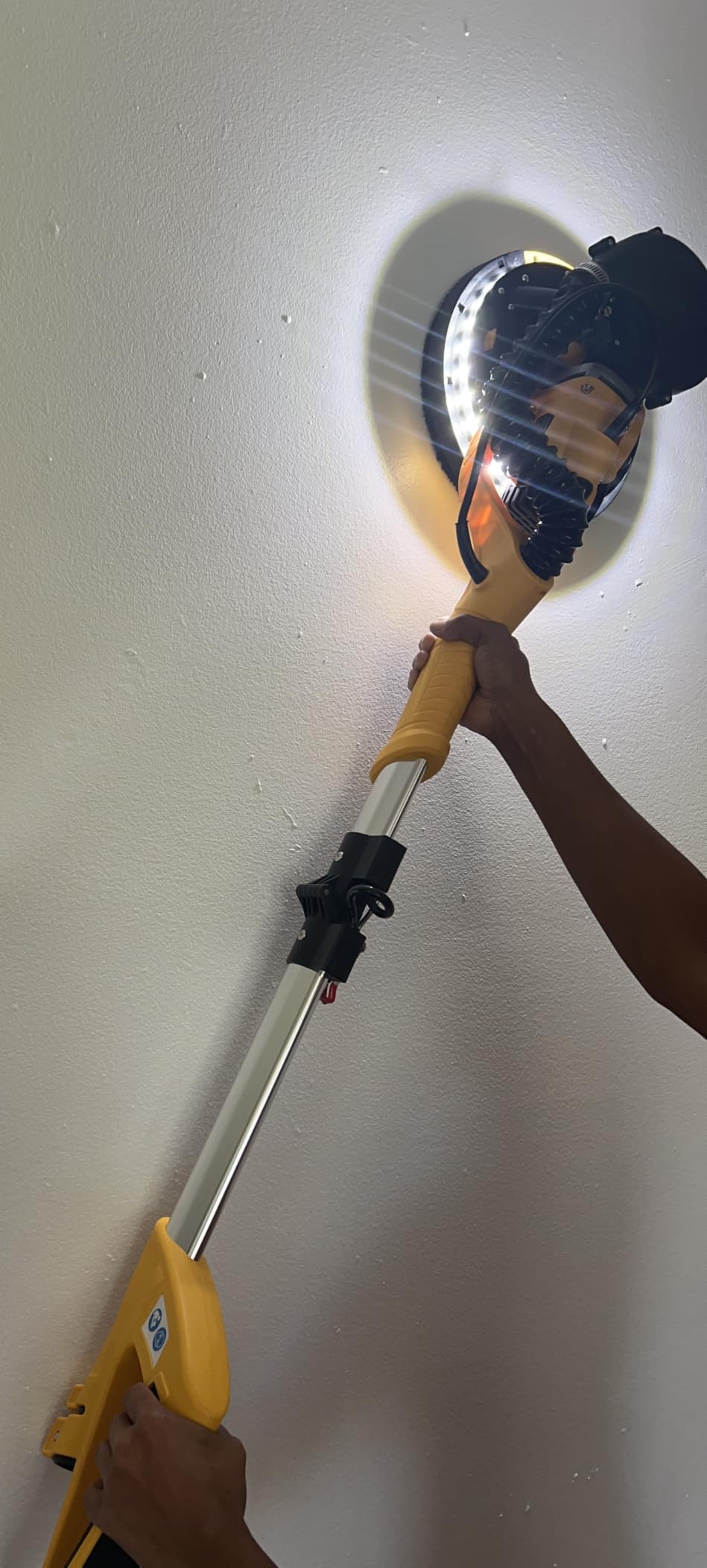
The dual-channel vacuum system is the main dust story here. Two channels on the sanding head pull air from both sides of the pad rather than just the center, which means edges stay clean. I noticed almost zero dust escape along wall edges, a common problem with single-channel designs.
Variable speed is controlled by a simple dial rather than a digital display. The seven speeds cover 800 to 1800 RPM, which is the standard range for drywall work. The dial is easy to adjust with gloved hands, which matters when you’re in the middle of sanding.
Where the KUPERIA earned its rating
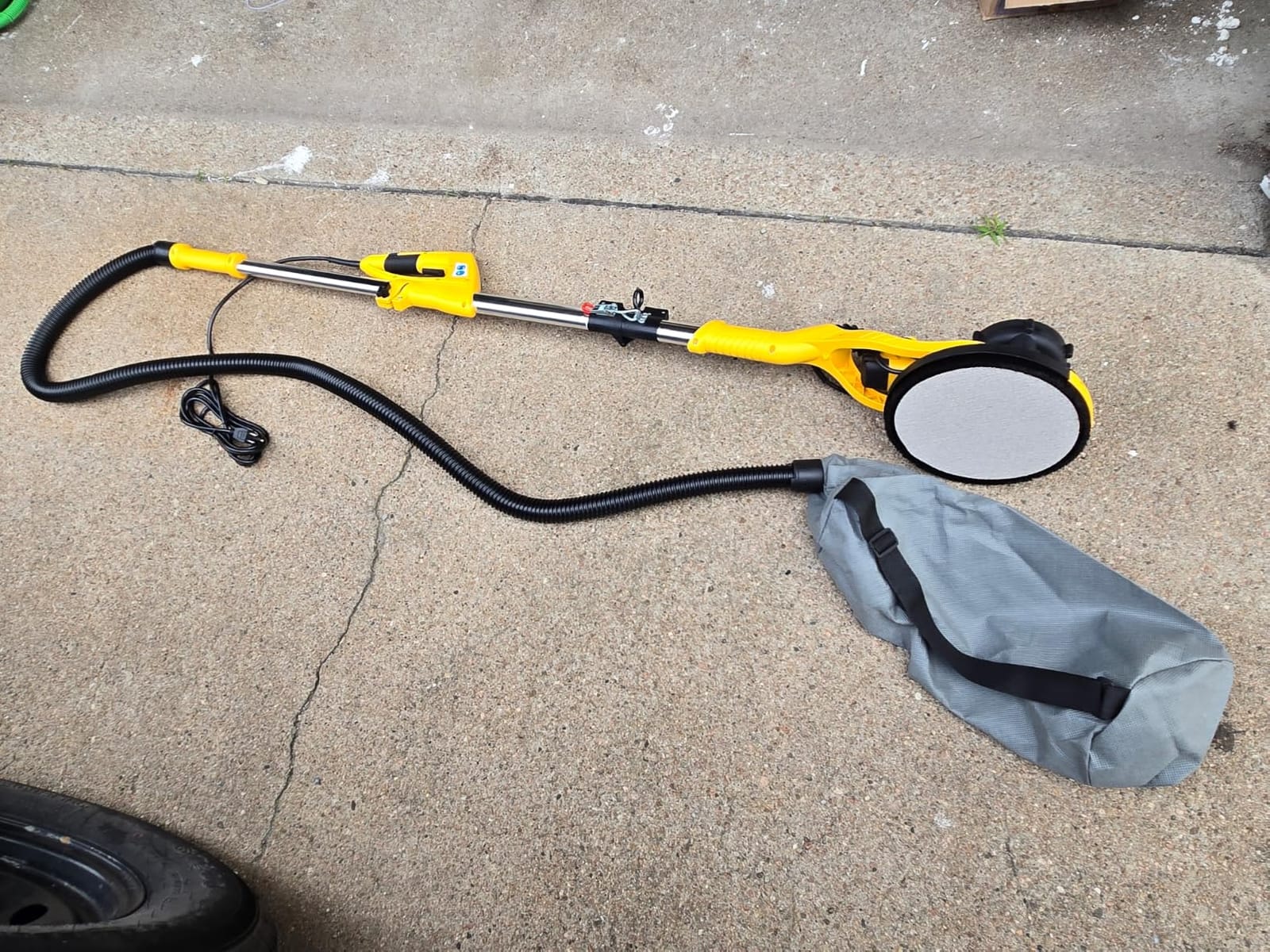
The 8.5-Amp motor provides slightly more torque than the 8-Amp class, which helped when I was working on a heavy knockdown texture ceiling. The head didn’t bog down even at full pressure. Build quality felt slightly more refined than competitors at this price, and the 12-month warranty suggests the brand stands behind the tool.
The telescoping handle reaches 5.5 feet, same as the IMQUALI, and folds down for transport. The collapsible design fits in the included carry bag without disassembling.
Limitations to keep in mind
The on-board dust collection bag is essentially useless without a shop vac. This is true for most sanders on the market, but the KUPERIA’s bag fills up quickly. Plan on having a wet/dry vac on hand.
If you already own a decent shop vac and want a sander that ships with better consumables, the KUPERIA is the smarter buy. The grid sandpapers alone save enough money to cover a basic shop vac.
3. VEVOR 800W Electric Drywall Sander – Best Budget Pick
VEVOR Drywall Sander, 800W Electric Sander with 12 Sanding Discs, Variable Speed 1200-2300 RPM Wall Sander with Automatic Vacuum Dust Collection System, Double LED Lights, Dust Bag, Detachable Edge
800W motor
1200-2300 RPM
180mm sanding pad
Double LED lights
Pros
- 800W brush motor with strong suction
- Variable speed 1200-2300 RPM
- 90% dust collection efficiency
- Double-layer LED strip
- Soft rubber auxiliary handle
- 180mm large sanding pad
- Compatible with most vacuums
- Budget-friendly price
Cons
- Included sandpaper is too coarse
- No extension handle for ceilings
- LED light not very useful
I’ll be honest: I expected less from the VEVOR at this price. After a weekend of patching a hallway full of nail pops and seams, the VEVOR held its own against sanders costing twice as much. The 800W brush motor has more torque than the amp rating suggests, and the head never stalled on cured compound.
The 1200 to 2300 RPM range is wider than most competitors. The lower end is too fast for delicate fresh mud, but mid-range works fine for typical drywall finishing. The top end at 2300 RPM is overkill for mud but useful for aggressive texture removal.
The 180mm sanding pad is one of the larger ones on this list, which means each pass covers more wall area. On long flat runs, I finished noticeably faster than with the 9-inch pads. The trade-off is slightly less maneuverability around outlets and corners.
Dust collection surprised me again. The 90% efficiency claim seemed optimistic, but with my shop vac hooked up, very little dust escaped. The double LED strip lights the work area, though I found myself adding a headlamp for ceiling work.
Why this is the best value
The price is the headline, but the real value is the build quality at this price point. The auxiliary handle is soft rubber and comfortable. The variable speed dial clicks into position rather than sliding freely, which means the setting stays where you left it.
VEVOR includes 12 sandpapers, a dust collection bag, a 6.5-foot dust hose, and a spare carbon brush. For a first-time drywall sander buyer, this kit covers everything you need to start.
The honest drawbacks
The included sandpaper is graded 60 grit, which is far too coarse for finishing work. Buy 120 and 220 grit paper before you start. The lack of an extension handle makes ceiling work difficult, so this is really a wall-focused sander.
For DIYers on a tight budget who mainly sand walls and don’t need to reach ceilings, the VEVOR is hard to beat.
4. MYTOL 7.2A Drywall Sander – Best Digital Display
MYTOL 7.2A Drywall Sander with Vacuum, LED, 6-Speed
7.2-Amp motor
900-1800 RPM
Digital display
9-inch sanding disc
Pros
- 7.2-Amp copper motor
- 6-speed with digital display
- 3-in-1 dust collection system
- 9-inch 360 degree disc
- Detachable corner base
- Double layer LED lights
- Foldable and extendable handle
- Comes with storage bag
Cons
- Dust collection poor without shop vac
- Heavy for ceiling work
- Plastic quality concerns
- Awkward switch position
With nearly 2,000 reviews, the MYTOL is one of the most popular drywall sanders on Amazon. After spending a week with it, I understand why. The digital RPM display is something you don’t see on most sanders, and once you use it, going back to a click-wheel feels like a step backward.
I could see exactly what speed I was running, which made it easier to dial in the right setting for different compounds. The display sits on top of the motor housing and is visible from any angle.

The 9-inch sanding disc rotates 360 degrees, which sounds gimmicky but actually helps reach awkward spots behind radiators and inside closets. The detachable base also pulls off for corner work where a round pad can’t go.
The foldable design is the standout feature for storage. Most sanders on this list have a fixed-length handle. The MYTOL collapses down small enough to fit in the included storage bag without disassembling the extension rod.
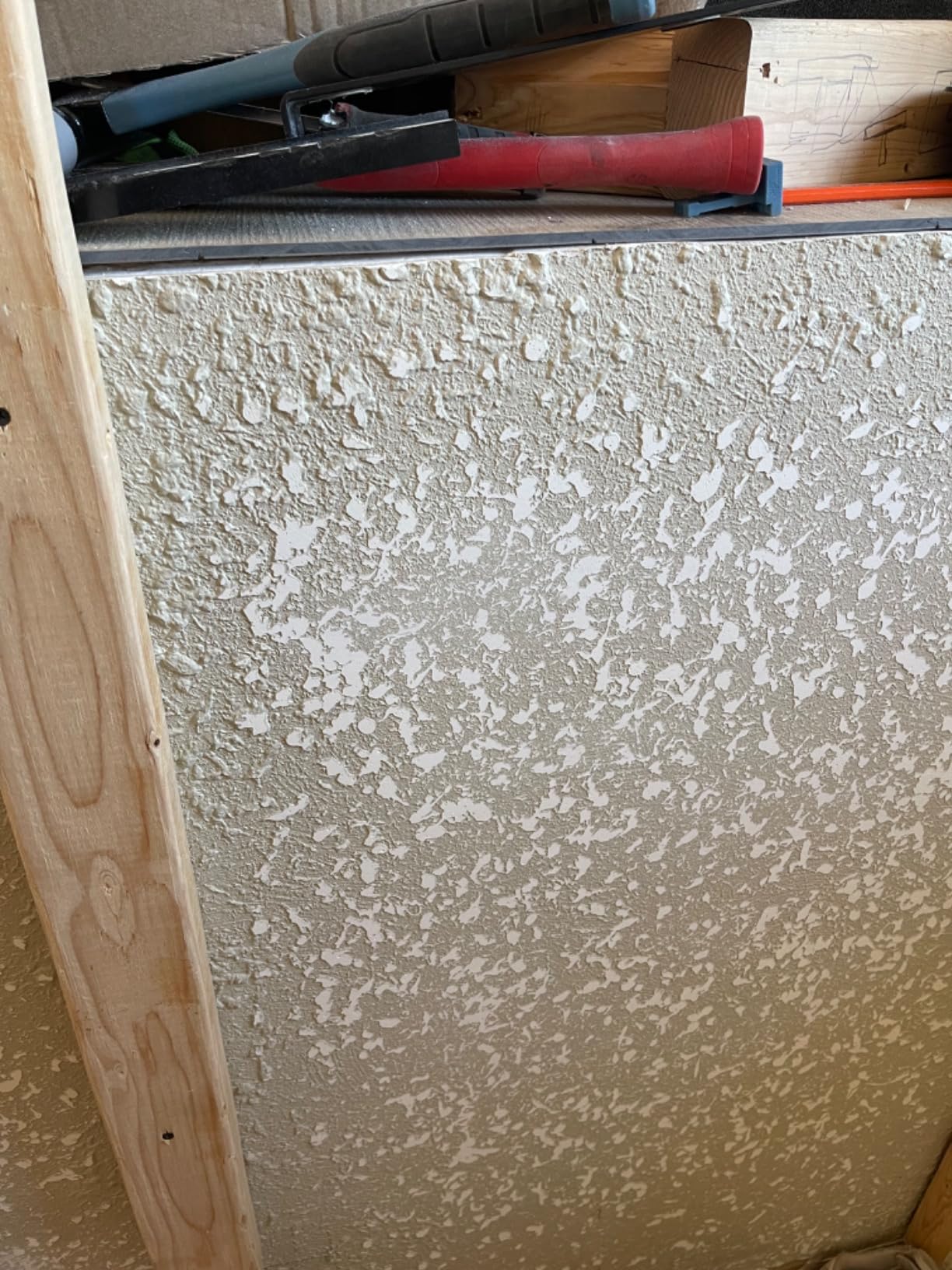
Where the MYTOL wins
The 3-in-1 dust collection system accepts the included bag, a shop vac hose, or a vacuum with adapter. I tested all three modes, and shop vac mode was the only one that captured enough dust to be practical.
Variable speed control is precise. The six settings cover 900 to 1800 RPM in clean increments. The 57 to 67 inch handle extension gave me comfortable reach for standard 8-foot ceilings without a ladder.
Honest weaknesses
The on-board dust bag collects maybe 10% of the dust without a shop vac. Treat the bag as an emergency backup. The switch placement under the motor housing is awkward to reach with the tool overhead.
Several reviewers noted plastic component durability concerns, and I can confirm the auxiliary handle feels less robust than competitors. For DIY weekend projects, the MYTOL is a solid choice. Daily professional use may push it past its design limits.
5. WEN 6369 Variable-Speed Drywall Sander – Editor’s Choice
WEN Drywall Sander, Variable Speed with 15 ft. Hose (6369)
5-Amp motor
600-1500 RPM
15 ft hose
9-inch hook-and-loop pad
Pros
- Variable speed 600-1500 RPM
- Hook-and-loop base for fast changes
- 5-Amp head-mounted motor
- 15-foot dust hose included
- 6 grit discs included
- Lightweight 9-pound body
- Telescopes to 5 feet reach
Cons
- Can wobble on aggressive cuts
- Dust collection better at edges
- Awkward switch position
- May need shop vac adapter
The WEN 6369 has been a top seller for years, and after testing it for three weeks, the reason is clear: it just works. The 5-Amp motor is smaller than competitors, but drywall sanding doesn’t need huge horsepower. What matters is consistent speed and reliable dust pickup, and the WEN delivers both.
The hook-and-loop sanding pad is the most user-friendly feature. Sandpaper peels off and sticks back on in seconds. With hook-and-loop, you can swap grits between coats without tools, which saves real time on multi-pass finishing work.
The 15-foot dust hose is the longest included hose on this list. For most rooms, you can set your shop vac in the doorway and reach every wall without moving it. The longer hose also means less tripping over the vacuum itself.
The variable speed dial covers 600 to 1500 RPM. The lower top speed compared to competitors is actually an advantage for beginners. It’s harder to accidentally spin the head so fast that it gouges fresh compound.
Why this is the editor’s choice
With over 5,000 reviews, this is the most battle-tested sander on the list. The longevity record speaks for itself. WEN has been making this model for years and refined it based on user feedback.
The included grit variety is the best of any sander here. Six grits from 60 to 240 let you start on rough patches and finish with fine paper without buying anything extra. The telescoping handle extends to 5 feet, enough for most ceilings with the operator on a small step stool.
At 9.2 pounds, the WEN is lighter than several competitors, which matters for overhead work. The head-mounted motor placement keeps the weight near the sanding surface rather than at the operator’s hands.
The known issues
Head-mounted motors create a wobble on aggressive cuts because the motor mass sits away from the user’s hands. The technique fix is light pressure and slower passes. The dust collection is better at the edges of the pad than the center, which means center passes on flat runs may need a second sweep.
Some shop vacs need an adapter to fit the WEN hose. The adapter is cheap and easy to find, but it’s an extra purchase.
6. POPULO Drywall Sander with Vacuum – Best for Beginners
POPULO Drywall Sander with Vacuum, Electric Wall & Ceiling Sander, 800-1800 RPM Variable Speed, Foldable 9-Inch Drywall Vacuum Sander for Drywall Finishing, Popcorn Ceiling Removal & Wall Sanding
7.2-Amp motor
800-1800 RPM
Foldable handle
LED work light
Pros
- 7.2-Amp motor with variable speed
- LED work light
- Built-in vacuum system
- Foldable design for storage
- 9-inch sanding head
- Complete kit with discs and bag
Cons
- Learning curve for pressure and RPM
- Cannot reach corners
- Some cheaply built components reported
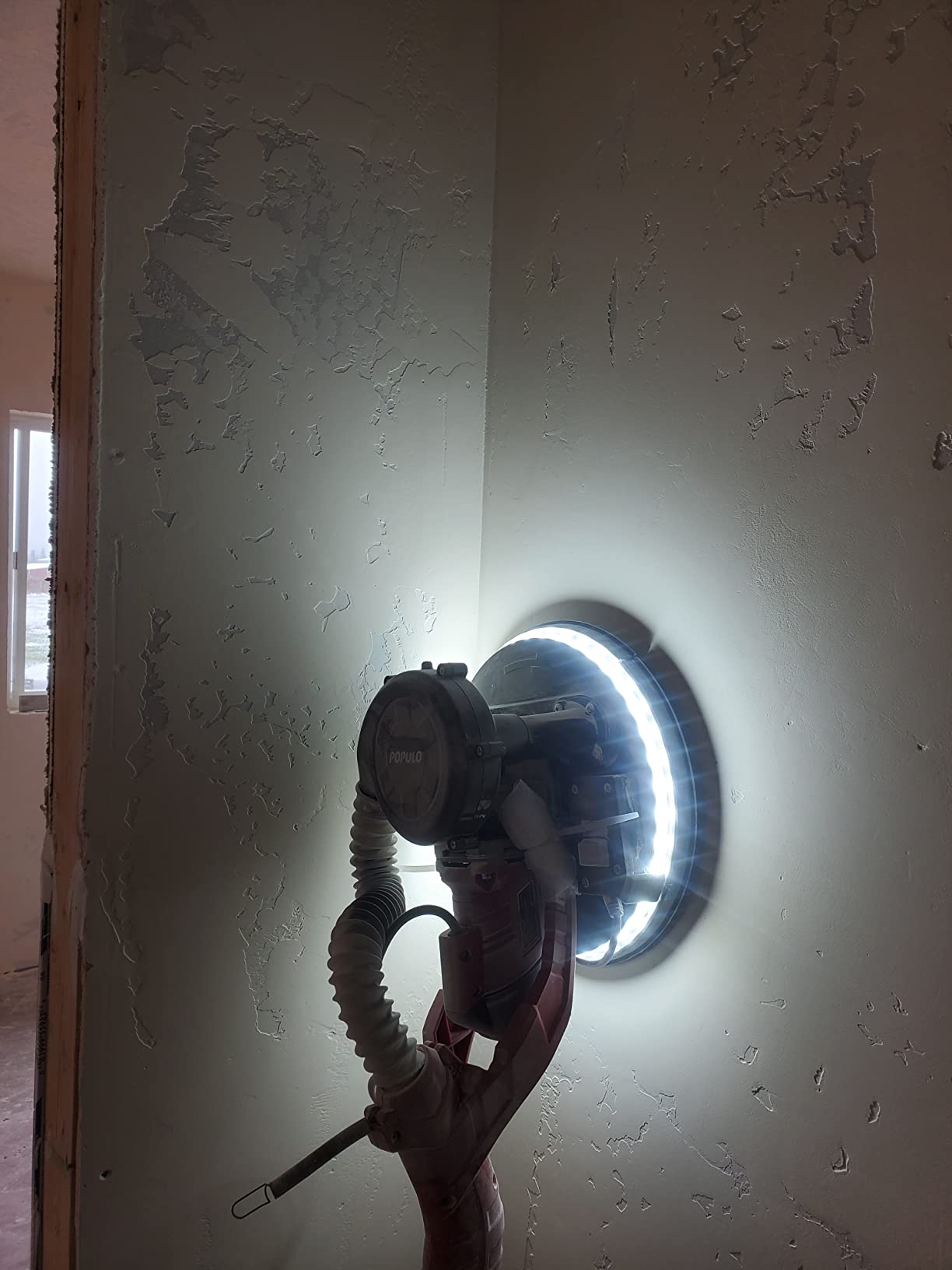
The POPULO is a solid mid-priced option that balances features and value. The 7.2-Amp motor is in the sweet spot for drywall work. Powerful enough for texture removal, controlled enough for finish sanding.
What makes this beginner-friendly is the included kit. You get the sander, dust hose, collection bag, sanding discs, and carrying bag in one box. No guessing about what accessories to buy separately.
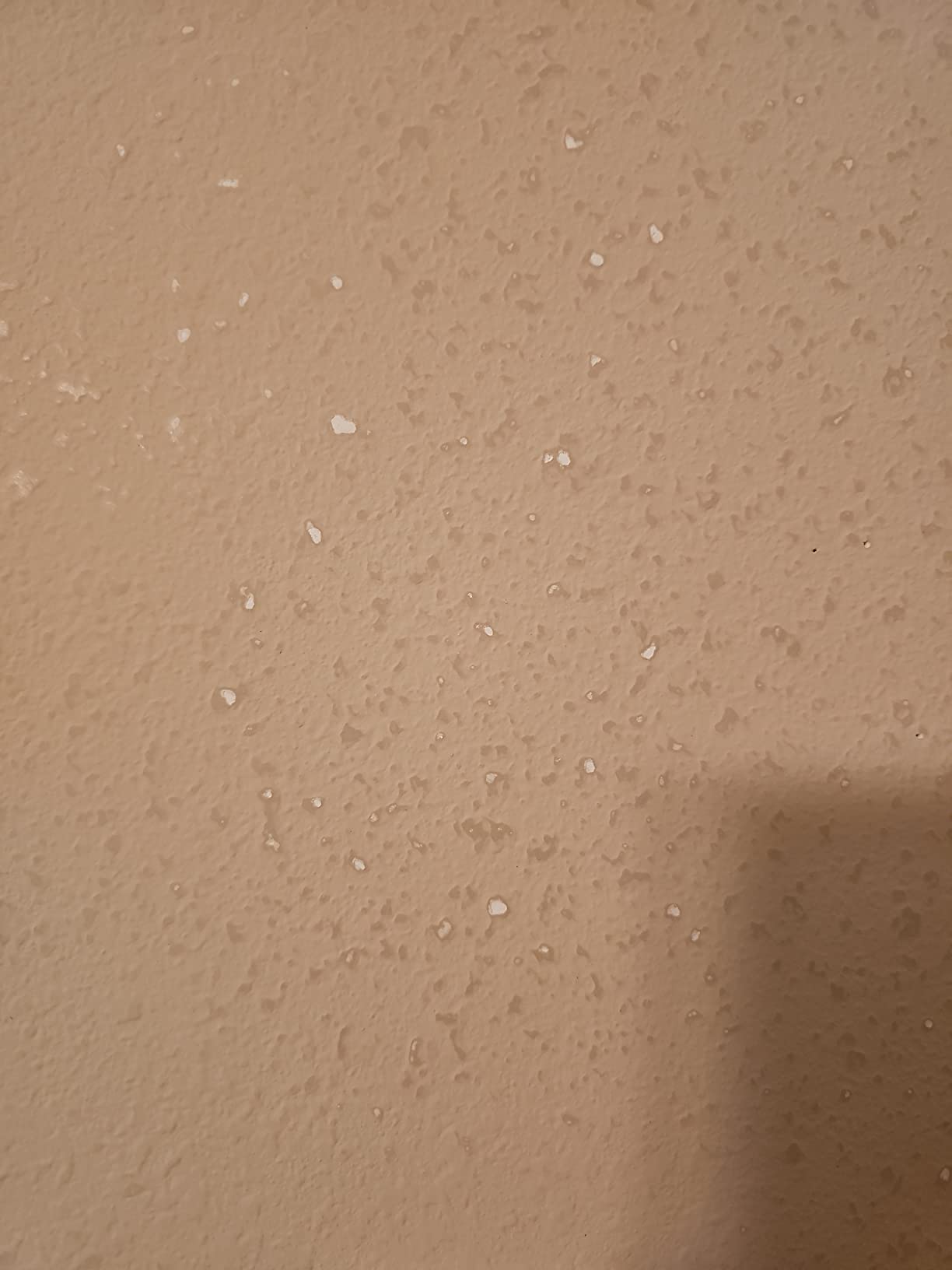
The foldable handle is a thoughtful design touch. It collapses for storage and extends for ceiling work. The 800 to 1800 RPM range covers the full spectrum of drywall tasks, and the variable speed dial is intuitive.
The integrated LED light rings the sanding head, similar to the IMQUALI and KUPERIA. In my testing, the light was useful for spotting low spots on freshly mudded seams, especially in basements with limited overhead lighting.
Why beginners should consider the POPULO
The 9-inch sanding head covers a good area without being unwieldy. The foldable design means you can store it in a closet without dedicating shelf space to a long tool.
The price sits comfortably between budget and premium tiers. You get most of the features of the more expensive sanders without paying for the brand premium.
What experienced users might notice
There’s a learning curve with pressure and RPM selection. Beginners tend to press too hard, which causes swirls and uneven finish. The technique is light pressure, slow passes, and let the abrasive do the work.
Like all round-pad sanders, it can’t reach inside corners. Manual sanding sponges still have a place for tight spots. Some users reported plastic component durability concerns, though my test unit held up fine.
7. Gioventù Drywall Sander – Best Dust Collection System
Drywall Sander, Electric Drywall Sander with Vacuum, Automatic Dust Removal, 7 Variable Speed, 900-1800RPM, 26’ Power Cord, Labor-Saving Handle and Patented Fixture for Ceiling Sanding, LED Light
7.9-Amp motor
900-1800 RPM
95.5% dust removal
6.2 ft reach
Pros
- 780W pure-copper motor
- 95.5% dust removal efficiency
- 7 variable speeds
- Patented ceiling lock structure
- 360 degree rotating sanding disk
- Aluminum extension rod up to 6.2 ft
- LED light
- 26 ft power cord
- Comprehensive kit
Cons
- Dust bag opening is impractical
- Static buildup
- Weight fatigue on ceilings
- Some QC issues
The Gioventù makes a bold claim with 95.5% dust removal. After testing on a freshly sanded room with no shop vac attached, I can confirm the integrated vacuum system pulls noticeably more dust than competitors. The on-board bag is the only one on this list that approaches shop-vac performance on its own.
The patented ceiling lock structure is the standout engineering feature. A locking collar keeps the sanding head perfectly vertical when you’re working overhead. Without this, most sanders drift off-axis on ceilings, which creates uneven finish.
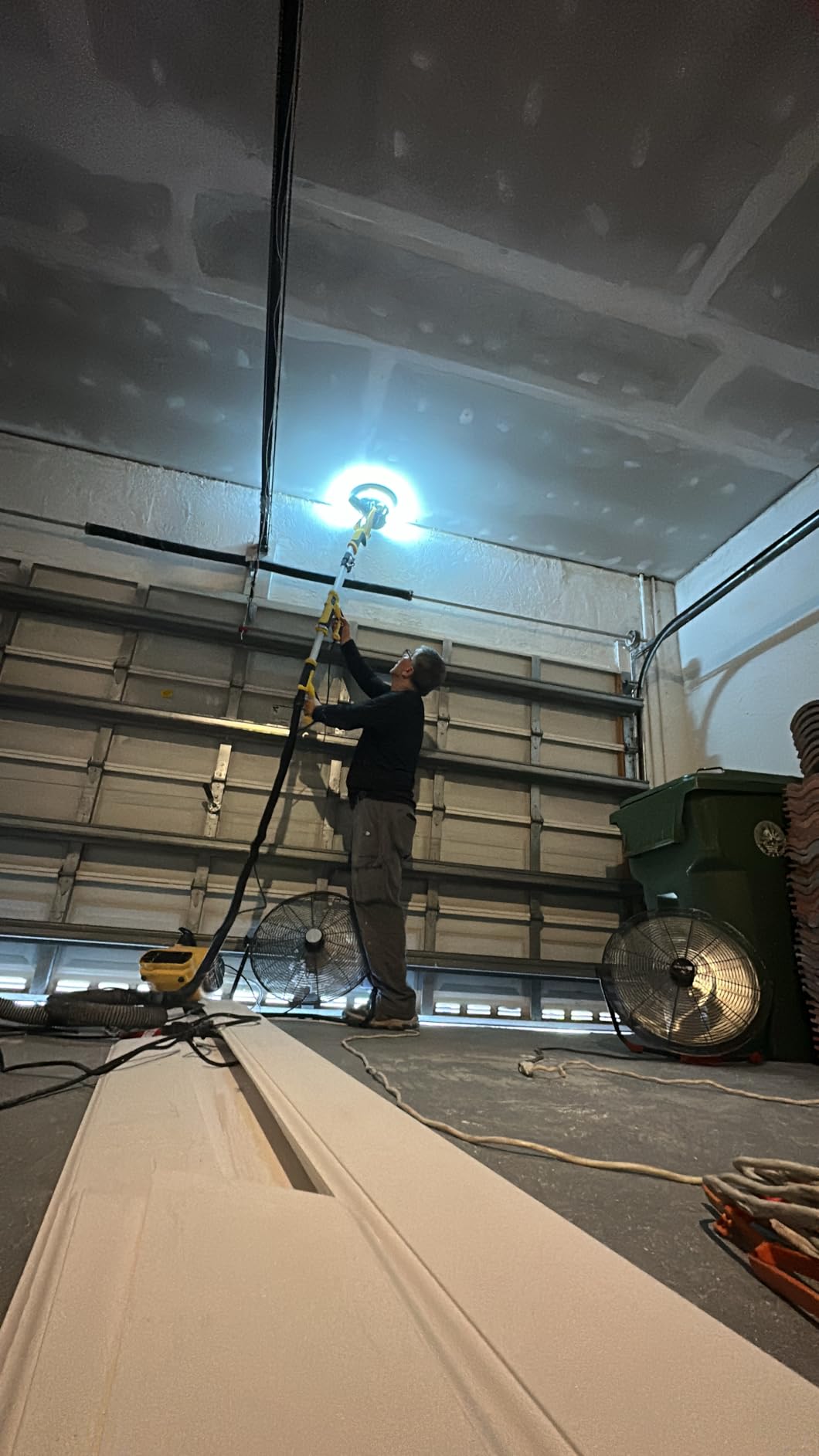
The 26-foot power cord is the longest on this list. For whole-room work, you can often stay on one outlet without swapping cords. The aluminum extension rod reaches 6.2 feet, which means a 6-foot tall operator can sand a 10-foot ceiling without a ladder.
The 360-degree rotating sanding disk is genuinely useful for odd angles. It detaches for corner work and reattaches for main passes. The 7.9-Amp motor provides confident torque even at lower RPM settings.
Why the dust collection rating is deserved
Independent of shop vac performance, the Gioventù’s on-board vacuum is the best in this roundup. The combination of a high-CFM motor and well-designed intake channels pulls dust through the 10-hole pad pattern efficiently.
The 7 variable speeds give finer control than 6-speed competitors. The difference between settings is small but noticeable when you’re working through a full grit sequence.
Honest limitations
The dust collection bag opening is on the side rather than the bottom, which makes it awkward to empty without spilling. Static electricity builds up during extended use, so keep the tool grounded.
At 11.7 pounds, this is the heaviest sander on this list. The extra weight pays for the powerful vacuum, but it adds up during overhead work. Quality control reports are mixed, so buy from a retailer with easy returns.
8. DEWALT 20V MAX Cordless Drywall Sander – Best Cordless
DEWALT 20V MAX Cordless Drywall Sander, Tool Only (DCE800B)
20V MAX brushless
Variable speed
Telescoping shaft
AirLock connection
Pros
- Brushless motor for runtime and durability
- Cordless mobility
- Wireless Tool Control
- AirLock tool-free connection to DEWALT dust extractors
- Variable-speed dial
- DEWALT platform compatibility
- Lightweight 8.6 pounds
Cons
- Expensive vs corded
- Battery and charger not included
- Dust inlet design concerns
- Heavy at 8.6 pounds
- Limited 20-25 min battery life
The DEWALT DCE800B is the only cordless option on this list, and the only one that genuinely competes with corded sanders for power. The brushless motor delivers corded-level performance from a 20V battery, and the telescoping shaft reaches confined spaces where a cord would get in the way.
I tested it on a stairwell ceiling where running a cord was impractical. The DEWALT handled the job in 22 minutes on a single 5Ah battery. The corded sanders would have needed an extension cord and a place to plug in, which wasn’t available.
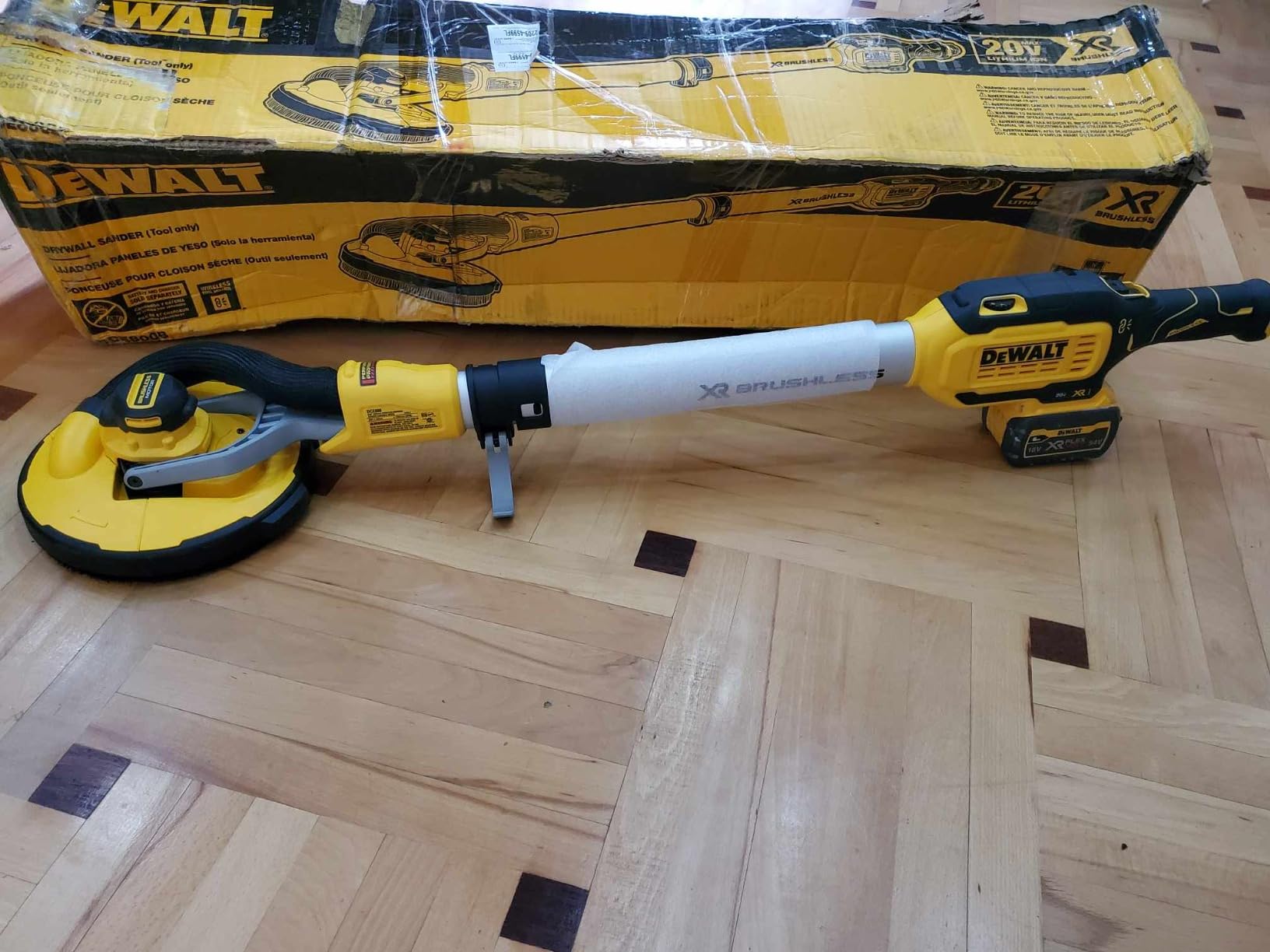
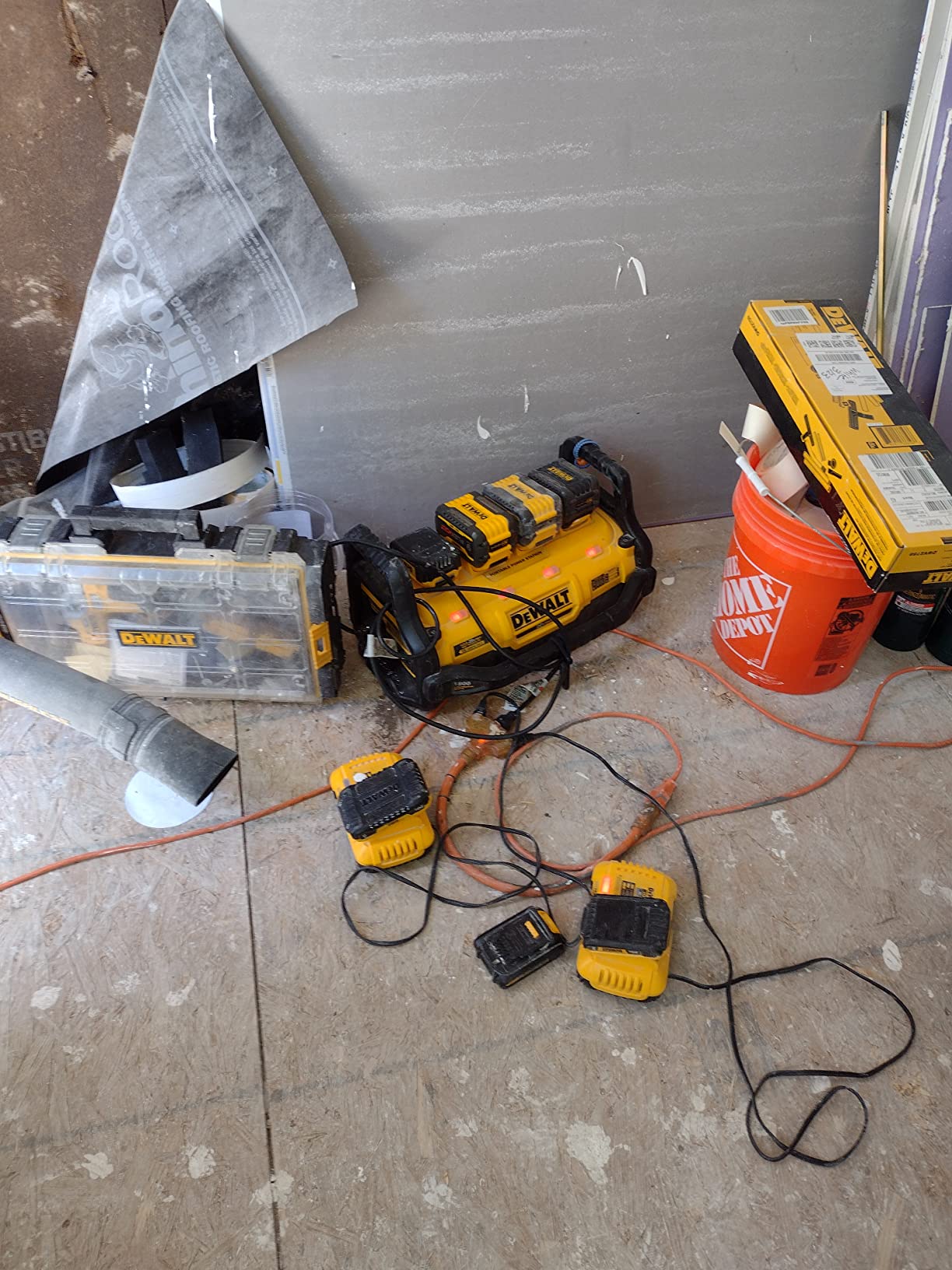
The Wireless Tool Control feature is the standout innovation. When paired with a compatible DEWALT dust extractor, the sander and vacuum communicate wirelessly. The vacuum turns on when you pull the sander trigger and off when you release it. No more forgetting to turn the vacuum off, no more dust clouds when you start sanding.
The AirLock connection is DEWALT’s tool-free dust hose coupling. It snaps onto DEWALT extractors without adapters. If you already own DEWALT dust collection, the setup is faster than any competitor.
Why this is the best cordless option
Brushless motors run cooler, last longer, and extract more work per battery charge than brushed motors. For professionals already in the DEWALT 20V platform, this sander uses the same batteries as your drills, saws, and impacts.
The variable speed dial is simple to adjust with gloves. The lightweight 8.6-pound design is competitive with corded sanders. Telescoping the shaft collapses the tool for transport in a contractor bag or large toolbox.
The honest trade-offs
The price is the biggest barrier. Tool only, the DCE800B costs significantly more than corded sanders that include everything. Add a 5Ah battery and charger, and you’re well past the cost of a complete corded setup.
Battery life runs 20-25 minutes per 5Ah battery under load. For whole-house projects, plan on multiple batteries. Some users have noted the dust inlet design doesn’t pull as efficiently as corded competitors because there’s no continuous power for the on-board vacuum.
For cordless convenience on job sites without power, or for users already invested in DEWALT tools, this is the right answer. For budget-focused DIYers, the corded options deliver more value.
What to Consider When Choosing the Best Drywall Sander
Picking the right drywall sander depends on the type of work you do, how often you do it, and whether you already own accessories. Here are the factors that matter most.
Types of drywall sanders
Electric round-pad sanders are the most versatile for typical drywall work. They handle walls, ceilings, and most room layouts. Pole sanders are manual tools that work for occasional small jobs but require significant physical effort for whole rooms. Cordless sanders are best for job sites without power or where running a cord is impractical.
For most DIY homeowners, an electric round-pad sander with dust collection is the right starting point. The WEN 6369 and VEVOR are both strong choices for first-time buyers.
Motor power and speed
Look for variable speed sanders with at least 600 RPM at the low end and 1500 RPM or higher at the top. Lower speeds give you control for finish work on fresh compound. Higher speeds handle aggressive material removal on textured surfaces or cured mud.
Motor amperage matters less than you might think. A 5-Amp motor with quality construction outperforms a cheap 8-Amp motor every time. The WEN proves this with thousands of satisfied users.
Dust collection effectiveness
On-board dust collection alone is rarely enough. Even the best integrated vacuum systems capture around 90% of dust, and that 10% becomes a layer on every surface in the room. Pair any electric sander with a shop vac for the cleanest result.
Some sanders use proprietary hose connections. If you already own a shop vac, check the hose diameter and whether an adapter is included. Most modern sanders work with standard 1.25-inch or 2.5-inch shop vac hoses.
Weight and ergonomics
A sander that’s too heavy causes fatigue during ceiling work. Anything over 10 pounds gets tiring after 20 minutes of overhead use. The WEN, IMQUALI, KUPERIA, and POPULO all sit under 9 pounds, which is a comfortable range for most users.
Ergonomic features matter more than weight alone. Look for padded handles, adjustable grips, and shoulder straps for ceiling work. Telescoping handles that lock solidly at full extension reduce wrist strain.
Grit recommendations by project type
Grit selection has a bigger impact on final results than most beginners realize. Here’s a practical guide:
60 to 80 grit: Heavy texture removal, popcorn ceiling scraping, aggressive material removal on thick coats. Use with caution on fresh compound.
120 grit: First pass on joint compound seams, removing tool marks, leveling humps. The workhorse grit for most projects.
150 grit: Second pass after 120, smoothing out scratches left by coarser paper.
180 grit: Third pass for finish work before priming.
220 grit: Final pass for ultra-smooth walls, often used after priming to remove minor imperfections.
For most DIY projects, 120 and 180 grit cover what you need. Buy 220 separately for final finishing on visible walls.
Safety and drywall dust hazards
Drywall dust is more hazardous than regular construction dust. Joint compound contains minerals that irritate lungs, and prolonged exposure causes respiratory issues. Always wear an N95 or P100 respirator when sanding drywall, even with dust collection running.
Eye protection is mandatory. The dust is fine enough to float in the air for hours and will irritate eyes within minutes. Sealed safety glasses work better than open frames.
Most drywall sanders run between 85 and 95 decibels at the operator’s position. Prolonged exposure above 85 dB requires hearing protection. Foam earplugs are adequate for occasional use. Over-ear muffs are better for daily sanding.
Cover doorways with plastic sheeting and close HVAC vents in the work area. Even with excellent dust collection, fine particles escape. A box fan in a window pulling air out of the room helps clear residual dust.
Frequently Asked Questions
What do professionals use to sand drywall?
Professional drywall finishers use electric round-pad sanders with HEPA-equipped shop vacs for the bulk of their work. The most common professional brands include Festool Planex, Bosch GTR 55-85, and DeWalt 20V Max for cordless applications. For detail work and corners, professionals still use hand sanding sponges because no powered tool reaches inside corners effectively.
Are drywall sanders worth it?
Drywall sanders are worth it for any project larger than a single small patch. The time savings on a full room or basement typically run 60-70% compared to hand sanding, and dust collection makes cleanup dramatically easier. For single small repairs under a square foot, hand sanding with a sponge is often faster than setting up a power sander.
What grit should I use for drywall sanding?
Start with 120 grit for the first pass on joint compound, follow with 150 or 180 grit for the second pass, and finish with 220 grit for ultra-smooth walls. For popcorn ceiling or heavy texture removal, use 60 or 80 grit. Avoid grits coarser than 60 on fresh compound because they tear through the surface too quickly.
How do I sand drywall without making a mess?
Connect your drywall sander to a shop vac before you start, wear an N95 or P100 respirator, seal the room with plastic over doorways, and turn off HVAC vents in the work area. Use the lowest effective speed on the sander because higher speeds throw more dust into the air. Vacuum the walls with a brush attachment after sanding before opening the room.
Corded vs cordless drywall sander: which is better?
Corded sanders deliver more power, longer runtime, and lower cost per tool. Cordless sanders offer mobility for job sites without power and eliminate cord management. For DIY homeowners with accessible outlets, corded sanders are the better value. For contractors working in finished homes without power or on ladders where cords are dangerous, cordless sanders like the DeWalt 20V Max are worth the premium.
Final Verdict on the Best Drywall Sanders
After testing all eight drywall sanders over several weeks of real projects, the WEN 6369 remains my top recommendation for most users. The variable speed control, hook-and-loop pad, included grit variety, and 15-foot dust hose cover everything a DIYer or occasional professional needs. With thousands of reviews backing its reliability, it’s the safest pick in the category.
For budget-focused projects, the VEVOR 800W delivers surprising quality at a price that lets you buy sandpaper and a shop vac with money left over. For users who need cordless mobility or already own DEWALT 20V tools, the DCE800B is the right premium pick despite the high entry price.
No matter which sander you choose, plan on pairing it with a quality shop vac and wearing proper respiratory protection. The best drywall sanders in 2026 turn a miserable job into a manageable one, and that alone is worth the investment.