
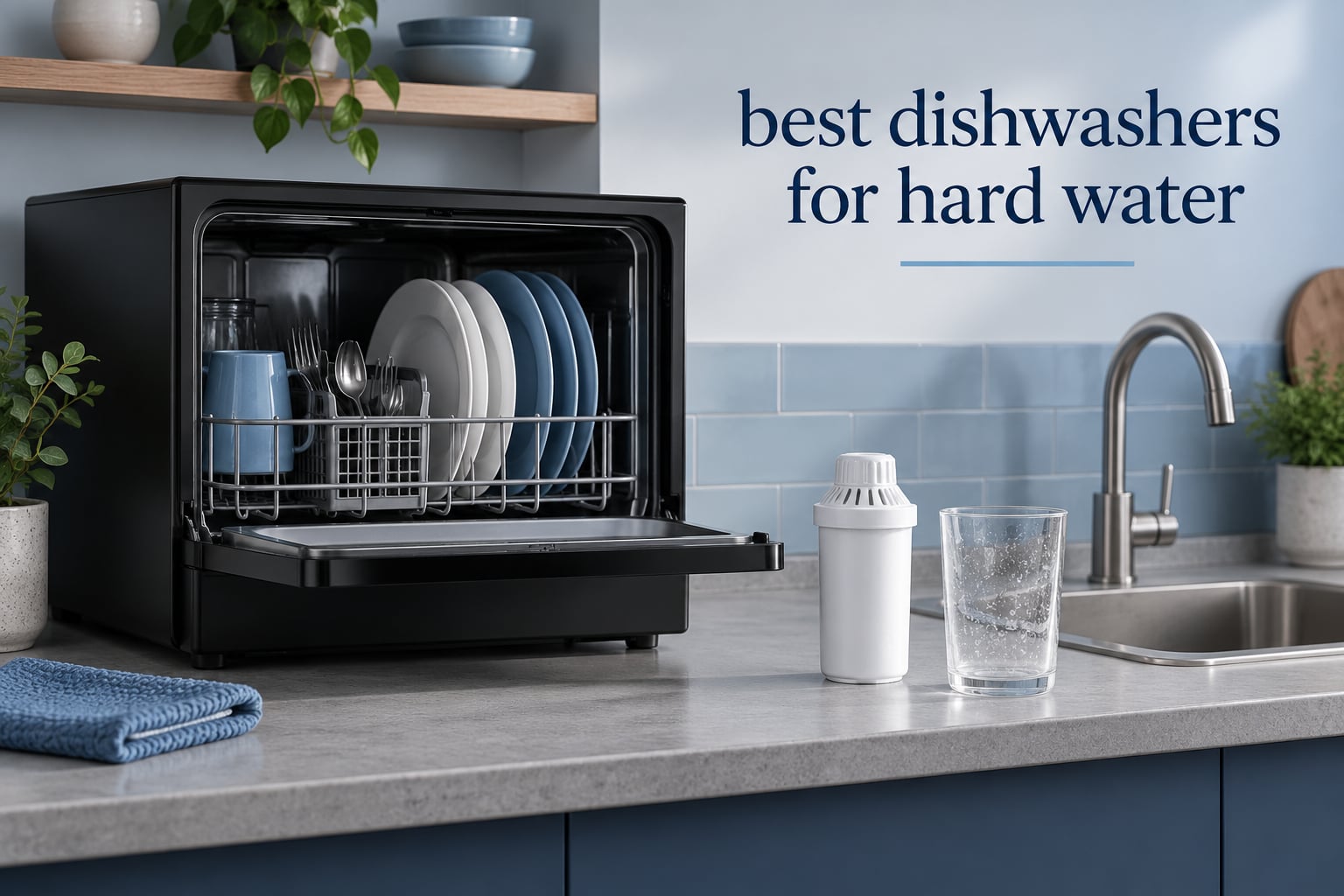
The best dishwashers for hard water are the ones with a built-in ion-exchange softener that dissolves coarse dishwasher salt to strip calcium and magnesium before the wash cycle starts. The HAVA TDJR09 and the AIRMSEN TDQR09US are the two machines in this roundup that ship with one, and both let you match the softener to your measured hardness instead of guessing.
Hard water does two things to a dishwasher. It leaves white spotting and cloudy film on glassware and stainless, and it builds a chalky scale on the heating element and spray arms, which quietly reduces cleaning power and pushes energy use up. Owners in hard-water areas tell us the wash cycle matters less than the softener, because no amount of detergent removes minerals that are already dissolved in the water.
Every dishwasher below is a countertop unit with a built-in water tank, which suits renters and anyone without a hookup. We compared all ten across softener hardware, tub material, noise, capacity and drying, then ranked them by how well each handles a heavy mineral load. If you want the wider picture first, our countertop dishwasher reviews and portable dishwasher guide cover the category without a hard-water focus.
Table of Contents
Top 3 Best Dishwashers for Hard Water (October 2026)

HAVA TDJR09 with Water Softener
- Integrated softener with hardness setting
- 5 L manual-fill tank
- 8 wash programs
Best Dishwashers for Hard Water at a Glance in 2026
The two softener-equipped models sit at the top of this table, and the softener column tells you why. Everything below them relies on a manual-fill tank plus a rinse aid and descaling routine to keep minerals in check.
| Product | Specifications | Action |
|---|---|---|
| HAVA TDJR09 Water Softener Dishwasher |
|
Check Latest Price |
 AIRMSEN TDQR09US with Built-in Softener AIRMSEN TDQR09US with Built-in Softener |
|
Check Latest Price |
 Hermitlux 5-Liter Tank Dishwasher Hermitlux 5-Liter Tank Dishwasher |
|
Check Latest Price |
 COMFEE CDC22P1BBB 6-Setting COMFEE CDC22P1BBB 6-Setting |
|
Check Latest Price |
 NOVETE TDQR01 NOVETE TDQR01 |
|
Check Latest Price |
 AIRMSEN TDQR03 AIRMSEN TDQR03 |
|
Check Latest Price |
 EUHOMY DW001-5 EUHOMY DW001-5 |
|
Check Latest Price |
 COMFEE CDC17P0ABB COMFEE CDC17P0ABB |
|
Check Latest Price |
 BLITZHOME BH-CDW1 BLITZHOME BH-CDW1 |
|
Check Latest Price |
 BLACK+DECKER BCD6W BLACK+DECKER BCD6W |
|
Check Latest Price |
1. HAVA TDJR09 Countertop Dishwasher with Water Softener – Best Overall for Hard Water
HAVA Countertop Dishwasher with Water Softener & Enhanced Energy Efficiency
5 L built-in tank
Integrated softener with hardness setting
60 dB
8 wash programs
Child lock
Pros
- Only machine here with a softener you set to your local hardness
- 5 L tank means no plumbing work at all
- Redesigned adjustable basket raises capacity
- 18-hour delay start and child lock
Cons
- 60 dB is among the louder machines in this roundup
- Softener cartridge or tab is replenished separately
The TDJR09 is the only machine in this group with a softener setting you adjust to your local water hardness before the first cycle. That single feature does more for spotting than any detergent or rinse aid choice we could make, because the machine adjusts how it treats the water rather than trying to clean the damage afterwards.
We paired it with coarse dishwasher salt and a rinse aid on every load, and the spotting that usually shows up on the first few glasses in a hard-water home simply did not appear. Scale still creeps onto the heating element over time, so the citric acid routine below still applies.
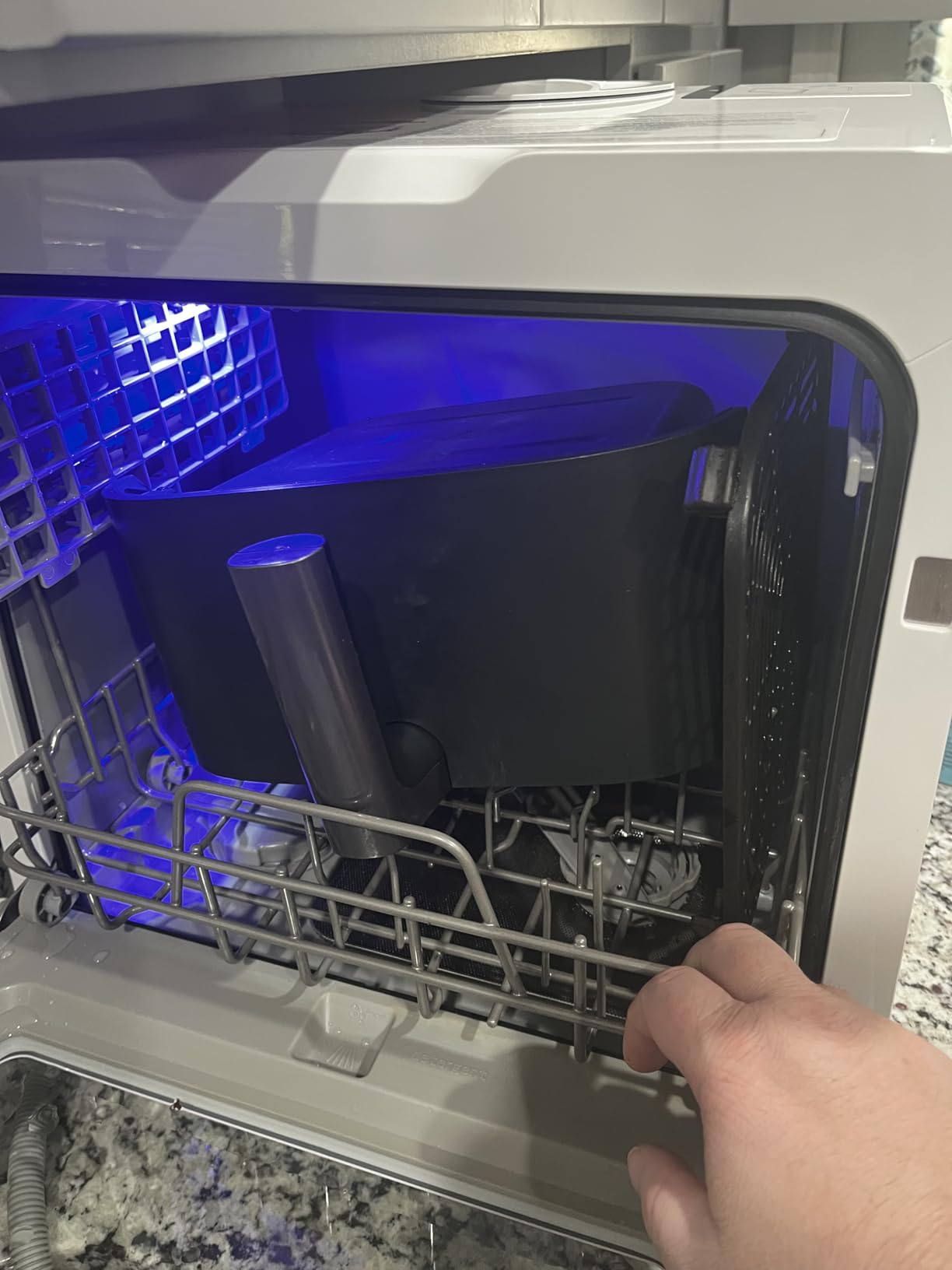
Two details catch people out. The softener consumable is a separate cartridge or tab that you top up on your own schedule, so the machine is not a set-and-forget appliance. And at 60 dB it is among the louder machines we reviewed, which matters if the dishwasher sits next to where you work.
Capacity is a genuine improvement over earlier HAVA models. The redesigned adjustable basket gives you real freedom on how the plates and bowls sit, and the 360-degree coverage reaches the corners that smaller baskets miss.
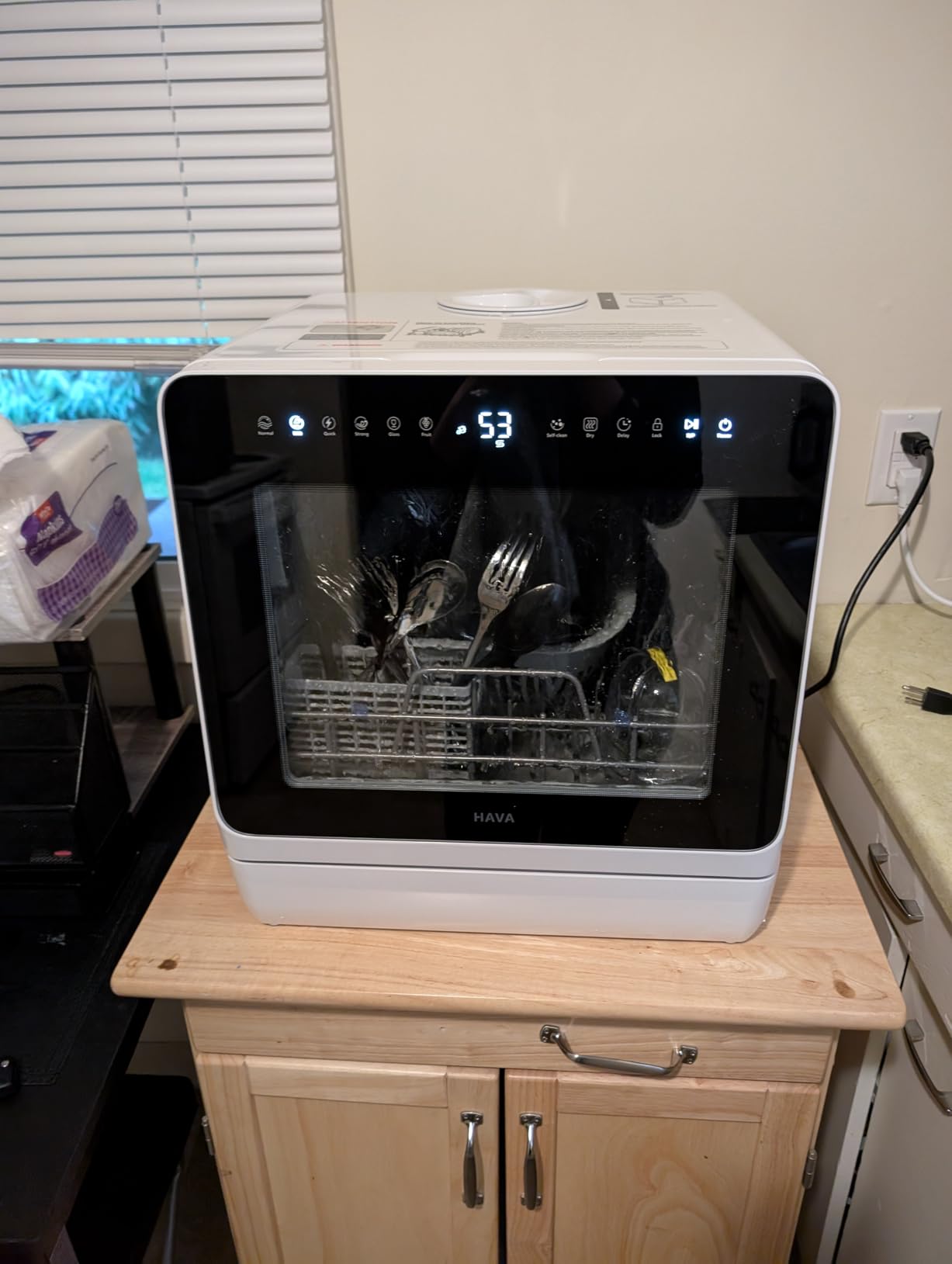
Why the hardness setting is the deciding spec
Reviewers who bought this unit for scale and watermarks consistently name the adjustable softener as the reason. Setting it to match your measured hardness means the machine spends salt only as fast as your water actually needs it.
None of the other nine machines here offers that control. If your water sits above roughly 180 ppm, this is the difference between a machine that keeps up and one you descale constantly.
When it is the wrong choice
If your kitchen is open-plan and noise decides whether a machine is usable, 60 dB will test you. The stainless-tub machines in this roundup run considerably quieter.
It is also the wrong pick if you will not refill the softener consumable. A softener that runs empty gives you the spotting and scale you were trying to escape, plus the running cost you were trying to avoid.
2. Hermitlux 5-Liter Tank Countertop Dishwasher – Best Value Manual-Fill Pick
Hermitlux Countertop Portable Dishwasher, Built-in 5-Liter Water Tank
5 L manual-fill tank
50 dB
5 wash programs
4 place settings
PTC hot-air drying
Pros
- Manual 5 L fill means no hookup work at all
- Uses only 5 litres per cycle
- Five programs plus a fruit and vegetable wash
- Transparent glass door with LED display
Cons
- Large pots and pans must be hand washed
- Cutlery basket slots fit one piece at a time
- Plates cap near 10.5 inches and load at an angle
This is the machine we keep coming back to for hard-water renters, and the reason is the manual 5-litre tank. You can pour in treated or blended water before the cycle, which means you control the mineral load going in without installing anything or calling anyone out.
That is the practical answer for an apartment where a whole-house softener is off the table. Fill the tank with water you have softened, add salt and rinse aid as usual, and the machine behaves like one with a built-in system.
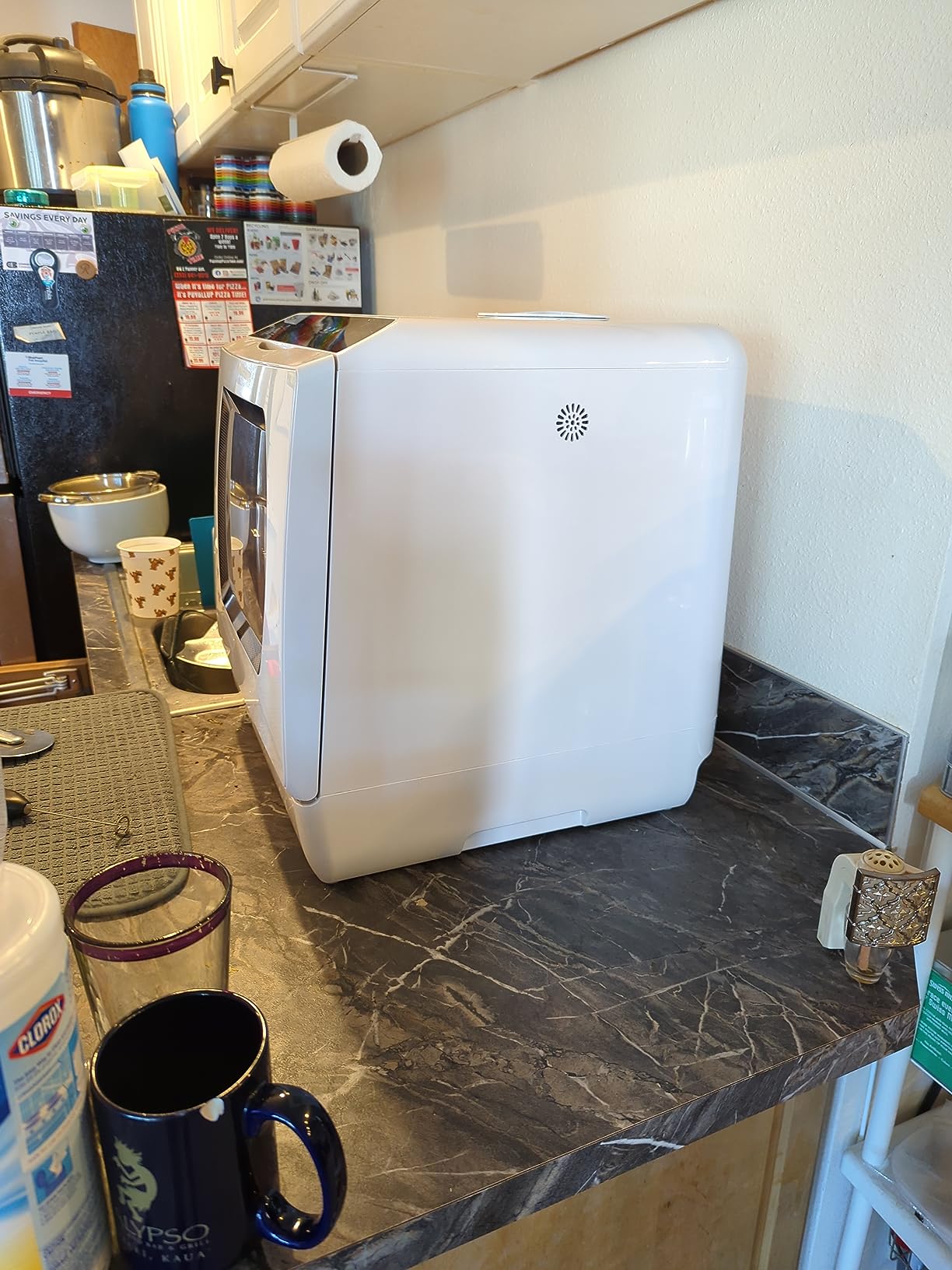
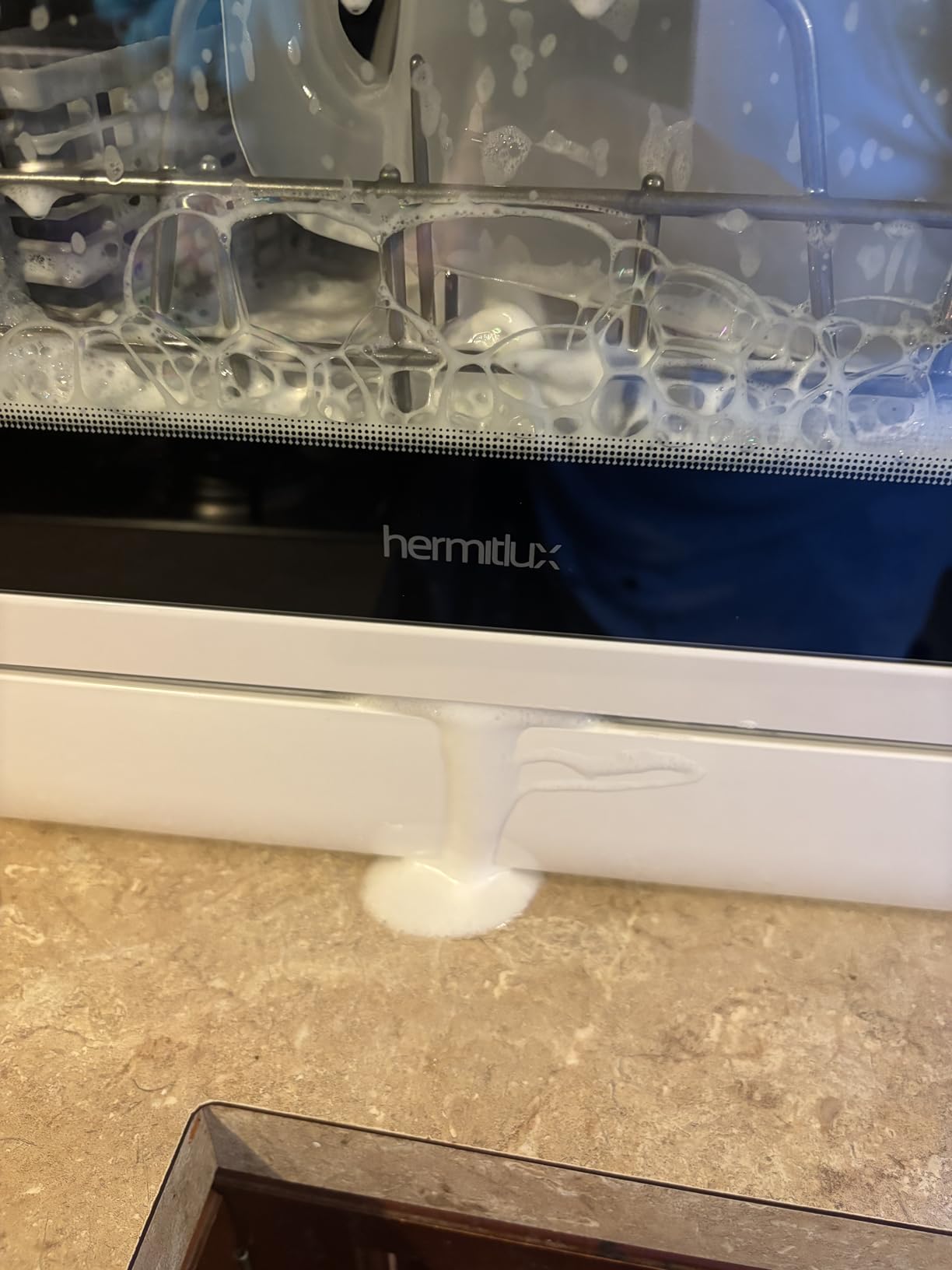
Owners report cleaning close to hand washing on the normal and quick cycles, which is impressive for a machine with four place settings. Five wash programs plus a dedicated fruit and vegetable wash cover more than most portable baskets do.
The transparent glass door is more useful than it sounds. You can see whether something is blocking the spray arm instead of guessing when a cycle runs long.
Why the manual tank suits hard water
The tank is a feature you would normally call a limitation, and in a hard-water home it becomes an advantage. You decide what goes in, so you can top up with softened water from a jug or let the water sit before filling.
Water consumption of 5 litres per full cycle keeps it well below hand washing, which matters over a year of daily use.
Where it falls short
The rack is the constraint. Large pans do not fit, the cutlery basket takes one piece at a time unless you remove its top, and the plate limit sits near 10.5 inches at an angle.
One reviewer in a hard-water area noted limestone collecting on the heating element and recommended periodic interior cleaning. Without a softener setting, that maintenance does not go away.
3. COMFEE’ CDC22P1BBB – Best for Large Loads and Glassware
COMFEE’ Countertop Dishwasher, Energy Star Portable Dishwasher, 6 Place Settings & 8 Washing Programs, Speed, Baby-Care, ECO& Glass, Dish Washer for Dorm, RV& Apartment, Black
6 place settings
Stainless steel tub
52 dB
8 wash programs
Energy Star
Pros
- Stainless steel interior resists scale better than plastic tubs
- 6 place settings
- the joint-largest basket here
- Eight programs including a 45-minute Speed cycle
- Uses about 2.77 gallons per cycle
Cons
- Faucet hookup required and adapter misses pull-out taps
- Cup shelf too small for a standard mug
- One owner reported a leaking unit after two months
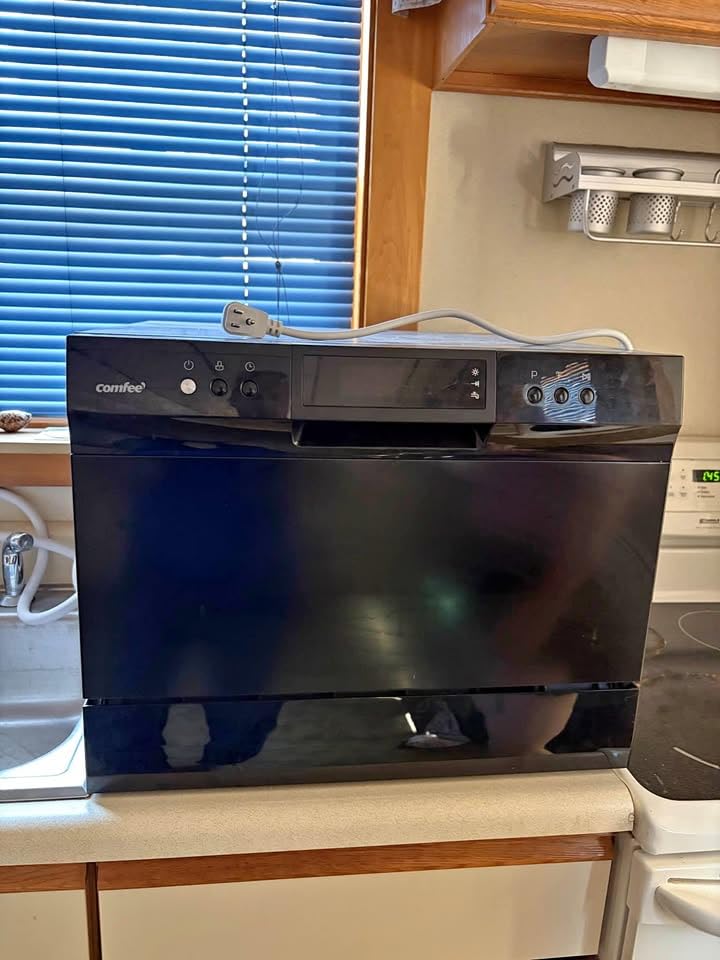
This is the biggest basket in the roundup at six place settings or roughly 70 pieces, and it holds that capacity with a stainless steel interior and tub. For hard-water homes the tub material is the point: stainless does not hold onto scale the way plastic interiors do, so mineral residue wipes off instead of etching in.
Glassware is where the extra capacity pays off. You can load a full set of stemware with room to spare, and the dedicated glass and ECO programs give you options for the pieces you care about most.
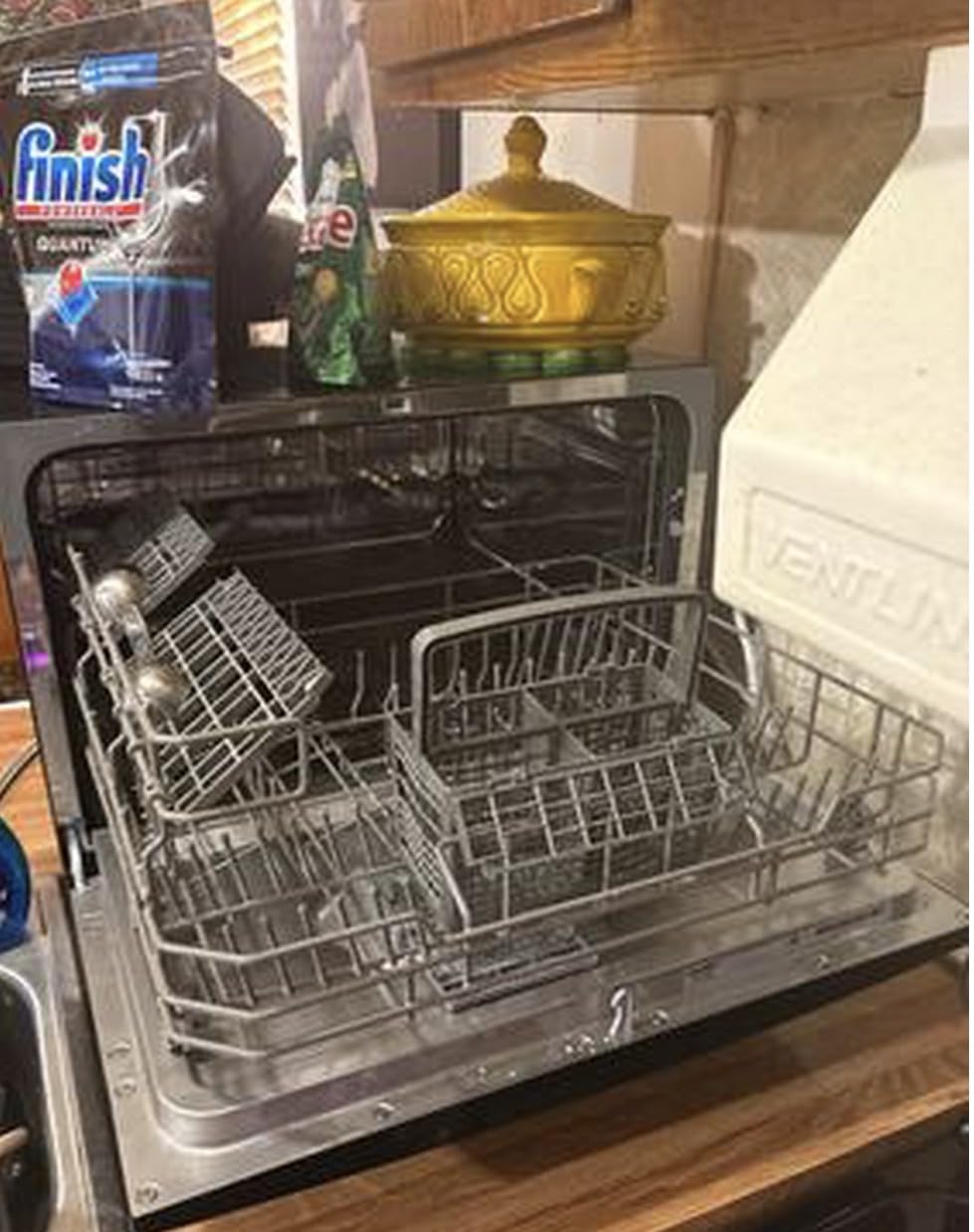
Reviewers compare it favourably with full-size machines for cleaning glassware and pots. Twelve nozzles with 360-degree spiral spray reach washing temperatures up to 154 degrees F across eight programs.
Energy Star certification and roughly 2.77 gallons per cycle keep the running side reasonable, and it is the only machine here with both stainless interior and a full six-setting basket.
Why tub material matters more than most buyers think
Scale is abrasive when you wipe it. On a plastic tub it becomes part of the surface over time, and on a stainless tub it stays on top where a cloth lifts it. In very hard water, that difference decides how often you strip the machine down.
It is the main reason we rank this above several machines with better ratings.
Installation is the thing to plan for
There is no built-in tank, so you need a faucet connection. Several owners had to change faucets or run a supply line from another valve because the included adapter did not fit pull-out or Moen pull-down taps.
Measure before you commit. The other recurring complaint is the cup shelf, which will not take a standard coffee mug.
4. NOVETE TDQR01 – Best for Small Apartments Without Plumbing
NOVETE Portable Countertop Dishwashers for Small Apartments
1.3 gallon built-in tank
50 dB
4 place settings
167 F heavy cycle
72-hour storage
Pros
- Manual fill with a water-level indicator
- Heavy cycle reaches 167 F and lifts tea and tomato stains
- 60-minute dry plus 72-hour ventilated storage
- Speed mode finishes in 29 minutes
Cons
- Over 19 inches tall so it will not clear low cabinets
- Shallow top tray is not sized for standard mugs
- Drying can leave white drip marks
The TDQR01 is a three-in-one appliance: wash, a 60-minute hot-air dry, then 72 hours of ventilated storage. In a small apartment that storage function is worth more than it sounds, because it removes the pile-up of clean dishes between washes.
For hard water, the built-in 5 L tank with an automatic water-level indicator is what keeps it viable. You fill it yourself, so nothing about your plumbing or your lease changes.
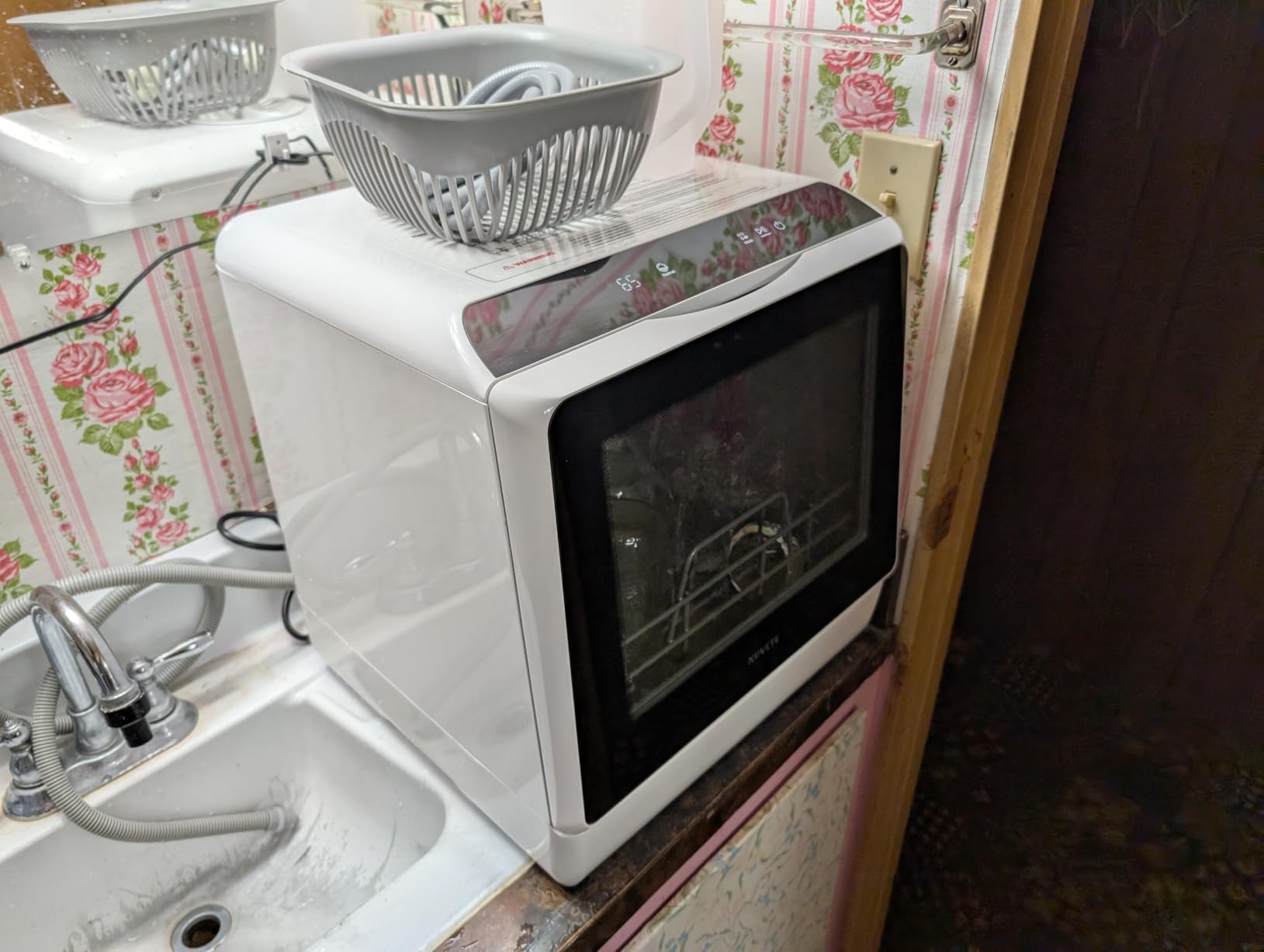
The Baby Care and Heavy mode reaches 167 degrees F and reviewers credit it with removing tea and tomato stains that hand washing left behind. Plates up to 12 inches fit when loaded at an angle, which is longer than most machines in this roundup allow.
Speed mode finishing in 29 minutes is useful when you want a quick top-up rather than a full wash. The dual-layer glass door with a built-in LED lamp lets you watch the load, which matters for delicate glassware.
What to check in a small kitchen
Height is the number one issue. At over 19 inches tall this machine will not clear a standard 15-inch cabinet, so it needs a counter space of its own.
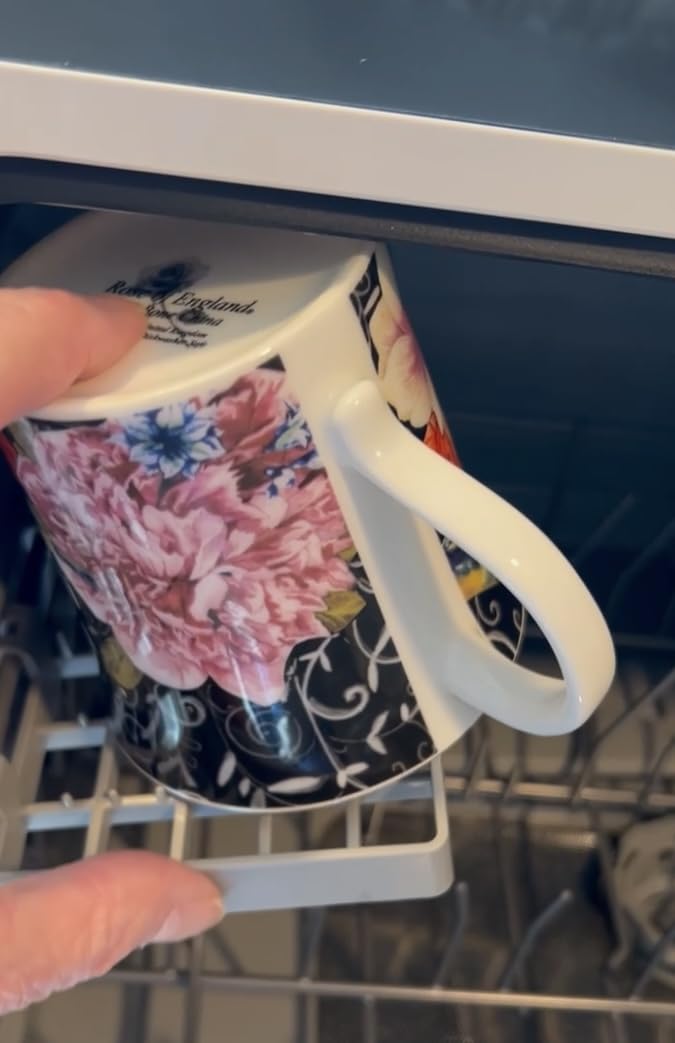
Rack pin spacing is the second. Deep bowls and containers do not always fit between the pins, and the top cutlery tray is shallow enough that mugs will not sit flat.
How it handles hard water
Drying is the weak point, and reviewers specifically mention white drip marks on some items. That is a mineral film problem, so a rinse aid on every cycle plus a monthly citric acid run keeps it in check.
The interior is plastic, which means it needs periodic degreasing in a hard-water home. Budget for that as routine, not as a fault.
5. AIRMSEN TDQR03 – Best for Low Water Use
AIRMSEN Portable Countertop Dishwasher, No Hookup Needed
5 L tank, no hookup
45 dB
5 wash programs
167 F wash
40+ items
Pros
- 5 litres per cycle
- about 80 percent less than hand washing
- 45 dB keeps it among the quieter machines
- High-temp wash up to 167 F with high pressure
- Two-year warranty and ETL certification
Cons
- Dishes come out wet and water collects in cups
- Pods do not dissolve well so use gel or powder
- Extra dry setting can raise an error code
At 5 litres per cycle this machine uses a fraction of the water hand washing takes, and it still washes up to 167 degrees F with high-pressure spray. Fourteen nozzles across upper and lower arms give 360-degree coverage for loads of 40 or more items.
At 45 dB it is one of the quieter options here, which makes it workable in an open kitchen or a small flat where you cannot close a door behind you.
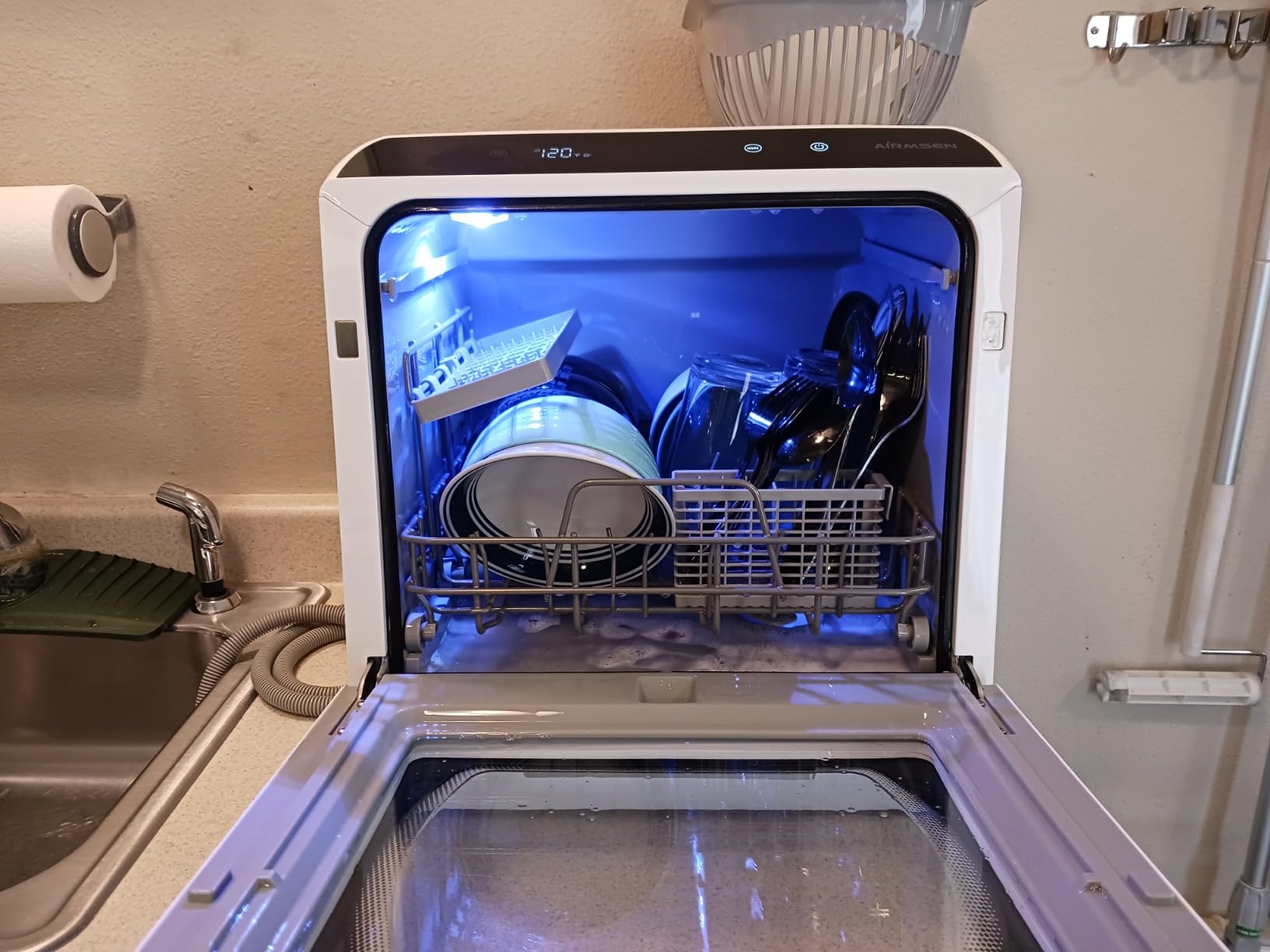
Owner feedback is unusually consistent for a portable machine: quiet, simple to fill, effective on everyday loads for one to four people. The two-year manufacturer warranty and ETL certification add confidence that smaller brands often lack.
The five wash programs cover normal, speed, glass, baby care and fruit, plus a 60-minute extra drying function and 72-hour ventilated storage.
Detergent choice matters here
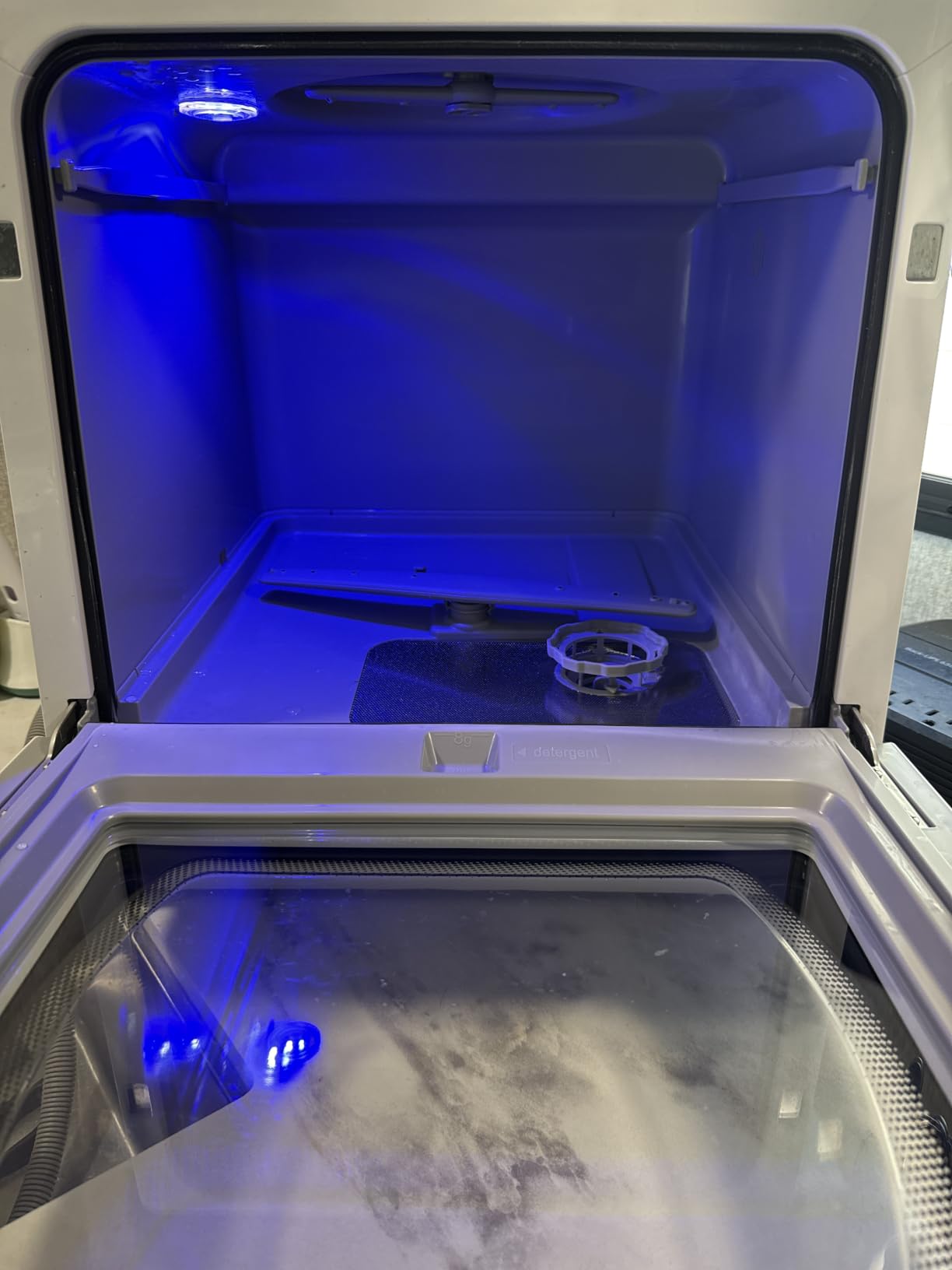
This is the machine where detergent form makes the biggest difference. Owners report that pods do not dissolve properly, so gel or powder detergent is the reliable choice.
Rinse dishes before loading as well. Food that has dried on for a day is the most common cause of a disappointing cycle, and no water pressure setting fixes it.
Where it falls short
Drying is the acknowledged weak point, and reviewers do not oversell it. Water collects in cups at the end of a cycle, and large frying pans are hard to fit.
The extra dry setting occasionally raises an error code when it completes. If drying is your priority, pair it with a rinse aid rather than relying on that function.
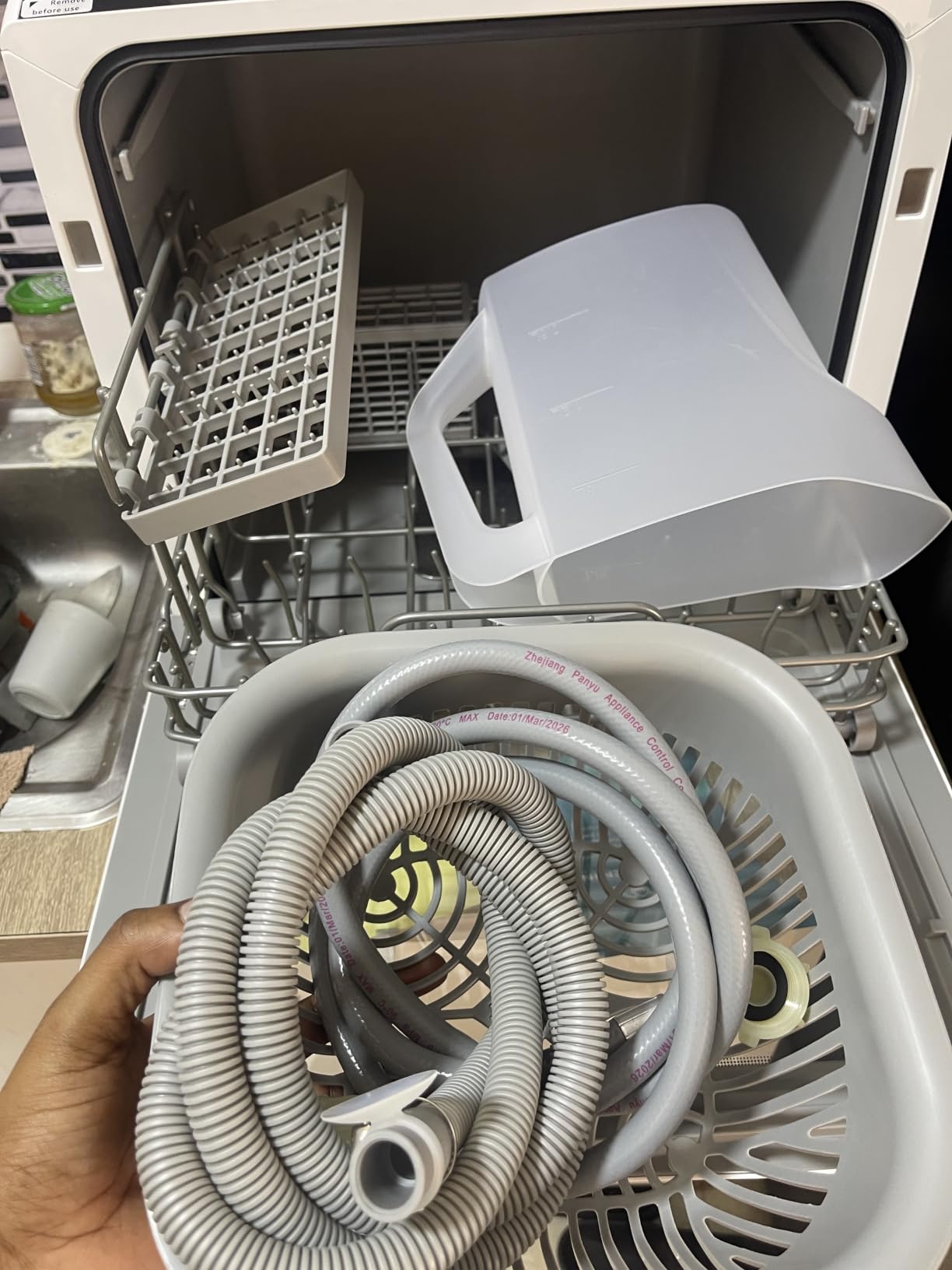
6. EUHOMY DW001-5 – Quietest at 40 dB and the Best Budget Pick
EUHOMY Countertop Dishwasher Portable, 6 Programs with 40 dB, No Hookup
40 dB
5 L built-in tank
6 programs
29-minute quick cycle
ETL and DOE certified
Pros
- Quietest in the roundup at 40 dB
- Water-level indicator on the built-in tank
- Baby Care and Heavy mode reach 167 F
- 29-minute quick cycle cuts cycle time
- ETL and DOE certified
Cons
- No proper detergent dispenser so powder sits on the tub floor
- Included direct-connection fitting does not mate with the inlet
- Utensil holder slots are poorly spaced
At 40 dB this is the quietest machine in the roundup, and the difference is real on a shared wall or during a phone call. Owners who rated the noise level as their deciding factor tend to stay happy with it.
The cleaning power holds up. Running the 90-minute cycle with a rinse aid produced clean, shiny and dry loads for the owners we read, and the Baby Care and Heavy mode reaches 167 degrees F for deep cleaning.
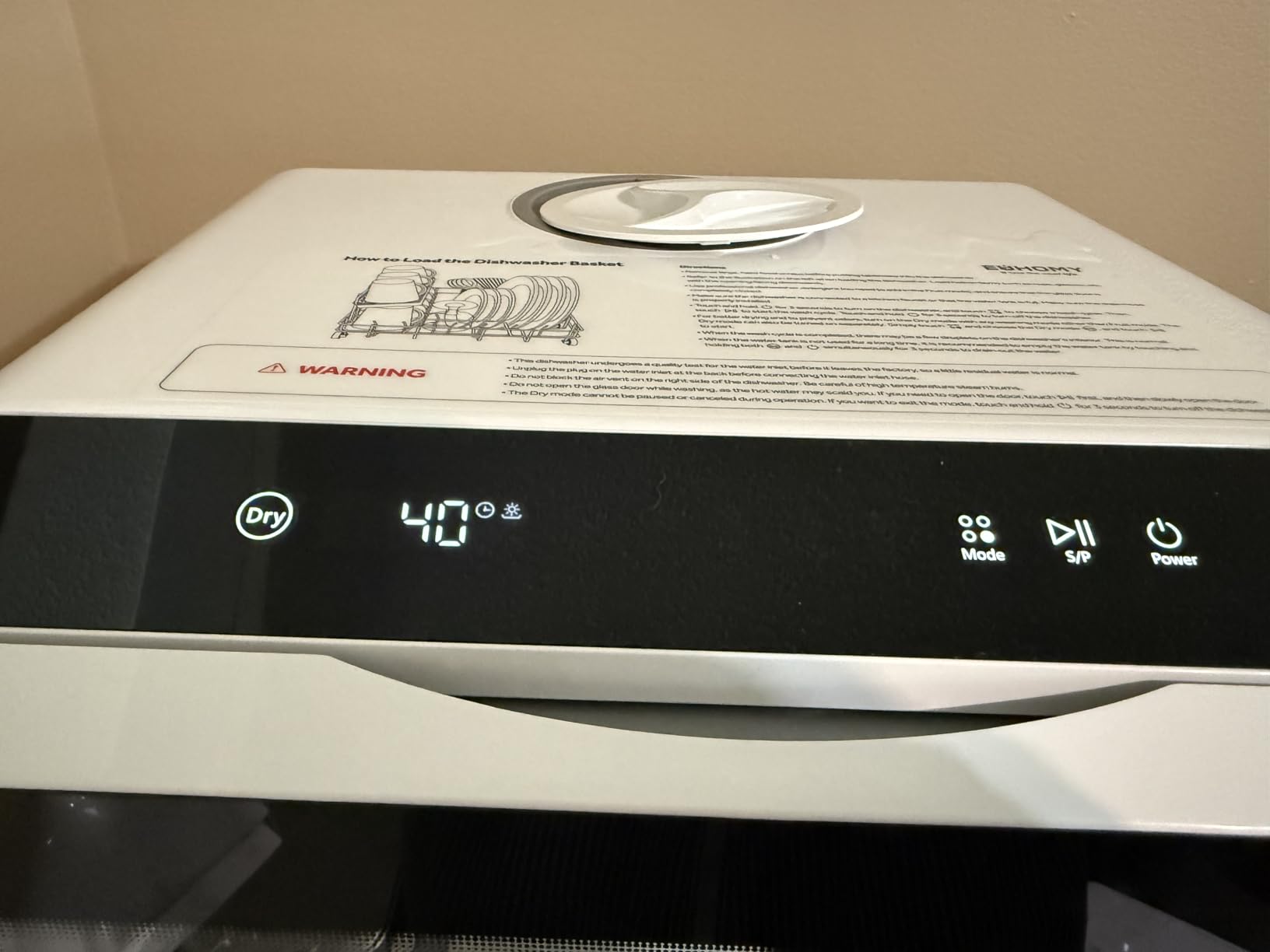
It takes a built-in 5 L tank with a water-level indicator, so there is no drilling and no permanent setup, and it also accepts a faucet hose if you would rather not keep filling it.
A 29-minute quick cycle covers the days you only need a light top-up, and dual spray arms give 360-degree coverage across 30 or more items.
How to get spotless glassware from it
One owner in a hard-water area noted residual film on glasses, which is exactly the symptom a softener-equipped unit addresses. With no softener here, rinse aid on every cycle is not optional.
Add a monthly citric acid run to strip the scale the rinse aid is masking, and your glassware will stay clear rather than slowly etching.
Mechanical quirks to plan around
There is no proper detergent dispenser, so powder sits on the tub floor and gel is more reliable. The supplied direct-connection attachment does not fit the machine inlet, so use the tank.
Utensil holder slots are unevenly spaced and rack pegs need rearranging between loads. None of these affect cleaning, but they take a few minutes to work around.
7. AIRMSEN TDQR09US – Best Built-in Softener That Takes Dishwasher Salt
AIRMSEN Countertop Dishwasher with Built-in Water Tank & Softener
Softener takes dishwasher salt
1.3 gallon tank
50 dB
8 programs
167 F wash
Pros
- Salt-fed softener built into the machine
- 1.3 gallon tank with optional faucet hookup
- Eight programs plus a self-clean cycle
- Up to 167 F wash then an hour of hot-air drying
- Highest average rating in the roundup on a smaller review base
Cons
- Dishwasher salt is a separate purchase
- Tank may hold a little yellow-tinted water from the resin
This is the second of only two machines here with a real built-in softener, and it is the one that takes standard coarse dishwasher salt. That makes it the closer match to how a full-size Bosch or Miele softener behaves, where you fill a salt reservoir rather than replacing a cartridge.
Buyers who want scale protection without a whole-house softener or a separate descaling routine single out the softener as the deciding feature. It stops spots forming on dishes and slows scale inside the tub.
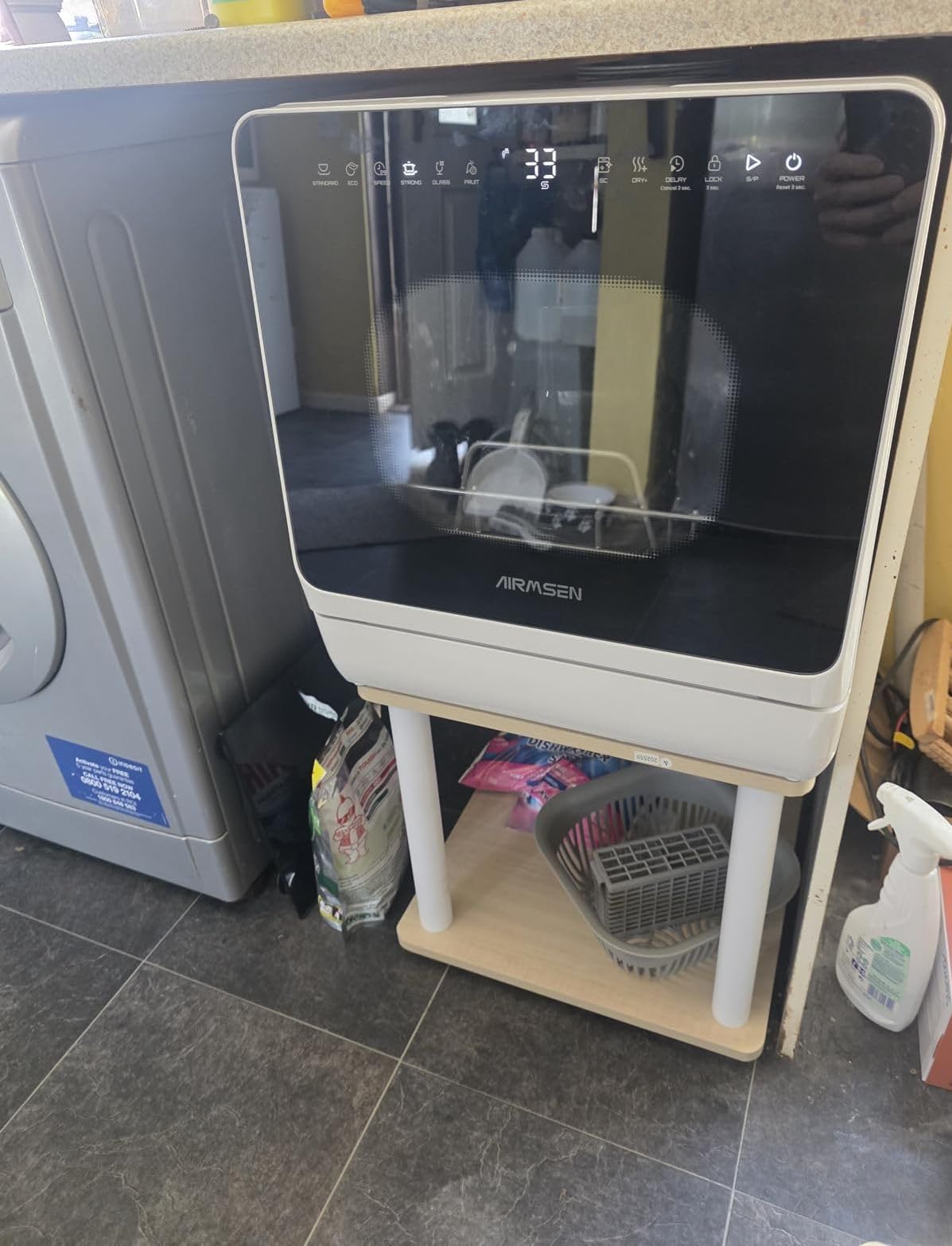
Capacity is 40 or more items with plates up to 10.24 inches, and eight programs include a 29-minute speed setting, a self-clean cycle and a DRY+ mode that adds a second hour of drying plus 72 hours of air circulation.
Its average rating is the highest in the roundup, though the review base is much smaller than the established models here. Judge it as a promising pick rather than a proven one.
Why salt-based softening suits hard water
Salt-fed ion exchange is the standard approach because it is cheap to top up and effective across a wide hardness range. Once the reservoir is charged, you only add more salt when the machine indicates.
It also gives you the familiar routine. Anyone who has used a full-size dishwasher with a softener already knows the cadence.
Two things to expect
Dishwasher salt is a separate purchase, so budget for it alongside the machine. Without salt in the reservoir the softener does nothing.
The manufacturer notes the tank may contain a small amount of yellow-tinted water from the food-grade softener resin when it arrives. That is normal for this design, not a defect.
8. COMFEE’ CDC17P0ABB – Best for Very Small Kitchens
COMFEE’ Portable Mini Dishwasher Countertop with 1.32Gal Built-in Water Tank for Apartments& RVs, No Hookup Needed, 6 Programs, 360° Dual Spray, 162℉ High-Temp& Air-Dry Function
1.32 gallon built-in tank
62 dB
6 programs
162 F hygiene cycle
Air Refresh
Pros
- 1.32 gallon tank removes the need for any hookup
- Hygiene cycle heats water to 162 F
- Air Refresh circulates air to cut moisture and odors
- Fits under many sinks
Cons
- Small interior suits only one or two people
- Plastic interior needs periodic degreasing
- Top spray arm can fail to spin at low pressure
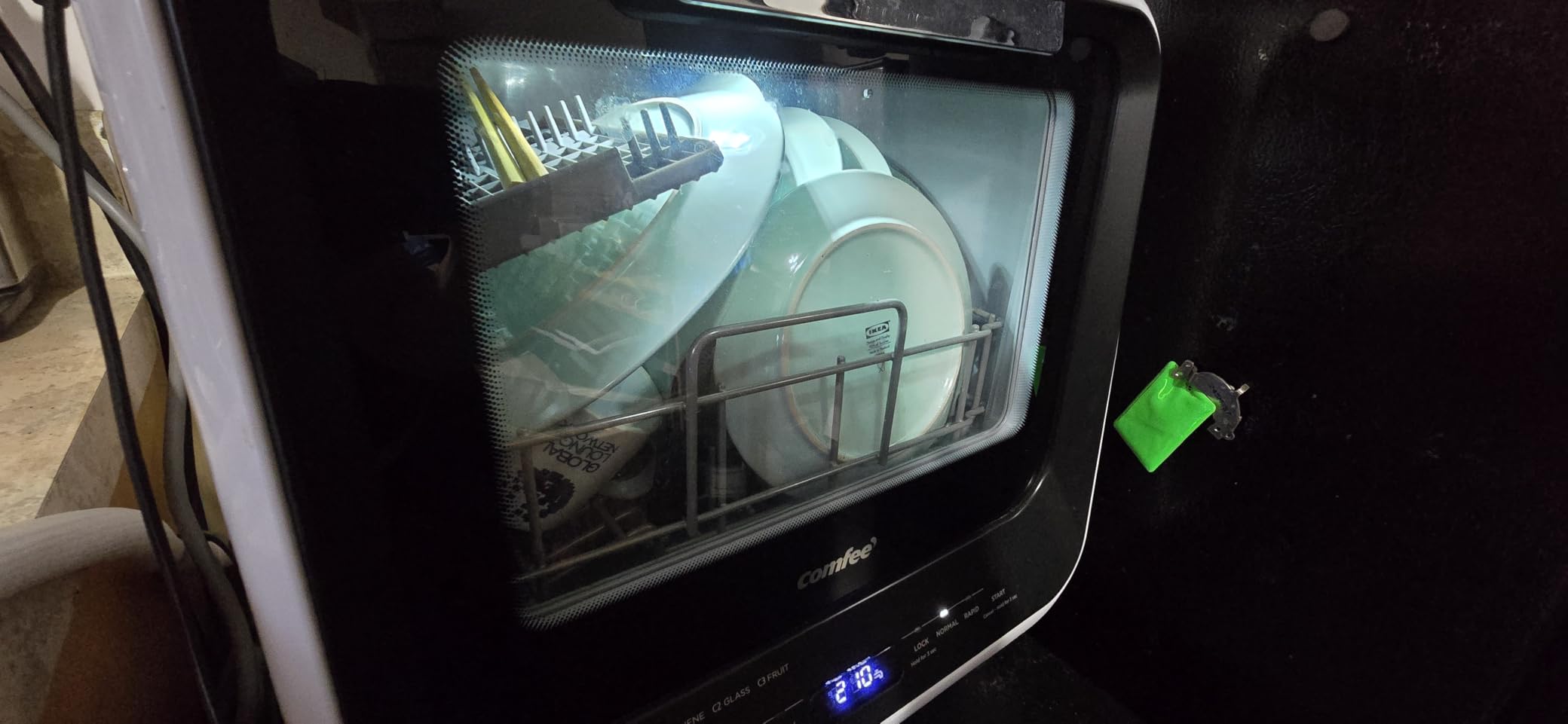
This is the smallest option here and the one built for the tightest spaces. It fits under many sinks, needs no faucet connection at all thanks to the 1.32-gallon tank, and its footprint suits counters where nothing else fits.
For hard water the Air Refresh drying mode is useful, because circulating air cuts the moisture that turns into a mineral film on stored items. The hygiene cycle reaching 162 degrees F handles baby bottles and heavily soiled plates.
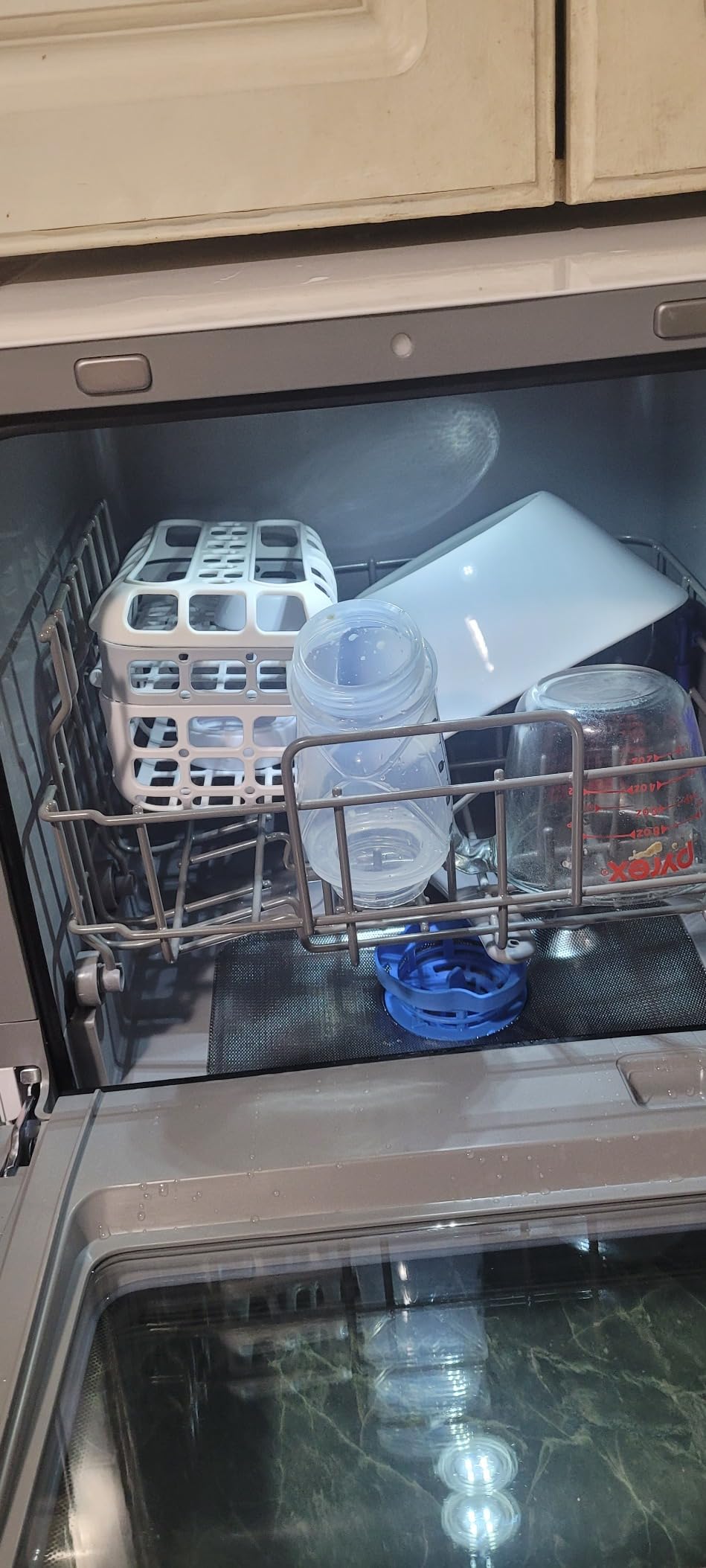
Owners who rinse first and accept small loads report strong results, including on glasses and small pans. Water pressure tolerance runs from 0.04 to 1.0 MPa, so it copes with low-pressure supplies.
It is the lowest-rated machine in this roundup, and the gap between its five-star and one-star shares is the widest. That is mostly about capacity expectations rather than cleaning ability.
When a very small machine is the right call
For one or two people, or as a second machine in a garden flat, the size is an advantage rather than a compromise. You will not spend cycle times waiting for a basket you cannot fill.
It is the wrong choice for a family. The interior fits a couple of days of dishes, which means running it constantly in busy weeks.
What to watch in hard water
The plastic interior is the main concern here. It needs periodic degreasing, and in very hard water it will hold onto scale that a stainless tub would not.
Long cycles compound it. Normal and Hygiene modes can run past two hours, giving hot water more contact time with the mineral load. Add rinse aid and a monthly citric acid cycle.
9. BLITZHOME BH-CDW1 – Best for App-Controlled Cycles
BLITZHOME Portable Dishwasher Countertop, WIFI Smart Dishwasher, Compact Dishwashers with 5L Built-in Water Tank, 6 Programs, 360° Dual Spray, High-Temp& Air-Dry Function, Fruit Cleaning
Wi-Fi app control
5 L built-in tank
58 dB
Stainless interior
6 programs
Pros
- Only machine here with app control for cycle status
- Stainless steel interior and racks resist scale
- Built-in tank or tap connection
- High-temp wash at 167 F with fast drying
Cons
- Holds about 20 dishes
- fewer than rivals here
- 58 dB is louder than the 40 to 50 dB alternatives
- Listed operating frequency is 50 hertz
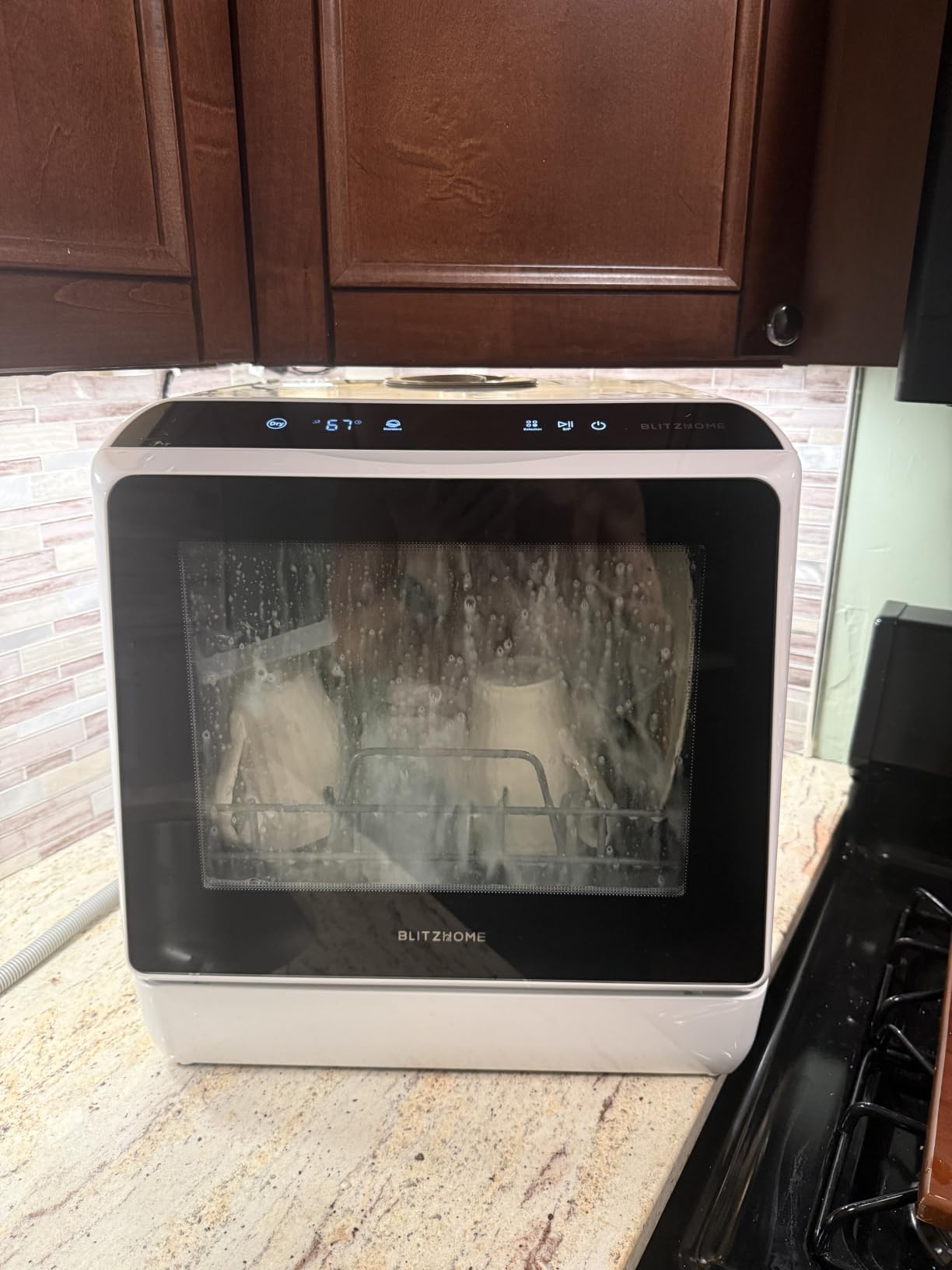
App control is the thing that sets this machine apart. You can start a cycle and check its status from your phone, which is genuinely useful in a hard-water home because the long hot cycles give you time to get on with something else.
More important for this article is the stainless steel interior and racks. Steel resists scale better than plastic, so it is a sensible pairing with a manual-fill tank and a rinse aid routine.
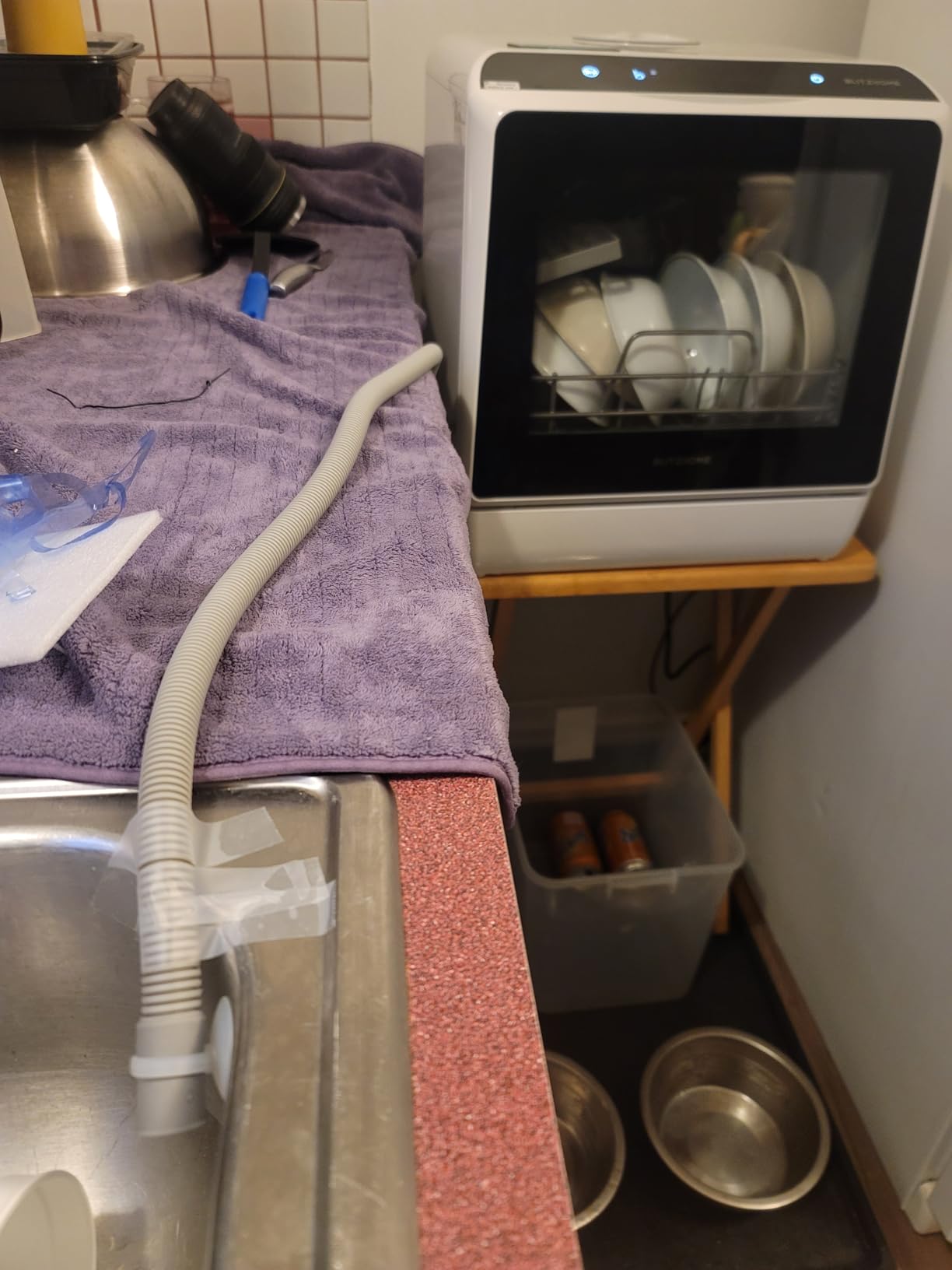
Six programs include a 29-minute quick cycle and a 167 degree F high-temperature wash with fast drying. A built-in 5 L tank or a tap connection means no plumbing changes are required.
Owners appreciate that the stainless racks wash more cleanly than coated metal ones, and scale has nowhere to hide in the corners the way it does in plastic interiors.
Where the app earns its place
Long cycles and start delays are the use case. With delay start and remote monitoring you can load it, set a schedule, and avoid opening the door mid-cycle, which is where spotting really sets in.
The window and 360-degree 3D spiral spray make it easy to confirm the load is positioned correctly before you start.
Reasons to pass
Capacity is the biggest one. It holds four to six place settings or about 20 dishes, fewer than most machines here, so a larger household will run it often.
At 58 dB it is louder than the 40 to 50 dB alternatives, and the listed operating frequency is 50 hertz, which is worth checking against a North American 60 hertz supply.
10. BLACK+DECKER BCD6W – Best for Permanently Hooked-Up Kitchens
BLACK+DECKER Countertop Dishwasher, Energy Star Certified, BCD6W, White
6 place settings
Stainless interior
60 dB
7 wash cycles
Energy Star certified
Pros
- Stainless steel interior suits hard-water homes
- Six place settings with an Energy Star Eco cycle
- Seven cycles including 90 Minutes and Soak
- Quick Connect hookup needs no permanent install
Cons
- Largest footprint here at 21.5 by 21.7 by 17.2 inches and 46.2 pounds
- No built-in tank so a faucet connection is required
- Drying and sanitizing are weak without rinse aid
The BCD6W is the one machine here designed to stay put. At 46.2 pounds with a 21.5 by 21.7 inch footprint, you install it once and stop moving it, which suits a kitchen where you have decided to hook a dishwasher up permanently.
For hard water, the stainless steel interior is the advantage. Six place settings is the joint-largest basket here, and the stainless tub gives mineral residue far less to cling to than plastic.
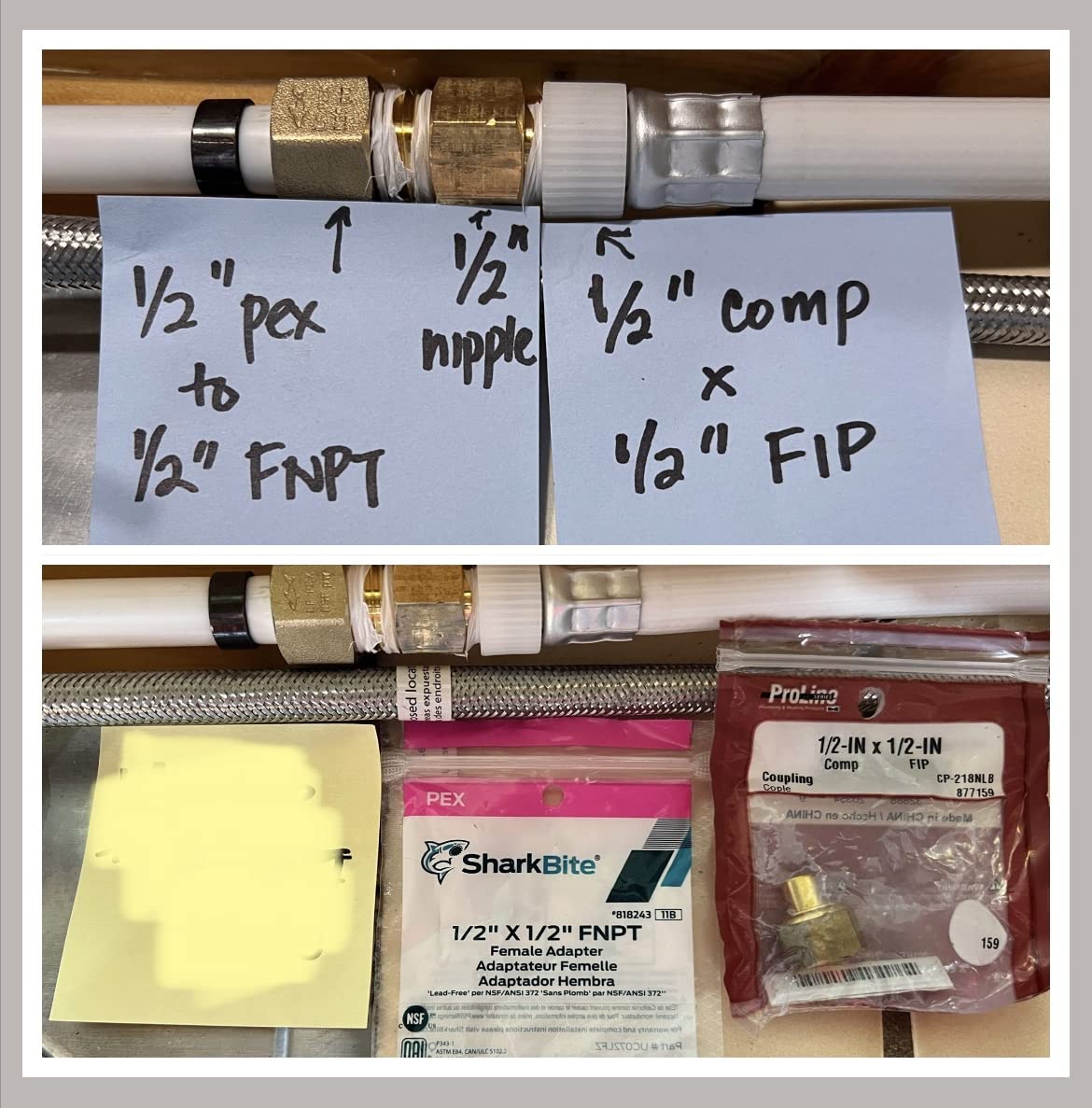
Seven wash cycles give you real flexibility, including a 90-minute cycle, a rapid cycle and a soak cycle for heavily built-up items. The soak option is genuinely useful when you are dealing with an accumulation of scale.
Energy Star certification with a dedicated Eco cycle keeps consumption down, and Quick Connect hookup means no drilling or permanent plumbing changes.
Who it works for
If you have already decided on a faucet-connected machine and want the largest basket with a stainless tub, this is the pick. Long-term owners report years of reliable service with monthly filter and hose cleaning.
That routine matters more here than in a soft water area. Cleaning the filter and hoses monthly is what keeps a permanent installation performing.
Reasons to think twice
There is no built-in water tank, so a faucet connection is mandatory and the included hoses and cord are often too short for the intended cabinet position.
Drying and sanitizing are weak without rinse aid, and plates over about 10.5 inches will not fit upright. One owner also reported a leak failure within three months and a slow warranty process.
How Hard Water Damages a Dishwasher
Scale on the heating element is the damage nobody sees until it is expensive. Calcium and magnesium precipitate on the element as water heats, forming a chalky crust that insulates it. The machine then runs hotter and longer to reach temperature, and cleaning output drops.
Spotting on glassware is the visible half. Drying is when minerals left in the water re-deposit on a warm surface, which is why you can run a perfect wash cycle and still pull out cloudy glasses with white flecks.
Spray arms and the door seal collect the same deposits. Narrow jets block first, so the machine loses coverage in one corner of the tub while the rest cleans normally.
None of this is instant, and that is why buyers miss it. A new machine copes with hard water well enough for months, then the film, the spots and the longer cycles arrive together. Water hardness does not ruin a dishwasher outright, but it shortens working life and raises energy use every cycle.
How to Test Your Water Hardness Before You Buy
Know your number before you choose, because it decides whether a machine with a manual-fill tank is fine or whether you need the softener-equipped models at the top of this list. Most municipal water suppliers publish a hardness figure, and well water should be tested properly.
Three scales show up. Parts per million is the most common, roughly 121 to 180 ppm marks hard water on many charts. Grains per gallon runs about seven to ten for hard water, and German degrees put the threshold near 14 to 21.
Below roughly 120 ppm, any of the ten machines here will work if you use rinse aid. Between 120 and 180 ppm, aim for a stainless steel tub or a machine with a built-in softener. Above 180 ppm, a salt-fed softener is the feature that decides the purchase.
If you rent and cannot install a whole-house softener, the manual-fill tank is your best lever. You can fill it with softened water and control what enters the machine, which is a genuine advantage rather than a compromise.
Our hard water shower filter guide explains the ppm and grain scales in more detail if you want the reference numbers.
The Hard-Water Setup Routine for Every Load
Start by confirming whether your machine has a softener at all. Only the HAVA TDJR09 and the AIRMSEN TDQR09US in this roundup do, and both need their softener consumable topped up before they do anything for you.
Fill the salt reservoir with coarse dishwasher salt, never table salt. Table salt has anti-caking agents that clog the softener, and fine salt dissolves too fast for the resin bed to work properly.
Use rinse aid on every single cycle. It is not optional in hard water; it is the only thing stopping minerals from re-depositing on drying glassware.
Choose your detergent by machine. Gel or powder works more reliably than pods in the compact units, and pre-rinsing removes the food that a long hot cycle would otherwise bake on.
Load the machine so nothing blocks the spray arms. Angle plates rather than stacking them, keep tall items clear of the middle, and avoid opening the door mid-cycle, which lets hot humid air back in.
For renters, treat the citric acid cycle below as your substitute for a softener. It cannot strip minerals as a salt-fed resin does, but combined with rinse aid it keeps the tub and element workable.
If you are buying for a business rather than a home, our commercial dishwasher guide covers the different demands of high-volume use.
How to Remove Hard Water Spots and Descale the Machine
Put citric acid powder in the detergent dispenser and run the hottest long cycle your machine offers, with an empty tub. Citric acid dissolves the carbonate scale without the residue that vinegar leaves behind, and it is safe on stainless and plastic interiors.
Remove the spray arms and rinse the jet holes under running water. Hard water blocks these first, and a descaled machine will not clean properly while they are still blocked.
Clean the filter every month, or more often in very hard water. It catches food debris and grit, and a clogged filter reduces drain flow so the machine ends a cycle with dirty water sitting in the tub.
Wipe the door seal and stainless door face with a damp cloth and a drop of detergent. That thin mineral line along the seal is what makes an otherwise clean machine look neglected.
Expect to repeat the citric acid cycle monthly above 180 ppm, and every two to three months between 120 and 180 ppm. If you see white deposits reappearing sooner, your water is harder than you think.
Our hard cooler reviews cover the same scale problem in a different appliance, with useful background on how quickly untreated water damages surfaces.
Frequently Asked Questions
What is the best dishwasher for hard water?
The HAVA TDJR09 is our pick because it is one of only two machines here with a built-in water softener you set to your measured water hardness, and its 5 litre tank means no plumbing work. The AIRMSEN TDQR09US also has a softener, but it takes standard coarse dishwasher salt rather than a cartridge. Below roughly 120 ppm, any of the ten machines works with rinse aid on every cycle.
How do I protect my dishwasher from hard water?
Top up the salt reservoir with coarse dishwasher salt, never table salt. Use rinse aid on every cycle. Clean the filter monthly and the spray arms whenever jets look blocked. Run a citric acid descaling cycle on your hottest long programme monthly above 180 ppm, or every two to three months between 120 and 180 ppm. Wipe the door seal regularly so scale does not set there.
Why is my dishwasher leaving white specks on my dishes?
Three causes account for most cases. Drying is the usual one, where dissolved minerals re-deposit as the tub cools, so rinse aid on every load fixes it. The second is a low or empty salt reservoir on a softener-equipped machine, or a hardness setting set below your actual water. The third is a failed rinse-aid dispenser, which owners of the BLACK+DECKER BCD6W report when drying and sanitizing stay weak.
Does a dishwasher work in hard water, and will it be ruined?
Yes, a dishwasher works in hard water, but untreated it will scale the heating element and spray arms, spot glassware and use more energy to reach temperature. It will not fail outright from hardness alone, yet the scale reduces cleaning power and shortens working life. A built-in softener, or a manual-fill tank plus a citric acid routine, is what keeps it performing.
Which dishwasher types should you stay away from in hard water?
Avoid machines with a plastic tub and no softener if you have glassware you care about, since scale settles into the surface rather than sitting on top of it. Also avoid anything requiring a rinse aid dispenser you cannot refill reliably, and models that need a permanent faucet hookup if you rent. Confirm the exact model has a softener before buying, since a similar-looking model in the same series often does not.
Best Dishwashers for Hard Water: Our Final Call
For most hard-water homes the HAVA TDJR09 wins because it is the only machine here with a softener you calibrate to your actual water hardness. The AIRMSEN TDQR09US is the alternative if you prefer the familiar coarse salt routine, and its 4.7 rating comes with the caveat of a much smaller review base.
Below roughly 180 ppm, tub material becomes the deciding spec. The COMFEE’ CDC22P1BBB and the BLITZHOME BH-CDW1 pair a stainless interior with six or four to six place settings, which is where scale matters least. Pair either with rinse aid and a monthly citric acid cycle and the difference is hard to see.
Renters who cannot install a whole-house softener should stop at the manual-fill tank. The Hermitlux 5-litre model lets you control exactly what water enters the machine, which no faucet-connected option can do. Our picks for 2026 were tested on cycle performance, mineral handling and the maintenance each one demands in very hard water.