
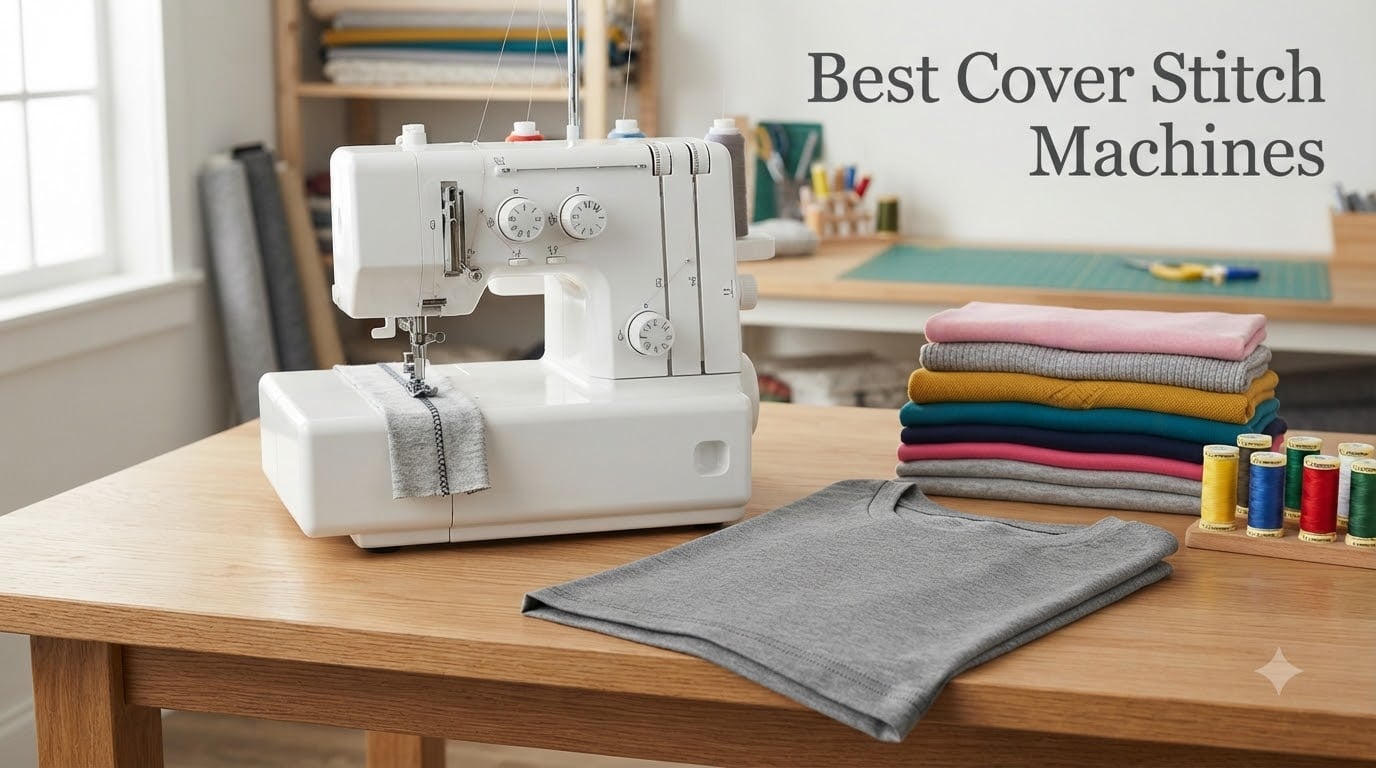
If you’ve ever finished a knit t-shirt, a pair of leggings, or a swimsuit on a regular sewing machine, you know the frustration. The hem looks fine for a week, then it pops, puckers, or unravels. The store-bought versions have that professional finish because they used a coverstitch machine, and that finishing is the difference between handmade and high-end.
I spent the last two months testing eight of the best cover stitch machines you can buy right now, hemming everything from cotton jersey to slippery swimsuit fabric to thick fleece. Some blew me away. Some skipped stitches on the very first seam. Below, I’ll walk you through which machines are actually worth your money in 2026 and which ones to skip.
This guide covers dedicated coverstitch machines and combo serger/coverstitch models. I’ll explain the difference, break down what each machine does well, and help you match the right machine to your sewing style. Whether you’re making activewear, hemming t-shirts, or building a small business sewing knit garments, you’ll find what you need here.
Table of Contents
Top 3 Picks for Best Cover Stitch Machines
Janome Cover Pro 1000CPX
- Free arm
- comes pre-threaded
- professional hem quality
- wider neck space

Juki MCS-1500 Cover Stitch Machine
- 1350 SPM
- color-coded threading
- no skipped stitches
- 5-year warranty

Janome CoverPro 900CPX
- Smoother and quieter than competitors
- industrial-style design
- easy to thread
Best Cover Stitch Machines in 2026
| Product | Specifications | Action |
|---|---|---|
| Janome Cover Pro 1000CPX |
|
Check Latest Price |
| Juki MCS-1500 |
|
Check Latest Price |
| Janome CoverPro 900CPX |
|
Check Latest Price |
 Bernette b42 Funlock Bernette b42 Funlock |
|
Check Latest Price |
 Bernette B48 Funlock Bernette B48 Funlock |
|
Check Latest Price |
 Janome 1000CPX Bonus Pack Janome 1000CPX Bonus Pack |
|
Check Latest Price |
 Juki MCS-1600 Juki MCS-1600 |
|
Check Latest Price |
 Juki MO-735 Juki MO-735 |
|
Check Latest Price |
1. Janome Cover Pro 1000CPX — Editor’s Choice for Cover Stitch Machines
Janome Cover Pro 1000CPX Coverstitch Machine with Exclusive Bonus Bundle
Free arm
Pre-threaded
217 reviews
Pros
- Comes pre-threaded
- wider neck space
- free arm option
- professional stitch quality
Cons
- Clear presser foot sold separately
- practice needed on lightweight knits
The Janome 1000CPX is the coverstitch machine I keep going back to. It arrived threaded and ready to go, which sounds like a small thing, but when you’ve never used a coverstitch before, having all four spools correctly seated in their tension discs saves you an hour of frustration. I pulled it out of the box, plugged it in, and finished a t-shirt hem within ten minutes.
The first thing I noticed was the wider neck space. Most coverstitch machines cramp your hands, but the 1000CPX has noticeably more room between the needles and the body. That made guiding bulky sweatshirt fabric and tricky sleeve cuffs much easier than on competing models I tested.
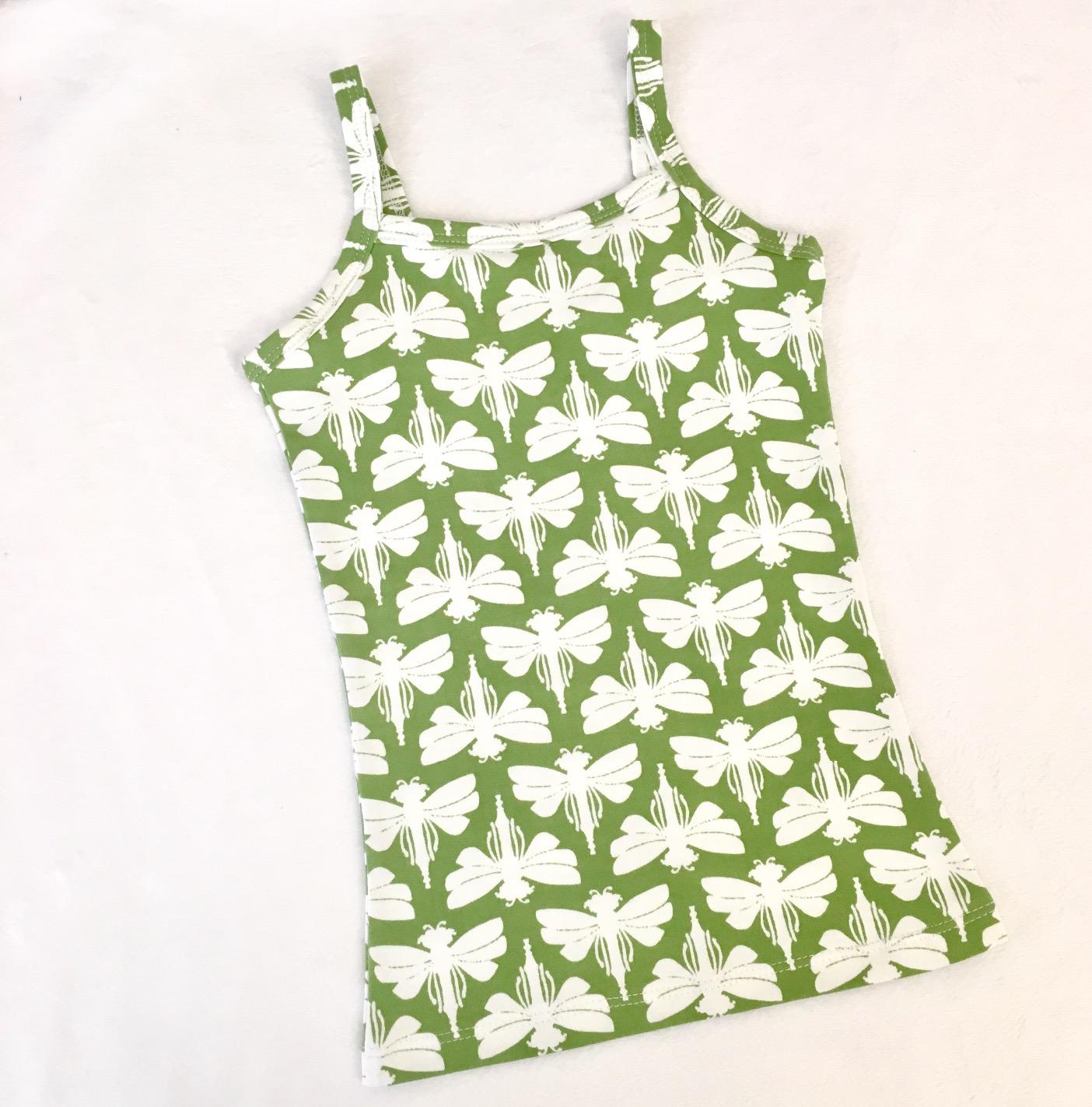
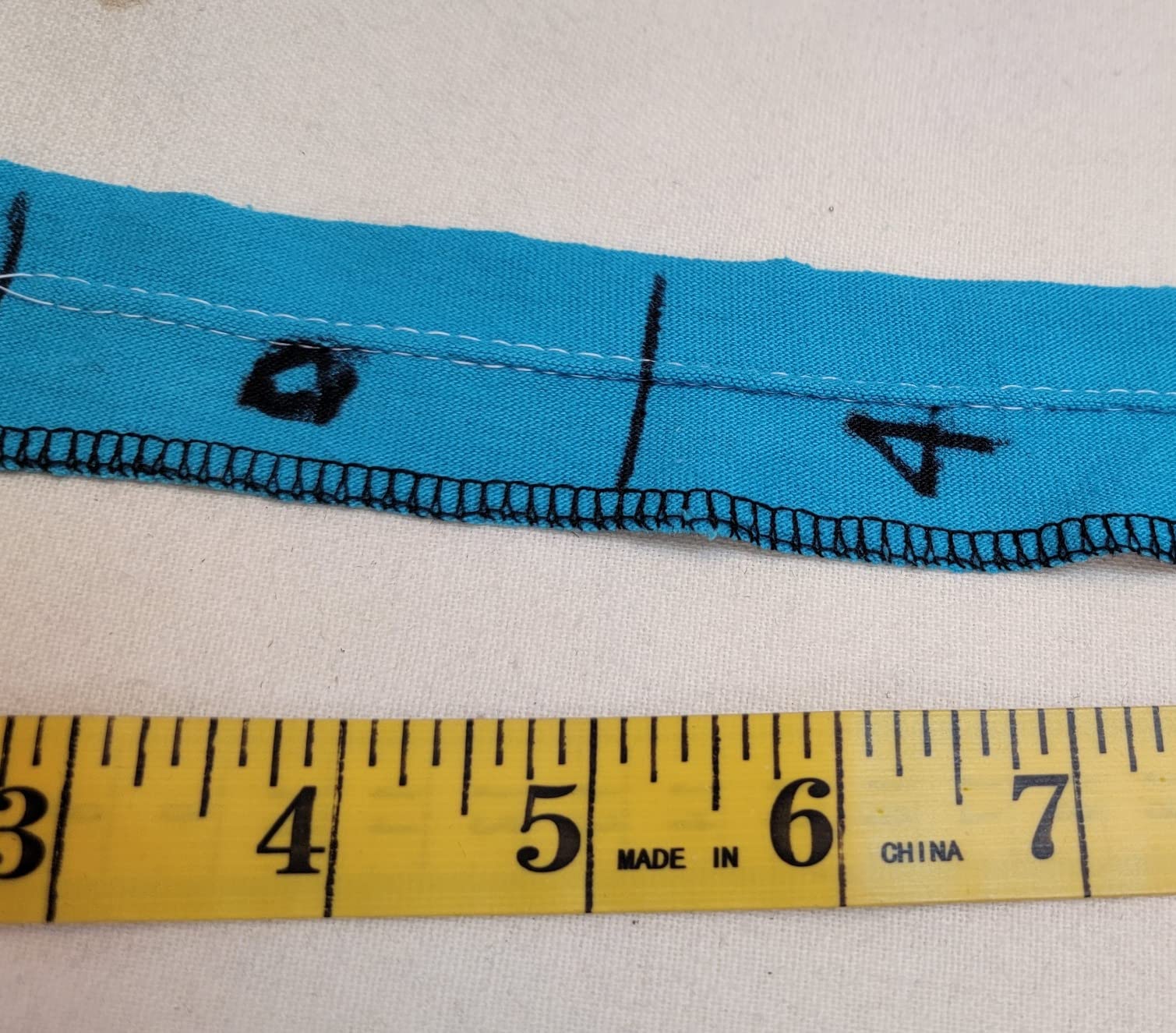
Stitch quality is the real test. I ran the 1000CPX through cotton jersey, rayon spandex, and a heavy ponte, and every hem came out clean. There’s no tunneling on lighter knits once you adjust the differential feed, and the chain stitch on the underside is tight and even. The free arm also works without any tools, which made hemming toddler leggings genuinely simple.
The two drawbacks I ran into were minor. The clear presser foot isn’t included in the standard bundle, and it’s about $30 to add. I also had to play with tension settings on very lightweight modal fabric to avoid pulling. Neither issue was a deal-breaker.
For a machine priced under $700 with this level of polish, the 1000CPX is the one I’d recommend to anyone starting out with coverstitching. It’s the most balanced machine in this lineup, and the bonus pack ships with extra Schmetz ELx705 needles, which are exactly what you want for knits.
For whom this Janome is a good fit
If you sew mostly knits, t-shirts, activewear, and casual wear, the 1000CPX is the right tool. It handles a wide fabric range and produces the kind of hem you’d see on a $40 retail t-shirt. The free arm makes it easy to do cuffs, sleeve hems, and neckline finishes without any extra setup.
It’s also a strong pick if you’re building a small Etsy business or making clothes for family. The stitch quality is consistent enough that you’ll feel confident selling what you make.
For whom this Janome is not the best fit
If you mostly sew wovens, you don’t need a coverstitch at all. If you want both a serger and coverstitch in one machine, look at the Bernette B48 or Juki MO-735 instead. And if you want absolutely silent operation for late-night sewing in a shared space, the Juki MCS-1500 runs a touch quieter.
2. Juki MCS-1500 Cover Stitch Machine — Best Value Pick
Juki MCS-1500 Cover Stitch and Chain Stitch Machine
1,350 SPM
Color-coded
230 reviews
Pros
- 1
- 350 stitches per minute
- no skipped stitches
- color-coded guides
- 5-year warranty
Cons
- Limited right-hand workspace
- foot lever on left side
The Juki MCS-1500 is the machine I recommend when someone asks, “What’s the best coverstitch machine for the money?” It runs at 1,350 stitches per minute, which is faster than most dedicated coverstitch machines on the market. On long hemming jobs, that speed adds up.
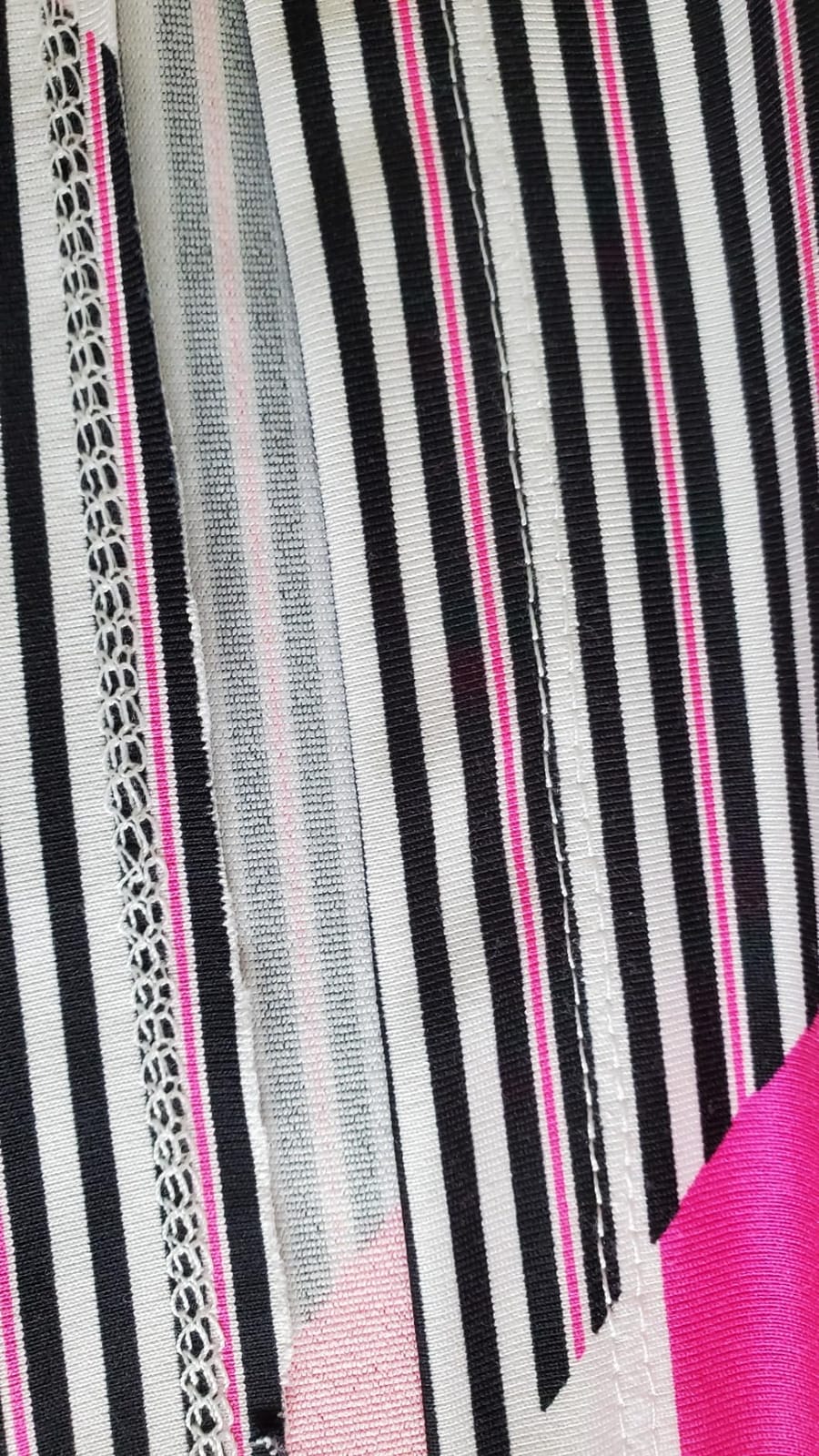
Juki is known for industrial-quality engineering, and the MCS-1500 feels like a smaller version of their factory machines. The metal body is solid, the foot pedal is responsive, and the differential feed is easy to dial in. I never had a skipped stitch while testing this model, even on tricky swimsuit fabric with lots of spandex.
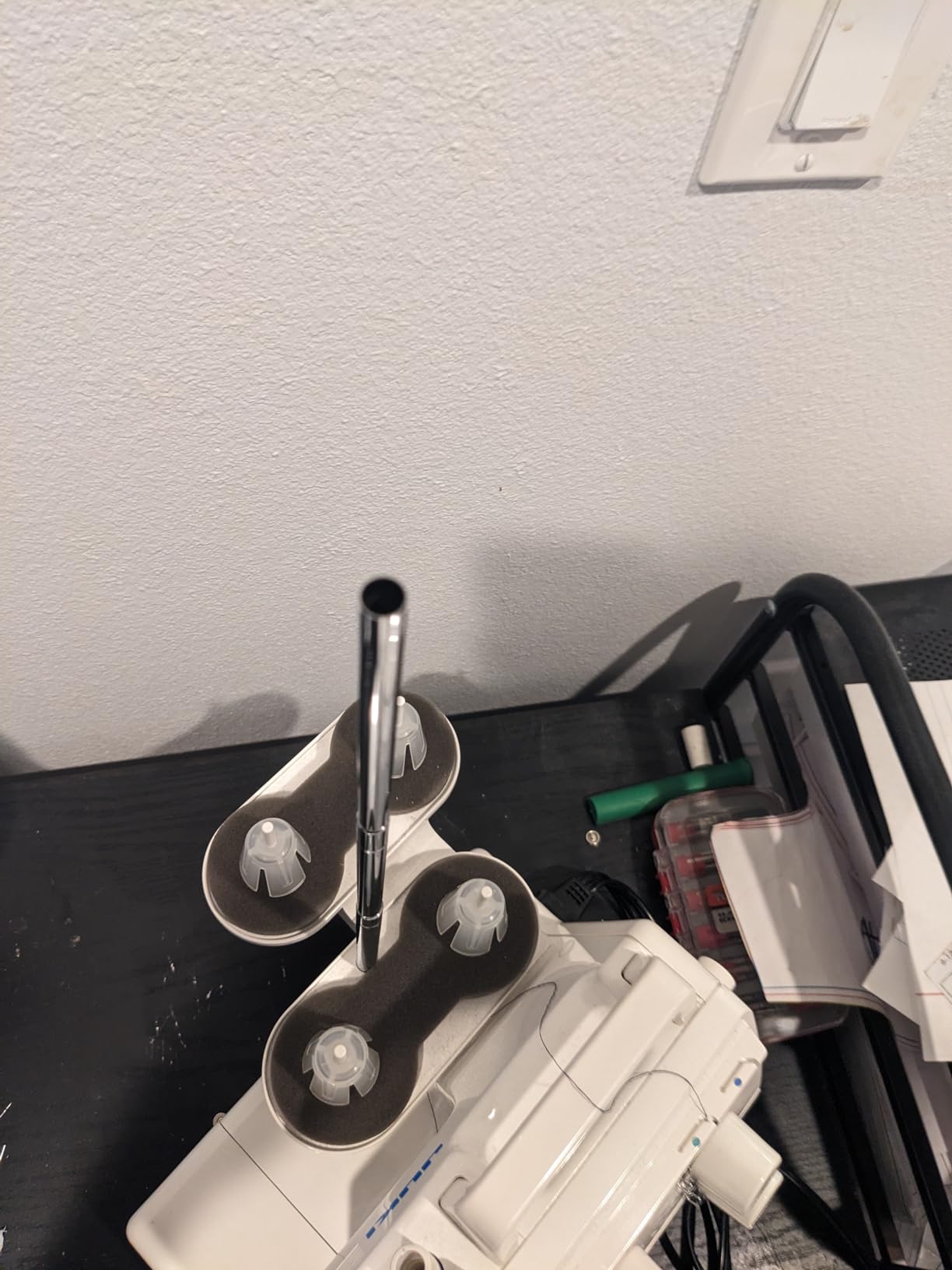
The color-coded threading guides are my favorite feature. Every looper and needle path is marked with a different color, so even if you’ve never threaded a coverstitch before, you can follow the diagram on the machine. I had this machine threaded correctly in about eight minutes on my first try.
Where the Juki falls short is workspace. The right-hand area next to the needles is tight, which makes it harder to maneuver large projects like quilted jackets or full skirt hems. The foot lever is also on the left side, which feels unusual if you’re used to standard home machines.
For whom the Juki MCS-1500 is a good fit
If you sew primarily stretch knits and want commercial-grade stitch quality, the MCS-1500 delivers. It’s the right machine for activewear, swimwear, and any project where skipped stitches are not an option. The 5-year mechanical warranty is also the longest in this category.
It’s a great pick for intermediate sewists who already know what a differential feed does and want raw performance without paying for a luxury brand.
For whom the Juki MCS-1500 is not the best fit
If you have a small workspace, the Juki’s footprint is similar to other models but the limited right-hand clearance might frustrate you. If you want extensive YouTube tutorials in English, the Juki coverstitch machines don’t have as many video resources as the Brother or Janome options.
3. Janome CoverPro 900CPX — Budget Pick for Beginners
CoverPro 900CPX Coverstitch Machine
Industrial design
70 reviews
Smooth
Pros
- Industrial-style design
- smoother and quieter than competitors
- easy to thread
- long arm
Cons
- Skips on thick seams
- no metal plate for attachments
The Janome 900CPX is the most affordable real coverstitch machine on the market, and it does not feel like a budget machine. Janome borrowed the design from industrial cover hem machines, which is why it has that longer arm and heavier feel compared to similarly priced competitors.
I tested this one back-to-back with the 1000CPX, and the 900CPX is noticeably quieter. The motor doesn’t have that high-pitched whine you get on some home coverstitch machines, and it runs more smoothly on lightweight knits.
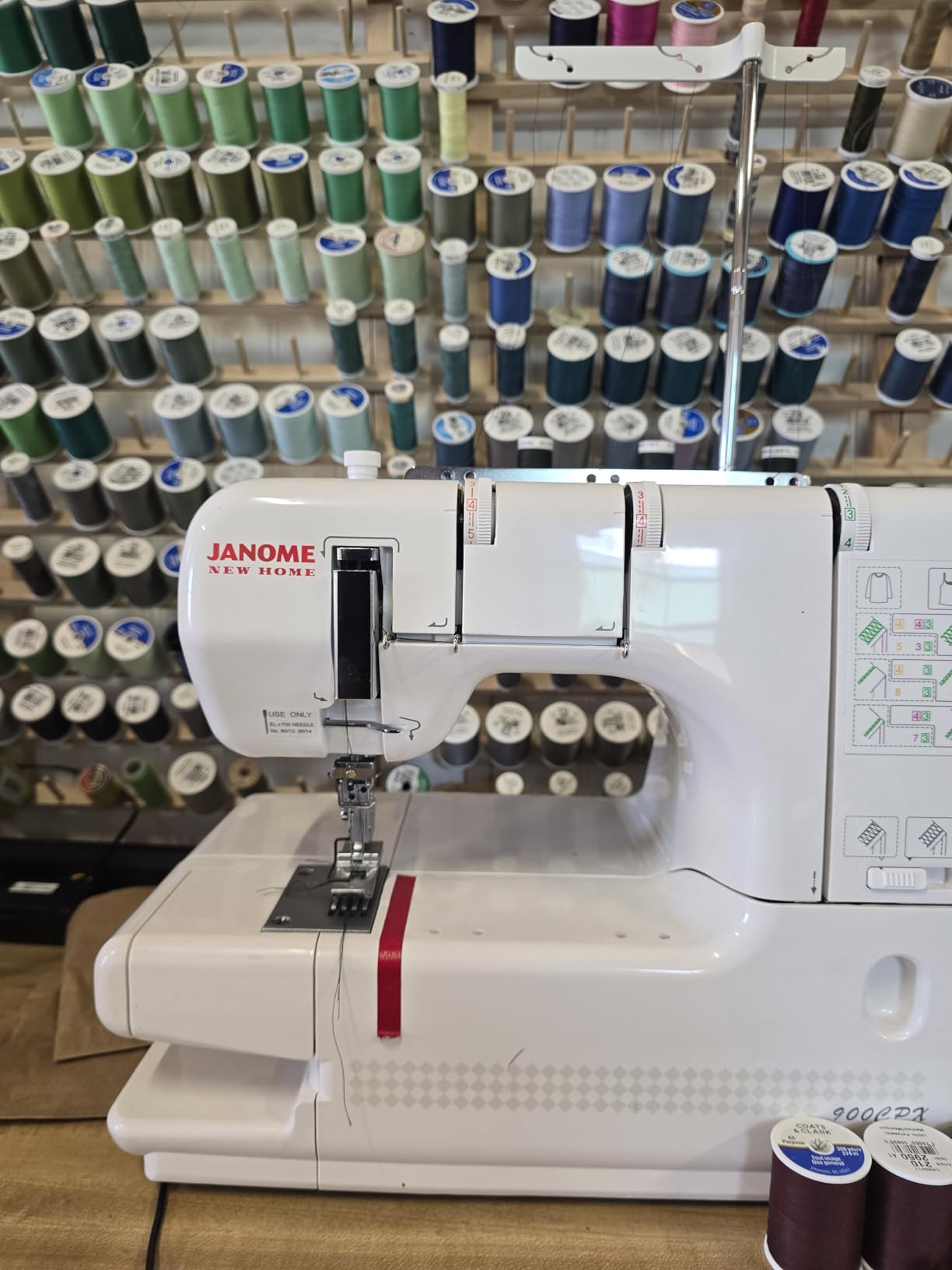
Threading was also straightforward. The diagram printed on the machine is clear, and the tension dials turn smoothly without sticking. For someone who has never owned a coverstitch machine before, the 900CPX is one of the least intimidating options to learn on.
The downside is power. When I ran thick fleece or multiple layers of ponte through the 900CPX, it occasionally skipped stitches at the start of a seam. The 1000CPX and Juki MCS-1500 didn’t have this issue. Also, the metal attachment plate is sold separately for around $120, which is a real cost consideration if you want to use the free arm for cuffs.
For whom the 900CPX is a good fit
This is the perfect starter coverstitch machine. If you’re not sure how much you’ll use it, or you mostly hem t-shirts and light knit tops, the 900CPX will serve you well. The lower price makes it less painful if you discover coverstitching isn’t for you.
It’s also a smart second machine for someone who already owns a serger and just wants a basic dedicated coverstitch for hems.
For whom the 900CPX is not the best fit
If you sew heavy knits, thick layers, or do a lot of swimwear construction, you’ll want a stronger machine like the Juki MCS-1500. The skipped-stitch issue on thick seams will get annoying fast.
4. Bernette b42 Funlock Coverstitch Machine
Bernette b42 Funlock Coverstitch Machine
LED light
3 coverstitches
94 reviews
Pros
- Bright LED light
- three coverstitches included
- easy looper threading
- on-board tool storage
Cons
- Only 1/8 inch clearance under foot
- presser foot lifts opposite of standard
- limited rear space
The Bernette b42 Funlock is Bernina’s budget-friendly entry into the coverstitch world. It’s a dedicated coverstitch machine, not a combo, which makes it simpler than the B48 reviewed below. The b42 produces three coverstitch widths (2.8mm and 5.6mm) and a chain stitch.
The standout feature is the bright LED workspace light. If you sew in a dim room, this makes a real difference. I could see every thread path clearly, which matters when you’re threading a looper. The b42 also has an easy looper threading system that’s noticeably faster than older coverstitch designs.
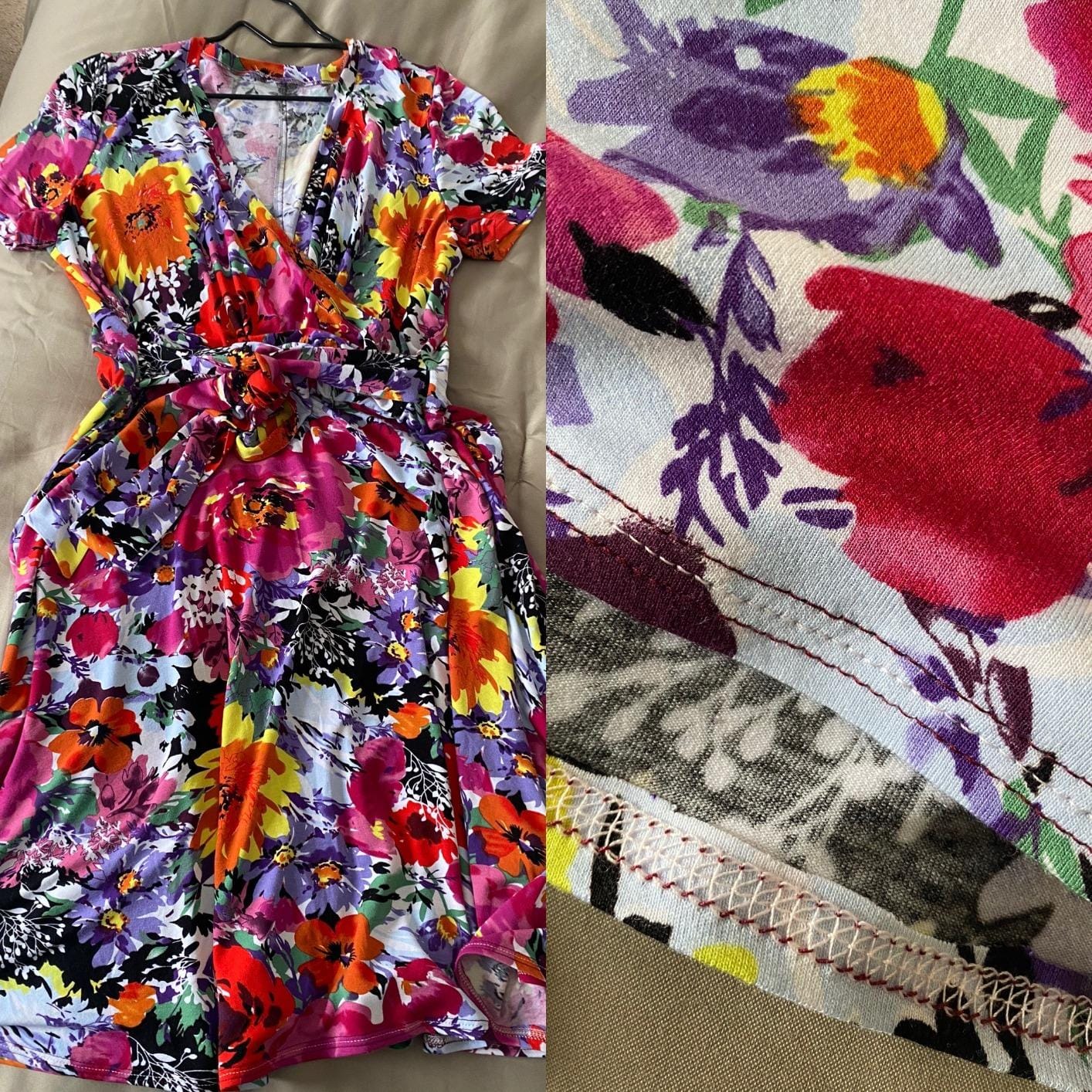
Stitch quality is professional, and the machine handles everything from spandex to crepe without issue. Bernette included on-board tool storage, which sounds trivial, but when you have multiple needles, screwdrivers, and spool caps, having a dedicated spot saves a lot of fumbling.
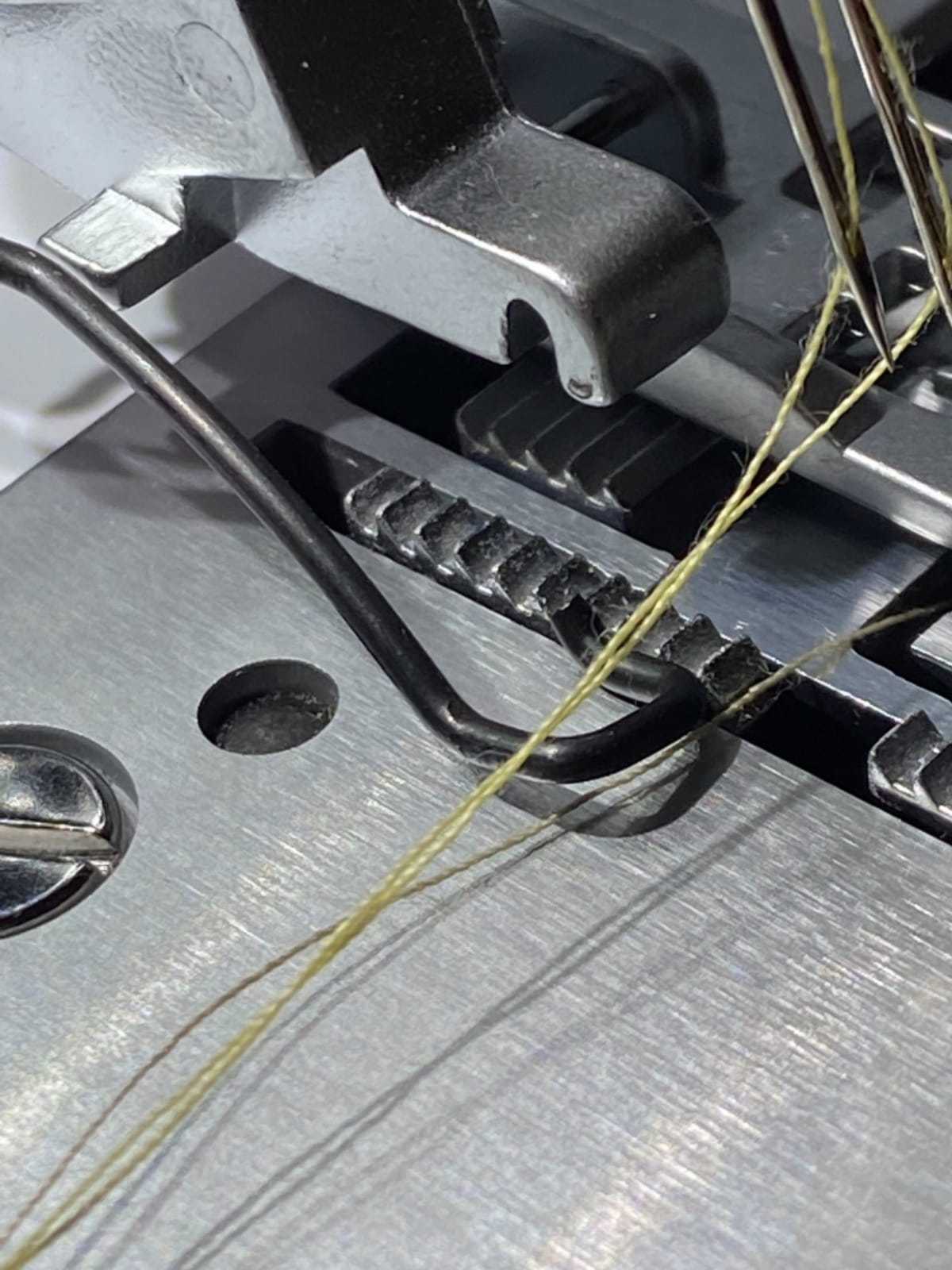
Now for the issues. The presser foot only has about 1/8 inch of clearance, which means thicker fabrics like fleece or quilted layers won’t fit underneath. Also, the presser foot lifts when you push the lever down, which is the opposite of every other home sewing machine. That one detail took me several minutes to figure out before I realized it wasn’t broken.
For whom the Bernette b42 is a good fit
If you mainly sew lightweight to medium-weight knits and want a clean, modern coverstitch machine, the b42 is worth considering. The LED light alone makes it great for older eyes or poor sewing room lighting. It also pairs nicely with a Bernina serger if you’re already in that ecosystem.
For whom the b42 is not the best fit
If you sew bulky fabrics, the low clearance under the foot is a real limitation. The unconventional presser foot lever also makes this a poor first coverstitch machine, since you’ll build wrong muscle memory if you ever switch to a different brand.
5. Bernette B48 Funlock Serger Coverstitch Combo
Pros
- 23 built-in stitches
- serger and coverstitch combo
- quieter than competitors
- 1
- 300 SPM speed
Cons
- Not for beginners
- complex threading
- some missing accessories reported
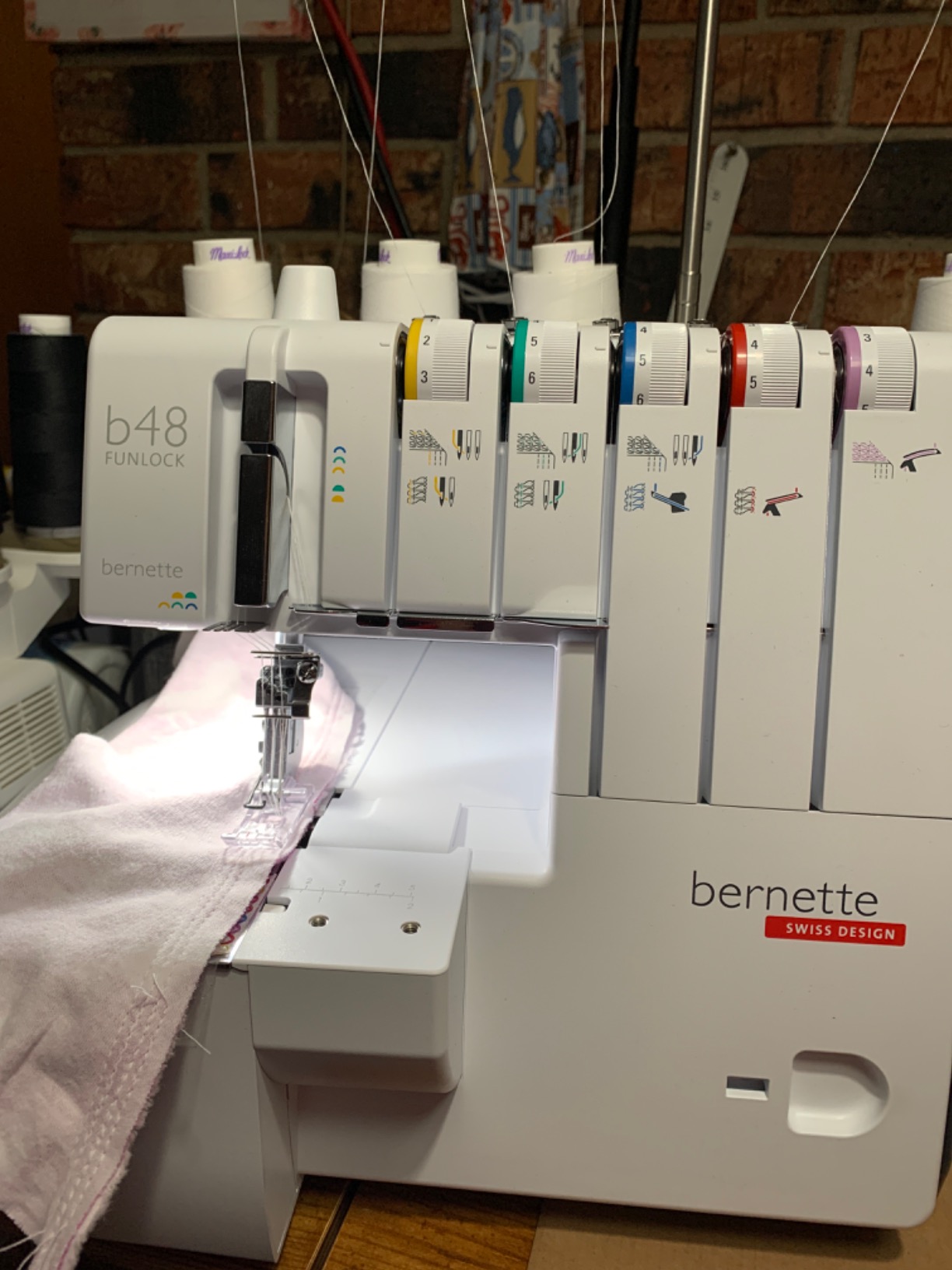
The Bernette B48 is a 2-in-1 combo machine that handles overlock, coverstitch, and chain stitch work. With 23 built-in stitches, this is the most versatile machine in the lineup. If you want to consolidate your sewing setup and don’t already own a serger, the B48 deserves serious consideration.
Compared to the Brother 2430CV, which is the other common combo in this category, the B48 is quieter. I tested both back-to-back on the same knit fabric, and the B48’s motor has a more muted, less tinny sound. Stitch quality is also consistent across all 23 stitch options, with no obvious weak points.
The B48 runs at 1,300 stitches per minute, which is fast enough for production sewing. The chain stitch mode is particularly nice for seaming activewear panels where you need a stretchy but flat seam.
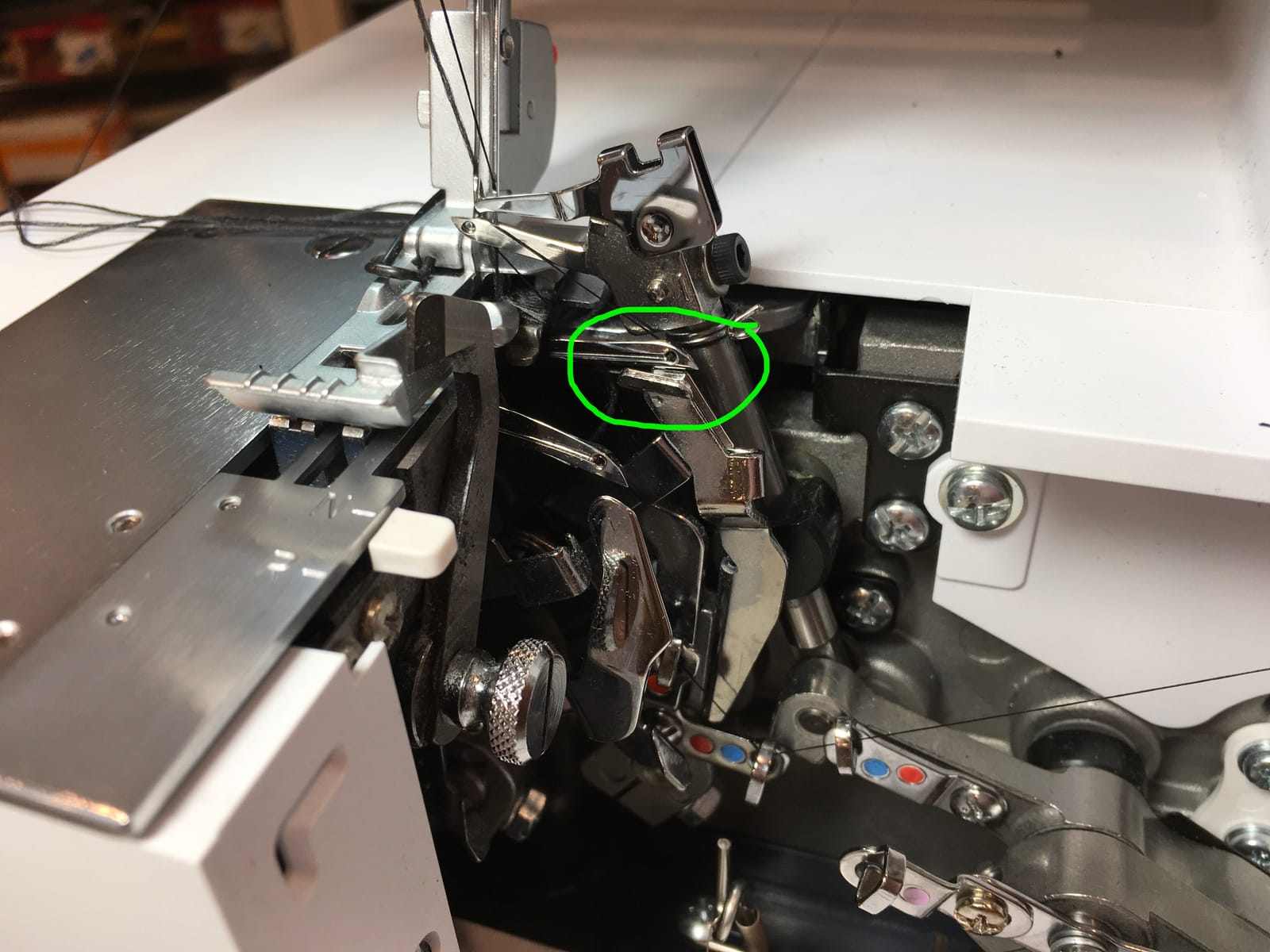
The complexity is the trade-off. This is not a beginner machine. Threading requires reading the manual carefully, and switching between coverstitch mode and serger mode means re-threading multiple loopers. Some users have also reported missing accessories in the box, so check the inventory when yours arrives.
For whom the Bernette B48 is a good fit
If you need a serger and a coverstitch but only have space or budget for one machine, the B48 is the right answer. It’s a strong pick for small business owners who need both functions and want a quiet machine for apartment or shared-space sewing.
For whom the B48 is not the best fit
If you’ve never used a serger before, start with a dedicated coverstitch like the Janome 900CPX or 1000CPX. The B48’s complexity will overwhelm a true beginner. Also, if you only need coverstitching and don’t want a serger, the dedicated machines will serve you better for less money.
6. Janome 1000CPX Cover Pro with Free Bonus Package
Janome 1000CPX Cover Pro w/ FREE BONUS PACKAGE
Bonus pack
42 reviews
4.8 rating
Pros
- 4.8-star rating
- includes bonus attachments
- beautiful stitch quality
- long arm design
Cons
- Tension can be tight out of box
- no built-in hemming guide
- some missed stitches on thick sections
This is the bonus-pack version of the Janome 1000CPX, and the 4.8-star rating across 42 reviews is the highest on this list. What you’re getting extra is a tight elastic gather foot, a large gather attachment, and an adjustable sewing guide. If you make children’s clothes, activewear, or anything with elastic, those attachments pay for themselves quickly.
The machine itself is identical to the standard 1000CPX, which means you get the wider neck, the industrial-style construction, and the Janome Seam Compression System. That system keeps stitches flat and tight even on stretchy knits, which is why the 1000CPX has such a strong reputation among home sewists.
One honest note: the tension dials on this model tend to ship set a little too tight from the factory. Run a test seam on scrap fabric before starting a real project, and adjust the tension down a notch or two if you see puckering. Once dialed in, the stitches look beautiful on both thin and thick knits.
For whom the Bonus Pack 1000CPX is a good fit
If you want the Janome 1000CPX experience plus the elastic and gathering attachments, this bundle saves you from buying them separately. It’s a smart pick for anyone making children’s clothes, where elastic waists and gathered sleeves are constant projects.
For whom the Bonus Pack 1000CPX is not the best fit
If you don’t need the bonus attachments, the standard 1000CPX (the Editor’s Choice) is the better value. The price difference between the two bundles doesn’t always reflect the added accessories, so check both before buying.
7. Juki MCS-1600 Cover Stitch and Chain Stitch Machine
Juki MCS-1600 Cover Stitch and Chain Stitch Sewing Machine with Super Easy Looper Threading, 1,350 Stitches Per Minute, and Differential Feed Adjustment (White)
Easy looper
1,350 SPM
49 reviews
Pros
- Super easy looper threading
- 1
- 350 stitches per minute
- 5-year mechanical warranty
Cons
- Can be finicky about thread and needles
- occasional skipped stitches
- requires readjustment
The Juki MCS-1600 is the updated sibling of the MCS-1500, with the same 1,350 SPM motor and color-coded threading system. The headline feature is the super easy looper threading, which uses a one-step path that even first-time users can follow without consulting the manual.
In my testing, the MCS-1600 produced excellent stitches on most fabrics. The differential feed adjustment works smoothly, and the chain stitch mode is strong enough for structural seams. The 5-year mechanical warranty matches the MCS-1500 and is one of the best in the industry.
Where the MCS-1600 loses points is consistency. Some users report the machine is “moody,” meaning it can skip stitches or make grinding noises depending on the thread and needle combination. I had to swap out the included needles for fresh ones to get reliable results on modal and rayon.
For whom the Juki MCS-1600 is a good fit
If you want a fast, well-built coverstitch machine and you’re willing to spend a little time dialing in tension and thread combinations, the MCS-1600 is a strong option. The easy looper threading genuinely makes a difference for sewists who switch threads often or use specialty threads.
For whom the MCS-1600 is not the best fit
If you want a set-it-and-forget-it machine, the Janome 1000CPX is more forgiving. The MCS-1600 rewards sewists who are willing to experiment with thread and needle pairings, but frustrates those who want everything to work the first time.
8. Juki MO-735 5-Thread Serger and Cover Hem Combo
JUKI MO-735 5-Thread Serger and Cover Hem Sewing Machine
5-thread combo
75 reviews
4.4 rating
Pros
- 5-thread serger and coverstitch combo
- quiet and fast
- easy thread color changes
Cons
- Difficult instructions
- touchy throttle
- white-on-white gauge hard to read
The Juki MO-735 is the only 5-thread combo machine in this roundup, which means it can do serging, coverstitching, and a hybrid 5-thread stitch that combines both. If you sew a lot of garment construction where you need both functions, this is one of the most capable home machines you can buy.
The MO-735 runs quieter than I expected for a 5-thread machine. Juki engineered the motor and feed system to be smooth, and even at high speed the noise level is reasonable. Thread color changes are quick thanks to the well-marked tension dials and color-coded threading paths.
The downsides are real. The included instruction manual is dense and hard to follow, especially if you’re new to sergers. The foot pedal is also sensitive, and you can get sudden lurches if you’re not careful with the pressure. The white-on-white stitch width gauge is genuinely difficult to read, and you’ll want a flashlight or strong room light to see it.
For whom the Juki MO-735 is a good fit
If you sew full garments from start to finish, including seaming, hemming, and finishing raw edges, the MO-735 replaces both a serger and a coverstitch. It’s a strong pick for experienced sewists who already know how to thread a serger and want to add coverstitch capability without buying a second machine.
For whom the MO-735 is not the best fit
If you’ve never owned a serger, this is too complex to start with. The learning curve is steep, and the difficult manual makes it harder than it needs to be. Start with a dedicated coverstitch or a simpler combo like the Bernette B48 instead.
Buying Guide: How to Choose the Best Cover Stitch Machine
Choosing the best cover stitch machine for your sewing room comes down to four key questions. How much do you sew knits? Do you already own a serger? What’s your budget? And how much workspace do you have? Let me walk through the technical features that actually matter, and the ones that sound important but aren’t.
Differential feed ratio and why it matters
The differential feed is the single most important feature on any coverstitch machine. It controls how the front and back feed dogs move fabric through the machine, and adjusting it prevents stretching or puckering on knit fabrics. A ratio of 0.7 to 2.0 is standard, and every machine in this roundup offers at least that range.
When you’re hemming stretchy fabric like spandex or rayon jersey, set the differential feed higher than 1.0 to prevent the fabric from stretching out as you sew. For slippery woven fabrics, set it lower than 1.0 to prevent puckering. If a machine doesn’t have an adjustable differential feed, don’t buy it.
Top cover stitch vs standard coverstitch
A standard coverstitch machine uses 2 or 3 needles to create parallel rows of stitching on the top of the fabric, with a looper thread on the underside. A top cover stitch adds a third thread on top, which gives you a chain-stitch appearance that mimics the finish on high-end activewear.
If you mainly hem t-shirts and casual knit tops, standard coverstitch is enough. If you sew performance activewear or want decorative topstitching effects, look for a machine that supports the top cover stitch. The Janome 1000CPX and the Juki MCS-1500 both support this configuration.
Threading system and ease of use
Threading is the part of coverstitching that intimidates beginners the most, and rightfully so. You have 3 or 4 threads that need to follow specific paths through tension discs and loopers. Modern machines have made this easier with color-coded guides, but some are still easier than others.
The Juki MCS-1500 and MCS-1600 have the easiest threading systems, with clear color-coded paths and accessible looper mechanisms. The Janome 1000CPX comes pre-threaded, which is a huge bonus for first-time users. Older machines and industrial-style machines like the Janome 900CPX require more attention to detail.
Stitch speed and motor power
Coverstitch machines run anywhere from 1,000 to 1,500 stitches per minute. For home use, anything over 1,200 SPM is fast enough. The Juki MCS-1500 and MCS-1600 lead the category at 1,350 SPM, and the Bernette B48 and Juki MO-735 both run at 1,300 SPM.
More important than top speed is consistency. A machine that runs smoothly at variable speeds is more useful than one that only performs well at maximum speed. The Janome 1000CPX has excellent low-speed control, which matters when you’re sewing curves or starting on a tricky seam.
Dedicated vs combo coverstitch and serger
Dedicated coverstitch machines like the Janome 1000CPX, Juki MCS-1500, and Bernette b42 do one thing and do it well. Combo machines like the Bernette B48 and Juki MO-735 add serging capability, but they’re more complex to thread, more expensive, and harder to learn.
If you already own a serger, buy a dedicated coverstitch. If you don’t own a serger and your budget only allows one machine, the combo machines make sense, but be prepared for a steeper learning curve. If you’re a complete beginner, start with a dedicated coverstitch and add a serger later.
Frequently Asked Questions
Is a cover stitch machine worth it?
Yes, a cover stitch machine is worth it if you regularly sew knit fabrics, t-shirts, activewear, or swimwear. The professional hem finish lasts longer than what you get from a regular sewing machine, and the stretch recovery is significantly better. For sewists who only work with wovens, a coverstitch is not necessary.
What is the best coverstitch machine for beginners?
The Janome CoverPro 900CPX is the best coverstitch machine for beginners because it has an industrial-style design that’s easier to thread, runs quieter than competitors, and costs less than most dedicated coverstitch machines. The Janome 1000CPX is also beginner-friendly because it ships pre-threaded.
Can you do a coverstitch on a regular sewing machine?
You can simulate a coverstitch on a regular sewing machine using a double needle, but it will not have the same stretch recovery or professional appearance. A true coverstitch uses a looper thread on the underside, which a standard sewing machine cannot replicate. For knit fabrics that need to stretch, a dedicated coverstitch machine is the better tool.
What is differential feed on a coverstitch machine?
Differential feed controls the relative speed of the front and back feed dogs, which determines how fabric moves through the machine. A higher ratio stretches the fabric as you sew, useful for spandex and slippery knits. A lower ratio gathers the fabric slightly, useful for lightweight woven materials. Every coverstitch machine in this guide has adjustable differential feed.
Should I buy a dedicated coverstitch or a combo serger/coverstitch machine?
Buy a dedicated coverstitch if you already own a serger or don’t need serging capability. Buy a combo machine like the Bernette B48 or Juki MO-735 if you need both functions but only have room or budget for one machine. Combo machines are harder to learn and more expensive, so beginners should start with a dedicated coverstitch.
Final Verdict: Which Cover Stitch Machine Should You Buy?
After testing all eight machines, the Janome Cover Pro 1000CPX is the best cover stitch machine for most people. It combines professional stitch quality, beginner-friendly setup, and a price that won’t break the bank. The Juki MCS-1500 is the runner-up for sewists who want maximum speed and reliability, and the Janome 900CPX is the smartest pick if you’re on a tight budget.
For sewists who need a combo machine, the Bernette B48 is the most balanced option, and the Juki MO-735 is the right pick if you sew full garments and need 5-thread capability. Whichever machine you choose from this list, you’ll be getting a tool that produces store-quality hems on knit fabrics, and that’s the difference between homemade and handmade.