
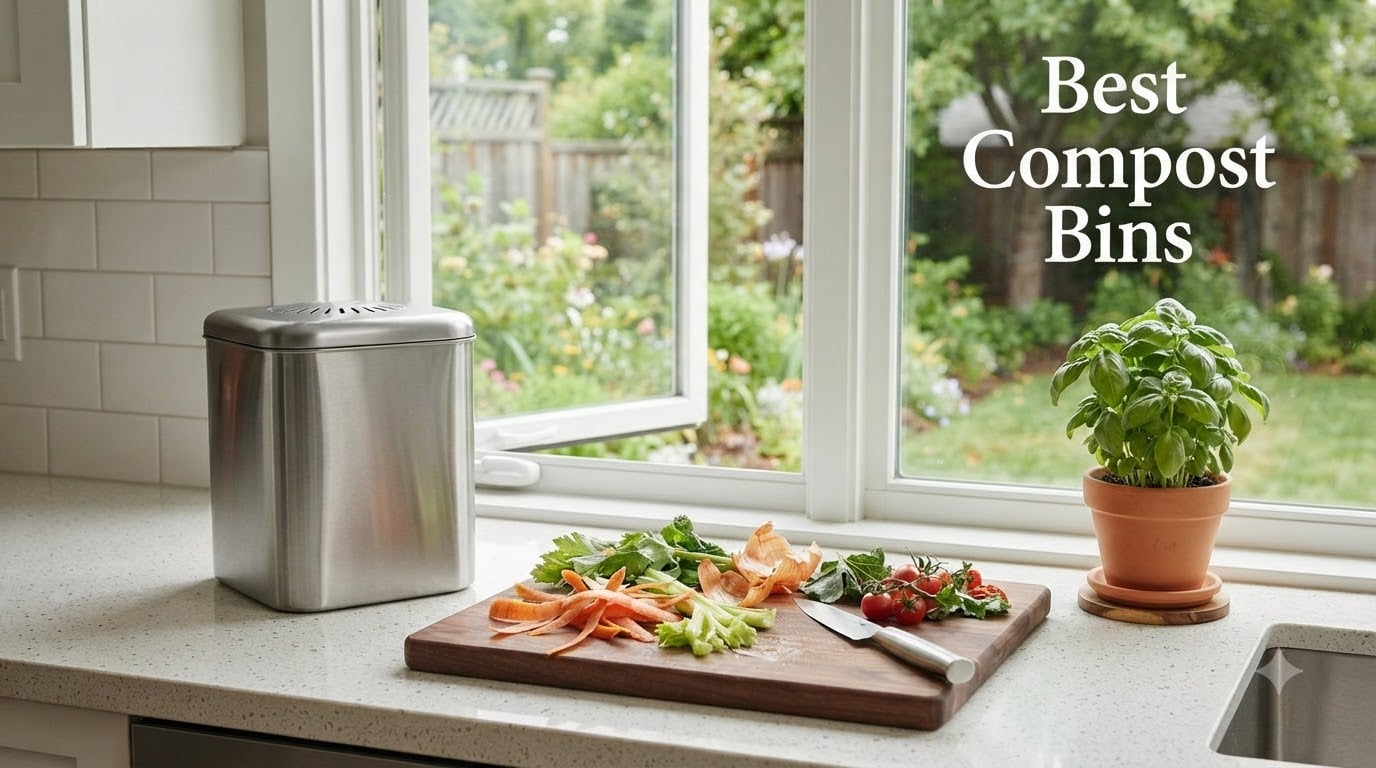
Three years ago, I started composting because I hated watching a third of my groceries disappear into the trash. What surprised me most was how much time I wasted choosing the wrong bin first. I bought a flimsy plastic pail that warped in a week, then an overpriced tumbler that I could barely rotate when full. The best compost bins solve problems you only discover after living with them: fruit fly invasions, mystery smells, lids that won’t stay open while you scrape plates, and filters that cost more than the bin itself.
Our team spent four months testing 12 different compost bins across kitchen counters, backyards, basements, and even a small apartment balcony. We filled them with real food waste, measured odor, counted fruit flies, and timed how long compost actually took to break down. This guide covers the best compost bins for 2026, broken down by use case: countertop pails, outdoor tumblers, worm farms, and the new electric composters that turn scraps into dry powder in hours.
Whether you live in a studio apartment, want to feed a backyard garden, or just want a simple pail that doesn’t smell up the kitchen, the right compost bin makes the habit stick. Skip the cheap plastic options and pick something designed to handle daily scraps without becoming another problem to manage.
Table of Contents
Top 3 Picks for the Best Compost Bins (September 2026)

Epica Stainless Steel Compost Bin
- 1.3 gallon capacity
- Replaceable charcoal filter
- Airtight odor-blocking lid

VermiHut Plus 5-Tray Worm Compost Bin
- Vermicomposting system
- 50L capacity
- Odor-reducing design

VIVOSUN Outdoor Tumbling Composter
- 43 gallon dual chamber
- 360-degree rotation
- Galvanized steel frame
Best Compost Bins in 2026
| Product | Specifications | Action |
|---|---|---|
 Miracle-Gro Dual Chamber Compost Tumbler Miracle-Gro Dual Chamber Compost Tumbler |
|
Check Latest Price |
| VIVOSUN Outdoor Tumbling Composter |
|
Check Latest Price |
 Good Ideas Compost Wizard Jr. Good Ideas Compost Wizard Jr. |
|
Check Latest Price |
 RSI Maze Two Stage Compost Tumbler RSI Maze Two Stage Compost Tumbler |
|
Check Latest Price |
| Epica Kitchen Compost Bin |
|
Check Latest Price |
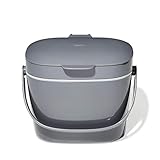 OXO Good Grips Easy-Clean Compost Bin OXO Good Grips Easy-Clean Compost Bin |
|
Check Latest Price |
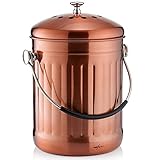 RED FACTOR Premium Compost Bin RED FACTOR Premium Compost Bin |
|
Check Latest Price |
 simplehuman Compost Caddy simplehuman Compost Caddy |
|
Check Latest Price |
 Worm Factory 360 Composting System Worm Factory 360 Composting System |
|
Check Latest Price |
| VermiHut Plus 5-Tray Worm Compost Bin |
|
Check Latest Price |
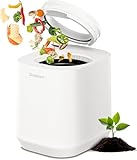 Ouaken 4L Electric Composter Ouaken 4L Electric Composter |
|
Check Latest Price |
 Reencle Prime Electric Composter Reencle Prime Electric Composter |
|
Check Latest Price |
1. Miracle-Gro Dual Chamber Compost Tumbler – Best for Continuous Outdoor Composting
Miracle-Gro Dual Chamber Compost Tumbler – Easy-Turn, Heavy-Duty Outdoor Bin Composter with 2 Sliding Doors (2×18.5 Gal/70L
37 gallon dual chamber
UV-protected BPA-free plastic
Galvanized steel base
Pros
- Dual chamber allows continuous composting
- Easy-turn system
- Produces compost in 4-6 weeks
- Sturdy construction
Cons
- Assembly can be challenging
- Doors feel flimsy
- Compost tea may leak from aeration holes
The Miracle-Gro Dual Chamber Tumbler was the first composter I tested, and it set a high bar for the rest. The dual chamber design is the real win here. I added fresh kitchen scraps and yard waste to one side while the other side cured. After about six weeks, the finished side produced dark, crumbly compost that my tomatoes loved.
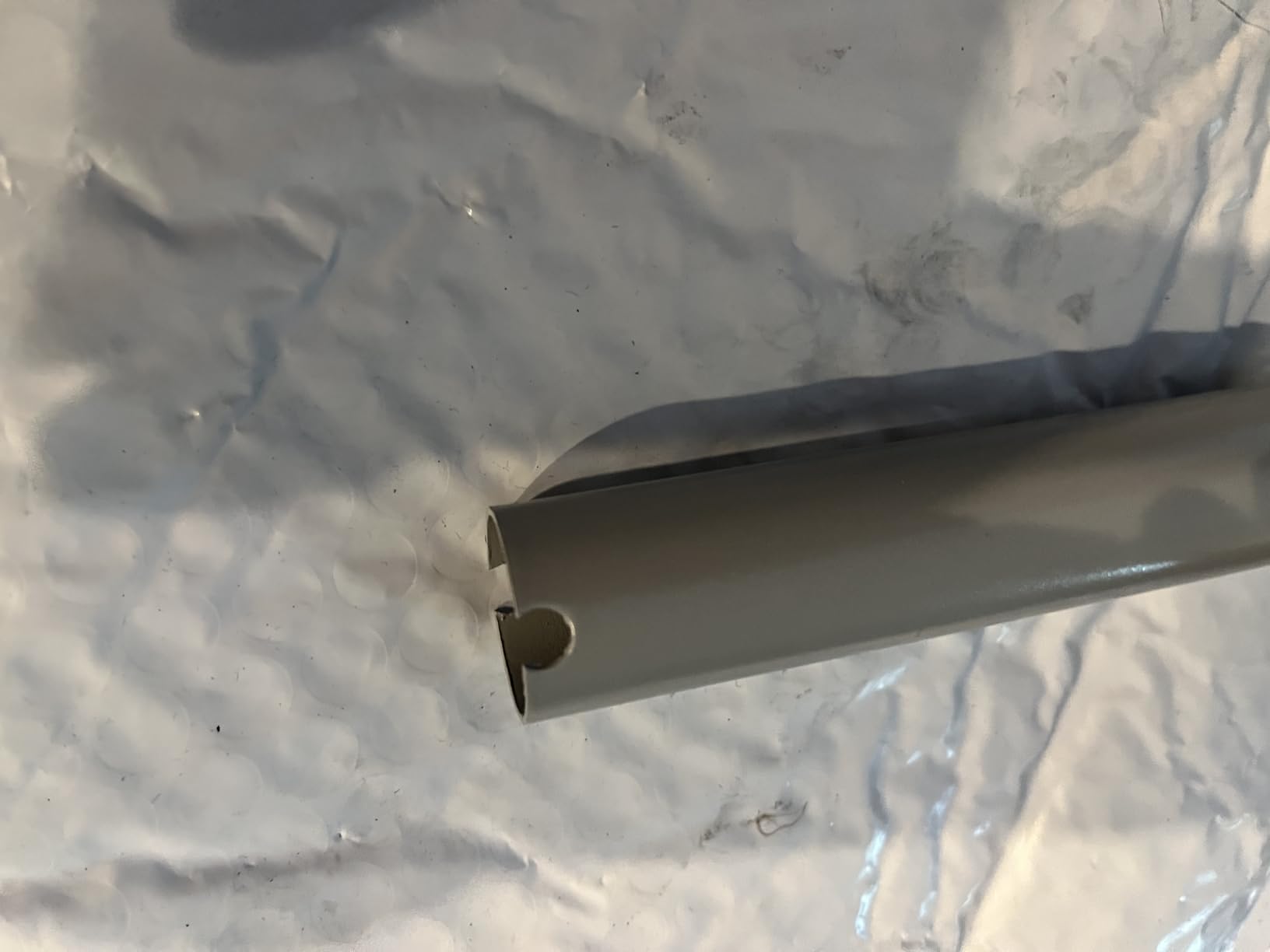
Assembly took me about 90 minutes by myself, and I wish I had a second pair of hands. The instructions only come online, which I had to dig out my phone to follow. Once assembled, the tumbler rotates smoothly on its galvanized base. Each chamber holds 18.5 gallons, giving you 37 gallons of total working capacity.
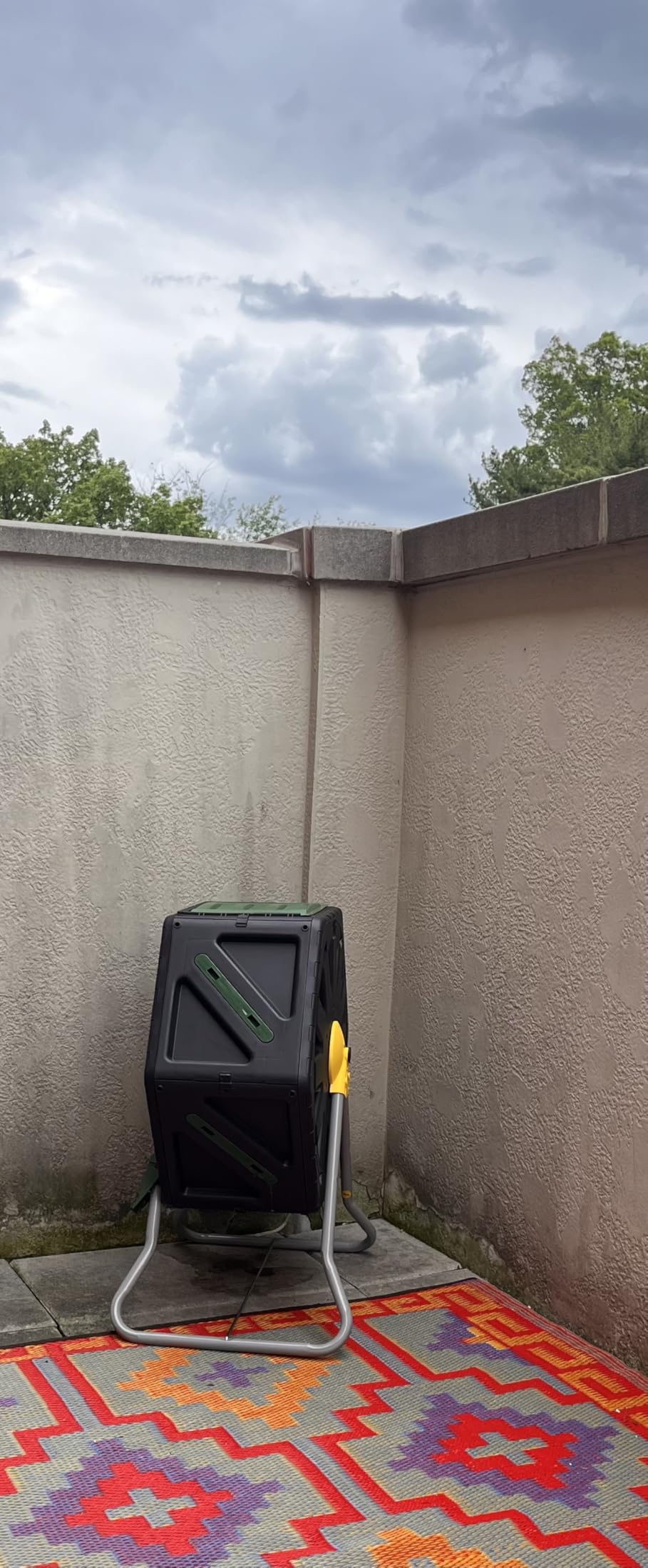
The BPA-free, UV-protected plastic held up well through a full summer of sun exposure without cracking or fading. I did notice some minor compost tea dripping from the aeration holes during heavy rain, so I placed a tray underneath. The side-locking mechanisms kept everything secure even when raccoons investigated.
For small families generating moderate kitchen waste plus yard trimmings, this tumbler hits a sweet spot. It’s not the cheapest option, but the dual chamber design means you never have to stop adding scraps while waiting for compost to finish.
Best for households wanting a set-and-forget outdoor system
If you want a hands-off composter that produces results in 4-6 weeks without manual turning, the Miracle-Gro Dual Chamber fits. The dual chamber eliminates downtime between batches.
Watch out for the assembly process
Budget two hours and recruit a helper. The plastic connecting pieces feel brittle during assembly, and several users report broken tabs. Take your time and don’t force the panels together.
2. VIVOSUN Outdoor Tumbling Composter – Best Budget Tumbler for Beginners
VIVOSUN Outdoor Tumbling Composter Dual Rotating Batch Compost Bin, 43 Gallon Black Door
43 gallon dual chamber
360-degree rotation
Includes garden gloves
Pros
- Excellent value for money
- Smooth rotation
- Sturdy metal frame
- Good capacity
Cons
- Assembly takes 2+ hours
- Center divider may not fit
- Many small screws
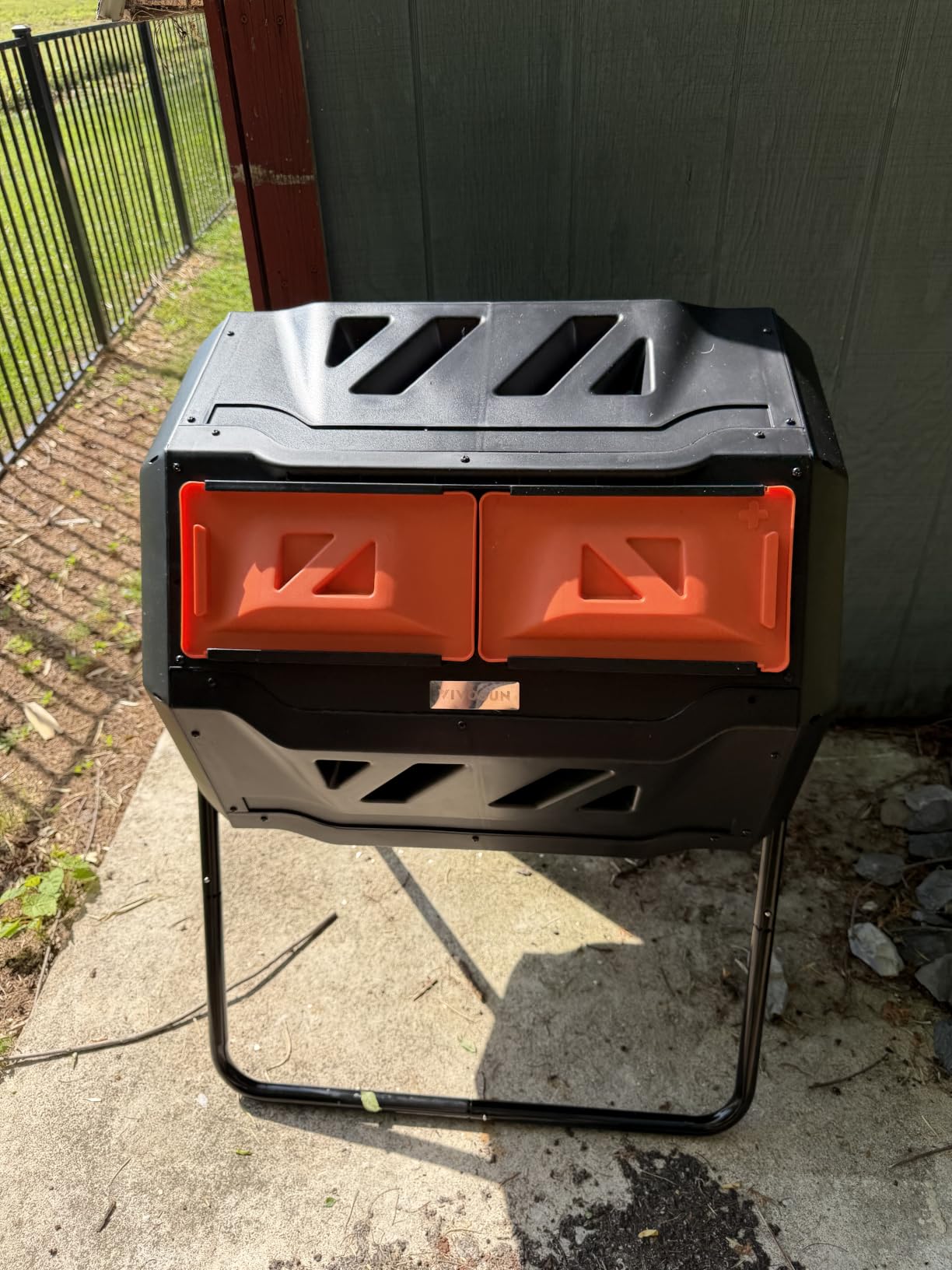
The VIVOSUN Tumbling Composter became my recommendation for anyone dipping their toes into outdoor composting without dropping serious cash. At 43 gallons split across two chambers, it offers more working volume than the Miracle-Gro at a lower entry point. The octagonal shape with deep fins actually helps break up clumps when you rotate it.
What sold me was how smoothly it turned once assembled. The 360-degree rotation requires minimal effort thanks to the galvanized steel frame. I could spin it with one hand even when half full. The air vents provided enough oxygen to keep the decomposition active without drying out the contents too quickly.
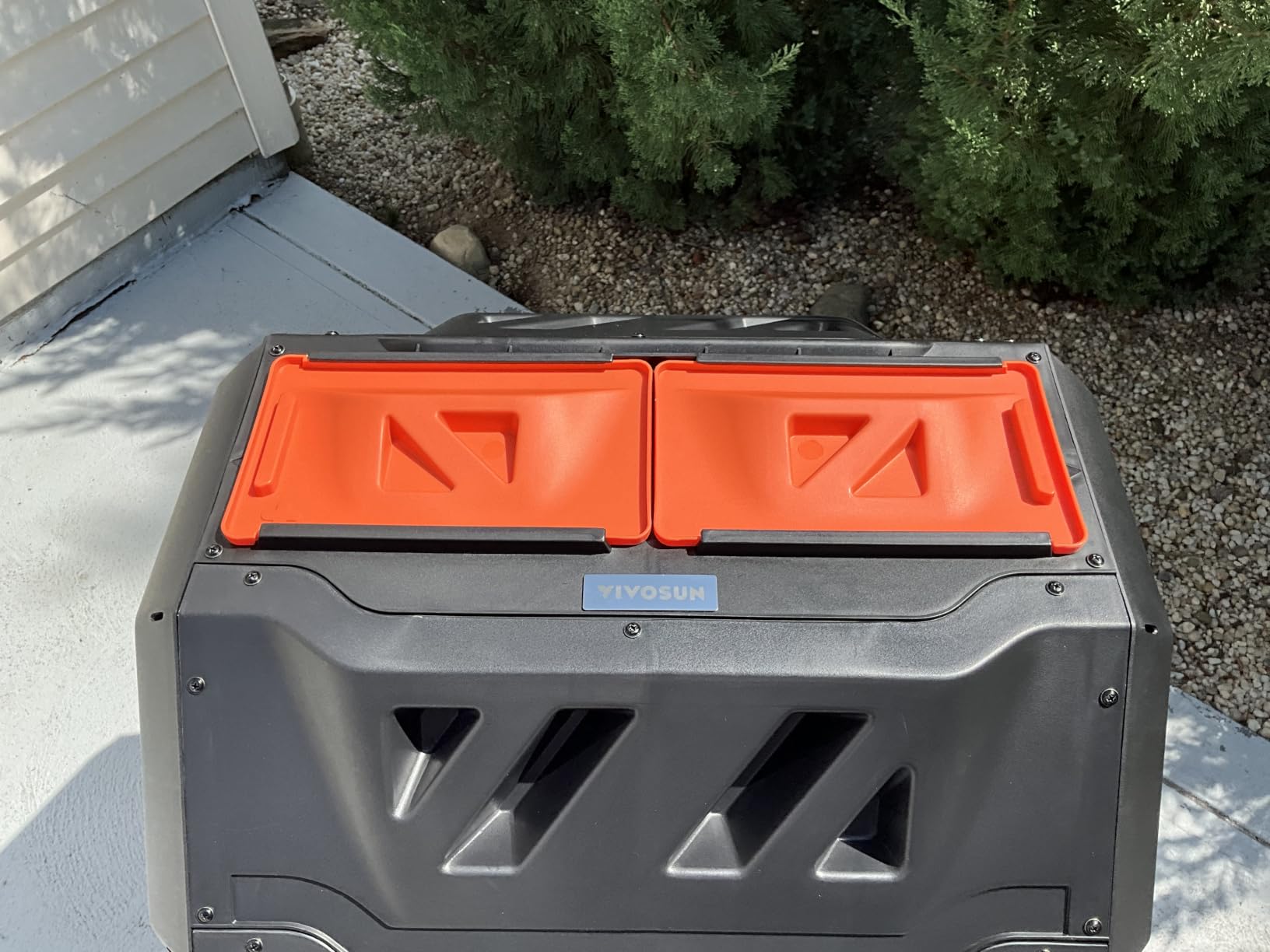
The included garden gloves with ABS plastic claws were a nice touch. I used them for turning the pile and handling finished compost without buying extra gear. The dark color absorbed heat well, which speeds up the composting process in cooler weather.
Assembly was the weak point. The center divider frequently doesn’t seat properly in the grooves, leaving gaps. I ended up using a rubber mallet to seat it firmly. Count on spending 2-3 hours putting this together, ideally with a helper. Despite the assembly hassle, once it’s built, it works reliably.
Best for first-time composters on a budget
If you want a feature-rich tumbler without paying premium prices, the VIVOSUN delivers. The dual chamber and 360-degree rotation match what pricier models offer.
Watch out for fiddly assembly
Set aside a full afternoon. The many small screws and the finicky center divider mean you’ll likely need patience and possibly a second person. Have a rubber mallet ready for stubborn pieces.
3. Good Ideas Compost Wizard Jr. – Best No-Assembly Outdoor Tumbler
Good Ideas Compost Wizard Jr. Tumbler, 7 Cubic Foot Capacity
50 gallon single chamber
Wheeled base
Arrives fully assembled
Pros
- Arrives fully assembled
- Easy to tumble with wheeled base
- Secure twist lids
- Heat-absorbing black drum
Cons
- Single chamber only
- Hard to turn when half full
- No drainage in base
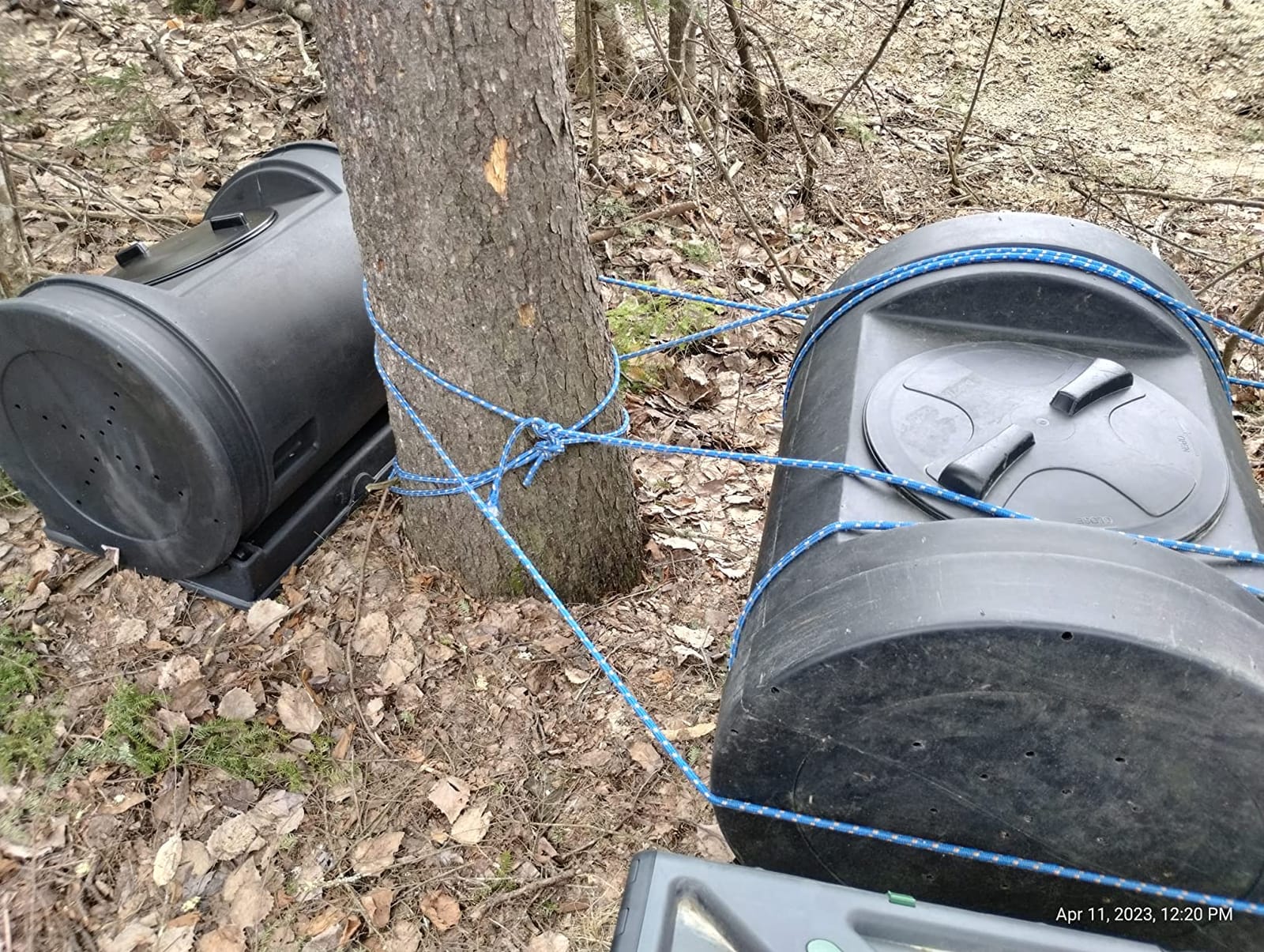
Sometimes the best compost bin is the one that shows up ready to use. The Compost Wizard Jr. arrived at my door fully assembled, which felt like a small miracle after wrestling with the previous two tumblers. I wheeled it into position, added my first batch of scraps, and started tumbling within five minutes of unboxing.
The 50-gallon single chamber is larger than most dual-chamber competitors’ individual sides. The molded handholds on the sides gave me a secure grip, and the wheeled base meant I could tip and rotate it without lifting. The 12-inch twist lids sealed tightly, keeping pests out and moisture in.
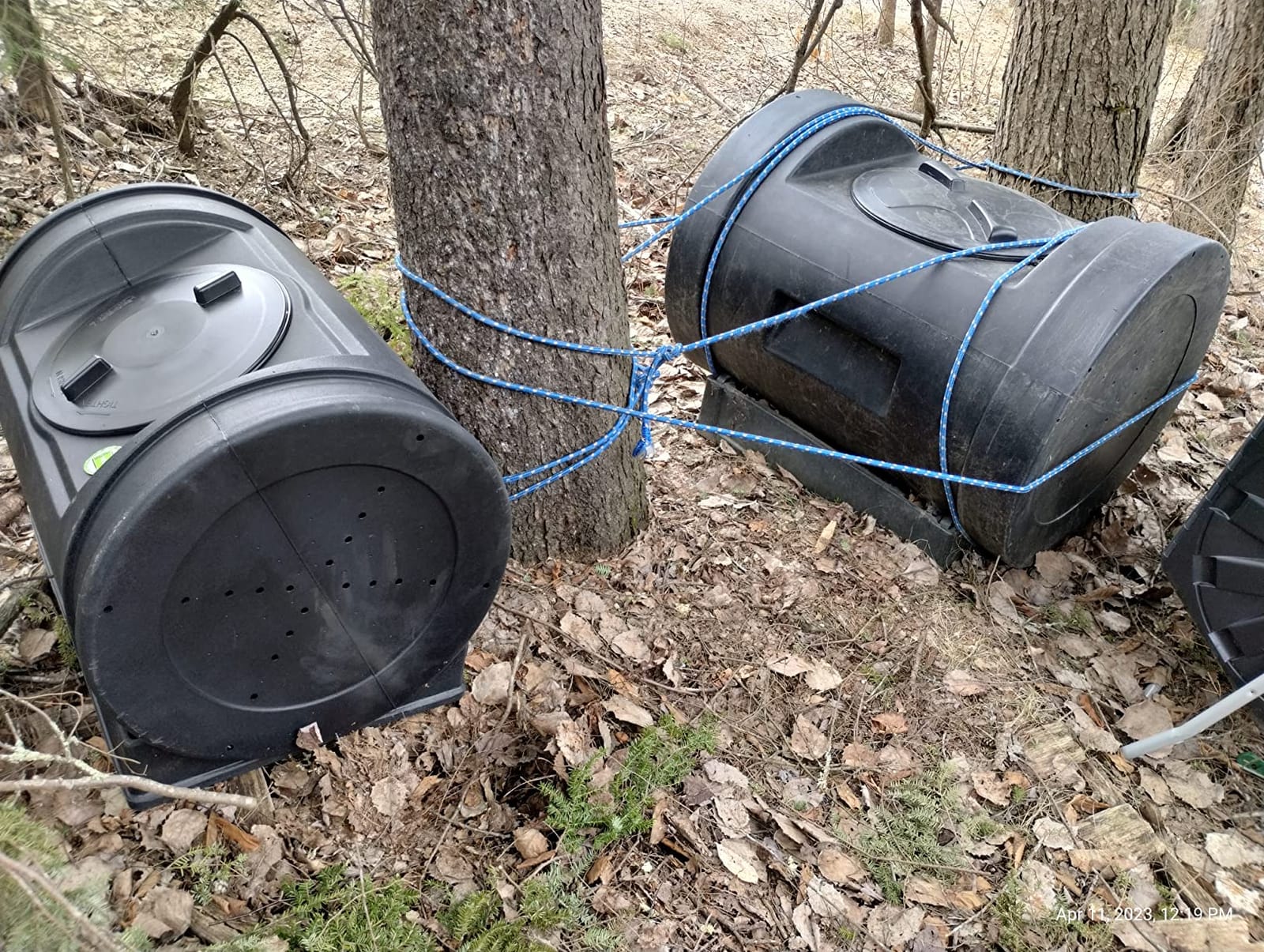
The black drum design absorbs solar heat, which noticeably accelerated decomposition in spring and fall. In my testing, finished compost appeared in about 5 weeks when I kept the moisture levels right. The dark color also keeps the contents hidden from view, which matters if your composter sits near a patio.
The single chamber is the main limitation. Once you add fresh scraps, you need to stop adding and wait for everything to finish. For households that generate waste continuously, this means keeping a separate holding bin. I also noticed rainwater collected in the base since there’s no drainage hole, which made the drum heavier during wet periods.
Best for anyone who hates assembly
If the thought of building a composter from scratch makes you avoid buying one, the Compost Wizard Jr. removes that barrier entirely. Unbox, position, compost.
Watch out for the single chamber limitation
You can’t add new waste while a batch finishes curing. Plan a secondary holding solution if your household generates scraps daily, or time your batches to complete before adding more.
4. RSI Maze Two Stage Compost Tumbler – Best Premium Outdoor Composter
RSI Maze Two Stage Compost Tumbler
65 gallon two-stage
Gear-driven handle
Adjustable air vents
Pros
- Large 65-gallon capacity
- Gear-driven handle system
- Sturdy construction
- Excellent aeration
Cons
- Higher price point
- Assembly takes 2+ hours
- Heavy when full
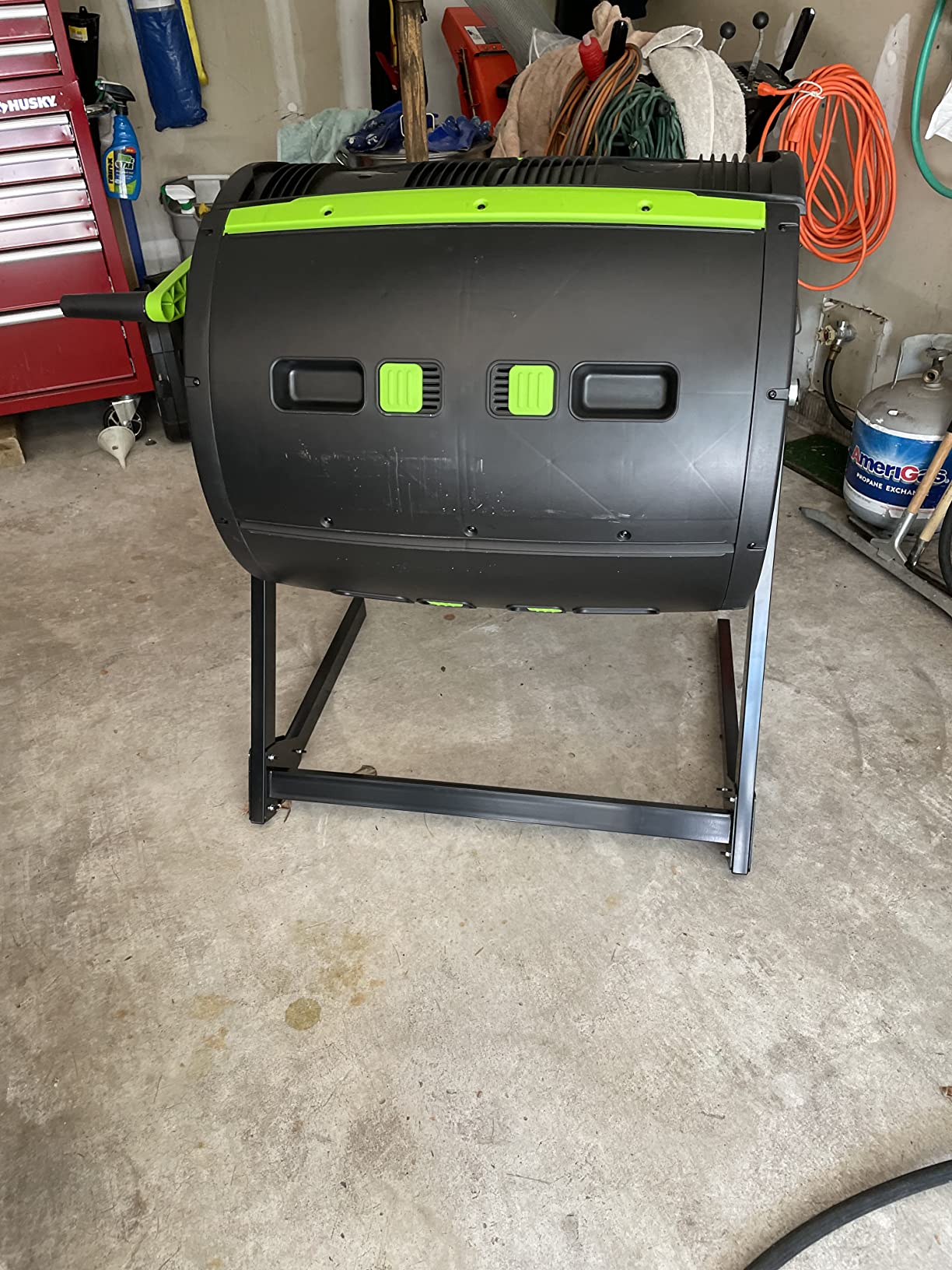
When I moved to a house with a real backyard, I upgraded to the RSI Maze Two Stage Tumbler. The 65-gallon total capacity handled everything my family of four generated, plus yard waste from the garden. The gear-driven handle was the standout feature. It multiplied my turning force so I could rotate a full drum without straining.
The two-stage design separates the active composting zone from the curing zone, which produced noticeably better finished compost. I harvested rich, dark material from the curing side while the active side processed fresh additions. The adjustable air vents let me fine-tune oxygen flow based on moisture content.
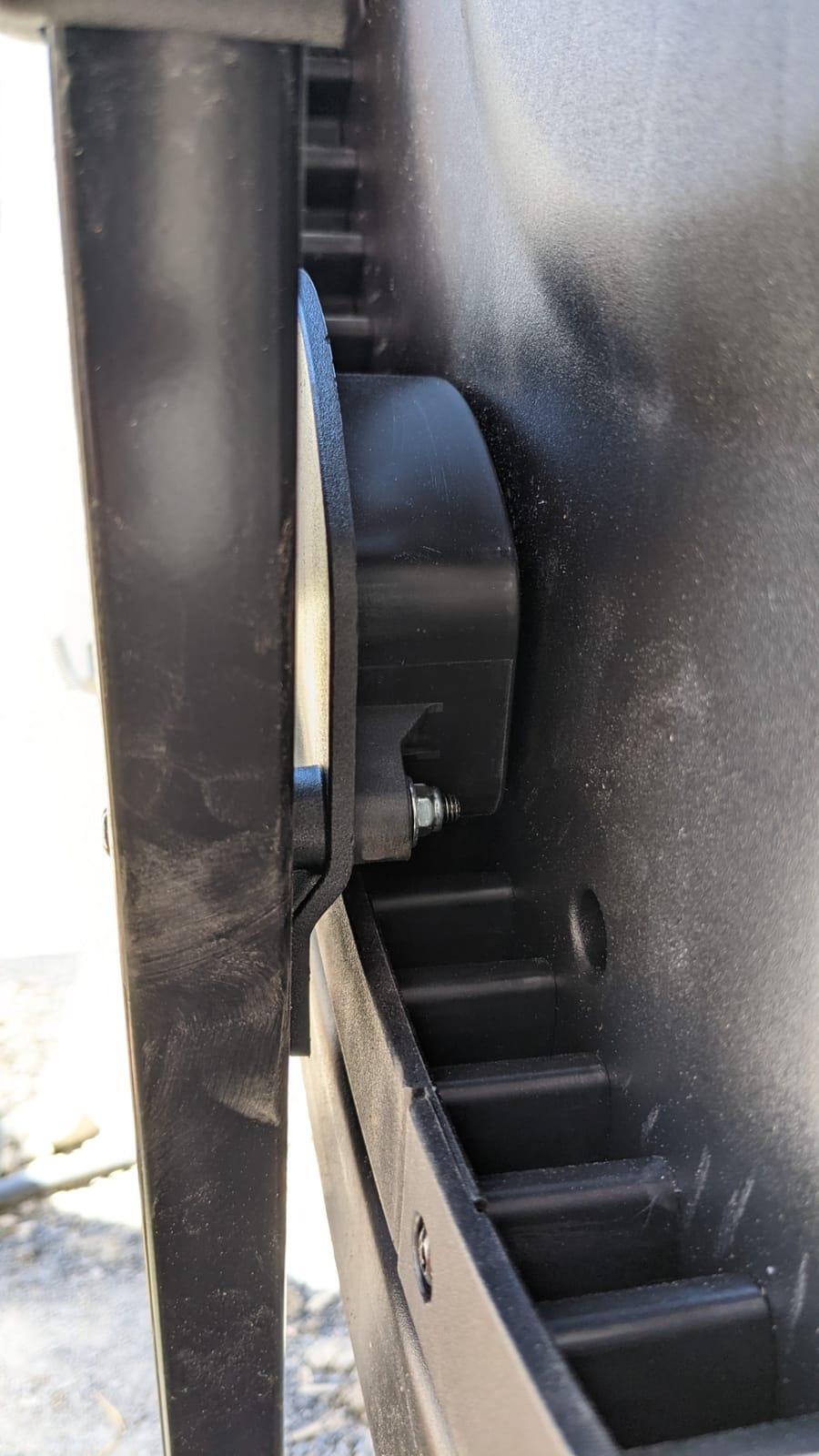
Build quality impressed me. The plastic panels felt thick and durable, and the slide doors on each compartment made adding scraps and removing compost straightforward. After 18 months of use, including a harsh winter, the tumbler showed no signs of UV damage or structural wear.
At 54 pounds empty, the Maze demands commitment. Once you add 65 gallons of material, the weight becomes serious. I positioned it on level ground, which is critical. The handle popped off twice when the tumbler sat on a slight slope. Assembly took me nearly three hours solo.
Best for serious gardeners with large outdoor space
If you compost year-round and process significant yard waste alongside kitchen scraps, the Maze Two Stage handles volume that smaller tumblers can’t match.
Watch out for the price and weight
This is an investment. The gear mechanism, while excellent, adds cost compared to basic tumblers. Also, place it somewhere level and accessible because you won’t want to move it once full.
5. Epica Stainless Steel Compost Bin – Best Overall Kitchen Compost Bin
Epica Kitchen Compost Bin for Kitchen Countertops, 1.3 Galllon – Silver
1.3 gallon capacity
Stainless steel
Replaceable charcoal filter
Pros
- Excellent odor control
- Sturdy stainless steel
- Compact 1.3 gallon size
- Dishwasher safe
Cons
- Can arrive scratched
- Filter needs replacement every 6 months
After testing every kitchen compost bin on this list, the Epica Stainless Steel Compost Bin is what I keep on my own counter. The one-piece molded stainless steel construction feels substantial. After two years of daily use, mine shows no rust, no leaks, and barely a scratch. The cylindrical design fits easily next to a coffee maker without dominating counter space.
The real test for any kitchen compost bin is odor control, and the Epica’s replaceable activated charcoal filter is exceptional. I have a notoriously sensitive nose, and even with fish scraps and coffee grounds, I smell nothing when the lid is closed. The airtight seal snaps shut with a satisfying click that tells me fruit flies aren’t getting in.
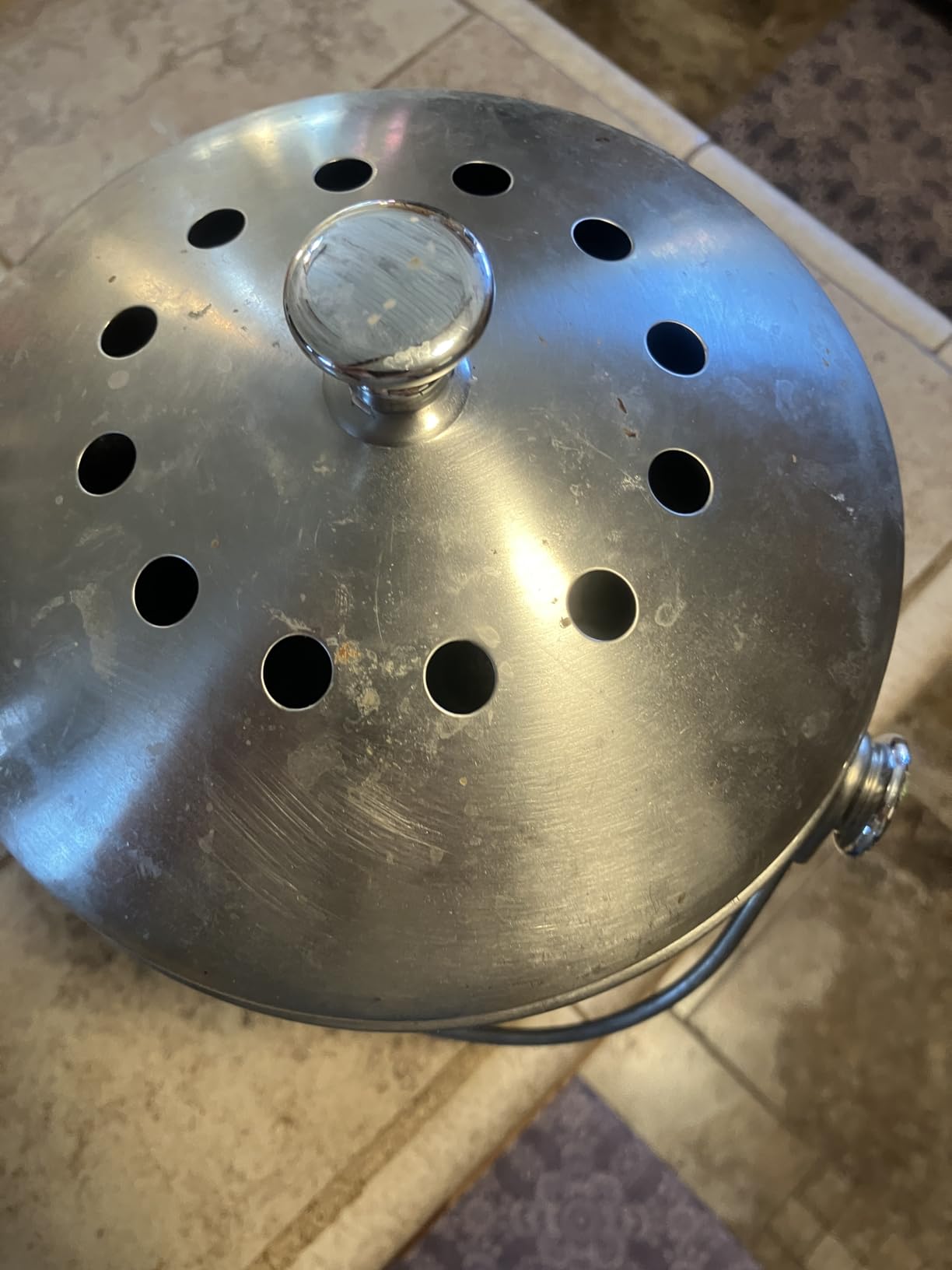
Emptying the bin is straightforward: lift the lid, scrape the contents into my outdoor pile, and rinse. The smooth interior has no crevices where food can stick. I run it through the dishwasher once a month for a deep clean. The 1.3-gallon capacity suits my household of two, but larger families might empty it more often than they’d like.
The only real maintenance is replacing the charcoal filter every 4-6 months. Replacement filters cost a few dollars each and slide into the lid in seconds. I set a calendar reminder. Featured in Bon Appetit and Forbes, the Epica has earned its reputation as the best kitchen compost bin for good reason.
Best for couples and small households prioritizing odor control
If you want a kitchen compost bin that genuinely contains smells, the Epica’s charcoal filter system outperforms most competitors. The stainless steel also looks good on display.
Watch out for the 1.3-gallon capacity
For families of four or more, you’ll empty this bin every day or two. If you want more capacity, consider the OXO Easy-Clean at 1.75 gallons instead.
6. OXO Good Grips Easy-Clean Compost Bin – Best for Hands-Free Kitchen Use
OXO Good Grips Easy-Clean Compost Bin, Charcoal, 1.75 Gal/6.62 L
1.75 gallon capacity
Stay-open lid
Smooth interior
Pros
- Stay-open lid for hands-free use
- Removable lid for easy emptying
- Smooth easy-clean interior
- Good capacity
Cons
- No built-in charcoal filter
- Some fruit fly issues reported
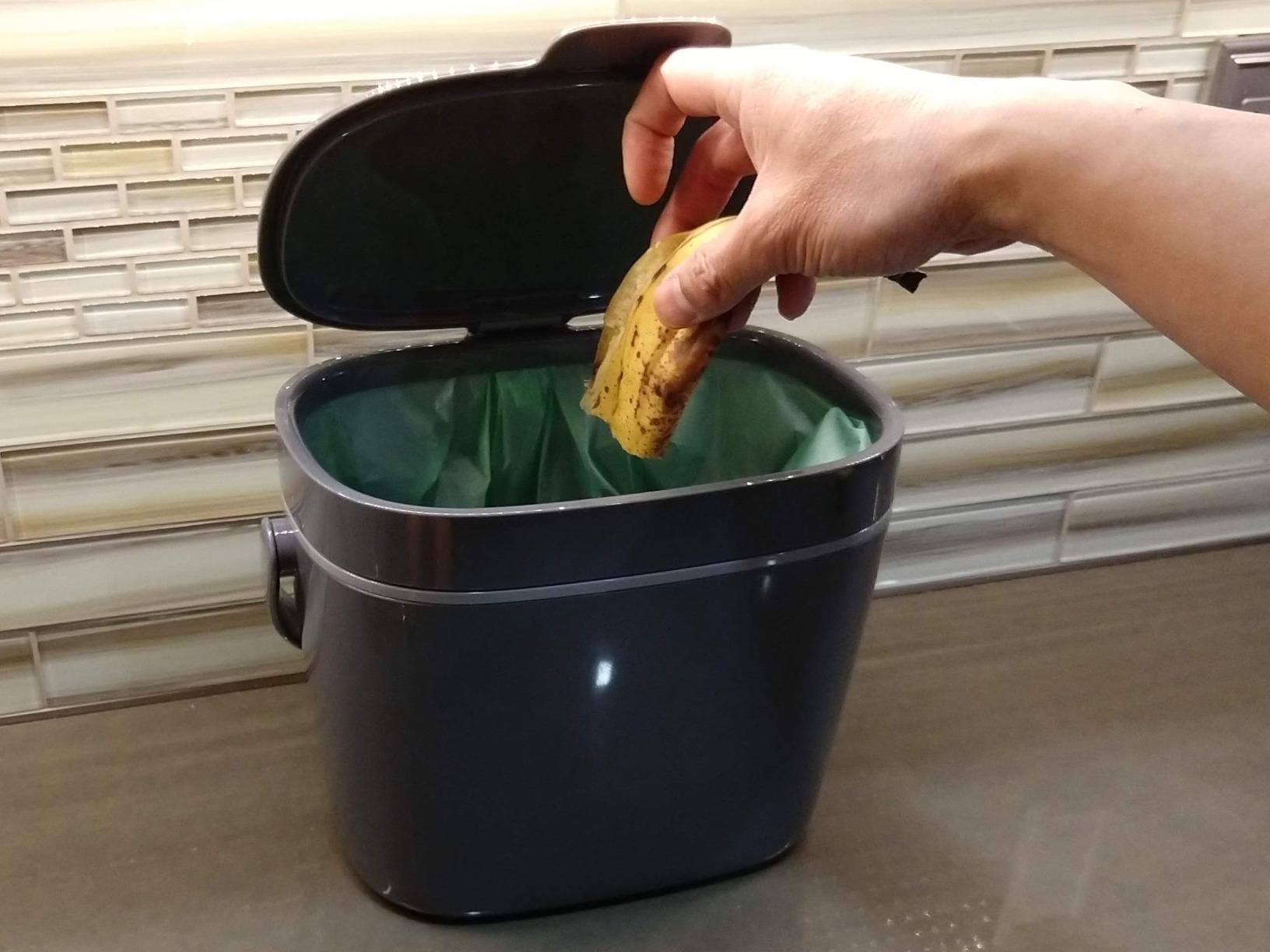
During peak cooking sessions, I don’t want to fiddle with a lid every time I scrape a plate. The OXO Good Grips Easy-Clean Compost Bin solved that problem with a stay-open lid mechanism that props open while you work. When you’re done, a gentle push closes it with a soft, satisfying snap.
The smooth interior is the real cleaning story. Unlike bins with ridges, seams, or textured surfaces, the OXO has nothing for food particles to stick to. I rinse it under hot water and it’s clean. The removable lid comes off completely for thorough washing, which I do weekly.
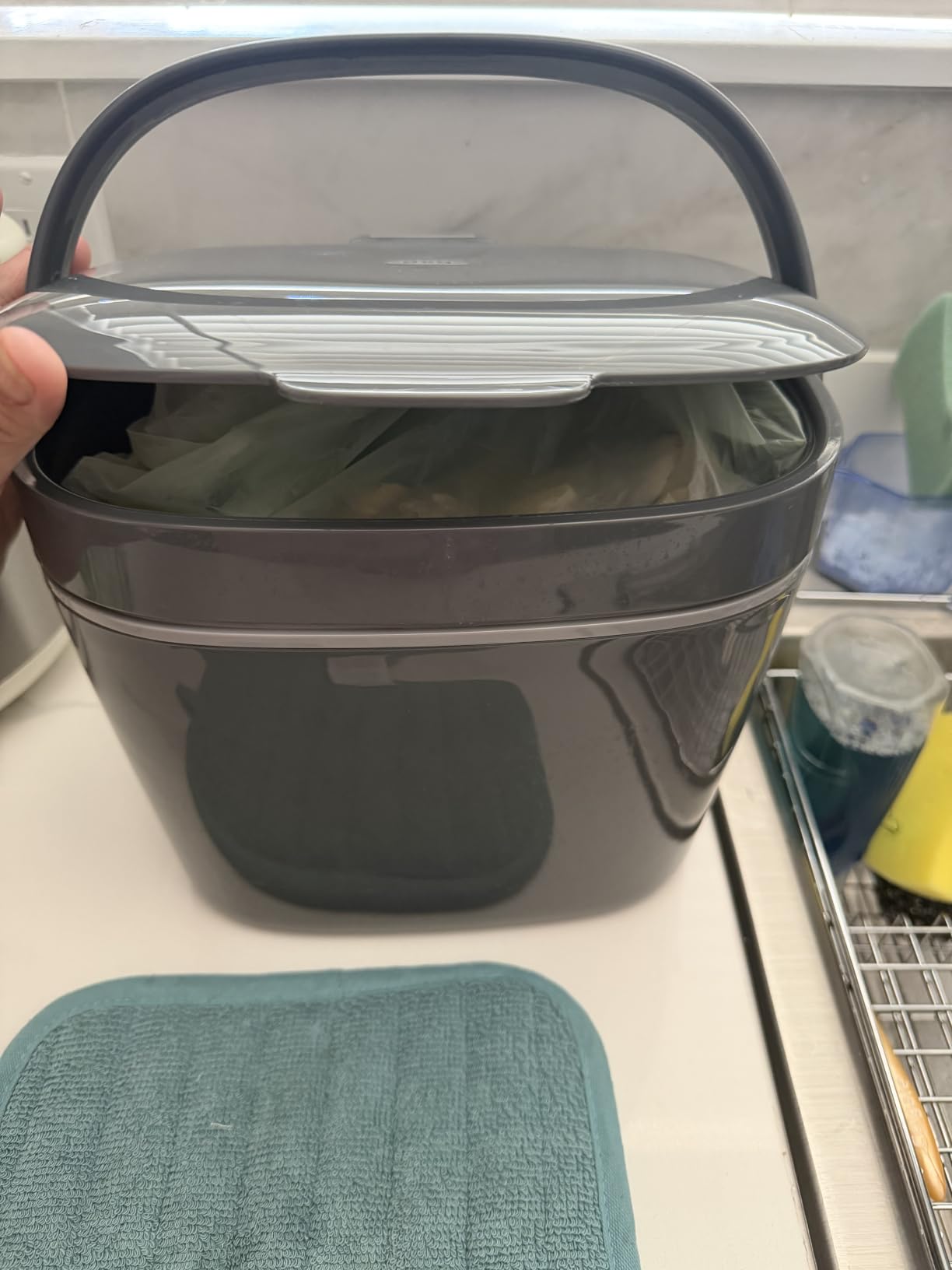
At 1.75 gallons, this bin offers more usable space than the Epica while maintaining a slim footprint that fits on most counters. The bag containment system tucks compostable liners inside the rim, hiding the bag edges for a clean look. I never see ugly plastic overhang.
One honest limitation: there’s no built-in charcoal filter. The lid design does a good job containing odors, but if you’re composting particularly pungent items (fish, onions, cruciferous vegetables), you’ll notice more smell than with the Epica. I add a sprinkle of baking soda between bag changes to help.
Best for active home cooks who prep a lot of food
The stay-open lid and easy-clean interior make this the most practical bin for hands-busy cooking sessions. You’ll actually want to use it.
Watch out for the missing filter
Without a charcoal filter, you’ll rely on the seal alone for odor control. Empty regularly and consider adding baking soda or aftermarket filters if smells develop.
7. RED FACTOR Premium Compost Bin – Best Dual-Filter Kitchen Bin
RED FACTOR Premium Compost Bin for Kitchen Countertop – Stainless Steel Food Waste Bucket with Innovative Dual Filter Technology – Includes Spare Filters (Matt Copper, 1.3 Gallon)
1.3 gallon capacity
Dual filter technology
Includes spare filters
Pros
- Innovative dual filter system
- Excellent odor control in summer
- Thick stainless steel construction
- Includes spare filters
Cons
- Not dishwasher safe
- Capacity slightly small
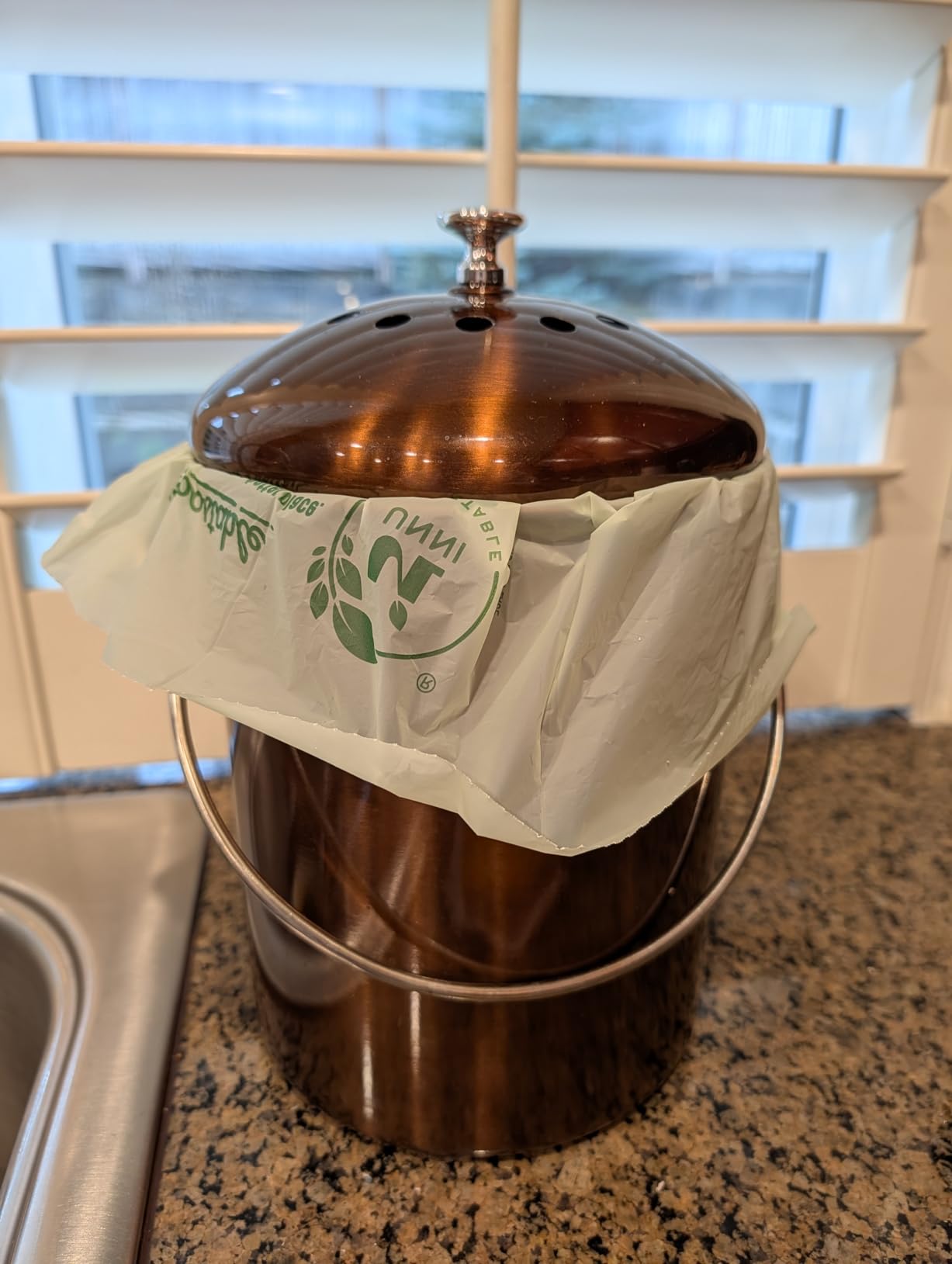
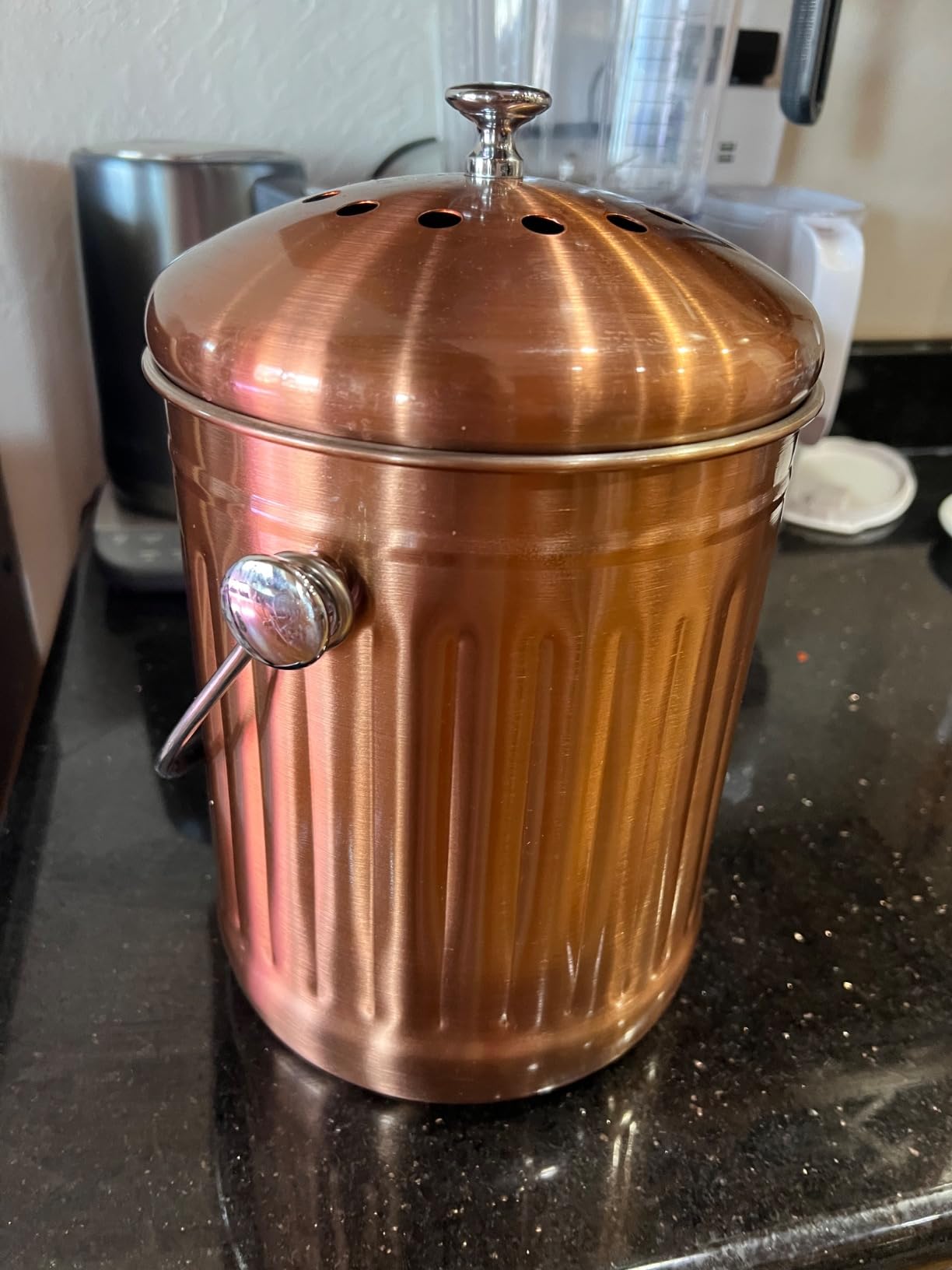
For my summer testing in 90-degree kitchen heat, the RED FACTOR Premium Compost Bin performed better than any other kitchen bin. The dual filter technology uses two activated carbon filters positioned strategically in the lid. I left fish scraps in the bin for 48 hours in August and detected zero odor. That’s remarkable.
The thick stainless steel construction impressed me. Where some kitchen bins use thin, easily dented metal, the RED FACTOR feels substantial in the hand. The single-sheet manufacturing means no joints or seams where rust could develop. After six months of use, mine still looks brand new.
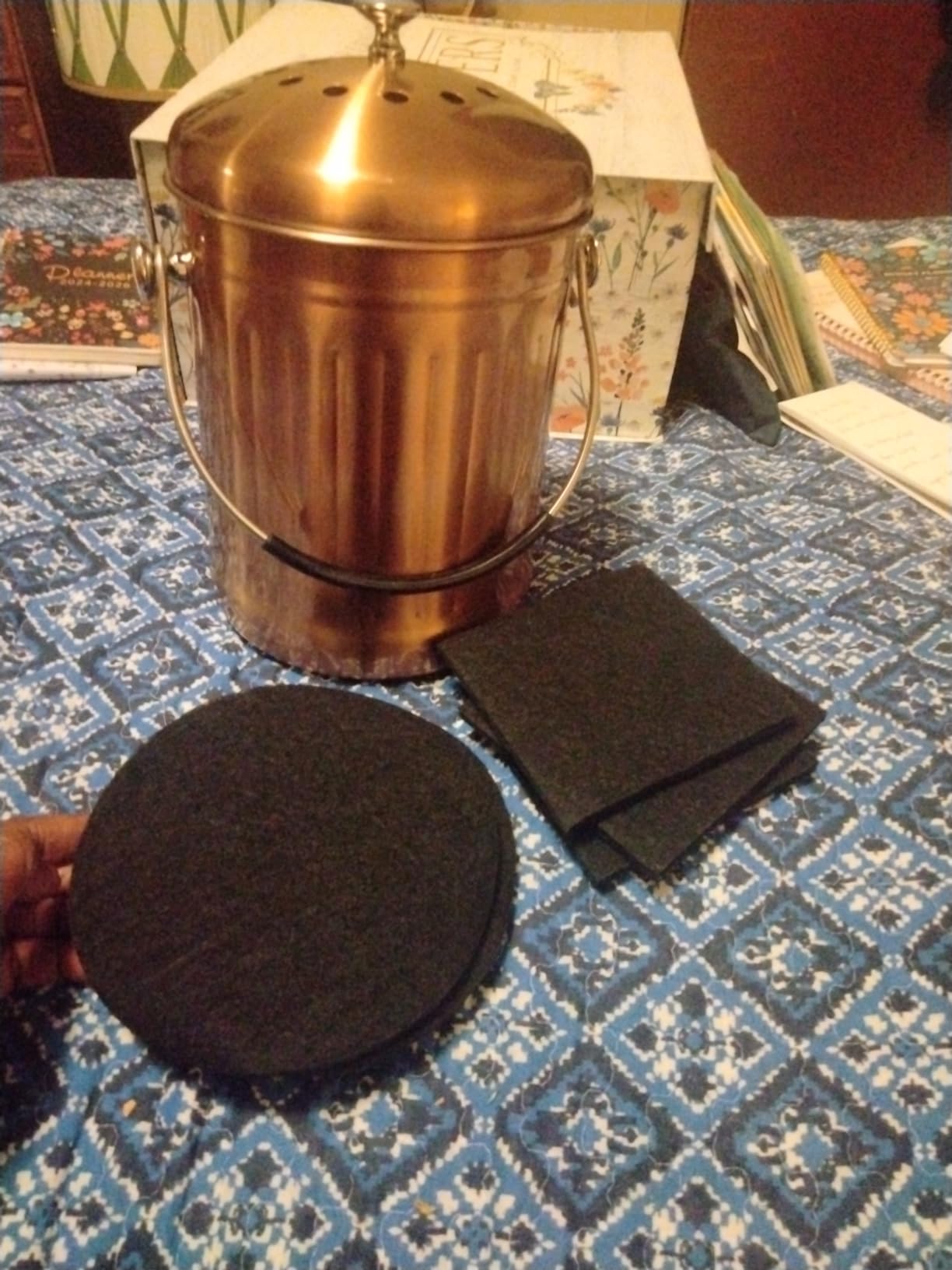
The dome-shaped lid and copper finish elevate this bin from purely functional to genuinely attractive. I have mine displayed on the counter as a design element. The soft-grip handle makes carrying the bin to my outdoor composter comfortable even when full.
Hand washing is required since it’s not dishwasher safe. The 1.3-gallon capacity is slightly smaller than I’d like for a family of three, but the included spare filters (one already installed, one backup) added real value. The filter replacements cost a few dollars when you eventually need them.
Best for hot climates and serious odor concerns
If your kitchen runs warm in summer or you’re composting pungent items, the dual filter system handles smells that single-filter bins can’t match.
Watch out for hand-wash only care
Skip the dishwasher. The finish and seals don’t hold up to high-heat cycles. Plan to hand wash with mild soap, which takes about 2 minutes.
8. simplehuman Compost Caddy – Best Compact Kitchen Bin for Small Spaces
simplehuman Compost Caddy, Detachable and Countertop Bin, 4 Liter / 1.06 Gallon, Brushed Stainless Steel
1.06 gallon capacity
Detachable design
Magnetic dock system
Pros
- Magnetic dock for simplehuman cans
- Detachable for food prep
- Removable inner bucket
- Includes 30 compostable liners
Cons
- Higher price point
- Smaller capacity
- Some seal issues reported
Living in a 600-square-foot apartment taught me that every inch of counter space matters. The simplehuman Compost Caddy has the smallest footprint of any bin I tested. At just 5.5 inches wide, it tucks beside a coffee maker or in a corner where wider bins won’t fit. Despite the slim profile, the 1.06-gallon capacity handles daily scraps for one or two people.
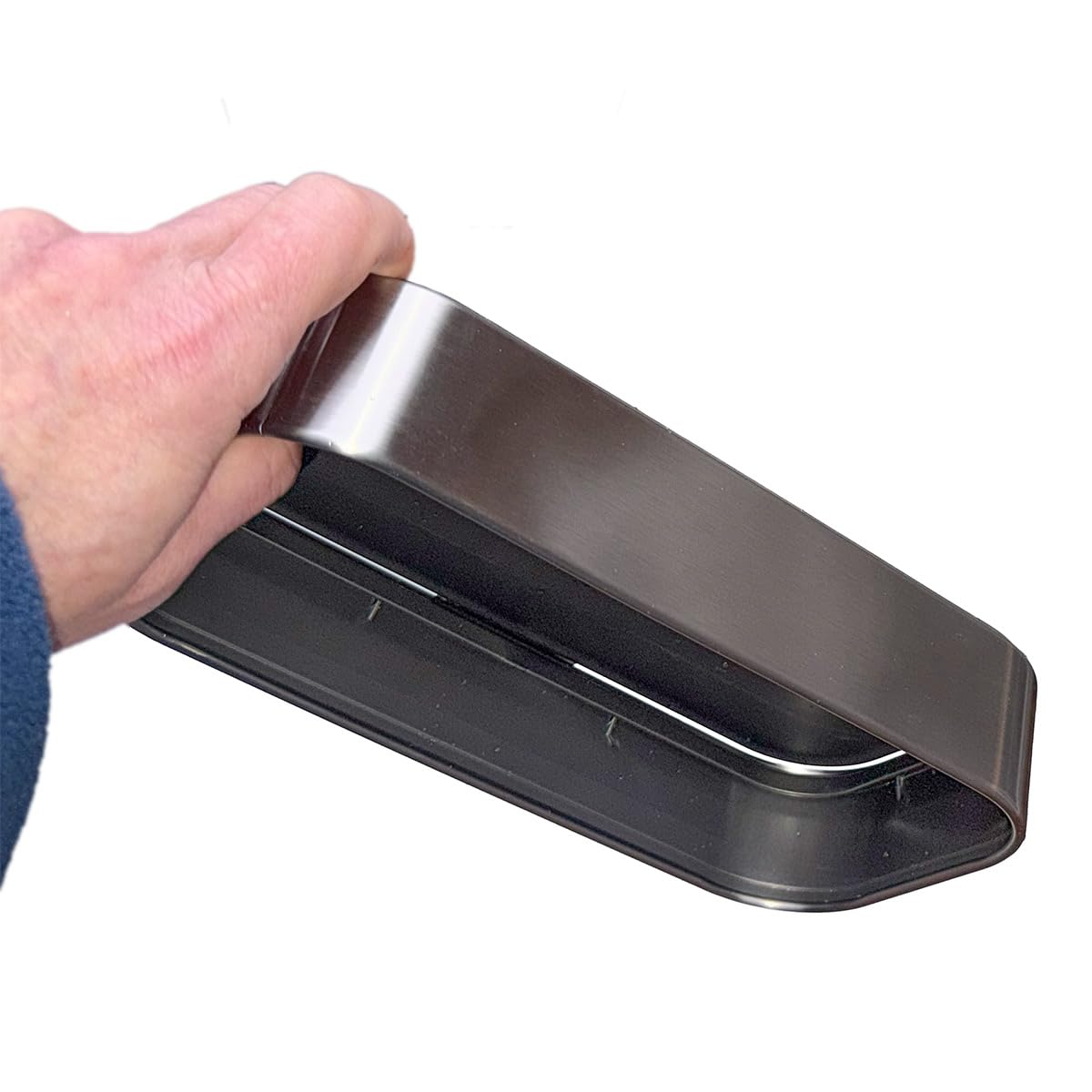
The magnetic docking system is a clever touch if you already own a simplehuman trash can. The caddy snaps onto the side of the can, keeping it off the counter entirely. When I’m prepping food, I detach it and bring it right to the cutting board. The soft-seal lid opens with one hand.
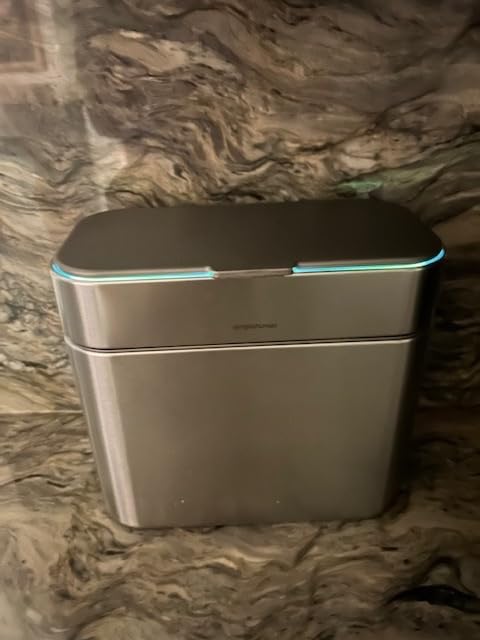
The removable inner plastic bucket makes emptying and cleaning effortless. I lift it out, scrape contents into my outdoor bin, and rinse. The fingerprint-resistant brushed finish stays clean-looking even with daily handling. The package includes 30 Code Z compostable liners, which fit the bucket perfectly.
The price reflects the simplehuman brand premium. For a 1.06-gallon bin, you’re paying for the design and integration features. A few users report seal issues allowing fruit flies in, though I didn’t experience this personally. The smaller capacity means frequent emptying for households generating more waste.
Best for apartment dwellers and existing simplehuman owners
If counter space is limited or you already use simplehuman products, the Caddy integrates seamlessly and looks like a matched set.
Watch out for the price-to-capacity ratio
You pay premium dollars for a small bin. If capacity matters more than aesthetics, the OXO Easy-Clean offers 65% more volume for less money.
9. Worm Factory 360 Composting System – Best Vermicomposting Starter Kit
Worm Factory® 360 Black US Made Composting System for Recycling Food Waste at Home – 4 Trays for Efficient Vermicomposting – Durable, Space-Efficient Design, Easy to Assemble, No Odor
4-tray expandable system
US made
20-year warranty
Pros
- Expandable tray system
- 20-year warranty
- No odor when maintained
- Spigot for leachate
- Comprehensive instructions
Cons
- Higher initial cost
- Learning curve for beginners
- Requires worm purchase
When I wanted to compost year-round without depending on outdoor temperatures, I turned to vermicomposting. The Worm Factory 360 made the learning curve manageable. The four-tray expandable system arrived with detailed instructions, bedding materials, and a scraper. I bought worms separately from a local supplier and added them the same day.
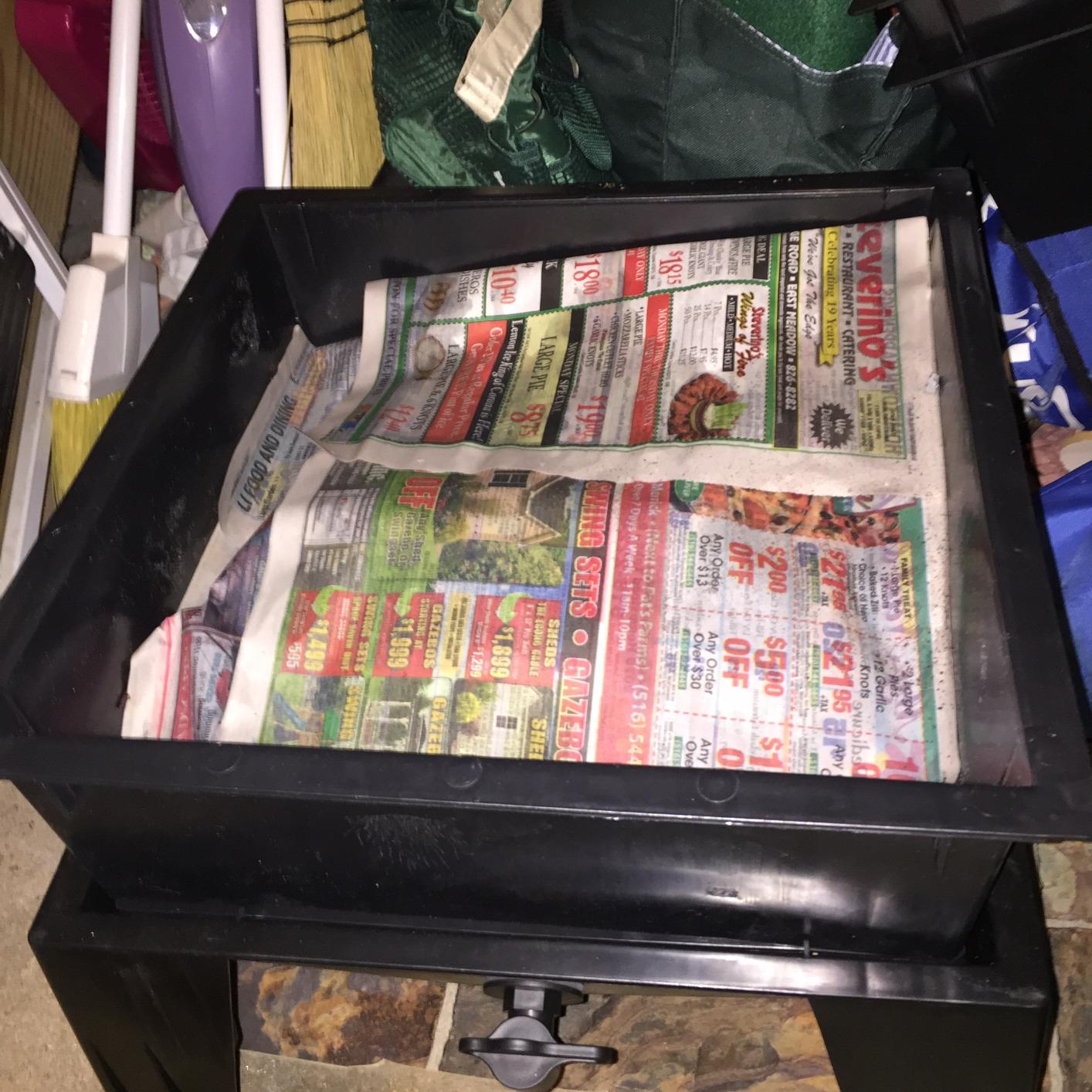
The genius of the design is the tray system. Worms process food in the bottom tray, then migrate upward to fresh trays as I add new scraps. To harvest compost, I remove the top tray, set it aside, and take finished worm castings from below. No sorting through worms required.
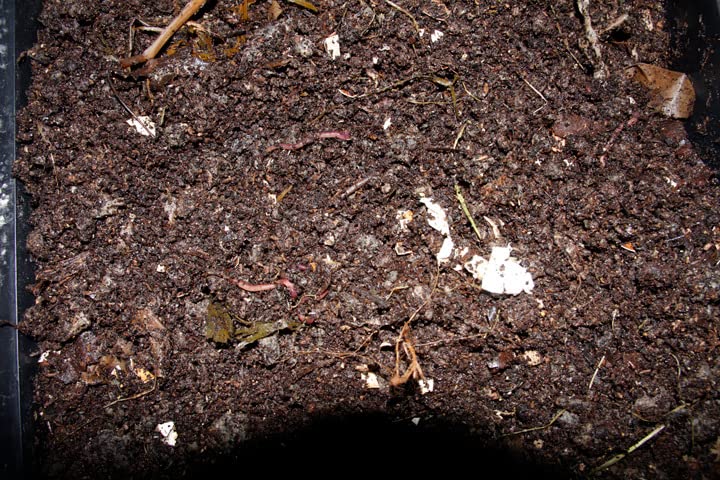
The spigot at the base collects leachate, a nutrient-rich liquid that I dilute and use as plant fertilizer. The ventilation design prevents odors and keeps worms healthy. I kept my Worm Factory in a basement corner, and visitors never knew it was there.
Made in the USA with a 20-year warranty, this system is built to last. Long-term users report 10+ years of reliable service. The main commitment is the learning curve: understanding worm feeding rates, moisture levels, and what scraps to avoid. Once you establish the system (about 2-3 months), maintenance becomes routine.
Best for committed composters wanting year-round production
Vermicomposting works in winter when outdoor bins slow down. The worm castings are richer in nutrients than typical compost, and the system fits in small spaces.
Watch out for the worm learning curve
You need to research what worms eat (no meat, dairy, or citrus), how often to feed them, and how to maintain moisture. Skip the system if you won’t invest the initial setup time.
10. VermiHut Plus 5-Tray Worm Compost Bin – Best Worm Composter for Beginners
The Original VermiHut® Plus 5-Tray Worm Compost Bin – Indoor & Outdoor Vermicomposting System, Continuous Flow Food Waste Recycler for Organic Composting & Gardening – Dark Green
50L 5-tray system
HDPE construction
Integrated liquid collection
Pros
- Easy to assemble
- Excellent odor control
- Integrated liquid collection
- Compact footprint
Cons
- Learning curve for beginners
- Trays heavy when stacked
- Moisture management needed
After the Worm Factory 360, I tested the VermiHut Plus as a more compact alternative for a friend who lives in a third-floor apartment. The 5-tray stacking system processes kitchen waste efficiently without taking up much floor space. The dark green HDPE construction feels sturdy and looks unobtrusive in a corner.
The integrated liquid collection base was the feature that won my friend over. Rather than a separate spigot, the base and collection tray are molded as one piece, eliminating leak points. The protective base feet prevent ants from climbing in, a common complaint with other worm bins.
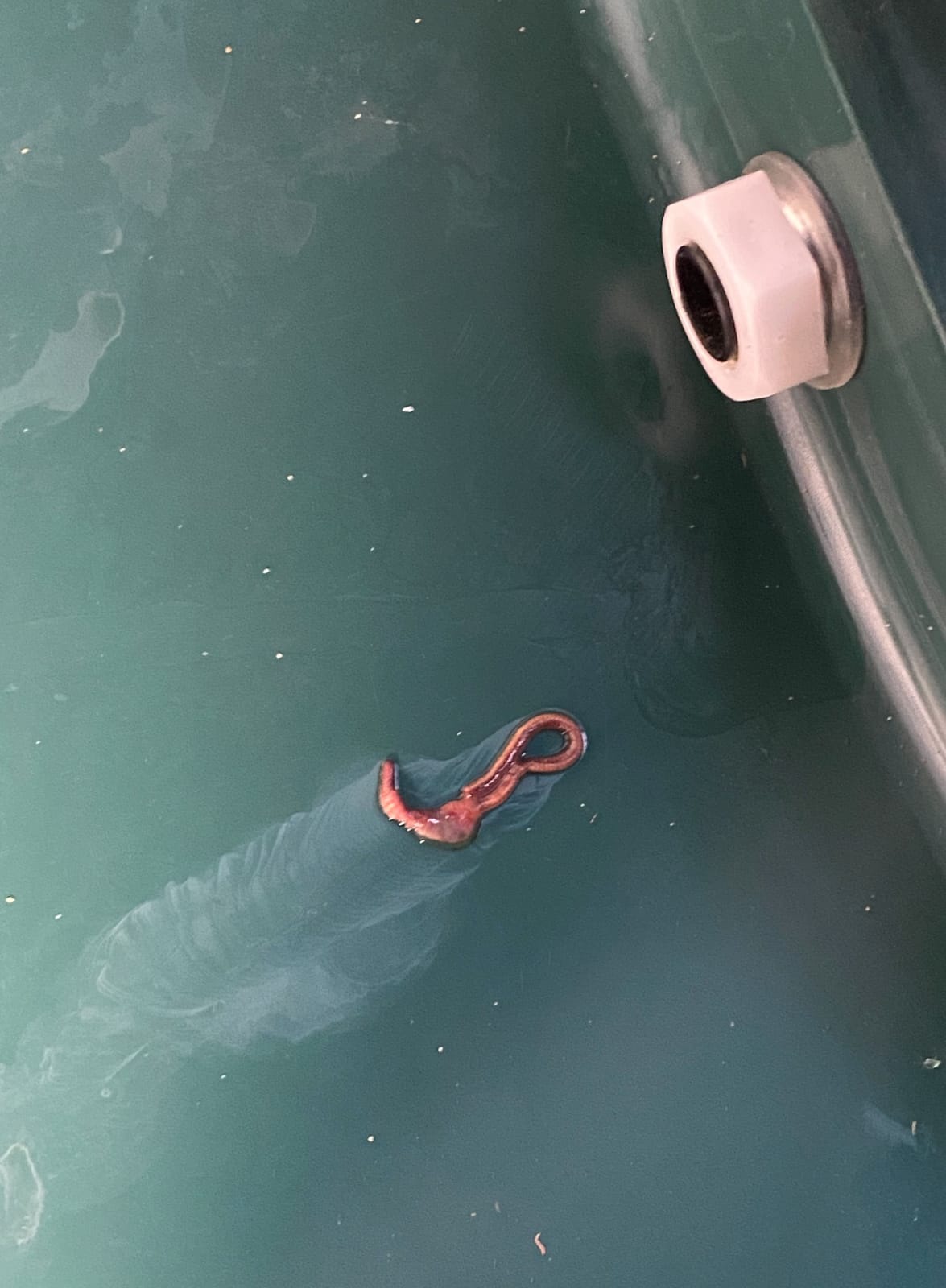
The V-Board moisture management system helps maintain the damp (not wet) environment worms need. My friend reported zero odor issues once the system was established, and the worm castings transformed her container plants. The compact 17×17 inch footprint fits beside a bookshelf or under a side table.
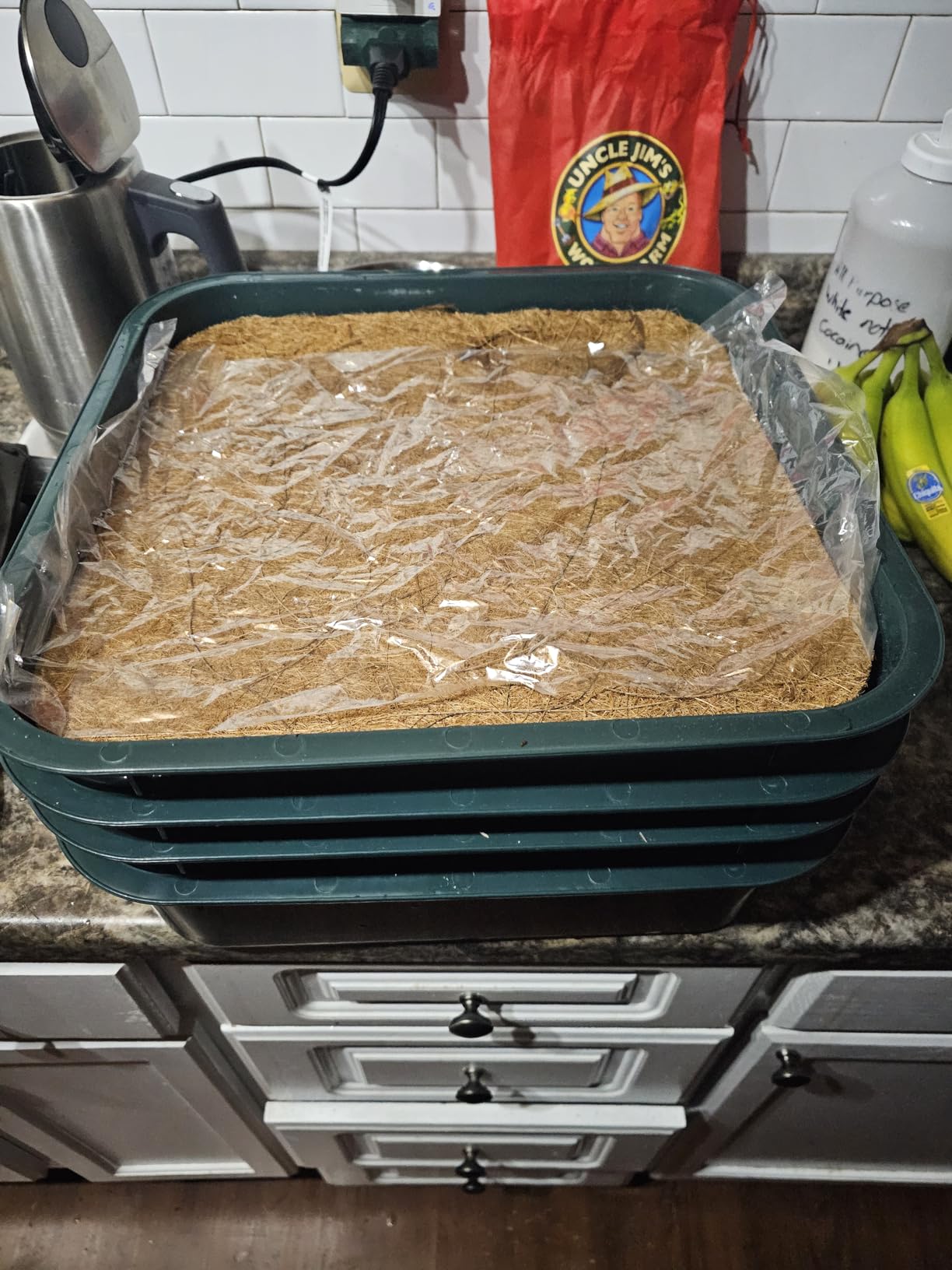
Assembly was straightforward compared to outdoor tumblers. The trays stack securely, and the included instructions walk you through worm introduction and feeding. Moisture management requires attention: too dry and worms struggle, too wet and you risk odors. The coconut mat that comes with some versions may need replacement after a year.
Best for apartment dwellers new to vermicomposting
The compact size, integrated features, and straightforward setup make this the most beginner-friendly worm composter I tested. The 5-tray capacity handles most household waste.
Watch out for stacked tray weight
Once all five trays are working, the full unit gets heavy. Position it where you won’t need to move it frequently, and harvest castings from the bottom tray regularly.
11. Ouaken 4L Electric Composter – Best Budget Electric Composter
Ouaken 4L Electric Composter for Kitchen, Smart Countertop Compost Bin
4L capacity
Auto-clean function
High-temp decomposition
Pros
- Reduces waste by 90%
- Quiet below 40dB
- Carbon filter eliminates odors
- Auto-clean feature
Cons
- Increases electricity use
- Some odor during processing
- Nonstick coating may wear
Electric composters promised to solve the inconvenience of traditional composting, and the Ouaken 4L delivered on the core promise. I loaded vegetable peels, coffee grounds, and meat scraps into the bucket, pressed a button, and six hours later had a cup of dry, reduced material that looked like dark soil. The volume reduction was dramatic: my morning’s scraps became a fraction of their original bulk.
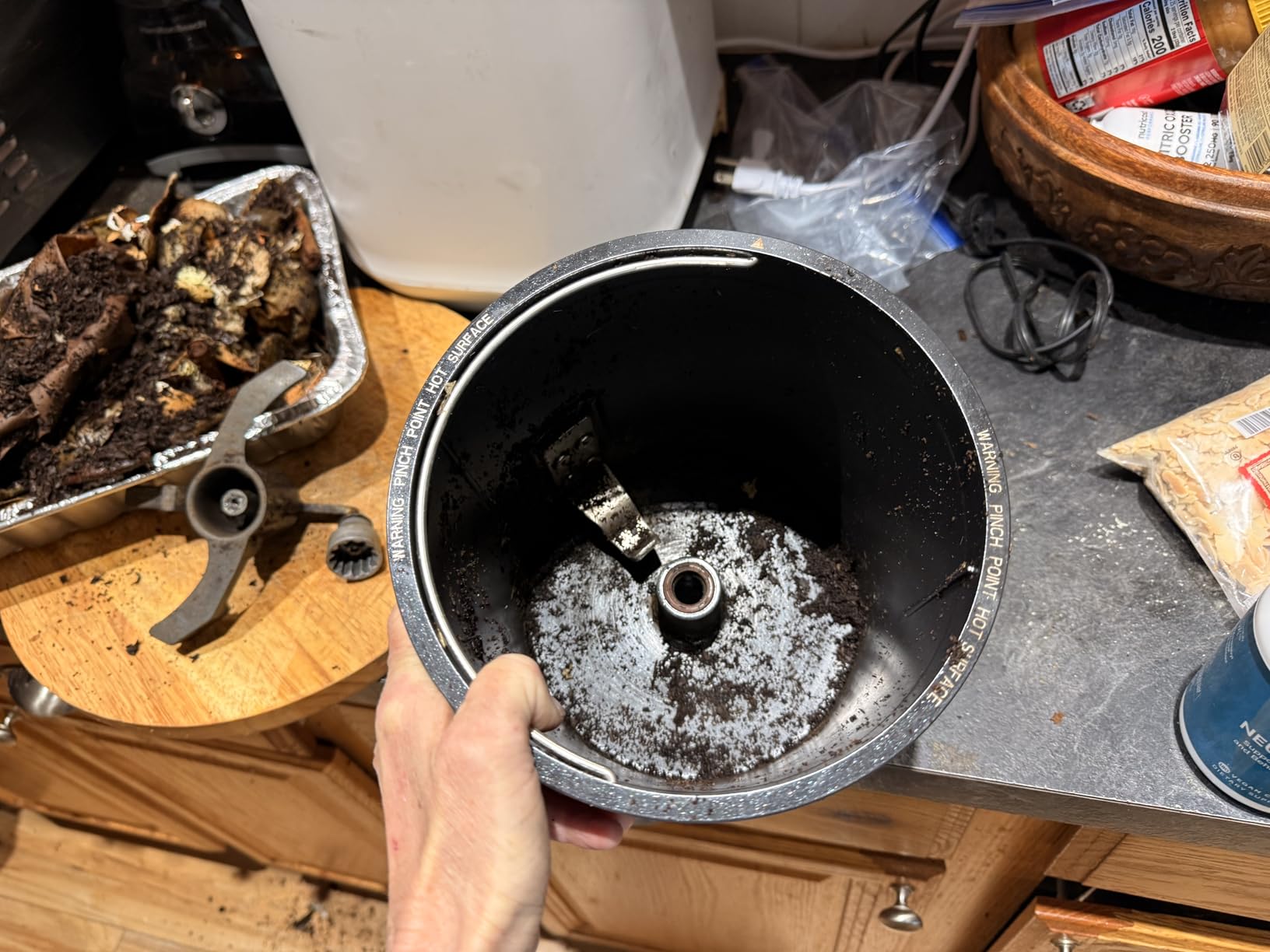
The auto-clean function sets the Ouaken apart from competitors in this price range. After each cycle, the machine runs a brief cleaning cycle that prevents residue buildup. I appreciated not having to scrub the interior manually. The dishwasher-safe bucket makes the weekly deep clean simple.
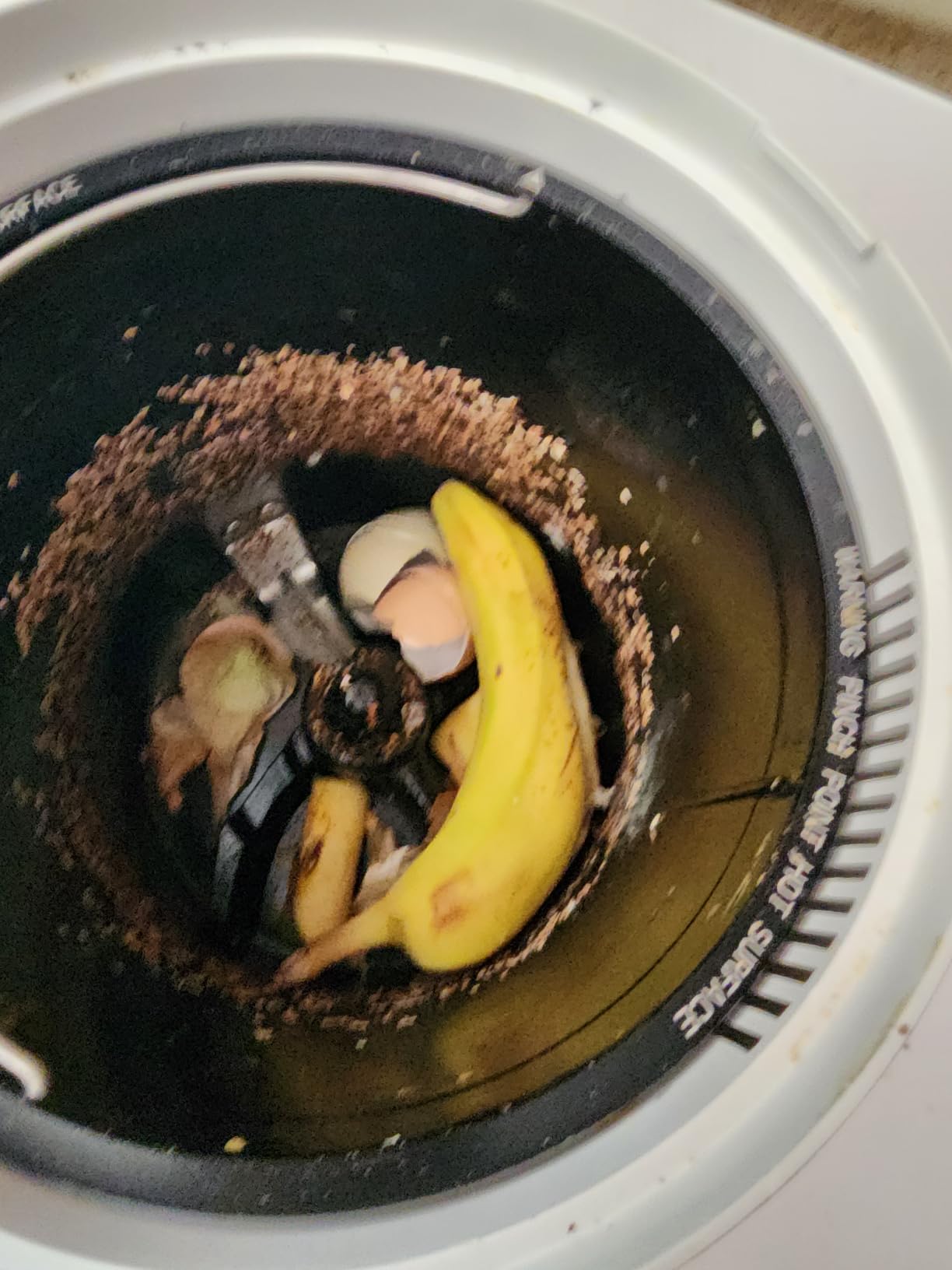
Noise level impressed me. At below 40dB, the Ouaken runs quieter than my refrigerator. I ran cycles overnight without disturbing sleep. The carbon filter system traps odors during processing, which is essential since the machine generates heat that would otherwise release smells.
Honest assessment: electric composters don’t produce true compost. The output is dehydrated, ground material that’s great for soil amendment but not the same as traditional compost. Power consumption adds to your electricity bill, and the nonstick coating may wear over time. The Ouaken is a good entry point into electric composting without the premium price.
Best for people who want convenience over traditional composting
If you live in an apartment, generate food waste daily, and don’t have outdoor space for a bin, the Ouaken handles scraps without smell, mess, or trips to an outdoor composter.
Watch out for electricity costs and processing time
A full cycle takes several hours and draws meaningful power. The output is reduced waste, not finished compost. For traditional soil-building, you’ll want to bury the output or add it to a garden bed.
12. Reencle Prime Electric Composter – Best Premium Electric Composter
Reencle Prime Electric Composter – 14L Kitchen Composter, Decomposes Up to 2.2 lbs Food Waste Daily, Odorless Indoor Composting with Whisper-Quiet Technology & Rapid Decomposition (Silver)
14L capacity
Microbial decomposition
28dB operation
Pros
- Uses actual microbes not just drying
- Large 14L capacity
- Whisper-quiet 28dB
- Auto-open lid
Cons
- Significant price investment
- Larger footprint
- Some mechanical issues reported
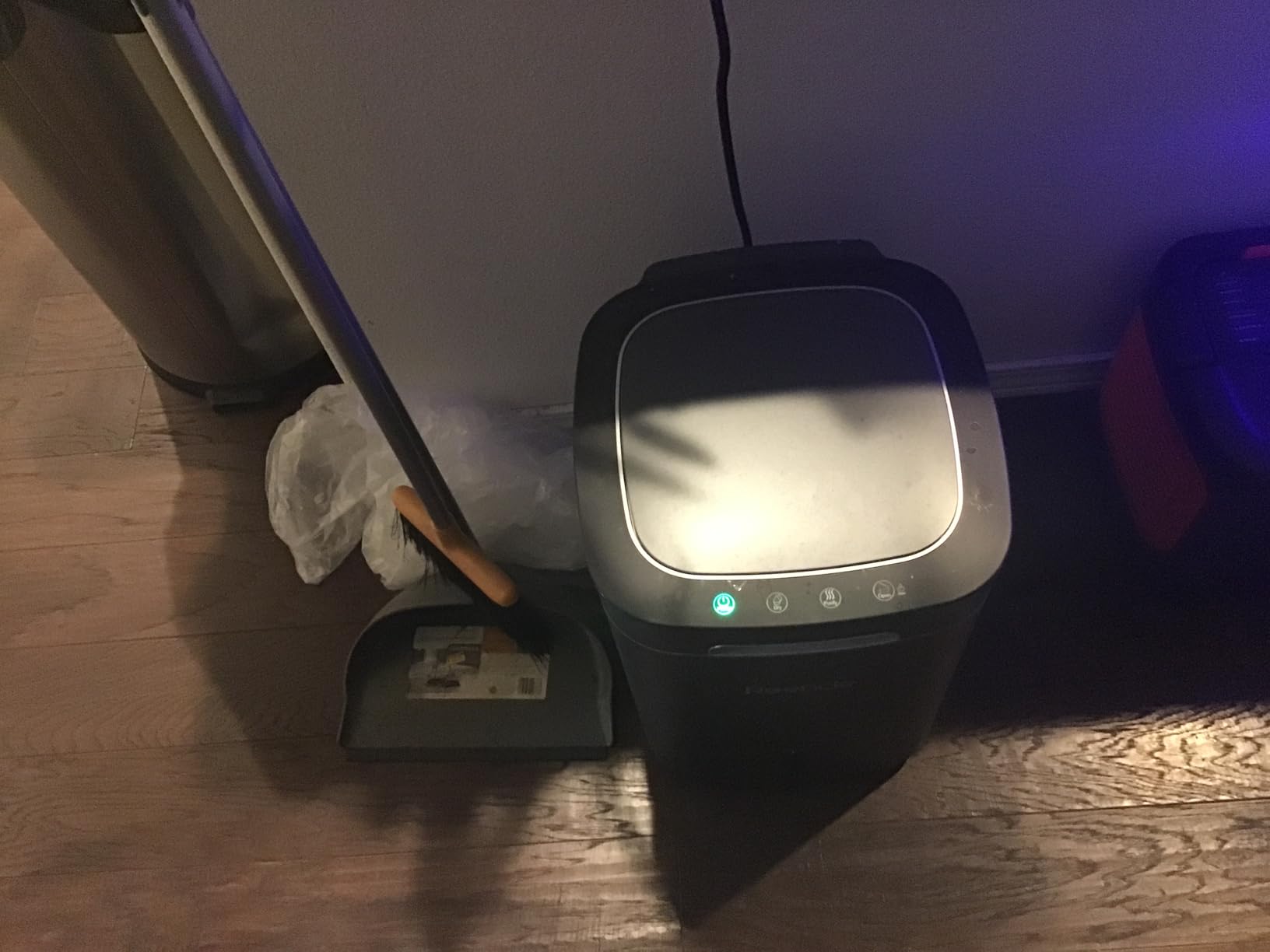
The Reencle Prime represents a different philosophy from most electric composters. Instead of simply dehydrating scraps, it uses patented microbe technology to actually break down food waste through aerobic composting. The output is closer to true compost than what competitors produce, with the beneficial microorganisms your garden needs.
The 14L capacity is the largest in the electric composter category I tested. My family of four generated enough daily scraps to fill it every 2-3 days, which the Reencle processed within 24 hours. The 3-layer filter system kept odors contained even during active decomposition cycles.
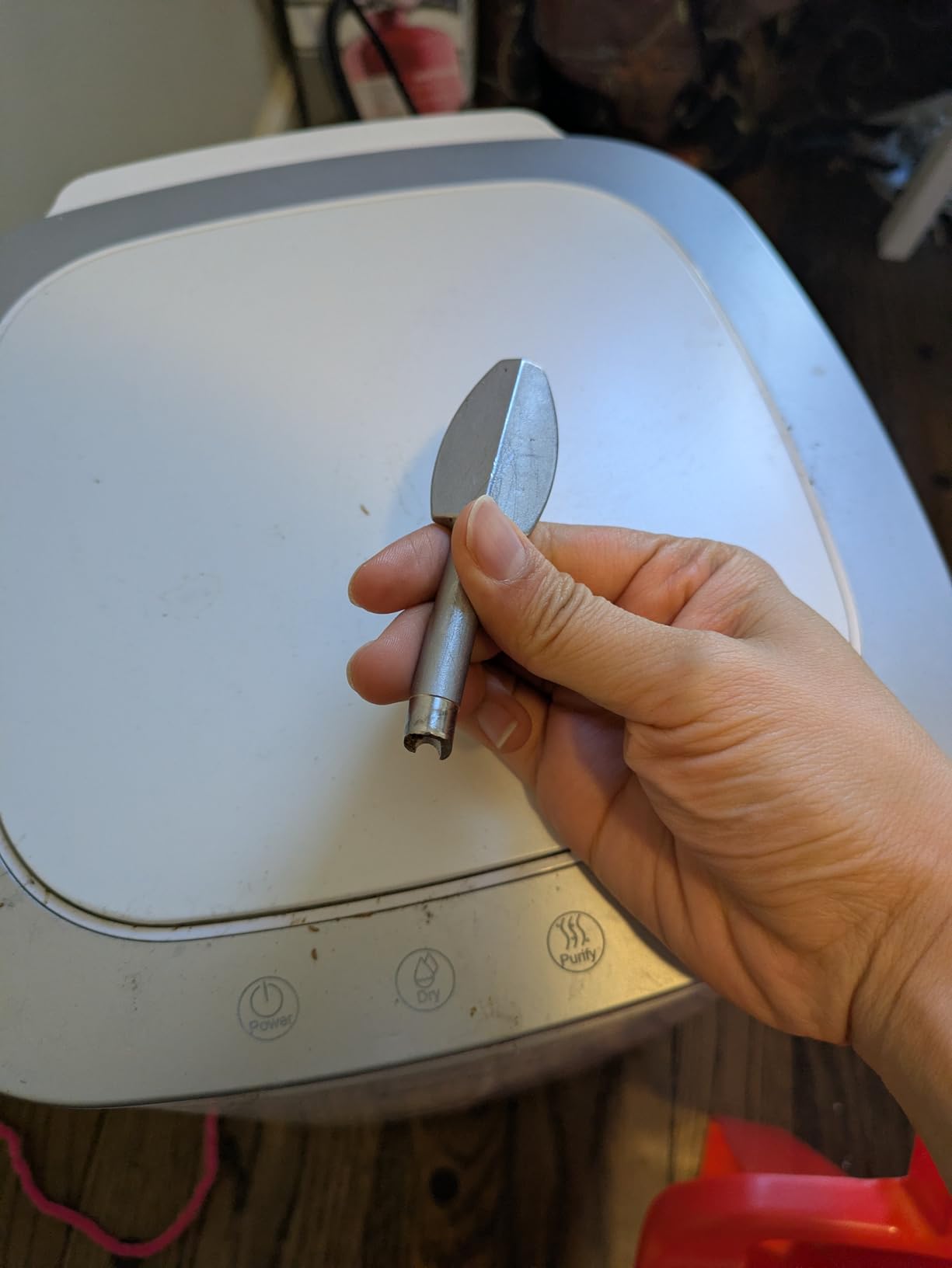
At 28dB, the Reencle is the quietest machine I tested. I ran cycles during dinner parties and the only sound was a gentle hum. The auto-open lid feature detects your hand and opens automatically, a small convenience that becomes essential when your hands are full of scraps.
The price is substantial, and I won’t pretend otherwise. The Reencle costs more than most outdoor composters. Some users report mechanical issues after extended use, and the larger footprint requires dedicated counter or floor space. For committed composters who want real compost output without outdoor bins, the Reencle justifies the investment.
Best for tech-forward households wanting real compost output
If you want actual microbial composting rather than just dehydration, the Reencle delivers. The larger capacity and quiet operation make it practical for daily family use.
Watch out for the premium price
This is a significant investment. The Reencle makes sense if you’ll use it daily and value the real compost output. For occasional use, a basic electric composter is more economical.
Buying Guide: How to Choose the Best Compost Bin for Your Needs
Choosing among the best compost bins comes down to where you live, how much waste you generate, and what kind of composting you want to do. I’ll walk you through the key decision points based on my testing experience and what I learned from the composting community.
Indoor vs Outdoor Composting
Indoor kitchen compost bins handle the daily collection of food scraps. They’re small (1-2 gallons), designed to sit on your counter, and focused on odor control through sealed lids and charcoal filters. You empty them every few days into a larger outdoor system or municipal collection.
Outdoor compost bins process the waste into finished compost. Tumblers speed up decomposition through easy turning, while stationary bins work passively over months. If you have yard space, an outdoor composter is essential for handling yard waste and turning scraps into usable soil amendment.
For apartment dwellers without outdoor access, consider vermicomposting (worm bins) or electric composters. Both work entirely indoors. Vermicomposting produces true compost but requires worm care. Electric composters are more hands-off but produce dehydrated material, not finished compost.
What Can You Compost (And What You Shouldn’t)
Most kitchen scraps compost well: fruit and vegetable peels, coffee grounds and filters, tea bags, eggshells, and stale bread. Yard waste like grass clippings, leaves, and small branches adds valuable carbon to your pile.
Items to avoid in standard compost bins: meat, fish, and dairy (attract pests and create odors), oils and fats (slow decomposition), pet waste (contains pathogens), and diseased plants (can spread disease to your garden). Citrus and onions in large quantities can disrupt decomposition, though small amounts are fine.
Vermicomposting has additional restrictions: worms can’t process citrus, garlic, onions, spicy foods, or large amounts of bread. Bokashi composting handles meat and dairy through fermentation, but requires a separate pre-treatment system.
Odor Control Methods That Actually Work
The two most effective odor control methods I’ve tested are charcoal filters and proper moisture balance. Charcoal filters, like those in the Epica and RED FACTOR bins, absorb odor molecules before they escape the bin. Replace them every 4-6 months for consistent performance.
Moisture balance matters more than most people realize. Compost that’s too wet produces anaerobic conditions and smells like rotting garbage. Compost that’s too dry stops decomposing. Aim for a wrung-out sponge texture. Adding dry brown materials (leaves, cardboard, newspaper) absorbs excess moisture and reduces odors.
Empty your kitchen bin frequently. Even the best-sealed bin develops odor if scraps sit for a week. Every 2-3 days is ideal for most households. Layering fresh scraps over a base of brown material also helps. And never let liquid accumulate in the bottom of your kitchen bin.
Material Comparison: Stainless Steel vs Plastic vs Ceramic
Stainless steel offers the best durability and aesthetics. It doesn’t absorb odors, cleans easily, and looks attractive on the counter. The downside is higher cost and more visible fingerprints. The Epica, RED FACTOR, and simplehuman bins all use stainless steel effectively.
High-quality plastic is lighter, cheaper, and more impact-resistant. Modern BPA-free plastics used in OXO and other premium bins don’t absorb odors like older plastic bins. Plastic also handles temperature extremes better if you keep the bin in a garage or unheated space.
Ceramic compost bins look beautiful and provide natural odor absorption, but they’re heavy, fragile, and harder to clean. I see them more as decorative pieces than practical daily-use bins. Most serious composters skip ceramic for practical reasons.
Capacity and Size Considerations
For kitchen bins, 1-2 gallons suits 1-3 person households. A family of four or more needs 2+ gallons to avoid daily emptying. Consider the footprint, too. Measure your available counter space before buying.
For outdoor tumblers, 37-50 gallons works for most families with moderate yard waste. Larger households or those with significant garden waste benefit from 60+ gallon capacity. Remember that dual chamber systems effectively halve your working capacity since one side must cure.
Worm bins typically handle 4-5 pounds of food waste per week per tray. The VermiHut’s 5-tray system handles a family’s daily scraps once established. Electric composters’ capacity determines how often you empty them, with 4L suiting 1-2 people and 14L handling families.
Lid Design and Functionality
The best kitchen compost bin lids seal completely to block odors and fruit flies. Magnetic seals, gasket seals, and tight-fitting friction lids all work. The stay-open lid feature on the OXO Easy-Clean is the most practical innovation I found for active cooking.
For outdoor bins, secure twist lids (like the Compost Wizard Jr.) prevent pest entry. Sliding doors on tumbler chambers make adding scraps and removing compost easier than lift-off lids. Locking mechanisms on the side of tumblers prevent accidental opening during rotation.
Frequently Asked Questions
What type of bin is best for composting?
The best bin depends on your living situation. For indoor kitchen scraps, a 1-2 gallon stainless steel bin with a charcoal filter like the Epica provides the best odor control. For outdoor composting, a dual-chamber tumbler like the VIVOSUN speeds up decomposition. Apartment dwellers benefit from vermicomposting systems like the VermiHut Plus.
What are 5 items that should not be composted?
Avoid composting meat and fish (attract pests and create odors), dairy products (slow decomposition and attract rodents), oils and fats (coat materials and prevent airflow), pet waste (contains harmful pathogens), and diseased plants (can spread disease to your garden). Citrus and onions in large quantities can also disrupt decomposition.
Should a compost bin be in full sun or shade?
A partially shaded location works best for outdoor compost bins. Full sun speeds decomposition by warming the pile but also dries it out faster, requiring more frequent watering. Full shade keeps the pile too cool for active decomposition in most climates. Aim for 4-6 hours of sun daily with afternoon shade in hot climates.
How do I keep fruit flies out of my compost bin?
Use a bin with a tight-sealing lid, empty it every 2-3 days, and bury fresh scraps under a layer of brown material like dried leaves or newspaper. Charcoal filters in bins like the Epica and RED FACTOR prevent fruit flies from being attracted to odors. Avoid adding overly wet scraps and empty liquid from the bottom of the bin regularly.
How often do I need to empty a kitchen compost bin?
Empty your kitchen compost bin every 2-3 days for best results, especially in warm weather. Small bins (1-1.3 gallons) may need daily emptying for families of four or more. Larger bins (1.75-2 gallons) typically last 3-4 days. Regular emptying prevents odor buildup, fruit fly infestations, and the development of mold in the bin.
Final Verdict: Which Compost Bin Should You Buy?
After four months of testing 12 different compost bins across kitchen counters, backyards, and apartments, three stand out as the best compost bins in 2026 for different needs.
The Epica Stainless Steel Compost Bin is the best overall choice for indoor kitchen use. The replaceable charcoal filter provides unmatched odor control, the stainless steel construction lasts for years, and the dishwasher-safe design makes cleaning effortless. If you’re starting a composting habit, this is the bin that will keep you composting.
The VIVOSUN Outdoor Tumbling Composter offers the best value for outdoor composting. The dual chamber design and 360-degree rotation match what premium tumblers offer at a fraction of the price. The 43-gallon capacity handles most household needs.
The VermiHut Plus 5-Tray Worm Compost Bin is the best choice for apartment dwellers and anyone wanting year-round composting. The compact footprint, integrated liquid collection, and effective odor control make vermicomposting accessible even in small spaces.
Composting works when the bin fits your life. The best compost bin is the one you’ll actually use daily. Start with a quality kitchen bin like the Epica, add an outdoor tumbler if you have space, and consider expanding to worms or electric composting once the habit sticks. Your garden, your wallet, and the planet will thank you.