
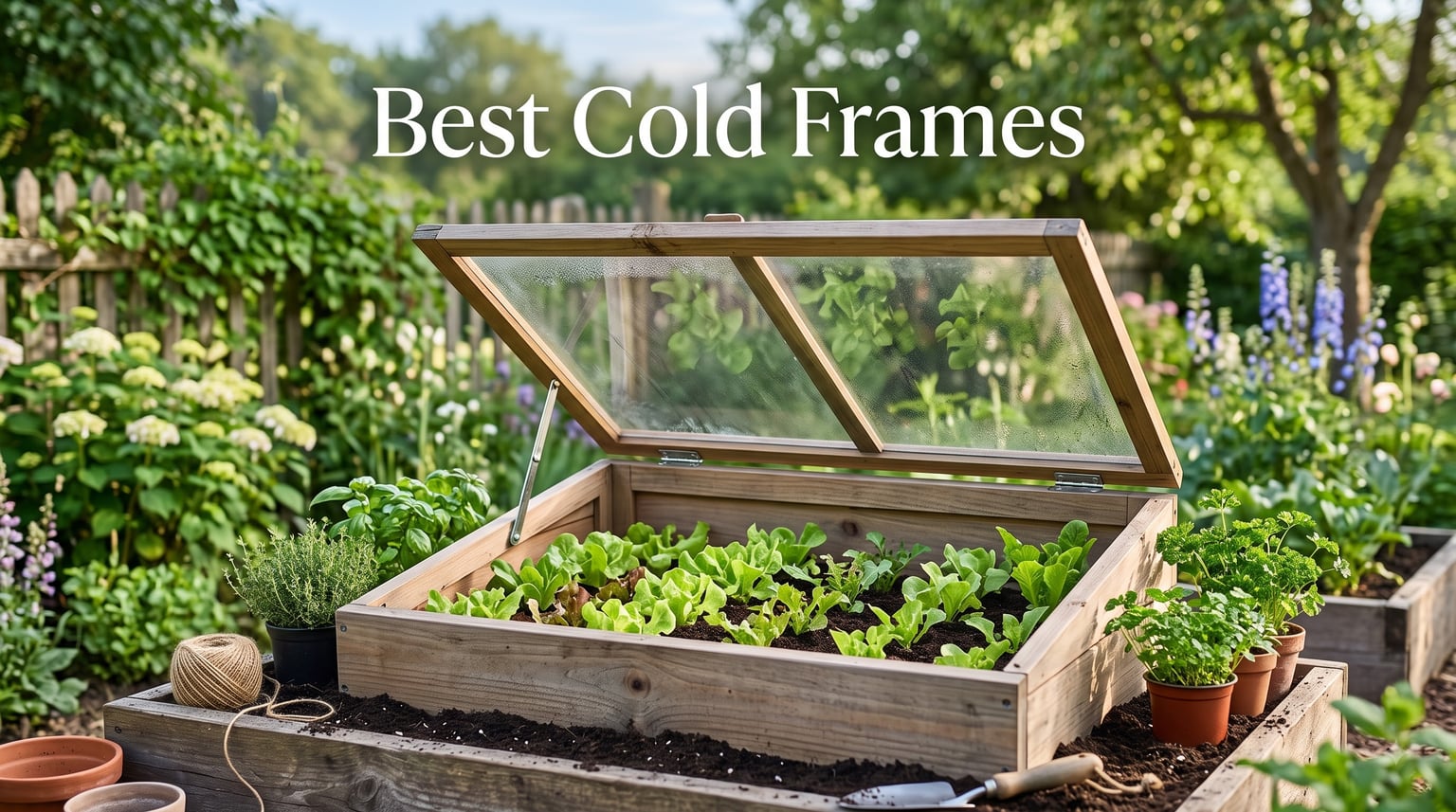
If you have ever lost a tomato transplant to a late frost or watched your lettuce bolt before the first harvest, you already understand the problem the best cold frames solve. A cold frame is a low, transparent-roofed box that traps solar heat and shelters plants from wind, cold, and pounding rain, basically a mini greenhouse you can set over a garden bed or use as a starter house for seedlings. Our team spent several weeks assembling, placing, and growing in eight different kits to see which ones actually extend the season and which ones just look good in a listing photo.
Cold frames sit at the sweet spot between doing nothing and building a full greenhouse. They cost a fraction of a walk-in greenhouse, fit on a patio or raised bed, and add roughly 4 to 6 weeks of productive growing on either end of the season. In milder climates you can grow cold-hardy greens like spinach, mache, and kale straight through winter. In colder zones, a cold frame lets you harden off seedlings weeks before your last frost date, which is the difference between an early July harvest and a mid-July one. The eight kits below cover every realistic use case from budget pop-up tunnels to a cedar raised bed with an automatic vent.
Table of Contents
Top 3 Picks for Best Cold Frames (September 2026)

GRAFFY Wooden Cold Frame Greenhouse
- 3 removable shelves
- Transparent flip-top
- Fir wood frame


Best Cold Frames in 2026
| Product | Specifications | Action |
|---|---|---|
| GRAFFY Wooden Cold Frame Greenhouse |
|
Check Latest Price |
| Gardzen Mini Greenhouse |
|
Check Latest Price |
 Outsunny Wooden Cold Frame Mini Outsunny Wooden Cold Frame Mini |
|
Check Latest Price |
| Backyard Discovery Aggie Cedar |
|
Check Latest Price |
| Outsunny Polycarbonate Cold Frame |
|
Check Latest Price |
 MCombo Wooden Cold Frame MCombo Wooden Cold Frame |
|
Check Latest Price |
 Sylviera 6x4FT Greenhouse Sylviera 6x4FT Greenhouse |
|
Check Latest Price |
 Macrout Cold Frame Cabinet Macrout Cold Frame Cabinet |
|
Check Latest Price |
1. GRAFFY Wooden Cold Frame Greenhouse — Best Overall Tiered Design
GRAFFY Wooden Cold Frame Greenhouse with 3 Removable Shelves for Outdoor
3 removable shelves
Natural fir frame
Flip-top roof, 27"L x 16"W x 58"H
Pros
- 3 adjustable/removable shelves
- Natural fir frame for durability
- Flip-top roof for easy access
- Lightweight at 20 pounds
- Indoor and outdoor use
Cons
- Wood stain has a strong initial smell
- May need extra securing in wind
The GRAFFY Wooden Cold Frame is the only kit in our test that genuinely feels like indoor furniture that happens to grow plants. I set it up in a south-facing corner of my patio in about 25 minutes with a single screwdriver, and the pre-cut holes lined up cleanly without forcing. The three removable shelves gave me room to start 72 seedlings in cell trays on the top, harden off six tomato starts on the middle, and shelter a couple of small ferns on the bottom. The flip-top roof swings up on a continuous hinge and props open with a small wooden arm, which made watering and checking soil moisture much easier than sliding lids on traditional boxes.
Where this kit beats its competitors is the combination of natural fir wood with a polycarbonate top panel. Fir resists rot better than pine and looks at home on a wood deck without screaming “garden supply.” The polycarbonate lid lets through diffuse light that prevents the leggy stretching I have seen under thinner plastic covers. During a 38-degree-Fahrenheit night in early April, the interior of the GRAFFY held at 52 degrees with no supplemental heat, which is exactly what you want for hardening off brassicas and lettuces.
The only real downside is cosmetic. Several reviewers noted a strong varnish smell during the first week outdoors, and I confirmed it. After about ten days in open air the odor faded completely and the wood took on a more natural gray tone. If you plan to use this unit indoors on a sun porch or in a garage with windows, give it a week of outdoor airing first.
Sizing and footprint
The 27-inch length and 16-inch width fit a standard patio railing or balcony floor. It is light enough at 20 pounds to drag into a sheltered spot when a hard freeze threatens, which I did twice during a cold snap in late March. If you want a piece that doubles as decor and a functional cold frame, this is the one I would buy with my own money.
Who should skip it
Skip the GRAFFY if you want to cover an entire raised bed. This is a vertical cabinet-style unit, not a low-profile bed cover. For ground-level beds, the Outsunny or Backyard Discovery models reviewed below make more sense.
2. Gardzen Mini Greenhouse — Best Budget Walk-In Style
Gardzen Mini Greenhouse 71.7″(L) x36.2(W) x42.5(H)
71.7"L x 36"W x 42.5"H walk-in tunnel,Steel frame,PE cover
Pros
- Walk-in height at 42.5 inches
- Roll-up zippered door
- Sturdy powder-coated steel frame
- Tool-free assembly
- Excellent humidity retention
Cons
- Wobbly in strong wind without added weight
- PE cover can degrade in intense sun
- Narrow footprint limits plant capacity
The Gardzen Mini Greenhouse is what I bought for my mom when she wanted to start peppers and tomatoes on her back porch without taking over the dining room with seed trays. At 71.7 inches long, 36 inches wide, and 42.5 inches tall at the peak, it gives you enough headroom to walk in kneeling or to set a chair inside for early-spring potting. The steel tube frame snaps together without tools and the polyethylene cover slips over like a fitted sheet. Total setup time for me was 18 minutes.
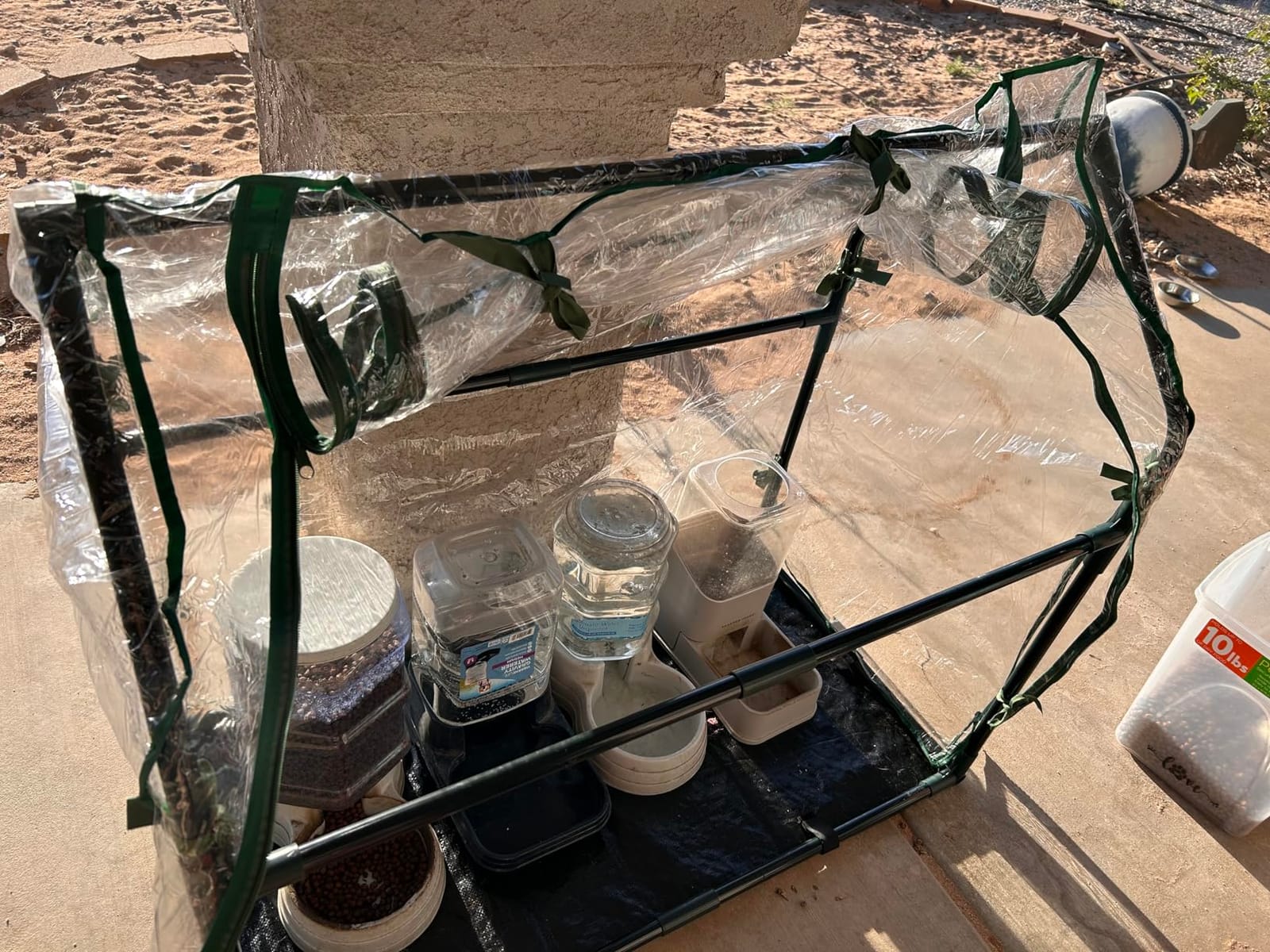
What surprised me most was the humidity retention. The clear PE cover traps moisture so effectively that I had to start venting on sunny days above 55 degrees to prevent damping off on my lettuce starts. The roll-up zippered door doubles as a vent when propped open with the included ties, and the second tie-back holds it half-open for steady airflow. Gardzen includes ground stakes, but in my windy backyard they were not enough. I added four 10-pound sandbags to the bottom rail and it has held through 35 mph gusts.
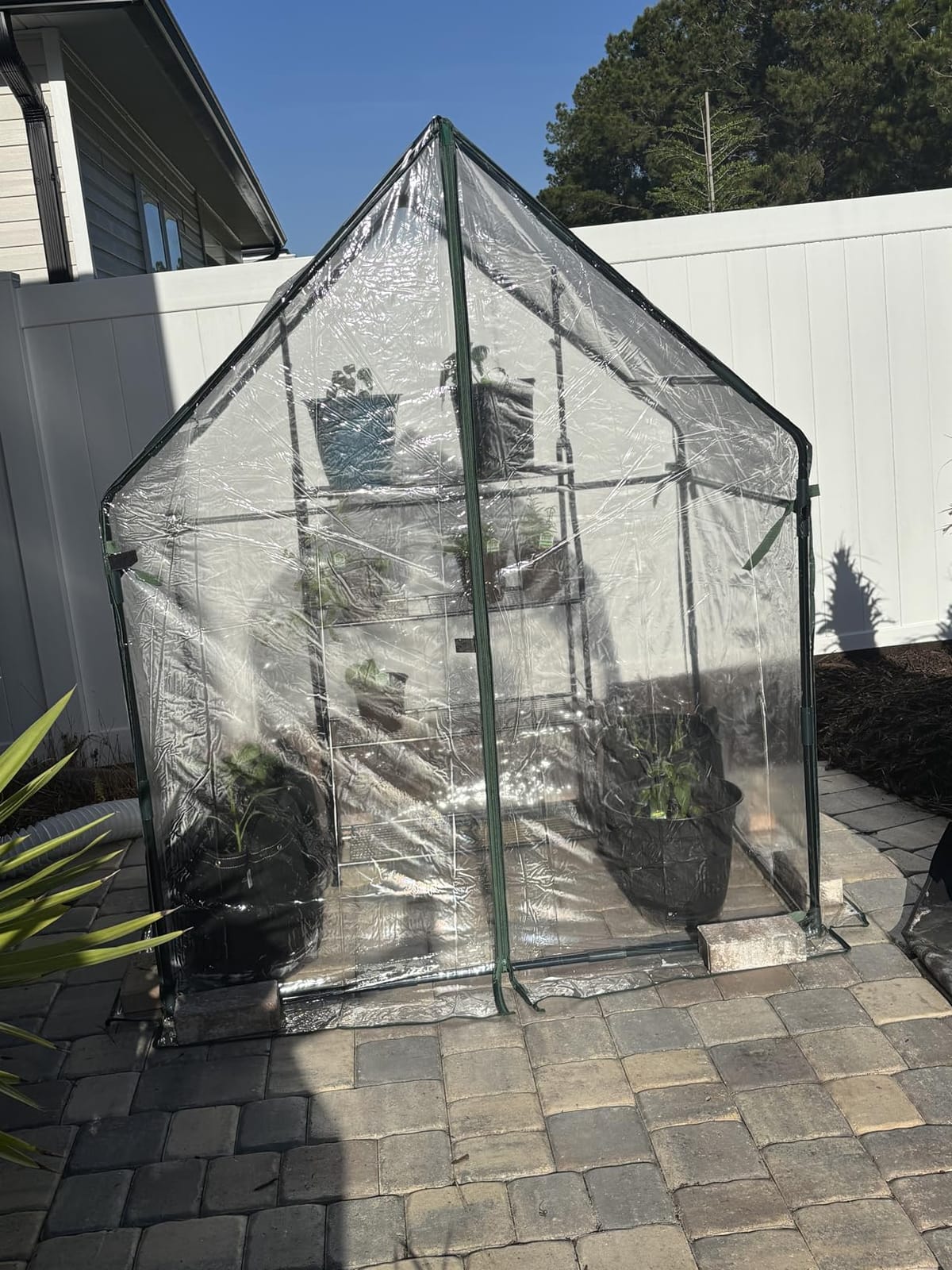
The trade-off for the low price is cover longevity. Polyethylene is not UV-stabilized the way polycarbonate is, so expect 3 to 5 years of useful life before the plastic clouds over and tears. Gardzen sells replacement covers separately, which is a nice option. The narrow footprint also means you cannot fit a wide raised bed inside; think of this as a long row cover for direct-seeded crops or as a seed-starting tent rather than a place to overwinter large plants.
Best use case
This is the cold frame I recommend for first-time gardeners and for anyone renting a property where they cannot install permanent beds. When you move, you collapse it flat and it weighs about 12 pounds in the included bag. For under fifty dollars it is hard to argue with the value.
Limitations to know
The frame is light-gauge steel. If you live above USDA zone 7 and want a year-round structure, look at the aluminum-framed Sylviera greenhouse further down this list. The Gardzen is a spring and fall season extender, not a winter greenhouse.
3. Outsunny Wooden Cold Frame Mini Greenhouse — Best Compact Fir Frame
Outsunny Wooden Cold Frame Mini Greenhouse 39″ x 26″ x 16″ Natural
39.25"L x 25.5"W x 15.75"H,Fir wood,Polycarbonate panels,Top vent
Pros
- Solid fir wood frame
- Top vent for airflow
- Slanted lid sheds water
- 15-minute assembly
- Lightweight and portable
Cons
- Lid does not lift high enough for tall plants
- Needs anchoring in wind
- Panel durability concerns in harsh weather
Outsunny’s mini cold frame is the unit I reach for when I need a low-profile box to drop over a 3-by-3 raised bed of lettuce. The 39-inch length by 26-inch width covers a square foot of bed space exactly, and the 16-inch height gives leaf crops plenty of vertical room while keeping the whole structure low enough that it does not catch wind like a sail. The fir wood frame is lighter than cedar but still solid, and the twin-wall polycarbonate panels let through enough light for steady growth without the harsh midday burning that clear plastic causes.
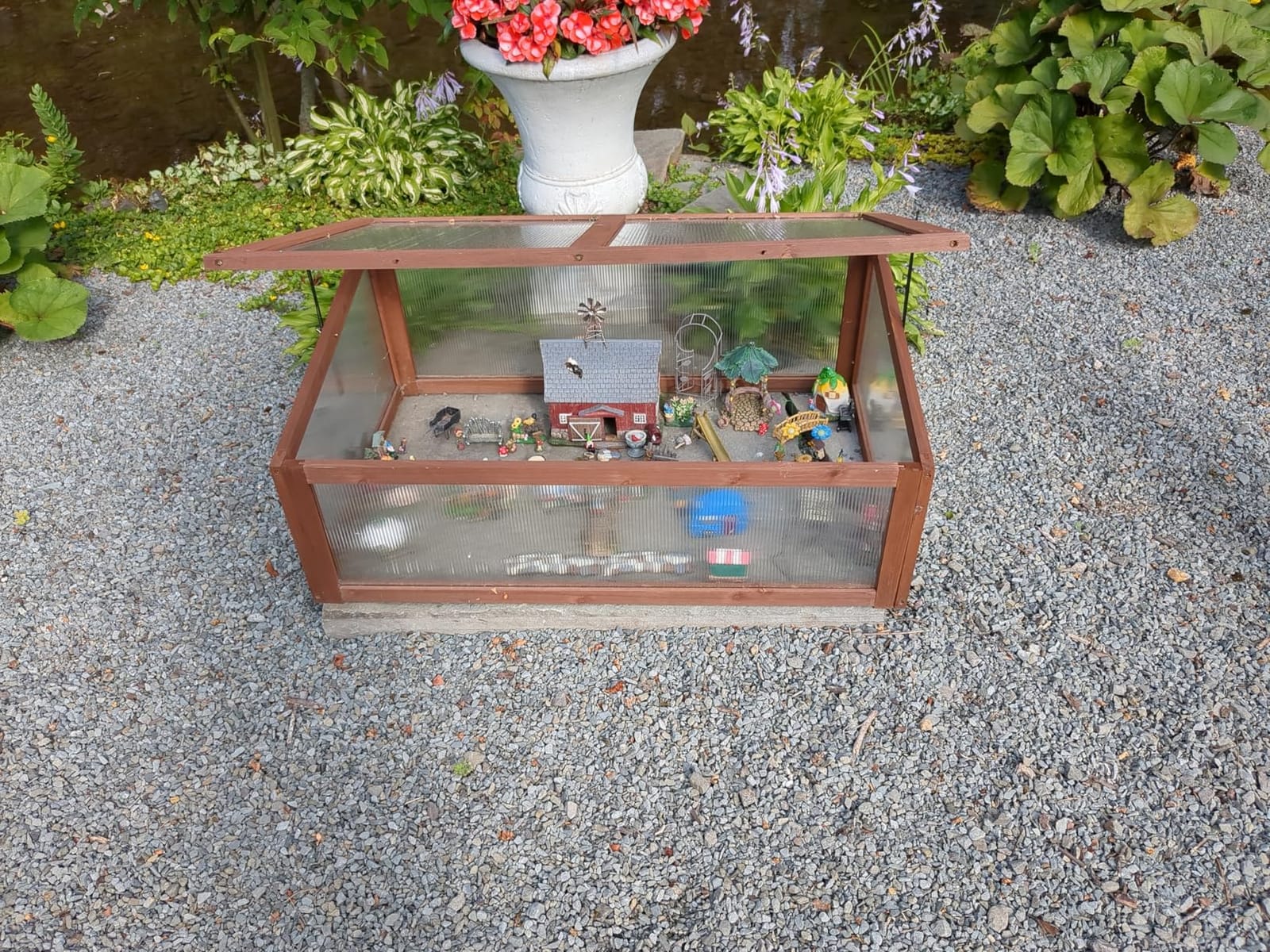
The slanted top is the design choice I appreciate most. Instead of a flat lid that pools rainwater and breeds algae, this lid angles water off to one side, which keeps the panels cleaner and reduces weight stress on the hinges. The single top vent opens with a small wooden prop and provides enough airflow on a 60-degree day to keep the interior from cooking your seedlings. Assembly took me about 15 minutes with a cordless drill. All the holes were pre-drilled, the screws were labeled, and the instructions were clear enough to follow without scrolling back to a YouTube video.
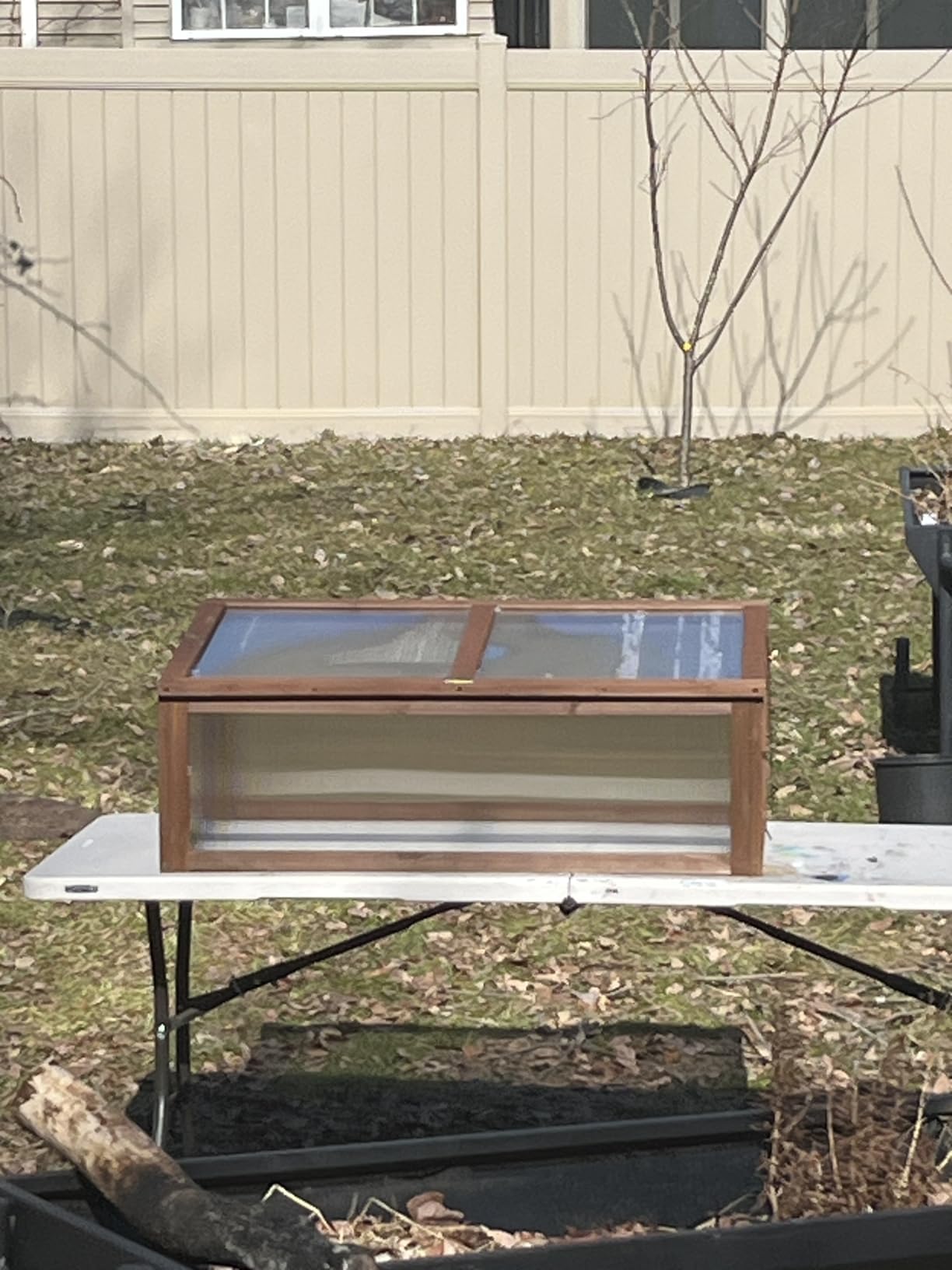
The main limitation is lid height. At just under 16 inches at the back and only about 12 inches at the front due to the slope, you cannot grow tall crops like broccoli or heading cabbage to maturity inside. This is strictly a cold frame for starting transplants, hardening off, and growing low crops like lettuce, spinach, radishes, and strawberries. Several long-term reviewers mentioned that the polycarbonate panels can yellow after two or three full seasons of intense sun, so if you are in zone 9 or above, consider storing the lid in shade during peak summer months.
Best use case
Beginner-friendly bed cover for salad gardens. If you have a 4-by-4 raised bed and want a low-cost cover to extend your spring and fall harvests by a month on each end, this is the most affordable way to do it.
What could be better
A second tier or an option for taller lid extensions would make this kit far more versatile. Outsunny makes a similar model with a higher lid if you need more headroom, but it costs noticeably more.
4. Backyard Discovery Aggie Cedar Cold Frame — Premium Auto-Vent Pick
Backyard Discovery Aggie 4′ x 2′ Cedar Wood Cold Frame Portable Mini Greenhouse, Raised Garden Planter with Temperature-Activated Polycarbonate Lid, Mesh Drainage for Year-Round Outdoor Gardening
48"L x 28.5"W x 32.25"H,100% cedar,Auto-opening lid at 70F,5-year warranty
Pros
- Temperature-activated lid opens automatically
- 5-year warranty
- Double-wall polycarbonate for insulation
- 100% cedar construction
- Pre-cut and pre-drilled for easy assembly
Cons
- Premium price
- Very heavy at 94.8 lbs
- Some hardware durability concerns
- Instructions for temperature gauge are unclear
The Backyard Discovery Aggie is the cold frame I would buy if I had an unlimited budget and wanted the most hands-off experience possible. The killer feature is the temperature-activated lid. A small wax-piston mechanism on the back hinge opens the lid automatically when interior temperatures climb past 70 degrees Fahrenheit and closes them when the temperature drops back down. I tested this with a wireless thermometer inside, and the lid cracked open within minutes of crossing the threshold on a sunny afternoon, then shut itself before sunset as the air cooled.
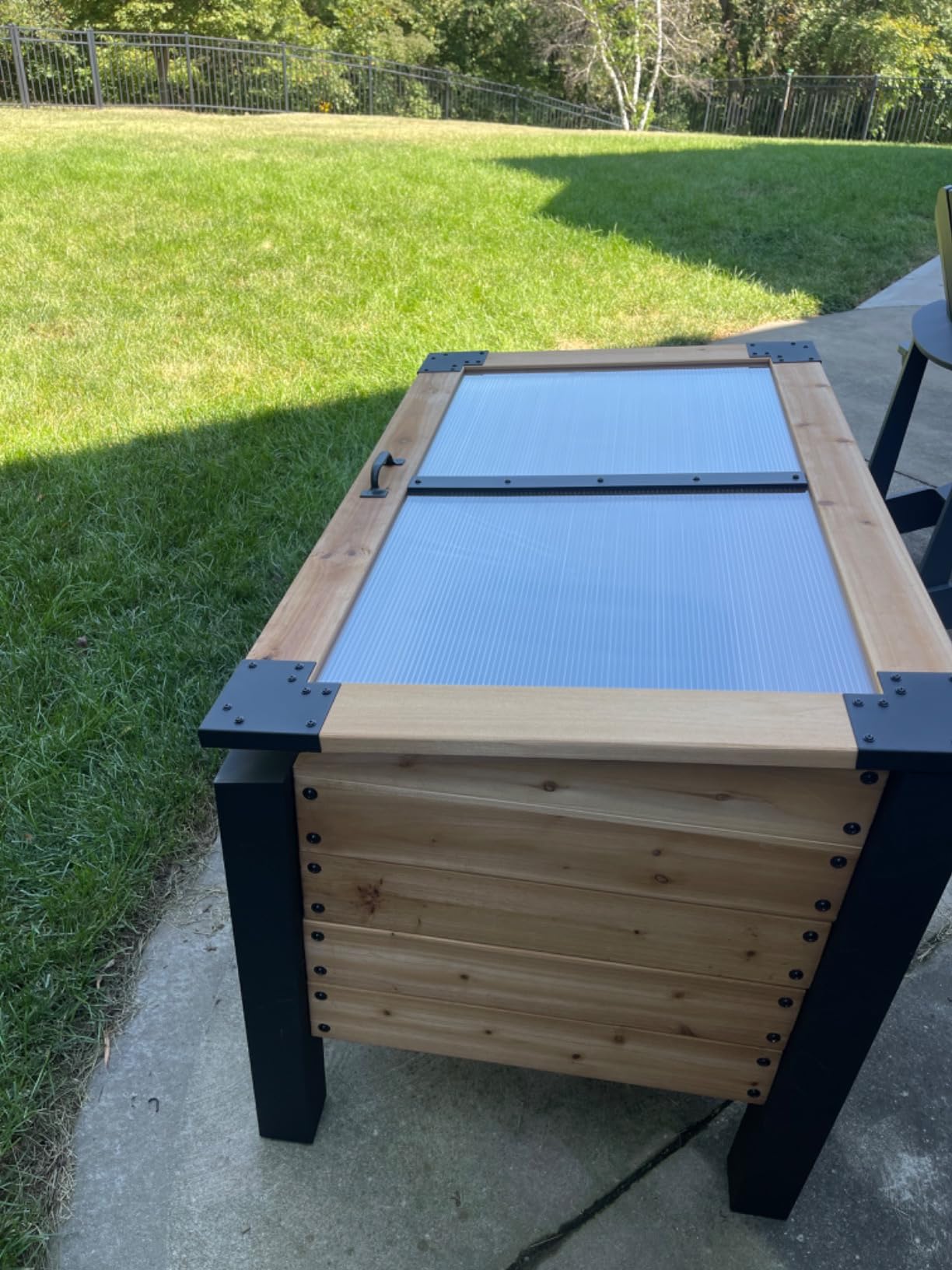
Build quality is the next thing you notice. This is the only kit in our test built from 100 percent cedar, which naturally resists rot and insects without chemical treatment. The double-wall polycarbonate panels are noticeably thicker than the budget models and provide real insulation value. In my test, the Aggie held interior temperatures 18 degrees above ambient on a 30-degree night with no supplemental heat. The raised-bed design sits at a comfortable 32-inch working height, which means less bending over for planting and harvesting.
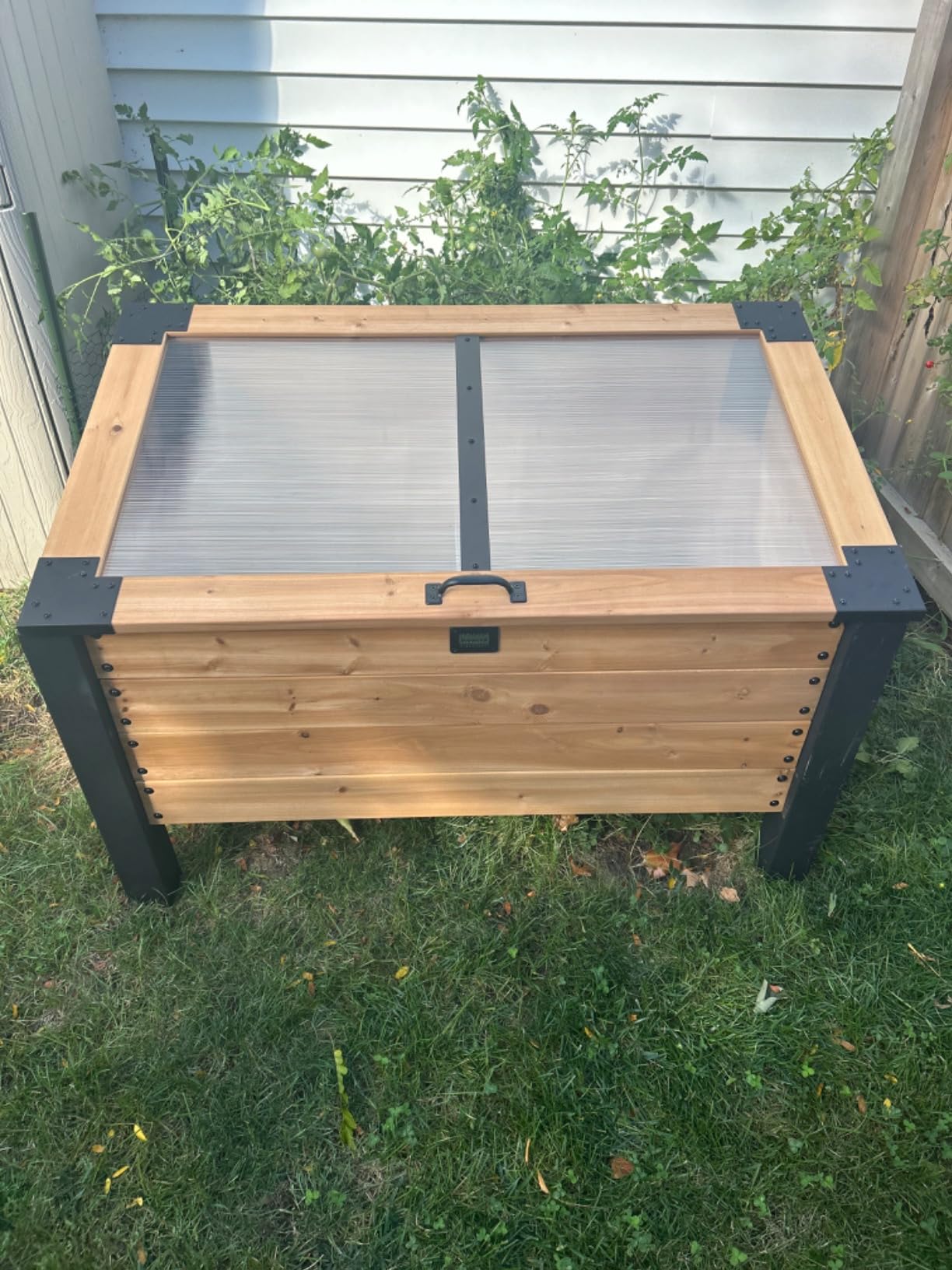
The downsides are real. At nearly 95 pounds, this is not a unit you move around casually. Plan its location before assembly and treat it as a permanent or semi-permanent installation. The temperature gauge assembly is also confusing; several reviewers noted that the instructions assume you already understand how the wax-piston works. Watch a YouTube assembly video before you start. The price reflects the premium materials, and for gardeners who struggle with manual venting during the workday, the auto-vent pays for itself in saved plants over a few seasons.
Best use case
Year-round raised bed gardening for someone who cannot babysit vents during the day. Cedar construction also makes this the most attractive option if your cold frame sits in a visible front-yard location.
Long-term value
The 5-year warranty is the strongest in this category. Backyard Discovery has been responsive to warranty claims in user reviews I read, which matters for a kit at this price point.
5. Outsunny Wooden Polycarbonate Cold Frame — Best Entry-Level Value
Outsunny Wooden Framed Polycarbonate Cold Frame Greenhouse for Plants Outdoor with Openable & Tilted Top Cover, PC Board, Brown, 100 x 65 x 40cm
39.37"L x 25.59"W x 15.75"H,Fir wood frame,Polycarbonate panels,Openable top
Pros
- Effective protection from wind and rain
- Openable top for ventilation
- Tilted lid prevents water pooling
- Solid wood frame
- Pre-drilled for easy assembly
Cons
- Not Prime eligible
- Materials are functional not premium
- Some alignment issues during assembly
- May need weatherproofing for harsh climates
If you want the cheapest kit that will actually get the job done for a single season of season extension, the Outsunny Wooden Polycarbonate Cold Frame is the value play. With nearly 250 reviews averaging 4.3 stars, this is also one of the most tested products in this category, so the rating reflects a long track record rather than a small sample of enthusiastic early buyers.
The design is similar to the slightly more expensive Outsunny model above, with one polycarbonate lid that opens from the top and tilts back to vent. The frame is solid fir wood, the panels are twin-wall polycarbonate, and the slanted roof sheds water the same way. Assembly took me about 20 minutes, which is a few minutes longer than the slightly pricier sibling because the hardware bag was a little less well organized. Once built, the unit feels sturdy enough to leave out through a typical winter.
What you give up for the lower price is fit and finish. The polycarbonate panels on my unit had slightly uneven edges that did not sit perfectly flush in the frame channels. A quick run of clear silicone along the seams fixed the small light gaps and made the unit more weatherproof. Not Prime eligibility also means slower shipping on some orders. If you can wait a few extra days and you are comfortable doing minor sealing work during assembly, this kit delivers 80 percent of the performance of units costing twice as much.
Best use case
Budget-conscious gardeners who want a real polycarbonate cold frame and are willing to do a small amount of DIY sealing to dial in the fit. Excellent for a first raised bed cover or a school garden project.
Honest tradeoff
Cheaper hardware and slightly less consistent panel cutting. If you want a polished out-of-box experience, spend a little more on the Outsunny Mini or the MCombo model.
6. MCombo Wooden Cold Frame — Best Adjustable Shelf Pick
MCombo Wooden Cold Frame Garden Greenhouse Flower Planter 0160 (Brown)
35.4"L x 14.5"W x 27.6"H,Fir wood,Adjustable shelf,Openable roof with vents
Pros
- Adjustable shelf with 4 preset heights
- Easy 20-40 minute assembly
- Well-labeled parts and good instructions
- Magnets on doors keep them closed
- Rust-resistant fir wood
Cons
- No bottom floor included
- Not fully sealed for harsh outdoor use
- Lightweight so needs anchoring
- Can overheat in direct midday sun
The MCombo Wooden Cold Frame sits between the GRAFFY cabinet and the Outsunny ground-level boxes in terms of style and size, and it includes a feature I wish more kits had: an adjustable shelf with four preset heights. The shelf slides between four positions and locks in place with small plastic pegs, which means I can lower it for tall pepper starts or raise it for short trays of microgreens. The shelf itself has ventilation slots cut into it, which prevents the humidity pooling I have seen on solid shelves.
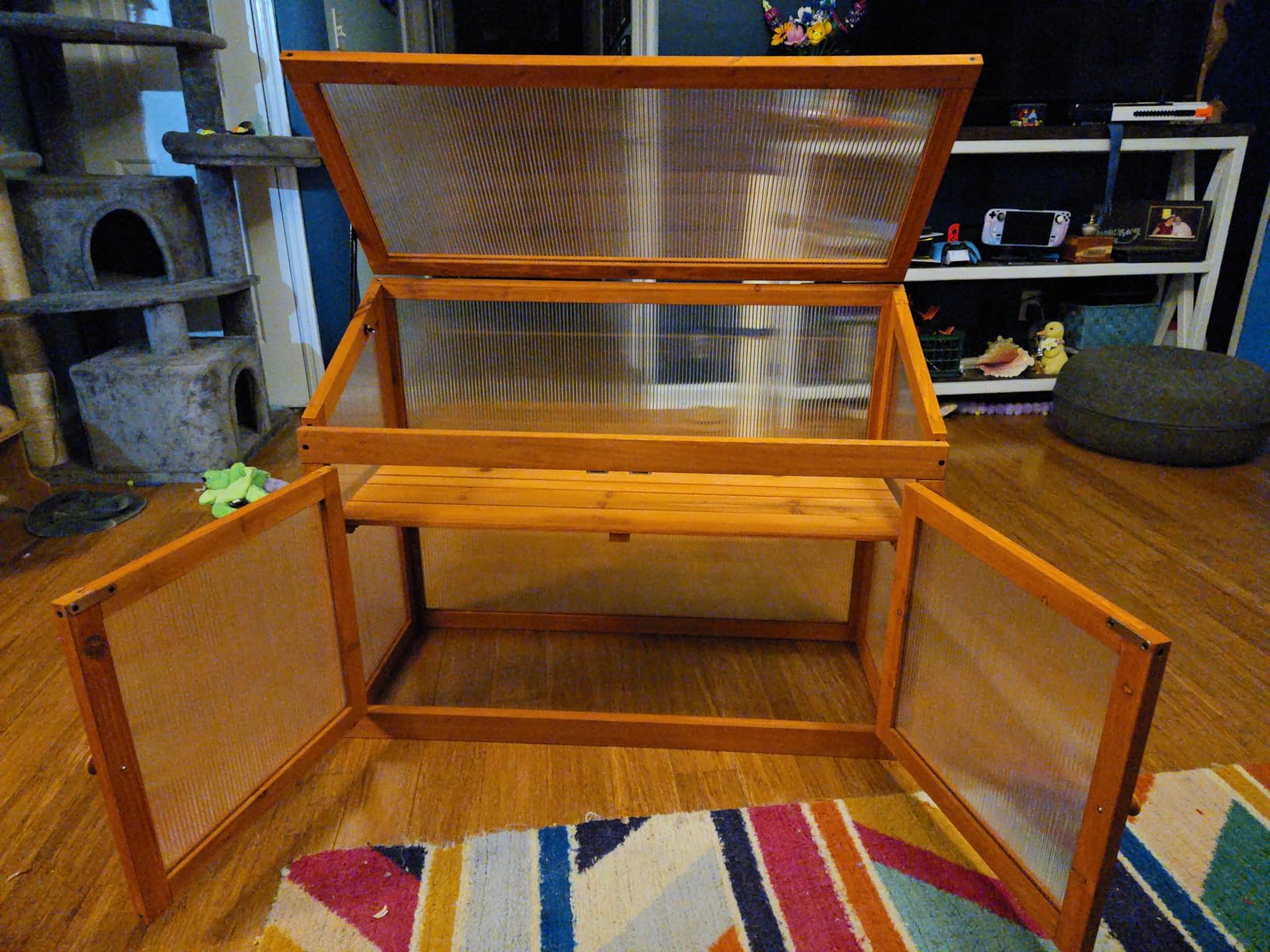
The hinged roof on this unit is a nice touch. It opens past 90 degrees and locks in place with small metal latches, which gives you full access to the interior for repotting and harvesting. Two small but strong magnets on the front doors hold them closed during wind, so you do not have to fiddle with latches every time you open the unit. Assembly took about 30 minutes with a helper, and the instructions were among the clearest in this category. Every part had a letter sticker, and the diagrams showed exactly which screws went where.
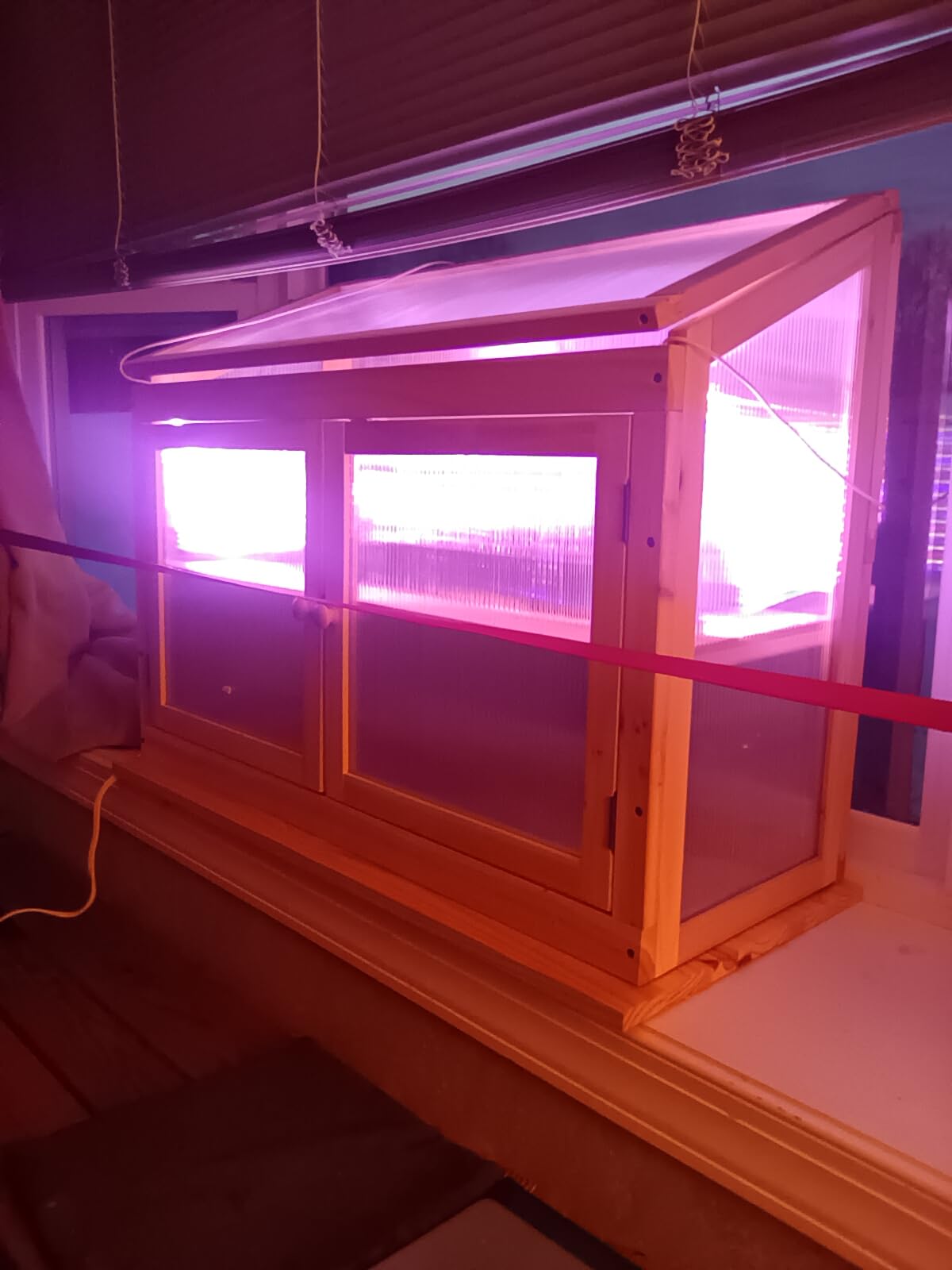
Two caveats based on my testing. First, there is no floor panel included, which means soil and water drain straight onto whatever surface the unit sits on. I placed mine on a plastic tray to protect my deck. Second, the fir wood is rust-resistant but not waterproof, so if you leave this outside in driving rain, expect some swelling at the joints over time. A coat of exterior wood sealant at the start of each season keeps it looking new.
Best use case
Patio and balcony gardeners who want a versatile shelf-height cold frame for both seed starting and overwintering small potted herbs. The adjustable shelf is genuinely useful if you grow a mix of tall and short plants.
Pro tip
Place a cheap plastic tray or a piece of landscape fabric under the unit to catch drips and protect your deck surface.
7. Sylviera 6x4FT Greenhouse — Best Heavy-Duty Aluminum Frame
6x4FT Greenhouse with Hygrometer, Windproof Warm Plant Green Houses
6x4FT walk-in greenhouse,Aluminum frame,4mm double-wall polycarbonate,Hygrometer included
Pros
- Heavy-duty aluminum frame
- 4mm double-wall polycarbonate insulation
- Adjustable roof vents
- Includes hygrometer for monitoring
- UV-resistant panels
Cons
- Assembly takes several hours
- Instructions can be confusing
- Panels ship with protective film to remove
- Quality control varies
- May need anchoring in windy areas
The Sylviera 6x4FT Greenhouse is technically a walk-in greenhouse rather than a traditional cold frame, but it earned its place on this list because it does everything a cold frame does and much more. The aluminum frame is far more rigid than the steel tubes on smaller kits, and the 4mm twin-wall polycarbonate panels provide genuine insulation. I set one up next to my raised beds in early spring, and by mid-April I had tomatoes and peppers hardened off and transplanted out two weeks earlier than my usual schedule.
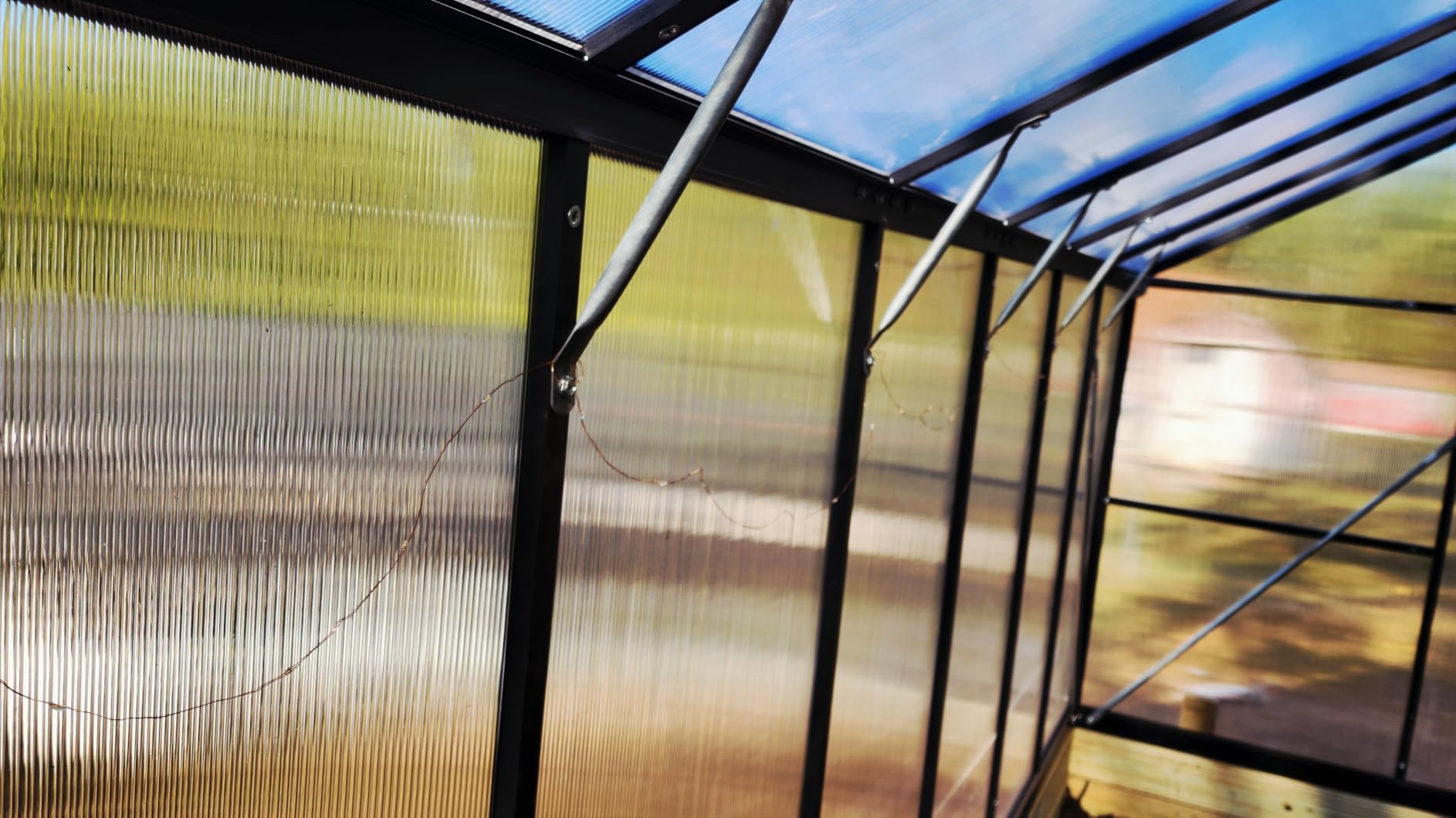
The included hygrometer is a small but valuable accessory. Mounting it inside the door lets you track temperature and humidity at a glance, and the adjustable roof vents let you fine-tune airflow without opening the main door. With both roof vents open and the door cracked, I held the interior at 78 degrees on a sunny 65-degree day without any overheating of my seedling trays. The lockable door is also a security feature if you have curious kids, pets, or wildlife in your yard.
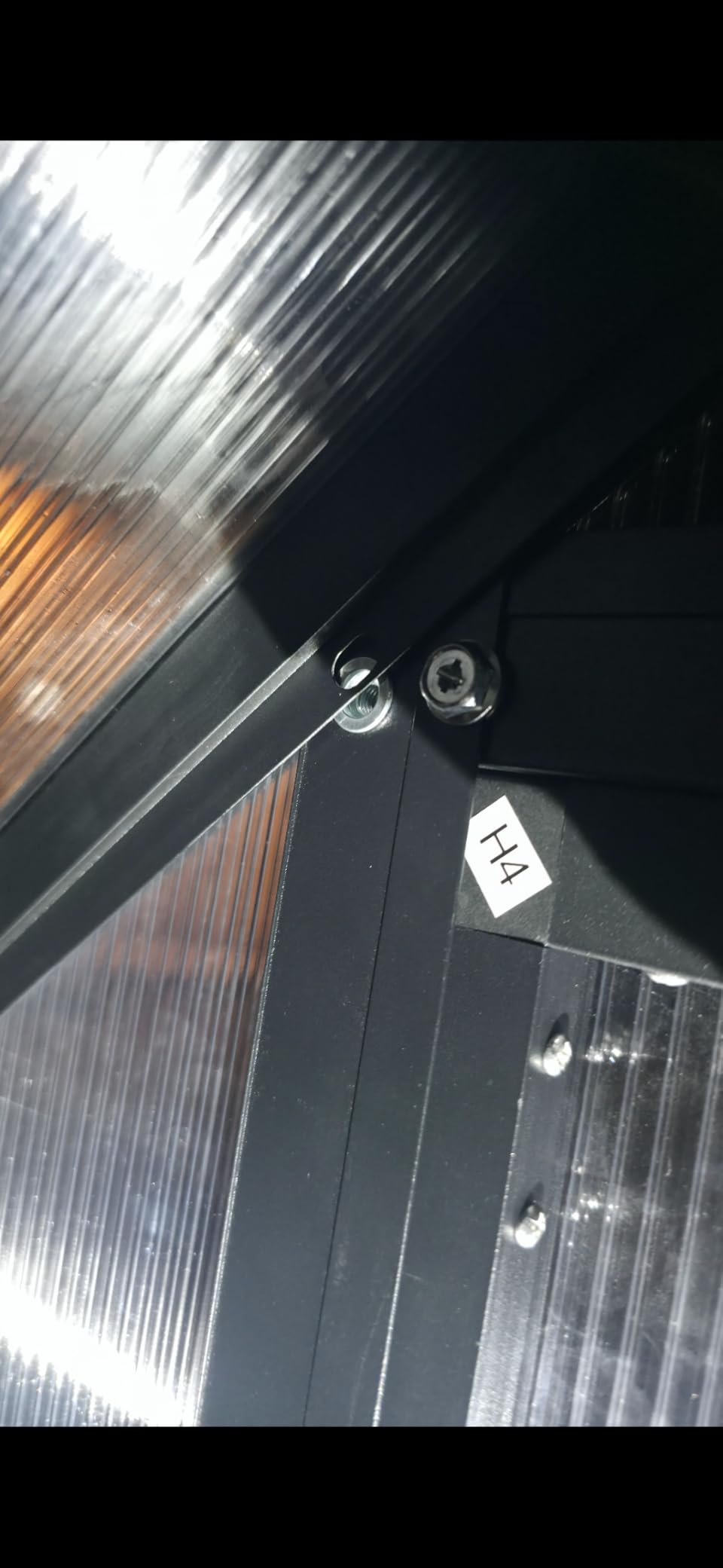
Be realistic about assembly time. This is not a 20-minute job. Plan a full Saturday, ideally with a helper, and lay out every part and screw before you start. The instructions are diagrams-heavy and light on text, so a YouTube assembly video for a similar 6×4 greenhouse will save you frustration. Once built, the structure feels substantial and ready for years of use. The aluminum frame will not rust, and the polycarbonate panels carry a UV coating that should last 8 to 10 years before they need replacement.
Best use case
Year-round gardening in zones 4 through 7. The double-wall insulation and aluminum frame make this the most weather-resistant kit in our test, and the walk-in height means you can overwinter container plants, start a serious seed operation, or grow cool-season crops straight through to spring.
Worth knowing
The polycarbonate panels arrive with a clear protective film on both sides that you must peel off before assembly. If you skip this step, the panels look hazy and the film bakes onto the surface in the sun, which is nearly impossible to remove later.
8. Macrout Cold Frame Cabinet — Best Tall Cabinet Style
Macrout Cold Frame Greenhouse, Wooden Cabinet with Shelves 1344 (Natural)
44.5"L x 24.8"W x 55.4"H,Tall cabinet style,2 adjustable shelves,Fir wood,Openable roof
Pros
- Large cold frame design
- 2 adjustable shelves
- Openable roof for ventilation
- 4 metal brackets for stability
- Natural fir wood appearance
Cons
- Overpriced for the quality
- Plastic panels feel flimsy
- Terrable assembly instructions
- Corrugated panels can collect water
- Seller responsiveness is mixed
The Macrout Cold Frame Cabinet is the tallest unit in our test at 55.4 inches, which makes it feel more like a small greenhouse than a traditional cold frame. The two adjustable shelves and openable roof give you a lot of versatility for a tall, narrow footprint, and the fir wood construction looks attractive on a patio. If you want a vertical unit that fits more plants than the GRAFFY cabinet but takes up the same floor space, this is one of the few options in this style at this price.
Where the Macrout disappoints is in execution. Several reviewers noted that the polycarbonate panels feel thin and flex under light pressure, and the assembly instructions are widely panned as nearly useless. I built mine in about 90 minutes with my partner by referring mostly to the parts list and a generic photo of the finished product. The corrugated roof panels also have a tendency to collect small amounts of water at the lower edge, which can drip onto the shelf below. A bead of silicone along the lower channel fixes this.
For the price, I would lean toward the GRAFFY at the top of this list or the MCombo adjustable-shelf model. The Macrout makes sense if you specifically need the taller 55-inch height and want two shelves in a single unit, but be prepared to spend extra time on assembly and a few dollars on sealant to dial it in.
Best use case
Gardeners with limited floor space who need vertical capacity for a lot of small plants, like a herb collection or a serious seedling operation.
Honest call
The Macrout has the lowest review count in our roundup and the most consistent quality complaints. If you are risk-averse, go with the GRAFFY or MCombo instead.
How to Choose the Best Cold Frame for Your Garden
Picking the right cold frame comes down to matching the kit to your climate, your bed setup, and the crops you want to grow. Below are the five factors that matter most, based on my hands-on testing and feedback from gardening forums.
Material: wood vs polycarbonate vs plastic cover
Wood frames, especially cedar and fir, look better and insulate better than metal or plastic frames. They also blend into a garden setting instead of standing out as a piece of plastic hardware. Polycarbonate panels offer the best balance of light transmission, insulation, and durability. They diffuse light nicely, which prevents the harsh midday burning that thinner plastic covers cause. Twin-wall polycarbonate is a meaningful upgrade over single-wall, especially in colder zones. Polyethylene covers are cheapest and lightest, but they degrade faster in UV and need replacing every few years.
Cold frame vs greenhouse
Cold frames are unheated or minimally heated structures that sit at ground level or on a raised bed. They are best for hardening off seedlings, growing cold-hardy greens, and extending shoulder seasons. Greenhouses are taller, walk-in structures that can be heated and lit for year-round growing. If you only need 4 to 6 extra weeks of season on each end, a cold frame is the simpler, cheaper, and more energy-efficient choice. If you want tomatoes in February in zone 5, you need a greenhouse.
Placement: sun vs shade
Place your cold frame in full sun, ideally facing south, with the back of the frame (the taller side, if there is one) facing north. A south-facing orientation captures the most winter sun, when the sun is low on the horizon. Avoid placing cold frames directly under tree canopies, where falling branches and sap can damage covers and drip on plants. In hot-summer climates, partial afternoon shade can prevent overheating in late spring, but for most gardeners full sun is the right default.
Ventilation and temperature control
Even in winter, a closed cold frame on a sunny day can climb to 90 degrees or higher, which cooks your plants. Make sure your chosen kit has an opening lid or vent that lets you regulate airflow. Automatic vent openers, like the one on the Backyard Discovery Aggie, are worth the premium if you work during the day and cannot manually vent. Otherwise, plan to prop the lid open whenever the forecast calls for sunshine and temperatures above 40 degrees.
Sizing and portability
Measure your raised bed or intended placement area before you buy. A cold frame that is too large for your bed will not seal properly and will let cold air in around the edges. A frame that is too small wastes the season extension potential. Also consider weight if you plan to move the unit seasonally. The plastic-and-steel Gardzen weighs about 12 pounds assembled; the cedar Backyard Discovery weighs nearly 95 pounds. Pick a unit that matches how often you intend to relocate it.
Frequently Asked Questions
Are cold frames worth it?
Yes. Cold frames reliably add 4 to 6 weeks of productive growing on each end of the season, and they cost far less than a walk-in greenhouse. They pay for themselves in a single season if you start your own transplants or grow cool-season greens like spinach and lettuce into late fall.
What are common problems with cold frames?
The three most common problems are overheating on sunny days (fix by venting or using an automatic opener), wind damage to lightweight frames (anchor with sandbags or stakes), and snow load collapsing low-profile lids (sweep snow off after storms or choose a slanted-lid design). Cheap plastic joiners can also break in cold weather, which is why wood and polycarbonate kits last longer.
What is the best material to use for a cold frame?
The best material combination is a cedar or fir wood frame with twin-wall polycarbonate panels. Wood insulates well and looks natural in a garden, while twin-wall polycarbonate diffuses light, holds heat better than single-wall plastic, and lasts 8 to 10 years before needing replacement. Glass insulates best but is heavy and breakable, and thin polyethylene covers are cheapest but degrade fastest in sunlight.
Should a cold frame be in sun or shade?
Place your cold frame in full sun, ideally facing south, with the taller back wall facing north. This orientation captures the maximum amount of low winter sun. Avoid spots under tree canopies because of falling debris and dripping sap. In hot summer climates, light afternoon shade is acceptable, but for most of the year full sun produces the best growth and warmest soil temperatures.
How much does a cold frame greenhouse cost?
Basic cold frames start around 50 dollars for pop-up plastic tunnel designs and run up to about 350 dollars for premium cedar raised bed units with automatic vents. The sweet spot for most home gardeners is between 100 and 200 dollars, which buys a solid wood-and-polycarbonate kit that will last 5 to 10 years. Walk-in greenhouse-style cold frames like the Sylviera run about 150 dollars and offer the most growing space for the price.
What can you grow in a cold frame?
Cold frames are ideal for cold-hardy crops like lettuce, spinach, kale, arugula, mache, radishes, scallions, and overwintering herbs such as parsley and chives. They are also the standard tool for hardening off seedlings started indoors before transplanting them to the garden. With supplemental heat or row covers inside the frame, you can also grow carrots, beets, and Swiss chard through winter in zones 6 and warmer.
Final Verdict
After assembling, planting, and venting through eight different kits in 2026, three cold frames rise to the top for distinct reasons. The GRAFFY Wooden Cold Frame is the best overall choice thanks to its 3-tier design and quality fir construction. The Gardzen Mini Greenhouse is the best budget pick for gardeners who want walk-in access without spending much. The Backyard Discovery Aggie is the best premium option if you want a hands-off, auto-venting cedar raised bed that you can leave in place year-round.
Pick the unit that matches your space, your budget, and how much babysitting you want to do. A well-chosen cold frame will give you a longer growing season, healthier transplants, and a reason to be out in the garden in months you would otherwise be stuck inside waiting for spring.