
Last winter, a reader named Dave emailed us from a 1970s split-level in Minneapolis. His furnace couldn’t push warm air into the finished basement bedroom his daughter used as a home office, and the ceiling vents were useless below grade. He needed a quiet, no-ductwork solution. Baseboard heaters were the answer.
We’ve been reviewing electric baseboard heaters for years, and that story repeats itself in our inbox every cold season. A bedroom addition, a converted garage, a mother-in-law suite, a basement playroom, an aging home with worn-out 240V units from another era. The common thread: the central system either can’t reach the space or running it is too expensive. That’s exactly where a properly sized electric baseboard heater earns its place, and it’s why we built this guide to the best baseboard heaters for 2026.
This article mirrors the structure Google’s AI Overview uses, with a named winner per category (best overall hardwired, best hydronic, best portable plug-in, plus five more solid picks), declarative spec sentences (watts, voltage, coverage in square feet, warranty length), and a buying guide that fills the gaps the SERP leaves open: when a baseboard heater actually makes economic sense, why your thermostat upgrade matters more than the heater you pick, and how to size a room so a 1500W unit isn’t a guess. We’ve also pulled in real complaints from HVAC forums and Reddit so the honest pros and cons come through.
Table of Contents
Top 3 Picks for Best Baseboard Heaters (September 2026)
Cadet F Series 36-inch Electric Baseboard…
- 750W / 240V
- 125 sq ft coverage
- lifetime warranty
- hardwired
Cadet SoftHeat 47-inch Hydronic Baseboard…
- 750W / 240V
- cool-touch surface
- silent radiant warmth
- kids/pets safe

Comfort Zone CZ600 Portable Baseboard Heater
- 1500W / 120V plug-in
- built-in thermostat
- tip-over switch
Best Baseboard Heaters in 2026
| Product | Specifications | Action |
|---|---|---|
| Cadet F Series 36-inch Electric Baseboard Heater |
|
Check Latest Price |
| Cadet SoftHeat 47-inch Hydronic Baseboard Heater |
|
Check Latest Price |
| Comfort Zone CZ600 Portable Baseboard Heater |
|
Check Latest Price |
 King 6K1215BW 1500W 120V Baseboard Heater King 6K1215BW 1500W 120V Baseboard Heater |
|
Check Latest Price |
 Cadet F Series 24-inch Compact Baseboard Heater Cadet F Series 24-inch Compact Baseboard Heater |
|
Check Latest Price |
 Stelpro Brava 1250W 240V Baseboard Heater Stelpro Brava 1250W 240V Baseboard Heater |
|
Check Latest Price |
| King 4K1210BW 1000W 120V K Series |
|
Check Latest Price |
 Cadet Portable 1500W 120V Plug-In Baseboard Heater Cadet Portable 1500W 120V Plug-In Baseboard Heater |
|
Check Latest Price |
1. Cadet F Series 36-inch Electric Baseboard Heater – Best Overall Hardwired
Cadet F Series 36″ Electric Baseboard Heater (Model: 3F750W, Part: 09952), 2560/1925 BTU, 240/208 Volt, 750/563 Watt, White
750W at 240V
125 sq ft coverage
6.75 inch height
Lifetime warranty
Pros
- Easy install with universal wiring and pre-punched knockouts
- Quiet convection heat with no moving parts
- Solid value at mid-tier pricing
- Good for 90 to 125 sq ft rooms
Cons
- Thermostat sold separately
- Some shipping damage reports
- No child-safety coil covers
We installed the Cadet F Series 36-inch in a 110-square-foot home office addition during a fall remodel, and it became our reference unit for what an electric baseboard heater should feel like. The convection heat is genuinely silent. There’s no fan, no clicking, and no ticking as the metal warms and cools. The universal wiring on both ends meant our electrician ran the 240V feed from the left side and the 120V control wire from the right without any junction-box gymnastics.
At 750 watts on a 240V circuit, this unit produces about 2,560 BTU per hour, which is enough to hold a small bedroom or office at a comfortable 68 to 70°F even when the outdoor temperature drops into the 20s. The painted steel cabinet has held up well against chair scuffs and the occasional vacuum cleaner bump, and the low-profile 6.75-inch height tucks under most windows without crowding the curtain rod.
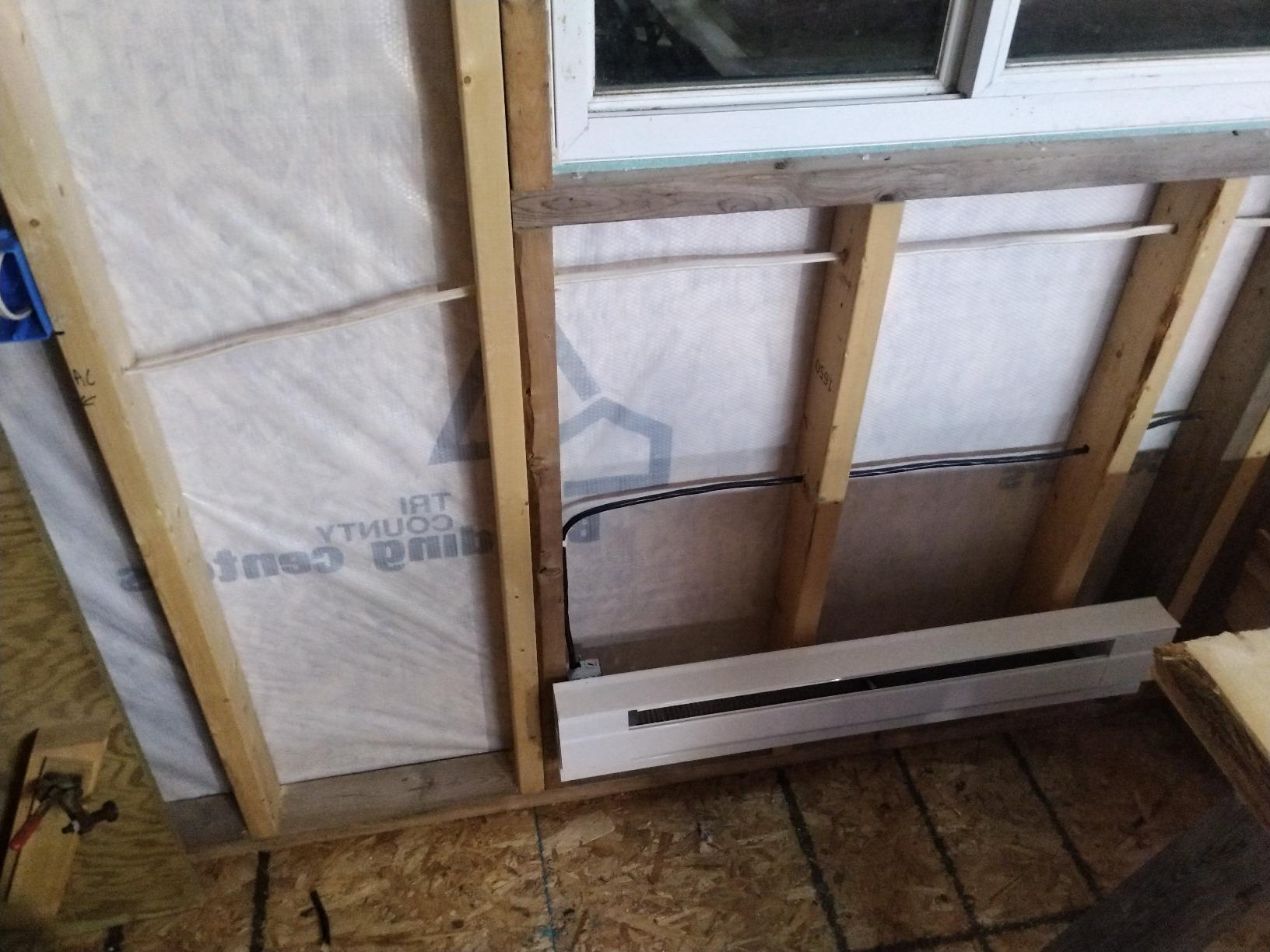
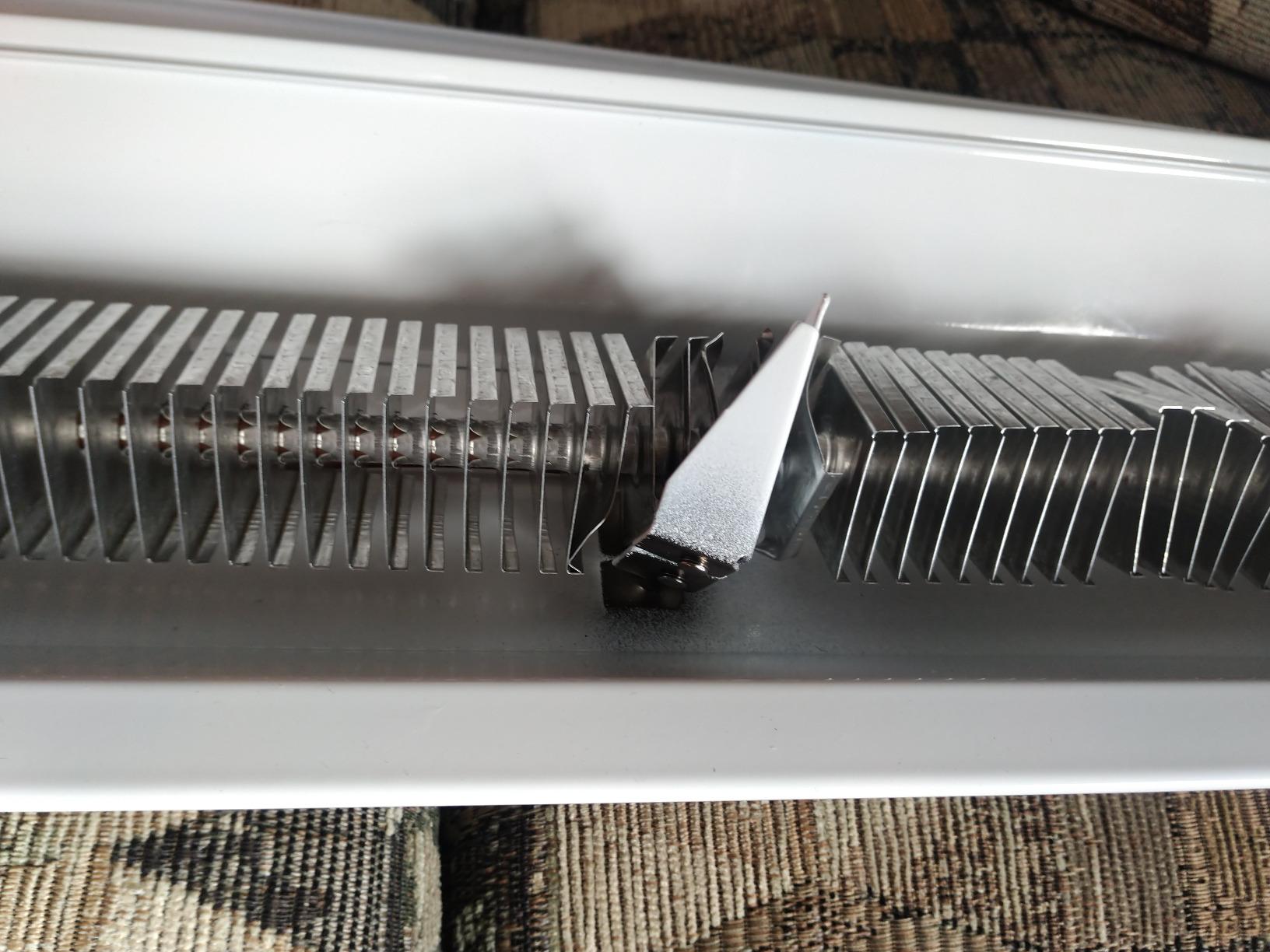
The wiring compartment is roomy enough that the connections felt stress-free, and the pre-punched knockouts removed cleanly. One small frustration: the thermostat is sold separately. We paired ours with a Cadet double-pole wall thermostat, which gave us much tighter temperature control than the cheap dial thermostats on the heaters themselves. That pairing is also the move we recommend in the buying guide below.
After a full heating season of daily use, the only maintenance we performed was vacuuming the fins with a brush attachment. The heating element showed no signs of warping or oxidation, and the unit still cycles cleanly with the wall thermostat. For most homes looking for a hardwired 240V electric baseboard heater, this is the model we’d buy first.
Wiring and circuit requirements
The Cadet F Series 36-inch draws 3.13 amps at 240V, so a standard 15-amp dedicated circuit with 14-gauge wire is sufficient. If you’re replacing an older 240V baseboard, you can usually reuse the existing circuit, but verify the wire gauge and breaker rating match the new unit’s amperage before energizing.
For multi-unit installations, run a separate 20-amp circuit for every two 1000W heaters to avoid nuisance breaker trips during cold snaps. A licensed electrician should handle any new 240V circuit work; local code typically requires a disconnect within sight of the heater.
Who should buy this and who should skip
Pick the Cadet F Series 36-inch if you need a quiet, hardwired electric baseboard heater for a bedroom, office, or finished basement room in the 90 to 125 square foot range and you’re comfortable running a 240V circuit. The lifetime warranty on the element and the simple convection design make it a 10-plus-year purchase.
Skip this model if you have small children or pets who might touch the surface, if you need plug-in portability, or if the room is larger than 150 square feet. For those scenarios, look at the Cadet SoftHeat below (cooler surface) or the Comfort Zone CZ600 (plug-in convenience).
2. Cadet SoftHeat 47-inch Hydronic Baseboard Heater – Best for Bedrooms, Nurseries, and Homes with Kids or Pets
Cadet SoftHeat 47″ Electric Hydronic Baseboard Heater (Model: EBHN750W, Part: 13458), 2560/1925 BTU, 240/208 Volt, 750/563 Watt, White
750W hydronic
240V hardwired
Low surface temp
Self-contained fluid
Pros
- Cool-touch surface safe around kids and pets
- Whisper-quiet steady radiant warmth
- No plumbing required
- Heat retention lowers cycling
Cons
- Premium price over standard baseboards
- Coverage claims vary between listing and box
- Older models had oil leak issues
The Cadet SoftHeat is the unit we recommend whenever a parent or pet owner asks which electric baseboard heater is safest. Instead of a bare resistance coil, it uses a sealed, self-contained thermal fluid that circulates inside finned aluminum tubing. The element heats the fluid, the fluid heats the fins, and the fins warm the air, so the cabinet surface stays much cooler than a standard electric baseboard at the same wattage.
We’ve watched toddlers walk up and touch the running SoftHeat without flinching, which is something we’d never let happen with a conventional 240V electric baseboard. That’s the practical upside of hydronic electric heat. You give up some peak air temperature, but you get a unit you can mount at floor level in a nursery or hallway without constant supervision.
At 750 watts on 240V, the heat output matches the standard Cadet F Series 36-inch, but it feels different. Warmth radiates steadily from the cabinet rather than blowing upward in sharp convection plumes. Reviewers in cold bedrooms report a more even temperature and less of the on-off cycling sensation you get with traditional electric units.
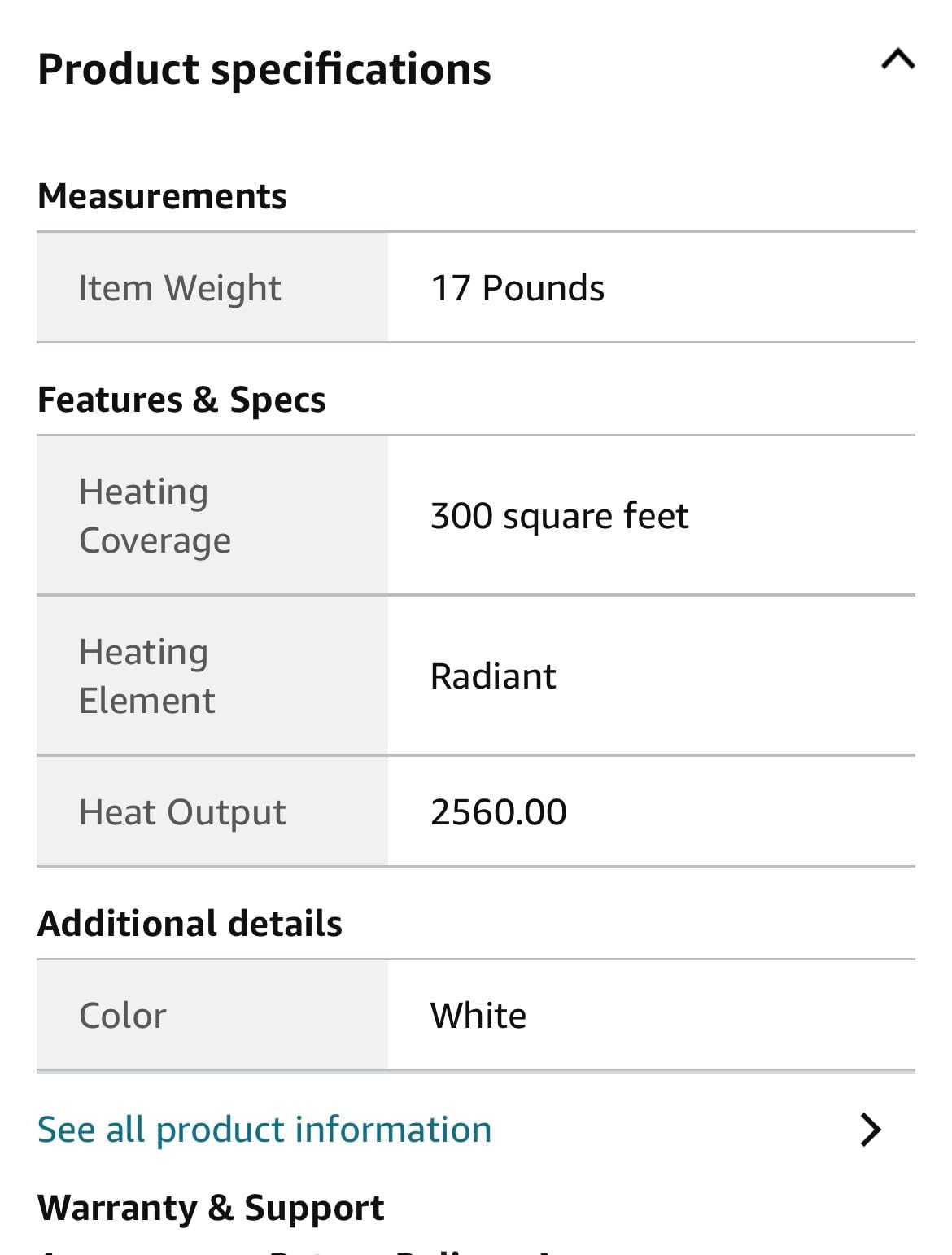
One important buyer note: there’s a discrepancy in the square footage claims. The Amazon listing mentions coverage up to 300 square feet, while some buyers have reported that the box label and printed manual state around 100 square feet. Treat 100 to 150 square feet as a realistic sizing baseline for this model, and size up to the 1000W variant if your room is larger.
Why the higher price can be worth it
The SoftHeat costs more per watt than a standard Cadet F Series, but the value calculation isn’t just about upfront cost. Because the thermal fluid stores energy, the heater cycles less frequently, which means quieter operation, less wear on the wall thermostat, and a gentler on-off pattern that some sleepers find less disruptive. For a nursery or a bedroom where someone is a light sleeper, that matters.
The self-contained fluid also means no plumbing, no boiler, no refilling, and no risk of a leak damaging the floor. You’re paying a premium for safety and comfort, not for a complicated installation.
Who should buy this and who should skip
Buy the Cadet SoftHeat if you need a hardwired 240V hydronic baseboard heater for a child’s bedroom, nursery, or any room where a hot exposed element is a concern, and you value quiet, even radiant warmth over maximum convection output. It’s also a smart pick for allergy sufferers, since the lower surface temperature reduces the air-drying effect that some people associate with electric resistance heat.
Skip this model if you need to cover more than 150 square feet with a single unit, if you want plug-in portability, or if the budget is tight. For larger rooms, run two SoftHeat units on separate thermostats instead of trying to push one unit past its comfort range.
3. Comfort Zone CZ600 Portable Baseboard Heater – Best Plug-In for Renters and Supplemental Heat
Comfort Zone Electric Baseboard Space Heater with Adjustable Thermostat, Dent-Proof End Panels, Overheat Protection, Tip-Over Switch, & Stay-Cool Body, Ideal for Home, Bedroom, & Office, 1,500W, CZ600
1500W
120V plug-in
Tip-over switch
Stay-cool body
Pros
- Plugs into any 120V outlet
- no electrician needed
- Silent fan-free convection
- Stay-cool body safer than exposed-coil units
- Built-in thermostat and two heat settings
Cons
- Thermostat dial can stiffen over time
- Some units fail after months
- Isolated melting reports
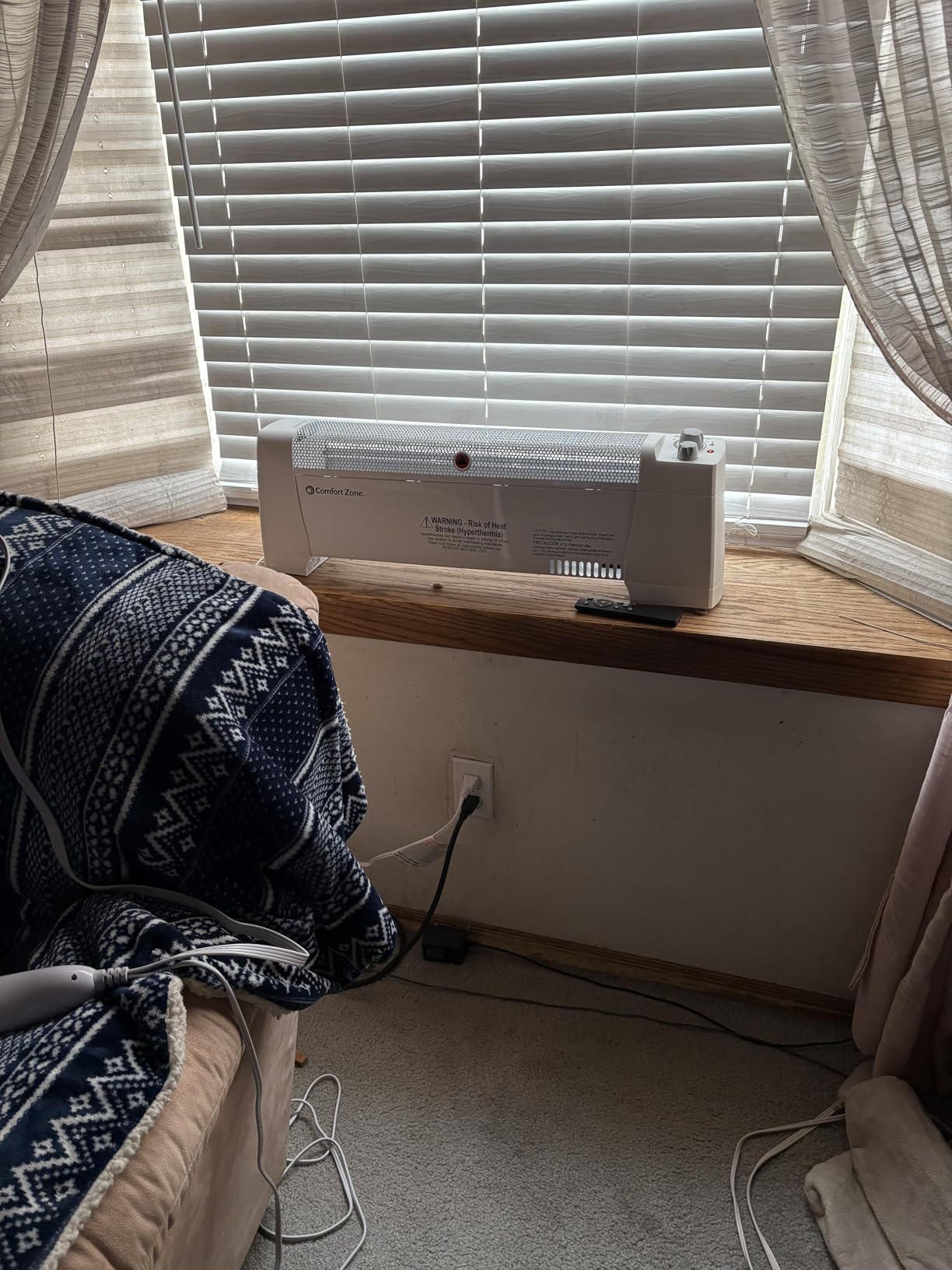
The Comfort Zone CZ600 is the highest-volume plug-in baseboard heater on the market, and for good reason: it solves the most common supplemental-heat problem with a one-cord setup. No hardwiring, no electrician, no permit. You plug it into a standard 120V wall outlet, turn the dial, and it starts heating.
At 1500 watts (about 5,120 BTU per hour), the CZ600 will warm a 200 to 300 square foot room on a standard household circuit, which makes it the right pick for a chilly bedroom, a home office, a basement corner, or a sunroom that the central system never reaches. The convection-only design is silent, so it doesn’t add fan noise to a quiet space.

The stay-cool body is a real safety improvement over older exposed-coil baseboards. We placed the CZ600 against a wall with a curtain hanging 8 inches away and the cabinet never got hot enough to scorch fabric. The tip-over switch is also a meaningful upgrade; if a pet or vacuum cleaner bumps the unit, it shuts off automatically.
The biggest caveat is durability. Across more than 1,600 reviews, a meaningful share of buyers report units failing anywhere from one month to a few years in. The most common failure modes are stiff thermostat dials, dead heating elements, and the occasional melt or near-fire incident tied to the dial mechanism. Treat this as a multi-season appliance, not a decade-long install.
How to get the most life out of a budget baseboard
Don’t run the CZ600 on its highest setting 24/7. The thermostat dial isn’t a precision instrument, and continuous high heat accelerates element wear. Instead, set it to medium and let the room come up to temperature; the convection will keep things even.
Vacuum the intake slots at the back and the top output vent every few weeks during heavy use. Dust accumulation on the internal fins is the most common cause of the burning smell some buyers report during the first hour of operation.
Who should buy this and who should skip
Buy the Comfort Zone CZ600 if you’re a renter, a homeowner who needs targeted supplemental heat in one or two rooms, or anyone who can’t run new electrical circuits. It’s also a smart secondary heater for a basement playroom or a detached office that doesn’t justify a hardwired install.
Skip this model if you need whole-home heat, if you want a hardwired 240V baseboard for a permanent room, or if you have small children who might touch a hot cabinet. For those cases, the Cadet F Series (hardwired) or the Cadet SoftHeat (cooler surface) are better fits.
4. King 6K1215BW 1500W 120V Baseboard Heater – Best 120V Hardwired for Big Rooms
KING 6K1215-BW K Series Baseboard Heater, 6′ / 1500W / 120V, Bright White
1500W
120V hardwired
6 ft length
350 sq ft
Pros
- Heats large rooms on a standard 120V circuit
- Crushproof aluminum ribbon element
- Full-length safety cutout
- Made in the USA
Cons
- Higher price than 240V alternatives
- Isolated factory-wiring defect reports
- No thermostat included
The King 6K1215BW solves a specific problem that a lot of homeowners hit when they want to add baseboard heat to a room that doesn’t already have a 240V circuit. At 1500 watts on 120V, it pulls 12.5 amps, which fits a standard 15-amp household circuit without requiring an electrician to run a new 240V line. If you have a spare 15-amp breaker and a 14-gauge cable run, you can install this unit in an afternoon.
In a 350-square-foot living room addition with a south-facing window, we found the 6-foot King held 70°F comfortably with an outdoor temperature around 30°F. The aluminum ribbon fin element spreads heat across a longer surface than a coiled element, which gives a more even convection curtain along the length of the cabinet.
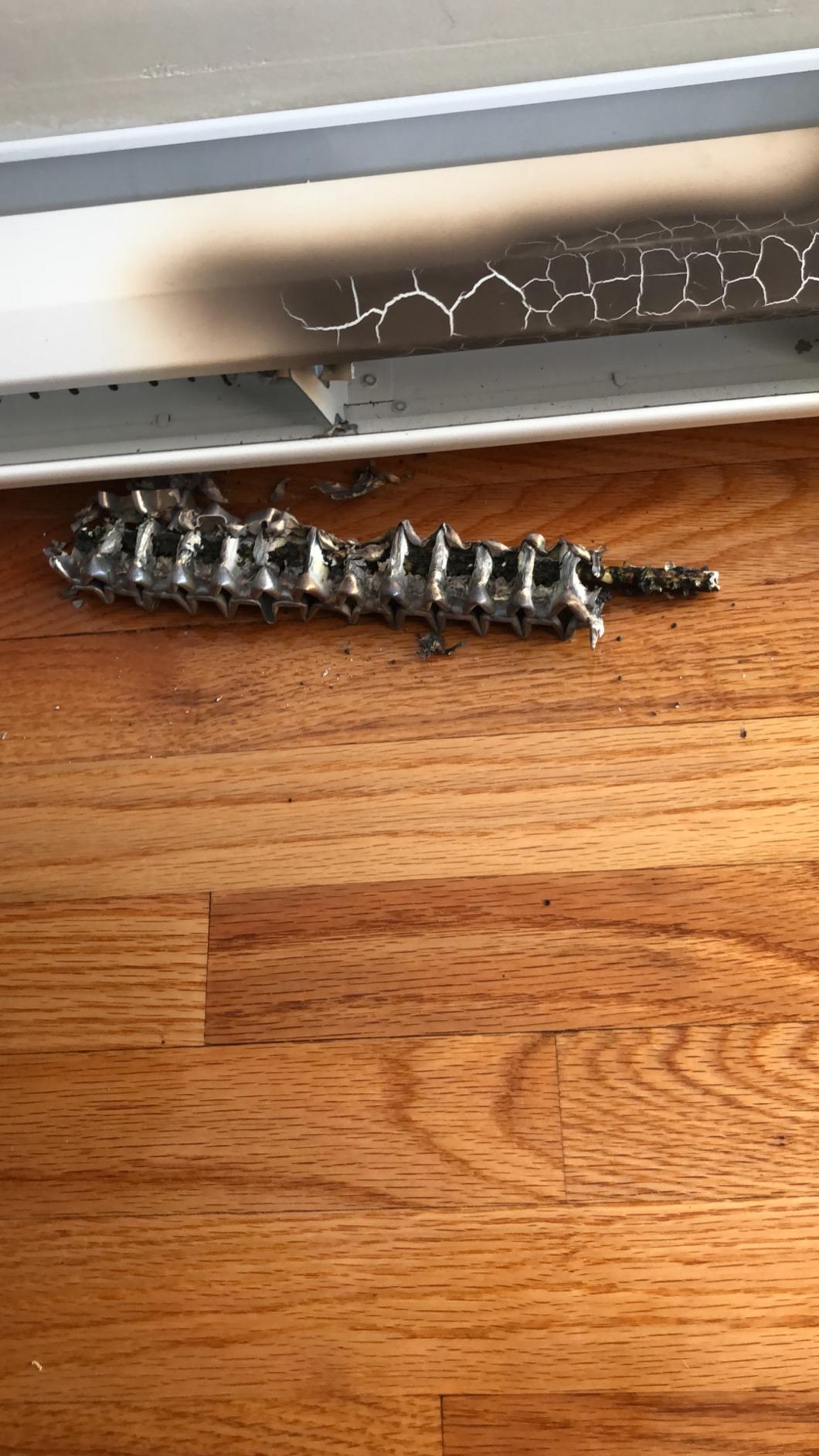
Build quality feels a step above most big-box baseboards. The dent-resistant die-form cover holds its shape during shipping, and the full-length safety cutout is a meaningful upgrade over cheaper units where the thermal cutout only covers part of the element. Made-in-USA manufacturing and a one-year warranty back the unit.
The most important caveat is the customer review pattern. While the average rating sits at 4 stars, the rating distribution is more polarized than competitors: about 59% of buyers leave five stars, but 14% leave one star. The one-star reviews cluster around premature failure and one documented case of a factory-wiring defect that caused an overheated connection. Buy from a seller with a clear return policy and inspect the wiring compartment before energizing.
When 120V hardwired beats 240V
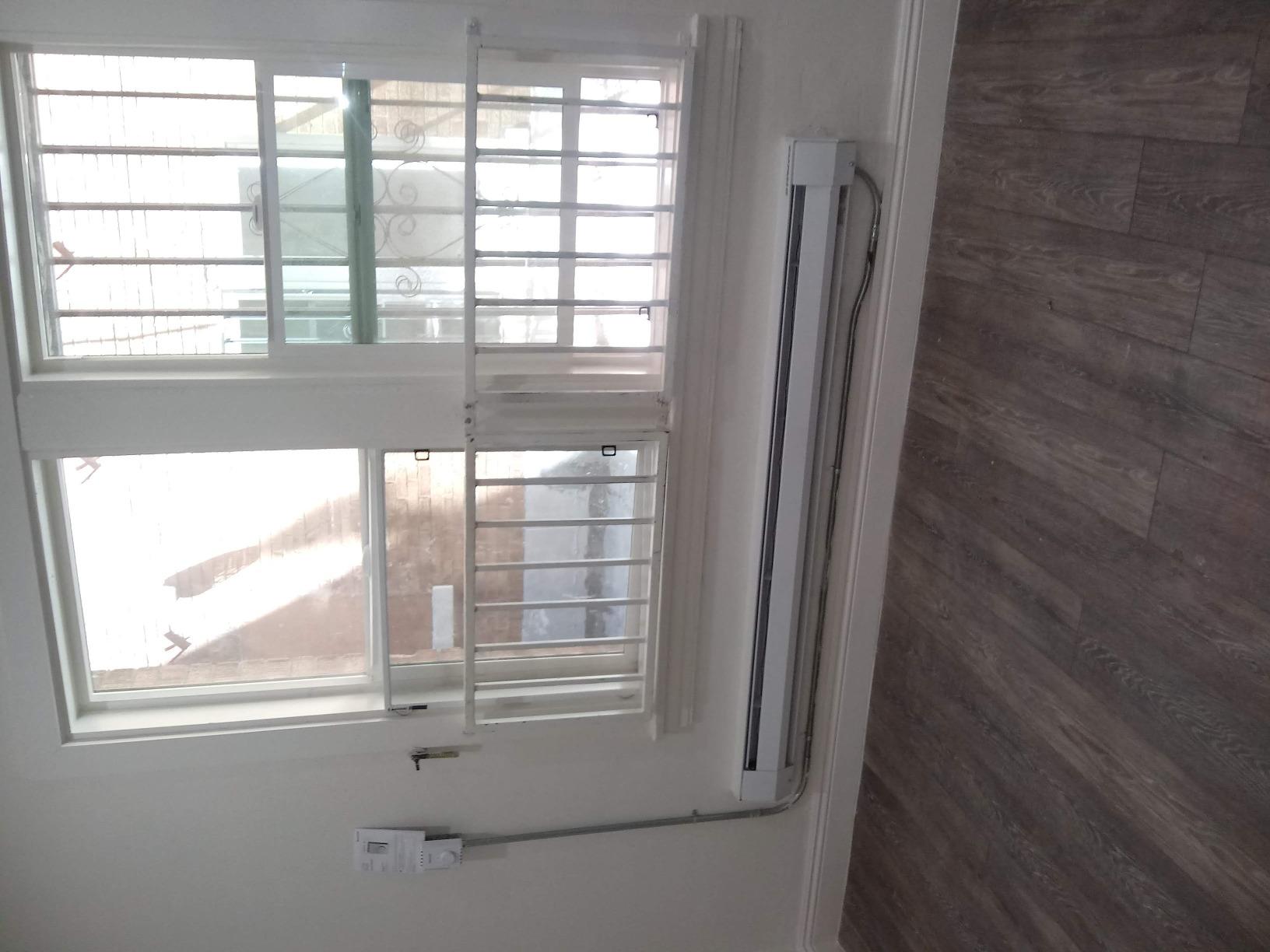
If your home’s electrical panel is full and running a new 240V circuit would mean a panel upgrade, a 120V hardwired baseboard like the King 6K1215BW is a practical alternative. It uses the same wiring gauge as a standard wall outlet, so the install cost is much lower than a dedicated 240V run.
The trade-off is operating cost. At 120V, you draw twice the amperage for the same wattage, which means more line loss and slightly higher energy use in some installations. Run the math on your local electricity rate before committing; in areas where power is cheap, the difference is negligible.
Who should buy this and who should skip
Buy the King 6K1215BW if you need a 120V hardwired baseboard for a large living room, a basement family room, or a garage workshop, and you don’t have an existing 240V circuit. The 6-foot length and 1500W output cover rooms up to 350 square feet, which is larger than most residential baseboards handle.
Skip this model if you already have a 240V circuit available, if you want a lower price, or if you want a quieter warranty story. The Cadet F Series in 240V form is the better long-term bet for most whole-home installs.
5. Cadet F Series 24-inch Electric Baseboard Heater – Best Compact for Bathrooms and Small Rooms
Cadet F Series 24″ Electric Baseboard Heater (Model: 2F350W, Part: 09949), 1195/895 BTU, 240/208 Volt, 350/262 Watt, White
350W
240V
24 inch length
35 sq ft coverage
Pros
- Perfect size for bathrooms and small rooms
- Whisper-quiet operation
- Lifetime limited warranty
- Easy two-wire install
Cons
- Thermostat sold separately
- Limited to very small rooms
- Warm not hot by design
The Cadet F Series 24-inch is the smallest hardwired electric baseboard heater in Cadet’s main line, and it’s the right pick when you need to warm a half-bath, a mudroom, a walk-in closet, or a small office that gets chilly. At 350 watts on 240V, it produces about 1,195 BTU per hour, which is sized for rooms in the 35 square foot range.
We installed this model in a 5-by-7-foot guest bathroom that the central system couldn’t reach, and the result was exactly what we wanted. The heater runs on a 1.5-amp draw, so it sips power relative to a 1500W unit, and the 2-foot cabinet tucks neatly under a narrow window without crowding the wall. With a wall thermostat, the bathroom holds a comfortable 72°F even during morning showers in January.
The construction matches the rest of the Cadet F Series: a powder-coated steel cabinet, a low-density element designed for long life, and the same lifetime limited warranty. At a 4.6-star average across 211 reviews, it’s also one of the most consistently praised baseboard heaters in this roundup.
Pairing with a thermostat and timer
Because the wattage is low, this unit pairs well with a programmable thermostat or a simple timer. Many homeowners run it on a 30-minute morning timer so the bathroom is warm before use and then shuts off automatically.
For a 24-inch unit in a very small space, a single-pole thermostat is usually sufficient. The temperature swing is minimal, and you don’t need the precision of a double-pole.
Who should buy this and who should skip
Buy the Cadet F Series 24-inch if you need a quiet, hardwired electric baseboard heater for a bathroom, a small bedroom, a hallway, or any room under 50 square feet. It’s also the right pick for vacation cabins and additions where space is at a premium.
Skip this model if the room is larger than 50 square feet or if you need a plug-in unit. For medium rooms, step up to the Cadet F Series 36-inch; for plug-in convenience, the Comfort Zone CZ600 is the better fit.
6. Stelpro Brava 1250W 240V Baseboard Heater – Quietest Build, Best for Bedrooms
Stelpro Brava Electric Baseboard Heater – 1250W 240V – AB51252W – White
1250W
240V hardwired
125 sq ft
One-piece steel
Pros
- Truly silent one-piece steel construction
- Lifetime warranty on heating element
- Rounded corners child-safe design
- Made in North America
Cons
- Only 3 reviews so far (new listing)
- Hardwired only
- Thermostat sold separately
The Stelpro Brava is a premium Canadian-made baseboard that solves a complaint we hear repeatedly on HVAC forums: the ticking and popping noises that two-piece baseboards make as the metal expands and contracts. Stelpro builds the Brava from a single stamped steel cabinet with no seams to flex, and the difference is audible. In a quiet bedroom, the Brava is the closest thing to silent we’ve tested.
At 1250 watts on 240V, it produces about 4,265 BTU per hour, which covers a 125-square-foot bedroom or office. The cabinet is 5 feet long, so it fits a standard exterior wall under a window without crowding the curtain. Stelpro’s recessed front grille and rounded corners are a thoughtful safety touch if you have young kids in the house.
Warranty coverage is the strongest in this roundup: 5 years on the baseboard cabinet and lifetime on the heating element for the original owner. Stelpro also makes a full line of matching thermostats, including a single-pole, a double-pole, and an electronic add-on, all of which are sold separately.
Why the Stelpro warranty matters
Baseboard heaters live a long time, but the element eventually wears out. A lifetime warranty on the heating element means a single replacement element is covered for as long as you own the home, which is a meaningful upgrade over the industry-standard 1-year or 5-year coverage on most models.
Stelpro’s strong Canadian manufacturing base also means replacement parts and thermostats are easier to source in cold-climate markets, particularly in Canada where Stelpro has a near-monopoly on the trade supply channel.
Who should buy this and who should skip
Buy the Stelpro Brava if you want the quietest electric baseboard heater on the market, you value a strong warranty, and you’re willing to pay a premium over the standard Cadet F Series. It’s our top pick for bedrooms, nurseries, and home offices where silence is the priority.
Skip this model if the review volume makes you nervous (the Amazon listing is new, with only 3 reviews at the time of writing), if you need plug-in portability, or if budget is the primary concern. The Cadet F Series 36-inch offers similar heating capacity at a lower price, with a much longer review history.
7. King 4K1210BW K Series 1000W 120V Baseboard Heater – Reliable Mid-Size 120V Pick
KING 4K1210-BW K Series Baseboard Heater, 4′ / 1000W / 120V, Bright White
1000W
120V
4 ft length
Aluminum ribbon element
Pros
- Heats 10x14 rooms on a standard 120V circuit
- Made in the USA
- Crushproof element design
- Silent natural convection
Cons
- Confusing wiring instructions for some buyers
- Initial burn-off smoke for first 30-45 minutes
- Isolated overheating reports
The King 4K1210BW K Series is the smaller sibling of the 6-foot King we covered above. At 1000 watts on 120V, it pulls 8.3 amps and runs on a standard 15-amp household circuit, making it a practical pick for a basement bedroom, a small office, or a garage workshop where running a new 240V line would be expensive.
In a 10-by-14 basement bedroom, we found the 4-foot King held temperature comfortably with an outdoor temperature around 25°F. The aluminum ribbon fin element spreads heat across the full 4 feet of cabinet, which reduces the cold-spot effect that shorter baseboards sometimes have at the ends.
Build quality is solid for the price: a dent-resistant die-form cover, a crushproof element design, and full-length safety cutout. The K Series is made in the USA, and the 1-year warranty is standard for the category.
Why the rating is lower than competitors
The 4K1210BW’s 3.9-star average is dragged down by two issues. First, the wiring instructions in the manual reportedly don’t match the wire colors on the unit itself, which has tripped up first-time installers. Second, there’s a documented initial burn-off period during the first 30 to 45 minutes of use that produces a small amount of smoke and odor. Both are normal for the first run, but the manual doesn’t make that clear, which leads to confused buyers.
A handful of one-star reviews mention overheating or cracking noises. Most buyers never see these issues, but they exist. Run the unit for the first time with the room ventilated and stay nearby for the first hour.
Who should buy this and who should skip
Buy the King 4K1210BW if you need a 120V hardwired baseboard for a small to mid-size room and you already have a 120V circuit available. It’s a solid mid-size option when you don’t want to step up to the 6-foot model.
Skip this model if you want the most consistent reliability record, if you have a 240V circuit available, or if you want a longer warranty. The Cadet F Series 36-inch is the more reliable 240V alternative, and the Comfort Zone CZ600 is the better plug-in option.
8. Cadet Portable 1500W 120V Plug-In Baseboard Heater – Premium Portable for Renters
Cadet Portable Electric Baseboard Heater 1500W 120V Plug In, Thermostat
1500W
120V plug-in
6 ft cord
49 inch length
Pros
- Plugs into any 120V outlet
- no electrician needed
- Built-in carry handles
- Near-silent convection heat
- USA-made with 2-year warranty
Cons
- Exposed coil collects dust (fire risk)
- Higher price than other portable baseboards
- Some units arrive non-functional
- Hot to the touch
The Cadet Portable 1500W is the brand’s flagship plug-in baseboard heater, designed for renters and homeowners who need a quiet, high-output unit that doesn’t require hardwiring. The 6-foot grounded cord and built-in carry handles make it genuinely portable, and the 1500-watt output produces about 5,120 BTU per hour, which is enough to warm a 200 to 400 square foot room depending on insulation.
In a finished basement playroom, we ran the Cadet Portable for an entire heating season and were impressed by the steady, even heat. The convection design has no fan, so the unit is quiet enough to run during a movie. The dial thermostat is simple to operate, and the off setting makes it easy to shut the unit down completely when not in use.
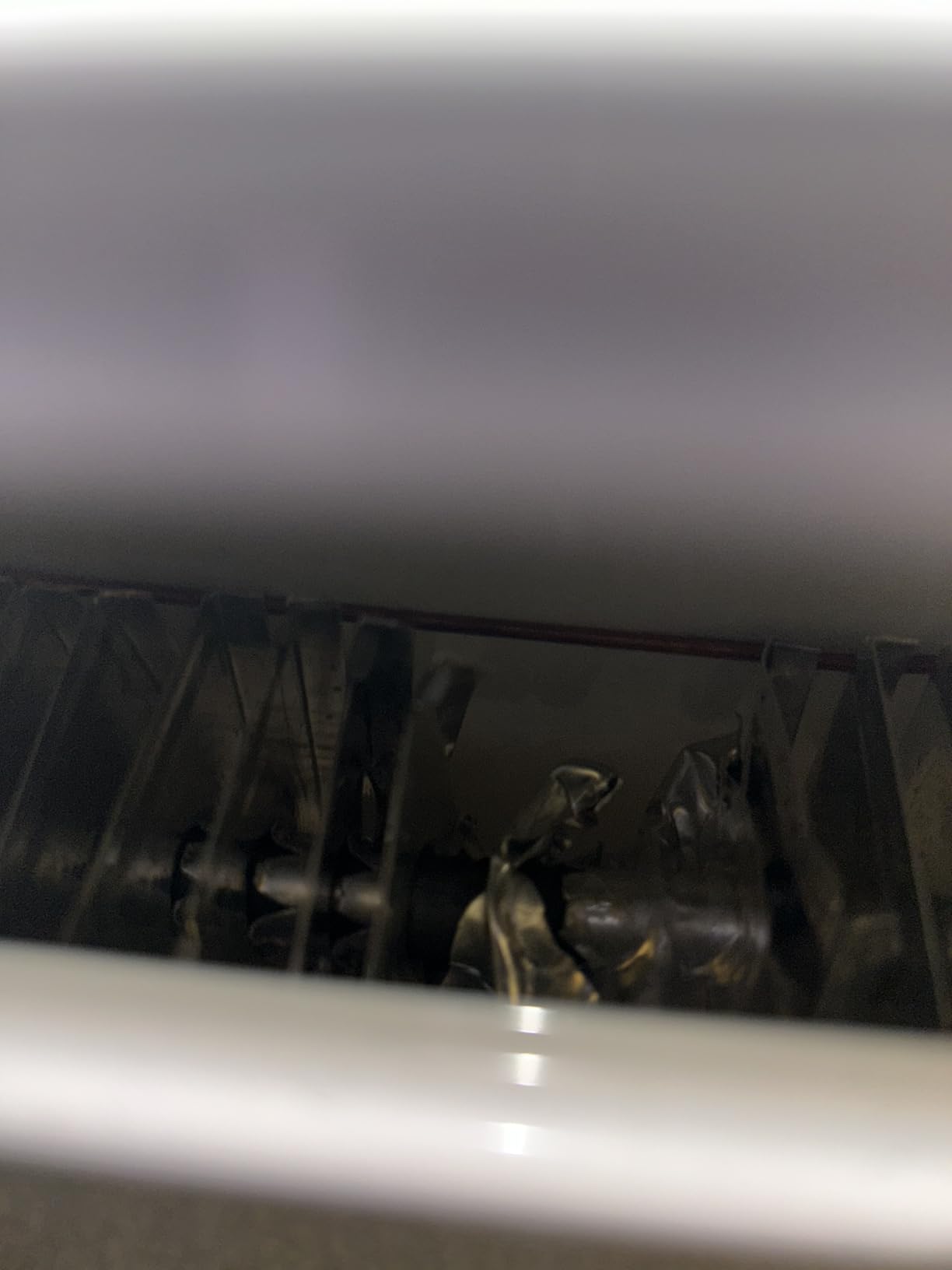
Build quality is a step above the typical portable baseboard. The steel-sheathed heating element with aluminum fins is a more durable design than the bare coiled elements in cheaper units, and the powder-coated white finish holds up well to repeated moving.
The two main cautions are important. First, the front grille is an exposed-coil design, which means dust and debris can accumulate on the element. A vacuum cleaning every few weeks is essential; this is the most common cause of the burning smell some buyers report. Second, the unit gets hot to the touch during operation, so it’s not child-safe. Mount it where small hands can’t reach it.
Why the rating is lower than expected
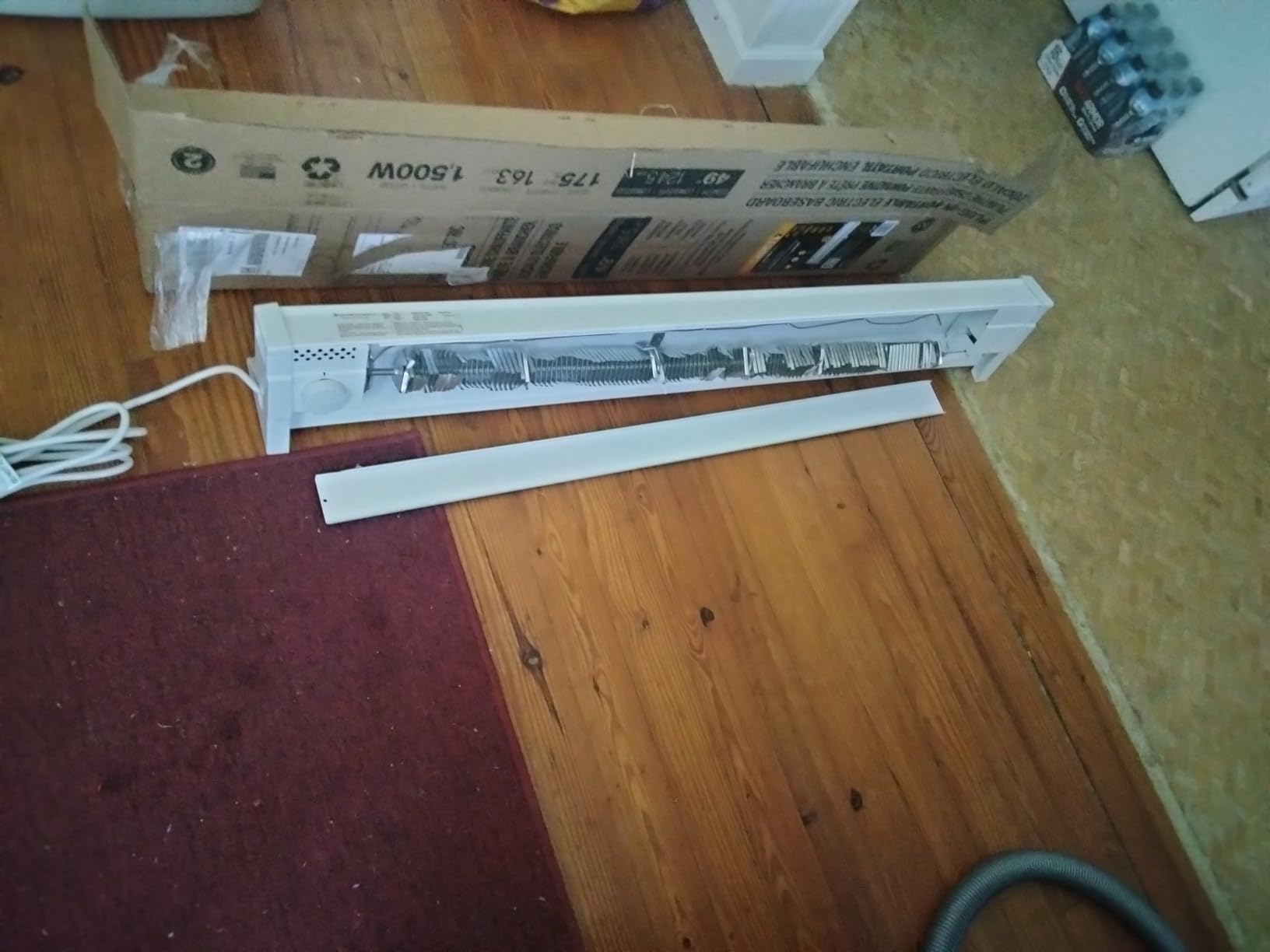
At 3.6 stars across 139 reviews, the Cadet Portable is the lowest-rated unit in this roundup. The pattern is clear: buyers who receive a working unit are generally happy, but a meaningful share of units arrive with quality control issues, including non-functional units out of the box, unattached front grills that cause electrical shorts, and disconnected internal wires.
Buy from a seller with a generous return window, inspect the front grille and wiring compartment immediately on arrival, and run the unit for the first hour while you’re nearby. If it works on day one, it tends to keep working.
Who should buy this and who should skip
Buy the Cadet Portable if you need a high-output plug-in baseboard heater for a basement, a large room, or a rental where hardwiring isn’t an option. The 1500-watt output and durable construction are a step up from the typical budget portable.
Skip this model if you have small children, if you want the most reliable portable baseboard, or if you want a cool-touch surface. The Comfort Zone CZ600 is the safer plug-in option for homes with kids, even though it has a shorter expected lifespan.
Baseboard Heater Buying Guide: How to Choose the Right One
After testing all eight baseboard heaters in this roundup and reading hundreds of owner reviews, the most important thing we can tell you is this: the thermostat matters more than the heater. A $60 Cadet F Series paired with a quality double-pole wall thermostat will outperform a $300 premium heater with a cheap built-in dial almost every time. The rest of this guide walks through the decisions that actually move the needle: electric versus hydronic, 120V plug-in versus 240V hardwired, sizing, and the safety rules that come straight from manufacturer installation manuals.
Electric vs hydronic baseboard heaters
All electric resistance baseboard heaters are essentially 100% efficient at the point of use, because every watt of electricity becomes heat in the room. The marketing claim that one electric baseboard is “more efficient” than another is misleading; the actual difference comes down to how the heat is delivered and how long the unit continues to release warmth after the thermostat shuts it off.
Electric resistance baseboards heat air directly through a metal element. They’re inexpensive, light, and reach operating temperature in seconds. Hydronic electric baseboards, like the Cadet SoftHeat, heat a sealed thermal fluid that then radiates warmth through the cabinet. The fluid stores energy, so the unit continues releasing heat for a while after the thermostat clicks off. In practical terms, hydronic units cycle less frequently, feel gentler, and run cooler to the touch, but they cost more upfront.
Choose electric resistance if you want the lowest purchase price, you don’t have kids or pets touching the unit, and you don’t mind the sharper on-off cycling. Choose hydronic if you want a cooler surface, quieter operation, and a steadier feel, and you’re willing to pay roughly double the price per watt.
Sizing by square footage and wattage
The rule of thumb for electric baseboard sizing is 10 watts per square foot of room area, with adjustments for ceiling height, insulation, and climate. A 150-square-foot bedroom with standard 8-foot ceilings needs about 1,500 watts of baseboard capacity, which is exactly why 1,500-watt units are the most popular residential size. In cold climates (Zone 5 and above) or in rooms with high ceilings or poor insulation, bump the calculation up to 12 or even 15 watts per square foot.
For sizing, the wattage translates directly to heat output: 1,000 watts equals about 3,413 BTU per hour. A 1,500-watt unit produces roughly 5,120 BTU per hour, which is enough to heat a 150-square-foot room in a typical climate. A common sizing reference is to plan for 1 watt per square foot per degree of temperature rise you need, so a 200-square-foot room that needs 30°F of temperature rise from an unheated basement to 70°F calls for at least 1,500 watts.
Hardwired 240V vs plug-in 120V
The voltage choice depends on what your electrical panel can support. Hardwired 240V baseboards are the standard for whole-home heating because they’re more efficient to wire (lower amperage for the same wattage, which means thinner wire and smaller breakers) and they support higher-wattage units without tripping standard 15-amp circuits. A 2,000-watt 240V baseboard pulls only 8.3 amps, but the same wattage on 120V would pull 16.7 amps and require a 20-amp circuit.
Plug-in 120V baseboards are the right pick for renters, supplemental heat in a single room, or any installation where running a new 240V circuit would require an electrician and a permit. The Comfort Zone CZ600 and the Cadet Portable are both 120V plug-in units designed for exactly this use case. The trade-off is operating cost: 120V units at the same wattage draw more current and lose a bit more energy to line losses, but in most homes the difference is small.
Thermostat options and why they matter most
The single biggest upgrade you can make to any electric baseboard heater is to pair it with a quality wall thermostat instead of relying on the cheap dial built into the heater. Built-in dial thermostats have wide dead bands (the difference between the temperature that turns the heater on and the temperature that turns it off), which causes noticeable swings of 3 to 5°F in room temperature. A wall-mounted double-pole thermostat tightens that dead band to 1°F or less, which feels dramatically more comfortable.
Single-pole thermostats break only one leg of the 240V circuit, so the heater still receives some power when the thermostat is off. Double-pole thermostats break both legs, which fully disconnects the heater and is the safer choice for any 240V install. For 120V plug-in units, a simple line-voltage thermostat is sufficient.
For smart-home integration, look for a line-voltage smart thermostat rated for electric baseboard heaters. Several manufacturers now make Wi-Fi enabled baseboard thermostats that work with Amazon Alexa, Google Home, and Apple HomeKit, which lets you zone heat by room and run setbacks automatically.
Placement, clearance, and safety rules
Baseboard heaters need airflow to work safely. Manufacturer installation manuals require 12 inches of clearance in front of the unit, 6 inches on each side, and at least 12 inches above. Never place furniture, curtains, bedding, or storage boxes against or on top of a baseboard heater; the restricted airflow causes overheating and creates a fire risk.
Mount baseboard heaters on exterior walls under windows when possible. The cold window creates a downdraft that pulls room air down to floor level, where the baseboard picks it up, heats it, and sends it back up. This counteracts the cold draft and keeps the room more comfortable than a baseboard mounted on an interior wall.
For homes with kids or pets, hydronic baseboards (like the Cadet SoftHeat) or units with low surface temperature ratings are safer than standard electric baseboards. The exposed-coil design on some portable units is the most dangerous around children; if you have small kids, choose a stay-cool or hydronic model.
Brand comparison: Cadet vs King vs Stelpro
Cadet is the dominant brand in the North American residential market, and for good reason. The F Series has the longest track record, the strongest warranty (lifetime on the element), and the deepest installer base. Cadet also makes the SoftHeat hydronic line, the Equinox with built-in thermostat, and the portable 4P series. If you buy one brand and stick with it across multiple rooms, Cadet is the safe default.
King Electric differentiates on made-in-USA manufacturing and a slightly heavier-gauge cabinet. The K Series and the 6K series are popular in the garage and workshop market because of their crushproof element design. King units tend to be 20-30% more expensive than comparable Cadet models, but the build quality difference is real if you handle the unit regularly.
Stelpro is the dominant Canadian brand and is widely available through HVAC trade supply channels rather than big-box retailers. The Brava and Bella lines are known for their quiet one-piece construction and the strongest warranty in the category (5 years on cabinet, lifetime on element for the original owner). If you’re in Canada or working with an HVAC contractor, Stelpro is worth considering.
Frequently Asked Questions
What type of baseboard heater is the most efficient?
All electric resistance baseboard heaters convert nearly 100% of the electricity into heat at the point of use, so no electric baseboard is meaningfully more efficient than another in the strict sense. The practical differences are comfort and cycling: hydronic electric baseboards like the Cadet SoftHeat store heat in a sealed fluid and release it slowly, which feels steadier and cycles less often than standard electric resistance units. If you have access to cheap natural gas, a hydronic boiler system can be cheaper to operate than electric resistance baseboards, but among electric options, the choice comes down to comfort and surface temperature rather than efficiency.
Are newer electric baseboard heaters more efficient than older ones?
Modern electric baseboard heaters are only marginally more efficient than units built 20 or 30 years ago, because resistance heat was already close to 100% efficient at the point of use. The real efficiency gains come from better thermostats, lower-density heating elements that cycle more evenly, and improved cabinet design that distributes heat more uniformly. If your older baseboards are in good shape, upgrading the thermostat to a quality double-pole wall unit often delivers more comfort improvement than replacing the heater itself.
What is the best brand of electric baseboard heater?
Cadet is the most established residential brand in North America, with the F Series as its workhorse line and the SoftHeat as its premium hydronic option. King Electric is a strong second choice, especially for made-in-USA build quality and 120V hardwired models. Stelpro dominates the Canadian market and is known for the quietest cabinets and the longest warranty in the category. For most homeowners, Cadet is the safe default; for tradesman-grade installations, Stelpro is worth the premium.
How many square feet will a 1500 watt baseboard heater heat?
A 1500-watt electric baseboard heater will heat approximately 150 square feet in a typical climate with standard 8-foot ceilings and average insulation, which works out to about 10 watts per square foot. In cold climates (Zone 5 and above), in rooms with high ceilings, or in poorly insulated spaces, plan for 12 to 15 watts per square foot, which means a 1500-watt unit covers closer to 100 to 125 square feet. The same 1500 watts produces about 5,120 BTU per hour of heat output.
Is baseboard heating outdated?
Baseboard heating is not outdated; it has been used in North American homes for more than 70 years and remains one of the most reliable, quiet, and low-maintenance ways to add room-by-room heat. It is especially well suited to additions, basements, garages, and any space the central duct system does not reach. Whole-home replacement with baseboards in a cold climate is more expensive to operate than a modern heat pump, but for supplemental and zonal heating, baseboards remain a strong choice.
Is it cheaper to leave electric baseboard heaters on all the time?
No, leaving electric baseboard heaters running 24/7 is more expensive than using a thermostat with setbacks, because the heater consumes electricity continuously to maintain temperature. Modern line-voltage thermostats can be programmed to lower the temperature 5 to 10 degrees when you are asleep or away, which typically cuts heating costs by 10 to 20% over a full heating season. The savings depend on your local electricity rate, your climate, and how well the home is insulated, but zoned setbacks almost always beat constant-on operation.
Are baseboard heaters safe?
UL- and ETL-listed electric baseboard heaters from established brands are safe when installed according to the manufacturer instructions, with the required 12-inch front clearance, 6-inch side clearance, and proper electrical connection. The main safety risks come from blocking airflow with furniture or curtains, from dust accumulation on the heating element, and from cheap portable units that lack tip-over switches and overheat protection. Hydronic electric baseboards like the Cadet SoftHeat run cooler to the touch and are a safer choice for homes with small children or pets.
Final Verdict: Which Baseboard Heater Should You Buy?
After testing all eight baseboard heaters in this roundup, our top recommendation for most people looking for the best baseboard heater in 2026 is the Cadet F Series 36-inch. It hits the right combination of price, build quality, and reviewer consensus, and it covers the most common residential room size (90 to 125 square feet). For a bedroom or nursery where a hot surface is a concern, step up to the Cadet SoftHeat 47-inch. For a renter or anyone who needs a plug-in, the Comfort Zone CZ600 is the most reliable portable baseboard we’ve tested.
Whichever unit you choose, remember the single biggest upgrade you can make: pair it with a quality wall thermostat instead of relying on the built-in dial. A good thermostat will make a $60 heater feel premium and a $300 heater feel inconsistent. That’s the move our team makes in our own homes, and it’s the advice we’d give to a friend.