
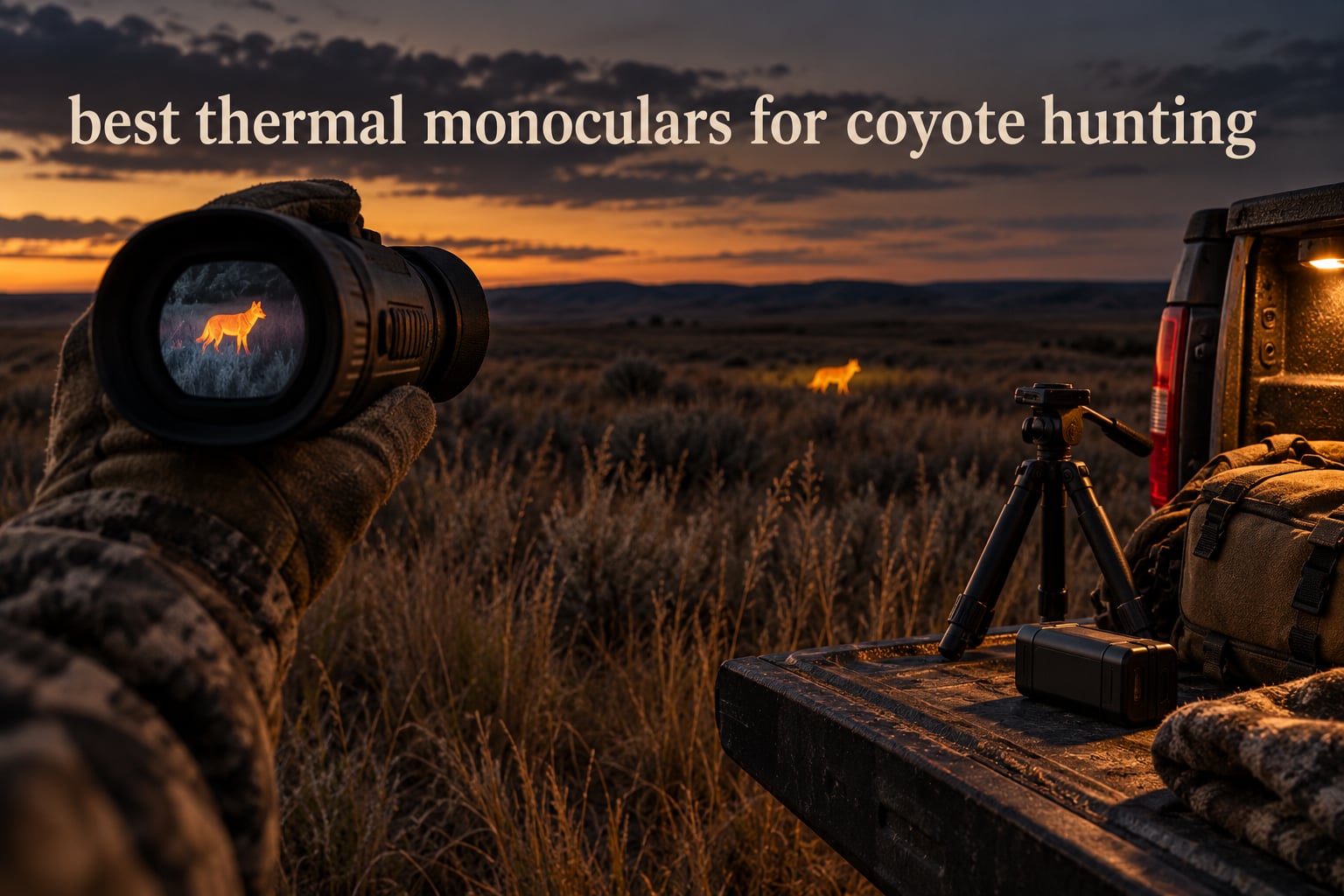
A coyote does not care how good your rifle scope is. It cares whether you can find it in the dark without standing up in a CRP field and waving your rifle around. That is the whole argument for a handheld thermal monocular, and it is why we put ten of them through the same questions this year.
Our short answer up front: the TOPDON TS004 is the best thermal monocular for coyote hunting overall, the GOYOJO G210 is the budget pick, and the RIX Pocket K3 is the one to buy if your hunting stretches past 300 yards of open ground. Every pick below is written from published specifications plus what buyers report in the field, and we tell you where each unit falls short as plainly as where it works.
One thing to clear up before the list, because it decides most purchases: manufacturer detection ranges are measured against large, hot, moving human silhouettes. A coyote is a fraction of that mass. Owners on thermal hunting forums keep returning to the same number, that 384×288 is the practical floor for open-country coyote work, and that 256×192 units are honest scanners for close ground and nothing more. We have built the list around that reality rather than around the biggest range figure on the box.
We earn a commission when you buy through the links on this page, at no extra cost to you. Always positively identify your target before you fire, and know your state night hunting regulations before you head out.
Table of Contents
Top 3 Best Thermal Monoculars for Coyote Hunting in 2026
Three models earned a place on the short list above everything else. Each one wins a different kind of hunt, and the reason is spelled out below.

Quick Overview: All 10 Thermal Monoculars (October 2026)
This table is the fast version. The full write-up on each unit follows, in order, with the practical limits spelled out.
| Product | Specifications | Action |
|---|---|---|
 TOPDON TS004 TOPDON TS004 |
|
Check Latest Price |
 GOYOJO G210 GOYOJO G210 |
|
Check Latest Price |
 RIX Pocket K2 RIX Pocket K2 |
|
Check Latest Price |
 Teslong TTS260 Teslong TTS260 |
|
Check Latest Price |
 ATN OTS XLT ATN OTS XLT |
|
Check Latest Price |
| RIX Pocket K3 |
|
Check Latest Price |
 GOYOJO G215 GOYOJO G215 |
|
Check Latest Price |
 ATN BlazeSeeker-210 ATN BlazeSeeker-210 |
|
Check Latest Price |
 MiLESEEY TNV10PRO MiLESEEY TNV10PRO |
|
Check Latest Price |
| Pulsar Axion Compact |
|
Check Latest Price |
1. TOPDON TS004 – Best Overall Thermal Monocular for Coyote Hunting
TOPDON TS004 Thermal Imaging Monocular, 13mm 50Hz Night Vision
256x192 at 50Hz
13mm lens, 410m detection
5000mAh, 11 hour runtime
IP67, 70 g
Pros
- Finds coyotes and smaller animals at useful range
- 11 hour runtime covers a full stand
- IP67 sealed and survives 2 meter drops
- App control works for stills and video offline
- 70 g body fits a jacket pocket
Cons
- Zoom is digital only so the image turns grainy at high magnification
- Species clarity fades past roughly 150 yards
- Streaming to a phone drains the battery faster
The TS004 is the unit we hand to someone who wants one thermal and does not want to think about it. It is light, it is sealed, and the battery outlasts most nights without a spare in the pack.
Buyers regularly report picking out coyotes alongside deer, hogs and much smaller animals in the same field of view. That ability to separate species on one scan is what a coyote hunter actually needs, and it happens here inside a practical working distance rather than at a headline number.
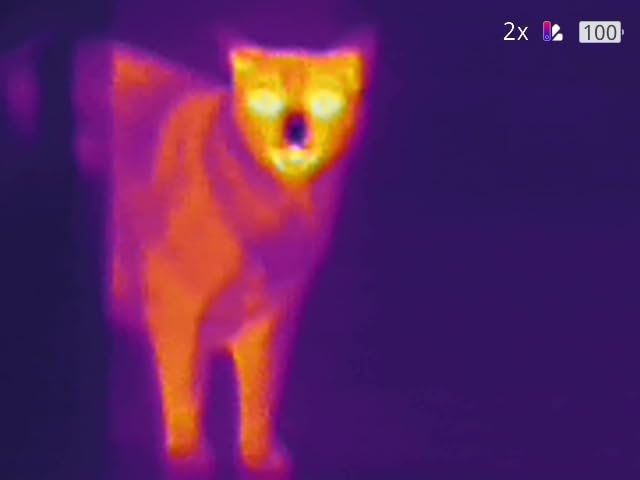
The 5000mAh internal battery is rated at up to 11 hours, which comfortably covers a long sit, and the housing takes a two meter drop. Wireless app control gives you live view, stills and video with audio, and it keeps working when you are out of cellular coverage.
Multiple palettes including white hot, black hot and a predator mode let you tune for a treeline versus a bare field. On mixed ground I would change palettes more often than most owners do.
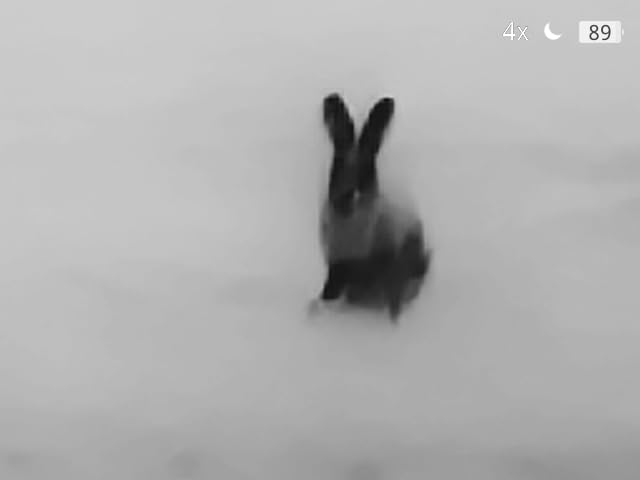
Where the TS004 earns its place
It is the rare budget thermal where nothing important is missing. Sealing, runtime, app control and a genuinely pocketable 70 gram body are all here, and the 402 rating history is the deepest in this group.
For hunters working CRP fields, pasture edges and short brushy draws within about 150 yards, it does everything the job asks and does it without a learning curve.
Where it falls short
All 8x magnification is digital, so the picture gets soft and grainy when you push it. Expect a heat blob past 150 yards rather than a species.
Streaming to a phone pulls the battery down faster than the rated figure, and the sensor can be damaged by pointing it at the sun or another very hot source. Neither matters on a normal coyote stand, but both are worth knowing.
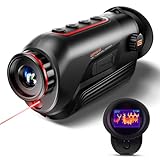
2. GOYOJO G210 – Best Budget Thermal Monocular for Close-Range Coyote Work
GOYOJO G210 Thermal Monocular, 256×192 Thermal Imaging Monoscope Camera for Adults, 10mm Focal Lens Vision Goggles Thermal Scopes for Night Hunting Camping
256x192 sensor
25Hz refresh
10mm lens, 17.5 degree FOV
Replaceable 18650, 6+ hours
Pros
- Finds rabbits and small mammals at 70-200 feet
- Replaceable 18650 cells are cheap and easy to carry
- Weather-sealed build with a tethered lens cap
- Small enough for a jacket pocket
- Customer support responds quickly
Cons
- 25Hz is less fluid on running animals
- Brightness resets to default after a power cycle
- No microphone so recordings are silent
The G210 is the least expensive way to find out whether a thermal handheld changes how you hunt. Owners use it on rabbit-sized and coyote-sized targets in pitch dark, high humidity and brush, and it holds up better than the price suggests.
The 10mm lens and 17.5 degree field of view give you a wide scan, which is the right trade for someone walking edges and checking brush piles. Six palettes plus brightness and contrast controls help you separate a warm body from warm dead grass.
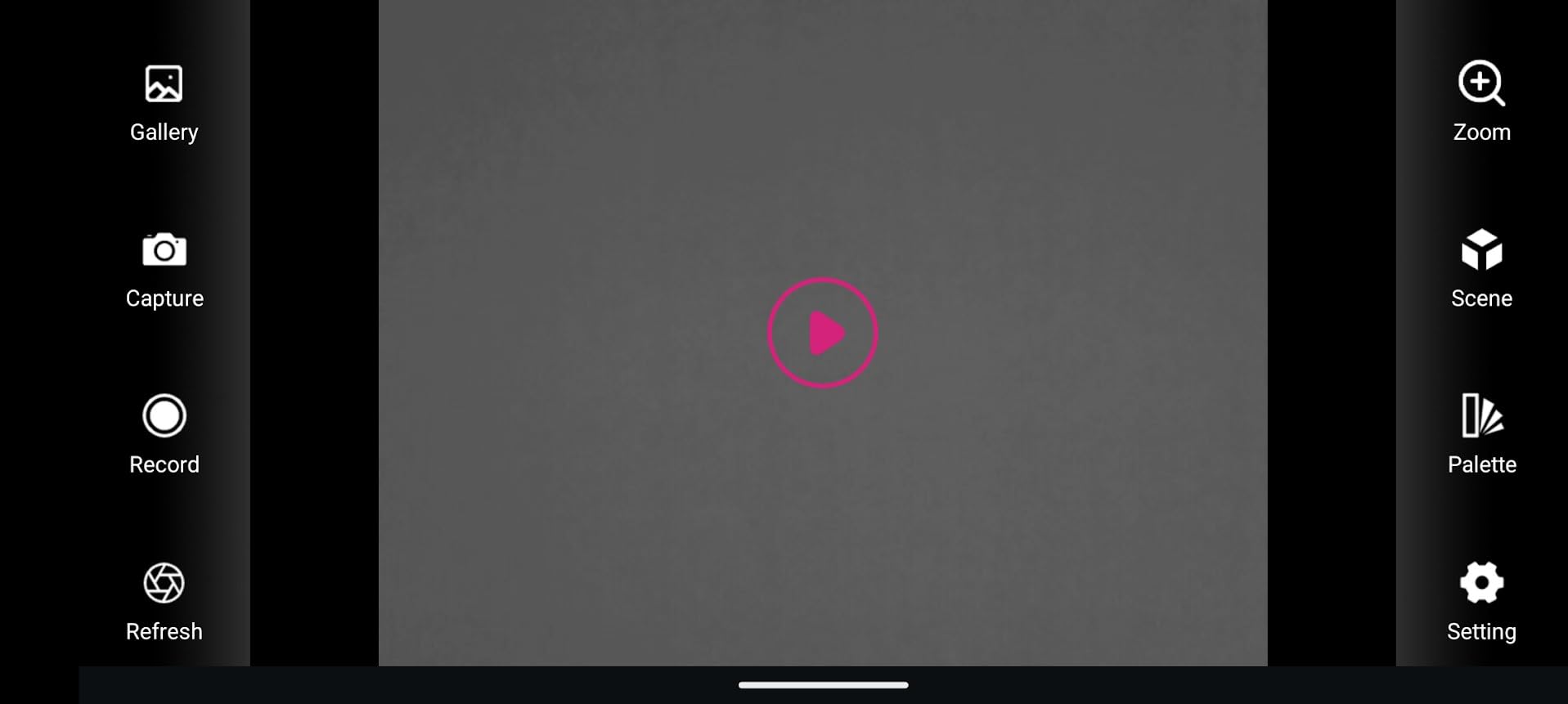
The replaceable 18650 cell is the detail that wins over cheaper rivals. You can carry three spare cells for the price of one sealed unit, and it charges over USB-C while running. Sixteen gigabytes of internal storage holds your footage without a card.
There is an integrated red laser dot for zeroing alignment, a wrist tether, a 1/4 inch tripod mount and a carry case in the box. It is a small list of thoughtful details that add up to a tool that gets carried.
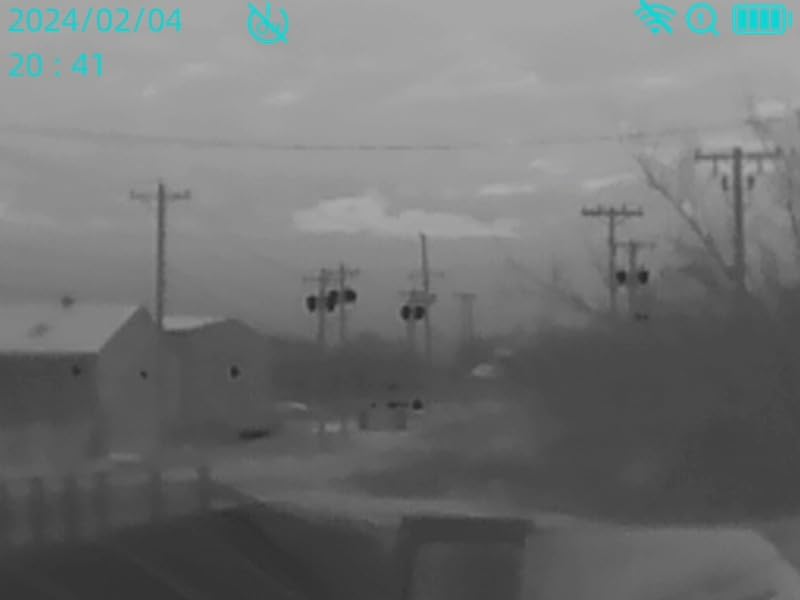
Where the G210 earns its place
This is the pick for someone hunting close ground, running coyote removal work, or wanting a backup scanner that lives in the truck door pocket. Under 200 feet it is a genuinely capable tool.
The 236 rating history and the consistent praise for build quality and support mean you are not gambling on an unknown device.
Where it falls short
A 25Hz refresh is the least fluid of the range here, so a coyote running flat out smears more than it would on a 50Hz unit. The 10mm lens is also the wrong tool for anything past a couple hundred yards.
Small annoyances add up: brightness resets after every power cycle, WiFi starts disabled, and there is no microphone, so your recordings are silent. Budget for a ten minute setup read before your first stand.
3. RIX Pocket K2 – Best Pocket-Sized Thermal Monocular for Scanning on Foot
RIX Pocket K2 Portable Thermal Monocular for Hunting, 256×192 (50Hz), Wi-Fi, Handheld Night Vision Monocular
256x192, NETD under 25mK
50Hz refresh
9mm lens
800x600 OLED
IP67, 200 g
Pros
- 50Hz refresh in a genuinely pocket-sized body
- NETD under 25mK picks up small heat sources
- Sliding lens cover removes the lost cap problem
- EIS steadies the handheld view
- 5-year manufacturer warranty
Cons
- Identifies critters out to roughly 150-200 yards
- Fixed focus is hard to dial in on small subjects
- Menu controls are fiddly
The Pocket K2 exists because the best thermal monocular is the one you actually carry, and this one disappears into a jacket. Owners use it on hikes and short hunts as much as on stands, and the 208 ratings lean heavily positive.
Sensitivity is the headline. A NETD under 25 millikelvins on a 12 micron sensor is meaningful when you are looking for a body that is only a few degrees warmer than the air around it, which is the normal condition for a coyote at night.
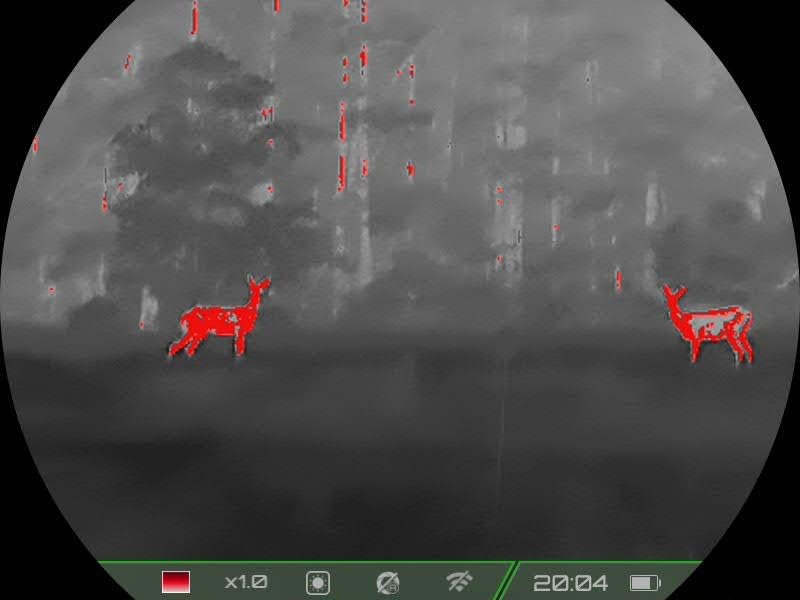
The 800×600 OLED display is larger than most screens in this class, and the 19.4 degree field of view is wide for a thermal. Electronic image stabilization reduces the shake that normally makes handheld scanning tiring.
Resolution Enhanced Technology simulates extra pixels for perceived sharpness, and the integrated sliding lens cover means you will not find a loose cap in your pocket at 3am. WiFi viewing to a phone runs with very little lag.
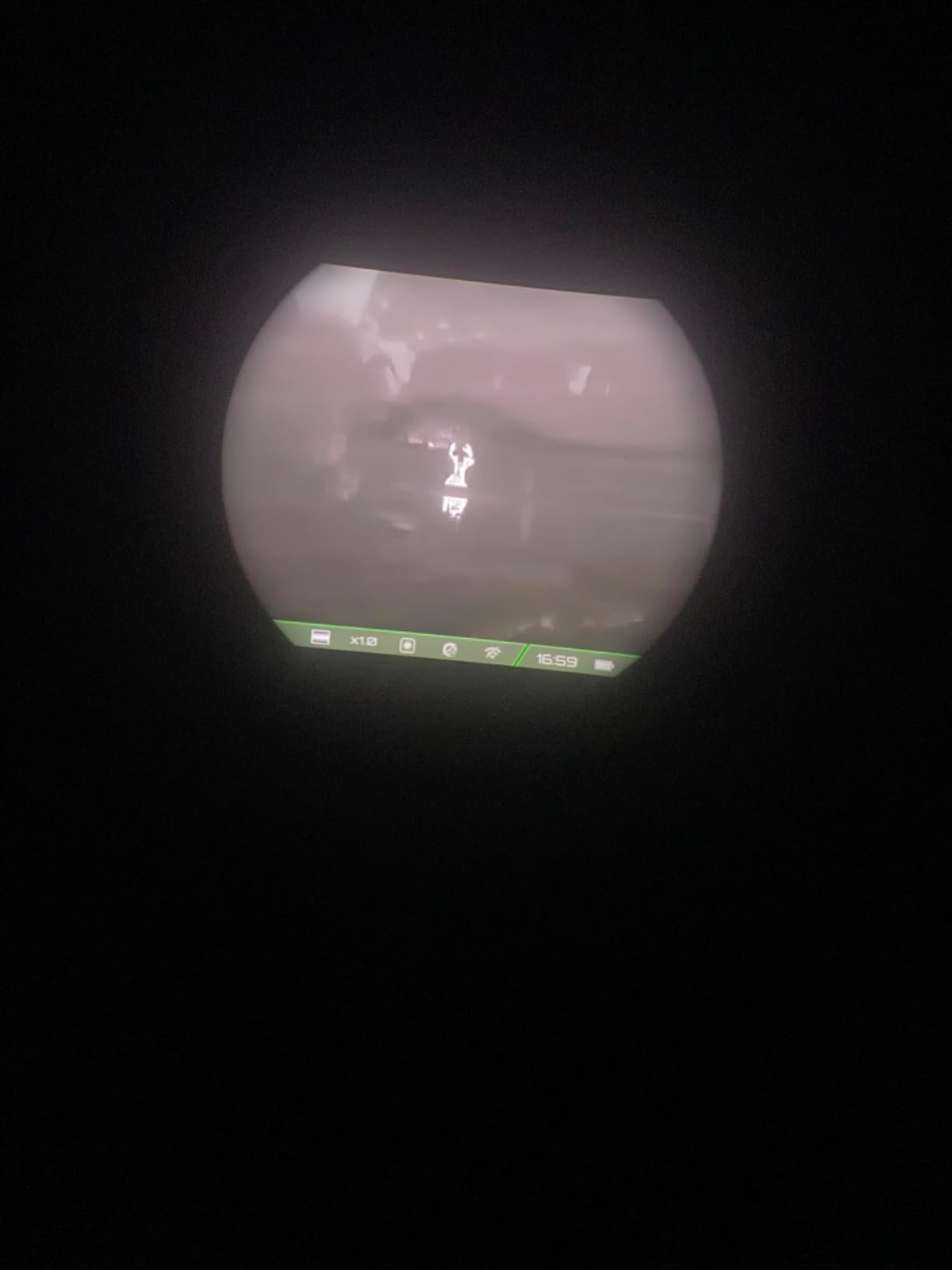
Where the K2 earns its place
For anyone who walks their hunting rather than sitting on a stack of rocks, this is the one. It is 200 grams, sealed to IP67, and it runs at 50Hz, which most budget models in this list do not.
The five-year warranty and the low one-star share make it a safer long-term buy than most of the entry tier, and the value owners describe is hard to argue with.
Where it falls short
A 9mm lens and fixed focus mean you are buying a wide scanner, not a long lens. Expect to identify small animals out to roughly 150 to 200 yards and no further, and expect some dialling to get a small subject sharp.
The menu system takes practice, and one detailed owner report describes a unit that stopped powering on after two months of light use. That is a single report, not a pattern, but it is the kind of thing that decides warranty service.
4. Teslong TTS260 – Best Thermal Monocular for Recording and Exporting Hunts
Teslong TTS260 Thermal Monocular 256 x 192, Super Resolution 512 x 384
256x192 with 512x384 super resolution
12mm lens, 25Hz
32GB, USB-C and HDMI
Pros
- 32GB built-in storage with USB-C and Mini HDMI output
- 800x600 OLED eyepiece is larger than most rivals
- Hotspot tracking and 8 color modes help isolate targets
- Operates from -4F to 122F
- Eight hour rated runtime
Cons
- Recognition quoted at only about 55 yards
- Digital zoom softens detail when magnified
- 1-year warranty is the shortest covered here
If your priority is documenting the night rather than reaching for the longest ID range, the TTS260 is built differently from everything else here. Thirty-two gigabytes of internal storage, USB-C and Mini HDMI output, and a card included in the box.
Super Resolution processing upscales the 256×192 image to 512×384 and it does sharpen outlines on a real animal. Owners looking for grain to hold onto at the end of the night will find that useful.
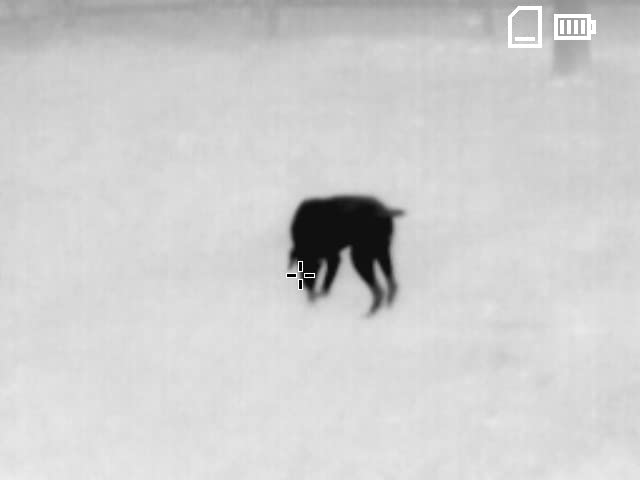
The 0.32 inch 800×600 OLED eyepiece is a genuine step up in comfort, with adjustable diopter and screen brightness and upgraded touch buttons. The operating range of -4F to 122F covers a January stand and a July afternoon.
Hotspot tracking locks onto warm objects in frame, and eight color modes give you room to tune. Battery life is rated at up to 8 hours per charge.
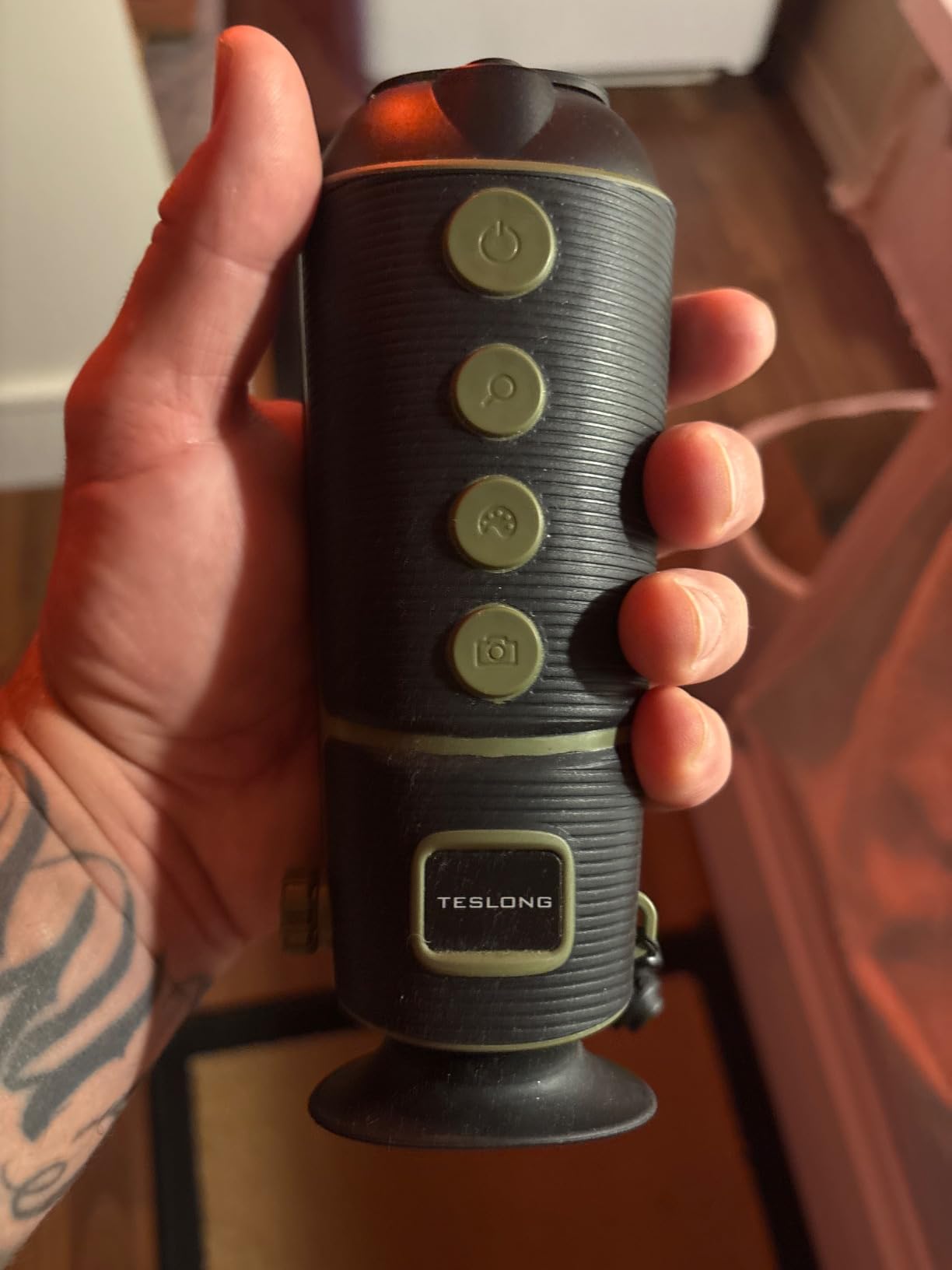
Where the TTS260 earns its place
Recording and sharing is the clear strength. A 32GB card in the box, HDMI out and a large eyepiece make it the easiest unit here to pull footage off and review at the truck.
If you run trail cameras, film hunts for review, or hand clips to other hunters, nothing else at this tier has that combination of storage and outputs.
Where it falls short
Range is the honest problem. Published recognition is about 55 yards, which is inside most of the distances you will want to work, and the 218 yard detection figure says nothing about species ID.
It also carries the highest one-star share in this group at 10 percent, and the 1-year warranty is the shortest here. If your hunting is open country at distance rather than close work, look at the RIX Pocket K3 instead.
5. ATN OTS XLT – Best Thermal Monocular with a Built-In Rangefinder
ATN OTS-XLT Compact Lightweight Thermal Viewer, 2-8x
50Hz sensor
25mm objective, 2-8x zoom
Smart rangefinder
10+ hour battery
Pros
- 25mm objective delivers real magnification on a coyote
- 50Hz refresh tracks moving animals smoothly
- Smart rangefinder built into the body
- 10+ hour runtime suits long sits
- Pocketable body with simple controls
Cons
- 2-8x band is narrower than the 1.5-12x rivals
- Lowest average rating in this group at 4.0
- Export restricted under ITAR
The OTS XLT is the odd one out in this list, and that is a strength. It uses a 25mm objective with 2-8x magnification instead of the wide 9mm to 15mm lenses on most entry thermals, which means it actually magnifies a coyote.
That matters more than raw resolution for a lot of hunters. Native magnification lets you hold an animal at a readable size instead of leaning on digital zoom, and the 50Hz sensor keeps a running coyote from smearing.
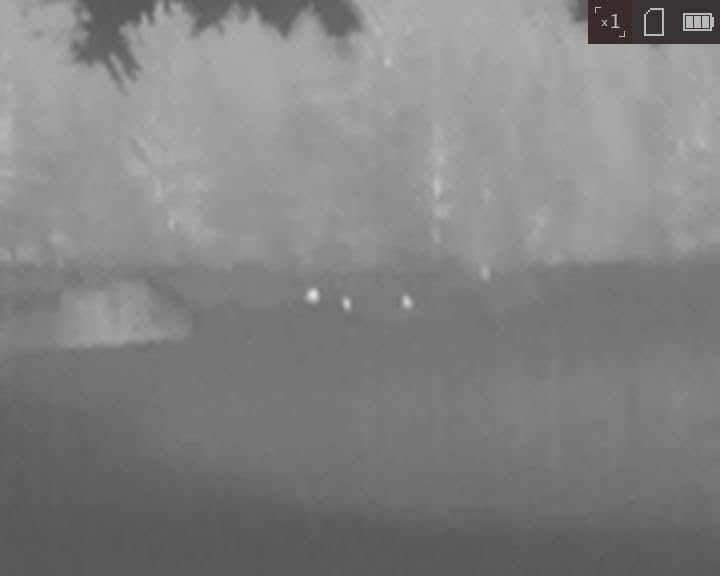
A smart rangefinder is built into the body, so you are not carrying a separate unit. Video and photo capture are included, and white hot, black hot and full color modes cover most conditions.
Battery life is rated at 10 hours or more, and the chassis is compact with straightforward controls that owners describe as easy to learn in the first ten minutes.
Where the OTS XLT earns its place
Pick this one if you want one device to locate, identify and range without a second box in your pocket. The 25mm lens and 2x-class starting point suit someone working 200 to 500 yard distances.
It is also the only unit in this list that pairs a real objective lens with a rangefinder, which is a combination the forum crowd keeps asking about.
Where it falls short
The 4.0 average is the lowest here, with 8 percent of ratings at one star and another 8 percent at two stars. Buyers in that group point at the menu friction around the rangefinder and the narrower zoom band.
It also sits in the upper cost tier in this roundup, and it is an ITAR-controlled product, which limits where it can be shipped and used. Buy it for the lens, not the brand name.
6. RIX Pocket K3 – Best 384×288 Thermal Monocular for Open Country
RIX Pocket K3 Thermal Monocular for Hunting, 384×288 Night Vision Monocular
384x288 sensor
15mm objective at 2x base
50Hz refresh
800x600 OLED
7.52 ounces
Pros
- 384x288 sensor in a 7.52 ounce body
- 50Hz refresh cuts motion blur on moving coyotes
- 15mm lens with detection up to 853 yards in controlled testing
- Replaceable power unit for overnight use
- 5-year warranty and IP67 sealing
Cons
- 2x base magnification crops the close-range scan
- 8GB internal memory is modest for long recordings
- Smaller review base at 113 ratings
Forum consensus keeps landing on the same point, that 384×288 is the minimum you want for coyotes, and the Pocket K3 is the lightest way to get there. It weighs 7.52 ounces and measures about 4.9 by 1.8 by 2.9 inches.
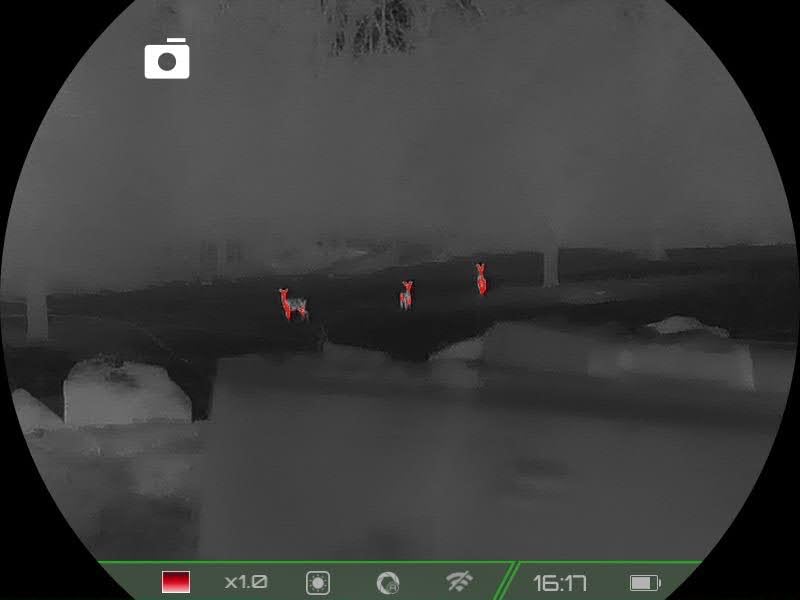
Owners credit the 384×288 sensor paired with a 15mm objective for the reach, and the 50Hz frame rate for staying smooth on animals that are moving. Published detection runs up to 853 yards under controlled testing, which is a controlled number, not a promise.
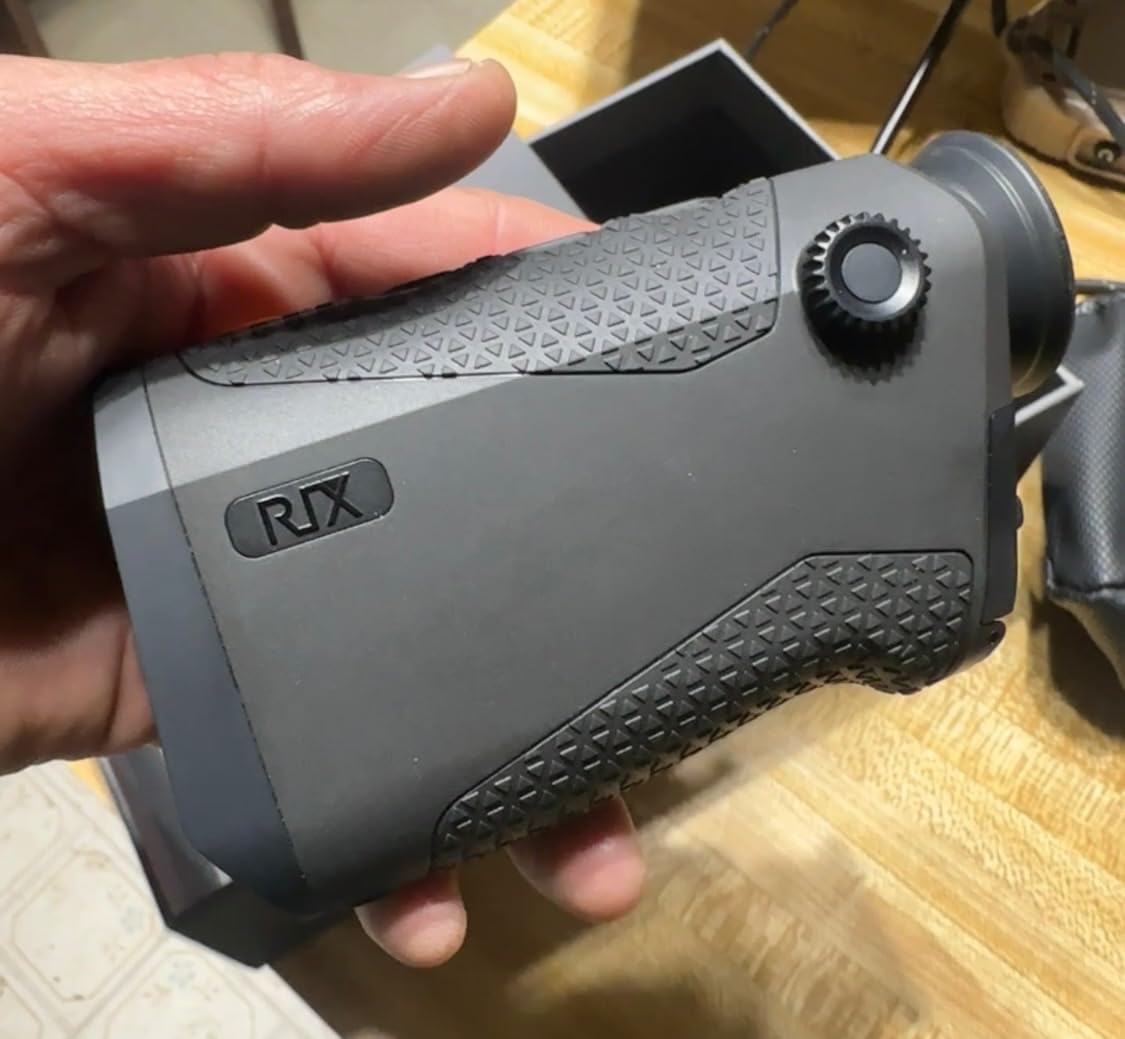
Electronic image stabilization steadies the handheld view and RET processing lifts contrast within what the sensor can actually deliver. The 800×600 OLED display is easy on the eyes over a long sit.
A replaceable power supply unit means you can swap in a fresh cell instead of leaving at 2am, and there is photo, audio and video recording with 8GB of internal memory plus WiFi transfer.
Where the Pocket K3 earns its place
For anyone hunting across open prairie, rangeland or long CRP strips, this is the balance point of the entire list. 384 pixels, a 15mm lens, 50Hz and a body you can hold up for three hours.
The 5-year warranty and the replaceable power unit are the two details that matter most for a tool you will use for a decade, and both are unusual in a compact thermal.
Where it falls short
The 2x base magnification is the trade. It gives you reach but it crops your close scan, so sweeping near cover is not as fast as with a 1x-class unit.
Eight gigabytes of internal memory runs out on a night of long recordings, and the 113 rating history is thinner than on the budget models it outperforms on paper. The manufacturer also notes that real range depends on temperature contrast, humidity, target size and terrain, which is exactly what we have been saying all article.
7. GOYOJO G215 – Best Value Thermal with a Longer 15mm Lens
GOYOJO G215 Thermal Imaging Monocular for Hunting, 256×192 (50Hz) Infrared Night Vision Telescope, 15mm Focal Lens Thermal Scopes for Outdoor Night Vision Camera Telescope
256x192 sensor, 12um pixels
50Hz refresh
15mm lens, 11.7 degree FOV
Replaceable batteries
Pros
- 15mm lens focuses better at distance than the 10mm G210
- 50Hz refresh for smooth moving-animal imagery
- Six palettes help separate animals from terrain
- Quick startup and one-handed operation
- Replaceable batteries with 6+ hours
Cons
- 11.7 degree field of view means more scanning
- No SD card slot so storage is fixed at 16GB
- 1-year warranty
The G215 is the G210 with the lens you actually want for coyotes. Fifteen millimeters instead of ten, and the published manufacturer figures jump from 1417 meters of human detection to a 254 meter recognition claim.
Those are manufacturer numbers for a human-sized target, so read them as an upper bound rather than a promise. What buyers report is more useful: better target focus and clarity than the 10mm model, with smooth 50Hz imagery of moving animals.
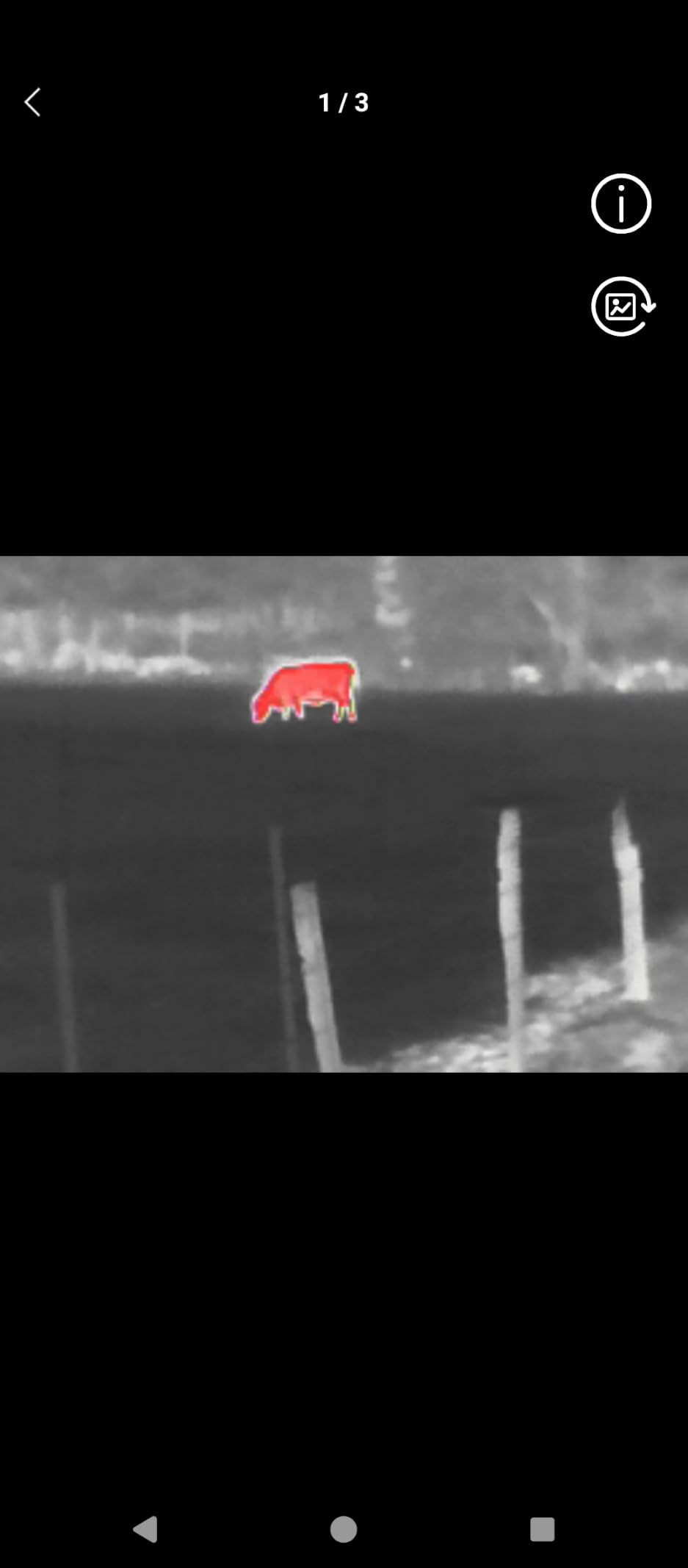
Six palettes including white hot, black hot, red hot, rainbow, iron red and glimmer give you real control when a treeline and a warm sky fight each other for contrast. Four times digital zoom is there for confirming a target.
Batteries are replaceable for 6+ hours of operation, the housing is IP65 and dust and impact resistant, and WiFi app control with USB-C handles recording and sharing.
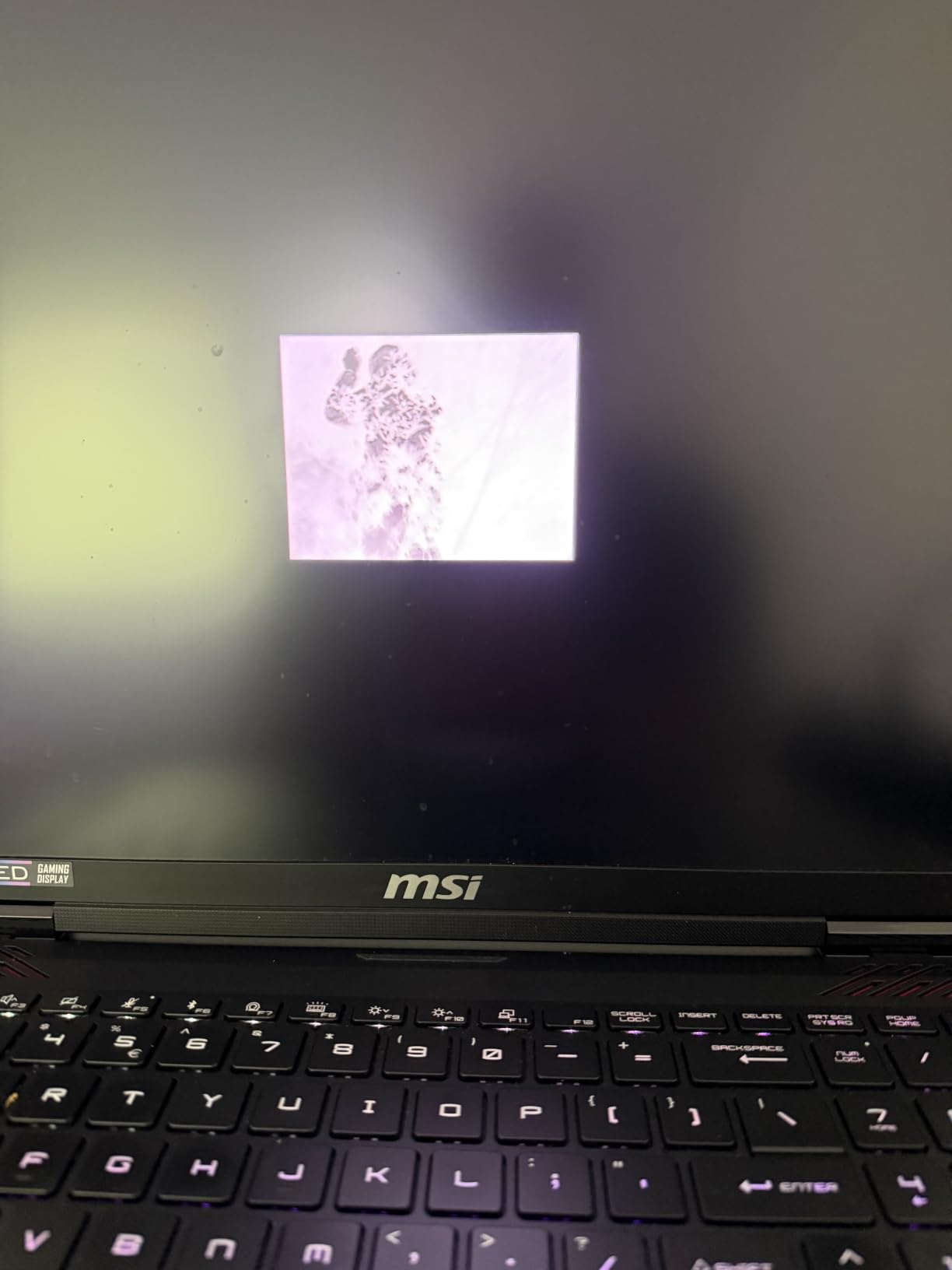
Where the G215 earns its place
If you want more reach than a 10mm lens gives you without stepping up to a 384 sensor, this is the value move in the list. The 50Hz refresh in this tier is unusual and it shows on a walking coyote.
It suits mixed terrain work where you need to check a woodlot and a field edge with the same body.
Where it falls short
The 11.7 degree field of view is narrow. You will sweep more ground to cover the same arc than with the G210, which matters when a coyote is moving and you are trying to hold it in frame.
Storage is fixed at 16GB internal with no SD card slot, the warranty is one year, and the listed weight of 1 kg is well above the pocket class. With 91 ratings, it also has the thinnest evidence base of the two GOYOJO models.
8. ATN BlazeSeeker-210 – Widest Zoom Range on a 256×192 Sensor
ATN BlazeSeeker-210 Thermal Imaging Monocular 256×192; 1.5-12x 12 Micron <35 NETD 50 Hz
256x192 sensor, 12 micron pixels
NETD under 35mK
1.5-12x magnification
MicroSD to 256GB
Pros
- 1.5-12x is the widest zoom band in this roundup
- MicroSD expansion to 256GB removes storage limits
- Built-in WiFi and app control for remote adjustment
- Compact 9.6 ounce body resists dust and slips
- 3-year manufacturer warranty
Cons
- NETD under 35mK is less sensitive than the leaders
- 256x192 resolution is low against 384 rivals
- Listing conflicts on refresh rate at 25Hz or 50Hz
The BlazeSeeker-210 is the zoom specialist. A 1.5-12x range on a 256×192 sensor lets you start wide, find a heat source, and narrow down to confirm without changing lenses or devices.
Two things set it apart from the other 256 models here: MicroSD expansion to 256GB, which no other compact model here offers, and autofocus, so you are not dialling focus on a coyote that is already moving.
Where the BlazeSeeker-210 earns its place
Recording is the reason to buy this one. 256GB of expandable card storage plus built-in WiFi and app control makes it the best tool here for documenting a night hunt properly.
The 3-year warranty and the dust and slip resistant chassis are also better than most of this tier.
Where it falls short
Sensitivity is the limit. NETD under 35 millikelvins trails the models in this list that sit under 25, and that gap shows up exactly when a coyote is only slightly warmer than the air, which is most nights.
There is also a specification conflict worth knowing about, because the feature list states 25Hz while the model name says 50Hz. Owners report the most polarized rating spread here, with 16 percent of reviews at two stars or one star. Zoom range is not resolution, and this is the clearest example in the list.
9. MiLESEEY TNV10PRO – Best Thermal Monocular With a True 320×240 Sensor
MiLESEEY TNV10PRO Thermal Monocular, 400×300 SR 320×240 IR Resolution, Aircraft Mg-Al Alloy, 13mm 50Hz Handheld Thermal Camera, Night Vision Imager, Hot Spot Tracking
True 320x240 IR sensor
400x300 super resolution
50Hz, 13mm lens
4500mAh, 12 hours
Pros
- True 320x240 sensor rather than upscaled imagery
- 50Hz refresh on an 800x600 OLED display
- Hotspot tracking locks onto targets quickly
- 12 hour battery with idle auto-off
- IP65 housing rated -20C to 60C
Cons
- Listed weight of 1.41 pounds in an alloy body
- Only 56 reviews
- well short of the evidence on the budget units
- 400x300 output is a processed figure
The TNV10PRO is the only unit here with a genuine 320×240 infrared sensor rather than a 256×192 core with processing stacked on top. That is real pixel count, and it is why the image holds together better in grass and brush.
Owners associate the difference with sharper detail on low contrast heat signatures, which is precisely the condition a coyote creates when it lies in cool ground cover.
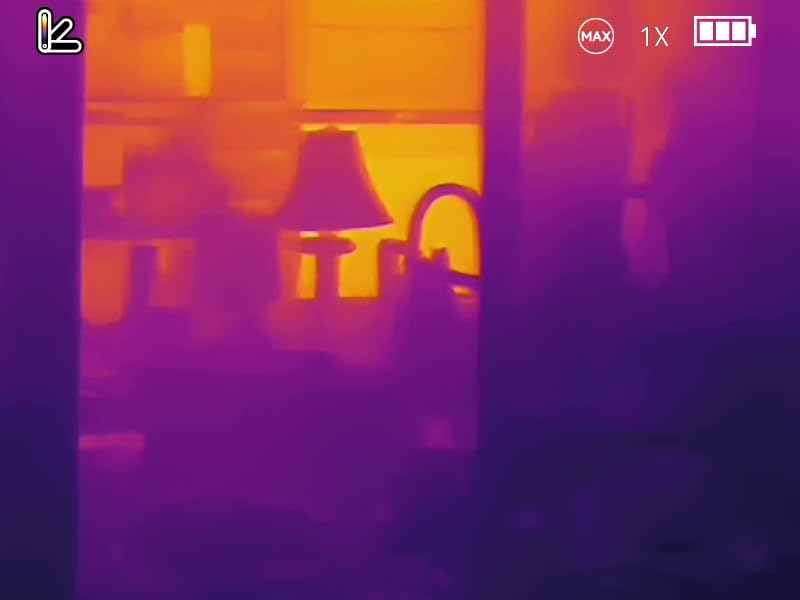
The 13mm lens with 50Hz refresh and an 800×600 OLED display gives a clean, responsive picture, and Hotspot Tracking automatically locks onto warm objects so you can find the animal while you keep your eyes up.
A 4500mAh battery is rated at up to 12 hours with 30 and 60 minute idle auto-off, and the housing is rated IP65 from -20C to 60C. Thirty-two gigabytes of internal memory records MP4 at 400×300 without needing a card.
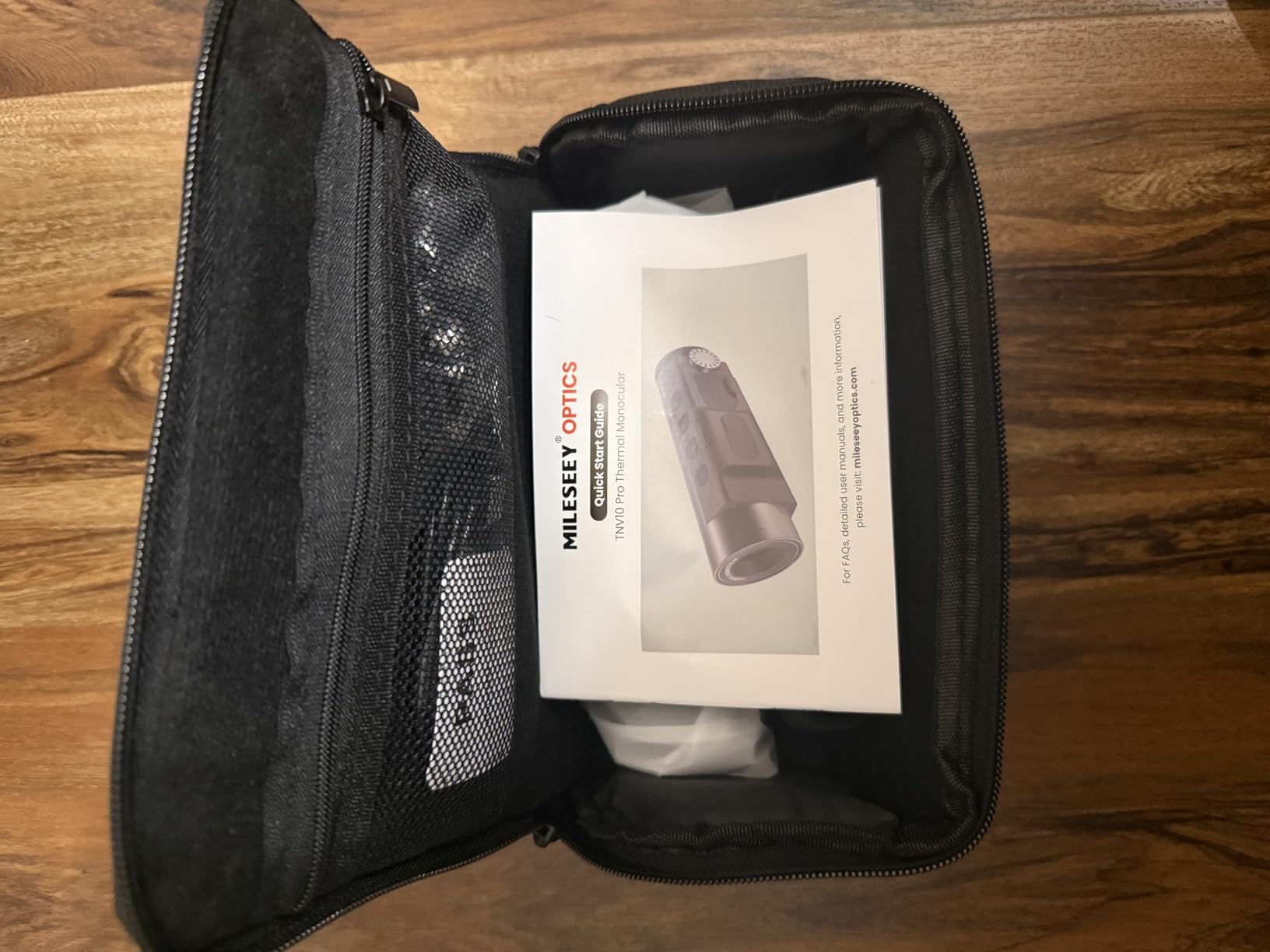
Where the TNV10PRO earns its place
It is the middle step between a 256 sensor and a 384, and for hunters working brush, tree lines and creek bottoms it is a smarter buy than spending on a 256 unit. Hotspot tracking is genuinely useful when scanning fast.
The 12 hour rated battery and the wide operating temperature range suit all-night sits in cold weather.
Where it falls short
It is a physically big device. The listed 1.41 pounds and the aircraft magnesium-aluminium body are a real step up in bulk from the pocket models in this list, and that changes whether you carry it on a walk.
With 56 ratings the evidence here is thinner than on the budget models, and 12 percent two-star ratings is one of the higher negative shares in the group. The 400×300 output is also a processed figure derived from the 320×240 sensor, so judge it on the native count.
10. Pulsar Axion Compact – Best Premium Thermal Monocular for Low Contrast
Pulsar Axion XQ19 Compact Thermal Monocular, 384×288 Sensor
384x288 sensor, 17um pixels
NETD under 18mK
19mm f/1.0 lens
640x400 AMOLED
8.8 ounces
Pros
- NETD under 18mK holds up in rain humidity and fog
- 19mm f/1.0 aperture for a brighter long-range image
- 78 percent five-star ratings
- the strongest positive share here
- Removable APS3 battery runs all night
- 5-year limited warranty
Cons
- Menu system needs navigation to change palettes
- Smallest review base at 40 ratings
- 1.5-6x zoom is narrower than the ATN options
The Axion Compact is the specification leader in this roundup. A 384×288 sensor with 17 micron pixels and NETD under 18 millikelvins, behind a 19mm f/1.0 lens, in a body weighing 8.8 ounces.
That NETD figure is the reason to care. Lower sensitivity numbers mean the sensor can resolve smaller temperature differences, which is what carries you on a humid night or in light rain when a coyote is barely warmer than the ground.
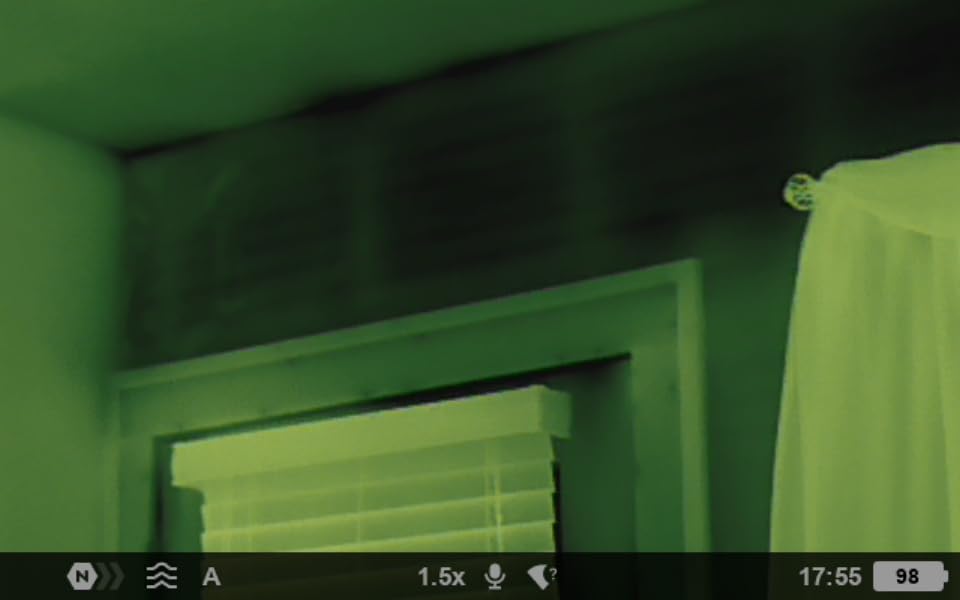
The f/1.0 aperture gathers light faster than the f/1.2 and f/1.5 lenses common in this class, which shows up as a brighter image at distance. The 640×400 AMOLED display stays responsive in cold temperatures and gives deeper blacks than an LCD.
The removable APS3 battery runs all night, photo and video recording works through the companion app, and the unit carries a 5-year limited warranty with IPX7 sealing.
Where the Axion Compact earns its place
This is the pick for humid summers, fall fronts and any night where the thermal contrast is poor. Owners rate the picture quality as better value than older FLIR Scout models and comparable to more expensive tools.
At 8.8 ounces with a 19.5 degree field of view and 1.5-6x zoom, it is a scanner first and a spotting tool second, which is the right balance for a coyote hunter.
Where it falls short
The menu system is the recurring complaint. Changing palettes takes menu navigation rather than a single dedicated button, and on a stand that is friction you notice.
Forty ratings is the smallest review base in this list, so there is less long-term history behind it than the cost suggests. One owner received a battery dead on arrival that would not hold a charge, and the unit is export controlled under the EAR, which limits where it can be shipped and used.
How Far Can a Thermal Monocular Actually Identify a Coyote?
A coyote is roughly 20 to 30 pounds of animal walking through air that is often within a few degrees of its own body temperature. That is the hardest common target in the outdoors, and it is why the range figure on the box is nearly meaningless on its own.
Three numbers get thrown around, and they are not the same thing. Detection means you see there is a warm thing out there, recognition means you can tell it is an animal.
Identification means you can tell it is a coyote and not a deer or a dog. Only that third one matters before you shoulder a rifle.
The gap between them is enormous in this product class. The Teslong TTS260 is published at up to 218 yards of detection and about 55 yards of recognition. TOPDON publishes detection up to 410 meters with clear detail inside 100 yards on the TS004. Those two numbers sitting in the same sentence is the entire lesson of this article.
Working expectations by sensor tier, based on what owners of these specific units report:
256×192 at 13mm or wider (TOPDON TS004, GOYOJO G210, RIX Pocket K2): reliable detection of coyotes out to a few hundred yards, species-level ID generally inside 100 to 150 yards, and nothing reliable beyond that on a coyote.
256×192 at 15mm with 50Hz (GOYOJO G215): the same ceiling, with a tighter, brighter image at the far end of it.
256×192 with wide 1.5-12x zoom (ATN BlazeSeeker-210): zoom range is not resolution. Owners caution against trusting digital zoom past roughly 200 yards.
320×240 true sensor (MiLESEEY TNV10PRO): a genuine step up in pixel count rather than processing, which helps most in grass and brush where a coyote is partly masked.
384×288 at 15mm or 19mm (RIX Pocket K3, Pulsar Axion Compact): the tier forum consensus calls the real minimum for open-country coyote ID, and the two models here back that up with the widest usable margins.
Conditions move all of these numbers. A big temperature swing between the animal and the air helps you, a night where the ground is warmer than the sky hurts you, and fog is the worst of all. Buying a unit one tier above what you strictly need is how you protect your margin on the nights that matter.
Thermal Monocular vs Thermal Scope: Which to Buy First
Buy the monocular first. Almost every hunter we compared notes went thermal scope first, then ended up scanning with a handheld anyway because a scope only shows you what you have already pointed at.
A monocular lets you work a whole section without flagging your position, confirm species before you start a calling sequence, watch a coyote respond to a call in real time, and find a downed animal in tall grass after the shot. A scope does none of that, and a spent night with nothing to shoot is a wasted night.
Scope second makes more sense. Once you know what a coyote looks like at 400 yards through your thermal, you can pick glass that matches the job and the same sensor tier discussion applies. Pairing a 384 handheld with a 384 scope keeps your mental model of the image consistent.
Our broader picks for general thermal and night vision gear, if you are building a kit rather than buying one optic, are in our guides to the best thermal monoculars and the best night vision monoculars. If your priority is documenting heat loss around the house instead, our best thermal imaging cameras for home insulation guide covers that side of the market.
How to Choose a Thermal Monocular for Coyote Hunting
Seven criteria decide this purchase, and only the first one is really a purchase criterion. The rest are how you avoid being disappointed on a January night.
1. Sensor resolution. 384×288 is the practical minimum for open-country coyote work, which matches the recurring forum consensus. 256×192 is an honest close-range scanner, and the Teslong TTS260 at 55 yards of published recognition shows where that tier ends.
2. NETD, the sensitivity number. Lower is better. Under 25 millikelvins is a solid threshold, and the Pulsar Axion Compact at under 18 millikelvins is why it leads in poor contrast.
3. Refresh rate. 50Hz tracks a running coyote cleanly. 25Hz units, including the GOYOJO G210, are fine on a walking animal and marginal on a sprint.
4. Objective lens and base magnification. A 1x-class wide lens scans open country fast. A 15mm or 19mm lens at 2x holds an animal at a readable size. You are choosing between sweeping and holding, and most hunters need one of each eventually.
5. Battery format and runtime. Replaceable 18650 cells, like the GOYOJO G210, let you carry spares and solve cold-weather drain. An internal cell like the TOPDON TS004 is simpler and rated longer. Either way, carry a charged spare for a January sit.
6. Weight and sealing. The thermal you carry is the thermal you use. A 7.52 ounce unit like the RIX Pocket K3 gets used on a walk, a 1.41 pound alloy body does not. IP67 handles rain, fog and humidity; IP65 handles drizzle.
7. Recording and warranty. WiFi app control, onboard video and expandable storage matter if you review your hunts, and warranty length tells you how a brand expects to be treated. Five years on the RIX units, one year on the Teslong and GOYOJO G215.
One more note on equipment you will see recommended: imported and grey-market thermal units often use the same sensor names with different actual performance and offer no real warranty support. For a tool you will depend on in the dark, a brand with a US warranty is worth the difference.
Frequently Asked Questions
What is the best thermal monocular for coyote hunting?
The TOPDON TS004 is our best overall pick, and the GOYOJO G210 is the budget option. Both use a 256×192 sensor, which we consider honest close-range scanners. If your hunting crosses open ground at 300 yards or more, move up to a 384×288 unit such as the RIX Pocket K3 or the Pulsar Axion Compact.
How far can a thermal monocular identify a coyote?
Realistically, a 256×192 unit identifies a coyote inside 100 to 150 yards, and the Teslong TTS260 is published at about 55 yards of recognition against 218 yards of detection. A 384×288 sensor with a 15mm or 19mm lens is the tier most hunters treat as the real minimum for open-country identification. Manufacturer detection figures are measured against human-sized targets and are not coyote ranges.
Do I need 640 resolution to hunt coyotes effectively?
No. A 384×288 sensor with a 15mm or 19mm lens is the tier most experienced hunters treat as sufficient for coyotes. Several owners running higher-resolution gear argue you would hardly kill more with a 640 unit than with a good 384 that has the right native magnification and holds zero. 640 starts to matter for mixed big-game and long-range work.
Should I buy a thermal monocular or a thermal scope first?
Buy the monocular first. A handheld lets you scan a section without flagging your position, confirm species before calling, watch a coyote respond, and find downed animals, none of which a scope can do. Once you know what you are looking for, choose a scope at the same sensor tier so the image looks familiar.
Can you shoot a coyote with a thermal monocular?
You can hunt with one and use it to identify the animal, but a handheld monocular is not a sighting device on a moving target. Treat it as a spotting and identification tool, positively identify the species before you fire, and follow your state night hunting laws.
Which is better for coyote hunting, thermal or night vision?
Thermal works in total darkness, through brush and in light rain where image-intensified night vision struggles. Night vision gives better detail and depth perception at close range on a still animal and is far cheaper at the entry level. For locating and identifying coyotes across open ground at night, thermal is the better tool.
How much battery life do I need for an all-night coyote stand?
Plan on a full night, which means a unit rated near 8 hours or more, or a replaceable battery system you can swap. The TOPDON TS004 is rated at 11 hours and the MiLESEEY TNV10PRO at 12, while the GOYOJO G210 uses replaceable 18650 cells. Cold weather cuts runtime, so carry a charged spare regardless of the rated figure.
Bottom Line: The Best Thermal Monoculars for Coyote Hunting in 2026
Ten thermal monoculars, one decision. The TOPDON TS004 is the best thermal monocular for coyote hunting overall, with sealed construction, long runtime and the deepest rating history in the group.
The GOYOJO G210 is the budget pick for anyone hunting close ground. The RIX Pocket K3 is the one to buy for open country, because 384×288 with a 15mm lens in a 7.5 ounce body is what this job actually asks for.
Whichever you choose, learn its palettes before you need them, carry a spare battery in January, and positively identify the animal before you fire. We earn a commission from purchases made through our links, at no additional cost to you.