
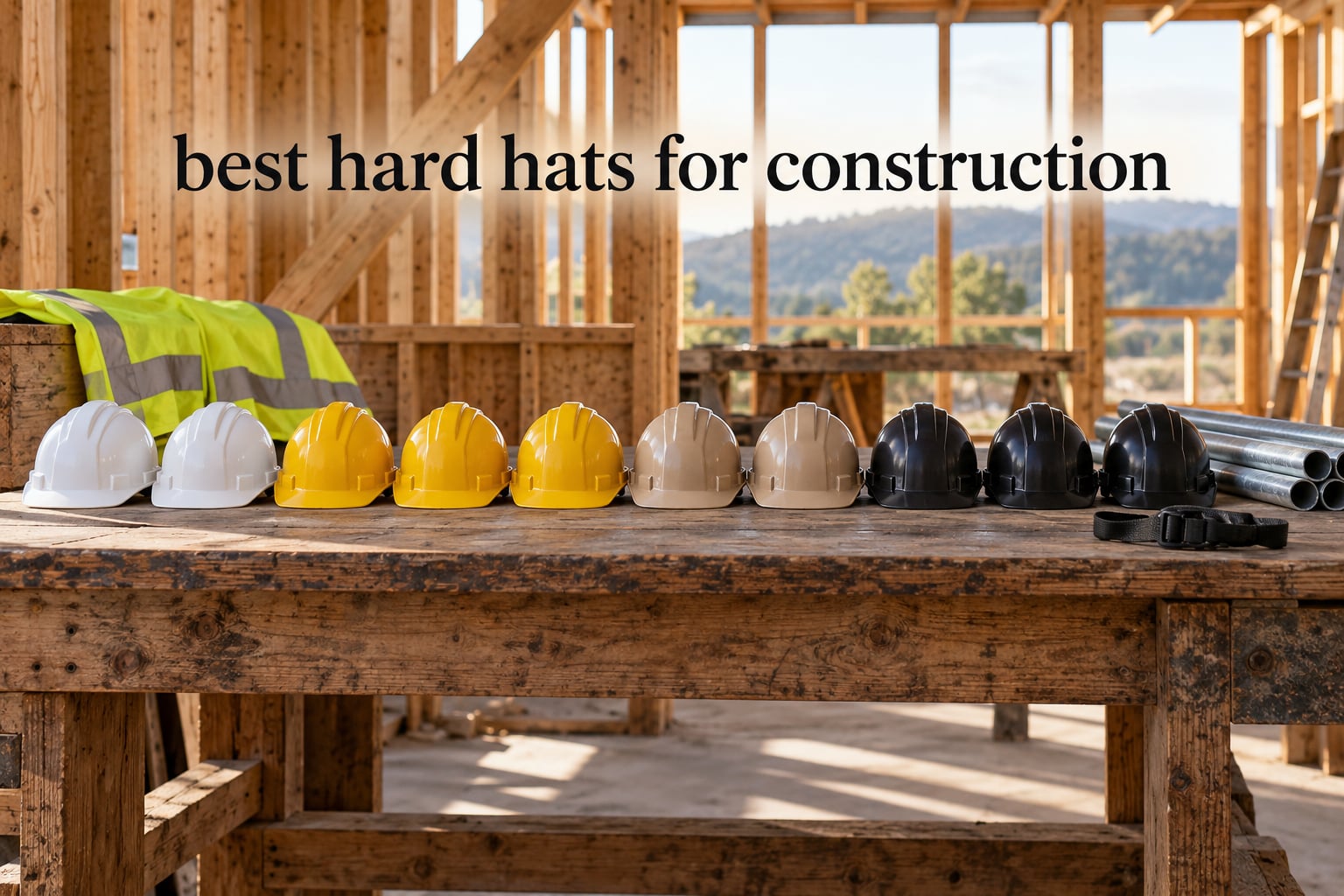
Most people buy a hard hat the way they buy a coffee cup: pick a color, check the size feels right, get to work. That approach gets you through most days, but it also produces the two complaints we hear constantly on jobsite forums — helmets that ride up above the forehead, and shells stamped with an electrical rating nobody can explain. Both problems come from treating a safety helmet like a commodity instead of a piece of personal protective equipment with a published specification.
This guide covers the best hard hats for construction by reading those specifications first. We compared ten full-brim and cap-style helmets on the things that actually decide whether a hat protects you: ANSI/ISEA Z89.1 impact Type, electrical Class, shell material, suspension geometry, adjustment range and how the helmet sits on the forehead after eight hours. Every pick below is a certified helmet sold for construction, industrial, utility, mining, forestry or electrical work.
Three variables narrow the list almost instantly. First, your trade — general construction crews do not need the same shell as a welder standing near radiant heat, and electricians need a dielectric rating. Second, brim style — cap style for indoor and tight framing work, full brim for outdoor sun, rain and side impact. Third, ventilation priority — a vented shell is dramatically cooler in summer but the vent openings are why most vented hats carry a Class C rating rather than Class E.
If you read nothing else, start with the comparison table below, then scroll to the product that matches your trade. Our team spent weeks comparing published specifications, certification markings and owner feedback across the ten helmets reviewed here, and the differences between them are far more than cosmetic.
Table of Contents
Top 3 Best Hard Hat Picks for Construction in 2026

Pyramex Ridgeline Full Brim
- ABS shell
- 4-point ratchet suspension
- ANSI Z89.1 Type 1 Class C G and E
- Full brim
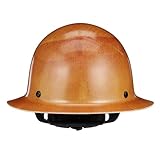
MSA Skullgard Full Brim
- Phenolic resin shell
- Fas-Trac III ratchet suspension
- 350F radiant heat rating
- Type 1 Class G

Klein Tools 60347 KARBN Vented
- Vented Type 1 Class C shell
- Padded sweatband and top pad
- Rechargeable headlamp included
- ANSI Z89.1 and CSA Z94.1
Best Hard Hats for Construction at a Glance (October 2026)
All ten helmets in this roundup, with the specification that decides which one belongs on your head. Certification markings are taken from the manufacturer listing and the molded shell, not from marketing copy.
| Product | Specifications | Action |
|---|---|---|
| Pyramex Ridgeline Full Brim |
|
Check Latest Price |
| MSA Skullgard Full Brim |
|
Check Latest Price |
| Klein Tools 60347 KARBN Vented Full Brim |
|
Check Latest Price |
 LANON Full Brim FRP LANON Full Brim FRP |
|
Check Latest Price |
 ACERPAL Full Brim 6-Point ACERPAL Full Brim 6-Point |
|
Check Latest Price |
 LIFT Safety DAX Carbon Fiber Full Brim LIFT Safety DAX Carbon Fiber Full Brim |
|
Check Latest Price |
 Jackson Safety Cowboy Full Brim Jackson Safety Cowboy Full Brim |
|
Check Latest Price |
 AFP Fiber Full Brim 6-Point AFP Fiber Full Brim 6-Point |
|
Check Latest Price |
 GREEN DEVIL Vented Full Brim GREEN DEVIL Vented Full Brim |
|
Check Latest Price |
 PACIFIC PPE Full Brim PACIFIC PPE Full Brim |
|
Check Latest Price |
1. Pyramex Ridgeline Full Brim: Best Overall Construction Hard Hat
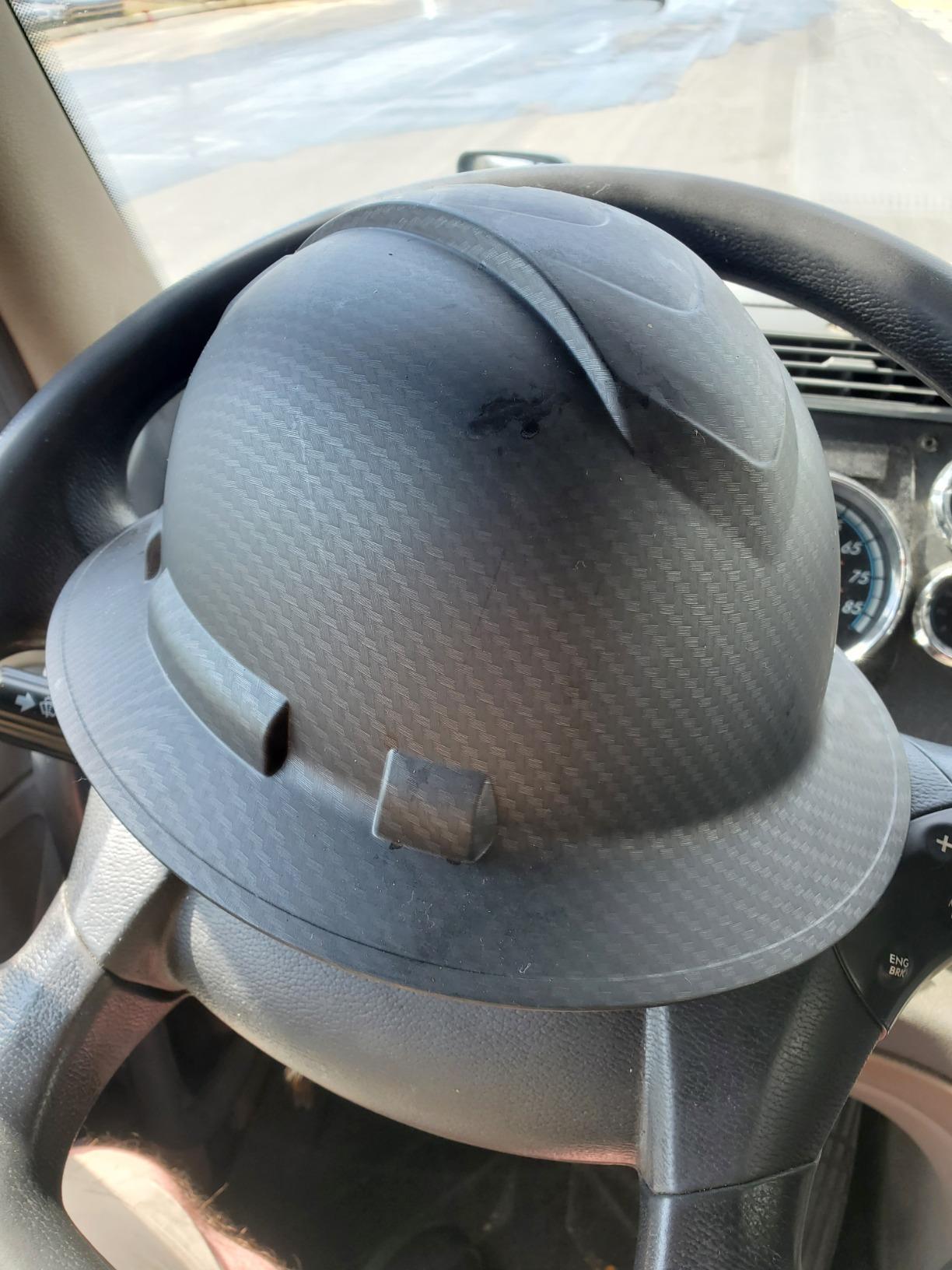
Pyramex Ridgeline Full Brim Hard Hat 4 Point Ratchet Matte Black Graphite Pattern
Type 1 Class C G E
ABS shell
4-point ratchet
Full brim
1.6 oz listed
Pros
- Lightweight ABS shell comfortable for full shifts
- Smooth 4-point ratchet adjustment
- Full brim sheds sun rain and debris
- Replaceable brow pad suspension and headband
- Protected from -22F to 140F
Cons
- Not vented so it runs warm in hot climates
- Tall shell profile even when dialed low
- Suspension eventually needs replacing
The Ridgeline is the hardest working recommendation in this roundup, and the reason is the size of the evidence behind it. Close to 19,000 owner reviews hold a 4.7 average, and that volume does something no amount of spec-sheet reading can: it tells you how the shell, the ratchet and the brow pad behave after a few years of daily jobsite abuse. The listing carries ANSI Z89.1-2009 Type 1 with Class C, G and E ratings, which is broader electrical coverage than most full-brim shells at this tier.
Construction is a top-impact environment. Scaffolding, formwork, stacked material and dropped tools land on the crown of the head far more often than they strike the side, which makes a Type 1 shell entirely appropriate for framing, roofing, concrete and general site work. The ratchet suspension lets you dial the shell down onto your forehead while the helmet is on, which is the single most important fitting step and the one most people skip.
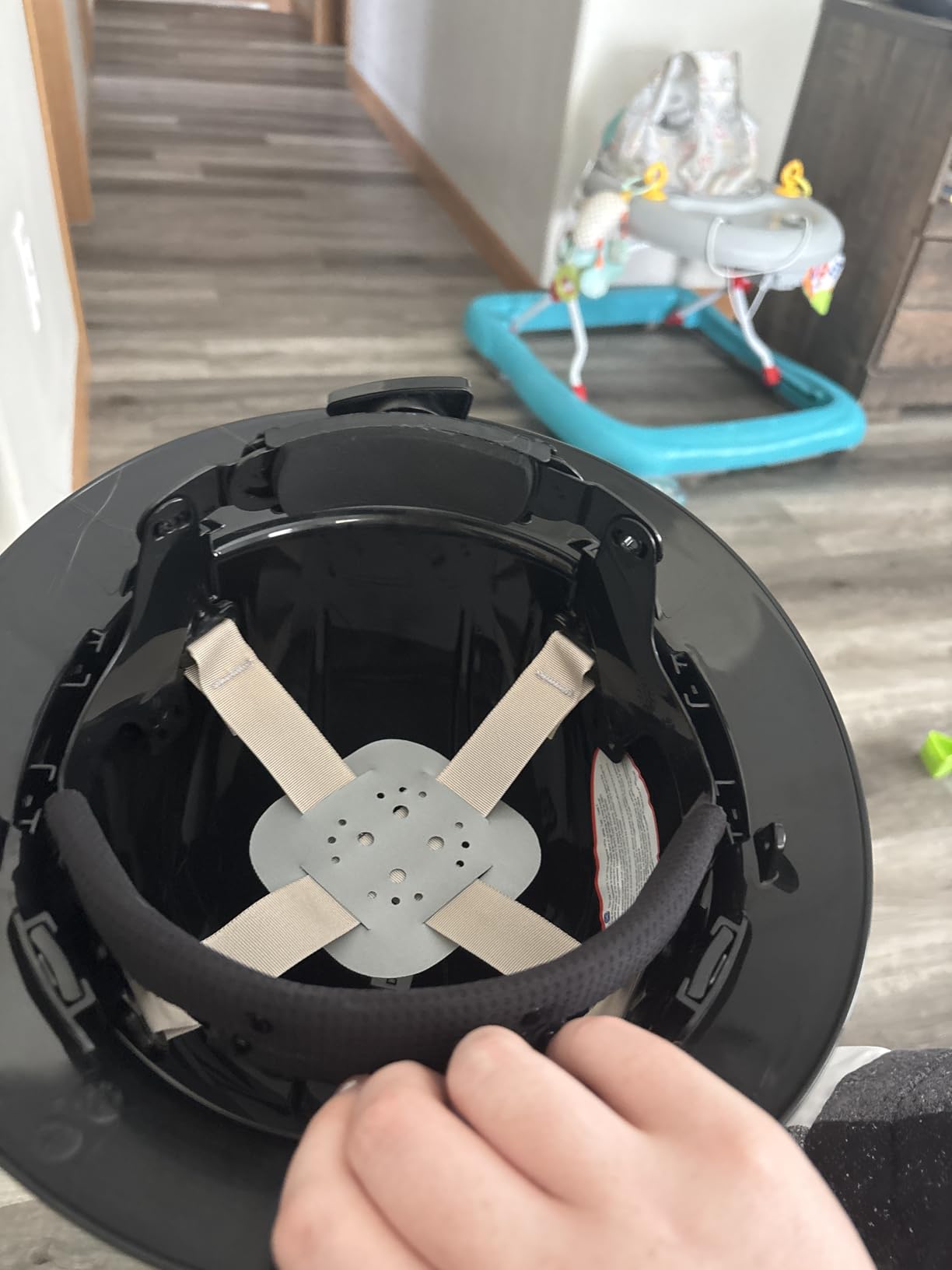
The ABS shell is listed at 1.6 ounces, and owners describe it as close to weightless after the first few minutes. Replaceable soft brow pad, suspension and headband are all sold separately, so a worn-out suspension does not mean a retired helmet, and the listed protective range runs from -22F to 140F. The one real limitation is heat: this shell is not vented, so on a July site in direct sun the headband gets damp and the shell holds heat. Owners who hit that generally move up to a vented variant of the same Ridgeline line rather than abandoning the brand.
How the Ridgeline fits and where it struggles
Fit is strong for most head shapes thanks to the 4-point ratchet, which converts to a 6-point configuration if you want the brim weight carried more evenly. The recurring complaint is that the shell profile is tall, so even dialed down it can read as sitting slightly high on smaller heads. If your issue is a helmet riding above the forehead, work the ratchet harder before you change models. The rear edge can also catch on longer hair when the helmet is removed, and the suspension eventually stretches. Both are maintenance items rather than certification problems, and the replaceable-parts program is why this helmet tends to appear twice in a worker’s purchase history.
Who should buy the Ridgeline and who should not
Buy it if you are a general construction, framing, roofing or masonry worker who wants one certified helmet covering Type I impact plus Class C, G and E exposure, with a review history large enough that you are not gambling. It is also a safe single crew standard because the ratchet adjustment is simple enough to teach in a toolbox talk. Skip it if your work is primarily outdoors with year-round summer wear, because there is no airflow in this shell. Electrical linemen should also note that a vented shell is the better companion where a dielectric rating matters more than cooling; the Klein 60347 or the AFP fiberglass fits those cases better.
2. MSA Skullgard Full Brim: Best for High Heat and Welding
MSA 475407 Skullgard Full-Brim Hard Hat with Fas-Trac III Ratchet Suspension | Non-slotted Hat, Made of Phenolic Resin, Radiant Heat Loads up to 350F – Standard Size in Natural Tan
Phenolic resin shell
Type 1 Class G
Fas-Trac III ratchet
350F radiant heat
15.84 oz
Pros
- Phenolic shell handles high radiant heat
- Exceptionally light and comfortable for all-day wear
- Fas-Trac III adjusts firmly without pinching
- Long service life and repeat purchases
- Made in USA with SEI certification
Cons
- Suspension can sit high on very large heads
- Larger suspension insert may need separate purchase
- Limited color range with no black option in some regions
The Skullgard is the pick when heat, not impact, is the deciding factor. Phenolic resin is a thermoset material that holds its integrity under radiant heat far better than thermoplastic shells, and this model is rated for radiant heat loads up to 350F. That number matters in steel mills, welding bays, foundry work, open-pit mining, petrochemical refining and rubber manufacturing — environments where an ABS or HDPE shell can soften or deform near radiant sources.
It carries ANSI/ISEA Z89.1-2014 Type I, top impact, Class G, and is third-party tested and SEI certified. Class G is a limited-use rating, so this is not the helmet for deliberate work on or around live high-voltage equipment. The Fas-Trac III ratchet suspension is the reason it has survived decades of use: flush rear lugs remove the pressure points that make cheaper suspensions dig into the back of the head, three nape strap levels let the cradle sit where you want it, and the contoured comfort pad is shaped to improve airflow and avoid pulling hair.
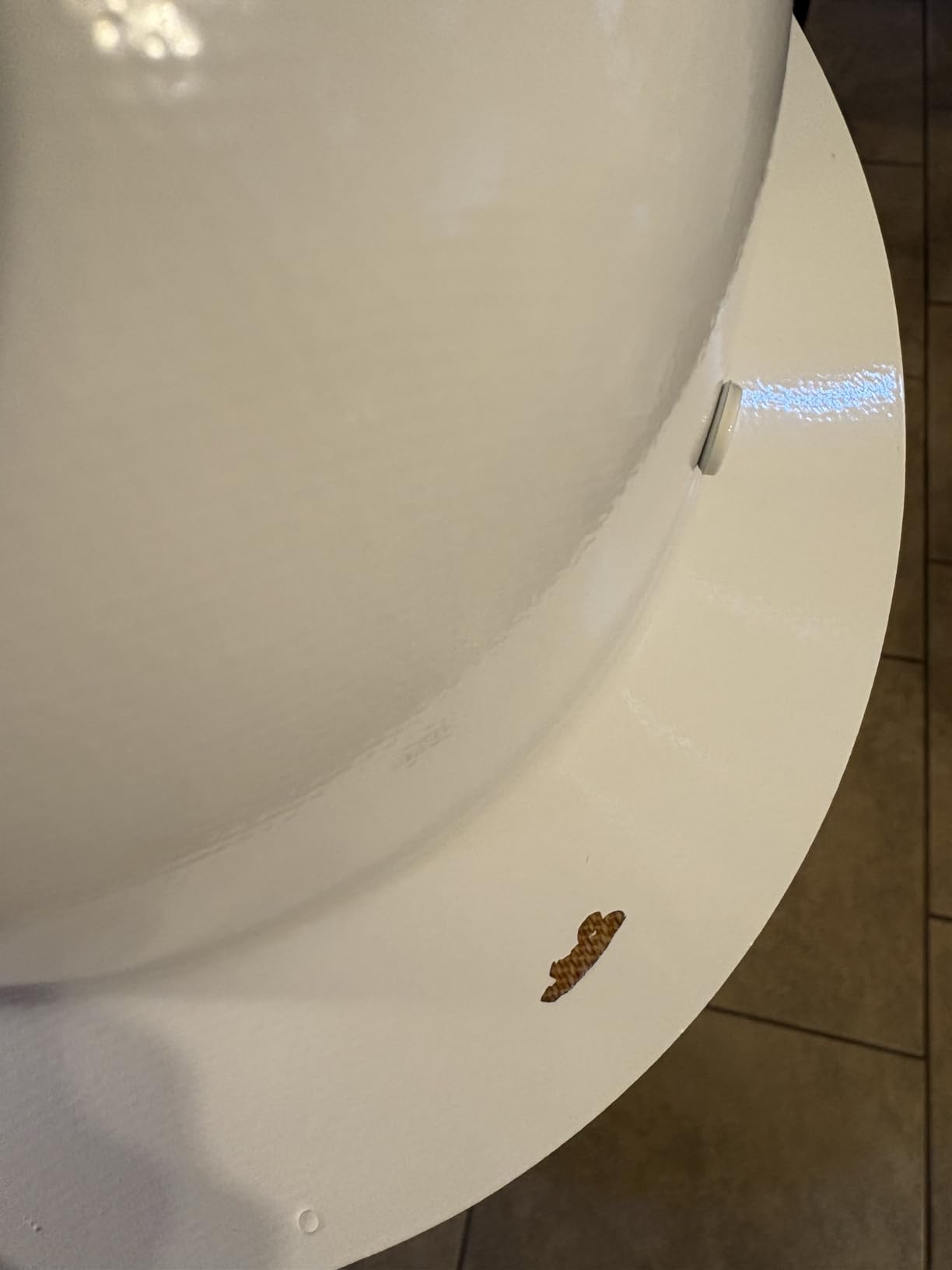
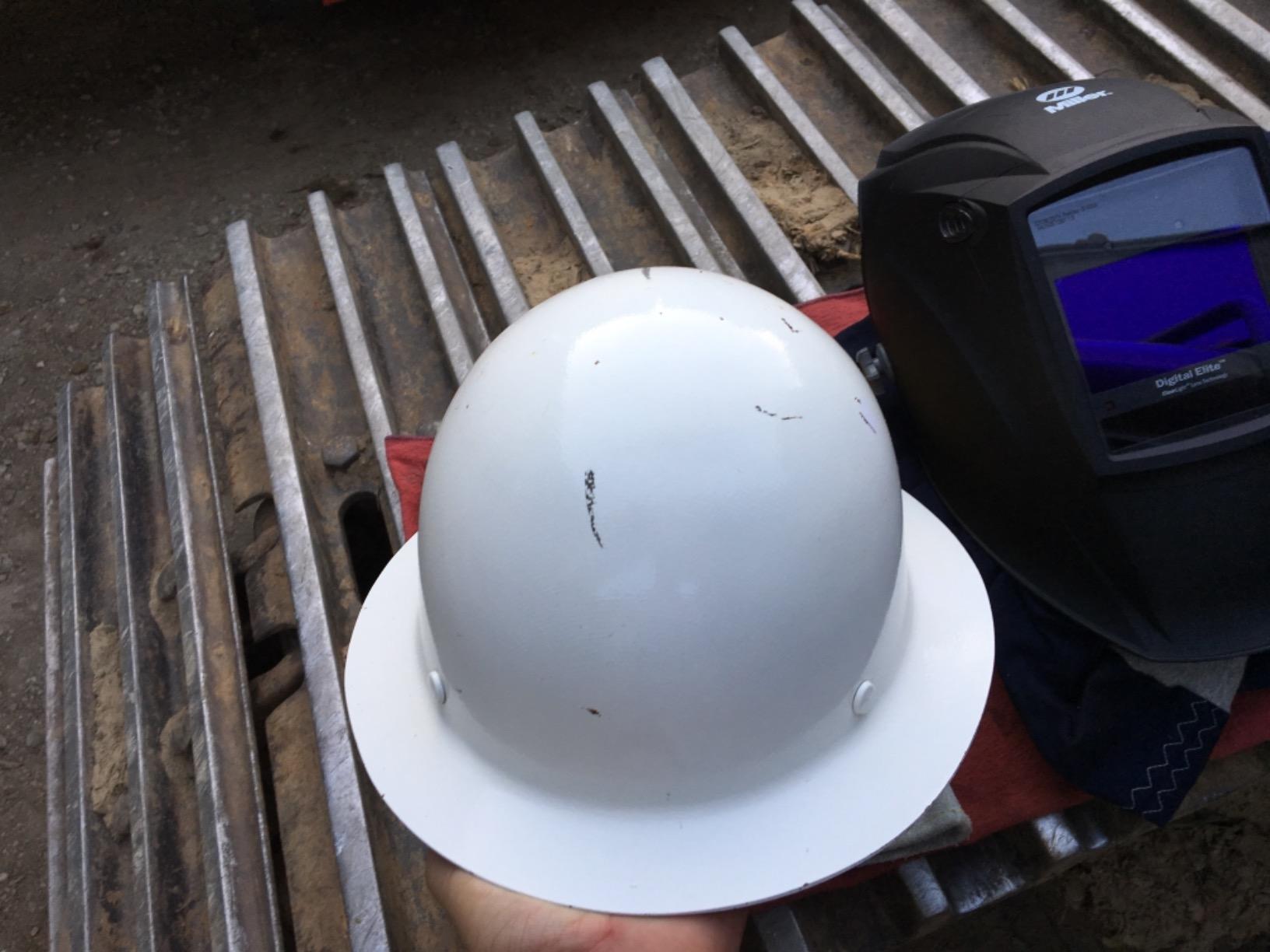
At 15.84 ounces the Skullgard is heavier than a typical ABS shell, yet owners describe it as exceptionally light and comfortable for a full shift. That is a function of how the weight is distributed: the phenolic shell is rigid, so it does not flex, and the suspension carries it evenly. Reviewers also note a long service life and a high rate of repeat purchase, which is the strongest durability signal in this roundup.
Fit, sizing and the one recurring problem
The most-discussed issue is fit for very large heads. The standard suspension can sit high on the forehead, and some wearers need a larger suspension insert purchased separately. The suspension size cannot be chosen at the initial purchase, so if you know you are near the top of the sizing range, plan for that extra part. Two smaller notes: the color range is narrower than plastic competitors, with no black option in some regions, and a phenolic shell can occasionally arrive chipped. Inspect the shell on day one, because a chipped phenolic shell is a reason to call the manufacturer rather than to keep wearing it.
Who should buy the Skullgard and who should not
Buy it if your work involves radiant heat, welding spatter, foundry or mill environments, or if you want a helmet that stays in service for a decade rather than a few. It is a strong crew standard for mechanical, structural and maintenance crews where a single certified shell has to cover a wide range of industrial tasks. Skip it if you need Type II lateral impact protection or dielectric protection for live electrical work, and skip it if you need a black shell or summer ventilation, since the shell is solid by design. For those needs, look at a Type II model or one of the vented ABS options further down this list.
3. Klein Tools 60347 KARBN Vented Full Brim: Best Comfort and Ventilation
Klein Tools 60347 Hard Hat, Vented Full Brim, Class C, Premium KARBN Pattern, Rechargeable Lamp, Padded Sweat-Wicking Sweatband, Top Pad
Vented Type 1 Class C
PC/ABS composite
Headlamp included
ANSI Z89.1 CSA Z94.1
Pros
- Heavily padded suspension comfortable enough to forget
- Adjustable vents cut heat and stop glasses fogging
- Bright rechargeable USB-C headlamp
- Modern KARBN finish resists looking cheap
- Built for long-term daily use
Cons
- Heavier than basic hard hats
- Battery holds charge less well over time
- Vents still do little in extreme heat
The Klein 60347 is the most comfortable helmet in this group, and that claim comes from owners rather than from us. Across roughly 3,900 reviews holding a 4.7 average, the most common description is a padded suspension that becomes unnoticeable after the first hour. The padded sweat-wicking sweatband and top pad are the difference — this is a helmet built for people who wear it for ten hours.
It is a Class C, Type 1 vented shell with large adjustable vents that open and close while the helmet remains compliant. That vent control matters: fully open on a July morning, closed when the sun drops, without swapping helmets. Owners also report that the vents reduce safety glasses fogging, a secondary but real comfort gain. The certification package is unusually broad: ANSI Z89.1-2014, CSA Z94.1-15, EN 397 and EN 12492, which makes this a simple helmet to specify when a crew includes workers from different jurisdictions.
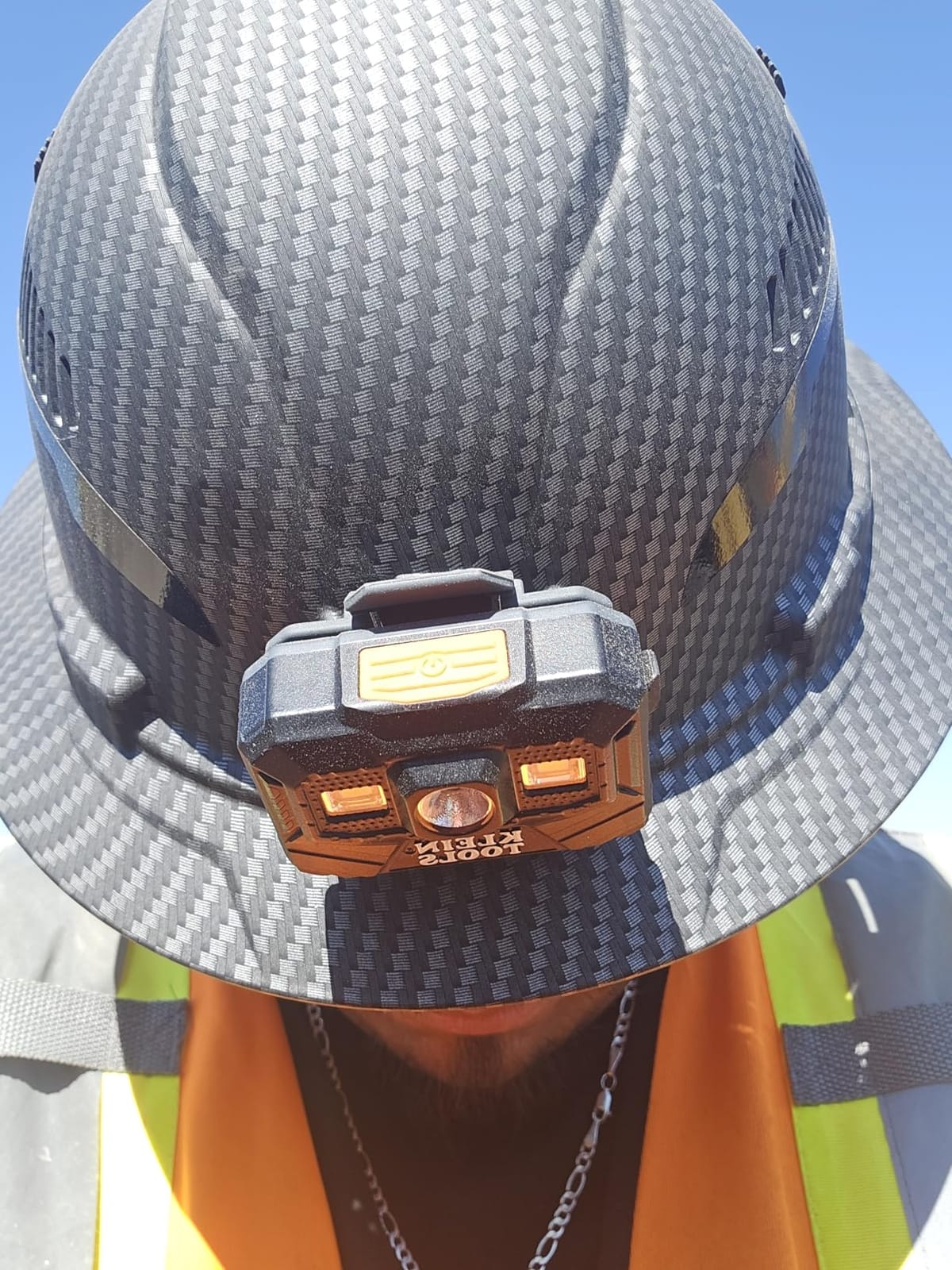
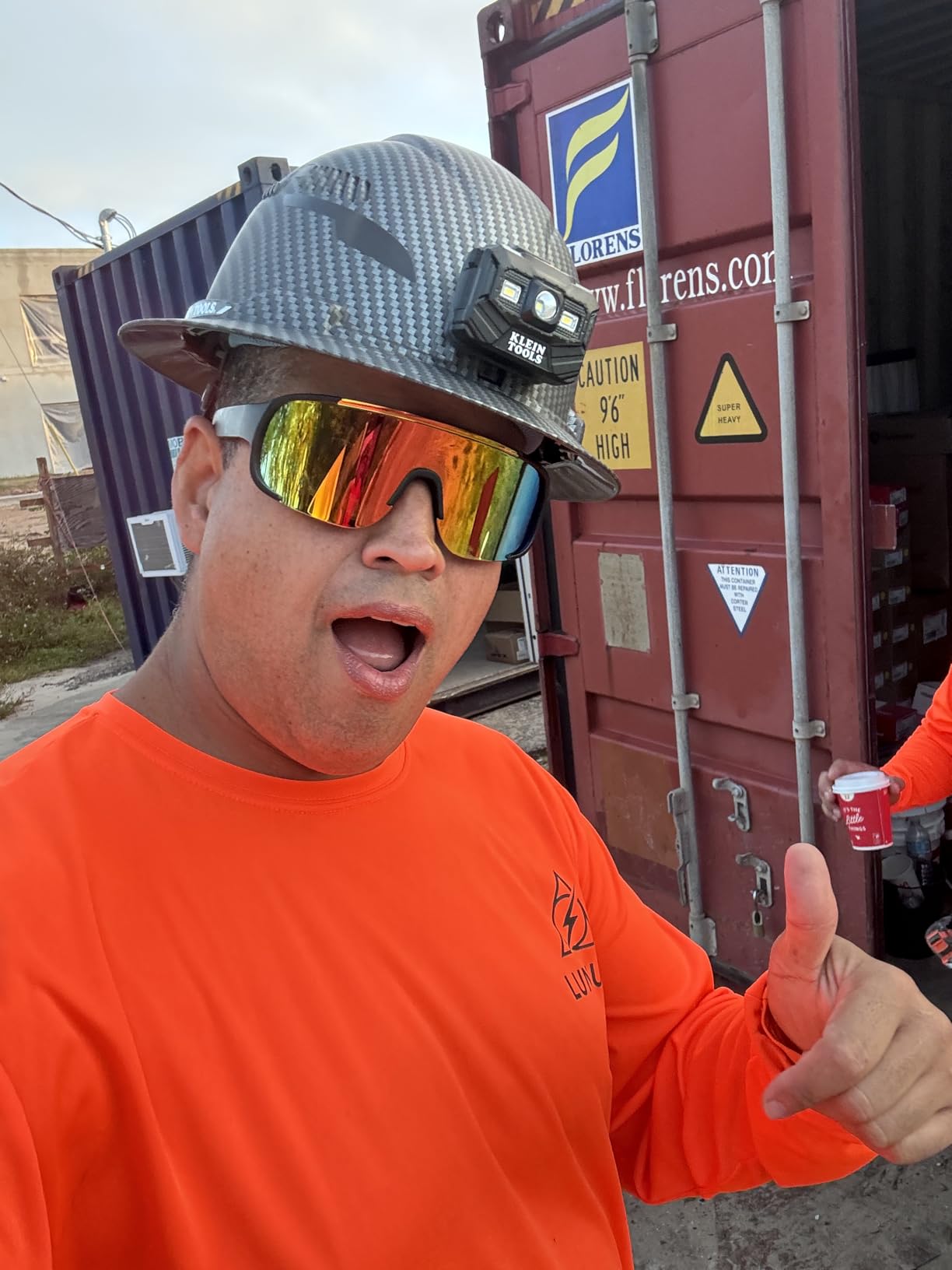
The included Klein rechargeable headlamp mounts on patented front and back accessory points and charges over USB-C with a non-removable battery. The shell is a rugged PC/ABS composite with a hydro-dipped KARBN film pattern that resists scuffing, and chin straps, ear protection and face shields attach to the same accessory system.
Where the Klein 60347 earns its reputation
Two features drive the comfort rating more than anything else: the pad density in the suspension and the adjustable vent geometry. Trade users describe the helmet as the most comfortable they have worn, and the recurring practical benefit is fewer adjustments through the day because the fit does not drift.
The honest trade-off is weight: at a little over a pound this helmet is noticeably heavier than a basic plastic dome, largely because of the shell build and the integrated lamp. A second issue owners flag is battery longevity, with some units stopping to charge reliably after extended use. The vents also help less in extreme heat than you would expect.
Who should buy the Klein 60347 and who should not
Buy it if you work outdoors in warm weather, wear safety glasses, want lighting built into the helmet rather than clipped on separately, or are specifying a standard for a mixed crew that includes international workers. It is also a strong choice for anyone who has previously removed a hard hat because it was uncomfortable, since discomfort is the most common reason PPE gets left in the truck.
Skip it if you need electrical work near live circuits, because vented shells are not dielectric rated, and skip it if weight sensitivity is a problem for you, since a full shift of ladder and scaffold work will make the extra ounces noticeable. Steel erection and high-heat trades should stay with the phenolic Skullgard instead.
4. LANON Full Brim FRP: Best Value Flame Retardant Shell
LANON Full Brim FRP Hard Hat, Class C, Premium Charcoal Gray Design
Flame retardant FRP
Ansi Z89.1-2014 Type 1 Class C
4-point ratchet
Chin strap
Pros
- FRP shell feels sturdier and more rigid than plastic
- Ratch dial adjusts easily with gloves
- Soft brow pad plus replaceable washable sweatband
- Sweat guard keeps perspiration out of eyes
- Chin strap in the box
Cons
- Brim can slide forward if suspension is not tight
- Some buyers find the shell thinner than expected
- Foam straps may need tightening to stop rotation
The LANON is the value pick, and the reason is material rather than marketing. Fiber reinforced plastic sits between HDPE and phenolic on the performance curve: stiffer and more rigid than commodity thermoplastic shells, with better flame resistance, and far less expensive than a certified phenolic industrial helmet. The shell here is explicitly flame retardant, and the manufacturer markets it to steel mills, welding, rescue, open-pit mining and refineries alongside general construction.
It is certified to ANSI/ISEA Z89.1-2014 Type I, top impact, Class C, and the full brim carries a classic carbon fiber texture wrap that looks considerably more expensive than the shell construction, which is why owners frequently comment on how good the helmet looks. Fit is handled by a 4-point adjustable ratchet suspension with a replaceable soft brow pad, and a chin strap comes in the box rather than being a separate purchase. Owners like that the dial can be turned with work gloves on and that the sweat guard keeps perspiration out of the eyes during overhead work.

One practical issue repeats in reviews: the brim can slide forward if the suspension is not dialed in firmly. This is a fit problem, not a defect. Turn the ratchet until the shell stops moving independently of your head, and the brim stays put.
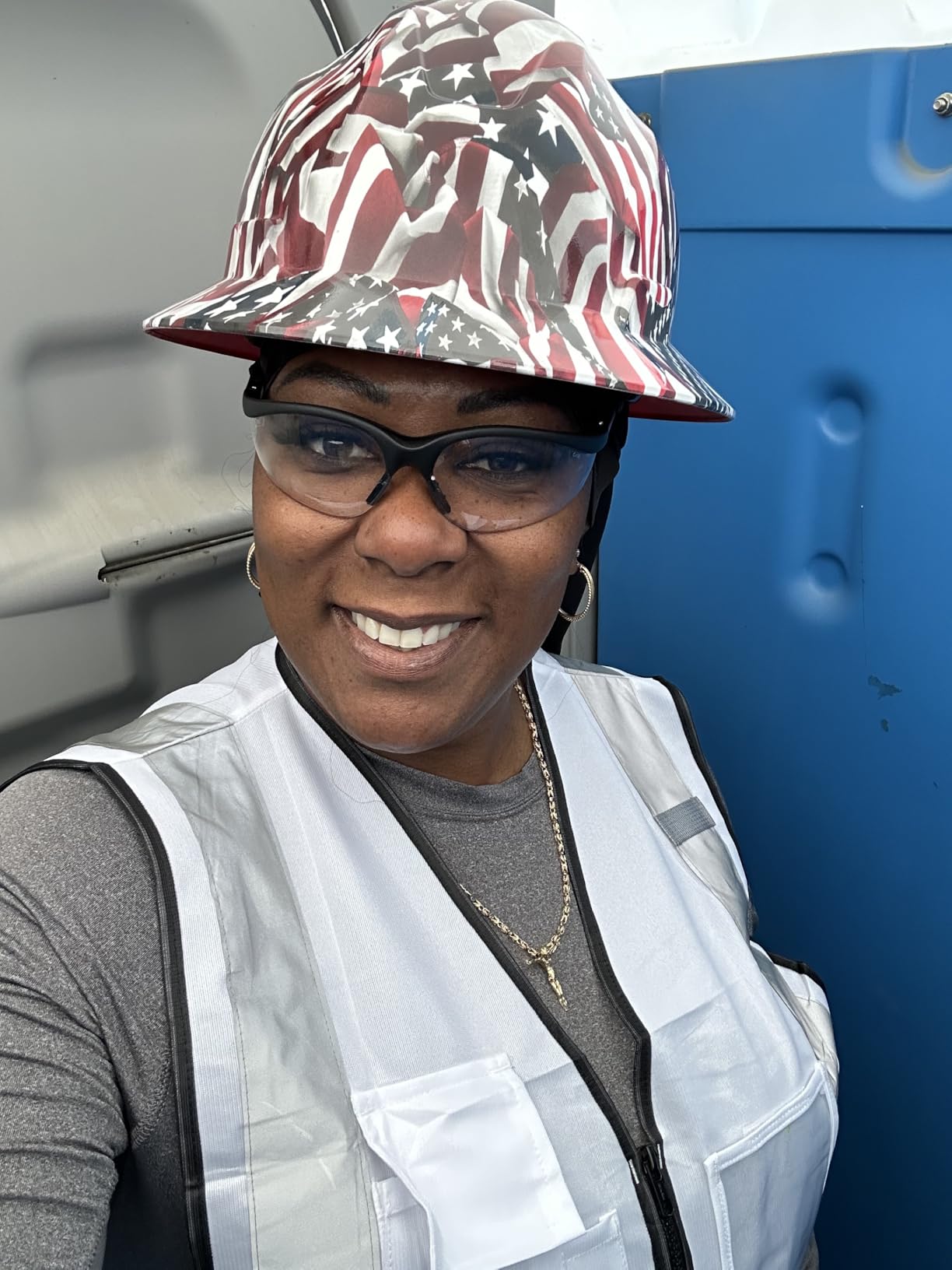
What the FRP shell changes in practice
Two things. First, rigidity: owners report that the shell does not flex or dent the way lighter plastic hats do when bumped against framing or ductwork. Second, flame and chemical resistance, which is why this model shows up in welding-adjacent and refinery job descriptions rather than only on residential framing sites. The counterpoint is that a minority of buyers find the shell thinner and less rigid than they expected based on the carbon fiber appearance. If you have handled a phenolic industrial shell before, this one will not match it — manage that expectation and the LANON delivers exactly what a mid-tier FRP shell should.
Who should buy the LANON and who should not
Buy it if you are replacing company-issued plastic helmets for a crew, work around welding spatter or open flame, want a chin strap and brow pad in the box, and need a full brim that looks professional on site. Skip it if you need Type II lateral coverage or a Class E or G electrical rating, because this shell is Class C only, and skip it if you need ventilation. Electricians should look at the AFP fiberglass model instead.
5. ACERPAL Full Brim 6-Point: Best for Adjustable Fit Across Head Sizes
Acerpal Full Brim Non-Vented Classic Black Carbon Fiber Design Matte Finish OSHA Construction Approved Hard Hat with 6-Point Suspension Casco de construccion
Non-vented HDPE shell
Type 1 Class C E G
6-point ratchet
Fits 6.5 to 8
Pros
- Six-point ratchet hugs the head better than four-point
- Lightweight and easy to forget you are wearing it
- Durable against knocks without denting
- Hydro-dipped patterns attract compliments
- Chin strap removable or usable
Cons
- Shell feels thin to some buyers
- Multiple Class C E G stamps confuse buyers
- Included chin strap may need replacing
The defining feature of the ACERPAL is the 6-point ratchet suspension, and it is the most relevant feature on this list if your issue is a helmet that sits above your forehead. Four-point suspensions carry the load on two side points and two rear points, which leaves front-to-back stability dependent on the shell shape. A 6-point system adds a second pair of anchors and distributes the brim weight across six contact points, which is why owners consistently report a tighter, lower, more stable fit.
The adjustment range runs from head size 6.5 to 8, covering the standard North American range. The harness is padded, and both the soft brow pad and the top pad are replaceable, so the parts that take the most wear can be swapped instead of replacing the whole helmet. Owners rate this as a clear step up from generic company-issued helmets: light, well padded, and stylish enough to earn compliments on site. A chin strap is included and can be used or removed, which makes the same helmet work for ground-level framing and for work at height.
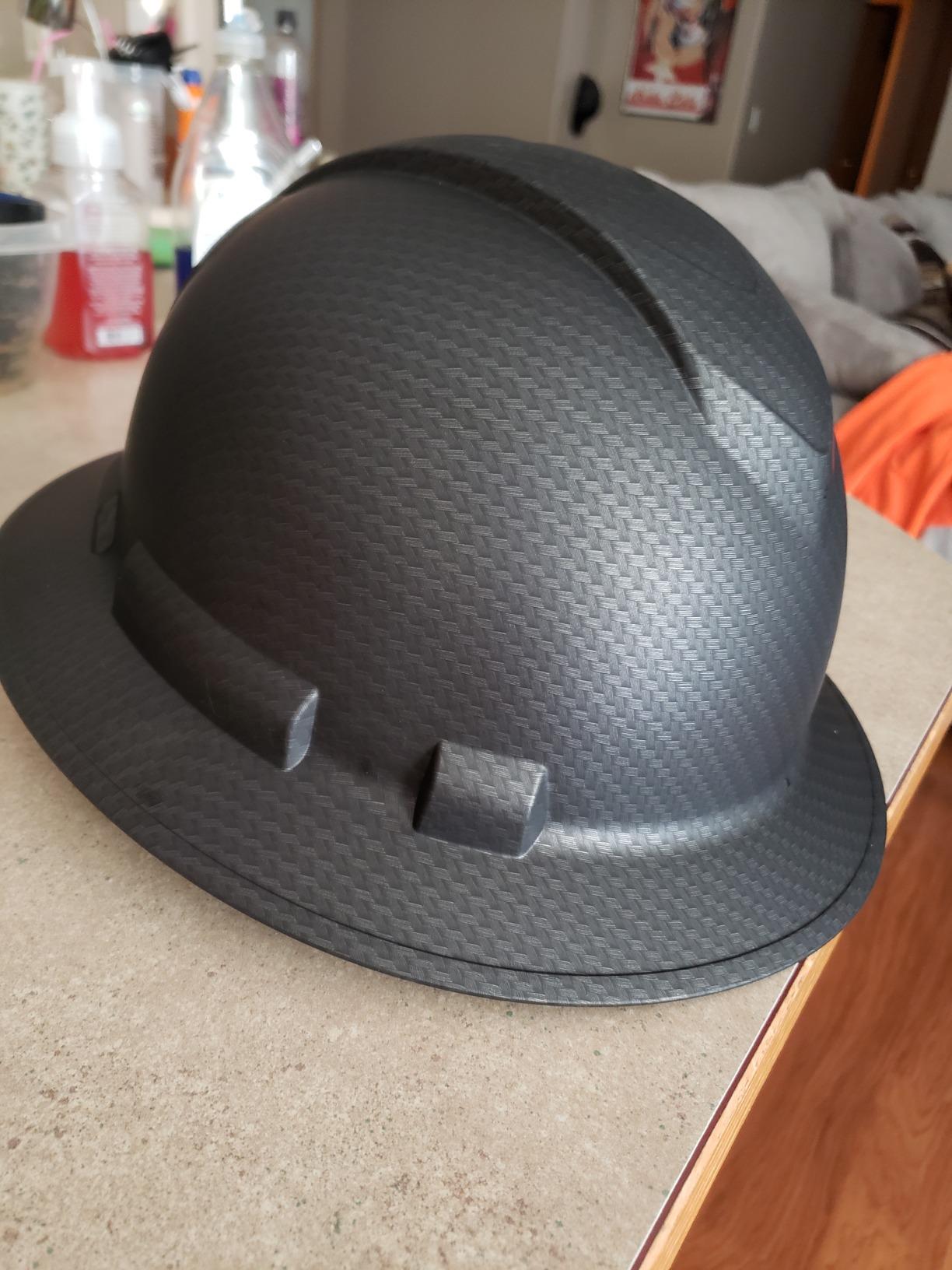
Technically the shell is non-vented HDPE, hydro-dipped to look like carbon fiber, with nine print designs available. It is certified ANSI Z89.1 Type 1, passes low-temperature and high-temperature testing, and is listed at Class E, G and C. Because the design is non-vented, the electrical class is not compromised by openings in the shell.
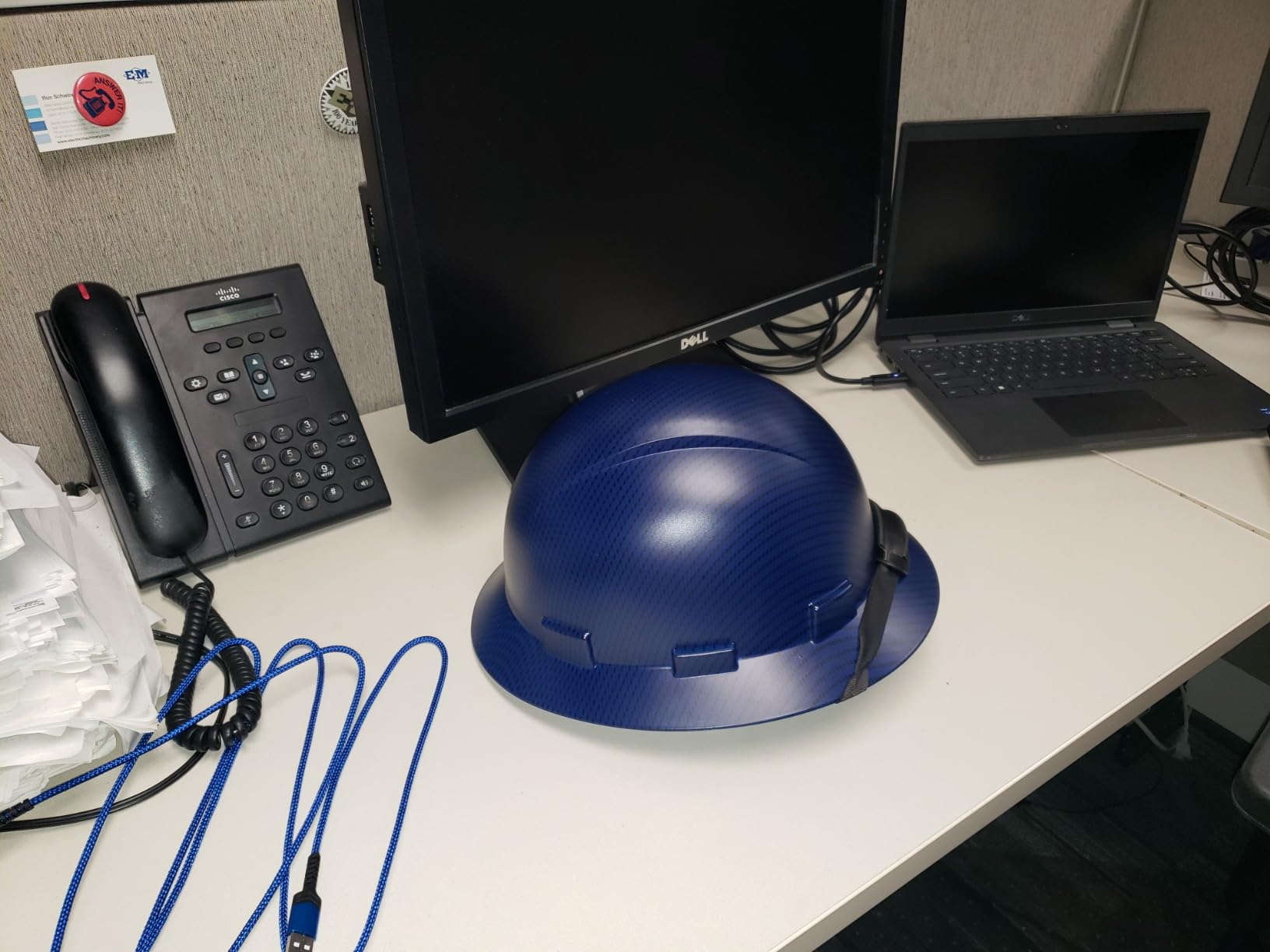
Handling the multi-class labeling honestly
The most discussed point in reviews is the labeling. A single shell stamped with Class C, E and G looks contradictory to anyone who has read the standard carefully, and some reviewers question it directly. The practical reading is that the shell materials and the non-vented design support the electrical performance claimed, but the Type rating and the class rating are separate questions. Verify the certification with the manufacturer before you rely on a specific class for a specific energized task, and let your employer safety program make that determination. A second recurring note is that the included chin strap is a simple two-point style, and some users replace it with a multi-point chin strap for work at height.
Who should buy the ACERPAL and who should not
Buy it if fit is your top priority, especially with a smaller head, a longer head shape, or a history of helmets sliding forward. The 6-point ratchet and the 6.5 to 8 range address the most common fit complaint on construction forums more directly than any 4-point model in this roundup. Skip it if shell rigidity is your main concern, because some owners find the HDPE thin to the hand, and skip it if you need Type II lateral coverage. For very large heads, a fiberglass or phenolic shell with a wider suspension cradle is a better long-term investment.
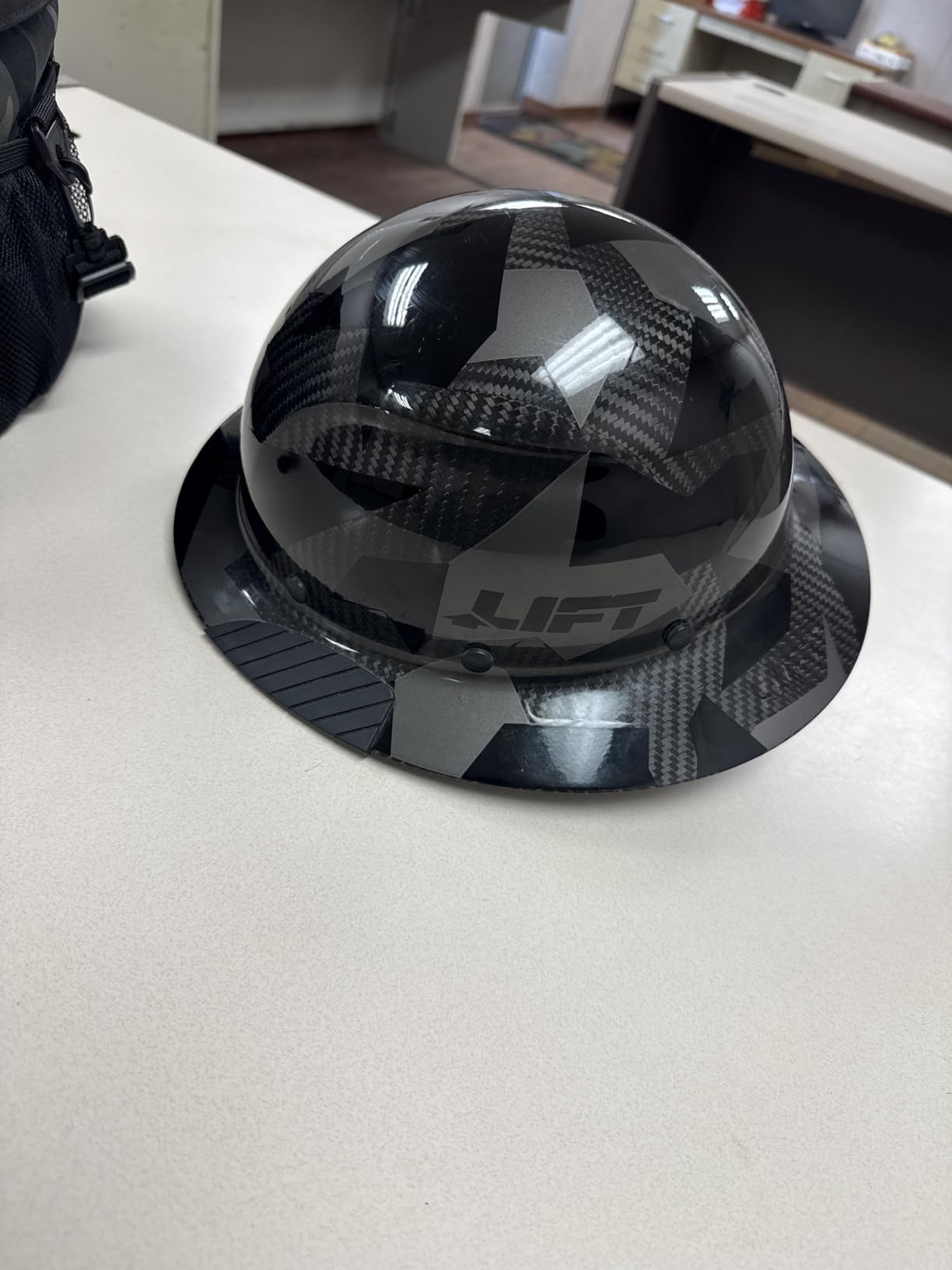
6. LIFT Safety DAX Carbon Fiber Full Brim: Best for Premium Shells
DAX Carbon Fiber Full Brim (Black Camo)
Carbon fiber composite shell
Full brim
Ratchet suspension
One size
Pros
- Shell is stiffer and more dent resistant than plastic
- Premium black camo finish stands out
- Ratchet suspension allows a close stable fit
Cons
- Premium price point for a hard hat
- Shell reads as heavier than conventional plastic models
The DAX is the genuine carbon fiber option in this roundup, and it is worth separating from helmets that only look like carbon fiber. The shell here is a carbon fiber composite rather than a hydro-dipped plastic print, and the difference is mechanical. Carbon fiber composite is noticeably stiffer, which means the shell resists denting and does not flex when you clip a corner with a scaffold tube or knock a beam while working overhead.
The full brim and black camo finish are the other reason it appeals. Construction crews have a limited number of helmet colors, and a distinctive finish makes it easier for a foreman to spot new hires and visitors at a glance. That is a real safety-program benefit, not just a style one.
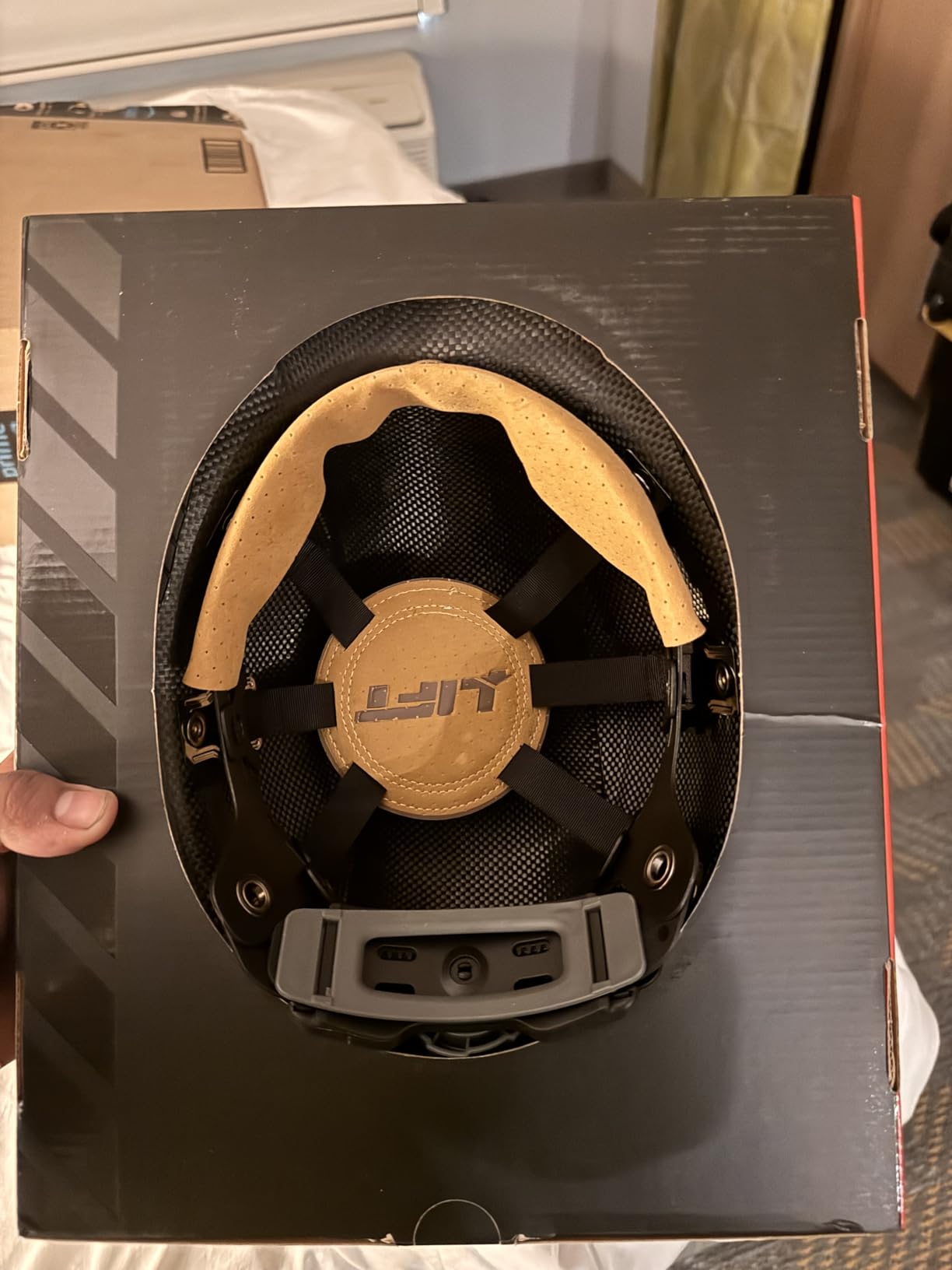
Adjustment is handled by a ratchet suspension in a one-size configuration that fits most head shapes, backed by a one year manufacturer warranty — worth noting when choosing between a premium shell and a commodity one. Feedback centers on build quality and appearance rather than detailed comfort features, which is what you would expect from a shell-first product. Owners describe it as noticeably more premium than a plastic hard hat and are generally satisfied with the ratchet’s stability.
When a carbon fiber shell makes sense
Three situations justify a carbon fiber composite helmet. If you work where repeated lateral contact happens — steel erection, shipbuilding, confined framing, oil and gas — a stiffer shell resists the dents that progressively weaken a plastic one. If you rotate helmets across a crew and want one that still looks presentable after a year, the finish holds up better. And if your program runs a high-visibility color code, a distinctive finish does not compete with that system. The counterpoint is that this shell reads as heavier than conventional plastic models and sits in the premium tier, which is hard to justify for a worker who changes jobs or loses helmets regularly.
Who should buy the DAX and who should not
Buy it if your work involves repeated contact with hard edges and structures, you want a helmet that stays presentable over years, or you are outfitting supervisors and safety staff who need a helmet that reads as authoritative. Skip it if heat is the issue, since the shell is solid with no ventilation, and skip it if you need a specific electrical class or Type II lateral impact coverage. Anyone whose head shape falls outside the one-size range should also consider a model with a printed sizing span.
7. Jackson Safety Cowboy Full Brim: Best for Wide Brim Sun and Rain Cover
Jackson Safety Full Brim Cowboy Hard Hat, ANSI Z89.1 Type 1 & OSHA
Type 1 Class E
Non-vented HDPE
Extra-wide full brim
4-point ratchet
Pros
- Extra-wide brim shades face neck and ears
- Replaceable sweatband keeps sweat out of eyes
- Ratchet dial adjusts smoothly
- Lightweight HDPE for all-day wear
- Distinctive silhouette easy to identify
Cons
- Rounded brim profile gives less top coverage than a standard hat
- Non-vented so it warms up in summer
- Class E rating is narrower than a fiberglass shell
The cowboy dome is the most distinctive silhouette here, and the extra-wide brim is the reason to consider it. Where a standard full brim shades the forehead and eyes, this brim extends around the face, neck and ears. For outdoor site work in strong sun, that is a meaningful reduction in glare and radiant heat on the skin, and for unexpected rain it keeps water off the back of the neck.
It is certified to ANSI Z89.1 Type 1 and exceeds Class E for electrical hazard protection, molded from high-density polyethylene by Surewerx. The 4-point ratchet suspension has an easy-dial knob fitting head sizes 6.5 to 8 inches, and the moisture-wicking sweatband is replaceable so the helmet can stay in service across a crew rotation.
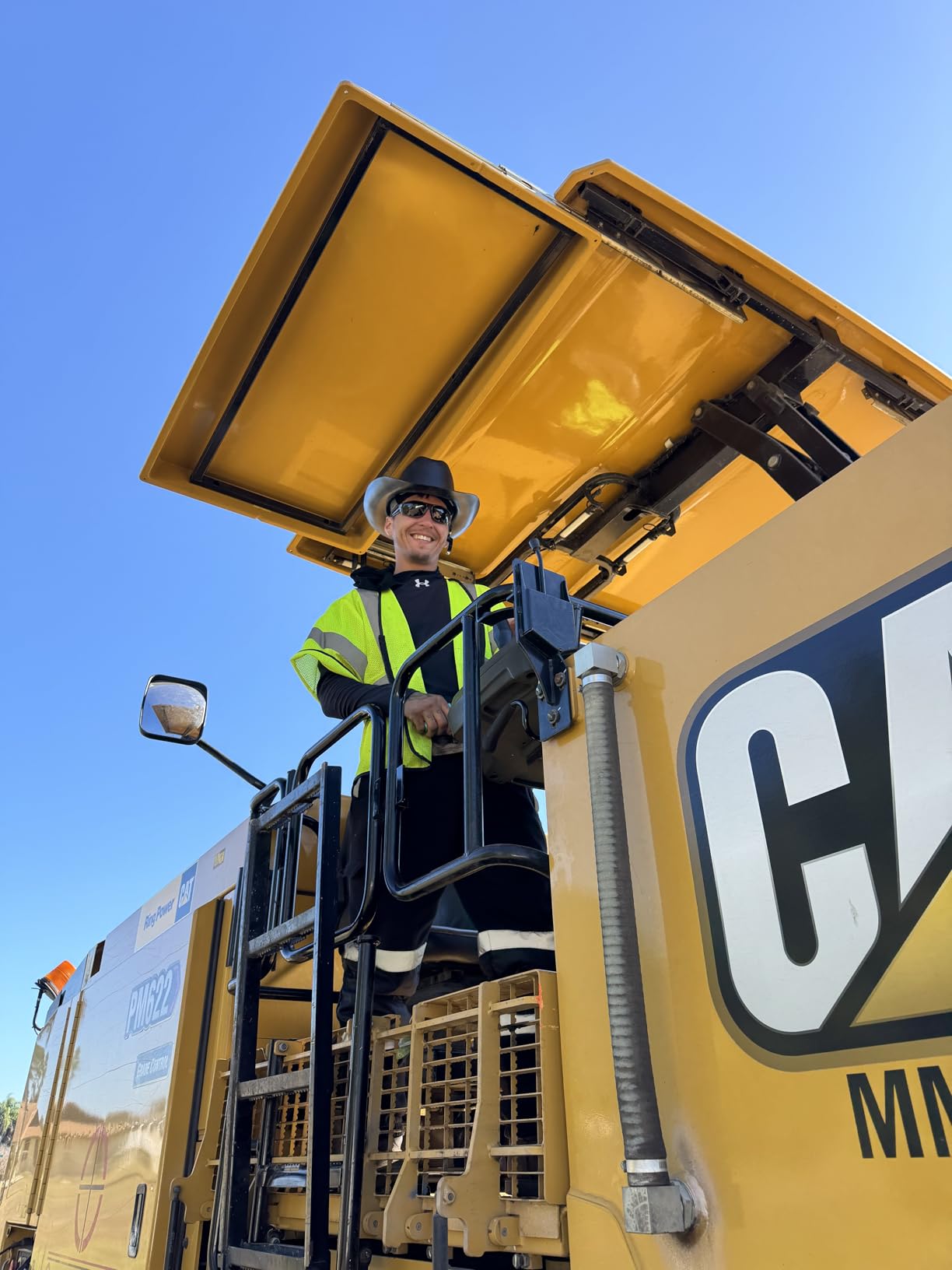
Owners like the styling, the shade coverage and the smooth ratchet action, and the replaceable sweatband is singled out for comfort on long days. The rating here sits a notch below the rest of the roundup, and the reason is visible in the design rather than hidden: the rounded crown profile and the very wide brim mean the shell does not cover the top of the head the way a standard construction dome does. That is a real trade, not a defect. If your hazard is a falling object landing on the crown, a conventional full brim is the safer geometry; if your hazard is sun and rain on the face and neck, this is the better tool.

Reading the Class E rating correctly
Class E means dielectric protection for incidental contact with energized electrical conductors. It is a meaningful upgrade over Class C, and it is why this helmet works for electrical work. What it does not give you is the broader performance of a fiberglass shell, so some buyers note that the rating limits use in certain environments. If your program requires a specific class, confirm against the certification documentation rather than the product title. The other limitation is the obvious one: non-vented construction gets warm in summer heat, and for a crew working a full outdoor season that will be the deciding factor.
Who should buy the Jackson cowboy and who should not
Buy it if you are doing road work, utility or solar site work, exterior inspection, landscaping or any outdoor trade where sun and rain protection on the face and neck matter more than crown coverage. It is also a good choice for a crew standard because the silhouette makes visitors immediately identifiable. Skip it if your primary hazard is overhead falling material, since the rounded crown is not optimized for that, and skip it for high-heat summer work. Electricians working to a Class G or fiberglass specification should use the AFP model rather than stretching a Class E rating to cover more than it was tested for.
8. AFP Fiber Full Brim 6-Point: Best for Electrical Work
AFP Fiber Full Brim Hard Hat | 6 Point Ratchet Suspension | OSHA & ANSI Rated | Hard Hats for Men | Premium Construction Helmets for Safety
Kevlar fiberglass Class G
Dielectric to 2,200 volts
6-point ratchet
13 oz
Pros
- Fiberglass shell gives reliable dielectric protection
- Six-point ratchet spreads weight across head shapes
- Oversized dial works with gloves on
- Washable sweatband keeps sweat off the face
- Light for a fiberglass shell at 13 ounces
Cons
- Fiberglass shells are more sensitive to impact damage than ABS
- Glossy finish shows scuffs readily
- Limited color range
The AFP is the dedicated electrical pick, and fiberglass is the reason. The Kevlar fiberglass shell is listed at Class G with dielectric protection up to 2,200 volts, which makes it a legitimate choice for electricians and maintenance technicians working around low-voltage systems. Fiberglass is non-conductive and does not carry the electrical ambiguity that a stamped multi-class plastic shell can create.
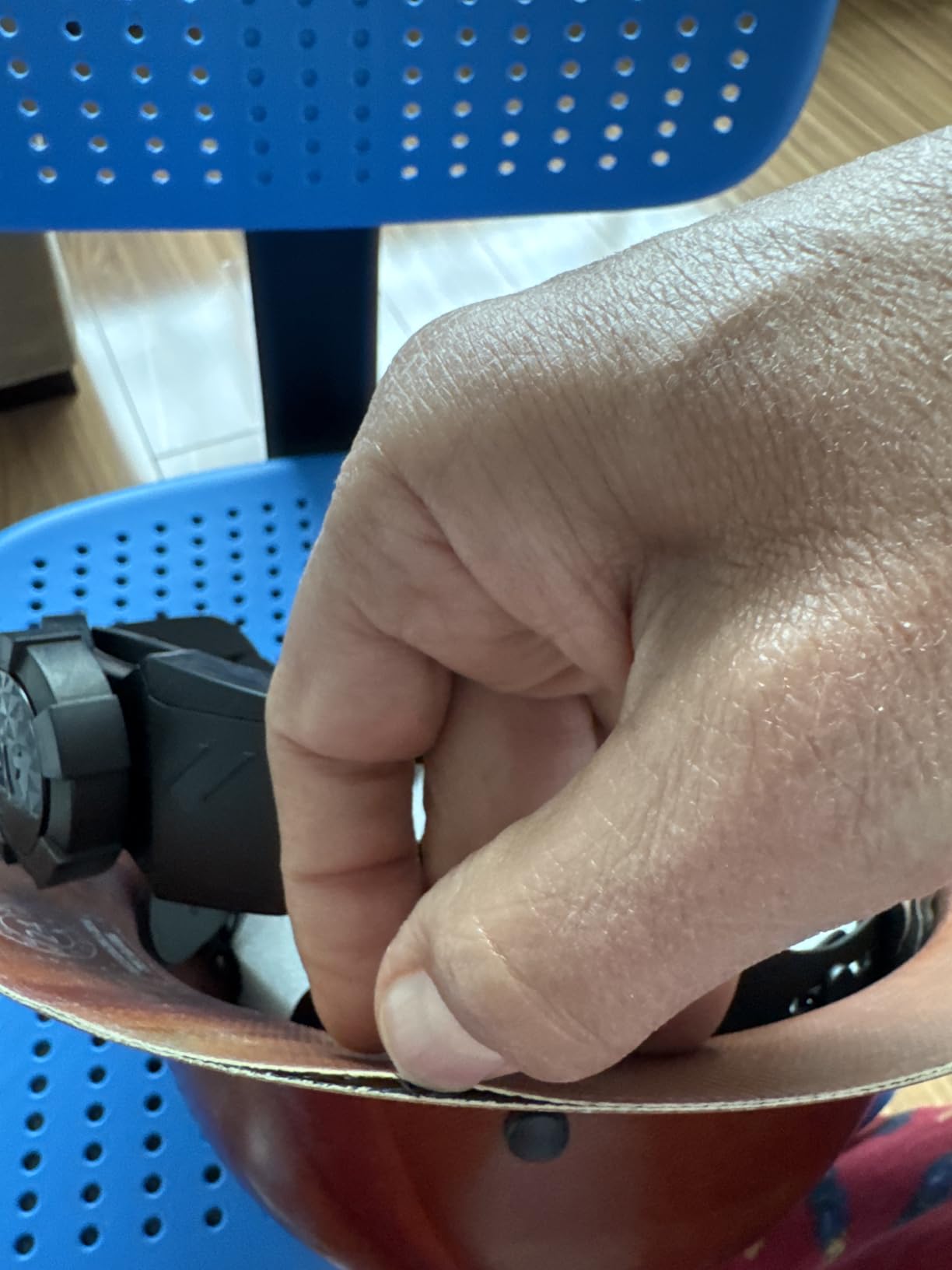
It is also light. Thirteen ounces is unusual for a fiberglass construction helmet, and buyers note that the shell does not feel heavy despite the material. The helmet is OSHA compliant and meets ANSI and ISEA Z89.1 requirements, and the same line is also offered in carbon fiber Class C versions. The suspension is a 6-point ratchet with an oversized dial that reviewers single out for working with gloves on, which matters when you are not about to strip off your gloves to adjust your helmet. The washable plush foam sweatband is washable rather than disposable, so it holds up across a crew rotation better than a paper-band style.
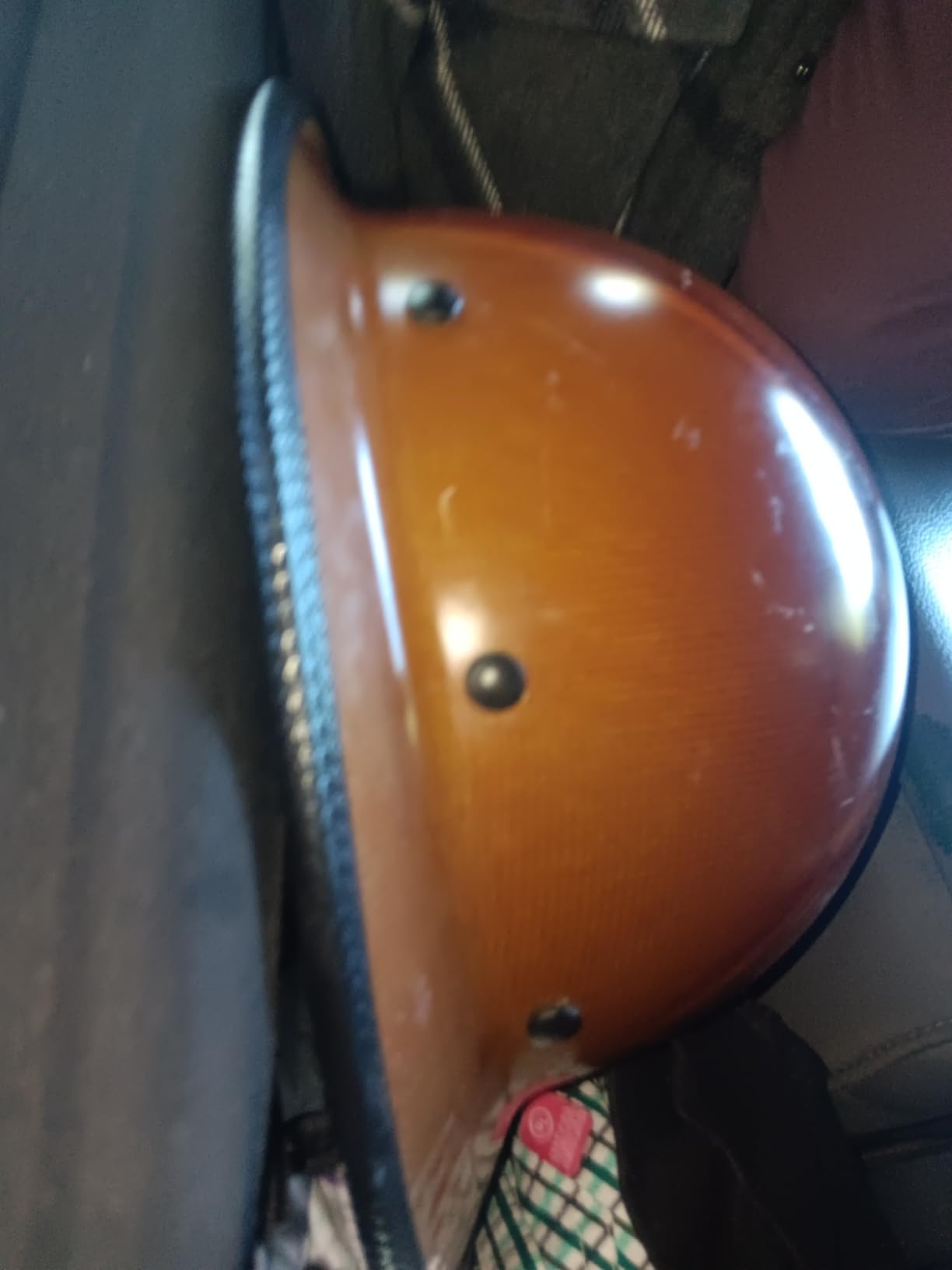
Fit is rated for head sizes 6.5 to 8 inches. As with the ACERPAL, a 6-point ratchet spreads load across six anchor points, and owners in the electrical trades report a stable fit that holds position through a shift.
Why fiberglass and not plastic
Fiberglass composites are stiffer and dimensionally stable, which matters in two ways for electrical work. They do not deform around a hot work surface the way thermoplastic shells can, and their non-conductive construction is the basis of the dielectric rating. The trade-off is impact sensitivity: fiberglass can be more sensitive to concentrated impact damage than ABS, so dents and chips deserve a closer look than they would on a plastic shell. Cosmetically, the natural tan finish is glossy and shows scuffs readily.
Who should buy the AFP and who should not
Buy it if you are an electrician, a maintenance technician, or anyone whose program specifies a fiberglass dielectric shell. The Class G rating, the 6-point suspension and the glove-friendly dial are exactly what a technician needs on a long shift of panel work and service calls. Skip it if you need Class E dielectric performance, since Class G is a limited-use rating and the two are not interchangeable for the same task, and skip it if you want ventilation or a bright color for a hi-vis program. General construction crews with no electrical exposure will find a plastic Type 1 shell equally protective for their hazards.
9. GREEN DEVIL Vented Full Brim: Best for Hot Weather Work
GREEN DEVIL Full Brim Hard Hat Vented Construction Safety Helmet OSHA Approved Cascos De Construccion Work Hardhat for Men&Women 6 Point Adjustable Ratchet Suspension Custom Pattern Design
Vented ABS shell with sliding vents
Ansi Z89.1 Type 1 Class C
6-point ratchet
Pros
- Sliding vents give real airflow in hot weather
- 6-point suspension absorbs shock with a stable fit
- Replaceable cotton core sweatband handles long shifts
- Reflective stripes improve low light visibility
- Molded chin cup adds stability at height
Cons
- Vented design means no electrical rating beyond Class C
- ABS shell is not rated for high heat or heavy industrial use
- Pattern designs limited versus other brands
The GREEN DEVIL is built around one problem: summer heat. The ABS shell has sliding vent holes that owners describe as producing meaningful airflow rather than a token cooling effect, which is the difference between a vented shell that helps and one that just looks vented. The wide full brim adds glare, UV, rain, wind and sand protection on top of the airflow.
It is certified ANSI Z89.1 Type 1, Class C, and OSHA compliant. The 6-point adjustable ratchet suspension provides shock absorption and a stable fit, and the sweatband is a replaceable soft Egyptian cotton core with a porous coating that absorbs sweat over long outdoor shifts rather than just wicking it to the surface.
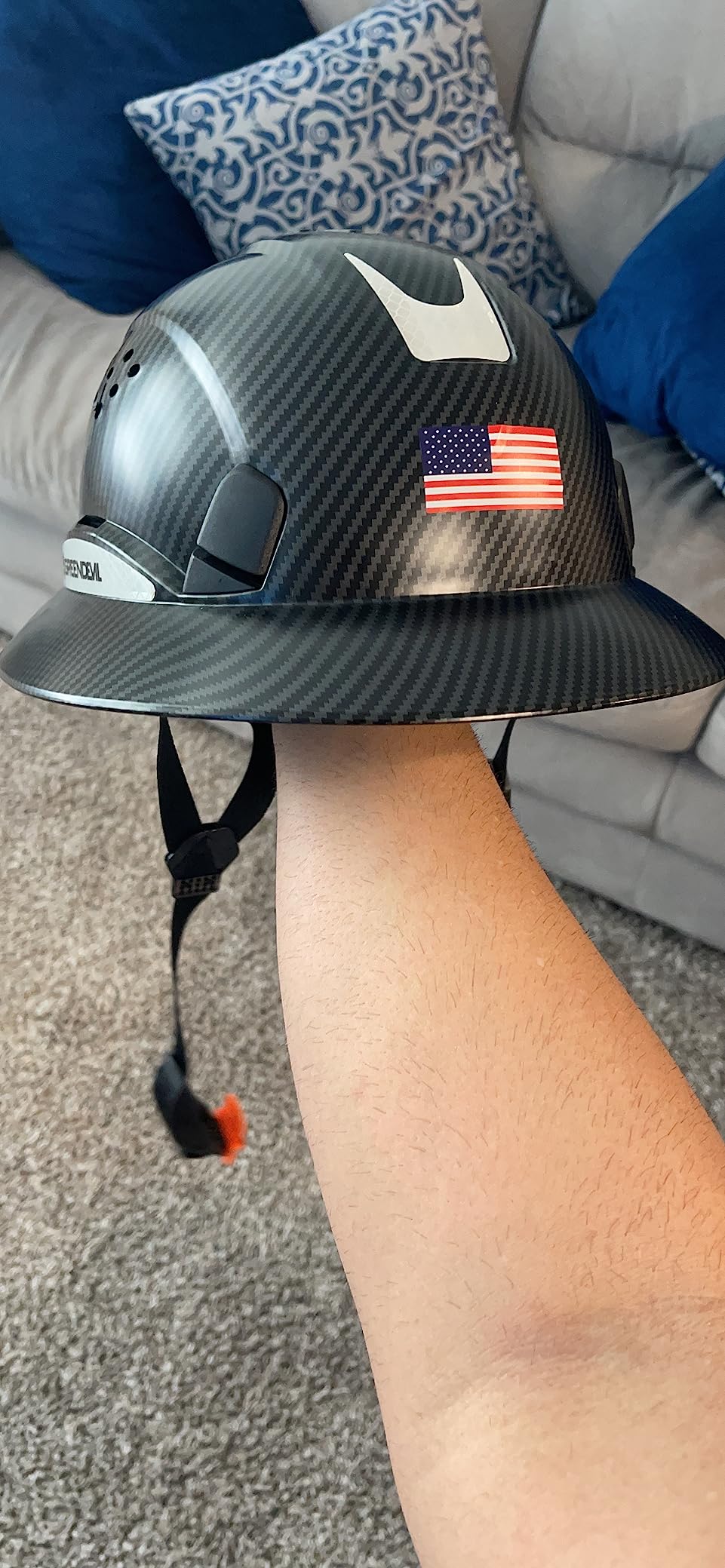
Two site-safety details make this more than a comfort product. Hi-vis reflective stripes run across the front, rear and sides, which improves visibility in low light and in dust, and a molded chin cup on the removable chin strap adds real stability when the wearer is working at height, where a helmet that shifts on the head is a genuine hazard. The shell carries a hydrographic transfer printed pattern in a matte black graphite design, and the build is described as high-impact penetration resistant. One size adjustable covers the usual range through the ratchet rather than a printed size span.
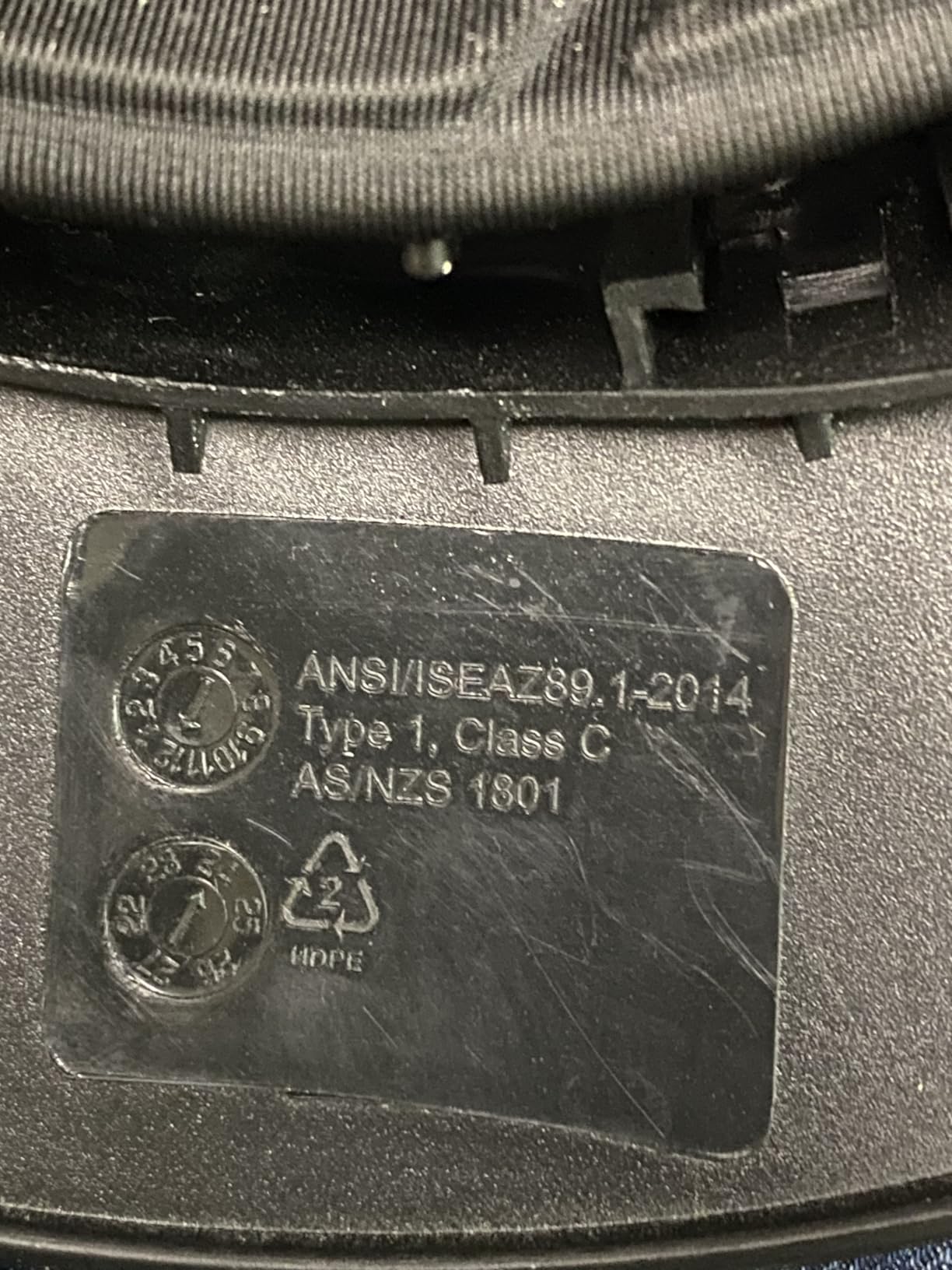
Why vented means Class C
This is the tradeoff buyers most often ask about. Openings in a shell are openings in its electrical protection, so a vented construction helmet is limited to Class C. That is the correct rating for general construction, where the hazard is impact rather than contact with energized conductors, and it is not a rating you can stretch to cover live electrical work. The second limitation is heat rating: ABS is a thermoplastic, and thermoplastics are not the right material for radiant heat sources. Welders, foundry workers and anyone near hot metal should not treat this as a substitute for a phenolic shell, regardless of how well the vents perform outdoors.
Who should buy the GREEN DEVIL and who should not
Buy it if your summer work is outdoors and unventilated — roofing, paving, site supervision, landscaping, exterior framing in warm months. It is also a solid choice for anyone who works at height occasionally and values the molded chin cup and reflective striping. Skip it if you have any electrical exposure, if you work near radiant heat or welding, or if your program requires a phenolic or fiberglass shell material. It is also a weaker fit for indoor work, where the vents do nothing and the extra brim is in the way under a ceiling joist.
10. PACIFIC PPE Full Brim: Best Budget Compliant Helmet
PACIFIC PPE Full Brim Hard Hat, OSHA Construction Safety Helmet Certified to ANSI Z89, 4 Point Adjustable Ratchet Suspension, Class E, G & C, White
Ansi Z89.1-2014 Type 1 Class C E G
Seamless HDPE shell
One-hand ratchet
Pros
- One-hand ratchet makes on-site adjustment easy
- Chin strap included adds stability
- Full brim covers glare UV rain and dust
- White shell is easy to spot and easy to keep clean
- Compliant across three electrical classes
Cons
- Non-vented construction gets warm in summer heat
- Four-point suspension is less even on some head shapes
- Listed weight feels heavy for an HDPE shell
The PACIFIC PPE is the straightforward budget answer, and it is genuinely certified rather than a token compliance shell. It meets ANSI Z89.1-2014 Type 1 with Class C, E and G ratings, uses a seamless full brim high-density polyethylene shell described as high-impact penetration resistant, and includes a chin strap in the box.
The feature that separates it from the entry-level helmets in this roundup is the one-hand operable ratchet. You can operate the suspension with a gloved hand and remove the helmet without taking your gloves off, which is a small detail that matters when you are getting in and out of the shell fifty times a shift.
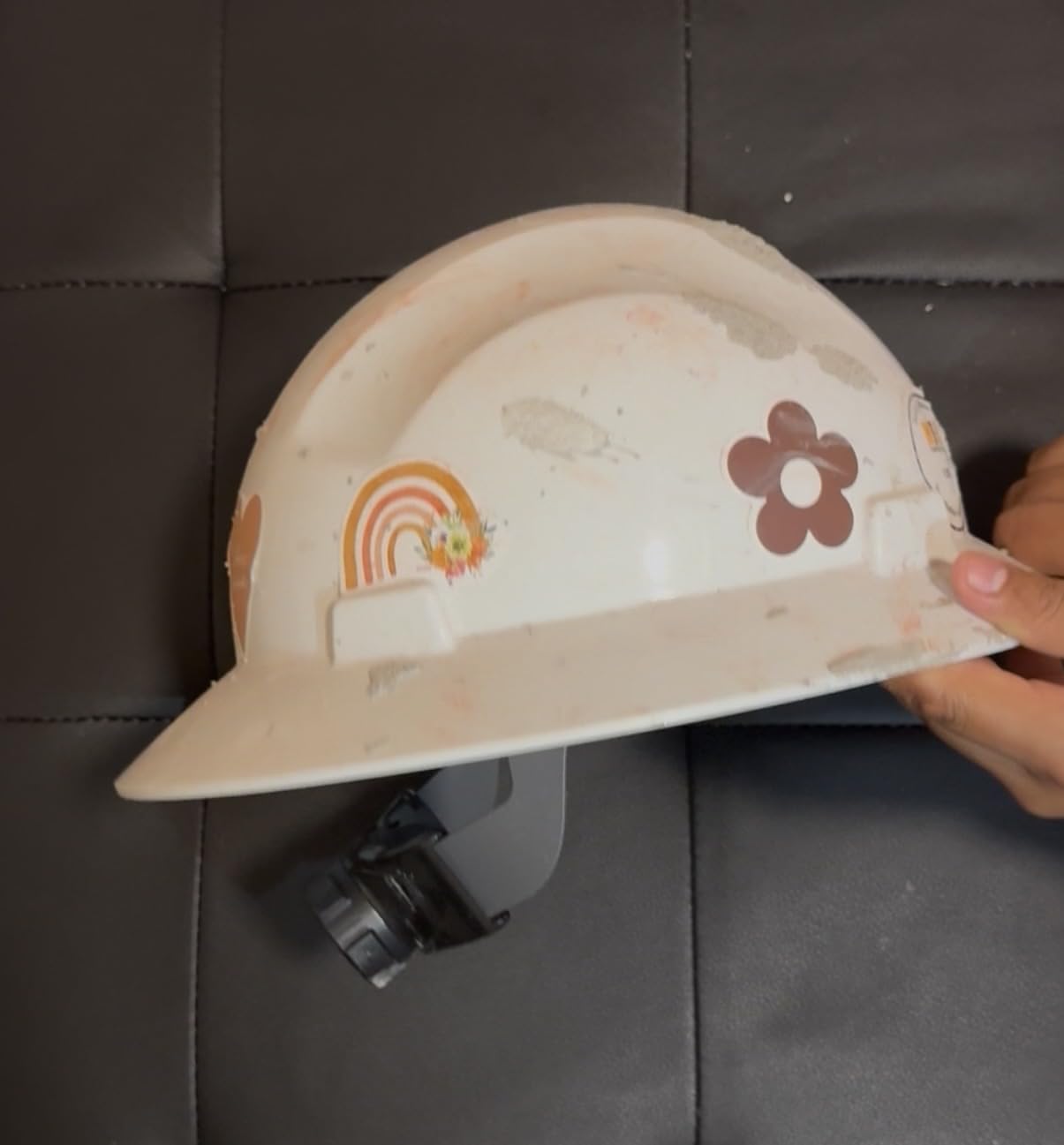
The extended brim profile is positioned for glare, UV, rain, wind and dust, and the intended applications span construction sites, safety and rescue, open-pit mining, oil and gas petrochemical refineries, forestry and work at height. That is a broad list for an entry-level shell, and it reflects why this style of helmet sells well for crew outfitting. Owners treat it as a solid value option: lightweight, compliant and comfortable, with a ratchet that works one-handed. The white shell is practical in a way that sounds cosmetic but is not — it is visible from a distance, and it shows dirt, which tells you when to clean it.

What you give up at this tier
Three things. The shell is non-vented, so it warms up in summer heat — the same limitation as the Ridgeline and the Jackson cowboy, and for the same reason, a solid shell. The suspension is four-point rather than six-point, which owners with unusual head shapes report as less even. And the listed weight of 0.46 kg reads heavy for an HDPE shell, which makes it worth checking the actual weight on the helmet rather than assuming the listing is precise. None of these are certification problems: this is a helmet that meets its stated standard, includes a chin strap, and covers three electrical classes.
Who should buy the PACIFIC PPE and who should not
Buy it if you are outfitting a crew, replacing a run of company-issued helmets, working outdoors where sun and rain matter more than cooling, or need a single compliant helmet to issue to a rotating group of subcontractors. The white shell and included chin strap make it easy to standardize. Skip it if you are buying a single helmet for yourself to wear every day for years, where the six-point suspension models fit you better and last longer, and skip it for summer heat or work at height where a molded chin cup matters. In those cases, spend up to the mid tier rather than down.
Hard Hat Buying Guide: Type, Class, Shell and Fit
Every choice in this roundup traces back to four published specifications. Read them in this order and the right helmet becomes obvious: impact Type, electrical Class, shell material, then fit and suspension geometry. Marketing copy, color and brand name come after all four.
Type I vs Type II: where the impact protection is
ANSI/ISEA Z89.1 splits impact protection into two Types. Type I certifies protection against a falling object striking the top of the head. Type II certifies protection against both a top impact and a lateral impact, meaning a sideways strike to the side or rear of the shell.
Most construction hazards — dropped tools, concrete pours, stacked material, scaffold components — come from above, which is why every helmet in this roundup is Type 1. Type II matters when lateral impact is a realistic hazard: steel erection, oil and gas, shipbuilding, mining, and any site where a worker may fall sideways into structure. If your program does not require Type II, a Type 1 shell is a lighter and less expensive choice for the same job.
Class C vs Class E vs Class G: the electrical ratings
The electrical class determines whether a helmet can be used around energized conductors. Class C is conductive and offers no electrical protection. It is the correct rating for general construction where there is no electrical hazard, and it is the only rating available to most vented shells. Class E is dielectric, tested at 20,000 volts, and is the standard for electricians and anyone with incidental exposure to live parts. Class G is a limited-use rating tested at 2,200 volts, intended for incidental contact with low-voltage conductors rather than deliberate work on energized equipment. Fiberglass and phenolic shells are the usual route to these classes.
The practical rule: if you are on a site with an electrician, if you work your own panels, or if you service equipment, choose a dielectric class and a non-vented shell. If the electrical hazard does not exist on your site, Class C is sufficient and gives you the option of a vented shell for summer heat.
Shell materials: ABS vs HDPE vs fiberglass vs carbon fiber
ABS is a lightweight thermoplastic with good everyday impact resistance. It is the most common material in this roundup and the most economical of the shell options. HDPE is a high-density polyethylene, also a thermoplastic, typically used in full brim shells where a seamless one-piece brim is structurally easier. Both are fine for construction impact, and neither should be used near radiant heat or flame.
Fiberglass is a composite that is stiffer, non-conductive and heat resistant, which is why it carries the dielectric classes and shows up in welding-adjacent and electrical work. It is more sensitive to concentrated impact damage than ABS, so dents deserve attention. Carbon fiber composite is the stiffest and lightest of the structural shells here, resisting denting and holding its shape under repeated contact with hard edges. Phenolic resin sits at the far end of the heat axis, holding integrity under radiant heat loads up to 350F, which makes it the standard for welding, foundry and mill environments.
Full brim vs cap style
Cap style has a short front peak and nothing at the back. It is lighter, stays clear of ladders, ductwork and low ceilings, and is the better choice for indoor framing, mechanical rooms and any work under structure. Full brim has a continuous brim around the entire shell, which shades the face, neck and ears and adds some side coverage. It is the better choice for outdoor work, sun exposure, rain and dusty conditions.
Weight is the counter-argument. A full brim carries more mass, which is why a 4-point or 6-point ratchet suspension matters more on a full brim model. Without a properly tensioned suspension, the extra brim weight pulls a helmet forward and down, which is the mechanical cause of the brim-sliding complaint we saw on the LANON.
Vented vs non-vented, and the heat question
A vented shell moves air through openings in the crown and sides, which is a large comfort gain in summer heat. The cost is electrical rating, because the openings compromise the shell’s dielectric performance. Nearly every vented construction helmet is therefore Class C. There is no way to have both, and any product claiming a high electrical class with large vents deserves verification.
Also worth knowing: vents help most in genuinely hot, outdoor, moving-air conditions and help least in extreme radiant heat, which is a radiant problem rather than an airflow problem. For radiant heat, material choice — phenolic — matters far more than ventilation.
How to fit a hard hat in 4 steps
Fit is the most common complaint in the forum research, and the most common complaint is that a helmet rides up above the forehead. That is an adjustment problem before it is a model problem.
Measure your head. Wrap a tape measure around the fullest part of your head, just above the ears and across the back, keeping it level. Most construction helmets adjust from 6.5 to 8 inches. If you are at or below 6.5, a 6-point ratchet with a printed sizing range will serve you better than a generic one-size shell.
Set the suspension before the shell. Expand or contract the headband until the cradle sits roughly one to one and a half inches above the top of your head. That gap is the space the energy-absorbing liner needs to crush on impact. A shell resting directly on the skull transmits force straight through.
Put the ratchet in place with the helmet on. This is the step people skip. Dial the ratchet while the shell is on your head, not before, and tighten until the shell sits low on the forehead and the brim does not slide forward. A hard hat that has to be pushed back down an hour in is not fitted.
Check the front and back anchor points. A 4-point suspension has two side and two rear anchors; a 6-point adds a second pair. More points means less rotation on the head and a more even load from a full brim. If your hat rotates when you look down or shake your head, add a chin strap or move up to a 6-point model.
Finally, a fit protocol for smaller heads, which is a genuine issue raised repeatedly in worker forums and a real problem for many women on site: standard mass-produced helmets are designed around one head shape. If the ratchet bottoms out and the shell still sits high, the shell is the wrong shape, not the wrong size. Look for a model with a printed sizing span, a 6-point suspension, and a replaceable suspension in multiple crown sizes — the MSA Skullgard in particular is sold with separate suspension sizes for exactly this reason.
Hard hat lifespan, inspection and date codes
A hard hat is personal protective equipment with a service life, not a lifetime purchase. Replace it immediately after any impact event, even a minor one — the liner crushes once and does not recover, and there is no way to tell from the outside. Beyond impact, replace on a schedule tied to condition: UV degradation, chemical exposure, heat warping, brittle suspension, and any crack or deep gouge in the shell.
Manufacturers mold date codes into the shell so you can track production. The MSA Skullgard, for example, carries molded date codes on the underside of the brim. Check yours, note it, and use it to set a replacement reminder. Perform a quick inspection before every shift: look for cracks, dents, gouges and webbing damage; check that the suspension is not stretched or torn; confirm the shell has not warped or developed a split. Clean the shell with mild soap and water, and replace the sweatband rather than washing a worn one back into service across a crew.
What your budget buys
Helmet pricing on this product category spans a wide range, and the ladder is clearer than most product pages make it. At the entry tier you get a compliant Type 1 shell in ABS or HDPE, a 4-point ratchet suspension, a full brim, and a Class C or multi-class stamp. That is a legitimate, certified helmet for general construction — not a compromise of the standard.
At the middle tier the differences are materials and suspension: a fiberglass or flame retardant FRP shell with dielectric capability, a 6-point ratchet, replaceable brow and top pads, and a washable sweatband. This is the tier most electrical, mining and industrial crews should standardize on.
At the premium tier you are buying carbon fiber composite or phenolic resin, denser padding, refined suspension geometry, integrated lighting, and warranty backing. Premium shells earn their cost in environments with repeated lateral contact or high radiant heat. For a worker who changes jobs or loses helmets, the middle tier is usually the better spend. The same logic shows up in every gear category we cover: buy to the working condition rather than to the spec sheet alone, as we explain in our [hard camera case guide](https://zamd.net/best-hard-camera-cases/) and our [backup drive picks](https://zamd.net/best-external-hard-drives-for-backups/).
Frequently Asked Questions
What’s better, a class C or class E hard hat?
It depends entirely on the electrical hazard, not on the construction trade. Class C is conductive and offers no electrical protection, which makes it correct for general construction with no live circuits on site. Class E is dielectric, tested at 20,000 volts, and is the right choice for electricians and anyone with incidental exposure to energized parts. If you have no electrical exposure, Class C is sufficient and it is the only rating most vented shells can carry.
What hard hat does OSHA recommend?
OSHA does not endorse a specific brand or model. Under 29 CFR 1926.95, head protection must meet the ANSI/ISEA Z89.1 standard, and the employer is responsible for ensuring the helmet provided is appropriate for the hazards present. That means a certified Type I helmet for top impact, a Type II helmet where lateral impact is a hazard, and a dielectric class where energized conductors are present.
Which hard hat provides the most protection?
A Type II helmet with an energy-absorbing liner provides the most impact protection, because it covers lateral as well as top impact. For high radiant heat, a phenolic resin shell rated to 350F protects where plastic shells fail. For electrical work, a fiberglass or phenolic dielectric shell carries the class you need. Most construction hazards are top-impact, which is why a well-fitted Type I shell is the right answer for most crews.
What are the top 5 hat brands?
The most frequently recommended names in trades forums and buyer feedback are Klein Tools, MSA, Pyramex, LIFT Safety and Centurion. In this roundup, Klein Tools stands out for comfort and ventilation, MSA for high-heat phenolic shells, Pyramex for value and full-brim coverage, and LIFT Safety for carbon fiber composites. Brand matters less than matching the Type, Class and shell to your actual hazard.
Is a class C hard hat better than a class E?
Neither is better in general — they cover different hazards. Class C is the correct standard for general construction because there is no electrical hazard to protect against. Class E adds dielectric protection for incidental contact with energized conductors, which electricians need and framers do not. Choosing a Class E helmet for general construction adds cost and weight without adding protection for the hazard you actually face.
What is a class C hard hat good for?
Class C is good for general construction, roofing, framing, concrete work, landscaping and site supervision where the risk is falling objects and lateral bumps rather than electrical contact. Because it places no limit on conductive content, Class C is also the rating most vented shells carry, which makes it the practical choice for hot-weather outdoor work. It is not appropriate near live electrical conductors.
Who needs a class E hard hat?
Electricians, utility line workers, maintenance technicians and anyone whose task involves contact with or proximity to energized electrical conductors needs a Class E dielectric helmet. Class E is tested at 20,000 volts. A Class G helmet covers only incidental contact with low-voltage conductors and is not a substitute for Class E on energized work. Always confirm the requirement against your employer safety program.
What is the best class for hard hats?
For general construction, Class C is the correct and sufficient rating. For electrical work on or near energized equipment, Class E is the right choice. For incidental contact with low-voltage conductors, a Class G fiberglass or phenolic shell is appropriate. There is no single best class — the correct answer is the class that matches the electrical hazard present at your site, and it is a different answer for each task.
Conclusion: Which Hard Hat Should You Buy?
For most of the best hard hats for construction use cases, the Pyramex Ridgeline is the right starting point: a certified Type 1 shell rated Class C, G and E, a 4-point ratchet you can dial down onto your forehead, and the largest owner review base in this roundup behind a shell that holds up over years. Buy the MSA Skullgard instead if radiant heat, welding or a decade-long service life is the deciding factor. Buy the Klein Tools 60347 if you are outdoors in summer, wear safety glasses, or have stopped wearing a hard hat because the last one was uncomfortable.
Electricians and maintenance technicians should start with the AFP fiberglass for its Class G dielectric rating, and move to a non-vented phenolic shell when radiant heat is also part of the job. If fit is your problem rather than certification, the ACERPAL and AFP 6-point ratchet models cover head sizes 6.5 to 8 with a more even load than any four-point suspension on the market. Crews outfitting in volume have two clean options: the PACIFIC PPE for a compliant multi-class shell with an included chin strap, or the LANON when flame retardant FRP is the requirement.
Whatever you choose, do the four-step fit check before the first shift, mark the date code, and set a replacement reminder. A correctly fitted helmet that gets worn is worth more than a better helmet sitting in a truck bed — and that is the one decision on this list that costs nothing.