
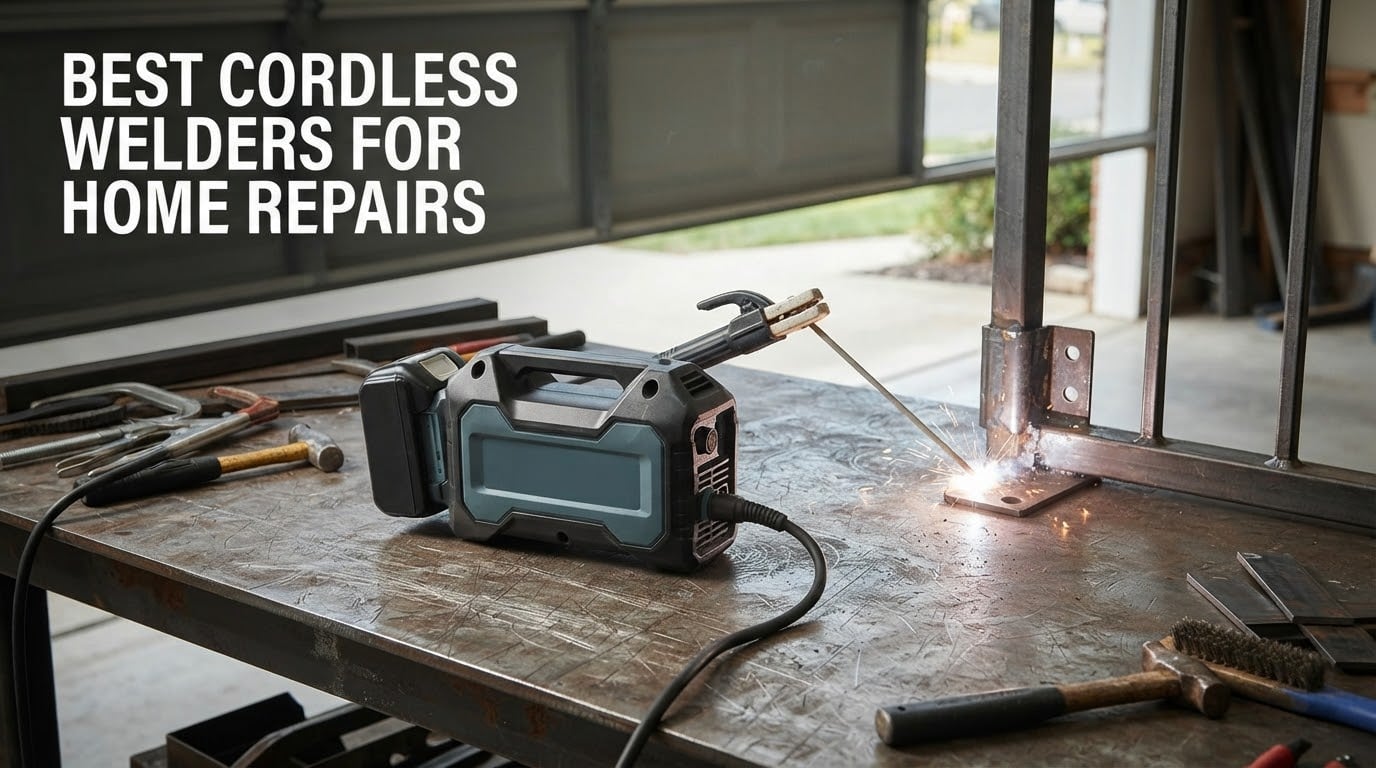
The hardest part of a home welding job is rarely the welding. It is dragging a 50-foot extension cord across a driveway, finding an outlet in a barn loft, or trying to fix a trailer hitch at the side of a road with no mains power anywhere near you. If that sounds familiar, the search for the best cordless welders for home repairs is really a search for a machine that puts the arc where the broken thing is, not where the outlet is.
A cordless welder is a welding machine that draws its arc current from a rechargeable lithium-ion battery pack instead of a wall outlet. The inverter circuit inside converts that battery power into a controlled arc, so the physics are the same as a plug-in machine; what changes is the ceiling on output and the need for a thermal cut-off to stop the unit cooking itself. For a homeowner, that trade is usually worth it, because a gate latch, a trailer bracket or a car floor patch can be repaired on the spot instead of disassembled and carted to the garage.
Here is the honest catch, and it comes before any recommendations. Genuine battery welders are still a narrow category compared with the flood of 120V stick and MIG machines on the market. Of the real arc welders we could find that run without a plug, most are stick-only, one adds TIG, and one is a gas MIG machine that borrows power from two car batteries. Four of the six below also carry fewer than a dozen customer reviews each, so we lean on measured specifications and the patterns that show up repeatedly in owner feedback rather than on huge review counts.
That thin review base also tells you something useful: the people who bought these machines are mostly first-time owners doing occasional repairs, and they are the ones filing the reports we leaned on. We also explain what the cheap handheld units marketed as cordless welders actually are, because that is where a lot of first purchases go wrong. If you are still deciding between processes rather than models, our budget welder picks and stick welder guide for farm repairs cover the plug-in side of the shelf.
Table of Contents
What Is the Best Cordless Welder for Home Repairs?
The ESAB Renegade VOLT ES 200i is the best cordless welder for home repairs because it is the only one in this group with real TIG and stick capability, it runs on widely available DEWALT FLEXVOLT 20V/60V MAX batteries, and it outputs 200 A on 230V mains or up to 140 A on battery. It is heavy at 90 lb, so lighter single-stick kits suit lighter work.
Top 3 Best Cordless Welders for Home Repairs (October 2026)

ESAB Renegade VOLT ES 200i
- Stick and TIG
- 140 A on battery
- Four DEWALT FLEXVOLT 12Ah packs
- 200 A on 230V mains

TLL Cordless Welder 4-Battery Kit
- Stick plus optional flux core
- Up to 120 A output
- Four 20V 8Ah batteries included
- 8.38 lb welder body

wuzizi 8 lb Cordless Stick Welder
- Only 8 lb
- 100 A on two packs
- Hot start and anti-stick
- LED parameter display
The ESAB takes the top slot on capability rather than on review count. It is the only pick here that puts a TIG torch on a battery, and it is the only one from a brand whose machines you will see on commercial job sites. Below it, the TLL kit earns its place on battery volume and the number of owners who have actually used it, while the wuzizi unit earns its place on weight: at 8 lb it is the machine you can carry up a ladder without planning the rest of the day around it.
All Six Cordless Welders Compared in 2026
| Product | Specifications | Action |
|---|---|---|
| ESAB Renegade VOLT ES 200i |
|
Check Latest Price |
| TLL Cordless Welder 4-Battery Kit |
|
Check Latest Price |
| wuzizi Cordless Stick Welder 2-Battery Kit |
|
Check Latest Price |
 Antstone 2nd Gen 288Wh Cordless Welder Antstone 2nd Gen 288Wh Cordless Welder |
|
Check Latest Price |
 Klutch KLiQ 20V 200A Cordless Kit Klutch KLiQ 20V 200A Cordless Kit |
|
Check Latest Price |
 Broco ReadyWelder Car Battery MIG Broco ReadyWelder Car Battery MIG |
|
Check Latest Price |
Two details in that table decide more purchases than the amp ratings do. The first is battery platform: the ESAB accepts DEWALT FLEXVOLT packs and the TLL battery interface works with the Makita 20V tool platform, so if you already own tools on either system you are not buying into a new ecosystem. The second is process, because four of these six are stick machines and stick is the one that asks the most of a beginner’s technique.
1. ESAB Renegade VOLT ES 200i – Best Overall Cordless Welder for Stick and TIG
ESAB® Renegade VOLT™ ES 200i Battery-Powered Stick and TIG Welder
Stick and TIG
200 A on 230V mains, 140 A on battery
Four FLEXVOLT 12Ah packs
90 lb
Pros
- Only pick here with genuine TIG as well as stick
- Runs standard DEWALT FLEXVOLT 20V/60V MAX 12Ah packs
- Four 12Ah batteries and a 4-port fast charger included
- Also works as a 200 A mains welder on 230V
- AMP+ hybrid mode adds output on demanding jobs
Cons
- 90 lb makes it a two-person lift
- Costs several times more than the battery stick kits here
This is the machine we would put on a truck for a fitter who does the same jobs in four different buildings, and it is the one we would tell a serious hobbyist to buy once, rather than twice. Output is 200 A on 230V mains and up to 140 A on battery power, with an AMP+ hybrid mode that adds punch when the joint is thicker than the setting suggests it should be. Efficiency at maximum current is quoted at 80%, and power factor at maximum current is 0.99, which is the sort of number you normally only see on shop equipment.
The battery decision is the reason this one stands out for homeowners. The box contains four DEWALT FLEXVOLT 20V/60V MAX 12Ah batteries and a 4-port faster charger, plus a TWECO ground clamp and electrode holder. Those are the same packs sold for DEWALT tools, so a household that already has a FLEXVOLT charger and a spare pack from another tool is carrying the platform rather than starting over on it. For most people buying a welder today, that single fact removes the biggest hidden cost in this category.
There is a second battery advantage. Because the machine accepts mains power as well as battery power, it is not a cordless-only purchase; it becomes a 200 A stick and TIG welder whenever a 230V outlet is available. Owners describe clean, consistent work on both processes in the reviews, and all five reviews on this listing are 5-star, which is unusual for a machine this new. The memory storage for welding parameters and the sun-readable interface are small touches that matter when you are setting up outside in daylight.
The difficulty is physical. At 90 lb with four 12Ah batteries in the package, this is a two-person lift and a deliberate carry, not something you bring up a ladder or across a wet lawn. It also sits at a price point several times above the battery stick kits in this roundup, which means a hobbyist welding one gate a year is paying a lot for capability that mostly gets used on site. That is a fair trade for a pro, and a poor one for a weekend repairman.
Who the ESAB Renegade VOLT ES 200i suits
This is the pick for anyone who needs TIG off-grid, and TIG is the process that opens up stainless, aluminum work with the right filler, and thin-gauge fabrication that a stick machine cannot touch. A fabricator repairing stainless railings on a rooftop, or a mobile tech who works inside customer vehicles and under raised equipment, gets a tool that also works plugged in.
It also suits owners of DEWALT FLEXVOLT tools better than anything else here, because the batteries and the 4-port charger are shared. If you already have several FLEXVOLT packs, the effective cost of the machine drops, and you can hot-swap instead of planning a job around a single charge.
Where the ESAB Renegade VOLT ES 200i holds you back
Weight is the dealbreaker for overhead and residential work. Carrying 90 lb up onto a roof deck or across a soft yard is a different task from carrying the 8 lb wuzizi or the 8.38 lb TLL, and it is a task most weekend projects do not require.
Cost and commitment are the other two. This is a serious machine with serious weight behind the term serious, and the stick-only alternatives here deliver usable penetration on the same kind of mild steel repair for a fraction of the outlay. If your work list is one car floor pan and a set of gate hinges, the money is better spent elsewhere.
2. TLL Cordless Welder 4-Battery Kit – Best Value for Home Repairs
TLL Cordless Welder with 4 Batteries,Battery Powered Welder Welding Machine
Stick plus optional flux core
Up to 120 A on battery
Four 20V 8Ah packs
8.38 lb
Pros
- Largest review base of the six at 12 reviews
- Four 20V 8Ah batteries included
- Works with 6010 6011 6013 and 7018 rods
- ABS housing dissipates heat for continuous work
- LED display with welding parameter memory
Cons
- Flux core needs a separate spool gun
- External DC input limited to 36-84V
- Stainless work needs a dedicated electrode
This is the kit we would hand to a homeowner who wants to stop renting or borrowing a machine, because it removes the single most common complaint about battery welders: one battery is never enough. The pack holds four 20V 8Ah lithium-ion batteries, a quick charger, five welding rods, a stainless steel weld brush, both welding clamps with quick plugs, an external DC cable and a shoulder strap. Two of those four batteries are spares, which means a full weekend of intermittent gate and trailer work happens without a single charge pause.
Output reaches up to 120 A on battery power with current the owners describe as stable and penetration as good, and it runs 6010, 6011, 6013 and 7018 rods across electrode sizes from 1/16 in to 5/32 in for material from 0.06 in to 0.2 in thick. The 7018 detail matters more than it sounds: 7018 is a low-hydrogen rod many first-time buyers ask about by name, and this machine is one of very few battery units that handles it out of the box. The ABS housing is listed for better heat dissipation than a metal shell, which supports the continuous welding claim.
It is also described as 2-in-1 stick and flux core, which sounds better than it is. Flux-core capability requires a separate spool gun that is not in the box, so plan for that cost if wire work is on your list. The machine is rated as stick first, and the 8.38 lb body keeps it in the portable class. If you want wire feed, compare it against a dedicated machine such as one of our MIG welder picks rather than assuming the second process is free.
The 4.3 average across 12 reviews is the most honest rating in this group, and the feedback reflects a machine that does its core job without drama. The main friction points are the add-on spool gun cost, the narrow 36-84V window for an external DC supply, and the need for a dedicated electrode when stainless is the material. Buyers also report that the battery interface works with the Makita 20V tool platform, which for many households means the packs are already in the garage.
Who the TLL 4-Battery Kit suits
This suits a household that already owns Makita 20V tools, or anyone whose projects are scattered around a property: fence posts, a gate frame, a truck bracket, a piece of farm equipment. Four batteries mean the machine is rarely the reason you stop working, which is exactly what a 120V machine with a stopped circuit breaker feels like on a long day.
It is also the safest first welder in this roundup for anyone committed to stick. Four rod types including 7018, a clear display, and saved parameters mean fewer variables while you are still learning what amperage does to a bead.
Where the TLL 4-Battery Kit holds you back
The second process costs extra. Without a spool gun, the machine is a stick welder, and the base kit has no gas cylinder or wire spool, so anyone expecting MIG from the box will be disappointed.
Stainless and aluminum are outside the comfortable range. A dedicated electrode is recommended for stainless, and this is an inverter stick machine rather than a multiprocess unit, so it is not the tool for thin aluminum work. For a machine that runs three or four processes, our multiprocess home shop picks are the place to look.
3. wuzizi 8 lb Cordless Stick Welder – Best for Carrying to the Job
Cordless Welder Battery Powered Welding Machine With 2 Batteries, Portable MMA DC Welder Machine With LED Display Inverter Stick Welder(Blue)
Stick welding only
100 A on the two included packs
8 lb welder unit
LED display
Pros
- Lightest machine in the group at 8 lb
- Two 20V 8Ah packs plus charger and strap in the box
- Runs 100 A on included packs and 130 A with an external pack
- Accepts electrodes from 1/16 in to 5/32 in
- Fan only runs when needed
Cons
- Delivered current runs below the displayed figure
- Display current readout described as inaccurate
- Proprietary packs
- not DEWALT compatible
- Slow charger and an undocumented spool gun interface
At 8 lb for the welder unit, and with a 26.6 by 15.8 by 22 cm body, this is the machine we would take onto a roof, into a crawl space, or out to a gate at the far end of a property. The kit includes two 20V 8Ah power batteries, welding clamps, an external DC cable, a quick charger and a shoulder strap, which is a complete working setup in one box. Owners consistently point to portability as the reason they are happy with it.
On the arc side, it runs 100 amps on the two included batteries and up to 130 amps when an external battery is fitted, and the hot start, arc force and anti-stick package is the standard beginner-friendly set. It handles 1/16 in, 3/32 in, 1/8 in and 5/32 in electrodes on carbon steel and low alloy steel, with overheat, over-current and overload protection, and the LED display shows current, function mode and welding mode. One owner reported burning roughly 6 to 10 3/32 in 7018 rods on a single charge, and another used it successfully to repair a trail fixture.
What we would flag is measurement accuracy. The top review states that delivered current runs roughly 12 to 20 percent below the displayed value, with the gap narrowing at lower settings, and that the display readout itself is described as inaccurate. In practice that means you dial a number, then learn where that number really lands for your rod and joint. On thin material that is worth knowing before you start, because a setting that looks conservative may not be.
The other real limitation is battery ownership. The packs are proprietary and not compatible with DEWALT 60V packs, and a Spanish-language reviewer reports being unable to find replacement batteries. The included charger is also described as slow. That is a manageable risk on a kit you will use monthly, and a poor one if you plan to keep this machine for a decade without a spare pack, so treat the battery ecosystem as part of the purchase rather than an accessory.
Who the wuzizi 8 lb Welder suits
This suits the homeowner whose repairs are physically awkward: a handrail on a staircase, a bracket on a gate out in the yard, a piece of HVAC sheet metal in an attic. Nothing else in this roundup is easier to carry to that work, and the shoulder strap in the box matters more on this machine than on any other.
It also suits anyone who plans to own the packs up front. Because these batteries are proprietary and will not fit DEWALT chargers, this is the one pick here that does not let you share an existing battery investment, so budget for two spare packs as part of a long-term ownership plan rather than an accessory purchase later.
Where the wuzizi 8 lb Welder holds you back
The current accuracy gap is the honest drawback. If you are new to welding and want the display to tell you the truth, a machine with a steadier readout is a better teacher, and the Antstone 288Wh unit publishes a clearer charge picture than this one can.
Stick is the only process, and the spool gun interface is undocumented, so the wire-feed option is not something to plan a project around. The narrow wire feed speed range and the slow charger are the two specifications we would want improved before this machine became a primary shop welder.
4. Antstone 2nd Gen 288Wh Cordless Welder – Best for Long Single-Charge Jobs
Antstone 2nd Gen Cordless Welding Machine Battery Powered Welder LED Work Light USB Port 160A MMA ARC Welder Hot Start IGBT Inverter Portable Stick Welder for Outdoor DIY Construction
288Wh built-in battery
20-28 welds on 3/32 in per charge
IP23 rated
19.8 lb
Pros
- Large 288Wh internal battery
- No battery swaps mid job
- Built in dual LED work lights and USB port
- IGBT inverter with hot start and anti-stick
- Sunlight readable display
Cons
- Heavier than the 8 lb kits at 19.8 lb
- Stick MMA only with no MIG or flux core
- Recharge needs AC 220V access
This machine takes a different approach to the same problem. Rather than swappable packs, it carries a 288Wh internal battery, which is roughly three times the capacity of a standard pack in this class, and the claim is 20 to 28 welds with 3/32 in electrodes or 10 to 12 welds with 1/8 in per charge. For someone doing a long repair session where stopping to change batteries breaks the workflow, that is the more useful number, and it is one of the few in this category expressed in actual welds rather than a vague runtime claim.
Because the battery is internal, there are no packs to lose or mix up, and no proprietary pack platform to be locked into later. The tradeoff is recharge method: the unit recharges from AC 220V, so it needs a mains supply between jobs even though it does not need one during them. That is a workable pattern for a property owner with a garage outlet and a poor pattern for a mobile fabricator working a week away from power.
The rest of the design is aimed at outdoor and dark work. IGBT inverter technology with hot start and anti-stick gives stable arc behavior, deep penetration and low spatter on the 3/32 in to 1/8 in electrodes it supports for stainless and carbon steel. The IP23 dust and splash rating is appropriate for garages and job sites, and the built-in dual LED work beams plus a USB port for charging a phone or a small tool are the kind of detail that shows up in reviews as a genuine convenience on dark repairs.
At 19.8 lb it is noticeably heavier than the 8 lb stick kits, which matters on ladders and rooftops, though it is far more portable than the 90 lb ESAB and lighter than the 21.6 lb Klutch kit. With only four reviews on record, we would treat the strong rating as encouraging rather than proven, and note the pattern: nobody in that group is complaining about arc quality. They are weighing the heavier mains-recharge format against swappable-battery kits, which is a reasonable thing to think about.
Who the Antstone 2nd Gen suits
This suits the owner with a garage outlet and long repair sessions. A day of reinforcing gate frames, rebuilding a trailer frame, or patching several car panels is one continuous job on this machine, because the internal battery is sized to carry the arc through it without a swap.
It is also a good fit for anyone already invested in 220V service, since the recharge method matches what a home with a proper outlet already has. The work lights and USB port make it practical for evening repairs and for dark corners of a garage where a helmet lamp is the wrong tool.
Where the Antstone 2nd Gen holds you back
It is stick only, with no MIG or flux core in the base unit, so it cannot cover wire work or non-ferrous metals. If aluminum or stainless in thin gauge is on your project list, this is the wrong machine and there is no accessory that changes that.
Twenty pounds is a real weight for overhead work, and the small review base means you are an early adopter in the practical sense. If you need a machine you can pick up one-handed while standing on a ladder, the lighter kits are the honest choice.
5. Klutch KLiQ 20V 200A Cordless Welder Kit – Most Versatile with Four Batteries
Klutch Cordless Welder Kit, KLiQ 20V, 200A, 4-Pack 8.0Ah Batteries
200 A pure DC MMA and flux
Four 20V 8Ah packs
Dual port charger
21.6 lb
Pros
- Four 8Ah batteries and a dual port fast charger in the kit
- Pure DC output gives smooth low spatter welds
- Intelligent power detection adjusts to battery level
- Fuel gauges on every battery
- Overheat and abnormal condition protection
Cons
- Lowest rated consistency in the group with one 2 star review
- 21.6 lb is heavy for a portable kit
- Klutch batteries are a closed ecosystem
- No TIG capability
What makes this kit interesting is the pairing of a 200 A rating with a complete battery package: four 20V 8.0Ah batteries, a 20V dual-port fast charger and five 2.5mm stick electrodes, with the machine, cables and clamps. Pure DC output for MMA and flux welding is specified to produce low spatter, and the intelligent power detection system adjusts output based on the remaining battery level, which is a sensible way to keep a small pack from tripping the machine’s own protection.
The batteries are the platform story here. KLiQ packs are cross-compatible with the rest of the Klutch 20V tool line and carry fuel gauges, so if you own Klutch tools, the whole garage runs on one battery type. If you do not, the pack is a closed ecosystem, and that is the trade you make for a kit where four packs and a dual-port charger are already in the box.
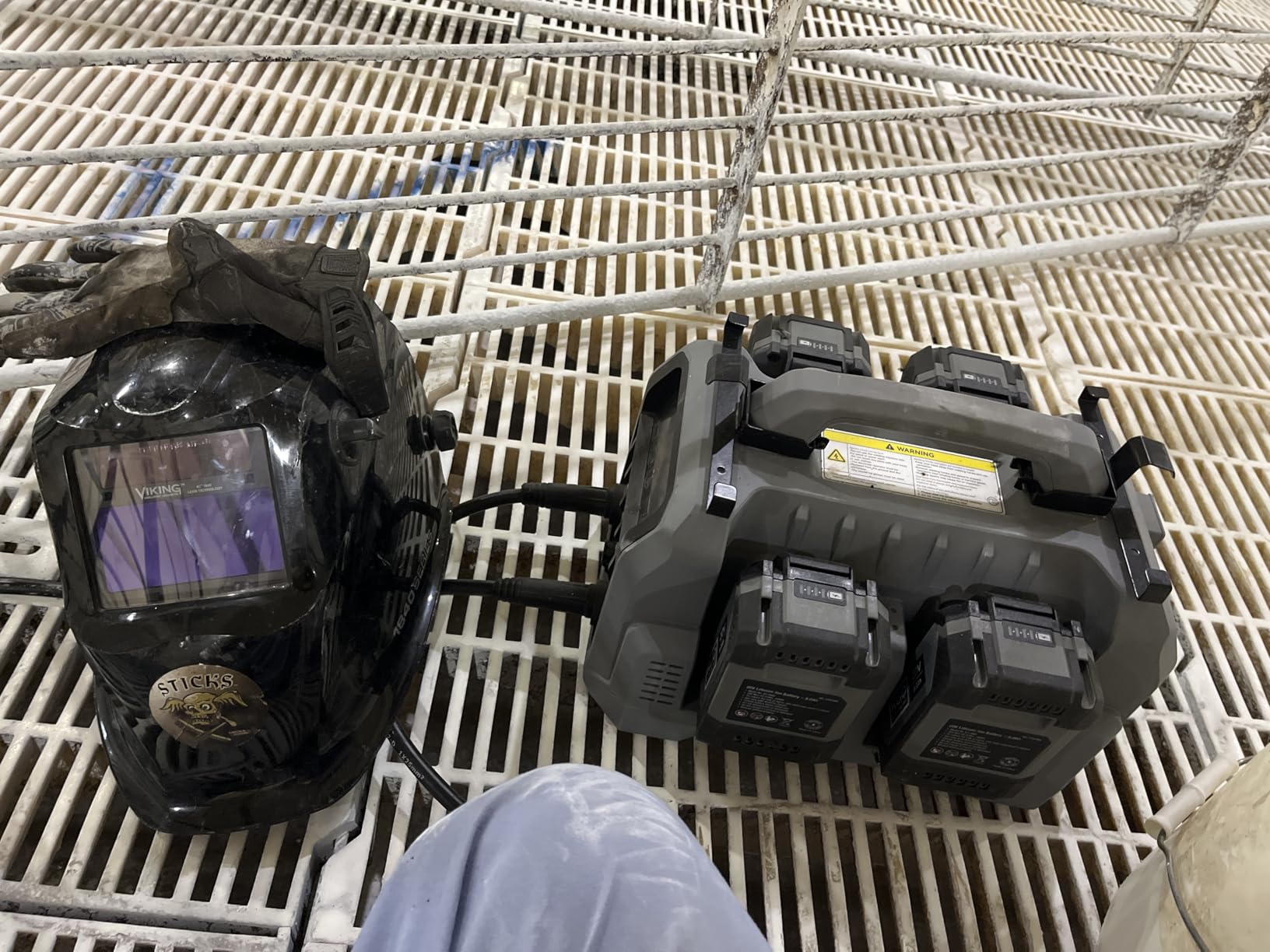
We are reporting this one with a caveat rather than a recommendation of last resort. With three reviews, the ratings split into two 5-star experiences and one 2-star review, which usually points to variability between early units rather than a design fault. Buyers who got a good one talk about low spatter and the battery platform; the critical review points to build or performance shortfalls. At 21.6 lb it is the heaviest of the stick-only units here, and it stays with MMA and flux rather than offering TIG.
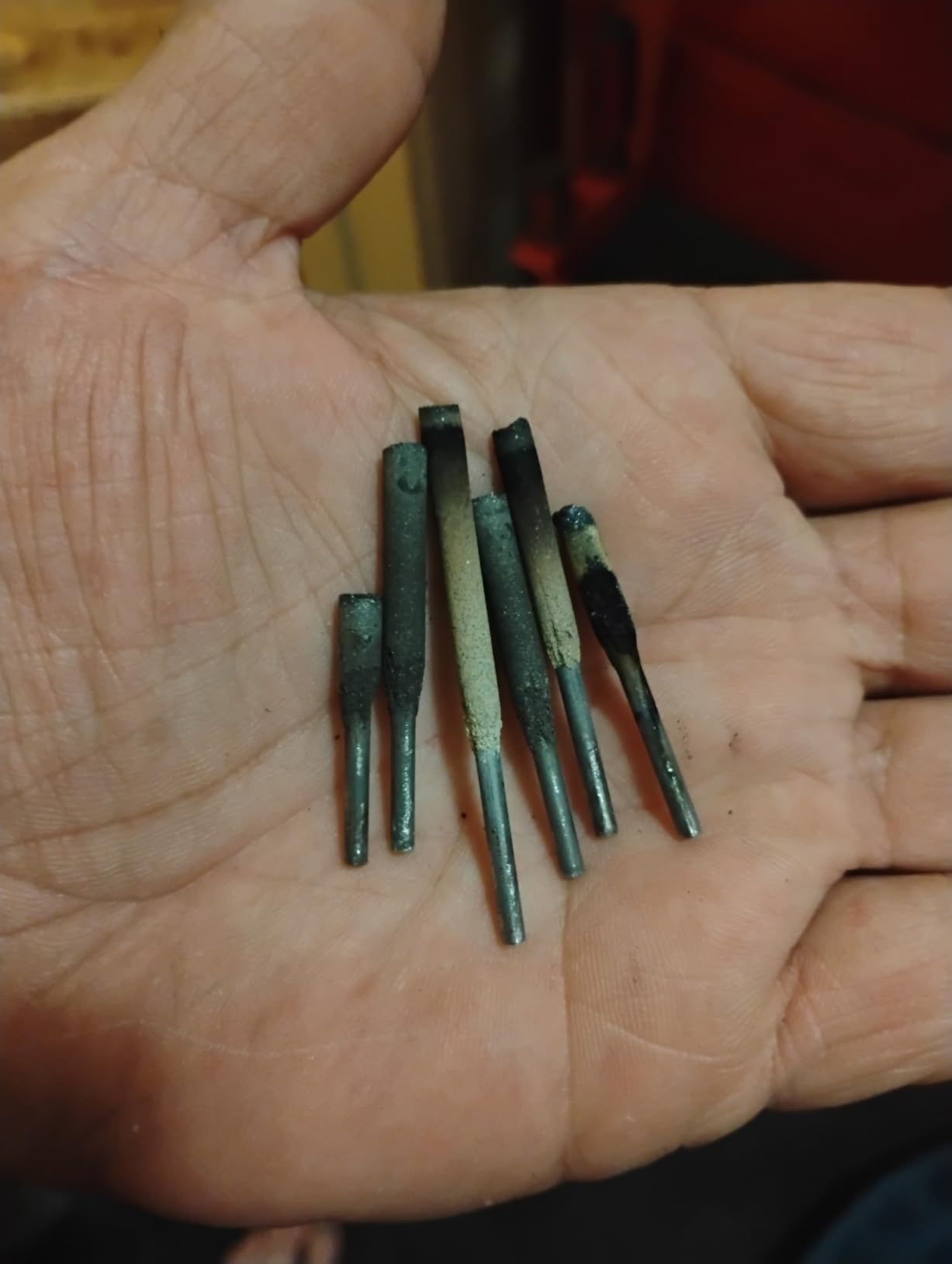
Two customer photos on this listing show the unit in use rather than boxed, which is more informative than most marketing images, and worth a look before you commit. For a first battery welder on a budget, the four-battery package is genuinely the right shape. Just buy it knowing you are an early adopter of a young product line and that warranty service will be with a newer brand rather than an established one.
Who the Klutch KLiQ 20V kit suits
This suits a household that wants maximum battery time for the money and already owns Klutch 20V tools, or wants a single battery type to cover the whole garage. Four 8Ah packs with a dual-port charger means a full day of intermittent stick work across a property.
It also suits someone whose first priority is clean, low-spatter stick welds on mild steel. Pure DC output is the right choice for that, and the fuel gauges remove the guesswork of starting a job at low charge.
Where the Klutch KLiQ 20V kit holds you back
The rating spread is the honest caution. Three reviews cannot tell you whether a 2-star report is a defect or a bad afternoon, and anyone who needs predictable output on a schedule would be more comfortable with a machine carrying a deeper review history.
Twenty-one pounds is heavy for a portable kit, and there is no TIG. If your work includes aluminum, stainless in thin gauge, or anything where you need precise heat control on a small part, a multiprocess machine such as the ESAB at the top of this list is the more sensible target.
6. Broco ReadyWelder – Best Cordless Option for Aluminum and Stainless
ReadyWelder by Broco Portable Welding Machine, Car Battery Powered Gas MIG Welder, On-the-Go Welding for Steel, Aluminum & More, Includes Carrying Case
Gas MIG welder
Two car batteries for power
Steel aluminum and stainless
22 lb
Pros
- Only true gas MIG option so it handles aluminum and stainless
- MIG process is far easier for a beginner than stick
- Draws from car batteries with no charger and no fuel
- Carrying case included
- A brand in portable welding since 1997
Cons
- Car batteries are not included
- Needs two suitably capable batteries or two vehicles
- Lowest rating in the group at 3.3 with one 1 star review
- Requires shielding gas so it is not self contained
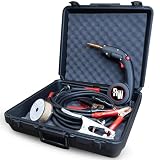
This is the outlier in the roundup and the one worth understanding properly. It is a gas MIG welder, and it takes its power straight from two car batteries, so it can weld steel, aluminum and stainless without a mains outlet anywhere near the work. For off-roading, farm equipment, marine work and roadside repairs, that combination does not exist anywhere else on this list, and MIG is a far more forgiving process to hand a beginner than stick.
The power approach is genuinely clever. Tapping into vehicle batteries gives sustained output with no charger to pack and no fuel to carry, and the manufacturer has been building machines in the portable welding category since 1997. A durable carrying case is included for transport and storage, which suits the truck-bed and tailgate work this is actually designed for.
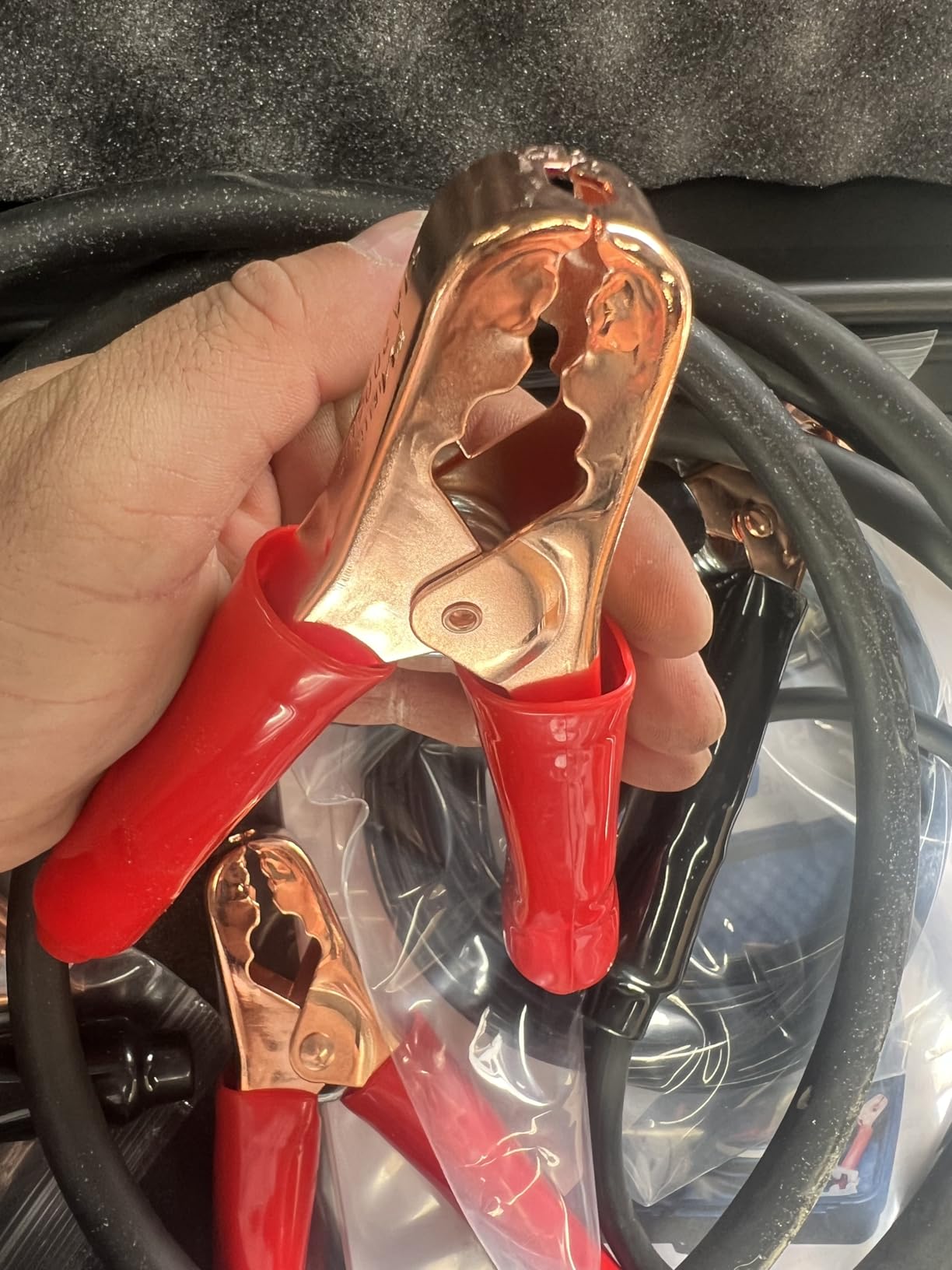
The catch is that the batteries are not part of the box. You need a pair of suitably capable batteries, which in practice means two vehicles or a matched pair you already own, and that is a real extra cost before the first weld. Gas MIG also needs shielding gas, so the machine is not as self-contained as a battery stick welder, and you are buying into a consumable supply chain that a stick-only kit does not require.
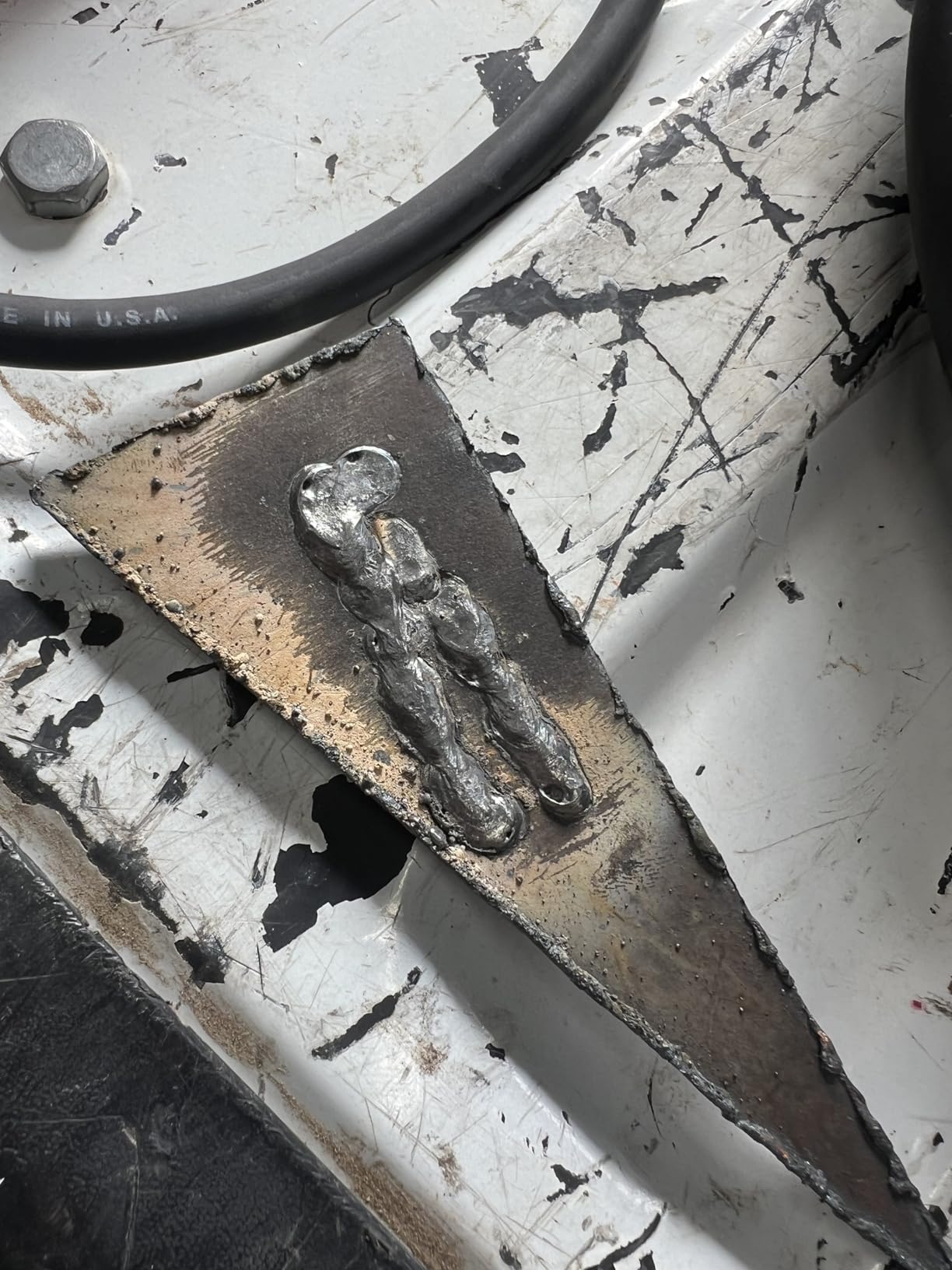
With a 3.3 average and only three reviews, including one 1-star rating, this is the pick with the thinnest evidence behind it. The reviewers do acknowledge the concept is useful for off-grid and vehicle-based repair, but the sample is too small to call quality consistent. The 22 lb package is heavier than every stick-only kit in this roundup, and unlike a lithium pack, every kilo is dead weight you carry even when the job is twenty minutes long.
Who the Broco ReadyWelder suits
This suits anyone who genuinely works away from power and needs to weld aluminum or stainless, which none of the battery stick machines here can do. On a farm, at a remote site, or on a trail with two vehicles, the constraint is not amps, it is access to energy, and this machine removes it.
It also suits a first-time welder who would rather learn on MIG. There is no electrode handling, no rod to jam, and the bead comes out of a gun, so the skills you build transfer to almost any shop machine you own next.
Where the Broco ReadyWelder holds you back
The ownership math is the biggest issue. Two capable batteries plus shielding gas is a meaningful addition to the purchase, and the machine is useless at a single-battery job site, which is the scenario most people picture when they imagine buying a cordless welder.
Add the lowest rating in the group and a 1-star report, and this is a concept machine rather than a confident recommendation. If aluminum and stainless are not on your project list, one of the battery stick kits in this roundup is the better purchase for the money and the simpler ownership.
Cordless vs Corded: Which Home Repairs Each One Handles Better
The honest answer is that a good 120V corded inverter still beats a cordless machine on output, duty cycle and consumable cost, and hobbyists in r/Welding reach for one without hesitation when a shop outlet is available. The cordless case is not about welding better; it is about where you are standing when you do it.
Cordless wins on location. A gate that swings open onto a driveway, a trailer hitch in a gravel parking area, a rooftop vent flashing, a fence panel at the back of a property with no power, and a vehicle sitting in a field all become single-job repairs instead of disassembly-and-transport problems. Nobody has to run a 50-foot cord across mud or find a generator.
Corded wins on everything else. A 120V stick or flux-core machine runs indefinitely, holds a steadier arc on thicker plate, accepts a larger range of consumables, and costs far less once you count batteries, chargers and a second pack. If your repairs happen at a bench with an outlet within a few feet, a cordless machine is paying a portability premium you may never use.
There is a middle path worth naming. A multi-process corded machine covers TIG, stick and MIG in one box, which is why our multiprocess home shop picks make more sense for most garage welders than any battery kit. Buy cordless when the job site moves; buy corded when the job site is your garage.
What the Cheap Handheld Cordless Welders on Marketplaces Actually Are
Most of the listings that show up when you search cordless welder and describe a small handheld unit are not arc welders at all. They are resistance welders, also sold as spot welders or handheld welders, and they work by pressing two metal tips together and pushing current through the joint until it heats and fuses. The beads they leave look like stacked nuggets rather than the fused, penetrated bead of a stick or MIG weld.
That is a real and useful tool for a specific job. A resistance spot welder is the right choice for thin sheet metal tabs, battery pack work, and light fabrication where a full arc machine would be overkill, and it needs no consumables and no shielding gas. It is not a substitute for a welder that will join a trailer bracket or a gate hinge, and it will not pass the load a welded repair is expected to carry.
How to tell them apart before you buy: a genuine arc welder lists an amp rating, electrode sizes, and processes such as SMAW, MMA, MIG or TIG, and it names a battery platform you can name elsewhere. A resistance welder lists a power draw in watts or amps of input current, describes nickel or copper tips, and makes no mention of a rated output. When a listing describes a welder you could hold in one hand at 4 lb, treat that as a resistance welder unless the specification says otherwise.
How to Choose a Cordless Welder for Home Repairs
1. Pick the process by the material, not by the machine. Stick, or SMAW, is the most widely available process and works on mild steel, stainless and outdoor or dirty surfaces. Flux-core wire is easier than stick for a beginner and cleaner on the same steel, but needs a spool gun or wire feed. TIG gives the most control and is the only way to weld aluminum and thin stainless, and it needs the most skill.
2. Check the material thickness against the published range. These machines are built for light gauge work. The TLL lists 0.06 in to 0.2 in of material thickness, which is honest for the class, and a 120A or 140A ceiling on battery power tells you this is a 16 to 20 gauge world rather than a structural one. If you plan to weld 1/4 in plate or heavier, a corded 120V machine is the better tool.
3. Treat the battery platform as part of the price. The ESAB runs DEWALT FLEXVOLT 20V/60V MAX 12Ah packs, and the TLL battery interface works with the Makita 20V tool platform. Those two may already be in your garage, which removes the two largest running costs in this category. The wuzizi, Klutch and Antstone designs use their own packs, and the Antstone carries its battery inside the case, so plan to buy those batteries twice.
4. Ask for arc-on time, not battery life. The Antstone publishes 20 to 28 welds on 3/32 in per charge, and a wuzizi owner reports 6 to 10 rods of 3/32 in 7018. The broad industry guidance for battery welders sits around 20 to 45 minutes of arc-on time per charge. Those numbers tell you more than any amp claim, because they describe what you get between swaps on a real repair.
5. Factor in weight before you fall for output. The spread in this roundup is 8 lb to 90 lb, and that number decides whether the machine goes with you to the job or sits in the garage. Our rule of thumb: anything over 25 lb needs a shoulder strap plan and a second pair of hands, and anything over 60 lb belongs on a cart.
6. Check warranty length and consumable support, because that is where first-time buyers get burned. Experienced hobbyists treat warranty terms and local parts availability as a proxy for build quality, and it is a fair proxy. Before you buy anything on this list, confirm that contact tips, liners, nozzles and electrodes for your chosen process are actually sold in your region, and see if the same brand is already in our guides for farm repair stick machines or for MIG setups, which is a decent proxy for parts depth.
7. Compare the full kit cost, not the sticker. Machine plus two batteries plus a charger is the number that matters, and for owners with existing DEWALT or Makita packs it can be a small machine cost rather than a full platform cost. Shop and hobby soldering work is a different category entirely, and for electronics or connector work our hot air rework station guide is the relevant read.
First-Weld Setup and Safety Checklist
Before the first arc, set up so the job can be finished. You need a helmet with the correct shade for your process and amperage, a proper ground clamp rather than a lead clip on thin panel, the correct electrode or wire for the material, and a rod of the diameter matched to the machine settings. Gloves, a leather jacket or sleeves, and closed leather shoes are the minimum personal protection.
Ventilation and clearance matter more than most people expect. Weld only where fumes and spatter cannot reach people, pets, vehicles, or anything combustible, keep a fire blanket and a bucket of water within reach, and never weld on galvanized, painted or plated material without stripping it, because the coating fumes are toxic. Set up a windbreak for gas MIG work, since shielding gas does not tolerate a breeze.
Take a first pass on scrap of the same thickness as the real job. Set the amperage from the machine, listen to the arc, and watch the bead before you touch anything expensive. If you are new to welding and the process feels unfamiliar, a short shop class costs less than a ruined car panel.
Frequently Asked Questions
What is the best cordless welder?
For home repairs the ESAB Renegade VOLT ES 200i leads because it is the only battery machine in this group with real TIG as well as stick, it runs standard DEWALT FLEXVOLT 20V/60V MAX packs, and it delivers 200 A on 230V mains or up to 140 A on battery. Lighter households doing only stick work should look at the TLL four-battery kit or the 8 lb wuzizi unit instead.
Do battery operated welders work?
Yes, for light-gauge home repair work they work well, and the arc is identical to a plug-in machine. The limits are output and duty cycle rather than quality. Expect roughly 20 to 45 minutes of arc-on time per charge across this class, published figures like 20 to 28 welds on 3/32 in electrodes per charge, and reliable penetration in material around 0.06 in to 0.2 in thick.
What type of welder is best for DIY car repairs?
For patch work on a floor pan, brackets and hangers, a stick or flux-core machine is the right answer because it tolerates dirty, mismatched steel and does not mind a rusty surface. For body sheet metal, aluminum or anything that needs a clean cosmetic bead, MIG or TIG is better, and the only cordless options here are the Broco gas MIG and the TIG-equipped ESAB.
What is the best small welder for home use?
For a small welder for home use, the wuzizi at 8 lb is the lightest genuine arc welder in this roundup and runs 100 amps on its two included 20V 8Ah batteries, which covers light gauge mild steel repairs. The TLL is the better all-round starter because four batteries and support for 7018 rod make it far more usable over a full weekend.
Do those handheld welders really work?
They work, but they are not arc welders. Handheld units are resistance welders, also called spot welders, that press two metal tips together and fuse the joint with current. They are useful for thin sheet metal tabs and battery pack work, yet they cannot weld a gate bracket or a trailer hitch, and a listing with no rated output and no electrode sizes is describing a resistance welder.
Which Cordless Welder Should You Buy?
If you want the most capability and already own DEWALT FLEXVOLT tools, buy the ESAB Renegade VOLT ES 200i and accept the 90 lb. If you want the most usable first battery welder, the TLL four-battery kit is the one we would point a new owner toward, because four packs, 7018 rod support and a Makita-compatible interface remove most of the early frustration.
If you will be climbing, crawling or working overhead, the 8 lb wuzizi machine is the honest choice despite its accurate-output caveat, and the Antstone 288Wh unit is the pick for a long session beside a 220V outlet. When in doubt, check whether your repair site has power at all, because that single question decides between cordless and a 120V corded machine better than any specification on this list. That is the short version of the best cordless welders for home repairs in 2026: buy for the location, not just the amps.