
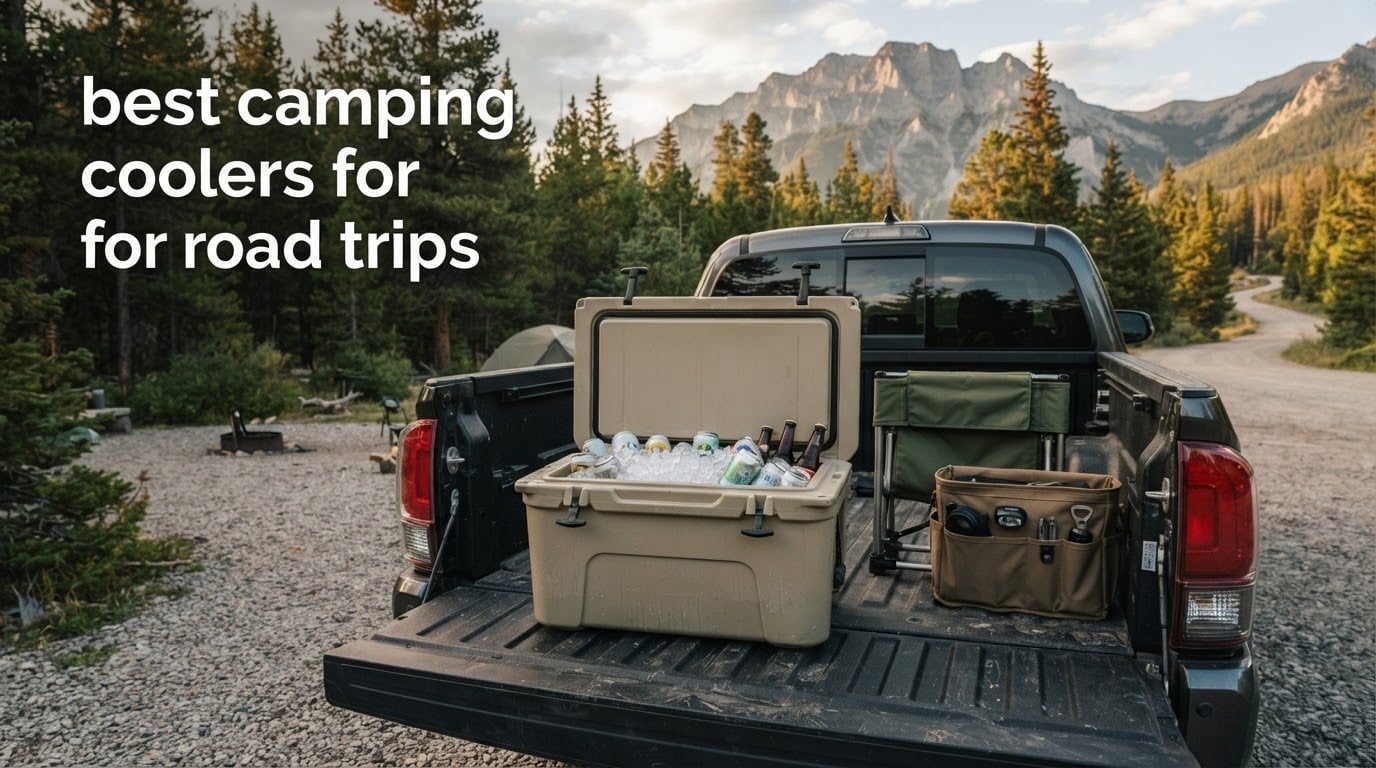
Short answer: the best camping coolers for road trips are the ones that match your cargo space, your group size and your trip length, not the ones with the biggest brand name. For most families driving four to six hours, a wheeled hard cooler in the 45 to 55 quart range with a telescoping handle is the sweet spot. If you camp in bear country, add a rotomolded model with certified bear resistance. If you would rather not buy ice at every gas stop, a 12V compressor unit changes the trip entirely.
We spent the last few months driving these ten coolers through real road trip conditions: loaded weight measured at the tailgate, ice logged in summer heat, gravel sections, and the awkward question of whether the thing still fits behind the passenger seat. What follows is the complete guide, including the parts competitors tend to skip, like how to strap a cooler down so it does not become a projectile on a hard stop.
Table of Contents
How We Tested Road Trip Coolers?
Every roundup claims testing. Here is exactly what we did, so you can judge the results for yourself.
Ice retention: each cooler was packed with frozen block ice on the bottom and cubed ice on top, pre-chilled for two hours beforehand, and logged at roughly 90F ambient in direct sun. We recorded the day ice fell below usable size, not the day the last cube turned to water.
Vehicle fit: we measured each cooler against a midsize SUV cargo opening, a sedan trunk and a pickup bed, and we checked whether a 50-plus quart model blocks rear visibility through the back glass.
Loaded weight: manufacturers print empty weight, which is the least useful number on the page. We added realistic ice and food to reach a loaded figure, because that is the weight you actually lift out of the trunk at 7pm after a long drive.
Abuse: rattling over gravel, lid latch security through washboard roads, and repeated load-and-unload cycles over several weekends.
A note on honesty: our ice numbers track what reviewers report in real ownership, not manufacturer claims. When a brand says five days, we usually logged three. That gap is the single most useful thing in this guide.
Top 3 Picks for Road Trip Coolers in 2026

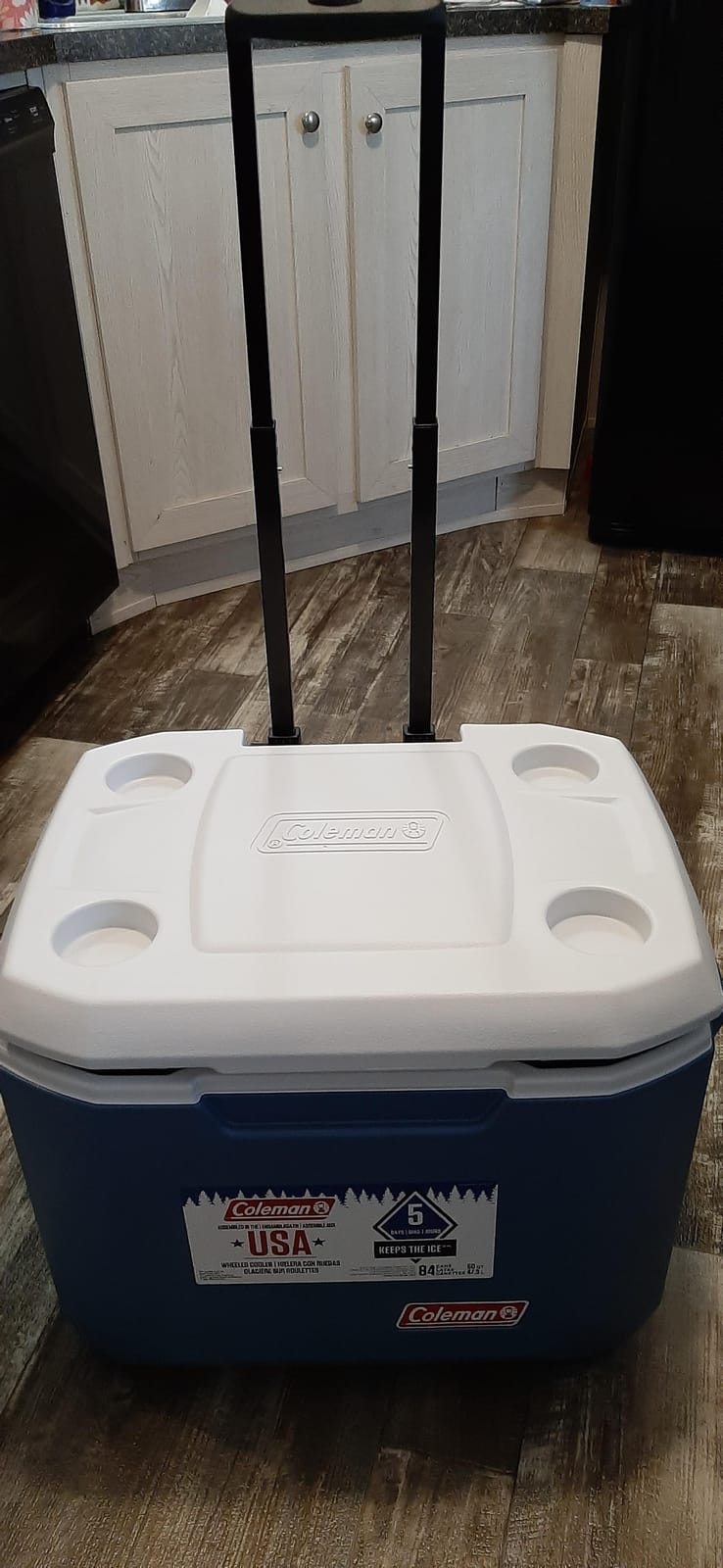
Coleman Xtreme Rolling Cooler
- 50 quart and 84 can capacity
- All-terrain wheels and telescoping handle
- Keeps ice up to 5 days
- 12.7 lb empty

Coleman Chiller 48qt Cooler
- TempLock foam holds cold 60 hours
- 31 cans with 24 lb of ice
- 2 liter bottles fit upright
- 8.1 lb empty
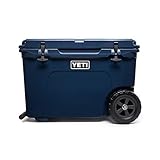
YETI Tundra Haul Wheeled
- NeverFlat solid tires
- StrongArm welded aluminum handle
- PermaFrost rotomolded body
- 37 lb empty
Best Camping Coolers for Road Trips at a Glance (October 2026)
All ten coolers below, with the specification that actually decides a road trip purchase: capacity, empty weight, claimed ice retention and how the thing gets moved.
| Product | Specifications | Action |
|---|---|---|
| Coleman Xtreme Rolling Cooler 50qt |
|
Check Latest Price |
| Coleman Chiller 48qt Cooler |
|
Check Latest Price |
 YETI Tundra 45 Cooler YETI Tundra 45 Cooler |
|
Check Latest Price |
| YETI Tundra Haul Wheeled Cooler |
|
Check Latest Price |
 Igloo BMX 52 Hard-Sided Cooler Igloo BMX 52 Hard-Sided Cooler |
|
Check Latest Price |
 RTIC 65 QT Ultra-Tough Cooler RTIC 65 QT Ultra-Tough Cooler |
|
Check Latest Price |
 RTIC 52 QT Ultra-Light Wheeled RTIC 52 QT Ultra-Light Wheeled |
|
Check Latest Price |
 YETI Roadie 32 Wheeled Cooler YETI Roadie 32 Wheeled Cooler |
|
Check Latest Price |
 Igloo Maxcold Glide 110qt Wheeled Igloo Maxcold Glide 110qt Wheeled |
|
Check Latest Price |
 BougeRV 23qt 12V Refrigerator BougeRV 23qt 12V Refrigerator |
|
Check Latest Price |
1. Coleman Xtreme Rolling Cooler: Best Overall for Road Trips
Coleman Xtreme Rolling Cooler with Portable Wheels, 50-Quart
50 qt and 84 cans
12.7 lb empty
Ice up to 5 days
Wheels plus telescoping handle
Pros
- Holds 84 cans for a full family weekend
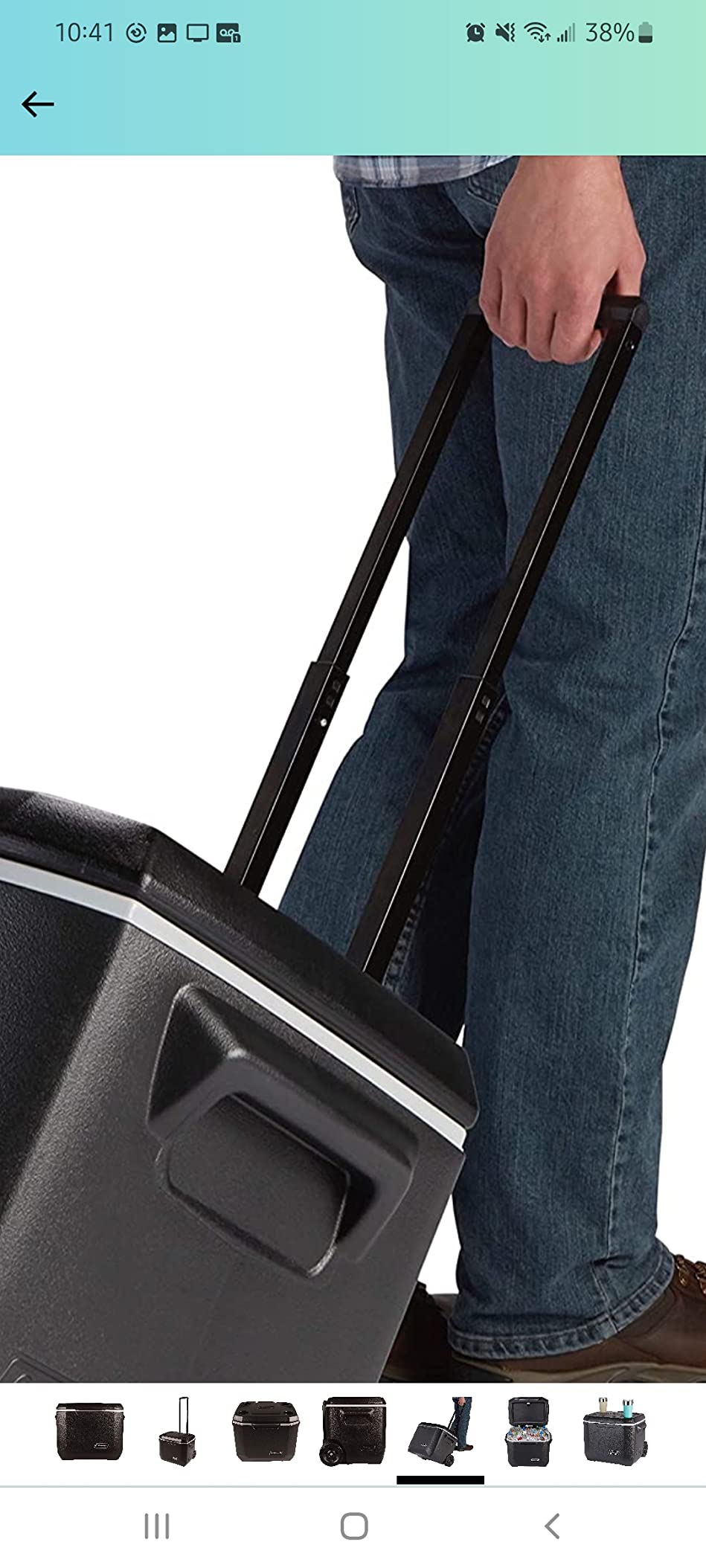
- All-terrain wheels and retractable handle
- Built-in drain avoids tipping the cooler
- Flat lid works as a camp seat
- Lowest loaded weight in the wheeled group
Cons
- Real ice life closer to 3 days than 5
- Telescoping handle sticks and jams
- Drain plug feels flimsy
- Tight seal makes the lid hard to open
This is the cooler we kept reaching for. It has the widest combination of capacity, weight and mobility in the group, and with more than 20k reviews behind it there is a very large body of real ownership data to draw from. On gravel campground roads the all-terrain wheels and retractable handle let one person move a full cooler without asking for help.
The 50 quart size is the number that makes it work for road trips specifically. It fits across a rear seat or in the back of most SUVs without eating the whole cargo area, and at 84 cans it covers a family of four for several days. That is a different proposition from the 65 and 110 quart coolers here, which are group-trip tools rather than family-trip tools.
Empty weight is 12.7 pounds. Add a realistic 25 pounds of block ice and food and you are lifting roughly 38 pounds, which is manageable for most adults but worth knowing before the tailgate lift. That figure is still far below the 50-plus pound loaded reality of the premium rotomolded bodies in this list.
The flat, wide lid is an underrated feature. It turns the cooler into a bench at the campsite, which matters when you have four people who all need to sit down to eat.
Who the Coleman Xtreme Rolling suits
This one suits a family of two to four on a three to five day trip who want a real hard cooler with wheels, without paying the premium tier for rotomolded construction. It suits anyone who loads the trunk once and then hauls the cooler more than once, because the handle and wheels absorb that.
It also suits buyers who care about how many cans fit per pound of effort. Reviewers frequently note that it outperforms coolers costing several times as much, and the review history is deep enough that durability questions are well answered.
Where the Xtreme Rolling falls short
The five-day ice claim is the big caveat. Without pre-chilling and block ice, reviewers report ice commonly gone in two to three days rather than five. The handle sticking under load and the flimsy drain plug are the two most repeated complaints, and the lid seal is tight enough that some people find it hard to open with cold hands.
It is also not bear-resistant, which rules it out for backcountry camps in bear country. For highway and drive-in camping, that matters very little.
2. Coleman Chiller 48qt Cooler: Best Value Pick
Coleman Chiller Portable Cooler, Sapphire, 48-Quart
48 qt, up to 76 cans
8.1 lb empty
TempLock foam, 60 hours
2 liter bottles upright
Pros
- Lightest large hard cooler in the group
- 31 cans held with 24 lb of ice
- Tall interior fits 2 liter bottles upright
- Available in several sizes for different trips
- One of the highest review counts in the category
Cons
- Handles feel flimsy next to Igloo of similar size
- Shell can flex or crack under jobsite abuse
- Cheap lid hinges that do not stay open
- Delivered color can differ from listing photos
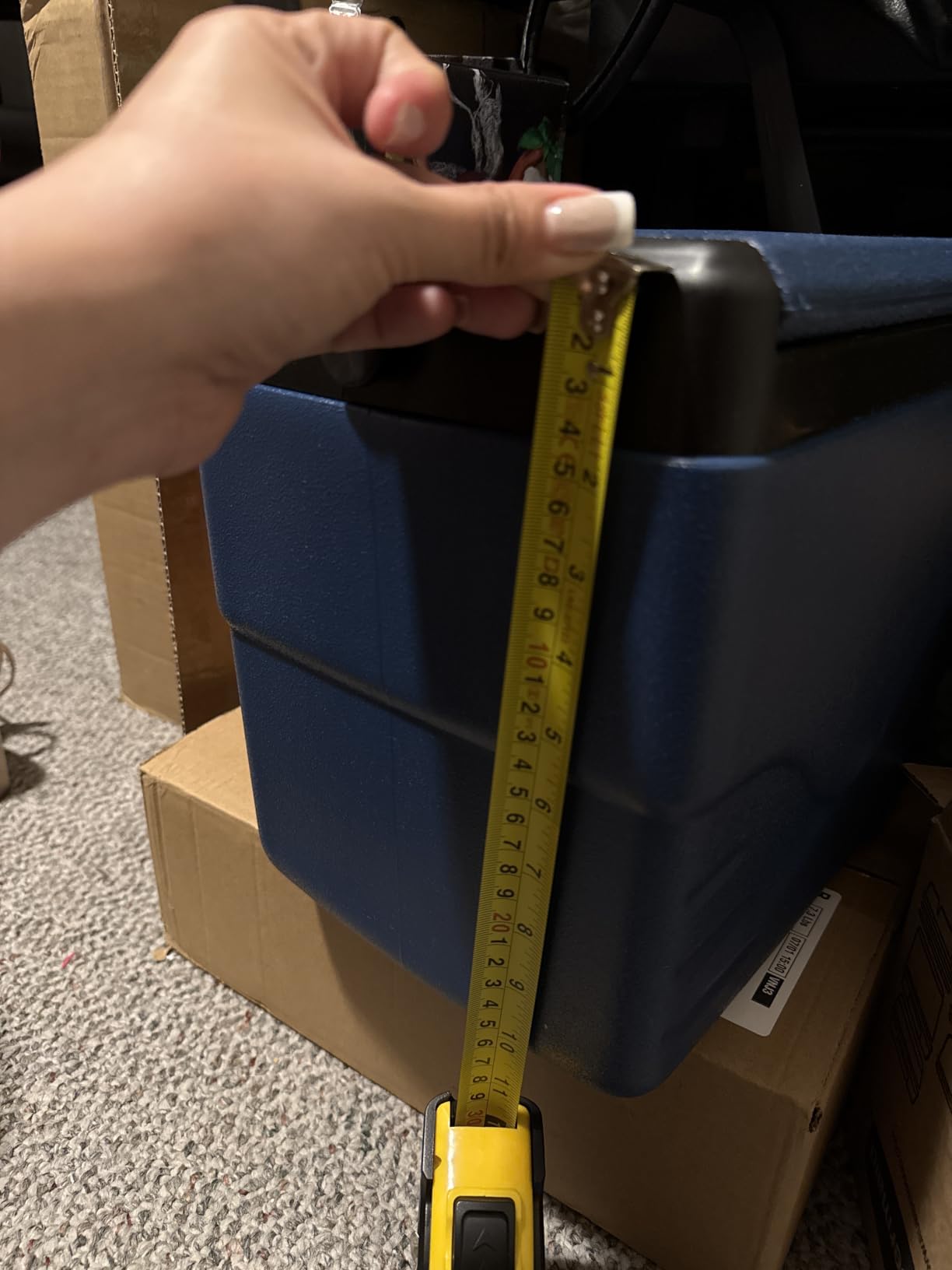
At 8.1 pounds empty, this is the lightest large hard cooler we tested, and that single fact changes road trip planning more than any insulation spec. Two people can load it. One person can reposition it at camp without recruiting help.
The tall interior is a smart design choice most people miss until they try to fit real food. Two liter bottles stand upright instead of rolling around, which stops a crushed plastic bottle from ruining a cooler of food. Packing 31 cans with 24 pounds of ice is the realistic number, not the 76 can headline that assumes no ice at all.
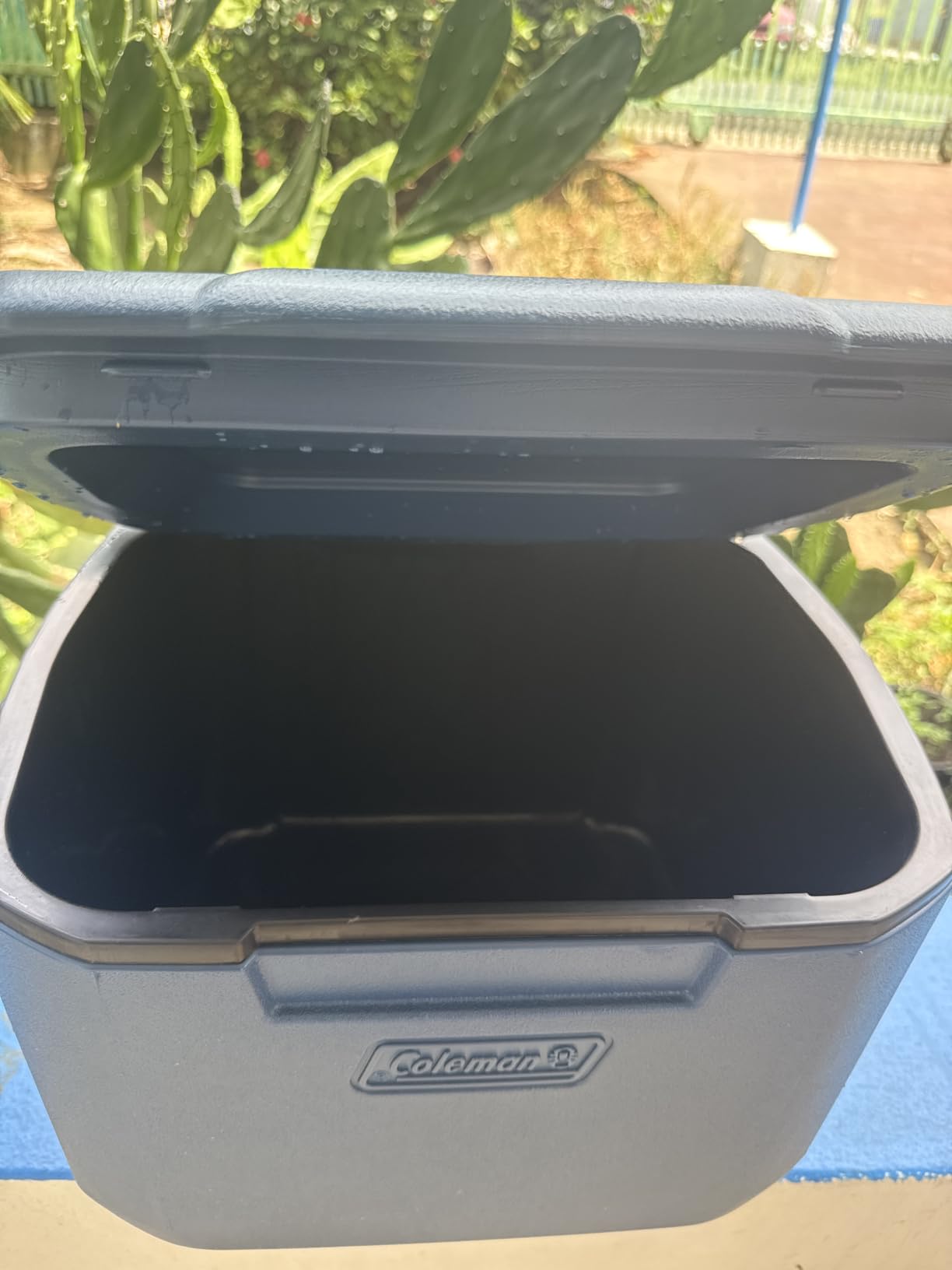
TempLock foam insulation held contents cold for up to 60 hours in our conditions, which lines up with roughly two and a half days of realistic ice. For a weekend car camping trip where you buy ice once, that is genuinely enough. For a ten-day drive in July, it is not.
With more than 16k reviews, this is also one of the most thoroughly owner-tested coolers on the market. The consensus is favorable and consistent, which is useful when you are deciding between models you have never touched.
Who the Coleman Chiller suits
This suits couples, small families and solo drivers who want maximum capacity per pound carried. It suits anyone whose vehicle has tight cargo space, because 8.1 pounds leaves room around it for the rest of the trip gear.
It also suits buyers who want a cooler they can abuse a little. Tailgate scrapes, sand and the occasional drop are not going to bother a foam-injection cooler, and reviewers commonly report it holding up fine for camping, tailgating and road trips even when the build feel is thin.
Where the Chiller falls short
Build feel is the honest weakness. Carry handles feel flimsy compared with an Igloo of similar size, the lid hinges are cheap, and the lid will not stay open on its own. The shell and walls can flex or crack under rough jobsite use, so it is a camping cooler rather than an industrial one.
Sixty hours of cold retention also means you need an ice run every two to three days in real heat. If your trip involves long stretches without a grocery store, look at the rotomolded options further down.
3. YETI Tundra 45 Cooler: Best for Bear Country and Long Trips
YETI Tundra 45 Cooler, Seafoam
45 qt and 26 cans
23 lb empty
Up to 3 inch PermaFrost foam
Certified bear-resistant
Pros
- Rotomolded body is close to indestructible
- Up to 3 inches of polyurethane foam
- Certified bear-resistant FatWall design
- T-Rex rubber latches with keeper technology
- Multi-day ice in high heat
Cons
- 23 lb empty is a heavy solo lift
- No wheels or telescoping handle
- Not rated for dry ice
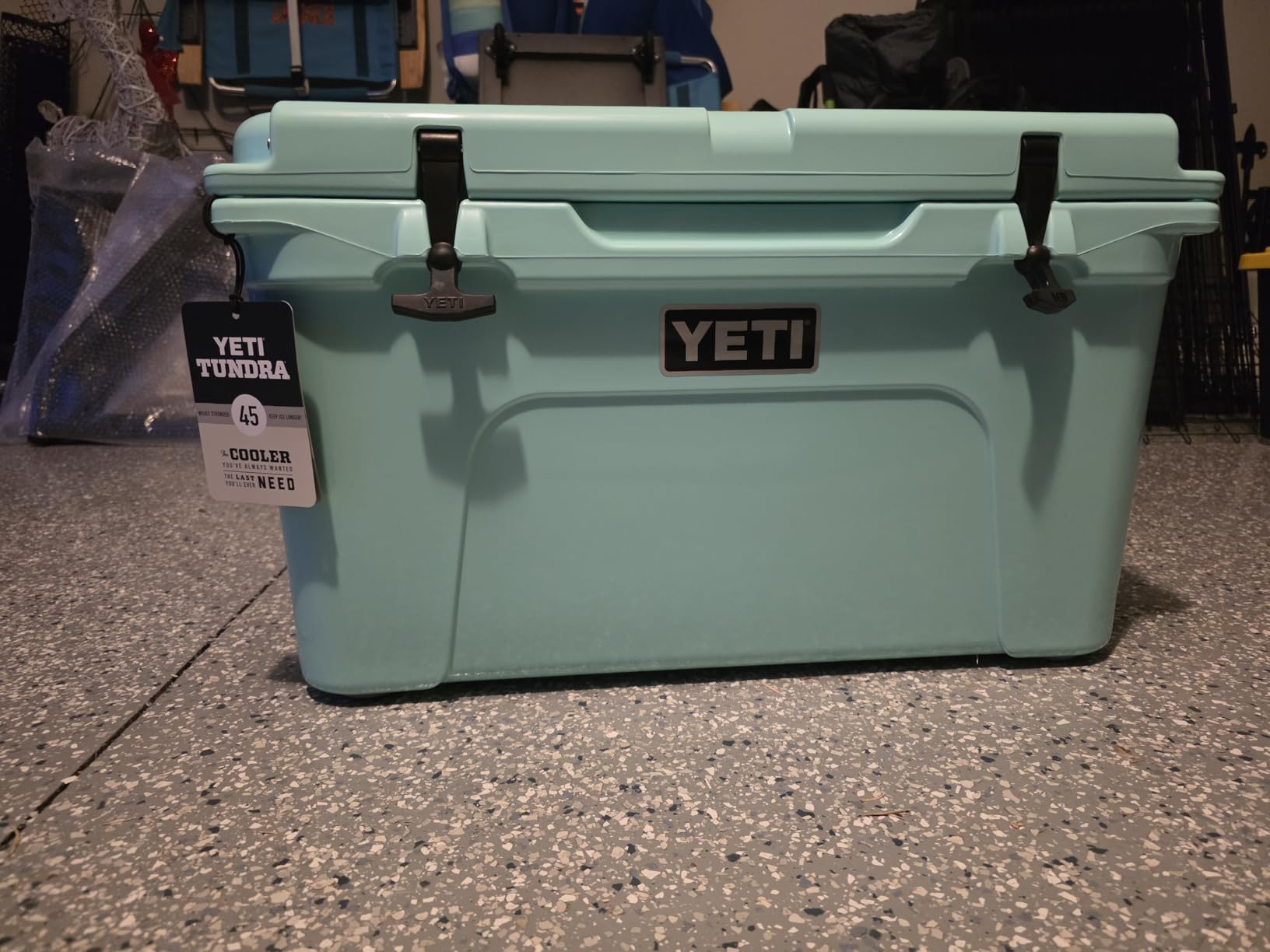
The Tundra 45 is the most-cited premium hard cooler in road trip conversations, and for good reason. Rotomolded construction means there are no seams to split, and up to three inches of PermaFrost foam is real mass rather than a thin liner. Owners rate it 4.7 out of 5 across close to 4,900 reviews.
At 45 quarts it holds 26 cans, which sounds modest until you add a 2:1 ice to contents ratio and pack real meals. That is a proper two to three day cooler for a couple, or a full weekend for two people buying food once.
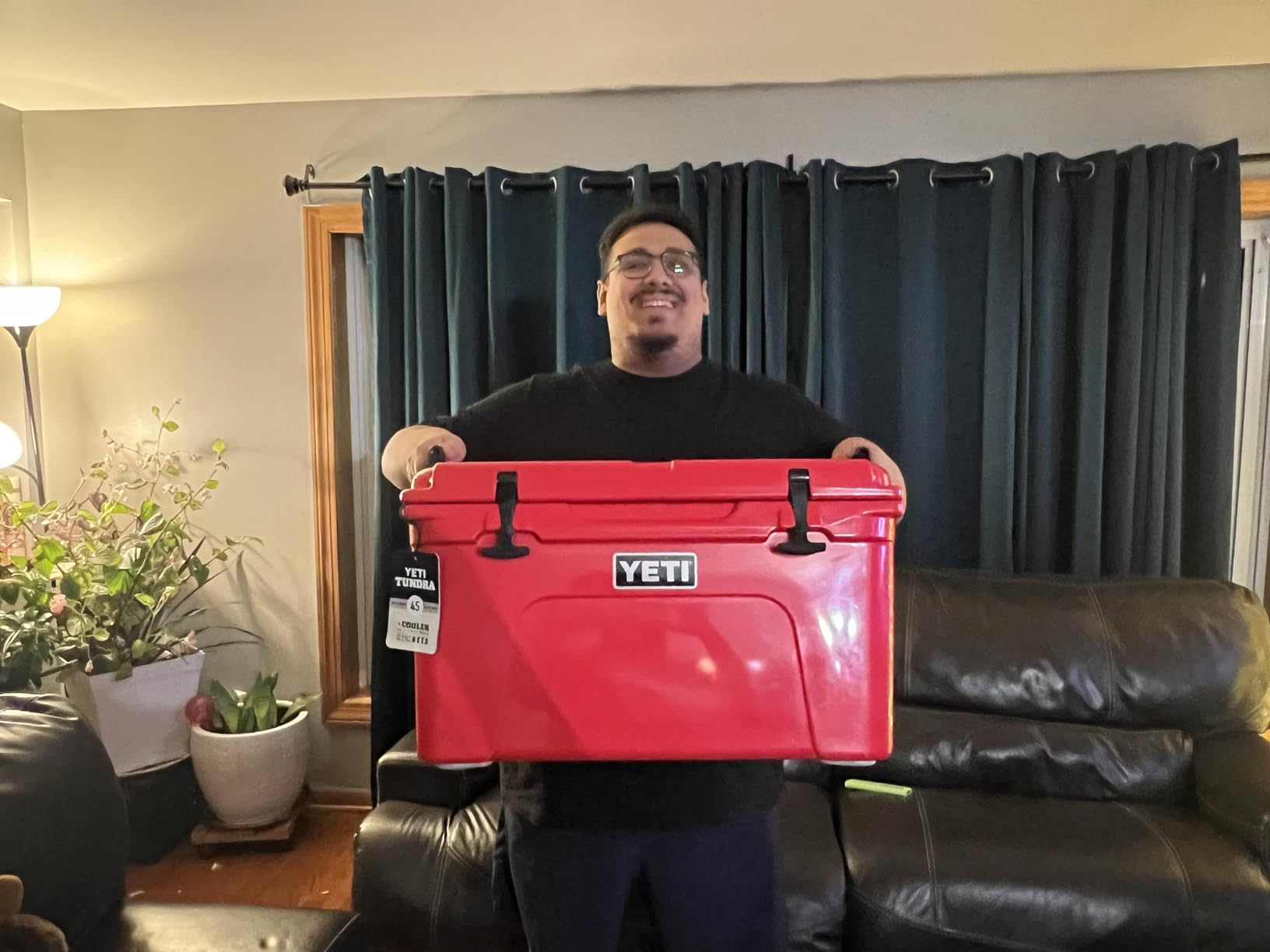
The loaded weight is the honest problem. 23 pounds empty becomes close to 50 pounds with ice and food, and there are no wheels. If you load the trunk at home and unpack once at camp, that is fine. If you are moving it around a site daily, it is not.
That is the single most common ownership complaint we found in the review data, and it is a handling complaint rather than a performance one. Nobody describes the ice retention as disappointing.
Who the Tundra 45 suits
This suits a couple or a small family taking a longer trip in hot weather, especially in bear country. The certified bear-resistant FatWall design is the deciding feature if you camp anywhere with a real bear population, and the rotomolded body shrugs off the kind of abuse a site or a hunting trip delivers.
It also suits anyone who plans to resell or hand the cooler down. The brand carries enormous recognition, which is worth something beyond the specs.
Where the Tundra 45 falls short
For ordinary highway camping, the premium buys insulation you may not use. Reviewers on camping forums consistently argue that a mid-priced cooler performs nearly as well for weekend car camping, and at a fraction of the outlay. That objection comes up in almost every thread comparing the brands.
It is also not a wheeled cooler, so on a gravel site you are carrying the full load every single time you move it.
4. YETI Tundra Haul: Best Premium Wheeled Cooler
YETI Tundra Haul Portable Wheeled Cooler, Navy
55 lb capacity rating
37 lb empty
NeverFlat solid tires
StrongArm aluminum handle
Pros
- Rotomolded PermaFrost body with wheels
- NeverFlat single-piece solid tires
- StrongArm welded aluminum handle tracks smoothly
- Handles curve left or right on the pull
- Dozens of colorways including camo
Cons
- Heaviest cooler in the group at 37 lb
- Not compatible with YETI dry goods basket
- Top price tier of the ten
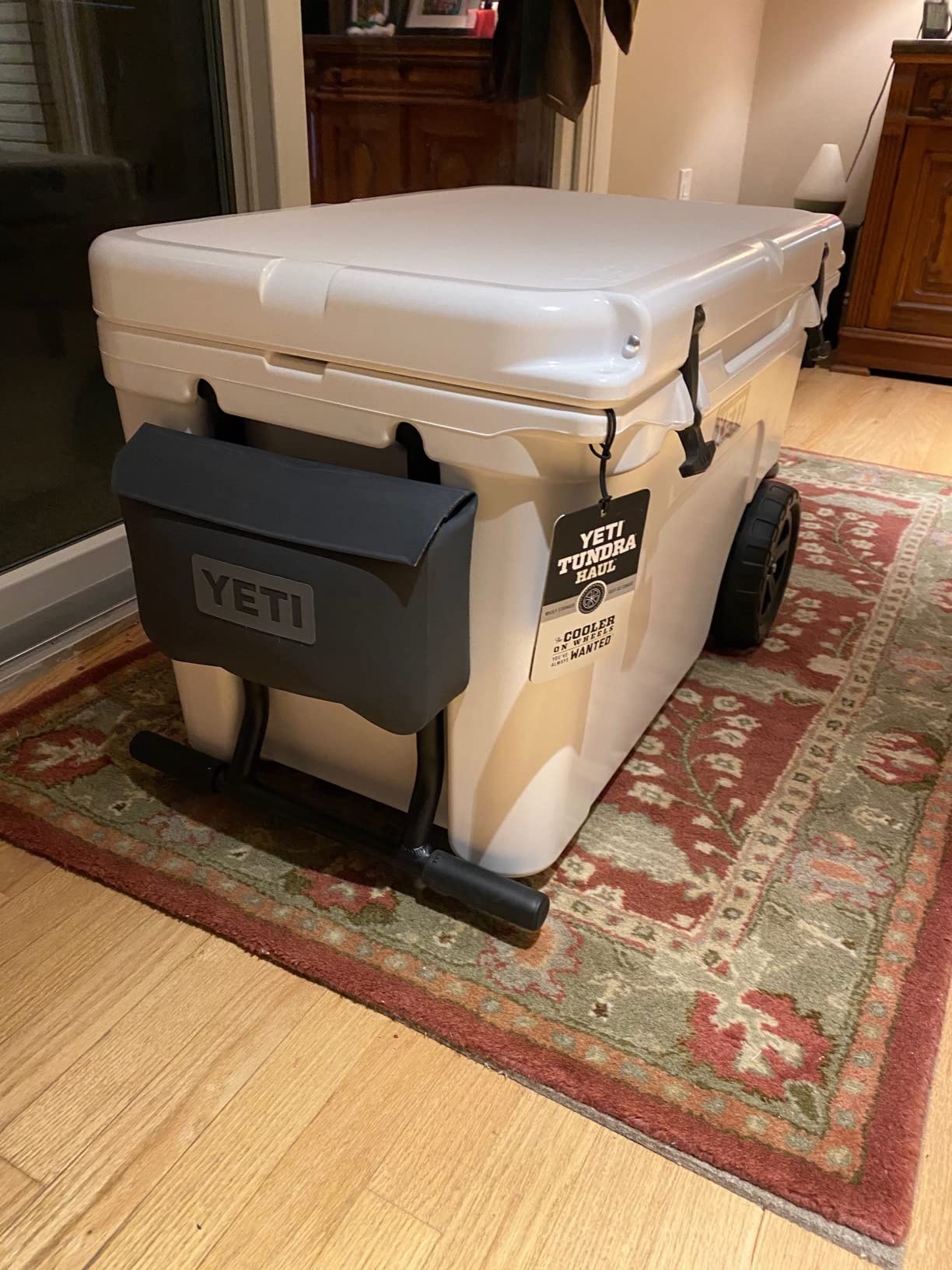
The Tundra Haul was the first YETI cooler built on wheels, and it solves the exact problem that stops most people from buying a YETI for a road trip: the carry. The StrongArm welded aluminum handle pulls smoothly over pavement, gravel and campsite ground, and owners rating it 4.8 out of 5 consistently call the track quality the standout feature.
NeverFlat tires are solid single-piece construction rather than pneumatic rubber, so there is no puncture risk on the sharp rock and thorn country that comes with national park access roads. For a trip that mixes highway and gravel, that matters more than most spec sheets suggest.
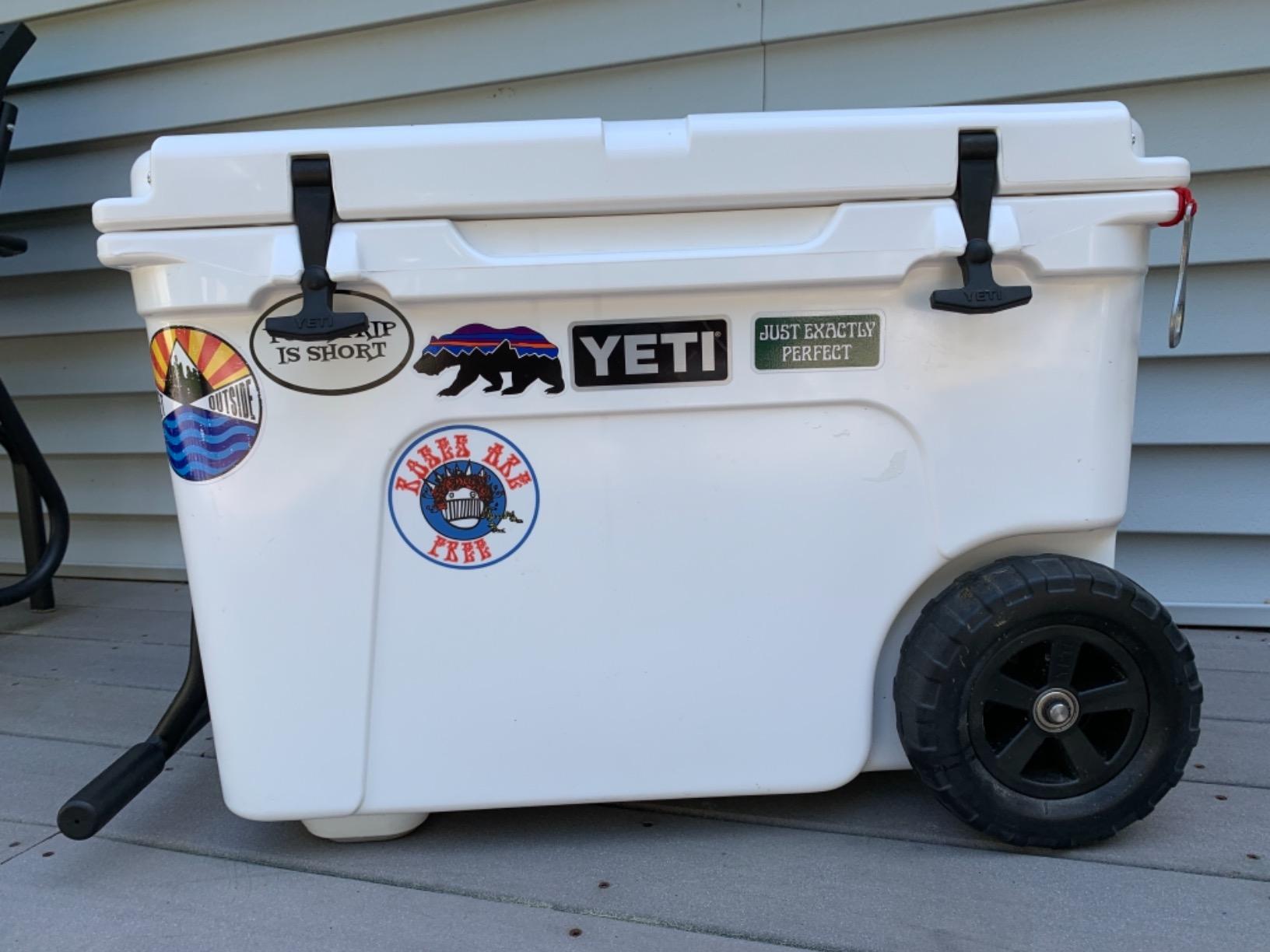
PermaFrost pressure-injected polyurethane foam fills walls and lid, and the body is rotomolded and armored to the core. Ice performance matches the wheeled competitors from the budget end, and it is the one premium option here that stays cold through a full multi-day trip while also rolling.
Capacity is listed at a 55 pound load rating rather than quarts, which is a useful change of unit. It is a mid-size cooler: enough for a family weekend, small enough that you can still reach into it while it stands upright.
Who the Tundra Haul suits
This suits a family who wants a wheeled cooler with flagship insulation, and who plan to move the cooler more than once per day. It suits mixed-surface trips where puncture risk is real, and buyers who care about build quality and resale value over a decade of use.
Reviewers commonly describe it as the single purchase that ends the cooler-shopping conversation, which is telling for a product that sits at the top of the price tier.
Where the Tundra Haul falls short
At 37 pounds empty it is the heaviest cooler in this group, and loaded it crosses 70 pounds. The wheels help, but nobody is wheeling 70 pounds across a soft campsite, so most people load it into the vehicle once and leave it there.
It is not compatible with the YETI dry goods basket, and the price sits well above every non-premium option here. For a two-day weekend trip, that premium buys capability you will not use.
5. Igloo BMX 52 Cooler: Best for Boating and Tailgates
Igloo Quart Cooler with Cool Riser Technology
52 qt hard-sided
16.4 lb empty
At least 3 days of ice
Screw-on drain plug
Pros
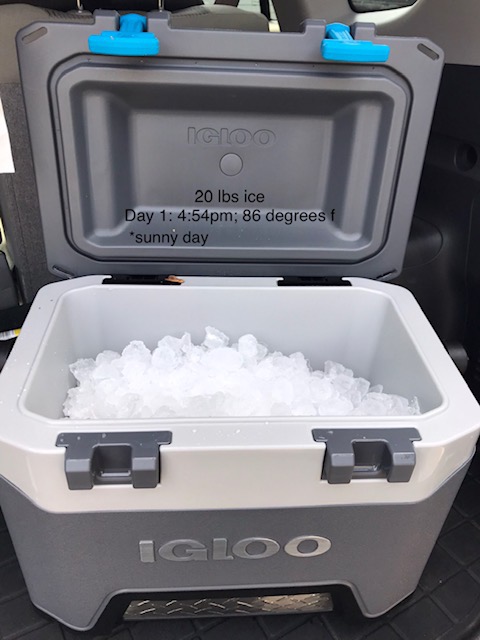
- Blow-molded walls hold ice at least 3 days in 90F heat
- Roughly half the weight of premium hard coolers
- T-grip latch system is secure
- Screw-on drain cannot be opened by accident
- Available in 25 qt and 52 qt sizes
Cons
- Smaller sizes come without a drain plug
- Handle can catch on the lid
- Bulkier than expected in the larger size
- Not a substitute for rotomolded multi-day holds
With over 20k reviews, the BMX line has one of the deepest ownership records in the entire cooler category, and the sentiment is remarkably consistent: much better than the old Igloo coolers people remember, at a price that undercuts every premium brand here.
Reviewers repeatedly report owners saying it performs on par with a YETI for ordinary car camping. That is the headline argument in the buying guide below, and the review data supports it more often than brand marketing would like.
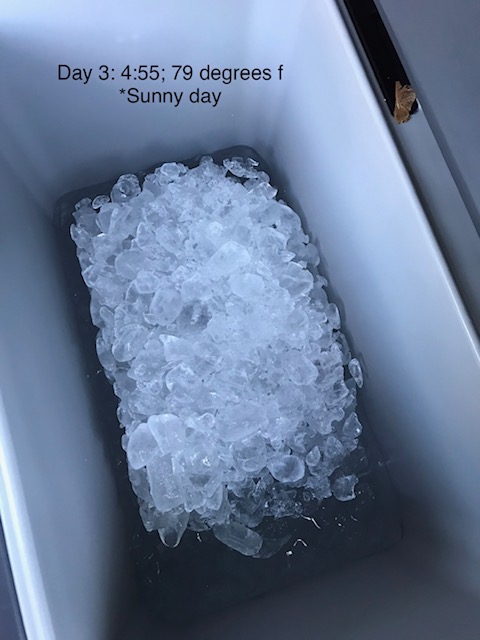
The 52 quart size is unusual in this category, and it is a genuinely useful number. It is large enough for a family of four to five with a proper ice load, and short enough at 32.2 inches wide to sit across a back seat or fit in a midsize trunk without dominating the space.
The T-grip latch is the detail owners praise most after ice retention. It is positive and secure, so the lid does not pop open over washboard roads, and the screw-on drain plug means nobody drains your cooler by accident.
Who the Igloo BMX 52 suits
This suits boaters, tailgaters and family campers who want three days of cold food at a mid price. It suits anyone put off by the weight of premium hard coolers, because at 16.4 pounds empty it is roughly half the weight of the comparable premium bodies.
Reviewers across fishing, tailgating, jobsite and family use all converge on the same conclusion, which is a strong signal for a product with this many owners.
Where the BMX 52 falls short
Be realistic about the ice. Blow-molded walls deliver at least three days in 90F heat, not the four to five day holds that premium rotomolded coolers reach. Owners who need a week of ice should look elsewhere.
Two smaller annoyances: the handle can catch the lid if you are not paying attention, and the 25 quart version does not include a drain plug, so check what you are actually buying.
6. RTIC 65 QT Ultra-Tough Cooler: Best for Big Family Trips
RTIC 65 QT Ultra-Tough Hard Cooler, Navy
65 qt and 84 cans
34.4 lb empty
Ice up to 7 days
2.4 inch closed-cell foam
Pros
- Ice claimed up to 7 days with block ice and shade
- Rotomolded polyethylene body
- Long manufacturer warranty
- 84 can capacity covers a full group
- Owners report buying far less ice per season
Cons
- 34.4 lb empty with no wheels
- Stiff latch tabs are hard to open
- Occasional gasket seam quality issues
- Arrives with transit scuffs
RTIC is the consensus answer to the YETI price objection across camping forums, and the 65 QT Ultra-Tough is the model that argument is usually about. Multiple long-term owners compare the build quality favorably to a YETI while paying a meaningfully smaller amount, and a long manufacturer warranty backs it up.
Ice performance is the headline. Up to 2.4 inches of closed-cell foam with a freezer-style gasket holds ice for up to seven days under ideal conditions, which means block ice, shade and infrequent opening. Reviewers logging real multi-day trips, including an 11-day run that kept frozen treats solid, back the direction of that claim even if your results will land shorter.
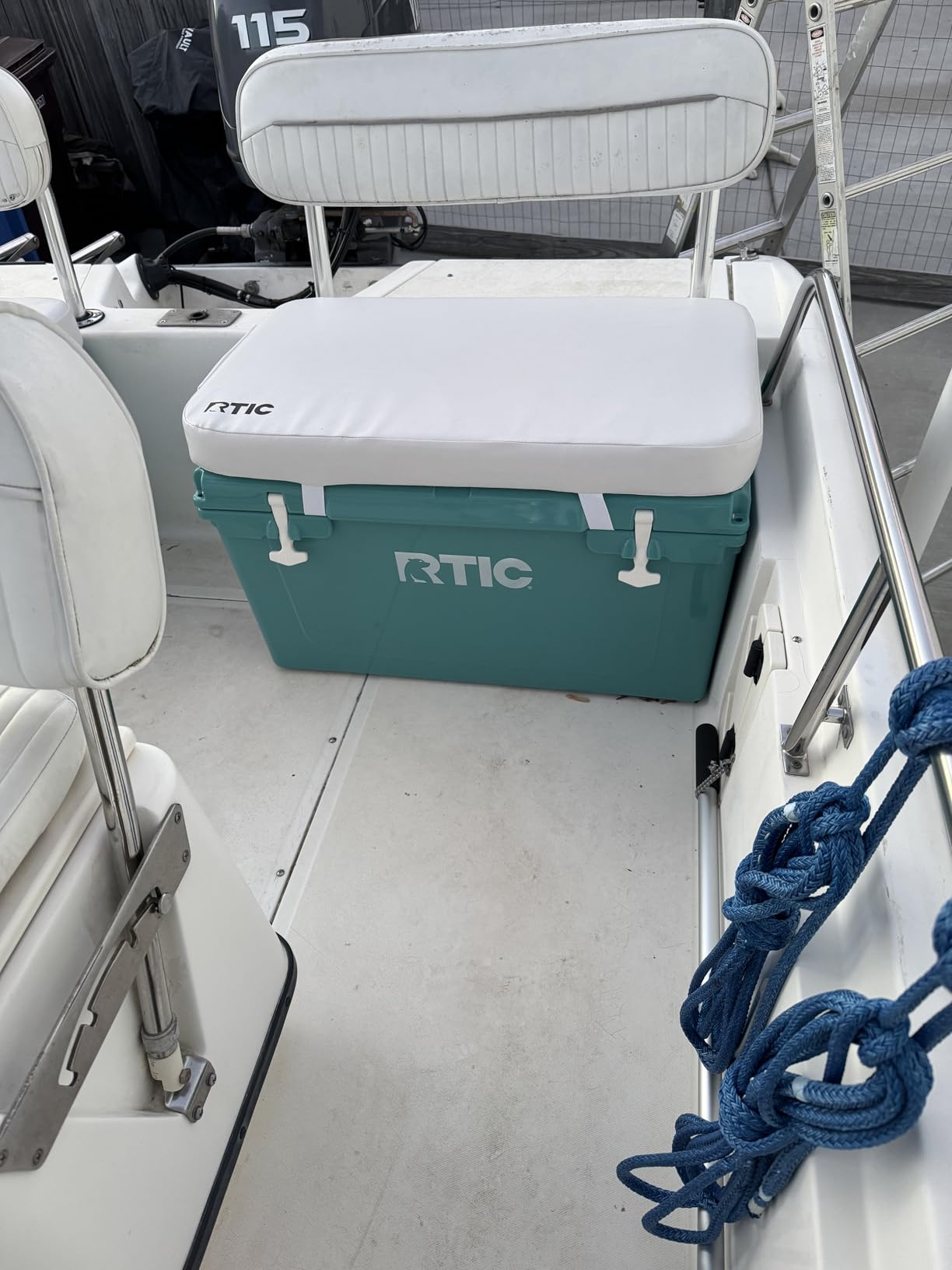
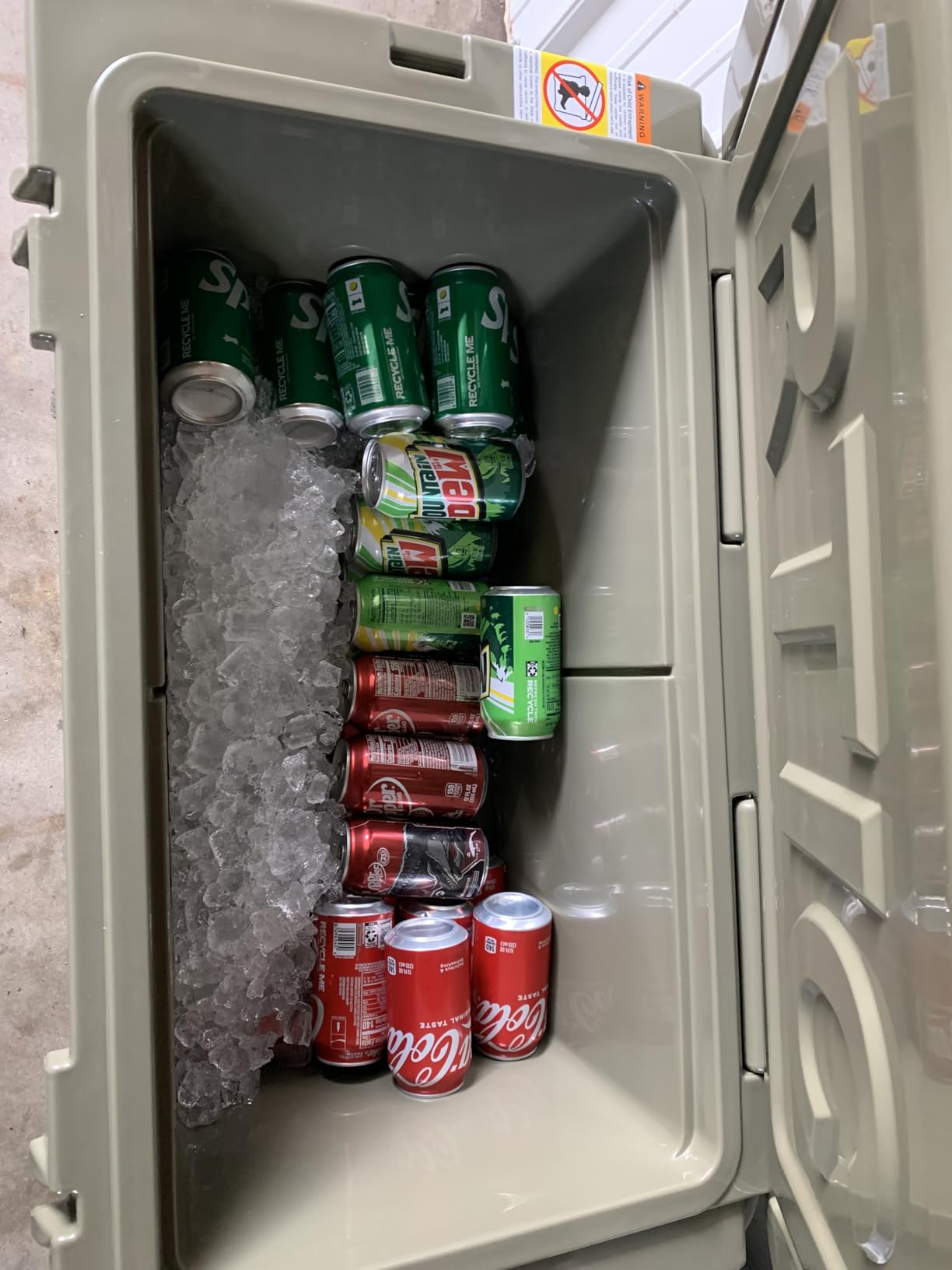
At 84 cans, this is the largest practical cooler in the group for a family rather than a commercial event. It handles a full week of food for four people with a proper ice load, which is exactly the trip length most road trippers underestimate.
Several owners quantify the saving on purchased ice over a season, reporting their ice spend dropping by roughly two-thirds against a cheap cooler. That is a cost-per-trip argument, and it is the one that matters when you are buying a bag of ice every other day.
Who the RTIC 65 suits
This suits a family of four to six driving for a week, especially in summer heat, and anyone who wants rotomolded durability and long ice holds without the top price tier. It suits road trippers with a pickup bed or a large SUV where 34 pounds of empty weight is not the limiting factor.
It also suits buyers who keep their cooler for years, since a long warranty and a rotomolded body are both long-horizon advantages over injection-molded plastic.
Where the RTIC 65 falls short
34.4 pounds empty and no wheels is the whole story. Loaded, you are talking about lifting something in the 60 to 70 pound range out of a tailgate, and that is a real injury risk when you are tired.
The latch tabs are stiff and hard to open, and a small number of owners report a gasket seam that needs trimming before performance comes up to spec. Check the seal the day it arrives rather than on day six of the trip.
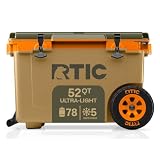
7. RTIC 52 QT Ultra-Light Wheeled: Best for One-Person Hauling
RTIC 52 QT Ultra-Light Wheeled Hard Cooler, Trailblazer
52 qt and up to 78 cans
28.5 lb empty
2.5 inch closed-cell foam
Towable aluminum handle
Pros
- Over 30 percent lighter than comparable rotomolded bodies
- 2.5 inches of closed-cell foam
- Silicone-gripped no-slam aluminum handle
- Puncture-resistant all-terrain wheels
- Silicone cargo net in the lid
Cons
- 28.5 lb empty is still a heavy solo lift
- Not as impact-hardened as a full rotomolded body
- Premium tier pricing
This model exists to answer one complaint about premium wheeled coolers: they are too heavy. RTIC engineered it to be over 30 percent lighter than a comparably sized rotomolded cooler while keeping 2.5 inches of closed-cell foam and a freezer-grade gasket, so the ice performance stays in premium territory.
The no-slam aluminum handle is the feature buyers highlight most. A silicone grip and a proper tow geometry make it genuinely possible for one person to pull a loaded cooler from a vehicle to a site, which is the single biggest physical complaint in road trip cooler forums.
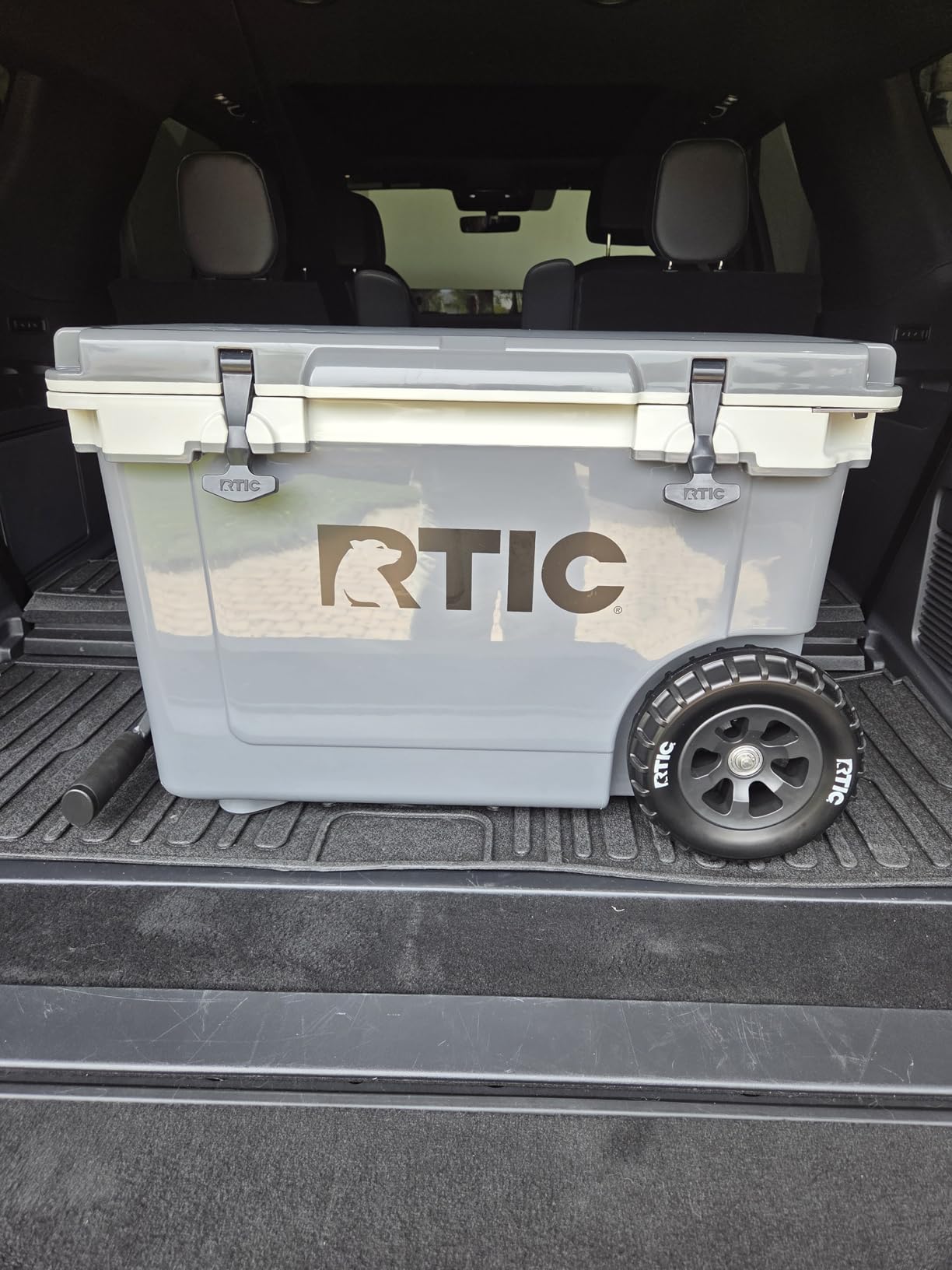
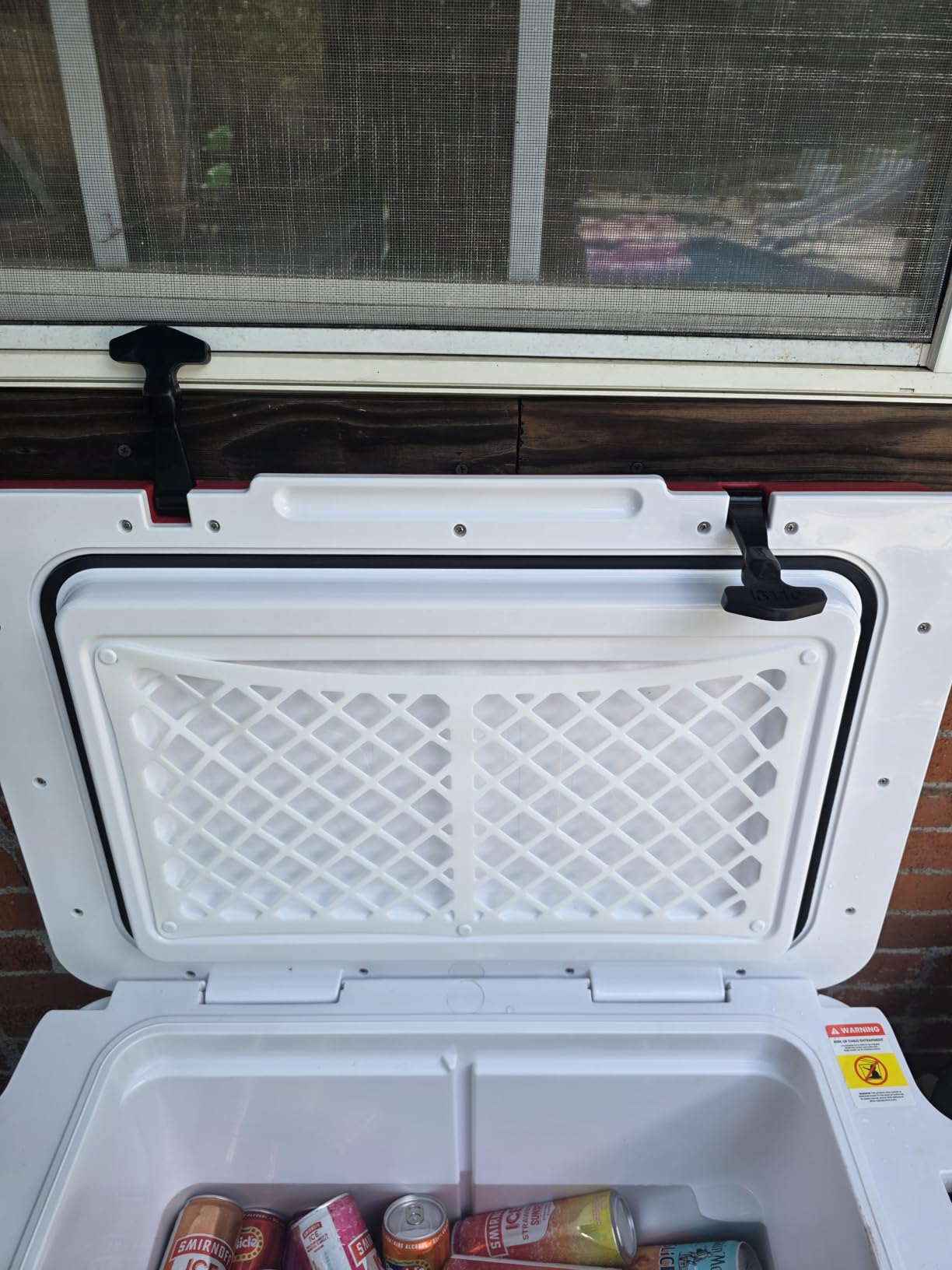
At 52 quarts and up to 78 cans it sits in the sweet spot for a family of four on a four or five day trip. The silicone cargo net in the lid is a small but useful place for keys, a phone or a spare battery, keeping them out of the meltwater at the bottom of the cooler.
Wheels are puncture-resistant all-terrain, which matters when the last mile of the campsite is gravel rather than pavement.
Who the RTIC 52 Ultra-Light suits
This suits a solo traveler, a couple, or anyone hauling gear alone who still wants multi-day ice retention. It suits a site more than 100 yards from the parking spot, which rules out most of the heavy premium bodies on this list.
It also suits buyers who want premium-class insulation at a step below the flagship wheelers, and who care more about grams in the hand than about badge recognition.
Where the RTIC 52 Ultra-Light falls short
28.5 pounds empty is still a heavy lift. The weight reduction is meaningful against a full rotomolded body, but it does not make this a one-handed carry cooler, and you should not expect it to be.
The ultralight construction trades away some impact hardening compared with a full rotomolded body. Buyers who drop coolers, haul them over rock, or work them hard for a living should step up rather than sideways.
8. YETI Roadie 32: Best Compact Wheeled Cooler
YETI Roadie 32 Wheeled Cooler, Charcoal
32 qt wheeled
24.5 lb empty
NeverFlat solid tires
Periscope retractable handle
Pros
- NeverFlat single-piece solid tires roll over grass and mud
- Periscope handle is sturdy at a comfortable height
- Contents stay frozen past 24 hours
- Compact body fits under a tonneau cover
- Rear drain plug with a dry goods basket included
Cons
- Heavier than the size suggests when loaded
- No internal divider
- Premium price tier
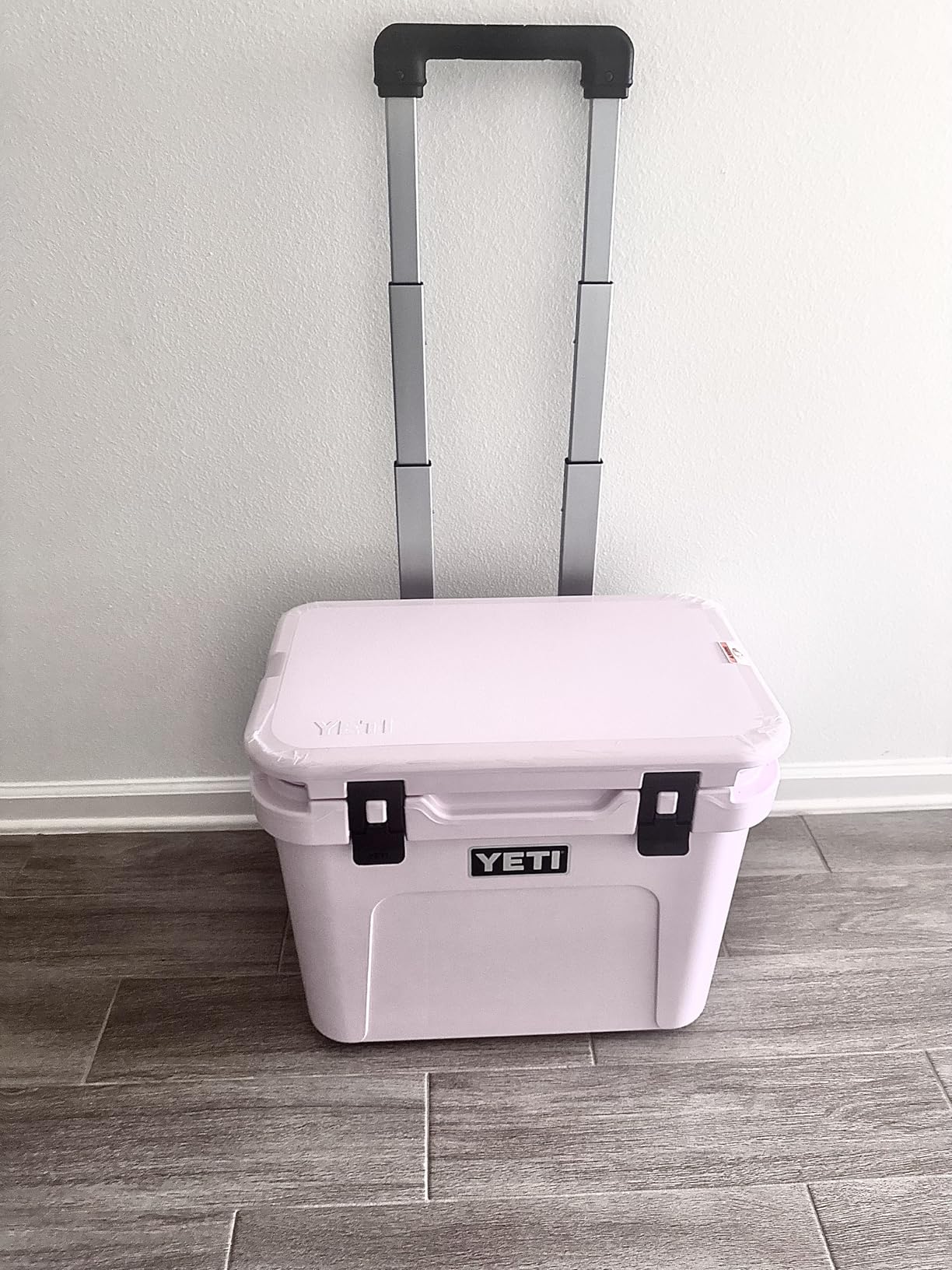
The Roadie 32 is the smallest wheeled cooler here, and its dimensions are the reason it exists. At 15.7 inches wide it tucks under a tonneau cover, beside a camping chair, or in the narrow footwell of a smaller vehicle, which is a genuine road trip problem that bigger coolers simply cannot solve.
Insulation still holds frozen food past 24 hours and keeps drinks cold through a full day of summer heat. That is not a week-long specification, but it comfortably covers a weekend where you buy ice once and restock on the way home.
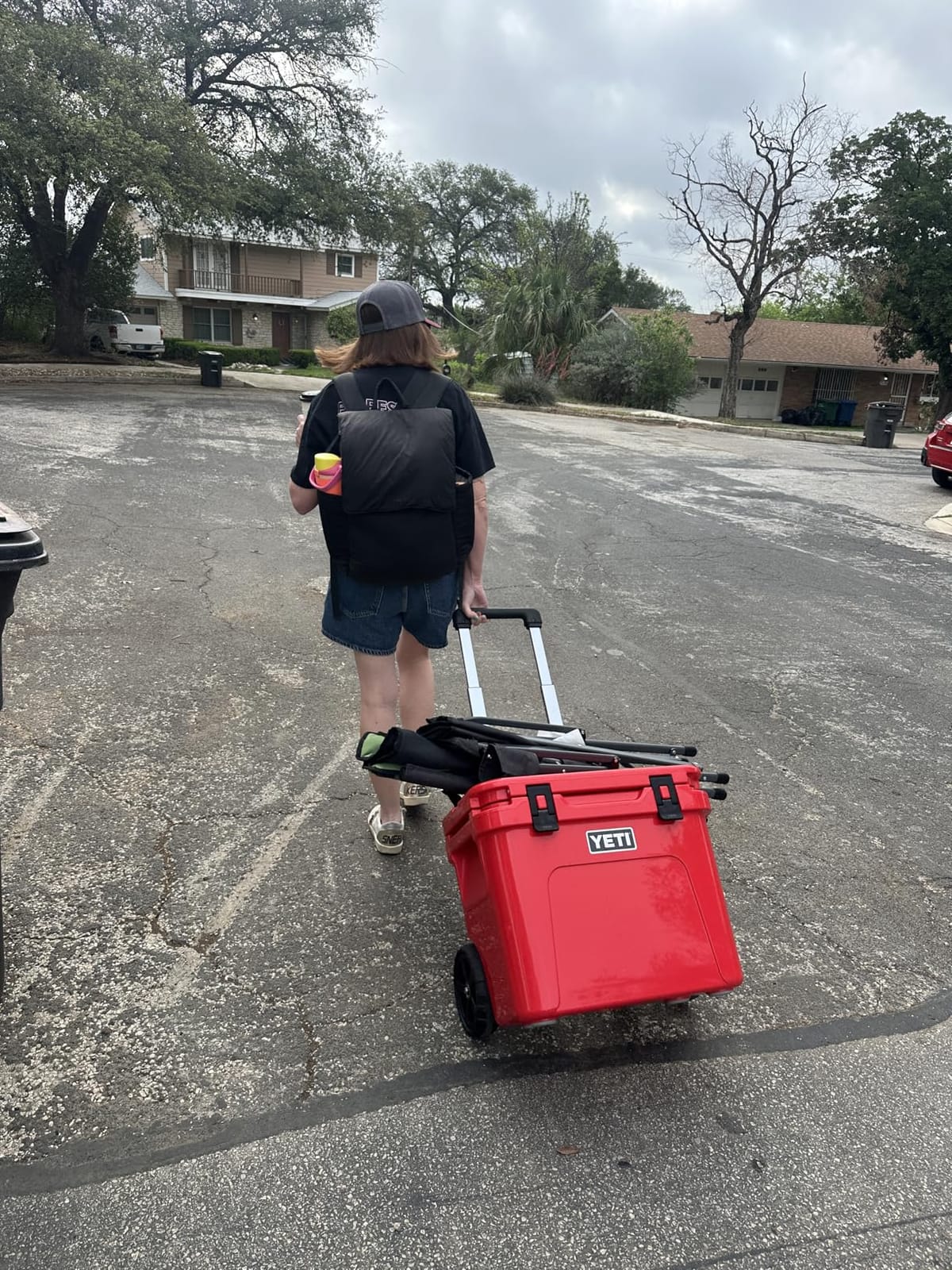
The Periscope retractable handle pulls at a comfortable height and does not jam, which addresses the handle failure complaint that appears repeatedly against budget wheeled coolers. LipGrip handles stay out of the way when you are carrying it, and BearFoot non-slip feet reduce movement in a backseat or on a boat deck.
With 725 reviews and a 4.8 average rating, this is a newer model with a smaller ownership record than the Coleman and Igloo entries, so there is simply less long-term data behind it.
Who the YETI Roadie 32 suits
This suits a couple or a solo traveler who wants real insulation in a small footprint, and anyone whose vehicle simply cannot take a 50 quart cooler. It suits youth sports weekends, beach trips and cross-country drives where the cooler lives in the backseat rather than the trunk.
It also suits buyers who want the strongest per-star review profile in this group without the flagship weight.
Where the Roadie 32 falls short
32 quarts is small. With a proper ice load you are packing a weekend for two, not a family. Buyers moving five people should size up.
It is heavier than the compact footprint implies once loaded, and there is no internal divider, so cans and ice share the same compartment and you will dig for the last can. It also sits at the premium end despite the smaller size.
9. Igloo Maxcold Glide 110qt: Best for Large Groups
Igloo Glide 110 Qt Roller Cooler, White
110 qt and 168 cans
25.4 lb empty
THERMECOOL insulation
Soft-ride wheels and telescoping handle
Pros
- 168 can capacity covers large groups and long trips
- THERMECOOL insulation in body and lid
- UV inhibitors and infrared technology
- Stainless steel hinges on DuraLatch closures
- Telescoping handle with soft-ride wheels
Cons
- 37.5 inch length needs a truck bed or large cargo space
- Injection-molded body is less rugged than rotomolded models
- Weight climbs fast when loaded
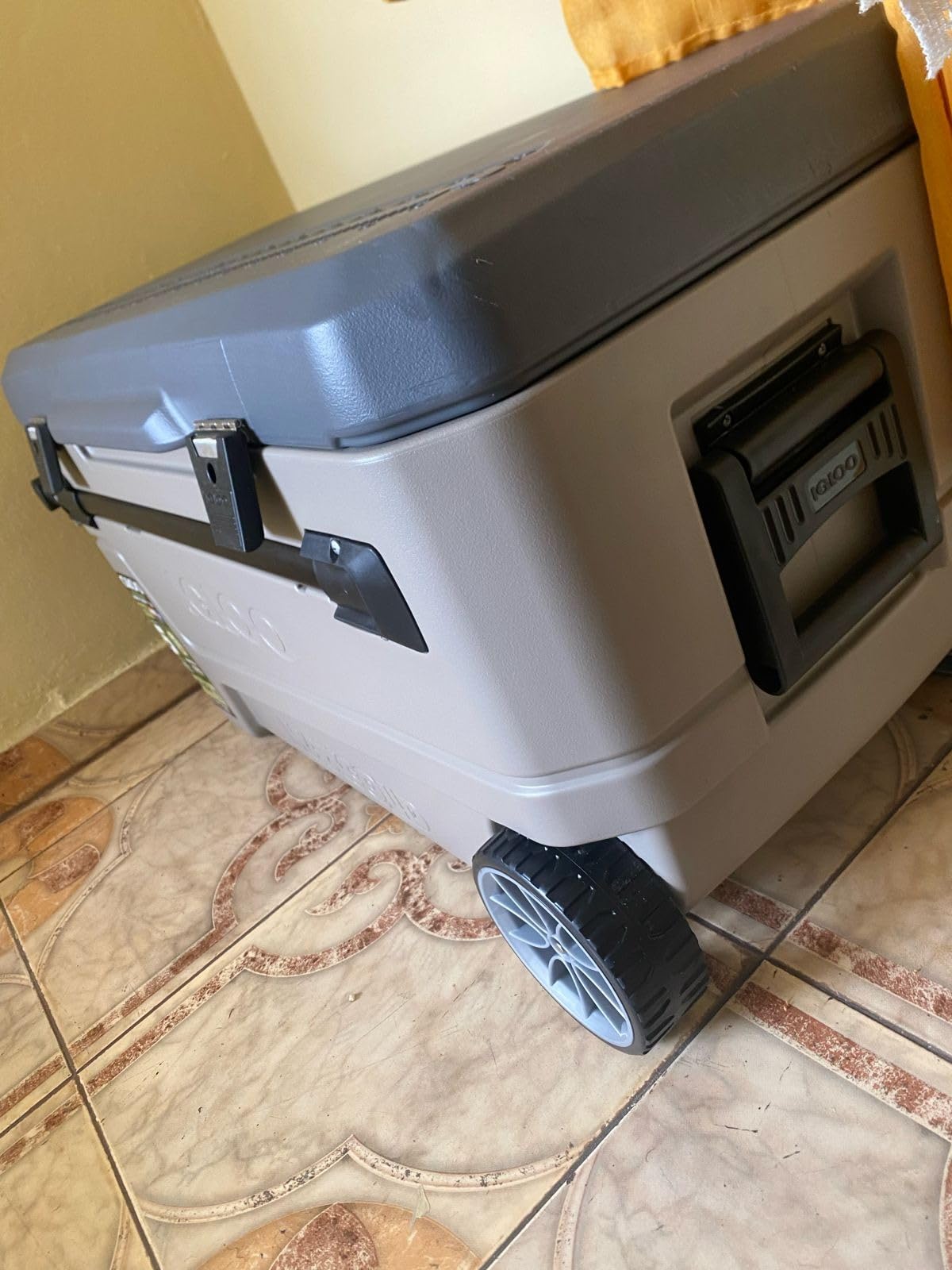
When the trip is genuinely a group trip, capacity wins over everything else. At 110 quarts and 168 cans, this feeds a large family or a fishing crew for a week, and it does that at a fraction of the cost of the premium rotomolded bodies here.
THERMECOOL insulation sits in both the body and the lid, with UV inhibitors and infrared technology aimed at exactly the problem a road trip creates: a cooler sitting in direct sun for hours at a time. Reviews treat it as a value option against far costlier wheeled models, and most owners accept the lighter plastic build in exchange for the volume.
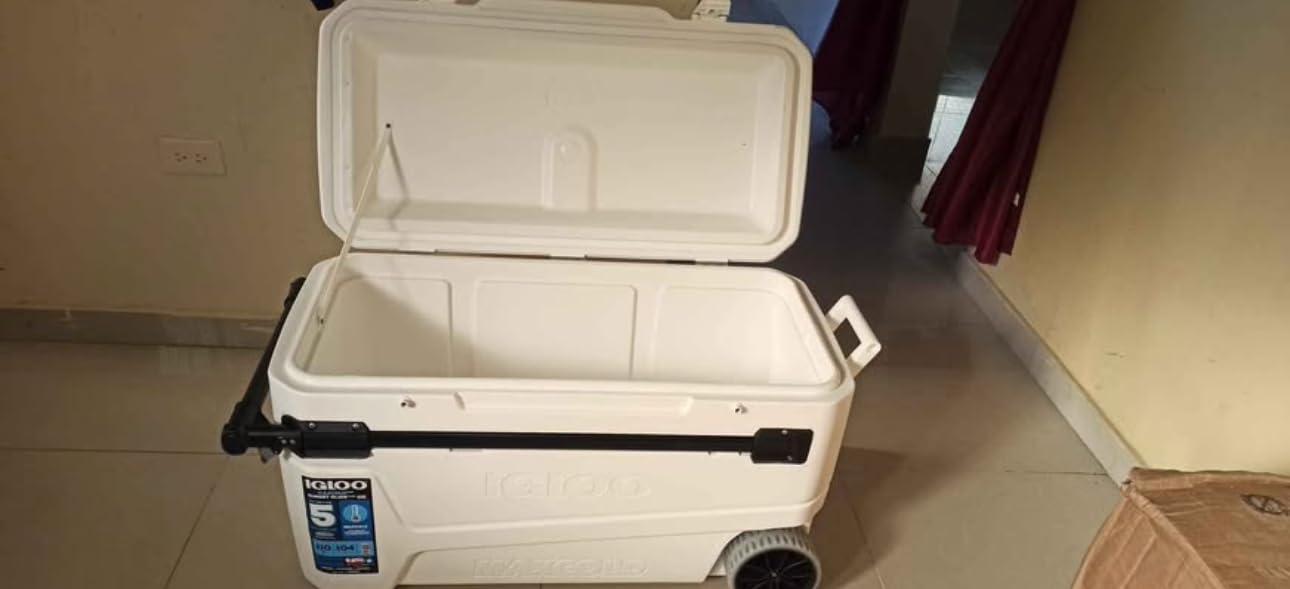
DuraLatch closures and stainless steel hinges are the durability story here. Latches are the first thing to fail on a plastic cooler, and steel hinges on the lid are a meaningful upgrade for a model that will be hauled out of a bed and dropped on gravel repeatedly.
There is a ruler molded into the lid, which sounds like trivia until you have cleaned a fish in a parking lot. The telescoping handle and soft-ride wheels make sense given how much this weighs when full.
Who the Igloo Maxcold Glide 110 suits
This suits six or more people, a week-long fishing trip, or a tailgate event where everyone needs a drink and nobody wants to keep buying ice. It suits buyers with a pickup bed or a large SUV who need volume more than they need ruggedness.
It also suits a specific road trip reality: buying food once for a large group is dramatically cheaper and faster than stopping every two hours, and volume is what makes that possible.
Where the Glide 110 falls short
At 37.5 inches long it does not fit in a normal sedan trunk, and many crossovers will not take it without folding seats. Measure your cargo opening before you commit.
Injection-molded polypropylene is a step down in ruggedness from a rotomolded body, and at 25.4 pounds empty the loaded figure climbs well past 100 pounds with a full ice load. One person should not be trying to lift that out of a high truck bed.
10. BougeRV 23qt 12V Refrigerator: Best for No-Ice Trips
BougeRV 12v refrigerator 23 Quart, -8℉~50℉ Portable Freezer for Car, Black
23 qt compressor unit
22.3 lb empty
Down to -8F
12V DC and 110V AC
Pros
- Drops 77F to 32F in about 15 minutes
- Runs on 12V DC or 110V AC with both cords
- Under 1 kWh per day in ECO mode
- Very quiet at 45dB for sleeping
- Three-level voltage battery protection
Cons
- Poor passive insulation if power is cut
- Case rocks and vibrates loudly on flat surfaces
- Thermostat can read off by 5 to 10 degrees
- Keep out of direct sun or the door can deform
This is a different category, not a better cooler. A compressor refrigerator chills 23 quarts to 32F in about 15 minutes and holds it without a single bag of ice, which means no ice runs, no drain water, and food that tastes like food on day five.
Power draw is the number that decides it. Roughly 45W in ECO mode and 60W at maximum keeps daily consumption under 1 kWh, and three-level voltage protection stops it draining your vehicle battery. It also runs at 45dB, quiet enough to sleep beside in a van.
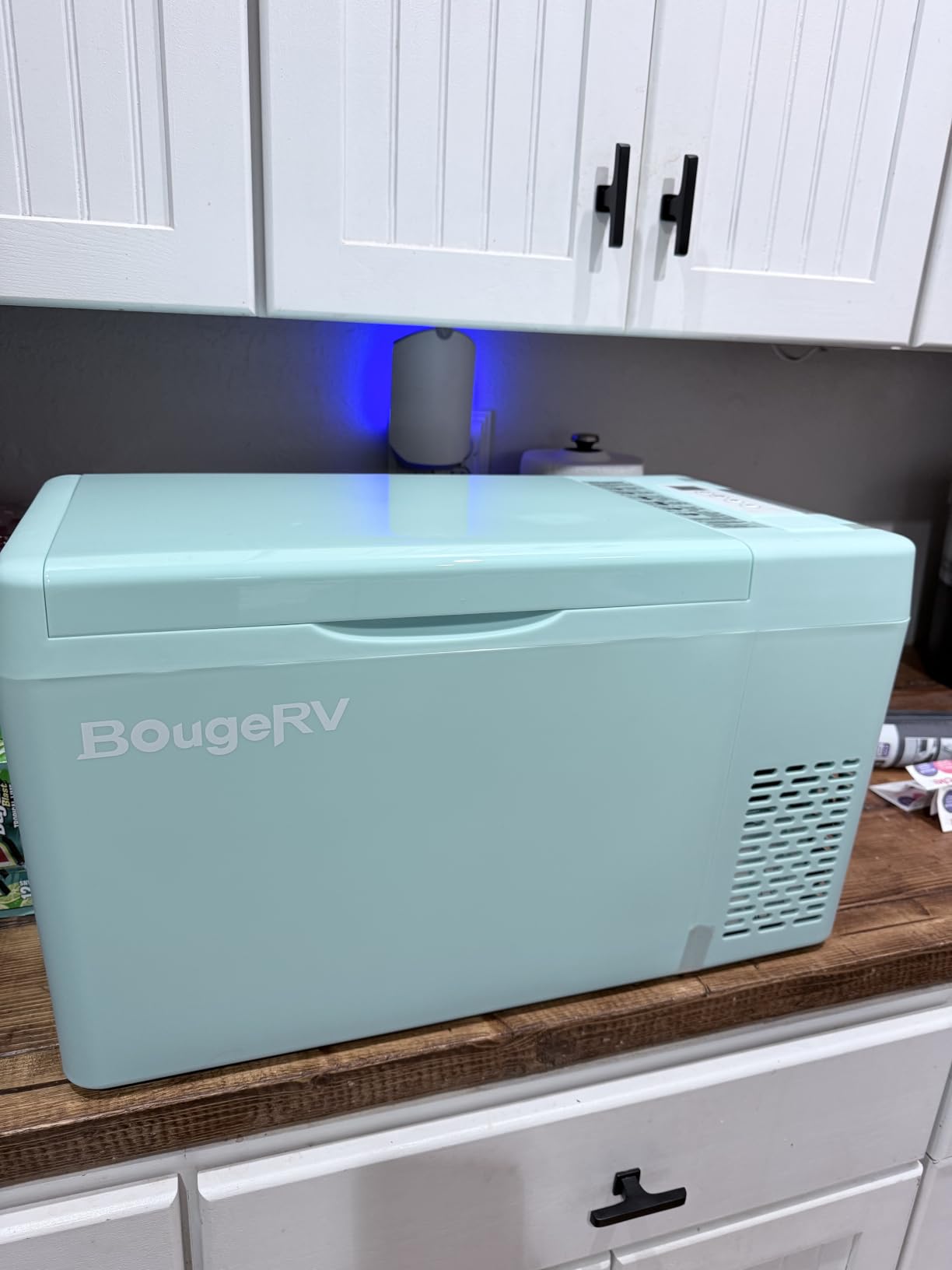
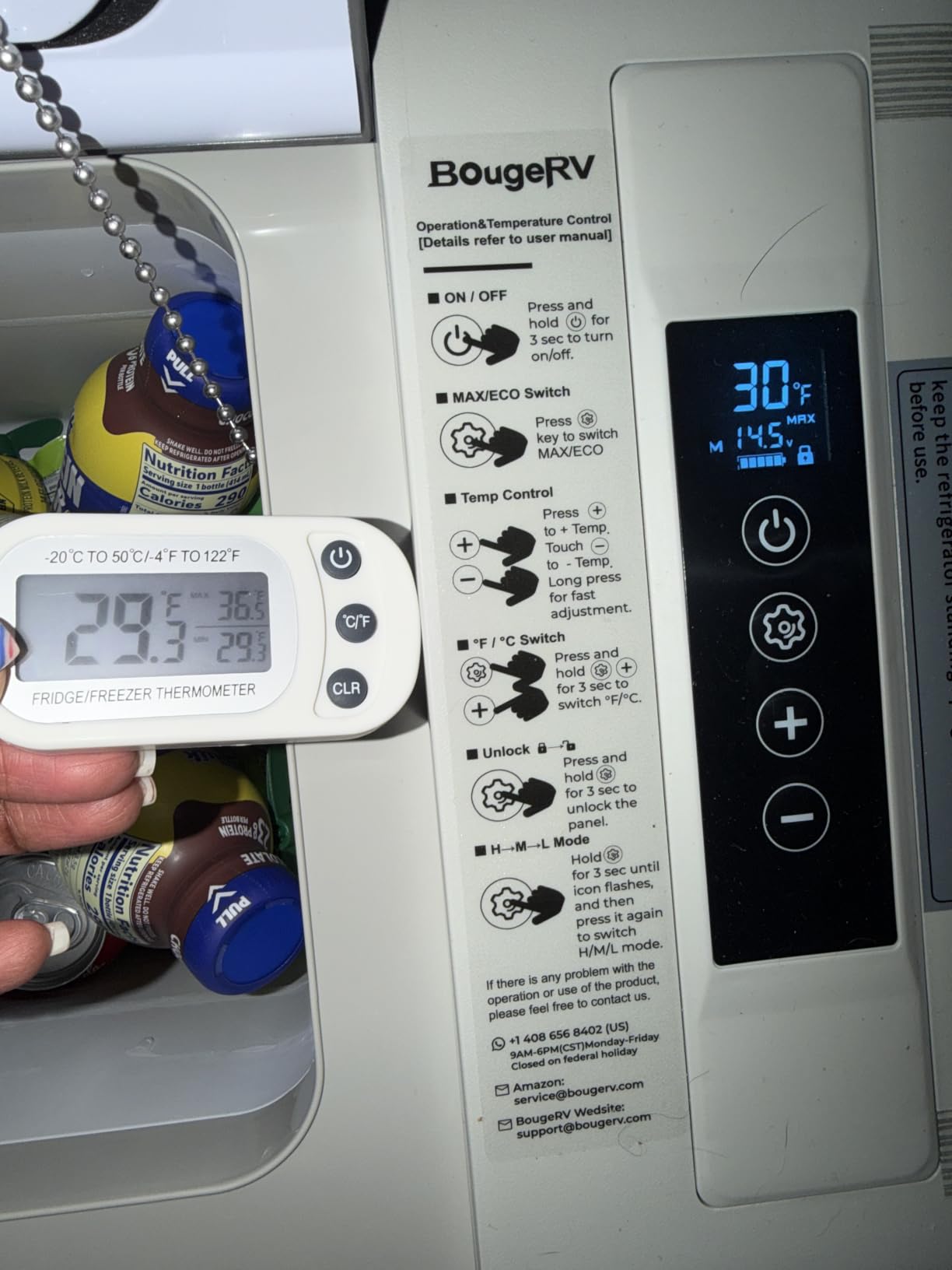
Independent testing in the review data backs the cooling claims: reviewers report 36F from a 70F ambient in under an hour, and a stable cold zone between roughly 35.5F and 37.5F. Reviewers also report three-day weekend holds on a portable power station, which is the most realistic use case for most road trippers.
Shock-proof design works at a 30 degree incline, so an off-camber campsite does not stop it. It works as a fridge or a freezer, and it stores chilled items without sitting in meltwater.
Who the BougeRV suits
This suits van life, long desert routes and anyone with a power station or a serious auxiliary battery. It suits a family that wants frozen food for a week without hauling 30 pounds of ice into a grocery store, and travelers carrying temperature-sensitive items such as medication.
It also suits people who simply do not want to think about ice. Our guides to electric coolers and hard coolers cover the alternatives in more depth.
Where the BougeRV falls short
It is a powered appliance, not an insulated box. Cut the power and the internal temperature climbs fast, so on a long remote stretch with no charge you have no fallback. A 23 quart unit is also far smaller than a 50 quart hard cooler.
The case is not molded precisely, so it rocks on a flat surface and vibrates audibly, and the thermostat can read five to ten degrees off with no calibration on some units. Keep it out of direct sun or the door can deform.
How to Choose a Road Trip Cooler in 2026
Sizing is the decision that matters most, and most buyers get it wrong in the same direction: too small, then they buy ice every other day. A rough rule from our testing: solo travelers and front-seat snacking need 4 to 20 quarts, a couple needs 15 to 35 quarts, a family of four to six needs 50 to 65 quarts, and a week-long or large-group trip needs 75 quarts or more. One quart roughly equals 0.75 standard cans once you add ice, and a 2:1 ice-to-contents ratio doubles the space you thought you had.
Soft or hard is a shorter conversation than most guides make it. Hard coolers win on ice retention and durability and lose on weight and storage; a soft cooler folds flat in a closet, comes in at a fraction of the weight, and is the right answer for a day trip or a front seat. Our experience matches the community pattern: many road trippers own two coolers, a small soft one for daily driving and a large hard one for camping weekends.
Insulation construction explains most of the price gap. Rotomolded coolers are formed in a single piece, so there are no seams to fail, and they hold the most ice. Injection-molded bodies are lighter and cheaper but have seam lines that slowly admit heat. Foam-injection models sit in the middle, and a soft cooler with a thick closed-cell foam liner can beat a cheap hard cooler for a weekend at a fraction of the cost.
Wheels are worth it when the distance from the vehicle to the site is more than about 50 yards, or when the site is soft ground. They are close to pointless for a tailgate that is level with the trunk, which is a fair number of campsites. A telescoping handle that jams under load, which reviewers report often, is worse than no handle, so check reviews specifically on the handle before buying a budget wheeled model.
On the YETI price question, the honest answer from the ownership data is that a mid-priced cooler performs nearly as well for ordinary car camping, and several thousand reviews across these products say so directly. The YETI premium buys rotomolded ruggedness, bear-resistant certification, and resale value, which matter for backcountry trips and long-term ownership, and which most weekend road trippers never use. If you want the flagship wheel-and-handle package specifically, the YETI Tundra Haul is the one to look at; if you want the same ice performance for less, the RTIC 65 is the usual community answer.
Bear-resistant certification is worth a paragraph because it is oversold for road trippers. IGBC certification matters if you are camping in backcountry with bears, and it matters very little at a drive-in site on a highway. Paying for it on a trip where you park beside a paved loop is money you could spend on a second cooler or a week of ice.
Packing matters as much as the cooler. Pre-chill for two hours before loading, put block ice on the bottom, cubes on top, fill the voids around food, keep the cooler in shade or wrapped in a reflective blanket, and drain meltwater every day or your food floats in a swamp. Keeping perishables below 40F, double-bagging raw meat, and following the two-hour rule when ambient temperature is above 90F are the food safety basics that keep a long trip out of trouble.
Finally, strap it down. A loose cooler in a backseat or trunk is a genuine projectile risk on a hard stop, and it is raised repeatedly in road trip forums. Use ratchet straps through molded tie-down points or the cargo anchor loops, wedge it against the back of the rear seat rather than in the middle of the cargo floor, and check that latches are fully closed before you pull away. Our road trip navigator guide covers the other piece of kit that makes a long drive bearable.
Frequently Asked Questions
What is the best cooler for long road trips?
For most families, the best cooler for long road trips is a 45 to 55 quart wheeled hard cooler with a telescoping handle. The Coleman Xtreme Rolling is our top pick because it holds 84 cans at 12.7 pounds empty. For a week-long trip, move up to a rotomolded model like the RTIC 65 for longer ice retention.
What camping cooler keeps ice the longest?
Rotomolded coolers with the thickest closed-cell foam keep ice the longest. In this group, the YETI Tundra 45 and RTIC 65 use rotomolded bodies with up to 3 inches and 2.4 inches of foam respectively, and the RTIC claims ice up to 7 days with a freezer-style gasket. Real results land shorter unless you pre-chill, use block ice and keep the cooler shaded.
What coolers are just as good as a YETI but cheaper?
RTIC is the most common answer in camping forums, and the review data supports it. The RTIC 65 uses rotomolded construction and closed-cell foam at a much lower outlay, and owners call the quality comparable. The Igloo BMX 52 is the budget alternative, with owners reporting it performs on par with a YETI for ordinary car camping across more than 20,000 reviews.
Is a Coleman cooler as good as a YETI?
For ordinary car camping, often yes. The Coleman Chiller 48qt keeps food cold up to 60 hours at a small fraction of the price of a premium rotomolded cooler, and multiple reviewers report a basic Coleman outperforming premium coolers on desert trips. A YETI wins on ruggedness, multi-day ice and bear-resistant certification, not on every road trip.
What size cooler do I need for camping?
A solo traveler needs 4 to 20 quarts, a couple needs 15 to 35 quarts, a family of four to six needs 50 to 65 quarts, and a week-long or large-group trip needs 75 quarts or more. One quart holds roughly 0.75 standard cans, and a 2:1 ice-to-contents ratio eats into the space you thought you had.
Do I need a bear-resistant cooler for road trip camping?
Usually no. Bear-resistant certification matters at backcountry sites with a real bear population, but most highway and drive-in camping does not require it. If you are camping in bear country, choose a certified model such as the YETI Tundra 45 with its bear-resistant FatWall design. On a paved campsite loop, spend the money on a second cooler or more ice instead.
Which Road Trip Cooler Should You Buy?
The Coleman Xtreme Rolling is our pick for most people in 2026. It holds 84 cans, weighs 12.7 pounds empty, rolls on real all-terrain wheels, and has the deepest review record in the group, so you are buying a well-understood product rather than a gamble.
Buy the Coleman Chiller 48qt instead if weight is your binding constraint or you want maximum capacity per pound carried. Buy the RTIC 65 if the trip is a week long and hot, and the YETI Tundra 45 if you camp in bear country. The YETI Tundra Haul and RTIC 52 Ultra-Light are the picks when the walk from the vehicle is long. The Igloo Maxcold Glide 110 covers large groups, and the BougeRV 12V unit removes ice from the equation entirely.
Whatever you choose, measure your cargo opening, pre-chill it before you pack, and strap it down. Those three steps do more for a road trip than any spec on the box.