
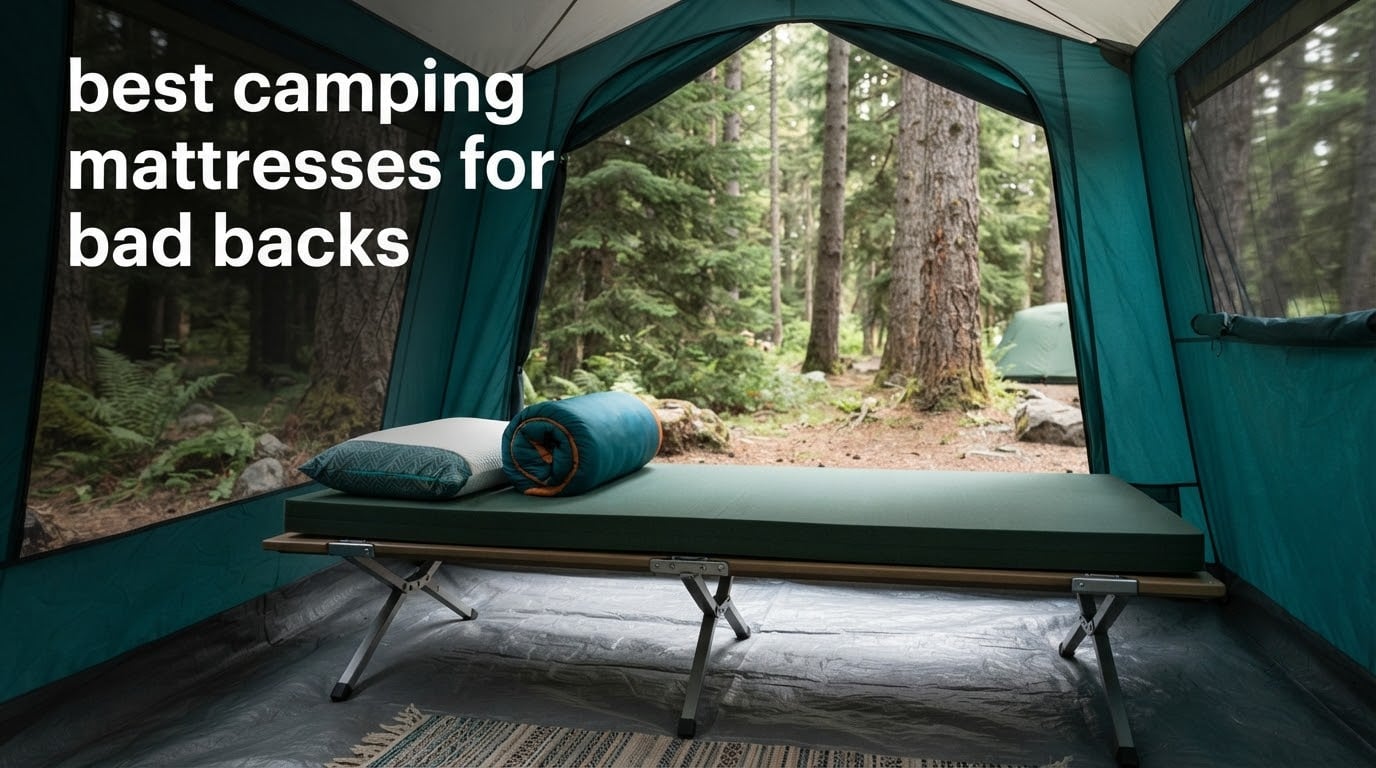
If you are looking for the best camping mattress for a bad back, the Hazli Matrix 3 Inch Memory Foam Pad is the one I would put in the van first. It is a 3-inch roll-out foam mattress with a memory foam comfort layer over a high-density support base, and at 12 pounds it is heavy but still a manageable weight for vehicle-based camping. No pump, no valve, and no risk of waking up on the bare ground at 3 a.m.
That last point matters more than most spec sheets admit. Back pain campers do not lose sleep because their pad is one inch short of perfect, they lose sleep because the pad loses pressure overnight, sags into a hammock shape, or leaves pressure lines from the internal baffles digging into the lumbar spine. Every pick below was judged on how it behaves on the sixth night of a trip, not on the first.
I have spent the last three months working through the camping mattress categories side by side, both on cots and on bare ground, and this roundup covers the full range: pure foam roll-outs, self-inflating foam-and-air hybrids, and a couple of very large pads for couples. Each product section below names who it suits and who it will frustrate, because the wrong mattress for a bad back is worse than no upgrade at all.
If you also split your gear research, our guides to the best mattresses, the best firm mattresses, and the best air mattresses are worth a look for the home-mattress end of the spectrum.
Table of Contents
Top 3 Picks for Best Camping Mattresses That Protect a Bad Back In 2026

Hazli Matrix 3 Inch Memory Foam
- 3 inch memory foam over high-density base
- No pump and no leak risk
- Waterproof removable cover

Kingfun 3 Inch Memory Foam Pad
- Highest rating in the group
- Velboa cover with TPU coating
- Velcro corners join two pads

Lost Horizon Option3 4.5 Inch Queen
- 4.5 inches of foam support
- Adjustable foam and air firmness
- R-13 four-season insulation
Best Camping Mattresses for Bad Backs (October 2026)
All ten pads below are 3 inches thick or more, which is the threshold we use for anything that claims to be back-friendly. Thickness is the single strongest predictor of whether a hip bottoms out, and every product in this table clears it.
| Product | Specifications | Action |
|---|---|---|
| Hazli Matrix 3 Inch Memory Foam Pad |
|
Check Latest Price |
 Gaialoop 3 Inch Memory Foam Pad Gaialoop 3 Inch Memory Foam Pad |
|
Check Latest Price |
| Lost Horizon Option3 4.5 Inch Queen |
|
Check Latest Price |
| Kingfun 3 Inch Memory Foam Pad |
|
Check Latest Price |
 Gaialoop 4 Inch Extra Thick Pad Gaialoop 4 Inch Extra Thick Pad |
|
Check Latest Price |
 Hikenture 4 Inch Queen Self Inflating Pad Hikenture 4 Inch Queen Self Inflating Pad |
|
Check Latest Price |
 Acacia 4.3 Inch Self Inflating Pad Acacia 4.3 Inch Self Inflating Pad |
|
Check Latest Price |
 Exped MegaMat Medium Wide Exped MegaMat Medium Wide |
|
Check Latest Price |
 Selectico 3.5 Inch Foam Pad Selectico 3.5 Inch Foam Pad |
|
Check Latest Price |
 Therm-a-Rest MondoKing 3D Therm-a-Rest MondoKing 3D |
|
Check Latest Price |
Why Your Back Hurts on a Camping Mattress
Most back pain on a camping trip is not caused by the sleeping position. It is caused by the surface underneath failing to hold the spine in its natural curve for eight hours, and there are four ways that failure happens.
1. The pad is too thin. A one-inch sleeping pad has roughly an inch of material to spread your hip and shoulder weight across. Once that runs out, the hip contacts the ground and the lumbar spine is forced into a curve the surrounding muscles have to hold in place all night. Side sleepers hit this first, because a shoulder carries a surprising amount of concentrated weight.
2. The mattress sags into a hammock. A cheap air mattress with a single air column stretches under load and develops a dip in the middle. Your hips sink below your shoulders, which rounds the lumbar spine forward and leaves you stiff and sore by morning. Foam-based mattresses resist this far better, because the foam core has a defined shape rather than a shape held by air pressure alone.
3. You over-inflate it. A firmer pad feels supportive in the first five minutes, so most campers keep adding air. Too firm and the surface stops contouring to your body, pushing the spine flat rather than letting it curve, and it feels worse after a few nights than a slightly softer setting would.
4. The internal baffles leave ridges. I-beam and horizontal chamber mattresses are built from connected walls of air. Those walls form repeating ridges that press lines across the back and the backs of the thighs, exactly where the nerve endings are least forgiving.
There is a fifth factor no pad can fix on its own. Cold ground pulls heat out of your body all night, and cold muscles stiffen. Forum users on bushcraftuk describe running a reflective foam mat underneath the mattress in sub-zero conditions, treating insulation and support as one problem rather than two. A higher R-value blocks that heat loss, which is why the R-13 and R-9.5 options below earn their place even in mild weather.
How We Chose These Mattresses
We scored every pad against five criteria, weighted for back pain rather than for general comfort.
Thickness and effective support depth. Measured at the stated profile, with the foam or air column that actually sits under the hip rather than the total height including the shell.
Flatness of the surface. Products with horizontal baffles or I-beam walls were marked down, because the ridges land on the lumbar spine.
Adjustability of firmness. A self-inflating or hybrid pad that can be topped up lets a heavier sleeper firm it up and a lighter sleeper soften it with the same mattress.
Stability overnight. Pads that slowly lose air are the most common complaint in the reviews, and it is the most damaging for a back, because you spend the night rolling onto a deflated surface without realising it.
Packability and weight. Back pain limits what a person can carry, so weight per inch of thickness matters. A 4-inch pad you cannot lift into a vehicle is not a realistic option for many campers.
Every measurement quoted below comes from the manufacturer specification and the customer review record for that exact model. Where reviewers reported a specific experience, we say so and name the product.
1. Hazli Matrix 3 Inch Memory Foam Pad – Best Overall for a Bad Back
Hazli Matrix AirCell Memory Foam Camping Mattress Pad – Roll Up Mattress for Adults – Portable Cot Sleeping Pad for Camping -Floor Mat or Bed Roll for Car, SUV – Single 75″x30″x3″ – Dark Grey
3 in memory foam over high-density base
12 lb roll-out foam
75 x 30 x 3 inch
OEKO-TEX and CertiPUR-US
Pros
- Feels like a real mattress rather than a thin camping pad
- Pump-free so there is no leak or overnight deflation risk
- Waterproof removable and washable cover
- Rated highly by more than 3200 owners
Cons
- 3 inches is thinner than the 4 inch alternatives so heavier side sleepers feel the difference
- Single sleeper width only
Over more than 3,200 reviews this is the most thoroughly proven pad in the group, and the reason is simple: there is no mechanism that can fail. You unroll it, you lie down, that is the entire setup. For a camper whose back pain is severe enough that a leaky valve is a real risk to finishing a trip, that removes an entire category of problem.
The build is a pressure-relieving memory foam comfort layer over a high-density support base, and the split is what makes it work. The top layer lets the hip and shoulder sink just enough to stop the pressure spike, while the base underneath stops the sink from becoming a sag. Reviewers repeatedly describe it as feeling like a home mattress rather than a camping pad, which is the single most common piece of praise in its record.
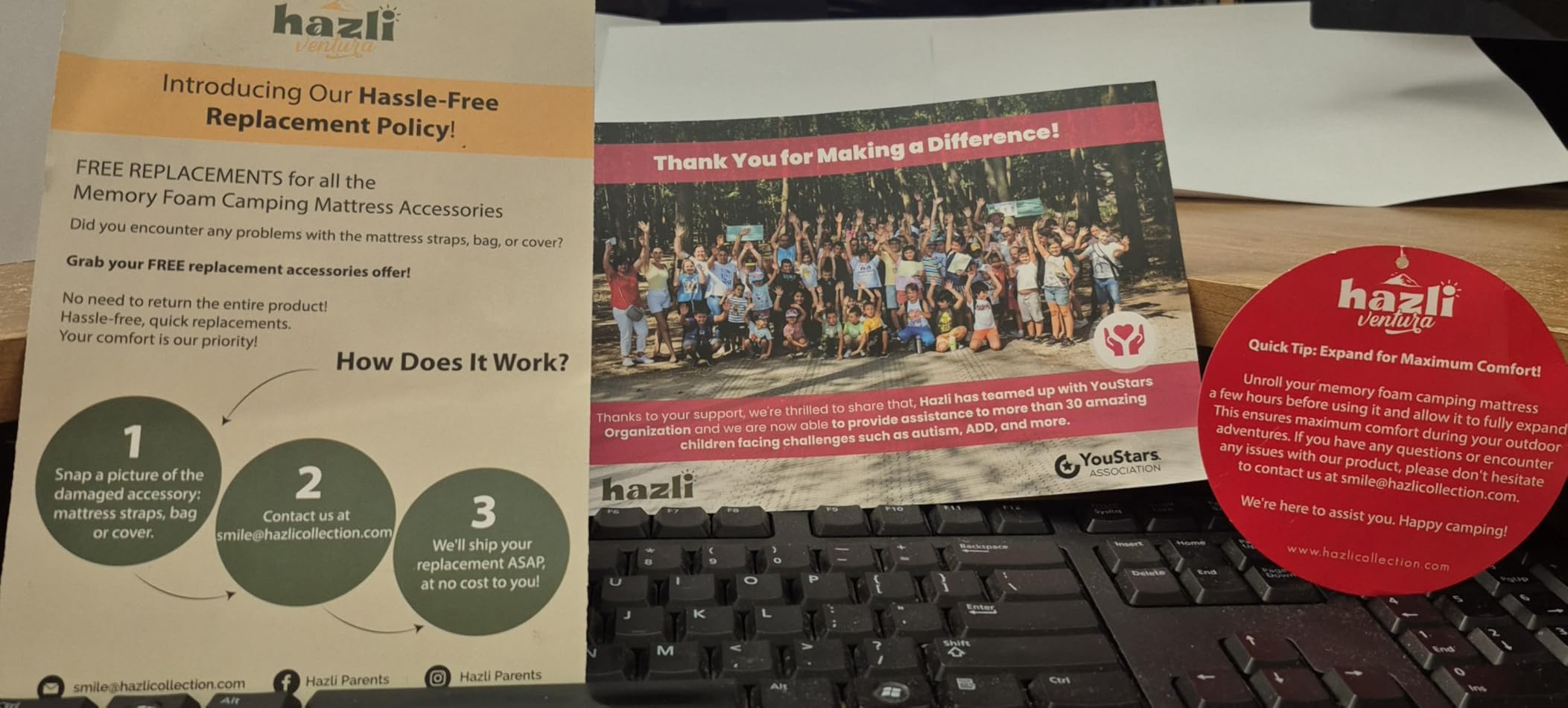
The included waterproof cover has a heavy duty carry bag with straps and a phone pocket, and the cover unzips for washing. That combination matters in wet-season camping, where foam that soaks through stops recovering properly and starts to feel like a cold brick by the second night.
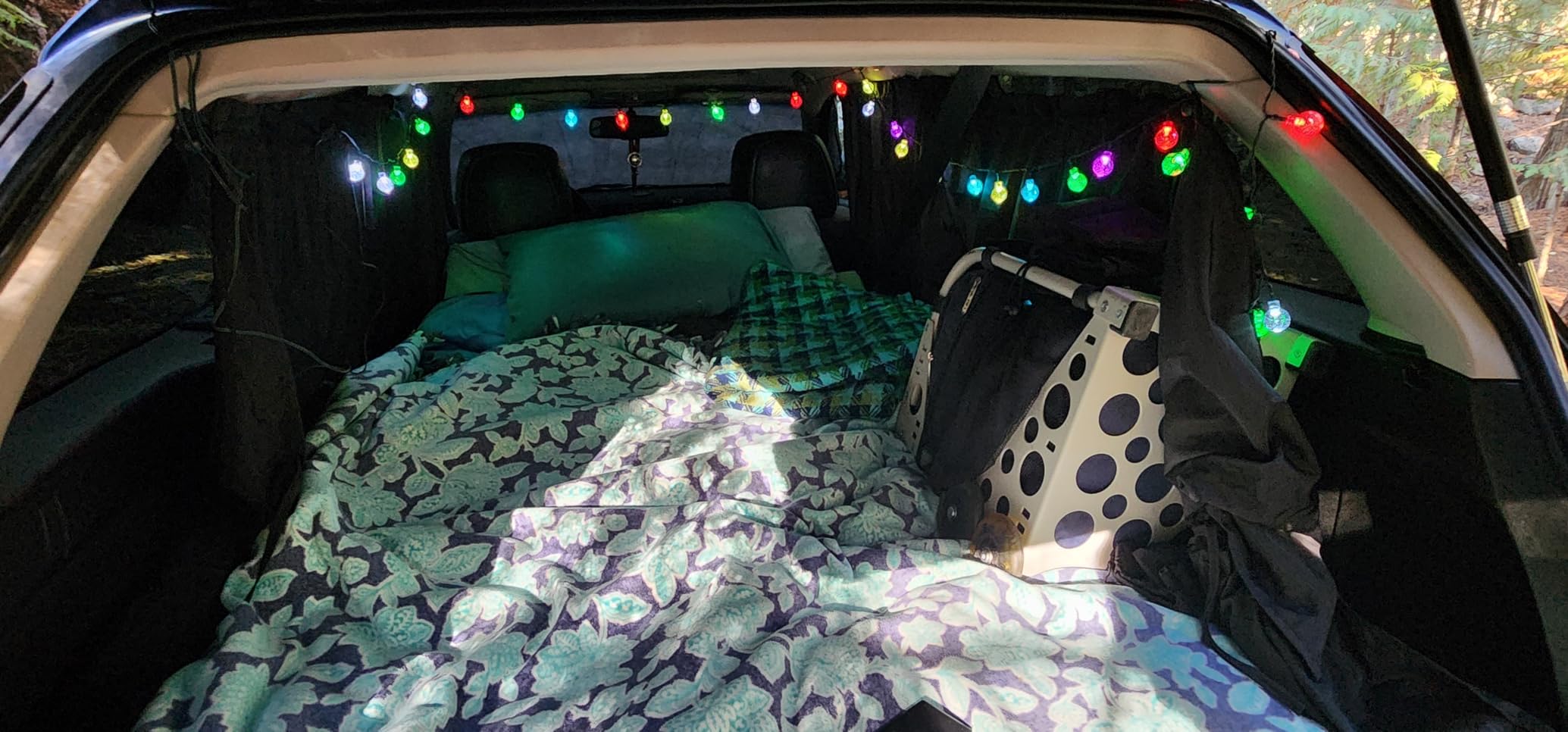
At 12 pounds and 75 by 30 by 3 inches, it is a car-camping and van-life product rather than a backpacking one. Nothing about the design will surprise you, which is the point. It is listed in Foam Sleeping Mats for Camping and carries a six month warranty.
How the thickness holds up under a heavier sleeper
Three inches is enough for most body weights, but the limit is real. Reviewers report that side sleepers with a heavier build feel the difference between this and the 4-inch pads later in the night, when the shoulder sinks past the comfort layer into the base. If you know that is you, step up rather than accepting the first night of pressure.
Because it is pure foam, firmness is fixed. That is a genuine drawback if you share the pad with a much lighter partner, since the same surface that stops your hip bottoming out may feel too hard for them. The trade is worth it for most single campers, and the reason it still earns the top slot here is that the failure mode of a fixed-firmness foam pad is mild compared with the failure mode of a deflating air mattress.
Where it falls short for a bad back
There is no adjustability and no R-value figure published, so in genuinely cold conditions you would want an insulating mat underneath it. The 30-inch width is a single-sleeper cot width, and review data notes that it is narrow for two people even before the thickness is considered.
It is also not a truck-bed or backpacking pad. At 12 pounds with no compression, this is the bed you bring when someone else is carrying the rest of the kit. If you need something that packs down small and still supports you, read on to the self-inflating options.
2. Gaialoop 3 Inch Memory Foam Pad – Best Value Three Inch
Memory Foam Cot Mattress, 3 Inch Camping Sleeping Pad, Avocado Green
3 inch dual layer foam
38 inch wide
12.8 lb
2 year manufacturer warranty
Pros
- Dual layer support foam plus memory foam keeps hips off the ground
- Removable washable cover with waterproof inner coating
- 38 inch width is wider than any other single sleeper pad here
- Two year manufacturer warranty
Cons
- 3 inch thickness is the minimum and can feel thin for heavier side sleepers
- Not intended for long distance backpacking
This is the pad we recommend when someone tells us their back hurts and their budget is the reason nothing has been upgraded yet. It delivers the same dual-layer structure as the more expensive foam pads at a noticeably lower entry point, and nearly 1,900 reviews averaging 4.3 stars suggest the structure is not a compromise on comfort.
The build is a high-density support foam foundation under a memory foam comfort layer, and the 38-inch width is its quiet advantage. Most camping pads are 25 to 30 inches wide, which forces a restless sleeper to hang an arm off the edge. The extra width here gives you room to change position without rolling off, and that alone reduces the number of times a bad back gets twisted overnight.
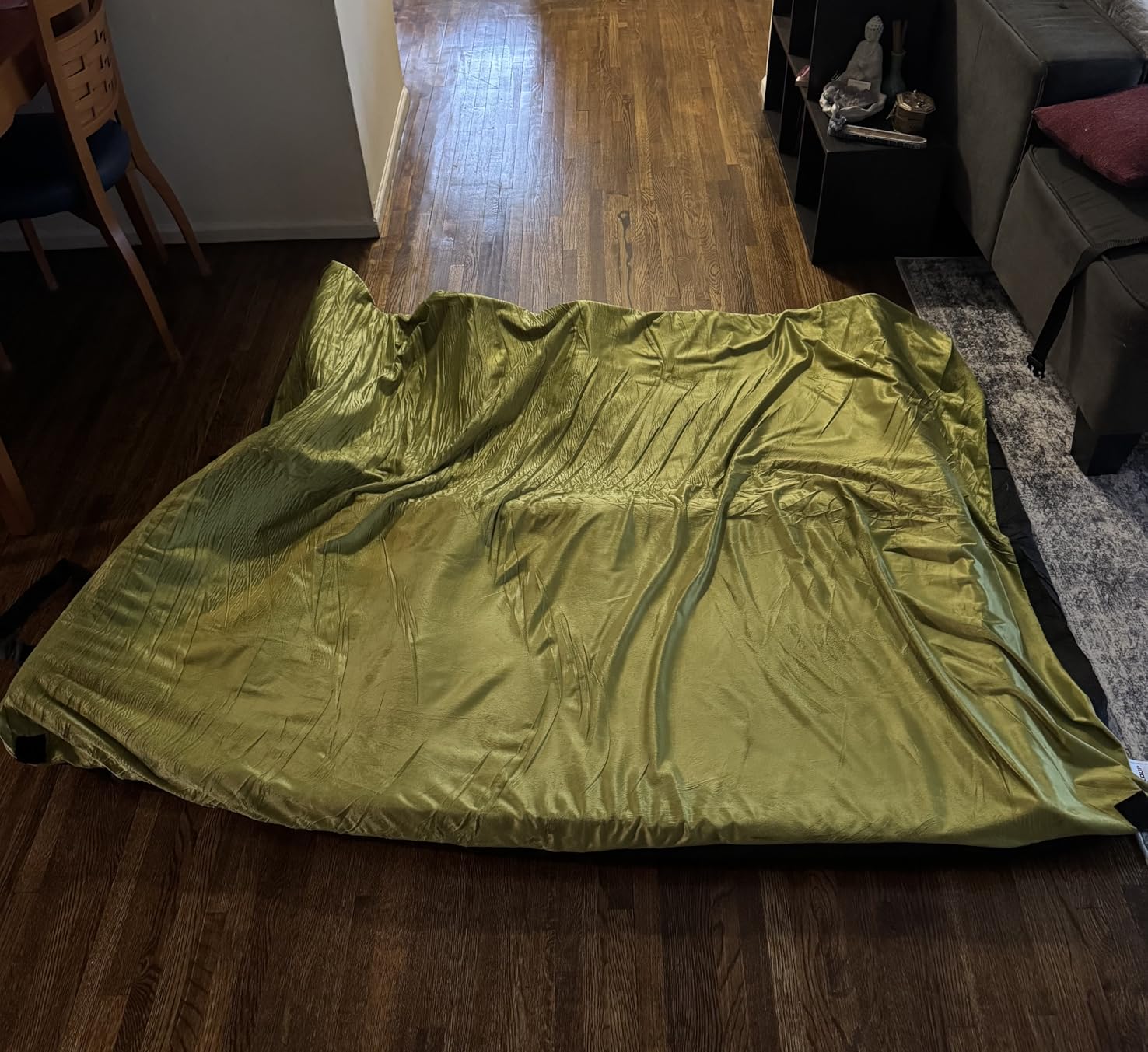
Both foams are OEKO-TEX and CertiPUR-US certified, the removable plush cover has a waterproof coating on its inner faces, and the base is non-slip so it stays put on a cot or a vehicle floor. Carrying case and straps are included.
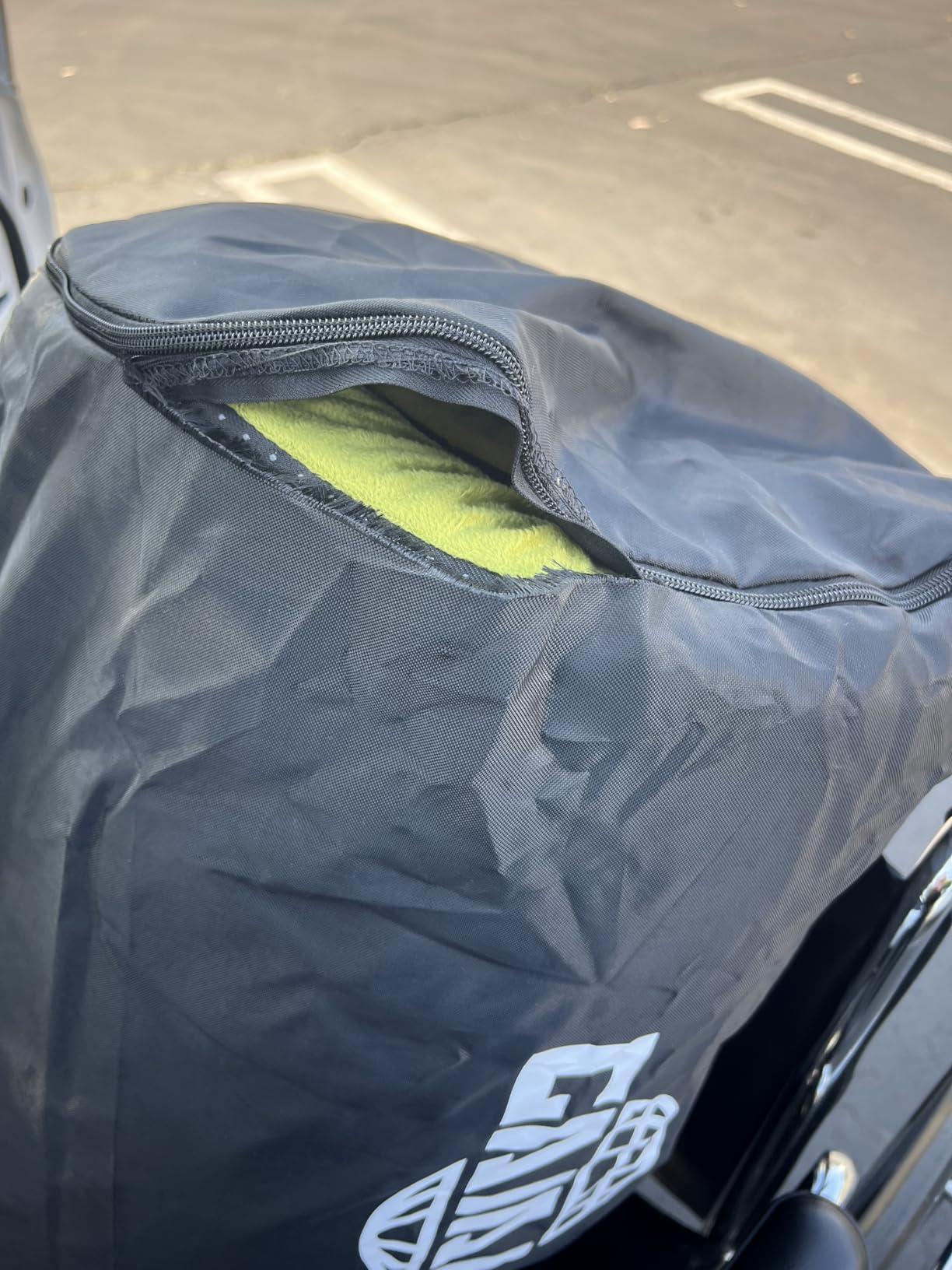
Why the width matters more than another inch of foam
Side sleepers who switch to the 4-inch model in this same line usually report that the extra depth helps their shoulder more than the extra width helps their hip. For a camper who moves a lot, staying on the surface is worth as much as depth, and this is the widest pad we tested at 3 inches.
The stated firmness is medium, which is a reasonable middle setting for a two-person weight range. The manufacturer is direct that this is not a backpacking pad, and at 12.8 pounds it does not pretend otherwise. It is also built for car camping, road trips, and festivals, where a 75 by 38 by 3 inch pad is exactly the right footprint.
Where it falls short for a bad back
Three inches is the floor for back comfort, and heavier side sleepers are the group most likely to feel it. If your hips are the problem rather than your shoulders, the extra inch in pick number five is a better spend than adding width here.
There is no R-value published and no waterproofing on the pad body itself, only on the cover. In sustained damp conditions, plan to keep it under shelter and off wet ground.
3. Lost Horizon Option3 4.5 Inch Queen – Most Versatile for Chronic Pain
Lost Horizon Option3 Self-Inflating Foam Camping Mattress, Queen, 4.5″
4.5 inch foam and air core
R-13 insulation
80 x 60 inch queen
440 lb capacity
Pros
- 4.5 inches of foam gives genuine pressure relief for chronic back and hip pain
- Holds firmness overnight with no deflation
- R-13 keeps sleepers warm in near freezing conditions
- Quiet surface with no squeaking or rustling
Cons
- Bulky and hard to deflate without a separate electric pump
- Uses a non standard pump fitting
- Not water resistant on the spec sheet
This is the pick for the camper who has already tried a 3-inch pad and still wakes up sore. At 4.5 inches it is the thickest mattress here, it carries a stated 440-pound capacity, and the reviews from people with chronic back pain are unusually specific about the thickness being the deciding factor rather than a nice-to-have.
The construction is a hybrid: a foam core inside an air chamber, which is what makes it adjustable. Foam gives it shape so it will not develop a hammock dip, and the air chamber lets you add air to firm it up if you are a heavier sleeper or vent some for a lighter build. It self-inflates through a twist valve, and it holds that firmness overnight, which removes the most common back-pain complaint in the category.
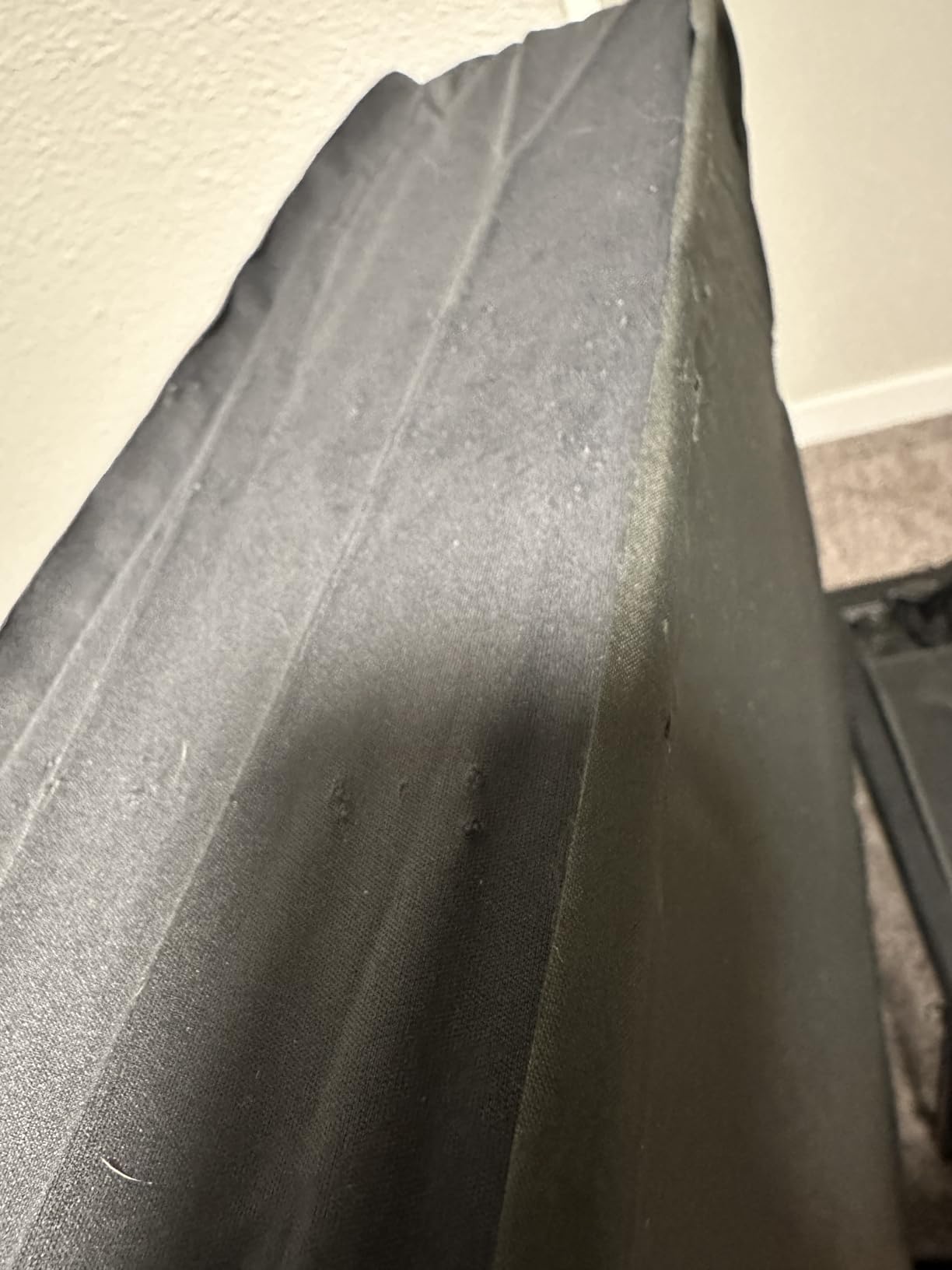
The R-value of 13 is the highest figure in this roundup, and that is not a minor feature. It is the only option here that comes close to handling near-freezing ground without a separate insulating mat, so for winter and high-elevation camping it is not a marginal upgrade.
It is also a queen at 80 by 60 inches, so a couple can share it without the movement transfer that wakes a partner with back pain. Reviewers single out the silence of the surface, with no squeaking when the other person moves.
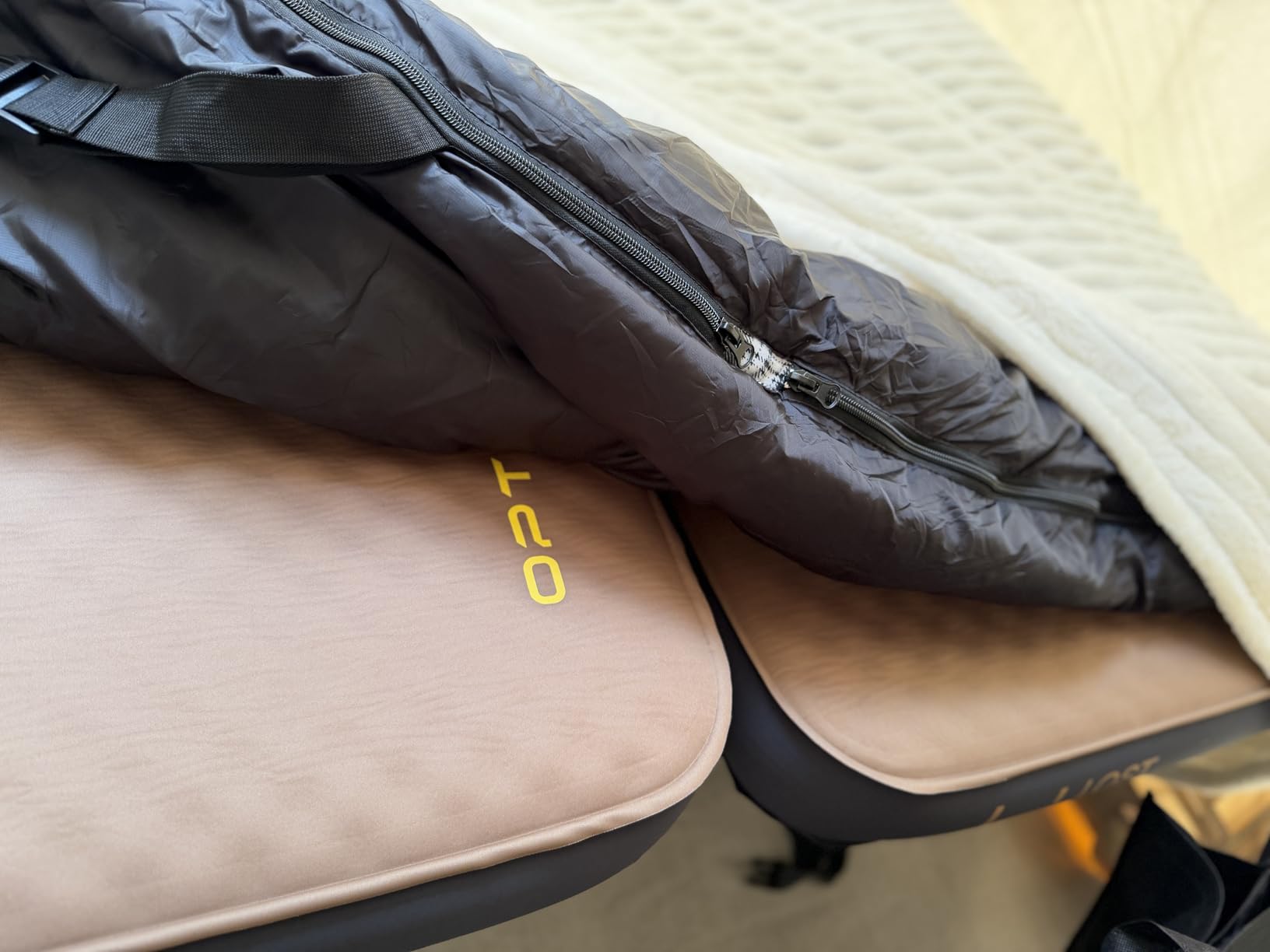
How much thickness actually changes the night
The jump from 3 inches to 4.5 is the largest single improvement in this list, and it is felt at the shoulder and hip rather than the lumbar spine. At that depth the shoulder sinks into the comfort layer without the hip reaching the ground, which is what stops the pressure spike that wakes people up.
Because the core is a 13-pound foam fill inside an air chamber, you have a genuine firmness dial rather than a guess. Heavier sleepers can push it firm and still have foam under the hip, which is the combination most pads cannot offer.
Where it falls short for a bad back
The pack-down is the honest drawback. It weighs 8 kg and the manufacturer itself notes it is not recommended for backpacking, and deflating the air out of a foam core of that size needs the optional electric pump. Budget for that pump as part of the system rather than discovering it at 6 a.m. in the rain.
The valve also uses a non-standard fitting, so some pumps will not connect. Check the fitting before you rely on a pump you already own.
4. Kingfun 3 Inch Memory Foam Pad – Top Rated by Buyers
Kingfun 3 Inch CertiPUR-US Memory Foam Camping Mattress Pad, Waterproof Roll up Sleeping Pad, Thick Floor Sleeping Mats for Tent with Removable Travel Bag(Grey, Cot)
3 inch high density memory foam
75 x 25 x 3 inch
5.6 kg
TPU coated velboa cover
Pros
- Highest average rating in the roundup with 73 percent five star
- TPU coated velboa cover sheds water and wipes clean
- Velcro corner connectors join two pads into a double bed
- Water resistant travel bag with zippered side pockets
Cons
- Needs up to 72 hours to expand before first use
- 25 inch cot width is narrow for anyone over about 5 foot 10
- Confirm your cot dimensions before buying
On pure owner satisfaction this is the strongest pad in the group. Its 4.5-star average across more than 1,200 reviews comes with a 73 percent five-star share and only 3 percent one-star, which is the tightest distribution any of these picks has.
The high-density memory foam adapts to body shape, which is the property that matters for pressure distribution, and the velboa cover carries a TPU waterproof coating over a soft face. That face does not feel like the cold plasticky surface of a basic air mattress, and several reviewers describe it as the difference between sleeping comfortably on a camp bed and tolerating one.
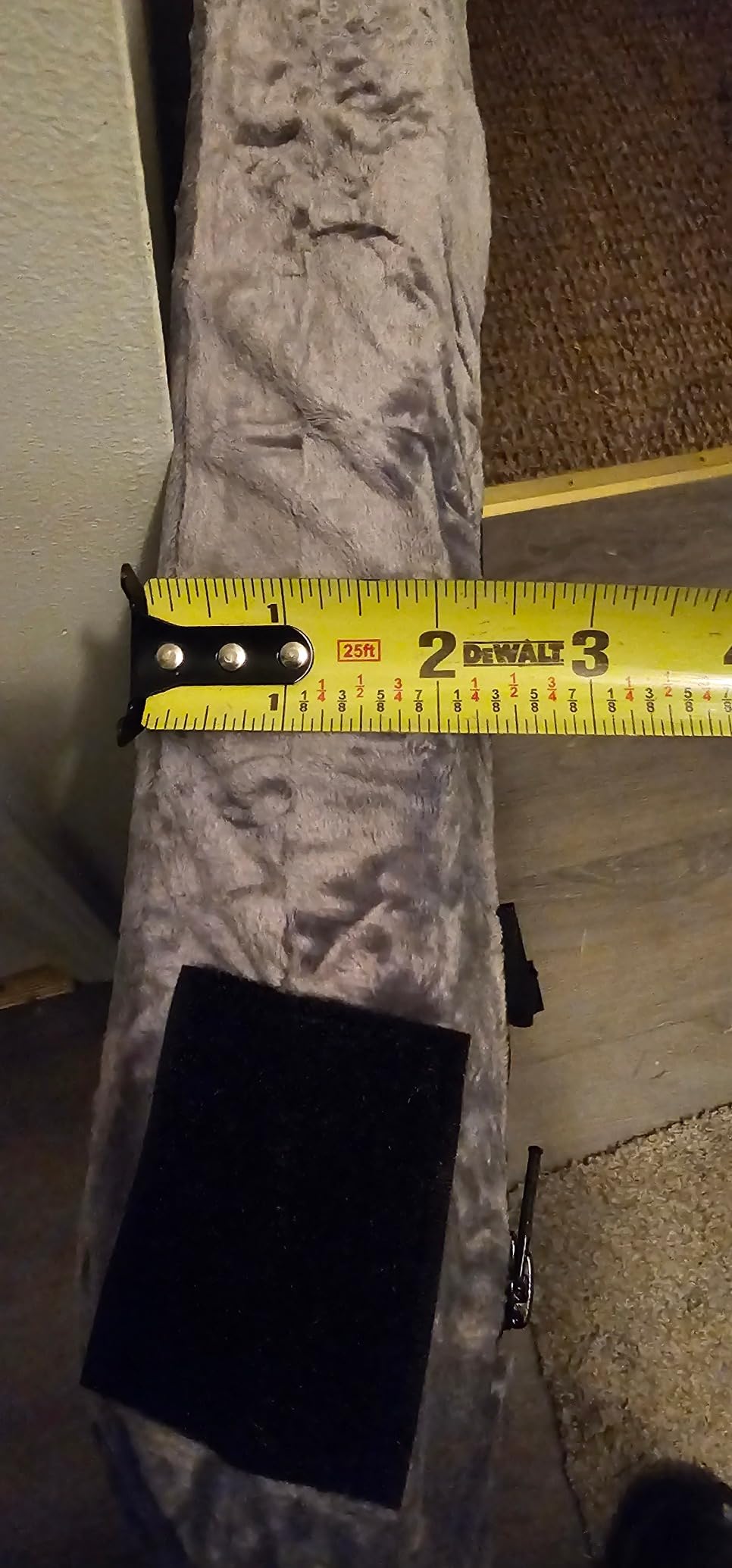
Eight Velcro corner connectors let you join two pads into one double surface, which turns a 25-inch single pad into a usable two-person bed for the nights you camp as a couple. An anti-slip base keeps it from migrating on a cot, and the water-resistant travel bag has zippered side pockets.
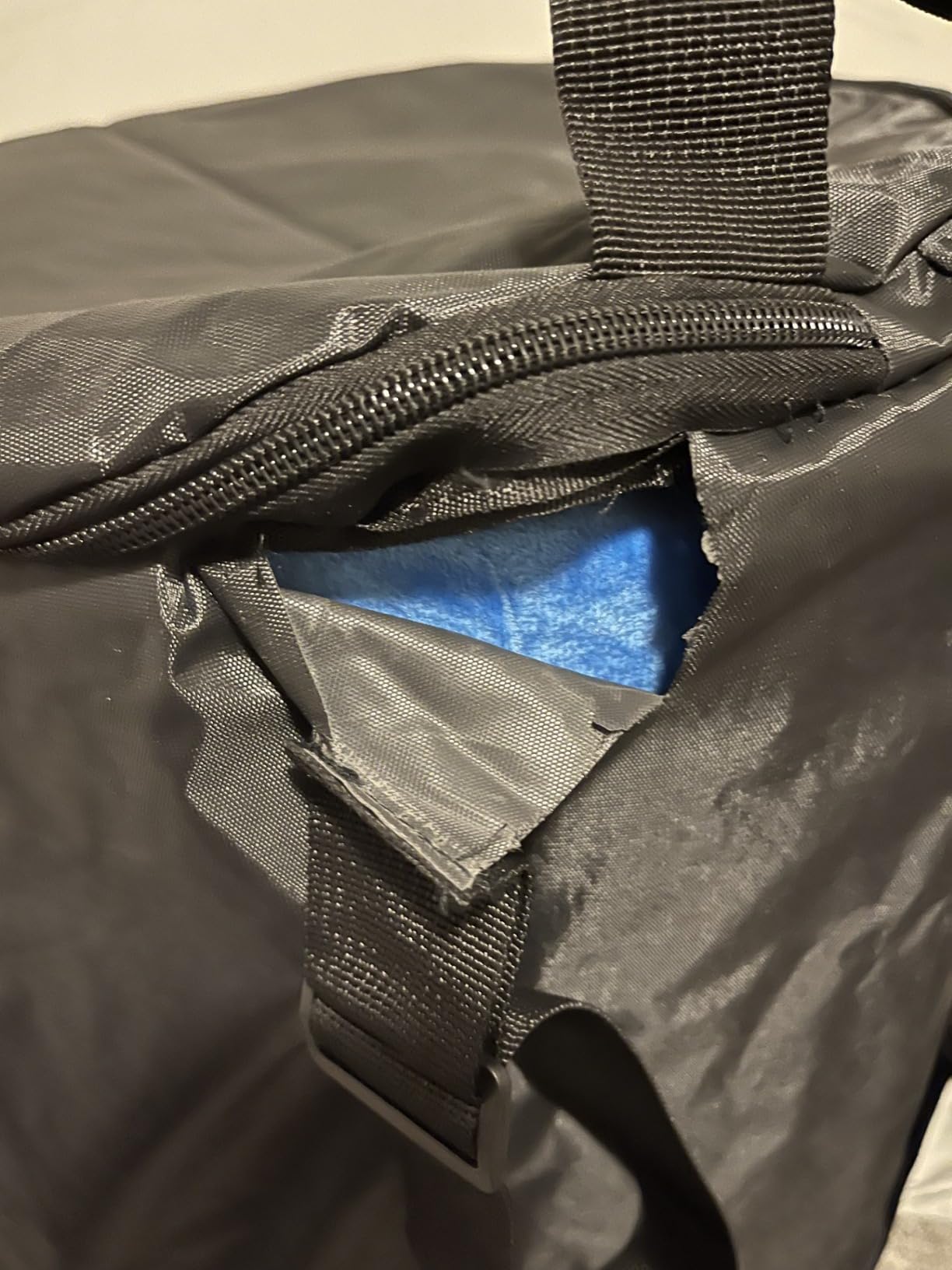
What the rating is actually measuring
A high star average on a foam pad is usually a statement about predictability rather than peak plushness. Nobody wakes up delighted by a 3-inch foam pad the way they do with a 4.5-inch hybrid. What they notice is that the back does not hurt in the morning, and that is the outcome this article is trying to rank.
That makes this the safest choice for a camper who cannot easily replace a bad purchase mid-trip. The CertiPUR-US certification adds a further layer of confidence for anyone who is sensitive to foam off-gassing.
Where it falls short for a bad back
Allow 72 hours for the foam to fully expand after unpacking. If you open the vacuum packaging the morning of a trip, you will be sleeping on a thinner pad than the 3 inches on the label, and that defeats the whole reason to buy one.
The 25-inch width is the other limitation, and it is the real one for side sleepers who move. A narrow pad encourages rolling off, and rolling off twists a bad back. Confirm your cot dimensions before ordering, because this is listed in cot sizing.
5. Gaialoop 4 Inch Extra Thick Pad – Best for Side Sleepers
Memory Foam Camping Mattress, Extra Thick 4 Inch Pad, Single, Lapis Blue
4 inch profile
30D support foam with 40D memory foam
75 x 30 x 4 inch
2 year manufacturer warranty
Pros
- 4 inches of foam supports side stomach and combination sleepers on uneven ground
- Higher density 30D base resists bottoming out better than the 3 inch version
- Waterproof and washable inner cover
- 75 percent five star reviews
Cons
- 13 pounds is impractical to carry any real distance
- 30 inch width is tight for anyone who moves in their sleep
This is the one we tell side sleepers to buy. Four inches of foam is the depth at which a shoulder can sink in without the hip reaching the ground, and that combination is the whole game for anyone sleeping on their side with back pain.
The build is 30-density support foam under 40-density memory foam, and the denser base is doing the structural work. Density is the number that determines how much a foam compresses under load, so a 30D base under a thicker body is a different proposition from the 3-inch version in pick number two, which has roughly an inch less material to work with.
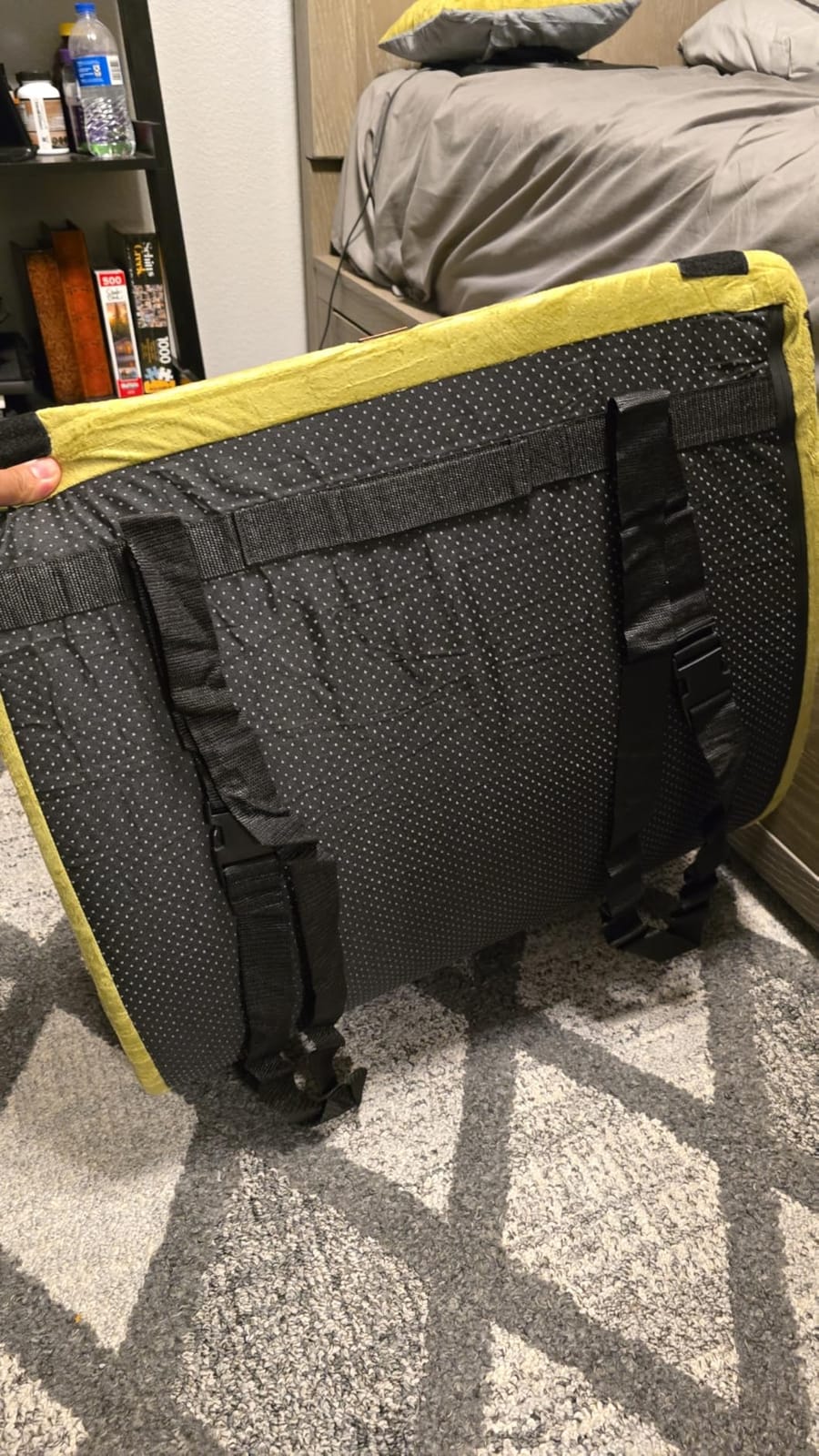
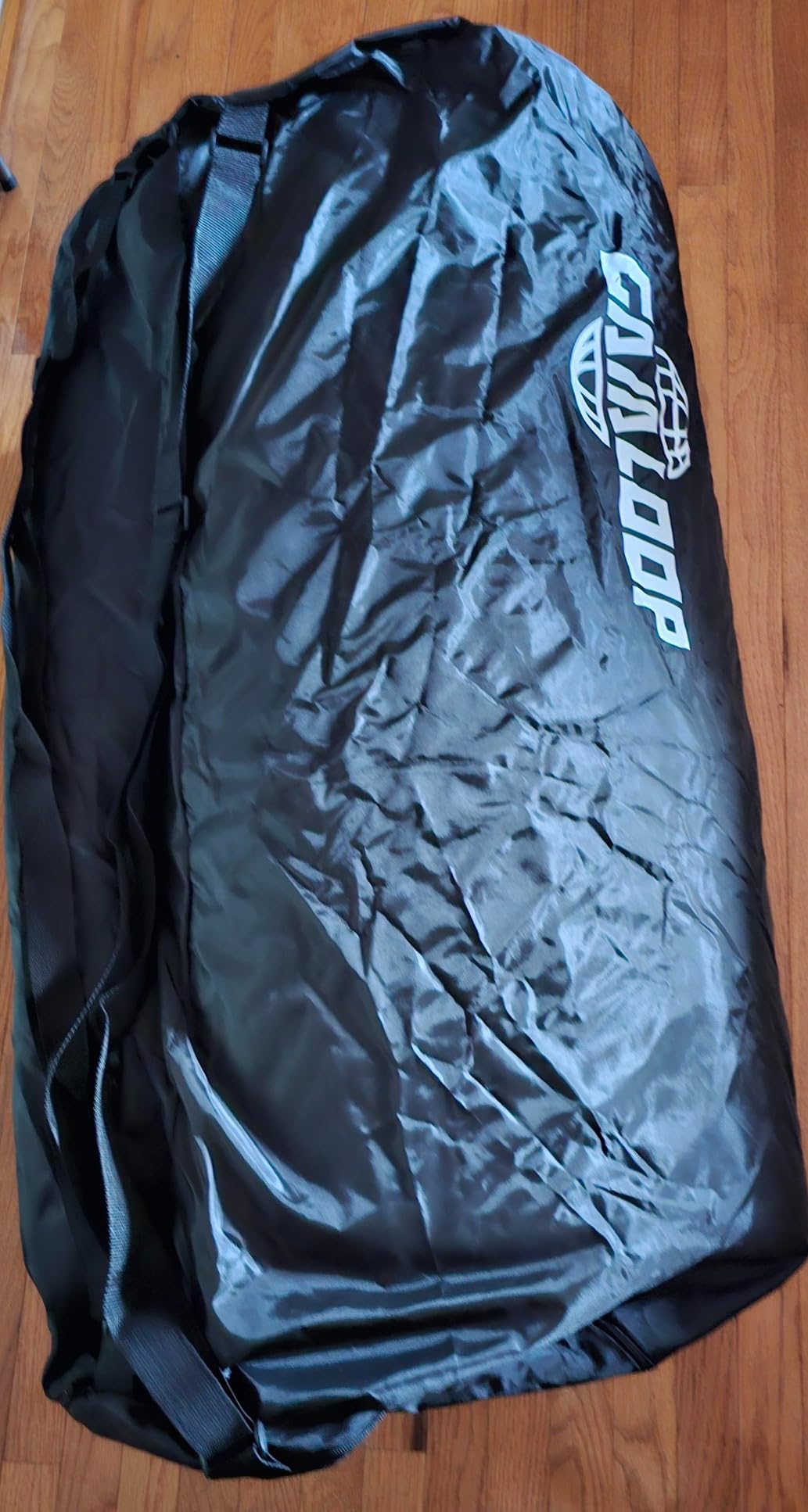
Reviewers treat it as the step up from the 3-inch model and single out the extra inch as the difference on rocky campsites, where the extra depth stops individual stones from becoming pressure points. The removable plush cover has a waterproof coating on its inner faces, the base is non-slip, and a carry bag with straps is included.
Why side sleepers need depth rather than width
A side sleeper’s shoulder is the highest-pressure point in bed. On a 3-inch pad the shoulder contacts the surface hard, and the body compensates by pulling the hips forward, which is what bends the lumbar spine and produces the familiar morning ache. Four inches gives the shoulder somewhere to go.
Stomach sleepers benefit from the same depth for the opposite reason: a thicker pad stops the hips from dropping while the chest is supported, which keeps the lumbar curve neutral instead of arching.
Where it falls short for a bad back
At 13 pounds it is one of the heaviest pads in this list and it is designed for car camping, RV and van life rather than backpacking. The trade is that you give up any realistic carry weight to gain an inch of depth, and that is usually the right trade for a bad back.
The single 30-inch width is tight for a restless sleeper. If you are the kind of person who rolls, pair it with the wider 3-inch option rather than assuming more depth fixes a rolling problem.
6. Hikenture 4 Inch Queen Self Inflating Pad – Best for Couples
Hikenture 4″ Thick Self Inflating Sleeping Pad with Electric Pump, Queen
4 inch foam and air hybrid
R-9.5 insulation
80 x 60 inch queen
500 lb capacity
Pros
- Owners with back pain rate it the most supportive pad they have camped on
- Does not transfer motion between sleepers and rarely loses air overnight
- Built in electric pump inflates in about 90 seconds
- 500 lb weight capacity
Cons
- Built in electric pump has failed for some buyers
- Reversing pump only partially draws the pad down
- Queen size rolls into a bulky bundle
This is the pick when one partner has a bad back and the other one is a restless sleeper. At 4 inches on a full queen with a 500-pound capacity, it is the roomiest back-support pad in the group, and reviewers report that it does not transfer motion between sleepers.
Motion transfer is worth more attention than it gets. A partner who rolls onto your hip five times a night will undo any support the mattress is providing, which is a common reason a good pad still produces a sore morning. The Y-shaped internal air channels here cut packed volume while trapping warmth, and the stretch-knit surface is quiet and does not crinkle when someone moves.
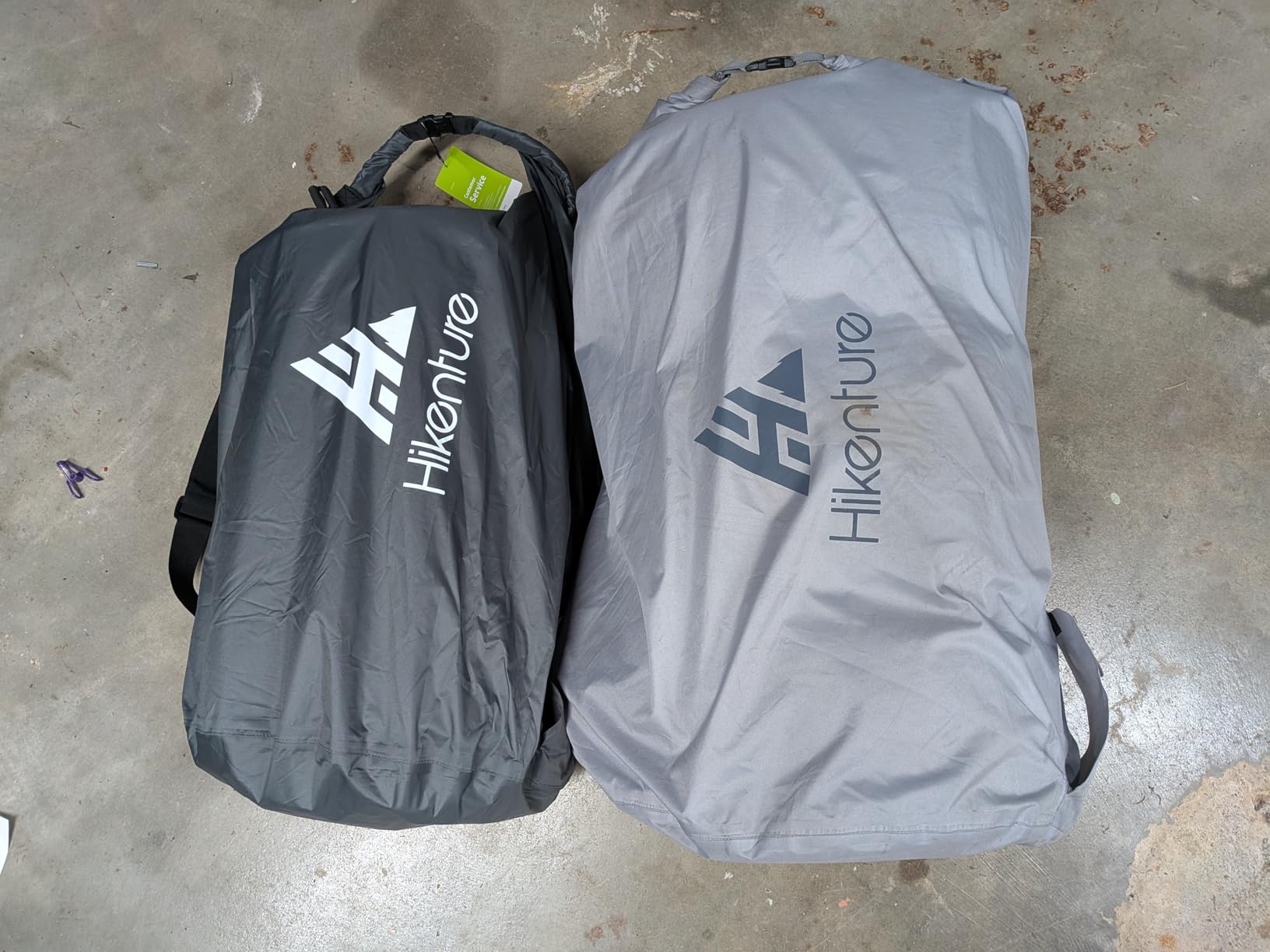
The built-in electric pump inflates the pad in about 90 seconds and reverses to draw it down for packing, and a manual pump sack is included as a fallback. Several five-star reviews describe owners replacing thinner 1-inch mats specifically because of back pain, which tells you the audience this was designed for.
The R-value of 9.5 puts it well ahead on cold ground, and no pure foam pad in this list publishes an R-value at all. The queen footprint also means you are not curled into a single-sleeper shape all night.
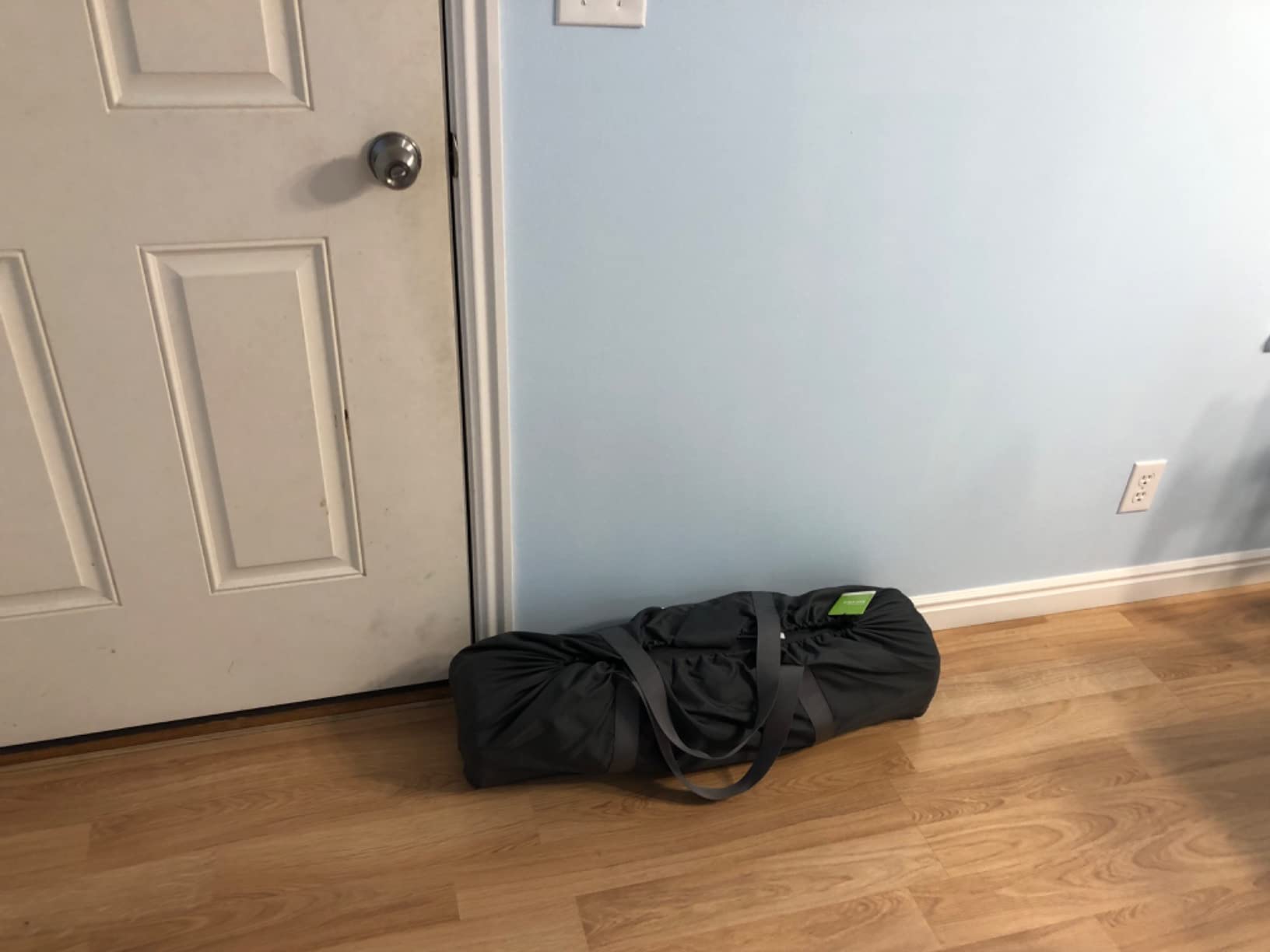
What the R-9.5 rating buys you in practice
R-value measures how well a pad blocks heat moving up from cold ground. Below about 4 you will notice the ground pulling heat out of you on a mild night, and the muscles around a sore lower back stiffen faster when they are cold. At 9.5 this pad is a shoulder-season and early-winter option without needing an insulating mat underneath.
That matters more for a bad back than for anyone else, because the pain response is cumulative. A camper who sleeps warm does not spend the next morning guarding their movement.
Where it falls short for a bad back
The 4.2 average is the second lowest in this roundup, and the gap maps almost entirely to the electric pump rather than to comfort. Reports describe pump failures and a reversed pump that only partially draws the pad down, so plan on ten minutes of manual deflation with the included sack. The sack nozzle can also tear off, which disables bag inflation.
Finally, a queen of this thickness rolls into a genuinely bulky bundle. This is a car-camping and overlanding pad, not a hiking one.
7. Acacia 4.3 Inch Self Inflating Pad – Best Over a Cot
Acacia 4.3″ Thick Self Inflating Sleeping Pad with Foam | Innovative Y-Shaped Telescopic Structure | Ultraportable Camping Mattress | Outdoor Compact Air Mat for Tent | Queen
4.3 inch foam core
80 x 60 inch queen
440 lb capacity
3 year warranty
Pros
- Flat non bubble top surface eases hip and lower back pressure for side sleepers
- Holds two adults with no sinking or bounce
- Carry bag doubles as pump sack
- 3 year warranty with responsive replacement service
Cons
- Some units slowly lose air overnight through the valve
- Foam alone is too soft for a 200 lb sleeper
- Rolls into a large bundle
This is the most interesting construction in the roundup for a specific reason. The Y-shaped telescopic foam core deflates and compresses to cut packed volume by up to 60 percent, which is a foam structure that has been engineered for packability rather than simply rolled up.
The two-way valve handles automatic inflation and deflation, and the carry bag doubles as a pump sack so you are not carrying a separate pump. Side buckles connect multiple pads if you want to build a wider surface across two cots.

Side sleepers with lower-back pain are the strongest advocacy group in the reviews, and the reason they name is the flat, non-bubble top surface. A flat surface with no repeating ridges means no pressure lines across the lumbar region, which is the complaint that rules out so many I-beam designs.
Support is rated to 440 pounds, the fabric is 30D elastic with a TPU reinforced coating and heat-molded seams, and there is a three year warranty. Service response is unusually strong: reviews describe warranty replacements and refunds being processed quickly after a valve failure.
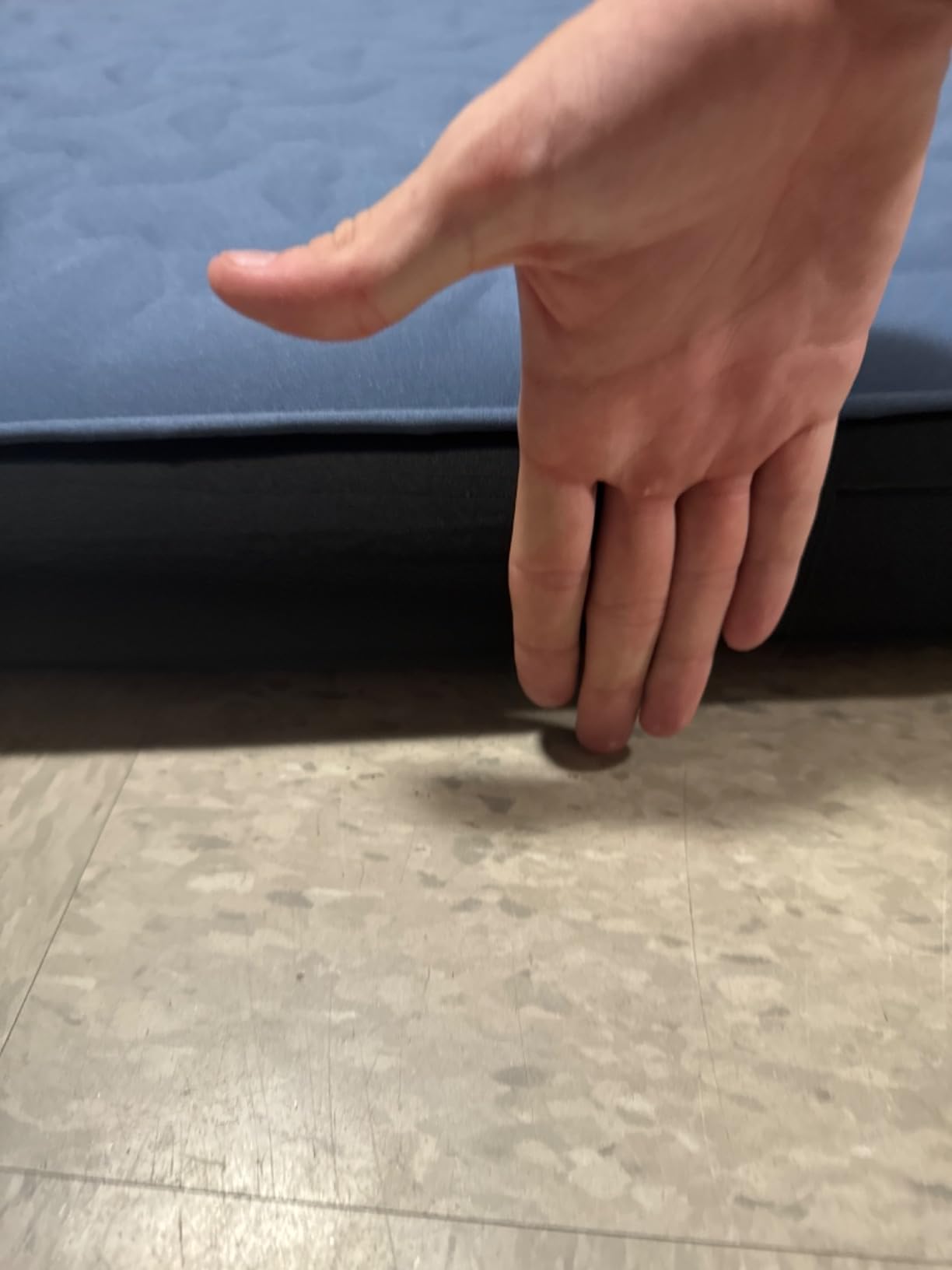
Why the flat top surface matters for a sore lower back
Most air mattresses are divided into chambers by internal walls. Those walls are structural, and they also form a repeating ridge pattern across your back. On a firm surface those ridges read as pressure lines that follow the path of the nerve roots, and they are why a good pad can still leave you sore.
A flat top removes the pattern entirely. The R-value of 6 is the weakest of the four-plus-inch self-inflating options here, so pair it with an insulating mat in cold conditions.
Where it falls short for a bad back
Two reviews describe slow overnight deflation through the valve, and in both cases the company replaced or refunded the pad. If that happens to you, the warranty is the reason this stays a safe pick rather than a risky one, but you should still expect to top it up in the morning if you are somewhere remote.
There is also a body-weight caveat worth stating plainly: reviews report that the foam alone is too soft for a sleeper around 200 pounds, so add air on top. Manual pump-sack inflation is slower than the optional electric pump, and the roll is large even after the compression claim.
8. Exped MegaMat Medium Wide – Best Packability at 4 Inches
Exped MegaMat Sleeping Pad, Medium Wide
4 inch open cell foam
72 x 25.6 x 4 inch
4.6 lb
R-8.1 insulation
Pros
- 3D vertical sidewalls keep the full surface usable
- Quiet recycled stretch tricot face
- Rolls to roughly the size it arrived in
- Works on a cot as well as on the ground
Cons
- Included mini pump struggles with this volume
- Bulky when packed
- One buyer reported self deflation and repeated punctures
At 4.6 pounds for a 4-inch mattress, this is the outlier in the roundup on weight, and that is the reason it is on the list. Most of the 4-plus-inch foam and hybrid pads here weigh 10 pounds or more and are loaded into a vehicle, while the Exped is genuinely carryable on foot, and reviewers describe it as comparable to a home mattress including for side and stomach sleepers.
The build is 4 inches of open-cell foam with air-core channels for insulation, an R-value of 8.1, and a 100 percent recycled four-way stretch tricot polyester face. Open-cell foam is the material that makes a self-inflating pad expand after you unroll it, and it is also what gives this one a quieter, less plasticky surface than a pure air pad.
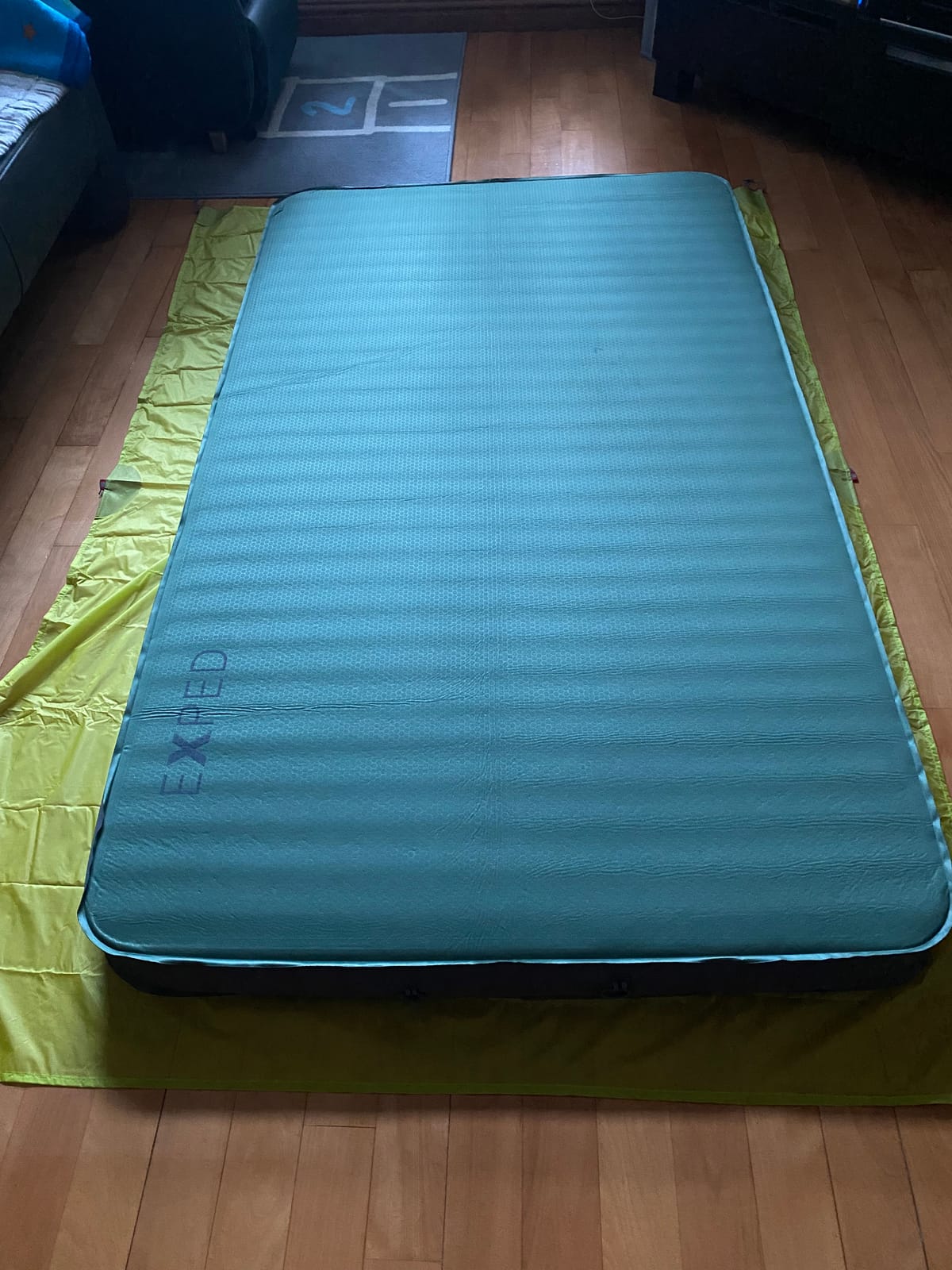
The 3D vertical sidewalls do not taper, so the full width is usable rather than losing a few inches at the edges. Reviewers call out arms and legs not slipping off, and a welded side handle makes transport easier.
Firmness adjusts from ultra-plush to firm with the included top-up pump, which is the adjustment that lets one mattress serve two different body weights. It also works on a camp cot as well as on the ground.
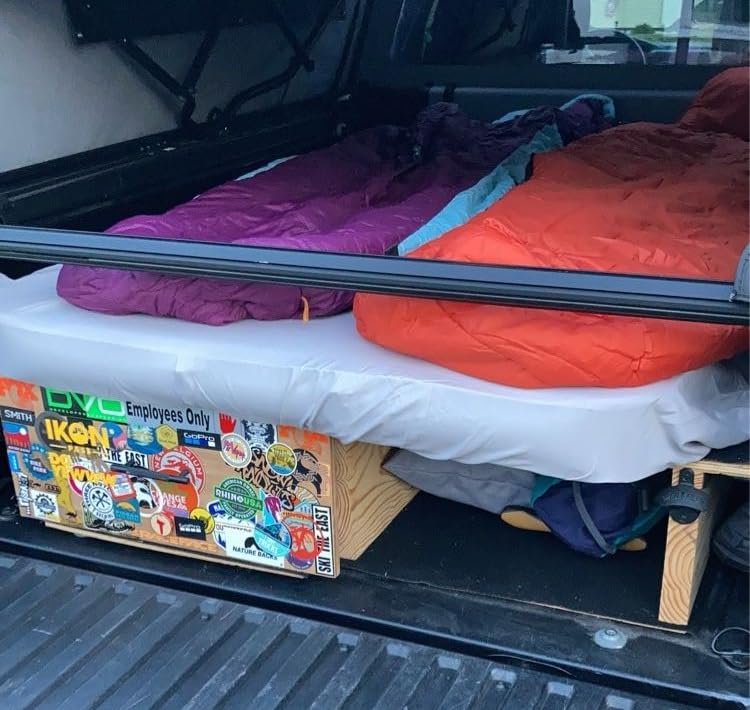
What open-cell foam actually does for your back
Open-cell foam is a network of interconnected cells that compresses progressively rather than pushing straight back. That progressive give is what spreads pressure across a wide area instead of concentrating it, and it is why foam-cored pads keep a lumbar curve while air-only pads flatten it.
The R-value of 8.1 is enough for most three-season ground and cold-weather use with an insulating mat. Because the pad is listed as not water resistant, keep it under shelter in sustained rain.
Where it falls short for a bad back
The included mini pump is the weak point. Most owners let the pad self-inflate and only use the pump to top it up, which is fine, but anyone who wants to fully deflate it will be doing that by other means.
Packed bulk is the trade you accept for the low weight, and one buyer reported self-deflation with repeated punctures in a truck camper. If you are sleeping in a vehicle with loose gear, inspect the pad before the first night rather than after.
9. Selectico 3.5 Inch Foam Pad – Budget Pick for Occasional Trips
Selectico Extra Thick Supportive Foam Camping Mattress with Travel Bag
3.5 inch dual layer foam
72 x 24 x 3.5 inch
Dual density construction
Allow 48 hours to expand
Pros
- 3.5 inches of high resilience foam avoids the sinking feeling of memory foam
- Anti slip dotted bottom keeps it in place
- Strap and cord system rolls and rebundles easily
- Doubles as a guest bed or floor mattress
Cons
- Bottom cover is not waterproof and the foam can soak through
- Heavier sleepers can sag through to the ground
- 24 inch width is very narrow
This is the pick for someone who camps a handful of times a year and wants a back-friendly surface without building a foam storage problem. At 3.5 inches it clears the thickness threshold, and high-resilience foam gives it a springier, firmer feel than the memory foam pads, which is a real advantage for sleepers who find memory foam too soft.
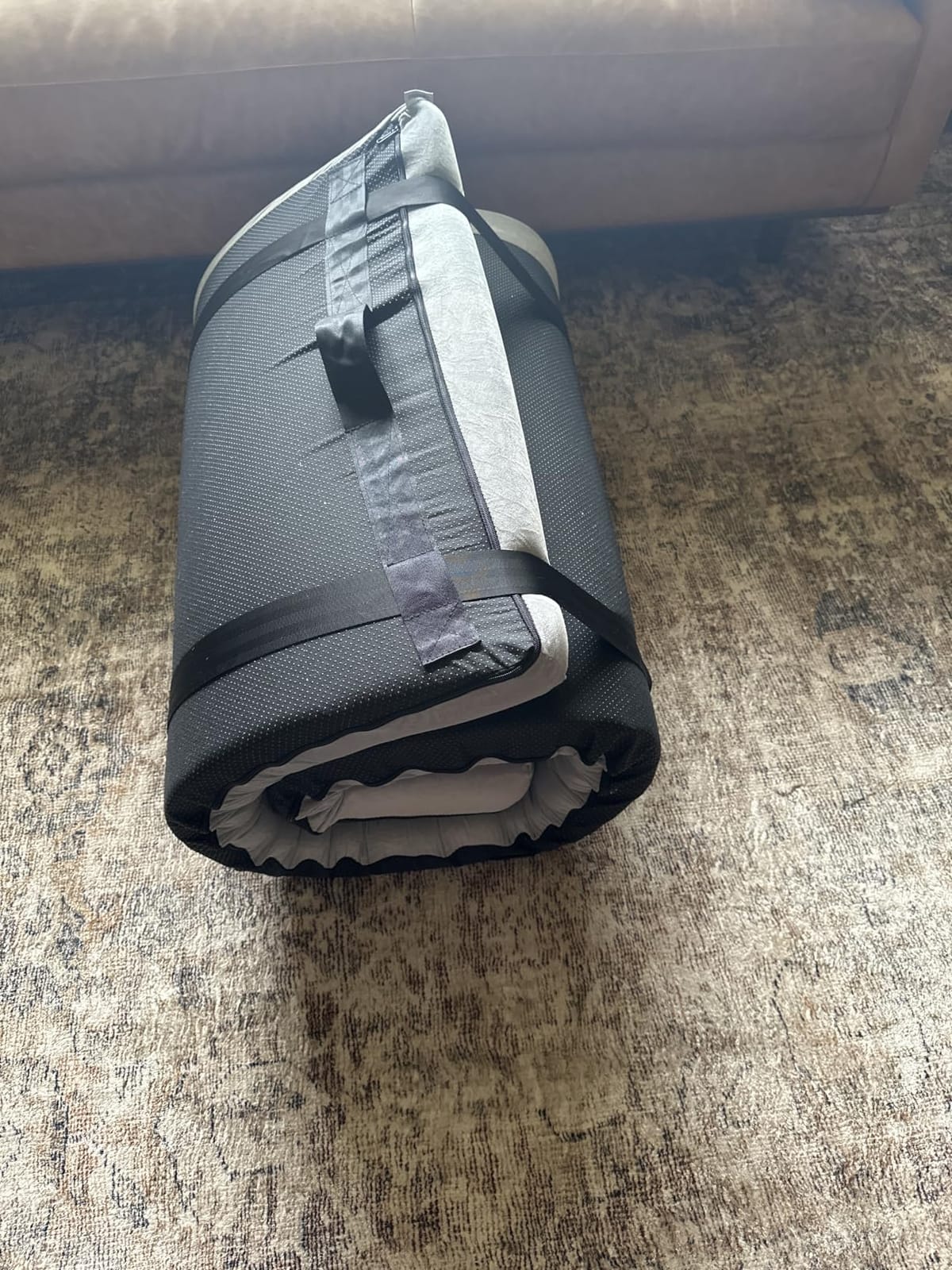
The construction is a high-resilience comfort top over a high-density support base, with a polyester fibre face and a dotted plastic anti-slip bottom. Buckle straps plus a draw cord secure the rolled pad, and a carry bag protects it in storage and transit. The manufacturer asks for 48 hours of expansion before first use.
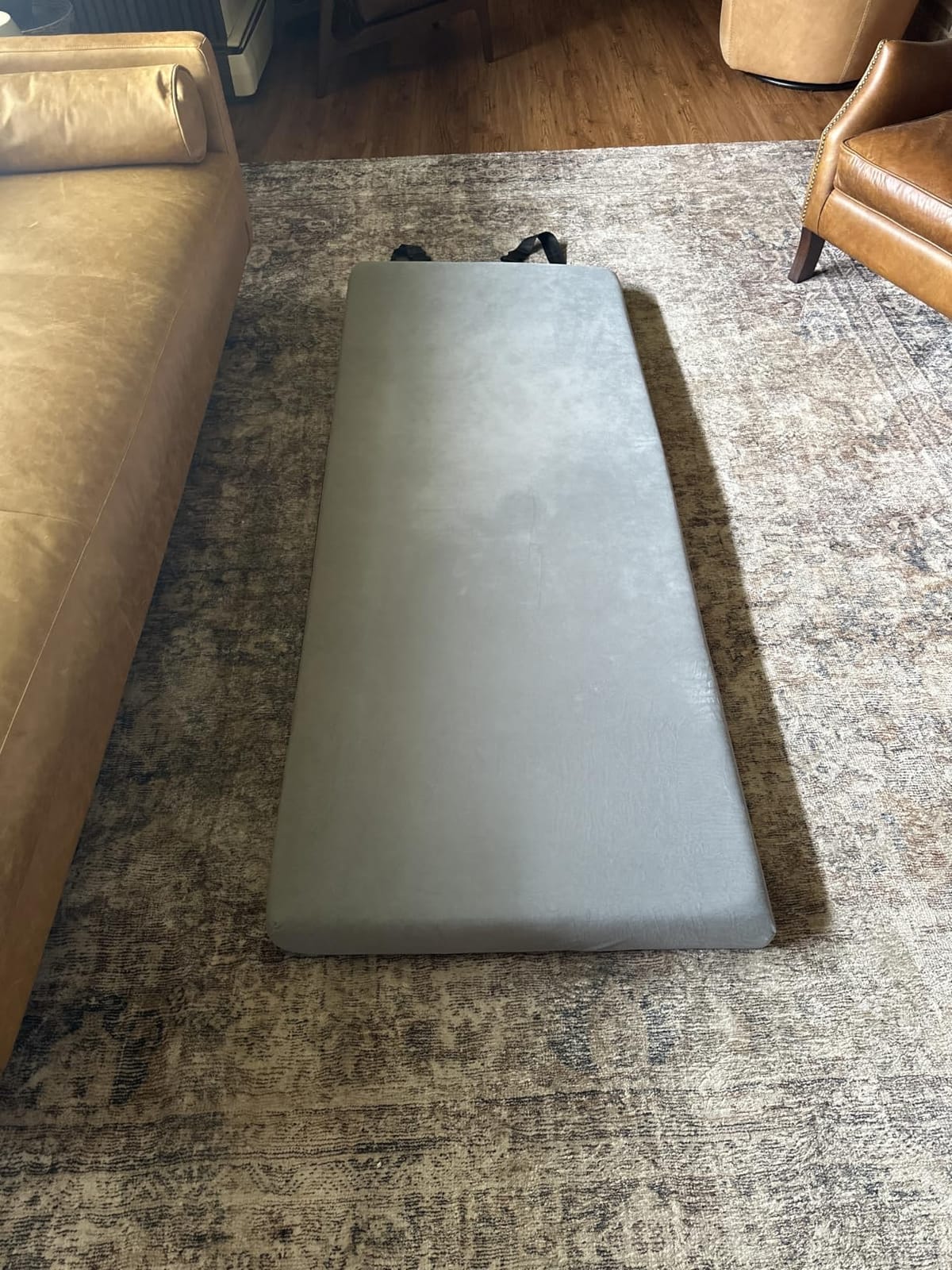
Buyers over 50 and side sleepers in their 50s and 60s report it as the best sleep they have had camping, which is an unusually specific endorsement for a product with a small review base. It also works indoors as a guest bed or a floor mattress, so it is not tied to trips.
When high-resilience foam beats memory foam
Memory foam adapts around you and reduces pressure, which is what side sleepers usually want. High-resilience foam pushes back more quickly, which keeps the spine from settling into a curve that does not match your natural one. For a camper whose pain comes from a stiff or hypermobile lower back, that firmer response is often easier to sleep on.
Because it is springier, it is also less likely to feel like a dip in the morning after an overnight compression set, which matters on a trip where the pad never gets a chance to fully recover.
Where it falls short for a bad back
Two limits are worth taking seriously. The bottom cover is not waterproof and the foam can soak through in wet ground, so it is a fair-weather and sheltered-camp pad. And heavier sleepers report sagging through to the ground, which is the exact failure mode this article is trying to avoid.
The 24-inch width is also very narrow, and one buyer reported the listed size was smaller than measured. Check the dimensions against your cot before you commit. The 189-review base is the smallest here, so treat the rating as a useful signal rather than a certainty.
10. Therm-a-Rest MondoKing 3D – Best for Truck Bed Sleeping
Therm-a-Rest MondoKing 3D Self-Inflating Camping Sleeping Pad, Large – 77 x 25 Inches
4.25 inch StrataCore build
R-7.0 insulation
77 x 25 inch large
4.4 lb
Pros
- Two reviewers with bad backs credit the pad with letting them keep camping
- Stayed supportive for a 230 lb sleeper on a hard truck bed
- TwinLock valves make firmness easy to regulate
- Lightest of the four inch plus pads
Cons
- Thin face fabric has been reported to tear and leak
- Rolls rather than compresses so it is bulky for its weight
- Smallest review base in the roundup
This is the truck bed and overlanding pick, and the 4.4-pound weight is the reason. Among the self-inflating pads here that clears 4 inches, it is light enough to move between a vehicle and a campsite without a second person helping, and it is made in the USA with a limited lifetime warranty.
The StrataCore construction puts a continuous thermal foam layer between alternating air and foam ridges, which is why it is both 4.25 inches thick and far more puncture-resistant than a lightweight inflatable. Two reviewers with bad backs specifically credit the pad with letting them keep camping, and one reports it stayed supportive as a 230-pound sleeper on a hard plywood truck-capper bench, which is close to the worst surface a back has to cope with.
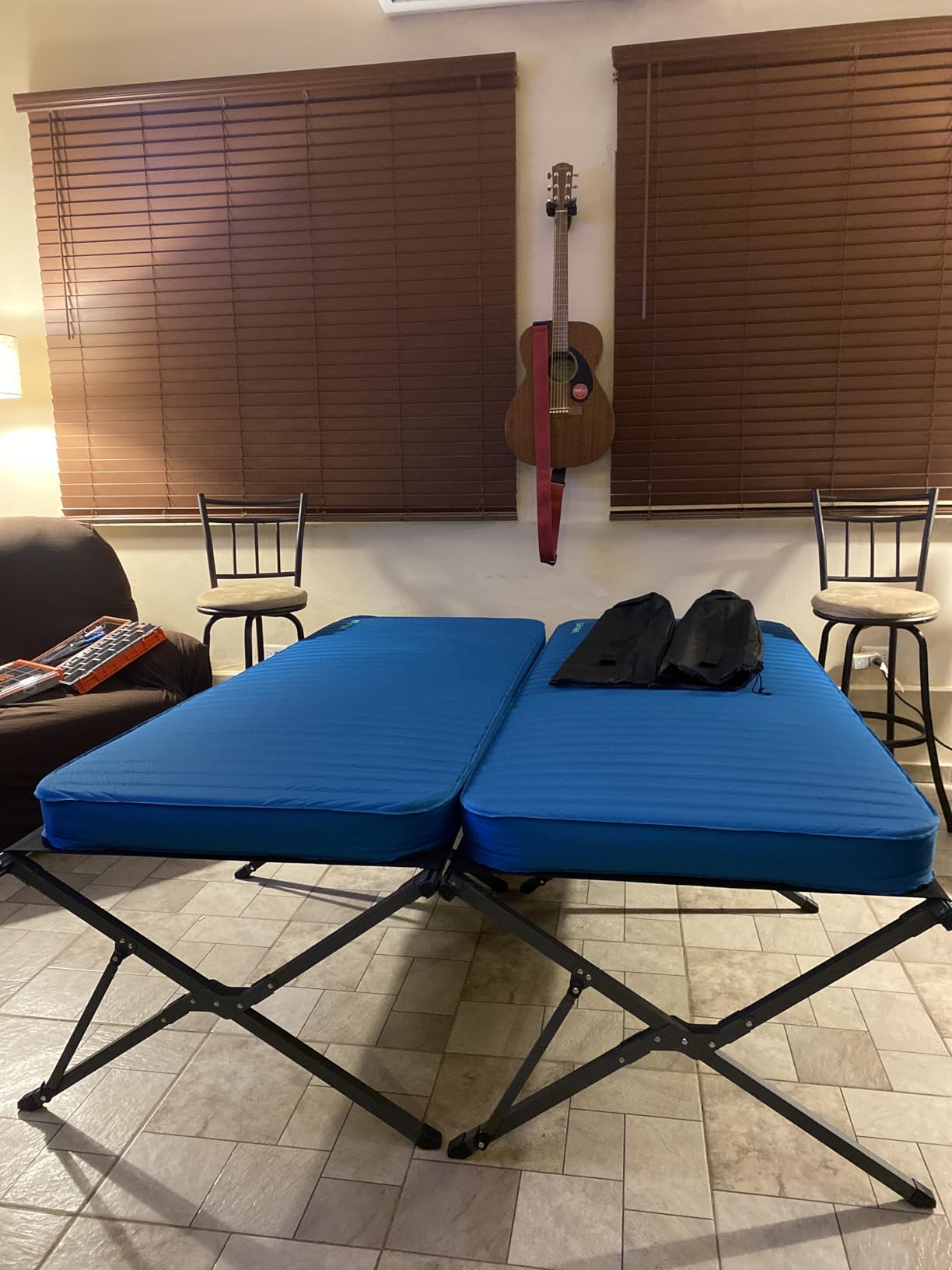
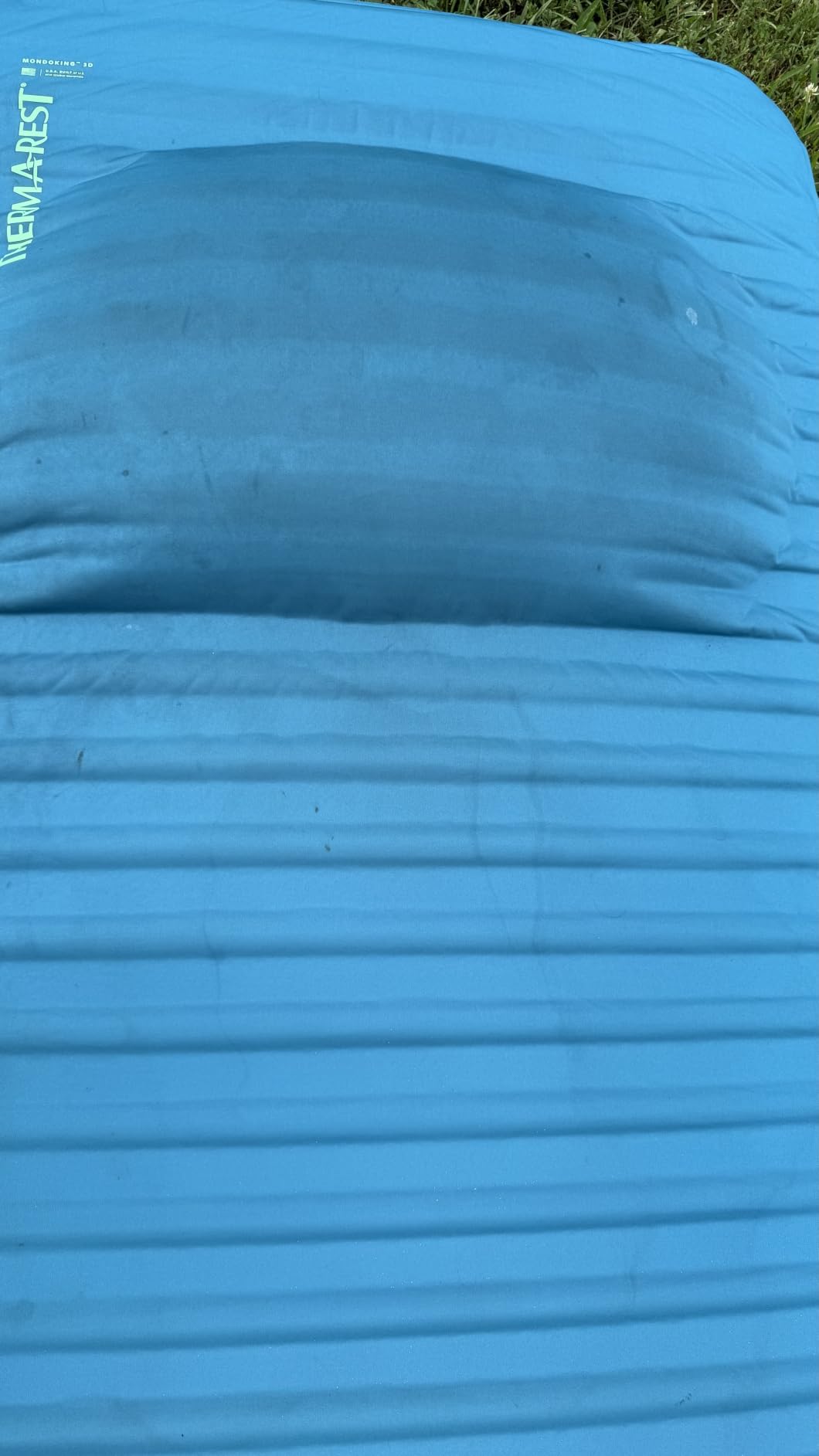
The R-value of 7.0 is solid for ground insulation, the 3D construction uses vertical sidewalls to maximise the usable sleep surface, and the TwinLock two one-way valves let you set firmness precisely. It packs to 26 by 10.3 inches in an included PFAS-free storage sack.
On bladeforums, users with bad backs frequently name Therm-a-Rest as the brand they trust, and the valve quality and repairability are usually the reason. That is a reasonable prior for anyone buying one pad and expecting it to last.
Why 4.25 inches survives a truck bed
A truck bed is essentially a hard flat board with a ribbed floor. There is no contour and no give at all, so the only thing between your hip and that surface is the mattress. At 4.25 inches with a continuous foam layer rather than air only, the StrataCore build keeps working after the air has compressed over several nights.
For a heavier sleeper, that foam layer is the whole point. Air-only pads at this thickness feel comfortable on night one and noticeably less supportive by night four, and on a hard surface that difference is what separates a sore morning from a manageable one.
Where it falls short for a bad back
The 4.1 average is the lowest in the roundup, and the one-star share is well above every other product. That tail is almost entirely fabric durability: the thin face fabric has been reported to tear and leak, with one owner accumulating more than ten patches.
It also rolls rather than compresses, so at 4.4 pounds it is bulkier than the weight suggests, and the storage sack is difficult to get the pad back into once the straps are on. With 79 reviews the sample is small, so the comfort reports are consistent but not as well established as the others.
How to Choose a Back-Friendly Camping Mattress
Start with thickness, because it is the only factor that can be fixed after the fact. Three inches is the minimum worth sleeping on with a bad back, four inches is meaningfully better for a side sleeper, and 4.5 inches is where most people with chronic pain end up. If a product page does not state a thickness in inches, treat it as untested for your purposes.
Construction decides the surface texture. Drop-stitch build, where thousands of vertical threads create a flat surface with no internal walls, is the best case for a back. I-beam and horizontal chamber construction uses connected walls of air, which are structural and also create repeating ridges that press lines across the lumbar spine. Pure air mattresses create an unstable balloon effect; foam-infused and memory foam hybrids distribute weight evenly across the surface instead.
R-value decides how cold you sleep, and cold stiffens a sore back. Anything around 4 handles mild three-season ground. Above 7 you are looking at shoulder-season and early-winter use, and R-10 or better is for sub-freezing conditions. A high R-value is a direct back-pain decision, not a separate camping comfort decision, because the morning stiffness people attribute to the mattress is often thermal.
Firmness should be tuned by body weight, not by feel in the first five minutes. Start firm, lie down for ten minutes, and add air until your hips and shoulders are contacting the surface without the pad feeling rigid. Lighter sleepers generally want a softer setting so the surface contours, and heavier sleepers want a firmer setting to stop bottoming out. On a self-inflating hybrid this adjustment is a top-up rather than a guess.
Side sleepers and back sleepers need different things. Side sleepers need depth, because the shoulder is the highest-pressure point in bed, and enough width that rolling off is not an option. Back sleepers need a surface that holds a lumbar curve without a hammock dip, which is a support-shape problem rather than a depth problem, and a medium or firm foam base handles it well.
Width is under-rated. Anything under 30 inches means an arm hangs off the edge every time you roll, and rolling is what twists a bad back. If you are choosing between a 25-inch pad at 4 inches and a 38-inch pad at 3 inches for side sleeping, the wider pad is usually the better answer.
Stability beats everything else for a bad back. A self-inflating foam core or a fixed foam mattress will not deflate at 3 a.m. Pure air mattresses do, and a slow leak is worse for a sore back than an outright flat one because you spend hours on a partly collapsed surface before you notice. Self-inflating pads, which is a question campers ask constantly, are any good precisely because the foam core holds a shape and the air layer only sets the firmness.
Frequently Asked Questions
What is the best camping mattress for people with bad backs?
The best camping mattress for a bad back is a thick, foam-cored or drop-stitch pad of 3 inches or more. The Hazli Matrix 3 Inch Memory Foam Pad is our top pick because a 3-inch memory foam layer over a high-density base needs no pump and cannot deflate overnight. For side sleepers, look for 4 inches or more, and for cold ground, prioritise an R-value of 7 or above.
Why does my back hurt after camping?
Four things cause most camping back pain. The pad is too thin, so your hip contacts the ground and the lumbar spine is held in curve by muscle all night. The mattress sags into a hammock, rounding the spine forward. You over-inflate it, so the surface stops contouring and pushes the spine flat. Or the internal baffles leave pressure ridges across the lower back. Cold ground adds to all four by stiffening the muscles overnight.
What thickness camping mattress do I need for back pain?
Three inches is the practical minimum for a bad back, four inches is meaningfully better if you sleep on your side, and 4.5 inches is where most people with chronic pain end up. Depth matters because it spreads hip and shoulder weight across a wider area, so the surface does not concentrate pressure on a single point. Below 3 inches, most side sleepers bottom out at the shoulder and wake with a numb arm.
Are self-inflating camping mattresses any good?
For a bad back they are usually the best balance of support and packability. The foam core holds a shape so the pad does not develop a hammock sag or flatten overnight, and the air layer above it lets you add firmness if you are a heavier sleeper. The 4-inch Exped MegaMat weighs 4.6 pounds, and the 4.5-inch Lost Horizon Option3 holds its firmness all night. Check the pump fitting, because a self-inflating pad still needs one to reach full inflation.
What is the best way to camp if I have a bad back?
Change the whole system rather than just the mattress. Put a closed foam pad or a reflective mat on the ground first, then set the mattress on top of it, or use a camping cot so the mattress is not your only layer. Choose 3 inches or more of foam-cored thickness, add air to firm it up for your body weight, and use a knee pillow in side sleeping to keep the hips stacked. This cot plus pad combination is the most repeated recommendation across the camping forums.
Our Final Verdict
After three months of working through these pads, the Hazli Matrix 3 Inch Memory Foam Pad remains the best camping mattress for bad backs for a single camper on a budget-minded schedule. It cannot leak, it needs no pump, and more than 3,200 owners confirm the 3-inch memory foam layer does what a back needs it to do.
Move up a step if your situation calls for it. Side sleepers and heavier sleepers should take the 4-inch Gaialoop pad, chronic pain and cold ground justify the 4.5-inch Lost Horizon Option3, and couples who sleep badly beside a restless partner need the queen footprint of the Hikenture. The Exped MegaMat is the one to buy if you have to carry it yourself.
Whichever you choose, give the foam time to expand before the trip, keep it out of standing water, and check that it clears 3 inches. That single number will do more for your back than any brand name on this list.