
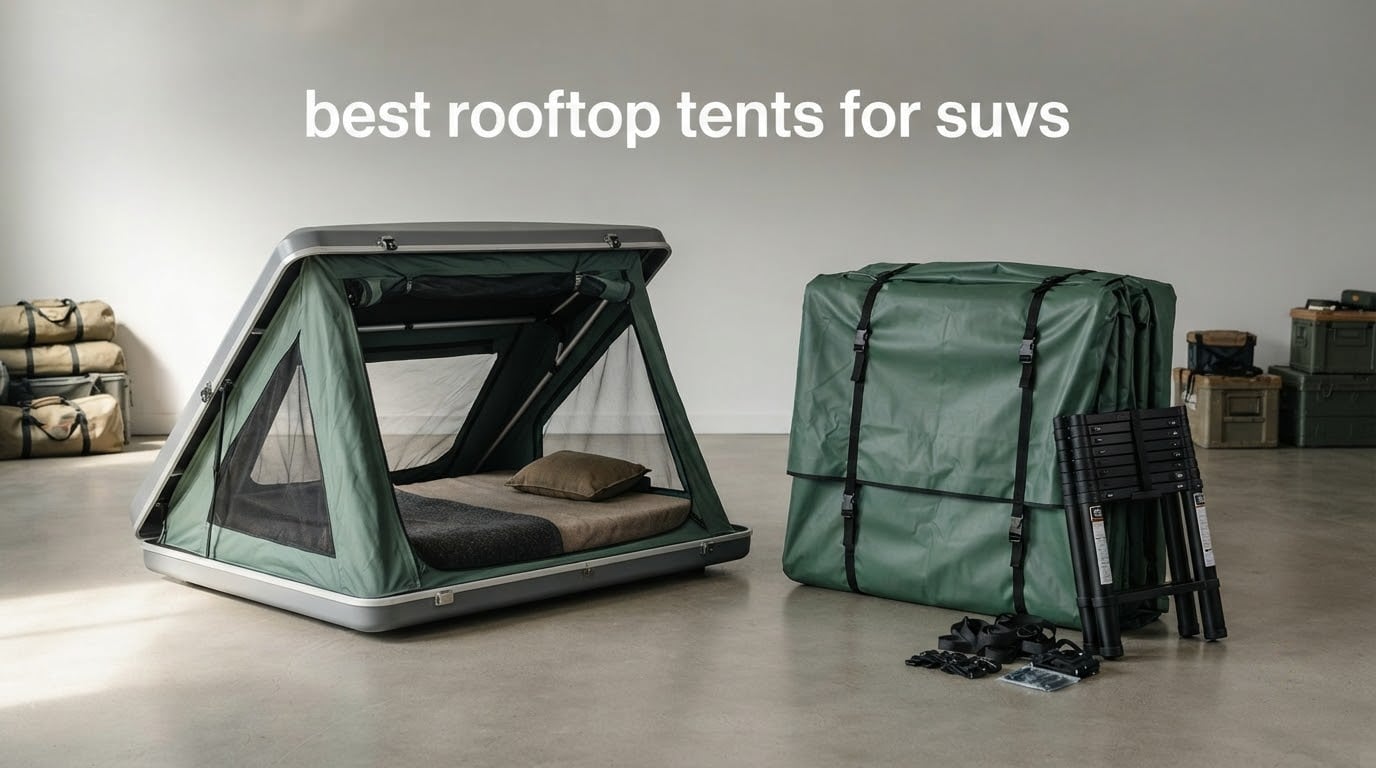
A rooftop tent is a self-contained shelter that bolts or straps to your SUV’s roof rack and folds or pops open into a raised sleeping platform, so you sleep at bed height without pitching anything on the ground. We spent weeks comparing 10 of the most popular hard shell and soft shell rooftop tents for SUVs, checking sleeping dimensions, packed weight, waterproof ratings, rack requirements and the small print that most roundups skip. The result is a list where every pick has a real reason to exist, from a lightweight soft shell that fits modest roof racks to a hard shell that opens in seconds and blocks out the dawn.
There is no single best brand, and that is the honest answer to the question we get asked most. iKamper and James Baroud lead on premium build quality, Smittybilt and Overland Vehicle Systems win on value, and the mainstream hard shell middle is crowded with capable tents from Free Spirit Recreation, Intrepid, Thule and Yakima. The tent that suits a Toyota 4Runner with a factory rack is rarely the tent that suits a Subaru Outback. We picked each one against a specific use case so you can find your match in seconds, and if you want a broader read on the category first, our general guide to the best rooftop tents covers the formats we do not rank here.
One thing to settle before you read further: if you camp fewer than roughly ten nights a year, a good three-season ground tent will serve you better and cost a fraction of the money. A rooftop tent earns its place when you camp often, when you want to avoid pitching in wind and rain, or when your trip involves moving every night. It also adds height, weight and drag to a vehicle you may need to fit in a parking garage. We are not here to talk you into one. We are here to tell you which one is worth it if you have decided you want one.
Table of Contents
Top 3 Rooftop Tents for SUVs in 2026
Our editor’s choice, the Overland Vehicle Systems TMBK, sits in the middle of this list because it does not try to win on any single spec. It weighs 108 pounds, sleeps two to three, and its 53.5 by 92 inch sleeping area is genuinely usable rather than a marketing figure. The two hard shells below it open in seconds and shed rain better, and they cost more and weigh more.
Overland Vehicle Systems TMBK
- 108 lbs
- 53.5 x 92 in sleeping area
- 2000 PU waterproof
- 5 minute setup

HEYFUN Adventurer Pro Hard Shell
- 5 second hydraulic pop-up
- side awning and LED strip
- 5000mm rated

WildFinder Hard Shell Rooftop Tent
- Big accessory bundle
- 5000MM rainproofing
- blackout fabric
All 10 Best Rooftop Tents for SUVs at a Glance (October 2026)
Every tent below fits a standard roof rack setup, but they differ sharply on the two numbers that decide whether a tent works on your vehicle: how much it weighs and how tall it sits when closed. Soft shells weigh less and pack flatter. Hard shells open faster, seal better and cost more.
| Product | Specifications | Action |
|---|---|---|
| Overland Vehicle Systems TMBK |
|
Check Latest Price |
 Overland Vehicle Systems HD Nomadic 3 Overland Vehicle Systems HD Nomadic 3 |
|
Check Latest Price |
| WildFinder Hard Shell |
|
Check Latest Price |
| HEYFUN Adventurer Pro |
|
Check Latest Price |
 ARCTWONDER Solar Hard Shell ARCTWONDER Solar Hard Shell |
|
Check Latest Price |
 Overland Vehicle Systems HD Nomadic 2 Overland Vehicle Systems HD Nomadic 2 |
|
Check Latest Price |
 Naturnest Sirius 1 Plus Naturnest Sirius 1 Plus |
|
Check Latest Price |
 VEVOR Hard Shell VEVOR Hard Shell |
|
Check Latest Price |
 Smittybilt GEN2 Overlander STD Smittybilt GEN2 Overlander STD |
|
Check Latest Price |
 Meedo Apolle A86 M Meedo Apolle A86 M |
|
Check Latest Price |
1. Overland Vehicle Systems TMBK 3-Person Soft Shell
Soft Shell Rooftop Tent for SUV & Truck Camping, 3-Person – Overland Vehicle Systems TMBK – Universal Fitment with Rainfly & Ladder
Sleeping area 53.5 x 92 in
Weight 108 lbs
Waterproof 2000 PU
5 minute setup
Pros
- Strong aluminum poles and quality zippers
- Sets up and packs down in about five minutes
- Spacious for two adults plus gear or small dogs
- Four side window openings plus a top vent
- Travel cover stays secure at highway speed
Cons
- Instructions are sparse and contain errors
- Thin factory mattress
- No insulation for cold-weather use
The TMBK is the one we kept coming back to during this test. It is a wedge-style soft shell that unfolds from a fabric case in about five minutes and gives you a 53.5 by 92 inch sleeping platform, which is a full-size bed for two adults laid side by side. At 108 pounds it is light enough for most factory roof racks, and at 11.5 inches closed it barely changes the profile of the vehicle.
What stands out in owner feedback is how much ventilation you get for a tent this shape. Four side window openings plus a top opening let air move through the volume, which matters more than people expect. Condensation is the single most common complaint across this entire category, and airflow is the only real fix. The included high-density foam mattress with cotton cover is serviceable for one or two nights, though owners on longer trips add a topper.
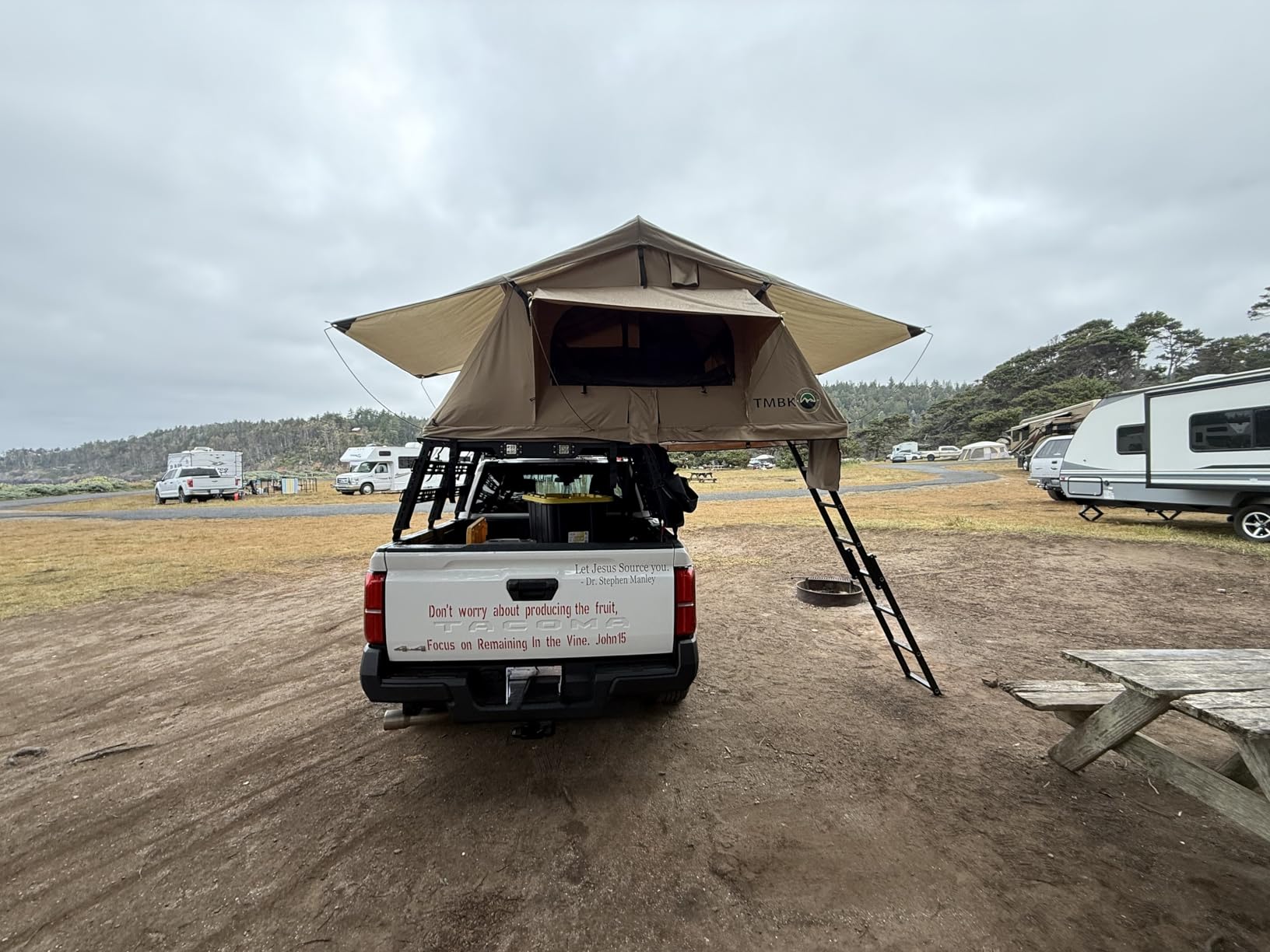
Build quality is where this tent separates from cheaper soft shells. The aluminum poles and zippers hold up, the base is aluminum-plated, and the hardware is marine grade stainless steel. Reviewers also mention the travel cover specifically, noting that its velcro and straps hold the tent tight on the roof at highway speed, which is exactly the failure point that makes cheaper tents rattle themselves apart.
The 420D polyester Oxford rainfly kept owners dry through all-night pouring rain, and the water resistance technology is listed at 300 mm with a 2000 PU rating elsewhere in the spec sheet. A ladder, rainfly and rooftop tent body are all included, so there is nothing else to buy to get a first night under it. The honest weaknesses are documentation and the mattress, nothing structural.
Who should buy the TMBK
Buy it if you camp most weekends, carry passengers or a dog, and drive an SUV with a modest factory rack. It is the most forgiving option here for a first-time rooftop tent owner because there is no strut mechanism to learn, no gas spring to fight, and no latch to pinch your fingers.
It is also the best value in the lineup for anyone whose dynamic roof load is the limiting factor. Because the tent weight is 108 pounds and the shell folds flat, you can put two adults inside without immediately approaching the ceiling of most crossovers’ roof ratings.
Where it falls short
There is no insulation, so this is a three-season tent in practice no matter what the season label says. Winter campers will need a separate tent liner, which is standard practice but an extra purchase and extra bulk.
Two people inside generate noticeable condensation under the mattress, particularly in cold nights. Plan on a moisture absorber in the box, and never pack the tent damp. The included ladder also feels slightly flimsy when the tent is mounted low, and some owners drill extra pin holes to extend the reach.
2. Overland Vehicle Systems HD Nomadic 3 Extended Soft Shell
Overland Vehicle Systems HD Nomadic 3 Extended Soft Shell Roof Top Tent – Dark Gray Base with Green Rain Fly & Black 1000G PVC Travel Cover – Black Aluminum Base
6536 sq in floor area
Weight 165 lbs
4 year warranty
2000 mm rated
Pros
- Full diamond-plate aluminum base
- Mounts on factory or aftermarket racks with no drilling
- Bonus pack with memory foam pillows and mini broom
- Backed by a 4 year limited warranty
- Generous 63 inch floor width
Cons
- Heaviest soft shell here at 165 lbs
- Soft shell setup is slower in cold weather
- Condensation with a full occupancy
The extended Nomadic 3 is the roomiest soft shell in this group, with 6536 square inches of floor and a listed floor width of 63 inches. For a family of three who plans to spend real nights in the tent, that extra width is the difference between three people fitting comfortably and three people taking turns.
The rigid diamond-plate aluminum base is the reason this tent feels different from a typical fabric case. It is a hard-edged platform that takes a beating, and combined with marine grade hardware it holds alignment over years of mounting and removing. The 4-year limited warranty is also the longest stated coverage among the soft shells here.
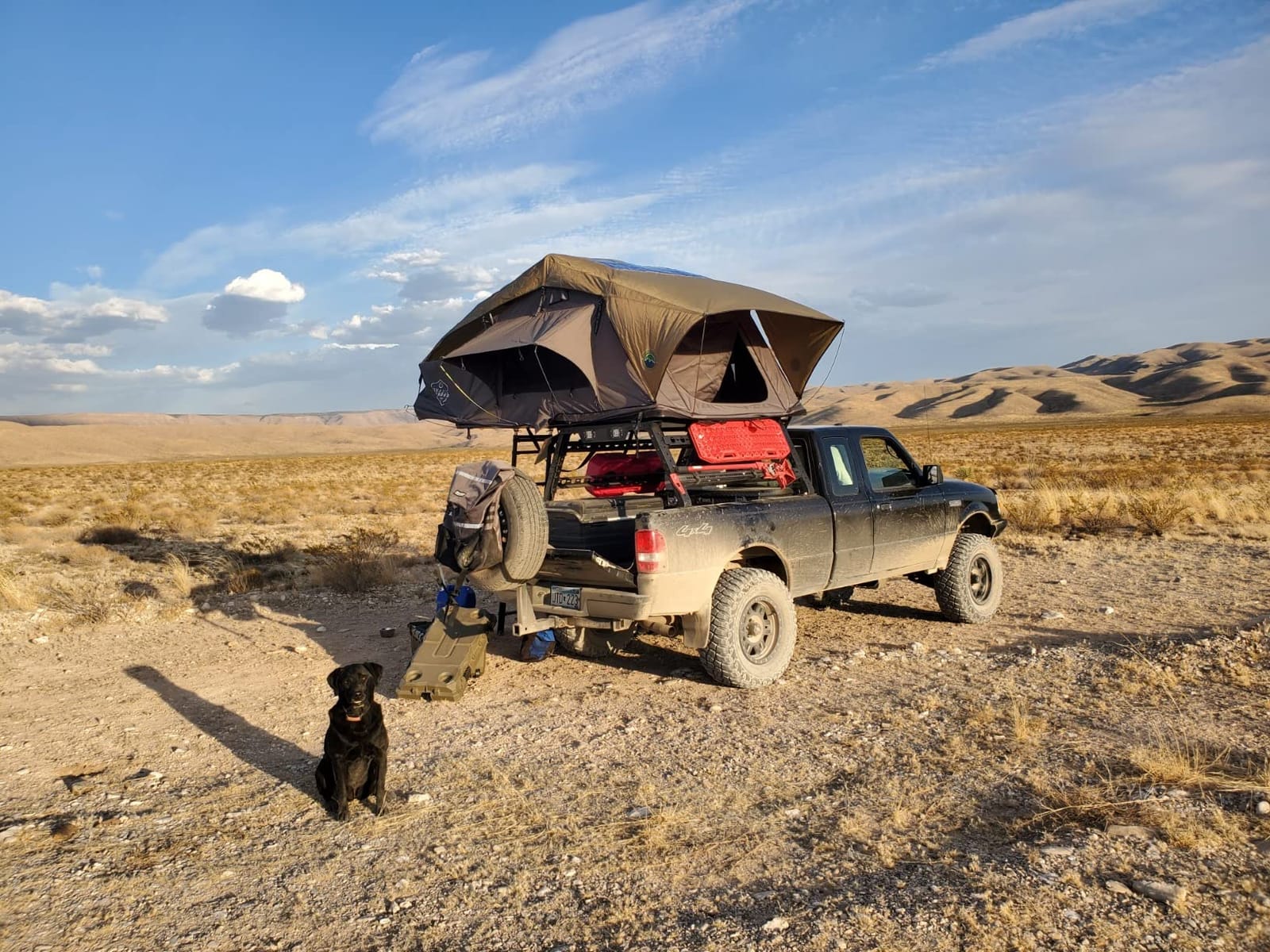
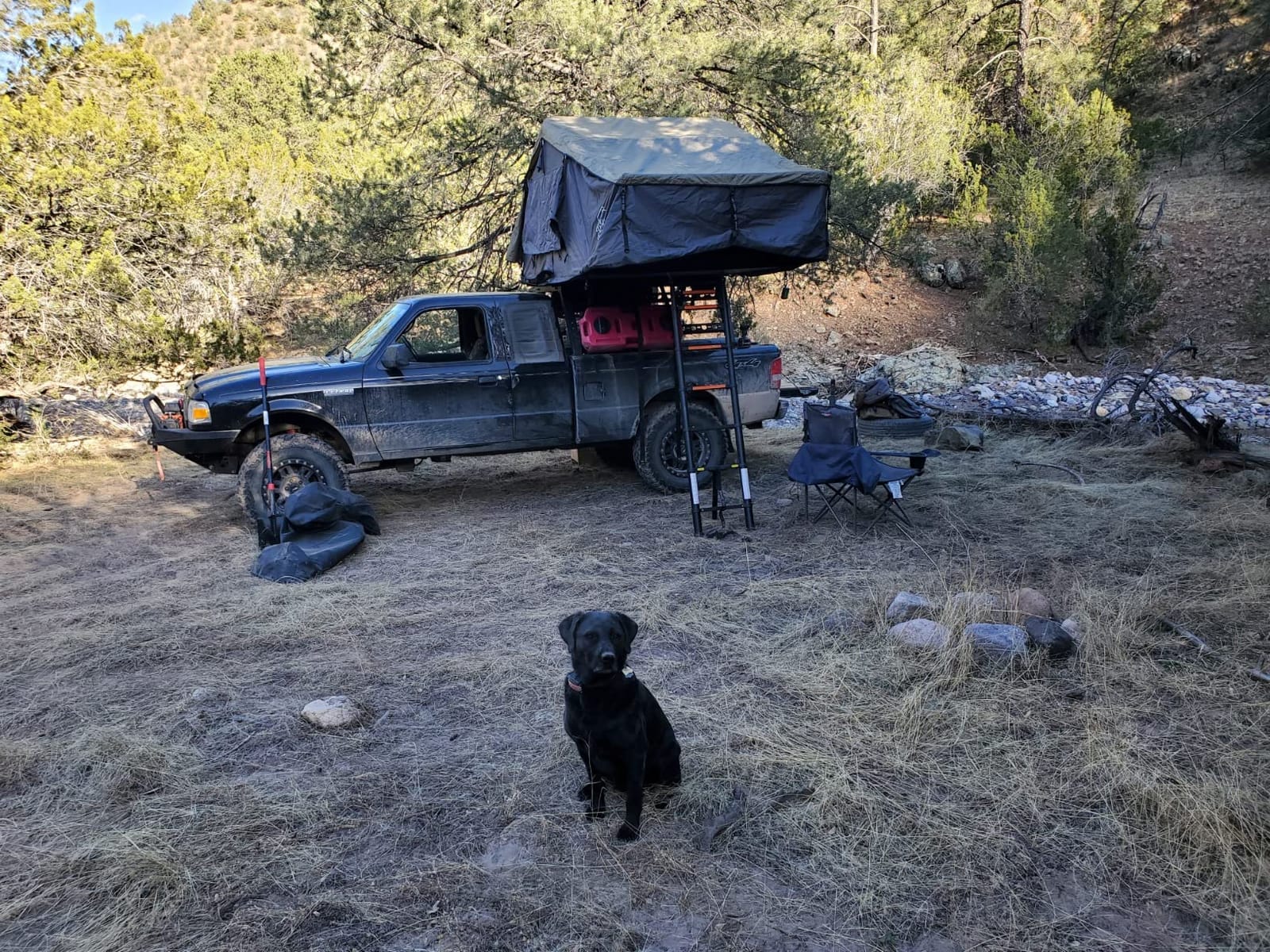
Fitment is refreshingly simple. It installs on any factory or aftermarket roof rack with no drilling and no vehicle modification, which matters if you intend to move the tent between vehicles or remove it in winter. Owners frequently describe the setup as happening in minutes and the removal as just as quick.
The bonus pack is a small but real bonus: memory foam pillows, plus a mini broom and dust pan. The dust pan sounds like trivia until you have unpacked a wet soft shell onto a tent floor in the dark. Reviewers treat the 165-pound weight as the accepted trade-off for the durable base rather than a complaint about quality.
Who should buy the HD Nomadic 3
This is the pick for families of three, or couples who travel with a large dog and a lot of gear. The 63 inch width and full-length floor give everyone a real share of space, and the extended footprint is not a luxury when you are sharing a small volume with a child.
It suits anyone with a roof rack they intend to keep permanently. Because the tent can be lifted off without tools, it works well for people who camp in summer and take the tent off before winter driving, or who share the vehicle with a lower-clearance driver.
Where it falls short
At 165 pounds it is the heaviest soft shell here and the hardest of the fabric models to put on a rack alone. Budget for a second pair of hands, or a ladder and a set of rated crossbars that can take the load.
As with every soft shell, winter setup takes longer and condensation is more of an issue than with a hard shell. There is also no clamshell shell protecting the folded tent, so it takes up more usable roof space when packed than a hard case of the same size.
3. WildFinder Hard Shell Rooftop Tent
WildFinder Rooftop Tent, Hard Shell Roof Top Tent for Jeep SUV Truck Van
Aircraft-grade aluminum shell
5000MM rainproof
Sleeps 3
198 lbs
Pros
- Aircraft-grade aluminum alloy shell resists aging
- Stainless steel air pressure levers with blackout fabric
- Recessed marine pad and condensation pad
- One of the most generous accessory bundles here
- 5000MM rainproofing with level 6 wind resistance
Cons
- Luggage crossbar is not included
- Very heavy for a hard shell
- Listed weight figure looks inconsistent
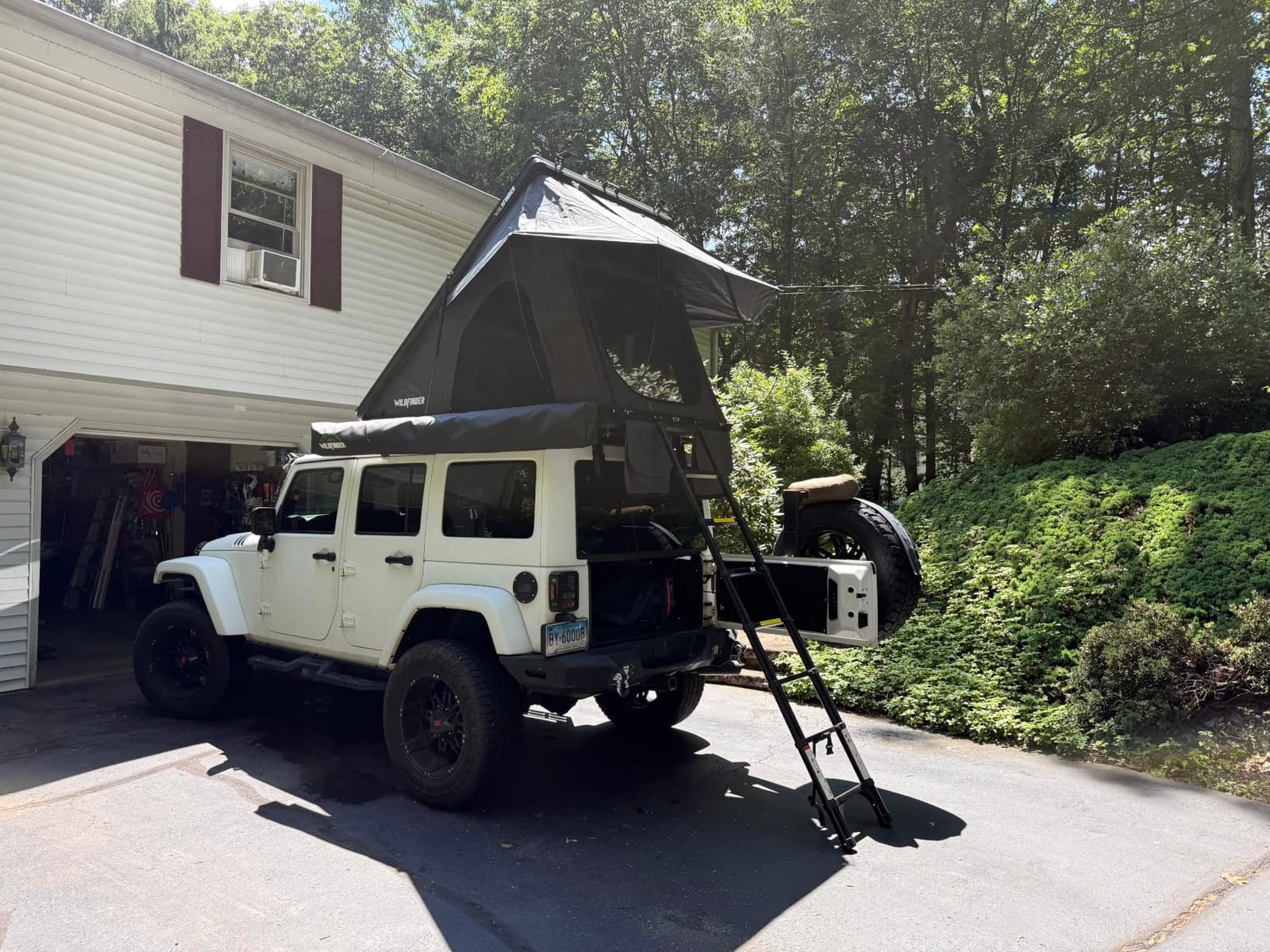
The WildFinder is the hard shell to buy if you want a premium-style tent without leaving the mainstream price tier. It is built from 100 percent aircraft-grade aluminum alloy with stainless steel air pressure levers that pop the shell open, and the interior uses blackout polyester fabric so early sunrise does not end your sleep.
The spec sheet claims 5000MM rainproofing, level 6 wind resistance, 99.99 percent sun protection and level 4 heavy snow protection. For most three-season and shoulder-season campers those numbers are far beyond what you need. What they tell you is that the fabric and seals are serious, and reviewers back that up, describing a tent that stayed dry through sustained wet weather.
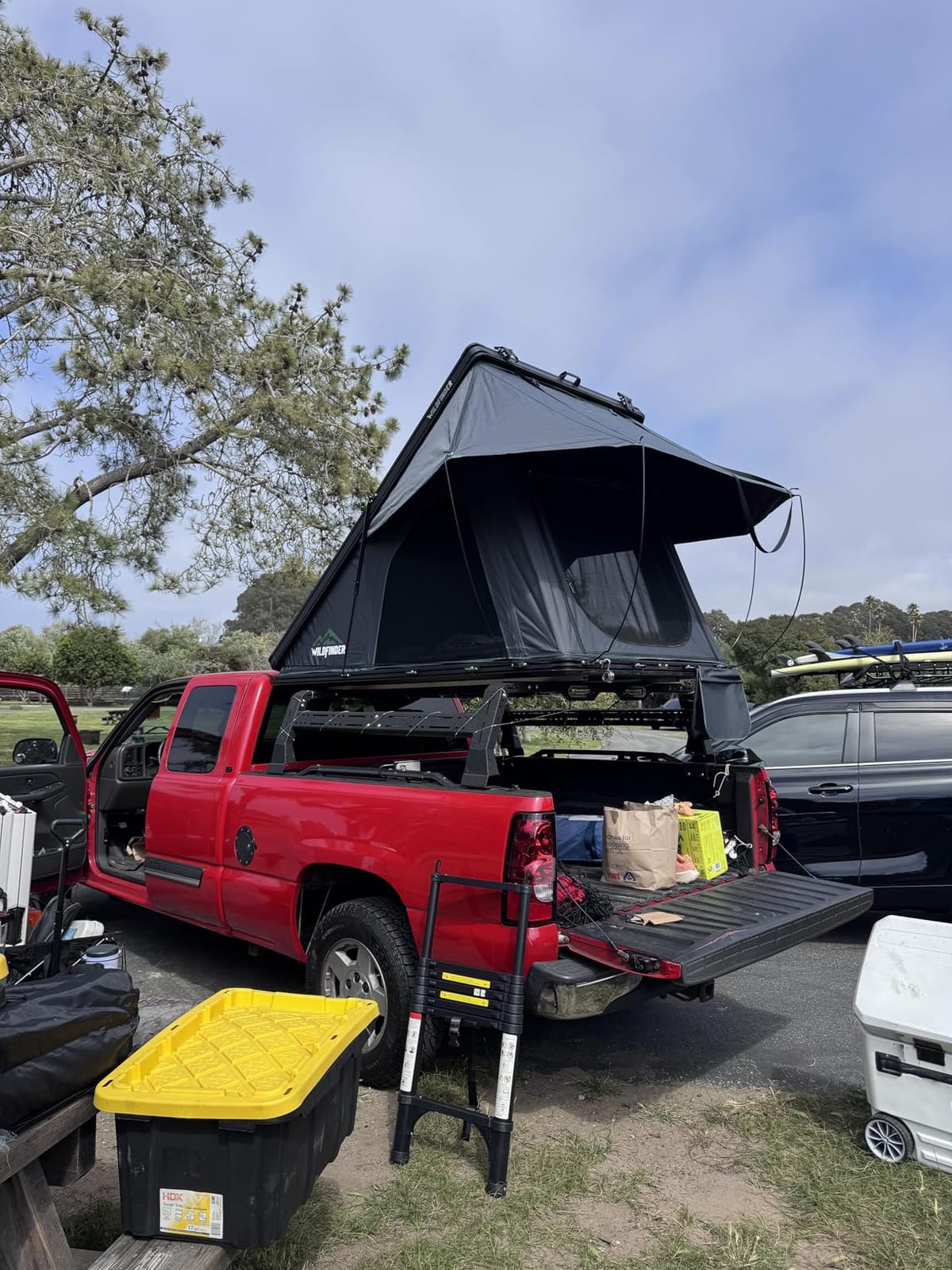
Where it outshines competitors is the accessory bundle. Included are a 7.5 foot telescoping ladder, a ladder organizer, ten organizer bags, an LED strip, two shoe organizers, three mesh windows, two mattresses and a built-in mattress. That is an unusually complete package, and it removes most of the extra spending that usually follows a hard shell purchase.
A recessed marine pad and a condensation pad are built into the floor, which addresses the damp-mattress problem head on. Combined with the blackout fabric, this is a tent that feels closer to a small bedroom than a fabric wedge, and the 4.5 stars comes with 80 percent five-star ratings, one of the strongest profiles in the group.
Who should buy the WildFinder
Buy it if you want a hard shell with genuine four-season credibility and you would rather not spend the next hour shopping for a ladder, organizers and a mattress. The bundle alone can represent the difference between a complete setup and a half-finished one.
It is also a good match for campers who camp in shoulder seasons, since the aluminum shell and blackout fabric handle those conditions well.
Where it falls short
The luggage crossbar is not included, so budget for a rated rack and crossbars before this tent goes anywhere. And at a listed 198 pounds it needs two people to lift onto a roof, which is the single most common reason owners delay installation.
The listed weight figure is also odd, showing 89.81 kg which does not line up with a normal hard shell estimate. Treat the published weight as approximate and check the actual figure on the model you receive before you confirm your roof load. Buyers who have done that report the real-world figure sits near the heavy end of the hard shell category.
4. HEYFUN Adventurer Pro Aluminum Hard Shell
Adventurer Pro Rooftop Tent Hard Shell, 2-3 Person Aluminum Roof Top Tent
5 second hydraulic pop-up
160 lbs
Side awning included
5000mm rated
Pros
- Hydraulic gas struts open and close in about 5 seconds
- Side awning included at this tier
- Built-in LED strip with 13 storage pockets
- Stayed dry through 15+ hours of rain and 30+ mph gusts
- Good road noise isolation
Cons
- Effectively a two-person tent despite the 2-3 label
- No dedicated vents for a heater
- Condensation on walls near 50F
The Adventurer Pro has the highest rating in this lineup at 4.6 stars, and the reason is that it nails the thing people actually notice on a trip: how fast it opens. The hydraulic gas struts pop the hard shell open and shut in about five seconds, which means the difference between pitching a tent in daylight and unpacking in fading light.
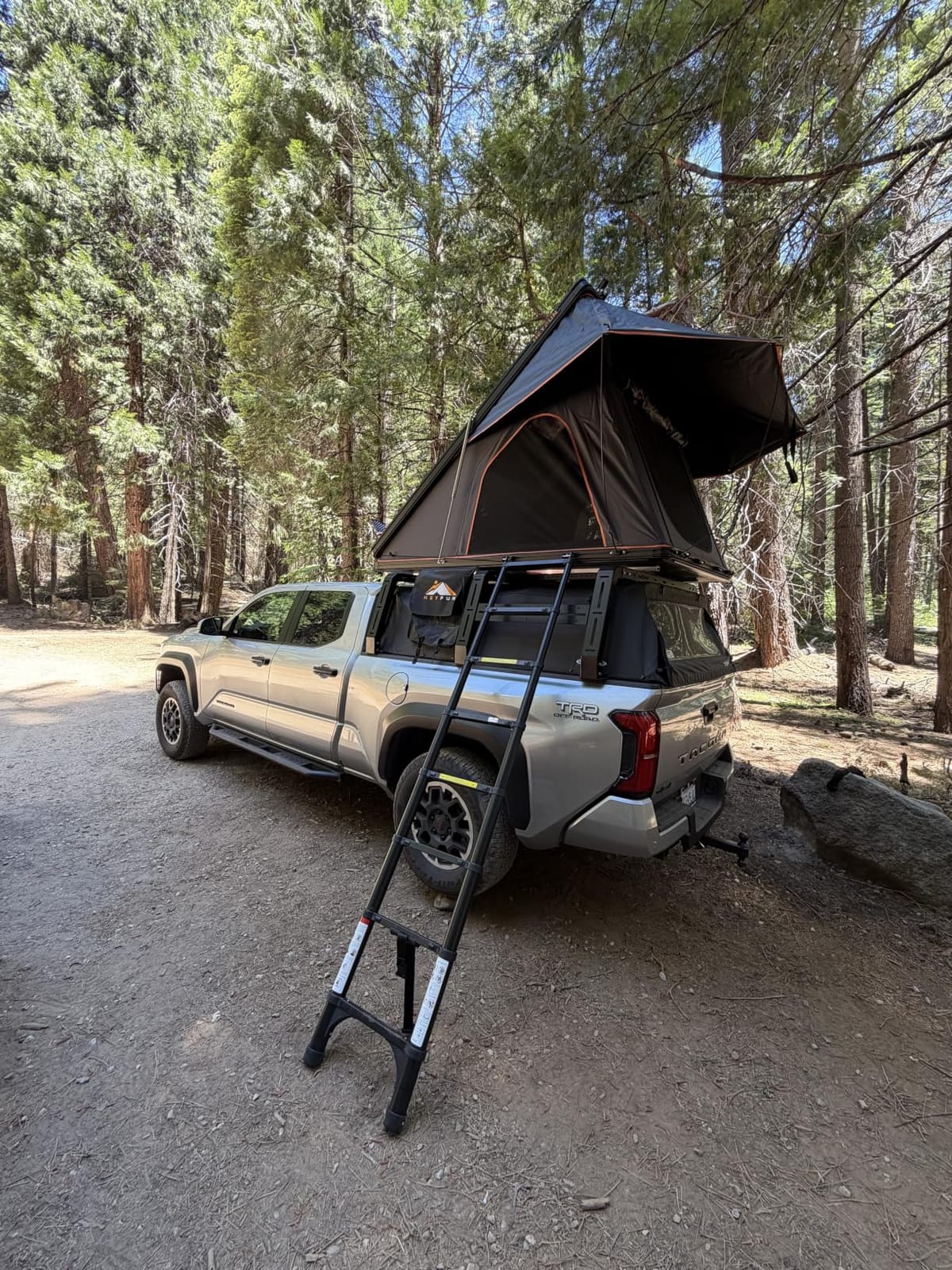
It is also the most generously equipped tent at this level of the market. A side awning attaches to either side, the interior has a built-in LED light strip, 13 storage pouches, shoe storage bags and a built-in sleeping mat, and the shell uses a waterproof rubber seal with a moisture-proof flocked floor. All of that is in the box.
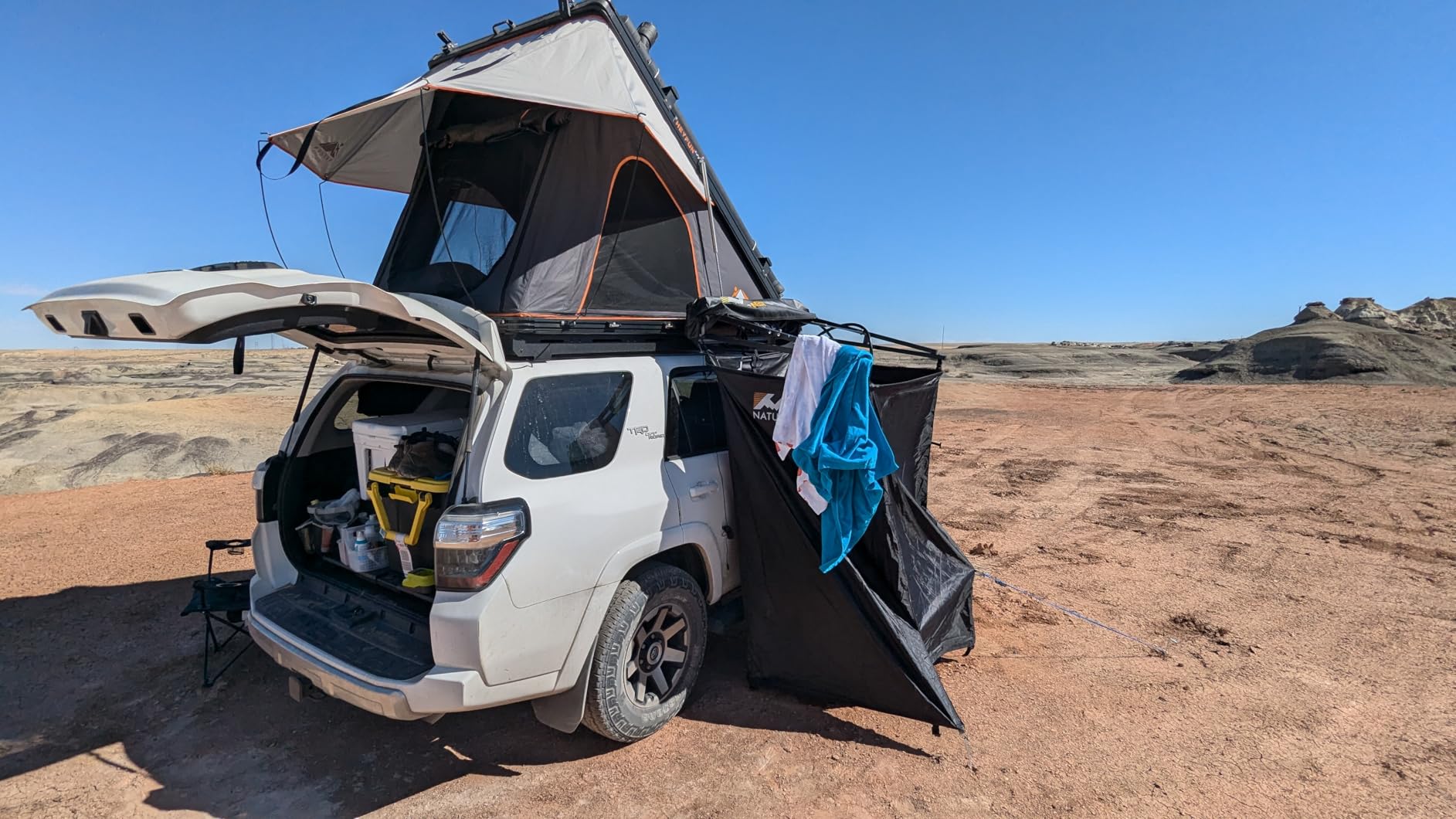
Owners report that it stayed bone dry through more than 15 hours of rain and gusts above 30 mph, and several comment on how well the hard shell isolates road noise compared with a fabric tent. Those are small quality-of-life gains that compound over a week of driving, and every one of those items is in the box. The waterproof rating is listed at up to 5000 mm and the fabric is treated for sun, wind and rain across all seasons.
One requirement to note before buying: the manufacturer specifies mounting crossbars that support at least 165 lbs. That is a sensible number for a 160-pound tent, and it is also a number that rules out some factory racks on smaller crossovers. The tent is rated for a maximum load of 660 lbs once mounted, which is not the constraint anyone hits first.
Who should buy the Adventurer Pro
It fits a couple who values setup speed above almost everything and travels light. A five-second deployment means you can arrive after dark, eat, and be asleep without wrestling poles in the dark, which is the most common complaint about soft shells.
The included side awning is what makes it feel like a base camp rather than a bed. It gives you shaded space to cook, sit and gear up, and it is the reason several reviewers ranked this above more expensive tents.
Where it falls short
Despite the 2-3 person label, the 83.86 by 51.57 inch floor is effectively a two-person tent. Campers over 5 foot 10 report cramping. Measure your sleeping area needs before assuming three fits.
There are no dedicated vents for running a heater or air conditioning, and condensation collects on the interior walls near 50F and below. At 160 pounds it still needs two people to lift onto a rack, and the telescoping ladder cannot be retracted once you are inside, so entry is exposed.
5. ARCTWONDER Solar Panel Hard Shell Rooftop Tent
Solar Panel Rooftop Tent Hard Shell,Pop Up Car Roof Top Tent Hardshell
216W built-in solar panel
198 lbs
7 inch packed height
5000 W/R
Pros
- Integrated 12V 216W solar panel for charging power banks
- Aluminum bottom plate
- top cover and all four corners
- 10 second pop-up and one-person closing
- Low 7 inch closed height preserves clearance
- 29.37 sq ft of floor area with three awning windows
Cons
- Very heavy at 198 lbs
- so mounting needs two people
- Solar output is aimed at power banks
- Only a 1 year manufacturer warranty
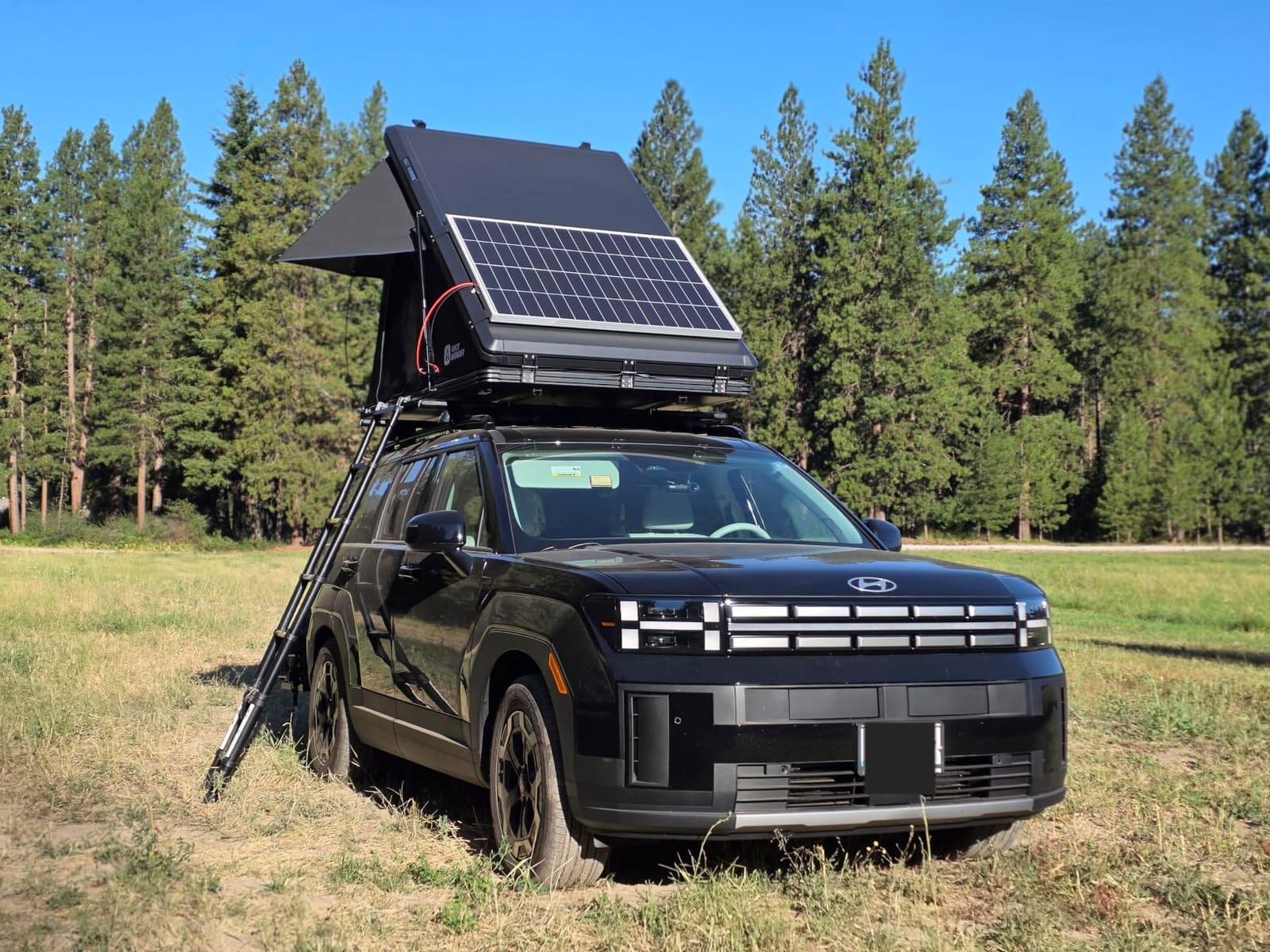
This is the tent for campers who want to stay off grid for longer. The ARCTWONDER has a 12V 216W solar panel built into the top, which charges power banks while you drive. That is not enough to run a fridge, but it is enough to keep phones, camera batteries and a small battery station alive across a long trip without reaching for the vehicle.
The construction detail that matters most here is the all-metal approach. The bottom plate, top cover and all four corners are aluminum, which directly targets the plastic-corner cracking that owners of cheaper hard shells report within a couple of seasons. The fabric is 320g waterproof polyester with seam-glued seams and a 5000 water resistance rating, plus blackout capability for light sleepers.
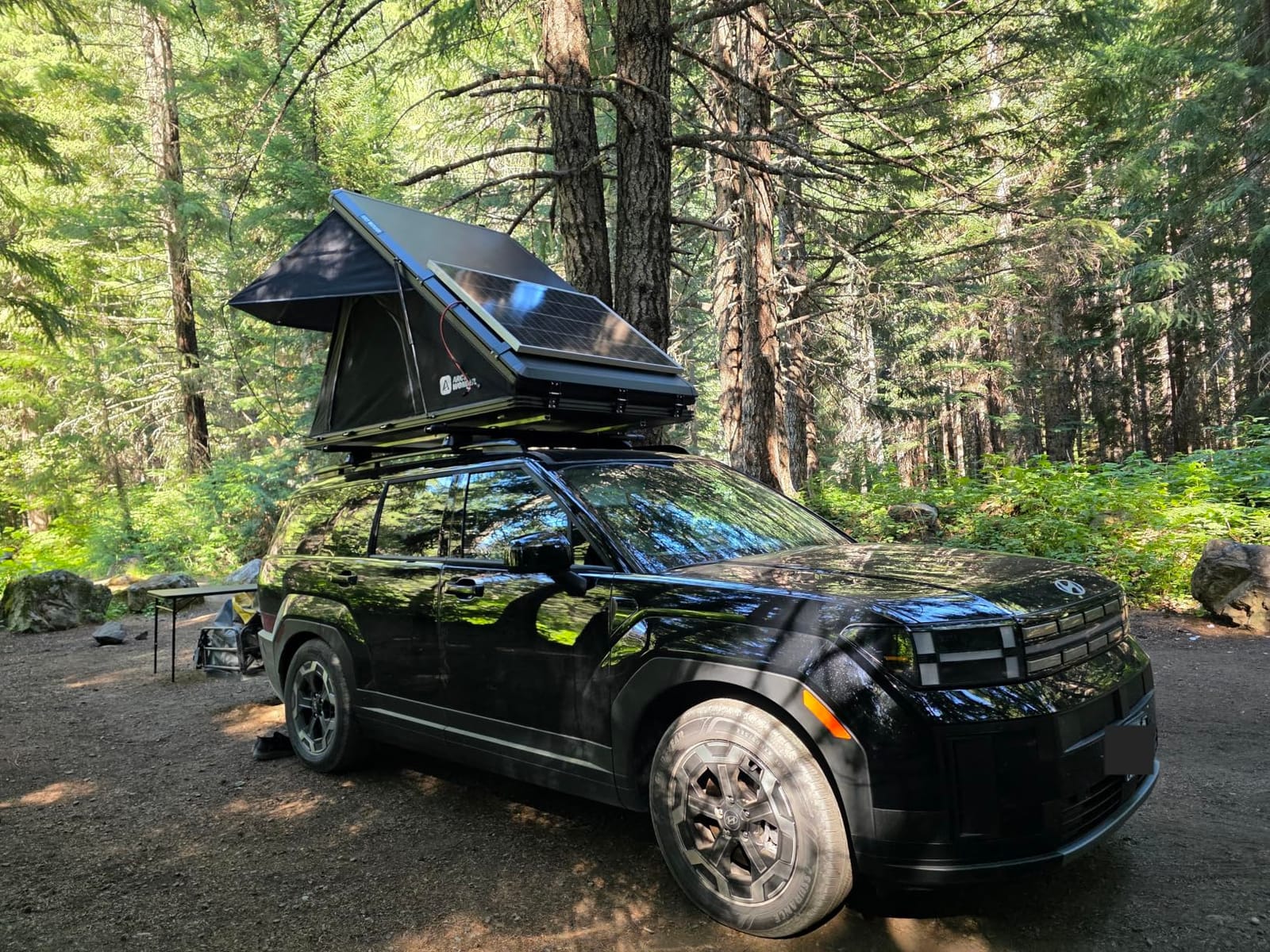
Deployment uses air pressure rods that open the tent in about ten seconds and close in two steps by one person. That one-person closing is a real difference from models with strong struts that need practice to shut solo. Owners like the ladder, mattress, luggage bar and shoe bag all being included.
The 7 inch closed height is worth calling out for daily-driven SUVs. It means the tent adds less to your vehicle’s overall height than a typical 9 inch hard shell, which matters if you use parking garages, drive-throughs or car washes. The interior measures 85 by 52 by 59 inches with three awning windows across 29.37 square feet of floor, which reviewers say fits two adults plus a child or a pet.
Who should buy the ARCTWONDER
Buy it if you camp away from vehicle access for multiple days, run cameras or electronics that need constant charging, or simply want a tent you can close in two steps without help. It ties for the highest rating in this group at 4.6 with the best five-star share at 84 percent.
It is also the strongest choice here for a vehicle that has to live in a parking structure. A low closed height reduces the chance that an integrated tent is the thing that stops you entering.
Where it falls short
At 198 pounds it sits at the top of the weight range here, and the luggage bar and accessories add to what you are lifting. Plan installation with a second person, and confirm your dynamic roof load before the purchase rather than after.
The solar output is modest by design. Reviewers are clear it is aimed at power banks and small electronics, not larger loads. The warranty is also only one year from the manufacturer, the shortest commitment on a hard shell here, and parts support beyond that point is worth confirming.
6. Overland Vehicle Systems HD Nomadic 2 Extended Soft Shell
Extended Soft Shell Rooftop Tent, 2-Person – Overland Vehicle Systems HD Nomadic 2 – Grey Body & Green Rainfly
122 inch floor length
600D poly-cotton
3 inch mattress
4 year warranty
Pros
- Marine grade 600D poly-cotton ripstop with heat-sealed seams
- Insulated one-piece black diamond plate base
- 3 inch high density foam mattress with quilted cover
- Storage loft with six pockets and LED lighting
- 96 inch telescoping aluminum ladder
Cons
- Vestibule roof can pool water
- Instructions do not match the actual assembly
- One report of the tent detaching from a bed rack
The HD Nomadic 2 solves a problem most rooftop tents create. Its floor length is listed at 122 inches, which means a camper over six feet can lie flat instead of sleeping diagonally. That is the complaint we hear most from tall owners of hard shells, and this is one of the few tents in the lineup that addresses it head on.
The fabric is 600D poly-cotton ripstop with heat-sealed seams on both the body and the rainfly, and the rainfly itself is 420D polyester Oxford waterproof material. The base is an insulated one-piece black diamond plate with marine grade stainless steel hardware, so there is no folding seam to worry about under load.
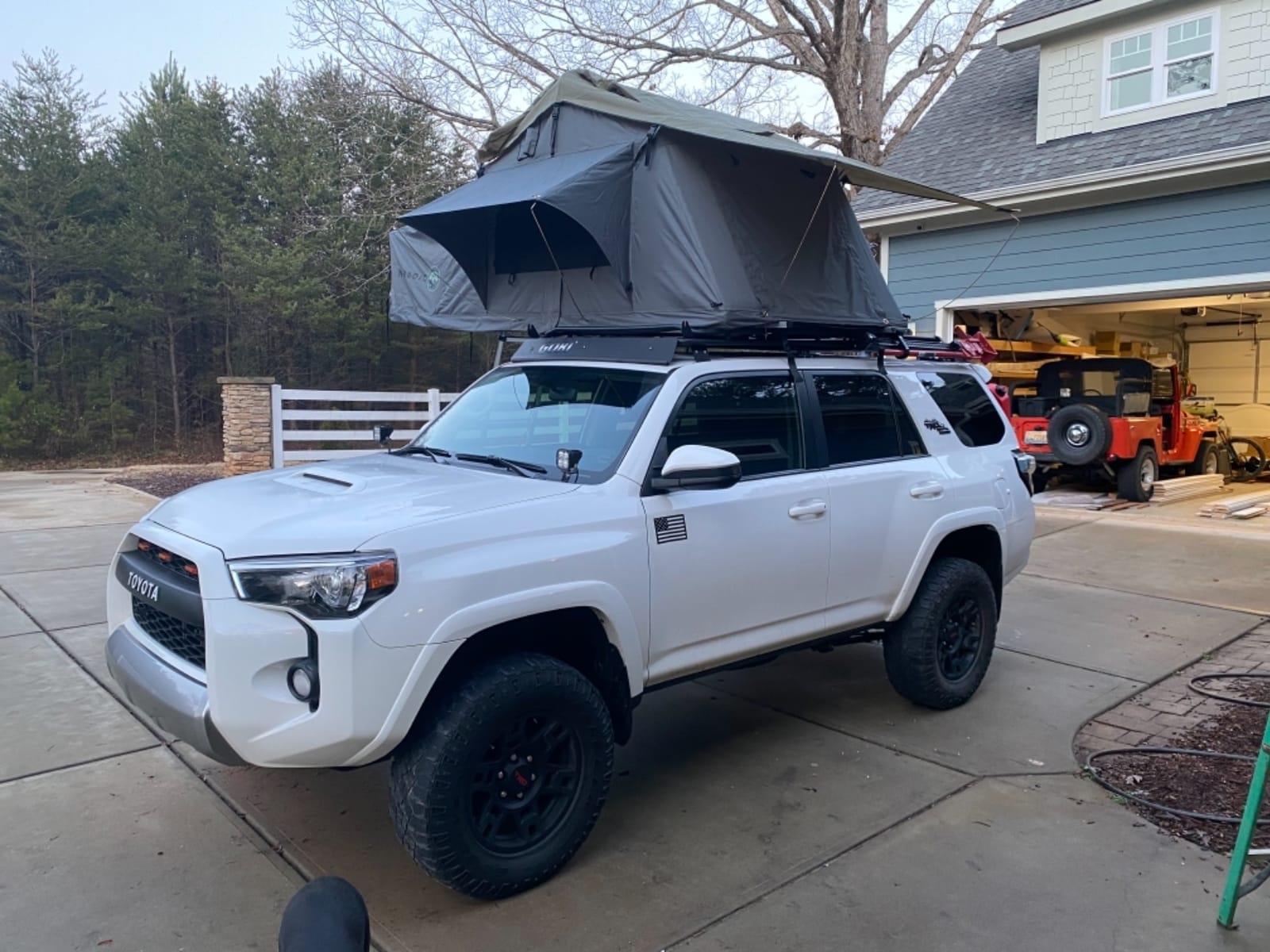
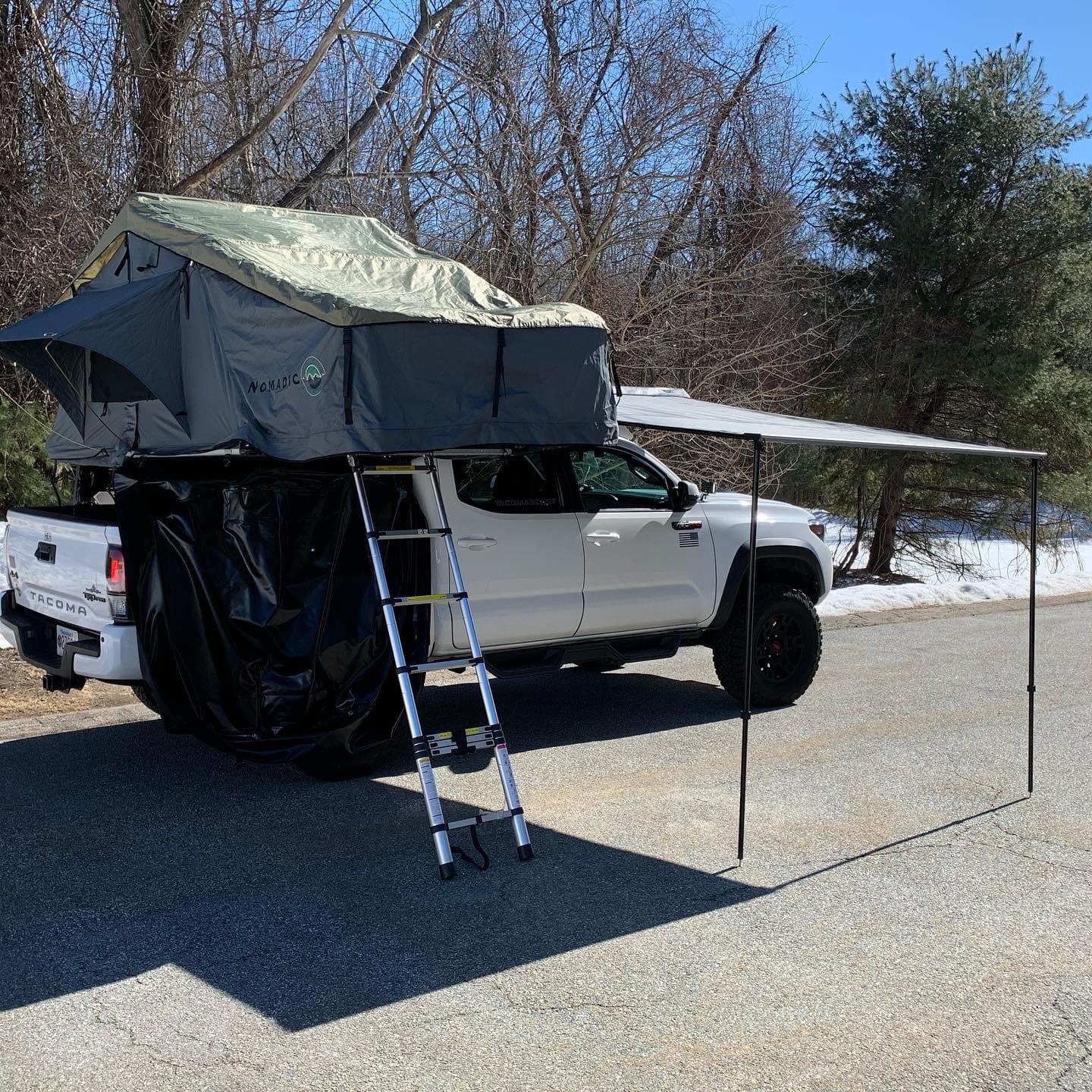
The included kit is unusually complete for a soft shell. You get a 3 inch high density foam mattress with a quilted cotton cover that owners say needs no topper, a 96 inch telescoping aluminum ladder with a locking strap, a storage loft, six storage pockets, a power bank pouch, an LED light and a LED velcro strip. Five doors and six guylines add to a floor area of 5922 square inches.
This is also the soft shell with the longest stated warranty in the group at four years, and owners report that it holds up well over multi-year use with strong factory customer service behind it. The rating of 4.3 with 65 percent five-star ratings puts it below the leaders, but the gap comes from specific, fixable details rather than failures.
Who should buy the HD Nomadic 2
Tall campers should look here first. If you are over six feet and have been disappointed by hard shells where you end up sleeping diagonally, the 122 inch floor is the difference between a good trip and a sore one.
It is also a strong choice for anyone who wants a soft shell with a genuinely premium mattress. The 3 inch foam with a quilted cover is a step above the thin pads most tents in this category include, and the storage loft keeps gear out of the sleeping area.
Where it falls short
The vestibule roof can pool water between the frame supports and needs occasional manual lifting, and a small amount of water can wick in at the sides to damp the mattress edges. Rainfly window rods can also contact the cab depending on where the rack sits, which is worth checking on your specific vehicle.
The illustrated instructions do not align well with the actual assembly, and some supplied bolts and holes need resizing for certain racks. There is also one serious report of the tent detaching from a bed rack. Re-tighten the bolts periodically and use washers, and treat that as standard practice on any soft shell, not a flaw unique to this model.
7. Naturnest Sirius 1 Plus Hard Shell
Naturnest Rooftop Tent Hard Shell, Easy Set Up Pop Up Large Tent for 2-3 Person Camping, Waterproof UV-Resistant Blackout 4 Season Tents for Truck, Jeep, SUV, Van, Trailer – Sirius 1 Plus
82.7 x 63 in interior
160 lbs
Honeycomb panels
1 year warranty
Pros
- Widest open interior here at 82.7 x 63 in
- ABS shell with aluminum frame and honeycomb panels
- Blackout fabric with 1.97 inch mattress
- Dedicated vent for a heater or cooler
- Roof crossbars included for solar panels or bikes
Cons
- Hard for one person to lift alone
- ABS shell is heavier than an all-aluminum build
- 1 year seller warranty with broad return terms
The Sirius 1 Plus has the largest interior of any hard shell in this comparison, measuring 82.7 by 63 inches for a floor area of 5203 square inches. That width is what separates it from most hard shells, which run around 51 to 52 inches wide and force a pair of adults into a shoulder-to-shoulder sleep.
It is the only tent here with a dedicated vent designed to accept a heater or cooler. That matters for anyone camping in shoulder seasons or in climates where a fan or a small propane heater is the difference between sleeping and enduring the night. The clamshell deploys in roughly 30 seconds after you release the locks.
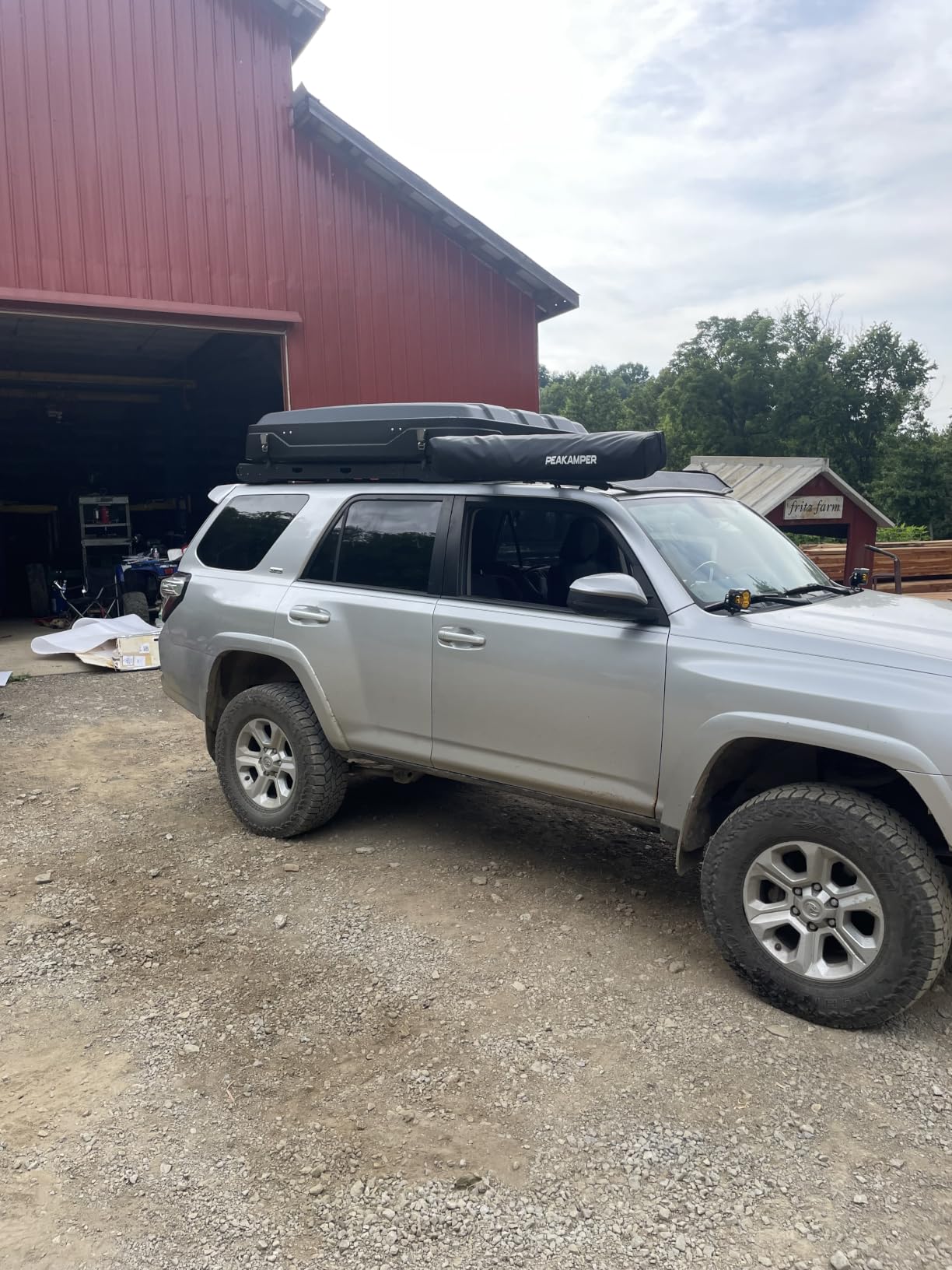
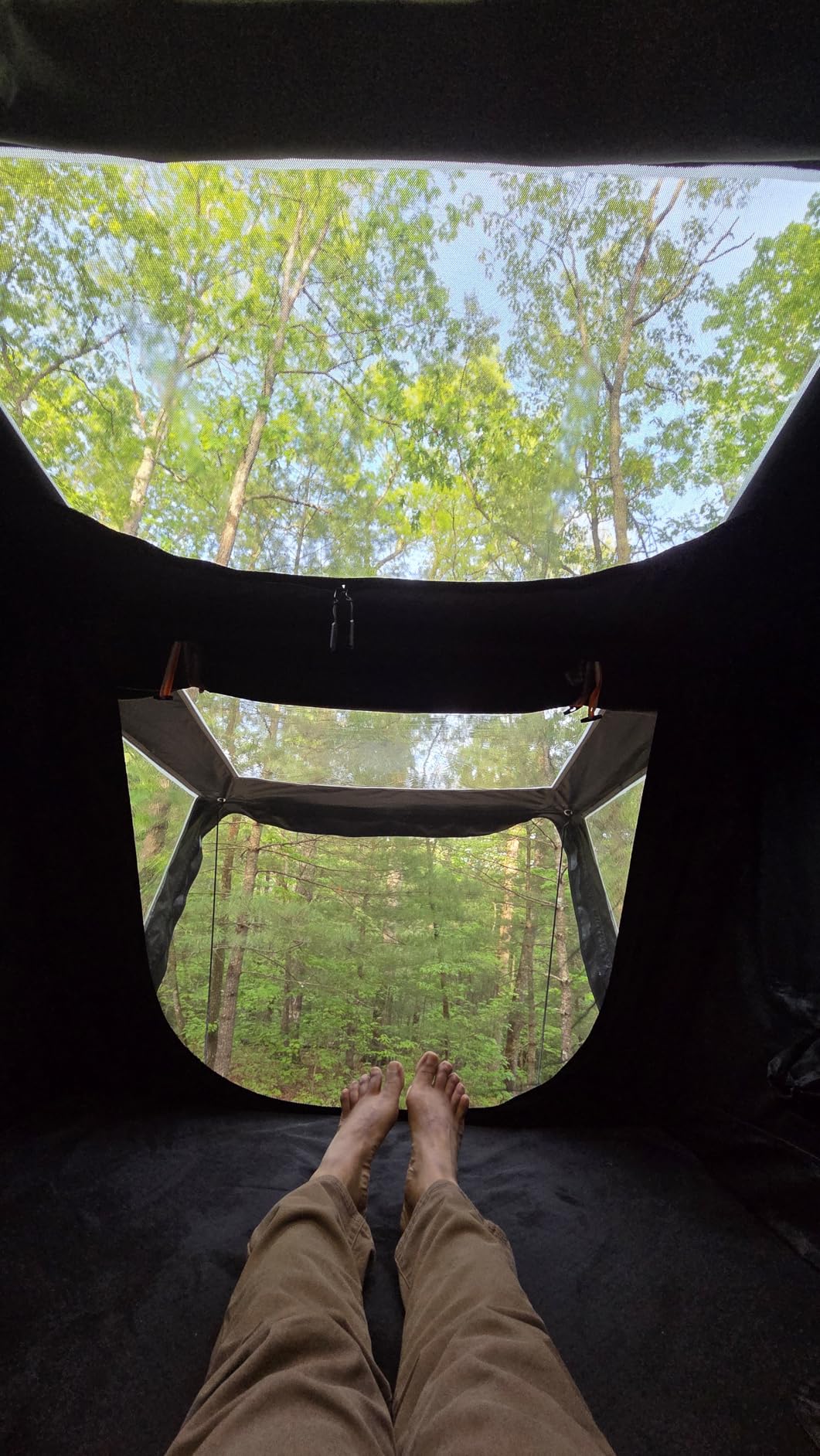
The structure is an ABS shell with an aluminum alloy frame and honeycomb panels in the floor and roof, which cut noise and add thermal insulation. Gas struts are 316 stainless steel and the zippers are YKK, both details that outlast the generic hardware used on budget hard shells. The blackout fabric and 1.97 inch mattress are aimed squarely at sleep quality.
A nice practical touch is the included roof crossbars, which let you carry solar panels, skis or bikes above the tent rather than taking up cargo space inside. Reviewers consistently single out the roomy interior and the blackout fabric as the reasons to buy, with the climate-control vent as the feature they did not expect to find.
Who should buy the Sirius 1 Plus
Pick it if two adults plus a child need to fit, or if you simply want the most usable floor area per square inch of roof. The 63 inch width also gives a large dog a real place to sleep instead of occupying your legroom.
Campers who run a heater or a cooler benefit more from this tent than any other in the list, and the included roof crossbars make it a natural fit for solar-equipped builds.
Where it falls short
At 160 pounds with an ABS shell, this is one of the heavier hard shells, and several owners report difficulty lifting it alone. The ABS construction is also heavier than an all-aluminum alternative, which is a direct trade for the quieter, warmer interior.
The warranty is one year from the seller, paired with return terms that are broader than the rest of the lineup. That is the one detail we would want answered before a long-distance buyer commits.
8. VEVOR Hard Shell Rooftop Tent
VEVOR Rooftop Tent Hard Shell, Roof Top Tent for Car SUV Truck Jeep Van Camping, Roof Tent with Telescopic Ladder Thick Mattress & LED Strip Light, 2-3 Person Family Camping Tent
Inflatable pole deployment
154.5 lbs
420D Oxford at 2000MM
3 person
Pros
- Inflatable poles make setup quick without heavy gas struts
- Thickened aluminum alloy shell with stainless gas springs
- 420D Oxford rainfly at 2000MM with PU coated body
- Level 6 wind resistance with buckled closure
- 7 section telescoping ladder rated to 330 lbs
Cons
- Needs a roof rated for at least 600 lbs
- Heavy at 154.5 lbs so solo mounting is difficult
- Included component list is minimal
The VEVOR is the only tent here that deploys on inflatable poles rather than rigid struts. That single design choice changes the feel of the thing: there is no gas spring to load, no latch to release, and the whole shell rises rather than hinges open. Owners describe the setup as quick and the mechanism as unusually light to handle.
The shell is thickened aluminum alloy with stainless steel gas springs rated to level 6 wind resistance, and the closure is buckled to stop the wind getting into the fabric and pressuring the panels. The rainfly is 420D Oxford at 2000MM over a 1500MM PU-coated poly-cotton body, with multiple ventilation points and a breathable mesh window.
The ladder is worth singling out. It is a 7-section telescoping model rated to 330 lbs and adjustable from 2.4 inches to 7.5 feet, the widest adjustment range in the lineup, and it works on vehicles with a low rack as well as tall ones. A thick foam mattress and an LED light are included.
Who should buy the VEVOR
It suits anyone who dislikes struts, has limited hand strength, or camps solo and wants the lightest-touch deployment in the lineup. The ladder adjustment also makes it a forgiving option for vehicles where the rack sits lower than expected.
The ventilation points and mesh window also make it a reasonable summer tent for warm campsites, where airflow matters more than insulation.
Where it falls short
Check your roof before anything else. The manufacturer specifies a roof rack rated for at least 600 lbs, which is far above what most factory racks on smaller SUVs provide, and it is the single biggest reason this tent is a poor fit for a lot of vehicles in this category.
It is also the lowest-rated tent in the lineup at 4.1, with 10 percent one-star reviews, and the manufacturer advises against use in severe extreme weather. The included component list is minimal: the tent itself and very little else. At 154.5 pounds it still needs two people to mount. If your roof rating is uncertain, pick a tent that states a realistic crossbar requirement instead.
9. Smittybilt GEN2 Overlander STD
SmittyBilt Overland GEN2 Tent STD – SB2583
92 x 55 inch bed
154 lbs
660 lb max load
2000 mm rated
Pros
- Full-length bed size at 92 x 55 inches
- 660 lb max load rating
- Lightweight 420D Oxford waterproof rainfly
- Four windows for ventilation and outward views
- Grey body with light grey rainfly
Cons
- Five-star share is 55 percent
- the thinnest here
- Heavy at 154 lbs for a soft shell
- Mounting hardware detail is sparse
The Smittybilt GEN2 STD is the one soft shell here with a genuinely full-length bed. It sleeps on 92 by 55 inches, which is a real full bed rather than a shortened rectangle, and the open size runs 95 inches wide by 56 inches long by 51 inches high. For two people who care about mattress quality more than setup speed, that footprint is the main draw.
The 660 lb maximum load rating is a strong structural number, and the 420D Oxford waterproof rainfly is genuinely lightweight for a full-length soft shell, which keeps the packed weight down. Four windows give ventilation and outward views, and the grey body with a light grey rainfly gives a low-profile look that some hard shells cannot match.
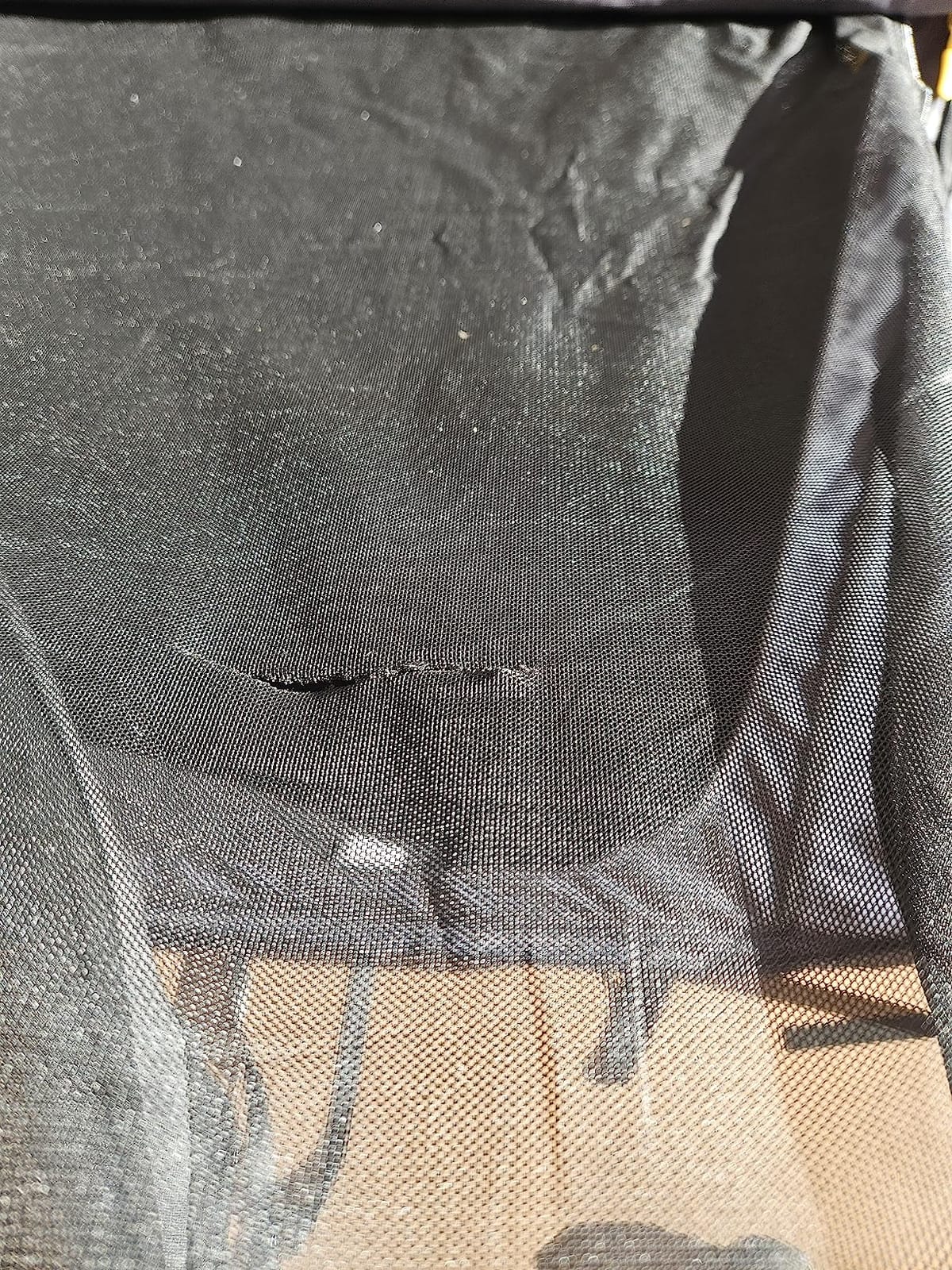
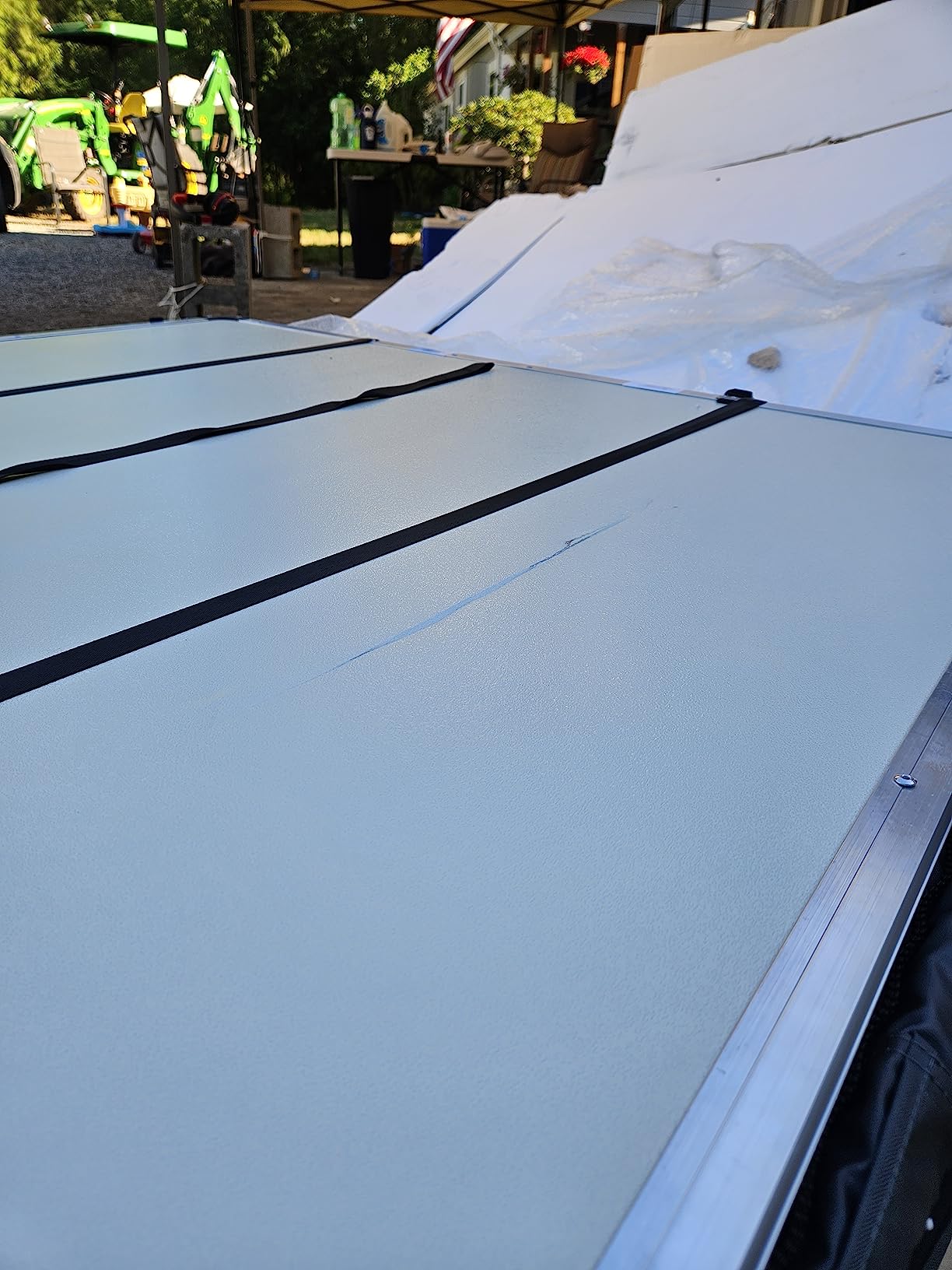
Smittybilt is one of the names that comes up most often in owner recommendation threads, and that community presence is part of the value. When something goes wrong, you are more likely to find other owners with the same setup than with a lesser-known brand, and replacement parts are easier to source.
The honest caveat is the data itself. At 4.2 stars on 24 reviews, this is among the least-corroborated tents we tested, and the distribution is polarized with 17 percent three-star ratings and a 55 percent five-star share. That does not mean it is bad. It means the owner experience is less settled than the 4.5 to 4.6 models.
Who should buy the Smittybilt GEN2 STD
Buy it if a full-length bed matters more to you than a 30-second setup. It suits campers who sleep better on a flat full-size mattress than in a wedge shape.
It is also a sensible first rooftop tent for someone who wants a recognized brand with a real owner community behind it, and who plans to keep the tent for years rather than replace it in three.
Where it falls short
At 154 pounds it is heavy for a soft shell, so mounting takes two people on most racks. The documentation on mounting hardware is sparse, so check the bolt pattern against your crossbars before you are halfway up a ladder.
Soft shell realities apply: slower setup in cold weather and more condensation than a hard shell of the same class. The smaller review base also means you are relying on a thinner record of long-term durability, and the 17 percent three-star share suggests a few buyers had fit or quality issues worth factoring in.
10. Meedo Apolle A86 M Soft Shell
Meedo Apolle A86 M, Soft Shell Rooftop Tent, Fits 2 People, Made with Waterproof Material and a Rainfly-Fold Design, Clamshell Army Green Roof top Tent for Overlanding Hunting, Ladder Included
125 lbs
4.5 inch mattress
3000MM
5 minute setup
Pros
- Pre-assembled and opens in about five minutes
- 4.5 inch high density foam mattress
- Built-in marine pad plus condensation isolation pad
- Level 6-7 wind resistance and 3000MM waterproof
- Two side doors with a skylight all openable from inside
Cons
- Traps heat while driving
- Needs 2-3 people to install
- Instruction manual and hardware packed inside the tent
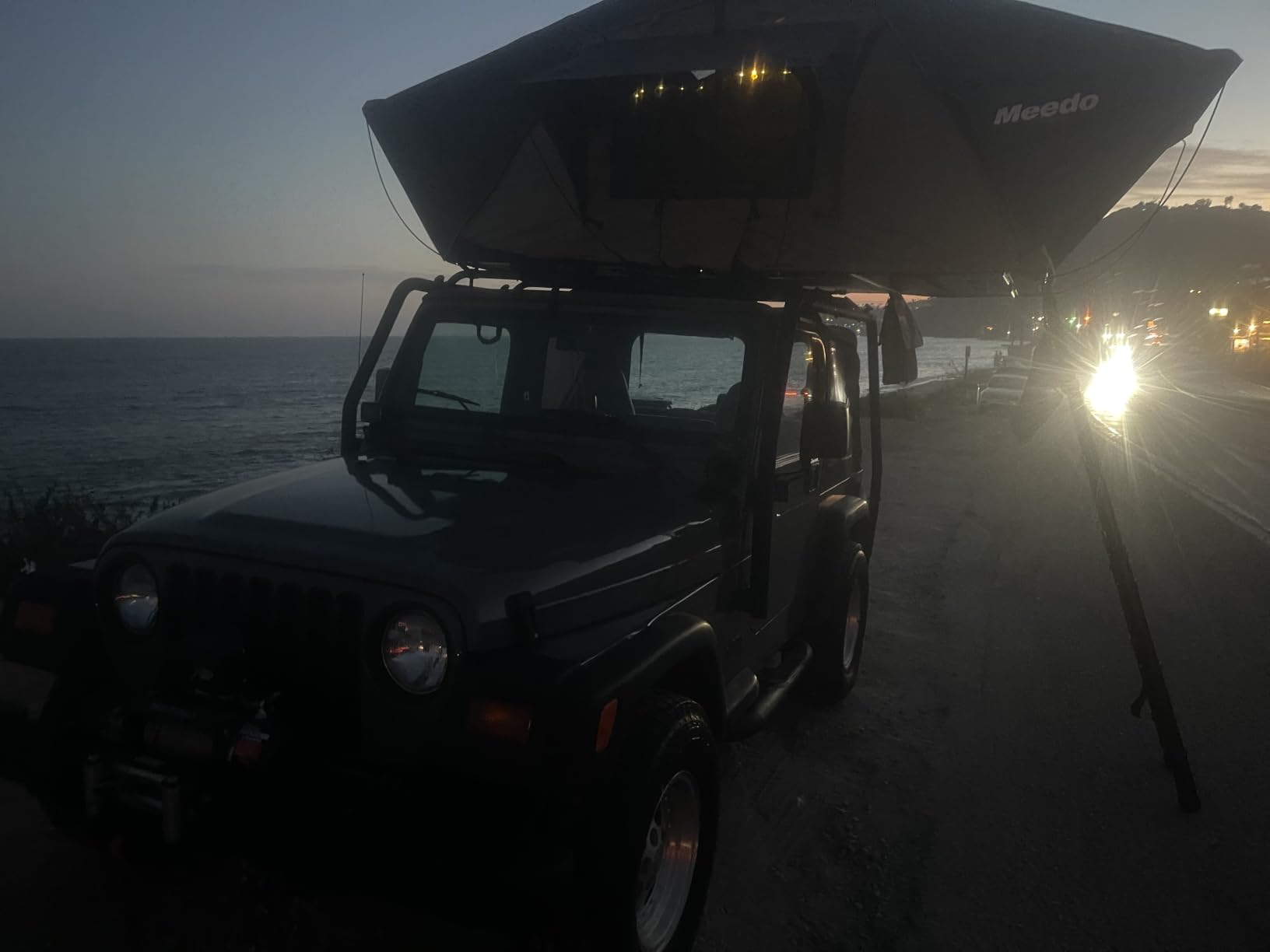
The Meedo Apolle A86 M weighs 125 pounds, and it has the thickest included mattress in this comparison at 4.5 inches of high-density foam. Those two facts together make it the comfort pick for couples, particularly anyone who is sensitive to pressure points on a thin camping pad.
It arrives pre-assembled and ready to use out of the box, deploying in about five minutes and packing down just as fast. The fabric is Oxford with a 4000-plus waterproof coating, rated to 3000MM, with level 6 to 7 wind resistance and 99.99 percent sun protection. Two side doors, two windows and a skylight are all openable from inside, which is more venting than most soft shells in this weight class.
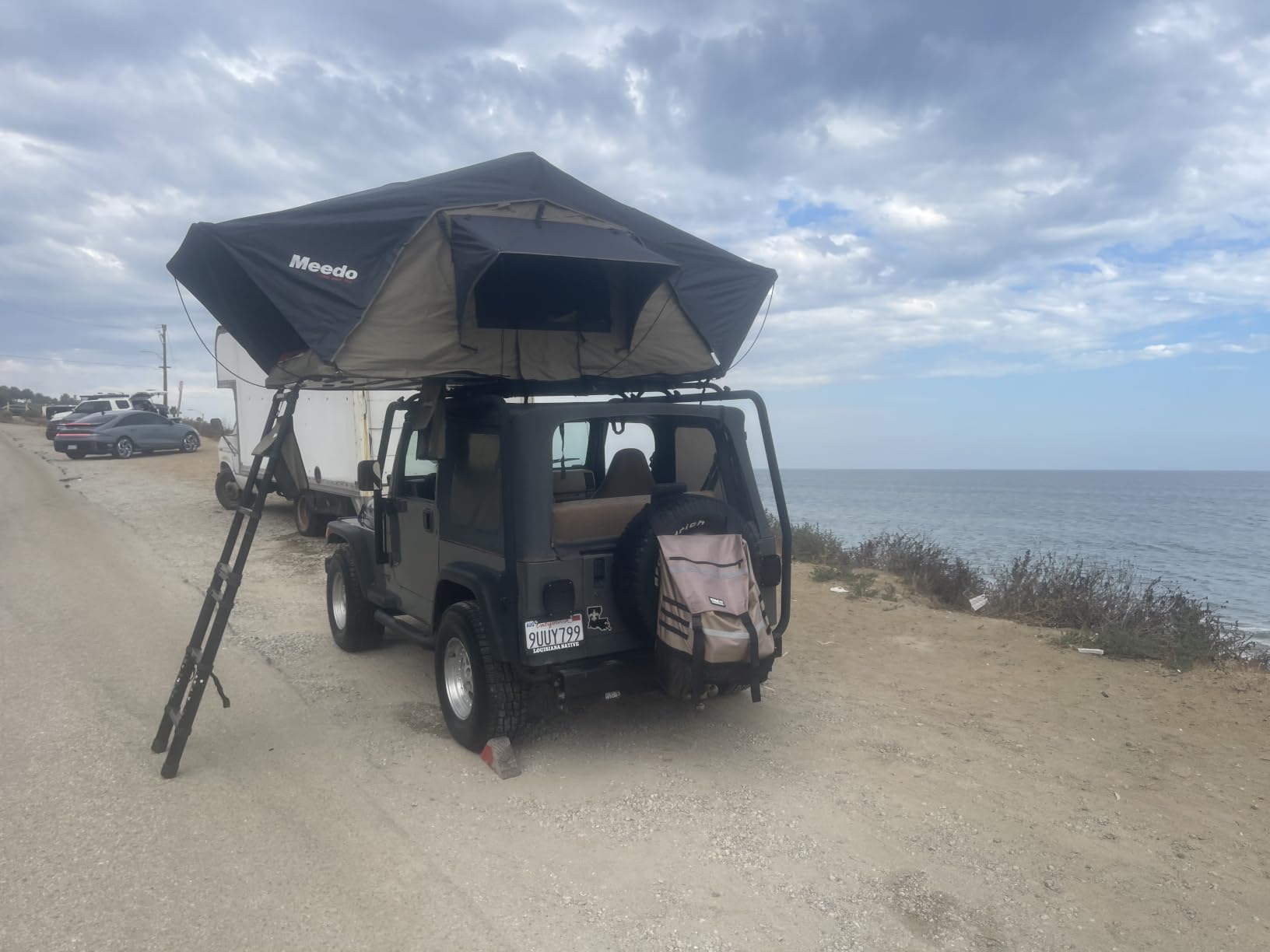
Moisture management gets a dedicated answer here. There is a built-in marine moisture-proof pad plus a separate condensation isolation pad, giving double protection between the mattress and the floor. Owners also report that it fits two adults comfortably and rides quietly at highway speed, which is not always true of fabric tents on exposed racks.
The included hardware list is thorough: a 2.3 meter aluminum ladder, 4.5 inch foam pad and mattress, an LED light, an adapter cable, rail end caps, eight poles, twelve acorn nuts and screws, twelve rail sliders, sixteen luggage rack fixing brackets, parts and tools, and shoe bags. The floor area is 4977 square inches across a 90.5 by 55 inch platform.
Who should buy the Apolle A86 M
It is built for two, and it is a good choice for couples who want a thick mattress without carrying a 160-pound hard shell up a ladder. At 125 pounds it is also kinder to modest roof load limits than most of the lineup.
The clamshell rainfly-fold design means it repacks quickly, which suits campers who move camp often. The 4.5 star rating is encouraging, though on only 16 reviews it is the least established rating here, so buy with a clear return path.
Where it falls short
The tent traps heat while driving and takes time to cool down after you stop, so a small battery or USB fan is worth bringing. Installation takes two to three people and needs heavier rack bars than the factory set, particularly on a crossover with a factory rack.
There are also some assembly defects in the reported experience, including a rain topper shipped backwards and one unfinished interior pocket, with the manual and hardware packed inside the tent itself. Small things, but they are the kind of detail that tells you to inspect the tent as soon as it arrives.
Can My SUV Handle a Rooftop Tent?
Yes, most SUVs can, but only if your roof rack’s dynamic load rating covers the tent weight plus everyone in it plus bedding, and your crossbars are rated for that same combined load. The two most common mistakes are ignoring the dynamic rating and assuming factory rails are crossbars. Check the driver door jamb sticker for the roof load limit, then check the rack rating printed on the crossbars themselves.
The load math is simpler than most buyers expect. Budget 130 to 200 lbs total for the tent, two adults and bedding, because most people fall between 60 and 90 lbs each. Many full-size SUVs carry 150 to 200 lbs of dynamic roof load, which means a 165 or 198 lb tent can exceed the limit before you add anyone to it. The soft shells on our list start at 108 lbs, which is why they are the safer starting point.
Dynamic load is not the same as static load. The static number describes the parked vehicle on level ground. The dynamic rating accounts for the fact that a moving vehicle adds downward force from bumps, cornering and braking, and manufacturers rate that figure far lower. Always read the dynamic number.
Crossbar length is the second constraint. Most roof-mounted rooftop tents for SUVs need a rack with enough spread to accept the mounting rails, and some models specify a minimum crossbar rating of 165 lbs or more. One tent in our list asks for a roof rated to 600 lbs, which rules it out on most crossovers. Our truck bed tent guide covers the alternative if your roof simply cannot take it.
Finally, measure your garage clearance with the tent mounted. A hard shell adds 7 to 9 inches to your vehicle height when closed, and a soft shell adds a little less. If you use parking structures, drive-throughs or automatic car washes regularly, add the tent’s closed height to your vehicle’s usual height and check that number against your typical clearance before you buy.
Hard Shell vs Soft Shell Rooftop Tents
Hard shells win on setup speed, weather sealing, aerodynamics and four-season use. Soft shells win on price, interior floor space and family capacity. If you camp below freezing, hard shell is the better choice. If you are buying on a budget or need to sleep three people, soft shell is the better choice.
Setup is the most visible difference. A hydraulic or gas-strut hard shell opens in five to 30 seconds. A soft shell takes four to five minutes of unfolding, snapping poles and tensioning fabric, and that figure degrades badly in cold weather when your hands are stiff and the fabric is stiff with moisture. Forum owners consistently describe winter soft shell setup as the point where patience runs out.
Condensation is the second difference, and it is the complaint that comes up most often across every rooftop tent forum. Hard shells seal the fabric inside a rigid case and typically show visibly less frost, because the sleeping volume is smaller and better insulated by the shell. Soft shells enclose more air volume in fabric, and moisture has more surface to condense on. Neither design removes the problem; both need airflow and a moisture absorber.
On aerodynamics, a hard shell packed at 7 to 9 inches adds far less frontal area than a fabric bundle, and the difference shows up as a smaller highway fuel penalty. Soft shells are also larger inside, which is exactly why they remain the right answer for families.
One more consideration is noise. Owners of hard shells report noticeably better road noise isolation, since the rigid case does not flutter against the rack at speed. On a long highway drive, that is a real comfort difference.
Setup Time, Condensation and Winter Use
Cold weather is where the design differences stop being marketing and start being practical. A hard shell that opens in the dark at minus 10 degrees is a completely different experience from a soft shell you are wrestling with numb hands. If you camp in winter, weight the lineup toward the aluminum clamshell designs.
Condensation is the number one complaint in this category, and the most common misconception is that it is a leak. Owners frequently spend time chasing what they think is a failure when fabric is simply condensing water vapor overnight. To tell the difference, look at where the water sits: condensation beads across the whole interior surface and on the mattress underside, while a leak produces a localized wet spot near a seam, a zipper, a vent or a mounting point.
Three habits solve most of it. Crack the top and bottom vents to create airflow before you go to sleep, keep a desiccant or reusable moisture absorber in the tent overnight, and wipe the walls and floor down before packing. Most importantly, air the tent out within 24 to 48 hours of rain. Owners are consistent on this: a tent stored wet grows mold, and mold is the top long-term durability killer in this category.
For the long run, reapply a DWR coating annually and treat exposed zippers and hinges as wear items. A well-maintained soft shell typically lasts 8 to 12 years and a quality hard shell 10 to 15, with hinges, zippers and fabric UV degradation setting the limit rather than the frame.
How to Buy the Best Rooftop Tent for SUVs
Start with the constraint, not the wish list. Measure your dynamic roof load, check your crossbar rating and confirm the closed height clears your parking situation. Only then choose between a hard shell and a soft shell. A tent that does not fit your vehicle is not a good tent, regardless of how well it is reviewed.
Next, pick your sleeping capacity honestly. Several tents in this list are labelled 2-3 person and are effectively two-person once two adults are lying down. The 51 to 52 inch width in most hard shells is the binding limit, not the length. Measure your shoulder-to-shoulder requirement and pick a wider floor if a third person is genuinely sleeping up there.
Think about the used market before you buy new. Rooftop tents hold value better than most camping gear because the brands are well known and replacement parts exist, and second-hand units are a common route into the category. Inspect zippers, hinge screws, fabric for UV fading or tears, the mattress condition and the seals, and check that no previous owner exceeded the roof rating. Owners report good results with pre-owned units, but also report marketplace-only models with poor hardware, so the brand matters.
Budget for the accessories the tent does not include. Most listings here ship with a ladder and a mattress, but a memory foam topper, a moisture absorber, a repair kit with seam tape, and a set of rated crossbars if your vehicle does not already have them, are all realistic line items. A separate ground tarp and a good recovery track add comfort for most overlanders.
Finally, think about how you camp rather than how you want to camp. If you mostly camp at developed sites with a car nearby, a rooftop tent is partly a luxury and a ground tent serves you. If you camp in winter, on exposed ridgelines, or where you cannot pitch in the rain, the rooftop tent earns its cost per night. If you want shade and a living area rather than a bed, our canopy tent picks and hammock tent guide cover those setups instead.
Frequently Asked Questions
Can I use a rooftop tent on my SUV?
Yes, most SUVs can carry a rooftop tent, provided your roof rack’s dynamic load rating covers the tent weight plus occupants plus bedding, and your crossbars are rated for that combined load. Check the driver door jamb sticker for the roof limit and the rating printed on your crossbars. Budget 130 to 200 lbs for the total, and remember the dynamic rating is lower than the static one.
Which brand of rooftop tent is considered the best?
There is no single best brand, because the answer splits by type. iKamper and James Baroud lead on premium build quality, Smittybilt and Overland Vehicle Systems win on value, and Free Spirit Recreation, Intrepid and Thule or Yakima own the mainstream hard shell middle. For SUVs specifically, our best overall pick balances weight, floor size and review history.
What is the best roof tent for a small SUV?
For a small SUV the binding constraint is the dynamic roof load and crossbar rating, not floor space. Look for a tent under roughly 120 lbs, ideally a low-profile soft shell or slim hard shell, and confirm your rack rating before buying. Avoid large soft-shell models and anything that asks for crossbars rated well above 165 lbs.
What camping tents can be attached to SUVs?
The main options are roof-mounted rooftop tents in hard shell or soft shell form, wedge or clamshell tents mounted to a bed rack or truck bed, and clamp-on side awning systems. For most SUVs the roof-mounted rooftop tent is the only true bed-level option, because the roof is the only flat surface rated to carry a sleeping load.
Are hard shell or soft shell rooftop tents better?
Hard shells win on setup speed, typically five to 30 seconds against four to five minutes for a soft shell, plus better sealing, less condensation and lower drag. Soft shells win on price, interior floor space and family capacity. Choose a hard shell if you camp below freezing or move camp often, and a soft shell if budget and sleeping space come first.
Do rooftop tents reduce gas mileage?
Yes. A low-profile hard shell adds the least drag and costs the least fuel at highway speed, while a taller soft shell creates noticeably more aerodynamic drag. The penalty is small but grows with speed and headwinds, and it is worth factoring in if you run long distances between campsites rather than a weekend loop.
Which Rooftop Tent Should You Actually Buy in 2026?
The Overland Vehicle Systems TMBK is our pick for most SUV owners in 2026. At 108 pounds with a 53.5 by 92 inch sleeping area, a 2000 PU waterproof rating and roughly five minutes of setup, it does the fundamentals well, sits low on the roof, and carries the largest owner base of anything we tested. If your roof load is the constraint, this is where you start.
Go hard shell if setup speed is your priority: the HEYFUN Adventurer Pro opens in about five seconds and includes a side awning, while the ARCTWONDER adds a built-in 216W solar panel and packs to just 7 inches tall. Go soft shell for space: the HD Nomadic 2 fits campers over six feet, and the HD Nomadic 3 fits a family of three. And if your roof cannot take the weight, skip the rooftop tent and choose a wedge tent in a bed rack instead.
Whichever one you pick, check your dynamic roof load, confirm your crossbar rating and measure your garage clearance before the tent arrives. Those three checks take ten minutes and prevent nearly every regret we hear about from owners.