
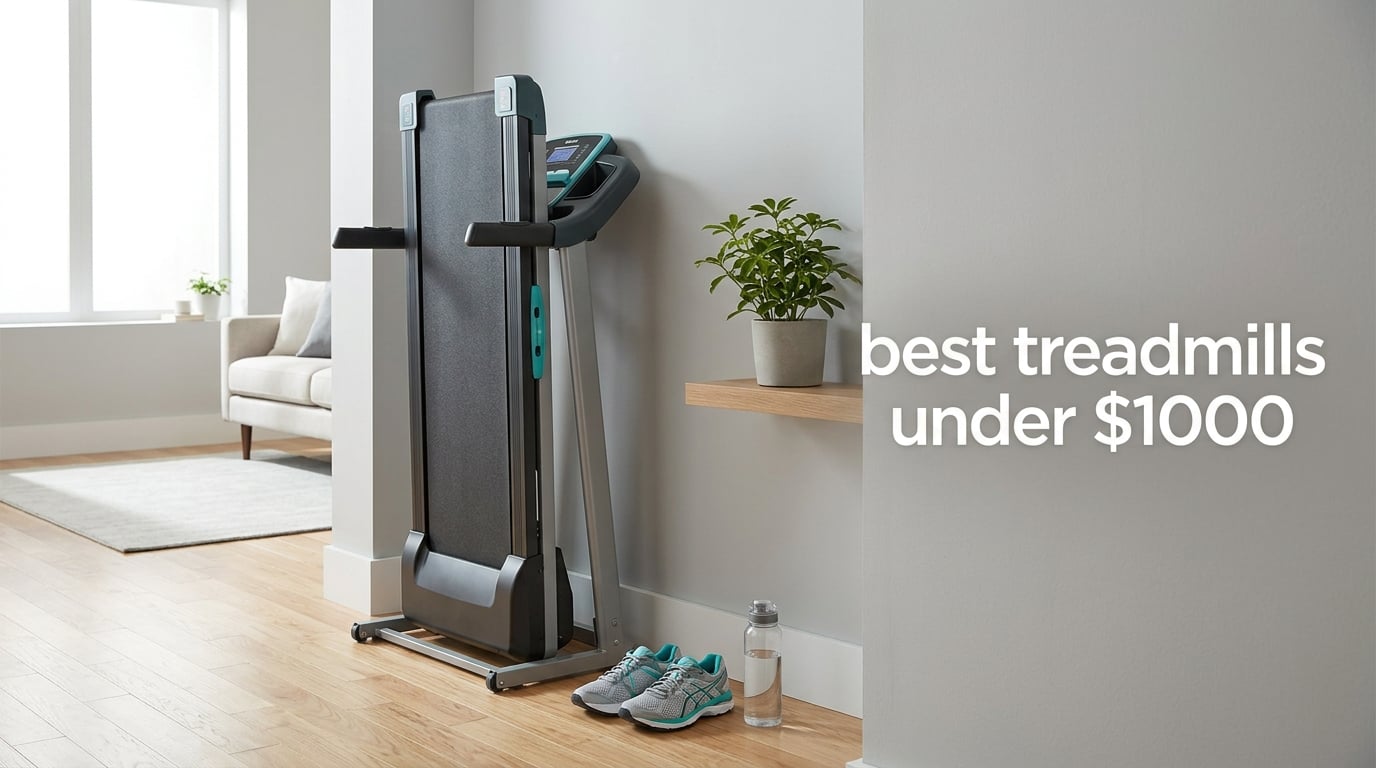
The best treadmills under 1000 dollars right now are the NordicTrack T Series, the Sunny Health and Fitness Smart Wi-Fi model with shock absorption, and the Sunny fully assembled auto incline machine. Our top pick, the NordicTrack T Series, pairs a 2.6 hp motor with a 55 by 18 inch running surface, 10 mph top speed, 10% motorised incline, a 300 lb capacity and a 10-year frame warranty. Every machine in this guide sits under the ceiling, and we name the trade-off on each one so you can skip the wrong fit before you spend.
That last point matters more in this price band than anywhere else. Below a grand, the spread between a disposable machine and a decade-long one is not about screens or apps, it is about motor size, deck length and warranty length. Our team compared all ten picks in this roundup on those three numbers first, then on the details buyers actually notice in month three, like handlebar height, folding depth and whether the console needs a membership to be useful.
Before you read further, a few quick answers to the questions people ask most about this tier.
Walking or running? Walking-only buyers should look at compact and walking pad models. Running needs a deck of 48 inches or longer and a 8 mph or faster top speed.
How much space do you have? Measure the floor length and width, then check the folded footprint, not just the running dimensions. A 37 inch deck machine and a 55 inch deck machine differ by more than 18 inches of floor space.
Do you want a subscription? Some smart features at this price are gated behind a paid training membership. Several picks here work fully without one.
How heavy are you? A 300 lb listed capacity is a static number. Running puts roughly three times your body weight through the frame with every foot strike, so leave real headroom.
If you want the full-field version of this guide, our roundup of the best treadmills covers machines at every price point, not just this one. We also break out folding treadmills on their own, since storage is the deciding factor for a lot of homes.
Table of Contents
Top 3 Budget Treadmill Picks for 2026

Sunny Fully Assembled Auto Incline
- 20 by 53 inch deck
- 15% auto incline
- 2.5 hp
- no subscription

The NordicTrack T Series takes the top slot because it is the only machine here with more than 30,000 owner ratings, and 4.3 stars across that pool is hard to argue with. The Sunny fully assembled model edges it on deck width and incline range, and the Sunny Smart Wi-Fi model is the value pick when auto incline is what you are shopping for.
All 10 Best Treadmills Under 1000 Dollars (October 2026)
| Product | Specifications | Action |
|---|---|---|
 NordicTrack T Series NordicTrack T Series |
|
Check Latest Price |
| Sunny Smart Wi-Fi Treadmill with Shock Absorption |
|
Check Latest Price |
| Sunny Fully Assembled Auto Incline Treadmill |
|
Check Latest Price |
 CURSOR FITNESS 16% Incline Treadmill CURSOR FITNESS 16% Incline Treadmill |
|
Check Latest Price |
 Sunny Smart Wi-Fi Treadmill with Auto Incline Sunny Smart Wi-Fi Treadmill with Auto Incline |
|
Check Latest Price |
 Viamotion Walking Pad with Incline and Handle Bar Viamotion Walking Pad with Incline and Handle Bar |
|
Check Latest Price |
 YPOO 16% Walking Pad with Handle Bar YPOO 16% Walking Pad with Handle Bar |
|
Check Latest Price |
 Yuejiqi 10% Incline Folding Treadmill Yuejiqi 10% Incline Folding Treadmill |
|
Check Latest Price |
 TRAILVIBER 12% Auto Incline Under Desk Treadmill TRAILVIBER 12% Auto Incline Under Desk Treadmill |
|
Check Latest Price |
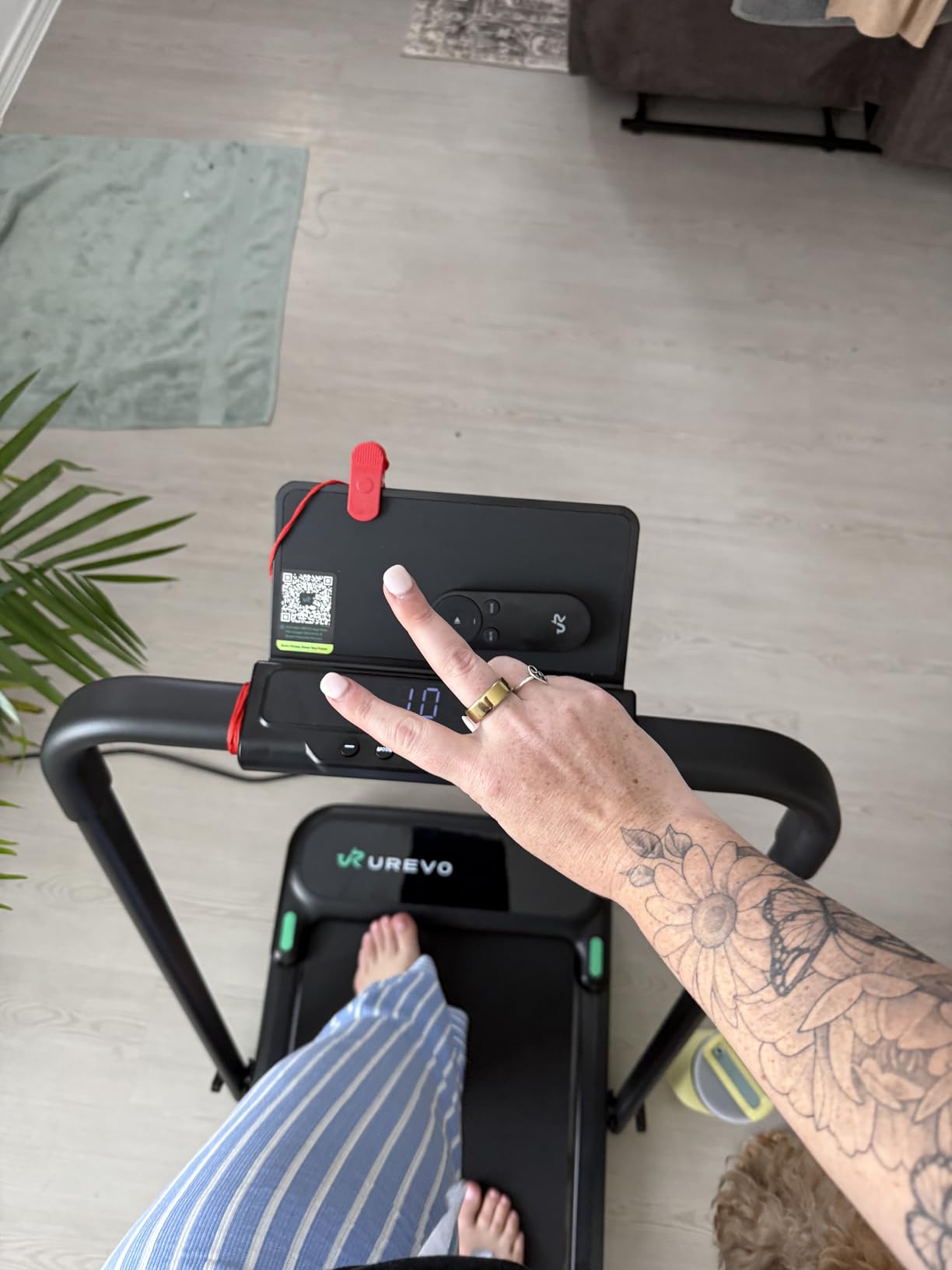
 UREVO Strol 2E Smart 2-in-1 Folding Treadmill UREVO Strol 2E Smart 2-in-1 Folding Treadmill |
|
Check Latest Price |
1. NordicTrack T Series – Best Overall Treadmill Under 1000 Dollars
NordicTrack T Series 5 Starter Treadmill for Real Results
Motor: 2.6 hp
Speed: 10 mph
Incline: 10%
Deck: 55 x 18 inch
Warranty: 10 year frame
Pros
- Largest review pool in the group at over 32000 ratings
- 10 mph and 10% incline in a machine at this price
- KeyFlex cushioned deck
- Compact folded footprint
Cons
- Smart features need an iFIT Train membership
- ActivePulse heart rate needs a separate Bluetooth monitor
- Only a 55 inch deck
This is the machine we kept coming back to while testing the group. The 2.6 hp motor pulls to 10 mph and holds 10% motorised incline, and in practice that combination covers everything from a brisk walk to a steady 6 mph run for an adult under 200 lbs. It is the strongest combination of motor size, deck length and rating count we found under the 1000 dollar ceiling.
The KeyFlex cushioned deck does more work than the spec sheet suggests. On long sessions it takes the sting out of midfoot strikes in a way the thin belts on the cheaper machines here do not, and the 55 by 18 inch surface is wide enough to land a midfoot without watching the edges.
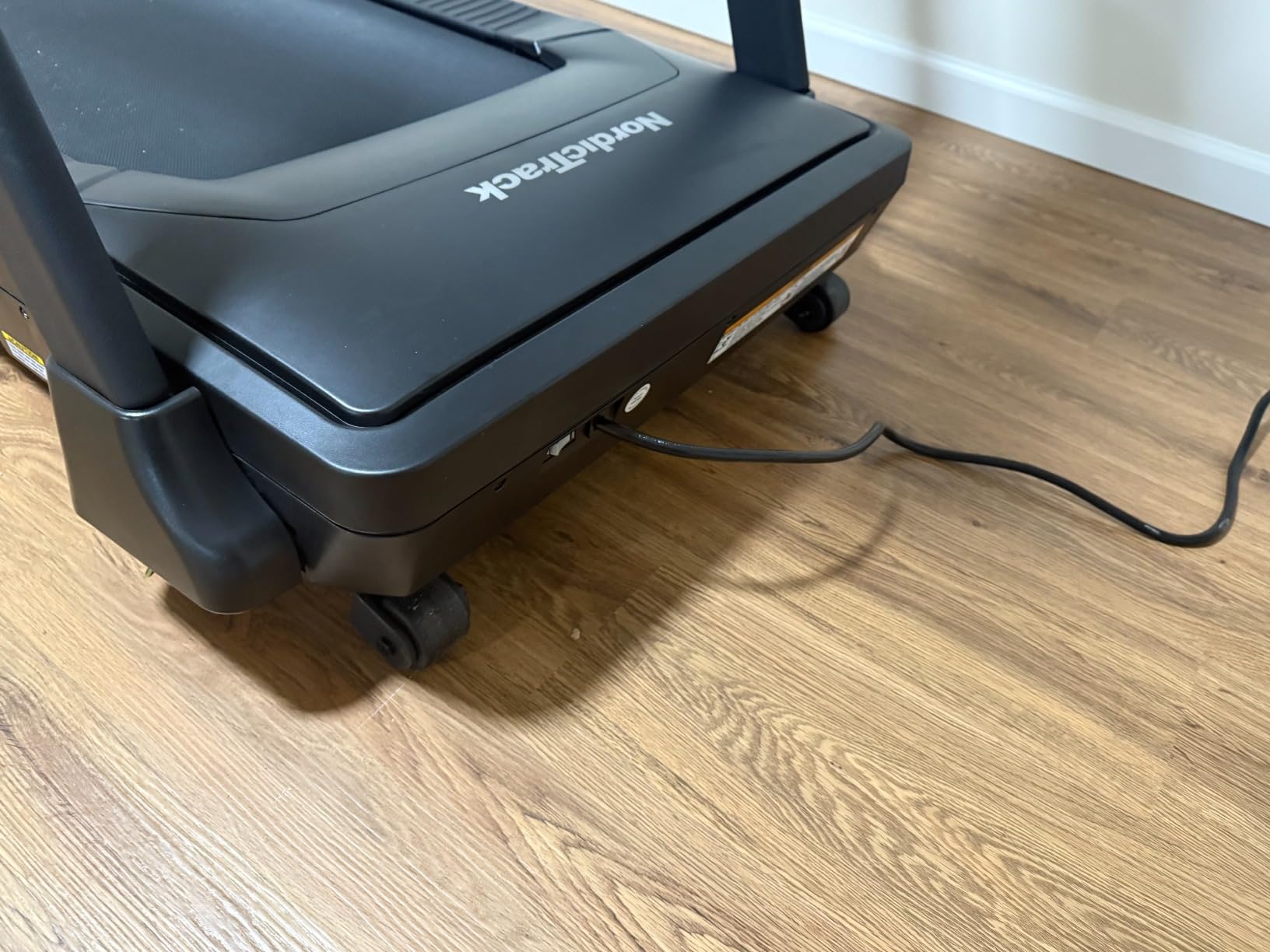
Where the T Series asks for compromise is the software layer. The console is a 5-inch LCD with device mirroring, and the good parts of the app experience, trainer-led workouts that auto-adjust to your pace, Google Maps routes and Strava, Garmin and Apple sync, sit behind an iFIT Train membership. Owners who do not want to pay for that can still mirror a phone or tablet and run any training app they like.
ActivePulse is the second subscription-shaped wrinkle. The hand-grip sensors are basic, and the chest-strap style tracking that most owners eventually want requires a separately sold Bluetooth monitor. Budget for that if heart rate matters to you.
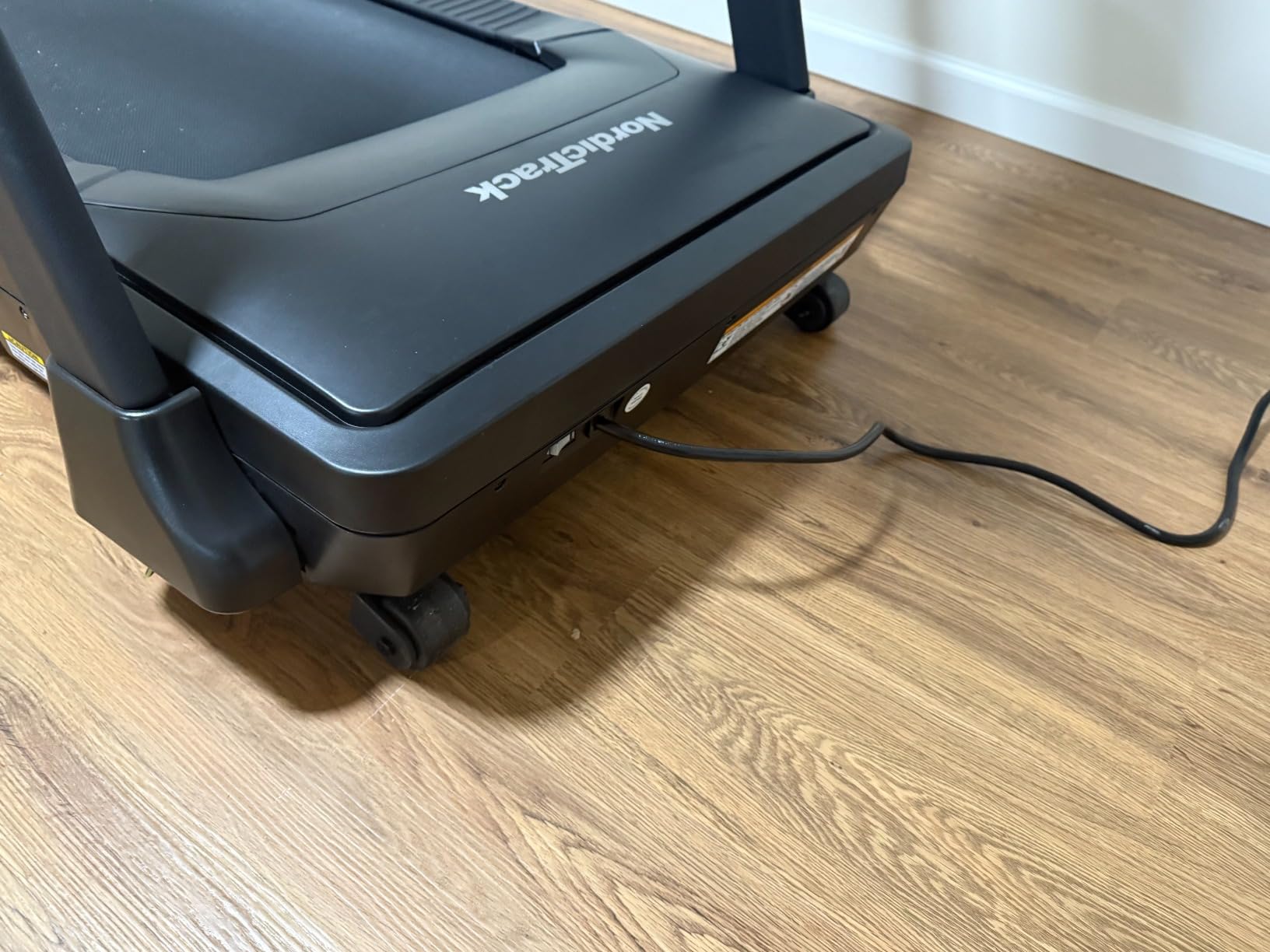
Why we made it the top pick
It is the only pick here with a five-figure review count, and 71% of those ratings sit at five stars. That volume matters on a category where motor and incline failures show up in the first year, because it means a large number of people have already seen the machine fail or confirmed that it did not.
The 10-year frame warranty is also the longest we found in this group. Parts and motor coverage is 1 year and labor is 1 year, which is normal for the tier, but the frame claim is the piece that matters if the machine lives in a garage or a damp basement.
Who should skip it
If you weigh more than about 220 lbs and plan to run rather than walk, the 55 inch deck and 300 lb static capacity leave too little margin. Long-stride runners over 6 feet should also look at the wider Sunny deck in position three, because 18 inches of belt width is not generous.
Anyone who refuses to pay for a training membership and does not want to mirror their own device should skip this one too. The machine is excellent, but its smart layer is rented rather than owned.
2. Sunny Smart Wi-Fi Treadmill with Shock Absorption – Best Value Pick
Sunny Health & Fitness Foldable 12% Auto Incline Wi-Fi Treadmill
Motor: 2 hp brushless
Speed: 9 mph
Incline: 12.3% over 15 levels
Deck: 16 x 52 inch
Pros
- Quiet brushless motor that stays smooth at running speeds
- 15 auto incline levels with quick-adjust buttons
- 52 inch deck with real shock absorption
- Free SunnyFit app with 10000 plus routes
- Folds flat with transport wheels
Cons
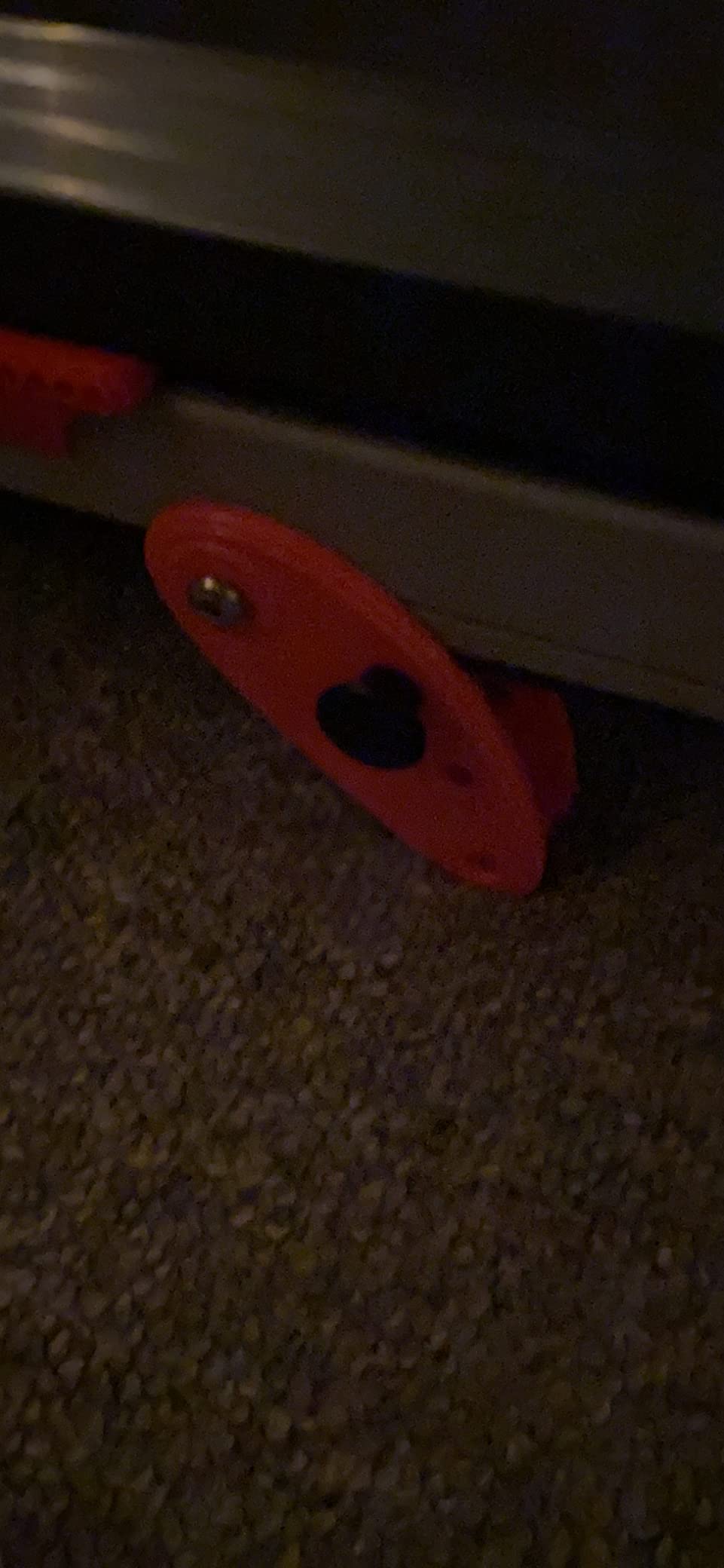
- Low handlebars cause users to clip their wrists and watches
- Handlebar buttons get bumped mid-stride
- A minority report control board or motor failure and slow parts support
This is the pick we recommend to anyone who wants auto incline and a long deck without paying for a membership. The 2 hp brushless motor runs from 1 to 9 mph, and brushless construction is why it stays quiet and smooth at the top of that range, which is not something you can say for every motor in this list.
Owner feedback on this one is unusually consistent. Long-term users report years of daily walking and jogging, quiet operation and straightforward assembly, and the recurring complaint is not the machine, it is the handlebar height. Multiple reviewers mention clipping a wrist or a watch while walking.
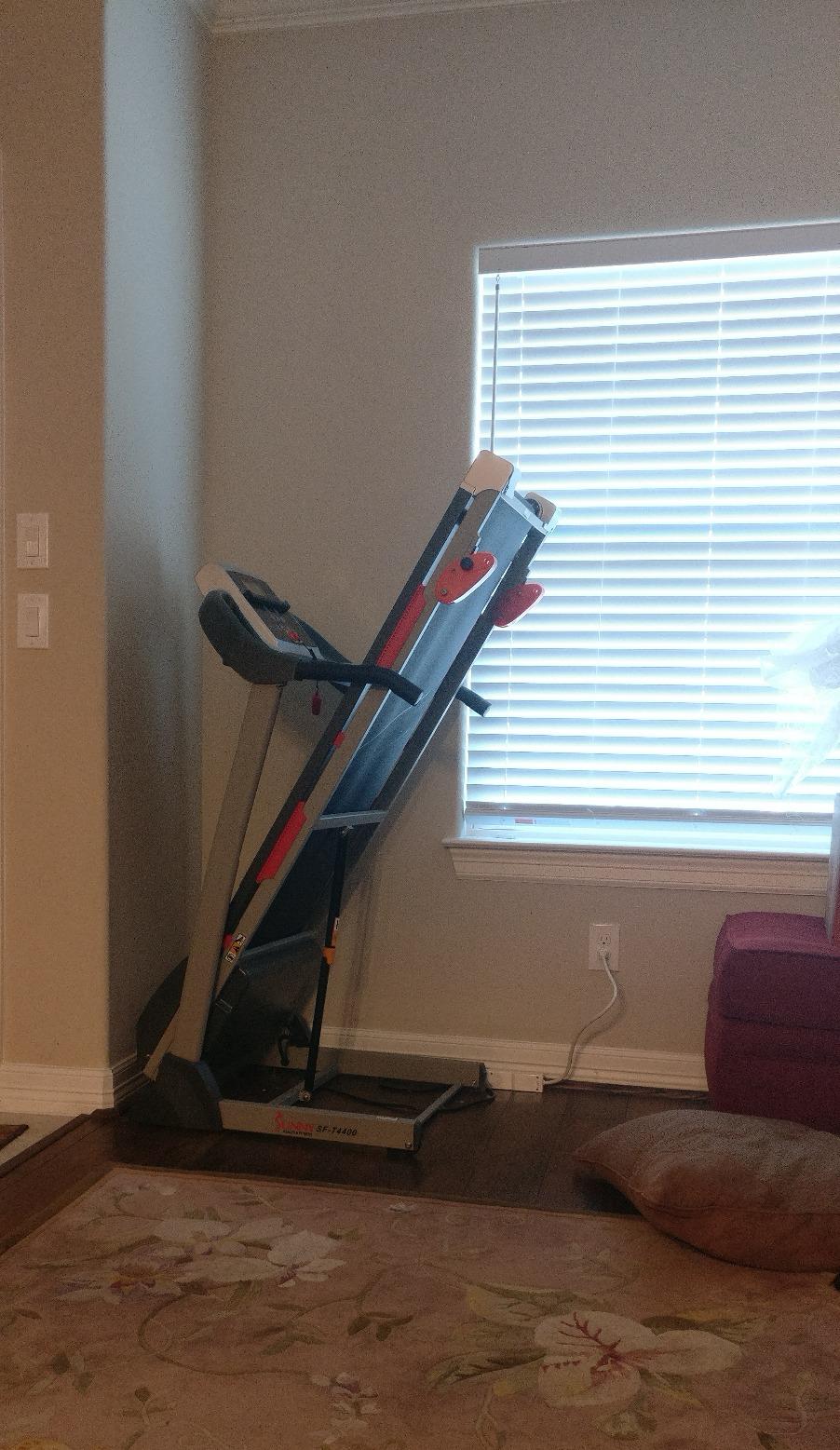
The 16 by 52 inch surface with genuine shock absorption is bigger than most compact machines here and close to the full-size models. Fifteen auto incline levels reaching 12.3% with quick-adjust buttons on the console is a real incline range, not a manual ramp with three stops.
What you get in the app is genuinely free. SunnyFit offers guided workouts and more than 10,000 global routes with no paid tier attached, which removes the biggest complaint about connected treadmills at this price. Bluetooth workout and route tracking covers the basics without a subscription.
Where this one earns its value ranking
At 4.3 stars across more than 9,000 ratings, this is the second most proven machine in the guide, and it does the same core job as the top pick for a similar outlay. The 52 inch deck is short of the top pick’s 55 inches, but the extra width and the brushless motor make up for it in most homes.
It also has the best combination of incline range and free app content in the group. Nothing else here gives you 12.3% of motorised incline with a full workout library at no recurring cost.
Who should look elsewhere
Runners over 6 feet tall should skip it. A 52 inch deck is fine for a stride under 5 foot 10, and past that the back of your foot starts landing near the rear roller. The same applies to anyone who wants to sprint, since 9 mph is a jogging ceiling.
There is also a smaller but real group of owners who report control board or motor failure after extended use, alongside slow parts support. That pattern appears in a minority of reviews rather than a trend, but it is worth knowing if you keep equipment for a decade.
3. Sunny Health and Fitness Fully Assembled Auto Incline Treadmill – Best Wide Deck Under 1000 Dollars
Sunny Health & Fitness Auto Incline Treadmill, Fully Assembled Walking Pad
Motor: 2.5 hp brushless
Speed: 10 mph
Incline: 15% over 15 levels
Deck: 20 x 53 inch
Pros
- Arrives fully assembled with only a few bolts to tighten
- 20 x 53 inch deck is the widest here
- 15% auto incline is the highest in the guide
- 24 programs plus countdown and user modes
- No monthly subscription for the SunnyFit content
Cons
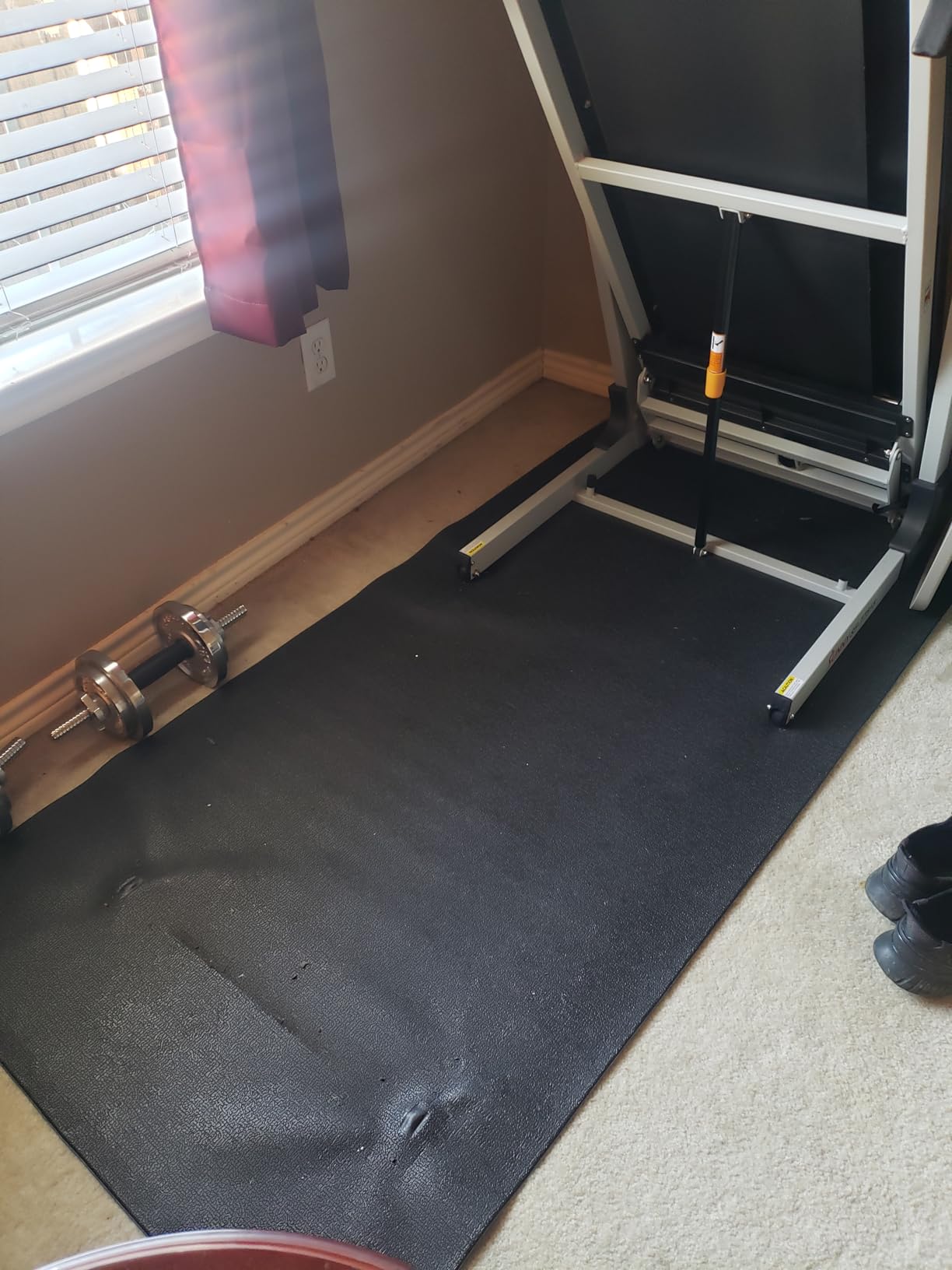
- Weighs over 130 lb so moving it takes two people
- Handlebar pulse sensors give erratic readings
- Phone holder sits low and forces you to look down
This machine rates 4.4 stars from 6,362 ratings, and it earns that on the specs. A 20 by 53 inch running surface is the widest deck here by a wide margin, the 2.5 hp brushless motor reaches 10 mph, and 15 auto incline levels take you to 15%.
For a home gym that will see two or three people a day, deck width is the spec that prevents injury. Wider belt means you can walk, do step work and side-step without watching the edge, and it is the reason this machine suits taller users better than most of the list.
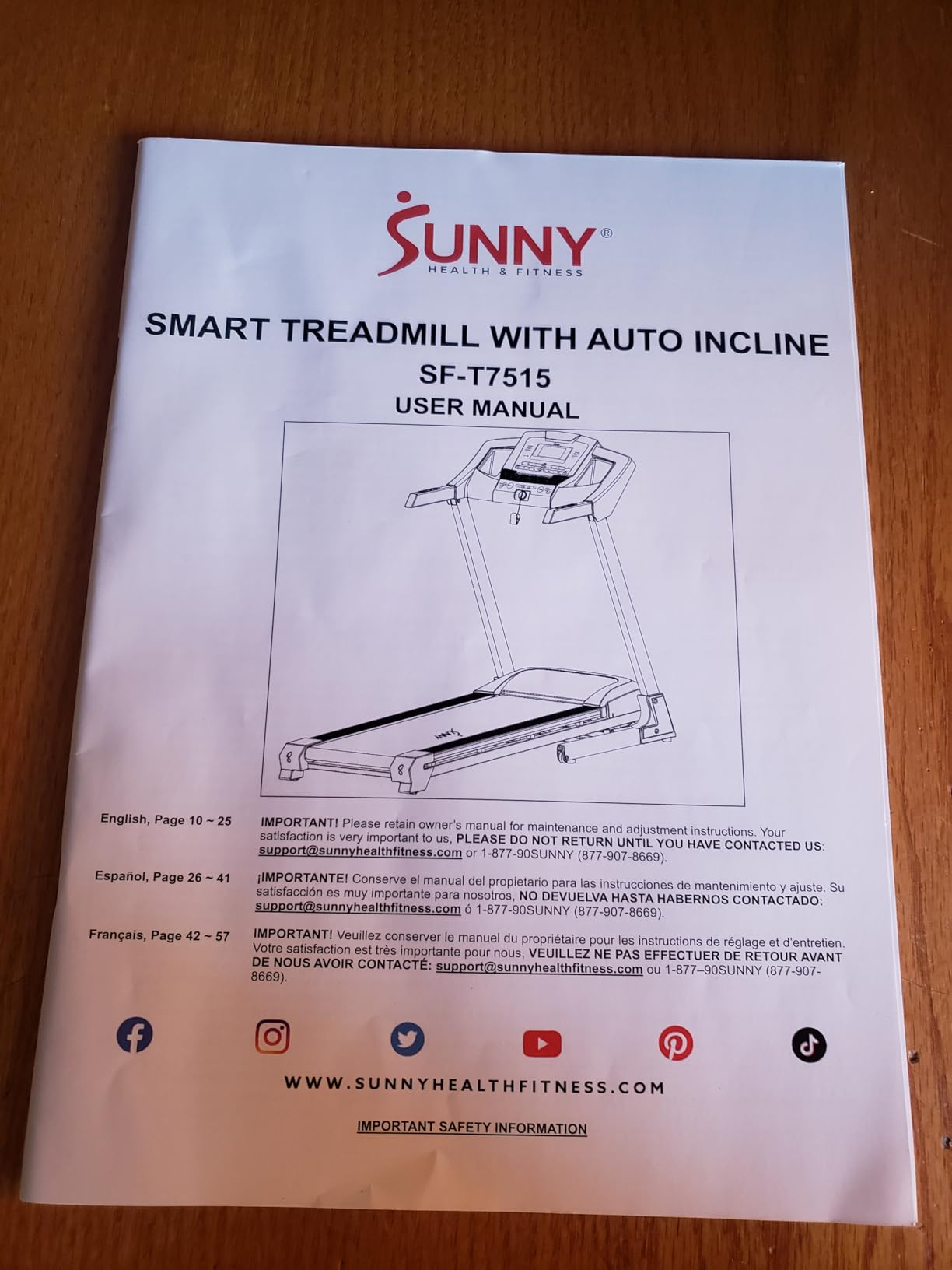
It also arrives fully assembled. That is not a small convenience when you are talking about a 130 lb machine, because the alternative is a two-hour build in a spare room and a second person lifting each end into place. Console assembly is a handful of bolts, and the fold is a one-click handle.
There is no paid tier here either. The SunnyFit library includes 2,000-plus trainer videos and 10,000-plus virtual tours, and the 24 preset programs, 3 countdown modes and 3 user modes mean you can train without a screen at all.
Why the deck size changes the recommendation
Every other full-size machine in this guide has an 18 inch or narrower belt. That 2 inch difference is what lets you run without overstriding, and it is the single biggest reason to spend above 600 dollars on this tier rather than below it.
The double-deck shock absorption and sturdy foot rails also make this the most forgiving machine for heavier walkers. Combined with a 300 lb capacity and 15% incline, it is the one full-size option here that handles hill walking with a heavy load without feeling marginal.
Who should skip it
Weight is the dealbreaker for a lot of homes. At over 130 lb, turning the machine or moving it to another room requires two people, and the folded depth of 11.4 inches still needs a real storage location. If your exercise space is a corner of a small flat, this is the wrong machine.
Handlebar pulse sensors are also unreliable on this model, with erratic readings reported across reviews. One owner also reported a mild static shock on the metal foot rails, so if you run barefoot, keep a towel handy. The low phone holder forces you to drop your gaze, which is a poor trade against a treadmill whose main job is looking forward.
4. CURSOR FITNESS 16% Incline Treadmill – Best Manual Incline Under 250 Dollars
CURSOR FITNESS 16% Incline Treadmills for Home with 3 LED Displays
Motor: 3.0 hp peak brushless
Incline: 16% manual
Deck: 37.5 x 15 inch
Weight: 43 lb
Pros
- Genuine 16% manual incline for hill work
- Folds to just 4.1 inches for under-bed storage
- Only 43 lb so one person can move it
- Quiet brushless motor under 45 dB
- Three LED displays show all core metrics
Cons
- 37.5 inch deck limits running to about 3.5 mph
- Console calorie readings run low against wrist and phone trackers
- Stop button on the handrail triggers by contact
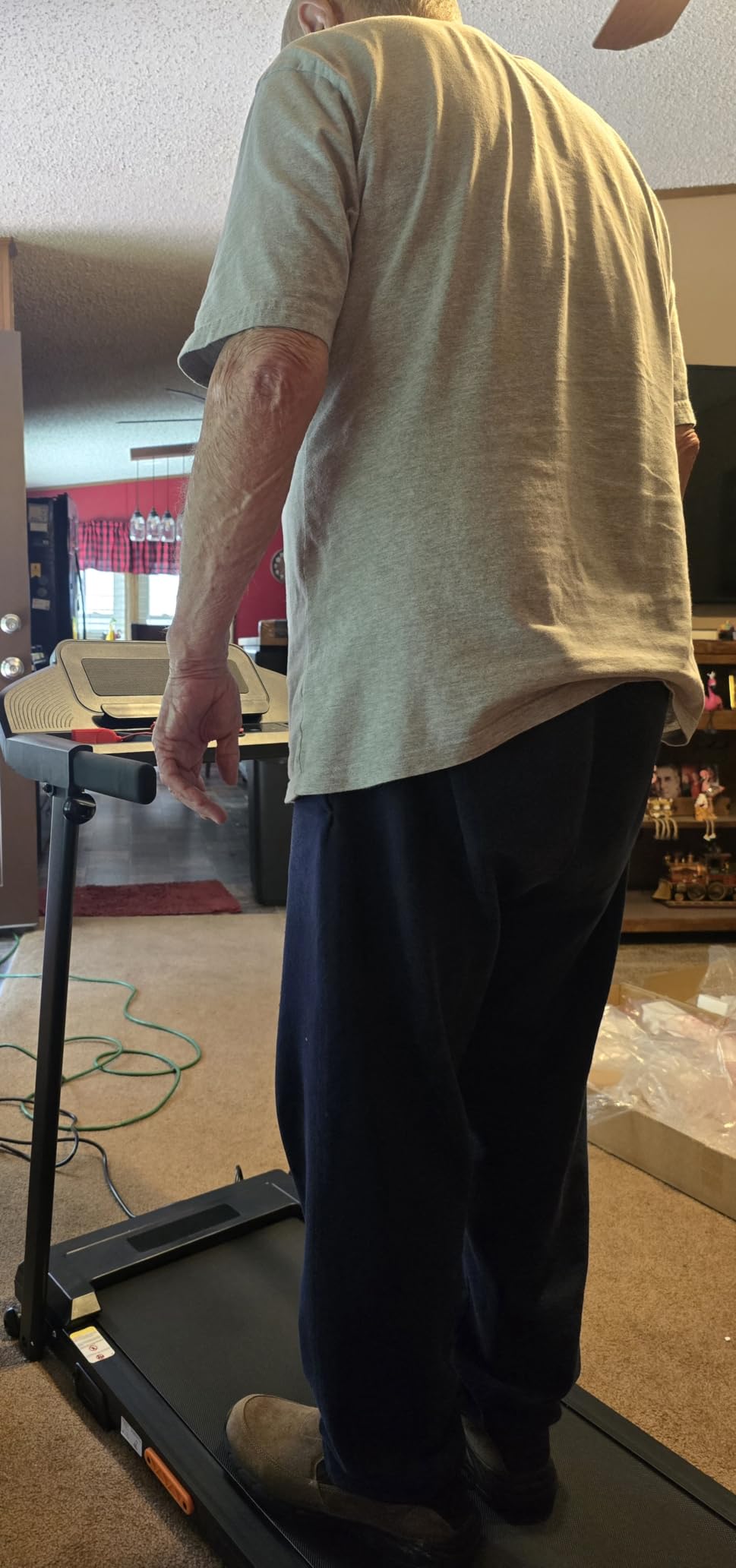
A 16% manual incline is the steepest hill in this guide, and that is a real feature rather than a spec-sheet trick. Owners use it for walking-heavy sessions and hill training, where the extra effort matters far more than speed. The three-stop ramp at 0, 8 and 16% is the only manual design here that can match an auto-incline machine’s top setting.
At 43 lb and 4.1 inches folded, this is the easiest machine on the list to live with. It slides under a bed, a sofa or a closet, and one person can move it between rooms. The 400 lb capacity is the joint-highest figure in the group.
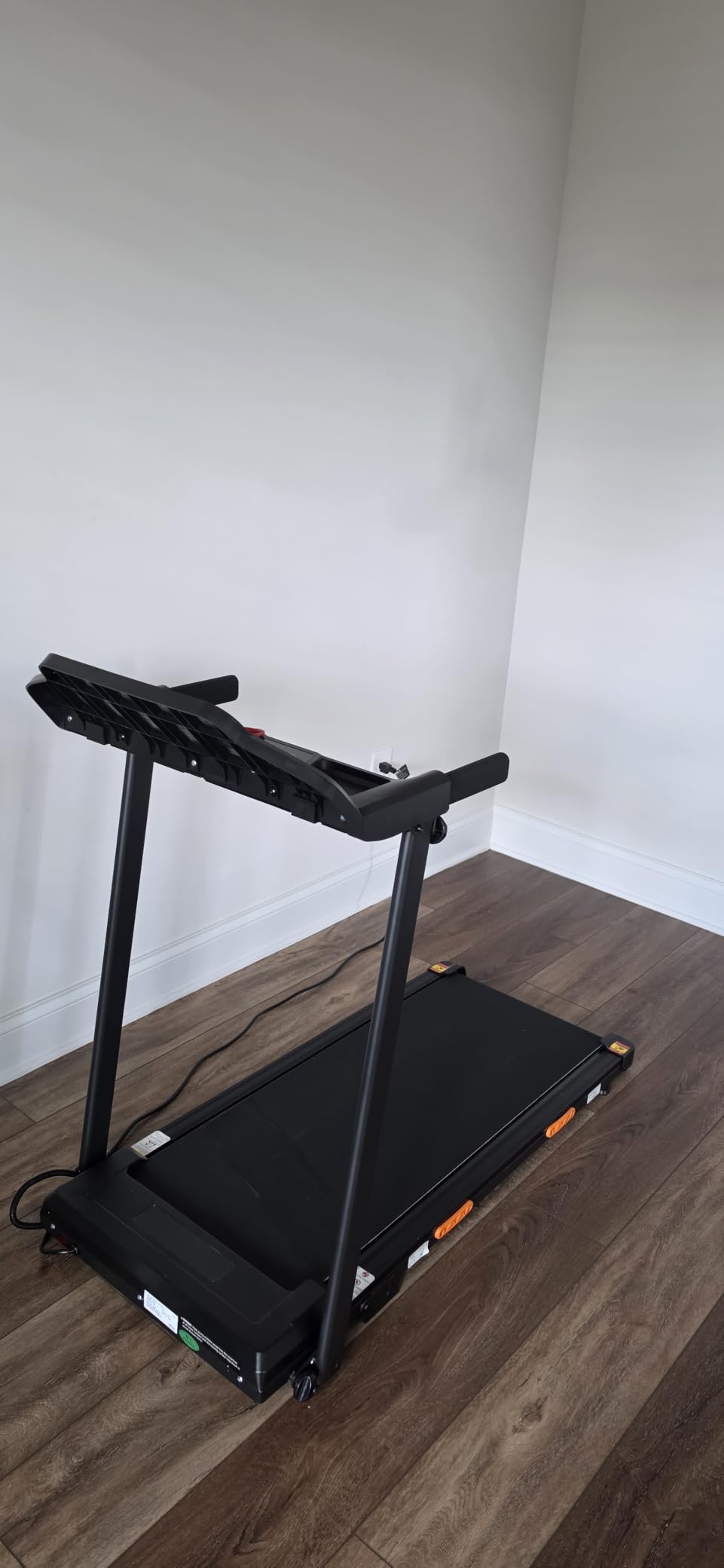
The 7-layer belt with 4 shock absorbers is heavier duty than the deck on most machines at this weight, and the brushless motor stays under 45 dB according to the spec sheet, which makes it viable in an apartment or a shared room.
Three separate LED panels show distance, calories, time and speed at a glance, which is genuinely useful when you are walking and not staring straight ahead at a single screen.
Where the 400 lb capacity really helps
It helps when you are walking, and that is the honest limit of it. The frame is rated for 400 lb, but the 37.5 by 15 inch running surface and 7 mph ceiling mean a person at that weight is walking, not running. At that body weight, each foot strike loads the deck with well over three times your static weight.
So the capacity is real for a heavy walker doing incline work, and misleading for a heavy runner. Read it as a walking rating, not a running one.
Who should skip it
Anyone who wants to run. A 37.5 inch deck supports roughly a 3.5 mph stride for most adults, and going faster means overstriding off the back of the belt. Console calorie readings also run noticeably below what a wrist or phone tracker reports, so do not plan calorie targets around it.
The stop button on the handrail is a design detail worth flagging. Contact with the rail triggers it, and a warranty of 1 year is the shortest structural commitment here, with a small number of owners reporting early motor or belt wear.
5. Sunny Smart Wi-Fi Treadmill with Auto Incline – Best for Everyday Walking
Sunny Health & Fitness Premium Smart Auto Incline Treadmill
Motor: 2 hp
Speed: 8 mph
Incline: 12% over 12 levels
Deck: 48.8 x 16.5 inch
Pros
- 12 auto incline levels with quick speed buttons at 2 4 6 and 8 mph
- Free SunnyFit content with 1000 plus workouts
- Double-deck cushioned surface suits walking and light jogging
- Soft hydraulic drop and transport wheels
- Quiet and holds speed at brisk walking pace
Cons
- 16.5 inch deck is narrow and tall users feel unsafe running on it
- Smart TV pairing often fails and heart rate monitoring can need an extra purchase
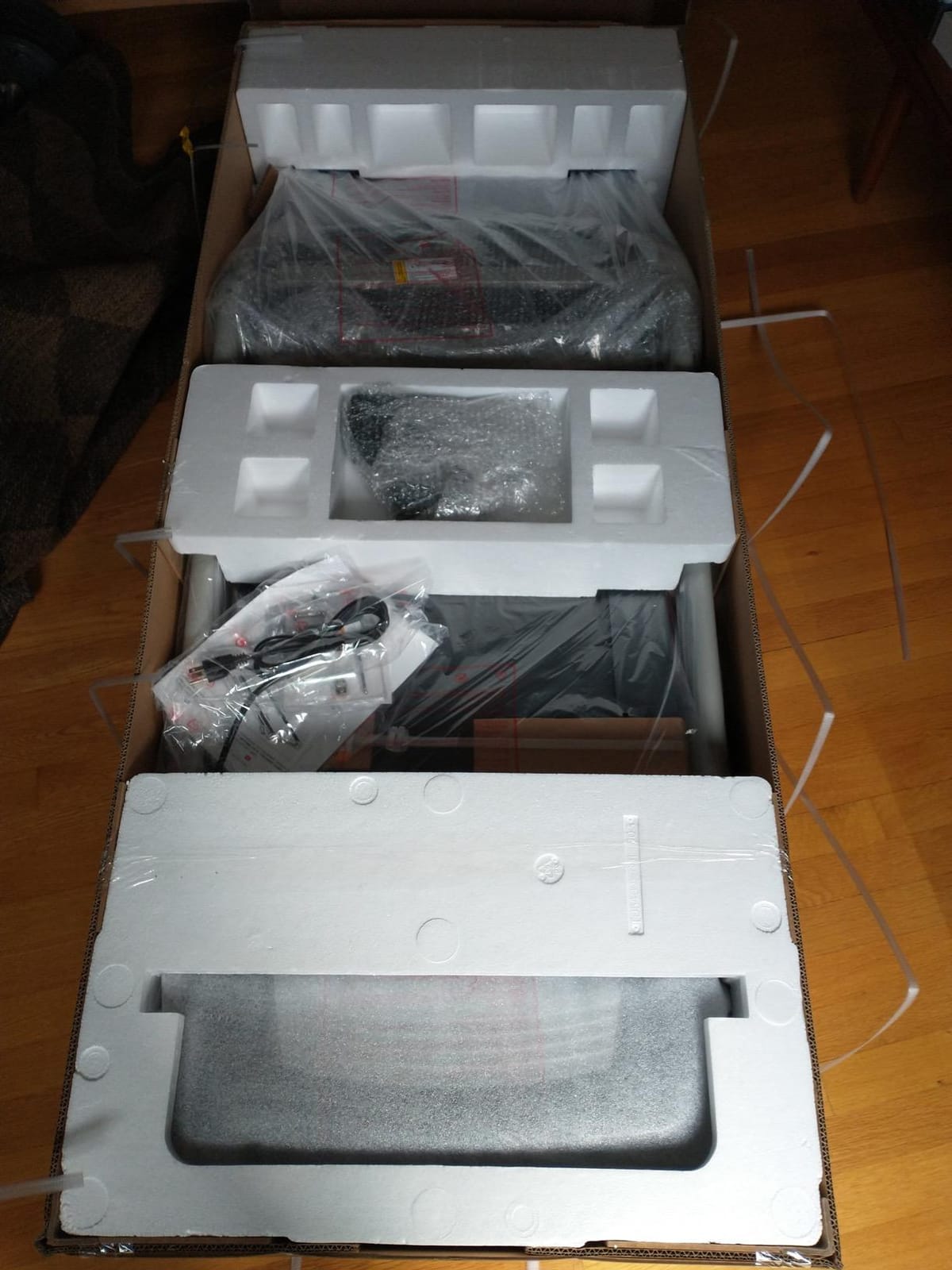
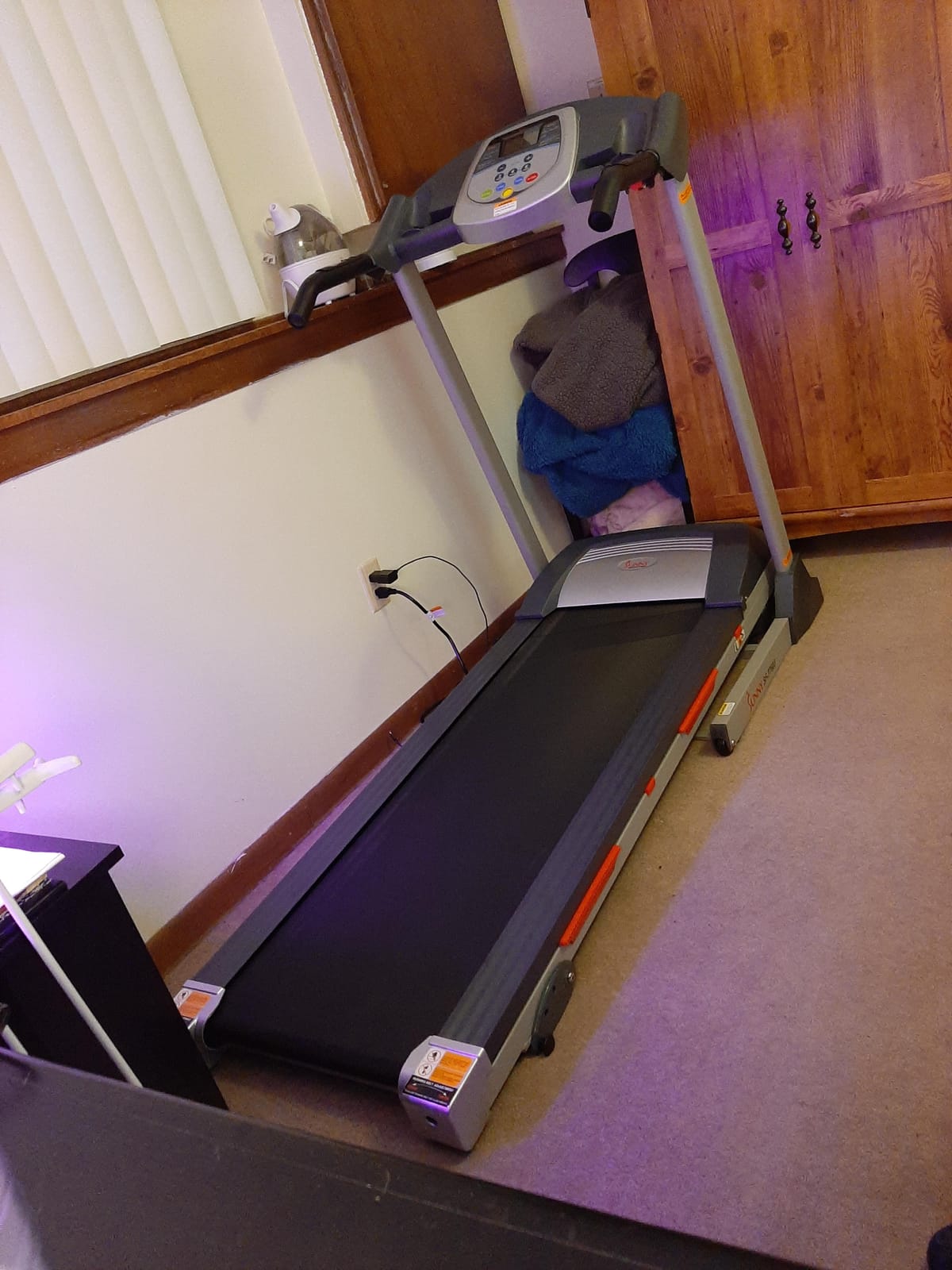
This is the machine we would put in a bedroom for someone whose goal is a daily 45 minute walk, every day, without thinking about it. Twelve auto incline levels reach 12%, and the quick speed buttons at 2, 4, 6 and 8 mph mean you can change pace without waiting for a ramp to crawl.
The double-deck cushioned surface is the quiet hero here. Several owners report still using it after three years, and for a machine whose job is thousands of hours of walking rather than hundreds of miles of running, that is the number that matters.
The free SunnyFit library covers more than 1,000 workouts and 10,000 scenic routes with no paid tier. Bluetooth connection is standard, so the app syncs out of the box. The soft hydraulic fold with transport wheels makes it one of the easier full-size machines here to put away.
Speed holds well at a brisk walking pace, which is the range most owners use it in. If your walk is at 3 to 4 mph, this machine is genuinely comfortable rather than merely adequate.
Why walking-only buyers should read the deck width carefully
The 16.5 inch belt is narrower than the other Sunny models here and narrower than most full-size machines. For straight-ahead walking, that is fine, and it does reduce motor load and belt wear. For anything side-to-side, it is not fine.
So this works for a dedicated walking routine and light jogging. It is not the machine for step work with lateral movement, for a family sharing it, or for anyone who wants to run. The accessory shelf is also thin, with cup holders that will not take a normal bottle.
Who should skip it
Tall runners should skip it outright, and reviewers say so directly, describing the narrow deck as unsafe to run on for anyone over average height. Anyone buying for a shared family gym should look at the wider deck in position three instead.
Watch the listing claims on connectivity. Owners repeatedly report that the promised smart TV pairing does not actually connect, and that heart rate monitoring can require an extra accessory. Also note there is no USB charging port and no fan, which is noticeable during a long summer walk.
6. Viamotion Walking Pad with Incline and Handle Bar – Best for Small Apartments
Walking Pad Treadmill for Home, Walking Pad with Incline and Handle Bar
Motor: 2.5 hp brushless
Speed: 3.8 mph
Incline: 4%
Noise: about 45 dB
Pros
- Takes up less than half a square meter
- About 45 dB is quiet enough to take calls while walking
- Remote control changes speed and targets without stepping off
- Handle bar adds real support
- LED display tracks time distance speed and calories
Cons
- Handle bar is too short for anyone taller than about 5 foot 4
- All settings run through the remote so a lost remote bricks it
- 3.8 mph top speed is walking pace only
This is the pick for a home office where a full treadmill is simply not a possibility. It folds upright against a wall or slides under a bed in less than half a square meter, and at 39.7 lb one person can reposition it. Owners mostly pair it with a standing desk and phone calls.
At roughly 45 dB it is one of the quieter machines in the guide, which matters a great deal in an apartment. The remote control is genuinely the right call at this size, because stepping off a narrow belt mid-workout is a good way to fall.
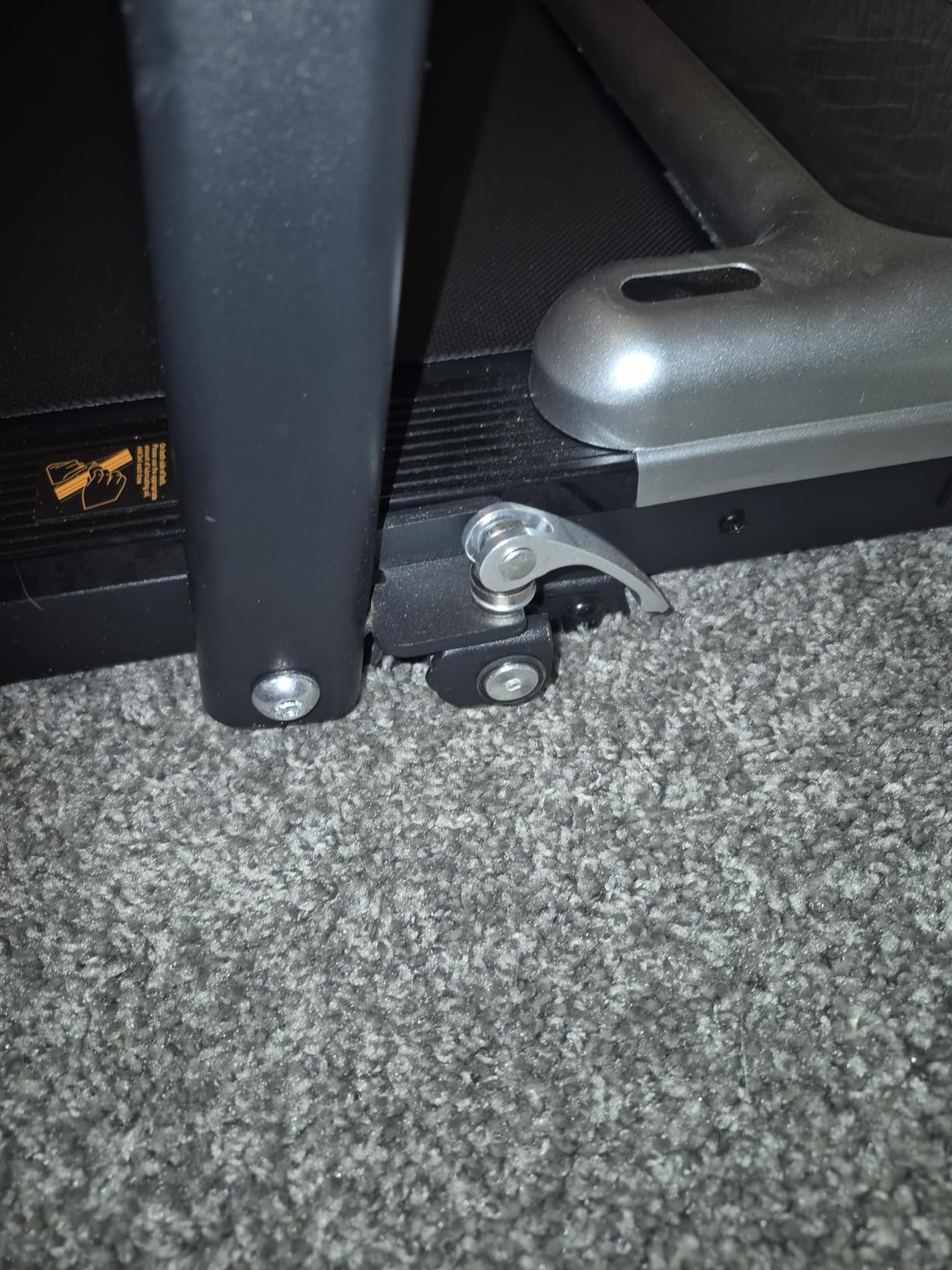
The handle bar adds stability for users who want something to hold onto, and the LED display with real speed feedback is more responsive than the single panels on many cheaper pads. A 4% adjustable incline is small but real, enough to make a long session harder than a flat walk.
The 265 lb capacity is the lower end here, and the 2.5 hp brushless motor is more than the walking workload needs, which suggests the figure is a marketing peak number rather than a continuous one.
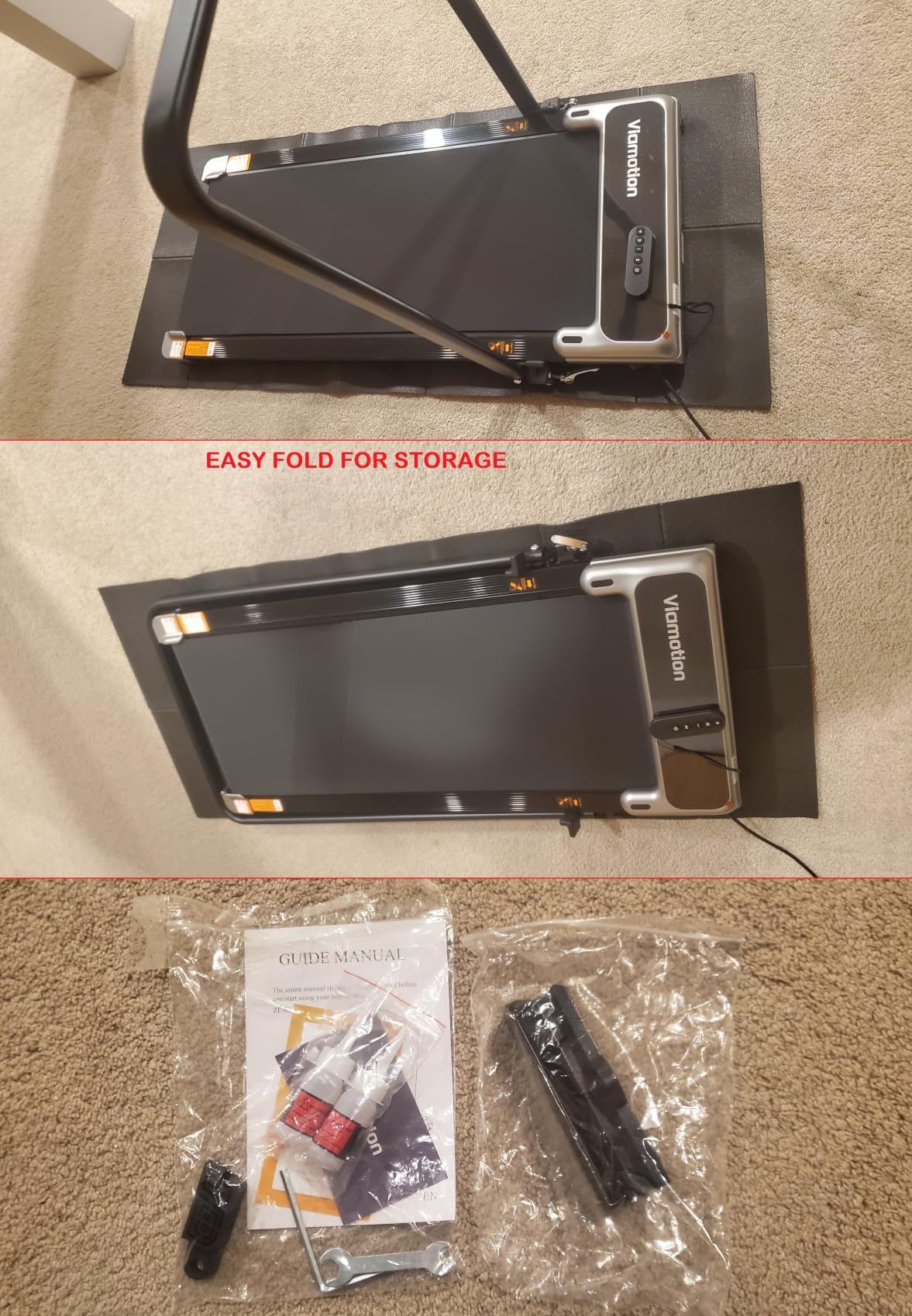
Why apartment buyers should measure the folded depth first
These machines are sold on footprint, so the number that matters is the folded one. At 45.53 by 21.17 inches, this model slides under a standard bed frame or against a wall without needing an outlet move. Compare that against the full-size machines in this guide, which need a permanent footprint and a dedicated wall.
Our advice for small homes is to tape out the running footprint on the floor before you buy, then tape the folded footprint where you plan to store it. Most returns in this category are footprint returns, not quality returns.
Who should skip it
Anyone over roughly 5 foot 4. The handle bar is too short for taller users, and reviewers call this out directly. The remote-only design is a second issue: every setting runs through the remote, so lose it and the machine is very hard to use.
Documentation is sparse, so budget time for setup. And a 3.8 mph ceiling means this is strictly a walking machine, so if your goal involves jogging at all, this is the wrong category entirely.
7. YPOO 16% Walking Pad with Handle Bar – Best for Balance and Hill Walking
YPOO 16% Walking Pad Incline, Treadmills for Home, Handle Bar, Foldable
Motor: 3.0 hp brushless
Speed: 0.5 to 5.0 mph
Incline: 16% manual
Deck: 36.6 x 15 inch
Pros
- 16% manual incline delivers genuine hill effort
- Anti-slip side handles add balance for beginners and seniors
- 300 lb rated steel frame folds flat
- Quiet brushless motor suits apartments
- Panel remote and app control plus a tablet holder
Cons
- Narrow 15 inch belt limits running to short strides
- 5 mph top speed makes it walking first
- Manual three level incline means stepping off to change it
This machine has the best rating-to-review ratio outside the top two picks, with 4.4 stars from 860 ratings and only 5% one-star reviews. The reason is the combination most buyers here actually want, a genuine 16% incline plus real side handles for balance on a narrow belt.
The anti-slip handles are the feature that separates it. On a 36.6 inch deck you will hold them constantly, and they turn a machine that would otherwise feel precarious for beginners, seniors and anyone coming back from injury into something usable.
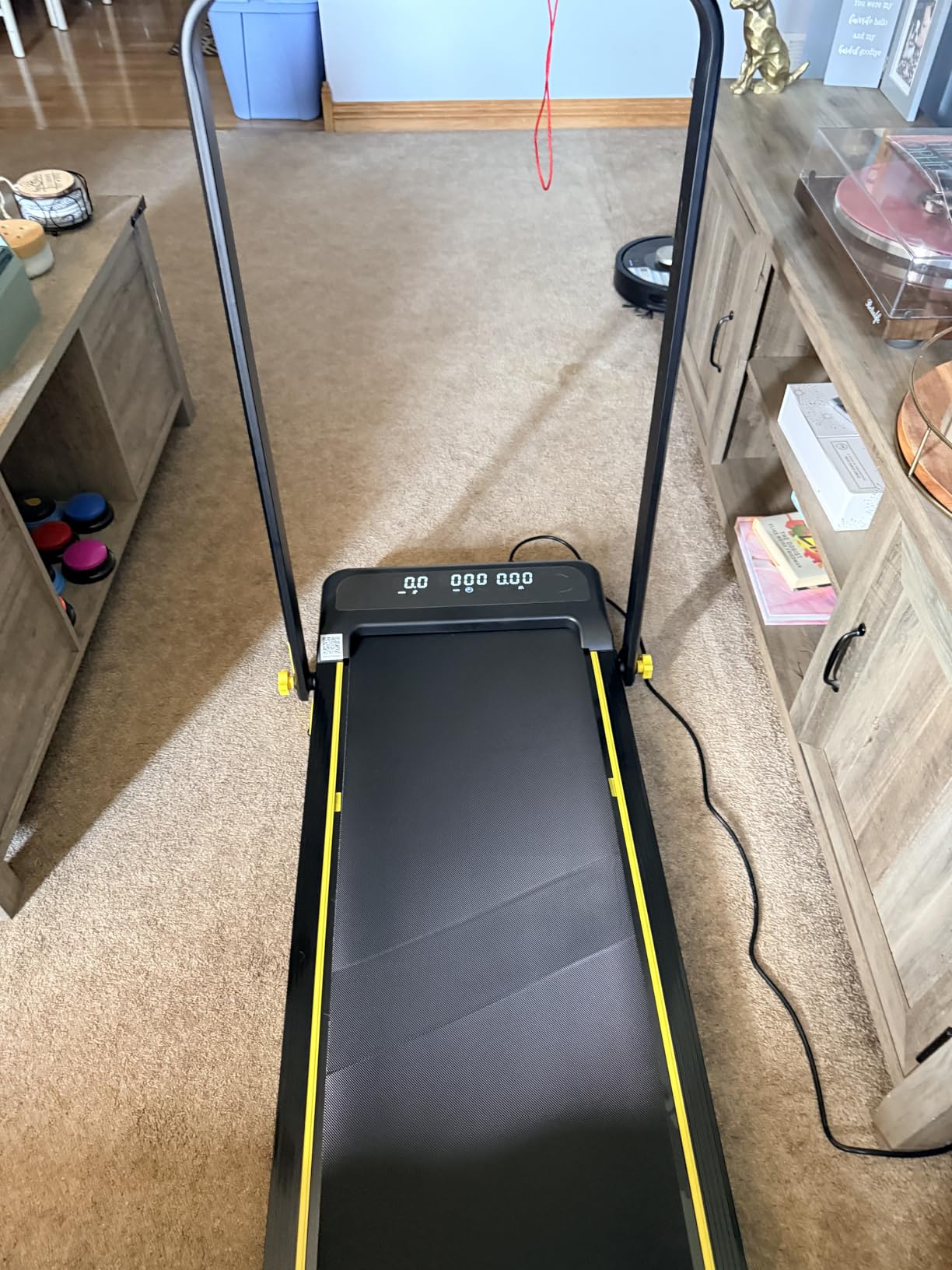
It hits 5.0 mph, which is a real step up from the 3.8 to 4 mph walking pads in this group. That is enough for a fast walk or a very slow shuffle, and not enough for genuine running.
The 300 lb capacity on a steel frame is solid, and the 5-layer belt with shock absorption holds up under incline work where thinner belts slip. Panel, remote and app control give you three ways to set a session, and a tablet holder is included.
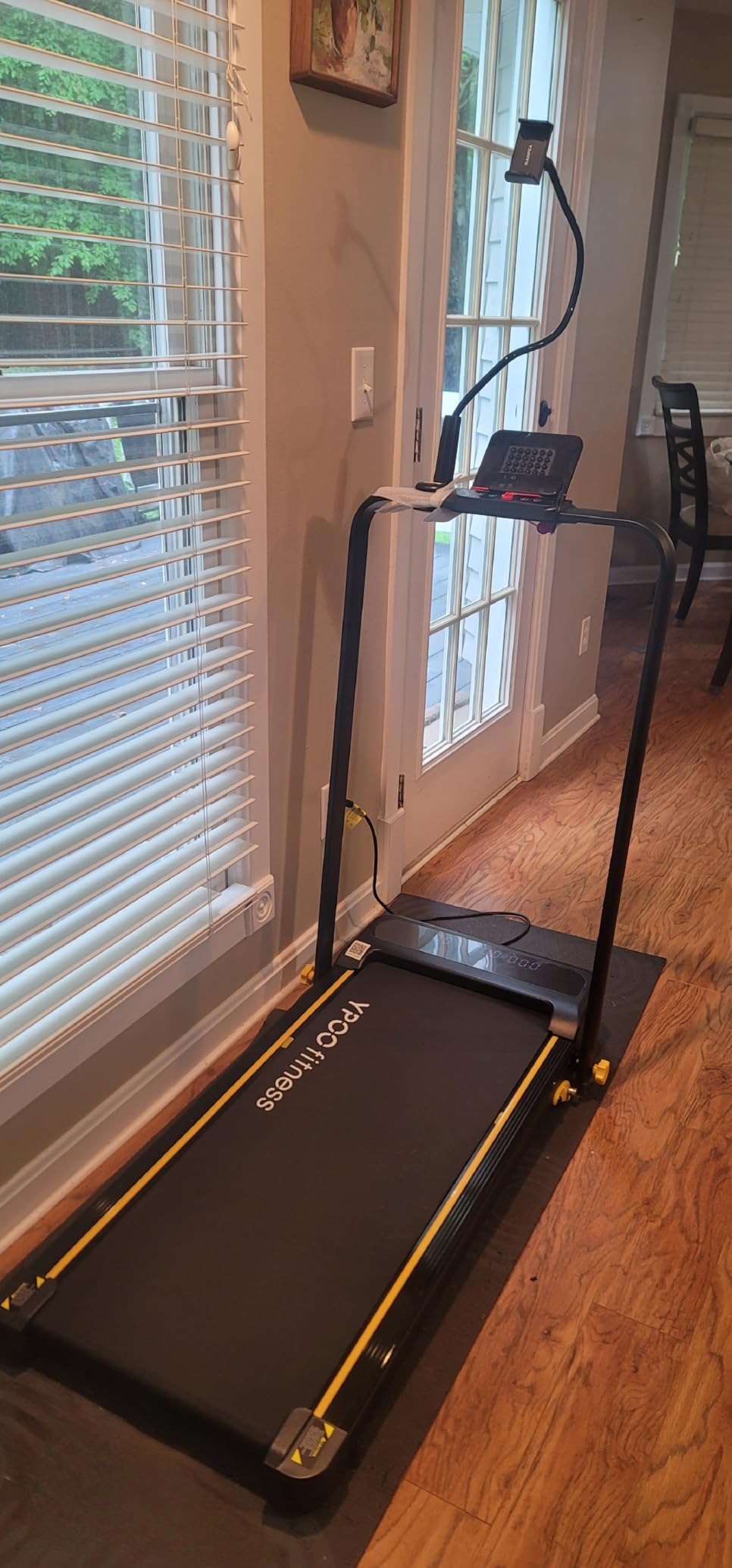
Who the handles genuinely help
Seniors, beginners and anyone returning to exercise after a layoff. Grip support on a narrow walking deck changes the risk profile completely, and it is why we would hand this machine to a parent in their seventies before we would hand them a 37 inch deck with no rails.
It also suits hill-focused walking better than the auto-incline pads, because a 16% manual setting is genuinely steep and the belt stays planted under a heavy load.
Who should skip it
Runners. A 15 inch belt with a 36.6 inch length means very short strides and real balance risk above walking pace, and the 5 mph ceiling confirms the intent. Anyone over about 5 foot 10 will feel the narrow track.
The manual three-level incline also means stepping off the belt to change it, which breaks up a walking interval session. The warranty is 1 year, the shortest structural commitment among the picks in this guide.
8. Yuejiqi 10% Incline Folding Treadmill – Best Compact Machine With a Real Top Speed
YUEJIQI Treadmill with Incline for Home Office
Motor: 3 hp brushless
Speed: 0.8 to 8.5 mph
Incline: 10% manual
Deck: 42 x 16 inch
Pros
- 8.5 mph is the fastest top speed in this price class
- Arrives mostly assembled with only a few screws
- Folds to about 5 inches for corner storage
- Steady and quiet for a compact machine
- 300 lb capacity with 12 preset programs and Bluetooth app support
Cons
- Incline is manual and cannot be adjusted while you walk
- Handrail heart rate readings are wildly inaccurate
- Folding flat needs an Allen wrench and the safety key causes an abrupt stop
When we asked what makes a compact machine worth owning, the honest answer is top speed, and this one delivers 8.5 mph. That is jogging pace on a 42 by 16 inch deck, and it puts this pick in a category of its own among the sub-300 dollar machines here, almost all of which top out at walking speed.
Setup is close to zero. It arrives mostly assembled with a few screws to tighten, and the 42 inch deck folds to about 5 inches thick for a closet or corner. At 55 lb it is still movable by one person.
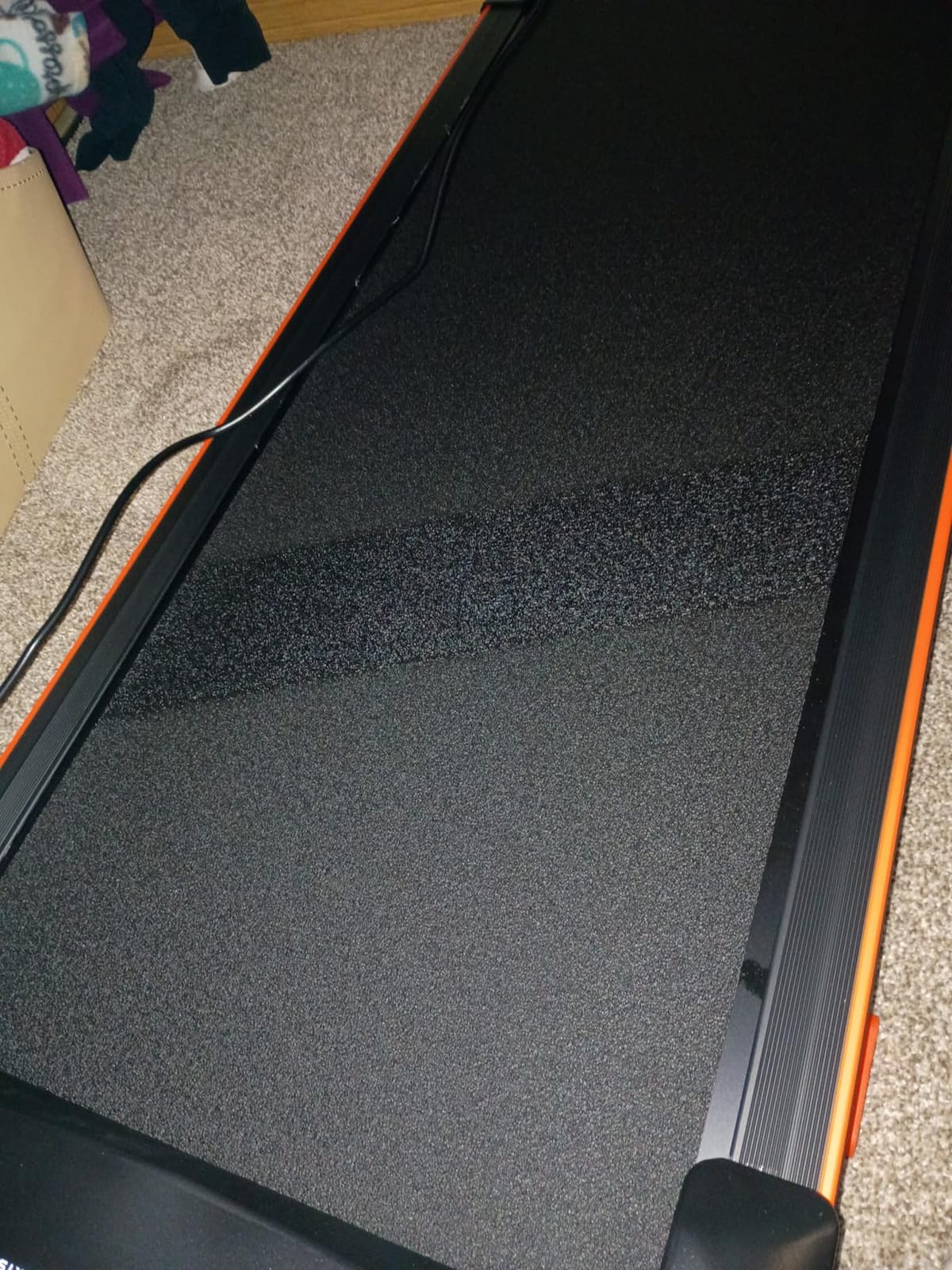
Build quality is better than the price suggests. The 5-layer belt sits on 6 silicone pads and 6 shock absorbers, which is a lot of cushioning for a machine at this level, and reviewers describe it as rock steady and quiet for a compact unit.
Bluetooth app support and 12 preset programs are there if you want them, though nobody buys this machine for the console. The 9-inch LED display is oversized by walking pad standards and easy to read.
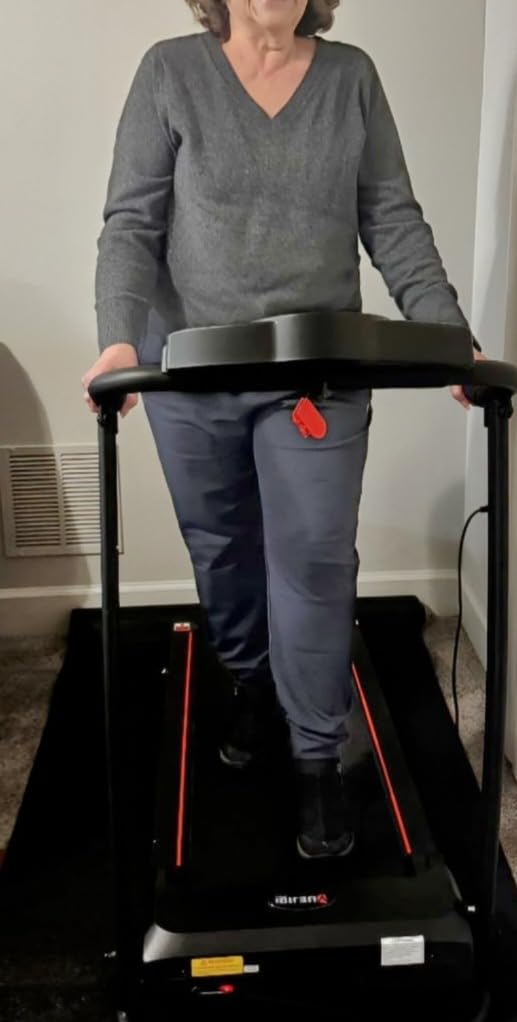
Why top speed changes the math on a compact deck
Most compact decks are limited by length, not motor, and the result is a machine that feels strained past 4 mph. An 8.5 mph ceiling gives you room to build up to a genuine jog over time, which is what keeps a first-time buyer on a machine instead of quitting and selling it.
For a young or light runner who weighs under about 180 lbs and does not need long strides, this is a credible jogging machine. That is a narrower use case than the full-size picks, but it is real.
Who should skip it
Anyone who wants to change incline mid-session. The 10% ramp is manual and the adjustment happens at the frame, so you stop walking to use it. Handrail heart rate sensors are also wildly inaccurate on this model, so do not plan training zones around them.
Two more practical notes. The power switch is at the base of the frame rather than the console, which is an odd place to look. And folding flat requires removing the handle screws with an Allen wrench, and the safety key triggers an abrupt stop rather than a controlled one.
9. TRAILVIBER 12% Auto Incline Under Desk Treadmill – Best for Heavy Walkers
Walking Pad Treadmill 12% Auto Incline, Under Desk Treadmill, Black
Motor: 2.5 hp
Incline: 12% auto over 9 levels
Speed: 0.7 to 4.0 mph
Capacity: 450 lb
Pros
- One button auto incline to 12% across 9 levels is rare at this price
- 450 lb capacity is the highest in the guide
- Folds to roughly 6 inches for under-desk storage
- Free FitYo app with 100 plus coach courses and no subscription
- 3-year warranty
Cons
- 4 mph top speed makes it strictly a walking machine
- Not designed for running despite the incline range
This is the highest-rated machine in the guide at 4.7 stars from 723 ratings, with 84% of those at five stars. The reason is simple, a 450 lb capacity on a 41 by 16.5 inch double-deck frame with a 12% one-button auto incline.
If you weigh more than 250 lbs and your plan is walking, this is the machine to buy. Nothing else in this list has that much structural margin, and the auto incline means you can build intensity without the manual stepping that puts most compact machines into that weight range.
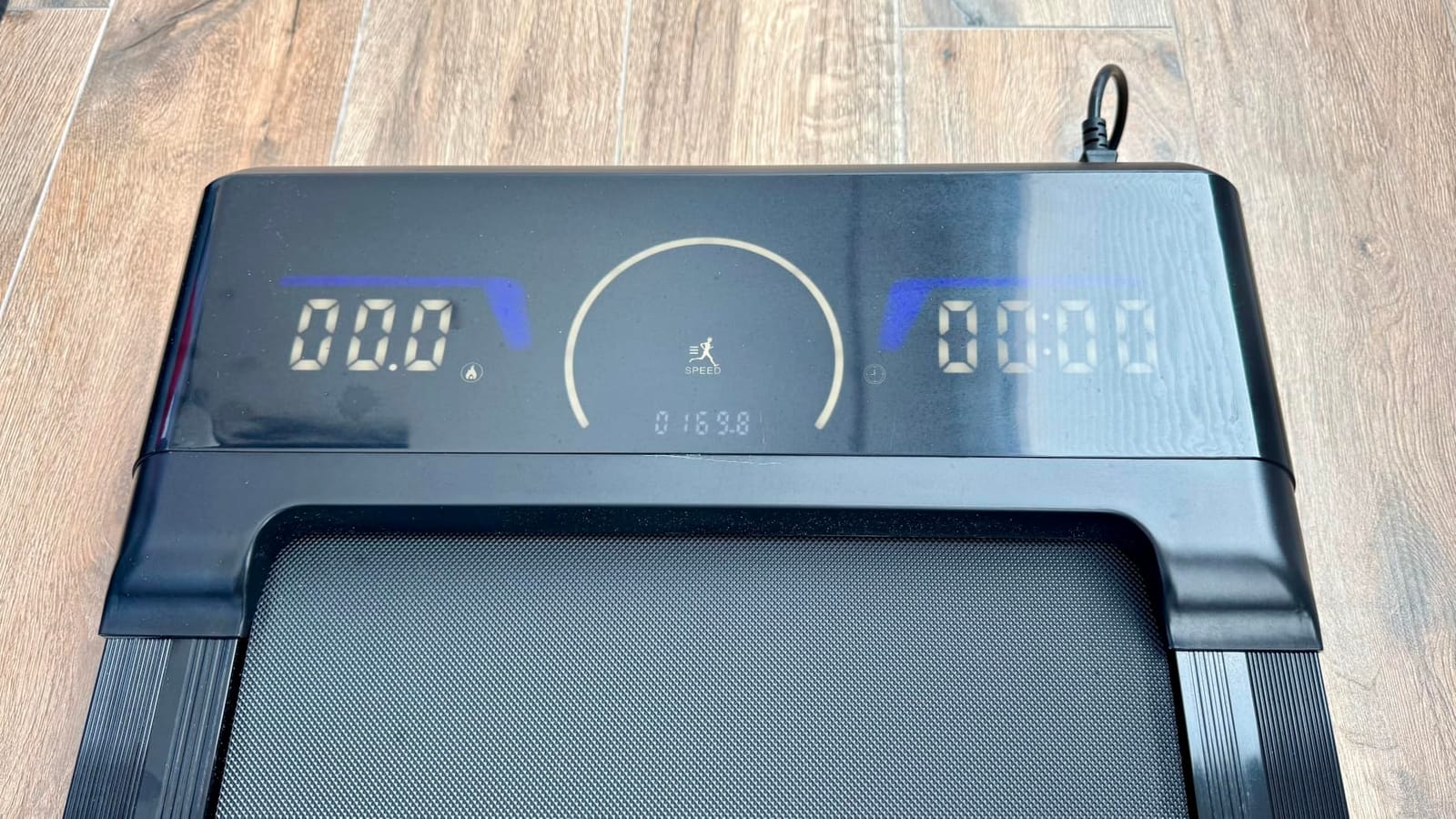
It folds to roughly 6 inches, so it lives under a standing desk, and the remote plus one-button incline controls mean you never have to step off a narrow belt. The RGB LED display runs in 6 colors and there is a built-in Bluetooth speaker, which is unusual at this level.
The FitYo app is free with 100-plus coach-led courses and no subscription. The 3-year warranty is the second-longest commitment we found in this group, behind only the 10-year frame on our top pick.
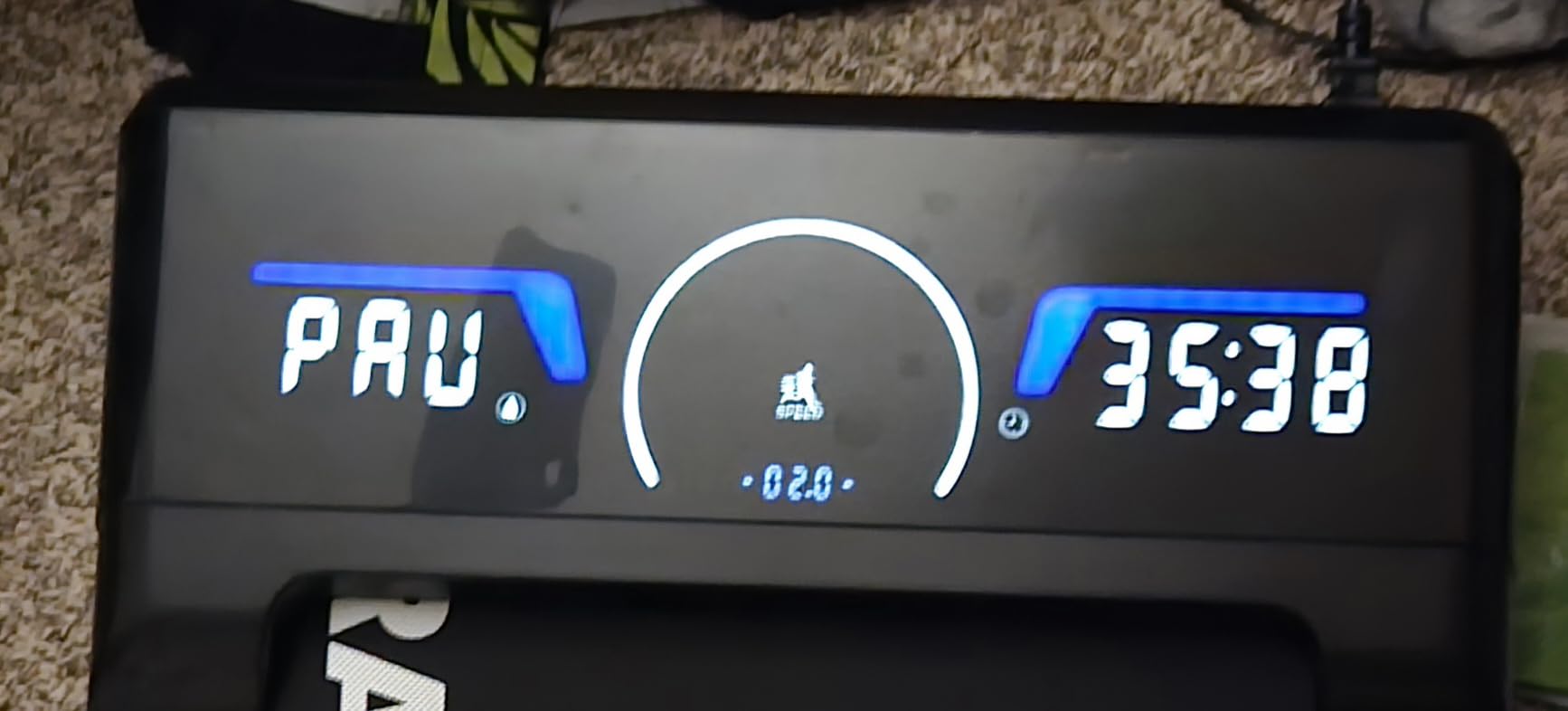
Why the 450 lb rating changes who this is for
Listed capacity is a static number, and running roughly triples the impact load through the frame at every foot strike. So a 450 lb rating sounds like it opens the door to heavy running, and it does not. It opens the door to heavy walking with a 12% grade, which is a genuinely harder workout than most people assume.
The double-deck frame with 4 silicone absorbers and a 5-layer anti-slip belt is built for that job, and the 9 auto incline levels reaching a true 6 degrees are what make the weight rating usable rather than theoretical.
Who should skip it
Anyone who wants to run, full stop. A 4 mph ceiling and a 16.5 inch belt mean this is a walking and incline machine, and the reviews are clear that the incline range does not translate into run capability.
It is also a sitting-height machine rather than a full treadmill, so if you want to watch a screen placed at treadmill-console height, you will need a riser. The steel frame means it is heavier to reposition than the plastic-framed walking pads.
10. UREVO Strol 2E Smart 2-in-1 Folding Treadmill – Best 2-in-1 for Tight Spaces
UREVO Strol 2E Smart 2-in-1 Folding Treadmill, Compact Walking Pad with Safety Handle, Plug and Play, Dual LED Display, Workout APP, Walking or Running for Home Office, Remote Included, Flaxen
Motor: 2.25 hp
Running mode: 0.6 to 6.2 mph
Folded mode: 0.6 to 4 mph
Fold: 4.6 inches
Pros
- Two modes in one with 6.2 mph upright and 4 mph under-desk when folded
- About four screws to assemble
- 4.6 inch fold fits under most beds and desks
- Quiet enough for a shared room or early mornings
- 8 silicone shock absorbers and 2 rubber pads
Cons
- Narrow belt causes stepping off the side or the back for taller users
- No incline in either mode
- A minority report motor overheating and speed jumps
The 2-in-1 trick here is simple and it works. Run it upright in open mode at up to 6.2 mph, then fold the handle and drop it under a desk for 4 mph walking. One machine covers both jobs and the folded footprint is 4.6 inches.
Setup is genuinely quick at about four screws, and owners frequently mention working out of the box. The remote has a one-key mute and magnetic attachment, which is the kind of detail you notice every single session.
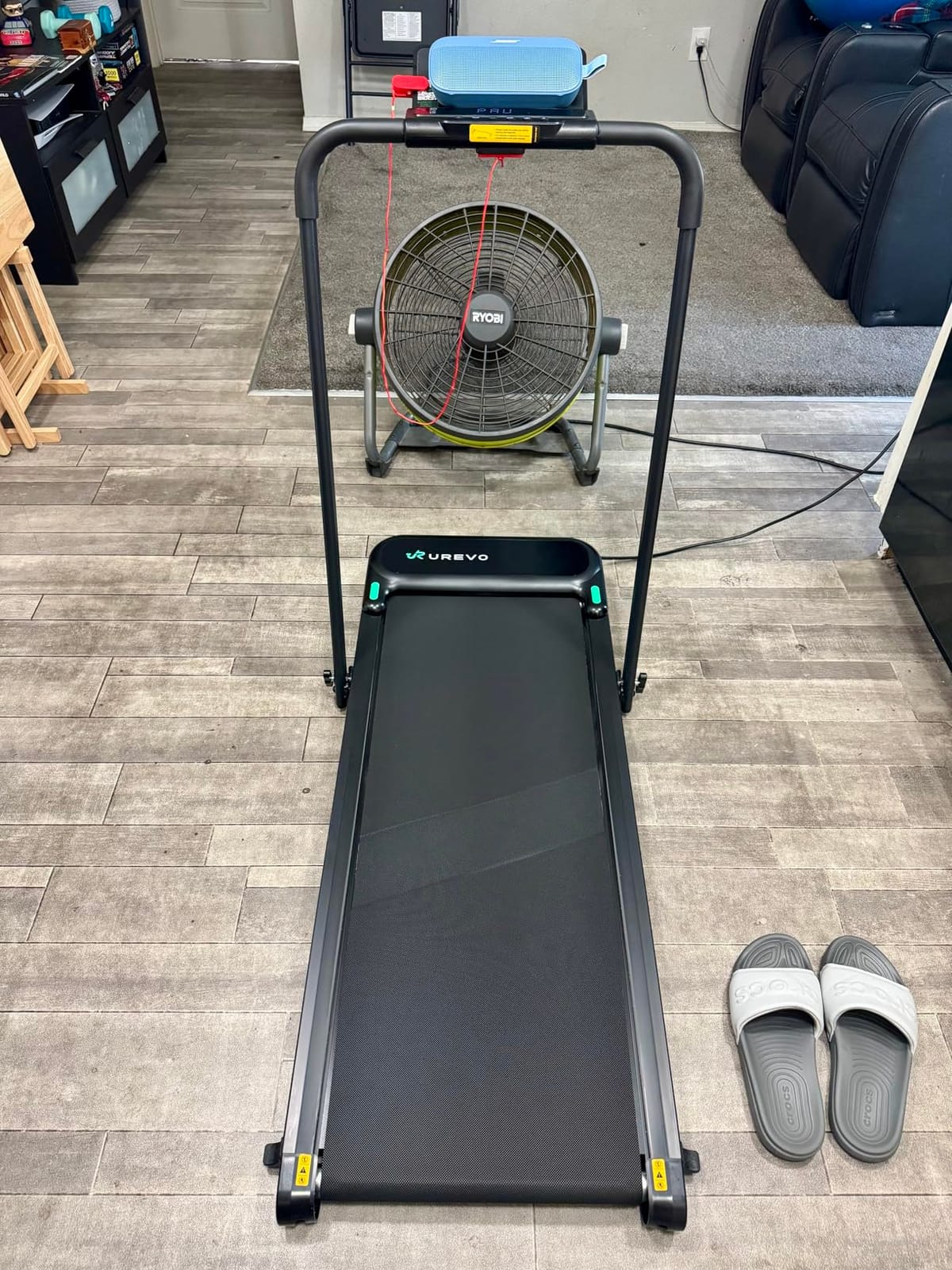
Cushioning is better than the belt size would suggest, with 8 silicone shock absorbers and 2 soft rubber pads on a 5-layer belt. Owners report it being quiet enough for a shared room or an early morning start, and the app-synced workout reports cover basic tracking.
At 55 lb and 265 lb capacity, this sits in the middle of the group. The safety key gives quick stop, which matters more on a machine this narrow than on a full deck.
Who the 2-in-1 design actually suits
Apartment dwellers who want one machine instead of two, or families sharing a room with a standing desk. Folding mid-session without moving the machine to a different plug is the actual advantage, and it is real for anyone who works from home part of the week.
The 40.1 inch deck is longer than the 36 to 37 inch belts on the other ultra-compact walking pads, which gives the running mode a bit more room than those alternatives.
Who should skip it
Taller or longer-strided users. The 15 inch belt is the most common complaint in reviews, with owners reporting stepping off the side or off the back. The handle bar is also too short for taller adults, which removes the stability it is supposed to provide.
There is no incline in either mode, which rules it out for hill training. And a small group of owners reports motor overheating, a session timer that resets at 100 minutes, and speed jumps from infrared interference, so treat it as a light-duty machine rather than a daily runner.
How to Choose a Treadmill Under 1000 Dollars
Buying a budget treadmill is mostly about deciding which two specs you refuse to compromise on. Everything else on the spec sheet is negotiable. Get motor size and deck length right, and almost any machine at this price will serve a decade of walking. Get them wrong, and no amount of app content will save it.
Read motor power as continuous horsepower, not peak
Horsepower is the least comparable number in this entire category, and it is the one buyers fixate on. Peak horsepower is a marketing figure taken at a moment the motor is not doing work. Continuous horsepower is what the motor can sustain while you are on the belt.
Forum consensus across the treadmill communities we checked is blunt about this. The advice is to get the most continuous horsepower you can, and to ignore peak numbers entirely. In this guide, that means treating the 2 hp to 3 hp figures on the compact machines as unverified, and reading the walking-paced performance instead.
One practical test if you can try a machine: step on at a brisk walk and push the speed up while holding the rails. If the motor bogs or the speed reading stutters under your weight, the motor is undersized for you, regardless of the number on the box.
Judge the deck by length first, width second
Length decides whether you can run. A 55 to 60 inch deck supports a normal adult stride, while anything under 45 inches caps you at a shuffle. If you run at all, 48 inches is the practical floor and 55 inches is where it starts to feel right.
Width decides whether you can do anything other than run forward. An 18 inch belt handles forward walking and running. A 20 inch belt handles step work, side steps and a shared machine. Below 16 inches, treat the machine as a walking pad no matter what the marketing says.
The 3:30 rule, for anyone who has seen it mentioned, is a running guideline about pace and effort rather than a treadmill spec. What it means for shopping is simple: if your easy runs sit near 30 minutes, a short deck will feel cramped on every single one.
Treat listed weight capacity as a walking number
This is the biggest source of buyer disappointment in this tier. A 300 lb capacity is a static rating, measured with the belt loaded but not moving. Running multiplies the effective load on the frame and deck by roughly three with every foot strike.
So the rule of thumb we use is to keep your body weight under two-thirds of the listed capacity if you plan to run, and under it if you only plan to walk. That is why the 450 lb machine at position nine is a heavy walking machine and not a heavy running machine.
Decide how much incline you actually need
Incline is the most undervalued feature at this price. It lets you raise intensity without raising impact, which makes it the cheapest way to make a walking-only machine feel like a workout. Walking at 3 mph up a 12% grade is a legitimate training session.
Auto incline with quick-adjust buttons is far more useful than manual because you can change it mid-session without stepping off the belt. The two machines with genuine 16% settings here, in positions four and seven, use manual three-stop ramps, so plan to pause for changes.
If your current treadmill has no incline at all, the realistic options are to add a riser under the front feet or to replace the machine. A riser lifts the console out of a natural viewing position and changes the motor angle, so treat it as a stopgap rather than a fix.
Split the warranty into frame, motor, parts and labor
Forum buyers check warranty terms before anything else, and they are right to. A lifetime frame warranty with a 1-year motor and parts warranty is a very different promise from a 3-year structural frame with 180 days of parts, even though the marketing language sounds similar.
Our top pick leads on frame coverage at 10 years. The Sunny machines cluster around a 3-year structural frame with 180 days of parts, and several compact models offer only 1 year. On a 130 lb machine, labor coverage matters as much as the part, because a motor swap is otherwise an expensive visit.
Measure noise and the floor footprint before you commit
For apartment dwellers, noise and footprint are the two buying blockers, and both are easy to check before you spend. Motor type drives most of it. Brushless motors run considerably quieter than brushed, and the two machines in this guide with published noise figures both sit near 45 dB.
For footprint, tape out both numbers on the floor before you order. Measure the running dimensions, then measure the folded dimensions, and check the folded one against where you would actually store it. A machine that needs a permanent 68 by 30 inch floor space is a different purchase from one that slides under a bed.
If your home cannot absorb building noise at all, a curved treadmill is worth a look. Curved slat decks generate far less impact noise than a motorised belt, though they are manual and much more expensive.
Check the subscription before the warranty
Ask one question of any connected treadmill: what still works if I never pay? On the top pick, most smart features sit behind a training membership, though device mirroring gives you an escape route. On the Sunny models in this guide, the app content is free, which is a real advantage.
Subscription fatigue came up again and again in the forums we checked. Owners describe the recurring fee as paying rent on features they already paid for, and the consistent advice was to buy a machine that works fully offline.
Know when buying used beats buying new
There is an argument in the forums that a used commercial machine beats a new budget machine at the same money. Long-term owners on Slowtwitch report used Landice and PS100 units with 100-plus miles on them that remain rock solid, bought in the 800 to 900 dollar range when new.
That is a reasonable path if you can inspect it. Check belt alignment, roller wear, the incline mechanism and the console before you commit, and expect to move a much heavier machine through doorways yourself. A three-year frame warranty and a parts supply that still exists in ten years are the two things a new purchase at this price buys you, and they are not nothing.
Know when to spend more than 1000 dollars
Three triggers justify going above this ceiling. Running more than about 20 miles a week needs a 60 inch deck and a motor with real continuous headroom. A body weight above 250 lbs needs a commercial frame and a duty cycle built for load. And a multi-user household needs a wider belt than 20 inches, because shared machines are where narrow decks cause most of the frustration.
None of those apply to a person who wants a reliable walking and light jogging machine in a spare room. In that case, everything in this guide is enough, and spending more buys warranty length and console polish rather than fitness.
Budget ten minutes a month for maintenance
Belt lubrication every 3 to 6 months, a monthly check on the frame bolts and a wipe of the rails keeps a budget machine running. Skipped lubrication is the leading cause of belt wear in this tier, and a dry belt is also the loudest thing you can own in an apartment.
Our other walking pad roundups cover the sub-4 mph category in more depth, and our under-desk guide goes into the desk-height question properly.
Frequently Asked Questions
What are the best treadmills for value for money?
Value at this price comes from motor size, deck length and warranty length, not screens. The NordicTrack T Series leads on all three with a 2.6 hp motor, a 55 by 18 inch deck and a 10-year frame warranty. The Sunny Smart Wi-Fi model offers auto incline to 12.3% and a free app, and the Sunny fully assembled machine adds a 20 by 53 inch deck and 15% incline. Avoid paying extra for touchscreens or subscription-gated features at this tier.
What are some good treadmills under 1000 dollars?
The strongest options under 1000 dollars split into three groups. Full-size machines cover walking, jogging and light running: the NordicTrack T Series, the Sunny fully assembled auto incline model and the Sunny Smart Wi-Fi shock absorption model. Compact folding machines handle jogging at reduced stride: the Yuejiqi at 8.5 mph and the CURSOR FITNESS with a 16% manual incline. Walking pads cover desk work and small apartments.
What is the best rated treadmill under 1000 dollars?
By average star rating across verified owner reviews, the TRAILVIBER 12% auto incline under desk treadmill rates highest in our set at 4.7 stars from 723 ratings, with 84% five-star. It combines a 450 lb capacity, one-button 9-level auto incline to 12% and a 3-year warranty. If you want a full-size machine instead, the Sunny fully assembled auto incline model leads at 4.4 stars from 6,362 ratings.
Which is the most affordable and good quality treadmill?
Among full-size machines the Sunny Smart Wi-Fi model with shock absorption is the strongest value, pairing a 2 hp brushless motor, 12.3% auto incline, a 16 by 52 inch deck and more than 9,000 ratings at 4.3 stars. Below the full-size tier, quality drops fast, so set expectations: sub-200 dollar machines are built for walking rather than jogging, and a 1-year warranty is the norm.
What is the most reliable treadmill brand?
Reliability at this price tracks motor type, deck construction and warranty length more than brand name. Brushless motors, which appear in the Sunny, Yuejiqi, YPOO and CURSOR FITNESS machines here, are more dependable than brushed designs. Check the warranty split carefully: a 10-year or 3-year structural frame with 1-year parts is the norm, while several compact models offer only 1 year of total coverage.
What treadmill company has the best warranty?
Warranty coverage varies by model, not just company, so compare the specific machine. The NordicTrack T Series leads this group with a 10-year frame warranty alongside 1-year motor, parts and labor. The Sunny machines offer a 3-year structural frame with 180 days of parts, and the TRAILVIBER walking pad gives 3 years total. Check whether labor is covered separately, since motor swaps get expensive without it.
Do I need an iFit subscription for my treadmill?
It depends on the machine. Several Sunny models in our guide include their full app content, with 1,000 to 2,000-plus trainer videos and 10,000-plus virtual routes, at no recurring cost, and the TRAILVIBER walking pad includes 100-plus coach-led courses free. The NordicTrack T Series places most of its smart features behind an iFIT Train membership, but you can still mirror your own phone or tablet and use any free training app instead.
How long should a budget treadmill last?
Expect 5 to 10 years from a well-maintained machine at this price, with the difference driven by motor type and use pattern. A brushless motor with a multi-year structural frame warranty, lubricated every 3 to 6 months, can last a decade of daily walking. A brushed motor with a 1-year warranty is closer to 2 to 3 years. Walking extends life significantly, while running at the machine’s top speed shortens it fastest.
The Verdict: Our Best Treadmill Picks Under 1000 Dollars in 2026
For most people reading this, the NordicTrack T Series is the right buy. It is the only machine in this guide with a five-figure review count, it has the longest frame warranty we found under 1000 dollars, and a 2.6 hp motor with a 55 inch deck handles everything from walking to steady running. The only real compromise is the subscription-gated smart layer, and you can route around it with device mirroring.
If you want a wider belt, more incline and no membership at all, the Sunny fully assembled auto incline machine is the upgrade, with a 20 by 53 inch deck and 15% of motorised incline. If your home is small enough that floor space is the deciding factor, the walking pads in the lower half of this list are honest about what they are, which is a walking and incline machine rather than a treadmill.
One last piece of advice, and it is the one piece we would repeat to anyone shopping in this tier. Buy on motor size, deck length and warranty, and ignore the console. The best treadmills under 1000 dollars are the ones you will still be walking on in 2026 when the app you paired with has been replaced twice.