
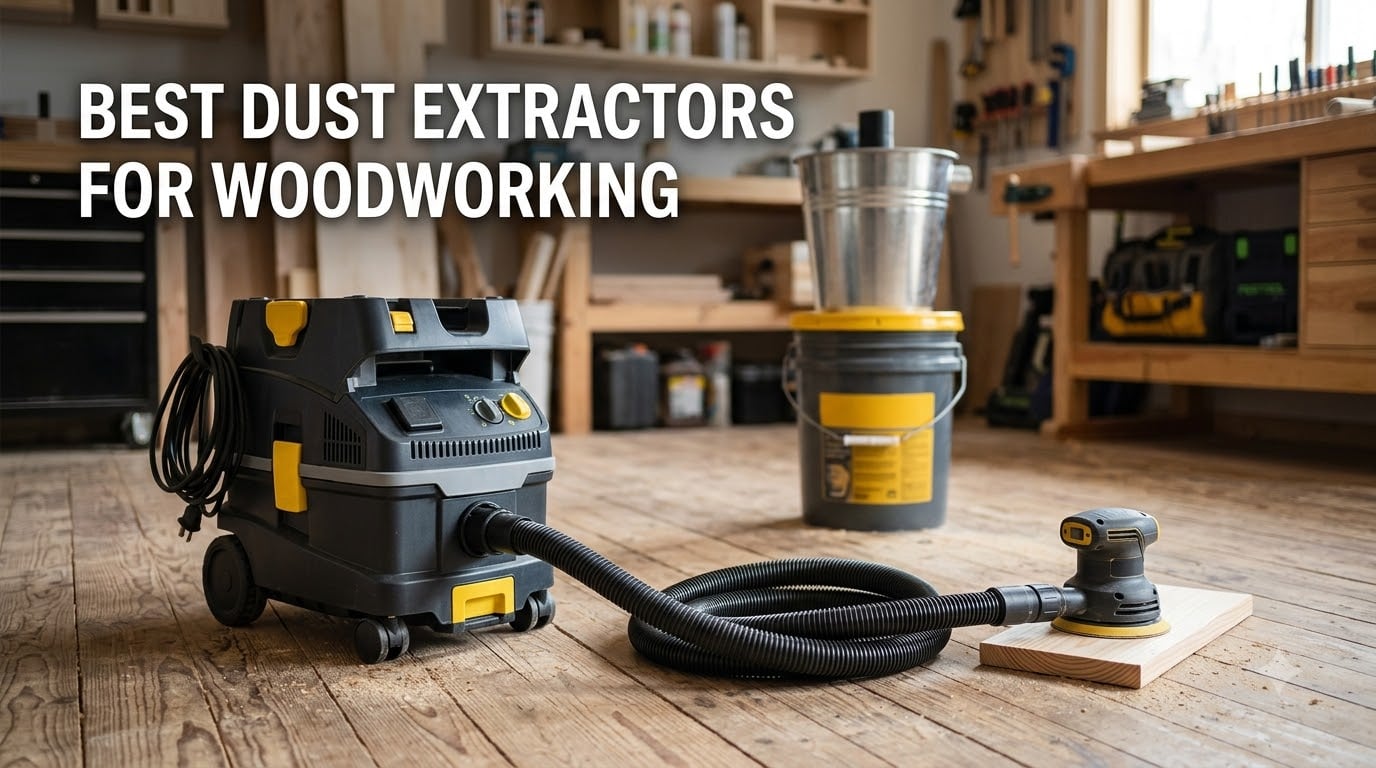
The right dust extractor depends on whether you need high static pressure for handheld sanders and routers, or high airflow for stationary machines like a table saw, planer or jointer. Handheld tools pull a tiny volume of air through a long hose, so suction force wins. Stationary machines dump bulk chips and shavings, so volume wins. Every pick below is matched to one of those two jobs.
We spent weeks putting ten of the most popular dust extraction options side by side, including tool-activated extractors from Festool, DEWALT, Bosch and Fein, a high-airflow collector, and cyclone separators that turn an ordinary shop vac into a two-stage system. What stood out is that the unit we rank first is not the right answer for every shop, and the smallest add-on in the lineup solves the most common complaint owners report.
Throughout this guide we route you to the right family of machine first, then give you the ten picks, then explain the numbers that actually decide the purchase: CFM, static pressure, filter class, capacity and running cost. If you only read one section, make it the type-routing section after the picks. It saves you from buying a 660 CFM collector for a palm sander, a common and expensive mistake in a small shop.
Updated for 2026 with a fresh look at current ratings, ownership reports and the maintenance reality of fine wood dust.
Table of Contents
Top 3 Picks for Woodworking Dust Extraction (October 2026)
Best Dust Extractors for Woodworking in 2026 at a Glance
| Product | Specifications | Action |
|---|---|---|
 Festool CT Midi I HEPA Bluetooth Dust Extractor Festool CT Midi I HEPA Bluetooth Dust Extractor |
|
Check Latest Price |
 DEWALT DWV010 HEPA 8-Gallon Dust Extractor DEWALT DWV010 HEPA 8-Gallon Dust Extractor |
|
Check Latest Price |
 Bosch VAC090AH 9-Gallon Dust Extractor Bosch VAC090AH 9-Gallon Dust Extractor |
|
Check Latest Price |
 Fein Turbo I 5.8-Gallon Wet/Dry Dust Extractor Fein Turbo I 5.8-Gallon Wet/Dry Dust Extractor |
|
Check Latest Price |
 Mullet Cyclone Dust Separator Mullet Cyclone Dust Separator |
|
Check Latest Price |
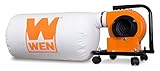 WEN DC3401 660 CFM Dust Collector WEN DC3401 660 CFM Dust Collector |
|
Check Latest Price |
 Oneida Air Systems 5-Gallon Cyclone Kit Oneida Air Systems 5-Gallon Cyclone Kit |
|
Check Latest Price |
 Dustopper PRO Cyclone Separator Dustopper PRO Cyclone Separator |
|
Check Latest Price |
 DEWALT DXVCS002 Dust Separator DEWALT DXVCS002 Dust Separator |
|
Check Latest Price |
 Rockler Dust Right Separator with Hose and Bucket Rockler Dust Right Separator with Hose and Bucket |
|
Check Latest Price |
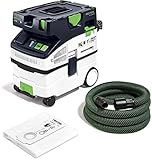
1. Festool CT Midi I HEPA – Bluetooth Auto-Start in a Compact Package
Festool 574837 Ct Midi I Hepa Bluetooth Dust Extractor
130 CFM suction
3.9 gallon capacity
24.9 lb
1200W
120V
Bluetooth auto-start
Pros
- Bluetooth auto-start pairs with Festool battery packs so the unit runs whenever a sander switches on
- HEPA filtration plus a self-cleaning bag that owners say lets them sand without a mask
- Exceptionally quiet and compact for a 130 CFM extractor
- Conical anti-static hose will not snag on workpiece edges
- Sys-dock with T-Loc accepts Systainers and stores the hose inside
Cons
- High purchase price and costly proprietary accessories
- 27mm hose needs adapters to connect non-Festool tools
- Does not accept some accessories reserved for higher CT tiers
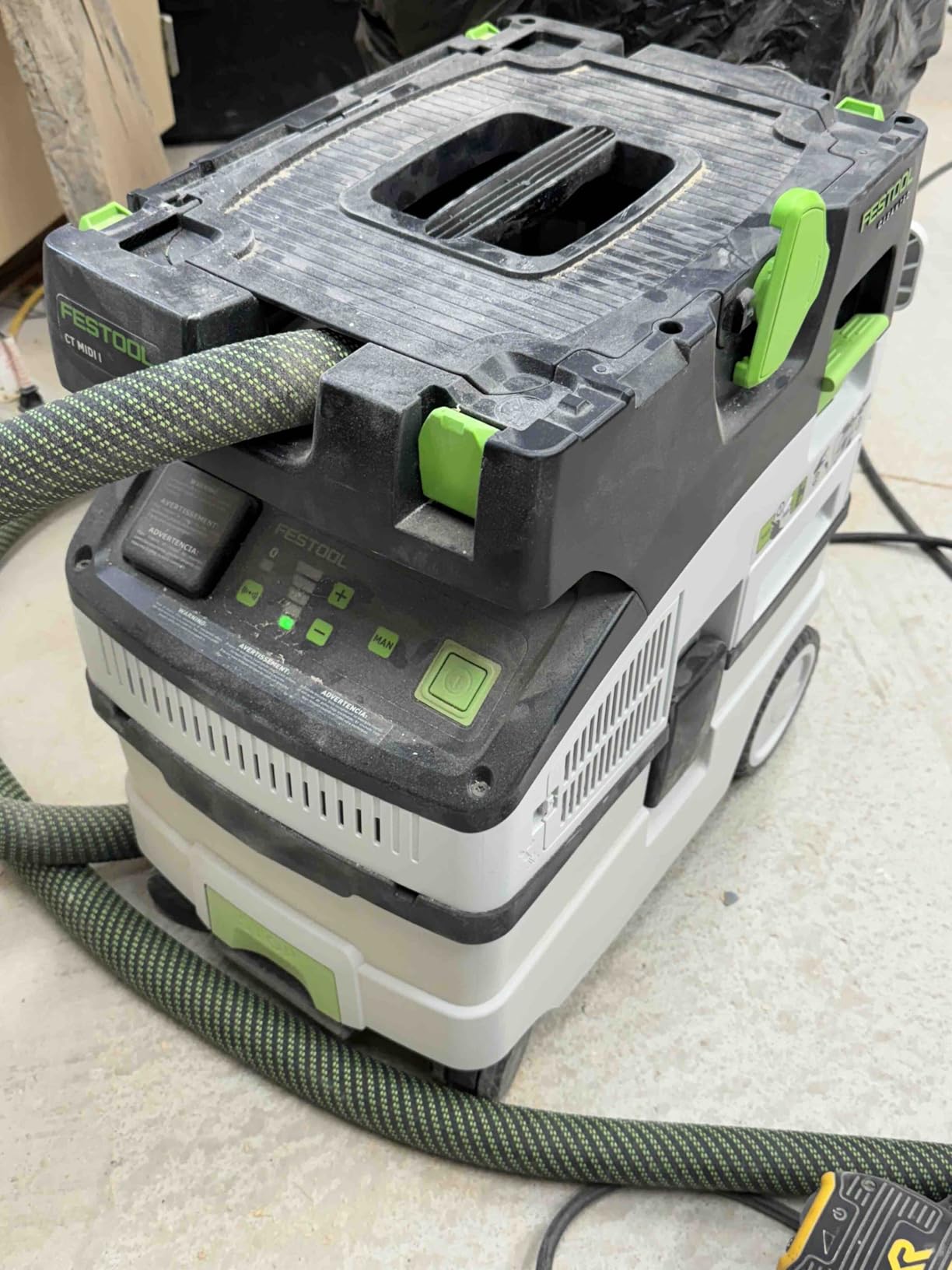
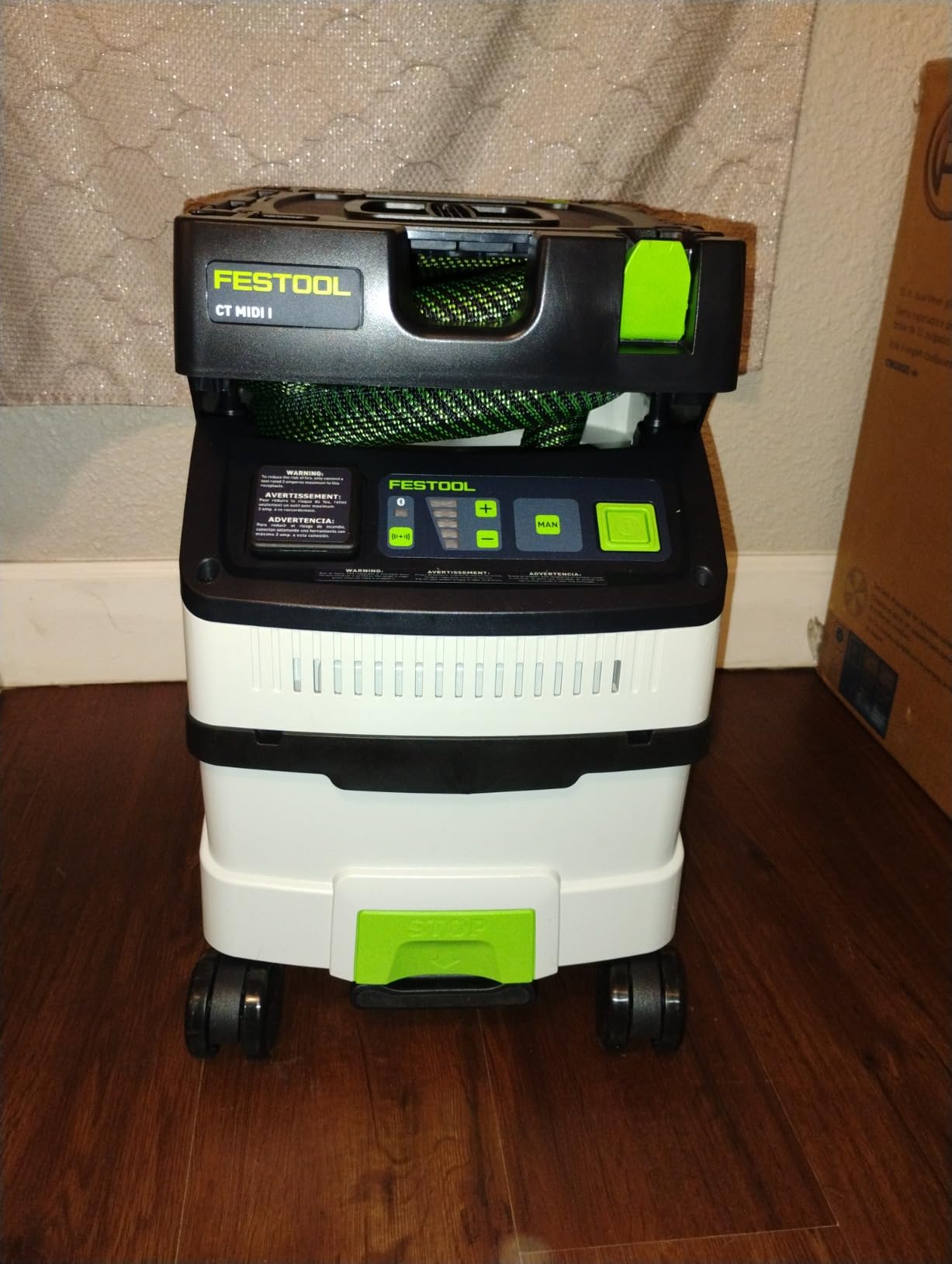
This is the unit we kept reaching for. The CT Midi I sits beside whatever we were sanding, starts itself when the sander starts, and shuts down a beat after we stop so the hose clears. On a Festool sander that pairing is automatic through Bluetooth; on anything else you trigger it from the outlet.
The 130 CFM figure looks modest next to a 660 CFM collector, and it is. That number is not the point on a random orbital sander. What matters is that the conical hose holds suction through a narrow 27mm bore without collapsing, and that a 1200 watt motor running under load is far less intrusive than the extractor you are used to.
Owners consistently report two things: they stopped wearing a mask while sanding, and the self-cleaning filter bag kept performance steady across a long session. The HEPA cartridge traps the particles that matter, and the bag does the work of shedding dust off that cartridge every time the machine cycles.
The Sys-dock is the quiet hero. It clamps to a Systainer in seconds and the hose lives inside the body, so moving the whole setup to the next job is a lift-and-go rather than a coil-and-find-a-cord situation. For a one-person shop that difference is bigger than any spec on the list.
What convinced us to pick it first
Quiet operation at a real suction level, plus an auto-start that genuinely works without babysitting. If you already own Festool sanders, the Bluetooth link is the feature that makes it feel like part of the tool rather than an accessory bolted to it.
The 3.9 gallon drum also empties faster than you would expect, because a self-cleaning bag throws its dust into a small canister instead of packing it into the machine.
Where it will disappoint you
Cost is the honest limitation, and it extends to the ecosystem. The hose is 27mm, so non-Festool tools need adapters, and the boom arm and auxiliary bag features some CT models carry are not available on this tier. The three-year warranty is solid, but proprietary accessories are where the long-term cost hides.
If you are not already committed to Festool tools, the same quiet-and-automatic experience is available from other brands for noticeably less. Check the sections on the Bosch VAC090AH and the DEWALT DWV010 before you decide.
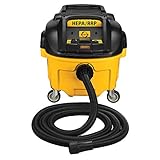
2. DEWALT DWV010 – For Table Saw and Track Saw Dust
DEWALT DWV010 HEPA Dust Extractor with Automatic Filter Cleaning, 8-Gallon
150 CFM airflow
8 gallon capacity
22 lb
300W
15 ft anti-static hose
80 dB
Pros
- Filter cleaning pulses every 30 seconds so the dual filters do not clog on sanding dust
- Power tool actuation starts and stops the unit with the tool and runs on to clear the hose
- Owners report performance comparable to stationary collectors when paired with a table saw or track saw
- HEPA filtration is genuinely useful for lead and plaster dust
- Heavy duty wheels and casters survive jobsite use
Cons
- Noisy 80 dB high-pitched sound
- Suction is lower than a plain shop vac because of the HEPA filter
- Proprietary stiff hose and friction-fit adapters cost extra
- Heavy and awkward with only the front wheels swivelling
- Auto-start only works when the tool plugs into the extractor
The DWV010 punches above its weight on bulk debris. Owners repeatedly report that paired with a table saw or a track saw it handles volume that normally demands a dedicated collector, and the dual-filter pulse keeps that volume from choking the airflow halfway through a cut.
Every 30 seconds the machine pulses its filters. You hear it as a brief change in pitch, and you stop thinking about it, which is the point: the suction you started with is roughly the suction you still have an hour later. That single behaviour solves the mid-session suction decay that makes shop vacs so frustrating.
Power tool actuation is the other half of the appeal. Plug the tool into the extractor outlet, switch the tool, and the vacuum follows. It keeps running briefly after the tool stops so the hose does not dump its contents across the floor. Just note that the auto-start only engages through the extractor outlet, not through a wall socket or an extension lead.
At 8 gallons the drum holds a respectable amount of MDF dust, and the 15 foot anti-static hose with a universal swivel connector is long enough to reach across a bench to a track saw on the floor. The heavy duty casters take the unit to the machine rather than the other way around.
Why shops pick this one
The self-cleaning pulse combined with tool actuation is the combination that lets you run a saw without thinking about the machine. For MDF, plaster or lead paint work, the HEPA filtration also does something a standard collector will not.
Do not confuse it with the DWV012. That is a separate, larger model, and a DWV012 owner on Sawmill Creek describes that machine as working extremely well with Festool-class extractors. The DWV010 sits below it in capacity and raw suction.
Where the compromises show up
At 80 dB this is the loudest published figure among the extractors here, and the tone is high-pitched rather than a low rumble. If you share a wall with a neighbour, plan on hearing protection and consider acoustic padding around the housing.
The HEPA filter also means less raw suction than a plain shop vac, so it is not a substitute for one in the workshop. And the hose fittings are proprietary, with adapters sold separately, which adds cost the sticker does not suggest.
3. Bosch VAC090AH – The Value Pick and the Best Value Full-Size Extractor at 60 dBA
Bosch VAC090AH 9 Gallon Dust Extractor with Auto Filter for Grinder 1773AK
150 CFM airflow
97 in water lift
28 lb
60 dBA
120V
3 power levels
Pros
- Quiet 60 dBA operation
- the lowest noise figure among the full-size extractors listed
- 150 CFM paired with 97 inches of static water lift for strong wet and dry pickup
- Auto filter cleaning every 15 seconds keeps suction through long sessions
- HEPA filter captures 99.97% of particles at 0.3 microns and larger
Cons
- Heaviest unit in its class at 28 pounds
- One year limited warranty is shorter than rivals
Of the full-size extractors listed here, the Bosch has the highest published noise-limited balance: 150 CFM, 97 inches of water lift and a 60 dBA figure in one housing.
That noise number matters more than it looks on paper. The gap between 60 dBA here and 80 dB on the DWV010 is the difference between a machine you can run while listening to a podcast and one you plan around. The Bosch also runs a filter-cleaning cycle every 15 seconds, twice as often as the DEWALT.
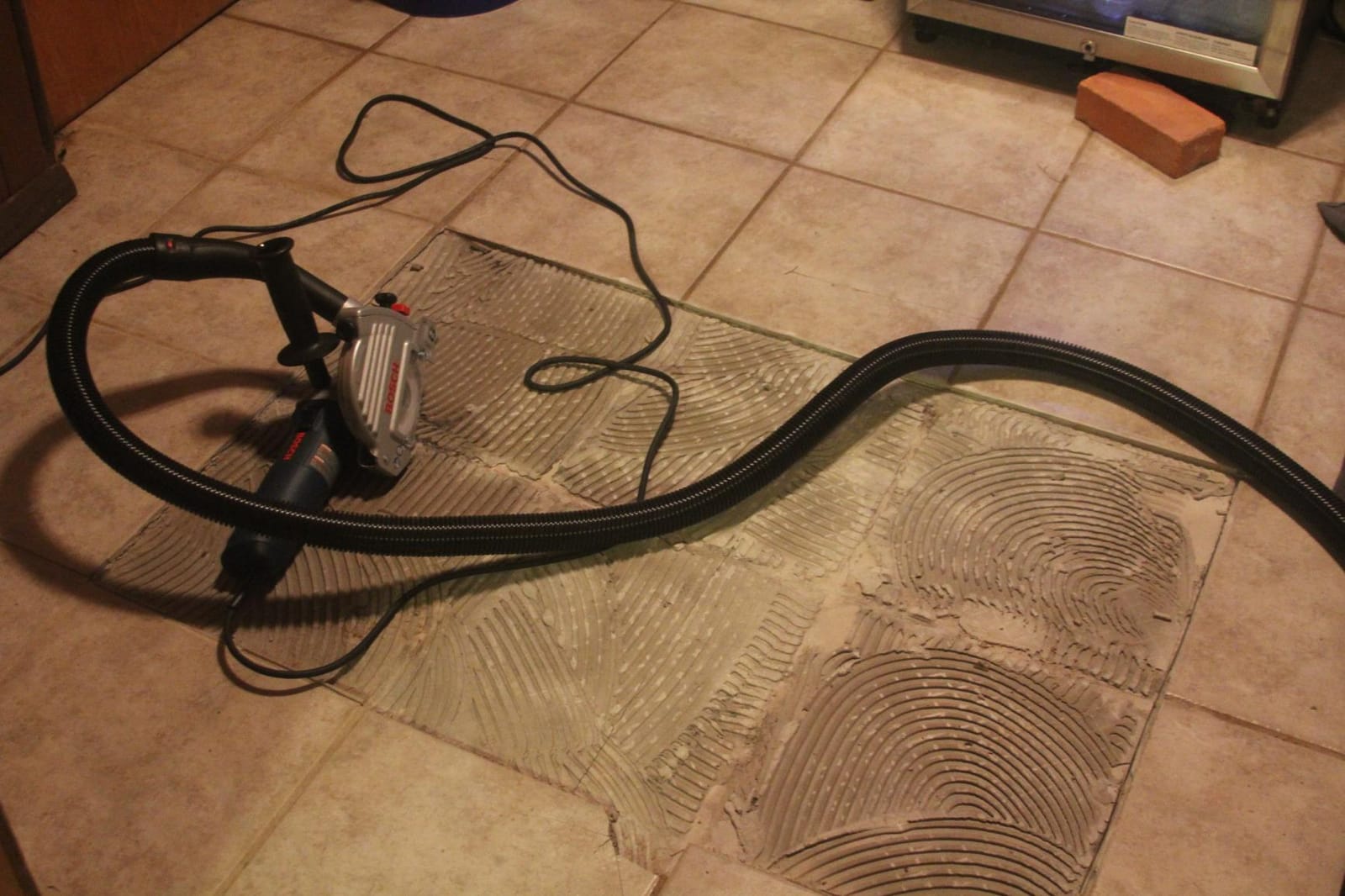
The Power Broker dial on the hose inlet lets you dial suction down for delicate work, like a flush-cut or a veneer edge, then back up for bulk removal. Three power levels give the same control at the machine itself. It is a small feature that gets used constantly once you have it.
Filtration is the strongest spec on the card: 99.97% capture at 0.3 microns and larger, backed by a fleece filter bag that protects the cartridge from sharp chips. Bosch pairs it with a PRO plus GUARD programme aimed at OSHA silica compliance, which matters if you cut cement board as well as wood.
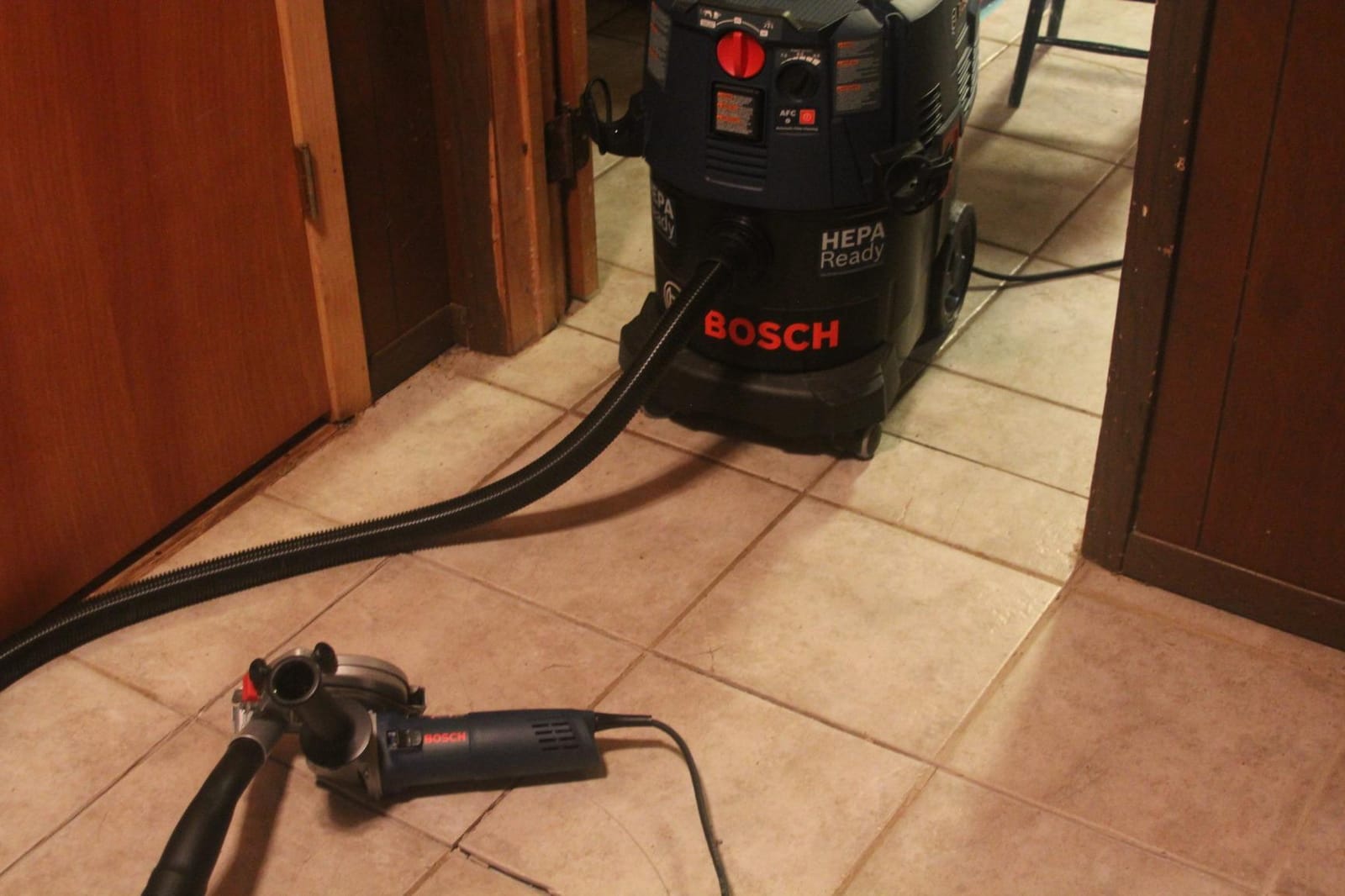
What makes it the value pick
You get the airflow, the filtration class and the self-cleaning behaviour of a premium extractor at a noticeably lower entry point. Nothing about the core extraction job is compromised, and the foot control plus dial are genuinely useful rather than decorative.
Wet and dry capability also gives it a second life as a general shop vacuum, which extends how often you will reach for it beyond sanding days.
Where you will notice the cost cutting
At 28 pounds it is the heaviest of the full-size extractors here, and the 4488-quart capacity listing is a catalog artefact rather than a real capacity, so treat the 9-gallon drum figure as the working number. The one-year limited warranty is the shortest in the group, and a cracked hose or failed switch at month 14 is your problem.
Foot-control operation also means you are on the floor for it, so if you run long sessions with a sander you will want the auto-start behaviour of a tool-activated unit instead.
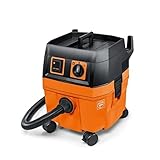
4. Fein Turbo I – Best for Wet and Dry Cleanup on a Small Footprint
Fein Turbo I Set Wet/Dry Dust Extractor 5.8-Gallon Capacity
151 CFM airflow
5.8 gallon capacity
25 lb
1100W
66 dBA
Pros
- 1100W turbine delivers 151 CFM and 98 inches of water lift for demanding wet and dry work
- Quiet 66 dBA operation suits indoor and noise-sensitive shops
- 19 ft cord and 13 ft hose mean outlet changes are rarely needed
- Autostart outlet with power-on delay syncs suction to power tools
- Anti-static system plus 360-degree swivel casters for mobility
Cons
- 5.8 gallon capacity is small next to 8-9 gallon rivals
- One year warranty
The Fein is the crossover machine in this list. It has the airflow and water lift of a wet/dry vacuum, the filtration and noise behaviour of a dust extractor, and an autostart outlet that syncs to power tools. If your shop needs both cleanup and extraction, this is the one that stops you buying two machines.
The 1100 watt turbine is the reason it can move 151 CFM and still pull 98 inches of water lift. That is a lot of suction for something running at 66 dBA, and the 19 foot cord plus 13 foot hose give you a working radius most shops never outgrow.
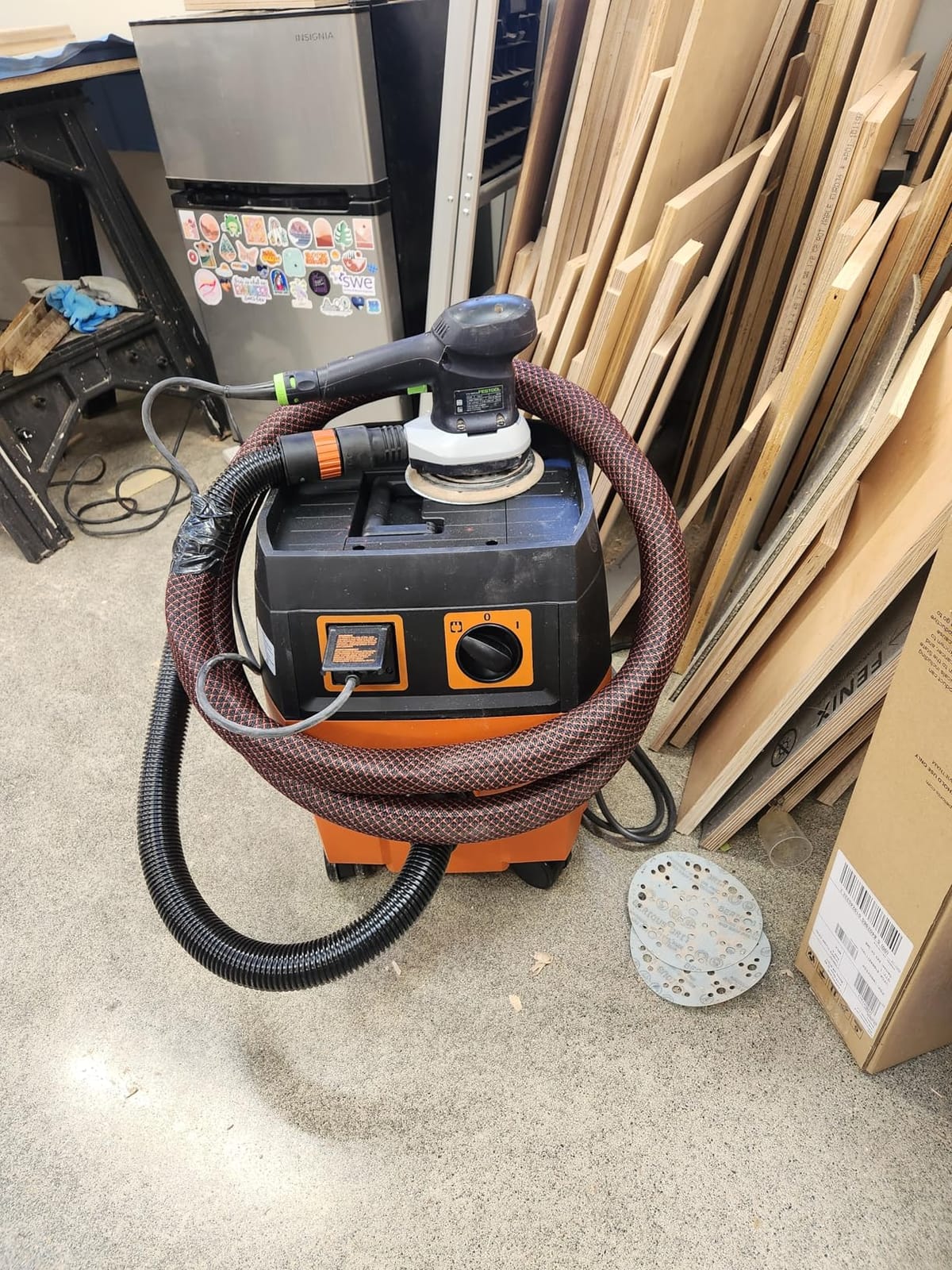
The autostart outlet with a power-on delay is a genuinely thoughtful detail. The delay prevents the current spike that would otherwise trip a breaker when the sander and the vacuum switch on together, which is a problem owners of tool-activated extractors complain about constantly.
Three speed settings let you trade airflow for noise or suction depending on the job, and the anti-static system plus 360-degree swivel casters make it easy to reposition while full.
Who this suits best
Anyone doing finish work, water cleanup and extraction in the same week, in a room where noise matters. The 151 CFM figure puts it ahead of the Festool on airflow while staying quieter than the DEWALT.
It is also a sensible companion to a cyclone separator, because the Fein has enough suction to push air through the added restriction without collapsing.
Where it runs short
Five point eight gallons is the smallest drum of the full-size extractors here, so you will empty it more often, particularly on MDF. The one-year warranty is the other weak point, and the listed 10 by 10 by 10 inch dimensions do not describe the whole unit with its casters and hose.
It is also less of a specialist extractor than the Bosch or Festool, with no dedicated HEPA class claim in the same way. For genuinely fine dust and long sanding days, the Bosch filter cycle and cartridge are the stronger system.
5. Mullet Cyclone – The Budget Fix for Clogged Filters and Vanishing Suction
Mullet Cyclone Dust Collector, High-Speed Separator for Shop Vac
Cyclone pre-separator
Over 99% debris separation
7.5 lb
72 dB
One-piece body
Pros
- Pre-separates over 99% of debris before air reaches the shop vac filter
- Parabolic one-piece construction spins the airstream faster than straight-wall bucket assemblies
- Rigid cut-to-fit PVC connection is airtight
- Included adapters fit essentially any wet/dry vac or dust extractor
- Weighs only 7.5 pounds and moves easily around a shop
Cons
- Does not collect on its own
- it needs a host shop vac or extractor
- Cyclone separation costs some suction relative to direct bagging
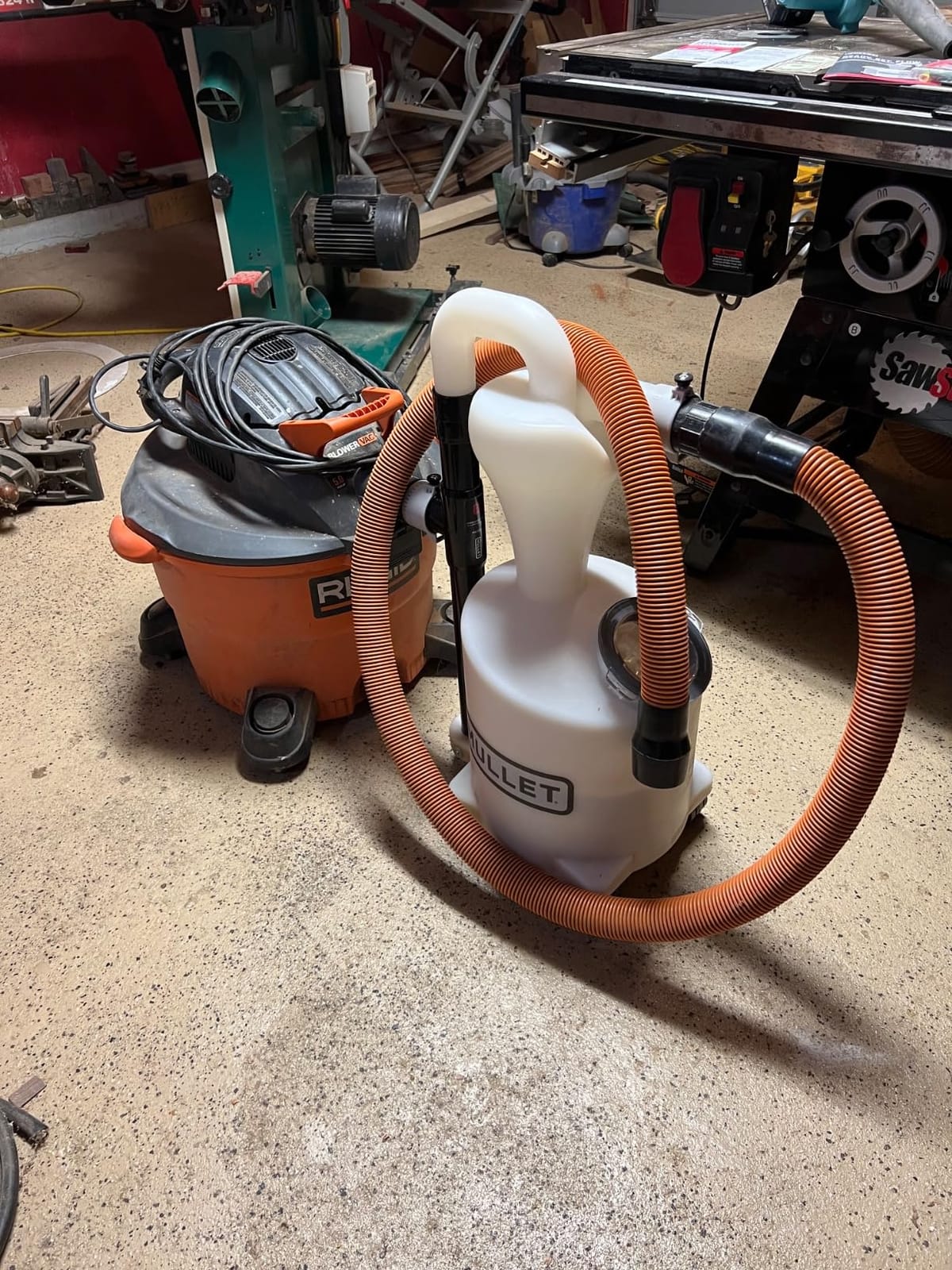
This is the highest-impact thing on the entire list if your problem is a shop vac that loses power. The Mullet sits between the tool hose and the vacuum, spins the bulk of your chips and dust out into a container, and sends only air onward. Owners report filter life roughly resetting after installing it.
The design choice that sets it apart is the parabolic one-piece body. There is no straight-wall cone and separate bucket to leak at the seam, and there are no bolts or bungee cords to work loose. The connection is rigid PVC cut to fit, so the seal is a fact rather than an aspiration.
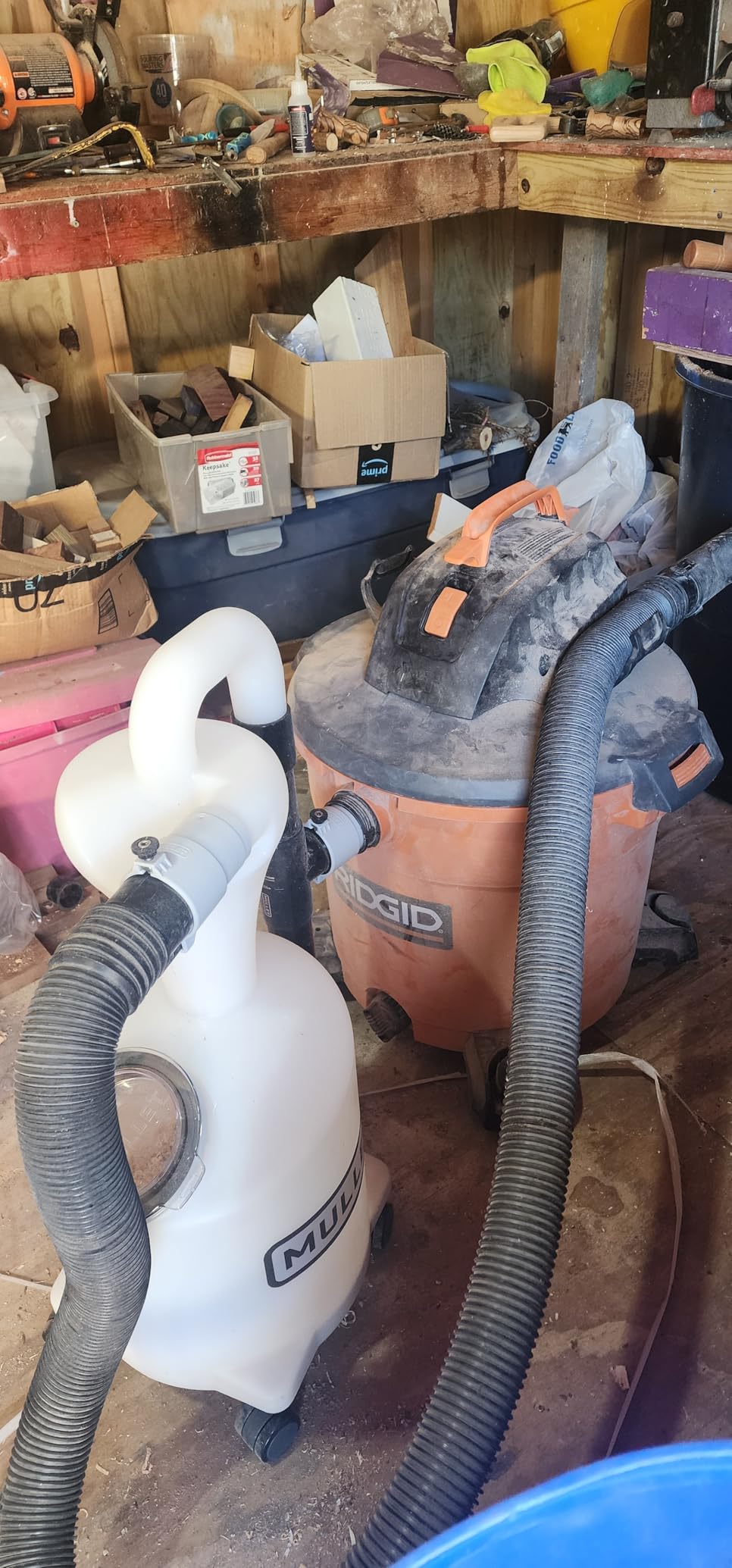
Rated separation of over 99 percent of debris means the vacuum sees dust, not chips. That protects the impeller, extends filter and bag life, and solves the clogging cycle that makes HEPA-equipped shop vacs expensive to run. At 7.5 pounds it moves with one hand and stores against a wall.
The included wet/dry vac hose adapters mean it will connect to almost anything you already own, which is what makes it a realistic first step instead of a replacement purchase.
What it fixes immediately
Bag clogging, filter loading, and suction that fades as the session goes on. Every one of those is a running cost you stop paying once the debris never reaches the filter in the first place. Owners upgrading a failing industrial collector report clear air and far fewer bags consumed.
It is also the cheapest way to make an inexpensive vacuum behave like a proper two-stage system, which is why it is our budget pick.
Where the limits are
It collects nothing on its own. Without a host vacuum behind it, this is an expensive funnel, so budget for a shop vac or extractor if you do not have one. Separating dust also costs a little suction, and the 72 dB figure is a flow rating for air moving through the body rather than a motor spec.
For very fine dust you still need a bagged or HEPA filter in the vacuum itself, because the separator catches chips and heavier particles, not the respirable fraction.
6. WEN DC3401 – The High-Airflow Starter Collector for a Garage Shop
WEN Woodworking Dust Collector, 5.7-Amp Motor with 12-Gallon Bag, Mobile Base, and Optional Wall Mount (DC3401)
660 CFM airflow
12 gallon bag
17 lb
5.7 amp motor
4-inch port
Pros
- Moves far more air than a shop vac at a fraction of the cost of a traditional collector
- 12-gallon bag and lockable swivel casters make it easy to move
- Compact 34.25 x 13 x 14.2 inch body with optional wall mount
- 4-inch dust port connects to most woodworking machines
- Owners run two to cover a shop without miles of 4 inch pipe
Cons
- Clogs with coarse planer shavings
- Louder than expected and audible through house walls
- Carbon motor bushings reportedly need replacing around 250 hours
- Suction drops with long or reduced hose runs
- Some reports of units cutting out shortly after startup
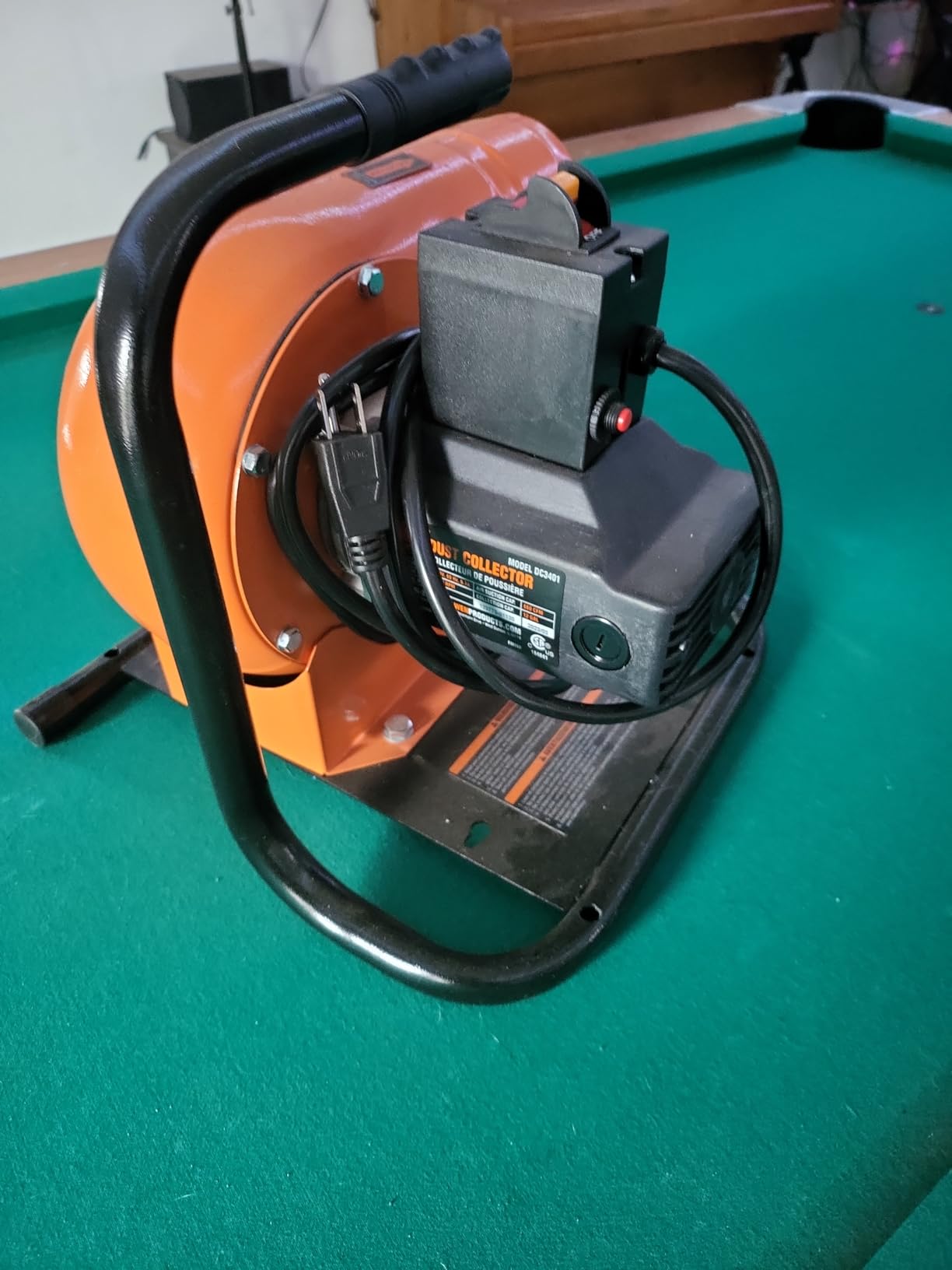
The WEN answers the volume half of the problem without a dedicated circuit. A 5.7 amp motor and 6-inch impeller move up to 660 CFM through a 4-inch port, which covers a table saw, bandsaw or router without the pipe runs and floor space a higher-powered collector demands. Owners pair it with a cyclone separator, which fixes most of its weaknesses.
It is also the easiest collector in this group to live with. At 34 by 13 by 14 inches it fits beside a bench, the lockable casters let you roll it to the machine, and the optional wall mount frees the floor entirely in a small garage.
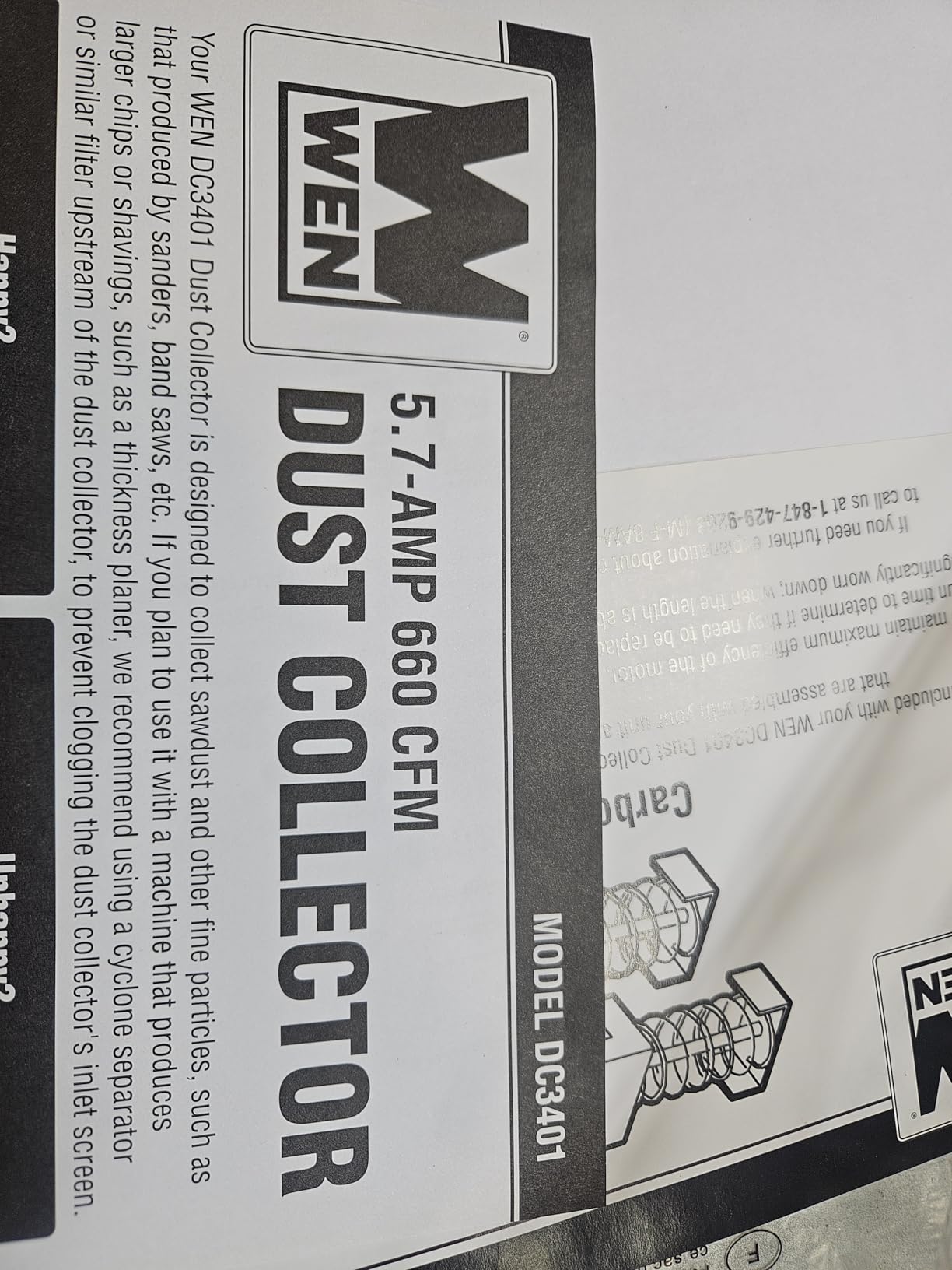
The 12-gallon bag is generous for the money and zips shut for removal. The 5-micron rating is adequate for wood dust on a table saw or router but is not a fine-dust solution on its own, which is precisely why owners pair it with pre-separation rather than treating it as an extractor for sanders.
On forums, owners moving up from a small collector to a higher-horsepower machine describe the performance jump as dramatic, which tells you how much the horsepower figure actually changes once you are pushing 4-inch ducting through a network.
Why small shops end up with one
Cost and footprint. Higher-powered collectors typically need a dedicated circuit you may not have, plus floor space. This one runs on a 5.7 amp brushed motor, rolls out of a carton, and covers the machines that produce most of the volume in a one-person shop.
The 4-inch port is the important detail, because it means you can attach a blast gate or short flex hose and connect a table saw without an adapter.
Where it will frustrate you
Planer shavings. The supplied foam and inlet screen choke on coarse debris, and many owners remove them, which is code-unsafe but common. Adding a cyclone separator upstream largely solves this and is our recommendation before you buy anything else.
Noise is the second issue: it is audible through house walls. The carbon motor bushings are also reported to need replacement around 250 hours of run time, and the 4.1 rating reflects a handful of early-failure and slow-support experiences. Buy it knowing you are buying throughput, not refinement.
7. Oneida Air Systems Cyclone Kit – The Most Complete Separator Bundle
Oneida Air Systems Dust Collector & Cyclone Separator Kit w/ Clear Bucket, 2.5 Deluxe 5-Gal – Portable Cyclone Machine for Wet and Dry Shop Vacuums
Cyclone separator kit
5 gallon clear bucket
99% separation
Neutral-vane design
Pros
- Captures about 99% of dust and debris before it reaches the vacuum filter
- Complete kit with separator
- bucket
- lid
- casters
- hose
- tether kit and gasket
- Clear bucket shows fill level at a glance
- Handles drywall and wood dust
- flour
- pet hair
- soot and metal shavings
- Upgrades any 2.5-inch shop vac
Cons
- Cyclone separation costs some airflow
- Only a 2.5-inch hose is included so many tools need adapters
- Build quality and sealing draw a spread of complaints
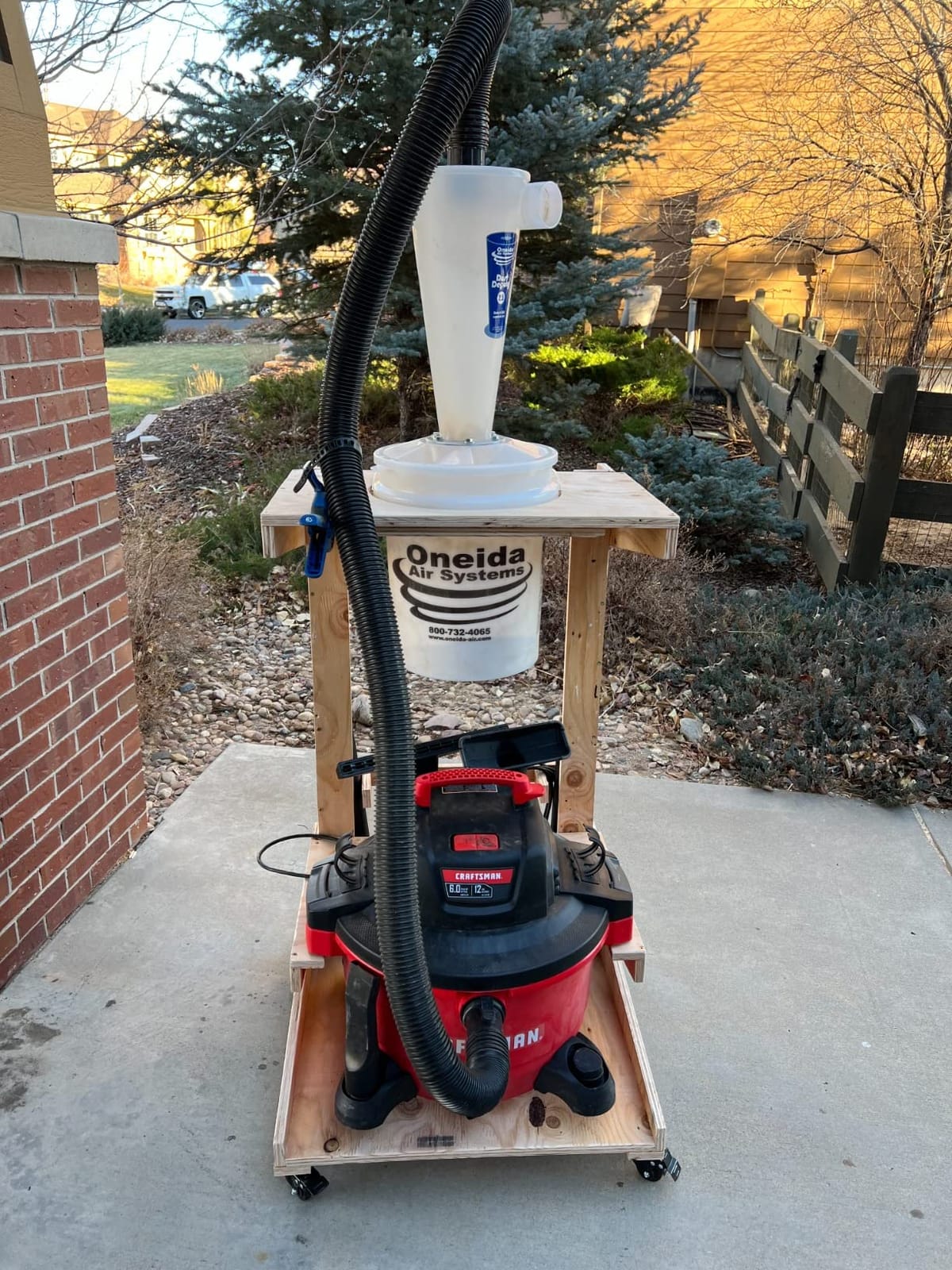
The Oneida kit is the separator to buy if you want everything in one box. The separator, a collapse-proof bucket and lid, four casters, a 4.5 foot hose with swivel cuffs, a vacuum tether kit and a pre-cut gasket all arrive together, so there is nothing else to hunt for on a Saturday morning.
Neutral-vane technology is the interesting engineering claim. Rather than relying purely on particle weight, the vane arrangement adds separation efficiency, and the company rates overall capture at roughly 99 percent before dust reaches your vacuum filter.
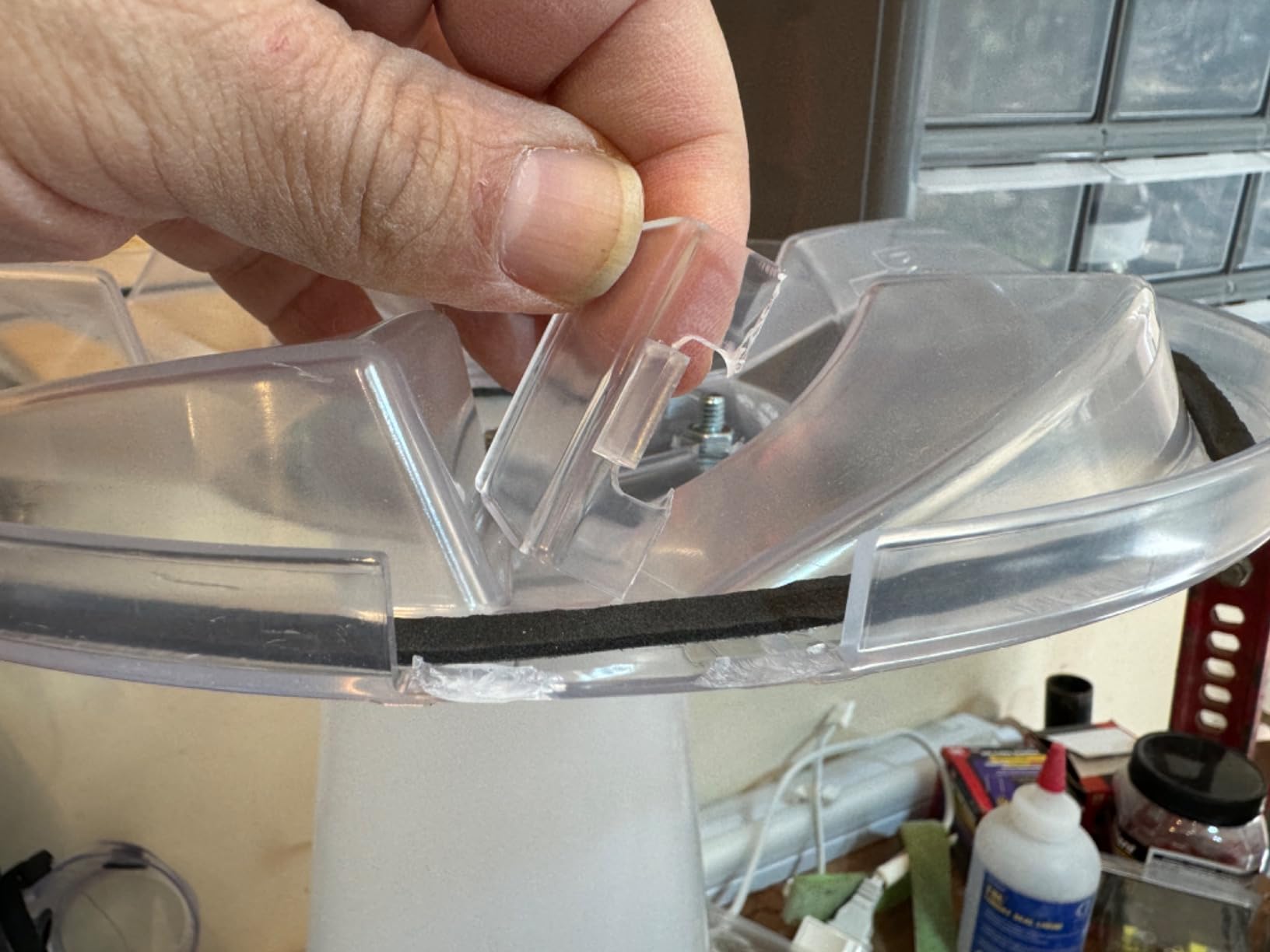
The clear bucket is a small quality-of-life decision that pays off constantly. You can see when it needs emptying instead of opening a lid to check, and the collapse-proof design matters more than it sounds, because a thin bucket under suction bows and pulls the seal apart.
Owners report a visible drop in how hard their vacuum filter is working, which translates directly into fewer filter purchases. The 4.1 rating reflects build-quality and sealing gripes rather than doubts about the separation itself.
What makes it the easiest install
Everything is included and everything is sized for the job. The 2.5-inch hose connects to a wide range of shop vacs directly, and the 3-inch flange backwards compatibility means an upgrade path if you move to a larger vacuum later.
It also handles more than wood, which makes it useful for drywall, pet hair and metal shavings in a mixed-use shop.
Where the cost shows
Only a 2.5-inch hose is included, and many tools need a different diameter, so budget for adapters. Adding the separator in line also reduces airflow slightly, which is the trade you accept for filter protection.
If you already own a decent shop vac and want the separation, the Dustopper PRO or Mullet may be a better use of the same money. The Oneida earns its place when you want a single box that just works.
8. Dustopper PRO – The Highest Rated Separator with the Largest Owner Base
Dustopper PRO Dust Collector – 99.9% Efficiency Cyclone Dust Separator
99.9% separation
5-gallon pail mount
3.6 lb
Anti-static resin
Sweep elbows included
Pros
- Separates bulk sawdust and chips so the shop vac stays nearly empty and filters last far longer
- Preinstalled hollow-core EPDM gasket seals leak-free to any standard 5-gallon pail with no assembly
- Two included high-flow sweep elbows cut turbulence and flow restriction
- Third-party testing showed higher collection efficiency than other low-profile separators
- Clear body makes fill level visible and emptying takes one blast of compressed air
Cons
- Best results need a reasonably powerful shop vac
- Generates noticeable static that some owners ground with the included wire
- Thin retail pails can collapse under suction
- 2.25 inch inside diameter is narrower than the stated 2.5 inch
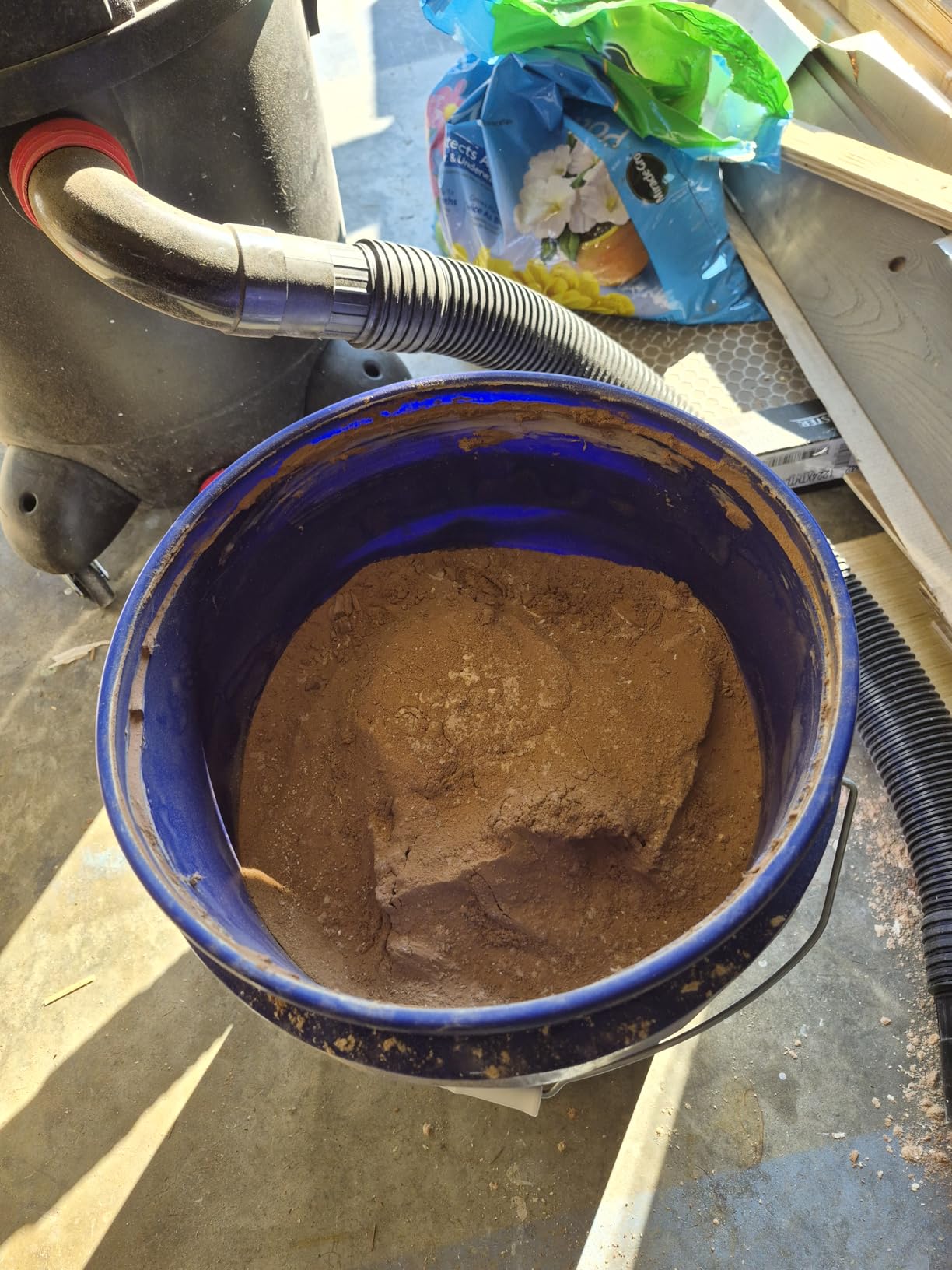
The Dustopper carries the most owner reports of any product in this roundup, and the pattern across them is consistent: buckets fill with debris while the vacuum stays clean. That is the entire promise, and 99.9 percent rated separation is the most aggressive efficiency claim in the group.
It mounts on a standard 5-gallon pail, and the hollow-core EPDM gasket is preinstalled so there is no assembly and nothing to tape. The two high-flow sweep elbows included are the detail most owners miss in cheaper clones, because they reduce the turbulence that normally costs efficiency in a low-profile body.
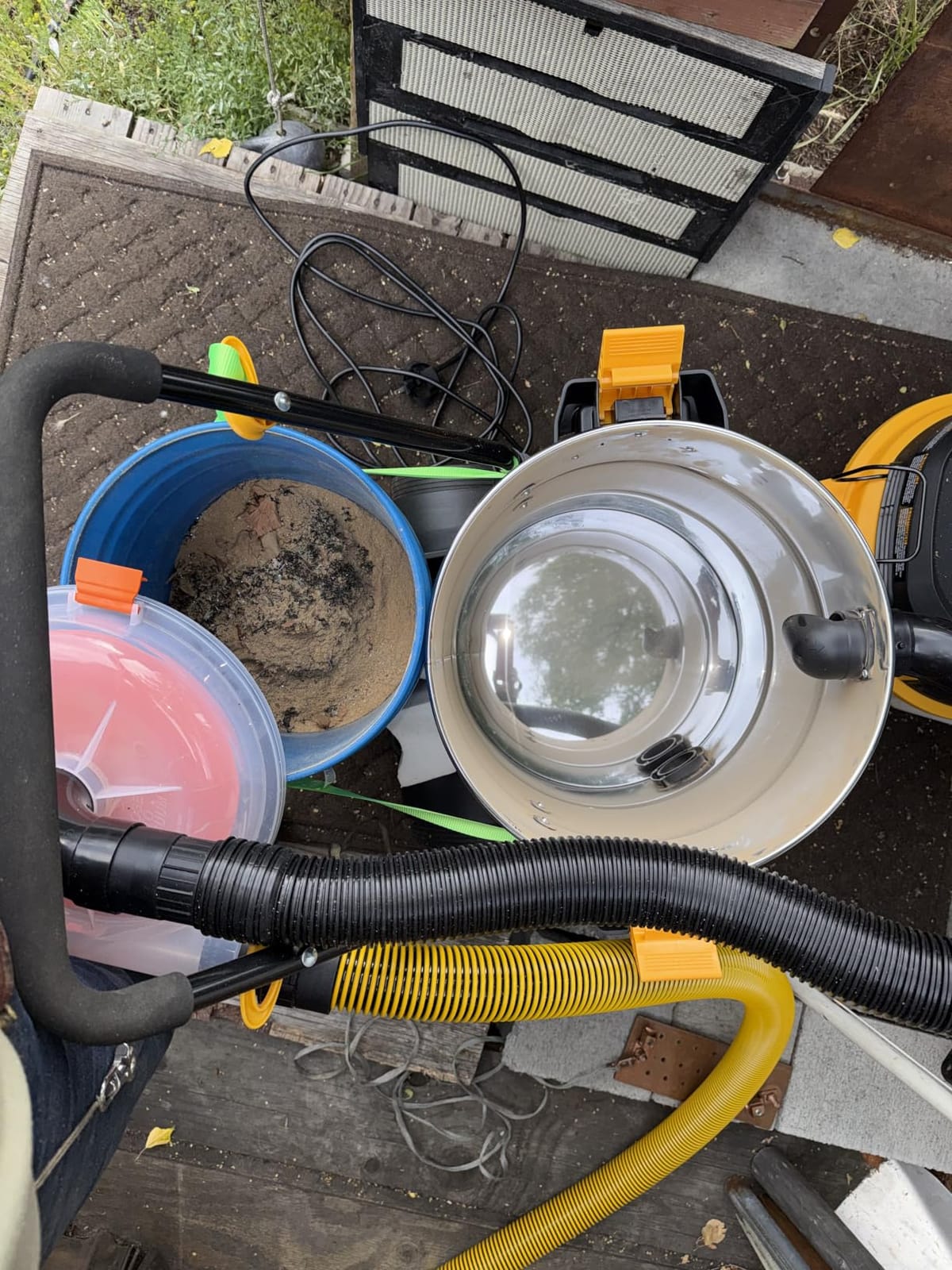
Engineered for separation rather than raw airflow, so it keeps working at lower flow rates where a straight-wall cyclone would lose effectiveness. It is also the one separator here specified in anti-static resin, which matters in a shop full of combustible dust and static-generating hoses.
Independent testing by Aerodyne Environmental is worth noting here, because most separator manufacturers rate their own hardware. The design also won a National Hardware Show Most Innovative Concept Award, which is a reasonable proxy for how it was received.
What makes it the most proven option
Over 1200 owner reports is a stronger reliability signal than any spec sheet, and the recurring finding is that bag and filter consumption drops noticeably. Owners replacing a failing industrial collector talk about clear air and no more coughing.
Emptying takes one blast of compressed air, and the clear body means you are not opening a lid to find out whether it is time.
Where you will hit friction
It needs a host vacuum with real power behind it. Owners with weak vacs report noticeably less capture, so a 5 HP shop vac is the realistic pairing if you want the rated performance. Static builds up and some owners ground it with the included wire, and thin retail pails can bow under suction, so buy a heavier-duty bucket.
Be aware the actual 2.25 inch bore is narrower than the stated 2.5 inch, and the included hose run is short relative to larger vacs. Outside the US, adapters can be hard to source.
9. DEWALT DXVCS002 – Best Separator for Contractors Who Move the Job
DEWALT 6 Gallon Dust Separator for Wet/Dry Shop Vacuums,DXVCS002
Cyclone separator
6 gallon bucket
12 lb
95% chip capture
3 year warranty
Pros
- Cyclone design pulls roughly 95% of sawdust and chips into the 6-gallon bucket before they reach the shop vac
- Suction stays consistent instead of fading as bags and filters fill
- Contractors report eliminating almost all bag purchases and paying for the unit quickly
- Four-caster base is stable and easy to move
- Lid removes without tools for quick emptying and hosing out
Cons
- Vacuum-to-separator port and hose do not lock and can pop off
- Tool-side and vac-side hoses are different diameters with no adapter included
- Adds slight suction loss in line
- Takes more floor space than a bucket-mounted cyclone
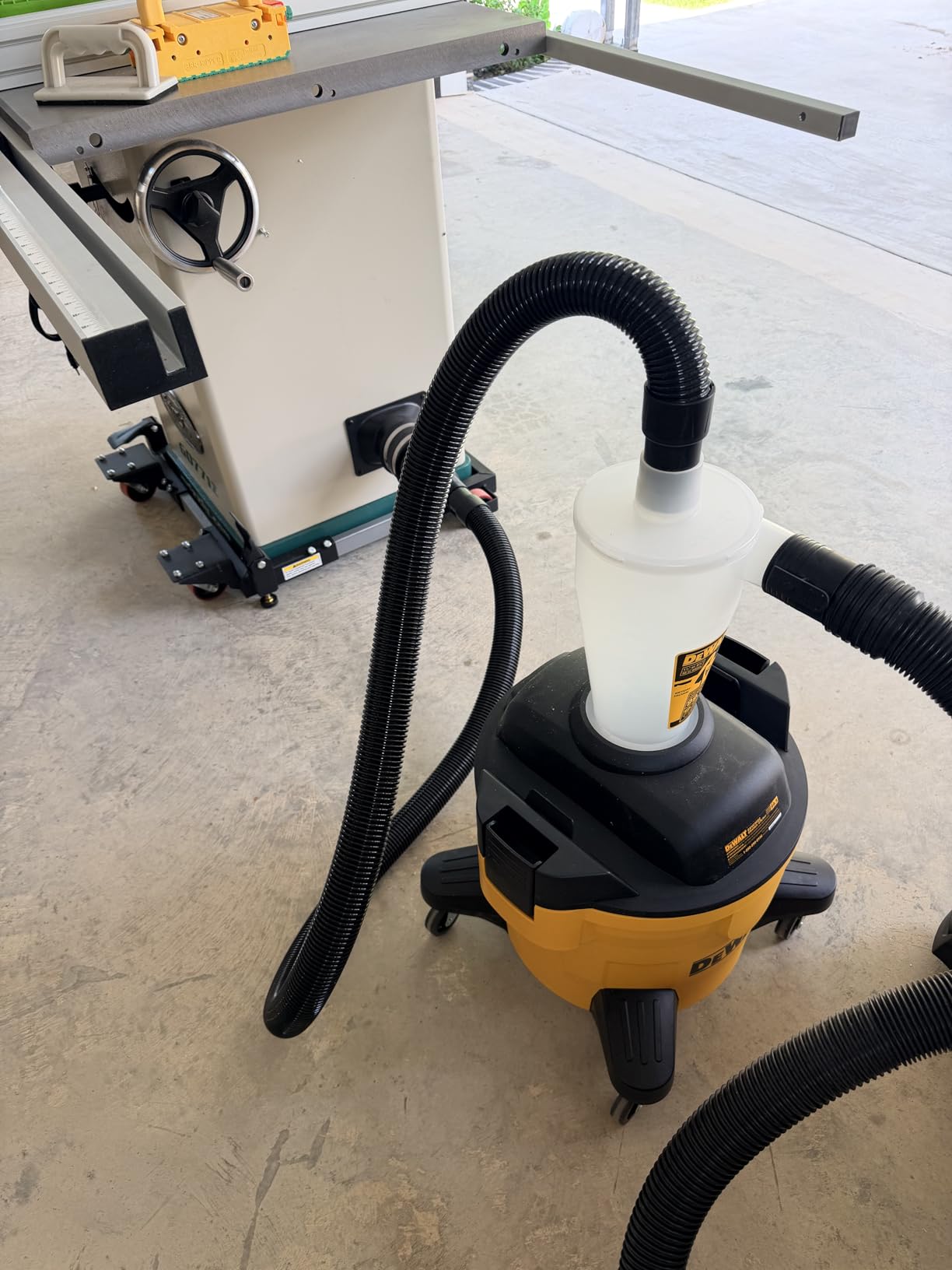
The DXVCS002 is the separator built for mobility. A four-caster base, a handle and a lid that lifts straight off make it something you load into a van, take to a site, and use all day. Contractors report that it stopped their bag purchases almost entirely.
It also carries the longest warranty among the separators here at three years, which matters for a tool that gets thrown in a truck bed. Rated chip capture is around 95 percent, so the vacuum still needs a bagged filter, but the heavy fraction never gets there.
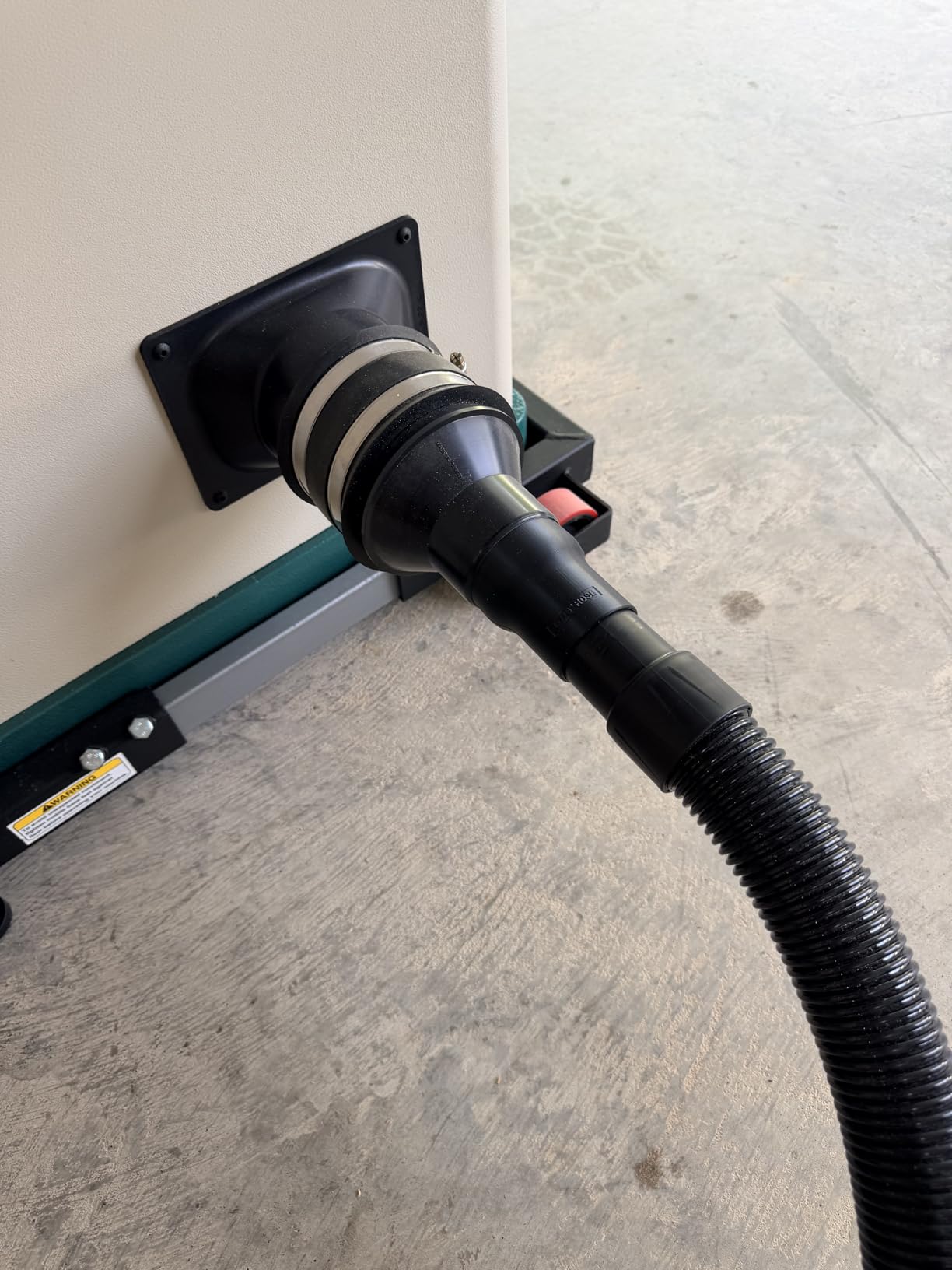
Because the connection to the vacuum happens through a hose rather than a hard port, the whole unit works with wet and dry pickups, water, mud, metal shavings and grass as well as wood. That versatility is why it appears on job sites as often as in workshops.
Suction staying consistent is the real-world benefit owners describe. A shop vac that clogs loses power as the session goes on; a vac behind a separator does not, because the filter stays close to clean.
Where it beats the alternatives
Portability, warranty length and build confidence. If you move between job sites, or clean up as much as you extract, the caster base and tool-free lid are worth more than a higher efficiency number on paper.
It is also a good first separator for someone who does not want to think about pail compatibility at all. It is a complete, self-contained unit.
Where it costs you
Fittings. The vac-side port and hose do not lock and can pop off during use, and the tool-side hose is a different diameter from the vac-side one with no adapter in the box, so even DEWALT tools often need third-party adapters. Adding it in line also trims a little suction.
At 15.9 by 15.9 by 31.4 inches it is taller and takes more floor space than a bucket-mounted cyclone, and the all-plastic construction is the same approach the cheaper generic separators use.
10. Rockler Dust Right – The Two-Stage Starter With the Largest Bucket
Rockler Dust Right Dust Separator w/ 36” Hose & 10Ga Bucket for Shop Vac
Cyclonic separator
10 gallon bucket
11.18 lb
2-1/4 inch shop vac fit
36 inch hose
Pros
- Turns any shop vac with a 2-1/4 inch ID outlet into a two-stage dust extractor
- Translucent 10-gallon bucket makes the fill line easy to see and light enough to lift
- Five-caster base is stable and rolls easily
- Hoses connect inside the ports to prevent unintentional disconnections
- Owners replacing a failing collector report clear air and far fewer bags and filters
Cons
- Plastic lid can crack under suction
- especially in cold conditions
- Gap between lid and bucket lets shavings escape
- Fine dust still reaches the vacuum so a bagged filter is still needed
- 10-gallon bucket still fills quickly on busy jobs
- Suction loss is noticeable with a small vacuum
The Dust Right is a straightforward way to convert a shop vac into a two-stage extraction setup. If your vacuum has a 2-1/4 inch outlet, attach it and the cyclonic vortex pulls the heavy wood dust and chips into the bucket before the air reaches the motor.
The 10-gallon bucket is the largest capacity of the separators listed here, and the translucent wall means you can see the fill line without opening anything. It is also light enough to lift to the bench when it is full, which is not true of every 10-gallon bucket on the market.
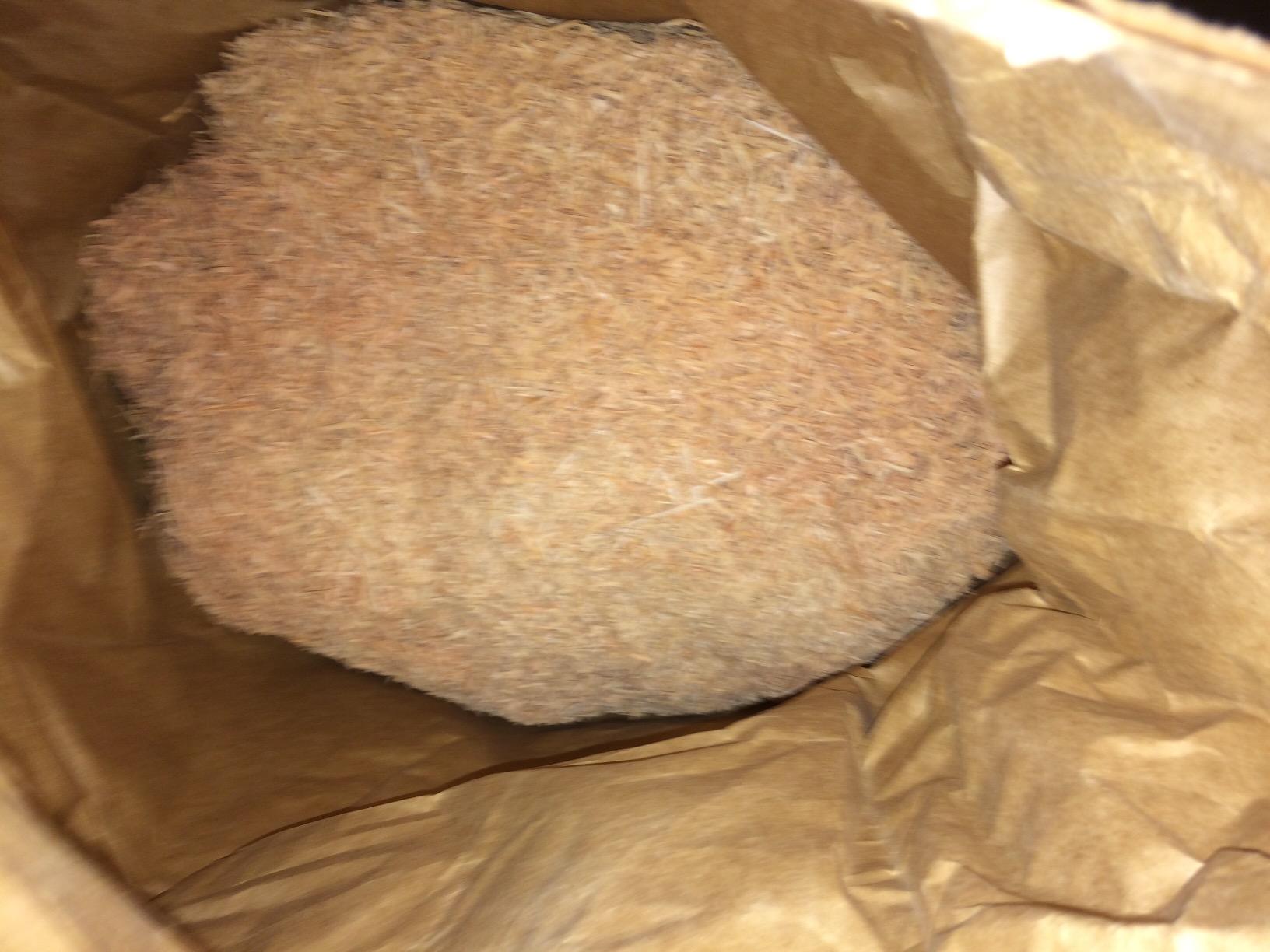
The five-caster base is stable enough to roll with a full bucket, and the hoses connect inside the in and out ports so a snag cannot pull them free. Owners who swapped it in after an industrial collector failed talk about clear air and a dramatic drop in bags and filters consumed.
It is also the oldest design here, listed since the early 2010s, and that longevity is itself a signal. The simple cyclone architecture has not needed redesigning because it does not need to.
What it is good for
Table saws, routers, sanders and general shop cleanup, in that order. The bucket size and the five-caster base suit a workflow where you empty on a schedule rather than continuously, and the 36 inch hose covers the short runs most people actually need.
It is a low-risk first purchase, because it depends only on your existing shop vac and does not change your vacuum at all.
Where it shows its age
Durability. The plastic lid can crack under suction pressure, particularly in cold conditions, and warranty replacements are limited. There is also a gap between lid and bucket that lets shavings escape, which is why owners rate it well on table saws and sanders but poorly on planers.
Fine dust still reaches the vacuum, so you still need a bagged filter, and with a small vacuum the suction loss through the separator becomes noticeable. If your priority is separating the fine fraction rather than the chips, a newer low-profile design like the Dustopper PRO handles that better.
Which Type of Dust Extractor Do You Need?
Almost every wasted purchase in this category comes from skipping this decision. The shop splits into three families, and only one of them is right for any given machine.
Tool-activated extractors are high static pressure, low volume machines that sit beside you and connect to a handheld tool through a sealed hose. Sanders, routers, track saws, oscillating tools and a drill press all fall here. They are quiet, they filter to the respirable fraction, and they cost the most per CFM because the motor is optimised for suction force rather than flow. The Festool CT Midi I, DEWALT DWV010, Bosch VAC090AH and Fein Turbo I are all in this family.
High-airflow collectors are the opposite: low static pressure, high volume machines with a large bag or drum and a 4-inch port. Table saws, planers, jointers, thicknessers, bandsaws and drum sanders generate bulk material and need it moved. They are loud, they are bulky, and they are the wrong tool for a palm sander no matter how many CFM they quote. The WEN DC3401 is the affordable entry point here.
Cyclone separators are neither. They are add-ons that sit between a shop vac and the machine, spinning the heavy fraction out before it reaches the filter. They fix clogging, extend filter life and recover lost suction, and they work on any host vacuum. The Mullet, Oneida kit, Dustopper PRO, DEWALT DXVCS002 and Rockler Dust Right are all in this family.
The most useful combination in a small shop is one of each: an extractor for sanders and routers, and either a collector or a cyclone separator for the machines that make bulk debris. Forums raise the one-extractor-or-two question constantly, and the consistent answer is that one machine cannot cover both halves of the pressure and volume split.
How Many CFM Do You Need?
Match the machine to the volume, then add a margin of roughly a quarter on top. Under-sizing a collector shows up as dust at the port, a filter that clogs in minutes, and a motor straining against a loaded duct run. Use these as starting points rather than fixed rules.
Random orbital or palm sander: 100 to 150 CFM through a sealed hose. This is a static pressure job, so a tool-activated extractor beats a collector even if the collector has ten times the CFM.
Belt sander, oscillating sander, router or trim router: 130 to 200 CFM, again with the suction concentrated at the tool port.
Drill press or lathe with a hood: 200 to 400 CFM is plenty because the dust source is small and the airflow is steady.
Table saw: 350 to 500 CFM at the 4-inch port. Below that you will see dust escaping the blade housing no matter how good the machine is.
Bandsaw: 300 to 400 CFM, which is the range most experienced owners converge on.
Jointer: 500 to 700 CFM, because a jointer throws a continuous stream of fine dust rather than discrete chips.
Planer or thicknesser: 800 to 1100 CFM, and the one machine where a pre-separator genuinely matters because the shavings will choke anything smaller.
Drum sander: 600 to 800 CFM, with very fine dust that needs a filter with real surface area.
One caution on the numbers. CFM ratings are almost always measured at the machine inlet with no duct attached, and they fall away quickly once you add flex hose, blast gates and elbows. Owners on r/woodworking who moved from a 600 CFM collector to a higher horsepower unit describe the jump in real performance as dramatic, and that gap is exactly the resistance that ducting adds.
Dust Extractor vs Dust Collector vs Shop Vac
This comparison is the most argued question in woodworking forums, and the explanation is shorter than the argument. A shop vac is high vacuum and low volume. A dust collector is high volume and low vacuum. A dust extractor is engineered to be high vacuum while still filtering to a fine particle size. Each one is genuinely better at some tools than the others.
A shop vac wins at spills, water pickup, corners and cleanup, and it loses badly at fine dust because the bag and filter load up within minutes. A collector wins at bulk chips because it moves a large volume of air, and it loses at handheld tools because it cannot create enough suction through a narrow hose. An extractor wins at both of the first two’s weak points and loses only on capacity, price and, for the cheapest models, noise.
Can a shop vac be used as a dust extractor? Yes, with three additions: a HEPA or fine-rated filter, a bagged filter sleeve, and ideally a cyclone separator in front of it. On forums the consensus is consistent: shop vacs can function as dust extractors with more noise and less efficiency, and a cyclone upstream solves the clogging that makes them miserable to run on sanding work.
That retrofit route is the strongest value in this entire roundup. The Mullet, Oneida, Dustopper, DEWALT and Rockler separators all slot into it, and any one of them is enough to keep filters and bags alive for years. If a premium extractor is out of reach for now, start there and upgrade the vacuum later.
How to Choose the Right Dust Extractor
CFM and static pressure together. Neither number means anything alone. A shop with one sander and no stationary machines should prioritise static pressure and ignore CFM entirely. A shop with a planer needs the opposite, and often both an extractor and a collector.
Filter class. HEPA units are rated at 99.97 percent capture of 0.3 micron and larger particles, which is what you want for fine wood dust, MDF and any hazardous material work. M-class is the European standard aimed at medium-risk dust including wood. A 5-micron bag is adequate for a table saw feeding a collector but nowhere near adequate for a sander, and nothing sold as a bare foam filter should be used for sanding duty.
Automatic filter cleaning. This is the feature that determines whether you will still be running the machine in year two. Units that pulse or scrub their filters every 15 to 30 seconds hold their suction, and that is the difference between a machine you own and a machine you stop trusting.
Tool activation. Power tool actuation and Bluetooth battery pairing both start the machine with the tool and run it on briefly afterwards to clear the hose. Bluetooth is cleaner but only works within one brand’s battery ecosystem, so check what tools you actually own before paying for it.
Capacity. Bigger means fewer interruptions, and interruptions are where the real time goes. Below about 6 gallons, planer work becomes a chore. Above 9 gallons, you gain capacity and lose floor space, which matters more in a one-person shop.
Noise. The published figures here range from 60 dBA on the Bosch to 80 dB on the DEWALT. A 20 dB difference is the difference between a machine you can leave running and one you switch off when the neighbours are in. Above about 75 dB, use hearing protection.
Hose, ports and electrical. Anti-static hose matters when you are near a track saw or working with fine dust, and proprietary fittings are a long-term cost. On power, a 15 amp extractor on the same circuit as a 15 amp saw will trip the breaker, so give the extractor its own circuit if the tool is a saw.
Wood Dust Safety, Filter Costs and Maintenance
Wood dust is not a nuisance, it is a respiratory hazard. The health case is the reason most people buy a real extractor rather than another shop vac, and it is worth taking seriously: fine dust stays airborne, settled dust is re-suspended by every footstep, and the fraction you cannot see is the fraction you breathe.
Fine dust also burns. Wood dust is a combustible material, so accumulation on motor housings, light fittings and rafters is a real hazard in a small shop, and the accumulation is exactly what a collector and a cyclone separator are designed to prevent. Keep the collector housing clean, and do not route a collector into a space with a light bulb or a motor that runs hot.
Run cost is the objection almost nobody raises before buying. Bags and filter cartridges add up, and a vacuum that clogs twice as fast doubles that line. This is where the separators pay back: owners of the DXVCS002 report almost eliminating bag purchases, and owners of the Dustopper and Mullet describe filter life transforming after installation. Compare the running cost, not the purchase price, when you price the whole shop.
A sensible progression runs shop vac, then a cyclone separator in front of it, then a tool-activated extractor for sanders and routers, then a collector or central system once you add a planer or jointer. Most one-man shops never need to go further. Owners repeatedly warn against the opposite mistake, describing 5 horsepower systems as hugely overkill for a single-person workshop, and that instinct is correct.
Frequently Asked Questions
What is the best dust extraction system for woodworking?
The best system depends on your tools. Handheld sanders, routers and track saws need high static pressure, which means a tool-activated extractor such as the Festool CT Midi I or the Bosch VAC090AH. Stationary machines such as a table saw, planer, jointer or bandsaw need high airflow, which means a high-CFM collector or a shop vac with a cyclone separator upstream.
Is a dust extractor better than a shop vac?
Yes for fine dust and handheld tools. A shop vac has high suction but low airflow, so its bag and filter load up quickly and suction fades during a session. A dust extractor is built to hold suction and filter to a fine particle size, and it usually starts and stops with your tool. A shop vac is still better for water, spills and general cleanup.
Can a shop vac be used as a dust extractor?
Yes. Add a fine-rated or HEPA filter, use a bagged filter sleeve, and place a cyclone separator between the tool hose and the vacuum. The separator removes chips and heavy dust before they reach the filter, which stops the clogging cycle and extends filter and bag life. This is also the cheapest way to upgrade an existing shop vac.
How many CFM does a table saw need?
Plan for 350 to 500 CFM at the 4-inch port and add roughly a quarter of headroom. A planer or thicknesser needs considerably more, around 800 to 1100 CFM, and a jointer needs 500 to 700 CFM because it produces a continuous stream of fine dust. Remember that rated CFM drops once flex hose, blast gates and elbows are added.
Is the Festool CT Midi I worth the premium?
It is worth it if you already own Festool sanders, because the Bluetooth auto-start pairs directly with the battery pack and the extractor runs whenever the sander does. It is also one of the quietest extractors we looked at and it stores its hose inside the body for transport. If you are not committed to Festool tools, the Bosch VAC090AH delivers comparable airflow and filtration for less.
Do I need a cyclone dust collector or a dust extractor?
You probably need one of each if you run sanders and a table saw or planer. The extractor handles handheld tools where static pressure matters. The cyclone separator or collector handles bulk chips from stationary machines where airflow matters. A cyclone separator is an add-on that improves whichever vacuum it sits in front of, while a collector is a standalone machine.
The Verdict
Our ranking of the best dust extractors for woodworking in 2026 starts with the Festool CT Midi I HEPA, the unit we would put beside the bench first. It is quiet, it holds suction, its Bluetooth auto-start genuinely works, and 545 owners have already made the same conclusion. If you are not buying into the Festool ecosystem, the Bosch VAC090AH is the smarter purchase at a lower entry point.
The answer depends on the tools. Handheld sanders, routers and track saws need high static pressure, so start with the Festool CT Midi I if you are already in that ecosystem and the Bosch VAC090AH if you are not. Stationary machines need high airflow, so start with a cyclone separator in front of the vacuum you already own, then add a collector if you add a planer.
Decide which side of the pressure and volume split your machines sit on, buy the right family, and change the filter before it changes your results.