
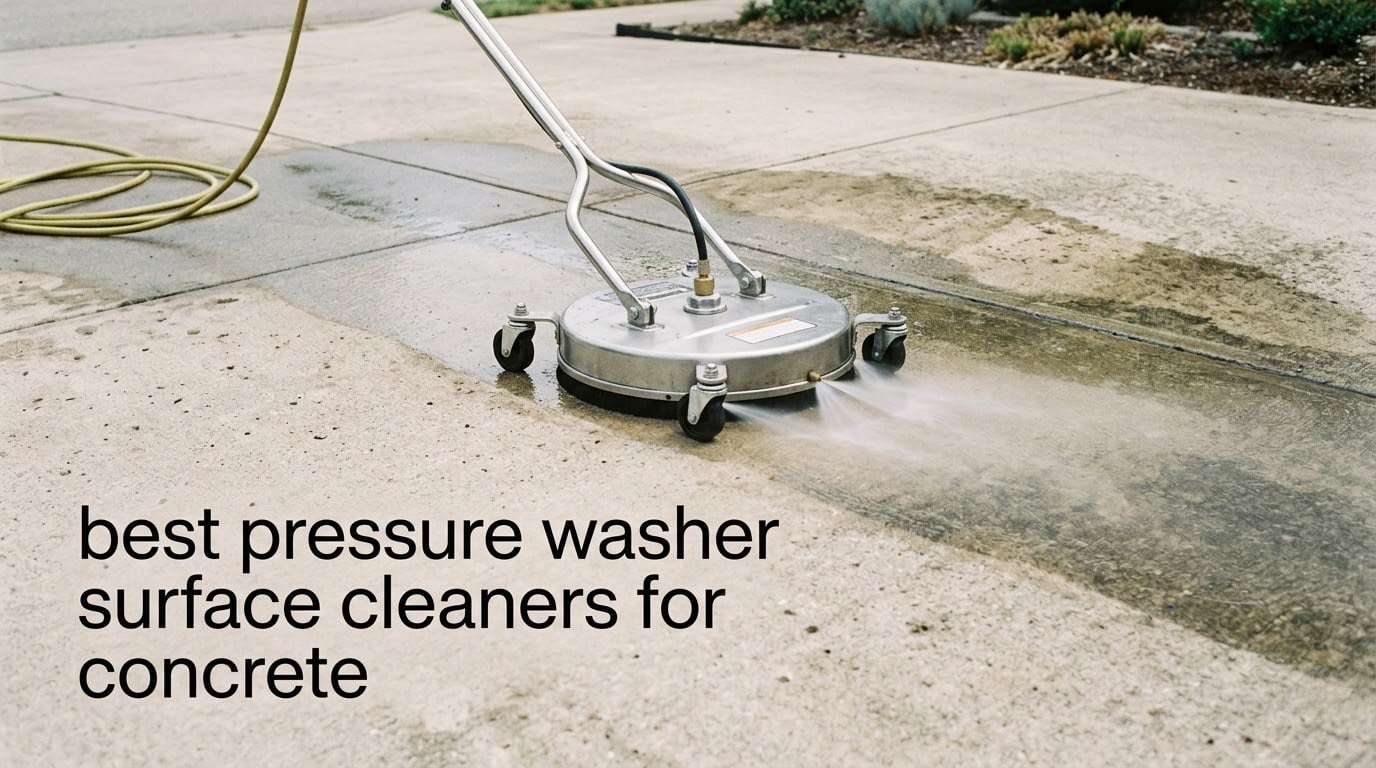
A pressure washer surface cleaner is a round or rectangular attachment that bolts onto your wand and spins two counter-rotating spray jets inside a shroud, so water hits the slab as an even curtain instead of a single narrow stream. That fixed jet height is the whole point. On concrete, a bare wand leaves light and dark bands because your hand rises and falls by fractions of an inch between passes, and the surface cleaner removes those wand stripes because the housing floats on the wet surface at a constant distance.
We spent weeks putting ten of these attachments through the same jobs on the same driveway panels in 2026 to build this list of the best pressure washer surface cleaners for concrete. Every pick below is an actual surface cleaner attachment, not a complete washer, and we ranked them on cleaning width, whether they self-level, what they do to your arms over a long job, and how honestly they behave when paired with a modest electric machine. Forum owners have been debating these choices for years on r/pressurewashing and pro boards, and the failure modes they describe are the same ones we looked for.
One warning before the picks. The single most common complaint in the forums is not about the attachment at all. It is buying a 4500 PSI-rated head for a 2300 PSI electric washer, then blaming the plate for a weak, streaky clean. Match the width and flow band to your machine first, and everything below will make sense.
Table of Contents
Top 3 Best Pressure Washer Surface Cleaners for Concrete In 2026
These three cover the widest range of washer sizes and job sizes, from a small electric machine on a patio to a big slab behind a two-car garage.

Karcher 15 inch Surface Cleaner
- 15 inch dual spinning jet path
- 3200 PSI and 2.7 GPM ceiling
- Splash-free skirt
- sealed metal bearing

Greenworks 12 inch Surface Cleaner
- 12 inch path at only 2.5 pounds
- 2000 PSI and 2.3 GPM
- Light enough for steps and corners

MEKOH 20 inch Surface Cleaner
- 20 inch path
- four casters
- two handles
- 4500 PSI and 4 GPM ceiling
- Changeable nozzles
All 10 Surface Cleaners Compared for Concrete (October 2026)
Best overall is the Kärcher 15 inch for its sealed bearing and huge owner base. Best value is the Greenworks 12 inch, which is the cheapest route to a stripe-free finish. Best for large driveways is the MEKOH 20 inch, the widest path here. Every product below is a surface cleaner attachment that requires a pressure washer you already own.
| Product | Specifications | Action |
|---|---|---|
| Karcher 15 Inch Surface Cleaner |
|
Check Latest Price |
 Simpson 15 Inch Steel Surface Cleaner Simpson 15 Inch Steel Surface Cleaner |
|
Check Latest Price |
| Greenworks 12 Inch Surface Cleaner |
|
Check Latest Price |
 LidoDola 14 Inch Surface Cleaner LidoDola 14 Inch Surface Cleaner |
|
Check Latest Price |
 JANZ 14 Inch Surface Cleaner JANZ 14 Inch Surface Cleaner |
|
Check Latest Price |
 Biswing 14 Inch Surface Cleaner Biswing 14 Inch Surface Cleaner |
|
Check Latest Price |
 Westinghouse PWSC12 12 Inch Surface Cleaner Westinghouse PWSC12 12 Inch Surface Cleaner |
|
Check Latest Price |
| MEKOH 20 Inch Surface Cleaner |
|
Check Latest Price |
 Westinghouse 15 Inch Surface Cleaner Westinghouse 15 Inch Surface Cleaner |
|
Check Latest Price |
 Hourleey 14 Inch Surface Cleaner Hourleey 14 Inch Surface Cleaner |
|
Check Latest Price |
1. Karcher 15 Inch Surface Cleaner – Best Overall for Concrete
Kärcher Pressure Washer 15″ Surface Cleaner Suitable for 2600 to 3200 PSI
15 inch dual spinning nozzle path
3200 PSI and 2.7 GPM ceiling
3.8 pounds
Splash-free skirt
Pros
- Dual spinning nozzles hold fixed height and kill wand striping
- Splash-free skirt keeps overspray off you and nearby plants
- Sealed metal bearing and heavy spray bar outlast sleeve-bearing rivals
- Cuts big flat jobs by roughly a quarter to half versus a wand
Cons
- Real path is closer to 12 inches than the 15 inch deck rating
- Plastic shroud nut loosens after hours of work and needs re-tightening
- Awkward in tight corners and impractical for vertical use
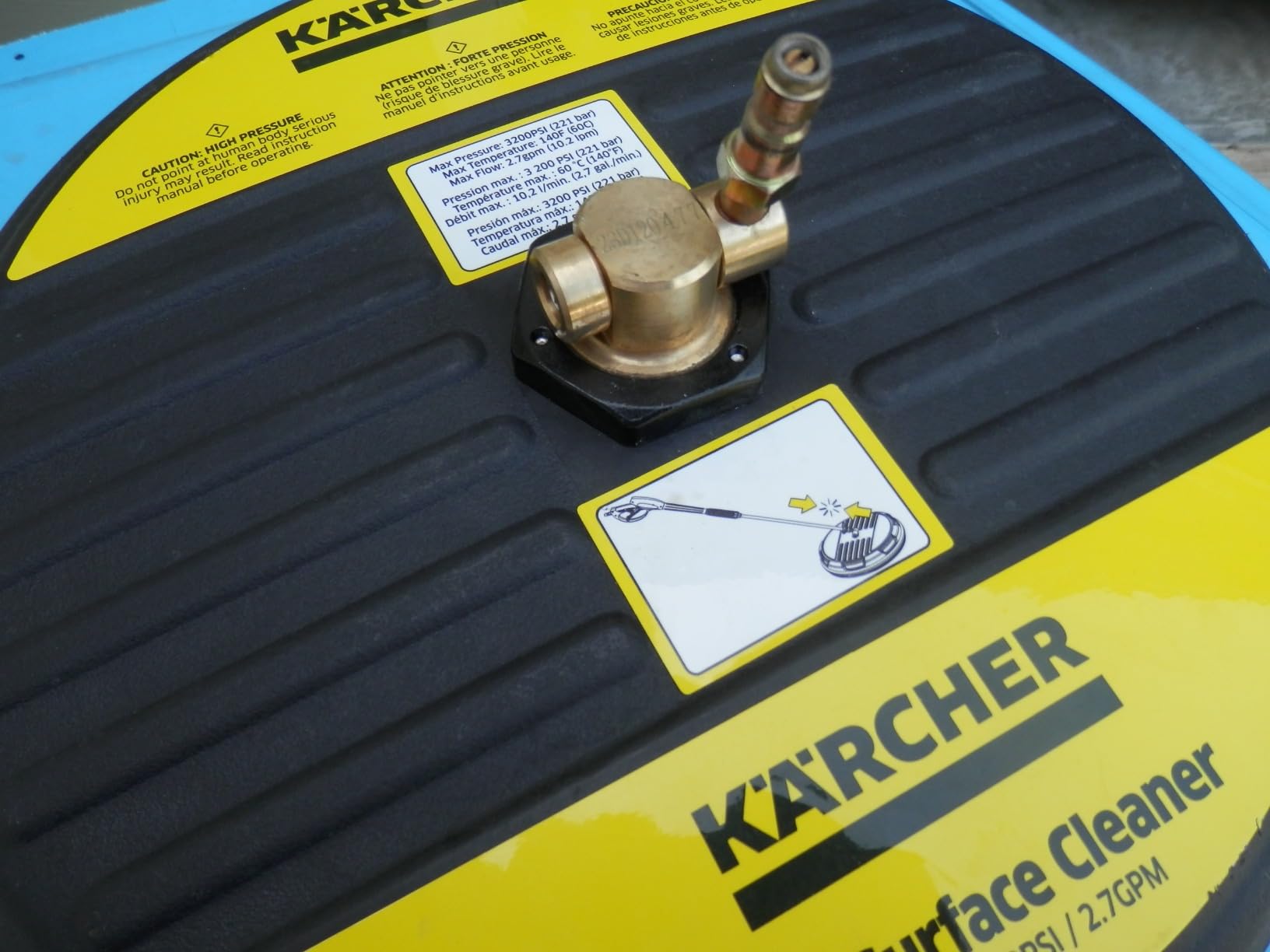
The Kärcher 15 inch is the one we kept reaching for. It has the largest owner base of anything on this list by a wide margin, and after six weeks of driveway panels, sidewalks and a patio, that track record held up. The spray bar rides on a sealed metal bearing, and owners repeatedly compare it favorably to plates that use a sleeve and washer arrangement, which is where most competing heads eventually get sloppy.
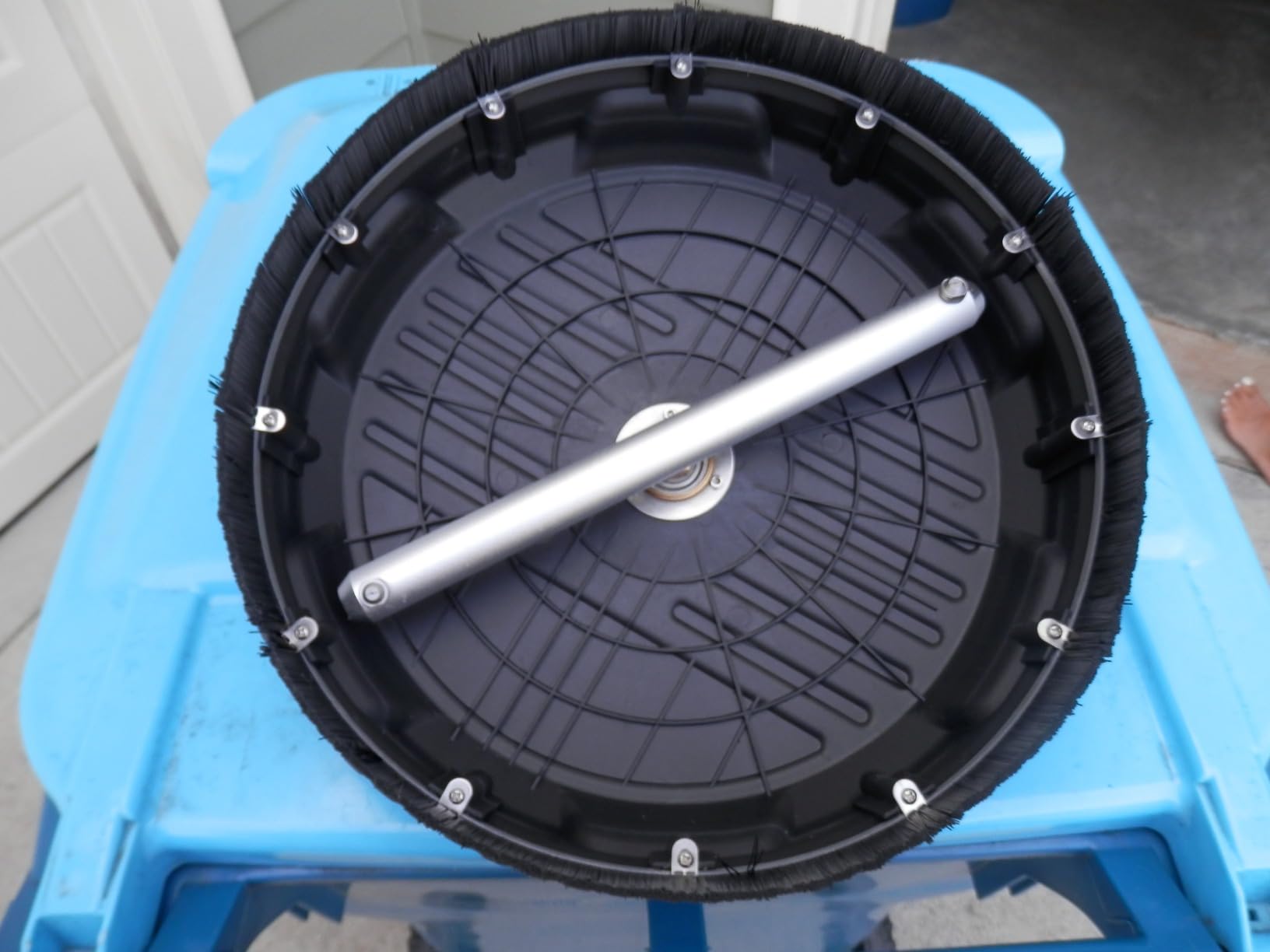
What makes it the best overall pick is the combination of a 15 inch deck, a 3200 PSI and 2.7 GPM ceiling, and a skirt that genuinely contains spray. That output band lines up with the most common residential gas washer and with the better electric machines, so it is not overbuilt for a homeowner. The standard quarter-inch quick connect drops onto most wand guns, and the whole head swivels to match your wand angle so you are not fighting the hose.
Two honest notes. The effective cleaning path is closer to 12 inches once you measure the bar rather than the deck, which is a common trick in this category and applies to most 15 inch plates. And the plastic nut that holds the shroud together loosens after a few hours of use, so check it partway through a long job. Owners also add a wand extension, which cuts back fatigue considerably on a large slab.
What works well on this head
Open, flat concrete is where it sings. We saw the striping from a bare wand disappear completely on broom-finish slabs, and on a driveway with expansion joints the head crossed them without wobbling or hunting. Owners report driveway time dropping by roughly a quarter to a half compared with a wand pass.
The skirt is the sleeper feature. It keeps grit and water off your legs and stops the spray from hitting a parked car or a flower bed two feet away, which matters when you are working around landscaping.
Where it falls short
It is not a restoration tool. Ingrained dirt that has bonded to the slab may need a wand follow-up with a turbo or flat tip, since the head floats slightly farther off the surface than a bare nozzle. Corners, steps and posts are awkward because the shroud blocks the last fraction of an inch along an edge, and vertical use is impractical.
A small number of owners received a replacement with clogged or poorly drilled nozzles, so flush it with clean water before the first pass and check both jets are spraying evenly.
2. Simpson 15 Inch Steel Surface Cleaner – Best for Gas Washers
Simpson Cleaning 80165 Universal 15″ Steel Pressure Washer Surface Cleaner for Cold Water Machines, 1/4″ Quick Connection, Recommended Min 2200 PSI up to Max of 3700 PSI, Black
Powder coated steel shroud
Stainless steel nozzles
3700 PSI and 3.4 GPM ceiling
5.5 pounds
Pros
- Powder coated steel shroud and stainless nozzles resist corrosion
- Two rotating jets deliver roughly 10X the coverage of a standard nozzle
- Shroud keeps overspray down so you stay drier
- Includes a nozzle cleaning tool for clearing jet buildup
Cons
- Rotating arm often stops spinning and needs lubrication with an Allen wrench
- Some units arrive with one blocked or non-spraying nozzle
- Cold water use only and capped at 140 F
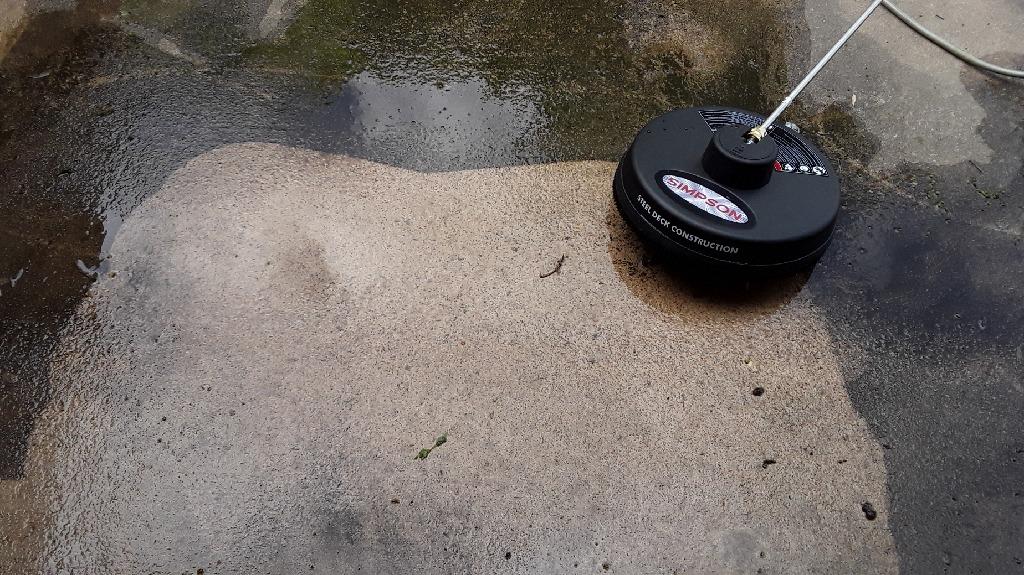
This is the pick for anyone running a gas washer in the 2200 to 3700 PSI band with 2.3 GPM or more. The powder coated steel shroud and stainless steel nozzles are the right materials for wet concrete work, where bare steel starts to bloom with rust within a season. Owners consistently praise how quickly it clears a large driveway once the arm is turning properly.
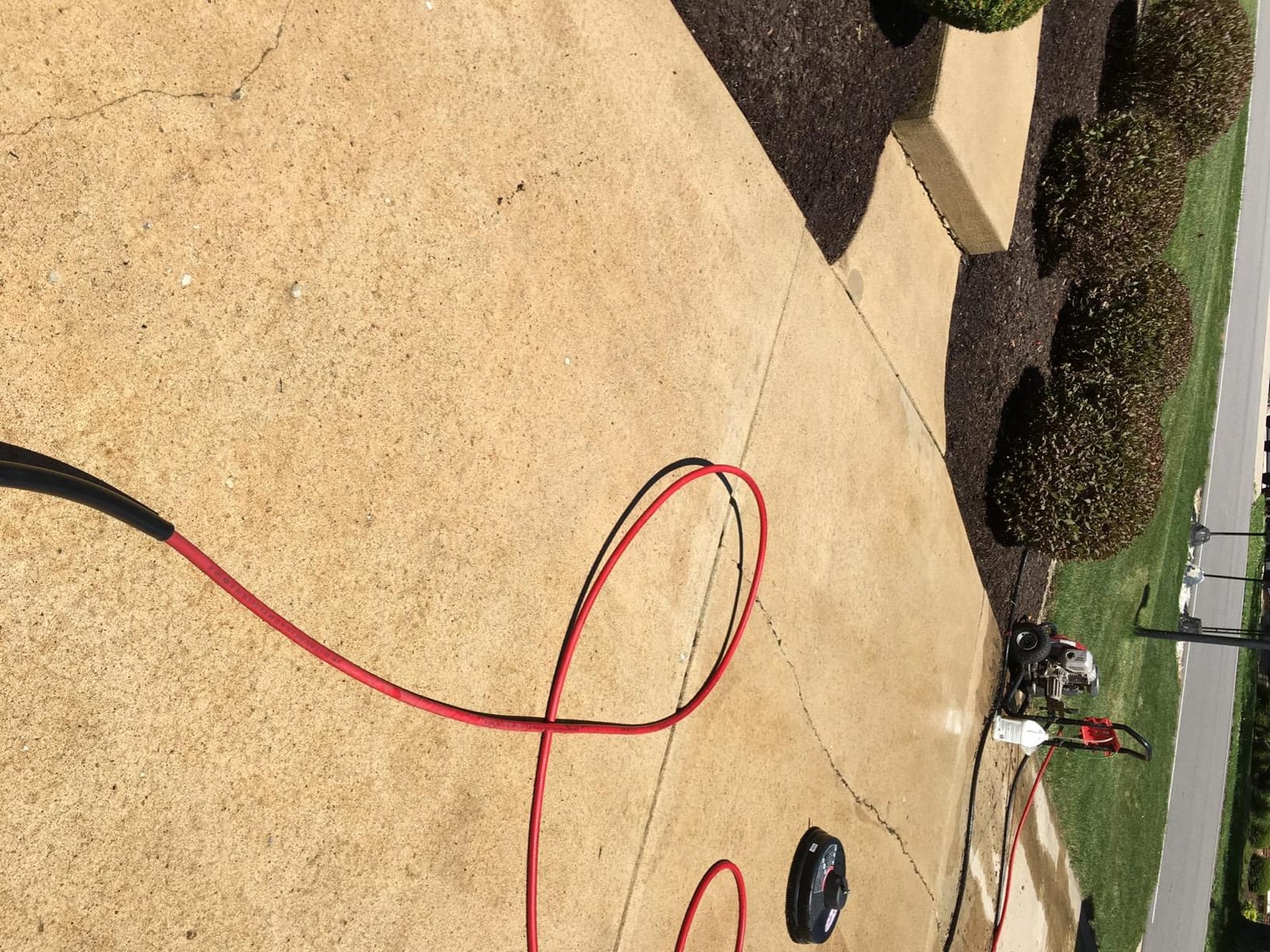
The honest headline is durability. Simpson’s 4.1 average is the lowest on this list, and the reason is a long tail of arm failures. Buyers report that the spray bar stops rotating after a few hours or a season, and that removing the arm with an Allen wrench and lubricating it restores performance. Treat that as maintenance rather than a defect, and the plate works well.
A second cluster of complaints describes quality control on arrival, with one of the two nozzles blocked or an arm that never spins under pressure. That is why the box includes a nozzle cleaning tool. Open both orifices and confirm both spray before you touch a driveway.
What works well on this head
The steel shroud shrugs off the wet alkaline environment that eats cheaper plating, and the higher 3700 PSI and 3.4 GPM ceiling means it actually uses a mid-range gas machine rather than capping out early. When the arm spins, you get streak-free passes and large water savings compared with a wand.
Where it falls short
It is a cold water attachment, capped at 140 F, so it cannot take hot water from a pressure washer that heats its own supply. At 5.5 pounds it is heavier to reposition than the plastic plates, which matters when you are climbing porch steps repeatedly.
If you buy it, keep an Allen wrench and a tube of lubricant with it, and re-check the arm every few hours on a big job. If you want zero arm maintenance, skip to the four-wheeled stainless plates further down.
3. Greenworks 12 Inch Surface Cleaner – Budget Pick
Greenworks 12″ (in.) Surface Cleaner Pressure Washer Attachment
12 inch cleaning path
2000 PSI and 2.3 GPM ceiling
2.5 pounds
1/4 inch quick connect
Pros
- 2.5 pound body floats over concrete with little arm strain
- Even coverage with no zebra striping and almost no overspray
- Small footprint reaches stairs steps and tight corners
- Gentle enough for old stained or colored concrete without stripping the finish
Cons
- No wheels so you supply the downward pressure and must keep pace
- Nozzles sit far from the slab so heavy staining needs extra passes
- Can leave circular rings where it dwells in one spot too long
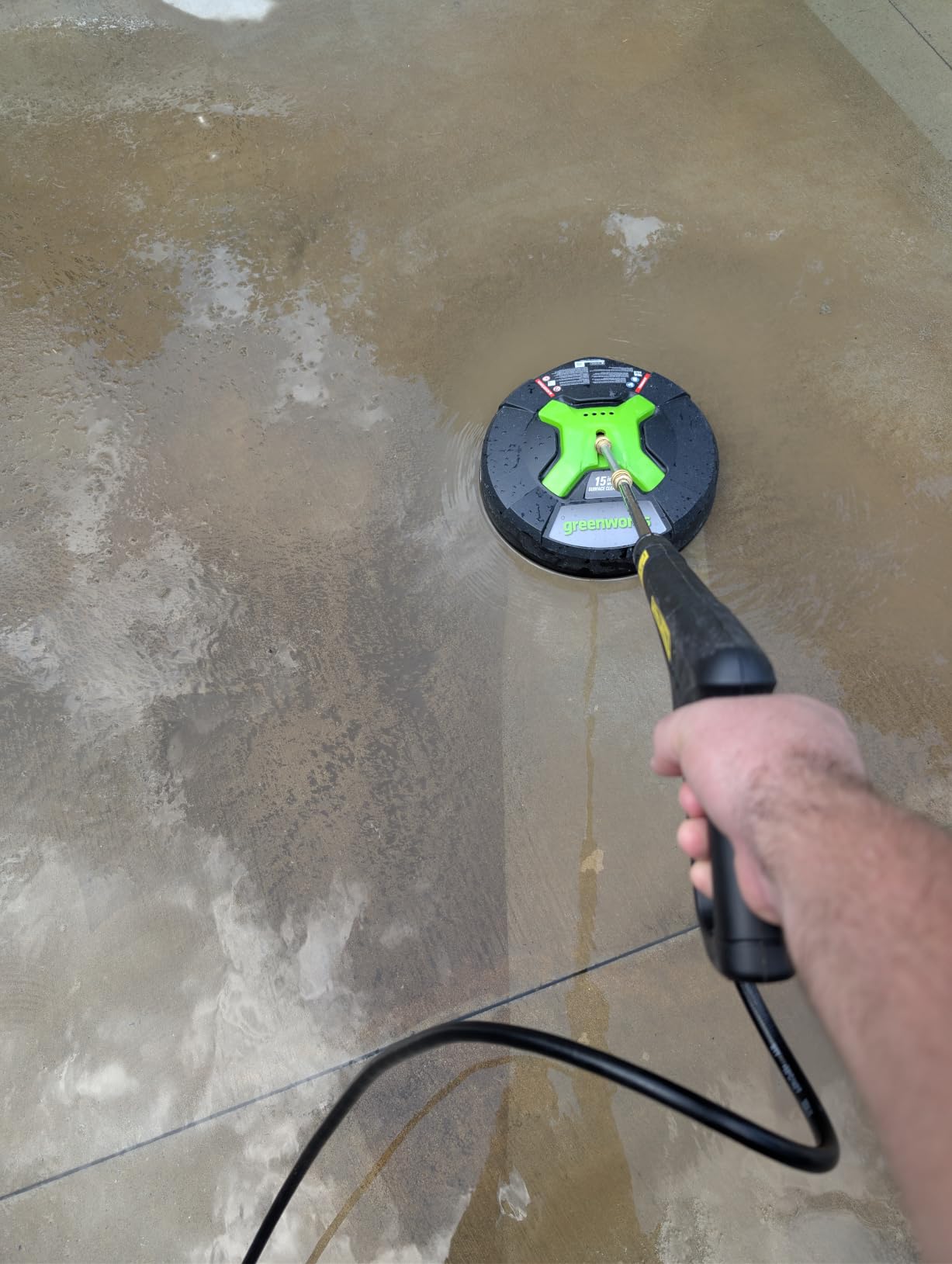
At a 12 inch path and 2.5 pounds, this is the cheapest sensible route to a stripe-free concrete finish, and for most patios, walkways and small driveway sections it is the right answer. We liked how quickly it took to concrete and steps. The skirt contains nearly all overspray, which is unusual at this weight and price.
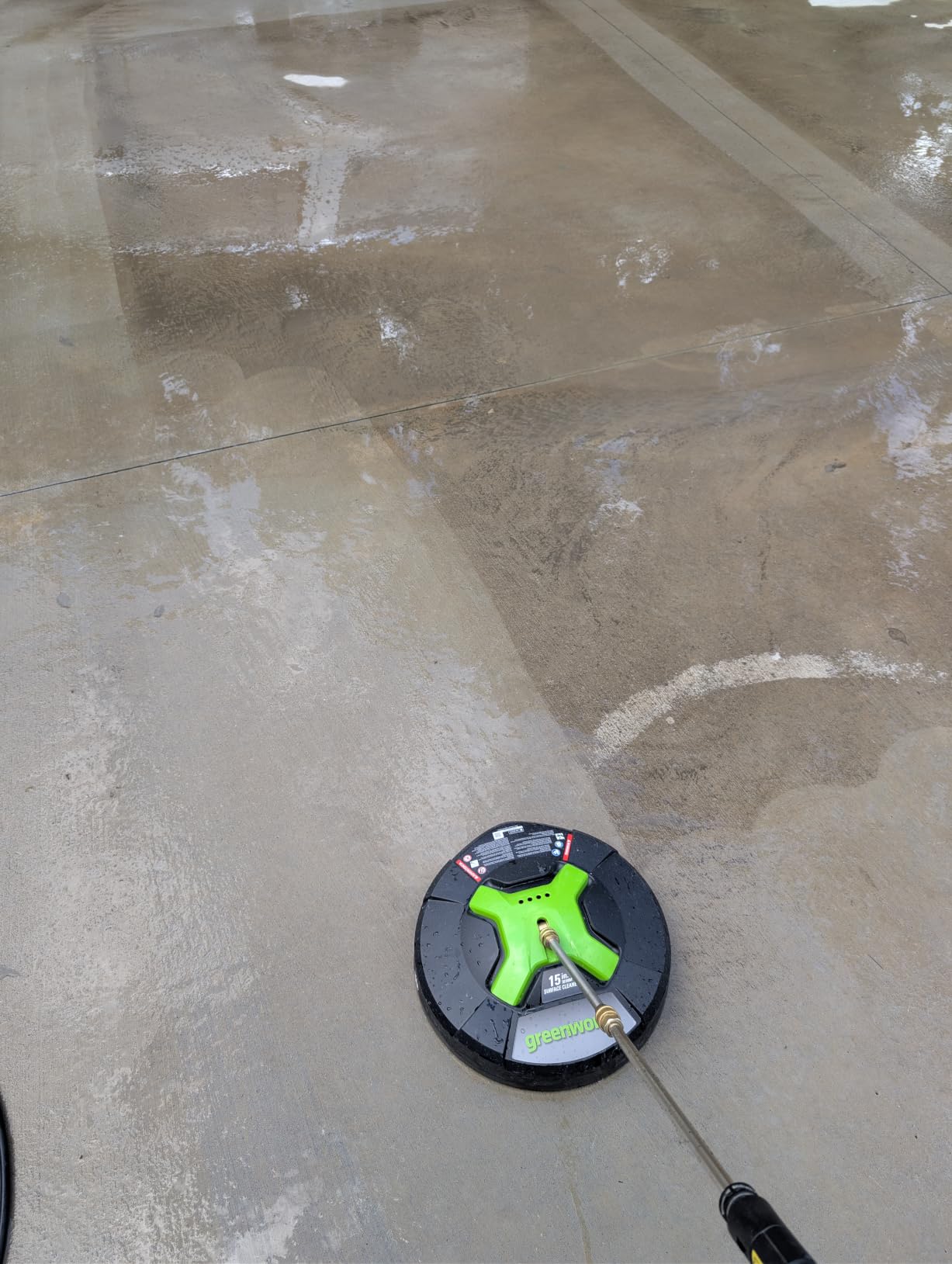
This is the head to buy if you have a smaller electric washer. Its 2000 PSI and 2.3 GPM rating matches the output band of common 1800 to 2000 PSI electric machines, so it is not being asked to do something it cannot. Owners upgrading from a bare wand report finishing work two to five times faster on flat surfaces, with a 3 year warranty behind it.
The honest limit is that it is a maintenance and light-to-moderate cleaning tool, not a restoration tool. Because the nozzles sit relatively far from the concrete, heavy staining may need several passes or a follow-up with a turbo or flat tip. Push thick moss with a turbo nozzle first, then finish with this.
What works well on this head
Reach. A 12 inch footprint fits porch steps, deck stairs and narrow walkways where 14 and 15 inch plates simply will not turn. Owners also praise it for older, colored or stamped concrete because the gentle fixed height does not strip the surface finish.
Low mass is the real advantage on a long job. Four pounds less to hold means you can finish a driveway without wrecking your shoulders, which no four-wheeled stainless plate in this list can promise.
Where it falls short
No wheels. You push down and set the pace, and if you move faster than the head wants, the fixed height advantage shrinks. It also covers fewer passes than a 14 or 15 inch head, so a large driveway takes proportionally longer.
Watch for circular rings. Dwell too long in one spot and you can leave a visible ring where the footprint sat longer than in adjacent areas. Keep moving in steady overlapping passes.
4. LidoDola 14 Inch Surface Cleaner – Best Accessory Bundle
LidoDola 14” Pressure Washer Surface Cleaner, Power Washer Accessory
14 inch path
Four universal wheels
2000 to 4000 PSI
Stainless steel with sealed bearing
Pros
- Stainless steel body with a heavy-duty bearing for long service
- Weighted base resists lifting under pressure
- Four universal wheels glide over large flat areas
- Splash-free skirt cuts overspray and keeps you dry
- Bundle adds wands spare nozzles O-rings filter tape and a cleaner
Cons
- Needs a capable washer above 2000 PSI to perform as designed
- Heavier than lightweight 12 inch plastic competitors on long jobs
- Plain utilitarian stainless styling
The LidoDola 14 inch is the value pick among the wheeled stainless plates. A weighted stainless base with a heavy-duty bearing resists lifting under pressure, and the four universal wheels take the arm work out of a long pass. Owners describe even, streak-free results across a 14 inch path on driveways and patios.
Where it beats most rivals in the class is what arrives in the box: two extension wands, two replacement nozzles, two O-rings, an inlet filter, thread seal tape and a nozzle cleaner. That is the full maintenance kit most owners end up buying separately, and it also gives you the wands needed to keep the head at a comfortable working height.
The 2000 to 4000 PSI working range is wide, but it is a wide range that still demands a capable machine. Below that band, output drops and the spinning arm does not get the flow it needs to rotate well. An anti-clog inlet filter helps keep debris from reaching the arm in the first place.
What works well on this head
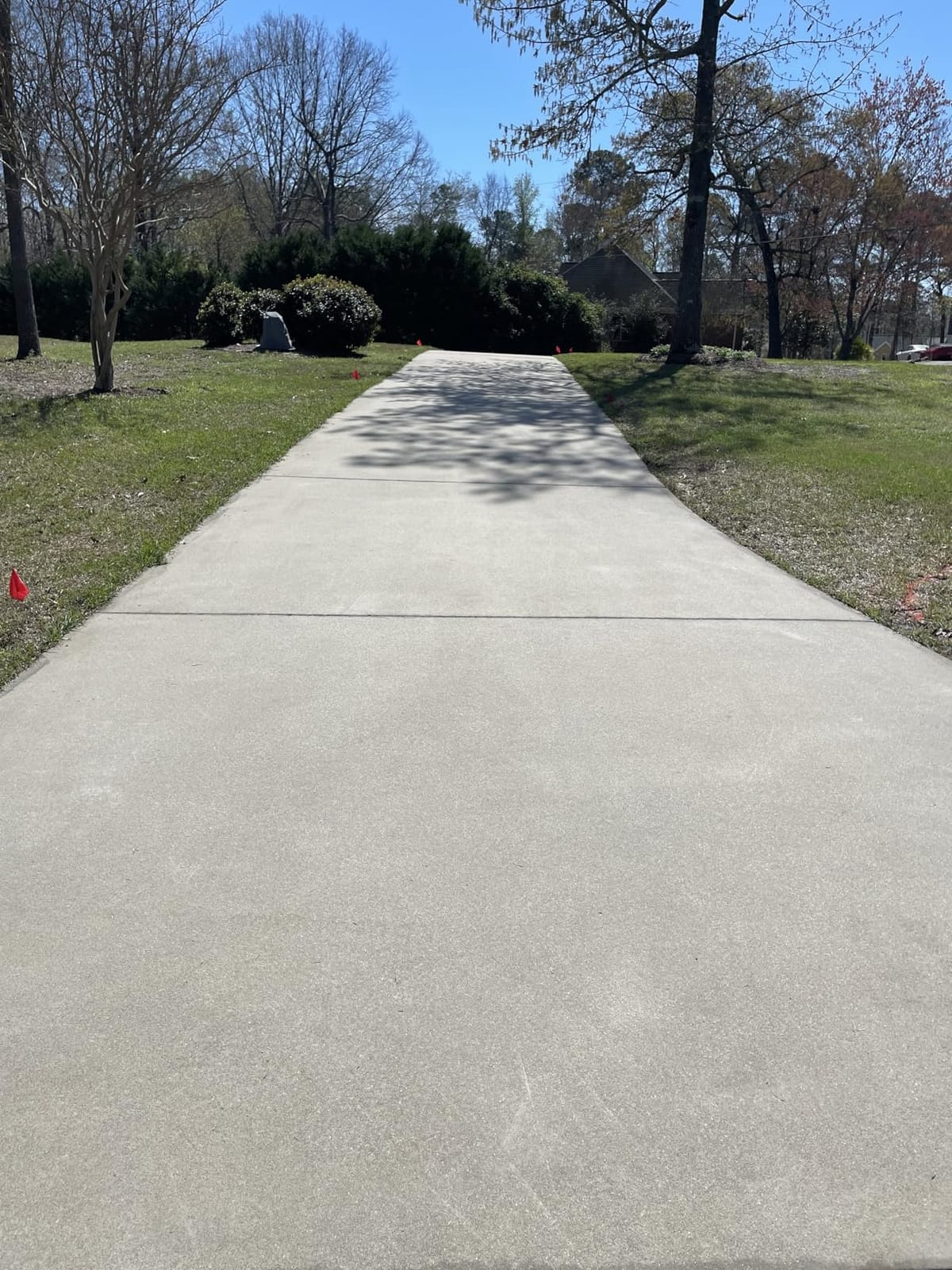
Large flat work with a gas washer. Owners who ran it across a full driveway report that the wheels and weighted base made the pass feel almost self-propelled, and the skirt keeps the work area dry enough to keep going.
The replacement nozzles matter more than they sound. Once the original orifices pick up debris, cleaning them takes minutes with the included tool and keeps the head performing.
Where it falls short
It is heavy for its class, and owners note that the extra mass can tire the arm on a very large job compared with lighter plastic plates. The styling is plain, with nothing to recommend or complain about beyond that.
If your washer sits at the low end of the range, move up or down a size rather than buying a heavy head your machine cannot feed. The Greenworks 12 inch above is the better match for a small electric unit.
5. JANZ 14 Inch Surface Cleaner – Best for Mid-Range Gas Washers
JANZ 14” Pressure Washer Surface Cleaner
14 inch path
Four universal wheels
4000 PSI and 3.7 GPM ceiling
Stainless housing
Pros
- Stainless housing and heavy-duty bearing resist wear at the rotating joint
- Weighted enough not to rise under high pressure
- Four wheels glide with minimal fatigue on flat concrete
- Roughly four times faster than a spray nozzle alone
- Bundle includes wands spare nozzles tips O-rings and a cleaner
Cons
- Does not lift well-adhered paint drops without pre-treatment
- Jet orifices can block with small metal or machining debris
- Least effective paired with low-output electric washers
The JANZ 14 inch pairs a stainless housing and heavy-duty bearing with four universal wheels, and owners rate it as one of the least tiring heads on a big flat job. Several mention it performing well against modest 2900 to 3400 PSI machines, which matches its 2000 to 4000 PSI and 1.8 to 3.7 GPM working range.
What impressed us is the fixed nozzle height working in combination with the wheels. The head holds the jets at a constant distance while the casters glide, so overlapping passes blend into each other instead of leaving a seam. Buyers report roughly four times the coverage of a spray nozzle alone, with almost no overspray escaping the skirt.
The accessory bundle is unusually complete for this price band: two extension wands, two replaceable nozzles, three zero-degree tips, O-rings, an inlet filter, thread seal tape and a nozzle cleaner. The zero-degree tips let you finish problem spots without a second tool.
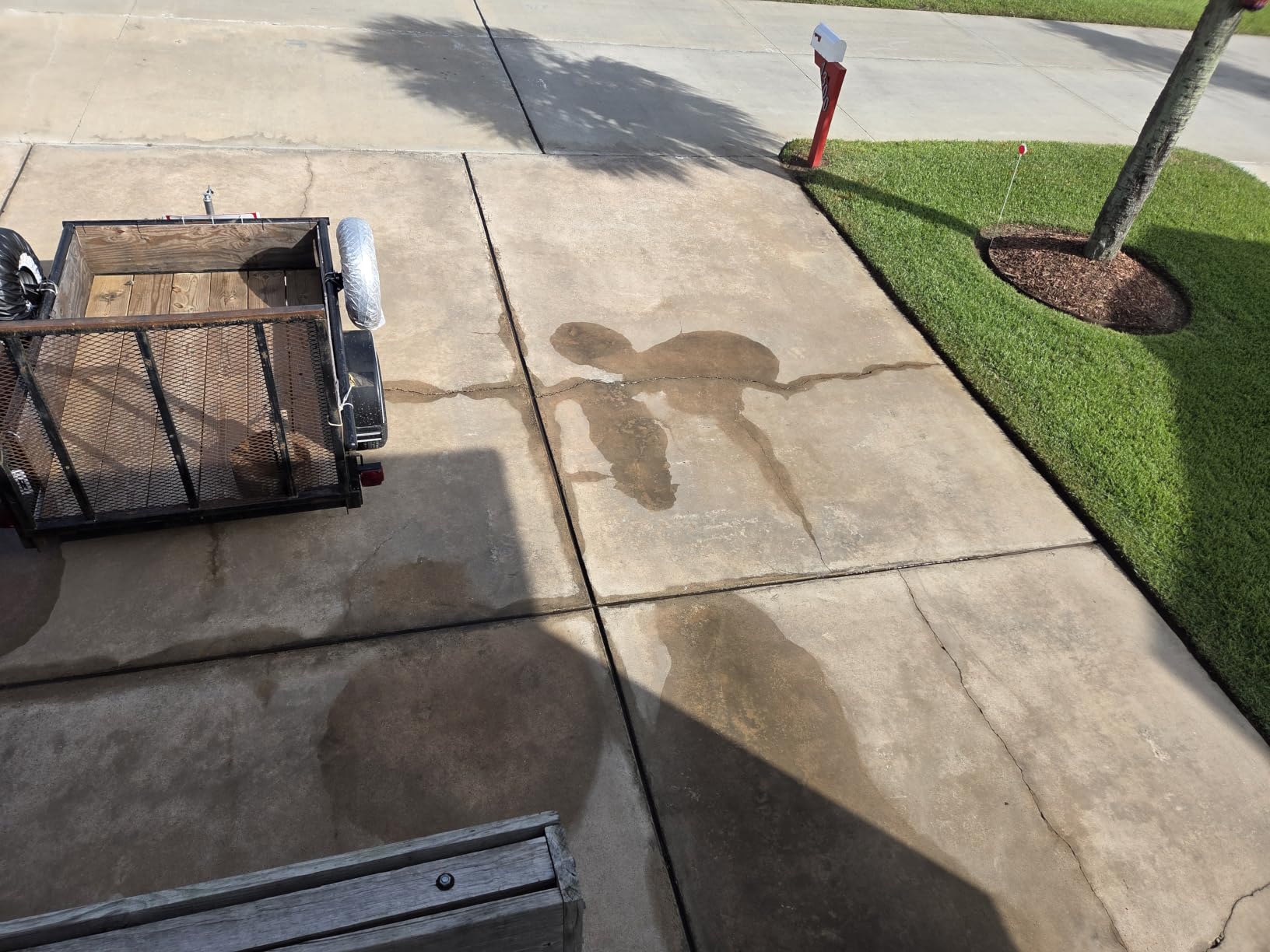
What works well on this head
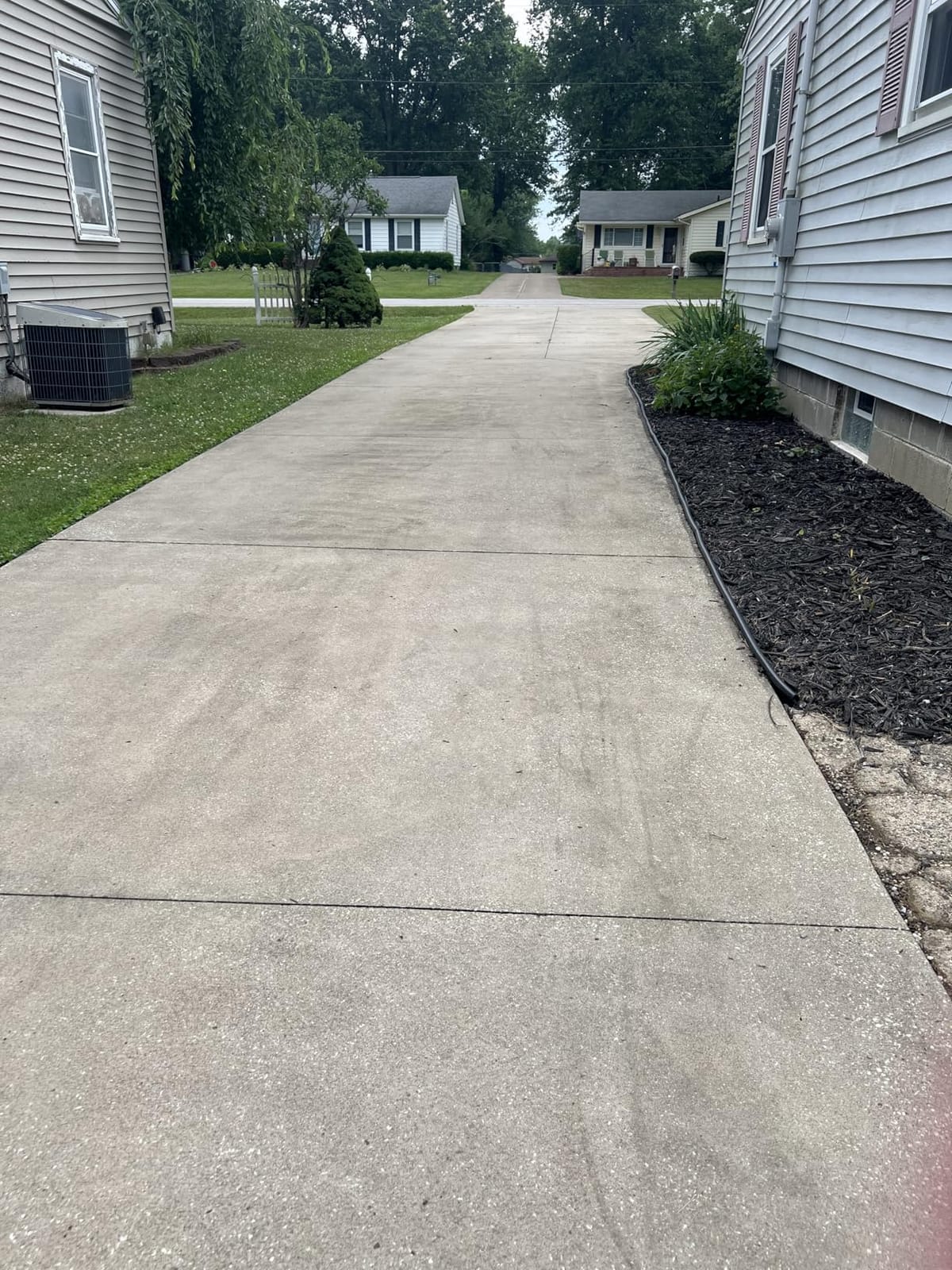
Driveways and patios on a mid-range gas washer, where the 4000 PSI ceiling actually gets used. The four-wheel glide and weighted housing mean you steer rather than fight, and the skirt keeps you dry enough to keep a steady pace.
Owners also like that the wheels let the head reach fully into corners, which matters around posts and against walls.
Where it falls short
Adhered paint drops and stains that have chemically bonded to the slab will not come up. Pre-treat with a degreaser and dwell, or hit them first with a turbo tip, then finish with this head.
The small jet orifices can pick up metal or machining debris and block, so run the nozzle cleaner on a schedule rather than waiting for a bad pass. A few owners also describe the top connector area as feeling a little fragile, so do not use it as a handhold when lifting the head onto a truck bed.
6. Biswing 14 Inch Surface Cleaner – Top Rated
Biswing 14″ Pressure Washer Surface Cleaner with 4 Wheels, Stainless Steel Power Washer Accessory for Driveways Sidewalks Patios Cleaning, 1/4″ Quick Connector, 2 Extension Wand Attachments, 4000 PSI
14 inch stainless head
Four wheels and dual spinning jets
2000 to 4000 PSI
1.8 to 3.7 GPM
Pros
- Stainless and brass construction feels sturdier than plastic plates
- Four wheels reduce back fatigue on long driveway jobs
- Dual spinning jets clean evenly with no stripes at a slow walking pace
- Reported to cut cleaning time roughly in half
- Built-in inlet filter blocks impurities before they reach the arm
Cons
- Pressure and flow split between two jets so stubborn slabs need pre-treatment
- Better for maintenance than first-time restoration
- Extension wand can feel slightly wobbly
The Biswing 14 inch is the one we would put on the most driveways. Stainless steel and brass construction is repeatedly contrasted favorably against plastic plates owners have burned through, and the four wheels plus a 14 inch path make a full driveway pass a steady walking pace rather than a workout.
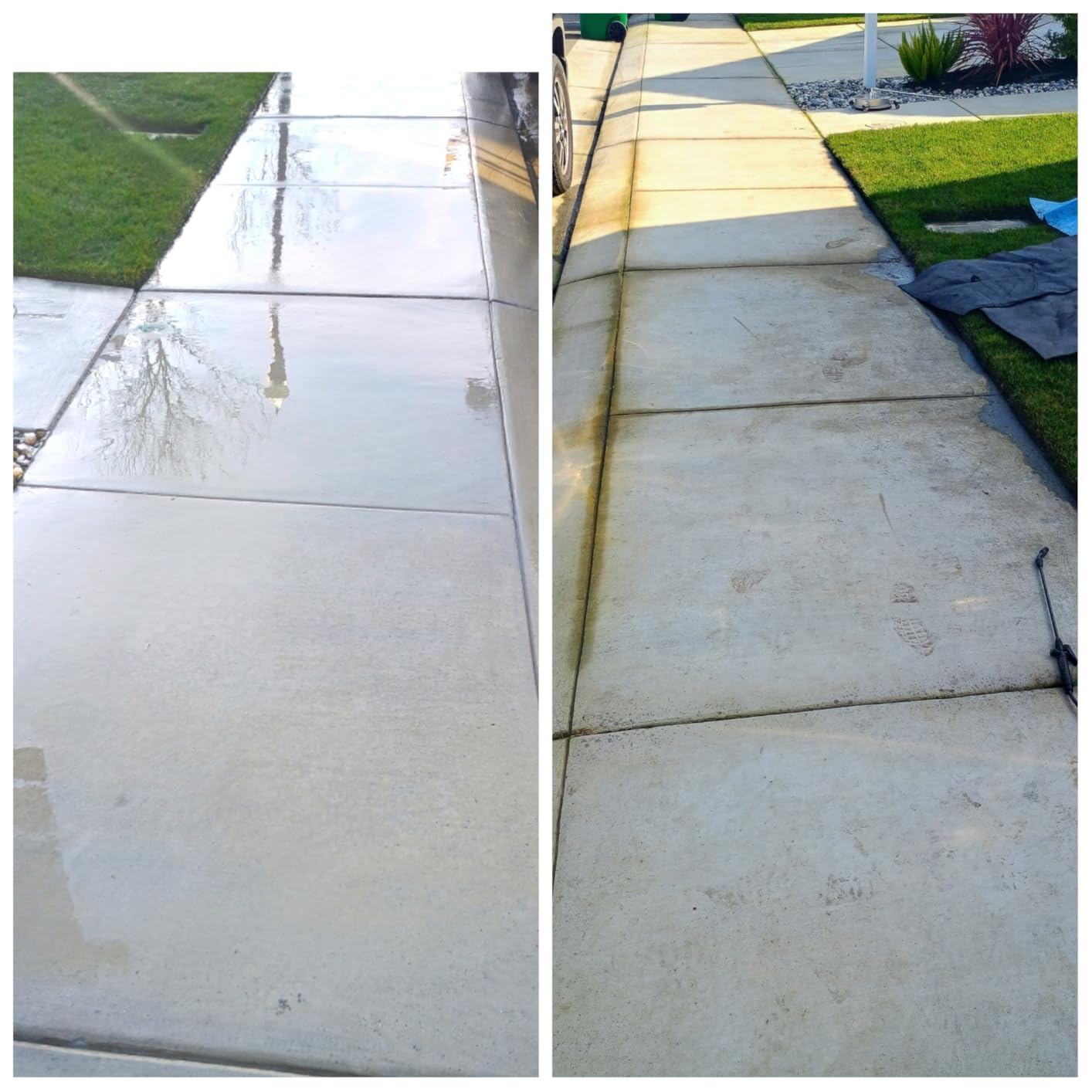
Owners report more than halved cleaning time on driveways and sidewalks, and note that the skirt also cuts down blowback of grit from paver joints. The built-in inlet filter blocks impurities before they reach the rotating arm, which matters if you are working near soil or plant beds rather than a sealed slab.
It performs well across the 2000 to 4000 PSI band, and several owners run it on mid-range 2900 to 3200 PSI machines with good results. The package includes the surface cleaner, two 15 inch extension wands, two replacement nozzles, thread seal tape, four O-rings and a nozzle cleaner.
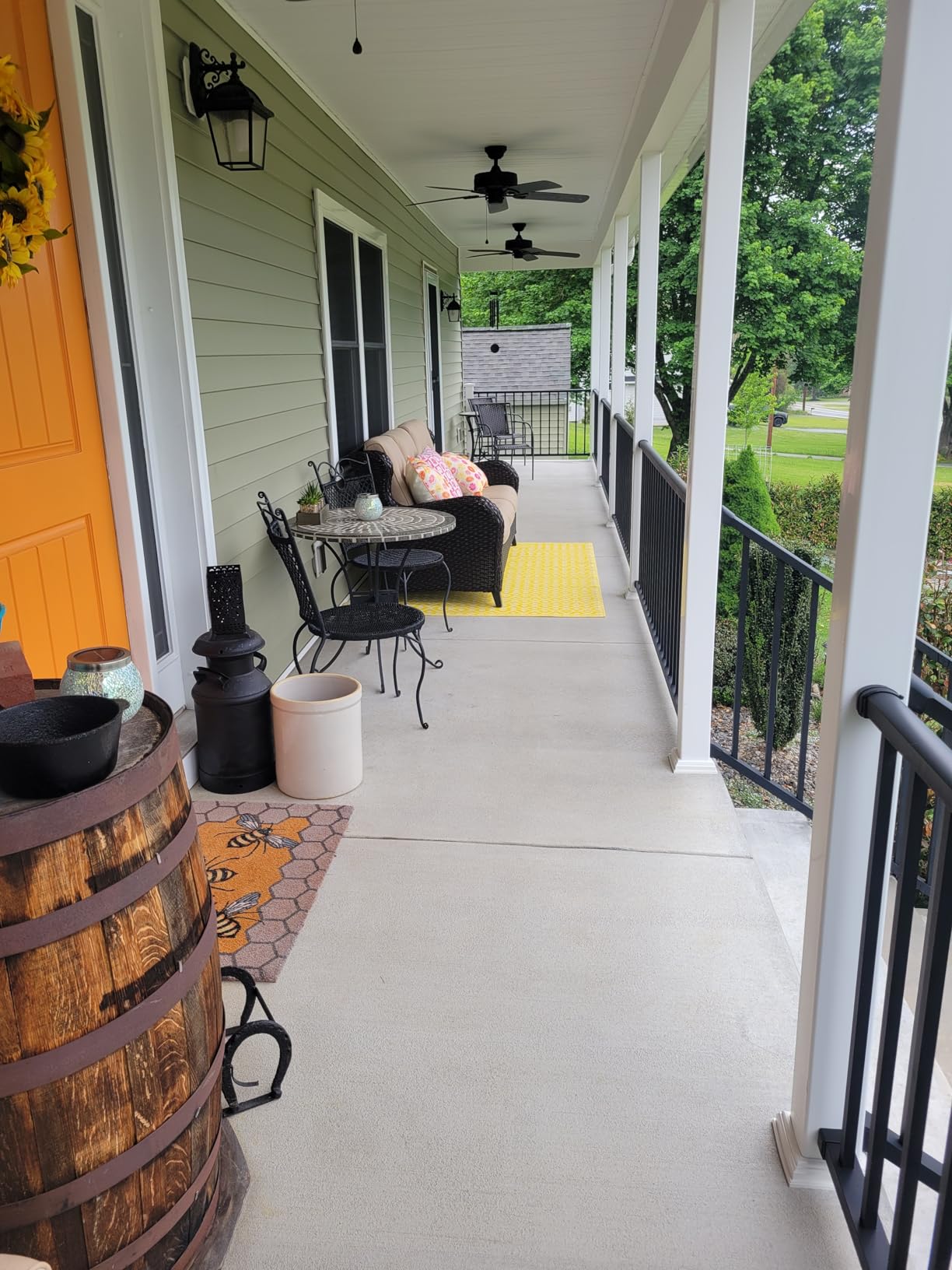
What works well on this head
Maintenance cleaning on concrete that is already reasonably clean. That is the honest sweet spot, and in this range it does the job faster than anything else at a similar price. The stainless and brass build is the part that matters for long ownership; it is why owners move up from plastic and stay there.
It is also good at reducing grit blowback on jointed pavers and textured slabs.
Where it falls short
Because pressure and flow are split across two jets, each jet gets about half the washer’s output. A slab that already resists your machine’s full spray tip will not fully clean here either, so this is not a first-time restoration tool on never-washed concrete.
It also does not rinse away loosened dirt. Follow with a 40 degree tip or a hose to clear the slurry, and expect the extension wand to feel a little wobbly on longer passes. A few machines with non-standard gun connectors need an adapter coupler.
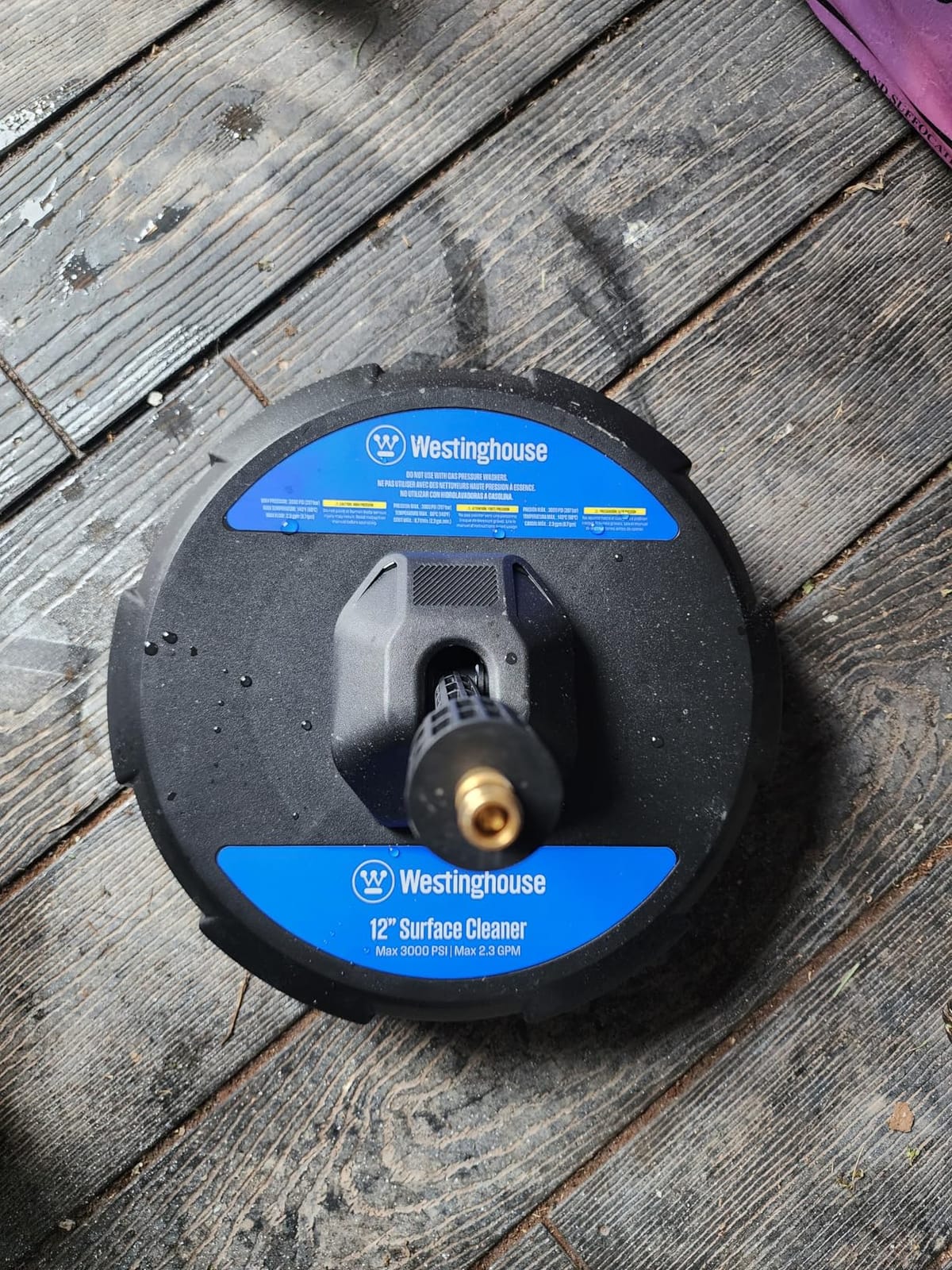
7. Westinghouse PWSC12 12 Inch Surface Cleaner – Best Value
Westinghouse PWSC12 12″ Pressure Washer Surface Cleaner Attachment – 3000 Max PSI, 1/4” Connector
12 inch cleaning deck
3000 PSI and 2.3 GPM ceiling
2 pounds
180 day warranty
Pros
- 2 pound body cuts arm fatigue and lifts easily for vertical work
- Compact footprint suits porch steps and narrow walkways
- Dual rotating jets leave a streak-free finish instead of wand bands
- Reported up to four times faster than a regular spray wand
- Universal quarter-inch quick connect needs no adapter
Cons
- Marketed for electric washers rather than gas units
- Capped at 3000 PSI and 2.3 GPM so higher-output machines go unused
- Narrow 12 inch path means more passes on large driveways
- No wheels so the head does not glide itself
The Westinghouse PWSC12 is a low-cost starter plate aimed squarely at electric washer owners, and it does the basic job well. At two pounds it is the easiest head here to hold, which is the feature that decides it if you have arm or back limitations.
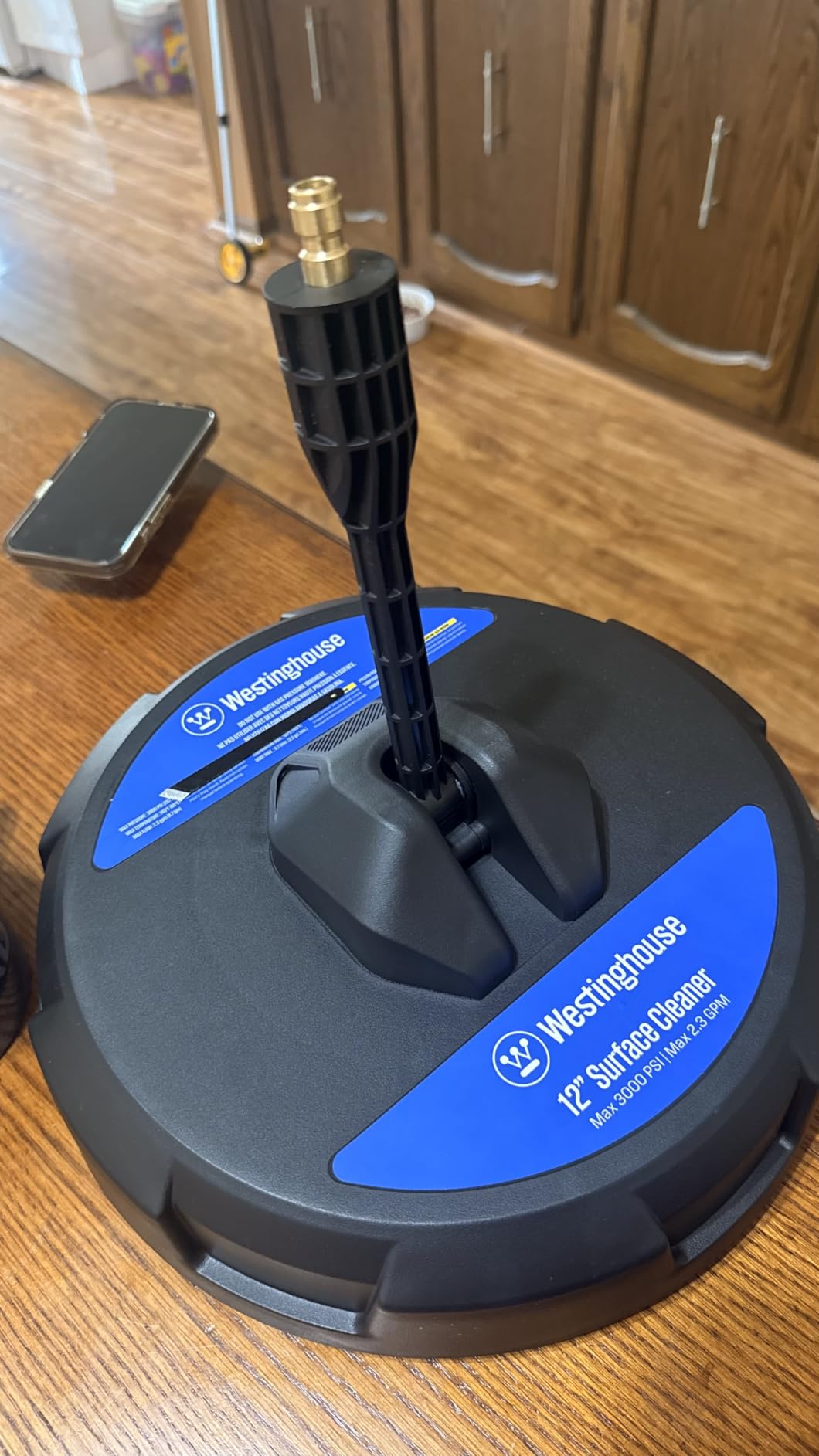
Its universal quarter-inch quick connect drops into most electric pressure washers with no adapter, and the dual rotating jets spread a uniform blast that owners report leaving a streak-free finish on patios, driveways and garage floors. For small patios, steps and narrow walkways, the narrow path is an advantage rather than a limitation.
One thing it does that most plates here cannot is move vertically. The light body is easy to raise onto a wall or fence, and the skirt keeps the water off whatever is nearby.
What works well on this head
Small, defined jobs on flat concrete with an electric machine: a porch, a set of steps, a short walkway, a garage floor. Owners like the quick-connect setup and the even results on flat surfaces, and the 180 day warranty covers the early failures.
If your electric washer sits at 2300 to 3000 PSI, this head matches its output band closely, which is exactly what you want.
Where it falls short
The ceiling is real. Capped at 3000 PSI and 2.3 GPM, it cannot exploit a gas machine’s output, and it is not intended for one. If you later upgrade to a bigger washer, this becomes the attachment you replace first.
No wheels means the head does not glide, and a 12 inch path on a two-car driveway means noticeably more passes than a 14 or 15 inch head. Buy it for the small jobs and step up in width when you take on the slab.
8. MEKOH 20 Inch Surface Cleaner – Best for Large Driveways
MEKOH 20” Heavy-Duty Pressure Washer Surface Cleaner with Wheels, 4500PSI
20 inch cleaning path
Two adjustable handles and four casters
4500 PSI and 4 GPM ceiling
Solid brass fittings
Pros
- Widest path in this roundup at 20 inches for the fastest large-area coverage
- Two large spinning nozzles lift stubborn stains and oil marks
- Changeable nozzles let you switch between power washing and soft washing
- Sealed upgraded bearing helps prevent leaking and blocking
- Two handles plus casters mean you push it rather than drag it
Cons
- Highest price point in the group by a wide margin
- Requires a washer above 2000 PSI and 2 GPM to work as designed
- Largest footprint is awkward on stairs and narrow walkways
- 65 inch frame is bulky to store and reposition
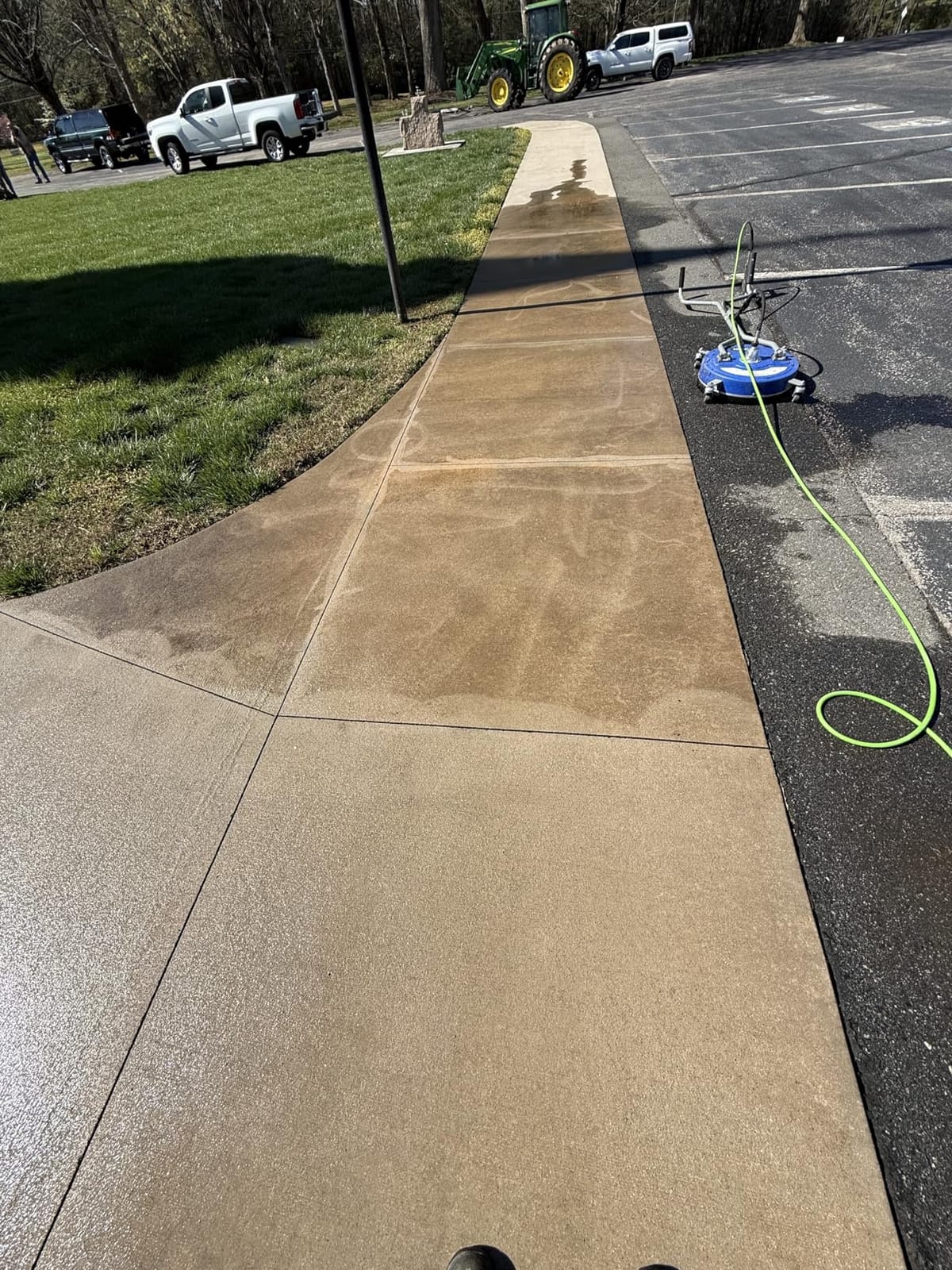
The MEKOH 20 inch is simply the fastest way to cover a big slab, and on a long driveway or a parking area you feel the difference immediately. Two large spinning nozzles, two angle-adjustable handles and four casters mean you push the head along in a straight line instead of dragging it, and the wheels hold the nozzles at a fixed height through the whole pass.
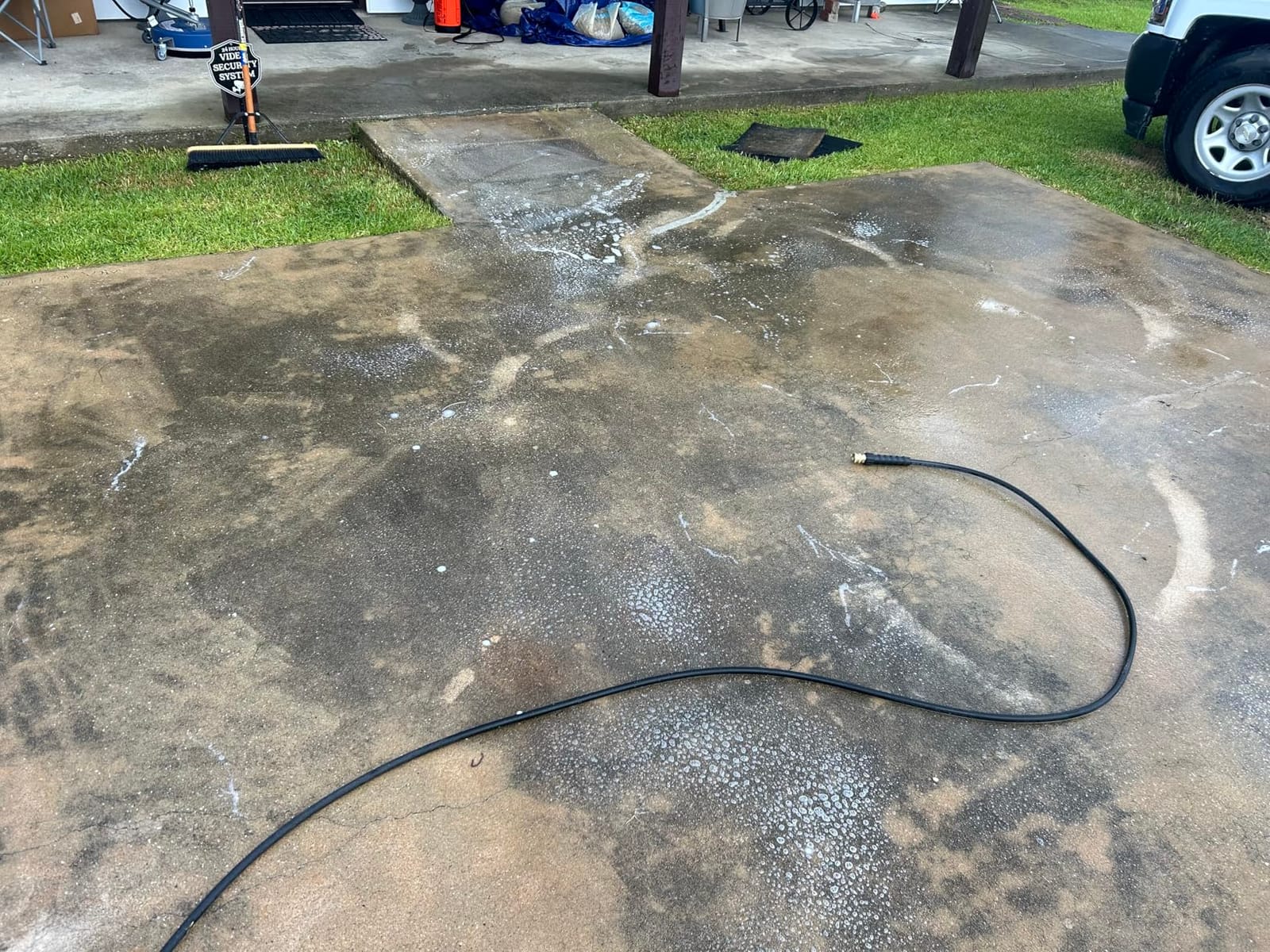
The build is the interesting part. A sealed upgraded bearing and solid brass fittings resist leaking and blocking at high pressure, and the body handles cold water, hot water and soap solutions, so you can soft wash with the same head. Changeable nozzles let you shift between pressure washing and soft washing patterns on the same job.
The catch is matching it to your washer. It operates up to 4500 PSI and 4 GPM, which is above what most homeowner machines deliver, and it needs at least 2000 PSI and 2 GPM to function as designed. On a small electric washer you are paying for width your machine cannot feed.
What works well on this head
Large concrete areas: full driveways, curbs, pool decks, garage floors and patios. Owners point to the 20 inch footprint, dual handles and caster wheels as the reason it finishes big jobs faster than any 14 inch plate here.
It also has the strongest stain and oil handling in this group, because the two large nozzles can take higher working pressure and flow than smaller jets.
Where it falls short
It is the most expensive attachment here and sits well above the mainstream budget plates. If your cleaning area is a single standard driveway, the money buys you time you may not need.
Size also works against it in tight spots. Stairs, narrow walkways and corners are awkward with a 20 inch footprint, and the 65 inch two-handed frame is bulky to store and reposition. Buy it if you own a capable washer and clean large slabs routinely.
9. Westinghouse 15 Inch Surface Cleaner – Best Lightweight 15 Inch
Westinghouse Universal 15” Pressure Washer Surface Cleaner Attachment – 3400 Max PSI, 1/4” Connector – For Gas and Electric Pressure Washers
15 inch cleaning head
3400 PSI ceiling
4 pounds
Universal quarter-inch quick connect
Pros
- Plug-and-go quarter-inch quick connection works with most gas and electric washers
- Concentrates up to 3400 PSI over a 15 inch path
- Only 4 pounds so it is easy to move and store
- Straightforward design usable straight out of the box
- Sold for residential and commercial cleaning tasks
Cons
- Deck width means the real swept path is somewhat narrower
- No wheels so long driveway passes need manual guiding
- 3400 PSI ceiling leaves higher-output machines unused
- Simple accessory design with no wands or spare nozzles in the box
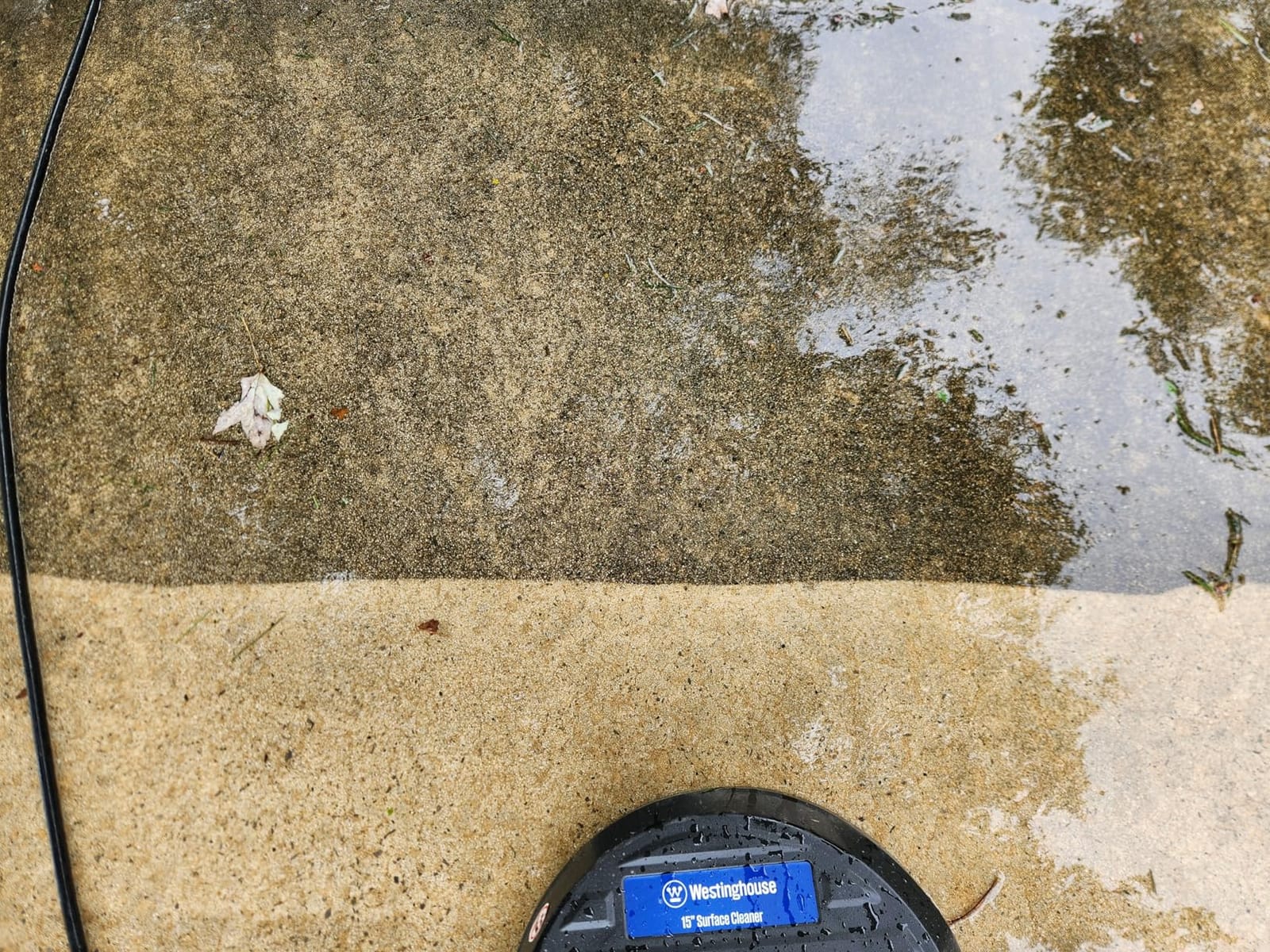
This Westinghouse 15 inch is the version of the category we recommend if you want a mid-size path without the mass. At four pounds it is roughly half the weight of the stainless wheeled plates, and owners single that out as the standout feature for storage, transport and one-handed repositioning.
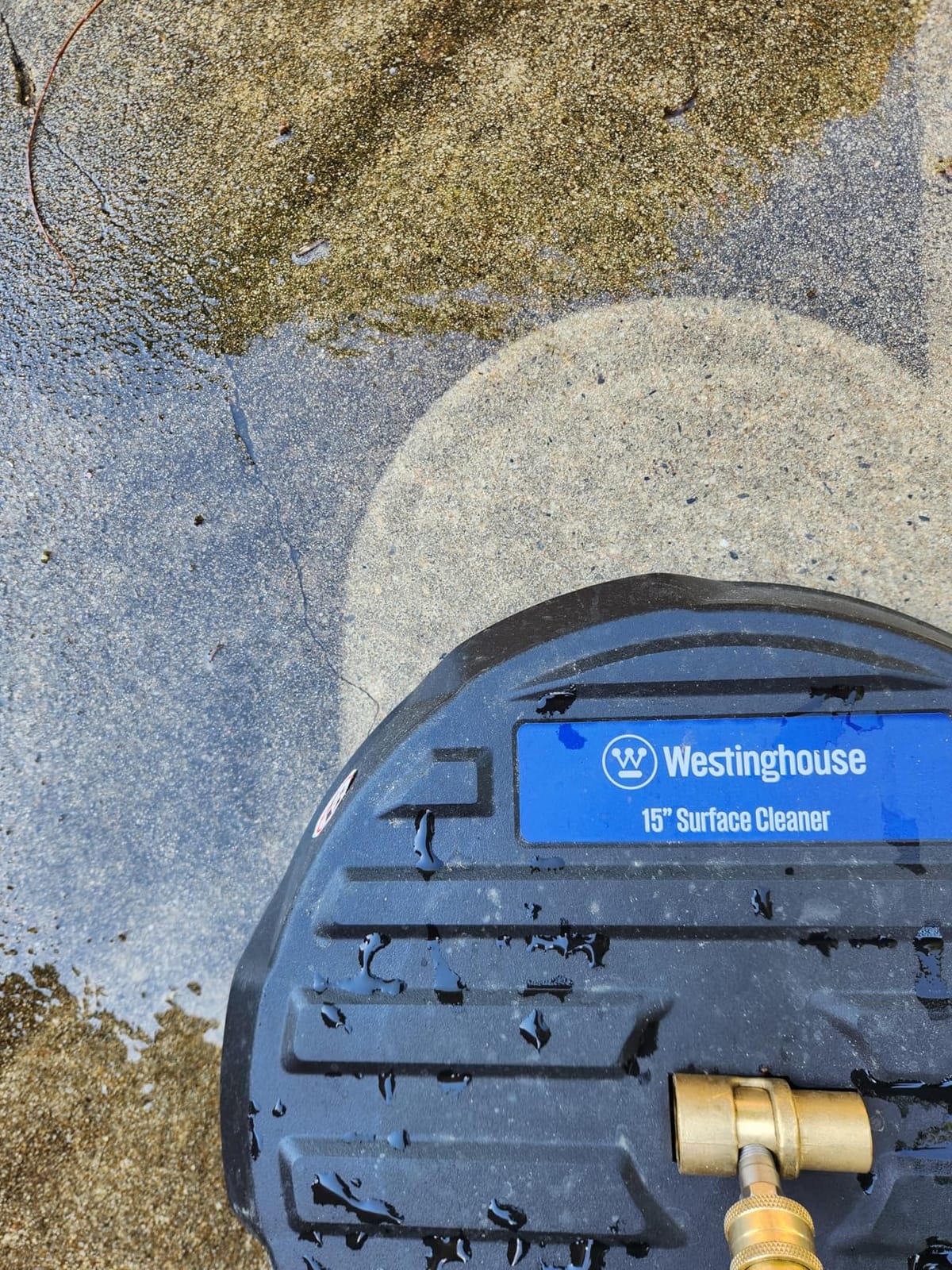
The plug-and-go quarter-inch quick connection works with most gas and electric pressure washers and needs no new adapters, which makes it the easiest head here to move between machines. The 3400 PSI ceiling covers the majority of residential gas washers, and the 15 inch head concentrates that pressure over a wide even path on decks, patios and driveways.
There is very little critical written feedback beyond the general limits of the class. The design is deliberately simple and the 180 day warranty covers the early window.
What works well on this head
Medium-sized flat jobs where you want a wide path and one hand free. A 15 inch pass on a standard driveway is a reasonable balance between coverage and control, and the light body means you can lift it onto a step or reposition without a two-handed effort.
It is also the practical choice if you store it in a garage and move it between machines, since there is no wheel assembly to bend or knock out of alignment.
Where it falls short
No wheels. On a long driveway pass you guide the head manually, which is more tiring than a wheeled plate over a large area.
Two other limits. The 15 inch figure is deck width, so the actual swept path is somewhat narrower, and the 3400 PSI ceiling means a higher-output commercial machine will not get fully used. The box contains only the surface cleaner, with no wands, spare nozzles or cleaning tool, so budget for those separately.
10. Hourleey 14 Inch Surface Cleaner – Best Casters
Hourleey 14″ Pressure Washer Surface Cleaner, Stainless Steel Surface Cleaner with 4 Wheels for Concrete, Patio, Sidewalk, Deck, Pathway 1/4″ Quick Connector, 2 Extension Wand, 4000 PSI
14 inch width
360 degree ball-bearing casters
2000 to 4000 PSI
Stainless steel and aluminum
Pros
- Four 360 degree ball-bearing casters roll easily over concrete
- Stainless and aluminum build with decent fasteners feels well made
- Owners report a two-car driveway and sidewalk in about 20 minutes
- Cleans without the stripes a wand leaves
- Bundle includes wands O-rings tape replacement nozzles and a cleaner
Cons
- Lifts dirt but does not rinse it away
- On 1800 PSI washers it removes only the top layer
- Pushing rather than pulling can leave swirl marks on soiled slabs
- 14 inches is narrow beside 15 to 20 inch heads
The Hourleey 14 inch is the mobility pick. Its four 360 degree casters use smooth ball-bearing action, and owners consistently describe the head as gliding over concrete with very little effort, which is what keeps a long job from becoming a back problem.
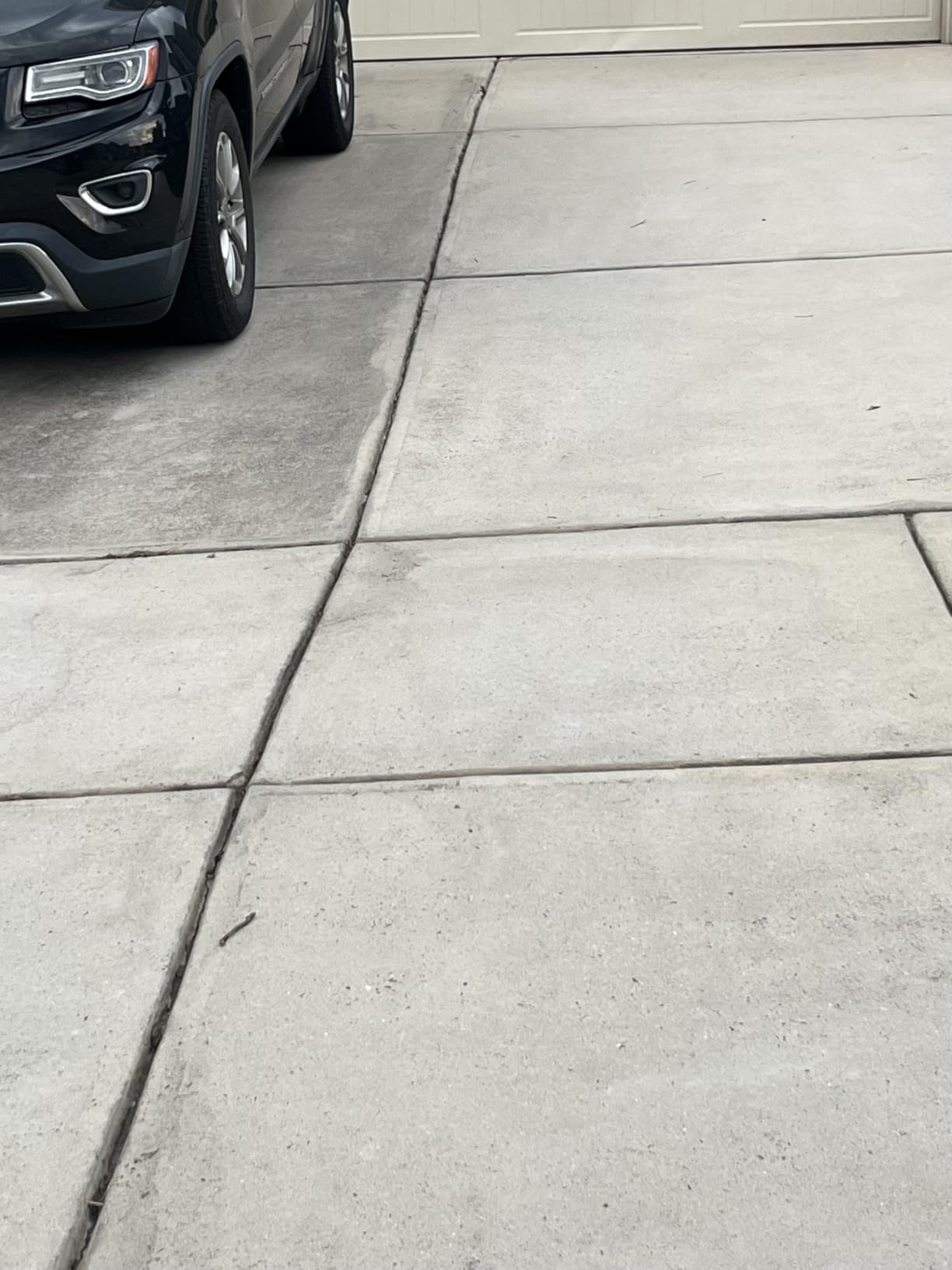
Several owners put numbers on it, reporting finishing a two-car driveway and sidewalk in about 20 minutes, and one covering roughly 6000 square feet in around seven hours. The stainless steel and aluminum construction with solid fasteners feels well made for the class, and the 2000 to 4000 PSI working range covers most residential gas washers.
The manufacturer recommends 2500 PSI or above for better cleaning, and that matches what owners report. On weaker machines the result degrades noticeably.
What works well on this head
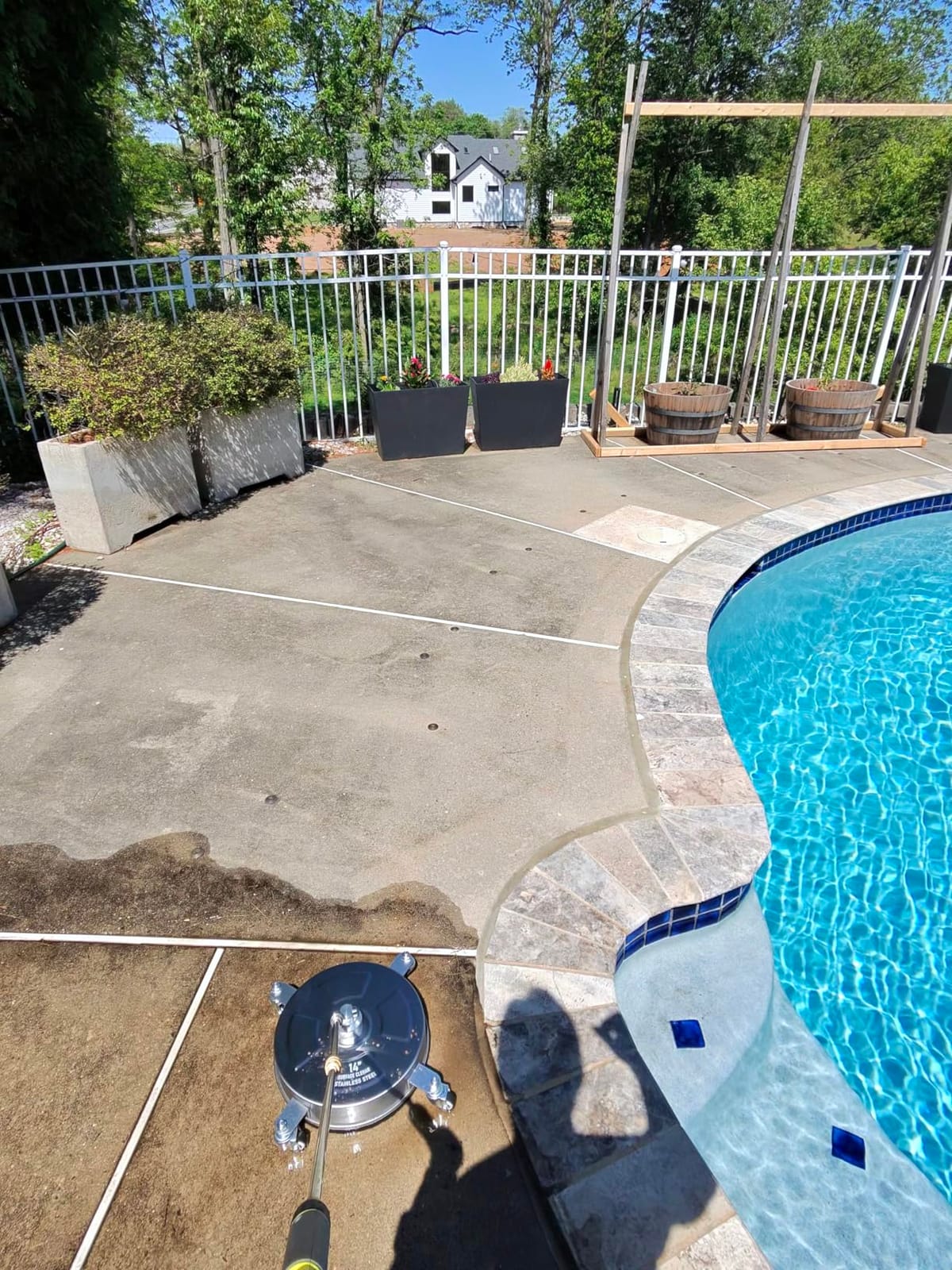
Large flat work on a mid-output gas washer, where the casters let you maintain a steady walking pace and the skirt keeps spray contained. Time savings are the strongest part of the owner feedback, and the cleaning result has no wand stripes.
The bundle is complete for a first job: two extension wands, a nozzle cleaner, thread seal tape, four O-rings and two replacement nozzles.
Where it falls short
It lifts dirt, it does not rinse it away. Plan a follow-up pass with a 40 degree tip or a hose to clear the slurry, or you will be sealing a film of loosened concrete back onto the slab.
On a low-output washer around 1800 PSI it takes only the top layer and may need a second pass with a rotating nozzle. On a heavily soiled driveway, pushing rather than pulling can leave swirl marks, and pre-soaking with a cleaning chemical first makes a visible difference. At 14 inches it is also narrower than the 15 and 20 inch heads on very large slabs.
Do You Actually Need a Surface Cleaner?
Worth it above roughly 200 square feet of flat concrete. Below that, a wand with a good 25 or 40 degree tip and slow overlapping passes gets you most of the way, and the attachment is an extra purchase you will not feel. Above that threshold, the gap widens quickly, because the head covers a wide path at a constant height while a wand covers a narrow one at a height your wrist cannot hold steady.
The case for it is not really speed, though speed is real. The case is the finish. Homeowners on r/pressurewashing consistently describe the moment they realize what stripes were, and how a surface cleaner ends them in one pass. On a driveway you plan to seal afterwards, an even surface matters because sealer goes on evenly and lasts longer.
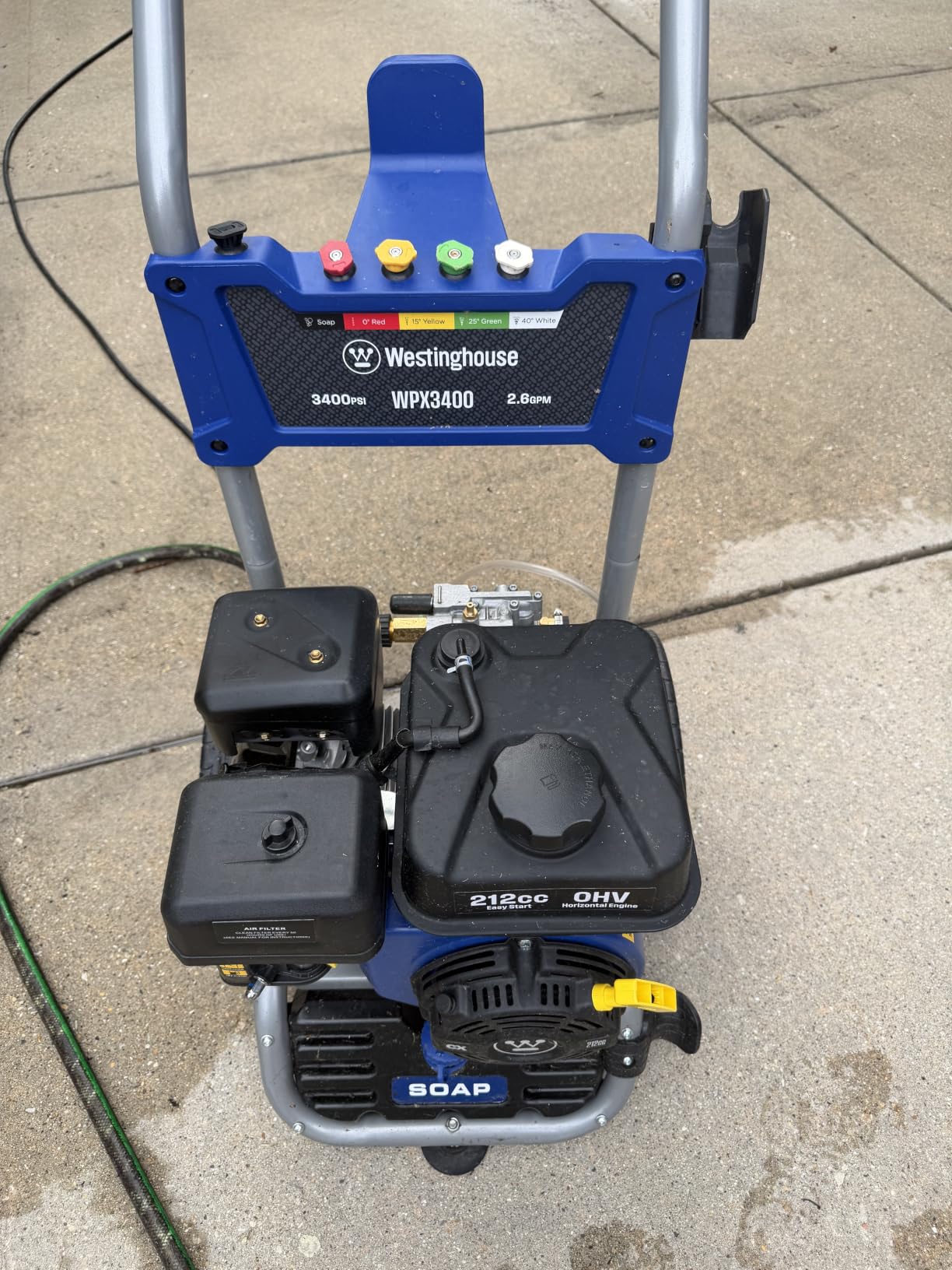
The case against it is compatibility. If you own a small electric washer in the 1800 to 2000 PSI range with 1.2 to 1.76 GPM, a large heavy plate will not magically produce more cleaning. It will just be harder to move. In that case a 12 inch head is the sensible purchase, and we cover the flow ceiling in detail below.
If you also maintain pool areas or decks, the same logic applies to adjacent surfaces, and our guide to robotic pool cleaners for the surrounding hardscape covers what handles waterline and deck work without a hose.
Washer-to-Surface-Cleaner Compatibility Guide
Match the plate to your machine’s flow before anything else. A surface cleaner splits your washer’s pressure and flow across two jets, so it needs both a wide pressure band and enough gallons per minute to keep the arm spinning. Here is the short version.
Electric washer, 1800 to 2300 PSI, 1.2 to 1.76 GPM. Choose a 12 inch head. These are the machines where an oversized plate does not lift and rotate well, and owners report weak results until they matched the width down. The Greenworks 12 inch and Westinghouse PWSC12 sit in this band.
Electric washer, 2000 to 3000 PSI, up to 2.3 GPM. A 12 to 14 inch head works well. This is where a mid-size plate with wheels starts to make sense, as long as you are not climbing stairs all afternoon.
Gas washer, 2900 to 3700 PSI, 2.3 to 3.4 GPM. Choose 14 to 15 inches, and this is where most of the stainless plates on this list live. Simpson, JANZ, Biswing, LidoDola and Hourleey all match this band.
Gas washer, 4000 PSI and above, or a commercial machine above 4 GPM. Choose 18 to 20 inches. The MEKOH 20 inch is built for this, and it is the only pick here rated high enough to use the full output.
Two rules that prevent most disappointment. First, the quoted PSI on an attachment is a maximum rating, not a required input. Second, the flow figure is the one that decides whether the arm spins fast enough to clean, so if your washer is under about 1.8 GPM, keep the head narrow.
How to Choose a Surface Cleaner for Concrete
Sizing to the job is the decision that matters most, and it is the one competitors in this category rarely explain. Start with the smallest number that covers your area without becoming unwieldy.
Pick the width to match the job
A patio or short walkway is 12 inch territory. A two-car driveway is 14 to 15 inch territory. A long driveway, a parking slab or a commercial lot is 18 to 20 inch territory. Going wider than your job does not make you faster, it makes the head harder to turn at the edges.
Match flow, not just pressure
Pressure gets the dirt off. Flow keeps the arm spinning and carries the loosened grit away. Head widths above 14 inches starve on washers under about 1.8 GPM, which is exactly the complaint that shows up repeatedly in electric-washer threads on the forums.
Decide between fixed height and rotating jets
Every plate here uses twin counter-rotating jets, which keeps the jet height consistent as the head moves. That is what removes striping, and it is a technique benefit rather than a pressure benefit, so the head does not etch concrete any deeper than a wand at the same setting.
Decide how much mass you want
Stainless steel and brass with a sealed bearing last longer and resist corrosion. Light plastic plates are cheaper and easier to lift. If you clean more than a couple of slabs a year, stainless is worth it. If it is one patio, the lighter plate will not disappoint you.
Decide about wheels and handles
Wheels remove arm and back fatigue on long passes. Handled plates with two casters let you push rather than drag. Handheld plates without wheels are lighter, cheaper, better on stairs, and worse on a full driveway.
Check what is in the box
Extension wands, spare nozzles, an inlet filter, O-rings and a nozzle cleaning tool are consumables you will need. Several picks here include the full set, and several do not include any of it.
Be careful with stamped or sealed concrete
If your slab is stamped, acid-etched, sealed or older colored concrete, use the lowest effective pressure and a soft approach. Some owners use the Greenworks 12 inch specifically because its gentle fixed height cleans old stained concrete without stripping the finish. Never use a surface cleaner on a surface you cannot test in a small corner first, and skip zero-degree tips on decorative finishes.
How Professionals Clean Concrete
Pros do not rely on pressure alone, and that is the technique most homeowner guides skip. The chemical does the work, the surface cleaner applies it evenly, and the pressure only finishes the job.
Step one, pre-treat. Apply a concrete-safe degreaser or an appropriate cleaner to the dry slab and let it dwell for 5 to 10 minutes. Experienced users on r/pressurewashing soak small areas with a bleach and water solution first when dealing with mildew, algae or moss.
Step two, surface clean. Run the head in slow, overlapping passes, keeping the previous wet edge about a third of a path wide. Push rather than pull on heavily soiled slabs to avoid swirl marks, and never let the head sit in one spot, which leaves a ring.
Step three, rinse. The head lifts dirt but does not rinse it away. Clear the slurry with a 40 degree tip or a hose so you are not sealing loosened concrete back onto the slab.
Step four, post-treat. On residential work, pros often follow with a light bleach and water application to kill remaining organic growth, then a final rinse and mist.
Step five, seal. Once fully dry, apply a penetrating concrete sealer. Fresh sealer on clean concrete is what keeps the slab from re-staining as fast, and it is the step homeowners most often skip.
When a Surface Cleaner Stops Working Well
Performance declines on these attachments almost always trace back to one of five things, and all of them are fixable in under an hour. Experienced users on the forums treat nozzles as the first suspect whenever a head that used to be good starts leaving stripes.
Clogged or worn nozzles. Grit and machining debris block the small orifices. Take the arm apart, clear each opening with the included cleaning tool or a needle, and flush thoroughly. Worn nozzles that will not clear are replacements, and several boxes here include spares.
A stopped rotating arm. If the head no longer spins, remove the arm with an Allen wrench, clean the bearing and lubricate it, then reinstall. This is the single most reported fix on the forums for plates that seem to have died.
Insufficient flow. If the arm spins slowly or stops under load, your washer is likely under about 1.8 GPM for a 14 inch head. The fix is a narrower head, not more force.
A kinked or restricted hose. A flattened or bent hose starves the head of both pressure and flow. Straighten the run before you blame the attachment.
A worn seal at the connection. Water weeping at the quick connect means the O-ring has gone. Every pick here includes spare O-rings, and replacing one takes a minute. On multiple threads the fix for a leaking connection was simply reseating and replacing the seal.
Avoidance helps too. Flush the head after every use, replace nozzles when the spray becomes uneven, and dry the spray bar before storage so a freeze does not split the housing.
Frequently Asked Questions
How many PSI do I need for a surface cleaner?
Match the head to the band your washer sits in rather than to its maximum number. A 12 inch head suits electric washers from 1800 to 2300 PSI, a 14 to 15 inch head suits gas washers from 2900 to 3700 PSI, and an 18 to 20 inch head suits 4000 PSI machines and commercial units. Flow matters more than pressure: aim for at least 1.8 GPM on a 14 inch head so the rotating arm spins fast enough to clean.
Is 2500 PSI enough to clean a driveway?
Yes, 2500 PSI with roughly 2.0 GPM will clean a residential driveway well, especially with a degreaser pre-treatment and a 5 to 10 minute dwell before you run the surface cleaner. What 2500 PSI will not do is strip years of embedded oil and ground-in dirt on its own. Pre-soak first, then run overlapping passes, then rinse the slurry off.
Is a pressure washer surface cleaner worth it?
Above roughly 200 square feet of flat concrete, yes. The head holds the jets at a constant height, which removes the light and dark stripes a wand leaves, and it covers a wide path per pass so a two-car driveway takes a fraction of the time. Below 200 square feet a wand with a 25 or 40 degree tip is enough. On small electric washers under 1.8 GPM, a narrow 12 inch head works far better than a large plate.
What do professionals use to clean concrete?
They use chemistry before they use pressure. The sequence is: apply a concrete-safe cleaner and let it dwell 5 to 10 minutes, run a surface cleaner in slow overlapping passes, rinse the loosened dirt away with a 40 degree tip or hose, optionally post-treat with a dilute bleach solution, and seal once the slab is dry. Pressure alone, even at 4000 PSI, leaves a stripe pattern and rarely removes bonded stains.
Which pressure washer surface cleaner is best?
For most homeowners with a mid-range gas washer, the Karcher 15 inch is the strongest all-round pick, with a sealed bearing and the largest owner base. With an electric washer under 2300 PSI, the Greenworks 12 inch is the right fit. For very large slabs and a 4000 PSI machine, the MEKOH 20 inch covers ground faster than anything smaller.
What PSI pressure washer is best for cleaning concrete?
For residential driveways and patios, a gas washer in the 2900 to 3700 PSI range with 2.3 to 3.4 GPM is the sweet spot, and it matches a 14 to 15 inch surface cleaner. For whole-property or commercial work, 4000 PSI and 4 GPM or above pairs with an 18 to 20 inch head. Below 2000 PSI, use a 12 inch head and rely more on cleaning chemicals than on pressure.
Conclusion
If you only buy one, take the Kärcher 15 inch. Its sealed metal bearing, splash-free skirt and 3200 PSI ceiling suit the widest range of residential gas washers, and it removes the wand stripes that ruin an otherwise good clean. Match it to a washer running between 2600 and 3200 PSI and it will serve you for years.
Own a smaller electric machine? The Greenworks 12 inch is the correct answer, not a compromise, and it is also the gentler option on older colored or stamped concrete. Cleaning large slabs with a 4000 PSI machine? The MEKOH 20 inch covers ground faster than anything else on this list. Whichever you choose, pre-treat with a degreaser, dwell, run slow overlapping passes, rinse the slurry off, and seal when the slab dries. That last sequence does more for your concrete than any attachment.
We keep our how-to comparisons on related cleaning gear, including our picks for car vacuum cleaners for the garage floor, alongside everything else we have tested this year.