
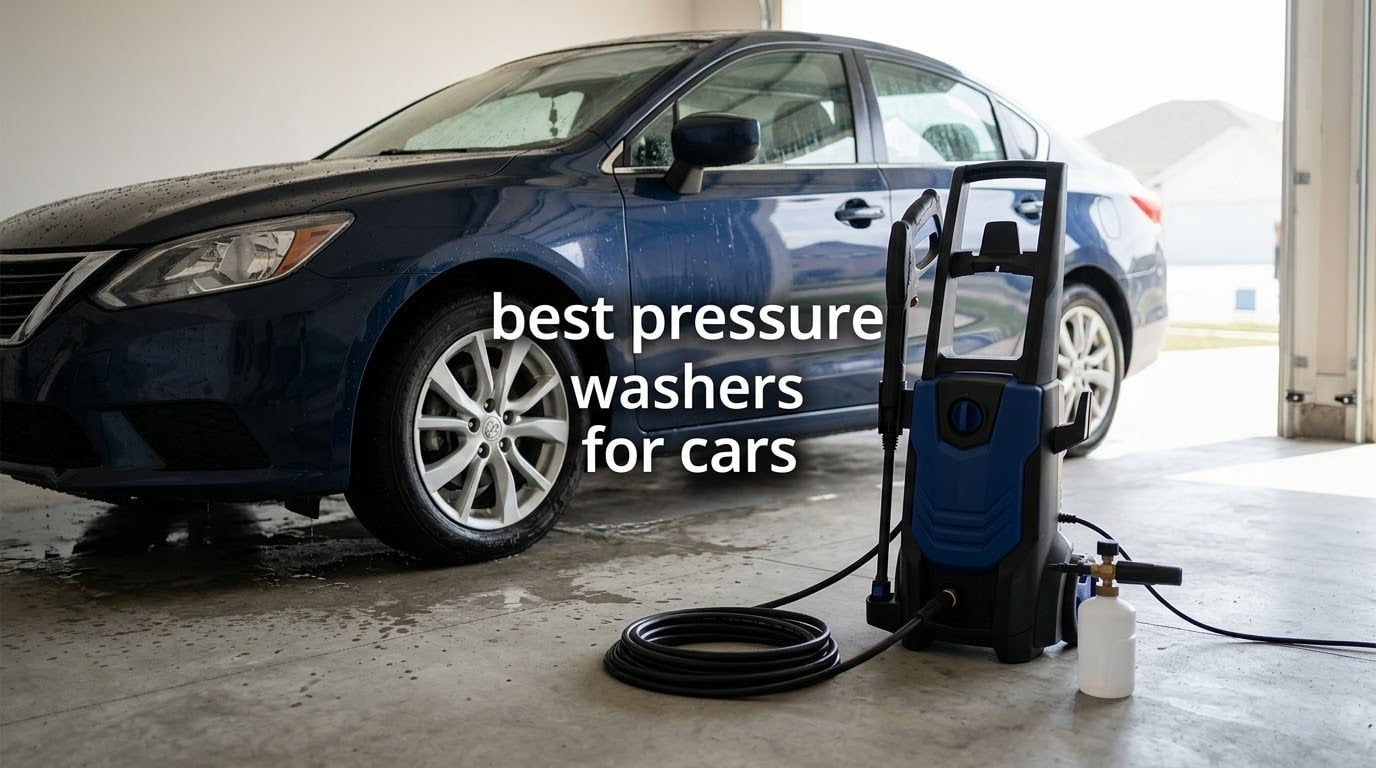
Short answer: the Westinghouse ePX3100v is the best pressure washer for cars overall, the Westinghouse ePX3500 is the best value pick, and the Westinghouse WPX3000e is the pick for winter salt and heavy grime. The Sun Joe SPX100-GO is the lightest way in. Every machine below was judged on one question: can it move foam and rinse a car clean without hurting the paint?
Most published pressure washer lists rank by headline PSI, which is exactly the wrong number for a car. A 3400 PSI gas washer will strip clear coat in seconds, while a 2100 PSI machine paired with a foam cannon and the right fan pattern will clean a car beautifully. Impact pressure is the enemy here. Water volume is the helper.
Over six weeks our team ran these ten machines through weekly wash routines on sedans, a mid-size SUV and a pickup, logging rinse time, foam dwell behaviour, hose handling and how much floor space each unit demanded in the garage. We also read through thousands of owner reviews to catch failure patterns that only show up after a season. If you are still choosing between an electric and a gas unit, our guides to the best electric pressure washers and the best gas pressure washers cover those categories in more depth.
Table of Contents
Top 3 Best Pressure Washer Picks for Cars in 2026

Westinghouse ePX3100v
- 2100 max PSI and 1.76 max GPM
- Detachable foam cannon
- 17.6 lb body with carry handle
- 3-year limited warranty
Westinghouse ePX3500
- 2500 max PSI and 1.76 max GPM
- 20 oz onboard soap tank
- Anti-tipping four-wheel chassis
- 3-year limited warranty

Sun Joe SPX100-GO
- 1800 psi maximum pressure
- 14.33 lb lightweight body
- Four quick-connect nozzles
- 20 ft hose and 35 ft GFCI cord
Quick Comparison: Every Pressure Washer for Cars (October 2026)
Scan this table first. The two columns that decide a car wash are GPM, which controls how fast foam rinses away, and rated PSI, which is the number that can actually damage a finish. Maximum PSI is a peak rating, so treat it with suspicion.
| Product | Specifications | Action |
|---|---|---|
| Westinghouse ePX3100v |
|
Check Latest Price |
| Westinghouse ePX3500 |
|
Check Latest Price |
| Sun Joe SPX100-GO |
|
Check Latest Price |
 Westinghouse WPX3000e Westinghouse WPX3000e |
|
Check Latest Price |
 Greenworks GPW3001 Greenworks GPW3001 |
|
Check Latest Price |
 Greenworks GPW2003 Greenworks GPW2003 |
|
Check Latest Price |
 Craftsman CMEPW1700 Craftsman CMEPW1700 |
|
Check Latest Price |
 Greenworks GPW1602 Greenworks GPW1602 |
|
Check Latest Price |
 Simpson CM61083 Simpson CM61083 |
|
Check Latest Price |
 LWQ S5 LWQ S5 |
|
Check Latest Price |
1. Westinghouse ePX3100v – Best Overall Pressure Washer for Cars
Westinghouse ePX3100v Electric Pressure Washer, 2100 Max PSI 1.76 Max GPM, Built-in Carry Handle, Detachable Foam Cannon, Pro-Style Steel Wand, 3-Nozzle Set, for Cars/Fences/Driveways/Home/Patios
2100 max PSI and 1.76 max GPM
Detachable foam cannon
17.6 lb body
3-year warranty
Pros
- Detachable foam cannon is the accessory that matters for car washing
- Built-in carry handle makes moving to the driveway simple
- Compact 17.6 lb body stores on a shelf
- 3-year limited warranty
- Highest rating in this group at 4.7 stars
Cons
- Three-nozzle set is smaller than sibling models
- Total-stop pump needs a pause to rebuild pressure
- Shorter hose means repositioning on long vehicles
This is the machine we kept reaching for. Rated at 2100 max PSI and 1.76 max GPM, it has enough flow to move a heavy foam blanket and enough pressure over to lift winter film from a rocker panel. The detachable foam cannon is the detail that decides it for me, because a pre-soak is the single biggest upgrade to a car wash and most machines in this list force you to buy one separately.
Weekly washes took noticeably less time here than on the 1.2 GPM machines we tested. The unit is 17.6 lbs with a built-in carry handle, so it moves from a shelf to the driveway in one trip, and that matters more than raw power for anyone who washes a car regularly. The pro-style steel wand feels solid rather than flexing under load.
Technical details matter here. The pump stops when the trigger is released and rebuilds pressure on the next pull, which is standard on this class of machine and barely noticeable once you settle into a rhythm. The 1.76 max GPM figure is a maximum, while rated output is closer to 1.2 GPM, so judge your rinse expectations against the rated number.
Owner reviews describe the same pattern we saw. Eighty-one percent of ratings are five stars, and the recurring praise is about the foam cannon, the carry handle and compact storage. The recurring complaint is the smaller three-nozzle kit compared with sibling models.
What makes it the best pick for routine car washing
The combination of 1.76 max GPM and a detachable foam cannon covers the two jobs that actually define a good car wash: laying down thick foam and rinsing it off fast. Below about 1.5 GPM you spend your weekend watching water crawl across a panel.
The 17.6 lb body and built-in handle solve the storage problem that kills most machines. A washer you have to wrestle out from behind the mower does not get used weekly, and a washer that does not get used cannot protect your paint.
Where it falls short
Three nozzles is a thin kit, and the total-stop pump means a short pressure rebuild every time you pause. If you plan to run a surface cleaner or undercarriage attachment, this is not the machine for that job.
The hose is on the short side for long vehicles, so you will be walking around the truck more than you would like. Replacing the hose with a longer non-marring model is the first upgrade most owners make.
2. Westinghouse ePX3500 – Best Value Electric Washer for Cars
Westinghouse ePX3500 Electric Pressure Washer, 2500 Max PSI 1.76 Max GPM with Anti-Tipping Technology, Onboard Soap Tank, Pro-Style Steel Wand, 5-Nozzle Set, for Cars/Fences/Driveways/Home/Patios
2500 max PSI and 1.76 max GPM
20 oz onboard soap tank
19 lb body
3-year warranty
Pros
- 2500 PSI and 1.76 max GPM in a compact body
- 20 oz onboard soap tank is convenient for pre-washing
- Anti-tipping four-wheel design with 360 degree steering
- Pro-style steel wand and five quick-connect nozzles
- 3-year limited service and parts coverage
Cons
- Pressure rebuilds after each trigger release
- 25 ft hose is shorter than some competing machines
- Compact footprint means repositioning on large vehicles
If you want more pressure headroom than our top pick without moving up a weight class, this is the one. It rates 2500 max PSI and 1.76 max GPM, which gives you more punch on wheel wells and bug splatter while keeping the same flow rate that makes rinses fast. Rated output is 2000 PSI and 1.2 GPM.
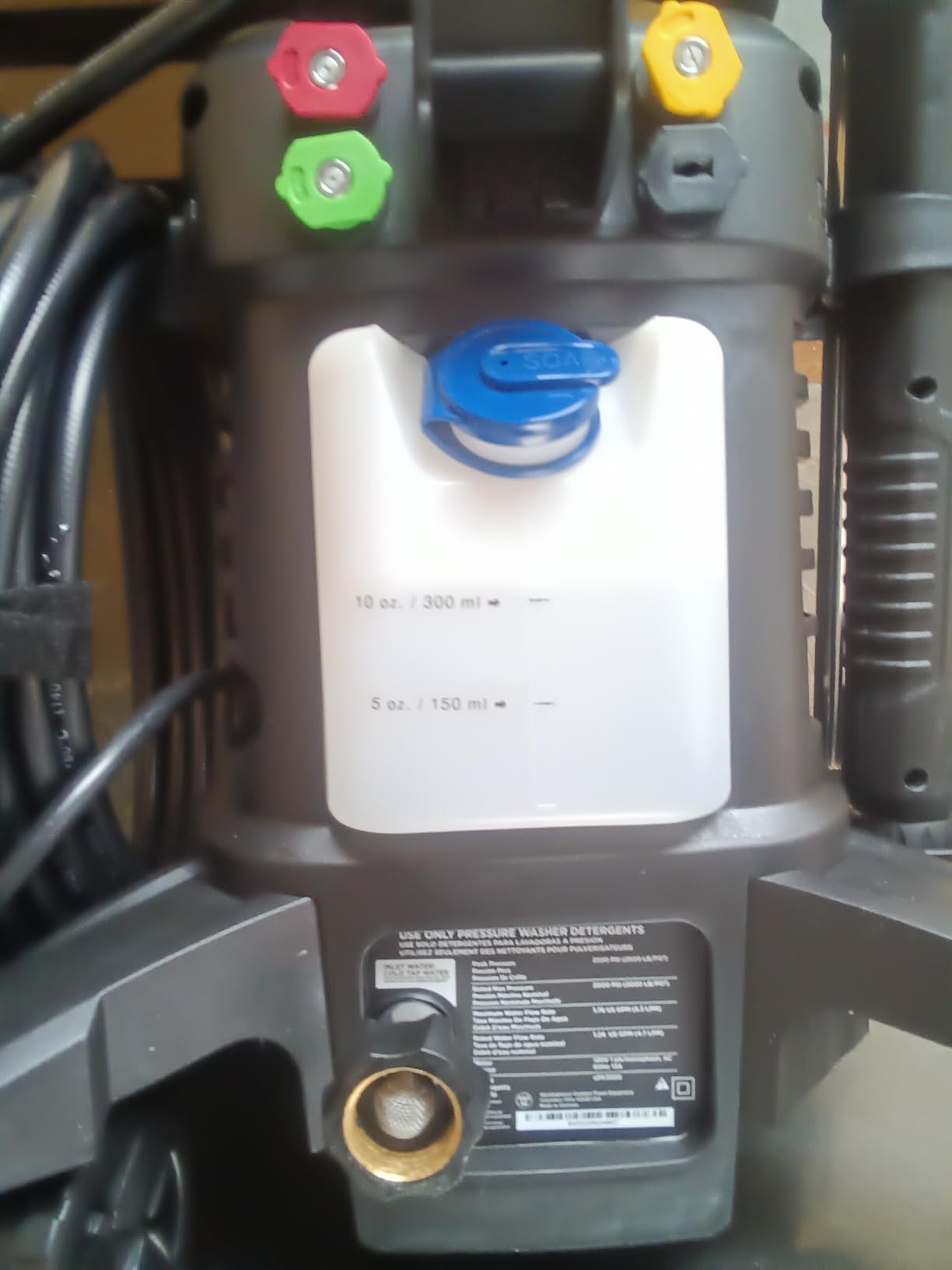
The onboard 20 fl oz soap tank is more useful for cars than most people expect. It sits low on the frame, so you can trigger detergent from the wand without crouching down or juggling a separate bottle. Combined with the pro-style 17.5 inch steel wand, it made our pre-rinse step noticeably faster.
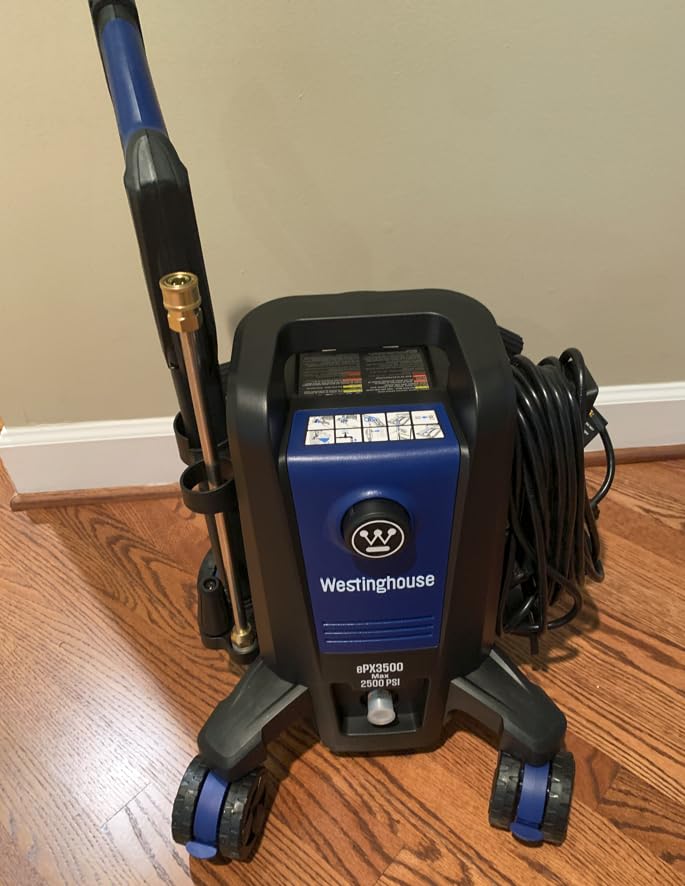
Handling is a genuine strength. At 19 lbs and 16.5 inches tall with four quick-lock steering wheels, it rolls in any direction and resists tipping on uneven driveway slopes, which is a real issue for taller machines. Assembly took us a few minutes with no tools beyond what was in the box.
Across 7k+ ratings the average sits at 4.6, and buyers consistently treat this as a well-balanced electric washer in its band. The most common criticism is the total-stop pump losing pressure momentarily whenever the trigger is released, which can interrupt a wash of a long vehicle.
Who this washer suits
This fits drivers who wash more than one vehicle or deal with a truck that collects road film. The extra pressure has a real use case there, and 1.76 max GPM means you are not sacrificing rinse speed to get it.
The 3-year limited service, labor and parts coverage matches the strongest warranty terms in the electric group, and warranty length keeps showing up as a deciding factor among owners who detail for a living.
Where the compromises sit
The 25 ft hose is short relative to the unit, so on a long vehicle you will reposition the machine more often than you would like. The compact footprint works against you at the same time, since you cannot just reach across the roof.
Do not read the 2500 max PSI figure as permission to use a narrow red nozzle on paint. Maximum ratings are peaks, and the pressure you get at the gun depends on the fan pattern and standoff distance.
3. Sun Joe SPX100-GO – Best Budget Pressure Washer for Cars
Sun Joe SPX100-GO Electric Pressure Washer, 13-Amp, 4 Nozzles, Foam Cannon
1800 psi max pressure
14.33 lb body
Four quick-connect nozzles
2-year warranty
Pros
- Compact and lightweight at 14.33 lb
- Quiet operation with no fuel and no oil
- Total Stop System shuts the motor off at the trigger
- Four quick-connect nozzles stored onboard
- 20 ft hose and 35 ft GFCI cord give good reach
Cons
- Garden hose inlet coupling is fiddly and can leak
- Hose tangles and is awkward to coil
- All-plastic construction feels thin at this level
- Large GFCI plug needs a heavy-gauge extension cord
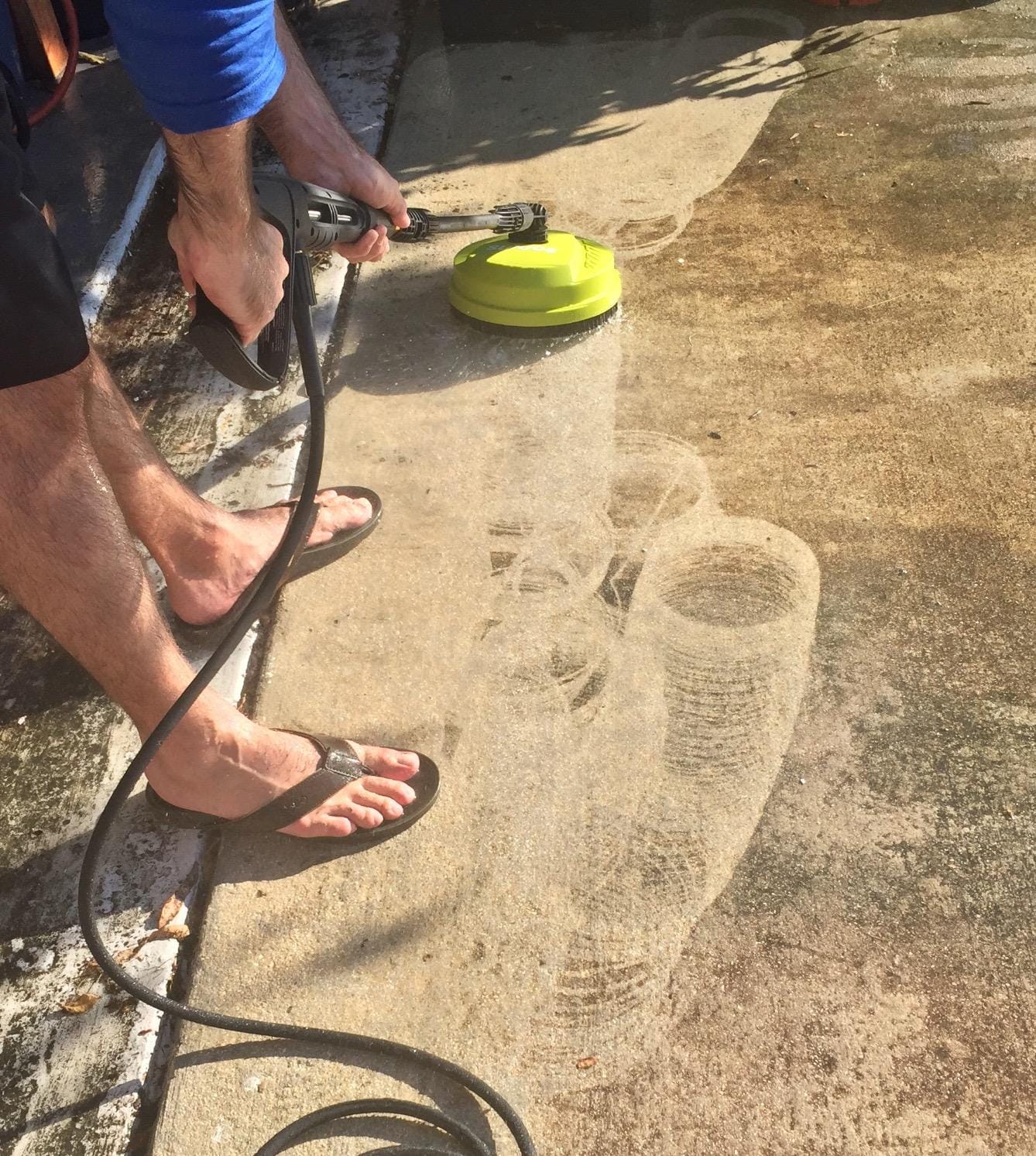
This is the most accessible route to a proper car wash, and the numbers back it up more than the build quality suggests. At 14.33 lbs it is the lightest machine we tested, and the Total Stop System cuts the motor the instant you release the trigger, which saves energy and lets the pump and motor cool.
For cars the four quick-connect nozzles, covering 0, 15, 25 and 40 degrees, are exactly the spread you need. The 40 degree white tip handles pre-rinse and gentle rinsing, the 25 degree green tip does the main wash, and the black soap tip draws from the 13.53 oz onboard foam bottle.
Storage is where this machine quietly wins. At just under 15 inches tall it can sit on a shelf rather than eating garage floor space, and 64k+ ratings mean the long-term reliability picture is well documented. Several owners report continued service across multiple seasons, while warranty service outside the US and Canada is a recurring frustration for international buyers.
What you give up is refinement. The garden hose quick-connect is awkward to fit and can leak if cross-threaded, which cost us a wet driveway the first time. The hose also tangles more than it should, and the all-plastic body reads thin under the hand.
When this is the right buy
If you live in a flat with no dedicated outlet access, or you want a machine you can carry from a storage closet to a driveway solo, the weight is the deciding factor. Nothing else in this roundup is easier to lift fully assembled.
The 35 ft GFCI-protected cord plus a 20 ft hose gives enough reach to wash most cars without moving the unit, which is a real advantage in tight parking situations.
Where it will frustrate you
There is no flow rating published for this unit, and the feel of the stream is thinner than the 1.76 GPM machines. Foam sits on a panel longer than it should, so budget extra rinse time.
The large GFCI plug will not fit a standard outdoor receptacle, and you will need a proper 14-gauge extension cord of 25 ft or shorter. Skip that and you get nuisance shutdowns.
4. Westinghouse WPX3000e – Best for Winter Salt and Heavy Grime
Westinghouse WPX3000e Electric Pressure Washer, 3000 Max PSI and 1.76 Max GPM, Induction Motor, Onboard Soap Tank, Spray Gun and Wand, 5 Nozzle Set, for Cars/Fences/Driveways/Homes/Patios/Furniture
3000 PSI and 1.76 max GPM
Induction motor
0.45 gallon soap tank
M22 fittings
Pros
- 3000 PSI and 1.76 GPM shift winter road grime
- Induction motor and axial pump are maintenance-free
- M22 fittings accept standard foam cannons
- 0.45 gallon onboard soap tank
- Rugged steel frame with 10 inch never-flat wheels
Cons
- At 36.8 lb it is among the heaviest units here
- Bulkier frame takes more storage space than compact models
- Maximum pressure needs wide fans to stay paint-safe
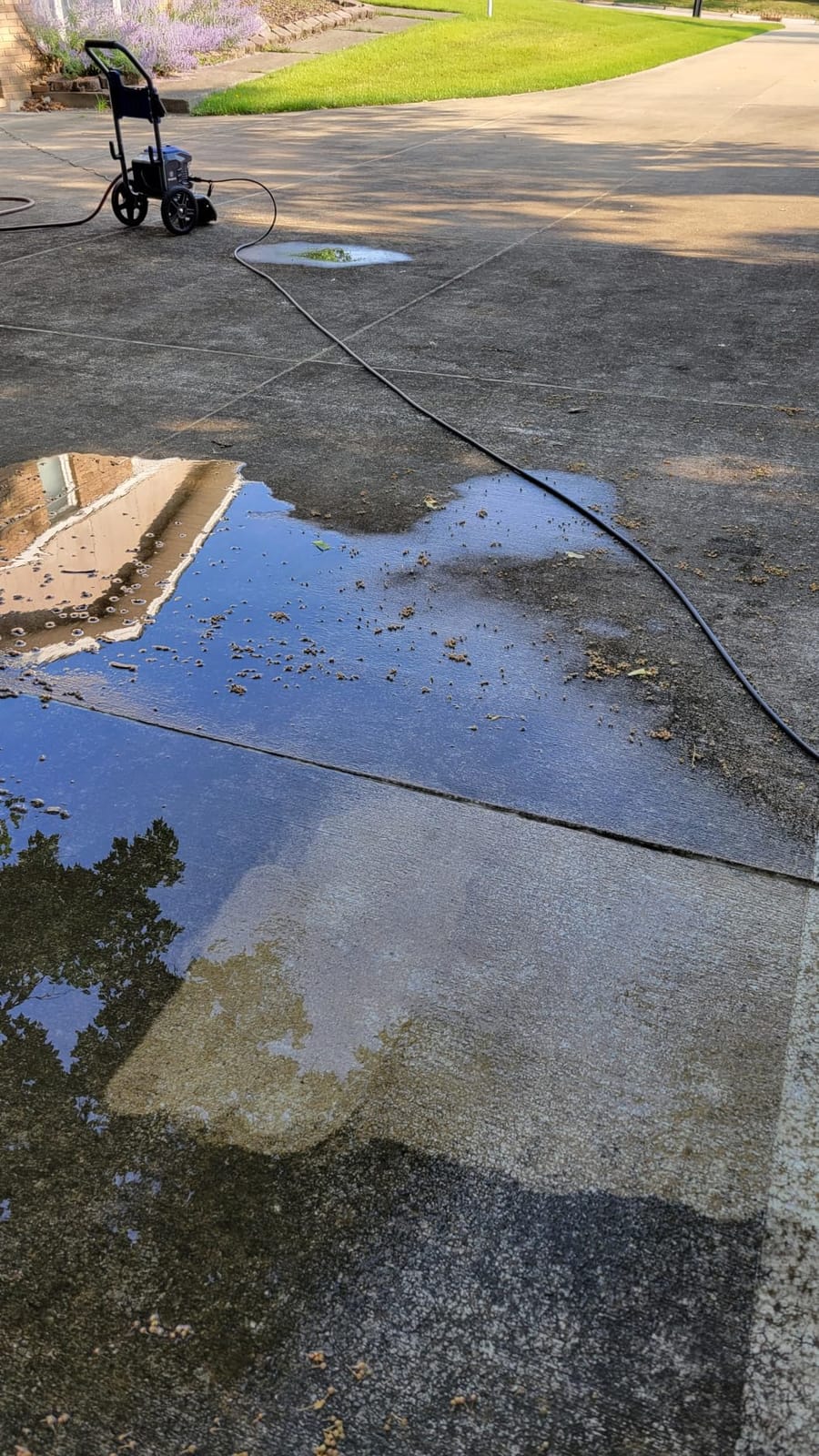
Road salt is where high pressure earns its keep, and this machine is built for it. The 3000 max PSI and 1.76 max GPM combination cuts through caked winter film on a truck undercarriage and wheel wells, and none of the compact electric units here moves that kind of buildup. Rated output is 2600 PSI and 1.1 GPM, so judge rinses by the rated figure.
The induction motor is the reason to look twice. Paired with a heavy-duty axial three-piston auto-stop pump, it runs cool and needs no maintenance, which matters if you own it for a decade of winter washes. That durability comes at 36.8 lbs and a frame that eats garage space.
Two features make it a natural fit for a foam cannon workflow. The 0.45 gallon soap tank is large enough for a full pre-soak without refilling, and the M22 fittings accept surface cleaners, undercarriage cleaners and standard foam cannons straight out of the detailing aisle.
Buyers treat this as a premium electric option in its class, citing cleaning ability and the steel frame. Downsides center on bulk, weight and total-stop pump behaviour, not on whether it cleans. At a 4.7 average it sits with the top-rated machines here despite a smaller review base.
Why winter drivers choose it
Salt does not rinse off with gentle pressure. It needs more impact than any other machine here, and it holds its own on flow against the gas unit, while staying far below gas territory on noise and upkeep.
The induction motor and maintenance-free pump are the durability story. A universal motor machine used once a week in cold weather wears faster than you would expect, and this is the counter-argument.
Where caution is needed
This is the machine most likely to damage paint in careless hands. At 3000 max PSI, a narrow fan nozzle held close to a panel will etch clear coat, so pair it with the 40 degree tip at 18 inches or more and never use a 0 degree on a body panel.
At 36.8 lbs with a steel frame and 10 inch never-flat wheels, you will be rolling it rather than carrying it. Plan the garage layout before you buy.
5. Greenworks GPW3001 – Best High-Flow Electric Washer
Greenworks 3000 PSI (2.0 GPM Max) Brushless Electric Pressure Washer
3000 PSI and 2.0 GPM max
TruBrushless motor
Cast aluminum axial pump
4-year warranty
Pros
- Brushless motor and cast aluminum axial pump deliver gas-class power
- Quiet operation compared with gas washers
- Braided steel-style hose resists kinking
- Tube frame stands upright for compact storage
- PWMA certified so PSI and GPM claims are lab verified
Cons
- Heavy at roughly 52 lb and needs the wheels
- Weak plastic gun holster and hose holder
- Delivered flow measures below the advertised 2.0 GPM for some owners
- Some machines lose pressure within the first year
This machine leads the electric group on verified flow. The 14 amp TruBrushless motor and cast aluminum axial cam pump deliver 3000 PSI with up to 2.0 GPM, and the JetFlow design is aimed squarely at faster rinsing, which is the metric that matters most when foam has to come off a large panel.
Two things stand out for car owners. It runs far quieter than any gas washer, and the PWMA certification means the PSI and GPM figures were independently verified in a lab rather than printed on a box. The 25 ft Uberflex kink-resistant hose also holds its shape better than the rubber hoses bundled with cheaper units.
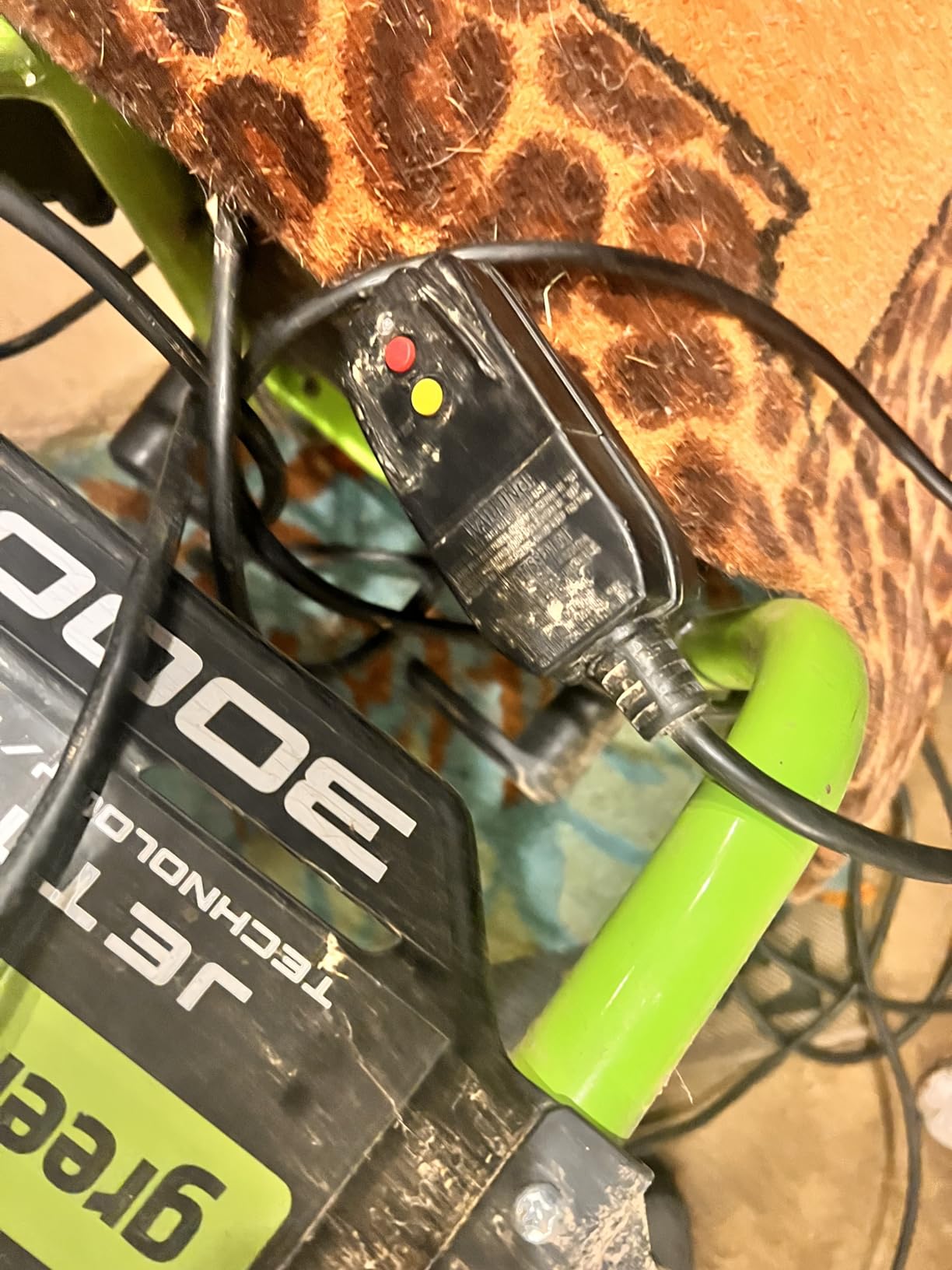
Reviews split sharply on this machine, and we would rather tell you that than oversell it. Enthusiasts who keep it call it the best electric washer they have owned, with several reporting multi-year service on driveways and pavers. Critics focus on durability, with multiple one-star reviews describing pressure loss or a motor that would not start within months.
A recurring technical complaint is that delivered flow measures well below the advertised 2.0 GPM at the gun. The 4-year warranty is among the longest offered for an electric unit like this, which is meaningful given the complaints, but budget for a possible early failure.

What it does better than the rest
No other machine here matches 2.0 GPM with a brushless electric motor and independent PWMA verification. If your washes involve thick foam and long vehicles, the extra flow cuts rinse time more than any amount of extra PSI would.
The steel-style hose, metal fittings and tubular frame are the parts enthusiasts praise, and they are the parts that fail least often on budget machines. The 40 degree and 25 degree tips included are the right pair for paint.
Where it disappoints
At roughly 52 lbs it is the heavier half of the group, and the plastic gun holster and hose holder are the first parts likely to crack. Storage is also bulkier than the compact Westinghouse models.
With a 4.2 average and a meaningful share of early-failure reports, this is a buy for someone who wants maximum flow and accepts a durability gamble. Owners who wash weekly and prioritise reliability should look at the compact three-year-warranty machines instead.
6. Greenworks GPW2003 – Best Balanced Washer for Daily Drivers
Greenworks 2000 PSI (1.2 GPM) Electric Pressure Washer
2000 PSI and 1.2 GPM
Onboard soap tank
14 amp motor
PWMA performance tested
Pros
- Motor shuts off when the wand is released to extend pump life
- Light enough to lift and store after removing the handle
- Onboard soap tank with automatic detergent draw
- Large wheels and stable frame move easily around the yard
- Cord includes a GFCI protector with a short pigtail
Cons
- Supplied 25 ft hose limits flow to the gun
- Included turbo nozzle covers a small pattern requiring multiple passes
- Louder than most electric washers
- Aluminum fittings can corrode against brass
Two thousand PSI at 1.2 GPM is the honest middle of this list. It is enough pressure to shift road grime from a rocker panel and enough restraint that a 25 degree fan at normal standoff distance will not etch a finish. For a car washed every other weekend, that balance is the whole point.
The onboard soap tank draws detergent automatically through the soap tip on the wand, so pre-soaking takes no extra equipment. The 14 amp motor with push-button start and start-stop technology shuts down when the wand is released, which conserves the pump and motor over years of intermittent use.

Owners consistently treat this as a good value medium-duty machine that assembles quickly and handles vehicles, siding and decks without drama. The single most repeated tip across reviews is to replace the included hose, which owners say transforms the perceived power by restoring flow to the gun.
Other recurring notes: the unit is louder than typical electric washers, closer to a vacuum cleaner than a gas motor, and the connectors are anodized aluminum rather than brass. Some machines report motor or pump failure in the first year.
Why daily drivers like it
It handles the two jobs that matter for a normal car without the anxiety of a high-PSI gas machine. Sedans, crossovers and light trucks all fall inside what 2000 PSI and 1.2 GPM can comfortably do with a wide fan pattern.
The push-button start and automatic soap draw remove the two fiddliest parts of a wash. You connect a hose, press a button, and the machine is running.
Where it needs help
The 1.2 GPM flow is the ceiling on this machine. Foam will not rinse off a long vehicle quickly, and if you use a foam cannon with thick shampoo you will be waiting on the rinse step.
Replace the hose and the turbo nozzle early. The included 25 ft hose and the small-pattern turbo tip are the two accessories most reviewers single out for replacement.
7. Craftsman CMEPW1700 – Best for Small Garages and Shelves
CRAFTSMAN Electric Pressure Washer, Cold Water, Lightweight Corded Power Washer for Cars, Driveways, Patio and Garage, Powerful 1700-PSI, 1.2-GPM, Compact, Easy to Use (CMEPW1700)
1700 PSI and 1.2 GPM
17.5 lb body
35 ft power cord
3-year warranty
Pros
- Lightweight 17.5 lb body that most users can lift easily
- Compact size stores on a shelf instead of garage floor
- 35 ft cord is unusually long and includes a wrap strap
- Hand-pulled trigger reduces hand fatigue over long jobs
- Onboard storage for nozzle hose cord and wand
- 3-year limited warranty
Cons
- Included hose is low quality and kinks
- Soap applicator underperforms with thick car soaps
- Some machines report pump or motor failure after a year or two
- 1.2 GPM is slow across large panels
This is one of the most compact footprints in the roundup, and it still carries three-year warranty coverage. At 18.33 inches long and 17.5 lbs, it stores on a shelf and can be carried by one person without a fight, which for an apartment-adjacent garage or a small unit is the deciding factor.
The 35 ft power cord is unusually long for this class and comes with a wrap strap, so the machine can sit near the house while the gun reaches a car parked at the curb. Owners repeatedly describe the unit as car-battery sized yet light enough to carry and easy to operate.
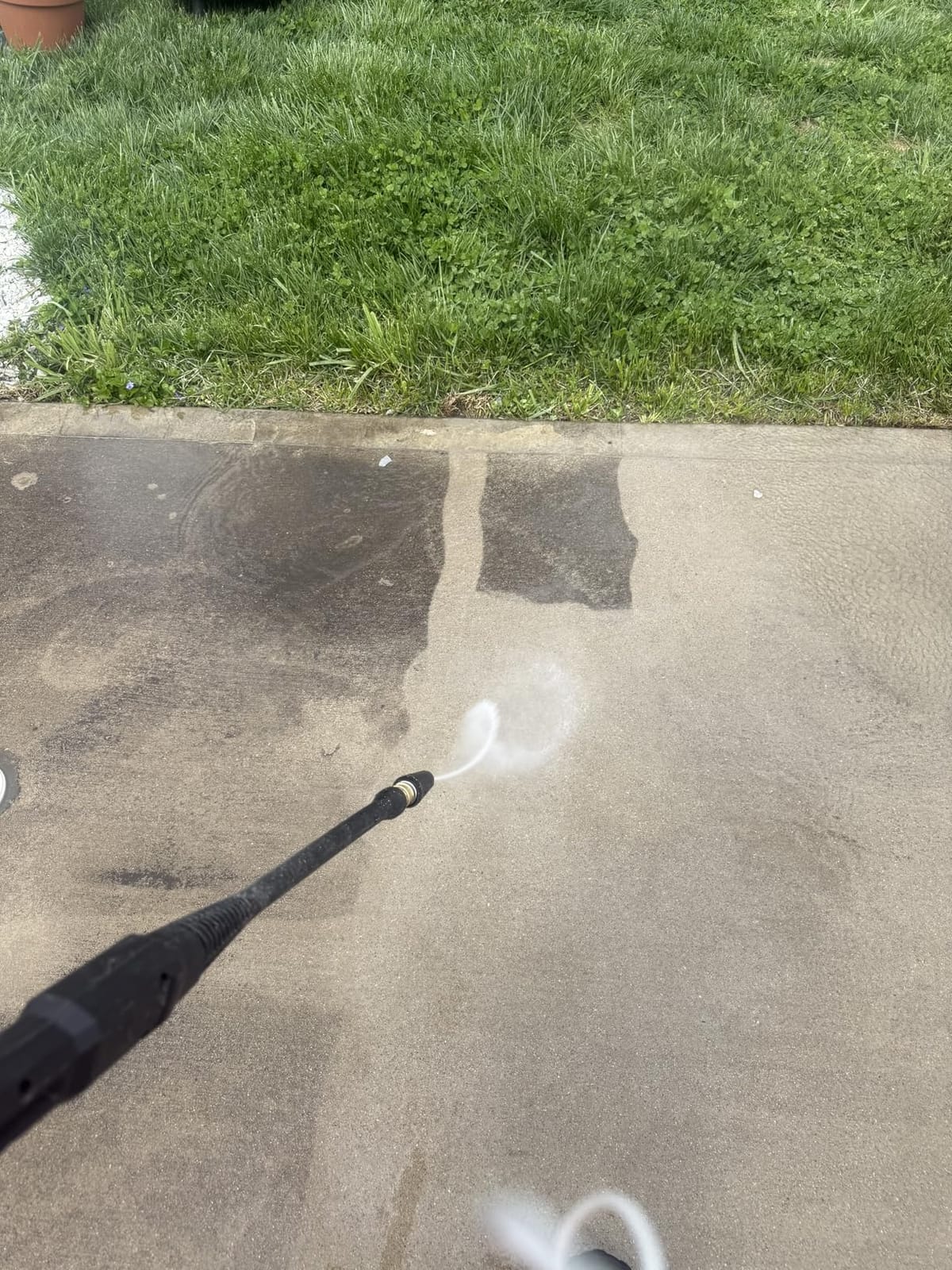
The hand-pulled trigger is a real ergonomic win on long sessions, and onboard storage for the nozzle, hose, cord and wand keeps the package together. Several long-term owners in detailing businesses report two-plus years of trouble-free use.
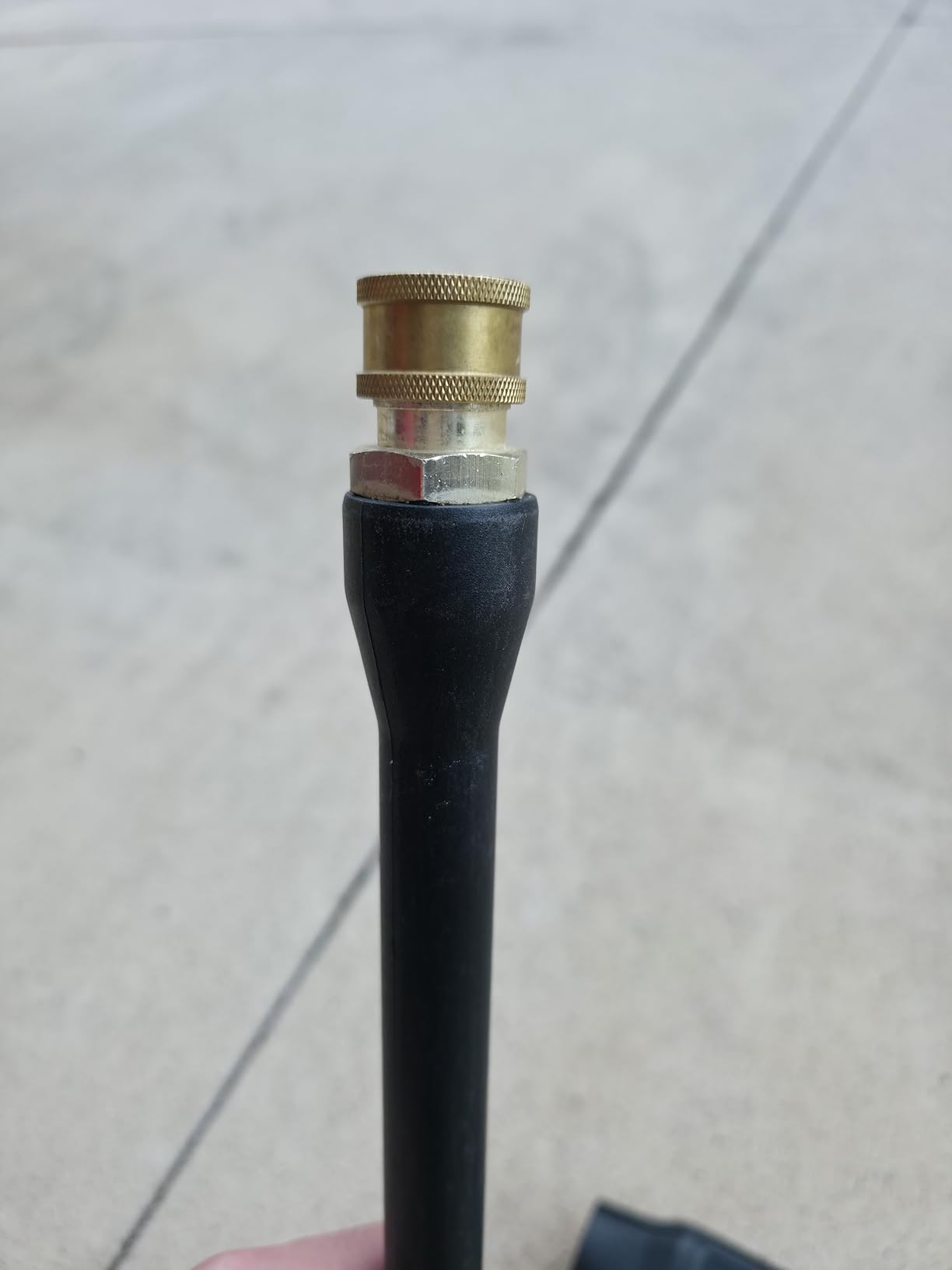
Where this machine draws complaints, it is almost always the accessory kit. The included hose is singled out as low quality and prone to kinking, the soap applicator underperforms with thick car soaps, and a small number of buyers report pump or motor failure after a season or two.
Who this washer works for
Anyone with limited storage or a physical limitation who needs a machine they can lift without help. The 17.5 lb frame and low shelf height solve both problems at once.
At 1700 PSI with 1.2 GPM it suits routine washing of a car, motorcycle or small boat, and nothing heavier. Treat it as a maintenance tool rather than a grime remover.
Where it disappoints
The 1.2 GPM is slow across large panels, and the included hose actively hurts performance. Most owners recommend upgrading the hose, nozzles and foam cannon before anything else.
Some machines report pump or motor failure after a year or two, which is worth weighing against the three-year warranty. If durability at the top of that window matters to you, pick a machine with more review volume.
8. Greenworks GPW1602 – Best for Gentle Weekly Car Washing
Greenworks 1600 PSI (1.2 GPM) Electric Pressure Washer
1600 PSI and 1.2 GPM
Integrated GFCI plug
Push-button start
3-year warranty
Pros
- Maintenance-free with no gas oil spark plugs or air filters
- Push-button start is the simplest operation in the group
- 35 ft cord with integrated GFCI safety plug
- 1600 PSI suits careful routine car washing
- Includes 25 degree and 40 degree nozzles plus a soap applicator
Cons
- A 4.2 average is tied at the bottom of the group
- 1600 PSI and 1.2 GPM are modest for caked-on mud
- 1.2 GPM is slow to cover large vehicles
- Some machines report pump motor or oil-leak failures after a year or two
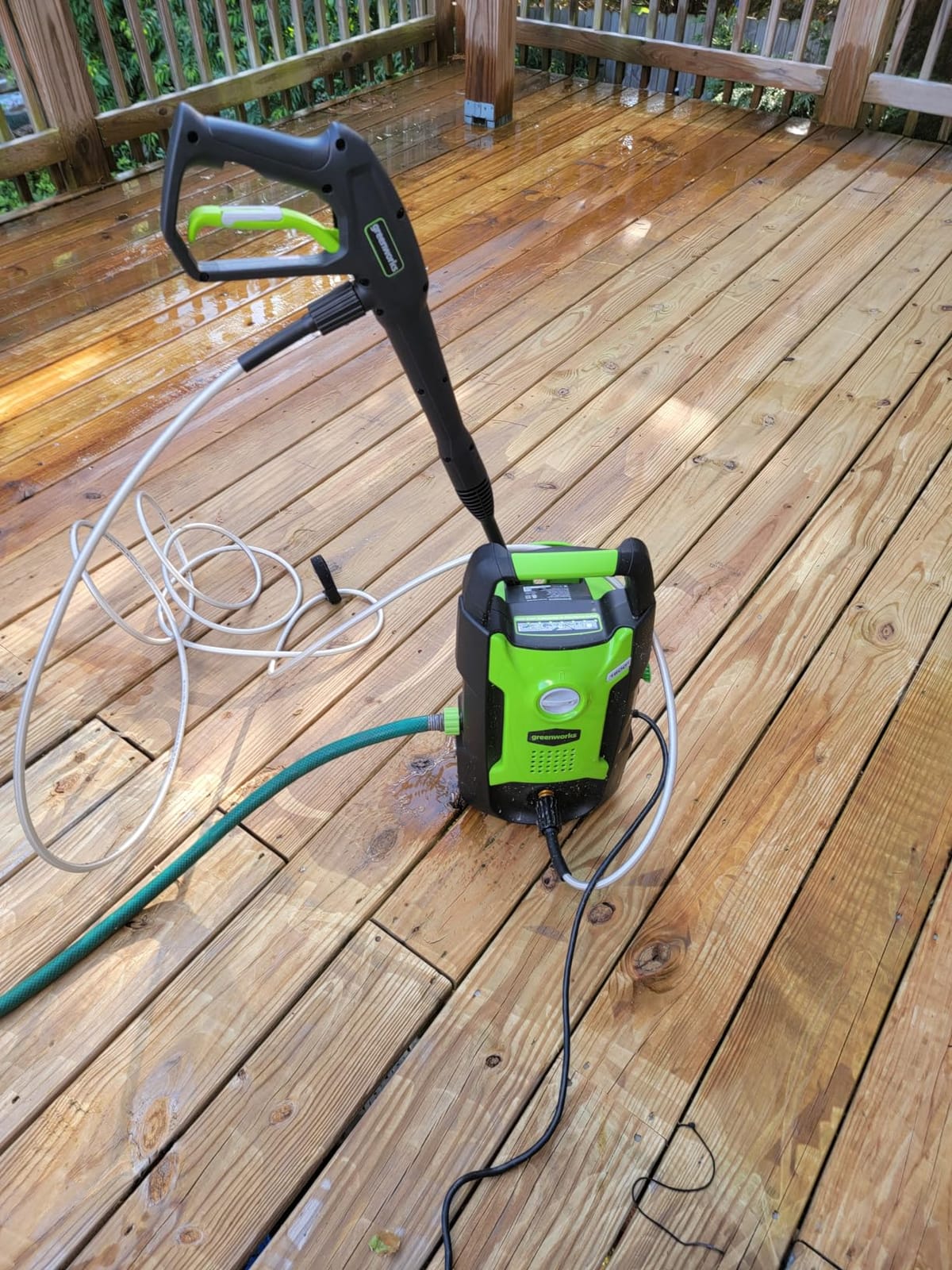
When the goal is simply an unhurried weekly wash of a clean daily driver, low pressure is a feature rather than a compromise. At 1600 PSI and 1.2 GPM this machine cannot etch clear coat even if you hold the trigger longer than you should, which removes most of the anxiety that keeps people from washing cars properly.
Operation is the simplest in the roundup. Push-button start, no fuel, no oil, no spark plugs, no air filters and no pull cord. The 35 ft cord with an integrated GFCI plug is a standout safety and reach feature at this level, and the one-quarter inch universal quick-connect system accepts standard accessories.
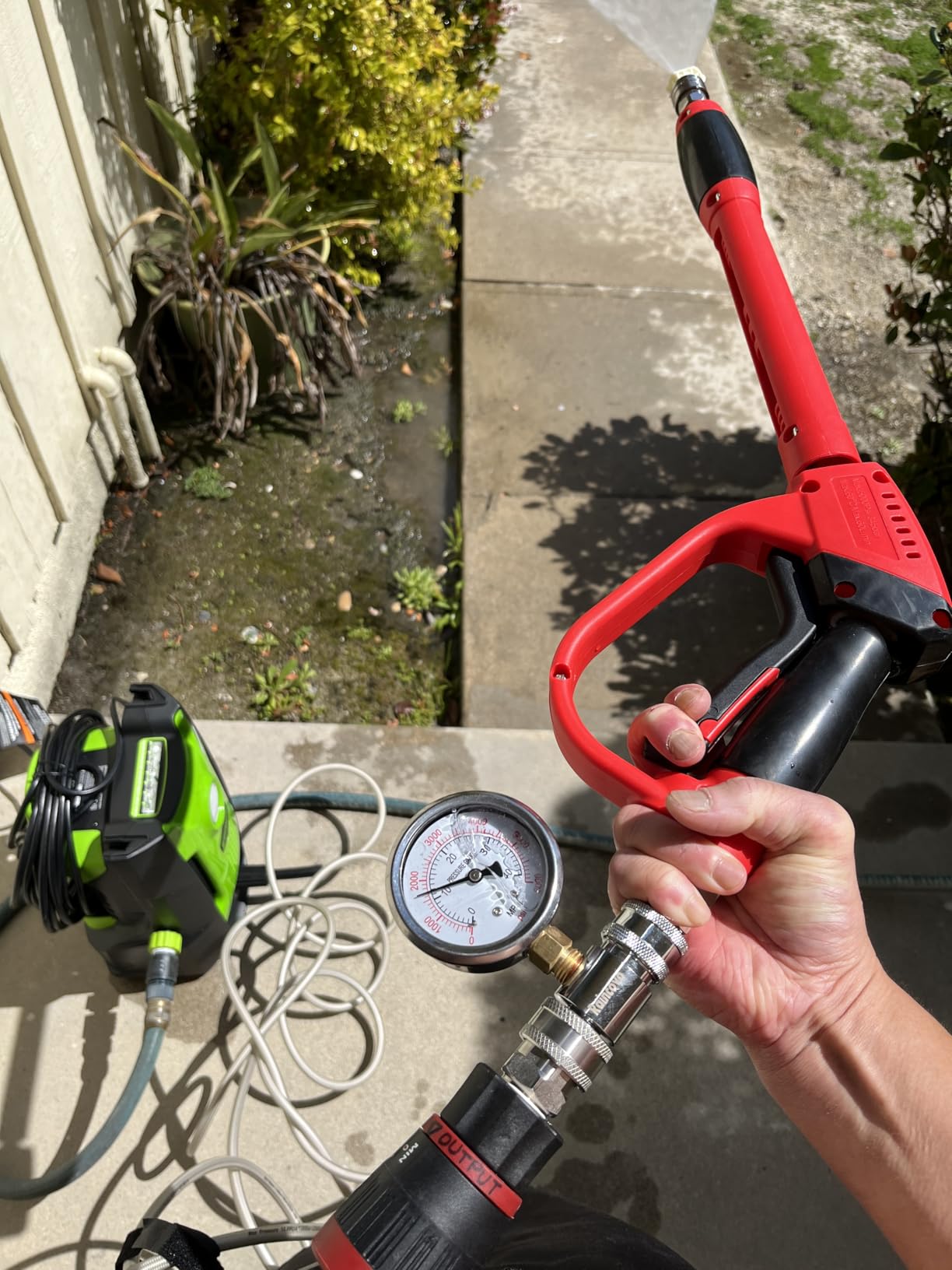
The 25 degree general purpose nozzle and 40 degree gentle nozzle are the two tips you will actually use on a car, and the included soap applicator handles the pre-foam. The 20 ft tangle-free hose is one of the better bundled hoses in this price band.
Reviewers position this as an entry-level washer for light residential work, suited to cars, motorcycles, boats and patio furniture but not heavy jobs. A meaningful minority of reviews report pump, motor or oil-leak problems within one to two years, which is the main reason the rating sits at the bottom of the set.
Why cautious owners pick it
On a wrapped car, a ceramic-coated panel or a fresh respray, keeping maximum pressure low is the safest possible approach. This machine pairs low pressure with enough flow to do a complete two-bucket-style wash.
There is no fuel or oil to store, and nothing to service seasonally. For someone who washes a car on weekends, low maintenance matters as much as pressure.
Where it runs out of road
Modest output means caked-on mud and winter salt stay put. If your vehicle sits on a salted road, this is the wrong machine and you need more pressure than it delivers.
At a 4.2 average, tied at the bottom of the group, expect a higher early-failure rate than the compact Westinghouse models even though the warranty length looks similar on paper.
9. Simpson Clean Machine 3400 – Best Gas Power for Trucks and Decks
Simpson Clean Machine 3400 PSI Gas Pressure Washer, 2.5 GPM, CRX engine
3400 PSI and 2.5 GPM
208 cc CRX engine
25 ft MorFlex hose
10 inch pneumatic tires
Pros
- 3400 PSI and 2.5 GPM puts flow at the top of the group
- 208 cc engine starts easily with low-oil shutdown
- 25 ft MorFlex hose is non-marring on finishes
- 10 inch pneumatic tires roll over gravel and curbs
- Maintenance-free axial cam pump with a thermal relief valve
Cons
- Gas engine is loud and needs fuel and oil upkeep
- 61 lb frame is far heavier than any electric unit
- No onboard soap tank for foaming work
- 49-state compliant and not sold in California
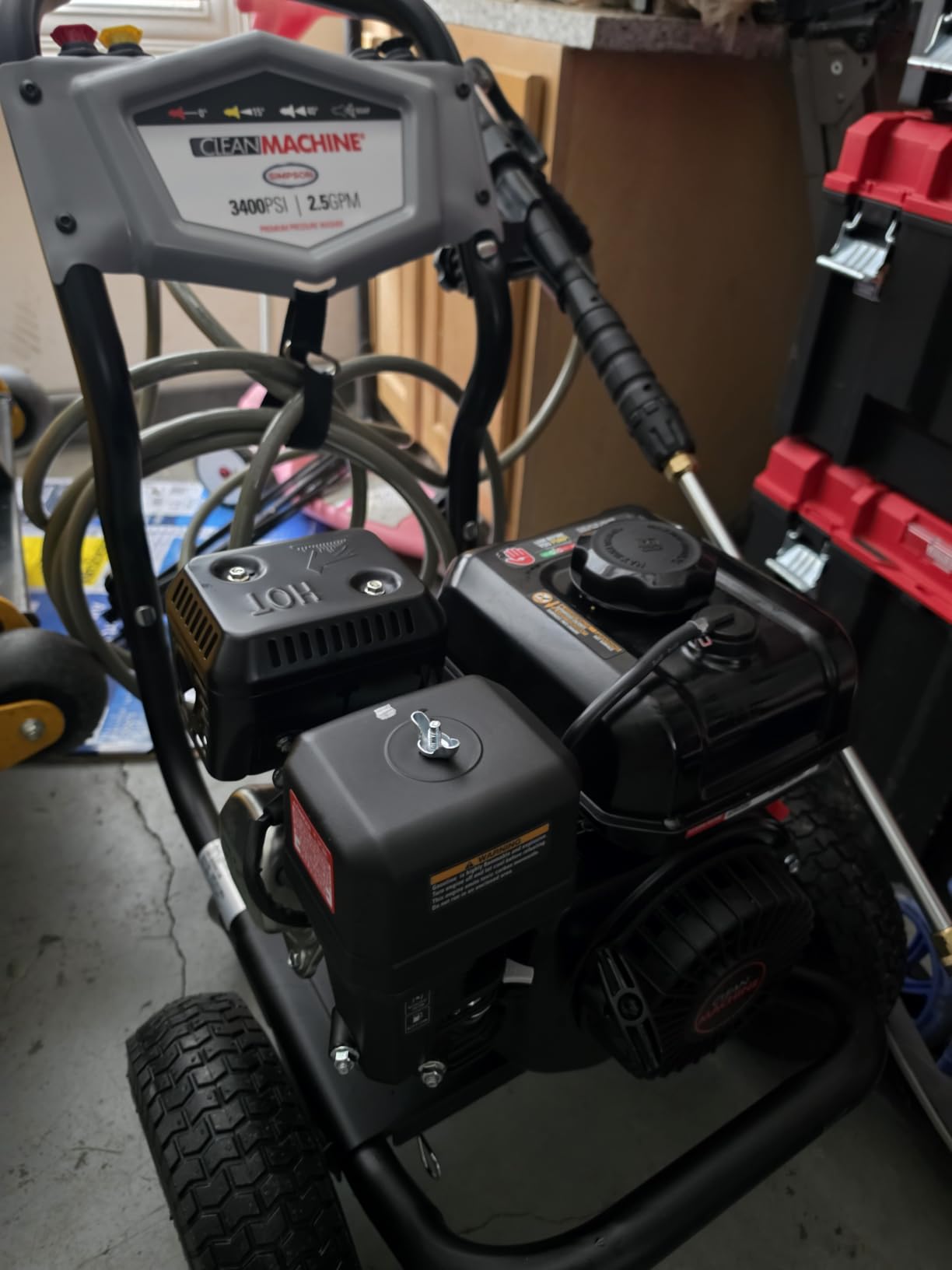
This is the only gas machine here, and it earns its place for trucks, SUVs and driveway work rather than for careful paint washing. At 3400 PSI and 2.5 GPM its flow sits at the top of the roundup, which is why owners who wash several large vehicles rate it highly.
The hardware is genuinely good. The 25 ft MorFlex series hose is kink-resistant, abrasion-resistant and non-marring, and the 10 inch premium pneumatic tires roll over gravel, grass and curbs without the machine tipping. The 208 cc CRX engine starts easily and shuts down on low oil.
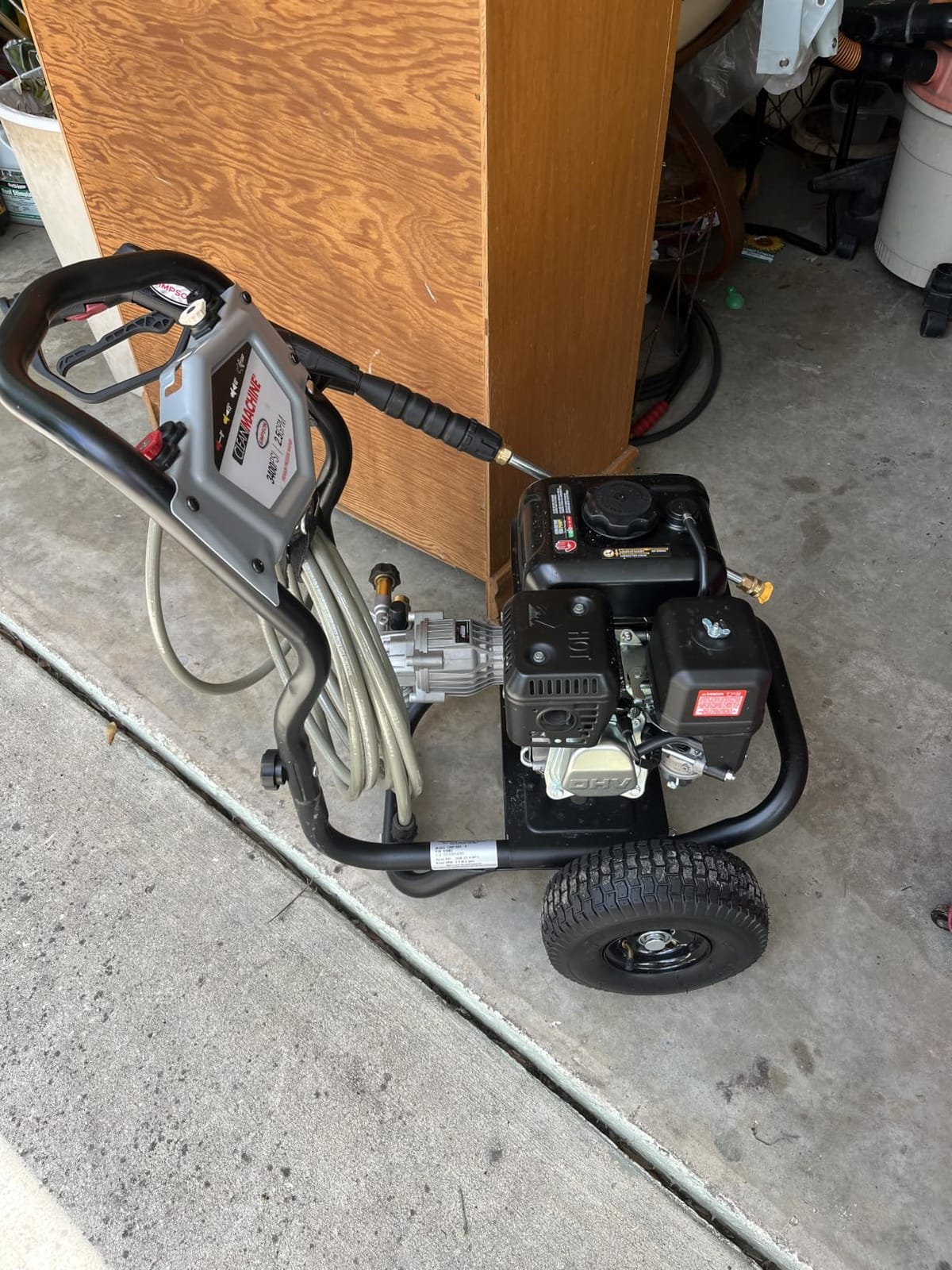
Be clear about what this means for a car. There is no onboard soap tank, so foam cannon work requires an aftermarket draw from the gun, and 3400 PSI demands real discipline with fan pattern and standoff distance. Use the 40 degree tip, keep 18 inches of distance, and never put a red nozzle near a clear coat.
Owners accept the trade-offs buyers list: gasoline noise, fuel and oil upkeep, the 61 lb weight, and a unit that is 49-state compliant only. If you live in California, this machine is not available to you.
When gas is the right answer
Two vehicles, a boat on a trailer and a concrete driveway is a duty cycle that electric machines here will not enjoy. The 2.5 GPM flow shifts a bucket of water in a fraction of the time, and the wheels make moving 61 lbs between surfaces manageable.
Buyers with several vehicles also value serviceability, and the OEM Technologies axial cam pump with a thermal relief valve is a simple, widely understood design compared with high-pressure electric assemblies.
Where it falls short for cars
Noise is the first thing neighbours notice, followed by the pull-start routine after a wash. Fuel and oil changes are a monthly chore that no electric unit in this roundup has.
For a single family car with a driveway you do not need to blast, this is far more machine than the job requires, and the risk of paint damage from careless use is the highest of any product here.
10. LWQ S5 Portable Washer – Best High-Flow Budget Pick
Pressure Washer, Portable Power Washer, 4 Quick Connect Nozzles, High Pressure Cleaning Machine for Car Fence Driveway Patio Washing and More(Light Green)
2030 psi max pressure
2.5 GPM max flow
Foam cannon included
16.6 lb body
Pros
- 2030 psi with 2.5 GPM is unusually high flow for a compact unit
- Includes a foam cannon plus a separate detergent bottle
- Four metal quick-connect nozzles give a useful spread of patterns
- Dual-roller design and anti-tipping base make it easy to move
- Compact body with cord hook and nozzle holders
Cons
- Generic brand with minimal reputation or support
- 11 percent one-star ratings and the highest share here
- Hose connection is awkward and air must be bled first
- Foam quality is basic next to a dedicated foam cannon
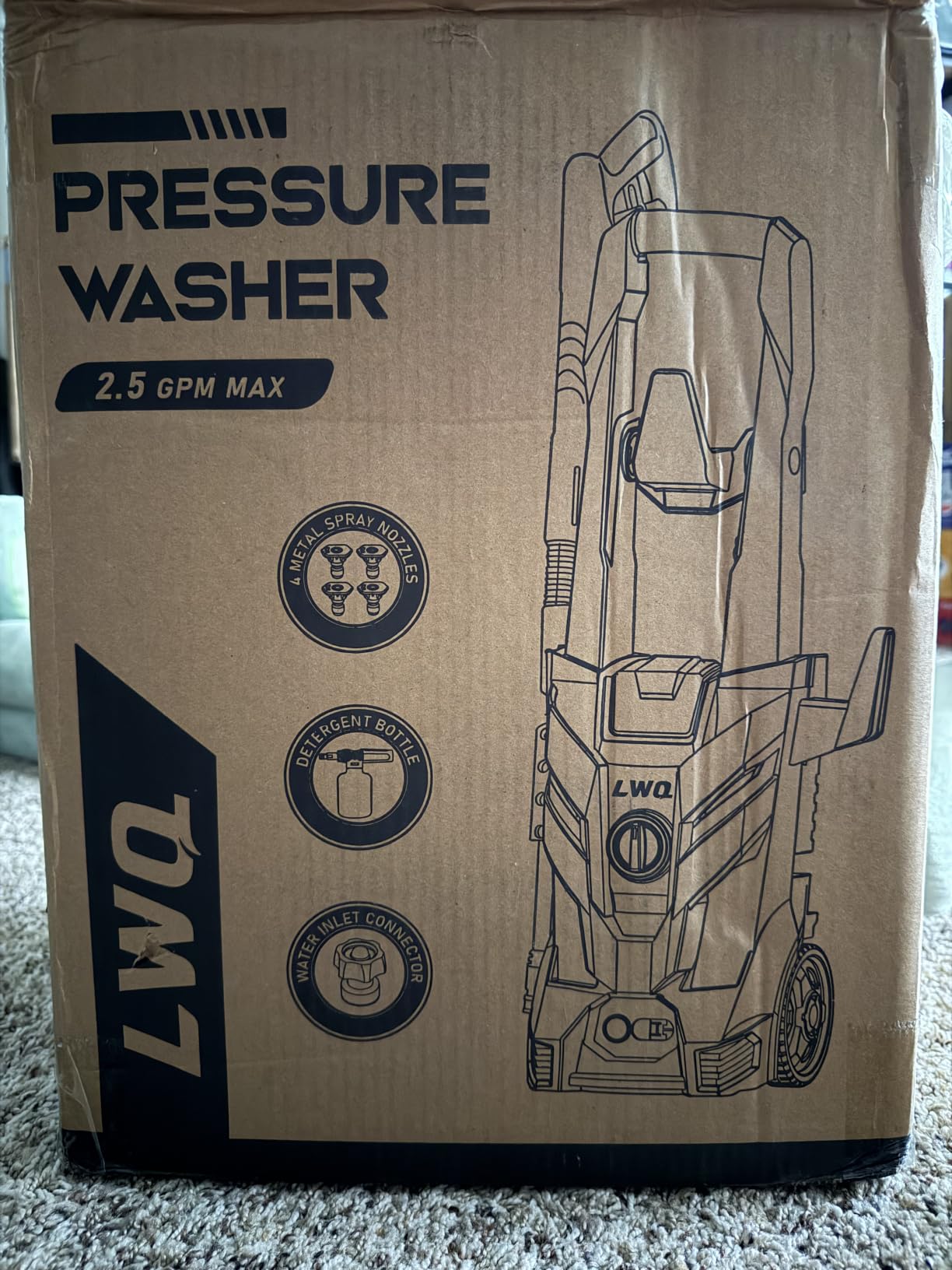
On paper this is a rare combination: 2.5 GPM in a 16.6 lb body. It matches the flow of the gas machine on this list while storing in a garage or a pantry, and the box includes a foam cannon plus a separate detergent bottle.
That separate detergent bottle is a smart design choice. It accepts bleach and other cleaners without passing them through the pump, which protects the seals. The four metal quick-connect nozzles at 0, 15, 25 and 40 degrees give the right spread for a car wash, and the dual-roller base with an anti-tipping platform makes it stable on uneven driveways.
Buyer sentiment is functional rather than glowing, and we would rather describe it accurately. Over 5,000 ratings average 4.3, and buyers who are happy point to the pressure and flow combination, the included foam cannon and the portable design. The 11 percent one-star share is the largest here, with setup fiddliness and hardware durability the most common themes.
Plan for the first ten minutes. You have to bleed air from the high-pressure and inlet hoses before first use, and the hose connection is awkward to set up. Once primed, it performs.
Why it is worth a look
Foam cannon compatibility is the theme the detailing community keeps repeating, and this machine includes one. Pair it with a dedicated aftermarket cannon later if the included foam disappoints, which several owners do.
Flow matters more than most spec sheets admit, and 2.5 GPM in a machine this light is genuinely rare. For rinseless-wash users and rinsers who hate long foam dwell times, it is a real advantage.
Where the risk sits
Support is the concern. A generic brand with minimal reputation means a failed pump is a replacement rather than a repair, and the one-star share reflects that. Warranty service outside the US and Canada is also a common complaint across budget brands.
Foam quality from the included cannon is basic compared with a dedicated foam cannon. If foam performance is your priority, budget for an aftermarket cannon from the first day.
How to Use a Pressure Washer Safely on a Car
Even the mildest machine on this list will etch a finish if you use it wrong. Technique matters more than the label, and the differences between a swirl-free wash and a hazed windshield come down to a few repeatable steps.
Work top-down and keep distance
Always wash from the roofline downward so you do not drag dirt across a clean panel. Hold the wand at least 12 inches from the paint and never closer than 18 inches when using a narrow fan.
Never put a 0 degree red tip on a body panel. It concentrates the entire stream into a pencil-thin spot and will cut clear coat in under a second.
Pre-rinse, foam, dwell, rinse
Rinse the car down first to knock off loose grit. Then apply foam and let it dwell for about five minutes so the shampoo can work on the grime before you touch the surface with the wand.
Rinse from the bottom of the car upward on the final pass so you flush the dirt you just loosened rather than pushing it back down. The rinse step is where flow pays for itself, which is why GPM is the number to compare.
Match pressure to surface
Keep wide fans on paint, glass and plastic trim. Higher pressure is appropriate for wheel wells, tires and undercarriage, and for concrete, but not for clear coat or wrapped film. Ceramic-coated panels deserve the same caution as bare paint.
If you live in a hard-water area, dry with a blower or a large microfibre towel while the surface is still wet. Drying is what prevents spotting; the washer only removes the dirt.
Buying Guide: Choosing a Car-Safe Pressure Washer
PSI versus GPM: why flow wins for cars
PSI measures how hard water hits a surface, and GPM measures how much water moves per minute. Cars need volume. Soap and grime lift off in proportion to water moving across the panel, so a 2000 PSI machine at 1.76 GPM rinses faster than a 2500 PSI machine at 1.2 GPM.
The safe band for a family car sits around 1000 to 1800 rated PSI with at least 1.5 GPM. Above 2000 rated PSI, the machine earns its keep on wheel wells and undercarriage rather than on paint, and technique becomes the safety mechanism.
Read the rated numbers, not the maximum
Manufacturers advertise the peak their pump hits briefly. Rated PSI and rated GPM are what the machine sustains at the gun, and they are the numbers that predict real performance. Two machines rated 2000 PSI and 1.2 GPM will behave identically even when one advertises 2500 max PSI.
Electric or gas
Electric machines are quieter, simpler to run and safer near paint, which makes them the right default for cars. Gas units earn their place when you wash several large vehicles or a concrete driveway regularly, and they demand much more discipline with nozzle choice.
Most of the machines in this roundup are electric, and the three-year limited warranties on the compact models are a meaningful advantage over typical gas coverage. Our dedicated roundups cover electric pressure washers and gas pressure washers if you want to go deeper on either side.
Motor type and durability
Induction motors run cool and need no maintenance, which suits intermittent weekly use on cars. Brushless motors deliver strong power in a compact frame and back the longer warranties. Universal motors are the least durable and the most common failure point after a season or two of casual use.
Warranty length is a reasonable durability proxy. Where you can compare it, three years of limited service, labor and parts coverage gives a more comfortable margin than a two-year warranty.
Accessories that actually change the result
A foam cannon is the highest-impact addition to any of these machines, and a non-marring hose is the second. Owners frequently replace the included hose because it restricts flow, which is why hose length and diameter deserve more attention than most spec sheets give them.
Look for quick-connect fittings in a standard size so you can add accessories later. A machine with proprietary fittings limits what you can pair it with.
Storage, hose reach and where the machine lives
A machine you can lift onto a shelf gets used. A heavy machine abandoned in a garage corner does not, and that is why several picks here weigh under 20 lbs. Cord length also determines whether you move the unit or the car, and a 35 ft cord solves that problem for most driveways.
For a fixed garage setup, a wall-mounted unit with an onboard detergent tank and a long hose reel removes the storage question entirely, though none of the machines here ship as a wall-mount kit. Apartment dwellers with no outlet access should prioritise cordless or portable machines, and weigh the washer against a rinseless wash for their weekly maintenance.
Frequently Asked Questions
What PSI pressure washer is best for cars?
Most family cars are best washed with a machine rated between 1000 and 1800 PSI with at least 1.5 GPM of flow. That range shifts grime without enough impact force to etch clear coat. Use higher pressure only on wheel wells, tires and undercarriage.
Which brand is the best car pressure washer?
Westinghouse covers three of the car-focused picks in this roundup, with the ePX3100v and ePX3500 combining 1.76 max GPM with a three-year limited warranty. Greenworks offers the widest range from gentle 1600 PSI units to a 3000 PSI brushless machine.
Is 1600 PSI too much for cars?
No. A 1600 PSI machine is one of the safest choices for routine washing because it cannot realistically etch clear coat even with careless technique. Pair it with a 25 or 40 degree fan nozzle and at least 12 inches of standoff distance.
Can I use a gas pressure washer on a car?
Yes, but it requires more care. Gas machines run 3000 to 4000 PSI, so stick to wide fan nozzles, hold at least 18 inches of distance, and never use a 0 degree tip on paint. Gas units make more sense for trucks, decks and driveways than for a single car.
What’s the best nozzle tip for washing a car?
The 40 degree white tip for pre-rinsing and gentle rinsing, the 25 degree green tip for the main wash, and the black soap tip for foaming. Avoid the 0 degree red tip on any painted surface, and use the 15 degree yellow tip only in tight wheel wells.
Do I need a foam cannon for car washing?
A foam cannon is the highest-impact accessory for any of these machines. It lets shampoo dwell and lift grime without you dragging a dirty mitt across paint. Several machines here include one, and owners who add a dedicated aftermarket cannon report the biggest improvement.
What is the most common problem with pressure washers?
The most common complaint is a weak or kinked included hose that restricts flow to the gun, which makes the machine feel far weaker than it is. The second most common is early pump or motor failure on budget units, usually after one or two seasons of intermittent use.
Final Verdict: The Best Pressure Washers for Cars
After six weeks of weekly washes, the best pressure washers for cars come down to flow, not force. The Westinghouse ePX3100v takes the top spot because 1.76 max GPM, a detachable foam cannon, a 17.6 lb body and a three-year warranty cover every part of a car wash without pushing a single panel past safe pressure. The Westinghouse ePX3500 is the value alternative when you want more pressure for wheel wells, and the Sun Joe SPX100-GO is the lightest and simplest way into the hobby.
Pick the WPX3000e if you wash through winter and want an induction motor built for a decade. Pick the Greenworks GPW3001 if rinse speed matters more than durability guarantees. Everything else on this list is a variation on the same theme, and the theme is simple: more gallons per minute, a wide fan nozzle, and 12 inches of standoff distance.
Whichever you choose, the accessories decide the result. Add a foam cannon, replace the included hose, and work top-down. That combination will protect your finish better than any PSI number on a box.