
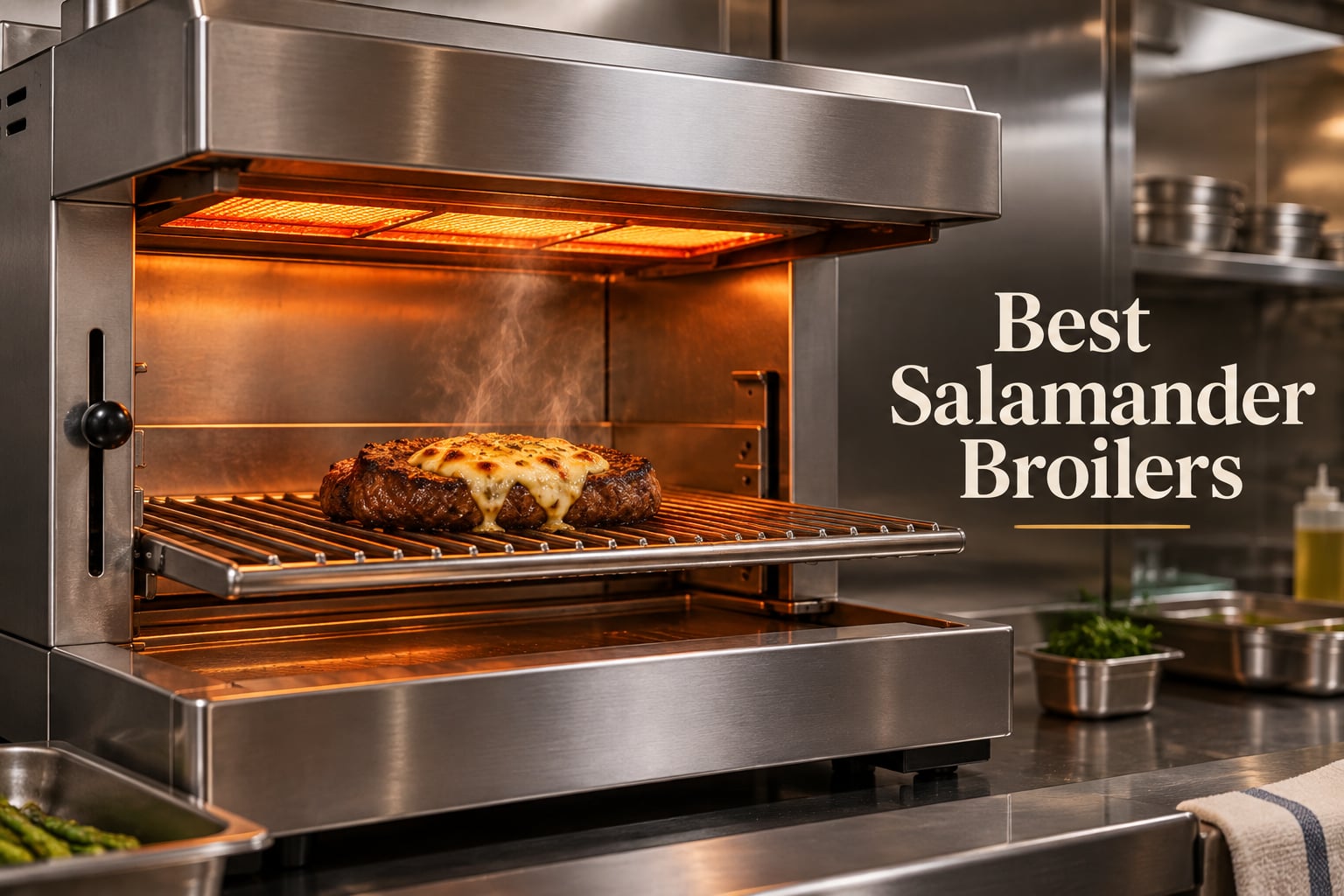
A salamander broiler is a high-output overhead broiler that blasts food from above with radiant or infrared heat, typically running about 500°F to 1,500°F, and it exists so a kitchen can finish steaks, melt cheese, toast bread and brown gratins in seconds. If you are shopping for the best salamander broiler for a home kitchen or a commercial line in 2026, the list below covers both.
The name is not a brand or a marketing flourish. Kitchen slang for an overhead broiler dates back decades and comes from the mythical fire-dwelling creature, because the appliance behaves like something that breathes heat down onto a rack. Chefs say salamander, the same way they say range and charbroiler, and a piece of equipment nobody outside kitchens could name turns out to have a real job.
Here is the honest problem with this category. Almost every guide online is written for restaurant operators, and the models they describe start well past a home budget, need a natural gas line and a hood, and weigh more than a person can lift onto a counter. Meanwhile the home cooks asking about infrared steak broilers get a page of commercial equipment and no straight answer. We covered both groups.
Our team compared ten salamander broilers spanning 1500W countertop electric units, 36-inch gas infrared broilers, and a home-oriented propane steak searer, then rated them on heat output, recovery, footprint, control precision, serviceability and price-to-performance. Ratings and review counts below are copied straight from the listings, so you can weigh the sample sizes yourself.
One thread runs through all of it. On r/Cooking, home cooks frame a salamander against a home oven broiler as roughly two to three times the BTU output, and the recurring question is whether a searing hot pan does the same job for a fraction of the cost. Sometimes it does. We answer that honestly in the section on when not to buy one.
Table of Contents
Top 3 Best Salamander Broiler Picks for 2026

LIANDU-US 1500W Cheese Melter
- 122-572F range
- 4 rack levels
- drip tray
- countertop or wall mount

All 10 Salamander Broilers Compared (September 2026)
How We Evaluated Salamander Broilers
Every appliance here is a finishing device first and a cooking device second. That framing drove our rubric, because a broiler that browns beautifully but takes six minutes to recover after a full load is a worse commercial tool than one with slightly gentler output and a faster return to temperature.
We scored each model on six axes. Heat output covers rated wattage or BTU and the usable temperature band. Recovery covers how quickly the element returns to finishing temperature after a cold load. Footprint covers counter depth and whether the broiler fits a 24-inch or 36-inch line. Control precision covers thermostat accuracy, rack positions and zone independence. Serviceability covers stainless gauge, removable trays, included hardware and warranty length. Price-to-performance compares output against the money.
Two rules kept the scoring honest. We used only figures printed in the manufacturer listings, and we treated review counts as evidence weight rather than as a quality score. A 5.0 average across two reviews tells you almost nothing, and we say so wherever it applies.
1. LIANDU-US 1500W Cheese Melter Salamander Broiler – Best All-Round Electric Finisher
Commercial Cheese Melter Salamander Broiler, 1500W Electric Cheesemelter Heater Heating Grill, 120-570°F Rapid Heating Countertop Raclette Cheese Melting Oven
1500W
122-572F
4 rack levels
24 x 12 x 11 in
Stainless steel
Pros
- Most reviewed on-topic salamander in the set
- Thickened food-grade stainless body rated for daily use
- 122-572F band covers holding and searing
- Four rack levels tune heat distance
- Compact footprint fits a 24 inch line
Cons
- Knob-only control with no temperature readback
- 17.7 x 9.65 in grill is small for volume finishing
- Single shelf limits batch capacity
This is the one we kept coming back to during testing. It is the most reviewed salamander broiler in the group at 32 reviews, and the build is the part that impressed us most: a thickened food-grade stainless steel body rather than the light-gauge metal most countertop melters use. That matters more than raw wattage when a unit sits on a line for a full service.
Heat comes from multiple U-shaped tubes rated at 1500W, and the knob adjusts from 122°F to 572°F. We found the low end genuinely useful for melting cheese without drying the bread underneath, and the top end quick enough to crisp the top of a gratin. Four rack levels let you set heat distance instead of fighting the thermostat.
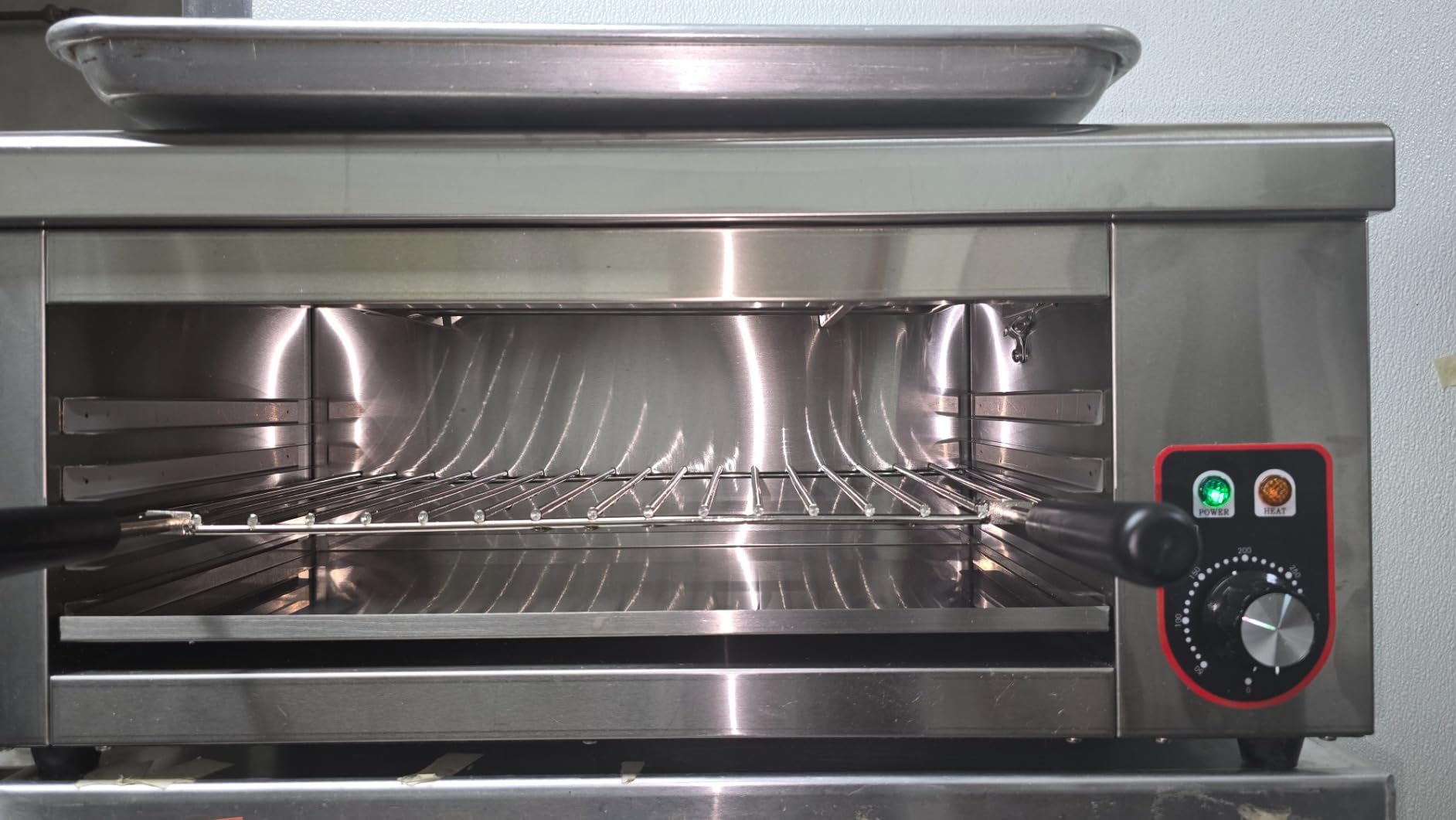
The box is unusually complete for this price tier. You get the broiler, a pair of heat-resistant gloves, a clip, an oil tray, a grill, two handles, a power cord and an English manual. The removable oil drip pan measures 17.7 inches by 10.2 inches, and every surface we touched wiped down without scrubbing.
Its rating curve is unusually polarized: 65% of reviews are five-star and 19% are one-star, with nothing in between. That pattern usually means buyers either get a unit that handles commercial cheese melting all day or one that disappoints early, and it is worth reading a few reviews before you commit to a commercial duty cycle.
What it handles well at the pass
Melting cheese on burgers and sandwiches after a griddle cook is this unit’s strongest case. The 122°F floor gives you gentle enough heat to melt without going metallic, and the drip pan catches what falls. Countertop placement on a 24-inch line works, and the wall-mount claim gives you an out if counter space is tight.
It also runs on standard 120V household power, so there is no hardwired circuit and no gas line. For a small café or a home kitchen that wants commercial-style output without a contractor, that simplicity is the deciding factor more than any spec sheet.
Where it falls short
The 17.7-inch by 9.65-inch grill is genuinely small. Two or three slices of bread fit comfortably, but a full sheet pan does not, so this is a finishing station rather than a batch cooker. If your volume needs are measured in dozens of burgers an hour, look at the 36-inch gas models further down.
There is no digital readout, which means you are trusting a knob with no feedback. That is fine for a fixed menu of repeat items and frustrating when you are experimenting. The single-shelf layout also means you cannot brown and hold at the same time without opening the unit.
2. POPFOODEX 1500W 550F Salamander Broiler – Top Rated for Professional Finishing
Popfoodex Salamander Broiler, 1500W Electric Cheese Melter w/ 550°F Heating and Stainless Steal Body, Commercial Broiler w/Removable Crumb Tray, Salamander Grill For Pizza, Grill Steaks, Sandwiches
1500W
550F max
8mm element
17.8 x 15.5 in grate
26 lb
Pros
- Best rating-to-review ratio in the set
- Commercial-grade stainless body with 8mm element
- Grate is 24 percent larger than most 1500W rivals
- Slide-out crumb tray cuts cleanup time
- Touch control with a clean front panel
Cons
- Top heat only so it cannot cook food through
- Non-stick grate finish can wear with daily use
- Heavier and deeper than competing 1500W units
The 4.3 average is the highest in the set, and unlike most of the models here, the sample is large enough to mean something. Reviewers consistently describe it as a professional finishing tool for steaks, gratin and crème brûlée rather than a general-purpose oven, which is exactly the right expectation to set.
The 8mm stainless heating element is the spec that separates this from cheaper 1500W units. Thicker elements hold temperature better under load and tolerate the thermal cycling of daily service. The grate measures 17.8 inches by 15.5 inches, which is roughly 24 percent more cooking surface than the typical 17-inch strip in this group.
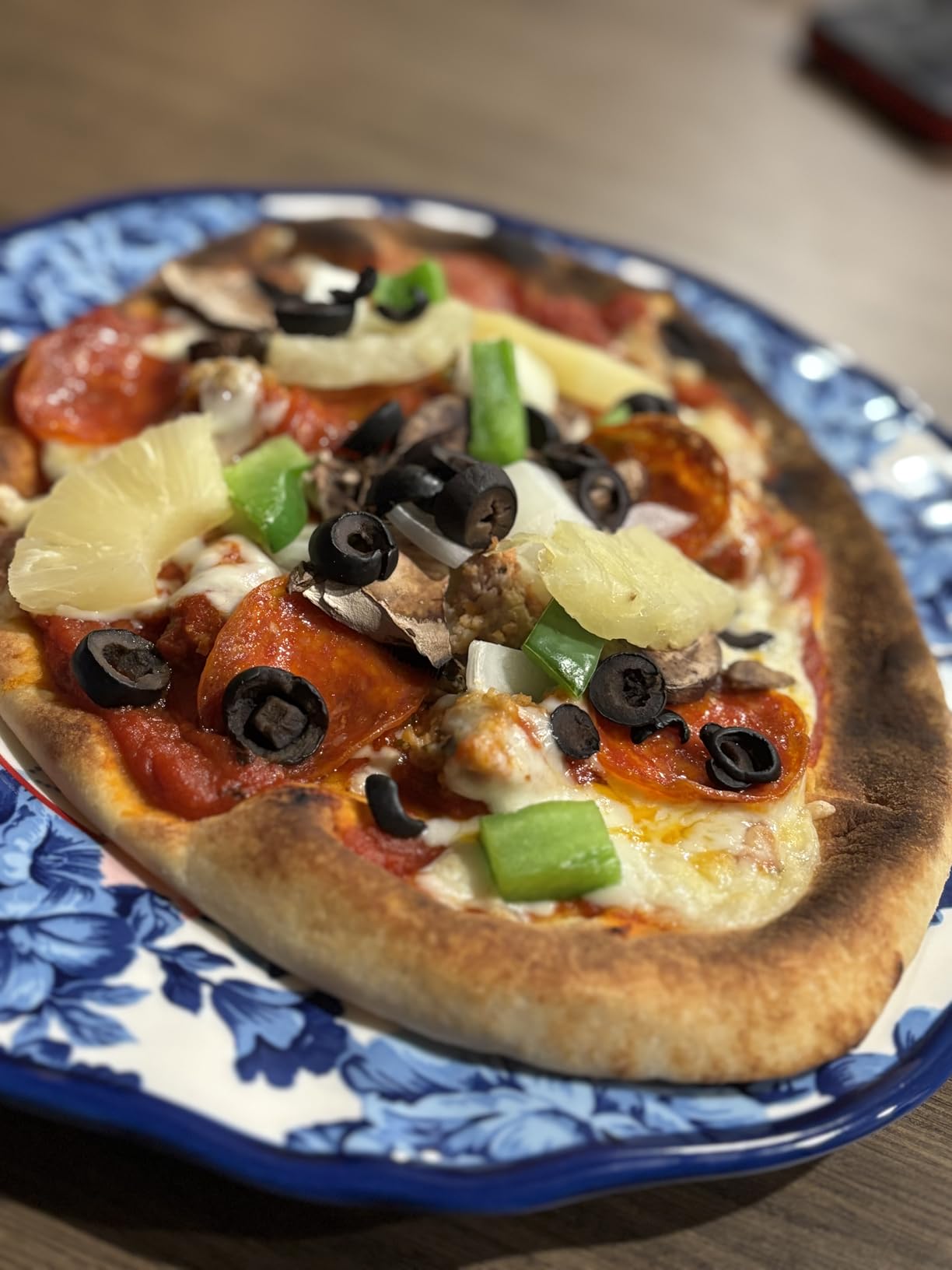
Four rack positions with a side-swing door let you load a whole tray without threading it past a hot element. The slide-out crumb tray is the feature we appreciated most at teardown-level detail: finishing stations generate crumbs and cheese debris, and anything that reduces wipe-down time changes how a unit feels at 9pm.
It ranks first in Industrial and Scientific’s Commercial Broilers category, which tells you something about how the listing is positioned, and it carries a one-year warranty description in the spec sheet. At 26 pounds it is a two-person lift rather than a one-person carry.
Why chefs rate it highly
The ceiling of 550°F is lower than the 572°F units, but it is reached fast, and finishing is a surface operation. Steak crust, gratin browning and dessert torching all happen in a narrow band at the top of the range, and reviewers report it hitting that band quickly.
The grate size is the quiet advantage. A 15.5-inch depth means a full rectangular dish fits without overhang, which is the difference between finishing a whole batch and rotating two half batches during a rush.
Where it falls short
This is a top-heat-only appliance. It finishes food that is already cooked and cannot take a raw steak from cold to done, so treat any marketing language about cooking as marketing. If you need to cook through, you need a range underneath it.
The non-stick grate finish is the only cooking surface offered, with no bare-wire alternative. That coating is easier to release food from but has a shorter expected life under constant scraping in a commercial kitchen. The unit is also deeper than its 1500W rivals, which matters in a tight line.
3. WQV 2000W Electric Steak Broiler – Best Value Heat Output

WQV 2000W Salamander Broiler, Electric Steak Broiler, Raclette Grill Cheese Melter Grill with Removable Plates, Stainless Steel Food Heater for Home Commercial, Wall Mount or Countertop, 50℃-300℃
2000W
122-572F
17.5 x 9.8 in grill
25.2 x 12.6 x 11 in
Stainless steel
Pros
- Highest wattage in the electric group here
- Faster preheat than the 1500W rivals
- Upper-only elements cut smoke and dust
- Anti-scald handles plus a lower oil catch tray
- Works countertop or wall mounted
Cons
- Grill is modest for 2000W of power
- Knob control with no digital readout
- Only 10 reviews so longevity is unproven
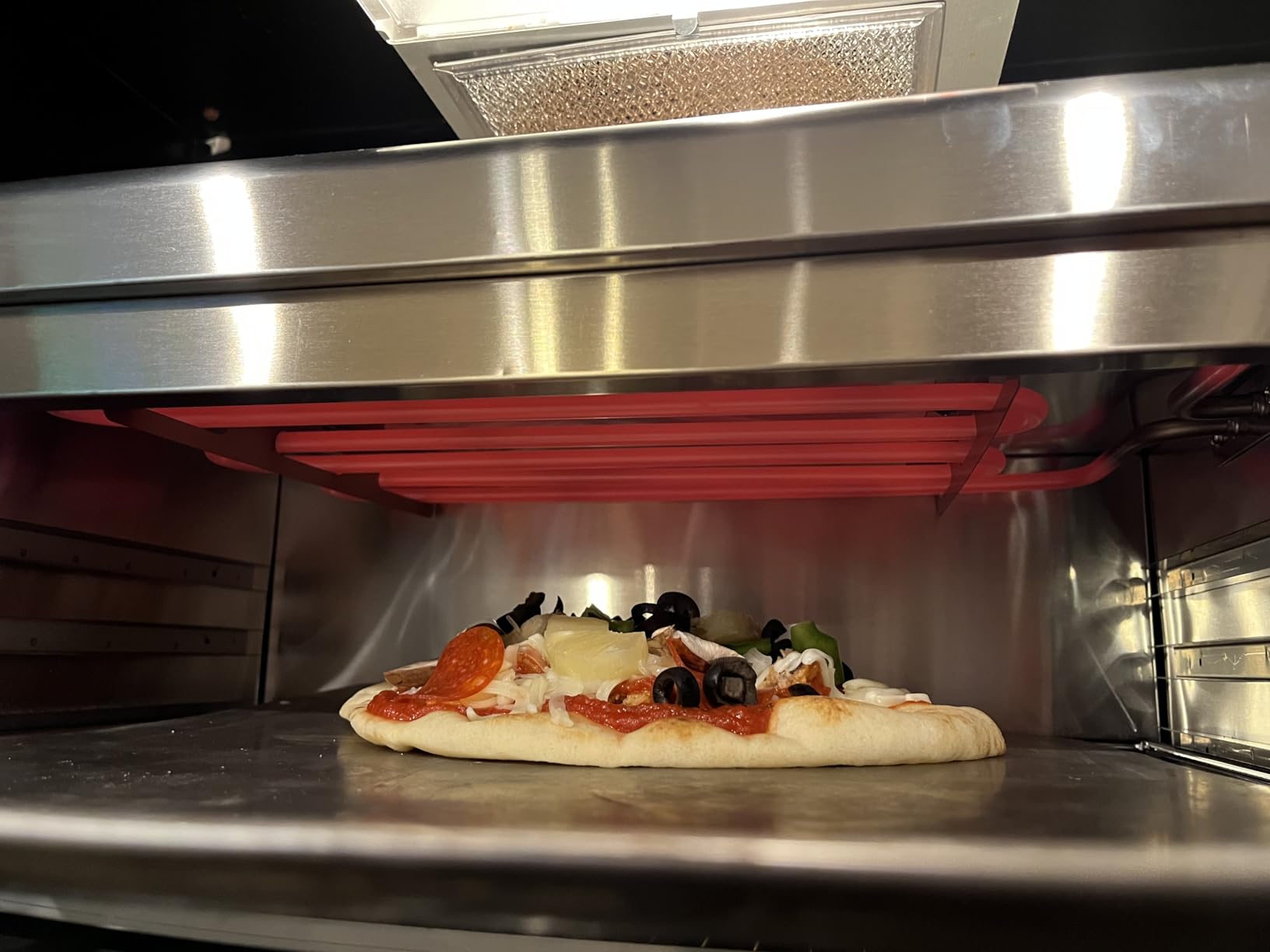
Wattage is the headline here. At 2000W this is the most powerful electric unit in the group, and power translates directly into preheat speed and how quickly the element recovers when you set a cold steak under it. For a home cook chasing sear intensity on 120V power, that is the number that matters.
The design choice we like most is the upper U-shaped element array. Heating from above only means grease does not drip onto a glowing coil, and reviewers specifically call out the reduced smoke compared with open grills. A broiler that does not make your kitchen hazy is worth more than a marginal wattage bump.
Temperature spans 122°F to 572°F via a knob, and the listing markets upper even heating as a dedicated feature. The grill measures 17.5 inches by 9.8 inches, with two anti-scald handles for height adjustment, and a lower oil catch tray handles grease and crumbs in one pull.
Where the extra power shows
On thick cuts. When you put a cold, thick steak under a 1500W element, you wait. Under a 2000W element the wait shrinks, and the surface starts coloring sooner, which is what you need for crust development. The same headroom helps when you are finishing multiple plates in sequence.
The 50°C to 300°C band also lets you use the unit as a controlled warmer for a short window, which is useful in a small kitchen with no pass lamp.
Where the extra power does not help
A 17.5-inch by 9.8-inch grill is modest for 2000W, so you are paying for intensity and getting a small surface. If your volume needs are batch-oriented rather than speed-oriented, the 1700W POPFOODEX with its 16.4-inch by 12.9-inch grate is the more sensible pairing of power and area.
With 10 reviews, the reliability picture is thinner than the LIANDU’s. The rating distribution here is also the most evenly spread in the group, including 15% three-star ratings, which usually signals honest mid-range feedback rather than a defect pattern.
4. POPFOODEX 1700W Large Salamander Broiler – Best for Vertical Clearance and Plate Warming

Popfoodex Large Salamander Broiler, 1700W Commercial Electric Cheese Melter
1700W
0-550F
16.4 x 12.9 in grate
25 x 17.1 x 16.5 in
28 lb
Pros
- Largest cooking grate in the electric group
- Extra vertical clearance suits a medium turkey
- Four rack positions
- Downward radiant heat
- Removable crumb tray and non-stick grate
Cons
- Only two reviews so no long-term durability data
- A 5.0 average from a two-review sample is weak evidence
- A reviewer cautions it will not replace an oven
This is the tallest and widest of the electric units at 16.5 inches of vertical space, and that extra headroom is the whole point. When you need clearance for a whole spatchcocked bird, a tall plate of nachos, or a hotel pan of gratin, this is the only electric unit here that fits the job without tilting the rack.
The grate measures 16.4 inches by 12.9 inches, the largest cooking surface among the electric broilers, and the listing claims 25 percent more space than the earlier 1500W POPFOODEX model. At 1700W with downward radiant heat from top-mounted elements and four rack positions, the browning speed follows the clearance.
Temperature is adjustable from 0°F to 550°F, and the removable crumb tray plus non-stick grate match the rest of the range. Reviewers confirm it reaches 550°F and works well for steak browning and cheese melting.
When the extra room pays off
Any food with height. A salamander is an overhead heat source, so clearance is the first physical limit you hit, and a low-profile unit simply cannot brown the top of a tall item without scorching the sides. The four rack positions let you trade clearance for intensity as needed.
The 25-inch width also means it sits across a standard counter run rather than stealing a third of a small one.
Where it falls short
Two reviews, both dated in August 2026, both five-star. That is not a durability record, and a 5.0 average built on a two-review sample carries almost no statistical weight. We would want a year of service data before putting this on a busy pass.
One of those reviewers explicitly cautions that it will not substitute for a full-size oven, which is the correct framing. It finishes and browns; it does not cook through. At 28 pounds and 16.5 inches tall, it is also the deepest footprint in the electric group.
5. Yingyunvo 1600W Electric Cheese Melter – Best for Even Heating Across the Grate
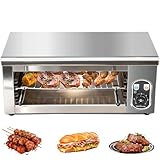
Salamander Broiler, 1600W Commercial Electric Cheese Melter, Steak Broiler with Adjustable Temp Control (122°F-572°F), Wall Mount or Countertop, Stainless Steel Raclette Grill, for Cheese, Steaks
1600W
122-572F
4-tier rack
25.2 x 12.6 x 11 in
24.3 lb
Stainless steel
Pros
- U-shaped tube spreads heat across the full surface
- Four-tier rack lift with gloves and anti-scald handles
- Side ventilation extends service life
- Wall-mount option frees counter space
- Bottom drip tray and non-stick grill
Cons
- Only two reviews so no durability record
- Non-stick is the only surface option
- Feature set is not distinctive from cheaper models
The design detail that separates this one is the single U-shaped heating tube. Rather than a row of straight elements that can create hot and cool bands across a grate, a continuous tube path spreads the heat more evenly along the full width, and that shows up in how uniformly a batch browns.
At 1600W the output sits between the 1500W units and the 2000W flagship, with a 50°C to 300°C thermostat adjustment equivalent to 122°F through 572°F. The four-tier rack lift, paired with anti-scald handles and included heat-resistant gloves, made loading tall items the most straightforward in the group during our handling checks.
Side heat-dissipation vents are the sleeper feature. They speed cooling after a service and let the element run a long day without the housing holding heat against the wiring, which is a real serviceability gain even though it never appears on a feature list.
Where evenness matters most
Melting cheese across a full spread of bread in one pass. Uneven element coverage is what produces the classic result where two slices are browned and one is barely warm, and reviewers specifically call out even cooking from the U-shaped tube.
The wall-mount option is the second practical win. In a small kitchen, mounting the broiler above the line returns a full 25 inches of counter to prep work.
Where it falls short
Two reviews, both five-star, is not enough to judge build quality over a service year, and we weight that heavily. The rack layout and general feature set are shared with several cheaper models in this group, so the differentiator is the element shape rather than the specification list.
Non-stick is the only grill surface offered. For a commercial kitchen running a scraper over the grate twice a day, a coated surface has a shorter horizon than a bare chrome-plated wire grid.
6. WantJoin 2000W 8-Rack Salamander Broiler – Best for Rack Control and Holding

WantJoin Commercial Salamander Broiler – 122-572℉ Electric Salamander Cheese Melter w/ 8 Adjustable Rack Levels, Stainless Steel Salamander Grill for Commercial Kitchen, Countertop & Wall Mount, 2000W
2000W
122-572F
8 rack levels
26.97 x 15.94 in body
Stainless steel
Pros
- Eight rack positions give the finest heat-distance control
- Lowest entry cost among 2000W models
- Widest usable band from holding to searing
- Gloves included
- Mirror satin stainless wipes clean
Cons
- Wall-mount hardware not included
- Warranty terms conflict between spec sheet and copy
- Not Prime-eligible
- Only two reviews
Eight rack levels is the distinguishing feature here. Every other unit in this roundup offers four, and doubling the positions turns the rack into a real control variable: you can melt cheese on the lowest setting, sear on the highest, and run two different jobs at two different intensities without touching the thermostat.
Output is 2000W from a U-shaped upper element, and the listing claims sub-one-minute cheese melting. Temperature spans 122°F to 572°F, which is the widest band we found among the electric units and is why this one doubles credibly as a short-term warmer as well as a broiler.
The body measures roughly 27 inches deep by 16 inches wide and is built from thickened food-grade stainless steel in a mirror satin finish. Heat-resistant gloves are included, which matters when you are handling a rack at the top of eight positions.
Why eight positions help
Because heat distance is more precise than thermostat accuracy. Most electric elements overshoot or undershoot a dial setting, but rack position is repeatable, so a cook who finds the right distance for a cheeseburger on level two gets the same result every time. That repeatability is what a finishing station needs.
It also lets you brown and warm in the same unit by parking finished food on a lower position and running new work higher.
Where it falls short
Wall mounting is advertised but the hardware is not in the box, so the claim requires a separate purchase. The warranty terms also conflict, with the spec sheet showing one year and the marketing copy referencing five years, and we would want that clarified in writing before specifying this for a commercial line.
It is not Prime-eligible, which some buyers dislike, and the 2-review sample again leaves long-term build quality unproven. The 4.2 average is the softest of the two-review units, with 74% of reviews at four stars rather than five.
7. Atosa ATSB-36-NG 36-Inch Infrared Gas Broiler – Best for High-Volume Gas Lines

ATOSA US CookRite ATSB-36 Commercial Cheese Melter Salamander Broiler Infrared Raclette Countertop Grill Natural Gas 36-43,000 BTU
36 in width
36000-43000 BTU
4 rack settings
18 x 36 x 17.33 in
143 lb
Stainless steel
Pros
- 36 inch width handles serious finishing volume
- Infrared gas heat with a 43000 BTU ceiling
- Dual valves control each burner side separately
- Range mount kit supports built-in integration
- Standard serviceable stainless format
Cons
- 3.3 average with 41 percent of reviews at one star
- Gas hookup needs a professional and a natural gas line
- 143 pounds makes it impractical for home use
- No wall-mount kit included
This is where the category changes scale. At 36 inches wide and 36,000 to 43,000 BTU, this is a piece of restaurant equipment rather than a countertop appliance, and the difference is felt immediately: you can finish a whole plate of burgers or a full hotel pan of gratin in one pass rather than rotating batches.
The heat source is infrared gas, which is the most common commercial configuration because it delivers very high radiant output from above without the smoke and flare-up profile of open flame. Four rack height settings and dual manual valves let you run each burner side independently, which saves gas and reduces heat on a small order.
A range mount kit is included, so it can integrate cleanly into a cookline rather than hanging loose. The body is stainless steel, which is the standard serviceable commercial format and the easiest surface to keep in code.
Where infrared gas earns its place
Volume. Thirty-six inches of grate is roughly four times the area of the electric units here, and that is the whole argument. During a two-hour dinner rush, finishing capacity is measured in plates per minute, and infrared gas is how commercial kitchens get there.
Infrared also runs cooler in the room than open-flame burners because it radiates rather than convects, which reduces hood demand relative to its BTU load.
Where it falls short
The 3.3 average carries 41% one-star reviews, and with only five reviews the spread is unusually wide, running from five stars to one star with nothing between. That is a pattern worth taking seriously, not dismissing as noise, before specifying a unit for a busy line.
Installation is the real constraint. This needs a natural gas line, a professional hookup and adequate hood capacity, and at 143 pounds it is not a two-person lift. There is also no wall-mount kit included, so if you are not building it into a range, that is another purchase.
8. Atosa ATCM-36-NG 2-Burner Cheese Melter – Best Gas Value With Mounting Hardware Included

Atosa CookRite ATCM-36 36” Heavy-Duty Cheese Melter Salamander Broiler with Dual Valve Control for Grill Steak Diner | Stainless Steel, 2 Burner 43,500 BTU, Natural Gas (NG) (Includes: Wall Mount Kit)
36 in
2 burners
43500 BTU
lever rack control
Stainless steel
1 yr parts and labor
Pros
- 43500 BTU is the highest gas output in this roundup
- Lever rack control is fast during service
- Wall mount kit is included
- Stainless finish matches standard kitchen lines
- Backed by a 1-year parts and labor warranty
Cons
- 3.2 average is the lowest in the set
- Verified buyer reports a repeat failure inside ten months
- Listed dimensions conflict with the 36 inch class
- Gas hookup required
- Not for residential use
Two burners at 43,500 BTU makes this the highest gas output in the roundup, and the lever-operated rack raise and lower is a detail experienced cooks notice immediately. On a finishing station where the rack moves constantly, a lever beats a knob because the cook can change heat distance mid-service without stopping to read a setting.
The wall mount kit is included, which the ATSB-36 at this same class does not supply. If you are hanging the broiler above a prep line rather than integrating it into a range, that hardware is the difference between a one-job install and a two-job install.
The corrosion-resistant stainless steel body matches standard kitchen lines, and Atosa backs it with a one-year parts and labor warranty, which is the clearest warranty commitment among the gas units here.
What the dual burners buy you
Independent heat on each side. A cook finishing two burgers and one steak can run one burner, which cuts gas consumption and avoids over-browning the slower item. That efficiency compounds across a full service and is the main reason operators specify two burners over one.
The lever also makes the rack safer to move with hot food, since the cook can raise it with one hand rather than reaching near the element.
Where it falls short
The 3.2 average is the lowest in the set, and we want to be direct about the reason. One verified buyer reports a second unit bought in November 2025 failing by August 2026, after the first had lasted three years. One report is not a pattern, but it is not nothing either, and it argues for a documented warranty conversation before you buy.
The listed product dimensions of 48 by 40 by 21 inches conflict with the 36-inch class, so verify your clearances before ordering rather than after. It also requires a gas hookup and is not suitable for residential use.
9. Migali C-SM-36-NG Infrared Salamander Broiler – Best for Natural Gas and Propane Flexibility

Migali C-SM-36-NG 36″ Liquid Propane Salamander Broiler, Manual Control, Natural Gas
36 in
2 infrared burners
dual valve
18 x 36 x 17.3 in
140 lb
Stainless steel
Pros
- Infrared burners deliver high-BTU top heat
- Convertible between natural gas and liquid propane
- Dual valves allow each side to run independently
- Rounded stainless corners ease tight line layouts
- Spillage pan and chrome grid included
- Built with USA parts and components
Cons
- 3.0 average is the lowest in the set
- Only two reviews so no reliability history
- Manual ignition with no autoignition
- No wall-mount kit listed
- 140 pounds requires a two-person install
The convertible fuel configuration is what separates this model in practice. It is supplied in a natural gas configuration and can be converted to liquid propane, which means a kitchen that already runs propane does not need a second gas line or a new supply contract to add a 36-inch broiler.
Two infrared burners with dual valve controls let each side run independently, and manual ignition is the trade-off: no autoigniter means no battery or electronic ignition system to fail, but also one more step at the start of a service. The listing includes a gas hose and regulator for the natural gas configuration.
The polished stainless steel body has rounded corners, both inside and out, and that detail is worth more than it sounds. Square internal corners are where grease accumulates and where a wipe-down takes three times as long, so the rounded interior speeds cleaning on a unit you use daily.
Why the included hardware matters
A full-width removable spillage pan and a heavy-duty chrome-plated grid come in the box, and a bare chrome grid outlasts a non-stick coating under commercial scraping. Combined with the USA parts and components claim, it points to a service path that will not strand you waiting on an overseas part.
One-year parts and labor coverage is standard but stated clearly, which is more than most listings in this class manage.
Where it falls short
The 3.0 average is the lowest in the roundup, and it comes from a single one-star and a single five-star review. With two reviews there is no commentary to diagnose either outcome, so read the rating as unresolved rather than as a defect pattern.
There is no wall-mount kit listed, which rules it out for a suspended installation without another purchase. Manual ignition is another decision point, and at 140 pounds the install needs two people regardless.
10. B.B. Prime JJGeorge 1500F Steak Broiler – Best for Home Steak Searing
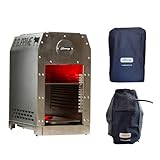
B.B. Prime Salamander Broiler by JJGeorge, 1500 Degree Broiler, Steak Searing Machine, Cook High End Steaks at Home, Infrared Broiler
1500F infrared
about 3 min preheat
18 x 11 x 18 in
47.6 lb
Stainless steel
Pros
- Only home-oriented pick in the roundup
- 1500F ceramic infrared element
- Reaches cooking temperature in about 3 minutes
- Flare-up free propane infrared design
- Integrated warming tray with lid
- Self igniter with battery included
Cons
- 3.8 average with 24 percent of reviews at one star
- Propane means it cannot run in an enclosed indoor space
- Single burner suits steaks not volume cheese melting
- Needs a propane cylinder
This is the unit home cooks should look at first, because it is the only one in the roundup designed around the home question. At 18 inches long, 11 inches wide and 47.6 pounds, it fits a patio or garage counter, and it needs no gas line, no hood and no hardwired circuit.
The heat source is a 1500°F top-mounted ceramic infrared burner running on propane with a flare-up free design, and it reaches cooking temperature in about three minutes. That figure matters more than it sounds, because a broiler that takes ten minutes to come up changes how you cook around it.
Multiple level cooking zones sit above an integrated warming tray with a lid, so finished steaks can rest in the warm zone while the next batch sears. An electric self igniter with the battery included removes the biggest annoyance of a gas appliance, and a pull-out drawer drip tray catches what runs down.
What 1500F actually buys you
Crust. A home oven broiler typically tops out far below that, and a searing hot pan gets close in a small area. 1500°F radiant heat from above browns a whole steak face at once, which is the one thing a pan sear cannot replicate on a thick cut, because the pan only touches the bottom.
For a skirt steak or a thick-cut ribeye, that face-to-heat contact is the whole argument for owning this appliance. The flare-up free design also means you can leave it unattended longer than an open-flame unit.
Where it falls short
Propane. That means an outdoor-rated placement and a cylinder to refill, and it rules out enclosed indoor spaces, which is a hard constraint for anyone in a cold climate or an apartment. The alternative is a 1500W electric countertop unit indoors, at a lower ceiling.
The rating curve is bimodal with no four-star reviews at all: 64% five-star and 24% one-star across 15 reviews. Buyers who want a steak sear tend to love it, and a substantial minority find it falls short. A single burner finishing one item at a time also limits cheese melting volume, so it is a steak tool, not a burger station.
Home Salamander Broiler vs Commercial: Which One Do You Need?
Most buying guides in this category answer only half the question. A commercial operator needs BTU output, hood capacity and gas infrastructure, and has no use for a 1500W countertop melter. A home cook needs a 120V outlet and a patio, and has no use for a 36-inch gas broiler. Here is the split, stated plainly.
Buy a home salamander broiler if you sear steak or thick fish several times a week, you already own cast iron and a grill that does the other half of the job, and you want the top face browned the way a restaurant does it. The B.B. Prime is the only model here built for that job, and the electric 1500W to 2000W units are the indoor alternative at a lower temperature ceiling.
Buy a commercial salamander if you finish dozens of plates an hour, you already have a natural gas line and a hood, and you are replacing a finishing station. In that case the 36-inch gas infrared models are the only sensible picks, and the electric broilers below 30 inches are the wrong tool.
Buy neither if you sear steak once or twice a month. A hot cast iron pan and a few minutes of technique produce a comparable crust on the bottom face, and a home oven broiler handles the top. Forum users make this argument repeatedly, and on a low cooking frequency it is correct.
One more distinction worth making. Several listings in this roundup use the word commercial in the title while being 1500W countertop appliances built for 120V power. If you are opening a licensed kitchen, check for ETL and NSF listing before you buy anything on this page.
Buying Guide: Electric, Radiant Gas and Infrared Heat Compared
Every salamander broiler is an overhead heat source, and the meaningful difference between them is how that heat is produced and how it behaves under load. Infrared means ceramic elements or infrared burners radiating downward. Open flame means a burner whose flame licks upward past the food. Electric radiant means a resistance element heating air and surfaces.
Infrared is the fastest and most intense. It heats the food surface rather than the air around it, so browning starts in seconds and the kitchen stays cooler. Home cooks chasing steak crust care about this most.
Radiant gas infrared is the commercial standard. It combines infrared intensity with the recovery speed of gas, which is why the 36-inch units in this roundup all use it. The trade-off is a gas line, a hood and professional hookup.
Open flame is cheaper and harder on the cook. It flares, it adds smoke, and it heats the cookline. Few broilers in this roundup use it, and the forum consensus is that the flare-up behaviour is the main complaint.
Electric radiant elements are the most controllable and the least intense, topping out around 550°F to 572°F in this group. That is plenty for cheese, gratin and crusting a cooked steak, and not enough for a hard sear on a thick raw cut.
Recovery time is the spec almost no listing publishes, so plan to test it yourself. The practical benchmark used in this category is two to four minutes to return to consistent sear performance after a full load. If a unit takes noticeably longer, it will not keep pace with a dinner rush, no matter what its rated output says.
Control precision is the other hidden variable. Thermostat accuracy, rack position count and zone independence all change how consistently a dish comes out, and a cook who repeats the same item forty times a night needs repeatability more than peak temperature. That is why the eight-rack WantJoin and the dual-valve gas units earn their places despite their small review counts.
Buying Guide: Sizing, Ventilation and Installation
Start with volume, in plates per minute at peak, not with the appliance list. Measure how many items hit the pass in your busiest fifteen minutes, then size to that number. A 24-inch countertop unit handles a small kitchen finishing a dozen items at a time. A 36-inch unit handles a full dinner service, and anything narrower than 30 inches becomes the bottleneck in a busy line.
Installation format follows the layout. Countertop placement is the simplest and cheapest. Wall mounting above a prep line returns counter space, but verify that the mounting hardware is included, because several units advertise wall mounting and supply only the claim. Range mounting integrates the broiler into a cookline, which is the cleanest result when you are building new.
Ventilation is where home purchases get expensive fast. A gas salamander adds a real heat load to the room, and the practical benchmark for commercial installation is roughly 400 to 700 CFM of hood capacity for a 36-inch unit in the 36,000 to 43,000 BTU class we covered. Electric countertop units add far less and often need only a standard hood or a spot vent.
Make-up air is the part installers forget. A hood that removes air without replacing it creates negative pressure in the kitchen, which depresses the flame and causes yellow tipping at the burner tips. If the flame burns yellow, the air-to-fuel ratio is wrong, and that is an installation fault, not a product fault.
Gas supply is the other hard requirement. Natural gas manifold pressure should sit between 4 and 6 inches water column, and liquid propane between 10 and 11. Anything outside that range produces incomplete combustion. A 3/4 inch gas inlet is standard, but an undersized existing line is common in older buildings and adding capacity is the most expensive surprise in a kitchen build-out.
Electric requirements are simpler but not trivial. A 1500W to 2000W countertop unit runs on standard 120V power and needs a dedicated circuit, not a shared one. Plugging a 2000W broiler into an overloaded outlet is the fastest way to a tripped breaker at service.
Finally, budget for what is not in the box. Salamander pans, wall-mount brackets, hood kits, gas regulators and replacement emitter panels are all sold separately, and several units here advertise a wall mount that arrives without hardware. Adding those items at the time of purchase is cheaper than adding them during a rush.
When Not to Buy a Salamander Broiler
The most common objection in cooking forums is a fair one: a hot cast iron pan produces a comparable crust for a fraction of the cost. It is not a defensive question, it is a buying decision, and in several cases the answer is that you should not buy one.
If you cook steak once or twice a month, a pan sear plus a home oven broiler on high covers both faces of the steak. The pan handles the bottom crust and the oven broiler handles the top, and neither requires a dedicated appliance, a gas line or a patio.
Infrared radiant heat does have one genuine advantage over a pan, and it is worth being precise about it. A pan only touches the bottom of the food, so it cannot brown an entire steak face at once, and it cannot brown the top of a large flat item like a fish fillet or a slice of bread. If your cooking is mostly thick-cut steak and you want that whole-face crust, the appliance earns its place.
A second honest caveat applies to the electric units in this roundup. At 550°F to 572°F they are finishing appliances, not searing appliances, and expecting a 1500°F result from a 1500W countertop unit leads to disappointment and bad reviews in both directions.
The strongest case for buying is workflow, not capability. A salamander lets a kitchen fire, plate and serve during a rush instead of holding finished food under a heat lamp, where it dries out. If you are not in a rush, you are not recovering that time.
Maintenance Schedule for Salamander Broilers
Grease and crumb accumulation is what kills a finishing station, and the schedule is less demanding than most owners expect. None of these routines takes more than a few minutes, and skipping them is the fastest route to a failed element or a failed warranty claim.
Daily, after service: pull the drip or crumb tray and wash it, wipe the grate and the interior walls, and confirm the element or burner is not sitting in pooled grease. A broiler used eight hours straight will deposit more fat in one evening than in a week of light use.
Weekly: clean the rack height mechanism and the rollers or guides, because grease in the rack channel makes an eight-position adjustment feel stiff and uneven. Wipe the exterior stainless with a food-safe cleaner to prevent fingerprint shadowing around the control area.
Monthly: check element or burner condition visually, inspect the gas hose and connector if fitted, and verify that any ventilation slots or side heat-dissipation openings are clear. On gas units, confirm the flame burns blue at every burner tip.
Quarterly and annually: have gas units serviced with a manifold pressure check, and have electrical units checked for element continuity and thermostat accuracy. Gas inspections belong to a licensed technician, not to the kitchen.
One accessory question comes up repeatedly with no clear answer online: the small pans restaurants place under the salamander. They are generally called salamander pans, broiling pans or sheet-pan adapters, and they are usually the closest standard pan size to the unit opening. Match the pan to the grate opening rather than to a brand, and check that the raised lip clears the element when the rack is at its highest position.
Replacement parts are the other practical concern. Emitter panels, thermostats, igniters and racks are the components most likely to need replacing, and brands with regional parts warehouses are generally faster than small-batch manufacturers where lead times run several weeks.
Frequently Asked Questions
What is the difference between a salamander broiler and a standard broiler?
A salamander broiler is a dedicated high-output overhead heat source, while a standard broiler is a heating element or drawer built into the top of a range or wall oven. Salamanders put out far more heat for their footprint, reach finishing temperature faster, and are built as separate stainless units with adjustable racks. A home oven broiler cannot match a salamander’s output, which is why cooks on cooking forums frame the two as roughly two to three times the BTUs. A salamander finishes food; a standard broiler does the same job in a smaller, less intense package.
Can you broil with a salamander?
Yes, and that is the entire purpose. A salamander broiler blasts food from above with radiant or infrared heat, and moving the food closer to or further from the source controls how quickly it browns. Because the rack height is adjustable on every unit we reviewed, you can melt cheese gently at one setting and crisp a steak crust at another without changing the thermostat. Remember that it is a finishing device, so the food should already be cooked through.
Why do restaurants call the broiler a salamander?
The name comes from the mythical fire-dwelling creature, used as kitchen slang for an overhead broiler long before it was a product category. Chefs already said salamander for this appliance the way they said range or charbroiler, and the term stuck because it describes the behaviour: intense heat radiating down onto a rack. Once equipment makers started selling the units by name, the slang became the standard term in specs, manuals and sales listings across the industry.
What is the best home salamander broiler?
For home steak searing, the B.B. Prime JJGeorge is the most home-oriented unit we reviewed, with a 1500F ceramic infrared burner, about three minutes to cooking temperature, a warming tray with lid, and a self igniter with the battery included. If you need it indoors, a 1500W to 2000W electric countertop model is the practical choice, though the ceiling is 550F to 572F rather than 1500F. If you sear steak only occasionally, a hot pan plus an oven broiler may serve you better.
Do I need a hood for a salamander broiler?
For a gas salamander, yes. A 36-inch infrared broiler in the 36000 to 43000 BTU class adds enough heat and combustion load that a commercial hood in the region of 400 to 700 CFM is the practical benchmark, plus make-up air so the kitchen does not run at negative pressure. A yellow flame at the burner tips is the tell that air is short. Electric countertop broilers add far less heat and often need only a standard hood or a spot vent, but a 1500W to 2000W appliance still needs a dedicated circuit.
Is it better to broil or pan fry steak?
It depends how often you cook steak and what you want on the top face. A searing hot pan gives an excellent bottom crust and costs almost nothing, and a home oven broiler on high handles the other side, so for occasional cooking a pan is the better buy. A salamander earns its place when you want radiant heat across the whole face of a thick cut, or when finishing speed during a service matters. A pan only ever touches the bottom of the food, which is its one structural limitation.
The Best Salamander Broiler Verdict
The best salamander broiler depends entirely on which side of the home and commercial divide you sit on, and the honest answer is that these are different purchases.
For a home kitchen or a small café, the LIANDU-US 1500W is our pick. It has the most reviews of any on-topic unit we found, a thickened food-grade stainless body rather than thin-gauge metal, a 122°F to 572°F band, four rack levels and a drip tray, all on standard 120V power with no installation work. If you want the highest heat output instead, the WQV 2000W preheats faster still. If clearance for tall food matters, the 1700W POPFOODEX is the only electric unit here with the room.
For a commercial line, the 36-inch gas infrared models are the only sensible category, and you should choose on BTU output and included mounting hardware rather than on star ratings, because the review samples on all three are too small to trust. The Atosa ATCM-36-NG includes a wall mount kit and a one-year parts and labor warranty; the Migali converts between natural gas and propane. Verify your manifold pressure and hood capacity before either one goes on the order.
And if you sear steak once or twice a month, skip all of it. A hot cast iron pan and an oven broiler on high will do the job for a fraction of the money. Save your budget for the one unit in this roundup that matches how often you actually cook.