
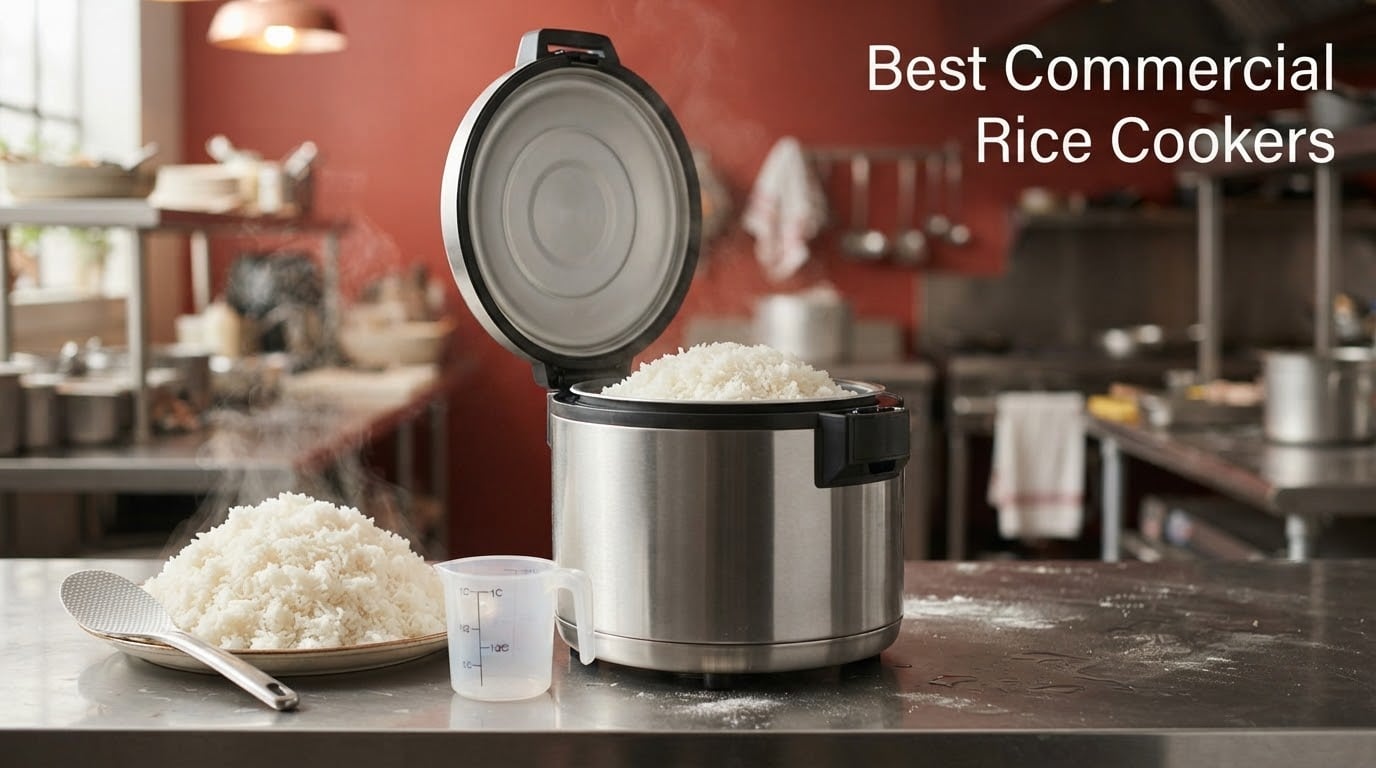
If you serve rice every service, the cooker is not an appliance, it is a line item that decides whether you run out at 7pm. A house unit scorches the bottom of the pot, dies in the keep-warm element after a year, and cannot pass a health-department inspection. That is why the best commercial rice cooker is a different category of machine entirely, and why we spent six weeks reading specs, service complaints and operator reports across ten of them before ranking this list.
Everything in this roundup runs on 120 volts except one propane-fired unit, carries a removable nonstick inner pot, and moves automatically from cooking to holding. Capacities run from 40 cooked cups on the compact end to 110 cooked cups on the gas end. Three of the ten carry documented NSF or CSA certification for commercial kitchens, which matters more to inspectors than any badge on the box.
We compared raw and cooked capacity, wattage, pot material, lid design, hold duration, warranty length and the volume of real-world service reports behind each unit. If you are outfitting a new line, our commercial deep fryer guide covers the other high-draw equipment on the same counter. If your kitchen is still residential rather than foodservice, start with our general rice cooker roundup instead.
Here is the short version. For most kitchens, the Aroma ARC-1033E is the safest all-round buy because it has the deepest review history in the category. The 64-cup Aroma handles bigger batches with a bonded nonstick pot. The CUCKOO CR-3032 is the one to buy if your inspector wants certification printed on the spec sheet.
Table of Contents
Top 3 Best Commercial Rice Cookers for 2026
Our three headline picks cover the three situations most kitchens fall into: a dependable mid-capacity electric unit, a high-volume electric unit with a premium pot, and a certified electric unit for inspection-sensitive kitchens.
Aroma ARC-1033E 60-Cup
- 30 cups raw to 60 cooked
- One-touch operation
- Automatic keep warm
- 1650W at 120V
Aroma 64-Cup Bonded Granite
- 32 cups raw to 64 cooked
- 3D heating
- Bonded Granite nonstick pot
- 1550W at 120V
CUCKOO CR-3032 60-Cup
- 30 cups raw to 60 cooked
- cETL and NSF certified
- Three-stage indicator lights
- 890W at 120V
Quick Overview: Every Model in This Roundup (September 2026)
All ten cookers below are electric except the Rinnai, which is propane. Capacities are listed the way dealers list them, and the raw column is the number that actually determines batch size.
| Product | Specifications | Action |
|---|---|---|
| Aroma ARC-1033E |
|
Check Latest Price |
| Aroma 64-Cup Bonded Granite |
|
Check Latest Price |
| CUCKOO CR-3032 |
|
Check Latest Price |
 Panasonic SR-GA541FH Panasonic SR-GA541FH |
|
Check Latest Price |
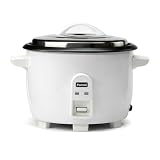 Pantin 20-Cup Compact Pantin 20-Cup Compact |
|
Check Latest Price |
 Wutfly 40-Cup Cooker and Warmer Wutfly 40-Cup Cooker and Warmer |
|
Check Latest Price |
 Winco 30-Cup Winco 30-Cup |
|
Check Latest Price |
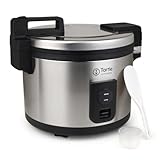 TK Tartle Kitchen 64-Cup TK Tartle Kitchen 64-Cup |
|
Check Latest Price |
 CAZACHEF 13.8 Qt CAZACHEF 13.8 Qt |
|
Check Latest Price |
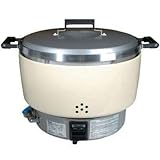 Rinnai RER-55ASN Rinnai RER-55ASN |
|
Check Latest Price |
1. Aroma ARC-1033E – Best Overall Commercial Rice Cooker
Aroma Housewares 60-Cup (Cooked) (30-Cup UNCOOKED) Commercial Rice Cooker (ARC-1033E),White
30 cups raw to 60 cooked
120V 1650W
17.5 lb, 15.4 x 18.5 x 13 inch
All-day insulated lid
Pros
- Deepest review history in the category at nearly 1500 ratings
- One-touch operation with no menu to learn
- Nonstick inner pot rated for heavy-duty commercial use
- Insulated stainless steel lid
- Includes two measuring cups and a paddle
Cons
- Water line markings inside the pot need calibrating
- Some owners report failure after about a year of daily service
- Plastic body with a stainless steel lid rather than an all-steel shell
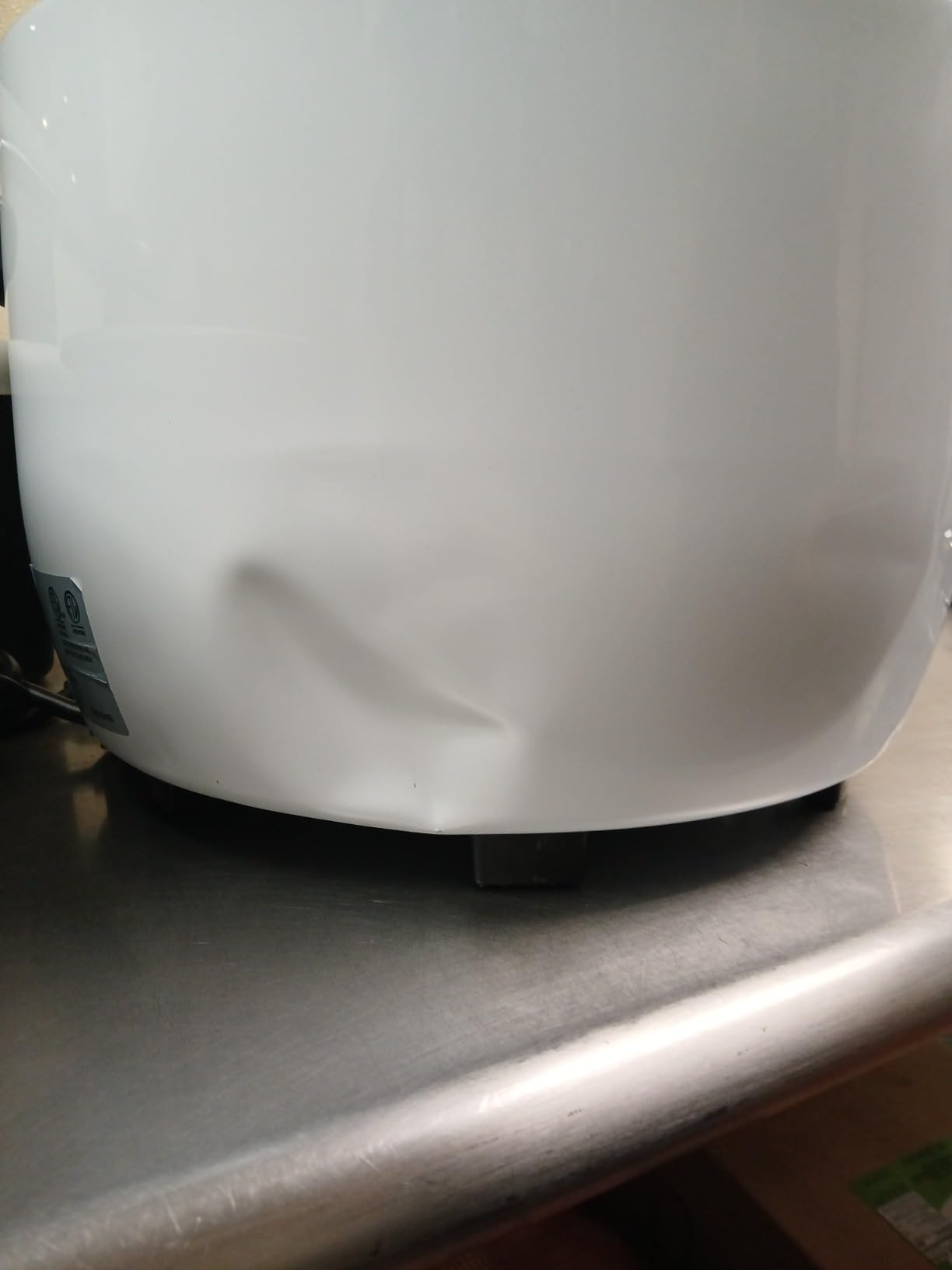
The ARC-1033E is the unit I recommend to a kitchen that wants one dependable cooker and does not want to think about it again. Thirty cups of raw rice yields sixty cooked cups in a single cycle, which covers a mid-size service without a second pot on the burner. At 1650 watts it runs on a standard 120-volt circuit, and at 17.5 pounds it moves from counter to counter with one hand.
What sold me is the review volume. Nearly 1500 ratings averaging 4.3 is an order of magnitude more evidence than most competitors in this category carry, and it comes overwhelmingly from people cooking in a commercial setting. Restaurant and catering operators report even cooking with no scorching through full batches, which is exactly the failure mode that pushes people off home-grade machines.
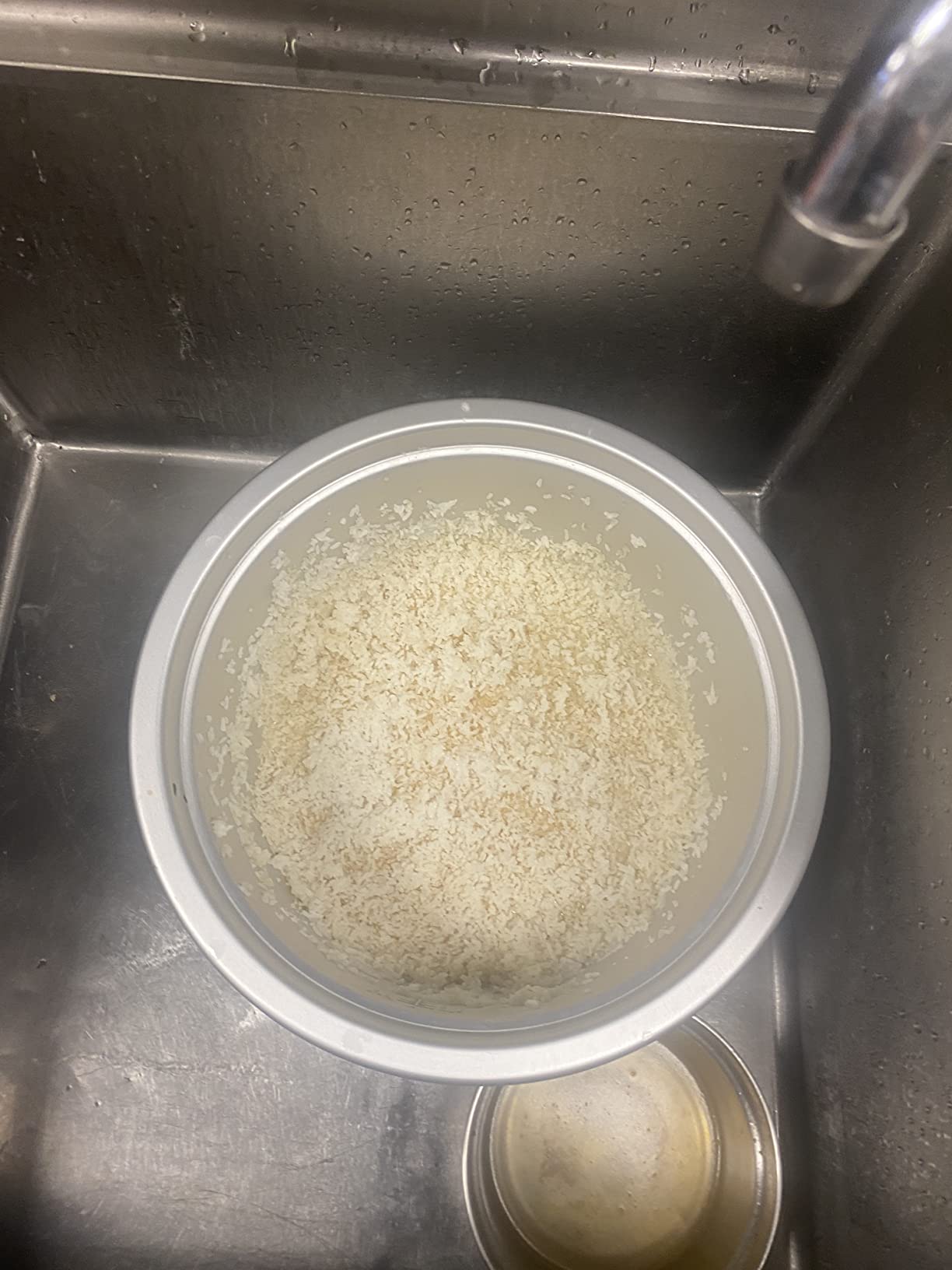
Operation is a single press. Fill the pot using the supplied cups, press the switch, and the cooker runs its cycle and drops into keep-warm on its own. There is no menu, no sensor to defeat, and no countdown to read. That simplicity is the feature that matters most when the person cooking is someone who started two weeks ago.
The two cautions worth knowing up front. First, the water-to-rice lines printed inside the pot are reported as imprecise, so expect to adjust the water on your first two or three batches until you land on the ratio your rice likes. Second, a minority of owners on this listing report the unit giving out after roughly a year of continuous daily service, which is the single most common reliability complaint across this entire category.
How it handles a full service
Sixty cooked cups is roughly the ceiling of what a normal American, Latin or Southeast Asian service actually consumes, and this cooker gets there in one cycle. The insulated stainless steel lid does real work here, because a lid that leaks steam dries the top layer and turns it into a shell that scoops out in chunks.
Because it switches to keep-warm automatically, you can start the batch during prep and walk away. That is the difference between a cooker that saves labour and one that adds a job.
Where it is the wrong buy
Choose something else if you need 90 cooked cups or more per batch, because you will be running back-to-back cycles instead of one. It is also the wrong pick for a kitchen with a health department that requires a printed NSF or ETL Sanitation listing, since the Aroma ARC-1033E does not carry one in its published specifications.
And if your service runs 8 to 12 hours with rice sitting out, look at the Winco 30-cup model further down, which publishes a hold figure and is built for foodservice duty. Otherwise this is the safest first commercial cooker we found.
2. Aroma 64-Cup Bonded Granite Cooker – Best Value Pick
AROMA Commercial Rice Cooker for Restaurant (64 Cups Cooked) and Automatic Commercial Rice Warmer with Bonded Granite® Pot
32 cups raw to 64 cooked, 16 quarts
120V 1550W
19 x 16.25 x 15.75 inch
Stainless steel body
Pros
- Ties for the largest raw batch of any electric model here
- 3D heating cooks evenly top to bottom
- 8X Bonded Granite scratch-resistant nonstick surface
- Upgraded hinge lid with cool-touch handle and condensation collector
- Removable inner lid and pot for end-of-shift cleanup
Cons
- Several buyers report failure within about a year of continuous daily service
- Some units arrived with cut power cords
- One reviewer advises cooking under full capacity for better expansion
This is the cooker I would put in a food truck or a high-volume Asian and Latin concept that needs a full pot per batch. Thirty-two raw cups gives sixty-four cooked cups, sixteen quarts by volume, which is the biggest raw load among the electric models here. Food-truck and festival operators report consistent results from it across long days of service.
The pot is the reason to stretch to this model over the cheaper one. The 8X Bonded Granite surface is a bonded nonstick layer rather than a conventional coating, and reviewers consistently describe it as scratch-resistant and fast to clean at the end of a shift. In a kitchen where a pot gets scraped with a paddle two hundred times a week, that difference shows up in month three.
The hinge lid is a genuine upgrade over the press-fit lids on budget models. It has a cool-touch handle, a spring-loaded release and a condensation collector, so steam redirects back into the pot instead of splattering across your counter when you open it mid-cook. The inner lid and the pot both lift out, which is the difference between a two-minute rinse and a real cleanup.
Three-dimensional heating is the other upgrade. Top, side and bottom heat together, and the feedback from operators is that batches come out evenly cooked with a fluffy texture rather than hot on the bottom and firm on top. It runs on 1550 watts at 120 volts, so the electrical requirements match the smaller Aroma.
What you gain over the ARC-1033E
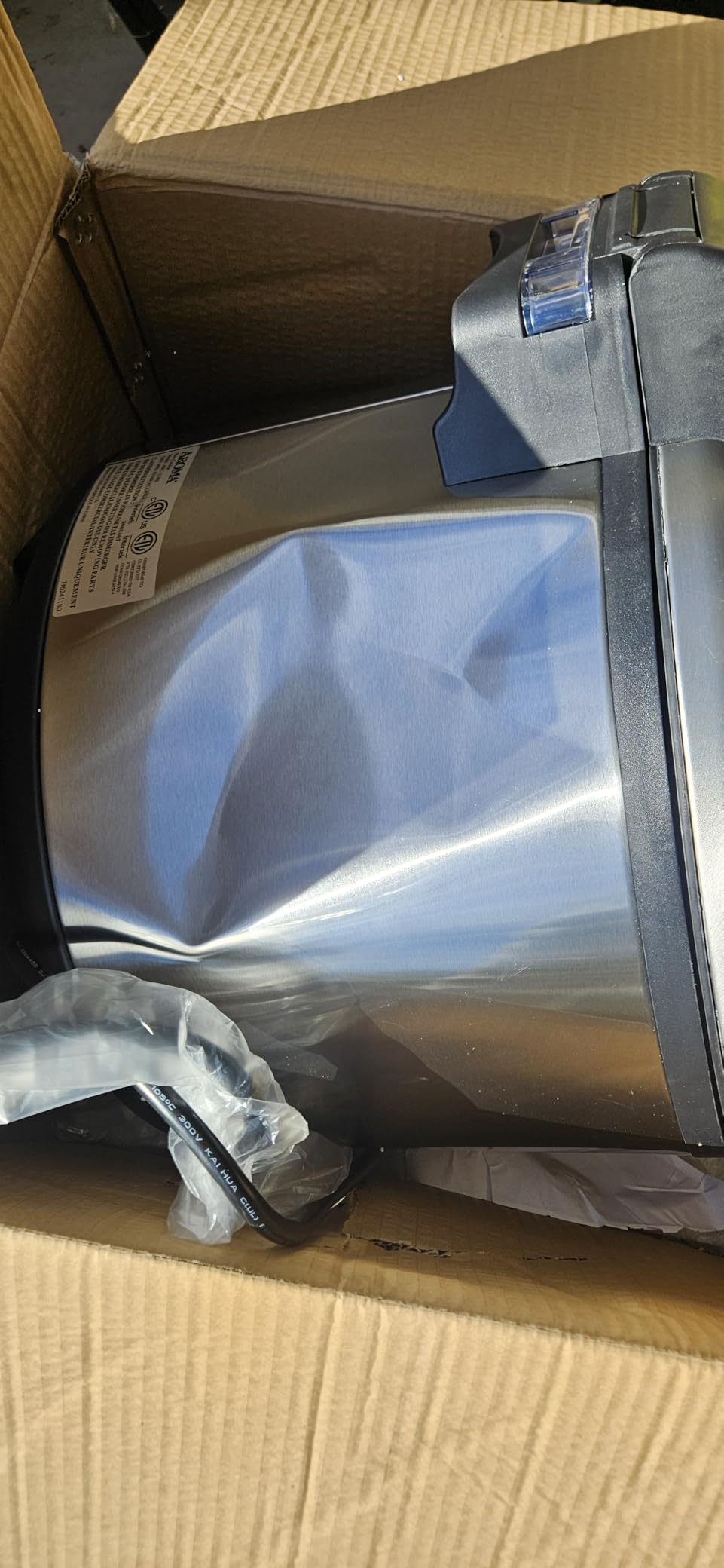
Four more cooked cups per cycle, a bonded pot instead of a coated one, a lid you can open one-handed without a towel, and a 900ml rice cup with printed water lines for measuring large batches. If your volume sits between 60 and 100 covers of rice, those four extra cups often remove a whole cycle from your service.
The measuring setup matters more than it sounds. A 180ml cup and a 900ml tumbler are both included, so staff can measure a half batch or a full batch without guessing.
Where it is the wrong buy
The longevity reports follow the same pattern as the rest of the Aroma line. Several buyers describe cycling through more than one unit within about a year of continuous daily use, and Aroma’s replacement support for cut cords is the reason some of them stayed with the brand.
One practical note from a reviewer: cooking slightly under full capacity produces better expansion, because thirty-two raw cups do not hydrate as evenly as twenty-four. And if you need a printed certification, this model does not publish one either.
3. CUCKOO CR-3032 – Best Certified Electric Cooker
CUCKOO Commercial Rice Cooker and Warmer, 60-Cup Cooked, CR-3032
30 cups raw to 60 cooked
120V 890W
10 kg, 18 x 10 x 18 inch
cETL and NSF certified
Pros
- cETL and NSF certification for commercial kitchens
- Third indicator light separates cooking
- steaming and warming
- Made in Korea
- 890W draw is the lowest of the large electric models here
Cons
- Power switch has no true off position so the unit must be unplugged
- Some units reported failing to hold keep-warm under very heavy daily use
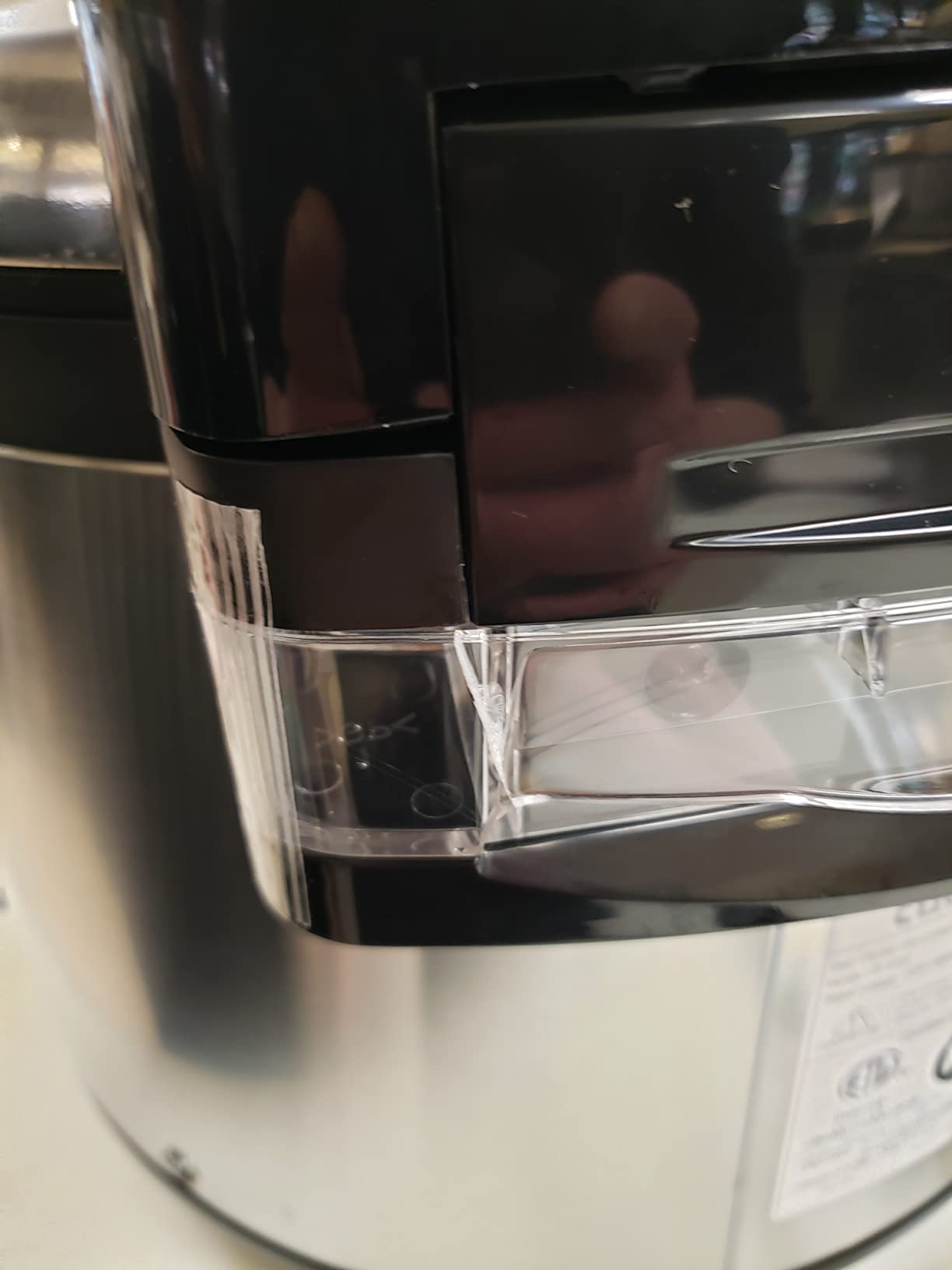
- Occasional units arrive with cosmetic damage or dust inside the pot
If your health inspector asks for certification, the CR-3032 is the straightforward answer. It is the only model in this roundup that publishes both cETL and NSF on its specification sheet, and it is made in Korea, which regulars across the industry treat as a meaningful quality signal in this category.
Thirty raw cups to sixty cooked is the same output as the Aroma ARC-1033E, but the machine behaves differently. At 890 watts it draws about half what the heaviest models here pull, which makes it easier to run alongside other equipment on a shared 120-volt circuit, and it weighs 10 kilograms with a footprint that suits a tight line.
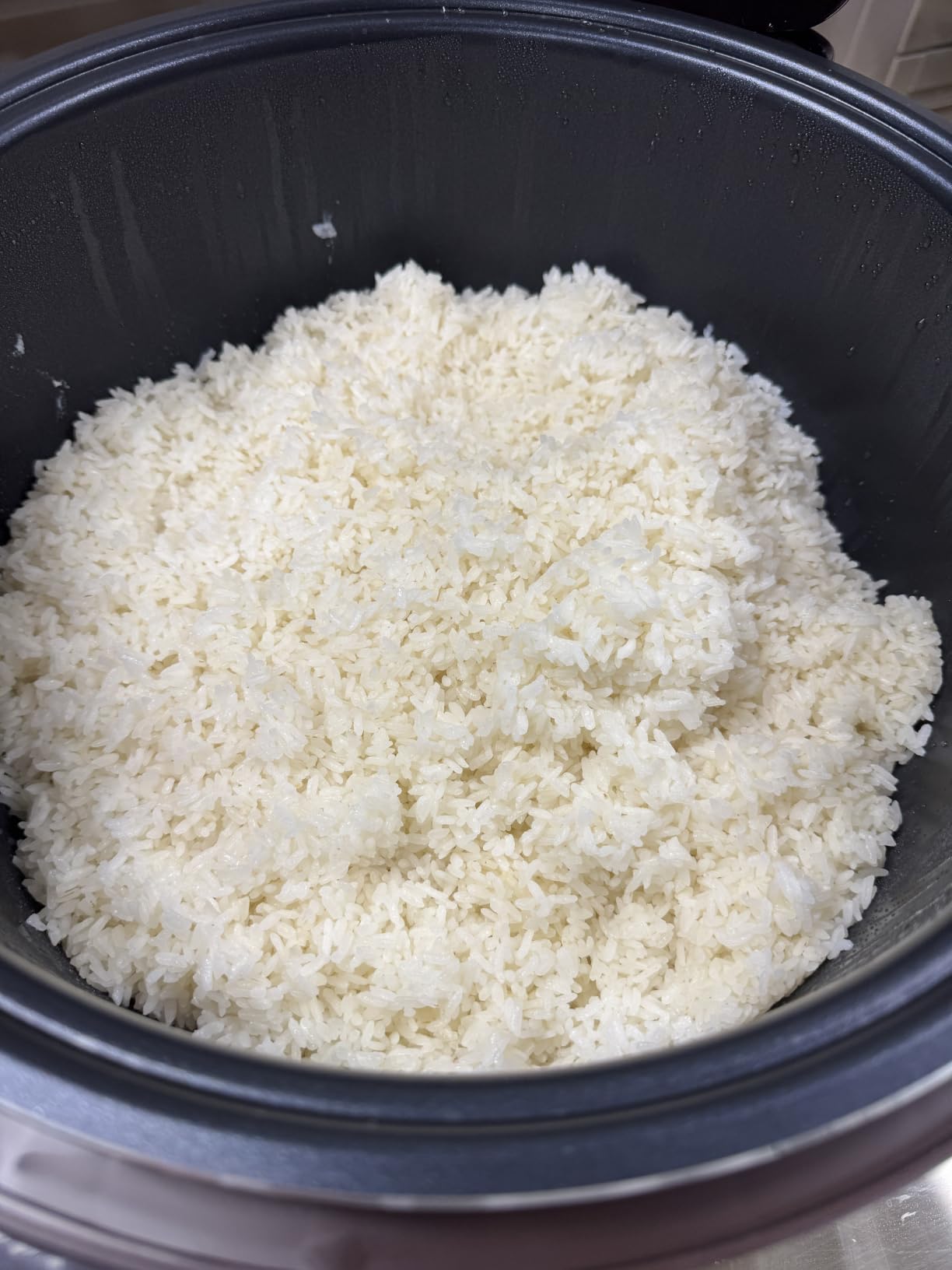
What operators consistently praise is consistency. Reviews describe the same soft, well-separated batch coming out cycle after cycle across jasmine, basmati and sushi rice, and buyers who also own premium Japanese-made units tend to land on the Cuckoo for value and capacity rather than for bells and whistles.
The three-stage indicator system is a small design decision that pays off in a busy kitchen. Separate lights for cooking, steaming and warming mean a line cook can tell from across the pass whether the batch is still cooking or has moved to holding, without opening the lid and losing heat.
Why certification is the deciding factor
NSF and ETL Sanitation listings exist because health departments ask for them. A unit with a published certification is one fewer objection during an inspection, and for many operators that is worth more than a better lid. CUCKOO publishes both, which no other electric model in this list does.
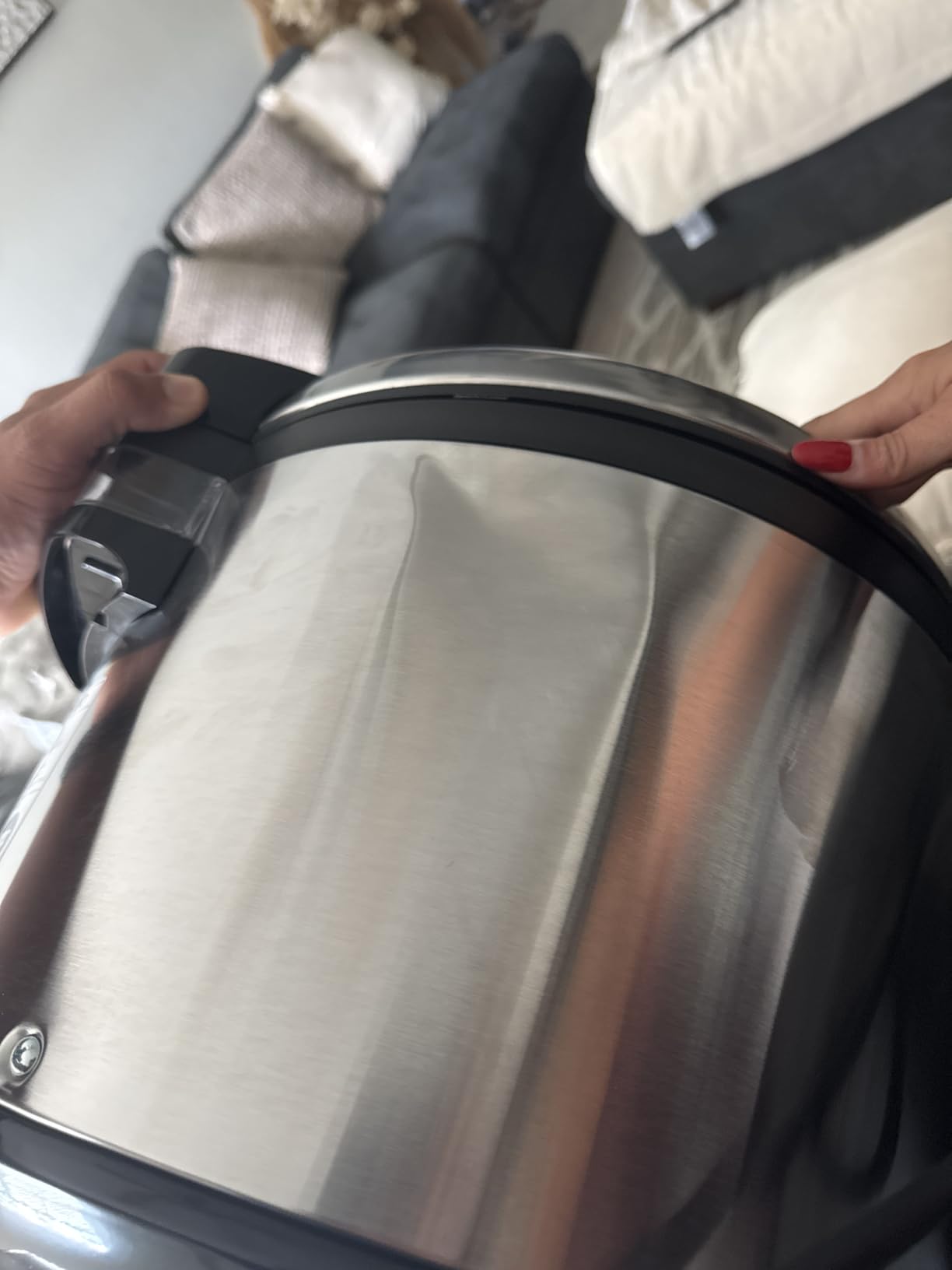
For sushi bars and Asian kitchens specifically, this is the pick. The pot has a silicone cooking pad underneath rather than direct contact with the heating element, and both the pad and the pot lift out for cleaning.
Where it is the wrong buy
The switch has no true off position, so shutting the machine down means unplugging it. That is an inconvenience at the end of a service and it removes the option of using a timer switch to cut power overnight.
A few owners also report units struggling to hold keep-warm under very heavy repeated daily use, and occasional units arriving with cosmetic damage or dust inside the pot. If your service runs 10 hours or more, the Winco 30-cup model publishes a longer hold figure and is built for the same load.
4. Panasonic SR-GA541FH – Best NSF-Approved Workhorse
Panasonic Commercial Electric Rice Cooker, 120V Extra-Large Capacity 60-Cup (Cooked), 30-Cup (Uncooked) with One-Touch Operation – SR-GA541FH – Silver
30 cups raw to 60 cooked, 94 three-ounce servings
120V 1800W
22 lb, 14.8 x 16.9 x 14.2 inch
NSF approved for commercial use
Pros
- NSF approved and built for high-volume food service
- Simplest 1 to 1 water-to-rice ratio in the group
- Users running four batches a day report long service life
- Multi-cook function handles quinoa and oatmeal
Cons
- Slow cook times relative to smaller domestic cookers with some reports near 2 hours per pot
- Keep-warm mode does not hold rice as hot as expected
- A few reports of units failing after a couple of months
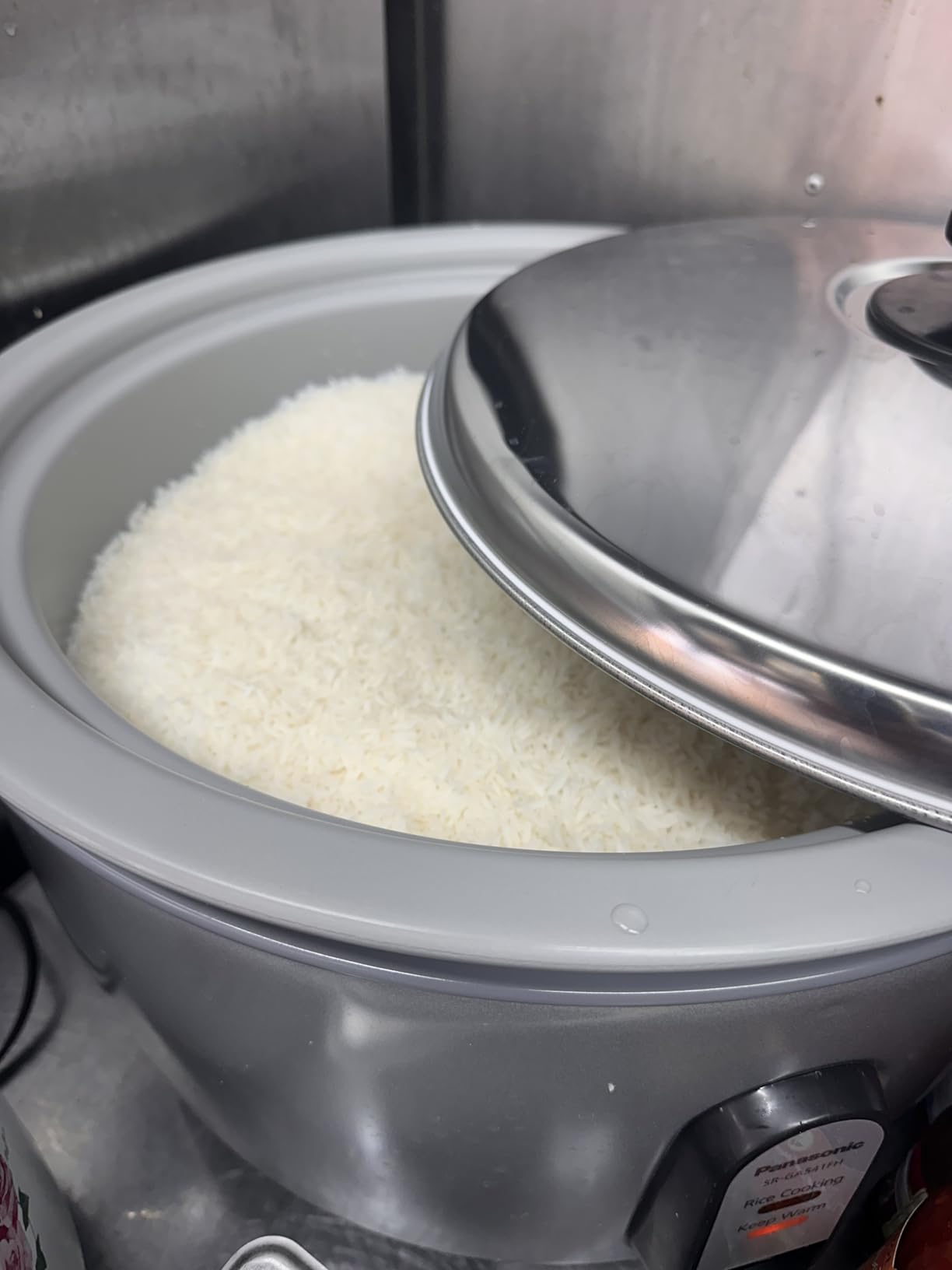
The SR-GA541FH is the unit owners describe as the longest-lasting commercial cooker they have owned. Operators running four batches a day, six days a week, report service life that stands well apart from the rest of this list, and several of them call it the only commercial rice cooker they have not had to replace.
It is NSF approved for commercial use, carries a double safety thermal fuse, and draws 1800 watts at 120 volts, which is the highest electrical demand of any electric model here. Plan for it on its own circuit rather than sharing.
The water ratio is the quiet star. This machine runs a simple one-to-one water-to-rice ratio, which eliminates the single most common source of cooking error in a commercial kitchen, the intern guessing how much water to add. Combined with clearly marked water lines, it is the fastest model here to hand to a new line cook.
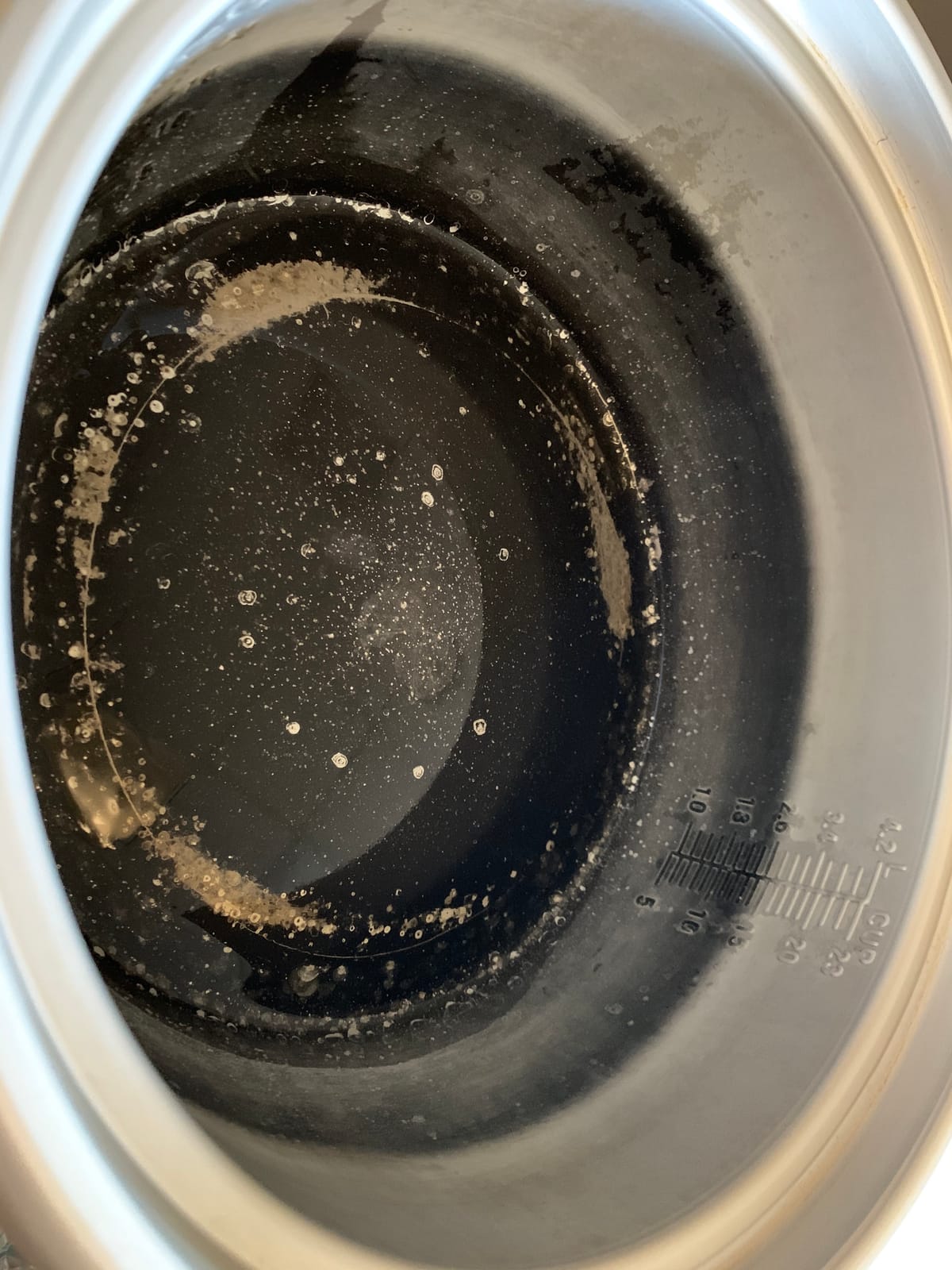
Grain quality is strong, particularly for Thai jasmine, and the inner pan carries a non-stick coating described as fluoride Teflon for scratch resistance. The stainless steel lid wipes clean. It also multi-cooks, so quinoa and oatmeal go through the same machine on a slow morning.
Where durability pays for the extra power draw
The 1800-watt element is what gets water to a boil fast enough to sustain repeated back-to-back cycles without the pot cooling down between them. That is the mechanical reason the four-batches-a-day operators report longer service life: fewer cold starts on the heating plate.
At 22 pounds this is a two-hand carry and wants a permanent counter spot, not a rolling cart. Plan the location before you buy.
Where it is the wrong buy
Cook times are slow relative to smaller domestic cookers, with some users reporting close to two hours for a full pot. If your service window is tight and you want a batch ready in 30 minutes, the Wutfly or CAZACHEF models cook faster.
Keep-warm also runs cooler than buyers expect, and a few units have failed after a couple of months. If hot holding is the primary job rather than cooking, pair this with a dedicated holding unit instead of relying on the built-in warm mode.
5. Pantin 20-Cup Compact Cooker – Best for Small Kitchens
Pantin Commercial Electric Rice Cooker – 20 Cups Raw / 40 Cups Cooked Capacity w/Measuring Cup & Scoop – High-Efficiency Large Rice Cooker Commercial Rice Cooker for Restaurants, Hotels and Catering
20 cups raw to 40 cooked
120V 1300W
13.5 x 13.5 x 11 inch
Aluminum insert with stainless steel lid
Pros
- Smallest footprint here at 13.5 inches square
- Cool-to-the-touch side handles make it genuinely portable
- Automatic keep-warm after the cooking cycle
- Nonstick insert simplifies daily cleanup
Cons
- Weakest review profile in the group at 4.1 with a 16 percent one-star share
- Aluminum insert is less durable than bonded nonstick commercial pots
- Residue builds on the heating plate and needs sanding to maintain pot contact
Twenty raw cups to forty cooked in a body that measures 13.5 inches square is the reason to buy this one, and it is the lowest-rated unit in the roundup. If your counter space is the binding constraint rather than your volume, this is the only model here that fits under a low shelf or on a narrow prep line without stealing floor space.
The side handles are cool to the touch after cooking, which sounds minor until you have tried to move a full cooker across a line with a towel. It is genuinely portable, and at 1300 watts it stays within a normal 120-volt kitchen circuit.
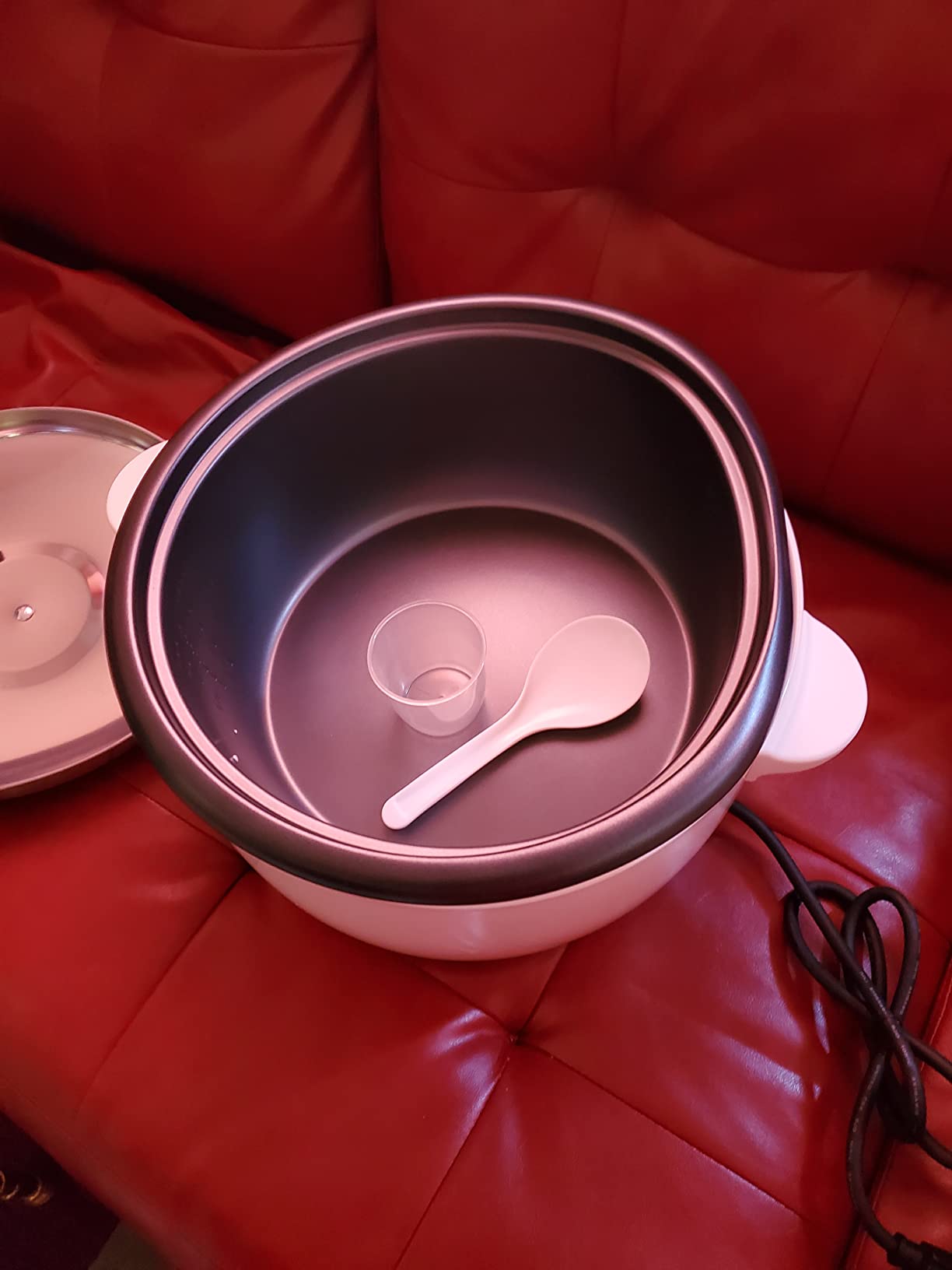
Operation matches the larger Aromas in spirit: fill, press, and let it drop into keep-warm on its own. A ready indicator light and a steam vent sit on the control panel, the bowl and lid holder both lift out, and the aluminum insert is nonstick for fast cleanup.
It is built for hotels, small restaurants and catering runs that top up rice in smaller quantities rather than doing one enormous batch. Forty cooked cups covers a modest service comfortably.
When compact beats capable
Space is the honest reason to pick this. Every other model here is at least 14 inches wide and several are 18 inches square, and on a crowded line that difference is the difference between a working cooktop and a crowded one.
Portability is the second reason. Buffet lines, banquet rooms and pop-up catering all benefit from a cooker you can carry with two hands instead of wheeling.
Where it is the wrong buy
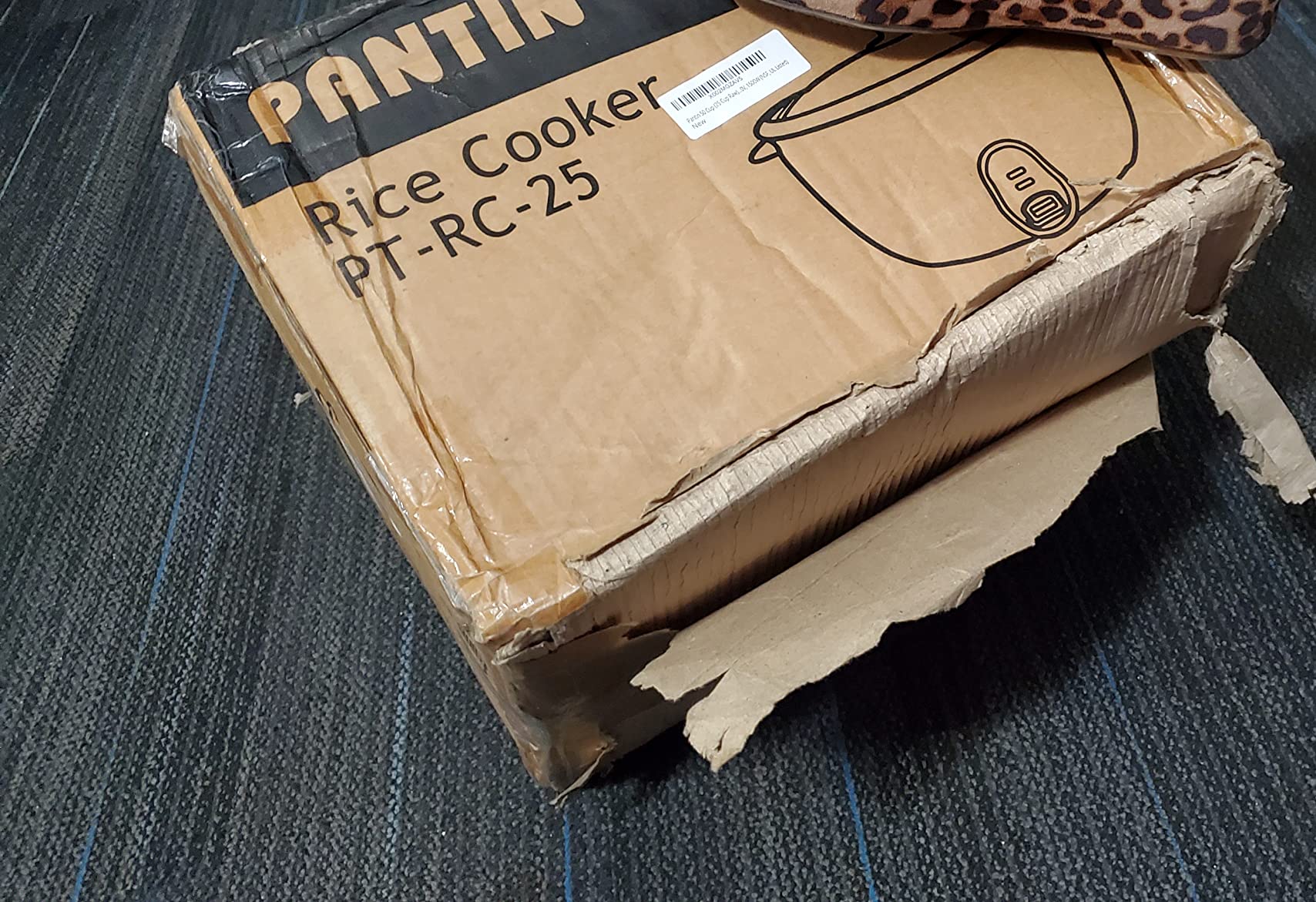
This model carries the lowest average rating of the ten at 4.1, and one-star reviews make up a meaningful share of the total. Owners frequently cite the aluminum insert, which is a plain nonstick coating on an aluminum body rather than a bonded commercial surface.
The heating plate is the other recurring issue. Residue builds underneath the pot and has to be sanded down to keep the pot sitting flat against it, which is extra labor and a reason the pot stops cooking evenly. If you cook rice daily rather than three times a week, spend the difference on a bonded pot.
6. Wutfly 40-Cup Cooker and Warmer – Best Budget Combo
Wutfly 40 Cups Commercial Rice Cooker/Warmer
40 cups cooked, 240 oz
120V 1250W
15.5 x 13.5 x 11.3 inch
Stainless steel body
Pros
- Cooks up to 40 cups in 40 minutes or less
- Automatic switch from cooking to warming
- Two sturdy handles for buffet and sushi-counter transport
- Stainless steel body is easy to wipe down
Cons
- No audible or visual signal when cooking finishes so the unit must be attended
- Instructions are thin which reinforces the need to watch it
- One buyer reported a dented body and another reported heating failure after roughly 20 uses
The Wutfly does one thing well: it puts forty cups of cooked rice on the counter quickly and then holds it. Reviews describe it as fast for its size class, and the stainless steel body wipes down in a way that plastic bodies never do in a kitchen that gets hosed at the end of a shift.
It switches automatically from cooking to warming, the aluminum inner pot lifts out, and the two handles make it easy to carry to a sushi counter or a buffet line. At 1250 watts it is among the gentlest draws in this roundup.
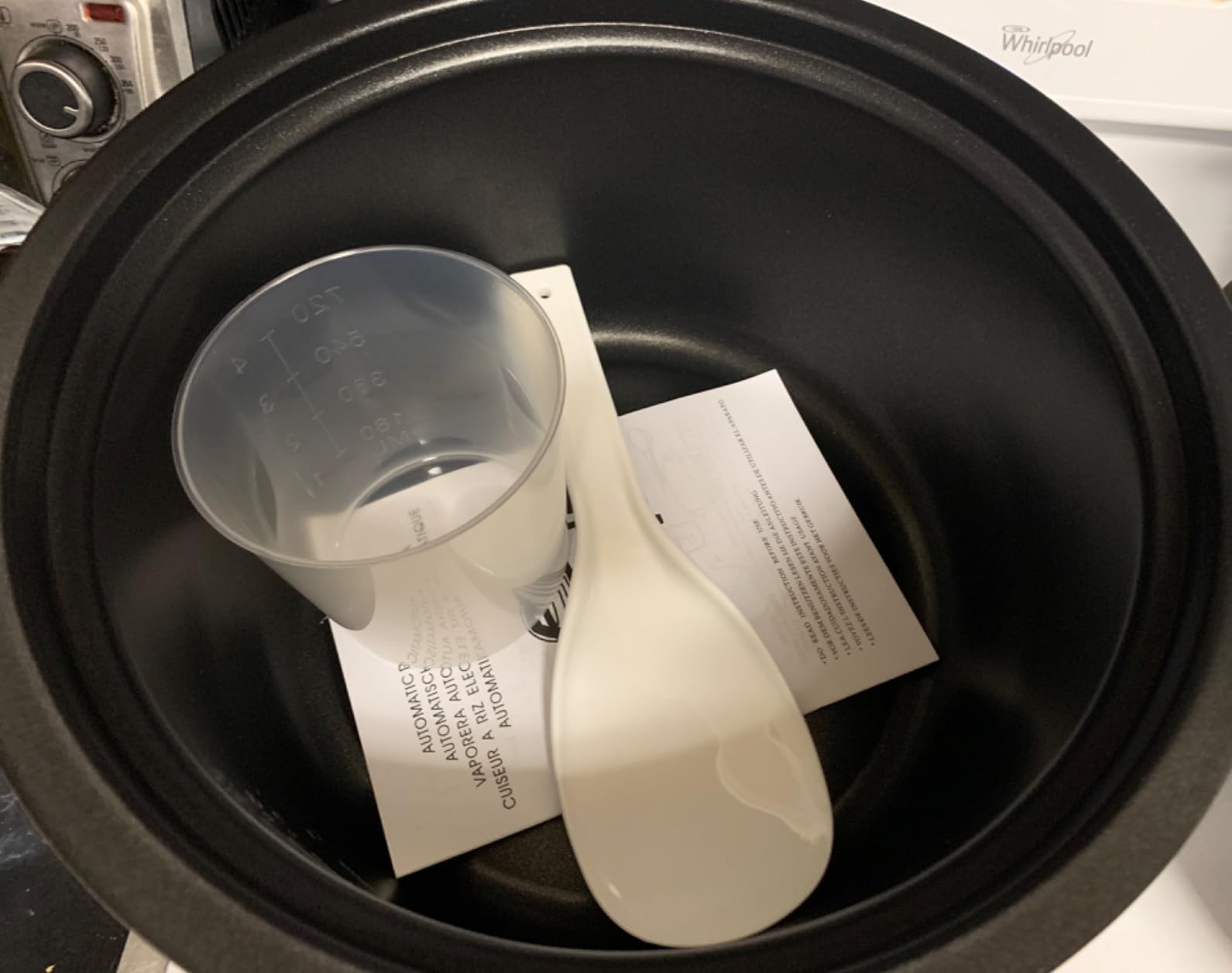
This is the model I would point a bistros, small sushi counters and office catering operations toward. Forty cups covers a modest service, and it is the least expensive route to a full stainless steel body in this roundup.
One thing to be honest about: the capacity figure here is stated as forty cups, or 240 ounces, without splitting raw from cooked. Treat it as a cooked figure and measure your first batch to confirm expansion before you plan around it.
The attended-cook trade-off
This unit has no audible or visual signal when the cooking cycle finishes, and the instructions are thin enough that the cook has to stay with it. In practice that means someone standing near the cooker for the last stretch of every batch.
That is fine in a small kitchen with a sushi counter where the person cooking is also the person serving. It is a genuine problem in a busy line where the cook is the wrong person to chain to a machine.
Where it is the wrong buy
A small number of reviews report early heating failure, including one unit that stopped heating after roughly 20 uses and another that stopped shortly after the return window closed. Treat the warranty period as the real service life of this model rather than planning around a five-year horizon.
One buyer also received a unit with a dented body, which is a good reminder that bulky commercial equipment should be inspected on arrival. If your volume runs above 60 cooked cups per service, this is too small and the compromises above stop mattering.
7. Winco 30-Cup Cooker and Warmer – Best for Long Holding
Winco 30 Cup Commercial-Grade Electric Rice Cooker, s
30 cups raw to 60 cooked
120V 1550W
15 lb, 17.9 x 15 x 17.9 inch
1 year manufacturer warranty
Pros
- Publishes a hold figure of up to 6 hours at serving temperature
- 77 percent of ratings are five stars
- Stainless steel commercial-grade build
- Removable nonstick inner pot that seals in moisture
Cons
- Small review base of 98 means thinner long-term durability evidence
- Included accessories are minimal with no lid or extras
- Cool-touch exterior despite the tall body
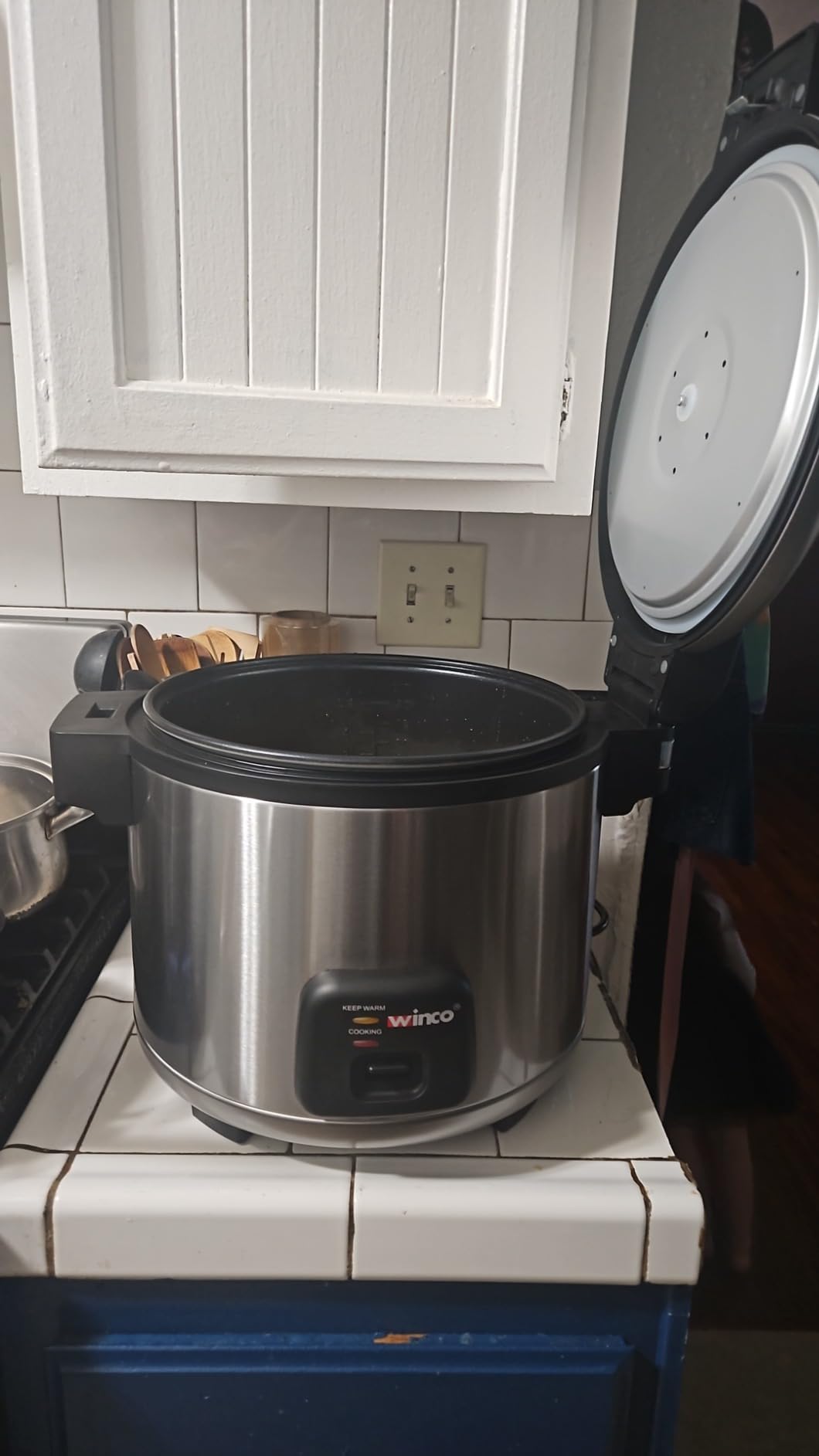
Winco builds commercial equipment for foodservice, and this 30-cup model is the one in this roundup that behaves like it. The published warming specification is the key number: the warming function is rated to hold rice at serving temperature for up to six hours, which is the longest hold figure any manufacturer states here.
That number matters if your service is long, if you run a lunch and a dinner on the same batch, or if you cook in the morning for an evening catering job. Six hours of holding is the difference between cooking twice and cooking once.
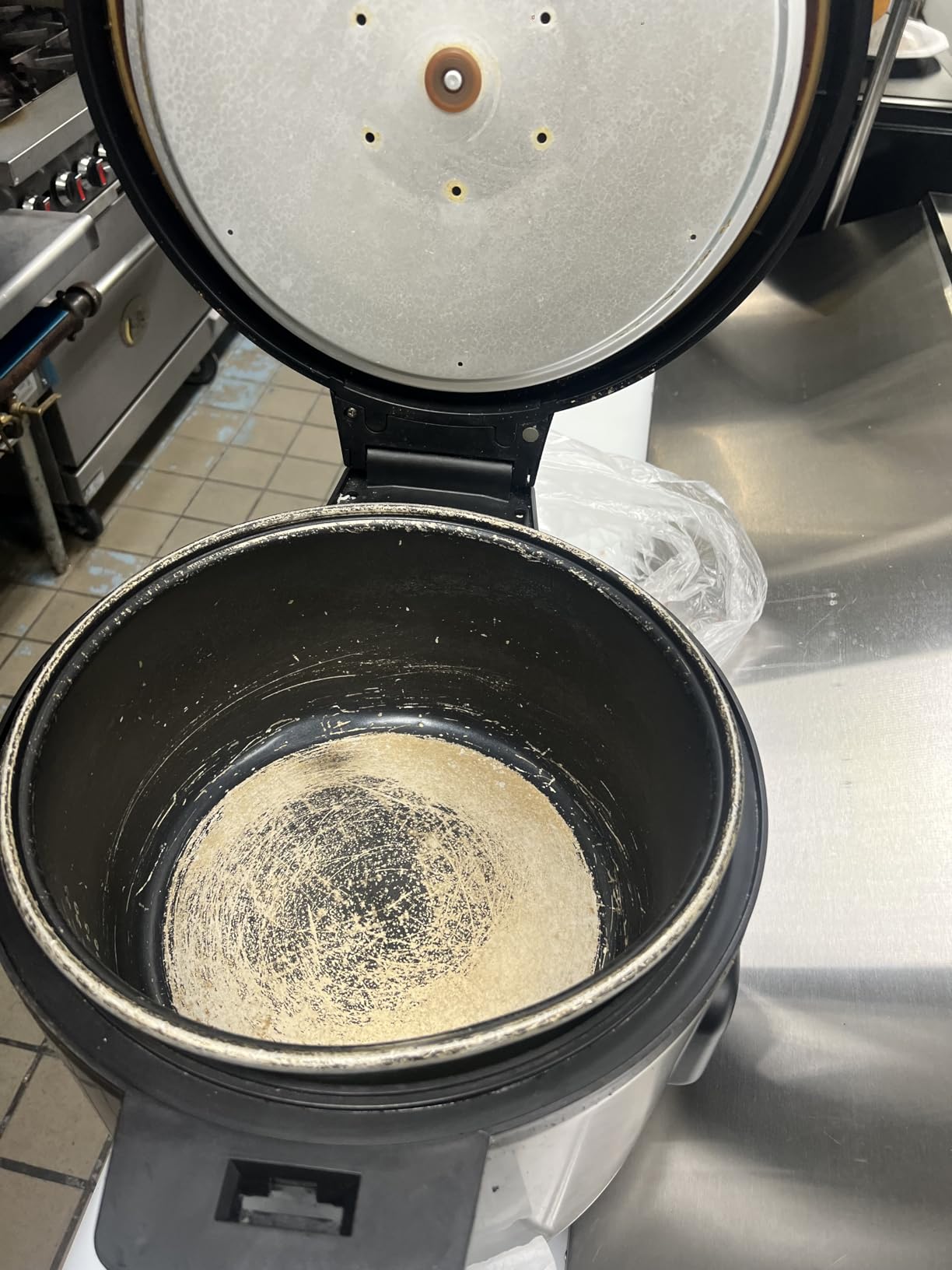
The build is a full stainless steel body at 15 pounds, with a cool-touch exterior and a removable nonstick inner pot that seals in moisture. It is a two-function machine, cooking and warming, with no porridge program and no delay timer, which is not a shortcoming in a kitchen that just wants rice held properly.
Buyers cite solid construction and easy cleaning, and the 4.5 average comes with 77 percent of ratings at five stars. It carries a 1-year manufacturer warranty against defects in workmanship, which is the category norm and about as much as any model here offers.
Why we rate Winco for holding rather than cooking
This is not the fastest cooker here. Nothing in the specifications suggests it competes with the 64-cup Aroma on cook speed, and reviewers do not claim it does. Where it separates is the length of time the finished batch stays at serving temperature without drying out or needing a second pot.
For a hotel, a banquet hall or a long-service restaurant, that is the metric that determines whether you have enough rice at 9pm. For a kitchen doing short services, cook speed matters more and the Aroma models are the better answer.
Where it is the wrong buy
Ninety-eight reviews is a thin base for a durability claim, and the honest caveat is that we have less long-term evidence for this unit than for the models with a thousand-plus ratings. A high rating on a small sample tells you the people who own it like it, not that it will last five years.
The accessory bundle is also minimal, a measuring cup and a serving paddle, and there is no separate lid in the box. If you plan to buy a holding cabinet anyway, this may not be the machine you need.
8. TK Tartle Kitchen 64-Cup – Best for Full-Pot Batch Cooking
TK Commercial Rice Cooker 64 Cup – Large Capacity Nonstick Pot – Auto Warm
15 liters, 32 cups raw to 60 cooked
115V 1725W
19.9 lb, 18.5 x 18.5 x 16.9 inch
365 day manufacturer warranty
Pros
- Full 32-cup raw batch ready in about 45 minutes
- Advanced three-dimensional heating cooks evenly
- Stainless steel exterior and hinged lid feel sturdier than cheaper units
- Nonstick pot with water measuring lines
- 365 day manufacturer warranty
Cons
- One buyer reports the unit dying within six months of daily use
- Heavy at nearly 20 pounds so it is hard to move around a kitchen
- Only 88 reviews so long-term reliability data is limited
This is the model small businesses in this roundup repeatedly use as an upgrade after burning through a cheaper unit. The feedback pattern is consistent: owners replace an inexpensive cooker that scorched rice, move to this one, and find the three-dimensional heating system cooks an even, fluffy batch across the whole pot.
Thirty-two cups of raw rice is a full batch, and the manufacturer rates it ready in about 45 minutes. The pot is nonstick with water measuring lines printed inside, and a large plastic measuring cup and rice scoop are included.
The stainless steel exterior and hinged lid are the parts you feel first. At nearly 20 pounds and 18.5 inches square, this is a fixed-installation machine rather than something you carry to a buffet, and the warranty runs 365 days from purchase.
What a full batch actually gets you
Sixty cooked cups from a single pot is the practical ceiling for most mid-to-large services, and this cooker reaches it in under an hour. That timing is what makes a two-cycle service plan workable: start the first pot at the beginning of prep and the second before doors open.
The 3D heating system is the reason even cooking is achievable at full load, since the top and sides are heated along with the base rather than relying on conduction alone.
Where it is the wrong buy
One buyer reports the unit failing within six months of daily use despite the 1-year warranty, which is a reminder to keep your receipt and to know your dealer’s service policy before you buy. Eighty-eight reviews is not enough data to call the failure rate either high or low.
It also runs on 115 volts, which is unusual in this category. Most North American kitchens are wired at 120, and the difference is small, but check the plate before you commit.
9. CAZACHEF 13.8 Qt – Best for Sushi and Asian Service
CAZACHEF 13.8 QT Large Commercial rice cooker 65 cups cooked 32 cups uncooked rice Commercial Electiric Rice Warmer for 18-28 people, with One-Touch Operation
13.8 qt, 32 cups raw to 65 cooked
120V 1350W
18 x 18 x 19 inch
Red body, up to 12 hours keep warm
Pros
- Carries the highest average rating in the roundup
- 13.8 quart capacity serving 18 to 28 people in one batch
- Urethane foam insulation rated for up to 12 hours of keep warm
- Clear water measurement markings inside the pot speed up staff training
- Unusually complete accessory bundle with two cups
- two utensils and a nonstick mat
Cons
- Large 18 x 18 x 19 inch footprint takes significant counter space
- One buyer reports the unit stopped heating after two months
- Only 68 reviews limiting long-term reliability data
The CAZACHEF carries the highest average rating in this roundup at 4.6, with 86 percent of ratings at five stars, and the capacity is the biggest of the electric batch cookers here at thirty-two raw cups to sixty-five cooked. The stated serving range is eighteen to twenty-eight people per batch.
It is the model sushi bars and Asian fast-food operations keep coming back to, and the urethane foam insulation is the reason. That insulation is rated for up to twelve hours of keep-warm, by far the longest published hold figure in this roundup, and it is what makes the machine viable for a slow-moving lunch service or an all-day counter.
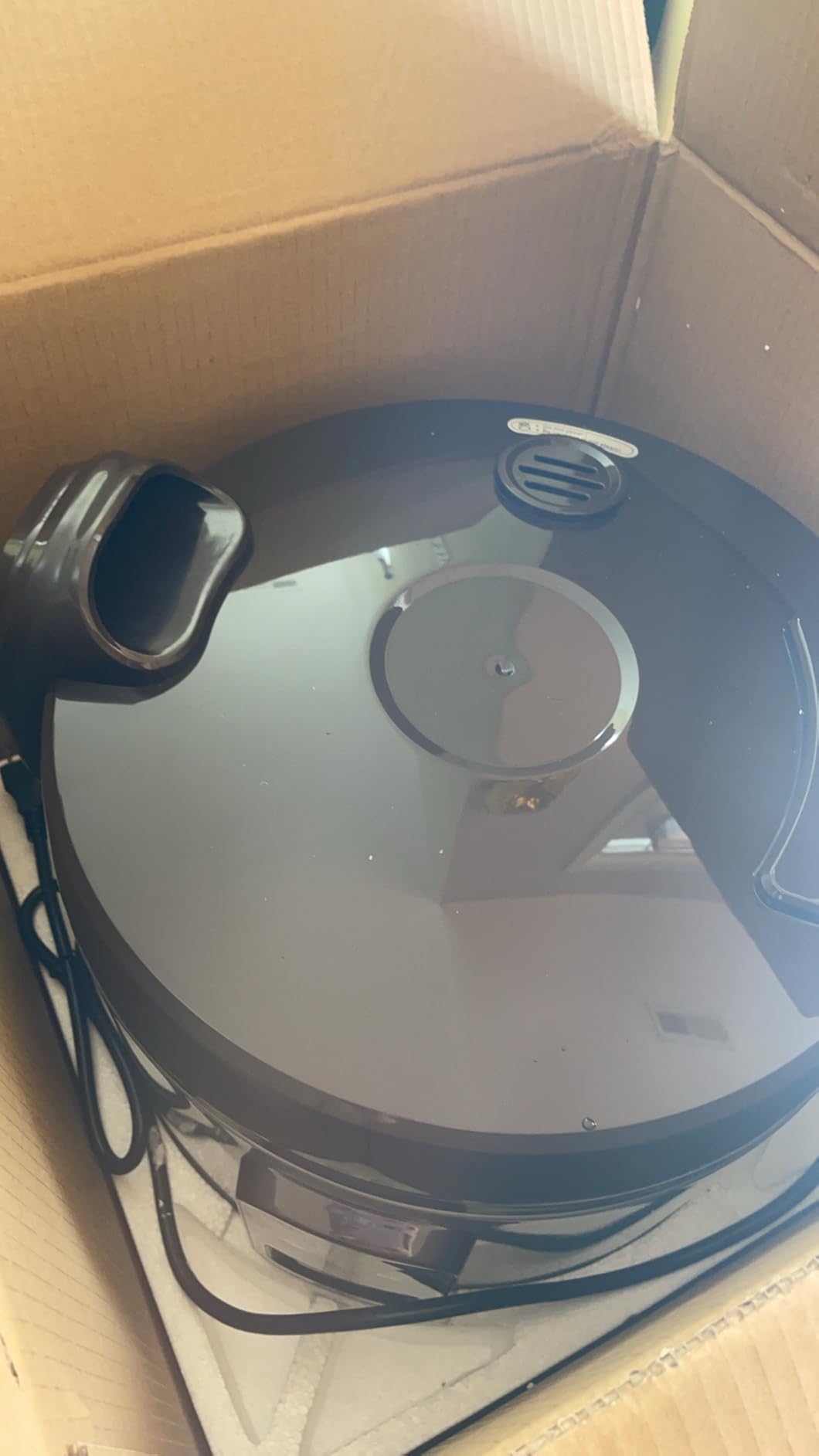
Heating comes from 1350 watts of fire-surround elements with wires along the top, bottom and sides, plus boil-dry protection. One-touch operation handles the rest, and the cooker switches itself into keep-warm when the cycle ends.
Two details will save you training time. The inner pot is deep with clear water measurement markings printed inside, so a new line cook can measure without a chart. And the accessory bundle is unusually complete, with a nonstick mat, small and large measuring cups, a small paddle and a large spatula, all dishwasher safe.
What the twelve-hour hold really means
That figure is an insulation rating, not a food safety allowance. What it tells you is that the cabinet will hold heat for twelve hours, and in practice that means the last portion out of a long service is closer in temperature to the first than it would be in a thin-walled unit.
It still does not change how rice should be handled between service and service. Cooked rice that sits at room temperature for hours belongs in the bin, no matter how good the machine holding it is.
Where it is the wrong buy
The footprint is 18 inches square by 19 inches tall, the largest electric body here, and that is real counter space in a small kitchen. If you are tight, the Pantin or the Aroma ARC-1033E give you similar output in less room.
One buyer reports the unit showing a cooking light but staying in warm mode and never heating after about two months. With 68 reviews there is not enough data to call a failure rate, so treat the warranty period as the real horizon and buy from a dealer with a straightforward return policy.
10. Rinnai RER-55ASN – Best High-Volume Gas Cooker
Rinnai 55 Cups Natural Gas Rice Cooker RER-55ASN
55 cups raw to 110 cooked
Propane gas at 9600 BTU
42 lb, 24 x 24 x 18 inch
CSA and NSF certified
Pros
- Only cooker here with 110 cooked cups of capacity
- Propane heat removes any dependence on electrical circuits
- CSA and NSF certified for commercial food service
- Removable bowl for cleaning
Cons
- Requires a propane hookup that most electric kitchens do not have
- Only 41 reviews so owner feedback on durability is limited
- 42 pounds and a 24 inch footprint need a permanent station
The Rinnai RER-55ASN is the only gas-fired cooker in this roundup and the only one that reaches 110 cooked cups. Fifty-five cups of raw rice yields 110 cooked, and it does that on propane at a 9600 BTU input with no electric heating element at all.
That independence from the electrical circuit is the real argument for gas. A kitchen that has exhausted its 120-volt capacity, or a food truck that does not want to run a heavy load, can cook rice without adding a dedicated line. The electrical requirement is trivial by comparison, 120 volts AC at 23 watts on a 3-amp fuse, enough for the controls and nothing more.
It is also certified twice, with both CSA and NSF listings, which is what you want for a unit handling this volume.
When gas is the right answer
Extreme-volume Asian and Mexican concepts are the classic case. When one service consumes more than sixty cooked cups, an electric batch cooker forces you into a second cycle with a second pot, a second operator and a second set of cleanup, and gas removes that constraint.
It also holds heat differently. A gas unit is a burner under a heavy pot, so it responds to volume without a sensor cycle, and there is no keep-warm element to burn out. The trade-off is installation: it needs a propane supply and a dedicated 24-inch station.
Where it is the wrong buy
Unless you genuinely need 100-plus cooked cups per batch, this is over-specified for most kitchens. A restaurant doing 80 covers of rice a night does not need 110 cups of capacity, and the same money buys two electric cookers with a spare.
At 42 pounds and 24 inches square it is a fixed station, not portable equipment, and with 41 reviews averaging 4.4 there is very little owner history on long-term durability. The removable bowl makes cleaning straightforward, but everything above the bowl is a service item.
How to Size a Commercial Rice Cooker for Your Service
The number one spec confusion in this category is raw versus cooked. Dealers list both, sometimes only one, and sometimes a volume in quarts. Start from the cooked figure, because that is what reaches your pass, and work backward to raw.
The reliable rule is roughly two to one. Thirty cups of raw rice yields about sixty cups cooked across every model in this roundup, whether the manufacturer states 60, 64 or 65. The CUCKOO and Panasonic listings make the relationship explicit, with the Panasonic publishing 30 uncooked cups alongside 94 three-ounce servings.
From cooked cups, convert to covers. A serving of rice alongside an entrée is about one cup cooked, so sixty cooked cups covers roughly sixty covers of a rice-forward entrée, or double that if rice is a side rather than the centerpiece. For a sushi bar, one person eats far less than a cup, so a 60-cup pot serves a much larger headcount.
Then add a second pot before you think you need one. Sixty cooked cups is a comfortable fit for a service, but not a buffer. If your average service lands within 15 cups of your pot capacity, you will cook twice, and the second cycle lands during the rush.
Wutfly states 40 cups without splitting raw from cooked, so measure your first batch before you plan around that figure. And note the difference between the industry-standard 6-ounce rice cup and the larger measuring cups that ship with some of these machines, the CUCKOO and the 64-cup Aroma both include a 900ml tumbler, which is not interchangeable with the standard cup.
Electric vs Gas: Which One Fits Your Kitchen
Electric wins on control and installation. Every electric model here plugs into 120 volts with a cord, needs no gas line, and cooks with a sensor or a timed cycle that stops the moment the pot is dry. Nine of the ten models in this roundup are electric, and that is not an accident.
Gas wins on volume and independence. The Rinnai reaches 110 cooked cups and requires only 23 watts of electricity for its controls, which means a kitchen that has run out of circuit capacity does not have to rewire to add rice capacity.
Watch the wattage. Panasonic at 1800 watts and Aroma at 1650 and 1550 watts are heavy loads. On a 20-amp 120-volt circuit, 1800 watts is 15 amps before anything else is plugged in, so a commercial kitchen should give a high-wattage cooker a dedicated line. The CUCKOO at 890 watts is the opposite case and shares a circuit easily.
Some dealer units in this category are 208/240 volt and 3500 watts. Those need a three-phase or dedicated commercial circuit and are a different purchase decision entirely. Every model we reviewed runs on standard single-phase power, with the sole exception of the Rinnai’s 23-watt control circuit.
On running cost, compare the label wattage to the hours you will hold. The number on the plate is the cooking draw, not the holding draw, and holding is a fraction of it. But an 1800-watt cooker on a 12-hour hold cycle costs meaningfully more to run than an 890-watt unit over a year of nightly service, and that is worth folding into your total cost of ownership.
Rice Cooker vs Rice Warmer: When You Need a Separate Holding Unit
A rice cooker cooks and holds. A rice warmer only holds, which means it can take a finished pot of rice and keep it at serving temperature without running a cooking cycle first. Cookers and warmers are different products and the distinction comes up constantly in restaurant forums, usually by someone who has already bought the wrong one.
You need a separate warmer when your service pattern is longer than a cooker’s hold rating. If lunch is quiet and dinner is heavy, or if you are holding rice for a banquet that started hours after the cook, a dedicated warmer beats stretching a cooker’s keep-warm mode, because holding for four hours is not the same job as cooking.
You also need one when you cook rice in a different room from where you serve it. The Pantin and the Wutfly are the two models here with carry handles designed for exactly that move, and both are described by owners as travelling to sushi counters and buffet lines.
You do not need one if you cook and serve inside the same 20-minute window. In that case the built-in keep-warm is doing the job, and the CAZACHEF at 12 hours of insulation or the Winco at 6 hours of published holding already covers you.
Forum discussions in this category also raise a related question: what actually changes between a 44, 66 and 88 cup warmer at a similar price point? The honest answer is capacity and nothing else you should expect to measure. Buy on the volume of rice your service actually eats, not on the largest number available, because overbuying a warmer costs you counter space and nothing else improves.
Certification, Keep-Warm Performance and Holding Time
NSF, ETL Sanitation and cETLus are different things and buyers conflate them. NSF is a product certification for food-service equipment, issued to the manufacturer. ETL Sanitation is the food-safety branch of electrical safety testing, and cETLus is the combined US and Canada electrical mark without a sanitation focus. A health inspector asking about sanitation wants the first two.
In this roundup, three models publish it. The CUCKOO CR-3032 lists both cETL and NSF. The Panasonic SR-GA541FH is NSF approved for commercial use. The Rinnai RER-55ASN carries both CSA and NSF. If your jurisdiction requires a listed certification, start with those three and stop reading.
On keep-warm temperature, the honest answer is that manufacturers do not publish a holding temperature for most of these units. What they publish is a duration. The CAZACHEF claims up to 12 hours, the Winco up to 6 hours, and the Aroma ARC-1033E is described as holding rice warm all day thanks to its insulated stainless steel lid. Those are insulation claims, not food safety windows.
Local health codes set the minimum hot-holding temperature for service, typically well above what lukewarm rice sits at, and a cooker that cannot reach it is not usable for service regardless of its rating. If you are unsure, ask your inspector what temperature they require and buy a unit that publishes a hold duration comfortably past your service length.
The Panasonic is the case where this matters most. Owners report its keep-warm mode does not hold rice as hot as expected, and some of them run it as a cook-then-transfer unit instead. If you need the rice hot at the pass for a long service, test the hold in your first week rather than assuming.
Where to Buy and What to Check in the First Week
Dealer or marketplace is a real decision in this category, and the difference is service. Dealers stock replacement pots, lids and heating plates, and they are the ones who will answer the phone when a keep-warm element fails. Marketplace listings are often better for price, and they are also the source of the shipping damage that buyers in restaurant forums complain about most.
Commercial rice cookers are heavy and awkward, and a dented body or a cracked lid gasket on arrival is common with marketplace fulfilment. Inspect the box before signing, photograph any damage, and test the unit before you put it into service.
Manufacturers in this category often restrict direct sales, which is why buyers end up relying on dealers. That is worth knowing before you spend an hour trying to buy from the source.
In the first week, cook two batches and calibrate the water lines. Nearly every unit in this roundup draws at least one complaint about water-to-rice markings being imprecise, and the fix takes two batches. Then run a deliberate hold test: cook, hold for the length of your service, and taste the last portion before the first. That single test tells you more than any specification sheet.
Keep the receipt and note the warranty terms. One year is the category norm, and coverage language is the detail most often missing from published specifications, so ask the dealer to put it in writing. If a unit fails inside that year, your dealer’s replacement support is what determines whether the purchase was a good one.
If your rice is a side rather than the centrepiece, or you are cooking grains other than rice, our multi-cooker roundup covers machines built for that. A line that leans on pressure cooking usually pairs it with our pressure cooker picks. For long braises and overnight cooking in the same kitchen, our slow cooker picks are the relevant read.
Frequently Asked Questions
What is the best rice cooker for restaurants?
The Aroma ARC-1033E is the most dependable all-round choice for a restaurant, with 30 cups raw yielding 60 cooked, one-touch operation, automatic keep-warm and the deepest review history in the category. Buy the 64-cup Aroma with the bonded pot if you need 64 cooked cups per batch, the CUCKOO CR-3032 if your health department requires a printed NSF or ETL Sanitation listing, or the Rinnai RER-55ASN if a single service consumes more than 100 cooked cups.
What is the best commercial rice cooker for businesses?
Match the unit to volume and power source. Under 50 cooked cups per service, the compact Pantin 20-cup model fits small kitchens. Between 50 and 70 cooked cups, the Aroma ARC-1033E, CUCKOO CR-3032, Panasonic SR-GA541FH or Winco 30-cup model cover it. Over 70 cups per batch, step up to the 64-cup Aroma, the TK Tartle Kitchen 64-cup or the CAZACHEF 13.8-quart. Above 100 cooked cups in one batch, only the propane Rinnai RER-55ASN qualifies.
How long can I leave rice on keep warm?
Treat the published keep-warm figures as insulation ratings rather than a food safety allowance. The CAZACHEF claims up to 12 hours, the Winco 30-cup model up to 6 hours, and the Aroma ARC-1033E is described as holding rice warm all day. Your local health code sets the minimum hot-holding temperature, typically well above what lukewarm rice sits at. Cooked rice should not sit at room temperature for hours regardless of the machine holding it.
How much power does a rice cooker consume when kept warm?
Less than the cooking wattage on the label, because the heating element cycles rather than running continuously. The published cooking draws range from 890 watts on the CUCKOO CR-3032 to 1800 watts on the Panasonic SR-GA541FH, and holding is a fraction of those figures. Over a year of nightly service that difference adds up, which is why a lower-wattage model is cheaper to hold than a high-wattage one.
Do commercial rice cookers need a dedicated circuit?
It depends on the wattage. A high-wattage model such as the Panasonic SR-GA541FH at 1800 watts draws about 15 amps on a 120-volt circuit, so in a commercial kitchen it should have a dedicated line. A lower-draw unit such as the CUCKOO CR-3032 at 890 watts shares a circuit without trouble. Every electric model reviewed here runs on standard single-phase 120-volt power, and the propane Rinnai needs only 23 watts for its controls.
How many cups of rice does a commercial rice cooker hold?
Most models in this category double raw capacity into cooked capacity, so 30 cups of raw rice yields about 60 cups cooked. The Aroma ARC-1033E, CUCKOO CR-3032, Panasonic SR-GA541FH and Winco 30-cup model all rate 30 raw to 60 cooked. The 64-cup Aroma reaches 64 cooked from 32 raw, the CAZACHEF 65 cooked from 32 raw, and the Rinnai RER-55ASN reaches 110 cooked from 55 raw. The Wutfly states 40 cups without splitting raw from cooked.
Best Commercial Rice Cooker: The Final Word
For most kitchens, the best commercial rice cooker is the Aroma ARC-1033E. Sixty cooked cups, one-touch operation, automatic keep-warm and a review history deep enough that you will find other owners describing your exact service pattern. It is the pick we would put in front of a line cook and walk away from.
Step up to the 64-cup Aroma when you need 64 cups a batch and a bonded pot that survives daily scraping. Buy the CUCKOO CR-3032 when certification decides the purchase, and the Panasonic SR-GA541FH when service life matters more than cook speed. The Winco 30-cup model wins on long holding, the Pantin 20-cup on a small footprint, the CAZACHEF on sushi and Asian service with its 12-hour insulated hold, and the Rinnai RER-55ASN is the only answer above 100 cooked cups in one cycle.
Whatever you choose, cook two batches before you trust the water lines, run a hold test the length of your service, and check the certification requirement with your inspector before the order. That is the whole process, and it takes a week. Our general rice cooker roundup is the right read if you are still equipping a home kitchen rather than a line.
Updated for 2026.