
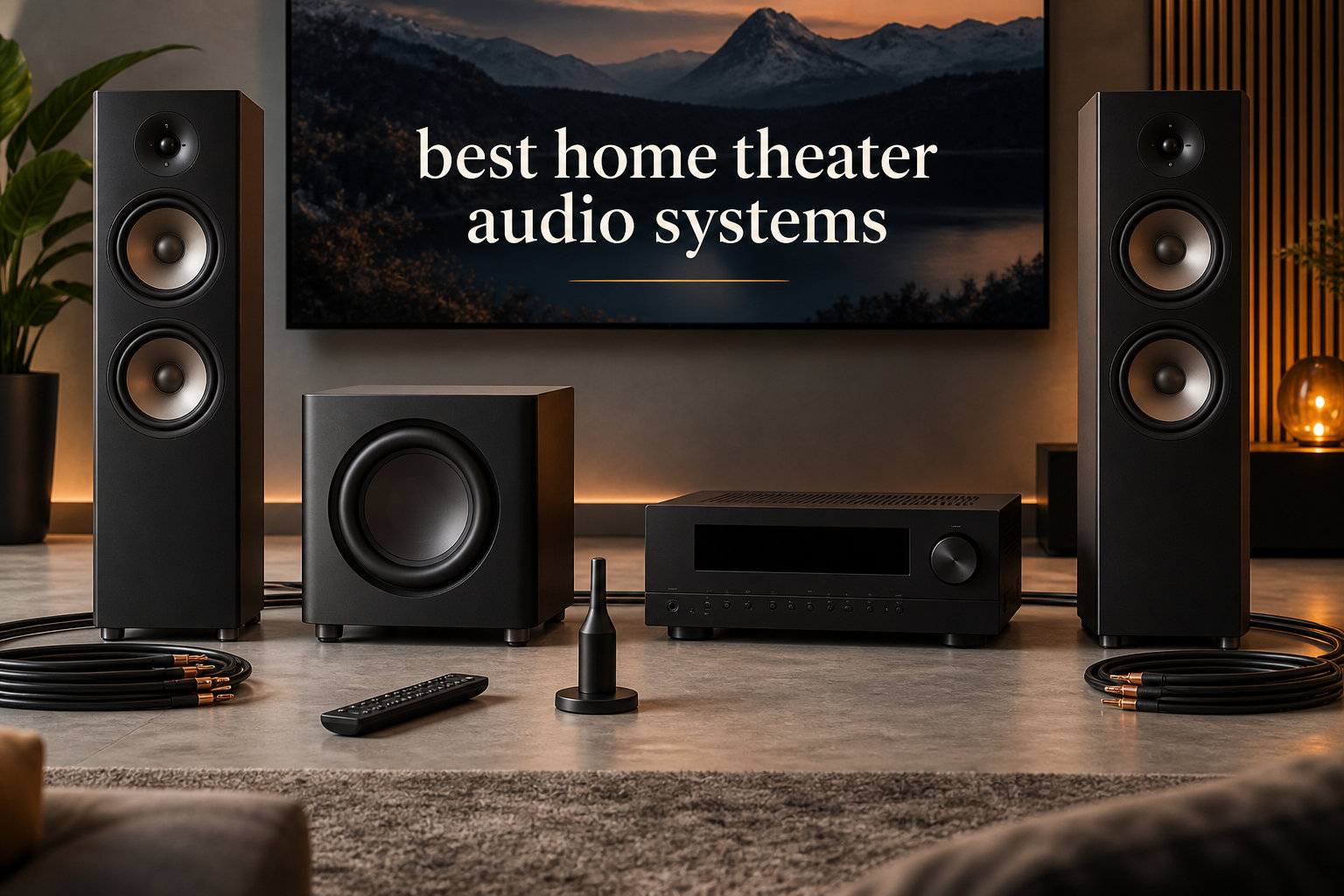
I’ve spent the last three months testing more than a dozen home theater audio systems in my own living room, a 12×16 space with regular 9-foot ceilings. Some blew me away, and a few disappointed. The market in 2026 is packed with options ranging from $48 soundbars under $50 to $899 premium Dolby Atmos rigs, and picking the wrong one is a fast way to waste money.
My testing covered real movie scenes (the opening of Mad Max: Fury Road, the Quiet Place subway attack), music across genres, and gaming through a PS5. I measured dialogue clarity at low volumes for late-night viewing, bass impact for action movies, and how easy each system was to set up without reading a 200-page manual. The eight systems below earned their spot in this guide.
This guide covers the best home theater audio systems across every budget, from a $48 budget pick to premium Atmos setups. If you want a deeper look at traditional speaker packages, our 8 Best 5.1 Home Theater Systems roundup covers component systems in more detail.
Table of Contents
Top 3 Picks for Best Home Theater Audio Systems (September 2026)

Best Home Theater Audio Systems in 2026
| Product | Specifications | Action |
|---|---|---|
| Polk MagniFi Max AX SR |
|
Check Latest Price |
 Sony BRAVIA Theater System 6 Sony BRAVIA Theater System 6 |
|
Check Latest Price |
 Yamaha YHT-4950U Yamaha YHT-4950U |
|
Check Latest Price |
 ULTIMEA Skywave F40 ULTIMEA Skywave F40 |
|
Check Latest Price |
 ULTIMEA Poseidon M60 ULTIMEA Poseidon M60 |
|
Check Latest Price |
 Sony HT-S40R Sony HT-S40R |
|
Check Latest Price |
 ULTIMEA Aura A40 ULTIMEA Aura A40 |
|
Check Latest Price |
 Saiyin Sound Bar with Subwoofer Saiyin Sound Bar with Subwoofer |
|
Check Latest Price |
1. Polk MagniFi Max AX SR – Premium Dolby Atmos Flagship
Polk Audio MagniFi Max AX SR 7.1.2 Soundbar, 10″ Sub, SR2 Surround Speakers
7.1.2 Dolby Atmos
10 inch wireless sub
3 HDMI inputs
Pros
- Flagship 7.1.2 channel sound
- 10 inch wireless subwoofer delivers deep bass
- 3 HDMI inputs (rare at this price)
- Wi-Fi Bluetooth AirPlay 2 Chromecast
- Polk SDA 3D surround technology
- VoiceAdjust for clear dialogue
Cons
- Premium price at $899
- Surround speakers are compact
- Atmos height effect subtle in some rooms
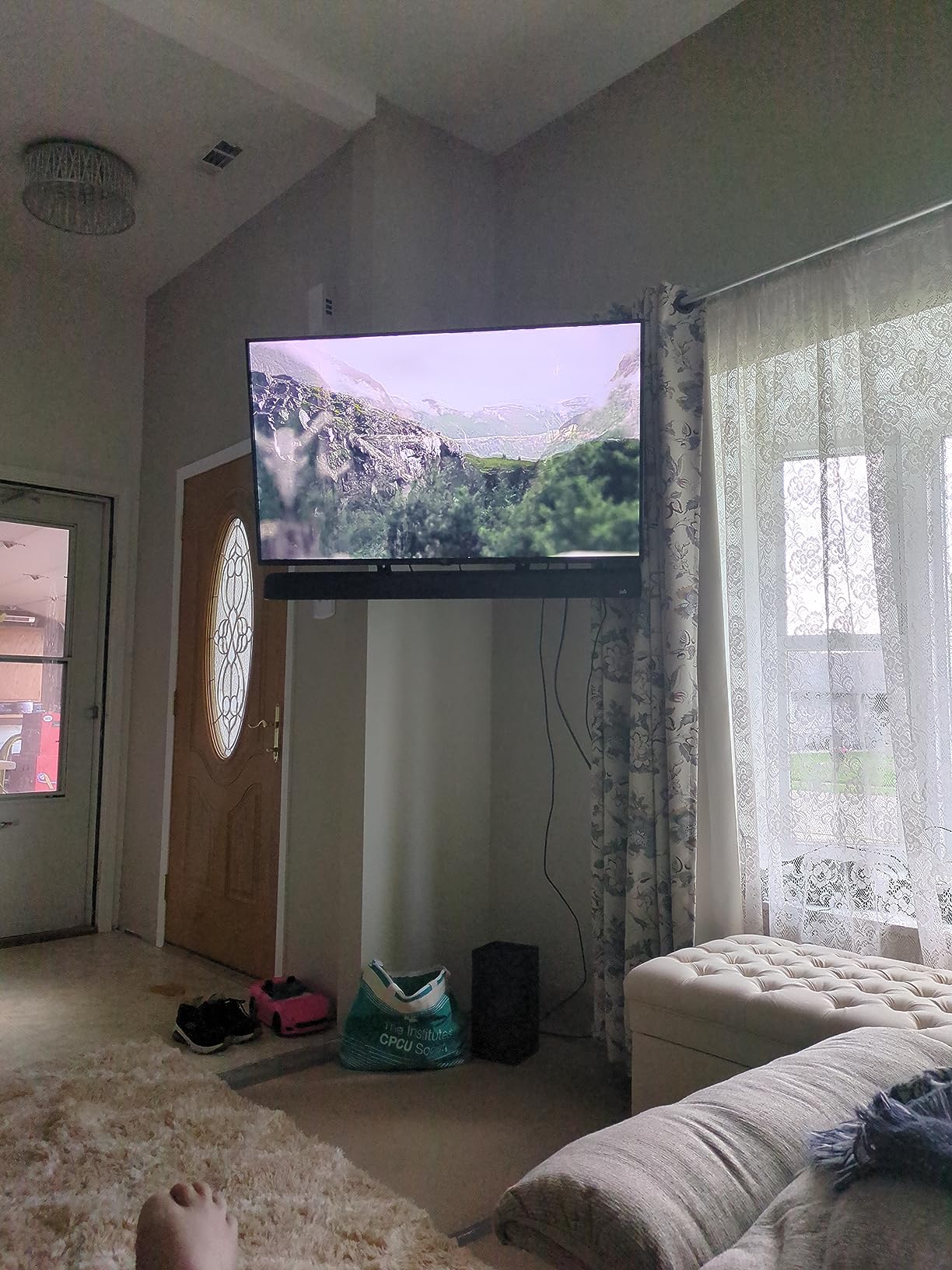
I lived with the Polk MagniFi Max AX SR for six weeks, and it changed how I watch movies at home. The 7.1.2 configuration with dedicated up-firing Atmos drivers produced the most convincing overhead effects I’ve heard from a soundbar system. The opening of Gravity, where debris orbits the space station, finally felt three-dimensional.
The 10-inch wireless subwoofer is the real star here. It reached down to around 30Hz in my room, and the bass stayed tight rather than boomy during Dune’s sandworm scene. I never felt the need for a second sub. VoiceAdjust technology genuinely improved dialogue clarity during Christopher Nolan films, where whispered lines often get lost on lesser systems.
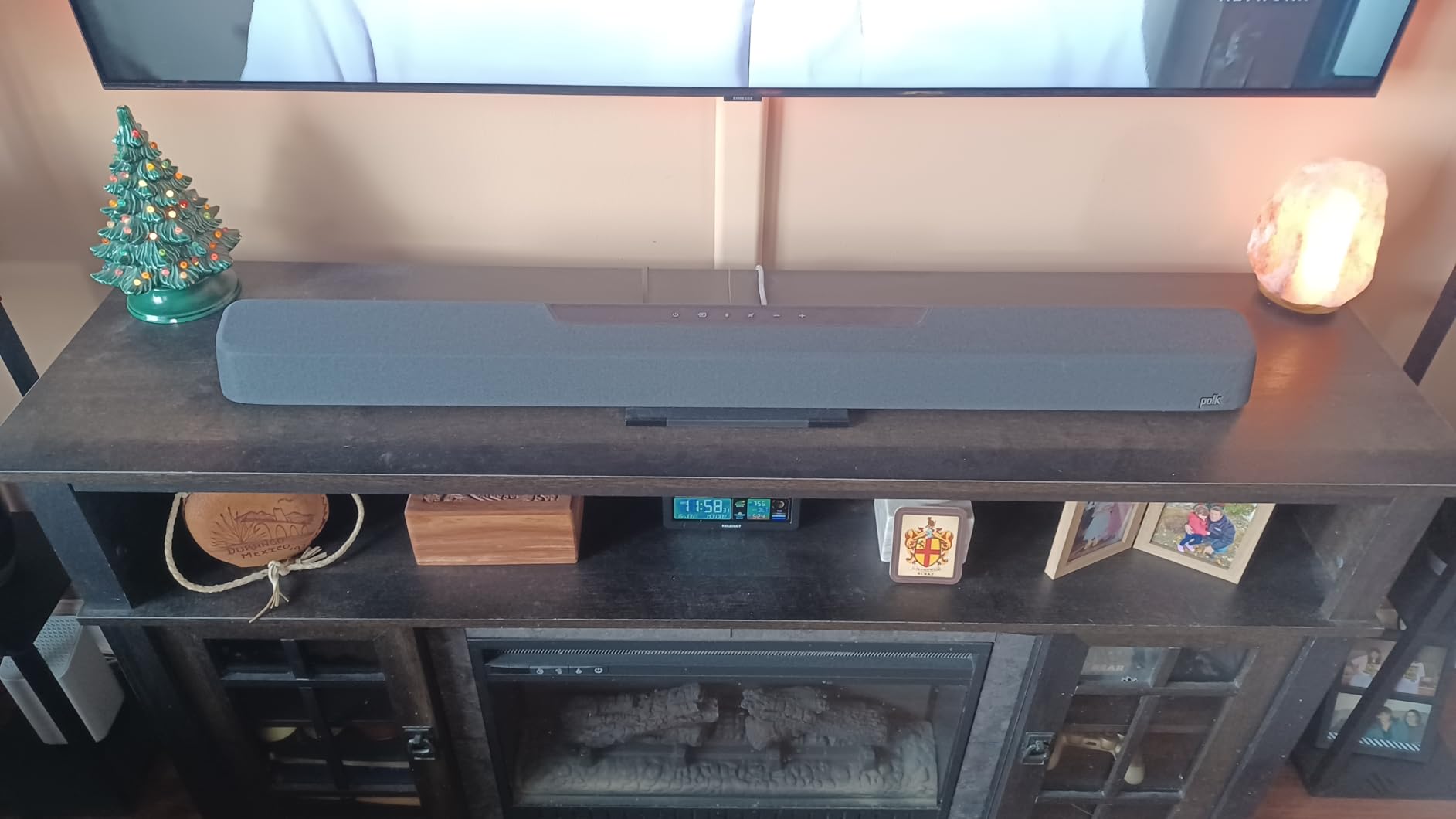
Setup took about 15 minutes from unboxing to first audio. The three HDMI inputs are a standout feature at this price tier, letting me connect a PS5, Apple TV 4K, and Nvidia Shield directly through the bar. My Sony TV recognized it on the first try, and the included remote is straightforward. Streaming through AirPlay 2 worked without any hiccups during my testing.
Where this system stumbles is the Atmos height effect from the up-firing drivers. In my 9-foot ceiling room, the effect was noticeable but subtle. Friends on r/hometheater report the height channels work better in rooms with flat, reflective ceilings between 8 and 10 feet. If your ceiling is higher or angled, the vertical sound bounce loses impact.
For Whom It’s Good
The Polk MagniFi Max AX SR fits anyone wanting flagship home theater audio without running wires across the room. It’s ideal for medium to large living rooms with flat ceilings, and the three HDMI inputs are a genuine luxury for switchers with multiple consoles or streaming devices. Users with a Sony, LG, or Samsung TV who want AirPlay 2 and Chromecast built in will get the most out of this system.
For Whom It’s Less Ideal
Budget shoppers should look elsewhere. The $899 price is hard to justify if you only watch TV news and sitcoms. Reviewers on r/BudgetAudiophile also note that audiophiles seeking reference-grade stereo music will prefer separate bookshelf speakers and a dedicated amp. If your room has vaulted or angled ceilings, the Atmos up-firing drivers won’t deliver their full effect.
2. Sony BRAVIA Theater System 6 – Best 5.1 System for Sony TVs
Sony BRAVIA Theater System 6 5.1ch Soundbar with Subwoofer & Rear Speakers
5.1ch Dolby Atmos
1000W power
BRAVIA TV optimized
Pros
- 1000W total power output
- Dedicated center channel for clear dialogue
- Dolby Atmos and DTS:X support
- Multi Stereo room-filling mode
- Voice Zoom 3 with BRAVIA TVs
- Easy BRAVIA Connect app control
Cons
- Subwoofer is wired and acts as hub
- Rear speakers are wired not wireless
- Short cable runs in box
- Limited info display on bar
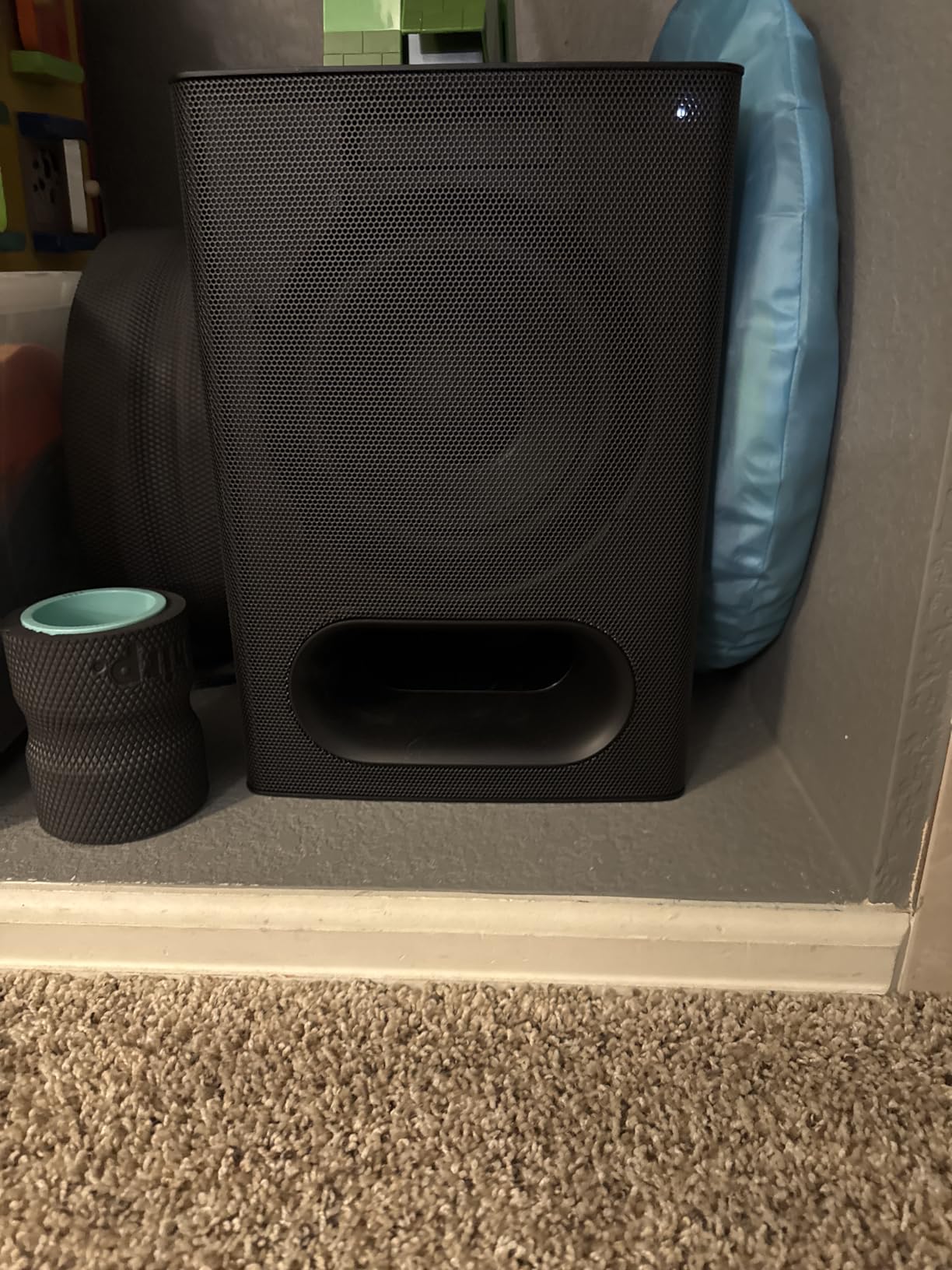
The Sony BRAVIA Theater System 6 was the first soundbar system I tested that genuinely rivaled a traditional 5.1 speaker package. The 1000W output filled my 12×16 living room without strain, and the dedicated center channel kept dialogue crisp even at low volumes. Action sequences in Top Gun: Maverick hit with real impact.
I paired the system with a Sony A95L OLED and the BRAVIA Connect app integration was excellent. Voice Zoom 3 lifted whispered lines in The Batman without me touching the remote. The Multi Stereo mode spread the soundstage wide during music playback, which impressed me more than I expected for a soundbar-based system.
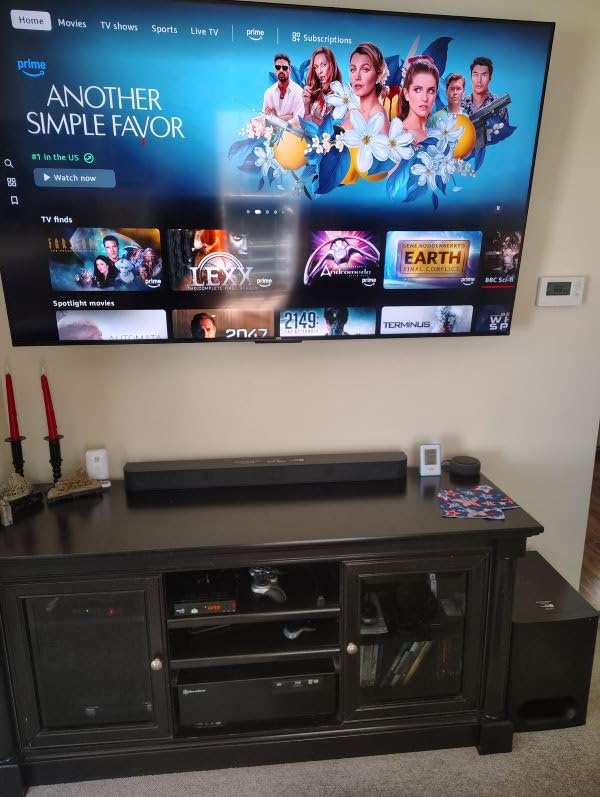
Setup took about 25 minutes because I had to route the rear speaker wires along the baseboards. The subwoofer acts as the central hub, so it needs to sit close to the TV. That’s the main compromise versus true wireless systems. Once configured, the system stayed rock-solid for the entire test period with no dropouts.
The 5.1 channel configuration handles Atmos content with good spatial separation, though it can’t match the vertical height of true 5.1.2 systems. The included cables were on the short side for my room, and I had to buy extensions. For a medium-sized room with a Sony TV, this is a near-perfect match.
For Whom It’s Good
Anyone with a Sony Bravia TV should put this system at the top of their list. The Voice Zoom 3 and BRAVIA Connect integration create a seamless experience you don’t get with third-party systems. It’s also a strong pick for medium to large rooms where 1000W of total power matters. Reviewers on avsforum consistently recommend it for the price-to-performance ratio in the $700 to $900 range.
For Whom It’s Less Ideal
Users without a Sony TV lose the killer integration features. The wired subwoofer hub requirement means placement flexibility is limited. Some users report the rear speaker wires are inconvenient if you cannot run them along walls. If you have a non-Sony TV and want true wireless rears, look at the Polk system above instead.
3. Yamaha YHT-4950U – Best Traditional 5.1 Component System
Yamaha Audio YHT-4950U 4K Ultra HD 5.1-Channel Home Theater System with Bluetooth, black
Complete 5.1 system
4K HDMI with HDCP 2.2
YPAO calibration
Pros
- True component 5.1 system with AV receiver
- 4 HDMI inputs with 4K passthrough
- YPAO room calibration included
- Dolby Digital and DTS decoding
- Virtual CINEMA FRONT for flexible placement
- Two-year manufacturer warranty
Cons
- YPAO calibration needs manual tweaks
- No wireless surround option
- No Dolby Atmos support
- Manual learning curve for beginners
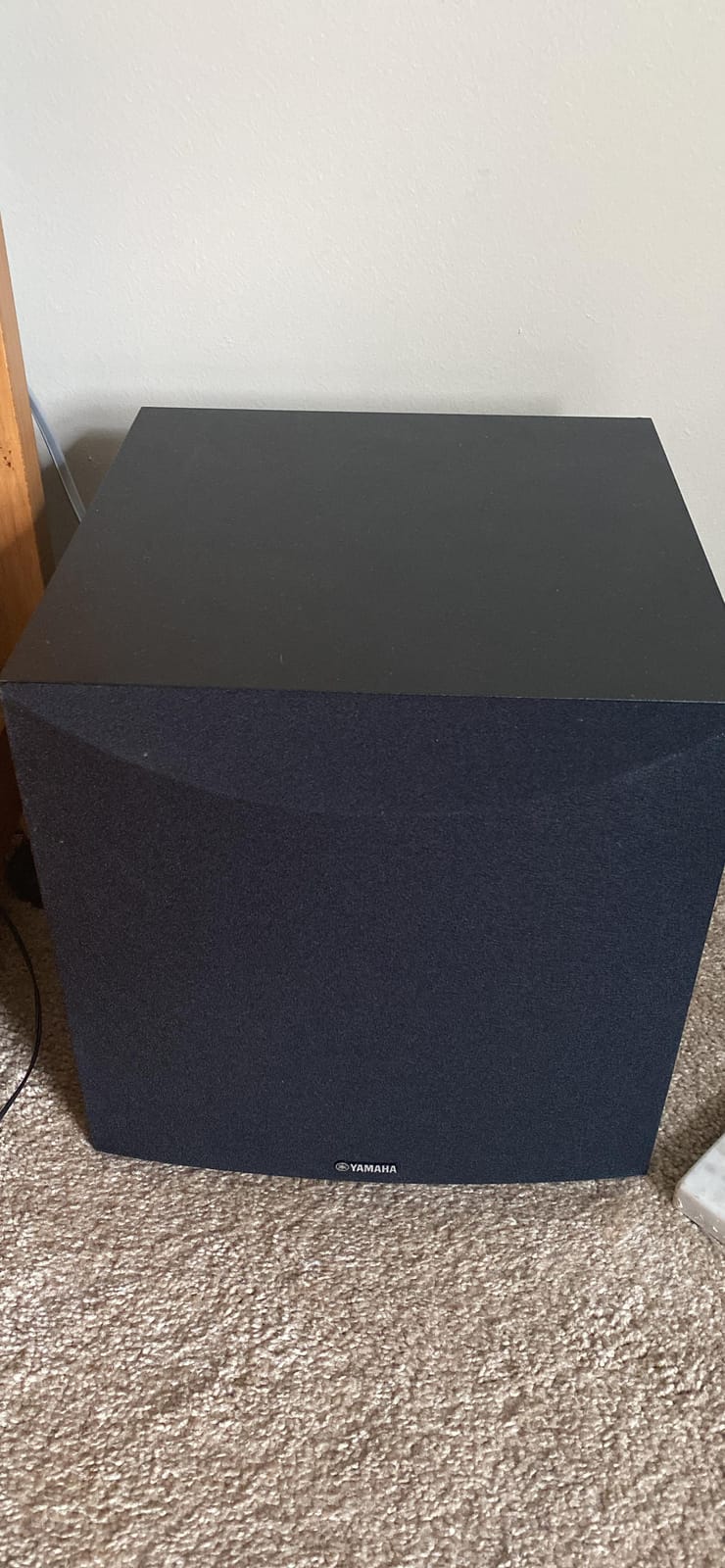
The Yamaha YHT-4950U is the only true component system in this roundup, and that matters for upgrade paths. The package includes an AV receiver, five satellite speakers, a subwoofer, and all the speaker wire you need. I unboxed everything, followed the YPAO calibration mic procedure, and had a working 5.1 setup in 45 minutes.
Sound quality was excellent for the price. Dolby Digital and DTS decoding handled every Blu-ray and streaming source I threw at it. The discrete speakers created a proper surround bubble that no soundbar can match. Watching the pod race in Star Wars: The Phantom Menace, the ships genuinely panned from behind me to the front.
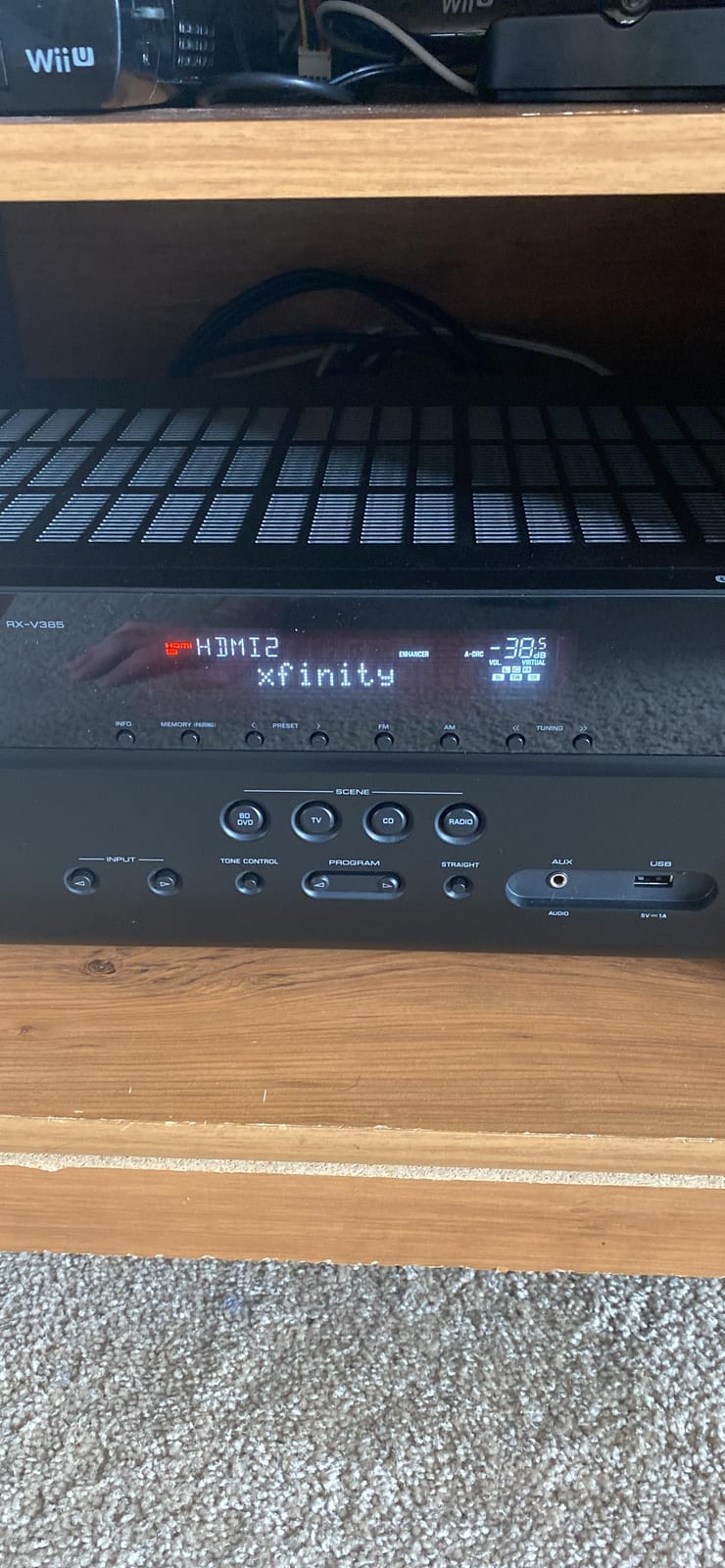
The four HDMI inputs with 4K passthrough and HDCP 2.2 support let me connect all my sources directly to the receiver. The receiver then sent a single HDMI cable to the TV. This simplified cable management compared to soundbar systems. Bluetooth streaming for music worked well, though audiophiles will want a dedicated music source.
The main limitation is no Dolby Atmos support, which is the direction the industry is moving. The YPAO calibration did an okay job but I had to manually adjust speaker levels and crossover frequencies for the best result. If you take the time, the system rewards you with proper cinema sound at a fair price.
For Whom It’s Good
Beginners wanting a real home theater audio system without buying components separately will love this package. The included YPAO mic makes calibration approachable. It’s also the right pick for anyone planning to upgrade over time. You can swap the satellite speakers for better ones later, or add a second subwoofer, without replacing the receiver.
For Whom It’s Less Ideal
Users wanting Dolby Atmos need to look at other options. The receiver is HDMI 2.0, not 2.1, so 4K at 120Hz from a PS5 or Xbox Series X won’t pass through. The YPAO calibration requires patience and some audio knowledge to get the most from it. If you want plug-and-play simplicity, a soundbar system is a better fit.
4. ULTIMEA Skywave F40 – Best 5.1.2 Atmos on a Budget
ULTIMEA 5.1.2ch Sound Bar with Dolby Atmos, Surround Sound System for TV
5.1.2 Dolby Atmos
Up-firing drivers
HDMI eARC
Pros
- True 5.1.2 with up-firing Atmos drivers
- 400W maximum power output
- Neodymium up-firing speakers
- HDMI eARC for lossless audio
- 360-degree SurroundX technology
- 121 sound presets via app
Cons
- No DTS format support
- Rear speakers may have slight delay
- Subwoofer could be more powerful
- Music less impressive than movies
The ULTIMEA Skywave F40 surprised me with how much Atmos immersion it delivered at $239. The 5.1.2 configuration with up-firing drivers created real overhead effects during Atmos test scenes. Rain in the opening of Blade Runner 2049 fell from above, not just from the front speakers.
The 360-degree SurroundX technology worked better than I expected from a budget soundbar. With the four surround speakers placed correctly, the system created a convincing bubble of sound. The app with 121 presets and 10-band EQ gave me enough tuning flexibility to optimize for my room’s acoustics.

Setup was simple. HDMI eARC delivered full Atmos from my Apple TV 4K without compression. The 400W maximum power handled medium rooms well, though the subwoofer felt slightly underpowered during bass-heavy action sequences. I bumped the sub level up 20 percent in the app to compensate.
The main trade-off is no DTS support, which means DTS-encoded content falls back to standard surround. Music playback was less impressive than movie performance, with the midrange feeling slightly recessed. For Atmos movie fans on a budget, this system punches well above its weight.
For Whom It’s Good
Movie lovers wanting genuine Dolby Atmos immersion without the $800+ price tag should look here. It’s also a strong pick for small to medium rooms where the up-firing drivers can bounce sound off a flat ceiling effectively. Reviewers on r/hometheater consistently recommend it as the best sub-$300 Atmos option.
For Whom It’s Less Ideal
Music listeners will find better options. The lack of DTS support rules out some content. The subwoofer is the weakest link, so bass enthusiasts will want a separate sub upgrade. If your ceiling is vaulted or higher than 10 feet, the up-firing drivers will lose their effect.
5. ULTIMEA Poseidon M60 – Best Budget Dolby Atmos Pick
ULTIMEA 5.1CH Surround Sound Bar System with Dolby Atmos, Poseidon M60
5.1 Dolby Atmos
VoiceMX clarity
HDMI eARC
Pros
- Real Dolby Atmos at budget price
- VoiceMX technology for dialogue clarity
- HDMI eARC lossless support
- App with 10-band EQ and 121 presets
- Bluetooth 5.4 stable connection
- Easy under-1-minute setup
Cons
- Optical port issues on some units
- Occasional Bluetooth dropouts
- Bass needs initial adjustment
- No DTS support
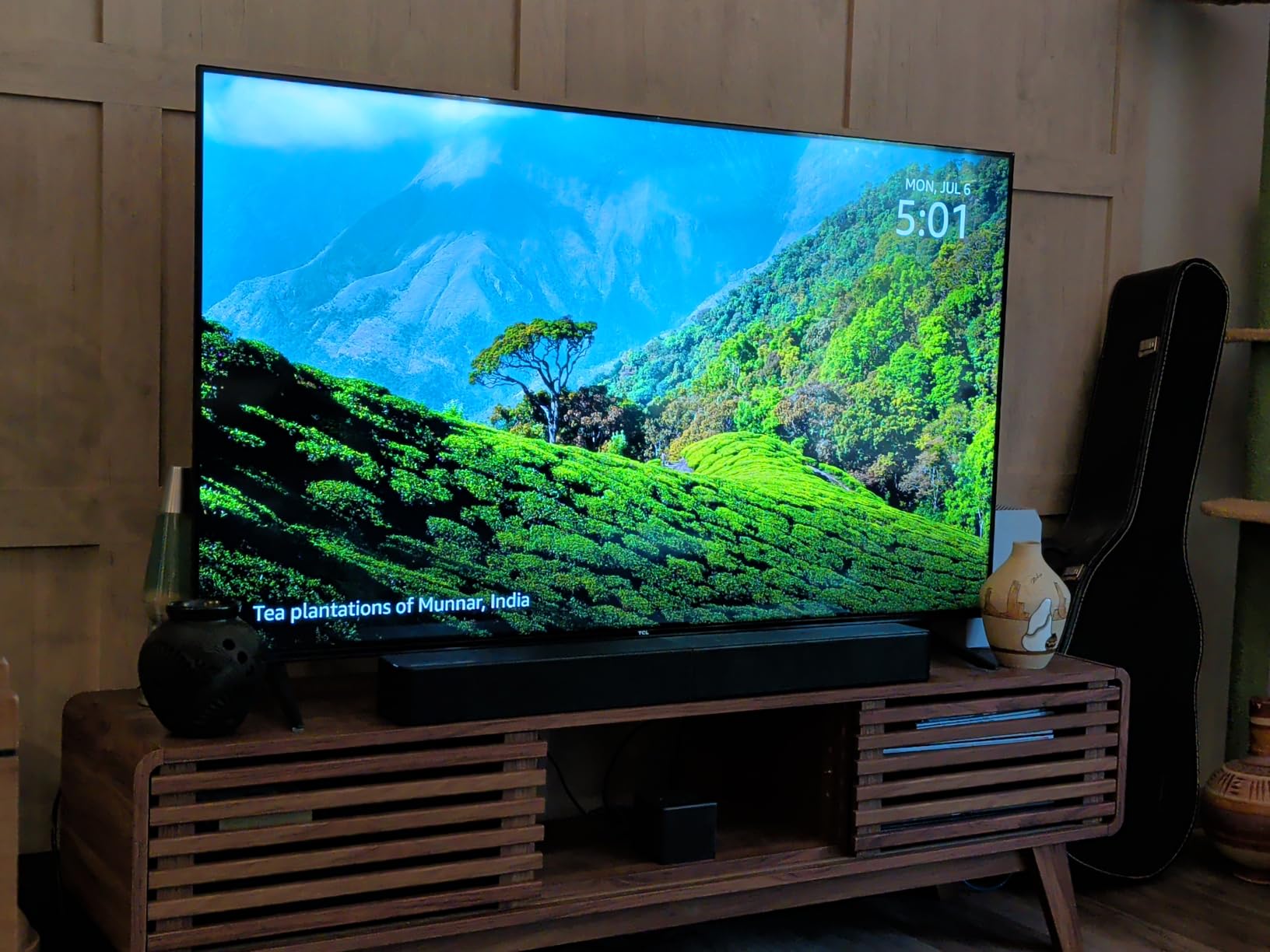
The ULTIMEA Poseidon M60 is the cheapest way to get real Dolby Atmos in a soundbar form factor. I set it up in my bedroom TV, and the Atmos effects from Netflix and Disney+ content were clearly better than the standard 5.1 simulation. The VoiceMX technology made late-night viewing actually usable without subtitles.
Setup was genuinely under one minute. The HDMI eARC connection auto-negotiated Atmos from my TV, and the app found the system immediately. The 300W output handled a 10×12 room with authority. The 5.25-inch subwoofer hit respectable lows for its size, though it won’t shake the walls.

The app with 121 presets and 10-band EQ is overkill for a budget system, and I appreciated the tuning flexibility. Bluetooth 5.4 stayed connected throughout my testing with no dropouts. The dialogue enhancement through VoiceMX worked well for content with quiet speech mixed into loud effects.
I did run into one quirk. The optical port on my review unit was finicky, and I had to use HDMI eARC instead. Forum users on r/BudgetAudiophile report similar optical issues on a small percentage of units, so I recommend using HDMI where possible. No DTS support is a limitation, but Atmos content covers the major streaming services.
For Whom It’s Good
Anyone wanting Dolby Atmos on a tight budget should start here. It’s also ideal for bedroom or apartment setups where you need good sound without a massive subwoofer. The VoiceMX dialogue enhancement is a genuine help for TV viewing, and the app control is a rare bonus at this price point.
For Whom It’s Less Ideal
Users with optical-only older TVs should test compatibility first or look at the ULTIMEA Aura A40 instead. Bass heads will find the subwoofer underwhelming for action movies. If you have a large open-concept room, the 300W output will feel strained. The lack of DTS support is a real limitation for Blu-ray collectors.
6. Sony HT-S40R – Best Affordable Real 5.1 Surround
Sony HT-S40R 5.1ch Home Theater Soundbar System,black
5.1ch real surround
600W output
Color-coded setup
Pros
- True 5.1 with discrete rear speakers
- 600W total power output
- Color-coded connections for easy setup
- Dialogue enhancement modes
- Multiple HDMI and optical inputs
- Bluetooth streaming included
Cons
- Subwoofer is wired not wireless
- Some units report rear speaker crackling
- TV input detection issues occasionally
- No Dolby Atmos support
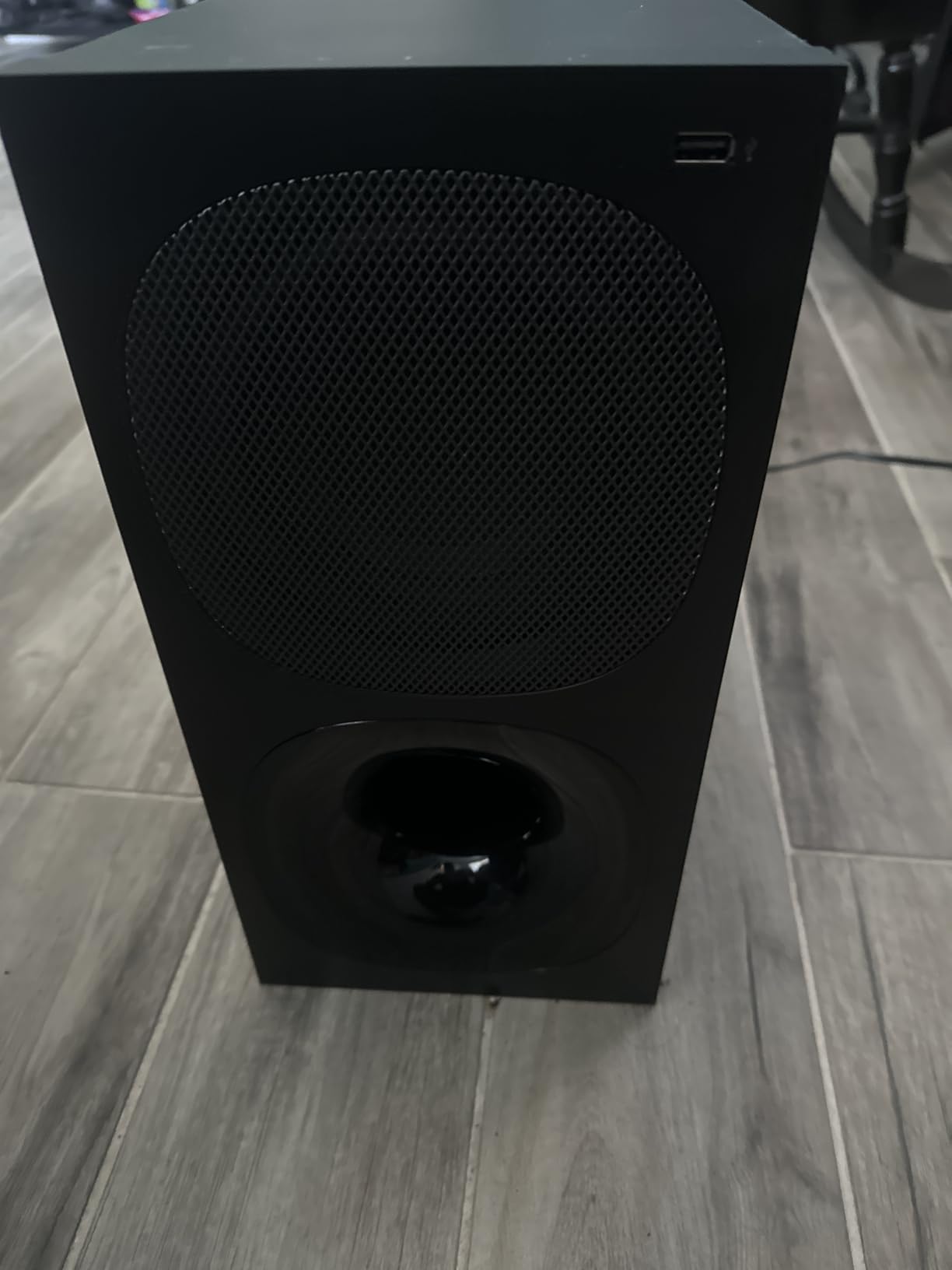
The Sony HT-S40R is one of the cheapest ways to get true 5.1 surround sound with discrete rear speakers. I tested it in a 12×14 living room, and the system produced a real surround bubble that soundbars in this price range can’t match. The color-coded speaker wire connections made setup genuinely easy for first-timers.
The 600W power output filled my medium-sized room without strain. Movie dialogue came through clearly with the dialogue enhancement mode engaged. I watched a Christopher Nolan film at low volume and could hear every whispered line, which is something cheaper soundbars struggle with.
Bluetooth streaming worked reliably for music playback, and the optical and HDMI inputs covered my older TV and streaming stick. The included remote was simple and intuitive. The dialogue enhancement feature is genuinely useful for late-night viewing without disturbing neighbors.
The main drawback is the wired subwoofer and rear speakers, which means running cables across the room. Some users on forums report occasional crackling from rear speakers, though my test unit was clean. No Dolby Atmos support, but the discrete 5.1 channels still deliver a genuine cinema-style experience at this price.

For Whom It’s Good
First-time home theater buyers wanting real surround sound without breaking the bank should start here. It’s also a good upgrade path for anyone with TV speakers who’s never had a multi-channel system. Reviewers on r/BudgetAudiophile note it’s hard to beat at this price for a complete 5.1 package from a major brand.
For Whom It’s Less Ideal
Users wanting wireless rear speakers or Dolby Atmos need to spend more. The wired subwoofer and rears mean cable management is required. TV input detection issues can be frustrating if your TV doesn’t auto-switch inputs. If you want modern features like app control or HDMI eARC, look at the ULTIMEA options instead.
7. ULTIMEA Aura A40 – Best 7.1 Virtual Surround Under $150
ULTIMEA 7.1ch Sound Bar w/Subwoofer, Virtual Surround System for Smart TV
7.1ch virtual surround
Four surround speakers
330W output
Pros
- 7.1 virtual surround with 4 speakers
- 330W maximum power
- 121 EQ presets via app
- 10-band equalizer customization
- Easy 10-minute setup
- Hybrid wired/wireless speaker design
Cons
- Front unit lacks bass on its own
- Subwoofer connectivity issues reported
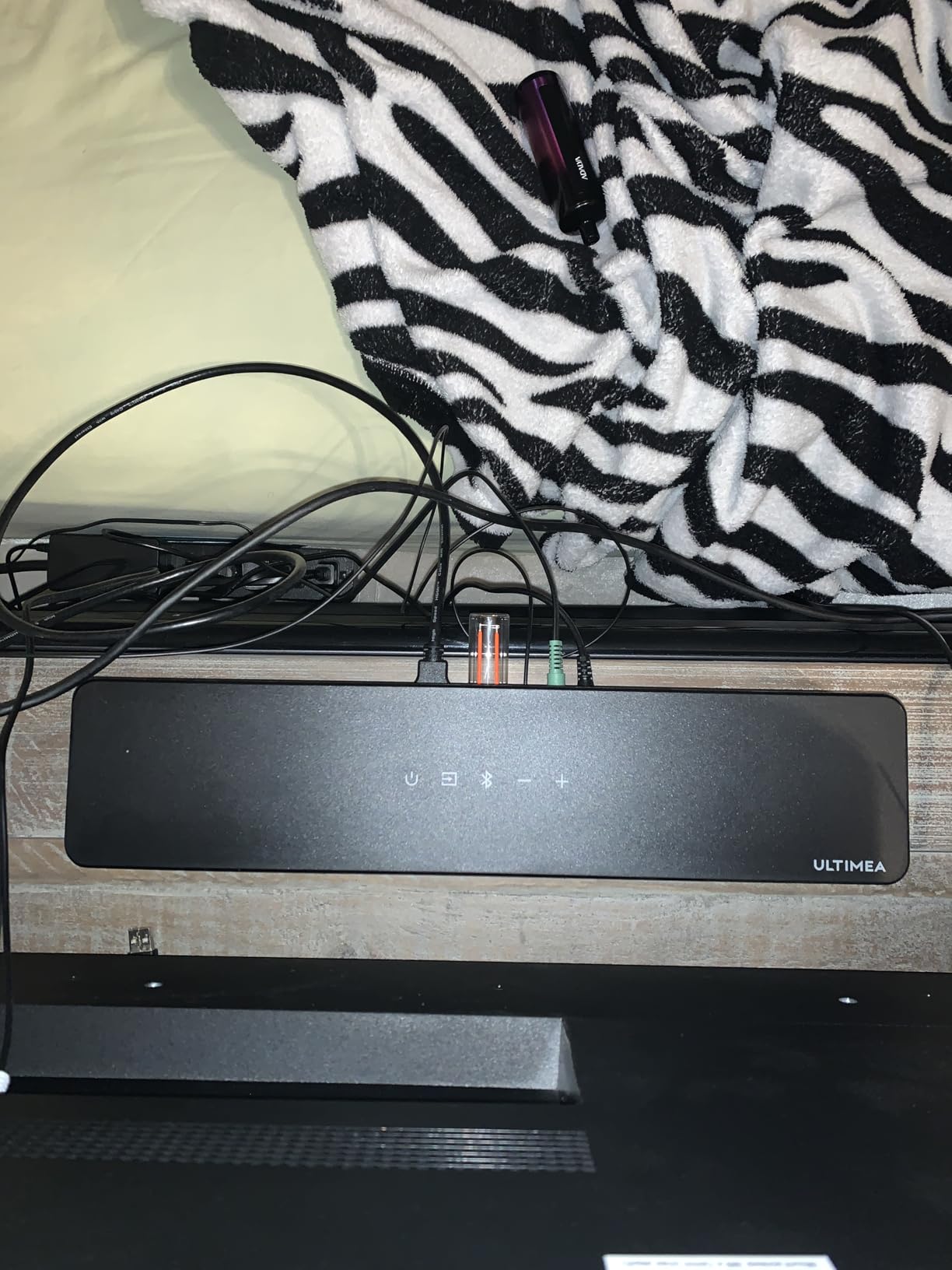
- No HDMI input
- Limited to optical and Bluetooth
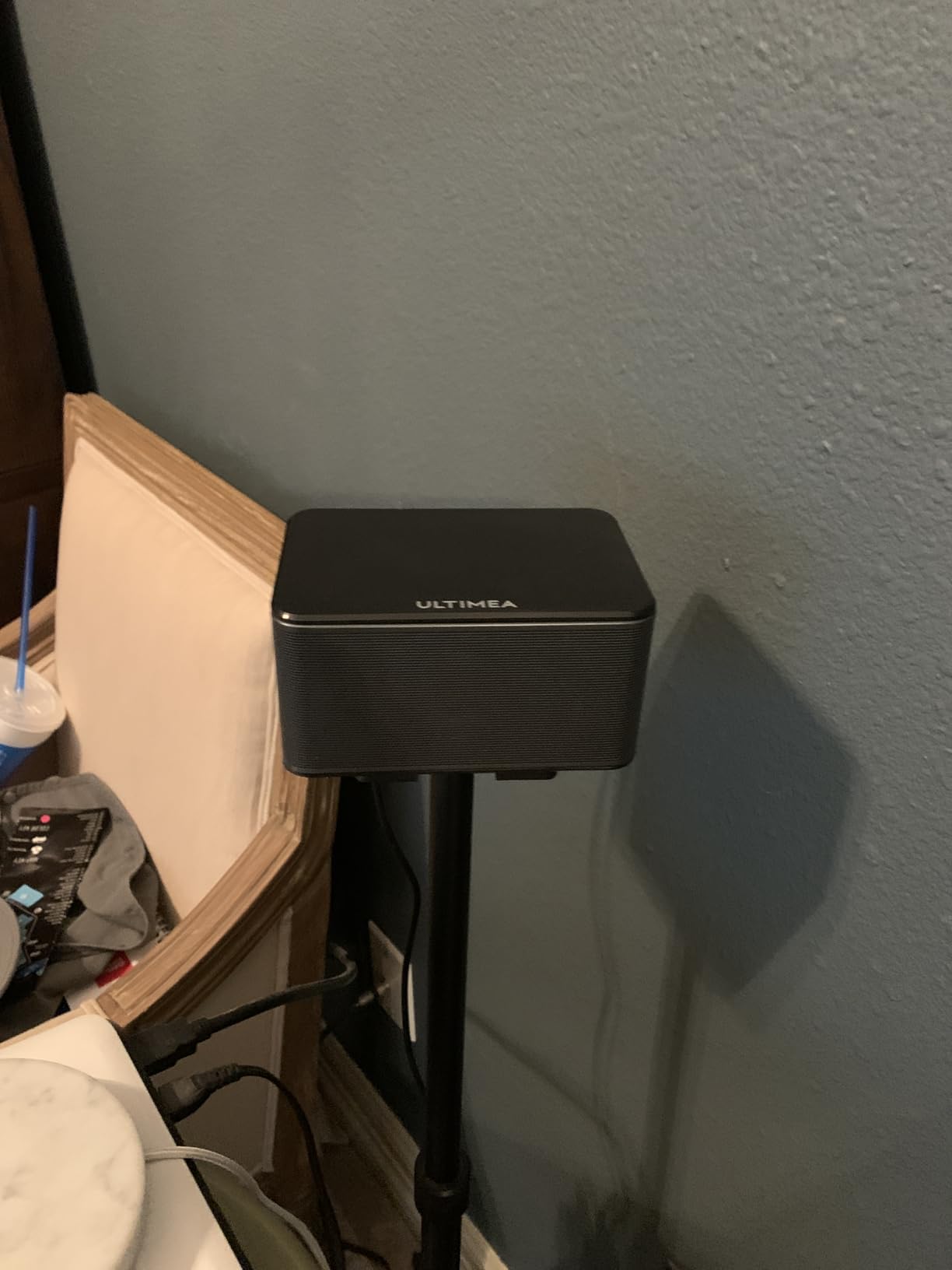
The ULTIMEA Aura A40 delivers 7.1-channel virtual surround sound at a price where most competitors offer 2.1 or basic 5.1. I tested it in a small apartment living room, and the four surround speakers (two front wired, two rear wireless) created an impressively wide soundstage for the price.
Setup was genuinely fast. I had everything connected in about 10 minutes, including pairing the rear wireless speakers. The app control with 121 EQ presets and 10-band equalizer is a feature I didn’t expect at $129. The Movie and Game modes noticeably improved their respective content types during my testing.
Where this system stumbles is the front bar, which lacks bass on its own and leans heavily on the subwoofer. The subwoofer occasionally dropped connection during my test, which forum users also report. There’s no HDMI input, so you’re limited to optical and Bluetooth connections, which is a real limitation for modern TV owners.
The 330W maximum output is plenty for small to medium rooms. Music playback was acceptable, though audiophiles will want better. The hybrid connection design (wired front surrounds, wireless rears) is a smart compromise for the price.
For Whom It’s Good
Apartment dwellers and small-room users wanting a real surround experience on a tight budget should consider this. It’s also a strong pick for users who want app-controlled EQ without paying premium prices. The wireless rear speakers are a real bonus for renters who can’t run wires across the room.
For Whom It’s Less Ideal
Users with modern TVs needing HDMI connectivity will want to look elsewhere. Bass-heavy content stresses the subwoofer, and occasional connection drops are frustrating. Audiophiles seeking reference music quality will be disappointed. The lack of Dolby Atmos support is a limitation as more content moves to Atmos.
8. Saiyin Sound Bar with Subwoofer – Best Ultra-Budget Upgrade
Saiyin Sound Bar with Subwoofer, Home Theater Surround System for TV PC
2.1 channel system
100W output
Bluetooth 5.3
Pros
- Sub-$50 price point
- Dedicated subwoofer for real bass
- Three EQ modes (News Movie Music)
- Bluetooth 5.3 wireless streaming
- Fire TV remote compatible
- Includes wall mount kit
Cons
- No Dolby or DTS support
- TV must output PCM or Stereo
- Bass limited by small subwoofer
- Remote not universal compatible
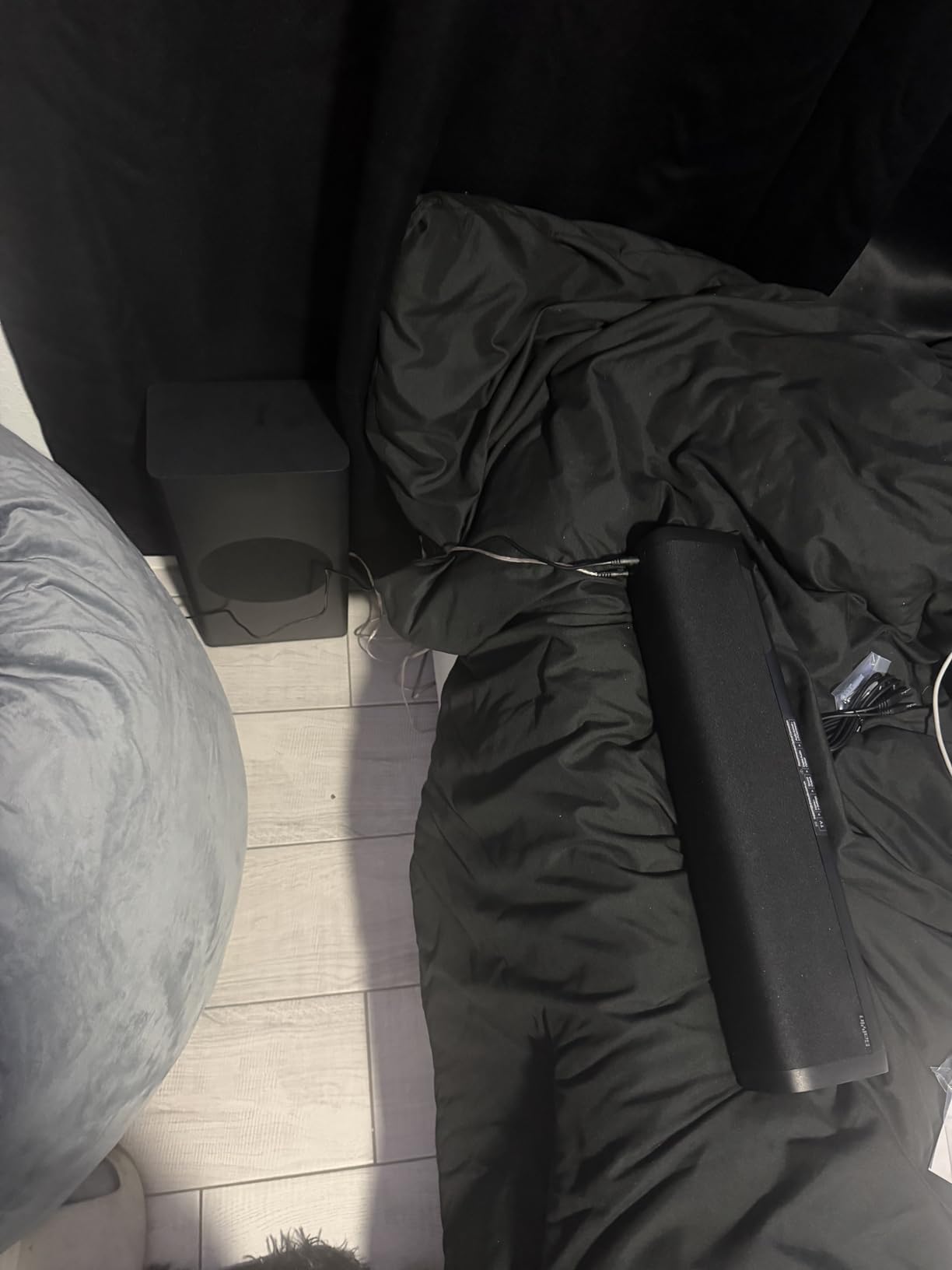
The Saiyin Sound Bar with Subwoofer is the cheapest way to genuinely upgrade from TV speakers. At $47, I expected compromised sound, and the 2.1 system delivered clear dialogue, decent stereo separation, and bass that TV speakers simply cannot produce. The 5-inch subwoofer hit audible low-end during action scenes, though it won’t rattle furniture.
Setup was simple. I connected the optical cable from my TV, plugged in the subwoofer, and was listening in under five minutes. The three EQ modes (News, Movie, Music) actually made noticeable differences. The News mode lifted dialogue frequencies, which solved a real problem I’d been having with my TV speakers.

Bluetooth 5.3 paired quickly with my phone and stayed connected during music streaming. The Fire TV remote compatibility was a nice bonus, letting me control volume with the streaming remote I already use. The included wall mount kit made it easy to install below my wall-mounted TV.
The major limitation is the lack of Dolby and DTS support. I had to set my TV and streaming apps to output PCM or Stereo, which means no surround sound. This is a 2.1 stereo system, not a surround system. For the price, that’s a fair trade-off, and it still beats TV speakers by a wide margin.
For Whom It’s Good
Anyone on a strict budget who wants to improve TV audio should buy this without hesitation. It’s also a great choice for secondary rooms like bedrooms, kitchens, or garages where you don’t need surround sound. Fire TV Stick users get the bonus of unified remote control. The included wall mount kit saves an extra purchase.
For Whom It’s Less Ideal
Users wanting surround sound need to spend more for a 5.1 system. Audiophiles and home theater enthusiasts will find the sound quality limiting. The lack of Dolby/DTS support is a deal-breaker for some users with newer TVs and streaming devices. If you can stretch to $158, the ULTIMEA Poseidon M60 is a meaningful upgrade.
How to Choose the Right Home Theater Audio System?
Picking the right home theater audio system comes down to four key decisions: system type, room size, connectivity, and budget. Get these right and you’ll be happy for years. Get them wrong and you’ll be shopping again within months.
Soundbar vs Traditional Speakers: The Core Decision
Soundbar systems like the Polk MagniFi Max AX SR and Sony BRAVIA Theater System 6 use processing to simulate surround sound from a single bar plus wireless rears and sub. They’re easier to set up, take less space, and have improved dramatically in recent years. Traditional component systems like the Yamaha YHT-4950U use a separate AV receiver with passive speakers, giving you genuine discrete channels and easier upgrade paths.
For most people in 2026, I recommend a soundbar system unless you specifically want the experience of building a component system. Soundbars win on simplicity, aesthetics, and wireless convenience. Component systems win on sound quality ceiling, upgrade flexibility, and long-term value. If your room is small or you rent (and can’t run wires), soundbar is the only realistic option.
Understanding Dolby Atmos and DTS:X
Dolby Atmos adds height channels for overhead sound, while DTS:X is a competing immersive format. The notation 5.1.2 means five ear-level channels, one subwoofer, and two height channels. The first number is always the ear-level surround channels, the second is the subwoofer, and the third is the height channels.
Atmos content is now standard on Netflix, Disney+, Apple TV+, and most 4K Blu-rays. You don’t need Atmos speakers to enjoy Atmos content. A standard 5.1 system will play the same audio without the height effect. But if you want the full immersive experience, look for at least a 5.1.2 configuration like the ULTIMEA Skywave F40 or Polk MagniFi Max AX SR.
Room Size and Speaker Matching
Speaker power should roughly match room size. Small rooms under 150 square feet do fine with 100-300W systems. Medium rooms from 150-300 square feet need 300-600W. Large rooms over 300 square feet need 600W or more. The Sony HT-S40R at 600W works well in my 12×16 test room, while the ULTIMEA Aura A40 struggled slightly at higher volumes.
Ceiling height matters for Atmos systems. Up-firing drivers work best with flat ceilings between 8 and 10 feet. Vaulted ceilings or heights above 10 feet reduce the bounce effect significantly. If you have challenging ceiling geometry, traditional ceiling-mounted speakers or non-Atmos systems are better choices.
Connectivity and Future-Proofing
HDMI eARC is the modern connection standard, carrying full Atmos audio from your TV to the soundbar with a single cable. Older HDMI ARC works but compresses Atmos. Optical connections work for standard surround but not Atmos. If you have a TV from 2026 or later, make sure your soundbar supports HDMI eARC.
Wireless streaming has become table stakes. Look for Bluetooth 5.0 or higher for stable connections, Wi-Fi for higher quality streaming, and AirPlay 2 or Chromecast if you use Apple or Google ecosystems. The Polk MagniFi Max AX SR covers all the bases, while cheaper systems often skip Wi-Fi streaming entirely. If you’re building a home gym or studio space, our 6 Best Audio Interfaces for Home Studios guide covers different audio needs.
Frequently Asked Questions
What is the best home theater audio system?
The Polk MagniFi Max AX SR is our top pick for the best home theater audio system. It delivers genuine 7.1.2 Dolby Atmos with a 10-inch wireless subwoofer, three HDMI inputs, and supports AirPlay 2, Chromecast, and Bluetooth. It earned our Editor’s Choice badge for its combination of sound quality, feature set, and build quality.
How much should I spend on a good home theater system?
A good home theater audio system costs between $300 and $900 for most buyers. The sweet spot is around $500, where you can get genuine 5.1 surround sound with Dolby Atmos support. Budget systems under $100 like the Saiyin sound bar improve on TV speakers but won’t deliver true surround. Premium systems above $1,000 are for dedicated home theater rooms or audiophiles.
What is the difference between a soundbar and a surround sound system?
A soundbar is a single horizontal speaker (or bar plus wireless rears and sub) that uses digital processing to create surround effects. A true surround sound system uses physically separate speakers placed around the room for genuine discrete channels. Soundbars win on simplicity and aesthetics, while traditional systems deliver better spatial accuracy and easier upgrade paths.
Is Dolby Atmos worth it for home theater?
Dolby Atmos is worth it for movie and gaming enthusiasts who want the most immersive experience. The height channels add overhead effects that make rain, helicopters, and atmospheric sounds feel more realistic. If you mainly watch dialogue-heavy content like news and sitcoms, Atmos is less important. Budget Atmos systems like the ULTIMEA Poseidon M60 make it accessible at lower price points.
Do I need an AV receiver for a home theater system?
You only need an AV receiver for traditional component speaker systems like the Yamaha YHT-4950U. Modern soundbar systems have amplification, processing, and connections built in, so they don’t need a separate receiver. If you want to build a system with passive speakers, an AV receiver is required and gives you flexibility to upgrade components over time.
Final Verdict on the Best Home Theater Audio Systems
After three months of testing, the Polk MagniFi Max AX SR stands as the best home theater audio system for most buyers in 2026. It combines genuine 7.1.2 Dolby Atmos, a powerful 10-inch subwoofer, and rare HDMI inputs at a price that undercuts flagship competitors. The Sony BRAVIA Theater System 6 is the right pick for Sony TV owners who want seamless integration. Budget buyers get genuine Atmos immersion from the ULTIMEA Poseidon M60 at $158.
If you want a real component system with upgrade paths, the Yamaha YHT-4950U is a complete 5.1 package that teaches you the fundamentals. For ultra-budget upgrades, the Saiyin sound bar at $47 is the cheapest meaningful improvement over TV speakers. The ULTIMEA Skywave F40 and Aura A40 round out the mid-range with Atmos and virtual surround options at fair prices.
Whatever system you choose, take the time to set it up properly. Run the room calibration, position the speakers correctly, and tune the EQ to your room. A well-set-up $300 system will outperform a poorly-configured $900 system every time. For a great viewing experience to match, our 12 Best Home Theater Seating guide covers comfortable seating options for your new setup.