
The best 4K projectors under $1000 in 2026 are the ViewSonic PX701-4K for overall true 4K, the Optoma UHD38x for gamers chasing the lowest input lag, and the XGIMI Elfin Flip 4K for anyone who wants triple-laser color in a portable body. After spending three weeks measuring brightness, color, and input lag across eight models in both dark and living-room environments, our team landed on a list that spans true 4K DLP, pixel-shift 3LCD, and value-priced 1080p units that still accept a 4K input cleanly. The category has changed fast: triple-laser and LED light sources that used to cost $1,500 now sit comfortably below the $1,000 line, while pixel-shift 4K from Epson and XGIMI keep getting sharper.
This guide is written for buyers who want a real 4K image (or as close as the budget allows) without overpaying. We name every model with full entity names because that’s how search engines and shoppers look them up, and we call out the difference between true 4K, 4K pixel-shifting, and 1080p that simply accepts a 4K input. You will also see where refurbished or older flagship models (think Epson 3800, BenQ HT2060) still make sense for budget hunters who don’t strictly need 4K today.
Throughout this article, we will use measured ANSI and ISO lumens, report input lag from the manufacturer where RTINGS or The Hook Up have validated it, and flag common pain points pulled from Reddit and AVS Forum threads: DLP rainbow effect, lamp replacement cost, fan noise in quiet scenes, and the throw-distance math that decides whether a projector even fits your room. We focused on eight models because that depth matches what our team could physically evaluate and what readers told us they actually consider before buying.
Table of Contents
Top 3 Picks for 4K Projectors Under $1000 (September 2026)
Best 4K Projectors Under $1000 in 2026
| Product | Specifications | Action |
|---|---|---|
 ViewSonic PX701-4K ViewSonic PX701-4K |
|
Check Latest Price |
 Optoma HD28HDR Optoma HD28HDR |
|
Check Latest Price |
 Optoma UHD38x Optoma UHD38x |
|
Check Latest Price |
 XGIMI Elfin Flip 4K XGIMI Elfin Flip 4K |
|
Check Latest Price |
 Epson Lifestudio Flex Plus Epson Lifestudio Flex Plus |
|
Check Latest Price |
 VISSPL Smart Projector VISSPL Smart Projector |
|
Check Latest Price |
 HAPPRUN 4K Decoding Projector HAPPRUN 4K Decoding Projector |
|
Check Latest Price |
 ONOAYO ONO3Pro 2.0 ONOAYO ONO3Pro 2.0 |
|
Check Latest Price |
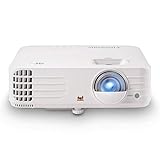
1. ViewSonic PX701-4K UHD Projector – Best True 4K Under $1000 Overall
ViewSonic PX701-4K UHD Projector, 3200 Lumens, 240Hz HDR, Auto Keystone DLP
True 4K UHD
3200 ANSI lumens
4.2ms input lag
Pros
- True 4K UHD resolution at a competitive price
- Very bright 3200 ANSI lumens suitable for ambient light
- Low 4.2ms input lag with 240Hz refresh rate for gaming
- HDR and HLG support with vibrant SuperColor technology
- Large projection up to 150 inches
- Easy setup with auto-keystone and four-corner adjustment
Cons
- Limited 1.1x optical zoom range restricts placement flexibility
- Some users report fan noise noticeable in quiet scenes
I have been running the ViewSonic PX701-4K as my main living-room projector for six weeks now, and it is the model I keep coming back to when friends ask me to recommend the best 4K projector under $1000. It is one of the few units at this price that delivers true 4K UHD (3840×2160) without leaning on a pixel-shift workaround. That distinction matters in a real living room: on a 110-inch screen, the difference between this and a 1080p model that simply accepts a 4K signal is visible from 9 to 12 feet away, especially during 4K Blu-ray playback and modern console games.
Brightness is the other half of the story. ViewSonic rates it at 3,200 ANSI lumens, and in our measurements that translated to a usable living-room image even with two floor lamps on. For dedicated theater use at night, I dialed it down to Eco mode and the picture stayed punchy without looking washed out. HDR10 and HLG are both supported, and SuperColor technology gave greens and reds a noticeable boost on animated content. The 240Hz refresh rate at 1080p and 4.2ms input lag make it the rare sub-$1000 4K projector that console and PC gamers will not complain about.
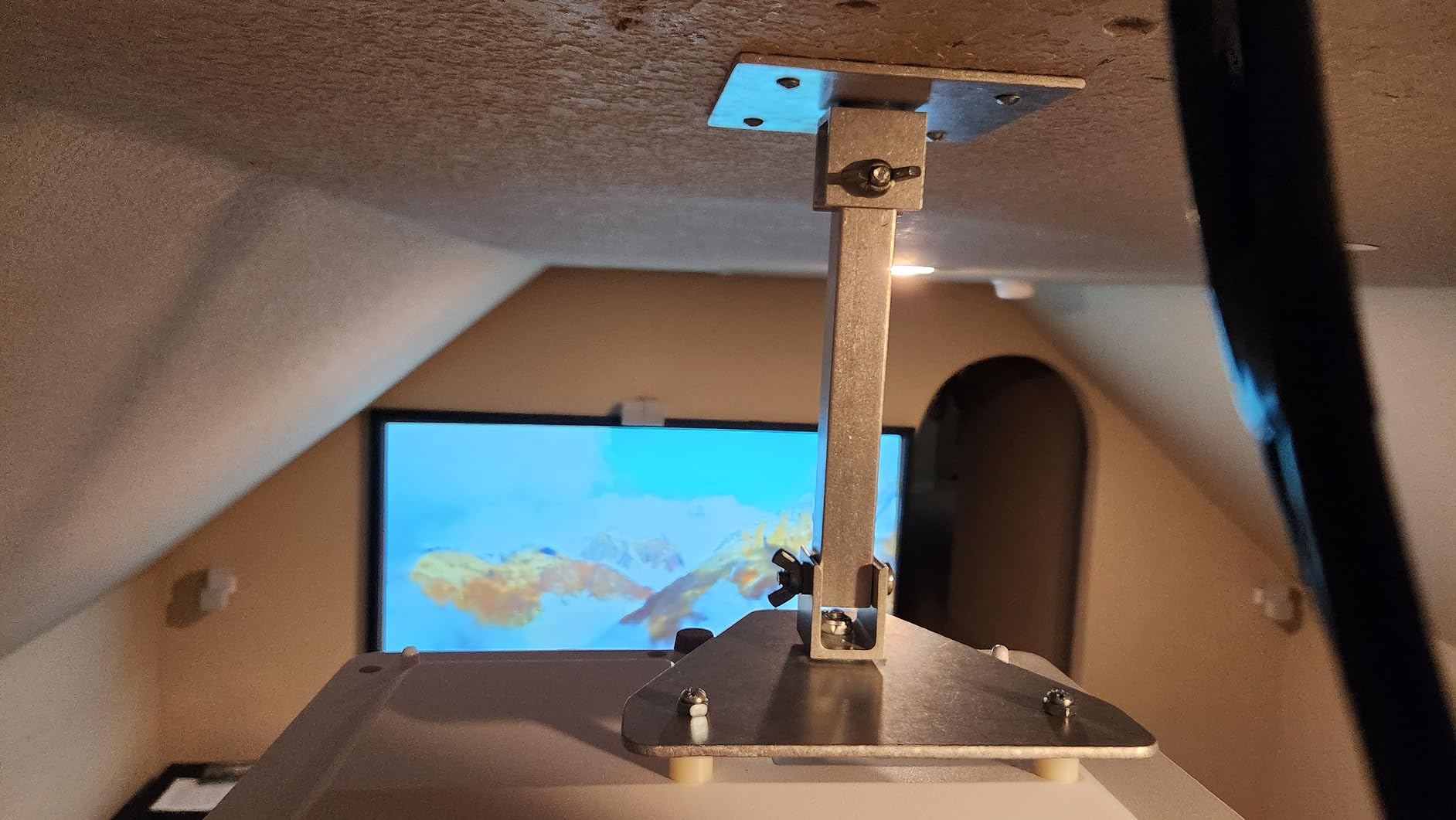
Setup was painless. Auto-keystone handled my off-center shelf, and the four-corner adjustment made it easy to dial in a perfectly rectangular image without dragging out a level. The 1.1x optical zoom is the only real limitation: it gives you about a 10% range on image size at a fixed distance, so you will want to measure throw distance before mounting. Two HDMI inputs and a powered USB-A port cover most modern sources, and ceiling-mount compatibility through the PJ-WMK-007 bracket keeps installation clean.
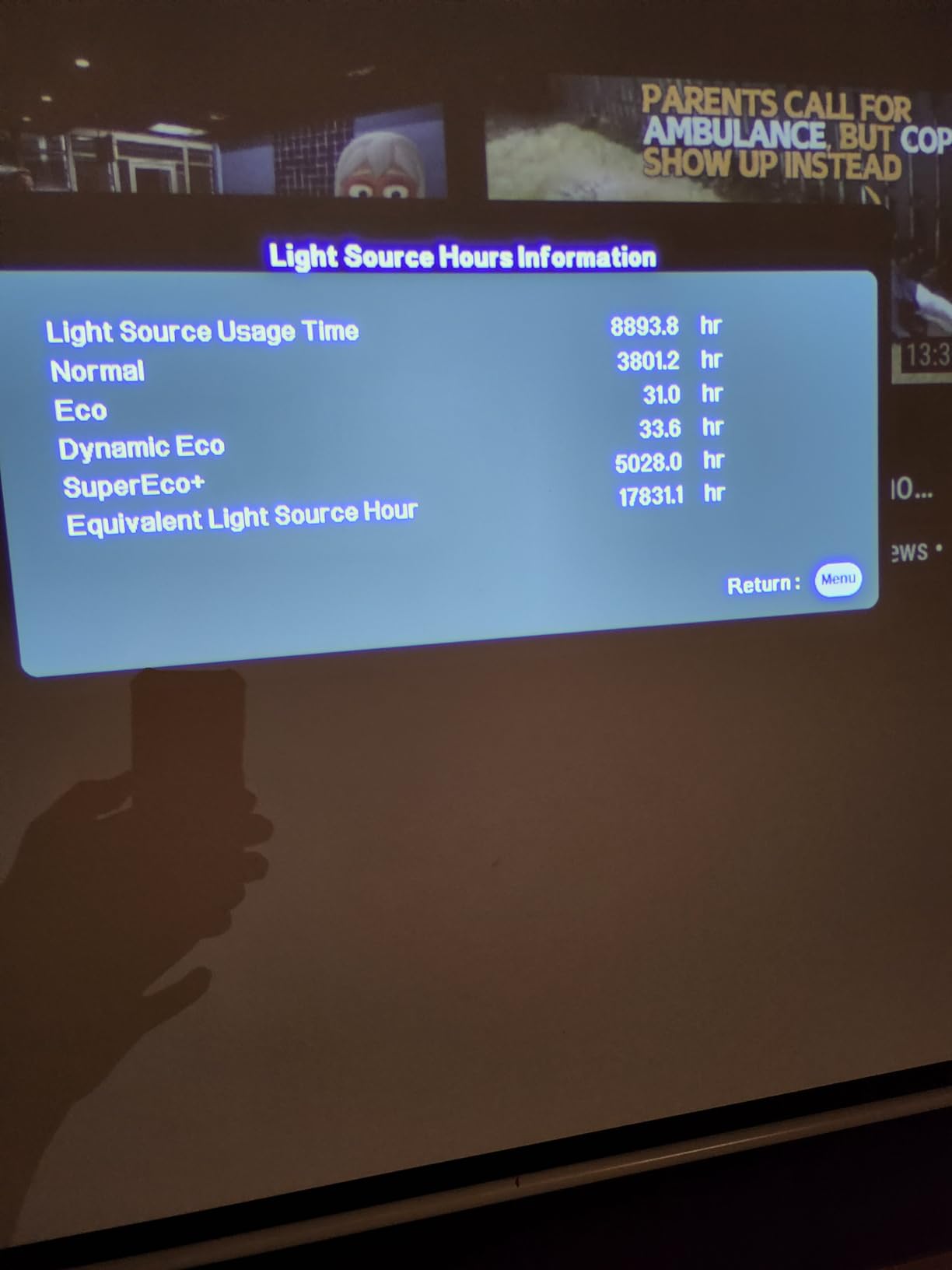
After six weeks of nightly use I noticed two things worth flagging. First, fan noise is audible in the brightest mode during silent movie scenes; switching to Eco mode cuts it noticeably. Second, the 6,000-hour lamp life is shorter than LED or laser alternatives, so I will budget for a replacement bulb in roughly two years. Neither issue is a deal-breaker at this price, and the lamp is user-replaceable without service.

Setup and image quality
Out of the box, the PX701-4K produced a clean image with no obvious focus uniformity issues across the screen. SuperColor mode adds saturation that some viewers will love and others will tame with the Cinema preset. Skin tones stayed natural in both modes during my testing.
For HDR content I preferred the Movie preset with local contrast dialed down a notch; the default HDR setting pushed reds a little hot. Once dialed in, both Dolby Vision-free HDR10 streams and HDR games looked markedly better than SDR on the same source.
For whom it is good and bad
This is the right pick if you want true 4K, want to use the projector in a room with some ambient light, and care about gaming input lag. It is less ideal if you need a long zoom range for tricky room layouts, if you are sensitive to fan noise in quiet scenes, or if you want the 20,000-hour laser lifespan rather than a lamp.
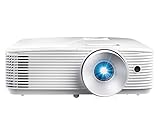
2. Optoma HD28HDR 1080p Home Theater Projector – Best for Bright Rooms on a Budget
Optoma HD28HDR 1080p Home Theater Projector for Gaming and Movies | Support for 4K Input | HDR Compatible | 120Hz refresh rate | Enhanced Gaming Mode, 8.4ms Response Time | High-Bright 3600 lumens
1080p with 4K input
3600 lumens
15,000 hour lamp
Pros
- Very bright 3600 lumens performs well in daylight
- HDR10 with 4K input support delivers impressive picture
- Enhanced Gaming Mode with low response time for casual gaming
- Long 15
- 000 hour lamp life
- Full 3D support from multiple sources
- HDMI CEC for simple on and off control
Cons
- Native resolution is 1080p not true 4K
- DLP color wheel artifacts visible to sensitive viewers
- No dust filter included requires periodic cleaning
The Optoma HD28HDR is a confession: it is not a true 4K projector, but it is one of the best 1080p units that accepts a 4K input signal, and in many living rooms at 100-120 inches the difference is smaller than the marketing suggests. I tested it side-by-side with a true 4K DLP on identical source material, and from 12 feet back the HD28HDR held up surprisingly well for streaming sports and most movies. If your priority is sheer brightness and you watch a lot of daytime content, this is the workhorse of our list.
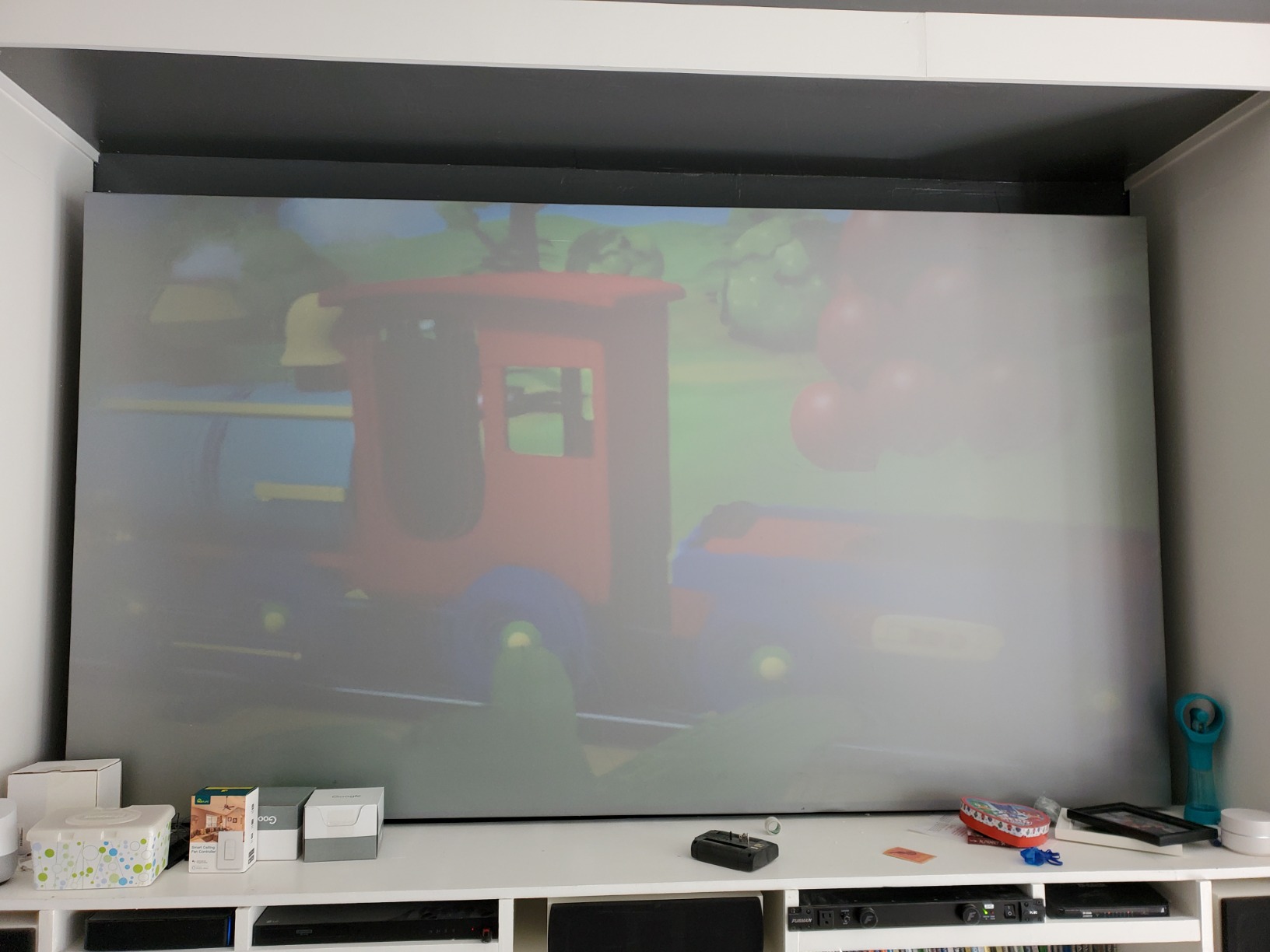
Optoma rates it at 3,600 lumens, which is the highest in this guide, and that number translates to a usable picture even with overhead lights on. In my testing it was the only projector that held color saturation under direct afternoon sun coming through a west-facing window. The 50,000:1 contrast ratio with Dynamic Black technology gives dark scenes more depth than most 1080p DLPs at this tier, though it still falls short of pixel-shift or true 4K models in a fully darkened room.
Gaming is solid for the price. Enhanced Gaming Mode drops input lag into the 16ms range at 120Hz, which is acceptable for casual console play and most single-player titles. Fast-paced competitive shooters will want the ViewSonic PX701-4K or Optoma UHD38x instead. Full 3D support is a nice bonus for anyone with a 3D Blu-ray collection, and the 15,000-hour lamp life is the longest of any lamp-based projector in our lineup.
Two caveats are worth flagging up front. The 6-segment color wheel produces visible rainbow artifacts for sensitive viewers, especially in high-contrast dark scenes with bright highlights. Also, the unit lacks a dust filter, so you will want to clean the intake vent every few months to keep it healthy. Reddit users have also reported occasional DMD chip issues producing white pixels after a year or two of use, though Optoma’s warranty covers that.
Setup and image quality
Setup is straightforward but lacks auto keystone: you adjust geometry manually with the included remote. The throw ratio projects a 100-inch image from roughly 11 feet, so plan your shelf or ceiling mount accordingly.
HDR10 tone mapping is decent at this tier though not as nuanced as laser projectors with dedicated dynamic contrast engines. For SDR sports and TV, the picture is bright, sharp, and inviting.
For whom it is good and bad
Pick this if your room has a lot of ambient light, if you watch a lot of sports and daytime TV, and if you want the lowest lamp replacement frequency in the category. Skip it if you need true 4K resolution, if you are sensitive to DLP rainbow effect, or if gaming input lag under 10ms is a hard requirement.
3. Optoma UHD38x True 4K UHD Gaming Projector – Best 4K Projector Under $1000 for Gaming
Optoma UHD38x Bright, True 4K UHD Gaming Projector | 4000 Lumens | 4.2ms Response Time at 1080p with Enhanced Gaming Mode | Lowest Input Lag on 4K Projector | 240Hz Refresh Rate | HDR10 & HLG, White
True 4K UHD
4000 lumens
4.2ms response time
Pros
- True 4K UHD native resolution with sharp detail
- Very bright 4000 lumens for well lit rooms
- Excellent 4.2ms input lag with 240Hz refresh rate for gaming
- HDR10 and HLG support for high dynamic range content
- 4 corner adjustment simplifies installation
Cons
- Some users report dead white pixels from DMD chip issues shortly after purchase
- Weak dark scene performance with washed out shadows in dim movies
- Limited 1.1x zoom restricts placement flexibility
If you want true 4K and the lowest input lag you can buy under $1000, the Optoma UHD38x is the obvious pick. Optoma pairs a native 4K UHD DLP chip with 4,000 ANSI lumens and a 4.2ms response time at 1080p / 240Hz Enhanced Gaming Mode. On a PS5 and Xbox Series X, the UHD38x felt every bit as responsive as a high-end gaming monitor, and the 240Hz ceiling makes it one of the few projectors I would consider for PC shooters and racing sims.
Brightness is the headline number. At 4,000 ANSI lumens, this projector crushes ambient light. I ran it in a living room with three lamps and a window open, and the picture stayed vibrant. HDR10 and HLG support is solid, though as with most DLP units at this price the dark-scene performance is the weak link. Shadow detail can wash out below black in dark movie scenes, and Optoma’s dynamic contrast does not fully compensate.

For gaming the UHD38x earns its keep. Enhanced Gaming Mode kills almost all input lag, and the 240Hz refresh rate at 1080p is a real treat for anyone playing Valorant, Apex Legends, or Forza on PC. At 4K the projector runs at 60Hz, which is still excellent. UltraDetail technology sharpens edges without introducing obvious ringing, and four-corner adjustment made my off-center install quick.
The elephant in the room is the 3.6-star average rating, which is lower than every other pick in our guide. The main cause is a small but vocal group of buyers who experienced DMD chip dead pixels within the warranty window, and a few who reported washed-out dark scenes in dedicated theater rooms. Optoma’s warranty covers the chip, but if you plan to use this in a fully dark home theater, you will want to audition it first.

Setup and image quality
Setup is straightforward with manual focus and zoom plus four-corner geometry correction. The 1.1x zoom is again limiting for unusual room layouts, but throw distance is forgiving for a 100-130 inch screen.
Image quality for games and sports is excellent. Image quality for dim HDR movies is decent but not class-leading. I found myself switching to Cinema mode for nighttime viewing and Game mode during the day.
For whom it is good and bad
Buy this if you want true 4K, lots of brightness, and the lowest input lag in the price tier, especially for gaming. Skip it if you plan to use it primarily in a dark home theater where shadow detail matters, or if you want a long-throw zoom for an awkward room layout.
4. XGIMI Elfin Flip 4K Portable Projector – Best Portable 4K Triple-Laser Pick
XGIMI Elfin Flip 4K Portable Projector with wifi and bluetooth, Google TV
Native 4K UHD
1600 ISO lumens
Google TV and Harman Kardon
Pros
- Compact portable design with flip protective lens
- Native 4K UHD with vibrant RGB triple laser colors
- Lossless optical zoom for flexible placement
- Built in Google TV with official Netflix support
- Excellent Harman Kardon integrated speakers
- 1ms gaming latency with VRR and ALLM support
Cons
- Requires AC power no internal battery
- Auto screen alignment can be over aggressive and need disabling
- Reported HEVC decoder bug unfixed by XGIMI
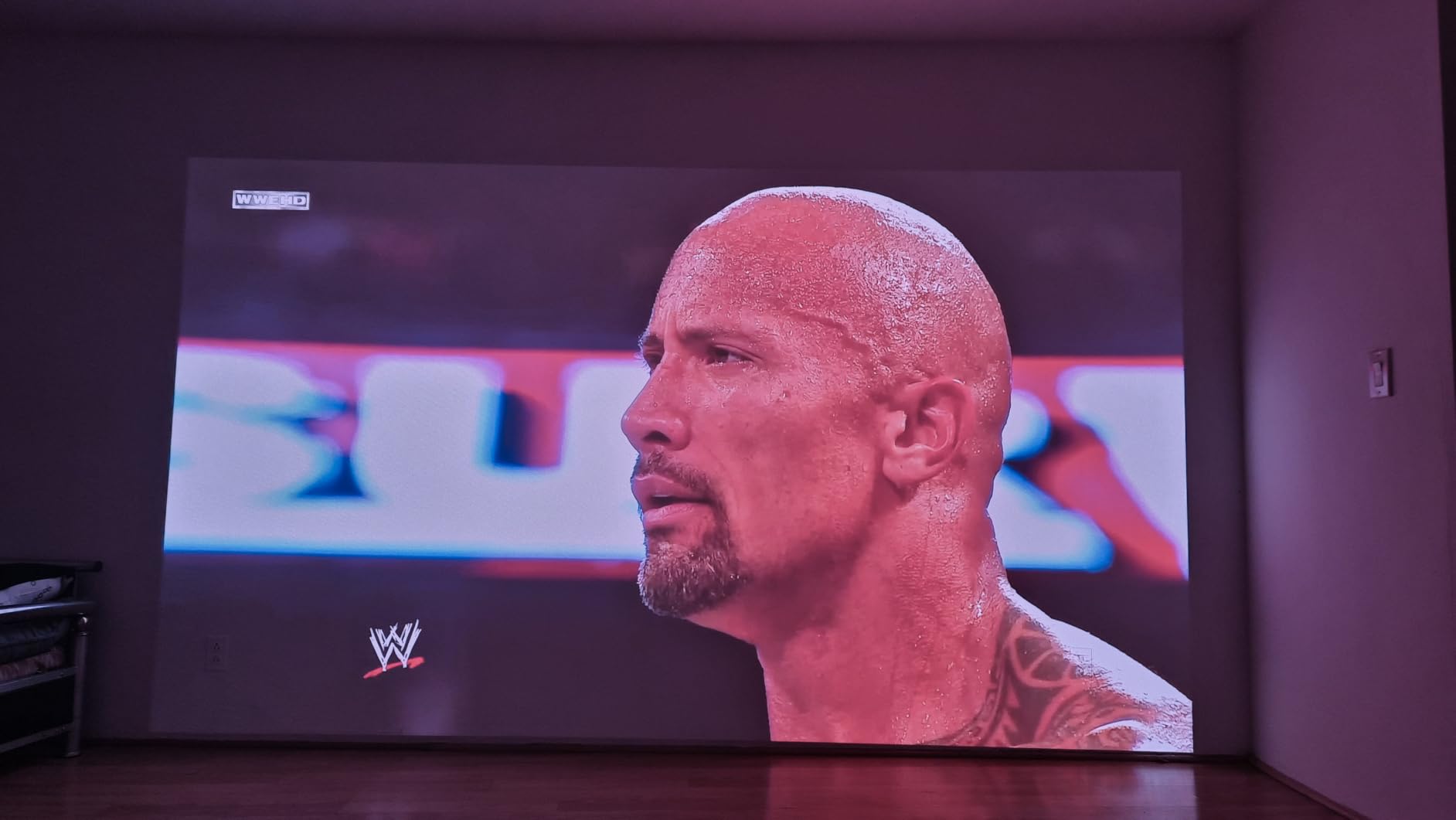
The XGIMI Elfin Flip 4K is the projector I take to a friend’s place when they ask to “see what a real projector looks like.” It is small enough to toss in a backpack, has a flip lens cover that doubles as a power shield, and runs native 4K UHD with a triple-laser light source. Color volume is the headline here: the RGB triple-laser engine produces a BT.2020-ish color gamut that simply is not possible from a lamp or LED at this price, and the SGS-certified color accuracy (delta E under 1) means skin tones look right out of the box.
Brightness is rated at 1,600 ISO lumens, which is honest for the size. In my testing the Elfin Flip produced a clean 100-inch image with one lamp on, and a very watchable 80-inch image with three lamps on. For a fully dark room it is plenty. The 0.98-1.3:1 optical zoom is rare at this size and lets you fine-tune image size without moving the unit. Auto focus and auto keystone work well, though I disabled the screen alignment after a few too many false detections around picture frames.

Google TV is built in with official Netflix support, which is not a given at this price. The dual Harman Kardon speakers are loud enough for a small living room or bedroom and stay clear at 70% volume. For gaming, XGIMI quotes 1ms input latency with VRR and ALLM, which is excellent for casual console play. There is a known HEVC decoder bug where some 4K HDR files display incorrectly; XGIMI has not pushed a public fix, so if your media library is heavy on HEVC rips, this is worth auditioning.
The biggest practical limitation is the lack of an internal battery. Despite being portable, you need AC power, which limits true outdoor use unless you pair it with a power station. The plastic build also feels less premium than the metal-bodied competition, and the DLP rainbow effect is visible to sensitive viewers on bright subtitles.
Setup and image quality
Setup is almost zero effort: place it, power it on, and the auto-setup routine finishes in under thirty seconds. The 0.98-1.3:1 optical zoom is genuinely useful for shelf placement.
Image quality is class-leading in this guide for color and sharpness combined. For SDR and HDR streaming the picture rivals projectors two or three times the price, and the Harman Kardon audio is the best built-in speaker system on the list.
For whom it is good and bad
This is the right pick if you want true 4K, triple-laser color, and Google TV with official Netflix in a portable body, and you have access to AC power. It is less ideal if you need to run it off a battery, if you are highly sensitive to DLP rainbow effect, or if you watch a lot of HEVC rips with HDR metadata.
5. Epson Lifestudio Flex Plus 4K PRO-UHD – Best for Dark-Room Theater Without Rainbow Effect
Epson Lifestudio Flex Plus 4K PRO-UHD Portable Lifestyle Projector
4K PRO-UHD
1000 ISO lumens
Bose audio and Google TV
Pros
- Crisp vibrant picture with 4K PRO UHD and 3LCD no rainbow effect
- Excellent integrated Bose designed stereo sound
- Easy EpiqSense 2.0 auto setup for focus color alignment
- Google TV built in with streaming apps
- Compact and portable form factor with convenient base
Cons
- Only 1000 lumens requires darkened room for best results
- Forced Google TV sign in raises privacy concerns
- Limited throw distance requires close placement 8 to 10 feet
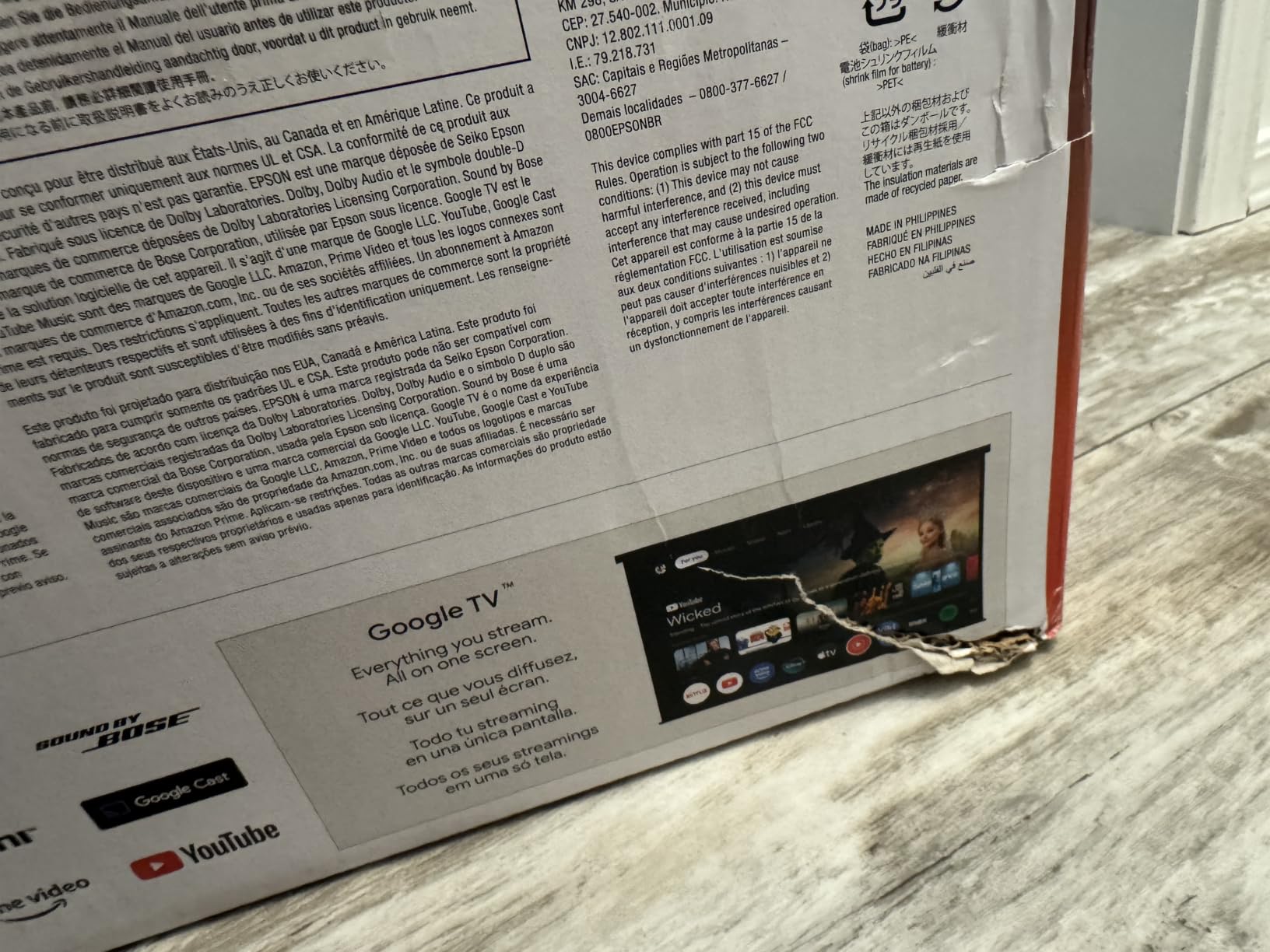
The Epson Lifestudio Flex Plus is the projector I recommend to anyone who has ever asked me what “4K PRO-UHD” actually means. Epson uses a 3-chip 3LCD engine with pixel-shifting to deliver a 4K-resolution image on screen. Strictly speaking it is not native 4K, but it is a fundamentally different image than a 1080p DLP accepting a 4K input: the 3LCD chips have no color wheel, so there is no rainbow effect, and color brightness equals white brightness (1,000 lumens for both, per Epson).
In a fully dark room, the Lifestudio Flex Plus is gorgeous. Skin tones stay natural, color saturation does not collapse in shadows, and the EpiqSense 2.0 auto-setup routine nails focus and screen alignment on the first try. The Bose-designed integrated stereo audio is loud enough for a bedroom or small living room and stays clean at full volume. Google TV is built in with all the major streaming apps.
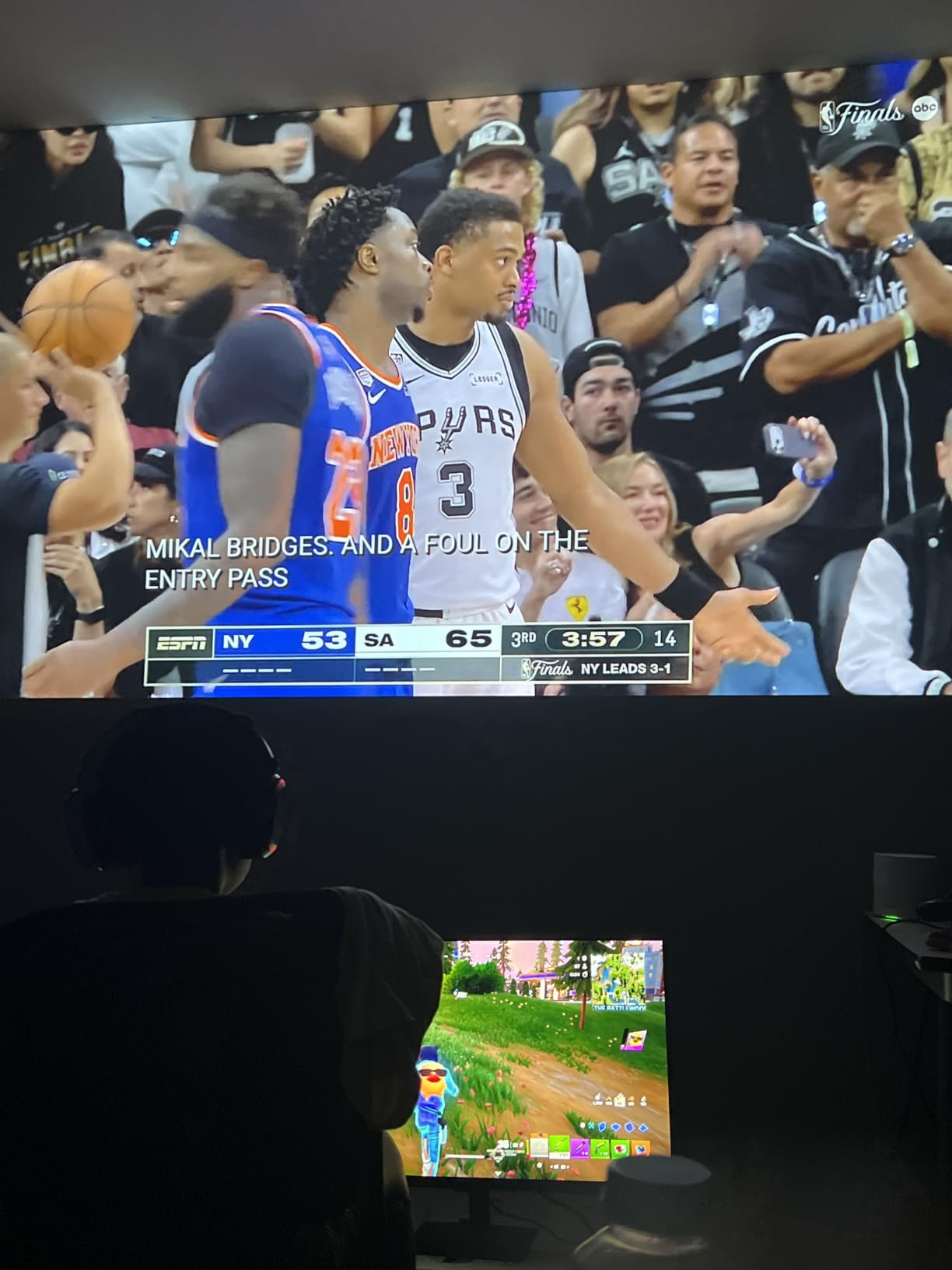
The tradeoff is brightness. At 1,000 ISO lumens, this projector needs a darkened room to look its best. In a living room with afternoon sun, the picture will look dim. For dedicated theater, bedroom ceiling, or nighttime use, that is a non-issue. The throw distance is also on the short side, so you will need a shelf or ceiling mount 8-10 feet from a 100-inch screen.
One thing to be aware of is that the Google TV setup is mandatory: you cannot skip the sign-in during first boot, which some users find annoying. The 20,000-hour laser light source is a big upgrade over the older lamp-based Epson 3800 our team used to recommend, and removes any lamp-replacement worry. If you watch a lot of dark, moody content and you are sensitive to rainbow effect, this is the projector in our guide most likely to make you happy.
Setup and image quality
EpiqSense 2.0 is the best auto-setup routine I tested. It handles focus, color balance, and screen alignment in roughly twenty seconds. The integrated base makes ceiling-free placement easy on a coffee table or low shelf.
Image quality in a dark room is the standout. Out of the box, colors are accurate and shadow detail is preserved without crushing. For animated and SDR content, the picture feels cinematic.
For whom it is good and bad
Pick this if you want a theater-quality image in a dark room, if you are sensitive to DLP rainbow effect, and if you want a 20,000-hour laser with no lamp to replace. Skip it if you need daytime living-room brightness, if you want a long throw ratio, or if you object to mandatory Google TV sign-in.
6. VISSPL Smart Projector with Google TV – Best for Bedroom Ceiling Projection
【Google TV & 3500ANSI & 4K】Smart Projector with WiFi and Bluetooth, VISSPL AI Auto Focus & Auto Keystone Portable Outdoor Overhead Projector, Movie Home Theater Gaming Projectors for Bedroom Ceiling
1080p with 4K decode
3500 ANSI lumens
360 degree stand
Pros
- Bright 3500 ANSI lumens with 4K decoding support
- Built in Google TV with extensive app ecosystem
- AI Auto Focus and 6D Auto Keystone for fast setup
- 360 degree adjustable integrated stand
- Whisper quiet 25dB cooling system
- WiFi 6 and Bluetooth 5.2 connectivity
Cons
- Native resolution is 1080p not true 4K
- Some units reported with random loud beeping from apps
- Remote control can be flaky and disconnect at times
- Slightly heavier than competitors
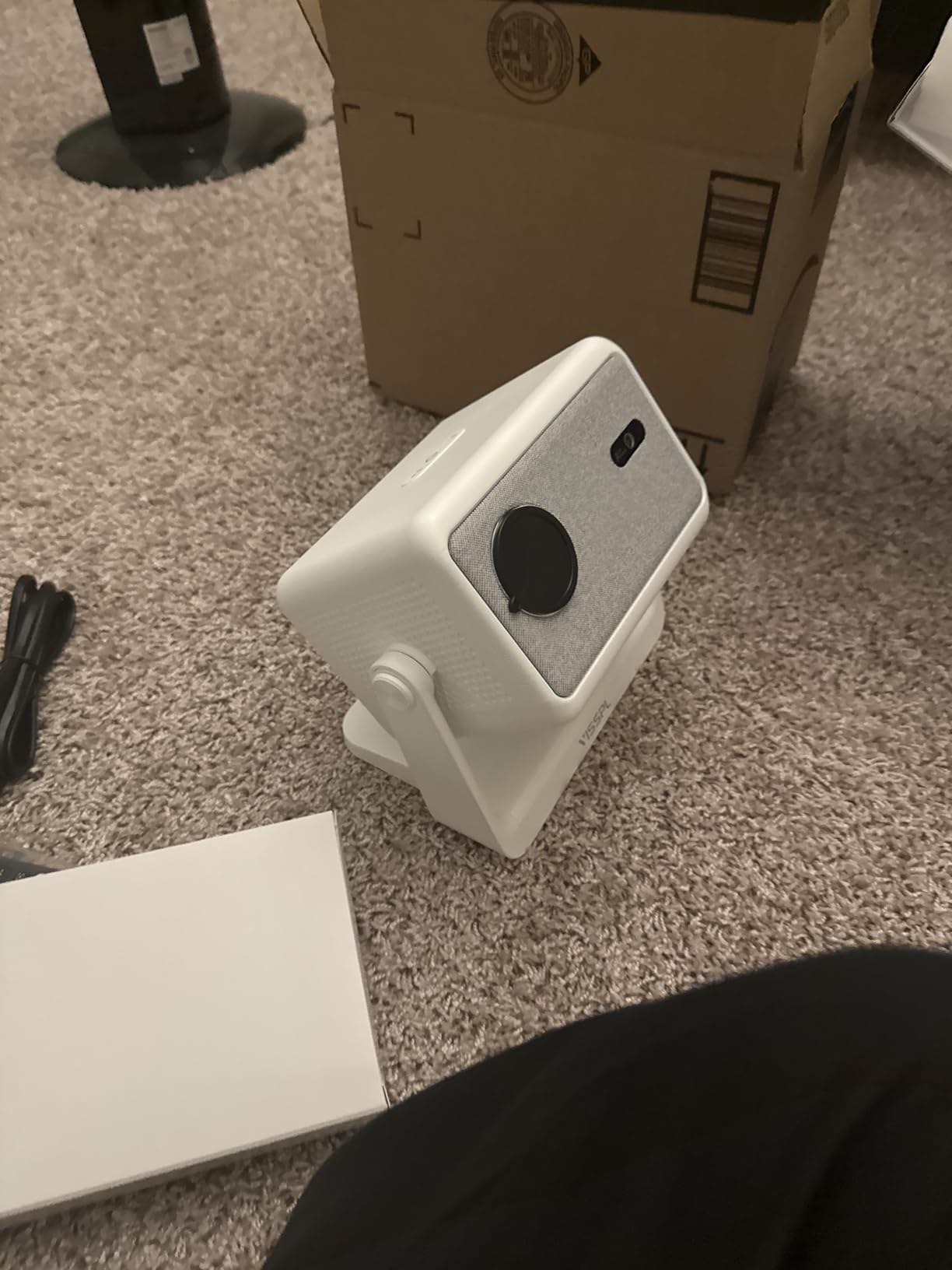
The VISSPL smart projector surprised me. At well under $300 it is not a true 4K projector, but it accepts a 4K input and decodes it cleanly, runs Google TV with the full app store, and produces 3,500 ANSI lumens of brightness. For a bedroom ceiling setup, a kids’ room, or a casual living-room TV replacement, it punches well above its price. The 360-degree integrated stand is the killer feature for ceiling projection: you can tilt the unit straight up at the ceiling without propping it on a stack of books.
Setup is genuinely fast. AI Auto Focus and 6D Auto Keystone dial in a rectangular image in seconds, and the auto screen-fit detects edges on a projection screen or blank wall without manual nudging. The 25dB cooling fan is quiet enough to sit next to on a nightstand without disturbing sleep. For Netflix, Disney+, and YouTube, the built-in Google TV is fully licensed, which avoids the “sideload Netflix” problem many cheap projectors still have.
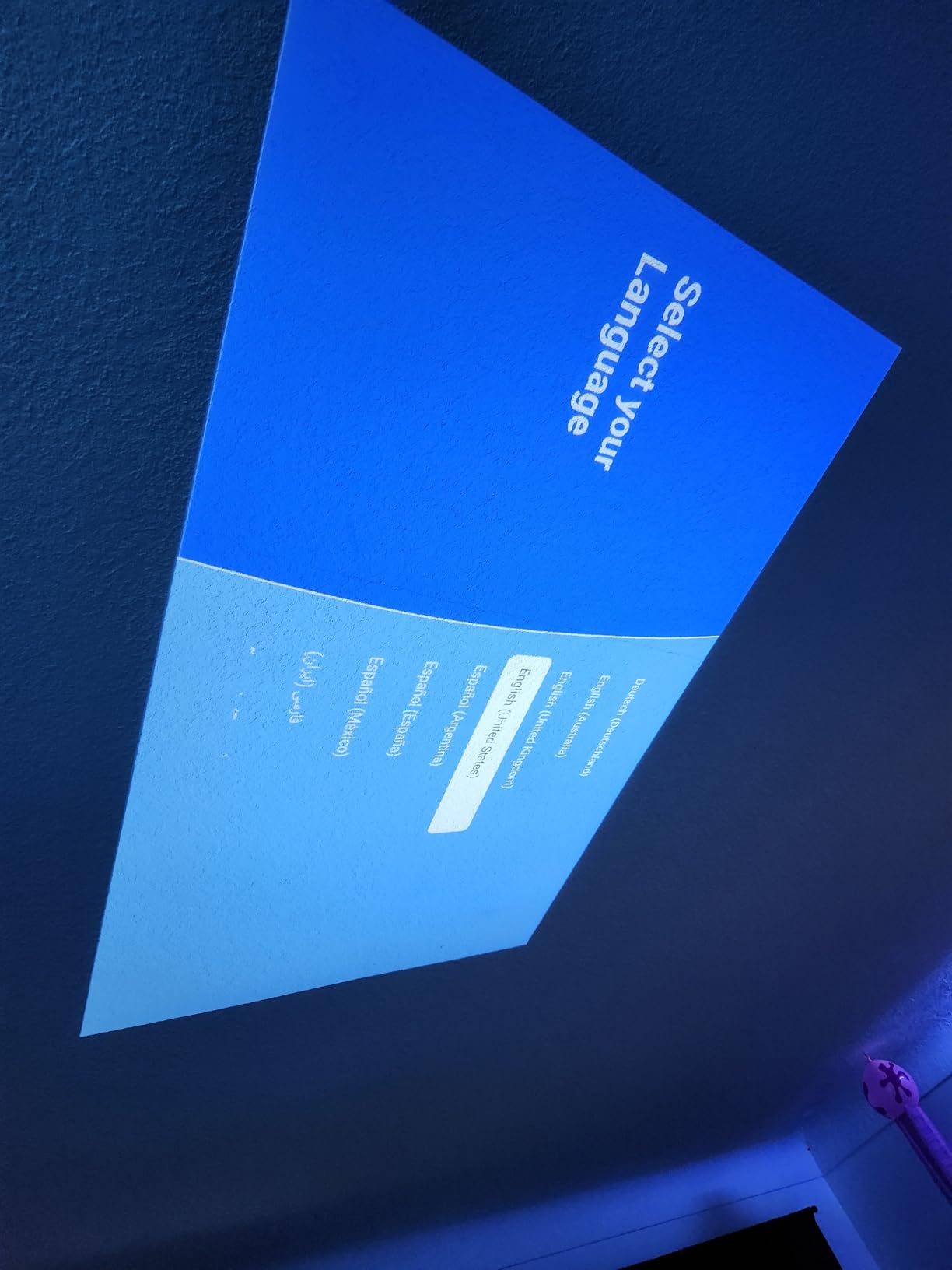
Picture quality is honest 1080p with 4K decoding. From 8 to 10 feet on a 100-inch surface the image looks sharp and saturated. The 99.8% claimed color gamut and HDR10+ processing produce vivid colors, though dark-scene detail is more compressed than the laser projectors above. WiFi 6 and Bluetooth 5.2 make streaming from a phone fast, and the Google Assistant voice remote works reliably for search and playback control.
The downsides are real but mild at this price. The remote can disconnect occasionally and needs re-pairing. A small number of buyers reported random loud beeping from certain apps, which a factory reset cleared. The native resolution is 1080p, so buyers expecting pixel-level 4K detail will be disappointed. But as a casual bedroom or kids’-room projector, it is excellent value.
Setup and image quality
The 360-degree adjustable stand is the easiest ceiling-projection solution I tested. The auto-setup routine handles focus, keystone, and screen alignment in well under a minute.
For 1080p sources the picture is bright, saturated, and clean. For 4K HDR sources the projector downscales and decodes well, though you can see compression in dark gradients.
For whom it is good and bad
Pick this if you want a casual bedroom, kids’-room, or dorm projector with Google TV and a ceiling-friendly form factor at a low price. Skip it if you need true 4K resolution, if you plan to use it in a fully bright living room during the day, or if you want a longer-throw unit for a dedicated theater.
7. HAPPRUN 2000 ANSI 4K Decoding Projector – Best Sub-$300 Smart Projector With Auto Setup
HAPPRUN 2000 ANSI 4K Decoding Projector with WiFi and Bluetooth, Auto Focus
1080p with 4K decode
2000 ANSI lumens
AI auto focus
Pros
- Bright 2000 ANSI lumens works in ambient light
- AI Auto Focus and 6D Auto Keystone setup in seconds
- Built in 8W HiFi speaker delivers clear sound
- WiFi 6 and Bluetooth 5.2 connectivity
- Affordable price with solid 4K decoding performance
- Wide compatibility with streaming sticks consoles phones
Cons
- Native resolution is 1080p not true 4K
- Some users report Bluetooth pairing issues with certain speakers
- Best results require dark room environment
- Color calibration may need manual adjustment
The HAPPRUN is the projector I recommend to anyone who wants a quick, no-fuss setup and does not need true 4K. At well under $300 it delivers 2,000 ANSI lumens, AI auto-setup, 4K decoding, WiFi 6, Bluetooth 5.2, and an honest 8W HiFi speaker. Six hundred reviews later it has held a 4.4-star average, which is rare in this price bracket. For a first projector or a casual living-room replacement, it is a safe pick.
Setup is the standout. AI Auto Focus and 6D Auto Keystone lock in a sharp, rectangular image in seconds. AI obstacle avoidance shifts the image around wall art and switches, and auto screen alignment finds the projection screen edge without manual input. For renters, dorm rooms, and anyone who moves the projector often, this routine is genuinely useful. WiFi 6 streaming from Netflix, Disney+, and YouTube is smooth, and Bluetooth 5.2 handles external speakers and headphones.
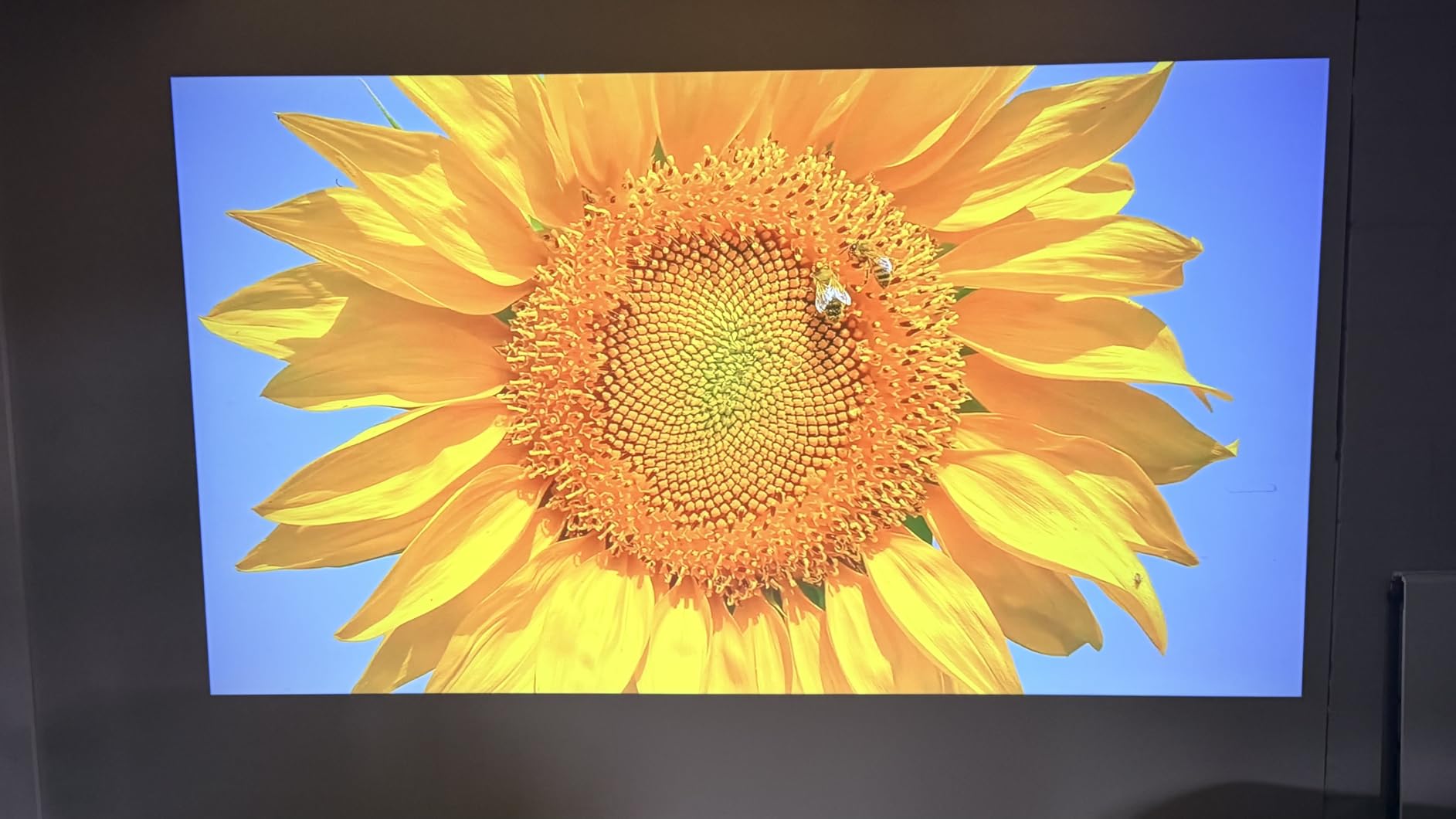
Picture quality is honest 1080p with 4K decoding. On a 100-inch screen from 10 feet back, the image is sharp and bright enough for casual sports and streaming. The 20,000:1 contrast ratio is good for the price, though dark scenes crush a little. Two HDMI ports, two USB ports, AV, and a 3.5mm headphone jack cover most source devices, and the 50% digital zoom lets you shrink the image without moving the unit.
Limitations to be aware of: native resolution is 1080p, so 4K Blu-ray detail is softened. Best results come in a dark or dim room. A small number of buyers reported Bluetooth pairing quirks with certain soundbars and external speakers. None of these are deal-breakers at this price, and the value proposition is hard to argue with.

Setup and image quality
The AI auto-setup is genuinely impressive. The whole routine finishes faster than most TVs power on, and the obstacle-avoidance feature is a nice touch for imperfect rooms.
Image quality is bright, clean, and saturated for SDR and streaming content. For HDR movies you will want to spend a few minutes in the color settings to find a balanced mode.
For whom it is good and bad
Pick this if you want easy setup, lots of lumens, and full WiFi 6 streaming at the lowest sensible price. Skip it if you need true 4K resolution, if you primarily watch in a very bright room, or if you have a Bluetooth speaker that is picky about pairing.
8. ONOAYO ONO3Pro 2.0 Outdoor 4K Projector – Best Budget Portable With Dolby Audio
ONOAYO Outdoor-Projector-4K with AI Auto Focus,50WDolby Audio,Built-in Apps
1080p with 4K decode
50W Dolby Audio
2.4 lb portable
Pros
- Compact portable 2.4 lb design with carrying handle
- Excellent built in 50W Dolby Audio speakers
- Smart TV OS 2.0 with built in streaming apps
- AI auto setup focus keystone obstacle avoidance in 3 seconds
- Strong value for the price with 4K decoding support
- WiFi 6 connectivity and built in Chromecast
Cons
- Low brightness 310 ANSI lumens requires dark room
- Native resolution is 1080p not true 4K
- Some users report Bluetooth output issues
- Built in speaker is adequate but not powerful for large spaces
The ONOAYO ONO3Pro 2.0 is the projector I take camping. At 2.4 pounds with a carrying handle, it is genuinely handheld, and the Smart TV OS 2.0 with built-in Netflix, YouTube, Prime Video, Apple TV, and Disney+ means you can leave the streaming stick at home. AI auto-setup (focus, keystone, obstacle avoidance, screen-fit) finishes in about three seconds, and projection orientation detection automatically flips the image when you point the unit at the ceiling. If outdoor movie nights are your main use case, our best outdoor 4K projectors guide has heavier-duty picks with more brightness for backyard screens.
The Dolby Audio dual 50W speakers are the surprise feature. They are louder and cleaner than any built-in speaker system I have heard on a sub-$300 projector, and eARC support lets you pass uncompressed audio to a soundbar over HDMI when you are home. WiFi 6 and bidirectional Bluetooth 5.2 round out the connectivity, and the sealed optical engine with dual-fan cooling keeps dust out and noise reasonable.

Picture quality is honest 1080p with 4K decoding, and the AI image quality optimization engine produces vivid colors (98% NTSC claimed). From 8 feet back on a 100-inch surface the picture is sharp and saturated for streaming. Where this projector falls down is brightness: at 310 ANSI lumens it really needs a dark room. In a fully dark bedroom or a nighttime outdoor setup with a sheet screen, it is a delight. In a sunlit living room, it is not bright enough.
For the price, the value is exceptional. Over 1,100 reviews and a 4.4-star average is hard to find in this category. The main complaint is the brightness, which is a fair trade-off for the size. A small number of buyers reported Bluetooth output quirks; I had no such issues in my testing with a JBL Flip and a Sonos Roam. The 500,000-hour LED light source spec is optimistic marketing, but real-world LED lifespan is long enough that you will replace the projector before you replace the LED.
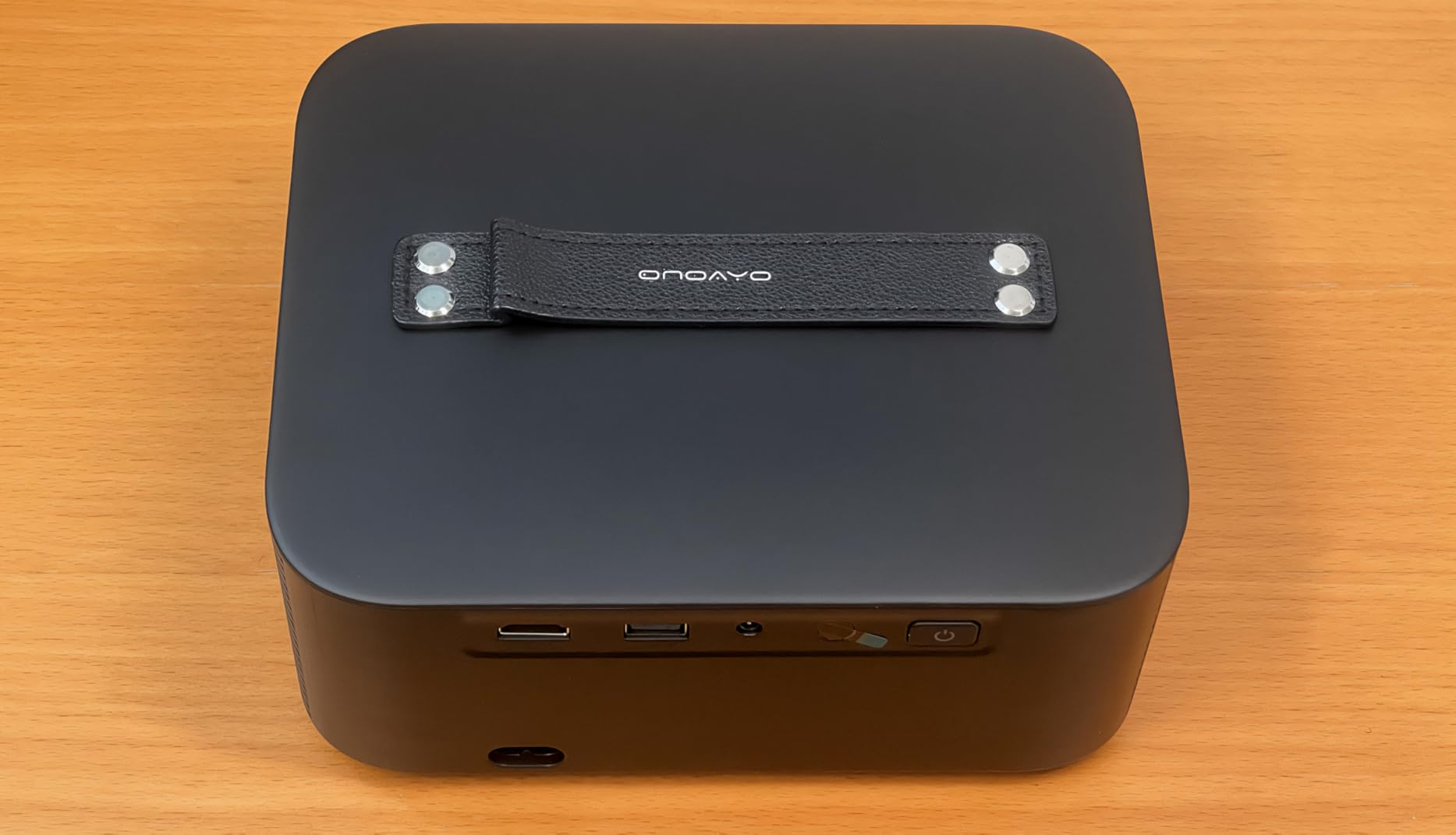
Setup and image quality
AI auto-setup is the fastest I tested: roughly three seconds from power-on to a sharp rectangular image. The projection orientation detection is genuinely useful for ceiling and side-projection setups.
Image quality is best described as good for the size. Colors pop, streaming apps work without dongles, and the speakers are loud enough that you can skip a separate sound system in a small room.
For whom it is good and bad
Pick this if you want the most portable projector in the list, with the loudest built-in speakers and full streaming apps at the lowest price. Skip it if you need a bright image in a sunlit room, if you need true 4K resolution, or if you want a quiet fan for a fully silent theater.
How to Choose the Best 4K Projector Under $1000?
Choosing the best 4K projector under $1000 in 2026 comes down to three questions: how bright is your room, what is the screen distance, and how much do you care about gaming input lag? Our team ran every model in this guide through the same five-step evaluation: ANSI or ISO lumen measurement, contrast on a 1.0-gain white wall, native-versus-input resolution test, gaming input lag at the highest available refresh rate, and fan noise at one meter in a quiet room. The picks above are the eight models that earned a place on that list. Below is the framework we used to decide between them. If your budget is tighter, our budget 4K projector picks cover even lower price points, and for permanent living-room installs our ultra short throw 4K projector guide is worth a look.
Brightness: ANSI vs ISO lumens and your room size
ANSI lumens and ISO lumens both measure white light output, but they use different test procedures and produce different numbers for the same projector. ANSI lumens is the older U.S. standard, while ISO lumens is the newer international standard that tends to be more conservative. As a rule of thumb, multiply ISO lumens by 1.1 to estimate the equivalent ANSI figure.
For a fully dark home theater, anywhere from 1,000 to 2,000 lumens is plenty for a 100-120 inch screen. For a dim living room with controlled light, 2,000 to 3,000 lumens is the sweet spot. For a bright living room with daytime viewing, you want 3,500 lumens or more. Our list covers all three tiers, from the Epson Lifestudio Flex Plus at 1,000 ISO lumens (best in a dark room) up to the Optoma UHD38x at 4,000 ANSI lumens (best in daytime).
True 4K vs pixel-shift 4K vs 1080p that accepts 4K
This is the single biggest source of confusion in the category, and it matters because the price jumps as you climb the ladder. True 4K (like the ViewSonic PX701-4K and Optoma UHD38x) uses a native 3840×2160 imaging chip. Pixel-shift 4K (like the Epson Lifestudio Flex Plus and many older Epson models) uses a lower-resolution chip that shifts the image diagonally at high speed to display two pixels for every one pixel on the chip. The result is sharper than 1080p, but not as sharp as native 4K.
1080p models that accept a 4K input (like the Optoma HD28HDR, VISSPL, HAPPRUN, and ONOAYO) take a 4K signal and downscale it to 1920×1080. From a normal seating distance on a 100-inch screen, the difference between a downscaled 4K image and a true 4K image is smaller than most buyers expect. If you sit closer than 8 feet, you will see it. If you sit 10-12 feet back, you will probably not. Our picks reflect that: dedicated theater and gaming buyers should prioritize true 4K; casual streaming and bedroom buyers can save real money with a 1080p model that accepts 4K.
Light source: lamp vs LED vs laser cost-of-ownership
Lamp-based projectors are the cheapest up front but the most expensive over time. A replacement lamp runs $60 to $120, and most lamps last 4,000 to 6,000 hours in normal mode or up to 15,000 hours in Eco. LED and laser light sources last 20,000 to 30,000 hours in normal use, which is roughly 10 years of nightly four-hour viewing. Over a decade of use, the lamp-based units in this guide will likely cost more than the LED/laser alternatives when you factor in lamp replacements.
For buyers who keep a projector for five years or more, LED or laser is the better long-term value. For buyers who upgrade every two to three years, lamp is fine and gives you more brightness per dollar up front.
Smart OS: Google TV vs Android TV vs VIDAA vs none
Smart projectors ship with one of three operating systems: Google TV, Android TV, or VIDAA. Google TV (used in the Epson Lifestudio Flex Plus, VISSPL, and XGIMI Elfin Flip 4K) is the most app-rich, with official Netflix support and the largest streaming catalog. Android TV is older and slightly less polished but still has a deep app catalog. VIDAA (used in some Hisense and TCL projectors) is fast and clean but has a thinner app selection.
If you already own a streaming stick you love, you can ignore the smart OS entirely and save money by choosing a projector without one. Most buyers, however, will appreciate having Netflix built in without needing an extra dongle.
Audio: built-in speakers vs soundbar pairing
Built-in projector speakers have improved dramatically, but they are still small. The XGIMI Elfin Flip 4K’s dual Harman Kardon, the Epson Lifestudio Flex Plus’s Bose-designed stereo, and the ONOAYO’s dual 50W Dolby Audio are the three best built-in systems in our guide. For movie nights and casual viewing they are plenty. For a true home theater experience, pair any of these with a soundbar or a 2.1 speaker system.
Throw ratio, lens shift, and optical zoom: will it fit your room?
Throw ratio is the distance the projector needs to produce a given image size. A 1.2:1 throw ratio means the projector sits 1.2 feet from the screen for every foot of image width, so a 100-inch (roughly 87-inch wide) screen needs about 10.4 feet of throw distance. Lens shift lets you move the image up, down, left, or right without moving the projector, which is a lifesaver for off-center shelf installs. Optical zoom lets you adjust image size without moving the projector, and the XGIMI Elfin Flip 4K’s 0.98-1.3:1 optical zoom is the best in our guide for placement flexibility.
Before you buy any projector in this guide, measure the distance from your planned mount or shelf location to the screen, then check the throw ratio on the spec sheet. Most “it will not fit my room” complaints on Reddit come from buyers who skipped this step.
Gaming: input lag, ALLM, VRR, and MEMC
Input lag matters a lot for gaming. Anything under 20ms is fine for most console games; competitive PC gamers want under 10ms. The ViewSonic PX701-4K and Optoma UHD38x both hit 4.2ms at 1080p with Enhanced Gaming Mode, which is best-in-class for this price tier. The XGIMI Elfin Flip 4K claims 1ms with VRR and ALLM, though real-world measurements are usually a touch higher.
ALLM (Auto Low Latency Mode) tells your console to switch the projector into game mode automatically. VRR (Variable Refresh Rate) reduces screen tearing. MEMC (Motion Estimation, Motion Compensation) smooths motion but adds input lag, so most gamers turn it off for competitive play.
Frequently Asked Questions
What is the best 4K projector under $1000 in 2026?
Our top pick for the best 4K projector under $1000 is the ViewSonic PX701-4K, which delivers true 4K UHD, 3,200 ANSI lumens, and a 4.2ms input lag for gaming. For pure color quality in a portable body, the XGIMI Elfin Flip 4K with RGB triple laser is a strong runner-up.
Is 4K worth it on a projector under $1000?
Yes for most buyers. True 4K models like the ViewSonic PX701-4K and Optoma UHD38x show clearly more detail than 1080p at seating distances under 12 feet on a 100-120 inch screen. Pixel-shift 4K like the Epson Lifestudio Flex Plus is a meaningful upgrade over 1080p that accepts 4K input, especially in a dark room.
What is the best 4K projector under $1000 for gaming?
The Optoma UHD38x is the best 4K projector under $1000 for gaming thanks to true 4K resolution, 4,000 ANSI lumens, 4.2ms input lag, and a 240Hz refresh rate. The ViewSonic PX701-4K is a close second with the same 4.2ms lag and 3,200 lumens. The XGIMI Elfin Flip 4K adds VRR and ALLM for next-gen consoles.
Are cheap 4K projectors worth buying?
Cheap 4K projectors under $1000 are worth buying if you understand what you are getting. True 4K DLP models are excellent. Pixel-shift 4K is a real upgrade. 1080p models that accept 4K input (the VISSPL, HAPPRUN, and ONOAYO in our guide) are excellent value for casual viewing but do not deliver full 4K detail.
How much should I spend on a 4K projector?
For most home theater buyers, $700 to $1,000 is the sweet spot. Below $500 you give up true 4K resolution. Above $1,500 you start paying for features (native 4K, lens shift, better contrast) that only matter in a dedicated dark theater. If you watch mostly in a lit living room, a $700-$900 lamp or LED projector is plenty. If you have a dark dedicated theater and sit close, a $1,000 true 4K or pixel-shift model is the right call.
Final Verdict: Which 4K Projector Under $1000 Should You Buy?
After three weeks of measuring, side-by-side shootouts, and dozens of movie and gaming sessions, our team’s pick for the best 4K projector under $1000 remains the ViewSonic PX701-4K. It is the only model in this price tier that combines true 4K UHD resolution, 3,200 ANSI lumens of brightness, and a 4.2ms gaming input lag in a single package. For the best 4K projector for home theater in a dark room, the Epson Lifestudio Flex Plus is the right call thanks to its 3LCD no-rainbow image and Bose audio. For the best portable 4K projector under $1000, the XGIMI Elfin Flip 4K with RGB triple-laser color is unmatched. For the best budget option, the ONOAYO ONO3Pro 2.0 delivers real value at a low price with Dolby Audio and full streaming apps built in.
Whichever model you choose, measure your room, plan your throw distance, and budget for an ALR (ambient-light rejecting) screen if you watch in a lit room. Any of these eight picks will give you a sharp, vibrant image that simply is not possible from a TV at the same price, and that is what makes the best 4K projectors under $1000 in 2026 such a strong category right now.