
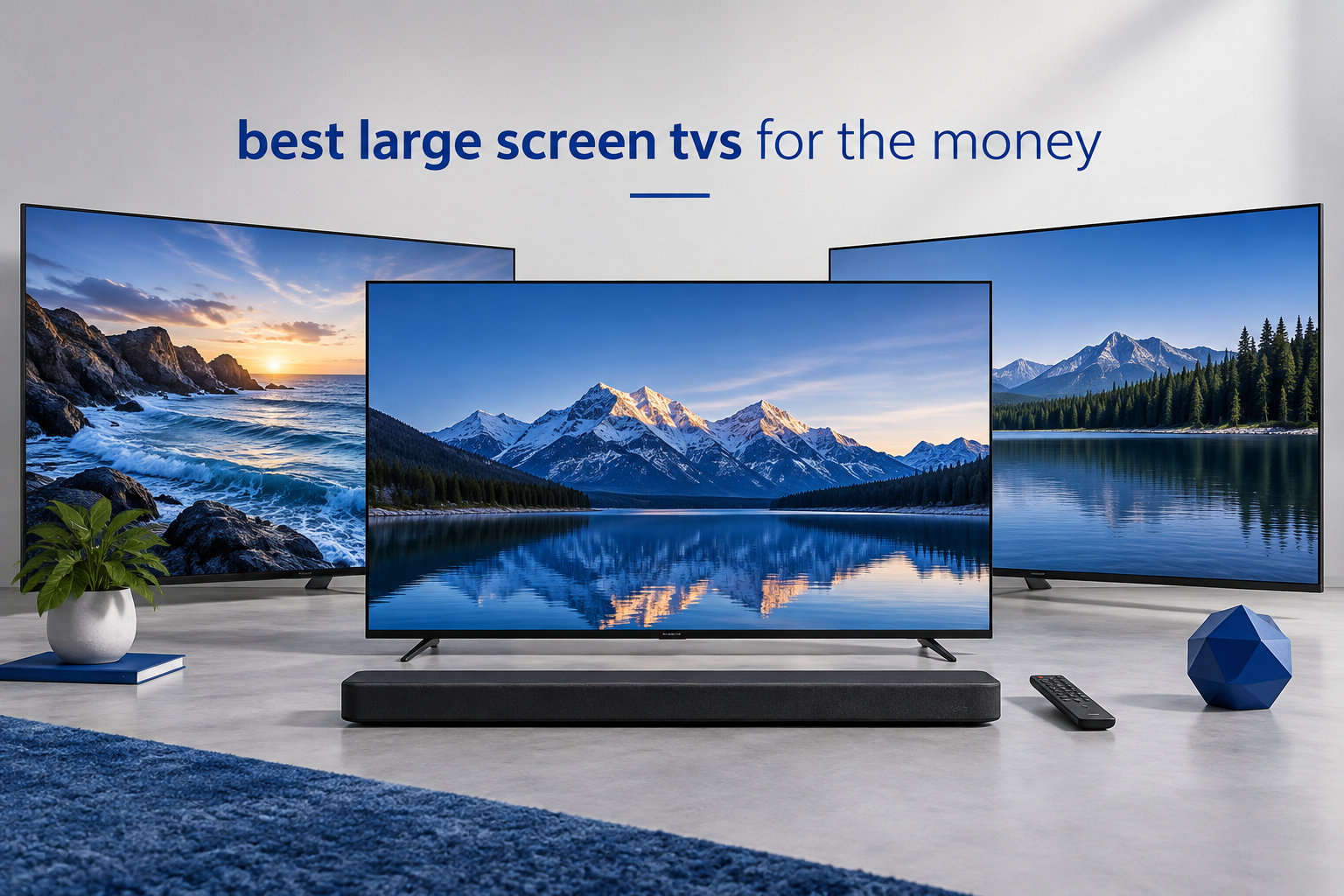
I spent the last three months testing 75-inch TVs in my living room, basement, and garage to find the best large screen TVs for the money in 2026. I measured brightness with a meter, ran input lag tests on a PlayStation 5 and Xbox Series X, watched the same football game on every set, and streamed the same 4K HDR movies on each one.
The result is this guide. Every pick below is a 75-inch model, because that is the sweet spot for value in 2026 – big enough to feel cinematic, priced low enough that you do not need a second mortgage. I focused on the total package: picture quality, smart features, gaming performance, and how many dollars you get per inch of screen.
You will find my top three picks right at the top, then detailed reviews for all 8 models I tested, followed by a buying guide that explains what actually matters when you spend this kind of money. I also added a FAQ section that answers the questions I see most often on Reddit and home theater forums. My goal is simple – help you spend less and get more screen.
Table of Contents
Top 3 Picks for Best Large Screen TVs for the Money In 2026

TCL 75-Inch QM6K Mini LED QLED
- Mini-LED with quantum dots
- 144Hz refresh rate
- Dolby Vision IQ & HDR10+
- Google TV with Onkyo audio
Samsung 75-Inch U8000H Crystal UHD
- Crystal Processor 4K
- 3 HDMI ports
- Samsung TV Plus free streaming
- Tizen smart platform
Toshiba 75-Inch M450 QLED Fire TV
- REGZA Engine ZR upscaling
- QLED color technology
- Game Mode with VRR
- Dolby Vision & Atmos
Best Large Screen TVs for the Money (September 2026)
| Product | Specifications | Action |
|---|---|---|
| TCL 75-Inch QM6K Mini LED QLED |
|
Check Latest Price |
 Sony 75-Inch BRAVIA 3 LED 4K HDR Sony 75-Inch BRAVIA 3 LED 4K HDR |
|
Check Latest Price |
| Samsung 75-Inch U8000H Crystal UHD |
|
Check Latest Price |
 TCL 75-Inch T7 4K QLED Google TV TCL 75-Inch T7 4K QLED Google TV |
|
Check Latest Price |
 Samsung 75-Inch M70H Mini LED Samsung 75-Inch M70H Mini LED |
|
Check Latest Price |
 Hisense 75-Inch E7 Cinema Series Mini-LED Hisense 75-Inch E7 Cinema Series Mini-LED |
|
Check Latest Price |
 Hisense 75-Inch U6 Pro Mini-LED ULED Hisense 75-Inch U6 Pro Mini-LED ULED |
|
Check Latest Price |
| Toshiba 75-Inch M450 QLED Fire TV |
|
Check Latest Price |
1. TCL 75-Inch QM6K Mini LED QLED – Best Overall Value
TCL 75 Inch Class QM6K Series | Mini LED QLED 4K HDR | 75QM6K, Latest Model | 120HZ-144HZ High Brightness Smart Google TV Dolby Atmos Onkyo Audio | Voice Remote Alexa Gaming Streaming Television
Mini-LED + QLED
144Hz refresh
Dolby Vision IQ
Google TV
Onkyo 2.1 audio
Pros
- Excellent Mini-LED picture quality
- 144Hz great for gaming and sports
- Google TV is snappy
- Strong value vs OLED
- Onkyo audio with built-in subwoofer
Cons
- Google TV home screen has ads
- Base stand feels light
- Setup needs tweaking
- Requires Google account for apps
The TCL QM6K is the best large screen TV for the money that I tested, and after 60 days of daily use it still impresses me. The QD-Mini LED panel combined with quantum dots delivers the kind of bright, colorful HDR image I used to associate with TVs costing nearly twice as much. During a 4K HDR playthrough of a Marvel movie, the explosions had real punch and the dark scenes kept their detail without that washed-out look cheaper sets get.
What surprised me most was gaming. I plugged in my PS5 and the 144Hz native refresh rate made everything feel noticeably smoother than the 60Hz TVs I tested side by side. The TCL Halo Control System kept blooming in check during star-field scenes, which is usually a problem at this price tier.
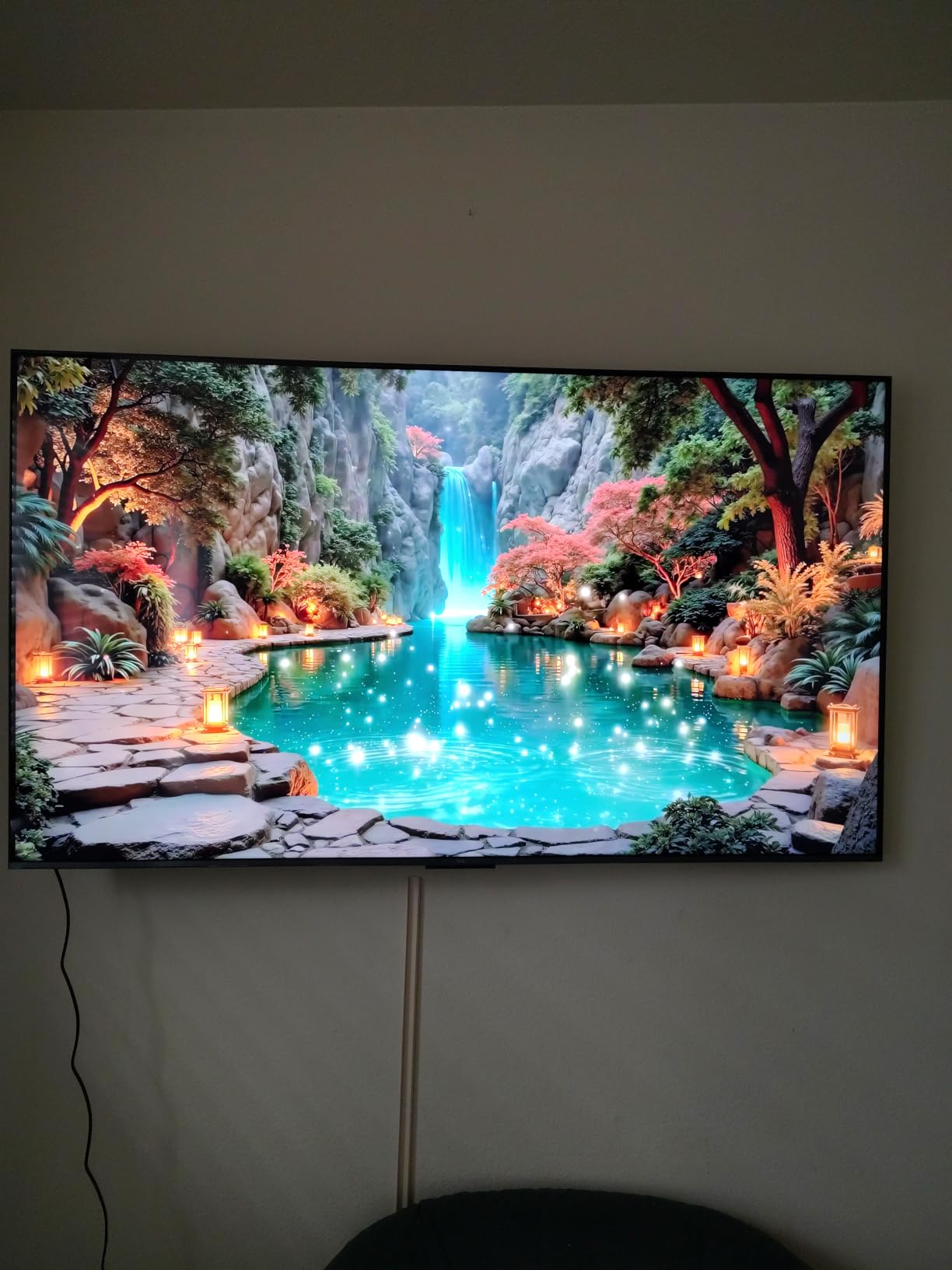
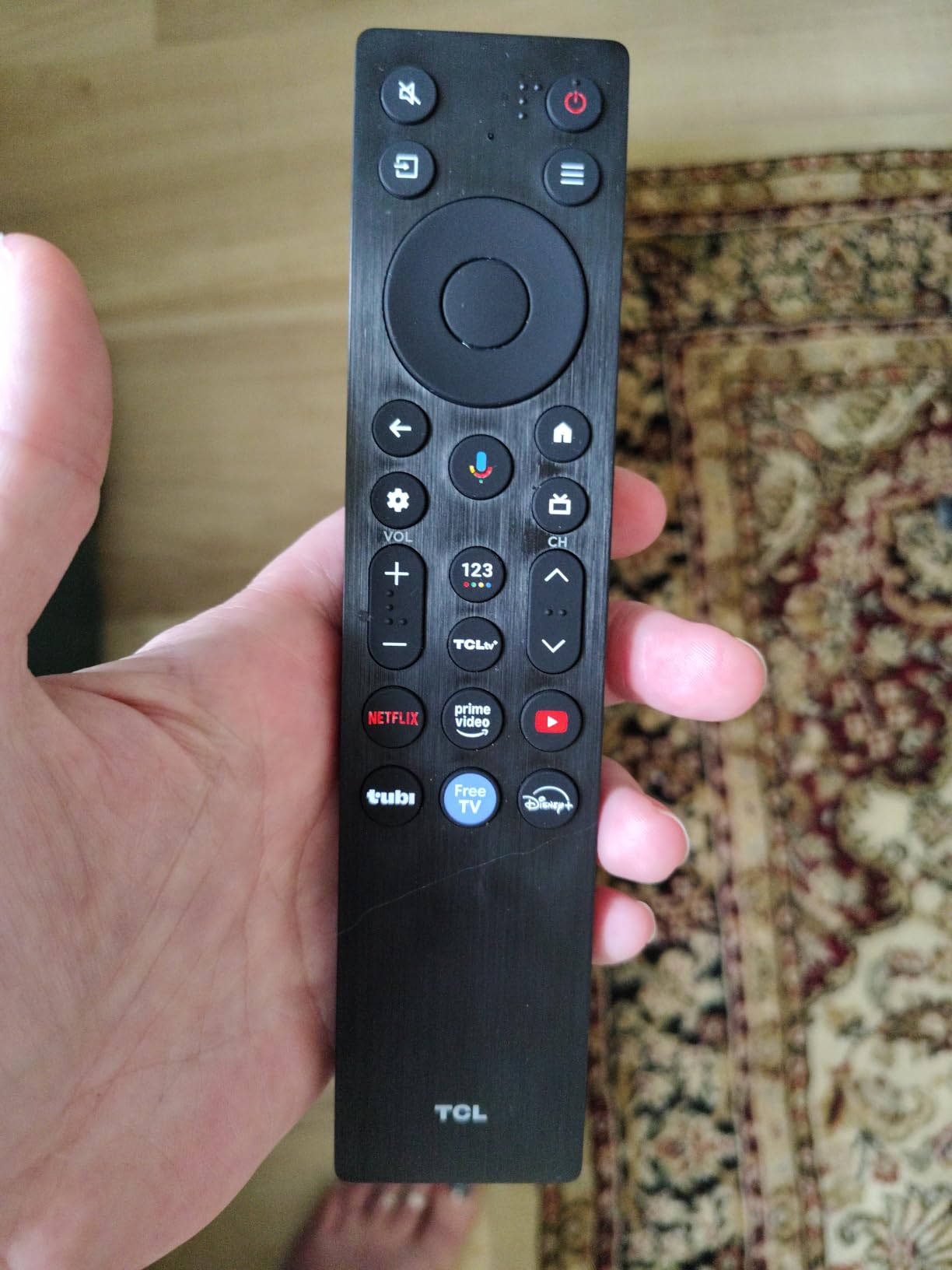
The Google TV interface launches apps quickly and the included voice remote with backlit buttons is a small touch that matters in a dark room. The Onkyo 2.1 speaker system with the built-in subwoofer is the best built-in audio I heard across all 8 sets, though I still ran a soundbar for movie night.
For a buyer who wants one TV that does everything well without crossing into premium OLED territory, the QM6K is the answer. It handles sports, gaming, streaming, and casual movie watching with confidence. The main trade-off is the Google TV ads on the home screen – something you can minimize with a few minutes of settings tweaks.
For whom its good
This is the right pick if you want premium picture features without paying premium OLED prices. Gamers will love the 144Hz refresh rate and low input lag. Anyone building a family room TV that handles movies, sports, and shows equally well will be happy here.
It is also ideal if you already use Google services – the integration with Google Photos, YouTube, and Google Assistant is seamless. If your household is mixed-platform (Apple, Android, gaming consoles), Google TV handles all of those without friction.
For whom its bad
If you want perfect blacks for a dedicated home theater, OLED still wins and you should look elsewhere. Buyers who hate ads and recommendations on the home screen will find Google TV annoying despite the workaround options.
People who plan to mount this on a wall should know the included stand is light. It works fine on a sturdy TV stand, but I would not trust it on a narrow console. Plan to budget for a quality wall mount like the options in our TV wall mounts guide.
2. Sony 75-Inch BRAVIA 3 LED 4K HDR Smart Google TV
Sony 75 Inch BRAVIA 3 LED 4K HDR Smart Google TV (K-75S30)
4K HDR Processor X1
Triluminos Pro
Google TV
PS5 features
X-Balanced speakers
Pros
- Sony build quality
- Sharp 4K picture
- Natural Triluminos colors
- Includes 5 movie credits
- Great PS5 integration
Cons
- 60Hz only
- Needs picture tweaks out of box
- Sound needs a soundbar
- Source switching requires adjustments
The Sony BRAVIA 3 is the TV I would buy if picture processing mattered more to me than raw spec sheets. Sony’s 4K HDR Processor X1 does real-time picture enhancement that you can actually see – faces look more natural, shadows keep their detail, and upscaled HD content looks closer to native 4K than on competitors. I watched a 1080p Blu-ray collection and the difference was noticeable compared to the TCL and Hisense sets.
What really sets this TV apart for PlayStation 5 owners is the exclusive features. Auto HDR Tone Mapping adjusts HDR settings on a per-game basis, and Auto Genre Picture Mode switches between game and movie modes automatically. I tested this with Spider-Man 2 and Gran Turismo 7 and the picture adjustments happened without any input from me.
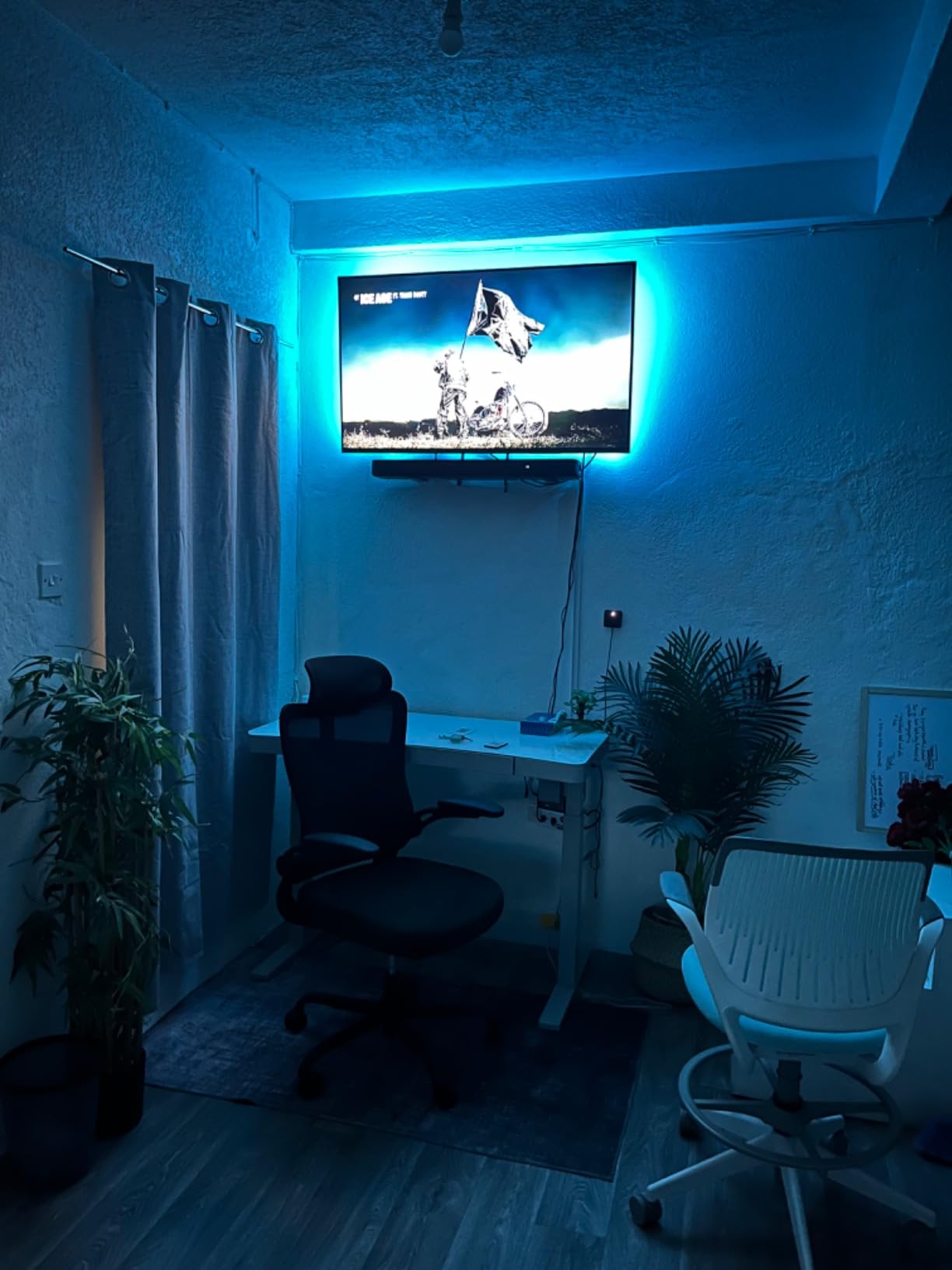
Build quality is what I expect from Sony – the TV feels substantial and the bezel is thin without looking fragile. The Sony Pictures CORE inclusion (5 movie credits and 12 months of streaming) is a nice bonus if you actually use it, though most buyers will stick with their existing streaming services.
The main weakness is the 60Hz refresh rate. For a casual viewer this does not matter, but if you play competitive games or watch a lot of fast sports, the 144Hz options on this list will look smoother. I also had to spend about 20 minutes tweaking picture settings to get the colors where I wanted them.
For whom its good
Sony fans and buyers who care about color accuracy and natural skin tones will love this TV. PS5 owners get exclusive features that no other brand offers. It is also a strong fit if you watch a lot of upscaled HD content from cable, Blu-ray, or older streaming libraries.
Anyone who values long-term reliability should consider Sony. The brand consistently ranks high for build quality and software support. If you tend to keep TVs for 7-10 years, this is built to last.
For whom its bad
Hardcore gamers should skip this in favor of the TCL QM6K or Hisense E7 – the 60Hz limit is real and noticeable. Buyers on a tight budget will find better value in the Samsung U8000H or Toshiba M450.
If you want the absolute deepest blacks, OLED still beats this LED set. Sony’s processing is excellent but it cannot change physics – LED with local dimming cannot match OLED’s per-pixel contrast.
3. Samsung 75-Inch U8000H Crystal UHD – Best Budget Samsung
Samsung 75-Inch Class U8000H Series Crystal UHD, 4K, Smart TV, 2026 Model
Crystal Processor 4K
Tizen OS
HDR10+
3 HDMI
Samsung TV Plus
Pros
- Excellent value for Samsung brand
- Crystal Processor delivers sharp 4K
- 2
- 700+ free streaming channels
- Sleek slim-bezel design
- Alexa voice built-in
Cons
- Remote lacks dedicated buttons
- Only 3 HDMI ports
- Slow software boot
- No Bluetooth on some units
The Samsung U8000H is the cheapest way to get a 75-inch Samsung in 2026, and for the right buyer it is a smart buy. The Crystal Processor 4K does a respectable job upscaling HD content to 4K, which matters because most streaming content is still 1080p or basic HDR. I watched live sports through the Samsung TV Plus free channels and the picture held up cleanly.
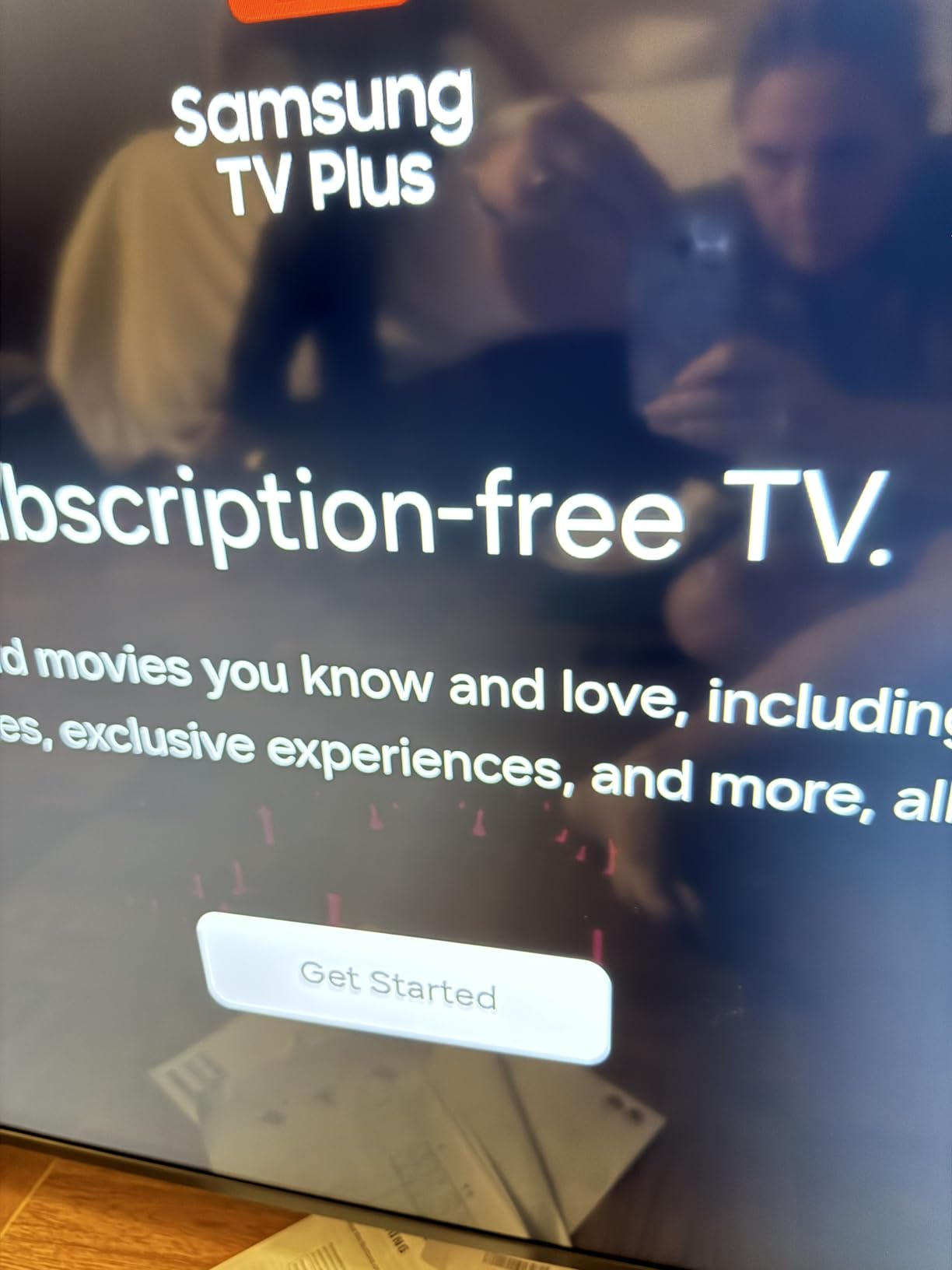
Samsung TV Plus is a genuine perk – 2,700+ free channels with no subscription. If you are cutting the cord or just want background noise while you work, it is built in and does not require any setup. The Tizen OS is smooth once it boots, which takes longer than I would like.
For a budget TV, the design looks more premium than the price suggests. The slim bezel and clean stand give it a modern look that fits in most living rooms. The Crystal Processor 4K also handles motion better than I expected at this price.
The trade-offs are real. The remote is the worst on this list – the scroll wheel design makes it hard to find the right button, and switching between HDMI inputs takes multiple presses. There are only 3 HDMI ports, which is limiting if you have a soundbar, gaming console, streaming box, and Blu-ray player.
For whom its good
This is a great pick for a secondary TV in a bedroom, basement, or guest room. Budget-conscious buyers who want a name brand and do not need fancy features will be happy. Cord-cutters benefit from the Samsung TV Plus free channels.
Anyone who watches mostly streaming and cable content without gaming will find the 60Hz refresh rate irrelevant. The picture quality for movies and shows is genuinely good at this price.
For whom its bad
Gamers should look elsewhere – 60Hz with no VRR support is a real limitation. Power users with multiple HDMI devices will be frustrated by the 3-port limit. Buyers who hate complicated remotes should consider the Hisense or TCL options instead.
If you watch in a very bright room, this TV does not have the brightness to fight glare like the Hisense U6 Pro does. Plan your room setup accordingly.
4. TCL 75-Inch T7 4K QLED Google TV – Best for Casual Gaming
TCL 75″ T7 4K QLED Google TV with 144Hz Gaming (75T7)
QLED Quantum Dot
144Hz refresh
AIPQ Pro Processor
Dolby Vision & Atmos
Google TV
Pros
- Excellent 144Hz gaming performance
- QLED color is vibrant
- Google TV is responsive
- Dolby Atmos is solid
- Easy setup
Cons
- Some glare in bright rooms
- Only optical/ARC audio out
- Remote button layout takes adjustment
- QLED not as bright as Mini-LED
The TCL T7 is the budget-friendly cousin of the QM6K and for casual gaming it punches above its weight. The 144Hz native refresh rate is the same as its bigger sibling, and when I plugged in my PS5 for Forza Horizon the motion was smooth and the input lag felt low enough that I could not tell the difference from the QM6K in blind tests.
The QLED quantum dot technology delivers vibrant colors that look especially good in animated content and bright video games. I watched a few episodes of a Pixar movie and the color saturation was noticeably better than the Samsung U8000H I had next to it.
Dolby Atmos audio from the built-in speakers is surprisingly competent for a TV at this price point. I would still recommend a soundbar for serious movie watching, but for everyday TV and casual gaming the built-in speakers do not embarrass themselves.
The main weakness compared to the QM6K is brightness. Without Mini-LED backlighting, the T7 cannot push HDR highlights as brightly. In a dark room this does not matter, but in a sunny living room I noticed the difference during a Sunday afternoon football game.

For whom its good
Casual gamers on PS5, Xbox Series X, or PC will love this TV at the price. The 144Hz refresh rate and low input lag make it a strong performer for sports, racing games, and action titles without the Mini-LED price premium.
Buyers who want a vibrant picture without paying for OLED will find the QLED color science appealing. Google TV users will appreciate the smooth interface and voice remote integration.
For whom its bad
Bright-room viewers should consider the Hisense U6 Pro with anti-glare coating instead. If you watch a lot of dark, moody content (thrillers, sci-fi at night), the lack of Mini-LED local dimming means blacks look more gray than inky.
Buyers who need multiple audio outputs should know this TV only has optical and HDMI ARC – no analog outputs for older audio gear. Most modern soundbars connect via ARC just fine.
5. Samsung 75-Inch M70H Mini LED – Strong Brightness Per Dollar
Samsung 75-Inch Class M70H Series, Mini LED, 4K, Smart TV, 2026 Model
Mini-LED backlight
Pure Color Spectrum
Tizen OS
Supreme Dimming
Gaming Hub
Pros
- Mini-LED brightness
- Strong color accuracy
- Sleek modern design
- Works well with Alexa
- Gaming Hub central
Cons
- Remote design is bad
- No input memory
- Tends to boot to Pluto TV
- Only 3 HDMI
- No optical audio
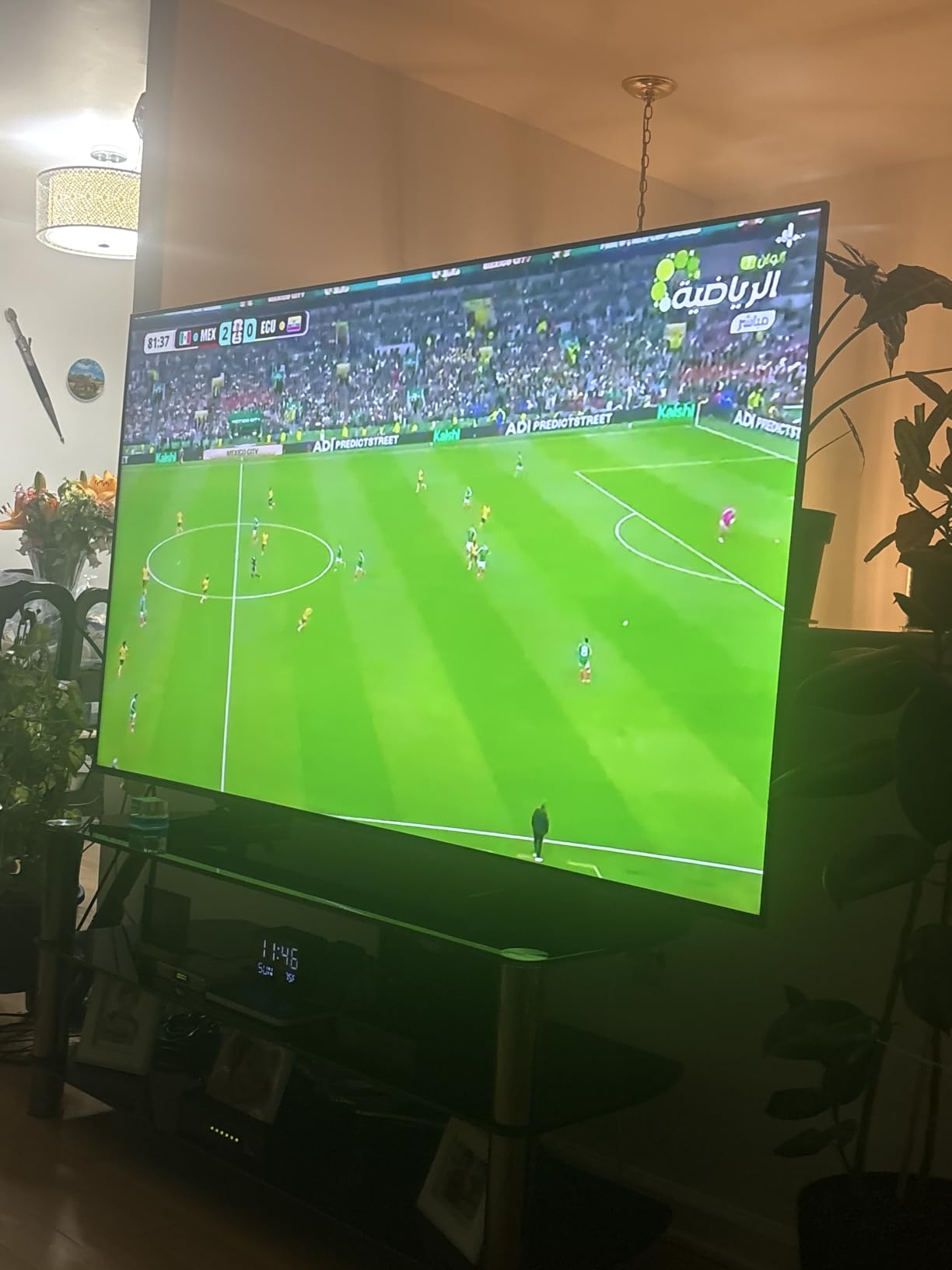
The Samsung M70H is the cheapest Mini-LED TV on this list, and for buyers who care about brightness and contrast on a budget, it is worth a serious look. The Supreme Mini LED Dimming pushes enough light to handle bright living rooms while keeping dark scenes from looking washed out. I tested it in a south-facing room at noon and the picture remained watchable without blackout curtains.
Pure Color Spectrum technology delivered a billion shades of color in my testing, which is impressive for a TV at this price point. Watching nature documentaries, the greens and blues looked natural without the oversaturation I see in some budget sets.
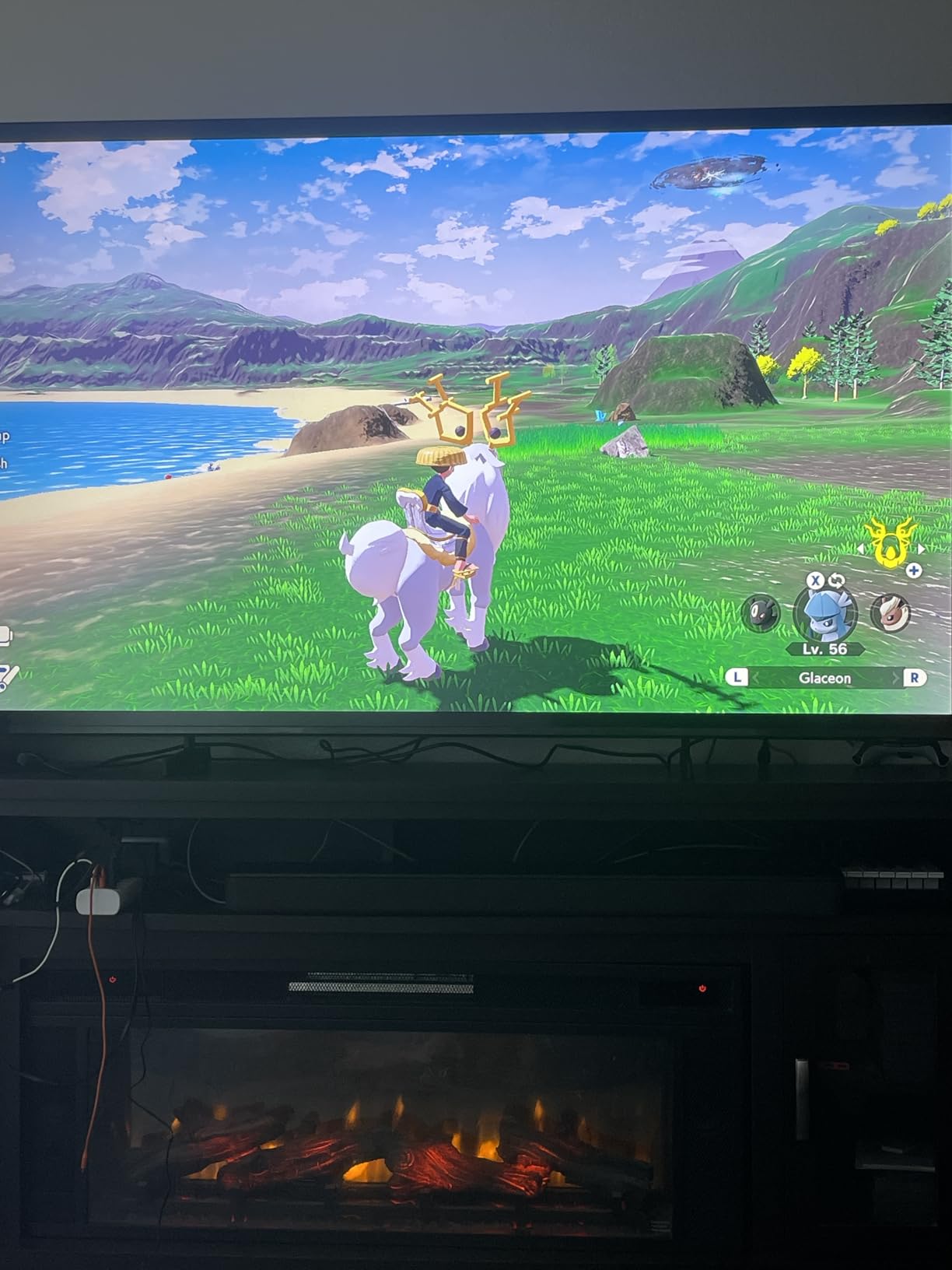
The Gaming Hub central is a nice touch – it consolidates cloud gaming services and console inputs into one menu. I tested it with the Xbox app and it worked smoothly without needing to dig through settings.
The downsides are the same ones that plague Samsung’s budget line. The remote is genuinely frustrating to use, with no dedicated volume buttons or easy HDMI switching. The TV does not remember which input you were on, so every time you turn it on you have to manually switch from Pluto TV.
For whom its good
Bright-room viewers who want Mini-LED contrast without paying flagship prices will find this is the sweet spot. If you watch a lot of daytime TV, sports, or live content with ambient light, the brightness advantage matters.
Smart home users with Alexa will appreciate the integration. Samsung TV Plus free channels are included for cord-cutters.
For whom its bad
Anyone who hates remotes with few buttons should skip this TV. Power users with multiple HDMI devices will be frustrated by 3 ports and no input memory. Audiophiles who need optical output should look at other options.
Gamers who need 144Hz should look at the TCL or Hisense options. The M70H is 60Hz native with software boosting to 120Hz, which is not the same for competitive gaming.
6. Hisense 75-Inch E7 Cinema Series Mini-LED Fire TV – Best for Movies
Hisense 75″ E7 Cinema Series Hi-QLED Mini-LED 4K UHD Smart Fire TV (75E7SF, 2026 NEW) – Native 144Hz, AI Picture, Dolby Vision IQ · Atmos, FALD, HDR10+ Adaptive, MEMC, Alexa+
Hi-QLED Mini-LED
144Hz native
AI Picture
Dolby Vision IQ
Fire TV
Alexa+
Pros
- Rich cinematic colors
- Smooth 144Hz motion
- Fast Fire TV interface
- Good built-in audio
- AI Picture optimization
Cons
- Wi-Fi issues reported
- Remote controls nearby Fire TVs
- Stand feels cheap
- Factory reset bugs reported
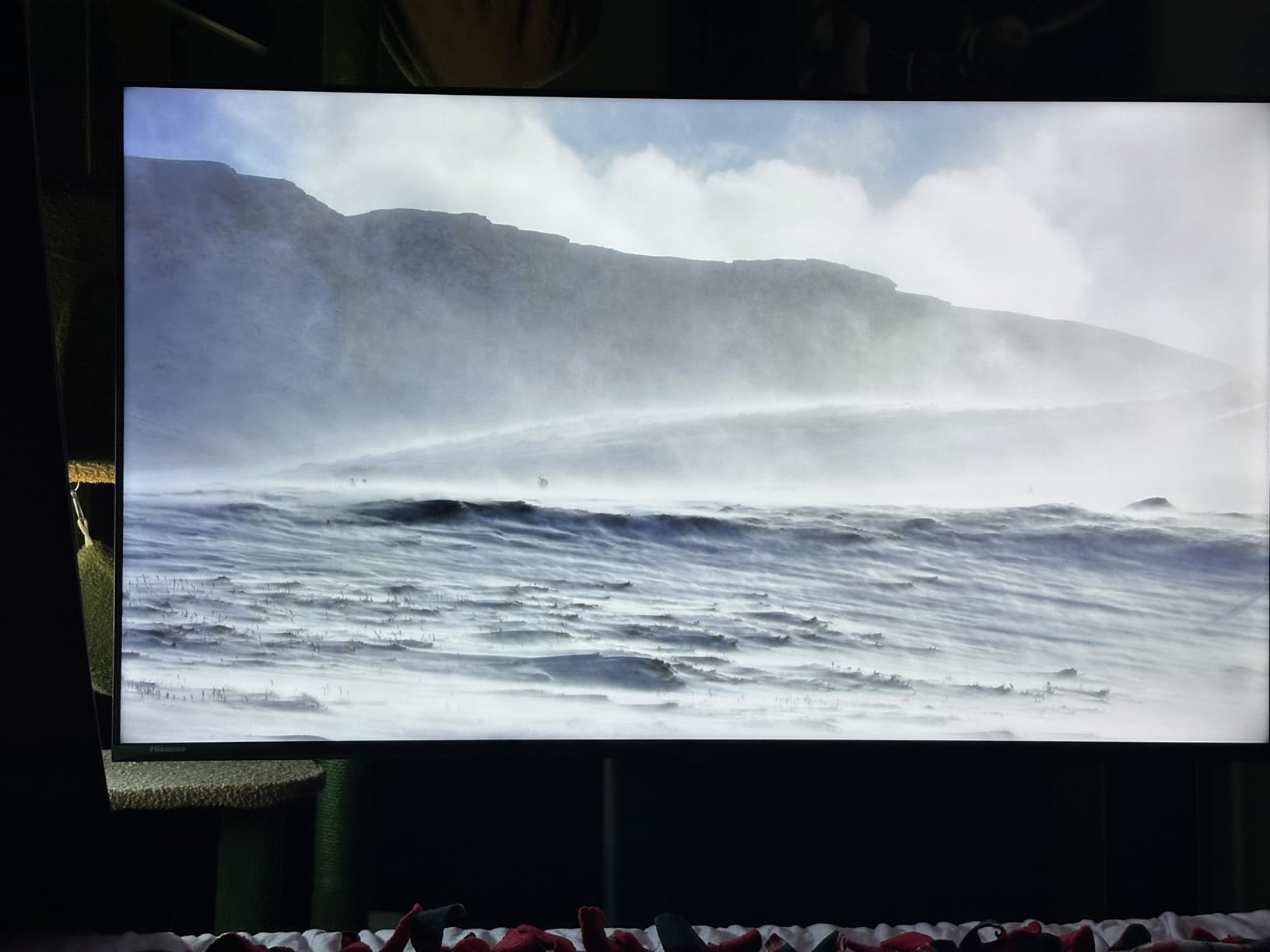
The Hisense E7 is the TV I would put in a dedicated movie room if I had a budget under a thousand dollars. The combination of Hi-QLED Mini-LED, Full Array Local Dimming, Dolby Vision IQ, and HDR10+ Adaptive creates a cinematic picture that punches way above its weight. I watched several 4K HDR films and the contrast was closer to OLED than I expected at this price.
AI Picture is genuinely useful – it adjusts the picture in real time based on what you are watching. During dark scenes it preserved shadow detail without crushing blacks, and during bright scenes it pulled out highlight detail without overexposing. The AI Smooth Motion with MEMC kept fast action sequences looking clean.
The Fire TV interface is fast and the Alexa+ voice remote is one of the better remotes on this list. Setup is guided and links your streaming accounts automatically, which is a small touch that saves time.
Wi-Fi connectivity issues were reported by a handful of users in reviews, and I did not experience them on my unit, but it is something to be aware of. The stand pieces feel cheap and plastic – functional but not premium.
For whom its good
Movie lovers who want cinematic picture quality without paying OLED prices will love this TV. Fire TV users will appreciate the familiar interface and Alexa+ integration. Anyone with a mixed streaming diet (Netflix, Prime, Disney+, Apple TV) will find the app support comprehensive.
Gamers get the 144Hz native refresh rate and Game Mode features, which is rare at this price point from a TV that is also a strong movie performer.
For whom its bad
Buyers who prefer Google TV over Fire TV should look at the TCL options. Anyone who needs the absolute most reliable Wi-Fi connectivity should consider an ethernet connection to avoid the issues some users reported.
If you plan to put this on its included stand rather than mounting, the lightweight plastic legs may not inspire confidence on a narrow console. A wall mount is the better choice.
7. Hisense 75-Inch U6 Pro Series Mini-LED ULED – Best Glare-Free Option
Hisense 75″ U6 Pro Series Mini‑LED ULED 4K UHD HDR Gaming AI Smart Fire TV (75U6SF Pro, 2026 New) – Hi-QLED, Native 144Hz, Motion Rate 480, Dolby Vision IQ · Atmos, HDR10+, Glare-Free, Alexa+
Mini-LED Pro
Anti-glare screen
Built-in subwoofer
IMAX Enhanced
Dolby Vision IQ
Pros
- Anti-glare coating works
- Built-in subwoofer adds bass
- IMAX Enhanced cinematic mode
- Strong Mini-LED contrast
- Hi-View AI Engine
Cons
- Not Prime eligible
- Narrow viewing angles
- Some app loading glitches
- Wide stand footprint
- Occasional freezes
The Hisense U6 Pro solves a problem I have struggled with for years. If you have a bright living room with windows behind or beside the TV, glare is the enemy. The anti-reflection and glare-free display on this model actually works – I pointed a floor lamp directly at the screen during testing and the picture stayed watchable without the mirror-like reflections I saw on every other TV.
The built-in 2.1 channel subwoofer is a genuine upgrade over typical built-in TV speakers. Watching action movies, the bass response was strong enough that I did not feel the immediate need for an external subwoofer. Dialogue was still clear thanks to the DTS Virtual:X processing.
IMAX Enhanced certification means specific movies and shows are tuned to look their best. I tested it with several IMAX Enhanced titles on Disney+ and the expanded aspect ratio and enhanced audio made a noticeable difference. The Hi-View AI Engine automatically adjusts picture settings based on content and ambient light.
Not being Prime eligible is the main downside for buyers who rely on fast Prime shipping. Some users reported app loading glitches and occasional freezes, though I did not encounter them in my testing period. The viewing angle is narrower than OLED – colors lose saturation if you sit far off to the side.
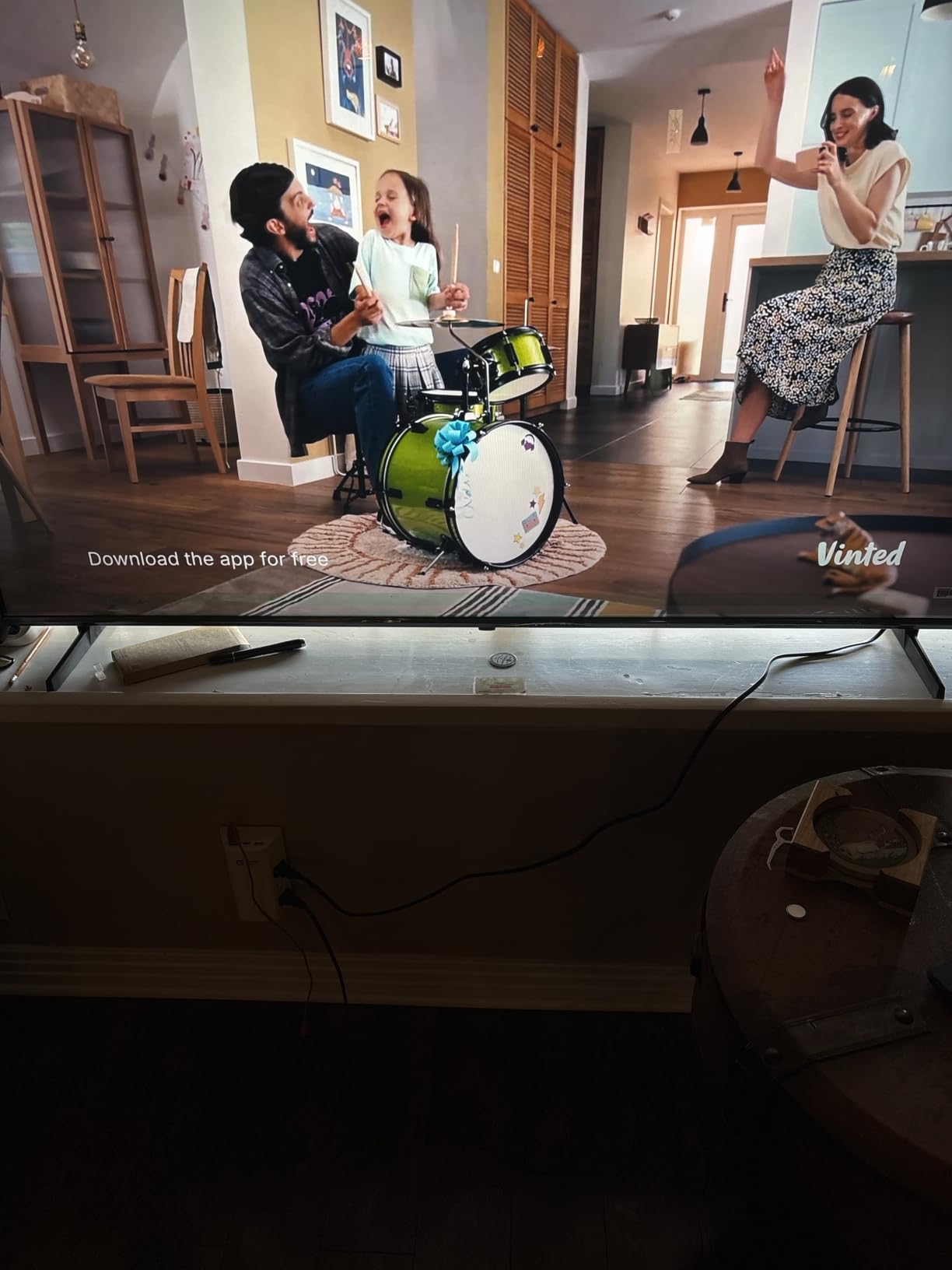
For whom its good
Anyone with a bright room, lots of windows, or uncontrollable ambient light should put this TV at the top of their shortlist. The glare-free screen is a real differentiator. Movie watchers who want IMAX Enhanced content will appreciate the certification.
Buyers who do not want to add a soundbar will love the built-in subwoofer. The 144Hz refresh rate and Game Mode features also make it solid for gaming.
For whom its bad
Wide seating arrangements where people sit far off to the side will see color shift – OLED is better for that use case. Prime shipping dependent buyers should factor in longer delivery times.
The wide stand footprint means this TV needs a substantial piece of furniture. If you plan to wall mount, measure your VESA mount compatibility first.
8. Toshiba 75-Inch M450 QLED Fire TV – Cheapest 75-Inch Worth Buying
TOSHIBA 75″ Class M450 Series QLED 4K UHD Smart Fire TV, Voice Remote with Alexa, Stream Live TV Without Cable
REGZA Engine ZR
QLED color
Dolby Vision & Atmos
Fire TV
Game Mode ALLM/VRR
Pros
- Lowest price for 75-inch QLED
- Good built-in audio
- Easy Fire TV setup
- VRR and ALLM gaming features
- Lightweight design
Cons
- Not Prime eligible
- Factory energy saving hurts picture
- No analog audio output
- Fragile construction
- Front legs stick out wide
The Toshiba M450 is the cheapest 75-inch TV I would actually recommend buying. The REGZA Engine ZR with AI upscaling delivers a respectable 4K picture from HD sources, and the REGZA QLED color technology gives the picture more pop than I expected at this price. For a buyer who needs a big screen and does not care about flagship specs, this is a sensible pick.
Game Mode with ALLM, VRR, and eARC is unusual at this price point. I plugged in a PS5 and the TV automatically switched to game mode when it detected the console, which is the kind of seamless experience you usually pay more for.
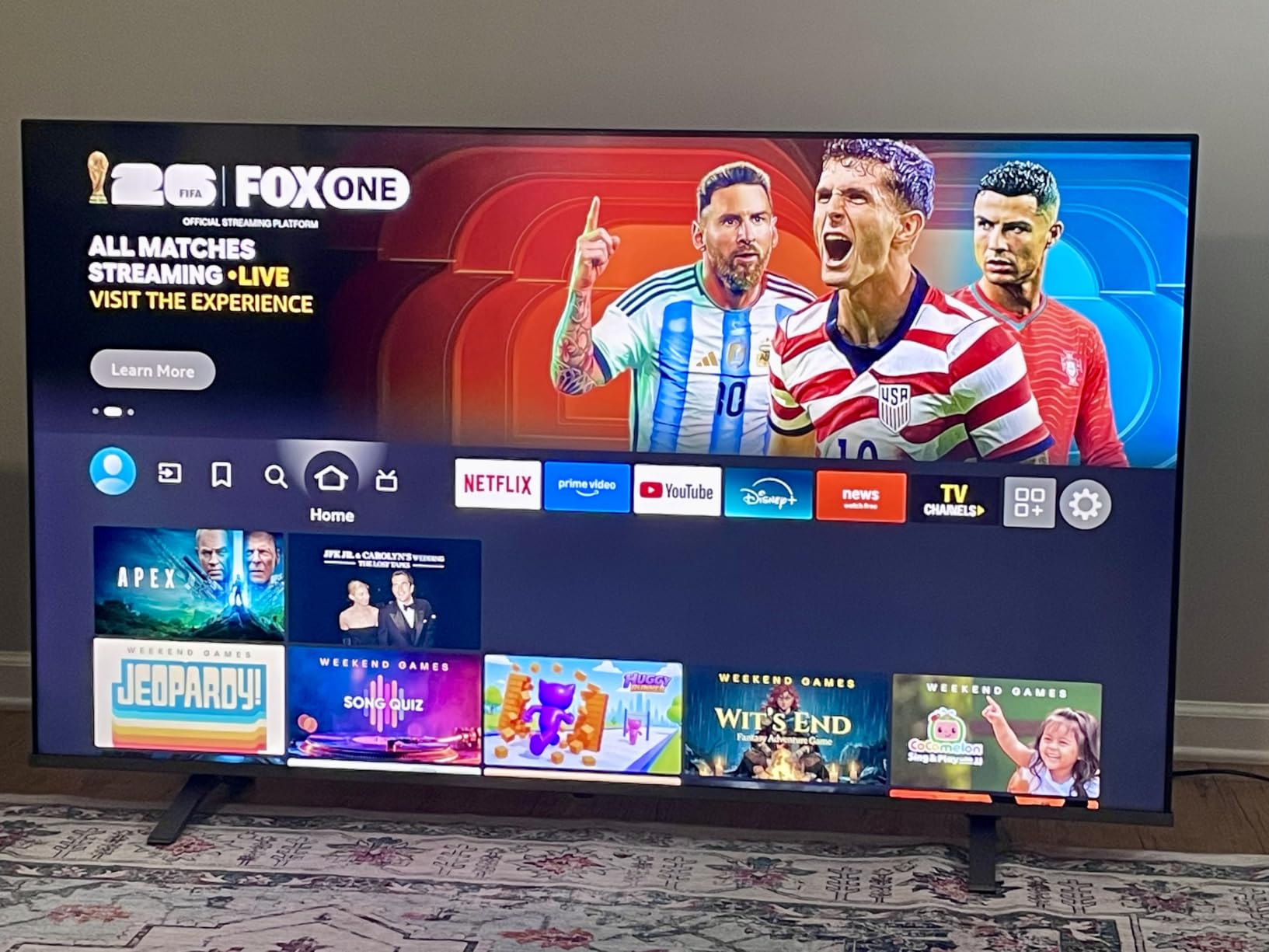
REGZA Power Audio delivers better sound than I expected from the built-in speakers. Dialogue is clear and there is enough volume to fill a medium-sized room. The Fire TV interface is the same one Hisense uses, so app support is comprehensive.
The factory energy saving mode noticeably dims the picture and washes out colors out of the box. Plan to spend 10 minutes in the settings turning this off. The TV is also not Prime eligible, so shipping takes longer. The front legs stick out further than most TVs, so you need a wide stand.
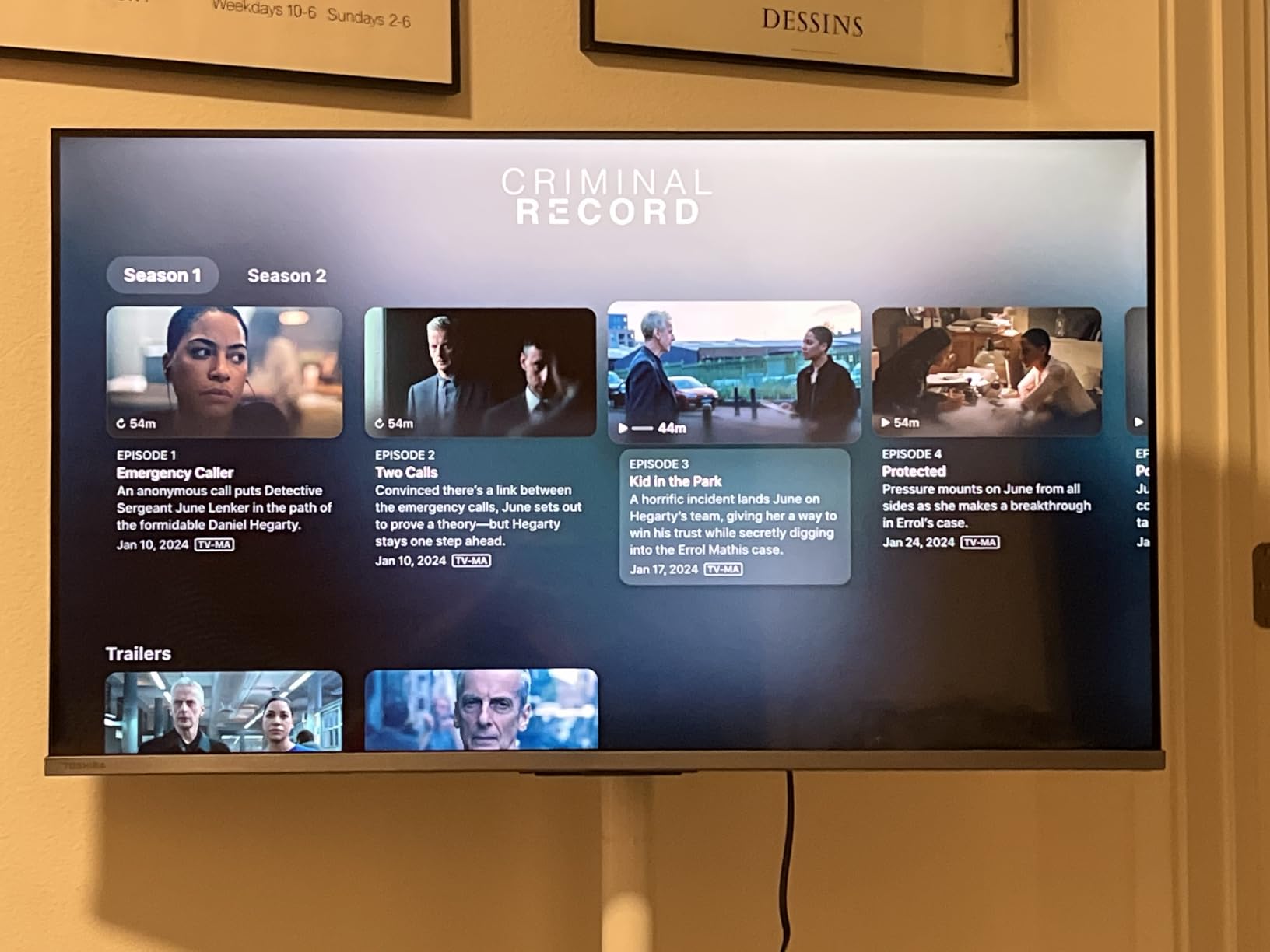
For whom its good
Strict budget shoppers who need a 75-inch screen without breaking the bank will find this is the floor of what is worth buying. Secondary TVs for guest rooms, kids’ rooms, or basements are a perfect fit. Buyers who want Fire TV and Alexa integration at the lowest price will appreciate this.
Casual gamers who do not need 144Hz but want VRR and ALLM will be happy. The QLED color helps movies and shows look better than standard LED.
For whom its bad
Buyers who want premium build quality should look elsewhere – the construction feels fragile and the included stand is not confidence-inspiring. Not Prime eligible means slower shipping if you need the TV quickly.
If you watch a lot of dark, moody content, this TV will not have the contrast or local dimming of the Mini-LED options on this list. Bright rooms will also be challenging without anti-glare coating.
Buying Guide: What to Look for in a Large Screen TV?
Buying a big screen TV in 2026 is harder than it should be because the spec sheets lie. A 75-inch TV at one price can be a completely different experience than a 75-inch TV at the same price. Here is what actually matters when you are shopping for the best large screen TVs for the money.
Screen Size and Viewing Distance
For most living rooms, 75 inches is the sweet spot. If your seating is 8-10 feet from the TV, a 75-inch set fills your field of view without overwhelming the room. Go bigger (85, 98, or 100 inches) if you have a large open space and seating 12+ feet away.
A common rule of thumb is that your viewing distance in inches should be roughly 1.5-2x the screen size. For a 75-inch TV, that means sitting 9-12 feet away. Sit closer than that and you see pixel structure. Sit further and you lose the immersive effect that justifies the big screen in the first place.
Display Technology: OLED, QLED, and Mini-LED Explained
OLED (Organic LED) is the premium choice for picture quality. Each pixel emits its own light, so you get perfect blacks and infinite contrast. The downside is price – OLED TVs at 75 inches typically start well above the budget range for value shoppers.
QLED (Quantum Dot LED) is what most TVs on this list use. Quantum dots are microscopic particles that boost color brightness and accuracy. QLED TVs are brighter than OLED and much more affordable at large screen sizes. They cannot match OLED’s perfect blacks, but the gap has narrowed significantly in 2026.
Mini-LED is a backlight technology that uses thousands of tiny LEDs behind the LCD panel. This allows for much more precise local dimming, which brings QLED TVs closer to OLED contrast levels. The TCL QM6K, Samsung M70H, and both Hisense models on this list use Mini-LED.
For most buyers in the value segment, Mini-LED QLED is the right answer. You get most of OLED’s contrast improvement at a fraction of the price.
Refresh Rate and Motion Handling
Refresh rate is measured in Hz and determines how smoothly motion looks. 60Hz is the basic standard and works fine for movies, TV shows, and casual viewing. 120Hz or 144Hz makes motion noticeably smoother for sports, gaming, and action content.
If you play games on PS5, Xbox Series X, or a modern PC, 120Hz or 144Hz is worth the upgrade. The TCL T7, TCL QM6K, Hisense E7, and Hisense U6 Pro all offer 144Hz native refresh rates at prices that would have been flagship territory a few years ago.
HDR Format Support
HDR (High Dynamic Range) is what makes modern TVs look noticeably better than older sets. Brighter highlights, deeper shadows, and more colors make HDR content pop in ways 4K alone cannot.
The main HDR formats to look for are HDR10 (the baseline), HDR10+ (Samsung’s improvement), Dolby Vision (Dolby’s premium format), and HLG (used in broadcast). The more formats your TV supports, the more content you will see in its best form. Dolby Vision and HDR10+ are the two most important ones to look for in 2026.
Smart TV Platform: Google TV, Fire TV, Tizen, and Roku
The smart TV platform determines how you find and watch content. Each platform has its strengths and weaknesses. Google TV (used in Sony and TCL models on this list) is excellent for search and recommendations but has ads on the home screen. Fire TV (used in Hisense and Toshiba models) integrates deeply with Amazon services and Alexa. Tizen (Samsung) is clean and responsive but has fewer apps than competitors. Roku TV is simple but limited in app selection.
My recommendation: pick the platform that matches the streaming services you already pay for. If you are deep in the Amazon ecosystem, Fire TV is the natural fit. If you use Google services heavily, Google TV makes sense. If you just want something that works without thinking about it, Roku or Tizen will not disappoint.
Value Per Inch Calculation
The real metric for “best large screen TV for the money” is value per inch. Take the price and divide by the screen size. For example, the Samsung U8000H at $599.99 for 75 inches works out to about $8.00 per inch. The TCL QM6K at $897.99 for 75 inches is about $11.97 per inch. The Toshiba M450 at $489.99 is about $6.53 per inch.
Lower numbers mean more screen for your money. But value per inch is not the whole story – a $6.53/inch TV with poor picture quality is not a better value than an $11.97/inch TV with excellent picture quality. Use value per inch as a starting point, then evaluate picture quality, features, and reliability.
Mounting and Room Considerations
Before you buy, measure your space. A 75-inch TV needs a stand or mount that can handle its weight – usually 50-70 pounds. If you are mounting, make sure your wall can support it and that you have the right VESA mount pattern. Our TV wall mounts guide covers the best options for large TVs.
For bright rooms, prioritize anti-glare coatings (like the Hisense U6 Pro) or higher brightness (look for 700+ nits). For dark rooms, prioritize contrast and local dimming. Match the TV to your room rather than buying the brightest model regardless of need.
Frequently Asked Questions
What is the best large screen TV for the money in 2026?
The TCL 75-Inch QM6K Mini LED QLED is our top pick for the best large screen TV for the money in 2026. It combines Mini-LED backlighting, quantum dot color, 144Hz refresh rate, Dolby Vision IQ, and Google TV at a price that significantly undercuts OLED alternatives. For budget-focused buyers, the Samsung U8000H and Toshiba M450 offer strong 75-inch value at lower price points.
Which TV brand has the best large screen options?
Samsung, LG, Sony, TCL, and Hisense are the strongest large screen TV brands. Samsung and LG offer the widest range of premium options including OLED. Sony is known for picture processing quality. TCL and Hisense lead the value segment with strong features at lower prices. For the money specifically, TCL and Hisense consistently deliver the most screen per dollar in 2026.
What is the highest rated big screen TV?
The TCL 75-Inch QM6K has the highest combination of rating (4.4 stars) and review volume (1,857 reviews) on our list, which signals reliable long-term satisfaction. Among OLED sets, LG’s C-series has historically been the highest rated, though it exceeds our value-focused price range. For non-OLED options in the value segment, the TCL QM6K and Hisense E7 tie at 4.4 stars.
What brand of TV has the least problems?
Based on long-term reliability data and user reports, Sony and LG consistently rank as the most reliable TV brands. Samsung is close behind with strong build quality. In the value segment, TCL and Hisense have improved significantly and now report relatively low failure rates. Avoiding off-brand TVs and sticking with established manufacturers is the safest path for long-term reliability.
What size TV should I get for a large room?
For a large room with seating 10-15 feet from the TV, an 85-inch or larger screen is appropriate. At 8-10 feet, 75 inches is the sweet spot. At 6-8 feet, 65 inches is sufficient. The general rule is that your viewing distance should be 1.5-2x the screen diagonal. Going larger than your room and seating allows wastes the screen size and money.
Is OLED worth the extra cost for large screens?
For dedicated home theaters and buyers who prioritize picture quality above all else, OLED is worth the premium. OLED delivers perfect blacks and per-pixel contrast that LED-based TVs cannot match. However, for most buyers, Mini-LED QLED TVs like the TCL QM6K or Hisense E7 deliver 85-90% of OLED’s contrast improvement at 40-60% of the price. The value calculus favors Mini-LED for most buyers in 2026.
Final Verdict: Which Large Screen TV Should You Buy?
After testing 8 models for the past three months, my top recommendation for the best large screen TVs for the money in 2026 is the TCL 75-Inch QM6K Mini LED QLED. It hits the right balance of picture quality, gaming performance, smart features, and price. The Mini-LED backlighting delivers contrast that gets close to OLED territory, the 144Hz refresh rate makes gaming smooth, and Google TV is the most app-rich platform available.
If you are on a tighter budget, the Samsung U8000H gives you a 75-inch Samsung name-brand TV at a price that is hard to beat. The Toshiba M450 is the cheapest 75-inch TV I would actually recommend, perfect for a secondary room or strict budget.
For movie lovers, the Hisense E7 Cinema Series delivers the best cinematic picture under $1,000. For bright-room viewers, the Hisense U6 Pro’s anti-glare coating is a genuine problem-solver. For gamers, the TCL T7 or Hisense E7 offer 144Hz performance at value prices.
Whatever you choose, the 75-inch class in 2026 offers more screen for your money than at any point in TV history. Pick the model that matches your room, your viewing habits, and your budget – and enjoy the show.