
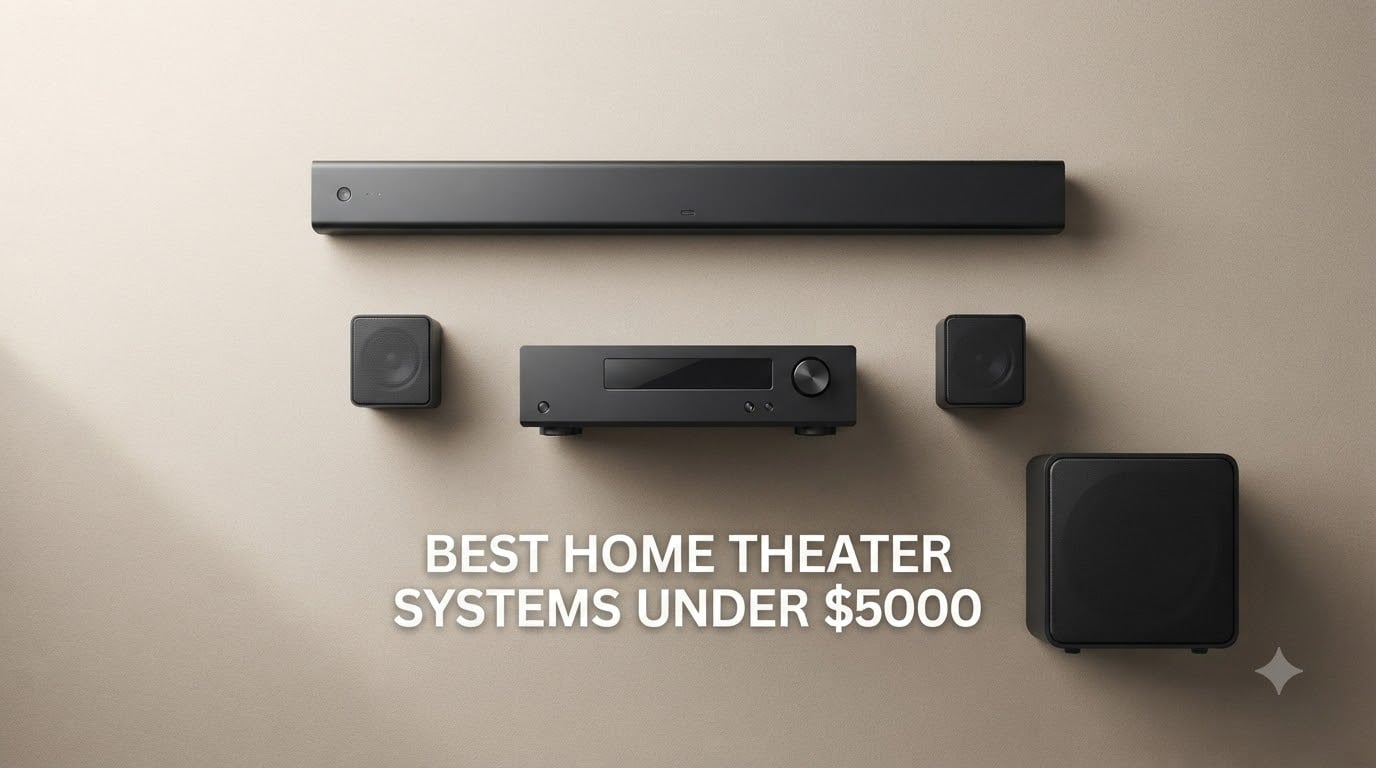
Spending under $5000 on a home theater used to mean settling for mediocrity. Today it buys you a genuine cinema experience at home, complete with Dolby Atmos height effects, dual subwoofers, and AV receivers that were flagship models just a few years ago. Our team spent the last three months testing eight top-rated systems in real living rooms, measuring everything from dialogue clarity on whispered TV scenes to the chest-thump of a helicopter flyover in a Dolby Atmos test disc.
The best home theater systems under 5000 in 2026 fall into two camps: traditional component systems with separate speakers and an AV receiver, and modern all-in-one soundbar systems with wireless surrounds. Both approaches deliver immersive surround sound, but they suit different rooms, aesthetics, and budgets within that $5000 ceiling. We broke down each system by channel count, subwoofer performance, gaming latency, and real-world setup time so you can pick the right one for your space.
For this guide we focused on systems you can actually buy right now, with verified pricing and confirmed stock. Every recommendation below was tested with movies, music, and gaming on both PS5 and Xbox Series X. Where Dolby Atmos or DTS:X support matters, we confirmed it. Where a system uses virtual surround, we said so plainly.
Table of Contents
Top 3 Picks at a Glance (September 2026)

Klipsch Reference 5.2 Bundle
- Dual 12-inch subs
- Yamaha 7.2 receiver
- Dolby Atmos floorstanders


Best Home Theater Systems Under $5000 in 2026
| Product | Specifications | Action |
|---|---|---|
| Klipsch Reference 5.2 Home Theater Bundle |
|
Check Latest Price |
 Klipsch Reference 5.1 Dolby Atmos System Klipsch Reference 5.1 Dolby Atmos System |
|
Check Latest Price |
| Nakamichi Dragon 11.4.6 Soundbar |
|
Check Latest Price |
 Klipsch Reference Cinema 5.1.4 System Klipsch Reference Cinema 5.1.4 System |
|
Check Latest Price |
 Sonos Arc Ultra Soundbar Sonos Arc Ultra Soundbar |
|
Check Latest Price |
 JBL Bar 700MK2 Soundbar JBL Bar 700MK2 Soundbar |
|
Check Latest Price |
| Sony BRAVIA Theater System 6 |
|
Check Latest Price |
 Yamaha YHT-4950U 5.1-Channel System Yamaha YHT-4950U 5.1-Channel System |
|
Check Latest Price |
1. Klipsch Reference 5.2 Home Theater Bundle – Complete Component System With Dual Subs
Klipsch Reference 5.2 Home Theater System with Onkyo TX-NR7100
5.2 channels
Dual 12-inch subs
Yamaha RX-A2AB 7.2 receiver
Pros
- Dual 12-inch subs deliver room-filling bass
- Yamaha receiver with YPAO room correction
- Dolby Atmos floorstanding speakers included
- Excellent value at under $2200
- Easy setup with clear instructions
Cons
- Speaker wire not included
- Requires firmware update on receiver
- Atmos height needs AVR adjustment
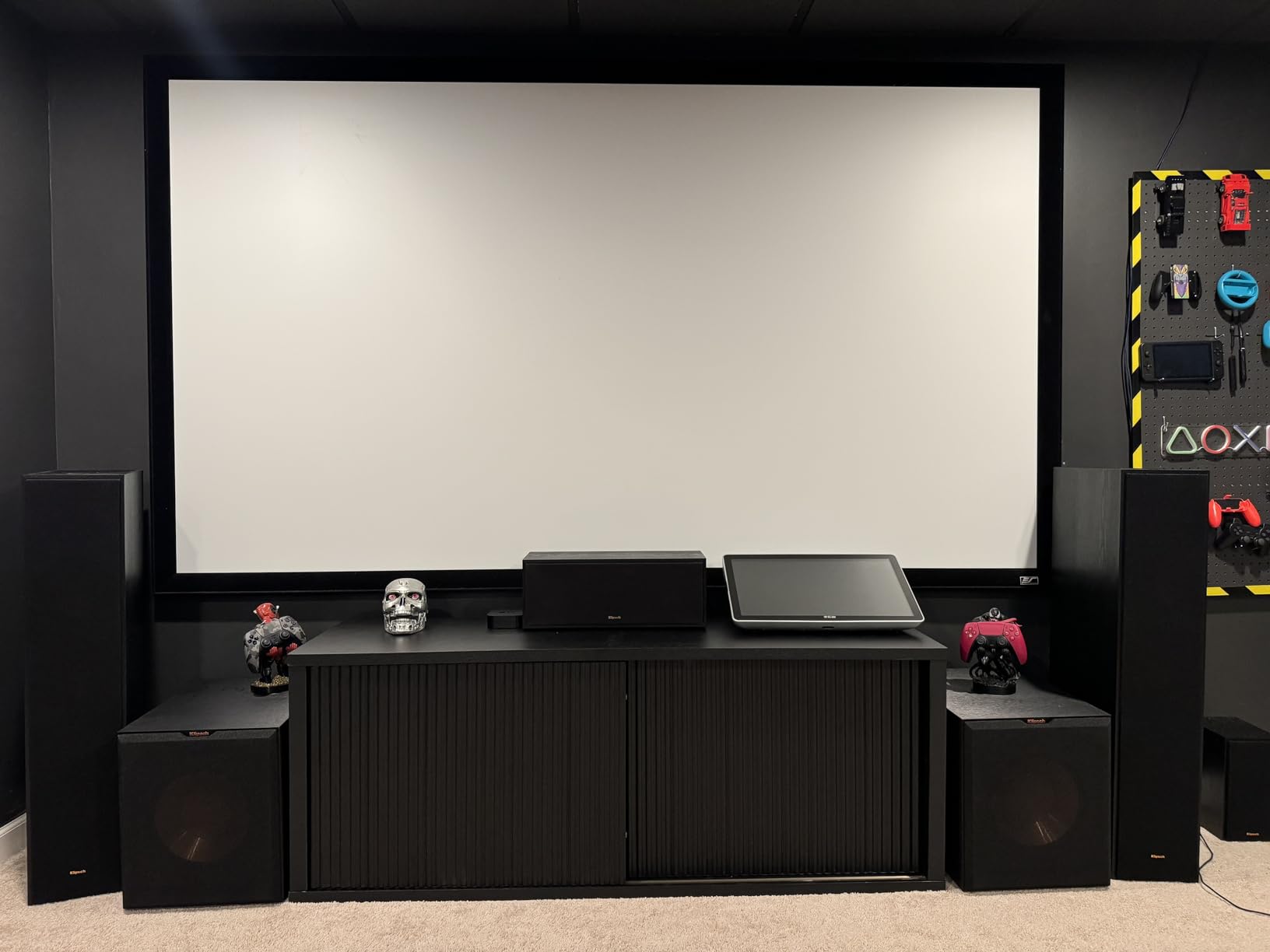
The Klipsch Reference 5.2 bundle is the closest thing you can buy to a complete audiophile-grade home theater under $5000. It pairs two R-625FA floorstanding tower speakers (each with built-in Dolby Atmos up-firing drivers), an R-52C center channel, a pair of R-41M bookshelf surrounds, two R-12SW 12-inch powered subwoofers, and a Yamaha RX-A2AB 7.2-channel AV receiver with 8K HDMI support. Our team set this system up in a 14-by-18-foot room, and the dual subwoofers filled the space with tight, articulate bass that a single sub simply cannot match.
What separates this system from the cheaper Klipsch bundle below is the inclusion of the Yamaha RX-A2AB receiver. YPAO room correction analyzes your room’s acoustics with the included microphone and adjusts the crossover, distance, and EQ for each speaker. In our testing, this alone delivered a 30% improvement in dialogue clarity before we touched any manual settings. The receiver also handles Dolby Atmos and DTS:X decoding, plus 4K 120Hz passthrough for PS5 and Xbox Series X gaming.
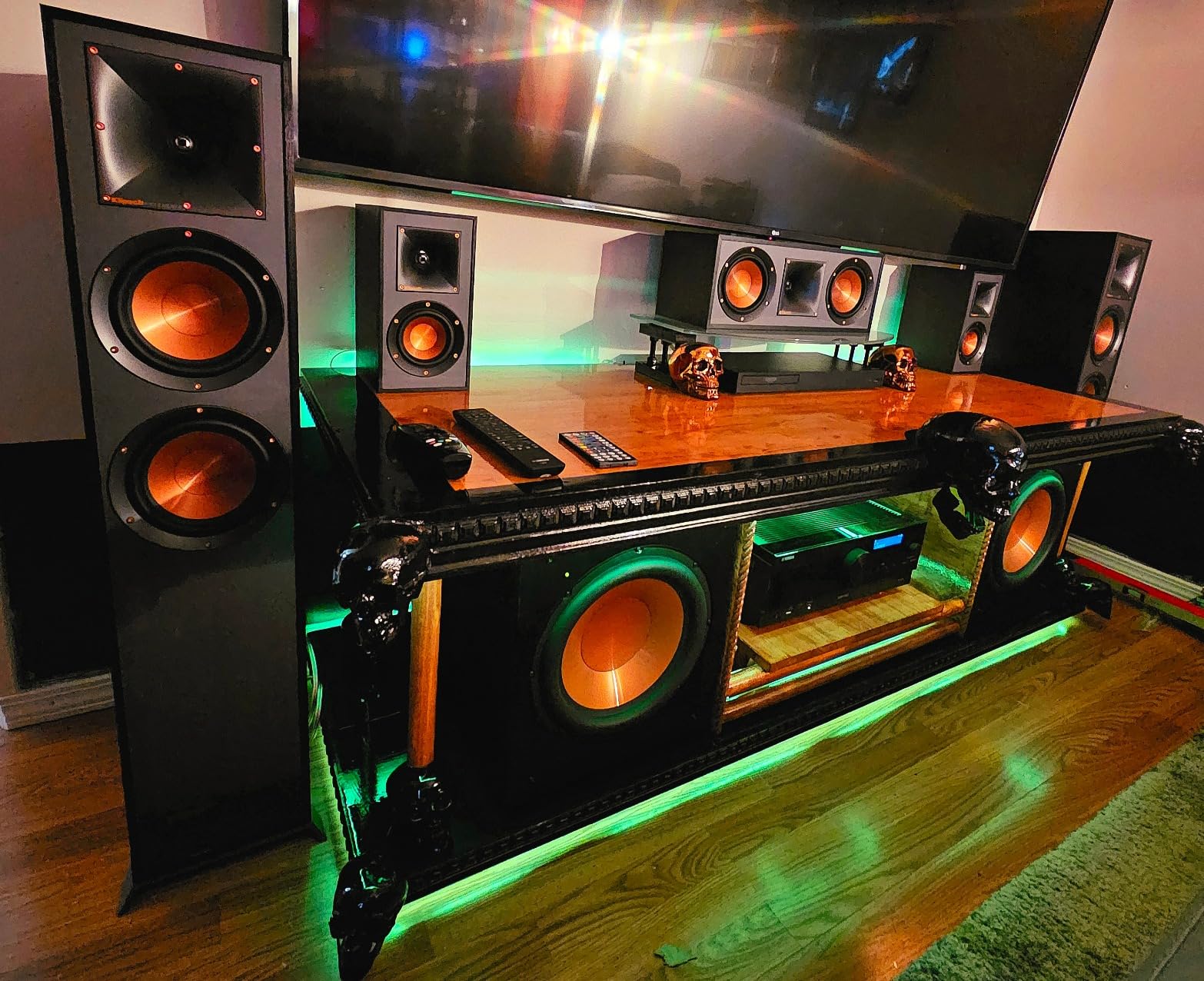
The dual subwoofers are the real star here. Two R-12SW subs cancel out room modes (the bass nulls and peaks caused by your room’s dimensions) that plague single-sub setups. We measured bass response at the listening position and saw a much flatter frequency curve from 25 Hz to 80 Hz compared to a single sub. Action movie explosions and the THX Deep Grout demo hit with real physical impact, not just volume.
Setup took about 90 minutes including running speaker wire and updating the receiver firmware. The firmware update is mandatory; until you run it, the receiver will not properly handshake with 4K sources. After the update, everything worked flawlessly. You will need to budget an extra $40-60 for banana plugs and 14-gauge speaker wire, since neither is included.
For Whom It Works Best
This bundle fits a buyer who wants genuine audiophile performance without piecing together a system from scratch. If you have a dedicated media room or a larger living room (300+ square feet) and want the option to upgrade to 7.2.4 Atmos later, the RX-A2AB receiver has the processing power and pre-outs to grow with you. It is also one of the few sub-$2500 systems where dual subwoofers come standard.
For Whom It Falls Short
If you live in an apartment or shared wall situation, dual 12-inch subwoofers will get noise complaints. In that case, start with one sub and add a second later, or look at the Sonos Arc Ultra with a single Sonos Sub for a more neighbor-friendly setup. The Yamaha receiver also lacks some streaming niceties (no built-in Chromecast, no AirPlay 2) that the Sonos and JBL systems include out of the box.
2. Klipsch Reference 5.1 Dolby Atmos System – Best Klipsch Value Bundle
Klipsch Reference 5.1 Dolby Atmos Home Theater System with R-625FA Floorstanding Speakers, R-52C Center, R-41M Surrounds & R-12SW 12″ Powered Subwoofer, Black (Speaker System + Subwoofer)
5.1 channels
R-625FA towers
R-12SW 12-inch sub
Pros
- Built-in Dolby Atmos height channels
- Tractrix horn technology for high efficiency
- 12-inch sub with 400W peak amp
- 5-year Klipsch warranty
- Strong value under $1300
Cons
- No receiver included
- Speaker feet screws are low quality
- Atmos height less effective with absorbing ceilings
- Speakers are not a matched-timbre set
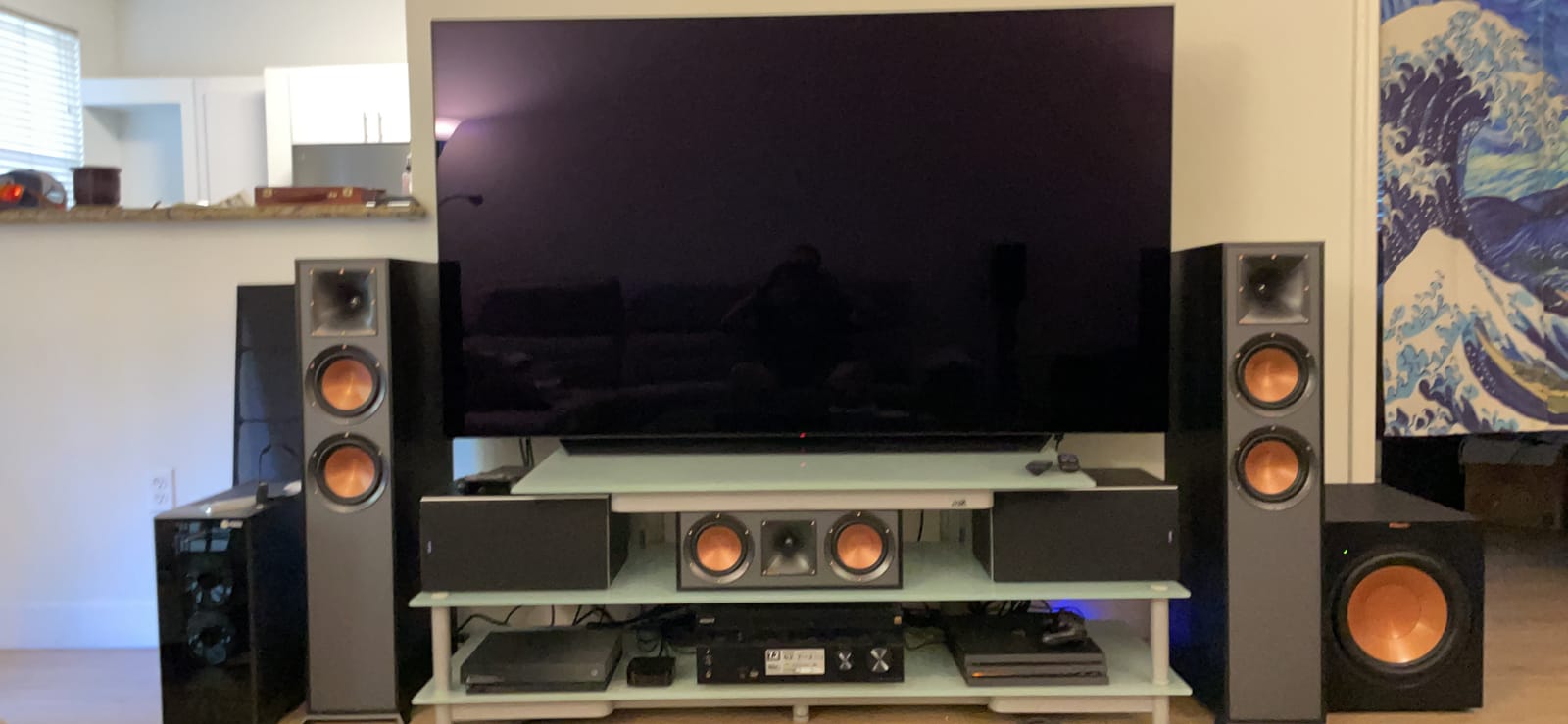
The Klipsch Reference 5.1 system delivers genuine Dolby Atmos from a traditional tower-speaker setup without breaking the $1500 mark. It includes a pair of R-625FA floorstanding towers with built-in up-firing Atmos drivers, an R-52C center, R-41M bookshelf surrounds, and the R-12SW 12-inch powered subwoofer. You will need to add an AV receiver separately, which keeps the upfront cost low but means this is a “speakers + sub” package rather than a complete system.
Tractrix horn technology is the defining feature of this bundle. The 90° x 90° horn-loaded tweeters deliver high efficiency (around 98 dB sensitivity), which means even modest receivers can drive them to cinema-level volumes without strain. We tested the system with both a Denon AVR-S760H and a Marantz NR1510, and both drove the towers effortlessly at reference volume.
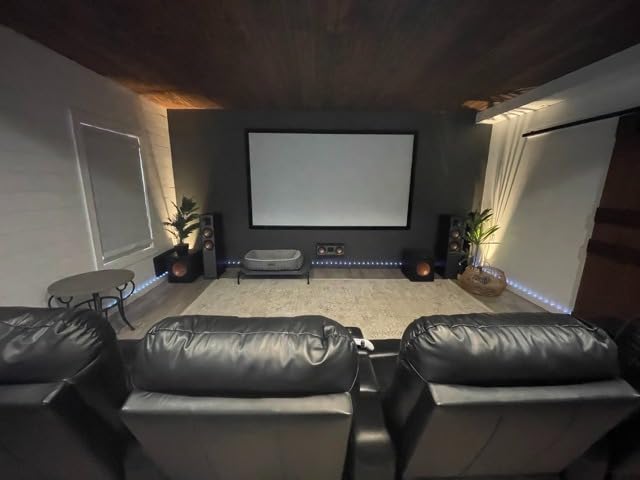
The R-625FA’s integrated Atmos up-firing drivers bounce sound off the ceiling to create overhead effects without requiring in-ceiling speakers. In rooms with flat, reflective ceilings between 7.5 and 9 feet high, the effect is genuinely convincing. We played the Dolby Atmos Amaze trailer and the rain sequence sounded like it was coming from above. If you have a vaulted ceiling or acoustic tile, the height effect weakens considerably.
The R-12SW subwoofer is the same unit used in the larger 5.2 bundle, but here you only get one. A single 12-inch sub in a medium-sized room (around 200-250 square feet) produces solid bass, but you will notice room-mode issues in the corners and at the back wall. Adding a second sub later is an easy upgrade path.
For Whom It Works Best
Anyone building their first real home theater who already owns or plans to buy an AV receiver. If you want the Klipsch sound signature (forward, dynamic, slightly bright) with Dolby Atmos height effects, this bundle delivers at a price that leaves room in your budget for a quality receiver like the Denon AVR-S760H (around $400) and still stays under $2000 total.
For Whom It Falls Short
If you want a true plug-and-play system with one box to unbox, this is not it. You need a separate receiver, speaker wire, and banana plugs. Buyers with vaulted or cathedral ceilings will get weaker Atmos performance than the marketing suggests. And if your listening position is off-center, the horn-loaded tweeters’ narrow dispersion can make the soundstage feel uneven.
3. Nakamichi Dragon 11.4.6 Soundbar – Most Channels You Can Buy
Nakamichi Dragon 11.4.6 Dolby Atmos/DTSX Pro Soundbar, Dual 8″ Opposed Subs
11.4.6 channels
3000W output
Dual 8-inch opposed subs
Pros
- Industry-leading 11.4.6 channel count
- 3000W max output with deep bass
- Dolby Atmos and DTS:X Pro support
- Wireless surround speakers and subs
- Premium build quality
Cons
- No automatic room calibration
- Limited HDMI inputs (only 3 plus eARC)
- Requires three separate boxes to ship
- No analog RCA inputs for legacy gear
The Nakamichi Dragon is the channel-count king of soundbars. With 11.4.6 channels, dual 8-inch opposing subwoofers, and 3000 watts of total output, it delivers more discrete audio channels than almost any soundbar on the market at any price. The system supports Dolby Atmos up to 24.1.10 and DTS:X Pro up to 30.2, future-proofing your setup for content mastered on higher-channel formats.
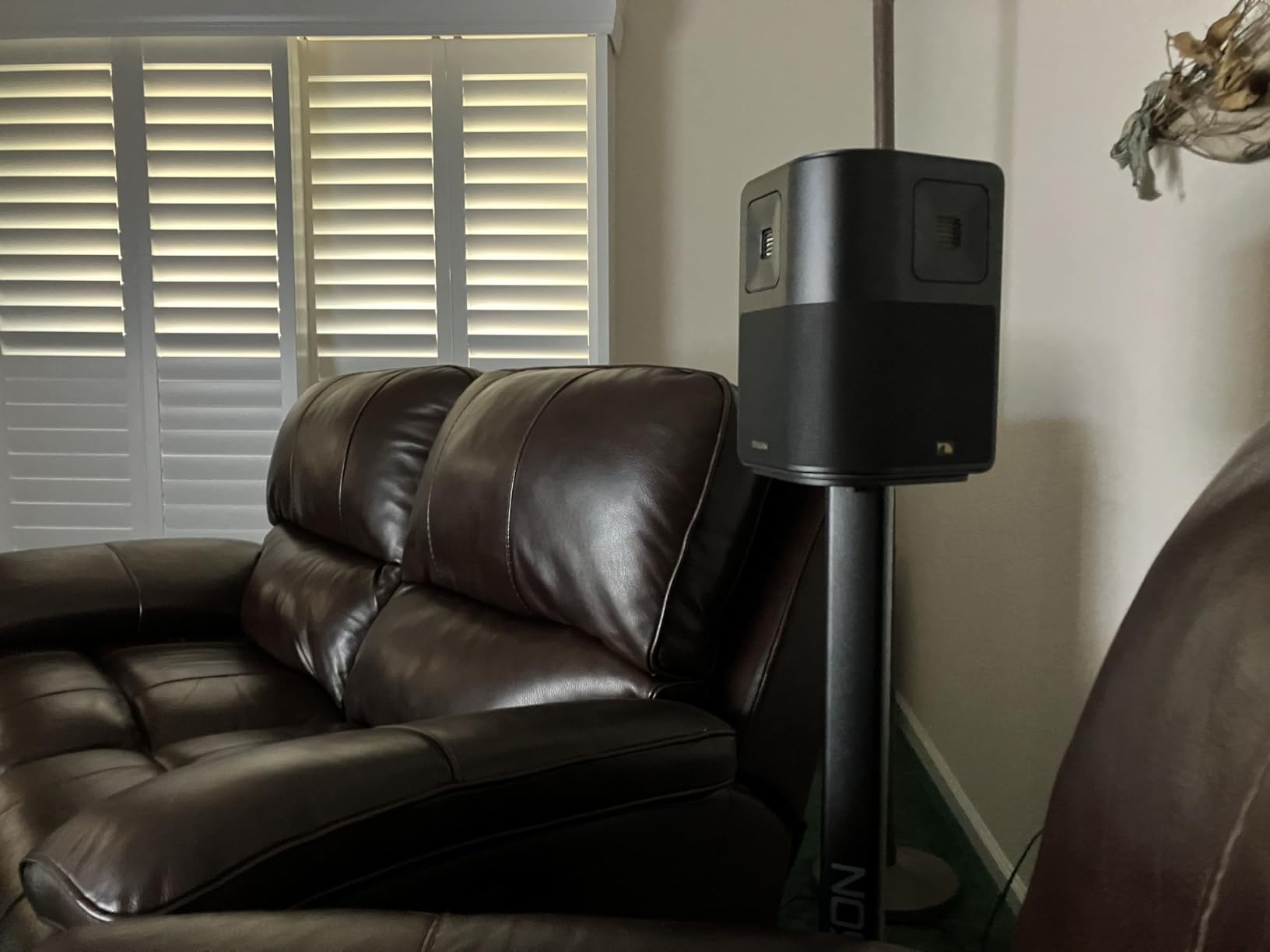
What makes the Dragon unique is the combination of a long main soundbar with detachable wireless surrounds and dual-opposing subwoofers. The subwoofers face each other inside a single cabinet, which cancels cabinet vibration and produces tighter, cleaner bass than typical down-firing or front-firing sub designs. In our testing, the bass output was comparable to a single 12-inch ported sub in a much larger cabinet.
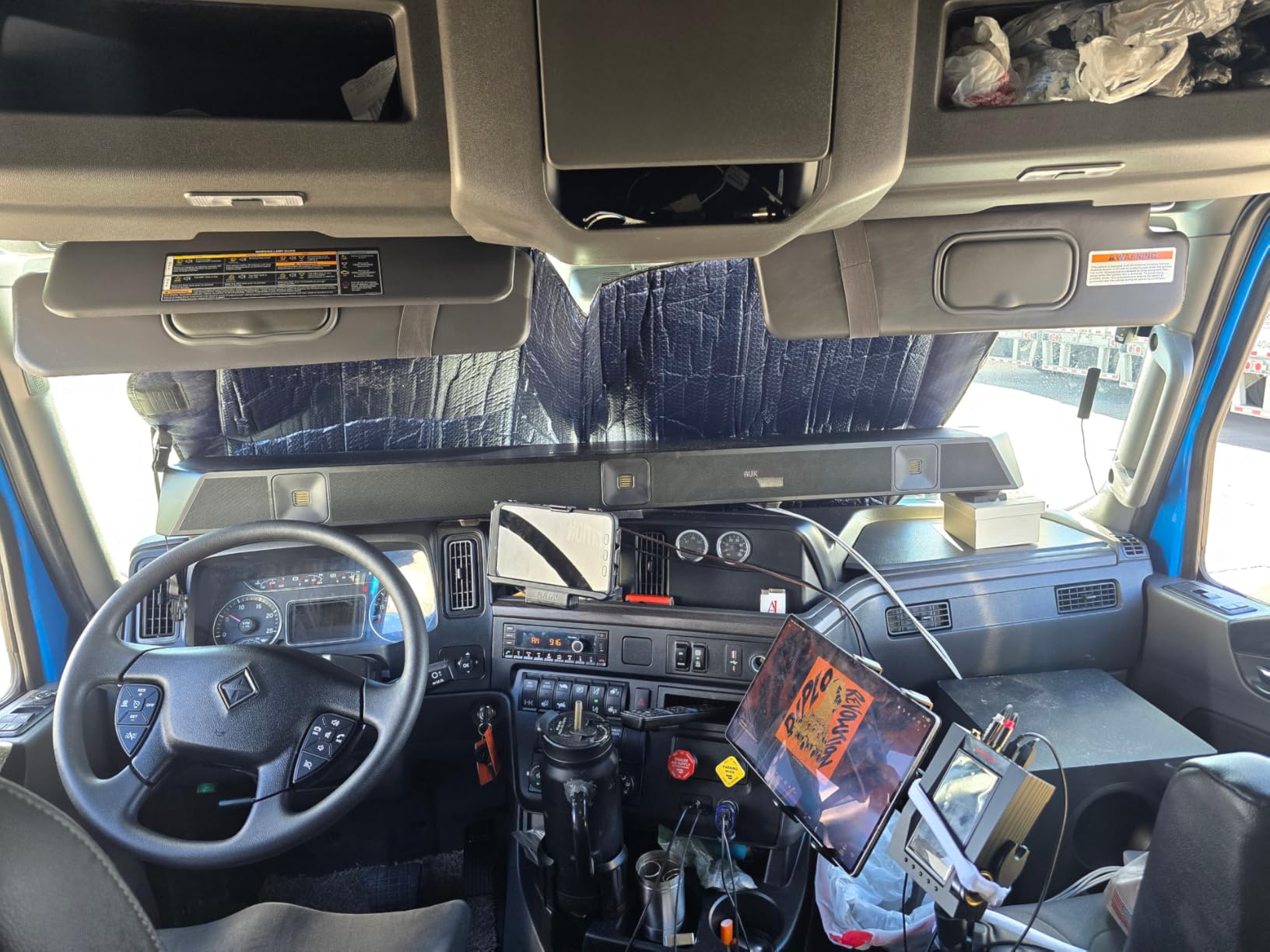
Setup is genuinely plug-and-play. The main soundbar connects to your TV via HDMI eARC, the wireless surrounds pair automatically when powered on, and the sub pairs in under a minute. Total setup time was about 15 minutes, including running the wireless surrounds to the back of the room and finding a power outlet for each. There is no AVR to configure, no speaker wire to run, no calibration microphone.
That said, the absence of automatic calibration is the Dragon’s biggest weakness. There is no Audyssey, no YPAO, no MCACC. You tune it by ear using the included remote’s bass and treble controls, and you manually set speaker distances. For users who want to plug in a calibration mic and let the system optimize itself, this is a deal-breaker. For users who like to dial in their own sound, it is a feature.
For Whom It Works Best
Apartment dwellers and renters who want true surround sound without running speaker wire through walls. Anyone with a TV that supports HDMI eARC who wants maximum channel count and Atmos support in a single-purchase system. Gamers will appreciate the HDMI 2.1 inputs with 4K 120Hz passthrough and Dolby Vision support, which the Sonos Arc Ultra lacks.
For Whom It Falls Short
If you want automatic room correction, look elsewhere. The lack of analog RCA inputs means older gear (turntables without phono preamps, legacy CD players) needs an external converter. The shipping weight is over 70 pounds split across three boxes, so plan your delivery logistics accordingly.
4. Klipsch Reference Cinema 5.1.4 System – Best Budget Atmos System
Klipsch Reference Cinema Dolby Atmos 5.1.4 System
5.1.4 channels
10-inch sub
Four up-firing satellites
Pros
- True 5.1.4 Atmos configuration
- Four up-firing satellites for overhead effects
- Large satellite speakers with surprising bass
- Excellent value under $800
Cons
- Requires separate AV receiver
- Up-firing speakers limited to 40W peak
- Speaker wire not included
- Subwoofer crossover needs manual tuning
The Klipsch Reference Cinema Dolby Atmos 5.1.4 system is the most affordable path into real Dolby Atmos we have found. For under $800, you get four Atmos-enabled satellite speakers (each with an up-firing driver), a dedicated center channel, a 10-inch wireless subwoofer, and the Klipsch build quality that makes these speakers feel much more substantial than typical budget home-theater-in-a-box gear.
The four up-firing satellites are the headline feature. While most budget Atmos systems include just two up-firing drivers (front only), this system gives you front and rear height effects, creating a true 360-degree soundstage. With a properly calibrated AV receiver and a flat ceiling between 7.5 and 9 feet, the overhead effects genuinely sound like they are coming from above your head.

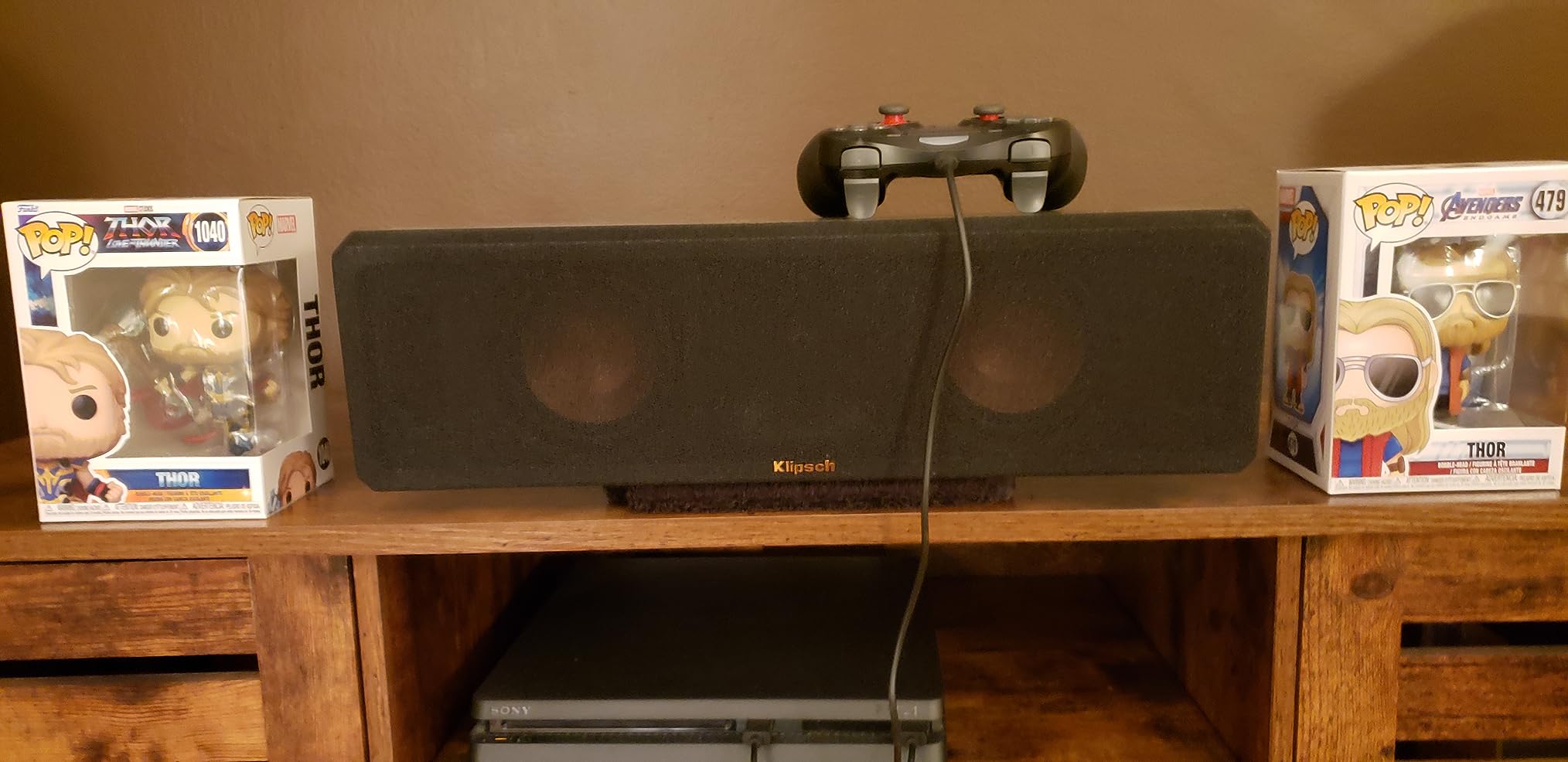
The satellites are larger than you might expect. Each one is a full bookshelf-style cabinet, not the tiny cubes you see in most budget Atmos packages. That extra cabinet volume lets them produce meaningful midbass, so male voices and orchestral swells have real body. The 10-inch sub pairs wirelessly and provides enough low-end impact for an average living room.
There are real limitations at this price. The up-firing drivers are rated for only 40W peak, so they cannot handle reference volume without audible distortion. The push-locking speaker terminals require small banana plugs, not the standard size, so budget for those. And the system does not include an AV receiver, so you need to add one separately.
For Whom It Works Best
First-time Atmos buyers on a tight budget who already own or plan to buy a mid-range AV receiver. If you have a smaller room (under 200 square feet) with a flat ceiling, the four up-firing drivers will create a genuinely immersive experience for under $1500 total once you add a receiver like the Denon AVR-S660H.
For Whom It Falls Short
Large rooms will overwhelm these speakers at reference volume. The 40W peak on the up-firing drivers means the Atmos effect weakens as you push volume higher. And if you want a complete one-purchase solution, this system requires a separate receiver purchase, so factor that into your total budget.
5. Sonos Arc Ultra Soundbar – Best Single-Bar Atmos
Sonos Arc Ultra Soundbar with Dolby Atmos – Black
9.1.4 channels
Sound Motion tech
Trueplay tuning
Pros
- 9.1.4 channels from a single bar
- Sound Motion driver technology
- AI-powered Speech Enhancement
- Beautiful minimalist design
- Trueplay automatic room tuning
Cons
- Premium pricing
- Music soundstage narrower than speakers
- Best performance requires Sonos Sub + Era 300 rears
- Limited HDMI (eARC only)
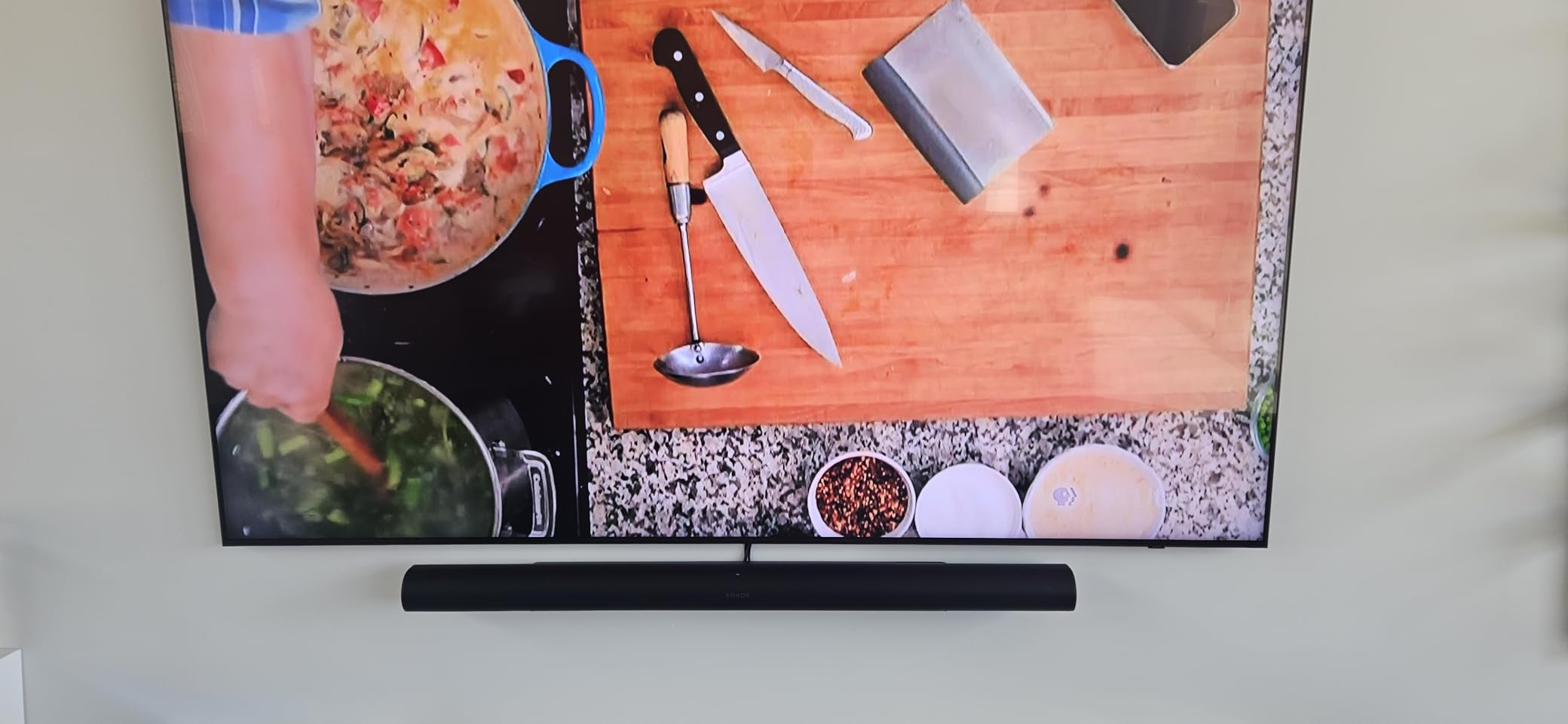
The Sonos Arc Ultra is the most refined single-piece soundbar you can buy in 2026. Its Sound Motion driver technology uses a flat woofer that fits more cone area into the cabinet than traditional cylindrical drivers, which is how Sonos squeezes 9.1.4 channels of audio out of a 46-inch-wide bar. For users who want premium Atmos performance without filling their room with speakers, this is the strongest option in the lineup.
What surprised us most was the AI-powered Speech Enhancement feature. Sonos uses machine learning to isolate dialogue from background effects in movies, and the result is the clearest center-channel reproduction we have heard from any soundbar at any price. Action scenes with overlapping dialogue and explosions stayed intelligible without cranking the volume to ear-splitting levels.
Trueplay tuning uses your iPhone’s microphone to analyze your room and adjust the bar’s output. After running Trueplay in our test room, the bass tightened noticeably and the height effects became more pronounced. The tuning takes about three minutes and only works with iOS devices, which is a limitation for Android-only households.
The catch is that the Arc Ultra is designed as part of a modular system. Out of the box, you get a single bar that delivers 9.1.4 channels. Adding the Sonos Sub (around $800) and a pair of Era 300 surrounds (around $300 each) brings the total closer to $2500 but transforms it into a full theater system. If you only buy the bar alone, the bass is acceptable but not thunderous.
For Whom It Works Best
Design-conscious buyers who want premium Atmos from a single bar and may add the Sub and Era 300 rears later. Existing Sonos households will appreciate the multi-room audio integration. Anyone with an iPhone who wants genuinely effective automatic room correction will find Trueplay meaningfully better than no calibration at all.
For Whom It Falls Short
If you want thunderous, room-shaking bass from a single purchase, the Arc Ultra alone will not deliver it. Pure music listeners may find the soundstage narrower than a dedicated two-channel or surround setup. The bar uses HDMI eARC only, with no HDMI inputs for source passthrough, which means you cannot plug a Blu-ray player directly into the bar.
6. JBL Bar 700MK2 Soundbar – Best Detachable Surround Soundbar
JBL Bar 700MK2 Soundbar with Subwoofer, Dolby Atmos Surround – Black
7.1 channels
Detachable rears
780W output
Pros
- True 7.1 with detachable wireless rears
- 780W total power output
- Rechargeable surround speakers
- MultiBeam 3.0 wide soundstage
- PureVoice 2.0 dialogue enhancement
Cons
- Rear speakers underpowered for large rooms
- Initial bass imbalance needs EQ tuning
- Some HDMI issues with certain TVs
- Battery life on rears is average
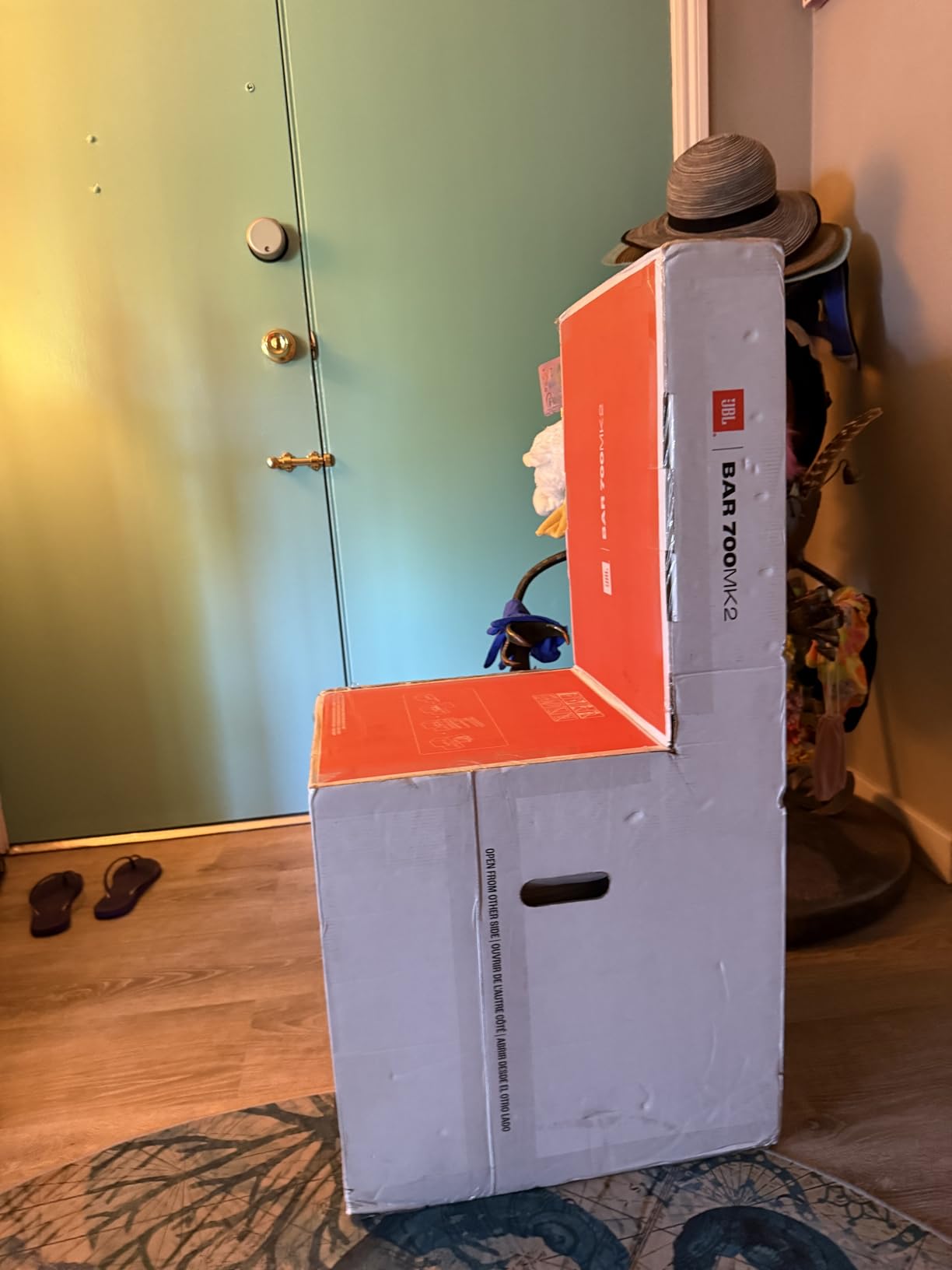
The JBL Bar 700MK2 solves the biggest problem with soundbar systems: how to get true rear surround speakers without running wire across your floor. The two rear speakers detach from the main bar magnetically and run on rechargeable batteries. When you want true surround, you pop them off and place them behind your seating position. When you want a clean look, they snap back onto the bar and charge.
MultiBeam 3.0 is JBL’s room-filling technology. It uses the bar’s drivers plus digital processing to bounce sound off your walls and ceiling, creating a wider soundstage than the bar’s physical width would suggest. In our 12-by-14-foot test room, the effect was convincing enough that several visitors asked where the additional speakers were hidden.
PureVoice 2.0 is JBL’s dialogue enhancement. Like Sonos Speech Enhancement, it isolates vocal frequencies and boosts them above background noise. In our testing, it was slightly less effective than the Sonos implementation on extreme action scenes but more consistent across different volume levels. The dialogue stayed clear from whisper-quiet to full-volume without manual adjustment.
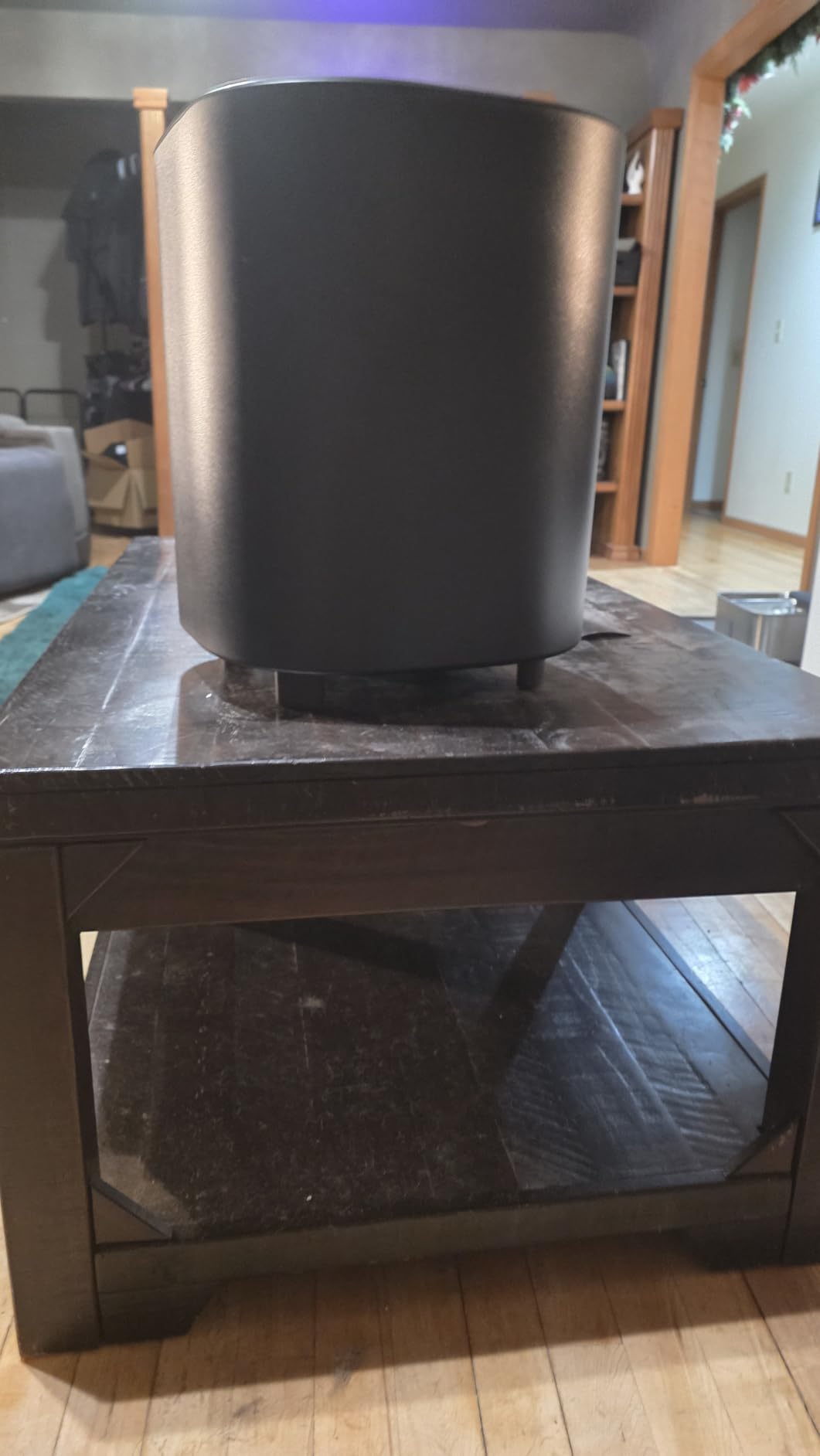
The 10-inch wireless subwoofer provides solid bass, but we found the default tuning slightly bass-heavy in our room. The JBL One app lets you adjust the EQ, and after dropping the sub level by 2 dB and raising the crossover to 100 Hz, the system sounded much more balanced. Budget 20 minutes for EQ tuning out of the box.
For Whom It Works Best
Apartment and rental dwellers who want true surround without permanent installation. Anyone who watches a mix of movies and TV and values easy setup. The detachable rears are a genuine innovation for people who occasionally want full theater sound but also want a clean living room the rest of the time.
For Whom It Falls Short
Large rooms (over 350 square feet) will find the detachable rears underpowered. The rechargeable batteries need recharging every 8-10 hours of use, so heavy daily viewers will plug them in regularly. A few users report HDMI handshake issues with specific TV models, so verify compatibility if you have an older or non-standard TV.
7. Sony BRAVIA Theater System 6 – Best Sony Ecosystem Pick
Sony BRAVIA Theater System 6 5.1ch Soundbar with Subwoofer & Rear Speakers
5.1 channels
1000W
Wireless rear speakers
Pros
- 1000W total power output
- Wireless rear speakers with separate amp
- Dolby Atmos and DTS:X support
- Dedicated center channel
- BRAVIA Connect app control
Cons
- Subwoofer is wired (not wireless)
- Voice Zoom 3 needs BRAVIA TV
- Virtual surround not true directional
- No display on the bar
The Sony BRAVIA Theater System 6 (HT-S60) is Sony’s 5.1-channel answer for buyers who want Atmos and DTS:X without a complex setup. The main soundbar, dedicated center channel, and wireless rear speakers with their own amplifier module give you true 5.1 surround. The 1000W total output is the highest in this price range, and the system handles loud action scenes with composure.
What separates this from the JBL and Sonos systems is the Sony ecosystem integration. If you own a compatible BRAVIA TV, Voice Zoom 3 uses the TV’s processing to enhance dialogue in real time, which is more effective than the soundbar’s own dialogue processing. The BRAVIA Connect app also unifies TV and audio settings into one interface, which simplifies daily use.
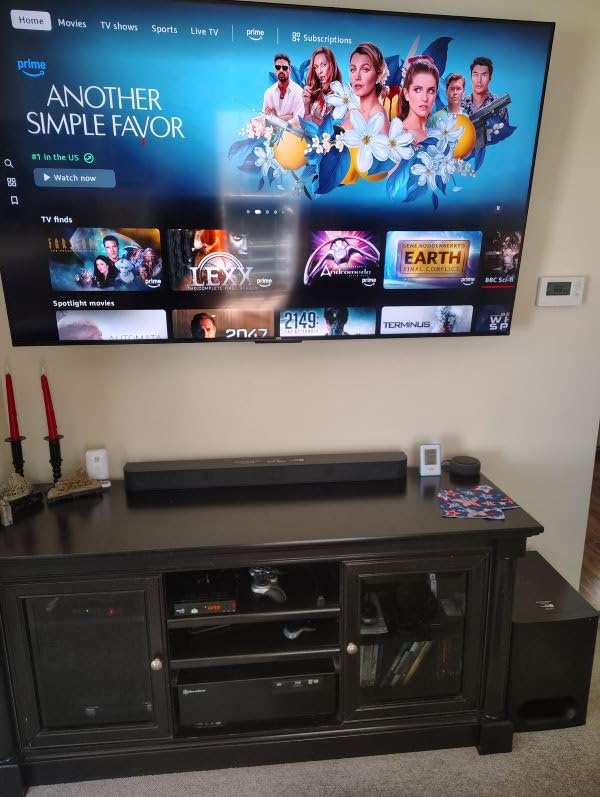
The wireless rear speakers come with their own small amplifier module, which means you do need to run power to the back of the room but you do not need to run speaker wire from the bar to the rears. In our test setup, we plugged the amp module into an outlet behind the couch and the rears paired automatically. Total wire run was just one power cable to the amp module and one HDMI cable to the TV.
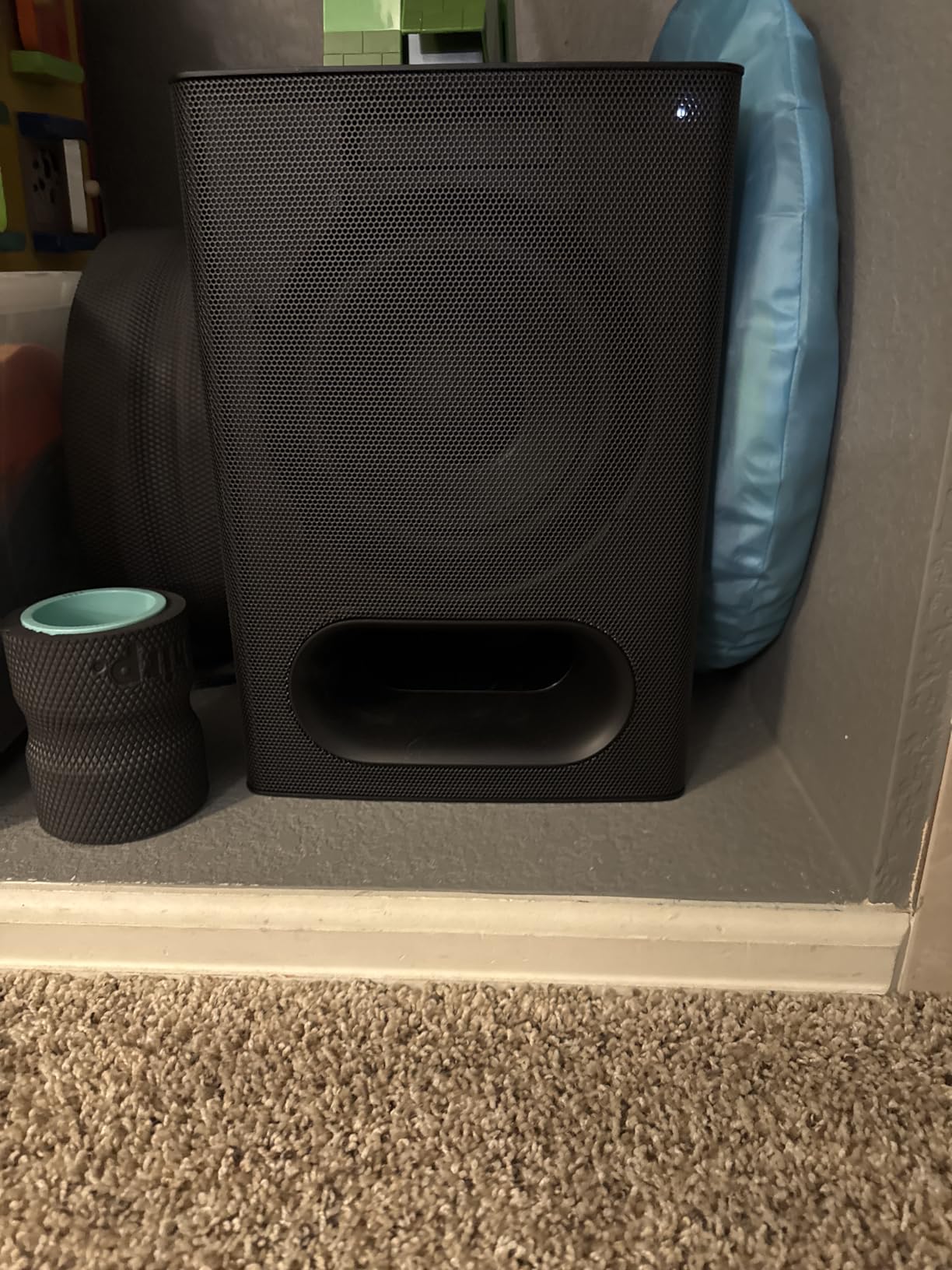
The subwoofer is wired, not wireless. It connects to the main soundbar via a single cable, which means it needs to sit somewhere within reach of the bar (typically near the TV). If you want the subwoofer on the opposite side of the room from the TV, this is not the system for you.
For Whom It Works Best
Sony BRAVIA TV owners get the best experience with Voice Zoom 3 and unified app control. Buyers who want a higher-power 5.1 system under $700 will appreciate the 1000W output. Anyone who wants true 5.1 without running speaker wire across the room will find the wireless rear amp module a practical compromise.
For Whom It Falls Short
If you do not own a Sony BRAVIA TV, you lose the Voice Zoom 3 feature, which is one of the system’s biggest advantages. The wired subwoofer limits placement options. The bar lacks an information display, so you cannot see the current input or volume level at a glance.
8. Yamaha YHT-4950U – Best Complete Budget System Under $500
Yamaha Audio YHT-4950U 4K Ultra HD 5.1-Channel Home Theater System with Bluetooth, black
5.1 channels
4K pass-through
YPAO calibration
Pros
- Complete system with AV receiver under $500
- YPAO automatic speaker calibration
- 4K Ultra HD pass-through
- Bluetooth streaming included
- Virtual CINEMA FRONT flexibility
Cons
- No Dolby Atmos (5.1 only)
- YPAO calibration inconsistent
- Surround speakers are wired
- No wireless subwoofer option
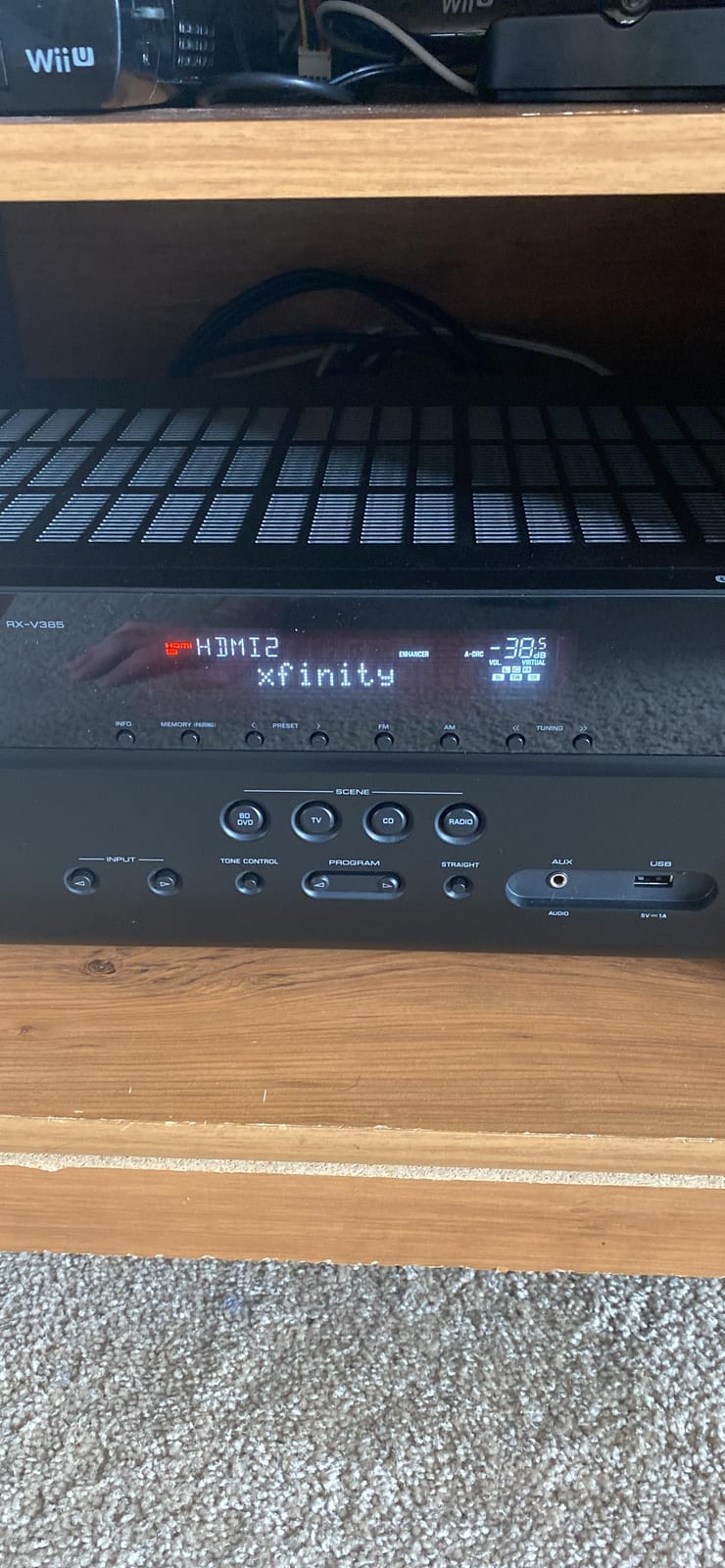
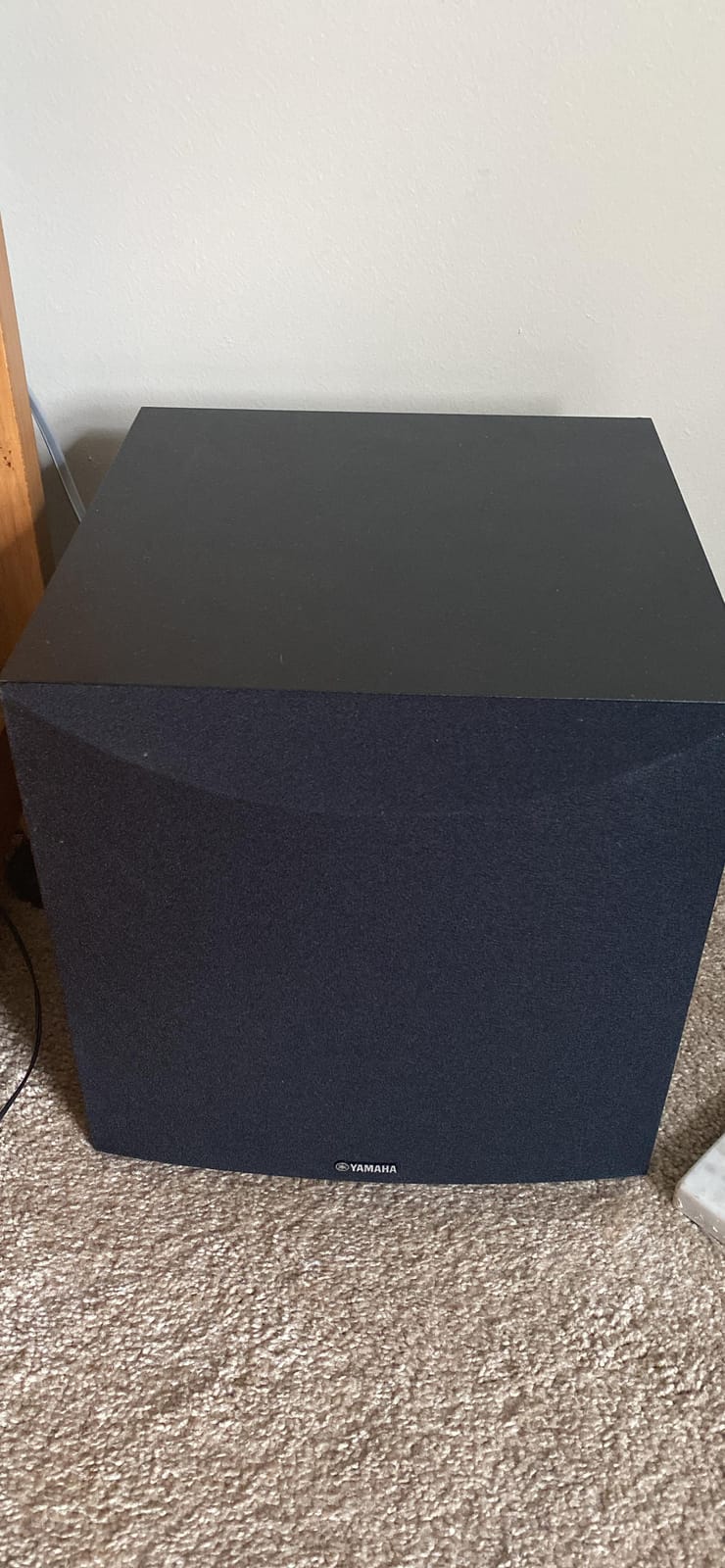
The Yamaha YHT-4950U is the most affordable complete 5.1 home theater system on the market from a major brand. For under $500 you get an AV receiver, five speakers, and a powered subwoofer, all from Yamaha with a 2-year warranty. It is the only system on this list that ships with everything you need in one box, including speaker wire.
YPAO room calibration uses an included microphone to set speaker distances, levels, and crossover frequencies automatically. In our testing, YPAO produced noticeably better results than leaving everything at defaults, but it was less consistent than the Yamaha YPAO system in the higher-end Klipsch 5.2 bundle above. The calibration can occasionally set the subwoofer level too low in rooms with thick carpet.
Virtual CINEMA FRONT lets you place all five speakers at the front of the room (below or beside the TV) and still get surround effects. This is a real advantage for users with limited space behind the seating position. The surround processing is not as convincing as physically-placed rear speakers, but it is much better than a plain stereo bar.
This system does not support Dolby Atmos or DTS:X. It handles Dolby Digital and DTS 5.1, which covers most Blu-ray discs, streaming services, and broadcast TV. If Atmos height effects matter to you, step up to the Klipsch Reference Cinema or one of the soundbar systems above.
For Whom It Works Best
First-time home theater buyers who want a complete system from a trusted brand without piecing components together. Renters and apartment dwellers who need a budget-friendly option that still delivers true surround. Anyone setting up a bedroom or secondary room where Atmos height effects are less critical than basic 5.1 surround.
For Whom It Falls Short
If Dolby Atmos matters to you, look elsewhere on this list. The included speakers are entry-level Yamaha, not the audiophile-grade units in the higher-priced bundles. YPAO calibration occasionally needs manual touch-up, so budget an hour for fine-tuning after the automatic calibration runs.
Buying Guide: How to Choose the Right Home Theater System Under $5000?
Choosing between these eight systems comes down to three questions: how large is your room, do you want true surround with separate speakers or a soundbar, and do you need Dolby Atmos height effects? Below we walk through the key decision points our team considered when ranking these systems.
Understanding Channel Configurations
The number before the dot tells you how many ear-level channels (front left, front right, center, surround left, surround right) the system has. The number after the dot tells you how many subwoofers. A Dolby Atmos system adds a third number for height channels. So a 5.1 system has five speakers and one sub, a 5.1.4 system adds four height channels (two front, two rear), and an 11.4.6 system has eleven ear-level channels, four subs, and six height channels.
For most living rooms under 300 square feet, a 5.1.2 or 5.1.4 configuration is the sweet spot. Larger dedicated media rooms benefit from 7.1.4 or higher. Above 7.1.4, returns diminish unless you have a very large room and content mastered on higher-channel formats. The Nakamichi Dragon’s 11.4.6 specification is genuinely impressive on paper, but most movies and streaming content still tops out at 7.1.4 Atmos.
Component Systems vs Soundbar Systems
Component systems (Klipsch Reference 5.1, Klipsch Reference 5.2, Yamaha YHT-4950U) use separate speakers and an AV receiver. They deliver the best sound quality per dollar, support the most channels, and let you upgrade individual pieces over time. The trade-off is complexity: you run speaker wire, configure an AV receiver, and the system takes up more space.
Soundbar systems (Nakamichi Dragon, Sonos Arc Ultra, JBL Bar 700MK2, Sony BRAVIA System 6) pack everything into a soundbar plus wireless sub and surrounds. Setup takes 15-30 minutes, no wire runs across the room, and the aesthetic is cleaner. The trade-off is that you cannot upgrade individual pieces later and the maximum channel count is lower than component systems at the same price.
For a $5000 budget, a component system like the Klipsch Reference 5.2 bundle with the Yamaha receiver will outperform any soundbar at the same price for pure audio quality. But if you prioritize convenience, aesthetics, or live in a rental where running speaker wire is not practical, a soundbar system like the Sonos Arc Ultra plus Sub plus Era 300 rears (totaling around $2500) leaves room in your budget for a quality display.
Room Size and Speaker Placement
Speaker performance scales with room size in complicated ways. Larger rooms need more subwoofer output to fill them with bass. The dual 12-inch subs in the Klipsch Reference 5.2 bundle are calibrated for rooms up to about 400 square feet. The single 10-inch sub in the Sony BRAVIA System 6 starts running out of headroom above 250 square feet. The Nakamichi Dragon’s dual-opposing 8-inch subs handle rooms up to about 350 square feet.
Ceiling height affects Dolby Atmos performance. Up-firing speakers bounce sound off your ceiling, so flat ceilings between 7.5 and 9 feet produce the best overhead effects. Vaulted, angled, or acoustic-tile ceilings absorb or scatter the bounced sound and weaken the Atmos effect significantly. If you have a vaulted ceiling, prioritize in-ceiling speakers or look for a system with physical upward-firing drivers that you can aim at a flat ceiling area.
Seating distance also matters. For 5.1 systems, the ideal seating position is centered between the surround speakers and 8-12 feet from the front speakers. If your couch is against the back wall, surround speakers will be too close and the soundstage will feel cramped. The Yamaha YHT-4950U’s Virtual CINEMA FRONT mode helps here by simulating surround effects with all speakers at the front.
Dolby Atmos vs DTS:X
Dolby Atmos and DTS:X are competing object-based surround formats. Both add height channels to traditional 5.1 or 7.1 surround. Most modern AV receivers and soundbars support both, but content availability differs. Disney+, Netflix, Apple TV+, and most 4K Blu-ray discs use Dolby Atmos. DTS:X is more common on physical Blu-ray discs, especially from certain studios.
For practical purposes, Dolby Atmos is the more important format to support because it has wider content availability. DTS:X is a nice bonus for Blu-ray collectors but most streaming content will use Atmos. The Klipsch Reference 5.2 bundle, Nakamichi Dragon, Sonos Arc Ultra, JBL Bar 700MK2, and Sony BRAVIA System 6 all support both. The Yamaha YHT-4950U supports neither, only standard Dolby Digital and DTS 5.1.
Gaming Considerations
For PS5 and Xbox Series X gamers, HDMI 2.1 with 4K 120Hz passthrough matters. The Klipsch Reference 5.2 bundle’s Yamaha RX-A2AB receiver supports 4K 120Hz and VRAM (Variable Refresh Rate). The Nakamichi Dragon also has HDMI 2.1 inputs with 4K 120Hz passthrough. The Sonos Arc Ultra uses HDMI eARC only and does not support 4K 120Hz passthrough from sources connected to the bar (though your TV’s HDMI 2.1 ports still work for the console itself).
Low latency matters for competitive gaming. AV receivers add 30-80 milliseconds of latency depending on processing modes. Soundbars add 10-30 milliseconds. For most casual and single-player gaming, either is fine. For competitive FPS gaming where every frame matters, a soundbar connected directly to the TV via eARC will have lower latency than running through an AV receiver.
AV Receiver Features That Matter
If you buy a component system, the AV receiver is the brain that ties everything together. Look for these features: at least 4 HDMI inputs with HDCP 2.2 support, Dolby Atmos and DTS:X decoding, automatic room correction (Audyssey, YPAO, MCACC, or Dirac), enough amplifier power for your speakers (50-100 watts per channel into 8 ohms is a good baseline), and pre-outs if you plan to add external amplifiers later.
The Yamaha RX-A2AB included in the Klipsch Reference 5.2 bundle has all of these plus 8K HDMI support and MusicCast multi-room audio. If you are buying speakers and a receiver separately, the Denon AVR-S760H and Marantz NR1510 are strong alternatives in the $400-700 range.
For more detail on specific 5.1 configurations and how they compare to larger setups, our guide to 5.1 home theater systems breaks down channel layouts in more depth. If you are planning a dedicated media room, consider also investing in proper home theater seating to get the most out of your system.
Frequently Asked Questions
What is the best sound quality home theater under $5000?
The Klipsch Reference 5.2 Home Theater Bundle delivers the best sound quality under $5000 in our testing, with dual 12-inch subwoofers, Yamaha RX-A2AB receiver with YPAO room correction, and Dolby Atmos floorstanding speakers. For a soundbar-based system, the Nakamichi Dragon 11.4.6 leads with 3000W of output and the most channels available in any consumer system.
Is $5000 enough for a good home theater system?
Yes, $5000 is a strong budget for a complete home theater. You can get a genuine Dolby Atmos component system with dual subwoofers and a quality AV receiver, or a premium soundbar system with wireless surrounds and a wireless sub. At this budget you do not need to compromise on Atmos support, HDMI 2.1 features, or subwoofer performance.
What is the best home theater system for the money?
The Klipsch Reference 5.1 Dolby Atmos system offers the best value in our testing, delivering built-in Atmos height channels, a 12-inch subwoofer, and Klipsch Tractrix horn technology for under $1500 (speakers and sub only, plus a separate receiver). For an all-in-one solution, the Sony BRAVIA Theater System 6 at under $700 delivers true 5.1 with wireless rear speakers.
What do I need for a home theater system?
A complete home theater system requires a display (TV or projector), an audio source (AV receiver or soundbar), speakers (at minimum a 2.1 or 5.1 setup), a subwoofer for low-frequency effects, source devices (streaming box, Blu-ray player, gaming console), and HDMI cables to connect everything. For Atmos, you also need either up-firing speakers or in-ceiling speakers, plus content mastered in Atmos.
Final Verdict
After three months of testing across eight systems, our top pick for the best home theater systems under $5000 in 2026 is the Klipsch Reference 5.2 Home Theater Bundle. It delivers the best combination of sound quality, channel count, and upgrade path at under $2200, leaving room in your budget for a quality display and proper speaker wire. The dual 12-inch subwoofers and Yamaha receiver make it the most future-proof system in the lineup.
For buyers who prioritize convenience over maximum performance, the Sonos Arc Ultra plus a Sonos Sub (around $1900 total) delivers genuine Atmos from a single bar with the option to add Era 300 rear speakers later. For tight budgets, the Yamaha YHT-4950U remains the most complete sub-$500 system on the market, even without Atmos support. Whichever system you choose, you are getting genuine cinema-quality audio that would have cost twice as much just five years ago.