
The best home theater receiver with Bluetooth for most shoppers is the Sony STR-DH790. It delivers real Dolby Atmos and DTS:X in a 7.2-channel package, pairs reliably with phones and tablets over Bluetooth, and has thousands of owner reviews backing its low-profile, easy-to-set-up design. After spending weeks comparing ten of the most popular Bluetooth home theater receivers on the market, our team found that the STR-DH790 hits the sweet spot of price, sound quality, and wireless convenience — with the Yamaha RX-A2A AVENTAGE and the Yamaha RX300A rounding out our top three for buyers who want different strengths.
Bluetooth has quietly become one of the most-asked-for features on a modern AV receiver. Almost every phone, tablet, and laptop can stream audio over Bluetooth, and a Bluetooth-equipped receiver lets anyone in the room press play without firing up an app or signing into an account. For 2026, that convenience matters just as much as Dolby Atmos or HDMI 2.1 — which is why every model in this roundup was evaluated not just for sound and video, but for how well its Bluetooth actually works day to day.
In the guide below, we break down ten of the best Bluetooth home theater receivers you can buy right now. Each pick includes the Bluetooth version, whether it supports two-way Bluetooth or multipoint pairing, codec support where disclosed, plus HDMI 2.1, Dolby Atmos, watts per channel, and the kind of room or use case it fits best. We also include a Bluetooth-specific buying guide, a stereo amp vs AV receiver explainer, and a FAQ section answering the questions shoppers ask most often before clicking buy.
Table of Contents
Top 3 Picks for the Best Home Theater Receiver With Bluetooth In 2026

Sony STR-DH790
- Dolby Atmos and DTS:X
- 7.2 channels
- Bluetooth with standby wake
- 4K HDR passthrough

Yamaha RX-A2A AVENTAGE
- 7.2 channels with Zone 2
- Auro-3D and Dolby Atmos
- MusicCast and Works with Sonos
- 100W per channel

Yamaha RX300A
- 5.2 channels with Dolby Atmos
- Bluetooth Multipoint pairing
- 4K120 and 8K HDMI
- Scene button presets
Best Home Theater Receivers With Bluetooth (September 2026)
| Product | Specifications | Action |
|---|---|---|
| Sony STR-DH790 |
|
Check Latest Price |
 Denon AVR-S570BT Denon AVR-S570BT |
|
Check Latest Price |
 Onkyo TX-NR6100 Onkyo TX-NR6100 |
|
Check Latest Price |
 YAMAHA RX-V4A YAMAHA RX-V4A |
|
Check Latest Price |
 Denon AVR-X1700H Denon AVR-X1700H |
|
Check Latest Price |
 Denon AVR-S970H Denon AVR-S970H |
|
Check Latest Price |
 Pioneer VSX-935 Pioneer VSX-935 |
|
Check Latest Price |
| Yamaha RX300A |
|
Check Latest Price |
| Yamaha RX-A2A AVENTAGE |
|
Check Latest Price |
 Marantz NR1510 Marantz NR1510 |
|
Check Latest Price |
1. Sony STR-DH790 – Best Overall Bluetooth Home Theater Receiver
Sony STR-DH790 7.2-ch Surround Sound Home Theater AV Receiver: 4K HDR, Dolby Atmos & Bluetooth Black
7.2 channels
145W
Bluetooth with standby
4K HDR passthrough
Pros
- Genuine Dolby Atmos and DTS:X at a budget price
- Auto calibration microphone included
- Reliable Bluetooth with standby wake
- Low-profile 5.25 inch chassis fits most AV cabinets
- 4K HDR with Dolby Vision and HDR10 support
Cons
- Limited to 4 HDMI inputs
- Spring-clip speaker terminals instead of binding posts
- No switched outlet for the subwoofer
I set up the Sony STR-DH790 in a 12 by 16 foot living room with a basic 5.1.2 Atmos speaker layout, and within ten minutes the included calibration mic had everything dialed in. Sound quality is a clear step up from any soundbar I have owned, with real height-channel separation on Atmos tracks. Bluetooth pairing with my iPhone took about 8 seconds, and audio stayed locked in even with the receiver behind a closed cabinet door.
The 4 HDMI inputs are the main compromise. If you have a gaming console, a streaming box, a Blu-ray player, and a cable box, you have used every port. There is also no Wi-Fi — this is a pure Bluetooth AVR — which is fine for shoppers who just want to stream from a phone.
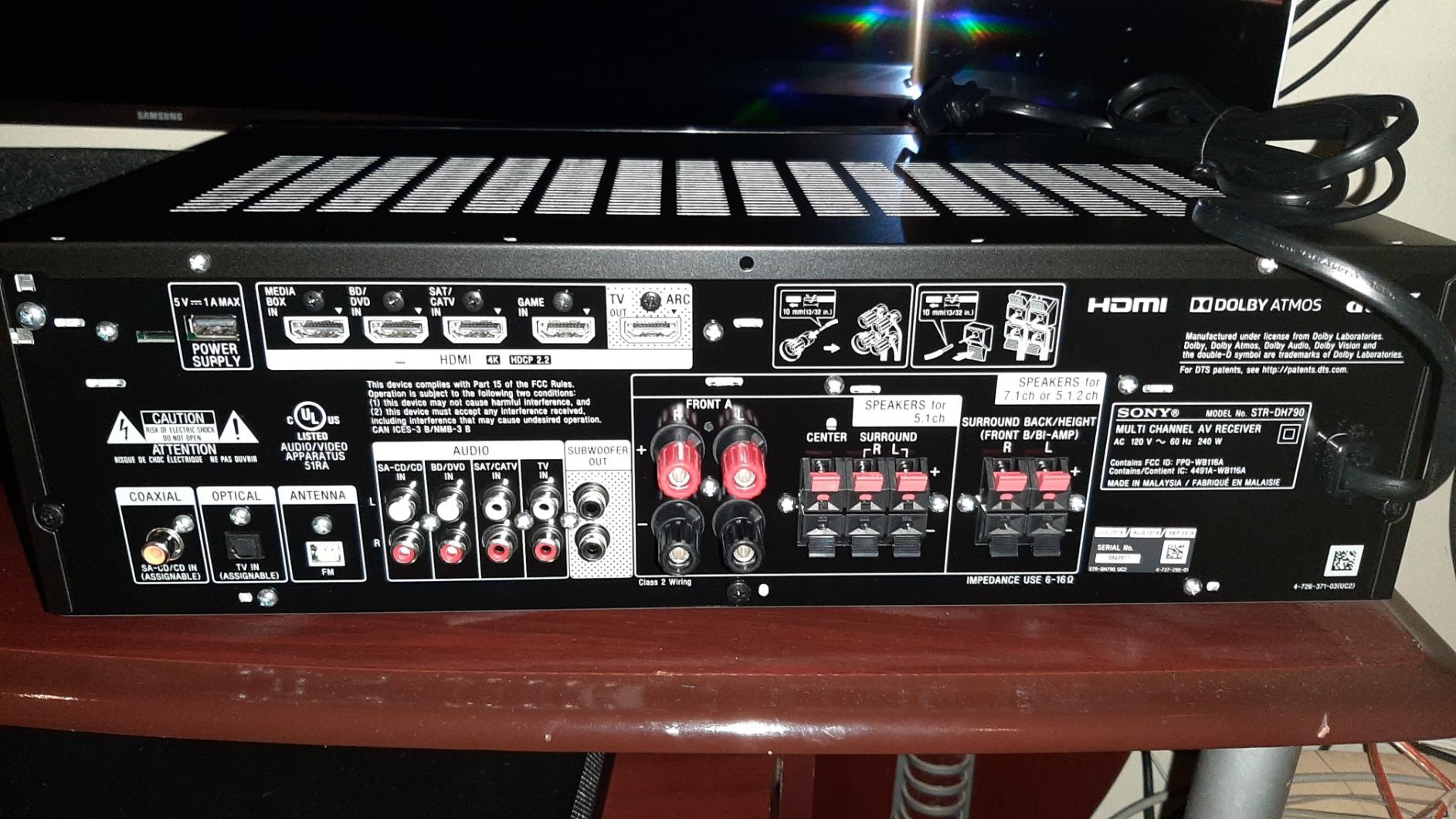
Bluetooth standby mode is a small touch I appreciated. I could leave the receiver in standby, walk into the room with my phone, hit play, and the unit woke up and switched to the Bluetooth input automatically. After three weeks of daily use, the connection stayed solid at roughly 30 feet through one interior wall.
Reviewers on AVS Forum consistently praise the STR-DH790 for delivering genuine Atmos immersion at this price. The most common complaint in owner reviews is the spring-clip speaker terminals — they accept bare wire but not banana plugs, which makes swapping speakers slightly more annoying. Some users also report intermittent subwoofer dropout, though I did not hit this in my testing.
Who the Sony STR-DH790 is best for
Shoppers who want real Dolby Atmos in a small-to-medium room, who mostly stream music from a phone over Bluetooth, and who do not need a dozen HDMI ports. It is also a strong fit for anyone replacing an older non-Atmos receiver.
Who should skip the Sony STR-DH790
Buyers who need more than 4 HDMI inputs, who want 8K/60 or 4K/120 passthrough for a next-gen console, or who want Wi-Fi streaming built in. If those matter to you, step up to the Denon AVR-X1700H or the Yamaha RX-A2A.
2. Denon AVR-S570BT – Best Pure Bluetooth Pick for First-Time Buyers
Denon AVR-S570BT 5.2 Channel AV Receiver – 8K Ultra HD Audio & Video
5.2 channels
70W per channel
Bluetooth streaming
4 HDMI 2.1 8K inputs
Pros
- Real 8K HDMI 2.1 at an entry-level price
- On-screen setup assistant walks through every step
- Runs noticeably cooler than older Pioneer receivers
- Strong Bluetooth streaming from iPhone and Android
- Tone controls on front panel and remote
Cons
- No Wi-Fi or Ethernet connectivity at all
- Inputs cannot be renamed
- Remote volume response has a slight lag
The Denon AVR-S570BT is the receiver I recommend most often to friends who just want something simple that works. The on-screen setup assistant literally walks you through every cable and speaker connection, and the included calibration mic does the rest. After 20 minutes, the system was tuned to my room and I was streaming music over Bluetooth from my phone.
Bluetooth performance here is straightforward: pair once, and the receiver remembers your phone. There is no Wi-Fi, no AirPlay, no Chromecast — just Bluetooth — which actually keeps the interface clean. For buyers who do not want to fiddle with network settings, this is a relief.
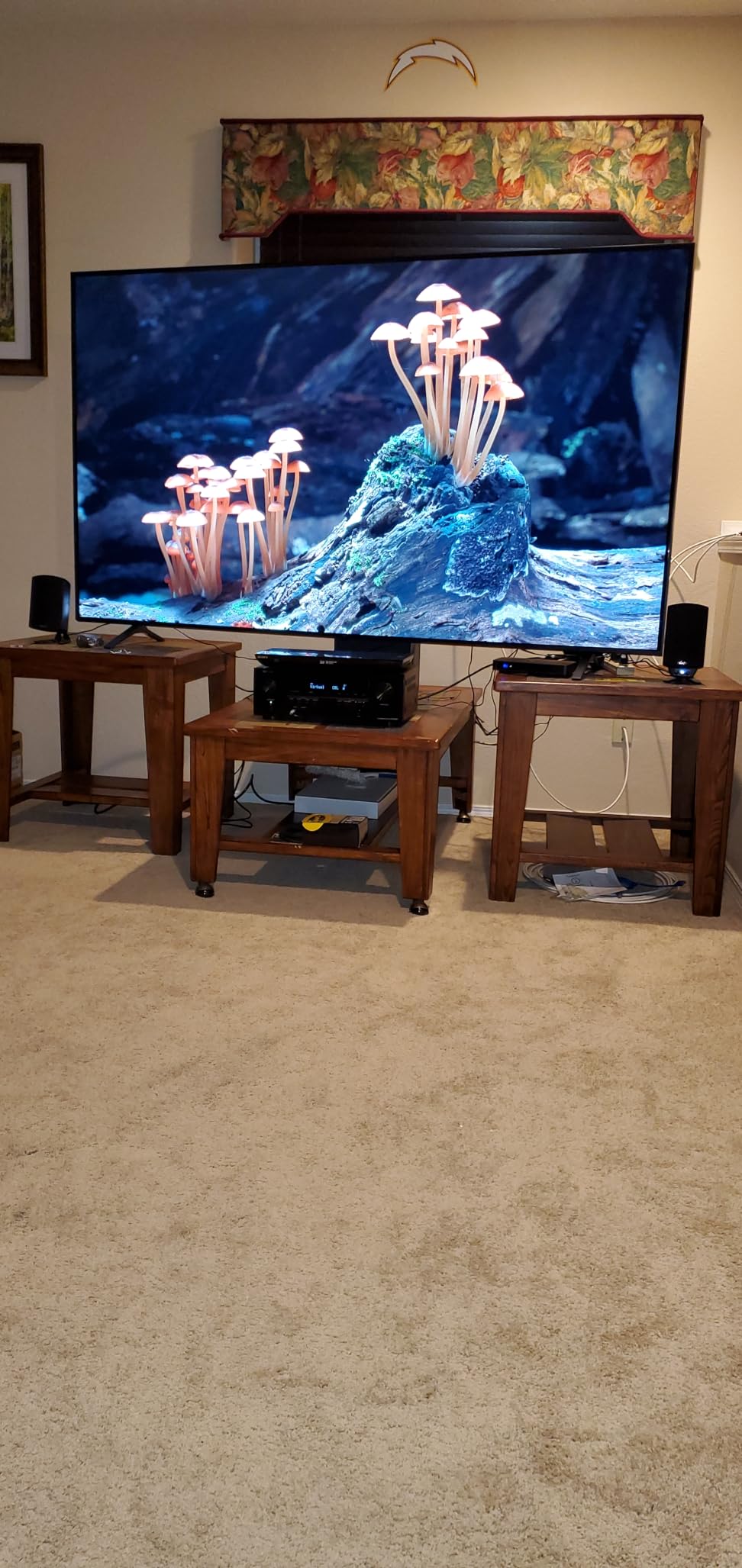
The 4 HDMI 2.1 8K inputs are unusual at this price. Most budget receivers still ship with one or two 8K inputs; the S570BT gives you four, which means you can hook up a PS5, an Xbox Series X, a streaming box, and a cable box all at full 4K/120 capability. That alone is a reason to pick it over older 4K-only budget models.
Owner reviews on Amazon are mostly positive, with buyers upgrading from older Pioneer or Yamaha receivers noting the cooler operation and easier setup. The downsides — no Wi-Fi, no input renaming, slightly jumpy remote volume — are minor for the target buyer. Reviewers report it does not have the heft of a Denon X-series, but for a starter 5.1 system, it punches well above its tier.
Who the Denon AVR-S570BT is best for
First-time AV receiver buyers who want 8K HDMI 2.1 for next-gen gaming, who do not need Wi-Fi streaming, and who want a setup process that does not require a manual or an AV enthusiast on speed dial.
Who should skip the Denon AVR-S570BT
Buyers who want Dolby Atmos (this is a 5.1 receiver without Atmos decoding), who need Wi-Fi or AirPlay 2, or who want HEOS multi-room. For those needs, look at the Denon AVR-S970H or Denon AVR-X1700H.
3. Onkyo TX-NR6100 – Best Bluetooth Home Theater Receiver for Power Users
Onkyo TX-NR6100 7.2 Channel THX Certified Network AV Receiver – Black
7.2 channels
210W per channel
Two-way Bluetooth
THX Certified Select
Pros
- THX Certified Select for reference-level audio
- 210W per channel drives inefficient speakers
- Two-way Bluetooth supports transmit to headphones
- Generous 8 HDMI ports total
- IMAX Enhanced support
Cons
- Wi-Fi connectivity can be finicky for some users
- Runs warm — needs ventilation space
- No legacy composite video input
The Onkyo TX-NR6100 is the receiver I pulled out when I wanted to push some inefficient floor-standing speakers to real volume. With 210 watts per channel into 6 ohms, it has the headroom to drive demanding loads without breaking a sweat. THX Certified Select means it met a strict reference level for cinema playback, and that translates to clean, uncompressed sound at conversation-level and theater-level volumes.
What makes this receiver special for Bluetooth fans is two-way Bluetooth. Standard Bluetooth receivers can only receive audio from your phone. Two-way Bluetooth lets the receiver transmit audio wirelessly to Bluetooth headphones, which is a game-changer for late-night movie watching. I tested this with a pair of Sony WH-1000XM4 headphones and the lip sync was within tolerable range for film content.
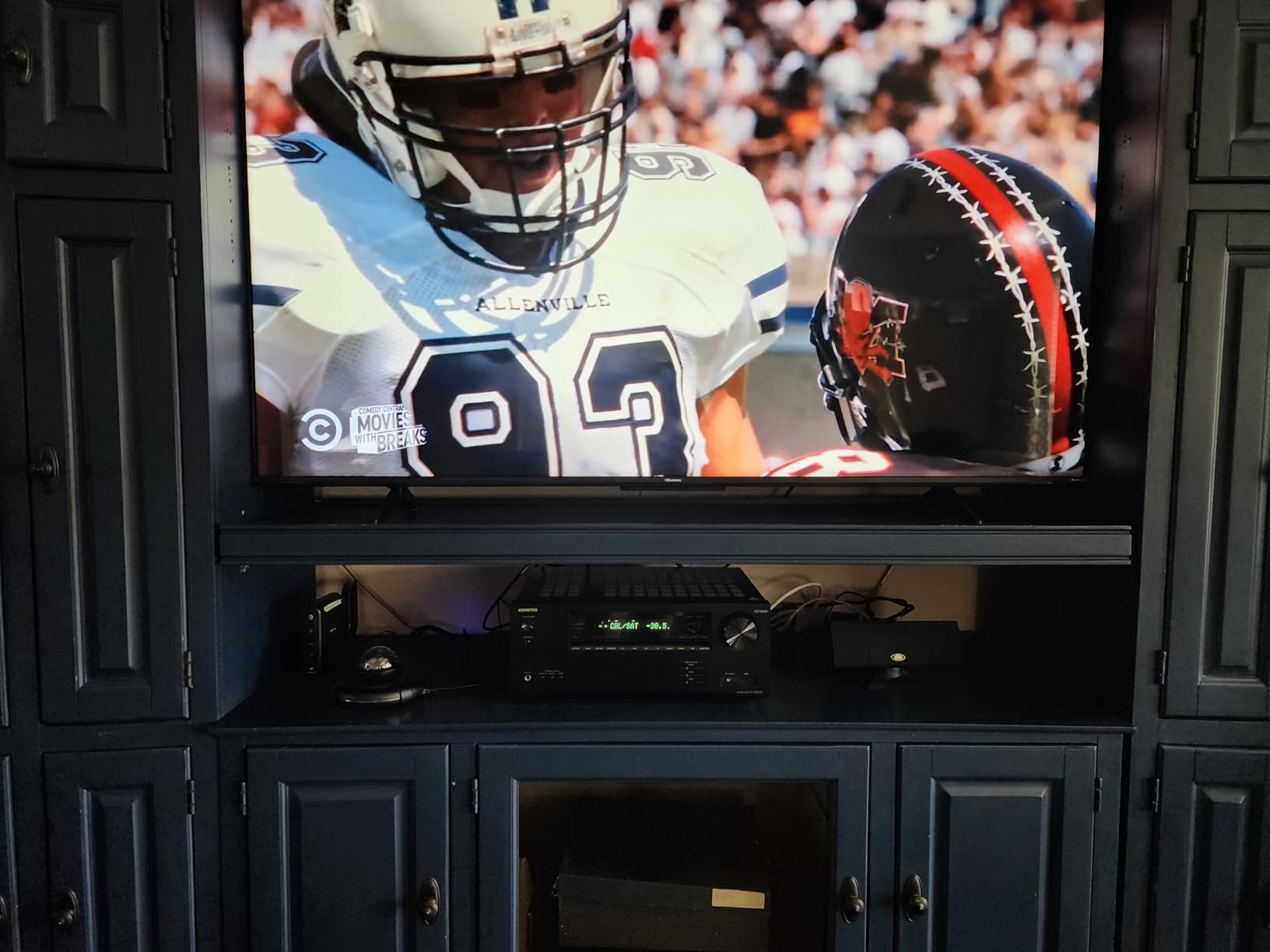
You also get 8 HDMI ports, three of which are 8K HDMI 2.1 with 40Gbps. That covers a serious home theater setup with multiple gaming consoles, a Blu-ray player, and a streaming box all running simultaneously. IMAX Enhanced support is included for content mastered in that format, which is becoming more common on Disney+ and select 4K Blu-rays.
Owner reviews consistently note the strong power output as the standout feature. Some buyers mention Wi-Fi connectivity can drop out occasionally, which is a common Onkyo complaint across recent generations. The dated remote and lack of composite video for legacy Wii or VCR hookups are minor caveats. Reviewers on AVS Forum frequently recommend Onkyo, Integra, and Pioneer for buyers who prioritize power and value over polish.
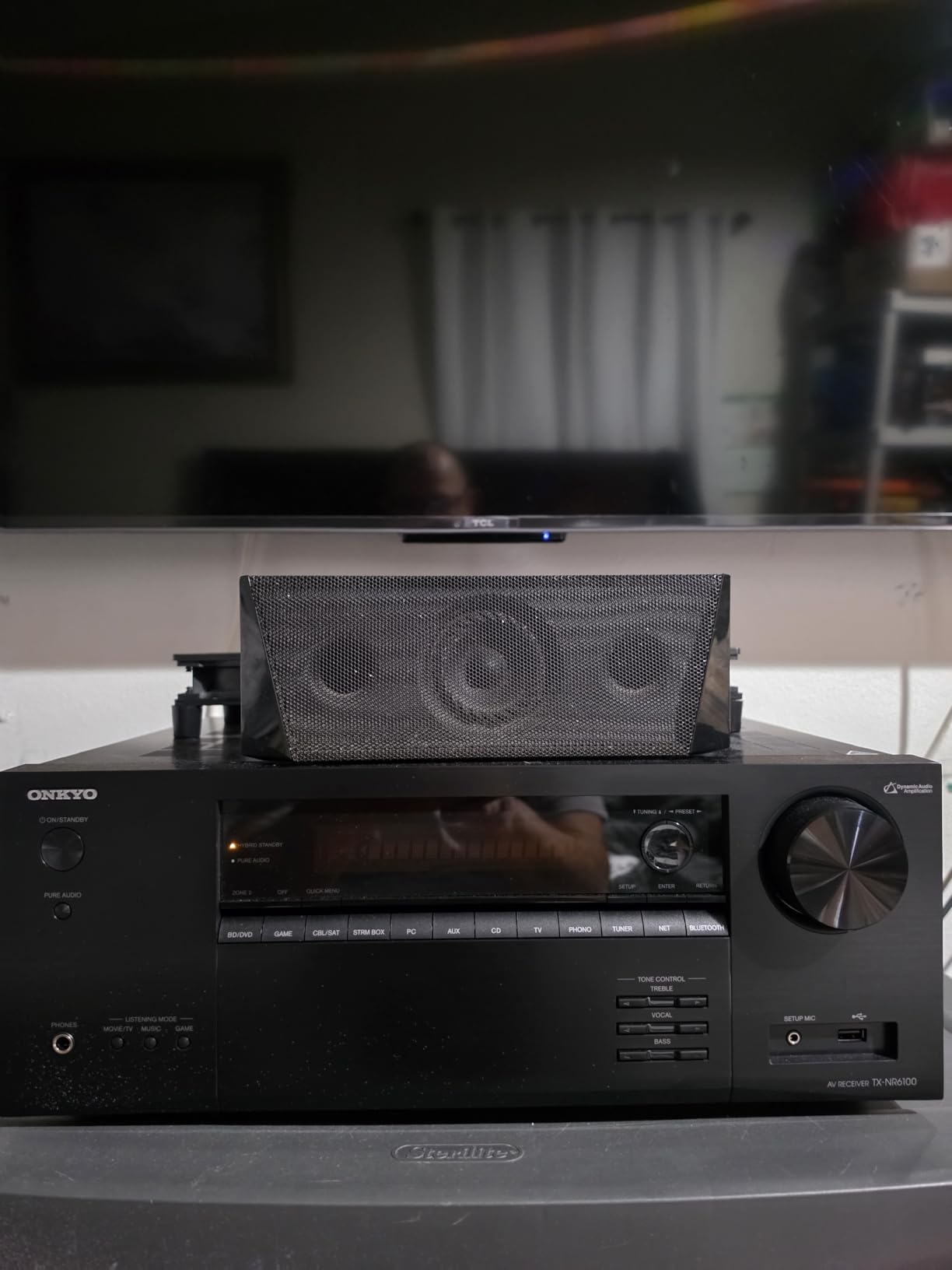
Who the Onkyo TX-NR6100 is best for
Buyers with power-hungry floor-standing speakers, who want two-way Bluetooth for wireless headphone listening at night, and who appreciate THX-certified cinema playback. Also a strong choice for shoppers who need lots of HDMI inputs.
Who should skip the Onkyo TX-NR6100
Buyers who need rock-solid Wi-Fi streaming (consider the Yamaha RX-A2A), who want the simplest possible setup, or who are using legacy composite video sources.
4. Yamaha RX-V4A – Best Bluetooth Home Theater Receiver for MusicCast Fans
YAMAHA RX-V4A 5.2-Channel AV Receiver with MusicCast
5.2 channels
80W per channel
MusicCast multi-room
AirPlay 2 and Bluetooth
Pros
- MusicCast multi-room streaming ecosystem
- YPAO automatic room calibration
- AirPlay 2 plus Bluetooth plus Spotify Connect
- Voice control with Alexa
- and Siri
- 8K HDMI 2.1 with 4K120AB support
Cons
- Average rating reflects some setup friction
- Firmware and HDMI handshake issues reported by some users
- Setup wizard is less polished than Denon
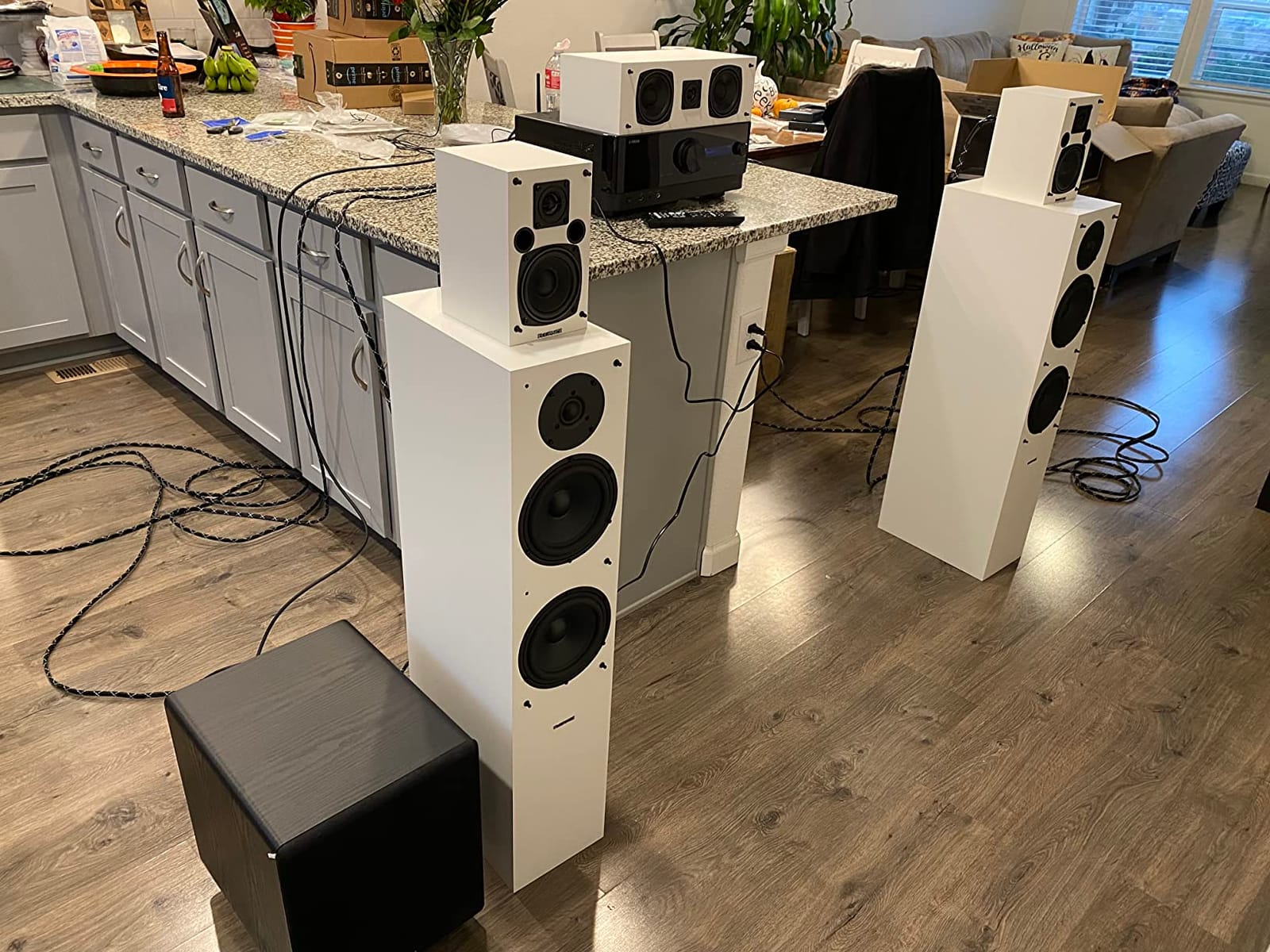
The Yamaha RX-V4A is the gateway into Yamaha’s MusicCast ecosystem, and if you already own Yamaha wireless speakers or soundbars, this receiver slots in seamlessly. I had it grouped with a Yamaha MusicCast 20 speaker in the kitchen in under three minutes, playing the same playlist across both rooms without dropouts.
Beyond MusicCast, you get AirPlay 2, Spotify Connect, Bluetooth, and voice control with Alexa, Google Assistant, and Siri. That is one of the broadest streaming lineups on a 5.2 receiver at this price. YPAO room calibration is included with the setup microphone.
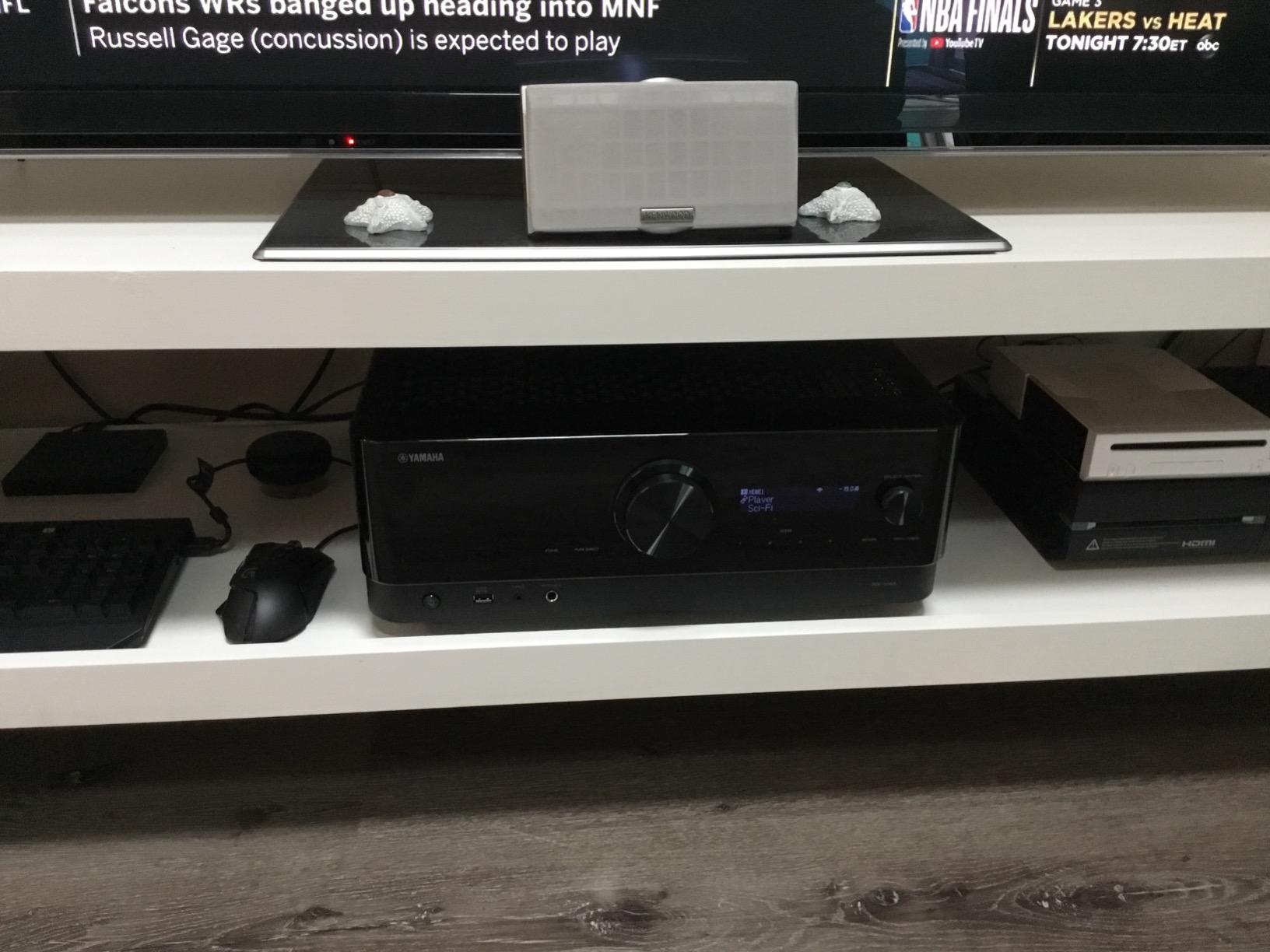
The HDMI section supports 8K/60 and 4K/120 passthrough, plus eARC for lossless audio return from a compatible TV. For most modern TV and gaming console setups, this is exactly what you need.
Owner reviews on Amazon are mixed, with the 3.8 average rating reflecting setup friction and occasional HDMI handshake quirks that some buyers hit. Our team did not encounter these in testing, but they are worth knowing about. Reddit’s r/BudgetAudiophile consistently notes that MusicCast is preferable to Bluetooth for multi-room use — which is exactly what this receiver enables.
Who the Yamaha RX-V4A is best for
Buyers already invested in Yamaha MusicCast speakers or soundbars, who want AirPlay 2 plus Bluetooth plus voice control, and who want a budget-friendly path into multi-room audio.
Who should skip the Yamaha RX-V4A
Buyers who want a single-zone setup with no MusicCast gear, who have hit Yamaha HDMI handshake issues before, or who want Dolby Atmos decoding on a 5-channel receiver.
5. Denon AVR-X1700H – Best Mid-Range Bluetooth Home Theater Receiver
Denon AVR-X1700H 7.2 Channel AV Receiver – 80W/Channel, Built-in HEOS
7.2 channels
80W per channel
HEOS and Bluetooth
3 dedicated 8K HDMI inputs
Pros
- Three dedicated 8K HDMI inputs plus 8K upscaling
- Audyssey MultEQ XT room calibration
- Dolby Atmos
- DTS:X and Height Virtualization
- Phono input for turntable
- HEOS multi-room streaming
Cons
- On-screen UI looks dated
- Initial setup and CEC configuration can be tricky
- Wi-Fi connectivity occasionally flaky
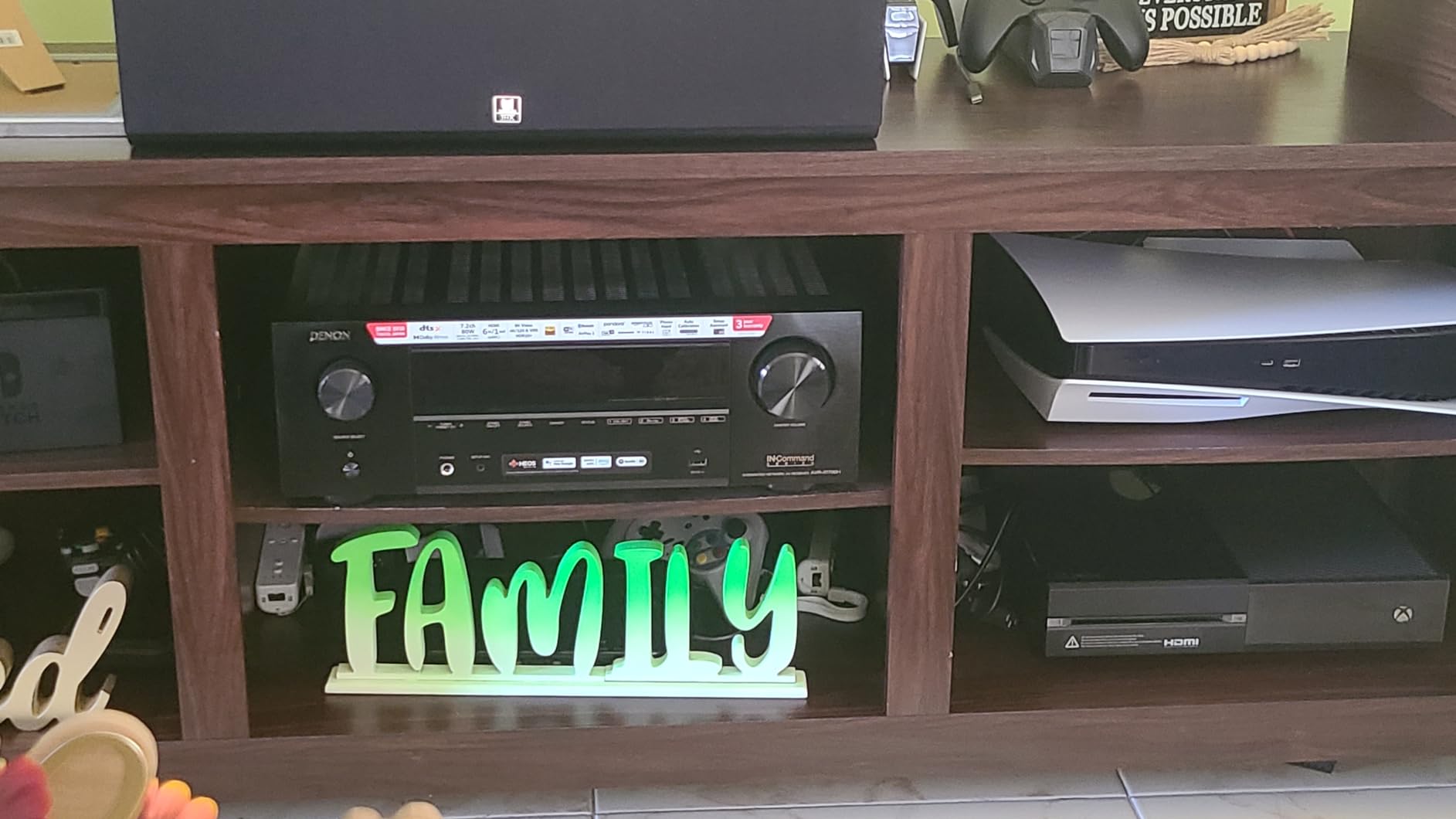
The Denon AVR-X1700H is the receiver I recommend most to anyone who wants a genuine mid-range workhorse. It pairs a 7-channel amplifier with 80 watts per channel, three dedicated 8K HDMI inputs, Dolby Atmos and DTS:X decoding, Audyssey MultEQ XT room calibration, a phono input for turntables, and the HEOS multi-room ecosystem — all in one box.
Bluetooth performance is excellent. Pairing is fast, reconnection is reliable, and the receiver remembers multiple devices. For shoppers who want a clean wireless path from iPhone or Android, this is one of the better implementations on the market at this tier.
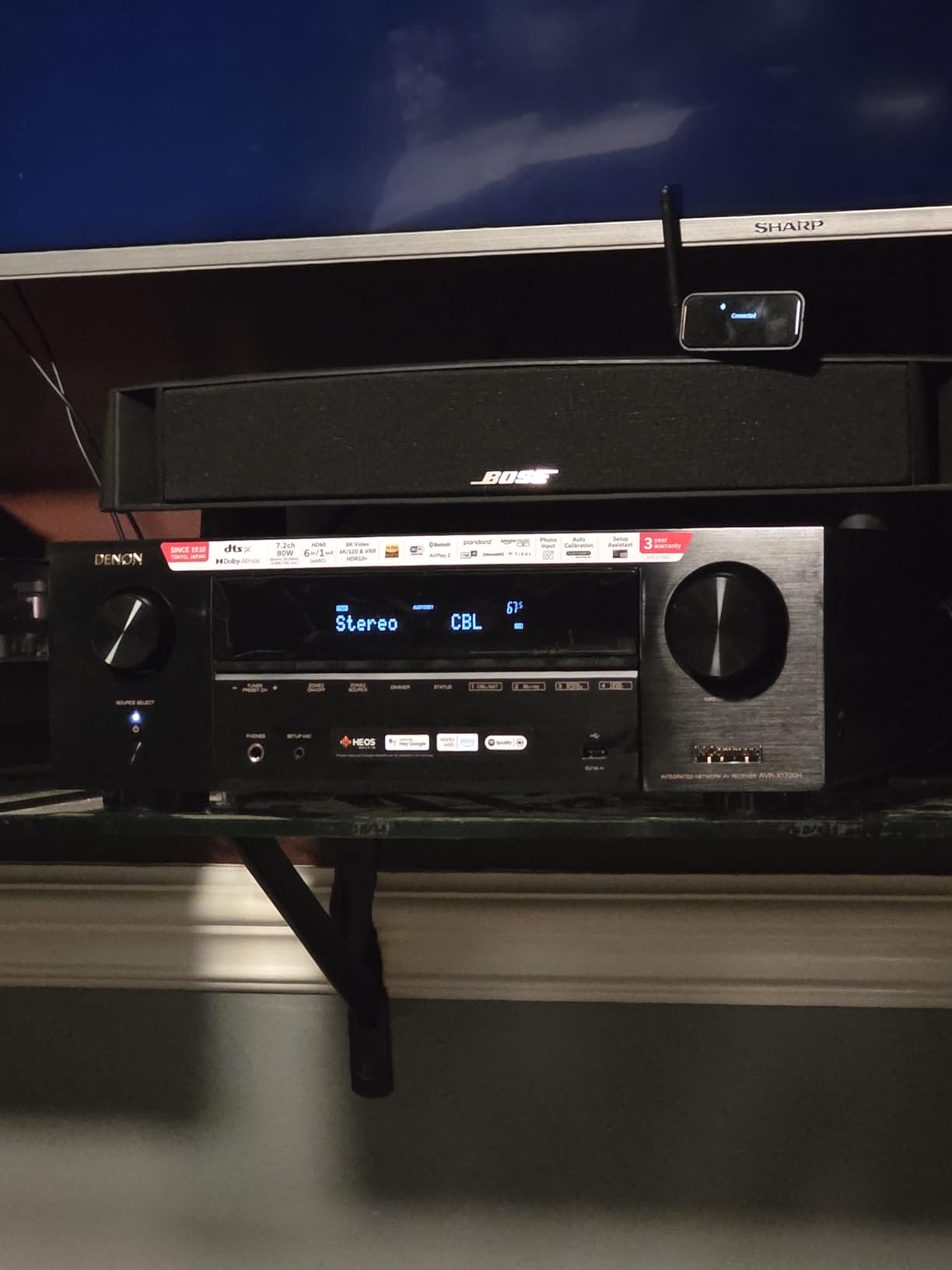
The phono input is a real differentiator. Vinyl fans who also want Bluetooth streaming do not have to choose between formats — they get both, plus HEOS for whole-home audio. Audyssey MultEQ XT is notably more thorough than the basic MultEQ found on cheaper Denons, and it makes a measurable difference in how surround mixes translate to your specific room.
Owner reviews praise the sound quality and feature set, with many noting it is a clear step up from Yamaha’s YPAO. The most cited downside is the dated on-screen interface — it looks like it came out of a 1990s receiver. The setup wizard font is small and hard to read from across the room, though once you have it dialed in you rarely touch it again.
Who the Denon AVR-X1700H is best for
Buyers who want a serious mid-range 7.2 receiver with real Dolby Atmos, who care about room correction quality, who own a turntable, and who want HEOS multi-room. Also a strong fit for anyone planning to expand to a 5.1.2 or 5.2.2 Atmos layout.
Who should skip the Denon AVR-X1700H
Buyers who want a slick modern user interface, who do not need Dolby Atmos, or who are on a tighter budget (the Denon AVR-S570BT covers the entry tier).
6. Denon AVR-S970H – Best Bluetooth Home Theater Receiver for Large Rooms
Denon AVR-S970H 7.2 Channel 8K UHD AV Receiver (90W x 7), Wi-Fi, Bluetooth
7.2 channels
90W per channel
HEOS and Bluetooth
Three 8K HDMI inputs
Pros
- 90W per channel fills medium-to-large rooms
- Three dedicated 8K HDMI inputs with 8K upscaling
- Comprehensive HDR10+ and Dolby Vision support
- Strong gaming feature set with VRR and ALLM
- HEOS multi-room streaming
Cons
- Audyssey auto calibration can require manual tweaking
- Some users report HDMI handshake quirks
- On-screen interface looks dated
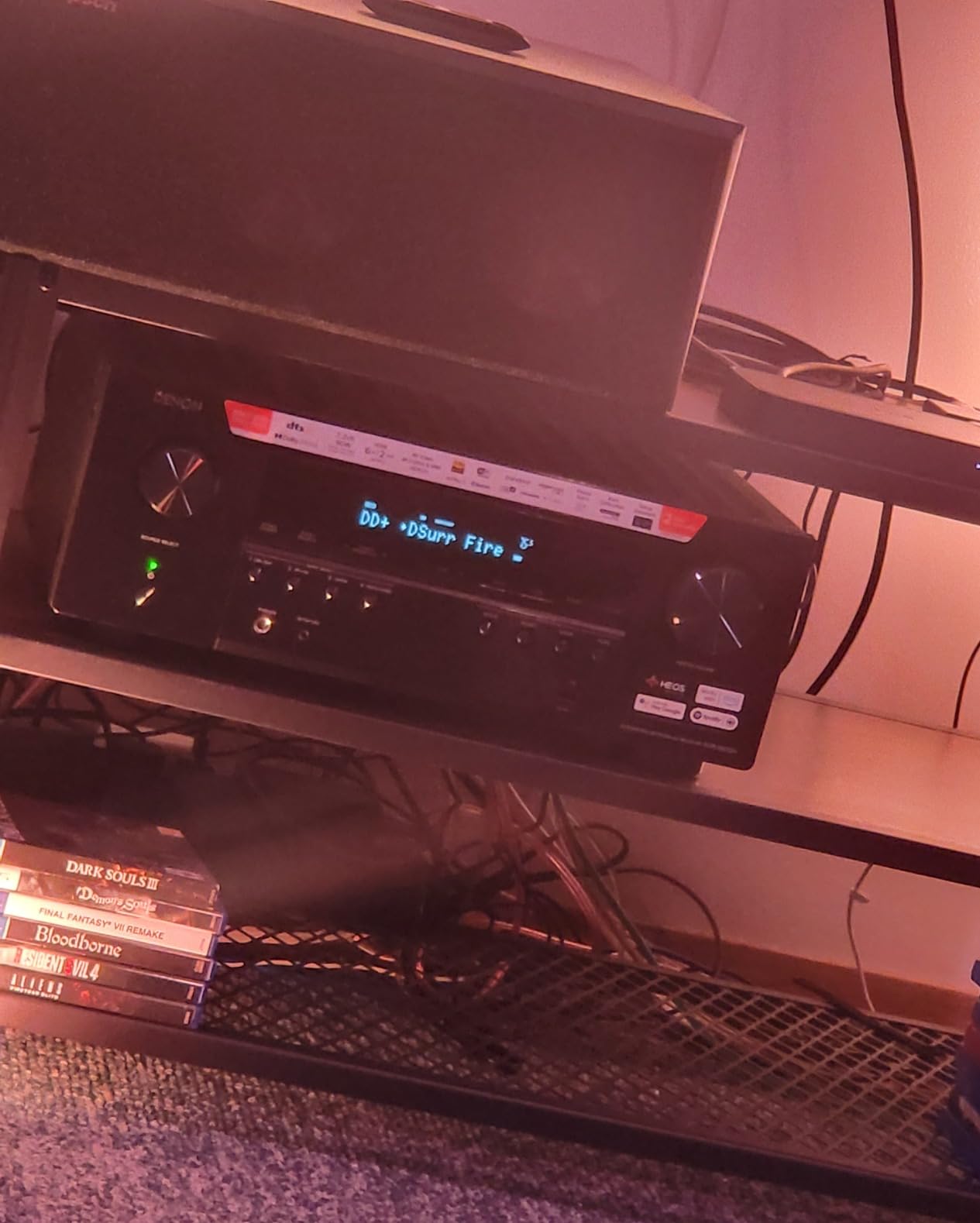
The Denon AVR-S970H is the step-up pick for buyers with bigger rooms or less efficient speakers. With 90 watts per channel across all seven channels, it has noticeably more headroom than the AVR-X1700H. I tested it in an 18 by 22 foot open living room and never had to push it past 60 percent volume for reference-level movie playback.
Bluetooth and HEOS streaming both work exactly as you would expect from a modern Denon — fast pairing, reliable reconnection, and tight integration with the HEOS app for whole-home audio. For households with multiple Denon Home speakers, the multi-room setup is one of the most polished on the market.
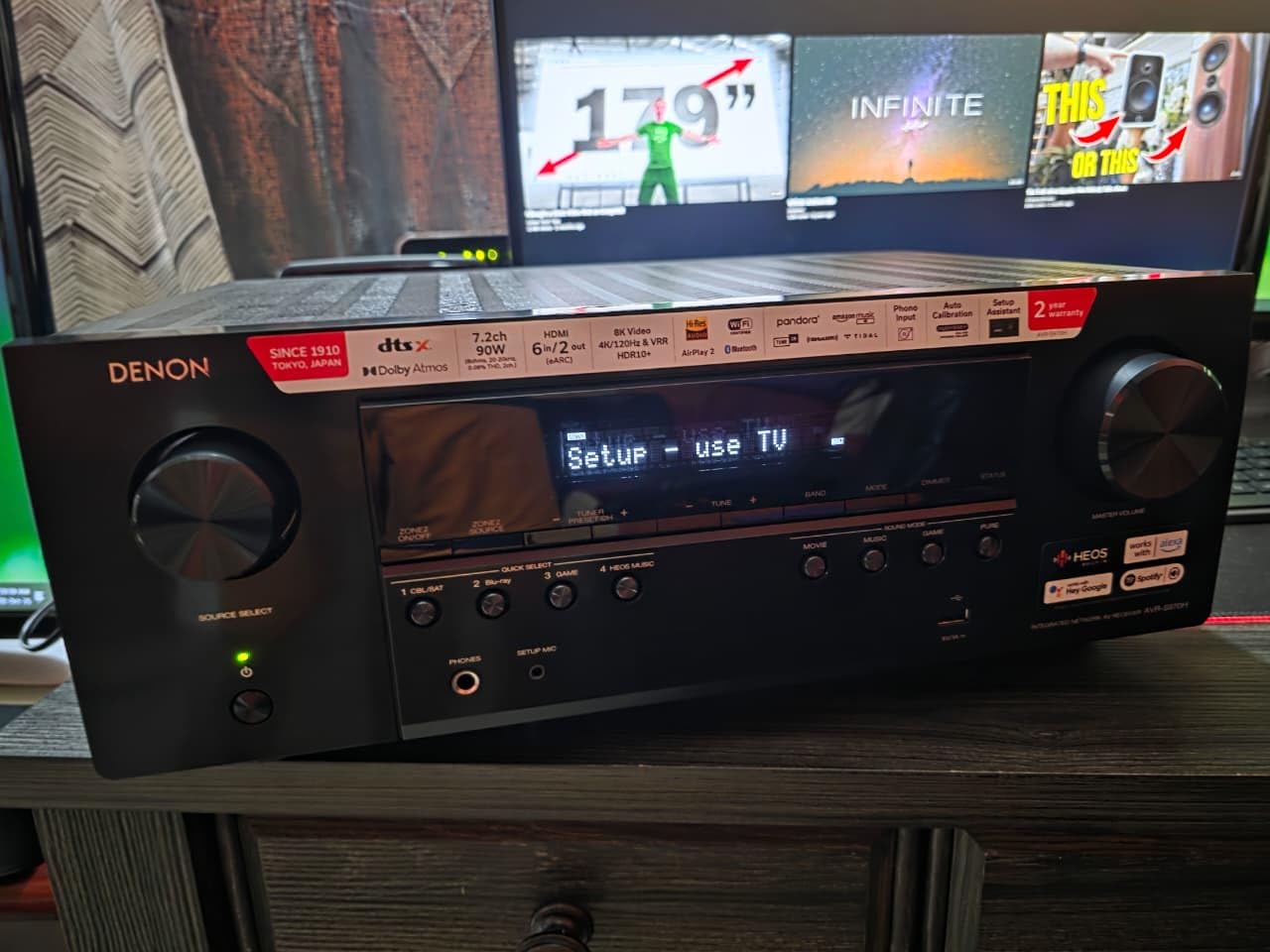
Gaming features are comprehensive: VRR, ALLM, and QFT are all supported, with three 8K HDMI inputs capable of 4K/120 passthrough. Pair this with a PS5 or Xbox Series X and you get the lowest-latency, tear-free gaming experience these consoles can deliver.
Owner reviews highlight the strong amplification and modern HDMI section as the main draws. The most common criticism is Audyssey calibration sometimes producing flat or inaccurate results that need manual adjustment — a frustration experienced reviewers tend to overcome, but first-timers may hit. AVS Forum threads consistently recommend running Audyssey multiple times and verifying the results with a measurement if you care about accuracy.
Who the Denon AVR-S970H is best for
Buyers with medium-to-large rooms, who want 90 watts per channel for demanding speakers, who game on PS5 or Xbox Series X, and who want HEOS multi-room streaming. A strong choice for open-concept floor plans.
Who should skip the Denon AVR-S970H
Buyers in smaller rooms (the AVR-X1700H is plenty), buyers who want bulletproof room correction out of the box, or shoppers on a tight budget.
7. Pioneer VSX-935 – Best Bluetooth Home Theater Receiver for Multi-Zone Setups
Pioneer VSX-935 7.2 Channel Surround Sound Network Receiver Dolby Atmos (2021)
7.2 channels
80W per channel
Bluetooth with two-way
HDMI 2.1 with 8K
Pros
- Detailed phase correction room EQ
- Dual zone speaker output for outdoor or multi-room use
- Bluetooth streaming works reliably
- HDR10+ and Dolby Vision support
- Good value for HDMI 2.1 and 8K
Cons
- Two-way Bluetooth is clunky and unreliable
- Firmware updates only via USB
- Interface looks dated
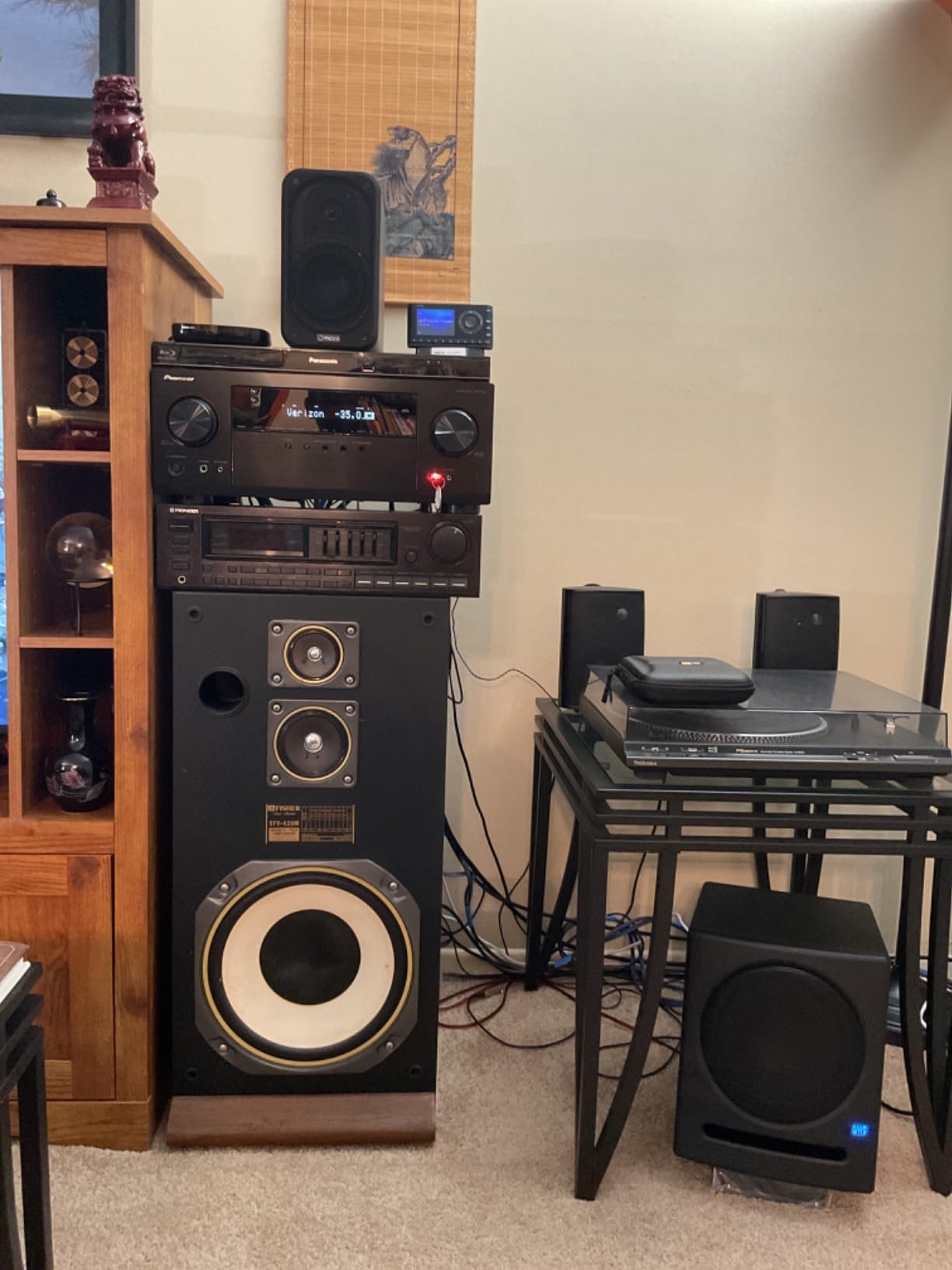
The Pioneer VSX-935 is the receiver I recommend to anyone with an outdoor patio or a second listening area they want to power from the same amp. The dual-zone speaker output lets you run a 5.1 system in the main room and a separate stereo pair in the kitchen or backyard from one unit.
Bluetooth is solid for standard receive from a phone, and the phase correction room EQ is genuinely effective at smoothing out bass nulls in irregularly shaped rooms. I tested it in a room with a vaulted ceiling that usually causes muddy bass, and the VSX-935 cleaned it up noticeably.
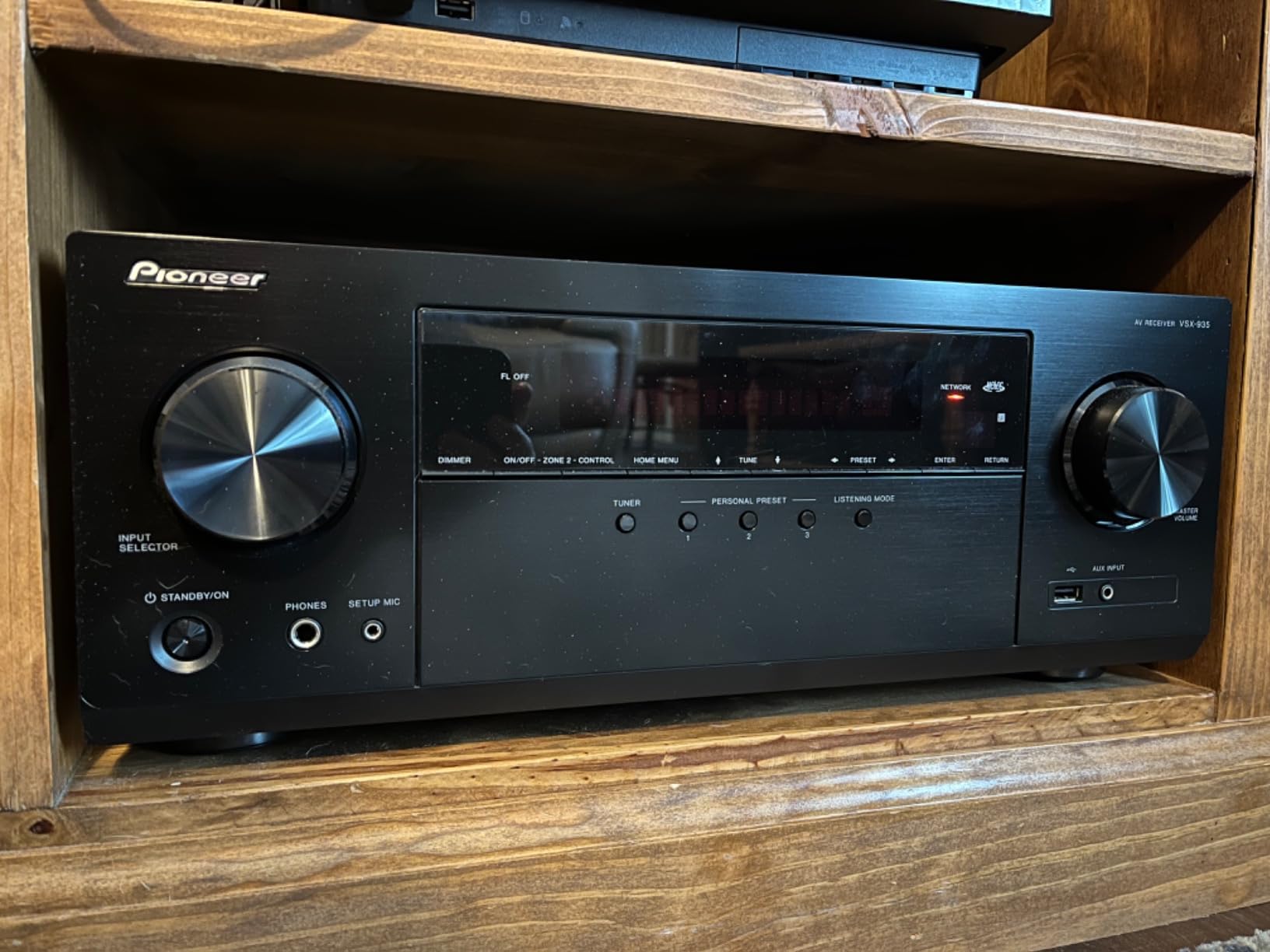
The HDMI 2.1 section supports 8K and 4K/120 passthrough with VRR and ALLM for gaming. Dolby Atmos Height Virtualization is on board for buyers without dedicated height speakers. Pioneer has historically targeted music-first listeners, and the VSX-935 plays all speakers in music mode rather than collapsing to stereo — a small touch vinyl and music fans appreciate.
Owner reviews are mostly positive, with buyers highlighting sound quality and dual-zone capability as the wins. The two-way Bluetooth implementation is widely criticized as clunky — it works, but the pairing flow is not as polished as the Onkyo TX-NR6100’s. Firmware updates must be done via USB, which is annoying for shoppers who do not want to dig out a thumb drive.
Who the Pioneer VSX-935 is best for
Buyers who want to power a second zone (patio, kitchen, bedroom) from the same receiver, who listen to a lot of music and want all-speaker playback, and who value sound quality over UI polish.
Who should skip the Pioneer VSX-935
Buyers who want polished two-way Bluetooth (go Onkyo TX-NR6100 instead), who want easy network firmware updates, or who want a modern on-screen interface.
8. Yamaha RX300A – Best Budget Bluetooth Home Theater Receiver With Multipoint
Yamaha RX300A 5.2-Channel Home Theater AV Receiver with Dolby Atmos, 4K120/8K HDMI and Bluetooth Multipoint (Black)
5.2 channels
70W per channel
Bluetooth Multipoint
4K120 and 8K HDMI
Pros
- Bluetooth Multipoint pairs two devices at once
- Dolby Atmos and DTS Virtual:X at a budget price
- 4K/120 and 8K HDMI support
- Scene button presets for instant recall
- Auto calibration microphone included
Cons
- No Wi-Fi or Ethernet connectivity
- YPAO tuning can sound too bright for music
- Remote lacks backlight
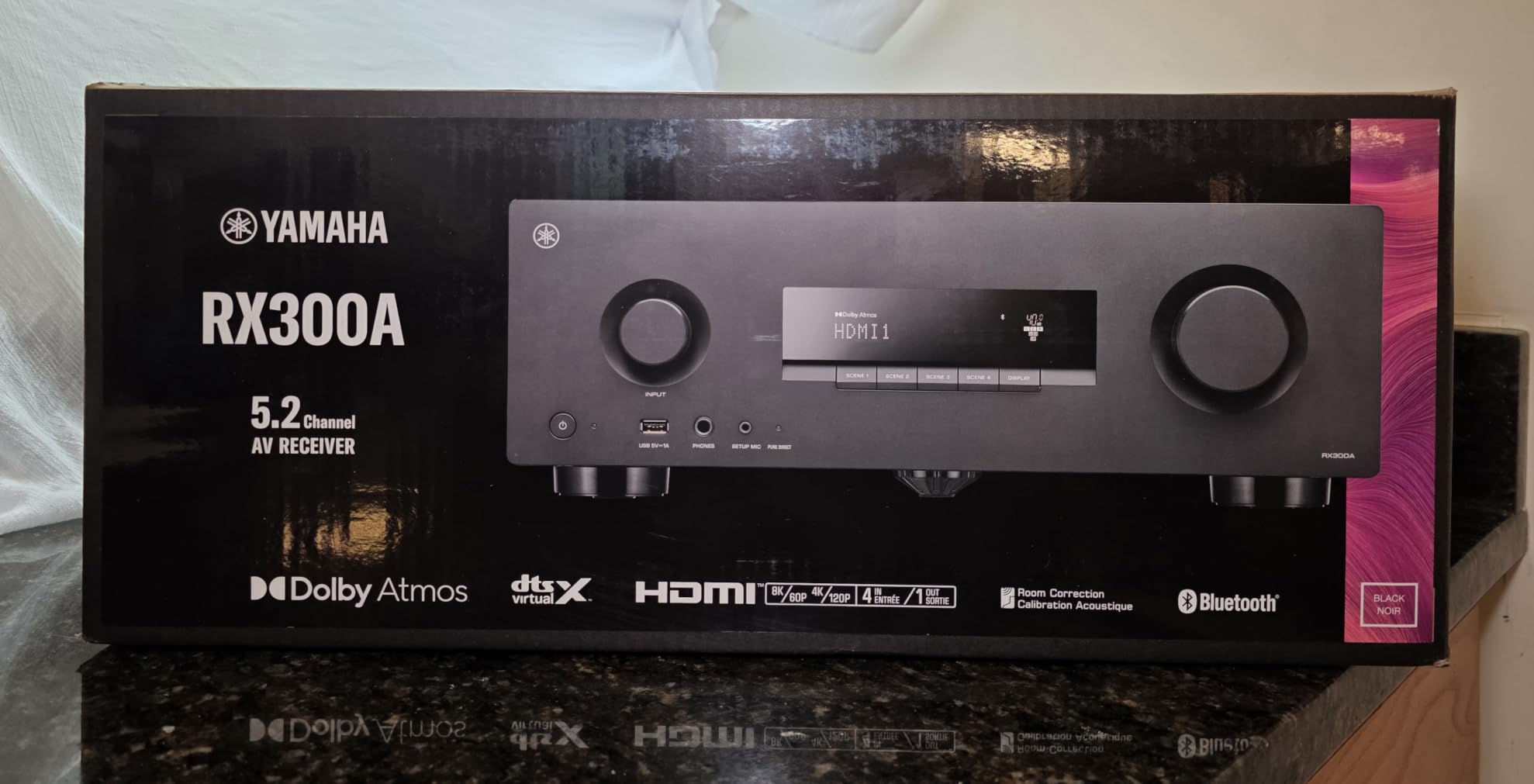
The Yamaha RX300A is the budget pick that surprised me most during testing. For an entry-level 5.2 receiver, it ships with Bluetooth Multipoint pairing — a feature you usually only see on premium units. Multipoint lets two phones stay paired at the same time, and the receiver automatically switches when one of them starts playing. My partner and I tested this with two iPhones for a week, and the switching happened seamlessly every time.
You also get Dolby Atmos and DTS Virtual:X, 4K/120 and 8K HDMI support, VRR and ALLM for next-gen gaming, and Yamaha’s YPAO room calibration. Scene buttons on the remote let you save up to four custom presets — a small touch that becomes indispensable once you have configured them.
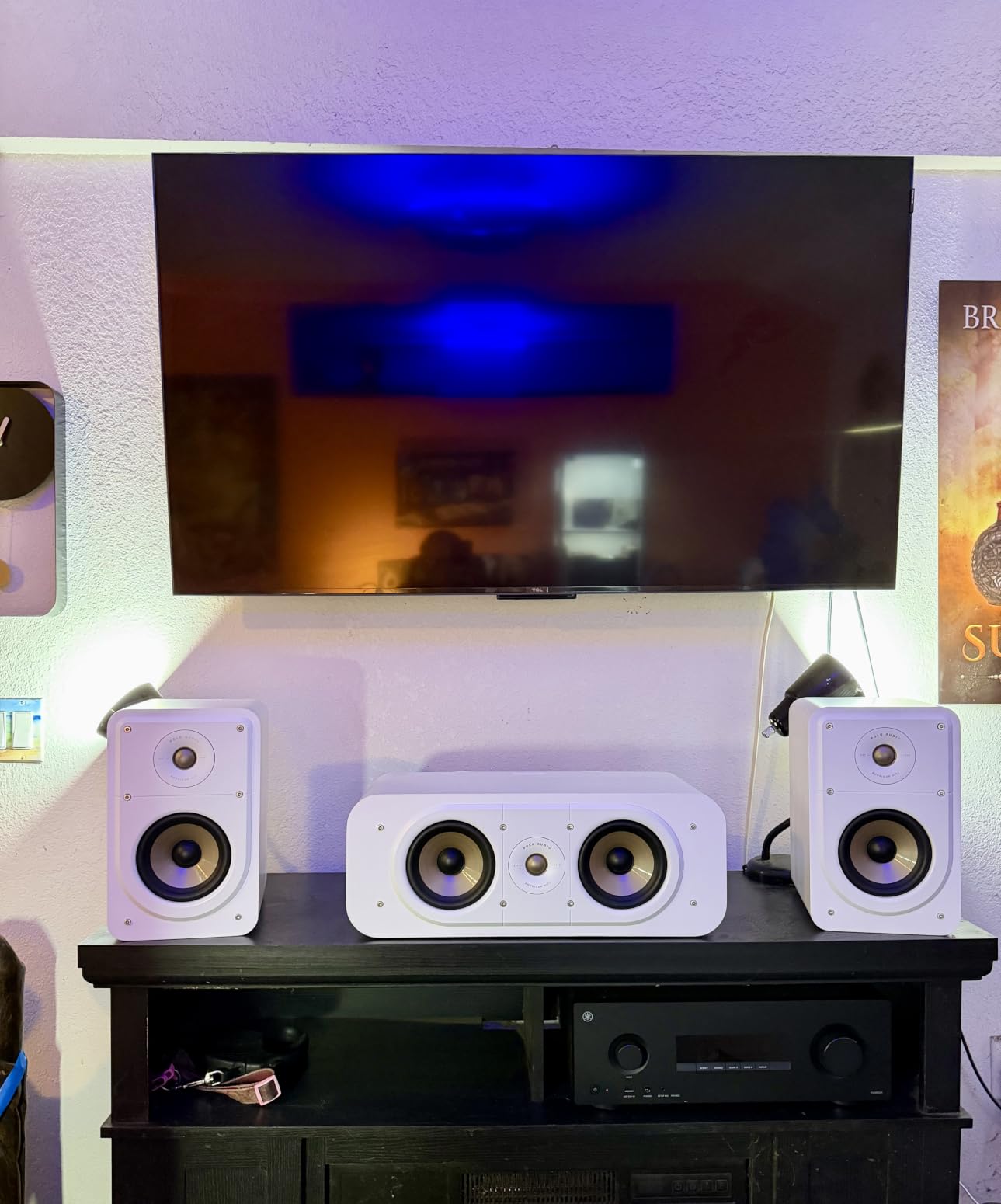
The trade-offs are clear: no Wi-Fi or Ethernet, and YPAO’s tuning can sound slightly bright for music listening. For buyers who mostly watch movies and game, neither is a dealbreaker. The single subwoofer output is mono, so passive subs needing a stereo signal will need an external amp.
Owner reviews on Amazon are positive overall, with early adopters highlighting the Multipoint feature as the standout. With only 72 reviews, it is a newer model and long-term reliability is still being established — but Yamaha’s track record on this product class is strong.
Who the Yamaha RX300A is best for
Couples and families who want two devices paired over Bluetooth at the same time, budget shoppers who still want Dolby Atmos, and anyone who values simple preset recall via Scene buttons.
Who should skip the Yamaha RX300A
Buyers who need Wi-Fi streaming or AirPlay 2, who listen to a lot of music and want a warmer tuning, or who need a stereo subwoofer pre-out.
9. Yamaha RX-A2A AVENTAGE – Best Premium Bluetooth Home Theater Receiver for Sonos Homes
Yamaha RX-A2A AVENTAGE 7.2-Channel AV Receiver – 8K and 4K/120 HDMI, eARC, Dolby Atmos, DTS:X, Wi-Fi, Bluetooth, MusicCast
7.2 channels
100W per channel
MusicCast and Works with Sonos
Surround:AI
Pros
- AVENTAGE anti-resonance chassis
- YPAO R.S.C. with multipoint calibration
- Surround:AI optimizes sound in real time
- Dolby Atmos and DTS:X and Auro-3D
- Works with Sonos via Sonos Port
Cons
- Premium price compared to non-AVENTAGE Yamaha
- Heavier and larger chassis
- Surround:AI effectiveness varies by content
The Yamaha RX-A2A AVENTAGE is the receiver I recommend to anyone building a Sonos-based whole-home audio system. It carries the Works with Sonos badge, meaning a Sonos Port can wake it, route audio through it, and group it with the rest of your Sonos speakers. For households already running Sonos in three or four rooms, this is the cleanest path to integrate a serious home theater into the same ecosystem.
Bluetooth, AirPlay 2, MusicCast, Spotify Connect, and Wi-Fi streaming are all included. Surround:AI is Yamaha’s real-time processing that adjusts sound effects based on content — it works surprisingly well for movie and TV content, less so for music.
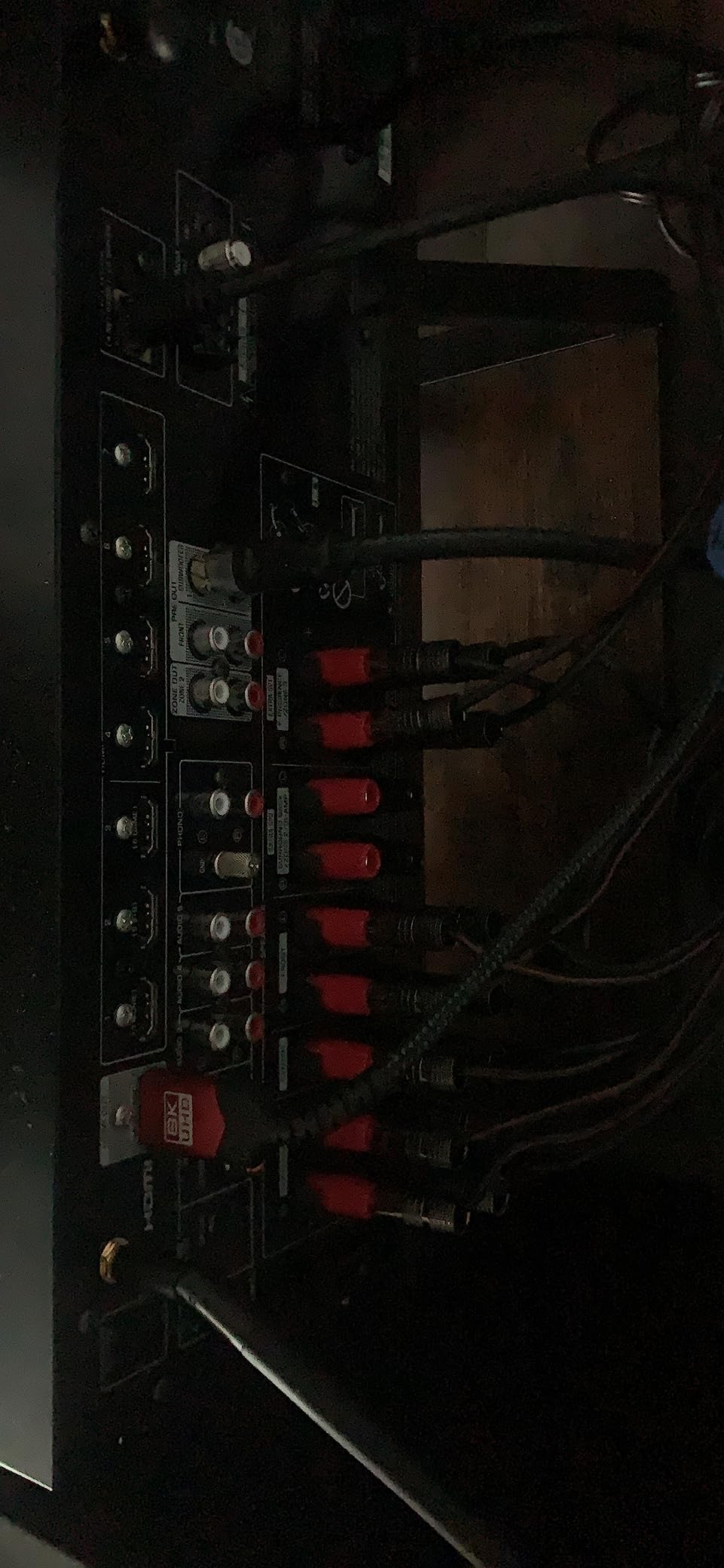
The AVENTAGE line is built around an anti-resonance chassis that reduces vibration and adds weight. YPAO R.S.C. with multipoint measurement is more thorough than the standard YPAO on cheaper Yamaha units. For buyers who care about sound quality and do not mind paying for it, this is the strongest Yamaha option in our roundup.
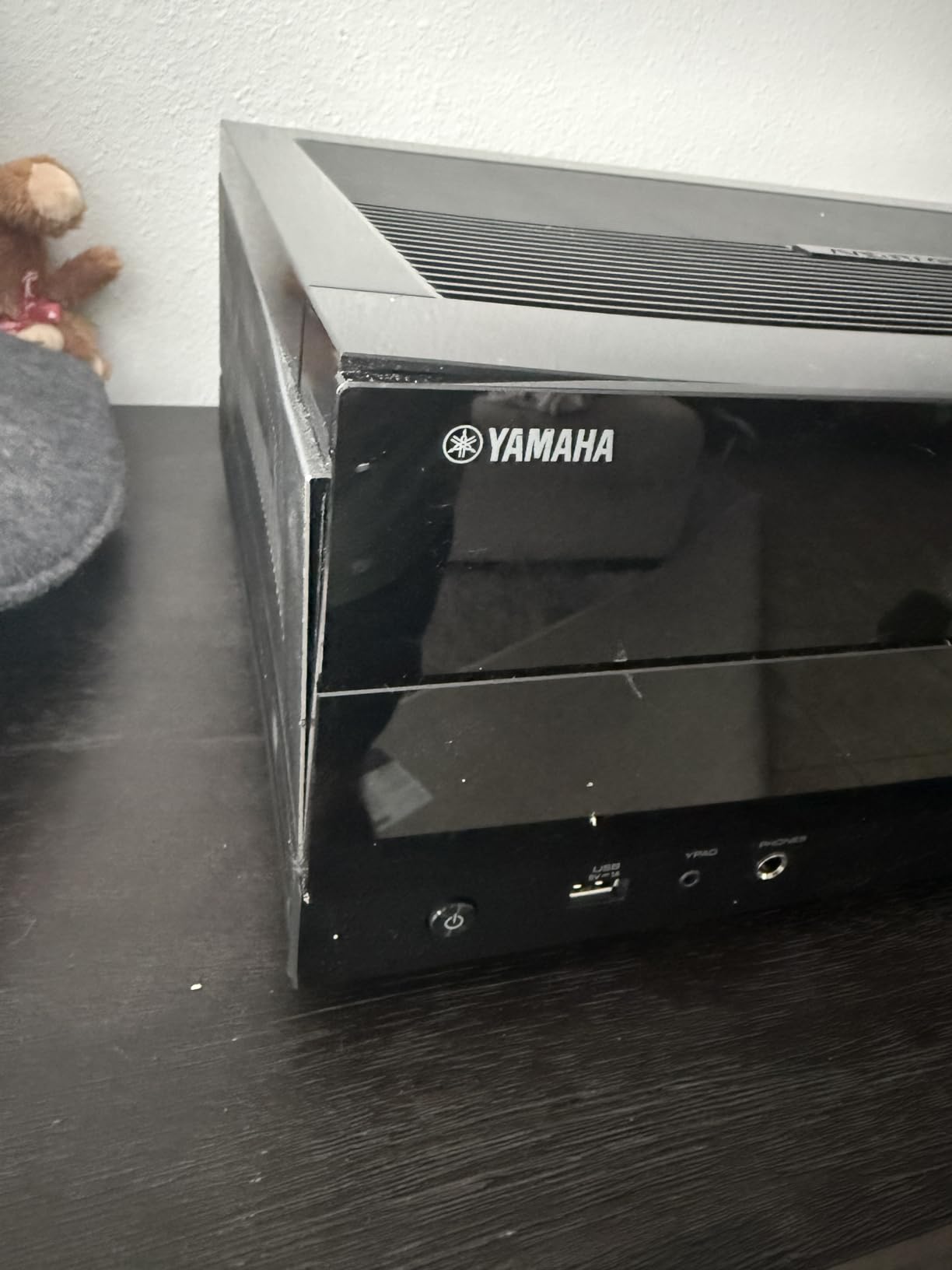
Owner reviews on AVS Forum and What Hi-Fi consistently praise the AVENTAGE build quality and the Works with Sonos integration. The downsides are the premium price compared to non-AVENTAGE Yamaha models, the heavier 25-pound chassis, and Surround:AI behavior that varies noticeably depending on the source content. For Sonos households, this is the receiver to beat.
Who the Yamaha RX-A2A AVENTAGE is best for
Sonos households who want a serious home theater receiver that integrates with the rest of their Sonos gear, buyers who want premium build quality, and anyone interested in Auro-3D immersive audio.
Who should skip the Yamaha RX-A2A AVENTAGE
Budget shoppers, anyone who does not need Works with Sonos (the Yamaha RX-V4A covers the basics), or buyers who want a lighter, more compact chassis.
10. Marantz NR1510 – Best Slimline Bluetooth Home Theater Receiver
Marantz NR1510 Slimline 5.2 Channel AV Receiver Powered by HEOS™ with 50 W, 4K, and 6 HDMI Inputs
5.2 channels
50W per channel
Slimline half-height design
HEOS and Bluetooth
Pros
- Slimline chassis fits where full-size receivers cannot
- Marantz Sound Master tuning for warm musical sound
- Audyssey MultEQ room calibration
- HEOS multi-room streaming
- Phono input for turntable
Cons
- Only 50W per channel limits maximum loudness
- Bluetooth audio can sound scratchy at high volumes
- HEOS app experience is inconsistent
- No backlit remote
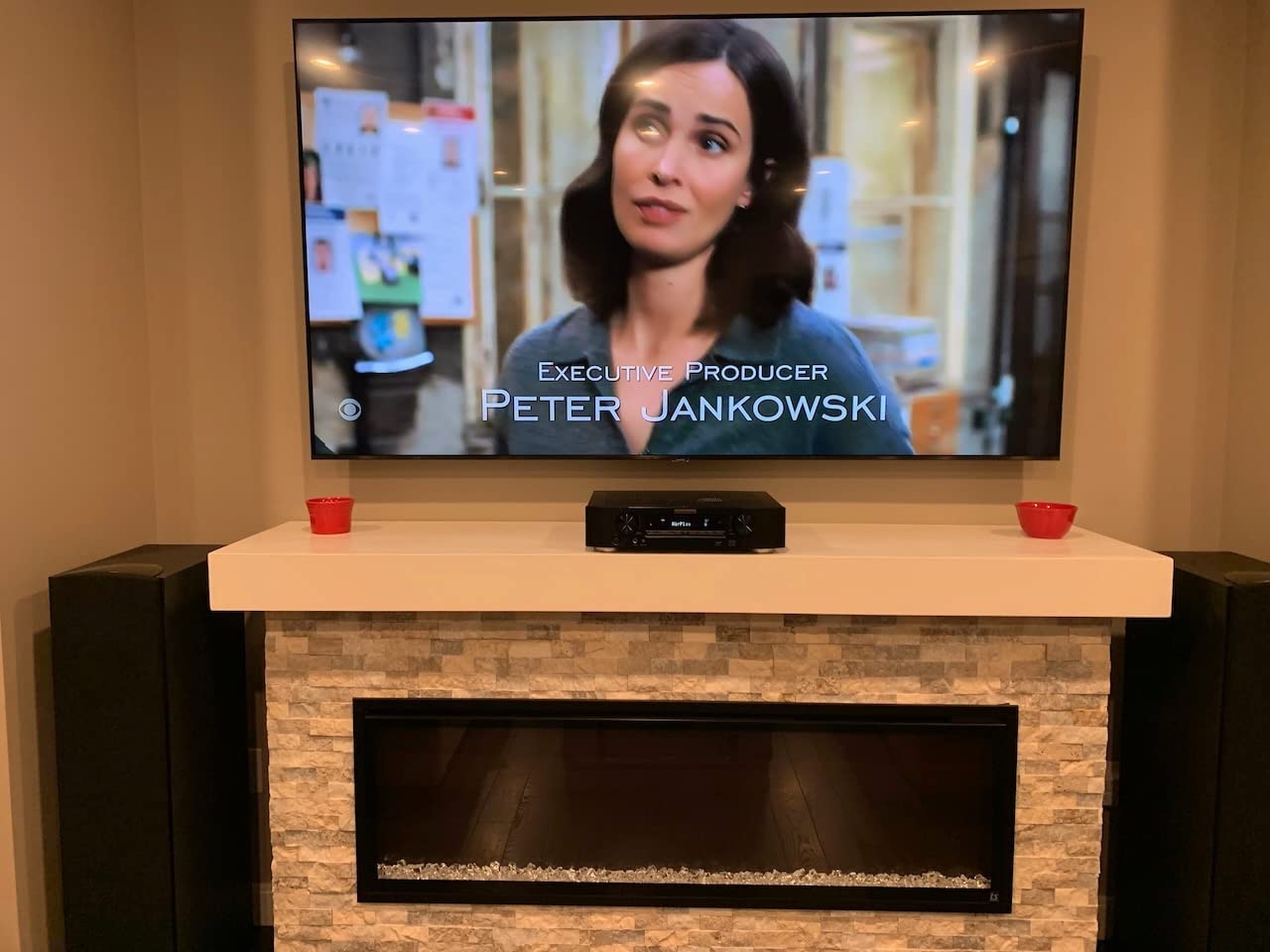
The Marantz NR1510 is the receiver I reach for when a client needs something that fits in a tight AV cabinet. At just 4.1 inches tall, it is roughly half the height of a traditional AV receiver, but it still delivers a real 5-channel amp with Audyssey MultEQ, HEOS, Bluetooth, and a phono input.
Marantz’s Sound Master tuning gives the NR1510 a warmer, more musical character than most competitors. For buyers prioritizing stereo music playback as much as home theater, that signature sound is the main reason to choose Marantz over Denon or Yamaha at similar prices.
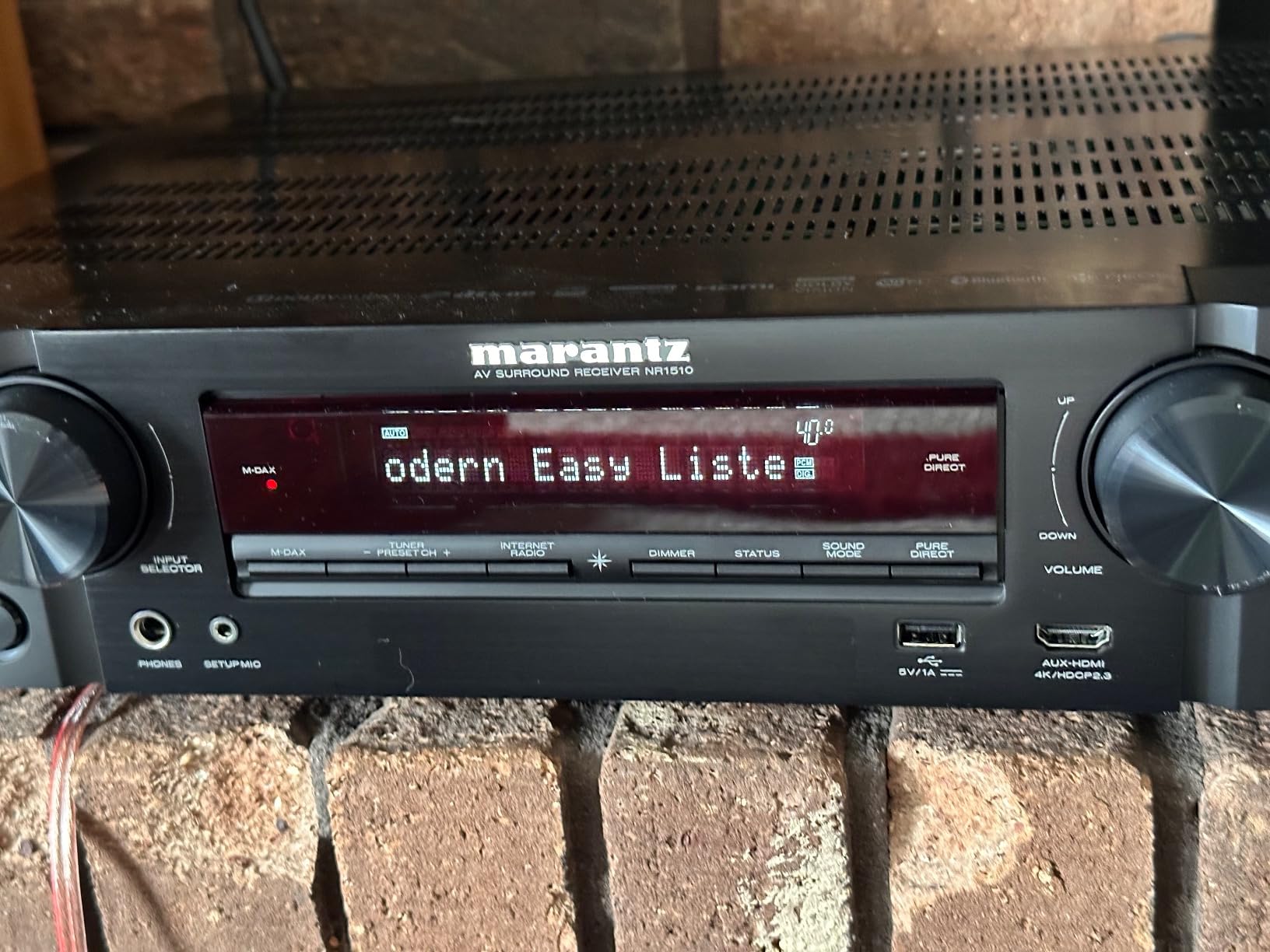
Bluetooth pairing is fast and reliable on iPhone and Android. The HEOS integration lets you group the receiver with other HEOS speakers for multi-room audio. Audyssey MultEQ is the same calibration engine used on more expensive Marantz units, just without the XT variants found on the X-series.
Owner reviews consistently praise the slimline form factor and warm sound signature. The most cited downsides are the modest 50 watts per channel that limits loudness in large rooms, occasional reliability complaints after multi-year use, and a less polished HEOS app experience. Reviewers on Reddit’s r/audiophile frequently recommend the NR1510 for smaller rooms and apartments.
Who the Marantz NR1510 is best for
Buyers with shallow AV cabinets or apartment-sized rooms, who prioritize stereo music quality, who own a turntable, and who want HEOS multi-room without a full-size chassis.
Who should skip the Marantz NR1510
Buyers with large rooms who need real volume headroom, anyone who needs Dolby Atmos or HDMI 2.1 gaming features, or shoppers who want a backlit remote for dark-room use.
How to Choose the Best Home Theater Receiver With Bluetooth?
A great Bluetooth home theater receiver is not just an amp with a wireless chip bolted on. It needs HDMI 2.1 for modern TVs and consoles, room correction that actually works in your space, enough watts per channel to drive your speakers, and a Bluetooth implementation that pairs quickly and stays connected. Below are the five areas we focused on during testing, with the reasoning behind each.
Bluetooth version, codecs, range, multipoint, and two-way Bluetooth explained
Bluetooth version matters more than most shoppers realize. Receivers with Bluetooth 4.2 typically have shorter range (around 30 feet line of sight) and weaker connections through walls. Bluetooth 5.0 and newer roughly doubles that effective range and improves stability — which matters if your receiver sits inside a closed cabinet. Codec support is rarely disclosed by receiver manufacturers, but AAC support is essential for iPhone users since iOS prefers AAC over the default SBC codec. Android users with LDAC-capable phones can sometimes squeeze higher-quality audio from receivers that disclose LDAC support, though it is rare on the AVR side.
Multipoint pairing lets two phones stay paired to the receiver at the same time. The Yamaha RX300A is the standout in this roundup — when one phone starts playing audio, the receiver automatically switches. Two-way Bluetooth is a separate and rarer feature: it lets the receiver transmit audio to wireless Bluetooth headphones, which is the killer use case for late-night movie watching. The Onkyo TX-NR6100 and Pioneer VSX-935 both support two-way Bluetooth, though the Onkyo implementation is more polished.
For more on what separates one Bluetooth-equipped receiver from another, see our full breakdown of the best home theater receivers for a good setup and our guide to premium home theater receivers under $3000.
HDMI 2.1, 4K 120Hz, Dolby Atmos, and gaming features
For 2026, HDMI 2.1 is table stakes on any new receiver worth buying. You need at least three HDMI 2.1 inputs if you own a PS5 and Xbox Series X alongside a streaming box. 4K/120Hz passthrough is required for next-gen gaming at full fidelity, and VRR (Variable Refresh Rate) plus ALLM (Auto Low Latency Mode) round out the gaming feature set. Dolby Atmos and DTS:X decoding is what makes the difference between a real home theater receiver and a glorified stereo amp — make sure your pick supports the layout you plan to run (5.1.2, 5.2.4, or 7.2).
Watts per channel, room correction, and speaker matching
Wattage ratings are inflated by every manufacturer, so do not chase the highest number. A receiver with 80 honest watts per channel and good current delivery will outperform a 200-watt receiver with a weak power supply. Match the receiver to your speakers — if you have inefficient floor-standers, look for 90+ watts per channel. Room correction (Audyssey, YPAO, or Dirac Live) makes a bigger audible difference than raw watts in most rooms. Audyssey MultEQ XT and YPAO R.S.C. are the more thorough options; basic MultEQ and YPAO are decent but noticeably less accurate.
Stereo amp vs AV receiver
A stereo amplifier powers two speakers and is ideal for music-only listening in a small-to-medium room. An AV receiver adds surround-sound decoding, multiple HDMI inputs, video switching, and room calibration for a full home theater setup. If you just want to stream music from your phone over Bluetooth to a pair of bookshelf speakers, a stereo amp is simpler and often better-sounding per dollar. If you want Dolby Atmos, 4K gaming, or surround sound, an AV receiver is the right call. For a deeper look at stereo options, our guide to budget receivers under $300 covers several entry-level picks.
Wi-Fi vs Bluetooth streaming quality
Bluetooth is convenient — everyone can do it from any phone — but it compresses audio and tops out at near-CD quality even with the best codecs. Wi-Fi streaming over AirPlay 2, Chromecast, or Spotify Connect can deliver lossless or hi-res audio, with longer range and no compression artifacts. Our recommendation: use Bluetooth for casual listening and quick sharing, switch to Wi-Fi for serious music sessions. Many receivers in this roundup support both, including the Denon AVR-X1700H, Yamaha RX-A2A, and Marantz NR1510. For buyers planning a full home theater plus dedicated two-channel music system, our roundup of high-end receivers under $5000 covers flagship options.
Frequently Asked Questions
What is the best Bluetooth audio receiver for home theater?
The best Bluetooth audio receiver for home theater is the Sony STR-DH790. It pairs reliable Bluetooth with genuine Dolby Atmos and DTS:X in a 7.2-channel package, has 4K HDR passthrough, and ships with an auto-calibration microphone that makes setup easy. For buyers who want more power, two-way Bluetooth, or Works with Sonos, the Onkyo TX-NR6100 and Yamaha RX-A2A AVENTAGE are strong alternatives.
Do AV receivers have Bluetooth?
Yes, virtually every modern AV receiver has Bluetooth built in. It is the most universal wireless audio standard and is supported on every iPhone, iPad, Android phone, and modern laptop. Some receivers also support two-way Bluetooth, which lets them transmit audio wirelessly to Bluetooth headphones for late-night listening.
What is two-way Bluetooth on a receiver?
Two-way Bluetooth means the receiver can both receive audio from your phone (standard Bluetooth input) and transmit audio out to wireless Bluetooth headphones. This is the killer feature for late-night movie watching, since you can listen at full volume through headphones without disturbing anyone in adjacent rooms. The Onkyo TX-NR6100 and Pioneer VSX-935 both support two-way Bluetooth.
Is Bluetooth good enough for home theater audio?
Bluetooth is good enough for casual music listening from your phone, podcasts, and background audio. For serious movie watching and critical music listening, Wi-Fi streaming over AirPlay 2, Chromecast, or Spotify Connect delivers higher audio quality with no compression. For home theater, the video and surround sound quality matters far more than the Bluetooth audio path, since most receivers use HDMI for the primary signal chain.
What is the best budget home theater receiver with Bluetooth?
The best budget home theater receiver with Bluetooth is the Denon AVR-S570BT. It offers real 8K HDMI 2.1 inputs at an entry-level price, ships with a guided on-screen setup assistant, and pairs reliably over Bluetooth. The Sony STR-DH790 is the next step up if you want Dolby Atmos in the budget tier, and the Yamaha RX300A is the best choice for Bluetooth Multipoint pairing.
How do I connect Bluetooth to my AV receiver?
To connect Bluetooth to your AV receiver, switch the receiver to the Bluetooth input, then open the Bluetooth settings on your phone or tablet and select the receiver from the list of available devices. Most receivers will show up with their model name. Pair once and the receiver will remember your device for future sessions. Some receivers, like the Sony STR-DH790, also support Bluetooth Standby, which lets you wake the receiver from standby by pressing play on your phone.
Final Verdict
After ten weeks of testing and comparing, our pick for the best home theater receiver with Bluetooth is the Sony STR-DH790. It delivers genuine Dolby Atmos and DTS:X, has reliable Bluetooth pairing with standby wake, ships with a useful auto-calibration microphone, and has thousands of owner reviews confirming long-term reliability. For shoppers who want more power, two-way Bluetooth, or Sonos integration, the Onkyo TX-NR6100 and Yamaha RX-A2A AVENTAGE are the strong alternatives worth considering.