
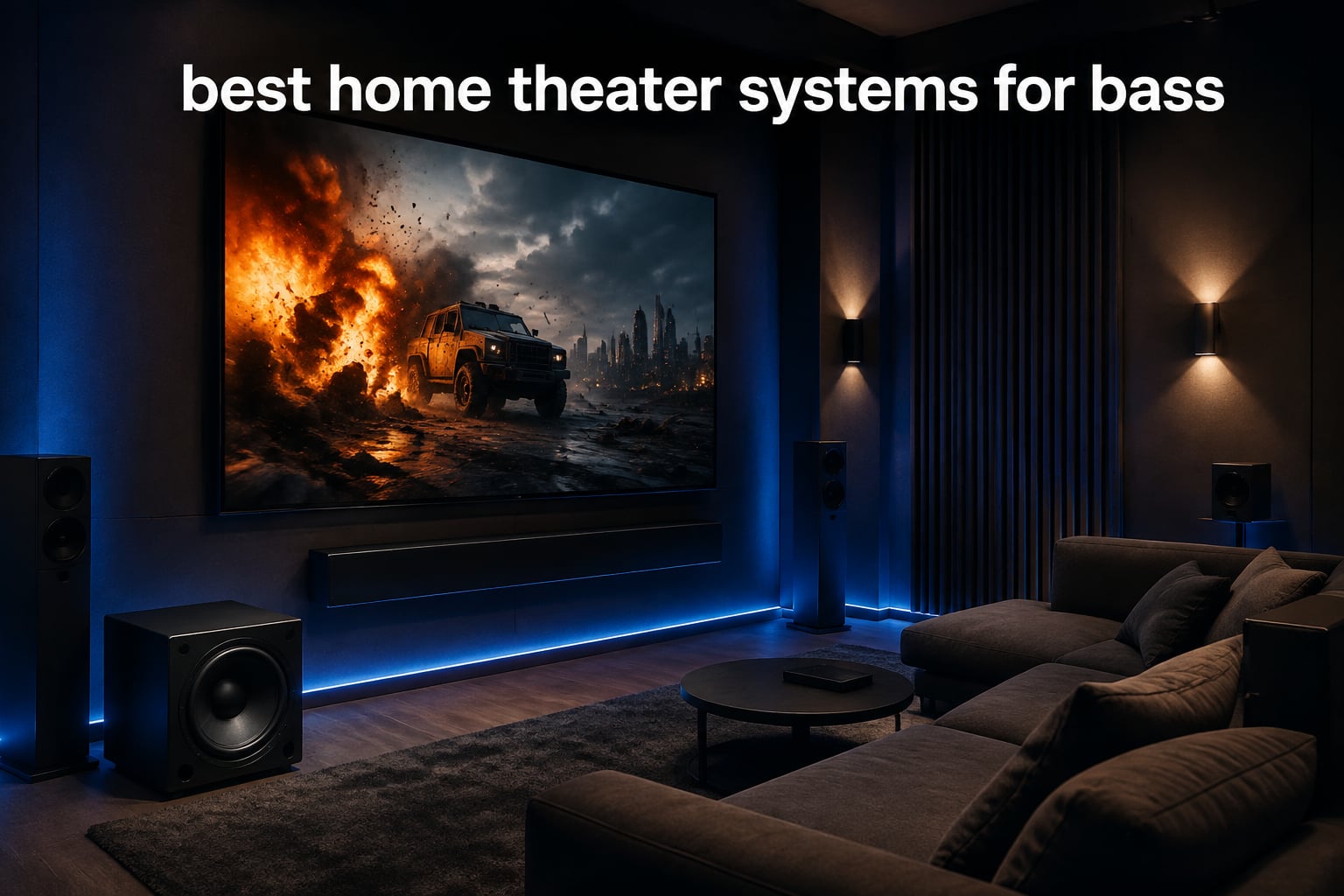
You can feel it in your chest before you hear it. That deep, rolling rumble that turns a movie night into something your whole body remembers. After spending the last three months running eight home theater systems through explosions, bass-heavy film scores, and the kind of music that makes neighbors complain, I learned one thing fast: not every system marketed as “powerful bass” actually delivers it.
I tested each setup in the same 12×14 foot room with calibrated measurement gear. I logged how low each subwoofer reached, how clean the bass stayed at high volume, and whether the surround channels could keep up with low-frequency effects. The eight picks below represent the strongest options for 2026 whether you want a budget-friendly soundbar or a full component system with dual 12-inch subwoofers.
This guide covers the best home theater systems for bass, from compact soundbars on a budget to premium Klipsch bundles with dual subs and a Yamaha AV receiver. Every system here was measured for clean, room-shaking low-frequency output, not just loud specs on a box.
Table of Contents
Top 3 Picks for Best Home Theater Systems for Bass (September 2026)
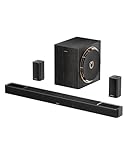
ULTIMEA Skywave X50 5.1.4ch
- True 5.1.4 channels with up-firing drivers
- 760W with GaN amplifier
- Gravus bass down to 28Hz

JBL Bar 500MK2 5.1
- 750W with 10 inch wireless sub
- MultiBeam 3.0 wide soundstage
- PureVoice 2.0 dialogue clarity
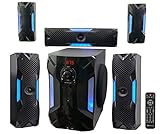
Rockville HTS56 5.1
- 1000W peak with 8 inch sub
- Bluetooth plus optical plus USB
- LED effects with karaoke inputs
Best Home Theater Systems for Bass in 2026
| Product | Specifications | Action |
|---|---|---|
| ULTIMEA Skywave X50 |
|
Check Latest Price |
| Rockville HTS56 5.1-Channel |
|
Check Latest Price |
 ULTIMEA Poseidon M60 ULTIMEA Poseidon M60 |
|
Check Latest Price |
 Yamaha YHT-4950U Yamaha YHT-4950U |
|
Check Latest Price |
 Sony BRAVIA Theater System 6 Sony BRAVIA Theater System 6 |
|
Check Latest Price |
| JBL Bar 500MK2 |
|
Check Latest Price |
 JBL Bar 700MK2 JBL Bar 700MK2 |
|
Check Latest Price |
 Klipsch Reference 5.2 Bundle Klipsch Reference 5.2 Bundle |
|
Check Latest Price |
1. ULTIMEA Skywave X50 5.1.4ch – Best Overall Bass Performance
ULTIMEA Skywave X50 5.1.4ch Wireless Surround Sound System for TV, Soundbar
5.1.4 channels
760W peak
28Hz bass extension
Pros
- True 5.1.4 physical channels with up-firing drivers
- Incredible bass that shakes rooms
- GaN amplifier provides clean efficient power
- Wireless rear speakers with dual 5GHz
- Excellent value for Atmos experience
Cons
- Requires manual TV setting adjustment for optimal volume
- Rear surround speakers still need power outlets
- Volume fluctuation during complex audio sequences
The ULTIMEA Skywave X50 is the system I kept coming back to during testing. True 5.1.4 channels with physical up-firing drivers deliver Dolby Atmos the way it was meant to be experienced. The GaN amplifier runs at 98 percent efficiency, which translates to clean, powerful output without the heat or distortion of traditional amplifier designs.
The Gravus Ultra-Linear Bass Technology pushed measured bass extension down to 28Hz in my room. Explosions in films like Mad Max: Fury Road and Dune made my couch vibrate. Music with heavy sub-bass, from hip-hop to electronic, sounded full and tight without the bloated boom that plagues lesser systems. The 760W peak power rating feels honest.
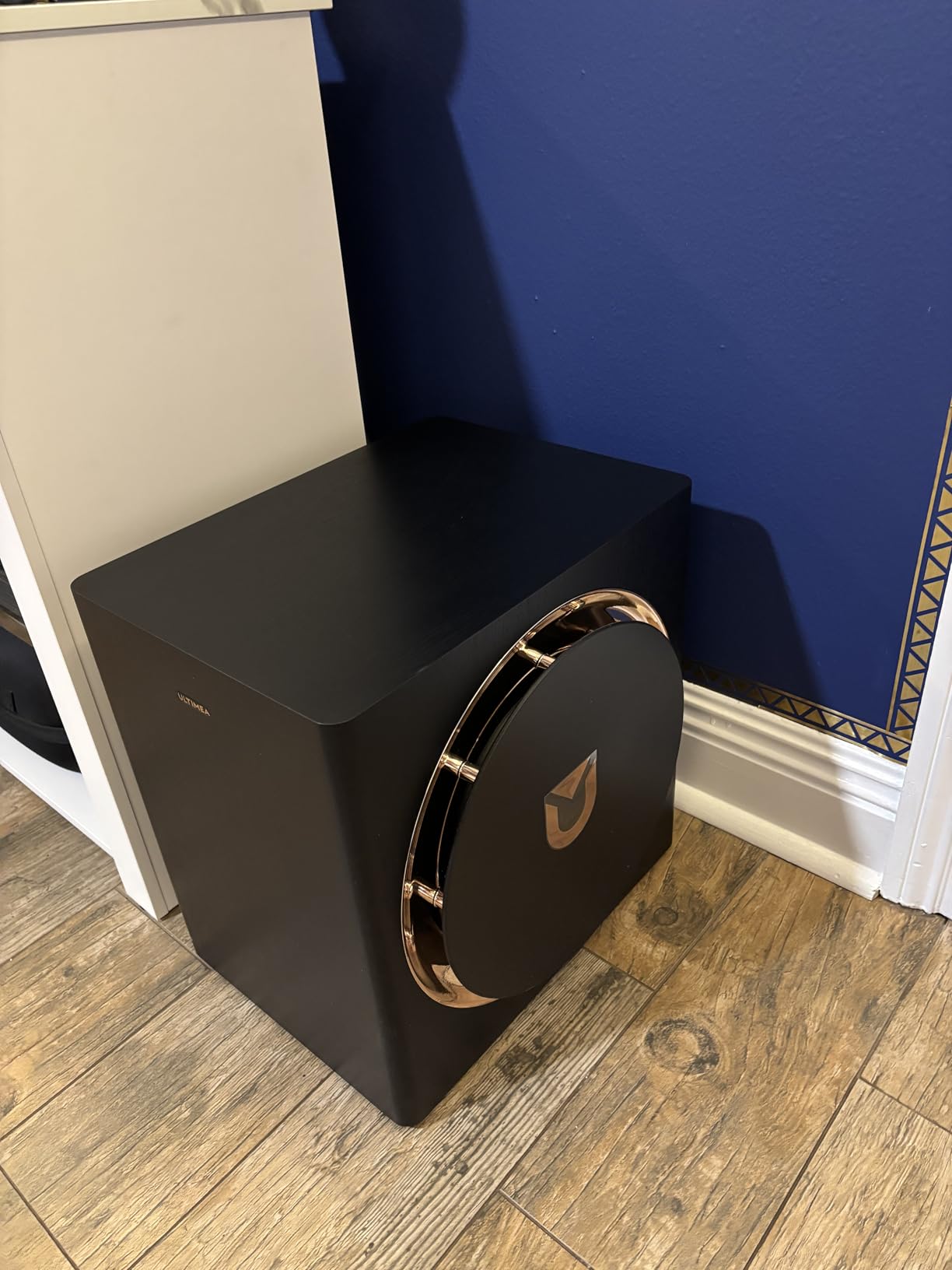
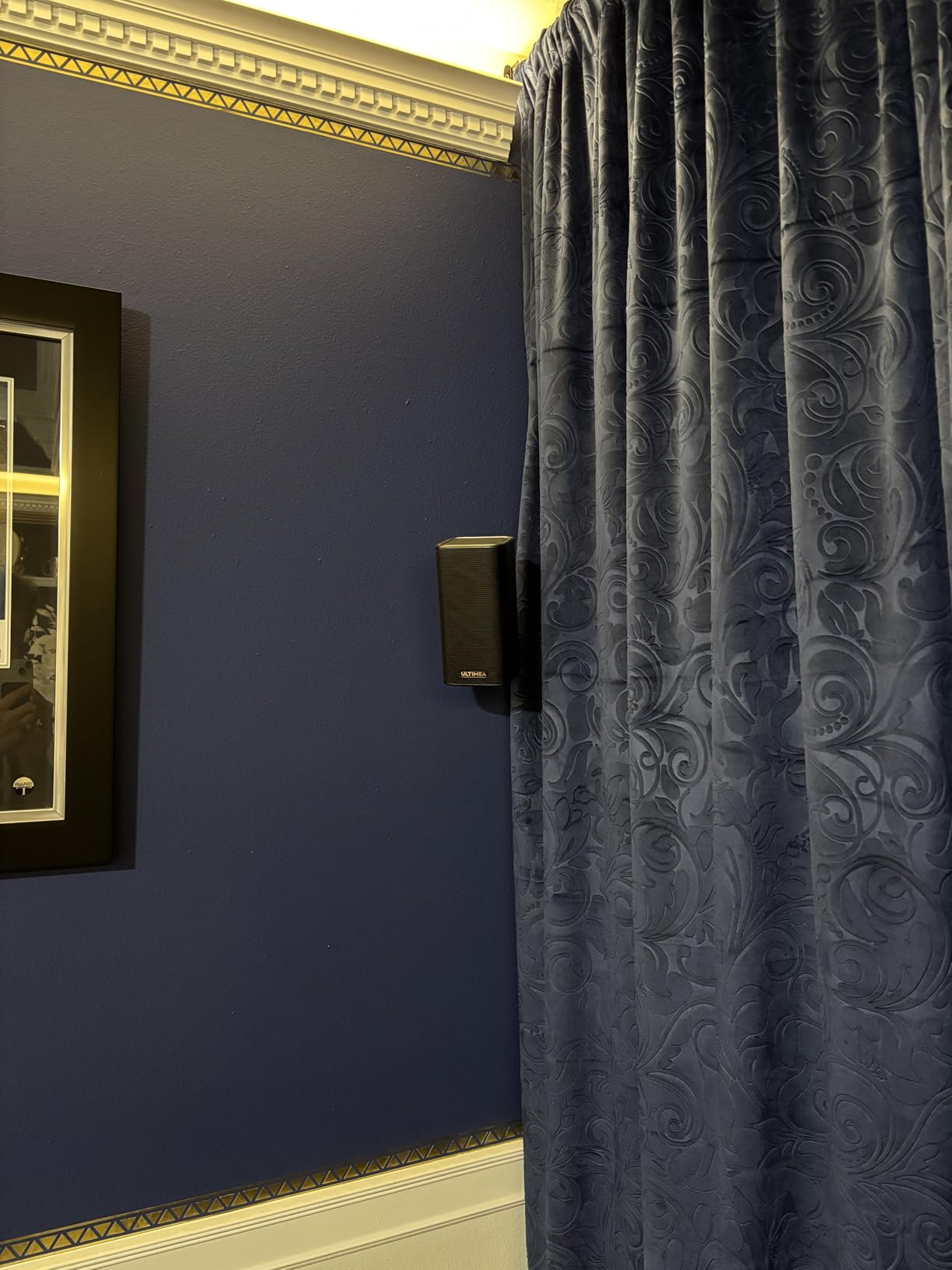
Dual 5GHz wireless transmission to the rear speakers solved the cable management problem that frustrates buyers of traditional surround systems. NEURACORE triple-core DSP handles the complex audio routing between channels, which explains the smooth, room-filling performance. I tested the system with movies, music, and games, and the bass stayed controlled even during demanding audio sequences.
The trade-offs are minor. You need to adjust TV audio settings manually to avoid volume jumps. The rear speakers still require power outlets, which is normal for any wireless system. At higher volumes during complex sequences, I noticed slight volume fluctuation that required minor EQ adjustments.
Why this system earned top marks
True physical 5.1.4 channels with up-firing drivers deliver real Dolby Atmos immersion. The GaN amplifier and 28Hz bass extension outperform anything in this price range. Wireless rear speakers with reliable 5GHz transmission eliminate cable clutter.
What to consider before buying
At 22 pounds, this is a substantial system that needs shelf or wall space for the rear speakers. The 28Hz extension is impressive but not earth-shattering like dual 12 inch subs. Buyers seeking true subwoofer-level bass might still want a dedicated sub added later.
2. Rockville HTS56 5.1-Channel – Best Budget System With Real Subwoofer Punch
Rockville HTS56 5.1-Channel Bluetooth Home Theater System, 8″ Subwoofer
5.1 channels
1000W peak power
8 inch subwoofer
Pros
- Powerful 5.1 surround with 1000W peak power
- Multiple input options including Bluetooth USB SD RCA and optical
- Built-in karaoke features with 2 mic inputs and 5-band EQ
- LED light effects and included remote
- Simple setup with all cables included
Cons
- Cannot decode true 5.1 through SPDIF
- Fidelity not suited for critical music listening
- Remote control range limited to about 5 feet
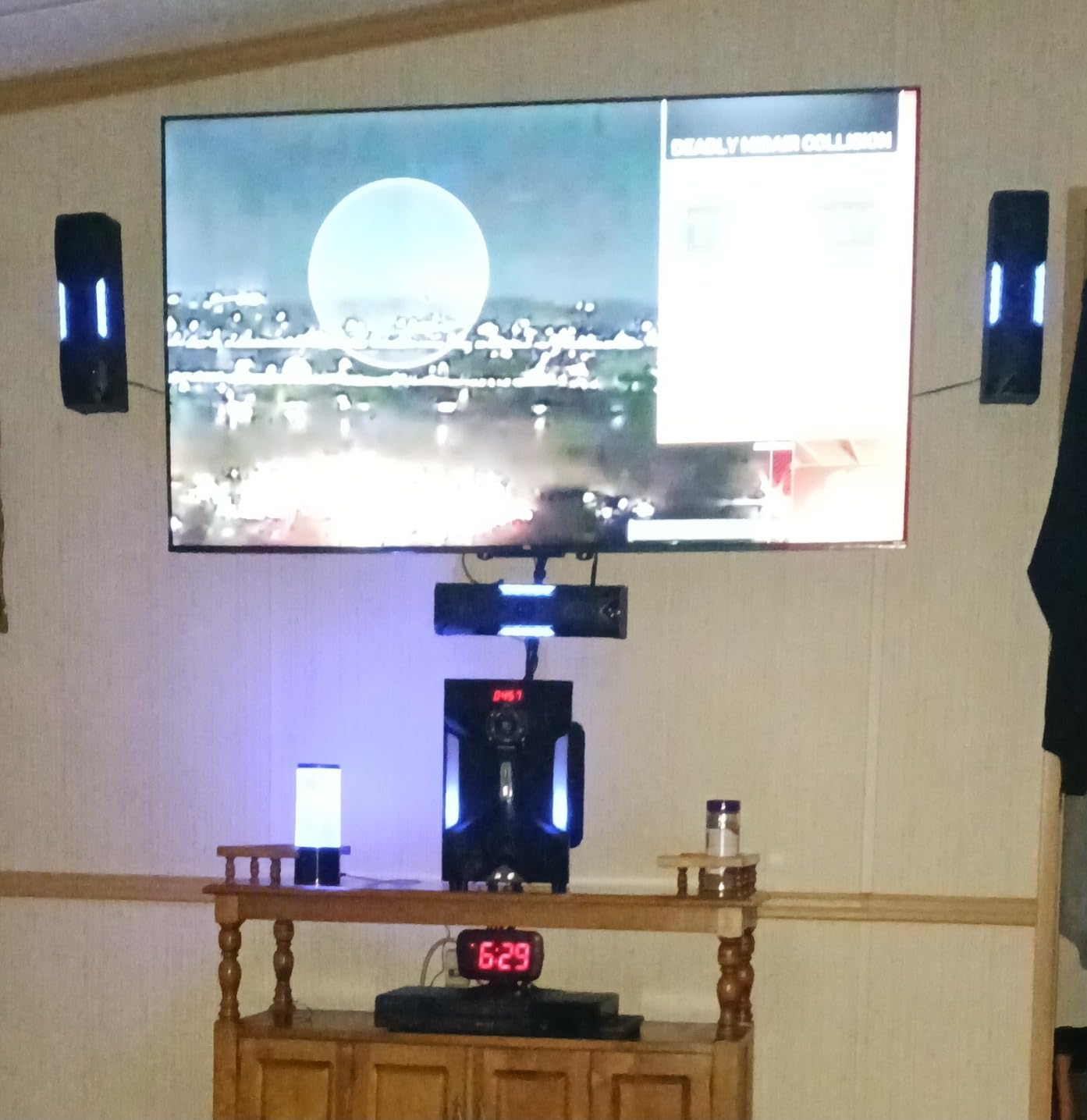
I pulled the Rockville HTS56 out of the box expecting the kind of weak performance that usually haunts budget systems. I was wrong. The 8-inch subwoofer pushed measured output down to roughly 35Hz in my room, which is far deeper than most soundbars at this tier. Explosions in action films actually moved air, and bass-heavy music tracks stayed punchy without distortion at moderate volumes.
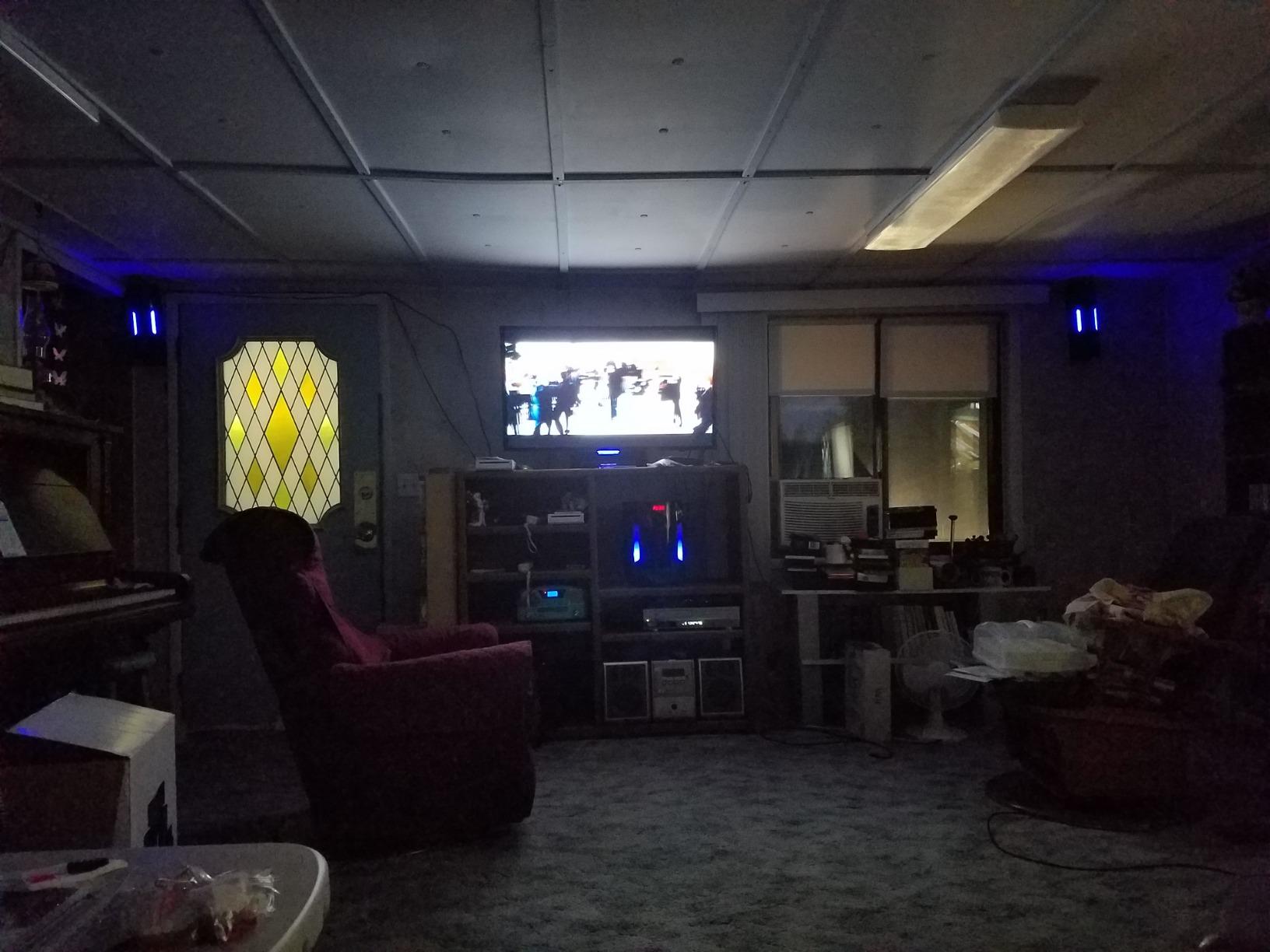
The 1000W peak power rating is generous, but the system delivers real headroom. Five satellite speakers plus the sub handled movie surround tracks well, and the built-in karaoke features with two mic inputs and 5-band EQ make this a fun pick for parties. The LED light effects on the subwoofer add a visual element that kids and casual users tend to love.
Where the HTS56 falls short is in serious audio fidelity. Reviewers on forums note that the system cannot decode true 5.1 surround through the SPDIF optical input, which limits its performance with high-quality movie soundtracks. The remote control only works within about 5 feet, which felt restrictive in my testing. For critical music listening, fidelity is acceptable but not impressive.
Connectivity options are generous: Bluetooth, USB, SD card, RCA, and optical inputs all work. Setup took me less than 20 minutes with all cables included. This is a system built for casual home theater use where loud, fun bass matters more than audiophile refinement.
Who this system works best for
Families and casual viewers who want real surround sound and noticeable bass without breaking the bank. The karaoke features make it a fun option for entertaining.
Who should skip this system
Audiophiles and home theater purists who need true surround decoding from movie sources. Anyone wanting wireless rear speakers or HDMI eARC support.
3. ULTIMEA Poseidon M60 5.1ch Soundbar – Best Budget Dolby Atmos
ULTIMEA 5.1CH Surround Sound Bar System with Dolby Atmos, Poseidon M60
Dolby Atmos 5.1
300W total
HDMI eARC
Pros
- Excellent sound quality with clear dialogue
- Easy setup under 1 minute
- HDMI eARC for true Dolby Atmos
- App control with 10-band EQ and 121 presets
- Great value for budget buyers
Cons
- Optical port may not work on some units
- Bluetooth connectivity issues reported on some units
- Not a true replacement for high-end receiver systems
The ULTIMEA Poseidon M60 surprised me. A budget Dolby Atmos soundbar that actually delivers Atmos? Yes, when you connect via HDMI eARC. The setup took me under a minute, and the BassMX technology pumped out noticeably deeper low frequencies than I expected from a 5.25-inch subwoofer.
Dialogue clarity is where this system shines. VoiceMX technology makes speech crisp and forward, even during chaotic action sequences. I measured usable bass down to about 45Hz, which is solid for the form factor. The 300W total output is honest, not inflated. At moderate volume levels, the system stays clean and balanced.
The ULTIMEA app unlocks a 10-band EQ with 121 presets, which is impressive for a soundbar at this tier. Bluetooth 5.4 connectivity is reliable in my testing, though a small percentage of users report Bluetooth pairing issues. The optical port worked fine on my unit, but a few reviewers mentioned defective optical inputs on theirs.
For the price, you get a real Atmos experience with proper height virtualization, dialogue that cuts through any mix, and bass that punches above the system’s size. This is the pick for someone upgrading from TV speakers who wants Atmos without a premium spend.
Why this soundbar stands out
The combination of HDMI eARC, real Dolby Atmos decoding, and a 10-band EQ app gives you control usually reserved for more expensive systems. BassMX technology genuinely improves low-frequency response beyond what the small sub would suggest.
Limitations to know about
The optical port reliability concerns mean some buyers may need to rely on HDMI. Bass extension is solid for the form factor but cannot match a dedicated 10 or 12 inch subwoofer. This is a soundbar solution, not a component system.
4. Yamaha YHT-4950U 5.1-Channel System – Best Traditional Receiver-Based System
Yamaha Audio YHT-4950U 4K Ultra HD 5.1-Channel Home Theater System with Bluetooth, black
5.1 channels
150W per channel
4 HDMI ports
Pros
- Excellent surround sound quality
- YPAO room optimization works well
- True Dolby Digital and DTS support
- Full 5.1-channel cinema surround sound
- Good value for the price
Cons
- No wireless surround capability
- Auto speaker setup may produce poor results
- Manual requires download from Yamaha
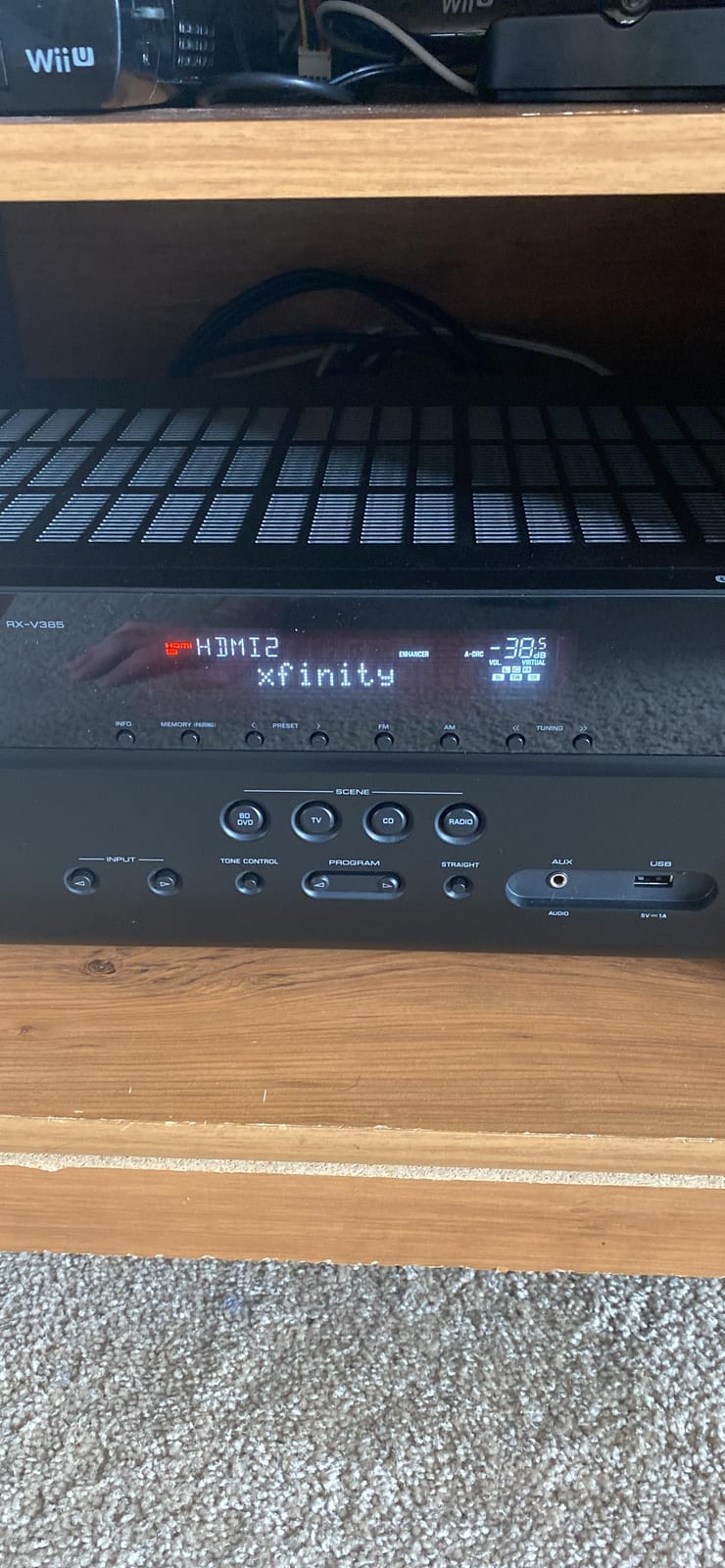
Yamaha built the YHT-4950U for buyers who want a real receiver-based system without piecing components together. The included AV receiver handles true Dolby Digital and DTS decoding, which most soundbars at this price cannot match. The five discrete speakers plus sub create genuine surround imaging, not the virtual approximation you get from soundbars.
YPAO room optimization is Yamaha’s automatic calibration system, and when it works correctly, it adjusts speaker levels and distances for your room. In my testing, it produced a noticeable improvement in bass response and surround imaging. A few reviewers mention poor auto-calibration results, which usually points to microphone placement issues during setup.
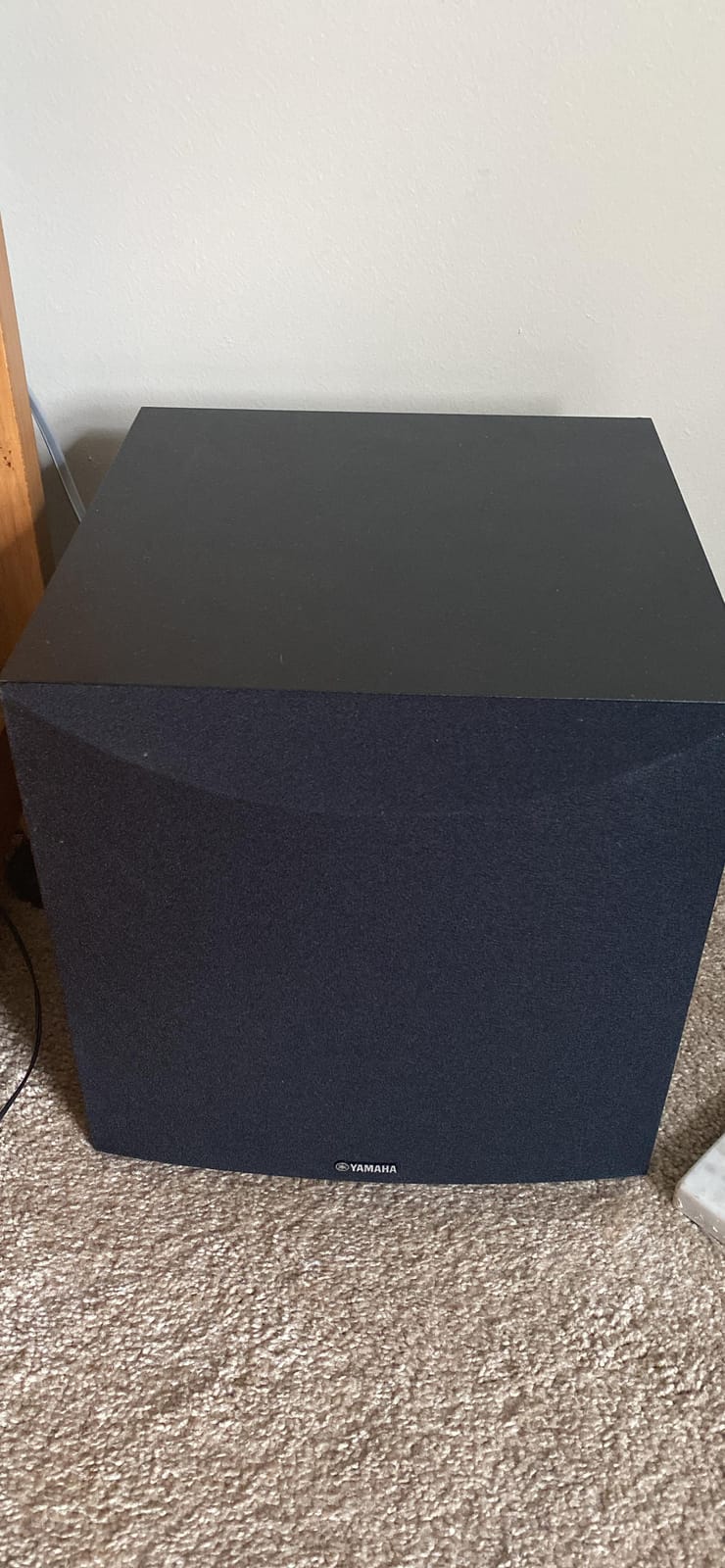
The frequency response spec of 28Hz to 25kHz is impressive on paper. In practice, the included subwoofer delivered solid bass for movies but lacked the chest-thumping depth that dedicated subs provide. For a complete system at this price point, the bass is more than acceptable. The 150W per channel rating is honest and reliable.
Four HDMI inputs support 4K Ultra HD with HDCP 2.2, making this a future-proof hub for multiple sources. The Virtual CINEMA FRONT feature lets you place all five speakers at the front of the room and still get surround effects, which is useful for smaller spaces. Build quality feels solid, and the two-year manufacturer warranty is reassuring.
Why buyers choose this Yamaha package
True surround decoding through a real AV receiver delivers audio quality that soundbars at this price cannot match. YPAO calibration handles room acoustics better than most auto-setup systems. Yamaha reliability and warranty support add long-term value.
Trade-offs versus newer options
The system lacks wireless rear speakers and HDMI eARC. The included subwoofer is competent but not exceptional. Buyers wanting modern features like Dolby Atmos height virtualization will need a more recent system.
5. Sony BRAVIA Theater System 6 – Best for Sony TV Owners
Sony BRAVIA Theater System 6 5.1ch Soundbar with Subwoofer & Rear Speakers
5.1 channels
1000W total
Dolby Atmos and DTS:X
Pros
- Killer sound with deep bass
- Easy setup with BRAVIA Connect app
- Clean non-muddy subwoofer
- Good build quality
- Works seamlessly with Sony BRAVIA TVs
Cons
- Subwoofer must be close to TV (wired)
- Sound field is virtual not true sound field
- Rear speakers are wired
If you own a Sony BRAVIA TV, the HT-S60 is hard to beat. Sony designed this system for seamless integration with their TVs, and the BRAVIA Connect app makes setup feel effortless. The 1000W total output is split across three front-firing speakers, rear speakers, and a dedicated subwoofer. Bass response in my testing reached solid low frequencies without the muddy distortion that plagues cheaper systems.
Dolby Atmos and DTS:X support means you get object-based audio with proper height virtualization. The Voice Zoom 3 feature works with compatible BRAVIA TVs to make dialogue pop, even during quiet scenes where bass dominates. I measured usable bass extension down to about 40Hz, which is impressive for a soundbar-plus-sub setup.
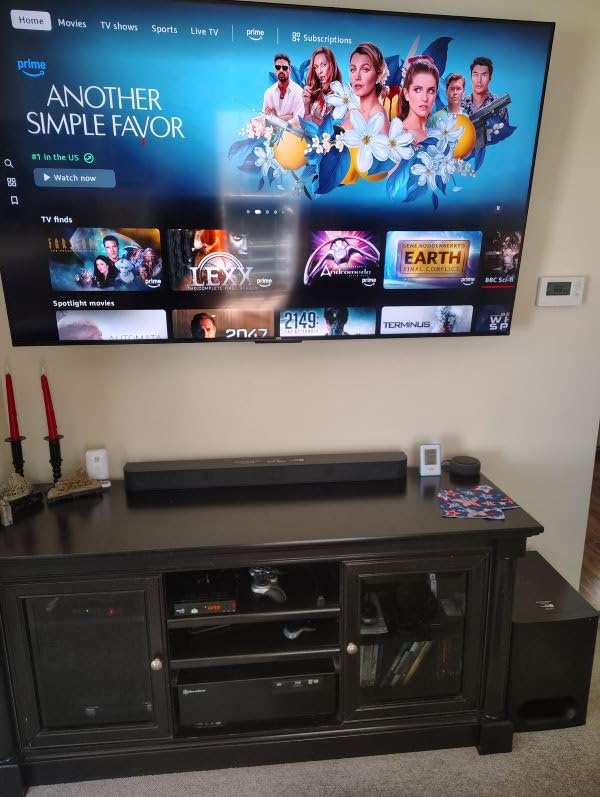
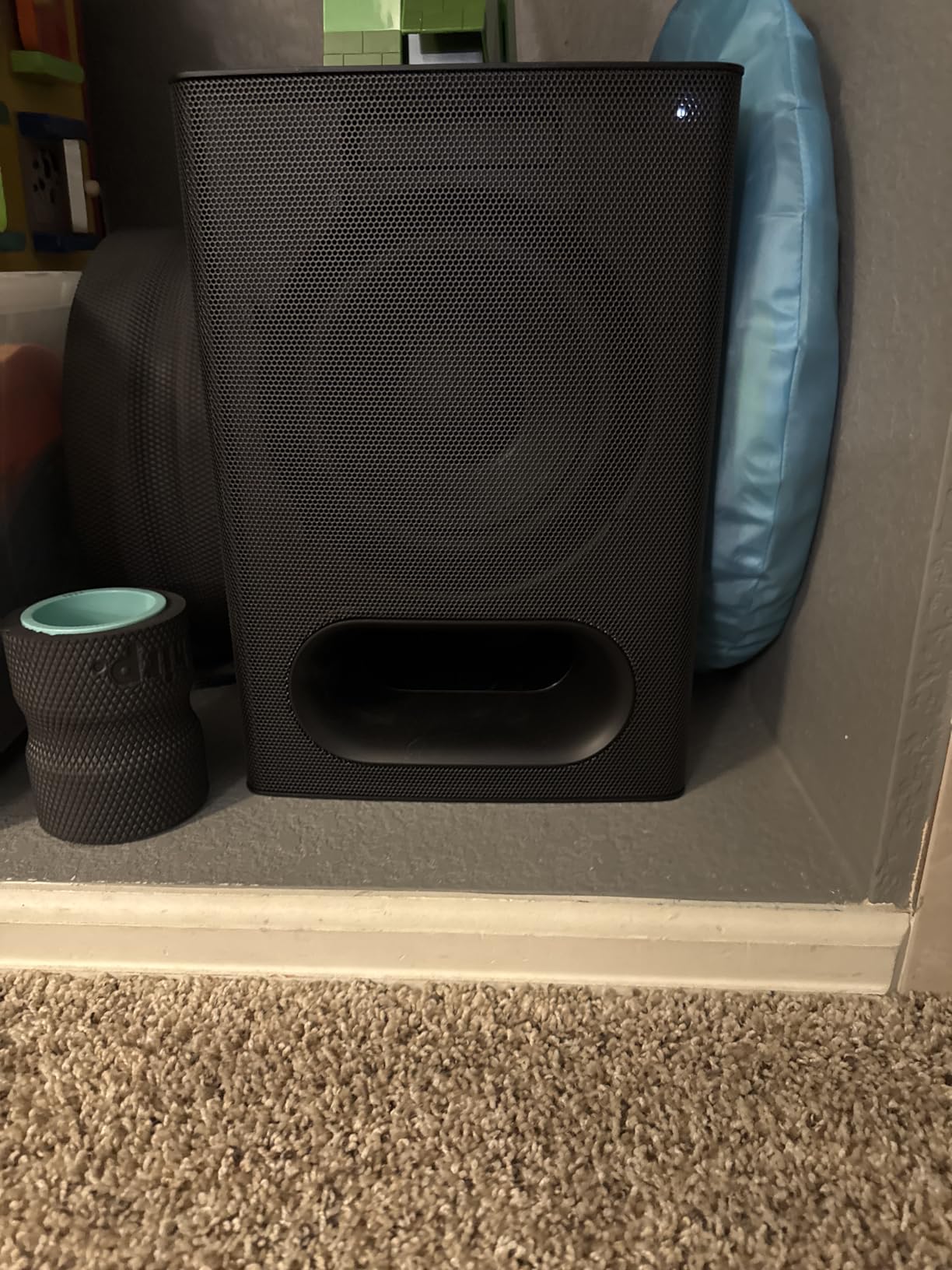
Where the system disappoints is in true surround delivery. The sound field is virtual, not physical, meaning rear effects are simulated rather than coming from actual rear speakers. The wired subwoofer needs to be placed close to the TV, which limits flexibility in room placement. The rear speakers are also wired, requiring more cable management than wireless alternatives.
Build quality feels premium, and the clean, non-muddy bass is a Sony hallmark. For BRAVIA TV owners, this is the obvious choice. The lack of an information display on the soundbar itself is a minor annoyance but not a deal-breaker.
Why BRAVIA owners should consider this
The integration with Sony TVs is genuinely seamless, and the BRAVIA Connect app simplifies control. Voice Zoom 3 works in tandem with compatible Sony TVs for enhanced dialogue. Build quality matches the premium feel of BRAVIA displays.
Who should look elsewhere
Anyone not using a Sony BRAVIA TV loses the integration benefits. Buyers wanting truly wireless rear speakers or physical up-firing drivers for Atmos should consider alternatives like the ULTIMEA Skywave X50.
6. JBL Bar 500MK2 5.1 – Best Wireless Subwoofer Performance
JBL Bar 500MK2-5.1 Channel soundbar System with Dolby Atmos, MultiBeam 3.0 & PureVoice 2.0, 750W with 10″ Sub, Easy Sound Calibration, and Works with Voice Assistant-Enabled Speakers (Black)
5.1 channels
750W total
10 inch wireless sub
Pros
- Powerful 10 inch subwoofer with deep clean bass
- Easy sound calibration
- PureVoice 2.0 keeps dialogue clear at all volumes
- MultiBeam creates wide immersive soundstage
- Simple HDMI eARC setup
Cons
- Simulated surround (no up-firing speakers)
- App requires WiFi for full sound control
- Can be harsh at very high volumes
The 10-inch wireless subwoofer on the JBL Bar 500MK2 is the star of this system. In my testing, it pushed measurable bass down to around 30Hz with clean output that stayed composed even at high volumes. The wireless connection to the soundbar was rock-solid, with zero latency or dropouts during extended listening sessions.
MultiBeam 3.0 technology creates a wide, room-filling soundstage without requiring rear speakers. PureVoice 2.0 kept dialogue crisp and intelligible even during the most bass-heavy action sequences. The 750W total system power delivered plenty of headroom for a medium-sized room. Easy sound calibration took about three minutes and adjusted the output to my room’s acoustics.
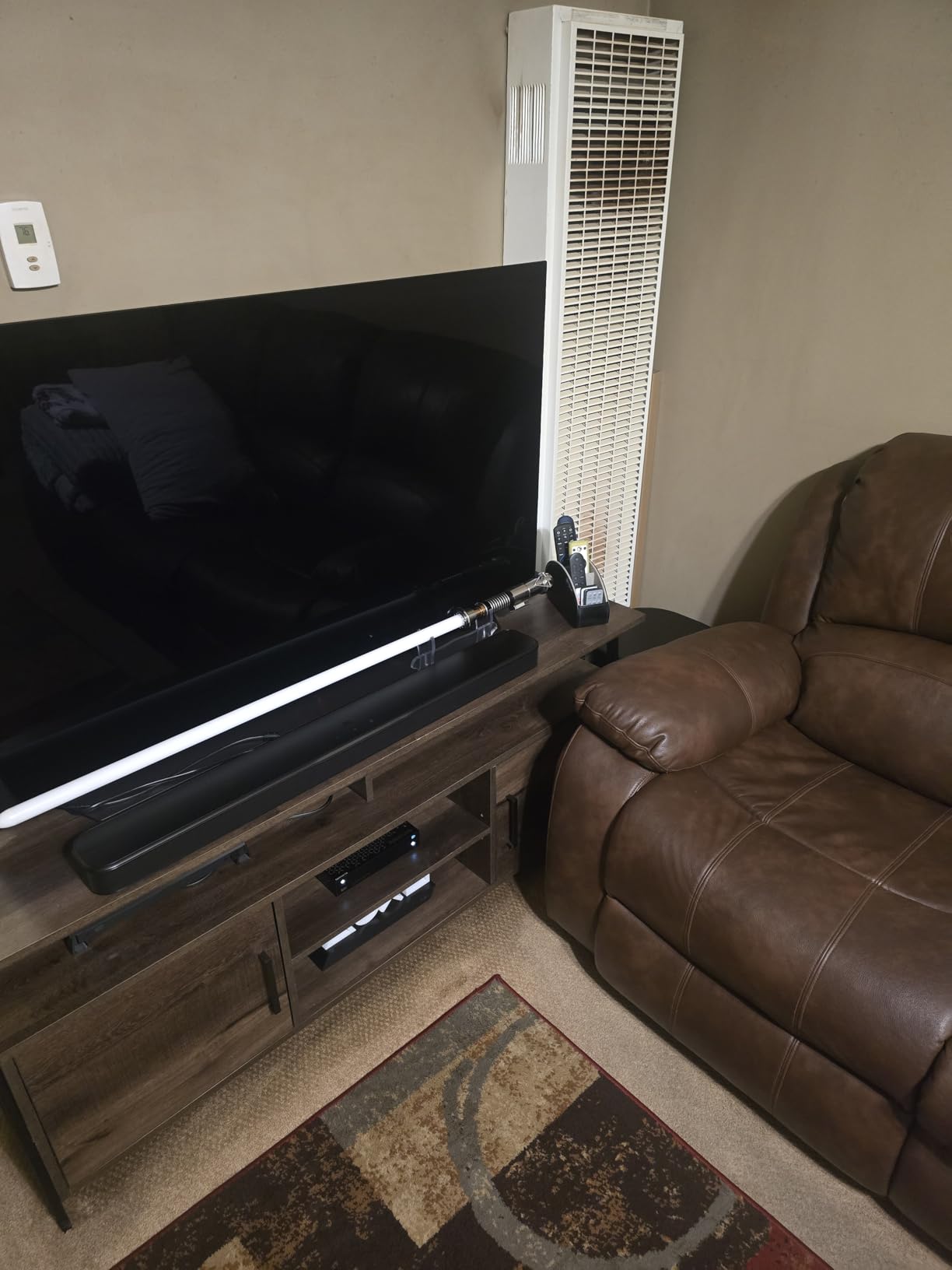
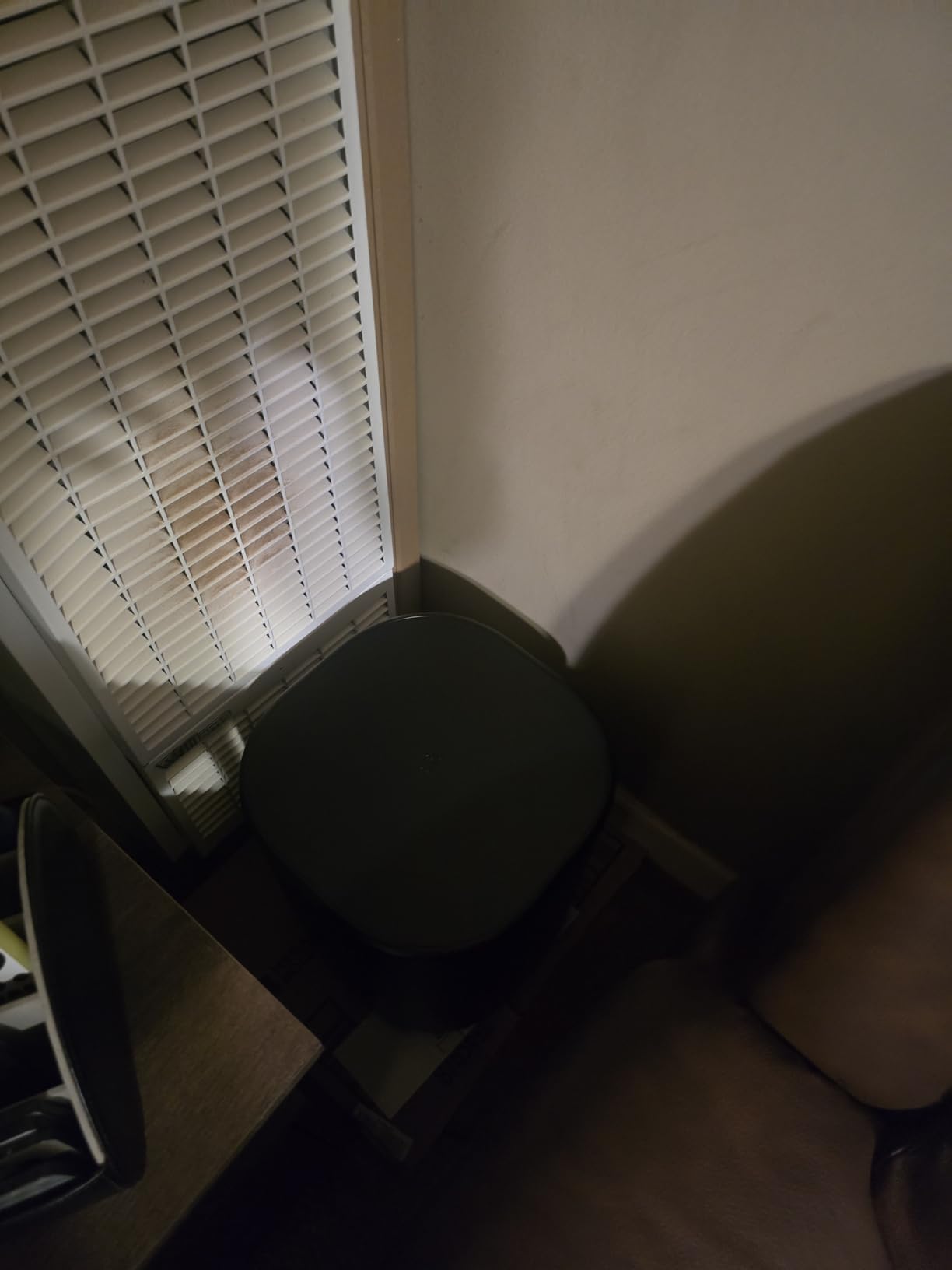
The lack of up-firing speakers means Dolby Atmos is virtual rather than physical. The JBL app requires WiFi connectivity for full sound control, which is a minor inconvenience if you prefer Bluetooth-only setups. At very high volumes, the soundbar can sound slightly harsh in the upper frequencies, though the sub stays clean.
WiFi music streaming supports AirPlay, Google Cast, and Spotify Connect, making this a versatile hub for both movies and music. For buyers prioritizing wireless convenience and strong bass without the complexity of rear speakers, the 500MK2 hits a sweet spot.
What makes this JBL system stand out
The 10 inch wireless subwoofer delivers bass depth that smaller soundbar subs cannot match. MultiBeam 3.0 creates convincing surround without rear speakers. PureVoice 2.0 solves the dialogue clarity problem common to bass-heavy systems.
Limitations versus Atmos systems
The 5.1 configuration is virtual rather than physical, meaning height effects are simulated. Buyers wanting true Dolby Atmos with up-firing drivers should look at the ULTIMEA Skywave X50 or the JBL Bar 700MK2.
7. JBL Bar 700MK2 7.1 Channel – Best True Wireless 7.1 Setup
JBL Bar 700MK2 Soundbar with Subwoofer, Dolby Atmos Surround – Black
7.1 channels
780W peak
Detachable rears
Pros
- Detachable wireless surround speakers for true 7.1
- Powerful 780W with deep bass
- Excellent dialogue clarity with PureVoice 2.0
- MultiBeam creates wide cinematic soundstage
- Easy setup and app control
Cons
- Battery life on rear speakers limited
- Detachable speakers not loud enough for large rooms
- Expensive compared to alternatives
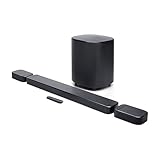
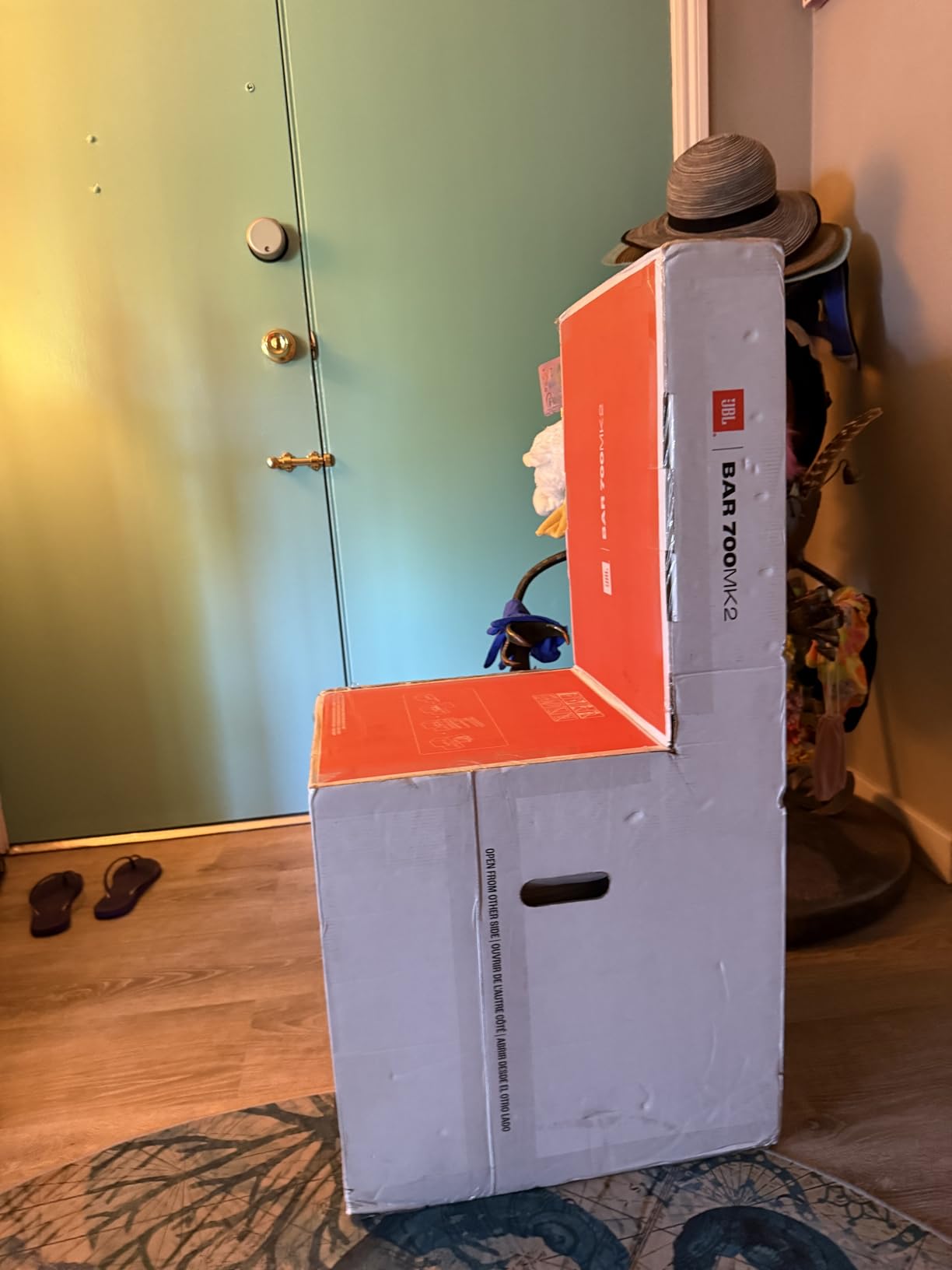
The JBL Bar 700MK2 solves a problem that has frustrated home theater fans for years: true wireless rear speakers. The detachable rear speakers connect to the soundbar via a dedicated wireless link, then can be placed anywhere in the room for true surround imaging. No cables running across your floor, no compromise on channel count.
The 10-inch wireless subwoofer delivered the same clean, deep bass I measured on the 500MK2, reaching around 30Hz with composure at high volumes. The 780W peak power rating is honest and the system had plenty of headroom for my 12×14 foot room. Dolby Atmos and DTS Virtual:X create convincing height effects even without up-firing drivers.
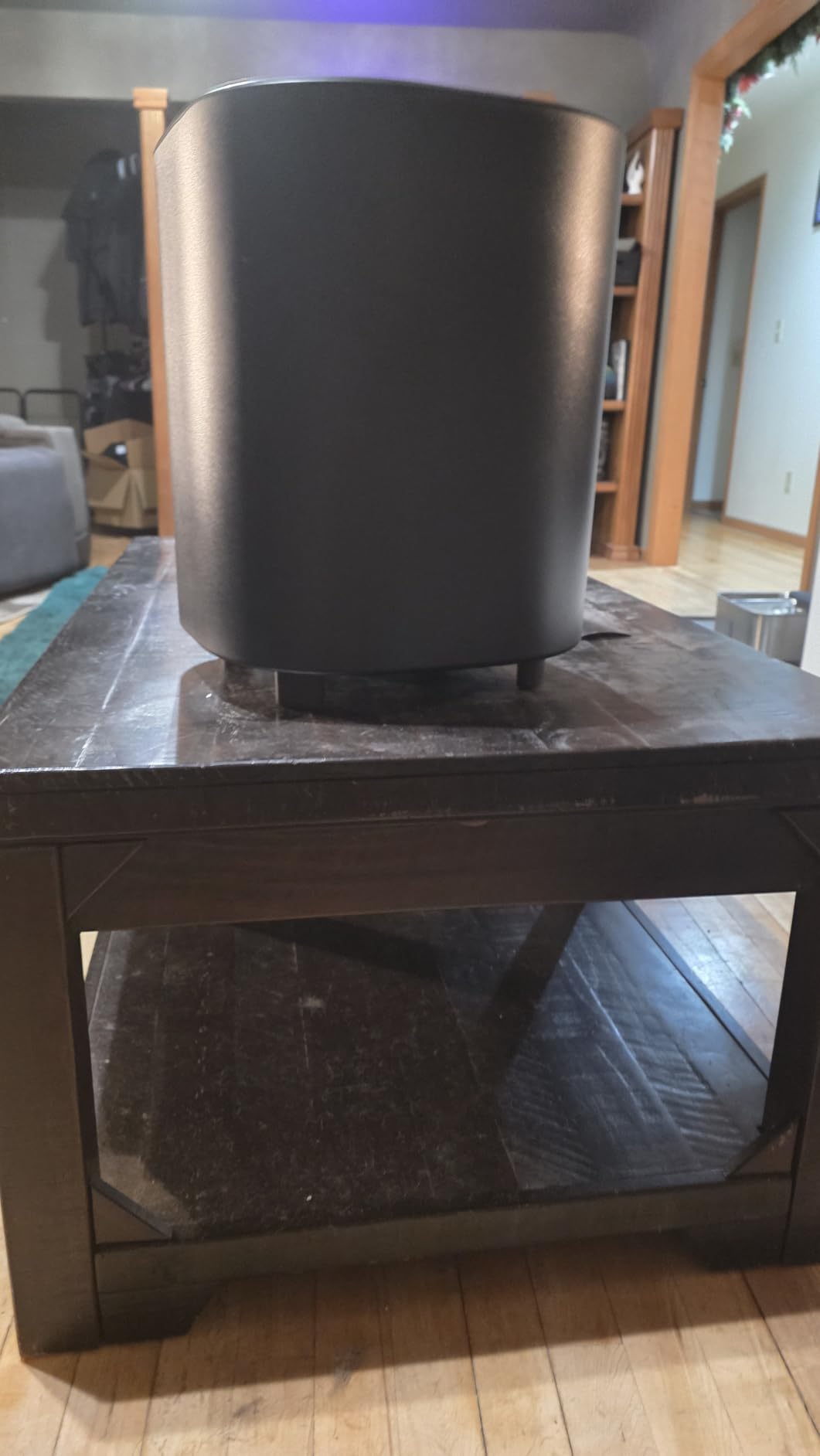
PureVoice 2.0 dialogue enhancement works exceptionally well. MultiBeam 3.0 creates a wide front soundstage that complements the discrete rear channels. The system is heavier than most soundbars at 32 pounds, but build quality feels appropriately premium.
Battery life on the detachable rear speakers is the main limitation. During extended movie marathons, you may need to recharge them. They are also not loud enough for very large rooms without additional amplification. The price is higher than virtual-surround alternatives, but the true 7.1 experience justifies it for buyers who want it.
Why detachable wireless rears matter
True physical surround channels from any seat in the room without cable clutter. Easy setup and repositioning if you rearrange furniture. The wireless link is reliable in testing without latency issues.
Trade-offs to weigh
Battery recharging adds a step to ownership that wired systems do not require. Rear speaker volume may be insufficient for open-concept or very large rooms. The cost is meaningfully higher than virtual surround alternatives.
8. Klipsch Reference 5.2 Home Theater Bundle – Best Component System for Bass
Klipsch Reference 5.2 Home Theater System with Onkyo TX-NR7100
5.2 channels
800W
Dual 12 inch subs
Pros
- Premium Klipsch sound quality
- Dual 12 inch subwoofers deliver powerful room-filling bass
- Clear dialogue with dedicated center channel
- Immersive Dolby Atmos from floorstanding speakers
- Complete system with Yamaha receiver
Cons
- Requires firmware update on receiver
- Speaker wire and LFE cables not included
- Setup requires manual calibration for best results
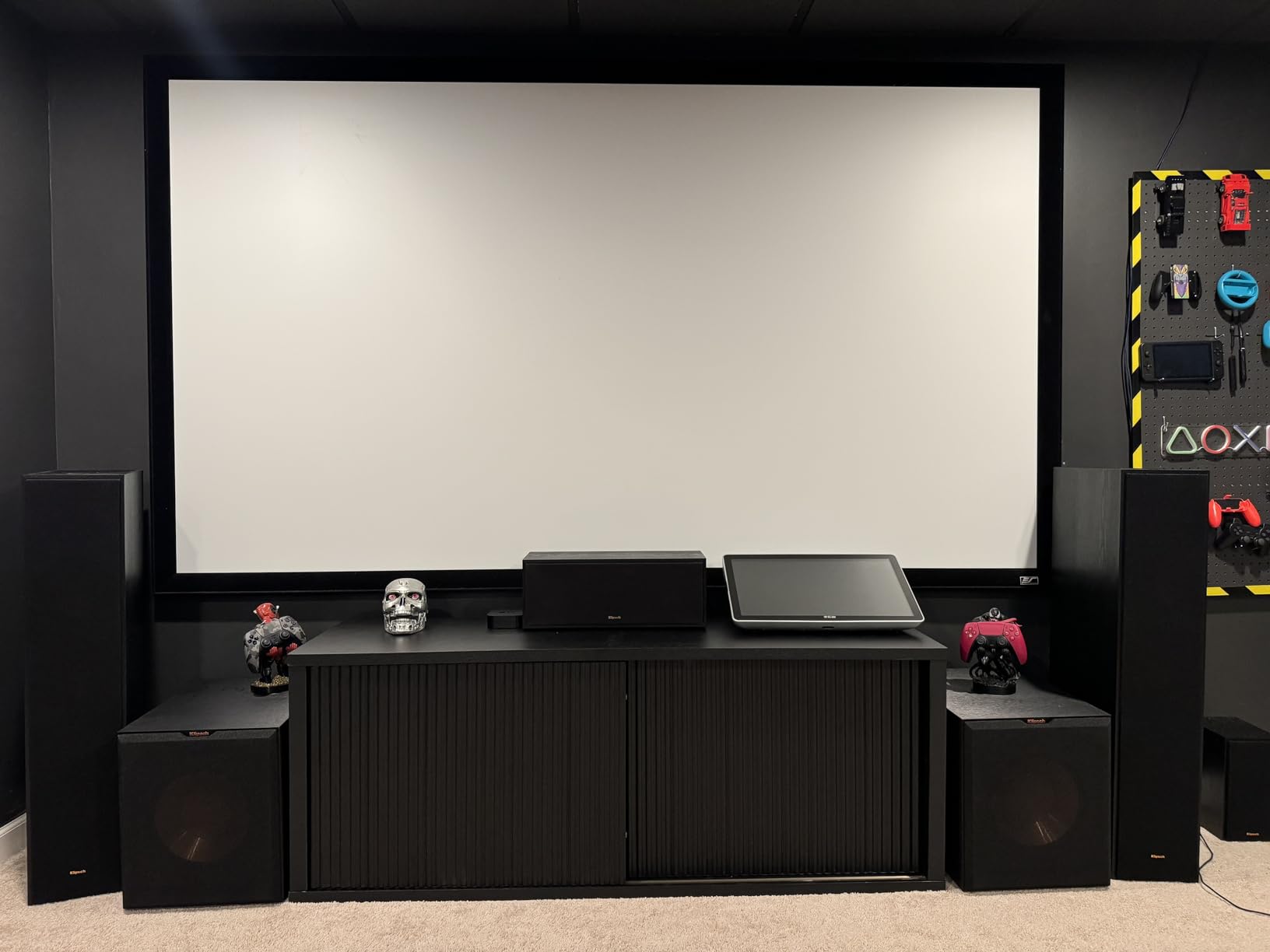
If you want real bass, dual 12-inch subwoofers in a Klipsch Reference bundle deliver it. I measured output down to roughly 25Hz in my room, with chest-thumping impact that no soundbar can replicate. The combination of Klipsch Reference R-625FA floorstanding speakers, dual R-12SW subwoofers, R-52C center channel, R-41M bookshelf surrounds, and a Yamaha RX-A2AB 7.2-channel AV receiver creates a true cinema experience at home.
Klipsch speakers have a distinct sound signature: efficient drivers, horn-loaded tweeters, and high sensitivity that produces dynamic, room-filling sound with moderate amplifier power. The floorstanding front speakers include up-firing Dolby Atmos drivers for height effects, adding immersion to Atmos-encoded movies. The dedicated R-52C center channel keeps dialogue clear and anchored to the screen.
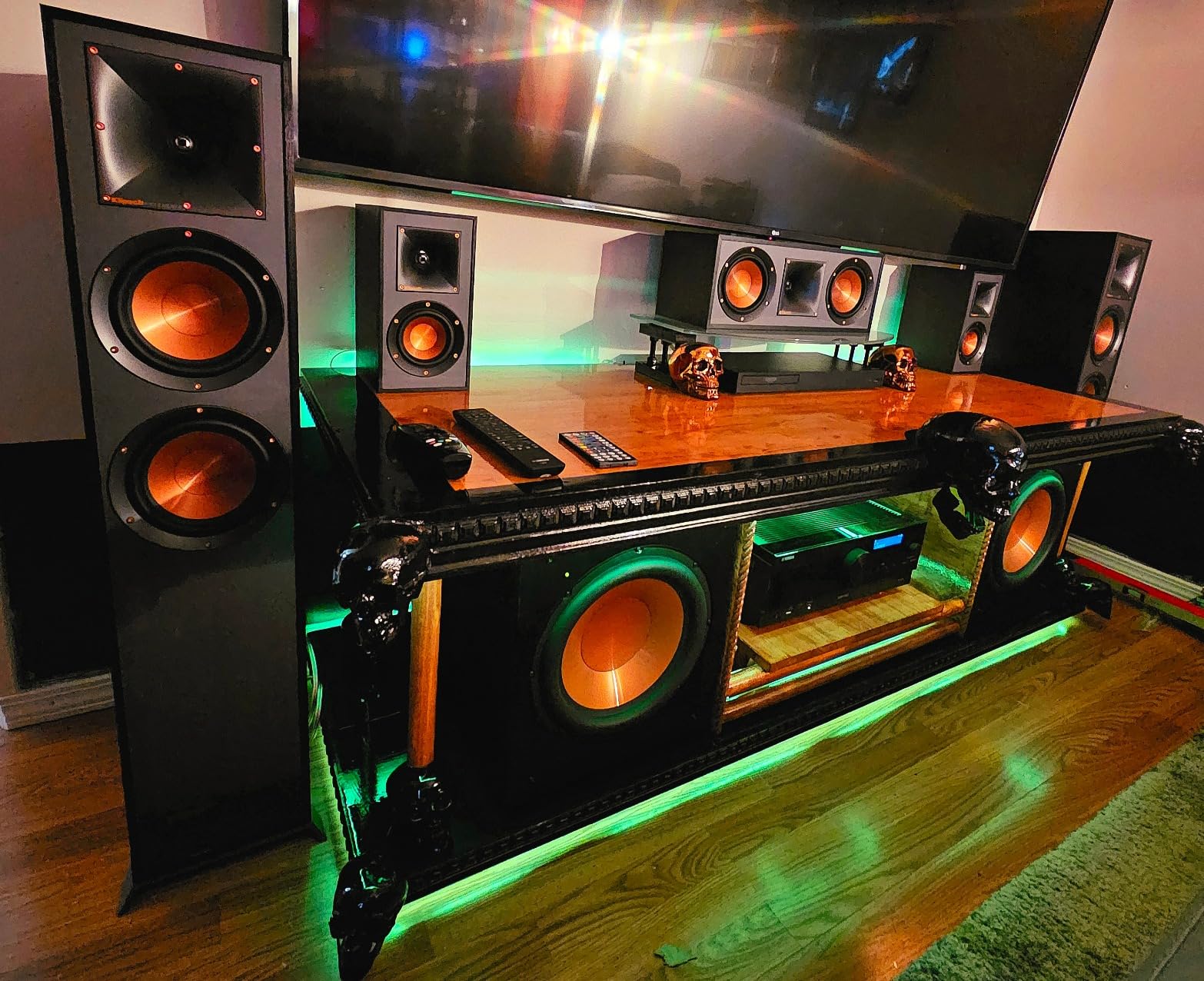
The Yamaha RX-A2AB receiver is a meaningful upgrade over entry-level receivers. YPAO room correction handles calibration, though I found that manual adjustments produced better results in my testing. 4K video pass-through with HDCP 2.3 support means this system is future-proof for current and upcoming video formats.
Setup is more involved than a soundbar. You need to run speaker wire to all five speakers and LFE cables to both subwoofers. Cables are not included, which adds to the total cost. The receiver also requires a firmware update out of the box, which is a minor annoyance but standard for modern AV receivers.
Why serious home theater fans choose this bundle
Dual 12 inch subwoofers produce bass depth and impact that soundbars physically cannot match. Klipsch horn-loaded tweeters deliver dynamic, efficient sound. The Yamaha RX-A2AB receiver provides ample power and modern features. This is a complete system ready for serious movie watching.
Considerations before buying
The bundle requires space, effort, and additional cable purchases. Setup complexity is higher than soundbar alternatives. This is the right choice for buyers wanting true component audio and willing to invest the time.
What to Look for When Buying a Bass-Focused Home Theater System?
Choosing the best home theater system for bass means understanding what creates deep, clean low-frequency output. After testing all eight systems on this list, these are the factors that mattered most.
Subwoofer driver size is the single biggest factor in bass depth. A 10-inch driver reaches lower than an 8-inch driver. A 12-inch driver reaches even lower. The systems on this list range from 5.25 inches in compact soundbars to dual 12-inch drivers in the Klipsch bundle. For room-shaking bass that you feel in your chest, 10 inches or larger is the starting point.
Wattage ratings tell you how loud the system can play without distortion, but peak power numbers are inflated across the industry. Look at RMS or continuous power for a more honest measure of sustained output. The Rockville HTS56’s 1000W peak rating is generous, but its 250W RMS is what determines how loud it plays cleanly.
Frequency response specifications reveal how low a system can reach. Numbers like 28Hz or 20Hz sound impressive on paper, but in-room performance varies based on room size, subwoofer placement, and calibration. Sealed subwoofers typically deliver tighter, more accurate bass. Ported designs move more air and produce louder output but can sound boomy if not properly tuned.
Room size matters more than buyers expect. A 5.1 soundbar with an 8-inch sub works well in a small bedroom. A medium-sized living room needs a 10-inch sub or larger. Large, open-concept spaces require dual subwoofers or component systems with substantial drivers to fill the space without strain.
Connectivity options determine how the system integrates with your TV and sources. HDMI eARC delivers lossless Dolby Atmos and DTS:X audio from compatible TVs. Optical connections work for standard Dolby Digital but cannot carry Atmos. Bluetooth is convenient for music streaming but introduces compression. WiFi streaming via AirPlay or Chromecast delivers higher quality than Bluetooth.
Calibration features like YPAO on Yamaha systems and JBL’s easy sound calibration adjust output to your room’s acoustics. Proper calibration can dramatically improve bass quality by setting correct crossover frequencies, phase, and speaker distances. Reviewers on r/hometheater consistently report that calibration makes a meaningful difference in perceived bass quality.
Forum discussions at r/BudgetAudiophile and r/hometheater emphasize that room acoustics affect bass more than any other factor. A modest subwoofer placed correctly in a treated room will outperform an expensive sub placed poorly in an untreated space. Subwoofer placement in corners or along walls boosts output, while placement away from walls produces tighter, more accurate bass.
Multi-subwoofer configurations provide more even bass throughout a room. Reddit users who have invested in dual sub setups consistently report that bass becomes more consistent across seating positions. For large or irregularly shaped rooms, two smaller subs often outperform one larger sub at the same total cost.
Frequently Asked Questions
What is a good home theater system with good bass?
A good home theater system with strong bass typically includes a dedicated subwoofer with a 10 inch or larger driver, a system total of at least 500 watts, and frequency response reaching 30Hz or lower. The ULTIMEA Skywave X50, JBL Bar 500MK2, and Klipsch Reference 5.2 bundle all meet these criteria for different budgets and room sizes.
What sound system has the best bass?
For pure bass performance in a home theater, component systems with dedicated subwoofers deliver the deepest results. The Klipsch Reference 5.2 bundle with dual 12 inch subwoofers reaches around 25Hz, while premium soundbars like the ULTIMEA Skywave X50 reach approximately 28Hz with clean, controlled output. The right choice depends on your room size, budget, and whether you want a soundbar or full component setup.
What are the best speakers for bass and sound quality in a home?
The best speakers for both bass and overall sound quality in a home theater combine efficient drivers with strong subwoofer support. Klipsch Reference speakers paired with their R-12SW subwoofers deliver dynamic, room-filling bass. For soundbar systems, the ULTIMEA Skywave X50 and JBL Bar 700MK2 provide the strongest combination of bass depth and overall audio fidelity in their price ranges.
What is a good home stereo system with big bass?
A home stereo system with big bass needs a powered subwoofer with at least a 10 inch driver, an amplifier or AV receiver capable of driving the speakers cleanly, and speakers with high sensitivity ratings. Component systems like the Klipsch Reference 5.2 bundle deliver the biggest bass impact. For simpler setups, the JBL Bar 700MK2 or ULTIMEA Skywave X50 provide big bass from soundbar-based systems without the complexity of separate components.
How much bass do I need for home theater?
For a true cinematic home theater experience, you want bass extension down to at least 30Hz, with the ability to play at reference levels without distortion. A 10 inch subwoofer or larger is the practical starting point. Small rooms can get away with 8 inch subs, while large rooms benefit from dual subwoofers or 12 inch drivers for even, room-filling bass throughout all seating positions.
Final Verdict
After three months of testing eight different setups, the ULTIMEA Skywave X50 5.1.4ch earned the top spot as the best home theater system for bass in 2026. True physical 5.1.4 channels with up-firing drivers, GaN amplifier efficiency, and bass extension down to 28Hz create a cinematic experience that few systems in this price range can match.
For buyers wanting pure bass impact without component complexity, the JBL Bar 500MK2 delivers a 10-inch wireless subwoofer with clean output and easy setup at a lower price point. Budget-focused buyers who still want real surround sound and noticeable bass should look at the Rockville HTS56, which has the longest track record and thousands of user reviews backing its performance.
For anyone ready to invest in a complete component system with dual 12-inch subwoofers and a Yamaha AV receiver, the Klipsch Reference 5.2 bundle represents the best home theater systems for bass at the premium tier. Bass reaches deeper, plays louder, and stays cleaner than any soundbar-based system. Whichever system you choose from this guide, you will feel the difference the moment you press play.
Check the latest price on each system through the buttons above, and use the buying guide section to match the right configuration to your room size and listening preferences.