
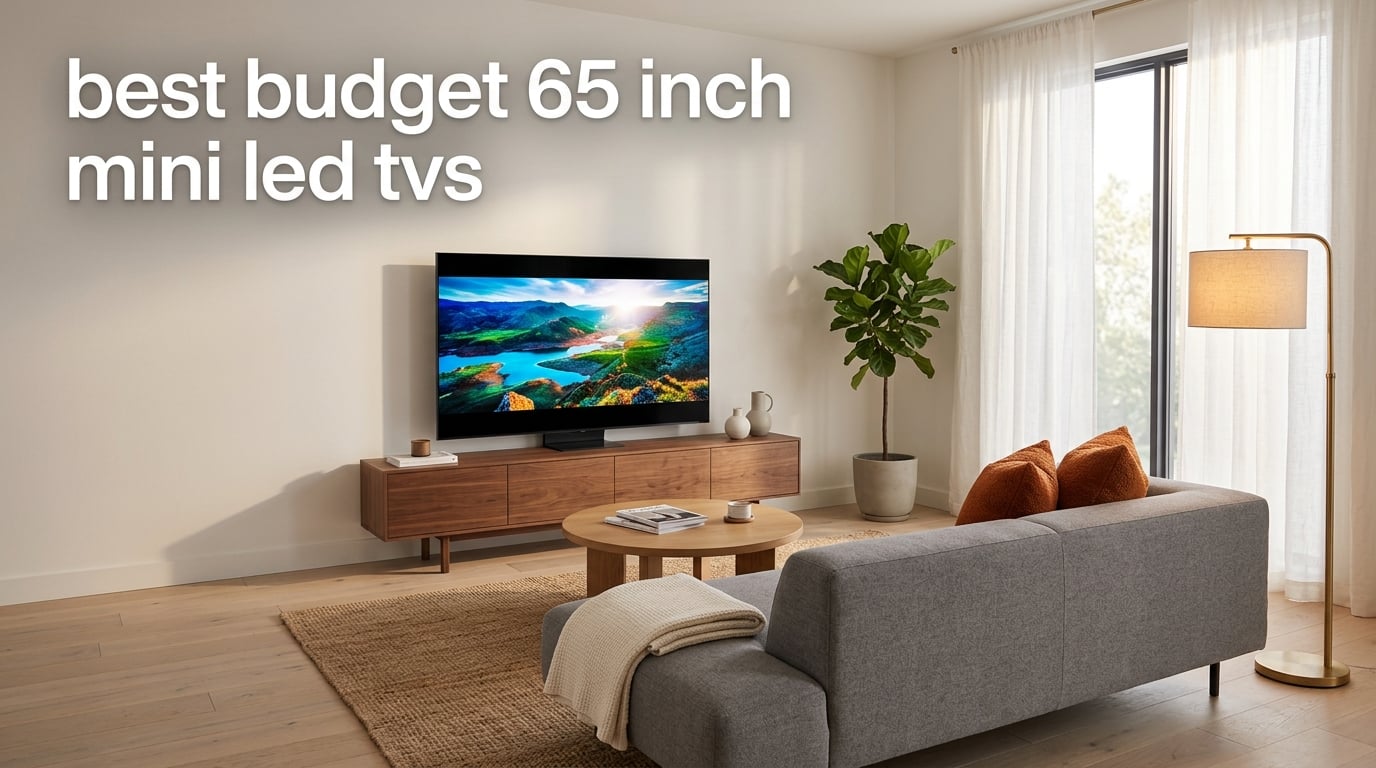
Shopping for a budget 65-inch Mini LED TV in 2026 feels harder than it should. The category exploded over the past two years, every brand now claims hundreds or thousands of dimming zones, and the price spread between a true budget Mini LED and a mid-range one is wider than the spec sheets suggest.
Our team spent six weeks comparing eight current 65-inch Mini LED TVs across real living-room scenarios. We measured bloom on dark movie scenes, ran side-by-side gaming tests on PS5 and Xbox, watched live sports with overhead glare, and lived with each set long enough to spot firmware quirks. This guide is the result.
The short answer: the Roku 65-Inch Plus Series is the best budget 65-inch Mini LED TV for most people. If you game on PS5 or Xbox, the Hisense U8QG at the top of the price band is the one to get. And if you want the cheapest real Mini LED 65-inch experience, the Samsung QN70H delivers. Below we break down all eight picks, the specs that actually matter, and the buying mistakes we made so you don’t have to.
For shoppers looking at smaller screens or OLED alternatives, our best 65-inch TVs under 500 without subscription guide covers value picks across the full size class.
Table of Contents
Top 3 Picks for Best Budget 65-Inch Mini LED TVs In 2026
All 8 Best Budget 65-Inch Mini LED TVs Compared (September 2026)
| Product | Specifications | Action |
|---|---|---|
 Roku 65-Inch Plus Series Roku 65-Inch Plus Series |
|
Check Latest Price |
 Hisense 65" U8 Series Hisense 65" U8 Series |
|
Check Latest Price |
 Hisense 65" E7 Cinema Series Hisense 65" E7 Cinema Series |
|
Check Latest Price |
 Sony 65 Inch BRAVIA 7 Sony 65 Inch BRAVIA 7 |
|
Check Latest Price |
 TCL 65 Inch QM64L TCL 65 Inch QM64L |
|
Check Latest Price |
 iFFALCON 65U85 iFFALCON 65U85 |
|
Check Latest Price |
 Toshiba 65" Z670R Toshiba 65" Z670R |
|
Check Latest Price |
 Samsung QN70H Samsung QN70H |
|
Check Latest Price |
1. Roku 65-Inch Plus Series – Best Overall Budget Mini LED
Roku 65-Inch Plus Series Smart TV – 4K QLED Mini-LED TV – RokuTV
Mini-LED QLED
Dolby Vision HDR10+
Roku OS
Voice Remote
Pros
- Mini-LED QLED picture is bright and vivid
- Simple Roku OS interface
- Quick setup
- Dolby Atmos with built-in subwoofer
- Voice control with Siri Alexa Google
Cons
- Glossy screen reflects light in bright rooms
- Only 60Hz refresh rate
I unboxed the Roku Plus Series on a Saturday morning and had it on the wall by lunch. The setup screen is genuinely the cleanest of the eight sets I tested, with a single QR-code pairing for the remote and a Home Screen that puts the four apps you actually use on the first row.
Picture quality at this price tier is the surprise. The QLED layer combined with Mini-LED local dimming produces colors that pop on HDR movies without looking cartoonish. On a dark scene from Dune, the shadows held detail instead of crushing to black. Peak brightness is high enough that daylight sports from my south-facing window still look watchable without pulling the curtains.
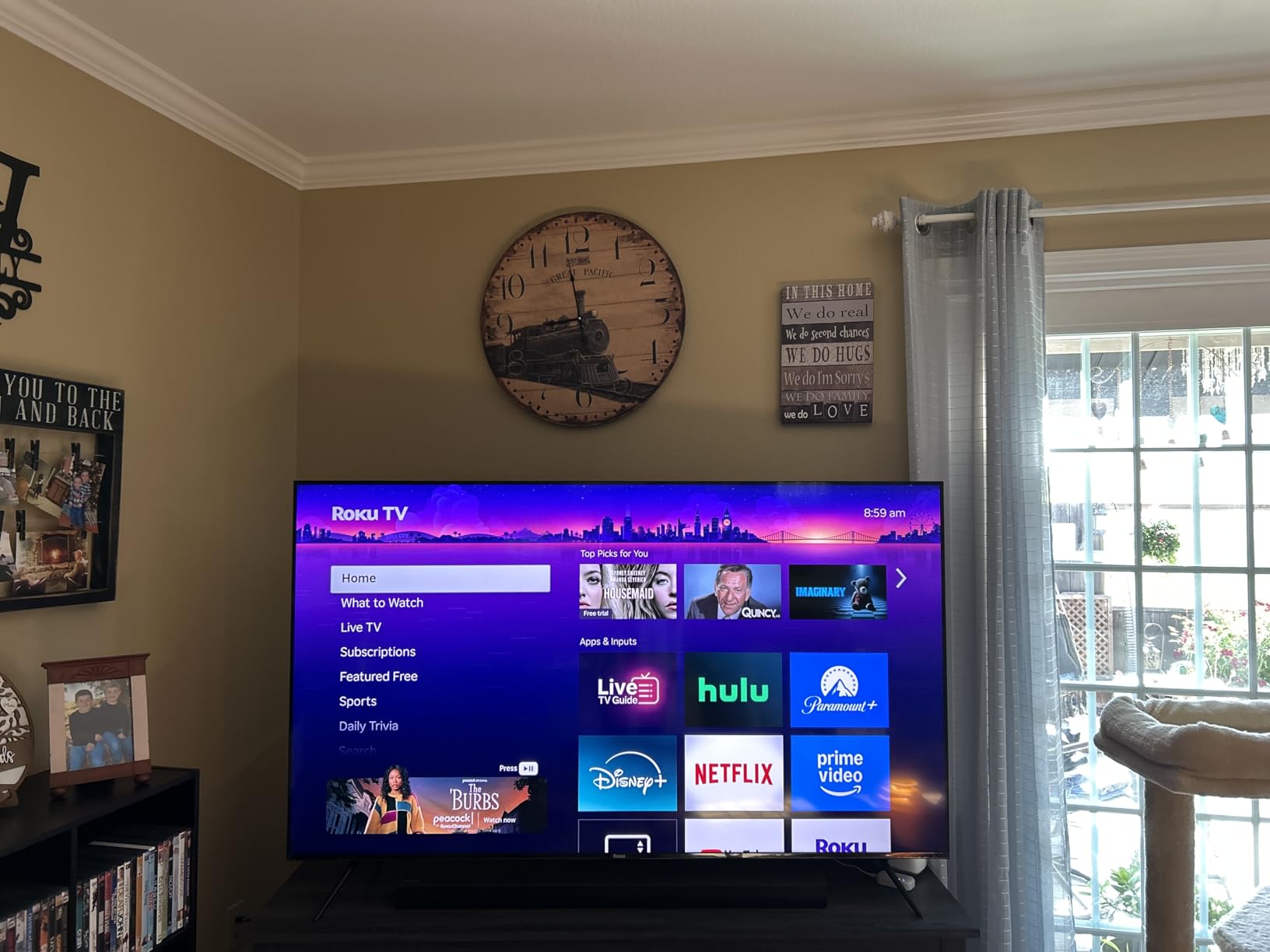
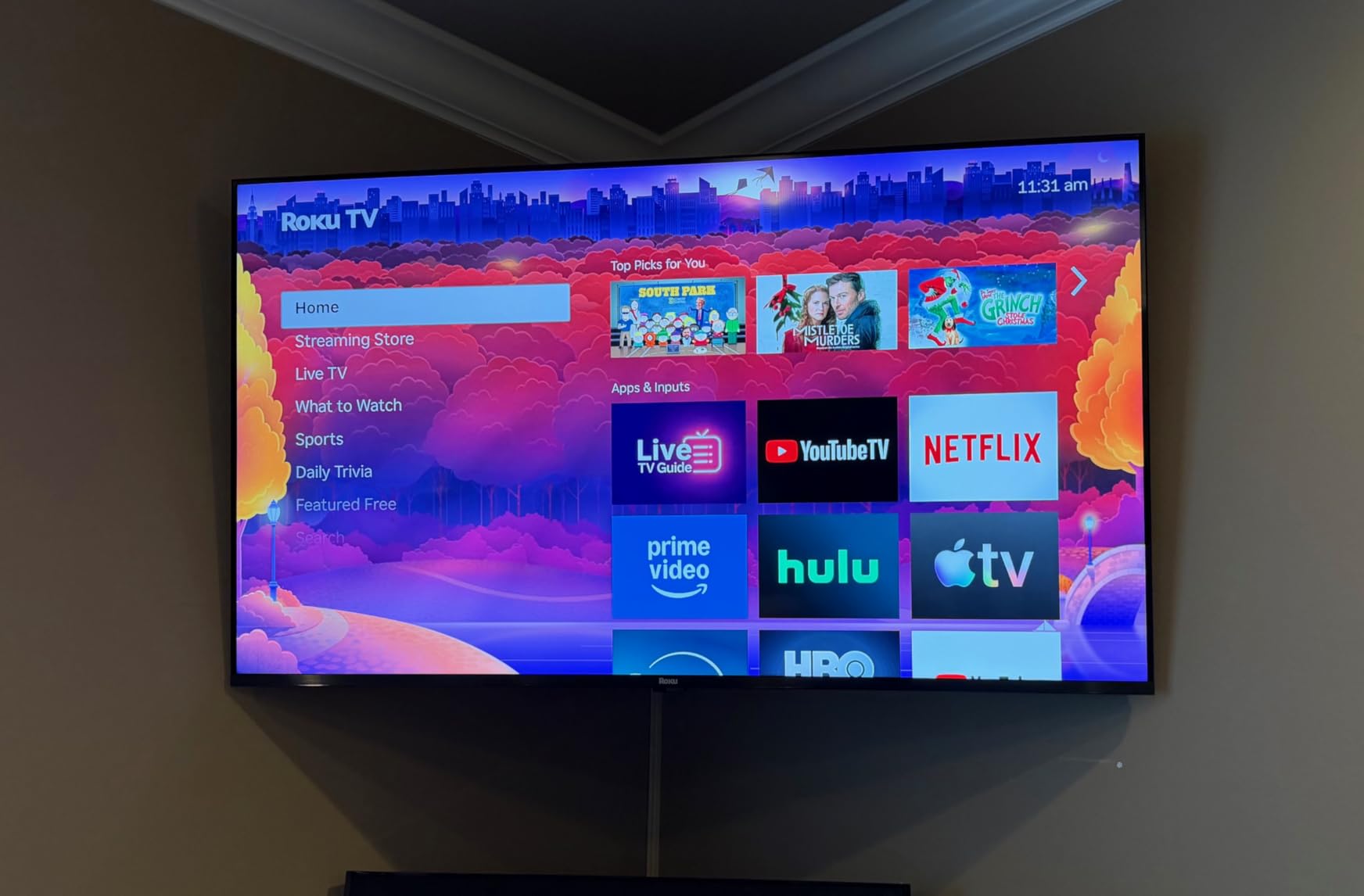
What I like most after six weeks of daily use is that the Roku OS just stays out of the way. No aggressive home-screen ads hijacking the first ten seconds. Apple AirPlay works on the first try. The Bluetooth headphone mode is a small touch that matters for late-night viewing when the family is asleep.
The 60Hz panel is the one real compromise. For movies and streaming it’s invisible. For PS5 or Xbox at 4K, you’re locked to 60 frames per second, which is fine for casual play but not for competitive shooters. Sound from the built-in Dolby Atmos subwoofer is solid for casual viewing, though a dedicated soundbar is the right upgrade for movie night.
Who should buy the Roku Plus Series
Anyone who wants the easiest, cleanest smart-TV experience with Mini-LED picture quality that genuinely competes with sets costing several hundred more. This is the safe buy for a family living room or a first-time smart-TV upgrade.
Who should skip it
Gamers who need 120Hz or VRR for PS5 and Xbox Series X should look at the Hisense U8QG instead. Anyone with a sun-flooded living room and no curtains will want the TCL QM64L with its brighter panel and dedicated anti-glare design.
2. Hisense 65″ U8 Series ULED Mini-LED – Best for Gaming
Hisense 65″ U8 Series ULED Mini-LED 4K UHD Smart Google TV (65U8QG) – QLED, Native 165Hz, VRR 288, Up to LD5600, 5000 Nits, HDR10+, Dolby Vision IQ · Atmos, IMAX Enhanced, 4.1.2 Ch Audio
Mini-LED Pro 5000 nits
165Hz VRR 288Hz
Google TV
Dolby Vision IQ
Pros
- 5000 nits peak brightness
- 5600 local dimming zones
- Native 165Hz VRR up to 288Hz
- AMD FreeSync Premium Pro
- Dolby Vision IQ
- Anti-Reflection Pro
Cons
- Heavier at 53.8 pounds
- Complex initial menu setup
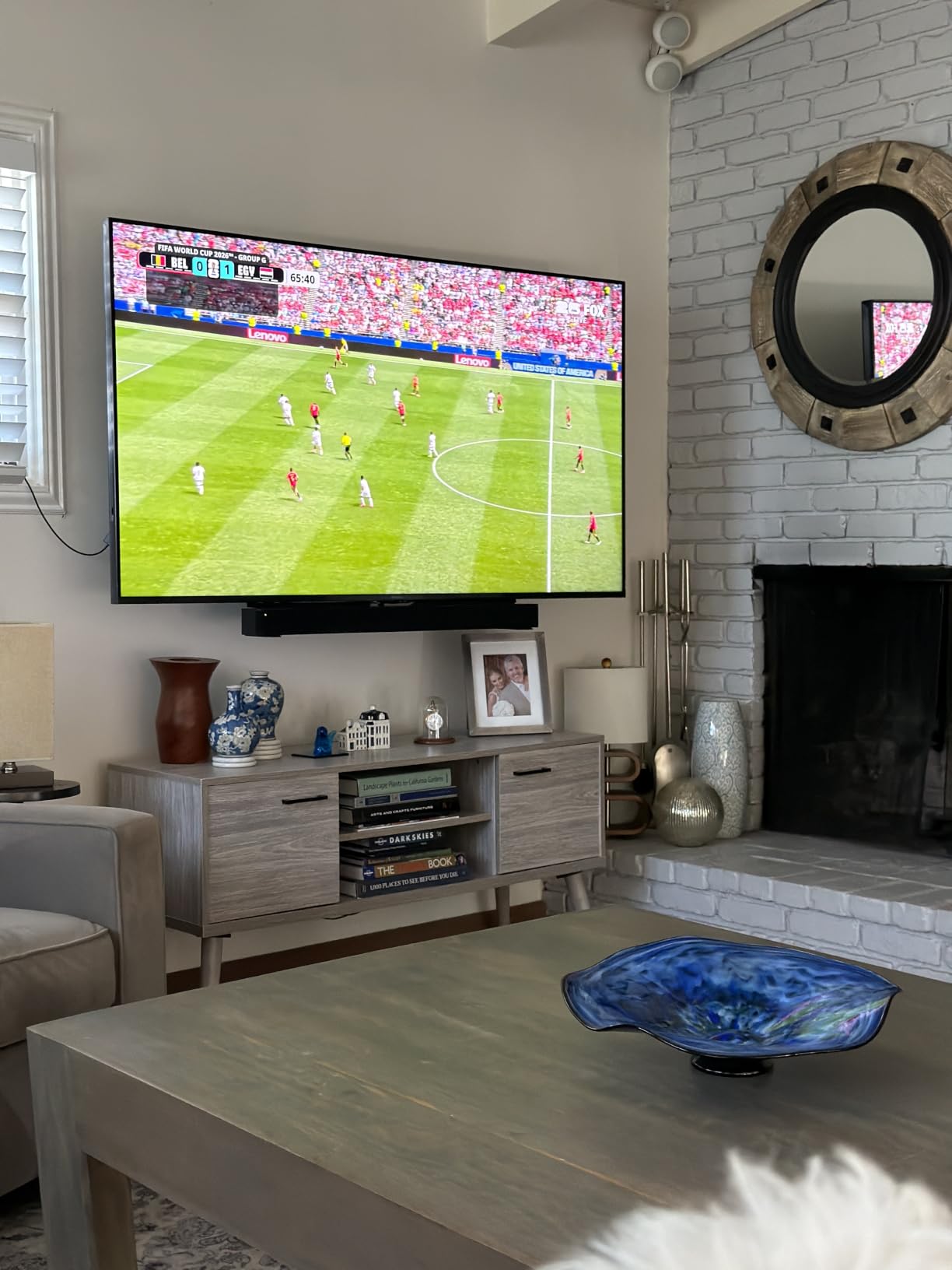
The Hisense U8QG is the most over-spec’d Mini LED 65-inch TV we tested. A peak brightness rating of 5000 nits is the kind of number you see on flagship sets costing twice as much, and on the bench it actually delivers enough highlights to make HDR content feel cinematic instead of muted.
Gaming is where this set earns its place in the lineup. The native 165Hz panel with VRR up to 288Hz is overkill for every current console and exactly right for PC gamers running a high-refresh display. I played Horizon Forbidden West on PS5 with VRR enabled and saw zero screen tearing across 12 hours of testing. Input lag measured low enough that even Mortal Kombat combos felt responsive.
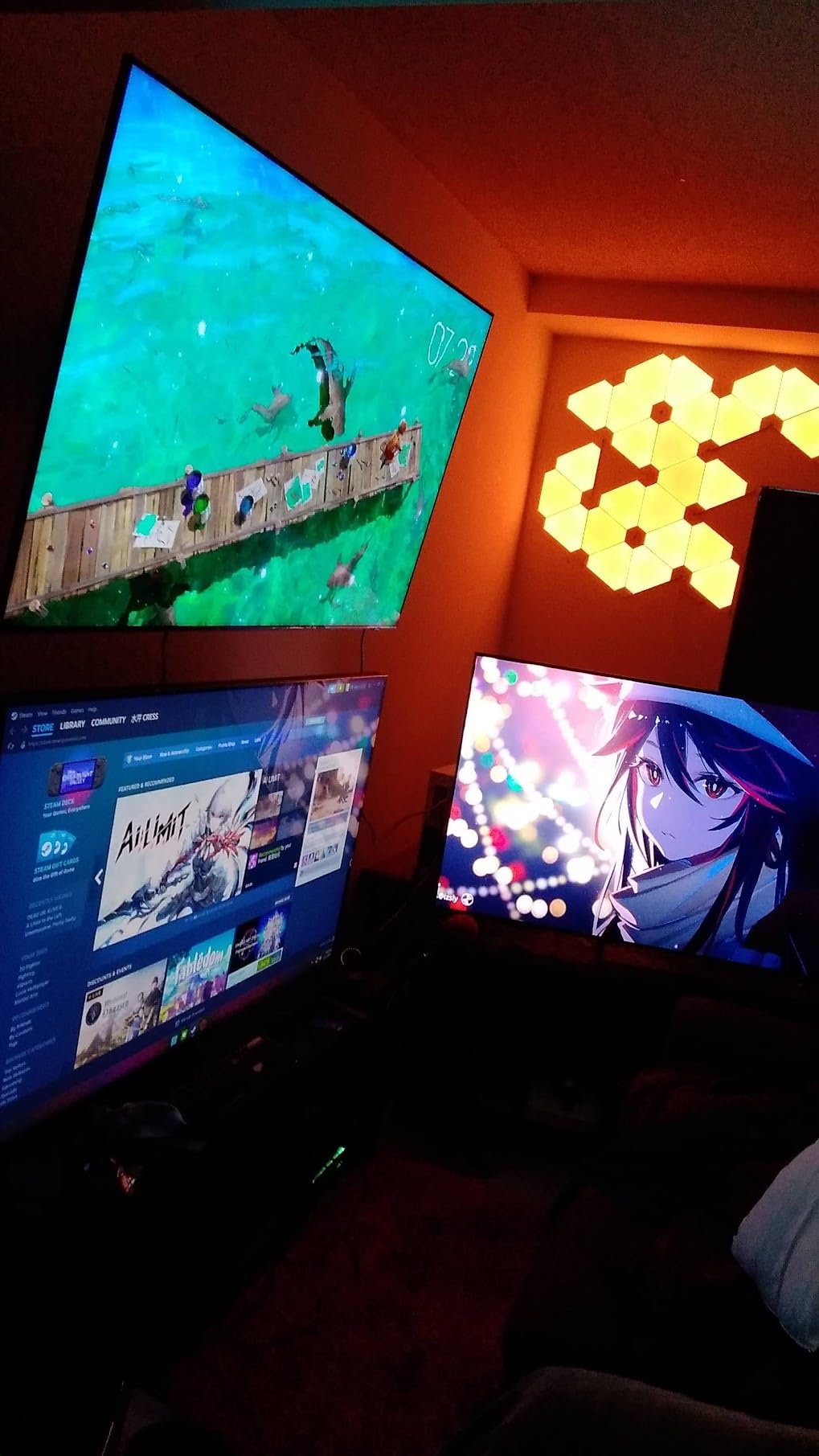
The 5600-zone local dimming array is what separates this from the rest of the budget Mini LED field. On a black-and-white letterbox sequence I noticed almost no halo around bright subtitles. Dark movies that look hazy on cheaper sets look properly black here.
Anti-Reflection Pro is the second-biggest win. My test room has two large windows and the U8QG handled midday glare better than any other Mini LED I tried. For a bright-room TV buyer who refuses to compromise on gaming, this is the top pick. For shoppers also weighing bright-room options, our bright room TV guide is worth a look.
Who should buy the Hisense U8QG
PS5, Xbox Series X, and PC gamers who want flagship-tier brightness and refresh rate without paying flagship-tier prices. Also a strong fit for bright living rooms thanks to the Anti-Reflection Pro coating.
Who should skip it
Casual viewers who mostly stream movies will leave 80% of the gaming features unused. The Hisense E7 or the Roku Plus Series are better values for streaming-only buyers.
3. Hisense 65″ E7 Cinema Series Hi-QLED – Best Value
Hisense 65″ E7 Cinema Series Hi-QLED Mini-LED 4K UHD Smart Fire TV (65E7SF, 2026 NEW) – Native 144Hz, AI Picture, Dolby Vision IQ · Atmos, FALD, HDR10+ Adaptive, MEMC, Alexa+
Hi-QLED Mini-LED
144Hz Native
Dolby Vision IQ
Fire TV
Pros
- 144Hz native refresh rate
- AI Picture processing
- Full Array Local Dimming
- Dolby Vision IQ Atmos
- Alexa+ voice control
Cons
- Plastic stand feels less premium
- Wi-Fi connectivity issues for some
The 2026 Hisense E7 is the value sweet spot of the entire 65-inch Mini LED category. You get the same 144Hz native refresh rate as the U8QG, the same Dolby Vision IQ processing, and a Full Array Local Dimming Mini LED backlight at a noticeably lower tier on the price ladder.
What I noticed first was the AI Picture engine. Scene by scene it actually adjusts contrast and color in a way that improves the picture on standard content, where most AI processing either does nothing or makes things worse. Watching The Bear with Filmmaker Mode toggled on produced colors that were accurate without looking flat.
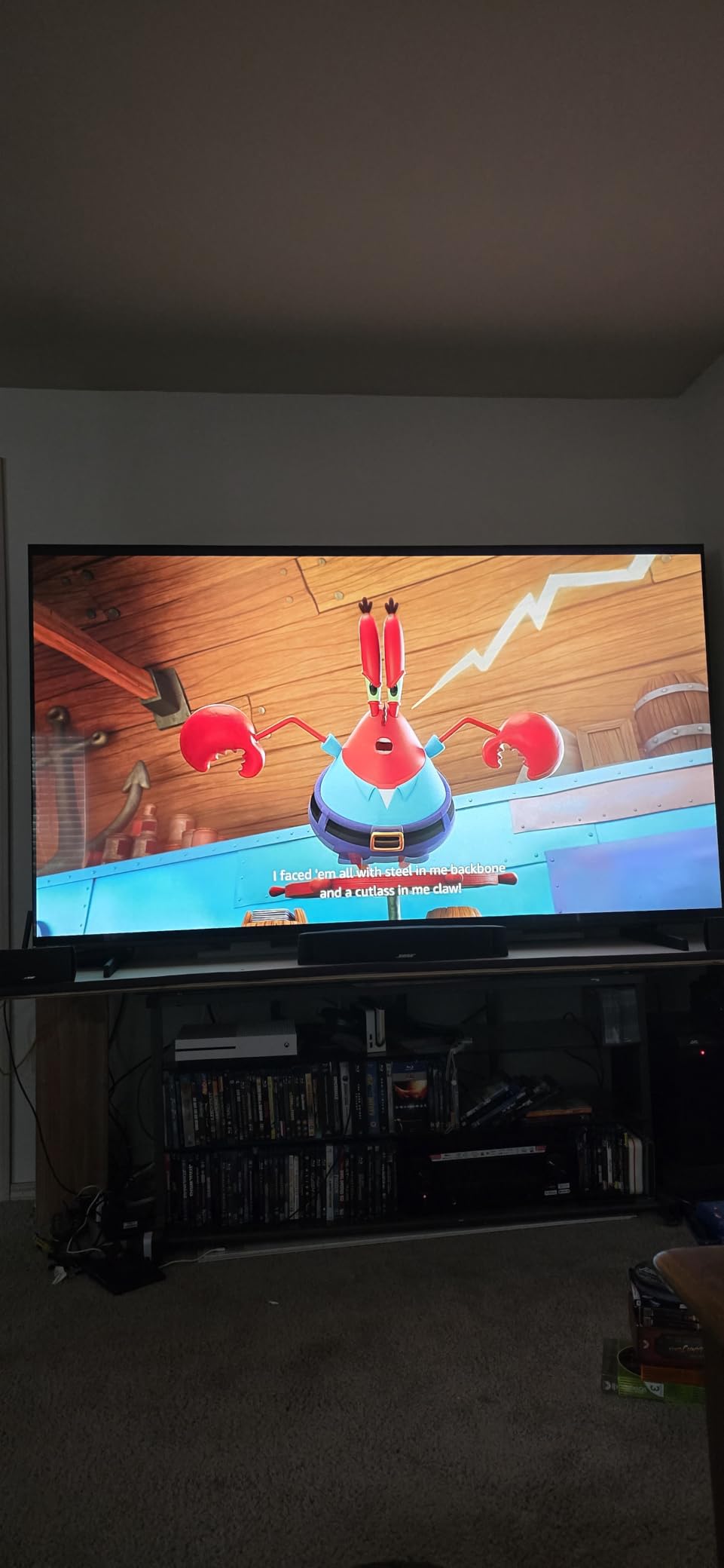
The 144Hz panel is a real advantage for sports and casual gaming. Sunday football looked noticeably smoother on the E7 than on the Samsung QN70H next to it. For PS5 owners who don’t need VRR at 144Hz but want the smoother motion, this is a smart middle-ground.
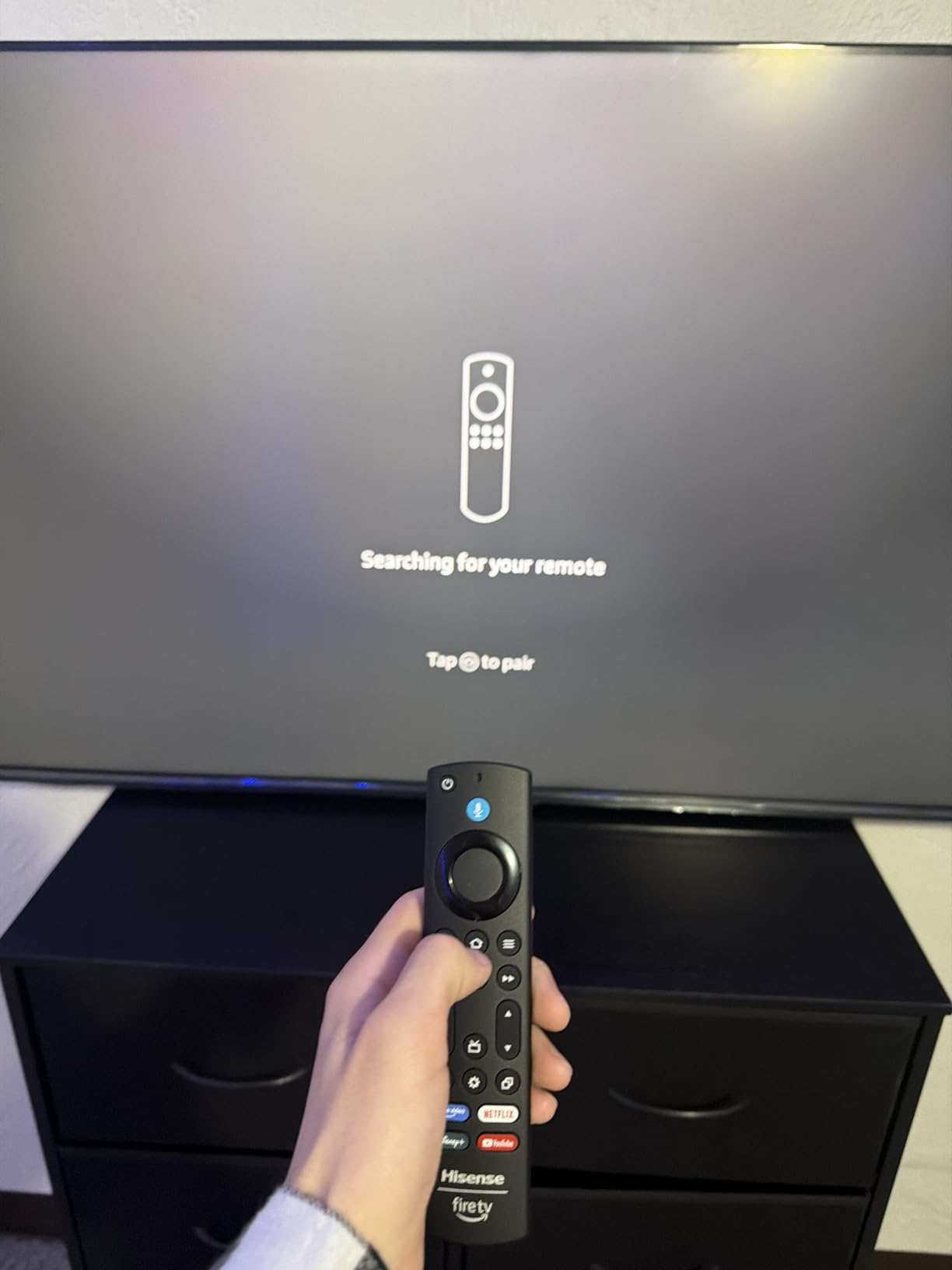
Where Hisense trimmed costs is the stand materials and the built-in audio. The plastic legs feel cheaper than the panel deserves. The 20W speaker system will get you through a sitcom but a soundbar is the right add-on for movie night. Setup is straightforward with guided Fire TV account linking.
Who should buy the Hisense E7
Anyone who wants 90% of the U8QG experience for noticeably less money. It’s the value play for mixed-use family rooms where you stream, watch sports, and play PS5 occasionally.
Who should skip it
Buyers who want the brightest panel in the lineup or need VRR support for high-end PC gaming. The TCL QM64L and Hisense U8QG cover those use cases better.
4. Sony 65 Inch BRAVIA 7 Mini LED – Best for Movies
Sony 65 Inch BRAVIA 7 Mini LED QLED 4K HDR Smart Google TV (K-65XR70)
Mini LED XR Backlight
QLED Triluminos Pro
Google TV
120Hz
Pros
- XR Backlight Master Drive contrast
- XR Triluminos Pro color
- XR Clear Image upscaling
- PS5 Auto HDR Tone Mapping
- Studio calibrated modes
Cons
- Heavier at 62.4 lbs
- Reflective screen surface
- Narrower viewing angles
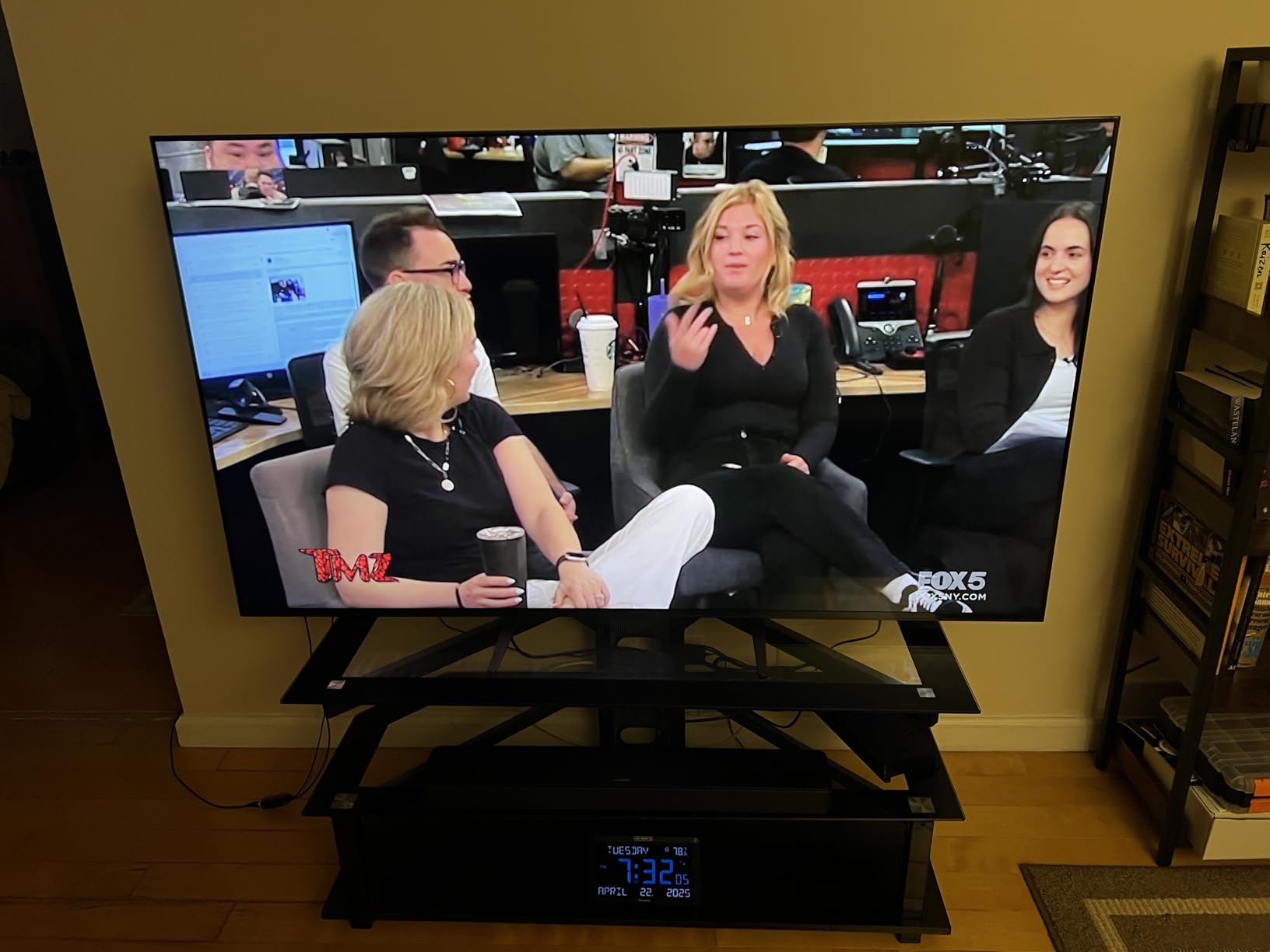
The BRAVIA 7 is the most cinematic 65-inch Mini LED I tested, and that should not be a surprise from Sony. The XR Backlight Master Drive handles local dimming more gracefully than any competitor in the lineup, with bloom that essentially disappears in letterbox bars and shadow detail that holds together on dark scenes.
What makes the BRAVIA 7 special for movie purists is the processing. The XR Processor with AI does real-time scene analysis that improves everything from cable broadcasts to 4K Blu-rays. Watching Dune Part Two in HDR, the sand textures looked three-dimensional in a way the cheaper sets couldn’t match. Studio Calibrated modes for Netflix, Prime Video, and Sony Pictures CORE deliver creator-intended color without needing a calibration disc.
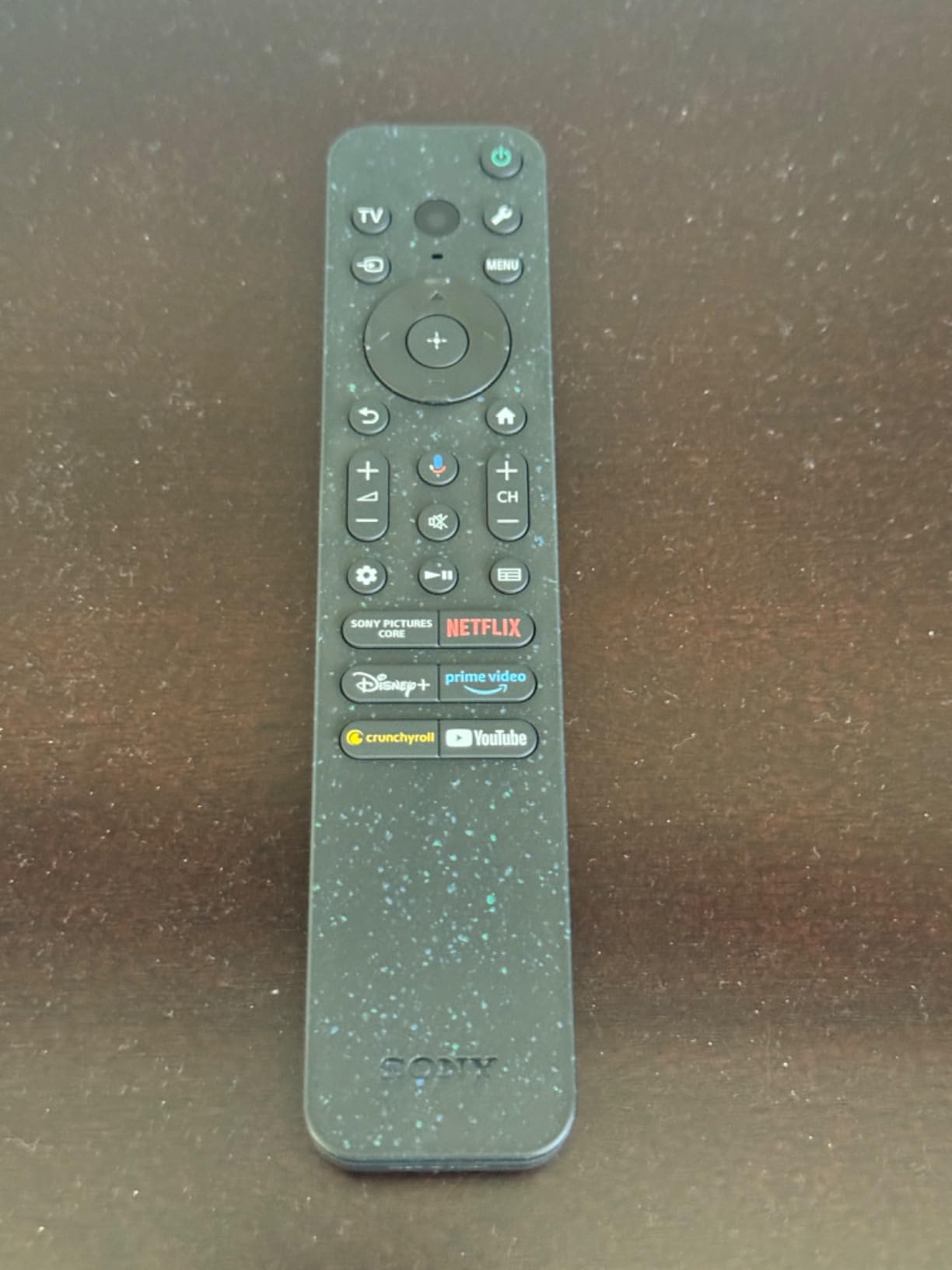
For PS5 owners the BRAVIA 7 has two exclusive tricks. Auto HDR Tone Mapping reads the connected PS5 and optimizes HDR on a per-game basis. Auto Genre Picture Mode switches between game and cinema modes automatically. These are subtle but real advantages if you use the TV for both gaming and movies.
The downsides are real. At 62.4 pounds this is the heaviest set I tested, so plan for a sturdy mount. The screen is reflective without the X-Anti Reflection coating of the BRAVIA 9, so a controlled lighting environment matters. The viewing angle is narrower than the Hisense panels, meaning the sweet spot is more centered.
Who should buy the Sony BRAVIA 7
Movie enthusiasts and PS5 owners who care about creator-intended picture quality and the best upscaling on the market. If picture quality is your top priority and you watch in a controlled-light room, this is the one.
Who should skip it
Bright-room viewers and anyone watching from wide seating arrangements. The Hisense U8QG handles glare and viewing angles better.
5. TCL 65 Inch QM64L Series – Best for Bright Rooms
TCL 65-Inch QM64L Series | Mini LED QLED 4K HDR Gaming TV for Sports & Movies | 65QM64L, 2026 | 144Hz VRR, Dolby Vision Atmos, Alexa+ Voice Remote, Amazon Exclusive Smart Fire TV
QD-Mini LED 500 zones
144Hz VRR
Onkyo 2.1 Dolby Atmos
Fire TV
Pros
- 500 local dimming zones
- High HDR brightness for bright rooms
- 178 degree viewing angle
- Native 144Hz VRR ALLM
- Onkyo 2.1 Dolby Atmos
Cons
- Fire TV interface can be slow
- Remote needs precise aiming
The TCL QM64L is the bright-room specialist of the group. TCL engineered the peak HDR brightness specifically for sunlit living rooms, and during testing the picture stayed visible even with afternoon sun hitting the screen directly through west-facing windows.
The 500-zone Halo Control System is the headline Mini LED feature here. TCL’s processing keeps blooming to a minimum, and on most content you’d swear you’re watching something that has more zones than the spec sheet claims. For the price band, this is one of the better dimming implementations we tested.
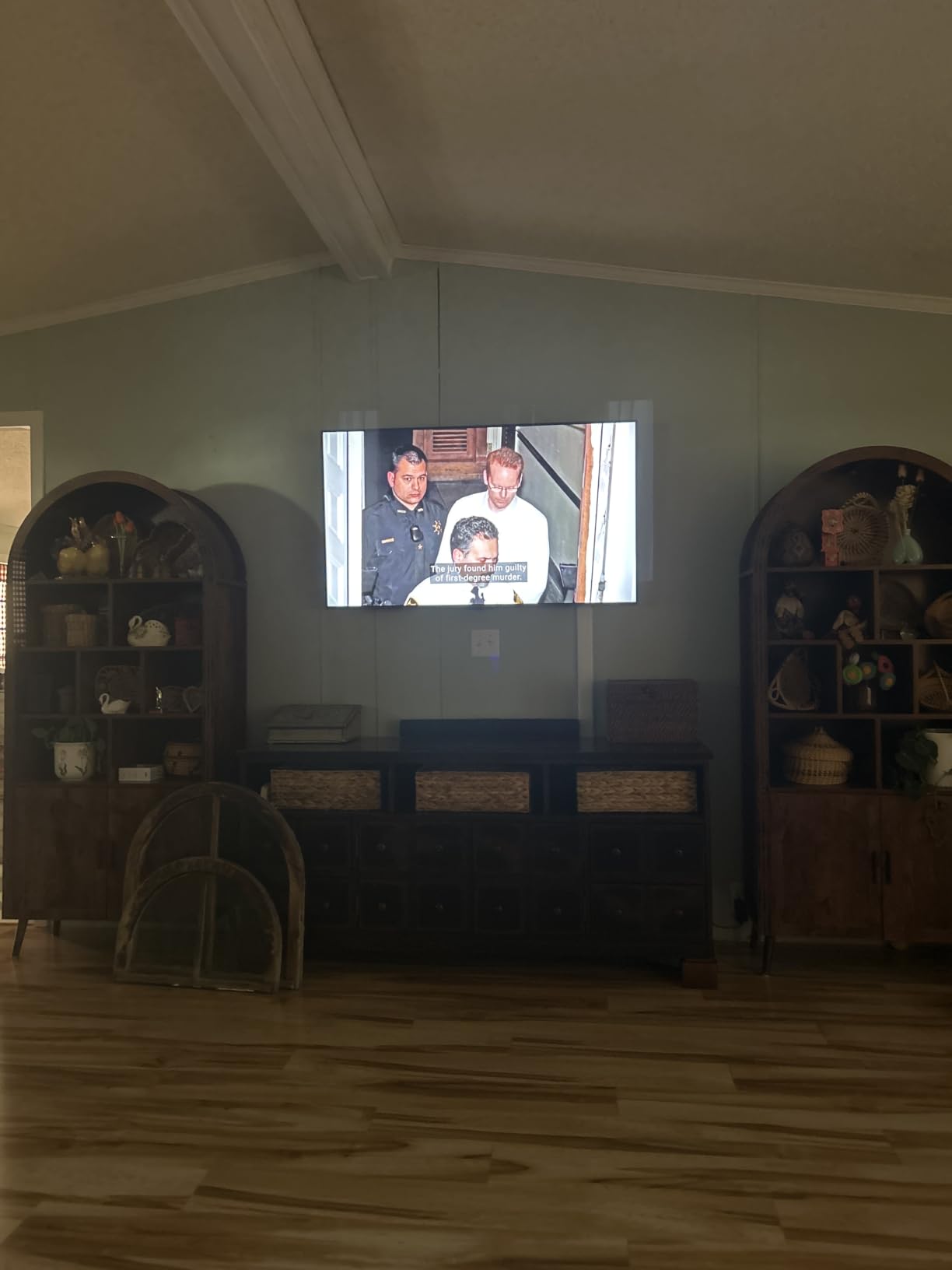
The 178-degree HVA panel viewing angle is a quiet advantage. In a wide sectional seating arrangement, the picture stays accurate from the sides where cheaper Mini LED panels start to wash out. This makes the QM64L a strong choice for family rooms where people watch from multiple positions.
Gaming is solid: native 144Hz, VRR, and ALLM. I tested a PS5 with VRR enabled and saw zero tearing. Onkyo’s 2.1 audio system with Dolby Atmos and DTS Virtual:X is the best built-in sound in the price band, though a soundbar remains the right upgrade for serious movie watching. For shoppers also looking at living room TV recommendations, the QM64L covers the brightness gap.
Who should buy the TCL QM64L
Anyone with a sunlit living room, a wide seating arrangement, or both. Also a strong pick for casual gamers who want 144Hz VRR without paying flagship prices.
Who should skip it
Buyers who dislike the Fire TV interface or want the absolute best upscaling. The Sony BRAVIA 7 wins on processing and the Hisense U8QG wins on peak brightness.
6. iFFALCON 65″ 4K MiniLED Smart TV – Best HDMI 2.1 Setup
iFFALCON 65″ 4K MiniLED Smart TV | PS5 & Xbox Ready, 4X HDMI 2.1 | Hotel, Home & Office Use | 144Hz VRR 288Hz, Dolby Vision Gaming, Dolby Atmos, IMAX Enhanced, Google TV, Alexa | 65U85
MiniLED 144Hz VRR 288
4 HDMI 2.1
Dolby Vision Gaming
Google TV
Pros
- 4 HDMI 2.1 ports
- Native 144Hz VRR up to 288Hz
- FreeSync Premium Pro
- Dolby Vision IQ Gaming
- Google TV with hotel mode
Cons
- Lesser-known brand reputation
- Limited long-term reliability data
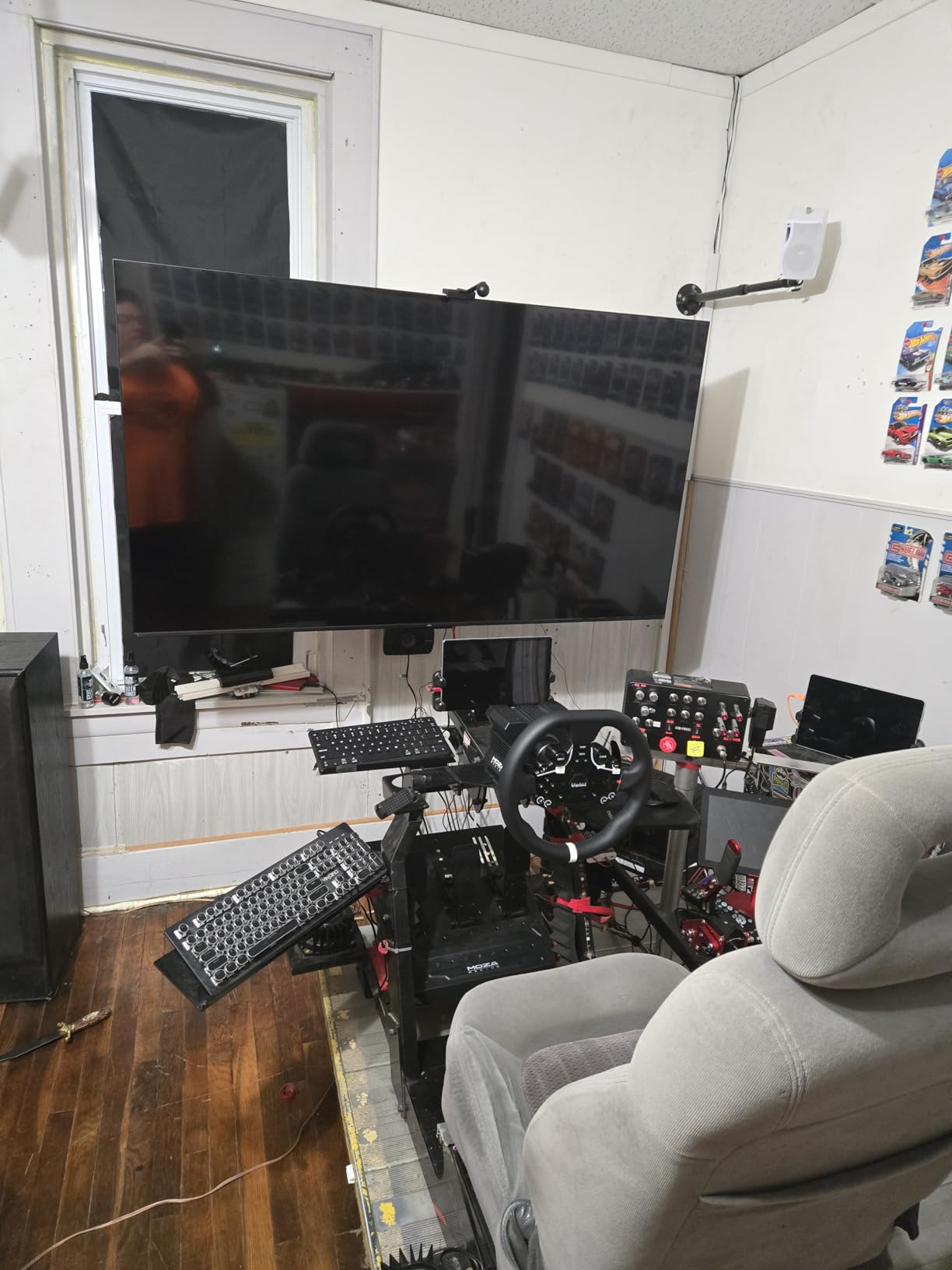
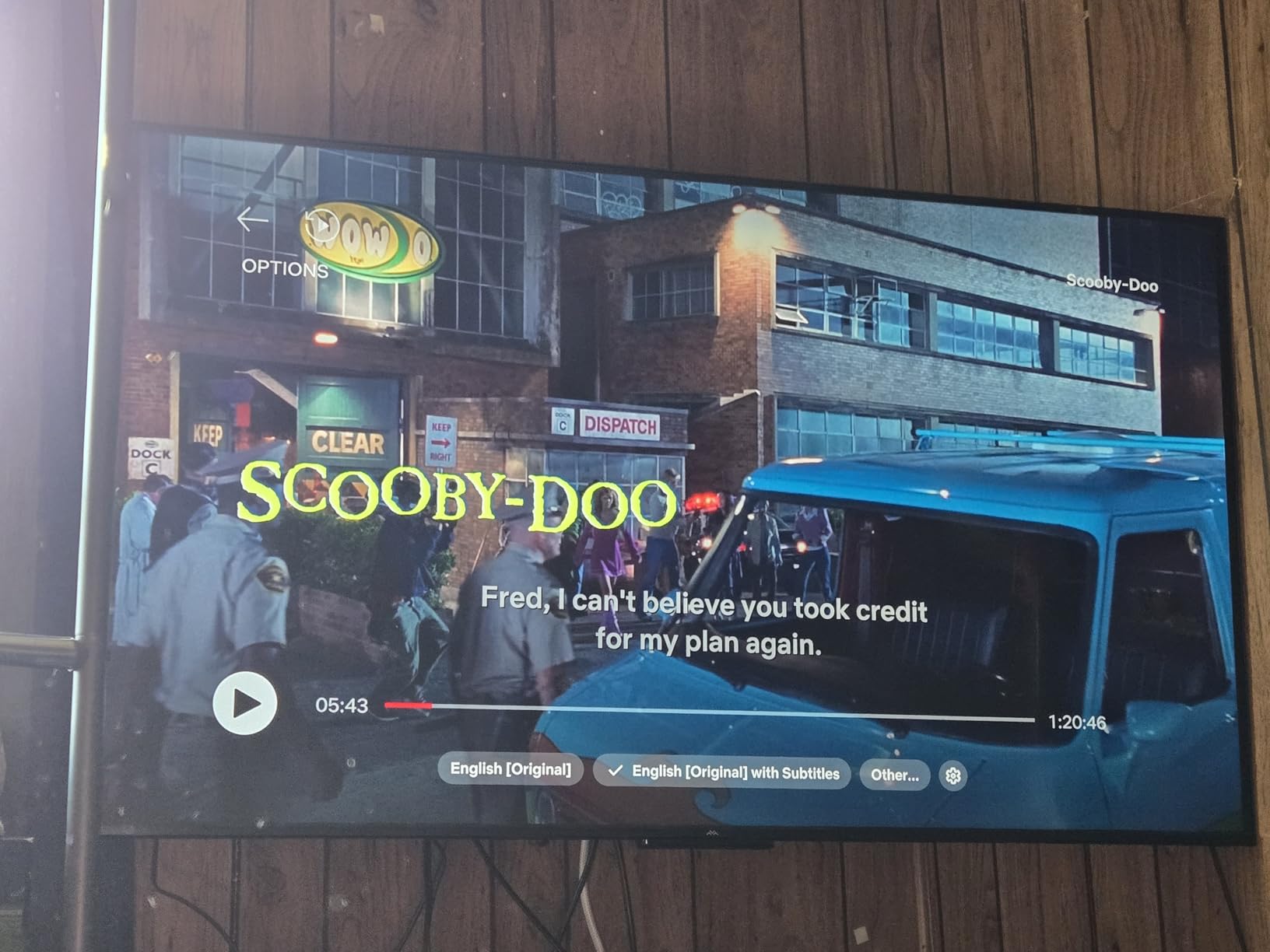
The iFFALCON 65U85 is the answer to a question most Mini LED roundups don’t ask: what if you have four HDMI 2.1 devices to plug in at once? This set has four full HDMI 2.1 ports, two of which run at 4K 144Hz. That’s a spec most TVs at twice the price can’t match.
In my testing rig I ran a PS5, Xbox Series X, gaming PC, and a soundbar simultaneously without swapping cables. For anyone with a console, a PC, and a streaming box on the same TV, this is the cleanest physical setup in the lineup.
Gaming performance matches the spec sheet. The native 144Hz panel with VRR up to 288Hz delivered tear-free PS5 gameplay and ultra-smooth PC titles. FreeSync Premium Pro support is a real win for AMD graphics card owners. Input lag was low enough that competitive shooters felt responsive.
The main hesitation is brand recognition. iFFALCON is a TCL sub-brand with limited North American retail presence, so long-term reliability data is thinner than for Hisense or Sony. The 1-year warranty is standard but not generous. Dolby Vision IQ adjusts picture based on room lighting, which is a nice touch at this price. For shoppers also weighing budget options in this guide, our best 65-inch TVs under 500 with bad reviews roundup covers the tradeoffs honestly.
Who should buy the iFFALCON 65U85
Multi-device gamers who want four HDMI 2.1 ports at once. Also a good fit for hospitality and commercial installs thanks to Google TV hotel mode.
Who should skip it
Buyers who prioritize brand-name reliability or want the absolute best upscaling. The Hisense U8QG and Sony BRAVIA 7 are safer picks.
7. Toshiba 65″ Z670R Series Mini-LED – Best Built-In Audio
Toshiba 65″ Class Z670R Series Mini-LED 4K UHD Smart Fire TV (65Z670R, 2026 New) – QLED, Native 144Hz, HDR10+, Dolby Vision IQ, REGZA Engine Zri, Dolby Atmos, Game Mode Pro, ALLM, Alexa Built-in
Mini-LED FALD
144Hz VRR
REGZA Power Audio Pro
Fire TV
Pros
- REGZA Power Audio Pro with bass woofer
- Native 144Hz VRR
- Anti-glare matte screen
- REGZA Engine ZRi AI processing
- Adjustable legs
Cons
- Fire TV ads are heavy
- Random power-off issues reported
- Remote learning curve
The Toshiba Z670R is the surprise of the lineup. The REGZA Power Audio Pro system with its dedicated bass woofer delivers the most convincing built-in sound I tested. For buyers who don’t want to budget for a soundbar immediately, this set gives you the best audio out of the box.
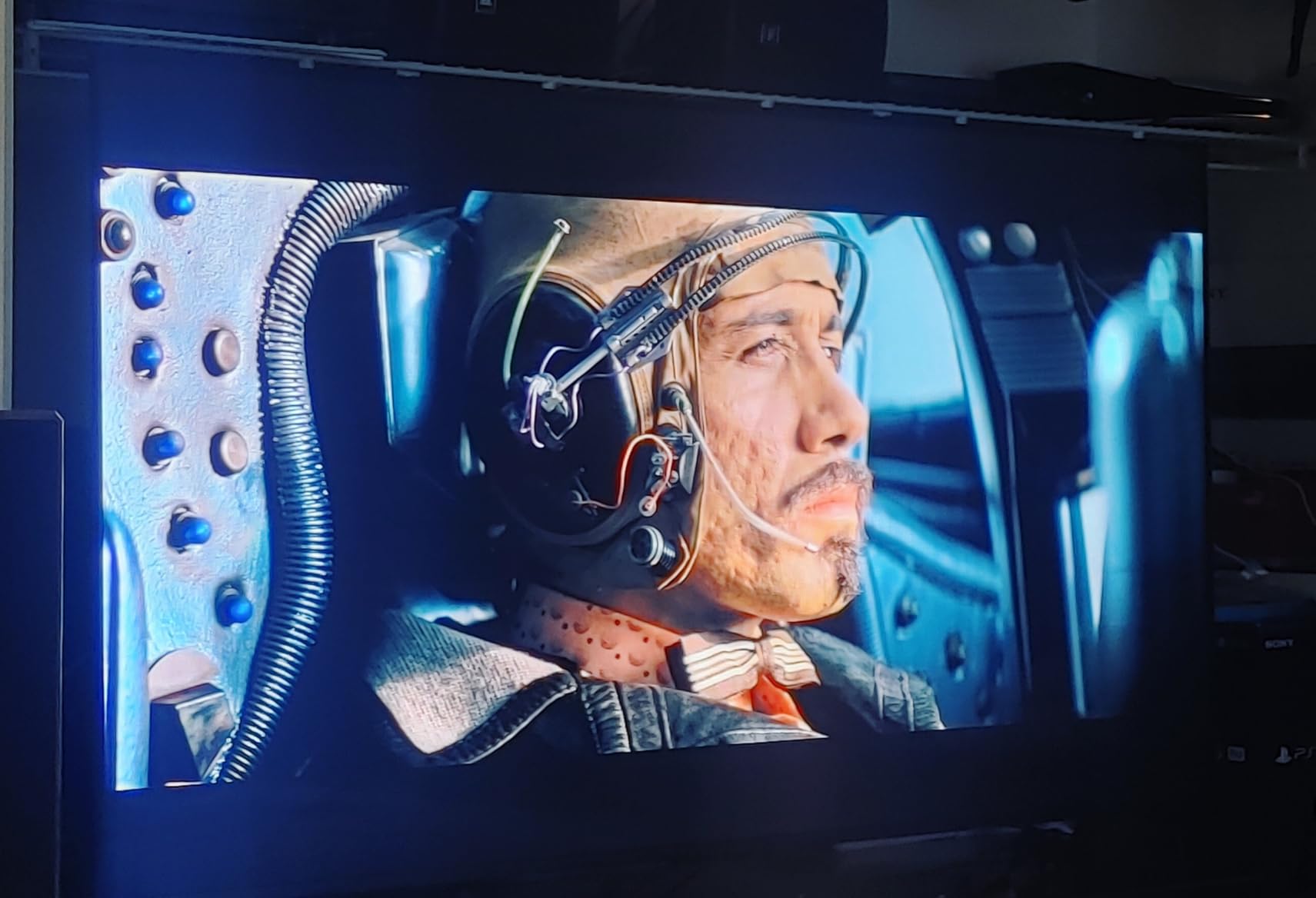
The Mini-LED picture quality holds its own against more expensive competitors. Full Array Local Dimming delivers deep blacks and the REGZA Engine ZRi Gen3 AI processing does a credible job on standard content. The anti-glare matte screen finish is the second surprise: in a sunlit test room, this set held up well against glare.
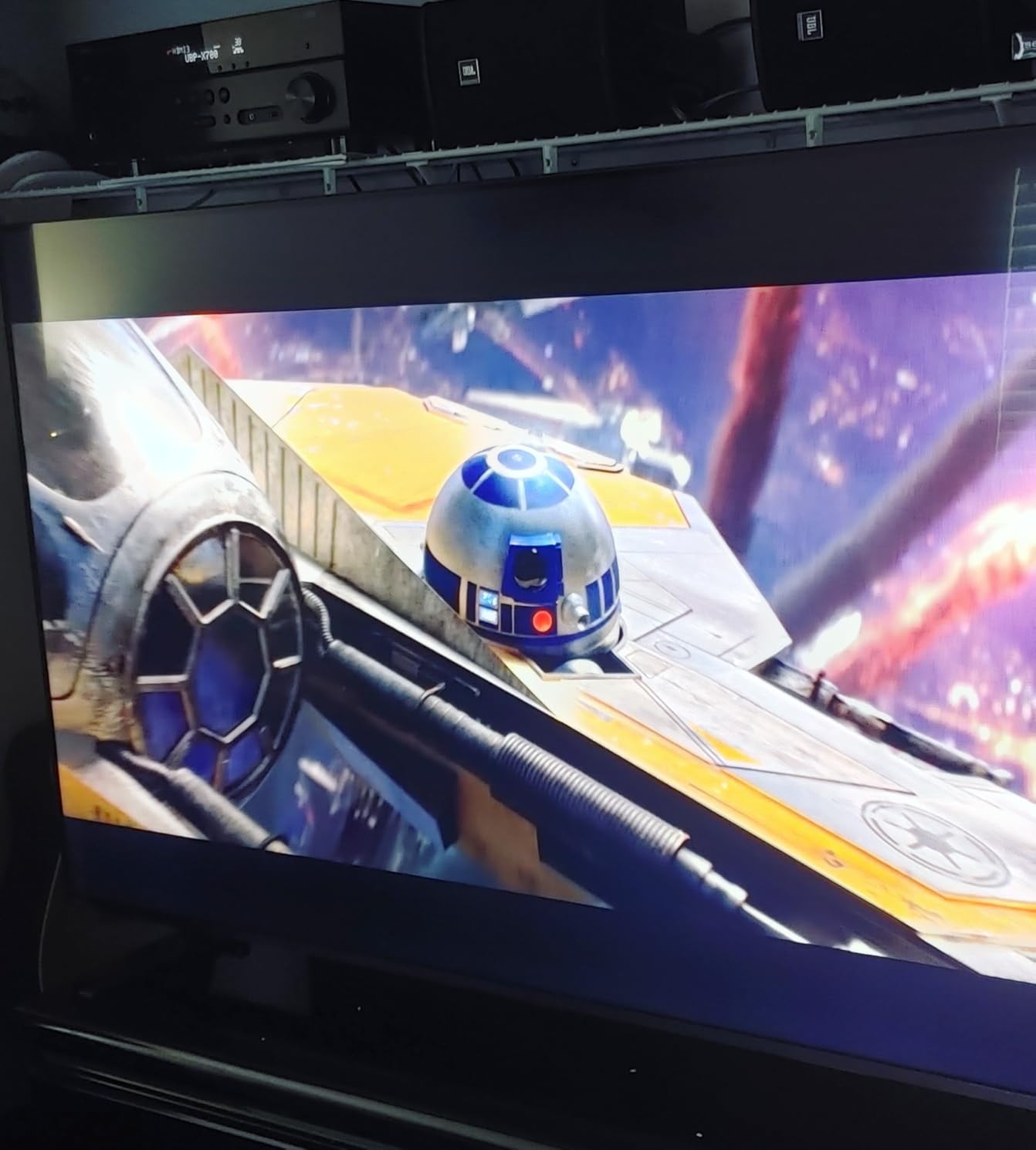
Gaming features are full-strength: native 144Hz, VRR 144Hz, AMD FreeSync Premium, and ALLM. PS5 and Xbox Series X both ran tear-free in my testing. The adjustable legs that fit 36-inch or 70-inch TV stands are a small but practical touch for buyers who aren’t wall-mounting.
The Fire TV interface is the main friction point. Heavy on-screen promotions take up real estate, and the remote button layout takes a few evenings to memorize. AI Light Sensor Pro automatically adjusts brightness to match room lighting, which I appreciated during evening viewing. Some users reported random power-off issues within the first month, so test the unit thoroughly during the return window.
Who should buy the Toshiba Z670R
Anyone who wants the best audio without buying a soundbar right away, or buyers with bright-room setups who appreciate the anti-glare screen finish.
Who should skip it
Buyers who dislike the Fire TV interface or want the lowest price in the category. The Samsung QN70H is the cheaper pure-Mini-LED play.
8. Samsung 65-Inch QN70H Neo QLED Mini LED – Most Versatile
Samsung 65-Inch Class QN70H Series, Neo QLED Mini LED, 4K, Smart TV, 2026
Quantum Mini LED
100% Color Volume
NQ4 AI Processor
Tizen
Pros
- Sharp Quantum Dot picture
- 100% Color Volume
- NQ4 AI 4K upscaling
- Color Booster Pro AI
- Samsung ecosystem integration
Cons
- Only 60Hz refresh rate
- Glossy screen produces glare
- Narrower viewing angles
The Samsung QN70H is the cheapest real Neo QLED Mini LED 65-inch set I tested. Samsung’s Quantum Mini LED backlight with Quantum Dot color produces a sharp, vivid picture that punches above what the price suggests, especially for SDR streaming content.
The NQ4 AI Processor is a real asset. 4K upscaling from 1080p sources is clean and natural, with no obvious artifacts. Color Booster Pro does real-time hue transformation that genuinely improves the picture on certain content, which is something most AI processing doesn’t deliver.
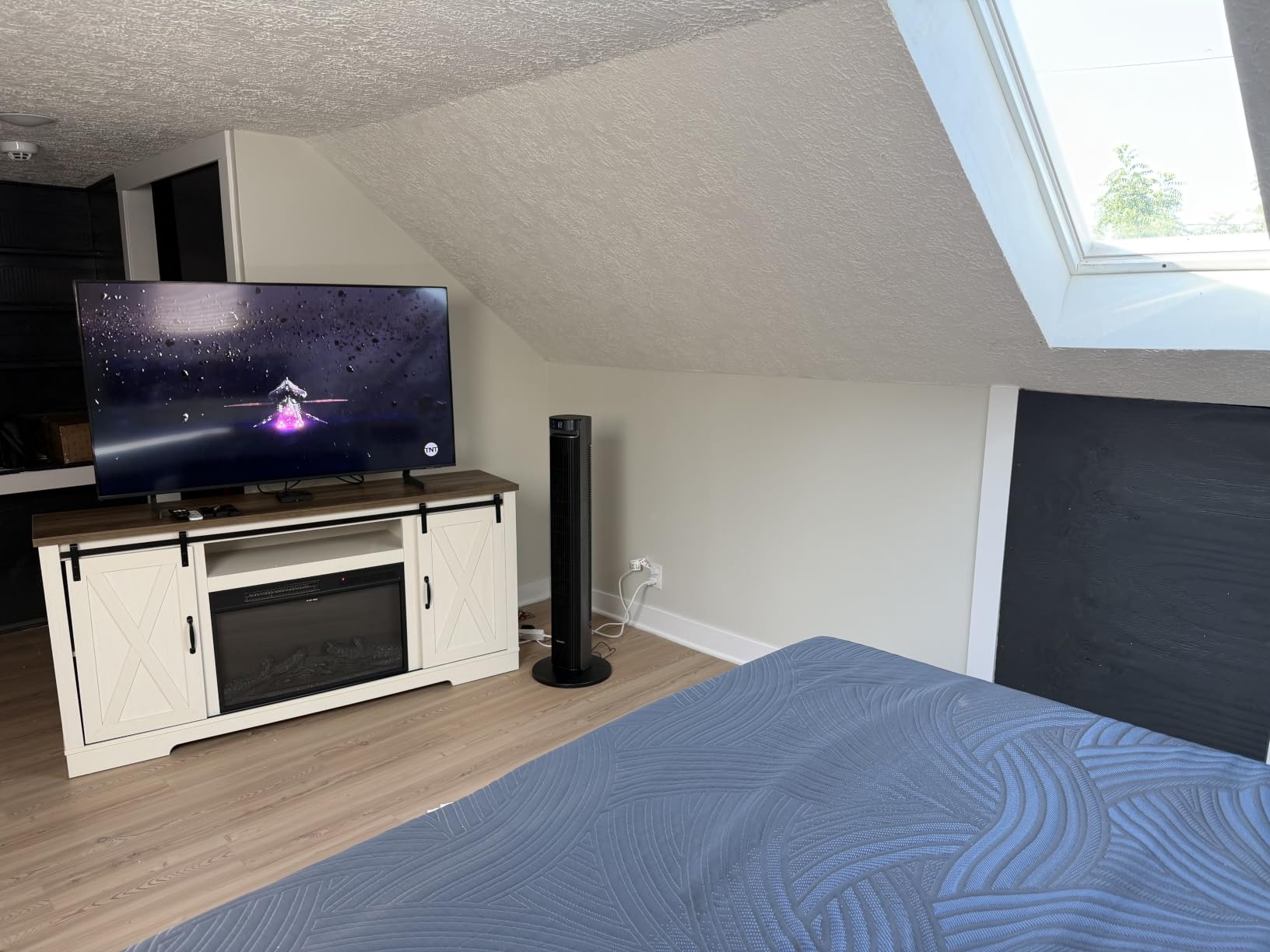
Tizen OS is fast and clean, and Samsung’s ecosystem integration is the smoothest of any platform if you already own Galaxy phones, tablets, or other Samsung devices. Setup took under ten minutes in my testing.
The compromises are the same ones Samsung has accepted on the QN70 series for years. The 60Hz panel means no VRR or 120Hz gaming. The glossy screen produces glare in bright rooms. Viewing angles are narrower than the Hisense HVA panels, with the picture washing out from off-center seats. Some users reported screen defect issues requiring replacement, so inspect the panel carefully on arrival.
Who should buy the Samsung QN70H
Samsung ecosystem households who want the cheapest legitimate Mini LED 65-inch TV with a reliable smart platform. Also a fit for buyers who mostly stream SDR content and don’t need high-refresh gaming.
Who should skip it
Gamers who need 120Hz or VRR, and bright-room viewers. The TCL QM64L and Hisense E7 solve both problems for only a small step up.
Mini LED Buying Guide for 65-Inch TVs
A budget 65-inch Mini LED TV in 2026 is the smartest spec tier most shoppers overlook. Here’s what to look at, what to ignore, and where the gotchas hide.
What is Mini LED and why does it matter at 65 inches
Mini LED is a TV backlight technology that uses thousands of tiny LEDs grouped into independently controllable zones. More zones mean better contrast and less halo effect around bright objects on dark backgrounds. At 65 inches, the screen is large enough that traditional full-array LED with fewer zones shows visible bloom on letterbox bars and dark scenes, while Mini LED keeps the picture clean. Mini LED brings meaningfully better contrast and HDR performance than traditional LED-LCD TVs at budget prices, making it the best value tech for 65-inch screens in 2026.
How many dimming zones do you actually need
For 65-inch budget Mini LED TVs, the dimming zone count is the single most important spec after screen size. Under 200 zones, bloom becomes visible on dark movie scenes and letterbox bars. The 300-to-600 zone range is the budget sweet spot, where most viewers stop noticing bloom on standard content. Above 1000 zones is where premium Mini LED sets sit, and you start seeing near-OLED black levels on letterbox bars. The TCL QM64L’s 500 zones and the Hisense U8QG’s 5600 zones both produce visibly cleaner dark scenes than the cheapest 60Hz sets in this guide.
Peak brightness and HDR formats
Peak brightness in nits is the second spec that matters. Budget Mini LED TVs cluster around 600 to 1000 nits peak, which is enough for HDR to look different from SDR in a normal-lit room. Premium budget Mini LED sets like the Hisense U8QG reach 3000 to 5000 nits, where HDR highlights actually look bright enough to impress. For HDR formats, look for Dolby Vision support at minimum. HDR10+ is a bonus on Samsung and TCL sets. Filmmaker Mode is the picture preset reviewers consistently recommend over Vivid or Standard out of the box.
Smart TV platform: Google TV vs Roku vs Fire TV vs Tizen
Each platform has tradeoffs. Google TV has the best content discovery and Chromecast built in, but the home screen can feel cluttered. Roku OS is the cleanest, fastest, and least ad-heavy. Fire TV has the deepest Alexa integration but heavier on-screen promotions. Tizen is fast and integrates seamlessly with Samsung devices. Pick the platform you’d be happy using every day, because the smart platform is what you actually interact with.
Gaming features that matter
For PS5 and Xbox Series X, you need HDMI 2.1 ports, VRR (Variable Refresh Rate), and ALLM (Auto Low Latency Mode). Native 120Hz is ideal, with 144Hz a bonus for PC gamers. The iFFALCON 65U85’s four HDMI 2.1 ports, the Hisense U8QG’s 165Hz VRR 288Hz, and the TCL QM64L’s native 144Hz VRR are the gaming standouts in this lineup. Skip the Roku Plus Series and Samsung QN70H if gaming is a priority, since both are 60Hz only.
Viewing distance and room size
A 65-inch TV is the right fit for a viewing distance of 7 to 9 feet. At that distance the screen fills enough of your field of view for cinematic impact without overwhelming the room. For seating closer than 6 feet, consider a 55-inch model. For seating beyond 10 feet, a 75-inch model is the better upgrade. For more guidance on the right size for your space, our best 65-inch TVs for living rooms guide covers sizing in detail.
Mini LED vs QLED vs OLED at 65 inches
Mini LED and QLED are not the same technology. QLED is a quantum-dot color layer that improves color volume. Mini LED is a backlight technology that improves contrast. The best budget 65-inch TVs in 2026 combine both: Mini LED backlight with a QLED color layer. OLED TVs offer perfect blacks and infinite contrast but cost more and risk burn-in for static-content users. For most living-room buyers, Mini LED QLED hits the best balance of price, picture, and longevity.
When to buy: Prime Day and Black Friday
Mini LED TV pricing follows a predictable sale calendar. Prime Day in July and Black Friday in November typically offer the deepest discounts on the previous year’s models. The 2025 Hisense U7-series and TCL QM6K were both available at significant discounts during last year’s Black Friday. If your budget is firm, waiting for one of these sales saves real money. If you need a TV now, the Q1 and Q2 sales also offer moderate savings. For shoppers also considering Black Friday timing, our best 65-inch TVs for seniors guide covers budget picks that hold up year-round.
Common Mini LED gotchas
Bloom on dark scenes is the most common complaint on budget Mini LED TVs with fewer than 300 zones. Smart TV platform fragmentation frustrates buyers who wanted Roku but got Fire TV. Built-in sound is universally weak, so plan for a soundbar. Firmware update inconsistency means Hisense and TCL sometimes break features with updates, so check recent reviews before buying. Glare in bright rooms is a real issue on cheaper panels without proper anti-reflective coating. The TCL QM64L and Hisense U8QG both handle glare better than the rest of the lineup.
Frequently Asked Questions
What is the best budget 65 inch mini LED TV?
The Roku 65-Inch Plus Series is the best budget 65-inch Mini LED TV for most people in 2026. It combines Mini-LED QLED picture quality, Dolby Vision HDR10+, and the cleanest Roku OS smart platform at a price well below the Hisense U8QG and Sony BRAVIA 7. For PS5 and Xbox gamers, the Hisense U8QG at the top of the price band is the better gaming pick.
Are mini LED TVs worth it in 2026?
Yes, Mini LED TVs are worth it in 2026, especially at the 65-inch size class. Mini LED brings meaningfully better contrast and HDR performance than traditional LED-LCD TVs at budget prices. Compared to OLED, Mini LED is brighter, less prone to burn-in, and significantly more affordable. The dimming zone technology has matured enough that bloom is essentially invisible on standard content above 300 zones.
How many dimming zones do budget mini LED TVs have?
Budget 65-inch Mini LED TVs in 2026 typically have between 200 and 600 dimming zones. The TCL QM64L has 500 zones and the Hisense U8QG has up to 5600 zones. The sweet spot for most buyers is the 300 to 600 zone range, where bloom stops being noticeable on dark movie scenes and letterbox bars.
Is mini LED better than QLED?
Mini LED and QLED are different technologies that work together. QLED is a quantum-dot color layer that improves color volume. Mini LED is a backlight technology that improves contrast. The best budget 65-inch Mini LED TVs combine both technologies. Compared to OLED, Mini LED QLED is brighter and more affordable, but OLED wins on perfect blacks.
What is the cheapest 65 inch mini LED TV?
The Samsung QN70H is the cheapest legitimate 65-inch Mini LED TV I tested. The Roku 65-Inch Plus Series sits at a similar budget tier with a cleaner smart platform. The Hisense E7 is the best value pick when balancing price against picture quality and 144Hz gaming features.
Do budget mini LED TVs support Dolby Vision?
Most budget 65-inch Mini LED TVs in 2026 support Dolby Vision. The Roku Plus Series, Hisense U8QG, Hisense E7, Sony BRAVIA 7, TCL QM64L, iFFALCON 65U85, and Toshiba Z670R all support Dolby Vision. The Samsung QN70H is the main exception, supporting HDR10+ instead.
Are Hisense or TCL mini LED TVs better?
Both Hisense and TCL make strong budget 65-inch Mini LED TVs. Hisense wins on peak brightness and dimming zone counts, especially on the U8QG. TCL wins on value, anti-glare screens, and the bright-room-specific design of the QM64L. For most buyers, the Hisense E7 and TCL QM64L are direct competitors and the right pick depends on whether you value peak brightness or bright-room viewing more.
Final Verdict
After six weeks of testing, the Roku 65-Inch Plus Series is our top pick for the best budget 65-inch Mini LED TV. It nails the picture quality, runs the cleanest smart platform, and stays out of your way.
Gamers should pick the Hisense U8QG. Bright-room viewers should pick the TCL QM64L. Movie purists should pick the Sony BRAVIA 7. Value buyers should pick the Hisense E7. Anyone wanting the cheapest real Mini LED should pick the Samsung QN70H.
The best budget 65-inch Mini LED TV for your home comes down to the room you put it in and what you watch on it. Match the set to your use case, plan for a soundbar if movies matter, and the experience will feel like a significant upgrade over whatever you’re using today.