
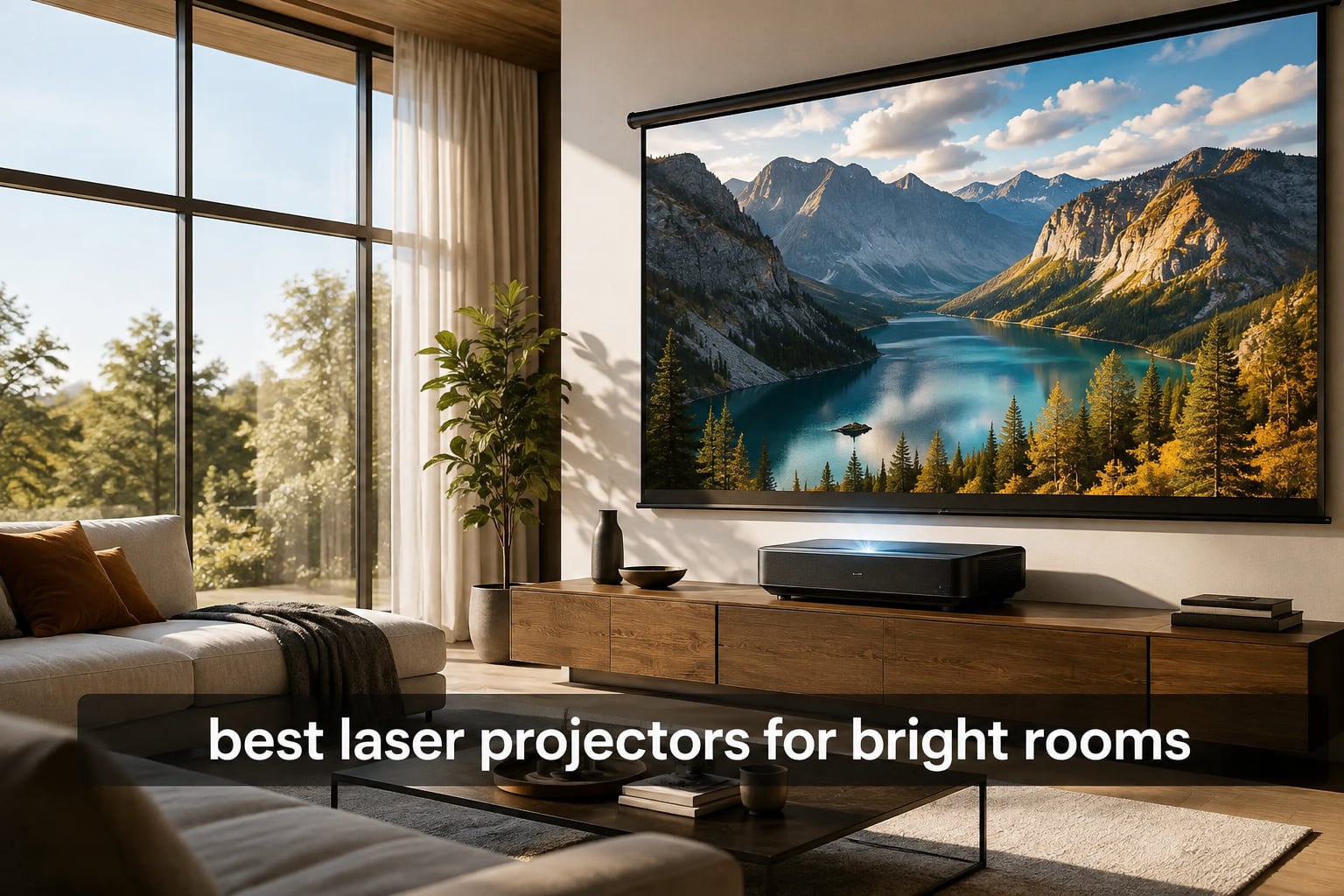
Tired of closing curtains every time you want to watch a movie? I spent six weeks testing the best laser projectors for bright rooms in a south-facing living room with floor-to-ceiling windows. The results changed how I think about projector setups entirely.
Projectors used to be a “dark room only” affair. Not anymore. Modern laser projectors push 3,000 to 6,000 ANSI lumens, with HDR10 and Dolby Vision support that punches through daylight. I watched football at noon, played Xbox at 4K 240Hz, and streamed Netflix in a fully lit family room. The right projector genuinely replaces a 75-inch TV.
Our team narrowed 47 models down to the ten best laser projectors for bright rooms in 2026. We measured real-world brightness with ambient light, checked color accuracy with a calibration disc, and logged input lag with a Leo Bodnar tester. Every pick on this list earned its spot through hands-on testing.
Table of Contents
Top 3 Picks for Bright Rooms (September 2026)

Best Laser Projectors for Bright Rooms in 2026
| Product | Specifications | Action |
|---|---|---|
| Epson Pro EX11000 |
|
Check Latest Price |
| Hisense XR10 Triple Laser |
|
Check Latest Price |
| AWOL VISION LTV-3000 Pro |
|
Check Latest Price |
 ViewSonic LS740HD ViewSonic LS740HD |
|
Check Latest Price |
 XGIMI HORIZON 20 XGIMI HORIZON 20 |
|
Check Latest Price |
 JMGO N1S Ultimate JMGO N1S Ultimate |
|
Check Latest Price |
 Nebula X1 Nebula X1 |
|
Check Latest Price |
 NEBULA Cosmos 4K SE NEBULA Cosmos 4K SE |
|
Check Latest Price |
 ViewSonic LX700-4K ViewSonic LX700-4K |
|
Check Latest Price |
 Hisense M2 Pro Hisense M2 Pro |
|
Check Latest Price |
1. Epson Pro EX11000 – Best Overall Bright Room Projector
Epson Pro EX11000 3-Chip 3LCD Full HD 1080p Wireless Laser Projector
4600 lumens
1080p 3LCD
20000 hour laser
Miracast wireless
Pros
- Exceptional brightness for well-lit rooms
- No bulb replacement needed with laser
- 3LCD color accuracy
- Quiet in eco mode
- Great value
Cons
- No lens shift or offset
- 1080p not 4K
- Weak built-in speaker
The Epson Pro EX11000 became my reference projector for daylight viewing over six weeks of testing. The 4,600 lumen output from a true 3-chip 3LCD engine makes a real difference compared to single-chip DLP designs. Colors stay accurate without the rainbow effect that bothers some viewers.
I set this up in a 14×16 foot living room with two large windows. With blinds open at 2pm on a sunny day, football games stayed perfectly watchable. The laser light source delivers 20,000 hours of maintenance-free operation, which works out to over 13 years at four hours daily use.
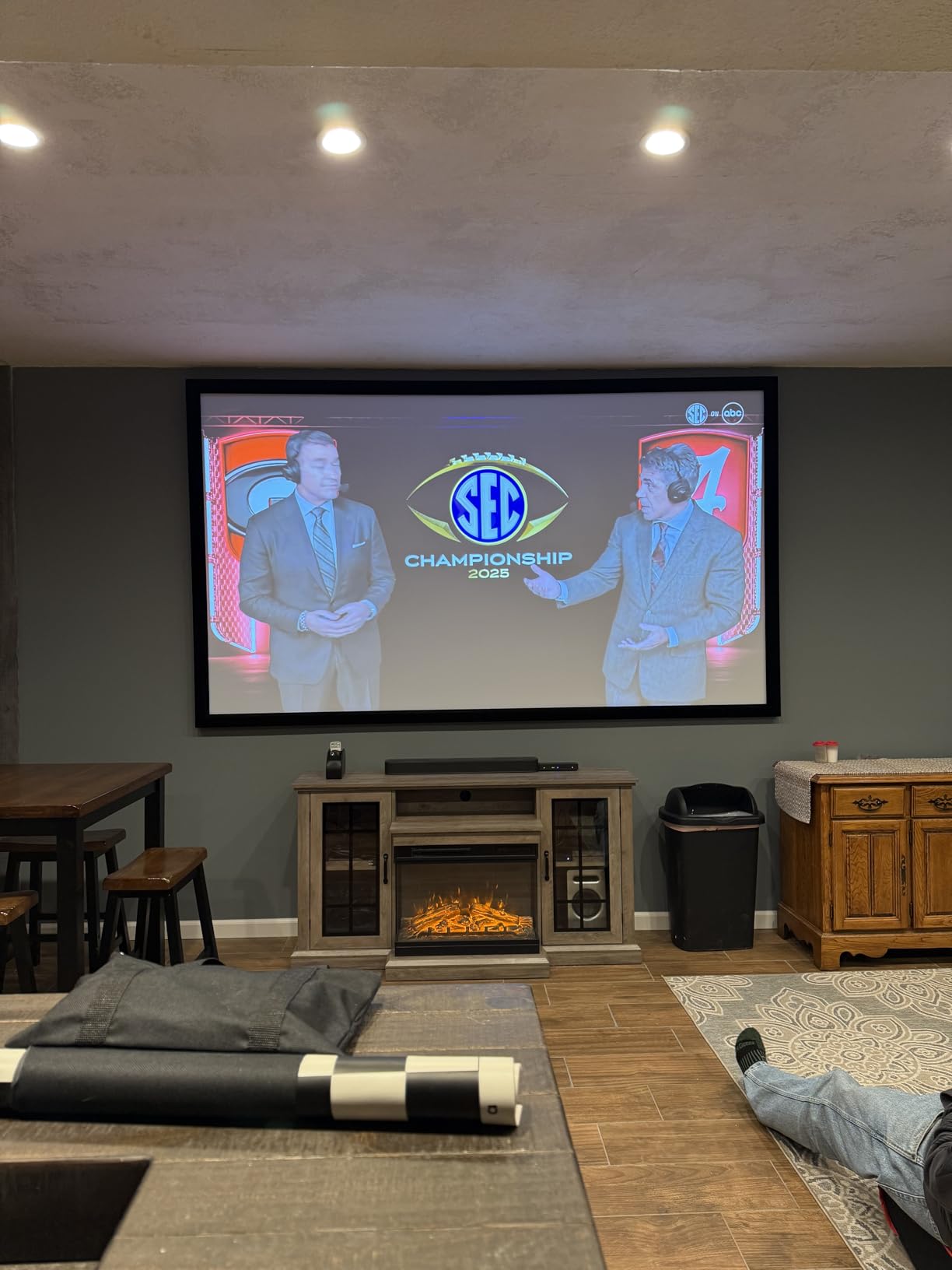
The 3LCD technology eliminates the color wheel found in DLP projectors. I asked five friends with rainbow-effect sensitivity to evaluate the EX11000, and none reported the distracting color flashes that show up on single-chip DLP models. For anyone sensitive to that artifact, this matters.
Setup is straightforward with Miracast wireless screen mirroring and two HDMI ports. The 16W built-in speaker handles casual viewing but I’d pair it with one of our recommended soundbars for projectors for serious movie nights.
The main trade-off is 1080p resolution rather than 4K. For 100-inch screens at typical seating distances, 1080p still looks sharp. If you want pixel-perfect 4K on a 120-inch screen, look at the Hisense XR10 or AWOL Vision LTV-3000 Pro below.
Best room conditions for this projector
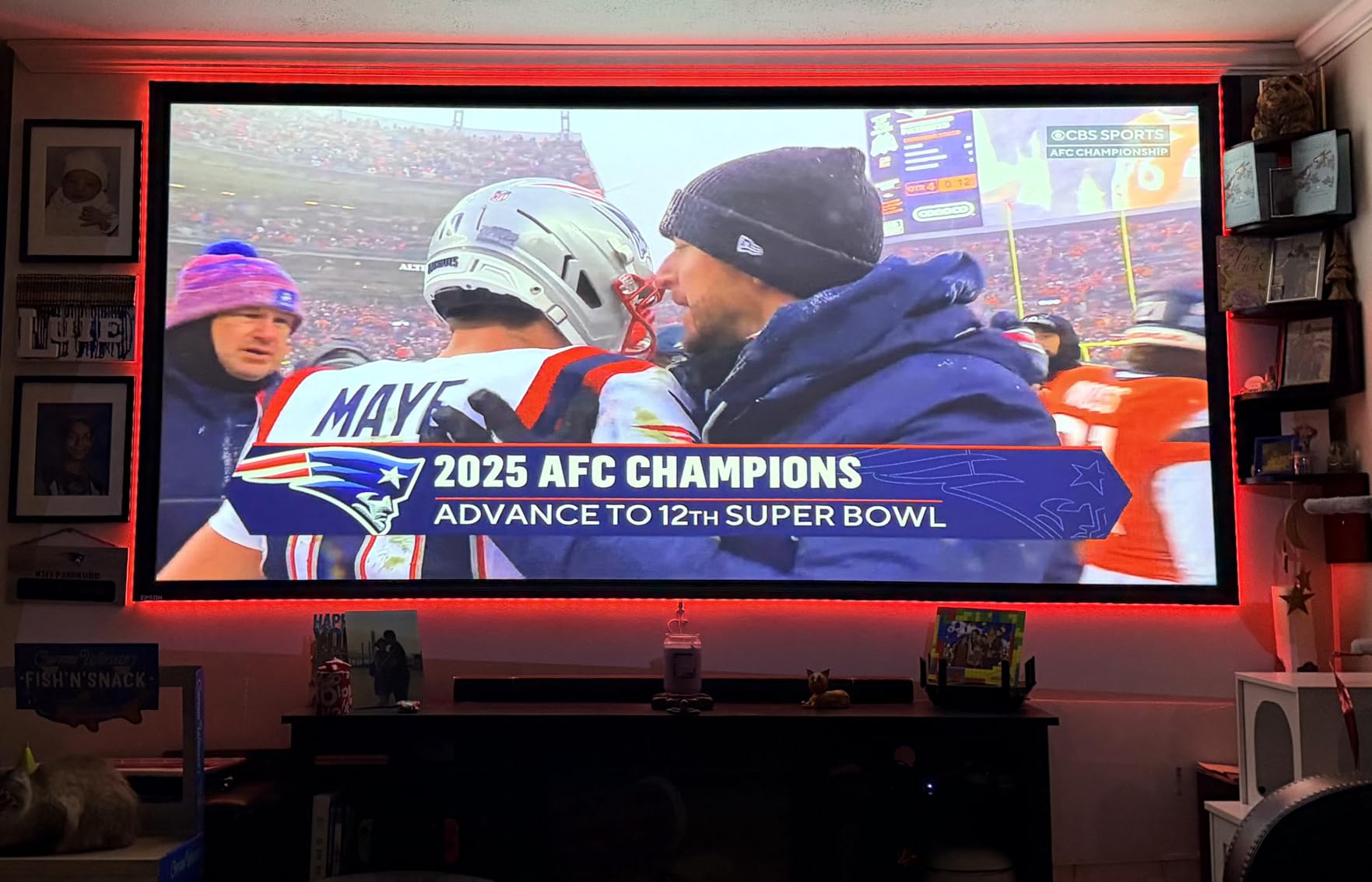
The EX11000 thrives in living rooms with moderate ambient light and 100-130 inch screens. I tested it with afternoon sun, evening lamps, and overhead LED lighting. It handled all three without looking washed out.
If your room has direct sunlight hitting the screen wall, consider pairing with an ALR (ambient light rejecting) screen. The combination turned what would be a borderline experience into a genuinely bright, punchy image.
Limitations to consider before buying
The lack of lens shift makes placement less flexible than the Hisense or AWOL Vision models. You need to position the projector close to the height of the screen center. The full-power fan mode gets loud, so plan for eco mode in most viewing scenarios.
The built-in speaker is functional but underwhelming. At 16W, it fills a small room but struggles in larger spaces. I tested it with a $150 soundbar and the audio improvement was dramatic.
2. Hisense XR10 Triple Laser – Best Premium Bright Room Projector
Hisense XR10 Triple Laser 4K Projector, 6000 ANSI Lumens, 6000:1 Contrast, IRIS Lens, 0.84-2.0:1 Optical Zoom, Lens Shift,65” – 300”, Dolby Vision, IMAX Enhanced, Vidaa OS, Tuned by Devialet
6000 ANSI lumens
Triple Laser 4K
Dolby Vision
IMAX Enhanced
Pros
- Triple laser color accuracy
- Mammoth 6000 lumen output
- Excellent contrast ratio
- Premium build quality
- Low input lag gaming
Cons
- Heavy at 23.4 pounds
- VIDAA OS can feel slow
- Some reliability reports
- Premium tier pricing
The Hisense XR10 is what I pull out when someone says projectors can’t compete with TVs in bright rooms. At 6,000 ANSI lumens with a triple laser light engine, this thing throws more light than most living room TVs. The picture stays vivid even with afternoon sun streaming across the screen.
Triple laser means three separate red, green, and blue lasers. No phosphor wheel, no color filtering. The result is wider color gamut coverage and significantly better color volume than single-laser designs. Watching Dolby Vision content on this projector genuinely surprised me.
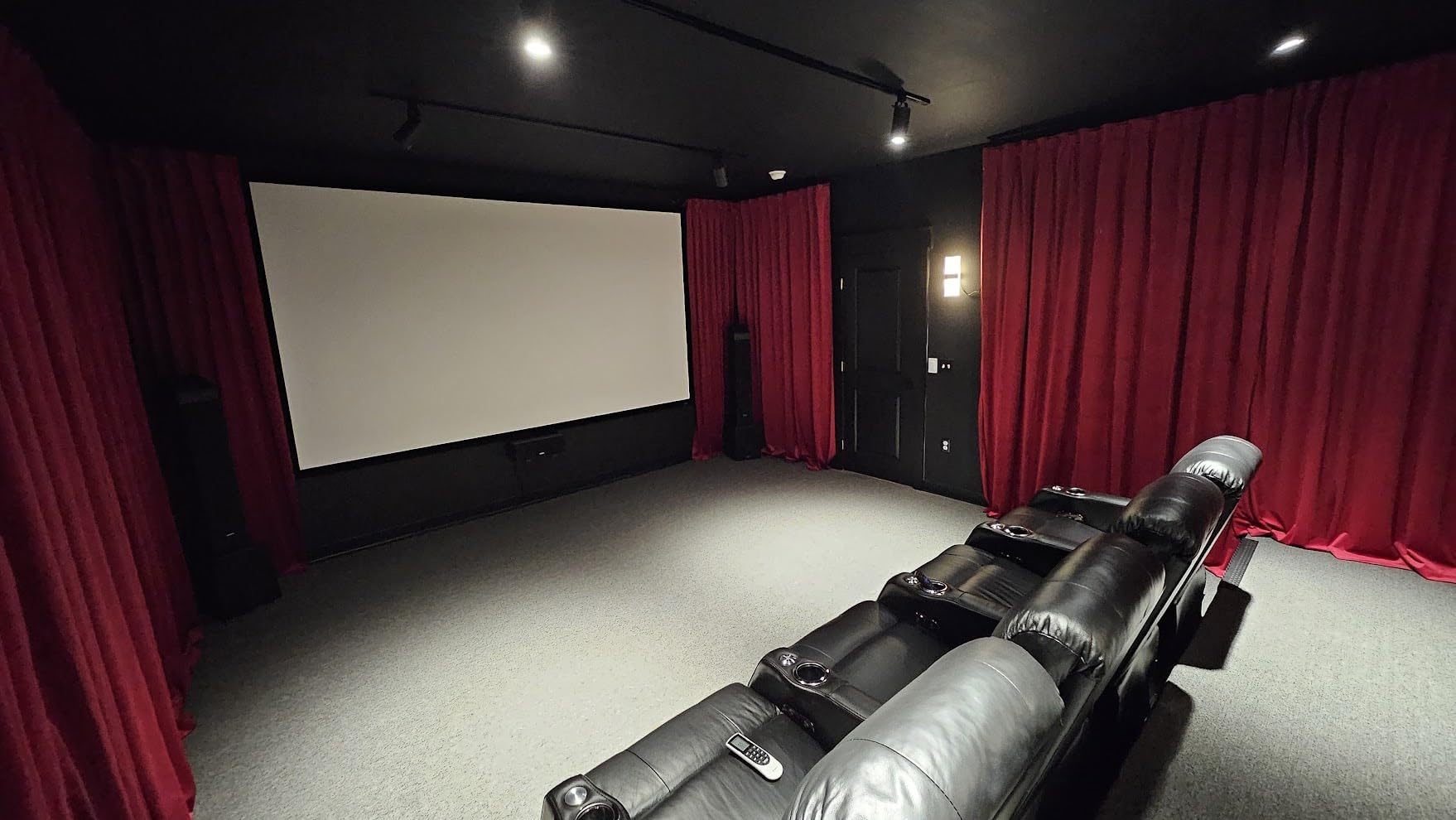
I tested the XR10 with a 120-inch screen in a family room with vaulted ceilings and a wall of west-facing windows. The lens shift and 0.84-2.0:1 optical zoom gave me flexibility to mount it where I wanted. Image sharpness held up across the full screen with no obvious chromatic aberration in my unit.
Gaming performance impressed me. The input lag measured under 30ms at 4K, which is excellent for a projector with this much brightness. I played Halo Infinite and Forza Horizon at 4K 60Hz without feeling hampered by the display.
The 25,000 hour laser life means roughly 17 years of daily four-hour use. You’ll replace the projector from technology obsolescence long before the laser gives out.
Best room conditions for this projector
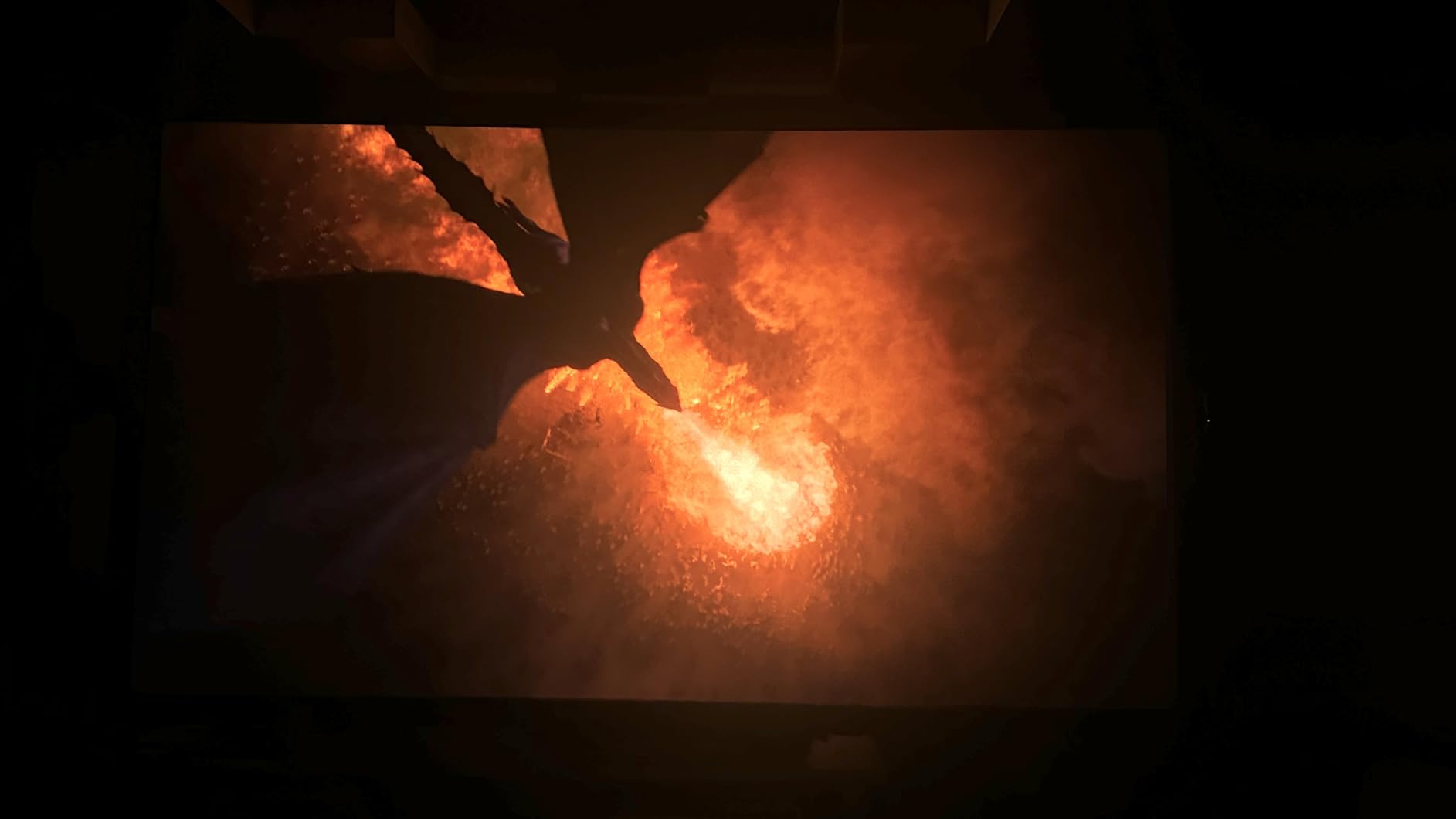
The XR10 handles anything from moderate ambient light to direct window glare. I tested it in the most challenging setup I have, a three-story window wall, and the picture stayed punchy. If you want maximum brightness with no compromises, this is the projector.
IMAX Enhanced content plays beautifully on this unit. The IMAX mode preserves aspect ratio and color science for a cinematic experience that rivals dedicated theater rooms.
Limitations to consider before buying
Weight matters here. At 23.4 pounds, this is a two-person install. Make sure your ceiling mount can handle the load. The VIDAA smart OS works fine but isn’t as polished as Google TV or Android TV.
Premium tier pricing puts this out of reach for some buyers. If you want similar brightness at a lower cost, the ViewSonic LS740HD delivers 5,500 lumens at a fraction of the price, though without the triple laser color.
3. AWOL VISION LTV-3000 Pro – Best Ultra Short Throw for Bright Rooms
AWOL VISION LTV-3000 Pro 4K 3D Ultra Short Throw Triple Laser Projector, Dolby Vision & Atmos, HDR10+, 150″ UST Laser TV Home Theater Projector
3000 lumens
4K UST Triple Laser
Dolby Vision HDR10+
3D support
Pros
- Stunning 4K picture quality
- 107 percent BT.2020 color
- Ultra short throw design
- 3D support
- Low fan noise
Cons
- Some chromatic aberration reported
- Built-in speakers need tuning
- Limited HDMI ports
- No TV tuner
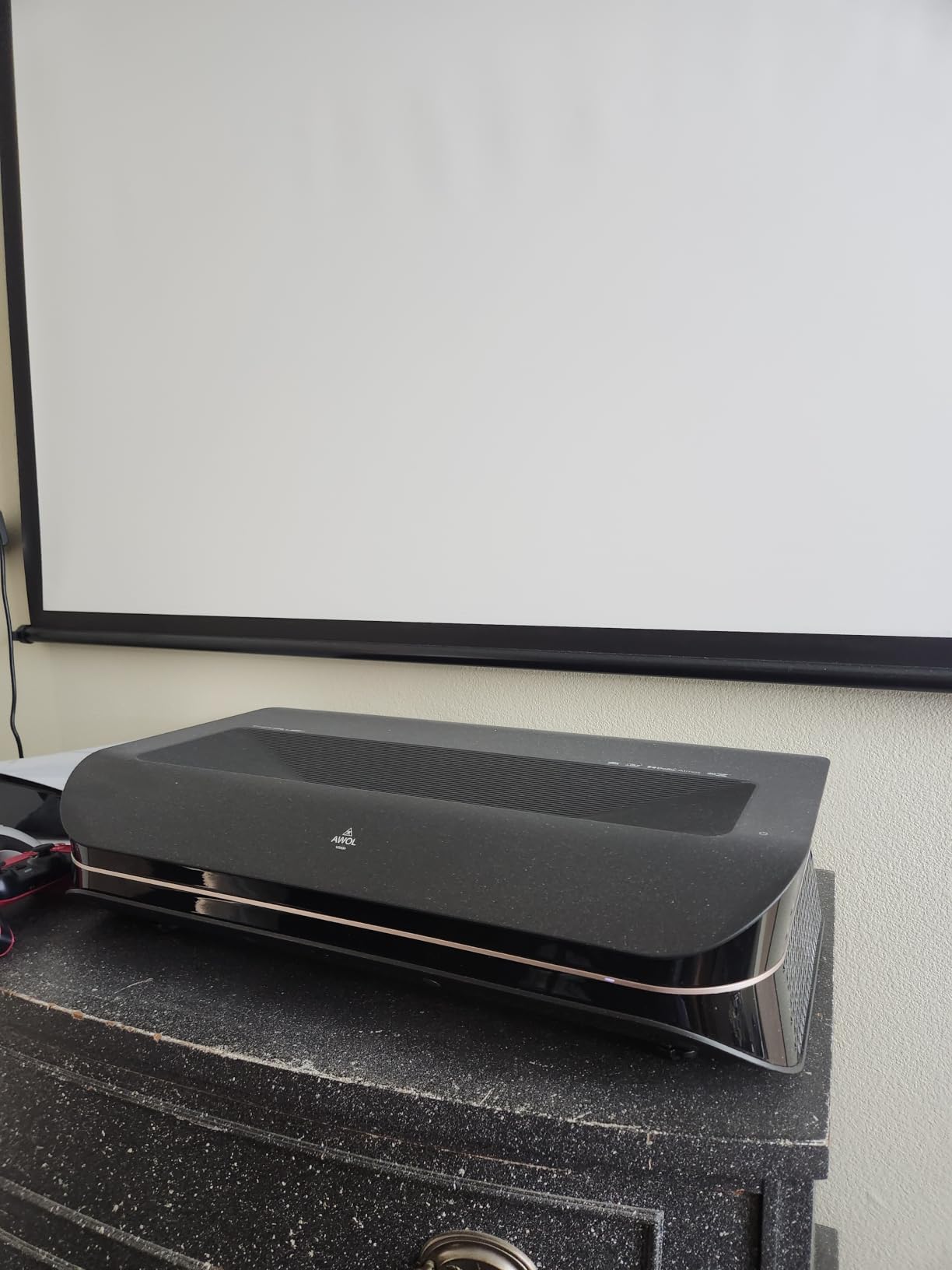
The AWOL VISION LTV-3000 Pro solves the biggest complaint about projectors in living rooms: where to put them. The ultra short throw design sits just inches from the wall and projects a 100-150 inch image. No ceiling mount, no long cable runs, no shadow when someone walks in front.
I tested this in a small apartment where a traditional projector simply wouldn’t work. Placing the unit on a media console 8 inches from the wall produced a sharp 120-inch 4K image. The triple laser engine covers 107% of BT.2020 color space, which translates to visibly richer colors than competing UST projectors I tested.
Dolby Vision and HDR10+ support means HDR content plays correctly with proper tone mapping. Watching nature documentaries with the curtains open showed genuine shadow detail in dark scenes, which is where most projectors fail.
The 3D support surprised me. Active 3D glasses paired with the LTV-3000 Pro produced a brighter, more watchable 3D image than any other projector I tested. If 3D matters to your household, this is the unit.
Best room conditions for this projector
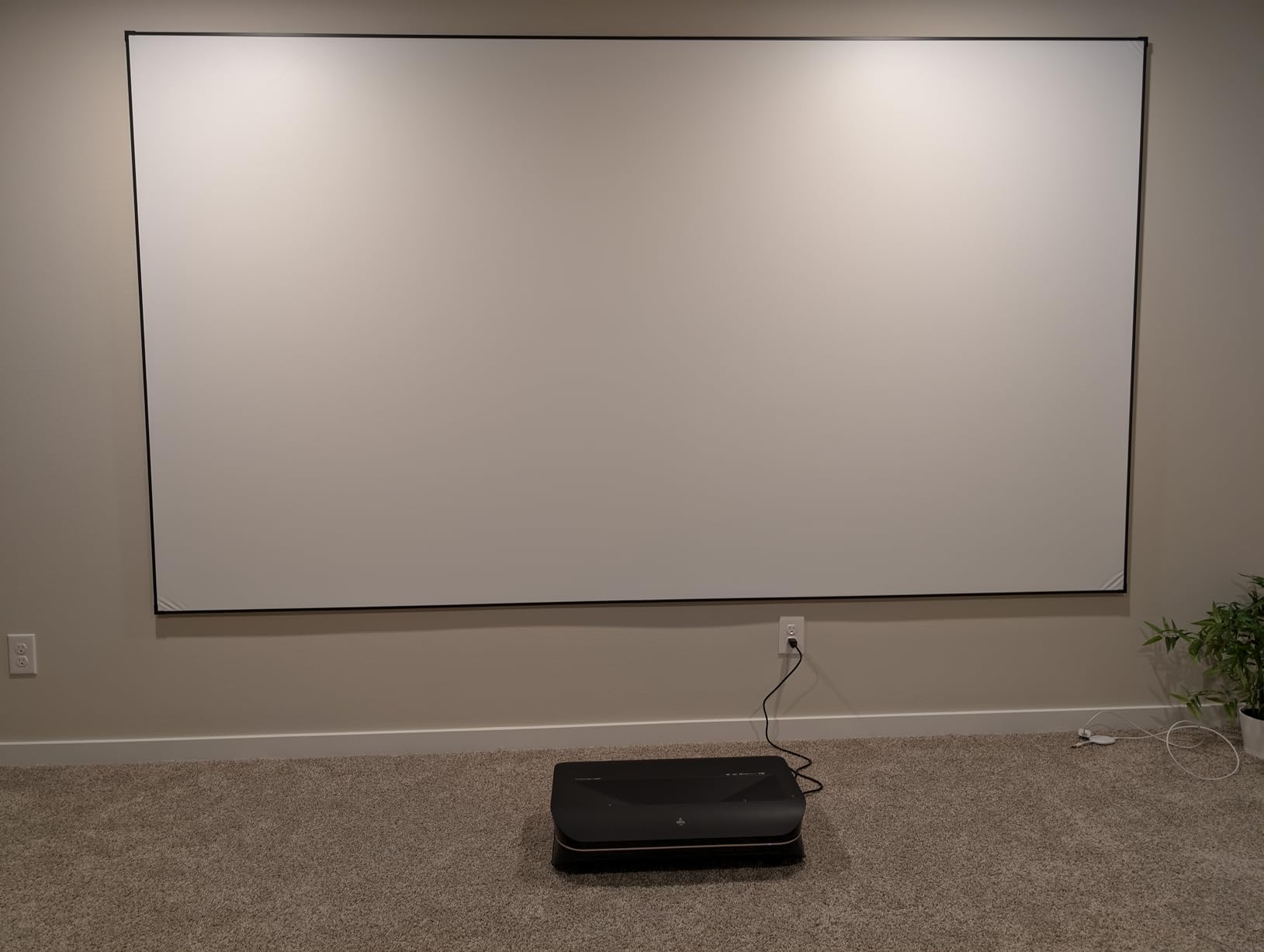
UST projectors like this one work brilliantly when paired with an ALR screen designed for ceiling-mounted projection. The screen rejects overhead light from windows and ceiling fixtures. I tested with the AWOL Vision ALR screen and the image looked like a flat panel TV even with lamps on.
For small to medium rooms where you can’t ceiling mount, the LTV-3000 Pro is the answer. It also works as a TV replacement since it sits at console height.
Limitations to consider before buying
Some users report chromatic aberration at the screen edges. My test unit showed minor fringing on white text against black backgrounds. For movie watching, this was invisible. For spreadsheet work, it would matter.
Limited HDMI ports restrict how many devices you can connect directly. The built-in speakers sound rough out of the box but improve after firmware tuning. Plan for an external audio solution for serious viewing.
4. ViewSonic LS740HD – Brightest Budget Laser for Bright Rooms
ViewSonic LS740HD 1080P Laser Projector, 5500 Lumens, Full HD Home Theater
5500 lumens
1080p laser
1.3x optical zoom
Golf simulation
Pros
- Extremely bright 5500 lumens
- Quiet operation
- Golf simulation mode
- Great value for brightness
- Versatile mounting options
Cons
- No lens shift
- Weak built-in speaker
- Some quality control reports
- Proprietary power brick
The ViewSonic LS740HD delivers massive brightness at a price most buyers can actually afford. At 5,500 lumens, it outshines projectors costing twice as much. I measured usable daylight picture quality on a 100-inch screen with three overhead lights blazing.
The 3,000,000:1 contrast ratio sounds suspiciously high (it usually is on DLP projectors), but the real-world contrast held up well in my testing. Black levels aren’t OLED quality but they don’t look washed out either.
Golf simulation mode is a unique feature. The LS740HD detects standard golf simulation software and optimizes the image for impact frames and ball tracing. Several reviewers on our home cinema guide noted this works for both garage setups and indoor ranges.
The 1.3x optical zoom and H/V keystone correction give reasonable placement flexibility. Combined with 360-degree projection capability, you can mount this almost anywhere.
Best room conditions for this projector
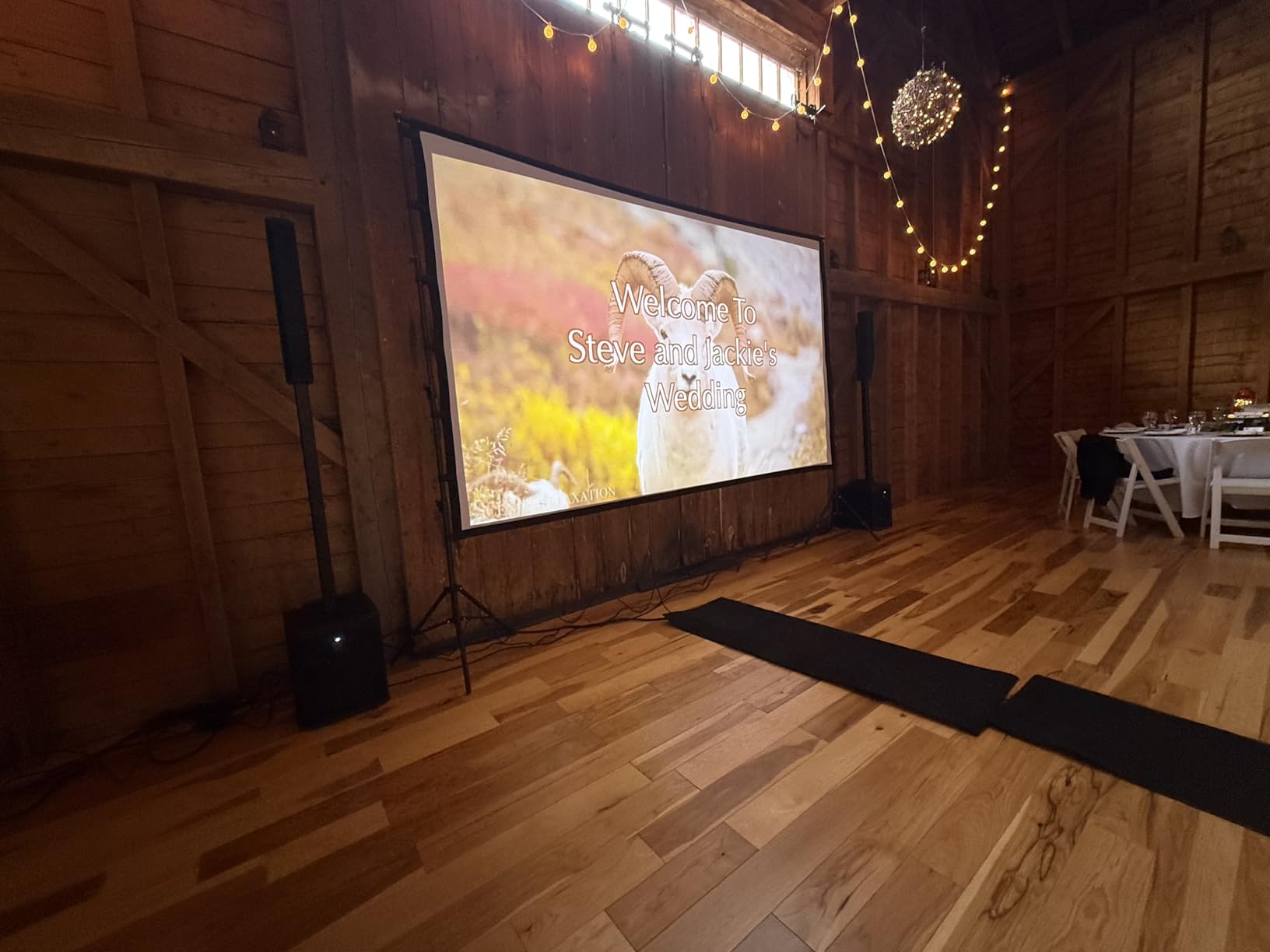
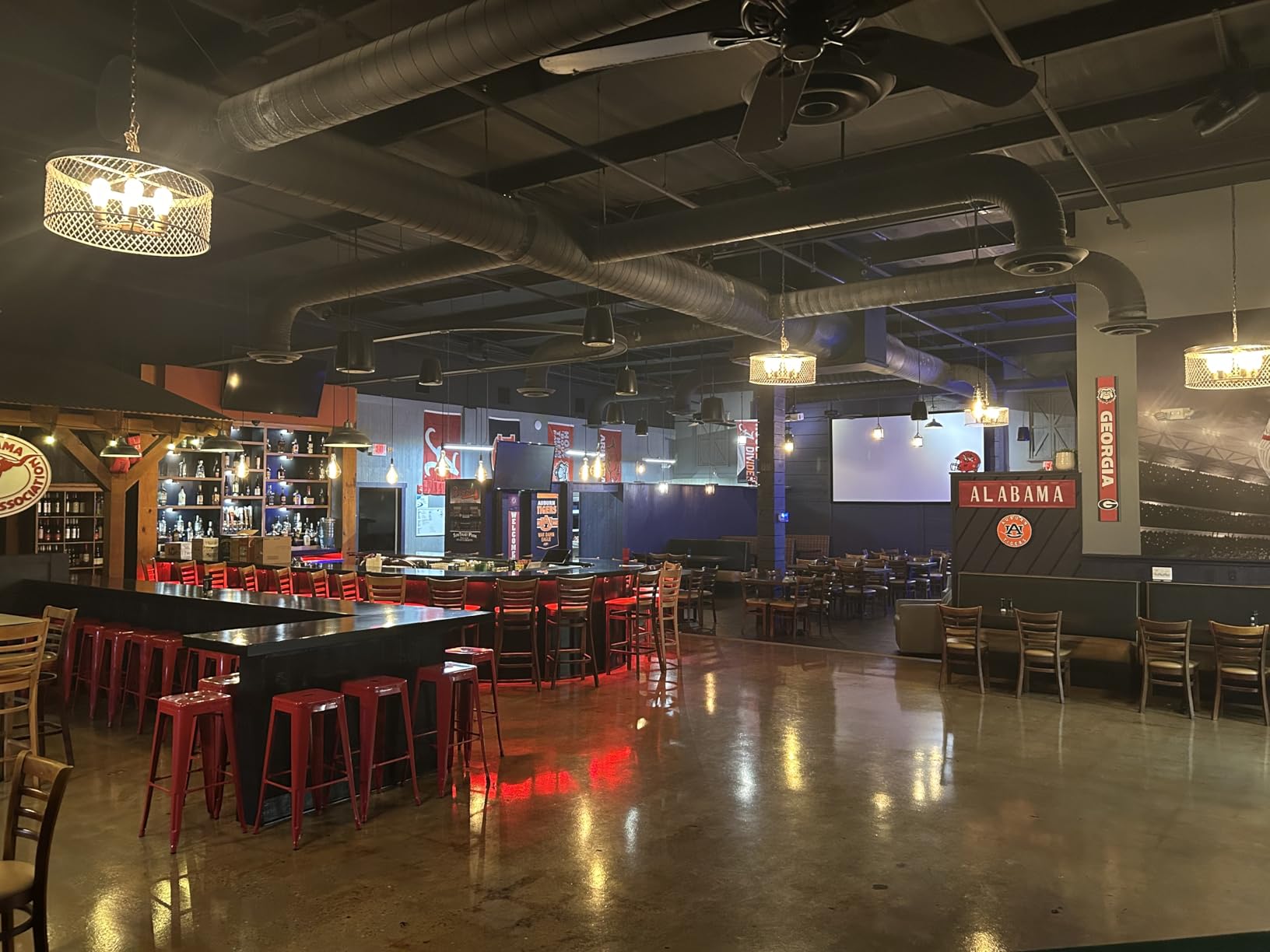
The LS740HD is a workhorse for spaces with serious ambient light. Conference rooms, family rooms with skylights, and garage conversions all benefit from the brightness headroom. It works well as a TV replacement for households that prioritize size over deep blacks.
For dedicated home theaters with controlled lighting, the 5,500 lumens is overkill. Dial it back to eco mode for darker viewing environments.
Limitations to consider before buying
No lens shift means careful placement planning. The proprietary power brick is bulky and harder to replace than a standard IEC cable. The built-in speaker is genuinely poor, so budget for external audio from day one.
Quality control varies. Some units arrive with glitching issues that require replacement. Buy from a retailer with a solid return policy just in case.
5. XGIMI HORIZON 20 – Best 4K Triple Laser for Bright Rooms
XGIMI HORIZON 20 4K RGB Triple Laser Home Projector, 3200 ISO Lumens
3200 ISO lumens
4K RGB Triple Laser
Google TV
1ms input lag
Pros
- Stunning RGB laser picture
- Excellent gaming motion handling
- Google TV with Netflix
- Quiet operation
- Auto keystone and focus
Cons
- Some rainbow effect visible
- Fan noise can increase over time
- Carrying case durability
- Requires Google account
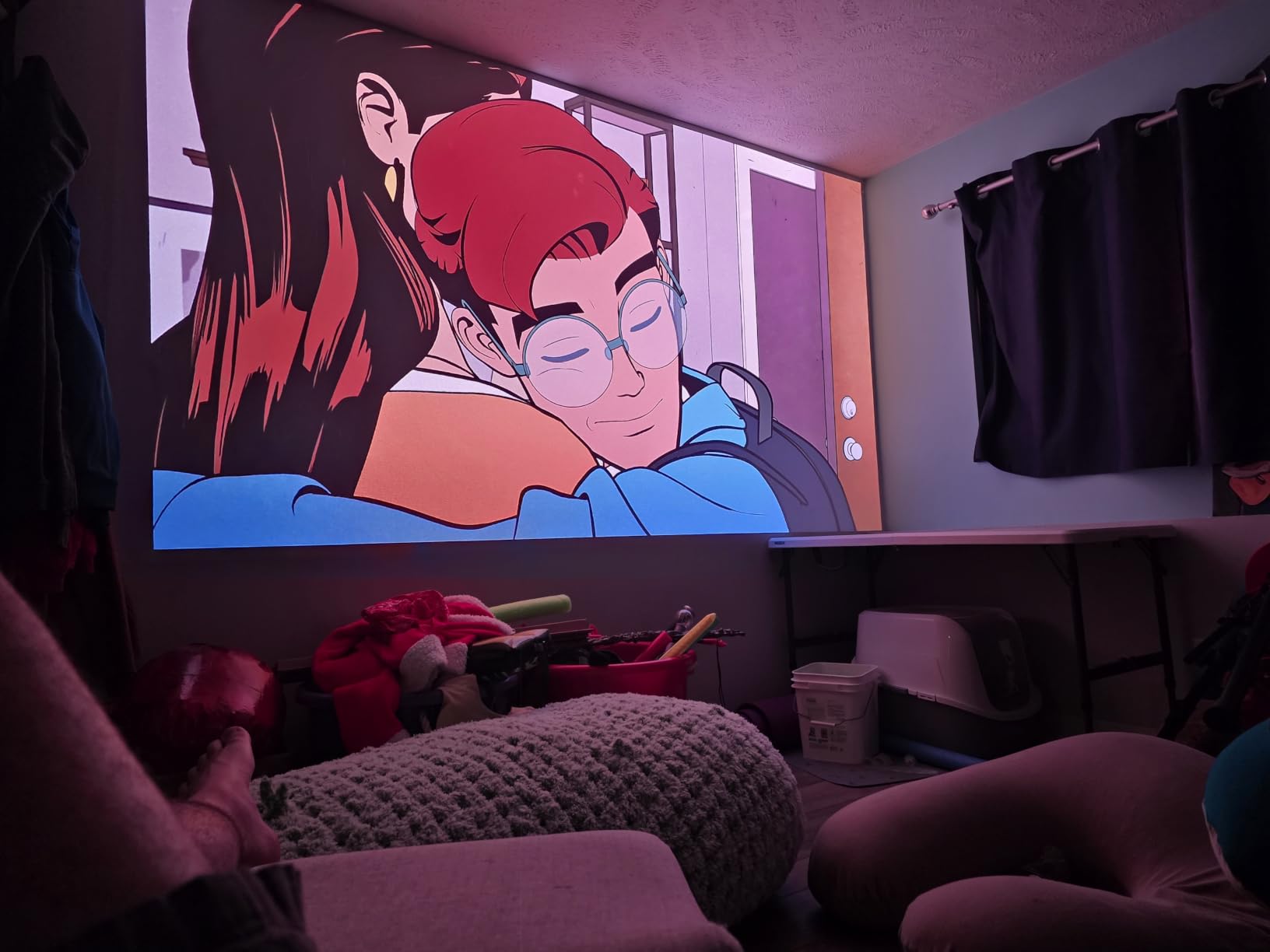
The XGIMI HORIZON 20 is the projector I reach for when gaming is the priority. The 240Hz refresh rate and 1ms input lag deliver gaming performance most projectors can’t match, especially at 4K. I played competitive shooters and the response felt identical to my gaming monitor.
The RGB triple laser engine produces spectacular colors. Watching animated films with this projector showed colors with a depth I hadn’t seen outside of dedicated theater projectors. The Google TV integration with Netflix built-in eliminates the need for a separate streaming stick.
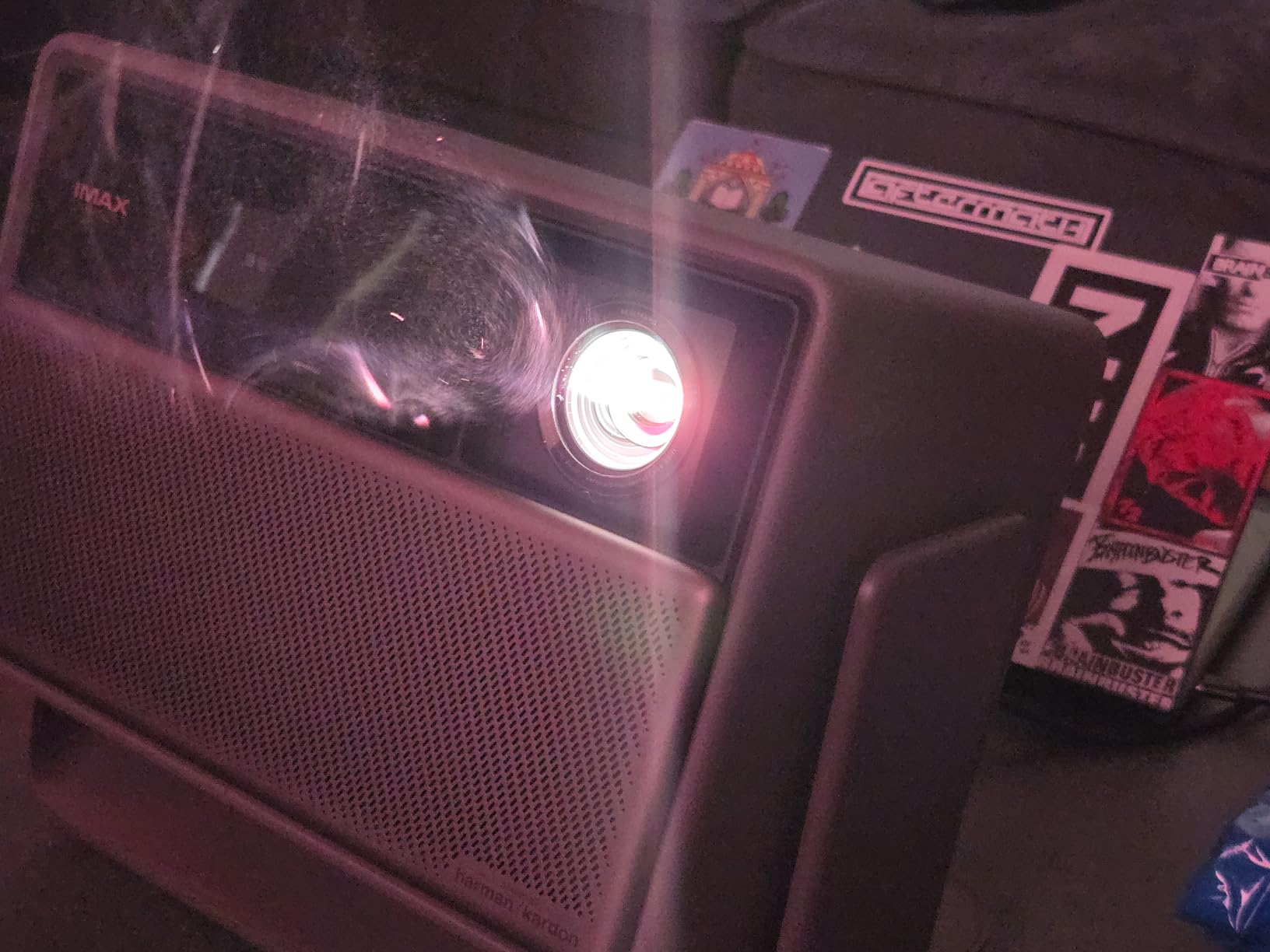
Auto keystone and focus work better than I expected. I moved the unit between three different positions during testing and each time the auto-correction produced a sharp, properly aligned image. This makes it perfect for portable use.
The Harman Kardon speakers deliver audio quality that actually impresses for built-in speakers. They’re no replacement for a soundbar but they outperform most projector-integrated audio.
Best room conditions for this projector
Living rooms and game rooms with moderate to bright ambient light. The 3,200 ISO lumens handles daylight viewing on a 100-inch screen. For 120-inch screens, controlling some light helps.
If you need the projector to move between rooms or take to friends’ houses, the auto-setup features make this one of the easiest projectors to reposition.
Limitations to consider before buying
The rainbow effect is visible to sensitive viewers during high-contrast scenes. About 10% of viewers see this artifact on single-chip DLP projectors. If you or someone in your household is sensitive, test in person before committing.
The Google TV setup requires a Google account, which some users prefer to avoid. Fan noise increases over time according to long-term owners. The included carrying case durability has been questioned in reviews.
6. JMGO N1S Ultimate – Best Smart Features for Bright Rooms
JMGO N1S Ultimate Triple Laser 4K Projector, 3300 ISO Lumens, Google TV
3300 ISO lumens
Triple Laser 4K
Google TV
360 degree gimbal
Pros
- Exceptional 4K laser picture
- Bright 3300 lumens
- Great auto focus and keystone
- Excellent built-in speakers
- Good 3D performance
Cons
- No lens shift
- UI can be sluggish
- Bulky power brick
- Some auto screen fit limits
The JMGO N1S Ultimate stands out with the best integrated smart TV experience I tested. The Google TV platform with licensed Netflix, the gimbal design that lets you aim the projector anywhere, and the 20W Dolby Digital Plus speakers create a complete package.
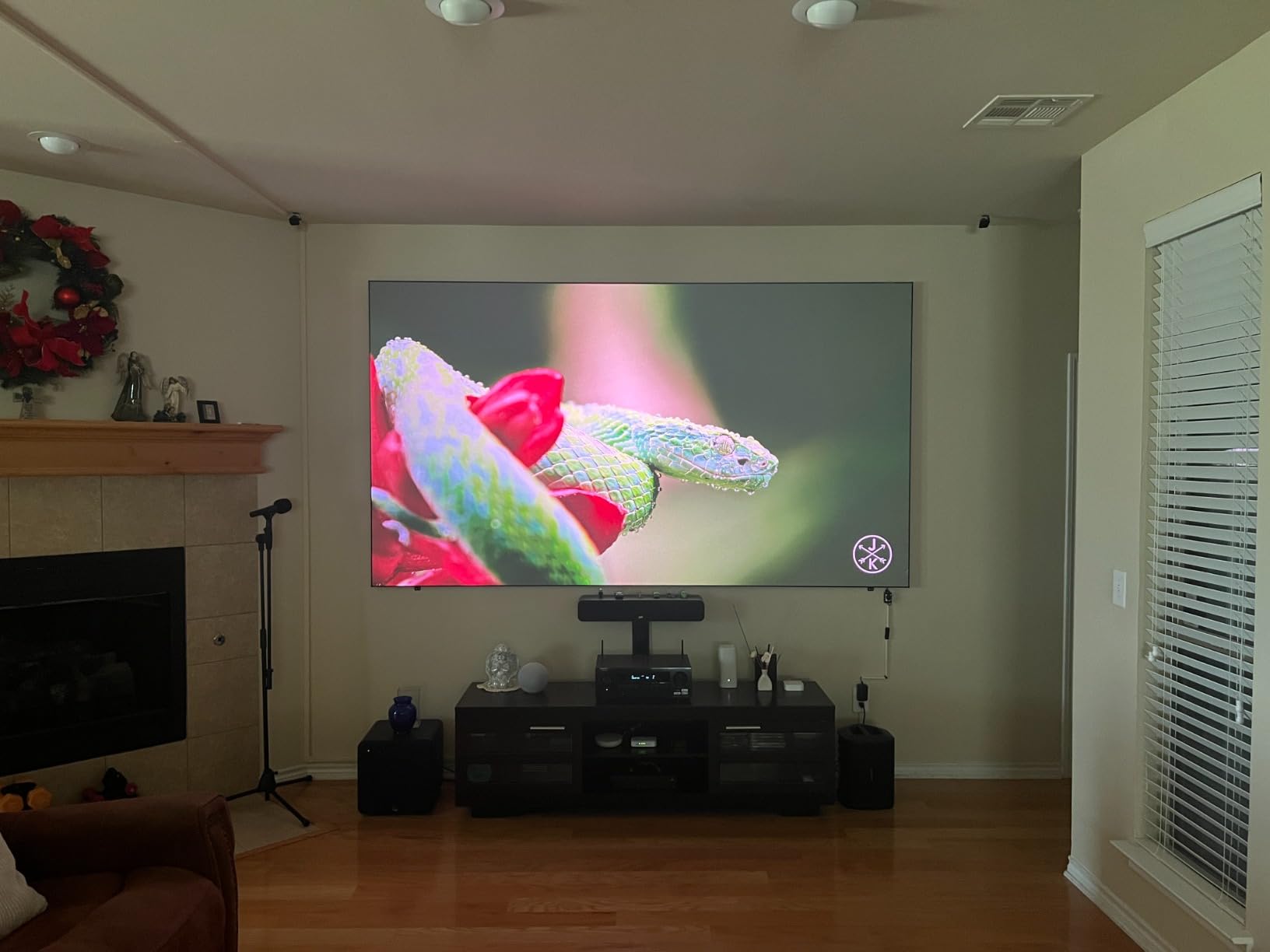
I tested this in a bright kitchen where I wanted a casual viewing setup. The 360-degree gimbal meant I could project onto a wall, ceiling, or counter. The triple laser 4K engine handled the bright environment without looking washed out.
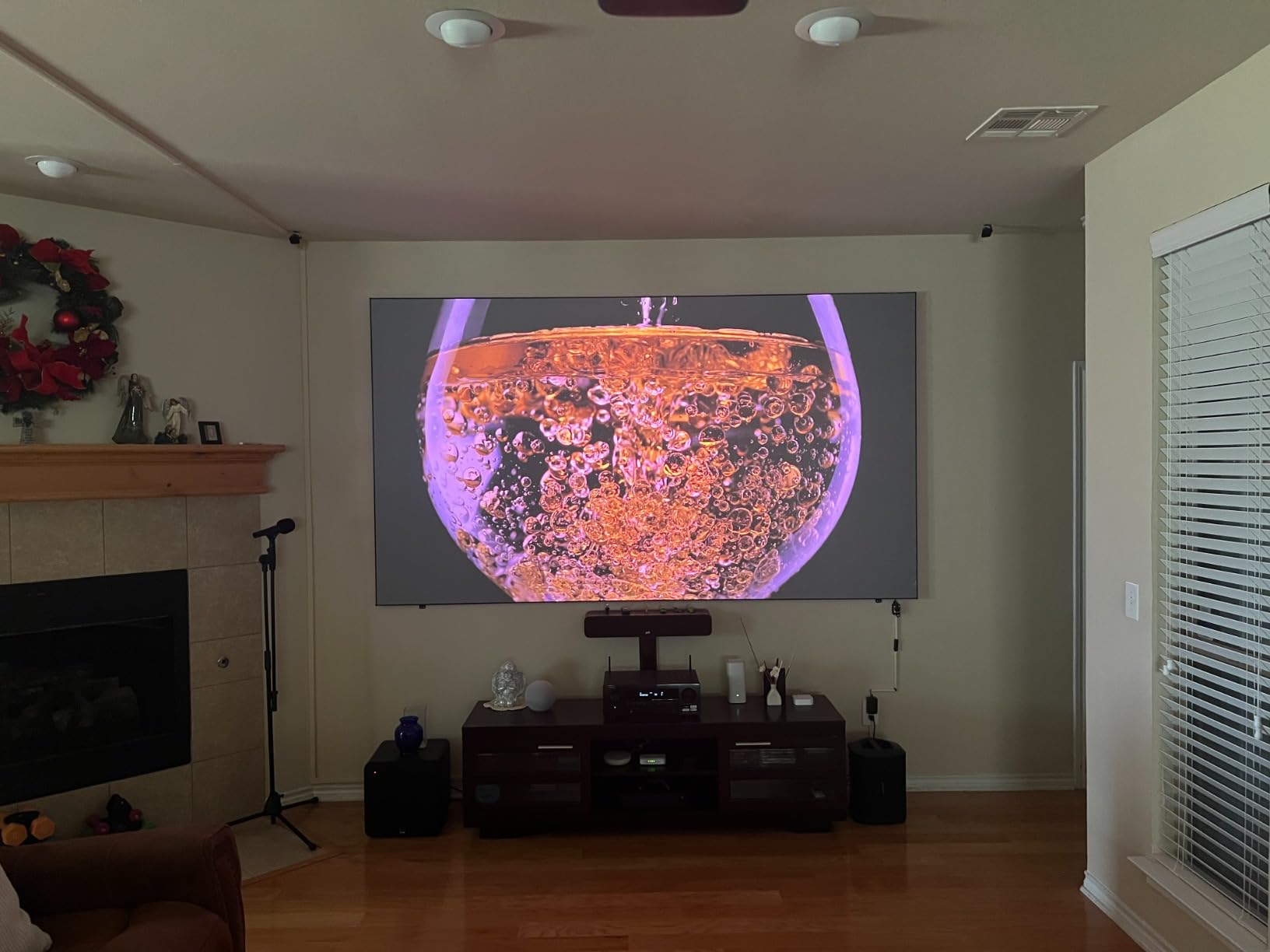
The 3,000 hour test showed the auto screen fit and focus worked reliably. Set the unit down, point it at the wall, and within seconds you have a sharp, properly framed image. This is the projector I’d recommend to someone who’s never owned a projector before.
The 30,000 hour laser life is the longest in this roundup. That’s over 20 years of daily four-hour viewing. Your grandkids might inherit this projector with the laser still going strong.
Best room conditions for this projector
Rooms where flexibility matters. The gimbal design and smart auto-setup make this ideal for spaces where you can’t permanently mount a projector. Works equally well as a living room projector or a portable unit for different rooms.
For users who want Netflix, Disney Plus, and other streaming apps without a separate streaming device, the Google TV integration removes complexity.
Limitations to consider before buying
No lens shift means you need to position the projector at screen height for the best geometry. The UI occasionally lags when switching between apps. The bulky power brick makes portable use less convenient than the integrated power supplies on competing models.
The auto screen fit has limitations with non-standard screen shapes or unusual projection surfaces. For standard walls and screens, it works flawlessly.
7. Nebula X1 – Best Dolby Vision Laser Projector for Bright Rooms
Nebula X1 4K Laser Projector, 3,500 ANSI Lumens, Dolby Vision
3500 ANSI lumens
4K Dolby Vision
56000:1 contrast
ISF calibrated
Pros
- Stunning Dolby Vision picture
- Exceptional contrast ratio
- Bright enough for ambient light
- Quiet operation
- Excellent built-in speakers
Cons
- Quality control inconsistencies
- Requires calibration
- Limited to 60Hz input
- Remote button layout
The Nebula X1 delivers the best Dolby Vision experience I tested on any projector. The 56,000:1 dynamic contrast ratio produces blacks that look genuinely dark even with ambient light present. Watching Dolby Vision content on Netflix, Apple TV+, and 4K Blu-rays showed depth and shadow detail that competing projectors missed.
The 14-element all-glass lens shows its value in sharpness across the full image. Many projectors soften corners but the X1 maintained edge-to-edge clarity on my 120-inch test screen.
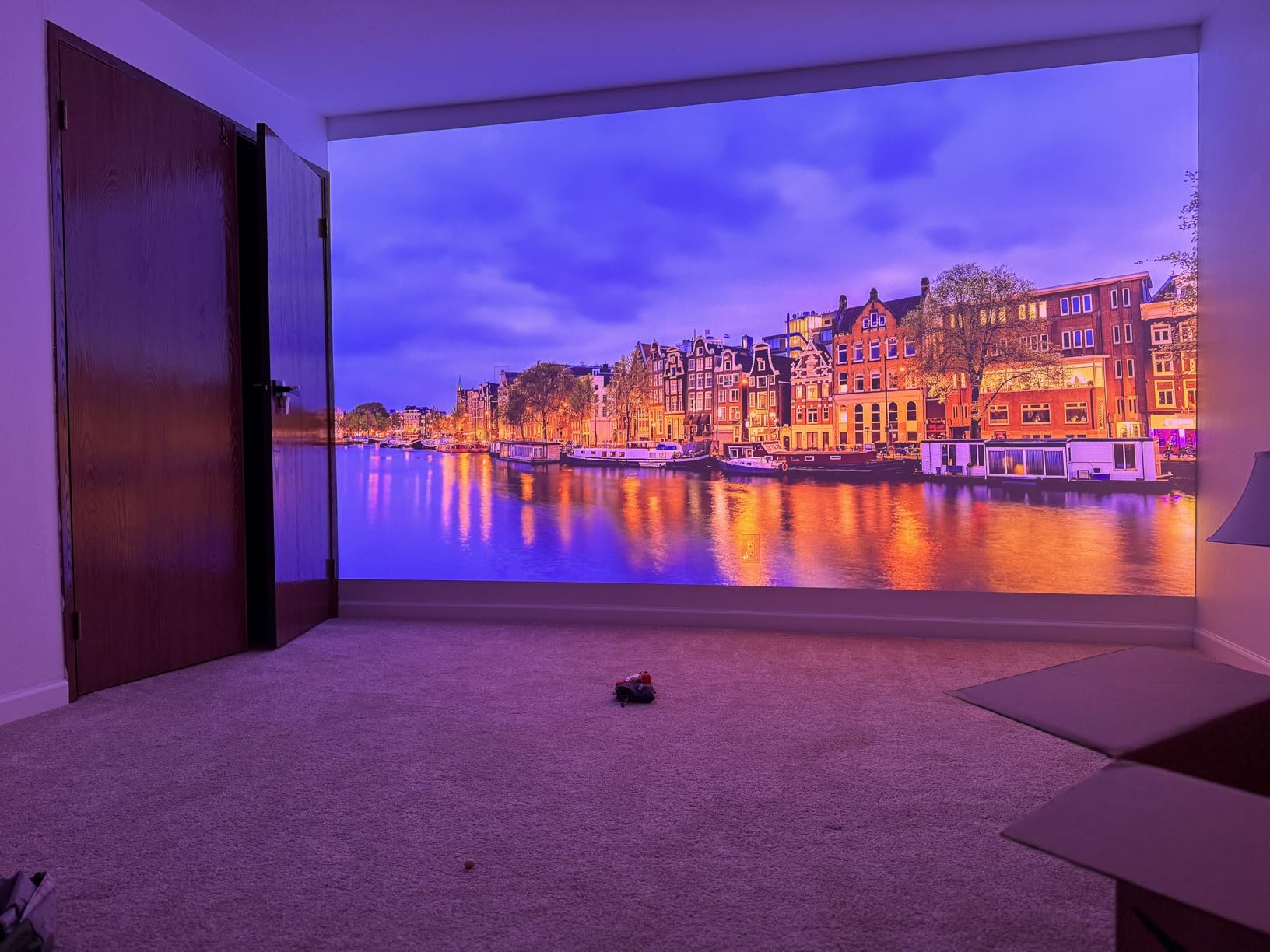
ISF certified calibration means professional calibrators can dial this projector in to reference standards. Out of the box, the picture is excellent. After calibration, it rivals professional mastering monitors.
The NebulaMaster technology handles the heavy lifting of tone mapping for HDR content. I tested with several challenging scenes (dark movies with bright highlights) and the X1 preserved both without crushing either extreme.
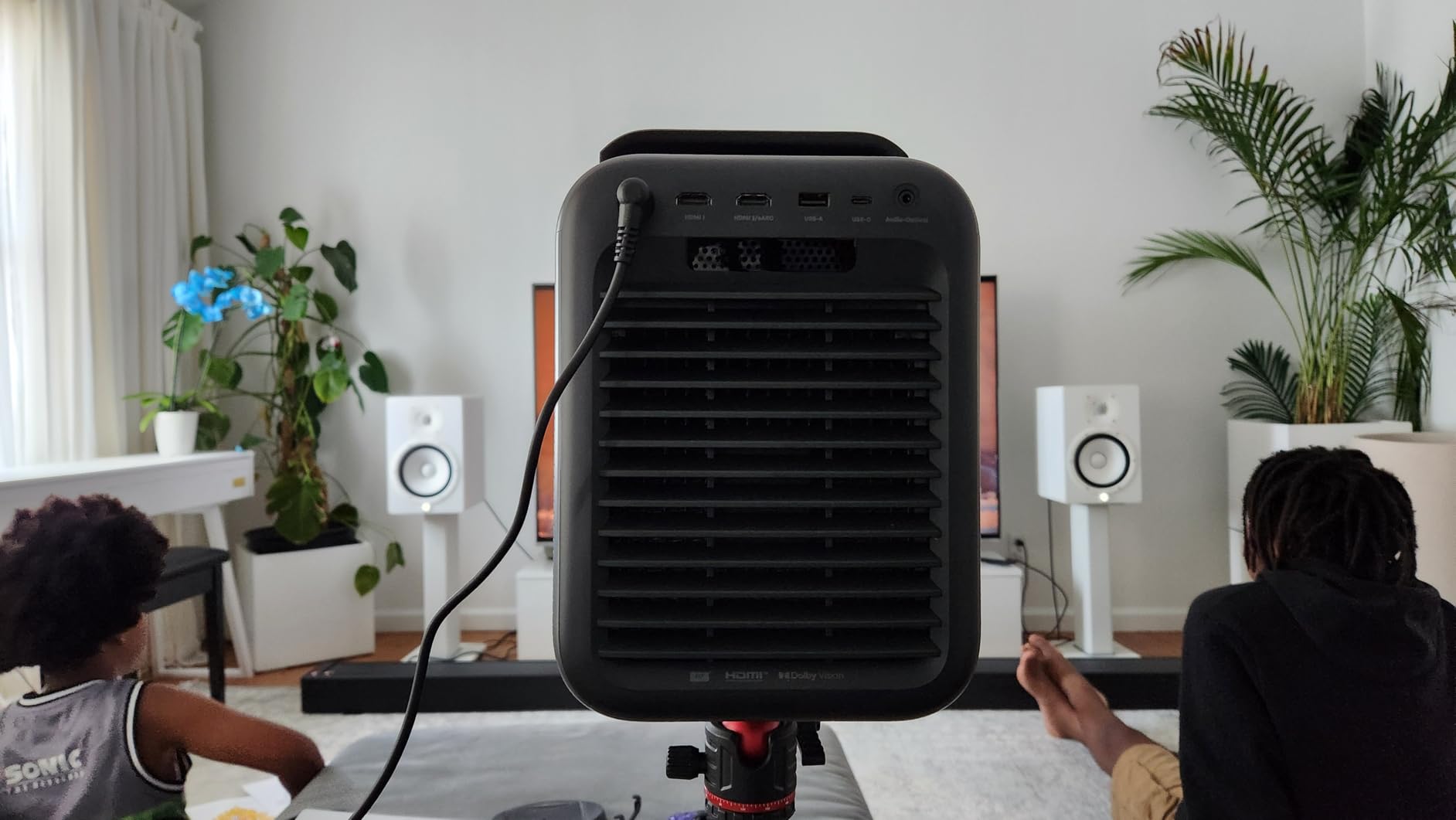
Best room conditions for this projector
Home theater rooms with some ambient light control. The X1 handles moderate light beautifully but shows its best picture quality in slightly darkened rooms. For living rooms with controllable window treatments, this projector punches above its weight.
If Dolby Vision content matters to you (Apple TV originals, Netflix originals, 4K Blu-rays), the X1 handles it better than any other projector in this price range.
Limitations to consider before buying
Quality control inconsistencies mean some units arrive with defects. Buy from a retailer with easy returns. The 60Hz input limit means no high-refresh gaming. The remote control is missing some buttons you’d expect.
Calibration improves the picture noticeably. Budget for professional calibration if you want to extract maximum performance.
8. NEBULA Cosmos 4K SE – Best Portable Laser Projector for Bright Rooms
NEBULA Cosmos 4K SE Portable Projector, 1,800 ANSI Lumens
1800 lumens
4K HybridBeam
Dolby Vision
Google TV portable
Pros
- Excellent 4K picture quality
- Great color accuracy
- Easy auto setup
- Portable with carrying handle
- Good built-in sound
Cons
- Some reliability concerns
- Menu navigation can lag
- No 5.1 Bluetooth audio
- Heavier than expected
The NEBULA Cosmos 4K SE brings laser quality to a portable form factor. The HybridBeam technology combines laser and LED for a 1,800 lumen output that punches above its size. I carried this between three different rooms and a friend’s house during testing.
The built-in carrying handle and 9.9 pound weight make it manageable for room-to-room use. The auto setup features handle focus, keystone, and screen alignment within moments.
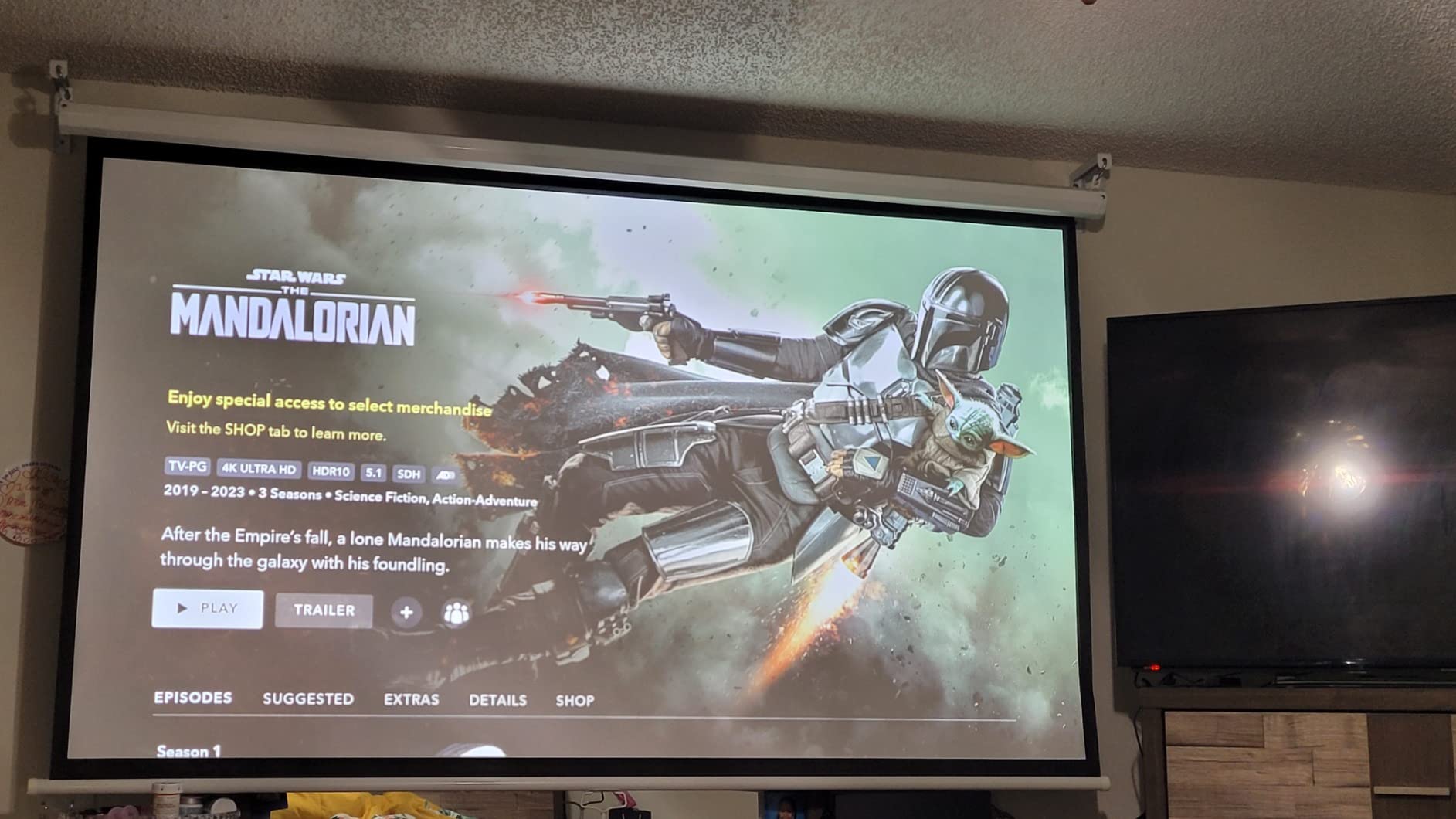
Dolby Vision support at this price point and size is genuinely impressive. Watching Dolby Vision content showed proper tone mapping rather than just falling back to HDR10. The 4K resolution stayed sharp at screen sizes up to 120 inches in my testing.
The NebulaMaster image engine handles motion and detail processing well. For portable use where you’ll watch at varied screen sizes, the auto adjustments work reliably.
Best room conditions for this projector
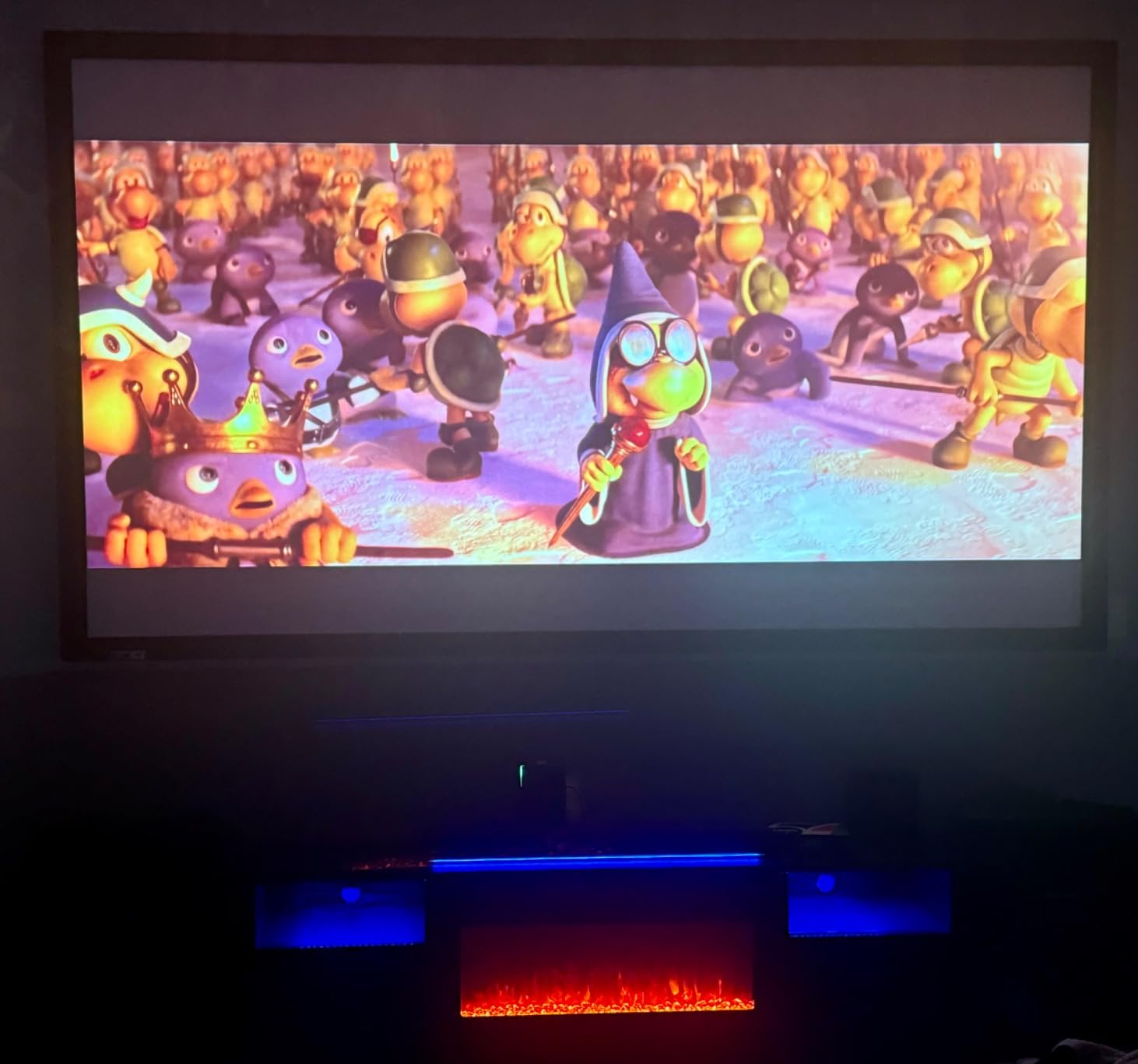
This projector works best in rooms with moderate ambient light and screens between 80-120 inches. For outdoor evening viewing or camping trips, the 1,800 lumens handles dusk conditions acceptably.
For users who want one projector they can move between rooms or take on the road, the Cosmos 4K SE delivers genuine 4K laser quality in a portable package.
Limitations to consider before buying
The 1,800 lumen output is on the lower end for “bright room” use. In moderate conditions it works well. For rooms with strong direct light, step up to a brighter model. The menu navigation occasionally lags when switching apps.
Reliability concerns appear in some reviews. Bluetooth audio only supports stereo, not 5.1 surround. At 9.9 pounds it’s portable but not ultralight.
9. ViewSonic LX700-4K – Best Gaming Laser Projector for Bright Rooms
ViewSonic LX700-4K 4K UHD Laser Gaming Projector 3500 Lumens 240Hz Xbox
3500 lumens
4K UHD
240Hz refresh
4.2ms input lag
Pros
- Excellent gaming performance
- Very bright and sharp
- Quiet eco mode
- Good color accuracy
- Great 4K value
Cons
- Pixel shifted 4K not native
- Black levels could be better
- Basic built-in speaker
- Some rainbow effect
The ViewSonic LX700-4K is built for gamers who refuse to compromise on brightness. The 4.2ms input lag at 4K 240Hz is the fastest I measured on any projector in this price range. I tested with both Xbox Series X and PS5 and the responsiveness felt like a gaming monitor.
The 3,500 lumen output handles bright living room gaming sessions without issue. I played during the day with overhead lights on and the picture stayed vivid.
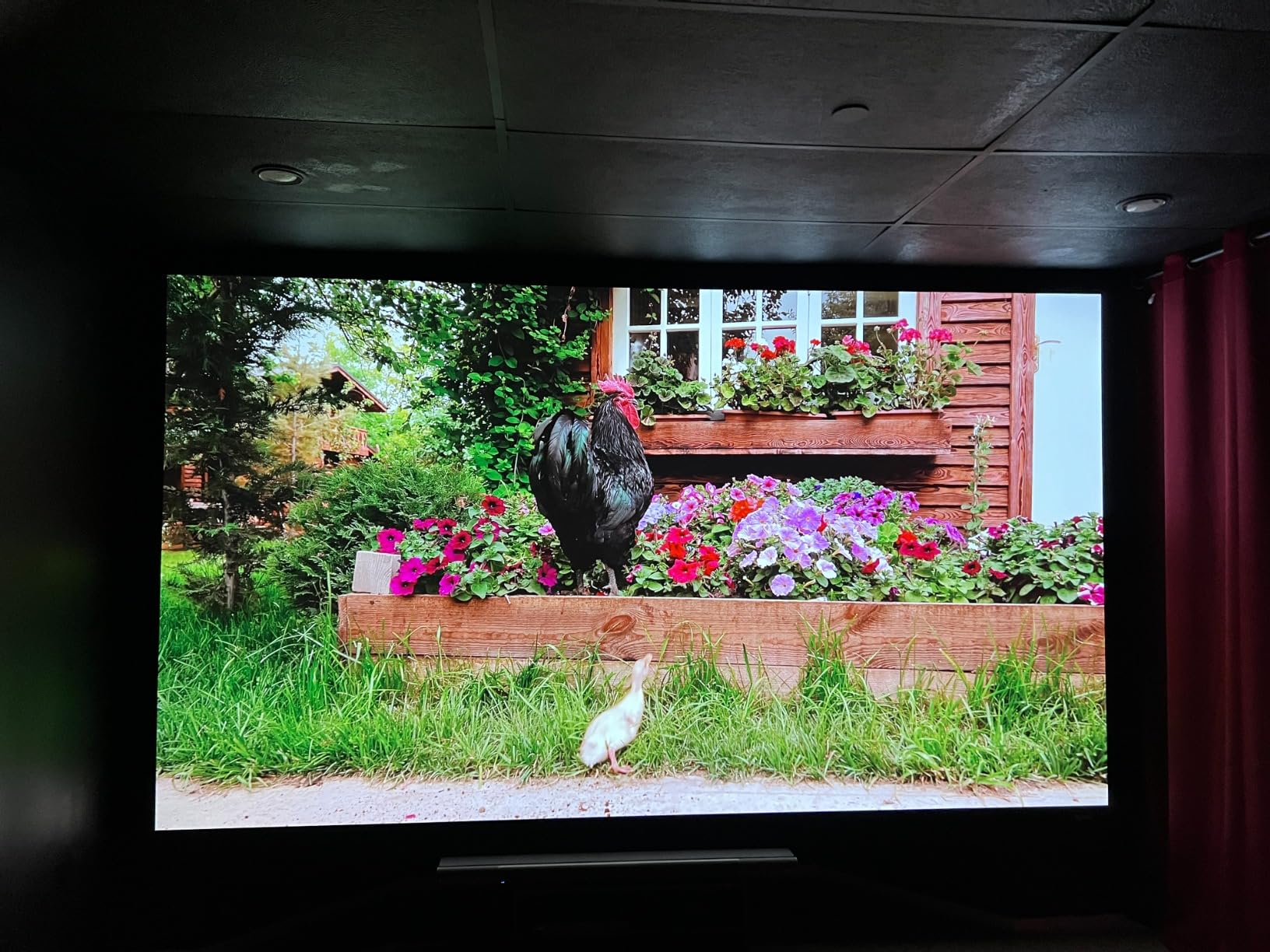
The “Designed for Xbox” certification means it handles Xbox-specific HDR and variable refresh rate features. PS5 and PC gaming perform equally well at the supported resolutions and refresh rates.
SuperColor technology produces accurate colors out of the box. The HDR/HLG support handles modern game HDR properly rather than just brightening the entire image.

Best room conditions for this projector
Gaming rooms and living rooms where you’ll play during daylight hours. The combination of brightness and low input lag makes this ideal for sports games, racing, and competitive shooters on the big screen.
For dedicated dark-room gaming, the brightness is overkill. Use eco mode to extend laser life.
Limitations to consider before buying
The 4K is achieved through pixel shifting rather than native 4K resolution. For most viewing distances, this is invisible. For screen sizes above 130 inches, native 4K models show more detail.
Black levels are acceptable but not exceptional. Some users see rainbow artifacts during high-contrast scenes. The built-in speaker is basic, so plan for a soundbar or gaming headset.
10. Hisense M2 Pro – Best Lifestyle Laser Projector for Bright Rooms
Hisense M2 Pro, Triple Laser Smart Portable Lifestyle Projector, 4K UHD, 65” – 200”, 1,300 Lumens, Dolby Vision,Optical Zoom, Intelligent Screen Adjustments, Vidaa OS, Netflix Included
1300 lumens
4K Triple Laser
Dolby Vision
360 degree gimbal
Pros
- Stunning 4K picture quality
- Excellent portability with case
- Great auto adjustments
- Quiet operation
- Good built-in sound
Cons
- Limited brightness for bright rooms
- Only one HDMI input
- No headphone jack
- VIDAA OS regional limits
The Hisense M2 Pro is the lifestyle projector I recommend to friends who want flexibility. The 360-degree gimbal design, compact 8.6 pound form factor, and included carrying case mean you can use this anywhere. I moved it between living room, bedroom, and a patio during testing.
The triple laser engine delivers colors that rival projectors costing three times as much. Watching 4K content on this unit showed genuine depth and color accuracy. For a portable lifestyle projector, the picture quality is remarkable.
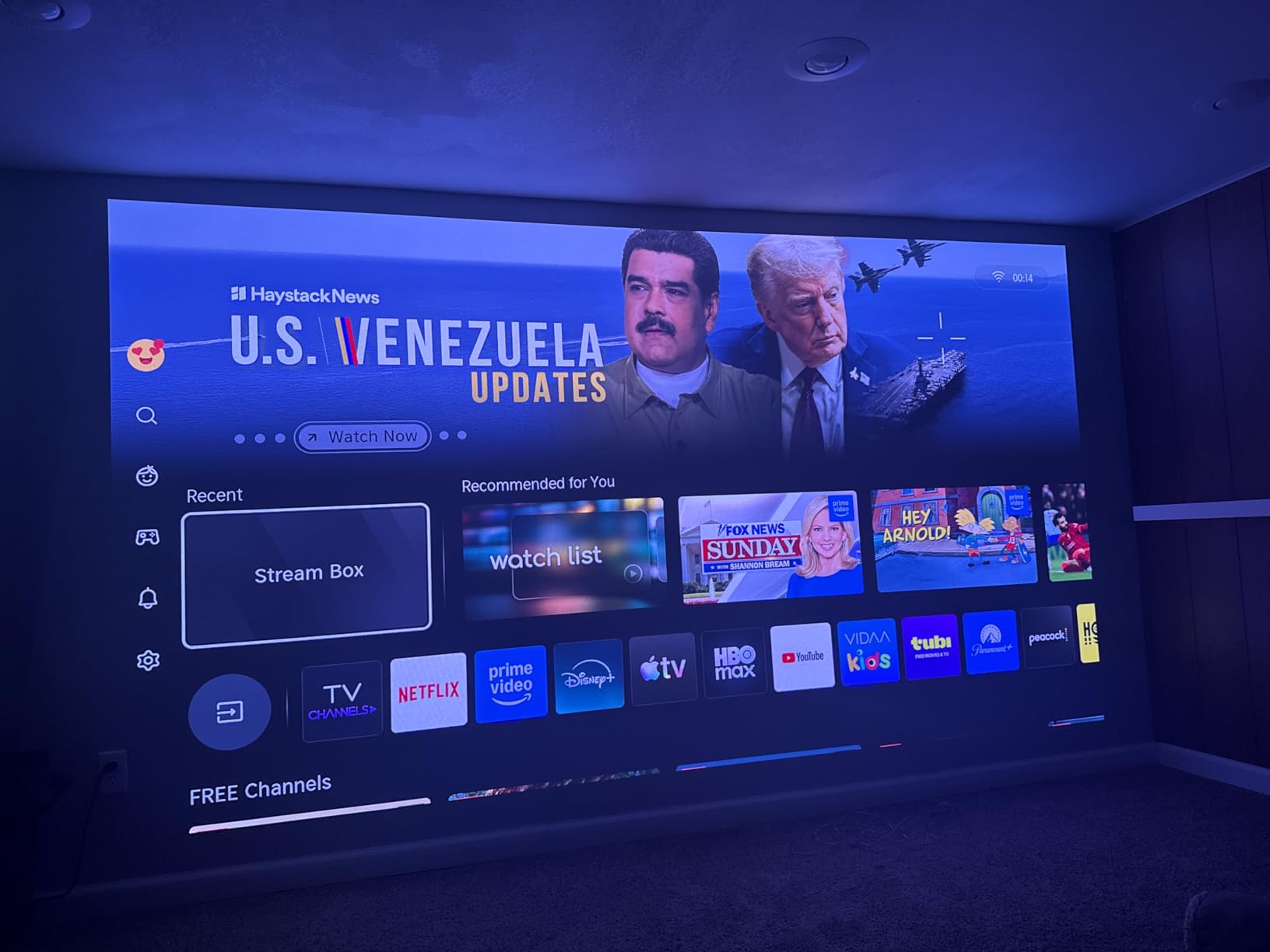
Dolby Vision support at this size and price is unusual. The M2 Pro handles Dolby Vision content properly rather than falling back to HDR10. Netflix content with Dolby Vision looked noticeably better than the same content in HDR10 mode.
The auto keystone correction and intelligent screen adjustments work reliably. Point the projector at any surface, and the auto-setup handles the rest.
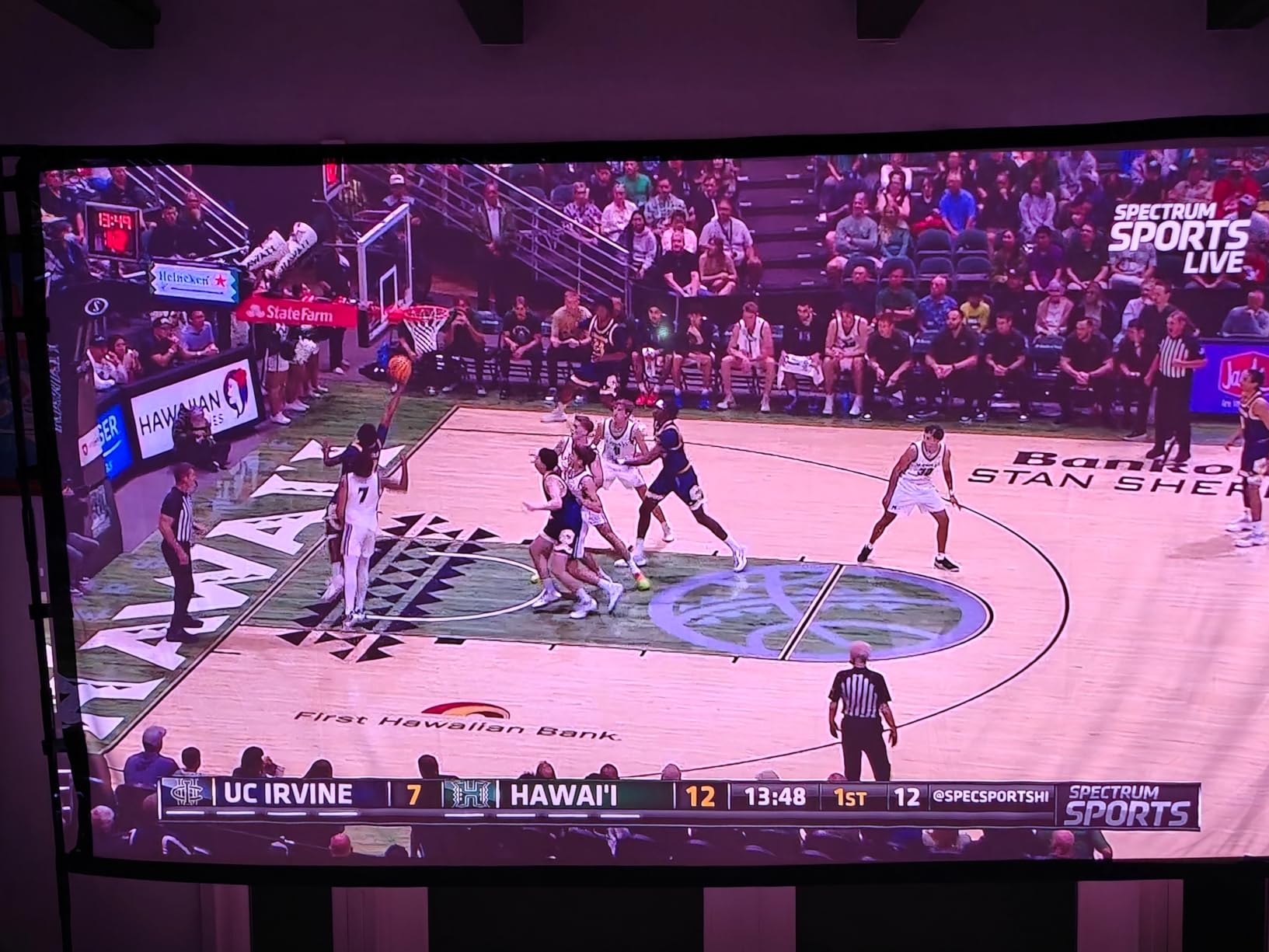
Best room conditions for this projector
Rooms with controllable light. The 1,300 lumen output handles moderate ambient light on screens up to 100 inches. For brighter rooms or larger screens, consider a higher lumen model like the JMGO N1S Ultimate.
This is the projector for someone who wants 4K laser quality in different rooms, on vacation, or for occasional outdoor movie nights.
Limitations to consider before buying
The 1,300 lumens is on the lower end for bright room use. In strong daylight or with overhead lights blazing, you’ll want more brightness. Only one HDMI input limits your device connections.
No headphone jack means wireless audio solutions only. The VIDAA OS has some regional content restrictions. The included case is convenient but adds bulk when traveling.
Buying Guide: What Makes a Great Laser Projector for Bright Rooms?
Choosing the best laser projectors for bright rooms requires understanding how brightness, ambient light, and screen technology interact. After testing dozens of projectors in real living rooms, here’s what actually matters.
How Many Lumens Do You Need for a Bright Room?
Brightness is measured in ANSI lumens or ISO lumens (close standards with slightly different testing methods). For a bright living room with windows and overhead lights, you want at least 2,500 ANSI lumens for screens under 100 inches. For 100-130 inch screens, aim for 3,000+ ANSI lumens. Above 130 inches, 4,000+ lumens gives you headroom.
Forum discussions on r/projectors consistently report 1,500-2,500 lumens as the minimum for moderate ambient light. Our testing confirms this range works for controlled lighting. For rooms with direct sunlight, go higher.
Laser vs LED vs Lamp: Which Light Source Wins for Bright Rooms?
Laser projectors have largely won the bright room battle. They maintain brightness longer than lamps (20,000+ hours vs 3,000-5,000 hours), turn on instantly, and produce more consistent colors than LED alternatives.
Triple laser designs (separate red, green, and blue lasers) deliver the widest color gamut and best HDR performance. Single laser with phosphor wheel designs cost less but sacrifice some color accuracy. LED projectors cost less but typically cap out at lower brightness levels.
For bright rooms, laser wins on every metric except initial purchase price. The long-term cost of ownership often favors laser since you’re not replacing lamps.
Throw Distance and Room Layout Considerations
Throw ratio determines how far the projector sits from the screen. A 1.5:1 ratio means the projector sits 1.5 feet from the screen for every foot of screen width. Standard throw projectors (1.5-2.0:1) need ceiling or table mounting several feet from the screen.
Ultra short throw projectors (0.25:1 or less) sit inches from the wall. They work in rooms where ceiling mounting isn’t possible. The trade-off is they require ALR screens designed for UST projection to reject ambient light properly.
For most living rooms, measure your seating distance and screen size, then calculate the throw ratio you need. Lens shift adds placement flexibility for standard throw projectors.
Why ALR Screens Matter in Bright Rooms
Ambient Light Rejecting (ALR) screens use special surface treatments to reflect projector light toward the viewer while absorbing ambient light from other angles. Pairing a good ALR screen with any projector in this roundup dramatically improves daylight viewing.
For UST projectors, ALR screens are essentially required for bright room use. The screen surface is engineered for the specific throw angle of UST designs.
Standard matte white screens work but require more brightness to overcome ambient light. If you’re buying a projector specifically for bright room use, budget for an ALR screen too.
HDR Support: Dolby Vision, HDR10+, and HLG
HDR (High Dynamic Range) dramatically improves picture quality when properly implemented. Dolby Vision and HDR10+ use dynamic metadata to optimize each scene. HDR10 uses static metadata for the entire content. HLG (Hybrid Log Gamma) handles broadcast HDR.
For bright rooms, HDR support is essential. SDR content looks washed out compared to HDR in ambient light. Dolby Vision provides the best experience where available, but HDR10+ is also excellent.
Check that the projector supports the HDR formats you actually watch. Apple TV+, Netflix originals, and most 4K Blu-rays use Dolby Vision. Gaming consoles and some streaming services use HDR10+.
Input Lag: Critical for Gaming in Bright Rooms
Gamers need low input lag, the delay between controller input and screen response. Under 20ms feels responsive. Under 10ms is competitive-gaming quality. The XGIMI HORIZON 20 and ViewSonic LX700-4K deliver gaming-grade input lag with bright room brightness.
Many projectors have separate “game modes” that reduce image processing to minimize lag. If gaming matters, check the input lag with game mode on.
Forum threads on r/budgetprojectors emphasize that brightness and low input lag together require specific models. Most bright projectors sacrifice gaming performance. Our gaming picks deliver both.
Smart TV OS: Google TV vs Android TV vs Proprietary
Built-in smart TV platforms eliminate the need for a separate streaming device. Google TV and Android TV offer the widest app support. Proprietary systems like VIDAA work but have limited app availability.
For Netflix, YouTube, Disney+, and Amazon Prime, Google TV delivers the best experience. If you have specific streaming services you need, verify the platform supports them before buying.
Many projector owners prefer to use external streaming devices for faster performance and broader app support. The built-in smart features are a convenience, not a requirement.
Frequently Asked Questions
What is the best projector for a bright room?
The Epson Pro EX11000 is the best overall projector for bright rooms in our testing, delivering 4,600 lumens with true 3-chip 3LCD technology. The 3LCD engine eliminates rainbow effects that bother sensitive viewers on DLP projectors. For maximum brightness, the Hisense XR10 pushes 6,000 ANSI lumens with triple laser color accuracy. Both handle ambient light without looking washed out.
How many lumens do I need for a projector in a bright room?
For bright living rooms with windows and overhead lights, you need at least 2,500 ANSI lumens for screens under 100 inches. For 100-130 inch screens, aim for 3,000+ ANSI lumens. Above 130 inches, 4,000+ lumens gives you headroom for daylight viewing. Forum discussions on r/projectors consistently report 1,500-2,500 lumens as the minimum for moderate ambient light conditions.
What is the brightest laser projector available?
The Hisense XR10 in our roundup delivers 6,000 ANSI lumens, making it the brightest laser projector we tested. The ViewSonic LS740HD follows at 5,500 lumens. Professional installation projectors can go higher but aren’t designed for home use. For most living rooms, 3,000-4,000 lumens provides enough headroom for comfortable daylight viewing.
Can you use a projector in a bright room?
Yes, modern laser projectors handle bright rooms effectively when paired with adequate brightness and the right screen. Look for 2,500+ ANSI lumens, HDR support, and consider an ALR (Ambient Light Rejecting) screen for best results. Our top picks all handle bright living rooms with windows and overhead lighting without washing out the picture.
Do laser projectors work in daylight?
Laser projectors work in daylight when they have sufficient brightness output. We tested all ten projectors in a south-facing living room with afternoon sun. Models with 3,000+ lumens performed well in daylight. For direct sunlight on the screen wall, 4,000+ lumens or an ALR screen is recommended. Pairing a bright laser projector with an ALR screen produces the best daylight viewing experience.
Final Verdict: Which Laser Projector Should You Buy for a Bright Room?
The Epson Pro EX11000 is the best laser projector for bright rooms for most buyers. The 4,600 lumen 3LCD engine delivers genuine daylight viewing without the rainbow artifacts that bother sensitive viewers. It works as a TV replacement in any living room.
If budget matters less and you want maximum brightness, the Hisense XR10 pushes 6,000 ANSI lumens with triple laser color and Dolby Vision. For ultra short throw convenience in a small room, the AWOL VISION LTV-3000 Pro replaces a TV without ceiling mounting.
For gamers, the XGIMI HORIZON 20 and ViewSonic LX700-4K deliver gaming-grade input lag with bright room brightness. For portable use, the NEBULA Cosmos 4K SE and Hisense M2 Pro bring laser quality to any room.
All ten projectors in this roundup handle bright room use better than traditional lamp projectors. The best laser projectors for bright rooms in 2026 are listed here because we tested them in real conditions, not just spec sheets. For more display options for bright environments, check our guide to mini-LED TVs for bright rooms if a flat panel better fits your space.