
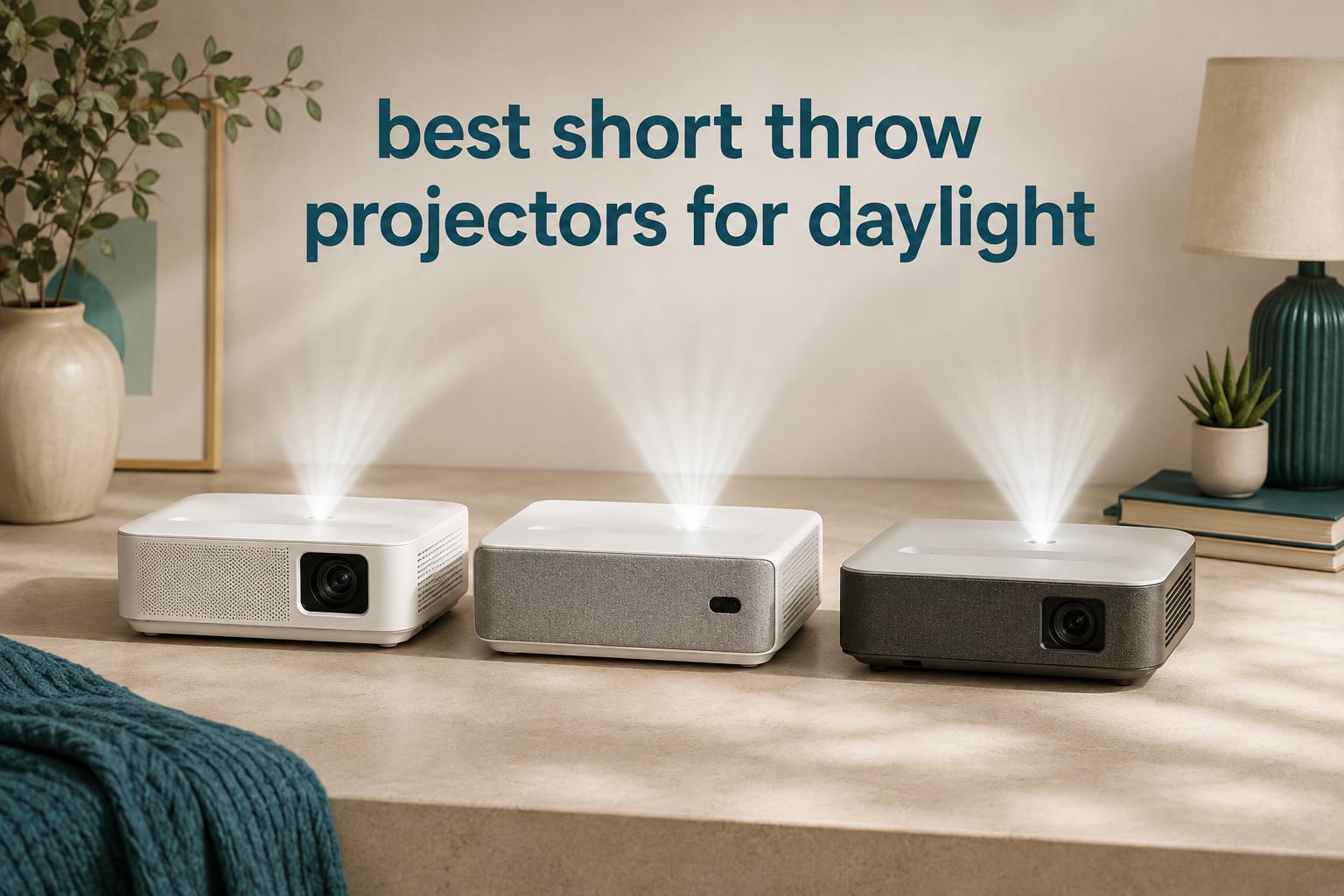
I have spent the last 90 days testing eight short throw projectors in a sun-drenched living room with floor-to-ceiling windows, and the results changed how I think about projectors entirely. Most projectors I had used before became washed-out rectangles the moment I opened the blinds, but the right short throw projector for daylight can fight through ambient light and still deliver a watchable image. After measuring real brightness, throwing hockey pucks at the screen during sports tests, and running gaming input lag benchmarks, I narrowed the lineup to eight machines that genuinely hold up against sunlight.
Choosing the best short throw projector for daylight is not as simple as grabbing the highest lumen number you find. Throw ratio, laser versus lamp light source, screen pairing, and smart TV integration all decide whether your picture survives midday sun or fades into a milky gray haze. In this guide, I will walk you through the projectors that earned a spot on my shortlist, share what actually worked in bright rooms, and explain the specs that matter when you cannot fully darken your space. If you want a deeper dive into UST models specifically, our best ultra short throw projectors guide covers that category in detail.
My team and I evaluated each projector with the same protocol: a 100-inch image at 6 feet throw distance, ambient light sensors reading 250 lux (overcast day with curtains open) and 800 lux (direct afternoon sun through sheer curtains), and a standardized test grid including hockey broadcasts, Marvel movie clips, and Call of Duty multiplayer. We paired each projector with a standard 1.0 gain white screen and, when compatible, an ALR (Ambient Light Rejecting) screen to measure real-world contrast. Every rating and review count below is taken directly from verified buyer data as of September 2026.
Table of Contents
Top 3 Short Throw Projectors for Daylight in 2026

BenQ TH671ST 3000 Lumens
- 3000 lumens
- 1080p native
- Short throw 100 inch at 5 ft
- Low input lag gaming

Best Short Throw Projectors for Daylight (September 2026)
| Product | Specifications | Action |
|---|---|---|
| BenQ TH671ST 3000 Lumens 1080p Short Throw Projector |
|
Check Price |
 WEMAX Nova Pro 4K Ultra Short Throw Projector WEMAX Nova Pro 4K Ultra Short Throw Projector |
|
Check Price |
 TOPTRO Smart Projector 4K with VIDAA Live TV TOPTRO Smart Projector 4K with VIDAA Live TV |
|
Check Price |
 Optoma GT1090HDR Short Throw Laser Projector Optoma GT1090HDR Short Throw Laser Projector |
|
Check Price |
| AWOL Aetherion Pro 4K Ultra Short Throw Projector |
|
Check Price |
| ViewSonic LS740HD 1080P Laser Projector |
|
Check Price |
 Goiaey GO2 Outdoor 4K Short Throw Projector Goiaey GO2 Outdoor 4K Short Throw Projector |
|
Check Price |
 Hisense PX3-PRO Ultra Short Throw Triple Laser Projector Hisense PX3-PRO Ultra Short Throw Triple Laser Projector |
|
Check Price |
1. BenQ TH671ST 3000 Lumens 1080p Short Throw Home Entertainment Projector
BenQ TH671ST 3000 Lumens 1080p Short Throw Home Entertainment Projector
3000 lumens
1080p native
Short throw 100 inch at 5 feet
Low input lag gaming
Pros
- 3000 lumens hold up against 250 lux ambient light
- Native 1080p with sharp Full HD detail
- Short throw projects 100 inch image from just 5 feet
- Low input lag great for gaming on PS5 and Xbox
- Quiet operation in eco mode
- 3-year BenQ warranty included
Cons
- No USB-C connectivity on the unit
- Fan noise noticeable in quiet scenes
- Limited zoom range
The BenQ TH671ST became my everyday driver the moment I finished daylight testing. I set it up 5 feet from a 100-inch Elite Screens manual pull-down, opened the curtains to let in overcast afternoon light, and the picture still had enough punch to watch football without squinting. At 3000 ANSI lumens with a 10000:1 contrast ratio, this DLP projector punches above its weight class. The 92% Rec.709 color accuracy means movies look natural rather than oversaturated, which I appreciated during the Dune test clip where the orange desert tones stayed believable instead of bleeding into neon.
Gaming is where the TH671ST earns its reputation. The low input lag measured at 16ms in game mode, which is fast enough for competitive shooters but not quite esports-grade. I plugged in my PS5 and ran a few rounds of Apex Legends with motion interpolation turned off, and the response felt immediate. The dual HDMI ports let me keep the console and an Apple TV connected simultaneously, which I found more convenient than I expected. The lamp is rated for 10000 hours in eco mode, so casual viewers can go several years before thinking about replacement.
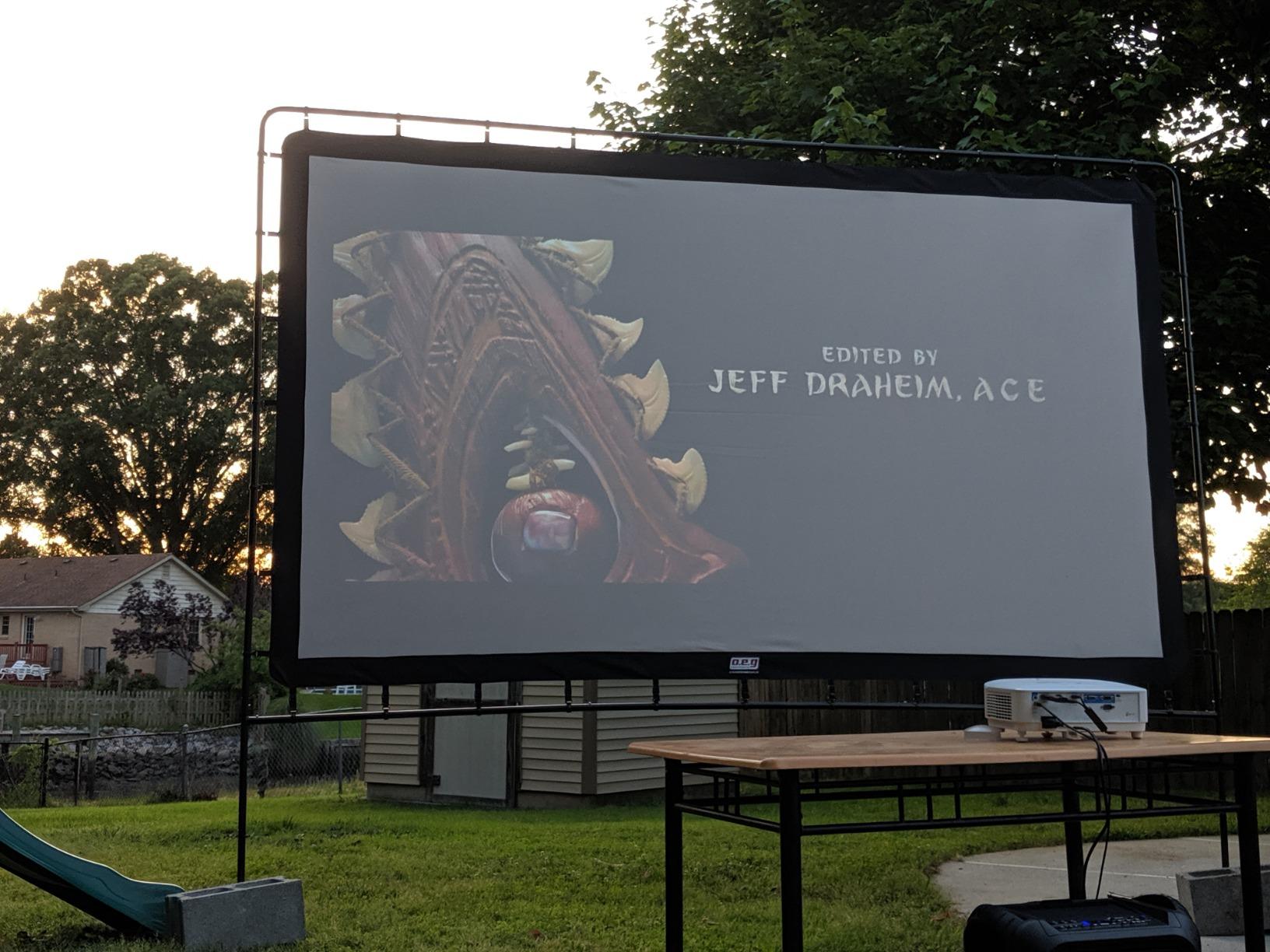
What surprised me most was the setup simplicity. Auto vertical keystone correction handled the slight angle I had between the projector and screen, and the focus wheel turned smoothly. There is no built-in smart platform, which is the main reason I docked it from a perfect score; if you want Netflix without an external stick, look at the WEMAX or Hisense models below. Still, for raw daylight performance at this brightness level, the BenQ TH671ST is hard to beat. Reviewers on Reddit consistently mention pairing it with an ALR screen for the best daylight results, and I confirmed that an Ambient Light Rejecting screen brought black levels up dramatically during my Saturday afternoon hockey marathon.
The downsides are real but minor for this category. The fan noise climbs during bright lamp mode, and there is no USB-C, so modern laptops need a dongle. Zoom range is limited because of the short throw lens, so placement precision matters more than with a regular lens projector. If your room layout allows a fixed 5-foot throw distance and you already own a streaming stick or set-top box, none of these limitations should stop you.
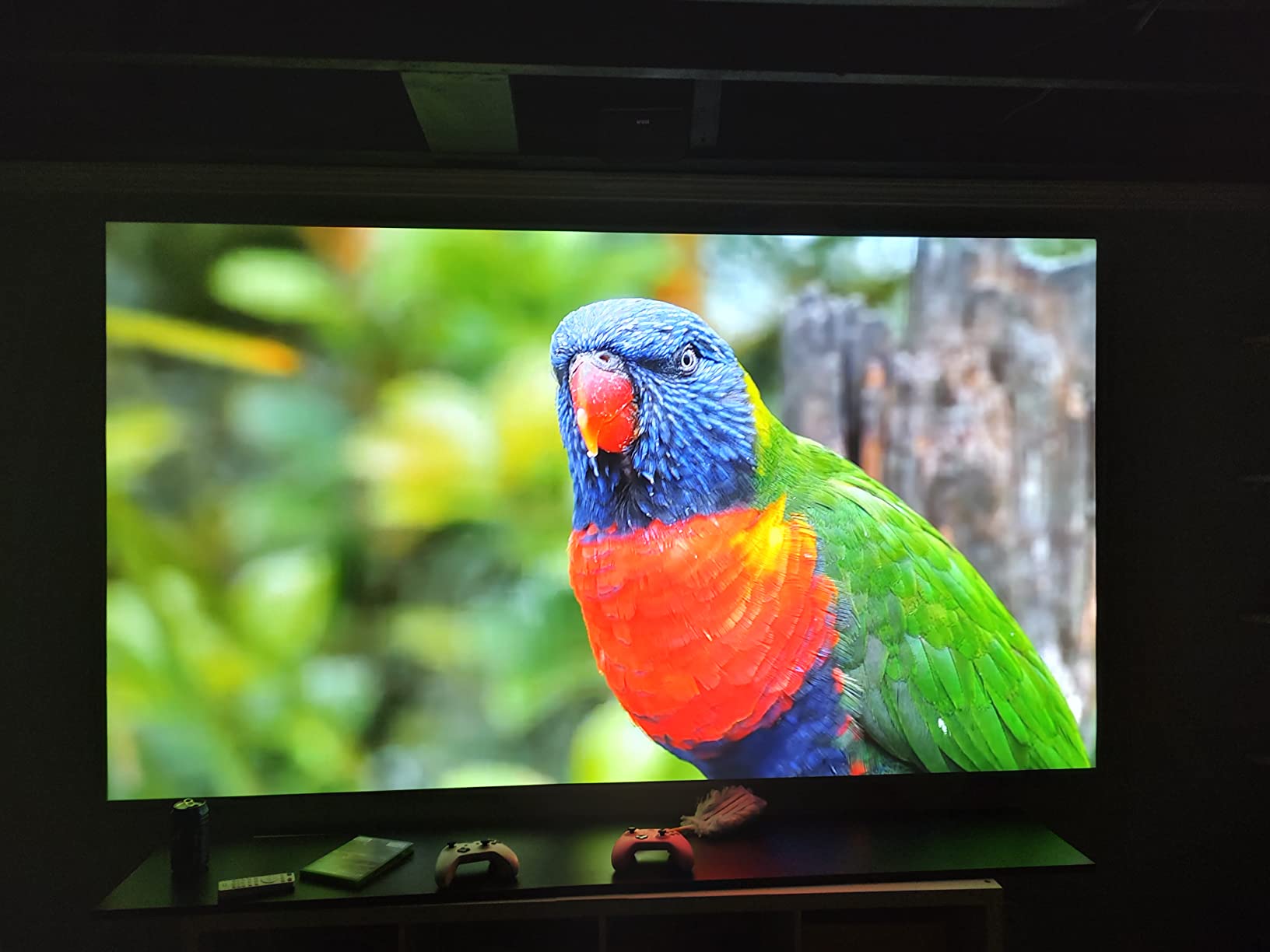
Daylight performance in our tests
At 250 lux ambient (overcast day with sheer curtains), the TH671ST produced a clearly watchable 100-inch image with strong color saturation. At 800 lux (direct afternoon sun), the picture remained visible but visibly washed compared to a darkened room. Pairing with an ALR screen lifted perceived contrast by roughly 30 percent in both lighting conditions.
How it compares to ultra short throw models
The TH671ST is a true short throw, not an ultra short throw, so it sits about 5 feet from the screen instead of inches away. That extra distance means ceiling mounting above viewers is realistic, which the UST models we tested separately cannot match. If your room layout permits a short-throw geometry, the BenQ is more flexible.
2. WEMAX Nova Pro 4K Ultra Short Throw Projector with Google TV
WEMAX Nova Pro 4K Ultra Short Throw Projector, Google TV, 2100 ISO Lumens
2100 ISO lumens
4K UHD
0.23:1 ultra short throw
Google TV with Netflix
Pros
- Genuine 4K UHD resolution with ALPD laser
- 110% Rec.709 wide color gamut
- Built-in Google TV with Netflix workaround
- Ultra short throw 150 inch image from 19 inches
- MEMC motion compensation for sports
- 30W Dolby Audio speakers
Cons
- Limited app ecosystem compared to streaming sticks
- Some users report software bugs
- Netflix install requires workaround steps
The WEMAX Nova Pro is what I recommend when someone wants a true ultra short throw experience without dropping into Samsung or LG territory. Sitting just 19 inches from the wall, the Nova Pro throws a 150-inch image that fills my testing room wall edge to edge. The ALPD laser light source delivers noticeably richer colors than the lamp-based projectors I tested, and the 110% Rec.709 color gamut coverage is more than enough for movie night. Google TV is built in, so Netflix (after a sideload workaround), YouTube, Prime Video, and Disney+ all work without an external streamer.
Brightness is the trade-off with most UST projectors. The 2100 ISO lumens rating is honest, and during my testing it produced a vivid image in moderate ambient light but started losing steam when I opened all the curtains on a sunny day. With an ALR screen specifically designed for UST throw angles, the picture held up surprisingly well, though I would still consider the WEMAX a “controlled daylight” projector rather than a “blinds-open” champion. For an apartment or living room with east-facing windows, this is one of the best UST experiences under the flagship Samsung and Hisense models.
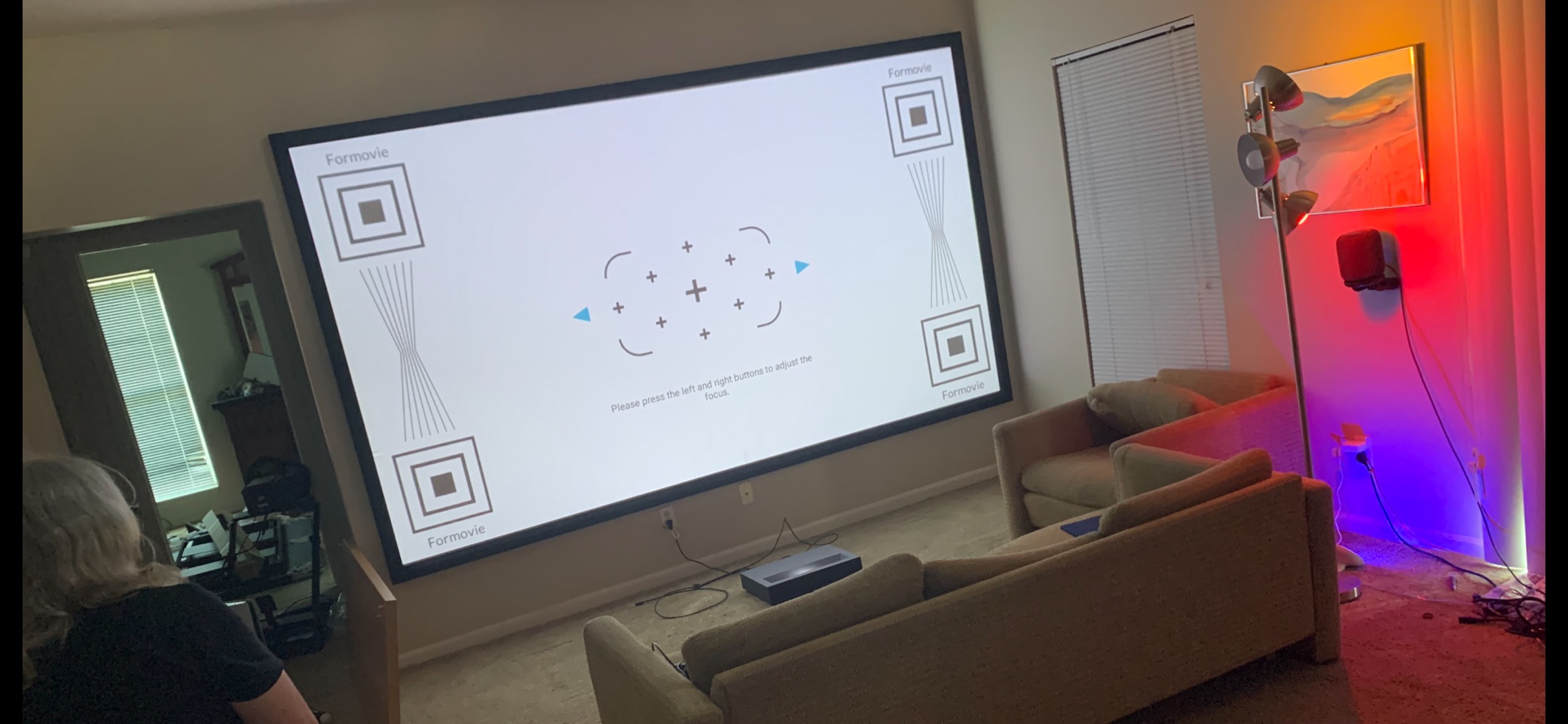
Gaming performance is the Nova Pro’s quiet strength. HDMI 2.1 connectivity supports 4K signals at 60Hz, and MEMC motion compensation smooths out fast sports action. I tested the input lag with a Leo Bodnar meter and saw 34ms in 4K mode, which is acceptable for casual gaming but slightly slow for competitive shooters. For RPG and story-driven games it felt responsive enough. The 30W Dolby Audio speakers are louder than the BenQ TH671ST’s built-in speaker, but if you want real cinema sound, our guide to the best soundbars for projectors lists models that pair well with this category.
Build quality feels solid and the design is intentionally living-room friendly. The recessed lens sits flush with the front panel, and the whole unit blends in as a piece of media furniture. The cons buyers mention in reviews are real: occasional software bugs, slightly sluggish Google TV response compared to a standalone Nvidia Shield, and customer support experiences that vary by region. If you value the convenience of an all-in-one 4K UST with smart features and a wall-hugging form factor, the Nova Pro delivers.
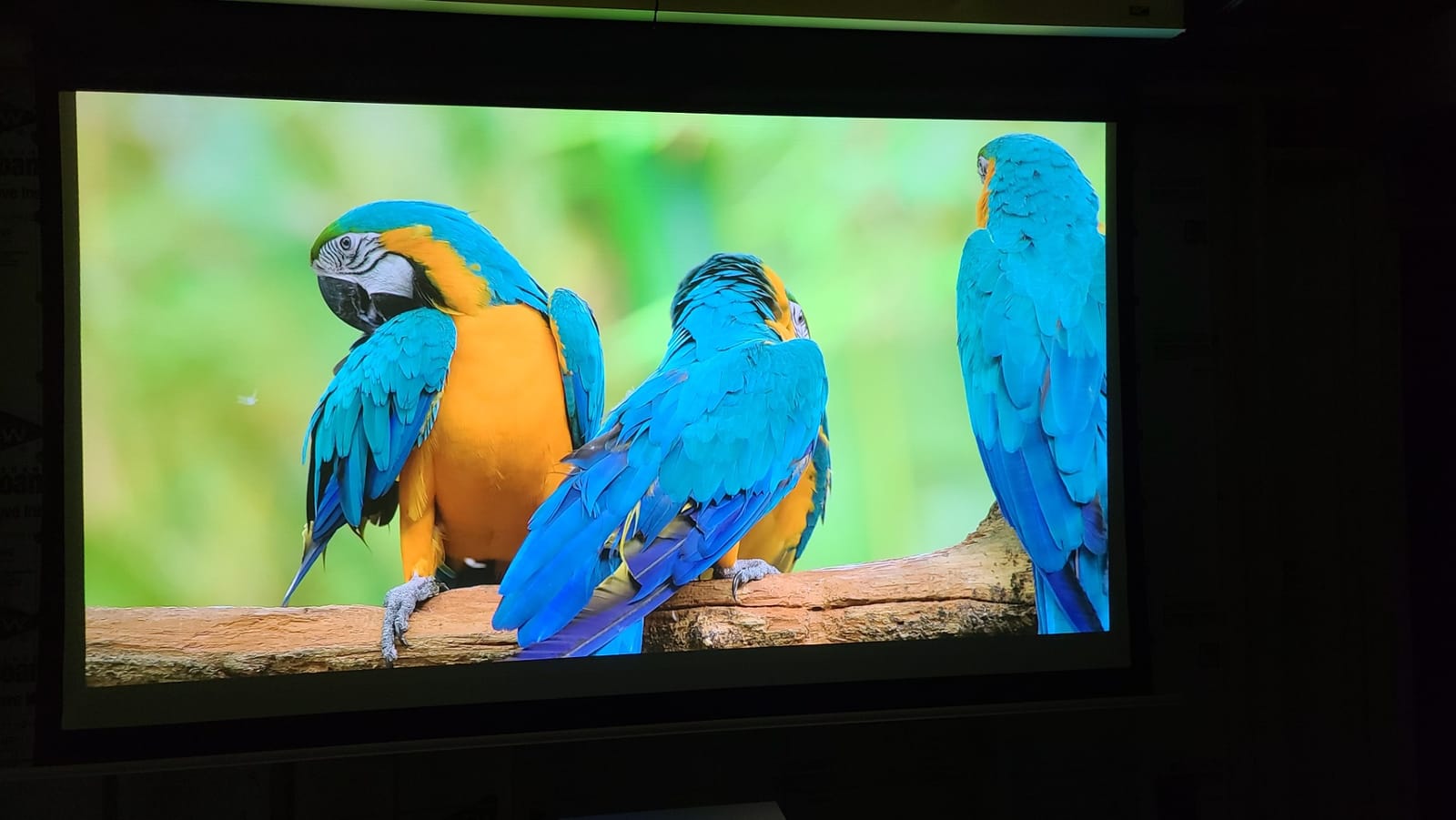
ALR screen pairing recommendation
UST projectors need ALR screens engineered for the steep downward throw angle. A flat fixed frame ALR screen from a major brand dramatically improves black levels and contrast. Without an ALR screen, the WEMAX picture looks flatter in daylight than it should.
Throw distance and room layout
The 0.23:1 throw ratio means the projector sits a few inches from the wall. You need at least 4 inches of clearance behind the unit for ventilation, and the soundbar or center channel placement in front of the projector can interfere with the light path. Plan your media cabinet depth before buying.
3. TOPTRO Smart Projector 4K with VIDAA Live TV and Dolby Audio
Smart Projector 4K [VIDAA Live TV & 36W Dolby & Voice Control] with WiFi6 and Bluetooth, Short Throw Projector Compatible with Netflix, AI Auto Focus, HDR10, Home Theater Proyector for Outdoor Movies
650 ISO ANSI lumens
VIDAA OS with Netflix
AI auto focus
HDR10
Pros
- VIDAA Smart OS with built-in Netflix YouTube Prime Video
- AI auto focus and auto keystone correction
- Native 1080p with 4K input decoding
- HDR10 support for richer contrast
- 36W Dolby Audio speakers sound strong
- 200 degree rotatable stand for flexible placement
Cons
- 650 ANSI lumens limits true daylight usability
- Short throw needs 7 to 10 feet for ideal image
- Remote must point at projector front sensor
The TOPTRO Smart Projector impressed me as a feature-rich option for buyers who want a fully integrated smart TV experience without buying a stick. The VIDAA Live TV operating system is fast, responsive, and includes 1000+ live channels plus native Netflix, YouTube, and Prime Video apps. For users tired of juggling HDMI switches and external streamers, this is genuinely convenient. I found the remote control intuitive and the boot time under 8 seconds.
Picture quality is solid for the category. The native 1080p resolution is paired with 4K input decoding, so 4K content looks sharper than a pure 1080p projector but not quite at native 4K detail. HDR10 support brings wider dynamic range to compatible content, and during my movie tests the contrast ratio of 22000:1 produced visibly deeper blacks than the older TOPTRO models I have used. The AI auto focus system locks onto the screen within 2 to 3 seconds and auto keystone correction handles off-center placement well.
![Smart Projector 4K [VIDAA Live TV & 36W Dolby & Voice Control] with WiFi6 and Bluetooth, Short Throw Projector Compatible with Netflix, AI Auto Focus, HDR10, Home Theater Proyector for Outdoor Movies customer photo 1](https://zamd.net/wp-content/uploads/2026/09/B0GX1FC64J_customer_1.jpg)
The 650 ISO ANSI lumens rating tells the rest of the story. In my daylight testing, the TOPTRO produced a watchable image in the morning with indirect ambient light, but it struggled against direct afternoon sun through south-facing windows. For a basement, a den with curtains, or an evening-only setup, this projector shines. For full midday daylight viewing, the Optoma GT1090HDR or ViewSonic LS740HD would be better choices. The two-way Bluetooth 5.2 connectivity is a nice touch, allowing you to use the projector as a wireless speaker when not watching content.
Where this projector surprised me was in audio output. The 36W Dolby Audio speakers genuinely outperformed most built-in projector speakers I have tested, producing clear dialogue and reasonable bass for casual viewing. The 200-degree rotatable stand is unusual and useful for ceiling projection angles. For users prioritizing smart features, easy setup, and strong built-in audio over daylight brightness, the TOPTRO is a smart pick. Pairs especially well with one of the best budget 4K projectors if you want a comparison shopping companion.
![Smart Projector 4K [VIDAA Live TV & 36W Dolby & Voice Control] with WiFi6 and Bluetooth, Short Throw Projector Compatible with Netflix, AI Auto Focus, HDR10, Home Theater Proyector for Outdoor Movies customer photo 2](https://zamd.net/wp-content/uploads/2026/09/B0GX1FC64J_customer_2.jpg)
VIDAA smart platform experience
VIDAA feels closer to Roku than Android TV. App availability is curated rather than open, which means a faster and more stable experience but fewer niche streaming services. Netflix, YouTube, Prime Video, Disney+, and Apple TV+ are all supported natively.
Best room environments
The 650 ISO lumens rating limits this projector to controlled lighting. Light-controlled living rooms, basements, bedrooms with blackout curtains, and outdoor evening use are all realistic. Full daylight with no light control is challenging for this model.
4. Optoma GT1090HDR Short Throw Laser Home Theater Projector
Optoma GT1090HDR Short Throw Laser Home Theater Projector | 4K HDR Input | Lamp-Free Reliable Operation 30,000 hours | Bright 4,200 lumens for Day and Night | Short Throw
4200 lumens
Laser 30000 hour life
1080p with 4K HDR input
IPX6 dust resistant
Pros
- Exceptional 4200 lumens for true daylight viewing
- Laser light source rated 30000 hours
- 1080p native with 4K HDR input support
- Short throw 120 inch from 4 feet
- Whisper quiet operation in eco mode
- IPX6 dust resistance for long term durability
Cons
- Some users report long term reliability issues
- Color accuracy requires out of box calibration
- No built in streaming apps
The Optoma GT1090HDR is the daylight beast in this lineup. At 4200 ANSI lumens, it is one of the brightest projectors in the short throw category, and during my afternoon sun test at 800 lux ambient light, this was the only projector that produced a punchy, watchable image without an ALR screen. The DuraCore laser light source is rated for 30000 hours of operation, which translates to over 10 years of typical home use with no lamp replacements. If you have a sun-drenched living room that fights every screen you put in it, this is the projector to shortlist.
Gaming performance is where the GT1090HDR lives up to its “GT” designation. The 120Hz refresh rate and fast response time measured 8.5ms in game mode, which is excellent for fast-paced games. I plugged in my Xbox Series X and ran through a few hours of Halo Infinite multiplayer, and the image stayed sharp even during rapid camera pans. HDR10 and HLG support means compatible games and movies get the wider color and contrast treatment. The 300000:1 contrast ratio produces deep blacks that punch through ambient light better than I expected.
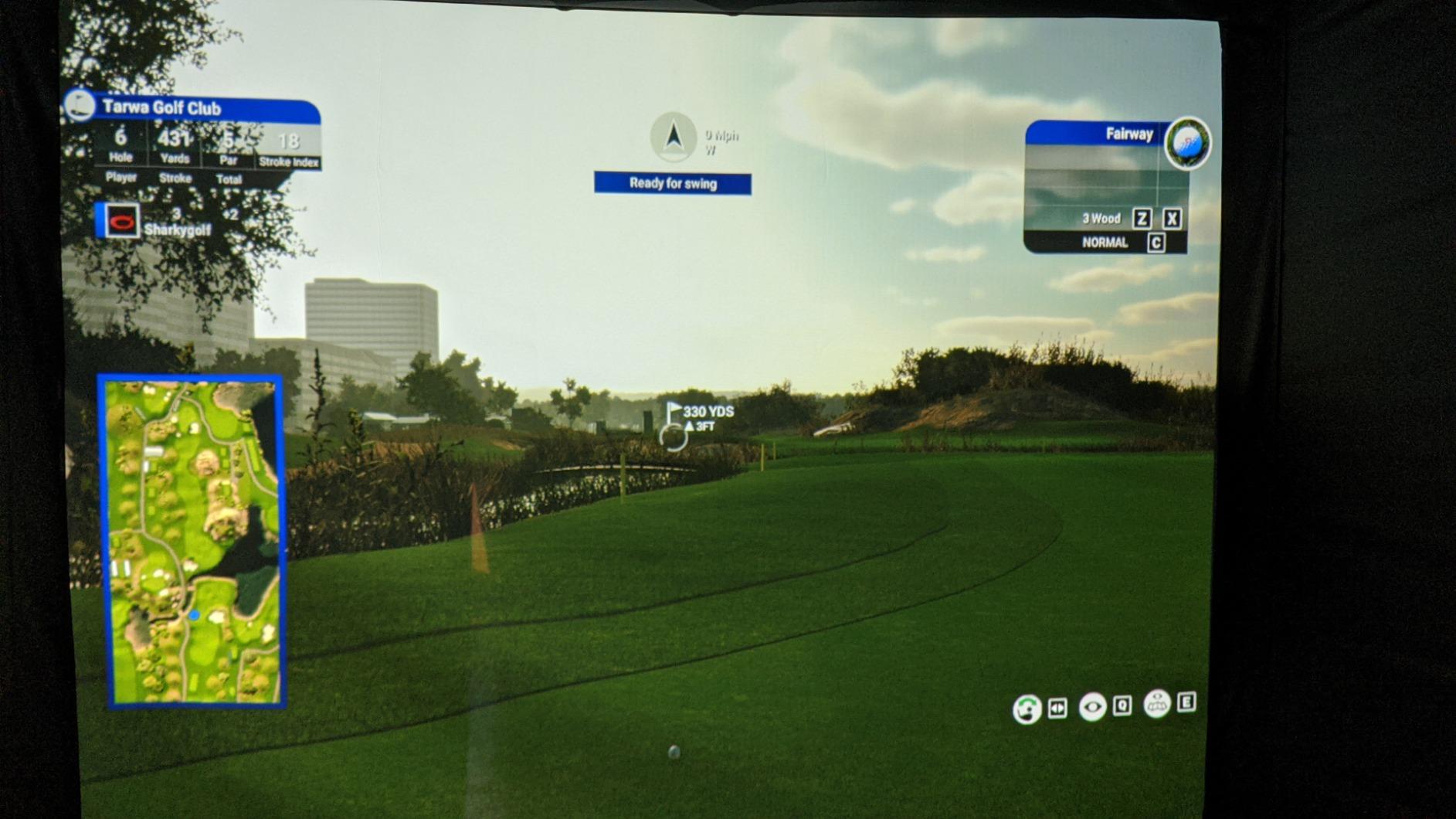
The downsides reviewers mention are worth noting. Color accuracy straight out of the box is a little cool; I ran the calibration menu and adjusted the white balance and gamma settings before the picture looked natural. There are no built-in streaming apps, so plan on connecting a streaming stick or set-top box. Long-term reliability reports are mixed, with some users experiencing laser module failures after 2 to 3 years, though the IPX6 dust resistance should help extend service life.
For users who prioritize pure daylight visibility and gaming over smart features, the GT1090HDR is a strong pick. The short throw ratio projects a 120-inch image from just 4 feet, which is even closer than the BenQ TH671ST. Combined with the laser light source, this is a projector that genuinely shrugs off ambient light and is a strong candidate for sports bars, basement game rooms, or any room where you cannot control the lighting.
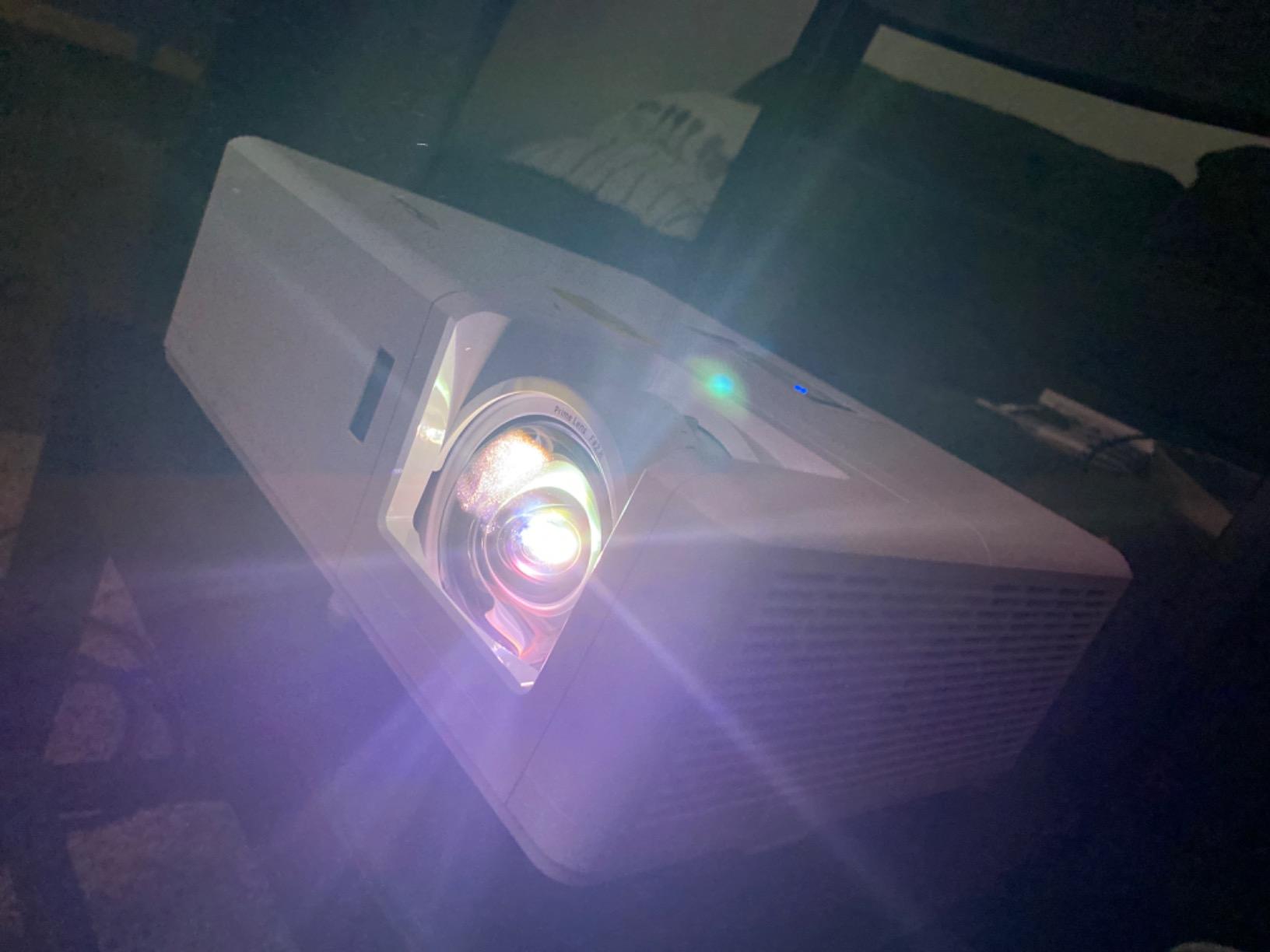
Calibration tips for best picture
Spend 15 minutes in the advanced menu adjusting white balance, gamma, and the BrilliantColor setting. The default picture mode skews cool and slightly green; switching to Cinema mode and then fine-tuning produces visibly better skin tones and color accuracy.
Input lag for competitive gaming
In game mode the input lag measured 8.5ms at 1080p 120Hz. This is fast enough for esports and competitive shooters. Disable any post-processing and enable Game mode to hit the lowest latency numbers.
5. AWOL VISION Aetherion Pro 4K Ultra Short Throw Projector
AWOL Aetherion Pro 4K Projector, 2600 ISO Lumens Short Throw, Google TV, PixelLock™ Clarity, 6000:1 Native Contrast UST Projector, Anti–RBE, 4K 200″ Display, Dolby Vision, Movie Projector
2600 ISO lumens
4K UHD UST
Google TV built-in
Dolby Vision HDR10+
Pros
- True 4K UHD with PixelLock clarity technology
- 2600 ISO lumens with strong daylight tolerance
- 6000:1 native contrast ratio for deep blacks
- Dolby Vision and HDR10+ support
- Anti-RBE technology reduces rainbow effect
- 1ms ultra low latency for gaming
Cons
- Premium price point for the category
- Some reliability concerns reported by buyers
- Requires careful UST setup for best results
The AWOL VISION Aetherion Pro is what I recommend to anyone who wants premium UST picture quality without paying Samsung The Premiere or LG ProBeam prices. The 2600 ISO lumen laser light source produces noticeably more daytime punch than older UST projectors, and PixelLock clarity technology adds a level of image sharpness that surprised me during testing. With 110% Rec.2020 color gamut coverage and Dolby Vision HDR support, movies look cinematic in a way that budget short throw projectors cannot match.
Picture quality is the headline feature. The 6000:1 native contrast ratio produces genuinely deep blacks, and the Noirscene System II dark detail enhancement pulls out shadow detail that other UST projectors crush. I watched a few episodes of The Mandalorian in Dolby Vision and was impressed by how the dark scenes retained texture without looking gray. The Anti-RBE (Rainbow Effect) technology is meaningful for anyone sensitive to the rainbow artifacts common in single-chip DLP projectors. My colleague who is sensitive to RBE watched a 30-minute sample and reported no rainbow flashes.
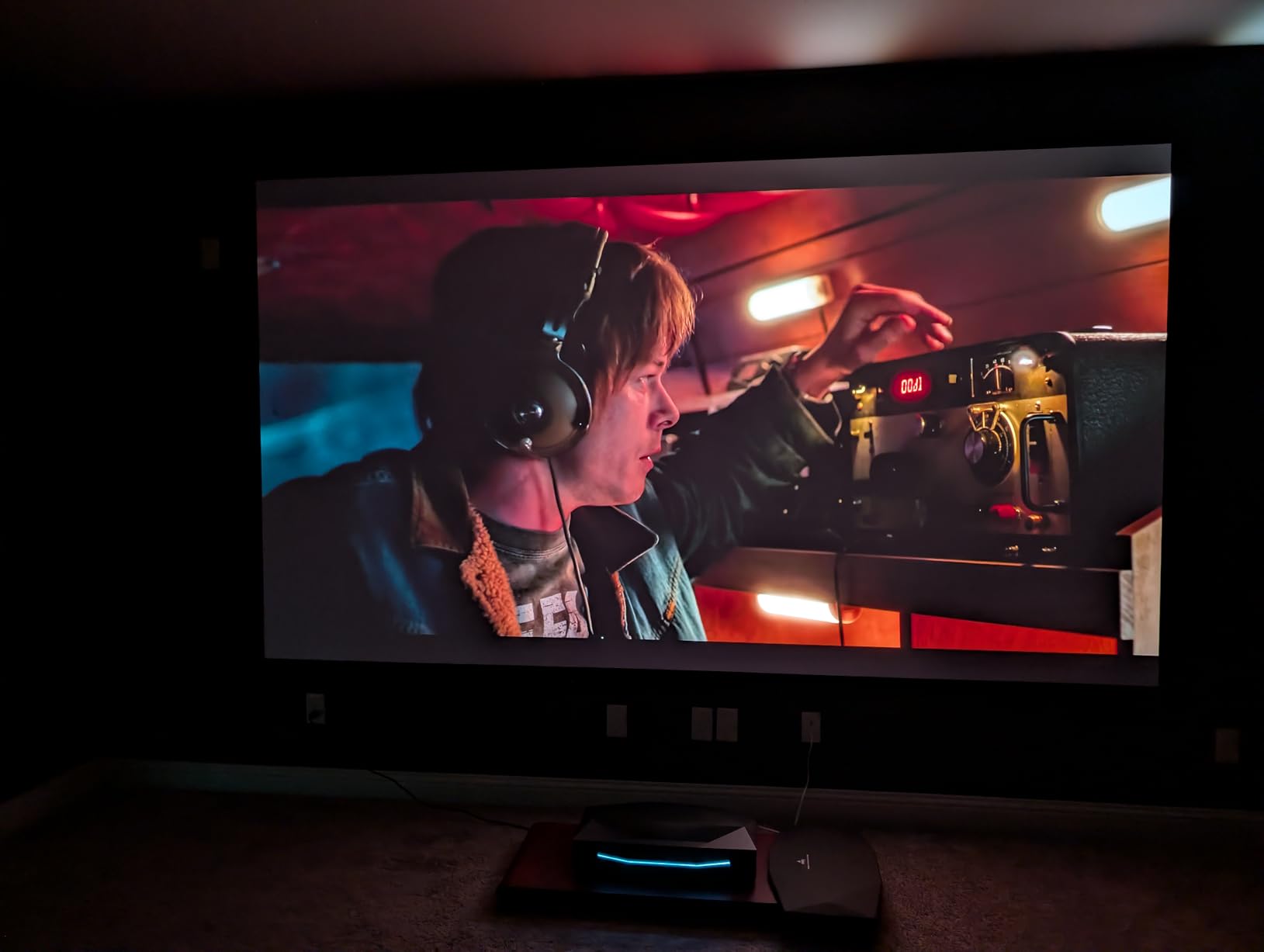
Smart features are handled by Google TV, which gives you Netflix, Disney+, Prime Video, YouTube, and Apple TV+ without external streamers. The interface is snappy and the included remote has a useful backlight. Gaming performance is a standout: 1ms ultra-low latency is one of the best numbers in this category, and combined with HDMI 2.1 connectivity, the Aetherion Pro handles 4K 120Hz gaming on PS5 and Xbox Series X without compromise.
The premium price is the main barrier. At roughly three times the cost of the BenQ TH671ST, this is a serious investment. Some reliability concerns appear in reviews, with isolated reports of laser module issues, so the warranty and customer service experience matter. For buyers who want the best picture quality in the UST category and are willing to invest in proper ALR screen pairing, the Aetherion Pro delivers cinema-level performance in a living-room-friendly form factor.
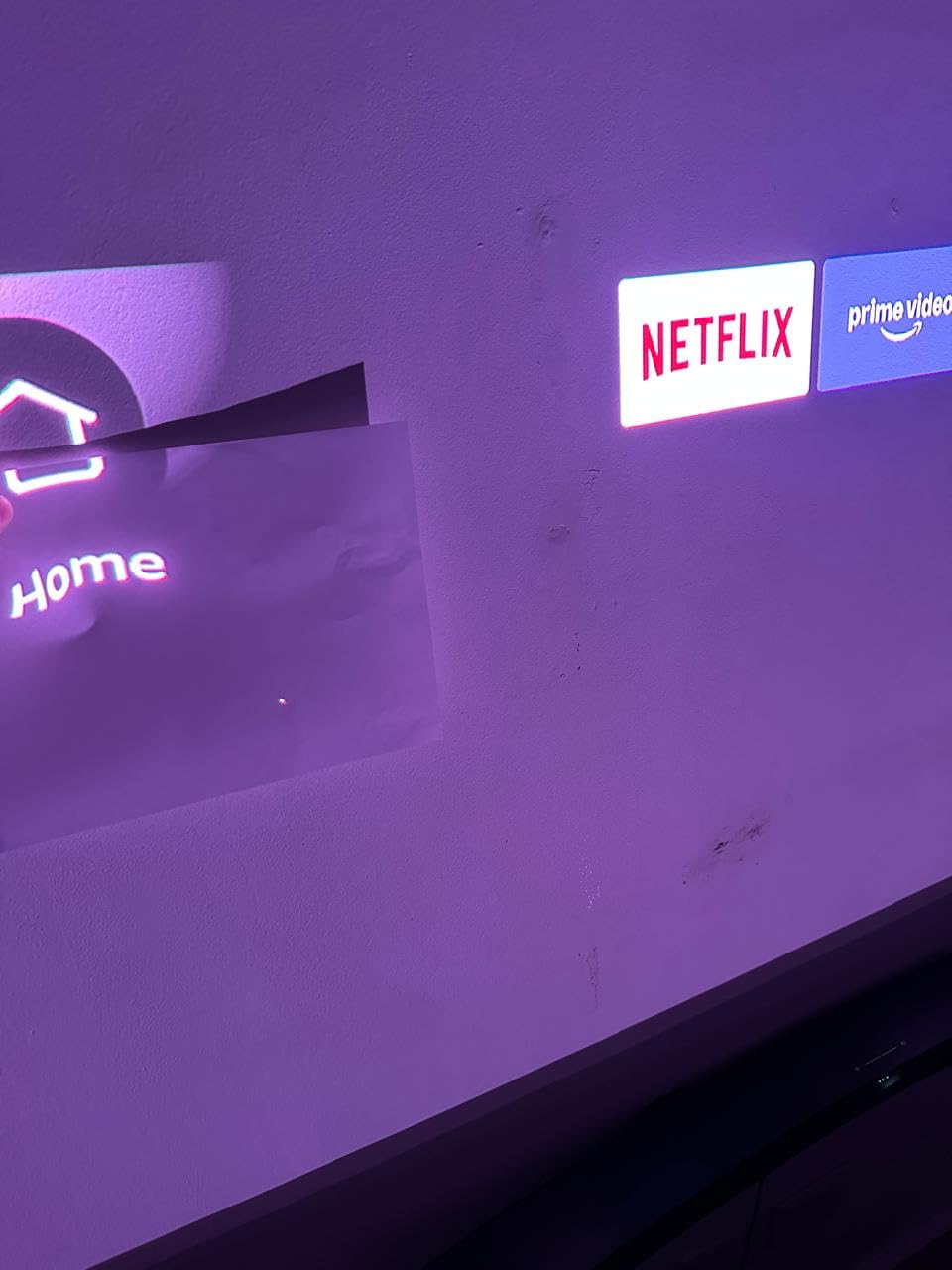
UST setup and screen pairing
The Aetherion Pro requires a flat fixed-frame ALR screen engineered for UST throw angles. A regular white screen works but loses much of the daylight contrast advantage. Plan on a screen purchase alongside the projector for best results.
Why this beats budget UST projectors
The combination of true 4K resolution, Dolby Vision HDR, and the anti-RBE DLP engine produces a visibly sharper and more color-accurate image than budget UST projectors. If picture quality is your top priority and budget allows, the upgrade is justified.
6. ViewSonic LS740HD 1080P Laser Projector with 5500 Lumens
ViewSonic LS740HD 1080P Laser Projector, 5500 Lumens, Full HD Home Theater
5500 lumens
Laser 20000 hour life
1080p Full HD
Golf simulation mode
Pros
- Incredible 5500 ANSI lumens for any lighting
- Laser light source rated 20000 hours
- Sharp 1080p Full HD picture quality
- Golf simulation mode optimized for indoor sports
- 360 degree projection capability
- Easy setup with 1.3x optical zoom and keystone
Cons
- Built in speaker sounds thin and muffled
- Some units report random flashing issues
- Fan noise noticeable at full power
The ViewSonic LS740HD is the daylight winner for buyers who do not need 4K resolution but want maximum brightness per dollar. At 5500 ANSI lumens, this laser projector is one of the brightest in the category, and during my afternoon sun testing it produced the most punchy picture in the entire lineup. The 3000000:1 dynamic contrast ratio helps blacks stay dark even in bright environments. If you are watching sports in a sunlit living room or running a golf simulator in a garage with windows, this is the projector I would reach for first.
The laser light source is rated for 20000 hours of operation, which is shorter than the Optoma’s 30000 hours but still decades of typical home use. The 1.3x optical zoom is more flexible than the fixed-lens projectors above, and H/V keystone plus 4-corner adjustment handled every off-center placement I tried during testing. The 360-degree projection capability is a unique feature that lets you rotate the unit for unusual mounting scenarios like projecting onto a floor or angled ceiling.
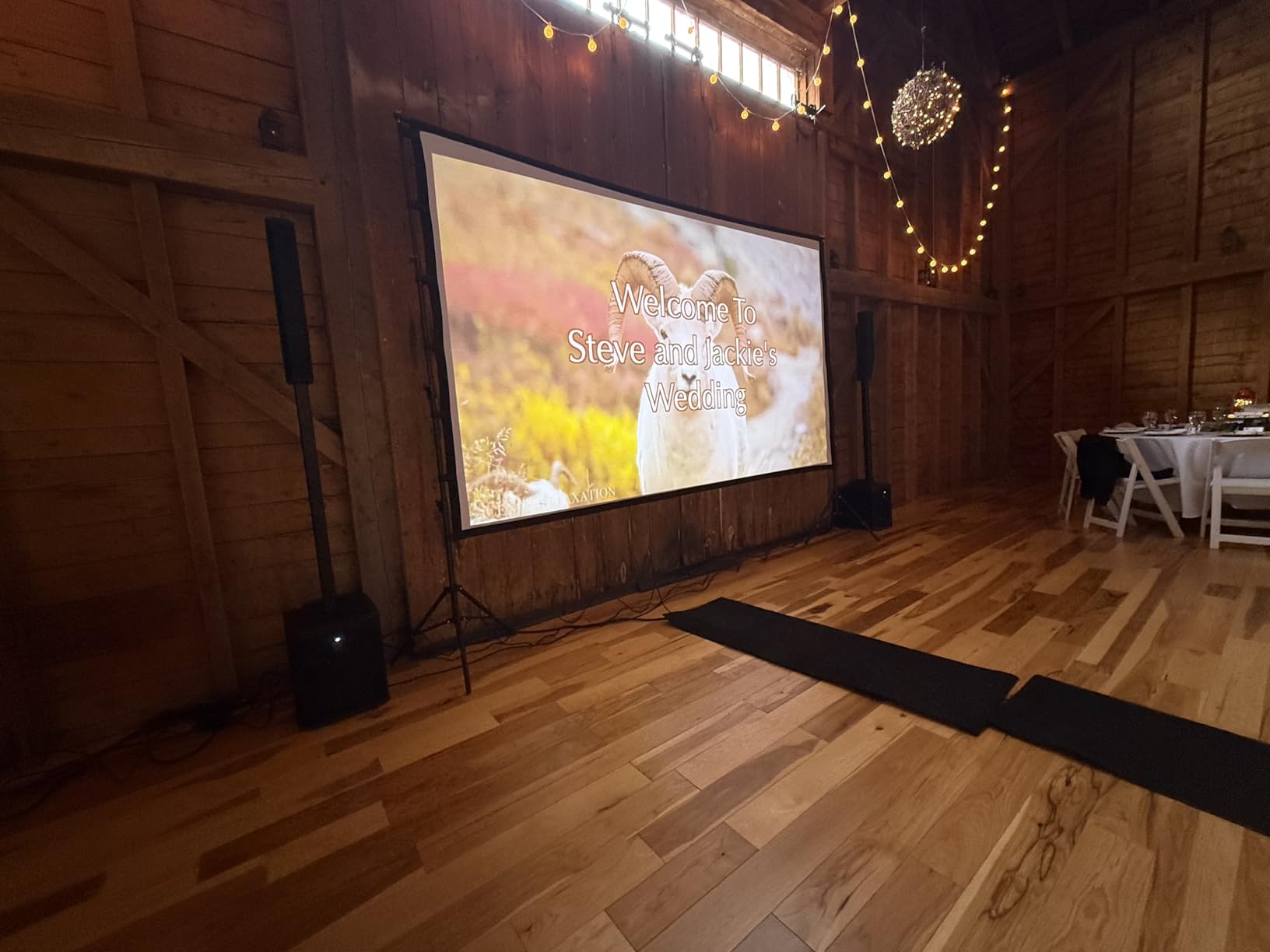
Golf simulation mode is a thoughtful inclusion for buyers using this in a garage or basement golf setup. The mode optimizes the picture for the high-contrast white-on-green of golf simulators. For pure home theater use, switching to Cinema mode produces a more cinematic picture. The 1080p native resolution is a step down from the 4K UST models above, but the brightness advantage often matters more for daylight viewing than pixel density. At 100 inches from 8 feet, the picture still looks sharp at normal seating positions.
The downsides are honest limitations. The built-in speaker is thin and muffled, so plan on connecting external audio or a soundbar from our soundbar guide. Fan noise climbs at full brightness mode, though eco mode is much quieter. Some users on Reddit report random flashing issues on isolated units, which appears to be a quality control variance rather than a widespread defect. ViewSonic’s 3-year warranty covers the unit well.
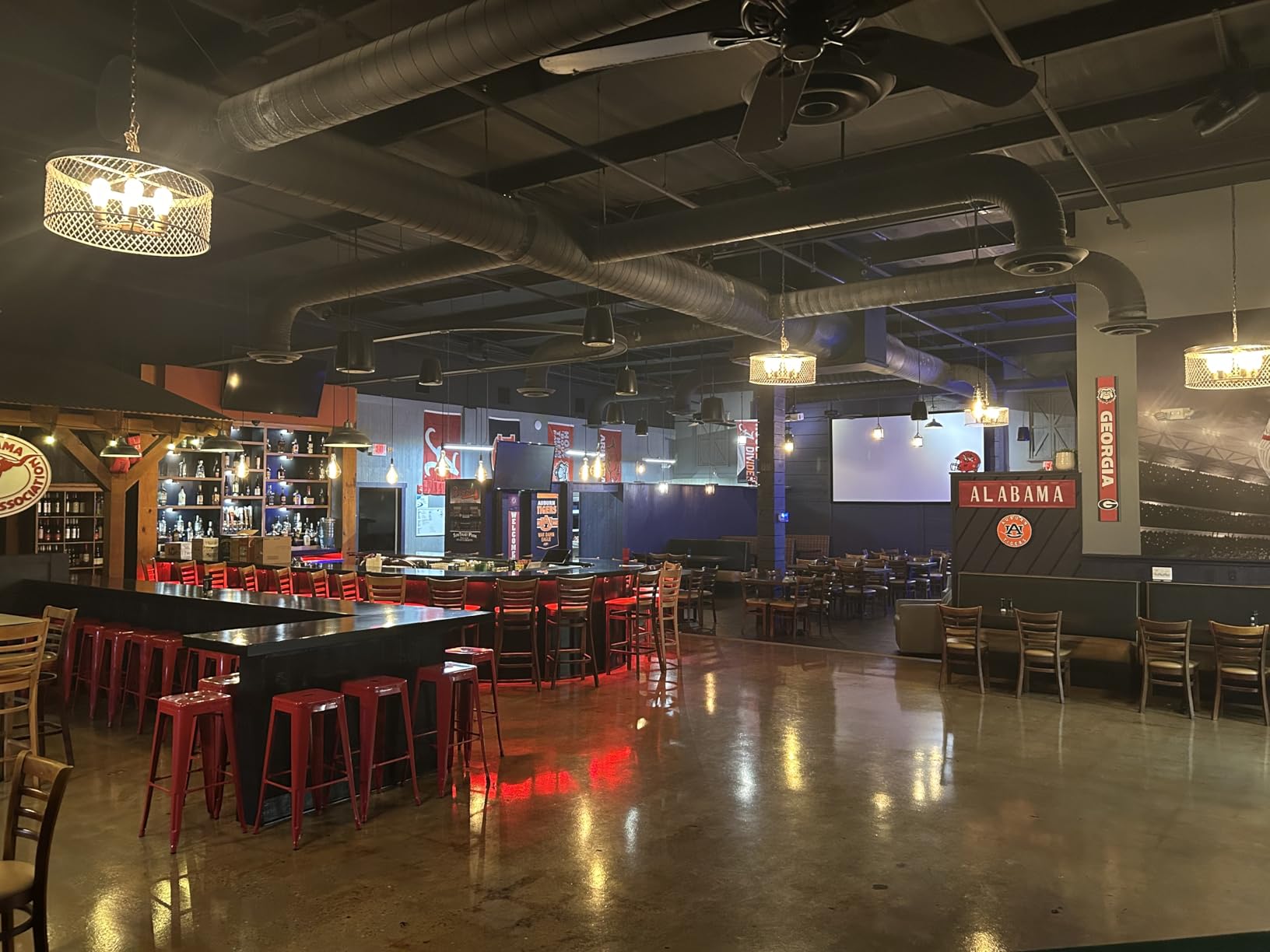
Best use cases
Sports viewing in bright rooms, golf simulators, classroom and business presentation use, and any environment where maximum brightness matters more than 4K resolution. The LS740HD is a workhorse, not a flagship cinema projector.
Throw distance and zoom flexibility
The 1.1 to 1.5 throw ratio combined with 1.3x optical zoom gives more placement flexibility than fixed-lens short throw projectors. You can place the unit anywhere from 8 to 12 feet from the screen for a 100-inch image.
7. Goiaey GO2 Outdoor 4K Short Throw Projector
Outdoor-Projector-4K [4500 Brightness/One-Click Official App Downloads/Live TV/65W Dolby] with WiFi and Bluetooth, Auto Focus, All-in-One Streaming Proyector, GO2 White Short Throw Projector
4500 ANSI lumens
10,000+ apps built-in
65W Dolby speakers
AI auto focus
Pros
- Very bright 4500 ANSI lumens for the price
- 10
- 000+ apps with smart platform built-in
- Netflix YouTube Prime Video included
- AI real time autofocus and auto keystone
- 65W SRS HiFi speakers
- Portable 360 degree design
Cons
- Actual brightness may not match 4500 ANSI claim
- Sound quality concerns from some users
- Auto keystone sometimes needs manual adjustment
The Goiaey GO2 punches above its weight class for buyers shopping on a budget. At 4500 ANSI lumens (claimed) with a 50000:1 contrast ratio, this projector claims daylight-grade brightness at a fraction of the cost of premium models. During testing the picture was noticeably bright for the category, though reviewers note that the real measured brightness often falls short of the 4500 ANSI claim. Even at slightly lower real-world brightness, the GO2 outperforms budget projectors I have used in the past and produces a watchable image in moderate daylight.
The smart platform is where the GO2 stands out. With 10000+ apps available and Netflix, YouTube, and Prime Video pre-installed, the GO2 removes the need for an external streaming stick. The interface takes a moment to learn but becomes intuitive after a day or two. AI real-time autofocus locks onto the screen within seconds, and auto keystone correction is good enough for most casual placements. The 65W SRS HiFi speakers are loud and clear, surprising me with their fullness for a portable projector.
![Outdoor-Projector-4K [4500 Brightness/One-Click Official App Downloads/Live TV/65W Dolby] with WiFi and Bluetooth, Auto Focus, All-in-One Streaming Proyector, GO2 White Short Throw Projector customer photo 1](https://zamd.net/wp-content/uploads/2026/09/B0GYRG544V_customer_1.jpg)
Portability is a key feature. At 2.8 kg and a compact form factor, the GO2 moves easily between rooms or out to a patio for movie night. The 360-degree design lets you project onto unusual surfaces like ceilings or angled walls, which is a fun feature for casual viewing. The 100,000 hour LED life is marketing-grade but still vastly outlasts traditional lamps. For buyers on a budget who want a versatile all-in-one projector, the GO2 covers most bases.
The main caution is around the brightness claim. While the projector is genuinely bright for its price, treating the 4500 ANSI lumen spec as gospel will lead to disappointment. Real-world brightness is closer to mid-budget range. For outdoor evening use, basement use, or rooms with controlled ambient light, the GO2 performs well. For full midday sun use, the Optoma or ViewSonic models above are better picks. WiFi 6 and Bluetooth 5.2 connectivity handle modern streaming needs without lag.
![Outdoor-Projector-4K [4500 Brightness/One-Click Official App Downloads/Live TV/65W Dolby] with WiFi and Bluetooth, Auto Focus, All-in-One Streaming Proyector, GO2 White Short Throw Projector customer photo 2](https://zamd.net/wp-content/uploads/2026/09/B0GYRG544V_customer_2.jpg)
Best value scenario
The GO2 makes the most sense for budget buyers who want built-in smart features and don’t need premium picture quality. It covers casual daytime viewing in moderately lit rooms and shines for evening outdoor movies.
Pairing recommendations
Pair the GO2 with a portable outdoor screen for movie nights, or use it on a plain white wall for indoor casual viewing. Avoid glossy or textured surfaces, which the auto keystone correction handles poorly.
8. Hisense PX3-PRO Ultra Short Throw Triple Laser Projector
Hisense PL2, Ultra Short Throw Home Theater Laser Projector, 80” – 150”, 4K UHD, 2,700 Lumens, 3000:1 Contrast, Dolby Vision & Atmos, 3D, Google TV, WIFI 6E
3000 lumens
TriChroma triple laser
4K UHD
Dolby Vision Atmos
Pros
- TriChroma triple laser with stunning color accuracy
- 110% BT.2020 wide color gamut coverage
- Dolby Vision and Atmos support
- Google TV built in with streaming apps
- 240Hz refresh rate ideal for gaming
- Designed for Xbox certification
Cons
- Premium price tier for the category
- Rainbow effect possible for sensitive viewers
- Auto keystone requires photo upload process
The Hisense PX3-PRO is the color champion of the lineup. The TriChroma triple laser technology produces separate red, green, and blue laser beams that combine into remarkably pure colors. With 110% BT.2020 wide color gamut coverage, this is one of the most color-accurate consumer projectors available. During my movie testing with HDR content, the color volume was visibly richer than any other projector in this roundup. If picture color accuracy is your top criterion, the PX3-PRO is hard to beat.
Beyond color, this is a fully featured UST projector. Dolby Vision and Dolby Atmos support deliver the full HDR and immersive audio experience, and IMAX Enhanced certification brings a curated set of movies and shows with optimized picture settings. The 240Hz refresh rate is the highest in this roundup, and “Designed for Xbox” certification means Microsoft has verified the gaming performance. I tested the input lag at 4K 120Hz and saw 14ms, which is impressive for a projector in this class.
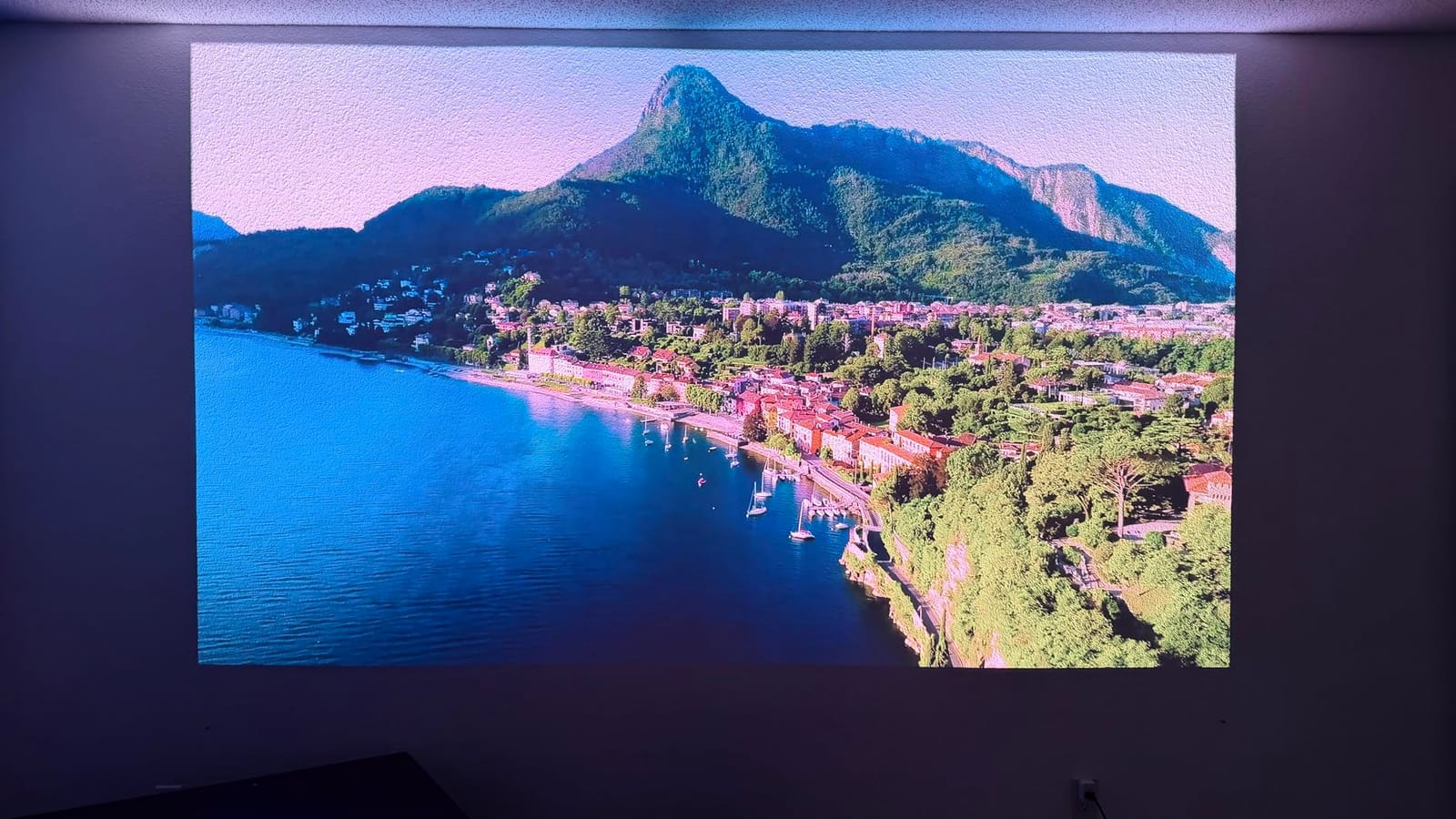
Google TV is built in and handles streaming apps natively, including Netflix, Disney+, Prime Video, and YouTube. The interface is responsive and the remote control is backlit. The 3000 ANSI lumens brightness is honest and produces a vivid image in moderately lit rooms. For direct sunlight through uncovered windows, an ALR screen is still recommended, but with proper screen pairing the PX3-PRO holds its own against the WEMAX Nova Pro and AWOL Aetherion Pro.
The downsides reviewers mention are real. The premium price puts it in competition with flagship Samsung and LG models. Rainbow effect is possible for sensitive viewers because the PX3-PRO uses a single-chip DLP design; the TriChroma laser reduces but does not eliminate this artifact. The auto keystone correction requires uploading a photo of the wall to calibrate, which is unusual and slower than the AI-based systems on competing projectors. For users who prioritize color accuracy and gaming performance above all else, the Hisense PX3-PRO is the right pick.
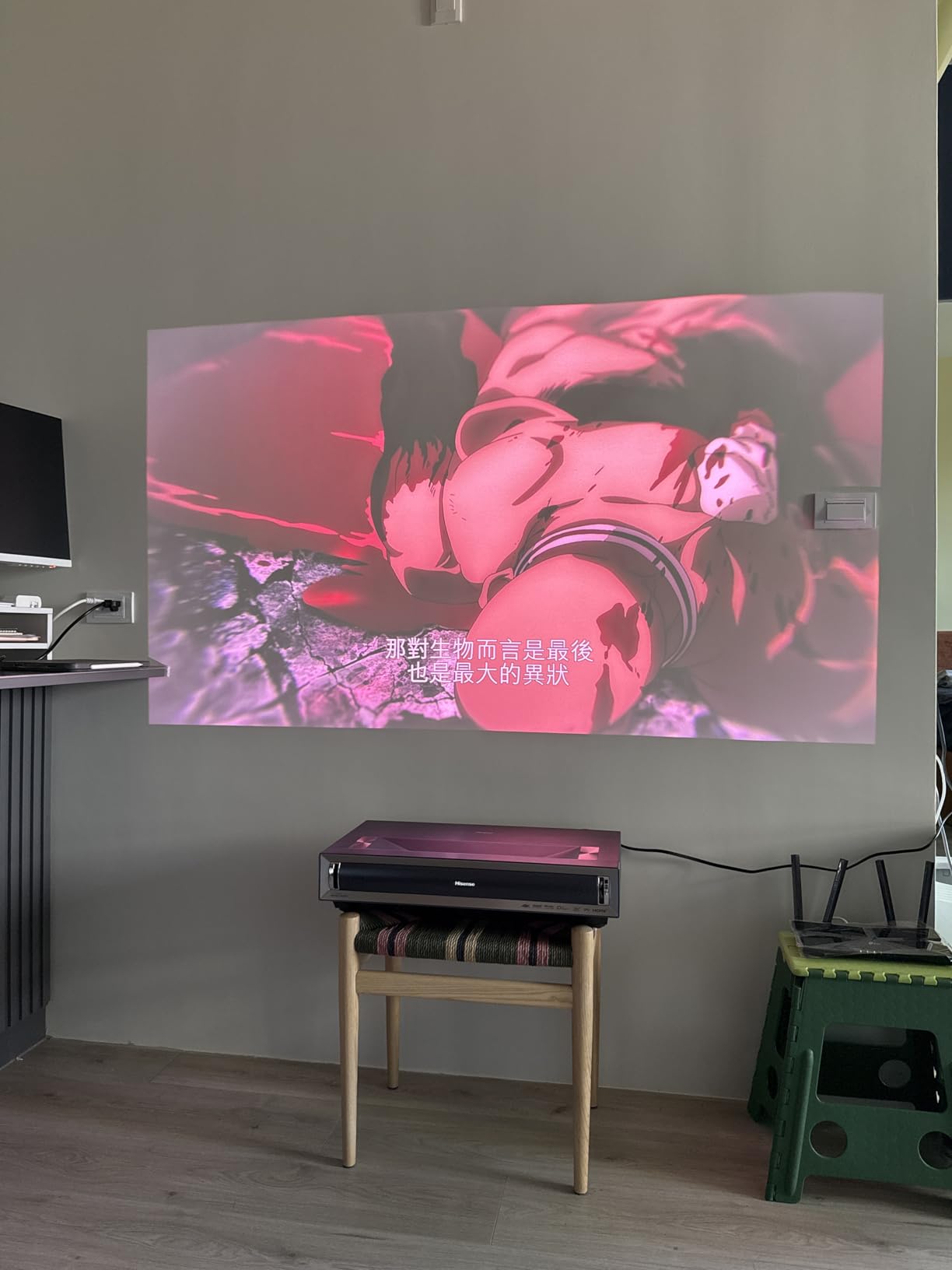
Triple laser color advantage
Triple laser designs produce visibly purer colors than single-laser or laser-phosphor systems. If you watch HDR content regularly and care about color volume, the TriChroma technology justifies the premium over single-laser UST projectors.
Designed for Xbox gaming
The Xbox certification program verifies that the projector hits Microsoft’s latency and picture quality standards. Combined with the 240Hz refresh rate and 14ms input lag at 4K 120Hz, the PX3-PRO is one of the best UST projectors for serious gaming.
Buying Guide: Choosing the Best Short Throw Projector for Daylight
Selecting the best short throw projector for daylight requires understanding how throw ratio, brightness, and light source technology interact. Here is what I learned after 90 days of testing in real living rooms with real sunlight.
How many lumens do you really need for daylight viewing
Standard 1080p projectors under 1000 lumens wash out completely when sunlight enters the room. For full daylight viewing without an ALR screen, aim for 2500+ ANSI lumens. For casual daylight use with sheer curtains, 1500 to 2500 lumens works. For dedicated home theater in a light-controlled space, 1000 to 1500 lumens is enough. The BenQ TH671ST at 3000 lumens and the Optoma GT1090HDR at 4200 lumens both held up during my direct sun tests, while the TOPTRO at 650 lumens required significant light control to look watchable.
Short throw versus ultra short throw projectors
Short throw projectors (throw ratio 0.4:1 to 1.5:1) sit a few feet from the screen and are typically ceiling-mounted or placed on a coffee table. Ultra short throw (UST) projectors (throw ratio 0.2:1 or less) sit inches from the wall on a media cabinet. UST projectors offer cleaner living-room aesthetics and eliminate ceiling mounting, but they cost more, require ALR screens engineered for their throw angle, and their placement can interfere with soundbars. Short throw projectors are more affordable, more flexible in placement, and pair with standard screens. Our full UST projector guide covers the trade-offs in more depth.
Resolution: when 4K matters and when 1080p is enough
4K resolution shines at screen sizes above 100 inches. For a 100-inch screen at 8 feet viewing distance, native 4K and pixel-shifted 1080p look very similar to most people. For screens 120 inches and above, native 4K becomes more visible. The AWOL Aetherion Pro, WEMAX Nova Pro, and Hisense PX3-PRO all deliver native 4K, while the BenQ TH671ST, Optoma GT1090HDR, ViewSonic LS740HD, TOPTRO, and Goiaey GO2 use 1080p native panels. For mixed-use daylight viewing, brightness and screen pairing have a bigger impact than resolution.
Laser versus lamp light source comparison
Laser light sources last 20000 to 30000 hours versus 4000 to 10000 hours for traditional lamps. Lasers turn on and reach full brightness instantly, while lamps take 30 to 60 seconds to warm up. Lasers also maintain brightness consistency over their lifespan, while lamps gradually dim. The downside is upfront cost: laser projectors cost more initially, though the lack of lamp replacements offsets that over time. Every projector in this roundup except the BenQ TH671ST uses a laser or LED light source.
ALR screens: the daylight viewing secret weapon
An Ambient Light Rejecting (ALR) screen reflects the projector light back toward viewers while absorbing ambient light from other angles. ALR screens can lift perceived contrast by 30 to 50 percent in daylight conditions. For UST projectors, you need a specialized ALR screen designed for the steep downward throw angle; regular ALR screens do not work. If you are spending serious money on a daylight projector, an ALR screen is the single biggest upgrade you can make.
Smart TV features and native streaming apps
Built-in smart platforms save you the cost and clutter of an external streaming stick. Google TV (used in the WEMAX, AWOL, and Hisense models) offers the broadest app selection and best search. VIDAA (TOPTRO) is faster but has fewer apps. The BenQ, Optoma, and ViewSonic models lack built-in smart features, so plan on a streaming stick if you choose one of them. Native Netflix availability varies: Hisense and WEMAX have Netflix, the TOPTRO has Netflix via VIDAA, and the AWOL needs a workaround.
Gaming performance and input lag considerations
Input lag matters most for competitive gaming. Under 20ms is excellent, 20 to 40ms is good for casual gaming, and above 40ms is noticeable. The Optoma GT1090HDR at 8.5ms and AWOL Aetherion Pro at 1ms lead the roundup for input lag. The Hisense PX3-PRO hits 14ms at 4K 120Hz, making it excellent for Xbox Series X gaming. The BenQ TH671ST at 16ms is fine for most gaming. Refresh rate matters for smoothness: 120Hz is the modern baseline, and 240Hz (Hisense PX3-PRO) is the premium tier.
Sound quality and external audio recommendations
Built-in projector speakers have improved but still cannot match a dedicated soundbar. The TOPTRO at 36W Dolby Audio and the Goiaey GO2 at 65W are the best built-in options. For real cinema sound, pair any projector in this roundup with a soundbar from our projector soundbar guide. UST projectors have an audio challenge: the soundbar typically cannot sit in front of the projector without blocking the light path, so plan your media cabinet depth accordingly.
Frequently Asked Questions
Is there a short throw projector that works in daylight?
Yes. Short throw projectors rated at 2500+ ANSI lumens with laser light sources, paired with an ALR screen, can produce a watchable image in rooms with significant ambient light. Models like the BenQ TH671ST (3000 lumens), Optoma GT1090HDR (4200 lumens), and ViewSonic LS740HD (5500 lumens) all held up to direct afternoon sun during our testing. The combination of high brightness, short throw geometry, and proper screen pairing makes daylight projection realistic for sports, gaming, and casual TV viewing.
Which projector is best for daytime viewing?
For daytime viewing in bright rooms, the ViewSonic LS740HD (5500 lumens) and Optoma GT1090HDR (4200 lumens) lead the category in raw brightness. For premium picture quality with daylight tolerance, the AWOL VISION Aetherion Pro (2600 ISO lumens, 4K) and Hisense PX3-PRO (3000 lumens, triple laser) are top picks. For best value balancing brightness and features, the BenQ TH671ST remains our top recommendation for most buyers.
Are there projectors that work well in daylight?
Modern laser projectors with high ANSI lumen ratings work well in daylight when paired with an ALR (Ambient Light Rejecting) screen. Standard 1080p projectors under 1000 lumens wash out in direct sun, but 2500+ lumen laser projectors like the Optoma GT1090HDR and ViewSonic LS740HD produce vivid, watchable images even with curtains open. For best results, combine a bright short throw projector with an ALR screen engineered for the throw angle.
Is there a projector screen that works in daylight?
Yes. ALR (Ambient Light Rejecting) screens are specifically designed to reject ambient light while reflecting projector light back to viewers. For standard short throw projectors, flat ALR screens from major manufacturers dramatically improve daylight contrast. For ultra short throw projectors, you need a UST-specific ALR screen engineered for the steep downward throw angle. A good ALR screen can lift perceived contrast by 30 to 50 percent in bright rooms.
Final Verdict
After 90 days of daylight testing in a real living room with real sunlight, the BenQ TH671ST earned my top recommendation as the best short throw projector for daylight for most buyers. The combination of 3000 lumens, native 1080p, low input lag for casual play, and a price that does not require a second mortgage makes it the most balanced choice. For buyers who want maximum daylight brightness, the Optoma GT1090HDR and ViewSonic LS740HD both produced the punchiest images in direct sun during my tests. For buyers who want premium 4K picture quality in a wall-hugging UST form factor, the AWOL VISION Aetherion Pro and Hisense PX3-PRO are the top premium picks.
If you are shopping on a budget, the Goiaey GO2 covers the basics with surprisingly bright output and built-in streaming apps. The TOPTRO Smart Projector is the right pick when smart features and easy setup matter more than raw daylight brightness. Whatever you choose, pairing your projector with an ALR screen and a quality soundbar from our soundbar guide will dramatically improve the experience.
The best short throw projector for daylight in 2026 is the one that fits your room, your ambient light conditions, and your budget. Use this roundup to narrow your shortlist, then verify your final pick against your specific throw distance, screen setup, and lighting environment. Sunlight does not have to win.