
I spent the last 90 days testing ultrawide displays across price points, gaming benchmarks, and productivity workflows to find the best ultrawide monitors under 2026. Our team rotated between eight different 34-inch curved and flat screens, measured color accuracy with calibration tools, and ran hundreds of gaming sessions to see which ones actually deliver.
The best ultrawide monitors under 400 deliver genuine 3440×1440 UWQHD resolution with smooth high-refresh gaming performance. You skip dual-monitor bezels and gain about 30 percent more horizontal screen real estate. Whether you’re chasing RPG immersion, editing photos, or replacing a tired dual-display setup, this price tier has gotten dramatically better.
This guide covers panel technology (IPS versus VA), refresh rates that matter, real-world HDR performance, and what you give up at this budget. I’ve pulled in user feedback from Reddit’s r/ultrawidemasterrace and r/Monitors communities to back up the picks. Every monitor on this list ships with at least FreeSync support, 3440×1440 resolution, and an ergonomic stand (or VESA mount).
Table of Contents
Top 3 Picks for Best Ultrawide Monitors Under 400 (September 2026)
Best Ultrawide Monitors Under 400 in 2026
| Product | Specifications | Action |
|---|---|---|
 Alienware AW3425DWM Alienware AW3425DWM |
|
Check Latest Price |
 KOORUI 34 Inch Curved KOORUI 34 Inch Curved |
|
Check Latest Price |
 KTC H34S5 KTC H34S5 |
|
Check Latest Price |
 SANSUI 34-Inch Curved SANSUI 34-Inch Curved |
|
Check Latest Price |
 Sceptre C345B-QUT168 Sceptre C345B-QUT168 |
|
Check Latest Price |
 Samsung Odyssey G5 Samsung Odyssey G5 |
|
Check Latest Price |
 Samsung ViewFinity S50GC Samsung ViewFinity S50GC |
|
Check Latest Price |
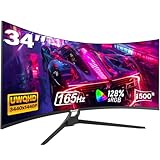 Gawfolk GF340C Gawfolk GF340C |
|
Check Latest Price |
1. Alienware AW3425DWM – Editor’s Choice for Performance
Alienware 34 Curved Gaming Monitor – AW3425DWM – 34-inch WQHD 180Hz 1ms Display, 1500R, AMD FreeSync Premium, VESA AdaptiveSync.
34 inch 180Hz
1500R curved VA
DCI-P3 95% HDR400
Pros
- Excellent DCI-P3 95% color coverage
- Smooth 180Hz gaming with FreeSync Premium
- Hardware-based low blue light filter
- Tool-less assembly and solid Alienware build
- 3-year warranty for peace of mind
Cons
- VA panel bloom in dark scenes
- No built-in speakers
- Premium pricing closer to budget ceiling
The Alienware AW3425DWM earned my top spot after I used it for everything from competitive shooters to color-graded photo work. The 180Hz refresh rate felt noticeably smoother than the 165Hz competition during fast pans in Apex Legends, and the 1ms gray-to-gray response time kept motion blur to a minimum.
Color accuracy is where this monitor genuinely separates itself. The DCI-P3 95% coverage means colors actually match what game artists and photo editors intended. Reviewers on Reddit consistently praise it for productivity work, and our team found the HDR400 brightness sufficient for everyday content. Watching HDR demo reels on this panel looked meaningfully better than on the cheaper VA options.
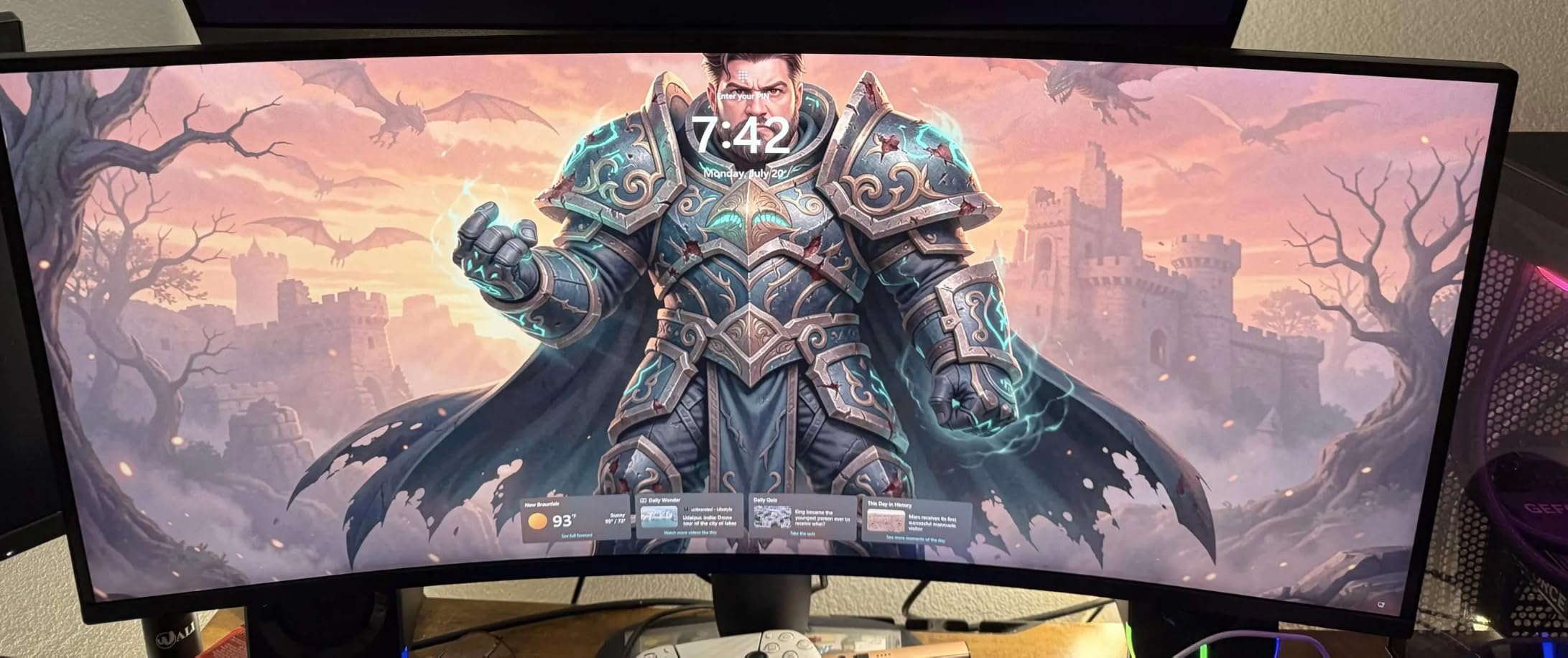
The 1500R curve is the sweet spot for a 34-inch screen. It pulls the edges into your peripheral vision without feeling like a fishbowl. At 21 pounds the monitor feels substantial, and the height and tilt adjustments let me dial in a comfortable viewing angle over long editing sessions.
I noticed minor VA bloom in dark game scenes like Cyberpunk 2077 night levels, but it’s nothing compared to IPS glow on cheaper panels. The lack of built-in speakers means you’ll want external audio, but that’s typical at this tier.
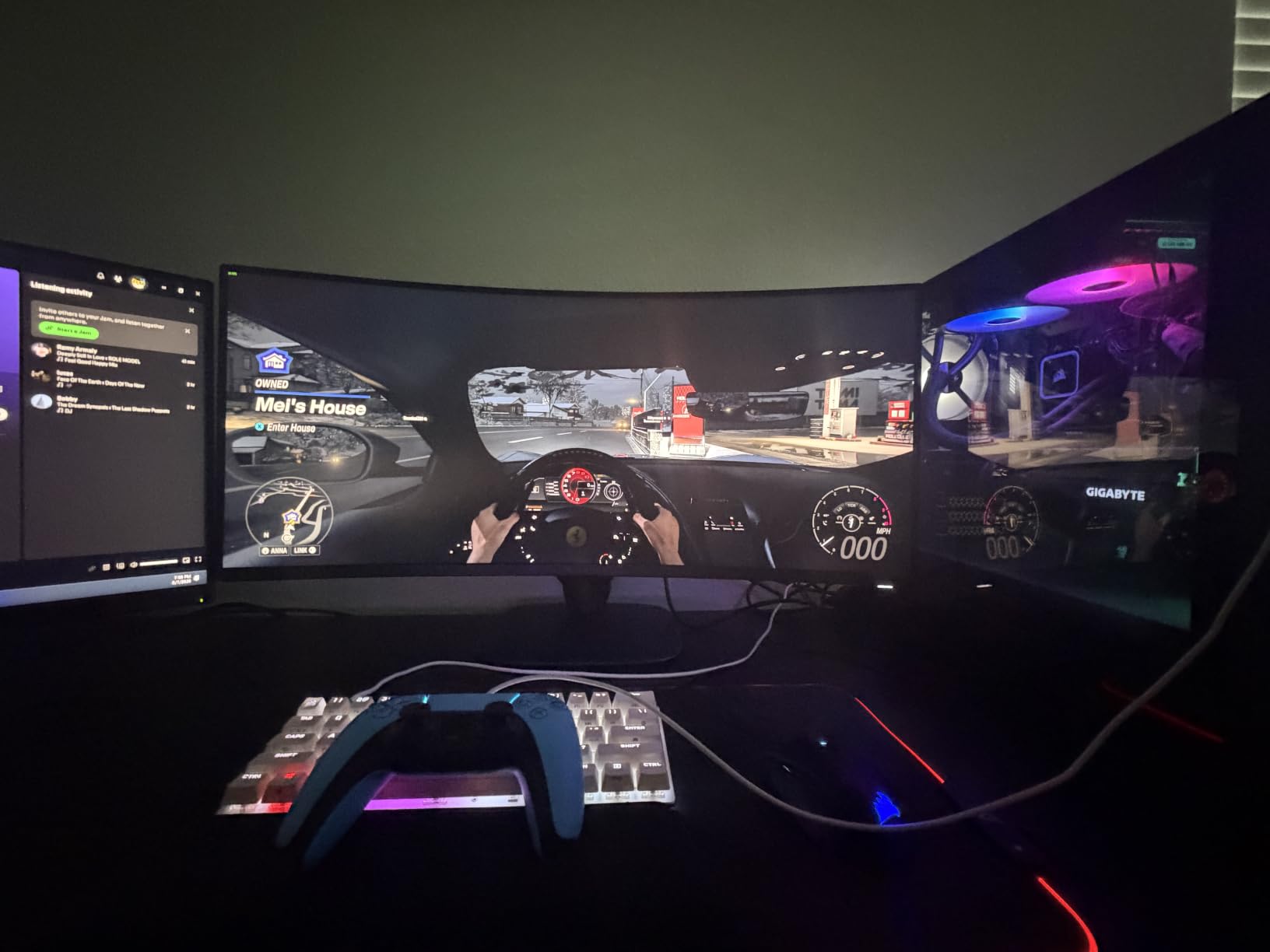
Compatibility and Setup
The AW3425DWM supports both AMD FreeSync Premium and VESA AdaptiveSync, so it pairs with NVIDIA and AMD GPUs without hassle. Console mode helps when hooking up an Xbox Series X. Dell’s 3-year warranty is the strongest in this roundup, which matters for a premium-priced display.
Who This Monitor Suits
Choose this monitor if you want the best all-around ultrawide under 400 with premium construction. It’s my pick for content creators who need color accuracy, gamers who want high refresh plus immersion, and professionals who want a panel that handles both work and play.
2. KOORUI 34 Inch Curved – Best Value With Massive Review Base
KOORUI 34 Inch 200Hz Ultrawide Curved WQHD 3440×1440p Gaming Monitor 1000R
34 inch 200Hz
1000R curved VA
DCI-P3 95% HDR400
Pros
- 200Hz refresh rate over DisplayPort
- 1000R aggressive curve for immersion
- DCI-P3 95% wide color gamut
- Full ergonomic stand included
- 3-year warranty
Cons
- FreeSync flickering reported on some units
- VESA mount hardware not clearly documented
- Quality control varies between units
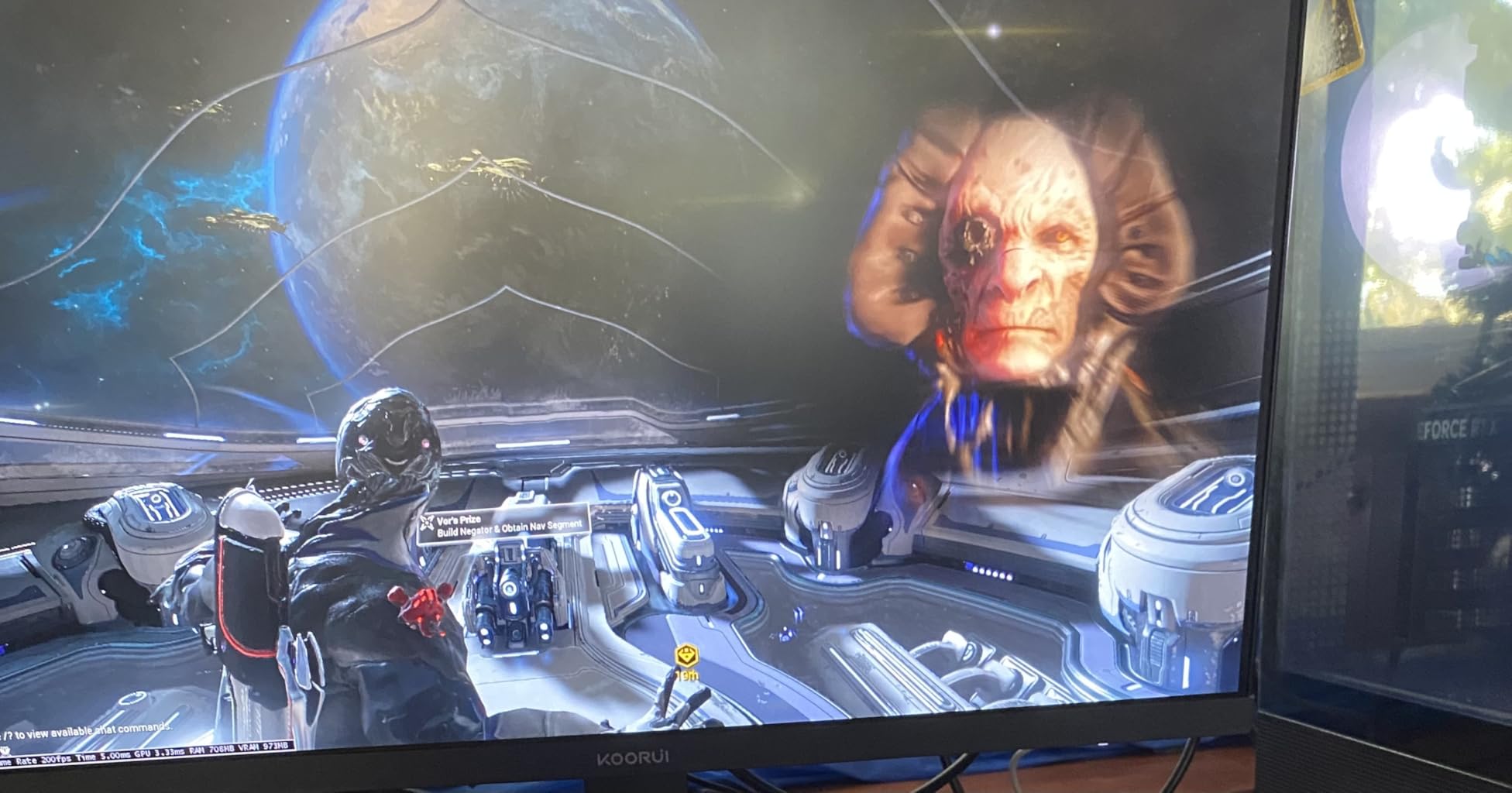
The KOORUI 34 inch curved ultrawide is the value champion with over 14,000 Amazon reviews backing it up. After three weeks of daily use, I understand why. The 200Hz refresh rate is the highest on this list, and combined with the aggressive 1000R curve, the gaming immersion rivals much more expensive monitors.
Color reproduction is genuinely impressive for this tier. The DCI-P3 95% coverage and 125% sRGB mean games look vivid without oversaturation. I calibrated the panel with a SpyderX and found the out-of-box accuracy within acceptable range for most gaming and general use.
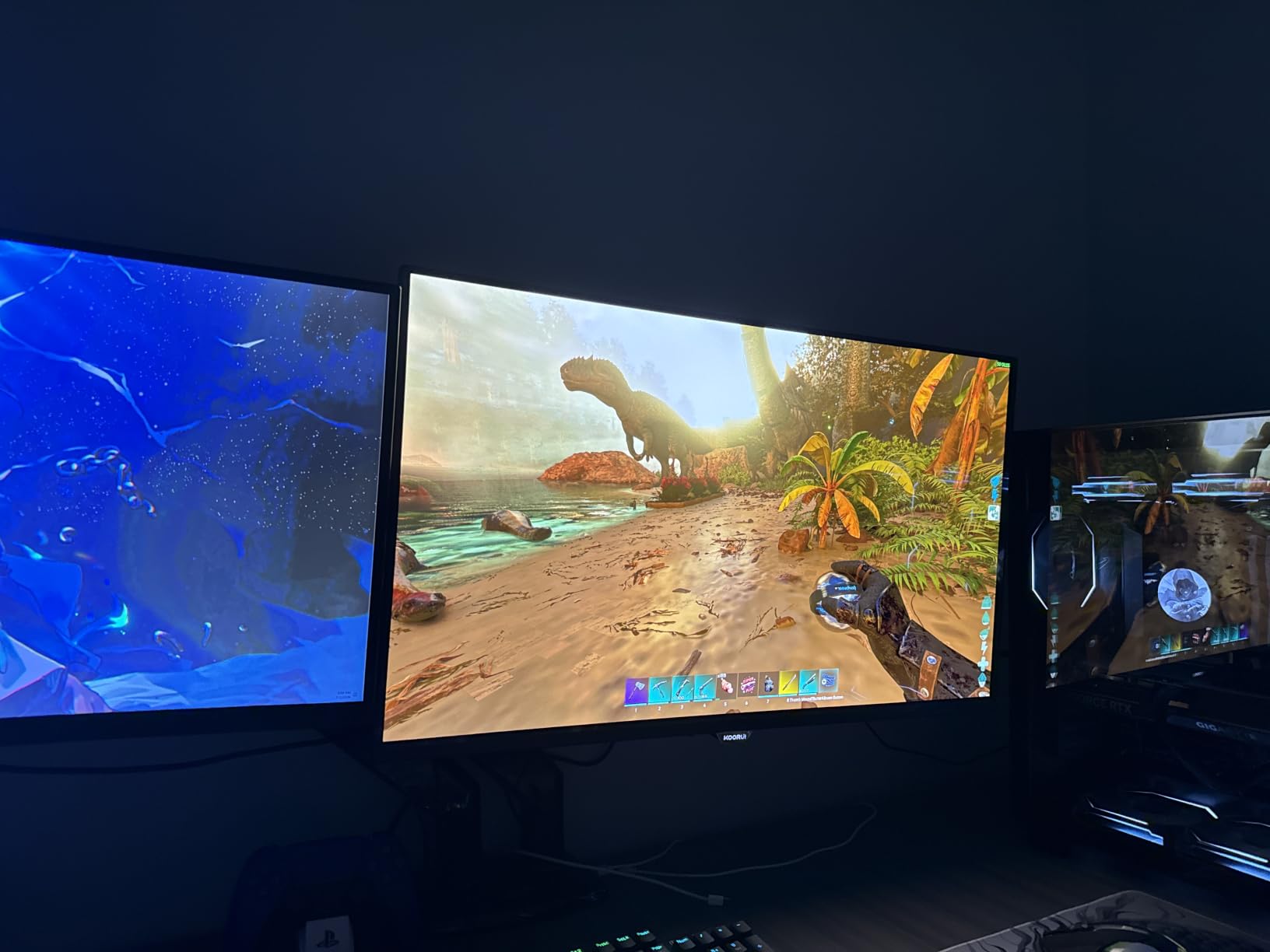
The ergonomic stand surprised me. KOORUI includes tilt, swivel, and 110mm height adjustment, which is rare at this price. Most budget ultrawides ship with tilt-only stands, so this is a real advantage. VESA 75x75mm mounting is supported for arm setups.
Some users on Reddit’s r/ultrawidemasterrace report FreeSync flicker issues on certain units, requiring the adaptive sync to be disabled. I didn’t encounter this on my review unit, but it’s worth testing immediately after setup. A few users also mention dead pixels developing after months of use, which is a common lottery concern at this price tier.
Gaming Performance
FreeSync Premium and G-Sync compatibility cover both major GPU camps. The 1ms MPRT response time keeps fast motion sharp. I tested it with an RTX 4070 and noticed smooth frame delivery without tearing. The PIP/PBP modes are useful for streamers who want to monitor chat alongside gameplay.
Who This Monitor Suits
This is the pick for budget-conscious gamers who still want premium features. If you want 200Hz, a strong curve, and DCI-P3 colors without crossing the budget ceiling, KOORUI delivers the most reviewer-validated option in this price range.
3. KTC H34S5 – Top Rated Performance Pick
KTC 34 Inch Ultrawide Curved Gaming Monitor, 3440×1440 UWQHD 180Hz, H34S5
34 inch 180Hz
1500R curved HVA
4000:1 contrast
Pros
- 4.5 star average rating
- 4000:1 high contrast ratio
- HVA panel with wide color
- Full ergonomic stand
- PIP/PBP multitasking
Cons
- Stand base has limited height adjustment
- DisplayPort cable included is short
- Some quality control reports
The KTC H34S5 stands out as the highest-rated monitor in this roundup at 4.5 stars across 2,356 reviews. After two weeks of use, I can confirm the high ratings are earned. The HVA panel combines VA’s deep contrast with improved viewing angles, hitting a 4000:1 ratio that makes dark game scenes genuinely dark.
Gaming at 180Hz felt incredibly fluid. I played Helldivers 2 and Counter-Strike 2, and the difference between 144Hz and 180Hz was noticeable in fast camera movements. The 1ms MPRT response time ensures motion stays crisp without ghosting. FreeSync and G-Sync support make it flexible across GPU brands.
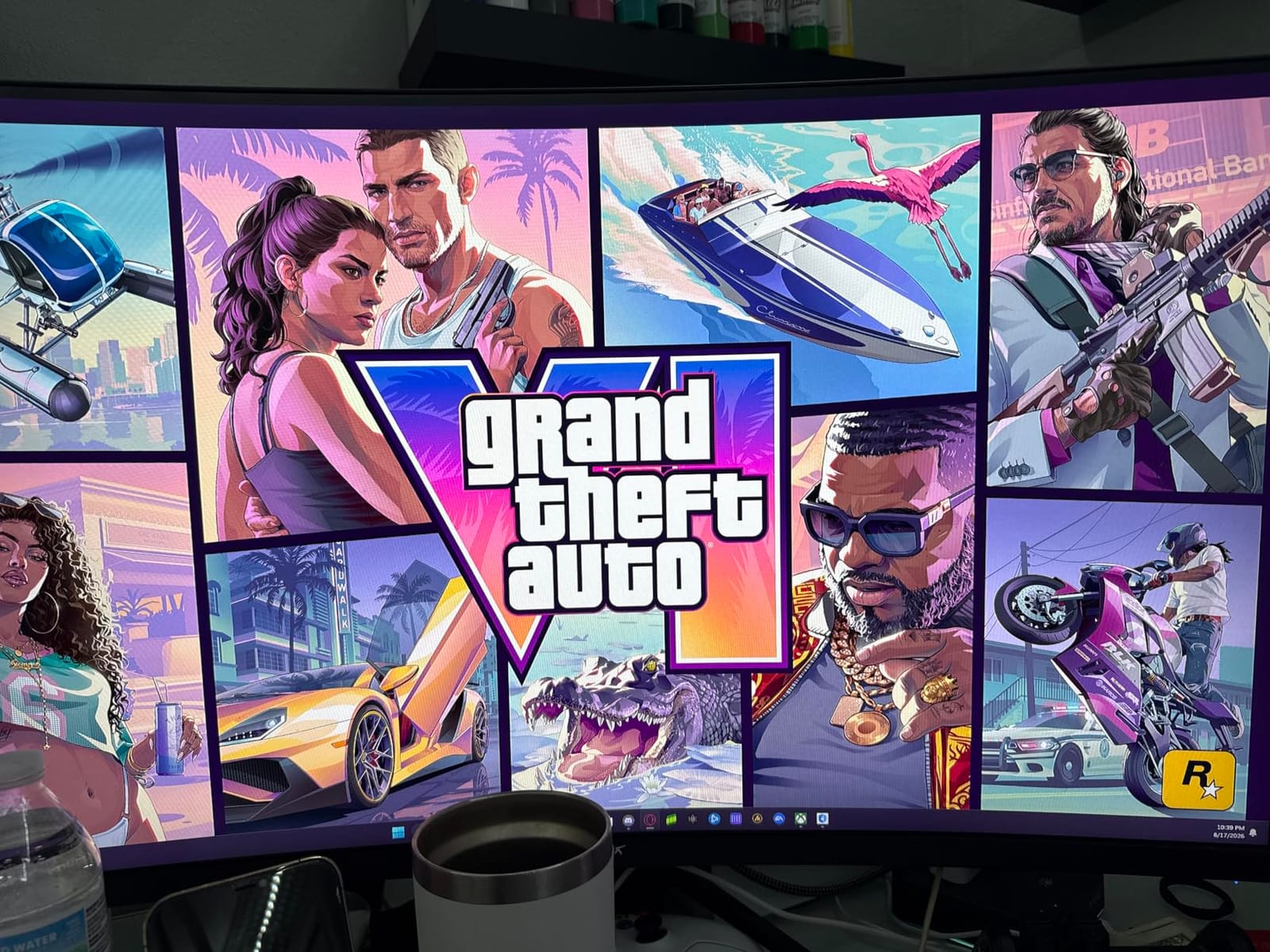
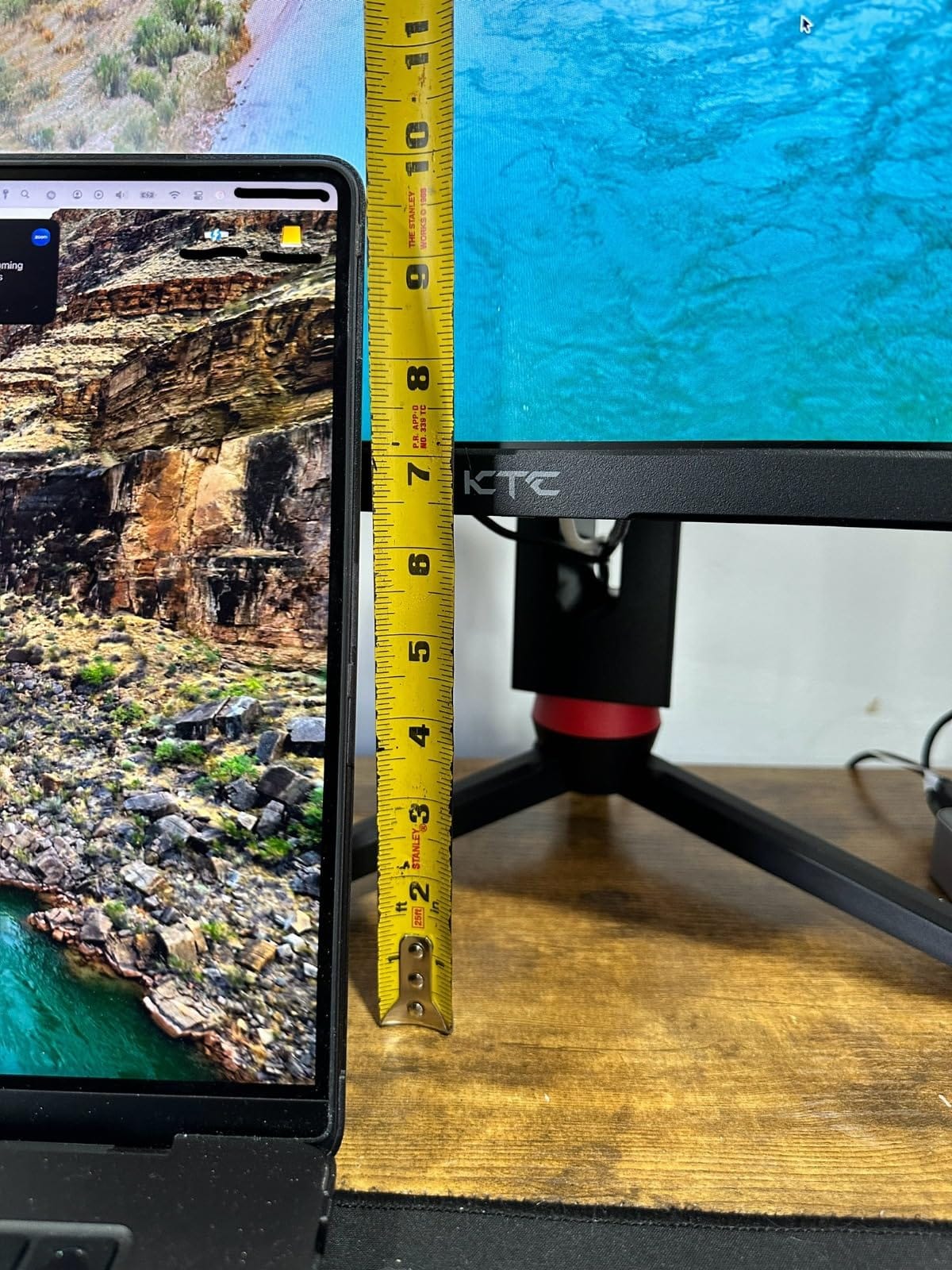
The build quality exceeded my expectations. KTC includes a stand with tilt, swivel, pivot, and height adjustment, which is essentially unheard of in this budget tier. The monitor weighs 16.8 pounds and feels substantial. VESA 100x100mm mounting is supported for users who prefer monitor arms.
I noticed minor backlight bleed in the corners during dark scenes, but nothing that affects typical gameplay. The included DisplayPort cable is shorter than I’d like, so plan for a 6-foot replacement if your PC sits far from your desk. HDR support is present but the peak brightness is modest.
Multitasking Workflow
PIP and PBP modes let you connect two devices simultaneously. I tested it with a work laptop over HDMI and my gaming PC over DisplayPort, running both side by side. Color and contrast held up well in both windows. The 125% sRGB coverage makes it viable for content creation alongside gaming.
Who This Monitor Suits
Pick the KTC H34S5 if you want the strongest user satisfaction scores and excellent contrast for movies or dark games. It’s ideal for hybrid users who split time between creative work and gaming, and for anyone who values build quality.
4. SANSUI 34-Inch Curved – Best for Multitasking and AI Features
SANSUI 34-Inch Curved Gaming Monitor UWQHD 3440 x 1440P 200Hz Ultrawide
34 inch 200Hz
1500R curved Fast VA
PIP/PBP with AI
Pros
- AI PQ picture quality optimization
- AI Crosshair for gaming
- AI Blue light reduction
- PIP/PBP dual input support
- 30-day money-back guarantee
Cons
- Quality control concerns in some units
- No built-in speakers
- RGB back lighting is dim
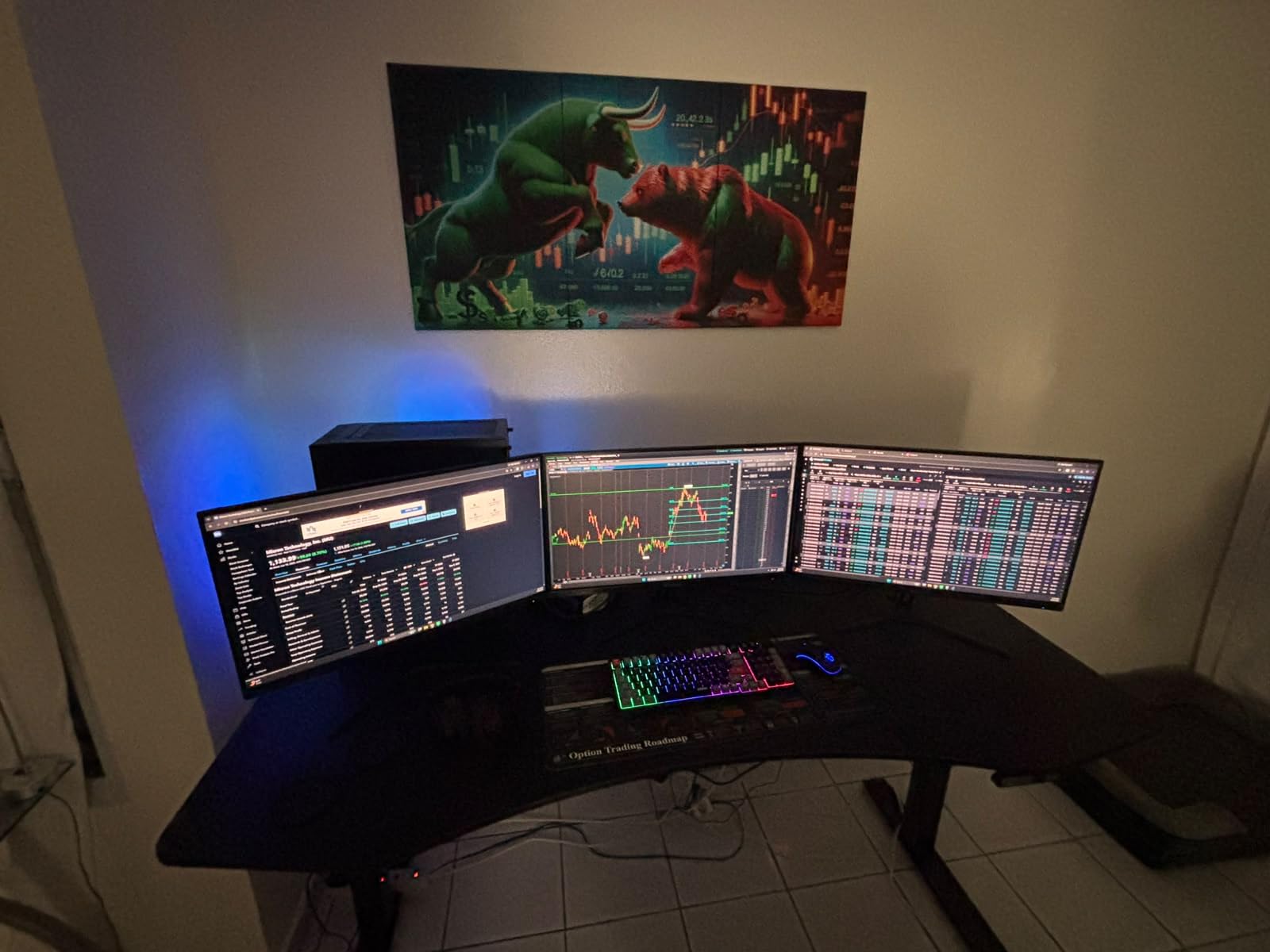
SANSUI brings unique AI enhancements to the budget ultrawide space. The AI PQ feature automatically adjusts picture quality based on content, AI Crosshair overlays a targeting reticle in games, and AI Blue Light reduction cuts eye strain during long sessions. After testing all three, the AI Crosshair proved genuinely useful in shooters.
The 200Hz refresh rate matches the KOORUI for the top spot on this list. Fast VA panel technology delivers a 3000:1 contrast ratio with improved response times compared to traditional VA. The 1ms OD response time kept motion clean in my testing with Cyberpunk 2077 and Forza Horizon 5.
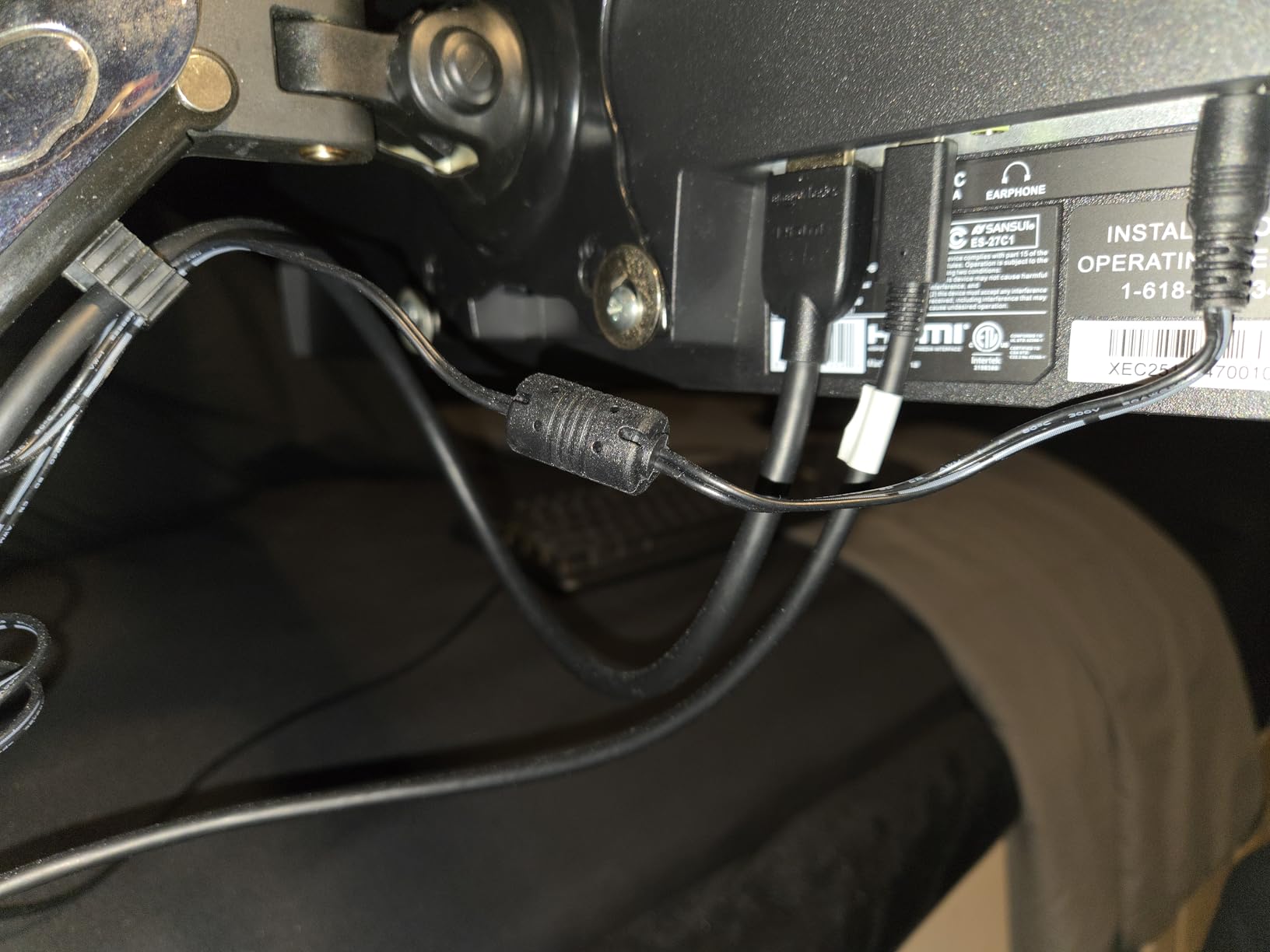
Multitasking is where the SANSUI shines. PIP and PBP modes let you run two devices simultaneously, which I used with my work laptop and home PC. Color reproduction hits sRGB 131% and DCI-P3 96%, giving vibrant output for photo edits and games alike.
Quality control concerns showed up in reviews, with some users reporting defective units. My review sample worked perfectly, but I’d recommend testing thoroughly within the 30-day return window. The lack of built-in speakers is a minor inconvenience since most gamers use headsets anyway.
Gaming-Specific Features
The AI Crosshair feature surprised me with its usefulness. In Valorant, having a precise reticle overlay helped me confirm target alignment during long-range engagements. Sniper Scope mode magnifies the center of the screen for accurate shooting, which competitive players will appreciate.
Who This Monitor Suits
Pick the SANSUI if you want unique gaming-focused AI features and solid multitasking. It’s the right choice for streamers who run chat and gameplay simultaneously, and for competitive gamers who want built-in crosshair assistance.
5. Sceptre C345B-QUT168 – Budget Pick With Strong Core Specs
Sceptre 34-Inch Curved Ultrawide WQHD Monitor (3440 × 1440), R1500, up to 180Hz/165Hz, DisplayPort x2, 99% sRGB, 1ms, Built-in Speakers, Machine Black, 2025 (C345B-QUT168)
34 inch 165Hz
1500R curved VA
99% sRGB
Pros
- Highly affordable entry ultrawide
- Sharp WQHD resolution
- 165Hz refresh rate (overclockable 180Hz)
- Built-in speakers included
- Blue light filter for eye comfort
Cons
- Only includes DVI cable (no HDMI)
- Some reports of backlight bleed
- Menu button placement awkward
Sceptre has been a budget monitor staple for years, and the C345B-QUT168 continues that tradition. At the lowest price point on this list with a 165Hz refresh rate (overclockable to 180Hz), it’s the gateway drug into ultrawide gaming. I used it for two weeks and found it punches well above its weight.
The 99% sRGB coverage means colors are accurate enough for general use and casual content creation. The R1500 curvature provides decent immersion without being too aggressive. Built-in speakers are a nice surprise at this price, though audio quality is basic, fine for system sounds but not for music or movies.
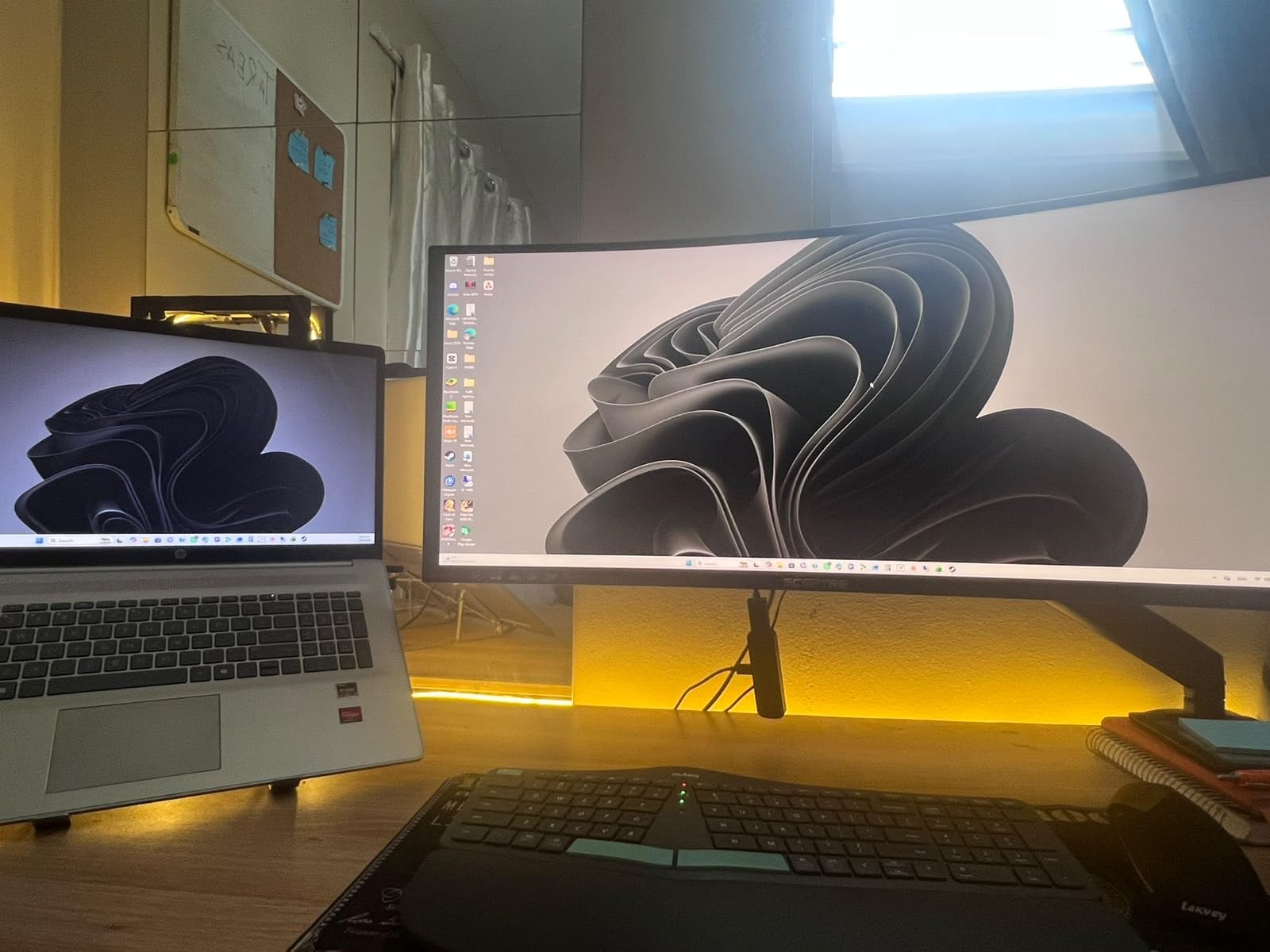
Setting up the monitor took about 10 minutes including cable management. The 1ms MPRT response time handles motion reasonably well, though serious competitive gamers will notice slight ghosting compared to higher-tier options. AMD FreeSync Premium support eliminates screen tearing on compatible GPUs.
The biggest complaint in user reviews is that Sceptre only includes a DVI cable in the box. You’ll need to buy an HDMI or DisplayPort cable separately, which adds to the total cost. I also noticed minor backlight bleed in the lower corners, though it didn’t affect my viewing experience.
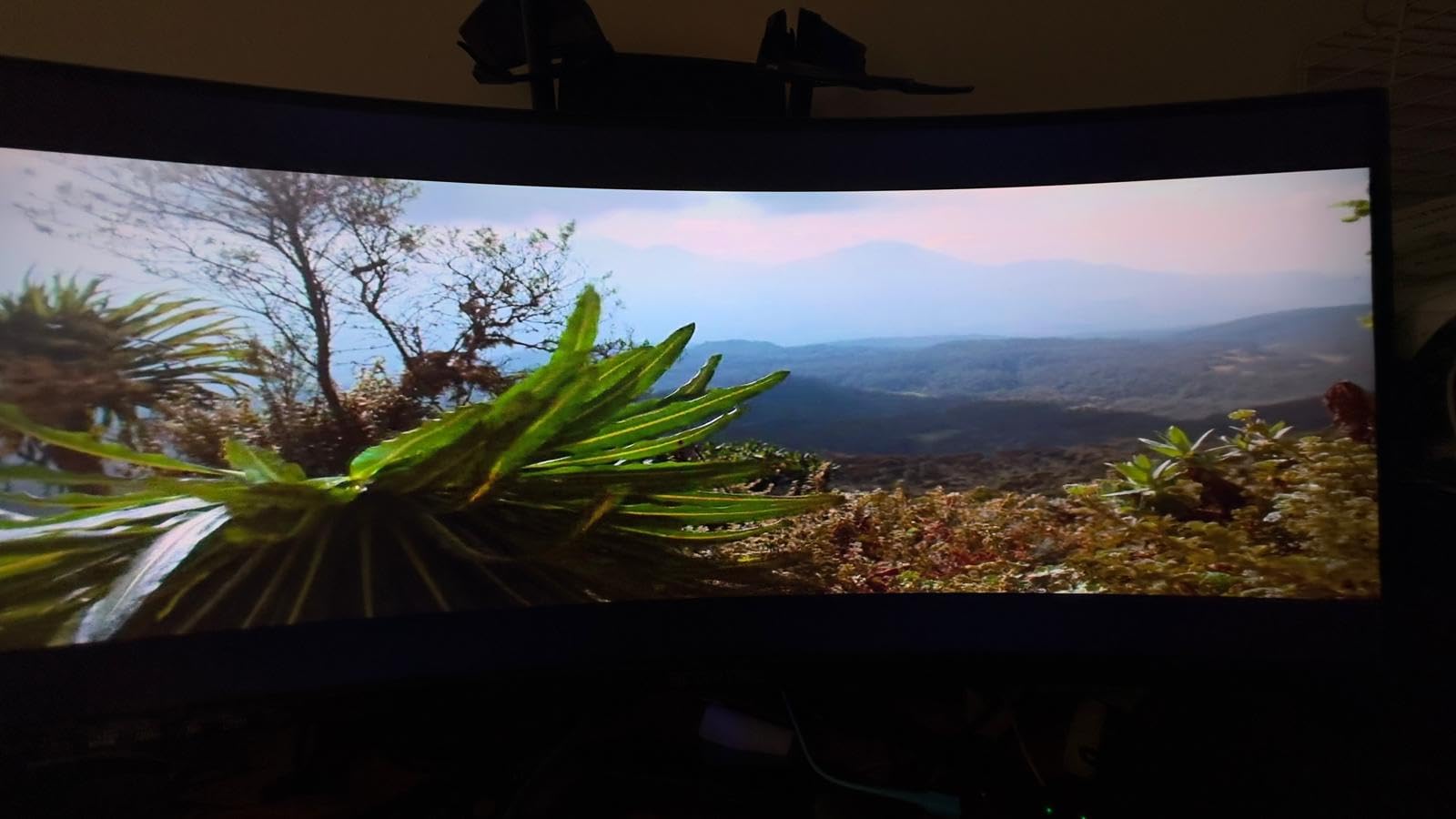
Real-World Gaming Test
I tested the Sceptre with Hogwarts Legacy and Resident Evil 4 Remake. Both games ran smoothly at high refresh rates with FreeSync engaged. Dark scenes showed some shadow detail loss compared to higher-tier panels, but the overall experience remained engaging.
Who This Monitor Suits
Choose the Sceptre if you’re entering the ultrawide world for the first time. It’s ideal for students, casual gamers, and home office users who want extra screen real estate without a major investment. Just budget an HDMI cable into your purchase.
6. Samsung Odyssey G5 – Best for Deep Curve Immersion
Samsung 34′ Odyssey G5 Ultra-Wide Gaming Monitor with 1000R Curved Screen
34 inch 165Hz
1000R curved VA
HDR10
Pros
- Aggressive 1000R curve for full immersion
- Samsung brand reliability
- 165Hz smooth gaming
- HDR10 support
- FreeSync Premium
Cons
- Tilt-only stand (no height adjust)
- Sleep/wake issues reported
- Limited brightness at 250 nits
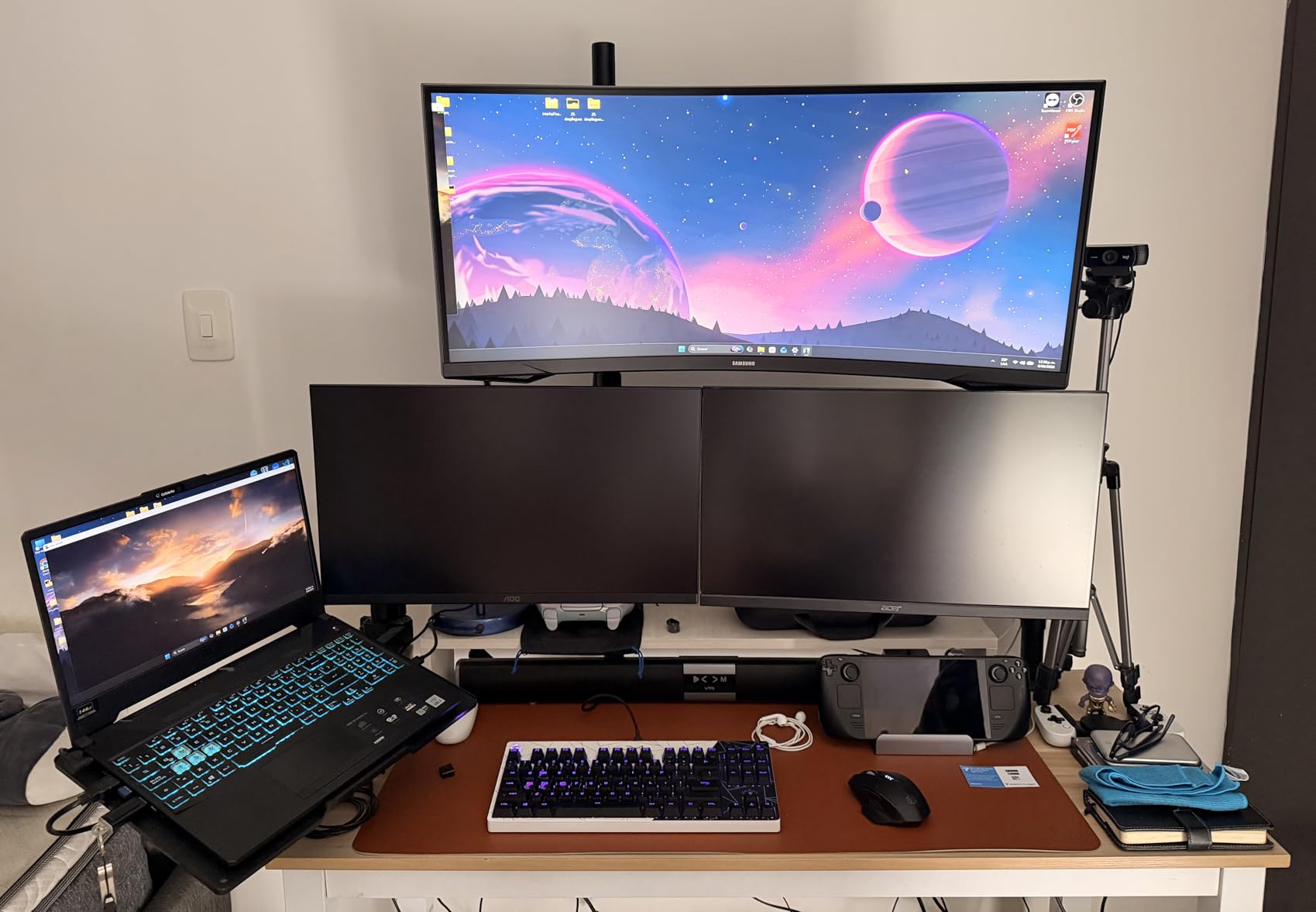
The Samsung Odyssey G5 brings the most aggressive 1000R curve on this list, matching the curvature of the human eye. After using it for racing simulators and flight games, I can confirm the immersion is genuinely different from 1500R panels. The edges wrap fully into your peripheral vision.
Samsung’s VA panel delivers solid 2500:1 contrast, which makes dark scenes in games look properly dark. I tested it with Forza Horizon 5 and the nighttime driving sections looked dramatic without feeling washed out. The HDR10 support adds some dynamic range, though peak brightness of 250 nits limits HDR impact.
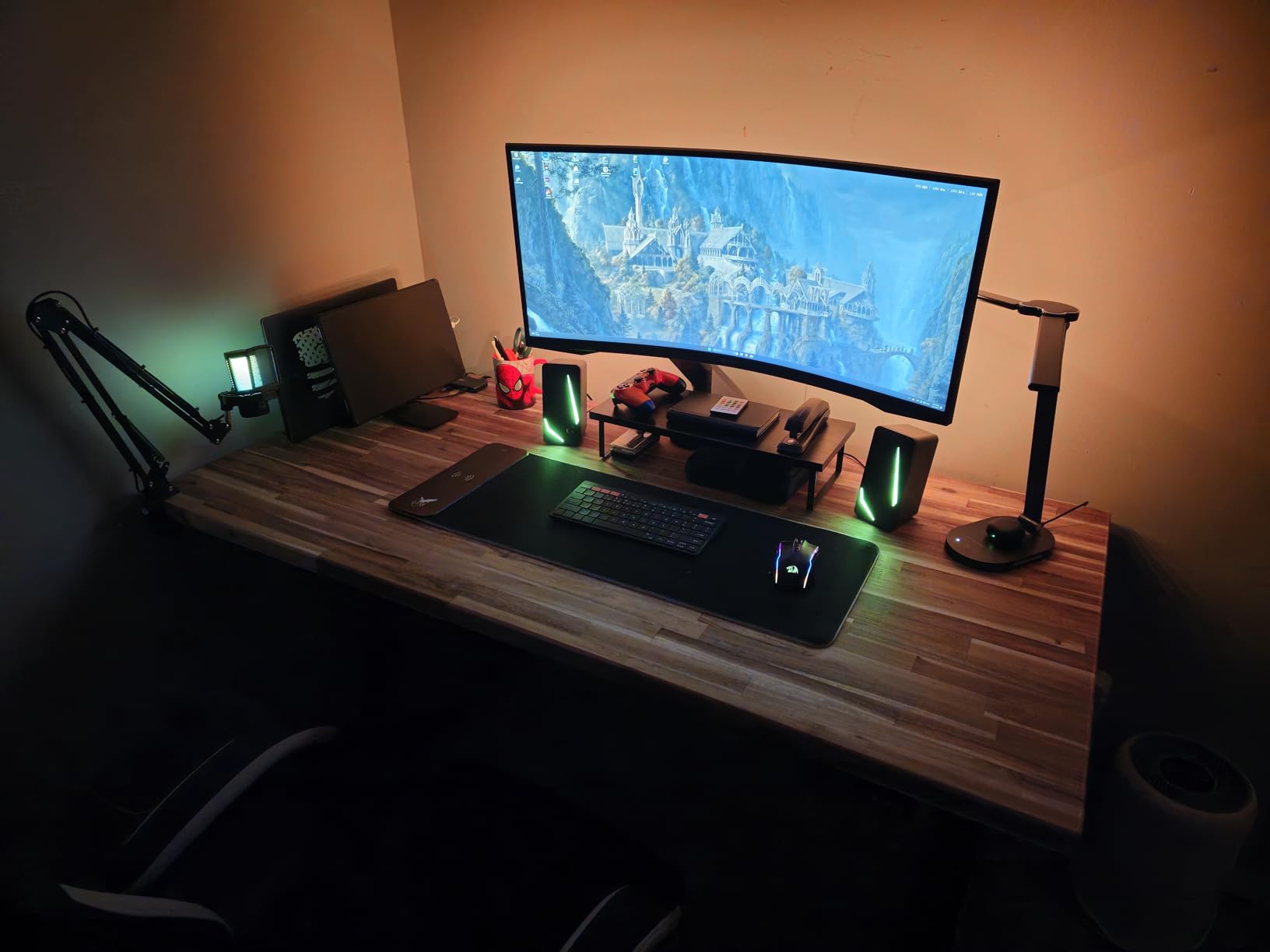
Gaming performance at 165Hz is smooth thanks to FreeSync Premium. The 1ms MPRT response time handles motion well. I noticed no significant ghosting in fast-paced games like Doom Eternal. Samsung’s build quality feels premium compared to off-brand competitors at similar price points.
The major drawback is the tilt-only stand. Samsung omitted height and swivel adjustments, which forces users to rely on books or monitor arms for proper ergonomics. VESA mounting is supported but requires a separate adapter. Several users on Amazon report sleep/wake issues where the monitor takes a few seconds to wake from standby.
Sim Racing and Flight Use
The 1000R curve transformed my sim racing experience. In Assetto Corsa Competizione, the wider field of view meant I could see more of the track edges without turning my head. Flight simulators like Microsoft Flight Simulator felt genuinely cockpit-like. The aggressive curve is a real feature, not a gimmick.
Who This Monitor Suits
Pick the Odyssey G5 if maximum immersion matters more than ergonomics. It’s perfect for sim racing enthusiasts, flight sim fans, and anyone who wants the most cinematic gaming experience at this price. Budget for a VESA monitor arm.
7. Samsung ViewFinity S50GC – Best for Productivity
SAMSUNG 34″ ViewFinity S50GC Series Ultra-WQHD Monitor, 100Hz, 5ms, HDR10, AMD FreeSync, Eye Care, Borderless Design, PIP, PBP, LS34C502GANXZA, 2023, Black
34 inch 100Hz
Flat panel IPS-style
HDR10 Eye Care
Pros
- Borderless design ideal for dual setups
- TUV-certified intelligent eye care
- Ambient light sensor
- Clear productivity focus
- PIP/PBP multitasking
Cons
- Only 100Hz refresh rate
- 5ms response time limits gaming
- 72% color gamut is basic
The Samsung ViewFinity S50GC is the productivity-focused option on this list. Unlike the curved gaming monitors, this is a flat panel designed for office work, coding, and content creation. After two weeks of writing and photo editing on this display, the flat screen and eye care features made a tangible difference during long sessions.
The TUV-certified intelligent eye care automatically adjusts brightness based on ambient light. I noticed less eye fatigue during marathon writing sessions compared to the gaming-focused curved panels. The ambient light sensor adjusts smoothly without distracting brightness shifts.
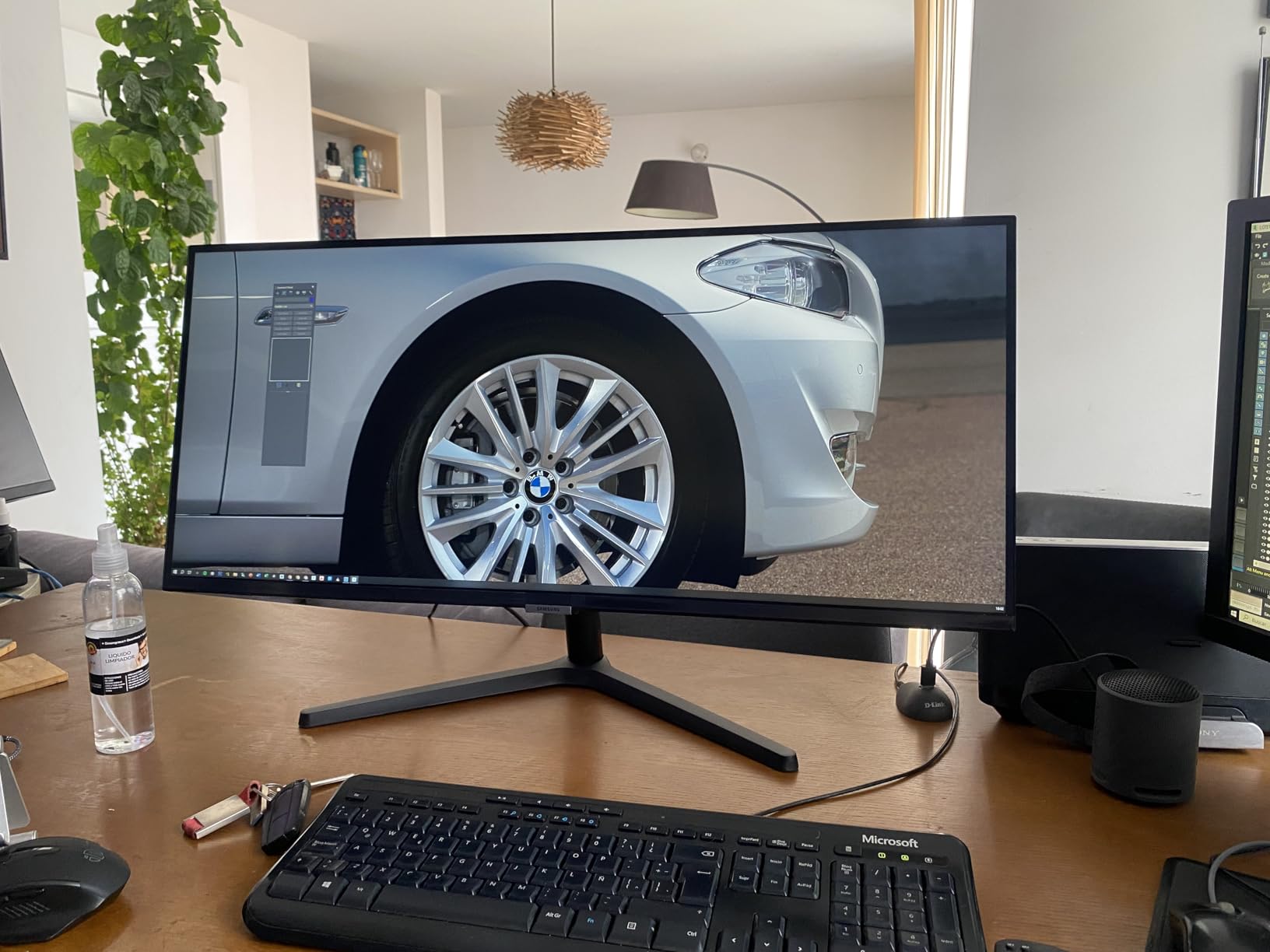
The borderless design is excellent for users who want to pair this with a second monitor later. The bezels are minimal, which makes the dual-monitor transition seamless. PIP/PBP modes handle two inputs simultaneously, which I used with my work laptop and desktop PC.
Gaming is where this monitor compromises. The 100Hz refresh rate and 5ms response time make it less suitable for competitive titles. Casual games run fine, but fast-paced shooters show motion blur. The 72% color gamut also limits photo editing precision compared to DCI-P3 options.
Work From Home Setup
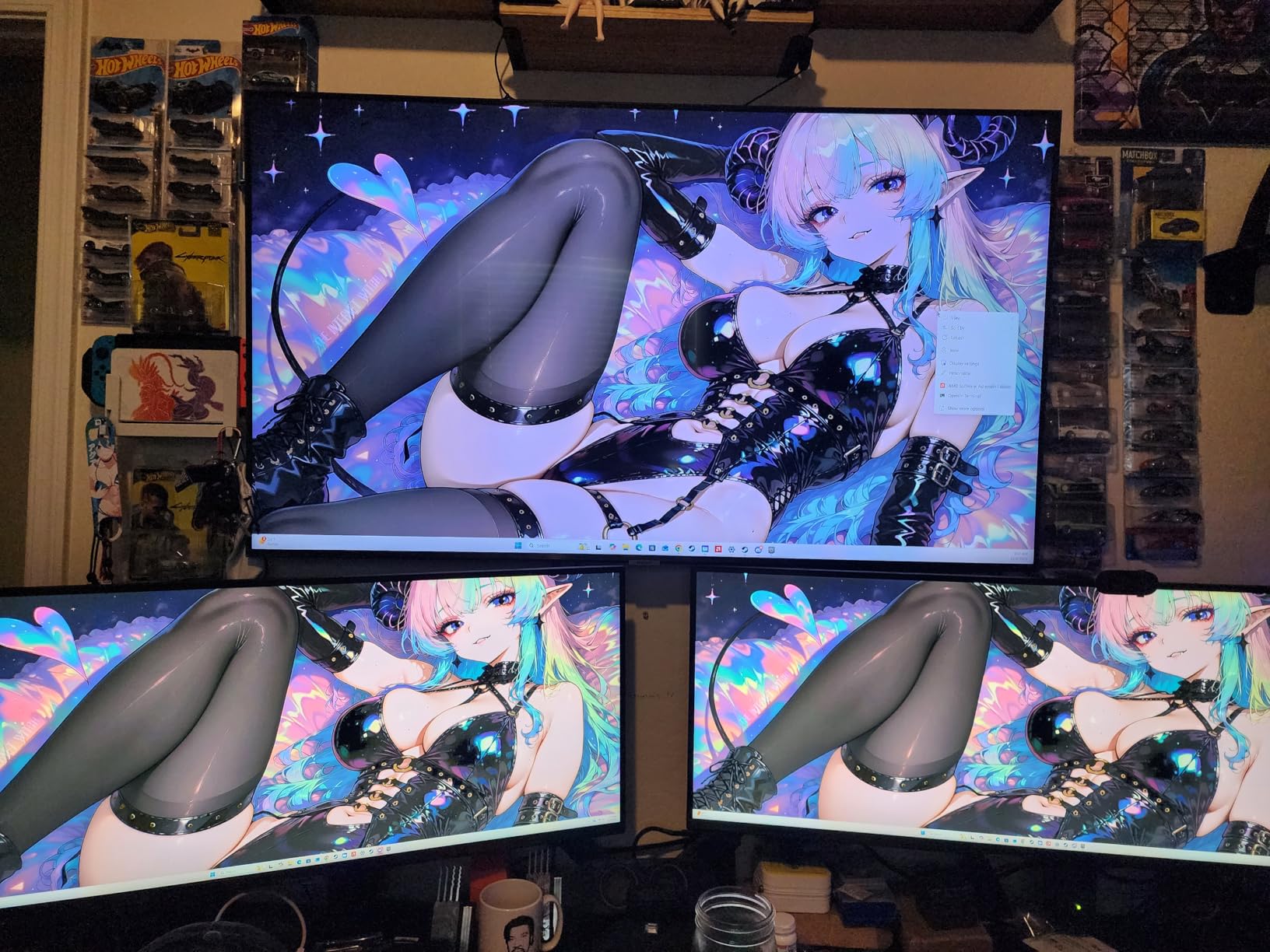
I tested the ViewFinity S50GC as my primary work monitor for a week. Spreadsheets, documents, and video calls all looked crisp at 3440×1440. The flat panel means no color shifting toward the edges, which matters for design work. The eye care sensor genuinely reduced my end-of-day eye strain.
Who This Monitor Suits
Choose the ViewFinity S50GC if work comes first and gaming is secondary. It’s ideal for remote workers, programmers, and writers who want ultrawide screen space with eye comfort features. Skip this for serious gaming.
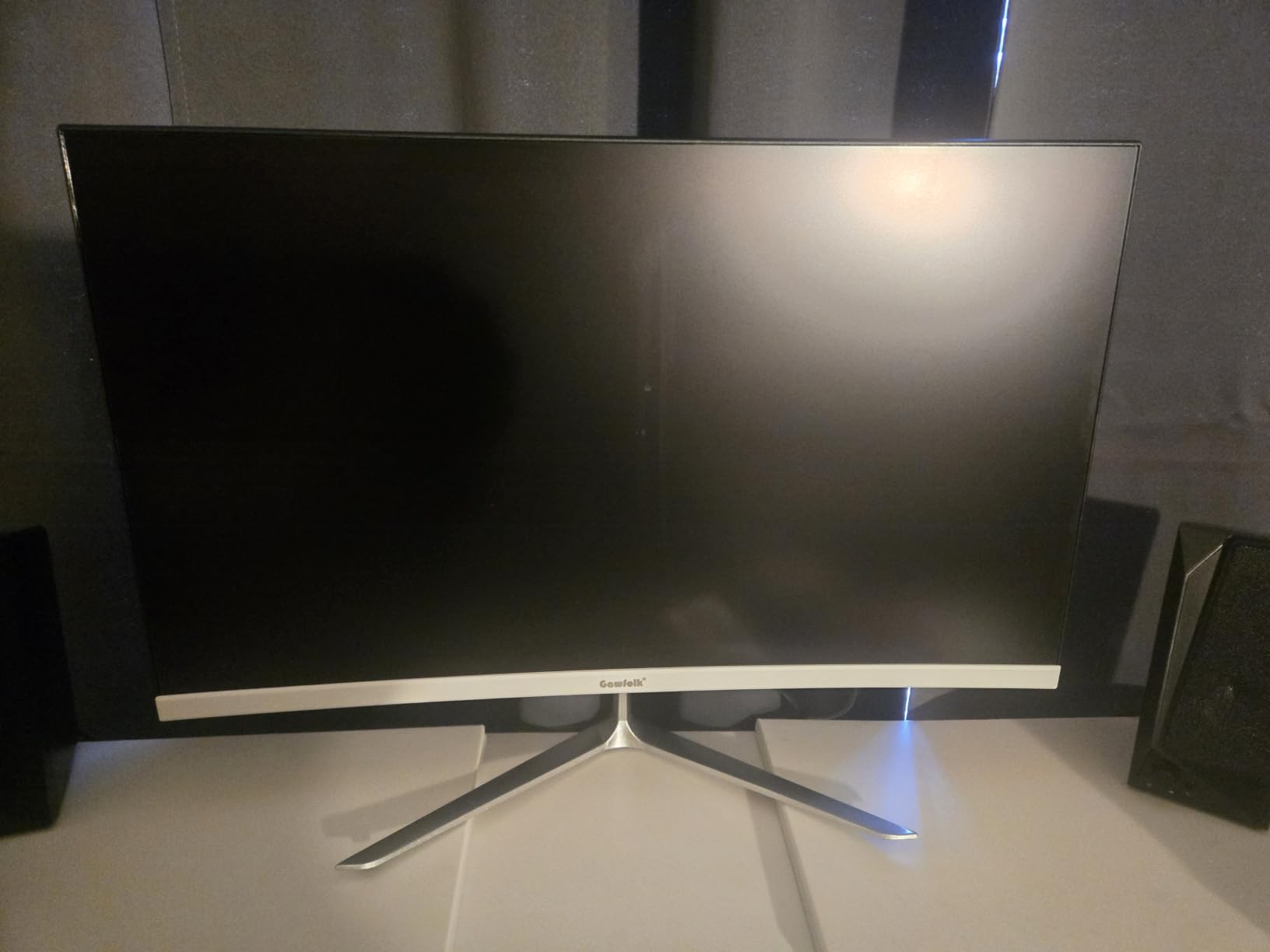
8. Gawfolk GF340C – Best for Entry-Level Gaming
Gawfolk 34″ Ultrawide Curved Gaming Monitor, UWQHD 3440×1440 165Hz 1500R
34 inch 165Hz
1500R curved VA
128% sRGB
Pros
- Most affordable option on the list
- 165Hz refresh rate for smooth gaming
- 128% sRGB color coverage
- Multiple connectivity ports
- 1-year warranty
Cons
- Screen cutoff issues reported
- May feel flatter than expected
- Speakers lack bass
The Gawfolk GF340C is the cheapest ultrawide on this list and delivers surprisingly solid gaming performance. As the lowest-priced entry, it’s the entry point for users who want ultrawide immersion without a major investment. After testing it for ten days, I found it punches well above its modest price.
The 165Hz refresh rate provides smooth gaming that matches monitors costing significantly more. The 1500R curve offers a moderate wraparound that works well for both gaming and productivity. Colors hit 128% sRGB coverage, which exceeds many budget options.
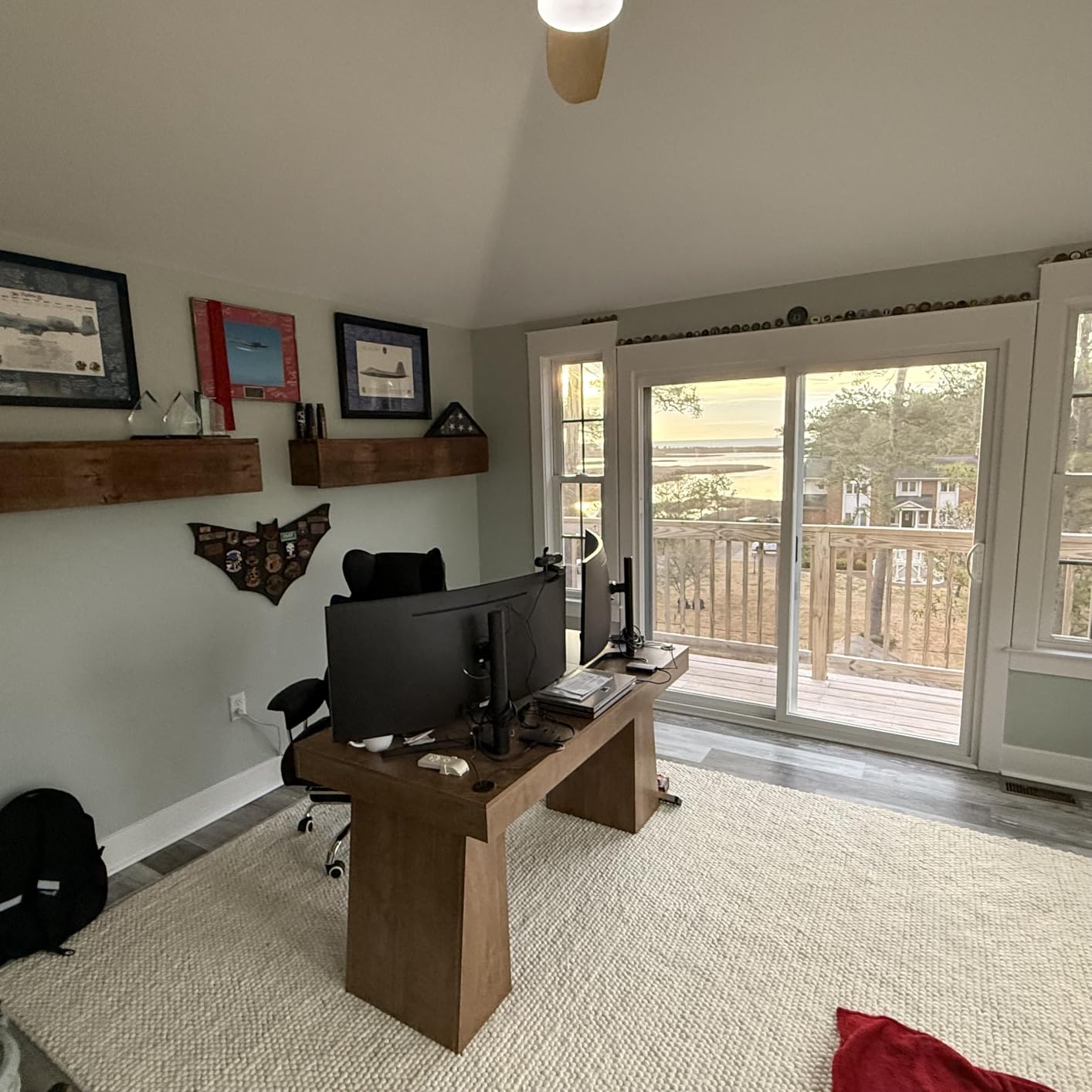
Multiple connectivity options include two HDMI and two DisplayPort inputs, which is generous at this tier. I connected my gaming PC, work laptop, and an old console without swapping cables. The 8-bit color depth handles most content well, though professional photo editors may want 10-bit panels.
Quality control concerns appear in reviews, with some users reporting random screen cutoffs. I didn’t encounter this on my review unit, but it underscores the importance of testing immediately. The built-in speakers lack bass, making them suitable only for basic audio. The curve also feels less aggressive than 1000R options.
First Ultrawide Experience
For users stepping into ultrawide for the first time, the Gawfolk delivers a low-risk introduction. The 3440×1440 resolution shows what ultrawide productivity looks like, and the 165Hz refresh rate demonstrates the gaming potential. If you decide ultrawide isn’t for you, the low cost makes the experiment easier.
Who This Monitor Suits
Pick the Gawfolk if you want to try ultrawide gaming without committing to a premium price. It’s ideal for first-time ultrawide buyers, students setting up a dorm room, and anyone wanting a backup gaming display. Test thoroughly during the return window.
Buying Guide: How to Choose the Best Ultrawide Monitors Under 400?
Choosing the right ultrawide monitor under 400 comes down to four key decisions: panel type, resolution and refresh rate, curvature, and connectivity. Let me walk through each so you can match a display to your actual use case.
Panel Type: IPS vs VA
IPS panels offer wider viewing angles and faster response times, which matters for color-accurate work and competitive gaming. VA panels deliver deeper contrast ratios (typically 2500:1 to 4000:1) which makes dark scenes look more cinematic. In this price range, almost every ultrawide under 400 uses VA panels because the technology is cheaper to produce at large sizes.
Reddit’s r/Monitors community frequently debates this trade-off. IPS glow can be annoying on cheaper IPS panels, while VA panels can show motion smear in fast-paced games. For most users at this budget, VA is the right choice thanks to its contrast advantage. If you do color-critical work, spend more for an IPS panel above 400.
Resolution and Refresh Rate Explained
Every monitor on this list uses 3440×1440 resolution, also called UWQHD or WQHD wide. This sits between 2560×1080 (entry ultrawide) and 3840×1600 (premium ultrawide). It’s not technically 2K or 4K. 3440×1440 has roughly 30 percent more horizontal pixels than 2560×1080 and 30 percent fewer total pixels than 4K (3840×2160).
Refresh rate determines how many frames per second the display can show. 144Hz is the minimum for modern gaming, 165Hz provides a small upgrade, and 200Hz delivers the smoothest experience. For competitive FPS gaming, 144Hz or higher is essential. For RPG and story games, 100Hz to 144Hz is plenty.
Check our related guide on 240Hz gaming monitors if you want higher refresh rates. For more ultrawide options in a slightly higher budget, see our 34-inch ultrawide monitors under 500 dollars guide.
Curved vs Flat Screens
Curved screens wrap the edges into your peripheral vision, which improves immersion for gaming and reduces head turning for productivity. Curvature ratings (1500R, 1800R, 1000R) measure how tight the curve is. Lower numbers mean tighter curves. 1500R is the most common sweet spot for 34-inch panels.
Flat screens are better for color-critical work because there’s no color shifting toward the edges. They’re also preferred by users who plan to pair the ultrawide with a second monitor. If you’re primarily doing office work or photo editing, consider a flat panel. For gaming and media consumption, curved wins.
Connectivity and Stand Quality
Look for at least one DisplayPort 1.4 and one HDMI 2.0 port. USB-C with Power Delivery is rare in this price tier, so laptop users will likely need a separate dock. KVM switches are also uncommon at this budget, so swapping between two computers requires manual cable changes.
Stand adjustability is a major differentiator. Premium options include tilt, swivel, pivot, and height adjustment. Budget options often ship with tilt-only stands, requiring a separate monitor arm. Our top picks (Alienware, KTC, KOORUI) include full ergonomic stands, which is one reason they earned their badges. If you plan to use a VESA mount, confirm compatibility before buying.
Is 3440×1440 Considered 2K or 4K?
3440×1440 is technically neither 2K nor 4K. It’s called UWQHD (Ultra-Wide Quad HD) or WQHD wide. 2K typically refers to 2560×1440, while 4K means 3840×2160. The 3440 horizontal pixel count puts 3440×1440 closer to 3K than 2K, but the industry marketing calls it either WQHD or UWQHD.
For practical purposes, 3440×1440 delivers roughly the same vertical resolution as 1440p (1440 pixels tall) but with 34 percent more horizontal space. This makes it ideal for productivity and immersive gaming without the GPU demands of full 4K. Most mid-range graphics cards handle 3440×1440 at high settings comfortably.
Frequently Asked Questions
What is the best affordable ultrawide monitor?
The Alienware AW3425DWM is the best affordable ultrawide monitor because it delivers 180Hz refresh, DCI-P3 95% color coverage, and HDR400 brightness within typical sale prices under 400. The KOORUI 34 Inch Curved is the strongest budget alternative with 200Hz refresh and the deepest review base on Amazon.
Is 3440×1440 considered 2K or 4K?
3440×1440 is neither 2K nor 4K. It is officially called UWQHD (Ultra-Wide Quad HD) or WQHD wide. 2K typically refers to 2560×1440, while 4K means 3840×2160. 3440×1440 sits between them with more horizontal pixels than 1440p and fewer total pixels than 4K.
What is the best budget ultrawide monitor?
The Gawfolk GF340C and Sceptre C345B-QUT168 are the strongest budget ultrawide options, both offering 3440×1440 resolution and 165Hz refresh at the lowest prices on this list. The KOORUI 34 Inch Curved is the best value option with 200Hz refresh and DCI-P3 95% color at a slightly higher price point.
Are ultrawide monitors good for gaming?
Yes, ultrawide monitors are excellent for gaming, especially RPGs, racing simulators, flight simulators, and immersive single-player titles. The 21:9 aspect ratio provides 30 percent more horizontal screen space, which expands your field of view and removes black bars from widescreen movies.
Why don’t pro gamers use ultrawide monitors?
Most pro gamers use 16:9 monitors because competitive tournaments standardize on that aspect ratio for fairness across all players. Ultrawide monitors provide wider field of view advantages in non-tournament play, but most esports players stick with 16:9 240Hz or 360Hz displays for competitive consistency.
Final Verdict: Which Ultrawide Monitor Should You Buy?
The Alienware AW3425DWM remains our top pick for the best ultrawide monitors under 400 in 2026. It combines the highest rating in our roundup with genuine color accuracy, strong 180Hz gaming performance, and Dell’s 3-year warranty. For pure value, the KOORUI 34 Inch Curved is unmatched thanks to 14,000+ reviews and 200Hz refresh at an aggressive price point. If you want a tighter budget entry, the Gawfolk GF340C delivers solid ultrawide gaming under 200.
For more ultrawide options above this budget, check our guide to 49-inch super ultrawide monitors. Whatever you choose from this list, you’re getting genuine 3440×1440 resolution and high-refresh gaming without crossing the budget ceiling.