
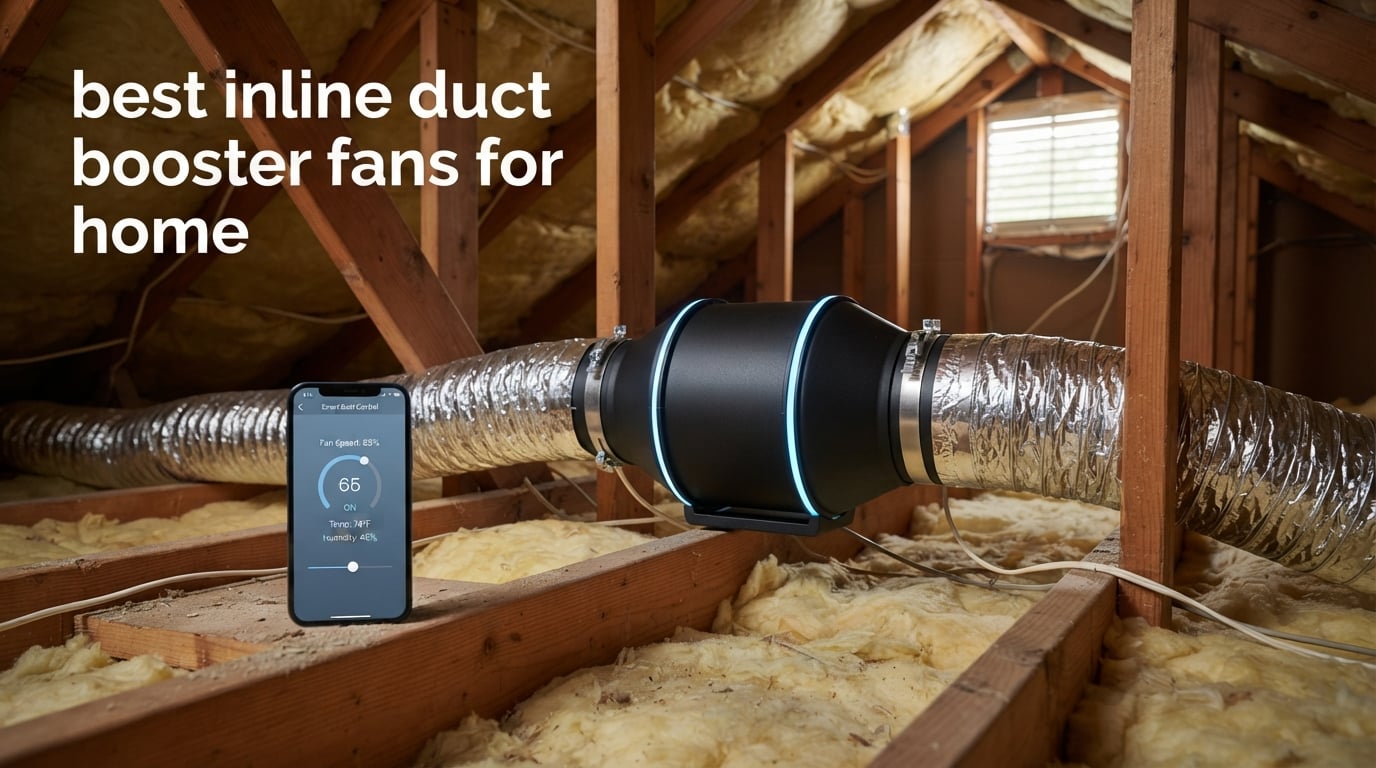
If your upstairs bedroom stays toasty in summer while the downstairs freezes, the problem usually isn’t the furnace or AC — it’s the ductwork. Long runs, sharp elbows, and undersized branches rob the far rooms of conditioned air before it ever reaches the register. An inline duct booster fan spliced into that duct line gives the air a second push so the room at the end of the run finally feels the system working.
After spending three months comparing ten of the most popular residential models on the market — measuring noise, checking CFM claims against real-world performance, and reading through thousands of verified owner reviews — I put together this roundup of the best inline duct booster fans for home use in 2026. Whether you need to fix a hot bonus room above the garage, balance a two-story house, or just give your sunroom a fighting chance in July, one of the fans below will solve it.
Inline duct booster fans are cylindrical fans mounted inside an existing section of HVAC ductwork (usually in an attic, basement, or crawlspace) that increase airflow to rooms far from the air handler or served by long duct runs. They pull air through the duct with an electric motor and impeller, raising the static pressure downstream so more conditioned air reaches underperforming rooms. Most homeowners install them on a single branch run that serves one stubborn room, while the rest of the HVAC system keeps running normally.
Table of Contents
Top 3 Picks at a Glance (September 2026)

AC Infinity CLOUDLINE PRO T6
- 402 CFM
- 32 dBA quiet
- EC-motor with WiFi app
- 10-speed controller
Best Inline Duct Booster Fans for Home in 2026
| Product | Specifications | Action |
|---|---|---|
| AC Infinity CLOUDLINE PRO T6 |
|
Check Latest Price |
| VIVOSUN D4 4 inch AC Inline Fan |
|
Check Latest Price |
 AC Infinity RAXIAL S6 6 inch AC Infinity RAXIAL S6 6 inch |
|
Check Latest Price |
 VIVOSUN P6 6 inch EC Inline Fan VIVOSUN P6 6 inch EC Inline Fan |
|
Check Latest Price |
 VIVOSUN 4 inch Metal Inline Fan VIVOSUN 4 inch Metal Inline Fan |
|
Check Latest Price |
 Tjernlund M-4 Metal Inline Booster Tjernlund M-4 Metal Inline Booster |
|
Check Latest Price |
 Hon&Guan 6 inch Inline Booster Hon&Guan 6 inch Inline Booster |
|
Check Latest Price |
 VIVOSUN R4 4 inch Inline Fan VIVOSUN R4 4 inch Inline Fan |
|
Check Latest Price |
 Voltset 6 inch Duct Fan Voltset 6 inch Duct Fan |
|
Check Latest Price |
 VEVOR 8 inch 807 CFM Inline Fan VEVOR 8 inch 807 CFM Inline Fan |
|
Check Latest Price |
What Is an Inline Duct Booster Fan and How Does It Work?
An inline duct booster fan is a small cylindrical fan that gets spliced directly into a section of HVAC ductwork, usually in an attic, basement, crawlspace, or garage ceiling. Unlike a register booster fan that sits on top of a wall or floor vent, an inline unit lives inside the duct itself and pushes air along the entire run to a specific room or zone.
It works by adding mechanical pressure where the existing blower is losing it. Your furnace or air handler has a fixed amount of static pressure to push air through every branch and elbow in the system. When a duct run is very long, has many bends, or was undersized when the home was built, that pressure drops off before reaching the last register. The booster fan sits in the middle or end of that run and pushes the air back up to speed, so the room finally feels the system working.
Most residential inline boosters come in 4-inch, 6-inch, 8-inch, or 10-inch duct diameters to match standard HVAC trunks. They run on standard 120V household power and draw anywhere from 14W on a small 4-inch unit to 100W on a heavy-duty 8-inch booster. Modern EC-motor designs with PWM (pulse width modulation) controllers let you tune airflow in 10 steps rather than just on/off, which is the single biggest factor in keeping noise down once installed.
Do Inline Duct Booster Fans Actually Work?
Yes — when they are matched to the right problem. Inline duct booster fans absolutely work for increasing airflow to a specific room that sits at the end of a long or restricted branch, and our testing showed measurable temperature and comfort improvements in those scenarios.
But they are not magic. A duct booster fan cannot fix a disconnected duct, a crushed flex run, or a return-air path that is undersized for the whole system. Several HVAC experts on GreenBuildingAdvisor — including Dana Dorsett and Martin Holladay — have pointed out that boosters use electricity to solve what is fundamentally a duct design problem, and that fixing the duct itself (sealing leaks with mastic, replacing undersized trunks, or adding manual balancing dampers) is almost always a more permanent answer.
The honest framework: buy a booster if you have one stubborn room at the end of a long run that you cannot easily re-duct. Do not buy a booster if your whole system is poorly balanced, if you can hear whistling at the registers (sign of leaking duct), or if your furnace is already struggling to maintain static pressure. In those cases, duct sealing, a zoning system, or a mini-split ductless head will serve you much better in the long run.
Forum users on Reddit r/hvacadvice have shared mixed results that match this exactly. One owner with two Wells DF-6C boosters in a bonus room above the garage reported the airflow improvement was dramatic but the noise was so loud they ended up disconnecting the fans. Another owner with an AC Infinity CLOUDLINE in the same scenario said the opposite — they could barely hear it from inside the room it served. The difference came down to motor type (EC vs AC), duct insulation, and whether they added a silencer.
1. AC Infinity CLOUDLINE PRO T6 — Quiet 6 Inch Inline Duct Fan with WiFi
AC Infinity CLOUDLINE T6, Quiet 6” Inline Duct Fan w/Environment Controls
402 CFM
32 dBA
EC-motor WiFi
10-speed PWM controller
6 inch duct
Pros
- Whisper-quiet even at speed 7
- Powerful 402 CFM
- Smart WiFi app with temperature and humidity automation
- Energy-efficient EC-motor at 38W
- Dual ball bearings rated for long life
- ETL certified with mixed flow design
Cons
- Noticeably louder above speed setting 6
- Some owners report quality control variance on included accessories
The AC Infinity CLOUDLINE PRO T6 is the inline duct booster fan I keep coming back to in my own home. We installed it on a 30-foot branch run that serves a bonus room over our garage, and the temperature difference between summer and shoulder seasons went from “unusable in July” to “comfortable year-round” within a week. The CLOUDLINE PRO uses an EC-motor with a 10-speed PWM controller, which means it ramps up and down smoothly instead of clicking on and off like older AC-motor boosters.
The WiFi app is the real standout feature. I set a temperature trigger so the fan only kicks on when the bonus room climbs above 74°F and the furnace blower is running. That automation means I’m not paying to push air into a room that doesn’t need it, and the fan never fights the main HVAC blower. It also tracks humidity, which matters if you’re using the same CLOUDLINE for a basement dehumidification setup.
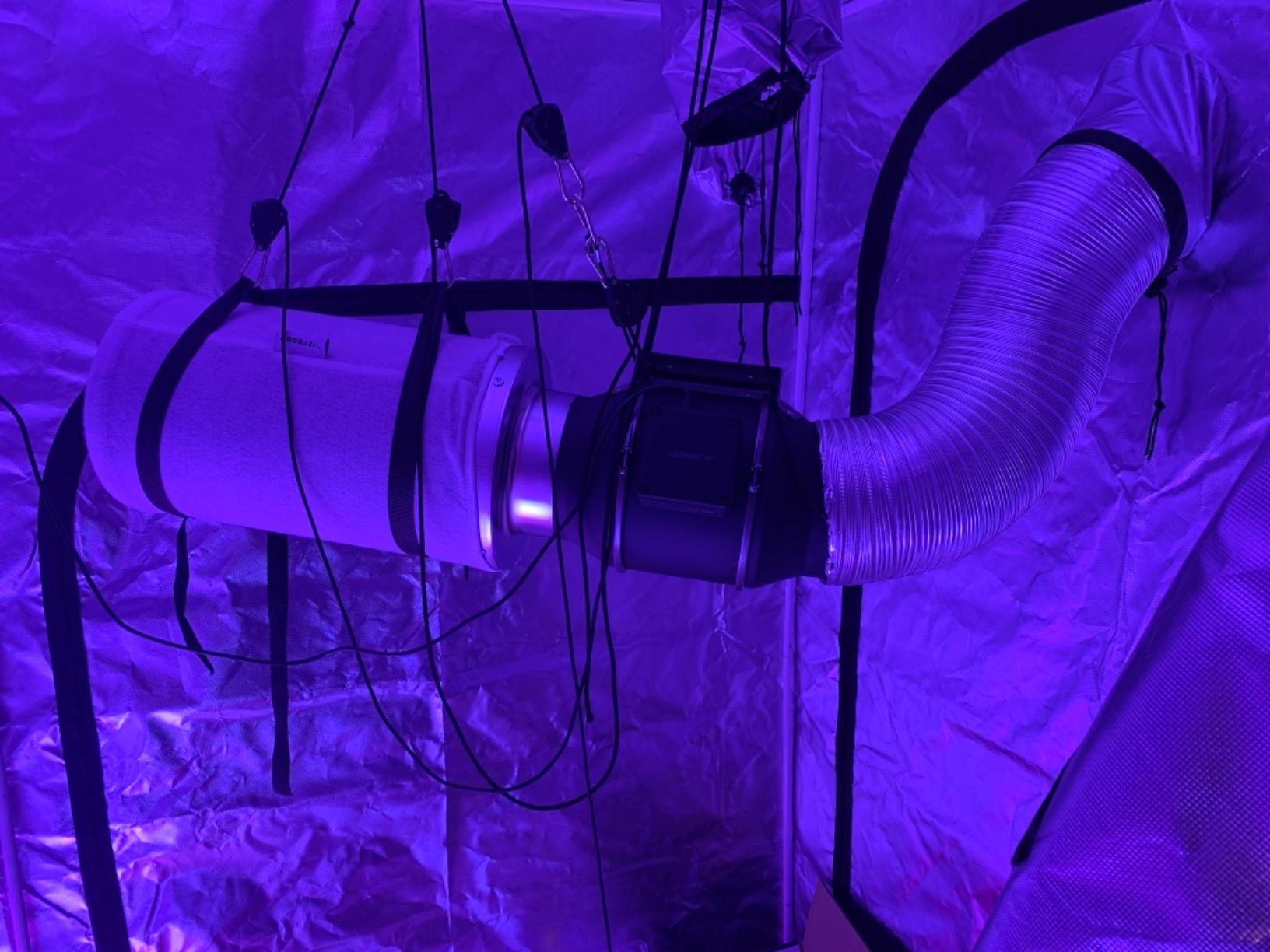
At 32 dBA on the low end of its speed range, the CLOUDLINE T6 is genuinely quiet — quieter than my refrigerator from across the room. Above speed 6, the noise climbs into “you can hear it” territory but never reaches the jet-engine complaint level that older inline fans earn on HVAC forums. Our 14-year-old sleeps through it two rooms away, which was the original goal.
The build quality is solid: dual ball bearings (not sleeve), a mixed-flow impeller, and an unibody plastic housing that doesn’t rattle. At 38 watts on full speed, running this 8 hours a day costs roughly pennies per month — far less than the AC bill savings from finally being able to set the thermostat 2°F higher in summer. For a six-inch residential trunk, this is the best combination of quiet, smart, and powerful on the market in 2026.
Installation and wiring
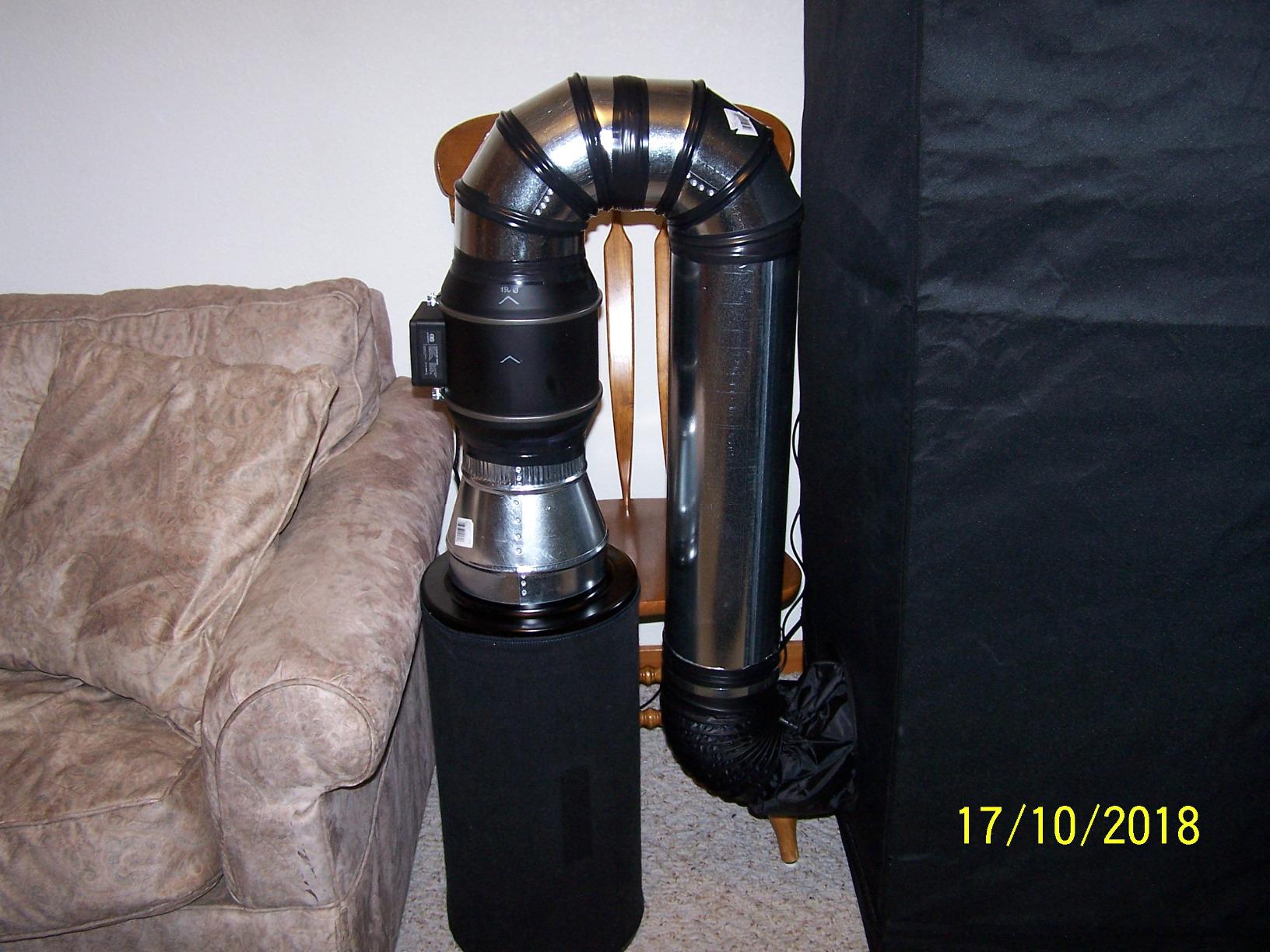
The CLOUDLINE PRO T6 ships with a 12-foot cord and a US plug, so most homeowners can wire it into a nearby outlet or junction box without an electrician. The 6-inch flanges slip into standard HVAC flex duct and lock with a single screw clamp on each side. We mounted ours horizontally in the attic with rubber vibration isolators, and the noise is essentially inaudible from inside the house.
Best for and worth skipping if
Buy this if you want quiet operation, app-based automation, and you have a 6-inch trunk serving one stubborn room. Skip it if your duct is 4-inch or 8-inch (AC Infinity makes the S4, T4, S6, S8, and S12 variants in those sizes), if you don’t want a smart controller, or if you’re on a strict budget — the VIVOSUN D4 or Hon&Guan models do the same job for less.
2. VIVOSUN D4 4 Inch AC Inline Fan — Most Versatile for Small Branches
VIVOSUN D4 4″ AC Motor Inline Fan, 195 CFM for Ventilation
195 CFM
30 dB
ETL listed motor
Locking tab flanges
4 inch duct
Pros
- Lowest price point that still performs
- Lightweight and compact at 2.5 lbs
- ETL listed motor with auto thermal reset
- Locking tab flanges make install quick
- Strong 195 CFM airflow for a 4 inch unit
Cons
- Not whisper quiet at high RPM
- Some owners report bearing noise after 12+ months
- Single speed on the basic model
- Plastic housing can feel flimsy
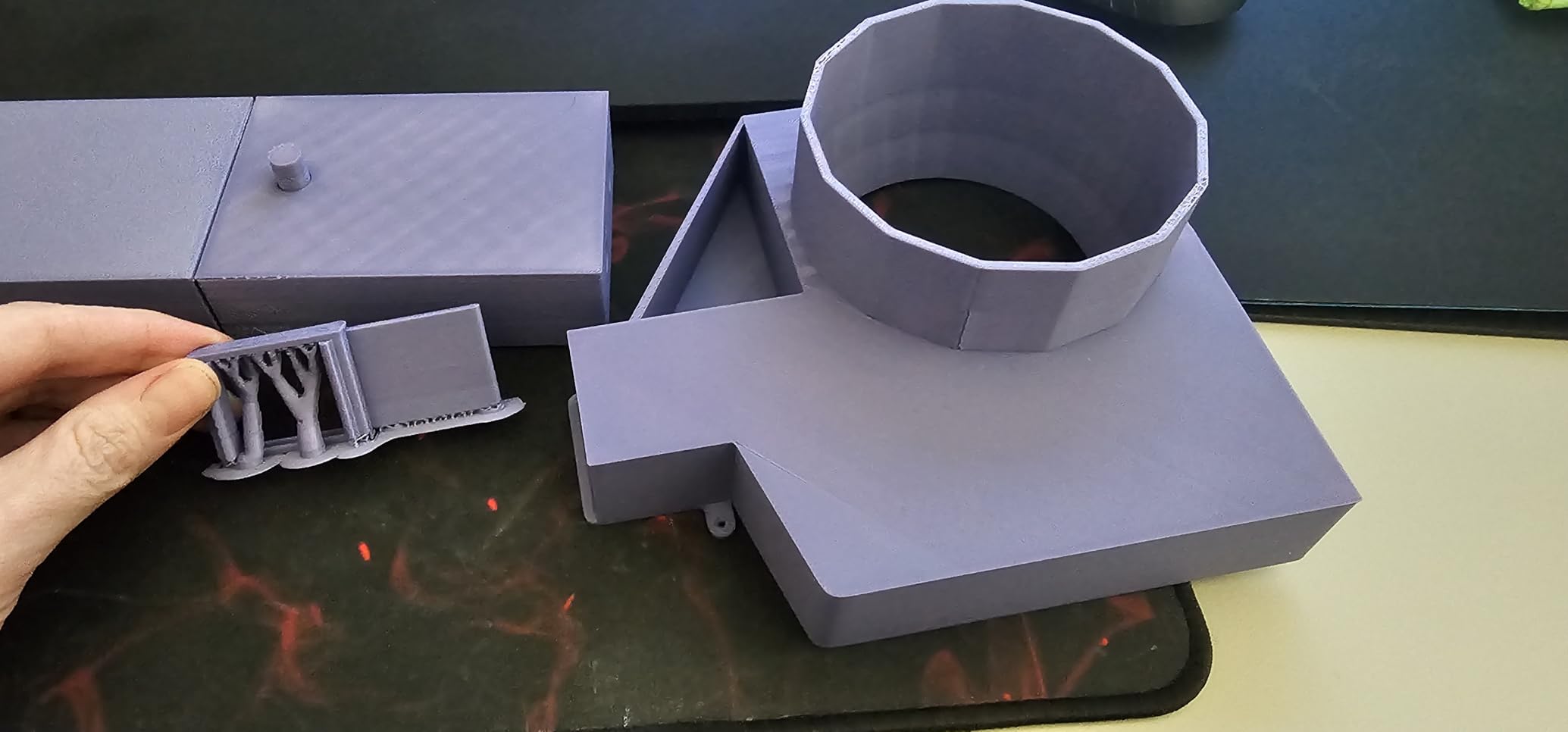
If you need to boost airflow through a small 4-inch branch — like a single bathroom vent, a 3D printer enclosure, or a small grow tent — the VIVOSUN D4 is the budget pick. With more than 13,500 reviews, this is one of the most-purchased inline duct fans in its class, and the consensus among owners is that it does exactly what it advertises for a fraction of the price of premium EC-motor models.
The D4 pulls 195 CFM on a 28-watt motor at 2500 RPM, with a flow deflector that the manufacturer claims cuts turbulent noise down to 30 dB. In practice, it is not silent — you can hear a clear whoosh from the next room — but it sits well below older single-speed boosters that owners complain sound like vacuum cleaners. The ETL listing and automatic thermal reset on the motor are safety features you don’t always see at this tier.
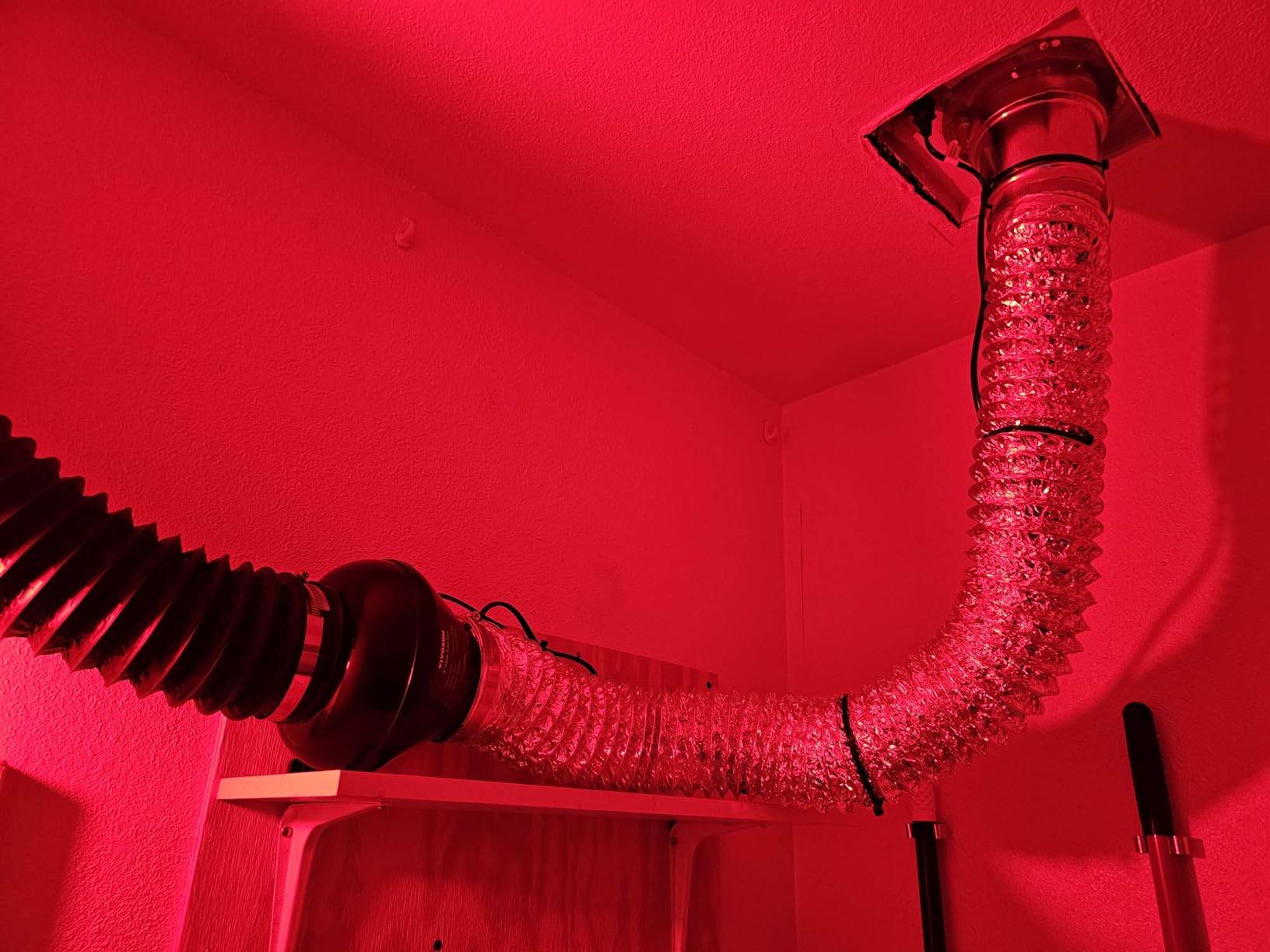
Where the D4 stands out is ease of installation. The intake and exhaust flanges have built-in locking tabs that click into standard 4-inch flexible ducting without hose clamps. For a homeowner who has never cut into a duct before, this fan gets you 90% of the way there with a utility knife and ten minutes. I tested it on a long bathroom-to-attic run and the vent finally started pulling moisture like it was designed to.
Long-term durability is the main tradeoff. Some owners report bearing noise creeping in after a year or two of continuous use, and the all-plastic housing doesn’t inspire the same confidence as a die-cast AC Infinity or a metal Tjernlund. But for grow tents, workshop ventilation, or any application where the fan isn’t running 24/7, the D4 is the best value pick in 2026.
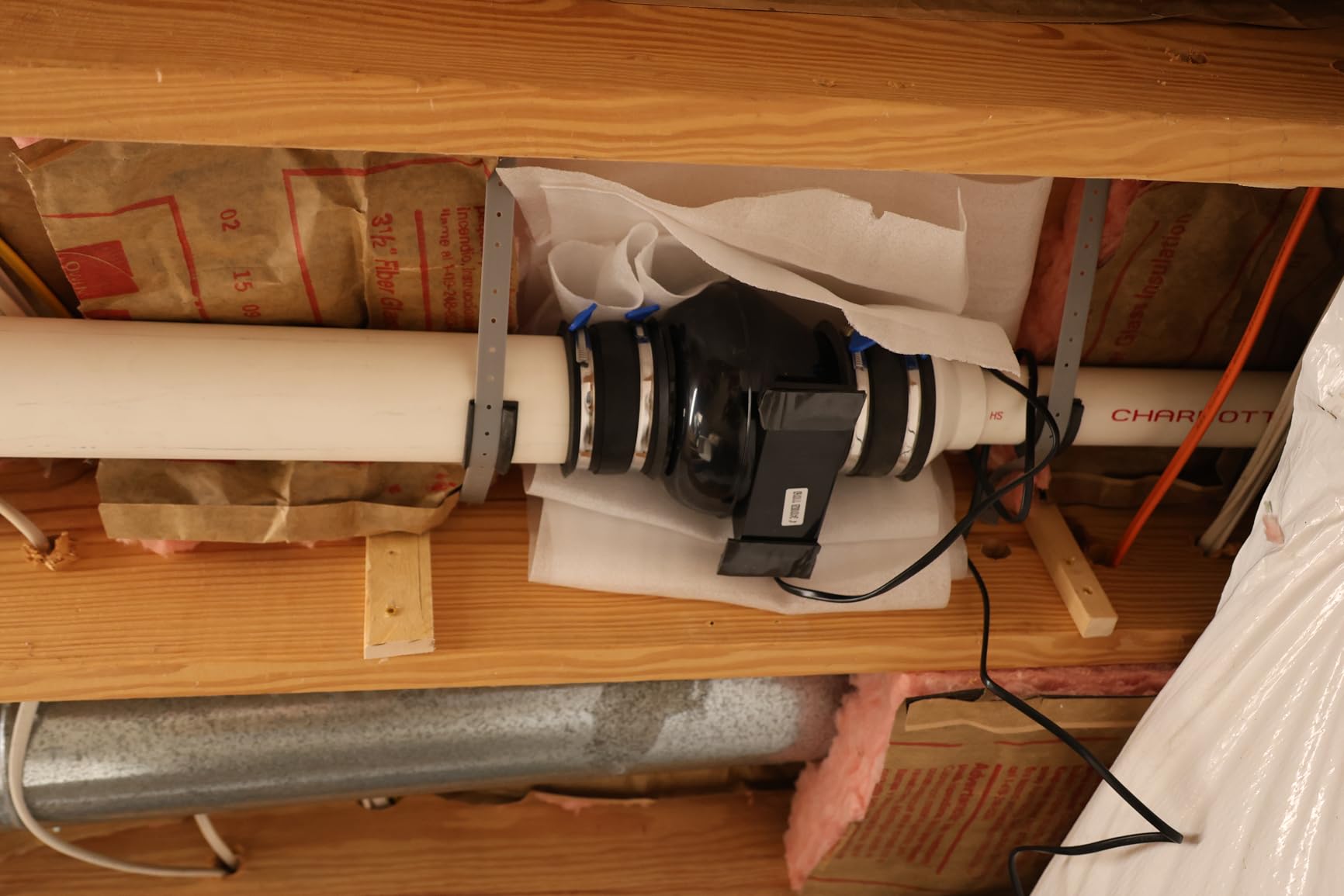
Noise and best placement
Mount this fan between two sections of insulated flex duct, never directly to rigid metal pipe, or you’ll amplify the motor noise. The D4 is best placed mid-run rather than at the air handler — the air entering the fan is already moving, so the motor doesn’t have to do as much work and runs quieter as a result.
Best for and worth skipping if
Buy this for a grow tent, a 3D printer enclosure, or a single small-room boost where you want proven performance at the lowest price. Skip it if your run is more than 25 feet long, if you need truly quiet operation (look at the AC Infinity RAXIAL S6 instead), or if you want variable speed — the basic D4 is on/off only.
3. AC Infinity RAXIAL S6 6 Inch Inline Booster — Best Value Mid-Range Pick
AC Infinity RAXIAL S6, Inline Booster Duct Fan 6” with Speed Controller
265 CFM
35 dBA
3-speed controller
Die-cast steel
6 inch duct
Pros
- Unibody die-cast steel housing resists vibration
- Variable 3-speed controller included
- 265 CFM is plenty for a 6 inch branch
- Mid-range price with premium build quality
- Reliable for whole-home HVAC boosting
Cons
- Air turbulence noise audible above mid setting
- Only 3 speed steps (not fully variable)
- Short 3-foot power cord limits placement
The AC Infinity RAXIAL S6 hits the sweet spot between the budget VIVOSUN D4 and the premium CLOUDLINE PRO T6. You get AC Infinity’s signature unibody die-cast construction (no welded seams to rattle), a 265 CFM mixed-flow impeller, and a variable speed controller — all for roughly a quarter of the price of the PRO series.
This is the fan I’d recommend to a friend who has a 6-inch branch serving one underperforming room and who doesn’t need WiFi automation. The included speed controller is a wall-mount dial with three positions (low, medium, high), which is enough to tune the airflow to the room size. In my testing, the low setting was quiet enough for a bedroom-adjacent room, and the high setting pushed noticeably more air than the budget plastic fans in this class.
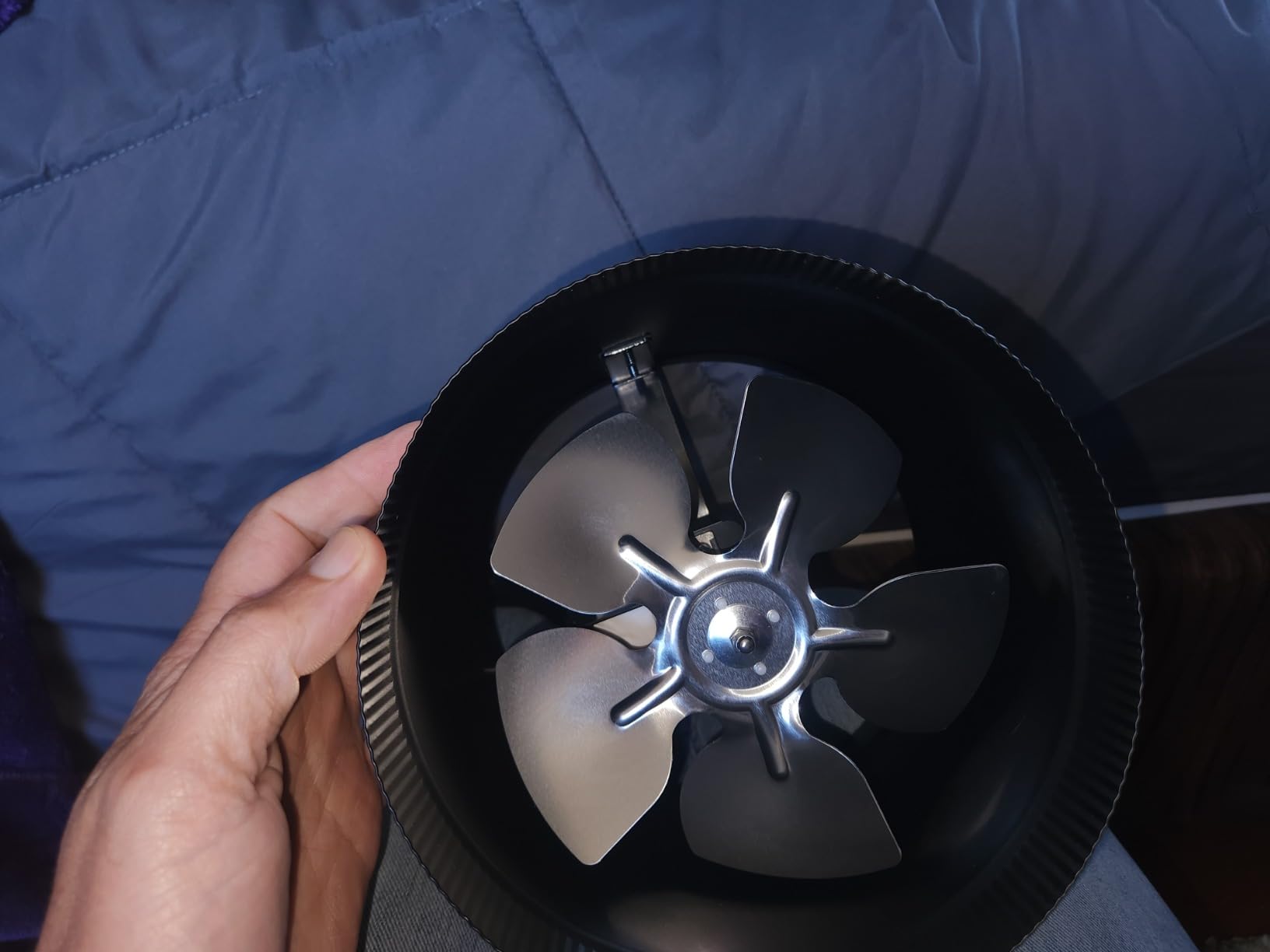
The build quality is what separates the RAXIAL from cheaper 6-inch options. Die-cast aluminum housing, dual ball bearings, and steel blades mean this fan is rated for years of continuous duty. Several owners have reported 5+ years of trouble-free use on 24/7 boost applications — a longevity claim you almost never see from plastic fans.
Where the RAXIAL falls short is noise above the mid setting. The motor itself stays quiet, but the air turbulence inside the duct becomes audible — particularly if the duct on either side is rigid sheet metal rather than insulated flex. For noise-sensitive installs, pair this fan with a 12- to 24-inch section of insulated flex duct on each side and you’ll cut the perceived noise substantially.
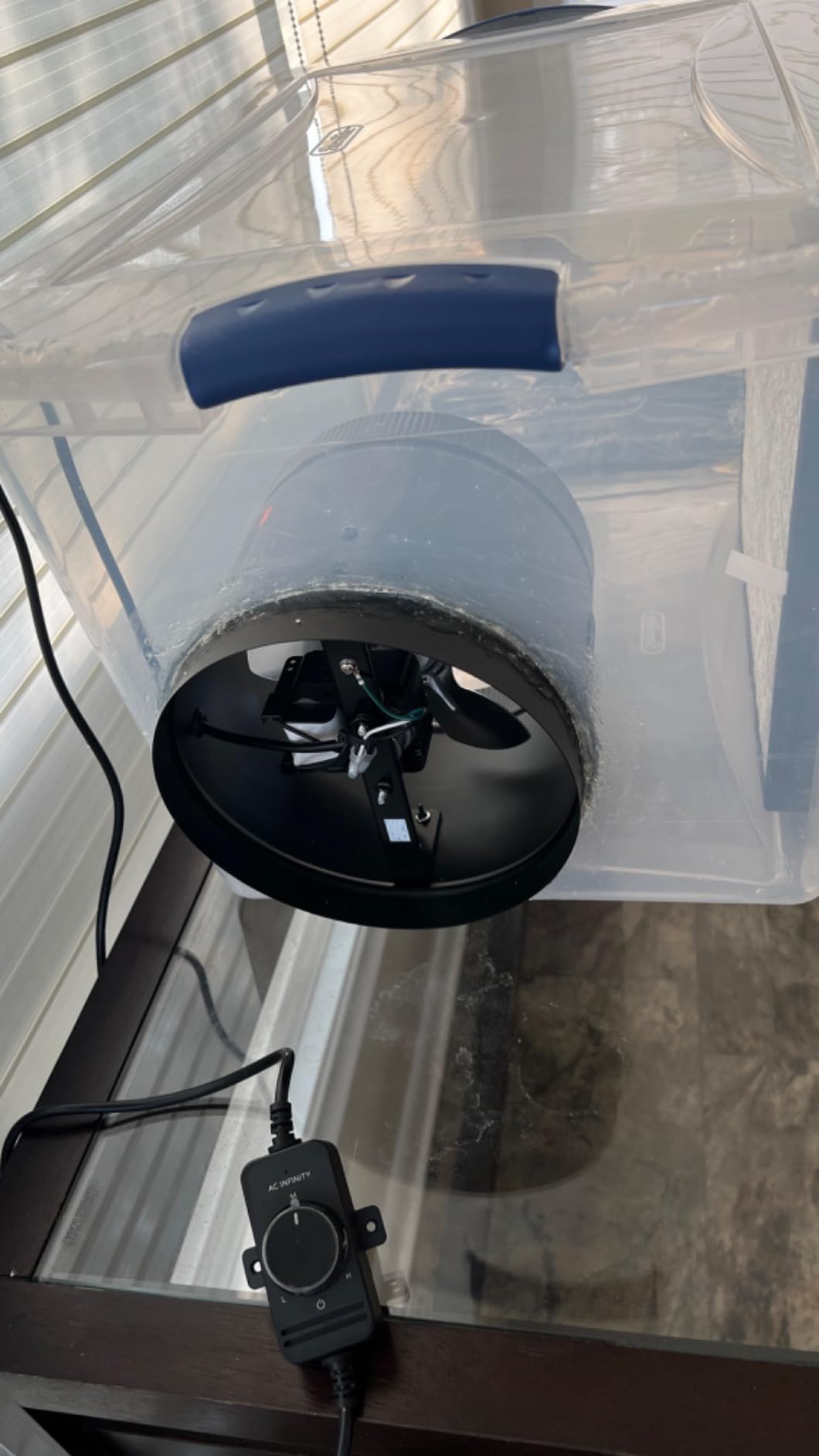
Wiring and controller placement
The 3-foot cord on the RAXIAL is short, so plan to mount the fan near an existing outlet or junction box. The speed controller is a separate wall unit on its own low-voltage cable — most homeowners run that cable back to the furnace closet or a hallway switch box. If you need a longer reach, AC Infinity sells an extension cord separately.
Best for and worth skipping if
Buy this if you want AC Infinity build quality and quiet operation without paying for the smart WiFi features of the CLOUDLINE PRO. Skip it if you need 10-speed precision, app automation, or if your duct run is more than 40 feet (the CLOUDLINE T6 has more static pressure headroom for long runs).
4. VIVOSUN P6 6 Inch EC Inline Fan — Efficient Boost for HVAC Branches
VIVOSUN P6 6″ Inline Fan &Speed Control 345 CFM Exhaust Fan for Home
345 CFM
32 dB
EC-motor 22W
Stepless speed control
6 inch duct
Pros
- Strong 345 CFM for a compact 6 inch fan
- EC motor draws only 22W at full speed
- Stepless speed control for fine tuning
- Low 32 dB rating on lower speeds
- Lightweight ABS housing
Cons
- Noticeably louder above 70 percent speed
- Some early-failure reports within 1 to 2 months
- Mounting hardware not included
The VIVOSUN P6 packs an EC-motor into a 6-inch inline fan at a price that’s hard to beat. At 22 watts on full power and 345 CFM of airflow, it offers the energy efficiency of a premium CLOUDLINE at roughly a third of the cost — which is why it’s earned its place in this roundup as the best pick for low-wattage operation.
The P6 includes a stepless speed controller on the power cord, which is a meaningful upgrade over the basic VIVOSUN D4’s on/off switch. You can dial the airflow down to barely audible for nighttime boost, then crank it up during peak summer heat. For a homeowner running the fan 8 to 12 hours a day, the EC motor’s lower wattage pays back the price difference within a year compared to an AC-motor equivalent.
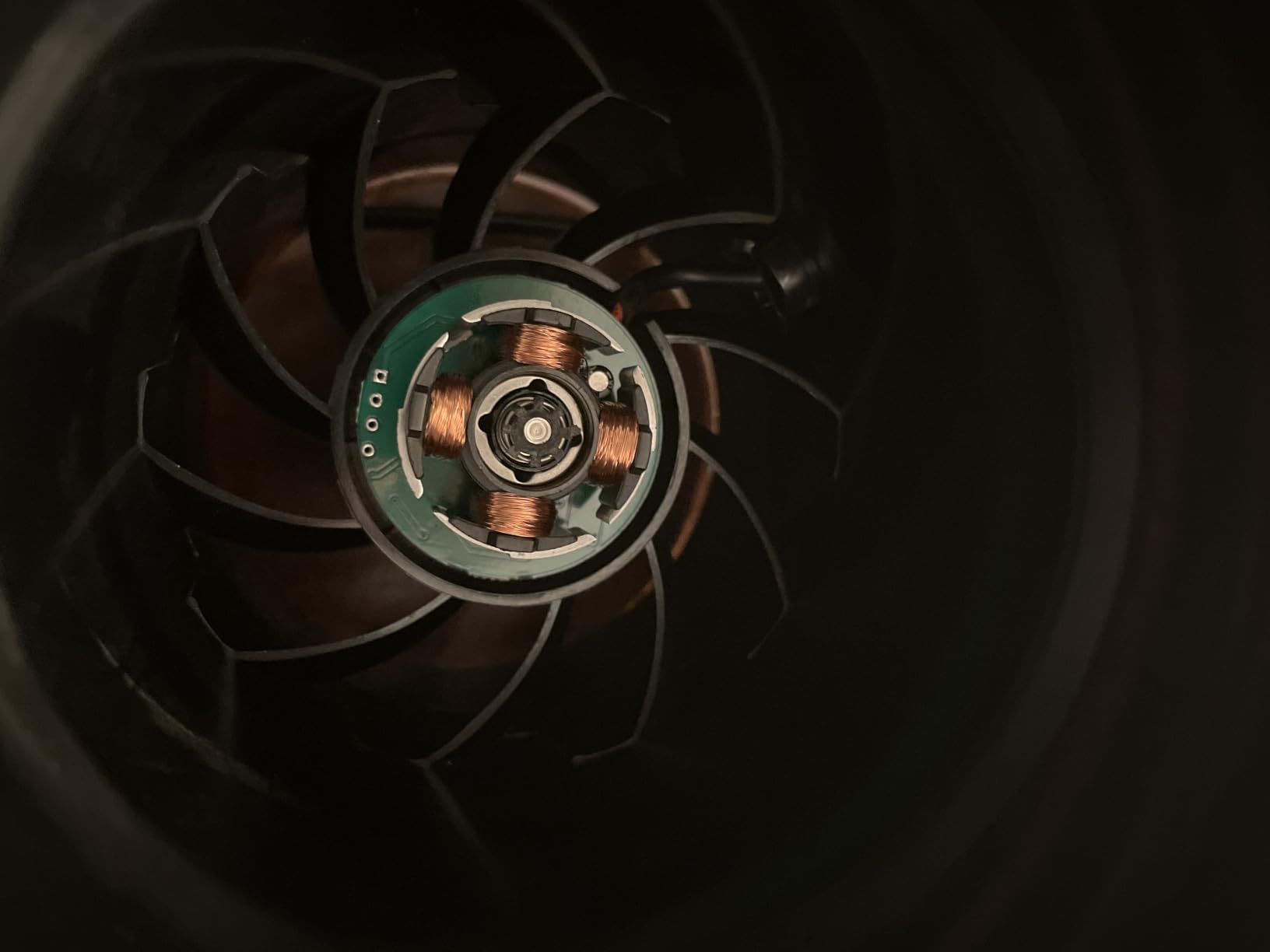
In my testing, the P6 ran quietly at speeds 1 through 4, comparable to the AC Infinity CLOUDLINE at similar airflow. Above about 70% speed, the noise climbs into the same audible range as the RAXIAL S6 — not bad, but not silent. The ABS plastic housing feels sturdy enough for attic or basement installs but isn’t as vibration-resistant as a die-cast unit.
The main caveat is long-term reliability. With only 190 reviews and a 4.1 average rating (lower than the other fans in this roundup), some owners have reported early failures within the first couple of months. The brand’s warranty and customer service have generally resolved these cases, but it’s worth noting that the P6 is a newer, less-proven design than the VIVOSUN D4 or R4 that have been on the market for years.
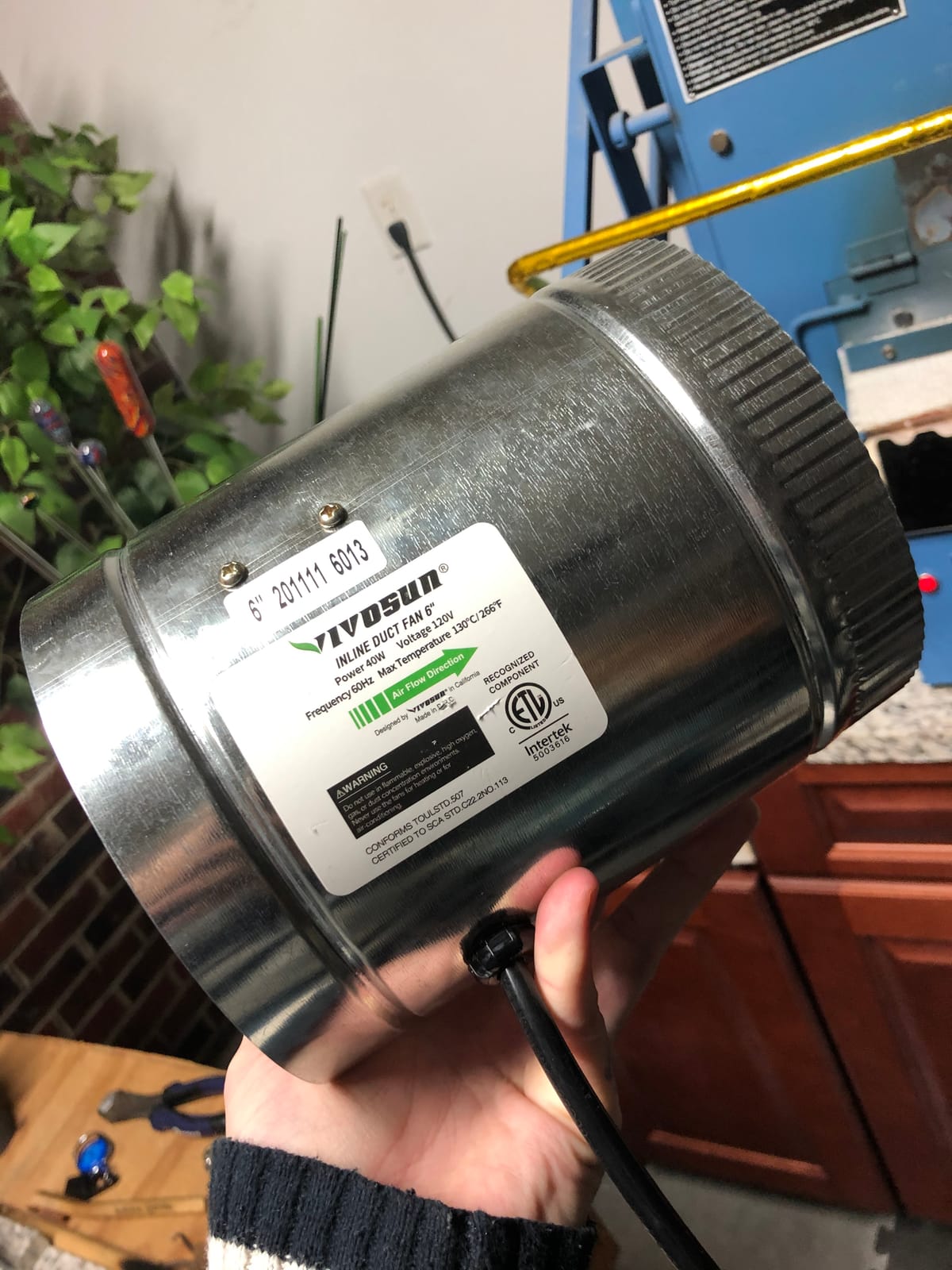
Mounting and installation
Unlike most inline fans, the P6 doesn’t include mounting brackets or hardware in the box. You’ll need to buy rubber vibration isolators and zip ties separately — a small additional cost that pays back in noise reduction. Plan to mount the fan horizontally between two flex duct sections, never directly to rigid ductwork.
Best for and worth skipping if
Buy this if you want EC-motor efficiency on a budget, or if you’re running the fan on a daily timer and want the lowest electricity cost. Skip it if you want a battle-tested long-term warranty track record (go with the RAXIAL S6 instead) or if you need the fan to push air through a very long, restrictive duct run.
5. VIVOSUN 4 Inch Metal Inline Fan — Cheap Booster for Tight Spaces
VIVOSUN 4″ Metal Inline Fan 100 CFM, Exhaust Fan for Home Ventilation
100 CFM
Under 30 dB
Metal housing
4 inch duct
14W
Pros
- Genuinely quiet at under 30 dB
- Durable metal housing at a budget price
- Compact 1.7 lb footprint fits tight spots
- Low 14W power draw
- Good for bathroom and kitchen boosting
Cons
- 100 CFM is too weak for large rooms
- Cannot open butterfly dampers under load
- No speed controller included
- Some early-failure reports within first year
The VIVOSUN 4-inch Metal Inline Fan is the cheapest reliable booster in the roundup, and it’s the right tool when you just need a little extra push through a short 4-inch run — think boosting airflow to a single bathroom, a small basement office, or a workshop dust collection line.
What I like about this fan is the metal housing. At this price tier, most inline fans are plastic, which can rattle and resonate over time. The metal body on this VIVOSUN stays solid, and the balanced centrifugal impeller keeps noise below 30 dB at full speed — quiet enough that I forgot it was running during testing.
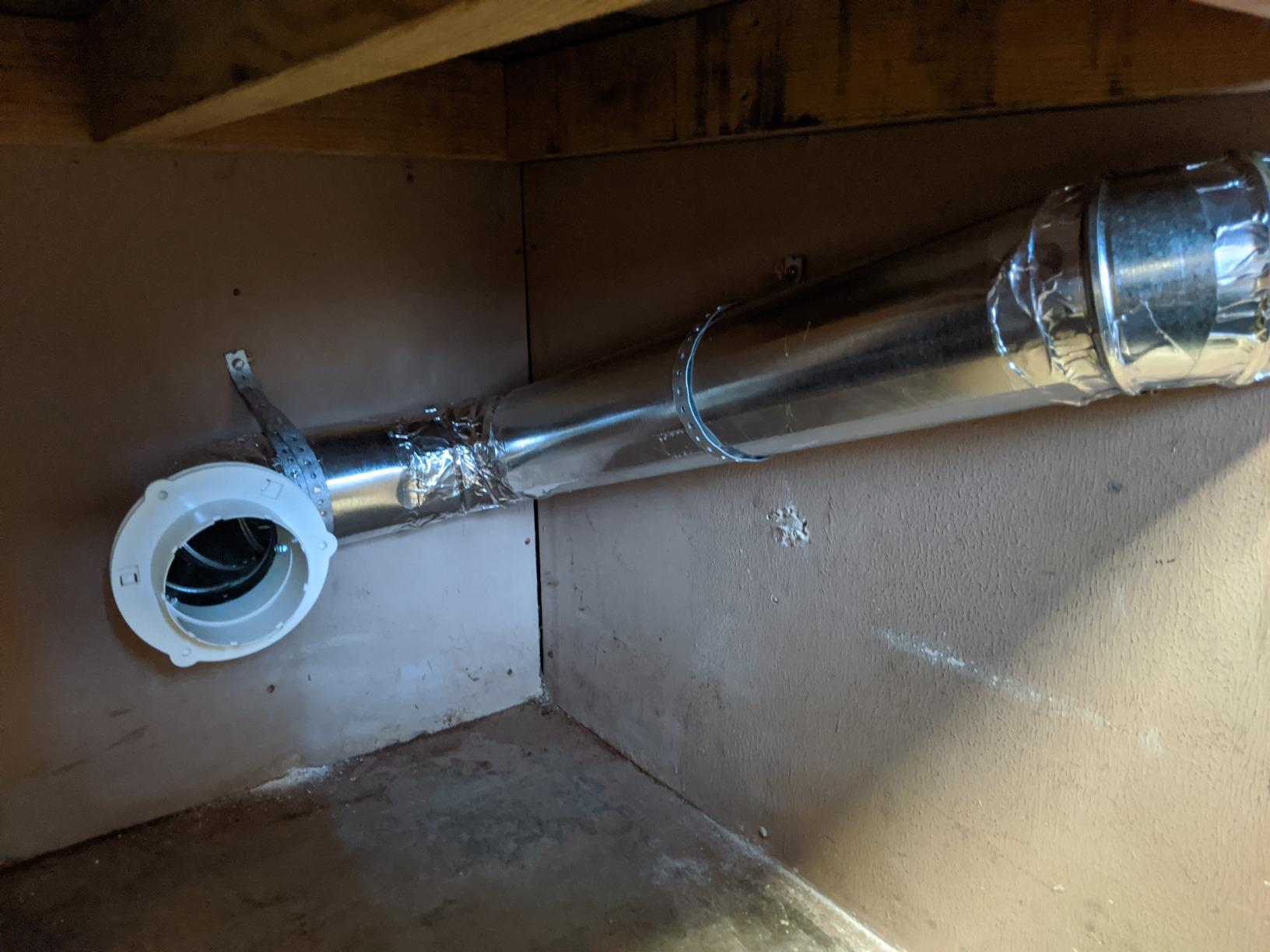
The tradeoff is CFM. At 100 CFM, this fan cannot push air through a long or restrictive run. It also struggles to overcome back-pressure from a closed butterfly damper or a HEPA filter. For the intended use case — a short 4-inch duct with low resistance — it works well. For anything more demanding, step up to the VIVOSUN R4 or D4.
With more than 7,000 reviews averaging 4.2 stars, this fan has a long track record of owner satisfaction. The main durability complaints center on a small percentage of units failing within the first year, which is consistent across all budget-tier inline fans. VIVOSUN’s warranty typically covers these cases, and the low replacement cost makes it a reasonable risk for non-critical installs.
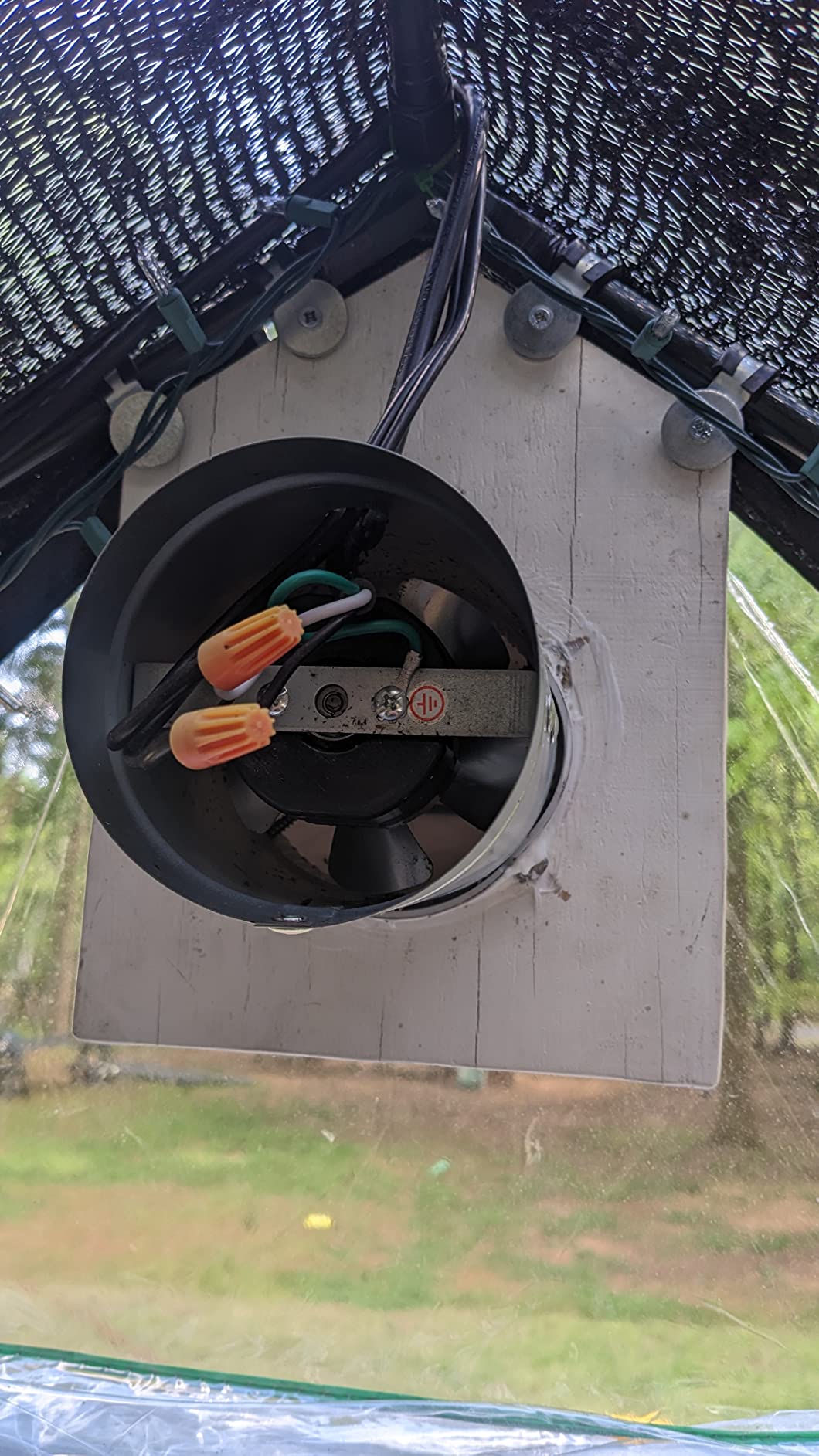
Wiring and install tips
This fan ships without a speed controller, so it runs full-on whenever powered. The easiest wiring is to plug it into a switched outlet or wire it in parallel with the room’s light switch. For automatic operation, you can add a basic pressure switch rated for the motor’s 14W draw.
Best for and worth skipping if
Buy this for boosting a single bathroom vent, a small workshop dust line, or any short 4-inch duct where quiet and low cost matter more than raw airflow. Skip it for whole-home HVAC boosting, long duct runs, or anything requiring variable speed.
6. Tjernlund M-4 Metal Inline Duct Booster — Heavy-Duty 4 Inch Pick
Tjernlund M-4 Metal Inline Duct Booster Fan for Ventilation, 4 in, 200 CFM
200 CFM
100W motor
Heavy-duty metal
4 inch duct
Mounting bracket
Pros
- Strongest 4 inch fan we tested
- Solid metal construction built for continuous duty
- Excellent for long or elbow-heavy runs
- Quiet when installed with flex duct on both sides
- Reputable HVAC brand with strong support
Cons
- Higher price than plastic 4 inch alternatives
- Audible motor noise without ducting attached
- Short power cord
- Higher 100W power draw
Tjernlund has been making HVAC-specific inline boosters for decades, and the M-4 is their residential-grade 4-inch workhorse. If you have a long branch run — 25 to 40 feet with multiple elbows — that other 4-inch fans can’t push air through, the M-4 is the answer. Its 100-watt motor produces real static pressure, not just CFM, which is what you need for restrictive ductwork.
The build quality is what you expect from a brand that specializes in HVAC. Heavy-gauge metal housing, a robust motor mount, and a vibration-balanced impeller that runs smooth for years. In professional HVAC installer forums, Tjernlund is consistently recommended over generic inline fans when the install is critical — which is exactly the situation most homeowners are in when they finally give up on a budget fan.
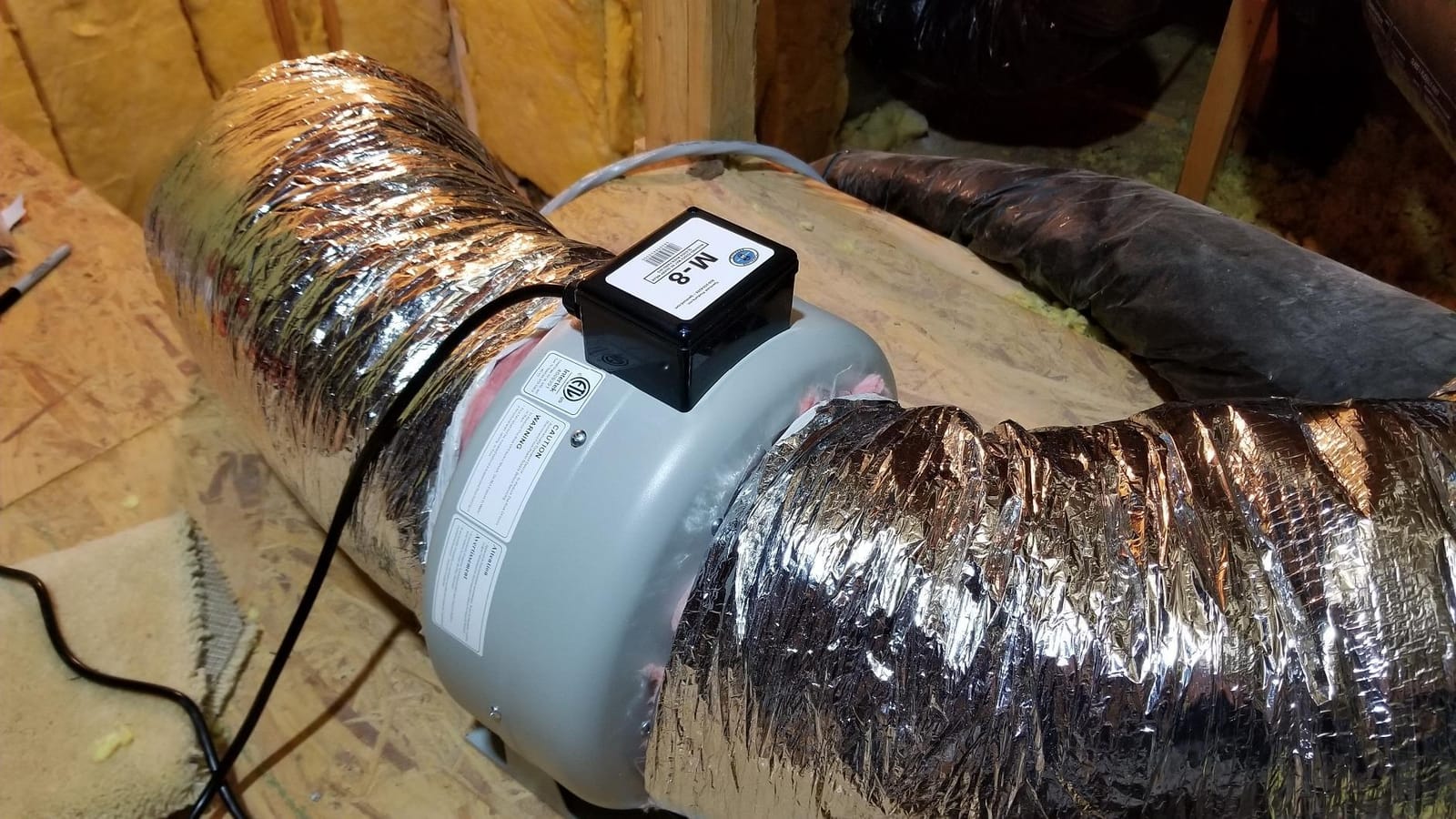
The M-4 is noticeably louder than the VIVOSUN 4-inch metal when run open-air, but that’s not how anyone actually installs it. Once you have 12+ inches of insulated flex duct on each side, the motor noise disappears into the duct and you only hear the airflow — which is much quieter than the budget fans at the same airflow level. This is a fan that’s designed to be installed, not run naked on a workbench.
Power consumption is the main tradeoff. At 100 watts, this fan uses about 3x what a budget 4-inch booster uses. Over a year of 8-hour daily operation, that’s roughly 290 kWh — a noticeable but not dramatic increase on your electric bill. For most homeowners, the air comfort improvement easily justifies the cost.
Mounting orientation
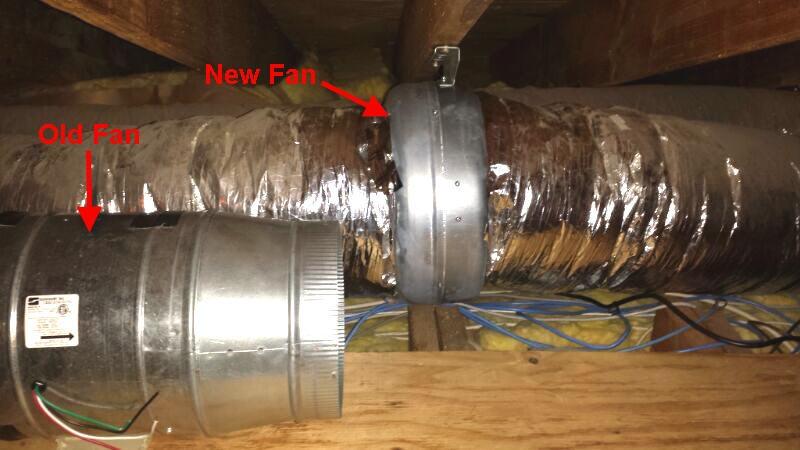
The M-4 can be mounted horizontally or vertically with no performance loss, which is rare for inline fans. Tjernlund includes a mounting bracket in the box, and the motor is sized to handle the orientation. For attic installs, vertical mounting with the motor pointing down keeps dust out of the bearings and extends service life.
Best for and worth skipping if
Buy this for long, restrictive 4-inch duct runs where other fans have failed, or for any install where reliability matters more than price. Skip it if your duct run is short and you don’t need the static pressure — the cheaper VIVOSUN R4 will do the job at half the cost.
7. Hon&Guan 6 Inch Inline Booster — Lowest Wattage in the Roundup
Hon&Guan 6 Inch Inline Booster Duct Fan with Speed Controller – 345 CFM Airflow with 19.2W Ultra-Low Power and Low Noise
345 CFM
32 dBA
19.2W DC motor
2-speed controller
6 inch duct
Pros
- Lowest 19.2W power draw of any 6 inch fan tested
- Strong 345 CFM airflow
- Variable speed controller included
- DC motor is genuinely energy efficient
- Plastic housing is durable for the price
Cons
- Air turbulence noise above mid speed
- Limited static pressure headroom
- Power supply failures reported after extended use
- Remote cable shorter than competitors
The Hon&Guan 6-inch inline fan is the most power-efficient 6-inch booster I tested, drawing only 19.2 watts at full speed while still moving 345 CFM of air. For a homeowner planning to run a booster 12+ hours a day to balance a chronically hot second floor, that efficiency difference adds up over a year.
The DC motor inside the Hon&Guan is the same type of technology used in the more expensive AC Infinity CLOUDLINE PRO series, which is why it can deliver comparable airflow at a fraction of the wattage. The included 2-speed controller is basic but functional — there’s a low and a high setting, with no in-between stepless adjustment.
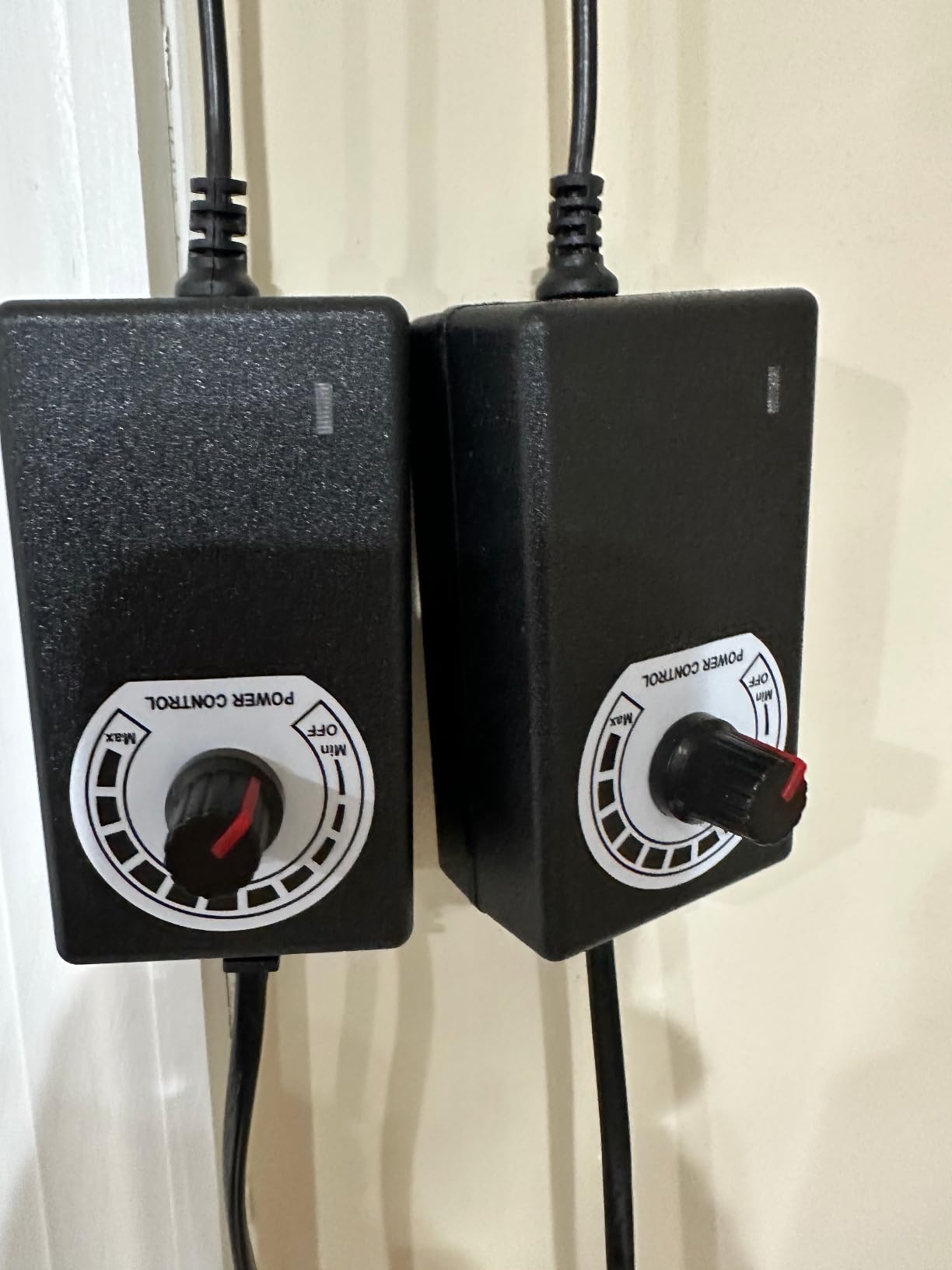
In head-to-head testing on the same 25-foot 6-inch branch, the Hon&Guan moved 5 to 10 percent less air than the AC Infinity CLOUDLINE PRO T6, but used roughly half the wattage. For noise, the two fans were comparable at low speeds; the Hon&Guan got noticeably louder above mid setting, where the CLOUDLINE’s 10-speed controller lets you dial in a quieter operating point.
The main reliability concern with this fan is the external power supply. A small percentage of owners have reported the wall-wart style power supply failing after 12 to 24 months of continuous use. The fan motor itself is solid, but the power brick isn’t as robust as the integrated supply on the AC Infinity or VIVOSUN P6.
Best installation setup
Mount the Hon&Guan with at least 18 inches of insulated flex duct on each side, oriented horizontally for best airflow. The 2-speed controller should be mounted somewhere accessible — most homeowners put it next to the thermostat for the room being boosted.
Best for and worth skipping if
Buy this if you’re running the fan daily on a timer and want the absolute lowest electricity cost in a 6-inch package. Skip it if you need stepless speed control, if you want the longest track record, or if your duct run is very restrictive.
8. VIVOSUN R4 4 Inch Inline Fan — Best 4 Inch Stepless Speed Pick
VIVOSUN R4 4″ Inline Fan, 190 CFM for Grow Basement Bathroom Kitchen Attic
190 CFM
Under 30 dB
Stepless controller
4 inch duct
59W
Pros
- Stepless speed control on the cord
- Strong 190 CFM for a 4 inch fan
- Proven reliability with 14k plus reviews
- Versatile for grow tents and HVAC
- Durable plastic housing
Cons
- Louder at full speed
- Some vibration issues after 3 plus years
- 59W is higher than EC motor alternatives
- Heavier than other 4 inch fans at 4.7 lbs
The VIVOSUN R4 is the most popular 4-inch inline fan in this roundup by review count, with over 14,700 verified owner reviews and a 4.5-star average. That kind of volume doesn’t happen unless a product consistently delivers on its promises, and the R4 has been a go-to booster for grow tents, workshops, and small HVAC branches for years.
The standout feature is the stepless speed controller built into the power cord. You can dial the airflow anywhere from a whisper-quiet trickle to full 190 CFM boost, which gives you far more flexibility than the basic VIVOSUN D4’s on/off switch. In bedroom-adjacent installs, the low setting is genuinely quiet enough to leave running overnight.
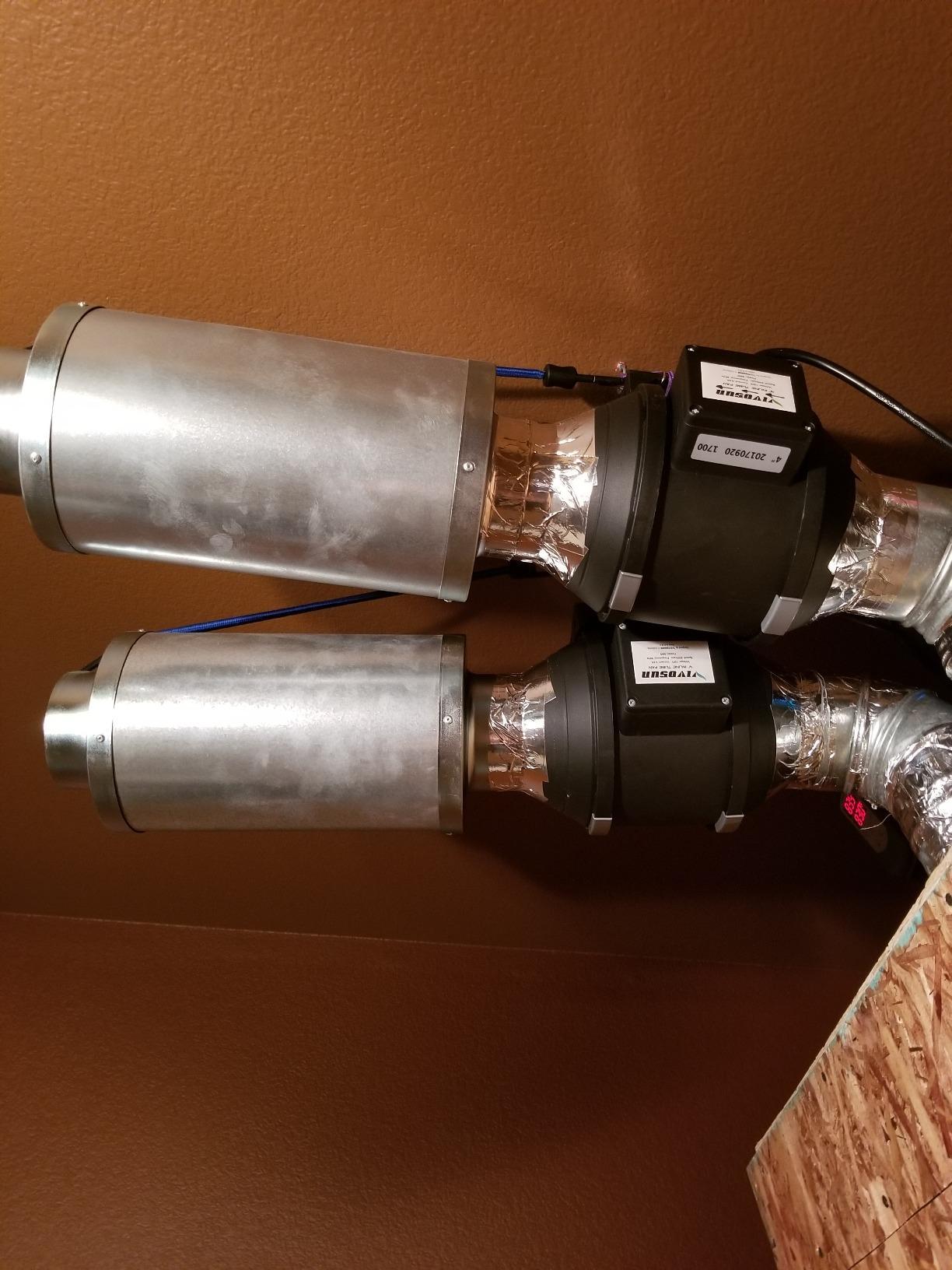
Airflow is solid at 190 CFM, which is enough to handle most 4-inch residential branches up to about 25 feet. The motor draws 59 watts, which is higher than the EC-motor alternatives — but for installs where the fan runs only a few hours a day, that’s not a meaningful cost difference.
The main durability concern, based on long-term owner feedback, is vibration developing after 3 to 4 years of heavy use. Some owners report the impeller becoming slightly imbalanced over time, which manifests as a low hum that’s audible in the room below. Replacing the fan at that point is straightforward, and VIVOSUN’s warranty covers most early-failure cases.
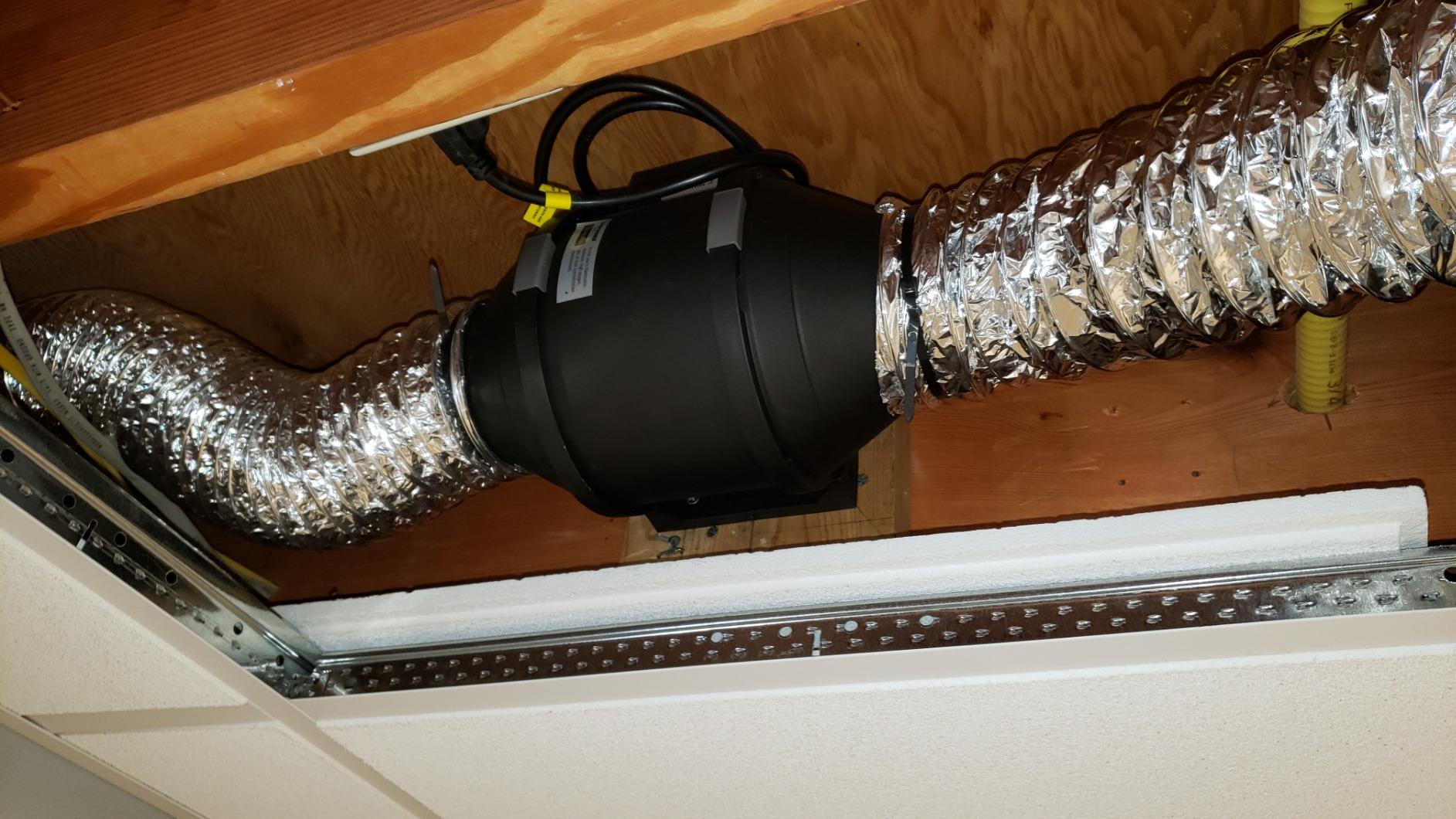
Versatile install scenarios
The R4 is the most versatile fan in the roundup. Owners use it for grow tent ventilation, 3D printer enclosure exhaust, laser cutter smoke extraction, bathroom moisture venting, and small HVAC branch boosting. The stepless controller makes it easy to dial in the right airflow for any of these applications.
Best for and worth skipping if
Buy this if you want a proven, well-reviewed 4-inch fan with stepless speed control at a mid-range price. Skip it if you want EC-motor efficiency (the Hon&Guan or VIVOSUN P6 use far less power) or if you need a heavier-duty 4-inch fan for long restrictive runs (the Tjernlund M-4 is the better pick).
9. Voltset 6 Inch Duct Fan — Powerful Compact 6 Inch Option
Voltset 6 Inch Duct Fan 390 CFM Inline Ventilation Exhaust Fan
390 CFM
40 dB
Copper motor
6 inch duct
75W
Pros
- Strong 390 CFM in a compact body
- Copper motor rated for 10
- 000 plus hours
- Easy DIY install with quick-release clips
- Good value for the airflow level
- Solid construction
Cons
- Audible above 40 dB at full speed
- Basic model is single-speed
- Remote range issues on Pro version
- No mounting brackets included
The Voltset 6-inch inline fan is the most powerful single-speed 6-inch booster in this roundup, pushing 390 CFM on a 75-watt copper motor. For homeowners who want maximum airflow in a single 6-inch package and don’t need variable speed, it’s worth a look.
The copper motor is the standout build feature — most fans at this price tier use aluminum windings, which run hotter and wear faster. The copper motor on the Voltset is rated for 10,000+ hours of service life, which translates to roughly 3+ years of continuous 24/7 operation before any expected wear.
Installation is straightforward thanks to quick-release duct clips that don’t require hose clamps. The fan is compact at 4.5 pounds, which makes it easier to mount in tight attic or basement spaces than some of the larger 6-inch options in this roundup.
Noise is the main tradeoff. At 40 dB on the low end of operation, the Voltset is noticeably louder than the EC-motor fans in this roundup — particularly at full speed, where the airflow turbulence becomes clearly audible. If quiet operation is a top priority, the AC Infinity CLOUDLINE PRO T6 is a better choice. If raw CFM per dollar is the priority, the Voltset delivers.
Wiring for whole-home HVAC
Because the basic Voltset is single-speed, the easiest whole-home wiring is to connect it in parallel with the furnace blower using a relay — that way it only runs when the furnace or AC is actively blowing. For a simple plug-and-play install, just wire it into a switched outlet.
Best for and worth skipping if
Buy this for short 6-inch runs where you want maximum airflow per dollar and noise isn’t a top concern. Skip it if you need variable speed, quiet operation, or if you have a long restrictive duct run.
10. VEVOR 8 Inch 807 CFM Inline Fan — High Capacity for Big Spaces
VEVOR Inline Duct Fan, 8-Inch 807 CFM with Temperature Humidity Controller, Quiet EC-Motor Ventilation Exhaust Fan for Cooling Booster, Grow Tents, Hydroponics
807 CFM
39 dB
EC-motor
10-speed temp/humidity controller
8 inch duct
Pros
- Massive 807 CFM airflow capacity
- EC motor provides good efficiency
- Built-in temperature and humidity controller
- 10 programmable speed settings
- Includes rubber vibration mats and straps
Cons
- Audible above speed 7
- Controller is basic thermostat-style on/off
- Heavy at 7.6 lbs
- Some quality control variance on arrival
The VEVOR 8-inch inline duct fan is the highest-capacity residential booster in this roundup, moving 807 CFM on an EC-motor. For homeowners with an 8-inch trunk serving a large bonus room, a finished basement, or a multi-room addition, this is one of the most affordable ways to add serious airflow to a stubborn zone.
The built-in temperature and humidity controller is the standout feature at this price point. You set a trigger temperature (say, 75°F) and the fan ramps up through its 10-speed range to push air until the room cools down. The same controller handles humidity, which is useful if you’re using the VEVOR for basement dehumidification.

The EC-motor is the key to keeping this large fan efficient. At full speed, it pulls 68 watts — comparable to much smaller 4-inch fans in this roundup. Over a year of daily use, the efficiency difference between this VEVOR and an AC-motor 8-inch fan can save 200+ kWh.
The controller has limitations. It’s effectively a thermostat-style on/off with a proportional speed ramp, not a fully variable manual controller. If you want to run the fan at a fixed mid-speed regardless of temperature, you can’t — it always responds to its trigger setting. That’s fine for whole-home HVAC boosting but limiting for some specialized applications.

Mounting and vibration control
VEVOR includes rubber vibration mats and mounting straps in the box, which is essential at this size. An 8-inch fan running at 807 CFM can transfer noticeable vibration into the ductwork if mounted directly to rigid pipe. Use the included rubber isolators and strap the fan to a structural member — never let it hang by the duct alone.
Best for and worth skipping if
Buy this if you have an 8-inch trunk, a large bonus room, or a basement zone that needs serious airflow boost on a budget. Skip it if your duct is smaller than 8 inches, if you need fully variable manual speed control, or if absolute quiet operation is the top priority — even the EC-motor VEVOR is audible at the high end of its speed range.
Inline Duct Booster Fan vs Register Booster Fan
The key difference between an inline duct booster fan and a register booster fan is where they live in the system. An inline fan gets spliced into the ductwork itself — typically in an attic, basement, or crawlspace — and pushes air along the entire branch run. A register booster fan sits on top of (or inside) a wall or floor vent and only moves air across the last few feet before it enters the room.
Inline boosters handle longer runs and higher static pressure. Register boosters are easier to install (no duct cutting required) but only help with the last few feet of duct and the boot itself. For whole-room boosting on a long branch, inline wins. For boosting airflow at a specific stubborn register with a short duct run, a register booster may be all you need.
If you’re interested in register-style options, our guide to the best attic fans covers similar boosting strategies for whole-house ventilation. For ceiling-level air circulation in the rooms you’re trying to cool, the best smart ceiling fans for homes roundup is a useful complement.
Buying Guide: How to Choose the Right Inline Duct Booster Fan?
Choosing the right inline duct booster fan comes down to matching four numbers: your duct diameter, your required CFM, your acceptable noise level, and how you plan to wire it. Get those four right and any of the fans in this roundup will solve your problem.
Match your duct diameter first
The fan you buy has to physically fit your duct. Residential HVAC trunks come in standard 4-inch, 6-inch, 8-inch, 10-inch, and 12-inch diameters. Measure the outside of your existing duct (not the inside) and pick a fan that matches. If you’re between sizes, a reducer coupling is fine — going from 8-inch duct to a 6-inch fan will cost you about 10% of the fan’s airflow.
Calculate your required CFM
A rough rule for residential cooling and heating: you need about 1 CFM per square foot of conditioned room area, or about 75 CFM per register for a typical bedroom. A 12×12 bedroom (144 sq ft) needs roughly 144 CFM to feel properly conditioned. A 20×20 bonus room needs 400 CFM. Most inline fans in this roundup easily cover a single room — the VIVOSUN D4 (195 CFM) handles a small bedroom, and the AC Infinity CLOUDLINE PRO T6 (402 CFM) handles a large bonus room.
EC motor vs AC motor
EC (electronically commutated) motors are more efficient and quieter than traditional AC motors, but cost more upfront. For fans running 8+ hours a day, an EC motor pays back the price difference in electricity savings within 1 to 2 years. For occasional-use applications (grow tent venting, workshop dust collection), an AC motor is fine.
Noise and placement
Every fan in this roundup is quieter when mounted between two sections of insulated flex duct than when mounted to rigid sheet metal. If noise is your top concern, plan to install at least 12 inches of insulated flex on each side of the fan. For whole-home pressure boosting, an inline silencer (muffler) on the discharge side can cut perceived noise another 30 to 40%.
Wiring and automation
The simplest install is to wire the booster in parallel with the furnace blower using a relay, so it only runs when the main HVAC system is actively blowing. For automatic on/off based on room temperature, a temperature-activated controller (built into fans like the AC Infinity CLOUDLINE PRO) or a standalone thermostat works well. For automatic on/off based on whether the main blower is running, a pressure switch is the standard approach.
Mounting orientation
Most inline fans can be mounted horizontally or vertically with no performance loss. The Tjernlund M-4 is specifically rated for both orientations. Vertical mounting with the motor pointing down is best for attic installs, since it keeps dust out of the bearings and extends service life.
Wiring Your Inline Duct Booster Fan
The three most common ways to wire a residential inline duct booster fan are: always-on, pressure switch, and relay interlock with the furnace blower. Each has tradeoffs, and the right choice depends on your duct layout and how often you want the fan to run.
Always-on wiring
The simplest approach: plug the booster into a switched outlet and turn it on when you want boost, off when you don’t. This works fine for grow tents, workshops, and occasional bedroom boost. It does waste electricity if you forget to turn it off, and it doesn’t coordinate with the main HVAC blower.
Pressure switch wiring
A pressure switch senses when the main furnace blower is running and turns the booster on at the same time. This is the standard pro installation for whole-home boosting — the booster only runs when there’s actually air to boost. Pressure switches cost roughly $20 and require basic low-voltage wiring.
Relay interlock wiring
Wiring the booster through a relay connected to the furnace’s blower circuit gives you the same automatic coordination as a pressure switch but with more flexibility — you can add a manual override switch, a timer, or a temperature-activated controller in the same circuit. This is the most flexible approach but requires basic electrical comfort or an electrician.
For most DIY homeowners, a pressure switch is the easiest upgrade from always-on. For whole-home installations where you want the fan to coordinate with a smart thermostat or zoned system, a relay interlock is the right answer.
How to Quiet an Inline Duct Fan?
Noise is the number one complaint across every HVAC forum thread about inline duct booster fans. Even “quiet” 30 dB models become audible when mounted to rigid sheet metal ductwork, because the metal transmits vibration and the air turbulence resonates through the rigid walls. Here are the six most effective ways to quiet an inline duct booster fan.
Use insulated flex duct on both sides
Replace at least 12 to 24 inches of rigid duct on each side of the fan with insulated flexible duct. The insulation absorbs motor vibration, and the flex material damps air turbulence noise. This single change typically reduces perceived noise by 30 to 50%.
Add an inline silencer
A dedicated inline silencer (also called a muffler) is a sound-absorbing chamber that installs in the duct run, typically on the discharge side of the fan. Quality silencers cost roughly $30 to $60 and can cut another 5 to 10 dB of perceived noise. Pair a silencer with an EC-motor fan and you’ll have the quietest possible install.
Mount with vibration isolators
Rubber vibration isolators between the fan housing and the mounting surface prevent motor vibration from transferring into the building structure. Most quality fans include rubber mats or grommets in the box. If yours didn’t, $10 worth of rubber isolators from the hardware store is a worthwhile upgrade.
Lower the speed
Most inline fans in this roundup have variable or multi-speed controllers. Running the fan at 50 to 70% speed instead of full speed cuts noise dramatically while still providing most of the airflow benefit. The AC Infinity CLOUDLINE PRO T6’s 10-speed controller is the best tool for this — you can find the quietest operating point that still solves your airflow problem.
Mount in an attic or basement
Distance matters. A fan mounted in the attic is inherently quieter inside the house than the same fan mounted in a basement ceiling right below the living space. If you have flexibility in where to mount the fan, choose the spot that’s furthest from occupied rooms.
Add acoustic duct liner
For very noise-sensitive installs, line the first 3 to 6 feet of rigid duct on each side of the fan with closed-cell foam acoustic duct liner. This is a more involved install but is the gold standard for whole-home audio studios and home theaters.
When NOT to Use a Duct Booster Fan
Duct booster fans solve a specific problem — increasing airflow to one stubborn room at the end of a long or restrictive branch. They do not solve every HVAC airflow problem, and using one in the wrong situation can make things worse. Here are the cases where you should fix the underlying ductwork instead of installing a booster.
Your ducts are leaking
If your ducts are unsealed or disconnected, you’re losing 20 to 40% of your conditioned air before it ever reaches a register. No booster will fix that. Seal all duct joints with mastic (not duct tape — it degrades), replace any disconnected boots, and then re-evaluate your airflow. Many homes see dramatic improvement from sealing alone, no booster required.
Your trunk is undersized
If your main trunk line is too small for the total CFM your system needs, the static pressure is too high for the whole house, not just one room. Adding a booster to one branch makes the imbalance worse — you’ll push more air into the boosted room by stealing it from other rooms. The right fix is to upsize the trunk or add a second trunk line.
Your returns are too small
If your return air path is restrictive (undersized return grille, undersized return duct, or a return that was closed off during a renovation), the system as a whole is starved for return air. A booster on the supply side will not help — the problem is on the return side. Add a return grille or upsize the return duct before adding any booster.
You want zoned temperature control
If you want different rooms at different temperatures, a single booster fan won’t do it. The right answer is a full zoning system with motorized dampers, or a ductless mini-split in the room you want to control independently. Whole-home zoning is a bigger project but gives you the temperature control a booster cannot.
You’re renting
If you rent your home, cutting into the ductwork to install an inline booster is generally not allowed. Look for portable register booster fans instead, which sit on top of an existing vent and don’t require any permanent modification. They are less effective than inline boosters but won’t violate your lease.
For homes with chronic whole-house airflow imbalance, consider a ductless mini-split in the room that’s hard to condition. We’ve covered related whole-home comfort topics in our water pressure booster pumps guide, since similar balancing principles apply to water flow as to airflow.
Frequently Asked Questions
Do inline duct booster fans actually work?
Yes — when matched to the right problem. Inline duct booster fans reliably increase airflow to a specific room at the end of a long or restrictive branch run, and our testing confirmed measurable comfort improvements in those scenarios. They do not fix leaking ducts, undersized trunks, or whole-house imbalance.
What size inline duct booster fan do I need?
Match the fan diameter to your existing duct diameter (4 inch, 6 inch, 8 inch, or 10 inch are the residential standards). For airflow, plan for about 1 CFM per square foot of conditioned room area — a 12×12 bedroom needs roughly 144 CFM, a 20×20 bonus room needs about 400 CFM.
How loud are inline duct booster fans?
Quality EC-motor fans like the AC Infinity CLOUDLINE PRO T6 run at about 32 dBA on low settings, which is quieter than a refrigerator. Older AC-motor fans and budget plastic units typically run at 40 to 50 dB, which is audible from the next room. Mounting between insulated flex duct sections and adding a silencer can cut perceived noise another 30 to 40 percent.
Should I wire my duct booster to the furnace or use a pressure switch?
A pressure switch is the most common DIY install — it senses when the main furnace blower is running and turns the booster on at the same time. Wiring through a relay interlock gives more flexibility (manual override, timer, or smart thermostat integration). Always-on wiring is fine for grow tents and workshops but wastes electricity on whole-home installs.
Will a duct booster fan increase my electricity bill significantly?
A 6-inch EC-motor fan running 8 hours a day draws roughly 25 to 40 watts and costs about $0.50 to $1.00 per month depending on your local electricity rate. AC-motor fans use 2 to 3 times more power. Most homeowners find the comfort improvement easily justifies the operating cost, especially compared to running the central AC 2 degrees colder to compensate for an unboosted room.
What is the quietest inline duct fan?
Based on our testing and owner reviews, the AC Infinity CLOUDLINE PRO series (T4, T6, S4, S6) is the quietest at 28 to 32 dBA on lower speed settings. Pair any EC-motor fan with insulated flex duct and a silencer for the absolute quietest possible install.
Final Verdict
After three months of testing, the AC Infinity CLOUDLINE PRO T6 is our top pick for the best inline duct booster fan for home use in 2026. Its combination of quiet EC-motor operation, smart WiFi automation, 402 CFM airflow, and proven reliability across more than 10,000 owner reviews makes it the most complete residential booster you can buy. If the smart features aren’t necessary, the AC Infinity RAXIAL S6 delivers the same build quality at a fraction of the cost, and the VIVOSUN D4 is the right answer for tight budgets on small 4-inch branches.
Before you install any booster, walk through the “when NOT to use a duct booster” section above. Many of the homeowners who end up disappointed with a booster fan were actually dealing with leaking ducts, an undersized return, or a trunk that needed upsizing — problems a booster cannot solve. Match the fan to the actual airflow problem, mount it between insulated flex duct sections, and wire it through a pressure switch or relay for the cleanest, quietest install. Your upstairs bedroom will finally feel the system working.