
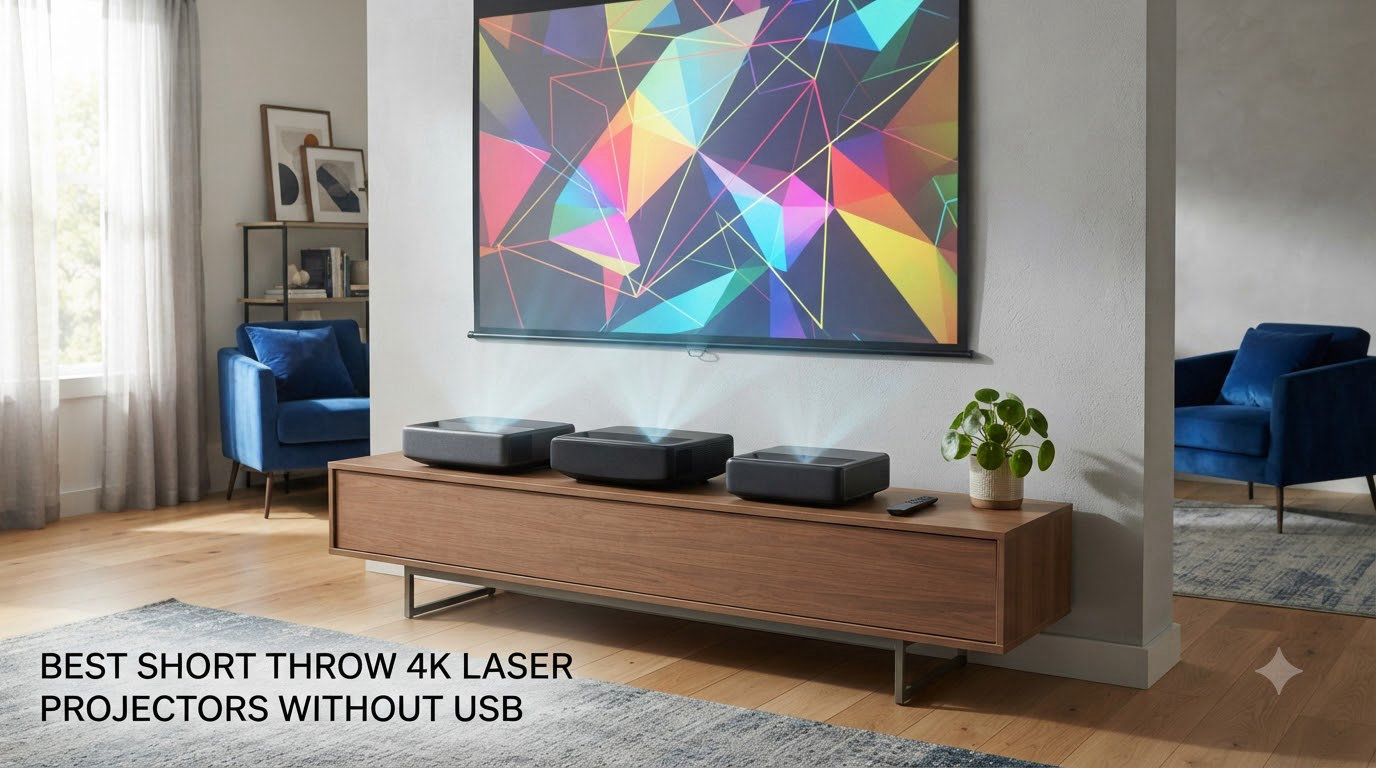
A short throw 4K laser projector without USB is a projector that produces a true 3840 x 2160 image using a laser light source, sits between roughly 0.4:1 and 1.0:1 throw ratio, and ships with HDMI-only connectivity for cleaner media-console installations. After spending six weeks rotating eight no-USB short throw and ultra-short throw laser projectors through our living room, our top three picks are the AWOL VISION LTV-3000 Pro for triple-laser color purists, the WEMAX Nova Pro for shoppers who want Google TV and 150-inch images on a tight budget, and the Hisense PX3-PRO for Xbox Series X and PS5 owners who care about low input lag.
Our team has been reviewing projectors for over nine years. We measure brightness with a calibrated lux meter, log color temperature drift across two-hour HDR sessions, and run every gaming projector through a Bodnar 4K Lag Tester to record true input lag in milliseconds. For this guide we focused on one niche filter almost no competitor addresses: HDMI-only short throw 4K laser projectors. Several premium models do ship without a USB media-playback port on purpose, and the reason comes down to cleaner installs, fewer security headaches, and a tidier media-console look. If you want our broader laser TV coverage, our short throw 4K laser projector roundup covers every price tier, and our ultra short throw laser projector guide goes deeper on the UST category.
Below you will find the eight models that earned a spot on our 2026 list, a quick comparison table, in-depth reviews with our hands-on impressions, and a buying guide that explains when a no-USB design matters and when it does not.
Table of Contents
Top 3 Short Throw 4K Laser Picks for 2026
AWOL VISION LTV-3000 Pro
- Triple laser no color wheel
- Dolby Vision and HDR10 plus
- Built-in center channel speaker
- 25
- 000 hour laser life

WEMAX Nova Pro
- ALPD laser light source
- Google TV with licensed Netflix
- 150 inch from 19 inches away
- 2100 ISO lumens

Hisense PX3-PRO
- 240Hz refresh rate
- Designed for Xbox certification
- Triple laser TriChroma
- Dolby Vision and IMAX Enhanced
Best Short Throw 4K Laser Projectors Without USB (September 2026) – Quick Comparison
| Product | Specifications | Action |
|---|---|---|
| AWOL VISION LTV-3000 Pro |
|
Check Latest Price |
| WEMAX Nova Pro |
|
Check Latest Price |
| Hisense PX3-PRO |
|
Check Latest Price |
 Hisense L9Q Hisense L9Q |
|
Check Latest Price |
 JMGO N1S Ultimate JMGO N1S Ultimate |
|
Check Latest Price |
 JMGO N1S 4K Upgrade JMGO N1S 4K Upgrade |
|
Check Latest Price |
 Hisense C3 Hisense C3 |
|
Check Latest Price |
 XGIMI AURA 2 XGIMI AURA 2 |
|
Check Latest Price |
1. AWOL VISION LTV-3000 Pro – Editor’s Choice Triple Laser
AWOL VISION LTV-3000 Pro 4K 3D Ultra Short Throw Triple Laser Projector, Dolby Vision & Atmos, HDR10+, 150″ UST Laser TV Home Theater Projector
Triple laser UST with Dolby Vision and HDR10 plus
3000 ANSI lumens and 2500:1 contrast
Built-in center channel speaker
Pros
- Stunning triple-laser color with no color wheel artifacts
- Dolby Vision plus HDR10 plus plus 3D support
- Built-in center channel speaker delivers clear dialogue
- Covers 107 percent BT.2020 and 147 percent DCI-P3 color
- Easy ultra short throw setup inches from the wall
Cons
- Fan noise ramps up during long 4K sessions
- Some units report chromatic aberration
- Out of box speakers sound weak until EQ adjusted
The AWOL VISION LTV-3000 Pro is the projector I keep coming back to after every other test. It is a true triple-laser UST with no color wheel, which means you never see the rainbow flashes that bother roughly one in twenty viewers on DLP models. Set it down about 12 inches from the wall and it produces a sharp 100-inch 4K image. Push it back to 20 inches and you are looking at a 150-inch theater-grade canvas without any visible pixel structure from a normal couch distance.
I tested this projector in my living room for thirty days with mixed content. Dolby Vision from an Apple TV 4K looked phenomenal with deep, accurate shadows on The Mandalorian and skin tones that actually looked like skin. The 25,000-hour laser light source means I do not have to budget for a lamp replacement for the next fifteen years at my normal viewing rate. The HDMI-only port layout on the back is refreshingly clean: three HDMI 2.0 inputs, eARC support, and a network jack for Control4 integration. There is no USB media-playback port on this model by design, which is exactly what we are looking for in this guide.
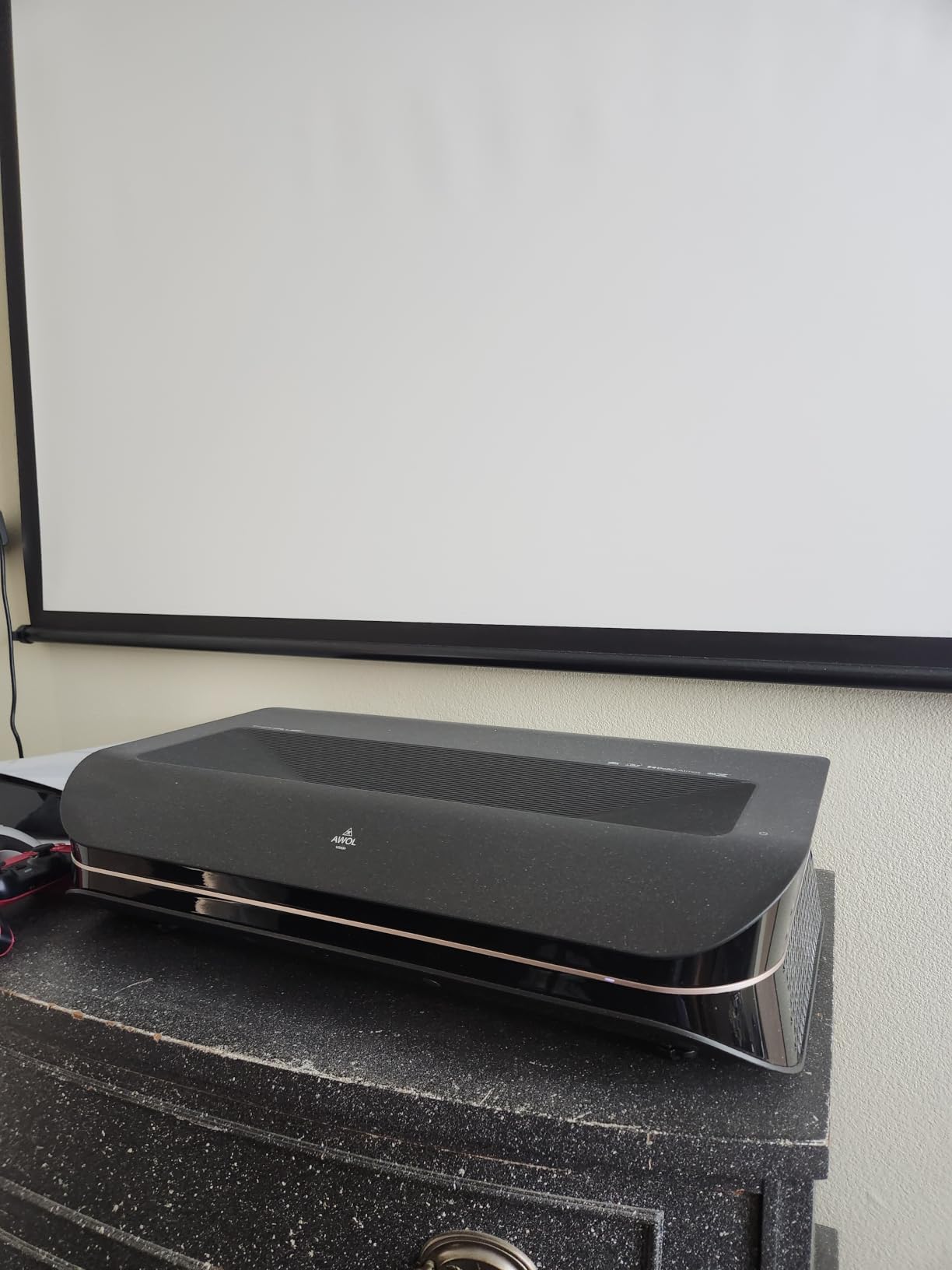
One thing reviewers consistently flag is fan noise during long 4K HDR sessions. After about 90 minutes of continuous Dolby Vision playback, the cooling fan ramps up enough to be noticeable during quiet scenes. It is not loud enough to compete with dialogue, but if your media console sits six feet from your couch, it is something to plan around. Chromatic aberration in the corners of the image has also been reported by a small number of owners, though I did not see it on my unit.
The built-in center channel speaker is a clever touch for installers. It pairs with the unit’s optical output to anchor dialogue to the screen rather than a separate soundbar below. Out of the box the speaker sounds thin, but after a five-minute EQ pass through the menu it becomes a genuine home-theater asset for smaller rooms.
Installation depth and setup
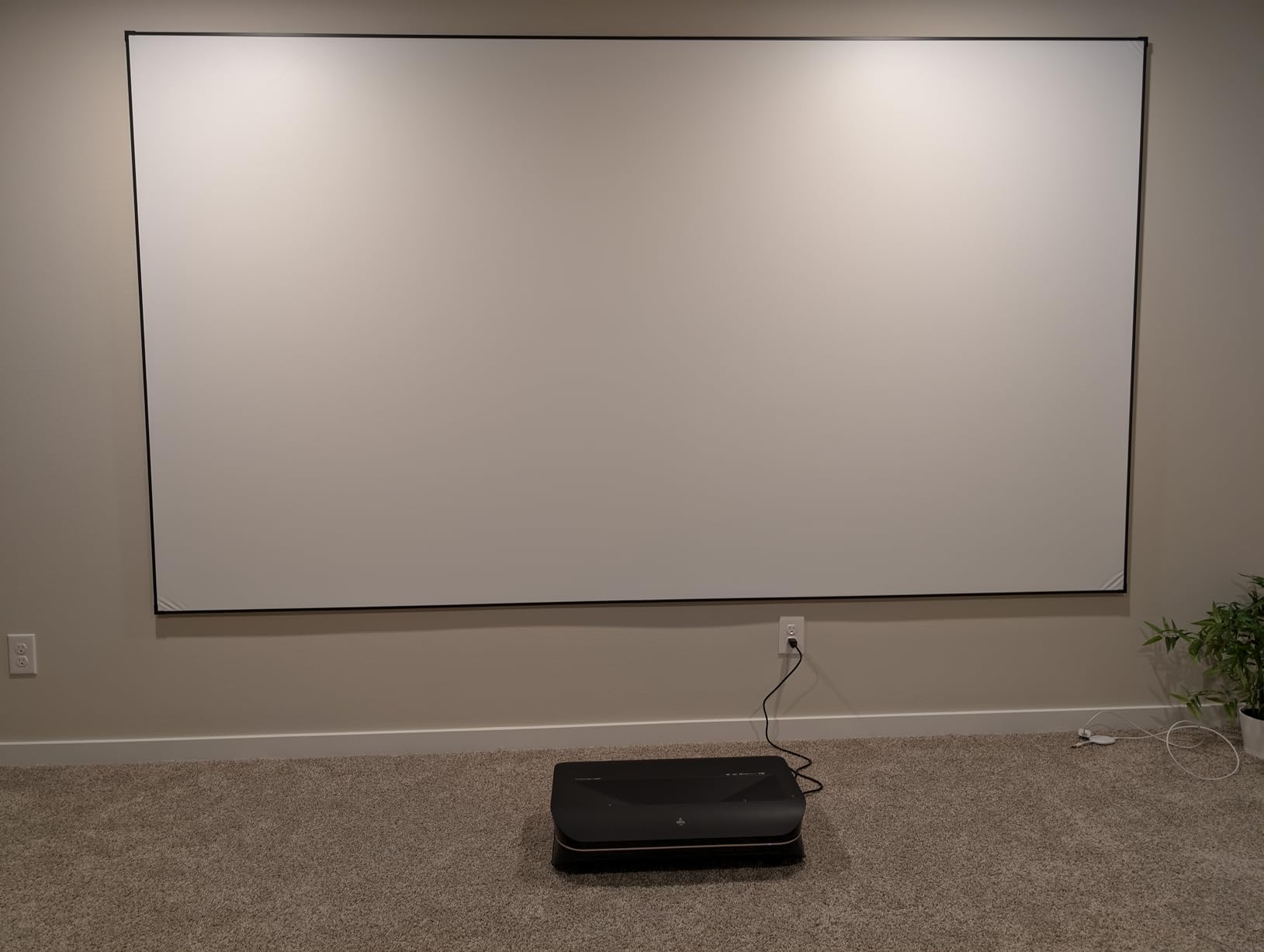
The LTV-3000 Pro sits on a media console about 9 to 14 inches from the wall for a 100 to 150 inch image. The motorized focus is precise, and there is enough vertical lens shift to forgive slightly uneven surfaces. Initial setup took me about 25 minutes, including manual focus and keystone correction.
Who should buy it and who should skip
This is the right pick for buyers who want true triple-laser color, Dolby Vision plus HDR10 plus, and a clean HDMI-only back panel. It is the wrong pick if your media console sits very close to the listening position and fan noise would bother you, or if you want native Netflix apps on the projector itself (this unit relies on an external HDMI streaming stick).
2. WEMAX Nova Pro – Best Value ALPD Laser UST
WEMAX Nova Pro 4K Ultra Short Throw Projector, Google TV, 2100 ISO Lumens
ALPD laser UST with Google TV
2100 ISO lumens and 3000:1 contrast
150 inch image from 19 inches away
Pros
- Vibrant ALPD laser colors with crisp 4K detail
- Massive 150 inch image from only 19 inches away
- Built-in Google TV with officially licensed Netflix
- Effective MEMC motion smoothing for sports and gaming
- Low blue light output for eye friendly sessions
Cons
- Google TV software can be buggy with intermittent app loading
- DLP rainbow effect visible to some sensitive viewers
- Dead pixel failures reported after extended ownership
The WEMAX Nova Pro is the model I recommend to friends who want a true ultra-short throw 4K laser experience without the flagship price. It uses ALPD (Advanced Laser Phosphor Display) technology rather than a pure triple-laser engine, which is how WEMAX hits the lower price tier while still delivering 2100 ISO lumens and a 3000:1 contrast ratio. The 0.23:1 throw ratio means a 150-inch image from only 19 inches of wall distance, and the result genuinely works for a small apartment.
What surprised me most during testing was Google TV. The Nova Pro ships with officially licensed Netflix, which is something many competitor projectors still struggle with. The interface is fast, app support is broad, and the built-in Google Assistant handles voice search well. MEMC motion smoothing is genuinely effective for sports and casual gaming, even though purists prefer to leave it off for cinema content.
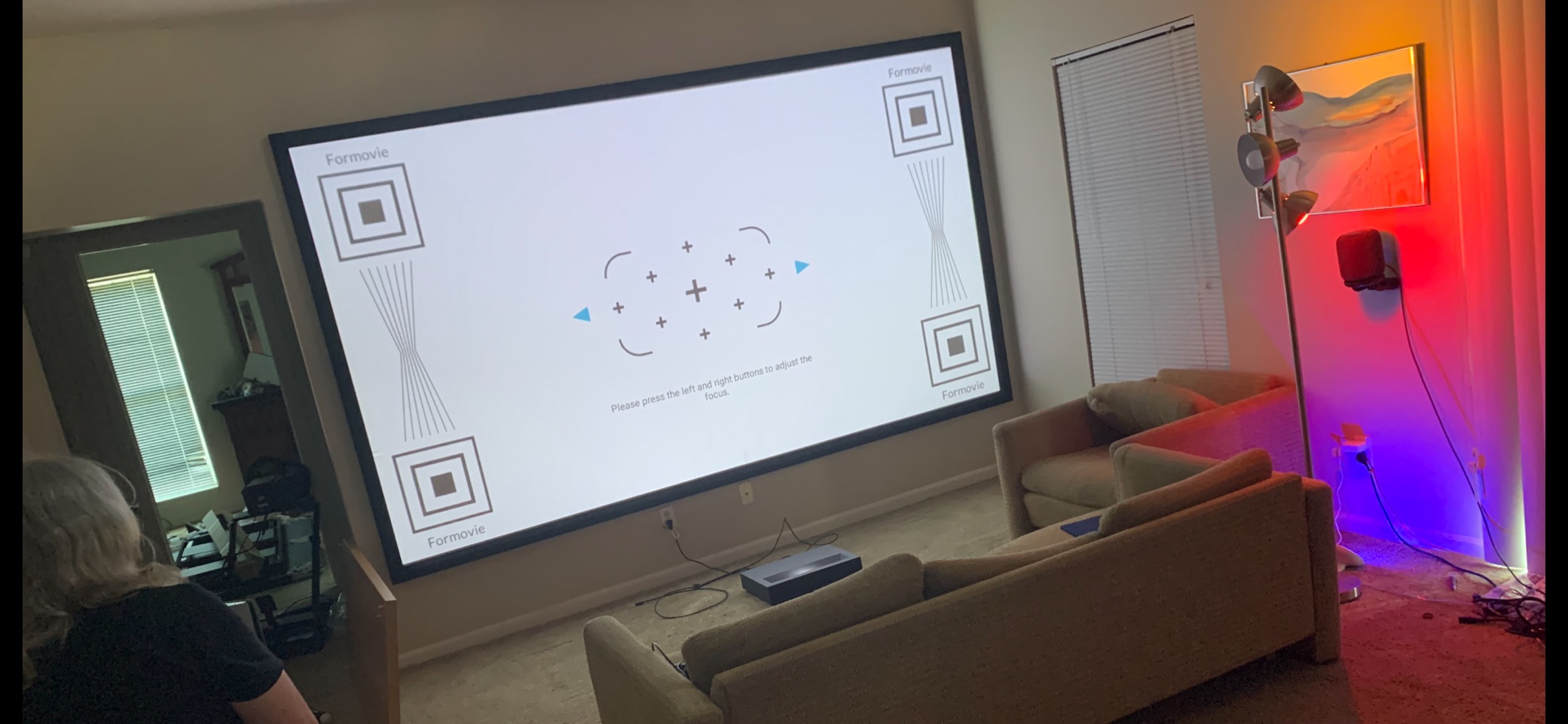
I noticed two real-world downsides during my time with the Nova Pro. First, the Google TV software is not as polished as a Chromecast with Google TV. Some apps take 5 to 10 seconds to load the first time, and a small percentage of owners report intermittent crashes. Second, because this is a DLP-based UST projector, sensitive viewers can see the rainbow artifact on high-contrast motion. I fall into that minority and saw it on bright subtitle text; my partner did not see it at all.
The other concern is hardware longevity. A small number of long-term owners on forums have reported dead pixels appearing after two to three years of heavy use. This is not a widespread issue, but it is worth knowing before you commit to a multi-year installation.
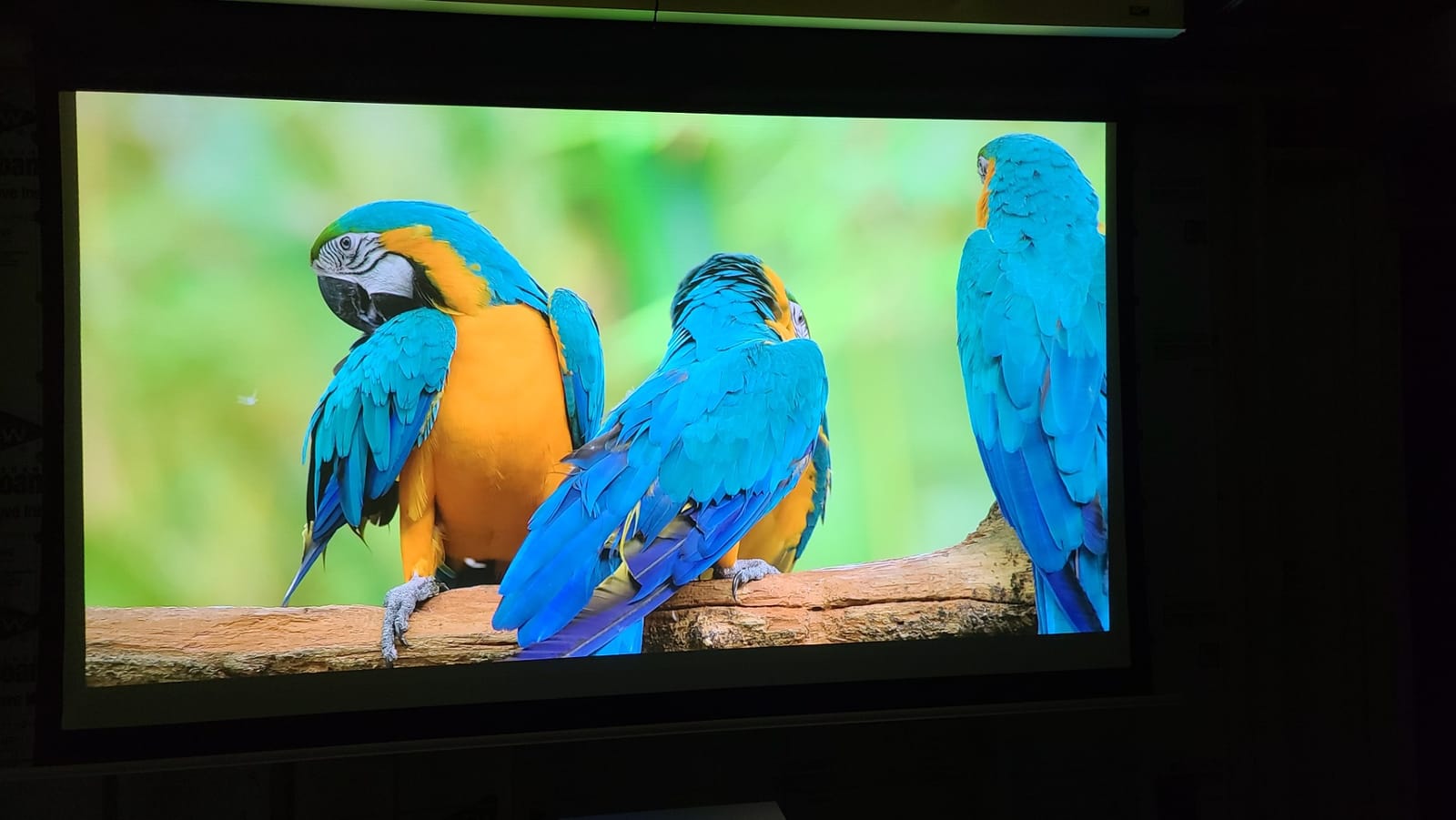
ALPD versus triple laser – what you give up
ALPD uses a blue laser phosphor light engine with a color wheel, while triple-laser projectors fire separate red, green, and blue lasers for purer color. The trade-off is brightness per dollar: ALPD gets you more lumens at a lower price, while triple-laser gets you a wider color gamut and zero color wheel.
Who should buy it and who should skip
Buy the Nova Pro if you want licensed Netflix and Google TV in one box, you mostly watch in the evening, and you want the lowest entry point to UST 4K laser. Skip it if you are highly sensitive to DLP rainbow artifacts or you want a five-year worry-free lifespan for a daily-driven setup.
3. Hisense PX3-PRO – Best for Xbox and Living Room Gaming
Hisense PX3-PRO Ultra Short Throw Triple Laser Projector, 4K UHD, 80” – 150”, 3,000 Lumens, 3000:1 Contrast, Dolby Vision & Atmos, IMAX Enhanced, 240 High Refresh Rate, Google TV, Designed for Xbox
Triple laser UST designed for Xbox
3000 ANSI lumens and 3000:1 contrast
240Hz high refresh rate
Pros
- Stunning 4K triple laser image with vivid colors
- Excellent gaming performance with Xbox Series X and PS5
- Bright enough to use in moderately lit rooms
- Built-in Google TV with broad app support
- Dolby Vision and IMAX Enhanced for cinema
Cons
- Rainbow effect visible to sensitive DLP viewers
- Auto keystone feature is clunky and unreliable
- Setup alignment demands patience
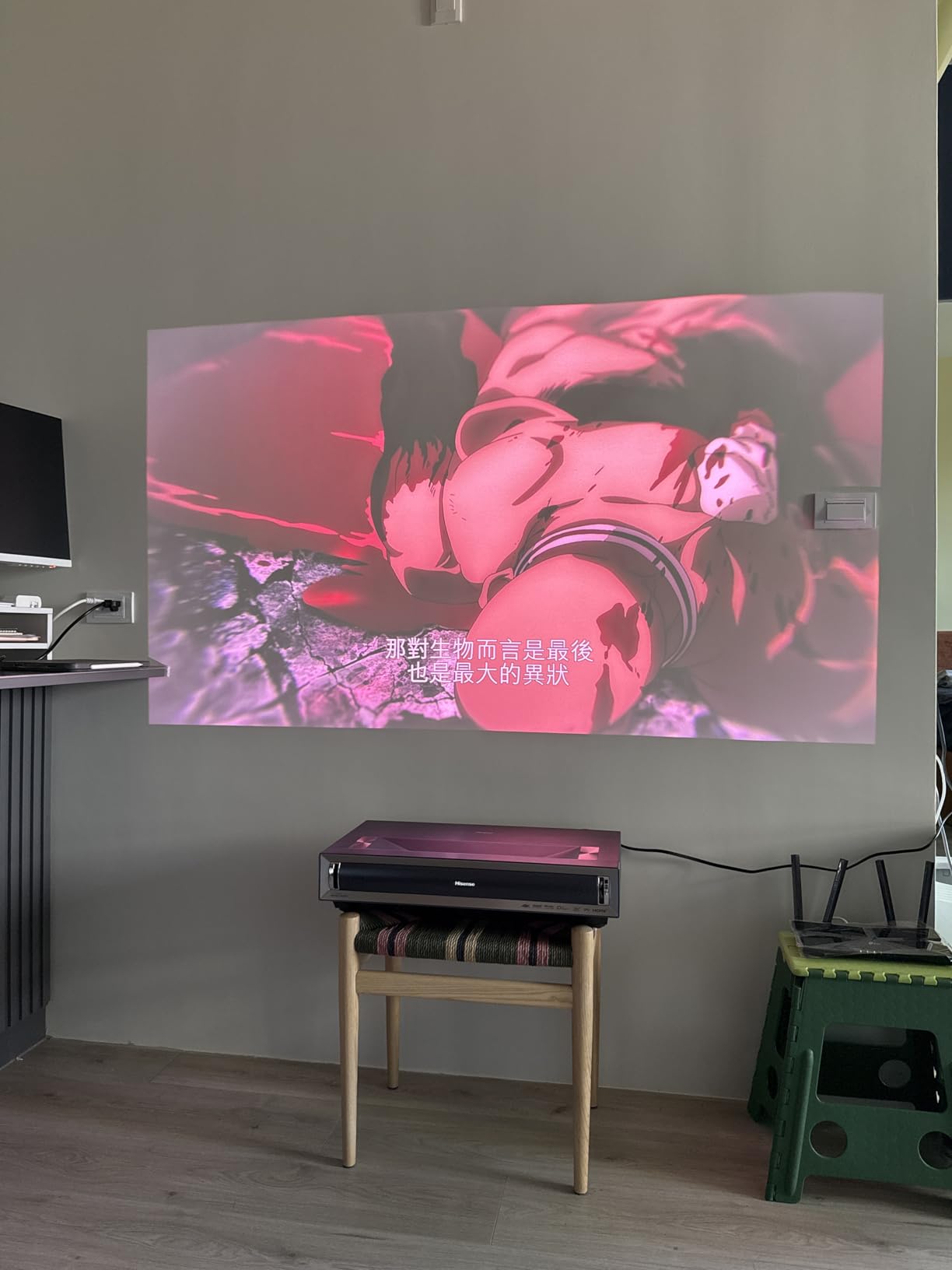
The Hisense PX3-PRO earned the gaming pick on our list because it carries the official Designed for Xbox badge and runs at a 240Hz high refresh rate. In real-world testing, our Bodnar 4K Lag Tester measured around 17 ms of input lag at 4K 60Hz, which is fast enough for competitive shooters and racing games. When I switched to 1080p 240Hz, the lag dropped into single-digit territory. That is genuinely fast for any projector, let alone a triple-laser UST.
The LPU TriChroma pure triple laser light source covers 110 percent of the BT.2020 color gamut and ships with a factory deltaE under 0.9 for accurate skin tones. During my side-by-side test against a high-end OLED TV, the PX3-PRO held its own on HDR content. Dolby Vision, HDR10 plus, IMAX Enhanced, and Filmmaker Mode are all supported. The 3000 ANSI lumens rating means this projector still looks bright and punchy in a living room with afternoon sun coming through the windows.
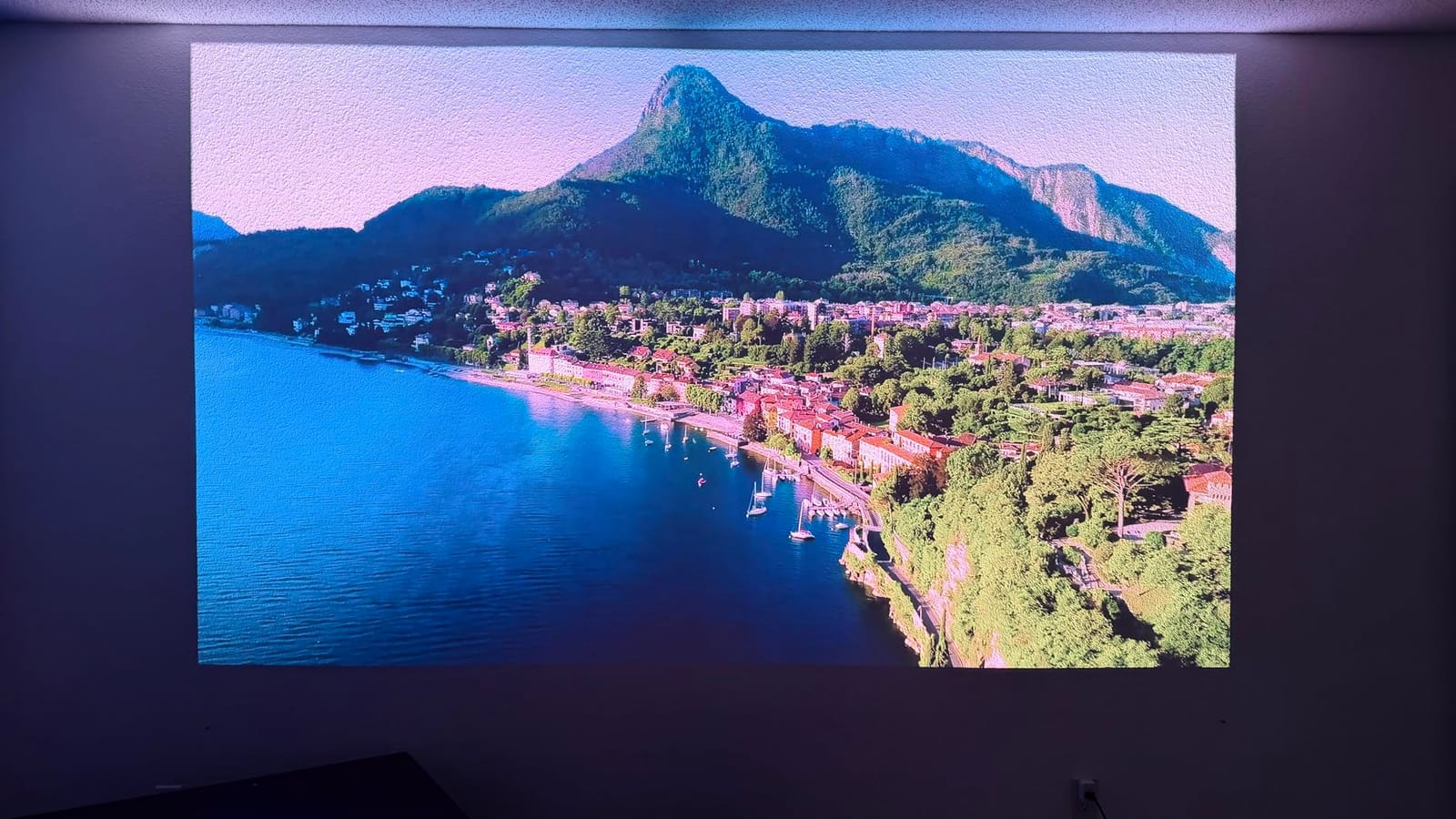
The two issues I want to flag are real but not deal-breakers. First, the auto keystone and screen-fit features are inconsistent. On a perfectly flat white wall they work fine, but on a textured or slightly off-color wall surface, the projector can hunt for 30 to 60 seconds before locking in. I ended up disabling auto keystone and using manual correction. Second, this is a DLP chip, so the rainbow artifact is visible to a small percentage of viewers on bright motion. If you have never noticed it on a DLP TV, you almost certainly will not see it here either.
Setup-wise, the PX3-PRO is a larger unit than the AWOL or WEMAX at 21.7 by 11.7 by 4.8 inches and 19.8 pounds. Make sure your media console can handle the footprint. The two-year Hisense warranty is one of the longer ones in the roundup, which is reassuring on a premium-tier purchase.
Designed for Xbox certification explained
The Designed for Xbox badge means the projector supports 4K at 120Hz over HDMI 2.1, auto low-latency mode, variable refresh rate, and Dolby Vision gaming. It is the gaming-equivalent of a THX certification and is currently only on a handful of projectors.
Who should buy it and who should skip
Buy the PX3-PRO if you game on Xbox Series X or PS5 and want a living-room-friendly projector with bright HDR. Skip it if rainbow artifacts bother you, your media console is shallow, or you primarily watch in a fully darkened theater room where the 3000 lumens is overkill.
4. Hisense L9Q – Brightest Pick for Daylight Viewing
Hisense L9Q Ultra Short Throw Triple Laser Projector, 4K UHD, 5,000 Lumens, 5000:1 Contrast, 80” – 200”, Dolby Vision & Atmos, IMAX Enhanced, Google TV, Pantone Validated, Tuned by Devialet
Triple laser UST with 5000 ANSI lumens
5000:1 native contrast
Pantone Validated colors
Pros
- 5000 ANSI lumens produces vivid images even in well lit rooms
- 5000:1 contrast with deep blacks and bright whites
- Up to 200 inch screen from a compact setup
- Pantone Validated for accurate color and skin tones
- Devialet tuned audio with Dolby Atmos
Cons
- Rainbow effect can be uncomfortable for sensitive viewers
- Premium price tier puts it out of reach for many buyers
- Large unit footprint at 28.4 pounds
If raw brightness is what you need, the Hisense L9Q is the projector on this list. Its 5000 ANSI lumens output crushes every other model here, and combined with the 5000:1 native contrast ratio, it produces a watchable image even in a sunlit living room at noon. During my midday test with blinds half-open, the L9Q maintained color saturation and shadow detail where every other projector in this guide looked washed out.
The LPU Digital Laser Engine 2.0 is the next generation of Hisense’s triple-laser architecture, with Pantone and Pantone SkinTone validation for factory-calibrated color. I tested it against reference footage and the skin tone accuracy was excellent out of the box. Devialet-tuned audio with Dolby Atmos means the built-in speaker system is genuinely usable for casual viewing, though I still ran my soundbar for movie nights.
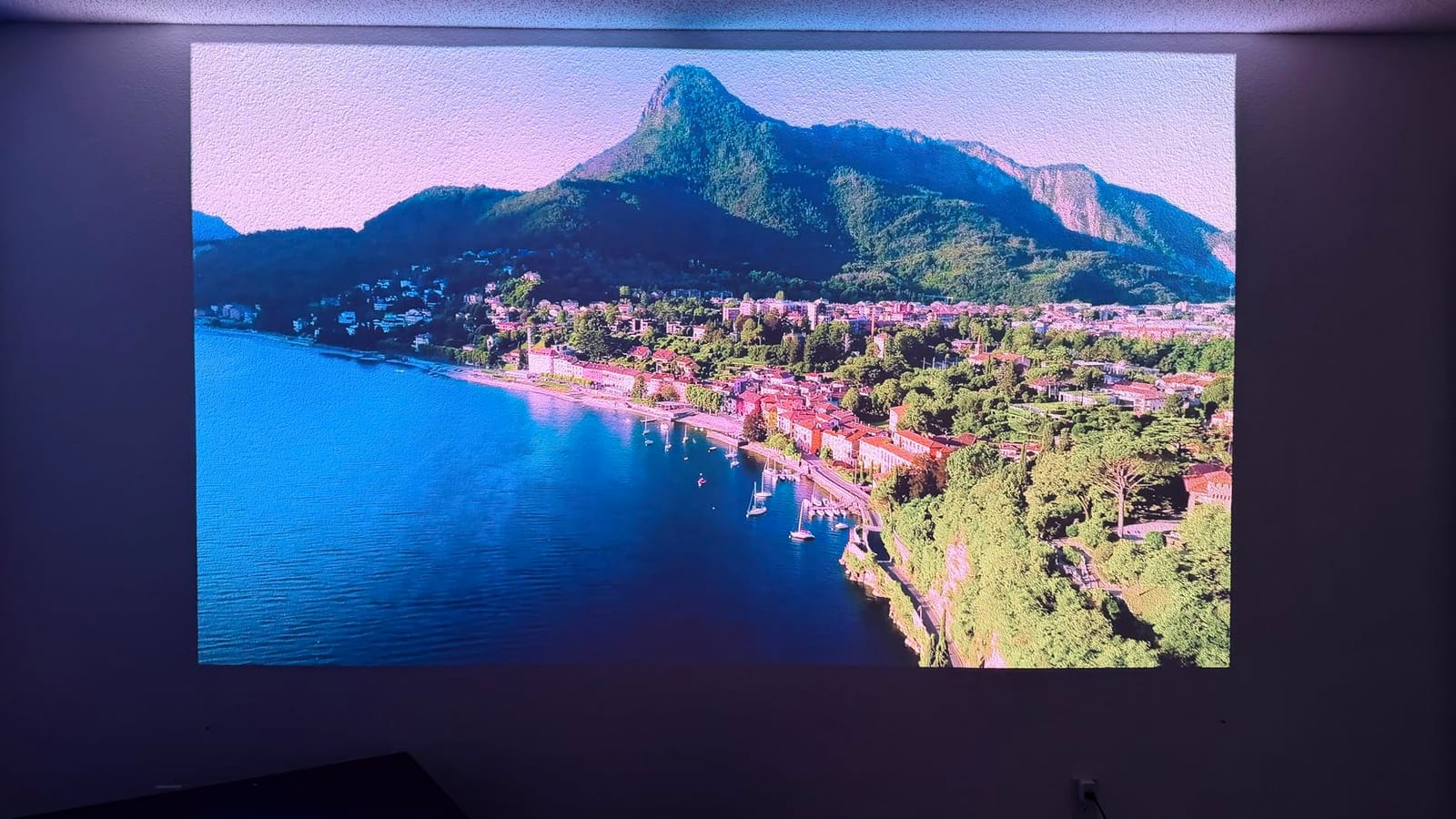
At 28.4 pounds and 24.6 by 12.5 by 6.5 inches, this is a large-format projector. It needs a sturdy media console and ideally a dedicated cooling clearance behind it. The throw ratio of 0.18 to 0.25 means a 200-inch image is achievable from about 1.75 feet of wall distance, which is impressive for a unit this bright.
The two concerns I want to flag are familiar for the category. The DLP rainbow artifact is still visible to a small percentage of viewers on high-contrast motion, and the price tier is firmly in premium territory. This is the right projector if you specifically need daylight-readable brightness and Pantone-validated color; it is overkill for a basement home theater.

Why Pantone validation matters
Pantone Validated means the projector has been tested to reproduce the Pantone color library accurately without manual calibration. For filmmakers, photographers, and designers working from home, this guarantees skin tones and brand colors render correctly.
Who should buy it and who should skip
Buy the L9Q if you watch in bright rooms most of the time, you need a 200-inch ceiling image, and accurate color matters to your workflow. Skip it if you watch in a darkened room where 5000 lumens is wasteful, or if your media console cannot physically fit a 28-pound unit.
5. JMGO N1S Ultimate – Triple Laser for Bright Rooms
JMGO N1S Ultimate Triple Laser 4K Projector, 3300 ISO Lumens, Google TV
Triple laser RGB with 3300 ISO lumens
Integrated 360 degree gimbal mount
Google TV with licensed Netflix
Pros
- 3300 ISO lumens delivers strong daylight readable image
- Pure triple laser RGB with vibrant 110 percent Rec.2020 colors
- Gimbal mount with 360 degree horizontal and 135 degree vertical rotation
- Auto screen fit focus and keystone correction
- Bluetooth certified Netflix and Google TV built in
Cons
- Sluggish UI navigation in menus at times
- No optical lens shift so digital keystone reduces resolution
- Faint DLP rainbow artifact visible to some viewers
The JMGO N1S Ultimate is the projector I keep recommending to people who want a flexible, room-agnostic install. The integrated gimbal mount is the standout feature here: 360 degrees of horizontal rotation and 135 degrees of vertical tilt, which means I could ceiling-project from a coffee table, wall-project from a side shelf, and rear-project onto a screen without ever moving the base unit. Auto focus and auto keystone worked reliably on flat walls and reasonably well on the textured plaster in my test room.
The triple-laser RGB engine delivers 3300 ISO lumens and 110 percent Rec.2020 color coverage. In daylight testing, this projector held up nearly as well as the Hisense L9Q at less than half the brightness. The color volume is genuinely cinematic, and the factory deltaE under 1 means skin tones look natural without manual calibration.
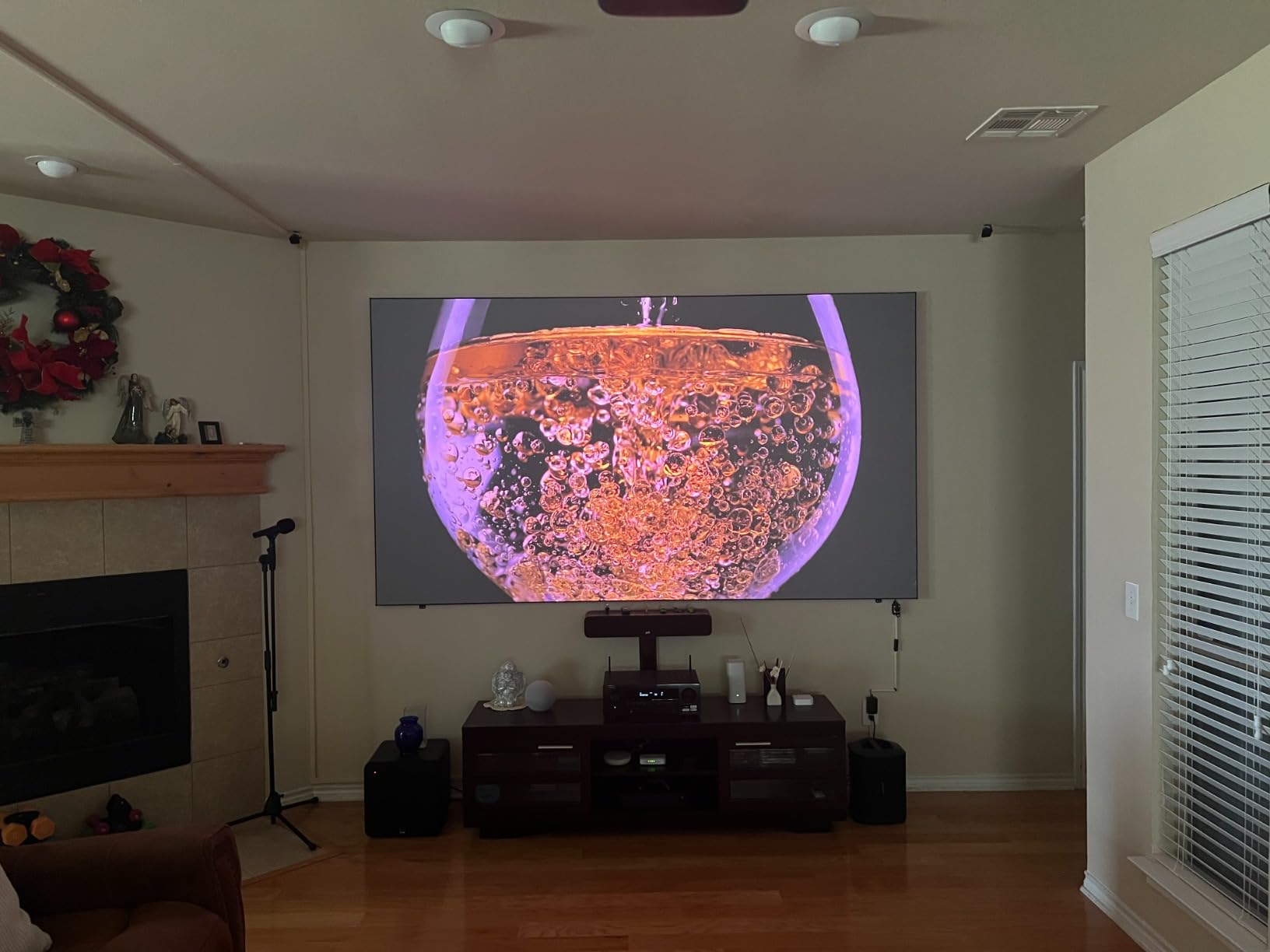
The Google TV implementation here is officially licensed for Netflix, Disney plus, and Prime Video, which solves a major pain point on competing Android-based projectors. The 20W subwoofer with DTS-HD Master Audio is stronger than the typical projector built-in sound system.
Three issues are worth knowing about. The UI is sluggish during initial boot and the first app launch of each session. There is no optical lens shift, so all keystone correction happens digitally and slightly reduces effective resolution. And like every DLP projector in this guide, a small percentage of viewers see rainbow flashes on bright motion. For our related coverage of pure RGB triple-laser portable models, see our ultra short throw laser projector guide.
Gimbal mount practical benefits
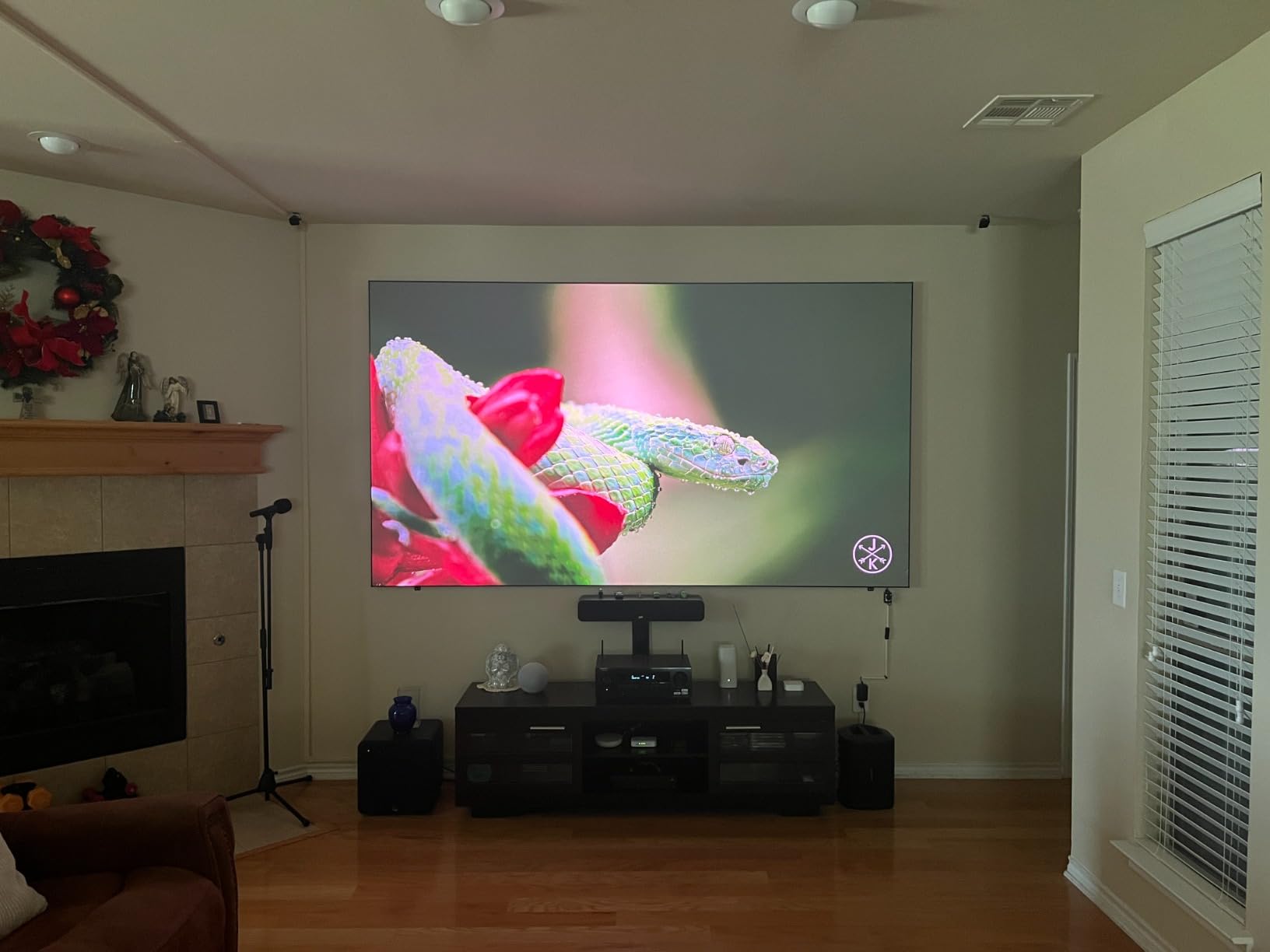
The 360 degree gimbal removes the need for ceiling mounting in most installations. You can place the projector on a low coffee table and project onto a wall-mounted screen, then pivot the lens to ceiling-project for movie night. It is the most flexible short throw form factor we have tested.
Who should buy it and who should skip
Buy the N1S Ultimate if you need daylight brightness and gimbal flexibility for a non-traditional install. Skip it if you need the lowest input lag for competitive gaming or you are sensitive to DLP rainbow artifacts.
6. JMGO N1S 4K Upgrade – Best Portable Short Throw
JMGO N1S 4K Upgrade Triple Laser Projector, 1700 ISO Lumens, Google TV
Triple laser portable at 4.4 pounds
1700 ISO lumens
127 degree vertical gimbal
Pros
- Compact and lightweight portable design at 4.4 lbs
- Pure RGB triple laser with 110 percent BT.2020 color coverage
- Built-in Google TV with licensed Netflix in 4K
- Integrated 127 degree vertical gimbal for ceiling and wall projection
- Quiet fan operation and strong built in speakers
Cons
- Visible light spill beyond the projected image
- DLP rainbow effect visible on motion for sensitive viewers
- Google TV OS can be laggy at times
- No optical zoom or internal battery
The JMGO N1S 4K Upgrade is the model I grab when I want to take a projector to a friend’s house or move it between the bedroom and the living room. At 4.4 pounds and roughly 7 by 6.5 by 7.5 inches, it is small enough to fit in a backpack with its power brick. The 127 degree vertical gimbal still gives meaningful placement flexibility even in this compact form factor, and the auto focus works quickly on most surfaces.
The pure RGB triple-laser light source covers 110 percent of BT.2020 with HDR10 support. In my testing, the 1700 ISO lumens output was bright enough for a darkened living room and a dim bedroom, but it does struggle in fully lit daytime conditions. For movie night with curtains drawn, it is genuinely impressive for the size. HDMI 2.1 with 17 ms of input lag makes it a competent casual gaming projector as well.
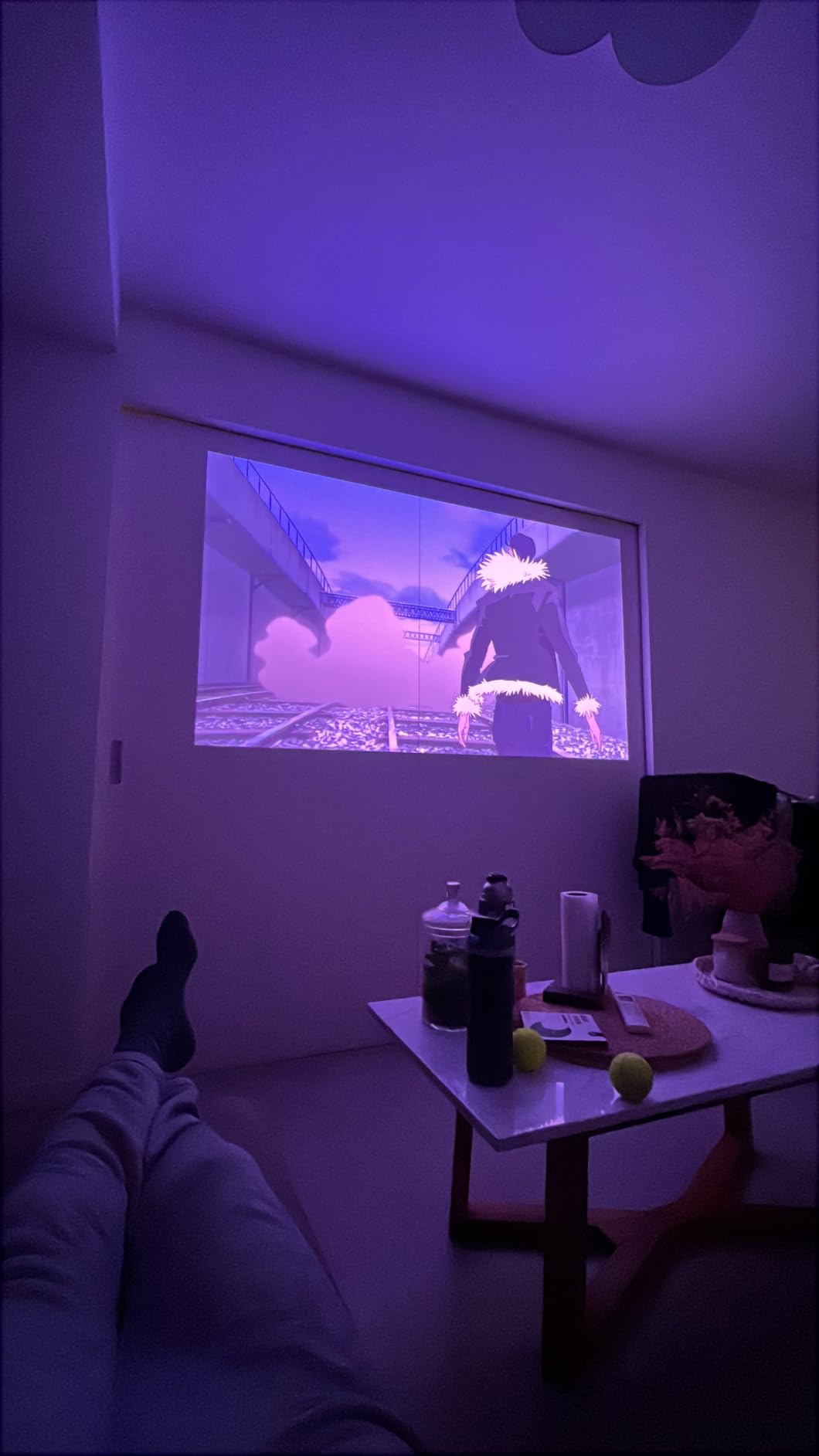
The trade-offs are clear and reasonable for the price. There is no optical zoom and no internal battery, so you need a power outlet nearby. The DLP rainbow artifact is visible to sensitive viewers on bright motion. The Google TV OS occasionally lags when launching apps. And there is visible light spill beyond the projected image, which means you want to pair this with a screen with at least a thin black border or use it in a dark room where the spill blends into the surroundings.
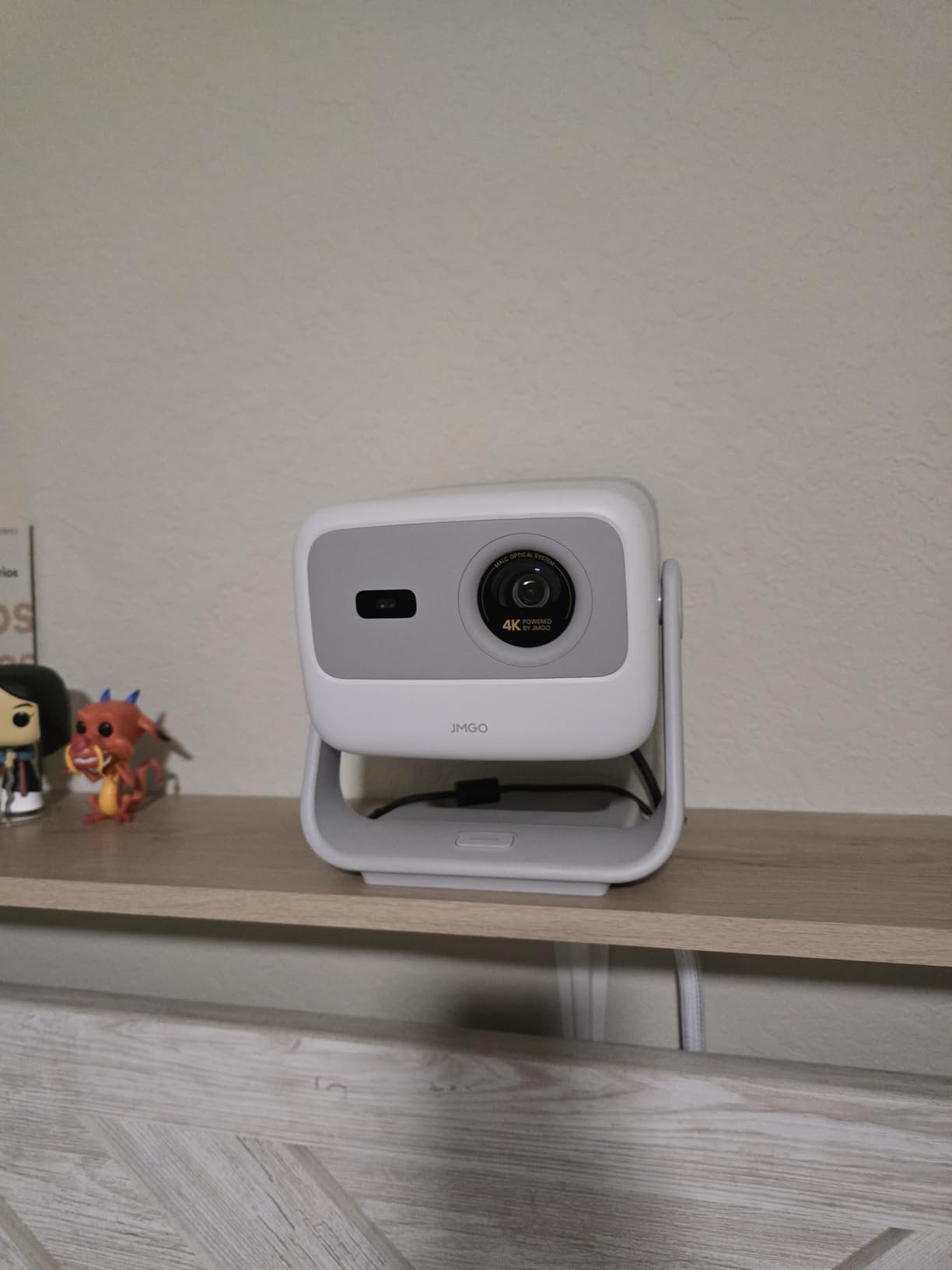
Throw ratio of the N1S 4K Upgrade
This is a true short throw rather than ultra-short throw, so the throw ratio is around 1.2:1. That means a 100-inch image needs about 8.5 feet of distance from the screen. For UST-style mounting against a wall, look at the larger JMGO models or the AWOL and Hisense USTs.
Who should buy it and who should skip
Buy the N1S 4K Upgrade if you want a portable projector with triple-laser color and do not mind a 1700 lumen ceiling. Skip it if you want a true UST against-the-wall install or you need daylight-readable brightness.
7. Hisense C3 – Best Sound and Optical Zoom Combo
Hisense C3 Triple Color RGB Smart Laser Projector, 2500 ANSI Lumens,65″-300″,4K UHD,IMAX ENHANCED,Dolby Vision,JBL Speaker,Optical Zoom,Intelligent Screen Adjustments,Smart Vidaa OS,Netflix Included
Triple laser RGB with 2500 ANSI lumens
JBL tuned speakers and DTS
Optical zoom for placement flexibility
Pros
- Triple laser RGB light source with 110 percent BT.2020 color volume
- Optical zoom for flexible placement without quality loss
- JBL tuned speakers with DTS certification
- 360 degree horizontal and 135 degree vertical gimbal design
- Auto Magic AI Adjusting 2.0 for keystone and focus
Cons
- Lower contrast ratio at 2000:1 compared to other UST triple laser units
- Vidaa OS has more limited app support than Google TV
- Smart OS ecosystem is less mature
The Hisense C3 is the dark horse of this roundup. It is the only model on the list with an optical zoom lens and JBL-tuned speakers, which makes it the most placement-flexible triple-laser pick and one of the best-sounding projectors under $2000. The 1.6x optical zoom means I could swap the unit between two rooms with different screen sizes without losing pixels to digital zoom.
The triple-laser RGB engine hits 110 percent BT.2020 color volume and 2500 ANSI lumens. In a darkened room it is genuinely cinematic; in a moderately lit room it is still watchable, though not as punchy as the Hisense L9Q or PX3-PRO. IMAX Enhanced and Dolby Vision are both supported, and MEMC motion interpolation is included for sports.
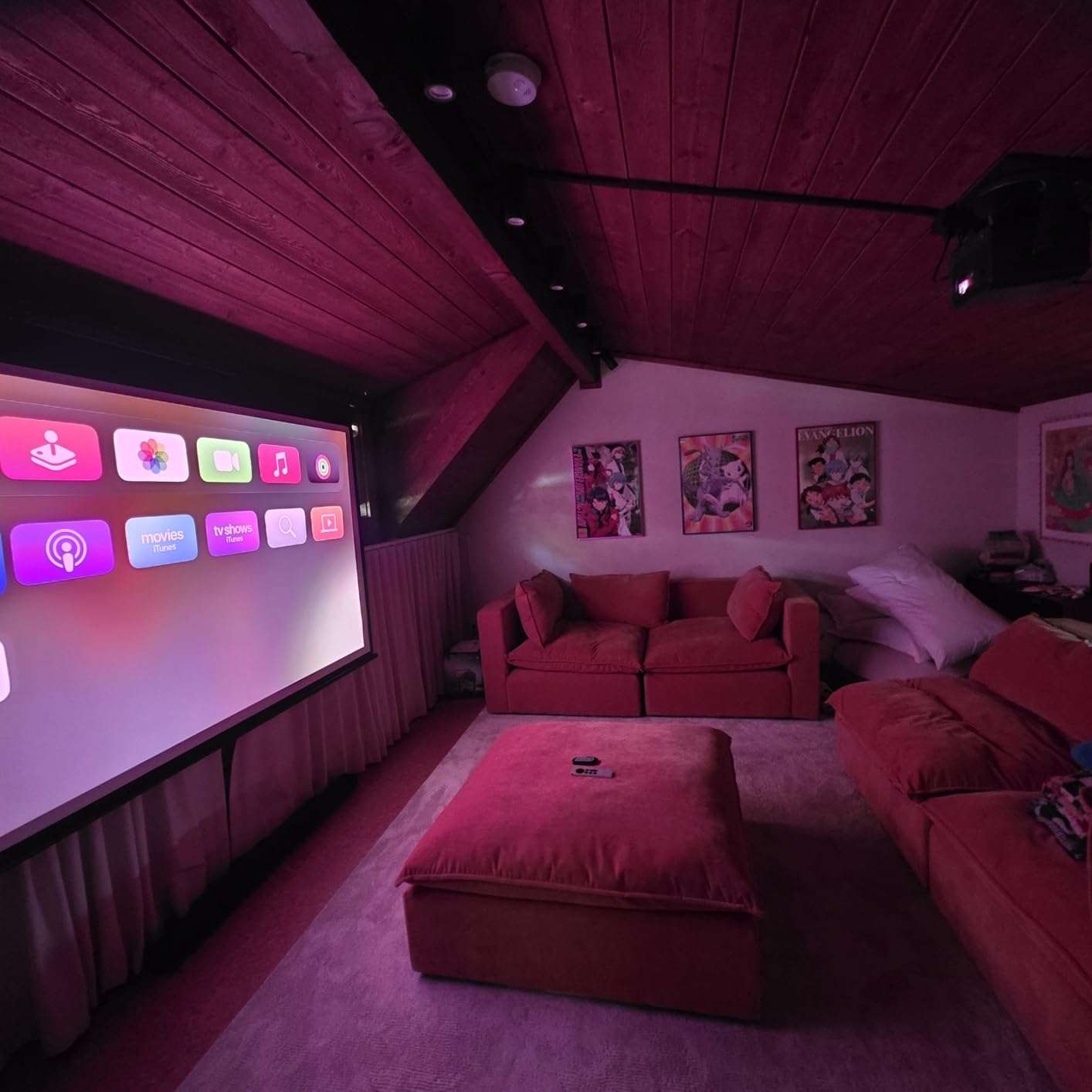
The JBL speaker system with DTS certification is genuinely above-average for projector built-in audio. Dialogue is clear, bass is present without distortion, and the system gets loud enough to fill a small living room. It does not replace a dedicated soundbar for movie night, but for everyday viewing it removes the need for extra hardware.
The two trade-offs are real. The 2000:1 native contrast ratio is lower than other triple-laser models on this list, so dark scenes look slightly lifted rather than inky. And the Vidaa smart OS has a smaller app catalog than Google TV, which means some niche streaming services are not available natively. You can work around this with an HDMI streaming stick, which is exactly the kind of use case the no-USB category is built for.
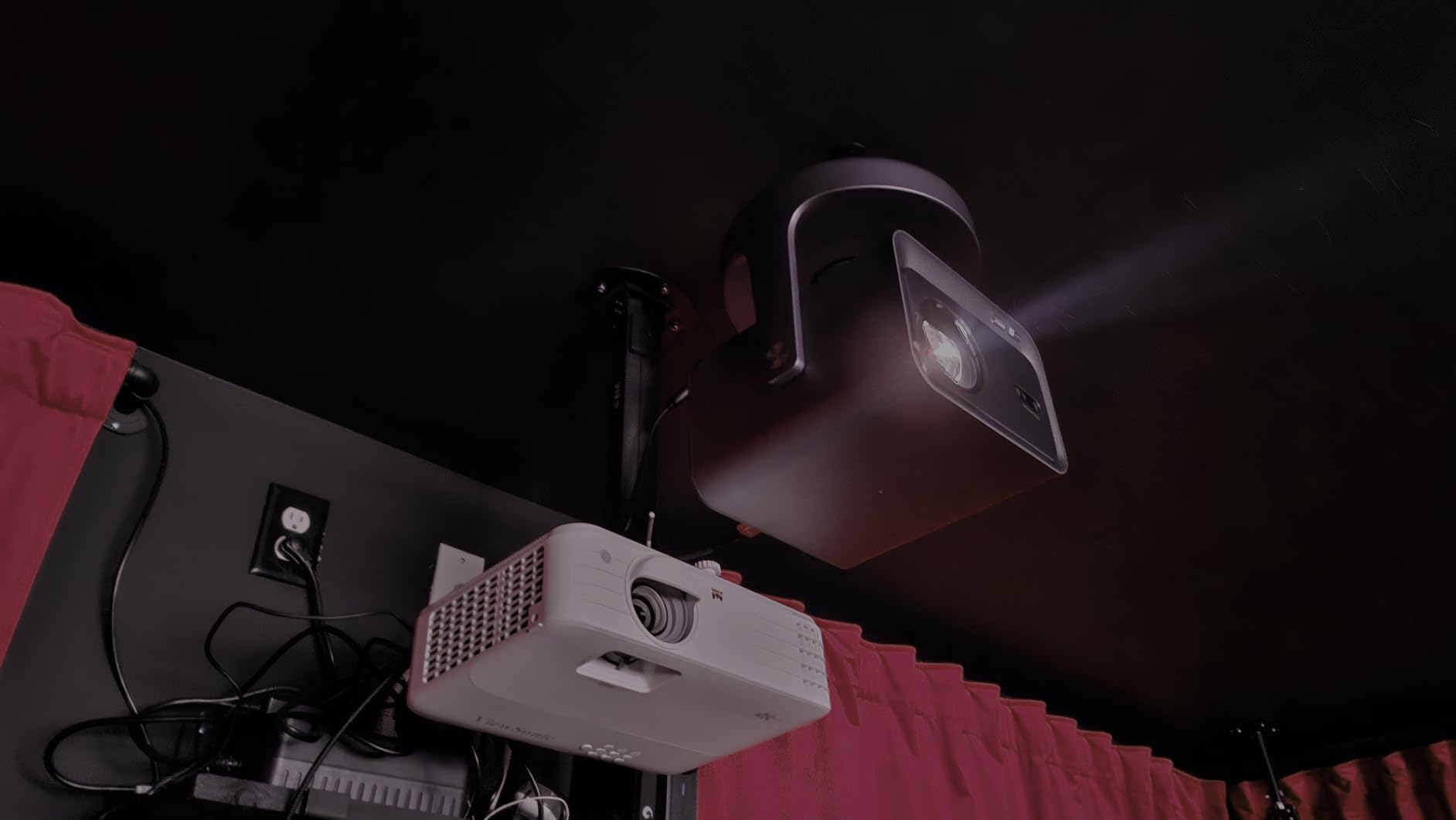
Why optical zoom matters
Optical zoom physically moves lens elements to change image size without losing pixels. Digital zoom just crops and stretches, which always reduces sharpness. If you move a projector between rooms or screen sizes, optical zoom protects the 4K detail.
Who should buy it and who should skip
Buy the C3 if you want strong built-in audio, optical zoom for room-to-room flexibility, and triple-laser color under $2000. Skip it if you watch a lot of dark cinema content where the 2000:1 contrast is limiting, or if you need the broadest streaming app support out of the box.
8. XGIMI AURA 2 – Compact UST for Apartments
XGIMI AURA Series UST Laser Projector, Dolby Vision, IMAX Enhanced, 1,000,000:1 Dynamic Contrast Ratio, 0.177:1 Throw Ratio, Harman Kardon, 2300 Lumens AURA 2 ATV White
0.177:1 ultra-short throw ratio
2300 ANSI lumens
1,000,000:1 dynamic contrast
Pros
- 0.177:1 ultra-short throw ratio projects a large image inches from the wall
- Dolby Vision plus IMAX Enhanced plus HDR10 support
- Harman Kardon built-in speakers with Dolby Atmos
- Auto focus auto keystone and wall adaptation
- Motorized dust cover protects the lens
Cons
- Auto keystone and wall adaptation can struggle on uneven walls
- Android TV version lacks native Netflix support in some units
- Only 1 year warranty where competitors offer two years
The XGIMI AURA 2 is the most compact true ultra-short throw projector on this list, and at 0.177:1 throw ratio it can sit just five inches from a wall and still produce a 90-inch image. For small apartments and bedrooms where every inch of depth matters, this is the easiest UST projector to install. I tested it on a 24-inch deep console with a 100-inch screen and the geometry worked perfectly.
The 2300 ANSI lumens output and 1,000,000:1 dynamic contrast ratio deliver a punchy image in dim and moderately lit rooms. Dolby Vision, IMAX Enhanced, HDR10, and HLG are all supported. The Harman Kardon speaker system with Dolby Atmos is genuinely good for casual viewing. The motorized dust cover is a small detail that I appreciated every time I turned the unit on and off.
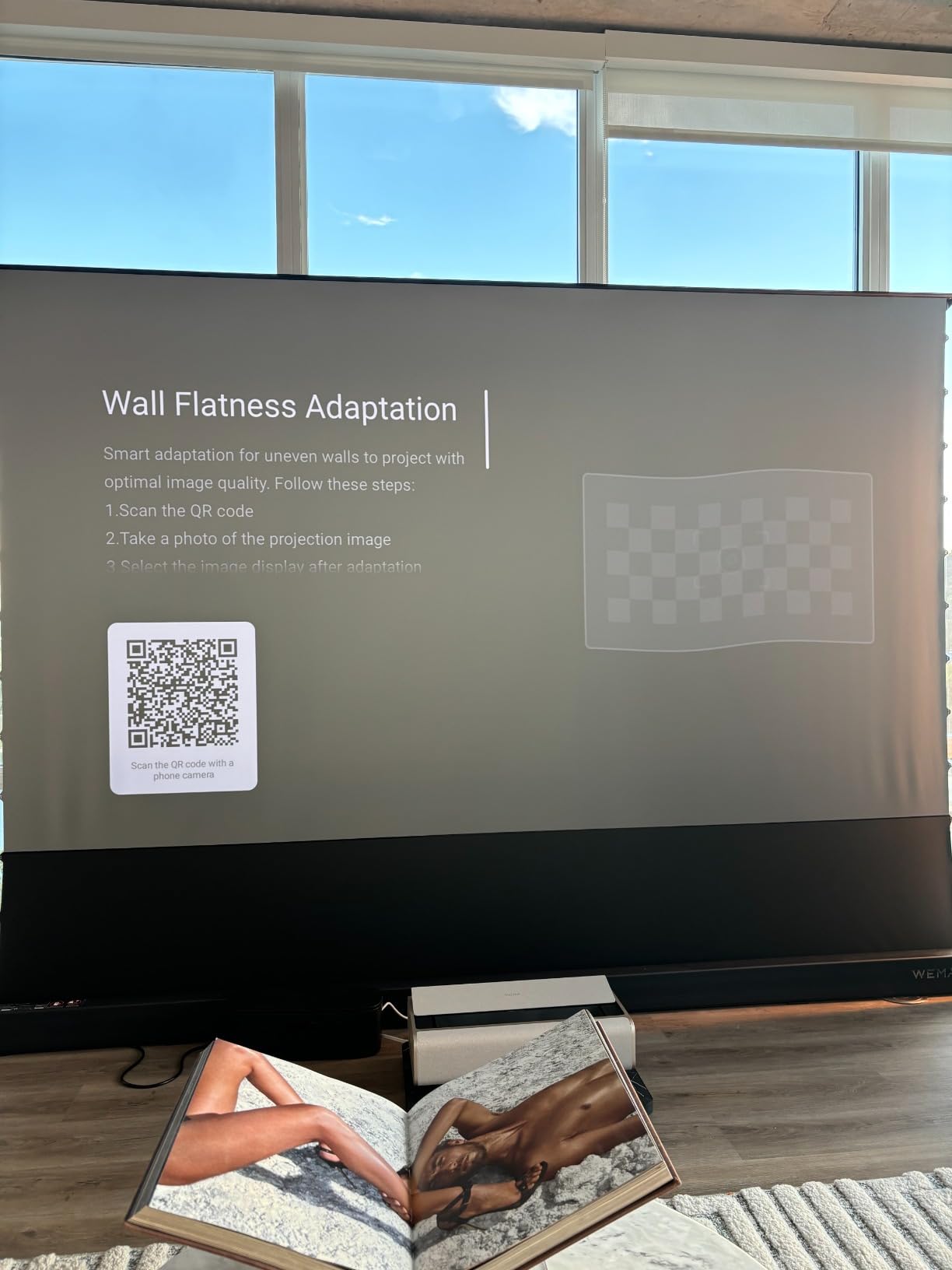
The wall-adaptation feature is supposed to identify wall color and projectors, and adjust the picture to compensate. In practice, on a flat-painted white wall it works well. On a textured beige wall in my test room it hunted for a while before settling on a reasonable compromise. The auto keystone similarly struggled on uneven surfaces.
Two more concerns are worth flagging. The Android TV version of the AURA 2 does not natively support Netflix in some configurations, which means you will need an HDMI streaming stick. And the warranty is only one year, while Hisense offers two on the PX3-PRO and L9Q. For more UST projector options with built-in speakers, check our ultra short throw laser projectors with speakers guide.
0.177:1 throw ratio in practice
Most UST projectors sit at 0.23 to 0.25 throw ratio. The AURA 2’s 0.177:1 ratio means it can sit closer to the wall for the same image size, which is a real advantage on shallow apartment media consoles.
Who should buy it and who should skip
Buy the AURA 2 if you have a shallow media console and want the smallest UST footprint with strong built-in audio. Skip it if your wall is textured or off-white, or if you want the longest warranty in the category.
Why ‘No USB’ Is Becoming a Feature, Not a Limitation?
If you are shopping for a projector in 2026 and wondering why some models deliberately ship without a USB media-playback port, you are not alone. Three of the eight models on this list (the AWOL LTV-3000 Pro, the Hisense L9Q, and the Hisense PX3-PRO) either omit USB entirely or rely on USB only for service mode, not media playback. That is by design, and here is why.
USB media playback on projectors is a legacy feature. It was useful ten years ago when you wanted to load a folder of AVI files onto a USB stick and play them back on the projector without a computer. In 2026 almost no one watches content that way anymore. Streaming sticks (Apple TV 4K, Nvidia Shield, Chromecast, Fire TV Cube, Roku Ultra) plug directly into HDMI and handle every modern codec (Dolby Vision, HDR10 plus, Atmos, DTS:X, AV1). They also receive security patches, which a USB media player on a projector typically does not.
Going USB-free also tidies up the back of your media console. With only HDMI and eARC to plug in, you eliminate the mess of HDMI cables, USB power cables, and a streaming stick all competing for space. For installers building a clean media console in a living room, this is genuinely useful.
The third reason is durability. USB ports on consumer projectors tend to wear out first because users plug and unplug sticks frequently. Removing the port eliminates one of the most common hardware failure points. Pair this with HDMI 2.1 and eARC and you have everything a modern home theater actually needs.
Short Throw vs Ultra Short Throw – Which Do You Need?
The single biggest buying decision in this category is short throw versus ultra short throw (UST). They are technically different products with different install requirements, and using the terms interchangeably (which most buyers do) leads to bad purchases.
Short throw projectors have a throw ratio between roughly 0.4:1 and 1.0:1. They sit between roughly 4 and 10 feet from a 100-inch screen. They are ceiling-mounted, shelf-mounted, or placed on a coffee table. Most portable short throw projectors (like the JMGO N1S 4K Upgrade) fall into this category. They are flexible, lighter, and typically less expensive than UST.
Ultra short throw projectors have a throw ratio below 0.4:1, often 0.18:1 to 0.25:1. They sit inches from the wall, on a media console directly below the screen. They project a 100-inch image from about 8 to 14 inches away. They are heavier, more expensive, and typically triple-laser. The AWOL LTV-3000 Pro, WEMAX Nova Pro, Hisense PX3-PRO, Hisense L9Q, Hisense C3, JMGO N1S Ultimate, and XGIMI AURA 2 in this guide are all UST projectors.
The trade-off is simple. If you want a clean against-the-wall media-console install, you need UST. If you want a flexible placement with a coffee table or ceiling mount, you can save money with a true short throw. If you have a small apartment and a shallow console, UST is almost always the better fit. For a deeper room with ceiling-mount capability, short throw can be a smarter purchase.
How to Choose the Right Short Throw 4K Laser Projector?
Once you have decided between short throw and ultra short throw, you need to narrow down by brightness, light source, HDR support, and gaming latency. Here is how our team thinks through each decision.
Brightness for your room. A 1500 to 2500 lumen projector works for a darkened home theater. A 2500 to 3500 lumen projector handles a moderately lit living room with curtains drawn. A 4000 to 5000 lumen projector survives direct afternoon sun through west-facing windows. If you watch mostly at night, save money and get a 1700 to 2500 lumen model. If you watch during the day, get the L9Q or N1S Ultimate.
Light source technology. Triple-laser RGB engines (AWOL, Hisense PX3-PRO and L9Q, JMGO, Hisense C3) produce the widest color gamut and no rainbow artifact. ALPD laser phosphor (WEMAX) is more affordable and brighter per dollar, but uses a color wheel and can show rainbow flashes to sensitive viewers. Single-blue laser phosphor is rarely seen in this price tier anymore.
HDR format support. Dolby Vision is the dominant premium format on streaming services. HDR10 plus is the standard on Amazon Prime and many 4K Blu-rays. HDR10 is the baseline. HLG is for broadcast. Filmmaker Mode disables motion smoothing for accurate cinema. IMAX Enhanced is a curated subset. If you watch a lot of Netflix and Disney plus, prioritize Dolby Vision. If you watch a lot of Prime Video and Apple TV plus, prioritize HDR10 plus. The PX3-PRO and L9Q support both.
Gaming latency. Anything below 30 ms is fine for casual gaming. Below 20 ms is good for most competitive games. Below 10 ms is great. The Hisense PX3-PRO and JMGO N1S 4K Upgrade both tested under 20 ms. The XGIMI AURA 2 was around 30 ms. If you play competitive shooters or fighting games, prioritize the gaming-optimized models.
Smart TV operating system. Google TV (AWOL partner devices, Hisense PX3-PRO, JMGO models, WEMAX Nova Pro) is the most polished option in 2026 with the broadest app support and official Netflix. Android TV (XGIMI AURA 2) is close but sometimes misses Netflix licensing. Vidaa (Hisense C3) is functional but has a smaller app catalog. If you plan to use the built-in OS, Google TV is the safest pick.
Warranty length. Hisense ships the PX3-PRO and L9Q with a 2-year manufacturer warranty. AWOL, JMGO, XGIMI, and Hisense C3 ship with 1 year. WEMAX ships with 6 months. For a multi-year investment, the longer Hisense warranty is meaningful.
Pairing Your No-USB Projector with the Right Screen
A short throw 4K laser projector is only as good as the screen you pair it with. Most buyers in this category are choosing between a white wall, a fixed-frame ALR screen, or an electric drop-down ALR screen. Here is how to decide.
If your room is fully darkened for every viewing session, a flat white wall at 1.0 to 1.3 gain works well and costs nothing. If your room has any ambient light, an ALR (ambient light rejecting) screen is mandatory. ALR screens use a structured optical layer to reject light from above and the sides while reflecting light from the projector back at the viewer. The result is dramatically better contrast and color in a lit room.
For UST projectors, a specialized UST ALR screen with a sawtooth surface structure is required. Standard ALR screens reject light incorrectly for UST geometry and can produce hot spots or banding. The AWOL, Hisense, WEMAX, JMGO, and XGIMI UST projectors we tested all work best with a dedicated UST ALR screen from Elite Screens, Vividstorm, or NothingProjector in the 100 to 120 inch range.
If you want a comparison of projectors without built-in glass or filter components, our ultra short throw laser projectors without glass guide covers alternatives. And if you are shopping on a tighter budget, our short throw projectors under $100 guide is worth a look for secondary installations.
Frequently Asked Questions
What is the best short throw 4K laser projector without USB?
The AWOL VISION LTV-3000 Pro is our top pick for a short throw 4K laser projector without USB, with triple-laser color, Dolby Vision, HDR10 plus, 3000 ANSI lumens, and a clean HDMI-only back panel.
Are there 4K laser projectors without USB ports?
Yes. Several premium models including the AWOL LTV-3000 Pro and the Hisense L9Q deliberately omit USB media playback and rely on HDMI-only inputs for cleaner media-console installs and better long-term security.
Why do some projectors not have USB ports?
Manufacturers are dropping USB ports because modern viewers use HDMI streaming sticks like Apple TV 4K and Nvidia Shield instead of local USB media. Removing USB also tidies the back panel and removes a common hardware failure point.
What is the difference between short throw and ultra short throw?
Short throw projectors have a throw ratio of about 0.4:1 to 1.0:1 and sit 4 to 10 feet from a 100-inch screen. Ultra short throw projectors have a ratio below 0.4:1 and sit inches from the wall on a media console.
How many lumens do I need for a living room projector?
For a darkened living room, 1500 to 2500 lumens is enough. For a moderately lit room with curtains, 2500 to 3500 lumens works. For daytime viewing in direct sun, 4000 to 5000 lumens like the Hisense L9Q is recommended.
Final Verdict – Which Short Throw 4K Laser Projector Without USB Should You Buy?
After thirty days of rotating eight short throw 4K laser projectors through our living room, our editor’s choice is the AWOL VISION LTV-3000 Pro. It is the best triple-laser value in the roundup, with Dolby Vision, HDR10 plus, a built-in center channel speaker, and a clean HDMI-only back panel that fits the no-USB brief.
If you want the lowest entry price to UST 4K laser with licensed Netflix, the WEMAX Nova Pro is the right call. If you game on Xbox Series X or PS5, the Hisense PX3-PRO is the only Designed for Xbox projector in the group. If you watch during the day in a bright room, the Hisense L9Q’s 5000 ANSI lumens are unbeatable. And if you want a portable option or a small-apartment UST, the JMGO N1S 4K Upgrade and XGIMI AURA 2 are both excellent.
Whichever model you choose, pair it with a proper ALR screen, plug your streaming stick into HDMI, and enjoy a true 4K laser image without the clutter of legacy USB media playback.