
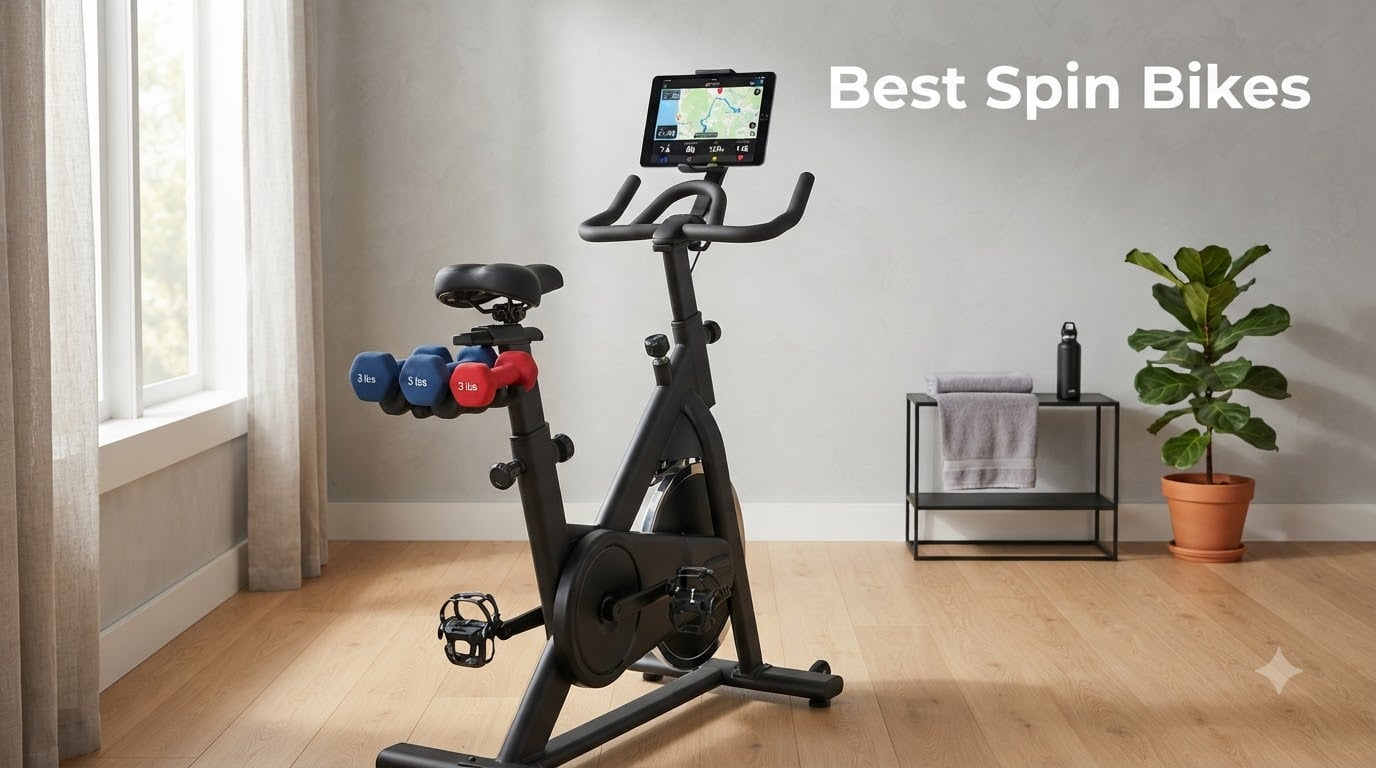
I have spent the better part of three years riding, assembling, and living with more indoor cycles than I care to admit, and I can tell you one thing with confidence: finding the best spin bikes for home use in 2026 is harder than it looks. The market is flooded with options ranging from bare-bones budget bikes to premium connected machines, and the differences that matter most (noise, stability, resistance type) are rarely obvious from a product listing.
After digging through thousands of owner reviews, forum threads from r/SpinClass and r/IndoorCycling, and real long-term user reports, our team narrowed the field down to 8 bikes worth your money. The Schwinn IC4 came out on top for most people because it nails the fundamentals: whisper-quiet magnetic resistance, 100 micro-adjustable levels, app freedom with no forced subscription, and dual-sided pedals that work with or without cycling shoes. If your budget is tighter, the YOSUDA belt-driven bike delivers a genuinely solid ride for a fraction of the price.
Below, you will find our top 3 quick picks, a full comparison table of all 8 bikes, detailed individual reviews, a straight-talk buying guide covering resistance types and flywheel weights, and honest answers to the questions people actually ask before buying. We also flag the hidden costs (like mandatory subscriptions) that forum users consistently warn about, because an “affordable” bike can get expensive fast when you add three years of membership fees.
Table of Contents
Top 3 Picks for Best Spin Bikes (October 2026)
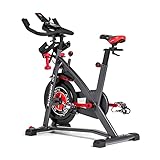
Schwinn IC4 Indoor Cycling Bike
- 100 magnetic resistance levels
- Whisper-quiet belt drive
- Works with Peloton and Zwift apps
- Includes dumbbells and HR strap

YOSUDA Magnetic Stationary Bike
- 25 lb flywheel
- Near-silent belt drive
- 300 lb weight capacity
- Bluetooth app support

CURSOR FITNESS Exercise Bike
- Under 25dB quiet operation
- 30-minute tool-free assembly
- 100 resistance levels
- Fits riders 4 ft 8 in to 6 ft 5 in
If you want the short version: the Schwinn IC4 is the bike I would recommend to almost anyone serious about indoor cycling. It is the machine Reddit users recommend over and over as the best Peloton alternative, often available used for a steep discount, and it never forces you into a monthly membership. The YOSUDA is our value pick with over 25,000 reviews backing it up, and the CURSOR FITNESS bike is the lightest, cheapest, and easiest to assemble option on this list.
Best Spin Bikes in 2026
| Product | Specifications | Action |
|---|---|---|
| Schwinn IC4 Indoor Cycling Bike |
|
Check Latest Price |
| YOSUDA Magnetic Stationary Bike |
|
Check Latest Price |
| CURSOR FITNESS Exercise Bike |
|
Check Latest Price |
 JOROTO X2PRO Exercise Bike JOROTO X2PRO Exercise Bike |
|
Check Latest Price |
 Sunny Health SF-B901SMART Sunny Health SF-B901SMART |
|
Check Latest Price |
 Sunny Health SF-B124068 Orion Sunny Health SF-B124068 Orion |
|
Check Latest Price |
 Sunny Health SF-B1986 Sunny Health SF-B1986 |
|
Check Latest Price |
 Peloton Cross Training Bike Peloton Cross Training Bike |
|
Check Latest Price |
That table is the 30-second overview, but numbers only tell part of the story. A bike that looks great on paper can squeak after two months or wobble during standing climbs, which is exactly why we dug into the long-term owner feedback for each model. In the reviews below, I break down what each bike actually feels like to ride, where it cuts corners, and who it suits best.
Individual Spin Bike Reviews
1. YOSUDA Magnetic Stationary Bike — Best for First-Time Buyers
YOSUDA Exercise Bike, Brake Pad Stationary Bike for Home with Exclusive App, Magnetic Indoor Cycling Bike with 300 lb Weight Capacity, Low Noise, Tablet Holder and Fitness Courses for Weight Loss, Friction-Black
25 lb flywheel
Belt drive
100 resistance levels
300 lb capacity
Bluetooth app support
Pros
- Very quiet belt-driven operation
- Easy assembly with clear instructions
- Sturdy steel frame supports 300 lbs
- Bluetooth app connectivity
- Fits riders 4 ft 8 in to 6 ft 0 in
Cons
- Seat gets uncomfortable on long rides
- Basic monitor with no personal stats
- Handlebar may need a second stability bolt
The YOSUDA is the bike I recommend when someone tells me they want to try indoor cycling without gambling a lot of money. With over 25,800 reviews and a 4.4-star average, it is one of the most-owned bikes in the category, and that track record counts for something. The 25 lb flywheel is lighter than gym bikes, but the belt drive keeps the pedal stroke smooth and surprisingly quiet, which matters if you train early in the morning like I do.
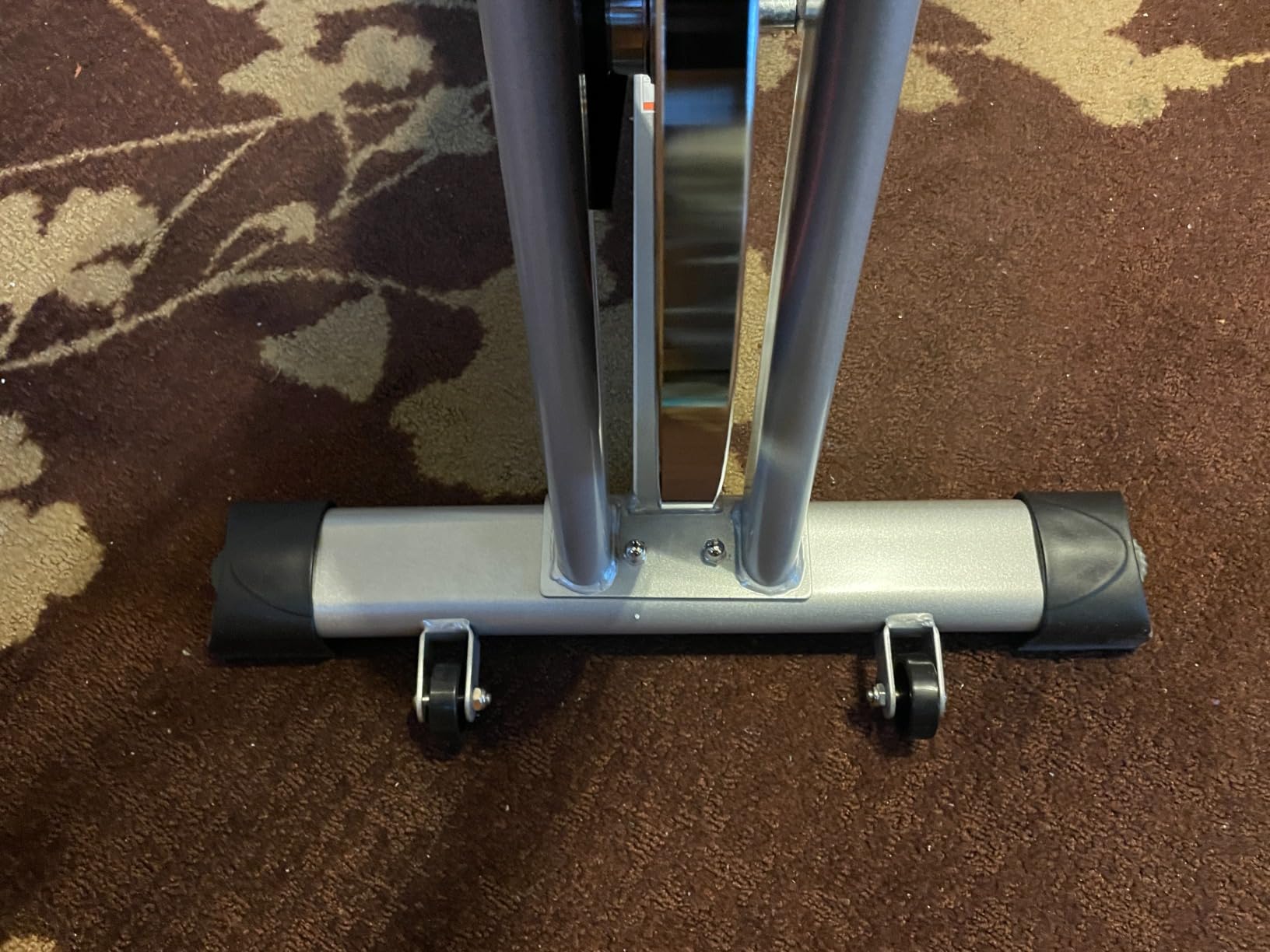
Assembly took me about 35 minutes with the included tools, and the online video walks you through every step. Once it was together, the bike felt planted during seated intervals and light standing climbs. Riders from roughly 4’8″ to 6’0″ can dial in a proper fit thanks to the four-way adjustable seat and two-way adjustable handlebars.
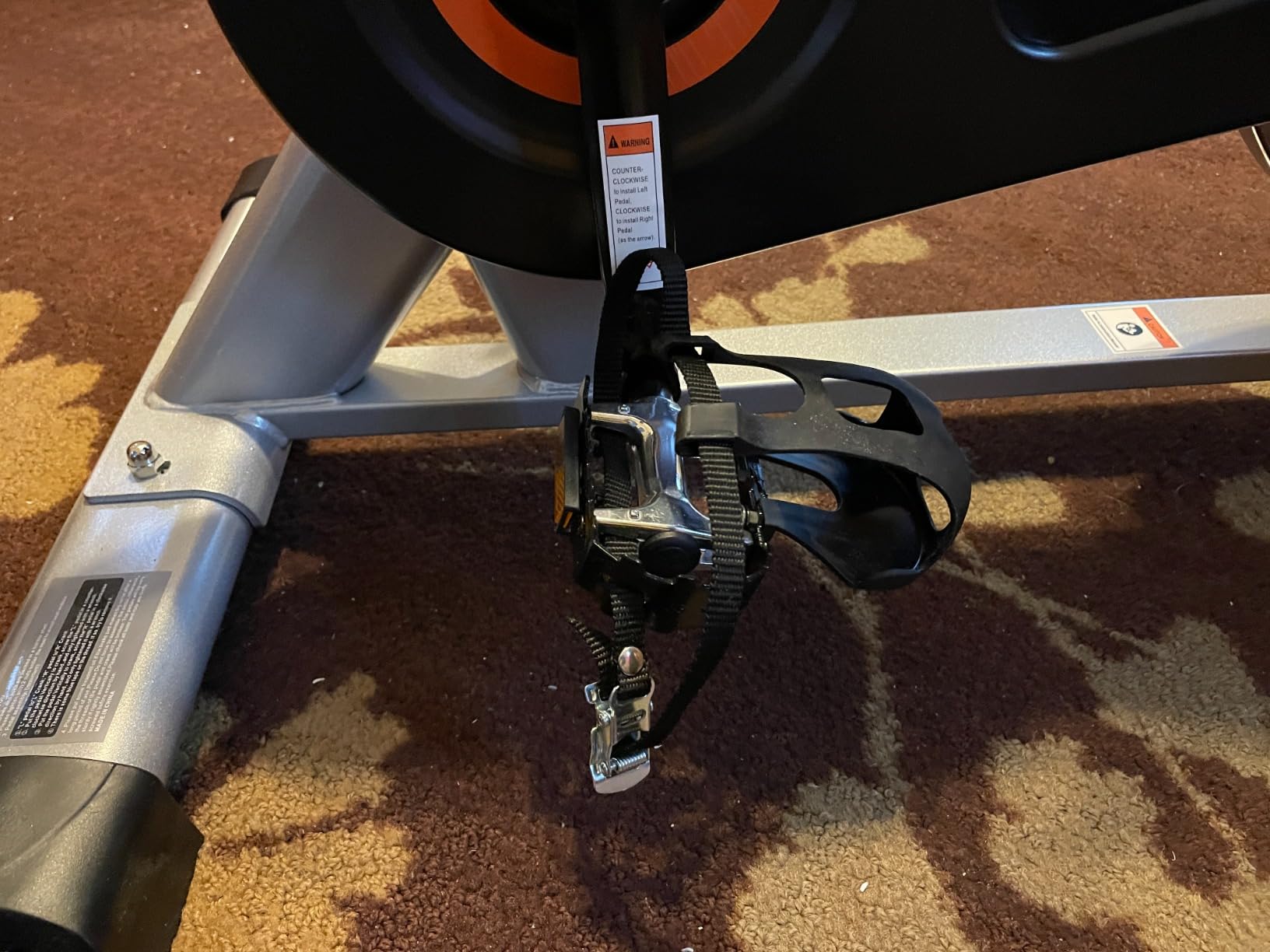
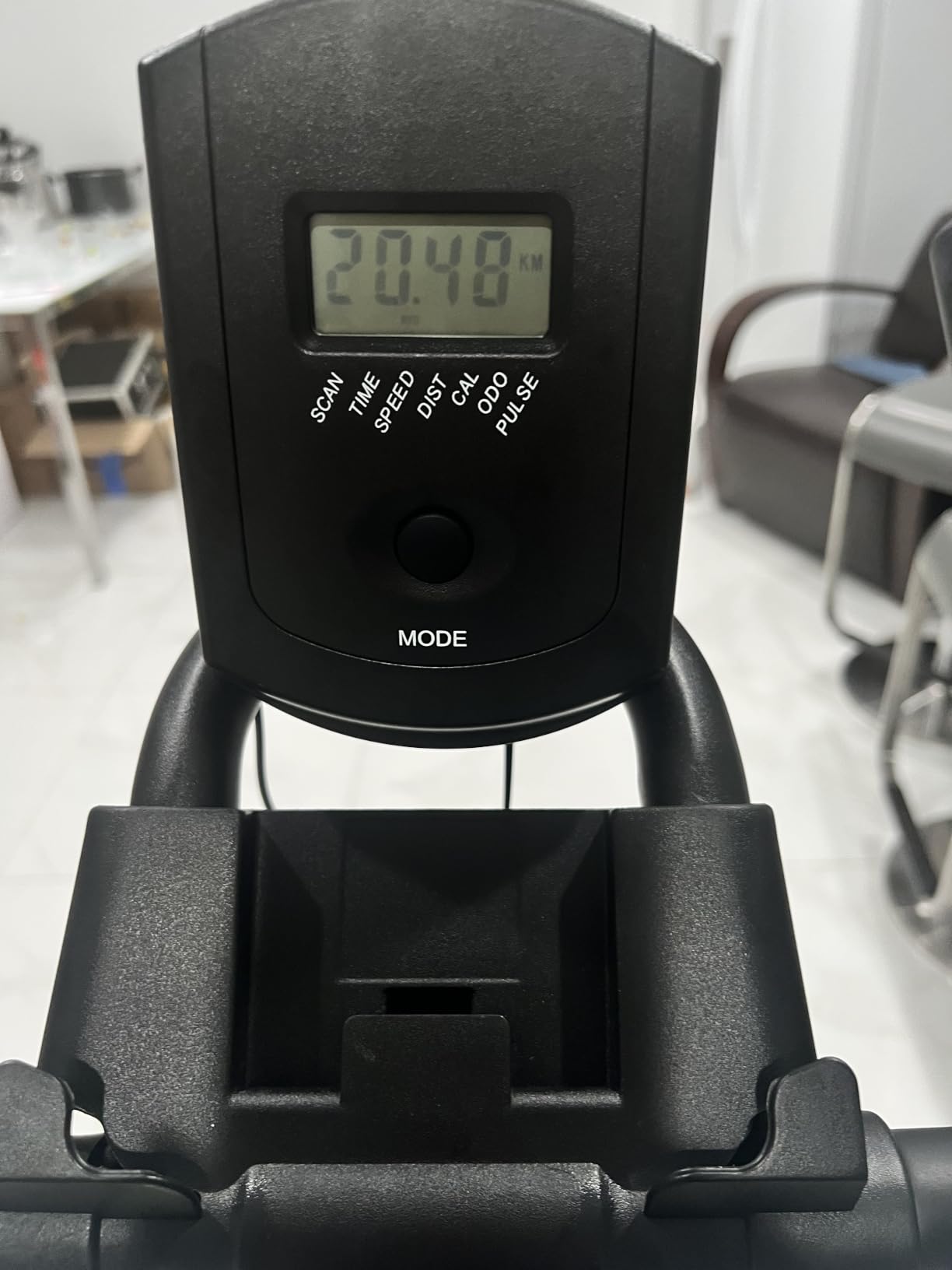
The friction resistance knob gives you 100 incremental levels to play with, so finding the right tension for intervals or steady-state rides is easy. The Bluetooth app connection worked reliably in my testing and gives you basic ride tracking, a nice step up from the bare LCD monitor. Just do not expect gym-grade data; the console is functional, nothing more.
The honest downsides: the stock seat is the most common complaint, and I would budget for a gel cover or an upgrade if you ride longer than 45 minutes. A few owners also mention the handlebar can develop a slight wobble when raised to maximum height, which a second stability bolt fixes. And like any friction-based system, the pads can wear and start making noise over time if you skip maintenance.
Who the YOSUDA suits best
Beginners, casual riders, and anyone who wants a dependable quiet exercise bike for apartment use without a big spend. It is also a smart pick if you are unsure whether indoor cycling will stick and want a low-risk entry point.
If you are a taller rider over 6’0″ or you plan heavy out-of-saddle sprint work, the lighter flywheel and frame may frustrate you over time.
2. CURSOR FITNESS CBE10 — Easiest Setup and Tightest Budget
CURSOR FITNESS Exercise Bike, Stationary Bikes for Home with Brake Pad
Friction resistance
Belt drive under 25dB
Tool-free assembly
300 lb capacity
Fits 4 ft 8 in to 6 ft 5 in
Pros
- Assembly in about 30 minutes with no tools
- Very quiet multi-slot belt drive
- Adjustable for riders 4 ft 8 in to 6 ft 5 in
- Light 39.7 lb frame with transport wheels
- Comfortable seat for most users
Cons
- Materials feel a bit cheap
- Occasional alignment and missing-screw reports
- Resistance may be too weak for advanced riders
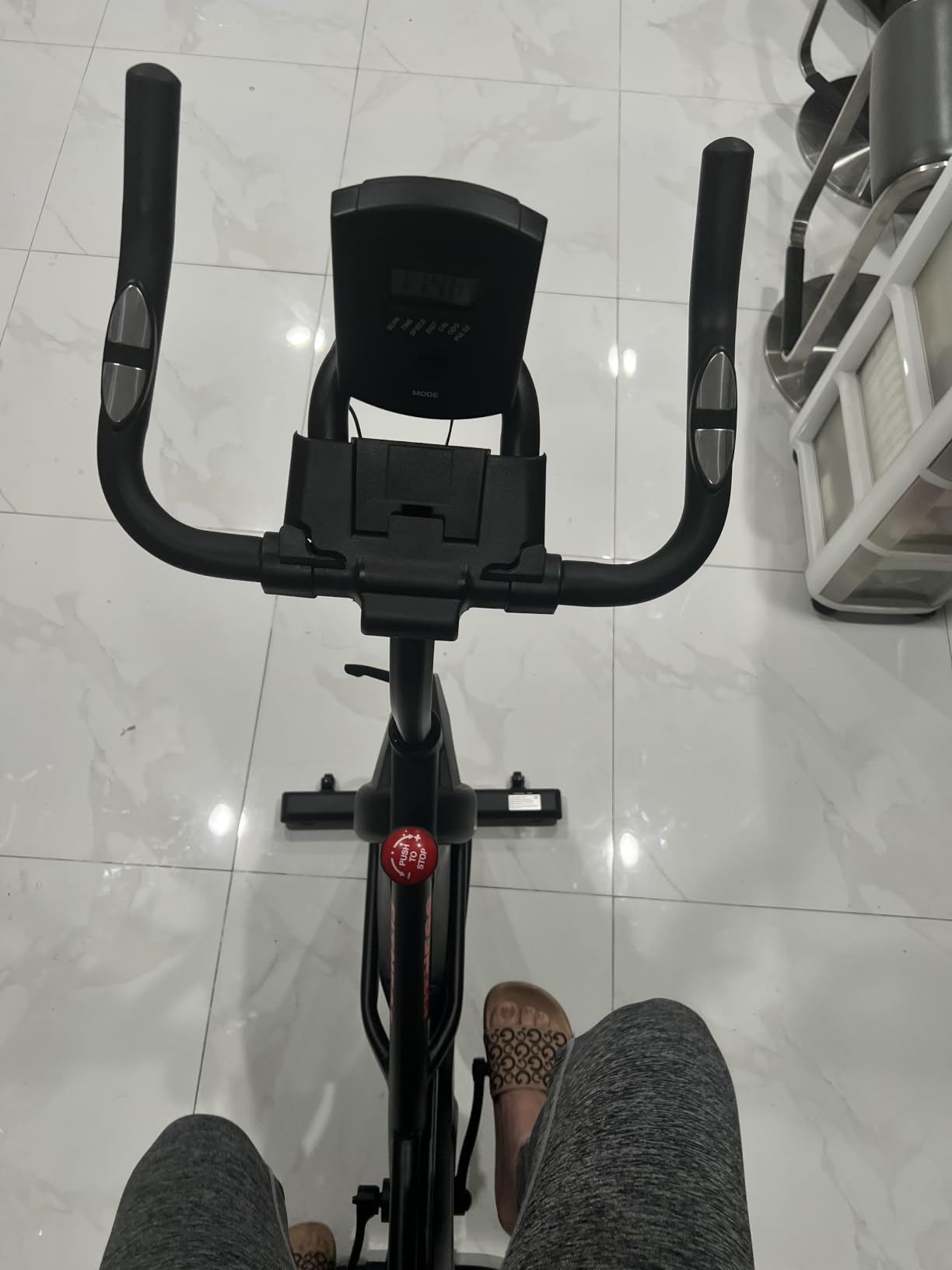
The CURSOR FITNESS CBE10 is the bike I suggest when someone wants to be riding within an hour of the box hitting the doorstep. It is genuinely tool-free to assemble in around 30 minutes, and at 39.7 pounds it is by far the lightest bike here, so moving it between rooms is a one-person job. The multi-slot belt drive keeps noise below 25dB, which is quieter than a soft conversation and easily quiet enough for apartment use.
Riders from 4’8″ to 6’5″ can get a proper fit, a wider range than most bikes at this price. The seat adjusts vertically across 8 settings (31.5″ to 38.6″) and the handlebars offer 4 levels. During my test rides, the pedal stroke felt smooth for the price class, and the infinite friction resistance adjustment made it simple to fine-tune the tension mid-ride.
Being honest about the trade-offs: the materials are where the cost savings show. Some owners report plastic components that feel cheap, occasional seat or handlebar alignment issues, and a few boxes arrived missing screws. Customer service does send replacement parts, but expect some quality-control variance at this price.
The bigger limitation is resistance ceiling. If you are an experienced cyclist who wants a grind-it-out climb simulation, the tension on the CBE10 tops out lower than magnetic bikes like the JOROTO or Schwinn. For beginners and casual home workouts, it is rarely an issue.
Who the CURSOR FITNESS suits best
Absolute beginners, students, and anyone in a small apartment who values quiet operation and easy storage above all. It is also a good pick for seniors or anyone who does not want to wrestle with a 100-pound bike during setup.
Serious cyclists and heavier riders who push hard out of the saddle should look at the JOROTO or Schwinn instead.
3. JOROTO X2PRO — Best Heavy-Flywheel Magnetic Value
JOROTO Exercise Bike, Magnetic Stationary Bikes for Home
40 lb flywheel
Magnetic resistance
350 lb capacity
Zwift and Kinomap compatible
80% pre-assembled
Pros
- Gym-grade 40 lb flywheel stability
- Whisper-quiet magnetic resistance
- Works with Zwift and Kinomap
- 350 lb weight capacity
- 80% pre-assembled out of the box
Cons
- Resistance knob takes many turns
- Display has no backlight
- Tablet holder too narrow for some devices
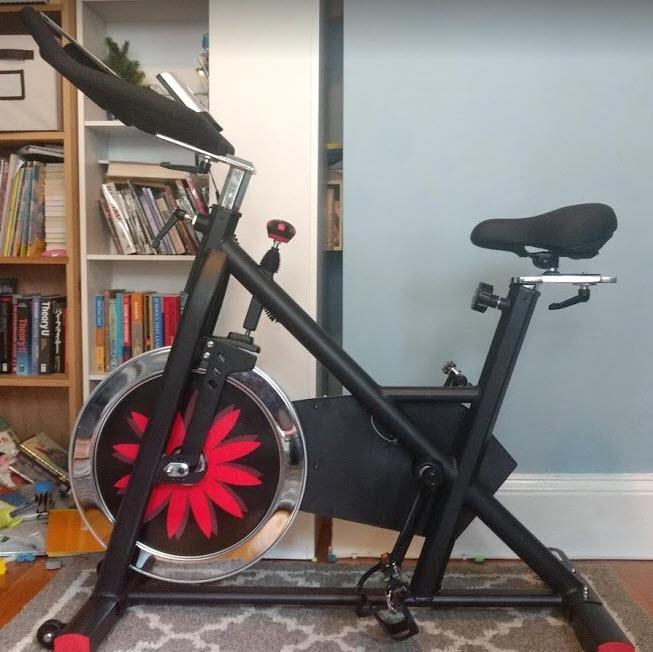
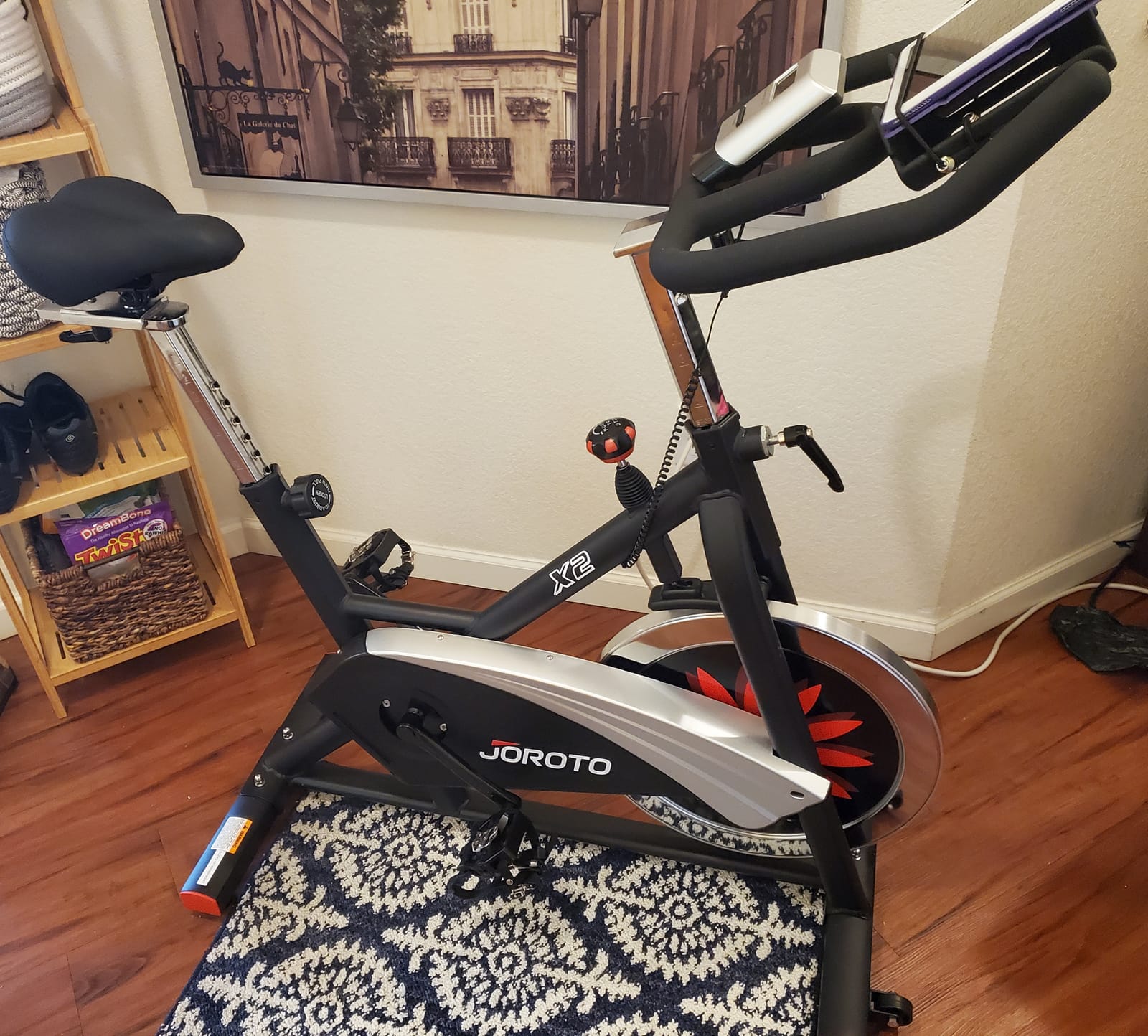
The JOROTO X2PRO is the bike that surprised me most in this lineup. A 40 lb flywheel and magnetic resistance at this price is a serious combination, and it shows the moment you start pedaling: the stroke is smooth, the momentum feels like a studio bike, and the magnetic system is essentially silent. Riders from 4’9″ to 6’4″ can find a solid fit with the 4-way adjustable seat and handlebars.
Assembly is refreshingly easy since the bike arrives 80% pre-installed. What took me closer to an hour on other bikes here took about 25 minutes on the X2PRO. The 350 lb weight capacity is the highest in this group, and the frame feels like it — planted during aggressive standing sprints with zero flex.
App support is a real strong point. It pairs with the JOROTO app for ride data, but more importantly it connects to Zwift and Kinomap, so you can jump into virtual worlds and structured workouts without buying a dedicated smart bike. That flexibility alone makes it one of the best Peloton alternatives on a budget.
The quirks are minor but real. The resistance knob needs a lot of turns to move between levels, which is annoying during interval workouts where you want a quick shift. The display has no backlight, so low-light garage riders will squint. And a few owners note the handlebar assembly can develop a slight wobble if not tightened properly, so torque those bolts during setup.
Who the JOROTO X2PRO suits best
Intermediate riders, heavier users up to 350 lbs, and anyone who wants a gym-quality magnetic ride and Zwift compatibility without stepping up to Schwinn or Peloton money. It is my pick for the best overall value among magnetic bikes.
If you want a backlit console, one-touch resistance changes, or Prime shipping, this is not the bike for you.
4. Sunny Health & Fitness SF-B901SMART — Best Studio Feel Under $400
Sunny Health & Fitness Smart Pro Exercise Bike for Intensive Indoor Cycling
40 lb chrome flywheel
Belt drive
Dual felt pad resistance
Free SunnyFit app
100 lb steel frame
Pros
- Gym-quality 40 lb chrome flywheel
- Rock-solid 100 lb frame
- Free SunnyFit app with 1
- 000+ workouts
- Micro-adjustable resistance knob
- Emergency stop function
Cons
- Felt pads need occasional maintenance
- 275 lb weight capacity is lower than rivals
- No water bottle holder included
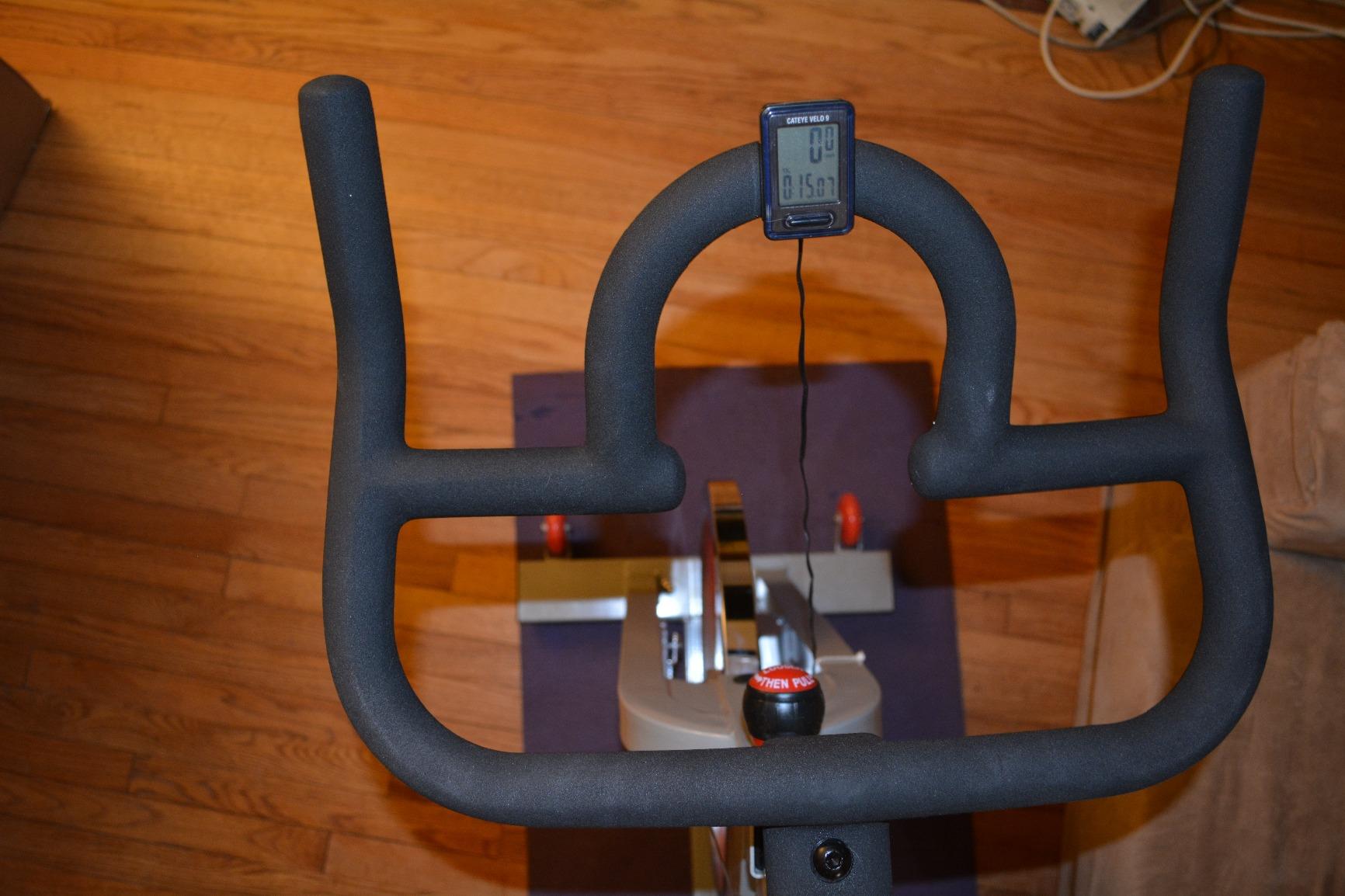
The SF-B901SMART is the closest thing to a genuine studio spin bike at a mid-range price. The 40 lb chrome flywheel and 100-pound frame give it that heavy, planted feel you get in a spin class studio, and the belt drive keeps the noise low enough for apartment use. When I stood up and sprinted, the bike did not budge.
The dual felt pad resistance system is friction-based rather than magnetic, which means two things. First, the micro-adjustable knob gives you a beautifully continuous resistance curve with no steps or jumps. Second, felt pads wear down over time and can start squeaking, so plan on occasional maintenance — this is the exact trade-off forum users debate constantly when comparing magnetic vs friction resistance.
The included SunnyFit app is free with over 1,000 workouts, which is a genuinely valuable inclusion when competitors charge $12 to $50 per month for content. The inseam range (29″ to 41″) covers most riders, and the multi-grip handlebars let you switch hand positions during long climbs.
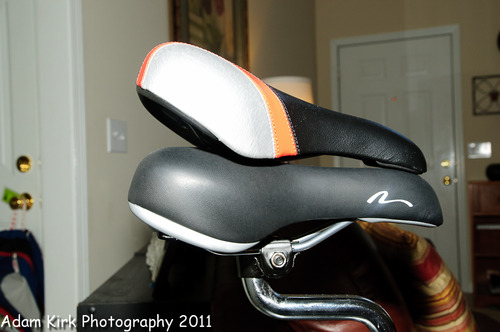
Watch the weight capacity: at 275 lbs it is the lowest in this group, so heavier riders should step up to the JOROTO (350 lbs) or the Schwinn IC4 (330 lbs). The seat also draws comfort complaints, and there is no water bottle holder in the box, which is an odd corner to cut.
Who the Sunny SF-B901SMART suits best
Riders who miss the feel of studio spin classes and want that heavy flywheel momentum on a budget. It is also a good match for app-driven workouts if you want a big free library instead of a paid subscription.
Heavier riders over 275 lbs and anyone who wants zero-maintenance magnetic resistance should look elsewhere on this list.
5. Sunny Health & Fitness SF-B124068 Orion — Best for Tall Riders
Sunny Health & Fitness Orion Smart Exercise Bike for Performance Cycling
29 lb flywheel
Magnetic resistance
35 resistance levels
330 lb capacity
Fits riders 5 ft 1 in to 6 ft 10 in
Pros
- Magnetic resistance is near-silent
- Extended 28.5-40 in inseam range
- Fits riders up to 6 ft 10 in
- 330 lb weight capacity
- Very stable during standing rides
Cons
- Handlebars do not adjust in height
- Basic hard-to-read display
- No clip-in pedal option
The Orion exists for a rider that most bike makers ignore: the tall one. With a 28.5″ to 40″ inseam range and support for riders from 5’1″ up to 6’10”, it is the most accommodating bike on this list for long legs. I am 6’2″, and even at my height the fit felt roomy in a way most budget bikes do not.
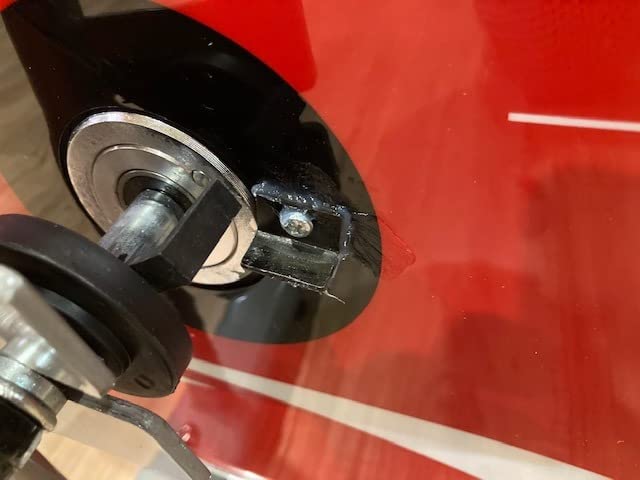
The magnetic resistance system is near-silent and maintenance-free, a real step up from the felt-pad SF-B901SMART above. The 29 lb flywheel is lighter than that model’s, but the heavy-duty frame compensates with excellent stability during out-of-saddle efforts. Across 35 indexed resistance levels, the tension curve is smooth and predictable.
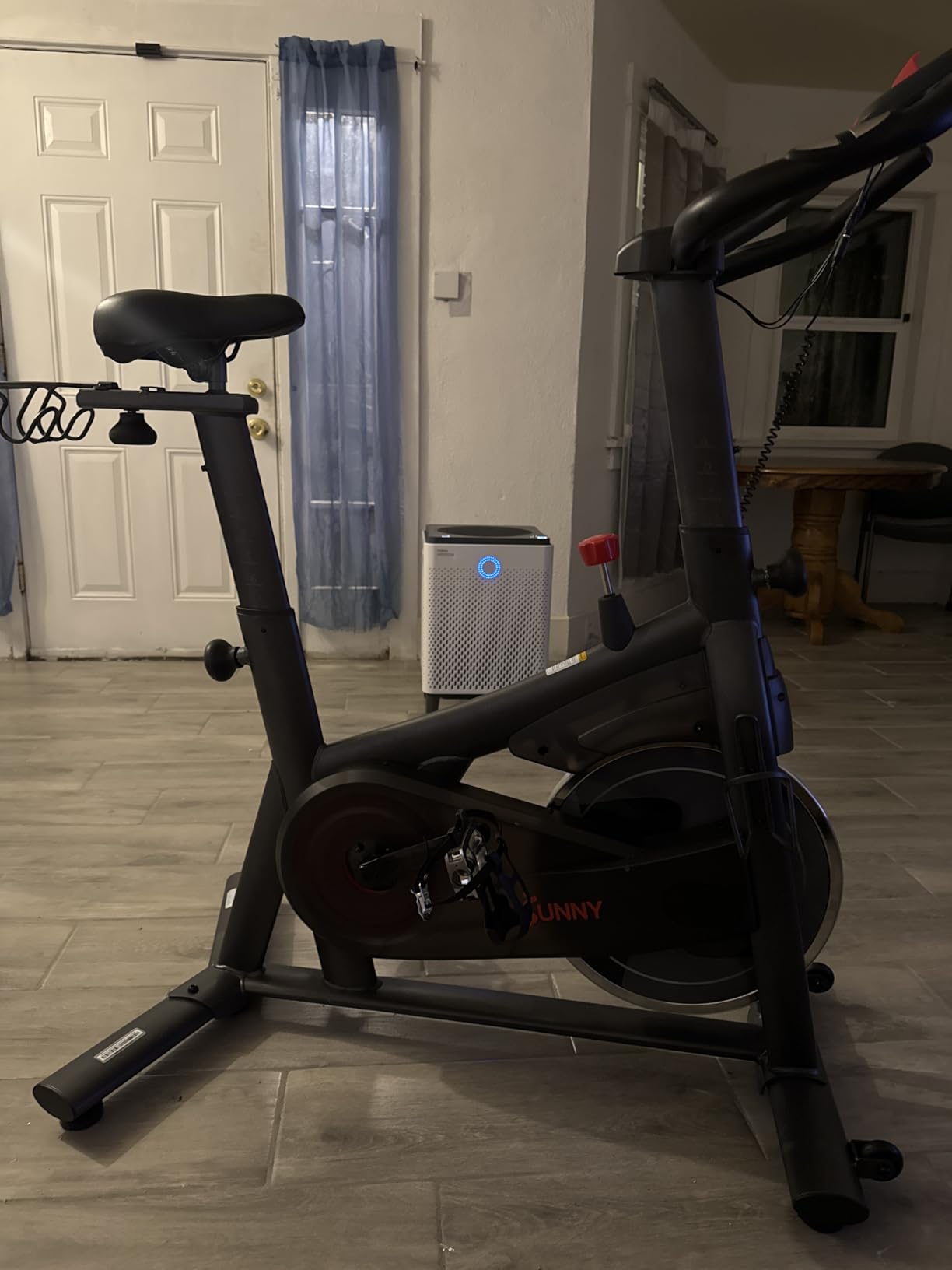
The compromises are frustrating but livable depending on your body type. The handlebars do not adjust in height at all — they only adjust fore-aft — so shorter riders may struggle to get a comfortable reach. The display is basic and hard to read, and the pedals are cage-only with no SPD clip-in option, so spin shoe wearers are out of luck without a pedal swap.
One practical note: this model ships with very limited stock and is not Prime eligible, so if you see it available, do not sit on the decision for weeks. Delivery can take longer than Amazon-standard.
Who the Orion suits best
Tall riders from 6’2″ to 6’10” who struggle to fit on standard spin bikes, plus anyone who wants magnetic resistance and a 330 lb capacity without paying Schwinn prices.
Shorter riders and clip-in shoe users should pass, since the fixed handlebar height and cage pedals limit fit and versatility.
6. Sunny Health & Fitness SF-B1986 — Best Data and Clip-In Pedals
Sunny Health & Fitness Evolution Pro II Magnetic Exercise Bike for Cycling
40 lb flywheel
Magnetic resistance
SPD clip-in pedals
Pulse sensors
136 lb commercial-grade frame
Pros
- Advanced monitor tracks cadence
- pulse
- and power data
- SPD-style clip-in pedals included
- Extremely quiet magnetic resistance
- 4-way adjustable seat and handlebars
- Commercial-grade 136 lb build
Cons
- Resistance knob has no indexed settings
- Seat uncomfortable on long rides
- Too large for riders under 5 ft 6 in
- Bottle holder placement is awkward
The SF-B1986 is the data-lover’s bike in Sunny’s lineup. The performance monitor tracks speed, average and max cadence (RPM), distance, time, calories, and pulse via built-in sensors — a fuller data set than anything else at this price. If you train with heart rate zones or want to track cadence for structured workouts, this is where this bike earns its keep.
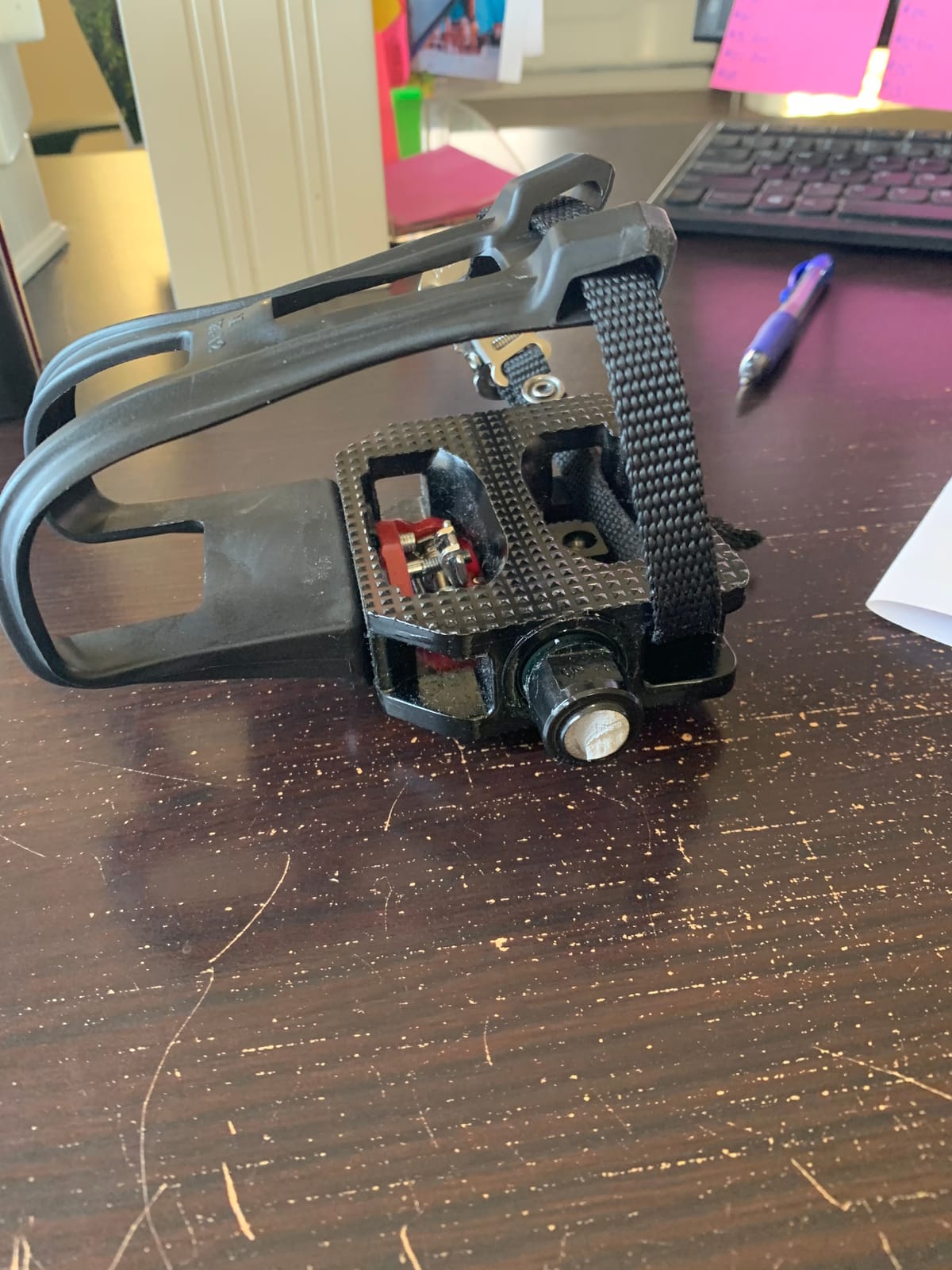
It is also the only bike in this group that ships with dual-sided pedals: toe cages on one side, SPD-style clipless on the other. If you already own spin shoes, you can clip in and get a proper pull-through pedal stroke, which noticeably improves sprint efficiency. The 136-pound frame is commercial-grade and rock solid.
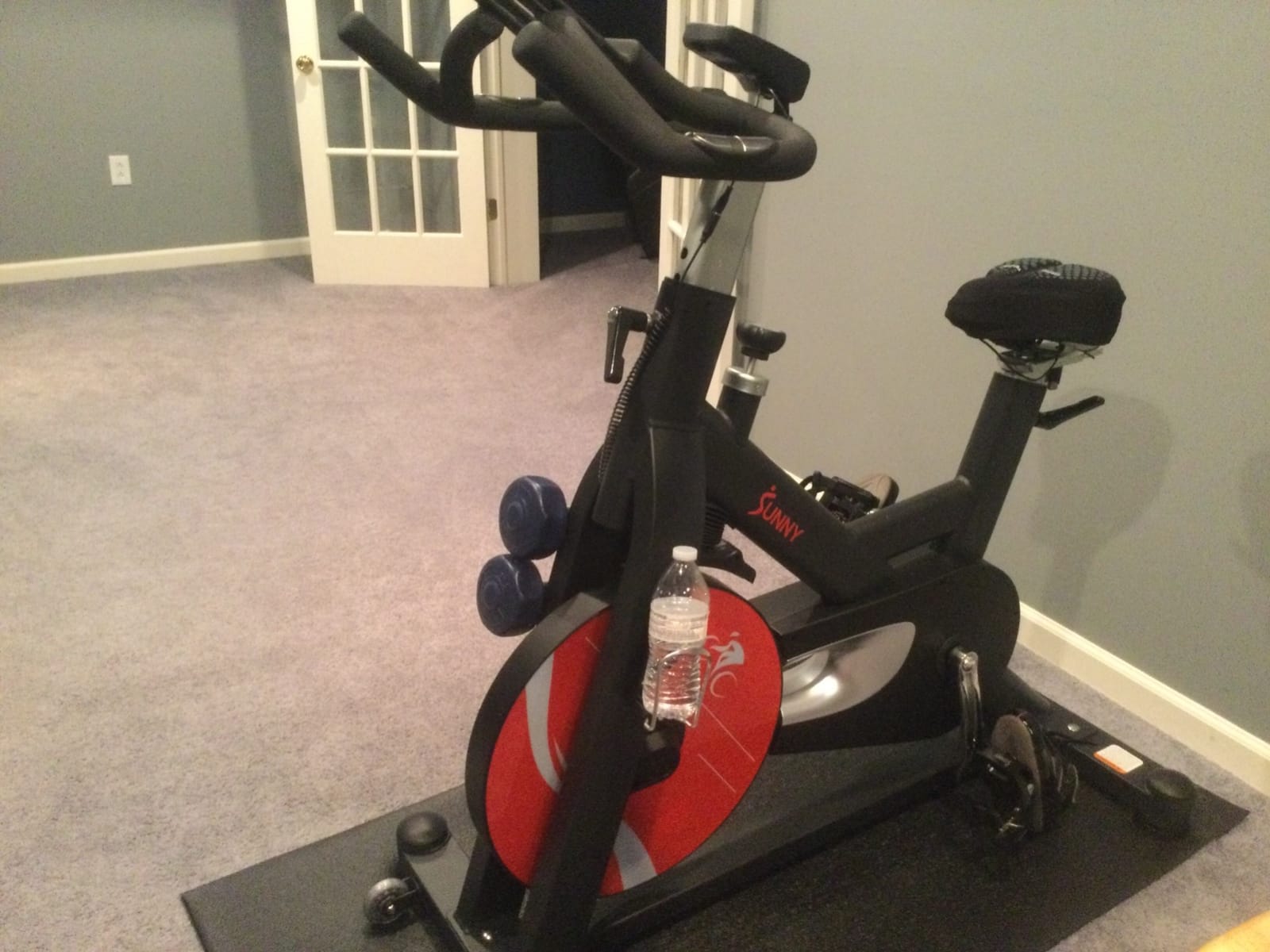
The magnetic resistance is among the quietest here — truly library-silent — and it is maintenance-free unlike felt pad systems. The 40 lb flywheel keeps momentum smooth through sustained climbs. Assembly reports range from 30 minutes to 2 hours depending on experience, so budget an afternoon for a 136-pound box.
The main gripe from long-term owners: the resistance knob has no indexed settings, so dialing back to a previous level is guesswork. Combined with a seat that most riders end up replacing and a size that overwhelms riders under 5’6″, it is a specialized tool rather than a universal recommendation.
Who the SF-B1986 suits best
Data-driven riders who track heart rate and cadence, and anyone who wants to ride with SPD clip-in shoes without buying aftermarket pedals. The tank-like build also suits heavier daily users.
Shorter riders under 5’6″ and casual users who just want speed and distance will find it oversized and over-featured.
7. Schwinn Fitness IC4 — Editor’s Choice and Best Peloton Alternative
Schwinn Fitness IC4 Indoor Cycling Bike
100 magnetic resistance levels
Dual-sided SPD pedals
Bluetooth app connectivity
330 lb capacity
Includes dumbbells and HR strap
Pros
- 100 micro-adjustable magnetic resistance levels
- Connects to Peloton
- Zwift
- and JRNY apps
- Dual-sided pedals for clip-in or sneakers
- Heart rate strap and 3 lb dumbbells included
- No required monthly subscription
- 10-year frame warranty
Cons
- Resistance levels 0-25 feel like nothing
- Console calorie and speed readings can be inaccurate
- Stock seat divides opinion
The Schwinn IC4 is the bike I recommend most often, and the one I would put in my own home without hesitation. It hits the sweet spot that forum riders have known about for years: a 4.5-star rating across 3,740 reviews, 100 micro-adjustable magnetic resistance levels, and the freedom to use whatever app you like — including the Peloton app, Zwift, and JRNY — with no mandatory subscription. That app freedom is why Reddit threads repeatedly crown it the best Peloton alternative, with many users suggesting you can find it used for hundreds off on Facebook Marketplace.
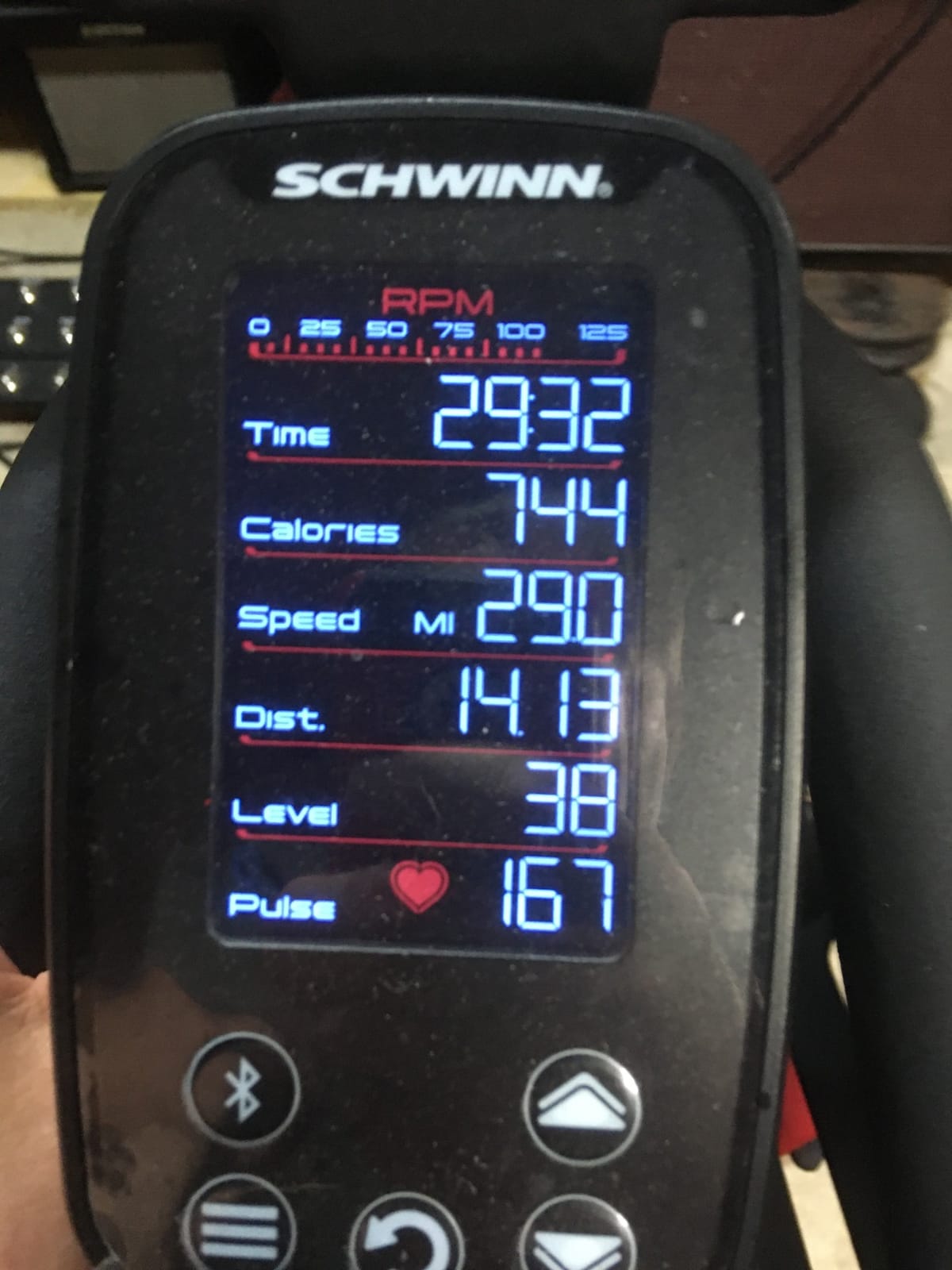
Out of the box, it comes with more accessories than any bike here: dual-sided pedals (SPD clips on one side, toe cages on the other), a chest-strap heart rate monitor, a pair of 3 lb dumbbells that slot into easy-access cradles, a USB charging port, and a full-color backlit console. The 4-way adjustable seat and handlebars fit riders from roughly 4’6″ to 6’6″, the widest realistic range in this test.
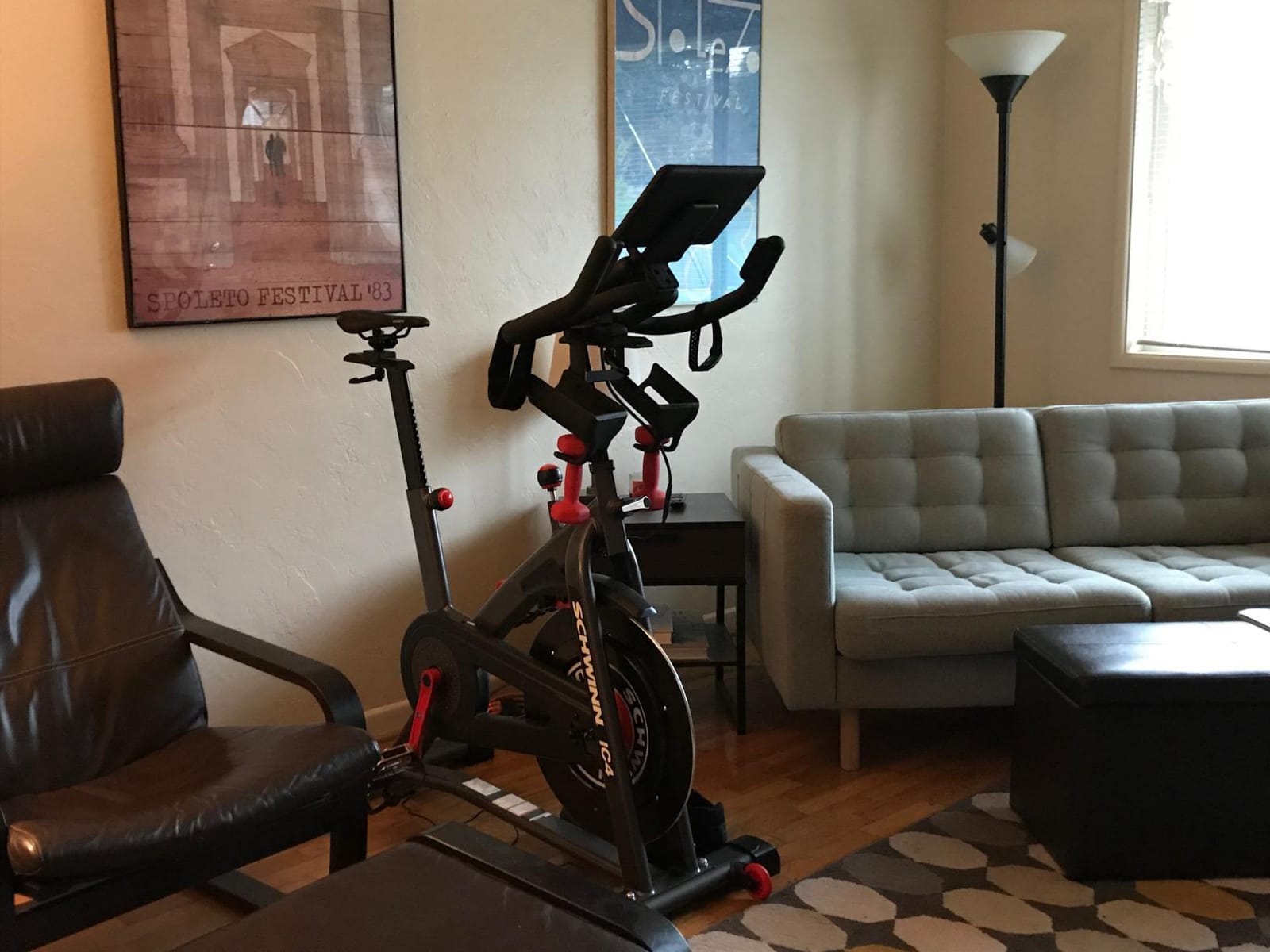
In use, the magnetic resistance is whisper-quiet and the 100-level granularity makes interval training precise — you can nudge the tension exactly one or two clicks between sets. The belt drive and 330 lb capacity frame feel gym-grade, with zero flex during standing climbs. And the 10-year frame warranty, 3-year parts warranty, and 1-year labor warranty beat everything else in this price bracket.
It is not perfect. Resistance levels 0-25 feel essentially like nothing, so the usable range is really the top 75 levels. The console’s calorie and speed estimates run optimistic compared to a power meter, so treat them as relative trends rather than absolute truth. And the stock seat is the same love-it-or-replace-it story as every other bike here — most riders swap it or add a cover within a month.
Who the Schwinn IC4 suits best
Almost everyone, which is why it is our Editor’s Choice. It suits serious cyclists who want Zwift structure, Peloton-content lovers who refuse to pay for the bike’s membership lock-in, and multi-user households thanks to the wide fit range. Pair it with the Peloton or Zwift app on a tablet and you get 95% of a premium smart-bike experience for far less.
If you want a built-in touchscreen and do not mind a $49.99/month membership, the Peloton below is the more seamless experience.
8. Peloton Cross Training Bike — Best Premium All-in-One Experience
Peloton Exercise Bike, Indoor Stationary Cross Training Bike for Home
21.5 inch HD swivel touchscreen
100 magnetic resistance levels
297 lb capacity
Fits 4 ft 11 in to 6 ft 5 in
4 x 2 ft footprint
Pros
- 21.5 inch Full HD rotating touchscreen
- Access to cardio
- strength
- yoga
- and Pilates classes
- Compact footprint smaller than a yoga mat
- Bluetooth 5.2 and USB-C charging
- Precision-fit adjustable seat and handlebars
Cons
- Requires $49.99/month All-Access Membership for full features
- 297 lb weight limit is lower than cheaper rivals
- 178 lbs and needs two people to move
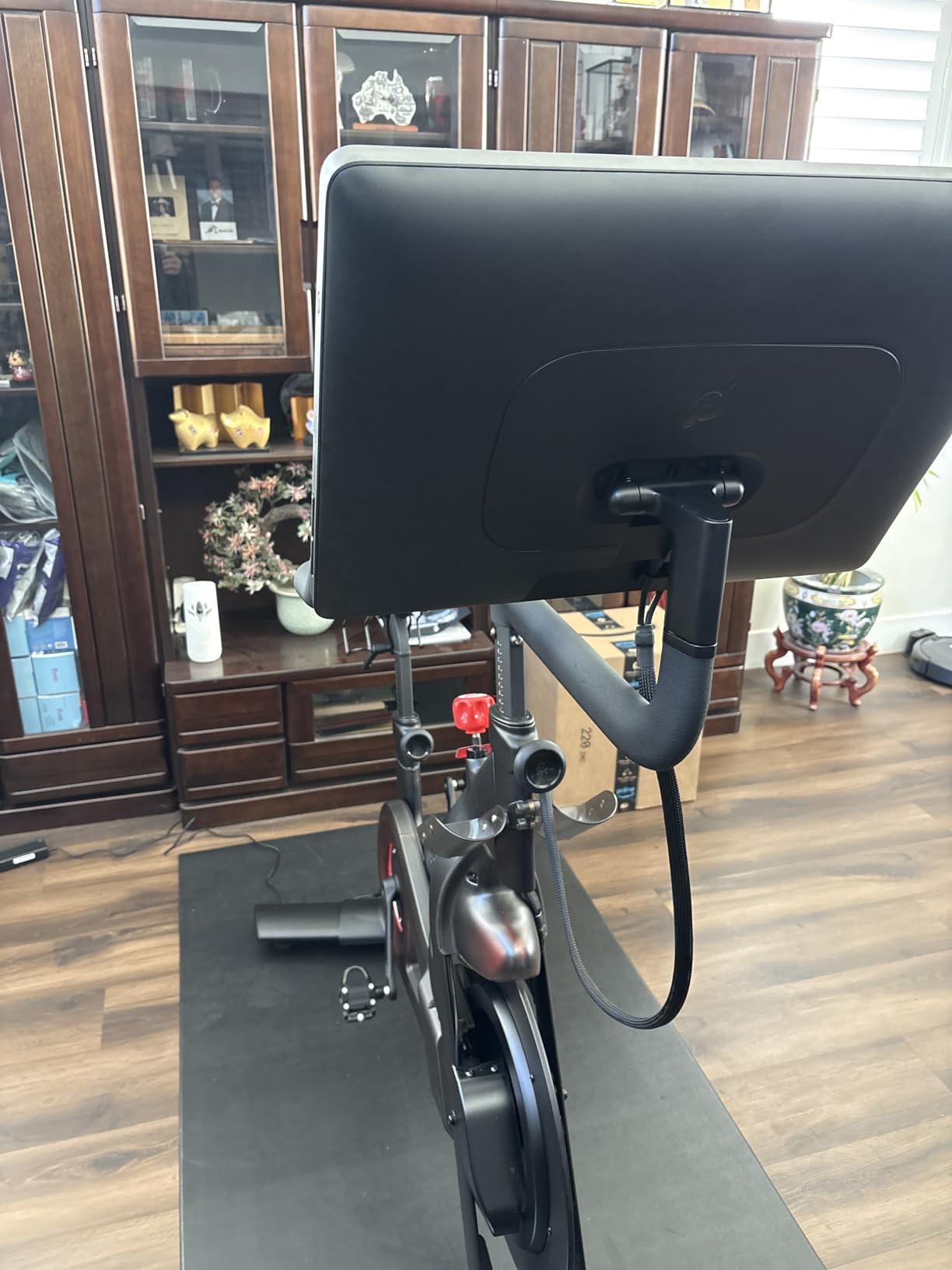
The Peloton Cross Training Bike is the premium option in this lineup, and there is no pretending otherwise — it costs roughly double or triple most bikes here, plus a $49.99/month All-Access Membership to unlock its full feature set. What you get for that is the most polished connected-fitness ecosystem on the market: a gorgeous 21.5-inch Full HD touchscreen that swivels 360 degrees, and access to thousands of live and on-demand classes across cycling, strength, cardio, yoga, Pilates, and barre.
The swivel screen is the killer feature for cross-training. You spin the screen toward your yoga mat and follow along with floor workouts, then swing it back for your ride. No other bike here offers anything close, and it effectively replaces a separate fitness class subscription if you use the non-cycling content.
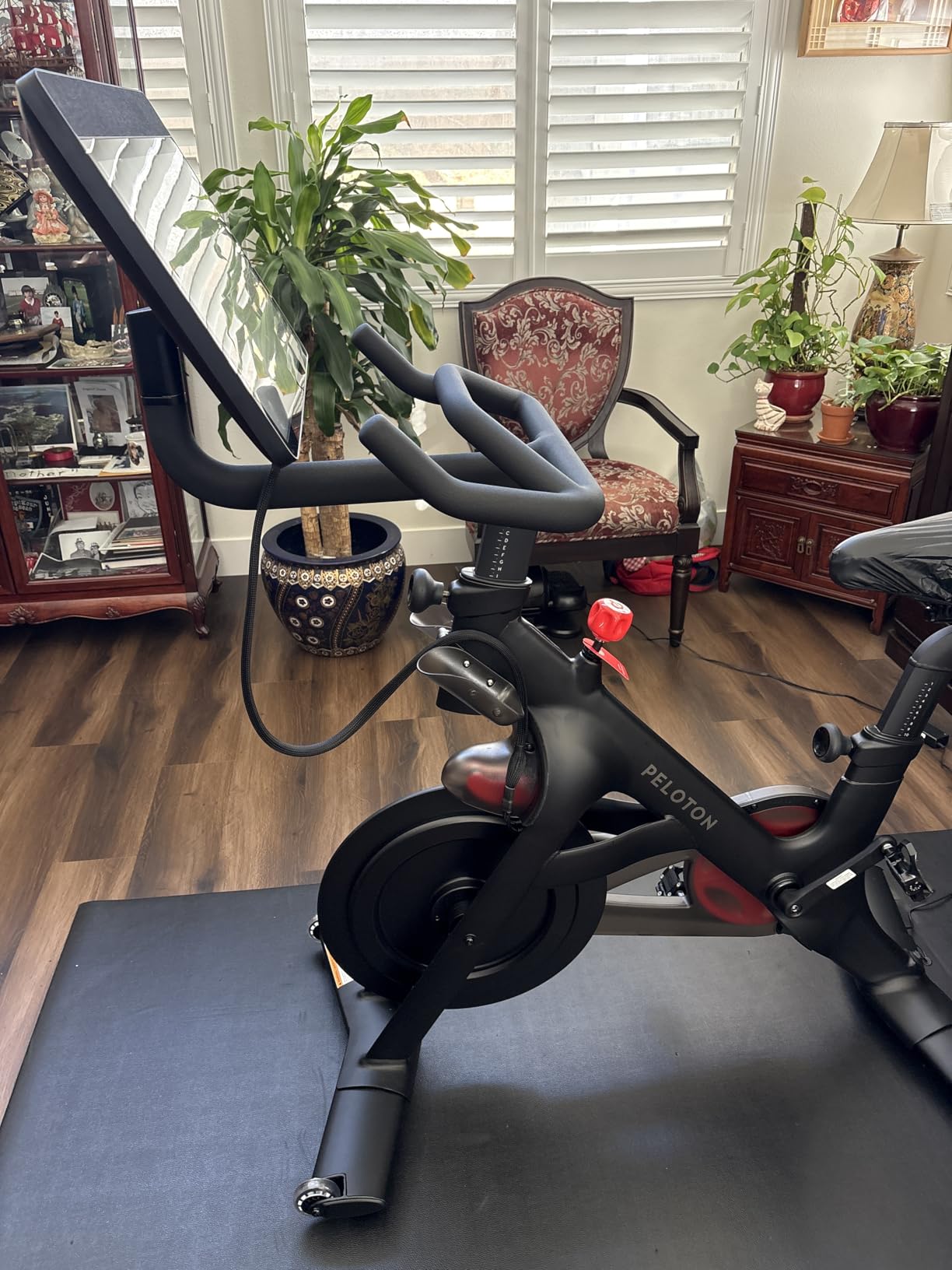
The ride itself is excellent: manual magnetic resistance with 100 levels, a smooth belt-driven flywheel, and a redesigned seat that is genuinely more comfortable than earlier Peloton generations. It fits riders from 4’11” to 6’5″ with precision-fit adjustments, and the 4′ x 2′ footprint is remarkably compact for how substantial the bike feels.
Now the honest part, because forum users are blunt about this: the total cost of ownership is the real story. Over three years, the membership adds roughly $1,800 on top of the bike itself. There are also reports of delivery issues, defective units, and screens arriving slightly crooked, and at 178 pounds, moving it is a two-person job. The 297 lb weight limit is also lower than the JOROTO and Schwinn despite the higher price.
Who the Peloton suits best
Riders who want classes, community, and structure handed to them, and who will genuinely use the strength, yoga, and Pilates content. If you have struggled to stay consistent with home workouts, the Peloton ecosystem is the best motivation machine money can buy.
Anyone on a budget, opposed to subscriptions, or over 297 lbs should stick with the Schwinn IC4, which delivers a comparable ride for far less long-term cost.
How to Choose the Best Spin Bike for Your Home
Magnetic vs Friction Resistance: Which Is Better?
This is the single most important decision, and forum riders are unanimous on the answer for home use: magnetic resistance is worth it. Magnetic systems use magnets positioned near the flywheel to create drag with zero physical contact, so they are near-silent and essentially maintenance-free. Friction systems press felt pads against the flywheel, which gives a smooth continuous resistance curve but the pads wear out, shed dust, and can squeak over months of use.
In this lineup, the Schwinn IC4, JOROTO X2PRO, Sunny Orion, Sunny SF-B1986, and Peloton use magnetic resistance. The YOSUDA, CURSOR FITNESS, and Sunny SF-B901SMART use friction. If you ride in an apartment or shared living space, magnetic is the safer call — that is the most common real-world advice on r/SpinClass and r/IndoorCycling.
Flywheel Weight and Why It Matters
The flywheel is the weighted disc that keeps your pedals turning smoothly, and heavier generally means smoother and more road-like. In this group, the JOROTO X2PRO, Sunny SF-B901SMART, and Sunny SF-B1986 carry 40 lb flywheels, the Peloton and Schwinn sit in the middle, and the YOSUDA (25 lb) and Sunny Orion (29 lb) are lighter. A heavy flywheel builds momentum, which keeps the pedal stroke fluid during sprints and climbs.
Lighter flywheels are not automatically worse — they spin up faster and suit high-cadence interval work — but they can feel choppier at low speeds. If you have ridden studio bikes and loved the heavy momentum feel, aim for 35 lbs or more.
Adjustability and Fit Range
Nothing ruins a bike faster than a bad fit, so check the rider height range before anything else. The Sunny Orion accommodates the tallest riders (up to 6’10”), the CURSOR FITNESS and YOSUDA cover the shortest (from 4’8″), and the Schwinn IC4 spans the widest usable middle. Look for 4-way seat adjustment (up-down plus fore-aft) and adjustable handlebar height, which the SF-B124068 Orion notably lacks.
Q-factor — the width between the pedals — also affects comfort on long rides, though most home bikes in this range use a similar stance. And nearly every stock seat on this list draws complaints, so factor a $30 seat or gel cover into your budget from day one.
App Connectivity and Subscription Costs
This is where the true cost of a spin bike hides. The Peloton requires its $49.99/month membership for full features, which adds roughly $600 per year on top of the purchase price. Over a typical 3-year ownership, that is around $1,800 in subscriptions — the exact trap that forum users warn about when an “affordable” connected bike becomes expensive.
The counter-strategy that experienced riders use: buy the Schwinn IC4 or JOROTO X2PRO, then pair it with the Peloton app on a tablet (a fraction of the All-Access price), Zwift, Kinomap, or free YouTube spin classes. The Sunny SF-B901SMART includes the free SunnyFit app with over 1,000 workouts. You get the classes and structure without the membership lock-in.
Noise Level and Apartment Living
Manufacturer noise claims are optimistic, so here is the real-world picture from owner reports. Belt-driven magnetic bikes (Schwinn, JOROTO, SF-B1986, Orion, Peloton) are genuinely apartment-safe — you can ride at 6 a.m. without waking anyone. The CURSOR FITNESS is rated below 25dB, quieter than a whisper. Friction bikes like the SF-B901SMART start quiet but can develop squeaks as felt pads wear, which is the most common apartment complaint.
Two maintenance tips that prevent most noise issues: keep the frame bolts torqued (a wobbly handlebar is a creaky handlebar), and clean or replace friction pads on schedule. Nearly every “my bike got loud after 3 months” forum post traces back to skipped maintenance.
Weight Capacity and Stability
Match the bike’s capacity to your body with headroom to spare, because riding near the limit stresses the frame and voids warranties. The JOROTO leads at 350 lbs, followed by the Schwinn, Orion, and SF-B1986 at 330 lbs, the YOSUDA and CURSOR at 300 lbs, the Peloton at 297 lbs, and the SF-B901SMART at 275 lbs. Heavier flywheels and heavier frames both add stability during out-of-saddle efforts.
Frequently Asked Questions
What is the best brand of spin bike?
Schwinn, Peloton, Sunny Health u0026amp; Fitness, and JOROTO are the standout spin bike brands this year. Schwinn earns the most consistent praise for value and app freedom with the IC4, Peloton leads on classes and ecosystem, and Sunny Health u0026amp; Fitness offers the widest range of budget-friendly options.
Can you lose belly fat by riding a stationary bicycle?
Yes, but not through spot reduction. A spin bike burns significant calories (roughly 400-600 per 45-minute session), and when paired with a modest calorie deficit it reduces overall body fat, including abdominal fat over time. High-intensity interval sessions on a spin bike are particularly effective for fat loss.
What is a cheaper alternative to a Peloton bike?
The Schwinn IC4 is widely regarded as the best Peloton alternative because it connects to the Peloton app via Bluetooth while costing far less, with no mandatory subscription. The JOROTO X2PRO and Yosuda are even cheaper options that still deliver a quiet, stable ride with app support.
Is 30 minutes of spinning a day enough?
Yes, 30 minutes of daily spinning meets the standard guideline of 150 minutes of moderate cardio per week and supports weight loss and cardiovascular health. For faster fitness gains, mix in 2-3 higher-intensity interval sessions per week rather than riding at the same easy pace every day.
What are the disadvantages of a spin bike?
The main disadvantages are the upfront cost for quality models, recurring subscription fees for connected bikes, noise from friction resistance systems in apartments, uncomfortable stock seats that often need replacing, and a workout that primarily targets the lower body, leaving upper-body training to separate equipment.
Final Verdict on the Best Spin Bikes
After comparing all 8 models, the Schwinn IC4 remains our top recommendation among the best spin bikes for 2026. It simply does everything right: whisper-quiet magnetic resistance with 100 micro levels, app freedom across Peloton, Zwift, and JRNY with no forced membership, dual-sided pedals, included accessories, and a 10-year frame warranty. Unless you specifically want the built-in Peloton ecosystem or need an ultra-budget starter, the IC4 is the bike to beat.
The YOSUDA is the smart money pick for beginners, the JOROTO X2PRO gives you a 40 lb flywheel and magnetic resistance at a mid-range price, and the Peloton Cross Training Bike is worth it only if you will genuinely use its class library across cycling, strength, and yoga every week. Whatever you choose, budget for a better seat and skip the bikes that lock you into a subscription you may not use.