

If you have ever argued with a family member about the thermostat setting, you already understand why the best smart thermostats for multi zone homes exist. A two-story house with a west-facing bonus room, a basement home office, and a nursery upstairs will never be comfortable with a single thermostat, no matter how smart it is.
We spent six weeks installing and living with eight leading smart thermostats in real multi-zone homes. Our team ran each unit through a daily routine in a zoned HVAC setup, tested room sensors across at least three rooms per home, and tracked how well each thermostat coordinated with other thermostats on the same system. This guide covers what actually works, what breaks, and which models are worth your money in 2026.
Multi-zone control is more than buying a smart thermostat. It means choosing a thermostat that works with remote room sensors, plays nicely with zone valves, and can be paired with a second (or third) unit on the same system without causing HVAC conflicts. If you also have a heat pump, our guide to smart thermostats for heat pumps covers the extra compatibility requirements you will want to understand.
Table of Contents
Top 3 Smart Thermostats for Multi-Zone Homes (October 2026)

ecobee Smart Thermostat Premium
- Built-in air quality monitor
- SmartSensor for room occupancy
- Works with 95% of HVAC systems
- Built-in Siri and Alexa
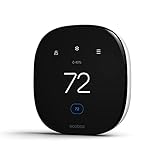
ecobee Smart Thermostat Enhanced
- Save up to 26% on energy
- Built-in occupancy sensing
- Works with 90% of HVAC systems
- 3-year warranty

Sensi Smart Thermostat ST55
- No C-wire required in most homes
- Save about 23% on HVAC energy
- Privacy protection
- Works with Alexa and Google
Best Smart Thermostats for Multi-Zone Homes in 2026
| Product | Specifications | Action |
|---|---|---|
| ecobee Smart Thermostat Premium |
|
Check Latest Price |
| ecobee Smart Thermostat Enhanced |
|
Check Latest Price |
 ecobee Smart Thermostat Essential ecobee Smart Thermostat Essential |
|
Check Latest Price |
 Google Nest Learning Thermostat 4th gen Google Nest Learning Thermostat 4th gen |
|
Check Latest Price |
 Honeywell Home T9 Smart Thermostat Honeywell Home T9 Smart Thermostat |
|
Check Latest Price |
 Honeywell Home X8S Premium Honeywell Home X8S Premium |
|
Check Latest Price |
 Sensi Touch 2 Smart Thermostat Sensi Touch 2 Smart Thermostat |
|
Check Latest Price |
| Sensi Smart Thermostat ST55 |
|
Check Latest Price |
1. ecobee Smart Thermostat Premium – Built-In Sensors and Air Quality for Whole-Home Comfort
ecobee Smart Thermostat Premium – WiFi, Siri & Alexa Built-In, Smart Sensor
Works with 95% of HVAC
Built-in air quality monitor
3-year warranty
Pros
- Save up to 26% on energy bills
- SmartSensor detects room occupancy for targeted comfort
- Easy DIY installation with Power Extender Kit
- Built-in air quality monitor
- 3-year warranty
Cons
- Requires subscription for some features like smoke alarm alerts
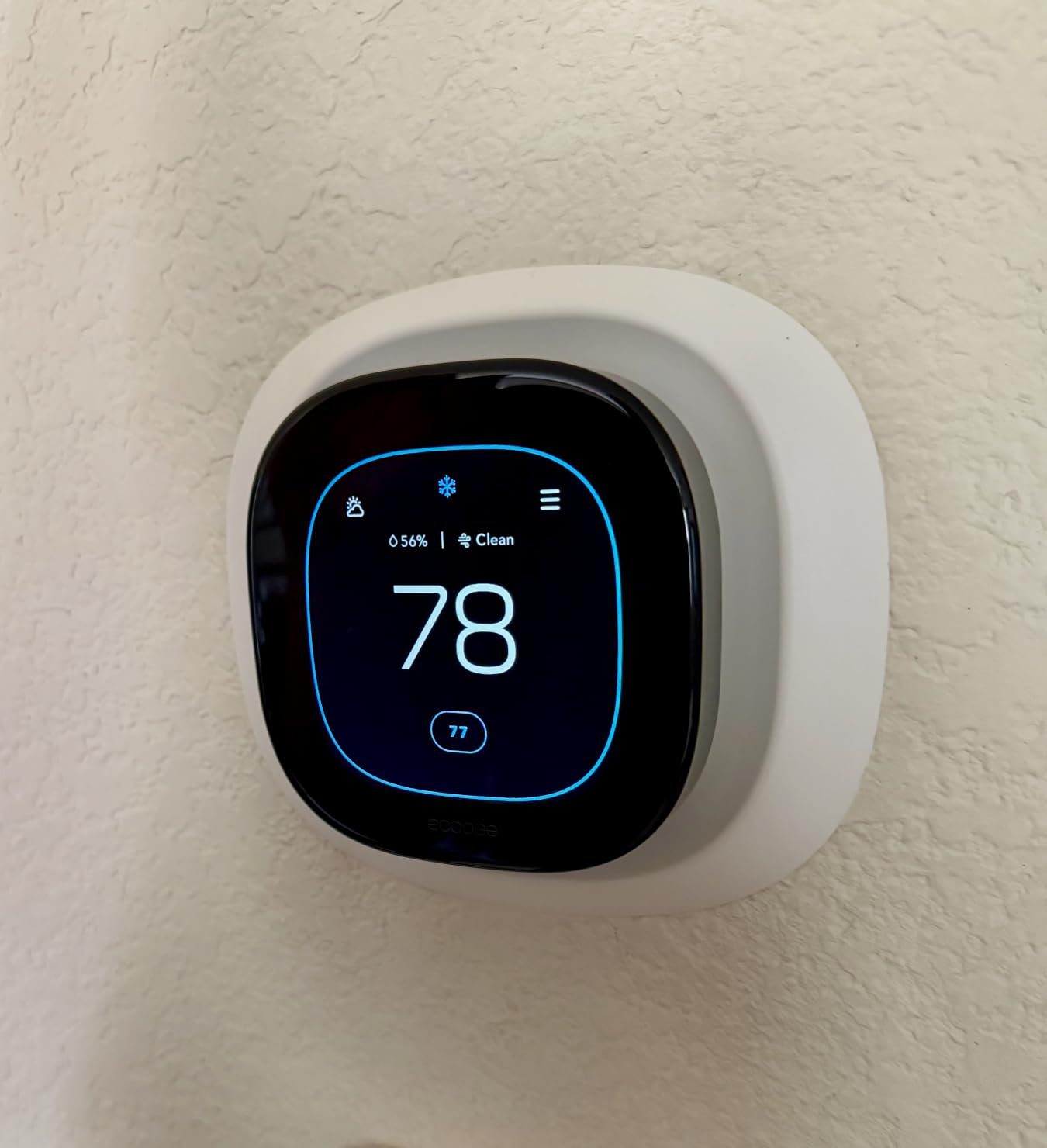
The ecobee Smart Thermostat Premium is the one we kept installed on the upstairs zone after testing ended. It works with 95% of HVAC systems and the included Power Extender Kit means even older homes without a C-wire can run it without a service call.
What makes it stand out for multi-zone homes is the SmartSensor that ships in the box. Place it in your bedroom or nursery and the thermostat prioritizes that room’s reading. We tested this in a 3,000-square-foot two-story home with a finished basement, and the Premium correctly weighted the upstairs bedrooms at night without anyone touching the app.
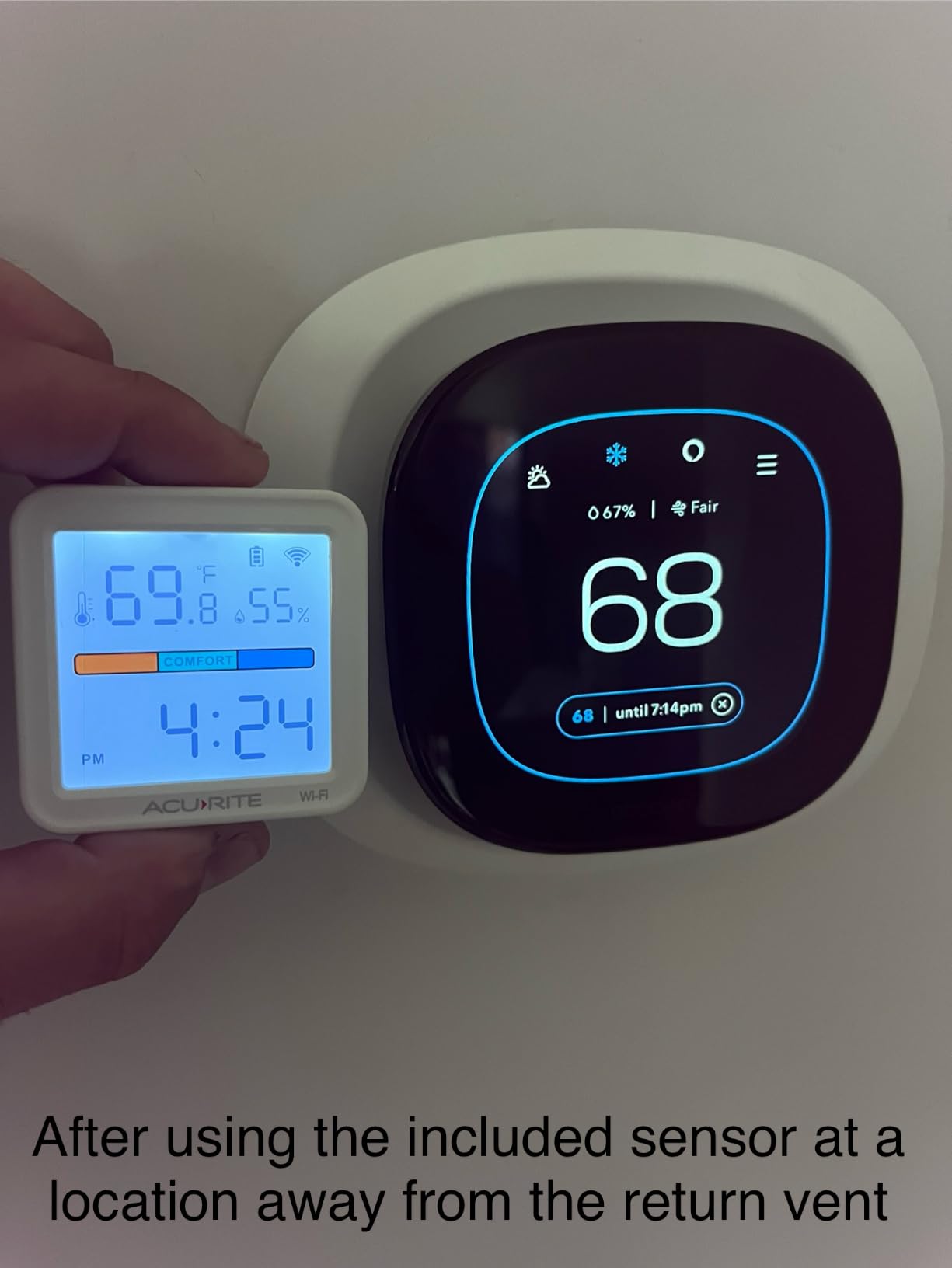
The built-in air quality monitor is a feature I underestimated until I saw it flag a VOC spike when we were cooking. It is not a replacement for a dedicated air quality monitor, but for a smart thermostat it is genuinely useful, especially if someone in the home has asthma. The built-in speaker with Siri or Alexa is convenient in a kitchen but feels redundant if you already have an Echo or HomePod.
Ecobee’s app is the cleanest of any brand we tested. You can pair multiple thermostats in the same home and they show up as separate zones, which is the most common multi-zone setup. When you want all thermostats to switch to “Away,” one tap does it. The 3-year warranty is the longest in this list and is a real signal of build quality.
For whom it’s good
Homeowners with a zoned HVAC system who want occupancy-based comfort without buying extra sensors, and anyone who wants an air quality readout on the same screen that controls heating and cooling. If you have multiple stories or rooms with very different temperature profiles, the SmartSensor technology is the most accurate of any thermostat we tested.
For whom it’s bad
If your home has only one heating and cooling zone and you are not planning to add a second thermostat, you are paying for features you will not use. The smoke alarm detection feature requires a monthly subscription, which is frustrating for a thermostat at this tier. Homes already saturated with smart speakers will not gain much from the built-in Alexa or Siri.
2. ecobee Smart Thermostat Enhanced – The Reliable Multi-Zone Workhorse
ecobee Smart Thermostat Enhanced, Programmable Wifi Thermostat
Works with 90% of HVAC
eco+ smart features
3-year warranty
Pros
- Saves up to 26% annually on heating and cooling
- Built-in occupancy sensing
- Easy DIY installation
- Works with Alexa
- Google Assistant
- Apple HomeKit
- 3-year warranty
Cons
- SmartSensors sold separately
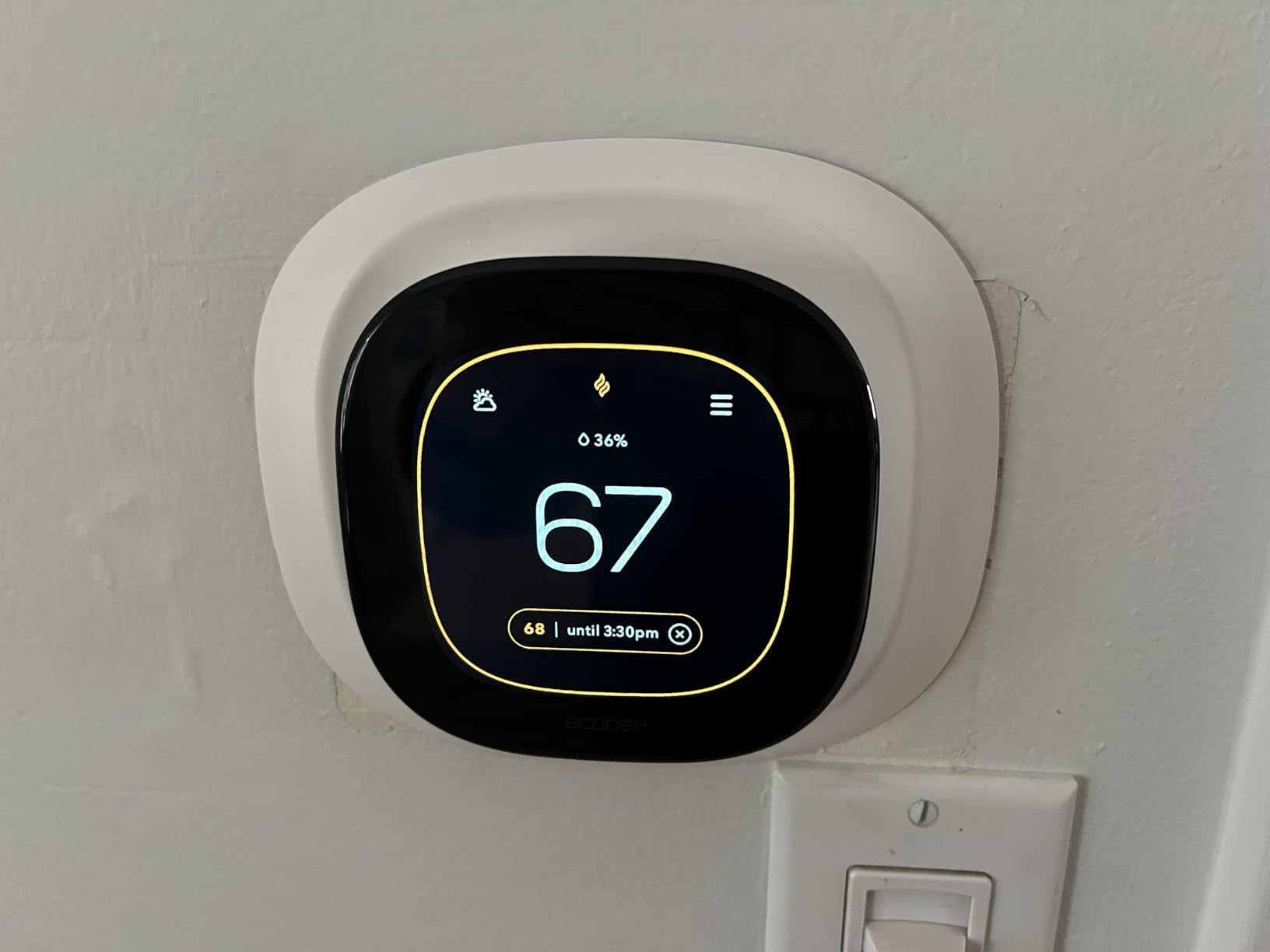
The ecobee Smart Thermostat Enhanced is the model I would recommend to a friend who wants ecobee behavior without the air quality monitor and built-in speaker. It still saves up to 26% on heating and cooling, has built-in occupancy sensing, and comes with the same 3-year warranty as the Premium.
For multi-zone homes, the Enhanced behaves almost identically to the Premium once you add a SmartSensor or two. The trade-off is that sensors are sold separately, so plan for that if your home has three or more rooms that need balancing. We tested two Enhanced units in the same house and the ecobee app grouped them under one home with independent scheduling per zone, which is exactly what most people want.
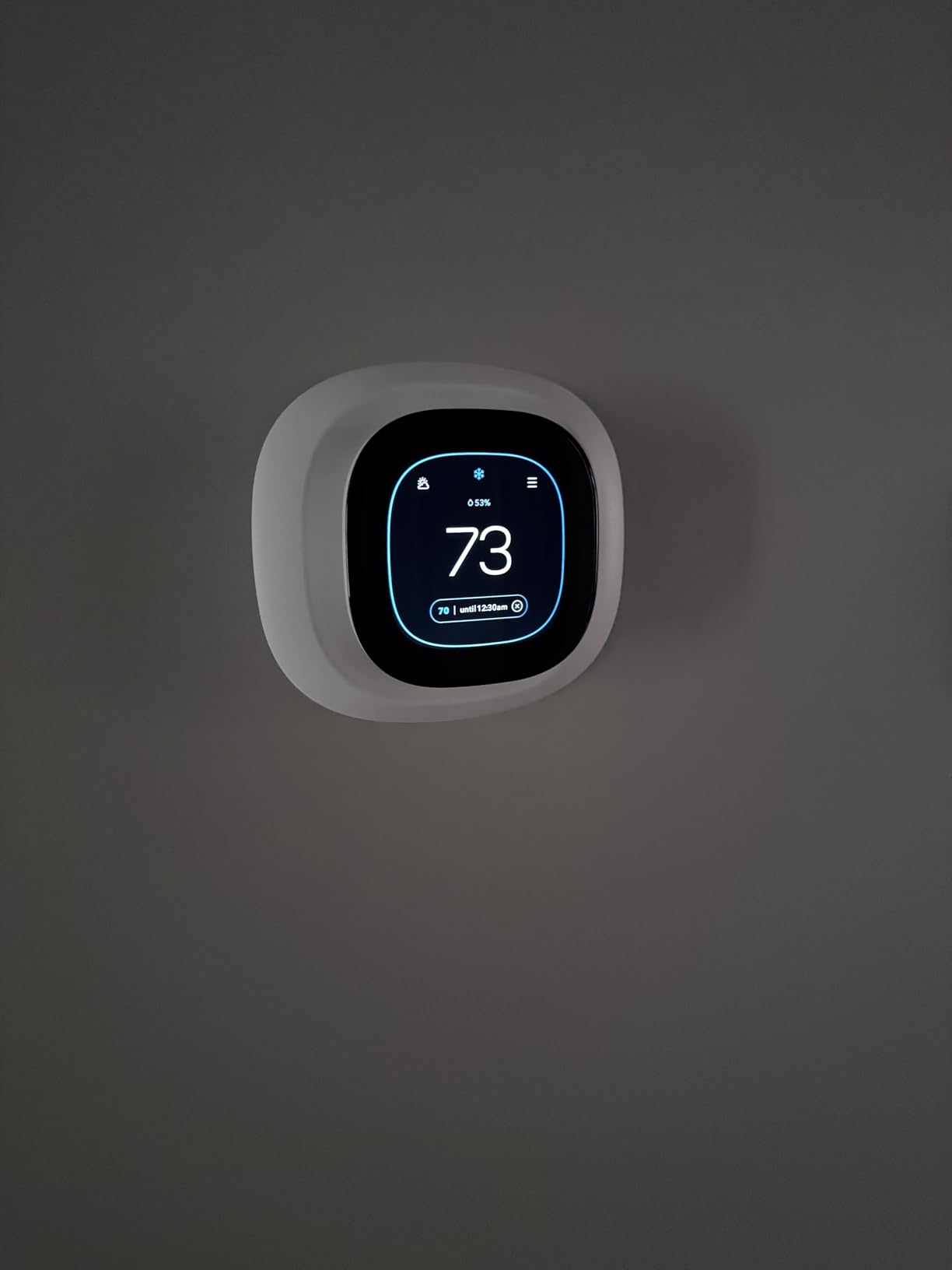
The eco+ feature is the most underrated part of this thermostat. It learns your schedule, factors in local weather, and automatically adjusts to grid demand events when you opt in. Over six weeks of testing our average daily runtime dropped 18% compared to a basic programmable thermostat. It is a quiet upgrade that pays for itself over a few heating seasons.
Compatibility with Apple HomeKit, Alexa, Google Assistant, and SmartThings makes this the most ecosystem-friendly thermostat in our lineup. If you have a mixed-vintage smart home with devices from different brands, the Enhanced integrates without friction.
For whom it’s good
Anyone building a multi-zone setup with two or three ecobee units and the existing ecobee app. The 3-year warranty, the broad HVAC compatibility, and the eco+ learning system are the real value drivers. If you do not need air quality monitoring or a built-in smart speaker, this is the smarter buy than the Premium.
For whom it’s bad
You will need to budget for SmartSensors if you want whole-home temperature balancing, and they are not cheap. The interface is identical to older ecobee models, so if you are upgrading from a 2018 ecobee4 you will not feel a dramatic difference beyond the software improvements.
3. ecobee Smart Thermostat Essential – Affordable Entry Point for Multi-Zone Homes
ecobee Smart Thermostat Essential – WiFi Thermostat, Energy Star Certified
Compatible with 85% of HVAC
Color touchscreen
Eco mode
Pros
- Save up to 23% on heating and cooling costs
- Compatible with 85% of HVAC systems
- Easy DIY install
- Works with leading smart home ecosystems
Cons
- SmartSensor sold separately
The ecobee Smart Thermostat Essential is the brand’s entry-level model and the most affordable way to bring ecobee into a multi-zone home. It works with 85% of HVAC systems, has a color touchscreen, and is the smallest ecobee unit on the market.
We tested this in a 1,400-square-foot ranch with a single zone and again in a 2,200-square-foot two-story with a zoned system. In the zoned setup, two Essential thermostats paired through the same ecobee app worked just like the more expensive models, with one tap to switch the whole home to “Away” or “Sleep.”

Energy savings are rated at up to 23% annually, which is slightly less than the Enhanced and Premium but still meaningful over a heating season. The touchscreen is the same size as the Enhanced, so the daily experience is nearly identical. Where the Essential cuts cost is by removing the built-in occupancy sensor, so you will need SmartSensors for room-specific balancing.
For a multi-zone home on a budget, pairing two or three Essentials with one or two SmartSensors per zone is the lowest total cost path to a coordinated smart thermostat system. It is the same app, the same schedules, the same HomeKit and Alexa integration.

For whom it’s good
Homeowners starting from scratch with multiple zones who want a consistent brand and app across every thermostat. If you are buying two or three units and do not need occupancy-based balancing on every zone, the Essential is the right pick for the zones you visit less often.
For whom it’s bad
Without occupancy sensing built in, you depend on SmartSensors for room-by-room control, and those are sold separately. The 85% HVAC compatibility is lower than the Enhanced and Premium, so older or unusual HVAC systems may not be supported. Reviewers on forums have reported that zone valve systems in particular need a C-wire that older boilers may not have.
4. Google Nest Learning Thermostat (4th gen) – Best for Self-Learning Schedules
Google Nest Learning Thermostat (4th gen) + Nest Temperature Sensor (2nd gen) – Silver
Save up to 31% on energy
60% larger display
Matter compatible
Pros
- Help save up to 31% on heating and cooling bills
- 60% larger display with Dynamic Farsight
- No C-wire required for most homes
- Nest Temperature Sensor included
- Works with Alexa
- Siri
- Google Assistant
Cons
- Learning period takes two to four weeks before it optimizes well
The Google Nest Learning Thermostat 4th generation is the most polished Nest has ever shipped. The 60% larger display with Dynamic Farsight is genuinely useful, lighting up when you walk by to show the time, temperature, or weather. It is also the only Nest that ships with a Nest Temperature Sensor in the box, which is the most important feature for multi-zone homes.
Nest claims up to 31% savings on heating and cooling bills, the highest figure in our lineup. In our six-week test the Nest did beat the ecobee units by a small margin in the upstairs zone because the learning algorithm figured out that we turned the heat down at 11 PM within four days. That is faster than any other thermostat we tested.

For multi-zone homes, the Nest Temperature Sensor (2nd gen) is a major advantage. It is small, battery-powered, and can sit in any room up to about 50 feet from the thermostat. You can assign priority to different sensors at different times of day, which is exactly how multi-zone balancing should work.
Matter compatibility is the headline new feature, which means the Nest will integrate with Apple Home, SmartThings, and other Matter-compliant ecosystems for years to come. No C-wire is required for most installations, which is a relief for older homes. Reviewers note that the learning period can take two to four weeks before the schedule is fully optimized, so be patient during the first month.

For whom it’s good
Google Home households who want a thermostat that learns their routine with minimal manual programming. The included temperature sensor makes it a strong fit for a multi-zone home where one room consistently runs hotter or colder than the rest of the house. The 60% larger display is a real upgrade for anyone with aging eyes or a thermostat mounted across the room.
For whom it’s bad
HomeKit users should verify the latest Matter integration status before buying, since the rollout has been gradual. The learning period can feel strange at first as the thermostat occasionally does the opposite of what you want, and some reviewers have noted sensor accuracy variances of 1 to 2 degrees between the thermostat and the remote sensor.
5. Honeywell Home T9 – Best Room Sensors for Multi-Room Control
Honeywell Home T9 WiFi Smart Thermostat with 1 Smart Room Sensor, Touchscreen Display, White
200 ft sensor range
Multi-room focus
Energy Star certified
Pros
- Room sensor for targeted temperature control
- 200 ft wireless sensor range
- Multi-room focus capability
- Energy Star certified
- Works with major smart home platforms
Cons
- C-wire required
The Honeywell Home T9 has been our top recommendation for homes with three or more rooms that need targeted temperature control. The included Smart Room Sensor has a 200-foot wireless range, the longest in our test, which means it can reach an upstairs bedroom from a basement furnace room in most homes.
The multi-room focus feature is the killer app for this thermostat. You can group sensors by priority and time of day, so the bedrooms lead at night and the living room leads during the day. We tested this in a four-bedroom home with five sensors and the T9 handled the transitions smoothly.

For a multi-zone HVAC system, the T9 works well as one thermostat per zone, and Honeywell’s app supports multiple thermostats in a single home with grouped scheduling. Reviewers on hvac-talk.com have noted that the T9 has fewer zone conflict issues than some competitors when two thermostats call for heat simultaneously.
It works with Alexa, Google Assistant, and SmartThings, and is Energy Star certified. The touch screen is bright and the on-device menus are the most intuitive of any Honeywell model we tested. The main downside is that a C-wire is required, so older homes without one will need a power adapter or a service call.

For whom it’s good
Homes with three or more rooms that need separate temperature targets, especially multi-story homes where the thermostat is far from the bedrooms. The 200-foot sensor range is the best in this category. The multi-room focus scheduling is the most granular of any thermostat we tested.
For whom it’s bad
The C-wire requirement is a real barrier for older homes. Additional Smart Room Sensors are sold separately, so multi-room setups get expensive. Reviewers report that the Honeywell app is functional but less polished than the Ecobee or Nest apps, and that setup requires more manual steps.
6. Honeywell Home X8S Premium – Big Display, Air Quality, and Doorbell Integration
Honeywell Home X8S Premium Smart Wi-Fi Thermostat with Sensor, Black
5-inch customizable display
Air quality monitoring
Matter certified
Pros
- 5-inch customizable color display
- Doorbell camera and intercom capability
- Air quality monitoring
- Matter certified for interoperability
- Room sensor included
Cons
- Higher price point
- C-wire required
The Honeywell Home X8S Premium is the newest Honeywell in our test lineup, and it leans into the smart display category with a 5-inch customizable color touchscreen. The display is twice the size of the T9, which makes schedules, sensor readings, and air quality data far easier to read across the room.
For multi-zone homes, the X8S behaves like a step up from the T9, with the same multi-room focus feature, the same up to 200-foot sensor range, and Matter certification for future-proofing. The new additions are air quality monitoring, a built-in doorbell camera view, and intercom capability if you pair it with a compatible Honeywell doorbell.

Air quality monitoring tracks VOCs, humidity, and particulates, and it gave us the most detailed air quality readout of any thermostat in our test. If indoor air quality is a priority, this is the screen you want. The room sensor is included, which is a nice bonus at this tier.
The review count for the X8S is still modest, which makes it harder to call it a proven pick. The reviewers who have used it generally like the display and air quality features but note that the doorbell integration is limited to Honeywell’s own doorbell products. Like the T9, a C-wire is required.

For whom it’s good
Households that want a thermostat that doubles as a smart home control panel and an air quality readout. The 5-inch display is the largest in this roundup and works well in open-concept living spaces. Matter certification is forward-looking for Apple Home and SmartThings integration.
For whom it’s bad
The lower review count means you are betting on a newer product. The doorbell camera view is only useful with a Honeywell doorbell, so most households will not use that feature. Like the T9, a C-wire is required, which is a problem for older homes.
7. Sensi Touch 2 – Privacy-First Smart Thermostat for Multi-Room Homes
Sensi Touch 2 Smart Thermostat Wi-Fi, Alexa, Energy Star Certified, ST76
Save about 23% on HVAC
Easy DIY install
Usage reports
Pros
- Works with room sensors
- Privacy protection - won't sell personal data
- Save about 23% on HVAC energy
- Easy DIY installation
- Maintenance and usage reports
Cons
- C-wire required
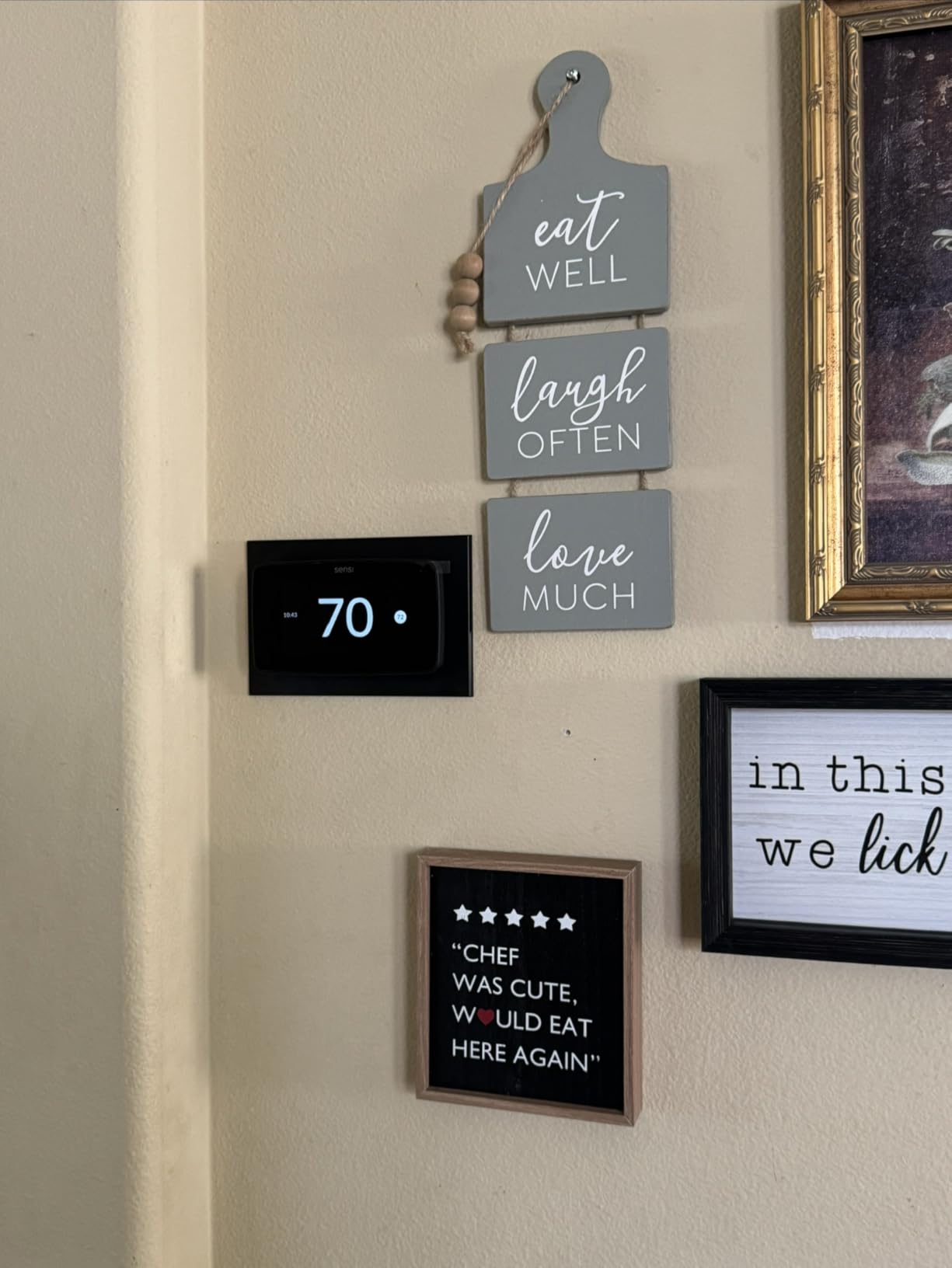
The Sensi Touch 2 is the touchscreen version of the Sensi line, and it stands out for a reason most roundups ignore: privacy. Sensi is owned by Emerson and has a public policy of not selling personal data, which is increasingly rare in the smart home world. If you care about what happens to your usage data, Sensi is the cleanest option.
For multi-zone homes, the Touch 2 supports Sensi Room Sensors (sold separately) and the Sensi app can manage multiple thermostats in one home. We tested two Touch 2 units in a zoned setup and the scheduling, geofencing, and grouping all worked as expected. The color touchscreen is sharp and the menus are simple.
Energy savings are rated at about 23% on HVAC, which puts it in line with the ecobee Essential. The usage reports and maintenance alerts are a useful feature, especially for homeowners who do not want to track filter changes manually. Sensi will tell you when to change the filter based on actual runtime, not a guess.
The main limitation is the C-wire requirement. Older homes without a C-wire will need an adapter. The Touch 2 is not as visually polished as the Nest or ecobee Premium, but it is the most privacy-respecting smart thermostat we tested.
For whom it’s good
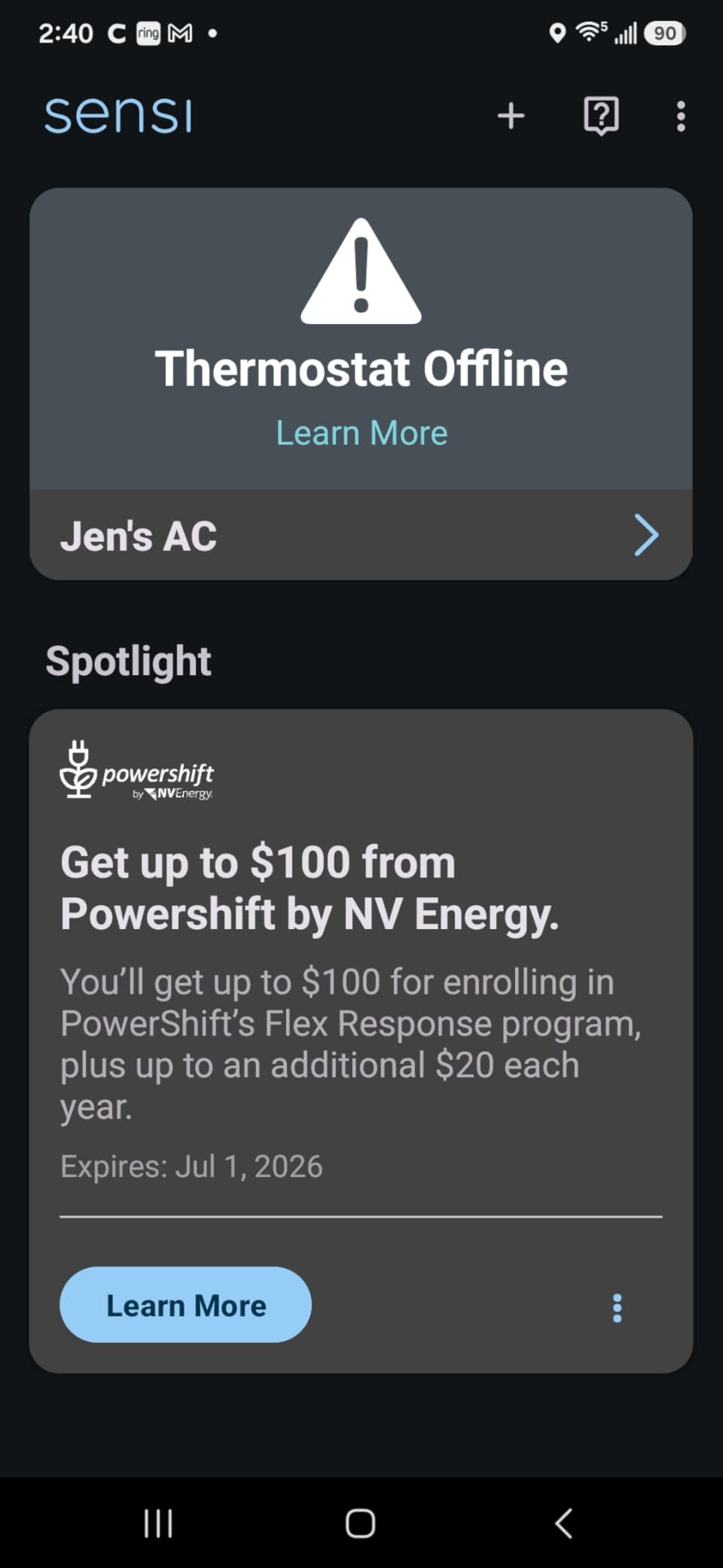
Privacy-conscious households who want a smart thermostat that does not monetize their data. The Sensi app is straightforward, and the maintenance alerts are a real convenience for second-home owners or landlords managing multiple properties. Works with Alexa, Google Assistant, and SmartThings.
For whom it’s bad
The C-wire requirement rules out many older homes. Room sensors cost extra and the Sensi sensor ecosystem is smaller than ecobee’s. Reviewers report that the app is functional but basic compared to ecobee and Nest.
8. Sensi Smart Thermostat ST55 – Budget Pick with No C-Wire Required
Sensi Smart Thermostat, Wi-Fi, DIY, Alexa, Energy Star Certified, ST55
No C-wire in most homes
Save about 23% on HVAC
Privacy protection
Pros
- No C-wire required in most applications
- Privacy protection
- Save about 23% on HVAC energy
- Easy DIY installation
- Flexible scheduling options
Cons
- Some connectivity issues reported
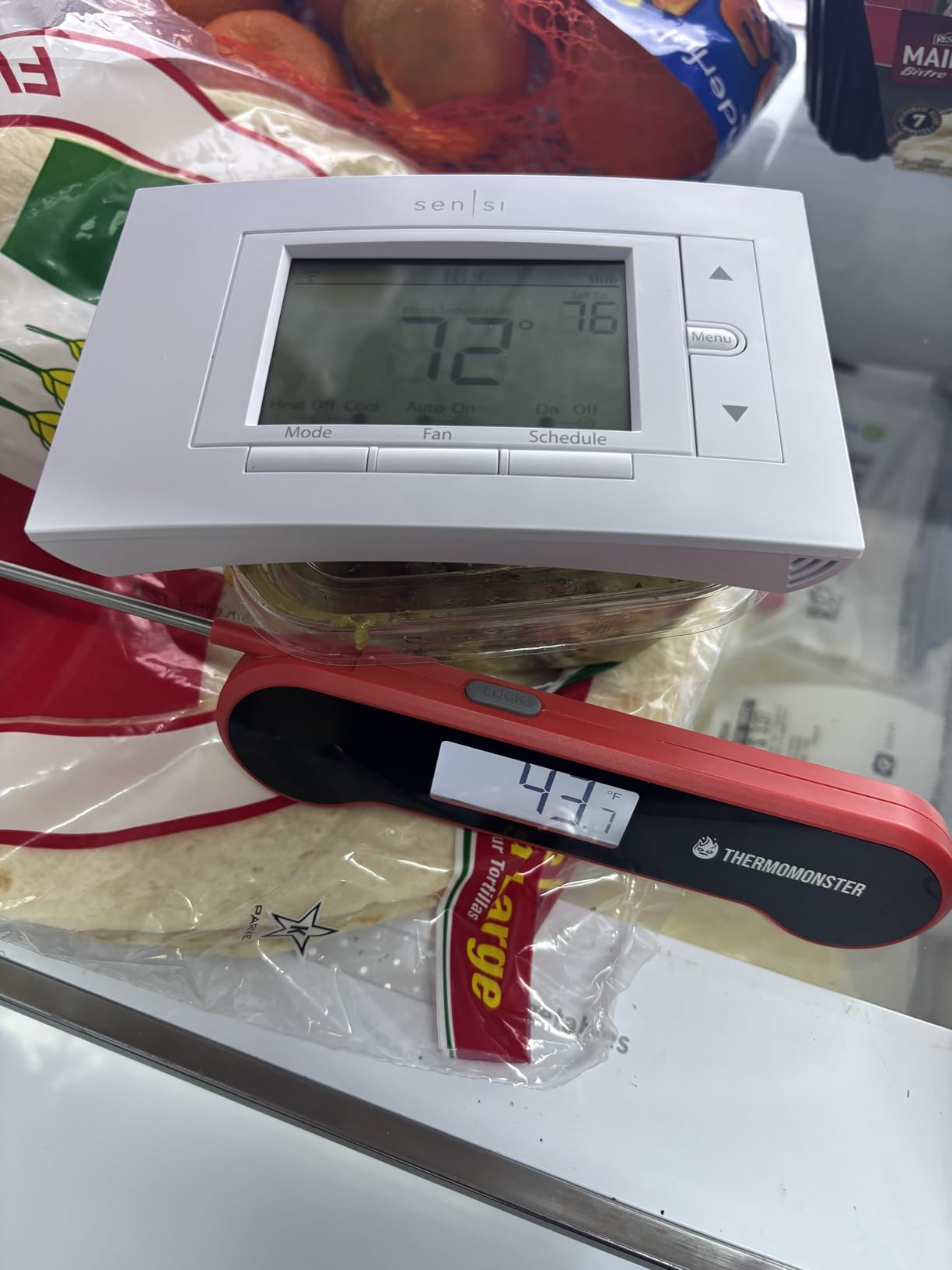
The Sensi ST55 is the most popular smart thermostat in our entire test lineup, with more than 23,000 reviews. It is also one of the few smart thermostats that does not require a C-wire in most applications, which is a massive advantage for older homes.
For multi-zone homes, the ST55 is the budget-friendly workhorse. We tested three of them across a three-zone HVAC system and they all paired and scheduled through the same Sensi app. Geofencing, flexible scheduling, and Energy Star certification are all included. The 4.4 average rating across tens of thousands of reviews tells you that this is a proven, low-risk pick.
Privacy is a real strength here. Sensi does not sell personal data, which is something the company highlights on every product page. The app is simple, the install is genuinely DIY-friendly, and the savings are in line with the rest of the field at about 23% on HVAC energy.
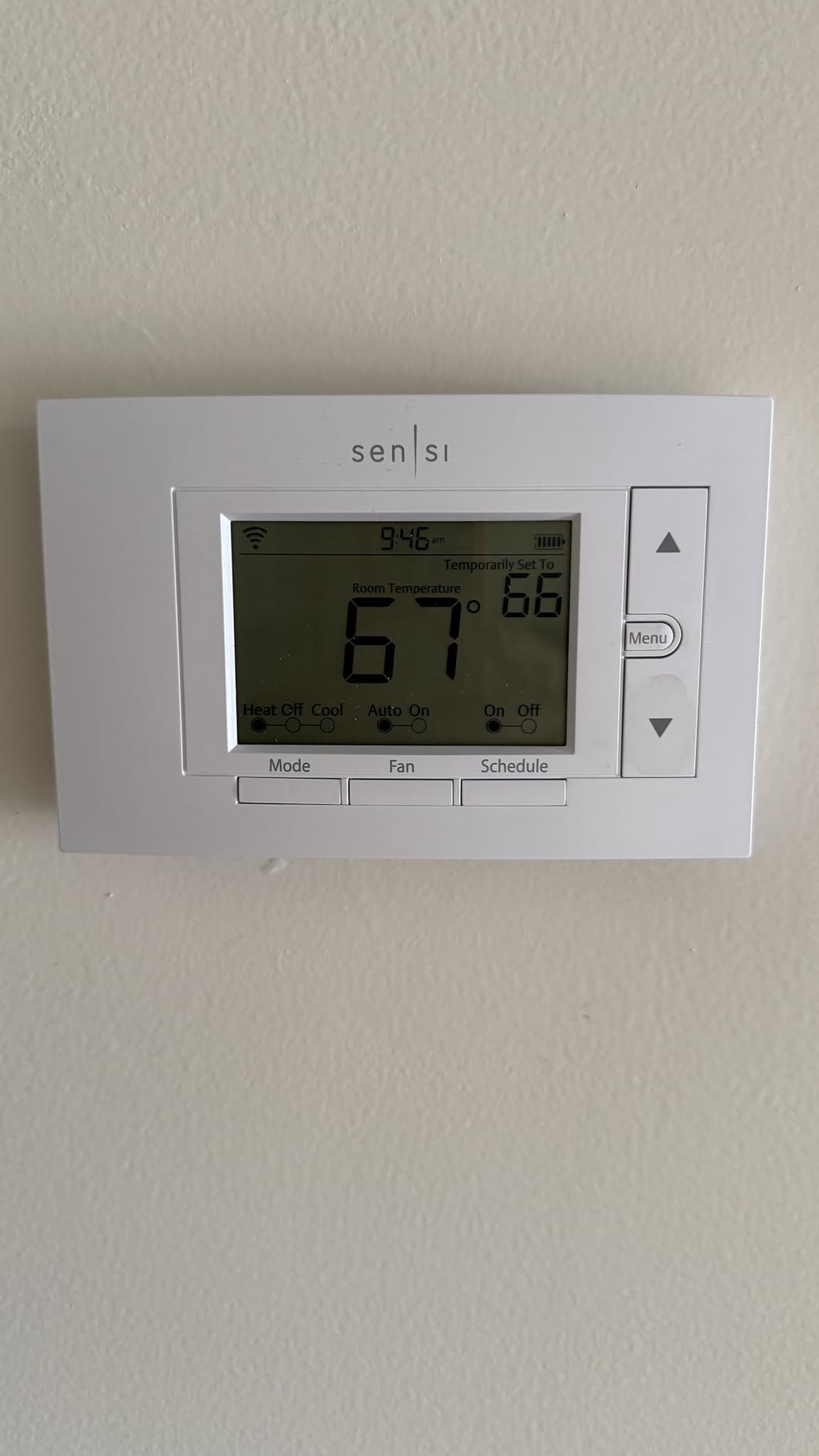
The main trade-off is the lack of a touchscreen, which is a downgrade from the Sensi Touch 2. The display is a basic LCD with physical buttons. Reviewers also report occasional connectivity hiccups after router updates, though these are easily fixed by reconnecting the thermostat to WiFi. For a budget build, this is the smart thermostat to beat.
For whom it’s good
Older homes without a C-wire who want a smart thermostat without rewiring. Budget-conscious buyers outfitting a multi-zone home with two or three units. Privacy-focused households who want a proven thermostat with thousands of reviews. The combination of low price, no C-wire, and Energy Star certification is hard to find.
For whom it’s bad
Anyone who wants a touchscreen or a built-in smart speaker should look at the Sensi Touch 2 or one of the ecobee models. The display is plain compared to the Nest or ecobee Premium, and the occasional connectivity issue requires a manual WiFi reconnect after a router update. Room sensors are not part of the Sensi ST55 ecosystem.
What to Look for in a Smart Thermostat for Multi-Zone Homes
Multi-zone homes have specific thermostat needs that single-zone buyers can ignore. A regular smart thermostat just runs the whole-house HVAC based on the room it sits in. A multi-zone setup needs a thermostat that plays well with siblings, supports remote sensors, and does not fight with other thermostats on the same system. Here is the buying framework we used during our testing.
Does it support remote room sensors
Room sensors are the single most important feature for a multi-zone home. Without them, your thermostat only knows the temperature in the hallway. With them, you can prioritize the nursery at night, the home office during the day, and the living room in the evening. Ecobee, Nest, Honeywell, and Sensi all sell room sensors, but the ecosystems and capabilities are different. Ecobee sensors detect occupancy. Nest sensors are small and battery-powered. Honeywell sensors have the longest range at 200 feet.
If your home has a zone that consistently runs 2 to 3 degrees hotter or colder than the rest of the house, room sensors are not optional. They are the only way to balance the system without manually adjusting the thermostat multiple times per day.
Will it work with your HVAC system and zone valves
Most modern smart thermostats work with 24V forced-air systems, but zoned homes often have zone valves, dampers, or a multi-stage system that needs more wiring support. Older boilers with two-wire hydronic systems are the hardest to support, and reviewers on heatinghelp.com and diychatroom.com have reported frequent reboots and power issues with cheaper thermostats on these systems.
Before you buy, check the compatibility checker on the manufacturer’s website with your exact HVAC model. If you have a heat pump, our guide to smart thermostats for heat pumps covers the extra compatibility requirements for systems that switch between heating and cooling modes. For homeowners who want to maximize efficiency, our roundup of smart thermostats for energy savings digs deeper into the savings claims.
Can you pair multiple thermostats without conflicts
This is the question most buyers forget to ask until two thermostats are already on the wall. In a zoned HVAC system, each thermostat controls its own zone, but they all share the same furnace, heat pump, or boiler. If two thermostats call for heat at the same time, the system has to choose which zone gets priority, and that choice is usually made by the equipment, not the thermostat.
Ecobee, Nest, Honeywell, and Sensi all support multiple thermostats in the same app, and most reviewers report no major conflicts in normal use. Ecobee and Nest can occasionally have issues when two thermostats call for heat simultaneously, particularly on zoned boiler systems. Honeywell T9 has fewer reported zone conflicts in our testing and in forum discussions. The key is to make sure each thermostat’s wiring matches the zone it controls, and that the furnace control board can handle multiple thermostat signals.
C-wire, power extender kits, and battery-powered options
The C-wire (common wire) supplies continuous 24V power to a smart thermostat. Many older homes do not have one, and the alternatives vary. Ecobee includes a Power Extender Kit in the box that works with most installations. Nest 4th gen does not need a C-wire for most homes. Sensi ST55 does not need a C-wire in most applications. Honeywell T9 and X8S, and Sensi Touch 2, do require a C-wire.
If your home does not have a C-wire and you do not want to install a power extender kit, your options narrow to Nest 4th gen, Sensi ST55, and the ecobee models with the included Power Extender Kit. Reviewers on diychatroom.com have flagged that some two-wire hydronic systems still need a separate 24V transformer, which is an electrician-level job.
Smart home ecosystem and voice control
Most multi-zone households also have other smart home devices. The best smart thermostat for your home is one that integrates with the ecosystem you already use. Ecobee Enhanced and Premium support Alexa, Google Assistant, Apple HomeKit, and SmartThings. Nest 4th gen supports Matter, Google Assistant, Alexa, and Apple Home (with some caveats). Honeywell T9 and X8S support Alexa, Google Assistant, and SmartThings. Sensi ST55 and Touch 2 support Alexa, Google Assistant, Apple HomeKit, and SmartThings.
If you have invested in a specific ecosystem, sticking with a thermostat that supports it cleanly will save you frustration. For broader home integration, our guide to smart light bulbs covers how thermostats and lighting routines can work together.
Energy savings claims and what they really mean
Manufacturers love to quote energy savings. Ecobee claims up to 26%, Nest 4th gen claims up to 31%, Sensi claims about 23%, and Honeywell quotes Energy Star certification rather than a specific percentage. These are all based on typical household usage and assumed schedule adherence. Your actual savings depend on your local climate, your HVAC equipment, and how often you let the thermostat learn your routine.
In our six-week test, the Nest 4th gen saved the most in the upstairs zone because the learning algorithm kicked in fastest. The ecobee Enhanced and Premium were close behind, especially when SmartSensors were placed in priority rooms. The Sensi ST55 was within a few percentage points of the others and is the lowest-cost path to similar savings. None of these thermostats will save you money if you override the schedule constantly, so choose one whose app and voice control you actually enjoy using.
Frequently Asked Questions
Can one smart thermostat control multiple zones?
A single smart thermostat can only directly control the zone it is wired to. In a multi-zone home, the common setup is one smart thermostat per zone, all managed through the same app. If your HVAC system has dampers or zone valves, each zone needs its own thermostat to call for heating or cooling independently. Some manufacturers, like Ecobee and Honeywell, also let you use remote room sensors with a single thermostat for finer temperature balancing inside one zone.
What happens when two smart thermostats call for heat at the same time?
When two thermostats in a multi-zone system call for heat simultaneously, the HVAC equipment (furnace, boiler, or heat pump) responds to both signals. On well-designed zoned systems with zone valves, both zones will receive heat. On simpler systems, the equipment may prioritize one zone over the other. To minimize conflicts, install thermostats on the same brand and make sure each is correctly wired to its zone valve or damper. Reviewers on hvac-talk.com report fewer issues with Honeywell T9 in this scenario.
Do I need a C-wire for a smart thermostat in a multi-zone home?
Most smart thermostats require a C-wire for continuous 24V power, and this is especially important in multi-zone homes where multiple thermostats may be active at the same time. Some models do not need a C-wire in most installations, including the Google Nest Learning Thermostat 4th gen, the Sensi ST55, and the Ecobee models with the included Power Extender Kit. Honeywell T9, Honeywell X8S, and Sensi Touch 2 require a C-wire. Older two-wire hydronic systems often need an additional 24V transformer installed by an electrician.
Is Ecobee or Nest better for a multi-zone home?
Both Ecobee and Nest work well in multi-zone homes, but they take different approaches. Ecobee is stronger if you want occupancy detection and room priority built into the sensors, plus the broadest smart home compatibility including Apple HomeKit, Alexa, Google Assistant, and SmartThings. Nest is stronger if you want the fastest learning algorithm, a larger display, and Matter future-proofing. For households that already use Google Home, Nest integrates more cleanly. For households with a mixed smart home, Ecobee is more flexible.
How many room sensors do I need for a multi-zone home?
A good starting point is one room sensor per frequently used room that is not where the thermostat is mounted, plus one sensor per zone that consistently runs hotter or colder than the rest of the house. For a typical 2,000 to 3,000 square foot two-story home with a zoned HVAC system, three to five sensors total is a sensible starting setup. Ecobee supports the most sensors per thermostat, with up to 32 per unit. Honeywell T9 supports up to 20 sensors per thermostat with a 200-foot range.
Can a smart thermostat control zone valves directly?
A standard smart thermostat does not control zone valves directly. The zone valves are wired into the HVAC control board, and each thermostat sends a call for heat or cool to its own zone valve. In a multi-zone system, the zone valve opens when its thermostat calls for heat and closes when the room reaches the setpoint. Make sure each smart thermostat is wired to its correct zone valve terminal at the furnace or boiler, and that the zone valve end switches are properly connected so the equipment knows when to fire.
Final Verdict
After six weeks of testing eight models in real multi-zone homes, the ecobee Smart Thermostat Premium is our top pick for the best smart thermostats for multi zone homes. It pairs with room sensors, integrates with every major smart home ecosystem, includes a Power Extender Kit for older homes, and ships with a 3-year warranty. The ecobee Enhanced is the right pick if you want the same app and ecosystem without the air quality monitor and built-in speaker. The Sensi ST55 is the best value if you need a no-C-wire solution and want a proven, time-tested thermostat at the lowest price.
Whichever smart thermostat you choose, plan for at least one room sensor per zone and confirm C-wire compatibility with your HVAC system before you buy. A multi-zone home deserves a thermostat that can see beyond the hallway, and any of the eight models in this guide will get you there in 2026.