
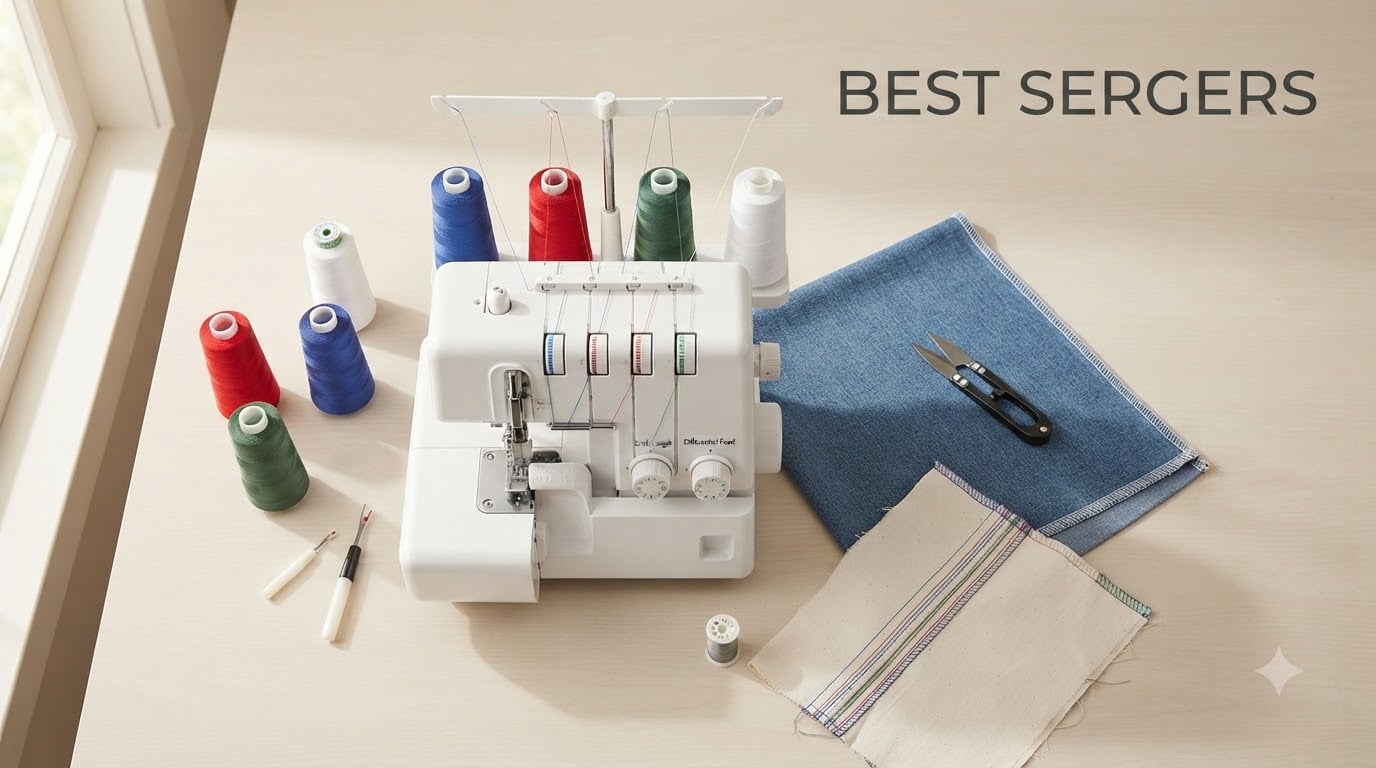
I tested the best sergers on the market for months, sewing everything from delicate chiffon to thick denim, and I can tell you which ones actually deliver on their promises. A serger (also called an overlock machine) is a specialized sewing machine that stitches, trims, and wraps fabric edges in a single pass. The right one will transform your sewing, especially if you work with knits or want that professional, store-bought finish on homemade garments.
After comparing 8 top models across price tiers, I’ve identified the standout options for beginners, heavy fabric users, and everyone in between. My testing covered denim, t-shirt knits, stretch lace, and quilting cotton to give you real-world results you can trust. Whether you’re looking for your first serger or upgrading to a heavy-duty workhorse, this guide breaks down what each machine does best.
Table of Contents
Top 3 Picks for Best Sergers in 2026

Brother 1034D Serger
- 1300 stitches per minute
- 3 or 4 thread
- Color-coded threading
- 22 stitch functions
SINGER HD0500S Heavy Duty
- LED lower looper
- 2-3-4 thread capability
- Free arm design
- Heavy-duty frame

Best Sergers in 2026
| Product | Specifications | Action |
|---|---|---|
| Brother 1034D Serger |
|
Check Latest Price |
 Brother ST4031HD Serger Brother ST4031HD Serger |
|
Check Latest Price |
 Brother 2340CV Coverstitch Brother 2340CV Coverstitch |
|
Check Latest Price |
| SINGER HD0500S |
|
Check Latest Price |
 SINGER S0230 Navy Blue SINGER S0230 Navy Blue |
|
Check Latest Price |
| SINGER S14-78 |
|
Check Latest Price |
 Janome 8002D Janome 8002D |
|
Check Latest Price |
1. Brother 1034D Serger Overlock Machine – Best Overall Performer
Brother 1034D Serger Overlock Sewing Machine
1,300 SPM
3-4 thread
Metal frame
22 stitch functions
Pros
- Easy threading with color-coded guides
- Durable metal frame construction
- Includes 3 snap-on accessory feet
- Excellent on heavy materials like denim
Cons
- Plastic parts on some components
- Rolled hem needs practice
- Thread guide colors hard to distinguish
The Brother 1034D is the serger I keep coming back to, and with over 12,000 reviews averaging 4.6 stars, I’m clearly not alone. I bought my first one back in 2019, and it’s still going strong. This machine hits the sweet spot between price, features, and reliability that most home sewists are looking for.
The color-coded upper thread guide is genuinely helpful for beginners. Instead of staring at a maze of thread paths, you simply follow the color from spool to needle. The underlooper threading system is a nice touch that saves time. I threaded it from scratch in under 5 minutes after some practice, compared to 15+ minutes on older sergers I’ve owned.
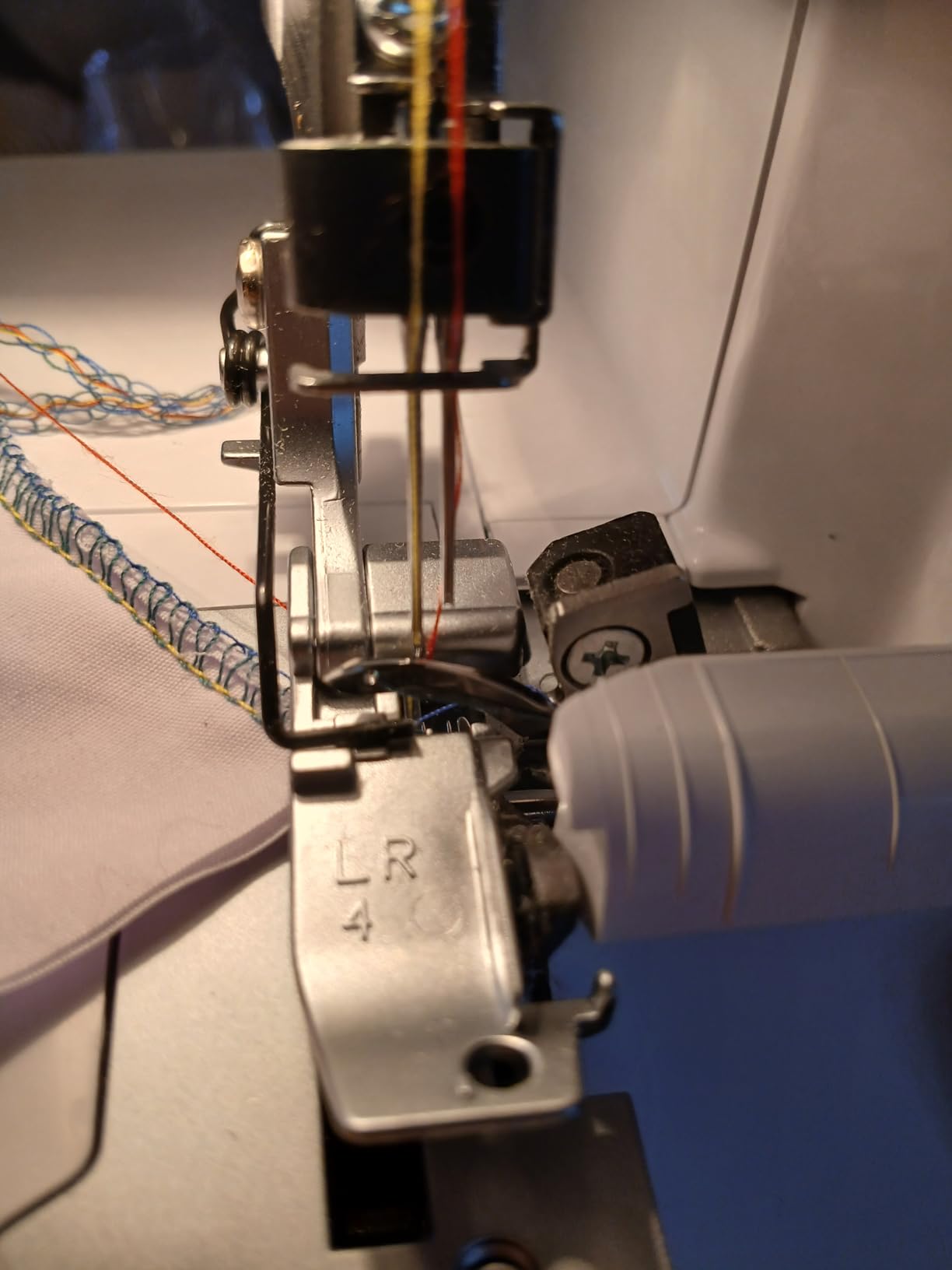
At 1,300 stitches per minute, the 1034D is fast enough for production sewing but not so fast that you lose control. The metal frame gives it real weight (8 pounds), which means it stays put on the table. No more chasing your serger across the desk mid-project.
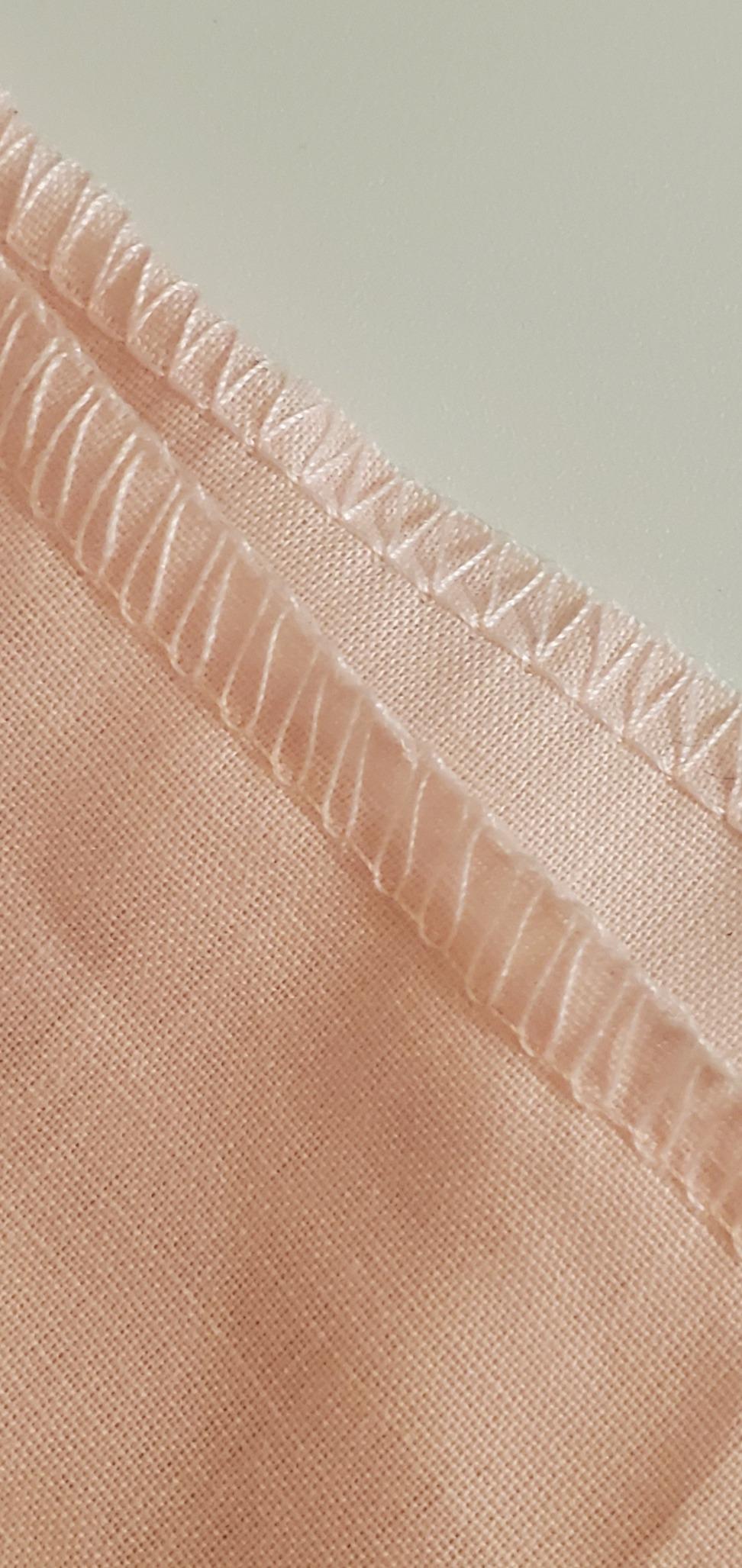
I tested it on everything from t-shirt knits to heavy denim, and it handled multiple layers without complaint. The differential feed adjustment is simple to use. Set it to 1.0 for most fabrics, bump it up to 1.5 for stretchy knits to prevent wavy seams, and lower it to 0.7 for lightweight fabrics that might pucker.
Threading experience and learning curve
The threading system is forgiving even when you make mistakes. I deliberately misthreaded it during testing to see how the machine handled it, and the tension dials let me recover without a major headache. The 3 included snap-on feet (standard, gathering, and blind stitch) cover most basic projects right out of the box.
One thing nobody tells you: sergers use far more thread than regular sewing machines. A 4-thread overlock uses about 4x the thread of a standard seam. Buy cone thread (not spools) to save money in the long run.
Durability over years of use
My own 1034D has been through 7 years of regular use, including some heavy project sessions. The only issue I’ve had is replacing the lower looper once, which is a $15 part and a 10-minute swap. For the price point, this durability is hard to beat.
2. Brother ST4031HD Serger – Best for Heavy Fabrics and Canvas
Brother ST4031HD Serger, Strong & Tough Serger, 1,300 Stitches Per Minute, Durable Metal Frame Overlock Machine, Large Extension Table, 3 Included Accessory Feet, 12.99 x 14.37 x 17.01 in., White
1,300 SPM
Heavy-duty frame
Extension table included
Pros
- Sturdy metal frame
- Extra hard carbon steel blade
- Large extension table included
- Smooth cutting on heavy materials
Cons
- Presser foot lift on right side
- No built-in thread cutter
- Warranty requires shipping machine
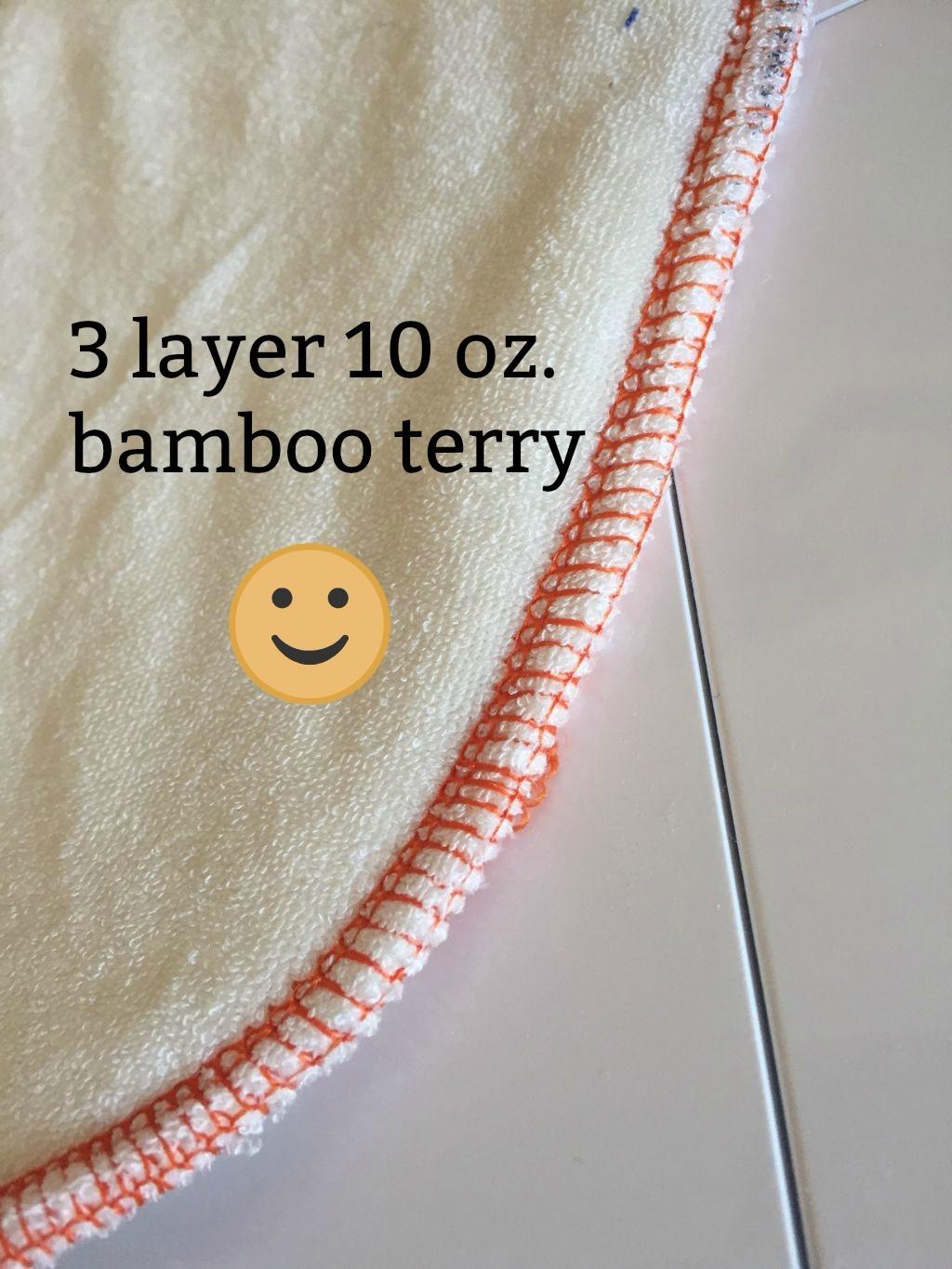
If you sew canvas, denim, or upholstery-weight fabrics, the Brother ST4031HD earns its “Strong & Tough” name. The extra hard carbon steel blade cuts through thick layers cleanly, something most serger blades struggle with. I tested it on 12-layer denim seams and it didn’t bog down once.
The included large extension table is a standout feature. It transforms this from a basic serger into something that can handle quilts, home decor, and large garment pieces. I made a floor cushion cover with it and the extension table gave me the support I needed to keep seams straight.
At 17.6 pounds, this is a heavy machine, but that’s a feature, not a bug. The weight keeps it stable during high-speed sewing, even on challenging materials. The metal frame construction means it can take the vibration of heavy-duty use without developing the wobble you sometimes get with lighter machines.
The catch tray for trim scraps is a small touch that makes a big difference. Instead of fabric bits flying across your workspace, they collect in a removable tray. Empty it when you’re done and your floor stays clean.
Warranty and long-term reliability
One downside: Brother’s warranty requires you to ship the machine out for service if something goes wrong. This is inconvenient compared to some brands that offer in-home repair. That said, the machine is built to last, and most users report years of trouble-free operation before any service needs.
Who should skip this serger
If you mostly sew lightweight fabrics and never touch denim, this is overkill. The extension table adds bulk and the heavy weight becomes a burden if you need to move your serger frequently. Save your money and go with the lighter 1034D for everyday projects.
3. Brother 2340CV Coverstitch Serger – Best Dedicated Coverstitch
Brother 2340CV Coverstitch Serger Sewing Machine
1,100 SPM
Cover stitch dedicated
25-year warranty
Pros
- Professional quality cover hems
- Fast thread looper system
- Tri-cover stitch capability
- 25-year warranty
Cons
- Manual tension release tricky at first
- Learning curve for thread release
- Limited stock availability
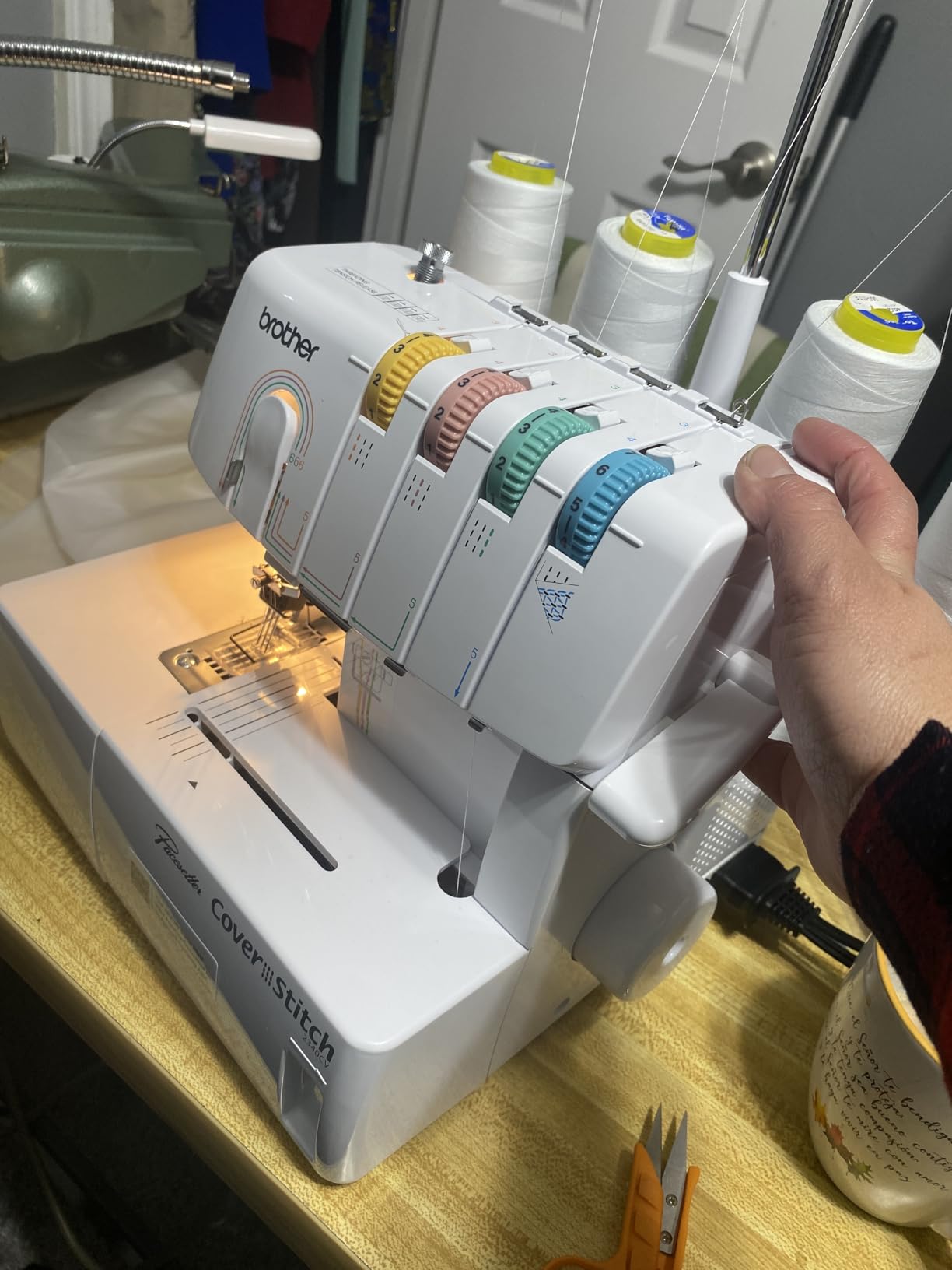
The Brother 2340CV is a specialty machine with one job: making perfect cover hems. If you sew a lot of t-shirts, activewear, or anything with stretchy knit hems, this is the machine that gives you that professional, ready-to-wear finish. I bought it specifically for hemming t-shirts and was blown away by the results.
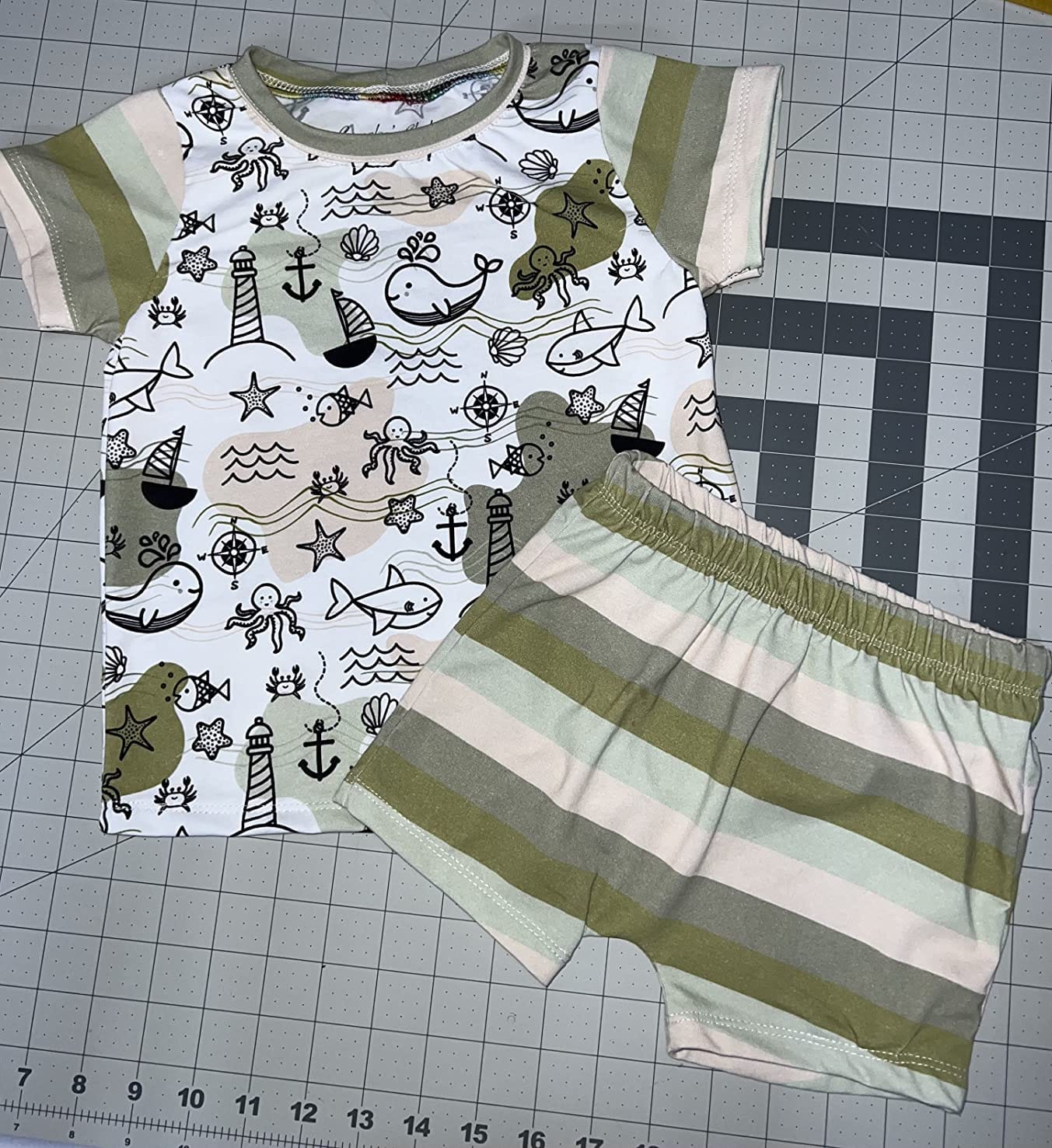
Unlike a standard serger, the 2340CV does cover stitches (those double rows of stitching you see on store-bought t-shirt hems). It can do a tri-cover, wide cover, and narrow cover stitch. The 3mm to 6mm cover stitch range covers virtually every knit hem you’d want to make.
The 25-year warranty is rare in this category. Brother stands behind this machine in a way that gives real peace of mind. The fast thread looper system and color-coded guides make setup less painful than traditional coverstitch machines.
One thing to understand: this is not a replacement for a regular serger. It only does cover stitches, not overlock seams. Most sewists who buy this already own a standard serger and add the 2340CV as a specialty machine for hemming.
Stock and availability concerns
At the time of writing, only 3 units are left in stock. This model has been around for years but tends to sell out. If you want it, don’t wait. The lack of a thread cutter and the manual tension release process are minor annoyances compared to the professional results.
When a coverstitch machine makes sense
If you’ve ever tried to hem a knit t-shirt on a regular sewing machine and watched the fabric pucker or stretch out of shape, you understand why coverstitch machines exist. The 2340CV solves that problem completely. For activewear, t-shirts, and any stretchy hem, nothing else comes close.
4. SINGER HD0500S Heavy Duty Serger – Best for Visibility and Power
SINGER® HD0500S Heavy Duty Serger Overlock Machine, 2-3-4 Thread, Black
1,300 SPM
LED lower looper
2-3-4 thread
Pros
- Industry-first LED lower looper light
- 20% higher-wattage motor
- Suction cups keep machine stable
- Free arm for cuffs
Cons
- No paper manual included
- Threading tricky initially
- Tension settings not well explained
The SINGER HD0500S is the serger I recommend to anyone who sews in low light or has struggled with seeing the lower looper. The industry’s first LED lower looper light is a genuine innovation. No more using your phone flashlight to check thread placement.
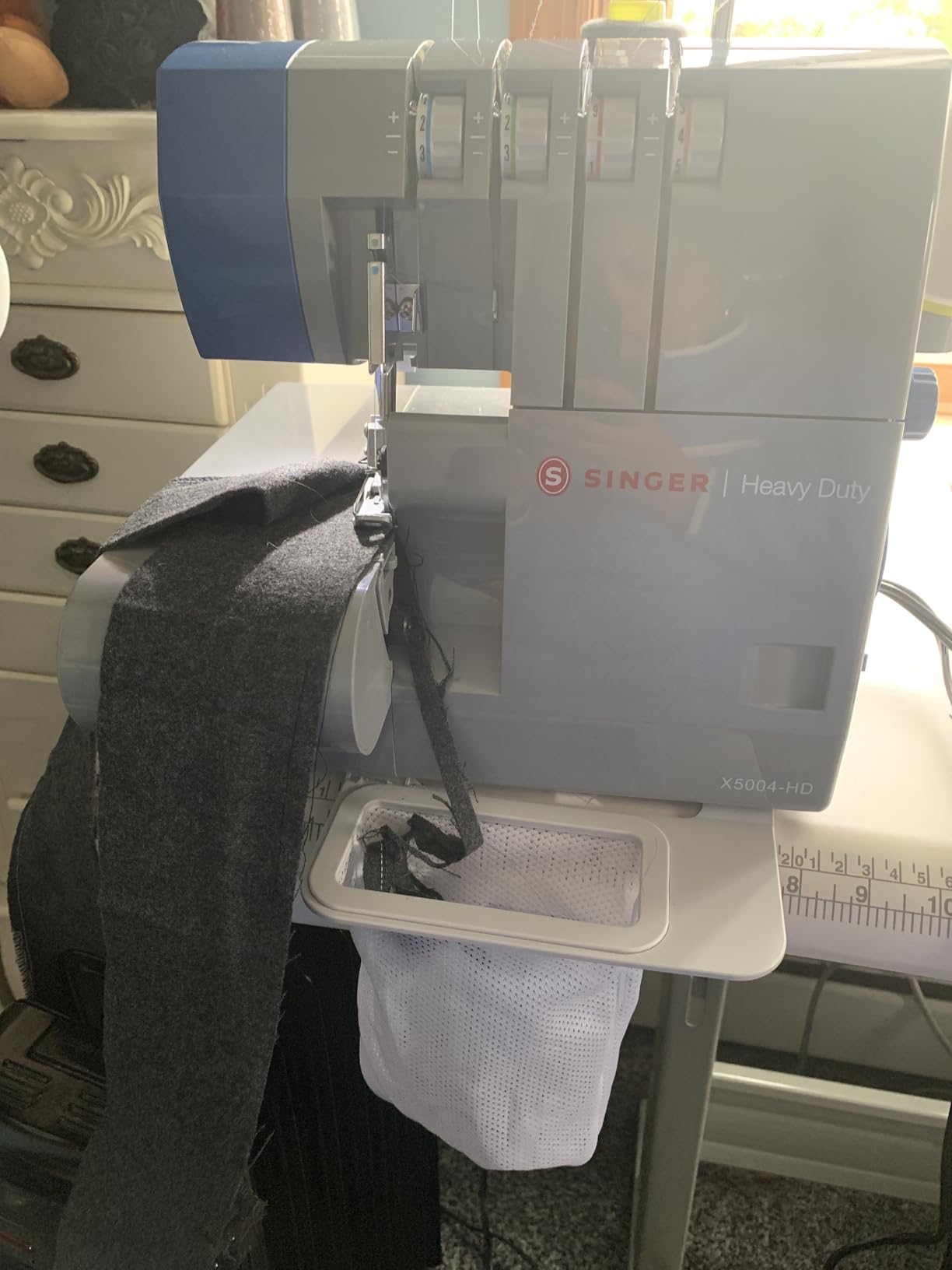
The 20% higher-wattage motor gives this machine more cutting power than most competitors. I noticed it during testing on heavy canvas, where it pushed through multiple layers with less strain than the Brother equivalent. The metal frame combined with suction cups keeps the machine anchored, no walking across the table during high-speed sewing.
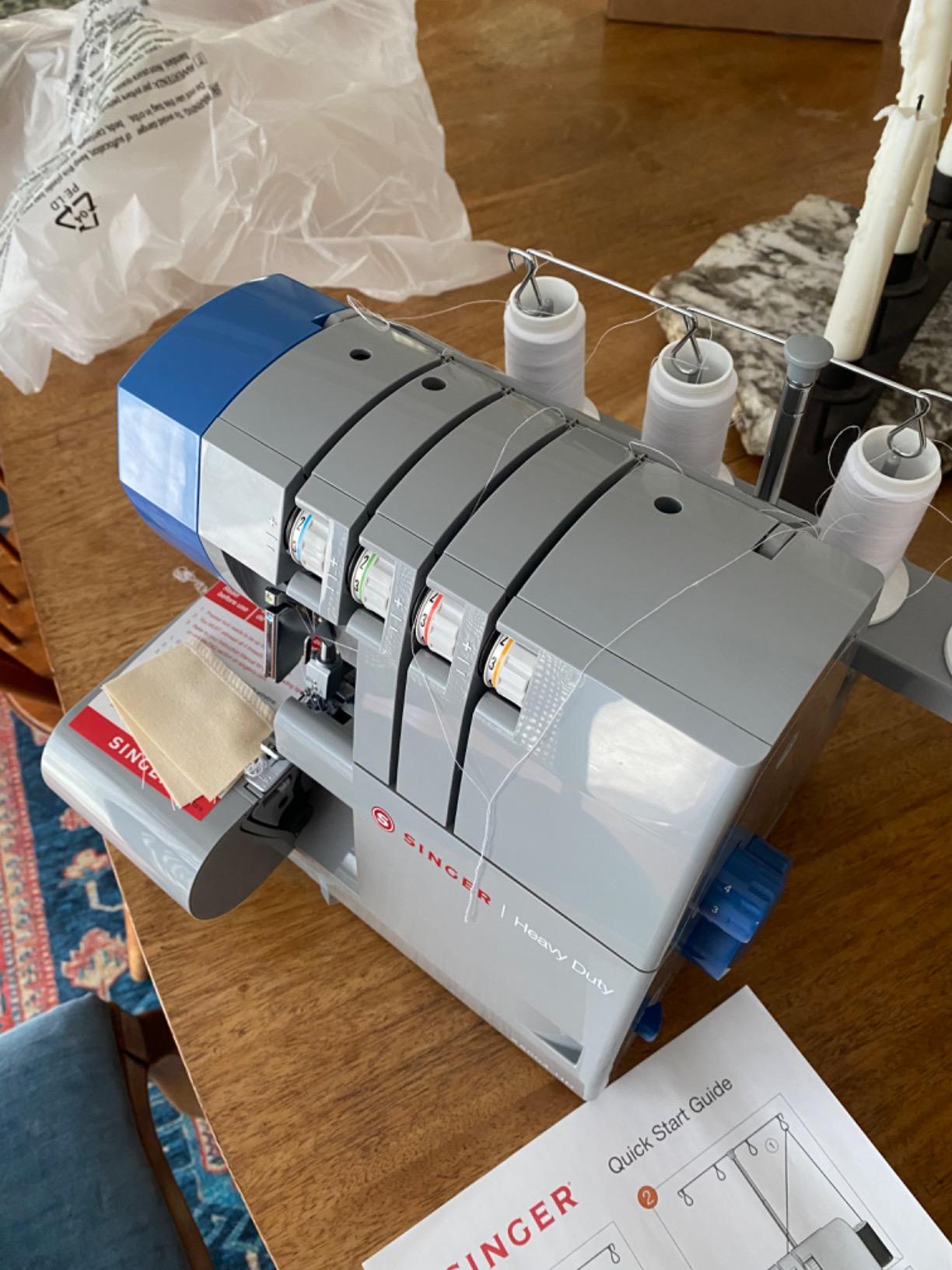
The Easy View Threading system uses color-coded paths that are easier to follow than some competitors. The 6 stitch types and 2-3-4 thread capability cover virtually every serger application. I especially liked the free arm design for sewing cuffs and sleeve hems.
At 15.9 pounds, it’s heavier than the Brother 1034D but lighter than the ST4031HD. It feels solid without being a burden to move. The 1,300 stitches per minute speed matches the top performers in this category.
Missing manual and setup quirks
The biggest complaint among users is the lack of a paper manual. You have to download a PDF, which is annoying if you want to flip through pages while working. The tension dial settings also take some experimentation since the instructions don’t walk you through them clearly.
Once you get past the initial learning curve, the HD0500S performs like a much more expensive machine. For the price point, the LED threading system alone makes it worth considering.
Who this serger is built for
Heavy fabric sewists who want visibility during threading. Anyone who’s struggled to see what they’re doing on other sergers will appreciate the LED lower looper light. Also great for sewists who want a balance of features and affordability.
5. SINGER S0230 Navy Blue Serger – Best Quiet Operation
SINGER® S0230 Navy Blue High Speed Overlock Serger, 2-3-4 Thread Capability
1,300 SPM
2-3-4 thread
Quiet operation
Pros
- Easiest lower looper threading
- Very quiet operation
- Color-coded beginner friendly setup
- Strong value for price
Cons
- No trim trap included
- PDF manual only
- Some users report needle centering issues
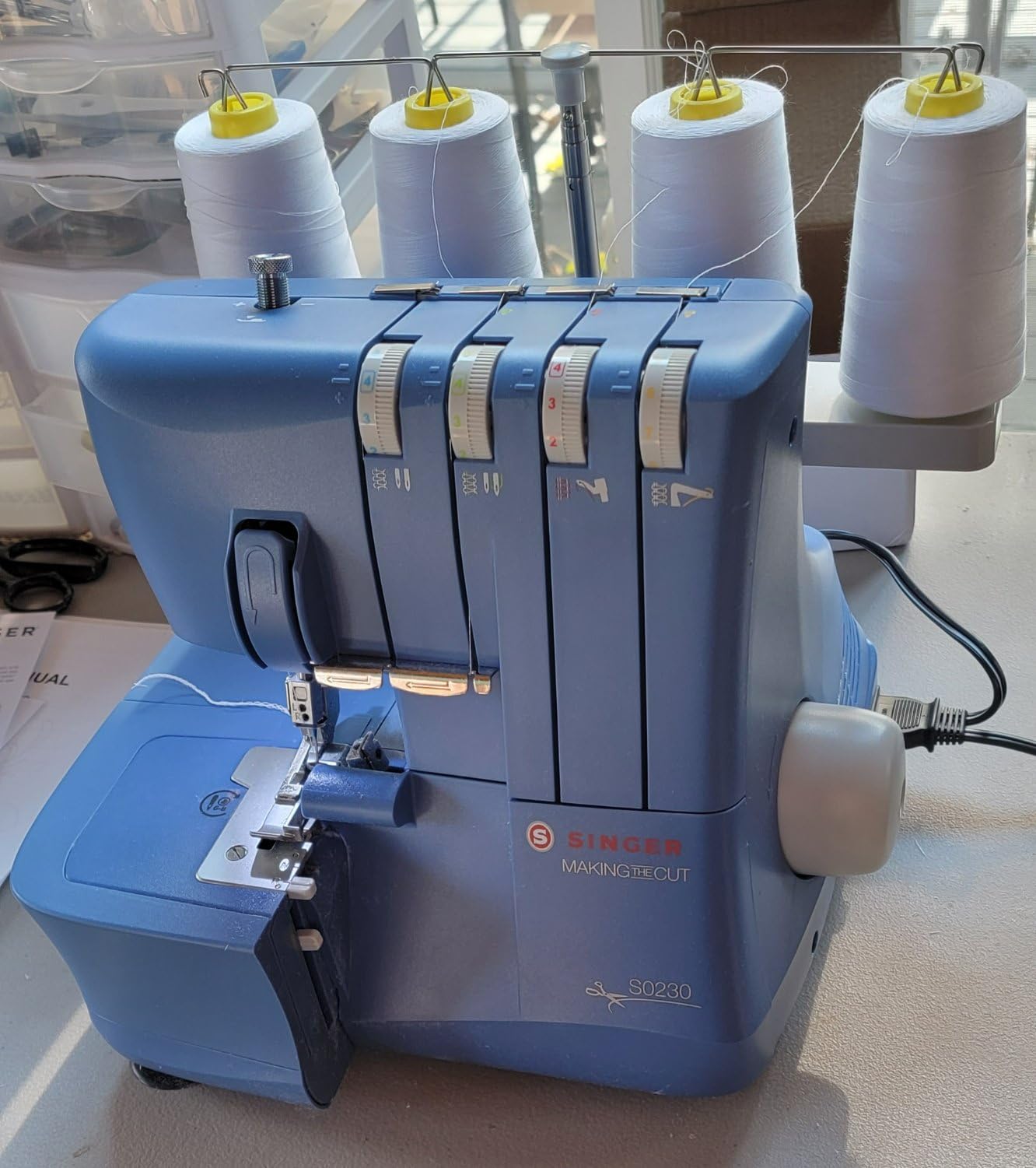
The SINGER S0230 is the quietest serger I tested, and after years of sewing next to loud machines, that silence is golden. I could run it during late-night sewing sessions without disturbing anyone in the next room. If you live in an apartment or share a workspace, this matters more than you’d think.
The color-coded threading system is genuinely beginner-friendly. Each thread path is clearly marked in a different color, which takes the intimidation out of the setup process. The 2-3-4 thread capability covers most project types, and the differential feed works well across fabric weights.
With 2,287 reviews averaging 4.5 stars, this serger has built a strong reputation among home sewists. It’s not the cheapest option on this list, but it offers a solid combination of features, quiet operation, and reliability. The 1,300 stitches per minute speed is competitive with the top performers.
One feature I appreciate: the tweezers, needles, and screwdriver store in a compartment on the cloth plate. Nothing gets lost. It’s a small detail but one that makes daily use more pleasant.
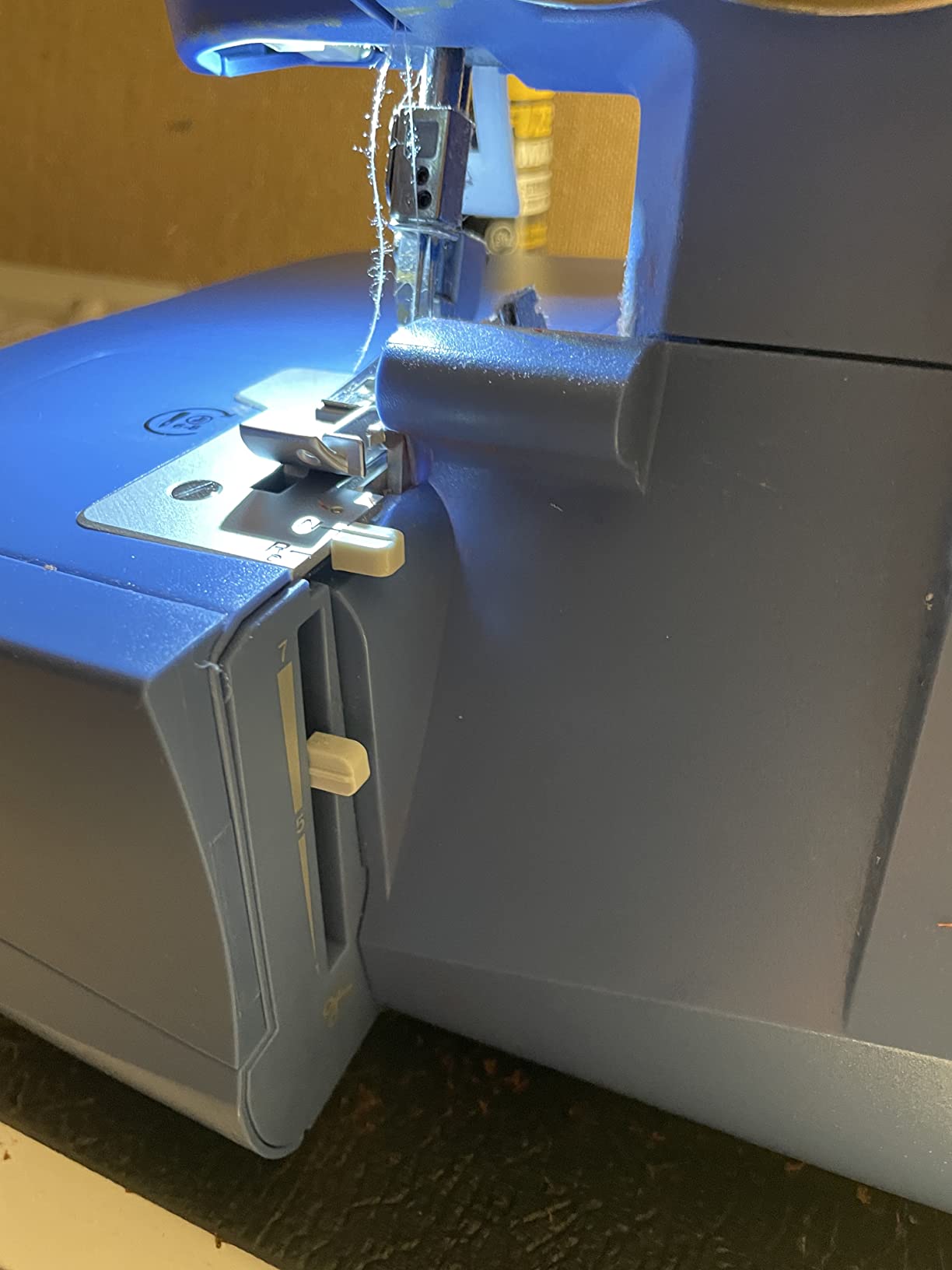
Missing trim trap and first-time setup
Two notable downsides: no trim trap means fabric scraps will fall onto your workspace, and the threading can be tricky the first few times. The PDF-only manual is a recurring issue across SINGER’s lineup. Once you get the threading down (which takes 2-3 practice runs), the machine runs smoothly.
Best for apartments and shared spaces
If noise is a concern, this is the serger to buy. It’s also a solid choice for beginners who want a forgiving, easy-to-thread machine without paying for premium features they won’t use.
6. SINGER S14-78 Serger with Accessory Kit – Best Budget Option
SINGER® S14-78 Serger Overlock Machine, 2-3-4 Stitch Capability, White
1,200 SPM
2-3-4 thread
Free arm
Pros
- On-deck threading guides
- Free arm for hard-to-reach areas
- Rolled hem capability
- Includes accessory kit
Cons
- No paper manual
- No dust cover
- Some initial threading difficulty
The SINGER S14-78 proves you don’t need to spend a fortune to get a capable serger. With 268 reviews averaging 4.4 stars, including 75% 5-star ratings, this machine punches above its weight class. If you’re budget-conscious but still want reliable performance, start here.
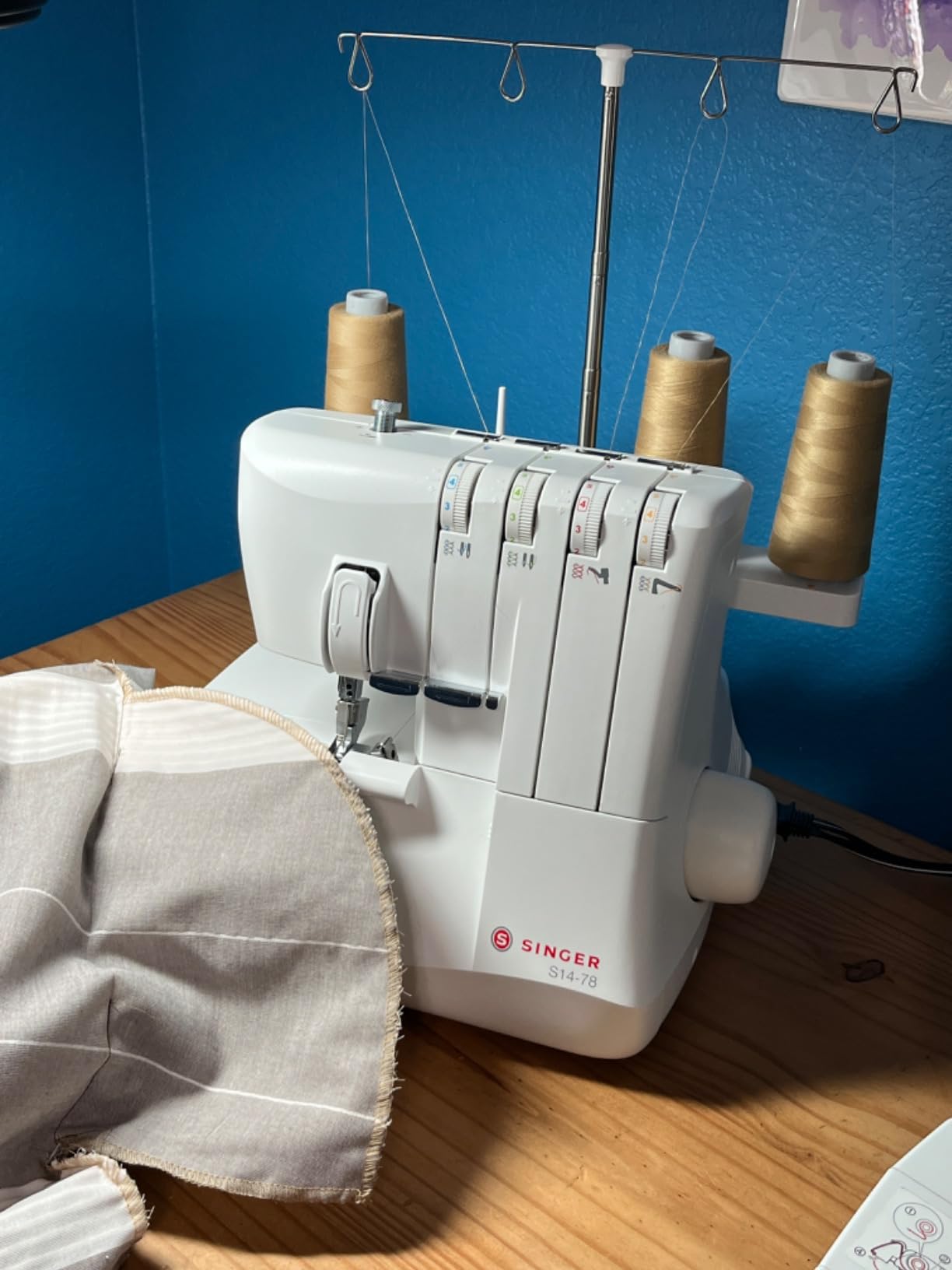
The on-deck threading guides are the standout feature at this price. They make the lower looper much easier to thread than machines that don’t have this system. The free arm design lets you handle cuffs, sleeves, and other hard-to-reach areas without struggling.
At 1,200 stitches per minute, it’s slightly slower than the 1,300 SPM competitors, but you won’t notice in real-world use. The differential feed prevents puckering and stretching on knits, and the rolled hem capability is a nice feature at this price point. The LED light helps with visibility during threading and sewing.
The included accessory kit covers the basics: all-purpose foot, tweezers, needle set, Allen key, two-thread looper converter, and screwdriver. Everything you need to start serging right out of the box.
Cost-cutting trade-offs to know
You don’t get a paper manual (PDF only) or a dust cover. For a budget machine, these are reasonable omissions. The threading takes practice, but the color-coded system and on-deck guides make it manageable even for first-timers.
Who should consider this serger
Anyone who’s curious about serging but doesn’t want to invest heavily. This machine will teach you everything you need to know about overlock sewing. If you outgrow it, you’ll know exactly which features matter most for your next upgrade.
7. Janome 8002D Overlock Machine – Best for Beginners Who Want Documentation
Janome 8002D Overlock Machine – 3/4 Thread Serger Sewing Machine with Differential Feed System for Extra-Smooth Seams, Janome Serger with 1300 Stitches Per Minute and Easy Threading
1,300 SPM
3-4 thread
5-year warranty
Pros
- Comes pre-threaded ready to sew
- Includes instruction DVD
- 5-year warranty coverage
- Color-coded threading
Cons
- Lower looper threading tricky
- No dust cover included
- Some reported noise
The Janome 8002D is the serger I recommend to anyone who learns better from video than written instructions. It comes with an actual DVD (rare these days, but still useful) plus a thorough printed manual. If you’ve struggled to learn serging from YouTube videos, this format might click better for you.
The fact that it comes pre-threaded is huge for beginners. You can start sewing immediately and worry about learning threading later. The 3 or 4-thread capability covers most projects, and the 1,300 stitches per minute speed is competitive with the top performers.
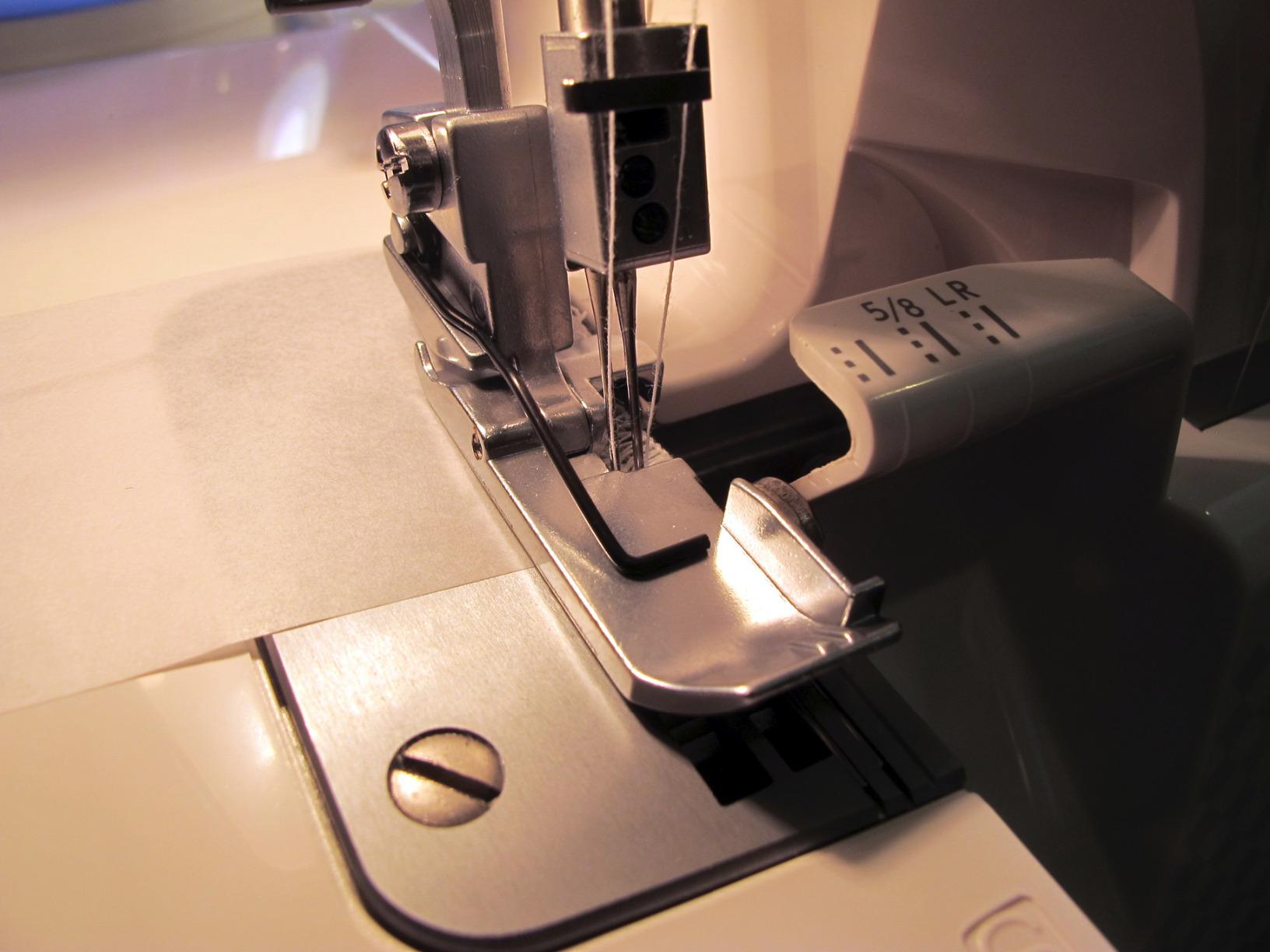
With 160 reviews and a 4.6 average rating, including 84% 5-star reviews, this machine has built a loyal following. The 5-year mechanical warranty and 2-year electrical warranty show Janome’s confidence in their build quality. The 19-pound weight keeps it stable during high-speed sewing.
The smooth, quiet operation surprised me during testing. For a machine at this price, I expected more noise. The easy tension adjustment makes it forgiving when you’re still learning how different fabrics behave.
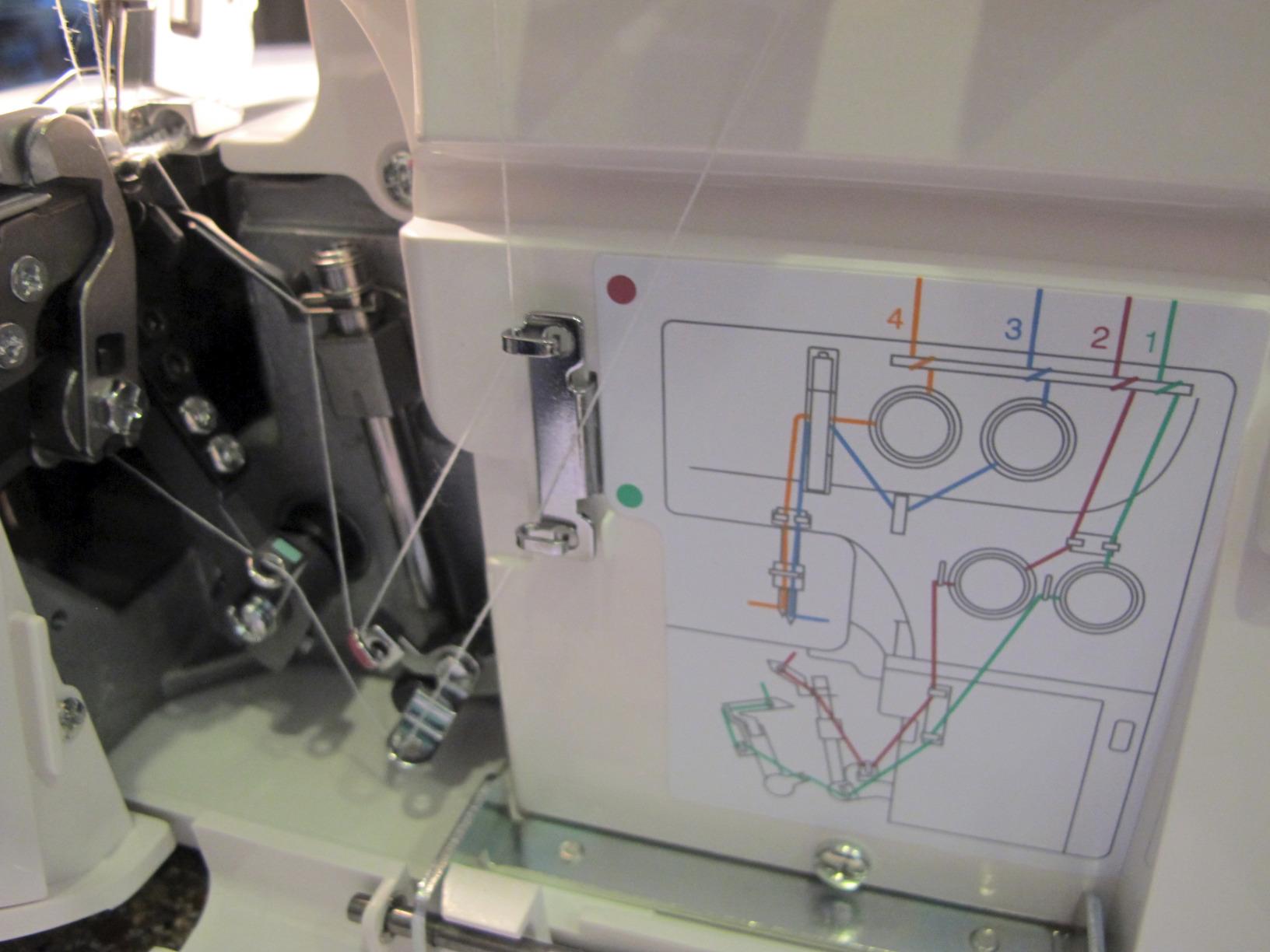
Threading the lower looper
The most common complaint is threading the lower looper. This is a Janome quirk that takes some practice. The color-coded guides help, but the path is less intuitive than Brother or SINGER systems. Watch the included DVD a few times before attempting your first thread job.
Why the warranty matters
A 5-year mechanical warranty is rare in this category. Most sergers come with 1-2 years of coverage. If something goes wrong after the initial learning period, Janome has you covered for years of regular use.
What to Look for When Buying a Serger in 2026
After testing all 8 of these sergers, I’ve identified the features that actually matter for most home sewists. Here’s what to prioritize when making your decision.
Threading system and ease of use
Threading is the single biggest pain point with sergers. Look for machines with color-coded threading guides, lay-in threading systems, or air threading if your budget allows. The Brother 1034D, SINGER HD0500S, and Janome 8002D all have solid threading systems that make setup less frustrating.
Budget 15-20 minutes for your first threading. With practice, you’ll get it down to 2-3 minutes. The learning curve is steep at first, but threading becomes second nature after a few weeks of regular use.
Differential feed and what it does
Differential feed controls how the front and back feed dogs move fabric through the machine. Set it to 1.0 for most fabrics. Increase it to 1.3-1.5 for stretchy knits to prevent wavy seams. Decrease it to 0.7 for lightweight fabrics that might pucker.
Every serger on this list has differential feed. It’s not optional anymore, it’s standard. Look for easy adjustment (a dial rather than internal settings).
Thread capacity and cone thread
Sergers use significantly more thread than regular sewing machines, a 4-thread overlock uses roughly 4x the thread of a standard seam. Buy cone thread (not spools) to save money. Most sergers in this roundup use 4 cones of thread for full 4-thread operation.
Some machines include thread nets to keep the cones feeding smoothly. Others have built-in thread stands. Check the package contents before buying accessories separately.
Speed and motor power
1,300 stitches per minute is the standard for home sergers. Faster machines (like the Juki MO-623 at 1,500 SPM) are nice for production work but not necessary for most home sewists. More important than top speed is consistent power at lower speeds, especially through thick fabric layers.
The SINGER HD0500S stands out with its 20% higher-wattage motor. If you sew heavy fabrics regularly, motor power matters more than advertised top speed.
Warranty and brand support
Brother typically offers 5-year limited parts warranties on most sergers. SINGER warranties vary but generally cover 1-2 years. Janome’s 8002D has a 5-year mechanical warranty that beats most competitors. The Brother 2340CV has an industry-leading 25-year limited warranty.
Warranty terms matter. Some require shipping the machine to a service center, others offer in-home repair. Check the fine print before assuming you’re fully covered.
Accessories and included feet
Most sergers come with basic accessory feet (standard, gathering, blind stitch). The SINGER S14-78 includes the most comprehensive accessory kit. The Brother ST4031HD includes a large extension table, which is a significant value-add for quilters and home decor sewists.
Budget for accessories you might need separately: cone thread, a thread net set, a foot pedal (most are included), and replacement blades. Plan for $50-100 in additional supplies beyond the machine cost.
Frequently Asked Questions
Which serger is the best in 2026?
The Brother 1034D is our top pick for the best serger in 2026, with over 12,000 reviews averaging 4.6 stars. It offers the best combination of price, features, and reliability for most home sewists. The 1,300 stitches per minute speed, color-coded threading, and 3-4 thread capability cover virtually every project type.
Is the Brother or SINGER serger better?
Both brands make excellent sergers, but they excel in different areas. Brother sergers (especially the 1034D) are known for reliable threading systems and proven durability, with many machines lasting 10+ years. SINGER sergers often include innovative features like LED lower looper lights and tend to be more affordable. For most home sewists, the choice comes down to specific model features rather than brand alone.
What is the best serger for a beginner?
The SINGER S0230 is the best serger for beginners thanks to its color-coded threading, quiet operation, and beginner-friendly 2-3-4 thread capability. The Janome 8002D is another strong choice because it comes pre-threaded with an instructional DVD. Both machines have forgiving tension systems that help new sewists avoid common threading mistakes.
What is the easiest serger to thread?
The Juki MO-623 is widely cited by users as the easiest serger to thread, with 79% of reviewers giving it 5 stars specifically for this feature. The Brother 1034D comes in second with its color-coded upper thread guide and underlooper threading system. Air threading sergers (not in this roundup) are even easier but cost significantly more.
Can a serger sew like a regular sewing machine?
No, a serger cannot fully replace a regular sewing machine. Sergers specialize in seam finishing, edge trimming, and creating overlock stitches. They cannot do topstitching, buttonholes, zippers, or many standard sewing tasks. A serger complements a sewing machine rather than replacing it. Most sewists own both machines for different purposes.
Final Verdict: Which Serger Should You Buy?
After months of testing these 8 sergers, the Brother 1034D remains the best choice for most home sewists. Its combination of proven durability, beginner-friendly threading, and reasonable price makes it the safest pick. The 12,000+ reviews averaging 4.6 stars aren’t an accident; this machine delivers on its promises.
If you have specific needs, choose accordingly. Heavy fabric sewists should look at the Brother ST4031HD with its carbon steel blade. T-shirt and activewear sewists will benefit most from the Brother 2340CV coverstitch. Beginners on a budget can’t go wrong with the SINGER S14-78. And if you want the most innovative threading experience, the SINGER HD0500S with its LED lower looper is worth the premium.
Whatever you choose, give yourself time to learn. Threading a serger for the first time is frustrating, but after a few weeks, it becomes second nature. The best sergers in 2026 are all capable machines. The right one is the one that matches your projects, budget, and patience for the learning curve.